
Evaluating the Impact of Inspiratory Muscle Training on Respiratory Function and Exercise Capacity in Pulmonary Hypertension: A Systematic Review and Meta-Analysis of Randomized Controlled Trials

 , , ,
, , , 
Highlights
- IMT significantly improves inspiratory and expiratory muscle strength and consistently reduces dyspnea and fatigue, with improvements in quality-of-life domains.
- IMT is safe and well tolerated, effects on spirometry are negligible, and improvements in exercise capacity (6-MWD) show positive trends but do not reach pooled statistical significance.
- IMT is a low-burden, safe, and practical intervention that can be readily integrated into routine management to address key functional limitations associated with PH.
- IMT serves as an effective non-pharmacological adjunct to standard medical therapy, enhancing patient management without introducing additional systemic side effects or safety concerns.
- For physiotherapists and rehabilitation specialists, IMT provides an accessible and versatile modality suitable for both supervised clinical programs and home-based rehabilitation.
- IMT can be delivered using portable threshold devices, facilitating wide adoption across diverse care settings and improving patient adherence.
Abstract
1. Introduction
2. Materials and Methods
2.1. Eligibility Criteria
2.2. Search Strategy
2.3. Screening Process and Data Extraction
2.4. Risk of Bias Assessment
3. Results
3.1. Characteristics of the Included Studies
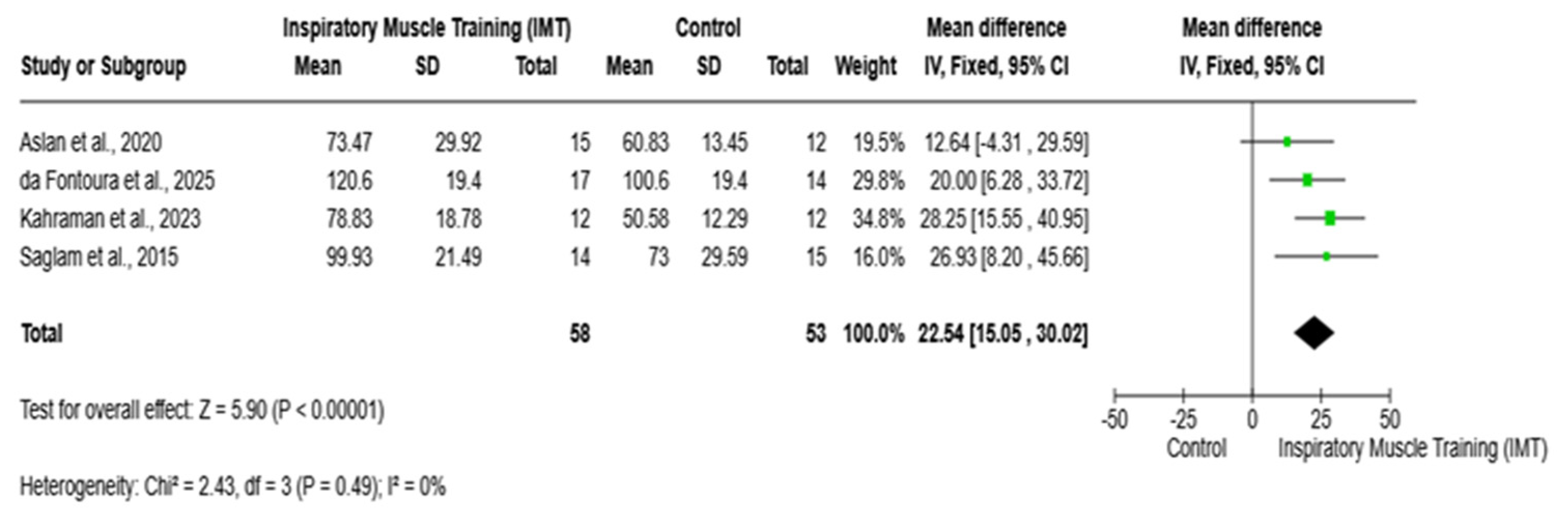
3.2. Maximal Inspiratory Pressure (MIP)
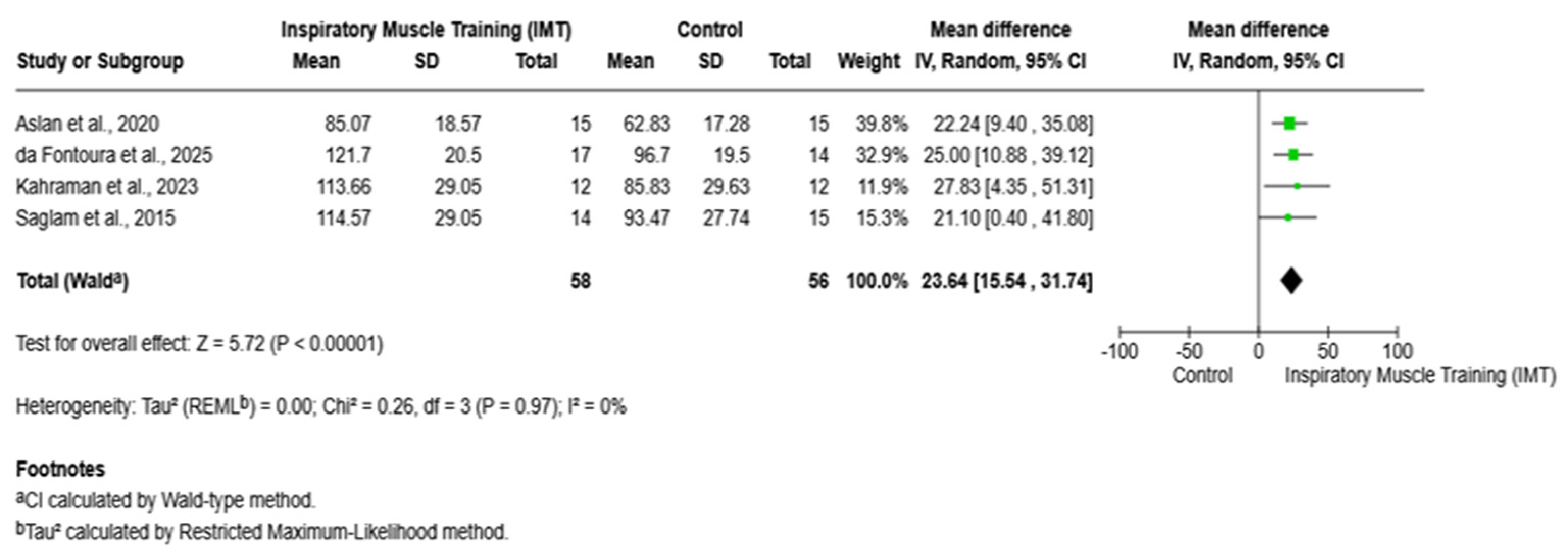
3.3. Maximal Expiratory Pressure (MEP)
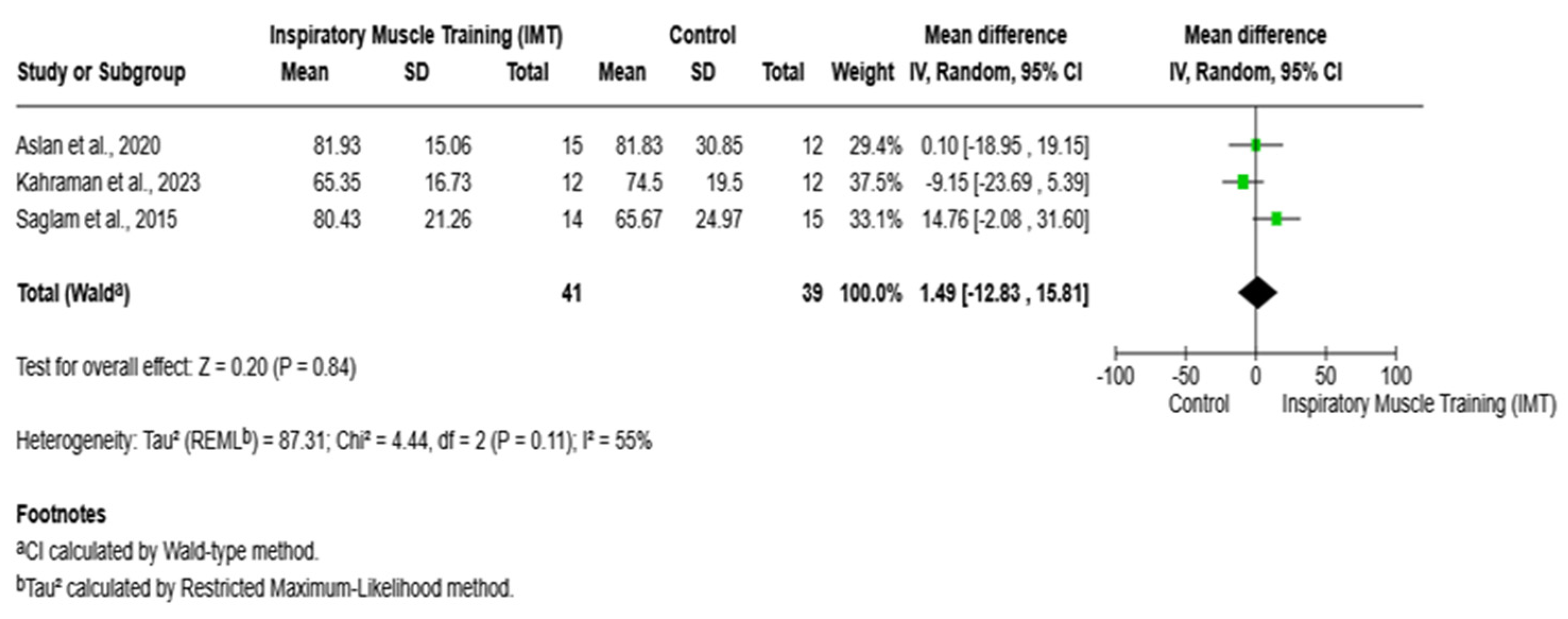
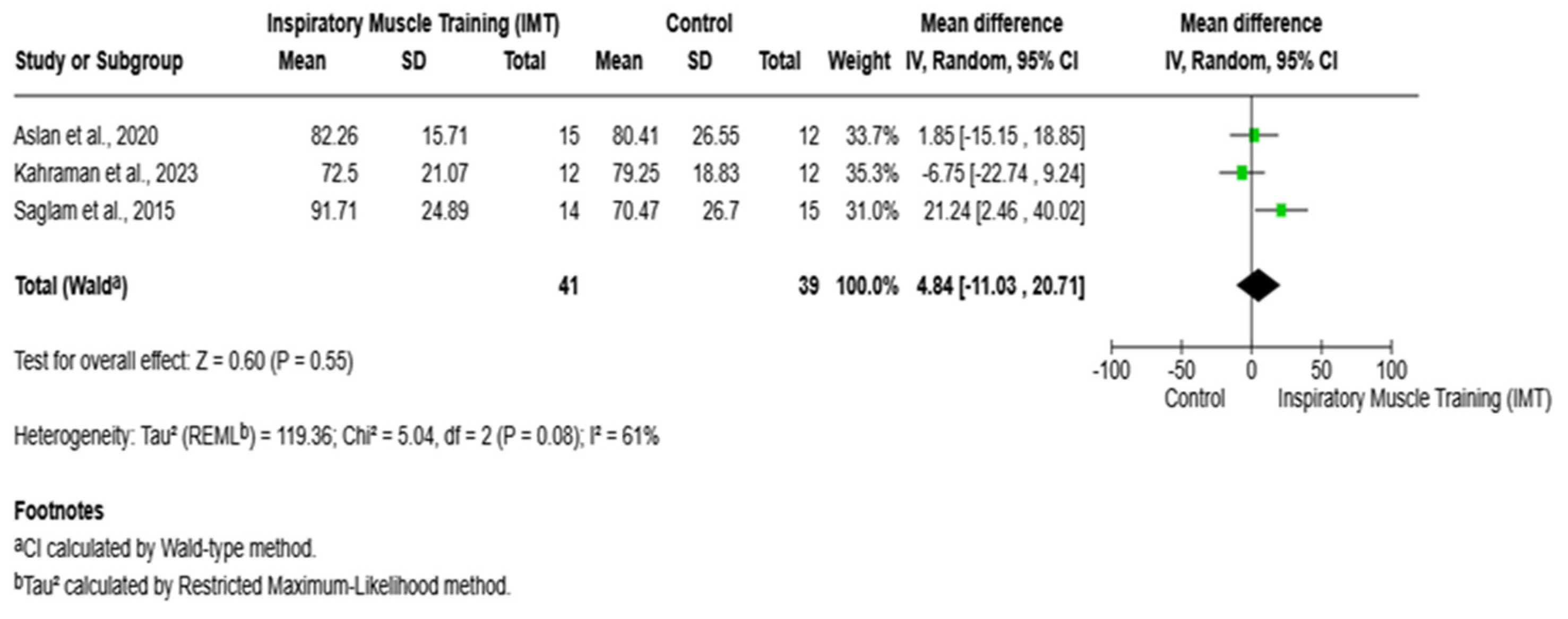
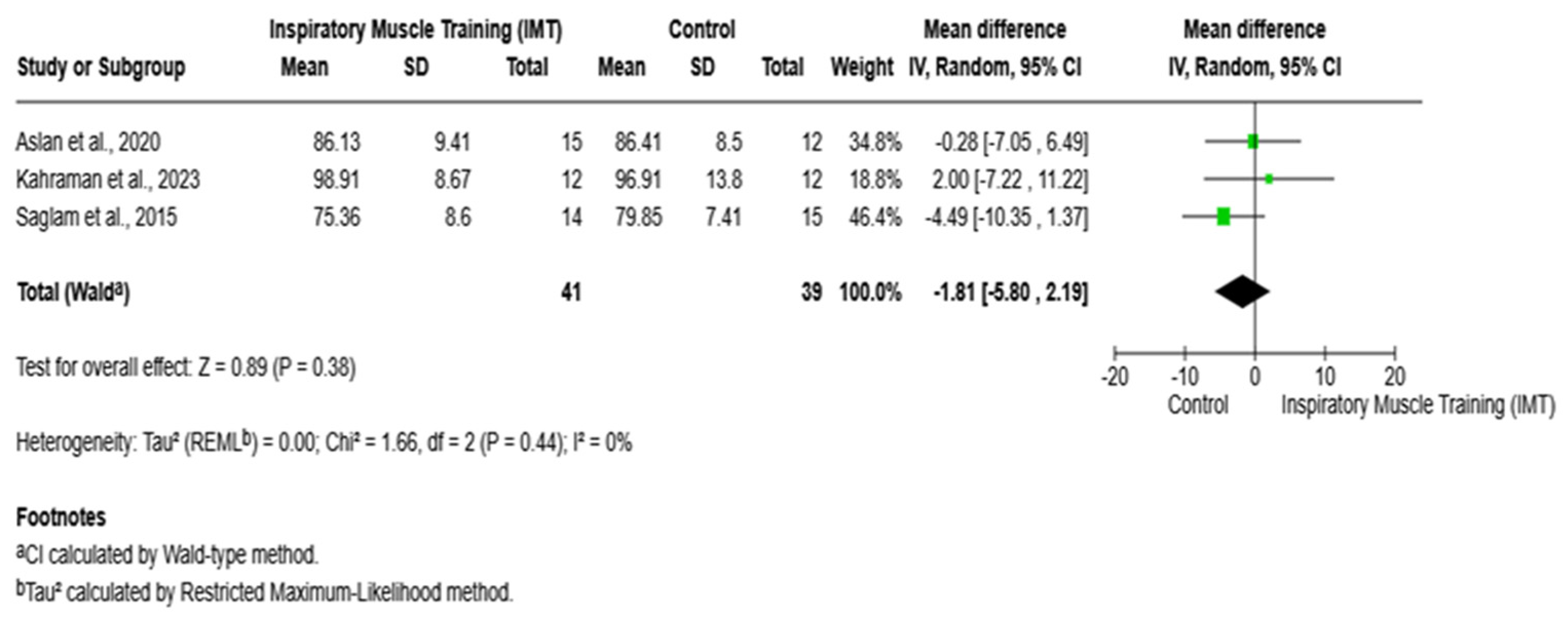
3.4. Forced Expiratory Volume in 1 Second (FEV1%) and Forced Vital Capacity (FV%)
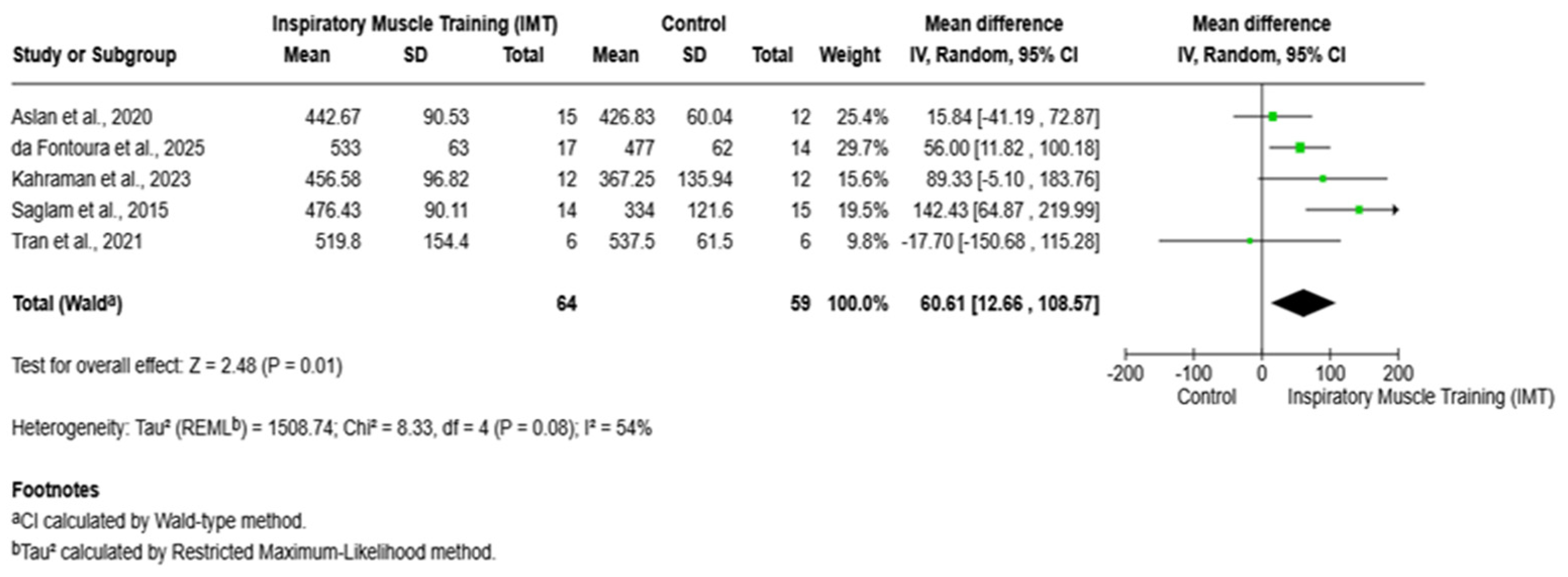
3.5. Six-Minute Walk Distance (6-MWD, Meters)
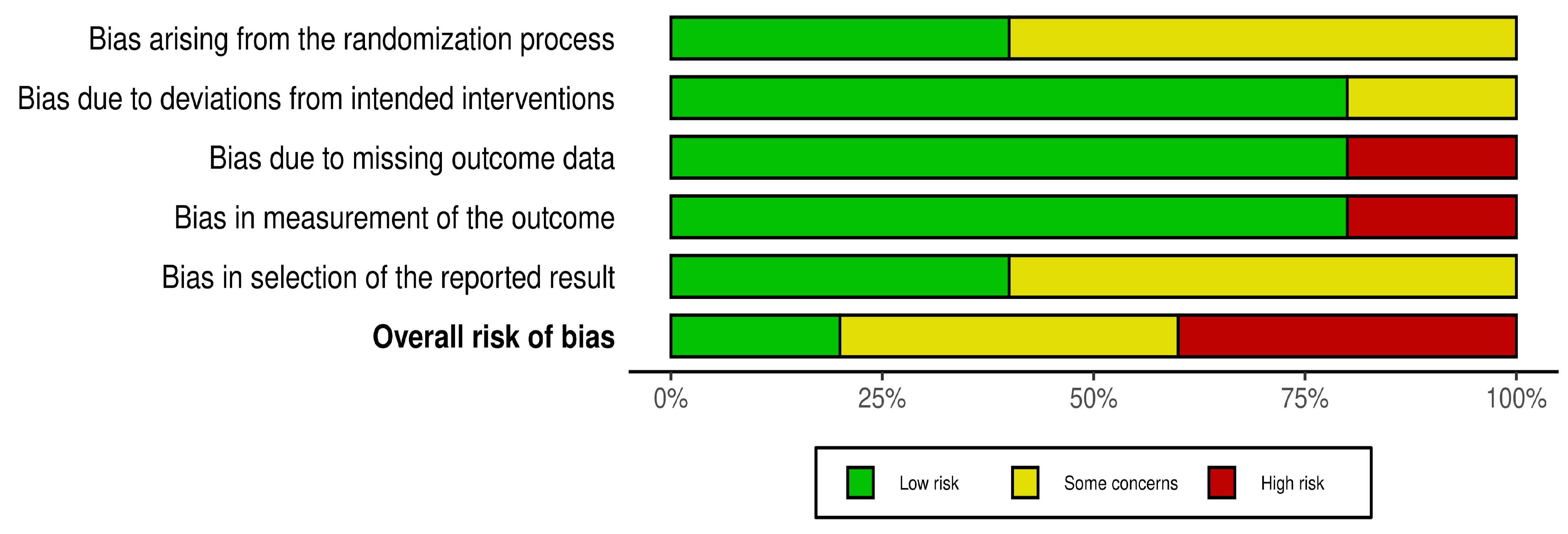
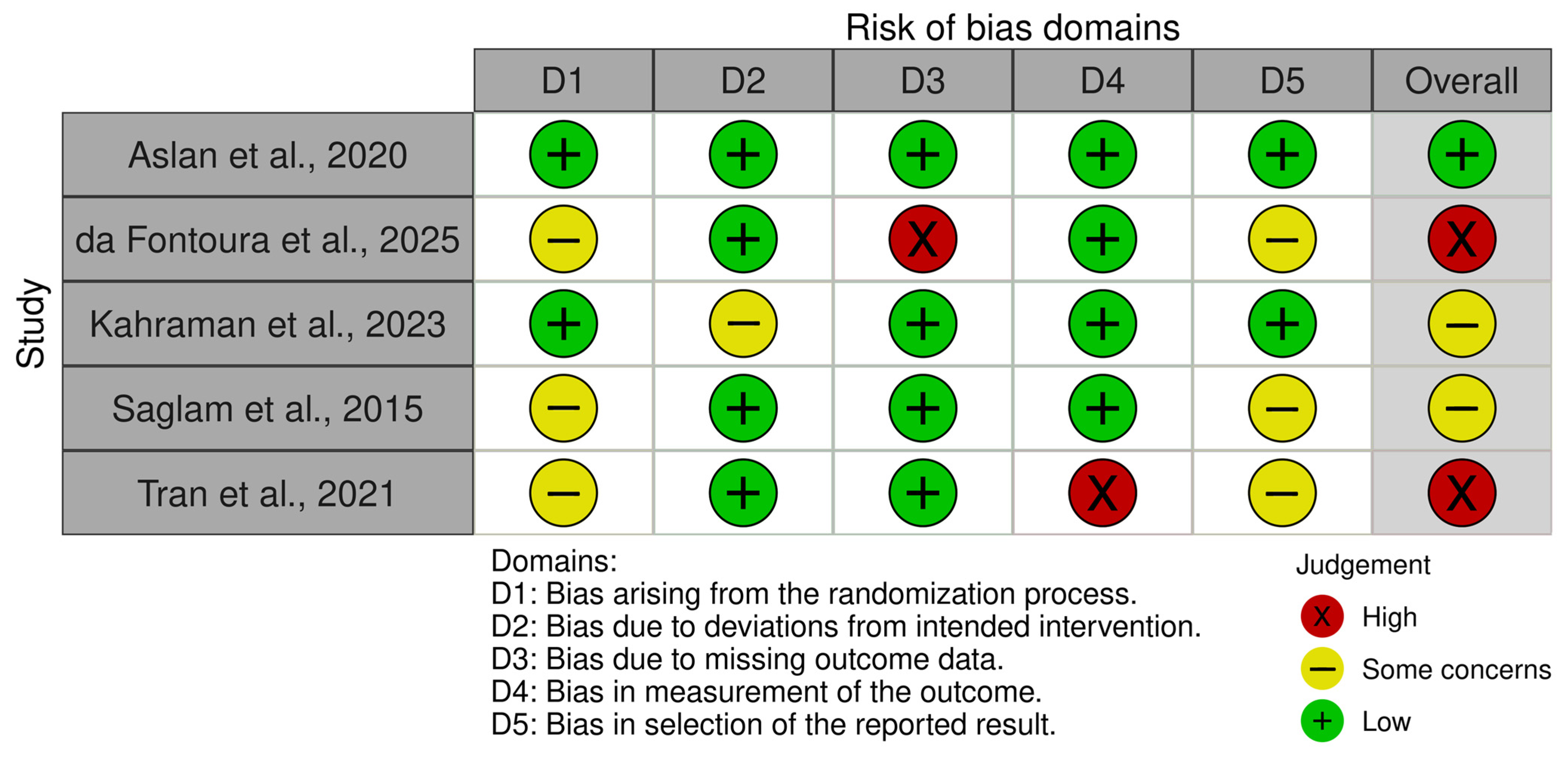
3.6. Risk of Bias Assessment (ROB)
4. Discussion
Limitations and Recommendations
5. Conclusions
Author Contributions
Funding
Institutional Review Board Statement
Informed Consent Statement
Data Availability Statement
Conflicts of Interest
References
- Simonneau, G.; Montani, D.; Celermajer, D.S.; Denton, C.P.; Gatzoulis, M.A.; Krowka, M.; Williams, P.G.; Souza, R. Haemodynamic Definitions and Updated Clinical Classification of Pulmonary Hypertension. Eur. Respir. J. 2019, 53, 1801913. [Google Scholar] [CrossRef]
- Halank, M.; Einsle, F.; Lehman, S.; Bremer, H.; Ewert, R.; Wilkens, H.; Meyer, F.J.; Grünig, E.; Seyfarth, H.-J.; Kolditz, M.; et al. Exercise Capacity Affects Quality of Life in Patients with Pulmonary Hypertension. Lung 2013, 191, 337–343. [Google Scholar] [CrossRef]
- Hoeper, M.M.; Bogaard, H.J.; Condliffe, R.; Frantz, R.; Khanna, D.; Kurzyna, M.; Langleben, D.; Manes, A.; Satoh, T.; Torres, F.; et al. Definitions and Diagnosis of Pulmonary Hypertension. J. Am. Coll. Cardiol. 2013, 62, D42–D50. [Google Scholar] [CrossRef]
- Leary, P.J.; Lindstrom, M.; Johnson, C.O.; Emmons-Bell, S.; Rich, S.; Corris, P.A.; DuBrock, H.M.; Ventetuolo, C.E.; Abate, Y.H.; Abdelmasseh, M.; et al. Global, Regional, and National Burden of Pulmonary Arterial Hypertension, 1990–2021: A Systematic Analysis for the Global Burden of Disease Study 2021. Lancet Respir. Med. 2025, 13, 69–79. [Google Scholar] [CrossRef]
- Miyamoto, S.; Nagaya, N.; Satoh, T.; Kyotani, S.; Sakamaki, F.; Fujita, M.; Nakanishi, N.; Miyatake, K. Clinical Correlates and Prognostic Significance of Six-Minute Walk Test in Patients with Primary Pulmonary Hypertension. Comparison with Cardiopulmonary Exercise Testing. Am. J. Respir. Crit. Care Med. 2000, 161, 487–492. [Google Scholar] [CrossRef] [PubMed]
- Rao, A.; Yabumoto, M.; Ward-Lev, E.; Miller, E.G.; Naik, H.; Halley, M.C. Health-Related Quality of Life in Patients with Diverse Rare Diseases: An Online Survey. Genet. Med. Open 2024, 2, 101889. [Google Scholar] [CrossRef] [PubMed]
- Bussotti, M.; Sommaruga, M. Anxiety and Depression in Patients with Pulmonary Hypertension: Impact and Management Challenges. Vasc. Health Risk Manag. 2018, 14, 349–360. [Google Scholar] [CrossRef]
- Saglam, M.; Arikan, H.; Vardar-Yagli, N.; Calik-Kutukcu, E.; Inal-Ince, D.; Savci, S.; Akdogan, A.; Yokusoglu, M.; Kaya, E.B.; Tokgozoglu, L. Inspiratory Muscle Training in Pulmonary Arterial Hypertension. J. Cardiopulm. Rehabil. Prev. 2015, 35, 198–206. [Google Scholar] [CrossRef]
- Saglam, M.; Vardar-Yagli, N.; Calik-Kutukcu, E.; Arikan, H.; Savci, S.; Inal-Ince, D.; Akdogan, A.; Tokgozoglu, L. Functional Exercise Capacity, Physical Activity, and Respiratory and Peripheral Muscle Strength in Pulmonary Hypertension According to Disease Severity. J. Phys. Ther. Sci. 2015, 27, 1309–1312. [Google Scholar] [CrossRef] [PubMed][Green Version]
- Taichman, D.B.; Shin, J.; Hud, L.; Archer-Chicko, C.; Kaplan, S.; Sager, J.S.; Gallop, R.; Christie, J.; Hansen-Flaschen, J.; Palevsky, H. Health-Related Quality of Life in Patients with Pulmonary Arterial Hypertension. Respir. Res. 2005, 6, 92. [Google Scholar] [CrossRef]
- Zlupko, M.; Harhay, M.O.; Gallop, R.; Shin, J.; Archer-Chicko, C.; Patel, R.; Palevsky, H.I.; Taichman, D.B. Evaluation of Disease-Specific Health-Related Quality of Life in Patients with Pulmonary Arterial Hypertension. Respir. Med. 2008, 102, 1431–1438. [Google Scholar] [CrossRef]
- Ren, Z.; Guo, J.; He, Y.; Luo, Y.; Wu, H. Effects of Inspiratory Muscle Training on Respiratory Muscle Strength, Lactate Accumulation and Exercise Tolerance in Amateur Runners: A Randomized Controlled Trial. Life 2025, 15, 705. [Google Scholar] [CrossRef]
- Illi, S.K.; Held, U.; Frank, I.; Spengler, C.M. Effect of Respiratory Muscle Training on Exercise Performance in Healthy Individuals: A Systematic Review and Meta-Analysis. Sports Med. 2012, 42, 707–724. [Google Scholar] [CrossRef] [PubMed]
- McConnell, A. Respiratory Muscle Training: Theory and Practice; Churchill Livingstone/Elsevier: Edinburgh, UK, 2013; ISBN 978-0-7020-5020-6. [Google Scholar]
- Morris, N.R.; Kermeen, F.D.; Jones, A.W.; Lee, J.Y.; Holland, A.E. Exercise-Based Rehabilitation Programmes for Pulmonary Hypertension. Cochrane Database Syst. Rev. 2023, 3, CD011285. [Google Scholar] [CrossRef]
- Tran, D.; Munoz, P.; Lau, E.M.T.; Alison, J.A.; Brown, M.; Zheng, Y.; Corkery, P.; Wong, K.; Lindstrom, S.; Celermajer, D.S.; et al. Inspiratory Muscle Training Improves Inspiratory Muscle Strength and Functional Exercise Capacity in Pulmonary Arterial Hypertension and Chronic Thromboembolic Pulmonary Hypertension: A Pilot Randomised Controlled Study. Heart Lung Circ. 2021, 30, 388–395. [Google Scholar] [CrossRef] [PubMed]
- Luo, Z.; Qian, H.; Zhang, X.; Wang, Y.; Wang, J.; Yu, P. Effectiveness and Safety of Inspiratory Muscle Training in Patients with Pulmonary Hypertension: A Systematic Review and Meta-Analysis. Front. Cardiovasc. Med. 2022, 9, 999422. [Google Scholar] [CrossRef]
- Kellermeyer, L.; Harnke, B.; Knight, S. Covidence and Rayyan. J. Med. Libr. Assoc. 2018, 106, 580–583. [Google Scholar] [CrossRef]
- Aslan, G.K.; Akıncı, B.; Yeldan, I.; Okumus, G. A Randomized Controlled Trial on Inspiratory Muscle Training in Pulmonary Hypertension: Effects on Respiratory Functions, Functional Exercise Capacity, Physical Activity, and Quality of Life. Heart Lung 2020, 49, 381–387. [Google Scholar] [CrossRef]
- da Fontoura, F.F.; Roncato, G.; Meyer, G.M.B.; da Luz Goulart, C.; Spilimbergo, F.B.; Cipriano Junior, G.; Bernadeli, M.G.; Rigatto, K.; Berton, D.C. Inspiratory Muscle Training on Exercise Capacity, Dyspnoea and Health Status in Pulmonary Hypertension: A Randomised Controlled Trial. Respirology 2025, 30, 760–769. [Google Scholar] [CrossRef]
- Ozcan Kahraman, B.; Tanriverdi, A.; Savci, S.; Odaman, H.; Akdeniz, B.; Sevinc, C.; Ozsoy, I.; Acar, S.; Balci, A.; Baran, A.; et al. Effects of Inspiratory Muscle Training in Patients With Pulmonary Hypertension. Am. J. Cardiol. 2023, 203, 406–413. [Google Scholar] [CrossRef] [PubMed]
- Laohachai, K.; Winlaw, D.; Selvadurai, H.; Gnanappa, G.K.; d’Udekem, Y.; Celermajer, D.; Ayer, J. Inspiratory Muscle Training Is Associated With Improved Inspiratory Muscle Strength, Resting Cardiac Output, and the Ventilatory Efficiency of Exercise in Patients With a Fontan Circulation. J. Am. Heart Assoc. 2017, 6, e005750. [Google Scholar] [CrossRef]
- American Thoracic Society; European Respiratory Society. ATS/ERS Statement on Respiratory Muscle Testing. Am. J. Respir. Crit. Care Med. 2002, 166, 518–624. [Google Scholar] [CrossRef] [PubMed]
- Ali, A.; Faisal, S.; Khalid, M.; Fahim, A. Effects of Breathing Exercises with and Without Inspiratory Muscle Training on Dyspnea, Lung Volumes and Lung Capacities in COPD Patients. J. Health Wellness Community Res. 2025, 3, e468. [Google Scholar] [CrossRef]
- Saraç, D.C.; Bayraktar, D.; Ozer Kaya, D.; Altug-Gucenmez, O.; Oskay, D. POS0585-HPR Effectiveness of Inspiratory Muscle Training on Aerobic Capacity, Respiratory Functions and Respiratory Muscle Strength in Children with Juvenile Idiopathic Arthritis: A Single-Blinded Randomised Controlled Trial. Ann. Rheum. Dis. 2023, 82, 562–563. [Google Scholar] [CrossRef]
- Shei, R.-J.; Paris, H.L.; Sogard, A.S.; Mickleborough, T.D. Time to Move Beyond a “One-Size Fits All” Approach to Inspiratory Muscle Training. Front. Physiol. 2021, 12, 766346. [Google Scholar] [CrossRef]
- Romer, L.M.; Polkey, M.I. Exercise-Induced Respiratory Muscle Fatigue: Implications for Performance. J. Appl. Physiol. 2008, 104, 879–888. [Google Scholar] [CrossRef] [PubMed]
- Osbak, P.S.; Mourier, M.; Henriksen, J.H.; Kofoed, K.F.; Jensen, G.B. Effect of Physical Exercise Training on Muscle Strength and Body Composition, and Their Association with Functional Capacity and Quality of Life in Patients with Atrial Fibrillation: A Randomized Controlled Trial. J. Rehabil. Med. 2012, 44, 975–979. [Google Scholar] [CrossRef] [PubMed]
- Fabero-Garrido, R.; Del Corral, T.; Plaza-Manzano, G.; Sanz-Ayan, P.; Izquierdo-García, J.; López-de-Uralde-Villanueva, I. Effects of Respiratory Muscle Training on Exercise Capacity, Quality of Life, and Respiratory and Pulmonary Function in People With Ischemic Heart Disease: Systematic Review and Meta-Analysis. Phys. Ther. 2024, 104, pzad164. [Google Scholar] [CrossRef]



| PICO Element | Description |
|---|---|
| Population (P) | Adults (≥18 years) diagnosed with pulmonary hypertension (any classification group) based on established clinical criteria. |
| Intervention (I) | Isolated IMT delivered through standardized protocols (30–60% of maximal inspiratory pressure), with a minimum duration of six weeks. |
| Comparator (C) | Sham IMT or usual care without inspiratory muscle training. |
| Outcomes (O) | Pulmonary function parameters (MIP, MEP, FEV1%, FVC%, and FEV1/FVC), exercise capacity (6-MWD and peak VO2), symptom burden (dyspnea/fatigue perception), quality of life, and adverse events. |
| Study ID (Last Name, Year) | Country | Study Design | Sample Size | Age Year (Mean ± SD/Range) | M | F | PH Classification | WHO Functional Class | Intervention: Duration and Intensity |
|---|---|---|---|---|---|---|---|---|---|
| Aslan, 2020 [19] | Turkey | RCT, single-blinded | 30 | 48 ± 10/30–70 | 4 | 23 | Idiopathic 13 (48.1%); CTD-PH 7 (25.9%); CTEPH 7 (25.9%) | I 8 (29.6%); II 12 (44.4%); III 7 (25.9%) | 8 weeks; 15 min × 2/day, 5 days/week; TIMT 30% MIP, Sham 9 cm H2O |
| da Fontoura, 2025 [20] | Brazil | RCT, single-blinded | 35 | 38.9 ± 8.5/NR | 0 | 35 | PH 29; CTEPH 2 | II 71%, III 29% | 8 weeks; 50% PImax, twice daily |
| Kahraman, 2023 [21] | Turkey | Randomized controlled, evaluator-blinded trial | 24 (IMT = 12, Control = 12) | IMT 49.16 ± 17.09; Control 55.50 ± 19.17/NR | 2 | 22 | Idiopathic PH (58.3%); PH-CHD (IMT 25%, control 16.7%); PH-CTD (control 16.7%); CTEPH (IMT 16.7%, control 8.3%) | II (IMT 75%, control 58.3%); III (IMT 25%, control 41.7%) | 40–60% MIP, adjusted weekly; 30 min/day, 7 days/week (6 home, 1 supervised), 8 weeks |
| Sağlam, 2015 [8] | Turkey | Prospective randomized controlled trial | 29 (IMT = 14, Control = 15) | 49.7 ± 12.4/NR | 6 | 25 | PH | II (51.6%), III (48.4%) | IMT with inspiratory threshold device, 30% MIP, 30 min/day, 7 days/week, 6 weeks. Control: sham IMT at 10% MIP |
| Tran, 2021 [16] | Australia | Pilot randomized controlled trial | 12 (IMT = 6, Control = 6) | 60 ± 14/NR | 2 | 10 | IMT: PH 5, CTEPH 1; Control: PH 5, CTEPH 1 | IMT: II 5, III 1; Control: II 6, III 0 | IMT 30–40% PImax, POWERbreathe KHP2, 2 × 30 breaths/day, 5 days/week, 8 weeks. Control: routine management only |
| Study (Year, Country) | Exercise Capacity (6-MWD, Dyspnea, Fatigue) | Quality of Life | Training Adherence | Adverse Events |
|---|---|---|---|---|
| Aslan 2020, Turkey [19] | 6-MWD ↑ ~24 m, dyspnea and fatigue: no significant change | MLHFQ: improved | 100% completed | None reported |
| da Fontoura 2025, Brazil [20] | 6-MWD ↑ +33 m, Borg and mMRC ↓, fatigue ↓ slightly | SF-36v2: improved | IMT 77%, sham 83% sessions completed | Mild muscle pain in 5 pts, no dropouts |
| Kahraman 2023, Turkey [21] | 6-MWD ↑ +51 m (p < 0.001), Borg dyspnea ↓ (p < 0.001), fatigue ↓ (p = 0.003) | Nottingham Health Profile: improved | Good; 8-week program (home + supervised) | None |
| Sağlam 2015, Turkey [8] | 6-MWD ↑ +49 m (p < 0.05), dyspnea ↓, fatigue ↓ | Nottingham Health Profile: improved | High adherence, no dropouts | 1 mild muscle soreness only |
| Tran 2021, Australia [16] | 6-MWD ↑ +36 m (p = 0.03), dyspnea/fatigue not reported | Not assessed | 98% cycles completed | None |
Disclaimer/Publisher’s Note: The statements, opinions and data contained in all publications are solely those of the individual author(s) and contributor(s) and not of MDPI and/or the editor(s). MDPI and/or the editor(s) disclaim responsibility for any injury to people or property resulting from any ideas, methods, instructions or products referred to in the content. |
© 2026 by the authors. Published by MDPI on behalf of the Polish Respiratory Society. Licensee MDPI, Basel, Switzerland. This article is an open access article distributed under the terms and conditions of the Creative Commons Attribution (CC BY) license.
Share and Cite
Alrashedi, S.; Alharbi, L.; Alotaibi, M.; Alzahrani, I.; Jad, A.; Aldoboke, Q.; Algethami, S.; Alrabah, R.; Alharbi, R.; Al Nuwaiser, A.; et al. Evaluating the Impact of Inspiratory Muscle Training on Respiratory Function and Exercise Capacity in Pulmonary Hypertension: A Systematic Review and Meta-Analysis of Randomized Controlled Trials. Adv. Respir. Med. 2026, 94, 13. https://doi.org/10.3390/arm94010013
Alrashedi S, Alharbi L, Alotaibi M, Alzahrani I, Jad A, Aldoboke Q, Algethami S, Alrabah R, Alharbi R, Al Nuwaiser A, et al. Evaluating the Impact of Inspiratory Muscle Training on Respiratory Function and Exercise Capacity in Pulmonary Hypertension: A Systematic Review and Meta-Analysis of Randomized Controlled Trials. Advances in Respiratory Medicine. 2026; 94(1):13. https://doi.org/10.3390/arm94010013
Chicago/Turabian StyleAlrashedi, Saja, Lama Alharbi, Meshal Alotaibi, Inad Alzahrani, Albara Jad, Qamar Aldoboke, Suroor Algethami, Raghda Alrabah, Rana Alharbi, Ali Al Nuwaiser, and et al. 2026. "Evaluating the Impact of Inspiratory Muscle Training on Respiratory Function and Exercise Capacity in Pulmonary Hypertension: A Systematic Review and Meta-Analysis of Randomized Controlled Trials" Advances in Respiratory Medicine 94, no. 1: 13. https://doi.org/10.3390/arm94010013
APA StyleAlrashedi, S., Alharbi, L., Alotaibi, M., Alzahrani, I., Jad, A., Aldoboke, Q., Algethami, S., Alrabah, R., Alharbi, R., Al Nuwaiser, A., & Al-Hariri, M. (2026). Evaluating the Impact of Inspiratory Muscle Training on Respiratory Function and Exercise Capacity in Pulmonary Hypertension: A Systematic Review and Meta-Analysis of Randomized Controlled Trials. Advances in Respiratory Medicine, 94(1), 13. https://doi.org/10.3390/arm94010013