


Abstract
Background: The management of asymptomatic lumbosacral lipomas remains controversial, with studies reporting both prophylactic surgery and conservative management. This review compares conservative and surgical treatment approaches for asymptomatic lumbosacral lipomas in children, analyzing outcomes, complications and secondary treatment. Methods: A systematic literature review was conducted using PubMed, Cochrane, and Web of Science databases. Data were extracted and analyzed based on demographic characteristics, lipoma classification, treatment modality, complications and secondary treatment. Results: A total of 22 retrospective studies comprising 1215 patients were included. The mean age was 1.87 years, with a 1.12:1 female-to-male ratio. Dorsal lipomas were the most common subtype (31.6%). At first, a total of 1017 (83.7%) patients underwent surgery, whereas 198 (16.3%) patients had conservative management. Total resection was achieved in 422 (41.9%) patients, whereas subtotal resection and partial resections were performed in 261 (25.9%) and in 334 (33.29%) patients, respectively. Neurological worsening occurred in 17.2% of patients treated conservatively at first diagnosis, with urological dysfunction being the most common symptoms reported (15.2%), followed by neurological deficit to the lower limbs (12.6). Conservative management following prior surgical intervention was performed in 2.6% of cases. A favorable outcome was observed in 88.7% of patients following surgical resection and in 81.8% of patients who were not treated surgically. Conclusion: While surgical intervention is associated with operative risk, it provides a lower risk of long-term neurological deterioration compared to conservative management. The decision to operate should be individualized, considering patient age, anatomical complexity and based on risk of progression.
1. Introduction
Spinal lipomas are benign accumulations of fatty tissue located near the spinal cord, most frequently seen in the lumbosacral region [1]. These lesions represent a type of closed spinal dysraphism, typically resulting from the aberrant incorporation of mesodermal mesenchyme into developing neural structures due to failure of primary neurulation [2]. Nonetheless, many embryologists associate closed spinal lipomas with anomalies during secondary neurulation [2].
A modern classification framework stratifies these lipomas based on the embryological timing of the neurulation error [2]. For the purposes of this review, we apply the earlier classification by Arai et al. [3], which remains valuable due to its clarity in interpreting neuroimaging characteristics. The optimal management of asymptomatic lumbosacral lipomas remains a topic of enduring clinical debate.
Ultrasound is an effective screening tool because it is low risk and widely available; however, it has limited use after the initial diagnosis or following surgical treatment and should not be relied upon as the sole preoperative assessment [4] A detailed MRI is the definitive imaging evaluation for spinal-neural lipomas. The anatomical detail of the placode-lipoma junction can be shown in relation to the normal spinal cord. Plain radiographs or computed tomography (CT) imaging may be useful to assess for scoliosis and evaluate the spine’s bony anatomy during preoperative planning [5]. Some researchers support early prophylactic surgery, suggesting that neurological decline is likely over time and that early intervention may help preserve function before irreversible damage occurs [6,7,8]. Pang et al. [9], based on the favorable long-term outcomes of patients with asymptomatic congenital spinal lipomas that underwent total surgical resection (98.4% progression-free survival at 16 years), strongly support prophylactic surgery. Moreover, Oi et al. [7] found that the neurological improvement of symptomatic patients after surgery is not optimal and that the rate of surgical complications is acceptably low, providing two additional arguments in favor of the “prophylactic strategy”.
In contrast, others advocate for conservative observation, highlighting the inherent risks of surgery—including potential complications—and recommending intervention only after the onset of symptoms [10,11,12,13]. In addition, there is a third option that takes into account the types of spinal lipomas [14]. Consequently, surgery is indicated for patients with spinal lipomas with a “favorable” surgical anatomy, such as caudal, filar and small dorsal types of spinal lipomas (where the surgical excision is usually easy and the risk of deterioration is higher than the risk of surgical complications), and it is indicated only for symptomatic patients with the less favorable types of lumbosacral lipomas (transitional and chaotic lipomas) [14,15,16].
Several factors are thought to affect the treatment outcome of spinal lipomas. Age, gender, morphology, the presence and severity of neurological symptoms, and absence or presence of an associated spinal cord syrinx are all taken into consideration [5]. Of these, morphology is considered the most crucial factor affecting outcome. Although patients may present asymptomatic, most will develop neurologic symptoms. Previous management has included prophylactic detethering; however, recent studies have found deterioration rates following surgery similar to non-operated patients. Given that these patients are often difficult to examine, the use of radiographic imaging may be helpful in identifying which individuals are likely to deteriorate earlier and hence benefit from preventive surgery rather than observation [17].
Due to these divergent perspectives, this review aims to critically compare surgical and non-surgical strategies for managing asymptomatic lumbosacral lipomas in pediatric populations. We evaluate variations in management, incidence of secondary procedures, complication profiles and long-term outcomes to provide a balanced overview of current practices.
2. Materials and Methods
2.1. Study Design and Literature Search Strategy
This systematic review and meta-analysis were conducted in accordance with the Preferred Reporting Items for Systematic Reviews and Meta-Analyses (PRISMA) guidelines [18]. The main aim was to compare outcomes between surgical and conservative treatment strategies for asymptomatic lumbosacral lipomas in pediatric patients. A comprehensive search was performed across PubMed, the Cochrane Library, and Web of Science to identify studies published between 1997 and 2025. The search strategy incorporated terms such as “asymptomatic lumbosacral lipomas,” “conservative treatment,” “spinal lipoma resection,” “urological outcomes,” “neurological outcomes,” and “reoperations.”
2.2. Inclusion and Exclusion Citeria
Inclusion Criteria were (1) studies evaluating surgical or conservative management of asymptomatic lumbosacral lipomas in children, which reported neurological, urological or surgical complication outcomes; (2) both prospective or retrospective cohort studies, case series or randomized controlled trials.
Exclusion criteria were (1) studies without clearly reported outcomes; (2) articles focusing solely on symptomatic cases; (3) case reports or commentary; (4) studies involving only adult populations; (5) non-English language publications.
2.3. Data Extraction and Analysis and Study Selection
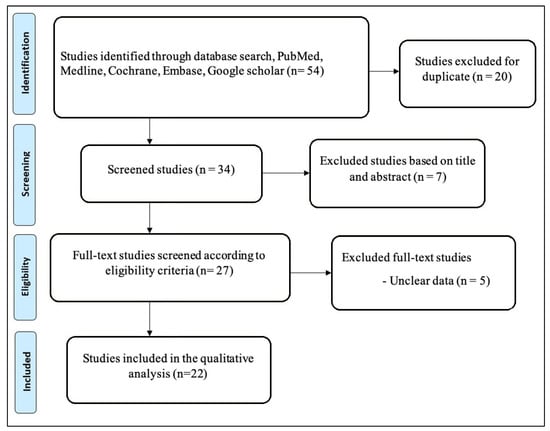
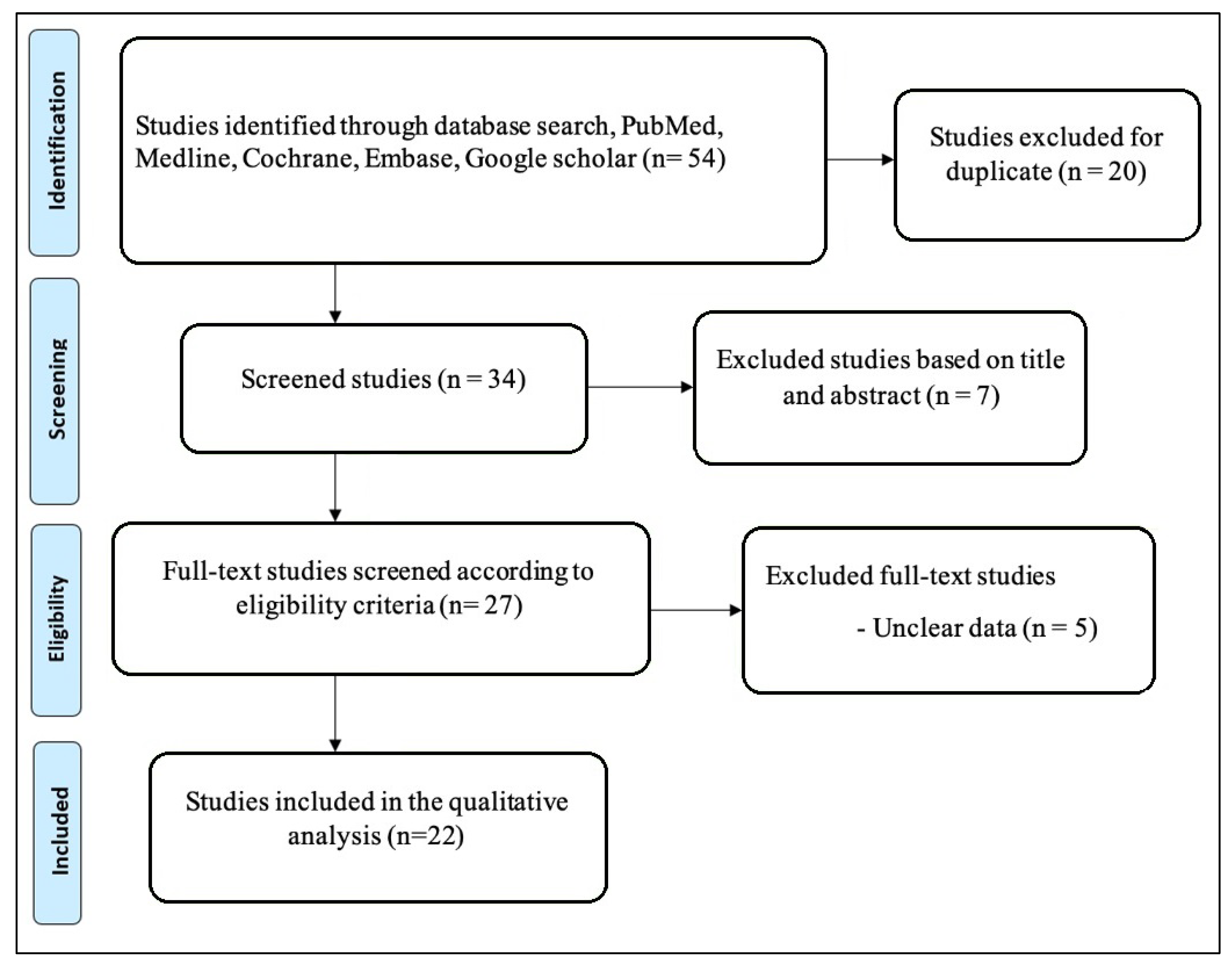
Two independent reviewers (N.S.A. and G.M.) screened all retrieved titles and abstracts for relevance. Full-text articles meeting initial criteria were reviewed in detail. Discrepancies were resolved through consensus or consultation with a third reviewer (N.M.). Extracted data included patient demographics, lipoma subtype (dorsal, transitional, lipomyelomeningocele (LMMC), caudal, or filar), surgical techniques (total, subtotal, partial, or limited resection), conservative treatment approaches, and outcome measures such as complications and neurological or urological status. The initial search yielded 54 potentially relevant articles. After removing 20 duplicates, 34 articles remained. Following abstract and title screening, 27 articles were selected for full-text review. Five were excluded due to lack of outcome clarity, outdated data, or unavailable full text. Ultimately, 22 studies fulfilled all eligibility criteria and were included in the final analysis. Across the 22 studies, a total of 1215 pediatric patients were analyzed (Figure 1).
Figure 1.
PRISMA flow diagram.
2.4. Statistical Analysis
Descriptive statistics were used to summarize demographic and clinical characteristics. Continuous variables, such as follow-up duration, were expressed as means with standard deviations (SD), while categorical variables, including gender distribution, were analyzed using chi-square tests. Statistical significance was determined at a threshold of p < 0.05. All analyses were conducted using STATA version 17.0 (StataCorp, College Station, TX, USA).
3. Results
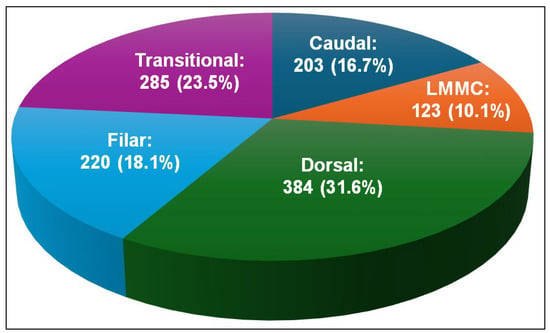
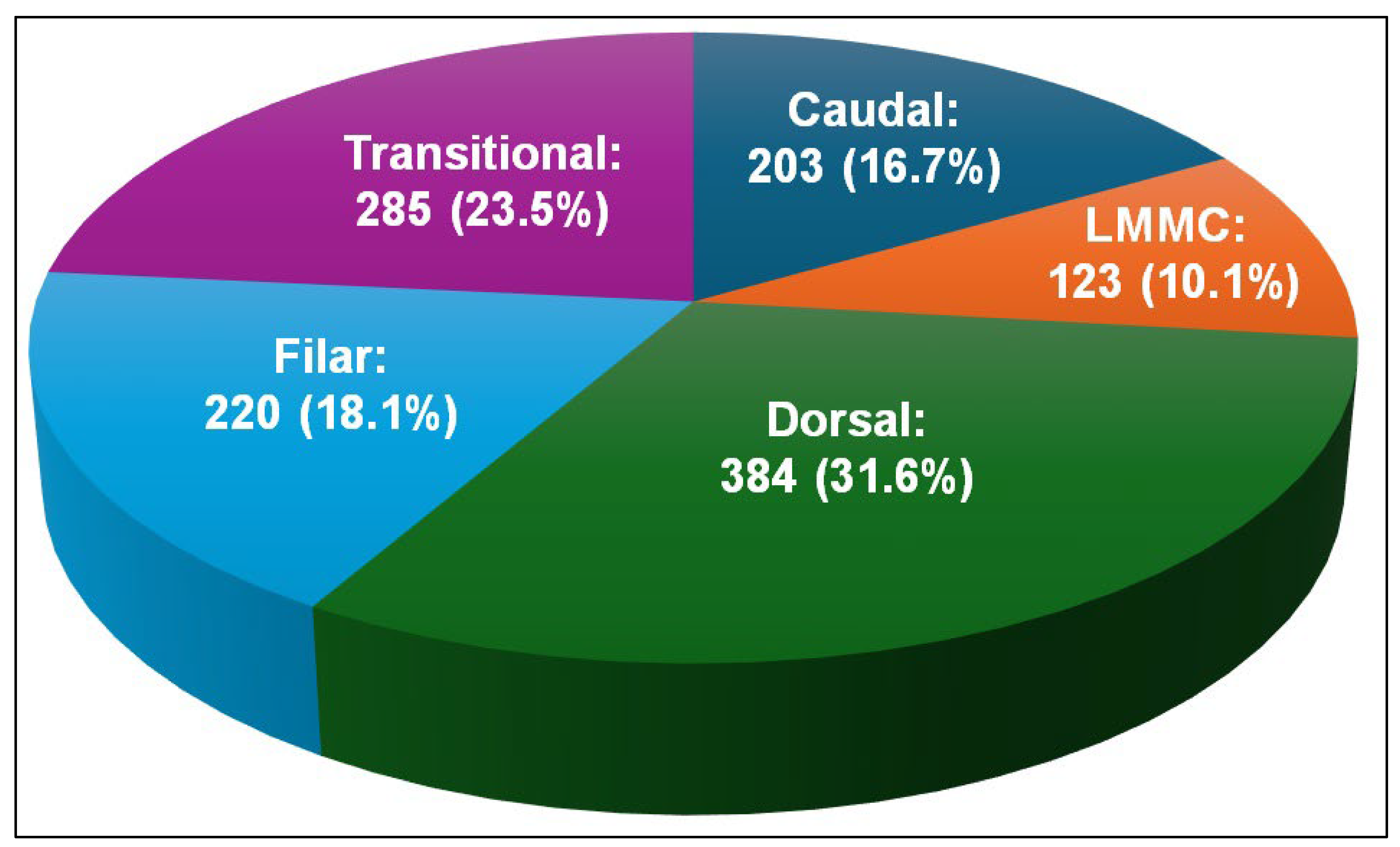
This meta-analysis includes data from 22 retrospective cohort studies (Table 1) without a specific time limit, comprising a total of 1215 patients (47.1% male and 52.9% female) [3,6,7,8,11,12,13,19,20,21,22,23,24,25,26,27,28,29,30,31]. The mean age was 1.87 years old. Lumbosacral lipomas were classified according to Arai et al. [3], with the dorsal type being the most predominant (31.6% of cases), followed by the transitional type (23.5%). The filar, caudal and LMMC types were less frequent, occurring in 18.1%, 16.7% and 10.1% of cases, respectively. These findings indicate significant involvement of the conus or levels above it (Figure 2).
Table 1.
Literature review on surgical or conservative treatment.
Figure 2.
Neuroradiological distribution of the lumbosacral lipomas.
Surgical Management and Clinical Outcome
At first radiological diagnosis, a total of 1017 (83.7%) patients underwent surgery, whereas 198 (16.3%) patients had conservative management, which was mainly reserved for patients whose parents opposed surgical intervention or for cases where disease progression was monitored with the intent of future surgical treatment. In those patients underwent surgery, total resection was achieved in 422 (41.9%) patients, whereas subtotal resection and partial resections were performed in 261 (25.9%) and in 334 (33.2%) patients, respectively. Total resection was the preferred surgical approach when no anatomical barriers were present. In cases of LMMC-type lipomas, partial resection was the most performed procedure due to the involvement of critical vessels and nerves.
Neurological worsening occurred in 17.2% of patients treated conservative at first diagnosis, with urological dysfunction being the most common symptoms reported (15.2%), followed by neurological deficit to the lower limbs (12.6%). For these reasons, 34 patients underwent surgery at second time, after their first choice to avoid surgery. Reoperation after initial surgical intervention occurred in 4.5% of cases for recurrence. Conservative management following prior surgical intervention was performed in 2.6% of cases. Table 2 shows all the details.
Table 2.
Clinical management and results of the 22 included studies.
In patients underwent surgery, the most common surgical complications were subcutaneous effusion (4.4%), cerebrospinal fluid leakage (3.4%) and orthopedic deformities (2.9%). The mean follow-up time was 77.7 months for conservatively managed patients and 67.5 months for those patients who underwent surgery. A favorable outcome, defined as continued asymptomatic status during follow-up, was observed in 88.7% (n = 902) of patients following surgical resection and in 81.8% (n = 162) of patients who were not treated surgically. The mortality rate in this study population was 0%. Table 3 shows the details.
Table 3.
Literature review on clinical outcome.
4. Discussion
The management of asymptomatic lumbosacral lipomas in pediatric patients remains a subject of clinical debate, with no consensus on the optimal approach. Treatment decisions are often individualized, based on patient age, lipoma type, neurological findings, and parental preferences [6,12,20]. Lumbosacral lipomas management is a challenging task in pediatric neurosurgery. When a surgeon is involved, the benefits and drawbacks must be carefully considered. Our analysis, which makes use of data from numerous studies, provides a comprehensive summary of existing methods and their results. The initial step is to tailor treatment regimens for each patient, considering variables including the type of lipoma, patient age, and symptoms. Interestingly, surgical management has historically been more prevalent than conservative observation, even in asymptomatic cases [3,11,19]. In many instances, conservative management was selected not because of clinical recommendation, but due to a cautious stance adopted by families. However, the risk of progressive neurological decline has led many clinicians to recommend early surgical intervention, particularly in younger children with radiologic evidence of tethered cord [8]. In contrast, older children without signs of deterioration may be observed over time before considering surgical options.
Surgical indications for symptomatic lumbosacral lipomas patients are well established. Nevertheless, the indications in patients without symptoms are subject to debate. When analyzing the arguments favoring and against preventative surgery, Chumas [32] observed the lack of comprehensive prospective studies that may offer a definitive answer to this matter. Although several studies advocate for early intervention to avoid future neurological damage, others propose a cautious strategy because of the risks associated with surgery and the potential for tethering [33]. Cekic et al. [34] recommended a conservative approach for asymptomatic patients who are closely followed and monitored. Surgical intervention should only be considered if those patients with clear signs of neurological deterioration or the appearance of new symptoms. This ensures that the benefits of intervention outweigh the risks associated with surgery.
Total resection, aiming for complete detethering, was frequently favored due to its ability to reduce the chance of retethering and nerve root compression [27]. Nonetheless, this technique can be technically challenging and may pose risks of neurological injury, particularly in complex lesions like LMMCs [27,28]. These lesions involve close adherence to neural structures, increasing the risk of intraoperative placode damage. In such scenarios, partial or limited resection may be more appropriate. The advantages and disadvantages of using CUSA for lipoma resection are well balanced [34]. In delicate pediatric neurosurgery, CUSA allows for accurate tissue dissection with minimal damage and mobilization of surrounding nervous systems. For achieving deeper resections, the ability of CUSA to selectively emulsify adipose tissue while preserving nervous tissue is beneficial [34]. However, its use presents challenges. Understanding this technique can help us reduce the possibility of inadvertent damage to neurovascular structures, despite a steep learning curve [34]. Furthermore, careful use is necessary to limit thermal damage due to heat production and the possibility of tissue cavitation.
By using three-dimensional multi-fusion images applied with a haptic device for planning lumbosacral lipomas operations, Ogura et al. [35] presented a preoperative interactive virtual simulation (IVS). This IVS improves resection accuracy and lowers complications by enabling exact preoperative planning and intraoperative guidance. Including IVS in our surgical planning procedures would enhance our capacity to customize surgical techniques to patient requirements [35,36,37]. In daily neurosurgical clinical practice, multi-fusion 3D images and virtual reality are often used to obtain stereoscopic information [38,39,40,41]. Typical visualization techniques include volumetric and surface rendering formats, each of which has its pros and cons and is used depending on its intended use, as well virtual and augmented reality.
Transitional lipomas, which result from defects in both primary and secondary neurulation, often show both subcutaneous and intradural extension [28]. Their complex anatomy reduces the likelihood of achieving a complete resection. Conversely, dorsal lipomas that are entirely subcutaneous may be more amenable to total removal with minimal neurologic risk [29]. Filar lipomas, limited to the filum terminale, generally carry a lower risk of neurological complications [7,13,16,30]. On the other hand, caudal lipomas are more challenging, as they typically involve the conus medullaris and nerve roots controlling lower limb and sphincter function, making surgery riskier.
Postoperative complications were categorized into short-term and long-term issues. Early complications included wound dehiscence, CSF leakage, infection, hematomas, respiratory issues and transient neurological symptoms. Most were managed non-surgically through wound care, drainage and supportive management [23,24,31]. Novel operating tools and improved surgical objectives seem to be reducing the risk associated with surgical intervention in recent series [10]. Even though up to 20% of patients may experience non-neurological complications [15], most of these complications are minor and do not result in long-term or permanent morbidity. As surgical techniques have improved, these complications have become less common. In the long term, patients may experience recurrent tethering, neurological worsening, urological dysfunction, persistent pain, orthopedic deformities, and incontinence, often necessitating further intervention [20,42]. In patients managed conservatively, progression to neurological or urological symptoms was a key concern. Symptoms such as bladder urgency, incomplete voiding, constipation, limb weakness, pyramidal signs, pain, and orthopedic deformities were reported. Although conservative management initially avoids surgical risks, delaying surgery may allow deterioration that could complicate surgical resection [43]. A lipoma that is stable and asymptomatic in early childhood may grow or cause increasing cord tethering, making later surgical intervention more complex and less effective.
Study Limitations
This review is limited by the retrospective nature of the included studies, which are prone to biases such as incomplete records, selection bias, and reporting bias. Additionally, the lack of uniformity in data collection and outcome reporting across studies introduces heterogeneity that may affect the reliability of pooled outcomes. Missing data were assumed to be missing at random (MAR), and only available data were analyzed. However, if missing data were systematic, this could have skewed results. Moreover, long-term follow-up was inconsistently reported, limiting our ability to evaluate sustained functional outcomes. Future prospective studies with standardized protocols are needed to provide higher-level evidence on treatment efficacy and risks.
5. Conclusions
There is no single best strategy for managing asymptomatic lumbosacral lipomas in children. Surgical treatment is often preferred for younger patients showing radiologic or clinical signs of tethering, with the goal of preventing irreversible damage. Nonetheless, surgery is not without risk, and complications such as retethering must be carefully weighed. Total resection may be ideal in theory, but it is frequently unachievable in complex lipomas without unacceptable risk. Meanwhile, conservative management avoids early surgical risks but may permit slow deterioration, potentially requiring more complex surgeries later. Early diagnosis and careful monitoring remain essential elements in the decision-making process. While many patients benefit from timely surgical intervention, especially in high-risk cases, robust prospective studies are needed to refine indications, reduce complications, and guide individualized treatment pathways for children with this rare but significant condition.
Author Contributions
Conceptualization, N.S.A., J.P. and N.M.; methodology, N.S.A., G.M. and N.M.; validation, N.S.A., J.P., G.M. and N.M.; formal analysis, N.S.A., G.M. and N.M.; investigation, N.S.A., J.P. and N.M.; resources, N.S.A., J.P., G.E.C. and N.M.; data curation, N.S.A., G.M. and N.M.; writing—original draft preparation, N.S.A., J.P., G.E.C. and N.M.; writing—review and editing, G.M. and N.M.; visualization, N.S.A. and N.M.; supervision, G.M. and N.M. All authors have read and agreed to the published version of the manuscript.
Funding
This research received no external funding.
Institutional Review Board Statement
Not applicable because this is a review.
Informed Consent Statement
Not applicable because this is a review.
Data Availability Statement
The data presented in this study are available on request from the corresponding author.
Conflicts of Interest
The authors declare no conflicts of interest.
References
- Greene, S.; Hawkins, D.S.; Rutledge, J.C.; Tsuchiya, K.D.; Douglas, J.; Ellenbogen, R.G.; Avellino, A.M. Pediatric intradural extramedullary synovial sarcoma: Case report. Neurosurgery 2006, 59, E1339. [Google Scholar] [CrossRef] [Scilit]
- Morota, N.; Ihara, S.; Ogiwara, H. New classification of spinal lipomas based on embryonic stage. J. Neurosurg. Pediatr. 2017, 19, 428–439. [Google Scholar] [CrossRef] [Scilit]
- Arai, H.; Sato, K.; Okuda, O.; Miyajima, M.; Hishii, M.; Nakanishi, H.; Ishii, H. Surgical experience of 120 patients with lumbosacral lipomas. Acta Neurochir. 2001, 143, 857–864. [Google Scholar] [CrossRef] [Scilit]
- International Society of Ultrasound in Obstetrics and Gynecology. Sonographic examination of the fetal central nervous system: Guidelines for performing the ‘basic examination’ and the ‘fetal neurosonogram’. Ultrasound Obstet. Gynecol. 2007, 29, 109–116. [Google Scholar] [CrossRef] [Scilit] [PubMed]
- Lam, S.; Wagner, K.; Raskin, J.; Hansen, D.; Reddy, G.; Jea, A. Surgical management of lipomyelomeningocele in children: Challenges and considerations. Surg. Neurol. Int. 2017, 8, 63. [Google Scholar] [CrossRef] [Scilit] [PubMed]
- Gao, D.; Bao, N.; Yang, B.; Song, Y.H.; Sun, S.Q. Preventive surgery for asymptomatic spinal lipomas in children. Turk Neurosurg. 2024, 34, 1–5. [Google Scholar] [CrossRef] [Scilit] [PubMed]
- Oi, S.; Nomura, S.; Nagasaka, M.; Arai, H.; Shirane, R.; Yamanouchi, Y.; Nishimoto, H.; Date, H. Embryopathogenetic surgicoanatomical classification of dysraphism and surgical outcome of spinal lipoma: A nationwide multicenter co-operative study in Japan. J. Neurosurg. Pediatr. 2009, 3, 412–419. [Google Scholar] [CrossRef] [Scilit]
- Rosa, S.P.D.; Scavarda, D.; Choux, M. Results of the prophylactic surgery of lumbosacral lipomas: 20 years of experience in the Pediatric Neurosurgery Department, La Timone Enfants Hospital, Marseille, France. Childs Nerv. Syst. 2016, 32, 2205–2209. [Google Scholar] [CrossRef] [Scilit]
- Pang, D.; Zovickian, J.; Oviedo, A. Long-term outcome of total and near-total resection of spinal cord lipomas and radical reconstruction of the neural placode, part II: Outcome analysis and preoperative profiling. Neurosurgery. 2010, 66, 253–273. [Google Scholar] [CrossRef] [Scilit]
- Finn, M.A.; Walker, M.L. Spinal lipomas: Clinical spectrum, embryology, and treatment. Neurosurg. Focus. 2007, 23, E10. [Google Scholar] [CrossRef] [Scilit]
- Xenos, C.; Sgouros, S.; Walsh, R.; Hockley, A. Spinal lipomas in children. Pediatr. Neurosurg. 2000, 32, 295–307. [Google Scholar] [CrossRef] [Scilit] [PubMed]
- Kumar, A.; Mahapatra, A.K.; Satyarthee, G.D. Congenital spinal lipomas: Role of prophylactic surgery. J. Pediatr. Neurosci. 2000, 7, 85–89. [Google Scholar]
- Patil, P.S.; Gupta, A.; Kothari, P.L.; Kekre, G.; Gupta, R.; Dikshit, V.; Mudkhedkar, K.; Kesan, K. Immediate and long-term outcome analysis of lipomyelomeningocele repair in asymptomatic infants in a tertiary care center. J. Pediatr. Neurosci. 2016, 11, 99–104. [Google Scholar] [CrossRef] [Scilit]
- Massimi, L.; Feitosa Chaves, T.M.; Legninda Sop, F.Y.; Frassanito, P.; Tamburrini, G.; Caldarelli, M. Acute presentations of intradural lipomas: Case reports and a review of the literature. BMC Neurol. 2019, 19, 189. [Google Scholar] [CrossRef] [Scilit] [PubMed]
- Pierre-Kahn, A.; Zerah, M.; Renier, D.; Cinalli, G.; Sainte-Rose, C.; Lellouch-Tubiana, A.; Brunelle, F.; Le Merrer, M.; Giudicelli, Y.; Pichon, J.; et al. Congenital lumbosacral lipomas. Childs Nerv. Syst. 1997, 13, 298–334. [Google Scholar] [CrossRef] [Scilit]
- Usami, K.; Lallemant, P.; Roujeau, T.; James, S.; Beccaria, K.; Levy, R.; Di Rocco, F.; Sainte-Rose, C.; Zerah, M. Spinal lipoma of the filum terminale: Review of 174 consecutive patients. Childs Nerv. Syst. 2016, 32, 1265–1272. [Google Scholar] [CrossRef] [Scilit]
- Tu, A.; Hengel, A.R.; Cochrane, D.D. Radiographic predictors of deterioration in patients with lumbosacral lipomas. J. Neurosurg. Pediatr. 2016, 18, 171–176. [Google Scholar] [CrossRef] [Scilit]
- Tricco, A.C.; Lillie, E.; Zarin, W.; O’Brien, K.K.; Colquhoun, H.; Levac, D.; Moher, D.; Peters, M.D.; Horsley, T.; Weeks, L.; et al. PRISMA Extension for Scoping Reviews (PRISMA-ScR): Checklist and Explanation. Ann. Intern. Med. 2018, 169, 467–473. [Google Scholar] [CrossRef] [Scilit]
- La Marca, F.; Grant, J.A.; Tomita, T.; McLone, D.G. Spinal lipomas in children: Outcome of 270 procedures. Pediatr. Neurosurg. 1997, 26, 8–16. [Google Scholar] [CrossRef] [Scilit]
- De Vloo, P.; Sharma, J.; Alderson, L.; Jankovic, I.; Tahir, M.Z.; Desai, D.; Pang, D.; Thompson, D.N.P. Radical resection of lumbosacral lipomas in children: The Great Ormond Street Hospital experience. Childs Nerv. Syst. 2022, 38, 1113–1123. [Google Scholar] [CrossRef] [Scilit]
- Yerkes, E.; Halline, C.; Yoshiba, G.; Meyer, T.; Rosoklija, I.; Bowman, R.; McLone, D.; Cheng, E. Lipomyelomeningocele for the urologist: Should we view it the same as myelomeningocele? J. Pediatr. Urol. 2017, 13, e1–e8. [Google Scholar] [CrossRef] [Scilit]
- Talamonti, G.; D’ALiberti, G.; Nichelatti, M.; Debernardi, A.; Picano, M.; Redaelli, T. Asymptomatic lipomas of the medullary conus: Surgical treatment versus conservative management. J. Neurosurg. Pediatr. 2014, 14, 527–534. [Google Scholar] [CrossRef] [Scilit]
- Tu, A.; Hengel, R.; Cochrane, D.D. The natural history and management of patients with congenital deficits associated with lumbosacral lipomas. Childs Nerv. Syst. 2016, 32, 667–673. [Google Scholar] [CrossRef] [Scilit]
- Wykes, V.; Desai, D.; Thompson, D.N.P. Asymptomatic lumbosacral lipomas: A natural history study. Childs Nerv. Syst. 2012, 28, 1731–1739. [Google Scholar] [CrossRef] [Scilit] [PubMed]
- Kulkarni, A.V.; Pierre-Kahn, A.; Zerah, M. Conservative management of asymptomatic spinal lipomas of the conus. Neurosurgery 2004, 54, 868–875. [Google Scholar] [CrossRef] [Scilit] [PubMed]
- Chong, S.; Lee, J.Y.; Kim, K.H.; Shin, H.I.; Kim, K.; Park, K.; Kim, S.K.; Wang, K.C. Radical excision of lumbosacral lipoma: An early experience of “followers”. Childs Nerv. Syst. 2019, 35, 1591–1597. [Google Scholar] [CrossRef] [Scilit] [PubMed]
- Dushi, G.; Frey, P.; Ramseyer, P.; Vernet, O.; Meyrat, B.J. Urodynamic scoring in children with lipomyelomeningocele: A prospective study. J. Urol. 2011, 186, 655–659. [Google Scholar] [CrossRef] [Scilit]
- Hayashi, C.; Kumano, Y.; Hirokawa, D.; Sato, H.; Yamazaki, Y. Long-term urological outcomes of spinal lipoma after prophylactic untethering in infancy: Real world outcomes by lipoma anatomy. Spinal Cord 2019, 58, 490–495. [Google Scholar] [CrossRef] [Scilit]
- Thompson, D.N.; Spoor, J.; Schotman, M.; Maestri, S.; Craven, C.L.; Desai, D. Does conus morphology have implications for outcome in lumbosacral lipoma? Childs Nerv. Syst. 2021, 37, 2025–2031. [Google Scholar] [CrossRef] [Scilit]
- Morimoto, K.; Takemoto, W.; Wakayama, A. Spinal lipomas in children: Surgical management and long-term follow-up. Pediatr. Neurosurg. 2005, 41, 84–87. [Google Scholar] [CrossRef] [Scilit]
- Kang, H.-S.; Wang, K.-C.; Kim, K.M.; Kim, S.K.; Cho, B.K. Prognostic factors affecting urologic outcome after untethering surgery for lumbosacral lipoma. Childs Nerv. Syst. 2006, 22, 1111–1121. [Google Scholar] [CrossRef] [Scilit]
- Chumas, P.D. The role of surgery in asymptomatic lumbosacral spinal lipomas. Br. J. Neurosurg. 2000, 14, 301–304. [Google Scholar] [CrossRef] [Scilit] [PubMed]
- Van Calenbergh, F.; Vanvolsem, S.; Verpoorten, C.; Lagae, L.; Casaer, P.; Plets, C. Results after surgery for lumbosacral lipoma: The significance of early and late worsening. Child’s Nerv. Syst. 1999, 15, 439–442. [Google Scholar] [CrossRef] [Scilit] [PubMed]
- Cekic, E.; Kivrak, C.; Dagcinar, A. Neurosurgical Management and Follow-up of Pediatric Lumbosacral Lipomas: A Single-Center Experience with 28 Patients. Turk Neurosurg. 2025, 35, 609–617. [Google Scholar] [CrossRef] [Scilit] [PubMed]
- Ogura, R.; Fujiwara, H.; Natsumeda, M.; Hiraishi, T.; Sano, M.; Oishi, M. Preoperative interactive virtual simulation applying three-dimensional multifusion images using a haptic device for lumbosacral lipoma. Childs Nerv. Syst. 2024, 40, 1129–1136. [Google Scholar] [CrossRef] [Scilit]
- Aldave, G.; Hansen, D.; Hwang, S.W.; Moreno, A.; Briceño, V.; Jea, A. Spinal column shortening for tethered cord syndrome associated with myelomeningocele, lumbosacral lipoma, and lipomyelomeningocele in children and young adults. J. Neurosurg. Pediatr. 2017, 19, 703–710. [Google Scholar] [CrossRef] [Scilit]
- De Jesus Encarnacion Ramirez, M.; Chmutin, G.; Nurmukhametov, R.; Soto, G.R.; Kannan, S.; Piavchenko, G.; Nikolenko, V.; Efe, I.E.; Romero, A.R.; Mukengeshay, J.N.; et al. Integrating Augmented Reality in Spine Surgery: Redefining Precision with New Technologies. Brain Sci. 2024, 14, 645. [Google Scholar] [CrossRef] [Scilit]
- Encarnacion Ramirez, M.D.J.; Mukengeshay, J.N.; Chumtin, G.; Nurmukhametov, R.; Baldoncini, M.; Lafuente, J.; Rosario, A.R.; Kannan, S.; Haidara, A.; Ramirez, I.; et al. The importance of social networks in neurosurgery training in low/middle income countries. Front. Surg. 2024, 11, 1341148. [Google Scholar] [CrossRef] [Scilit]
- Bamba, Y.; Nonaka, M.; Nakajima, S.; Yamasaki, M. Three-dimensional reconstructed computed tomography-magnetic resonance fusion image-based preoperative planning for surgical procedures for spinal lipoma or tethered spinal cord after myelomeningocele repair. Neurol. Med. Chir. 2011, 51, 397–402. [Google Scholar] [CrossRef] [Scilit]
- Fortunato, G.M.; Sigismondi, S.; Nicoletta, M.; Condino, S.; Montemurro, N.; Vozzi, G.; Ferrari, V.; De Maria, C. Analysis of the Robotic-Based In Situ Bioprinting Workflow for the Regeneration of Damaged Tissues through a Case Study. Bioengineering 2023, 10, 560. [Google Scholar] [CrossRef] [Scilit]
- Carbone, M.; Cattari, N.; Cutolo, F.; Autelitano, M.; Cigna, E.; Ferrari, V.; Montemurro, N.; Condino, S. Neuronavigation accuracy of the VOSTARS wearable AR platform vs traditional infrared navigation in a comparative study. Sci. Rep. 2025, 15, 28982. [Google Scholar] [CrossRef] [Scilit]
- Islam, M.A.; Afreen, M.S.; Montemurro, N.; Chaurasia, B. Surgical Approach for Spinal Tumors: Our Experience in Combined Military Hospital Dhaka. Surgeries 2021, 2, 303–307. [Google Scholar] [CrossRef] [Scilit]
- Pang, D. Total resection of complex spinal cord lipomas: How, why and when to operate? Neurol. Med. Chir. 2015, 55, 695–721. [Google Scholar] [CrossRef] [Scilit]

Disclaimer/Publisher’s Note: The statements, opinions and data contained in all publications are solely those of the individual author(s) and contributor(s) and not of MDPI and/or the editor(s). MDPI and/or the editor(s) disclaim responsibility for any injury to people or property resulting from any ideas, methods, instructions or products referred to in the content. |
© 2026 by the authors. Published by MDPI on behalf of the Swiss Federation of Clinical Neuro-Societies. Licensee MDPI, Basel, Switzerland. This article is an open access article distributed under the terms and conditions of the Creative Commons Attribution (CC BY) license.