
Brief Report

Promoting Brain Health: Report on Activities of the Bern Brain Health Working Group
by
Tobias Monschein
1,2,3,
Iris-Katharina Penner
1,
Irina Filchenko
1,
Albrecht P. A. Vorster
1,
Hakan Sarikaya
1,
Gian Luca Di Tanna
4,
Mirjam R. Heldner
1,
Bogdan Draganski
1,5,
Kristina Adorjan
6,7,
Simon Jung
1,
Marcel Arnold
1,
Urs Fischer
1 and
Claudio L. A. Bassetti
1,7,8,* on behalf of the Interdisciplinary Bern Brain Health Working Group (IBBHWG)
1
Department of Neurology, Inselspital, University Hospital and University of Bern, 3010 Bern, Switzerland
2
Comprehensive Center for Clinical Neurosciences and Mental Health, Medical University of Vienna, 1090 Vienna, Austria
3
Department of Neurology, Medical University of Vienna, 1090 Vienna, Austria
4
Department of Clinical Research, Faculty of Medicine, University of Bern, 3010 Bern, Switzerland
5
Institute for Diagnostic and Interventional Neuroradiology-Inselspital, University Hospital of Bern, University Bern, 3010 Bern, Switzerland
6
University Hospital of Psychiatry and Psychotherapy, University of Bern, 3012 Bern, Switzerland
7
Swiss Brain Health Plan, IMK Institute for Medicine and Communication, 4001 Basel, Switzerland
8
Medical Faculty, University of Bern, 3010 Bern, Switzerland
*
Author to whom correspondence should be addressed.
Clin. Transl. Neurosci. 2025, 9(4), 56; https://doi.org/10.3390/ctn9040056
Submission received: 29 July 2025 / Revised: 19 November 2025 / Accepted: 20 November 2025 / Published: 5 December 2025
(This article belongs to the Special Issue Brain Health)

Abstract

Brain Health has become a global public health priority, driven mainly by the rapid aging of populations and the increasing burden of neurological and psychiatric disorders. This report presents the first activities of the Bern Brain Health Working Group, established to implement the Swiss Brain Health Plan (SBHP), published in 2023. The aim is to describe the development and initial outcomes of regional initiatives promoting Brain Health in Switzerland. Specifically, we outline the structure and objectives of the Bern Brain Health Consultation, the development process and conceptual framework of the Swiss Brain Health Questionnaire, and additional educational and research activities supporting the SBHP. By summarizing these first steps, this report provides a model for regional implementation of a national Brain Health strategy and contributes to building a foundation for broader national and international Brain Health efforts.

1. Aim and Table of Contents

The purpose of this report is to describe the initial implementation activities of the Swiss Brain Health Plan (SBHP) through the Bern Brain Health Working Group (IBBHWG) [1,2]. The report aims to i. document the establishment of Brain Health-oriented clinical, educational, and research initiatives in Bern; ii. present preliminary findings from the Bern Brain Health Consultation; iii. introduce the development and conceptual foundation of the Swiss Brain Health Questionnaire (SBHQ); and iv. outline ongoing and future directions to promote Brain Health within Switzerland.
By reporting these activities, we aim to provide a transparent overview of how the SBHP is being translated into practice at a regional level and serve as a reference for similar initiatives in other countries.

2. No Health Without Brain Health

The increasingly rapid growth and aging of the population worldwide (i.e., by 2050, the number of people aged over 60 will double, and those aged over 80 will triple) combined with increasingly overburdened healthcare systems make it essential to focus on prevention [3,4,5]. Hence, promoting healthy aging is becoming a global public health priority [6,7].
Primary prevention plays a critical role in promoting healthy aging. It refers to the prevention of risk factors for diseases by targeting the underlying pathophysiological processes of age-related conditions, such as chronic inflammation, oxidative stress, autonomic dysfunction, or genomic instability [8,9,10,11,12,13]. Compared to treating individual diseases, primary prevention offers greater gains in both life expectancy and economic outcomes [6].
Diseases affecting the nervous system are the leading contributors to the global burden of disease (i.e., 37 conditions affecting 3.4 billion individuals in 2021), with an increasing number of global disability-adjusted life-years (DALY) (443 million DALYs in 2021), calling for immediate action [14]. Of note, mental disorders are also among the top ten global causes of disease burden, accounting for 125.3 million DALYs in 2019 [15]. Accordingly, neurological and mental disorders together caused estimated costs of US$1.7 trillion in 2019, with an annual increase of 3.5% since 2000 [16].
According to the World Health Organization (WHO), Brain Health is a state in which every individual can realize their own abilities and optimize their cognitive, emotional, psychological and behavioral functioning to cope with life situations, irrespective of whether any disorders are present or not [17]. Several factors determine Brain Health, including lifestyle choices and comorbidities [18]. Given that Brain Health directly impacts mental well-being, socio-economic status, and related outcomes such as access to medical care or medical compliance, it is evident that true overall health cannot be achieved without prioritizing Brain Health. Therefore, Brain Health must be a central pillar in contemporary health strategies.

3. International and National Brain Health Initiatives

The United Nations (UN) General Assembly declared 2021–2030 the UN Decade of Healthy Aging and asked the WHO for implementation [5]. Following the Madrid International Plan of Action on Aging, the WHO published not only the Mental Health Action Plan 2013–2030 and the Global Action Plan on Dementia 2017–2025, but also a highly influential Brain Health position paper outlining the Intersectoral Global Action Plan (IGAP) 2022–2031 [17,19,20]. This initiative was further supported by the World Federation of Neurology’s Brain Health Initiative, launched in 2022 [21]. To foster Brain Health research, the European Academy of Neurology (EAN) proposed a holistic Brain Health strategy in May 2022 [7]. The Brain Health Mission, led by the EAN in collaboration with 26 partner organizations, aims to increase public understanding of Brain Health across the lifespan [22]. In November 2023, the European Council launched the Coordination and Support Action (CSA) for Brain Health, allocating 1.2 million euros over two years to advance strategic initiatives [23].
At the national level, Norway was the first country to introduce a dedicated Brain Health Strategy launched in 2018 [24]. Similar initiatives have since emerged in other European countries [25], including “Brain&Mind” [26] and L’Institut Français pour la Santé Cérébrale in France [27], the German Brain Plan [28], Brain Plan for Poland [29], the Roadmap for Brain Health in Spain [30], the National Brain Health Program in Finland [31] and “One Brain, One Health” in Italy [32,33]. Switzerland called for a national plan in 2022 and published its own Brain Health Plan in November 2023 [1,2,33].
Key pillars for the success of long-term Brain Health strategies include education, research, knowledge dissemination, and the promotion of healthy lifestyles. However, despite various funding calls supporting Brain Health in recent years (e.g., Horizon Europe and ERA4Health), concrete, sustained efforts are still needed [34,35]. For example, only 10% of the European Union research budget was allocated to health between 2014 and 2020, a figure that declined to 8% for the 2021–2027 period [36,37]. In contrast, according to the COIN-EU project by the EAN, neurological diseases cost Europe an estimated 1.7 trillion euros in 2020, surpassing the combined costs of cardiovascular diseases, cancer, and diabetes [38].

4. Bern Brain Health Activities

As of the federal town of Switzerland, Bern plays a leading role in medicine and the life sciences, supported by the University of Bern and its Faculty of Medicine, which ranked among the top 100 universities worldwide [39]. Furthermore, over 102,000 individuals across approximately 9000 enterprises and institutions in the greater Bern area are active in this sector [39]. Consequently, Bern spearheaded the development and implementation of the SBHP, which defines five key strategic objectives [2]: (1) raising public awareness of Brain Health, (2) strengthening interdisciplinary and interprofessional education and collaboration among healthcare professionals, (3) promoting research on determinants of Brain Health and individualized prevention of brain disorders, (4) prioritizing a holistic public health approach to Brain Health and the prevention of brain disorders, and (5) supporting, empowering, and involving patients, caregivers, and patient organizations [2].
To implement the SBHP locally, the Department of Neurology at the Inselspital, University hospital and University of Bern, established the IBBHWG, which includes experts from neurology, psychiatry, pediatrics, psychology, sports medicine, nutritional medicine, biology and nursing [1,2]. The group’s aim is to improve Brain Health through a holistic and collaborative approach. As part of its activities, it has launched a dedicated SBHQ, and initiated a Certificate of Advanced Studies (CAS) in Brain Health, all of which form key components of the regional strategy to promote and enhance Brain Health [40].

4.1. Bern Brain Health Consultation

The University Hospital of Bern (Inselspital) offers Bern Brain Health outpatient service to promote Brain Health, including the targeted prevention of brain disorders such as stroke and dementia. The specialist-led visits are conducted at the Department of Neurology’s outpatient center. During each visit, key domains relevant to Brain Health are systematically assessed: medical history, lifestyle factors, nutrition, physical activity, sleep, as well as cognitive, mental, and social functioning. These domains also form the foundation of the SBHQ. Based on the individual Brain Health profile, personalized strategies for optimizing Brain Health are discussed. If clinically meaningful, patients are referred for further diagnostic evaluations, such as neuropsychological testing [40]. Given the currently low public awareness of Brain Health, we have proactively promoted the patients visits through multiple communication channels. These included the institutional website, the distribution of flyers to general practitioners and neurologists throughout the Canton of Bern, publications in local print media and newsletters, and targeted social media campaigns [40,41,42].
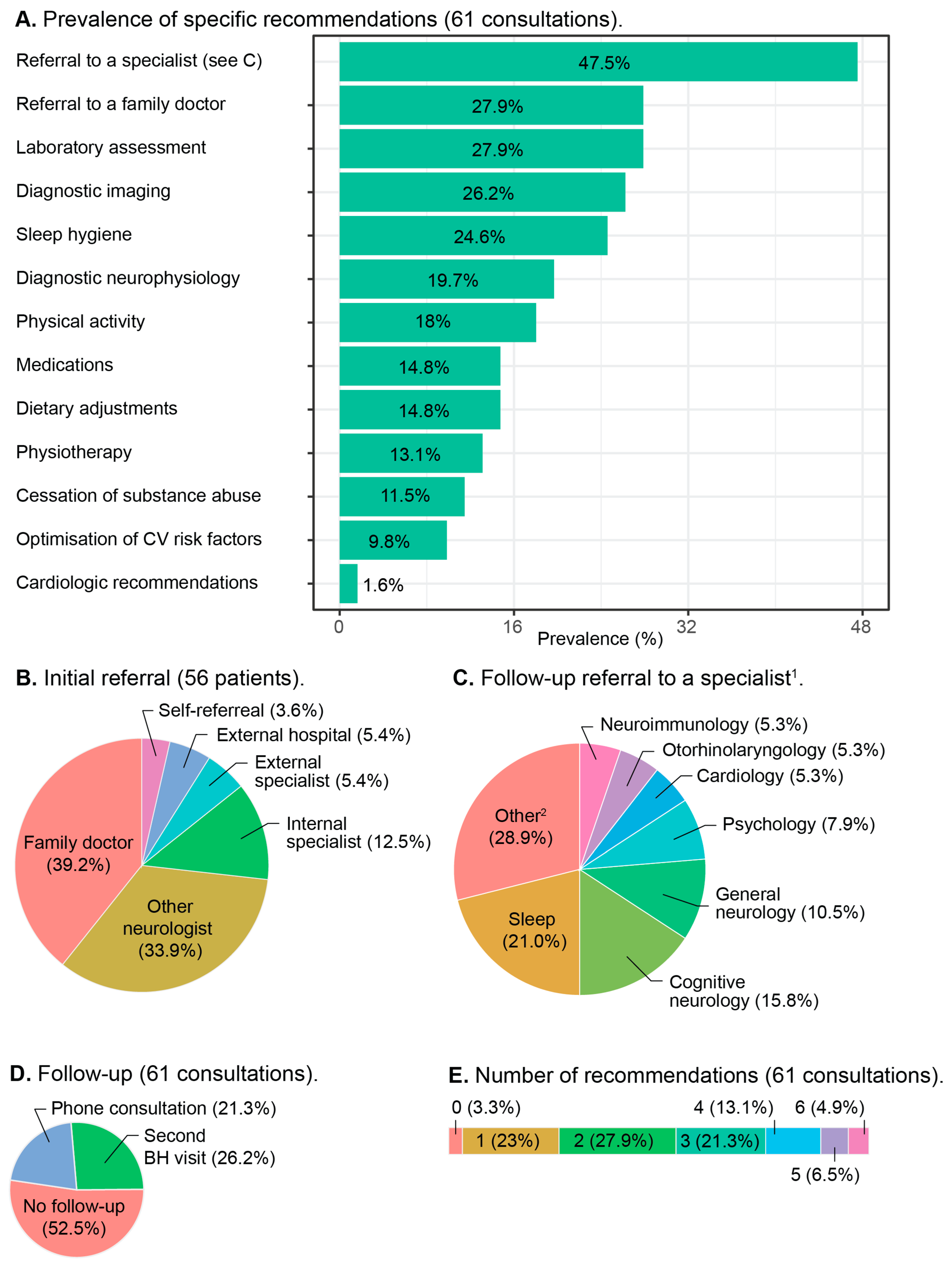
Following our outreach activities, the Bern Brain Health consultations received substantial interest from general practitioners and non-neurological specialists. Between October 2023 and July 2024, a total of 74 patients’ visits were conducted. Among them, 56 patients provided general consent, allowing for the inclusion of 61 patients’ visits in the current analysis (Figure 1). Men and women were represented equally (age: 55.1 ± 16.0 years). Initial referrals (Figure 2) originated from general practitioners, neurologists, and other sources, including self-referrals (3.6%), with proportions distributed nearly equally. Patients presented with a broad spectrum of conditions (Figure 1), including psychiatric, neurological, and cardiovascular disorders. The patients’ visits outcomes cover a broad diagnostic range. Recommendations (Figure 2) often included lifestyle-related and supportive interventions, such as sleep hygiene (24.6%), physical activity (18%), and dietary modification (14.8%). Additionally, referrals (Figure 2) to other specialists were common, particularly to somnologists and cognitive neurologists (36.8%), which particularly emphasizes the importance of sleep and cognition in the context of brain health [43,44]. Further diagnostic workups included laboratory assessment (27.9%) and neuroimaging (26.2%). Many patients received multiple recommendations (Figure 2). 27.9% received two recommendations and 4.9% received as many as six. 52.5% of the patients did not require follow-up Brain Health consultations, while 47.5% were advised to continue care within the Bern Brain Health framework (Figure 2) via either follow-up phone consultation (21.3%) or a second in-person visit (26.2%).
In summary, the complexity and variability of the consultations highlight the need for an interdisciplinary approach to Brain Health. Future initiatives should aim to integrate Brain Health promotion into routine clinical practice and extend these strategies to the general population, including individuals without manifest disease.

4.2. Swiss Brain Health Questionnaire (SBHQ)

There is a need for a simple, comprehensive and time-efficient screening tool that enables individuals to identify their personal risk factors for brain disorders and receive guidance on lifestyle modifications to promote Brain Health and to prevent disease onset. In response, several initiatives have developed screening approaches for Brain Health. Foremost among them, the Brain Care Score was positively validated using the UK Biobank cohort, demonstrating predictive value for stroke, dementia, and depression [45,46]. However, while extremely concise (12 items) and largely focused on cardiovascular risk, this tool is limited in scope. It includes only: 1 item each for sleep, nutrition, and physical activity and 3 items related to social functioning. Other tools have also emerged. Alzheimer’s Research UK developed the “Think Brain Health Check”, which similarly addresses relevant areas with single-item questions (e.g., one each for sleep and diet). However, no validation data have been published to date [47]. A comparable example is a Brain Health quiz from Brain Health Scotland [48]. The Cleveland Clinic also launched a Brain Health Check-Up, which is more detailed than the previous tools, though no peer-reviewed evaluation is currently available [49].
In contrast, the Barcelona Brain Health Initiative (BBHI), launched in 2018, is a longitudinal prospective cohort study examining lifestyle and biological determinants of Brain Health. The BBHI utilizes a comprehensive set of over 100 items derived from more than 10 validated scales, covering cognitive activity, physical exercise, sleep, social interaction, nutrition, life purpose, and general health [50]. Its long-term aim is to inform the design of a randomized controlled trial (RCT) involving a multidomain, coach-supervised lifestyle intervention delivered remotely.
Finally, additional large-scale, prospective cohort studies are currently underway. For example, the Brain Health Project from the University of Texas at Dallas aims to track up to 100,000 healthy adults across the lifespan over a period of at least 10 years [51]. In parallel, this group has developed a Brain Health Index, based on a multidimensional assessment of Brain Health and performance using 22 distinct measures [52,53].
In Bern, we developed the SBHQ based on the principles of preventive lifestyle medicine and the 6 established clusters of low-risk lifestyle factors. These principles emphasize the daily application of healthy habits to prevent, manage, or potentially reverse chronic diseases, grounded in evidence-based interventions [54,55,56,57]. In contrast to previously mentioned tools, the SBHQ is a comprehensive, paper-based self-assessment, across the most relevant lifestyle and health domains, developed in the German language for native accessibility, designed with a scoring system that allows for monitoring changes over time and usable without the need for laboratory tests or other prior medical investigations. The SBHQ enables individuals to assess their Brain Health status independently, while offering practical, personalized starting points for behavior change. This tool also holds promise for future clinical and research applications to evaluate Brain Health trajectories in preventive care [41,42]. To address this multifactorial risk landscape, the SBHQ incorporates domains critical to cardiovascular health, such as those defined in the American Heart Association’s “Life’s Essential 8”, including diet, physical activity, smoking cessation, sleep health, body mass index, blood lipids, blood glucose, and blood pressure [58,59]. Dementia, recognized as another major threat to Brain Health-with up to 45% of cases considered potentially preventable-requires inclusion of additional modifiable risk factors, such as educational attainment, cognitive activity (i.e., cognitive reserve), depression, chronic kidney disease, and living arrangements [43,60]. Mental health also plays a central role, particularly given the impact of major depressive disorder, which may contribute through mechanisms such as chronic stress, medication and substance use, and reduced social participation [61].
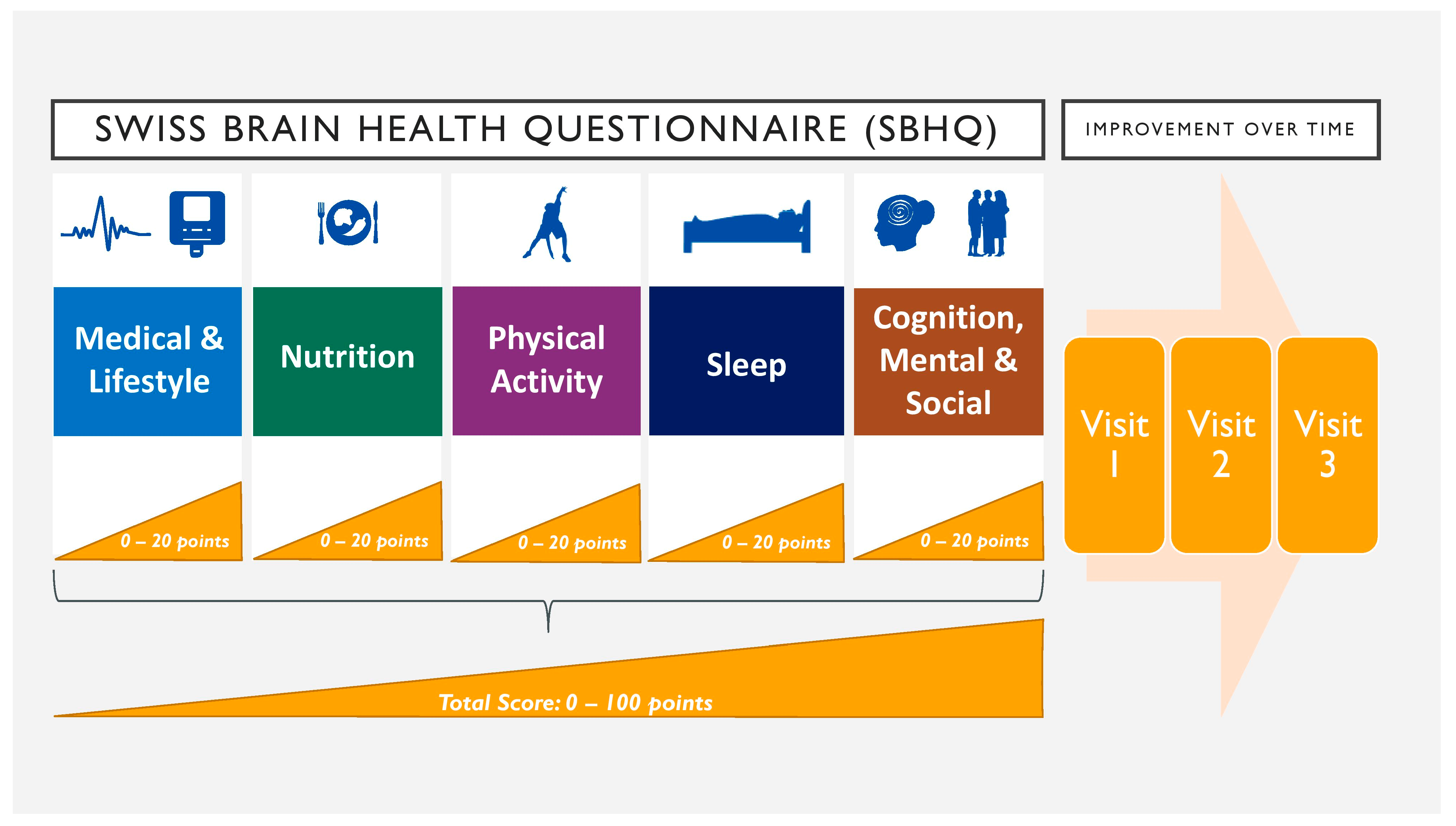
All these risk factors were systematically reviewed and evaluated by the IBBHWG at the Inselspital Bern. They were then conceptually grouped into five core domains: (1) medical and lifestyle, (2) nutrition, (3) sleep, (4) physical activity and (5) cognition, mental and social (Figure 3). Through these five domains, the SBHQ, targets modifiable and clinically relevant determinants of Brain Health. This structure enables early identification of risk and promotes personalized interventions for the prevention of neurological and psychiatric disorders. In the section « medical and lifestyle », treatable risk factors such as hypertension, dyslipidemia, and diabetes are addressed [59,62,63,64]. The section « nutrition », evaluated dietary behavior, including food intake patterns, frequency of home-cooked meals, and fluid consumption [65,66,67,68]. In the section « physical activity », the questionnaire assesses activity levels, muscle strength, and balance [69,70,71,72]. The « sleep » domain examines key sleep-related factors, such as snoring, sleep duration, sleep regularity, and exposure to natural daylight [44,73,74,75,76,77]. Lastly, the section « cognition, mental and social » evaluates social factors, cognitive performance, and mental health [78,79,80,81].
The SBHQ was developed through a systematic, multi-phase methodology aimed at ensuring clinical applicability, scientific rigor, and comprehensiveness. The initial development began with a comprehensive review of modifiable Brain Health determinants, synthesizing evidence from epidemiological studies, clinical trials, and systematic reviews across neurological, cardiovascular, and psychiatric domains. This evidence base informed the generation of an initial item pool, drawing upon validated instruments while ensuring comprehensive coverage of the five predefined SBHQ domains.
Content validity was established through iterative expert review rounds conducted within the IBBHWG. This group included experts in neurology, psychiatry, pediatrics, psychology, sports medicine, nutritional medicine, biology and nursing. Their multidisciplinary perspectives ensured that the questionnaire reflected the complex interplay of biological, behavioral, and environmental factors influencing Brain Health, while maintaining clinical relevance and scientific rigor.
A structured consensus methodology was used to develop the scoring framework. The SBHQ employs a 100-point system, allocating 20 points to each of the five domains, to achieve balanced domain representation. Scoring criteria were calibrated by expert consensus, integrating established clinical thresholds where available and weighing the relative importance of individual items within each domain. This approach supports the creation of a clinically meaningful, interpretable score, capable of discriminating between Brain Health profiles and monitoring longitudinal changes.
The SBHQ was initially developed as a paper-based instrument in German, with a digital version currently under development to improve clinical usability and data acquisition efficiency. Finally, the SBHQ will undergo comprehensive validation in a multi-center study at three academic centers (Bern, Vienna, and Hamburg). Further steps could include developing an English version and conducting international validation in different cultural settings.

4.3. Other Activities and Future Perspectives

Other activities of the group include the launch of the CAS on Brain Health in fall 2024 and the organization of local, national (2nd SBHP stakeholder meeting, December 2024) and international events (International Symposium on “National, Regional and International Plans for Brain and Mental Health: Bridging the Gaps”, June 2025) [82,83,84].
In addition, different Brain Health-related research projects are ongoing, including the burden of sleep disorders in Europe and the burden of brain diseases in Switzerland [84,85].
Therefore, in terms of future plans, the goal is to continue and expand these brain health activities with an interdisciplinary focus and based on international collaborations in order to implement the SBHP [2]. Examples of how this could be implemented in the future are the validation project of the SBHQ and the initiation of a virtual multidisciplinary brain health center [86]. Once validated, the SBHQ in particular will serve as a brain health check tool that can be made available to the population at large.

5. Conclusions

In conclusion, Brain Health has emerged as a key pillar of global health policy. To address the pressing challenges posed by aging populations and the rising burden of neurological and psychiatric disorders, numerous Brain Health strategies and action plans have been developed, both at the international level (e.g., by the WHO and the EAN) and at the national level (e.g., by Switzerland).
This article outlined the first concrete local implementations of the SBHP. The high level of engagement from both healthcare professionals and patients underscores the urgent need to continue and expand such initiatives, including the establishment of a dedicated Brain Health outpatient clinic and the development of the SBHQ.
These initiatives are essential for promoting and safeguarding the most valuable resource of the future: our brain. Preserving brain function for as long as possible will yield benefits not only on an individual level but also for society as a whole.
The Bern consortium and stakeholders are evaluating the creation of a virtual multidisciplinary center on Brain Health.

Author Contributions

Conceptualization: T.M., I.-K.P., I.F., A.P.A.V., H.S., G.L.D.T., M.R.H., B.D., K.A., S.J., M.A., U.F. and C.L.A.B.; methodology: T.M., I.-K.P., A.P.A.V., G.L.D.T. and C.L.A.B.; validation: T.M., I.-K.P., I.F., A.P.A.V., H.S., G.L.D.T., M.R.H., B.D., K.A., S.J., M.A., U.F. and C.L.A.B.; formal analysis: T.M., I.F. and G.L.D.T.; investigation: T.M., I.-K.P., I.F., A.P.A.V., H.S., M.R.H., B.D., K.A., S.J., M.A., U.F. and C.L.A.B.; resources: T.M., I.-K.P., I.F., A.P.A.V., H.S., G.L.D.T., M.R.H., B.D., K.A., S.J., M.A., U.F. and C.L.A.B.; data curation: T.M., I.-K.P., I.F., A.P.A.V., H.S., G.L.D.T., M.R.H., B.D., K.A., S.J., M.A., U.F. and C.L.A.B.; writing—original draft preparation: T.M., I.-K.P., I.F. and A.P.A.V.; writing—review and editing: T.M., I.-K.P., I.F., A.P.A.V., H.S., G.L.D.T., M.R.H., B.D., K.A., S.J., M.A., U.F. and C.L.A.B.; visualization: T.M. and I.F.; supervision: I.-K.P., A.P.A.V., H.S., G.L.D.T., M.R.H., B.D., K.A., S.J., M.A., U.F. and C.L.A.B.; project administration: T.M., I.-K.P. and C.L.A.B. All authors have read and agreed to the published version of the manuscript.

Funding

This research received no external funding.

Institutional Review Board Statement

This work is in accordance with the 1975 Declaration of Helsinki (as revised). According to the Cantonal Ethics Committee of Bern, no ethical approval is required for this work (Project ID 2024-02375). Further, the Ethics Committee confirms that it is in accordance with ICH-GCP and general consent has been obtained from all patients involved.

Data Availability Statement

De-identified data can be made available from the corresponding author upon reasonable request by a qualified researcher.

Conflicts of Interest

Tobias Monschein: No conflict of interest regarding this work. Iris-Katharina Penner: No conflict of interest regarding this work. Irina Filchenko: No conflict of interest regarding this work. Albrecht Vorster: No conflict of interest regarding this work. Hakan Sarikaya: No conflict of interest regarding this work. Gian Luca Di Tanna: No conflict of interest regarding this work. Mirjam R. Heldner: No conflict of interest regarding this work. Bogdan Draganski: No conflict of interest regarding this work. Kristina Adorjan: No conflict of interest regarding this work. Simon Jung: No conflict of interest regarding this work. Marcel Arnold: Vice-President of the Swiss Heart Foundation, Co-President Swissprevent, Past-President Swiss Stroke Society Urs Fischer: President Swiss Neurological Society, President elect European Stroke Organization Claudio L.A. Bassetti: No conflict of interest regarding this work.

References

  1. Arbeitsgruppe Brain Health. Dem Gehirn Sorge tragen. Schweiz. Ärztezeitung 2022, 103, 38–41. Available online: https://neurologie.insel.ch/fileadmin/Neurologie/Dokumente/Dem_Gehirn_Sorge_tragen_Schweizerische_%C3%84rztezeitung.pdf (accessed on 29 July 2025).
  2. Bassetti, C.L.A.; Heldner, M.R.; Adorjan, K.; Albanese, E.; Allali, G.; Arnold, M.; Bègue, I.; Bochud, M.; Chan, A.; Cuénod, K.Q.D.; et al. The Swiss Brain Health Plan 2023–2033. Clin. Transl. Neurosci. 2023, 7, 38. [Google Scholar] [CrossRef]
  3. GBD 2021 Diseases and Injuries Collaborators. Global incidence, prevalence, years lived with disability (YLDs), disability-adjusted life-years (DALYs), and healthy life expectancy (HALE) for 371 diseases and injuries in 204 countries and territories and 811 subnational locations, 1990–2021: A systematic analysis for the Global Burden of Disease Study 2021. Lancet 2024, 403, 2133–2161. [Google Scholar] [CrossRef]
  4. Hanson, K.; Brikci, N.; Erlangga, D.; Alebachew, A.; De Allegri, M.; Balabanova, D.; Blecher, M.; Cashin, C.; Esperato, A.; Hipgrave, D.; et al. The Lancet Global Health Commission on financing primary health care: Putting people at the centre. Lancet Glob. Health 2022, 10, e715–e772. [Google Scholar] [CrossRef]
  5. World Health Organization. Ageing and Health. Available online: https://www.who.int/news-room/fact-sheets/detail/ageing-and-health (accessed on 1 February 2023).
  6. Scott, A.J.; Ellison, M.; Sinclair, D.A. The economic value of targeting aging. Nat. Aging 2021, 1, 616–623. [Google Scholar] [CrossRef]
  7. Bassetti, C.L.A.; Endres, M.; Sander, A.; Crean, M.; Subramaniam, S.; Carvalho, V.; Di Liberto, G.; Franco, O.H.; Pijnenburg, Y.; Leonardi, M.; et al. The European Academy of Neurology Brain Health Strategy: One brain, one life, one approach. Eur. J. Neurol. 2022, 29, 2559–2566. [Google Scholar] [CrossRef]
  8. Henein, M.Y.; Vancheri, S.; Longo, G.; Vancheri, F. The Role of Inflammation in Cardiovascular Disease. Int. J. Mol. Sci. 2022, 23, 12906. [Google Scholar] [CrossRef]
  9. Yan, Q.; Liu, S.; Sun, Y.; Chen, C.; Yang, S.; Lin, M.; Long, J.; Yao, J.; Lin, Y.; Yi, F.; et al. Targeting oxidative stress as a preventive and therapeutic approach for cardiovascular disease. J. Transl. Med. 2023, 21, 1–35. [Google Scholar] [CrossRef]
  10. Wu, H.; Roks, A.J. Genomic instability and vascular aging: A focus on nucleotide excision repair. Trends Cardiovasc. Med. 2014, 24, 61–68. [Google Scholar] [CrossRef]
  11. Wagner, J.U.; Dimmeler, S. Cellular cross-talks in the diseased and aging heart. J. Mol. Cell. Cardiol. 2020, 138, 136–146. [Google Scholar] [CrossRef]
  12. Palatini, P.; Julius, S. The role of cardiac autonomic function in hypertension and cardiovascular disease. Curr. Hypertens. Rep. 2009, 11, 199–205. [Google Scholar] [CrossRef] [PubMed]
  13. García-García, I.; Donica, O.; Cohen, A.A.; Nusslé, S.G.; Heini, A.; Nusslé, S.; Pichard, C.; Rietschel, E.; Tanackovic, G.; Folli, S.; et al. Maintaining brain health across the lifespan. Neurosci. Biobehav. Rev. 2023, 153, 105365. [Google Scholar] [CrossRef] [PubMed]
  14. GBD 2021 Nervous System Disorders Collaborators. Global, regional, and national burden of disorders affecting the nervous system, 1990–2021: A systematic analysis for the Global Burden of Disease Study 2021. Lancet Neurol. 2024, 23, 344–381. [Google Scholar] [CrossRef] [PubMed]
  15. GBD 2019 Mental Disorders Collaborators. Global, regional, and national burden of 12 mental disorders in 204 countries and territories, 1990–2019: A systematic analysis for the Global Burden of Disease Study 2019. Lancet Psychiatry 2022, 7, 137–150. [Google Scholar] [CrossRef]
  16. Mitchell, A.J.; E Cogswell, I.; Dalos, J.; Tsakalos, G.; Lei, J.; Oros, A.; Rafferty, Q.; Santoni, S.; Steele, X.; Dieleman, J.L.; et al. Estimating global direct health-care spending on neurological and mental health between 2000 and 2019: A modelling study. Lancet Public Health 2025, 10, e401–e411. [Google Scholar] [CrossRef]
  17. Optimizing Brain Health Across the Life Course: WHO Position Paper. Available online: https://www.who.int/publications/i/item/9789240054561 (accessed on 29 July 2025).
  18. Bègue, I.; Flahault, A.; Bolon, I.; de Castañeda, R.R.; Vicedo-Cabrera, A.M.; Bassetti, C.L. One brain, one mind, one health, one planet—A call from Switzerland for a systemic approach in brain health research, policy and practice. Lancet Reg. Heal.-Eur. 2025, 50, 101229. [Google Scholar] [CrossRef]
  19. Global Action Plan on the Public Health Response to Dementia 2017–2025. Available online: https://www.who.int/publications/i/item/global-action-plan-on-the-public-health-response-to-dementia-2017---2025 (accessed on 29 July 2025).
  20. Mental Health Action Plan 2013–2020. Available online: https://www.who.int/publications/i/item/9789241506021 (accessed on 29 July 2025).
  21. Avitzur, O.; Rost, N.S.; Evans, D.A. Neurologists Have a Plan for Lifelong Brain Health. Neurology 2022, 99, 925–926. [Google Scholar] [CrossRef]
  22. About the Brain Health Mission. Available online: https://www.ean.org/brain-health-mission (accessed on 29 July 2025).
  23. CSA BrainHealth—Designing a European Brain Health Landscape. Available online: https://www.brainhealth-partnership.eu/ (accessed on 29 July 2025).
  24. Hjernehelse Angår Alle—The Norwegian Government Security and Service Organisation. National Brain Health Strategy (2018–2024). National Brain Plans; The Norwegian Government Security and Service Organisation: Oslo, Norway, 2018.
  25. National Brain Plans. Available online: https://www.braincouncil.eu/about-us/national-brain-councils/national-brain-plans/ (accessed on 29 July 2025).
  26. Brain&Mind. Available online: https://www.brainandmind.fr/ (accessed on 29 July 2025).
  27. Les Missions de l’Institut. Available online: https://institutducerveau-icm.org/fr/mission/ (accessed on 29 July 2025).
  28. Der Deutsche Gehirnplan Agenda 2030. Available online: https://www.braincouncil.de/brainplan (accessed on 29 July 2025).
  29. Brain Plan for Poland. Available online: https://www.braincouncil.eu/wp-content/uploads/2019/07/Raport_BRAIN_PLAN.pdf (accessed on 29 July 2025).
  30. Furthering the Brain Health Agenda in Spain. Available online: https://www.gbhi.org/news-publications/furthering-brain-health-agenda-spain (accessed on 29 July 2025).
  31. Available online: https://globaldementia.org/en/finland-s-national-brain-health-programme (accessed on 29 July 2025).
  32. Available online: https://www.sins.it/italian-manifesto-one-brain-one-health-2024-2031/ (accessed on 29 July 2025).
  33. Leonardi, M.; Colonna, I.; Garcia-Azorin, D.; Bereczki, D.; Bodini, B.; Bregman, N.; Kälviäinen, R.K.; Kondybayeva, A.; Papp, V.; Vodušek, D.B.; et al. Brain health and national neurological societies: Results of the European Academy of Neurology survey on brain health awareness and areas of implementation for European countries. Eur. J. Neurol. 2024, 31, e16516. [Google Scholar] [CrossRef]
  34. Available online: https://www.euro-access.eu/en/calls/496/Towards-structuring-brain-health-research-in-Europe (accessed on 29 July 2025).
  35. Available online: https://era4health.eu/# (accessed on 29 July 2025).
  36. Taquet, M.; Luciano, S.; Geddes, J.R.; Harrison, P.J. Neurological burden and European investment: A disconnect. Lancet Neurol. 2021, 8, 130–140. [Google Scholar] [CrossRef]
  37. Available online: https://www.braincouncil.eu/wp-content/uploads/2018/07/EBC-Horizon-Europe-Statement-16-July.pdf (accessed on 29 July 2025).
  38. Boon, P.A.J.M.; Berger, T.; Leonardi, M.; Marson, T.; Kallweit, U.; Moro, E.; Toscano, A.; Rektorova, I.; Accorroni, A.; Scheerens, C.; et al. A roadmap toward promoting and improving brain health in Europe and closing the awareness and funding gap. Eur. J. Neurol. 2025, 32, e16589. [Google Scholar] [CrossRef]
  39. Available online: https://bern.com/en/business/bern-business-destination/cluster/medizin-life-sciences (accessed on 29 July 2025).
  40. Available online: https://neurologie.insel.ch/de/unser-angebot/brain-health (accessed on 29 July 2025).
  41. Owolabi, M.; Thrift, A.G.; Mahal, A.; Ishida, M.; Martins, S.; Johnson, W.D.; Pandian, J.; Abd-Allah, F.; Yaria, J.; Phan, H.T.; et al. Primary stroke prevention worldwide: Translating evidence into action. Lancet Public Health 2021, 7, e74–e85. [Google Scholar] [CrossRef]
  42. Spence, J.D.; Azarpazhooh, M.R.; Larsson, S.C.; Bogiatzi, C.; Hankey, G.J. Stroke Prevention in Older Adults: Recent Advances. Stroke 2020, 51, 3770–3777. [Google Scholar] [CrossRef]
  43. Livingston, G.; Huntley, J.; Liu, K.Y.; Costafreda, S.G.; Selbæk, G.; Alladi, S.; Ames, D.; Banerjee, S.; Burns, A.; Brayne, C.; et al. Dementia prevention, intervention, and care: 2024 report of the Lancet standing Commission. Lancet 2024, 404, 572–628. [Google Scholar] [CrossRef]
  44. Vorster, A.P.A.; van Someren, E.J.W.; Pack, A.I.; Huber, R.; Schmidt, M.H.; Bassetti, C.L.A. Sleep Health. Clin. Transl. Neurosci. 2024, 8, 8. [Google Scholar] [CrossRef]
  45. Singh, S.D.; Oreskovic, T.; Carr, S.; Papier, K.; Conroy, M.; Senff, J.R.; Chemali, Z.; Gutierrez-Martinez, L.; Parodi, L.; Mayerhofer, E.; et al. The predictive validity of a Brain Care Score for dementia and stroke: Data from the UK Biobank cohort. Front. Neurol. 2023, 14, 1291020. [Google Scholar] [CrossRef] [PubMed]
  46. Singh, S.D.; Rivier, C.A.; Papier, K.; Chemali, Z.; Gutierrez-Martinez, L.; Parodi, L.; Mayerhofer, E.; Senff, J.; Clocchiatti-Tuozzo, S.; Nunley, C.; et al. The predictive validity of a Brain Care Score for late-life depression and a composite outcome of dementia, stroke, and late-life depression: Data from the UK Biobank cohort. Front. Psychiatry 2024, 15, 1373797. [Google Scholar] [CrossRef] [PubMed]
  47. Think Brain Health. Available online: https://www.alzheimersresearchuk.org/ (accessed on 29 July 2025).
  48. Available online: https://www.brainhealth.scot (accessed on 29 July 2025).
  49. Cleveland Clinics Brain Health. Available online: https://healthybrains.org/ (accessed on 29 July 2025).
  50. Roca-Ventura, A.; Solana-Sánchez, J.; Cattaneo, G.; Tormos-Muñoz, J.M.; Pascual-Leone, Á.; Bartrés-Faz, D. Lifestyle trajectories in middle-aged adults and their relationship with health indicators. Front. Public Health 2024, 12, 1412547. [Google Scholar] [CrossRef] [PubMed]
  51. Available online: https://centerforbrainhealth.org/science/the-brainhealth-project (accessed on 29 July 2025).
  52. Chapman, S.B.; Fratantoni, J.M.; Robertson, I.H.; D’ESposito, M.; Ling, G.S.F.; Zientz, J.; Vernon, S.; Venza, E.; Cook, L.G.; Tate, A.; et al. A Novel BrainHealth Index Prototype Improved by Telehealth-Delivered Training During COVID-19. Front. Public Health 2021, 9, 641754. [Google Scholar] [CrossRef]
  53. Spence, J.S.; Turner, M.P.; Rypma, B.; D’eSposito, M.; Chapman, S.B. Toward precision brain health: Accurate prediction of a cognitive index trajectory using neuroimaging metrics. Cereb. Cortex 2023, 34, 1–13. [Google Scholar] [CrossRef]
  54. Lippman, D.; Stump, M.; Veazey, E.; Guimarães, S.T.; Rosenfeld, R.; Kelly, J.H.; Ornish, D.; Katz, D.L. Foundations of Lifestyle Medicine and its Evolution. Mayo Clin. Proc. Innov. Qual. Outcomes 2024, 8, 97–111. [Google Scholar] [CrossRef]
  55. Nguyen, X.-M.T.; Li, Y.; Wang, D.D.; Whitbourne, S.B.; Houghton, S.C.; Hu, F.B.; Willett, W.C.; Sun, Y.V.; Djousse, L.; Gaziano, J.M.; et al. Impact of 8 lifestyle factors on mortality and life expectancy among United States veterans: The Million Veteran Program. Am. J. Clin. Nutr. 2023, 119, 127–135. [Google Scholar] [CrossRef] [PubMed]
  56. Available online: https://portal.lifestylemedicine.org/Portal/ACLM/About/What_is_Lifestyle_Medicine_/Lifestyle_Medicine.aspx (accessed on 29 July 2025).
  57. Vodovotz, Y.; Barnard, N.; Hu, F.B.; Jakicic, J.; Lianov, L.; Loveland, D.; Buysse, D.; Szigethy, E.; Finkel, T.; Sowa, G.; et al. Prioritized Research for the Prevention, Treatment, and Reversal of Chronic Disease: Recommendations From the Lifestyle Medicine Research Summit. Front. Med. 2020, 7, 585744. [Google Scholar] [CrossRef] [PubMed]
  58. Lloyd-Jones, D.M.; Allen, N.B.; Anderson, C.A.; Black, T.; Brewer, L.C.; Foraker, R.E.; Grandner, M.A.; Lavretsky, H.; Perak, A.M.; Sharma, G.; et al. Life’s Essential 8: Updating and Enhancing the American Heart Association’s Construct of Cardiovascular Health: A Presidential Advisory From the American Heart Association. Circulation 2022, 146, E18–E43. [Google Scholar] [CrossRef] [PubMed]
  59. Paing, P.Y.; Littman, A.J.; Reese, J.A.; Sitlani, C.M.; Umans, J.G.; Cole, S.A.; Zhang, Y.; Ali, T.; Fretts, A.M. Association of Achievement of the American Heart Association’s Life’s Essential 8 Goals With Incident Cardiovascular Diseases in the SHFS. J. Am. Hear. Assoc. 2024, 13, e032918. [Google Scholar] [CrossRef]
  60. Rosenau, C.; Köhler, S.; van Boxtel, M.; Tange, H.; Deckers, K. Validation of the Updated “LIfestyle for BRAin health” (LIBRA) Index in the English Longitudinal Study of Ageing and Maastricht Aging Study. J. Alzheimer’s Dis. 2024, 101, 1237–1248. [Google Scholar] [CrossRef]
  61. Marx, W.; Manger, S.H.; Blencowe, M.; Murray, G.; Ho, F.Y.-Y.; Lawn, S.; Blumenthal, J.A.; Schuch, F.; Stubbs, B.; Ruusunen, A.; et al. Clinical guidelines for the use of lifestyle-based mental health care in major depressive disorder: World Federation of Societies for Biological Psychiatry (WFSBP) and Australasian Society of Lifestyle Medicine (ASLM) taskforce. World J. Biol. Psychiatry 2022, 24, 333–386. [Google Scholar] [CrossRef]
  62. Wei, J.; Xu, H.; Liese, A.D.; Merchant, A.T.; Wang, L.; Yang, C.; Lohman, M.C.; Brown, M.J.; Wang, T.; Friedman, D.B. Ten-Year Cardiovascular Disease Risk Score and Cognitive Function Among Older Adults: The National Health and Nutrition Examination Survey 2011 to 2014. J. Am. Hear. Assoc. 2023, 12, e028527. [Google Scholar] [CrossRef]
  63. Wee, J.; Sukudom, S.; Bhat, S.; Marklund, M.; Peiris, N.J.; Hoyos, C.M.; Patel, S.; Naismith, S.L.; Dwivedi, G.; Misra, A. The relationship between midlife dyslipidemia and lifetime incidence of dementia: A systematic review and meta-analysis of cohort studies. Alzheimer’s Dementia: Diagn. Assess. Dis. Monit. 2023, 15, e12395. [Google Scholar] [CrossRef]
  64. Kim, H.; Ang, T.F.A.; Thomas, R.J.; Lyons, M.J.; Au, R. Long-term blood pressure patterns in midlife and dementia in later life: Findings from the Framingham Heart Study. Alzheimer’s Dement. 2023, 19, 4357–4366. [Google Scholar] [CrossRef]
  65. Nishi, S.K.; Babio, N.; Paz-Graniel, I.; Serra-Majem, L.; Vioque, J.; Fitó, M.; Corella, D.; Pintó, X.; Bueno-Cavanillas, A.; Tur, J.A.; et al. Water intake, hydration status and 2-year changes in cognitive performance: A prospective cohort study. BMC Med. 2023, 21, 82. [Google Scholar] [CrossRef]
  66. Gómez-Pinilla, F. Brain foods: The effects of nutrients on brain function. Nat. Rev. Neurosci. 2008, 9, 568–578. [Google Scholar] [CrossRef]
  67. Mills, S.; Brown, H.; Wrieden, W.; White, M.; Adams, J. Frequency of eating home cooked meals and potential benefits for diet and health: Cross-sectional analysis of a population-based cohort study. Int. J. Behav. Nutr. Phys. Act. 2017, 14, 109. [Google Scholar] [CrossRef] [PubMed]
  68. Volkert, D.; Beck, A.M.; Faxén-Irving, G.; Frühwald, T.; Hooper, L.; Keller, H.; Porter, J.; Rothenberg, E.; Suominen, M.; Wirth, R.; et al. ESPEN guideline on nutrition and hydration in dementia—Update 2024. Clin. Nutr. 2024, 43, 1599–1626. [Google Scholar] [CrossRef] [PubMed]
  69. Momma, H.; Kawakami, R.; Honda, T.; Sawada, S.S. Muscle-strengthening activities are associated with lower risk and mortality in major non-communicable diseases: A systematic review and meta-analysis of cohort studies. Br. J. Sports Med. 2022, 56, 755–763. [Google Scholar] [CrossRef] [PubMed]
  70. Paluch, A.E.; Bajpai, S.; Bassett, D.R.; Carnethon, M.R.; Ekelund, U.; Evenson, K.R.; A Galuska, D.; Jefferis, B.J.; Kraus, W.E.; Lee, I.-M.; et al. Daily steps and all-cause mortality: A meta-analysis of 15 international cohorts. Lancet Public Health 2022, 7, e219–e228. [Google Scholar] [CrossRef]
  71. Rezaei, A.; Bhat, S.G.; Cheng, C.-H.; Pignolo, R.J.; Lu, L.; Kaufman, K.R. Age-related changes in gait, balance, and strength parameters: A cross-sectional study. PLoS ONE 2024, 19, e0310764. [Google Scholar] [CrossRef]
  72. Lee, D.H.; Rezende, L.F.; Joh, H.-K.; Keum, N.; Ferrari, G.; Rey-Lopez, J.P.; Rimm, E.B.; Tabung, F.K.; Giovannucci, E.L. Long-Term Leisure-Time Physical Activity Intensity and All-Cause and Cause-Specific Mortality: A Prospective Cohort of US Adults. Circulation 2022, 146, 523–534. [Google Scholar] [CrossRef]
  73. Shi, L.; Chen, S.-J.; Ma, M.-Y.; Bao, Y.-P.; Han, Y.; Wang, Y.-M.; Shi, J.; Vitiello, M.V.; Lu, L. Sleep disturbances increase the risk of dementia: A systematic review and meta-analysis. Sleep Med. Rev. 2018, 40, 4–16. [Google Scholar] [CrossRef]
  74. Bian, W.; Biswas, R.K.; Ahmadi, M.N.; Bin, Y.S.; Postnova, S.; Phillips, A.J.K.; Koemel, N.A.; Chaput, J.-P.; Rajaratnam, S.M.W.; Cistulli, P.A.; et al. Dose-response associations of device measured sleep regularity and duration with incident dementia in 82391 UK adults. BMC Public Health 2025, 25, 516. [Google Scholar] [CrossRef]
  75. Wu, L.; Sun, D.; Tan, Y. A systematic review and dose-response meta-analysis of sleep duration and the occurrence of cognitive disorders. Sleep Breath. 2017, 22, 805–814. [Google Scholar] [CrossRef]
  76. Guo, C.; Harshfield, E.L.; Markus, H.S. Sleep Characteristics and Risk of Stroke and Dementia: An Observational and Mendelian Randomization Study. Neurology 2024, 102, e209141. [Google Scholar] [CrossRef]
  77. Liao, J.; Shi, Y.; Li, Y.; Han, D. Impact of age on sleep duration and health outcomes: Evidence from four large cohort studies. Sleep Med. 2025, 129, 140–147. [Google Scholar] [CrossRef] [PubMed]
  78. Rimmele, U.; Ballhausen, N.; Ihle, A.; Kliegel, M. In Older Adults, Perceived Stress and Self-Efficacy Are Associated with Verbal Fluency, Reasoning, and Prospective Memory (Moderated by Socioeconomic Position). Brain Sci. 2022, 12, 244. [Google Scholar] [CrossRef] [PubMed]
  79. Mirza, S.S.; Ikram, M.A.; Bos, D.; Mihaescu, R.; Hofman, A.; Tiemeier, H. Mild cognitive impairment and risk of depression and anxiety: A population-based study. Alzheimer’s Dement. 2016, 13, 130–139. [Google Scholar] [CrossRef] [PubMed]
  80. Shen, C.; Rolls, E.T.; Cheng, W.; Kang, J.; Dong, G.; Xie, C.; Zhao, X.-M.; Sahakian, B.J.; Feng, J. Associations of Social Isolation and Loneliness With Later Dementia. Neurology 2022, 99, E164–E175. [Google Scholar] [CrossRef]
  81. Basu, N.; Yang, X.; Luben, R.N.; Whibley, D.; Macfarlane, G.J.; Wareham, N.J.; Khaw, K.-T.; Myint, P.K. Fatigue is associated with excess mortality in the general population: Results from the EPIC-Norfolk study. BMC Med. 2016, 14, 122. [Google Scholar] [CrossRef]
  82. Jung, S.; Tanner, D.; Reis, J.; Bassetti, C.L.A. The Certificate of Advanced Studies in Brain Health of the University of Bern. Clin. Transl. Neurosci. 2025, 9, 35. [Google Scholar] [CrossRef]
  83. Available online: https://swiss-brainhealth2024.congress-imk.ch/frontend/index.php (accessed on 29 July 2025).
  84. A Bassetti, C.L.; Bègue, I.; Chen, C.; Manes, F.; Leonardi, M.; Adorjan, K.; Alladi, S.; Angellsen, S.N.; Baeriswyl, P.; Barazzoni, F.; et al. The Bern Declaration on Brain Health: A decalogue to launch an international alliance. Lancet Neurol. 2025, 24, 720. [Google Scholar] [CrossRef]
  85. Bassetti, C.L.A.; Welter, L.S.; Montes-Martinez, M.; Mühlberger, N.; Boon, P.; Berger, T.; Deuschl, G.; Arvandi, M.; Konti, M.; Lolich, M.; et al. Epidemiology and Economic Burden of Sleep Disorders in Europe. SSRN 2025. [Google Scholar] [CrossRef]
  86. Bassetti, C.L.A. The Swiss Brain Health Plan in the International Context. Clin. Transl. Neurosci. 2025, 9, 44. [Google Scholar] [CrossRef]
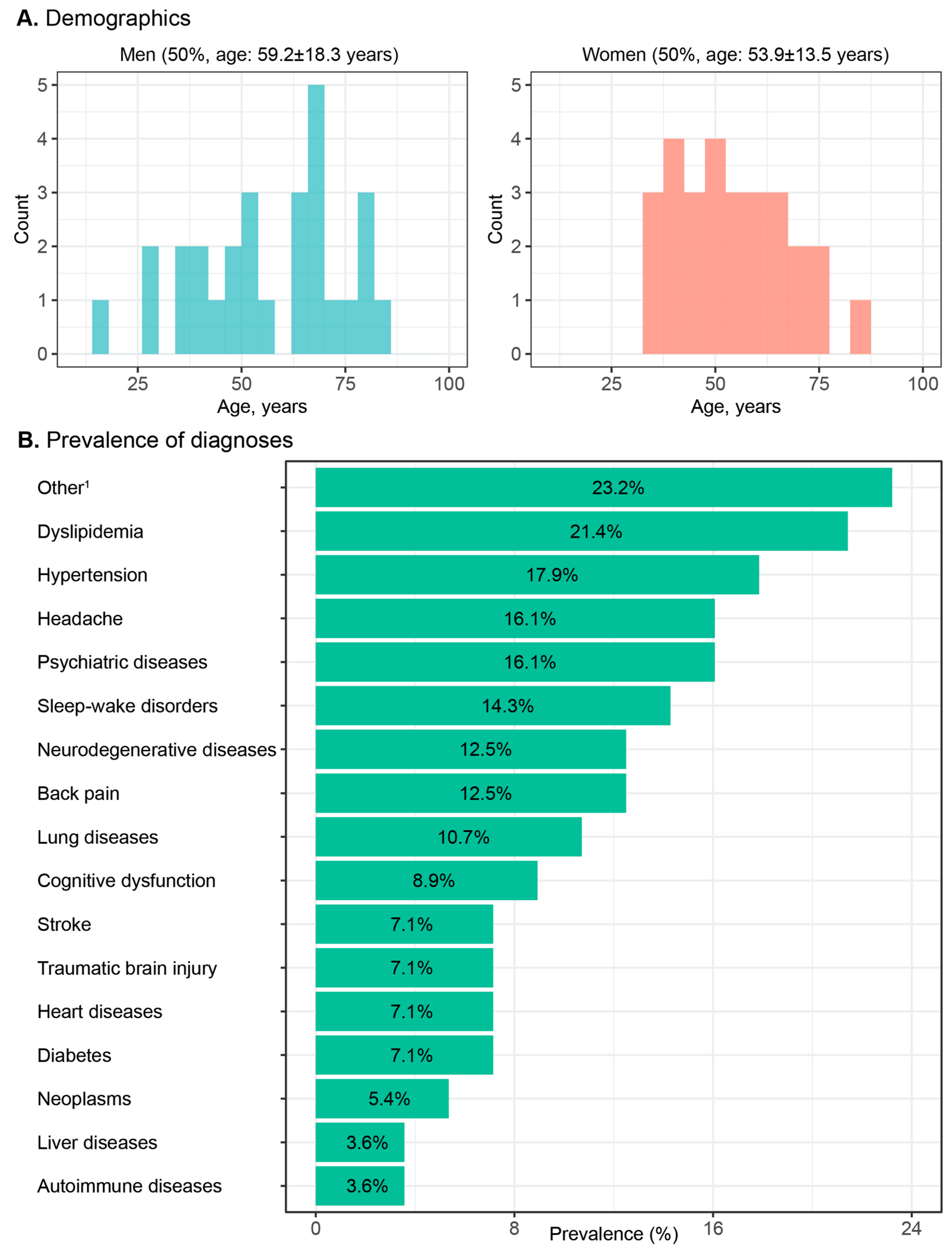
Figure 1. Overview of demographics and diagnoses for patients (n = 56) in Brain Health Consultations. (A). Demographics. (B). Prevalence of diagnoses; demographics are given in mean + standard deviation. 1 Diagnoses affecting one individual (e.g., neuralgia or obesity).
Ctn 09 00056 g001
Figure 2. Overview of recommendations, referral sources, and follow-up for patients (n = 56) in a Brain Health Consultation (n = 61). (A). Prevalence of specific recommendations. (B). Initial referral. (C). Follow-up referral to a specialist. (D). Follow-up within BH Consultations. (E). Number of recommendations per patient. BH—Brain Health, CV—cardiovascular. 1 38 referrals per 29 patients. 2 e.g., dermatology, endocrinology, gastroenterology, neurosurgery, rheumatology, urology.
Ctn 09 00056 g002
Figure 3. Swiss Brain Health Questionnaire (SBHQ) with its 5 domains: (1) Medical and Lifestyle, (2) Nutrition, (3) Physical Activity, (4) Sleep and (5) Cognition, Mental and Social; the idea is to reach in every domain up to 20 points, so that you can reach a maximum Brain Health score of 100 points and could follow your score over time to objectify potential improvement. The maxim is: the higher your brain health score, the healthier you and your brain are.
Ctn 09 00056 g003
Disclaimer/Publisher’s Note: The statements, opinions and data contained in all publications are solely those of the individual author(s) and contributor(s) and not of MDPI and/or the editor(s). MDPI and/or the editor(s) disclaim responsibility for any injury to people or property resulting from any ideas, methods, instructions or products referred to in the content.