
Article

The Walls Are Closing In: Postural Responses to a Virtual Reality Claustrophobic Simulation

by
Harish Chander
1,*,
Hannah R. Freeman
1,
Christopher M. Hill
2,
Christopher R. Hudson
3,
Sachini N. K. Kodithuwakku Arachchige
1,
Alana J. Turner
1,
J. Adam Jones
4 and
Adam C. Knight
1
1
Neuromechanics Laboratory, Department of Kinesiology, Mississippi State University, Mississippi State, MS 39762, USA
2
Department of Kinesiology and Physical Education, Northern Illinois University, DeKalb, IL 60115, USA
3
Center for Advanced Vehicular Systems (CAVS), Mississippi State University, Starkville, MS 39759, USA
4
High Fidelity Virtual Environments (Hi5) Lab, Department of Computer Science & Engineering, Mississippi State University, Mississippi State, MS 39762, USA
*
Author to whom correspondence should be addressed.
Clin. Transl. Neurosci. 2022, 6(2), 15; https://doi.org/10.3390/ctn6020015
Submission received: 3 May 2022 / Revised: 7 June 2022 / Accepted: 14 June 2022 / Published: 17 June 2022

Abstract

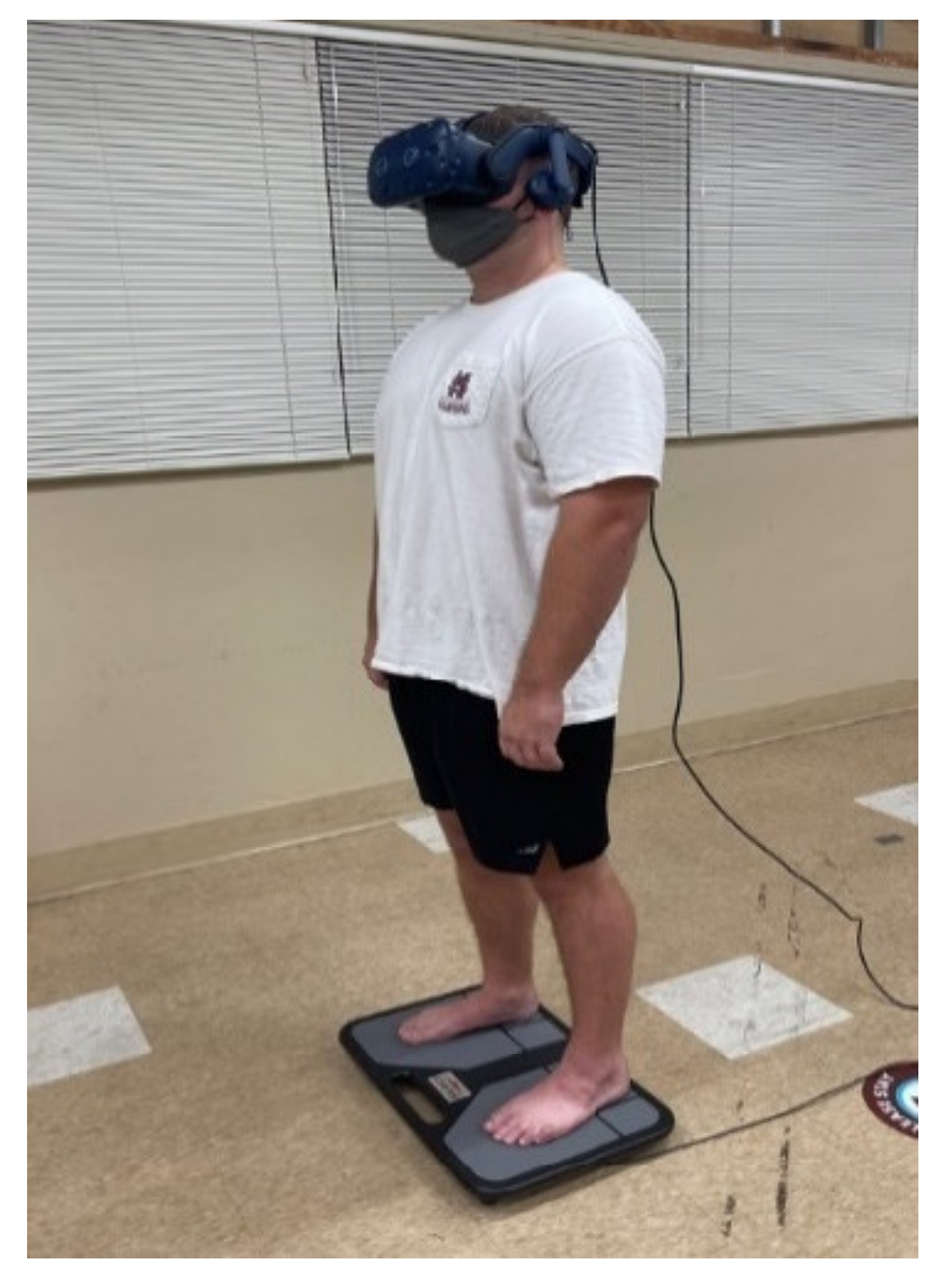
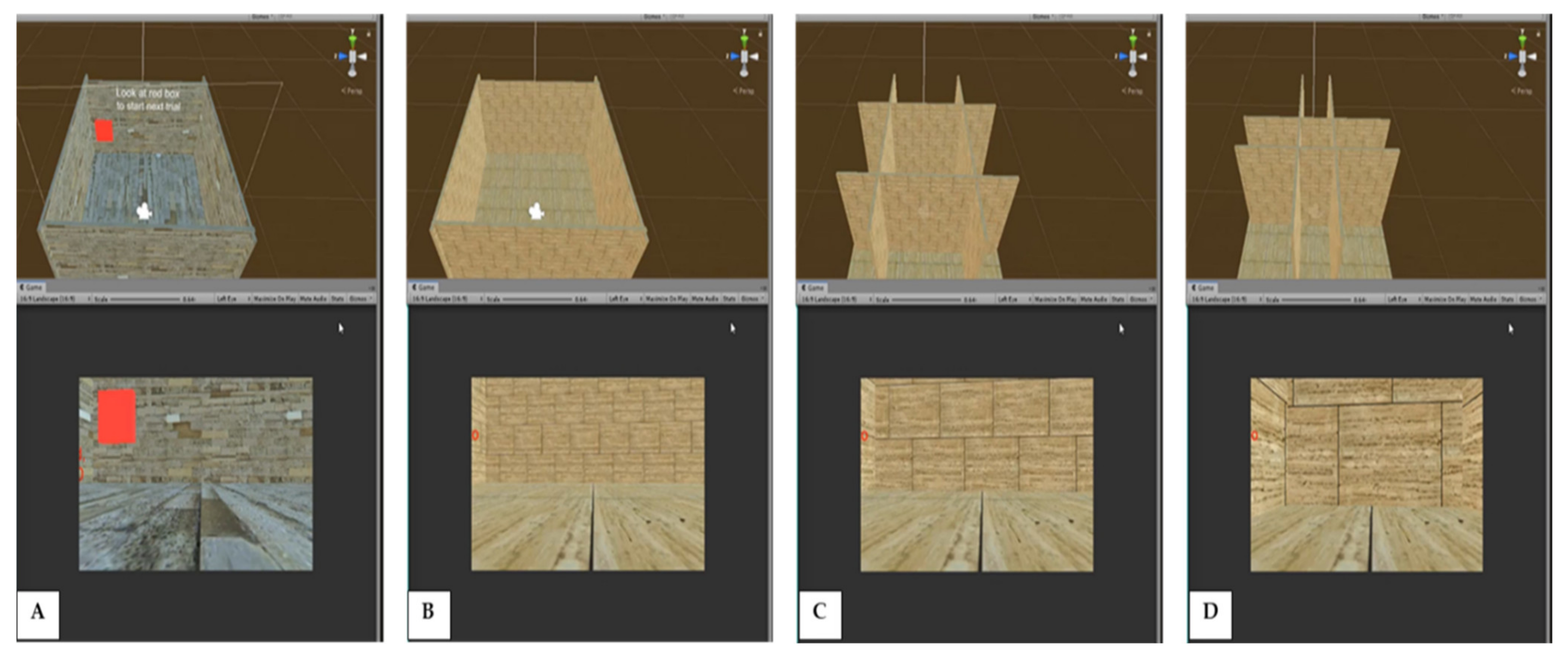
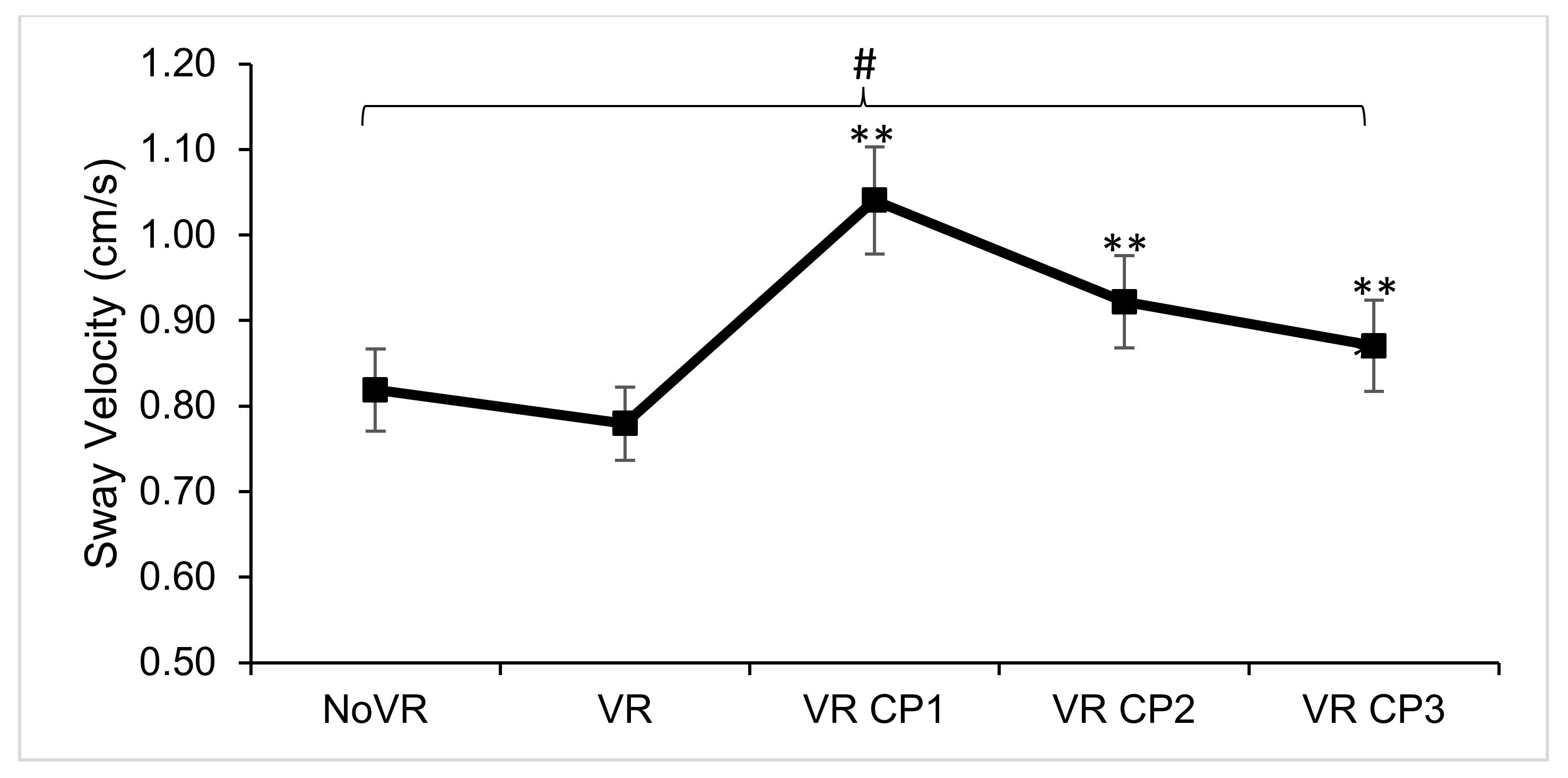
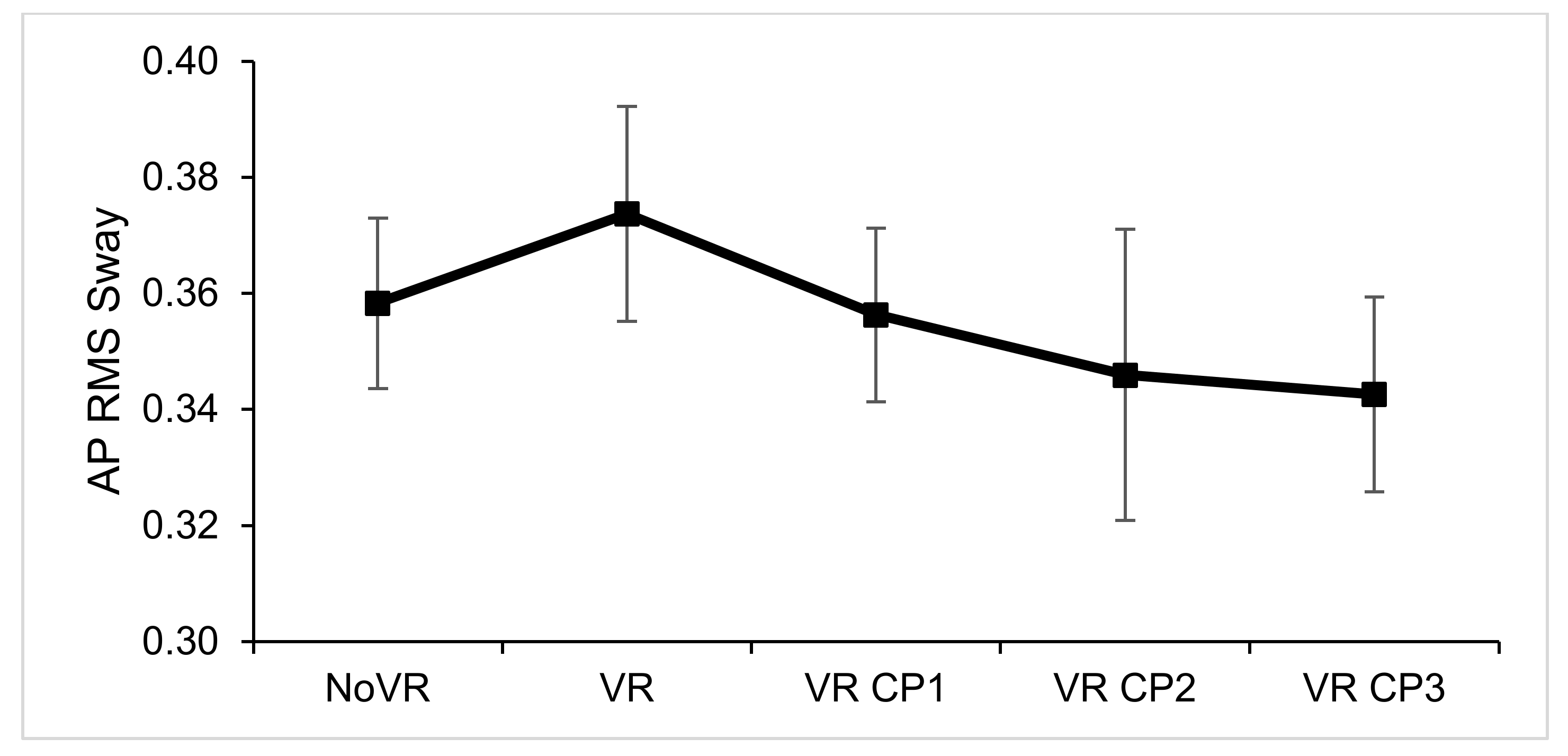
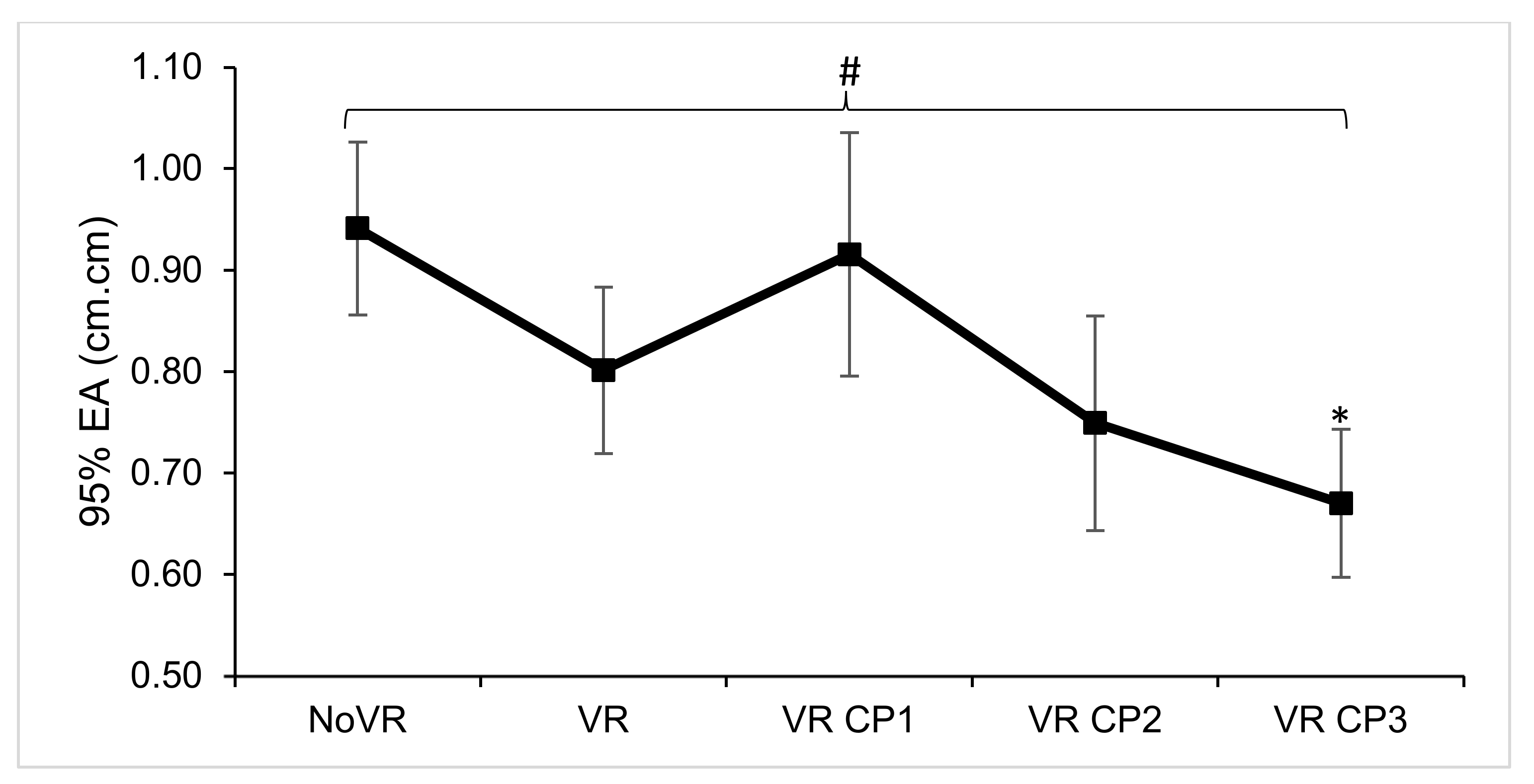
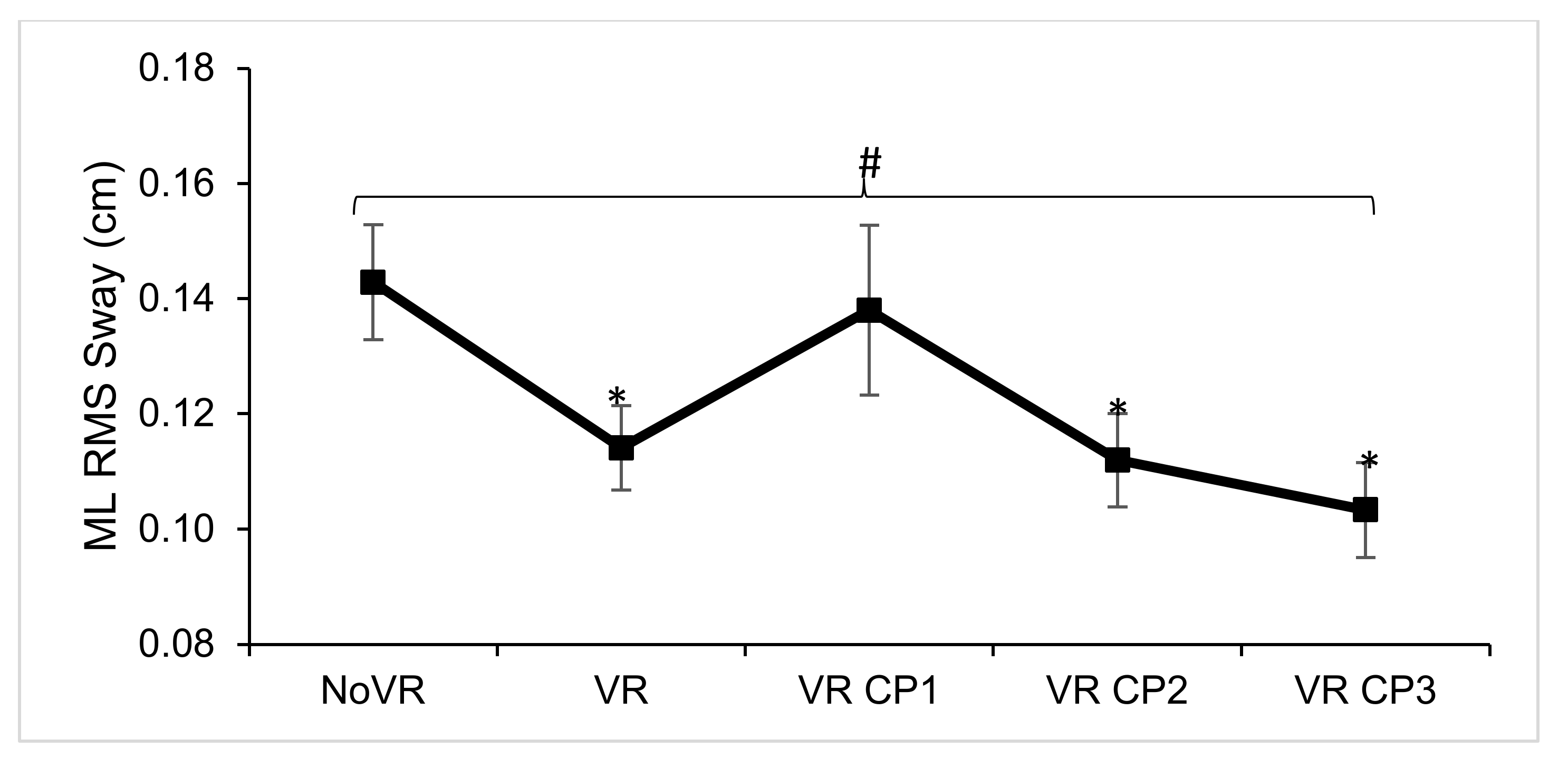
Background: Changes in the visual environment and thereby, the spatial orientation, can induce postural instability leading to falls. Virtual reality (VR) has been used to expose individuals to virtual environments (VE) that increase postural threats. Claustrophobia is an anxiety disorder categorized under situational phobias and can induce such postural threats in a VE. Purpose: The purpose of the study was to investigate if VR-generated claustrophobic simulation has any impact on postural threats that might lead to postural instability. Methods: Thirty healthy men and women (age: 20.7 ± 1.2 years; height: 166.5 ± 7.3 cm; mass: 71.7 ± 16.2 kg) were tested for postural stability while standing on a force platform, upon exposure to five different testing trials, including a normal stance (NoVR), in stationary VE (VR), and three consecutive, randomly initiated, unexpected claustrophobia trials (VR CP1, VR CP2, VR CP3). The claustrophobia trials involved all four walls closing in towards the center of the room. Center of pressure (COP)-derived postural sway variables were analyzed with a one-way repeated measures analysis of variance at an alpha level of 0.05. Results: Significant main effect differences existed in all but one dependent COP-derived postural sway variables, at p < 0.05. Post-hoc pairwise comparisons with a Bonferroni correction revealed that, predominantly, postural sway excursions were significantly lower in claustrophobia trials compared to NoVR and VR, but only accomplished with significantly increased sway velocity. Conclusion: The VR CP trials induced lower postural sway magnitude, but with increased velocity, suggesting a bracing and co-contraction strategy when exposed to virtual claustrophobic postural threats. Additionally, postural sway decreased with subsequent claustrophobia trials, suggesting potential motor learning effects. Findings from the study offer insights to postural control behavior under virtual claustrophobic simulations and can aid in VR exposure therapy for claustrophobia.
Keywords: virtual reality; postural stability; agoraphobia; claustrophobia; anxiety virtual reality; postural stability; agoraphobia; claustrophobia; anxiety