1. Introduction
Intrathecal baclofen (ITB) therapy represents a highly effective treatment modality for severe spasticity in patients with neurological conditions. It offers significant functional improvements and fewer side effects, especially when oral medications are inadequate [
1]. However, complications can occur. Infection is one of the most serious events, seen in 2.6–16.7% of cases [
2,
3]. Among these, meningitis presents particular challenges, often requiring difficult choices between device removal and in situ treatment.
Staphylococcus epidermidis is a common pathogen in ITB pump-associated infections. It forms biofilms on implanted devices, which poses a clinical challenge [
4]. Traditional management usually ends with device removal in cases of pump-associated meningitis. This is due to persistent infection concerns and the difficulty of eradicating biofilm-associated organisms. However, device removal leads to an immediate loss of therapeutic benefits. This can cause severe rebound spasticity and functional decline in patients who improved with ITB therapy.
The objective of this case report is to detail the successful in situ management of Staphylococcus epidermidis meningitis following ITB pump implantation, demonstrating that device preservation is possible in carefully selected patients receiving aggressive intrathecal and intravenous antibiotics. This case illustrates an alternative approach to managing ITB pump infections and demonstrates the potential for device salvage under specific criteria. The report aims to inform clinical decision-making and support conservative management in select ITB pump-associated infections.
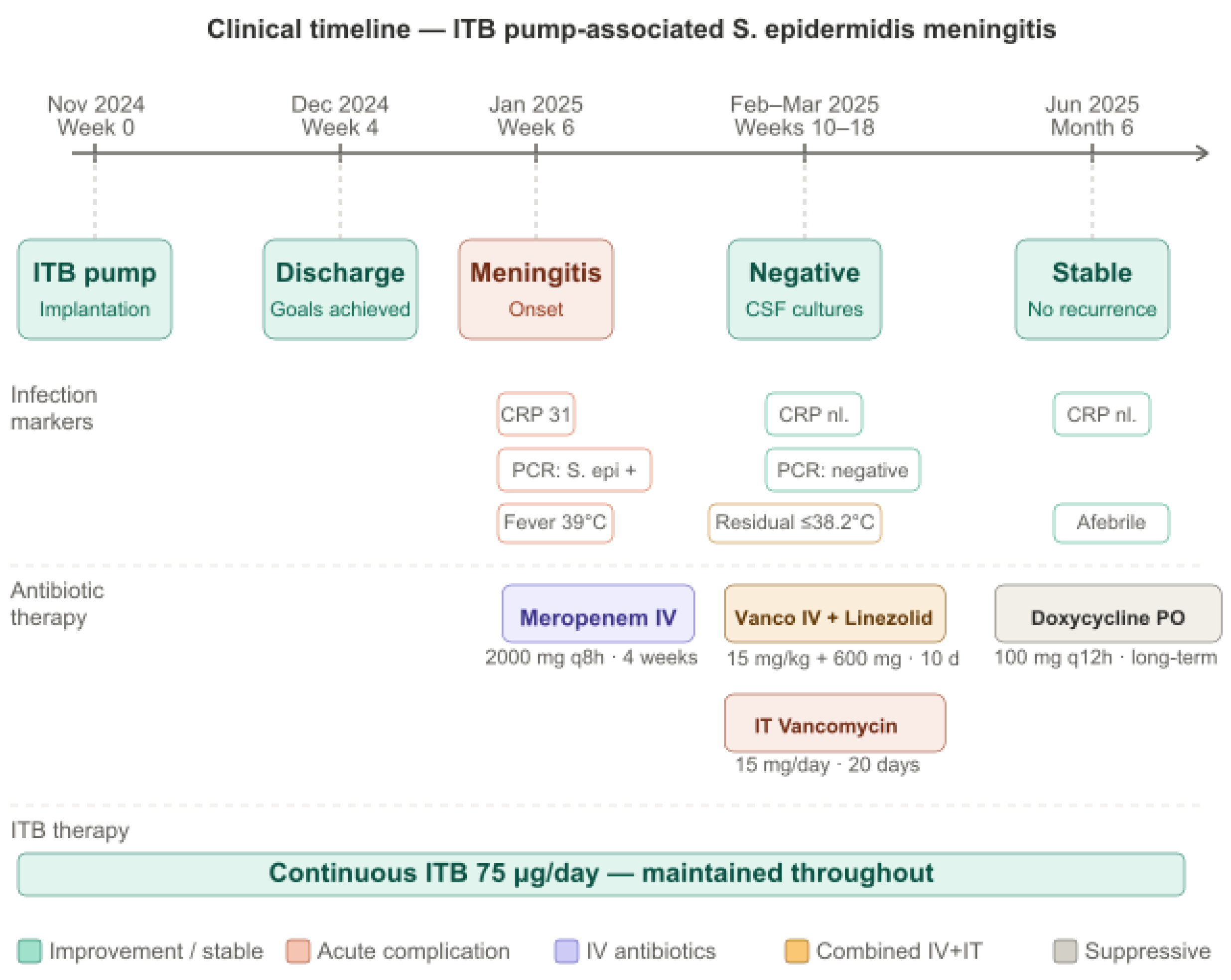
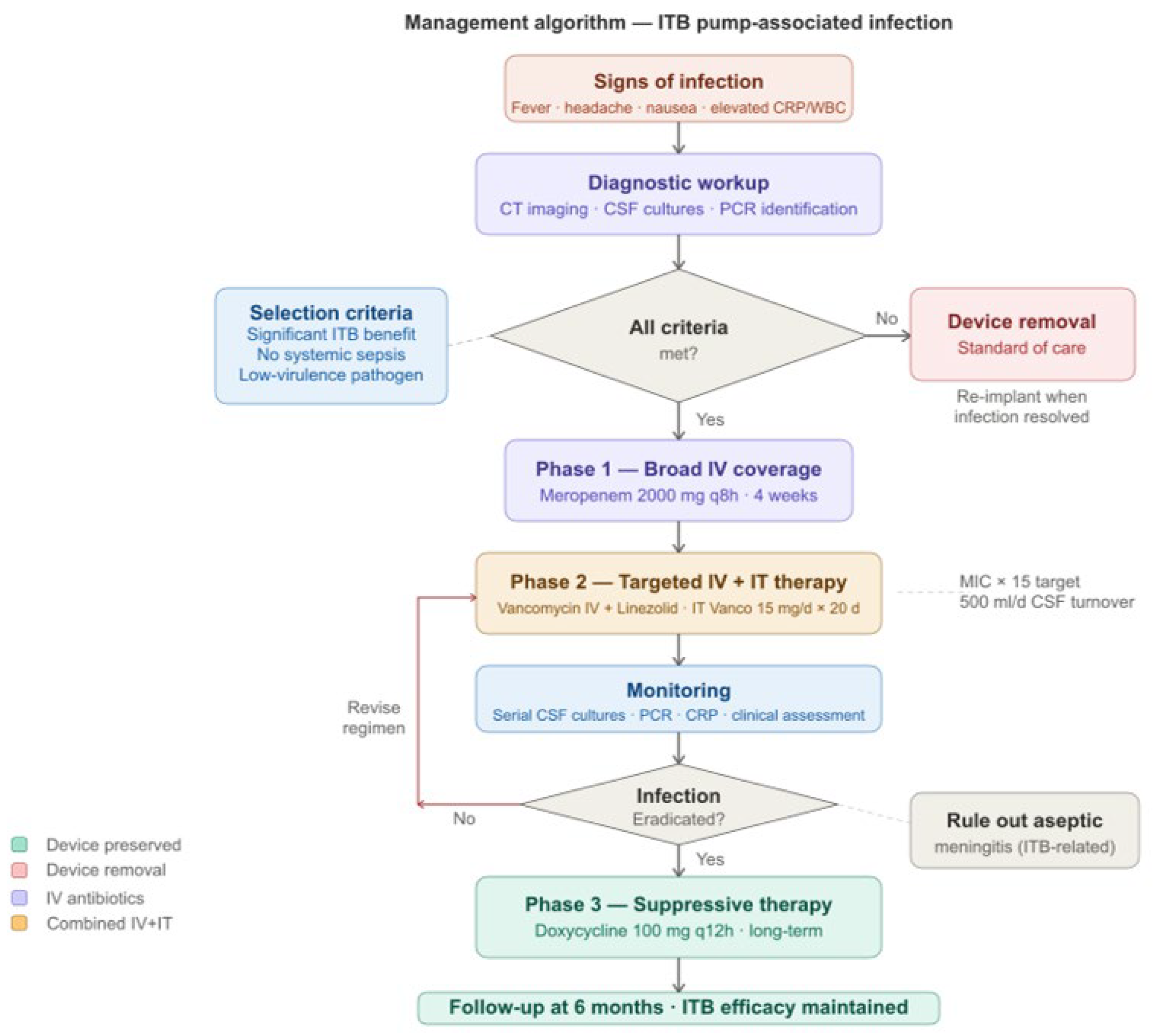
This case report describes the management of a 34-year-old patient with tetraplegia who developed meningitis following ITB pump implantation. The patient was chosen for conservative management based on clinical criteria. These included significant functional improvements from ITB therapy, an absence of systemic sepsis, and the identification of a less virulent pathogen. Assessment included a neurological exam, functional outcome measures, and systematic infection monitoring.
The diagnosis of infection was based on clinical presentation, including fever, headache, and nausea. Laboratory investigations included inflammatory markers: C-reactive protein and white blood cell count. Imaging studies identified a cervical fluid collection at the catheter access point using computed tomography. Microbiological diagnosis relied on polymerase chain reaction (PCR) identification of Staphylococcus epidermidis from the fluid collection, while bacterial culture remained negative.
The treatment approach involved a multidisciplinary team including neurosurgery, infectious disease specialists, and rehabilitation medicine physicians. The decision to pursue in situ management was made following a comprehensive team discussion, taking into account the patient’s functional and clinical status, the severity of the infection, and the pathogen’s characteristics.
2. Case Presentation
The patient was a 34-year-old male with tetraplegia and severe generalized spasticity from cerebral anoxia at birth. He also had severe neurogenic scoliosis. This required D3-S1 surgical osteosynthesis in 2006. He was referred to our Neurorehabilitation Service in June 2024. The major clinical and functional problem was generalized spasticity in the limbs and trunk. He experienced pain and spasms that limited mobility and daily living. Oral antispastic medications did not produce significant clinical improvement. Furthermore, they caused side effects, such as drowsiness and general weakness. This led to the consideration of intrathecal baclofen therapy.
Due to severe scoliosis and previous spinal surgery, direct ITB pump (Synchromed III, Medtronic Neuromodulation, Minneapolis, MN, USA) implantation occurred in November 2024 without test dosing because of difficult spinal access. The catheter (AscendaTM, Medtronic Neuromodulation, Minneapolis, MN, USA) was placed via cervical access through C7 and D1 spinectomy and C7 lower hemilaminectomy, and advanced caudally to T3. Functional goals were to reduce spasms to facilitate hygiene, relieve neck pain during wheelchair use and driving, and improve left upper-limb function for tablet use and wheelchair control.
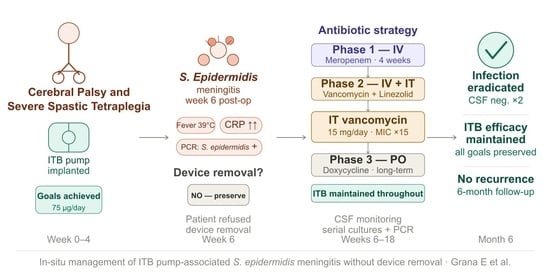
All goals were met with continuous intrathecal baclofen at 75 mcg/day, which was well tolerated by the patient. He improved in spasticity and function, returning home four weeks after surgery with benefits intact.
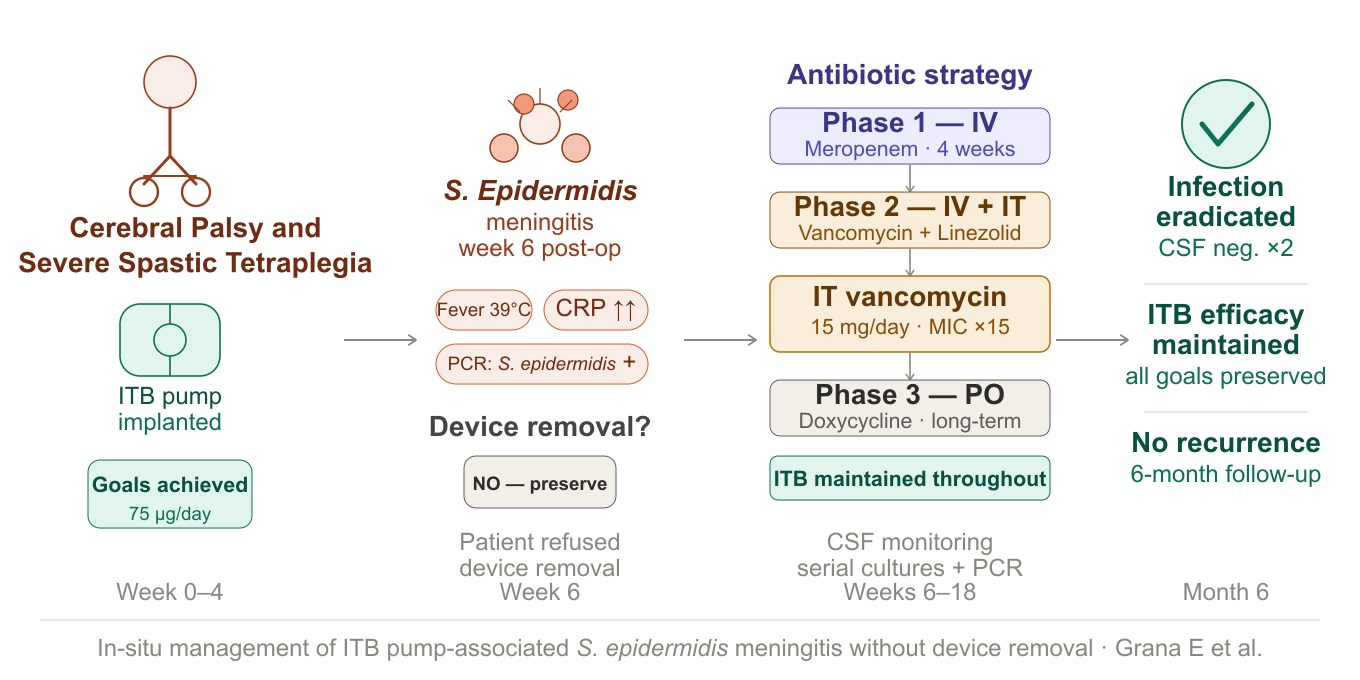
Six weeks post-surgery, the patient presented with an acute onset of fever (39 °C), headache, and nausea. Laboratory investigations revealed elevated inflammatory markers, including a C-reactive protein level of 31 mg/L and a white blood cell count of 13 G/L, with neutrophilia at 7.62 G/L. Computed tomography imaging revealed a cervical fluid collection at the catheter access point and along the proximal subcutaneous portion of the catheter, with no clinically apparent cutaneous inflammatory signs. Microbiological analysis of this collection fluid using PCR revealed the presence of Staphylococcus epidermidis, although bacterial culture remained negative. Even though the infectious disease specialists at our hospital recommended removal of the pump, the patient preferred to maintain the functional results achieved with ITB treatment. We then discussed with the neurosurgeon and infectious disease specialists the possibility of avoiding pump removal through conservative therapy to meet the patient’s expectations.
Antibiotic therapy followed a staged approach. First, intravenous Meropenem (2000 mg every 8 h for 4 weeks) was given. This was followed by intravenous Vancomycin (15 mg/kg every 12 h) and Linezolid (600 mg every 12 h for 10 days). Intrathecal Vancomycin at 15 mg/day for 20 days was then given through the implanted pump. Intrathecal baclofen was delivered concurrently at a dose of 75 mcg/day.
The intrathecal Vancomycin dose was calculated to reach concentrations at least 15 times the minimum inhibitory concentration (MIC). Laboratory data showed an MIC of 2 mcg/mL. Calculations considered a cerebrospinal fluid turnover of 500 mL/day in adults [
5]. Patient monitoring included daily clinical assessments. Serial inflammatory markers and cerebrospinal fluid analysis by culture and PCR confirmed the eradication of infection.
Following initiation of the aggressive antibiotic regimen, the patient demonstrated a favorable clinical response with the resolution of fever and elimination of headache and nausea. Two consecutive cerebrospinal fluid microbiological cultures and PCR analyses confirmed the absence of infection. The reduction in intermittent residual febrile episodes not exceeding 38.2 °C without accompanying inflammatory signs was attributed to residual aseptic meningitis [
6,
7].
After the initial aggressive antibiotic therapy, long-term suppressive therapy with oral Doxycycline (100 mg every 12 h) was initiated as a preventive measure. At six months post-infection (June 2025), the patient remained clinically stable with continued ITB efficacy and no evidence of infection recurrence. Functional improvements achieved through ITB therapy were maintained throughout the treatment period and follow-up (see
Figure 1).
3. Discussion
This case demonstrates the successful in situ management of ITB pump-associated Staphylococcus epidermidis meningitis with aggressive antibiotic therapy, without device removal, resulting in complete eradication of the infection while preserving the significant functional benefits of ITB therapy.
The management approach described in this case report represents a significant departure from standard clinical practice, which typically opts for device removal in cases of intrathecal pump-associated meningitis. Traditional management strategies are based on concerns about biofilm formation on implanted devices and the difficulty of achieving adequate antibiotic penetration to eradicate persistent infections [
2]. However, emerging literature increasingly supports device rescue approaches in carefully selected cases, particularly when specific clinical criteria are met [
2,
8,
9].
Multiple important factors lead us to opt for conservative management in this case: the patient’s substantial functional improvements from ITB therapy, with a significant amelioration in his quality of life; the absence of systemic sepsis; and the identification of
Staphylococcus epidermidis as the causative organism.
Staphylococcus epidermidis, although capable of forming biofilms [
10], is generally considered less virulent than other staphylococcal species and may be more susceptible to antibiotic therapy when appropriate agents and dosing regimens are employed [
4].
The aggressive antibiotic regimen employed in this case was necessary to eradicate the infection. The combination of systemic and intrathecal antibiotic administration provided both broad-spectrum coverage and targeted therapy directly at the site of infection. The calculated intrathecal Vancomycin dosing, designed to achieve concentrations that significantly exceed the MIC, represents a rational approach to overcoming potential biofilm-associated resistance mechanisms.
The staged antibiotic approach, beginning with broad-spectrum coverage through Meropenem and transitioning to targeted therapy with Vancomycin and Linezolid, allowed for comprehensive treatment while decreasing the risk of resistance emergence. The concurrent administration of intrathecal baclofen and Vancomycin through the same device demonstrates the feasibility of maintaining therapeutic drug delivery while treating device-associated infections (
Figure 2).
An important clinical consideration highlighted by this case report is the need to differentiate between infectious and aseptic meningitis in patients with ITB pumps. The occurrence of intermittent febrile episodes without inflammatory markers after successful treatment of infection suggests the possibility of aseptic meningitis as a distinct clinical entity [
6,
7]. This differentiation is important for appropriate management decisions and avoiding unnecessary antibiotic therapy or device removal.
The successful outcome in this case delivers valuable evidence supporting conservative management approaches for selected patients with ITB pump-associated infections. However, the decision for device preservation should be individualized based on a careful assessment of multiple factors, including the patient’s functional status, comorbidities, infection severity, pathogen characteristics, and response to initial therapy.
The preservation of functional benefits for the patient, achieved through ITB therapy, represents a key advantage of the conservative approach, particularly for patients who have achieved significant improvements in quality of life and functional capacity. Device removal would have resulted in immediate loss of these benefits and potentially provoked a severe rebound in spasticity, showing the importance of exploring alternative management strategies when clinically appropriate. Several limitations should be acknowledged in interpreting this clinical case. A negative bacterial culture, despite a positive PCR identification, may suggest a low bacterial load or prior antibiotic exposure that can affect culture results. The single-case nature of this report limits generalizability, and larger case series or controlled studies would be valuable for establishing evidence-based guidelines for similar clinical scenarios.
The long-term outcomes beyond 6 months remain to be determined, and continued surveillance for recurrence will be important for assessing the durability of the treatment approach. Additionally, this patient’s specific characteristics, including the absence of significant comorbidities and good functional status, may have contributed to the favorable outcome and should be considered when applying this approach to other patients.
4. Conclusions
In conclusion, this case supports the growing body of evidence supporting device rescue approaches for ITB pump-associated infections in carefully selected patients. The successful preservation of clinical benefits while achieving infection eradication demonstrates the potential value of conservative management strategies when appropriate clinical criteria are met and aggressive antibiotic therapy is employed.