
XCC-Net: An X-Shaped Collective Convolution Network Architecture for Medical Image Segmentation
 , , , and
Abstract
1. Introduction
2. Related Works
2.1. Architectures
2.2. Gastrointestinal Diseases Detection
2.3. Skin Lesion Detection
3. Methods
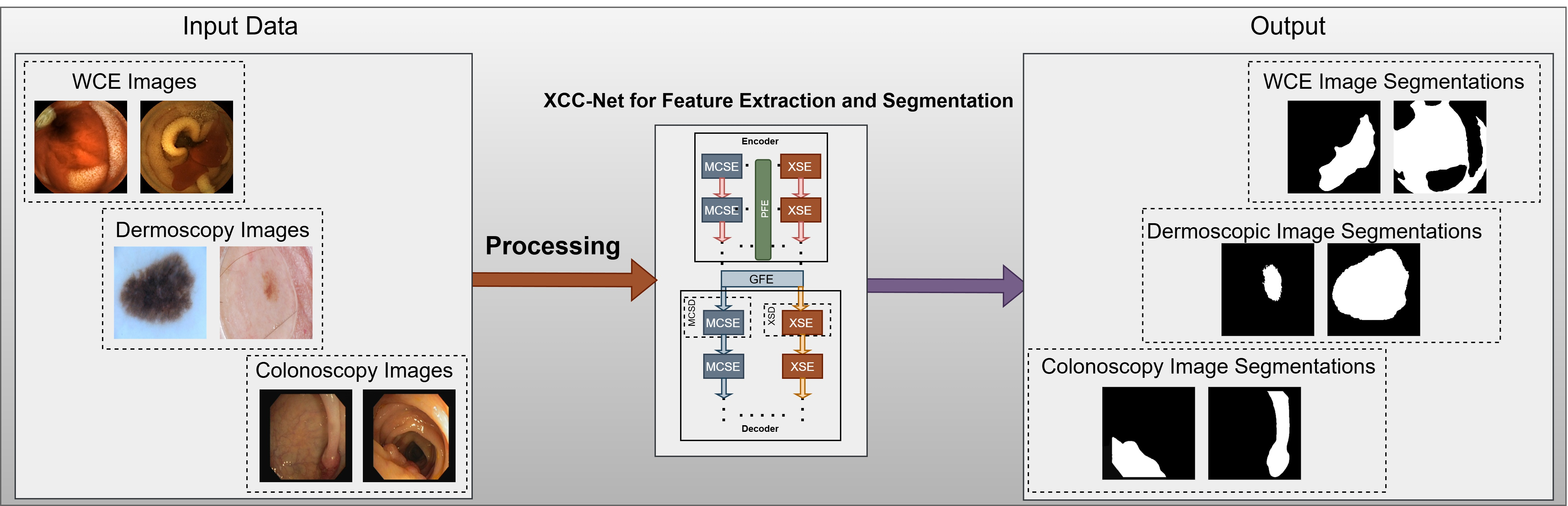
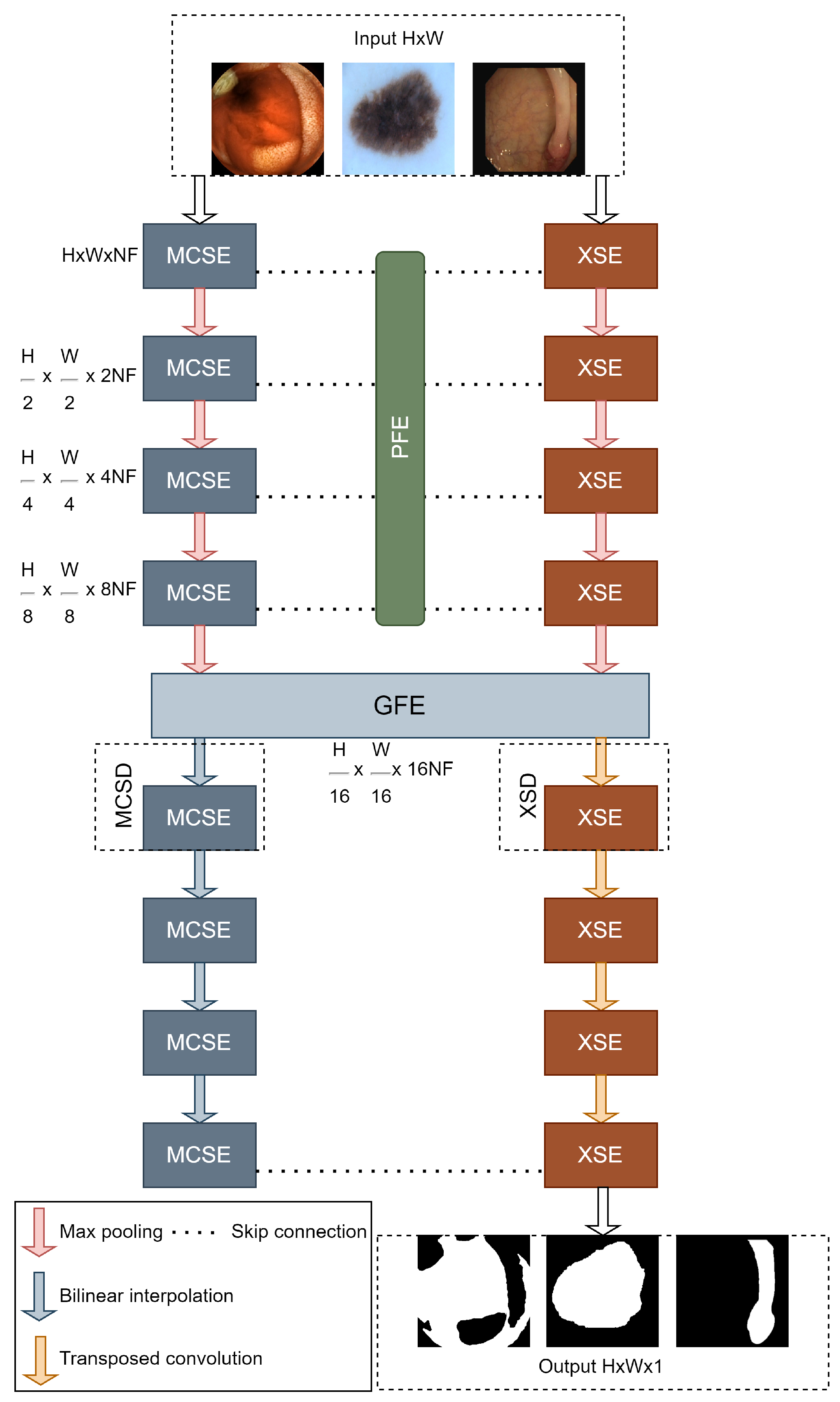
3.1. XCC-Net
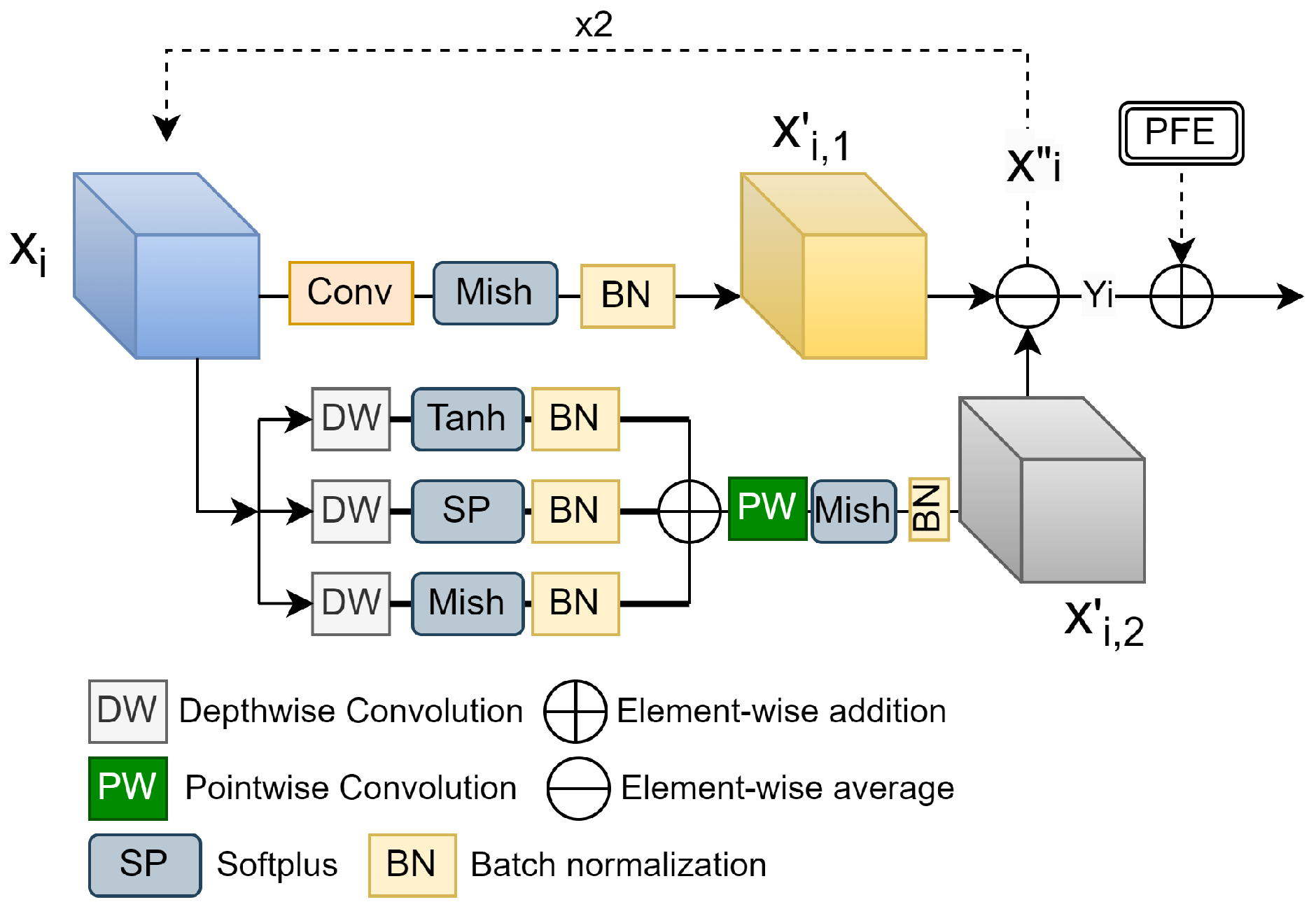
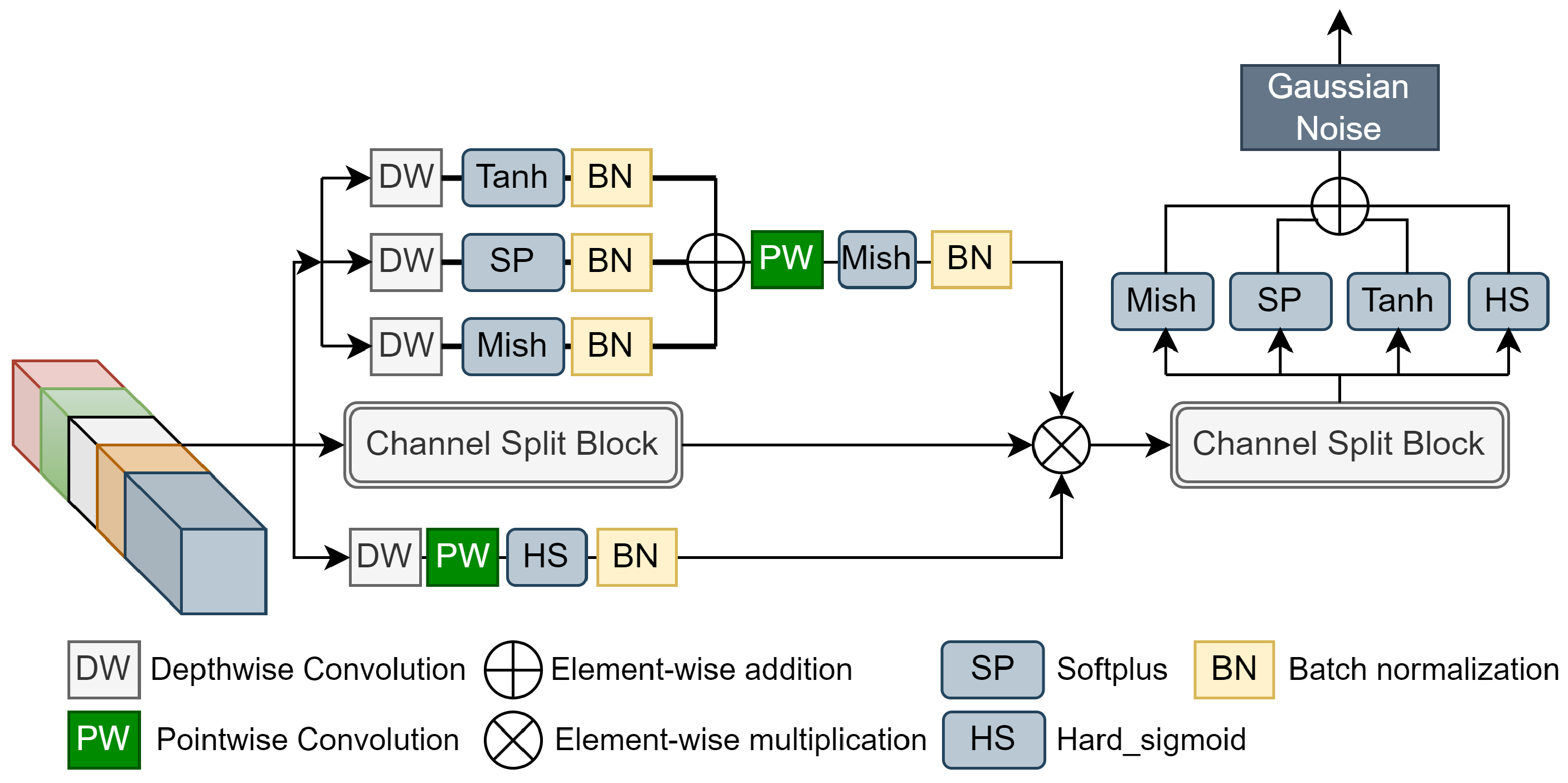
3.2. X-Separable Encoder Subnetwork
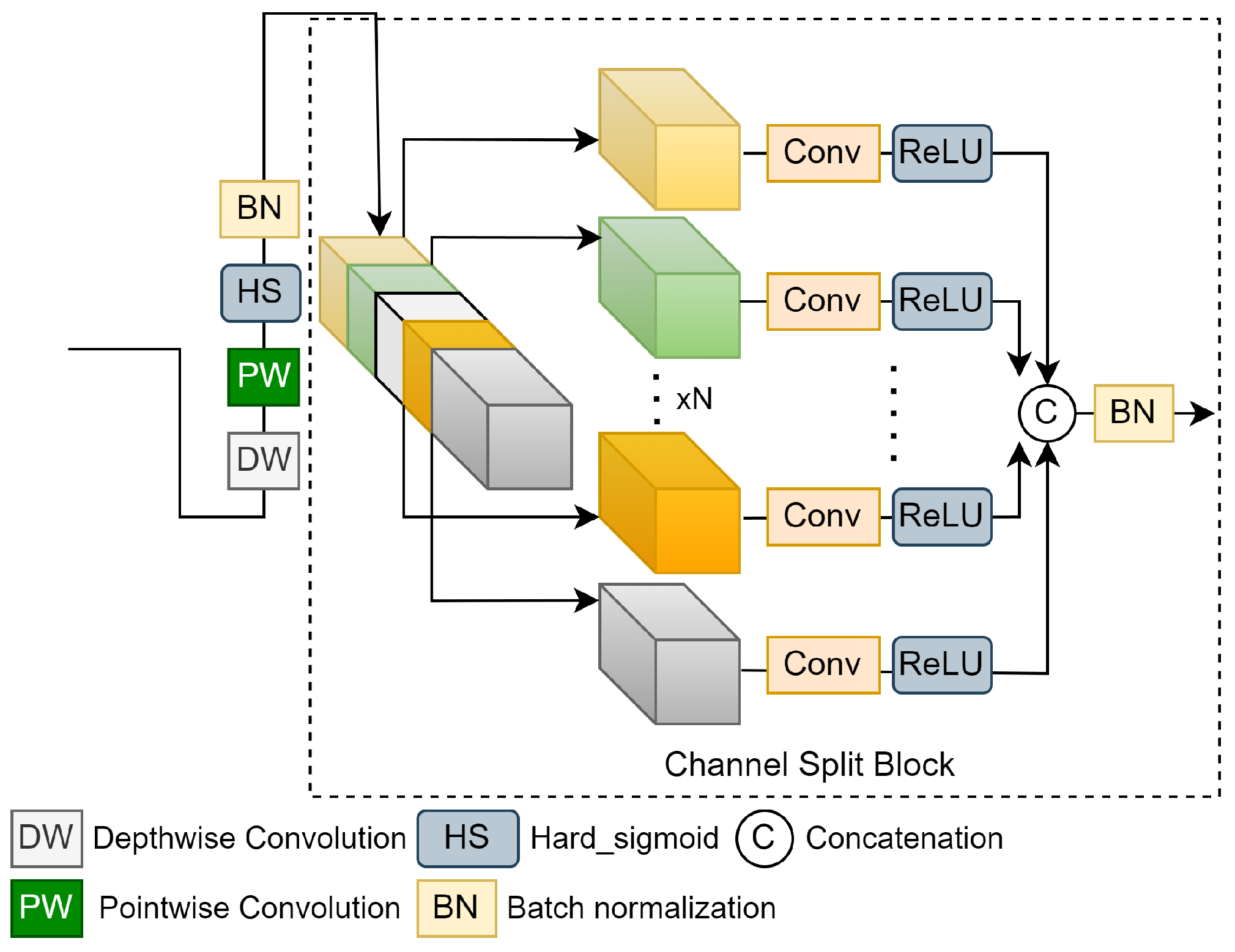
3.3. Multi-Channel Separable Encoder Subnetwork
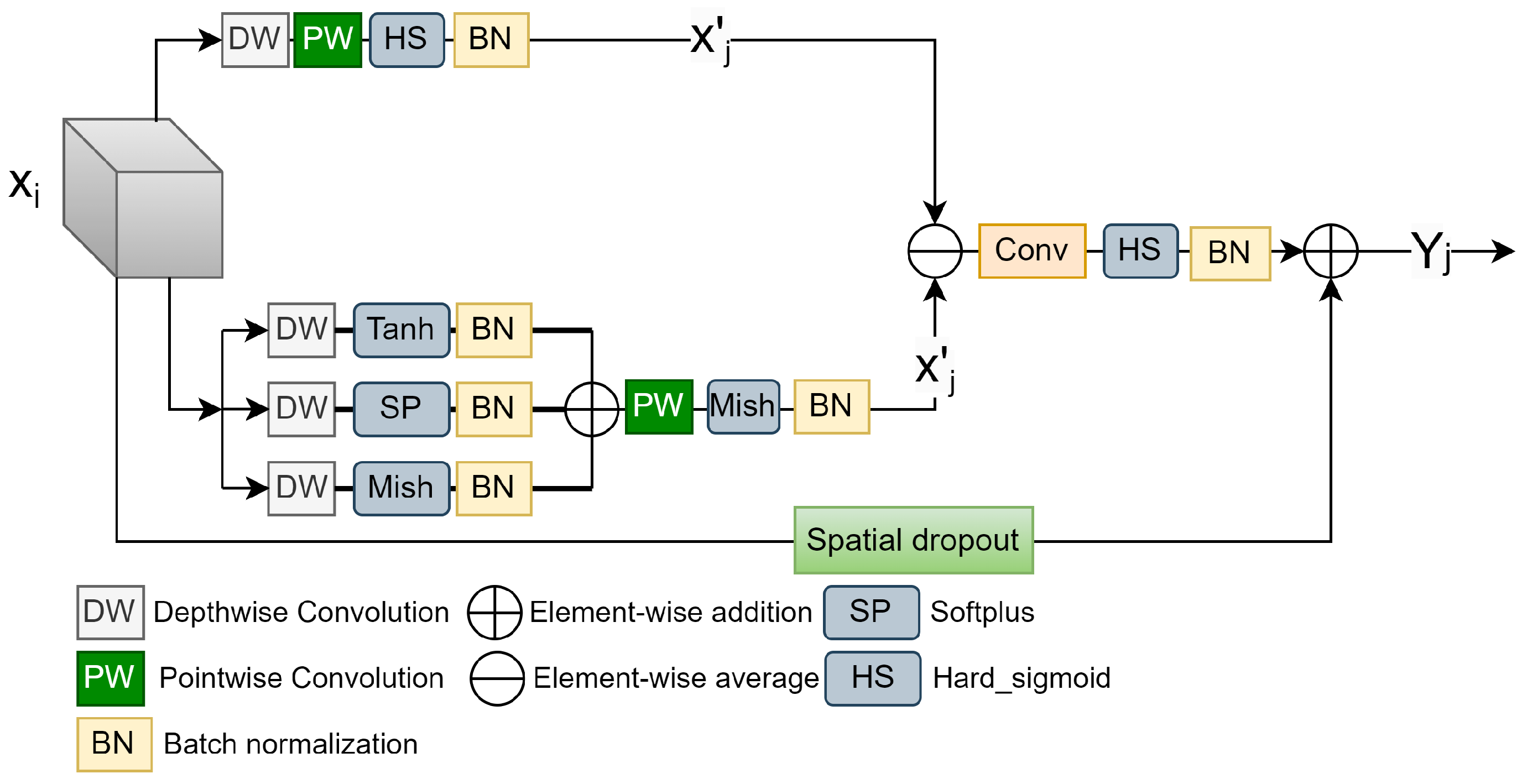
3.4. Powered-Feature Engagement Module
3.5. Global-Feature Ensembling Module
4. Experiments
4.1. Datasets
- ISIC 2017 dataset: This dataset is a notable contribution, offering a training set comprising 2000 skin lesion images. Alongside these images are corresponding masks for segmentation, superpixel masks for dermoscopic feature extraction, and annotations for classification purposes. This dataset encompasses lesions categorized into melanoma, seborrheic keratosis, and nevus, totaling 2750 images. Among these, 2000 images are included in the training subset, 150 images in validation, and 600 images in testing.
- PH2 dataset: The PH2 dataset [15] includes 200 images, predominantly featuring naevus (160 images) and melanoma (40 images). These images are all 8-bit RGB with a resolution of pixels, captured using a 20× magnification lens. The PH2 dataset is exclusively reserved for testing purposes.
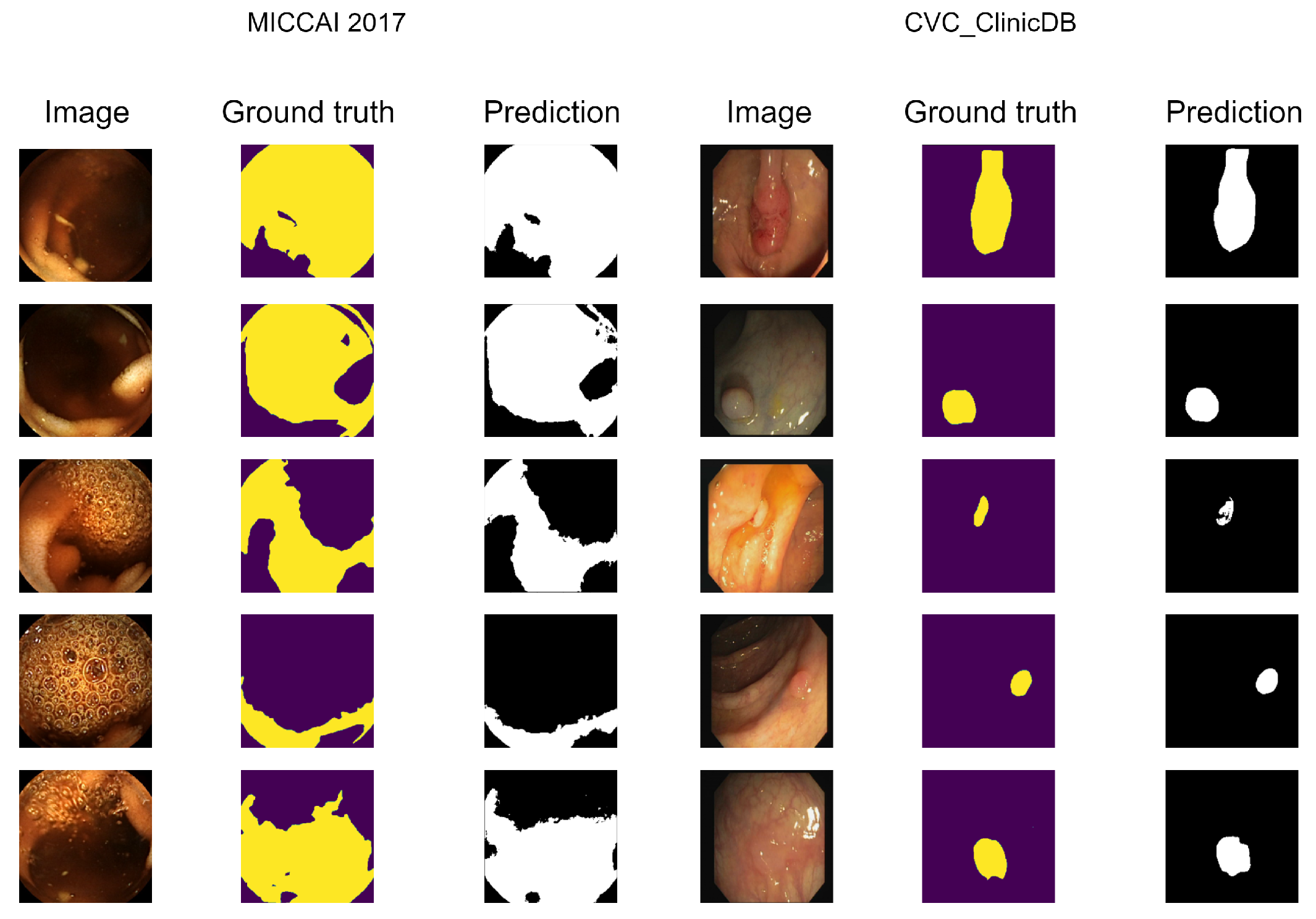
- MICCAI 2017 dataset: The MICCAI 2017 [13] dataset contains 3895 frames, each sized at 320 × 320 pixels. It encompasses both normal frames and those featuring identified lesions such as bleeding and angioectasias. The dataset was partitioned, allocating 80% of the data for training and reserving 20% for testing and validation.
- CVC-ClinicDB: The CVC-ClinicDB dataset [16] comprises 612 images sourced from 31 colonoscopy sequences. Each image is sized at 384 × 288 pixels. To facilitate model training and evaluation, the dataset is divided into training and testing sets. Specifically, 82% of the data is allocated for training, while 18% is reserved for testing purposes. For enhanced training robustness, the training set is augmented through rotations, flips, and brightness adjustments, resulting in a total of 2000 images.
4.2. Experiment Setup
4.2.1. Implementation Details
4.2.2. Evaluation Metrics
4.3. Results
4.3.1. Results on MICCAI 2017 Dataset (Red Lesion)
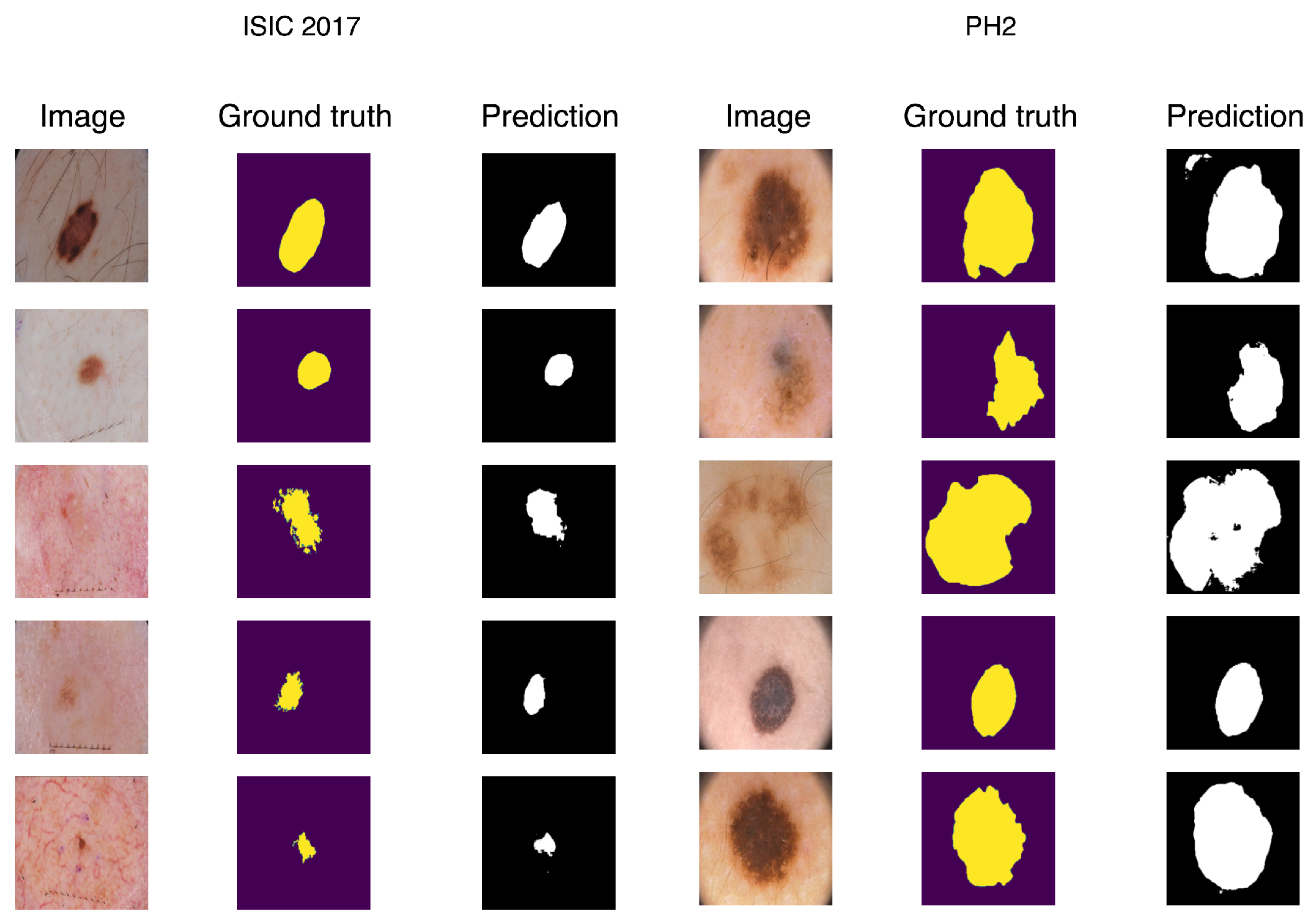
4.3.2. Results on ISIC 2017 and PH2 Dataset
4.3.3. Results on CVC-ClinicDB Dataset

| Method | DC (%) | IoU (%) | Param (M) | GFLOPs |
|---|---|---|---|---|
| ResUNet++ [51] | 79.55 | 79.62 | 4.07 | 32.07 |
| V-Net [50] | 79.59 | 66.10 | 23.75 | 21.76 |
| U-Net [4] | 81.10 | 68.21 | 34.51 | 101.75 |
| ResUNet-a [20] | 84.32 | 72.89 | 6.28 | 30.04 |
| Attention U-Net [18] | 84.38 | 72.99 | 35.23 | 135.14 |
| TranSEFusionNet [58] | 86.48 | 79.09 | 127.74 | 124.43 |
| MBP-SSNet [57] | 86.57 | 78.24 | 9.37 | 105.6 |
| XCC-Net | 87.15 | 77.23 | 22.55 | 6.05 |
4.4. Ablation Study
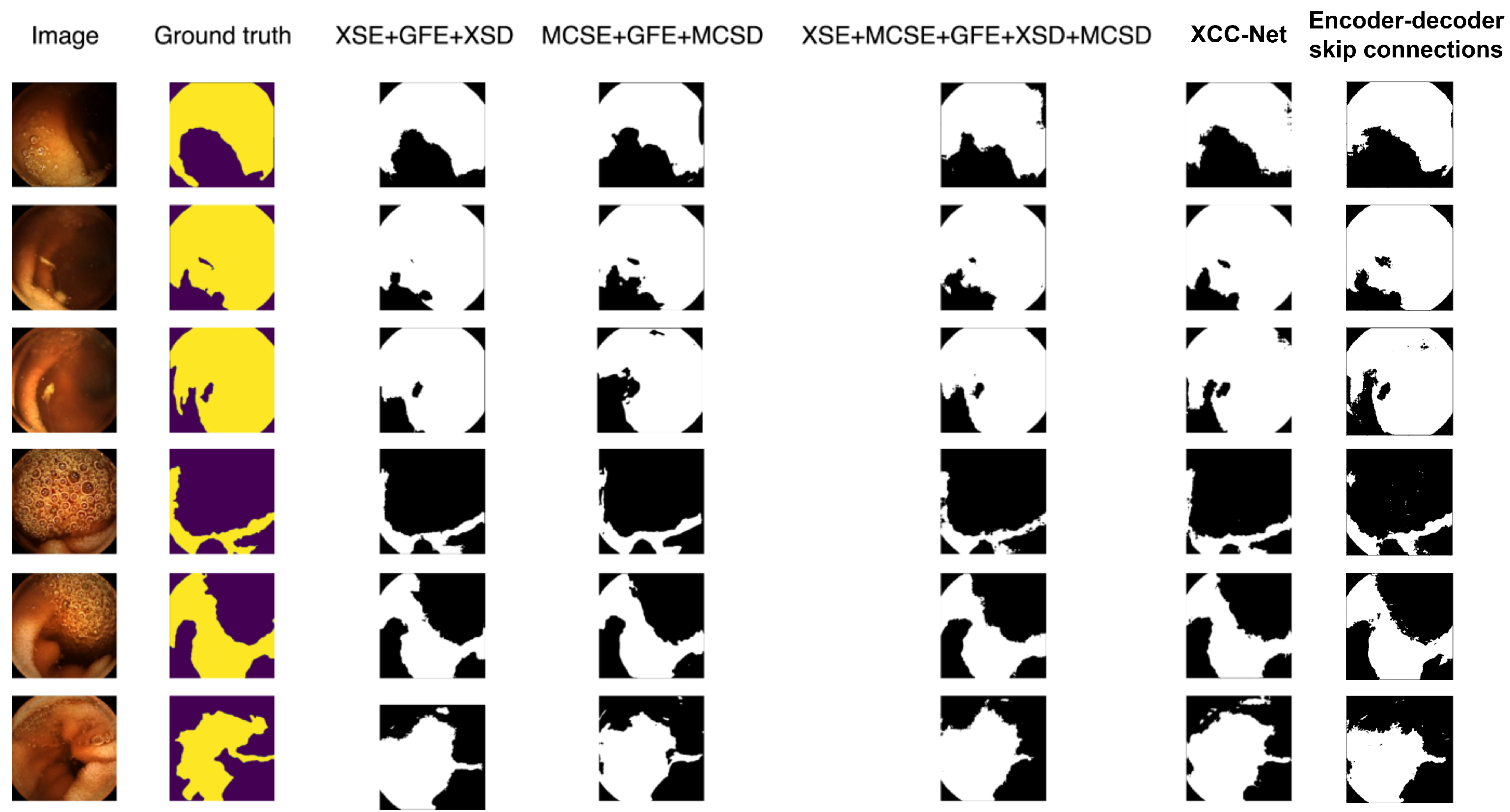
4.4.1. Ablation Study of Subnetworks
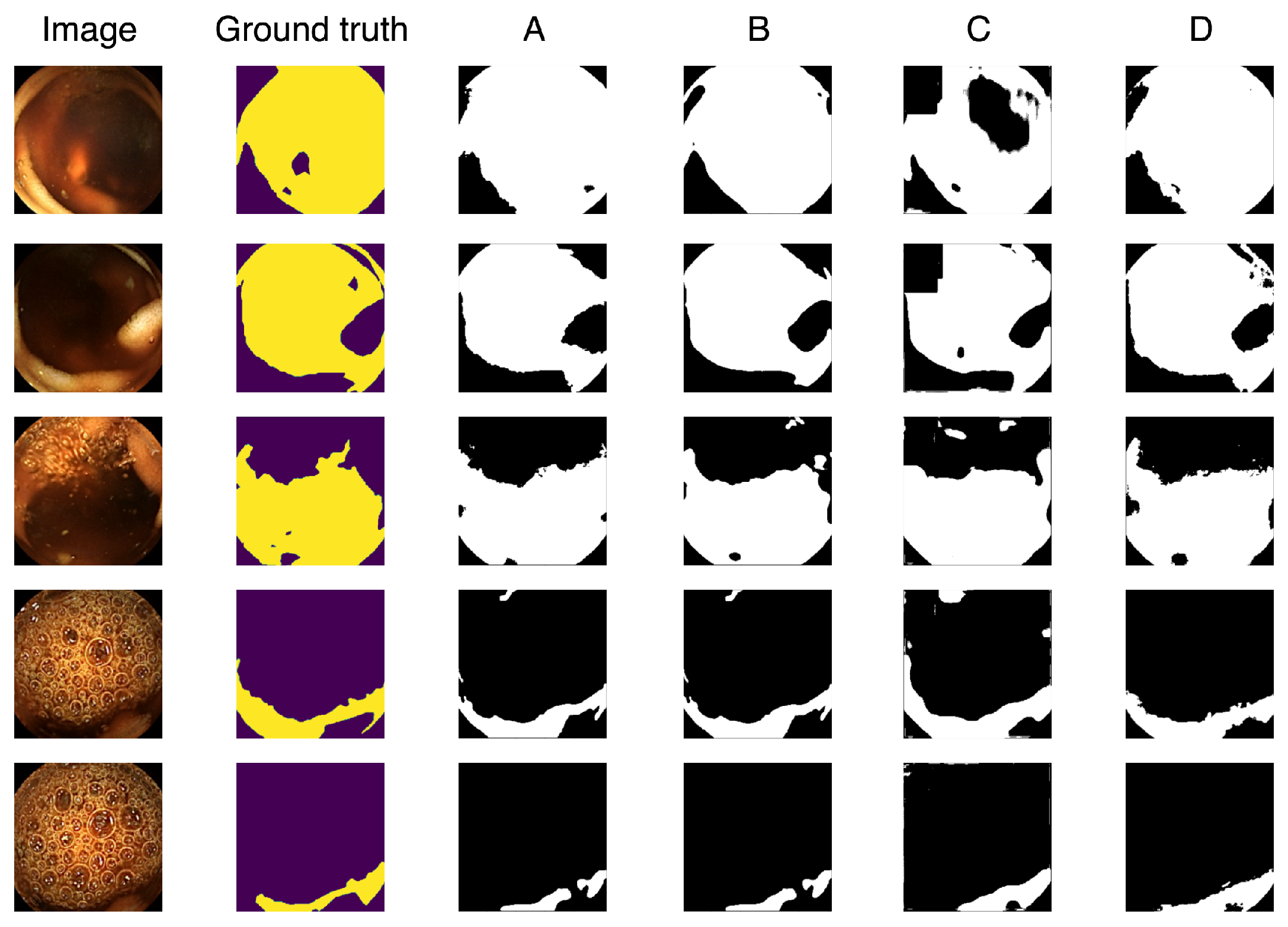
4.4.2. Ablation Study of Hyperparameters
4.5. Discussion
5. Conclusions
Author Contributions
Funding
Institutional Review Board Statement
Informed Consent Statement
Data Availability Statement
Acknowledgments
Conflicts of Interest
Abbreviations
| CNN | Convolutional Neural Network |
| GFE | Global-Feature Ensembling bottleneck module |
| MCSD | Multi-Channel Separable Decoder |
| MCSE | Multi-Channel Separable Encoder |
| PFE | Powered-Feature Engagement module |
| WCE | Wireless Capsule Endoscopy |
| XSD | X-Separable Decoder |
| XSE | X-Separable Encoder |
References
- Minaee, S.; Boykov, Y.; Porikli, F.; Plaza, A.; Kehtarnavaz, N.; Terzopoulos, D. Image segmentation using deep learning: A survey. IEEE Trans. Pattern Anal. Mach. Intell. 2021, 44, 3523–3542. [Google Scholar] [CrossRef]
- Hesamian, M.H.; Jia, W.; He, X.; Kennedy, P. Deep learning techniques for medical image segmentation: Achievements and challenges. J. Digit. Imaging 2019, 32, 582–596. [Google Scholar] [CrossRef]
- Long, J.; Shelhamer, E.; Darrell, T. Fully convolutional networks for semantic segmentation. In Proceedings of the IEEE Conference on Computer Vision and Pattern Recognition, Boston, MA, USA, 7–12 June 2015; pp. 3431–3440. [Google Scholar]
- Ronneberger, O.; Fischer, P.; Brox, T. U-net: Convolutional networks for biomedical image segmentation. In Proceedings of the Medical Image Computing and Computer-Assisted Intervention–MICCAI 2015: 18th International Conference, Munich, Germany, 5–9 October 2015; Proceedings, part III 18. Springer: Berlin/Heidelberg, Germany, 2015; pp. 234–241. [Google Scholar]
- Siegel, R.L.; Miller, K.D.; Wagle, N.S.; Jemal, A. Cancer statistics, 2023. CA Cancer J. Clin. 2023, 73, 17–48. [Google Scholar] [CrossRef]
- Linares, M.A.; Zakaria, A.; Nizran, P. Skin cancer. Prim. Care Clin. Off. Pract. 2015, 42, 645–659. [Google Scholar] [CrossRef] [PubMed]
- Schadendorf, D.; Fisher, D.E.; Garbe, C.; Gershenwald, J.E.; Grob, J.J.; Halpern, A.; Herlyn, M.; Marchetti, M.A.; McArthur, G.; Ribas, A.; et al. Melanoma. Nat. Rev. Dis. Prim. 2015, 1, 15003. [Google Scholar] [CrossRef]
- Ring, C.; Cox, N.; Lee, J.B. Dermatoscopy. Clin. Dermatol. 2021, 39, 635–642. [Google Scholar] [CrossRef] [PubMed]
- Xie, Y.; Shi, L.; He, X.; Luo, Y. Gastrointestinal cancers in China, the USA, and Europe. Gastroenterol. Rep. 2021, 9, 91–104. [Google Scholar] [CrossRef] [PubMed]
- Kim, B.S.M.; Li, B.T.; Engel, A.; Samra, J.S.; Clarke, S.; Norton, I.D.; Li, A.E. Diagnosis of gastrointestinal bleeding: A practical guide for clinicians. World J. Gastrointest. Pathophysiol. 2014, 5, 467–478. [Google Scholar] [CrossRef]
- Fisher, D.A.; Maple, J.T.; Ben-Menachem, T.; Cash, B.D.; Decker, G.A.; Early, D.S.; Evans, J.A.; Fanelli, R.D.; Fukami, N.; Hwang, J.H.; et al. Complications of colonoscopy. Gastrointest. Endosc. 2011, 74, 745–752. [Google Scholar] [CrossRef]
- Iddan, G.; Meron, G.; Glukhovsky, A.; Swain, P. Wireless capsule endoscopy. Nature 2000, 405, 417. [Google Scholar] [CrossRef]
- Coelho, P.; Pereira, A.; Leite, A.; Salgado, M.; Cunha, A. A deep learning approach for red lesions detection in video capsule endoscopies. In Proceedings of the Image Analysis and Recognition: 15th International Conference, ICIAR 2018, Póvoa de Varzim, Portugal, 27–29 June 2018; Proceedings 15. Springer: Berlin/Heidelberg, Germany, 2018; pp. 553–561. [Google Scholar]
- Codella, N.C.; Gutman, D.; Celebi, M.E.; Helba, B.; Marchetti, M.A.; Dusza, S.W.; Kalloo, A.; Liopyris, K.; Mishra, N.; Kittler, H.; et al. Skin lesion analysis toward melanoma detection: A challenge at the 2017 international symposium on biomedical imaging (isbi), hosted by the international skin imaging collaboration (isic). In Proceedings of the 2018 IEEE 15th International Symposium on Biomedical Imaging (ISBI 2018), Washington, DC, USA, 4–7 April 2018; IEEE: Piscataway, NJ, USA, 2018; pp. 168–172. [Google Scholar]
- Mendonça, T.; Ferreira, P.M.; Marques, J.S.; Marcal, A.R.; Rozeira, J. PH 2-A dermoscopic image database for research and benchmarking. In Proceedings of the 2013 35th Annual International Conference of the IEEE Engineering in Medicine and Biology Society (EMBC), Osaka, Japan, 3–7 July 2013; IEEE: Piscataway, NJ, USA, 2013; pp. 5437–5440. [Google Scholar]
- Bernal, J.; Sánchez, F.J.; Fernández-Esparrach, G.; Gil, D.; Rodríguez, C.; Vilariño, F. WM-DOVA maps for accurate polyp highlighting in colonoscopy: Validation vs. saliency maps from physicians. Comput. Med. Imaging Graph. 2015, 43, 99–111. [Google Scholar] [CrossRef]
- Zhou, Z.; Siddiquee, M.M.R.; Tajbakhsh, N.; Liang, J. Unet++: Redesigning skip connections to exploit multiscale features in image segmentation. IEEE Trans. Med. Imaging 2019, 39, 1856–1867. [Google Scholar] [CrossRef]
- Oktay, O.; Schlemper, J.; Folgoc, L.L.; Lee, M.; Heinrich, M.; Misawa, K.; Mori, K.; McDonagh, S.; Hammerla, N.Y.; Kainz, B.; et al. Attention u-net: Learning where to look for the pancreas. arXiv 2018, arXiv:1804.03999. [Google Scholar] [CrossRef]
- Iglovikov, V.; Shvets, A. Ternausnet: U-net with vgg11 encoder pre-trained on imagenet for image segmentation. arXiv 2018, arXiv:1801.05746. [Google Scholar]
- Diakogiannis, F.I.; Waldner, F.; Caccetta, P.; Wu, C. ResUNet-a: A deep learning framework for semantic segmentation of remotely sensed data. ISPRS J. Photogramm. Remote Sens. 2020, 162, 94–114. [Google Scholar] [CrossRef]
- Lafraxo, S.; Souaidi, M.; El Ansari, M.; Koutti, L. Semantic segmentation of digestive abnormalities from wce images by using attresu-net architecture. Life 2023, 13, 719. [Google Scholar] [CrossRef]
- Chen, J.; Lu, Y.; Yu, Q.; Luo, X.; Adeli, E.; Wang, Y.; Lu, L.; Yuille, A.L.; Zhou, Y. Transunet: Transformers make strong encoders for medical image segmentation. arXiv 2021, arXiv:2102.04306. [Google Scholar] [CrossRef]
- Cao, H.; Wang, Y.; Chen, J.; Jiang, D.; Zhang, X.; Tian, Q.; Wang, M. Swin-unet: Unet-like pure transformer for medical image segmentation. In Proceedings of the European Conference on Computer Vision, Tel Aviv, Israel, 23–27 October 2022; Springer: Berlin/Heidelberg, Germany, 2022; pp. 205–218. [Google Scholar]
- Alom, M.Z.; Hasan, M.; Yakopcic, C.; Taha, T.M.; Asari, V.K. Recurrent residual convolutional neural network based on u-net (r2u-net) for medical image segmentation. arXiv 2018, arXiv:1802.06955. [Google Scholar]
- Badrinarayanan, V.; Kendall, A.; Cipolla, R. Segnet: A deep convolutional encoder-decoder architecture for image segmentation. IEEE Trans. Pattern Anal. Mach. Intell. 2017, 39, 2481–2495. [Google Scholar] [CrossRef]
- Jia, X.; Xing, X.; Yuan, Y.; Xing, L.; Meng, M.Q.H. Wireless capsule endoscopy: A new tool for cancer screening in the colon with deep-learning-based polyp recognition. Proc. IEEE 2019, 108, 178–197. [Google Scholar] [CrossRef]
- Borgli, H.; Stensland, H.K.; Halvorsen, P. Automatic prompt generation using class activation maps for foundational models: A polyp segmentation case study. Mach. Learn. Knowl. Extr. 2025, 7, 22. [Google Scholar] [CrossRef]
- Charfi, S.; EL Ansari, M.; Koutti, L.; ELjaafari, I.; ELLahyani, A. Feature Pyramid Network Based Spatial Attention and Cross-Level Semantic Similarity for Diseases Segmentation From Capsule Endoscopy Images. Int. J. Imaging Syst. Technol. 2024, 34, e23194. [Google Scholar] [CrossRef]
- Souaidi, M.; Lafraxo, S.; Kerkaou, Z.; El Ansari, M.; Koutti, L. A multiscale polyp detection approach for gi tract images based on improved densenet and single-shot multibox detector. Diagnostics 2023, 13, 733. [Google Scholar] [CrossRef]
- Ellahyani, A.; Jaafari, I.E.; Charfi, S.; Ansari, M.E. Fine-tuned deep neural networks for polyp detection in colonoscopy images. Pers. Ubiquitous Comput. 2023, 27, 235–247. [Google Scholar] [CrossRef]
- Lafraxo, S.; El Ansari, M.; Koutti, L. Gastrosegnet: Polyp segmentation using colonoscopic images based on attentionu-net architecture. In Proceedings of the 2023 10th International Conference on Wireless Networks and Mobile Communications (WINCOM), Istanbul, Turkey, 26–28 October 2023; IEEE: Piscataway, NJ, USA, 2023; pp. 1–6. [Google Scholar]
- Ghosh, T.; Fattah, S.A.; Wahid, K.A. CHOBS: Color histogram of block statistics for automatic bleeding detection in wireless capsule endoscopy video. IEEE J. Transl. Eng. Health Med. 2018, 6, 1800112. [Google Scholar] [CrossRef]
- Caroppo, A.; Leone, A.; Siciliano, P. Deep transfer learning approaches for bleeding detection in endoscopy images. Comput. Med Imaging Graph. 2021, 88, 101852. [Google Scholar] [CrossRef]
- Kanakatte, A.; Ghose, A. Precise Bleeding and Red lesions localization from Capsule Endoscopy using Compact U-Net. In Proceedings of the 2021 43rd Annual International Conference of the IEEE Engineering in Medicine & Biology Society (EMBC), Virtual, 1–5 November 2021; IEEE: Piscataway, NJ, USA, 2021; pp. 3089–3092. [Google Scholar]
- Bai, F.; Xing, X.; Shen, Y.; Ma, H.; Meng, M.Q.H. Discrepancy-based active learning for weakly supervised bleeding segmentation in wireless capsule endoscopy images. In Proceedings of the International Conference on Medical Image Computing and Computer-Assisted Intervention, Singapore, 18–22 September 2022; Springer: Berlin/Heidelberg, Germany, 2022; pp. 24–34. [Google Scholar]
- Li, S.; Zhang, J.; Ruan, C.; Zhang, Y. Multi-stage attention-unet for wireless capsule endoscopy image bleeding area segmentation. In Proceedings of the 2019 IEEE International Conference on Bioinformatics and Biomedicine (BIBM), San Diego, CA, USA, 18–21 November 2019; IEEE: Piscataway, NJ, USA, 2019; pp. 818–825. [Google Scholar]
- Hajabdollahi, M.; Esfandiarpoor, R.; Najarian, K.; Karimi, N.; Samavi, S.; Soroushmehr, S.R. Low complexity cnn structure for automatic bleeding zone detection in wireless capsule endoscopy imaging. In Proceedings of the 2019 41st Annual International Conference of the IEEE Engineering in Medicine and Biology Society (EMBC), Berlin, Germany, 23–27 July 2019; IEEE: Piscataway, NJ, USA, 2019; pp. 7227–7230. [Google Scholar]
- Jain, S.; Seal, A.; Ojha, A.; Yazidi, A.; Bures, J.; Tacheci, I.; Krejcar, O. A deep CNN model for anomaly detection and localization in wireless capsule endoscopy images. Comput. Biol. Med. 2021, 137, 104789. [Google Scholar] [CrossRef]
- Xing, X.; Yuan, Y.; Meng, M.Q.H. Zoom in lesions for better diagnosis: Attention guided deformation network for wce image classification. IEEE Trans. Med. Imaging 2020, 39, 4047–4059. [Google Scholar] [CrossRef] [PubMed]
- Mirikharaji, Z.; Abhishek, K.; Bissoto, A.; Barata, C.; Avila, S.; Valle, E.; Celebi, M.E.; Hamarneh, G. A survey on deep learning for skin lesion segmentation. Med. Image Anal. 2023, 88, 102863. [Google Scholar]
- Öztürk, Ş.; Özkaya, U. Skin lesion segmentation with improved convolutional neural network. J. Digit. Imaging 2020, 33, 958–970. [Google Scholar] [CrossRef]
- Xie, F.; Yang, J.; Liu, J.; Jiang, Z.; Zheng, Y.; Wang, Y. Skin lesion segmentation using high-resolution convolutional neural network. Comput. Methods Programs Biomed. 2020, 186, 105241. [Google Scholar] [CrossRef]
- Li, H.; He, X.; Zhou, F.; Yu, Z.; Ni, D.; Chen, S.; Wang, T.; Lei, B. Dense deconvolutional network for skin lesion segmentation. IEEE J. Biomed. Health Inform. 2018, 23, 527–537. [Google Scholar] [CrossRef]
- Lei, B.; Xia, Z.; Jiang, F.; Jiang, X.; Ge, Z.; Xu, Y.; Qin, J.; Chen, S.; Wang, T.; Wang, S. Skin lesion segmentation via generative adversarial networks with dual discriminators. Med. Image Anal. 2020, 64, 101716. [Google Scholar] [CrossRef]
- Wu, H.; Pan, J.; Li, Z.; Wen, Z.; Qin, J. Automated skin lesion segmentation via an adaptive dual attention module. IEEE Trans. Med. Imaging 2020, 40, 357–370. [Google Scholar] [CrossRef] [PubMed]
- Hasan, M.K.; Dahal, L.; Samarakoon, P.N.; Tushar, F.I.; Martí, R. DSNet: Automatic dermoscopic skin lesion segmentation. Comput. Biol. Med. 2020, 120, 103738. [Google Scholar] [CrossRef] [PubMed]
- Zhu, W.; Tian, J.; Chen, M.; Chen, L.; Chen, J. MSS-UNet: A Multi-Spatial-Shift MLP-based UNet for skin lesion segmentation. Comput. Biol. Med. 2024, 168, 107719. [Google Scholar] [CrossRef] [PubMed]
- Sifre, L. Rigid-Motion Scattering for Image Classification. Ph.D. Thesis, 2014. [Google Scholar]
- Kinga, D.; Adam, J.B. A method for stochastic optimization. arXiv 2014, arXiv:1412.6980. [Google Scholar] [CrossRef]
- Milletari, F.; Navab, N.; Ahmadi, S.A. V-net: Fully convolutional neural networks for volumetric medical image segmentation. In Proceedings of the 2016 Fourth International Conference on 3D Vision (3DV), Stanford, CA, USA, 25–28 October 2016; IEEE: Piscataway, NJ, USA, 2016; pp. 565–571. [Google Scholar]
- Jha, D.; Smedsrud, P.H.; Riegler, M.A.; Johansen, D.; De Lange, T.; Halvorsen, P.; Johansen, H.D. Resunet++: An advanced architecture for medical image segmentation. In Proceedings of the 2019 IEEE International Symposium on Multimedia (ISM), San Diego, CA, USA, 9–11 December 2019; IEEE: Piscataway, NJ, USA, 2019; pp. 225–2255. [Google Scholar]
- Charfi, S.; Ansari, M.E.; Koutti, L.; Ellahyani, A.; Eljaafari, I. Modified residual attention network for abnormalities segmentation and detection in WCE images. Soft Comput. 2024, 28, 6923. [Google Scholar] [CrossRef]
- Tang, S.; Cheang, C.F.; Yu, X.; Liang, Y.; Feng, Q.; Chen, Z. TransCS-Net: A hybrid transformer-based privacy-protecting network using compressed sensing for medical image segmentation. Biomed. Signal Process. Control 2023, 86, 105131. [Google Scholar] [CrossRef]
- Garbaz, A.; Oukdach, Y.; Charfi, S.; El Ansari, M.; Koutti, L.; Salihoun, M. Bleeding Segmentation Based on a U-Formed Network with Separable Contextual Feature-Guided in Wireless Capsule Endoscopy Images. In Proceedings of the 2024 11th International Conference on Wireless Networks and Mobile Communications (WINCOM), Leeds, UK, 23–25 July 2024; IEEE: Piscataway, NJ, USA, 2024; pp. 1–6. [Google Scholar]
- Feng, Y.; Su, J.; Zheng, J.; Zheng, Y.; Zhang, X. A parallelly contextual convolutional transformer for medical image segmentation. Biomed. Signal Process. Control 2024, 98, 106674. [Google Scholar] [CrossRef]
- Wu, H.; Chen, S.; Chen, G.; Wang, W.; Lei, B.; Wen, Z. FAT-Net: Feature adaptive transformers for automated skin lesion segmentation. Med. Image Anal. 2022, 76, 102327. [Google Scholar] [CrossRef]
- Wang, Y.; Zhang, Y.; Zhang, L.; Xu, Y.; Feng, R.; Cai, H.; Xue, J.; Zhao, Z.; Guo, X.; Wei, Y.; et al. Multi-Bottleneck progressive propulsion network for medical image semantic segmentation with integrated macro-micro dual-stage feature enhancement and refinement. Expert Syst. Appl. 2024, 252, 124179. [Google Scholar] [CrossRef]
- Zhang, Y.; Liu, L.; Han, Z.; Meng, F.; Zhang, Y.; Zhao, Y. TranSEFusionNet: Deep fusion network for colorectal polyp segmentation. Biomed. Signal Process. Control 2023, 86, 105133. [Google Scholar] [CrossRef]




| Method | DC (%) | IoU (%) | Param (M) | GFLOPs |
|---|---|---|---|---|
| SegNet [25] | 72.37 | 56.71 | 11.74 | 51.04 |
| U-Net [4] | 72.37 | 56.71 | 34.51 | 101.75 |
| U-Net++ [17] | 80.45 | 67.29 | 9.04 | 59.6 |
| Charfi et al. [52] | 80.66 | 71.29 | - | - |
| Attention U-Net [18] | 90.16 | 82.09 | 35.23 | 135.14 |
| V-Net [50] | 90.54 | 82.72 | 23.75 | 21.76 |
| TernausNet [19] | 90.67 | 82.93 | 23.01 | 62.33 |
| TransCS-Net [53] | 91.11 | 85.52 | 51.97 | 58.33 |
| Garbaz et al. [54] | 91.14 | 83.72 | 14.92 | 27.47 |
| ResUNet++ [51] | 91.18 | 83.80 | 4.07 | 32.07 |
| ResUNet-a [20] | 91.53 | 84.38 | 6.28 | 23.99 |
| XCC-Net | 91.7 | 84.68 | 22.55 | 6.05 |
| ISIC 2017 | PH2 | |||
|---|---|---|---|---|
| Method | DC (%) | IoU (%) | DC (%) | IoU (%) |
| U-Net++ [17] | 29.50 | 18.06 | 37.29 | 23.44 |
| TernausNet [19] | 38.19 | 23.60 | 48.78 | 32.25 |
| SegNet [25] | 48.78 | 32.25 | 48.78 | 32.25 |
| U-Net [4] | 77.70 | 63.54 | 87.14 | 78.21 |
| ResUNet-a [20] | 78.63 | 64.78 | 88.47 | 80.12 |
| Attention U-Net [18] | 79.01 | 65.30 | 85.83 | 75.89 |
| V-Net [50] | 79.75 | 66.33 | 88.77 | 80.64 |
| ResUNet++ [51] | 82.26 | 69.87 | 87.63 | 78.35 |
| PCCTrans [55] | 84.65 | - | - | - |
| FAT-Net [56] | 85 | 76.35 | - | - |
| XCC-Net | 79.07 | 65.39 | 89.26 | 81.30 |
| No | MCSE | GFE | XSE | PFE | Encoder–Decoder Skip Connections | DC (%) | IoU (%) |
|---|---|---|---|---|---|---|---|
| A | ✓ | ✓ | 88.39 | 79.83 | |||
| B | ✓ | ✓ | ✓ | 90.03 | 82.42 | ||
| C | ✓ | ✓ | ✓ | ✓ | ✓ | 90.2 | 82.15 |
| D | ✓ | ✓ | 90.89 | 83.83 | |||
| E | ✓ | ✓ | ✓ | ✓ | 91.7 | 84.68 |
| NO | α | β1 | β2 | DC (%) | IoU (%) |
|---|---|---|---|---|---|
| A | 0.0001 | 0.8 | 0.89 | 89.35 | 81.48 |
| B | 0.01 | 0.99 | 1 | 90.22 | 82.73 |
| C | 0.01 | 0.9 | 0.89 | 87.68 | 78.06 |
| D | 0.001 | 0.9 | 0.999 | 91.70 | 84.68 |
Disclaimer/Publisher’s Note: The statements, opinions and data contained in all publications are solely those of the individual author(s) and contributor(s) and not of MDPI and/or the editor(s). MDPI and/or the editor(s) disclaim responsibility for any injury to people or property resulting from any ideas, methods, instructions or products referred to in the content. |
© 2025 by the authors. Licensee MDPI, Basel, Switzerland. This article is an open access article distributed under the terms and conditions of the Creative Commons Attribution (CC BY) license.
Share and Cite
Garbaz, A.; Oukdach, Y.; Charfi, S.; El Ansari, M.; Koutti, L.; Hedabou, M.; Oujaoura, M.; Lagsoun, A.M. XCC-Net: An X-Shaped Collective Convolution Network Architecture for Medical Image Segmentation. Mach. Learn. Knowl. Extr. 2026, 8, 3. https://doi.org/10.3390/make8010003
Garbaz A, Oukdach Y, Charfi S, El Ansari M, Koutti L, Hedabou M, Oujaoura M, Lagsoun AM. XCC-Net: An X-Shaped Collective Convolution Network Architecture for Medical Image Segmentation. Machine Learning and Knowledge Extraction. 2026; 8(1):3. https://doi.org/10.3390/make8010003
Chicago/Turabian StyleGarbaz, Anass, Yassine Oukdach, Said Charfi, Mohamed El Ansari, Lahcen Koutti, Mustapha Hedabou, Mustapha Oujaoura, and Abdel Motalib Lagsoun. 2026. "XCC-Net: An X-Shaped Collective Convolution Network Architecture for Medical Image Segmentation" Machine Learning and Knowledge Extraction 8, no. 1: 3. https://doi.org/10.3390/make8010003
APA StyleGarbaz, A., Oukdach, Y., Charfi, S., El Ansari, M., Koutti, L., Hedabou, M., Oujaoura, M., & Lagsoun, A. M. (2026). XCC-Net: An X-Shaped Collective Convolution Network Architecture for Medical Image Segmentation. Machine Learning and Knowledge Extraction, 8(1), 3. https://doi.org/10.3390/make8010003