Article

Delamination and Its Morphological Study on Hibiscus Rosa-Sinensis/Carbon Nano-Tubes/Epoxy Based-Hybrid Composites During Abrasive Water-Jet Machining Using Statistical Optimization Techniques

1
Department of Mechanical and Industrial Engineering, Manipal Institute of Technology, Manipal Academy of Higher Education, Manipal, Udupi 576104, Karnataka, India
2
Department of Robotics and Artificial Intelligence, Mangalore Institute of Technology and Engineering, Moodabidre, Mangalore 574225, Karnataka, India
*
Authors to whom correspondence should be addressed.
J. Compos. Sci. 2025, 9(9), 509; https://doi.org/10.3390/jcs9090509
Submission received: 15 June 2025 / Revised: 30 August 2025 / Accepted: 15 September 2025 / Published: 19 September 2025
(This article belongs to the Section Composites Manufacturing and Processing)

Abstract

The natural fiber-reinforced nanomaterial filler polymer matrix hybrid composite has superior applications in industrial and manufacturing fields due to its enhanced mechanical and machinability characteristics. However, in order to generate high-quality components, unconventional machining techniques, notably abrasive waterjet machining, have become more popular due to the inhomogeneity of composites, fiber pullout, greater surface roughness, and dimensional inaccuracy under traditional machining. Delamination typically refers to the separation that occurs along a plane parallel to the surface, such as the detachment of a coating from its underlying material or the separation between different layers within the coating itself. This paper investigates the AWJM characteristics of Hibiscus Rosa-Sinensis/Carbon nanotube/Epoxy (HRSCE)-based hybrid composite, focusing on delamination factors at entry, exit, and machining time. An L27 orthogonal array was employed to optimize process parameters, revealing that DF-entry decreased with increasing CNT (wt.%), achieving its lowest values at 3 (wt.%) CNT and 2 mm stand-off distance due to enhanced composite toughness and precise jet focus. Conversely, DF-exit increased with higher CNT (wt.%), stand-off distance and traverse speed, attributed to the composite’s increased brittleness and reduced cutting efficiency. Machining time was predominantly influenced by CNT (wt.%) (92.4%), increasing with higher reinforcement levels due to enhanced material resistance. Response surface methodology models demonstrated high accuracy in predicting machining outcomes, with errors below 3%. Contour and surface plots identified optimal conditions for minimal delamination and machining time as 3 (wt.%) CNT, low stand-off distance (2 mm), and moderate traverse speed (200 mm/min). The SEM and optimal microscopy analysis confirmed that CNT reinforcement positively influenced fiber matrix interfacial integrity and reduced surface damage.

1. Introduction

The demand for high strength composites has been steadily rising in industrial applications and aerospace due to their beneficial characteristics. The characteristics include their superior strength, enhanced performance at elevated temperature, improved wear resistance, non-corrosion nature, high strength to weight ratio, and exceptional mechanical and machining characteristics. Hybrid polymer composites are now widely adopted in critical applications, as they offer the flexibility to engineer material with tailored characteristics. The primary goal of hybridization in composite reinforcement is to combine the advantages of different reinforcing composites with a minimization of their limitations. Abrasive waterjet machining is one of the excellent methods for removing unwanted material, excess portions, and for creating complex shapes and designs. The abrasive waterjet drilling of composites, with carefully controlled mass flow rate, high jet pressure, and moderate traverse speed, lead to reduced delamination and enhanced surface finish [1]. In abrasive waterjet machining of hybrid fiber composite, the delamination factor exhibits a positive correlation with traverse speed and stand-off distance, while being inversely related to jet pressure. Traverse speed exerts a significant influence on the delamination factor at the hole entry, whereas stand-off distance exhibits the greatest influence on the delamination factor on the hole exit. Delamination is consistently more pronounced at the hole’s entry than at the exit, suggesting that the initial jet impacts the material behavior [2].
Employing a moderate inlet angle for abrasive particle entry at the jet’s origin is more effective in reducing delamination compared to a perpendicular angle. Key conditions for minimizing delamination during the AWJ machining process include low water pressure (less than 136 MPa) and short stand-off distance. Early addition of abrasive particle, significantly reducing the introduction time from 0.4 s to 0.04 s, demonstrated a notable reduction in delamination and a significant improvement in hole quality. This method is simple, practical, and compactible with standard AWJ machines, requiring no specialized equipment, which makes it ideal for composite part production [3]. Delamination development in carbon fiber-reinforced polymer composite during AWJ drilling is sensitive to fiber orientation. Entry delamination is more pronounced than exit delamination, and waterjet pressure emerges as the most critical parameters in mitigating delamination. The Taguchi method was employed to systematically optimize process parameters, resulting in the identification of the optimal setting for minimizing delamination. Experimental results closely matched predictions, confirming the optimized parameters effectively reduced delamination and improved surface quality in composites with varying fiber orientations [4].
Delamination in carbon-based epoxy composites decreases with higher hydraulic pressure, increased abrasive mass flow rate, and lower traverse speed rate, contributing to enhanced machining quality. Higher hydraulic pressure and lower traverse speed and stand-off distance contribute to a reduction in kerf taper ratio. While an initial increase in abrasive mass flow rate diminishes taper, subsequent increases exhibit an opposite effect, leading to an increase in taper [5]. The abrasive waterjet machining induced less delamination in hybrid natural fiber composite compared to conventional drilling, leading to superior fatigue properties [6]. AWJM is a sophisticated hybrid manufacturing method that is capable of processing a broad spectrum of material, regardless of their composition, which is a significant advantage over conventional techniques [7]. By utilizing various combinations of materials and abrasives, AWJ cutting enables highly specialized and unique cutting outcomes [8,9].
AWJM is an advanced machining technique that eliminates material through the wear mechanism. This process integrates the fundamental principles of waterjet and abrasive waterjet machining. Further, this technique is recognized as a cold cutting process, minimizing thermal effects on the work-piece. Key benefits include exceptional flexibility, the capacity to machine a diverse array of material, reduced machining forces, and the absence of heat-induced damage. This approach is especially beneficial for machining non-conductive and difficult-to-machine material compared to traditional methods, such as cutting, turning, milling, and drilling [10,11].
The abrasive waterjet functions like a single-point cutting tool, alloying the movements in any direction and enabling the processing of various material with negligible damage to the work-piece [12]. Compared to conventional machining methods like two- and three-dimensional, cutting, milling, turning, and drilling, abrasive waterjet machining is versatile and can be employed for a wide range of machining operations [13]. Through the integration of CAD and CAM systems, abrasive waterjet machining enables the creation of complex three dimensional components. Ongoing research into AWJM for diverse material is demonstrating encouraging and successful outcomes [14].
Despite extensive research on AWJM of synthetic fiber composites, there exists a significant knowledge gap regarding the machining behavior of hybrid natural fiber-nanofiller-reinforced composites. Specifically, the effect of carbon nanotube reinforcement on delamination mechanisms during AWJM of natural fiber composites remains largely unexplored. While previous studies have focused on conventional fiber-reinforced composites [1,2,3,4,5], none have systematically investigated the complex interactions between natural fiber orientation, nanofiller distribution, and AWJM process parameters on delamination behavior. This research gap is critical because natural fiber–nanofiller hybrid composites exhibit fundamentally different failure mechanisms compared to synthetic composites due to varying fiber–matrix interfacial properties, moisture sensitivity, and nanofiller dispersion effects. Understanding these mechanisms is essential for optimizing AWJM parameters to achieve superior surface quality in sustainable composite manufacturing. Therefore, this study addresses this gap by providing the first comprehensive investigation of delamination behavior in Hibiscus Rosa-Sinensis/CNT/Epoxy hybrid composites during AWJM, establishing fundamental relationships between nanofiller concentration and machining-induced damage mechanisms.

2. Methodology

This research focuses on the analysis of the impact of CNT (wt.%), CNT diameter, traverse speed, and stand-off distance on abrasive waterjet machining behaviors, including delamination factor in the entry and exit point of the machined surface and machining time required for abrasive waterjet machining of HRSCE hybrid composite.

2.1. Materials

The HRSCE composite is fabricated utilizing L12 Epoxy resin K6 hardener in a 10:1 ratio as the matrix, with HRS plant fibers serving as reinforcement and single-walled carbon nanotubes as a filler material. The HRS fibers were obtained from the inner bark of the hibiscus plants sourced from a local agricultural farm. These plants are often categorized as agronomic residue due to their size, stage, and other properties that limit their usability.
Initially, the fibers are thoroughly cleaned with sterilized water to remove surface impurities, followed by drying under sunlight for 24 h. Moreover, the fibers are cut into uniform pieces, measuring 10 mm in length and 2 mm in width. To enhance their physical and mechanical properties, the fibers undergo chemical treatment with Potassium permanganate [15]. The chemical treatment with potassium permanganate improves the surface characteristics of the HRS fibers, resulting in better bonding strength. Specific concentrations and durations are used during the chemical treatment to ensure the optimal bonding enhancement [16]. The standardized dimensions and surface modifications of the fibers contribute to consistent mechanical performance when used as discontinuous reinforcement within the epoxy matrix [17]. The inclusion of single-walled carbon nanotube fibers in the hibiscus rosa-sinensis fiber-reinforced composite has been improved the thermal behavior and machinability of the composite [18,19].

2.2. Processing

The HRS fibers (15 (wt.%)), with a length of 10 mm and a thickness of 2 mm, were reinforced with the epoxy as the matrix (L12 epoxy K6 hardener) along with varying weight percentages of single-walled CNT fibers (diameter 1 nm, 2 nm, and 3 nm) as filler. Thorough chemical agitation ensured uniform dispersion of HRS fibers and CNT fiber within the epoxy matrix, preventing agglomeration and ensuring consistent processability. The range of CNT content (1–3 wt.%) was selected based on our previous studies [18,19], which identified this interval as optimal for enhancing thermal stability and mechanical strength of HRSCE composites without inducing excessive brittleness or agglomeration. Higher CNT concentrations (>3 wt.%) were not explored in this study, as our earlier investigations [18,19] indicated that beyond 3 wt.%, agglomeration increases significantly, compromising dispersion, machinability, and interfacial bonding. Therefore, 3 wt.% was considered the upper practical limit for maintaining composite processability and performance.
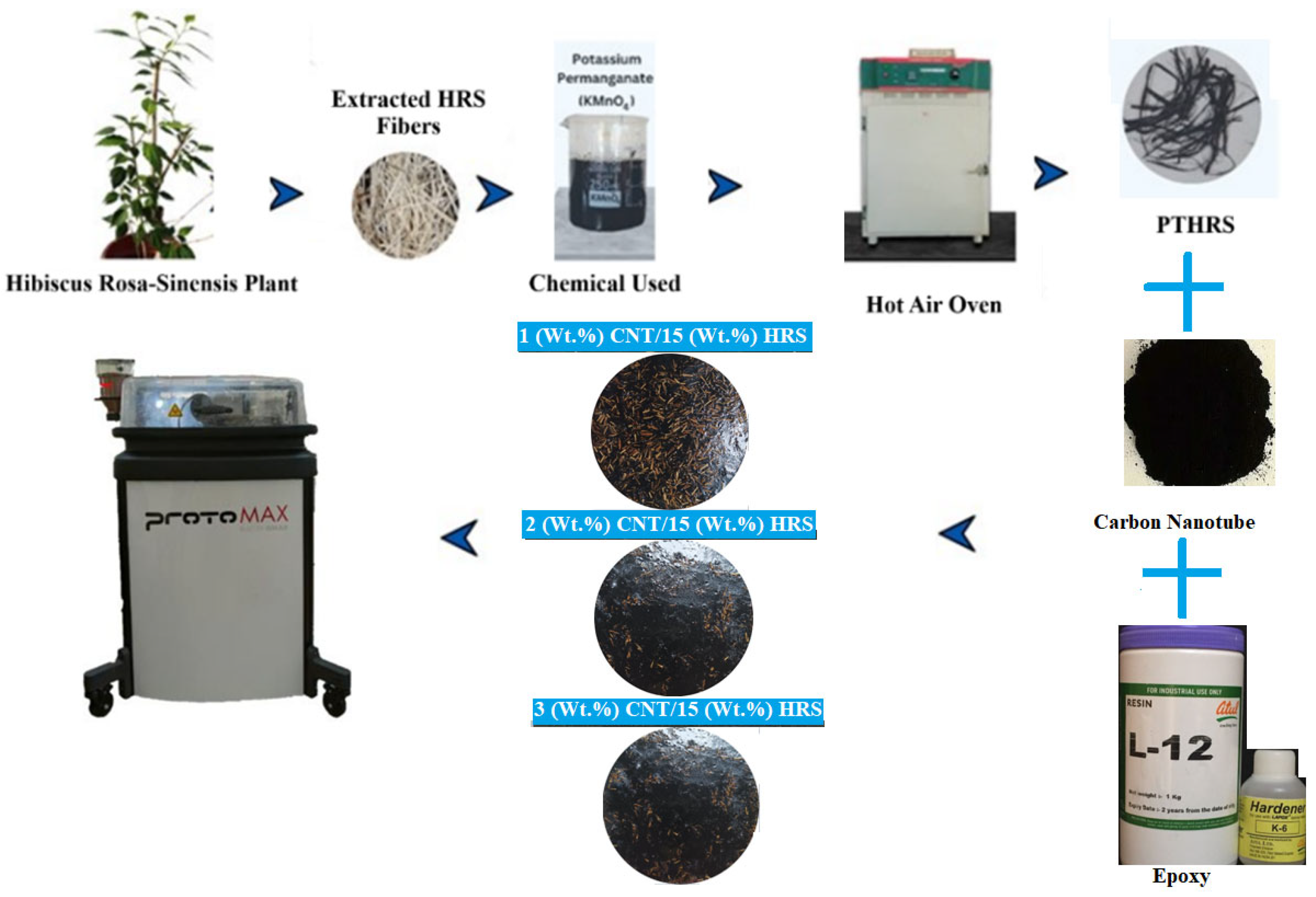
The prepared HRS fibers-CNT-Epoxy mixture was subsequently poured into the mold, pre-treated with the silicon spray as releasing agent. The use of a silicon mold facilitated the fabrication of specimens with consistent dimensions [18]. Furthermore, the applications of the releasing agent minimized damage during the demolding process. The HRSCE composite specimens were subjected to a specific time-period UV curing process within a chamber maintained at a constant temperature of 50 °C. UV curing was selected for its ability to enhance the crosslinking density of the epoxy matrix, thereby improving the mechanical, thermal, and machining properties of the final composite. The elevated temperature accelerated the polymerization process, and the HRSCE composite specimens were manually released from the mold. Figure 1 demonstrates the manufacturing flowchart of the HRSCE hybrid composite.
The hibiscus fiber content in the composite was maintained at a constant 15 wt.% throughout this study, based on prior optimization studies which indicated this concentration as optimal for achieving a balance between mechanical reinforcement and processability [15,16,17]. Although the role of natural fiber content is critical in composite performance, this study focused on investigating the effect of carbon nanotube reinforcement, thus holding hibiscus content constant to isolate CNT contributions. Future work could explore varying hibiscus fiber content and scale to comprehensively understand their relative influence compared to CNTs.
Regarding the composite fabrication process, the pressing technique involved thorough mechanical stirring at 500 rpm for 10 min to ensure uniform fiber and CNT dispersion within the epoxy matrix, followed by vacuum degassing for 15 min at −0.8 bar to eliminate entrapped air and voids. The mixture was then poured into silicon-treated molds and subjected to UV curing at 50 °C under a pressure of 2 bar for 4 h to enhance crosslinking density and mechanical properties. Post-curing was conducted at 80 °C for 2 h to further improve polymer network formation and composite stability. This detailed processing protocol was essential to ensure consistent specimen quality, prevent fiber agglomeration, and promote strong interfacial bonding within the hybrid composite.

2.3. Delamination Study

We drilled holes in HRSCE-based hybrid composite by using abrasive waterjet machining. Nine holes with 10 mm diameter were drilled using an experimental design based on Taguchi L27 with different CNT (wt.%), stand-off distance, and traverse speed. Garnet 80 is used as the abrasive. The specific set of parameters was optimized to achieve the optimal delamination factor. The entry and exit of delamination factors were determined utilizing Equation (1):
DF = Wm/Wa
where DF is the delamination factor, Wm is the maximum width of cut, and Wa is the actual width of cut.
Table 1 represents the Taguchi design factors and levels. In combination, ANOVA and RSM offer a solid basis for prediction and optimization. The CNT weight percentage (1–3 wt.%) was chosen based on previous optimization studies which identified this range as optimal for balancing enhanced mechanical and thermal properties with continued processability. Similarly, the CNT diameter (1–3 nm) was selected to cover the typical range of commercially available single-walled CNTs, allowing for the investigation of its effect on dispersion quality and interfacial bonding, as noted in the existing literature [2,7]. The stand-off distance (2–6 mm) was chosen as a critical parameter due to its well-documented impact on jet energy density and cutting precision in abrasive waterjet machining (AWJM) [1,2,3]. This range was determined through preliminary trials and the literature recommendations to ensure proper jet focus while mitigating energy loss. Finally, traverse speed (100–300 mm/min) was included as a primary variable known to control both the material removal rate and the resulting surface quality. The selected range was based on pilot experiments, with the lower bound ensuring complete material removal and the upper bound preventing excessive delamination, thus covering the practical range for composite machining.
All experimental procedures were conducted using industry-standard equipment and software to ensure accuracy and reproducibility. Abrasive waterjet machining (AWJM) was performed with a Flow Mach 4 Waterjet Cutting System (Flow International Corporation, Washington, DC, USA), featuring a 60 HP direct drive high-pressure pump capable of delivering pressures up to 400 MPa, a precision cutting head with a 0.33 mm orifice diameter, and a pneumatic abrasive delivery system with flow rate control. Surface and morphological analyses were carried out using a JEOL JSM-6380 LV Scanning Electron Microscope (JEOL Ltd., Tokyo, Japan) and an Olympus SZX16 Stereo Optical Microscope (Olympus Corporation, Tokyo, Japan). Dimensional measurements and image analyses were performed using ImageJ software (Version 1.53 k, NIH, Bethseda, MD, USA), while all statistical analyses, including ANOVA and response surface modeling, were conducted with Minitab 19 (Minitab LLC, Stata College, PA, USA). For physical measurements, a Mitutoyo CD-6”CSX digital caliper (Mitutoyo Corporation, Kawasaki-shi, Japan; accuracy ± 0.01 mm) and a Sartorius BP221S precision weighing balance (Sartorius AG, Göttingen, Germany; accuracy ± 0.1 mg) were utilized. This combination of advanced instrumentation and analytical software ensured rigor and consistency throughout the study.
This work combines the best features of both methods to achieve a comprehensive and accurate optimization process by using the Taguchi method to define ideal parameters, ANOVA to confirm them, and RSM to predict the model.

2.3.1. Machining Time Determination

Machining time was precisely measured using a digital stopwatch (Model: Casio HS-3V, Casio Computer Co., Ltd., Tokyo, Japan, ±0.01 s accuracy) integrated with the AWJM control system. Time measurement commenced when the waterjet first contacted the work-piece surface and concluded when complete penetration through the specimen thickness was achieved, indicated by consistent abrasive jet emergence from the exit surface.

2.3.2. Delamination Factor Measurement

The width of cut measurements were performed using a digital optical microscope (Model: Olympus SZX16, Japan) with calibrated measurement software (CellSens Standard, Olympus, software 13.1). For each machined hole: (1) Wm (maximum width of cut) was measured at the location showing maximum material removal around the hole periphery; and (2) Wa (actual width of cut) was measured as the nominal hole diameter (10 mm). Multiple measurements (minimum 8 points around each hole circumference) were taken and averaged to ensure accuracy.

3. Results

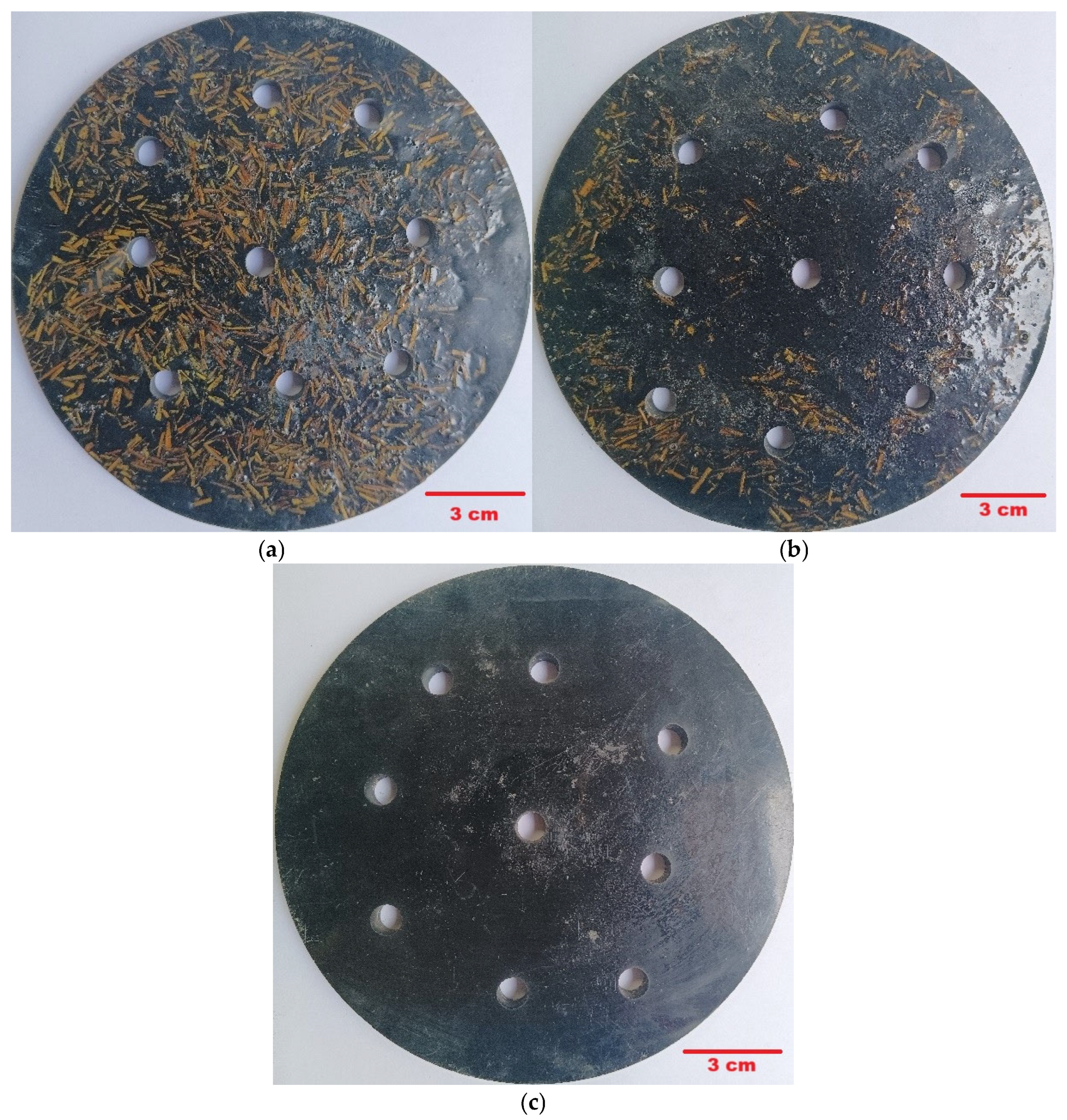
The results provide a detailed study of abrasive waterjet machining characteristics, such as delamination factors at the entry, exit, and time required for machining for HRSCE hybrid composite. The L27 array has been implemented for the optimization of the results. Table 2 summarizes the results of AWJM characteristics, such as DF-entry, DF-exit, and machining time. Figure 2 is the abrasive waterjet-machined surface of HRSCE composite.

3.1. Delamination at Entry

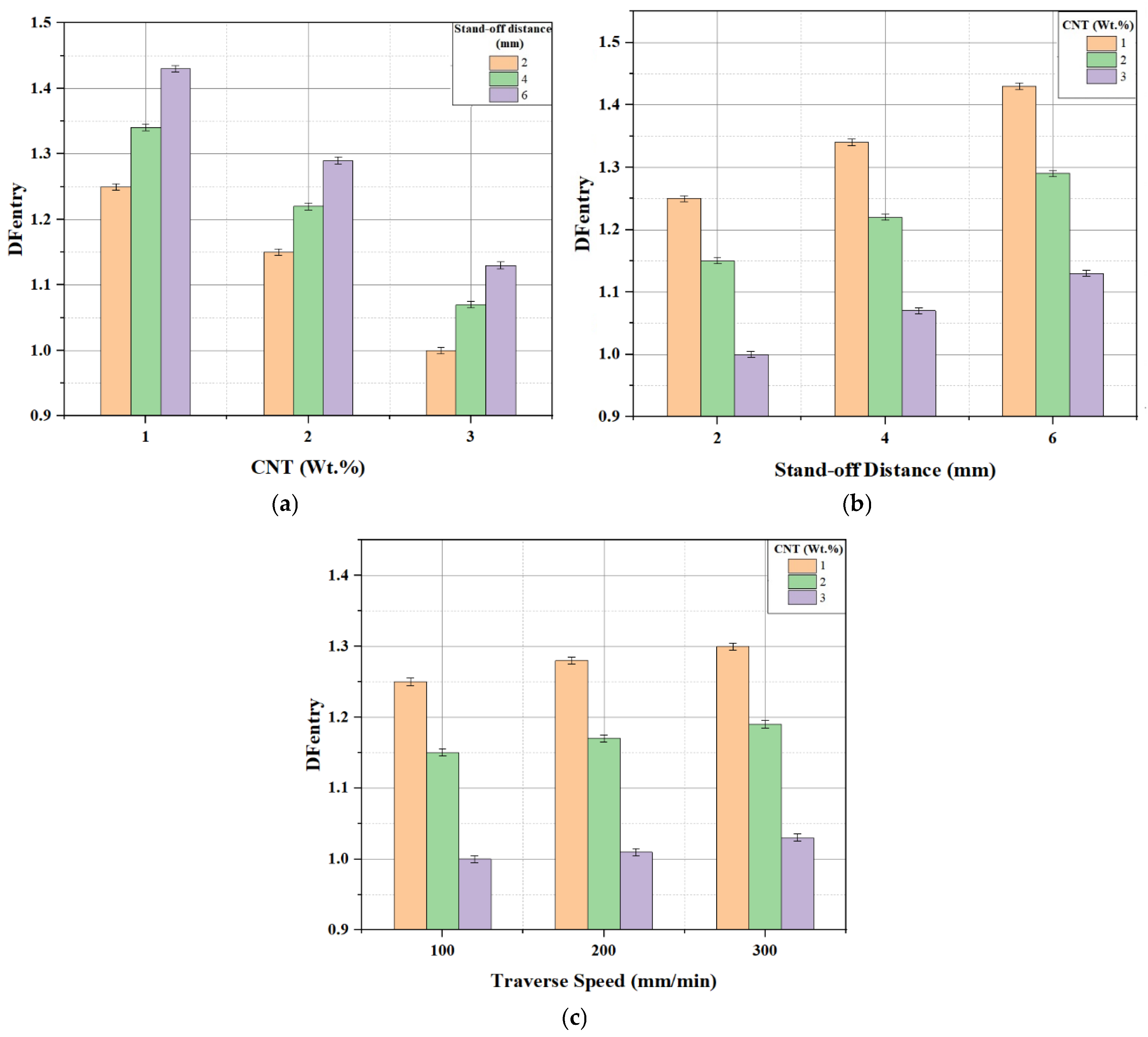
The delamination factor at the entry (DF-entry) of the HRSCE hybrid composite is generally low due to the advantageous effects of the stir casting processing technique and their enhanced mechanical characteristics, including hardness [20,21]. Figure 3a illustrates the variation in the delamination factor at the entry during the abrasive waterjet machining of the HRSCE composite with varying weight percentage of CNT and three different stand-off distances. The DF-entry at the three points during AWJM exhibits a non-linear relationship with the CNT (wt.%). Additionally, decreasing the stand-off distance significantly reduced the DF-entry, likely due to improved jet precision, reduced divergence, and minimized energy dispersion [22,23,24]. The delamination factor exhibits a decreasing trend with increasing CNT (wt.%), with a notable reduction at 3 (wt.%), suggesting improved delamination resistance due to the enhanced hardness of the composite. The delamination factor increases significantly with increasing stand-off distance, suggesting that larger distances reduced the jet intensity and increased dispersion. The optimal delamination factor condition is achieved at 3 (wt.%) CNT-reinforced HRSE composite, with a 2 mm stand-off distance, ensuring minimal delamination and superior machining performance.
Further, Figure 3b illustrates that the delamination factor is at the entry for HRSCE-based hybrid composite with varying stand-off distances for different CNT (wt.%). The delamination factor at the entry point increases with the increasing stand-off distance, indicating that smaller stand-off distance results in better cutting precision and reduced delamination across all CNT (wt.%) of the HRSCE composites. The combination of 3 (wt.%) CNT and a 2 mm stand-off distance exhibited the lowest DF-entry, suggesting the highest resistance to delamination at the entry point. The addition of CNT Fiber (wt.%) enhanced the toughness and interfacial bonding of the hybrid composite, leading to improved resistance to crack initiation and propagation during abrasive waterjet entry, and resulting in a lower delamination factor [22,24,25,26]. Smaller stand-off distances during abrasive waterjet machining result in a more focused jet, minimizing irregular material erosion and reducing delamination at the entry point.
Additionally, Figure 3c demonstrates the DF-entry for the HRSCE composite for different traverse speeds with varying CNT (wt.%). At a higher traverse speed, the DF-entry is relatively high, indicating the reduced delamination resistance. As the CNT (wt.%) in the hybrid composites increases, the delamination factor at the entry of the abrasive waterjet-machined surface decreases. This beneficial effect is particularly noticeable at lower traverse speeds. As the traverse speed increases from 100 to 300 mm/min, DF-entry has a significant increase for all CNT (wt.%), since a higher traverse speed reduces the jet’s exposure time on the material, resulting in incomplete material removal and increased delamination at the entry.
Table 3 demonstrates the ANOVA table for DF-entry. The significant factors influencing delamination are CNT (wt.%) and stand-off distance. The CNT (wt.%) has the most substantial influence on DF-entry, contributing 76.10% to the overall effect. Additionally, the stand-off distance significantly influences the DF-entry, contributing 21.88% of its variation. CNT diameter and traverse speed have less impact on DF-entry.
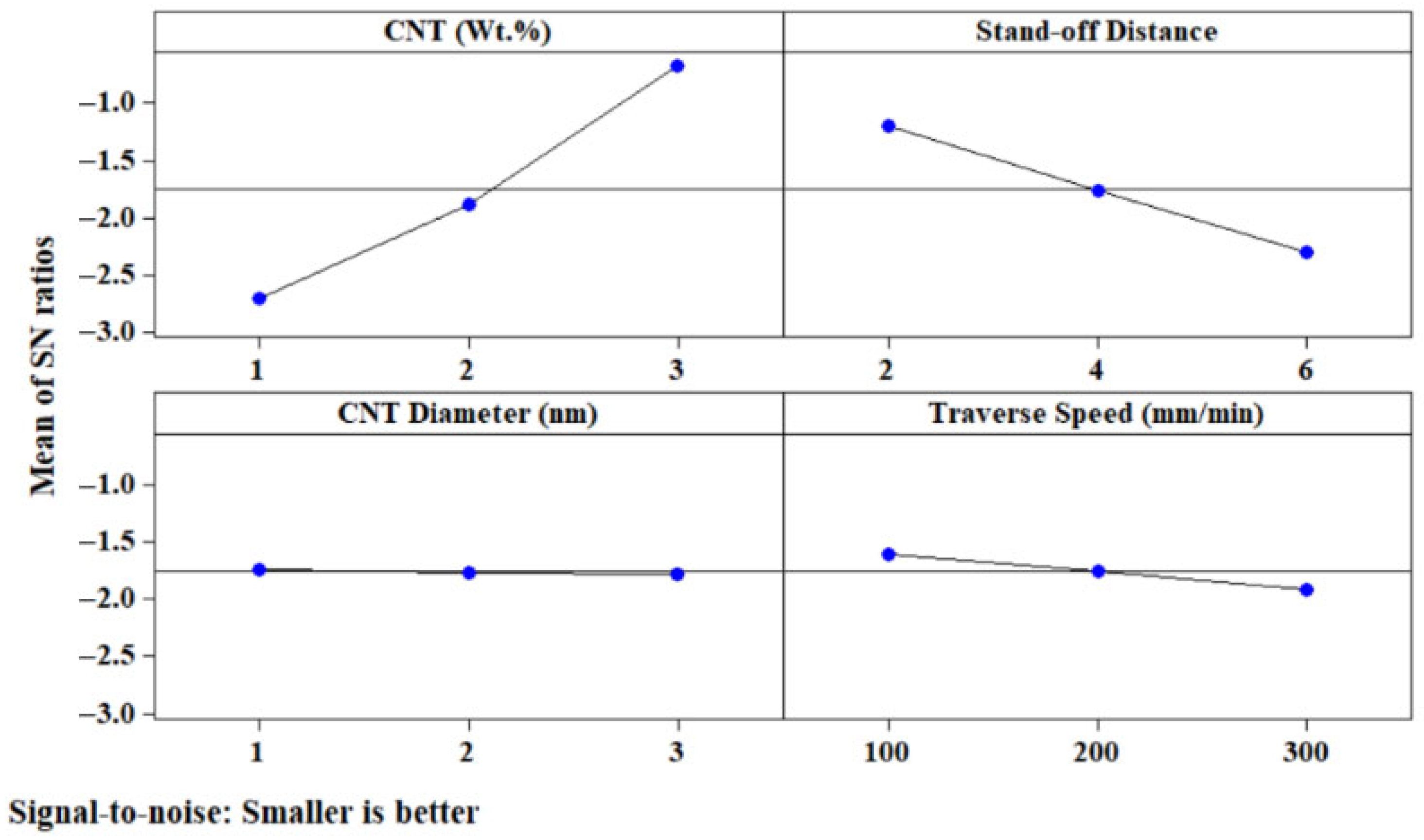
Main effect plot (Figure 4) reveals the variation in process parameters such as CNT (wt.%), stand-off distance, traverse speed, and CNT diameter. Moreover, the plot provides that 3 (wt.%) CNT-reinforced composite has the minimal DF-entry in AWJM, with the higher SN ratio indicating reduced delamination.
Table 4 represents the RSM coefficients for DF-entry. The estimated coefficients are utilized to generate the second-order polynomial equation for DF-entry. Equation (3) is generated to predict the DF-entry for abrasive waterjet machining of HRSCE composite.
Table 5 is the ANOVA table DF-entry. The highly significant regression model, with a very small residual error and high F-value (far exceeding the critical F0.05(14, 16) = 2.3522), confirms the strong influence of independent variables on delamination. In particular, CNT (wt.%), stand-off distance, CNT diameter, and traverse speed, and their interactions, strongly influence delamination, suggesting that optimizing these factors can effectively minimize delamination.
D F e n t r y = 1.17546 0.00691 A + 0.05821 B 0.02357 C + 0.00025 D         0.02411 A 2 0.00103 B 2 + 0.00589 C 2 0.00688 A B         0.00006   A D 0.00002   B D
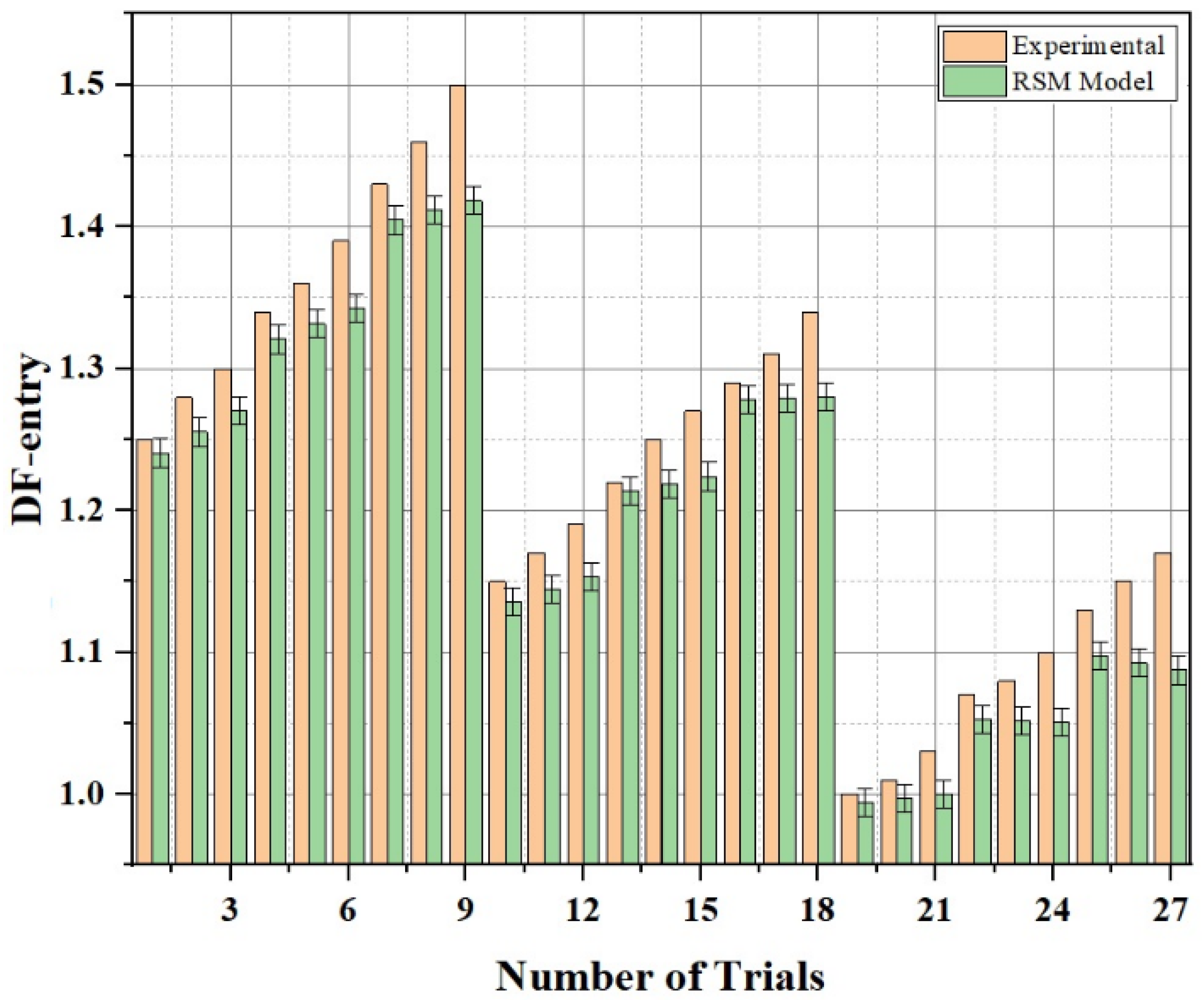
Figure 5 shows the comparison between the experimental and predicted RSM values of DF-entry with an average error less than 2.75%. Comparing the experimental data with the predicted RSM data provided a significant evaluation of model accuracy for DF-entry during abrasive waterjet machining of the HRSCE-based hybrid composite.
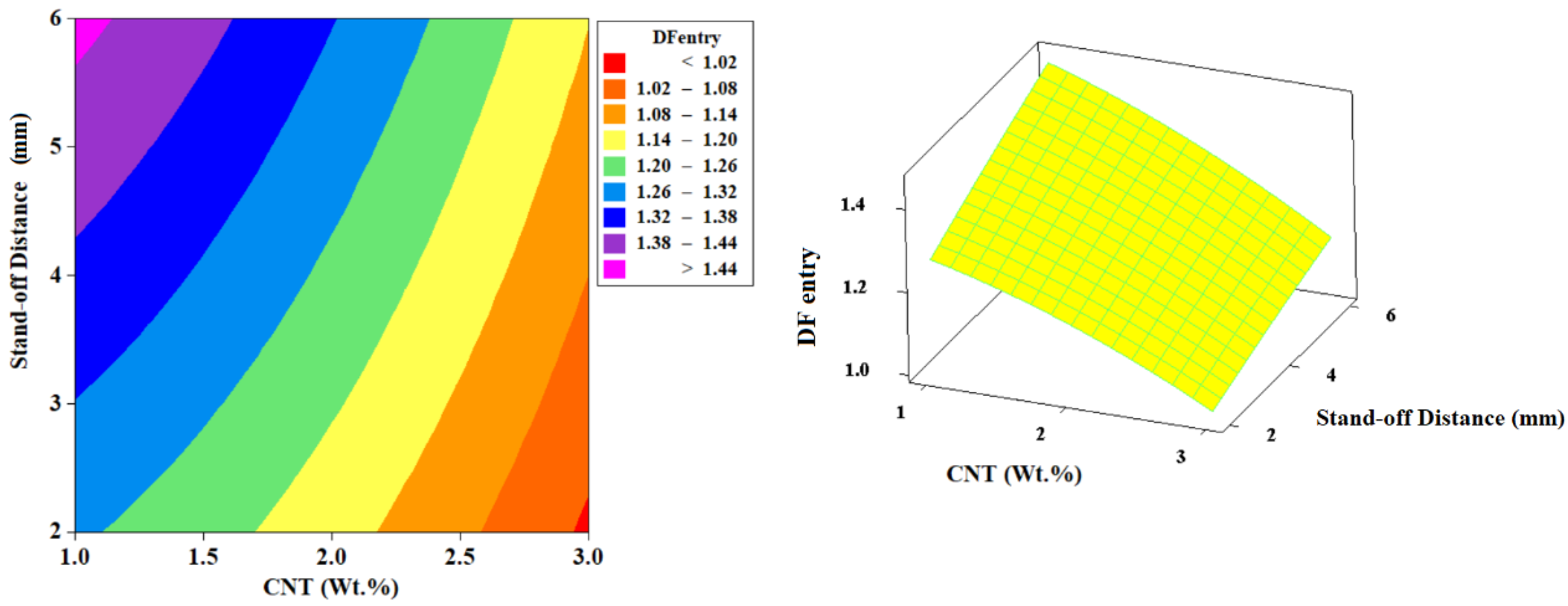
Figure 6 illustrates the contour and surface plot of DF-entry with varying CNT (wt.%) and stand-off distance. The plots indicated that the optimum levels of CNT (wt.%) and the stand-off distance for minimizing DF-entry were 3 (wt.%) and 2 mm. Increasing CNT (wt.%) reduces the delamination at the entry, while increasing stand-off distance increases DF-entry due to its divergence from the abrasive waterjet stream.
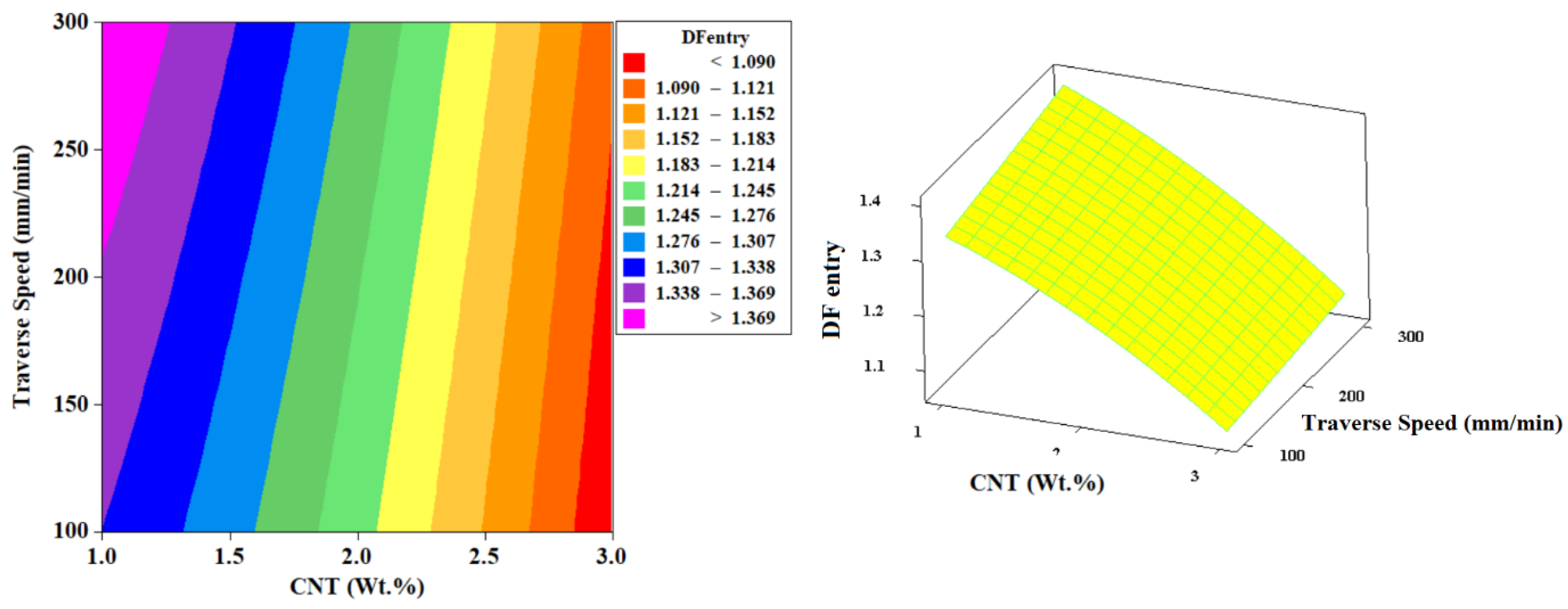
Furthermore, Figure 7 demonstrates both the contour and surface plots of DF-entry with varying CNT (wt.%) and traverse speed. The plots analyzed the optimum levels of CNT (wt.%) at 3 (wt.%) and traverse speed at 100–250 mm/min. Enhancing the CNT (wt.%) from 1 (wt.%) to 3 (wt.%) reduces delamination at the entry, suggesting the higher CNT (wt.%) increases composite strength and improves resistance to delamination during machining. Increase in traverse speed leads to increased delamination due to sufficient interaction time between the abrasive jet and the material.
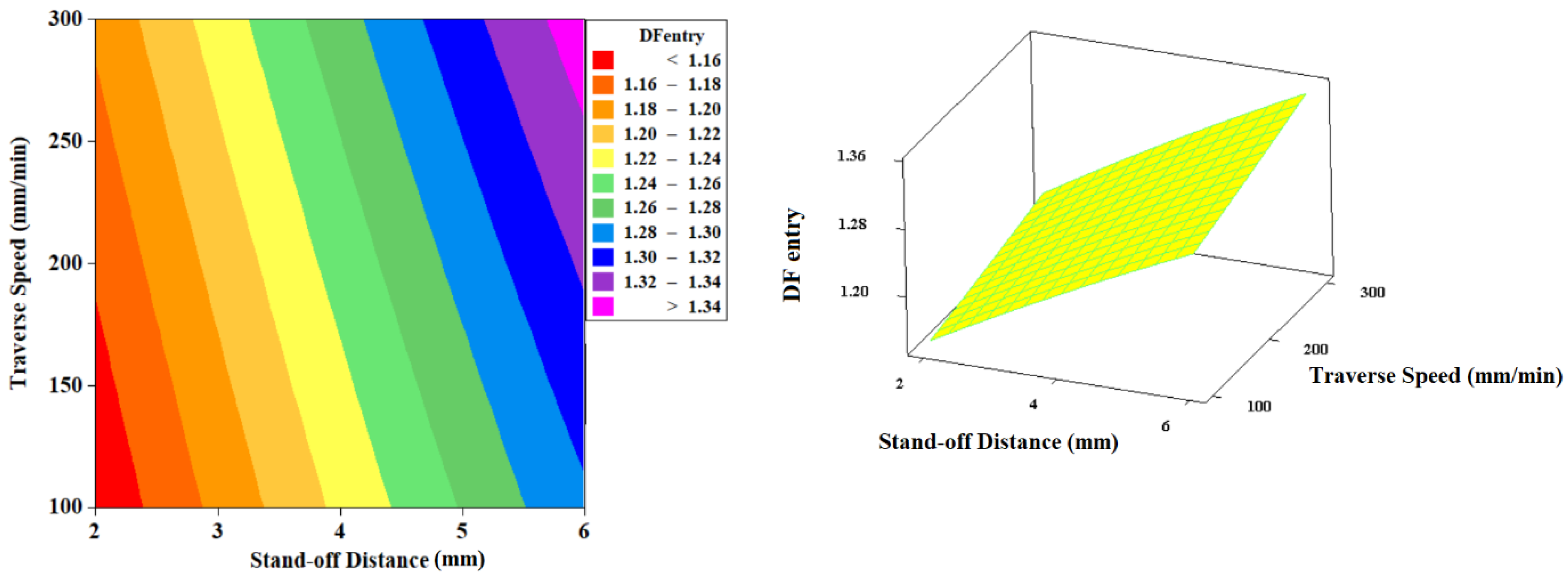
Additionally, Figure 8 is the contour and surface plot of DF-entry by varying the traverse speed and stand-off distance. Increasing stand-off distance reduces jet precision and intensity, while increasing traverse speed decreases interaction time, both leading to increased delamination. The plot demonstrated that the traverse speed in the range 100–150 mm/min resulted in the minimum delamination factor. To minimize delamination during machining, it is significant to employ a low stand-off distance and a low traverse speed. This approach optimizes the machining processes, resulting in higher quality composite materials with reduced delamination.

3.2. Delamination at the Exit Side

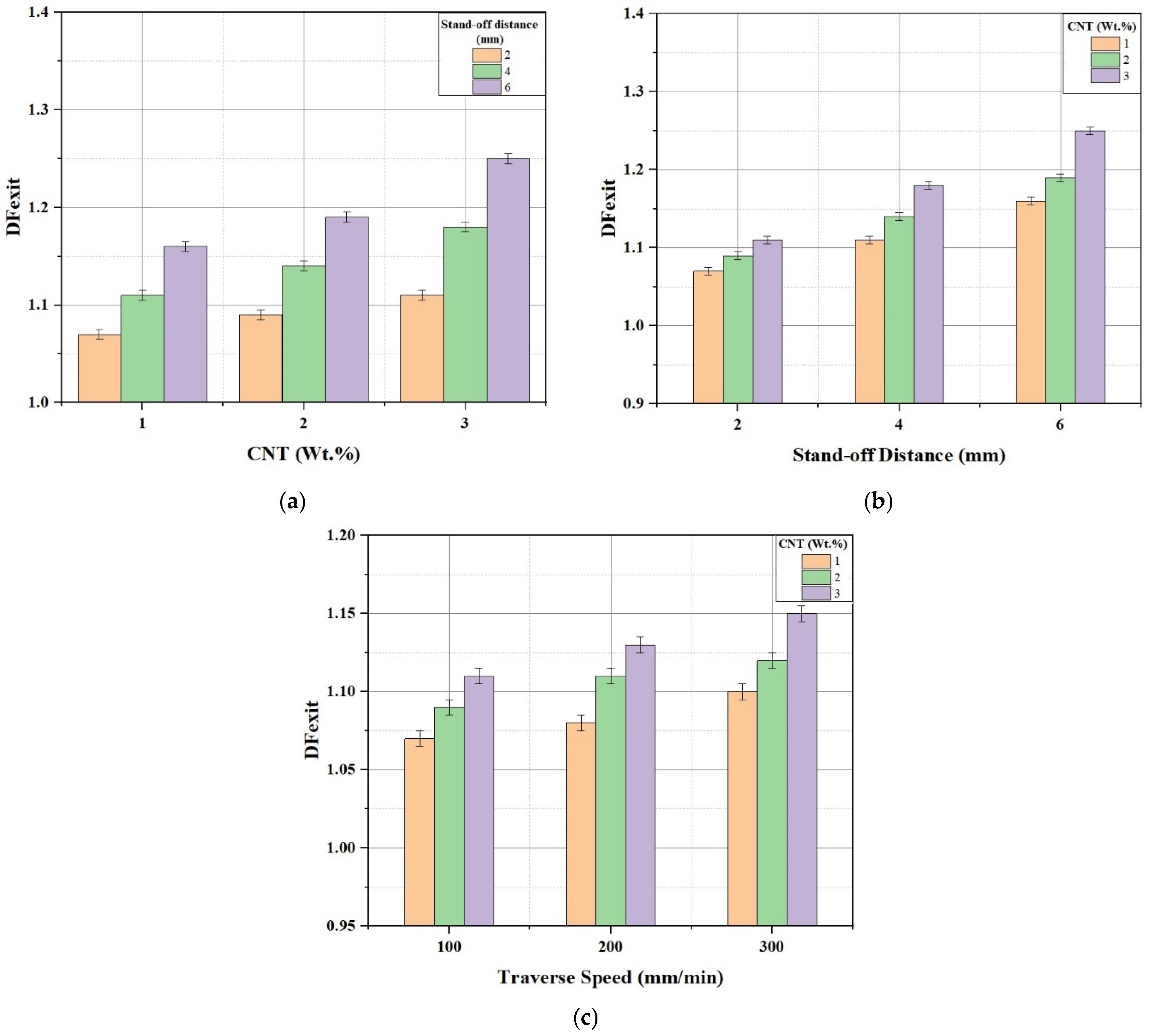
Delamination at the exit (DF-exit) had been reduced by reducing the CNT (wt.%), stand-off distance, and traverse speed [27]. Figure 9a presents the relationship between DF-exit and CNT (wt.%) at varying stand-off distances. An increase in CNT (wt.%) leads to an increased hardness of the HRSCE material. This higher hardness results in increased jerking during abrasive waterjet machining, which, in turn, contributes to an elevated DF-exit from the composite [28,29,30].
Further, Figure 9b shows the DF-exit and stand-off distance by varying CNT (wt.%). The DF-exit increases by increasing the stand-off distance for all CNT (wt.%). This is indicated as the distance between the nozzle and work-piece increases, the severity of delamination at the exit of the cut also increases. Improving the CNT (wt.%) in the HRSCE-based hybrid composite leads to the strengthening of the mechanical properties of the material, such as hardness, and this lead to an increase in the delamination at the exit.
Moreover, Figure 9c represents the DF-exit vs. traverse speed analysis with different CNT (wt.%). Higher traverse speeds reduce the interaction time between the abrasive jet and the composite, leading to less effective material removal, incomplete cutting, increased fiber pullout, and, subsequently, a higher delamination factor. While CNT (wt.%) presence enhances the mechanical strength and stiffness of the HRSCE composite, it also increases its brittleness, leading to a higher tendency for crack propagation during machining and, consequently, to greater delamination at the exit. The combined effect of higher traverse speeds and increased brittleness due to higher CNT (wt.%) leads to greater delamination, as both factors amplify the tendency for crack propagation during machining. While carbon nanotubes generally enhance toughness via crack bridging and load transfer, excessive CNT content (>2 wt.%) in this study led to agglomeration and increased local stiffness. This resulted in embrittlement and stress concentration, promoting crack propagation under the high-velocity impact of abrasive jets, thereby increasing DF-exit. Thus, the observed trend reflects a transition from toughening to brittle fracture beyond an optimal CNT threshold.
The ANOVA table for delamination at the exit is shown in Table 6. The stand-off distance is the most influential factor (68.3%) affecting delamination at the exit, followed by CNT (wt.%) at 22.988%. Traverse speed has a minor but significant impact (7.31%), while CNT diameter and interaction effects are negligible. To minimize delamination, it is significant to optimize stand-off distance and CNT content while maintaining a controlled traverse speed.
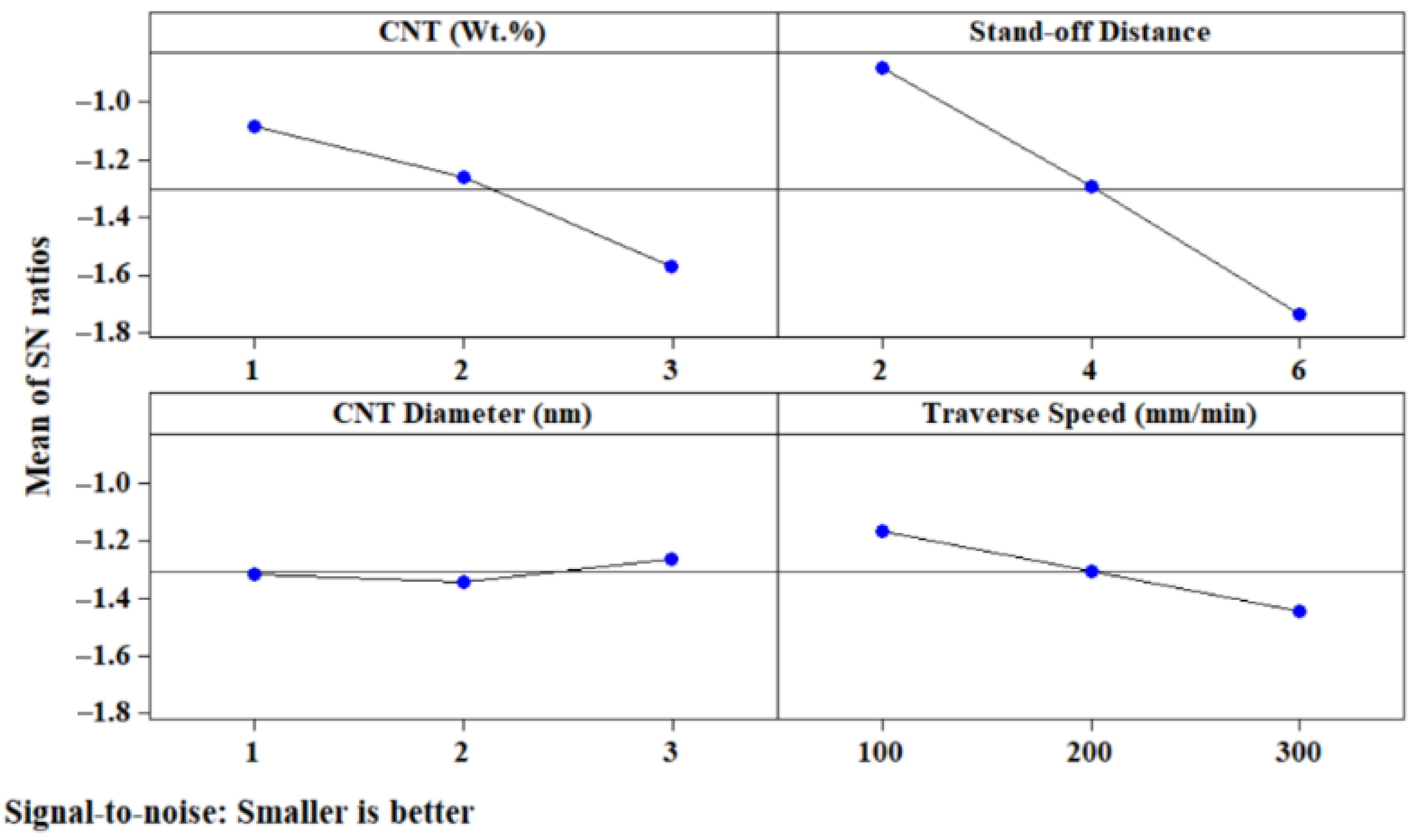
Figure 10 shows the main effect plot for delamination at the exit of the HRSCE composite after the abrasive waterjet machining process. The plot indicates how the parameters influence the DF-exit, and it proves that the stand-off distance has a major role on the DF-exit.
Table 7 represents the RSM table for predicting the DF-exit. The table successfully contributed to the derivation of the second order polynomial equation for predicting the delamination at the exit. Equation (3) is used for predicting the DF-exit of the HRSCE-based hybrid composite after AWJM.
Table 8 is the ANOVA table, which demonstrated a highly significant regression model (p < 0.001, F = 2.3522) with minimal residual error, indicating that the predictors effectively explain the variation in delamination at the exit.
D F e x i t = 1.04391 0.03336 A + 0.00388 B + 0.01387 C + 0.00008 D + 0.01153 A 2                       + 0.00163 B 2 0.00347 C 2 + 0.005 A B + 0.00001 B D
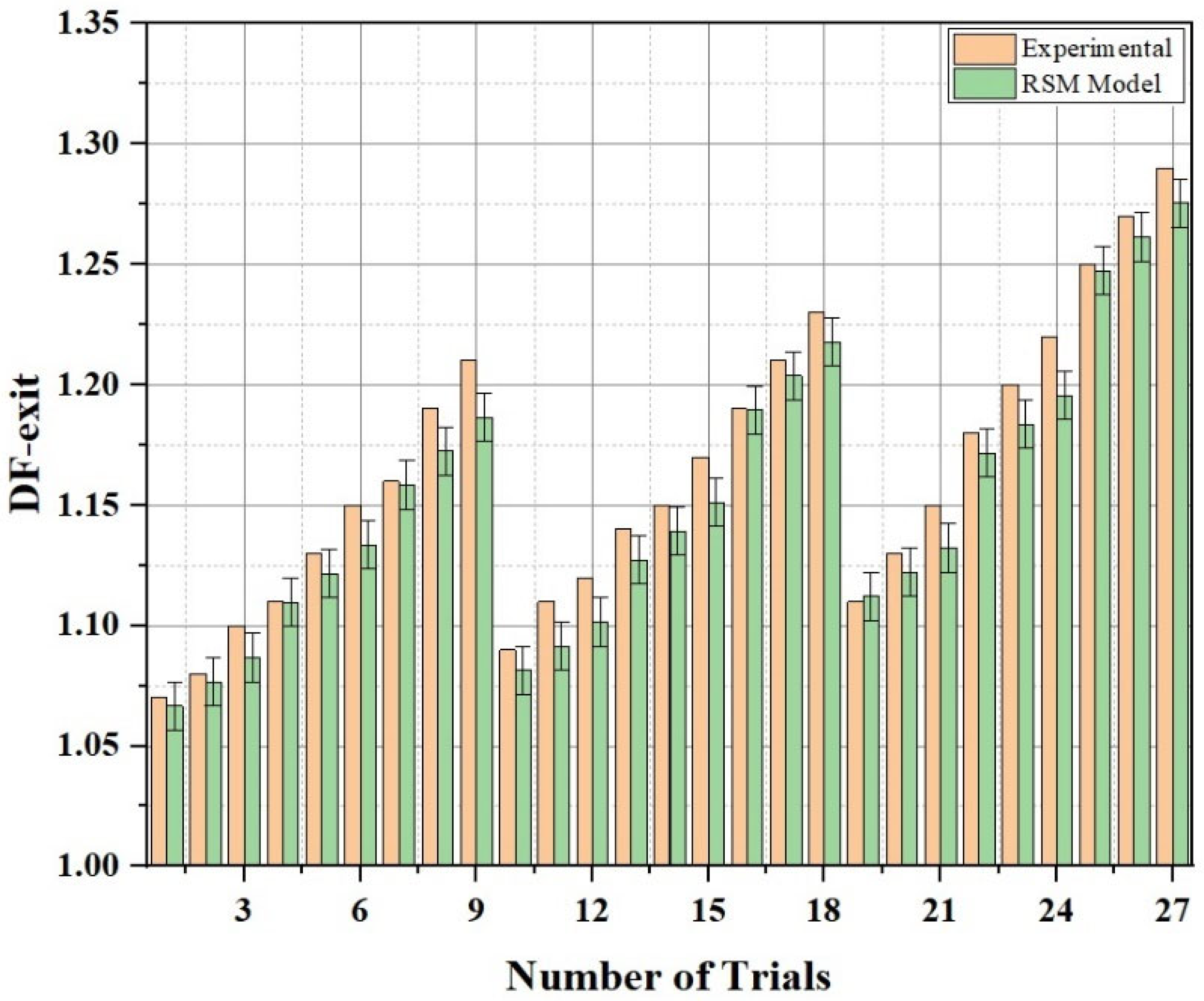
Figure 11 illustrates the comparison between the experimental values and the predicted values of RSM. This bar chart specifies the reliability of the RSM model in accurately predicting the DF-exit, with a close match between experimental and predicted values. This validates the model’s effectiveness in optimizing the AWJM process. The high accuracy of the RSM model in predicting KF-exit, with an error rate of only 1.2%, suggested its reliability for this application.
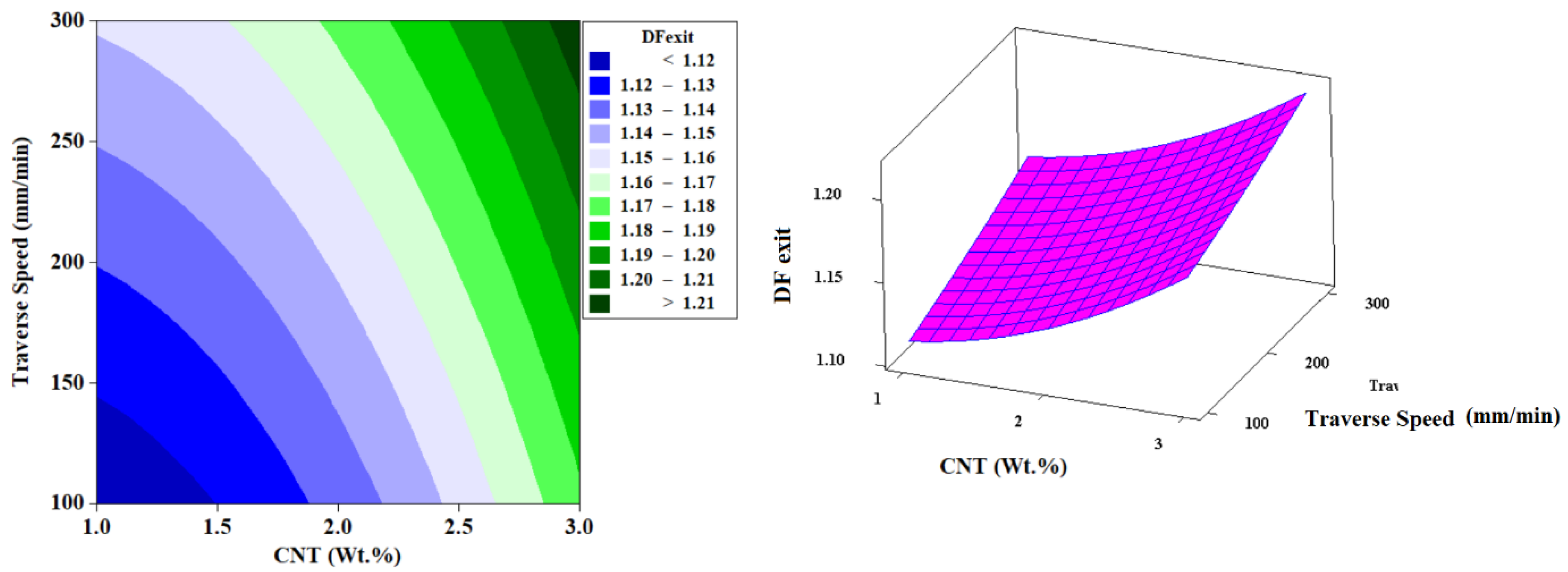
The contour and surface plot for the DF-exit with the varying CNT (wt.%) and traverse speed are shown in Figure 12. The plots indicate that the optimal conditions for achieving minimum delamination at the exit are CNT (wt.%) below 1.45% and traverse speed between 100 and 150 mm/min. The interaction between CNT (wt.%) and traverse speed indicates that their combined optimization is significant to reducing the delamination.
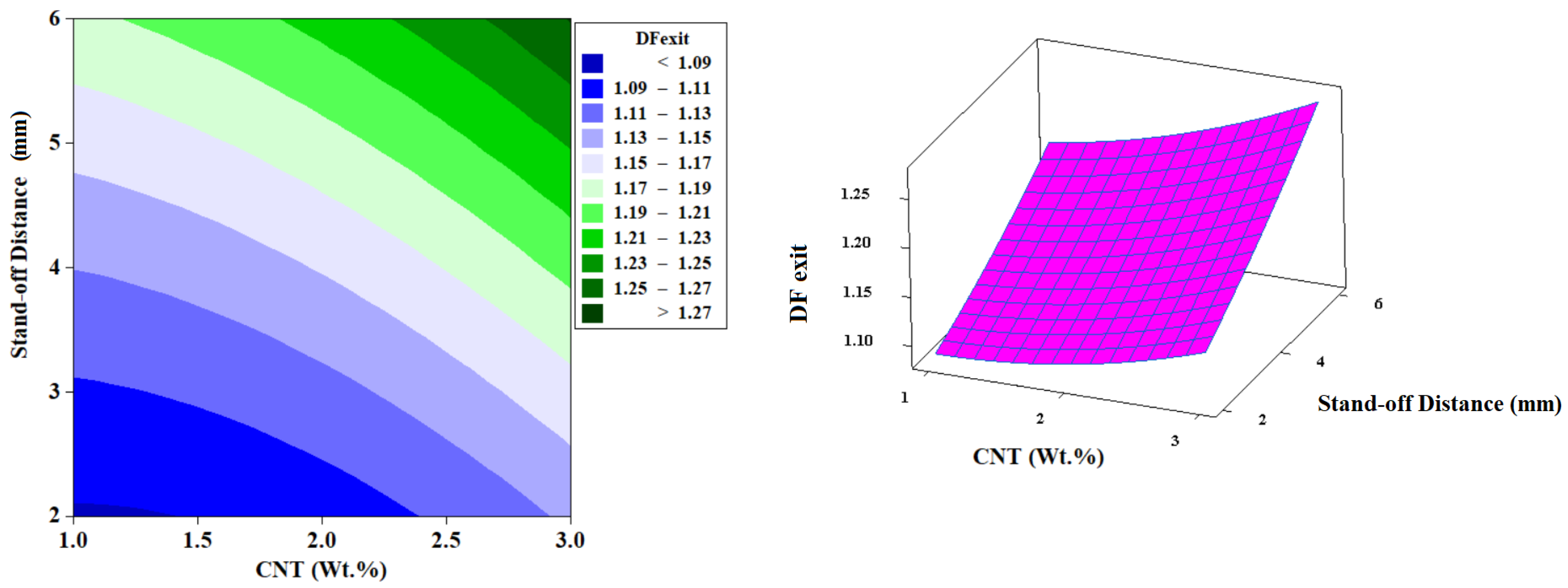
Moreover, the contour and surface plot with varying CNT (wt.%) and stand-off distance of DF-exit is shown in Figure 13. The DF-exit increased with higher CNT (wt.%) and stand-off distance. The plots highlight that the optimal range of CNT (wt.%) is 1–1.45% and the stand-off distance is 2 mm, which minimize delamination during the AWJM of HRSCE-based hybrid composite.
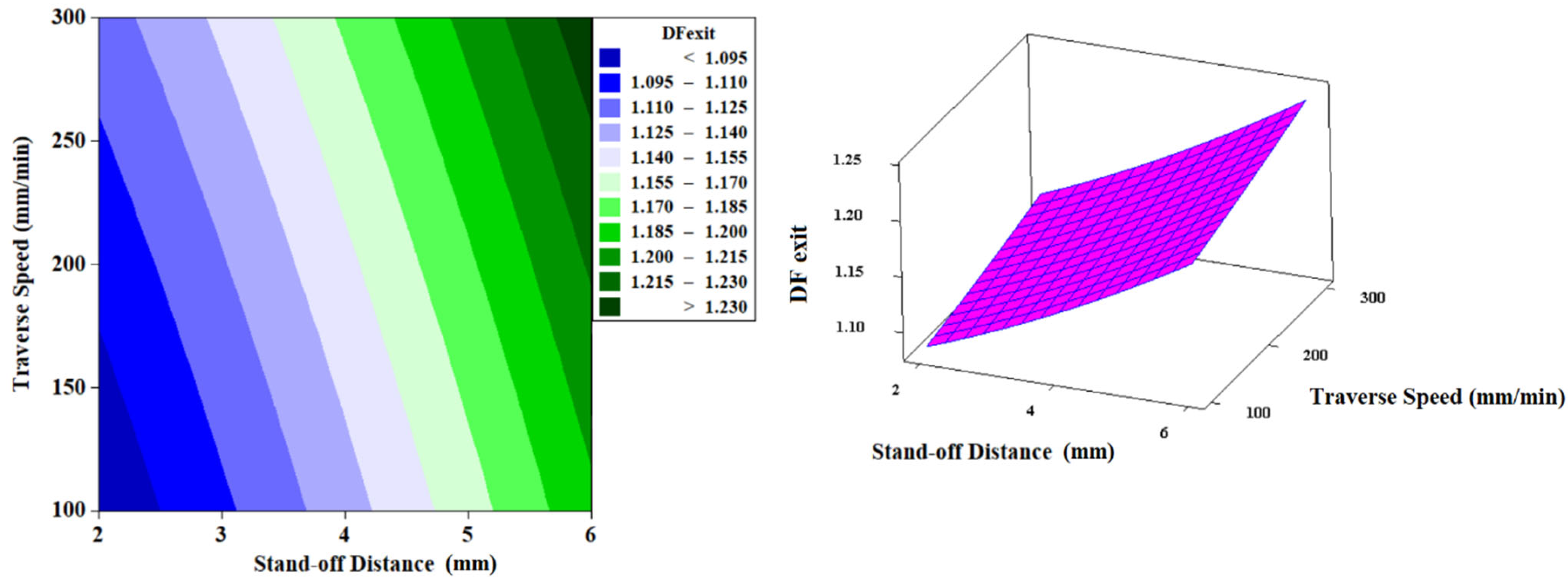
Furthermore, Figure 14 represents the contour and the surface plot of the DF-exit with the varying traverse speed and the stand-off distance after AWJM. Contour and surface plots demonstrated that the DF-exit increased with both higher stand-off distance and traverse speeds. To optimize the machining process and minimize delamination in HRSCE hybrid composites, the traverse speed should be maintained within the range of 100–150 mm/min and stand-off distance should be varied between 2 and 2.5 mm.
The observed delamination and microcrack patterns may also be partially attributed to localized hardening and uneven CNT dispersion near the surface. Due to the high aspect ratio and surface energy of CNTs, agglomerates can form at the microstructural level, particularly near the mold–resin interface during curing. These regions act as stress concentrators, promoting crack initiation under AWJM.

3.3. Machining Time

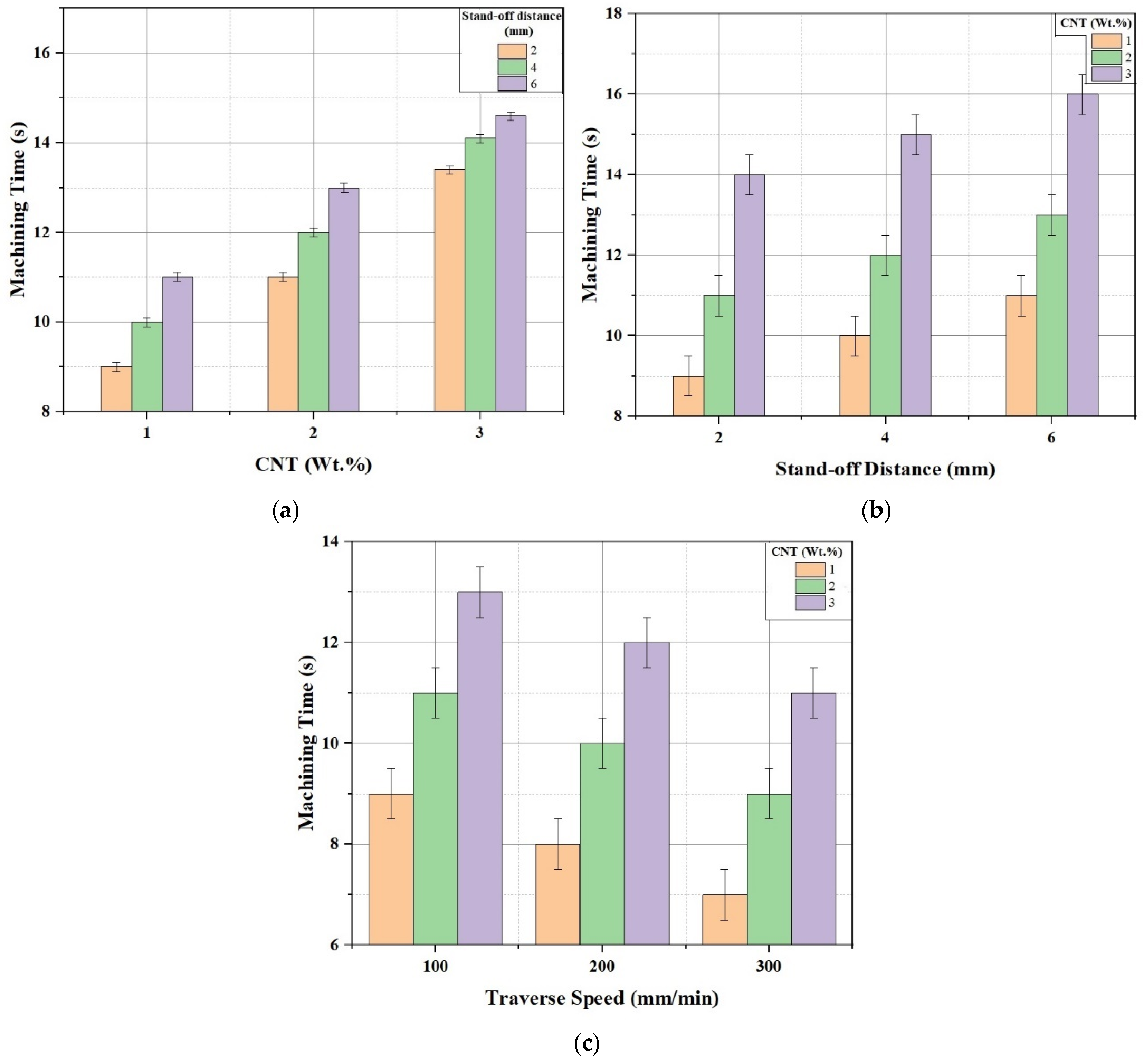
Figure 15a illustrated the machining time vs. CNT (wt.%) plot with varying stand-off distance. An increase in CNT content from 1 (wt.%) to 3 (wt.%) resulted in a corresponding increase in machining time. This is likely attributed to the enhanced reinforcement effect of carbon nanotube fibers, leading to increased composite strength and machining resistance. Machining time increased with increasing stand-off distance for all CNT (wt.%), due to reduced energy density and cutting efficiency of the abrasive waterjet. Machining time exhibits a maximum at 3 (wt.%) CNT and 6 mm stand-off distance, highlighting the combined influence of reinforcement content and reduced energy density on machining resistance, while the minimum machining time observed at 1 (wt.%) CNT and 2 mm stand-off distance reflects the combined benefits of lower reinforcement and higher density.
Further, Figure 15b illustrated the variation in machining time by changing the stand-off distance for different CNT (wt.%) fibers to reinforce HRSCE-based hybrid composite machined using AWJM. The highest machining times are observed at the highest stand-off distance (6 mm) and at 3 (wt.%) CNT composite, highlighting the combined effect of these factors on increasing the material’s resistance to cutting.
Moreover, Figure 15c provided the change in machining time with varying the traverse speed for different CNT (wt.%) of HRSCE-based hybrid composite under AWJM. Machining time decreases with increasing traverse speed from 100 mm/min to 300 mm/min for all CNT (wt.%) due to the faster material removal rate at higher speeds.
Table 9 represents the ANOVA table for machining time. The CNT (wt.%) is the most influential factor, accounting for over 92% of the variance in machining time, followed by stand-off distance, while traverse speed has a minor but statistically significant effect. CNT (wt.%) is the most influential factor, with both its linear and quadratic effects significantly increasing machining time, while stand-off distance also contributes significantly, with notable interaction effects between CNT (wt.%) and stand-off distance. CNT diameter has negligible impact on machining time, with no significant main, quadratic, or interaction effects, highlighting the primary importance of optimizing CNT (wt.%) and stand-off distance for effective machining process control.
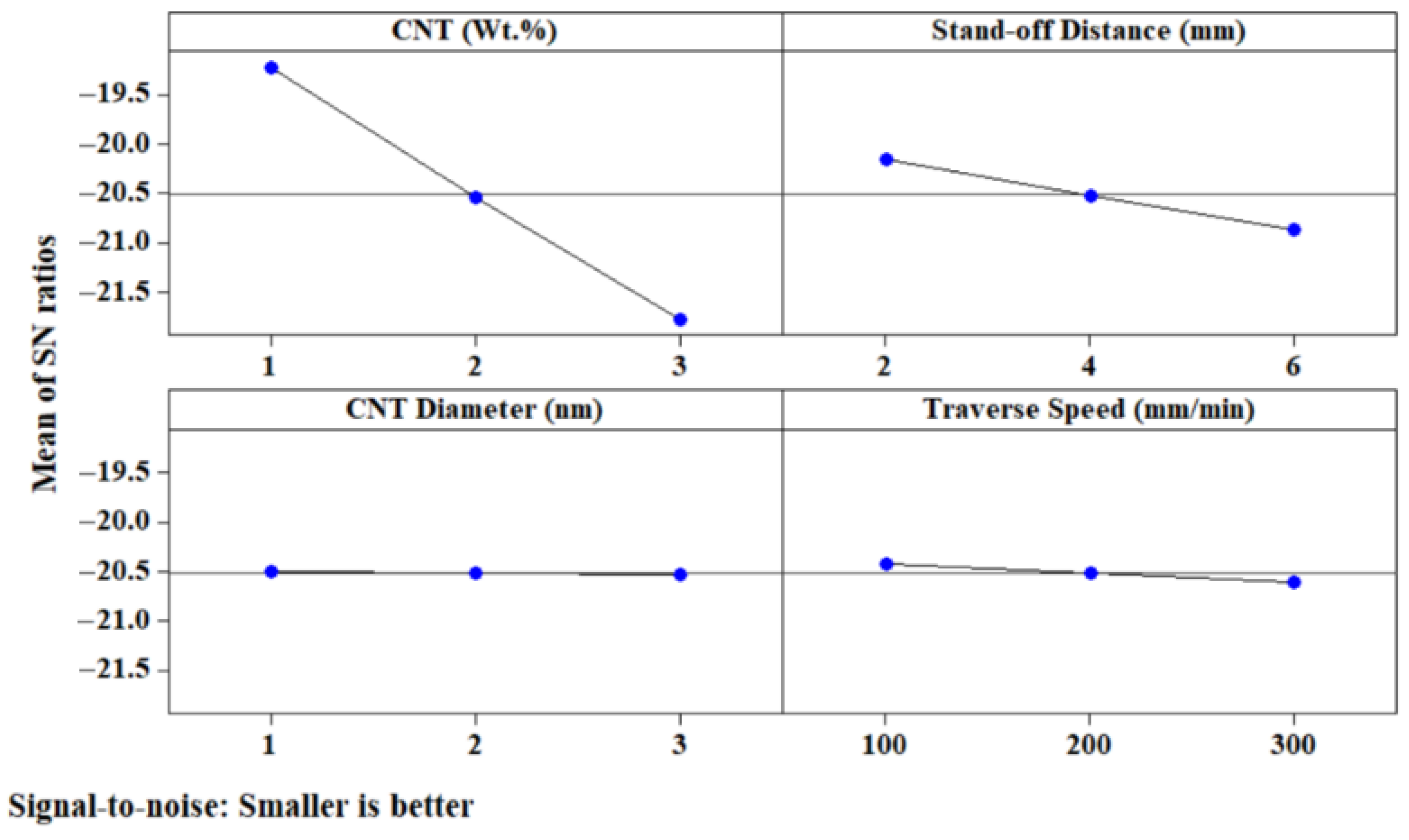
Figure 16 is the main effect plot of the machining time after AWJM of HRSCE composite. The plot clearly demonstrated that CNT (wt.%) had a most significant role on machining time, while stand-off distance played a significant role, though to a lesser extent than CNT (wt.%). CNT diameter and traverse speed had a negligible effect on machining time.
Table 10 demonstrates the RSM table for machining time and Equation (4) is the second-order polynomial equation for predicting the machining time. The analysis, with minimal residual error, accurately predicts machining time, emphasizing the importance of optimizing CNT (wt.%) and stand-off distance for effective machining process control.
Table 11 represents the ANOVA table for machining time. The regression model provided an excellent fit for the machining time, as indicated by the high F-value exceeding F-table value (2.3532) and the minimal residual error. This reflects near-perfect explanation of the total variation, providing high statistical significance and reliability in predicting machining time.
Machining   time = 6.87834 + 1.14663 A + 0.14859 B + 0.13052 C + 0.00086 D + 0.08428 A 2 + 0.00357 B 2 0.00572 C 2 + 0.01844 A B 0.01562 A C + 0.00014 A D 0.00781 B C + 0.00006 B D 0.00016 C D
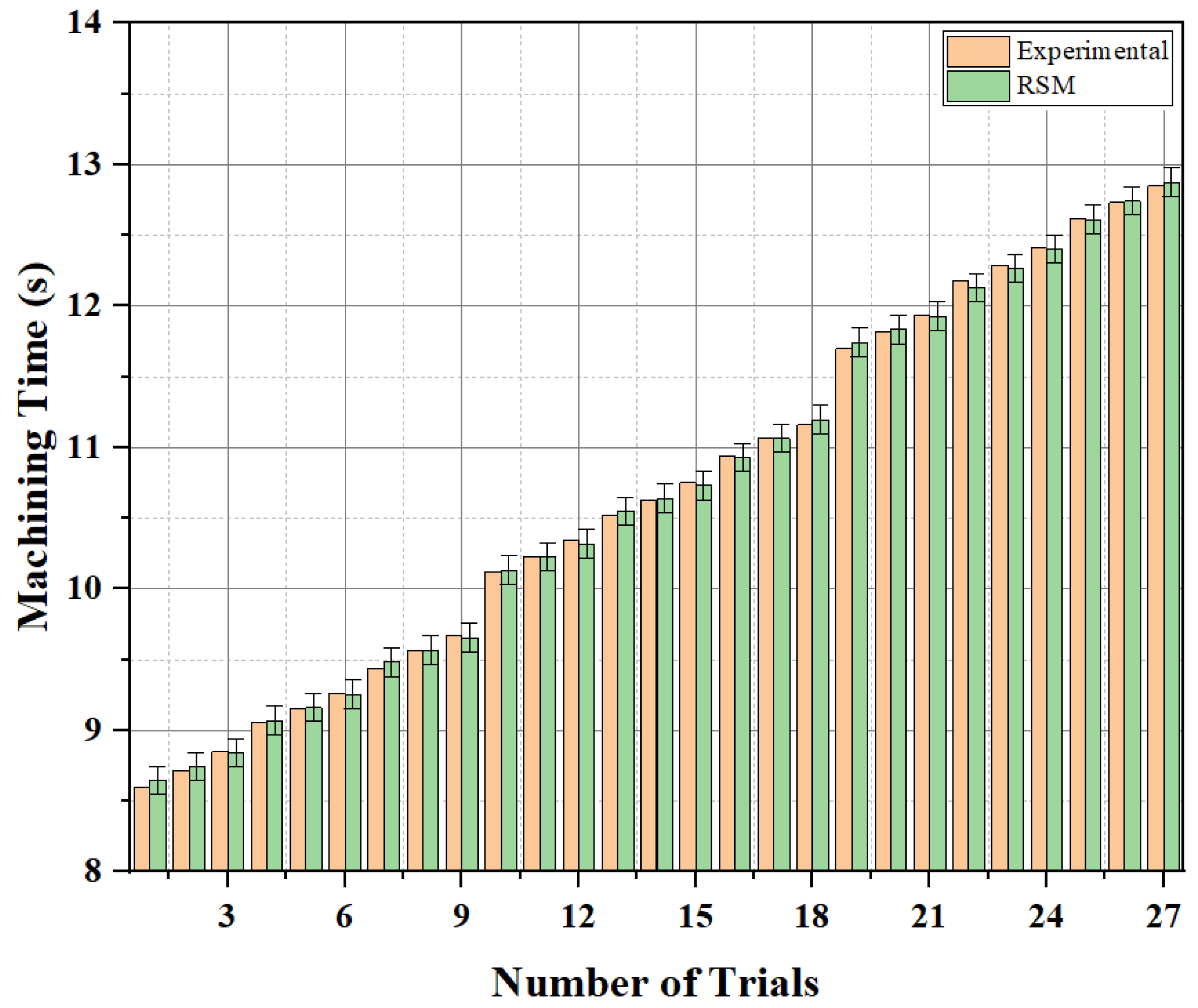
The RSM equation accurately predicted the machining time with an error rate of less than 1.3%, (Figure 17), demonstrating its high precision in modeling the relationship between AWJM parameters and time.
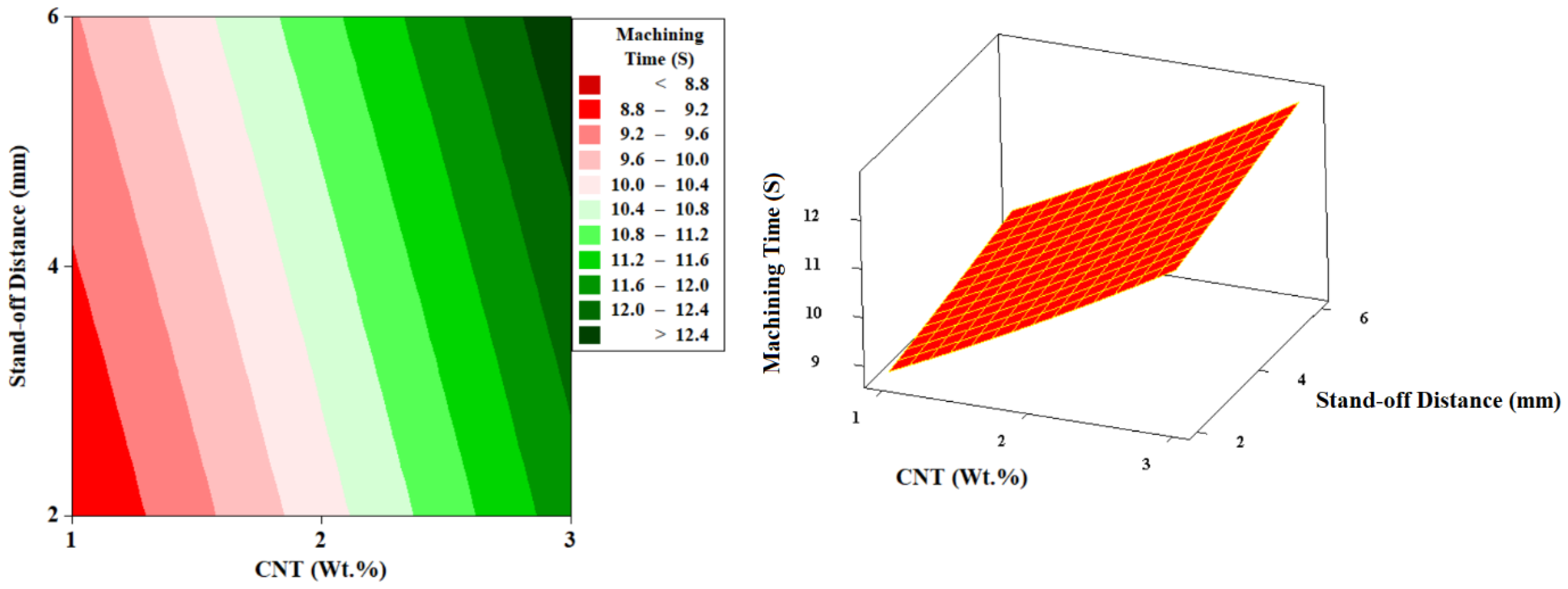
Machining time increases with increasing stand-off distance for all CNT (wt.%), likely due to the reduced energy density and cutting efficiency of the abrasive waterjet. This contour plot and surface plot (Figure 18) provided the optimal conditions of CNT (wt.%) at 1–1.25% and the stand-off distance at 2–4 mm. Both CNT (wt.%) and stand-off distance significantly influence machining time, with CNT (wt.%) exerting a more pronounced effect, as revealed by the plots, which are significant factors for optimizing machining parameters to achieve a balance between efficiency and material performances.
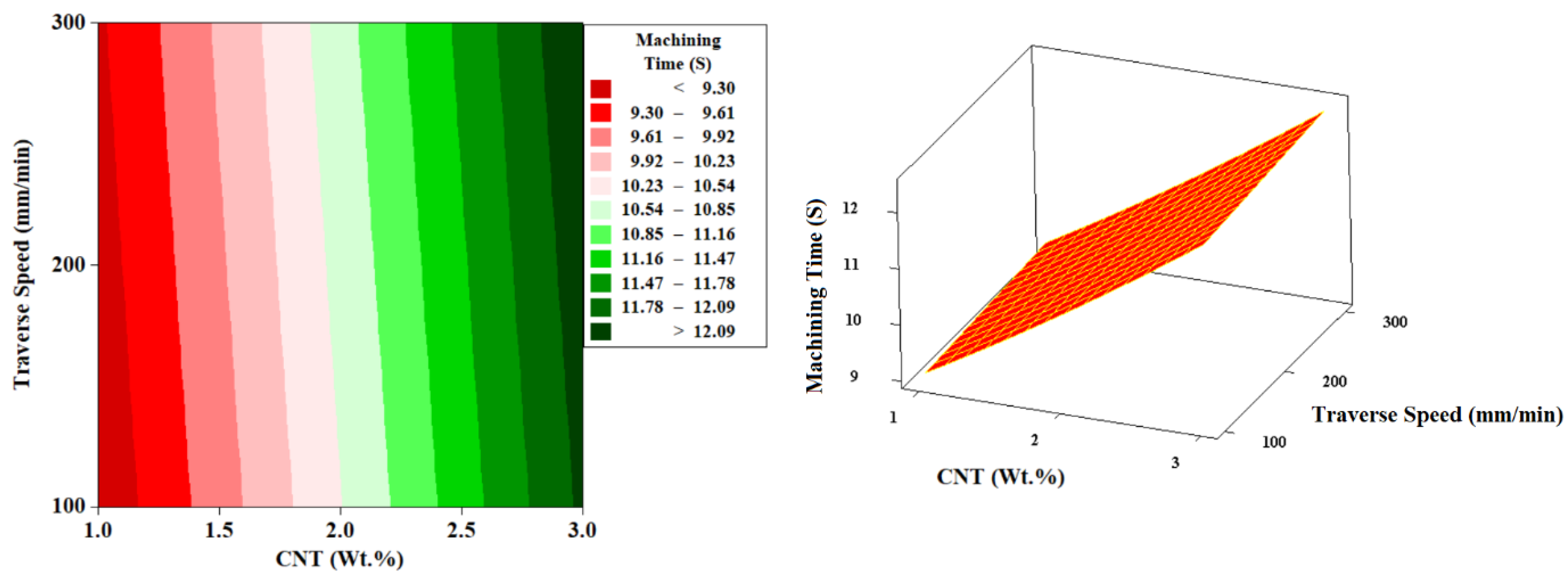
Furthermore, Figure 19 illustrates that the contour and surface plot of the machining time by varying the traverse speed and CNT (wt.%) after AWJM of the HRSCE composite. This plot specifies that the increasing CNT (wt.%) significantly increased machining time due to the reinforced composite’s greater resistance to machining and reduced abrasive waterjet effectiveness, respectively.
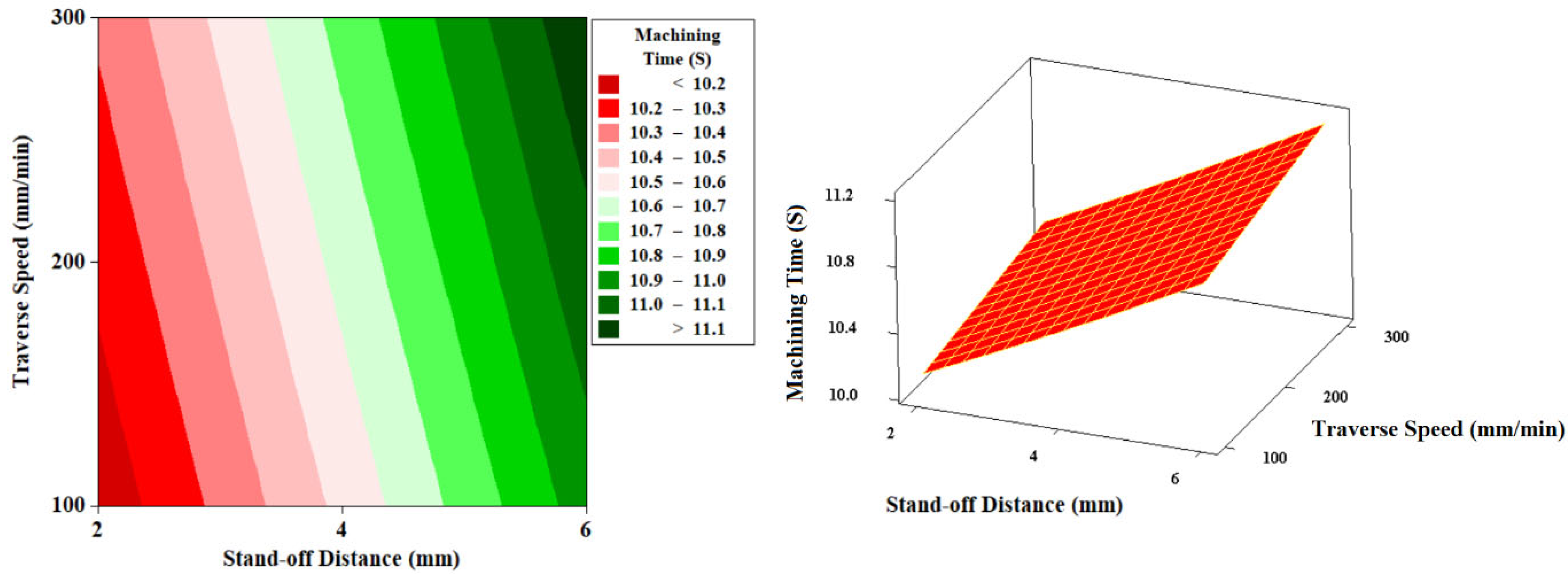
Figure 20 demonstrates that the contour and surface plot of the machining time with varying stand-off distance and traverse speed. It shows that increasing stand-off distance and traverse speed significantly increased machining time, primarily due to reduced waterjet energy density and decreased cutting efficiency at higher speeds, respectively. This combined effect amplifies machining time, demonstrating the importance of optimizing these parameters for efficient processing.

3.4. Microscopic Analysis

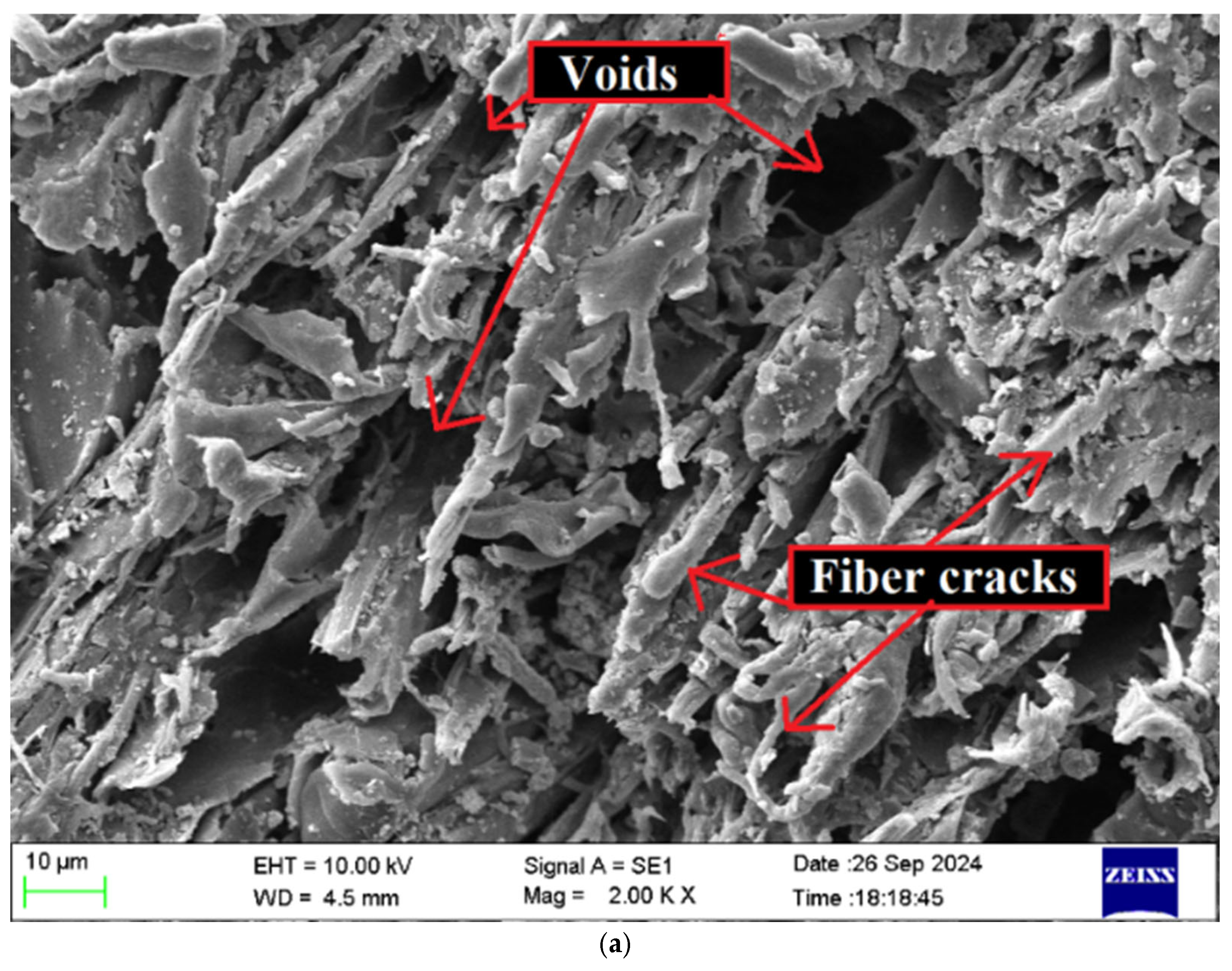
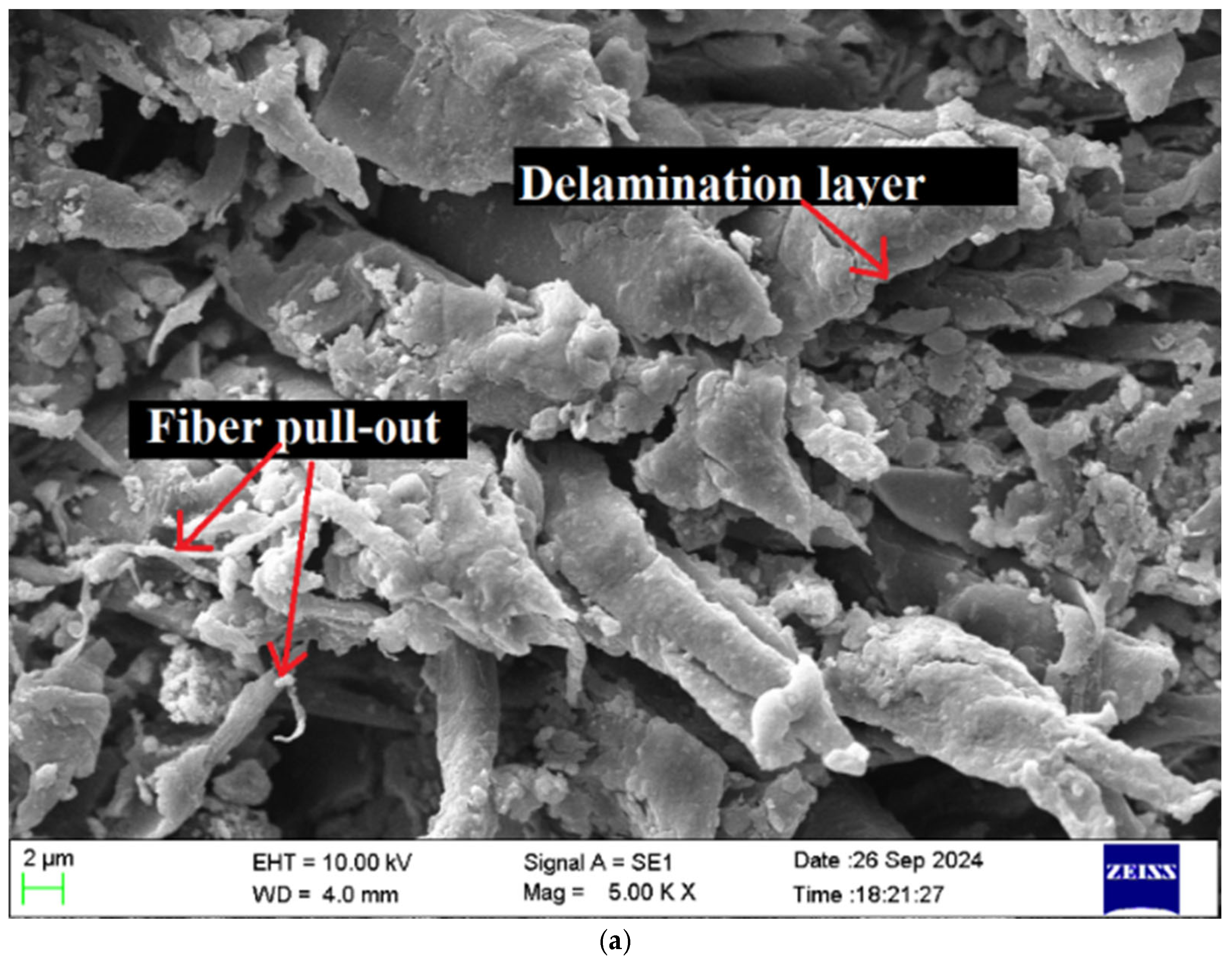
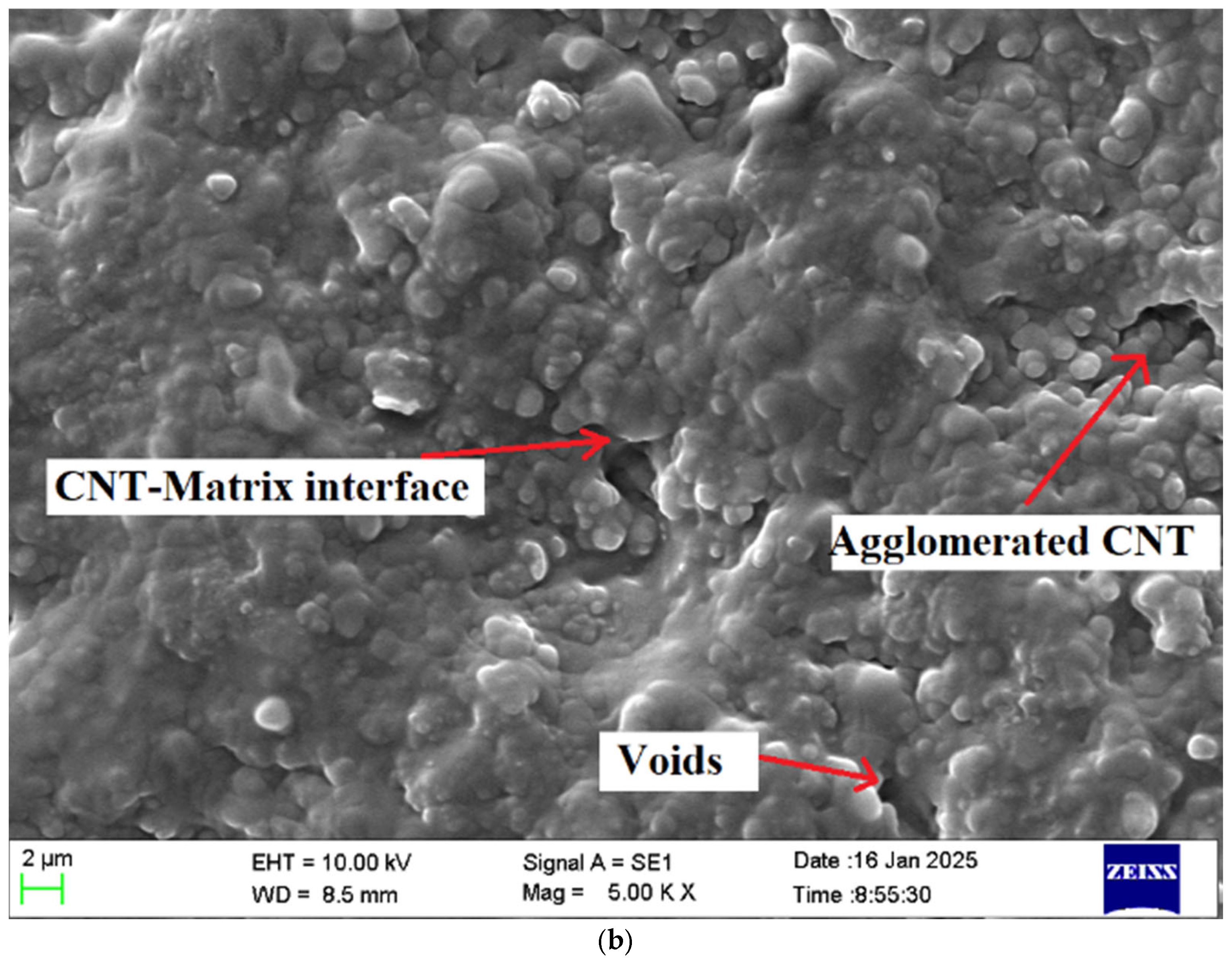
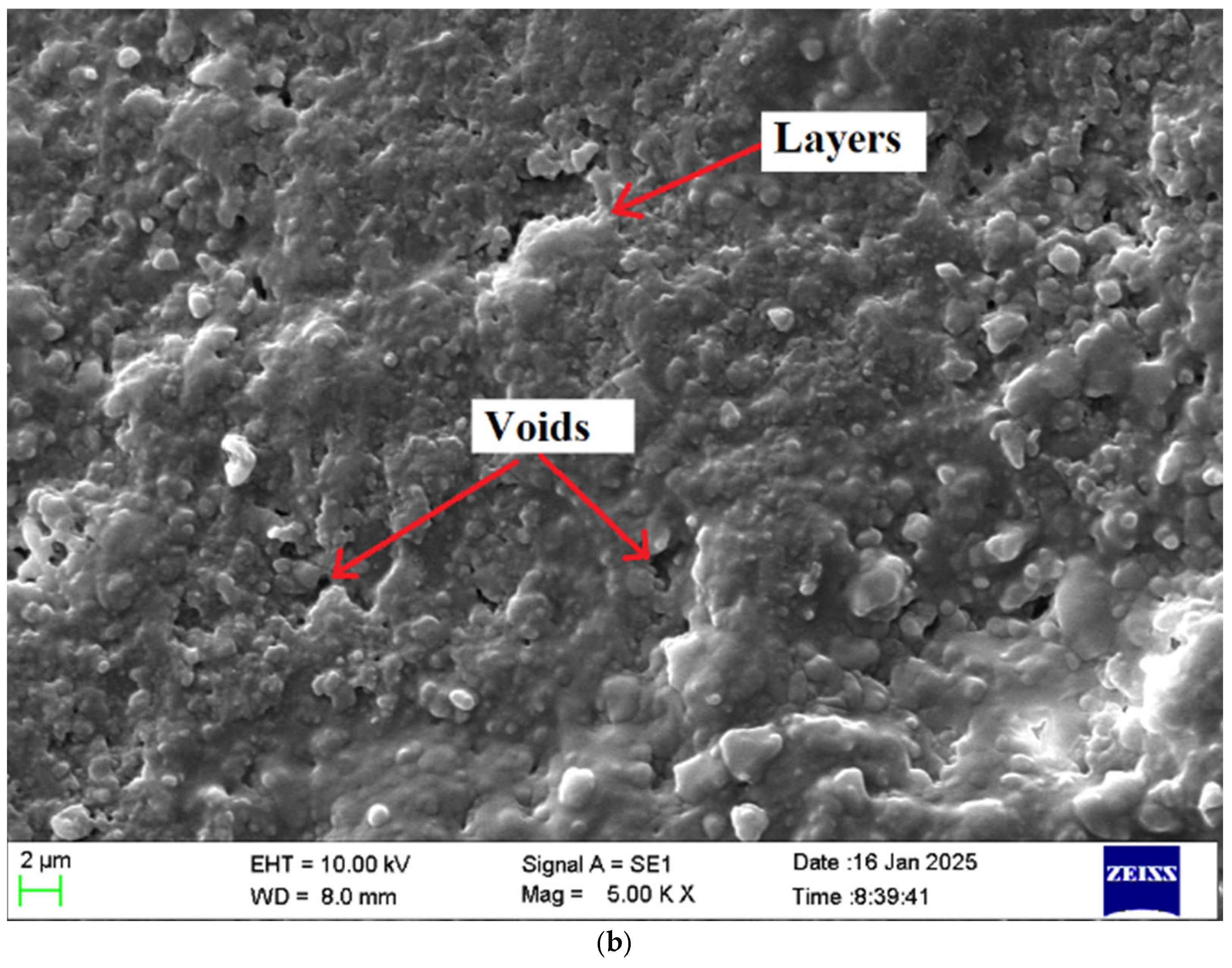
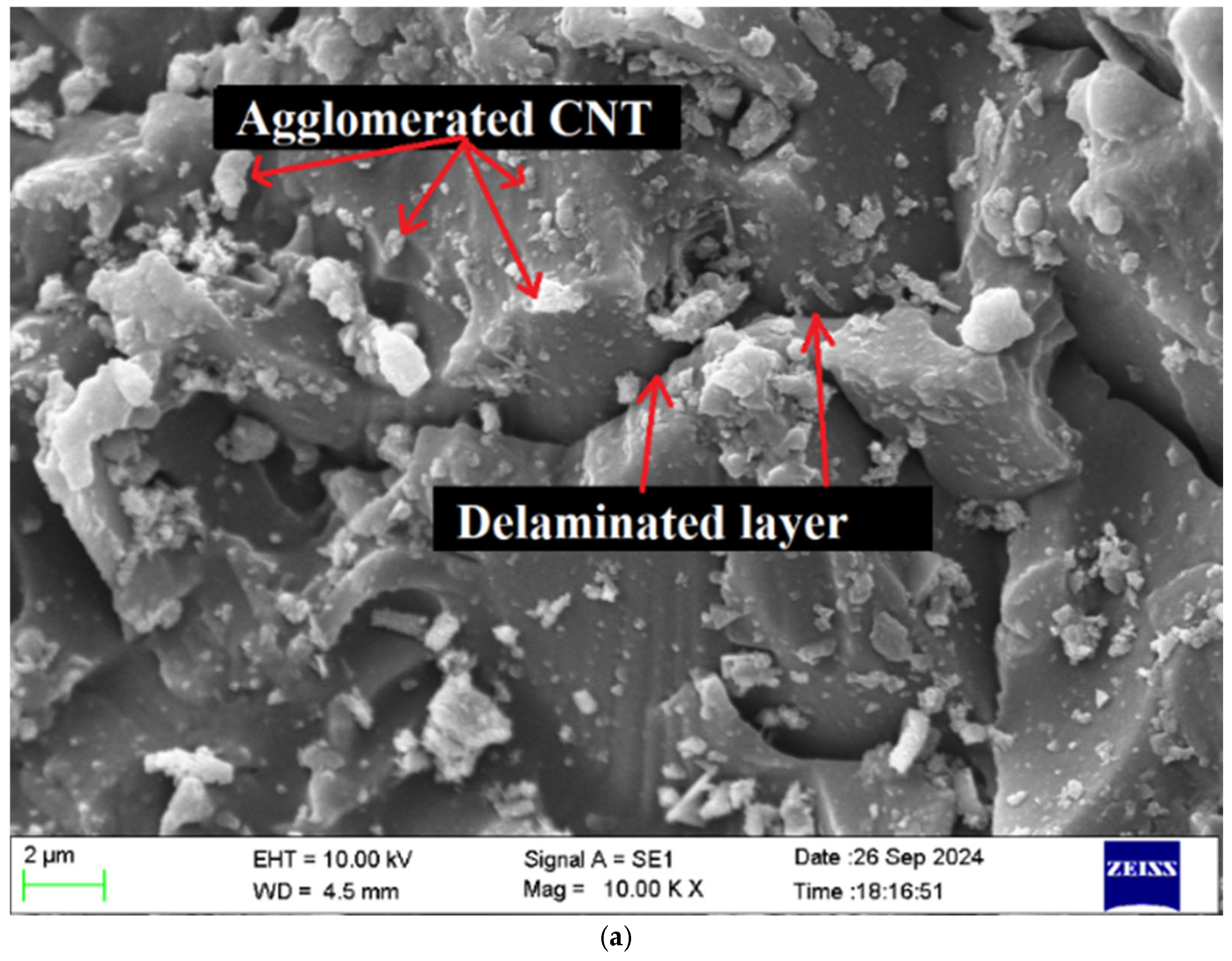
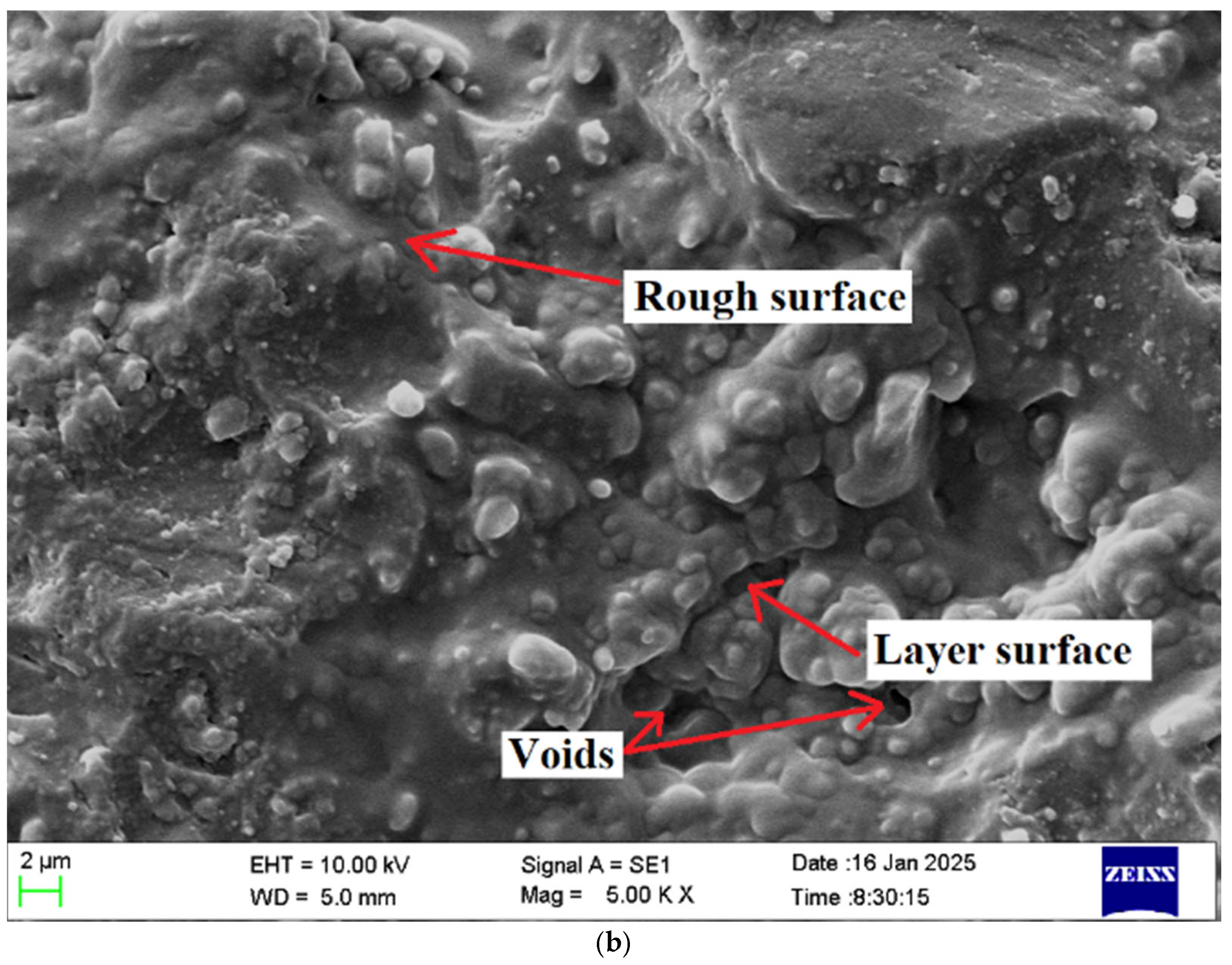
Figure 21, Figure 22 and Figure 23 show the SEM images of the abrasive waterjet-machined surface of HRS- CNT-reinforced epoxy matrix hybrid composite. The rough surface observed in the SEM image is due to the high-energy impact of abrasive particles during AWJM, which results in an irregular texture, which initiate microcracks and surface damage, ultimately contributing to the delamination. Microcracks significantly weaken the composite’s load-bearing capacity and reduce its tensile strength and fatigue life.
The top region of the abrasive waterjet-machined surface exhibits delamination, fiber pull-out, and pronounced surface irregularities. In contrast, the bottom region shows minimal irregularities and a comparatively smoother surface finish in 1 (wt.%) CNT-reinforced HRSCE composite.
The layered surface observed in the SEM image indicates non-uniform material removal and weak interfacial bonding between the CNT and epoxy. This weak bonding is observed in 1 (wt.%)-reinforced HRSCE composite, and this makes the composite more susceptible to interlaminar separation and increases the risk of delamination. The presence of voids, likely caused by incomplete resin infiltration, air entrapment, or abrasion-induced tearing during machining, acts as a stress concentrator that promotes crack propagation and significantly increases delamination severity.
In the 2 (wt.%) CNT-reinforced HRSCE composite, some fiber cracks were observed on the machined surface. Additionally, a delaminated layer was prominently present in the top region of the machined surface. Further, the bottom region of the machined surface of the 2 (wt.%) CNT-reinforced composite appeared relatively rough compared to the 1 (wt.%) CNT-reinforced composite. However, the machined surface was smoother than the surface obtained in the 3 (wt.%) CNT-reinforced composite, which exhibited more pronounced surface irregularities. Minor microcracks were observed on the machined surface, which attributed to stress concentration during abrasive waterjet impact.
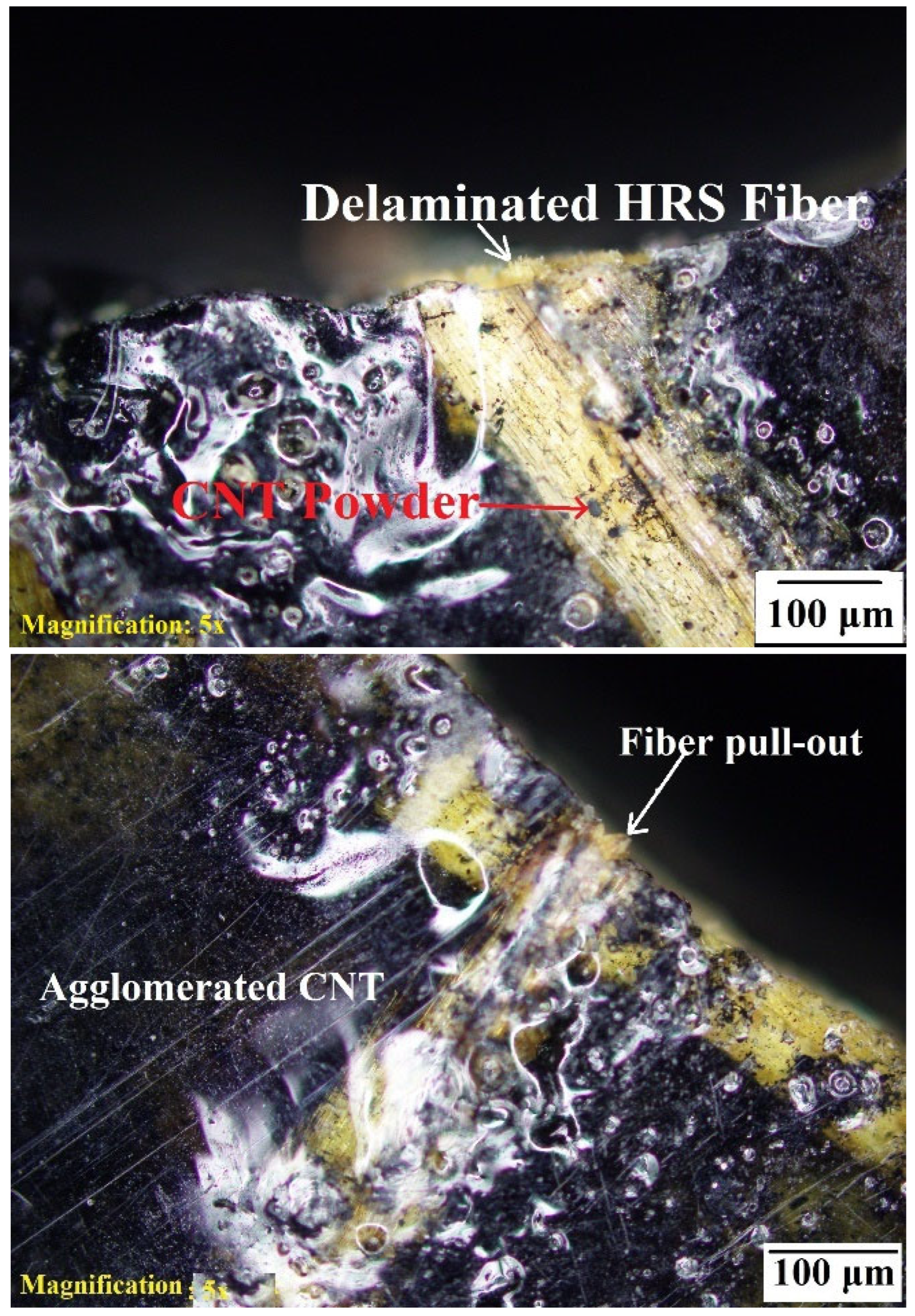
In 3 (wt.%) CNT-reinforced HRSCE composite, agglomerated CNT fibers were observed and, additionally, delamination layer was found to be very thin in the top region. This thin layer observed on the machined surface indicates minor interfacial failure caused by the high-pressure waterjet. However, the delaminated layer is very thin, suggesting good fiber–matrix bonding and effective load transfer despite the machining stresses. The bottom layer of the machined surface is comparatively rough, and cracks were observed. This is attributed to the presence of higher (wt.%) of CNT fibers, leading to the enhanced brittleness of the composite.
The extensive microcracking, resin smearing, and fiber pull-out evident in the 1 wt.% CNT composite (Figure 21a,b) correlate with its highest entry delamination factors (DFentry) of 1.25–1.50 and longest machining times of 11.52–12.61 s. These features are indicative of suboptimal interfacial bonding and inefficient energy dissipation during jet impact, which mechanically result in pronounced delamination and slower material removal rates. Conversely, the 3 wt.% CNT composite exhibits a superior microstructure with minimal voids and tightly adhered fiber–matrix regions (Figure 23a,b). This enhanced interfacial integrity corresponds to the lowest measured DFentry (1.00–1.03), a modest exit delamination factor (DFexit) (1.11–1.15), and significantly reduced machining times (8.60–8.84 s). The intermediate 2 wt.% CNT sample displays transitional surface integrity and delamination patterns, mirroring its moderate quantitative performance. These explicit correlations confirm that the surface morphology observed microscopically serves as the mechanistic basis for the statistical trends identified through ANOVA and RSM analyses.
In Figure 21a,b, the pronounced fiber pull-out and delamination layers at the top and bottom regions of the 1 wt.% CNT composite clearly demonstrate the weaker interfacial bonding at this reinforcement level. These microstructural defects—visible as separated fiber ends and resin tears—correspond directly to the higher DF-entry values (1.25–1.50) and elevated DF-exit values (1.07–1.21) reported for 1 wt.% CNT, confirming that inadequate fiber–matrix adhesion increases the propensity for material separation under abrasive waterjet impact. Similarly, Figure 22a’s delaminated zone at the 2 wt.% CNT entry region shows improved, but still incomplete, bonding, which aligns with its intermediate delamination factors.
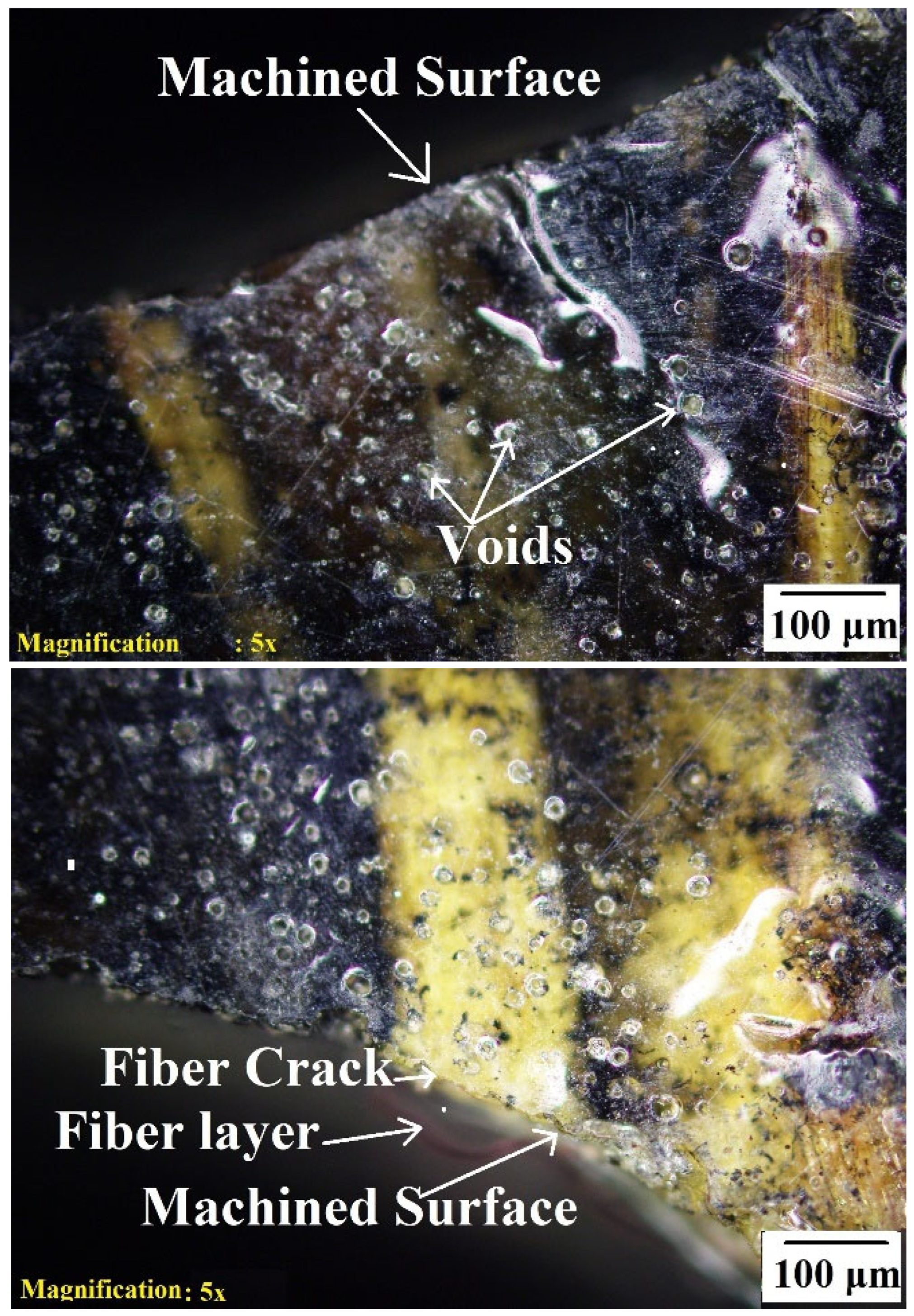
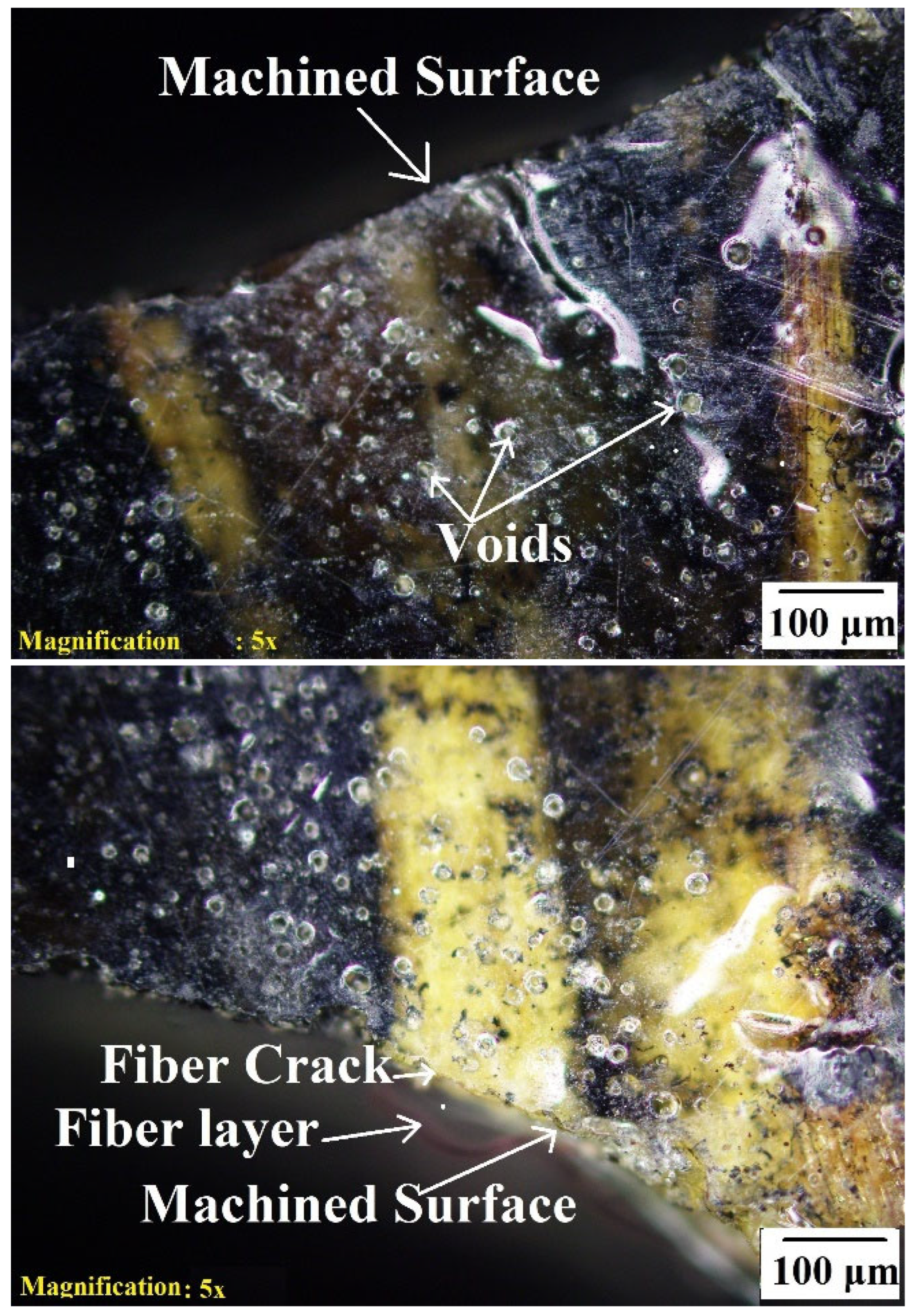
The optical microscopic images of the abrasive waterjet-machined surface of the HRSCE composites are shown in Figure 24, Figure 25, Figure 26, Figure 27, Figure 28 and Figure 29. These images provided the detailed surface morphology of the machined surfaces of the HRSCE composite. The 1 wt.% CNT-reinforced HRSCE composite exhibits a rough and slightly irregular superior edge, a consequence of the high-pressure abrasive water mixture (Figure 24). AWJ machining also resulted in the formation of micro-voids, fiber pull-out, and resin smearing. Microscopic analysis further revealed yellowish natural fiber bundles embedded within a translucent epoxy matrix. Partial disruption at the fiber–matrix interface indicates delamination, a direct consequence of the mechanical impact of the abrasive waterjet cutting process. Scattered black specks on the surface of the HRSCE composite correspond to agglomerated CNT fibers, suggesting that CNT-filled epoxy regions confer enhanced erosion resistance. The inferior region of the machined edge exhibited a damage-affected zone characterized by microcracks, fiber–matrix separation, and resin deformation. Glossy areas on the machined surface are indicative of resin deformation, likely caused by turbulent water flow, jet impact energy, and thermal softening leading to the plastic flow of the epoxy matrix (Figure 25).
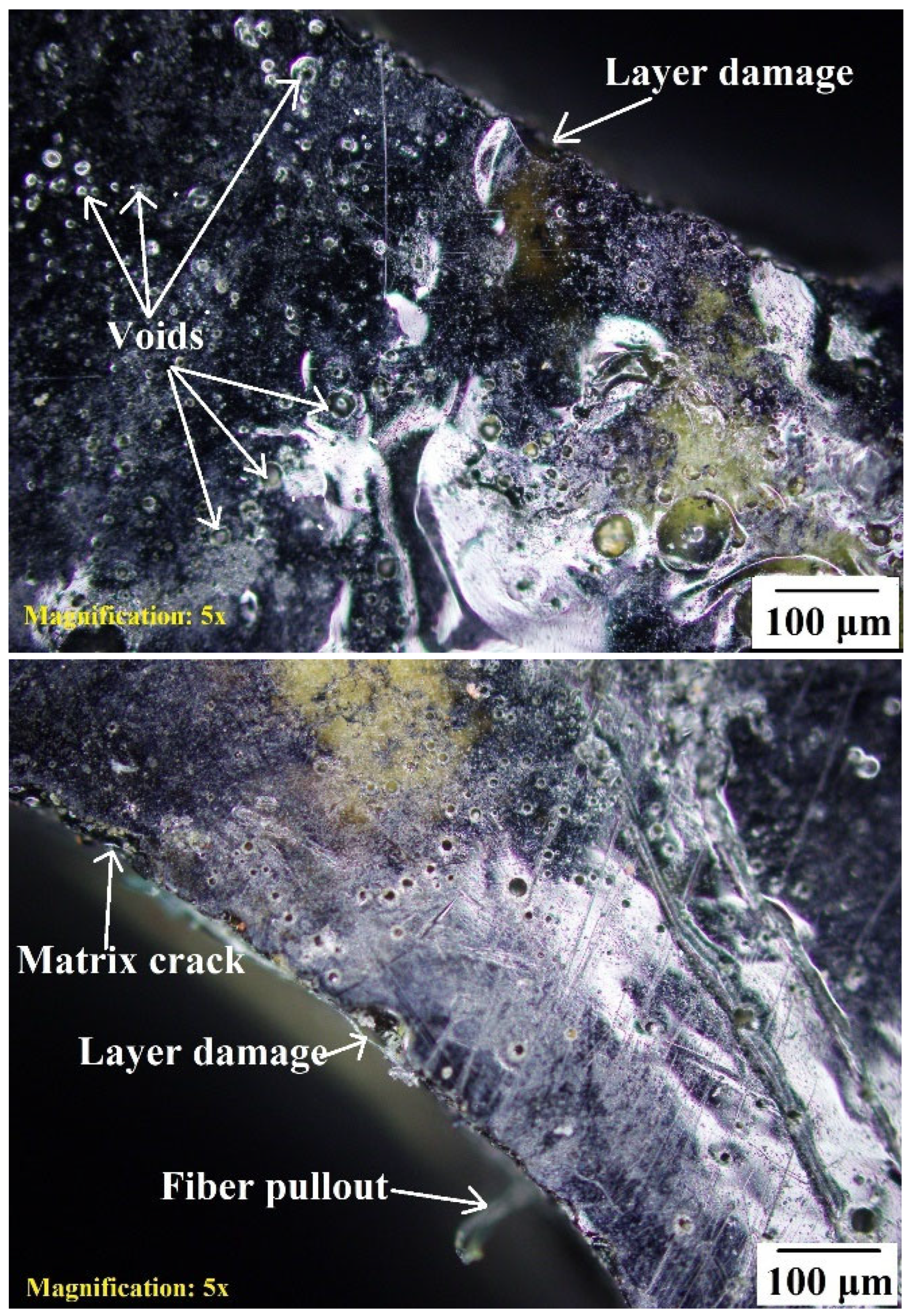
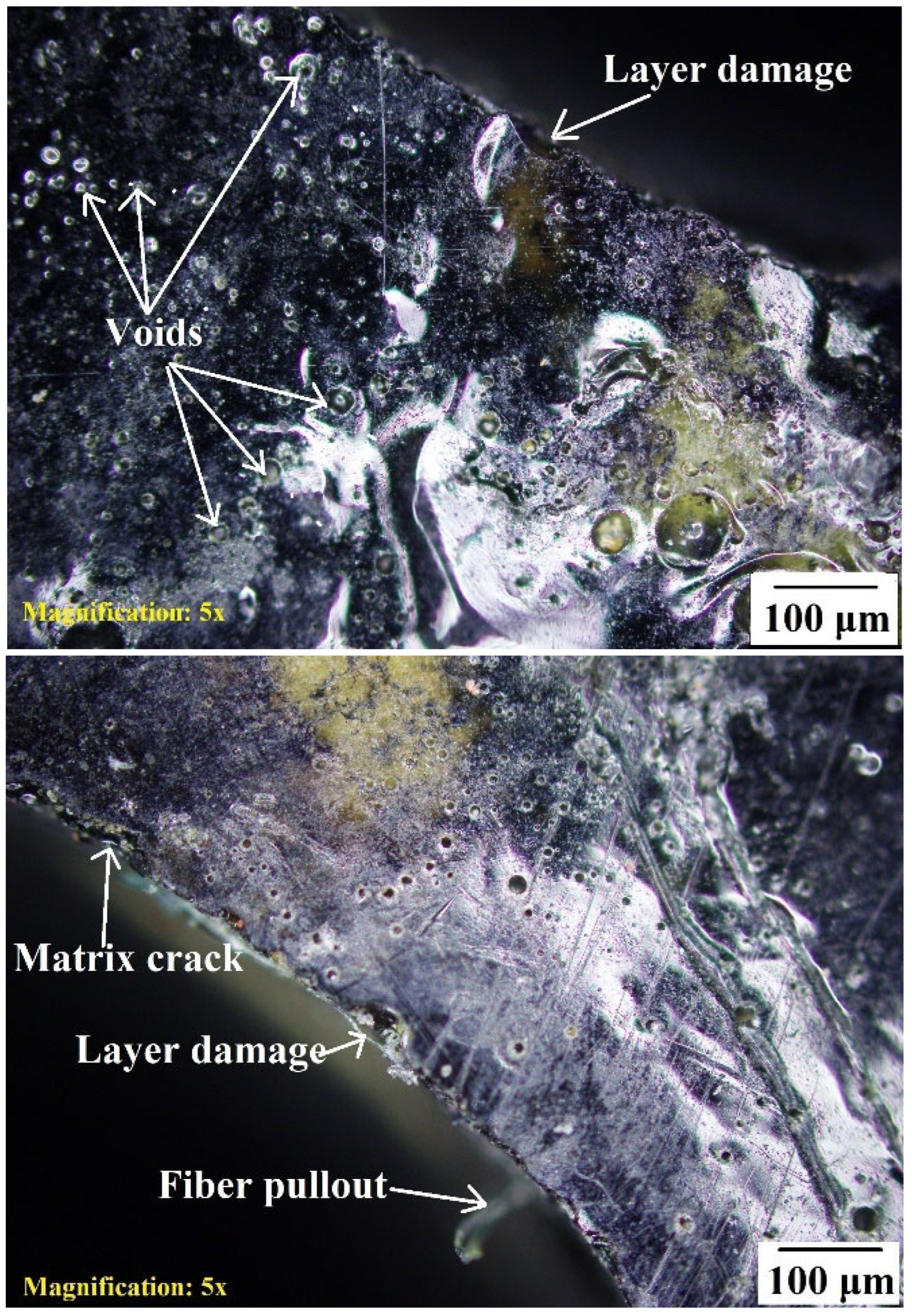
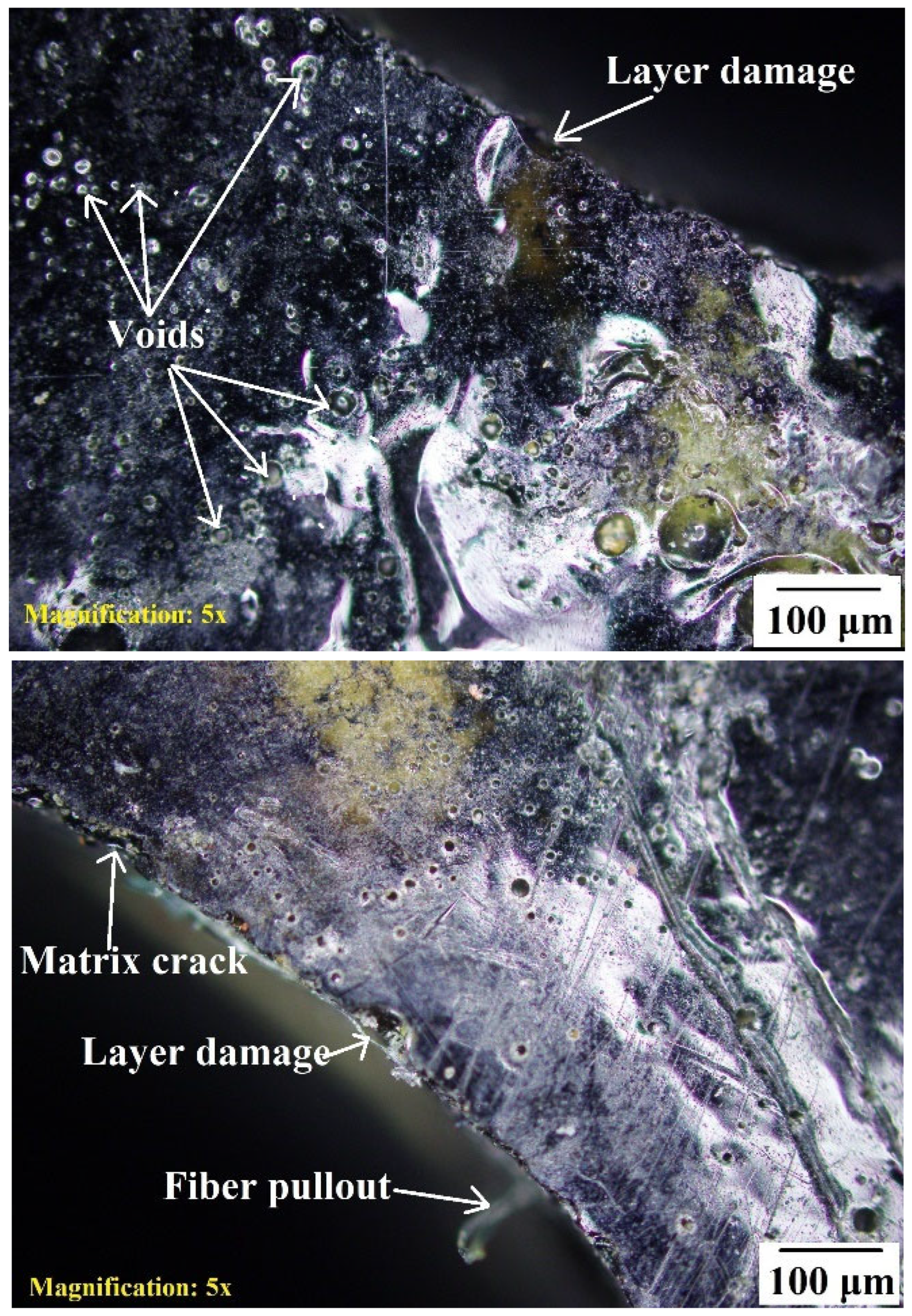
The 2 wt.% CNT-reinforced machined surface displayed evidence of fiber pull-out and breakage (Figure 26), suggesting both fiber–matrix delamination and insufficient interfacial bonding strength, primarily induced by the high-pressure impact of abrasive particles during the AWJ machining process. An uneven surface was observed on the machined HRSCE composite even with 2 wt.% CNT reinforcement. The presence of carbon nanotubes generally improves the toughness and thermal stability of polymer composites. Delamination layers and localized damage were observed in the inferior region of the machined surface of the 2 wt.% reinforced HRSCE composite (Figure 27).
The 3 wt.% CNT fiber-reinforced HRSCE composite exhibited a smooth, curved contour in the superior region of the machined surface, indicative of the abrasive waterjet penetration path and suggesting stable jet impact with minimal tearing due to the erosion process (Figure 28). The presence of fiber cracks in the inferior region of the HRSCE composite (Figure 29) indicates brittle fracture, attributed to the higher volume of CNT fibers [31,32]. While CNT incorporation enhances hardness and thermal stability, it also contributes to a slight increase in brittleness, thereby increasing the susceptibility to microcrack formation under impact.

4. Conclusions

This study investigated delamination behavior and surface morphology of HRSCE hybrid composites during AWJM, yielding the following key findings:
Delamination Behavior:
  • DF-entry decreased with increasing CNT (wt.%) (optimal: 3% CNT, 2 mm stand-off), attributed to enhanced toughness and crack resistance.
  • DF-exit increased with higher CNT (wt.%) (optimal: <1.45% CNT), due to increased brittleness promoting crack propagation.
  • Stand-off distance emerged as the most critical factor for DF-exit (68.3% contribution), while CNT (wt.%) dominated DF-entry (76.1% contribution).
Process Optimization:
  • Machining time was primarily controlled by CNT (wt.%) (92.4% influence), increasing with reinforcement level.
  • RSM models achieved excellent predictive accuracy (MAPE < 5%) for all responses.
  • Multi-objective optimization reveals trade-offs requiring application-specific parameter selection.
Surface Characteristics:
  • Microscopic analysis confirmed CNT concentration-dependent damage mechanisms.
  • Higher CNT content improved fiber–matrix interfacial integrity but increased surface brittleness.
  • Optimal surface quality achieved at intermediate CNT concentrations (2–2.5%).
For industrial applications prioritizing entry surface quality, use 3% CNT with minimal stand-off distance. For applications requiring excellent exit surface quality, employ < 1.45% CNT concentration. Future work should focus on multi-objective optimization algorithms and extended CNT concentration ranges.
Future research could explore the long-term performance and durability of AWJ-machined HRSCE composites under various environmental conditions, including fatigue and corrosion resistance, to understand the long-term impact of the observed surface defects. Further investigations could involve optimizing AWJM parameters using advanced computational modeling techniques, such as finite element analysis, to predict and minimize delamination and surface damage more precisely. Additionally, exploring the application of different types of abrasive particles or variations in waterjet pressure profiles could offer new avenues for improving machining quality. The development of in situ monitoring techniques during AWJM could provide real-time feedback for adaptive control, leading to superior surface integrity. Finally, a detailed study on the effect of CNT dispersion methods on the mechanical properties and machinability of these composites would be beneficial, as CNT agglomeration was identified as a contributing factor to surface damage.

Author Contributions

Conceptualization, S.J.P., R.S. and S.S.; methodology, S.J.P. and R.S.; software, S.J.P.; validation, R.N., S.S. and R.S.; formal analysis, S.J.P.; investigation, S.J.P.; resources, R.S.; data curation, S.J.P.; writing—original draft preparation, S.J.P.; writing—review and editing, S.J.P., R.S. and A.H.; visualization, S.J.P., R.S. and A.H.; supervision, R.S.; project administration, R.S.; funding acquisition, R.N., R.S. and S.S. All authors have read and agreed to the published version of the manuscript.

Funding

This research received no external funding.

Institutional Review Board Statement

Not applicable.

Informed Consent Statement

Not applicable.

Data Availability Statement

Data are available upon request.

Conflicts of Interest

The authors declare no conflicts of interest.

Abbreviations

The following abbreviations are used in this manuscript:
HRSHibiscus Rosa-sinensis
HRSCEHibiscus Rosa-sinensis/Carbon nanotube/Epoxy
SEMScanning Electron Microscopy
PTHRSPotassium permanganate Treated Hibiscus Rosa-sinensis
CNTCarbon Nanotube
DF-entryDelamination at the entry
DF-exitDelamination at the exit
AWJMAbrasive Waterjet Machining
TDOETaguchi’s Design of Experiments
ANOVAAnalysis of Variance
RSMResponse Surface Methodology

References

  1. Anand, G.; Perumal, S.V.; Yuvaraj, N.; Palanikumar, K. Influence of abrasive water jet machining parameters on hybrid polymer composite. J. Inst. Eng. Ser. C 2021, 102, 713–722. [Google Scholar] [CrossRef]
  2. Thakur, R.; Singh, K.; Ramkumar, J. Delamination analysis and hole quality of hybrid FRP composite using abrasive water jet machining. Mater. Today Proc. 2020, 33, 5653–5658. [Google Scholar] [CrossRef]
  3. Popan, I.A.; Balc, N.; Popan, A.I. Avoiding carbon fibre reinforced polymer delamination during abrasive water jet piercing: A new piercing method. Int. J. Adv. Manuf. Technol. 2022, 119, 1139–1152. [Google Scholar] [CrossRef]
  4. Altin Karataş, M.; Motorcu, A.R.; Gökkaya, H. Study on delamination factor and surface roughness in abrasive water jet drilling of carbon fiber-reinforced polymer composites with different fiber orientation angles. J. Braz. Soc. Mech. Sci. Eng. 2021, 43, 22. [Google Scholar] [CrossRef]
  5. Dhanawade, A.; Kumar, S. Experimental study of delamination and kerf geometry of carbon epoxy composite machined by abrasive water jet. J. Compos. Mater. 2017, 51, 3373–3390. [Google Scholar] [CrossRef]
  6. Hoekstra, B.; Kolasangiani, K.; Shekarian, A.; Oguamanam, D.C.; Zitoune, R.; Bougherara, H. Influence of abrasive water jet and conventional drilling on the fatigue performance of hybrid carbon/flax laminates. Proc. Inst. Mech. Eng. Part L J. Mater. Des. Appl. 2023, 237, 1363–1378. [Google Scholar] [CrossRef]
  7. Siddiqui, T.U.; Shukla, M. Experimental and Analytical Investigations for Abrasive Waterjet Hole Trepanning of Thick Kevlar-Epoxy Composites Used in Ballistic Applications; School of Mechanical and Aerospace Engineering: Belfast, UK, 2012. [Google Scholar]
  8. Shukla, M.; Tambe, P.B. Predictive modelling of surface roughness and kerf widths in abrasive water jet cutting of Kevlar composites using neural network. Int. J. Mach. Mach. Mater. 2010, 8, 226. [Google Scholar] [CrossRef]
  9. Sumesh, K.R.; Kanthavel, K. Abrasive water jet machining of Sisal/Pineapple epoxy hybrid composites with the addition of various fly ash filler. Mater. Res. Express 2020, 7, 035303. [Google Scholar] [CrossRef]
  10. Virk, G.S.; Singh, B.; Singh, Y.; Sharma, S.; Ilyas, R.A.; Patyal, V. Abrasive water jet machining of coir fiber reinforced epoxy composites: A review. Funct. Compos. Struct. 2022, 4, 014001. [Google Scholar] [CrossRef]
  11. Jagadish; Gupta, K.; Rajakumaran, M. Evaluation of machining performance of pineapple filler based reinforced polymer composites using abrasive water jet machining process. In IOP Conference Series: Materials Science and Engineering; IOP Publishing: Bristol, UK, 2018; Volume 430, p. 012046. [Google Scholar]
  12. Singh, Y.; Singh, J.; Sharma, S.; Sharma, A.; Chohan, J.S. Process parameter optimization in laser cutting of Coir fiber reinforced Epoxy composite—A review. Mater. Today Proc. 2022, 48, 1021–1027. [Google Scholar] [CrossRef]
  13. Sathishkumar, N.; Balamurugan, L.; Arunkumar, N.; Udayakumar, A.S.M.; Padmanabhan, S.B.R. Investigation on mechanical properties of Basalt-Kevlar-Glass fiber reinforced epoxy composites. AIP Conf. Proc. 2021, 2395, 020001. [Google Scholar]
  14. Ramraji, K.; Rajkumar, K.; Dhananchezian, M.; Sabarinathan, P. Key experimental investigations of cutting dimensionality by abrasive water jet machining on basalt fiber/fly ash reinforced polymer composite. Mater. Today Proc. 2020, 22, 1351–1359. [Google Scholar] [CrossRef]
  15. Supriya, J.P.; Shetty, S.; Shetty, R.; Nayak, R.; Maddasani, S.; Hegde, A. Quantitative and deep learning based fourier transform infrared radiation and tensile characteristics study on chemically treated hibiscus rosa-sinensis plant fibers. Mater. Res. Express 2024, 11, 075102. [Google Scholar] [CrossRef]
  16. Supriya, J.P.; Shetty, R.; Naik, N.; Maddasani, S.; Hegde, A. Chemical characterization of hibiscus rosa-sinensis plant fibers facilitated through design of experiments and artificial neural network hybrid approach. Sci. Rep. 2024, 14, 22510. [Google Scholar] [CrossRef]
  17. Supriya, J.P.; Shetty, R.; Shetty, S.; Bolar, G.; Hegde, A. Mechanical and physical characterization of chemically treated Hibiscus Rosa-Sinensis polymer matrix composites using deep learning and statistical approach. Mater. Res. Express 2024, 11, 115304. [Google Scholar] [CrossRef]
  18. Supriya, J.P.; Shetty, R.; Shetty, S.; Nayak, R.; Bolar, G.; Hegde, A.L. A Synergistic Approach for Thermal Characteristic Analysis of Hibiscus Rosa-Sinensis/Carbon Nano-tubes/Epoxy based Hybrid Composites using Soft Computing Techniques. Mater. Res. Express 2025. [Google Scholar] [CrossRef]
  19. Shetty, S.; Shetty, R.; Nayak, R.; JP, S.; Hegde, A. Machinability characteristics study on hibiscus rosa-sinensis reinforced polymer composites using soft computing techniques. Eng. Res. Express 2024, 6, 045530. [Google Scholar] [CrossRef]
  20. Prasad, V.; Vijayakumar, A.A.; Jose, T.; George, S.C. A Comprehensive Review of Sustainability in Natural Fiber Reinforced Polymers. Sustainability 2024, 16, 1223. [Google Scholar] [CrossRef]
  21. Islam, T.; Chaion, M.H.; Jalil, M.A.; Rafi, A.S.; Mushtari, F.; Dhar, A.K.; Hossain, S. Advancements and Challenges in Natural Fiber Reinforced Hybrid Composites: A Comprehensive Review. SPE Polym. 2024, 5, 481–506. [Google Scholar] [CrossRef]
  22. Ahmed, J.P.S.; Satyasree, K.; Kumar, R.R.; Meenakshisundaram, O.; Shanmugavel, S. A Comprehensive Review on Recent Developments of Natural Fiber Composites: Synthesis, Processing, Properties, and Characterization. Eng. Res. Express 2023, 5, 032001. [Google Scholar] [CrossRef]
  23. Suriani, M.J.; Ilyas, R.A.; Zuhri, M.Y.M.; Khalina, A.; Sultan, M.T.H.; Sapuan, S.M.; Ruzaidi, C.M.; Wan, F.N.; Zulkifli, F.; Harussani, M.M.; et al. Critical Review of Natural Fiber Reinforced Hybrid Composites: Processing, Properties, Applications and Cost. Polymers 2021, 13, 3514. [Google Scholar] [CrossRef] [PubMed]
  24. Azman, M.A.; Asyraf, M.R.M.; Khalina, A.; Petrů, M.; Ruzaidi, C.M.; Sapuan, S.M.; Wan Nik, W.B.; Ishak, M.R.; Ilyas, R.A.; Suriani, M.J. Natural Fiber Reinforced Composite Material for Product Design: A Short Review. Polymers 2021, 13, 1917. [Google Scholar] [CrossRef]
  25. Banea, M.D. Natural Fibre Composites and Their Mechanical Behaviour. Polymers 2023, 15, 1185. [Google Scholar] [CrossRef] [PubMed]
  26. Patel, R.V.; Yadav, A.; Winczek, J. Physical, Mechanical, and Thermal Properties of Natural Fiber Reinforced Epoxy Composites for Construction and Automotive Applications. Appl. Sci. 2024, 13, 5126. [Google Scholar] [CrossRef]
  27. Yahaya, S.; Nwabanne, J.T.; Da Luz, J. A Review on Natural Fiber Reinforced Polymer Composite for Bullet Proof and Ballistic Applications. Polymers 2021, 13, 646. [Google Scholar] [CrossRef]
  28. Velmurugan, G.; Natrayan, L.; Rao, Y.S.; Gaur, P.; Sekar, S.; Chebolu, R.; Patil, P.P.; Paramasivam, P. Influence of Epoxy/Nanosilica on Mechanical Performance of Hemp/Kevlar Fiber Reinforced Hybrid Composite with an Ultrasonic Frequency. Adsorpt. Sci. Technol. 2022, 2022, 7233255. [Google Scholar] [CrossRef]
  29. Nurazzi, N.R.; Misri, S. Hybrid sugar palm/glass fiber–TPU composite for automotive use; tensile modulus ~1840 MPa and reduced weight. Polymers 2020, 13, 3514. [Google Scholar]
  30. Muhammad, A.; Rashidi, A.R.; Wahit, M.U.; Sanusi, S.; Sayed, J.; Sharifah, I. Alkaline treatment on kenaf fiber to be incorporated in unsaturated polyester. ARPN J. Eng. Appl. Sci. 2016, 11, 11894–11897. [Google Scholar]
  31. Atiqah, K.N. Kenaf fiber reinforced polypropylene (PP) sheet composites via compression molding: 30–40 wt % kenaf improved flexural and tensile performance. Polymers 2020, 13, 3514. [Google Scholar]
  32. Misri, S.; Nurazzi, N.R. Sugar palm/glass fiber hybrid composite via hand lay up: Enhanced thermal stability, reduced swelling and density, suitable for automotive structural applications. Polymers 2021, 13, 3514. [Google Scholar]
Figure 1. Flowchart of the process.
Jcs 09 00509 g001
Figure 2. Abrasive Waterjet-machined HRSCE composite. (a) 1 (wt.%) CNT, (b) 2 (wt.%) CNT, and (c) 3 (wt.%) CNT HRSCE composites with CNT diameter—2 nm, standoff distance—1 mm, and traverse speed—100 mm/min, kept constant.
Jcs 09 00509 g002
Figure 3. (a) Delamination factor at the entry vs. CNT (wt.%); (b) Delamination factor at the entry vs. Stand-off distance; and (c) Delamination factor at the entry vs. Traverse speed.
Jcs 09 00509 g003
Figure 4. Main effect plot for DF-entry.
Jcs 09 00509 g004
Figure 5. Comparison between experimental and predicted RSM values of DF-entry.
Jcs 09 00509 g005
Figure 6. Contour and surface plot for DF-entry by varying CNT (wt.%) and Stand-off distance.
Jcs 09 00509 g006
Figure 7. Contour and surface plot for DF-entry by varying CNT (wt.%) and traverse speed.
Jcs 09 00509 g007
Figure 8. Contour and surface plot for DF-entry by varying Stand-off distance and traverse speed.
Jcs 09 00509 g008
Figure 9. (a) DF-exit vs. CNT (wt.%); (b) DF-exit vs. Stand-off distance; and (c) DF-exit vs. Traverse speed.
Jcs 09 00509 g009
Figure 10. Main effect plot of DF-exit.
Jcs 09 00509 g010
Figure 11. Comparison between the experimental values and predicted RSM values of DF-exit.
Jcs 09 00509 g011
Figure 12. Contour and surface plot of DF-exit with varying traverse speed and CNT (wt.%).
Jcs 09 00509 g012
Figure 13. Contour and surface plot of DF-exit with varying Stand-off distance and CNT (wt.%).
Jcs 09 00509 g013
Figure 14. Contour and surface plot of DF-exit with varying traverse speed and Stand-off distance.
Jcs 09 00509 g014
Figure 15. (a) Machining Time vs. CNT (wt.%); (b) Machining Time vs. Stand-off distance; and (c) Machining Time vs. Traverse speed.
Jcs 09 00509 g015
Figure 16. Main-effect plot of Machining time.
Jcs 09 00509 g016
Figure 17. Comparison between the experimental and RSM predicted values of Machining time.
Jcs 09 00509 g017
Figure 18. Contour and surface plot of Machining time with varying CNT (wt.%) and Stand-off distance.
Jcs 09 00509 g018
Figure 19. Contour and surface plot of Machining time with varying traverse speed and CNT (wt.%).
Jcs 09 00509 g019
Figure 20. Contour and surface plot of Machining time with varying traverse speed and Stand-off distance.
Jcs 09 00509 g020
Figure 21. SEM Images of the Abrasive waterjet-machined surface of 1 (wt.%) CNT-Reinforced HRSCE composite: (a) Top region and (b) Bottom region.
Jcs 09 00509 g021aJcs 09 00509 g021b
Figure 22. SEM Images of the Abrasive waterjet-machined surface of 2 (wt.%) CNT-Reinforced HRSCE composite: (a) Top region and (b) Bottom region.
Jcs 09 00509 g022aJcs 09 00509 g022b
Figure 23. SEM Images of the Abrasive waterjet-machined surface of 3 (wt.%) CNT-Reinforced HRSCE composite: (a) Top region and (b) Bottom region.
Jcs 09 00509 g023aJcs 09 00509 g023b
Figure 24. Top region Microscopic Images of Abrasive Waterjet Drilled Surface of HRSCE Composite Reinforced with 1 (wt.%) CNT.
Jcs 09 00509 g024
Figure 25. Bottom region Microscopic Images of Abrasive Waterjet Drilled Surface of HRSCE Composite Reinforced with 1 (wt.%) CNT.
Jcs 09 00509 g025
Figure 26. Top region Microscopic Images of Abrasive Waterjet Drilled Surface of HRSCE Composite Reinforced with 2 (wt.%) CNT.
Jcs 09 00509 g026
Figure 27. Bottom region Microscopic Images of Abrasive Waterjet Drilled Surface of HRSCE Composite Reinforced with 2 (wt.%) CNT.
Jcs 09 00509 g027
Figure 28. Top region Microscopic Images of Abrasive Waterjet Drilled Surface of HRSCE Composite Reinforced with 3 (wt.%) CNT.
Jcs 09 00509 g028
Figure 29. Bottom region Microscopic Images of Abrasive Waterjet Drilled Surface of HRSCE Composite Reinforced with 3 (wt.%) CNT.
Jcs 09 00509 g029
Table 1. Levels and parameters.
ParametersLevels
123
CNT (wt.%)123
CNT Diameter (nm)123
Standoff Distance (mm)246
Traverse Speed (mm/min)100200300
Table 2. Results of DF-entry, DF-exit, and Machining Time.
CNT (wt.%)CNT Diameter (nm)Stand-Off Distance (mm)Traverse Speed (mm/min)DF-EntryDF-ExitMachining Time (s)
1121001.251.0711.52
1122001.281.0811.63
1123001.301.1011.75
1241001.341.1111.94
1242001.361.1312.05
1243001.391.1512.18
1361001.431.1612.32
1362001.461.1912.45
1363001.501.2112.61
2221001.151.0910.18
2222001.171.1110.30
2223001.191.1210.41
2341001.221.1410.53
2342001.251.1510.63
2343001.271.1710.74
2161001.291.1910.87
2162001.311.2111.00
2163001.341.2311.12
3321001.001.118.60
3322001.011.138.72
3323001.031.158.84
3141001.071.188.97
3142001.081.209.11
3143001.101.229.23
3261001.131.259.36
3262001.151.279.49
3263001.171.299.60
Table 3. ANOVA for SN Ratio of DF-entry.
SourceDoFSeq SSAdj SSAdj MSFpp (%)
A218.791118.79119.395572453.960.00076.097
B25.40465.40462.70229705.790.00021.886
C20.01160.01160.005801.510.2930.0469
D20.45170.45170.2258458.980.0001.8292
A × D40.00730.00730.001830.480.7520.0295
B × D40.00270.00270.000680.180.9420.0109
C × D40.00130.00130.000320.080.9850.0052
Residual Error60.02300.02300.00383 0.0931
Total2624.6933
S = 0.06188; R2 = 99.9%; R2 (adj) = 99.6%. Where A = CNT (wt.%), B = Stand-off Distance (mm), C = CNT Diameter (nm), and D = Traverse Speed (mm/min); S = coefficient of determination.
Table 4. RSM Model for DF-entry.
TermCoefSE CoefTp
Constant1.175460.01511177.7570.000
A−0.006910.013408−0.5150.614
B0.058210.0067048.6830.000
C−0.023570.013408−1.7580.098
D0.000250.0001341.8880.077
A 2−0.024110.003152−7.6470.000
B 2−0.001030.000788−1.3030.211
C 20.005890.0031521.8690.080
D 20.00000.00000.2830.781
A × B−0.006880.000635−10.8300.000
A × C0.00000.001270−0.0001.000
A × D −0.000060.000013−4.9230.000
B × C0.00000.0006350.0001.000
B × D 0.000020.0000062.9540.009
C × D0.00000.000013−0.0001.000
Where A = CNT (wt.%), B = Stand-off Distance (mm), C = CNT Diameter (nm), and D = Traverse Speed (mm/min).
Table 5. ANOVA for DF entry.
SourceDoFSeq SSAdj SSAdj MSFp
Regression140.5029620.5029620.0359261393.000.000
Residual Error160.0004130.0004130.000026
Total30
Table 6. ANOVA for SN Ratio of DF-exit.
SourceDoFSeq SSAdj SSAdj MSFpp (%)
A21.121011.121010.5605097.520.00022.9881
B23.330553.330551.66528289.740.00068.2985
C20.027440.027440.013722.390.1730.56270
D20.356590.356590.1783031.020.0017.31247
A × D40.002460.002460.000610.110.9760.05044
B × D40.002470.002470.000620.110.9760.05065
C × D40.001460.001460.000370.060.9910.02994
Residual Error60.034480.034480.00575
Total264.87646
S = 0.07581; R2 = 99.3%; R2 (adj) = 96.9%. Where A = CNT (wt.%), B = Stand-off Distance (mm), C = CNT Diameter (nm), and D = Traverse Speed (mm/min); S = coefficient of determination.
Table 7. RSM model for DF-exit.
TermCoefSE CoefTp
Constant 1.043910.01450171.9870.000
A−0.033360.012867−2.5920.020
B0.003880.0064330.6030.555
C0.013870.0128671.0780.297
D0.000080.0001290.6460.527
A 20.011530.0030253.8120.002
B 20.001630.0007562.1600.046
C 2−0.003470.003025−1.1460.269
D 20.000000.00000.5070.619
A × B0.005000.0006098.2080.000
A × C0.000000.001218−0.0001.000
A × D 0.000000.000012−0.0001.000
B × C0.000000.000609−0.0001.000
B × D 0.000010.0000062.0520.057
C × D0.000000.0000120.0001.000
Where A = CNT (wt.%), B = Stand-off Distance (mm), C = CNT Diameter (nm), and D = Traverse Speed (mm/min).
Table 8. ANOVA for DF-exit.
SourceDFSeq SSAdj SSAdj MSFp
Regression140.0920910.0920910.006578276.970.000
Residual Error160.0003800.0003800.000024
Total30
Table 9. ANOVA for SN Ratio of Machining Time.
SourceDoFSeq SSAdj SSAdj MSFpp (%)
A229.580129.580114.79016975.930.00092.4459
B22.23612.23611.1181527.350.0006.988424
C20.00630.00630.00321.490.2980.019689
D20.15890.15890.079437.460.0000.496606
A × D40.00200.00200.00050.240.9050.006251
B × D40.00070.00070.00020.080.9840.002188
C × D40.00030.00030.00010.030.9970.000938
Residual Error60.01270.01270.0021 0.039691
Total2631.9972
S = 0.2640; R2 = 99.9%; R2 (adj) = 99.7%. Where A = CNT (wt.%), B = Stand-off Distance (mm), C = CNT Diameter (nm), and D = Traverse Speed (mm/min); S = coefficient of determination.
Table 10. RSM model for Machining time.
TermCoefSE CoefTp
Constant 6.878340.10585964.9770.000
A1.146630.09392812.2080.000
B0.148590.0469643.1640.006
C0.130520.0939281.3900.184
D0.000860.0009390.9160.373
A 20.084280.0220843.8160.002
B 20.003570.0055210.6470.527
C 2−0.005720.022084−0.2590.799
D 2−0.00000.000002−0.0330.974
A × B0.018440.0044474.1460.001
A × C−0.015620.008894−1.7570.098
A × D 0.000140.0000891.6160.126
B × C−0.007810.004447−1.7570.098
B × D 0.000060.0000441.3350.201
C × D−0.000160.000089−1.7570.098
Where A = CNT (wt.%), B = Stand-off Distance (mm), C = CNT Diameter (nm), and D = Traverse Speed (mm/min).
Table 11. ANOVA for Machining Time.
SourceDoFSeq SSAdj SSAdj MSFp
Regression1447.008747.0086863.3577632653.050.000
Residual Error160.02020.0202500.001266
Total3047.0289
Disclaimer/Publisher’s Note: The statements, opinions and data contained in all publications are solely those of the individual author(s) and contributor(s) and not of MDPI and/or the editor(s). MDPI and/or the editor(s) disclaim responsibility for any injury to people or property resulting from any ideas, methods, instructions or products referred to in the content.