
Article

Comprehensive Study of Silver Nanoparticle Functionalization of Kalzhat Bentonite for Medical Application

by
Saule Z. Nauryzova
1,
Sana K. Kabdrakhmanova
2,*,
Ainur K. Kabdrakhmanova
1,*,
Kadiran Aryp
1,
Esbol Shaimardan
2,
Anastassiya D. Kukhareva
2,3,
Zhanar E. Ibraeva
3,4,*,
Madiar M. Beisebekov
3,
Ahmed M. Kamil
5,
Martin George Thomas
6 and
Sabu Thomas
7,8,*
1
Department of Chemical and Biochemical Engineering, Satbayev University, Almaty 050013, Kazakhstan
2
Department of Chemical Processes and Industrial Ecology, Satbayev University, Almaty 050013, Kazakhstan
3
Scientific Center of Composite Materials, Almaty 050026, Kazakhstan
4
Department of Design, Abai Kazakh National Pedagogical University, Almaty 050010, Kazakhstan
5
School of Chemical Sciences, Mahatma Gandhi University, Kottayam 686560, Kerala, India
6
Department of Physics and Electronics, CHRIST (Deemed to be University), Bengaluru 560029, Karnataka, India
7
School of Energy Materials, Mahatma Gandhi University, Kottayam 686560, Kerala, India
8
IIUCNN, Mahatma Gandhi University, Kottayam 686560, Kerala, India
*
Authors to whom correspondence should be addressed.
J. Compos. Sci. 2025, 9(12), 702; https://doi.org/10.3390/jcs9120702
Submission received: 24 October 2025 / Revised: 27 November 2025 / Accepted: 7 December 2025 / Published: 16 December 2025
(This article belongs to the Section Biocomposites)

Abstract

The characterization and biomedical modification of bentonite clays from the Kalzhat deposit (Kzh), which is situated in Kazakhstan’s Zhetysu region, are the main objectives of this work. In order to improve the raw material’s structural qualities, the montmorillonite fraction was enriched, and coarse impurities were eliminated using the Salo method. The presence of meso- and micropores that guarantee high dispersity and specific surface area, as well as the prevalence of montmorillonite and kaolinite, was all confirmed by physicochemical analysis. Particle size measurements indicated finely dispersed structures with a propensity to aggregate, whereas thermal analysis demonstrated resilience under heating. After effective functionalization with silver nanoparticles, a porous hybrid system with improved surface reactivity was produced. These enhancements demonstrate the modified bentonite’s usefulness as a multifunctional carrier for the immobilization and controlled release of pharmaceuticals, with potential uses in drug delivery systems, antimicrobial coatings, and wound-healing materials. The material has potential use in sorption and environmental protection technologies in addition to its biomedical application. Overall, Kzh’s structural and functional performance is greatly improved by the combination of purification and functionalization with silver nanoparticles, highlighting its promise as a useful element in the development of next-generation polymer–composite systems.

1. Introduction

The wide use of bentonite clays in various fields is due to their unique properties, availability, and environmental safety. In this regard, using polymer-clay composite materials as carriers of medicinal substances is of practical interest [1,2]. Montmorillonite, a clay mineral belonging to the smectite group, is the primary component of bentonites, which are naturally occurring aluminosilicate rocks that give them their high sorption capacity and swelling ability [3]. Natural bentonites often contain kaolinite, quartz, mica, calcite, and other mineral impurities in addition to montmorillonite, which lowers the material’s purity and functionality. Since they compromise the homogeneity of the clay matrix, coarsely distributed particles like sand and stone must be removed specifically for biomedical purposes [4]. To produce materials appropriate for medical use, bentonite must be carefully prepared and purified. Purified bentonites, due to their biocompatibility and ability to release substances uniformly, have a high adsorption capacity and are actively used to create dosage forms such as tablets and capsules. These properties have also found application in the development of cosmetic products such as cleansing masks and skin care creams, where bentonite is used as a safe and environmentally friendly base [5]. Studies on the modification of bentonites by the addition of silver and copper nanoparticles show that such additives improve the antimicrobial properties of bentonite [6]. The intermolecular space in bentonite clays can be utilized for the introduction of silver nanoparticles. The metal atoms combine into nanoparticles and bind to the layers of the clay material itself [7]. Because of the occurrence of this bond, the silver is held between the layers and does not form low-activity conglomerations or aggregates. The formation of such nanoparticles is based on the mechanism of spontaneous cation exchange.
The potential biomedical uses of functionalizing bentonite with metallic nanoparticles, such as silver, have garnered a lot of interest. The antibacterial activity of virgin bentonite is low, despite its high surface area, cation exchange capacity, and biocompatibility. By rupturing microbial membranes and interfering with cellular functions, the addition of silver nanoparticles to the bentonite matrix gives the substance potent and all-encompassing antibacterial qualities. Additionally, the bentonite support improves stability, inhibits nanoparticle agglomeration, and permits regulated release of the active species [8,9].
To obtain silver nanoparticles, various methods of their reduction from salts are used; different types of synthesis are given, the most common of which are chemical, electrochemical, ultrasonic, biochemical, and using different types of irradiation [10]. Special attention is paid to the green technologies of silver nanoparticle production by bioremediation with extracts of medicinal plants [11,12,13]. Silver can be added to pharmaceuticals and wound dressings as salts, which are primarily soluble, colloidal solutions, which are finely dispersible, or silver compounds that contain protein [14]. All of these substances dissolve very quickly; thus, they do not have a long-lasting effect or a potent bactericidal effect. An oxide film is created when silver oxidizes to silver oxides in air, water, or the wound. Silver is then released into solution as ions over an extended period of time, producing a dose-dependent impact [15,16,17].
Natural bentonites from the Kalzhat deposit (Kzh) were purified for this research using the Salo method, which ensured the elimination of coarse impurities and enhanced the material’s structural properties. Silver nanoparticles were added to the interlayer space to functionalize the purified samples and increase their biological potential. To further develop a polymer–composite matrix, the nanoparticles were first immobilized within the bentonite framework after being manufactured using a plant-extract-mediated reduction, which is an environmentally beneficial green method.
The aim of the study is the development of a ‘green’ method for the synthesis of silver nanoparticles from AgNO3 in the volume of decationized bentonites from the Kalzhat deposit (Almaty region) with experimental selection of optimal types of plant extracts and a comprehensive study of the physicochemical composition, porosity-texture, structural-phase characteristics, and surface morphology of the modified clays obtained, allowing us to judge their potential biomedical application.

2. Materials and Methods

2.1. Materials

The research object was bentonite from the Kalzhat deposit, located in the Uyghur District, Almaty region, Republic of Kazakhstan (Figure 1). The initial Kalzhat bentonite sample taken for the study was conditionally labeled as Kzh, while the modified D.P. Salo method Kzh bentonite was labeled as KzhM Salo, and modification with silver nanoparticles (AgNPs) after purification was labeled as KzhM Salo AgNPs. Deionized water was used for the modification of the KzhM Salo sample.

2.2. Methods

2.2.1. Purification of Kzh Bentonite by D.P. Salo Method

Purification of clays was carried out using the method of D.P. Salo, by repeated washing with distilled water [18]. The bentonites were pre-calcined for 2 h at 105 °C to remove sorbed water and residual organic molecules from the pores. Decationization of bentonite was carried out using a method involving multiple washing cycles (2 to 5 times) with distilled water, accompanied by decantation to remove soluble impurities. The suspension was then vacuum-filtered to eliminate mechanical contaminants, and the process was repeated until no sediment remained in the suspension. This treatment effectively removed exchangeable cations, improving the purity and sorption properties of the bentonite for further modification.

2.2.2. Green Synthesis of Silver Nanoparticles

The extraction of plant components was carried out using a standard aqueous extraction procedure, including raw material preparation, solvent selection, solution preparation, heating, cooling, and filtration. For S. aromaticum, 1 g of dried plant material was used. The material was finely ground to ensure uniform extraction and mixed with distilled water at a ratio of 1:100 g/mL. The mixture was heated in a water bath at 80 °C for 4 h under continuous stirring. After heating, the solution was allowed to cool to room temperature and was then filtered through filter paper to remove solid residues. The obtained extract was stored in sterile airtight containers in a dark, cool environment until further use.
Silver nanoparticles (AgNPs) were synthesized by mixing an aqueous plant extract of S. aromaticum with a 0.001 M AgNO3 (Sigma-Aldrich, St. Louis, MO, USA, ≥99.0%) solution. The components were combined at a fixed volume ratio under constant stirring at 30 ± 5 °C to ensure a controlled reduction of silver ions and prevent aggregation. The formation of AgNPs was monitored visually by the characteristic color change of the reaction mixture. A schematic representation of the extraction procedure and AgNPs formation is shown in Figure 2.

2.2.3. Modification of Kzh Bentonite by AgNPs

Bentonite modification was performed through an adsorption process by mixing the clay with the AgNPs solution at a 1:10 ratio, followed by continuous shaking for 24 h to ensure uniform nanoparticle distribution on the clay surface and within interlayer spaces. The modified bentonite was then dried at 90 °C for 48 h to stabilize the nanoparticles and enhance material properties.

2.3. Characterization

The electrokinetic zeta potential (μm) of the bentonite under investigation was measured using dynamic light scattering (DLS) on a Zetasizer Nano ZS90 (Malvern Instruments, Worcestershire, UK). IR spectra of the bentonite samples were taken using a SALD-2201 spectrophotometer manufactured by “SHIMADZU” (Tokyo, Japan) by tableting with optically pure KBr in the frequency region of 4000–400 cm−1. The elemental composition of bentonite was determined on an advanced EDXRF spectrometer, Rigaku NEX CG II (Tokyo, Japan), using polarized X-rays, an elemental analysis range of Na to U, X-ray tube power (50 kV 50 W or 65 kV 100 W), and SDD with the ability to scan large areas at high levels. The morphology of Kzh was investigated using scanning electron microscopy: imaging mode—5 kW, scanning speed—2, resolution—1–100 μm. (Auriga Crossbeam 540, Carl Zeiss, Oberkochen, Germany). The X-ray diffraction study of clays was carried out on a Xpert PRO diffractometer (U = 40 kv, I = 30 mA CuKα λ = 1.54056 Å) in point scan mode with a step of 2θ = 0.02 degrees from 10° to 70° (θ–2θ, Bragg-Brentano geometry, PANalyital, Almelo, The Netherlands). The diffractogram was analyzed using High Score Plus software v5.2. Porous structure parameters of bentonite samples were determined by low-temperature nitrogen adsorption on a fast gas sorption analyzer DSD 660S (Beijing, China). The choice of inert absorbent (nitrogen) and low interaction temperature (temperature of liquid nitrogen 77 K = −196 °C) ensures physical adsorption. The thermal properties of bentonite samples were investigated by thermogravimetric analysis (TGA) using a synchronous thermal analyzer SKZ1060A from Beijing, China at a heating rate of 5 °C/min in air. The Barrett–Joyner–Halenda (BJH) and Brunauer–Emmett–Teller (BET) methods were used to determine pore volume and pore size distribution.

3. Results and Discussion

3.1. Synthesis of AgNPs

A systematic investigation was undertaken to establish optimal conditions for the green synthesis of silver nanoparticles (AgNPs). S. aromaticum was selected as the extraction source due to its well-documented antioxidant and reducing properties, rendering it particularly promising for environmentally benign synthesis methodologies.
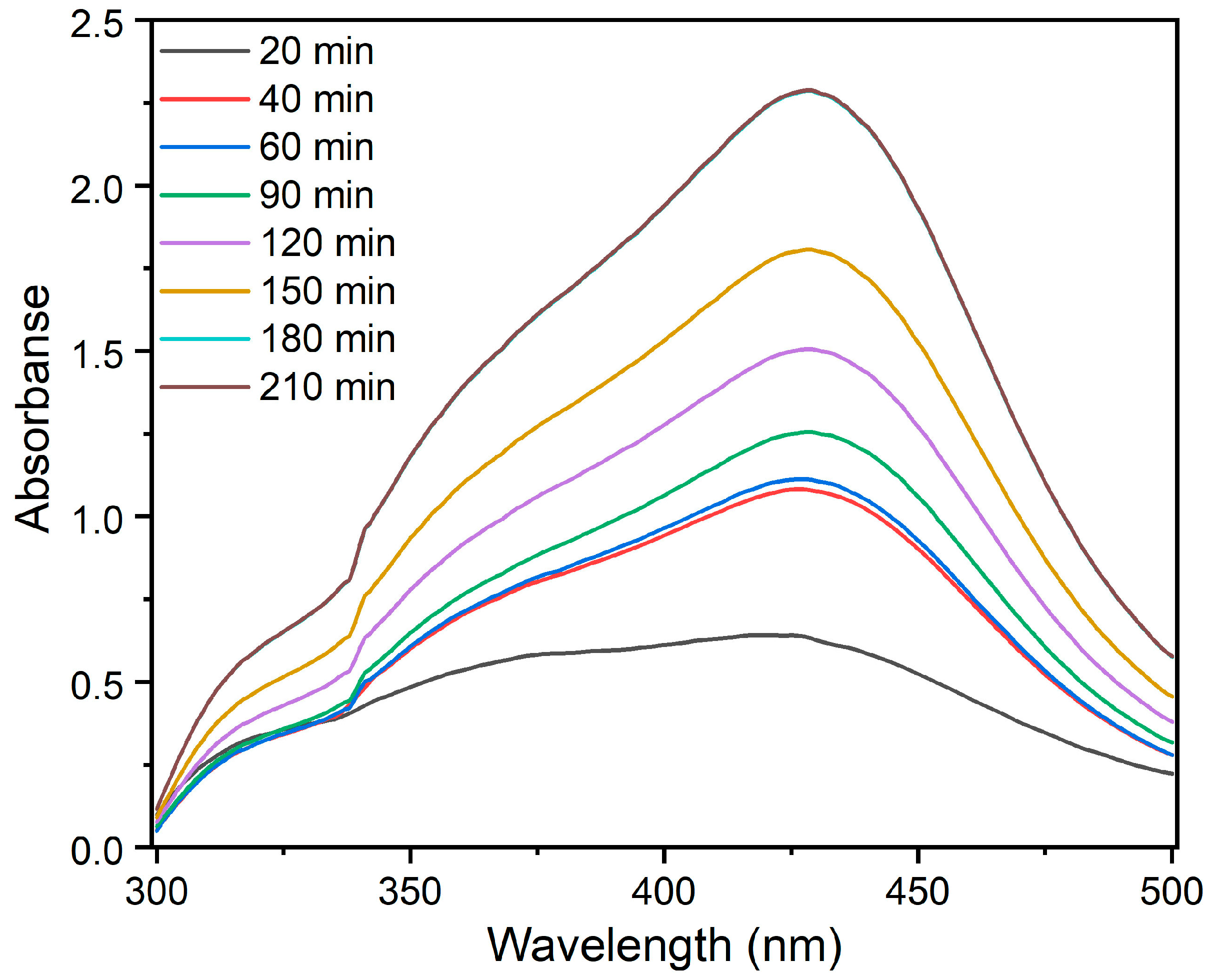
A comprehensive time-course investigation was conducted to establish the optimal synthesis reaction duration. This parameter represents a previously underexplored optimization factor in green synthesis methodologies employing plant-based reducing agents. Reaction progress was monitored through continuous acquisition of UV-Visible absorption spectra at regular intervals throughout the synthesis process. The temporal UV-Visible spectroscopic analysis revealed that the synthesis reaction reaches completion at 180 min of reaction time. The characteristic LSPR peak at λmax = 428 nm achieved maximum intensity and optimal line width definition at this temporal point, indicating complete nanoparticle formation and optimal particle size uniformity. Critically, UV-Visible spectroscopic measurements acquired beyond the 180 min time point demonstrated no significant spectroscopic changes. The LSPR peak position remained constant at 428 nm, peak intensity exhibited negligible variation (<5% change), and peak line width remained essentially unchanged. These observations indicate that the synthesis reaction achieves equilibrium at 180 min, with the nanoparticle population exhibiting complete stability thereafter. Extended reaction times beyond 180 min provide no incremental improvement in nanoparticle characteristics and serve only to increase processing duration unnecessarily.
Figure 3 presents the UV-Visible absorption spectra of AgNPs synthesized under the optimized conditions. The spectra exhibit a characteristic, well-defined LSPR absorption maximum at λmax = 428 nm, which is consistent with spherical silver nanoparticles 10–50 nm in diameter. The sharp, narrow linewidth of the LSPR peak indicates a uniform particle size distribution, while the high absorbance intensity reflects excellent nanoparticle synthesis efficiency under the established conditions. The temporal stability of this spectroscopic signature, with no significant changes observed beyond the 180 min synthesis timepoint, confirms the exceptional colloidal stability of the synthesized nanoparticles and the reliability of the optimized synthesis protocol.

3.2. FTIR Analysis

Figure 4 displays the FTIR spectra of Kzh, KzhM Salo, and KzhM Salo AgNPs. The unprocessed sample displays distinct absorption bands of montmorillonite, demonstrating its prevalence in the clay mineral composition. The prominent absorption peaks in the high-frequency region include 3694 cm−1, which corresponds to the stretching vibration of hydroxyl groups within the bentonite structure, and 3622 cm−1, which is associated with the stretching vibration of hydroxyl groups in the water molecules located in the interlayer spaces of bentonite. The continued presence of these bands following purification and AgNPs alteration signifies the structural stability of the clay layers [19]. The main changes caused by modification are manifested in the first region, which is associated with the evaporation of physically adsorbed water from the clay surface, dehydroxylation of clay, and decomposition of organic impurities. Thus, smoothing of the peaks in the frequency region of 3622 cm−1 can be seen. The absorption band at 1634 cm−1 corresponds to the bending vibration of adsorbed molecular water within the interlayer region, indicating the hydrophilic characteristics of bentonite [20]. The relative intensity of this band diminishes somewhat in the AgNPs-modified sample, indicating a partial substitution of interlayer water molecules by AgNPs, a phenomenon already noted in analogous clay-nanoparticle systems [21]. In the fingerprint region, multiple diagnostic absorption bands are detected, affirming the montmorillonite-rich composition of the bentonite samples. The band at 974 cm−1 corresponds to the stretching vibration of the Si–O–Si framework within the tetrahedral sheet, in agreement with prior studies on smectitic clays [22]. The faint shoulder at 912 cm−1 is associated with Al–Al–OH bending vibrations in the octahedral sheet, signifying the existence of dioctahedral montmorillonite. The supplementary band at 796 cm−1 is ascribed to Fe3+–OH–Mg vibrations, indicating a partial substitution of Al3+ by Fe3+ and Mg2+ in the octahedral sites, a typical characteristic of natural bentonites. The peaks at 686 cm−1 are attributed to Si–O–Al bending modes, whilst those at 512 and 438 cm−1 are associated with Si–O–Si and Al–O–Si deformation vibrations, respectively [23].

3.3. XRD

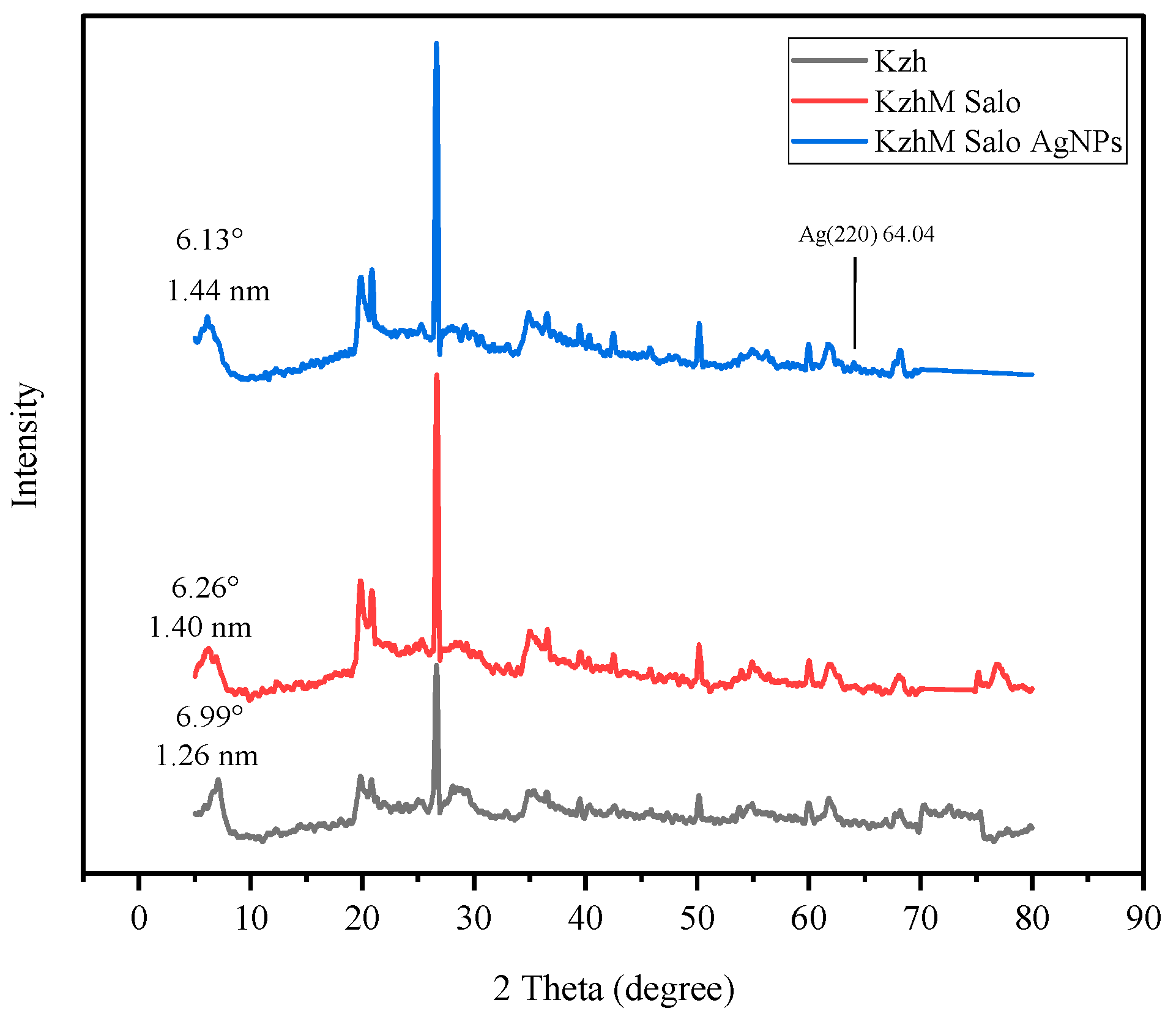
Figure 5 displays the XRD patterns of Kzh, KzhM Salo, and KzhM Salo AgNPs. The unaltered bentonite displayed a basal reflection at 2θ = 6.99°, indicating a basal spacing (d001) of 1.26 nm, typical of montmorillonite, the predominant smectitic phase in bentonite. Following purification via the Salo method, this reflection transitioned to 6.26° (d001 = 1.40 nm). The noted shift is mostly ascribed to the enhancement of the clay fraction subsequent to the extraction of soluble salts and carbonates. This treatment improves the hydration and interlayer cation exchange capacity of montmorillonite, thereby increasing the basal spacing, consistent with prior studies on purified smectitic clays [24]. After functionalization of AgNPs, the basal reflection shifted to 6.13° (d001 = 1.44 nm), which indicates a slight increase in the interlayer distance, but sufficient for effective integration of Ag into the clay matrix. The expansion is due to the intercalation of AgNPs into the interlayer of montmorillonite. Similar changes in basal reflections have been documented in the literature. Abdelkrim et al. noted an increase in the d001 distance from 1.26 to 1.47 nm after AgNP functionalization, attributing this change to the interlayer placement of AgNPs [25]. As can be seen, the final value of the interlayer distance noted in this study is close (of the same order of magnitude) to the values recorded for high-performance Ag-montmorillonite composites used for biomedical and antibacterial purposes. This convincingly confirms the effective integration of Ag into the clay matrix and means that the observed structural changes not only agree with previous studies but also emphasize the suitability of the present synthesis method for medical applications. Thus, the ion-exchange properties of montmorillonite are successfully used in medical practice in the creation of composite materials used as fillings in dentistry. In addition to the basal reflections, a unique peak at 2θ = 64.04° was detected in the Ag-functionalized sample, corresponding to the (220) plane of face-centered cubic silver (JCPDS card no. 04-0783). This reflection indicates the effective deposition of crystalline AgNPs on the bentonite matrix. Comparable findings for Ag(111), Ag(200), Ag(220), and Ag(311) reflections have been documented in Ag-montmorillonite composites, corroborating the simultaneous presence of intercalated and surface-deposited Ag nanoparticles [26]. It is important to highlight that certain overlapping reflections within the range of 20–27° could be attributed to quartz, a frequent impurity found in natural bentonites. The enduring presence of these peaks, even after purification, has been documented in prior studies and does not impede the structural modification of the clay [27]. It should be noted that another associated mineral in the composition of bentonite clay is kaolinite. Diffractogram for kaolinite shows that the diffraction angle 2θ = 12.30 with interplanar distance d = 0.71 nm. In the composition of the initial sample, along with montmorillonite, lines characteristic of quartz, mica, and mixed-layer clay minerals were detected. Mica is detected as an impurity [28].

3.4. Determination of Elemental Composition of Bentonites

The clay samples were found to have a chemical composition comprising a complex oxide mineral mixture, the data of which are provided in Table 1. It was revealed that the main constituent elements of bentonite clay are aluminum and silicon oxides, congruent with the presence of quartz impurities detected in the XRD analysis. The main content of the mineral part of the initial bentonite of the Kalzhat deposit is hexagonal lattice SiO2, smaller amounts of phases of orthorhombic aluminum oxide Al2O3, hexagonal sodium oxide, face-centered cubic lattice of magnesium oxide MgO, iron oxide Fe2O3, and montmorillonite with a monoclinic lattice, which agrees with the data given in previous studies [29,30]. The elemental composition analysis of the raw and purified bentonite samples demonstrated a notable increase in SiO2 and Al2O3 after purification. This tendency is due to the efficient elimination of non-clay contaminants, including carbonates and soluble salts. Eliminating these phases raises the relative fraction of the aluminosilicate framework, resulting in elevated SiO2 and Al2O3 concentrations in the purified clay. Comparable findings have been documented in the literature. Babahoum and Hamou (2021) observed that the purification of bentonites selectively dissolves accessory phases, thereby enriching the montmorillonite fraction and increasing the Si and Al concentrations [5]. In particular, the XRF analysis method showed that the AgNP-modified decationed bentonite of the Kalzhat deposit consists of 70% silicon oxide, 17.6% aluminum oxide, 6.42% iron oxide, 1.85% magnesium oxide, 1.39% calcium oxide, 0.977% titanium oxide, and 0.349% silver. The presence of K, Mg, and Ca in the clays indicates the montmorillonite characteristic of the original clays. The silver content in the modified samples increased 698 times after the introduction of AgNPs, indicating successful modification of the clay with AgNPs.
The elemental composition analysis of the raw and purified bentonite samples demonstrated that while absolute changes in SiO2 and Al2O3 content are modest (SiO2: 67.6% → 70.5%, Al2O3: 18.1% → 18.3%), the purification process achieved its primary objective through selective elimination of non-clay contaminants. The modest increase in relative SiO2 and Al2O3 content (2.9% and 0.2%, respectively) represents the consequence of removing these non-clay phases. The purification process selectively dissolves and removes soluble salts (Na-salts, sulfates), carbonates (CaCO3), and iron oxides, thereby increasing the relative proportion of the montmorillonite framework (aluminosilicate structure: SiO2 and Al2O3).

3.5. SEM Analysis

Figure 6a–c shows the results of scanning electron microscopic examination. Images show that the size of granules forming Kzh mineral varies from several hundred nm to several hundred μm; some granules have an elliptical structure and a round shape. The surface is rather dense, exhibiting minimal visible porosity, and contains multiple coarse particles with sharp edges, primarily composed of quartz and other accessory minerals. These morphologies align with prior findings on natural bentonites, wherein the layered structure typically generates micron-sized aggregates that diminish the accessible surface area [31]. The images of AgNPs modified decationized bentonites from the Kzh deposit are shown in Figure 6d–f. Upon decation and subsequent modification of the sample, significant visual changes are observed, manifested by changes in the sample matrix. The presence of macropores is observed, and the particles also show new structures, due to the incorporation of AgNPs.
The comparison shows that the process of decation and modification with AgNPs changed the structure of the clay, resulting in an increase in particle density and a more compact complex texture. These changes affected properties such as surface area, adsorption capacity, and potential antibacterial activity, which is consistent with the purported benefits of AgNPs modification. The images demonstrated a significant increase in the average particle size of bentonite following AgNPs loading, rising from around 0.60 µm in the pure clay to about 1.02 µm in the modified bentonite. The enlargement results from the deposition of AgNPs on the exterior surface and within the interparticle spaces, facilitating the aggregation of clay platelets into bigger clusters. Comparable findings have been documented in the literature, indicating that the integration of AgNPs into montmorillonite matrices promotes agglomerate size and the development of micro-scale aggregates [32]. The zeta potential measurements corroborate this discovery, revealing a decline in the zeta potential value of the bentonite after modification, signifying diminished electrostatic stability of the suspended particles. A reduced zeta potential indicates diminished repulsive interactions among particles, therefore promoting aggregation or clustering, which aligns with the observed rise in particle size in SEM images.

3.6. BET Analysis

The study of the porous-texture characteristic of bentonite showed that the graphs show the classical adsorption isotherm type IV according to the BET classification. It can be seen that there is capillary condensation in mesopores, due to which the isotherm acquires a bend with a hysteresis loop in the region of relative pressures from 0.45 to 0.995; in the region of low pressure, there is polylayer physical adsorption, which indicates the presence of a large surface and uniform distribution of pores, as depicted in Figure 7.
This is confirmed by the data on the parameters of the porous structure of the bentonite samples under study, determined from adsorption and desorption isotherms. The adsorption and desorption curves of the original sample are close to each other, indicating stable adsorption characteristics of the clay under different conditions. The obtained results confirm that the initial samples of Kalzhat clay are defined as a mesoporous material, which has interparticle pores.
When the specific surface area is estimated by BET in the standard pressure range recommended by IUPAC, the specific surface area is underestimated. It is shown that in micropores, monolayer formation and the process of micropore filling, which usually occurs at P/P0 below 0.15, are difficult to distinguish. The same is true for mesopores with a pore size of less than ~4 nm [28]. The application of the BET equation should be limited to the pressure range where V(1 − P/P/P0) continuously increases the relative pressure P/P0 (according to Annex C of ISO 9277). A critical evaluation of the BET method for porosity measurement has been cited in various studies [27,29,30,31,32]. This procedure is necessary to obtain a linear BET relationship, which gives a significant improvement in the comparability and reproducibility of the results.
For micro-mesoporous adsorbents, the method used to determine the specific surface area is to determine the lateral surface of the pore, which is blocked by adsorbate molecules located in its cross-section [33]. The use of capillary condensation theory allows the calculation of mesopore size distribution based on experimental adsorption-desorption isotherms. The BJH method is most commonly used for this purpose. The BJH method uses slit and cylindrical pore models. The method provides size distributions for mesopores and the smallest macropores. Table 2 summarizes the main characteristics of the porous structure of the bentonite of the Kalzhat deposit. It can be seen that mesopores with sizes ranging from 2 to 50 nm become dominant as a result of the modification.
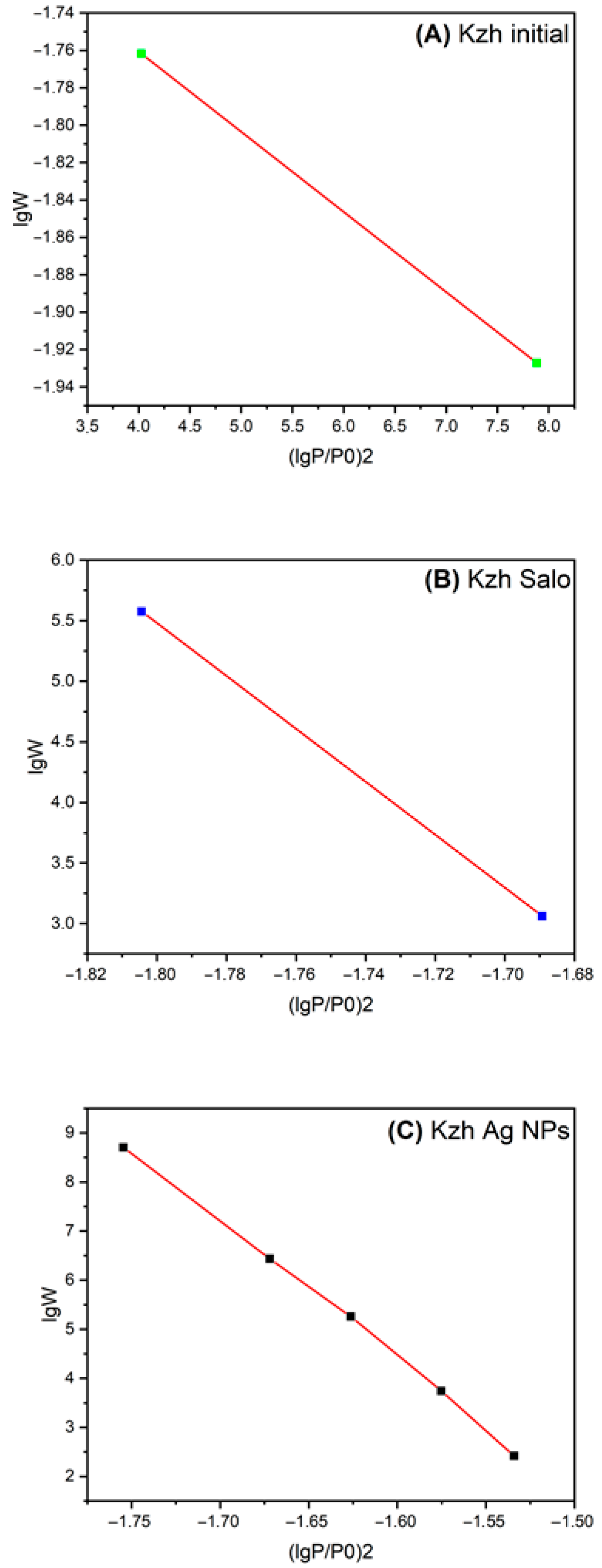
Figure 8 shows the adsorption isotherm of bentonite from the Kalzhat deposit represented by the BET equation in linear form.
The adsorption isotherm obtained can be used to find constants in the BET equation. The equation of polymolecular adsorption has the form:
P P 0 V 1 P P 0 = 1 V m C + C 1 V m C P P 0
where (P/P0)/[V (1 − P/P0)] denotes P/P0 on the ordinate of the adsorption isotherm.
P0—is the saturated vapor pressure of the adsorbate at the adsorption temperature.
Vm—monolayer saturated adsorption capacity of adsorbent on adsorbate, cm3/g.
C—a constant related to the adsorption characteristics of adsorbents.
S—the specific surface area.
V m = 1 a + b ,
C = 1 V m + b ,
S = N A a m 22,414 V m
am—is the cross-sectional area of adsorbate molecules, m2.
22,414—volume occupied by 1 mole of gas under standard conditions, cm3.
P/P0—is the relative pressure.
P—pressure after establishment of adsorption equilibrium, bar.
V—amount of adsorbent absorbed by adsorbate at equilibrium, cm3/g.
a—is the tangent of the angle of inclination of a straight line.
b—is the segment cut off by a straight line on the ordinate axis.
NA—is Avogadro’s number, 6.02 × 10⁻²³.
From the obtained isotherm, the constants of the BET equation can be found, as listed in Table 3.
The detected high value of the constant C is likely due to the presence of a micropore in the investigated sample, despite the fact that the isotherm belongs to type IV.
The surface of initial bentonite clay was investigated by different methods for both mono- and polymolecular adsorption-desorption. Figure 9 shows the adsorption isotherm according to Langmuir theory, the equation parameters of which are given in Table 4.
For comparison, the specific surface area values found are shown in Table 5. As can be seen, the specific surface area values of the original and modified samples by the BET (multi-point) method (68.6044 m2/g and 94.4786 m2/g, respectively) are smaller than those of Langmuir monolayer adsorption (94.1493 m2/g and 133.7854 m2/g, respectively), indicating that the adsorption predominantly proceeds as monomolecular adsorption.
In addition, clay modification contributes to the increase in specific surface area by the BET and Langmuir methods. Thus, according to the multipoint BET method, the value of specific surface area was 68.6044 m2/g in the original sample and 94.4786 m2/g in the modified sample, which established the highest surface opening in the modified clay sample.
It is convenient to judge the presence of one or another type of pores (micro-, meso-, or macro-) using comparative methods of calculation, particularly the t-method and determination of the dependence of the adsorption value on the thickness of the adsorption film. The film thickness was calculated according to the Harkins and Jura equation. Figure 10 shows the t-plot plotted from the calculated values, which clearly demonstrates three characteristic areas corresponding to the presence of macro-, meso-, and micropores. It can be seen that the t-plot for the original sample shows three characteristic areas, corresponding to the presence of macro-, meso-, and micropores. Deviations from a straight line at the adsorption film thickness of more than 0.700 nm are associated with the capillary condensation. The deviations in the initial part of the curve are related to the presence of micropores. In the modified sample, the curve shows a more pronounced increase in adsorption, which may indicate increased porosity and changes in the pore structure.
In addition to information on the distribution of different types of pores in the sample, the t-method allows us to calculate the volume of micropores, the specific surface area of micropores, and the specific adsorption on the outer surface, as shown in Table 6.
As can be seen from the data obtained, the values of specific surfaces determined by the BJH method (Table 6) and the t-method (Table 7) are different: 32.7734 m2/g and 46.6471 for the original and 55.3844 m2/g and 63.9451 m2/g for the modified sample, respectively, indicating adsorption both on the external surface and in the micropores. In micropores, adsorption takes place not on the pore surface layer by layer but in their entire volume. Due to the proximity of pore walls, there is a sharp increase in the energy of interaction between adsorbate and adsorbent due to the overlap of adsorption force fields, resulting in an increase in the adsorption value. Therefore, the Langmuir or BET methods cannot be limited to describing adsorption. The Dubinin–Radushkevich method (DR method) is used to describe adsorption in micropores. Table 6 and Figure 11 summarize the adsorption isotherms and parameters determined by the Dubinin–Radushkevich method.
Comparison with the data obtained using the t-method shows that the volume of micropores calculated from the Dubinin–Radushkevich equation is much larger, indicating significant adsorption on the outer surface. Thus, the analysis and processing of experimentally obtained bentonite adsorption isotherms allow us to determine all key characteristics: specific surface area, pore volume, and pore size distribution.

3.7. Zeta Potential Analysis

The initial bentonite displayed a zeta potential of −18.4 ± 0.107 mV, due to the existence of negatively charged surface groups mainly attributed to isomorphic replacement in the montmorillonite framework and the prevalence of surface silanol and aluminol groups. Following purification via the Salo method, the zeta potential exhibited a small change to −19 ± 0.868 mV. The slight increase in surface negativity may result from the elimination of ancillary minerals like carbonates during purification, thus revealing a greater fraction of negatively charged clay platelets. The ζ potential values obtained for the Kzh agree with those obtained in previous work [33]. Notably, the functionalization with silver nanoparticles resulted in a zeta potential change to −16.3 ± 0.149 mV, signifying a substantial enhancement in surface charge density. Numerous investigations have consistently indicated that the integration of metal nanoparticles into bentonite surfaces results in a decrease in the zeta potential magnitude. This reduction is chiefly ascribed to the adsorption and partial neutralization of negatively charged functional groups on the clay surface by silver cations or AgNPs, which reduces the total surface charge density. Noori et al. (2021) [34] noted that the zeta potential of Na-montmorillonite transitioned to less negative values following CuNPs loading, signifying a reduction in electrostatic repulsion attributed to surface charge compensation by copper species. Research by Choudhary et al. (2021) [35] demonstrated that the immobilization of AgNPs on montmorillonite diminished its surface charge from −37.13 mV to −16.49 mV, therefore promoting nanoparticle adhesion and stabilization within the interlayer areas. The data indicate that the reduction in zeta potential is a typical result of AgNPs functionalization, demonstrating the modification of the electrical double layer and validating the effective interaction between bentonite and AgNPs.

3.8. Thermal Analysis

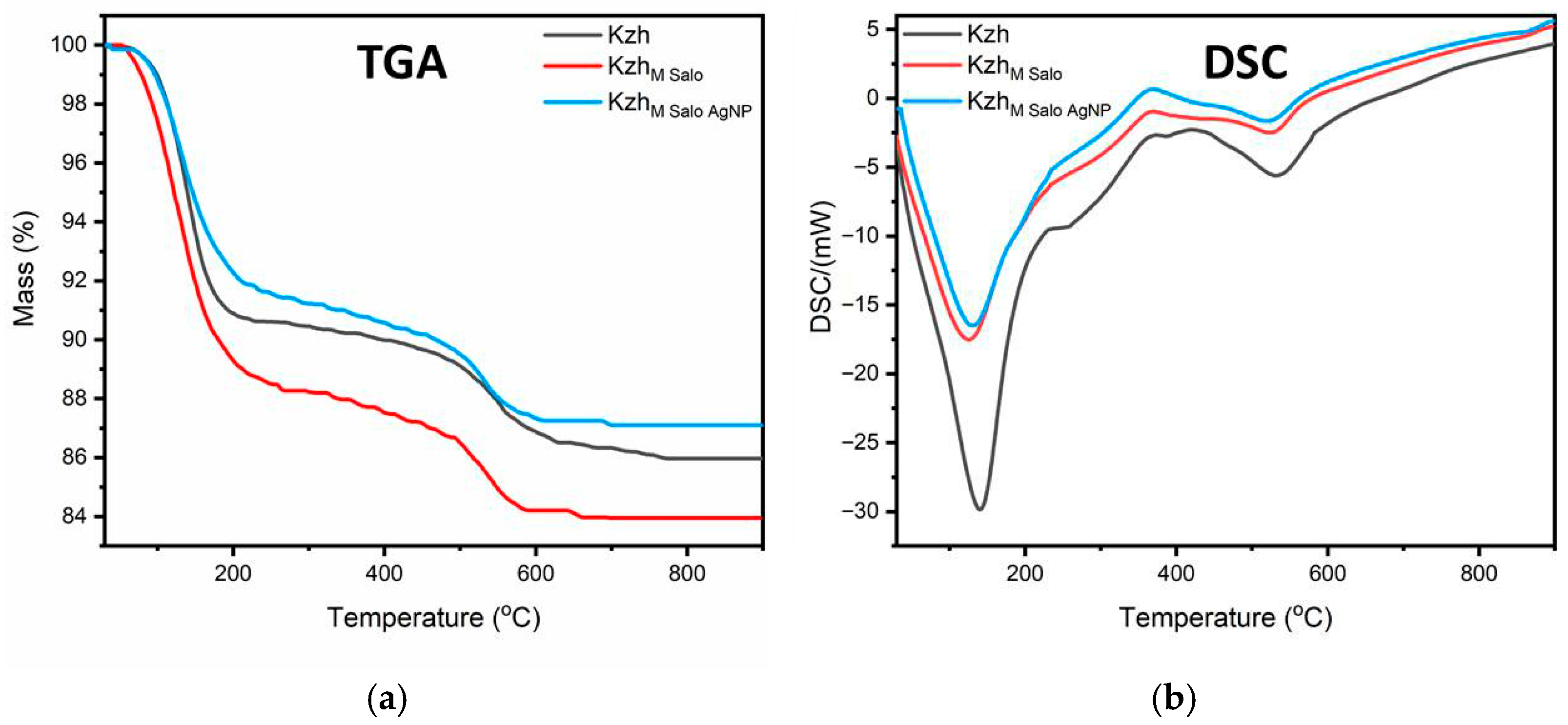
The study of bentonite properties by the method of synchronous thermal analysis allows for the revelation of regularities in the properties, the identification of the composition, and the tracing of the behavior of the material under temperature influence. Synchronous thermal analysis involves the combined use of thermogravimetry (TGA) and differential scanning calorimetry (DSC). In the framework of TGA, the change in the mass of the sample as a function of temperature is recorded. The resulting dependence allows one to judge the thermal stability and composition of the investigated material in the initial state and intermediate stages of the process and the composition of the residue. The TGA thermogravimetric analysis curves, as depicted in Figure 12, showed modification of decationized Kalzhat bentonite with AgNPs and organic extracts of Syzygium Aromáticum leads to changes in their thermal characteristics.
It was found that modified clays have less pronounced mass losses at stages up to 200 °C, mass losses at temperatures between 200 and 500 °C are caused by the presence of organic impurities contained in the extract, and the high-temperature stage above 500 °C demonstrates the decomposition of residues of organic impurities and AgNPs. These changes indicate an improvement in the thermal stability when clay is modified with AgNPs by creating a more stable matrix, partially filling the micropores, and increasing the density of the structure.
The curves of differential scanning calorimetric DSC analysis (Figure 12b) revealed a more complex behavior. The modification of decationized clays with AgNPs significantly affected their thermal properties, both curves showing endothermic effects in the 125–140 °C region due to the evaporation of physically adsorbed water from the clay surface, and effects in the 500–700 °C region, related to dehydroxylation of the clay and decomposition of organic impurities or residual components associated with the modification, as well as exothermic effects in the region of 300–400 °C due to oxidation of organic molecules and structural changes in the clay matrix. It can be seen that both curves have similar trends, but with slight differences in shape and position.

4. Conclusions

Comprehensive studies have been conducted on modified clays from the Kalzhat deposit (Almaty region). To modify decationized bentonites, green technology was used to obtain silver nanoparticles through bioremediation with medicinal plant extracts. This guarantees the biosafety and environmental purity of the production of metal nanoparticles, which is relevant for the medical industry. Comprehensive studies of modified clays from the Kalzhat deposit (Almaty region) were conducted, including quantitative chemical, X-ray phase, and thermal methods, as well as analysis of the porous structure based on adsorption data and the surface morphology of bentonite, demonstrating significant changes in the porous-textural characteristics and morphological properties of bentonite clays. Surface modification allows for the expansion of existing areas of application for the material, and the introduction of various types of metal particles into the clay composition allows for the production of materials with unique properties. The process of decationization and modification with silver nanoparticles changed the structure of the clay, resulting in increased particle density and a more compact, complex texture. Analysis of the porous structure based on adsorption data and the surface morphology of bentonites demonstrates significant changes in the porous-textural characteristics and morphological properties of modified bentonite clays and confirms the possibility of their use in the manufacture of various dosage forms, including for the adsorption of drugs, in order to slow down their release. The modification of clay minerals is a critically important strategy for improving their functional properties for use in the medical field.

Author Contributions

Conceptualization, S.K.K. and S.T.; data curation, S.Z.N., A.K.K., K.A., E.S., and A.D.K.; writing—original draft, A.D.K. and S.Z.N.; writing—review and editing, Z.E.I., M.M.B., A.M.K. and M.G.T.; Supervision, S.K.K., Z.E.I. and S.T.; Visualization, A.D.K., A.M.K. and M.G.T. All authors have read and agreed to the published version of the manuscript.

Funding

This research was funded by the Science Committee of the Ministry of Science and Higher Education of the Republic of Kazakhstan (Grant No. AP19677542).

Data Availability Statement

The authors confirm that the data supporting the findings of this study are available within the article.

Acknowledgments

The authors express their sincere gratitude to Aigul Zh. Kerimkulova and Nurgamit Kantay for their valuable contribution and assistance in the analysis of the material characteristics.

Conflicts of Interest

The authors declare that they have no known competing financial interests or personal relationships that could have appeared to influence the work reported in this paper.

Abbreviations

The following abbreviations are used in this manuscript:
AgNPsSilver Nanoparticles
KzhM Salo D.P.Salo method Kzh bentonite
KzhM Salo AgNPsSilver nanoparticles modified Kzh bentonite

References

  1. Tabasi, H.; Oroojalian, F.; Darroudi, M. Green clay ceramics as potential nanovehicles for drug delivery applications. Ceram. Int. 2021, 47, 31042–31053. [Google Scholar] [CrossRef]
  2. Kabdrakhmanova, S.K.; Kerimkulova, A.Z.; Nauryzova, S.Z.; Aryp, K.; Shaimardan, E.; Kukhareva, A.D.; Kantay, N.; Beisebekov, M.M.; Thomas, S. Bentonite-Based Composites in Medicine: Synthesis, Characterization, and Applications. J. Compos. Sci. 2025, 9, 310. [Google Scholar] [CrossRef]
  3. Borah, D.; Nath, H.; Saikia, H. Modification of bentonite clay & its applications: A review. Rev. Inorg. Chem. 2022, 42, 265–282. [Google Scholar]
  4. Pourhosseinhendabad, P.; Firouzabadi, P.Z. From raw to nano: Optimized purification and nano-bentonite synthesis for advanced applications. Phys. Scr. 2025, 100, 065916. [Google Scholar] [CrossRef]
  5. Babahoum, N.; Hamou, M.O. Characterization and purification of Algerian natural bentonite for pharmaceutical and cosmetic applications. BMC Chem. 2021, 15, 50. [Google Scholar] [CrossRef]
  6. Heydari, A.; KhajeHassani, M.; Daneshafruz, H.; Hamedi, S.; Dorchei, F.; Kotlár, M.; Kazeminava, F.; Sadjadi, S.; Doostan, F.; Chodak, I.; et al. Thermoplastic starch/bentonite clay nanocomposite reinforced with vitamin B2: Physicochemical characteristics and release behavior. Int. J. Biol. Macromol. 2023, 242, 124742. [Google Scholar] [CrossRef] [PubMed]
  7. Ngcobo, S.; Silwana, B.; Maqhashu, K.; Matoetoe, M.C. Bentonite nanoclay optoelectrochemical property improvement through bimetallic silver and gold nanoparticles. J. Nanotechnol. 2022, 2022, 3693938. [Google Scholar] [CrossRef]
  8. Thomas, S.; McCubbin, P. A comparison of the antimicrobial effects of four silver-containing dressings on three organisms. J. Wound Care 2003, 12, 101–107. [Google Scholar] [CrossRef] [PubMed]
  9. Asefian, S.; Ghavam, M. Green and environmentally friendly synthesis of silver nanoparticles with antibacterial properties from some medicinal plants. BMC Biotechnol. 2024, 24, 5. [Google Scholar] [CrossRef]
  10. Lasmi, F.; Hamitouche, H.; Laribi-Habchi, H.; Benguerba, Y.; Chafai, N. Silver Nanoparticles (AgNPs), Methods of Synthesis, Characterization, and Their Application: A Review. Plasmonics 2025, 20, 9455–9488. [Google Scholar] [CrossRef]
  11. Koohestani, H.; Nabilu, M.; Balooch, A. Biosynthesis and investigation of antibacterial properties of green silver nanoparticles using fruit extracts of Wild barberry, Medlar (Mespilus germanica L.), and Hawthorn. Food Chem. Adv. 2025, 6, 100850. [Google Scholar] [CrossRef]
  12. Bhavi, S.M.; Thokchom, B.; Singh, S.R.; Bajire, S.K.; Shastry, R.P.; Srinath, B.S.; Bhat, S.S.; Dupadahalli, K.; Govindasamy, C.; Chalekar, S.R.; et al. Syzygium malaccense leaf extract-mediated silver nanoparticles: Synthesis, characterization, and biomedical evaluation in Caenorhabditis elegans and lung cancer cell line. Green Chem. Lett. Rev. 2025, 18, 2456624. [Google Scholar] [CrossRef]
  13. Lima, A.K.O.; Vieira, Í.R.S.; Souza, L.M.d.S.; Florêncio, I.; da Silva, I.G.M.; Junior, A.G.T.; Machado, Y.A.A.; dos Santos, L.C.; Taube, P.S.; Nakazato, G.; et al. Green synthesis of silver nanoparticles using Paullinia cupana Kunth leaf extract collected in different seasons: Biological studies and catalytic properties. Pharmaceutics 2025, 17, 356. [Google Scholar] [CrossRef]
  14. Sati, A.; Ranade, T.N.; Mali, S.N.; Yasin, H.K.A.; Pratap, A. Silver nanoparticles (AgNPs): Comprehensive insights into bio/synthesis, key influencing factors, multifaceted applications, and toxicity—A 2024 update. ACS Omega 2025, 10, 7549–7582. [Google Scholar] [CrossRef]
  15. Dyusebaeva, M.; Berillo, D.; Yesbussinova, Z.; Ibragimova, N.; Shepilov, D.; Sydykbayeva, S.; Almabekova, A.; Chinibayeva, N.; Adeloye, A.O.; Berganayeva, G. Green Synthesis and Characterization of Silver Nanoparticles Using Artemisia terrae-albae Extracts and Evaluation of Their Cytogenotoxic Effects. Int. J. Mol. Sci. 2025, 26, 7499. [Google Scholar] [CrossRef]
  16. Haridas, E.S.H.; Varma, M.K.R.; Chandra, G.K. Bioactive silver nanoparticles derived from Carica papaya floral extract and its dual-functioning biomedical application. Sci. Rep. 2025, 15, 9001. [Google Scholar] [CrossRef]
  17. Alghamdi, S.S.; Alhaidal, H.; Mohammed, A.; Alsubait, A.; Alshammari, M.D.; Alsaqer, L.; Alzahrani, S.; Alanazi, F.; Al Tuhayni, L.B.; Ali, R.; et al. A Novel Integrated Approach: Plant-Mediated Synthesis, in vitro and in silico Evaluation of Silver Nanoparticles for Breast Cancer and Bacterial Therapies. Int. J. Nanomed. 2025, 20, 10043–10071. [Google Scholar] [CrossRef]
  18. Beisebekov, M.M.; Zhumagalieva, S.N.; Beisebekov, M.K.; Abilov, Z.A.; Kosmella, S.; Koetz, J. Interactions of bentonite clay in composite gels of non-ionic polymers with cationic surfactants and heavy metal ions. Colloid Polym. Sci. 2015, 293, 633–639. [Google Scholar] [CrossRef]
  19. Tan, J.; Li, Z.; Zhao, G.; Guo, G.; Zhang, H.; Wang, S. Modified Bentonite as a Dissolve-Extrusion Composite and Its Modification Mechanism. ACS Omega 2024, 9, 33900–33911. [Google Scholar] [CrossRef] [PubMed]
  20. Mannu, A.; Poddighe, M.; Mureddu, M.; Castia, S.; Mulas, G.; Murgia, F.; Di Pietro, M.E.; Mele, A.; Garroni, S. Impact of morphology of hydrophilic and hydrophobic bentonites on improving the pour point in the recycling of waste cooking oils. Appl. Clay Sci. 2024, 262, 107607. [Google Scholar] [CrossRef]
  21. Mostafa, H.Y.; Younus, M.M.; El Naga, A.O.A.; Saied, M.E.; Mahmoud, A.S. Biosynthesised bentonite clay-based Cu nanocomposite using Punica granatum L. peel extract for the effective catalytic reduction of hazardous aqueous contaminants. Int. J. Environ. Anal. Chem. 2024, 1–21. [Google Scholar] [CrossRef]
  22. Ahmed, A.; Ahmed, W.; Moumene, T.; Belarbi, E.H.; Baeten, V.; Bresson, S. HTS/FTIR investigations in the spectral range 4000–600 cm−1 and BET method of specific surface area of various montmorillonite clays modified by monocationic and dicationic imidazolium ionic liquids. Chem. Phys. 2025, 598, 112844. [Google Scholar] [CrossRef]
  23. Jarrah, N.; Mu’azu, N.D.; Zubair, M.; Al-Harthi, M. Enhanced adsorptive performance of Cr (VI) onto layered double hydroxide-bentonite composite: Isotherm, kinetic and thermodynamic studies. Sep. Sci. Technol. 2020, 55, 1897–1909. [Google Scholar] [CrossRef]
  24. Shah, L.A.; Valenzuela, M.d.G.d.S.; Farooq, M.; Khattak, S.A.; Díaz, F.R.V. Influence of preparation methods on textural properties of purified bentonite. Appl. Clay Sci. 2018, 162, 155–164. [Google Scholar] [CrossRef]
  25. Abdelkrim, S.; Mokhtar, A.; Djelad, A.; Bennabi, F.; Souna, A.; Bengueddach, A.; Sassi, M. Chitosan/Ag-bentonite nanocomposites: Preparation, characterization, swelling and biological properties. J. Inorg. Organomet. Polym. Mater. 2020, 30, 831–840. [Google Scholar] [CrossRef]
  26. Shameli, K.; Ahmad, M.B.; Yunus, W.M.Z.W.; Ibrahim, N.A.; Gharayebi, Y.; Sedaghat, S. Synthesis of silver/montmorillonite nanocomposites using γ-irradiation. Int. J. Nanomed. 2010, 5, 1067–1077. [Google Scholar] [CrossRef]
  27. Alraae, A.; Moussadik, A.; Benzaouak, A.; Kacimi, M.; Dahhou, M.; Sifou, A.; El Hamidi, A. One-step eco-friendly synthesis of Ag nanoparticles on bentonite-g-C3N4 for the reduction of hazardous organic pollutants in industrial wastewater. Next Nanotechnol. 2025, 7, 100116. [Google Scholar] [CrossRef]
  28. Niu, C.; Wu, C.; Chen, F.; Guo, Y.; Li, K.; Yao, M.; Zhu, Y. Microstructural Control and Macroscopic Performance Enhancement of Montmorillonite Crystals Based on Infrared Nanosecond Laser. Ceram. Int. 2025, 51, 37078–37086. [Google Scholar] [CrossRef]
  29. Belousov, P.E.; Pokidko, B.V.; Zakusin, S.V.; Krupskaya, V.V. Quantitative methods for quantification of montmorillonite content in bentonite clays. Georesursy 2020, 22, 38–47. [Google Scholar] [CrossRef]
  30. Barkat, M.; Chegrouche, S.; Mellah, A.; Bensmain, B.; Nibou, D.; Boufatit, M. Application of algerian bentonite in the removal of cadmium (II) and chromium (VI) from aqueous solutions. J. Surf. Eng. Mater. Adv. Technol. 2014, 4, 210–226. [Google Scholar] [CrossRef]
  31. Keihanfar, M.; Mirjalili, B.B.F.; Bamoniri, A. Bentonite/Ti (IV) as a natural based nano-catalyst for synthesis of pyrimido[2, 1-b] benzothiazole under grinding condition. Sci. Rep. 2025, 15, 6328. [Google Scholar] [CrossRef]
  32. Solarte, A.M.F.; Villarroel-Rocha, J.; Morantes, C.F.; Montes, M.L.; Sapag, K.; Curutchet, G.; Sánchez, R.M.T. Insight into surface and structural changes of montmorillonite and organomontmorillonites loaded with Ag. Comptes Rendus Chim. 2019, 22, 142–153. [Google Scholar] [CrossRef]
  33. Ni, H.; Fu, X.-L.; Reddy, K.R.; Wang, M.; Du, Y.-J. Interlayer and surface characteristics of carboxymethyl cellulose and tetramethylammonium modified bentonite. Constr. Build. Mater. 2024, 428, 136303. [Google Scholar] [CrossRef]
  34. Noori, F.; Neree, A.T.; Megoura, M.; Mateescu, M.A.; Azzouz, A. Insights into the metal retention role in the antibacterial behavior of montmorillonite and cellulose tissue-supported copper and silver nanoparticles. RSC Adv. 2021, 11, 24156–24171. [Google Scholar] [CrossRef] [PubMed]
  35. Choudhary, N.; Yadav, V.K.; Yadav, K.K.; Almohana, A.I.; Almojil, S.F.; Gnanamoorthy, G.; Kim, D.-H.; Islam, S.; Kumar, P.; Jeon, B.-H. Application of green synthesized MMT/Ag nanocomposite for removal of methylene blue from aqueous solution. Water 2021, 13, 3206. [Google Scholar] [CrossRef]
Figure 1. Geographic location map of the Kalzhat bentonite.
Jcs 09 00702 g001
Figure 2. Scheme for green production of AgNPs.
Jcs 09 00702 g002
Figure 3. UV spectra of AgNPs synthesised by the green method using S. aromaticum extract over time.
Jcs 09 00702 g003
Figure 4. IR spectra of the initial and modified bentonite of the Kalzhat deposit.
Jcs 09 00702 g004
Figure 5. X-ray diffraction of the Kzh, KzhM Salo, and KzhM Salo AgNPs.
Jcs 09 00702 g005
Figure 6. SEM images and corresponding particle size distribution of Kzh (ac), and KzhM Salo AgNPs (df) at different magnifications.
Jcs 09 00702 g006
Figure 7. BET analysis of initial and modified by AgNPs decationized bentonite clay of Kalzhat deposit: (A) Kzh, (B) KzhM Salo, and (C) KzhM Salo AgNPs.
Jcs 09 00702 g007
Figure 8. Line graphical representation of the BET adsorption isotherm of the (A) Kzh, (B) KzhM Salo, and (C) KzhM Salo AgNPs.
Jcs 09 00702 g008
Figure 9. Langmuir adsorption isotherm of original and modified bentonite of (A) Kzh, (B) KzhM Salo, and (C) KzhM Salo AgNPs.
Jcs 09 00702 g009
Figure 10. Dependence of adsorption value on adsorption film thickness via the t-graph method.
Jcs 09 00702 g010
Figure 11. Adsorption isotherm in coordinates of the Dubinin–Radushkevich equation: (A) Kzh, (B) KzhM Salo, and (C) KzhM Salo AgNPs.
Jcs 09 00702 g011
Figure 12. (a) TGA and DSC curves of Kzh, KzhM Salo, and (b) KzhM Salo AgNPs.
Jcs 09 00702 g012
Table 1. Results of XRF analysis of Kzh, KzhM Salo, and KzhM Salo AgNPs.
Composition %KzhKzhM SaloKzhM Salo AgNPs
SiO267.670.570
Al2O318.118.317.6
Fe2O37.435.556.42
MgO1.861.541.85
CaO1.461.291.39
TiO20.940.9630.977
K2O0.550.6430.67
SO31.650.7420.429
Ag0.00070.00050.349
SrO0.0630.0520.0488
MnO0.04350.03530.0324
BaO0.02070.01360.0218
V2O50.03210.03070.02
HfO20.01280.01050.01
P2O50.13200.0118
Co2O30.02120.02340.0143
NiO0.01160.01060.0073
Cr2O30.00880.0160.0078
CuO0.00850.00550.0107
Cl0.00840.0040.0091
SnO20.0080.00650.0051
ZnO0.00610.00490.004
Table 2. Parameters of porous structure according to the adsorption isotherm data on bentonite of the Kalzhat deposit.
Sample NameBET Multi-Point Method Specific Surface (m2/g)Pore Size Distribution (nm)Pore VolumePore Surface Area
cm3/g%cm3/g%
Kzh68.6044micro0.35–20.020641.2046.647158.73
meso2–100.022645.3931.306239.42
10–500.006713.411.46711.85
macro50–2000.00000.000.00000.00
KzhM Salo80.5450micro0.35–20.023040.6252.801058.11
meso2–100.027248.0136.513340.19
10–50.006411.381.54591.70
macro50–200 0.00000.000.00000.00
KzhM Salo AgNPs94.4786micro0.35–20.024320.8754.700549.69
meso2–100.036731.5646.713742.43
10–500.036931.757.48026.79
macro50–2000.018415.821.19061.08
Table 3. Parameters of the BET adsorption equation of the Kzh and KzhM Salo AgNPs.
Sample NameConstant, ah.0.063257Constant b0.0001648
KzhCorrelation R20.99999Constant C according to BET384.7
Range P/P00.0150~
0.1293
Monolayer capacity,
Vm
15.7674 cm3/g
Surface area BET68.6044 m2/g
KzhM Salo AgNPsConstant, ah.0.045903Constant b0.0001498
Correlation R20.99999Constant C307.5
according to BET
Range P/P00.0215~Monolayer capacity,21.7141 cm3/g
0.1232Vm
Surface area BET94.4786 m2/g
Table 4. Parameters of the Langmuir adsorption equation of Kzh and KzhM Salo AgNPs.
Sample NameResults of the Langmuir Multipoint Test
KzhConstant, a0.046214Constant b0.1303158
Correlation R20.99928Constant C0.4
P/P0 value4~32 barMonolayer capacity
Vm
21.6384
cm3/g
Langmuir surface area94.1493 m2/g
KzhM Salo AgNPsConstant, a0.0432522Constant b0.0922802
Correlation R20.99871Constant C0.4
P/P0 value4~32 barMonolayer capacity
Vm
30.7480
cm3/g
Langmuir surface area133.7854 m2/g
Table 5. Determination of the specific surface area of Kzh and KzhM Salo AgNPs by different methods.
Determination MethodSpecific Surface Area, m2/g
KzhKzhM Salo AgNPs
Multipoint BET68.604494.4786
Single-point BET67.307592.3351
Langmuir method94.1493133.7854
BJH desorption method (1.7–195.6 nm), intrapore region33.565881.9256
BJH adsorption method (1.7–195.6 nm), intra-pore surface area32.773455.3844
DR method, specific surface area of micropores81.8031109.2392
T-Plot method, specific surface area of micropores46.647154.7005
T-Plot method, external specific surface area21.957339.7782
Table 6. Adsorption characteristics by t-graph method of initial and modified.
Sample NameMicroporisation Results (Adsorption-Based)
KzhConstant, ah.14.19526Constant, b13.29235
Correlation, R20.99678Range, P/P00.0000~0.8000
Micropore volume0.0206 cm3/g
Specific surface area of micropores46.6471 m2/g
External specific surface area21.9573 m2/g
KzhM Salo AgNPsConstant, ah.2,863,026Constant, b18.11149
Correlation, R20.99921Range, P/P00.3470~0.5975
Micropore volume0.0280 cm3/g
Specific surface area of micropores63.9451 m2/g
External specific surface area44.2854 m2/g
Table 7. Parameters of the adsorption equation by the Dubinin–Radushkevich method of Kzh and KzhM Salo AgNPs.
Sample NameMicroporous DR Method (Adsorption-Based)
KzhConstant, ah.−0.0406Constant, b−1.6292
Correlation, R20.99993Range, P/P00.0023~0.0150
DR medium aperture1.708 nm
DR micropore volume0.0291 cm3/g
DR specific microporous surface area81.8031 m2/g
KzhM Salo AgNPsConstant, ah.−0.0353Constant, b−1.4448
Correlation, R20.99928Range, P/P00.0011~0.0278
DR medium aperture1.593 nm
DR micropore volume0.0444 cm3/g
DR specific microporous surface area125.0755 m2/g
Disclaimer/Publisher’s Note: The statements, opinions and data contained in all publications are solely those of the individual author(s) and contributor(s) and not of MDPI and/or the editor(s). MDPI and/or the editor(s) disclaim responsibility for any injury to people or property resulting from any ideas, methods, instructions or products referred to in the content.