Article

Hydrophobic Fly Ash-Based Mineral Powder for Sustainable Asphalt Mixtures

by
Kairat Kuanyshkalievich Mukhambetkaliyev
1,
Bexultan Dulatovich Chugulyov
2,
Jakharkhan Kairatuly Kabdrashit
2,
Zhanbolat Anuarbekovich Shakhmov
2,* and
Yelbek Bakhitovich Utepov
2,*
1
Department of Science, JSC “Kazakhstan Road Research Institute”, Astana 010000, Kazakhstan
2
Department of Civil Engineering, L.N. Gumilyov Eurasian National University, Astana 010000, Kazakhstan
*
Authors to whom correspondence should be addressed.
J. Compos. Sci. 2025, 9(12), 701; https://doi.org/10.3390/jcs9120701
Submission received: 15 November 2025 / Revised: 29 November 2025 / Accepted: 5 December 2025 / Published: 16 December 2025
(This article belongs to the Special Issue Composites: A Sustainable Material Solution, 2nd Edition)

Abstract

This study develops and assesses a hydrophobized fly ash mineral powder as a filler for dense fine-graded asphalt mixtures in Kazakhstan. Fly ash from a local TPP was dry co-milled with a stearate-based modifier to yield a free-flowing, hydrophobic powder that meets the national limits for moisture, porosity, and gradation. SEM shows cenospheres and broken shells partially armored by adherent fines, suggesting an increased micro-roughness and potential sites for binder–filler bonding. Three mixes were produced: a carbonate reference and two fly ash variants, all designed at the same optimum binder content. Compared with the reference, fly ash fillers delivered a markedly higher compressive strength (up to about five times at 20 °C), improved adhesion, and high internal friction, while the mixture density rutting resistance was essentially unchanged. Water resistance indices remained high and stable despite only modest changes in water saturation, and crack resistance improved, especially for the dry ash mixture. The convergence of microstructural, physicochemical, and mechanical results shows that surface-engineered fly ash from a Kazakhstani TPP can technically replace natural carbonate filler while enhancing durability-critical performance and supporting the more resource-efficient use of industrial by-products in pavements.

1. Introduction

The durability and performance properties of road pavements depend greatly on the composition and microstructural characteristics of the materials used in their composition. Among them, asphalt concrete holds a dominant position due to its flexibility, simplicity of maintenance, and cost-effectiveness. However, the mining and use of natural mineral powders, such as limestone powder, resulted in many environmental and economic problems, including the exhaustion of natural resources, an increase in the carbon footprint, and a rise in construction costs. Concurrently, the accumulation of industrial waste, particularly fly ash from thermal power plants (TPPs), became a serious environmental problem. The need for a rational use of natural resources and waste recycling encouraged active research into the use of industrial by-products as alternative mineral fillers for asphalt concrete mixtures [1,2,3].
Fly ash is a finely dispersed powder obtained from coal combustion at TPPs. Its physical and chemical properties are similar to those of traditional limestone powder, and it consists primarily of silicon dioxide, aluminum oxide, and iron oxide. Its high specific surface area and pozzolanic activity make it a suitable material for partially replacing natural mineral fillers in asphalt concrete. Many studies showed that fly ash can improve the workability, high-temperature stability, and longevity of asphalt mastic [4,5]. However, most of these studies were carried out under material, climate, and traffic conditions that differ from those in Kazakhstan.
The mineral filler in asphalt concrete mixtures, while filling the pores, significantly affects the rheological properties of the binder, the strength of grain adhesion, and the resistance to temperature and moisture. Hence, the chemical composition, morphology, and surface properties of fillers play a key role in determining the microstructure of asphalt mastic [6]. Traditional limestone powders are highly hydrophilic [7], which reduces adhesion at the binder–filler interface when moistened. Conversely, fly ash particles, especially after surface modification or activation, have a greater hydrophobicity and pozzolanic activity, which increases bond strength [8]. International practice in road construction shows a broad use of fly ash and other industrial by-products. For decades, the US Federal Highway Administration (FHWA) has advocated for the use of fly ash in asphalt concrete, publishing regulatory recommendations on its properties and methods of evaluation [8]. Researchers in Europe and Asia are actively studying the use of by-products such as steelmaking slag, waste ashes from incinerators, and glass powder as mineral fillers or fine aggregates [9,10]. For Kazakhstan, where a significant part of electricity is generated by coal-fired TPPs, the problem of ash disposal is of particular importance. Annually, the country generates over 20 million tons of ash, less than 10% of which is recycled [11]. Despite this, fly ash is still not widely used as a filler in asphalt mixtures in Kazakhstan, and its behavior under local standards has been studied only fragmentarily. Such underutilization of resources creates environmental and logistical difficulties, making its involvement in the production of building materials a strategically important direction.
Back in the early 1990s, ref. [12] showed that using fly ash in asphalt concrete helps make the mix stiffer and strengthens the binder–aggregate bond. Later, the guidelines [8] standardized the requirements for ash used in road construction. Contemporary research develops these ideas using microstructural and rheological analysis. For example, ref. [4] found that replacing limestone powder with fly ash increases the high-temperature stability of mastics due to the spherical shape and chemical activity of the particles. Similar conclusions were made by [9,13], who noted an increase in stiffness, fatigue resistance, and anti-delamination properties, although an excessive proportion of ash can reduce elasticity at low temperatures.
Recent research has focused on the chemical activation and hydrophobic modification of fillers. It has been established that treating ash with stearic acid or silane compounds increases the contact angle and reduces surface energy, which improves the water resistance of asphalt concrete [14,15]. Ref. [16] showed that coal gasification ash modified with stearic acid has a better dispersibility and adhesion to bitumen, increasing its rutting resistance. Meanwhile, studies of carbonate fillers with adjustable hydrophilic–hydrophobic properties have shown the possibility of optimizing the balance between water resistance and cohesion [17]. These results emphasize the need to consider not only the mineral composition but also the surface chemistry when designing a binder–filler system.
Studies of cement–asphalt composites have also confirmed the positive effect of fly ash on strength and durability. Ref. [18] found that the use of fuel ash increases compressive strength and reduces permeability due to the microfiltration effect and pozzolanic reactions. Similar results were obtained when using ash from waste incineration plants as mineral powder [19]. The use of production and processing waste is also linked to the UN Sustainable Development Goals (SDGs) 9 and 12, which target lower environmental pollution and more efficient resource use [20].
For Kazakhstan, which has a sharply continental climate with large seasonal temperature fluctuations, the problem of thermal stresses in asphalt concrete pavements is of particular importance. Repeated freeze–thaw cycles, high summer surface temperatures, and low winter temperatures cause thermal cracking, rutting, and the loss of bearing capacity of the subgrade [21]. The use of modified hydrophobic fillers can significantly increase the resistance of asphalt concrete to these effects. It has been shown that the hydrophobization of the filler surface reduces moisture migration and stabilizes the binder structure, increasing the service life of the pavement [22]. Field studies confirm the need to study the long-term behavior of modified fillers. Thus, ref. [23] investigated the thermal expansion of cement concrete pavements in the southern regions of Kazakhstan and showed the dependence of deformations on the mineral composition and thermal sensitivity of the material. These conclusions are also important for asphalt systems, where the binder–filler interaction determines the resistance to thermal fatigue and volumetric deformation.
Although substantial progress was made, issues related to the heterogeneity of ash from different sources, which affects the reproducibility of properties, and the lack of systematic studies on the combined effects of activation, dosing, and dispersion in asphalt systems remain unresolved. In Kazakhstan and similar climatic regions, there is little data on the use of fly ash from local TPPs as modified mineral powders. National standards [24,25] do not yet contain requirements for such materials, which creates a regulatory gap between laboratory research and practical implementation. Thus, this study addresses the gap between international work on fly ash fillers and the limited data for Kazakhstani asphalt mixtures. The study pursues three objectives: first, to characterize hydrophobized fly ash mineral powder from a local TPP with respect to national requirements for hydrophobicity, moisture, porosity, and bitumen capacity; second, to compare the density, strength, shear resistance, water resistance, rutting, and crack resistance of asphalt mixtures with fly ash and carbonate fillers at the same optimum binder content; third, to relate the powder microstructure and these indicators to mixture-scale performance and to assess whether the modified fly ash can technically replace natural carbonate filler under the studied conditions.

2. Materials and Methods

The study began with the preparation of raw materials: coarse and fine aggregate, binder, bitumen, mineral fillers, an adhesive additive, a modifier, and a reference mineral powder. Their properties are detailed in Appendix A.
The modified mineral powder from fly ash was produced using a dry process with simultaneous hydrophobization and surface activation. The batches of ash (including dehydrated hydro-ash) were first brought to a bulk state and fed into the line, where residual moisture was removed at a drying temperature not exceeding ~100 °C. After that, the ash was dosed and jointly ground with an organo-mineral modifier based on stearic acid in a 1.5 kW laboratory ball mill MSL-50N [26] (Research & Engineering Corporation “Mekhanobr-Tekhnika”, Saint Petersburg, Russia) with 20 mm steel balls for 2 h at 40 rpm, at a ball-to-powder mass ratio of 20:1, with an estimated mechanical energy input of approximately 7.5 kWh/kg. Calcium stearate was used as a powder hydrophobizer in the range of 0.5–1.5% by mass (with an optimum of ~1%). During co-grinding, calcium stearate softens and spreads over the ash particles. The polar carboxylate groups interact with Ca-, Fe-, and Al-rich sites on the glassy aluminosilicate surface. The long hydrocarbon chains are oriented outward into the pore space and form a thin, low-energy organic layer on the particles. As a result, the combined ash–stearate powder becomes water-repellent.
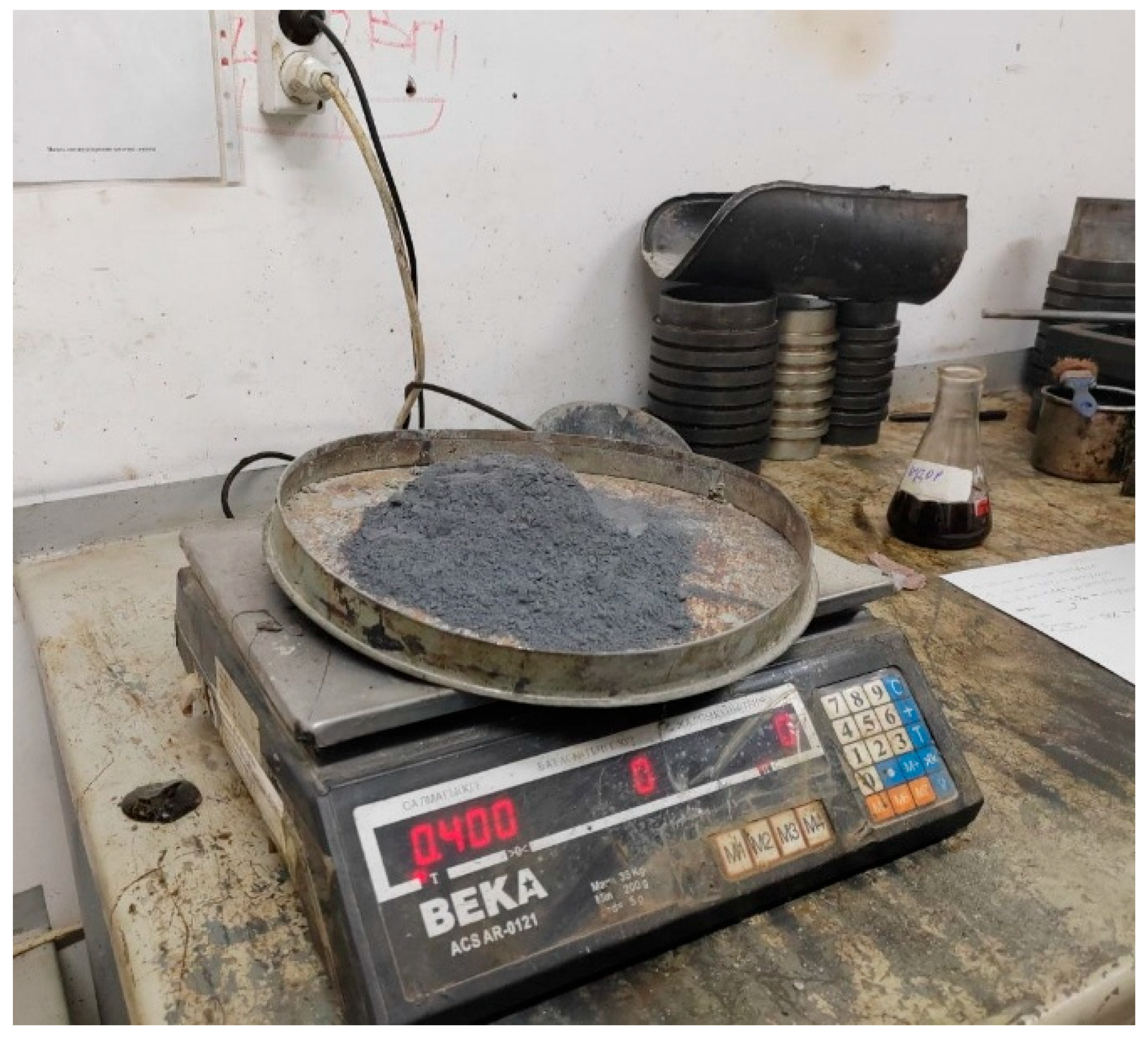
The output was a dry, free-flowing, hydrophobic mineral powder (Figure 1). Its compliance was recorded according to [24,25] with control of hydrophobicity, moisture content, porosity, bitumen capacity, and grain composition. The hydrophobicity of the activated mineral powder was determined through the free flotation method in distilled water in accordance with [24]. Around 2 g of powder was gently placed on the surface of distilled water in a 500–800 mL glass beaker filled to about 50 mm below the rim and left undisturbed for 24 h at room temperature. The powder was classified as hydrophobic if it remained floating without visible wetting or sedimentation after 24 h.
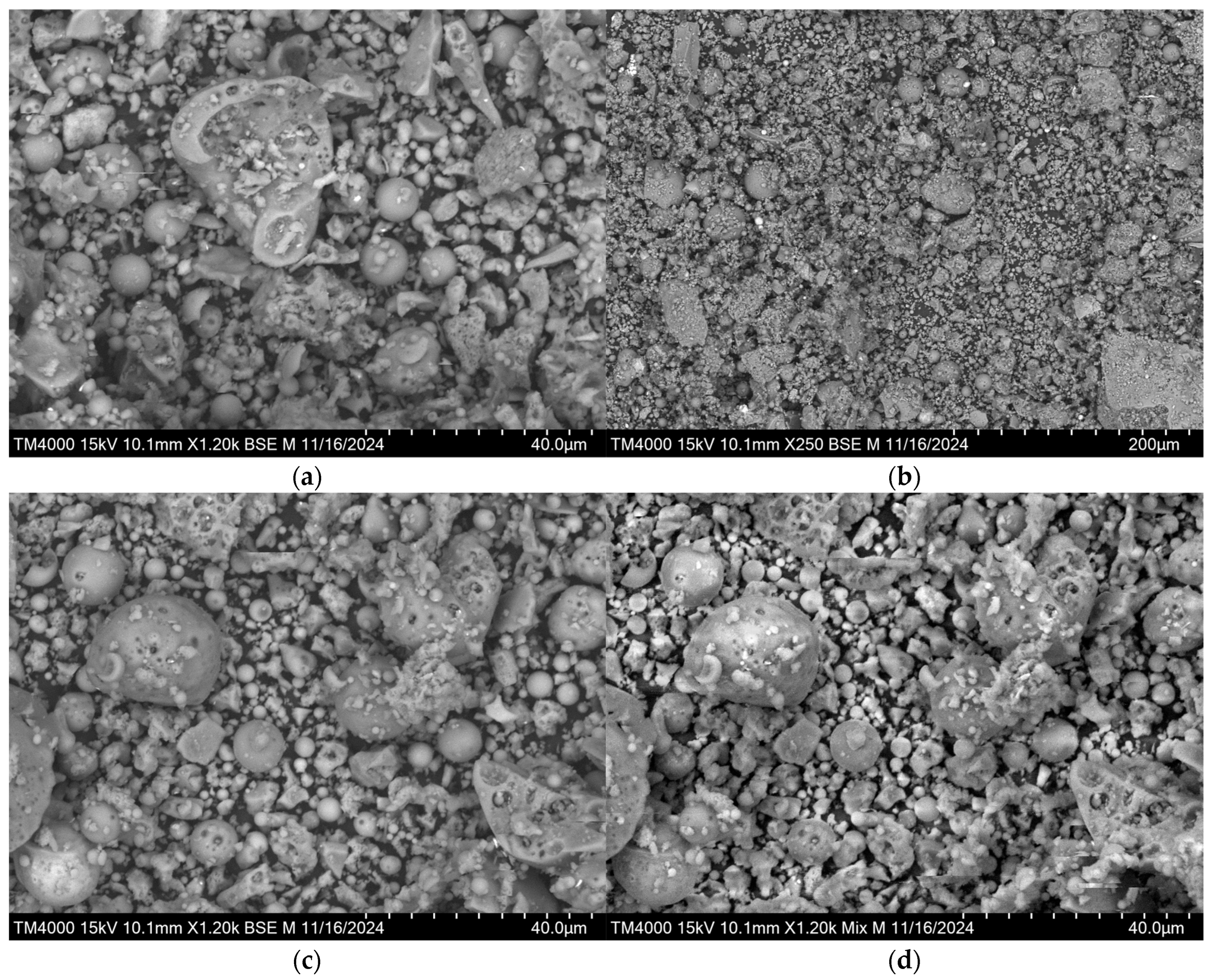
The microstructure of the powder was studied according to [27] using scanning electron microscopy (SEM) on a Hitachi TM4000 desktop SEM (Hitachi High-Technologies Corporation, Tokyo, Japan). The powder was gently sprinkled onto conductive carbon tape mounted on aluminum stubs, sputter-coated with a thin gold layer, and examined in high-vacuum mode at an accelerating voltage of 15 kV and a working distance of 10.1 mm, with signal recording in BSE-M (back-scattered electrons, contrast by average atomic number) and Mix-M modes (mixed mode for simultaneous evaluation of relief and compositional contrast); observations were performed at magnifications of ×250 (scale bar 200 µm) and ×1.20 k (scale bar 40 µm), which provided a comparable view from the meso- to micro-level and fixation of the morphological features of the particles and their aggregation.
The selection of asphalt concrete mix compositions was carried out in accordance with [28]. All mixes were designed for dense fine-grained asphalt concrete Type B, Class II [28]. The mineral part of the mixes was adjusted as fractions by weight as follows: 20% for the 10–20 mm crushed stone; 30% for the 5–20 mm crushed stone; 45% for the sand from crushed stone screenings; 5% for the mineral powders. Asphalt concrete mixtures were prepared by weighing and heating the components, followed by mixing in a laboratory paddle mixer until homogeneity was achieved. The liquid activator AMDOR-AMP at a dose of 0.2–1.0% by mass (with an optimum of ~0.3%) was added to the bitumen at a temperature of 150 °C, followed by mixing for 10–15 min for fine-tuning the properties. The optimum bitumen content was determined to be 5.2%, including the activator. Three types of mixes were prepared at temperatures ranging from 150 to 155 °C, including the following:
(1)
A reference mix based on activated mineral powder from the “Tutas” LLP (Temirtau town, Karaganda region, Kazakhstan)—hereinafter referred to as M-R;
(2)
The mix based on dry fly ash and stearic acid hydrophobizer—hereinafter referred to as M-DFA;
(3)
The mix based on dehydrated hydro-ash—hereinafter referred to as M-HA.
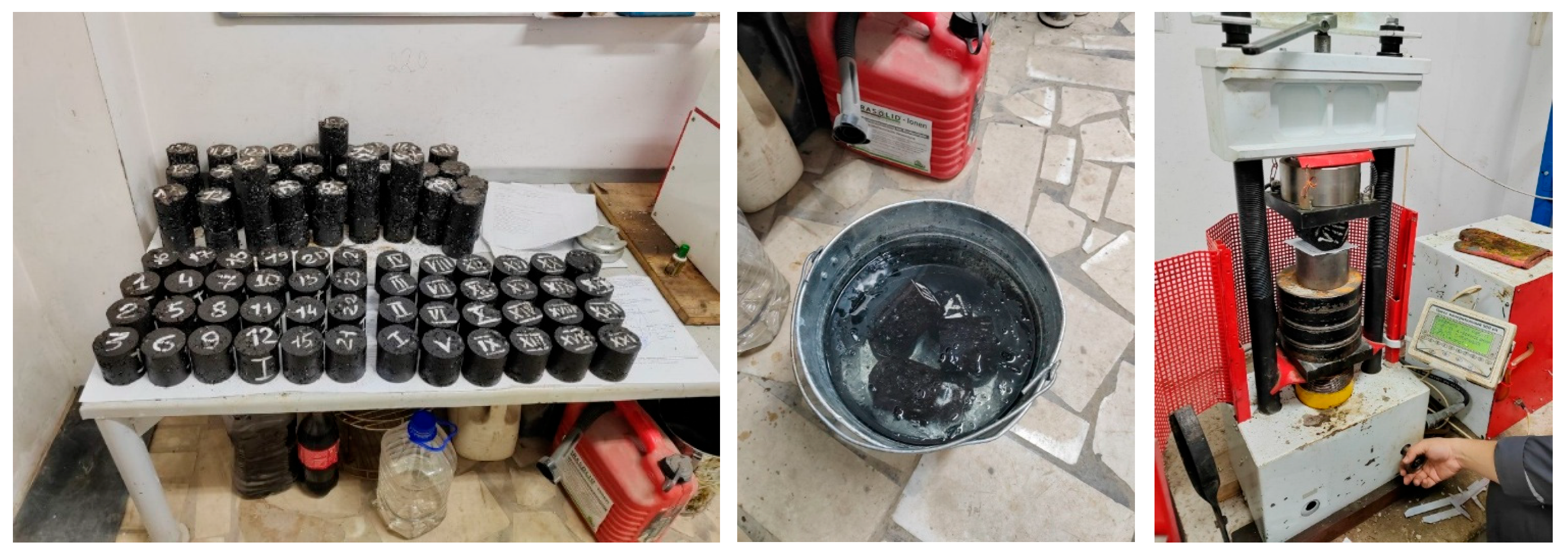
Cylinder samples (Figure 2) were made from the mixtures and subjected to testing according to [29] for average density, compressive strength at 0, 20, and 50 °C, shear resistance (coefficient of internal friction and adhesion), water resistance (long-term and short-term saturation), crack resistance under tensile stress, and resistance to rutting (average rut depth). For each mixture and test type, three parallel cylindrical specimens were tested; the reported values are means of these replicates, with standard deviations (SDs) reflected as error bars.

3. Results

The following sections present the microstructural and physicochemical characterization of the modified fly ash mineral powder and performance of the asphalt mixes incorporating it, covering the results of their physical and mechanical tests.

3.1. Indicators of Modified Mineral Powder

Figure 3 presents the results of the SEM of the modified mineral powder.
Figure 3 shows the microstructure of the modified mineral powder. In the images in Figure 3a,c, the cenospheres characteristic of fly ash and fragments of destroyed shells are clearly visible, partially “reinforced” by adhering micro- and submicron particles, which suggests an increased micro-roughness and effective specific surface area, although this would require additional quantitative confirmation. The low-magnification view in Figure 3b shows a deliberately polydisperse grain composition with single large fragments (~0.08–0.12 mm on the scale) against the background of a dense field of small particles, which contributes to dense packing, the filling of intergranular spaces, and the stabilization of the bitumen film thickness. In BSE-M frames, the brighter microdomains against a darker glassy Si–Al matrix indicate local compositional heterogeneity (probably areas enriched with heavier elements), which may provide potential sites for modifier adsorption and interactions with the polar components of bitumen; however, this interpretation is qualitative and is not directly confirmed by complementary compositional or surface energy measurements. In contrast, the Mix-M frame in Figure 3d emphasizes the topography, clearly showing “bridges” of small particles between spheres and the formation of a continuous contact network.
Table 1 presents the results of testing mineral powder according to the indicators established in [24].
The test results revealed that the modified mineral powder confirmed its hydrophobicity during 24 h of floating on water without wetting or sedimentation, indicating the correct surface modification and a reduced tendency to moisture saturation. The moisture content of 0.7% is significantly lower than the limit value of 2.5%, which is favorable for storage and stable dosing. The porosity of 39% is within the acceptable range of 38–45% and closer to its lower limit, which usually corresponds to moderate absorbency and predictable mastic performance. The only deviation is the bitumen capacity of 75% against the norm of 80% (minus 5 p.p.): the powder retains slightly less binder, which, on the one hand, may reduce the required bitumen consumption, but on the other hand requires the confirmation of a sufficient cohesion and water resistance at the mastic/mixture level. The grain composition exceeds the minimum requirements for all sieves (100.0% through 1.25 mm; 99.98% through 0.315 mm; 90.48% through 0.071 mm), which indicates fine grinding, the absence of coarse particles, and effective deagglomeration. Overall, the material meets the standards for key parameters (hydrophobicity, moisture content, porosity, and particle size distribution), and the issue of bitumen capacity should be assessed based on the combined data from mechanical tests of asphalt concrete. In our case, when the same optimum binder content (5.2 wt.% including the activator) was used for all mixes, the slightly lower bitumen capacity of the modified powder means that less binder is immobilized in the filler porosity and more remains in the effective mastic film and at aggregate contacts. This is consistent with the markedly higher compressive strength, adhesion, and water resistance indices observed for the mixes containing the fly ash filler compared with the carbonate reference, indicating that the available binder is utilized more efficiently in the load-bearing binder–filler–aggregate system.

3.2. Indicators of Asphalt Concrete Mixtures

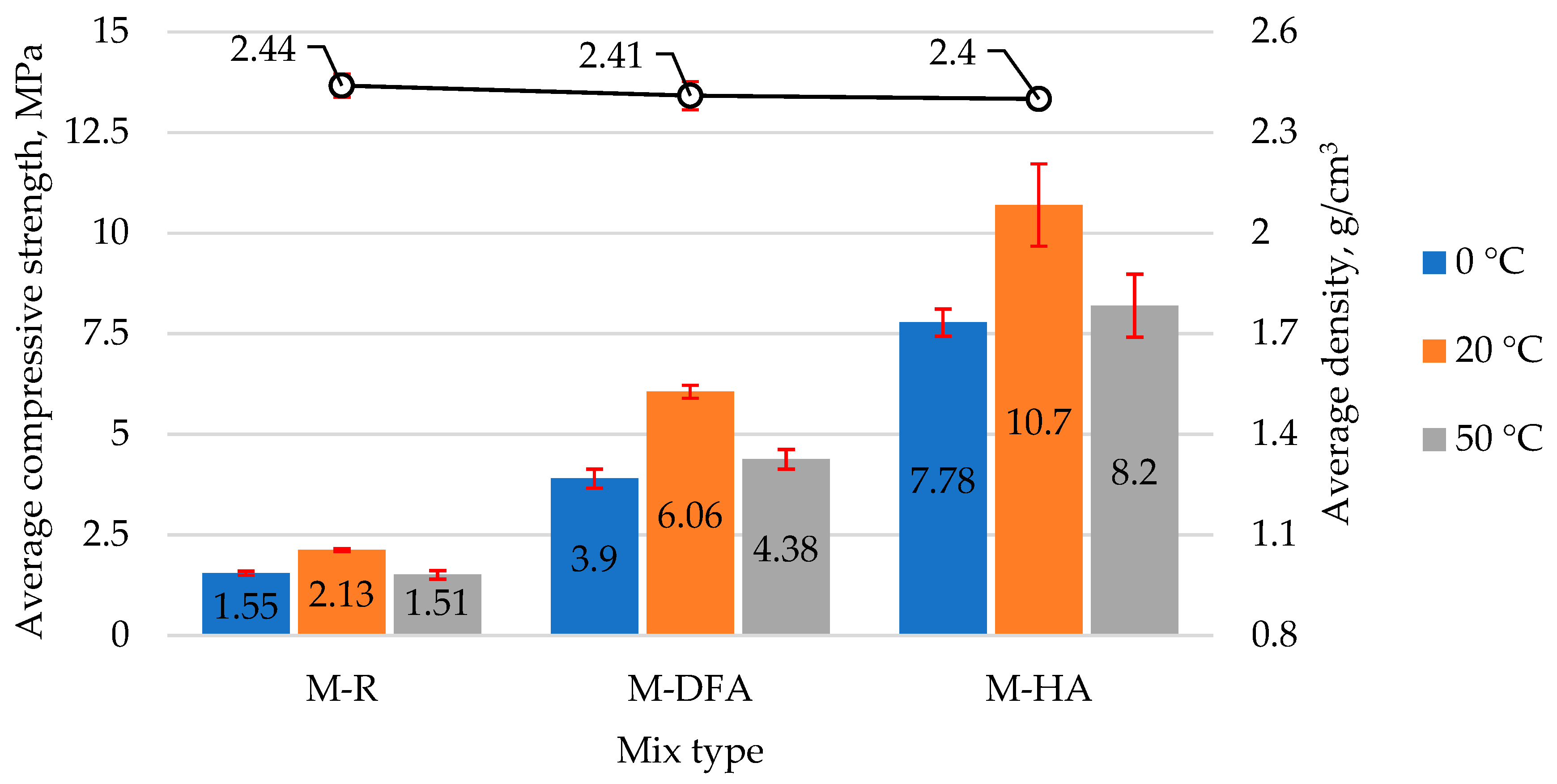
Figure 4 shows the results of compression and density tests of asphalt concrete mixes.
Figure 4 shows that the transition from the reference filler (M-R) to fly ash powders sharply increased compressive strength across the entire temperature range, with an almost unchanged (slightly lower) average density of the mixture. At 20 °C, the strength increased from 2.13 MPa (M-R) to 6.06 MPa (M-DFA, +184%) and to 10.7 MPa (M-HA, +402%); at 0 °C—from 1.55 to 3.90 (+152%) and 7.78 MPa (+402%); and at 50 °C—from 1.51 to 4.38 (+190%) and 8.20 MPa (+443%). The maximums are expected at 20 °C (0 °C—more brittle state, 50 °C—thermoplastic softening), but it is the fly ash compositions that demonstrate both a high absolute strength and better retention at low/high temperatures: for M-HA, the drop relative to 20 °C is ~27–23% (0/50 °C), while, for M-R, the strength is initially low and remains at 1.5–2.1 MPa. The average density line (right axis) decreases slightly: from 2.44 → 2.41 → 2.40 g/cm3 (M-R → M-DFA → M-HA), which indicates that the increase in strength is not related to compaction/density, but is achieved through a better interaction between the bitumen and filler and the mastic structure. This pattern is consistent with SEM. A micro-rough “crust” of fine fraction on ash spheres, and their hydrophobization, may increase the effective contact area and anchoring capacity of the mastic without increasing the density of the skeleton.
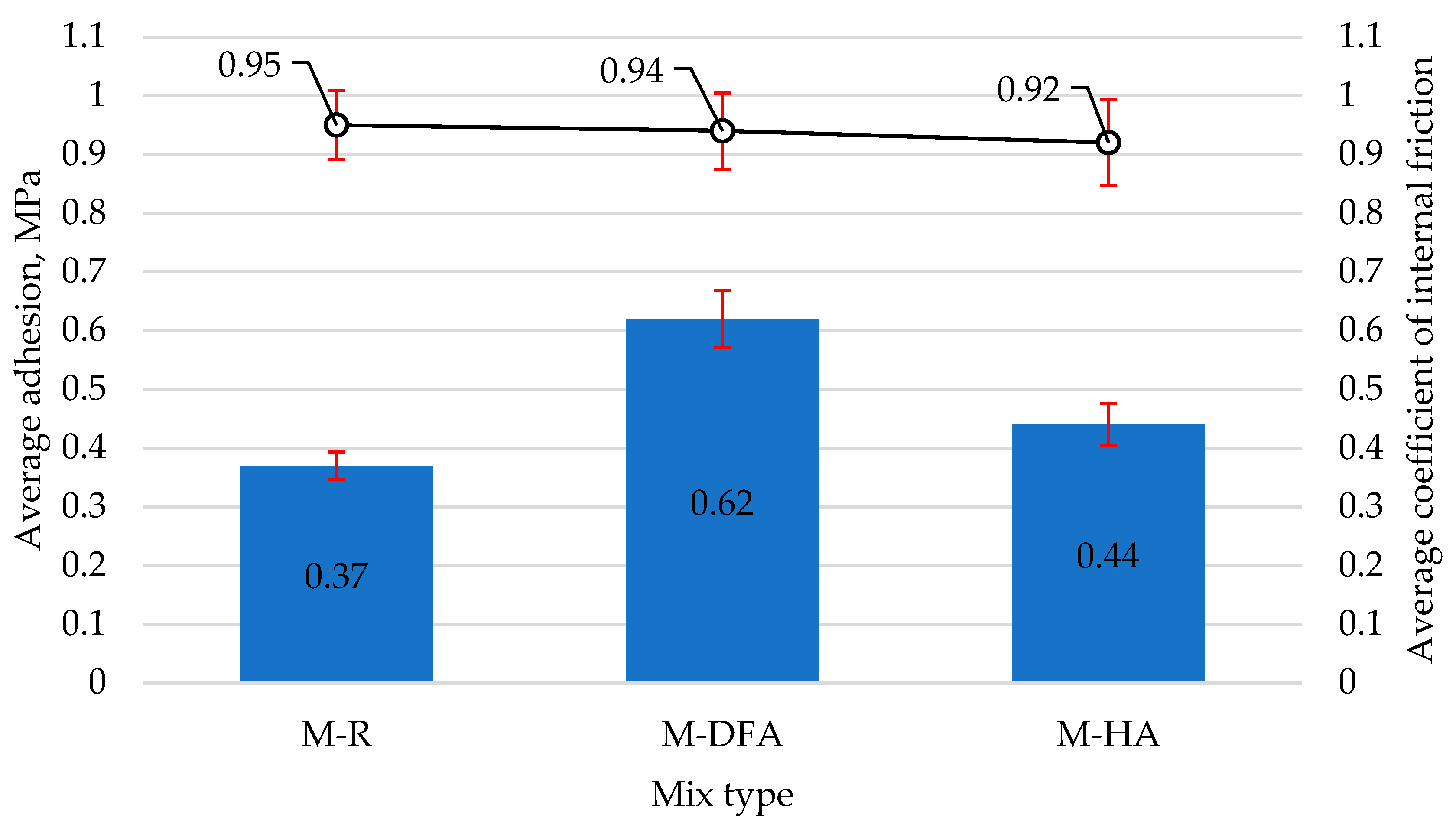
Figure 5 shows the results of the shear resistance tests of asphalt concrete mixes.
Figure 5 shows that the adoption of fly ash powder increased the mixture’s adhesion to the binder: for M-DFA, it reached 0.62 MPa compared to 0.37 MPa for the reference M-R, and, for M-HA, it was 0.44 MPa. The internal friction coefficient remained high, decreasing only slightly from 0.95 (M-R) to 0.94 (M-DFA) and 0.92 (M-HA). In other words, M-DFA provides the most pronounced increase in adhesion, with a virtually unchanged shear stability of the skeleton, while M-HA also improves adhesion relative to the reference, with a moderate decrease in internal friction. Overall, both fly ash compositions demonstrate more favorable bitumen–filler interactions compared to the carbonate reference one.
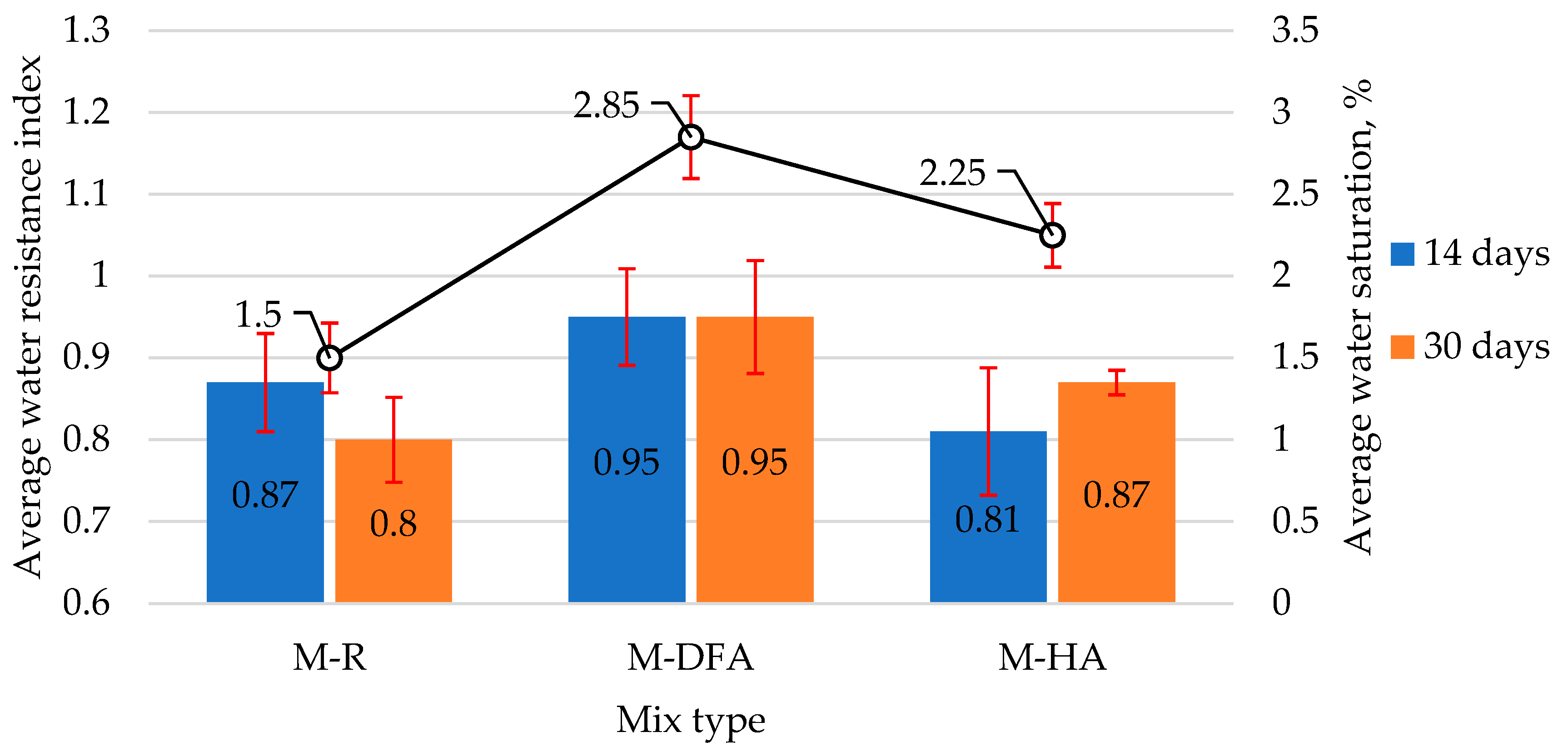
Figure 6 shows the results of the water saturation and resistance tests of asphalt concrete mixes.
Figure 6 shows two water resistance indices (14 and 30 days) and water saturation, %. In terms of water resistance, the gold fillers perform better than the control: M-DFA retains 0.95 after both 14 and 30 days (stability without degradation), while M-R decreases from 0.87 to 0.80, and M-HA shows “maturation”—an increase from 0.81 to 0.87. The water saturation line remains in the low range for all mixtures: 1.5% (M-R), 2.85% (M-DFA), and 2.25% (M-HA). Thus, even with a slightly higher water saturation, M-DFA demonstrates the best water resistance. This agrees with its higher measured adhesion to bitumen (Figure 5). It suggests that interphase bonding between bitumen and the modified ash surface, not only bulk water absorption, controls moisture damage under our testing conditions. M-HA reaches the reference level by day 30, which can be attributed to the gradual formation of a more stable mastic structure; the reference mixture M-R loses some of its water resistance during this period.
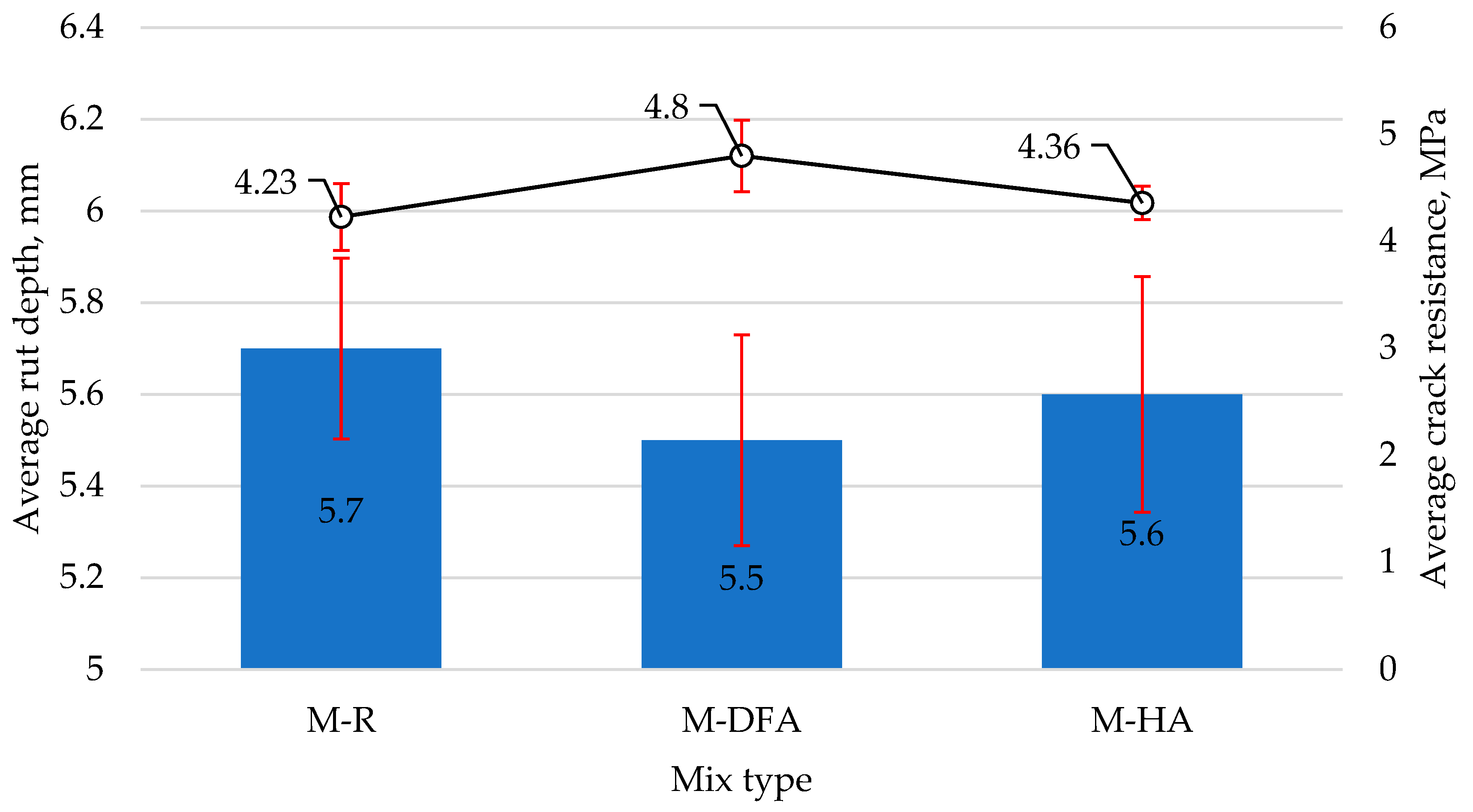
According to Figure 7, the rutting resistance of all mixtures is approximately the same: the average rut depth is within a narrow range of 5.5–5.7 mm (M-R—5.7, M-DFA—5.5, M-HA—5.6), i.e., replacing the carbonate filler with fly ash does not change the resistance to rutting under the given test conditions. There is a clear gradation in crack resistance: M-DFA—4.80 MPa (highest value), M-HA—4.36 MPa (average), M-R—4.23 MPa (lowest). Consequently, the use of modified dry ash powder provides the best resistance to splitting tensile stress among the compared mixes, and the hydrated ash powder also increases crack resistance relative to the reference without affecting rutting resistance.
The variability of the measured parameters between replicate specimens was generally moderate, as indicated by the SD values shown by the error bars in Figure 4, Figure 5, Figure 6 and Figure 7. For compressive strength, the SD did not exceed about 10% of the mean value for any mixture, while, for average density, it remained within approximately 2%. For shear characteristics (adhesion and internal friction coefficient), water resistance indices at 14 and 30 days, rut depth, and crack resistance, the SD was mostly within 7–10% of the corresponding mean values; the highest variability (up to about 14%) was observed only for water saturation in the reference mixture. Because only three specimens were tested for each mixture (n = 3), we did not perform formal hypothesis testing (as a t-test or ANOVA) and instead based our discussion on mean values together with their SDs. Overall, this level of scatter confirms the satisfactory repeatability of the tests and supports the reliability of the observed trends in the mechanical performance and durability parameters of the studied mixtures.

4. Discussion

The SEM evidence shows that the fly ash mineral powder prepared through dry co-milling with a stearate modifier forms a hierarchically textured surface, in particular, cenospheres and broken shells partially armored by adherent micro- and submicron fines, which increases the effective specific surface and micromechanical interlock at the binder–filler interface. Such morphology is consistent with previous observations for fly ash fillers [4,8,12]. The compliance results substantiate this. Thus, the moisture and porosity met the standards of [24], and the material was hydrophobic; only the bitumen capacity (75% versus the 80% benchmark) fell slightly short. In practice, bitumen capacity is a proxy for the balance between the surface area/chemistry and the pore structure. The values marginally below the target do not preclude good performance if adhesion and film continuity are strong, which is what our mixture-level tests indicate [4,19]. Mechanistically, a slightly lower bitumen capacity for a hydrophobized, hierarchically textured powder can be beneficial: for a given total binder content (5.2 wt.% including activator), a smaller fraction of binder is immobilized within the filler porosity, and a larger fraction remains in the continuous mastic film and at aggregate contacts. This interpretation is consistent with the higher adhesion, compressive strength, and water resistance indices measured for the fly ash mixes, suggesting that the modified filler reduces the binder demand while maintaining or improving the efficiency of the binder–filler and binder–aggregate interactions. Hydrophobization by stearic acid is a plausible factor in the observed durability. The hydrophobicity test was carried out on the modified mineral powder (ash plus stearate) before mixing with bitumen. Thus, the measured water repellency reflects the surface-engineered filler rather than only the presence of stearate in the mastic. The powder passed the hydrophobicity test and had a low moisture content (Table 1). Both fly ash mixes showed higher adhesion and water resistance indices than the reference, in line with reports that stearic acid lowers the surface energy and increases the contact angle on ash particles [14]. Surface energy and contact angles were not measured directly in this study. The closely related work on carbonate fillers with tunable hydrophilic–hydrophobic balance also links surface chemistry to the water resistance and cohesion of asphalt systems [15].
The strength data reveal a clear hierarchy: M-HA performs best, M-DFA is medium, and M-R is worst across 0/20/50 °C, while the average density changed negligibly. This decoupling of strength from density implies a microstructural cause rather than compaction effects—namely, a better interphase bonding and a more efficient mastic skeleton, as also observed when limestone powder is replaced by fly ash in mastic-scale rheology [4] and in mixture studies employing industrial by-products [9,19]. The hydro-ash powder (M-HA) delivered the largest compressive gains at all temperatures; one explanation is that hydro-ash, after dewatering and co-milling, retains more intact plerospheres and dense fragments that, together with the fine crust seen in SEM, build a stiffer, better load-transferring skeleton. The slightly lower internal friction observed for ash mixes (0.95 → 0.94 → 0.92) is consistent with the smoother intergranular slip due to rounder particles and fine infill, but the values remain high, and adhesion increases substantially (most for M-DFA). This combination (high adhesion, minimally reduced friction) is the classic recipe for enhancing strength without sacrificing shear stability [4,8], which aligns with our compressive trends and with the improved crack resistance for M-DFA.
The water-related performance follows the same interfacial logic. Despite a slightly higher water saturation for ash mixes, M-DFA sustained the highest water resistance index at both 14 and 30 days, and M-HA “matured” to the reference level by day 30. These trends are consistent with the literature showing that moisture susceptibility depends more on surface energy-related interactions than on bulk saturation and that hydrophobic treatments on fly ash improve the stripping resistance [8,14]. The BSE-visible compositional heterogeneity (brighter Ca/Fe-richer microdomains in a darker Si-Al glass) is typical for coal fly ash. It may provide additional sites for interaction with stearate and the polar components of bitumen, which could contribute to the resistance to stripping [1,14]; this possible mechanism, however, was not quantified directly in the present study. These factors explain why high water resistance indices co-exist with moderate water saturation in our data and why the performance improved relative to the carbonate reference, whose hydrophilicity is well documented [15]. Overall, these microstructural interpretations should be regarded as qualitative and based solely on SEM morphology; more detailed confirmation using, for example, EDS mapping or surface energy measurements lies beyond the scope of this work.
The rutting performance remained essentially unchanged (5.5–5.7 mm) for all mixes under the selected protocol, which agrees with studies where replacing the filler with spherical fly ash does not penalize high-temperature stability, provided that the mastic gradation remains dense and the binder content is optimized [4,9]. By contrast, crack resistance showed a clear ranking (M-DFA > M-HA > M-R). The superior cracking response of M-DFA, despite its lower compressive strength than M-HA, shows that stiffness alone does not control splitting tensile behavior. The higher adhesion measured for M-DFA (Figure 5) probably contributes to its crack resistance. The fracture energy was not measured and is mentioned only as a possible factor. Similar trade-offs (where certain by-product fillers maximize fatigue or fracture resistance without maximizing stiffness) have been noted for amorphous carbon and MSWI fly ash systems [13,19]. In a cold-region context with large thermal swings and freeze–thaw cycling, the observed combination (unchanged rutting, higher strength, improved adhesion, and robust water resistance) addresses the principal pavement distresses expected in Kazakhstan [6,21,23].
From a practical standpoint, our results show that substituting natural carbonate powder with hydrophobized fly ash maintains rutting resistance while improving strength, adhesion, and water resistance under the studied conditions. This extends earlier evidence on fly ash-extended asphalt mixtures [12] by demonstrating that surface-engineered ash from a Kazakhstani TPP can deliver multi-property improvements without densification or an increased binder content. However, this study has several limitations. First, the fly ash came from a single Kazakhstani TPP, and its composition and loss on ignition were limited to the ranges shown in Table A4 and Table A5. Fly ash from other plants or with a higher unburned carbon content may behave differently. Second, the mixtures were tested under one set of laboratory protocols for a single dense, fine-graded asphalt concrete type. Third, we evaluated only technical performance; cost, carbon footprint, and life-cycle effects were not analyzed. Fourth, we investigated only the co-milled ash–stearate powder and did not include a control case where fly ash and stearate were milled separately and then blended as a filler. Fifth, moisture damage resistance was assessed using water resistance indices and water saturation according to [29], but no dedicated anti-stripping test (such as the tensile strength ratio or boiling test) was performed. The future work should (i) quantify surface energy parameters and contact angles to directly link hydrophobization to tensile strength ratio and to type metrics; (ii) couple SEM with EDS mapping to attribute BSE contrast to phase chemistry; (iii) perform mastic-scale rheology and fracture energy tests to resolve why M-DFA leads in cracking resistance while M-HA leads in compressive strength; (iv) validate field performance over seasonal cycles and traffic loading representative of local climates; (v) compare co-milled ash–stearate powder with systems where fly ash and stearate are milled separately and blended, to separate the effect of surface engineering from the mere presence of stearate in the mixture; (vi) include standardized anti-stripping tests (e.g., tensile strength ratio or boiling tests) to quantify moisture damage resistance more directly. Overall, the convergence between microstructure, physicochemical compliance, and mixture-level properties observed here supports hydrophobic fly ash mineral powder as a technically viable and potentially resource-efficient filler for asphalt mixtures. These performance advantages should be regarded as comparative trends under the specific laboratory conditions of this study. The sustainability-related benefits discussed here are qualitative; quantitative estimates of material savings and CO2 reduction will require a dedicated life-cycle assessment.

5. Conclusions

The hydrophobized fly ash mineral powder met the specified limits for hydrophobicity, moisture, and porosity and preserved a stable cenosphere-based morphology with adherent fines. The bitumen capacity was slightly below the benchmark, but did not prevent a good performance in the mixtures. Asphalt mixtures with the dry and hydro-activated fly ash fillers had a similar density and rutting resistance to the reference mixture with a carbonate filler. At the same optimum binder content, both fly ash mixes showed a higher strength, better adhesion, and improved indices of moisture and cracking resistance. These trends indicate that, under the tested conditions, surface-engineered fly ash from the studied source can technically replace natural carbonate filler in dense fine-graded asphalt concrete without penalties to high-temperature stability. The conclusions are limited to one fly ash source, a single mixture type, and the applied laboratory protocols, and they do not include economic or life-cycle analyses. Therefore, the sustainability benefits are discussed qualitatively and are not quantified in terms of material savings or CO2 emissions. Future work should extend testing to other fly ash sources and mixture types, include direct measurements of surface energy and fracture-related properties, and verify field performance and life-cycle impacts under real traffic and climate conditions. Thus, our conclusions refer only to the comparative behavior of the tested mixtures within this experimental framework.


Author Contributions

Conceptualization, K.K.M.; methodology, Z.A.S. and Y.B.U.; software, B.D.C.; validation, Z.A.S. and J.K.K.; formal analysis, Y.B.U.; investigation, B.D.C. and J.K.K.; resources, K.K.M.; data curation, Y.B.U. and J.K.K.; writing—original draft preparation, Z.A.S. and Y.B.U.; writing—review and editing, K.K.M. and Z.A.S.; visualization, B.D.C.; supervision, Z.A.S.; project administration, K.K.M.; funding acquisition, K.K.M. All authors have read and agreed to the published version of the manuscript.

Funding

This research was funded by the JSC “Kazakhstan road research institute”, in the framework of the research project “Conducting research and development work on the development of technology for the production of modified mineral powder based on fly ash from thermal power plants (dry) JSC “Eurasian Energy Corporation”.

Data Availability Statement

The original contributions presented in this study are included in the article. Further inquiries can be directed to the corresponding authors.

Conflicts of Interest

The authors declare no conflicts of interest.

Appendix A

The coarse aggregate was crushed stone from dense rocks of the Volgodon quarry (Akmola region, Kazakhstan), corresponding to [30] (Table A1).
Table A1. Properties of crushed stone of Volgodon quarry (Akmola region, Kazakhstan) [30].
Fraction, mmCrushability, % of Mass LossAbrasion Resistance, % of Mass LossContent of Needle-Shaped and Flat Grains, %Frost Resistance
10–2010.11913F100
5–109.82112.5F100
The fine aggregate was sand from the screening of crushed stone of the Volgodonsky quarry (Akmola region, Kazakhstan), corresponding to [31] (Table A2).
Table A2. Properties of sand from screening of crushed stone of the Volgodon quarry (Akmola region, Kazakhstan) [31].
Grain Content, %, Finer Than, mmContent of Clay Particles, %
52.51.250.630.3150.160.071
95.672.845.929.418.310.34.20.34
The binder was bitumen of BND 70/100 grade supplied by “SP Caspi Bitum” LLP (Aktau, Kazakhstan), corresponding to [32] (Table A3).
Table A3. Properties of bitumen of the “SP Caspi Bitum” LLP (Aktau, Kazakhstan) [32].
Needle Penetration Depth, at 25 °C, mmRing and Ball Softening Temperature, °CElasticity at
25 °C, cm
Fraas Brittleness Temperature, °CPenetration IndexDynamic Viscosity at 60 °C, Pa·sKinematic Viscosity at 135 °C, mm2/sFlash Point, °CResistance to Aging at a Temperature of 163 °C, %
Mass ChangeNeedle Penetration Depth, at 25 °C, mmElasticity at
25 °C, cm
Change in Softening Temperature, °C
7946.180−21+0.41792912590.468724.5
The mineral filler was a dry fly ash, the product from coal combustion at the TPP of the JSC “Eurasian Energy Corporation” (Aksu town, Pavlodar region, Kazakhstan), corresponding to [33] (Table A4 and Table A5), which can be classified as a low-calcium pozzolan (total Al2O3+ Fe2O3 content exceeding 30%). In addition to dry fly ash, a hydro-ash fraction (ash collected via a hydraulic ash-removal system and supplied after dewatering) was used.
Table A4. Chemical composition of dry fly ash from TPP of the JSC “Eurasian Energy Corporation” (Aksu town, Pavlodar region, Kazakhstan), % [33].
Na2OMgOAl2O3SiO2K2OCaOTiO2Fe2O3
0.4–0.450.7–0.7127.6–28.255.3–60.20.45–0.491.08–1.341.09–1.133.9–4.08
Table A5. Properties of dry fly ash from TPP of the JSC “Eurasian Energy Corporation” (Aksu town, Pavlodar region, Kazakhstan) [33].
Grain Composition, % by Weight, Non-Less Than, mmPorosity, %Moisture Content, % by WeightBitumen Capacity Index, gLoss of Mass on Ignition, %Water Resistance, %
1.250.3150.071
10098.115.9360.85416.80.7
The adhesive additive was a mineral powder activator AMDOR-AMP of the “StroyTorg Almaty” LLP (Almaty, Kazakhstan), corresponding to [34] (Table A6).
Table A6. Properties of the AMDOR-AMP mineral powder activator of the “StroyTorg Almaty” LLP (Almaty, Kazakhstan), % [34].
AppearancePackingAcid Number, mg KOH/gDensity at 20 °C, g/cm3Dosage, % by WeightHydrophobicity of Mineral Powder, h
A viscous-flowing liquid of dark brown colorPlastic cans of 20 L, euro cubes of 1000 L≥300.92–0.990.2–1.0≥24
The modifier was a calcium stearate of the JSC “Khimprom” (Samara, Russia), corresponding to [35] (Table A7).
Table A7. Properties of a calcium stearate of the JSC “Khimprom” (Samara, Russia) [35].
Mass Fraction of Calcium, %Acid Number (in Stearic Acid Equivalent), %Specific Electrical Conductivity of Water Extract (Ohm/m)Mass Fraction of Water, %Melting Point, °CMass Fraction of Water-Soluble Substances, %Mass Fraction of Residue at Sieve No. 0315, %
6.6–8.11≤0.05≤2.5125–1500.5≤0.5
The reference mineral powder was an activated mineral powder of the “Tutas” LLP (Kazakhstan) based on carbonate rocks, corresponding to [24] (Table A8).
Table A8. Properties of reference mineral powder of the “Tutas” LLP (Temirtau town, Karaganda region, Kazakhstan) [24].
Grain Composition, % by Weight, Non-Less Than, mmPorosity, %Swelling of Samples Made from a Mixture of Mineral Powder and Bitumen, %Bitumen Capacity Index, gMoisture Content, % by Weight
1.250.3150.071
≤100≤90≤80≤28≤1.5≤50≤0.5

References

  1. Bhatt, A.; Priyadarshini, S.; Acharath Mohanakrishnan, A.; Abri, A.; Sattler, M.; Techapaphawit, S. Physical, Chemical, and Geotechnical Properties of Coal Fly Ash: A Global Review. Case Stud. Constr. Mater. 2019, 11, e00263. [Google Scholar] [CrossRef]
  2. Zanjad, N.; Pawar, S.; Nayak, C. Use of Fly Ash Cenosphere in the Construction Industry: A Review. Mater. Today Proc. 2022, 62, 2185–2190. [Google Scholar] [CrossRef]
  3. Handbook of Fly Ash; Elsevier: Amsterdam, The Netherlands, 2022; ISBN 978-0-12-817686-3.
  4. Xing, X.; Han, K.; Liu, R.; Chen, Z.; Li, H.; Li, P.; Zhou, Q.; Wen, Y. Study on the Rheological Properties of Fly Ash Modified Asphalt Mastics. Coatings 2023, 13, 1307. [Google Scholar] [CrossRef]
  5. Meng, T.; Dai, D.; Yang, X.; Yu, H. Effect of Fly Ash on the Mechanical Properties and Microstructure of Cement-Stabilized Materials with 100% Recycled Mixed Aggregates. Minerals 2021, 11, 992. [Google Scholar] [CrossRef]
  6. Teltayev, B.B.; Zhussupbekov, A.; Shakhmov, Z.; Suppes, E.A. Field Experimental Investigations of Freezing and Thawing of Highway Subgrade. In Transportation Soil Engineering in Cold Regions, Volume 1; Petriaev, A., Konon, A., Eds.; Lecture Notes in Civil Engineering; Springer Singapore: Singapore, 2020; Volume 49, pp. 35–47. ISBN 978-981-15-0449-5. [Google Scholar]
  7. Walker, R.A.; Wilson, K.; Lee, A.F.; Woodford, J.; Grassian, V.H.; Baltrusaitis, J.; Rubasinghege, G.; Cibin, G.; Dent, A. Preservation of York Minster Historic Limestone by Hydrophobic Surface Coatings. Sci. Rep. 2012, 2, 880. [Google Scholar] [CrossRef] [PubMed]
  8. Rafalowski, M. Fly Ash Facts for Highway Engineers. In American Coal Ash Association Report; No. FHWA-IF-03-019; US Department of Transportation, Federal Highway Administration: Aurora, CO, USA, 2003; p. 76. [Google Scholar]
  9. Paul, D.; Suresh, M.; Pal, M. Utilization of Fly Ash and Glass Powder as Fillers in Steel Slag Asphalt Mixtures. Case Stud. Constr. Mater. 2021, 15, e00672. [Google Scholar] [CrossRef]
  10. Aryngazin, K.; Abisheva, A. Use of Recycled Waste in the Production of Building Materials. tbus 2022, 2, 0020. [Google Scholar] [CrossRef]
  11. Tauanov, Z.; Abylgazina, L.; Spitas, C.; Itskos, G.; Inglezakis, V. Mineralogical, Microstructural and Thermal Characterization of Coal Fly Ash Produced from Kazakhstani Power Plants. IOP Conf. Ser. Mater. Sci. Eng. 2017, 230, 012046. [Google Scholar] [CrossRef]
  12. Al-Suhaibani, A.R.S.; Tons, E. Properties of Fly Ash-Extended Asphalt Concrete Mixes. Transp. Res. Rec. 1991, 1323, 123–133. [Google Scholar]
  13. Habibnejad Korayem, A.; Ziari, H.; Hajiloo, M.; Moniri, A. Rutting and Fatigue Performance of Asphalt Mixtures Containing Amorphous Carbon as Filler and Binder Modifier. Constr. Build. Mater. 2018, 188, 905–914. [Google Scholar] [CrossRef]
  14. Yang, J.; Li, L.; Wang, W. Study on the Hydrophobic Modification Mechanism of Stearic Acid on the Surface of Coal Gasification Fly Ash. Molecules 2024, 29, 4071. [Google Scholar] [CrossRef] [PubMed]
  15. Lebedev, M.; Yadykina, V.; Akimov, A.; Kozhukhova, M.; Kuznetsova, E. Hydrophilic–Hydrophobic Properties of the Surface of Modified Carbonate Fillers for Asphalt. J. Compos. Sci. 2023, 7, 507. [Google Scholar] [CrossRef]
  16. Manurung, T.W.; Beladona, S.U.M.; Hakim, M.S.; Tesalonika, L.; Al-Hadi, R.A.; Iqbal, R.M. Surface Modification of Fly Ash from Asam-Asam Coal Power Plant Using Stearic Acid as Hydrophobic Inorganic Material. JKR 2024, 9, 59–68. [Google Scholar] [CrossRef]
  17. Aryngazin, K.; Zhulasheva, M.; Abisheva, A.; Takirova, A.; Aligozhina, D. Features of the Production of Cement Asphalt Concrete Using Fuel Ash. tbus 2022, 2, 0012. [Google Scholar] [CrossRef]
  18. Zebari, S. Evaluation and Performance of Fly Ash in Porous Asphalt by Using Two Sources of Asphalt Binder. EAJSE 2019, 4, 122–134. [Google Scholar] [CrossRef]
  19. Zhao, X.; Ge, D.; Wang, J.; Wu, D.; Liu, J. The Performance Evaluation of Asphalt Mortar and Asphalt Mixture Containing Municipal Solid Waste Incineration Fly Ash. Materials 2022, 15, 1387. [Google Scholar] [CrossRef] [PubMed]
  20. Carlsen, L.; Bruggemann, R. The 17 United Nations’ Sustainable Development Goals: A Status by 2020. Int. J. Sustain. Dev. World Ecol. 2022, 29, 219–229. [Google Scholar] [CrossRef]
  21. Shakhmov, Z.; Kuvakov, S.; Awwad, T.; Tleulenova, G.; Dyussembinov, D.; Zhumagulova, A. Temperature Effect to Soil Ground and Structures in Transportation Engineering. In Smart Geotechnics for Smart Societies; CRC Press: London, UK, 2023; pp. 244–249. ISBN 978-1-003-29912-7. [Google Scholar]
  22. Konovalova, V.S. Investigation of the Effect of Volumetric Hydrophobization on the Kinetics of Mass Transfer Processes Occurring in Cement Concretes during Corrosion. Materials 2023, 16, 3827. [Google Scholar] [CrossRef] [PubMed]
  23. Shakhmov, Z.A.; Mukhambetkaliev, K.K.; Lukpanov, R.E.; Dyussembinov, D.S.; Zhumagulova, A.A.; Bazarbayev, D.O.; Jexembayeva, A.E. Case Study of the Dynamics of Thermal Expansion of Concrete in Pavements of South Kazakhstan. Transp. Eng. 2025, 19, 100298. [Google Scholar] [CrossRef]
  24. ST RK 1276-2004; Mineral Powders for Asphaltic Concrete and Organomineral Mixtures. Specifications. Committee for Standardization, Metrology, and Certification of the Ministry of Industry and Trade of the Republic of Kazakhstan: Astana, Kazakhstan, 2004.
  25. GOST 16557-2005; Mineral Powder for Asphaltic-Mixtures. Technical Requirements. EACC: Minsk, Belarus, 2005.
  26. Ball Mill MSL-50N (48 ML). In Ball Mills; Mekhanobr-Tekhnika: Saint Petersburg, Russia, 2025.
  27. ASTM F1877-16; Standard Practice for Characterization of Particles. ASTM International: West Conshohocken, PA, USA, 2016.
  28. ST RK 1225-2019; Asphaltic Concrete Mixtures for Roads and Aerodromes and Asphaltic Concrete. Specifications. Committee for Technical Regulation and Metrology of the Ministry of Trade and Integration of the Republic of Kazakhstan: Astana, Kazakhstan, 2019.
  29. ST RK 1218-2024; Materials on the Basis of Organic Binders for Road and Airfield Construction. Test Methods. Committee for Technical Regulation and Metrology of the Ministry of Trade and Integration of the Republic of Kazakhstan: Astana, Kazakhstan, 2024.
  30. GOST 8267-93; Crushed Stone and Gravel of Solid Rocks for Construction Works. Specifications. Standardinform: Moscow, Russia, 2018.
  31. GOST 31424-2010; Non-Metallic Construction Materials from Sifting out Crusting Solid Stone in Aggregate Manufacturing. Specifications. Standardinform: Moscow, Russia, 2011.
  32. GOST 22245-90; Viscous Petroleum Road Bitumens. Specifications. EASC: Minsk, Belarus, 1990.
  33. GOST 25818-2017; Thermal Plant Fly-Ashes for Concretes. Specifications. Standardinform: Moscow, Russia, 2017.
  34. STO 35475596-011-2021; AMDOR-AMP Adhesive Additive. Technical Specifications. AMDOR LLC: St. Petersburg, Russia, 2021.
  35. TU 2232-002-57149839-07; Calcium Stearate. Technical Specifications. Khimprom: Samara, Russia, 2007.
Figure 1. The modified mineral powder from dry fly ash.
Jcs 09 00701 g001
Figure 2. Testing asphalt concrete mix cylindrical samples.
Jcs 09 00701 g002
Figure 3. Microstructure of the modified mineral powder: (a) BSE-M mode, magnification ×1.20 k, scale 40 µm, area A; (b) BSE-M mode, magnification ×250, scale 200 µm; (c) BSE-M mode, magnification ×1.20 k, scale 40 µm, area B; (d) Mix-M mode, magnification ×1.20 k, scale 40 µm.
Jcs 09 00701 g003
Figure 4. Compressive strength and density of mixes (error bars in red lines represent ± SD at n = 3): bar chart—average compressive strength; line chart—average density.
Jcs 09 00701 g004
Figure 5. Shear resistance of mixes (error bars in red lines represent ± SD at n = 3): bar chart—average compressive strength; line chart—average density.
Jcs 09 00701 g005
Figure 6. Water resistance of mixes (error bars in red lines represent ± SD at n = 3): bar chart—average compressive strength; line chart—average density.
Jcs 09 00701 g006
Figure 7. Rutting and crack resistance of mixes (error bars in red lines represent ± SD at n = 3): bar chart—average compressive strength; line chart—average density.
Jcs 09 00701 g007
Table 1. Results of modified mineral powder testing.
Mineral PowderMoisture Content, %Porosity, %Bitumen Capacity, %Grain Composition, % by Weight, Non-Less Than, mm
1.250.3150.071
Reference powder [24]2.538–4580958060
Modified mineral powder0.7397510099.9890.48
Disclaimer/Publisher’s Note: The statements, opinions and data contained in all publications are solely those of the individual author(s) and contributor(s) and not of MDPI and/or the editor(s). MDPI and/or the editor(s) disclaim responsibility for any injury to people or property resulting from any ideas, methods, instructions or products referred to in the content.