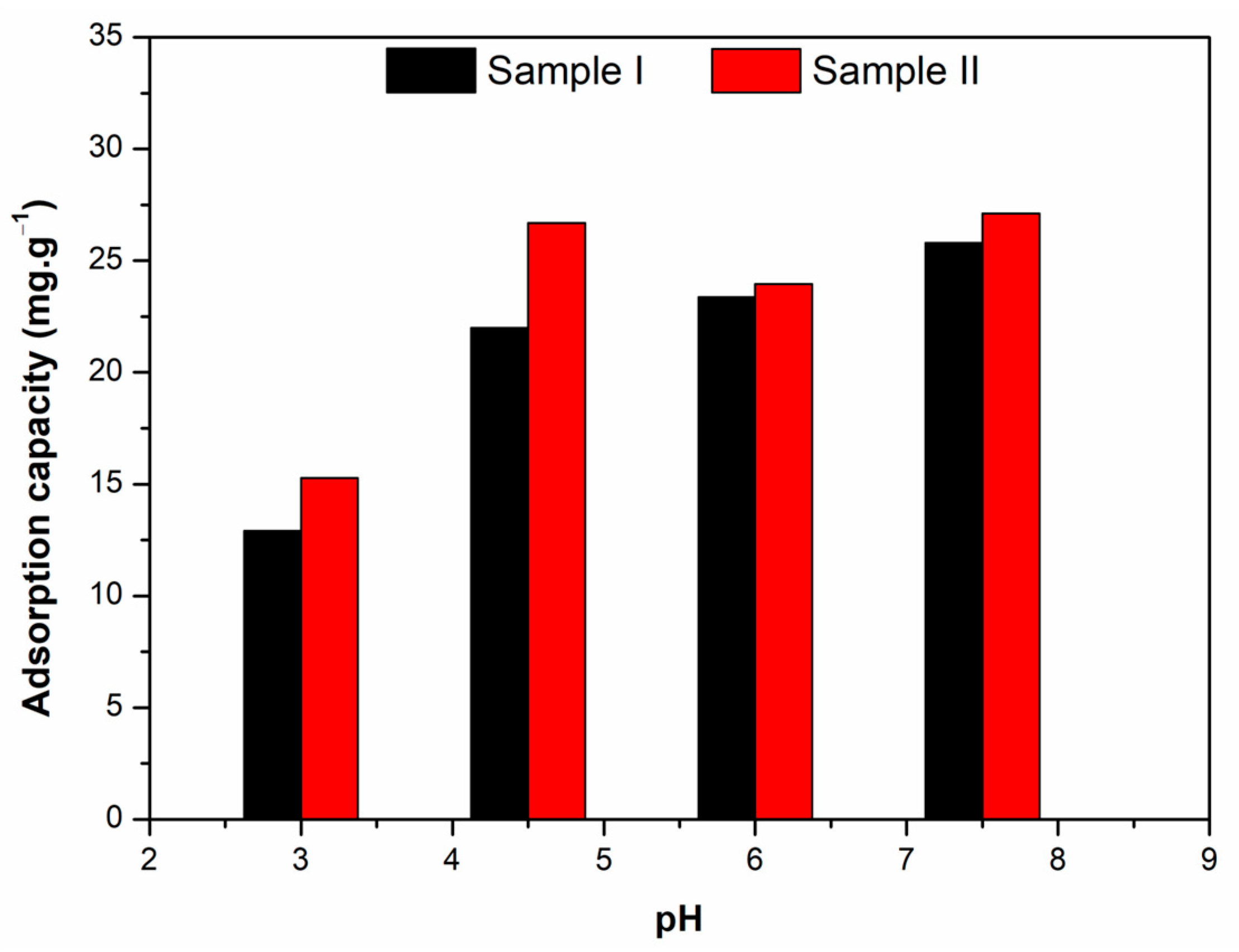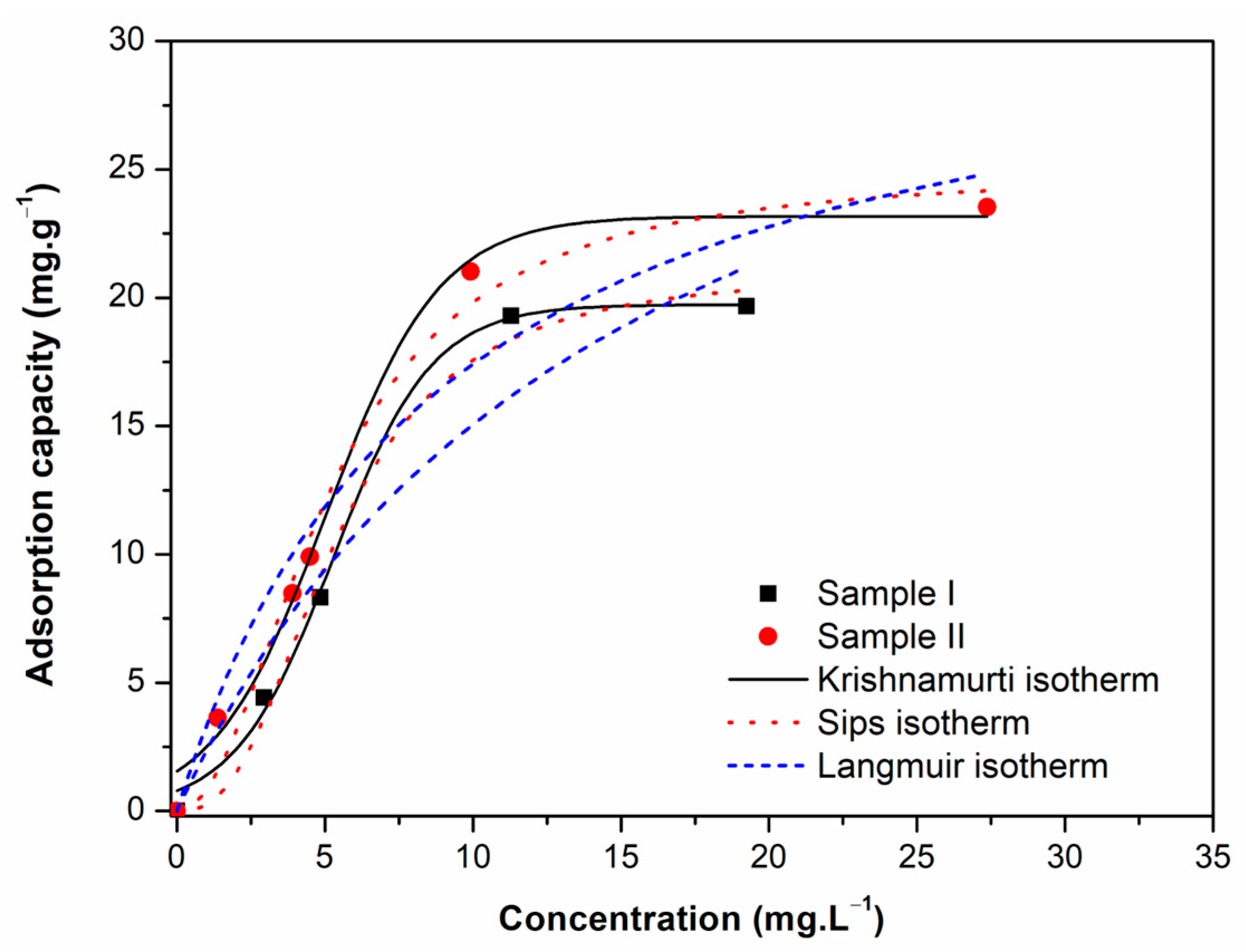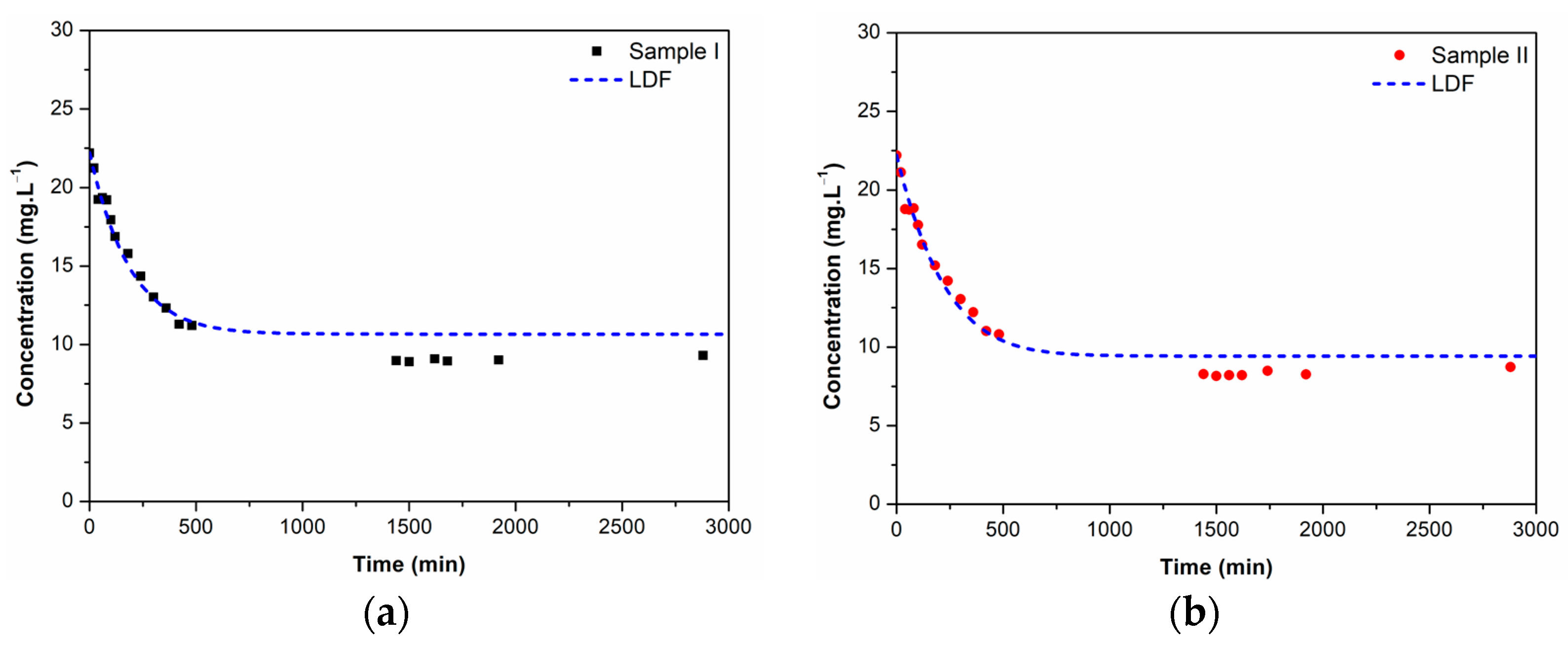


Additive Manufacturing of Graphene Oxide/Sodium Alginate–Cotton Microfiber Composite Hydrogels: Structure, Properties, and Adsorption Performance

 ,
,  , ,
, ,  , , ,
, , ,  , , and
Abstract
1. Introduction
2. Materials and Methods
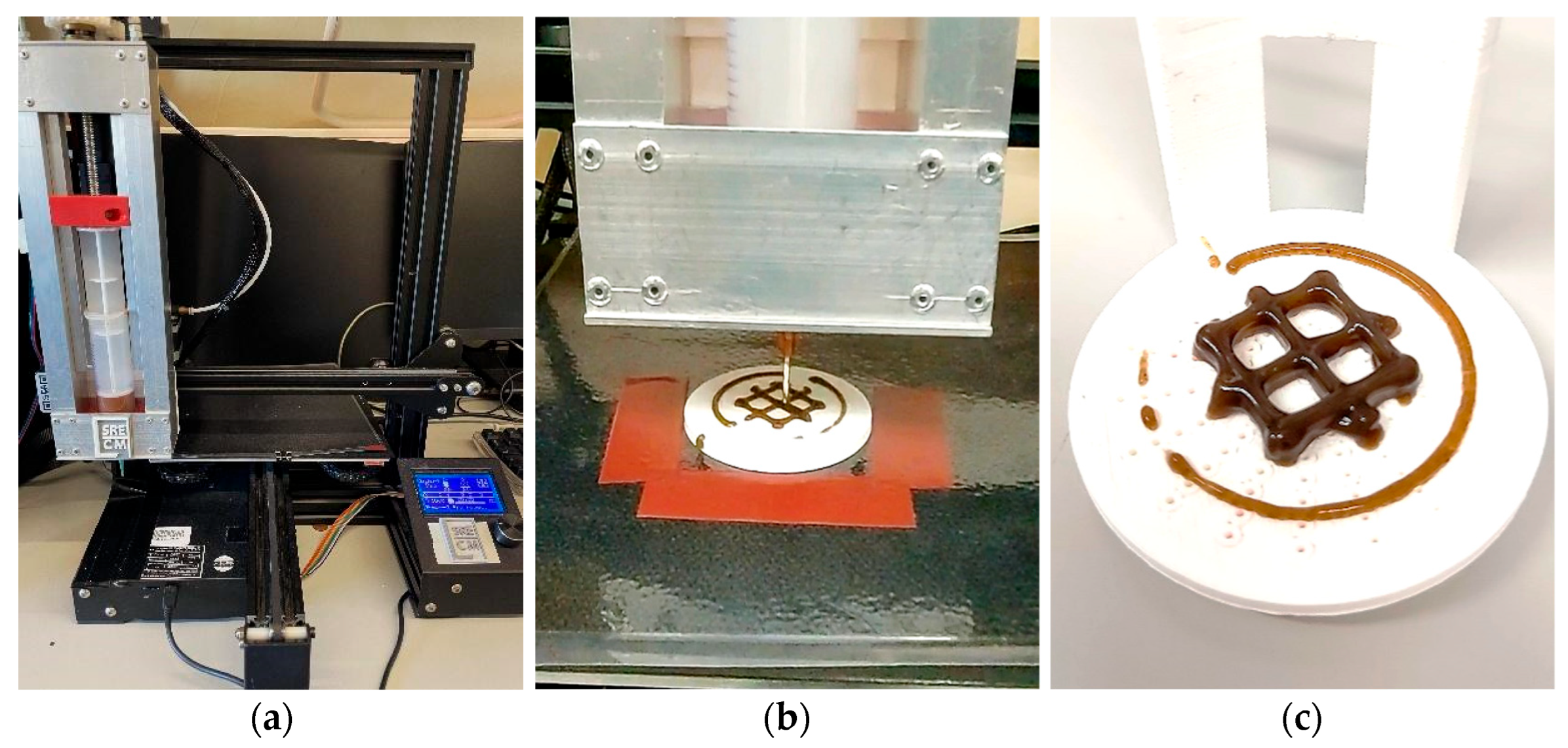
2.1. Sample Preparation and Manufacture of the 3D Printed Samples
2.2. Characterization
2.3. Batch Adsorption Procedure
2.4. Equations
3. Results and Discussion
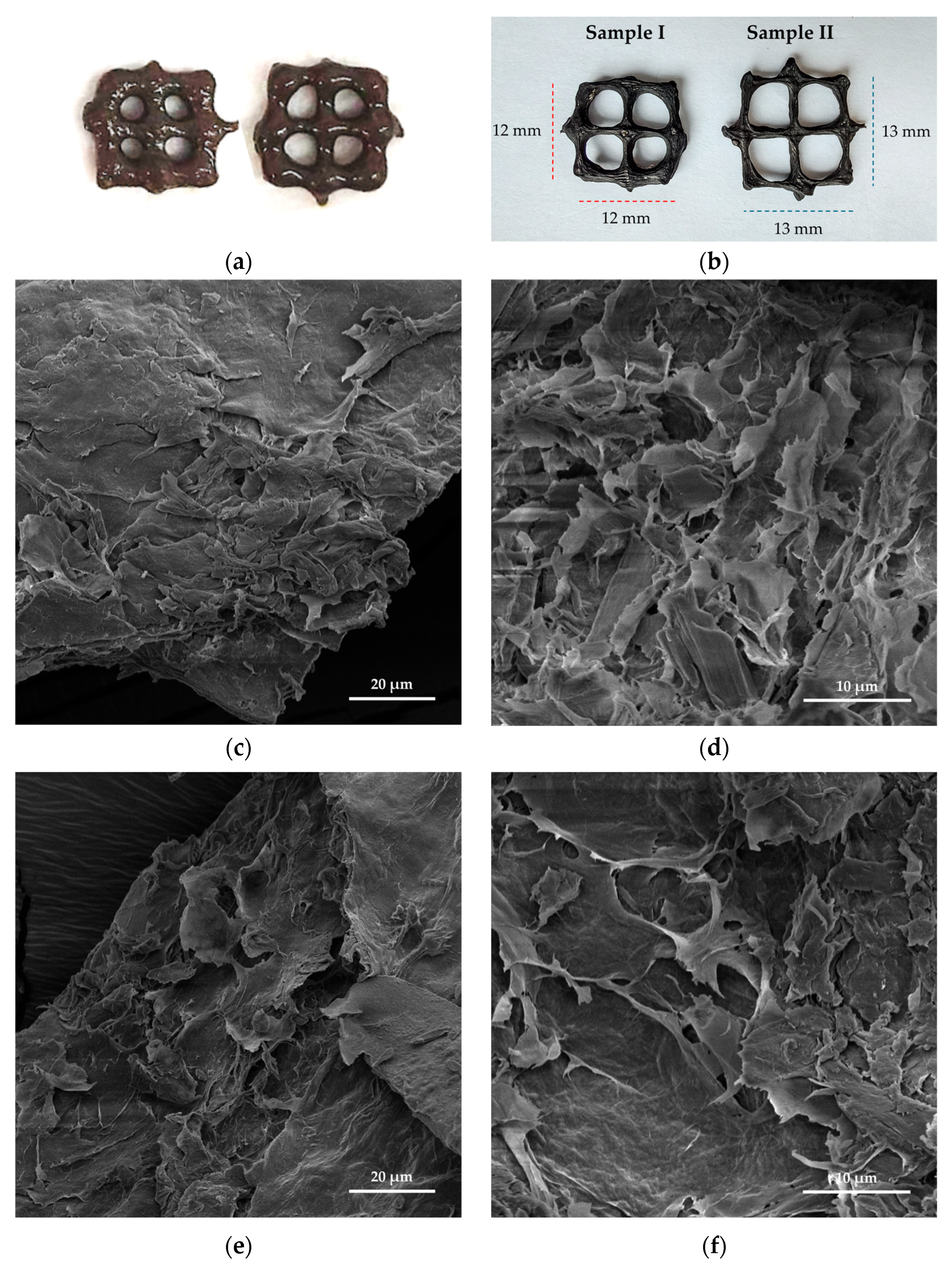
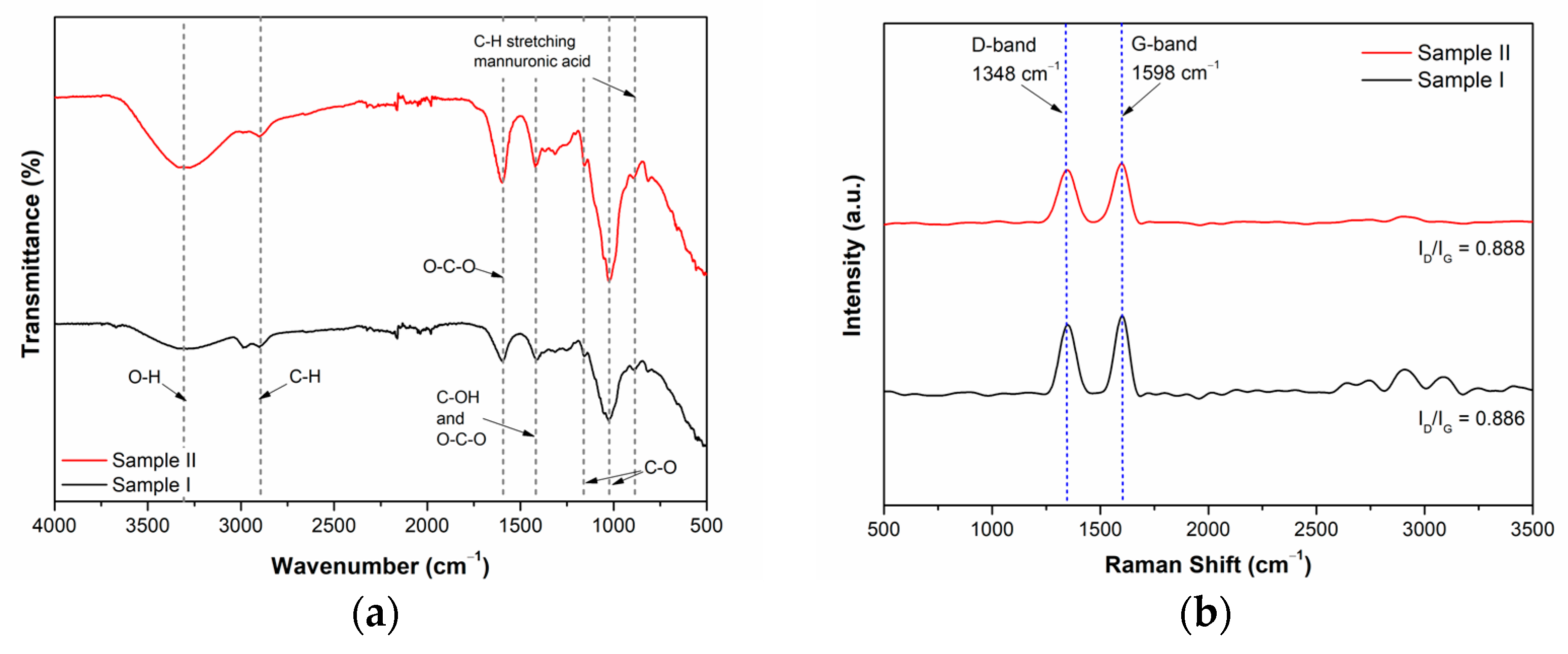
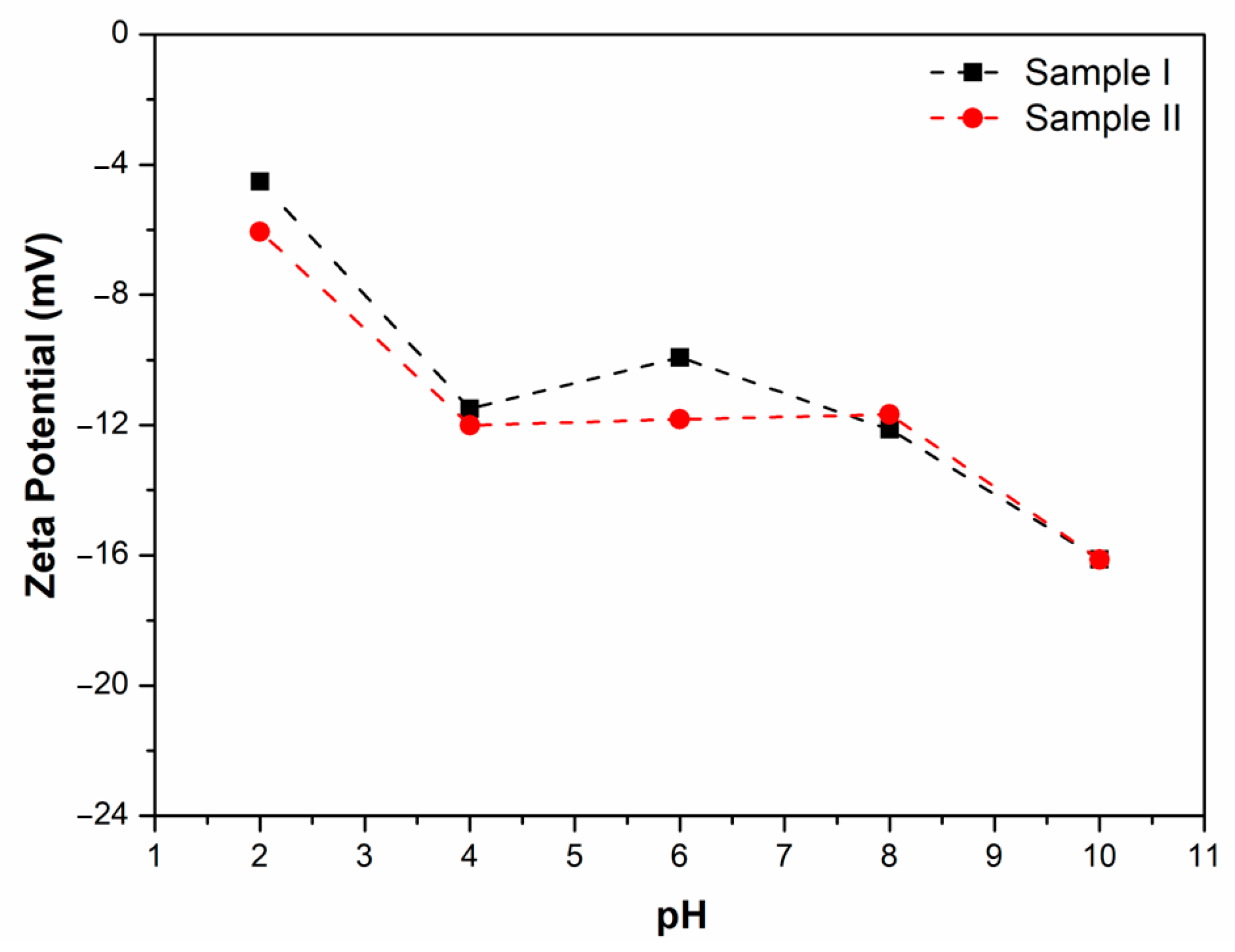
3.1. Characterization of SA/GO-FCL
3.2. Batch Adsorption Performance
4. Conclusions
Supplementary Materials
Author Contributions
Funding
Data Availability Statement
Conflicts of Interest
Abbreviations
| 3TTT | Three-Interval Thixotropy Test |
| AIC | Akaike Information Criterion |
| AM | Additive Manufacturing |
| CQ | Chloroquine |
| DIW | Direct Ink Writing |
| FCL | Fresh Cotton Linters |
| FTIR | Fourier Transform Infrared Spectroscopy |
| GO | Graphene Oxide |
| HPH | High-Pressure Homogenizer |
| LDF | Linear Driving Force |
| LVE | Linear Viscoelastic Region |
| SA | Sodium Alginate |
| SD | Standard Deviation |
| SEM | Scanning Electron Microscopy |
References
- Ehrmann, G.; Ehrmann, A. 3D printing of shape memory polymers. J. Appl. Polym. Sci. 2021, 138, 50847. [Google Scholar] [CrossRef]
- Praveena, B.A.; Lokesh, N.; Buradi, A.; Santhosh, N.; Praveena, B.L.; Vignesh, R. A comprehensive review of emerging additive manufacturing (3D printing technology): Methods, materials, applications, challenges, trends and future potential. Mater. Today Proc. 2022, 52, 1309–1313. [Google Scholar] [CrossRef]
- Jiménez, M.; Romero, L.; Domínguez, I.A.; Espinosa, M.d.M.; Domínguez, M. Additive Manufacturing Technologies: An Overview about 3D Printing Methods and Future Prospects. Complexity 2019, 2019, 9656938. [Google Scholar] [CrossRef]
- Wang, Q.; Sun, J.; Yao, Q.; Ji, C.; Liu, J.; Zhu, Q. 3D printing with cellulose materials. Cellulose 2018, 25, 4275–4301. [Google Scholar] [CrossRef]
- Valentin, T.M.; Landauer, A.K.; Morales, L.C.; DuBois, E.M.; Shukla, S.; Liu, M.; Valentin, L.H.S.; Franck, C.; Chen, P.-Y.; Wong, I.Y. Alginate-graphene oxide hydrogels with enhanced ionic tunability and chemomechanical stability for light-directed 3D printing. Carbon 2019, 143, 447–456. [Google Scholar] [CrossRef]
- Yuan, J.; Yi, C.; Jiang, H.; Liu, F.; Cheng, G.J. Direct Ink Writing of Hierarchically Porous Cellulose/Alginate Monolithic Hydrogel as a Highly Effective Adsorbent for Environmental Applications. ACS Appl. Polym. Mater. 2021, 3, 699–709. [Google Scholar] [CrossRef]
- Marques, M.P.; Sanchez-Salvador, J.L.; Monte, M.C.; Blanco, A.; Santos, R.J.; Dias, M.M.; Manrique, Y.A.; Brito, M.S.C.A. Development of O/W Pickering Emulsions Stabilized with Leek Leaf Trimmings Using Batch and Continuous Modes. Food Bioprocess Technol. 2024, 17, 3191–3206. [Google Scholar] [CrossRef]
- de Araujo, C.M.B.; Ghislandi, M.G.; Rios, A.G.; da Costa, G.R.B.; Nascimento, B.F.D.; Ferreira, A.F.P.; Sobrinho, M.A.d.M.; Rodrigues, A.E. Wastewater treatment using recyclable agar-graphene oxide biocomposite hydrogel in batch and fixed-bed adsorption column: Bench experiments and modeling for the selective removal of organics. Colloids Surf. A Physicochem. Eng. Asp. 2022, 639, 128357. [Google Scholar] [CrossRef]
- Gomes, B.F.M.L.; de Araújo, C.M.B.; Nascimento, B.F.D.; Freire, E.M.P.d.L.; Sobrinho, M.A.D.M.; Carvalho, M.N. Synthesis and application of graphene oxide as a nanoadsorbent to remove Cd (II) and Pb (II) from water: Adsorption equilibrium, kinetics, and regeneration. Environ. Sci. Pollut. Res. 2022, 29, 17358–17372. [Google Scholar] [CrossRef]
- de Araujo, C.M.B.; Wernke, G.; Ghislandi, M.G.; Diório, A.; Vieira, M.F.; Bergamasco, R.; Sobrinho, M.A.d.M.; Rodrigues, A.E. Continuous removal of pharmaceutical drug chloroquine and Safranin-O dye from water using agar-graphene oxide hydrogel: Selective adsorption in batch and fixed-bed experiments. Environ. Res. 2023, 216, 114425. [Google Scholar] [CrossRef]
- Dada, A.O.; Inyinbor, A.A.; Bello, O.S.; Tokula, B.E. Novel plantain peel activated carbon–supported zinc oxide nanocomposites (PPAC-ZnO-NC) for adsorption of chloroquine synthetic pharmaceutical used for COVID-19 treatment. Biomass Convers. Biorefinery 2023, 13, 9181–9193. [Google Scholar] [CrossRef]
- Januário, E.F.D.; Fachina, Y.J.; Wernke, G.; Demiti, G.M.M.; Beltran, L.B.; Bergamasco, R.; Vieira, A.M.S. Application of activated carbon functionalized with graphene oxide for efficient removal of COVID-19 treatment-related pharmaceuticals from water. Chemosphere 2022, 289, 133213. [Google Scholar] [CrossRef]
- Hummers, W.S.; Offeman, R.E. Preparation of Graphitic Oxide. J. Am. Chem. Soc. 1958, 80, 1339. [Google Scholar] [CrossRef]
- Sauerwein, M.; Zlopasa, J.; Doubrovski, Z.; Bakker, C.; Balkenende, R. Reprintable Paste-Based Materials for Additive Manufacturing in a Circular Economy. Sustainability 2020, 12, 8032. [Google Scholar] [CrossRef]
- Langmuir, I. The Adsorption of Gases on Plane Surfaces of Glass, Mica and Platinum. J. Am. Chem. Soc. 1918, 40, 1361–1403. [Google Scholar] [CrossRef]
- de Vargas Brião, G.; Hashim, M.A.; Chu, K.H. The Sips isotherm equation: Often used and sometimes misused. Sep. Sci. Technol. 2023, 58, 884–892. [Google Scholar] [CrossRef]
- Chu, K.H. Fitting a little-known isotherm equation to S-shaped adsorption equilibrium data. Sep. Purif. Technol. 2021, 259, 118079. [Google Scholar] [CrossRef]
- Chen, L.; Li, Y.; Du, Q.; Wang, Z.; Xia, Y.; Yedinak, E.; Lou, J.; Ci, L. High performance agar/graphene oxide composite aerogel for methylene blue removal. Carbohydr. Polym. 2017, 155, 345–353. [Google Scholar] [CrossRef] [PubMed]
- Belattmania, Z.; Kaidi, S.; El Atouani, S.; Katif, C.; Bentiss, F.; Jama, C.; Reani, A.; Sabour, B.; Vasconcelos, V. Isolation and FTIR-ATR and 1H NMR Characterization of Alginates from the Main Alginophyte Species of the Atlantic Coast of Morocco. Molecules 2020, 25, 4335. [Google Scholar] [CrossRef]
- de Araujo, C.M.B.; Rios, A.G.; Ghislandi, M.G.; Ferreira, A.F.P.; da Motta Sobrinho, M.A.; Rodrigues, A.E. Separation of the heme protein cytochrome C using a 3D structured graphene oxide bionanocomposite as an adsorbent. Soft Matter 2024, 20, 1475–1485. [Google Scholar] [CrossRef]
- Zhang, L.; Li, X.; Zhang, S.; Gao, Q.; Lu, Q.; Peng, R.; Xu, P.; Shang, H.; Yuan, Y.; Zou, H. Micro-FTIR combined with curve fitting method to study cellulose crystallinity of developing cotton fibers. Anal. Bioanal. Chem. 2021, 413, 1313–1320. [Google Scholar] [CrossRef]
- Liu, H.; Wang, B.; Liu, H.; Zheng, Y.; Li, M.; Tang, K.; Pan, B.; Liu, C.; Luo, J.; Pang, X. Multi-crosslinked robust alginate/polyethyleneimine modified graphene aerogel for efficient organic dye removal. Colloids Surf. A Physicochem. Eng. Asp. 2024, 683, 133034. [Google Scholar] [CrossRef]
- Liu, H.; Pan, B.; Wang, Q.; Niu, Y.; Tai, Y.; Du, X.; Zhang, K. Crucial roles of graphene oxide in preparing alginate/nanofibrillated cellulose double network composites hydrogels. Chemosphere 2021, 263, 128240. [Google Scholar] [CrossRef]
- Liu, S.; Bastola, A.K.; Li, L. A 3D Printable and Mechanically Robust Hydrogel Based on Alginate and Graphene Oxide. ACS Appl. Mater. Interfaces 2017, 9, 41473–41481. [Google Scholar] [CrossRef] [PubMed]
- Olate-Moya, F.; Arens, L.; Wilhelm, M.; Mateos-Timoneda, M.A.; Engel, E.; Palza, H. Chondroinductive Alginate-Based Hydrogels Having Graphene Oxide for 3D Printed Scaffold Fabrication. ACS Appl. Mater. Interfaces 2020, 12, 4343–4357. [Google Scholar] [CrossRef] [PubMed]
- Flores-Hernández, C.G.; Cornejo-Villegas, M.d.l.A.; Moreno-Martell, A.; Del Real, A. Synthesis of a Biodegradable Polymer of Poly (Sodium Alginate/Ethyl Acrylate). Polymers 2021, 13, 504. [Google Scholar] [CrossRef]
- Kowalonek, J.; Łukomska, B.; Szydłowska-Czerniak, A. Color, Structure, and Thermal Stability of Alginate Films with Raspberry and/or Black Currant Seed Oils. Molecules 2025, 30, 245. [Google Scholar] [CrossRef]
- D’Acierno, F.; Hamad, W.Y.; Michal, C.A.; MacLachlan, M.J. Thermal Degradation of Cellulose Filaments and Nanocrystals. Biomacromolecules 2020, 21, 3374–3386. [Google Scholar] [CrossRef] [PubMed]
- Tegou, E.; Pseiropoulos, G.; Filippidou, M.K.; Chatzandroulis, S. Low-temperature thermal reduction of graphene oxide films in ambient atmosphere: Infra-red spectroscopic studies and gas sensing applications. Microelectron. Eng. 2016, 159, 146–150. [Google Scholar] [CrossRef]
- Akinyi, C.; Longun, J.; Chen, S.; Iroh, J.O. Decomposition and Flammability of Polyimide Graphene Composites. Minerals 2021, 11, 168. [Google Scholar] [CrossRef]
- Zhao, W.; Qi, Y.; Wang, Y.; Xue, Y.; Xu, P.; Li, Z.; Li, Q. Morphology and Thermal Properties of Calcium Alginate/Reduced Graphene Oxide Composites. Polymers 2018, 10, 990. [Google Scholar] [CrossRef] [PubMed]
- Lemus, L.R.; Azamar-Barrios, J.; Ortiz-Vazquez, E.; Quintana-Owen, P.; Freile-Pelegrín, Y.; Perera, F.G.; Madera-Santana, T. Development and physical characterization of novel bio-nanocomposite films based on reduced graphene oxide, agar and melipona honey. Carbohydr. Polym. Technol. Appl. 2021, 2, 100133. [Google Scholar] [CrossRef]
- Tabish, M.S.; Hanapi, N.S.M.; Ibrahim, W.N.W.; Saim, N.; Yahaya, N. Alginate-Graphene Oxide Biocomposite Sorbent for Rapid and Selective Extraction of Non-Steroidal Anti-Inflammatory Drugs Using Micro-Solid Phase Extraction. Indones. J. Chem. 2019, 19, 684–695. [Google Scholar] [CrossRef]
- Kumar, N.; Kumar, B.; Gupta, H.; Kumar, A. Development and Evaluation of Cellulose/Graphene-Oxide Based Composite for Removing Phenol from Aqueous Solutions. Polymers 2023, 15, 572. [Google Scholar] [CrossRef]
- Wang, X.-X.; Liu, L.; Li, Q.-F.; Xiao, H.; Wang, M.-L.; Tu, H.-C.; Lin, J.-M.; Zhao, R.-S. Nitrogen-rich based conjugated microporous polymers for highly efficient adsorption and removal of COVID-19 antiviral drug chloroquine phosphate from environmental waters. Sep. Purif. Technol. 2023, 305, 122517. [Google Scholar] [CrossRef]
- Atunwa, B.T.; Dada, A.O.; Inyinbor, A.A.; Pal, U. Synthesis, physiochemical and spectroscopic characterization of palm kernel shell activated carbon doped AgNPs (PKSAC@AgNPs) for adsorption of chloroquine pharmaceutical waste. Mater. Today Proc. 2022, 65, 3538–3546. [Google Scholar] [CrossRef]
- Nascimento, B.F.D.; de Araújo, C.M.B.; del Carmen Pinto Osorio, D.; Silva, L.F.O.; Dotto, G.L.; Cavalcanti, J.V.F.L.; Sobrinho, M.A.d.M. Adsorption of chloroquine, propranolol, and metformin in aqueous solutions using magnetic graphene oxide nanocomposite. Environ. Sci. Pollut. Res. 2023, 30, 85344–85358. [Google Scholar] [CrossRef]
- Nkwoada, A.U.; Alisa, C.D.; Oguwike, M.M.; Amaechi, I.A. Removal of Aspirin and Chloroquine from Aqueous Solution Using Organo-Clay Derived from Kaolinite. J. Phys. Chem. Mater. 2022, 9, 1–11. [Google Scholar]
- Santos, R.K.; Nascimento, B.F.; de Araújo, C.M.; Cavalcanti, J.V.; Bruckmann, F.S.; Rhoden, C.R.; Dotto, G.L.; Oliveira, M.L.; Silva, L.F.; Sobrinho, M.A.M. Removal of chloroquine from the aqueous solution by adsorption onto açaí-based biochars: Kinetics, thermodynamics, and phytotoxicity. J. Mol. Liq. 2023, 383, 122162. [Google Scholar] [CrossRef]
- Valadez-Renteria, E.; Oliva, J.; Navarro-Garcia, N.; Rodriguez-Gonzalez, V. An eco-friendly cellulose support functionalized with tin titanate nanoparticles for the fast removal of clonazepam drug from the drinking water: Adsorption mechanisms. Environ. Sci. Pollut. Res. 2023, 30, 58156–58168. [Google Scholar] [CrossRef] [PubMed]



| Sample | GO Suspension | FCL Pulp | Sodium Alginate | Water | ||||
|---|---|---|---|---|---|---|---|---|
| g | wt.% | g | wt.% | g | wt.% | g | wt.% | |
| (I) | 25.13 | 50.0 | 14.38 | 28.6 | 1.93 | 3.8 | 8.83 | 17.6 |
| (II) | 32.92 | 65.6 | 14.33 | 28.7 | 1.88 | 3.7 | 1.02 | 2.0 |
| Formulation | Recoveries (%) | ||
|---|---|---|---|
| Sample I | 65.9 | 20.1 | 30.0 |
| Sample II | 48.6 | 16.3 | 34.0 |
| Model | Parameter | Sample I | Sample II |
|---|---|---|---|
| Langmuir | qmL (mg∙g−1) | 37.83 | 32.89 |
| KL (L∙mg−1) | 0.066 | 0.112 | |
| Adj. R2 | 0.932 | 0.945 | |
| Krishnamurti | N0 (mg∙g−1) | 19.73 | 23.17 |
| K1 (L∙mg−1) | 0.601 | 0.522 | |
| K2 | 23.94 | 13.99 | |
| Adj. R2 | 0.994 | 0.988 | |
| Sips | qmS (mg∙g−1) | 21.01 | 24.96 |
| m | 2.61 | 2.05 | |
| KS (L∙mg−1)m | 1.25 × 10⁻² | 3.44 × 10⁻² | |
| Adj. R2 | 0.984 | 0.973 |
| Adsorbent | Experimental Conditions | qm Estimated (mg∙g−1) | Reference |
|---|---|---|---|
| Agar/GO | C0 = 20 mg∙L−1; V = 25 mL; t = 6 h; T = 24 °C; 250 rpm; pH ~6.0 | 53.66 1 | [10] |
| BPT-DMB-CMP | mads = 20 mg; V = 10 mL; t = 12 h; T = 35 °C; 260 rpm | 84.84 1 | [35] |
| PKSAC@AgNPs nanocomposite | mads = 100 mg; V = 100 mL; t = 3 h; T = 30 °C; 120 rpm | 15.51 2 | [36] |
| Magnetic GO nanocomposite | mads = 10 mg; V = 25 mL; t = 3 h; T = 25 °C; 200 rpm; pH ~6.0 | 44.01 2 | [37] |
| Treated Clay (C2) | mads = 50 mg; V = 5 mL; t = 50 min; T = 25 °C; pH = 5.8 | 54.94 1 | [38] |
| Organo-Clay (C3) | 84.03 1 | ||
| Açaí-based biochar (CA) | mads = 50 mg; V = 50 mL; T = 25 °C; pH = 6.84; 200 rpm | 15.56 1 | [39] |
| Açaí-based biochar (CAA) | mads = 20 mg; V = 50 mL; T = 25 °C; pH = 6.84; 200 rpm | 40.31 1 | |
| GAC-GO | mads = 30 mg; V = 20 mL; T = 25 °C; pH ~6.0; 150 rpm | 29.36 1 | [12] |
| SA/GO-Cotton microfibers (Sample II) | mads ~60 mg (dry basis); V = 100 mL; t = 48 h; T = 25 °C; 200 rpm; pH ~6.1 | 24.96 2 | This work |
| Parameter | Sample I | Sample II |
|---|---|---|
| kLDF (min−1) | 0.005 | 0.004 |
| DLDF (m2∙min−1) | 5.6 × 10⁻¹⁰ | 4.4 × 10⁻¹⁰ |
| R2 | 0.937 | 0.969 |
| SSRes | 18.9 | 12.4 |
Disclaimer/Publisher’s Note: The statements, opinions and data contained in all publications are solely those of the individual author(s) and contributor(s) and not of MDPI and/or the editor(s). MDPI and/or the editor(s) disclaim responsibility for any injury to people or property resulting from any ideas, methods, instructions or products referred to in the content. |
© 2025 by the authors. Licensee MDPI, Basel, Switzerland. This article is an open access article distributed under the terms and conditions of the Creative Commons Attribution (CC BY) license (https://creativecommons.org/licenses/by/4.0/).
Share and Cite
Serafim, N.B.V.; de Araujo, C.M.B.; Brito, M.S.C.A.; Manrique, Y.A.; Silva, C.G.; Ghislandi, M.G.; Sanchez-Salvador, J.L.; Blanco, A.; Cavalcanti, J.V.F.L.; da Motta Sobrinho, M.A.; et al. Additive Manufacturing of Graphene Oxide/Sodium Alginate–Cotton Microfiber Composite Hydrogels: Structure, Properties, and Adsorption Performance. J. Compos. Sci. 2025, 9, 673. https://doi.org/10.3390/jcs9120673
Serafim NBV, de Araujo CMB, Brito MSCA, Manrique YA, Silva CG, Ghislandi MG, Sanchez-Salvador JL, Blanco A, Cavalcanti JVFL, da Motta Sobrinho MA, et al. Additive Manufacturing of Graphene Oxide/Sodium Alginate–Cotton Microfiber Composite Hydrogels: Structure, Properties, and Adsorption Performance. Journal of Composites Science. 2025; 9(12):673. https://doi.org/10.3390/jcs9120673
Chicago/Turabian StyleSerafim, Nickolly B. V., Caroline M. B. de Araujo, Margarida S. C. A. Brito, Yaidelin A. Manrique, Cláudia G. Silva, Marcos G. Ghislandi, Jose L. Sanchez-Salvador, Angeles Blanco, Jorge V. F. L. Cavalcanti, Maurício A. da Motta Sobrinho, and et al. 2025. "Additive Manufacturing of Graphene Oxide/Sodium Alginate–Cotton Microfiber Composite Hydrogels: Structure, Properties, and Adsorption Performance" Journal of Composites Science 9, no. 12: 673. https://doi.org/10.3390/jcs9120673
APA StyleSerafim, N. B. V., de Araujo, C. M. B., Brito, M. S. C. A., Manrique, Y. A., Silva, C. G., Ghislandi, M. G., Sanchez-Salvador, J. L., Blanco, A., Cavalcanti, J. V. F. L., da Motta Sobrinho, M. A., & Ferreira, A. F. P. (2025). Additive Manufacturing of Graphene Oxide/Sodium Alginate–Cotton Microfiber Composite Hydrogels: Structure, Properties, and Adsorption Performance. Journal of Composites Science, 9(12), 673. https://doi.org/10.3390/jcs9120673