
Article

Additive Manufacturing of Graphene Oxide/Sodium Alginate–Cotton Microfiber Composite Hydrogels: Structure, Properties, and Adsorption Performance


by
Nickolly B. V. Serafim
1,2,*,
Caroline M. B. de Araujo
3,
Margarida S. C. A. Brito
2,
Yaidelin A. Manrique
2,
Cláudia G. Silva
2,
Marcos G. Ghislandi
4,
Jose L. Sanchez-Salvador
5,
Angeles Blanco
5,
Jorge V. F. L. Cavalcanti
1,
Maurício A. da Motta Sobrinho
1 and
Alexandre F. P. Ferreira
2
1
Chemical Engineering Department, Federal University of Pernambuco, Recife 50670-901, Brazil
2
LSRE-LCM, ALiCE, Faculty of Engineering, University of Porto, Rua Dr. Roberto Frias, 4200-465 Porto, Portugal
3
Campus de Gualtar, University of Minho, R. da Universidade, 4710-057 Braga, Portugal
4
Engineering Campus, Federal Rural University of Pernambuco, R. Cento e Sessenta e Três, 300, Cabo de Santo Agostinho 54518-430, Brazil
5
Chemical Engineering and Materials Department, Universidad Complutense de Madrid (UCM), Avda. Complutense s/n, 28040 Madrid, Spain
*
Author to whom correspondence should be addressed.
J. Compos. Sci. 2025, 9(12), 673; https://doi.org/10.3390/jcs9120673
Submission received: 18 September 2025 / Revised: 27 November 2025 / Accepted: 1 December 2025 / Published: 4 December 2025

Abstract

The high use and improper disposal of chloroquine (CQ) during the COVID-19 pandemic have significantly increased its presence in water bodies, representing an environmental risk. Adsorption is one of the most-used treatments to remove recalcitrant compounds, although there is still a lack of efficient biosorbents. This work aimed to develop an efficient biosorbent using additive manufacturing (AM) to synthesize bionanocomposite hydrogels based on cellulose fibers, sodium alginate (SA), and graphene oxide (GO) for CQ adsorption. The hydrogels were characterized by mechanical, morphological, and physicochemical techniques. Results show that increasing GO content and reducing water contributed to higher yield stress, which is important for maintaining shape fidelity during the printing. SEM images evidenced thin GO layers interacting with the polymer matrix and cellulose fibers, resulting in 3D disordered porous microstructures. The adsorption capacity of the 3D-printed hydrogel samples for aqueous CQ was analyzed by evaluating the pH effect, contact time, and the adsorption equilibrium isotherms, showing notorious potential for CQ removal, with maximum adsorption capacity of ~25 mg∙g−1 at 25 °C. Results show that the tested formulations were stable for producing hydrogels and efficient on chloroquine adsorption, revealing their potential as novel adsorbents for removing emerging organic pollutants from water.

1. Introduction

Additive manufacturing (AM) has revolutionized the production of adsorbents, allowing their production with complex geometries and low production costs. Such adsorbents can be designed to optimize mass transfer during adsorption. Three-dimensional printing by Direct Ink Writing (DIW) is an AM technique that involves extruding a paste and constructing an object layer-by-layer, allowing for the creation of a diverse range of structures and complex geometries from three-dimensional model data [1]. Some advantages of AM include more design freedom, bulk customization, the possibility of building complicated assemblies, and faster prototyping [2]. Moreover, this technique also makes it possible to manufacture samples utilizing several materials simultaneously in the same solid, combining different properties and new functionalities in the final material [3].
Sodium alginate (SA), a naturally occurring polysaccharide, is widely used to adjust the rheological properties of cellulose pulps, enabling its use as a 3D-printing paste. Sodium alginate is a naturally derived anionic polysaccharide extracted from brown algae with ionically tunable crosslinking that can be used as a polymeric matrix. Biopolymer hydrogels made of sodium alginate are extensively used in AM, particularly in tissue engineering and regenerative medicine, due to their renewability and biodegradability [4]. Nevertheless, alginate hydrogels can be mechanically weak, exhibiting limited chemical stability. In this context, the use of cellulose in the structure of the alginate-derived biocomposites has emerged as a promising option due to its biodegradability and abundance of hydroxyl groups [5,6].
The incorporation of cellulose fibers into hydrogels alters their physical and chemical properties, enhancing shear-thinning behavior and resulting in high zero-viscosity characteristics. Shear-thinning, which involves a reduction in viscosity with increasing shear rate, is an advantageous property for AM by DIW as it facilitates extrusion. After the paste extrusion, the viscosity of the hydrogel formulation should increase as the shear rate decreases, enabling the printed object to retain its shape. Additionally, the high zero-viscosity helps prevent the loss of shape during the printing process [7].
Incorporating a nanomaterial filler into biocomposite structures also enhances their properties for applications such as adsorption, offering benefits such as increased surface area and improved chemical stability. An example is the use of graphene oxide (GO), which exhibits notorious physicochemical properties [8,9]. These properties are mainly attributed to the abundance of oxygen functional groups on the surface of its nanolayers, which favors the adsorption capacity of organic compounds. Nanocomposite hydrogels containing carbon-based nanomaterials as a filler and a hydrophilic polymer as the matrix can exhibit multifunctional behaviors in aqueous environments [5,6]. Thus, these composite hydrogels produced using mainly polysaccharides and GO can be used as adsorbents to remove organic pollutants of emerging concern, including pharmaceuticals. Specifically, GO-based hydrogels can be used to adsorb chloroquine (CQ) in water treatment processes [10]. In this context, CQ is a drug used quite effectively to treat malaria and other diseases, including rheumatoid arthritis, Q fever, and lupus erythematosus. However, since the COVID-19 pandemic outbreak, the demand for CQ has increased considerably, particularly in Brazil, especially in the first two years of the pandemic, despite its scientifically proven ineffectiveness in treating the virus. It is estimated that the main excretion route of CQ is renal, with approximately 25% of the excretion being unmodified. Indeed, the amount of this drug present in urban wastewater and in the environment has significantly increased in recent years, becoming an environmental problem. Furthermore, leaching can occur from improper drug disposal [10,11,12].
The manufacture of nanocomposite hydrogels through AM is a rising area of interest as the development of 3D-printed smart materials with optimal physicochemical and stable mechanical properties, particularly for water treatment applications, remains a significant challenge [5]. The present work aims to formulate and synthesize efficient bionanocomposite SA hydrogels incorporating fibrillated cellulose and GO that could meet the requirements of a paste suitable for AM by DIW. Its characterization was performed to investigate the mechanical, morphological, and physical–chemical characteristics of the 3D-printed composites, comparing and exploring the possibility of further applications as potential adsorbents for removing CQ from water.

2. Materials and Methods

2.1. Sample Preparation and Manufacture of the 3D Printed Samples

This work is divided into two parts: (i) formulation of the GO/SA-Cotton microfibers composites; (ii) 3D printing of pastes. The composite hydrogel paste was produced by dispersing sodium alginate (SA), fresh cotton linters (FCLs), and graphene oxide (GO) together using a rotor–stator homogenizer (Miccra GmbH D-9, Heitersheim, Germany). The amounts used are detailed in Table 1. The sodium alginate used was supplied by Sigma-Aldrich, St. Louis, MO, USA (CAS: 9005-38-3). Regarding the source of cellulose, microcellulose powder from cotton linters (FCLs) was supplied from Sigma-Aldrich (CAS: 9004-34-6), with a particle size distribution of less than 10% passing through a 60-mesh sieve and more than 40% passing through a 200-mesh sieve. Microcellulose powder suspension in deionized water (4–4.5%) underwent a mechanical treatment using a High-Pressure Homogenizer (HPH) (GEA Niro Soavi, Parma, Italy) under the following conditions: 1 passage at 300 bar + 2 passages at 600 bar, and finally 2 passages at 900 bar. The final pulp consistency was 4.23 ± 0.02% and the larger fibers in the suspension show diameters of less than 10 µm and an aspect ratio between 1.5 and 5. The GO suspension of 7 g∙L−1. was obtained according to the methodology described by de Araujo and coworkers (2022) [8]. The oxidation of graphite (Synth, 99% purity, Brazil) was carried out based on a modified version of the Hummers method, followed by sonication for 2 h using an ultrasonic bath [8,13].
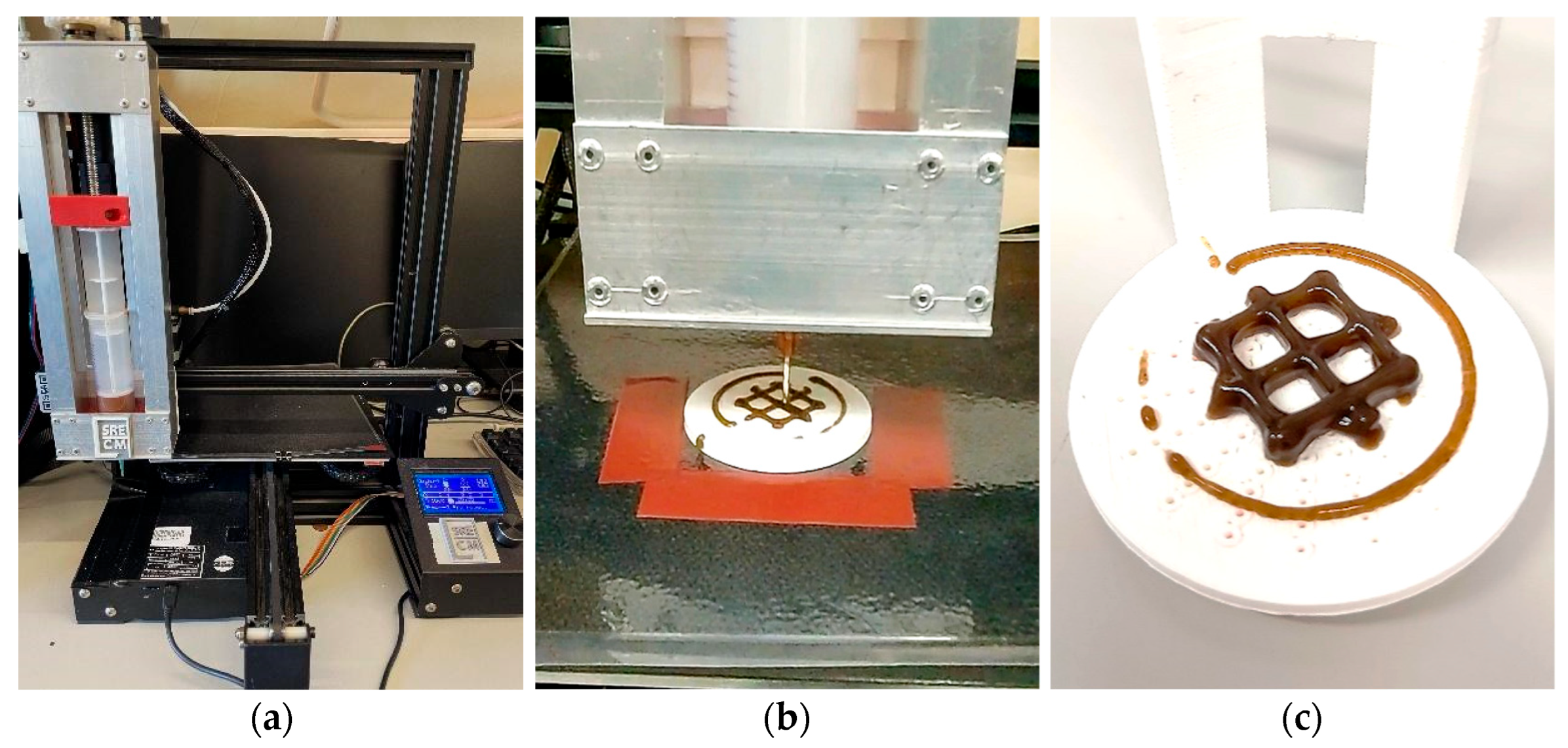
The 3D printer was a modified Ender 3 adapted for syringe-based extrusion (Figure 1a), which illustrates the printing setup and a representative sample [7]. The syringe system of the 3D printer was loaded with the hydrogel paste, and printing was performed using a 1.8 mm muzzle diameter, 50% infill density, 0.8 mm layer height, and printing speed of 2.5 mm∙s−1. After printing, the pieces were submerged in a 2% w/w CaCl2·2H2O, supplied by VWR, Carnaxide, Portugal (CAS-No:10035-04-8) for 30 min to cure, following previous studies [14]. Since the CQ adsorption tests were not conducted immediately after printing, the composites were stored in sealed flasks at 4 °C in the curing solution for approximately 10 days to preserve their shape and moisture. Initially, some samples were printed with 4 and 12 layers. Preliminary kinetic tests were performed in replications, and the adsorptive capacity of the 4-layer parts was found to be much higher than that of the 12-layer printed pieces. Therefore, it was decided to continue the tests with the samples produced with 4 layers (see Supplementary Material). Figure 1b shows the SA/GO-Cotton microfibers-based hydrogel sample obtained on the 3D printer with 4 layers.
Two pastes were produced to evaluate the effect of increasing the percentage of GO on the 4-layer samples. The compositions are shown in Table 1.

2.2. Characterization

The 3D-printed hydrogel composites were freeze-dried prior to characterization. Their morphology was examined using a TESCAN VEGA3 scanning electron microscope (TESCAN ANALYTICS, Fuveau, France) to observe the surface structure of the samples (Sample I and Sample II).
The surface charge of SA/OG-FCL bionanocomposites was measured through the surface zeta potential. These measurements were determined using a zeta potential analyzer (Zetasizer Nano ZS, Malvern, UK) in a pH range from 2 to 10. The HCl and NaOH solutions (1 mol∙L−1) were used to adjust the respective pH values before the analysis. The charge is related to the stability and adsorption capacity of the samples.
The chemical composition of the composites was obtained from the FTIR spectroscopy. These analyses were performed using a Jasco spectrometer (Madrid, Spain) model FT/IR-6800 type A in a region from 4000 to 500 cm−1, with 4 cm−1 resolution. The Raman spectroscopy measurements were conducted in a WITec’s Raman microscope alpha300 R at 532 nm laser excitation (Ulm, Germany).
The rheological properties, which are crucial for evaluating the requirements of 3D-printing materials—such as shear-thinning behavior, high zero-viscosity, and yield stress—were assessed using a rheometer (Anton Paar Instruments, Graz, Austria, MCR 102e) with a cone–plate system as the measuring setup. The cone had a diameter of 50 mm and a 20° angle, with the zero-gap set to 0.209 cm. All measurements were performed at a controlled temperature of 22 °C. The results were determined from duplicates. Viscosity curves were measured over a shear rate range of 0.01 to 600 s−1, using 26 data points with a logarithmic ramp of point durations varying from 30 to 1 s.
Amplitude sweep tests were performed using a logarithmic shear strain ramp from 0.1% to 100% at a constant angular frequency of 1 Hz. The test comprised 76 data points with a duration of 7 s per point. Frequency sweep tests were conducted using a logarithmic frequency ramp from 150 to 0.01 rad∙s−1 at a constant shear strain of 0.1%. The measurements were acquired over 76 points with 10 s per point duration. Elastic recovery is a key parameter that characterizes the materials’ time-dependent responses following shear deformation, providing valuable insight into the filament’s ability to recover after extrusion and printing. A Three-Interval Thixotropy Test (3TTT) was conducted over three-time intervals with varying strain conditions: (1) 0.1% at 1 Hz for the interval [0, 120 s]; (2) 200% at 1 Hz for the interval [120, 240 s]; and (3) 0.1% at 1 Hz for the interval [240, 450 s].
Thermogravimetric analyses were performed using a TGA 2 SF/1100 thermobalance (Mettler Toledo, Greifensee, Switzerland), with alumina sample holders. The samples were heated from 30 to 1000 °C over a total run time of approximately 97 min, and the mass was continuously recorded to evaluate the thermal stability and decomposition behavior of the materials.
N2 physisorption analyses were carried out using an ASAP 2020 Plus (Micromeritics, Norcross, GA, USA). Prior to analysis, the samples were thermally degassed below 130 °C. Specific surface area was determined by the BET method from N2 adsorption–desorption isotherms collected at 77 K.

2.3. Batch Adsorption Procedure

Adsorption tests were conducted to study the removal of chloroquine diphosphate (Farmácia Catanduvas, Catanduvas, Brazil) from an aqueous medium, starting with a CQ initial concentration of 20 mg∙L−1 and a solution volume of 100 mL, under constant agitation (200 rpm) at 25 °C. Tests were performed to evaluate the pH effect on batch adsorption experiments within a pH range between 2.0 and 7.5. The initial pH of the CQ solution was adjusted using NaOH or HCl (1 mol∙L−1), both from Sigma-Aldrich (Merck, Darmstadt, Germany). Adsorption equilibrium experiments were carried out considering different CQ initial concentrations from 5 to 40 mg∙L−1, with the average adsorbent mass of ~60 mg (on a dry basis) and natural pH (~6.1).
The amount of CQ was quantified in an aqueous medium using a UV–visible spectrophotometer (Jasco 7800, Spain) at 343 nm wavelength [10]. Batch adsorption tests were performed in duplicate for the samples produced with different amounts of GO.

2.4. Equations

The adsorption capacity was calculated by Equation (1) using experimental data, in which q is the amount of CQ adsorbed in mg per g of the adsorbent. C0 and Cf are the initial and final concentrations of CQ in aqueous solution, respectively, given in mg∙L−1. VL is the volume of the solution, and m is the adsorbent mass (on a dry basis).
q = C 0 C f   ·   V L m
Adsorption equilibrium data were fitted to the Langmuir [15], Sips [16], and Krishnamurti [17] isotherms models, as presented in Equations (2), (3) and (4), respectively. The primary assumption of the Krishnamurti isotherm model is based on a cooperative adsorption mechanism and can be used to fit S-shaped equilibrium data.
q e = q m L · K L · C e 1 + K L · C e
q e = q m s · K s · C e n 1 + K s · C e n
q e = N 0 1 + K k 2   · e K k 1 · C e
where qe is the adsorbed phase concentration of CQ (mg∙g−1), and Ce is the CQ concentration in the equilibrium (mg∙L−1). KL is the Langmuir adsorption constant (L∙mg−1), and qmL is the predicted maximum adsorption capacity (mg∙g−1). KS (L∙mg−1)n and n are the Sips adsorption constants, in which qms is the Sips maximum adsorption capacity (mg∙g−1) predicted by the model [15]. Moreover, for the Krishnamurti model, three parameters to be fitted are N0, Kk1, and Kk2, where N0 is the total number of adsorbable molecules per unit mass of adsorbent (mg∙g−1) [17].
For the modeling of kinetic data, diffusivity parameters were estimated by solving a system of differential equations. Equation (5) represents the mass balance in a batch adsorber for the initial conditions: t = 0 → C = C0 q ¯ = 0.
V L · d C d t + m   · d q ¯ d t = 0
Kinetics data were fitted to linear driving force (LDF), given by Equation (6). The phenomenological model considers that mass transfer resistance occurs inside the particle.
d q ¯ d t = k L D F q * q ¯
where q ¯ is the average concentration of the adsorbate on the particle, q* is the adsorbed phase concentration determined for the isotherm model at surface concentration, and kLDF is the intraparticle mass transfer coefficients of the LDF model. The homogeneous effective diffusivity (DefLDF) was estimated through Equation (7).
D e f L D F = k h · R 2 9

3. Results and Discussion

3.1. Characterization of SA/GO-FCL

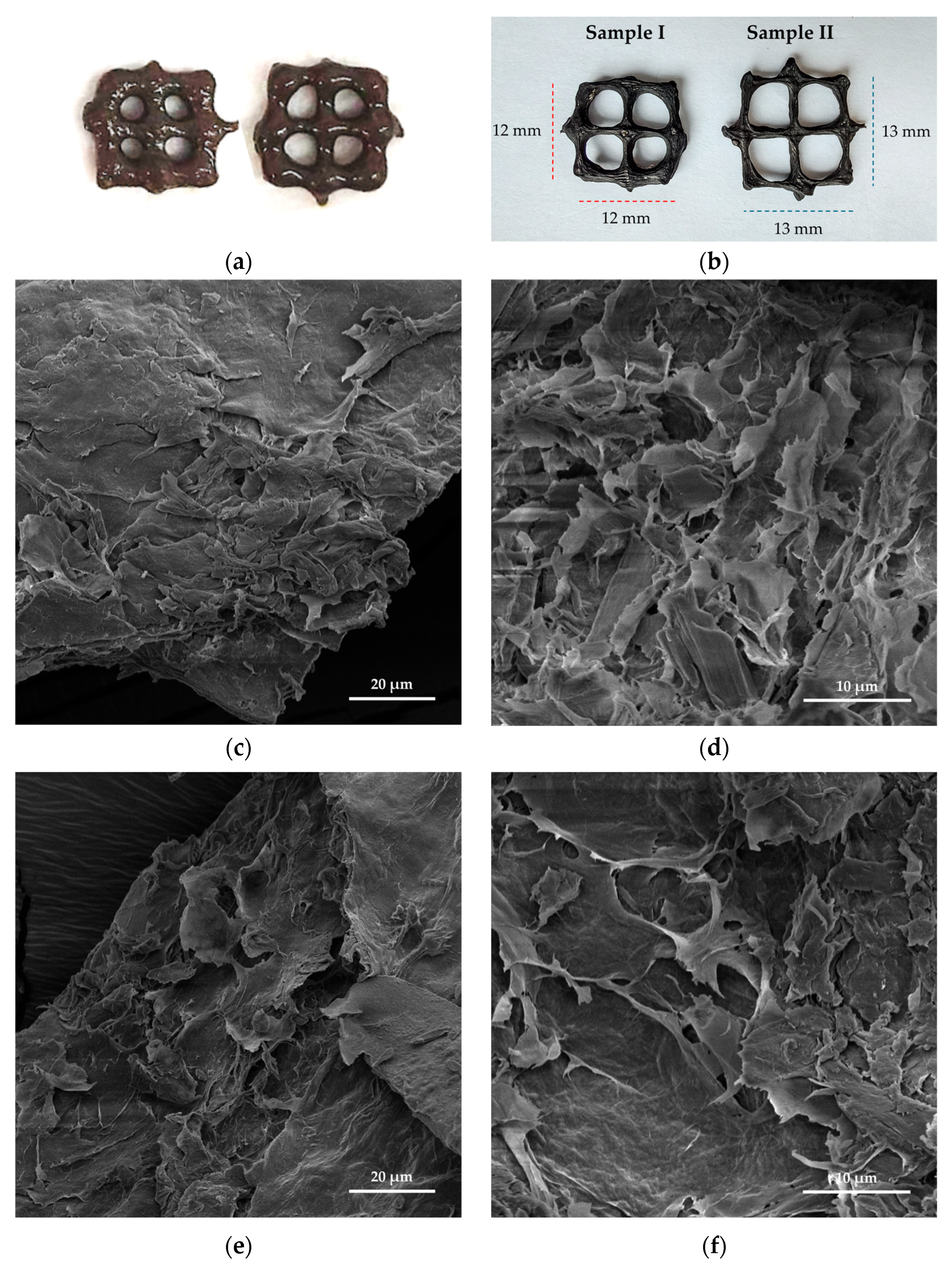
Photographs of the wet and freeze-dried hydrogels are depicted in Figure 2a and Figure 2b, respectively. Wet samples exhibited a jelly-like consistency and a brownish color, which is ascribed to the addition of the GO suspension. Sample I, containing a higher water content, shrank more upon lyophilization, resulting in a smaller dried sample, while the general shape was preserved for both samples. SEM micrographs of Sample I and II show 3D disordered porous microstructures, typical of hydrogels, with randomly oriented corrugated nanosheets packed together, which are indicative of the mixing of GO with the polymeric network. This interpretation is further supported by FTIR and Raman analyses discussed below [8,18].
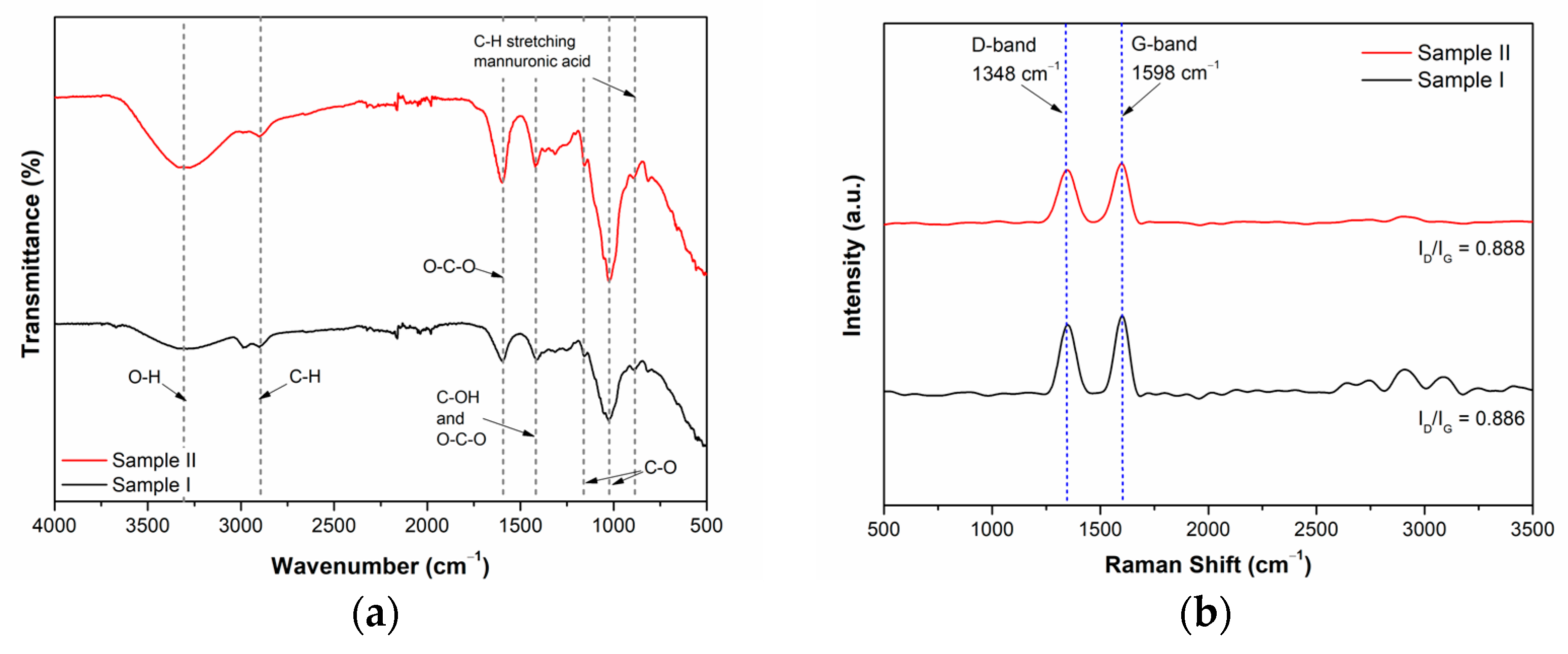
Figure 3a shows that the FTIR spectra of both composite samples are quite similar, indicating the presence of oxygen functional groups. A broad band of around 3300 cm−1 is usually related to intramolecular hydrogen bond stretching in cellulose and can also be attributed to the O-H groups from GO and to the presence of residual H2O.
There are bands in the samples related to functional groups that can be found both in GO and alginate. The bands at 1600 cm−1 are associated with the O-C-O carboxylate stretching, while those at 1420 cm−1 are ascribed to C-OH deformation vibration with the symmetric O-C-O stretching. Bands at 1156 cm−1 and 1023 cm−1 are related to the anti-symmetrical C-O-C stretching and C-O bond stretching in cellulose. The bands at approximately 890 cm−1 and 820 cm−1 are associated with the deformation vibrations of mannuronic acid residues, a constituent of alginic acid and a polysaccharide primarily found in brown algae [19,20,21,22].
From the Raman spectroscopy analysis in Figure 3b, one can determine the lattice disorders of the synthesized carbon-based materials through the ID/IG ratio values. The G band at 1598 cm−1 is related to the vibration of the sp2 carbon basal plane, while the D band at 1348 cm−1 is usually associated with defects in the GO sheet. The ID/IG ratios are 0.886 for Sample I and 0.888 for Sample II, higher than pristine graphite (~0.3) but lower than typical GO (>1.0) [8]. These results indicate that the carbon materials retain moderate lattice disorder, consistent with the incorporation of GO into the polymer matrix, and that the structural features of GO are preserved in both samples with no significant differences between them.
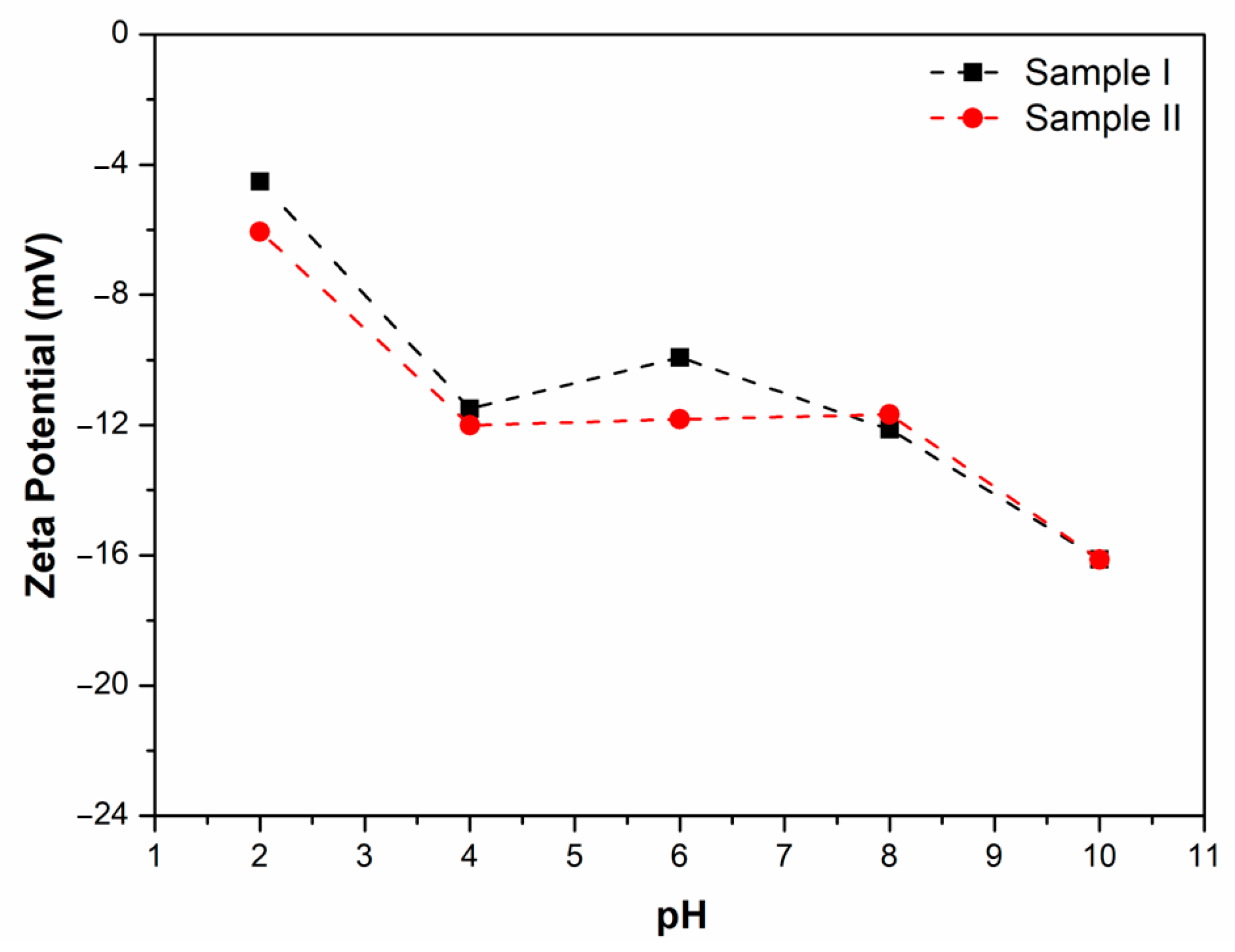
The average zeta potential measurements of both composite samples are shown in Figure 4. It can be observed that the samples are negatively charged across the entire pH range studied (−4.52 to −16.13 mV for Sample I, and −6.06 to −16.13 mV for Sample II). In both cases, the isoelectric points are below pH = 2, indicating that the bionanocomposites’ surface remains negatively charged at pH ≥ 2. These results are consistent with previous observations for other graphene-based materials [10,12]. Analyzing a similar material, Liu et al. [23] reported that lyophilized SA/NFC/GO composites with a comparable fiber-to-GO ratio exhibited a decline in zeta potential (−22.1 mV) relative to the SA/NFC sample (−52.2 mV). This effect was attributed to enhanced interactions between the fibers and SA promoted by GO during lyophilization. The relatively close magnitudes of the zeta potential observed corroborate the presence of GO in the samples and provide insights into the mechanical properties, which will be further analyzed through rheological measurements.
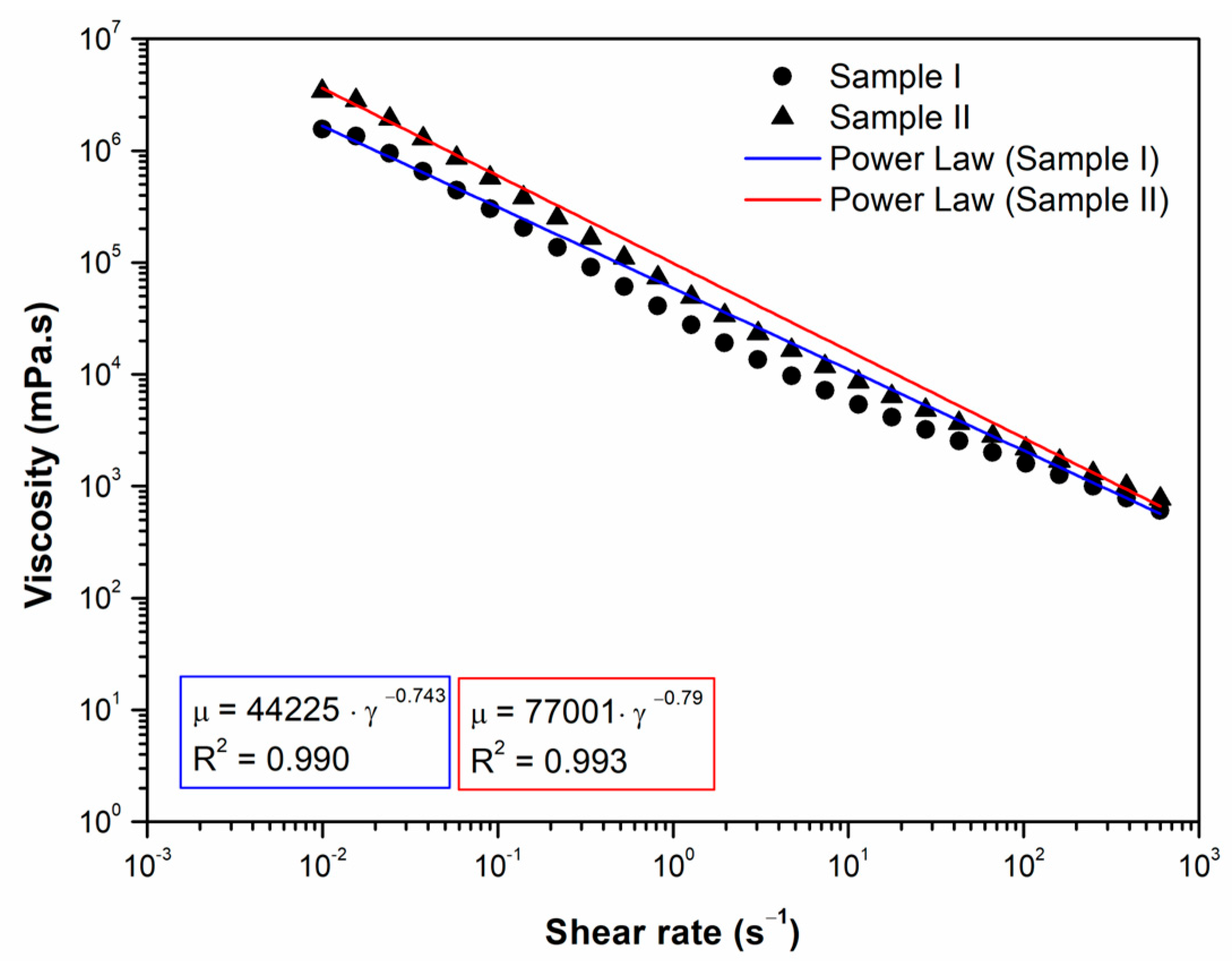
Rheological measurements were conducted to analyze the 3D-printing requirements. Figure 5 shows the viscosity curves for both formulations prepared (Sample I and Sample II), confirming shear-thinning behavior as viscosity decreases with an increasing shear rate. Sample II displays a higher viscosity than Sample I, attributed to the crosslinking and network structure provided by the GO in the composite (0.35% and 0.46% dry mass for Samples I and II, respectively) and to its reduced water content. Power-law modeling yielded K = 77.0 mPa∙s and n = 0.210 for Sample I, and n = 0.257 for Sample II, with n < 1 confirming the shear-thinning behavior. Both formulations exhibit desirable shear-thinning characteristics, making them well-suited for printability in extrusion-based additive manufacturing since it is related to extrusion ease and initial shape fidelity [24,25].
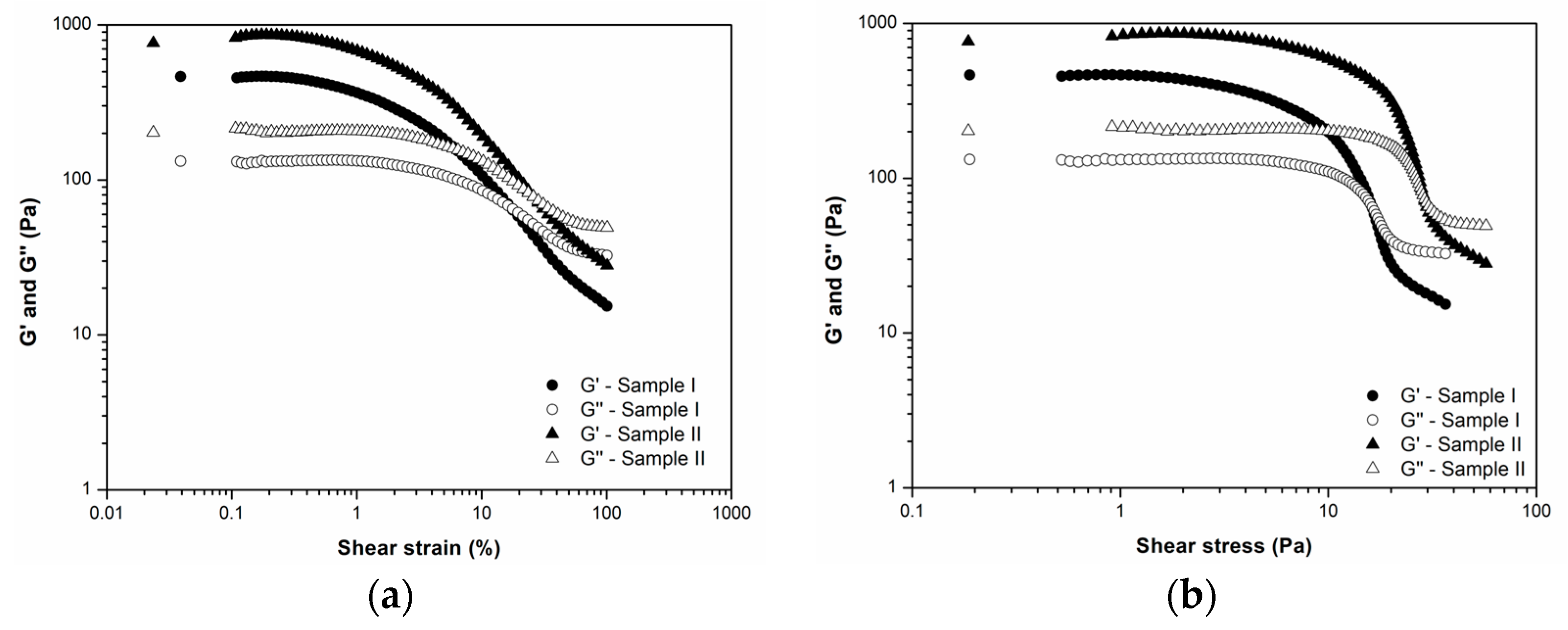
Figure 6a shows the amplitude sweep results for both formulations. G′ is the storage or elastic modulus that is associated with the elastic energy stored during the deformation stage, which is related to the elastic shape retention. G″ is the loss modulus that is associated with the amount of dissipated energy, and the last is related to the viscous flow. These plots identify the Linear Viscoelastic Region (LVE), characterized by the range of shear strain where G′ and G″ remain parallel, indicating no structural changes in the material. The yield point, which marks the end of the LVE, is the same for both formulations at 0.4%, as shown in Figure 6a.
Yield stress in both formulations is essential for extrusion-based additive manufacturing, representing the stress threshold required to initiate material deformation. This ensures that the paste flows during extrusion while maintaining structural integrity after deposition. The corresponding yield stress is determined from the intersection point between G′ and G″ curves in Figure 6b: 17 Pa for Sample I and 27 Pa for Sample II. This highlights that the increase in the amount of GO and the reduction in water content (Sample II) might have contributed to the rise in yield stress, which is advantageous for maintaining shape fidelity during printing.
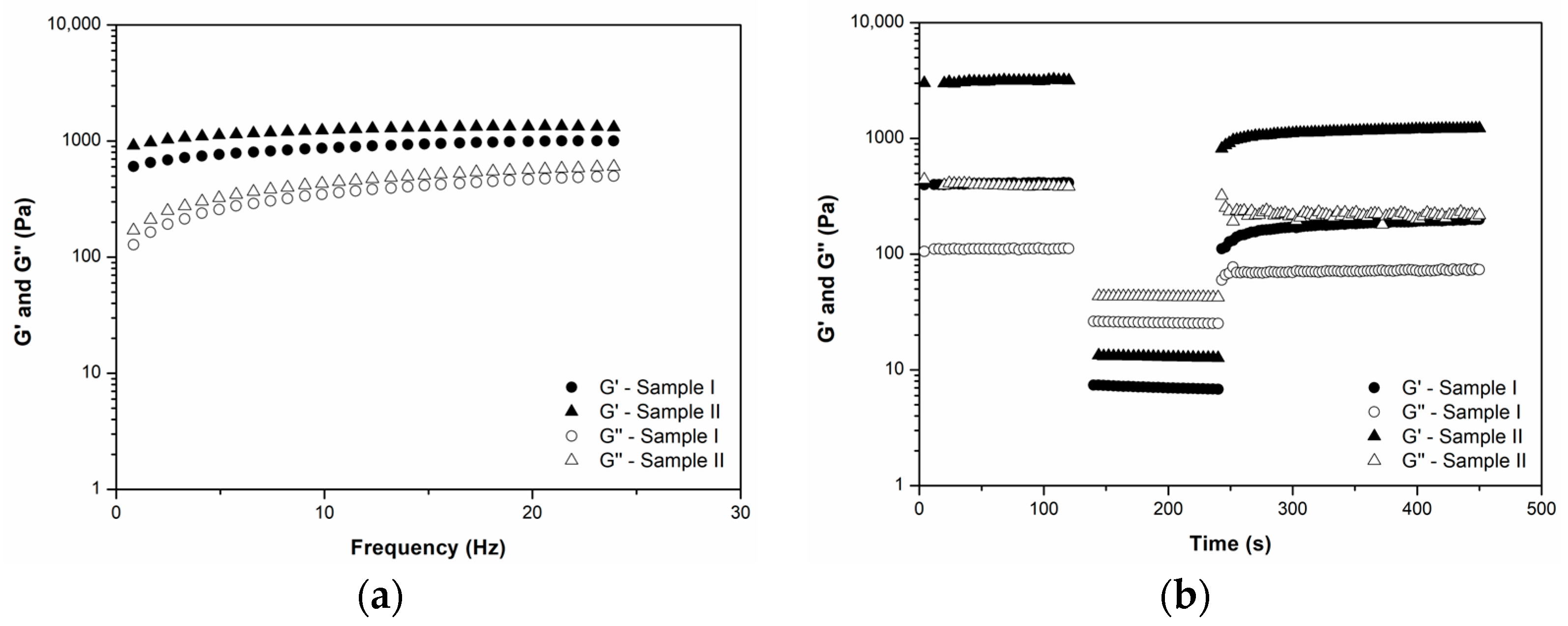
Figure 7a shows the results of the frequency sweep under the conditions described in Section 2.2. Results indicate that G′ consistently dominates over G″ across most of the frequency range, ensuring adequate flowability during extrusion and confirming the material’s solid-like behavior, which is critical for maintaining shape retention after extrusion. Additionally, G′ exhibits minimal frequency dependence, indicating a stable internal structure supporting the printed shape. The slight increase in G″ at higher frequencies reflects energy dissipation during faster deformations. This balance between G′ and G″ is crucial for ensuring printability and structural stability in extrusion-based additive manufacturing.
Elastic recovery was studied from the 3TTT test conducted over the conditions described in Section 2.2: (1) 0.1% at 1 Hz for the interval [0, 120 s]; (2) 200% at 1 Hz for the interval [120, 240 s]; and (3) 0.1% at 1 Hz for the interval [240, 450 s]. Figure 7b shows the material’s behavior during the three intervals. The material remains at rest during the first interval with low strain (0.1%), followed by a high-strain interval (200%) to simulate extrusion. The strain returns to low levels (0.1%) in the third interval, and the recovery process is monitored. The results in the figure indicate that the paste begins to recover rapidly when the high-strain condition is removed.
The elastic recovery percentages for each formulation are reported in Table 2. Results indicate relatively lower recovery values; however, these levels are sufficient for the pastes to be printed effectively, as already proven by the 3D printing in this work.
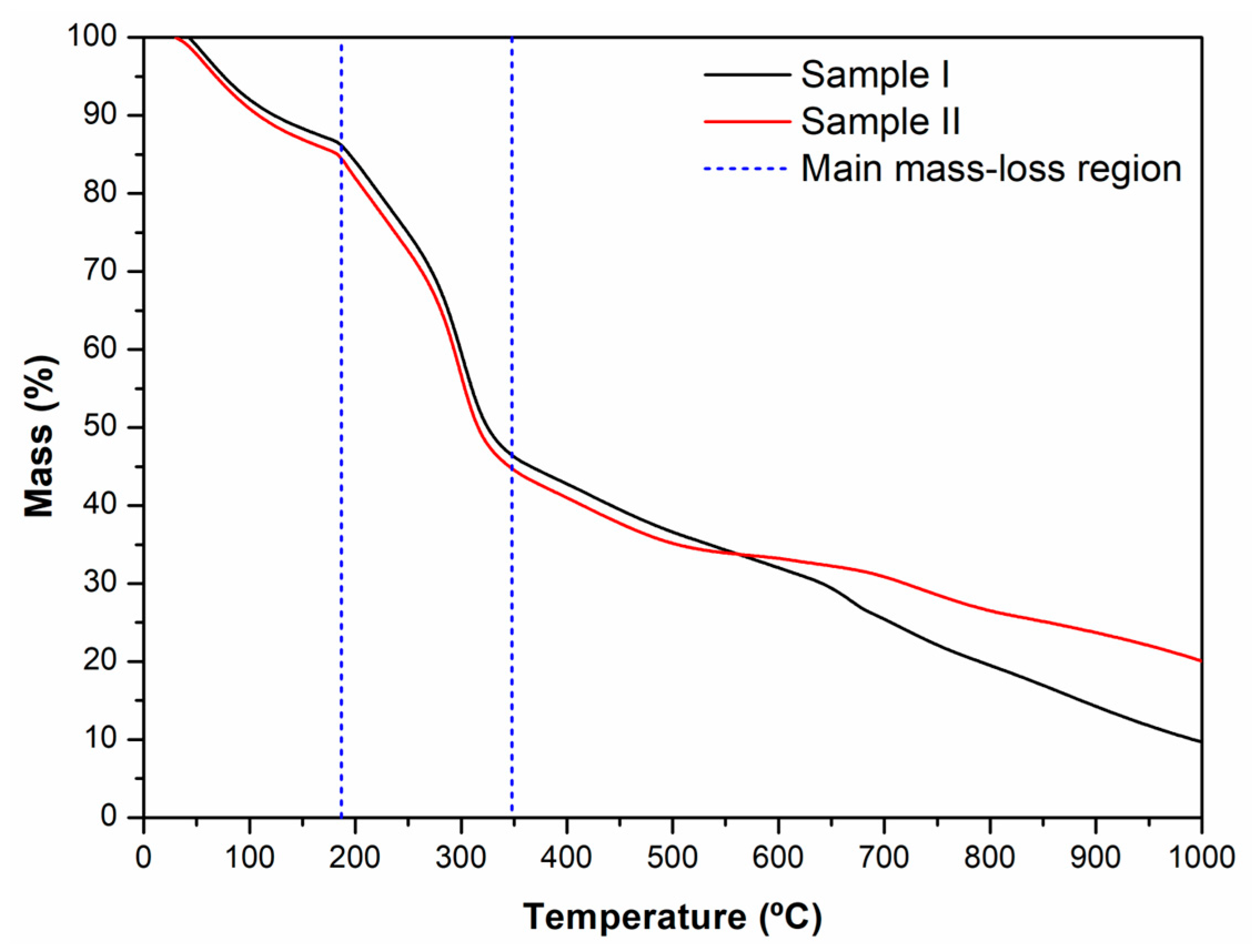
The mass-loss profiles obtained by TGA (Figure 8) show that both samples exhibit similar thermal decomposition behavior, with the main degradation event occurring between 180 and 350 °C, a temperature range typically associated with the decomposition of sodium alginate [26,27], cellulose microfibers [28], and the removal of oxygen-containing functional groups from GO [29]. The samples follow nearly identical degradation pathways up to approximately 580 °C, where the curves intersect. At higher temperatures, Sample II retains a higher mass fraction than Sample I, a behavior attributed to its higher GO content, which enhances the composite’s overall thermal stability. The presence of GO in the composite promotes the formation of more thermally stable carbonaceous structures and limits the release of volatile degradation products, thereby increasing char yield [30,31]. The larger final residue observed for Sample II is consistent with this effect and confirms GO’s contribution to the stabilization of the material at elevated temperatures.
N2 physisorption provided the specific surface area values for both samples. Sample II (2.67 m2∙g−1) showed a higher surface area than Sample I (0.91 m2∙g−1), consistent with its higher GO content. Even so, both hydrogels exhibited lower surface areas than pure GO (30.82 m2∙g−1) [32] and other GO-based composites such as alginate-GO (4.98 m2∙g−1) [33] and cellulose-GO (6.04 m2∙g−1) [34]. Araujo et al. [10] reported a similar value for an agar-GO composite (2.93 m2∙g−1). This reduced area is likely linked to partial restacking of GO sheets during synthesis and freeze-drying. Although lyophilization helps preserve the hydrogel structure, the resulting morphology is dominated by ice-templated porosity, which differs from the hydrated network that governs solute transport.

3.2. Batch Adsorption Performance

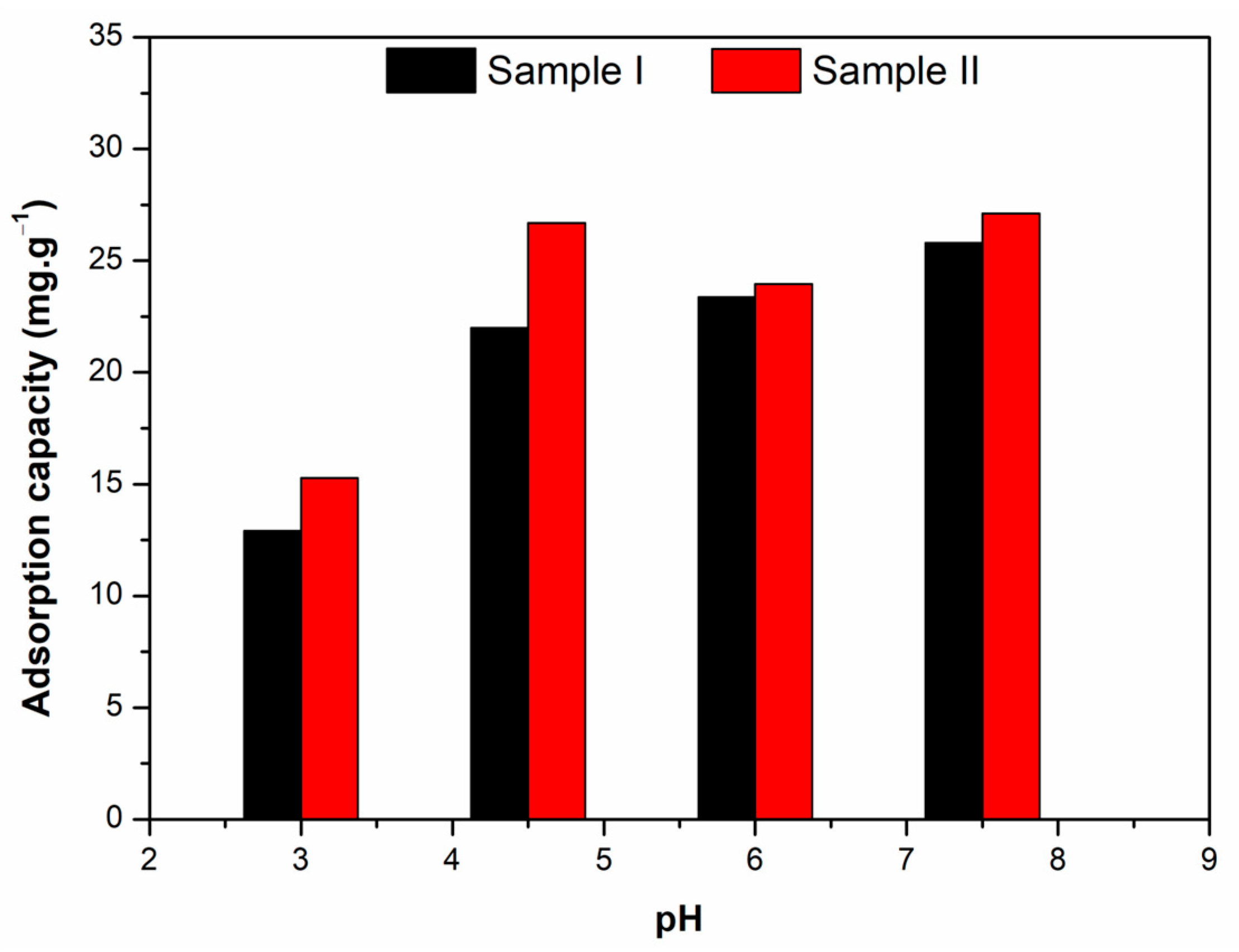
Figure 9 shows the influence of pH on the adsorption of chloroquine diphosphate. It can be observed that overall, the adsorption capacity increases with pH; meanwhile, comparing the results of both samples, Sample II exhibited higher adsorption capacity values across the entire pH range studied.
The enhancement of adsorption capacity as the pH increases may be related to the charge distribution on the surface of the adsorbents, which is more negative at higher pHs. Since chloroquine is a weak base (pKa1 = 10.16 and pKa2 = 8.08), electrostatic attraction is enhanced at higher pH values. On the other hand, Sample II contains a greater amount of GO in its composition, leading to a higher concentration of negatively charged oxygen functional groups on its surface, favoring CQ adsorption, as corroborated by the zeta potential measurements in Figure 4. A similar behavior was observed for the same adsorbate in experiments using an agar-GO hydrogel [10].
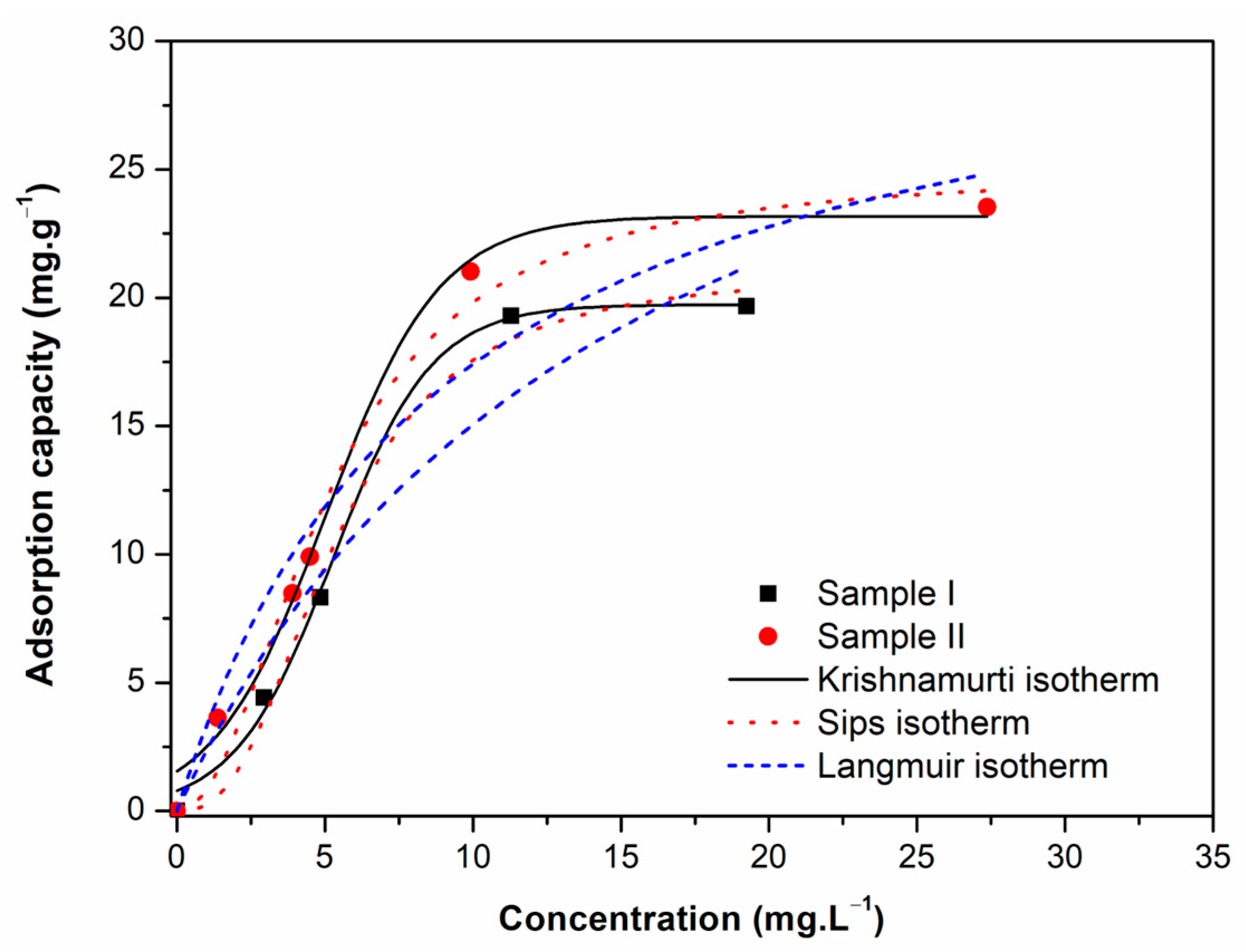
Adsorption equilibrium isotherms are depicted in Figure 10. The Langmuir, Sips, and Krishnamurti isotherm models were applied to the experimental equilibrium data, and the results are shown in Table 3. Comparing the models, it is observed that both the Krishnamurti and Sips isotherms fit well with the experimental data. According to the data in Table 3, the Krishnamurti model yielded higher correlation coefficient values compared to the other isotherm models.
Comparing the models applying the F-test, at the 0.05 significance level, results indicate that Krishnamurti model is more likely to be correct. On the other hand, using the AIC test to compare the models, Langmuir isotherm exhibited a lower AIC value (25.07), indicating that it is more likely to be correct than the Krishnamurti (44.32) and Sips (49.10) isotherm models. This discrepancy may arise because, although the Krishnamurti model appears more accurate than the Langmuir model, it is penalized by the AIC test due to the additional parameter, which does not sufficiently justify its improved fit quality [16].
The Krishnamurti adsorption model assumes that the adsorbate uptake by the adsorbent follows a cooperative adsorption mechanism, in which previously adsorbed molecules facilitate the adsorption of neighboring molecules. Thus, in this case, the rate of increase in the number of CQ molecules adsorbed depends on the number of molecules adsorbed, and the quantity of CQ molecules remaining in the liquid phase for adsorption [17].
As can be seen in Table 4, the maximum adsorption capacity values at equilibrium (on a dry basis) were compared with those reported in previous works for CQ adsorption using different adsorbents. It is noteworthy, however, that the surface area, chemical groups on the adsorbent surface, and morphological structure of the materials must be considered determinative parameters. Table 4 reveals that the 3D-printed hydrogel produced, namely Sample II, demonstrated adsorption capacity values for CQ similar to or even higher compared to some of the adsorbents previously reported at 25 °C.
Besides exhibiting adsorptive capacities within the range reported in previous works (Table 4), the developed material presents a key advantage as a structured, predominantly biodegradable hydrogel produced via 3D DIW printing. These printed hydrogels can be readily removed from aqueous media by simple sieving after adsorption, a process that is not feasible for fine powders or nanoparticulates, which typically require microfiltration or ultracentrifugation for separation and recovery [40]. Furthermore, the composite’s geometry can be tailored to optimize performance, and its potential for continuous or semi-continuous adsorption processes (e.g., fixed-bed systems) can be further assessed, leveraging its favorable structural characteristics.
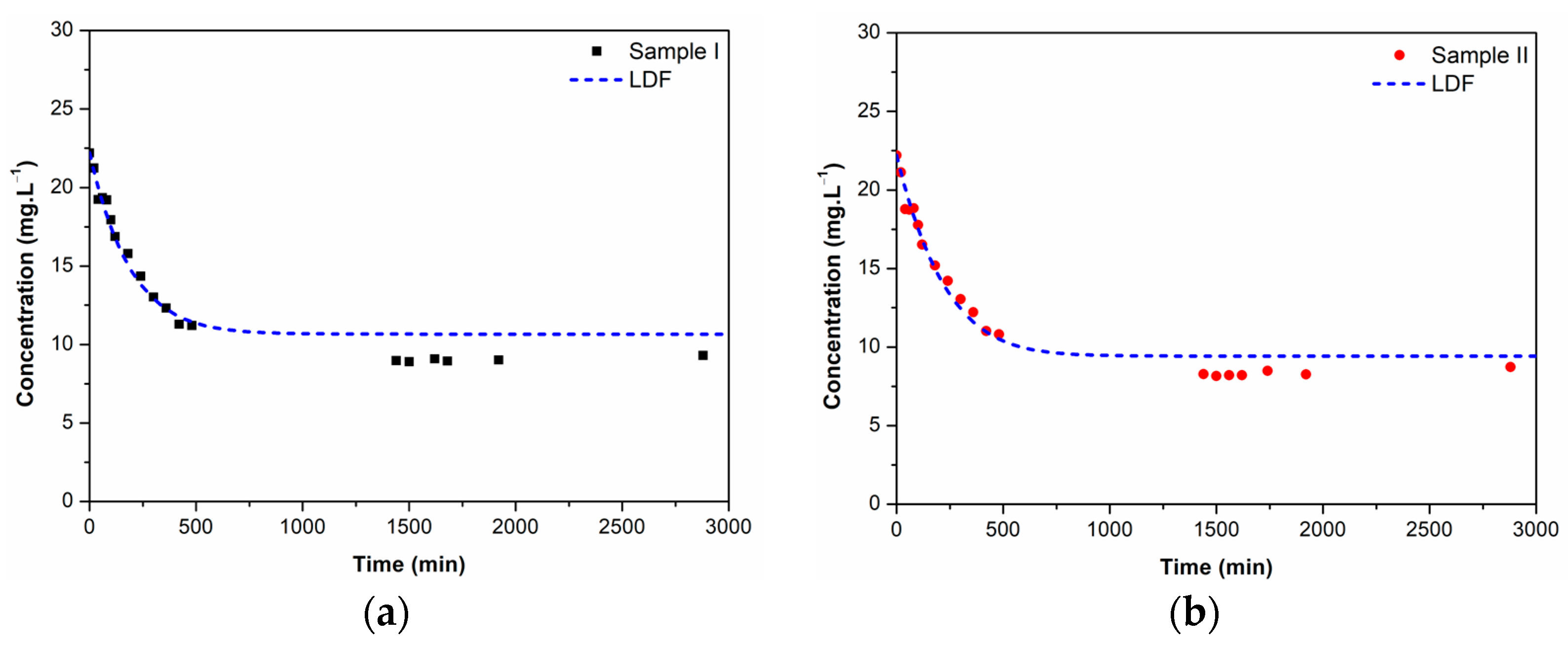
Kinetic tests were performed to investigate the time-dependent evolution of the adsorption process. Figure 11 shows the experimental CQ concentration profiles obtained during the kinetics tests, together with the predictions of the LDF model under the same operating conditions. The estimated model parameters are summarized in Table 5. Both formulations exhibited similar kinetic behavior, characterized by a pronounced decrease in CQ concentration during the first 500 min, followed by a slower approach to equilibrium. As shown in Table 5, the parameters confirm that the LDF model provides a satisfactory representation of the experimental data, with coefficients of determination (R2) exceeding 0.93 for both systems.
It is suggested that during adsorption using the SA/GO-Cotton composite, the protonated CQ molecules would interact with the negative active sites on the adsorbent surface. Then, CQ molecules diffuse into the adsorbent pores to access other active sites, normally in a slower step, which is the limiting stage [8,9]. As suggested in previous works, it is possible that CQ adsorption on the SA/GO-Cotton microfibers hydrogels surface may not only occur via electrostatic interactions between the negatively charged functional groups on the adsorbents surface and the protonated CQ molecules but also through hydrogen bonds and π–π interactions [10,12,37].

4. Conclusions

In this work, additive manufacturing was applied for DIW 3D printing of bionanocomposite hydrogels formulated based on SA, GO, and cotton microfibers. The hydrogel samples were characterized in terms of their mechanical properties, morphology, and physicochemical composition. An increase in the GO content and a reduction in water content were observed to significantly enhance yield stress and viscosity, crucial for maintaining the shape fidelity during 3D printing. Although shape recovery tests revealed that the recovery was not 100%, the results from 3D printing demonstrated that the recovery was sufficient for successful hydrogel printing. SEM micro images indicated the presence of thin GO layers interacting with the polymer matrix and cotton microfibers, resulting in 3D disordered porous microstructures. FTIR spectra revealed the presence of oxygen functional groups, and zeta potential measurements showed that composites are negatively charged at pH ≥ 2. The adsorption capacity of the 3D-printed hydrogels for aqueous CQ was evaluated in terms of pH effect, adsorption equilibrium, and kinetics, showing a maximum adsorption capacity of approximately 25 mg∙g−1 at 25 °C and pH ~6.1.
Overall, the formulations proved stable for 3D printing and effective for CQ removal, highlighting their potential as adsorbents for pharmaceutical contaminants in water. Importantly, the ability to print the hydrogel paste enables precise structuring of the material, which can be further explored to optimize performance and develop tailored formats for advanced applications, such as fixed-bed adsorption systems.

Supplementary Materials

The following supporting information can be downloaded at https://www.mdpi.com/article/10.3390/jcs9120673/s1, Figure S1: Evolution of adsorption capacity over time for the 4-layer and 12-layer parts.

Author Contributions

N.B.V.S.: conceptualization, methodology, investigation, data curation, formal analysis, writing—original draft, review and editing. C.M.B.d.A.: methodology, investigation, data curation, formal analysis, writing—original draft, review and editing. M.S.C.A.B.: conceptualization, investigation, review and editing. Y.A.M.: methodology, investigation, review and editing. C.G.S.: characterization, review and editing. M.G.G.: characterization, review and editing. J.L.S.-S.: investigation, review and editing. A.B.: funding acquisition, review and editing. J.V.F.L.C.: supervision, funding acquisition, project administration, review and editing. M.A.d.M.S.: supervision, funding acquisition, project administration, review and editing. A.F.P.F.: conceptualization, supervision, funding acquisition, project administration, review and editing. All authors have read and agreed to the published version of the manuscript.

Funding

This work was financially supported by Fundação para a Ciência e a Tecnologia, I.P./MCTES through national funds: LSRE-LCM, UID/50020/2025; and ALiCE, LA/P/0045/2020 (DOI: 10.54499/LA/P/0045/2020); the Brazilian National Council for Scientific and Technological Development (CNPq, Brazil); and the Coordination for the Improvement of Higher Education Personnel (CAPES, Brazil; Finance Code 001). Margarida S.C.A. Brito acknowledges the 6th edition of FCT Individual Call to Scientific Employment Stimulus—“O-MIX—Mixing Principles in Modulated Flow Reactors” (DOI: 10.54499/2023.06416.CEECIND/CP2834/CT0008). This work is within the activities of the project TED2021-130147B-C21 and PID2022-9136816OB-I00, funded by MCI, Spain, and PID2023-147456OB-C22, funded by MICIU, Spain.

Data Availability Statement

The data that support the findings of this study are available from the corresponding author upon reasonable request.

Conflicts of Interest

The authors declare no conflicts of interest.

Abbreviations

The following abbreviations are used in this manuscript:
3TTTThree-Interval Thixotropy Test
AICAkaike Information Criterion
AMAdditive Manufacturing
CQChloroquine
DIWDirect Ink Writing
FCLFresh Cotton Linters
FTIRFourier Transform Infrared Spectroscopy
GOGraphene Oxide
HPHHigh-Pressure Homogenizer
LDFLinear Driving Force
LVELinear Viscoelastic Region
SASodium Alginate
SDStandard Deviation
SEMScanning Electron Microscopy

References

  1. Ehrmann, G.; Ehrmann, A. 3D printing of shape memory polymers. J. Appl. Polym. Sci. 2021, 138, 50847. [Google Scholar] [CrossRef]
  2. Praveena, B.A.; Lokesh, N.; Buradi, A.; Santhosh, N.; Praveena, B.L.; Vignesh, R. A comprehensive review of emerging additive manufacturing (3D printing technology): Methods, materials, applications, challenges, trends and future potential. Mater. Today Proc. 2022, 52, 1309–1313. [Google Scholar] [CrossRef]
  3. Jiménez, M.; Romero, L.; Domínguez, I.A.; Espinosa, M.d.M.; Domínguez, M. Additive Manufacturing Technologies: An Overview about 3D Printing Methods and Future Prospects. Complexity 2019, 2019, 9656938. [Google Scholar] [CrossRef]
  4. Wang, Q.; Sun, J.; Yao, Q.; Ji, C.; Liu, J.; Zhu, Q. 3D printing with cellulose materials. Cellulose 2018, 25, 4275–4301. [Google Scholar] [CrossRef]
  5. Valentin, T.M.; Landauer, A.K.; Morales, L.C.; DuBois, E.M.; Shukla, S.; Liu, M.; Valentin, L.H.S.; Franck, C.; Chen, P.-Y.; Wong, I.Y. Alginate-graphene oxide hydrogels with enhanced ionic tunability and chemomechanical stability for light-directed 3D printing. Carbon 2019, 143, 447–456. [Google Scholar] [CrossRef]
  6. Yuan, J.; Yi, C.; Jiang, H.; Liu, F.; Cheng, G.J. Direct Ink Writing of Hierarchically Porous Cellulose/Alginate Monolithic Hydrogel as a Highly Effective Adsorbent for Environmental Applications. ACS Appl. Polym. Mater. 2021, 3, 699–709. [Google Scholar] [CrossRef]
  7. Marques, M.P.; Sanchez-Salvador, J.L.; Monte, M.C.; Blanco, A.; Santos, R.J.; Dias, M.M.; Manrique, Y.A.; Brito, M.S.C.A. Development of O/W Pickering Emulsions Stabilized with Leek Leaf Trimmings Using Batch and Continuous Modes. Food Bioprocess Technol. 2024, 17, 3191–3206. [Google Scholar] [CrossRef]
  8. de Araujo, C.M.B.; Ghislandi, M.G.; Rios, A.G.; da Costa, G.R.B.; Nascimento, B.F.D.; Ferreira, A.F.P.; Sobrinho, M.A.d.M.; Rodrigues, A.E. Wastewater treatment using recyclable agar-graphene oxide biocomposite hydrogel in batch and fixed-bed adsorption column: Bench experiments and modeling for the selective removal of organics. Colloids Surf. A Physicochem. Eng. Asp. 2022, 639, 128357. [Google Scholar] [CrossRef]
  9. Gomes, B.F.M.L.; de Araújo, C.M.B.; Nascimento, B.F.D.; Freire, E.M.P.d.L.; Sobrinho, M.A.D.M.; Carvalho, M.N. Synthesis and application of graphene oxide as a nanoadsorbent to remove Cd (II) and Pb (II) from water: Adsorption equilibrium, kinetics, and regeneration. Environ. Sci. Pollut. Res. 2022, 29, 17358–17372. [Google Scholar] [CrossRef]
  10. de Araujo, C.M.B.; Wernke, G.; Ghislandi, M.G.; Diório, A.; Vieira, M.F.; Bergamasco, R.; Sobrinho, M.A.d.M.; Rodrigues, A.E. Continuous removal of pharmaceutical drug chloroquine and Safranin-O dye from water using agar-graphene oxide hydrogel: Selective adsorption in batch and fixed-bed experiments. Environ. Res. 2023, 216, 114425. [Google Scholar] [CrossRef]
  11. Dada, A.O.; Inyinbor, A.A.; Bello, O.S.; Tokula, B.E. Novel plantain peel activated carbon–supported zinc oxide nanocomposites (PPAC-ZnO-NC) for adsorption of chloroquine synthetic pharmaceutical used for COVID-19 treatment. Biomass Convers. Biorefinery 2023, 13, 9181–9193. [Google Scholar] [CrossRef]
  12. Januário, E.F.D.; Fachina, Y.J.; Wernke, G.; Demiti, G.M.M.; Beltran, L.B.; Bergamasco, R.; Vieira, A.M.S. Application of activated carbon functionalized with graphene oxide for efficient removal of COVID-19 treatment-related pharmaceuticals from water. Chemosphere 2022, 289, 133213. [Google Scholar] [CrossRef]
  13. Hummers, W.S.; Offeman, R.E. Preparation of Graphitic Oxide. J. Am. Chem. Soc. 1958, 80, 1339. [Google Scholar] [CrossRef]
  14. Sauerwein, M.; Zlopasa, J.; Doubrovski, Z.; Bakker, C.; Balkenende, R. Reprintable Paste-Based Materials for Additive Manufacturing in a Circular Economy. Sustainability 2020, 12, 8032. [Google Scholar] [CrossRef]
  15. Langmuir, I. The Adsorption of Gases on Plane Surfaces of Glass, Mica and Platinum. J. Am. Chem. Soc. 1918, 40, 1361–1403. [Google Scholar] [CrossRef]
  16. de Vargas Brião, G.; Hashim, M.A.; Chu, K.H. The Sips isotherm equation: Often used and sometimes misused. Sep. Sci. Technol. 2023, 58, 884–892. [Google Scholar] [CrossRef]
  17. Chu, K.H. Fitting a little-known isotherm equation to S-shaped adsorption equilibrium data. Sep. Purif. Technol. 2021, 259, 118079. [Google Scholar] [CrossRef]
  18. Chen, L.; Li, Y.; Du, Q.; Wang, Z.; Xia, Y.; Yedinak, E.; Lou, J.; Ci, L. High performance agar/graphene oxide composite aerogel for methylene blue removal. Carbohydr. Polym. 2017, 155, 345–353. [Google Scholar] [CrossRef] [PubMed]
  19. Belattmania, Z.; Kaidi, S.; El Atouani, S.; Katif, C.; Bentiss, F.; Jama, C.; Reani, A.; Sabour, B.; Vasconcelos, V. Isolation and FTIR-ATR and 1H NMR Characterization of Alginates from the Main Alginophyte Species of the Atlantic Coast of Morocco. Molecules 2020, 25, 4335. [Google Scholar] [CrossRef]
  20. de Araujo, C.M.B.; Rios, A.G.; Ghislandi, M.G.; Ferreira, A.F.P.; da Motta Sobrinho, M.A.; Rodrigues, A.E. Separation of the heme protein cytochrome C using a 3D structured graphene oxide bionanocomposite as an adsorbent. Soft Matter 2024, 20, 1475–1485. [Google Scholar] [CrossRef]
  21. Zhang, L.; Li, X.; Zhang, S.; Gao, Q.; Lu, Q.; Peng, R.; Xu, P.; Shang, H.; Yuan, Y.; Zou, H. Micro-FTIR combined with curve fitting method to study cellulose crystallinity of developing cotton fibers. Anal. Bioanal. Chem. 2021, 413, 1313–1320. [Google Scholar] [CrossRef]
  22. Liu, H.; Wang, B.; Liu, H.; Zheng, Y.; Li, M.; Tang, K.; Pan, B.; Liu, C.; Luo, J.; Pang, X. Multi-crosslinked robust alginate/polyethyleneimine modified graphene aerogel for efficient organic dye removal. Colloids Surf. A Physicochem. Eng. Asp. 2024, 683, 133034. [Google Scholar] [CrossRef]
  23. Liu, H.; Pan, B.; Wang, Q.; Niu, Y.; Tai, Y.; Du, X.; Zhang, K. Crucial roles of graphene oxide in preparing alginate/nanofibrillated cellulose double network composites hydrogels. Chemosphere 2021, 263, 128240. [Google Scholar] [CrossRef]
  24. Liu, S.; Bastola, A.K.; Li, L. A 3D Printable and Mechanically Robust Hydrogel Based on Alginate and Graphene Oxide. ACS Appl. Mater. Interfaces 2017, 9, 41473–41481. [Google Scholar] [CrossRef] [PubMed]
  25. Olate-Moya, F.; Arens, L.; Wilhelm, M.; Mateos-Timoneda, M.A.; Engel, E.; Palza, H. Chondroinductive Alginate-Based Hydrogels Having Graphene Oxide for 3D Printed Scaffold Fabrication. ACS Appl. Mater. Interfaces 2020, 12, 4343–4357. [Google Scholar] [CrossRef] [PubMed]
  26. Flores-Hernández, C.G.; Cornejo-Villegas, M.d.l.A.; Moreno-Martell, A.; Del Real, A. Synthesis of a Biodegradable Polymer of Poly (Sodium Alginate/Ethyl Acrylate). Polymers 2021, 13, 504. [Google Scholar] [CrossRef]
  27. Kowalonek, J.; Łukomska, B.; Szydłowska-Czerniak, A. Color, Structure, and Thermal Stability of Alginate Films with Raspberry and/or Black Currant Seed Oils. Molecules 2025, 30, 245. [Google Scholar] [CrossRef]
  28. D’Acierno, F.; Hamad, W.Y.; Michal, C.A.; MacLachlan, M.J. Thermal Degradation of Cellulose Filaments and Nanocrystals. Biomacromolecules 2020, 21, 3374–3386. [Google Scholar] [CrossRef] [PubMed]
  29. Tegou, E.; Pseiropoulos, G.; Filippidou, M.K.; Chatzandroulis, S. Low-temperature thermal reduction of graphene oxide films in ambient atmosphere: Infra-red spectroscopic studies and gas sensing applications. Microelectron. Eng. 2016, 159, 146–150. [Google Scholar] [CrossRef]
  30. Akinyi, C.; Longun, J.; Chen, S.; Iroh, J.O. Decomposition and Flammability of Polyimide Graphene Composites. Minerals 2021, 11, 168. [Google Scholar] [CrossRef]
  31. Zhao, W.; Qi, Y.; Wang, Y.; Xue, Y.; Xu, P.; Li, Z.; Li, Q. Morphology and Thermal Properties of Calcium Alginate/Reduced Graphene Oxide Composites. Polymers 2018, 10, 990. [Google Scholar] [CrossRef] [PubMed]
  32. Lemus, L.R.; Azamar-Barrios, J.; Ortiz-Vazquez, E.; Quintana-Owen, P.; Freile-Pelegrín, Y.; Perera, F.G.; Madera-Santana, T. Development and physical characterization of novel bio-nanocomposite films based on reduced graphene oxide, agar and melipona honey. Carbohydr. Polym. Technol. Appl. 2021, 2, 100133. [Google Scholar] [CrossRef]
  33. Tabish, M.S.; Hanapi, N.S.M.; Ibrahim, W.N.W.; Saim, N.; Yahaya, N. Alginate-Graphene Oxide Biocomposite Sorbent for Rapid and Selective Extraction of Non-Steroidal Anti-Inflammatory Drugs Using Micro-Solid Phase Extraction. Indones. J. Chem. 2019, 19, 684–695. [Google Scholar] [CrossRef]
  34. Kumar, N.; Kumar, B.; Gupta, H.; Kumar, A. Development and Evaluation of Cellulose/Graphene-Oxide Based Composite for Removing Phenol from Aqueous Solutions. Polymers 2023, 15, 572. [Google Scholar] [CrossRef]
  35. Wang, X.-X.; Liu, L.; Li, Q.-F.; Xiao, H.; Wang, M.-L.; Tu, H.-C.; Lin, J.-M.; Zhao, R.-S. Nitrogen-rich based conjugated microporous polymers for highly efficient adsorption and removal of COVID-19 antiviral drug chloroquine phosphate from environmental waters. Sep. Purif. Technol. 2023, 305, 122517. [Google Scholar] [CrossRef]
  36. Atunwa, B.T.; Dada, A.O.; Inyinbor, A.A.; Pal, U. Synthesis, physiochemical and spectroscopic characterization of palm kernel shell activated carbon doped AgNPs (PKSAC@AgNPs) for adsorption of chloroquine pharmaceutical waste. Mater. Today Proc. 2022, 65, 3538–3546. [Google Scholar] [CrossRef]
  37. Nascimento, B.F.D.; de Araújo, C.M.B.; del Carmen Pinto Osorio, D.; Silva, L.F.O.; Dotto, G.L.; Cavalcanti, J.V.F.L.; Sobrinho, M.A.d.M. Adsorption of chloroquine, propranolol, and metformin in aqueous solutions using magnetic graphene oxide nanocomposite. Environ. Sci. Pollut. Res. 2023, 30, 85344–85358. [Google Scholar] [CrossRef]
  38. Nkwoada, A.U.; Alisa, C.D.; Oguwike, M.M.; Amaechi, I.A. Removal of Aspirin and Chloroquine from Aqueous Solution Using Organo-Clay Derived from Kaolinite. J. Phys. Chem. Mater. 2022, 9, 1–11. [Google Scholar]
  39. Santos, R.K.; Nascimento, B.F.; de Araújo, C.M.; Cavalcanti, J.V.; Bruckmann, F.S.; Rhoden, C.R.; Dotto, G.L.; Oliveira, M.L.; Silva, L.F.; Sobrinho, M.A.M. Removal of chloroquine from the aqueous solution by adsorption onto açaí-based biochars: Kinetics, thermodynamics, and phytotoxicity. J. Mol. Liq. 2023, 383, 122162. [Google Scholar] [CrossRef]
  40. Valadez-Renteria, E.; Oliva, J.; Navarro-Garcia, N.; Rodriguez-Gonzalez, V. An eco-friendly cellulose support functionalized with tin titanate nanoparticles for the fast removal of clonazepam drug from the drinking water: Adsorption mechanisms. Environ. Sci. Pollut. Res. 2023, 30, 58156–58168. [Google Scholar] [CrossRef] [PubMed]
Figure 1. (a) DIW-3D printing system used in this work; (b) extrusion of SA/OG-FCL hydrogel; (c) SA/GO-FCL hydrogel sample obtained on the 3D printer with 4 layers.
Jcs 09 00673 g001
Figure 2. (a) Freshly prepared 3D-printed hydrogels; (b) freeze-dried samples; SEM micrographs of freeze-dried samples: (c) Sample I, 2k×; (d) Sample I, 5k×; (e) Sample II, 2k×; (f) Sample II, 5k×.
Jcs 09 00673 g002
Figure 3. Spectra of the freeze-dried 3D-printed bionanocomposite hydrogel samples: (a) FTIR; (b) Raman.
Jcs 09 00673 g003
Figure 4. Zeta potential measurements for both formulations of the composites (Sample I and Sample II) (average SD = 0.1 mV).
Jcs 09 00673 g004
Figure 5. Viscosity curves for a shear rate range from 0.001 to 600 s−1 for both Sample I and Sample II and the respective power-law model.
Jcs 09 00673 g005
Figure 6. Amplitude sweeps for shear strain ranges from 0.1 to 100% for both Sample I and Sample II: (a) shear strain (%) versus G′ and G″; (b) shear stress (Pa) versus G′ and G″.
Jcs 09 00673 g006
Figure 7. (a) Frequency sweep for frequencies ranges from 1 to 25 Hz; (b) elastic recovery tests at three-time intervals for both formulations (Sample I and Sample II).
Jcs 09 00673 g007
Figure 8. Mass-loss profiles obtained by TGA over the temperature range of 30–1000 °C.
Jcs 09 00673 g008
Figure 9. Adsorption capacity for CQ as a function of initial pH (experimental conditions: t = 48 h; V = 100 mL; T = 25 °C; 200 rpm; average SD = 0.1 mg∙g−1).
Jcs 09 00673 g009
Figure 10. Adsorption equilibrium isotherms for CQ adsorption using the SA/GO-Cotton microfibers hydrogels as adsorbents (experimental conditions: t = 48 h; V = 100 mL; T = 25 °C; 200 rpm; average SD = 0.2 mg·g−1).
Jcs 09 00673 g010
Figure 11. Batch adsorption kinetics modeling for CQ adsorption using the SA/GO-Cotton microfibers hydrogels (experimental conditions: C0 ~22 mg∙L−1; V = 100 mL; T = 25 °C; 200 rpm; average SD = 0.01 mg∙L−1): (a) Sample I; (b) Sample II.
Jcs 09 00673 g011
Table 1. Quantities of raw materials used to produce the 3D-printed hydrogel samples.
SampleGO SuspensionFCL PulpSodium AlginateWater
gwt.%gwt.%gwt.%gwt.%
(I)25.1350.014.3828.61.933.88.8317.6
(II)32.9265.614.3328.71.883.71.022.0
Table 2. Recoveries (%) for each formulation were determined from 3TTT tests.
Formulation Recoveries (%)
Sample I65.920.130.0
Sample II48.616.334.0
Table 3. Estimated adsorption isotherms parameters.
ModelParameterSample ISample II
LangmuirqmL (mg∙g−1)37.8332.89
KL (L∙mg−1)0.0660.112
Adj. R20.9320.945
KrishnamurtiN0 (mg∙g−1)19.7323.17
K1 (L∙mg−1)0.6010.522
K223.9413.99
Adj. R20.9940.988
SipsqmS (mg∙g−1)21.0124.96
m2.612.05
KS (L∙mg−1)m1.25 × 10−23.44 × 10⁻²
Adj. R20.9840.973
Table 4. Comparison of the maximum adsorption capacity values for chloroquine adsorption obtained in previous recent works using different adsorbents.
AdsorbentExperimental Conditionsqm Estimated (mg∙g−1)Reference
Agar/GOC0 = 20 mg∙L−1; V = 25 mL; t = 6 h; T = 24 °C; 250 rpm; pH ~6.053.66 1[10]
BPT-DMB-CMPmads = 20 mg; V = 10 mL; t = 12 h; T = 35 °C; 260 rpm84.84 1[35]
PKSAC@AgNPs nanocompositemads = 100 mg; V = 100 mL; t = 3 h; T = 30 °C; 120 rpm15.51 2[36]
Magnetic GO nanocompositemads = 10 mg; V = 25 mL; t = 3 h; T = 25 °C; 200 rpm; pH ~6.044.01 2[37]
Treated Clay (C2)mads = 50 mg; V = 5 mL; t = 50 min; T = 25 °C; pH = 5.854.94 1[38]
Organo-Clay (C3) 84.03 1
Açaí-based biochar (CA)mads = 50 mg; V = 50 mL; T = 25 °C; pH = 6.84; 200 rpm15.56 1[39]
Açaí-based biochar (CAA)mads = 20 mg; V = 50 mL; T = 25 °C; pH = 6.84; 200 rpm40.31 1
GAC-GOmads = 30 mg; V = 20 mL; T = 25 °C; pH ~6.0; 150 rpm29.36 1[12]
SA/GO-Cotton microfibers (Sample II)mads ~60 mg (dry basis); V = 100 mL; t = 48 h; T = 25 °C; 200 rpm; pH ~6.124.96 2This work
1 Value estimated by Langmuir isotherm model. 2 Value estimated by Sips isotherm model.
Table 5. Estimated adsorption kinetics parameters for LDF model.
ParameterSample ISample II
kLDF (min−1)0.0050.004
DLDF (m2∙min−1)5.6 × 10−104.4 × 10⁻¹⁰
R20.9370.969
SSRes18.912.4
Disclaimer/Publisher’s Note: The statements, opinions and data contained in all publications are solely those of the individual author(s) and contributor(s) and not of MDPI and/or the editor(s). MDPI and/or the editor(s) disclaim responsibility for any injury to people or property resulting from any ideas, methods, instructions or products referred to in the content.