Article

A Study on the Adsorption of Cd(II) in Aqueous Solutions by Fe-Mn Oxide-Modified Algal Powder Gel Beads


by
Saijun Zhou
1,2,*,
Zixuan Peng
1,
Jiarong Zou
1,
Jinsui Qin
1,
Renjian Deng
1,
Chuang Wang
1,
Yazhou Peng
1,
Andrew Hursthouse
1,3 and
Mingjun Deng
4,*
1
College of Civil Engineering, Hunan University of Science and Technology, Xiangtan 411201, China
2
Hunan University of Science and Technology Engineering Testing Co., Ltd., Xiangtan 411201, China
3
School of Computing, Engineering and Physical Sciences, University of the West of Scotland, Paisley PA1 2BE, UK
4
School of Medical Humanity and Information Management, Hunan University of Medicine, Huaihua 418000, China
*
Authors to whom correspondence should be addressed.
J. Compos. Sci. 2025, 9(11), 606; https://doi.org/10.3390/jcs9110606
Submission received: 17 September 2025 / Revised: 17 October 2025 / Accepted: 3 November 2025 / Published: 5 November 2025
(This article belongs to the Section Composites Applications)

Abstract

Using Microcystis aeruginosa as the raw material, the microalgae was modified through a potassium permanganate–ferrous sulfate treatment process to prepare Fe-Mn oxide-modified algal powder. Sodium alginate was then combined with this modified powder to create Fe-Mn-modified algal powder gel beads, which were employed for the adsorption of Cd(II) from water. At pH = 9, with dosage of 6 g·L−1 and a contact time of 8 h, the Cd(II) solution at an initial level of 1.0 mg·L−1 achieved a removal efficiency of 96%, and the maximum adsorption capacity is 15.06 mg·g−1. The adsorption behavior conformed to the Langmuir isotherm and obeyed the pseudo-second-order kinetics, and was primarily governed by chemical adsorption. This involved complexation with hydroxyl (-OH) and carboxyl (-COO) functional groups, the ion exchange of Ca2+ with Cd(II), and surface complexation on Fe-Mn oxides. This study provides a valuable basis for the resource utilization of algae and the remediation of Cd contamination.

1. Introduction

Cadmium (Cd), as a typical heavy-metal pollutant, possesses notable stability, strong toxicity, and a pronounced potential for biological accumulation [1,2]. Cd can easily accumulate along the food chain, resulting in risks to human health by impairing the respiratory tract, renal function, and skeletal system [3,4,5,6]. Consequently, the development of effective remediation technologies for cadmium contamination has become a key topic of investigation in the field of environmental science.
At present, adsorption has become an effective technique for the elimination of heavy-metal contaminants from aquatic environments, owing to its superior performance and strong environmental compatibility [7,8]. Microcystis aeruginosa is a typical bloom-forming cyanobacterium found in eutrophic freshwater systems, capable of rapid proliferation within a short timeframe [9]. The carboxyl and phosphate groups present on its cell surface are capable of interacting with and binding heavy-metal ions [10,11]. Primitive algal biomass has limited adsorption capacity and easy leaching of organic matter in practical applications, while modified activated algal bodies can significantly enhance surface activity and stability [12]. Fe-Mn modification is an efficient algal modification method. Using this modification technique, Zhao Jijin and his team enhanced the ability of Microcystis aeruginosa to adsorb Sb(III), achieving an increase of over tenfold compared with the unmodified cells; this improvement can be explained by enhanced surface complexation provided by the generated Fe-Mn oxides [13]. Compared with other inorganic ion-exchange materials such as zirconium phosphate (ZrP), which, along with its composites, exhibits excellent performance in removing heavy metals like Cd(II) [14], their practical application in large-scale wastewater treatment is limited by high synthesis costs, poor regeneration efficiency, and the risk of secondary pollution. In contrast, Fe-Mn oxides effectively marry the notable adsorption capacity of iron oxides with the powerful oxidizing functionality of manganese oxides, allowing for the highly efficient elimination of heavy-metal ions through multiple mechanisms, including complexation, precipitation, and redox reactions [15]. Moreover, Fe-Mn oxides offer additional advantages, such as environmental friendliness, wide availability, facile magnetic separation, and robust regenerability [15]. However, the practical application of modified algal powders still presents operational challenges, including solid–liquid separation difficulties and the risk of secondary pollution [16]. Sodium alginate is a widely used immobilization material due to its abundant availability, excellent biocompatibility, and biodegradability. In addition, the numerous carboxyl and hydroxyl groups on its polymer chains provide strong binding sites for heavy-metal ions [17,18]. Petrovič et al. immobilized Chlorella vulgaris by using alginate, and showed that Chlorella vulgaris immobilized in Ca-alginate achieved high adsorption rates for Cu, Cd, and Ni, with values of 97%, 74%, and 51%, respectively [19].
This study prepared renewable Fe-Mn-modified algal powder gel beads by combining Fe-Mn modification with a sodium alginate–calcium chloride gelation of Microcystis aeruginosa. The removal performance of these beads for Cd(II) in aqueous solution was investigated, along with the influence of environmental conditions and the optimization of preparation conditions. Furthermore, the adsorption mechanism was explored to enable the resource utilization of algal biomass and contribute to cadmium contamination control.

2. Materials and Methods

2.1. Experimental Reagents and Instruments

Main experimental reagents: sodium alginate (C6H7NaO6, chemically pure, Sinopharm, Beijing, China); potassium permanganate (KMnO4, analytically pure, Macklin, Shanghai, China); ferrous sulfate heptahydrate (FeSO4·7H2O, analytically pure, Macklin); cadmium chloride, half (pentahydrate) (CdCl2·5/2H2O, analytically pure, Macklin); anhydrous calcium chloride (CaCl2, analytically pure, Beijing Chemical Reagent, Beijing, China).
Main experimental instruments: Atomic Absorption Spectrophotometer (AA-7800, Shimadzu Instruments, Suzhou, China); Constant-Temperature Incubation Shaker (Ts-2102c, Zhengrong Experimental Instrument, Changzhou, China); Biochemical Incubator (SPX-150B III, Yibo Gaoke Experimental Instrument, Tianjin, China); High-Speed Refrigerated Centrifuge (TGL16M, Kaida Scientific Instrument, Changsha, China).

2.2. Preparation of Fe-Mn-Modified Algal Powder Gel Beads

Cultivation of strains: The Microcystis aeruginosa strain used in this study was Fachb-905. The cyanobacterium was cultured in BG-11 medium under controlled conditions: the temperature was maintained at 25.0 °C, with a 12 h light (light intensity at 2500 Lux) and 12 h dark regime.
Preparation of Fe-Mn oxide-modified algae powder: Microcystis aeruginosa was centrifuged at 5000 r·min−1 (5 min), and after removing the supernatant, the cell number was diluted to 106 cells·ml−1 with ultrapure water. A total of 400 mL of Microcystis solution was placed into a beaker, with a fixed Fe-Mn molar ratio (1:3) [13], and 5 mL of 120 μmol·L−1 KMnO4 solution was firstly added and stirred at 200 r·min−1 for 2 min, then 5 mL of 360 μmol·L−1 FeSO4-7H2O was added into it and stirred at 40 r·min−1 (60 min); the supernatant was subsequently removed and left to settle for 1 h. The lower solid–liquid mixture was centrifuged at 5000 r·min−1 (5 min), and the solids were subjected to an alkaline wash with 0.1 mol·L−1 NaOH for 6 h. The solids were washed repeatedly with ultrapure water to attain a neutral pH after centrifugation, t. Finally, the product was freeze-dried for 48 h, ground into a powder to obtain Fe-Mn-modified algal powder, and stored in a desiccator for future use.
Preparation of Fe-Mn-modified algal powder gel beads: Add 0.1 g of sodium alginate into 10 mL of pure water, which is heated to 80 °C to dissolve, and then cooled to 25 °C. Then, add 50 mg of Fe-Mn-modified algal powder, stir them well, and pour them into a 10 mL syringe; then, deposit 20 mL·min−1 drops into the pre-configured 4 °C and 3% CaCl2 solution. This process was conducted in the constant-temperature shaker at 80 r·min−1, and the formed gel particles were kept static at room temperature for 24 h. After that, the gel particles were washed with sterile saline for 3 times, and the Fe-Mn-modified algal powder gel beads were produced.
Optimization of preparation conditions: A one-factor-at-a-time experiment was employed to optimize the preparation conditions of the Fe-Mn-modified algal powder gel beads. By varying a single preparation parameter while keeping other parameters constant, a series of gel beads were fabricated. The specific preparation parameters investigated were as follows: KMnO4-FeSO4 solution (mL·L−1), mass of algal powder (g·L−1), and mass of sodium alginate (g·L−1). For each set, 50 mL of a 1 mg·L−1 solution of Cd(II) (pH = 9) was transferred in a conical flask (100 mL). Then, 5.0 g of the beads was introduced, and the mixture was oscillated over 12 h at 25 °C. The removal rate was then determined.

2.3. Material Characterization

The microstructural morphology of the gel beads were analyzed with a field-emission scanning electron microscope (Sigma 300, Zeiss, Jena, Germany). The instrument was set to an accelerating voltage of 15.0 kV and a probe current of 5 nA, under high-vacuum conditions. The elemental composition and content of the sample surfaces were analyzed using an energy-dispersive spectrometer (Ultim Extreme, Oxford Instruments, Abingdon, UK) attached to the SEM. The total pore volume, specific surface area, and average pore diameter were tested by physical adsorption analyzer (3Flex, Micromeritics, Norcross, GA, USA). Approximately 150 mg of the freeze-dried and ground samples were used for each test. Fourier transform infrared spectroscopy (Nicolet 670, Thermo Fisher Instruments, Waltham, MA, USA) was employed to identify changes in active functional groups of the samples prior to and following the adsorption process. Spectra were recorded between 4000 cm−1 and 400 cm−1, with about 30 mg of finely ground samples for each measurement. Chemical composition and oxidation states of the elements were analyzed by X-ray photoelectron spectroscopy (EscaLab 250Xi, Thermo Fisher Instruments, Waltham, MA, USA). Approximately 250 mg of the freeze-dried and ground samples were used, and C1s (284.8 eV) was adopted as a reference for energy calibration. The obtained spectra were processed using the Advantage (v5.9931) software for peak fitting and data analysis.

2.4. Adsorption Experiment

The solution of Cd(II) was adjusted to a predetermined initial pH using 1 mol·L−1 HCl and NaOH; then, it was filled with a certain amount of Fe-Mn-modified algal powder gel beads. After agitation for a defined period, the mixture was filtered and sampled, with the level of Cd(II) in the water sample subsequently measured.

3. Results and Discussion

3.1. Optimization of Conditions for Preparation

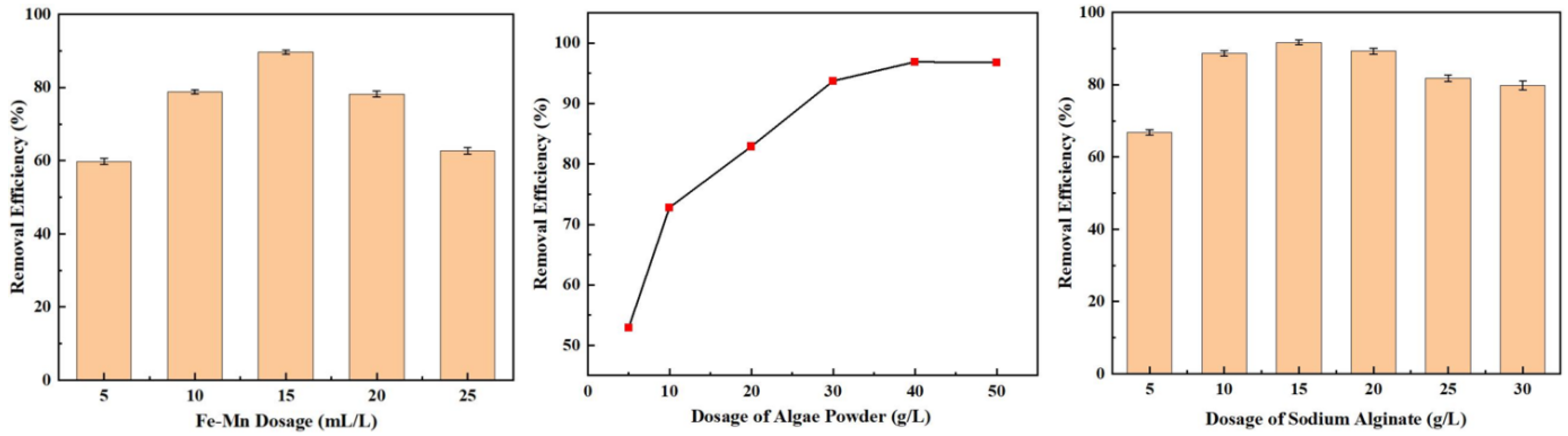
This section investigates the effects of KMnO4-FeSO4 solution, algal powder, and sodium alginate dosage on the adsorption performance. The experimental outcomes are shown in Figure 1, indicating that the optimal preparation conditions for the Fe-Mn-modified algal powder gel beads are as follows: KMnO4 and FeSO4 are added at 15 mL·L−1 each, algal powder is added at 40 g·L−1, and sodium alginate is added at 15 g·L−1.

3.2. Morphology and Properties of Fe-Mn-Modified Algal Powder Gel Beads

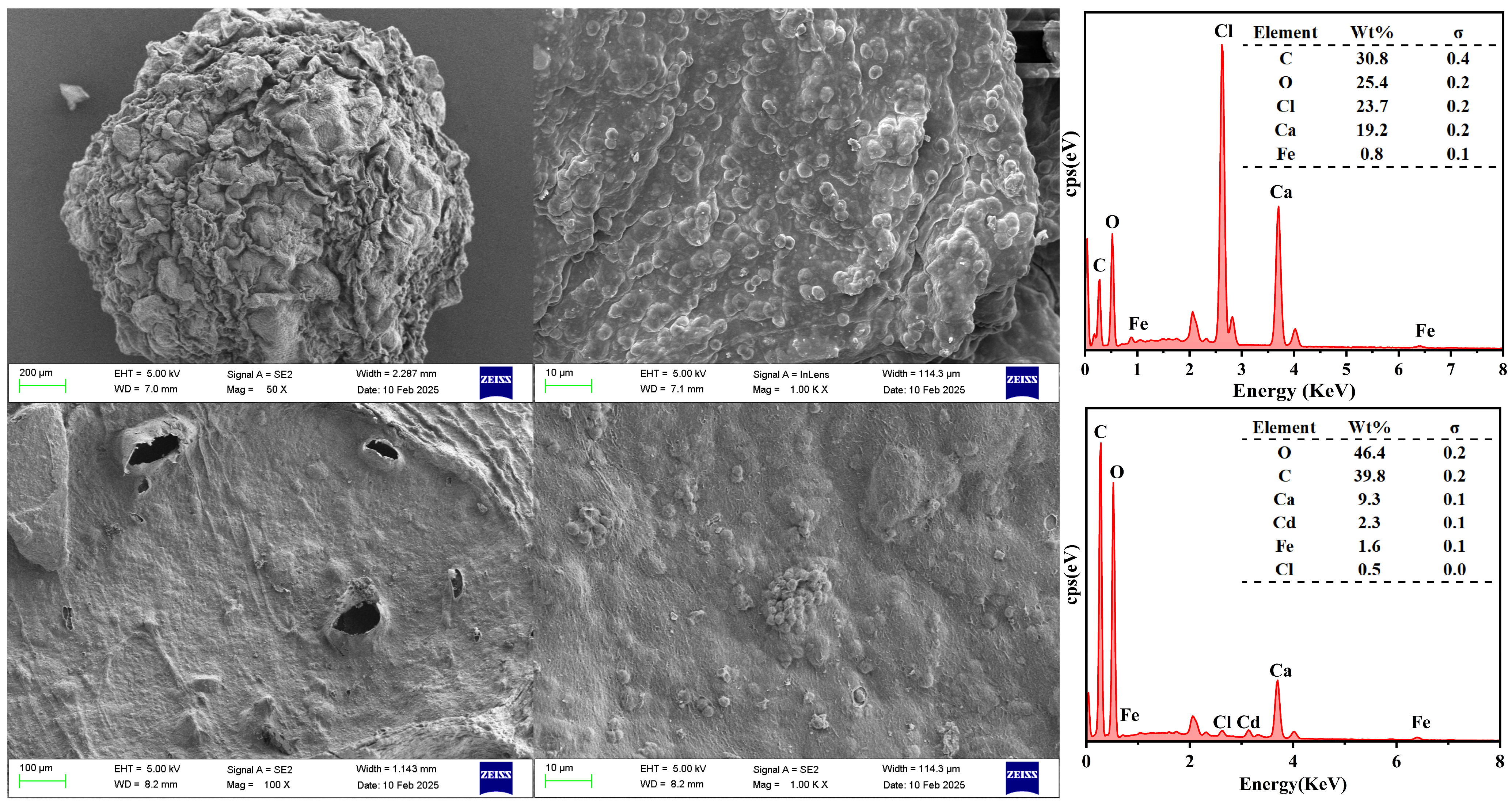
Figure 2 presents the SEM images and EDS analysis results of the Fe-Mn-modified algal powder gel beads prior to and following the adsorption. The diameter of Fe-Mn-modified algal powder gel beads is approximately 2 mm. After adsorption, the surface granular material of the Fe-Mn-modified algal powder gel beads was no longer full, and the surface became rough and wrinkled from uniformly smooth.
EDS analysis results show that the main elements contained in the Fe-Mn-modified algal powder gel beads are C (30.8%), O (25.4%), Cl (23.7%), Ca (19.2%), and Fe (0.8%). The presence of Cd(II) (2.3%) after adsorption indicates its successful adsorption onto the gel beads; the contents of C and O ions increased to 39.8% and 46.4%, respectively, and this increase can be certificated by the enhanced exposure of active sites throughout the organic skeletal structure, where oxygen-containing functional groups (-COO and -OH) bind with Cd(II) through complexation [20]. A decrease in Ca2+ and Cl concentrations to 9.3% and 0.5%, respectively, was observed, which can be attributed to an ion-exchange process involving Cd(II) and Ca2+; this result confirms that the ion exchange of Ca2+ with Cd(II) is a significant mechanism [21]. The Fe content increased slightly to 1.6%, suggesting its potential involvement in the adsorption process. Manganese (Mn) was not detected as it was below the detection limit of the instrument. Thus, the adsorption of cadmium ions is primarily attributed to the three-dimensional gel bead structure formed by the Fe-Mn-modified algal biomass carrier and the sodium alginate–calcium chloride cross-linked network.
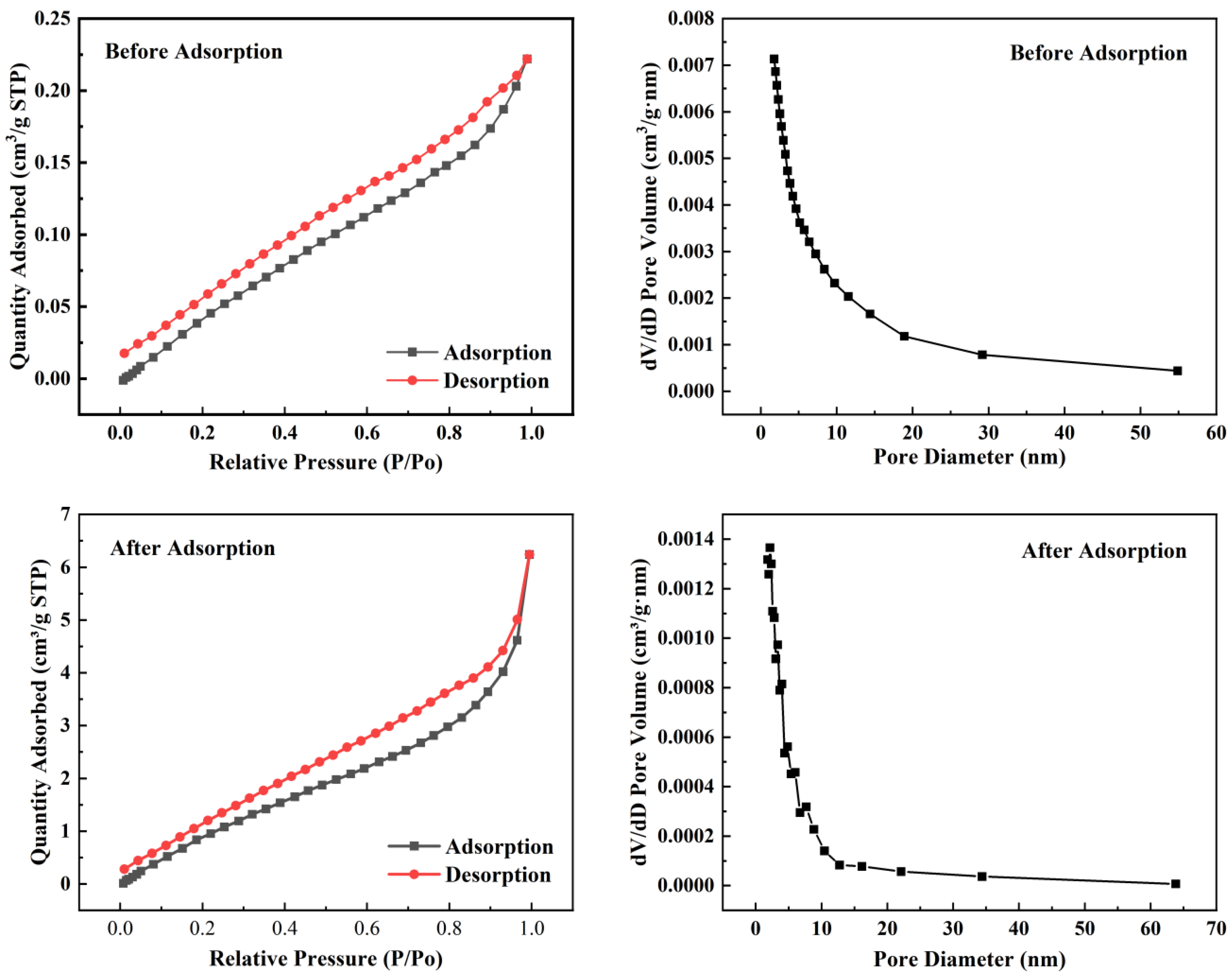
BET test results (Figure 3 and Table 1) show that after adsorbing Cd(II), the Fe-Mn-modified algal powder gel beads exhibited the following changes: the specific surface area declined from 9.3878 m2·g−1 to 7.1677 m2·g−1, while material exhibited an growth in total pore volume from 0.0077 cm3·g−1 to 0.0097 cm3·g−1, accompanied by an growth in average pore diameter from 4.6036 nm to 6.2373 nm. The decrease in specific surface area may be attributed to Cd(II) ions blocking some micropores (<2 nm). Conversely, the increase in pore size is likely related to swelling of the gel matrix or the accumulation of Cd(II) complexes, which may facilitate the diffusion of Cd(II) towards internal active sites [22]. In addition, changes in specific surface area and pore size may be accompanied by a certain degree of pore structure transformation. This phenomenon is similar to the structural adjustments observed in ion-exchange resins after loading metal ions. Specifically, the chelation of some Cd(II) ions with functional groups (e.g., -COO and -OH) leads to local contraction or expansion of the gel network, thereby altering the pore size distribution [23]. This structural change shows that the adsorption of Cd(II) not only alters the physical pore characteristics of the material but may also affect its internal diffusion and mass transfer processes. The modification with Fe-Mn oxides may also play a modulating role in this change. Nitrogen adsorption–desorption isotherms indicated the material possesses a mesoporous structure [24].

3.3. Effect of pH

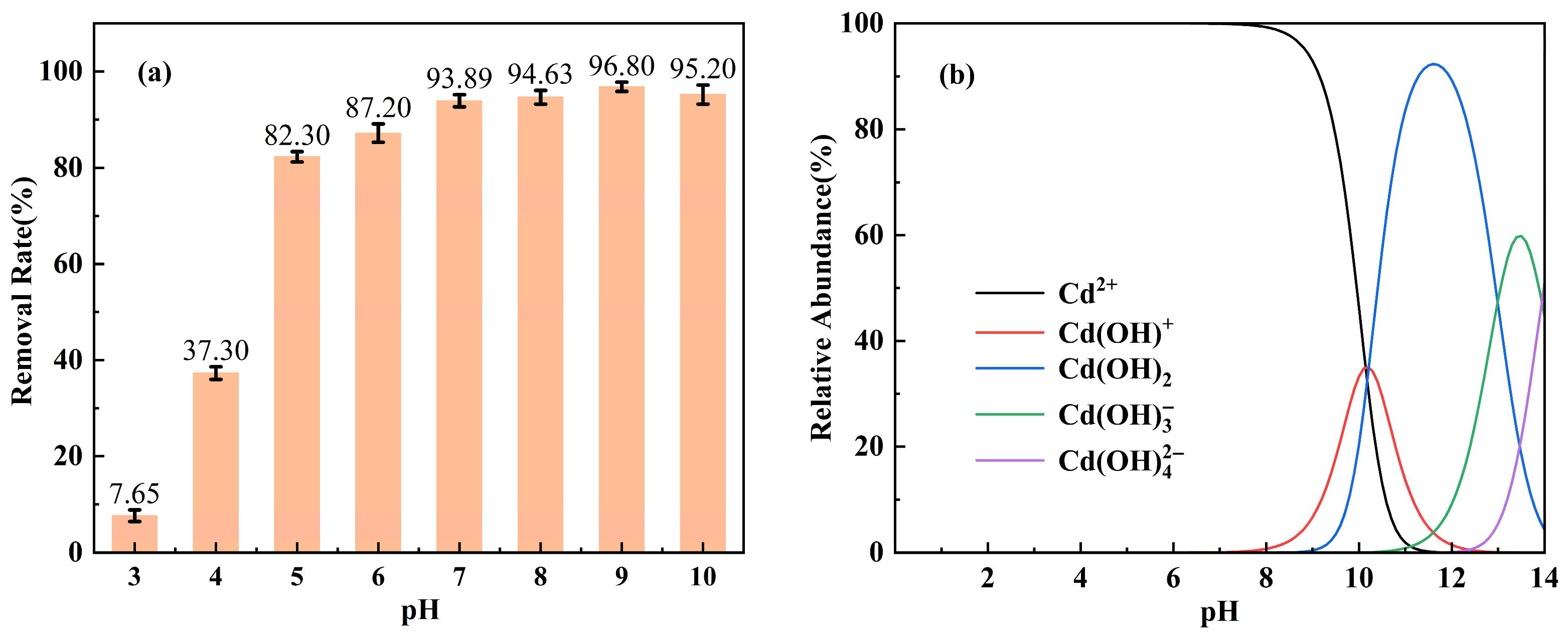
The adsorption rate and distribution of Cd species under different pH conditions are presented in Figure 4. At pH = 3, the removal rate was 7.65%. This is because the abundant H+ protonates the functional groups, creating electrostatic repulsion against the positively charged cadmium ions [25]. Across the pH range of 3 to 10, the removal efficiency showed a sustained upward trend, surpassing 90% at pH 7 and peaking at 96.8% when the pH was elevated to 9. This increase is attributed to the decreasing H+ concentration in solution as the pH rises. This leads to deprotonation of the adsorbent surface, thereby strengthening the electrostatic attraction of functional groups with Cd(II) [26]. As the pH continued to rise to 10, the removal rate is 95.2%. This measured “removal rate” is the result of combined adsorption and precipitation. Compared to the optimal pH = 9 condition (96.8%), the removal rate slightly decreases. This is because Cd(II) forms Cd(OH)2 precipitate under strong alkaline conditions, which covers some adsorption sites or increases mass transfer resistance. Simultaneously, an excessively high negative charge density may induce changes in the gel network structure [21].

3.4. Effect of Dosage and Reaction Time

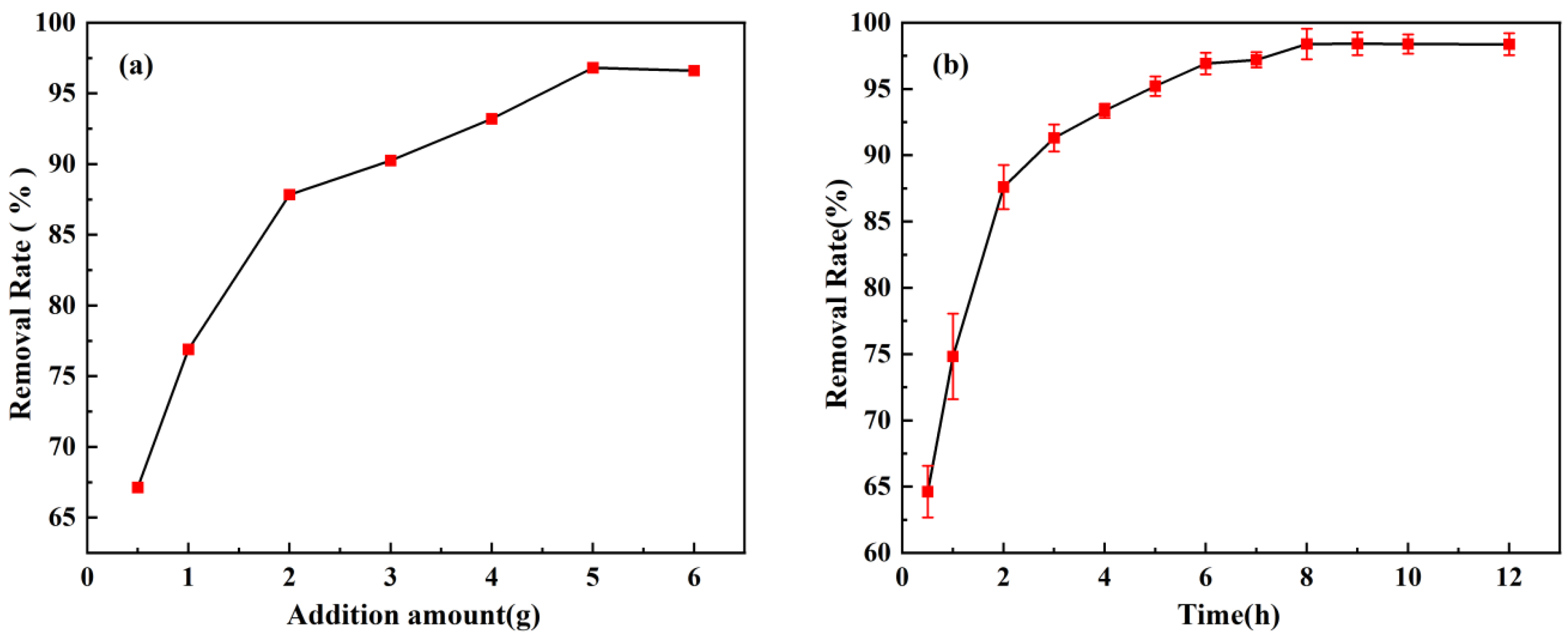
Figure 5a displays the influence of dosage. As the dosage of Fe-Mn-modified algal powder gel beads increased, the Cd(II) removal rate showed a gradual increase. However, at a dosage of 6 g, the removal efficiency slightly decreased. This phenomenon is attributed to the following reasons: During the initial adsorption phase, increasing the adsorbent dosage significantly raised the quantity of available active binding sites, driving a rapid rise in removal efficiency [27]. Following the adsorption of substantial quantities of Cd(II), the remaining available Cd(II) became limited, slowing the increase in removal rate. Furthermore, at higher dosages, partial aggregation occurred between the gel beads under the high concentration conditions. This aggregation reduced the specific surface area of the adsorption materials [28,29].
Figure 5b illustrates the variation in Cd(II) removal performance with contact time. During the period from 0.5 h to 8 h, the removal efficiency increased rapidly from 64.6% to 98.4%, reaching equilibrium at 8 h with a final removal rate of 98.41%. This behavior is explained as follows: At the initial phase of the adsorption process, numerous unoccupied active sites were present across the adsorbent surface, enabling a rapid uptake [30]. As time progressed, active sites became limited, indicating in a gradual slowdown of the removal rate, culminating in saturation [31].

3.5. Effect of Co-Existing Ions

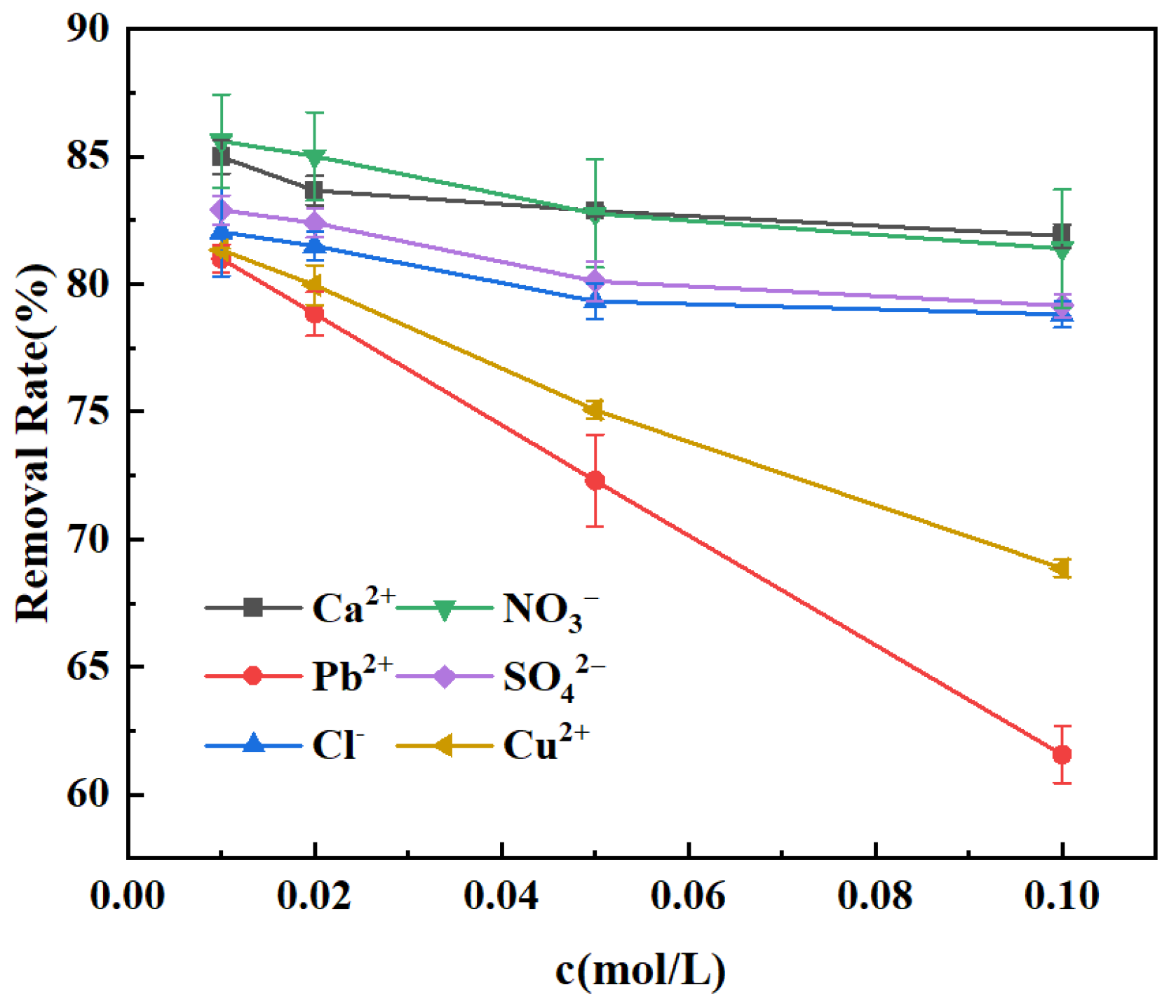
In this section, the interference of different ions was investigated, with experimental results shown in Figure 6: (1) Ca2+ exhibited no significant effect on adsorption. As its concentration increased, the removal efficiency decreased only slightly from 85% to 82%. This minor decrease is attributed to Ca2+ competing with Cd(II) for adsorption sites [32]. (2) Cl and SO42− caused a decrease in Cd removal efficiency. These anions can form complexes with Cd(II), weakening the attraction between the Cd(II) and the gel beads [33]. (3) Pb2+ Showed the strongest competitive effect among the six ions tested, which may be attributed to its larger ionic radius, high polarizability, soft acid character, and tendency to hydrolyze and form surface precipitates [34]. (4) Cu2+ inhibited Cd(II) removal to an extent second only to Pb2+, it competes with Cd(II) for the adsorbent’s active sites and can simultaneously modify its surface charge. (5) With the increase in Pb2+ or Cu2+ concentration, the selectivity of the adsorbent material for Cd(II) decreases significantly, as more adsorption sites are occupied by competitive ions. At this point, the total adsorption capacity of the material approaches saturation, while the absolute adsorption capacity for Cd(II) declines markedly. The strong competitive effects exhibited by Pb2+ and Cu2+ indicate that the material possesses selective differences in adsorbing heavy-metal ions. This selectivity partially stems from the unique surface chemical environment provided by the Fe-Mn modification, which demonstrates differentiated affinities for various heavy-metal ions. (6) NO3 was included as an inert anion for comparative purposes within the ion influence study.

3.6. Isothermal Adsorption Modeling and Adsorption Kinetics Studies

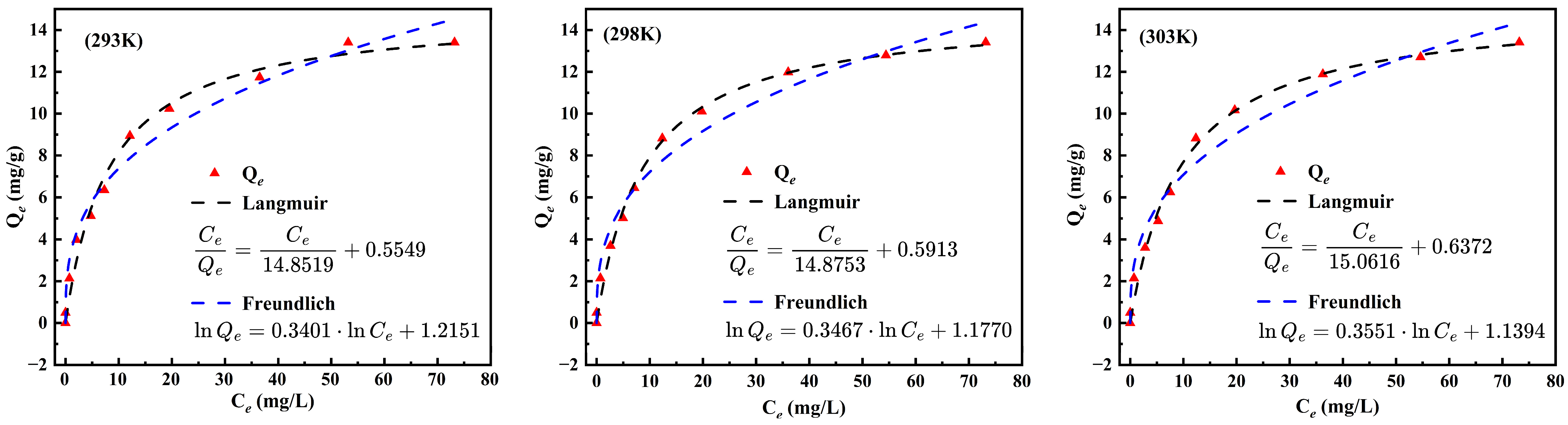
The equilibrium data for Cd(II) adsorption (293 K, 298 K, and 303 K) were fitted to both the Langmuir and Freundlich isotherm adsorption models, with the corresponding outcomes can be found in Figure 7 and Table 2. The uptake capacity of Fe-Mn-modified algal powder gel beads for cadmium ions gradually increased with rising temperature, suggesting that the adsorption occurs via an endothermic mechanism [35]. Both models provided reasonably good fits for the adsorption. However, the Langmuir model yielded higher fitting precision than the Freundlich model, providing a better description of the adsorption behavior, corresponding to a maximum removal performace (qm) of 15.06 mg·g−1. Furthermore, the Langmuir fit suggests the adsorption process is homogeneous and occurs via monolayer coverage [36]. The value of 1/n = 0.3551 (0.1~0.5) and RL= 0.9056 (0~1) demonstrate that the adsorption is readily achievable, confirming the material’s good adsorption capability for Cd(II) [37,38].
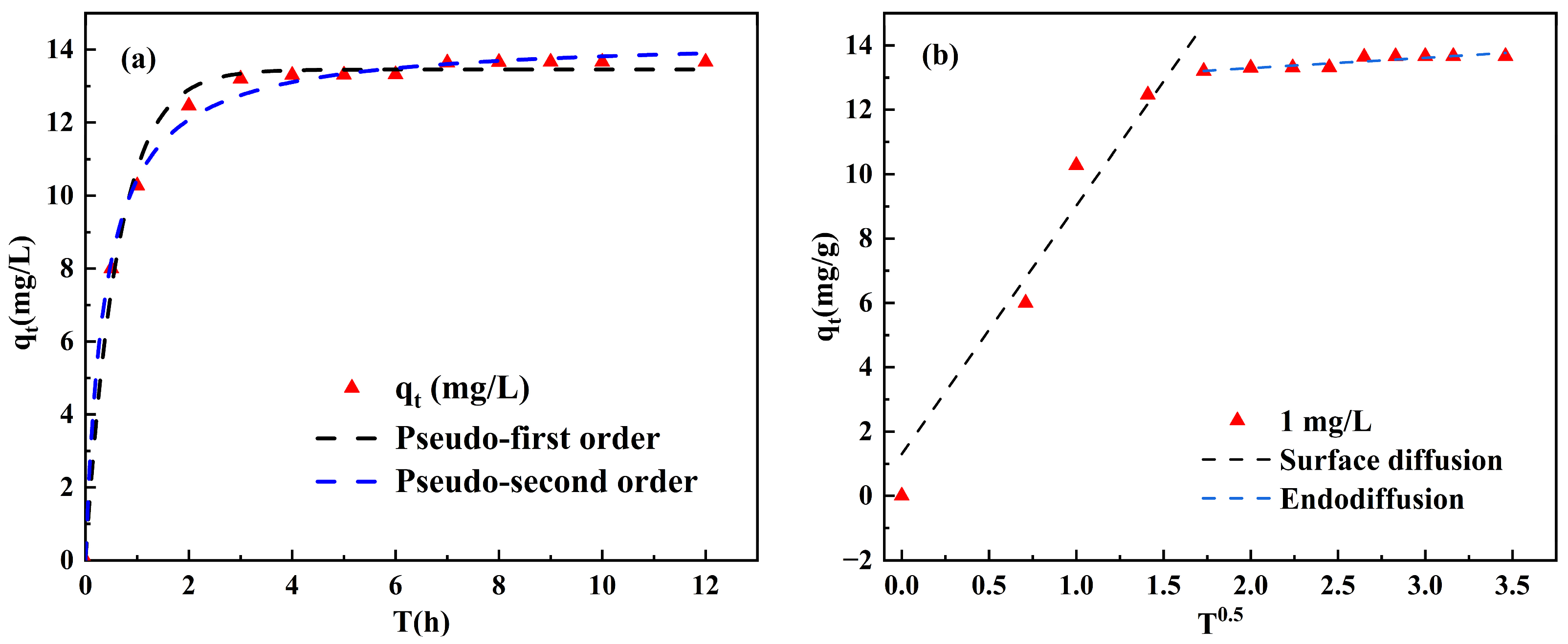
The adsorption behavior of Cd(II) on the Fe-Mn-modified algal powder gel beads were modeled using both pseudo-first-order and pseudo-second-order equations. Figure 8a indicates that the removal equilibrium time for Cd(II) was 8 h. As demonstrated by the data (Table 3), the fit quality of both kinetic models was relatively similar. However, the pseudo-second-order kinetic (R2 = 0.996) can describe the adsorption behavior more accurately. This demonstrates that the adsorption efficiency is predominantly controlled by chemical adsorption rate, indicative of chemisorption as the primary mechanism [39]. This finding corroborates the earlier evidence derived from the adsorption isotherm studies. Combined with FTIR and XPS analyses, it was confirmed that -COO and -OH are the main active sites responsible for this chemical adsorption. The rate-controlling stages of the adsorption were further examined by intra-particle diffusion. Figure 8b shows that the data exhibits multi-linear segments, indicating the process proceeded via two separate steps: initial rapid capture on the external surface and subsequent gradual diffusion into the micropores [40]. The observed deviation of the initial linear segment from the origin indicates that the adsorption rate is governed by more than just intra-particle diffusion. [41].

3.7. Adsorption Mechanism Analysis

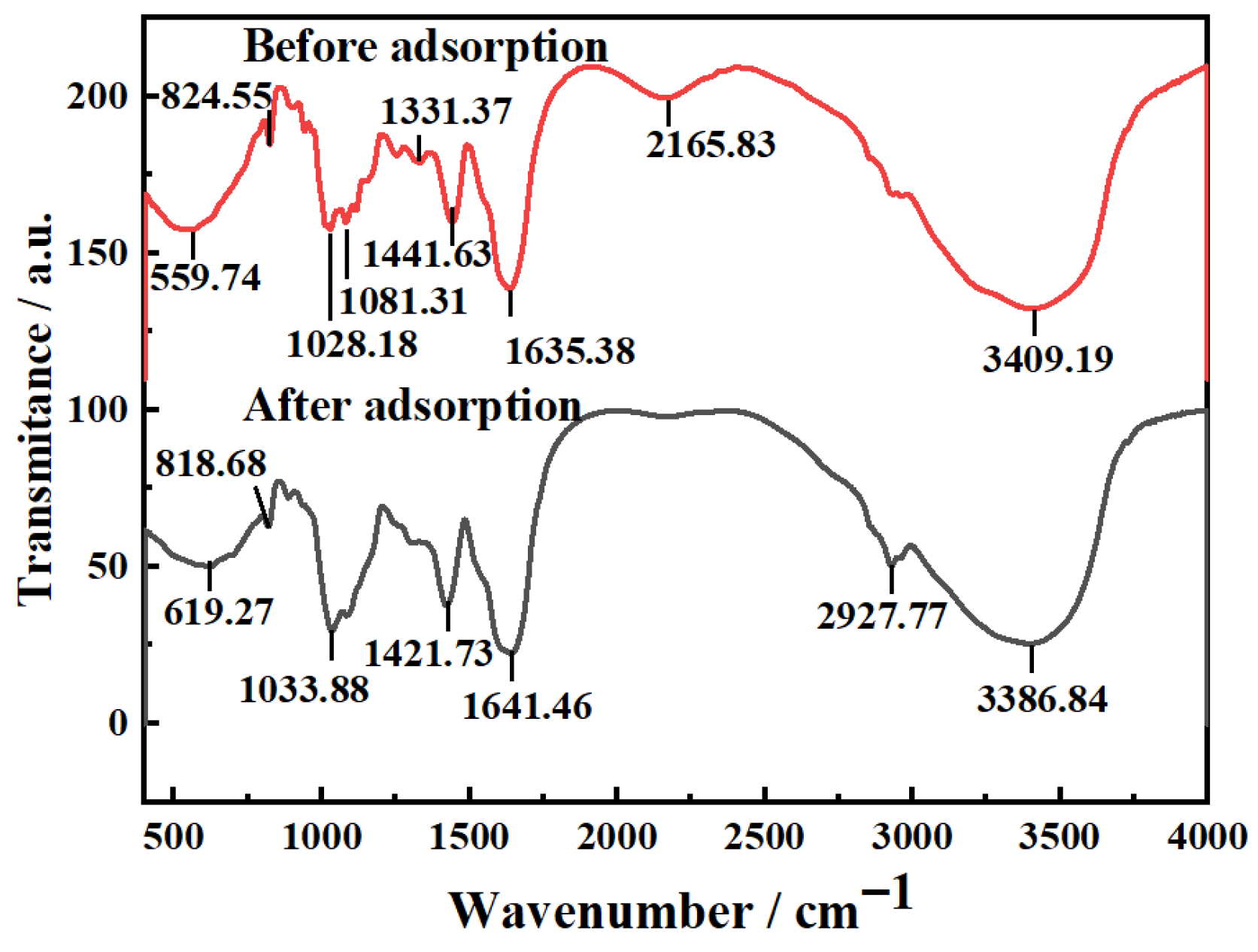
The Fe-Mn-modified algal powder gel beads pre- and post-adsorption of Cd(II) were analyzed by FTIR, and the obtained data are shown in Figure 9. the Fe-O stretching vibrational peak is 559.74 cm−1 [42], and it moves to 619.27 cm−1 after the adsorption, suggesting the generation of a complex with Cd(II) [43]. The value of 824.55 cm−1 may represent the coordination-bond vibration of carboxylic acid group with metal (Fe/Mn), which is the active site in modified algal powder. 1028.18 cm−1 and 1081.31 cm−1 represent C-O-C [44], and after the adsorption of infrared characteristic peaks, 1033.88 cm−1 may be the enhancement of the polarity of the C-O, which leads to the increase in vibrational frequency. The disappearance of the characteristic peak 1081.31 cm−1 suggests the involvement of C-O in the adsorption process, such as the formation of Cd-O-C [44]. The number 1331.37 cm−1 is the peak of alkane (CH2 or CH3) C-H and 1441.63 cm−1 is the peak of CH2 [32], which is reduced to 1421.73 cm−1 after adsorption, probably due to the change in hydrophobic environment during adsorption. The value of 1635.38 cm−1 represents the carboxylate (C=O) in the COO [45], which is relocated to 1641.46 cm−1 after the adsorption of Cd(II), indicating that the polarity of C=O in carboxylate is enhanced, the density of the electron cloud is reduced, and the -COO is ligand-bound to Cd(II) [46]. The value of 3409.19 cm−1 represents O-H [47], and the adsorbed O-H peak is shifted to 3386.84 cm−1, indicating that the hydroxyl oxygen is coordinated with Cd(II) and weakens the original hydrogen bonding network [33].
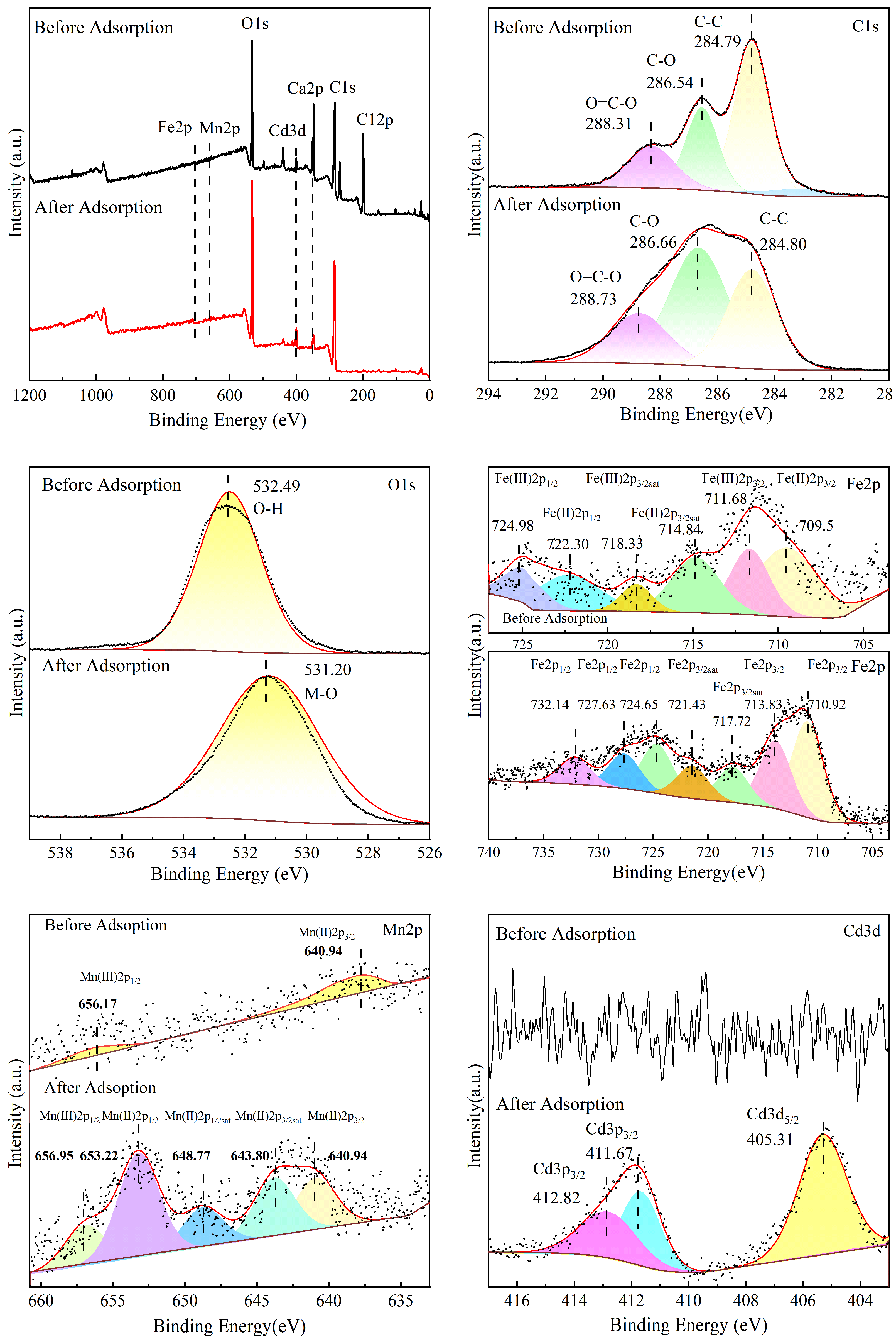
Figure 10 displays the XPS analysis results of the Fe-Mn-modified algal powder gel beads. The peaks at 200.05 eV, 284.79 eV, 347.1 eV, 533.07 eV, 640.94 eV, and 710.92 eV correspond to Cl2p, C1s, Ca2p and O1s, Mn2p, and Fe2p, respectively. The energy spectrum after adsorption shows a Cd3d peak (405.0 eV) [20], confirming that the material has adsorbed cadmium ions.
In the C1s, 288.31 eV, 286.54 eV, and 284.79 eV represent O=C-O, C-O, and C-C [48]. After Cd(II) adsorption, the characteristic peaks for O=C-O and C-O exhibited a shift, indicating complexation with Cd(II) and reduction in electron cloud density [20].
In the O1s energy spectrum, 532.49 eV corresponds to the hydroxyl (-OH) group [49]. After adsorption, the binding energy shifts to 531.20 eV, reflecting the establishment of ≡Fe/Mn-O-Cd through the coordination of hydroxyl or oxygen in the lattice, resulting in a decrease in binding energy [50].
In the Fe2p energy spectrum, 722.30 eV and 709.5 eV represent Fe2p1/2 and Fe2p3/2, representing Fe2+ in FeO or Fe3O4 [51]. The values 724.98 eV and 711.68 eV represent Fe2p1/2 and Fe2p3/2, which are Fe3+ in Fe2O3, FeOOH, or Fe3+ complexes [46,52]. The shift in the binding energy of Fe2p after adsorption is due to the transformation of Fe-OH to Fe-OCd [52]. The values 713.83 eV and 727.63 eV are likely due to the formation of Fe2(SO4)3 from a portion of Fe3+ in the iron sulfate environment, while 721.43 eV is another satellite peak of Fe3+, possibly due to different crystal environments [53].
In the Mn2p energy spectrum, 640.94 eV and 656.17 eV correspond to Mn(II)2p3/2 and Mn(III/VI)2p1/2, respectively [54]. After adsorption, Mn2+ is oxidized to Mn3+/Mn4+. The value 640.94 eV represents the Mn(II)2p3/2 peak after adsorption, 653.22 eV represents Mn(II)2p1/2, and 643.80 eV represents Mn(III/VI)2p3/2. The 2p1/2 peak is approximately 655.4 eV, close to 656.95 eV, indicating the possible presence of a mixed oxidation state of Mn(III) and Mn(IV). The coexistence of mixed oxidation states of Fe and Mn provides more abundant surface sites for Cd(II) adsorption, facilitating the formation of more stable Cd-O-M bonds. This diversity may exhibit adsorption selectivity toward different metal ions.
In the Cd3d energy spectrum, the peak at 405.31 eV corresponds to Cd3d5/2, indicating that Cd(II) is adsorbed onto the gel beads via Cd-O bonds [48]. The peaks at 411.67 eV and 412.82 eV correspond to Cd3d3/2, which may represent the binding of Cd(II) to different sites on the adsorbent surface [55].
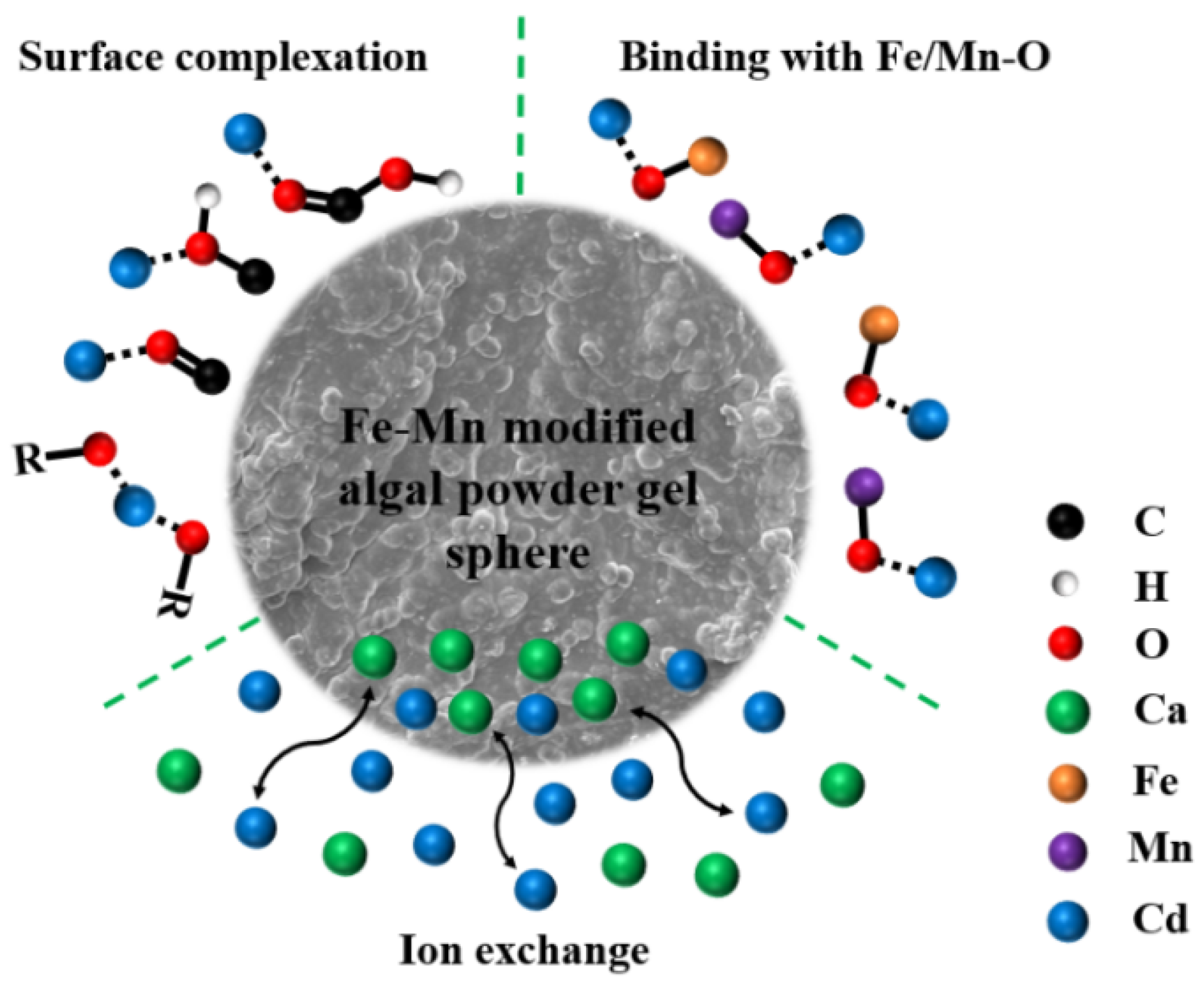
Existing studies [20,22,54] have demonstrated that -COOH, -OH, and Fe/Mn-O can undergo complexation with Cd(II), and the ion-exchange mechanism between Ca2+ and Cd(II) is a key factor in Cd adsorption. In light of the study presented above, the adsorption mechanism of Cd(II) by the Fe-Mn-modified algal powder gel beads is a process dominated by chemical adsorption, with multiple mechanisms acting in concert. The adsorption mechanism is illustrated in Figure 11: The organic phases (including algal powder and sodium alginate) provide abundant functional groups (e.g., -COOH, -OH). Oxygen atoms within these groups, after dissociation, provide lone pair electrons that directly form coordination bonds with the vacant orbitals of Cd(II). This facilitates inner-sphere complexation with Cd(II), constituting the dominant pathway for the adsorption; Ca2+ present on the surface of the adsorbents participates in ion exchange with Cd(II), playing a subsidiary role in the adsorption; the inorganic phase (Fe-Mn oxides) provides additional surface hydroxyl groups and Fe/Mn-O moieties, enabling Cd(II) to simultaneously coordinate with both the -COO from the organic phase and the -O from the inorganic phase, thereby forming more stable multidentate chelates and serving as an important auxiliary mechanism. Such an organic–inorganic hybrid structure synergistically enhances the stability and surface reactivity of the gel beads, enabling remarkably efficient Cd(II) adsorption.

3.8. Desorption Characteristics

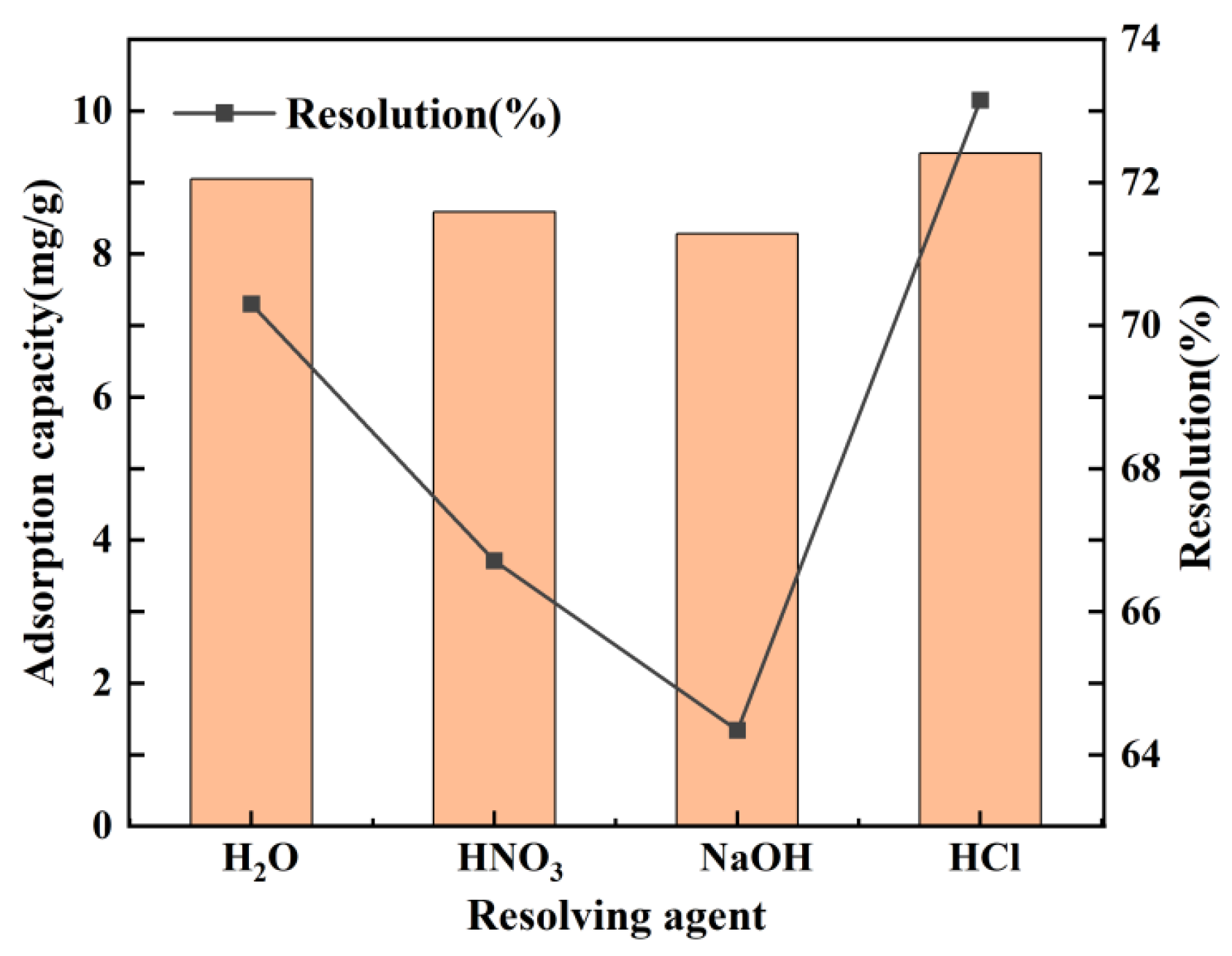
The adsorbed gel beads were eluted using pure water, NaOH, HNO3, and HCl, yielding desorption efficiencies of 70.30%, 66.71%, 64.34%, and 73.15%, respectively (Figure 12). After five cycles of regeneration and reuse, HCl demonstrated the highest desorption efficiency, while NaOH showed the lowest. After five cycles, the adsorption performance of the gel beads decreased from an initial value of 12.87 mg·g−1 to 9.05 mg·g−1, 8.59 mg·g−1, 8.28 mg·g−1, and 9.41 mg·g−1 (for pure water, NaOH, HNO3, and HCl, respectively). Collectively, these findings confirm the good regeneration and reuse performance of the Fe-Mn-modified algal powder gel beads.

4. Conclusions

(1) The Fe-Mn-modified algal powder gel beads exhibit excellent adsorption rate of Cd(II). Under optimized conditions (pH = 9, dosage = 6 g·L−1, time = 8 h, temperature = 25 °C), the removal rate reached 96%. The optimal preparation conditions for the Fe-Mn-modified algal powder gel beads are KMnO4-FeSO4 solution = 15 mL·L−1, algal powder = 40 g·L−1, and sodium alginate = 15 g·L−1.
(2) The adsorption follows the pseudo-second-order kinetic, indicating the predominant role of chemisorption. Freundlich and Langmuir isotherm models provided reasonably good fits for the adsorption process. However, the Langmuir model demonstrated higher goodness-of-fit. The adsorption process featured the coexistence of monolayer and multilayer types, with the former being the major pathway. The maximum removal capacity is 15.06 mg·g−1.
(3) A synergistic effect exists between -COOH/-OH and Fe-Mn oxides, collectively contributing to the adsorption of Cd(II). Inner-sphere binding of Cd(II) with -COOH/-OH serves as the primary mechanism for adsorption, while the ion exchange of Ca2+ with Cd(II) serves a secondary role. Additionally, Fe-Mn oxides provide surface hydroxyl groups and Fe/Mn-O moieties that undergo surface complexation with Cd(II), acting as an important auxiliary mechanism.

Author Contributions

Conceptualization, S.Z.; methodology, Z.P.; experiment, Z.P., J.Z. and J.Q.; validation, S.Z. and R.D.; formal analysis, Z.P., J.Z., J.Q. and M.D.; investigation, Z.P., J.Z., J.Q. and M.D.; resources, S.Z., R.D. and C.W.; data curation, Z.P., J.Z. and J.Q.; writing—original draft preparation, S.Z., Z.P. and J.Z.; writing—review and editing, S.Z., Z.P., J.Z. and M.D.; visualization, J.Z. and Y.P.; supervision, S.Z., R.D., C.W., Y.P., A.H. and M.D.; project administration, S.Z.; funding acquisition, S.Z. All authors have read and agreed to the published version of the manuscript.

Funding

This research was funded by the Natural Science Foundation of Hunan Province (2024JJ8319, 2025JJ50181, 2025JJ50252, 2023JJ40288), Ministry of Education in China Project of Humanities and Social Science (23YJAZH224).

Data Availability Statement

The original contributions presented in this study are included in the article. Further inquiries can be directed to the corresponding authors.

Conflicts of Interest

Author Saijun Zhou was employed by Hunan University of Science and Technology Engineering Testing Co., Ltd. The remaining authors declare that the research was conducted in the absence of any commercial or financial relationships that could be construed as a potential conflict of interest.

References

  1. Deng, S.; Zhang, X.; Zhu, Y.; Zhuo, R. Recent advances in phyto-combined remediation of heavy metal pollution in soil. Biotechnol. Adv. 2024, 72, 108337. [Google Scholar] [CrossRef]
  2. Kumar, V.; Dwivedi, S.K.; Oh, S. A review on microbial-integrated techniques as promising cleaner option for removal of chromium, cadmium and lead from industrial wastewater. J. Water Process. Eng. 2022, 47, 102727. [Google Scholar] [CrossRef]
  3. Wang, Y.; Wang, D.; Hao, H.; Cui, J.; Huang, L.; Liang, Q. The association between cadmium exposure and the risk of chronic obstructive pulmonary disease: A systematic review and meta-analysis. J. Hazard. Mater. 2024, 469, 133828. [Google Scholar] [CrossRef] [PubMed]
  4. Doccioli, C.; Sera, F.; Francavilla, A.; Cupisti, A.; Biggeri, A. Association of cadmium environmental exposure with chronic kidney disease: A systematic review and meta-analysis. Sci. Total Environ. 2024, 906, 167165. [Google Scholar] [CrossRef]
  5. Qing, Y.; Yang, J.; Chen, Y.; Shi, C.; Zhang, Q.; Ning, Z.; Yu, Y.; Li, Y. Urinary cadmium in relation to bone damage: Cadmium exposure threshold dose and health-based guidance value estimation. Ecotoxicol. Environ. Saf. 2021, 226, 112824. [Google Scholar] [CrossRef] [PubMed]
  6. Duan, Z.; Zheng, Y.; Chen, H.; Liu, S.; Xie, Y.; Liu, H.; Hu, Y.; Li, Y. Variations in cadmium and lead bioaccessibility and human health risk assessment from ingestion of leafy vegetables: Focus on the involvement of gut microbiota. J. Food Compos. Anal. 2025, 141, 107353. [Google Scholar] [CrossRef]
  7. Zhang, Y.; Qu, J.; Yuan, Y.; Song, H.; Liu, Y.; Wang, S.; Tao, Y.; Zhao, Y.; Li, Z. Simultaneous scavenging of Cd(II) and Pb(II) from water by sulfide-modified magnetic pinecone-derived hydrochar. J. Clean. Prod. 2022, 341, 130758. [Google Scholar] [CrossRef]
  8. Mei, Y.; Zhuang, S.; Wang, J. Adsorption of heavy metals by biochar in aqueous solution: A review. Sci. Total Environ. 2025, 968, 178898. [Google Scholar] [CrossRef]
  9. Deng, J.; Fu, D.; Hu, W.; Lu, X.; Wu, Y.; Bryan, H. Physiological responses and accumulation ability of Microcystis aeruginosa to zinc and cadmium: Implications for bioremediation of heavy metal pollution. Bioresour. Technol. 2020, 303, 122963. [Google Scholar] [CrossRef]
  10. Abdelkarim, M.S.; Ali, M.H.H.; Kassem, D.A. Ecofriendly remediation of cadmium, lead, and zinc using dead cells of Microcystis aeruginosa. Sci. Rep. 2025, 15, 3677. [Google Scholar] [CrossRef]
  11. Zeng, G.; He, Y.; Liang, D.; Wang, F.; Luo, Y.; Yang, H.; Wang, Q.; Wang, J.; Gao, P.; Wen, X.; et al. Adsorption of Heavy Metal Ions Copper, Cadmium and Nickel by Microcystis aeruginosa. Int. J. Environ. Res. Public Health 2022, 19, 13867. [Google Scholar] [CrossRef]
  12. Cheng, S.Y.; Show, P.; Lau, B.F.; Chang, J.; Ling, T.C. New Prospects for Modified Algae in Heavy Metal Adsorption. Trends Biotechnol. 2019, 37, 1255–1268. [Google Scholar] [CrossRef] [PubMed]
  13. Zhao, J.; Qi, J.; Ji, Q.; Lan, H.; Liu, H.; Qu, J. Fabrication of iron-manganese oxide composite modified Microcystis aeroginosa adsorbent for advanced antimony removal. Chin. J. Environ. Eng. 2019, 13, 1573–1583. (In Chinese) [Google Scholar] [CrossRef]
  14. Monica, P. Treatment of Wastewaters with Zirconium Phosphate Based Materials: A Review on Efficient Systems for the Removal of Heavy Metal and Dye Water Pollutants. Molecules 2021, 26, 2392. [Google Scholar] [CrossRef]
  15. Li, M.; Kuang, S.; Kang, Y.; Ma, H.; Dong, J.; Guo, Z. Recent advances in application of iron-manganese oxide nanomaterials for removal of heavy metals in the aquatic environment. Sci. Total Environ. 2022, 819, 153157. [Google Scholar] [CrossRef] [PubMed]
  16. Rohaeti, E.; Helmiyati; Joronavalona, R.; Taba, P.; Sondari, D.; Kamari, A. The Role of Brown Algae as a Capping Agent in the Synthesis of ZnO Nanoparticles to Enhance the Antibacterial Activities of Cotton Fabrics. Mar. Drugs 2025, 23, 71. [Google Scholar] [CrossRef]
  17. Gao, X.; Guo, C.; Hao, J.; Zhao, Z.; Long, H.; Li, M. Adsorption of heavy metal ions by sodium alginate based adsorbent-a review and new perspectives. Int. J. Biol. Macromol. 2020, 164, 4423–4434. [Google Scholar] [CrossRef]
  18. Chen, M.; Long, A.; Zhang, W.; Wang, Z.; Xiao, X.; Gao, Y.; Zhou, L.; Li, Y.; Wang, J.; Sun, S.; et al. Recent advances in alginate-based hydrogels for the adsorption-desorption of heavy metal ions from water: A review. Sep. Purif. Technol. 2025, 353, 128265. [Google Scholar] [CrossRef]
  19. Petrovič, A.; Simonič, M. Removal of heavy metal ions from drinking water by alginate-immobilised Chlorella sorokiniana. Int. J. Environ. Sci. Technol. 2016, 13, 1761–1780. [Google Scholar] [CrossRef]
  20. Xia, H.; Zhang, Y.; Chen, Q.; Liu, R.; Wang, H. Unraveling adsorption characteristics and removal mechanism of novel Zn/Fe-bimetal-loaded and starch-coated corn cobs biochar for Pb(II) and Cd(II) in wastewater. J. Mol. Liq. 2023, 391, 123375. [Google Scholar] [CrossRef]
  21. Li, J.; Chen, M.; Yang, X.; Zhang, L. Preparation of a novel hydrogel of sodium alginate using rural waste bone meal for efficient adsorption of heavy metals cadmium ion. Sci. Total Environ. 2023, 863, 160969. [Google Scholar] [CrossRef]
  22. Zhang, W.; Ou, J.; Wang, B.; Wang, H.; He, Q.; Song, J.; Zhang, H.; Tang, M.; Zhou, L.; Gao, Y.; et al. Efficient heavy metal removal from water by alginate-based porous nanocomposite hydrogels: The enhanced removal mechanism and influencing factor insight. J. Hazard. Mater. 2021, 418, 126358. [Google Scholar] [CrossRef]
  23. Shah, K.H.; Shah, N.S.; Khan, G.A.; Sarfraz, S.; Iqbal, J.; Jwuiyad, A.; Shahida, S.; Han, C.; Wawrzkiewicz, M. The Cr(III) Exchange Mechanism of Macroporous Resins: The Effect of Functionality and Chemical Matrix, and the Statistical Verification of Ion Exchange Data. Water 2023, 15, 3655. [Google Scholar] [CrossRef]
  24. Jing, X.; Wang, Y.; Liu, W.; Wang, Y.; Jiang, H. Enhanced adsorption performance of tetracycline in aqueous solutions by methanol-modified biochar. Chem. Eng. J. 2014, 248, 168–174. [Google Scholar] [CrossRef]
  25. Gu, S.; Lan, C.Q. Effects of culture pH on cell surface properties and biosorption of Pb(II), Cd(II), Zn(II) of green alga Neochloris oleoabundans. Chem. Eng. J. 2023, 468, 143579. [Google Scholar] [CrossRef]
  26. Sarada, B.; Prasad, M.K.; Kumar, K.K.; Ramachandra Murthy, C.V. Cadmium removal by macro algae Caulerpa fastigiata: Characterization, kinetic, isotherm and thermodynamic studies. J. Environ. Chem. Eng. 2014, 2, 1533–1542. [Google Scholar] [CrossRef]
  27. Zhang, X.; Wang, M.; He, J.; Long, F.; Wang, Y. Low-cost preparation of ethylene glycol-modified micro-nano porous calcium carbonate with excellent removal of Cadmium in wastewater. Environ. Technol. Innov. 2025, 38, 104105. [Google Scholar] [CrossRef]
  28. Sari, A.; Tuzen, M. Biosorption of Pb(II) and Cd(II) from aqueous solution using green alga (Ulva lactuca) biomass. J. Hazard. Mater. 2008, 152, 302–308. [Google Scholar] [CrossRef]
  29. Sun, X.; Huang, H.; Zhao, D.; Lin, J.; Gao, P.; Yao, L. Adsorption of Pb2+ onto freeze-dried microalgae and environmental risk assessment. J. Environ. Manag. 2020, 265, 110472. [Google Scholar] [CrossRef]
  30. Gong, Z.; Zhao, M.; Ma, D.; Sun, Z.; Hu, J. Poly (acrylamide-co-2-acrylamido-2-methylpropane sulfonic acid)-g-carboxymethylcellulose-Ca(II) hydrogel beads for efficient adsorption of Cd(II). Int. J. Biol. Macromol. 2025, 306 Pt 2, 141498. [Google Scholar] [CrossRef]
  31. Zhao, B.; Jiang, H.; Lin, Z.; Xu, S.; Xie, J.; Zhang, A. Preparation of acrylamide/acrylic acid cellulose hydrogels for the adsorption of heavy metal ions. Carbohydr. Polym. 2019, 224, 115022. [Google Scholar] [CrossRef]
  32. Liu, P.; Rao, D.; Zou, L.; Teng, Y.; Yu, H. Capacity and potential mechanisms of Cd(II) adsorption from aqueous solution by blue algae-derived biochars. Sci. Total Environ. 2021, 767, 145447. [Google Scholar] [CrossRef]
  33. Yan, C.; Yin, H.; Yuan, Y.; Ouyang, X.; Lou, K. Simultaneously enhancing the efficiency of As(III) and Cd removal by iron-modified biochar: Oxidative enhancement, and selective adsorption of As(III). J. Environ. Chem. Eng. 2025, 13, 116508. [Google Scholar] [CrossRef]
  34. Chen, C.; He, E.; Jiang, X.; Xia, S.; Yu, L. Efficient removal of direct dyes and heavy metal ion by sodium alginate-based hydrogel microspheres: Equilibrium isotherms, kinetics and regeneration performance study. Int. J. Biol. Macromol. 2025, 294, 139294. [Google Scholar] [CrossRef] [PubMed]
  35. Feng, L.; Wang, E. Adsorption and Recovery Studies of Cadmium and Lead Ions Using Biowaste Adsorbents from Aqueous Solution. Separations 2025, 12, 16. [Google Scholar] [CrossRef]
  36. Wu, J.; Wang, T.; Wang, J.; Zhang, Y.; Pan, W. A novel modified method for the efficient removal of Pb and Cd from wastewater by biochar: Enhanced the ion exchange and precipitation capacity. Sci. Total Environ. 2021, 754, 142150. [Google Scholar] [CrossRef]
  37. Dirbaz, M.; Roosta, A. Adsorption, kinetic and thermodynamic studies for the biosorption of cadmium onto microalgae Parachlorella sp. J. Environ. Chem. Eng. 2018, 6, 2302–2309. [Google Scholar] [CrossRef]
  38. Abdel Aty, A.M.; Ammar, N.S.; Abdel Ghafar, H.H.; Ali, R.K. Biosorption of cadmium and lead from aqueous solution by fresh water alga Anabaena sphaerica biomass. J. Adv. Res. 2013, 4, 367–374. [Google Scholar] [CrossRef] [PubMed]
  39. Wang, Y.; Bing, Z.; Zhao, Q.; Wang, K.; Wei, L.; Jiang, J.; Ding, J.; Jiang, M.; Xue, R. Synthesis of MnFe2O4-biochar with surficial grafting hydroxyl for the removal of Cd(II)-Pb(II)-Cu(II) pollutants: Competitive adsorption, application prospects and binding orders of functional groups. J. Environ. Manag. 2025, 375, 124280. [Google Scholar] [CrossRef] [PubMed]
  40. Arafa, E.G.; Mahmoud, R.; Gadelhak, Y.; Gawad, O.F.A. Design, preparation, and performance of different adsorbents based on carboxymethyl chitosan/sodium alginate hydrogel beads for selective adsorption of Cadmium (II) and Chromium (III) metal ions. Int. J. Biol. Macromol. 2024, 273, 132809. [Google Scholar] [CrossRef] [PubMed]
  41. Milojković, J.V.; Lopičić, Z.R.; Anastopoulos, I.P.; Petrović, J.T.; Milićević, S.Z.; Petrović, M.S.; Stojanović, M.D. Performance of aquatic weed—Waste Myriophyllum spicatum immobilized in alginate beads for the removal of Pb(II). J. Environ. Manag. 2019, 232, 97–109. [Google Scholar] [CrossRef] [PubMed]
  42. Fuat, G.; Cumali, Y. Synthesis, characterization, and lead(II) sorption performance of a new magnetic separable composite: MnFe2O4@wild plants-derived biochar. J. Environ. Chem. Eng. 2021, 9, 104567. [Google Scholar] [CrossRef]
  43. Fang, Q.; Ye, S.; Yang, H.; Yang, K.; Zhou, J.; Gao, Y.; Lin, Q.; Tan, X.; Yang, Z. Application of layered double hydroxide-biochar composites in wastewater treatment: Recent trends, modification strategies, and outlook. J. Hazard. Mater. 2021, 420, 126569. [Google Scholar] [CrossRef]
  44. Jiang, X.; Yin, X.; Tian, Y.; Zhang, S.; Liu, Y.; Deng, Z.; Lin, Y.; Wang, L. Study on the mechanism of biochar loaded typical microalgae Chlorella removal of cadmium. Sci. Total Environ. 2022, 813, 152488. [Google Scholar] [CrossRef]
  45. Jin, Y.; Teng, C.; Yu, S.; Song, T.; Dong, L.; Liang, J.; Bai, X.; Liu, X.; Hu, X.; Qu, J. Batch and fixed-bed biosorption of Cd(II) from aqueous solution using immobilized Pleurotus ostreatus spent substrate. Chemosphere 2018, 191, 799–808. [Google Scholar] [CrossRef]
  46. Cao, R.; Kang, G.; Zhang, W.; Zhou, J.; Xie, W.; Liu, Z.; Xu, L.; Hu, F.; Li, Z.; Li, H. Biochar loaded with ferrihydrite and Bacillus pseudomycoides enhances remediation of co-existed Cd(II) and As(III) in solution. Bioresour. Technol. 2024, 395, 130323. [Google Scholar] [CrossRef]
  47. Brinza, L.; Geraki, K.; Matamoros-Veloza, A.; Ignat, M.; Neamtu, M. The Irish kelp, Fucus vesiculosus, a highly potential green bio sorbent for Cd (II) removal: Mechanism, quantitative and qualitative approaches. J. Clean. Prod. 2021, 327, 129422. [Google Scholar] [CrossRef]
  48. Xia, H.; Wang, H.; Zhang, Y. Fabrication and application of magnetic MgFe2O4-OH@biochar composites decorated with β-ketoenamine for Pb(II) and Cd(II) adsorption and immobilization from aqueous solution. Sep. Purif. Technol. 2025, 354, 129320. [Google Scholar] [CrossRef]
  49. Yu, W.; Hu, J.; Yu, Y.; Ma, D.; Gong, W.; Qiu, H.; Hu, Z.; Gao, H. Facile preparation of sulfonated biochar for highly efficient removal of toxic Pb(II) and Cd(II) from wastewater. Sci. Total Environ. 2021, 750, 141545. [Google Scholar] [CrossRef]
  50. Yang, T.; Jiang, S.G.; Liang, K.; Yang, Z.Z.; Xu, Y.M. Remediation Effect of Iron-manganese Composite-modified Biochar from Different Biomasses on Cd-contaminated Alkaline Soil. Environ. Sci. 2025, 46, 461–469. (In Chinese) [Google Scholar] [CrossRef]
  51. Gerulová, K.; Bartošová, A.; Blinová, L.; Bártová, K.; Dománková, M.; Garaiová, Z.; Palcut, M. Magnetic Fe3O4-polyethyleneimine nanocomposites for efficient harvesting of Chlorella zofingiensis, Chlorella vulgaris, Chlorella sorokiniana, Chlorella ellipsoidea and Botryococcus braunii. Algal. Res. 2018, 33, 165–172. [Google Scholar] [CrossRef]
  52. Chen, Y.; Xu, F.; Li, H.; Li, Y.; Liu, Y.; Chen, Y.; Li, M.; Li, L.; Jiang, H.; Chen, L. Simple hydrothermal synthesis of magnetic MnFe2O4-sludge biochar composites for removal of aqueous Pb2+. J. Anal. Appl. Pyrol. 2021, 156, 105173. [Google Scholar] [CrossRef]
  53. Wan, S.; Li, Y.; Cheng, S.; Wu, G.; Yang, X.; Wang, Y.; Gao, L. Cadmium removal by FeOOH nanoparticles accommodated in biochar: Effect of the negatively charged functional groups in host. J. Hazard. Mater. 2022, 421, 126807. [Google Scholar] [CrossRef] [PubMed]
  54. Singh, V.K.; Kumar, K.; Prasad, T.; Rai, S.; Chaudhary, A.; Tungala, K.; Das, A. Fabrication of cationic microgels doped MnO2/Fe3O4 nanocomposites, and study of their photocatalytic performance and reusability in organic transformations. Polym. Adv. Technol. 2024, 35, e6295. [Google Scholar] [CrossRef]
  55. Fang, M.; Shao, J.; Huang, X.; Wang, J.; Chen, W. Direct Z-scheme CdFe2O4/g-C3N4 hybrid photocatalysts for highly efficient ceftiofur sodium photodegradation. J. Mater. Sci. Technol. 2020, 56, 133–142. [Google Scholar] [CrossRef]
Figure 1. The influence of single factors on the composite materials.
Jcs 09 00606 g001
Figure 2. SEM and EDS analysis images before and after adsorption.
Jcs 09 00606 g002
Figure 3. Nitrogen adsorption–desorption analysis and pore size distribution.
Jcs 09 00606 g003
Figure 4. Removal rate and species distribution of Cd(II) under different pH conditions: (a) Removal rate of Cd(II); (b) Distribution of Cd species.
Jcs 09 00606 g004
Figure 5. Effect of dosage and contact time: (a) Removal rate of Cd(II) as a function of adsorbent dosage; (b) Effect of contact time on Cd(II) removal rate.
Jcs 09 00606 g005
Figure 6. Effect of ionic strength.
Jcs 09 00606 g006
Figure 7. Adsorption isotherms of Cd(II) by Fe-Mn-modified algal powder gel beads.
Jcs 09 00606 g007
Figure 8. Fitting of adsorption kinetic (a) and intra-particle diffusion model (b).
Jcs 09 00606 g008
Figure 9. FTIR spectra of Fe-Mn-modified algal powder gel beads.
Jcs 09 00606 g009
Figure 10. XPS analysis of Fe-Mn-modified algal powder gel beads before and after adsorption.
Jcs 09 00606 g010
Figure 11. Adsorption mechanism of Cd(II) by Fe-Mn-modified algal powder gel beads.
Jcs 09 00606 g011
Figure 12. Reg enerative adsorption of Fe-Mn-modified algal powder gel beads.
Jcs 09 00606 g012
Table 1. Nitrogen adsorption–desorption parameter table.
Specific Surface AreaPore VolumeAverage Pore Diameter
m2/gcm3/gnm
Before adsorption9.38780.00774.6036
After adsorption7.16770.00976.2373
Table 2. The fitting data of the isothermal adsorption model.
T/KLangmuirFreundlich
qmKLRLR2KF1/nR2
29314.85190.121330.89170.97573.37050.34010.9768
29814.87530.11370.89790.98853.24460.34670.9749
30315.06160.10420.90560.98563.12490.35510.9711
Table 3. The fitting data of the adsorption kinetic and intra-particle diffusion model.
Pseudo-First-OrderPseudo-Second-Order
k1qeR2k2qeR2
0.187113.64010.99381.59913.66230.9965
Surface DiffusionInternal Diffusion
kpCpR2kpCpR2
7.71891.3000.91800.321312.65020.7888
Disclaimer/Publisher’s Note: The statements, opinions and data contained in all publications are solely those of the individual author(s) and contributor(s) and not of MDPI and/or the editor(s). MDPI and/or the editor(s) disclaim responsibility for any injury to people or property resulting from any ideas, methods, instructions or products referred to in the content.