
Copper Separation and Recovery from Solutions: Conventional and Membrane-Based Methods

 , , , ,
Abstract
1. Introduction
2. Copper-Containing Solutions as Secondary Liquid Resources
3. Conventional Methods and Their Limitations
3.1. Chemical Precipitation
3.2. Solvent Extraction
3.3. Ion Exchange
3.4. Electrowinning
4. Classification of Membrane-Based Methods for Cu Extraction
4.1. Microfiltration
4.2. Ultrafiltration
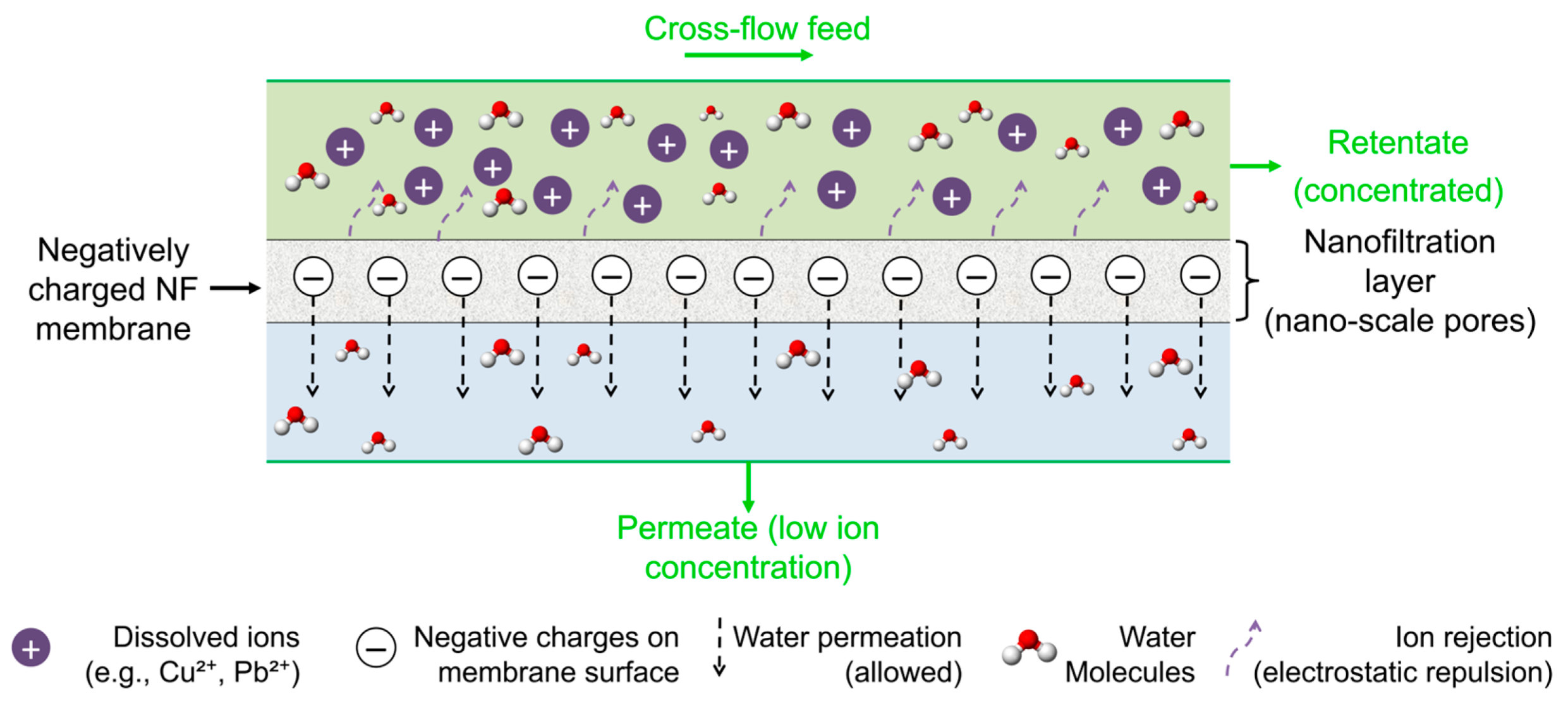
4.3. Nanofiltration
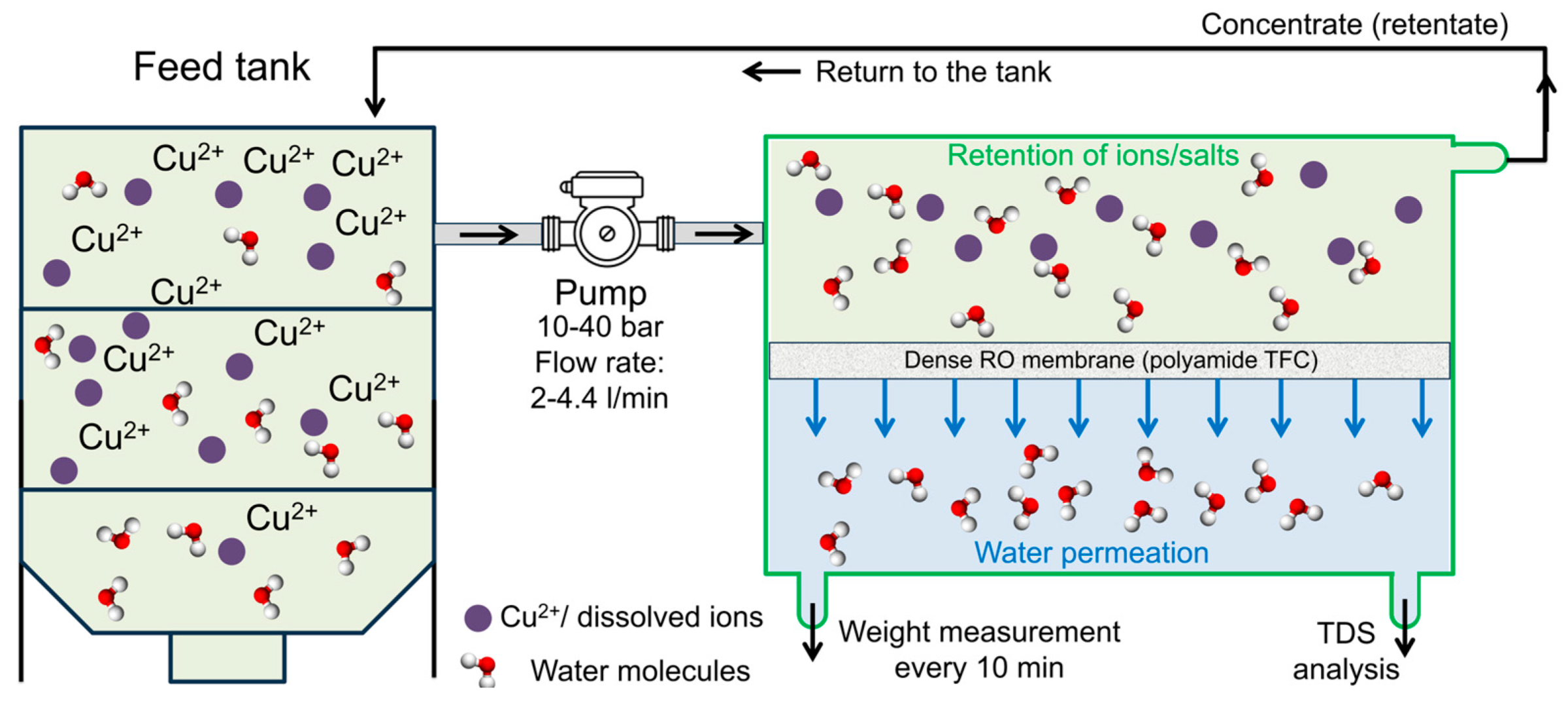
4.4. Reverse Osmosis (RO)
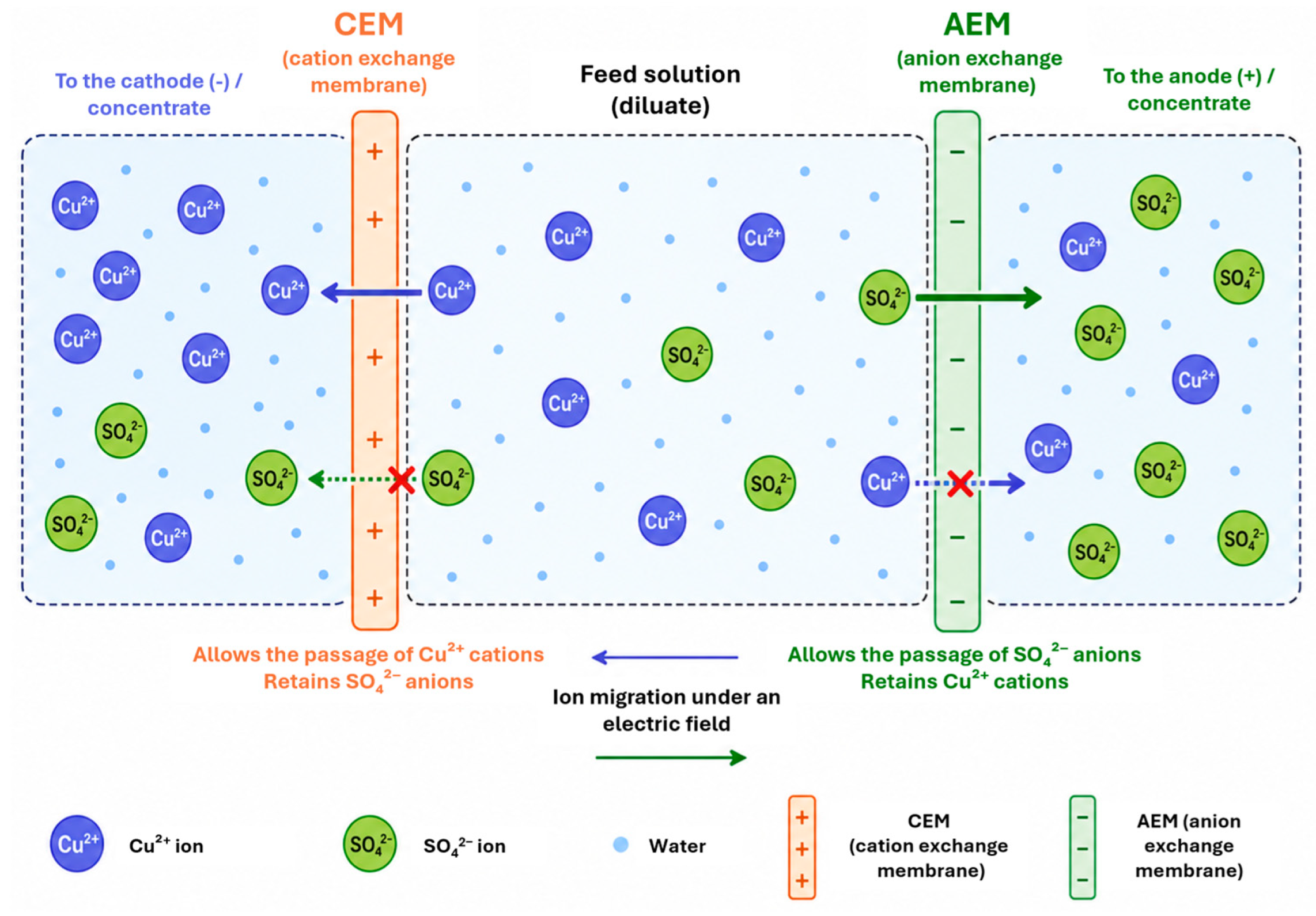
4.5. Electrodialysis (ED)
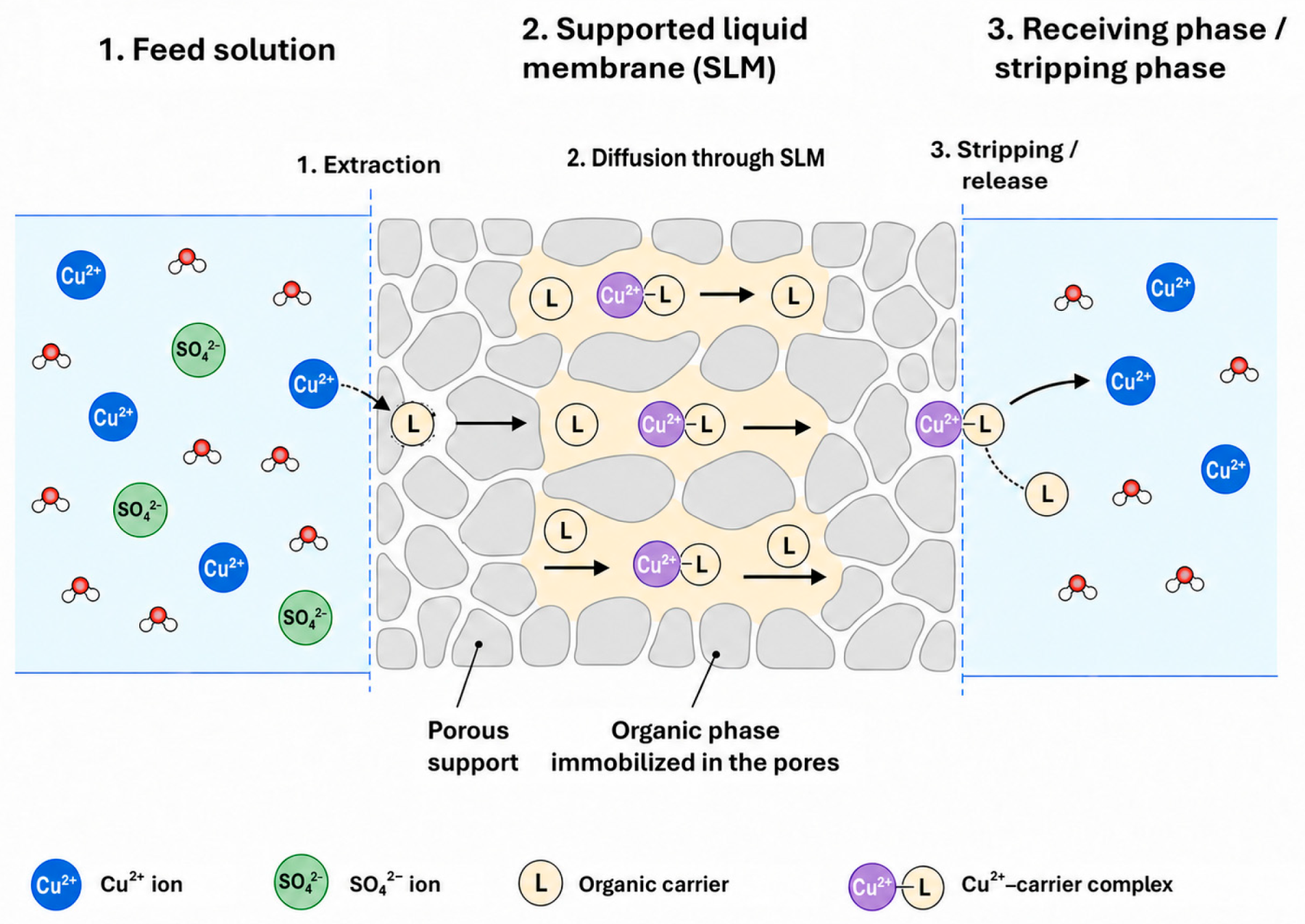
4.6. Liquid Membranes (SLM, PIM, ELM)
5. Industrial Scale-Up and Techno-Economic Considerations
6. Conclusions
Supplementary Materials
Author Contributions
Funding
Data Availability Statement
Acknowledgments
Conflicts of Interest
Abbreviations
| MF | Microfiltration |
| PEMF | Polymer-enhanced microfiltration |
| UF | Ultrafiltration |
| PEUF | Polymer-enhanced ultrafiltration |
| NF | Nanofiltration |
| MOFs | Metal–organic frameworks |
| RO | Reverse osmosis |
| ED | Electrodialysis |
| LM | Liquid Membranes |
| SLM | Supported liquid membranes |
| ELM | Emulsion liquid membranes |
| PIM | Polymer inclusion membranes |
| WPCB | Waste printed circuit board |
| PEI | Polyethyleneimine |
References
- Kartal, L. Selective removal of copper from nickel–copper leach solution by electrolysis cells with high convection. Metals 2025, 15, 432. [Google Scholar] [CrossRef] [Scilit]
- Wegener, T.; Koopmann, J.; Richter, J.; Krooß, P.; Niendorf, T. CuCrZr processed by laser powder bed fusion—Processability and influence of heat treatment on electrical conductivity, microstructure and mechanical properties. Fatigue Fract. Eng. Mater. Struct. 2021, 44, 2570–2590. [Google Scholar] [CrossRef] [Scilit]
- Xiu, Z.; Ju, B.; Zhan, J.; Zhang, N.; Wang, Z.; Mei, Y.; Liu, J.; Feng, Y.; Guo, Y.; Kang, P.; et al. Microstructure evolution of graphene and the corresponding effect on the mechanical/electrical properties of graphene/Cu composite during rolling treatment. Materials 2022, 15, 1218. [Google Scholar] [CrossRef] [Scilit] [PubMed]
- Harimech, Z.; Hairch, Y.; Atamanov, M.; Toshtay, K.; Azat, S.; Souhair, N.; Amrousse, R. Carbon nanotube iridium-cupric oxide supported catalysts for decomposition of ammonium dinitramide in the liquid phase. Int. J. Energ. Mater. Chem. Propuls. 2023, 22, 13–18. [Google Scholar] [CrossRef] [Scilit]
- Remissa, I.; Souagh, A.; Hairch, Y.; Sahib-Eddine, A.; Atamanov, M.; Amrousse, R. Thermal decomposition behaviors of 30% hydrogen peroxide over free noble metal-synthesized solid catalysts. Int. J. Energ. Mater. Chem. Propuls. 2022, 21, 17–29. [Google Scholar] [CrossRef] [Scilit]
- Rodriguez, J. The World Copper Factbook 2025; International Copper Study Group: Lisbon, Portugal, 2025. Available online: https://icsg.org/download/2025-10-the-world-copper-factbook/?ind=68ece711240a5&filename=Factbook2025.pdf&wpdmdl=8908&refresh=68ece7507eb111760356176 (accessed on 1 September 2026).
- Klose, S.; Pauliuk, S. Sector-level estimates for global future copper demand and the potential for resource efficiency. Resour. Conserv. Recycl. 2023, 193, 106941. [Google Scholar] [CrossRef] [Scilit]
- Watari, T.; Northey, S.; Giurco, D.; Hata, S.; Yokoi, R.; Nansai, K.; Nakajima, K. Global copper cycles and greenhouse gas emissions in a 1.5 °C world. Resour. Conserv. Recycl. 2022, 179, 106118. [Google Scholar] [CrossRef] [Scilit]
- Soares, A.F.; Spers, R.G.; Jhunior, R.D.O.S. Projection of global copper demand in the context of energy transition. Resour. Policy 2025, 103, 105567. [Google Scholar] [CrossRef] [Scilit]
- Born, K.; Ciftci, M.M. The limitations of end-of-life copper recycling and its implications for the circular economy of metals. Resour. Conserv. Recycl. 2024, 200, 107318. [Google Scholar] [CrossRef] [Scilit]
- Pino, L.; Beltran, E.; Schwarz, A.; Ruiz, M.C.; Borquez, R. Optimization of nanofiltration for treatment of acid mine drainage and copper recovery by solvent extraction. Hydrometallurgy 2020, 195, 105361. [Google Scholar] [CrossRef] [Scilit]
- Babilas, D.; Chromikova, J.; Kopyto, D.; Leszczyńska-Sejda, K.; Dydo, P. Application of electrodialysis enhanced with complex formation integrated with electrolysis for treatment of electroplating wastewaters as a new approach to the selective copper recovery. Chem. Eng. J. 2024, 494, 152707. [Google Scholar] [CrossRef] [Scilit]
- Guo, Y.; Zheng, J.; Yan, X.; Liu, X.; Xu, W.; Liu, W.; Li, X.; Lin, Z. Recovery of copper from printed circuit board (PCB) acidic etching wastewater: Ammonia regulates the crystallization of high-valued copper salt. Surf. Interfaces 2022, 31, 101969. [Google Scholar] [CrossRef] [Scilit]
- Van Yken, J.; Boxall, N.J.; Cheng, K.Y.; Nikoloski, A.N.; Moheimani, N.R.; Kaksonen, A.H. Base metals recovery from waste printed circuit board leachate using biogenic hydrogen sulfide gas. Hydrometallurgy 2024, 228, 106341. [Google Scholar] [CrossRef] [Scilit]
- Van Eck, N.J.; Waltman, L. Software survey: VOSviewer, a computer program for bibliometric mapping. Scientometrics 2010, 84, 523–538. [Google Scholar] [CrossRef] [Scilit] [PubMed]
- Hu, X.; Yang, H.; Wu, F.; Fang, X.; Tan, K. Recovery of copper-dominated resources from copper mine drainage by chemical oxidation and sulfur biocycling: A pilot-scale study. J. Clean. Prod. 2022, 378, 134525. [Google Scholar] [CrossRef] [Scilit]
- Zhang, X.; Tian, J.; Hu, Y.; Han, H.; Luo, X.; Sun, W.; Yue, T.; Wang, L.; Cao, X.; Zhou, H. Selective sulfide precipitation of copper ions from arsenic wastewater using monoclinic pyrrhotite. Sci. Total Environ. 2020, 705, 135816. [Google Scholar] [CrossRef] [Scilit] [PubMed]
- Carpanedo de Morais Nepel, T.; Landers, R.; Gurgel Adeodato Vieira, M.; Florêncio de Almeida Neto, A. Metallic copper removal optimization from real wastewater using pulsed electrodeposition. J. Hazard. Mater. 2020, 384, 121416. [Google Scholar] [CrossRef] [Scilit] [PubMed]
- Wang, S.; Zhuang, H.; Shen, X.; Zhao, L.; Pan, Z.; Liu, L.; Lv, S.; Wang, G. Copper removal and recovery from electroplating effluent with wide pH ranges through hybrid capacitive deionization using CuSe electrode. J. Hazard. Mater. 2023, 457, 131785. [Google Scholar] [CrossRef] [Scilit] [PubMed]
- Vardanyan, A.; Vardanyan, N.; Gaydardzhiev, S. Biological extraction of Cu and Ni from printed circuit boards via redoxolysis with concomitant material characterization. Hydrometallurgy 2023, 221, 106145. [Google Scholar] [CrossRef] [Scilit]
- Nie, Y.; Zhang, Q.; Chen, Z.; Wang, Q.; Fang, J.; Jiang, Y.; Ni, B.-J. A simple and efficient method for selective recovery of copper from nitric acid leaching solution of printed circuit boards containing nickel, zinc, lead, aluminum, and iron. J. Environ. Manag. 2024, 370, 122853. [Google Scholar] [CrossRef] [Scilit] [PubMed]
- Nobahar, A.; Melka, A.B.; Pusta, A.; Lourenço, J.P.; Carlier, J.D.; Costa, M.C. A new application of solvent extraction to separate copper from extreme acid mine drainage producing solutions for electrochemical and biological recovery processes. Mine Water Environ. 2022, 41, 387–401. [Google Scholar] [CrossRef] [Scilit]
- Andalaft, J.; Schwarz, A.; Pino, L.; Fuentes, P.; Bórquez, R.; Aybar, M. Assessment and modeling of nanofiltration of acid mine drainage. Ind. Eng. Chem. Res. 2018, 57, 14727–14739. [Google Scholar] [CrossRef] [Scilit]
- Liu, S.; Ren, J.; Gao, W.; Wang, Y.; Xu, N.; Xiong, W.; Zhao, Y. Efficient recovery and treatment of actual electroplating wastewater using stable electrocatalyst-coupled super-stable mineralizer. Chem. Eng. Sci. 2024, 283, 119363. [Google Scholar] [CrossRef] [Scilit]
- Rajahalme, J.; Perämäki, S.; Budhathoki, R.; Väisänen, A. Effective recovery process of copper from waste printed circuit boards utilizing recycling of leachate. JOM 2021, 73, 980–987. [Google Scholar] [CrossRef] [Scilit]
- Hamdaoui, O. Removal of copper(II) from aqueous phase by Purolite C100-MB cation exchange resin in fixed bed columns: Modeling. J. Hazard. Mater. 2009, 161, 737–746. [Google Scholar] [CrossRef] [Scilit] [PubMed]
- Binnemans, K.; Jones, P.T. The twelve principles of circular hydrometallurgy. J. Sustain. Metall. 2023, 9, 1–25. [Google Scholar] [CrossRef] [Scilit]
- Oh, C.; Han, Y.-S.; Park, J.H.; Bok, S.; Cheong, Y.; Yim, G.; Ji, S. Field application of selective precipitation for recovering Cu and Zn in drainage discharged from an operating mine. Sci. Total Environ. 2016, 557–558, 212–220. [Google Scholar] [CrossRef] [Scilit] [PubMed]
- Kul, M.; Çetinkaya, Ü. Recovery of copper by LIX 984N-C from electroplating rinse bath solution. Hydrometallurgy 2009, 98, 86–91. [Google Scholar] [CrossRef] [Scilit]
- Ajiboye, E.A.; Aishvarya, V.; Petersen, J. Selective recovery of copper from the mixed metals leach liquor of e-waste materials by ion-exchange: Batch and column study. Minerals 2023, 13, 1285. [Google Scholar] [CrossRef] [Scilit]
- Calgaro, C.O.; da Silva, M.D.C.R.; Tanabe, E.H.; Bertuol, D.A. Copper electrowinning from supercritical leachate of printed circuit boards. Metals 2023, 13, 395. [Google Scholar] [CrossRef] [Scilit]
- Bai, D.-K.; Ying, Q.-H.; Wang, N.; Lin, J.-H. Copper removal from electroplating wastewater by coprecipitation of copper-based supramolecular materials: Preparation and application study. J. Chem. 2016, 2016, 5281561. [Google Scholar] [CrossRef] [Scilit]
- Sampaio, R.M.M.; Timmers, R.A.; Xu, Y.; Keesman, K.J.; Lens, P.N.L. Selective precipitation of Cu from Zn in a pS controlled continuously stirred tank reactor. J. Hazard. Mater. 2009, 165, 256–265. [Google Scholar] [CrossRef] [Scilit] [PubMed]
- Vance, S.S.M.; Chatzisymeon, E.; Morrison, C.A.; Love, J.B. Recovering copper from e-waste: Recyclable precipitation versus solvent extraction with carbon emission assessment. Green Chem. 2025, 27, 3789–3804. [Google Scholar] [CrossRef] [Scilit]
- Hosseinzadeh, M.; Petersen, J.; Azizi, A. Solvent extraction studies of copper from a heap leach liquor using Mextral 5640H. Minerals 2022, 12, 1322. [Google Scholar] [CrossRef] [Scilit]
- Wołowicz, A.; Hubicki, Z. Enhanced removal of copper(II) from acidic streams using functional resins: Batch and column studies. J. Mater. Sci. 2020, 55, 13687–13715. [Google Scholar] [CrossRef] [Scilit]
- Grobbelaar, S.; Dorfling, C.; Tadie, M. Development of a dynamic semi-empirical model for simulation of copper electrowinning processes. JOM 2024, 76, 1702–1714. [Google Scholar] [CrossRef] [Scilit]
- Wang, L.P.; Ponou, J.; Matsuo, S.; Okaya, K.; Dodbiba, G.; Nazuka, T.; Fujita, T. Selective precipitation of copper and zinc over iron from acid mine drainage by neutralization and sulfidization for recovery. Int. J. Soc. Mater. Eng. Resour. 2014, 20, 136–140. [Google Scholar] [CrossRef] [Scilit]
- Sun, X.; Jiang, L.; Duan, N.; Zhu, G.; Xu, Y.; Jin, H.; Liu, Y.; Zhang, R. Efficient recovery of copper resources from copper smelting waste acid based on Cu(II)/As(III) competitive sulfuration mechanism. J. Clean. Prod. 2024, 451, 141975. [Google Scholar] [CrossRef] [Scilit]
- Yalçin, S.; Apak, R.; Hizal, J.; Afşar, H. Recovery of copper(II) and chromium(III,VI) from electroplating-industry wastewater by ion exchange. Sep. Sci. Technol. 2001, 36, 2181–2196. [Google Scholar] [CrossRef] [Scilit]
- Ruiz, M.C.; Risso, J.; Seguel, J.; Padilla, R. Solvent extraction of copper from sulfate-chloride solutions using mixed and modified hydroxyoxime extractants. Miner. Eng. 2020, 146, 106109. [Google Scholar] [CrossRef] [Scilit]
- Fouad, E.A. Separation of copper from aqueous sulfate solutions by mixtures of Cyanex 301 and LIX® 984N. J. Hazard. Mater. 2009, 166, 720–727. [Google Scholar] [CrossRef] [Scilit] [PubMed]
- Li, L.; Zhong, H.; Cao, Z.; Yuan, L. Recovery of copper(II) and nickel(II) from plating wastewater by solvent extraction. Chin. J. Chem. Eng. 2011, 19, 926–930. [Google Scholar] [CrossRef] [Scilit]
- Xie, F.; Dreisinger, D. Studies on solvent extraction of copper and cyanide from waste cyanide solution. J. Hazard. Mater. 2009, 169, 333–338. [Google Scholar] [CrossRef] [Scilit] [PubMed]
- Wang, L.; Li, Q.; Sun, X.; Wang, L. Separation and recovery of copper from waste printed circuit boards leach solution using solvent extraction with Acorga M5640 as extractant. Sep. Sci. Technol. 2019, 54, 1302–1311. [Google Scholar] [CrossRef] [Scilit]
- Kumari, S.; Panda, R.; Bawkar, S.K.; Hait, J.; Yoo, K.; Prasad, R.; Jha, M.K. Hydrometallurgical recovery of copper from the leach liquor of waste PCBs. Geosyst. Eng. 2024, 27, 60–70. [Google Scholar] [CrossRef] [Scilit]
- Vecino, X.; Reig, M.; López, J.; Valderrama, C.; Cortina, J.L. Valorisation options for Zn and Cu recovery from metal influenced acid mine waters through selective precipitation and ion-exchange processes: Promotion of on-site/off-site management options. J. Environ. Manag. 2021, 283, 112004. [Google Scholar] [CrossRef] [Scilit] [PubMed]
- Riley, A.L.; Porter, C.P.; Ogden, M.D. Selective recovery of copper from a synthetic metalliferous waste stream using the thiourea-functionalized ion exchange resin Puromet MTS9140. Eng 2021, 2, 512–530. [Google Scholar] [CrossRef] [Scilit]
- Gorgievski, M.; Božić, D.; Stanković, V.; Bogdanović, G. Copper electrowinning from acid mine drainage: A case study from the closed mine “Cerovo”. J. Hazard. Mater. 2009, 170, 716–721. [Google Scholar] [CrossRef] [Scilit] [PubMed]
- Verbruggen, F.; Ostermeyer, P.; Bonin, L.; Prévoteau, A.; Marcoen, K.; Hauffman, T.; Hennebel, T.; Rabaey, K.; Moats, M.S. Electrochemical codeposition of arsenic from acidic copper sulfate baths: The implications for sustainable copper electrometallurgy. Miner. Eng. 2022, 176, 107312. [Google Scholar] [CrossRef] [Scilit]
- Jin, W.; Laforest, P.I.; Luyima, A.; Read, W.; Navarro, L.; Moats, M.S. Electrolytic recovery of bismuth and copper as a powder from acidic sulfate effluents using an emew® cell. RSC Adv. 2015, 5, 50372–50378. [Google Scholar] [CrossRef] [Scilit]
- Basha, C.A.; Somasundaram, M.; Kannadasan, T.; Lee, C.W. Heavy metals removal from copper smelting effluent using electrochemical filter press cells. Chem. Eng. J. 2011, 171, 563–571. [Google Scholar] [CrossRef] [Scilit]
- Kim, J.; Yoon, S.; Choi, M.; Min, K.J.; Park, K.Y.; Chon, K.; Bae, S. Metal ion recovery from electrodialysis-concentrated plating wastewater via pilot-scale sequential electrowinning/chemical precipitation. J. Clean. Prod. 2022, 330, 129879. [Google Scholar] [CrossRef] [Scilit]
- Szpyrkowicz, L.; Zilio-Grandi, F.; Kaul, S.N.; Polcaro, A.M. Copper electrodeposition and oxidation of complex cyanide from wastewater in an electrochemical reactor with a Ti/Pt anode. Ind. Eng. Chem. Res. 2000, 39, 2132–2139. [Google Scholar] [CrossRef] [Scilit]
- Chen, T.-C.; Priambodo, R.; Huang, R.-L.; Huang, Y.-H. The effective electrolytic recovery of dilute copper from industrial wastewater. J. Waste Manag. 2013, 2013, 1–6. [Google Scholar] [CrossRef] [Scilit]
- Chaghomi, B.; Lotfollahi, M.N. Hybrid ceramic membrane microfiltration and electrolysis process for Cu-removal from aqueous solutions. Ceram. Int. 2022, 48, 29967–29976. [Google Scholar] [CrossRef] [Scilit]
- Osman, A.I.; Chen, Z.; Elgarahy, A.M.; Farghali, M.; Mohamed, I.M.A.; Priya, A.K.; Hawash, H.B.; Yap, P.-S. Membrane technology for energy saving: Principles, techniques, applications, challenges, and prospects. Adv. Energy Sustain. Res. 2024, 5, 2400011. [Google Scholar] [CrossRef] [Scilit]
- Charcosset, C. Ultrafiltration, microfiltration, nanofiltration and reverse osmosis in integrated membrane processes. In Integrated Membrane Systems and Processes; Basile, A., Charcosset, C., Eds.; Wiley: Hoboken, NJ, USA, 2016; pp. 1–22. [Google Scholar] [CrossRef] [Scilit]
- Menzel, K.; Barros, L.; García, A.; Ruby-Figueroa, R.; Estay, H. Metal sulfide precipitation coupled with membrane filtration process for recovering copper from acid mine drainage. Sep. Purif. Technol. 2021, 270, 118721. [Google Scholar] [CrossRef] [Scilit]
- Wang, X.; Wang, Z.; Chen, H.; Wu, Z. Removal of Cu(II) ions from contaminated waters using a conducting microfiltration membrane. J. Hazard. Mater. 2017, 339, 182–190. [Google Scholar] [CrossRef] [Scilit] [PubMed]
- Swaminathan, E.; Nagappan, S.; Rajangam, P.; Dharmalingam, S. Separation of Ni2+, Cu2+ and Cr6+ metal ions from water by complexation micro filtration technique using synthetic polymer membranes. Prog. Nanotechnol. Nanomater. 2013, 2. [Google Scholar]
- Tian, L.; Jin, L.; Chen, M.; Fu, D.; Zheng, S.; Wang, Y.; Xiong, J. Highly selective copper recovery from industrial wastewater via electric field-enhanced ultrafiltration assisted with a picolyl-modified polyelectrolyte. Water Res. 2025, 274, 123090. [Google Scholar] [CrossRef] [Scilit] [PubMed]
- Wołowicz, A.; Staszak, K.; Hubicki, Z. Removal of copper(II) in the presence of sodium dodecylobenzene sulfonate from acidic effluents using adsorption on ion exchangers and micellar-enhanced ultrafiltration methods. Molecules 2022, 27, 2430. [Google Scholar] [CrossRef] [Scilit] [PubMed]
- Yang, Q.; Xie, Y.; Zhu, B.; Zeng, Y.; Zhou, H.; Ai, P.; Chen, G. Positively charged PVC ultrafiltration membrane via micellar enhanced ultrafiltration for removing trace heavy metal cations. J. Water Process Eng. 2022, 46, 102552. [Google Scholar] [CrossRef] [Scilit]
- Ma, B.; Ke, Q.; Ulbricht, M. Simultaneous removal of natural organic matters and copper(II) with ultrafiltration for drinking water treatment. J. Membr. Sci. 2023, 671, 121408. [Google Scholar] [CrossRef] [Scilit]
- Fajrina, A.N.; Susanto, H.; Istirokhatun, T.; Aryanti, P.T.P.; Arahman, N.; Sharifi Haddad, A.; Matsuyama, H. Treatment of copper-electroplating wastewater by UiO-66-Keratin functionalized PES ultrafiltration membrane. Chemosphere 2026, 398, 144889. [Google Scholar] [CrossRef] [Scilit] [PubMed]
- Zhai, X.; Lin, S.; Li, X.; Wang, Z. The hidden role of the dielectric effect in nanofiltration: A novel perspective to unravel new ion separation mechanisms. Environ. Sci. Technol. 2024, 58, 15874–15884. [Google Scholar] [CrossRef] [Scilit] [PubMed]
- Hoang, M.T.; Pham, T.D.; Verheyen, D.; Nguyen, M.K.; Pham, T.T.; Zhu, J.; Van der Bruggen, B. Fabrication of thin film nanocomposite nanofiltration membrane incorporated with cellulose nanocrystals for removal of Cu(II) and Pb(II). Chem. Eng. Sci. 2020, 228, 115998. [Google Scholar] [CrossRef] [Scilit]
- Ahmad, A.L.; Ooi, B.S. A study on acid reclamation and copper recovery using low pressure nanofiltration membrane. Chem. Eng. J. 2010, 156, 257–263. [Google Scholar] [CrossRef] [Scilit]
- Siew, Y.W.; Zedda, K.L.; Velizarov, S. Nanofiltration of simulated acid mine drainage: Effect of pH and membrane charge. Appl. Sci. 2020, 10, 400. [Google Scholar] [CrossRef] [Scilit]
- Shankar, R.; Singh, P.; Jain, M. Cyclic chelation–nanofiltration process for high-efficiency removal of Cu(II) ions from wastewater using EDTA. ChemistrySelect 2026, 11, e06460. [Google Scholar] [CrossRef] [Scilit]
- Cséfalvay, E.; Pauer, V.; Mizsey, P. Recovery of copper from process waters by nanofiltration and reverse osmosis. Desalination 2009, 240, 132–142. [Google Scholar] [CrossRef] [Scilit]
- Harharah, R.H.; Abdalla, G.M.T.; Elkhaleefa, A.; Shigidi, I.; Harharah, H.N. A study of copper(II) ions removal by reverse osmosis under various operating conditions. Separations 2022, 9, 155. [Google Scholar] [CrossRef] [Scilit]
- Pervov, A.; Aung, H.Z.; Spitsov, D. Treatment of mine water with reverse osmosis and concentrate processing to recover copper and deposit calcium carbonate. Membranes 2023, 13, 153. [Google Scholar] [CrossRef] [Scilit] [PubMed]
- Cifuentes, L.; García, I.; Arriagada, P.; Casas, J.M. The use of electrodialysis for metal separation and water recovery from CuSO4–H2SO4–Fe solutions. Sep. Purif. Technol. 2009, 68, 105–108. [Google Scholar] [CrossRef] [Scilit]
- Nemati, M.; Hosseini, S.M.; Shabanian, M. Novel electrodialysis cation exchange membrane prepared by 2-acrylamido-2-methylpropane sulfonic acid; heavy metal ions removal. J. Hazard. Mater. 2017, 337, 90–104. [Google Scholar] [CrossRef] [Scilit] [PubMed]
- Barros, K.S.; Scarazzato, T.; Pérez-Herranz, V.; Espinosa, D.C.R. Treatment of cyanide-free wastewater from brass electrodeposition with EDTA by electrodialysis: Evaluation of underlimiting and overlimiting operations. Membranes 2020, 10, 69. [Google Scholar] [CrossRef] [Scilit] [PubMed]
- Goh, S.S.; Rafatullah, M.; Ismail, N.; Alam, M.; Siddiqui, M.R.; Seow, E.-K. Separation of chromium(VI), copper and zinc: Chemistry of transport of metal ions across supported liquid membrane. Membranes 2022, 12, 685. [Google Scholar] [CrossRef] [Scilit] [PubMed]
- Zereshki, S.; Shokri, A.; Karimi, A. Application of a green emulsion liquid membrane for removing copper from contaminated aqueous solution: Extraction, stability, and breakage study using response surface methodology. J. Mol. Liq. 2021, 325, 115251. [Google Scholar] [CrossRef] [Scilit]
- Gajda, B.; Plackowski, R.; Skrzypczak, A.; Bogacki, M.B. Facilitated transport of copper(II) across polymer inclusion membrane with triazole derivatives as carrier. Membranes 2020, 10, 201. [Google Scholar] [CrossRef] [Scilit] [PubMed]
- Hernández-Fernández, A.; Iniesta-López, E.; Ginestá-Anzola, A.; Garrido, Y.; Pérez de los Ríos, A.; Quesada-Medina, J.; Hernández-Fernández, F.J. Polymeric inclusion membranes based on ionic liquids for selective separation of metal ions. Membranes 2023, 13, 795. [Google Scholar] [CrossRef] [Scilit] [PubMed]
- Anthati, V.A.K.; Marathe, K.V. Selective separation of copper(II) and cobalt(II) from wastewater by using continuous cross-flow micellar-enhanced ultrafiltration and surfactant recovery from metal micellar solutions. Can. J. Chem. Eng. 2011, 89, 292–298. [Google Scholar] [CrossRef] [Scilit]
- Goh, S.S.; Rafatullah, M.; Ismail, N.; Seow, E.-K.; Ibrahim, M.I.; Alamry, K.A.; Hussein, M.A. Supported liquid membrane with selective stripping for separative recovery of copper and zinc from plating wastewater. Results Chem. 2024, 10, 101685. [Google Scholar] [CrossRef] [Scilit]
- Wei, X.; Kong, X.; Wang, S.; Xiang, H.; Wang, J.; Chen, J. Removal of heavy metals from electroplating wastewater by thin-film composite nanofiltration hollow-fiber membranes. Ind. Eng. Chem. Res. 2013, 52, 17583–17590. [Google Scholar] [CrossRef] [Scilit]
- Nenov, V.; Lazaridis, N.K.; Blöcher, C.; Bonev, B.; Matis, K.A. Metal recovery from a copper mine effluent by a hybrid process. Chem. Eng. Process. Process Intensif. 2008, 47, 596–602. [Google Scholar] [CrossRef] [Scilit]
- Peleka, E.N.; Matis, K.A.; Blocher, C.; Nenov, V.; Mavrov, V. The recovery of copper from a copper mine effluent in a hybrid flotation/microfiltration cell. Int. J. Environ. Pollut. 2007, 30, 273. [Google Scholar] [CrossRef] [Scilit]
- Quilaqueo, M.; Barraza, N.; Barros, L.; Pérez, K.; Ruby-Figueroa, R.; Troncoso, E.; Estay, H. Clarification of copper sulfide precipitates by polymeric microfiltration membranes. Processes 2025, 13, 3292. [Google Scholar] [CrossRef] [Scilit]
- Häyrynen, K.; Langwaldt, J.; Pongrácz, E.; Väisänen, V.; Mänttäri, M.; Keiski, R.L. Separation of nutrients from mine water by reverse osmosis for subsequent biological treatment. Miner. Eng. 2008, 21, 2–9. [Google Scholar] [CrossRef] [Scilit]
- Yang, Q.; Kocherginsky, N.M. Copper recovery and spent ammoniacal etchant regeneration based on hollow fiber supported liquid membrane technology: From bench-scale to pilot-scale tests. J. Membr. Sci. 2006, 286, 301–309. [Google Scholar] [CrossRef] [Scilit]
- Wright, J.B.; Nilsen, D.N.; Hundley, G.; Galvan, G.J. Field test of liquid emulsion membrane technique for copper recovery from mine solutions. Miner. Eng. 1995, 8, 549–556. [Google Scholar] [CrossRef] [Scilit]


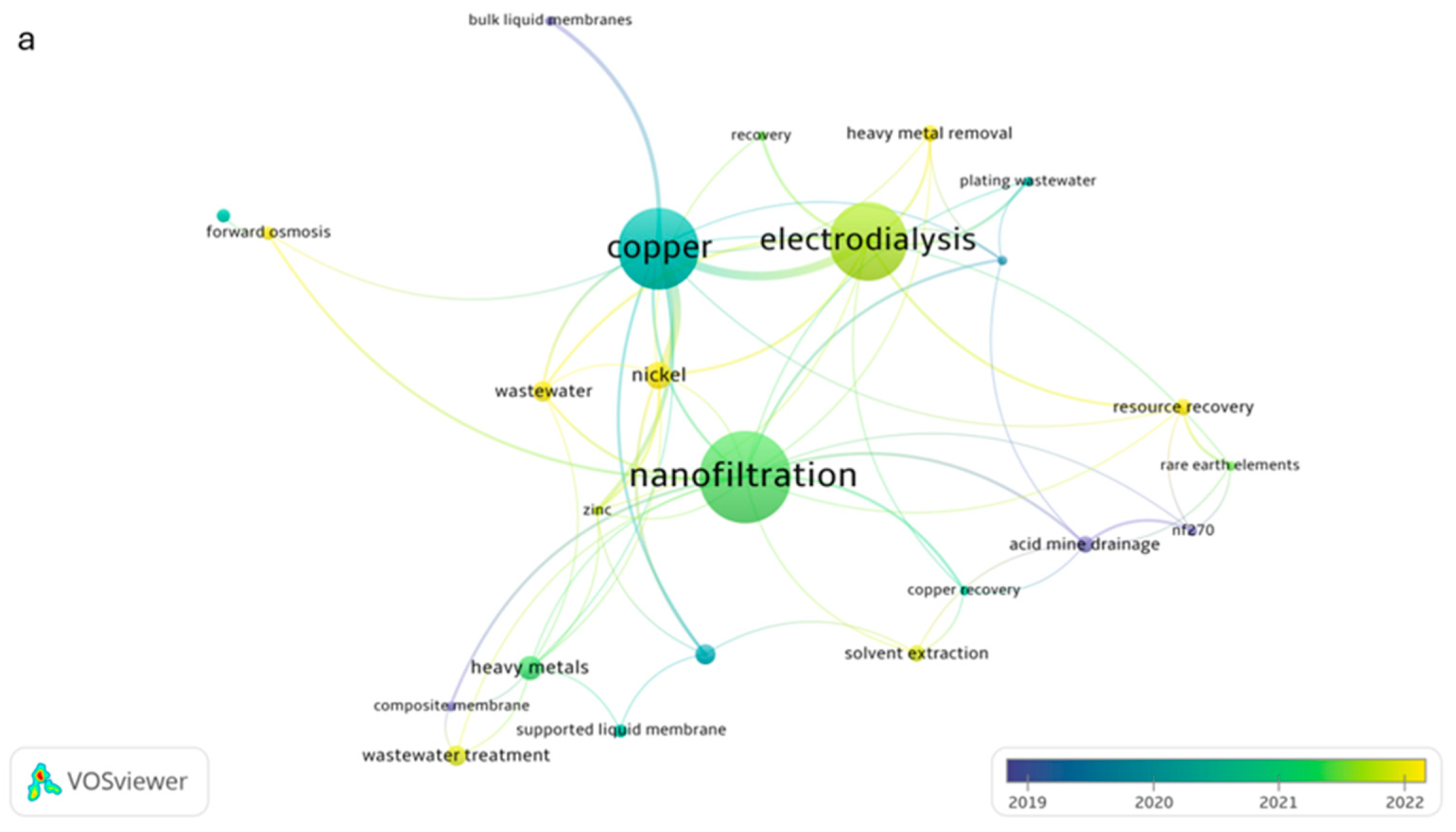


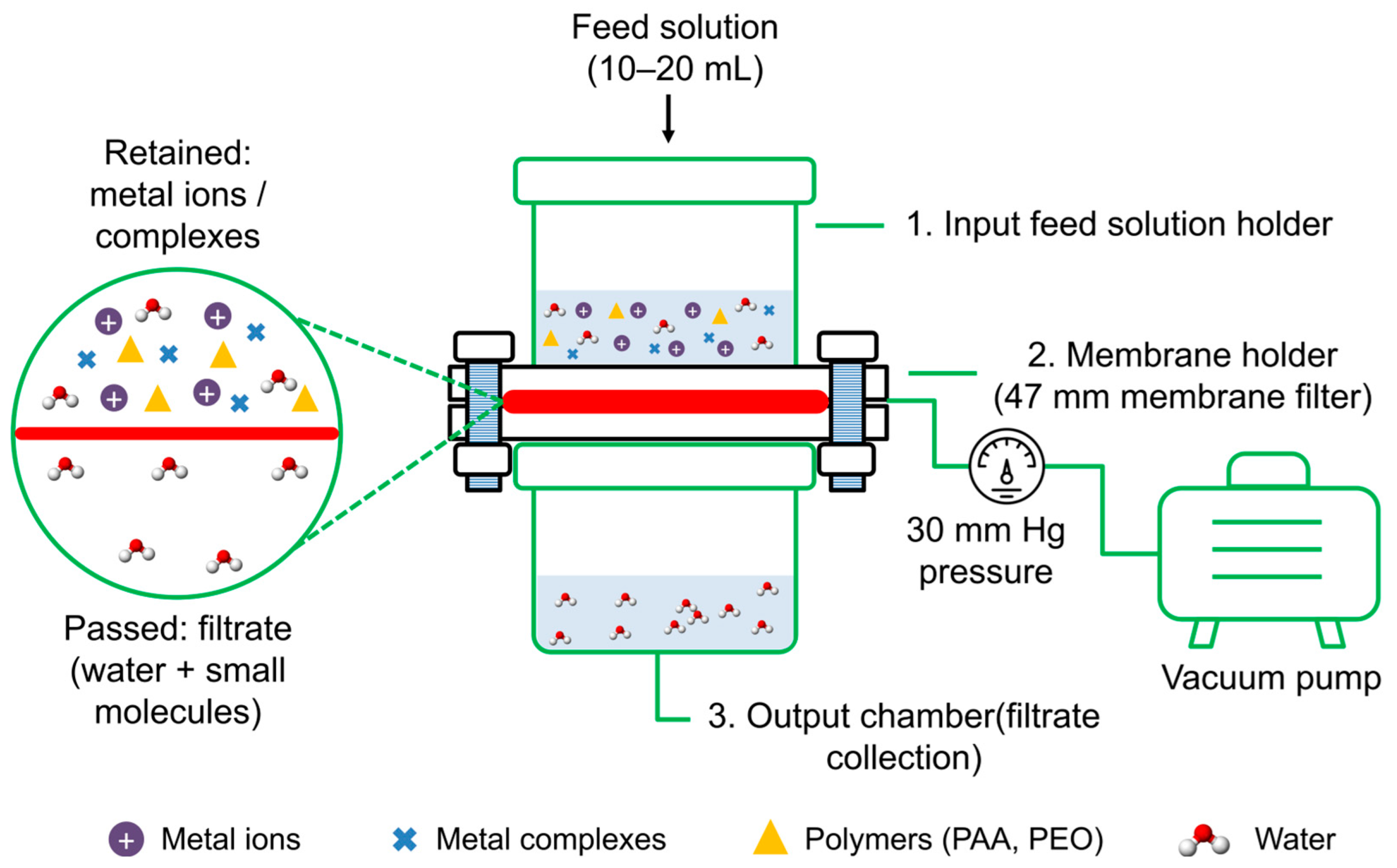
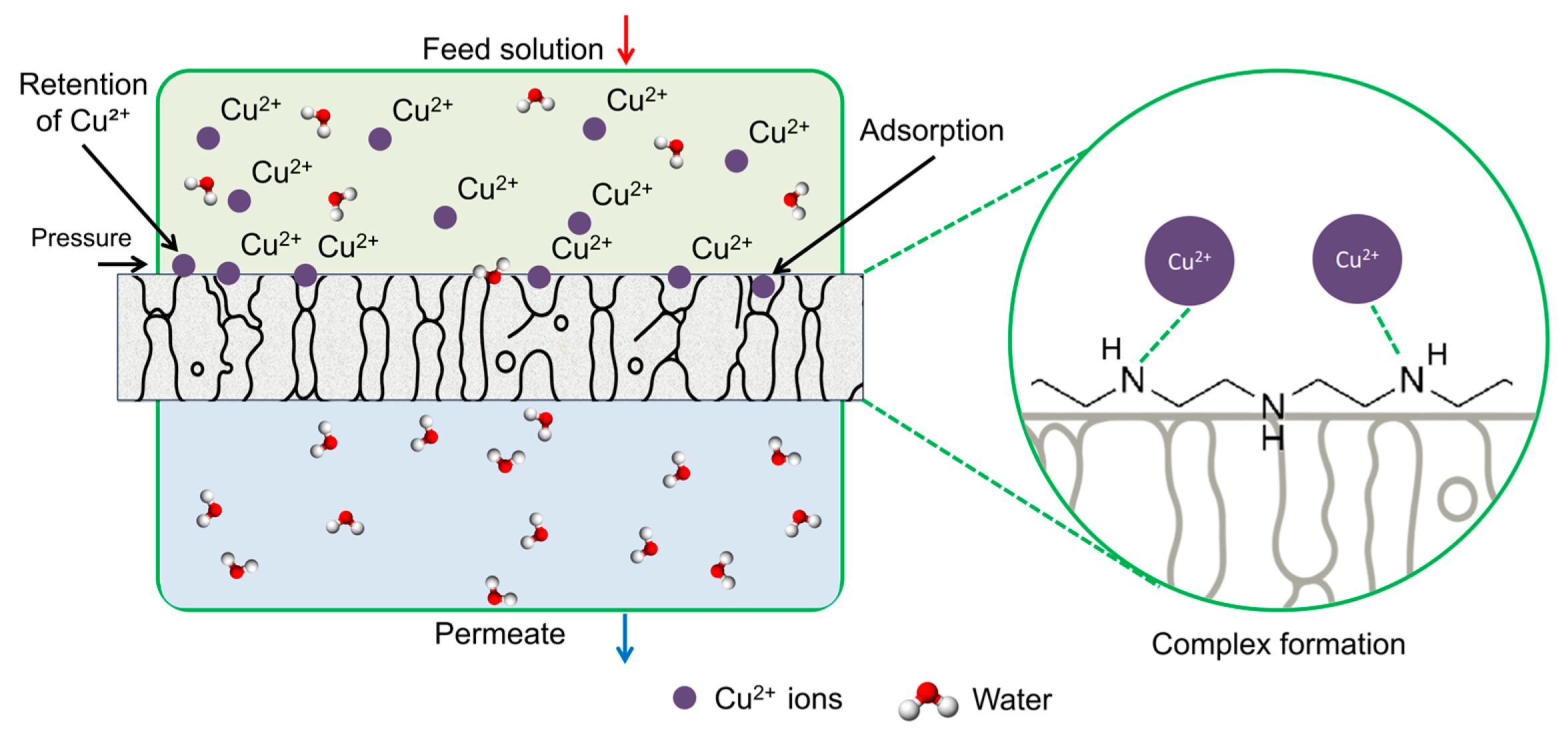



| Method | Stream Category | Effect of Cu Concentration on Recovery and Selectivity | Effect of pH/Free Acidity and Cu Form | Effect of Competing Metal | Recovered Cu, Purity and Further Treatment | Ref. |
|---|---|---|---|---|---|---|
| Chemical precipitation | Mine-affected waters | Higher Cu produces more CuS solid and makes solid separation easier. At low Cu, removal may remain high, but collecting fine solids and reagent use per unit Cu become less favourable. | At low pH, sulfide converts dissolved Cu2+ to CuS before Zn precipitates. Raising pH promotes Fe/Al and later Zn hydroxide formation, decreasing selectivity. | Zn can remain dissolved with controlled sulfide addition. Fe/Al hydroxides, clay and silica lower solid purity. | CuS or CuS/ZnS concentrate. Nearly pure CuS was obtained under controlled conditions, whereas a field solid contained only about 80% combined Cu and Zn metals. Filtration followed by leaching or smelting is required. | [28,33,38] |
| Cu-smelting waste acids | A high Cu/As ratio favours CuS formation before As precipitation. When Cu is low relative to As, mixing and reaction time have a greater influence and Cu/As separation becomes poorer. | Sulfide precipitation remains possible in strongly acidic solution. However, excess sulfide or a long reaction time increases As precipitation. | As is the main selectivity problem. Fe can enter a Cu–Fe sulfide phase and reduce the Cu content of the solid. | CuS mixed with Cu–Fe sulfide. One study reported 20.2% Cu and 0.7% As. The solid must be filtered, checked for As and subsequently leached or smelted. | [17,39] | |
| Electroplating wastewaters | Recovery is limited by precipitant capacity. Increasing the Cu or wastewater load without increasing the reagent leaves more Cu in solution. | Raising pH improves precipitation of free Cu2+, with little additional benefit above approximately pH 10. Stable Cu–CN complexes do not precipitate without cyanide destruction. | Ni, Zn, Cd, Fe and Cr can enter the mixed precipitate. Added Mg and Al also dilute the Cu product. | Mixed Cu–Mg–Al hydroxide rather than a pure Cu compound. Filtration and further recovery or disposal are required. Cyanide-containing streams first require oxidation and neutralisation. | [32,40] | |
| Secondary-material leachates | Recovery is controlled mainly by the ligand-to-Cu ratio. Dilute solutions can still give high recovery, but require more ligand and solution handling per unit Cu. | A selective ligand can precipitate Cu2+ at low pH, where hydroxide precipitation is ineffective. Excess residual acid suppresses ligand precipitation, whereas strong acid releases Cu from the solid. | The tested ligand largely rejected Fe and Sn; competition from other metals depends on ligand selectivity. | Cu–ligand solid, not Cu metal. Fe and Sn accounted for only 0.6% and 0.9% of recovered metals. Acid stripping produces a Cu-rich solution for crystallisation or electrowinning. | [34] | |
| Solvent extraction | Mine-affected waters | Higher Cu loads more Cu into the organic phase and allows production of a concentrated stripping solution. Dilute waters require prior concentration, repeated loading or additional extraction stages. | Hydroxyoxime extraction of Cu2+ improves as free acidity decreases. Very low pH reduces loading, although a high extractant concentration can partly compensate. | Even limited Fe extraction can cause substantial contamination when Fe greatly exceeds Cu. Selective stripping can leave most Fe in the organic phase. | Cu-rich acidic solution, not metal. Concentrations suitable for electrowinning were obtained after repeated loading; final Cu-metal purity was not measured. | [11,22] |
| Cu-smelting waste acids | Increasing Cu improves organic-phase loading only until the extractant approaches saturation. In an acidic sulfate model, Cu distribution initially increased with Cu concentration but decreased at higher loading. The effect has not been confirmed using real Cu–As smelting waste acid. | Increasing H2SO4 concentration decreases Cu extraction because H+ opposes the extraction of Cu2+. Mixed extractants can recover Cu at very low pH, whereas conventional hydroxyoximes would require partial acid removal. High chloride also decreases Cu extraction by changing Cu speciation. | Fe can be co-extracted, while high chloride decreases Cu/Fe separation. As was absent from these model studies; therefore, Cu/As selectivity in real smelting waste acid remains unconfirmed. | A Cu-loaded organic phase followed by a Cu-rich acidic stripping solution. Cu purity and As rejection have not been demonstrated for real smelting waste acid. Acid adjustment and As removal would be required before extraction, followed by electrowinning or crystallisation. | [41,42] | |
| Electroplating wastewaters | Cu-rich sulfate rinses can be concentrated effectively. Dilute rinses require more stages. In cyanide solutions, a higher CN/Cu ratio decreases Cu loading. | Free Cu2+ is extracted after acidity adjustment. Cu–CN anions require an amine- or guanidine-based extractant rather than a conventional hydroxyoxime. | Low Fe and Zn give high selectivity. Cu and Ni can be separated by pH, but Ni and Zn cyanide complexes may be co-extracted. | Concentrated CuSO4 solution or CuSO4·3H2O crystals, potentially reusable in the plating bath. Organic contamination must be avoided. A Cu–CN concentrate requires further recovery and cyanide treatment. | [29,43,44] | |
| Secondary-material leachates | The studied WPCB leachates contained Cu at g/L levels and gave more than 90% or complete extraction. Initial Cu concentration was not varied independently; recovery was mainly limited by extractant capacity and the number of extraction stages. | Lower free acidity favours Cu2+ extraction. A sulfate leachate was treated at pH 1.1, whereas a leachate containing 6 M HNO3 required adjustment to an equilibrium pH of 2.2 before complete Cu extraction. | Fe was the main competing metal and reduced the Cu-loading capacity of the organic phase. Control of pH and extractant concentration improved Cu separation from the other metals. | Acidic Cu-rich stripping solution. One study obtained about 90% stripping but did not measure final product purity. In another study, subsequent electrowinning produced 99.8% pure Cu metal. | [45,46] | |
| Ion exchange | Mine-affected waters | Ion exchange can recover dilute Cu by accumulating it on the resin. Higher Cu loads the resin faster but shortens the operating cycle. | Very low pH increases competition from H+. Raising pH sufficiently for Cu2+ binding improves uptake, but excessive pH adjustment can also bind other metals. | Fe, Al and Zn occupy resin capacity or reduce selectivity. Their prior removal and staged pH adjustment improve Cu separation. | Cu-rich sulfuric solution; a 40-fold concentration was reported. Final product purity was not measured. Electrowinning, precipitation or crystallisation is required. | [47] |
| Cu-smelting waste acids | Higher Cu produces a more concentrated resin washing solution but also saturates the resin sooner. Resin capacity and regeneration determine overall recovery. | High H+ concentration suppresses many conventional resins. Special chelating resins can retain Cu2+ in strongly acidic sulfate solutions | Fe and Ni may compete for binding sites. Selected resins can reject much of the Fe, but Cu/As selectivity has not been tested in real smelting waste acid. | Acidic or ammoniacal Cu-rich solution rather than metal. As content and final purity are unknown; solution conditioning followed by electrowinning or crystallisation is required. | [48] | |
| Electroplating wastewaters | Dilute Cu can be concentrated until the resin is saturated. Higher Cu increases loading but shortens the treatment cycle. | Free Cu2+ can be retained by a cation-exchange resin. Cu–CN complexes are not recovered by the same route and require cyanide oxidation and neutralisation. | Ni, Zn, Fe and Cr may compete depending on pH and ionic form. Different Cr oxidation states require separate treatment stages. | Acidic Cu solution after resin washing; product purity was not reported. Further electrowinning or crystallisation is required. | [40] | |
| Secondary-material leachates | More resin increases Cu recovery, whereas high Cu loading or high flow causes earlier resin saturation. | Very low pH can favour selective Cu2+ binding on a suitable resin. Increasing pH promotes uptake of other metals and decreases Cu selectivity. | Fe, Ni, Zn, Mn and Al increasingly compete as pH rises, reducing the purity of the recovered Cu solution. | Cu-rich sulfate solution after acid washing of the resin. Purity was not reported; electrowinning or crystallisation and resin regeneration are required. | [30] | |
| Electrowinning | Mine-affected waters | Higher Cu improves Cu transport to the cathode and current efficiency. As Cu becomes depleted, hydrogen formation and energy use increase. | Free Cu2+ is required. Moderate acidity improves conductivity, but excessive H+ competes with Cu deposition through hydrogen formation. | Fe3+/Fe2+ reactions consume current and can re-dissolve deposited Cu. Low Fe therefore allows more effective direct electrowinning. | Metallic Cu deposit; purity was not reported in the mine-water study. The deposit requires washing, while the depleted water still requires treatment or recycling. | [49] |
| Cu-smelting waste acids | Cu concentration controls both deposition efficiency and As contamination. In an acidic Cu–As model, Cu concentrations of 10 g/L or lower favoured copper–arsenide formation, whereas 40 g/L Cu produced grade-A copper in the presence of 2 g/L As. This indicates that the dilute Cu–As waste acid requires Cu concentration or As removal before electrowinning. | Strong acidity keeps Cu2+ dissolved and provides conductivity, but a high H+/Cu ratio promotes hydrogen formation and lowers current efficiency. In a related highly acidic refinery effluent, low Cu combined with very high H2SO4 resulted in low current efficiency at high current density. | As can co-deposit as copper arsenides when Cu concentration is low. Bi also co-deposited in a related acidic effluent. A real smelting-effluent study removed Cu, Cd, Ni, Pb, Zn and Fe together, indicating limited Cu selectivity. | A real smelting-effluent study achieved more than 99% total heavy-metal removal but did not report a separate Cu product or its purity. Related acidic systems produced mixed Cu/Cu2O–Bi or Cu–As deposits. Cu concentration and impurity removal are required before electrowinning, and the deposit may require refining. | [50,51,52] | |
| Electroplating wastewaters | High Cu favours efficient deposition. Dilute rinses may require electrodialysis or another concentration step; energy use rises as Cu concentration falls. | Free Cu2+ deposits under acidic conditions. Cu–CN requires strongly alkaline operation with simultaneous cyanide oxidation. | Fe consumes current, while chloride can promote re-dissolution of deposited Cu. These effects can greatly reduce recovery from real wastewater. | Metallic Cu or a Cu/Cu2O product. Purity was generally not reported; washing or refining and final cyanide treatment may be required. | [53,54,55] | |
| Secondary-material leachates | Higher Cu gives high current efficiency. When Cu falls below a few g/L, hydrogen formation and local precipitation become more important, so the remaining solution may require reconcentration. | Adjusted acidic sulfate solutions containing free Cu2+ are favourable. A local pH increase near the cathode can form Cu hydroxide or oxide instead of metal. | Fe and Al should be removed before electrowinning. Remaining Fe, Zn, Ni and Al decrease cathode purity. | Metallic deposit containing 95.97 wt% Cu in one WPCB study. Washing or refining is required, and the remaining solution should be recycled or reconcentrated. | [31] |
| Feed/Metals | Membrane Approach | Separation Behaviour | Downstream Recovery | Key Quantitative Result | Interpretation | Ref. |
|---|---|---|---|---|---|---|
| Real electroplating wastewater; Cr/Cu/Ni | NF | Simultaneous multivalent-metal retention | Not reported | Cr 95.76%, Cu 95.33%, Ni 94.99% rejection | High Cu rejection, but not Cu-specific selectivity | [84] |
| Model Cu/Co solution | MEUF with SDS + iminodiacetic acid | Complexation-controlled Cu/Co separation; Cu → permeate, Co → retentate | Surfactant regeneration | >90% Cu/Co separation; SDS recovery 75–83% | Selectivity arises mainly from complexation, not UF pore selectivity | [82] |
| Actual copper-mine AMD | Pilot NF | Cu preconcentration | Solvent extraction + stripping | Cu 0.6 → 2.4 g/L; water recovery up to 80%; subsequent Cu recovery up to 97% | NF preconcentration → SX recovery cascade | [11] |
| Cu/Fe(III) model wastewater | Na2EDTA-assisted ED | Cu/Fe separation through controlled complexation | Electrolysis | 92.2% Cu recovery; CF 2.95; 94.3% Fe retention; electrolysis: 94.49% Cu recovery, 99.4% purity | ED separation → metallic Cu recovery | [12] |
| Real plating wastewater; Cu/Zn | Selective-stripping SLM | Separate Cu and Zn transport/stripping | Selective stripping | Cu: 83.7% recovery, 91.0% purity; Zn: 85.5% recovery, 99.3% purity | Direct polymetallic fractionation into separate product streams | [83] |
Disclaimer/Publisher’s Note: The statements, opinions and data contained in all publications are solely those of the individual author(s) and contributor(s) and not of MDPI and/or the editor(s). MDPI and/or the editor(s) disclaim responsibility for any injury to people or property resulting from any ideas, methods, instructions or products referred to in the content. |
© 2026 by the authors. Licensee MDPI, Basel, Switzerland. This article is an open access article distributed under the terms and conditions of the Creative Commons Attribution (CC BY) license.
Share and Cite
Kamunur, K.; Shnali, Z.; Makan, A.; Mussapyrova, L.; Tanyrbergenova, S.; Zhylybayeva, N.; Assylkhanova, D.; Atamanov, M. Copper Separation and Recovery from Solutions: Conventional and Membrane-Based Methods. J. Compos. Sci. 2026, 10, 497. https://doi.org/10.3390/jcs10090497
Kamunur K, Shnali Z, Makan A, Mussapyrova L, Tanyrbergenova S, Zhylybayeva N, Assylkhanova D, Atamanov M. Copper Separation and Recovery from Solutions: Conventional and Membrane-Based Methods. Journal of Composites Science. 2026; 10(9):497. https://doi.org/10.3390/jcs10090497
Chicago/Turabian StyleKamunur, Kaster, Zarina Shnali, Aibek Makan, Lyazzat Mussapyrova, Sandugash Tanyrbergenova, Nurzhamal Zhylybayeva, Dana Assylkhanova, and Meiram Atamanov. 2026. "Copper Separation and Recovery from Solutions: Conventional and Membrane-Based Methods" Journal of Composites Science 10, no. 9: 497. https://doi.org/10.3390/jcs10090497
APA StyleKamunur, K., Shnali, Z., Makan, A., Mussapyrova, L., Tanyrbergenova, S., Zhylybayeva, N., Assylkhanova, D., & Atamanov, M. (2026). Copper Separation and Recovery from Solutions: Conventional and Membrane-Based Methods. Journal of Composites Science, 10(9), 497. https://doi.org/10.3390/jcs10090497