1. Introduction
Concrete is the most widely used construction material in modern infrastructure due to its high compressive strength, durability, and cost-effectiveness. However, reinforced concrete (RC) structures exposed to aggressive marine environments and de-icing salts remain highly susceptible to chloride-induced corrosion, one of the primary causes of premature deterioration and reduced service life. Chloride ions gradually penetrate the concrete matrix and disrupt the passive protective layer surrounding reinforcing steel, initiating electrochemical corrosion that produces expansive corrosion products, leading to cracking, spalling, bond degradation, and significant reductions in structural capacity and durability [
1]. Chloride ingress can also adversely affect ultra-high-performance fiber-reinforced concrete (UHPFRC), resulting in fiber corrosion, matrix degradation, and progressive microstructural damage under prolonged exposure [
2]. Consequently, chloride-induced deterioration remains a major durability challenge, resulting in substantial maintenance, repair, and rehabilitation costs for concrete infrastructure worldwide [
3].
In addition to conventional reinforced concrete systems, chloride attack also poses a significant threat to ultra-high-performance fiber-reinforced concrete (UHPFRC). Although UHPFRC exhibits a dense microstructure and exceptional mechanical performance, prolonged exposure to chloride-rich environments can initiate steel-fiber corrosion, promote matrix degradation, and adversely affect long-term durability. Experimental studies have shown that severe corrosion can reduce flexural strength by as much as 47% due to progressive fiber deterioration, interfacial damage, and corrosion-induced microstructural defects [
4]. Furthermore, concrete transport and corrosion behavior are strongly influenced by pore structure, cracking characteristics, loading conditions, and supplementary cementitious materials (SCMs), which govern chloride diffusion, moisture transport, and reinforcement corrosion [
5].
The study of chloride diffusion behavior in concrete is fundamentally aimed at enabling accurate service-life prediction of reinforced concrete structures [
6]. The apparent chloride diffusion coefficient is widely regarded as a key indicator of resistance to chloride ingress and a primary parameter governing long-term durability [
7]. Because chloride penetration accelerates reinforcement corrosion and reduces structural longevity, accurate modeling of chloride transport is essential for estimating the corrosion initiation period, which is commonly considered the threshold marking the end of a structure’s intended service life [
8,
9]. Consequently, chloride diffusivity has become a principal durability indicator for evaluating structural performance, supporting service-life prediction, and guiding durability-based design through reliable mathematical and data-driven predictive models [
10,
11,
12].
The incorporation of supplementary cementitious materials (SCMs) plays a crucial role in the development of environmentally sustainable concrete, as the partial replacement of Portland cement with materials such as fly ash and ground granulated blast-furnace slag significantly reduces embodied energy consumption and carbon dioxide emissions [
13]. In addition to their sustainability benefits, SCMs substantially enhance durability by refining the pore structure, reducing chloride transport, and increasing the chloride-binding capacity of the cementitious matrix through the formation of additional calcium silicate hydrate (C–S–H) gel and chloroaluminate compounds [
14,
15,
16]. Furthermore, the synergistic use of multiple SCMs in ternary or quaternary binder systems has been shown to provide superior reinforcement protection and significantly reduce steel corrosion compared with conventional concrete mixtures [
17].
Traditional analytical approaches for modeling chloride diffusion in concrete exhibit significant limitations because they cannot adequately represent the coupled time-dependent behavior of the diffusion coefficient and surface chloride concentration [
18]. Conventional solutions based on Fick’s second law generally assume simplified boundary conditions, neglect the convection zone near the concrete surface, and rely on constant diffusion coefficients and homogeneous media, failing to capture microcracking, pore structure evolution, and material heterogeneity commonly observed in real concrete structures [
19]. Although some advanced analytical formulations incorporate time-varying surface chloride concentrations, they often simplify these complex processes and overlook the combined influence of material characteristics and environmental conditions on chloride ingress [
20]. Furthermore, inconsistencies in technical terminology, including varying definitions of the “effective diffusion coefficient,” introduce additional uncertainty and may result in prediction errors exceeding 50% [
21].
The adoption of machine learning in civil engineering has been driven by the increasing complexity of infrastructure systems and the growing availability of large, diverse datasets [
22]. This has accelerated the transition from traditional empirical approaches toward predictive, data-driven, and condition-based decision-making frameworks [
23]. Advances in geospatial data acquisition, Internet of Things (IoT) technologies, and structural monitoring systems have further expanded the application of machine learning to infrastructure assessment, structural health monitoring, and maintenance planning, improving analytical efficiency and supporting long-term infrastructure management [
24,
25]. Consequently, machine learning has become an essential tool for enhancing infrastructure resilience, sustainability, and asset management [
26].
The adoption of machine learning in architecture, engineering, and construction is often constrained by the opaque nature of many “black-box” models, creating a need for interpretability to ensure that automated predictions can be validated against established engineering knowledge and practice [
27]. Model transparency is essential for fostering user trust and enabling engineers and other stakeholders to understand the reasoning behind model predictions, thereby enhancing confidence in AI-assisted decision-making [
28,
29]. This is particularly important in civil engineering, where decisions directly affect public safety, infrastructure reliability, and professional accountability. Consequently, achieving an appropriate balance between predictive accuracy and interpretability is essential for the successful integration of machine learning technologies into engineering practice [
30,
31,
32,
33].
ML has become an effective alternative to conventional empirical methods for predicting the chloride diffusion coefficient (CDC) of concrete, overcoming the limitations of time-consuming experiments and simplified analytical models. Various algorithms, including BP-ANN, SVR, GP, RF, and XGBoost, have demonstrated strong predictive capability, with XGBoost achieving the highest accuracy. Furthermore, integrating Particle Swarm Optimization (PSO) for hyperparameter tuning significantly enhances model performance, stability, and robustness, with the PSO-XGBoost model providing the best overall results. These findings highlight the potential of optimized ensemble learning as a reliable tool for predicting chloride diffusion and supporting the durability assessment of concrete structures [
34,
35].
Despite the growing application of machine learning techniques in concrete durability assessment, limited research has integrated physics-guided feature engineering, synthetic data augmentation, ensemble learning, and explainable artificial intelligence into a unified framework for predicting chloride diffusion behavior. To address this gap, the present study develops an explainable machine learning framework for estimating the chloride diffusion coefficient of concrete mixtures using experimentally measured Rapid Chloride Migration (RCM) data. The proposed methodology combines physics-guided engineered features with conditional synthetic data augmentation and a stacking ensemble architecture consisting of CatBoost, XGBoost, Random Forest, and Linear Regression base learners, with Ridge Regression employed as the meta-learner. Furthermore, SHapley Additive exPlanations (SHAP) are utilized to enhance model interpretability and identify the key factors governing chloride transport behavior. The primary objectives of this study are to improve predictive accuracy, enhance model generalization under limited experimental data conditions, and provide physically meaningful insights into the effects of mixture composition and durability-related characteristics on chloride diffusion. The outcomes contribute to the development of reliable and interpretable data-driven tools for service-life assessment, durability-based design, and the advancement of sustainable concrete infrastructure.
2. Materials and Methods
2.1. Dataset Description
The dataset used in this study was obtained from the publicly available Data Enabled Engineering Design System (DEEDS) repository (Dataset ID 618) developed by Chen and Zhou [
36]. The database comprises experimentally measured chloride diffusion coefficients of concrete determined using the Rapid Chloride Migration (RCM) test at 28 days and includes a comprehensive collection of concrete mixture designs reported in the literature. Each experimental record contains mixture composition variables, including cement content, fly ash content, slag content, silica fume content, metakaolin content, pozzolan content, limestone powder content, water-to-binder ratio (W/B), cement type, and superplasticizer (SP) dosage, together with bibliographic reference information. The chloride diffusion coefficient measured by the RCM test was selected as the target variable because it is one of the most widely accepted indicators of chloride transport resistance and the long-term durability of concrete.
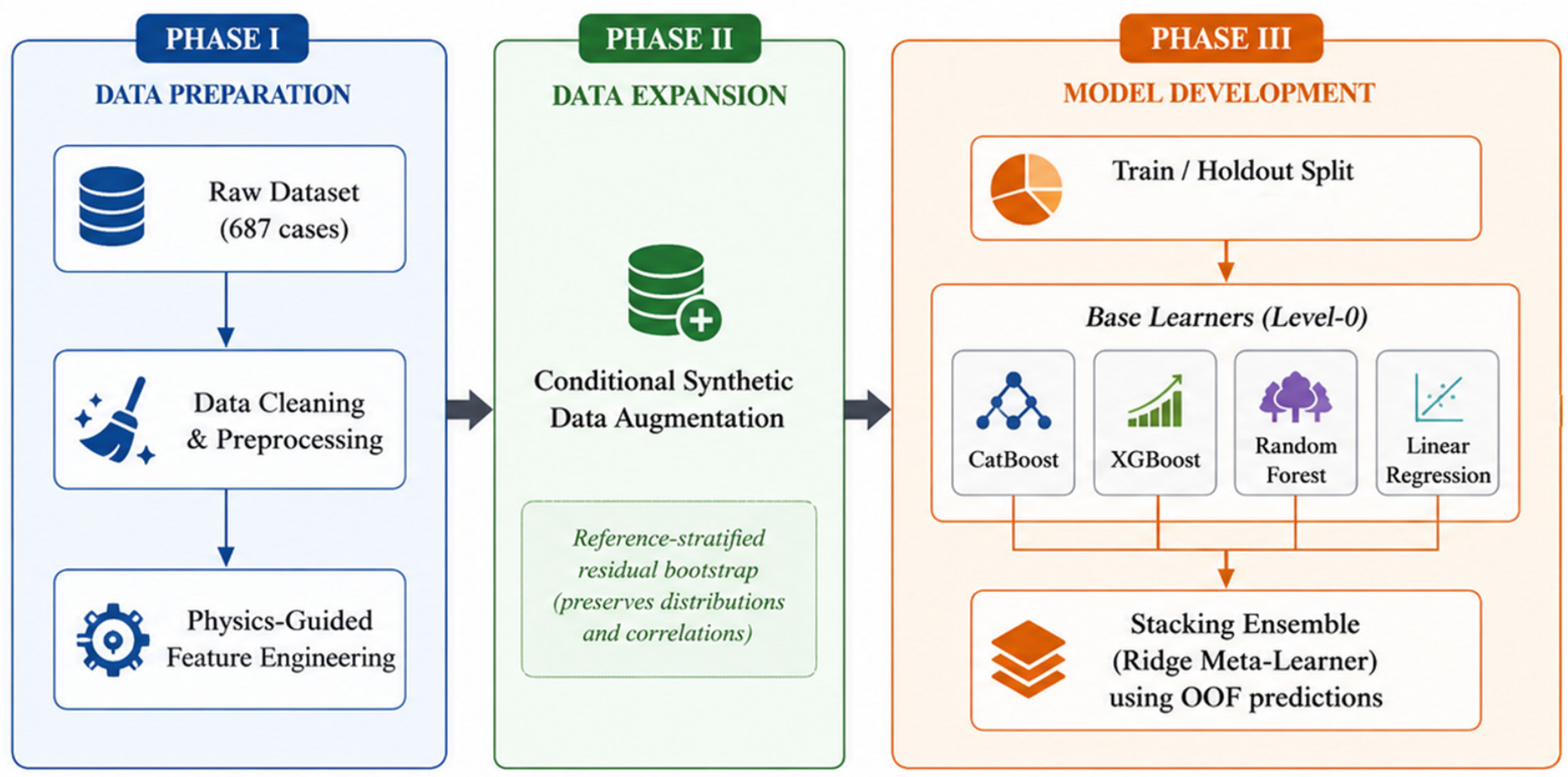
To improve transparency and reproducibility, the complete data preparation workflow adopted in this study is presented in
Figure 1. The dataset was downloaded in its original form and used as the basis for all subsequent analyses, with no manual addition or removal of experimental records. Prior to model development, missing numerical values were imputed using the median, whereas missing categorical values were replaced with the most frequent category to preserve dataset completeness. Numerical variables were subsequently processed using interquartile range (IQR)-based outlier clipping to limit the influence of extreme observations while retaining all available experimental records. Compared with outright sample removal, this approach preserves the diversity and representativeness of the experimental database.
Feature engineering was then performed to improve the representation of the physical mechanisms governing chloride transport. In addition to the original mixture-design variables, several physically meaningful derived features were generated, including ratio-based, logarithmic, and square-root transformations. Correlation analysis was subsequently conducted to examine relationships among predictor variables, identify potential multicollinearity, and support the interpretation of feature importance in the developed machine learning models.
No feature scaling (e.g., standardization or min–max normalization) was applied prior to model training because all predictive models employed in this study were tree-based algorithms, whose split-based learning mechanisms are inherently insensitive to the scale of input variables. For Random Forest and XGBoost, categorical variables were encoded prior to training while numerical variables were retained in their original units. CatBoost was trained directly on the raw feature table using its native categorical feature processing capability. For selected models, a logarithmic transformation (log1p) was applied only to the target variable to improve numerical stability and reduce the influence of target skewness; the predictor variables remained in their original scales throughout the analysis.
Following preprocessing and feature engineering, the dataset was randomly partitioned into training and testing subsets using an 80:20 split, with 80% of the data allocated for model development and the remaining 20% reserved for independent performance evaluation. A fixed random seed of 42 was used to ensure reproducibility of the data partitioning process. Model development, including hyperparameter optimization and cross-validation, was performed exclusively on the training set, whereas the held-out test set was used only for the final evaluation of predictive performance. This workflow provides an unbiased assessment of model generalization while minimizing the risk of information leakage between the training and testing stages.
2.2. Physics-Guided Feature Engineering
To enhance the physical interpretability of the proposed machine learning framework, several physics-guided engineered features were developed based on established mechanisms governing chloride transport and concrete durability. These engineered variables were designed to capture physically meaningful relationships among mixture proportions, supplementary cementitious material (SCM) content, binder composition, porosity-related characteristics, and curing-related effects, thereby incorporating domain knowledge into the predictive modeling process.
The feature engineering strategy adopted in this study was primarily guided by established physical mechanisms governing chloride transport in concrete rather than by purely statistical feature selection techniques. Instead of retaining numerous highly related mixture-design variables, several physically meaningful composite features were constructed to capture key durability mechanisms while reducing redundancy among the predictors. These engineered variables included descriptors representing supplementary cementitious material (SCM) content, total binder content, SCM replacement ratio, cement-to-SCM ratio, porosity-related indices, water–binder interactions, binder efficiency, and SCM reactivity. By integrating multiple correlated variables into physically interpretable composite descriptors, the proposed approach improves feature representation while mitigating redundant information.
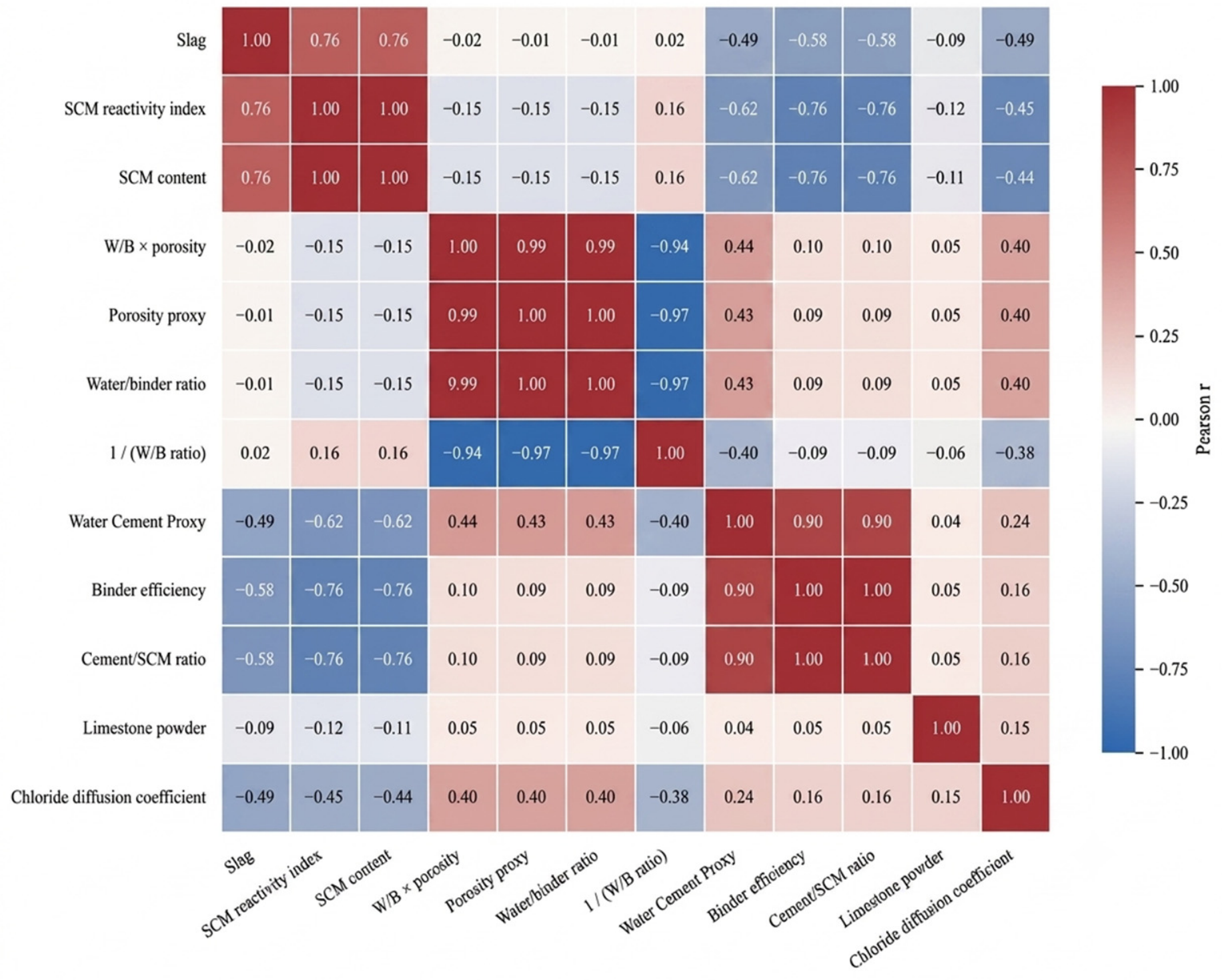
Pearson correlation analysis was subsequently performed to investigate relationships among the engineered predictors and to support feature interpretation. Although correlations among some variables remained, highly correlated predictors were not eliminated solely based on statistical criteria because the machine learning models employed in this study (Random Forest, XGBoost, and CatBoost) are inherently less sensitive to multicollinearity than conventional linear regression models. Consequently, the proposed framework combines physics-guided feature engineering with robust tree-based learning algorithms to effectively capture the underlying durability mechanisms while maintaining model interpretability.
The engineered features included SCM-related parameters such as SCM content, total binder content, SCM ratio, binder efficiency index, and SCM reactivity index, as well as transport-oriented interaction terms involving the product of water-to-cement ratio and porosity
. Additional ratio- and transformation-based variables were also incorporated, including the cement-to-SCM ratio
, cement-to-water ratio
, inverse water-to-binder ratio
, logarithmic transformations of cement content log(C) and total binder content log(B), square-root transformations of cement content
, and curing-time transformation
. These features were intended to enhance the capability of the ML models to capture nonlinear diffusion behavior while preserving engineering relevance and physical consistency (See
Figure 2).
2.3. Machine Learning Models and Synthetic Data
Four machine learning algorithms were employed as base learners within the stacking ensemble framework: CatBoost Regressor, XGBoost Regressor, Random Forest Regressor, and Linear Regression. CatBoost and XGBoost were selected for their strong capability to capture complex nonlinear relationships and feature interactions commonly present in concrete durability data. Random Forest was incorporated as a robust bagging-based ensemble method with strong generalization performance, while Linear Regression was included as a baseline model to represent linear relationships and provide complementary predictive information within the ensemble.
To improve prediction stability and mitigate the influence of skewed target distributions, a logarithmic transformation using the log1p function was applied to the target variable during the training of the CatBoost, XGBoost, and Random Forest models. This transformation helped stabilize variance and enhance the learning of nonlinear relationships across the target range. In contrast, the Linear Regression model was trained using the original target scale to preserve its direct linear interpretation and provide diversity within the stacking ensemble.
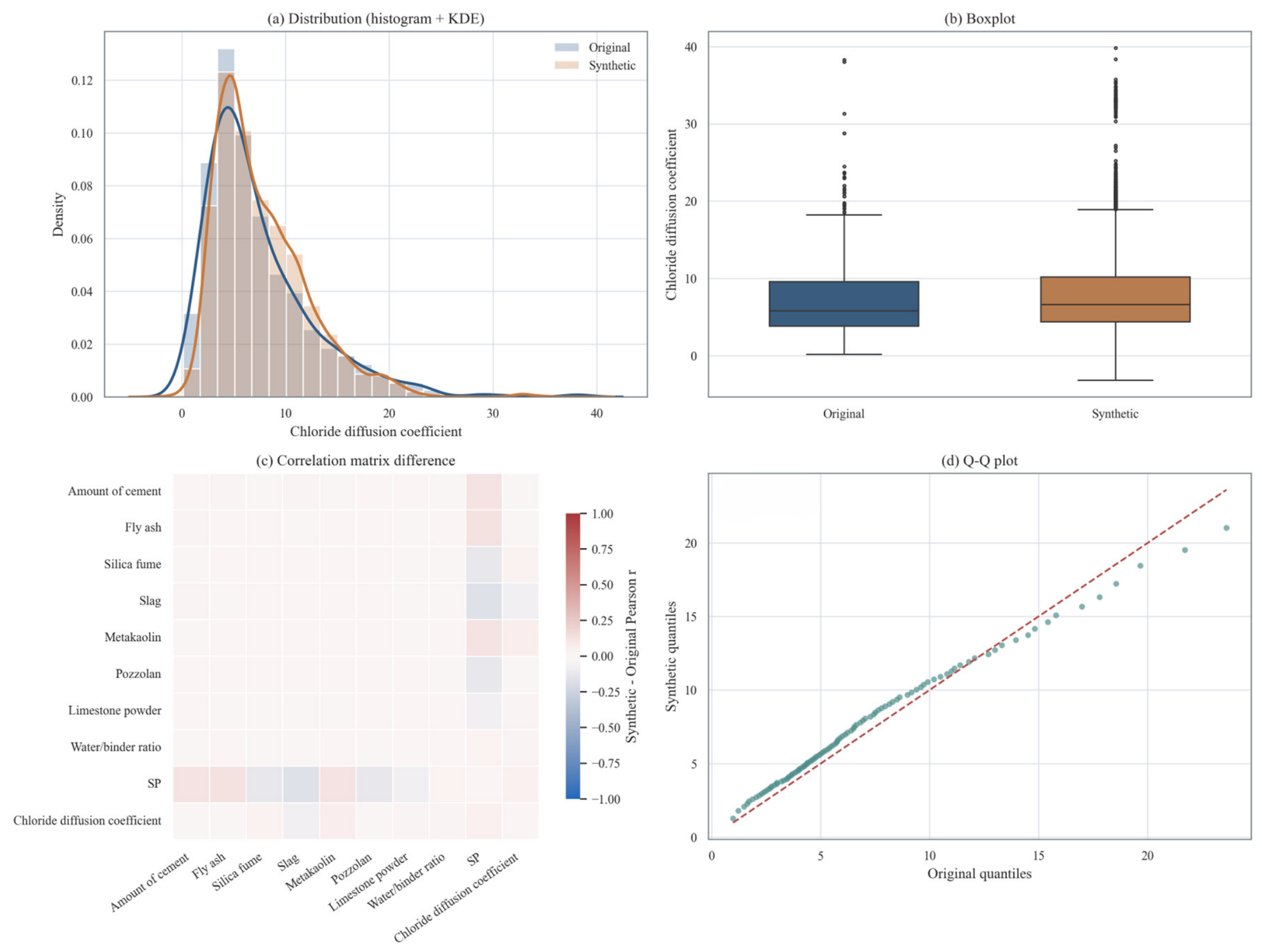
To assess the quality of the generated synthetic data, a statistical comparison was performed between the original and synthetic datasets (
Figure 3). The histogram and kernel density estimation (KDE) curves (
Figure 3a) demonstrate a close agreement in the overall distribution of the chloride diffusion coefficient, while the boxplots (
Figure 3b) show that the median, interquartile range, and overall dispersion are well preserved. Furthermore, the correlation matrix difference (
Figure 3c) indicates that the relationships among the predictor variables remain largely unchanged following augmentation, suggesting that the underlying physical dependencies were retained. Finally, the quantile–quantile (Q–Q) plot (
Figure 3d) shows good agreement between the empirical quantiles of the original and synthetic data, with only minor deviations observed in the extreme upper tail. These results demonstrate that the proposed conditional synthetic data generation approach preserves the principal statistical characteristics of the original dataset while increasing the number of training samples without introducing substantial statistical bias.
2.4. Stacking Ensemble Framework
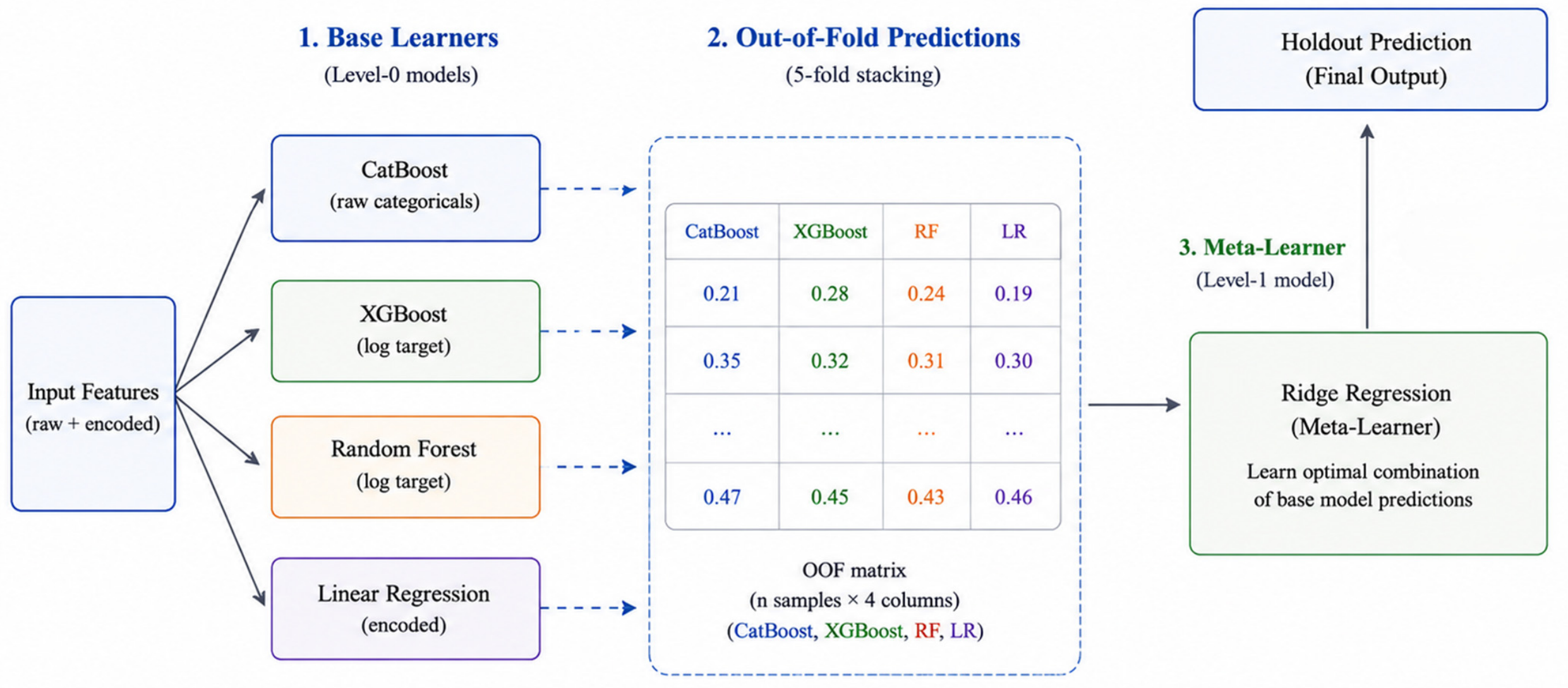
A two-level stacking ensemble framework was developed to enhance predictive accuracy and model generalization. The first level comprised four heterogeneous base learners—CatBoost, XGBoost, Random Forest, and Linear Regression—each contributing distinct predictive strengths and learning characteristics. The second level employed Ridge Regression as the meta-learner, which combined the predictions generated by the base models to produce the final chloride diffusion coefficient estimates. This ensemble architecture was designed to leverage the complementary capabilities of individual models while reducing prediction variance and improving overall robustness.
To prevent information leakage between the base and meta-learning levels, five-fold out-of-fold (OOF) cross-validation was employed to generate the meta-features used for stacking. In each fold, the base learners were trained on the corresponding training subset and subsequently used to predict the validation subset. The OOF predictions generated across all folds were then concatenated to form the meta-feature matrix, which served as the input for training the Ridge Regression meta-learner. This procedure ensured that the meta-learner was trained exclusively on predictions derived from unseen data, thereby improving the reliability and generalization capability of the ensemble framework.
The five-fold cross-validation procedure was employed exclusively to generate out-of-fold predictions for meta-learner training, whereas the final model performance reported in this study was obtained from an independent holdout test set.
After training the meta-learner, each base learner was refitted using the entire training dataset and subsequently used to generate predictions for the holdout test set. The resulting base-model predictions were then combined by the trained Ridge Regression meta-learner to produce the final stacked predictions. To ensure physical consistency and maintain the non-negative nature of chloride diffusion coefficients, the final ensemble outputs were constrained to non-negative values. The overall stacking procedure is illustrated in
Figure 4.
Ridge Regression with regularization parameter was selected as the meta-learner to improve stability and reduce overfitting caused by noisy or correlated base-model predictions.
2.5. Hyperparameter Optimization
Model hyperparameters were manually selected for each base learner based on preliminary experimentation and their suitability for structured engineering datasets. The CatBoost Regressor was configured with a large number of iterations, a low learning rate, and a moderate tree depth, while incorporating built-in overfitting detection through the od_type = “Iter” and od_wait = 800 settings. The XGBoost Regressor was configured using a fixed number of trees, moderate tree depth, subsampling and column-sampling strategies, and regularization parameters to balance predictive performance and generalization. The Random Forest Regressor was implemented with a large number of trees and square-root feature sampling to enhance robustness and reduce variance. In contrast, Linear Regression was retained as an untuned baseline model to provide a simple linear benchmark and contribute model diversity within the stacking ensemble.
To mitigate overfitting in the gradient boosting model, CatBoost employed its built-in overfitting detection mechanism and early stopping functionality, allowing training to terminate when no meaningful improvement was observed over a specified number of iterations. This approach helped improve model generalization while reducing the risk of excessive training. However, no external hyperparameter optimization procedures, such as RandomizedSearchCV or GridSearchCV, were applied in the final modeling pipeline, and all model parameters were selected based on prior experimentation and domain-specific considerations.
The predictive performance of the developed machine learning models was evaluated using four complementary regression metrics: the coefficient of determination (R2), root mean square error (RMSE), mean absolute error (MAE), and mean absolute percentage error (MAPE). These metrics were selected because they provide complementary information regarding model accuracy and prediction quality. The coefficient of determination (R2) measures the proportion of variance explained by the model and reflects its overall goodness-of-fit. RMSE quantifies the magnitude of prediction errors while assigning greater weight to larger deviations, making it particularly suitable for identifying models that produce occasional large errors. MAE provides the average absolute prediction error and is less sensitive to outliers than RMSE, thereby offering a more robust measure of typical prediction accuracy. MAPE expresses prediction errors as percentages, facilitating interpretation and comparison across different studies. Collectively, these metrics provide a comprehensive evaluation of model performance from complementary statistical perspectives.
2.6. Explainable Artificial Intelligence (XAI)
Although the final predictive framework is based on a stacking ensemble, the explainability analysis was performed using the CatBoost base learner rather than the complete stacking model. The stacking ensemble combines predictions from multiple heterogeneous base learners through a Ridge Regression meta-learner trained on five-fold out-of-fold predictions, making direct feature attribution for the overall ensemble substantially more complex. In contrast, CatBoost supports the TreeSHAP algorithm, which provides exact and computationally efficient feature attributions for tree-based models. Because CatBoost was the strongest individual base learner and captured the same underlying relationships between the input variables and chloride diffusion behavior, it was selected as the representative model for explainability. Consequently, the SHAP analysis was intended to interpret the learned material and durability mechanisms rather than the weighting strategy of the stacking meta-learner.
To enhance model interpretability and engineering transparency, explainable artificial intelligence (XAI) techniques were incorporated into the developed framework. SHapley Additive exPlanations (SHAP) were employed to quantify the contribution of each input variable to the predicted chloride diffusion coefficient and to identify the most influential features at both the global and local levels. In the implemented workflow, SHAP values were computed for the selected CatBoost-based model using the TreeSHAP algorithm, which is specifically designed for tree-based machine learning models. The resulting explanations were visualized through global feature importance plots, SHAP summary plots, dependence plots, and local waterfall plots, providing comprehensive insights into model behavior and the underlying factors governing chloride transport predictions.
SHAP summary plots were used to rank input variables according to their overall contribution to model predictions, providing a global assessment of feature importance. In addition, SHAP dependence plots were employed to investigate nonlinear relationships and potential interaction effects among key variables, including water-to-binder ratio (W/B), supplementary cementitious material (SCM) content, and porosity-related features. These visualizations provided valuable insights into how mixture design parameters, binder composition, and transport-related indicators influenced the predicted chloride diffusion coefficient, thereby enhancing the physical interpretability of the machine learning framework.
In addition to SHAP analysis, permutation feature importance was employed as a complementary sensitivity analysis technique for the selected CatBoost explainability model. This method evaluates the importance of individual features by measuring the reduction in predictive performance that occurs when feature values are randomly permuted, thereby disrupting their relationship with the target variable. As an independent assessment of feature relevance, permutation importance was used to verify the consistency of the dominant predictors identified by the SHAP analysis. Because permutation importance was not computed for the final stacking ensemble, these results should be interpreted as complementary explanations of the representative CatBoost model rather than direct explanations of the ensemble meta-learner.
2.7. Software and Computational Environment
All machine learning analyses, data preprocessing procedures, feature engineering operations, and visualization tasks were implemented using the Python 3.11.0 programming language. The primary libraries utilized in this study included pandas 2.2.0 and NumPy 1.26.0 for data manipulation and numerical computations, scikit-learn 1.5.0 for machine learning workflows and model evaluation, XGBoost 2.0.0 and CatBoost 1.2.0 for gradient boosting models, SHAP 0.46.0 for explainable artificial intelligence analyses, andSciPy 1.12.0, Optuna 3.6.0, Joblib 1.4.0, Matplotlib 3.10.9 and Seaborn 0.13.0 for data visualization. Additional libraries, including LightGBM 4.3.0, were also incorporated to support model development and exploratory analyses where applicable.
To ensure reproducibility and transparency, the complete codebase, trained models, data preprocessing workflow, feature engineering procedures, and visualization scripts developed in this study publicly available through repository [
37]. This repository will provide access to the implementation details necessary for reproducing the results, facilitating future research, validation, and extension of the proposed framework.
3. Results
3.1. Characteristics of the Chloride Diffusion Dataset
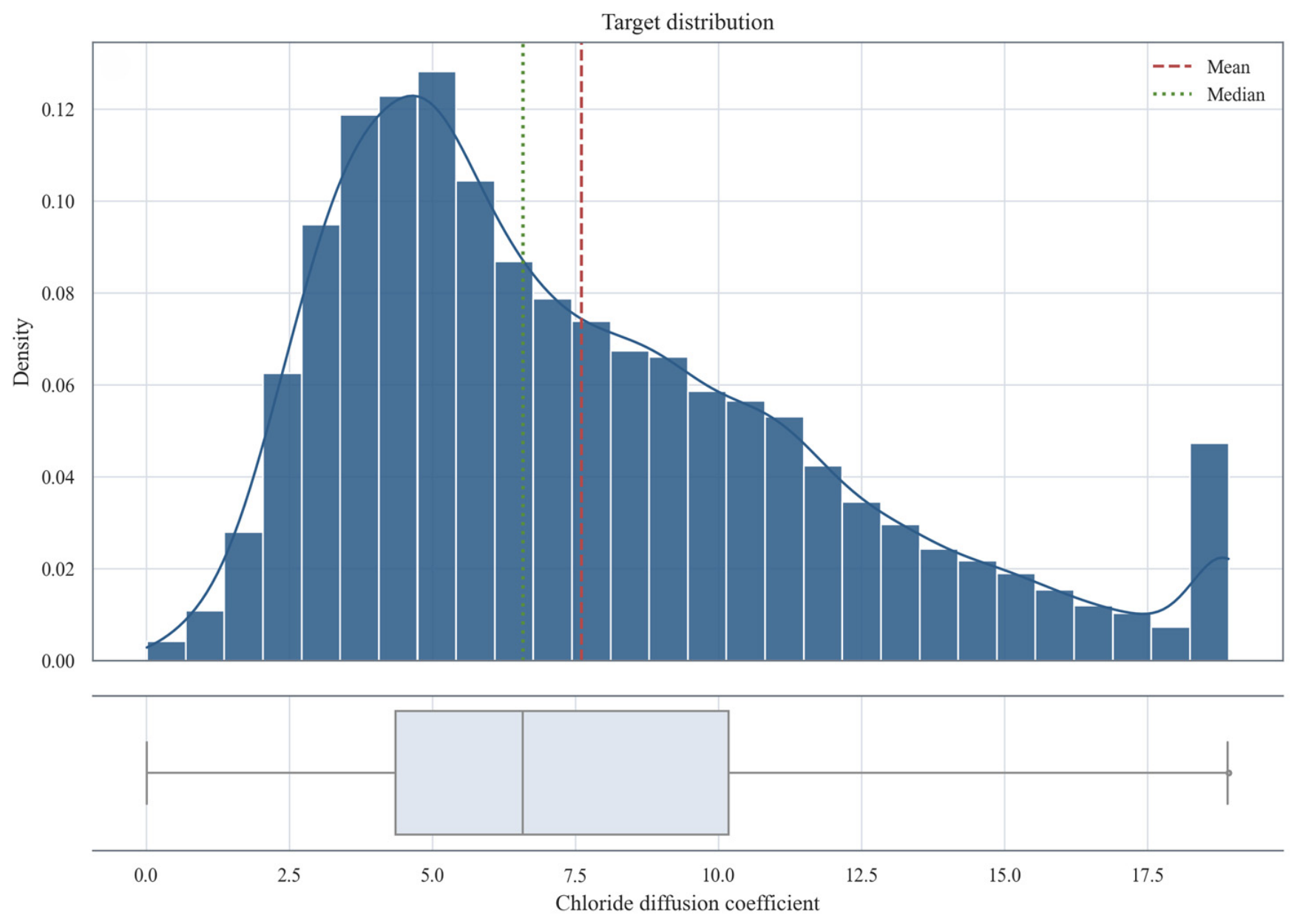
Figure 5 illustrates the distribution of chloride diffusion coefficient values within the dataset. The target variable exhibits a positively skewed distribution, with the majority of observations concentrated in the lower-to-moderate range, approximately between 3 and 10, while a smaller number of concrete mixtures display substantially higher diffusion coefficients. The presence of a pronounced right tail indicates that only a limited subset of mixtures experienced significantly greater chloride transport rates than the overall population. Consistent with this distribution, the mean value exceeds the median, reflecting the influence of high-diffusivity observations on the dataset. Furthermore, the broad spread of values highlights the considerable variability in chloride diffusion behavior arising from differences in mixture composition, binder characteristics, and mix design parameters. This level of heterogeneity supports the application of nonlinear machine learning approaches, which are better equipped than conventional linear models to capture the complex relationships governing chloride transport in concrete.
Although the performance improvement achieved by the proposed stacking ensemble over the best individual model is relatively modest, it remains practically meaningful for engineering applications involving durability assessment. Chloride diffusion prediction is a complex nonlinear problem influenced by multiple interacting material, environmental, and mixture-design parameters. The stacking framework leverages the complementary strengths of multiple machine learning algorithms, enabling more robust predictions than any single model alone. Even small reductions in prediction error can improve the reliability of chloride diffusion estimates, thereby supporting more informed concrete mixture optimization, durability assessment, and maintenance planning. Furthermore, the ensemble consistently demonstrated greater predictive stability and generalization capability by reducing the influence of model-specific biases, making it a more reliable framework for practical engineering decision-making.
3.2. Performance Comparison of Machine Learning Models
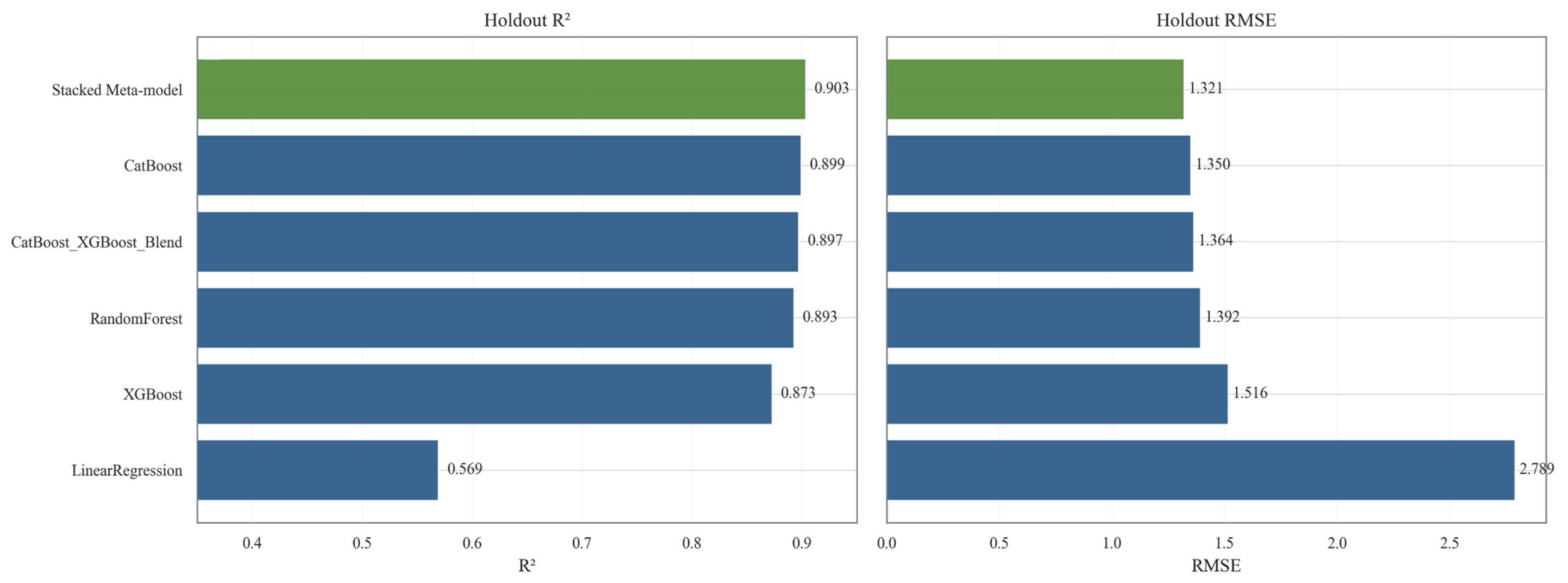
Figure 6 compares the predictive performance of the evaluated machine learning models, while
Table 1 summarizes their corresponding performance metrics for chloride diffusion coefficient prediction. The results reveal clear differences between linear and nonlinear modeling approaches. Linear Regression achieved the lowest predictive accuracy, with an R
2 of 0.5693 and the largest prediction errors (RMSE = 2.7892, MAE = 2.0854), indicating its limited ability to represent the complex nonlinear relationships governing chloride transport in concrete mixtures. Among the individual machine learning models, CatBoost delivered the strongest performance, achieving an R
2 of 0.8991, RMSE of 1.3502, and MAE of 0.9375. Random Forest demonstrated comparable predictive capability (R
2 = 0.8927), whereas XGBoost produced slightly lower accuracy (R
2 = 0.8728). The CatBoost–XGBoost blending model did not outperform the standalone CatBoost model, suggesting that simple blending was insufficient to fully exploit complementary information from the constituent models. The proposed stacking ensemble achieved the highest overall predictive performance, with an R
2 of 0.9034, RMSE of 1.3212, and MAE of 0.9200. Although the improvement over the best individual model was relatively modest, the consistent reduction in prediction errors demonstrates the effectiveness of integrating heterogeneous base learners through a regularized Ridge Regression meta-learner. These results confirm that stacking-based ensemble learning can provide enhanced predictive accuracy and robustness for chloride diffusion coefficient estimation.
3.3. Predictive Accuracy of the Proposed Stacking Ensemble
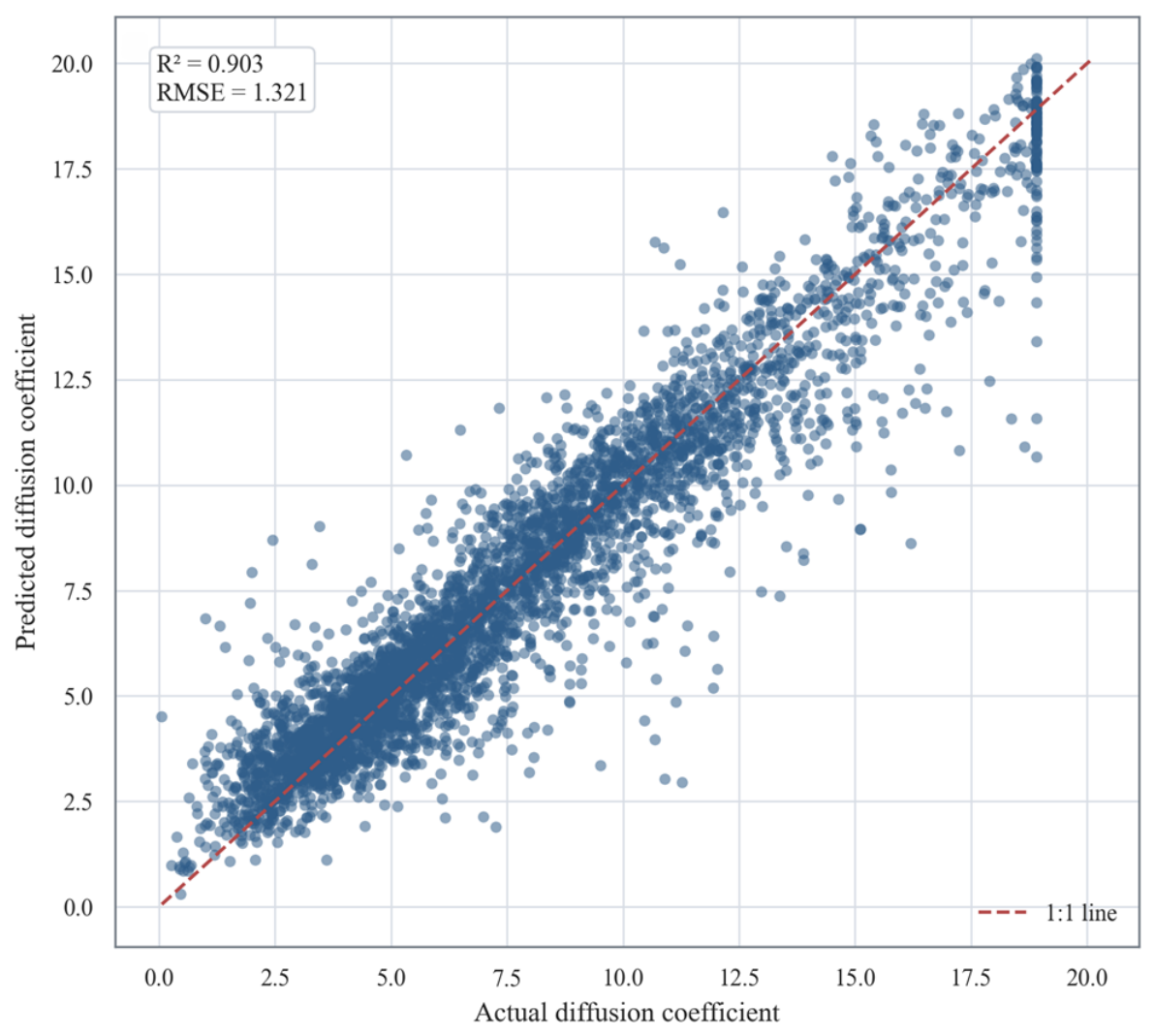
Figure 7 presents the parity plot comparing the measured and predicted chloride diffusion coefficients obtained using the final stacking ensemble model. The proposed framework achieved a coefficient of determination (R
2) of 0.903, together with an RMSE of 1.321 and an MAE of 0.920 on the holdout test dataset. Most data points are clustered closely around the 1:1 reference line, indicating strong agreement between the experimental measurements and model predictions. The relatively uniform distribution of points across the prediction range suggests that the model effectively captured both low and high chloride diffusion coefficients. Although a moderate increase in prediction scatter is observed at higher diffusion values, no significant systematic overprediction or underprediction is evident. Overall, these results demonstrate the robustness and predictive capability of the stacking ensemble, confirming its effectiveness in modeling the complex nonlinear interactions among mixture composition, supplementary cementitious material (SCM) content, water-to-binder ratio (W/B), and other durability-related factors governing chloride transport in concrete.
The high predictive accuracy achieved by the proposed stacking ensemble demonstrates the effectiveness of integrating synthetic data augmentation, physics-guided feature engineering, and ensemble learning within a unified predictive framework. Compared with conventional regression-based approaches, the ensemble model more effectively captured the complex nonlinear relationships between concrete mixture composition and chloride diffusion behavior. The strong agreement observed between measured and predicted chloride diffusion coefficients highlights the model’s ability to generalize across a wide range of mixture designs and durability conditions. These findings suggest that the developed framework can serve as a reliable surrogate modeling tool for estimating chloride diffusion coefficients, reducing reliance on extensive laboratory testing while supporting durability assessment, service-life prediction, and concrete mixture optimization.
Furthermore, the predictive performance achieved in this study compares favorably with previously reported machine learning models developed for concrete durability applications, where coefficient of determination (R2) values commonly range between 0.80 and 0.90. The ability of the proposed framework to surpass the R2 = 0.90 threshold demonstrates the advantages of integrating multiple complementary learning algorithms through a stacking ensemble architecture. By leveraging the strengths of diverse base learners and combining their predictions using a regularized meta-learner, the framework achieved improved predictive accuracy and robustness. These results highlight the potential of the proposed approach as a practical tool for service-life assessment, durability-based concrete design, and sustainable material optimization in reinforced concrete infrastructure.
3.4. Residual Analysis
Residual analysis was conducted to further assess the reliability and generalization capability of the proposed stacking ensemble model.
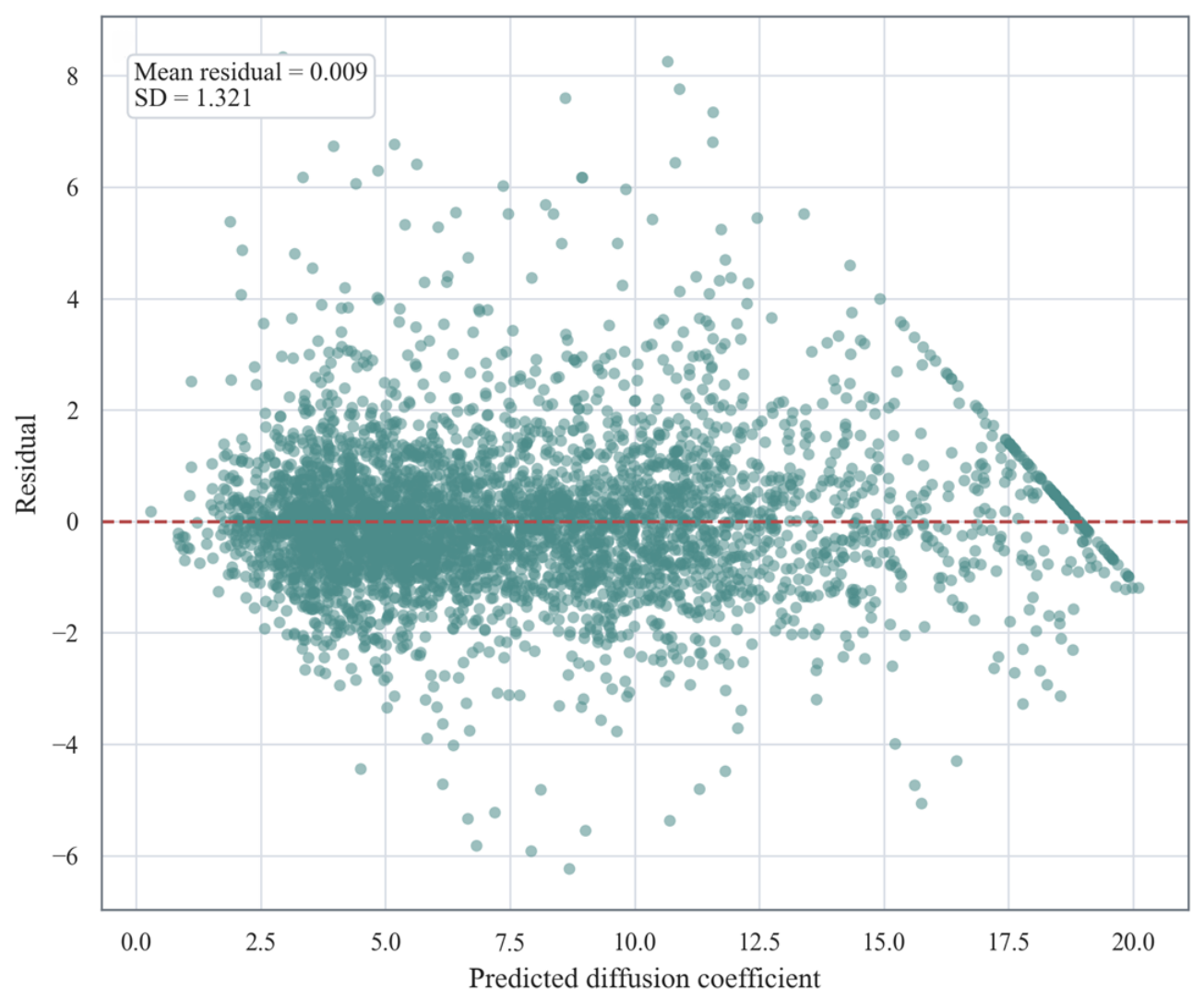
Figure 8 presents the residuals (observed−predicted) plotted against the predicted chloride diffusion coefficients, while
Figure 8 illustrates the distribution of residual values. The residuals are generally centered around the zero-reference line across most of the prediction range, indicating the absence of significant systematic bias in the model predictions. Furthermore, no clear trend, pattern, or curvature is evident in the residual plot, suggesting that the model effectively captures the underlying relationships between the input variables and the chloride diffusion coefficient without exhibiting substantial underfitting or overfitting behavior.
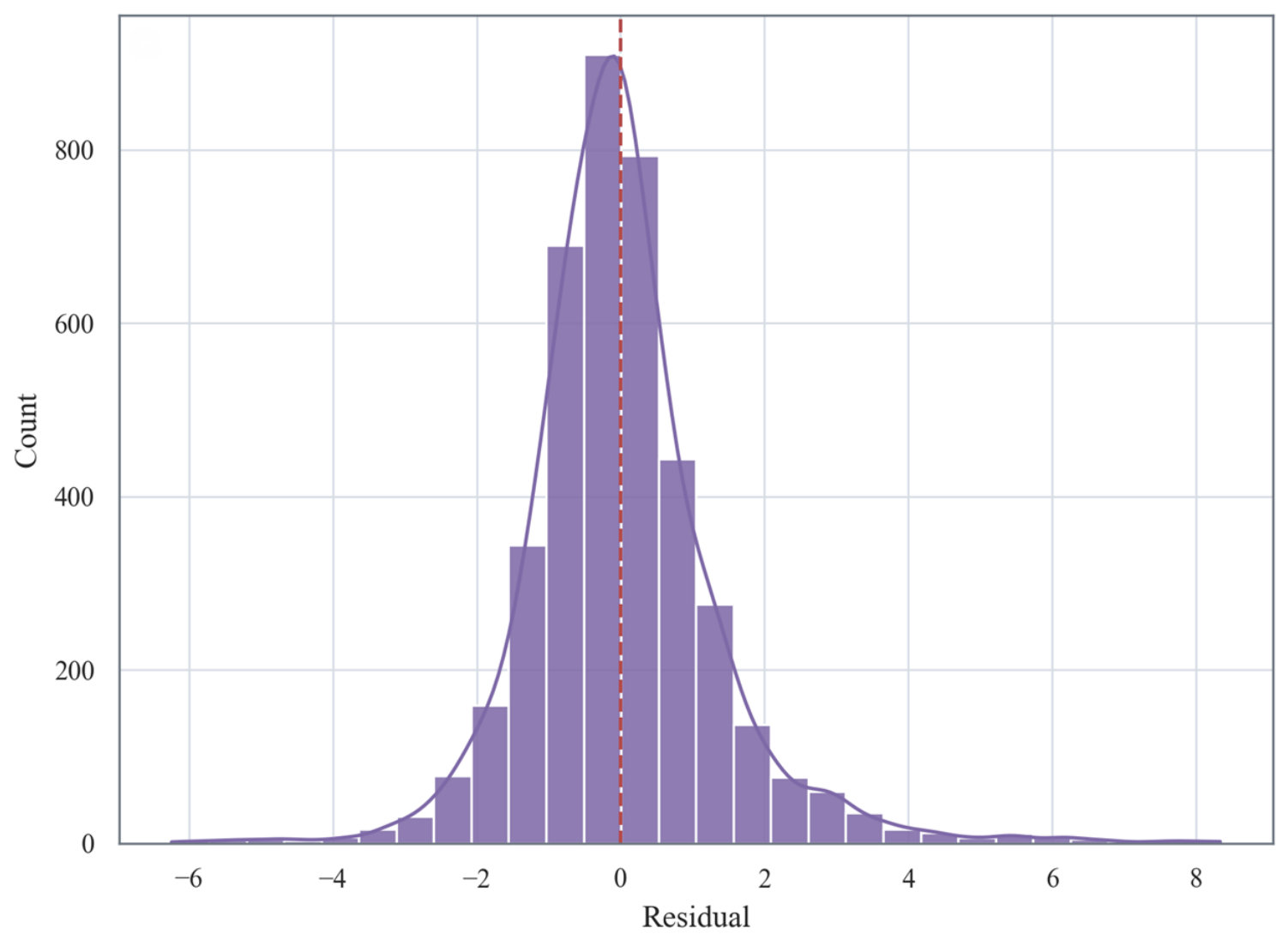
As shown in
Figure 9, the residual distribution is approximately symmetric and centered near zero, with most prediction errors falling within a relatively narrow range. The mean residual is close to zero, indicating that the model does not exhibit a consistent tendency to overpredict or underpredict chloride diffusion coefficients. Although a small number of larger residuals are observed at the tails of the distribution, such deviations are expected in heterogeneous experimental datasets compiled from multiple literature sources, where variations in testing procedures, material properties, and environmental conditions may introduce additional uncertainty. Overall, the residual diagnostics demonstrate the robustness and stability of the proposed stacking ensemble, confirming its ability to provide reliable predictions across a wide range of chloride diffusion coefficient values.
3.5. Contribution of Data Augmentation and Ensemble Learning
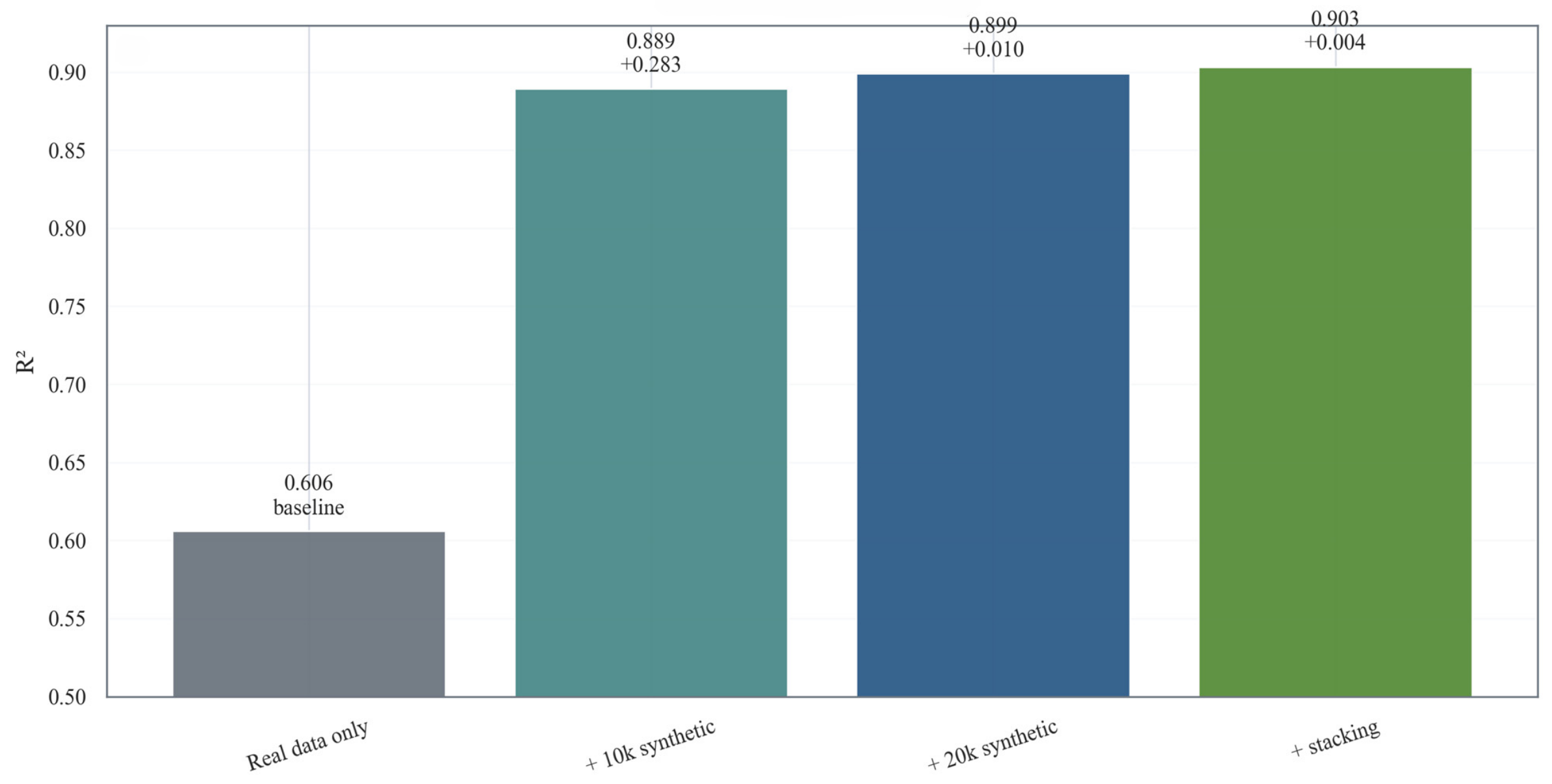
Figure 10 presents the results of the ablation study performed to quantify the individual contributions of synthetic data augmentation and ensemble learning to the overall predictive performance of the proposed framework. The baseline model, trained solely on the original experimental dataset, achieved a holdout R
2 value of 0.606, indicating limited predictive capability due to the relatively small size and heterogeneous nature of the available data. The introduction of 10,000 conditionally generated synthetic samples increased the R
2 value to 0.889, representing an improvement of approximately 46.7%. Expanding the synthetic dataset to 20,000 samples yielded a further increase in predictive performance, achieving an R
2 of 0.899. These results demonstrate that the synthetic data augmentation strategy effectively enriched the training domain, improved data coverage, and enhanced the model’s ability to generalize across a broader range of concrete mixture compositions and chloride diffusion behaviors.
The final stacking ensemble achieved the highest predictive accuracy, attaining an R2 value of 0.903. Although the performance improvement attributable to stacking was smaller than that achieved through synthetic data augmentation, the ensemble effectively leveraged the complementary strengths of the individual base learners and further reduced prediction errors. These findings indicate that synthetic data augmentation was the primary contributor to the observed performance gains by substantially expanding the training dataset and improving model generalization. In contrast, ensemble learning provided an additional layer of refinement by integrating diverse predictive patterns captured by the individual models. Consequently, the combination of these techniques enabled the proposed framework to surpass the R2 = 0.90 threshold. Overall, the ablation analysis demonstrates that both synthetic data augmentation and stacking ensemble learning contributed positively to model performance, with data augmentation providing the greatest impact and ensemble learning delivering the final enhancement in predictive accuracy and robustness.
Table 2 Summary of model performance progression across the different stages of the proposed framework, highlighting the effects of synthetic data augmentation and stacking ensemble learning on chloride diffusion coefficient prediction accuracy.
3.6. Contribution of Individual Base Learners
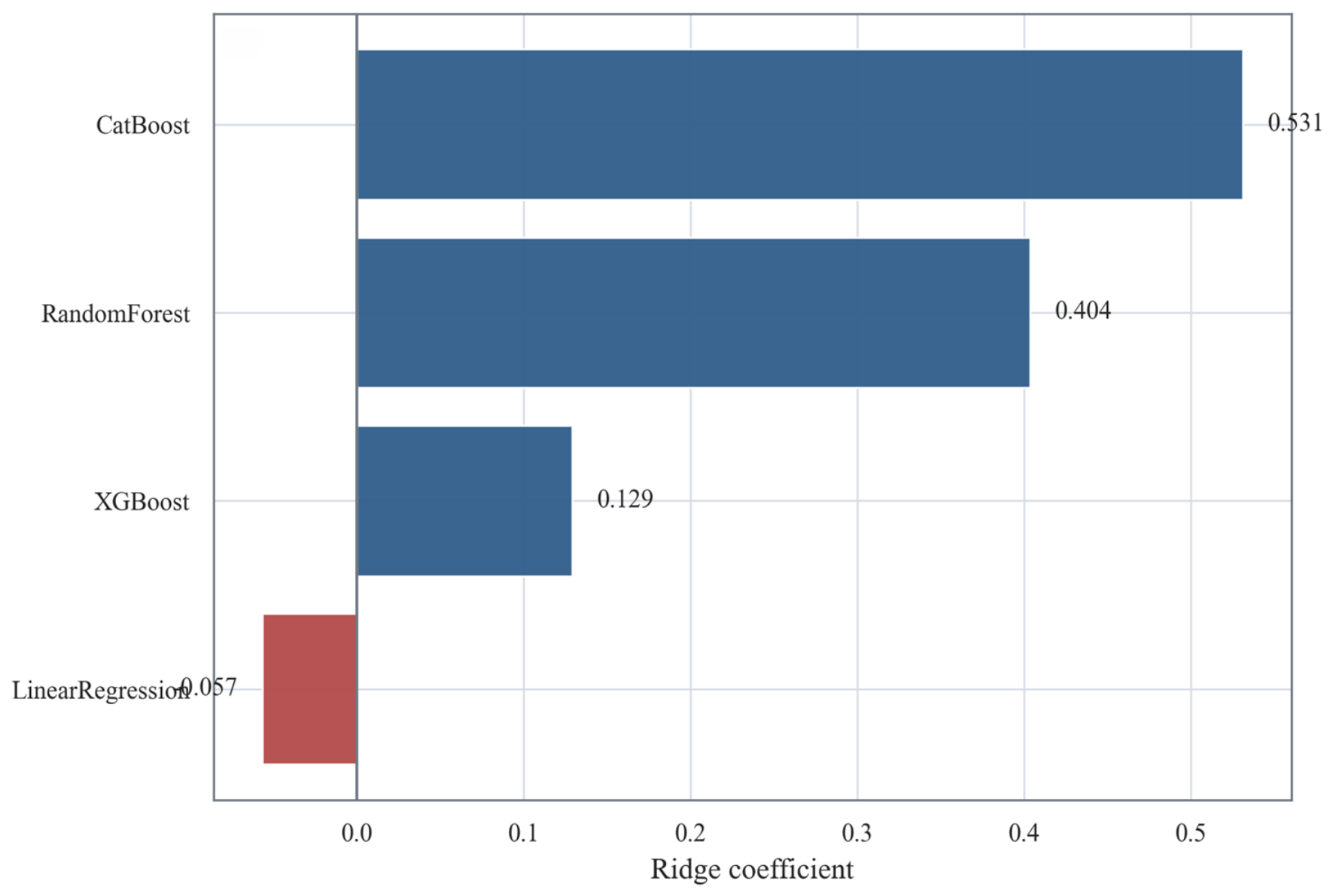
Figure 11 illustrates the coefficients assigned by the Ridge Regression meta-learner to each base model within the stacking ensemble framework. These coefficients represent the relative contribution of each learner to the final ensemble prediction. CatBoost received the largest coefficient (0.531), indicating that it provided the most influential and informative predictions for chloride diffusion coefficient estimation. This observation is consistent with the individual model evaluation results, where CatBoost achieved the highest standalone predictive performance among all base learners, demonstrating its strong ability to capture the complex nonlinear relationships governing chloride transport in concrete.
Random Forest received the second-largest coefficient (0.404), indicating that it contributed substantial complementary information beyond that captured by CatBoost. This result suggests that the model was able to identify additional predictive patterns that enhanced the overall performance of the ensemble. XGBoost obtained a smaller but still positive coefficient (0.129), demonstrating that its predictions provided incremental predictive value despite its comparatively lower standalone performance. In contrast, Linear Regression was assigned a small negative coefficient (−0.057), implying that simple linear relationships were insufficient to adequately represent the complex interactions governing chloride transport in concrete. The negative weight further indicates that the contribution of the linear model was largely adjusted by the Ridge Regression meta-learner during the optimization of the final ensemble predictions.
The coefficient distribution indicates that the stacking ensemble relied primarily on the two strongest nonlinear learners, CatBoost and Random Forest, while still benefiting from the complementary predictive information contributed by XGBoost. This adaptive weighting mechanism enabled the ensemble to exploit the strengths of each model according to its predictive reliability, thereby reducing residual error and enhancing generalization performance. As a result, the stacking framework achieved the highest predictive accuracy among all evaluated models. These findings demonstrate that stacking ensemble learning does not merely average the predictions of individual models; rather, it learns an optimized combination of base learners that effectively leverages their complementary strengths to improve overall predictive performance.
4. Discussion
4.1. Global Feature Importance Analysis
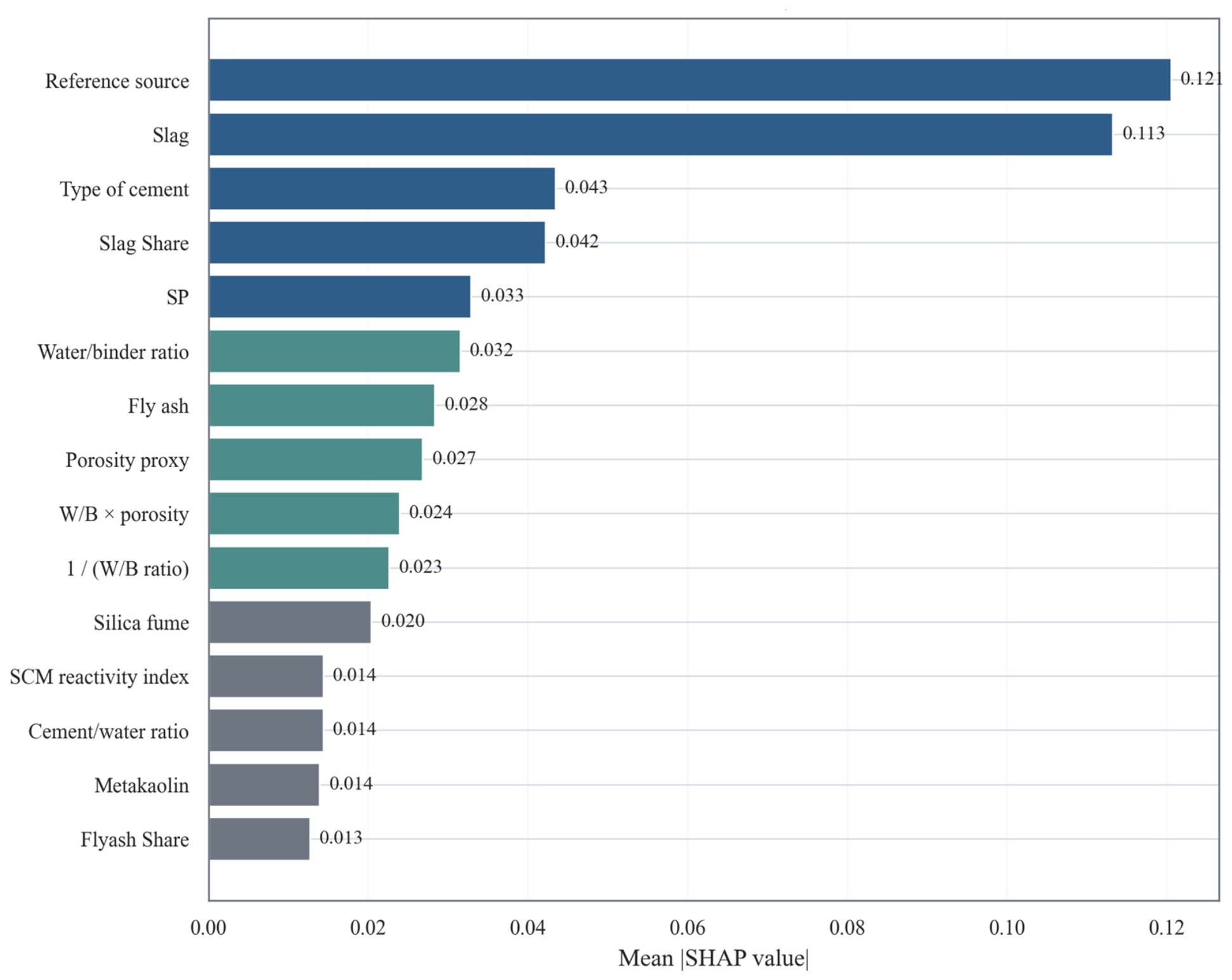
Figure 12 presents the SHAP summary plot, which provides a global interpretation of the variables influencing chloride diffusion coefficient predictions. The results indicate that the reference source was the most influential feature in the dataset, followed by slag content, cement type, slag share, and water-to-binder ratio (W/B). This ranking suggests that both mixture composition and dataset-specific characteristics contributed significantly to the predicted chloride diffusion behavior. In particular, the prominence of slag-related variables and W/B ratio highlights the critical role of binder composition and pore structure development in governing chloride transport resistance, while the importance of the reference source may reflect variations in experimental conditions, material sources, and testing procedures across the compiled literature dataset.
The smooth curves shown in the SHAP dependence plots are locally averaged trend lines included solely to facilitate visualization of the learned feature effects and should not be interpreted as independently fitted regression models.
The high importance of the reference source should not be interpreted as evidence that it directly governs chloride transport behavior. Instead, this variable represents the provenance of each experimental observation and serves as a proxy for systematic differences among the independent studies included in the database. These differences may arise from variations in raw materials, specimen preparation methods, curing regimes, testing procedures, environmental exposure conditions, and laboratory-specific practices. Such between-study variability is common in aggregated experimental datasets and can have a substantial influence on the measured chloride diffusion coefficients. Consequently, the prominence of the reference source in the SHAP analysis primarily reflects the heterogeneity of the underlying literature rather than a physical mechanism controlling chloride transport. Importantly, physically meaningful variables—including slag content, water-to-binder ratio (W/B), SCM-related parameters, and porosity-related features—also ranked among the most influential predictors. This indicates that the model successfully captured both study-level variability and the fundamental material and durability mechanisms governing chloride diffusion in concrete.
Among the physically meaningful predictors, slag-related variables emerged as the most influential factors affecting chloride diffusion predictions. This finding is consistent with the well-established role of supplementary cementitious materials (SCMs) in refining the pore structure, reducing permeability, and enhancing resistance to chloride ingress. The strong influence of slag-related features suggests that variations in SCM content substantially affect the transport characteristics of concrete by altering both microstructural connectivity and chloride-binding capacity. The importance of cement type further confirms that binder composition plays a critical role in governing chloride transport properties, as different cement formulations influence hydration reactions, the formation of hydration products, pore structure development, and the overall durability performance of the concrete matrix.
The water-to-binder ratio (W/B) also exhibited a strong influence on the model predictions, consistent with established concrete durability theory. Lower W/B ratios generally promote the development of a denser and less permeable microstructure with reduced capillary pore connectivity, thereby limiting chloride ingress and improving resistance to chloride-induced deterioration. Conversely, higher W/B ratios tend to increase porosity and facilitate chloride transport through the concrete matrix. Overall, the SHAP analysis demonstrates that the developed machine learning framework relies predominantly on variables that are physically linked to the mechanisms governing chloride transport and durability. This finding provides confidence that the model is capturing meaningful material behavior and realistic durability relationships rather than relying solely on spurious statistical associations within the dataset.
4.2. Effect of Water-to-Binder Ratio on Chloride Diffusion
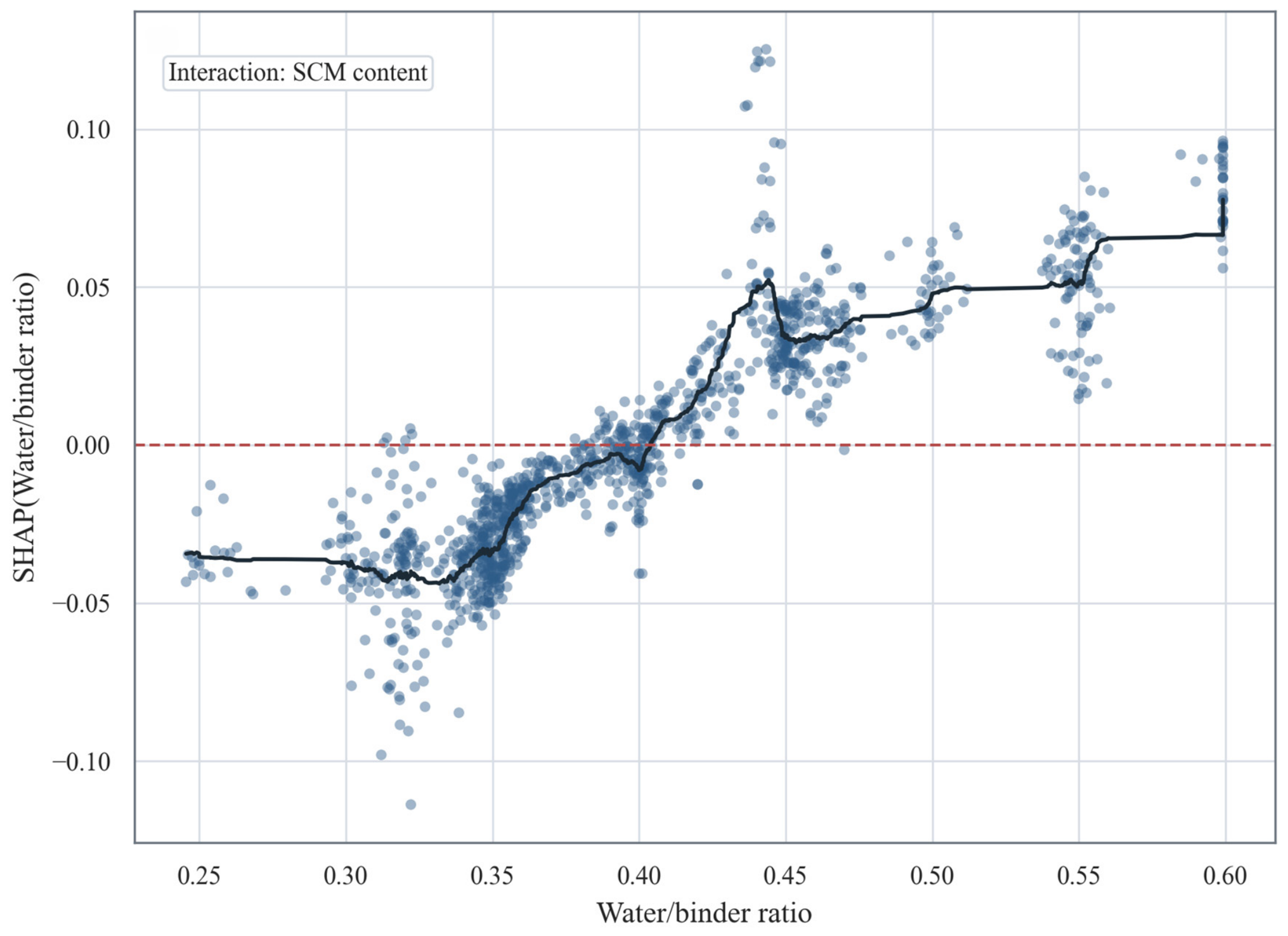
Figure 13 presents the SHAP dependence plot illustrating the influence of the water-to-binder ratio (W/B) on the predicted chloride diffusion coefficient. A clear nonlinear relationship is evident, with lower predicted diffusion coefficients generally associated with lower W/B ratios and progressively higher diffusion coefficients observed as the W/B ratio increases. The trend indicates that the model captures the well-established effect of W/B ratio on concrete permeability and chloride transport behavior. Notably, the model exhibits increased sensitivity within the approximate range of W/B = 0.40–0.45, suggesting a transition region beyond which chloride diffusion increases more rapidly. This behavior is consistent with the development of a more interconnected capillary pore network at higher W/B ratios, which facilitates chloride ingress and reduces the overall resistance of the concrete matrix to chloride penetration.
This behavior is consistent with established concrete durability theory. Lower water-to-binder ratios generally promote the formation of denser cementitious matrices characterized by reduced capillary porosity, lower permeability, and enhanced resistance to chloride ingress. In contrast, increasing the W/B ratio leads to greater pore connectivity and a more permeable microstructure, facilitating the transport of chloride ions through the concrete matrix. The accelerated increase in predicted chloride diffusion at higher W/B ratios suggests that pore structure effects become increasingly dominant as the matrix becomes less compact and more interconnected. These results confirm that the machine learning model successfully captures the fundamental relationship between W/B ratio, microstructural development, and chloride transport behavior in concrete.
The nonlinear trend identified by the SHAP analysis highlights the ability of the proposed machine learning framework to capture complex material behavior that cannot be adequately represented by simple linear models. By accounting for nonlinear interactions and threshold effects, the model provides a more realistic representation of the mechanisms governing chloride transport in concrete. Furthermore, the strong influence of the water-to-binder ratio (W/B) is consistent with its prominent ranking in the global SHAP importance analysis, confirming its role as one of the most influential mixture-design parameters affecting chloride diffusion. These findings demonstrate that the developed framework not only achieves high predictive accuracy but also captures physically meaningful durability mechanisms, thereby enhancing confidence in its applicability for durability assessment and service-life prediction of concrete structures.
4.3. Effect of SCM Content on Chloride Diffusion
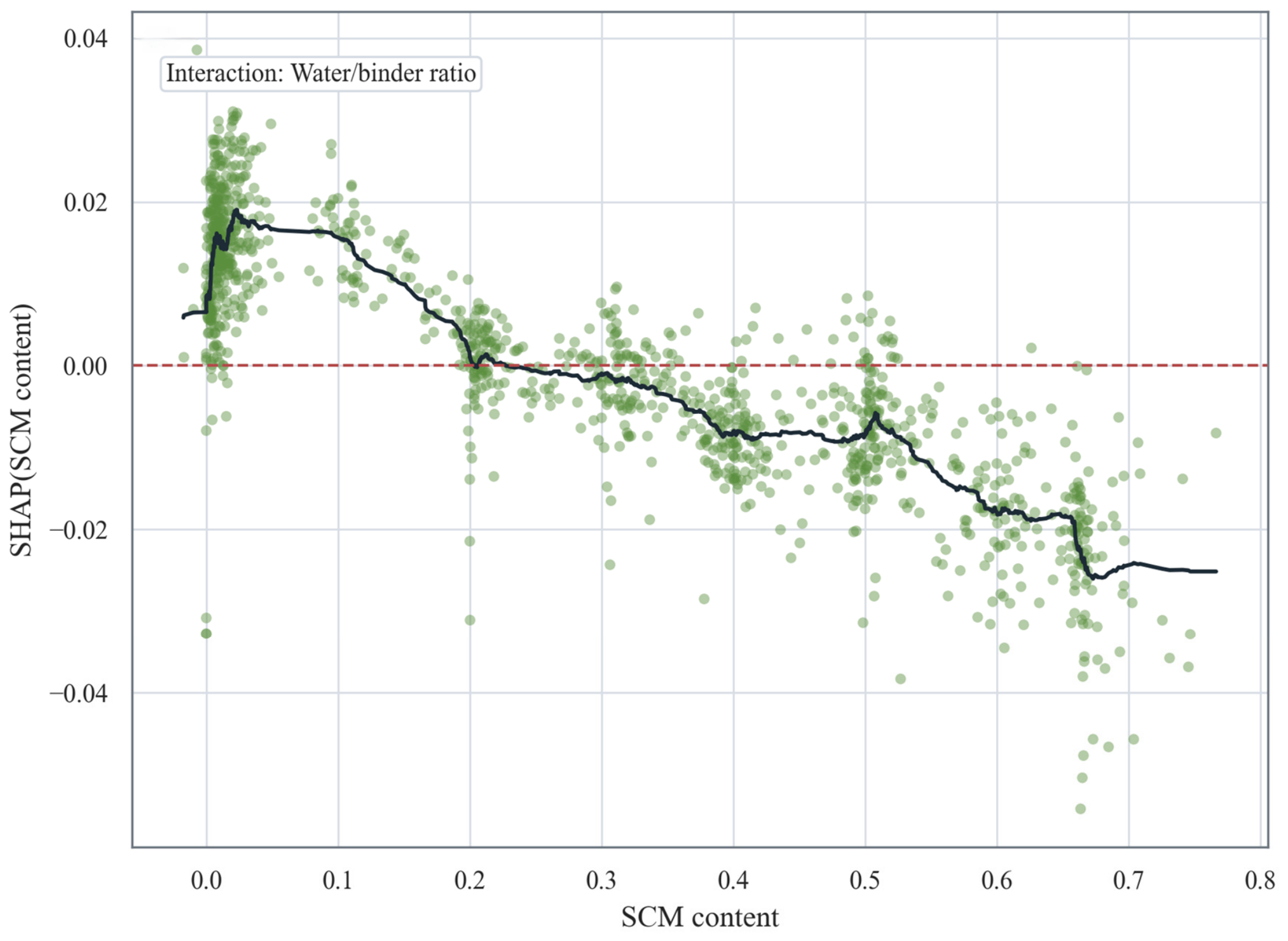
Figure 14 presents the SHAP dependence plot illustrating the influence of supplementary cementitious material (SCM) content on the predicted chloride diffusion coefficient. A predominantly negative relationship is observed, indicating that increasing SCM content generally leads to lower predicted chloride diffusion coefficients. This trend is consistent with the well-established role of SCMs, including slag, fly ash, and silica fume, in enhancing concrete durability through pore structure refinement, permeability reduction, and improved resistance to chloride ingress. The SHAP analysis indicates that the most substantial reductions in predicted chloride diffusion occur at low-to-moderate SCM replacement levels, suggesting that even moderate incorporation of SCMs can significantly improve transport resistance and long-term durability. These results highlight the effectiveness of SCMs in modifying the microstructure of concrete and reducing the rate of chloride penetration through both physical pore refinement and chemical interactions within the cementitious matrix.
As SCM content increases further, the rate of reduction in the predicted chloride diffusion coefficient gradually diminishes, indicating the presence of diminishing marginal benefits at higher replacement levels. This behavior is consistent with previous findings showing that the positive effects of SCM incorporation become progressively less pronounced beyond certain replacement thresholds. At elevated replacement levels, reductions in clinker content may influence hydration kinetics, early-age strength development, and the formation of hydration products, thereby limiting additional improvements in transport resistance. The observed trend suggests that the relationship between SCM dosage and durability performance is nonlinear, and that durability enhancements are not necessarily proportional to increasing SCM content. Consequently, an optimal range of SCM replacement may exist, depending on the specific binder composition, material characteristics, and performance requirements of the concrete mixture.
The nonlinear relationship identified by the SHAP analysis highlights the importance of supplementary cementitious material (SCM) content as a key mixture-design parameter governing chloride transport behavior. The observed trend confirms that the influence of SCMs on chloride diffusion is complex and cannot be adequately described by simple linear assumptions. Furthermore, the results demonstrate that the proposed machine learning framework successfully captures the intricate effects of binder composition on concrete durability, including the combined influences of pore structure refinement, hydration processes, and chloride-binding mechanisms. These findings provide valuable insights for the design and optimization of sustainable concrete mixtures, supporting the selection of appropriate SCM replacement levels to enhance resistance to chloride penetration while maintaining overall performance requirements.
4.4. Effect of Porosity-Related Features
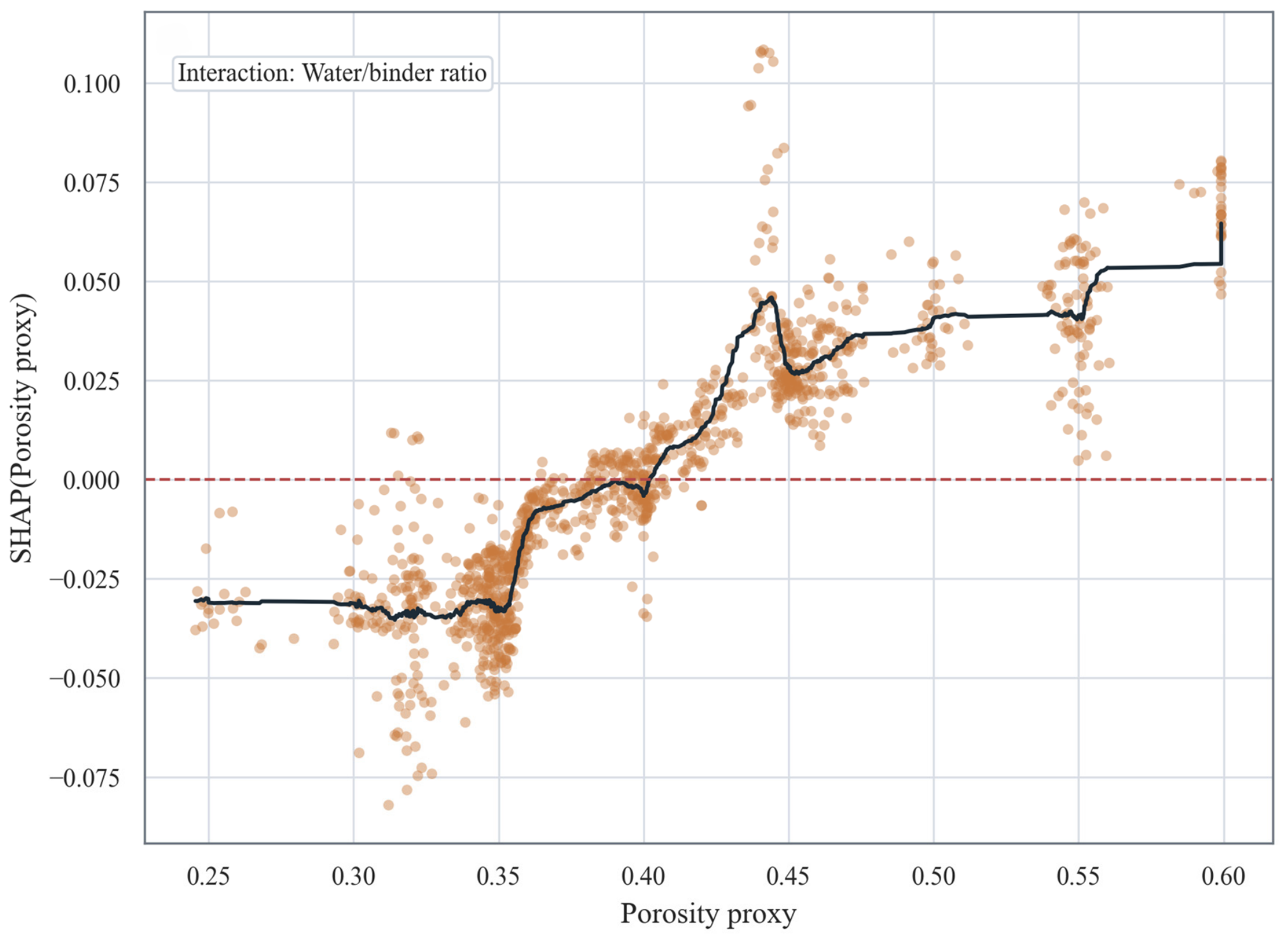
Figure 15 presents the SHAP dependence plots illustrating the influence of porosity-related features on the predicted chloride diffusion coefficient. A clear positive relationship is observed, with increasing porosity generally corresponding to higher predicted chloride diffusion coefficients. This behavior is consistent with the well-established understanding that pore volume, pore connectivity, and microstructural characteristics are among the primary factors controlling chloride transport in cementitious materials. As porosity increases, the capillary pore network becomes more interconnected, creating more continuous pathways for chloride ion migration through the concrete matrix. Consequently, higher porosity levels are associated with reduced resistance to chloride ingress and greater chloride transport rates, leading to elevated diffusion coefficients.
The relationship identified by the model is physically meaningful and consistent with fundamental principles of concrete durability. Concrete mixtures with lower porosity generally develop denser microstructures characterized by reduced permeability and enhanced resistance to chloride ingress. In contrast, higher porosity increases the availability and connectivity of transport pathways within the cementitious matrix, facilitating chloride migration and accelerating the penetration process. As a result, elevated porosity is associated with a greater risk of reinforcement corrosion and reduced long-term durability. The consistency of this trend throughout the SHAP analysis indicates that the machine learning framework successfully captured the influence of microstructural characteristics on chloride transport behavior, reinforcing the physical credibility and interpretability of the developed predictive model.
Furthermore, the importance of porosity-related variables is consistent with their prominence in the global SHAP importance analysis (
Figure 11), where they emerged as influential predictors of chloride diffusion behavior. This agreement between the global and local interpretability analyses strengthens confidence in the physical validity of the model and indicates that the framework is capturing realistic relationships between microstructural characteristics and chloride transport mechanisms. These findings further demonstrate the potential of the proposed approach to support durability-oriented concrete mixture design by providing insights into the effects of pore structure development, binder composition, and curing-related factors on long-term resistance to chloride ingress.
4.5. Influence of Supplementary Cementitious Materials
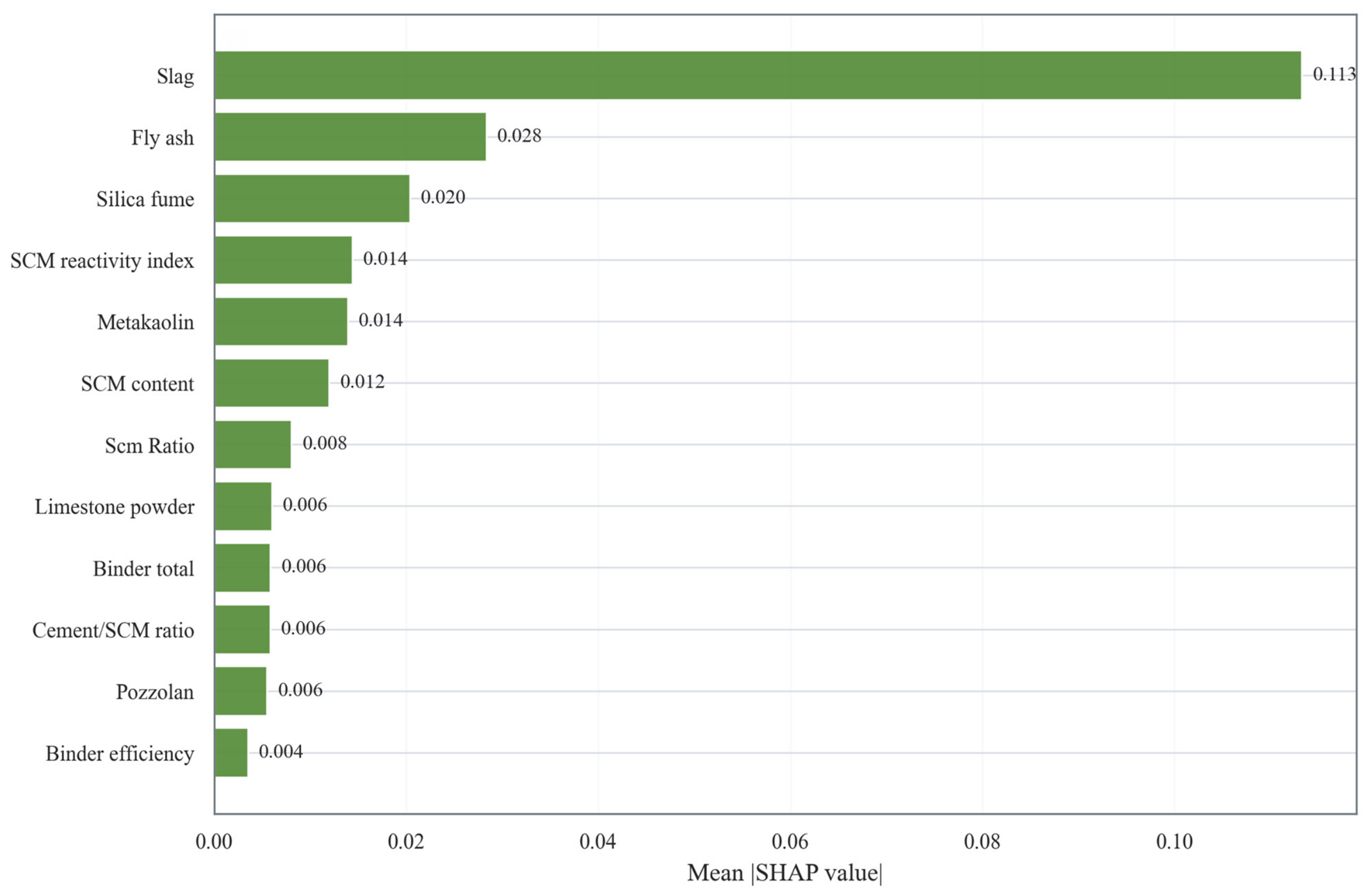
Figure 16 presents a detailed SHAP-based analysis of the individual supplementary cementitious material (SCM) variables and the SCM reactivity index, providing further insight into how different SCM constituents influence chloride diffusion predictions. Among the investigated SCMs, slag exhibited the strongest contribution, indicating a substantial influence on reducing chloride transport. This finding is consistent with the well-established ability of slag to refine pore structure, decrease permeability, and enhance long-term durability through ongoing hydraulic reactions and improved chloride-binding capacity. Fly ash also demonstrated a significant contribution, reflecting its pozzolanic reactivity and its role in progressively densifying the cementitious matrix through the formation of additional calcium silicate hydrate (C–S–H) gel. Although silica fume was represented in a smaller proportion of the dataset, its influence remained evident, consistent with its high reactivity, ultrafine particle size, and exceptional ability to improve microstructural compactness and resistance to chloride ingress.
The SCM reactivity index emerged as an important predictor of chloride diffusion behavior. Higher reactivity index values were generally associated with lower predicted chloride diffusion coefficients, indicating that the model successfully captured the beneficial effects of highly reactive binder systems on transport resistance. This relationship suggests that increased binder reactivity promotes the formation of a denser and more refined microstructure, thereby reducing pore connectivity and limiting chloride ingress. The findings support the value of physics-guided descriptors that integrate both material composition and expected hydration behavior, rather than relying exclusively on the contents of individual SCM constituents. Consequently, the observed trend highlights the importance of overall binder reactivity as a governing factor in the development of durable concrete with enhanced resistance to chloride penetration.
The SHAP-derived feature rankings are consistent with the well-established physicochemical mechanisms governing chloride transport in cementitious materials. The high importance of slag and other supplementary cementitious material (SCM)-related variables reflects their fundamental role in enhancing concrete durability through multiple synergistic mechanisms. SCMs participate in pozzolanic and latent hydraulic reactions, consuming calcium hydroxide and generating additional calcium silicate hydrate (C–S–H) gel, which densifies the cement matrix and refines the pore structure. In addition, the fine particle size of SCMs produces a filler effect that improves particle packing, reduces capillary pore connectivity, and increases the tortuosity of ion transport pathways. Furthermore, SCM incorporation enhances chloride-binding capacity through both physical adsorption and chemical binding, thereby reducing the concentration of free chloride ions available for diffusion. The importance of the water-to-binder ratio (W/B) is likewise expected because it directly controls capillary porosity and permeability; lower W/B ratios generally produce denser microstructures with fewer interconnected pores, resulting in improved resistance to chloride ingress. Similarly, the prominence of the porosity-related engineered variables demonstrates that the proposed physics-guided feature engineering strategy successfully captures the microstructural characteristics governing chloride transport. Overall, these findings demonstrate that the explainable artificial intelligence analysis identifies physically meaningful durability mechanisms that are consistent with established concrete science, thereby strengthening confidence that the proposed framework learns realistic material behavior rather than merely statistical correlations.
From a sustainability perspective, these findings highlight the dual benefits of incorporating supplementary cementitious materials (SCMs) into concrete mixtures. In addition to reducing Portland cement consumption and the associated carbon emissions, SCMs contribute to enhanced resistance against chloride ingress and improved long-term durability. As a result, the use of SCMs can simultaneously support environmental sustainability objectives and increase the resilience and service life of concrete infrastructure. The results therefore demonstrate that sustainable mixture-design strategies can deliver both ecological and durability-related benefits, particularly in chloride-exposed environments. Furthermore, the ability of the proposed machine learning framework to quantify the relative influence of different SCMs provides valuable insights for the design and optimization of low-carbon, durable concrete mixtures, enabling more informed material selection and performance-based durability design.
5. Conclusions
This study developed a machine learning framework for predicting chloride diffusion coefficients in concrete mixtures by integrating synthetic data augmentation, physics-guided feature engineering, and stacking ensemble learning. The proposed approach demonstrated strong predictive capability, with the final stacking ensemble achieving the highest performance among all evaluated models (R2 = 0.903, RMSE = 1.321, and MAE = 0.920). The results indicate that the ensemble framework effectively captured the complex nonlinear relationships governing chloride transport behavior and outperformed all individual base learners. Furthermore, the ablation analysis revealed that synthetic data augmentation was the primary contributor to the observed performance gains by substantially enriching the training dataset and improving model generalization, while stacking ensemble learning provided an additional refinement that further reduced prediction errors and enhanced predictive robustness.
The explainability analysis confirmed that the developed framework learned physically meaningful relationships that are consistent with established principles of concrete durability and chloride transport. Binder composition, slag content, water-to-binder ratio (W/B), and porosity-related variables emerged as the dominant predictors of chloride diffusion behavior, highlighting the critical roles of microstructural development and supplementary cementitious materials in governing transport resistance. Furthermore, the SHAP analyses revealed pronounced nonlinear effects associated with W/B ratio and SCM content, demonstrating the ability of the model to capture complex interactions and transport mechanisms that are difficult to represent using conventional analytical or empirical approaches. These findings provide additional confidence in the physical interpretability of the framework and indicate that its predictions are grounded in realistic durability-related material behavior rather than purely statistical correlations.
From a practical perspective, the results underscore the importance of supplementary cementitious material (SCM) incorporation as an effective strategy for enhancing resistance to chloride ingress while simultaneously advancing sustainability objectives through reduced Portland cement consumption and associated carbon emissions. The findings demonstrate that appropriate SCM utilization can improve long-term durability without compromising environmental performance, thereby supporting the development of more resilient and sustainable concrete infrastructure. Consequently, the proposed framework offers a valuable tool for predicting chloride diffusion coefficients obtained from 28-day Rapid Chloride Migration (RCM) tests and for supporting concrete mixture optimization and durability assessment under controlled laboratory conditions.
The applicability of the proposed framework should be interpreted within the scope of the underlying experimental database and testing methodology. Since all target values were obtained from 28-day Rapid Chloride Migration (RCM) tests conducted under controlled laboratory conditions, the developed models are specifically intended to predict chloride diffusion coefficients measured using this standardized testing methodology. Consequently, the proposed framework should not be directly extrapolated to long-term natural diffusion, field exposure conditions, or service-life prediction without additional calibration and validation using corresponding long-term experimental datasets. Impending research should extend on the proposed framework using long-term field exposure datasets, natural diffusion measurements, and time-dependent chloride transport models to broaden its applicability to service-life prediction.
Future research should focus on validating the proposed framework using independent external datasets to further assess its robustness and generalizability across different material sources, testing conditions, and geographic regions. In addition, incorporating complementary durability indicators, such as carbonation resistance, chloride binding capacity, electrical resistivity, and moisture transport properties, could provide a more comprehensive representation of long-term concrete performance. The development of unified predictive frameworks capable of simultaneously addressing multiple deterioration mechanisms would further enhance the practical applicability of data-driven approaches for durability assessment and service-life prediction, as well as the contribution of individual base learners through systematic ablation studies to determine the optimal ensemble composition and quantify the influence of each learning algorithm on the overall predictive performance. Overall, the findings of this study demonstrate the significant potential of machine learning and explainable artificial intelligence techniques to support the design, assessment, and optimization of more durable, sustainable, and resilient concrete infrastructure.