Review

Assessing Environmental Impact, Structural Integrity, and Circular Economy of Sustainable Concrete Made with Recycled Aggregates and SCM Composites: Systematic Literature Review


by
Mohammad Nadeem Akhtar
*,
Abdalla Qudah
and
Khaldoon A. Bani-Hani
Department of Civil Engineering, College of Engineering, Fahad Bin Sultan University, Tabuk 47721, Saudi Arabia
*
Author to whom correspondence should be addressed.
On leave from Jordan University of Science and Technology, Irbid 22110, Jordan.
J. Compos. Sci. 2026, 10(7), 335; https://doi.org/10.3390/jcs10070335 (registering DOI)
Submission received: 17 April 2026 / Revised: 8 June 2026 / Accepted: 16 June 2026 / Published: 25 June 2026
(This article belongs to the Special Issue Sustainable Composite Construction Materials, 3rd Edition)

Abstract

The significant CO2 emissions from cement manufacturing and overuse of natural aggregates, especially river sand mining, have been a global environmental concern for decades. This is a review study that aimed to evaluate the solution by reviewing past studies on the incorporation of supplementary cementitious materials (SCMs) and recycled aggregates (RAs) to produce sustainable concrete (SC). Regarding environmental consequences, the results highlighted that the cement industry accounts for a 5–8% carbon footprint. Concurrently, the demand for high-quality river sand has escalated, leading to widespread river degradation, altered channel morphology, and effects on river ecosystems. Past studies’ experimental results indicate that silica fume (SF), as an effective SCM, enhances the strength and durability of sustainable concrete to its optimal levels. However, the higher RA content resulted in reductions in engineering properties. The published studies also reported that lower percentages of SF combined with RAs had a positive effect on the strength and durability of design mix concrete, thereby further strengthening the findings of this review. This factor was found to be missing in most studies. A cost–benefit analysis for combined SCMs and RAs was introduced in this study. This review study evaluated the cost–benefit analysis of 1 m3 of sustainable concrete. The highest benefit was observed at 20.97% in a study when optimized 10%SF + 100 RAs were combined. It showed that the combined use of SCMs with RAs at optimal levels satisfied the strength and durability requirements. In addition, the benefits of sustainable concrete were achieved without any cost increase, a new outcome revealed by this review.

1. Introduction

Significant variations in global climate and carbon cycling have occurred over the past 20–25 million years, posing an enduring challenge for Earth scientists [1,2]. Limestone is a primary component of the cement industry. According to the USGS 2023, the world’s limestone reserves are estimated at 430,000 million metric tons. A total of 6.6 Gt of limestone from global deposits is estimated to be produced annually for various industrial applications and land-use infrastructures [3]. The global limestone market was projected to reach approximately 5.38 billion tons in 2025. It is anticipated to grow to about 6.49 billion tons by 2030, reflecting a compound annual growth rate (CAGR) of 3.81% during the forecast period. The upward trend is driven by several factors, including the rapid growth of infrastructure in emerging Asian countries, stricter enforcement of environmental regulations in coal-dependent regions, and increasing demand for high-purity materials in direct air capture pilot projects. The major purpose of limestone use in essential industrial processes, such as a flux in steelmaking, a fundamental raw material for the manufacturing of cement clinker, and in flue gas desulfurization systems at coal-fired power plants, is largely responsible for this increase [4]. However, the extensive use of limestone in numerous industrial processes contributes significantly to total carbon emissions outside of the cement industry. Combinations of stone preparation, calcination, and hydration are the processes that go into making the lime. The calcination process involves heating limestone, primarily calcium carbonate (CaCO3), in a kiln to produce quicklime (CaO).
As a consequence of this reaction, carbon dioxide (CO2) is often released into the environment. In 2019, industrial activities accounted for approximately 24% of total anthropogenic CO2 emissions (about 14 Gt CO2), with lime production ranking second-largest after cement manufacturing [5,6]. Similar to cement, lime is mostly produced by heating CaCO3 in a kiln at 900–1200 °C, resulting in a carbon footprint [5,7].
Sand is an essential raw material used in construction and is produced when parent rocks weather due to aeolian and river erosion [8]. Among the various varieties, river sand, formed by river action, has improved surface properties and particle shape, leading to greater binding performance than desert sand. For this reason, it is more appropriate for its application in the building sector. In addition to serving as natural erosion barriers, materials carried by river systems are deposited in geomorphological features like floodplains and deltas, which are essential to the maintenance of riverine ecosystems.
The global construction sand market has grown significantly in recent years, reaching USD 15.8 billion in 2023 and projected to reach USD 24.3 billion in 2032 [9]. Similar patterns may be observed in India, where it is anticipated that the country’s sand consumption will increase from 1006.22 million tons in 2024 to 1888.81 million tons by 2034 at a compound annual growth rate (CAGR) of 6.50% [9,10]. Accelerated urbanization is the main driver of this dramatic increase, especially in the Asia-Pacific and Africa, where extensive infrastructure development requires enormous amounts of sand as a component of concrete and mortar. This demand is further boosted by government-sponsored infrastructure projects in large economies such as China and India. Large-scale transportation networks, housing, and public infrastructure construction rely significantly on a reliable supply of high-quality sand. The demand for consistent and dependable sand resources has also increased due to the building industry’s growing preference for ready-mix concrete.
Physical, biological, chemical, and human systems are all affected by the wide-ranging, often cumulative, environmental impacts of river sand extraction [11,12]. The most obvious geomorphological effects are riverbed deepening and widening, which significantly change channel morphology and increase river velocity, modify natural hydrodynamic regimes, and worsen bed and bank erosion. Due to the significant impact of sand mining, biodiversity loss occurs in riparian plants, aquatic life, and floodplain habitats. Additionally, due to significant habitat destruction in mined areas and the disruption of food chains, sediment removal can promote the formation of braided channels, thereby impeding fish movement between pools. In addition, channel widening causes streambed shallowing, lowering surface and groundwater levels, and increasing exposure to solar radiation [8,11].
Various empirical studies have already shown that excessive in-stream sand extraction accelerates river degradation, increases bank instability, and can allow saline water incursion from nearby seas in coastal areas [8,13]. In response to these growing concerns, environmental regulations governing sand mining have become more stringent worldwide. To safeguard riverine systems and biodiversity, several regions have imposed strict restrictions or outright bans. As a result, restrictions on the availability of natural sand have increased interest in alternative materials to meet the expanding demand in the building sector [11,14,15].
Silica fume (SF), also known as microsilica, has gained popularity as an effective supplemental cementitious material (SCM) in modern concrete technology. This ultra-fine powder is primarily composed of amorphous silicon dioxide (SiO2), which is the byproduct of silicon metal and ferrosilicon alloys; due to its incredibly small particle size, roughly a hundredth that of typical cement grains, it exhibits strong pozzolanic reactivity when added to concrete systems [16,17,18,19]. In the future, the global SF market is expected to grow at a compound annual growth rate (CAGR) of 4.1% and steadily over the forecast period, from roughly USD 773.8 million in 2024 to nearly USD 1158.7 million by 2034 [13]. In the Indian market, by 2032, at a 6.2% CAGR, it is expected to increase from USD 89 million in 2024 to USD 128 million. The two primary mechanisms by which silica fume in concrete enhances performance are the pozzolanic reaction and the filler effect [15]. During cement hydration, calcium hydroxide is produced as a byproduct, which then undergoes a pozzolanic reaction with SF to form additional calcium silicate hydrate (C-S-H) gel. The concrete matrix’s increased durability, decreased permeability, and increased mechanical strength are all greatly aided by this secondary C-S-H formation. The filler effect involves microscopic silica fume particles filling small pores and gaps between cement particles, increasing density and reducing permeability [20,21,22].
An in-depth analysis of published studies on sustainable concrete prepared with recycled aggregates and SCMs is presented. Bravo et al. [23] found that newly developed concrete was produced using recycled sand derived from deconstructed concrete. The strength reductions were noticed when recycled sand was increased. In limited quantities of up to a 30–50% replacement ratio, satisfactory results are obtained. Several studies [24,25,26,27,28,29,30,31,32,33] have incorporated recycled sand from demolished concrete into new design mix concrete. The studies’ findings revealed several critical points. The studies did not recommend more recycled sand utilization than natural sand. It has also been stated that 20–30% recycled aggregate fine dust is present in recycled sand, which is harmful to new design mix concrete and is one of the main reasons for slowing the reaction with new cement and delaying early gain in strength in new design mix concrete. The concrete with a higher amount of recycled sand required an extended curing period, which affects the standard 28-day strength criterion (f″c). The studies [34,35] also reported that 100% recycled sand from wrecked concrete is not a suitable substitute for long-term durability in new design mix concrete. Most recent studies [36,37,38,39,40,41,42,43,44,45,46,47,48] evaluated the performance of design mix concrete made with a combination of recycled and desert sand and SCMs, silica, and flyash. The recycled and desert sand blends are a useful fine aggregate for concrete. The study of vacant desert sand [47,48] reported that it is the most suitable option for new concrete when appropriately modified. The size of desert sand particles is well sorted and rounded, and does not provide scope for compaction. More studies on this subject are required to provide representative data that will convince the concrete industry to adopt sustainable sand.

2. Methodology

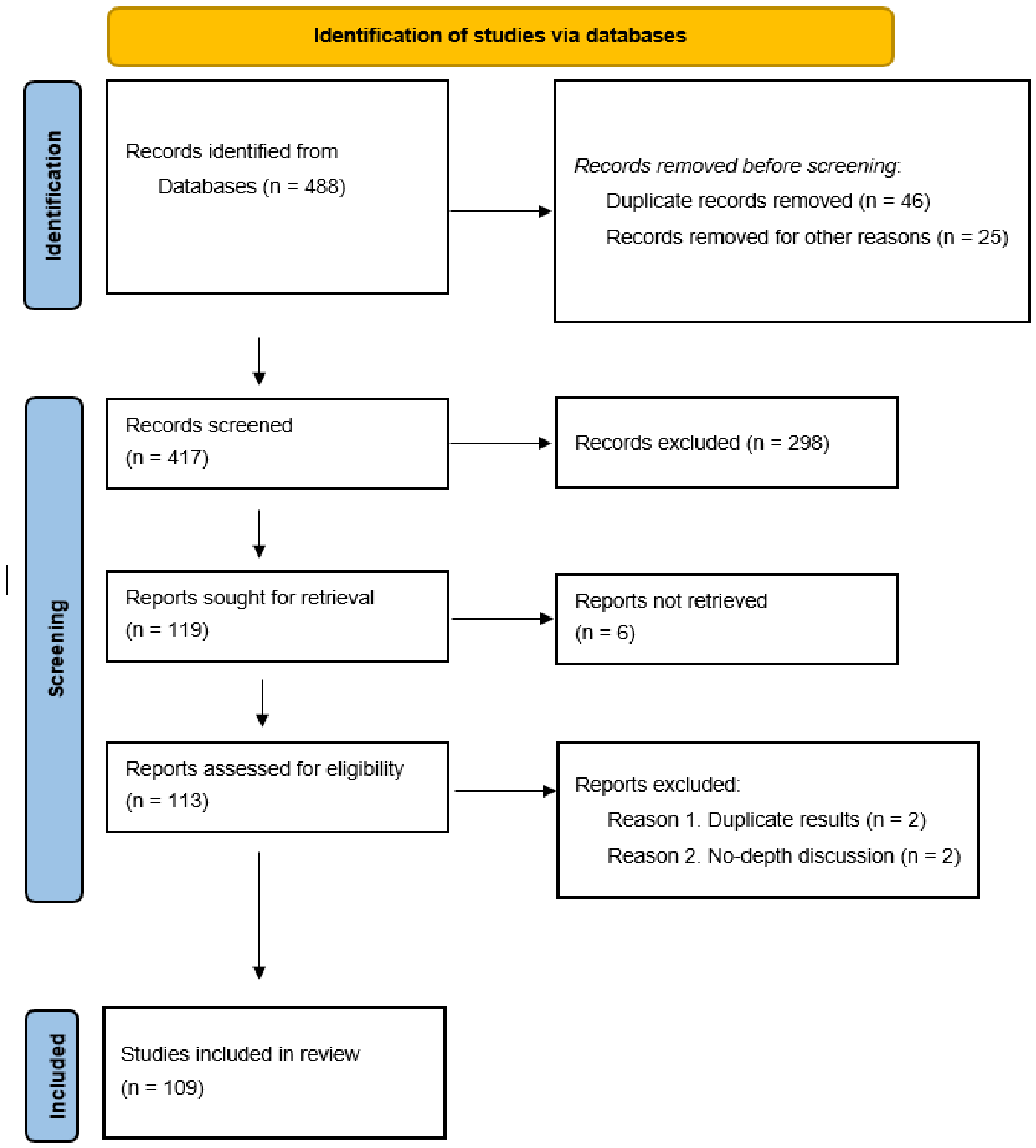
This study utilized the SLR methodology, following the guidelines for systematic reviews established by [49], as shown in Figure 1. SLR was chosen to maintain openness, ensure methodological rigor, and provide thorough coverage of the pertinent literature. The process for selecting the data sources for this review is defined in the three main categories that follow: Identification, Screening, and Included.
i.
Identification: Systematic searches across major databases, including Scopus, Web of Science, Google Scholar, and ASTM International, were conducted to identify pertinent literature. The primary sources consulted, taken together, offer substantial coverage of published research in engineering and materials science. Broad keywords such as recycled aggregates, SCMs, sustainable concrete, and the circular economy in sustainable concrete were included in the search strategy. To refine the results and ensure relevance, more specific terms were subsequently applied, including the carbon footprint of the cement industry, river sand mining, silica fume, flyash, recycled fine dust, recycled aggregate concrete, SCM-based concrete, and the circular economy of sustainable concrete.
ii.
Screening: A selection approach was developed to identify research addressing SCMs and RAs. At this stage of screening, articles that primarily focused on themes beyond the defined scope were excluded. This resulted in the removal of 294 studies from further consideration, ensuring that the studies included in the review were methodologically sound and of high overall quality. A thorough quality assessment was carried out. The studies screened at this stage included very significant peer-reviewed experimental research papers, comprehensive literature reviews, officially published conference articles, and authentic online reports.
iii.
Included: The final corpus of 102 documents was selected for analysis and discussion for this SLR study. The key significant criteria for the selected documents are publication types, language, scope, and publication period. The quality articles matched the key findings of the current review articles in English, and the most recent search results were selected for the final analysis and discussion to generate new research ideas for future directions.

3. CO2 Emissions and the Natural Sand Crisis

3.1. CO2 Emissions

The cement industry is a significant source of carbon emissions worldwide, accounting for 5–8% of anthropogenic CO2 emissions. Global cement manufacturing generated about 2.1 billion metric tons of CO2, with China alone accounting for over half of these emissions, followed by India, Vietnam, and Indonesia. Although due to mature infrastructure and slower economic growth, industrialized nations now account for a smaller proportion of global cement-related emissions, rapid expansion in Southeast Asia and Africa is driving substantial increases in emissions associated with cement production. In addition, there are significant regional differences in emission intensities; China, for example, has benefited from updated production methods that lower carbon emissions per ton of cement [49].
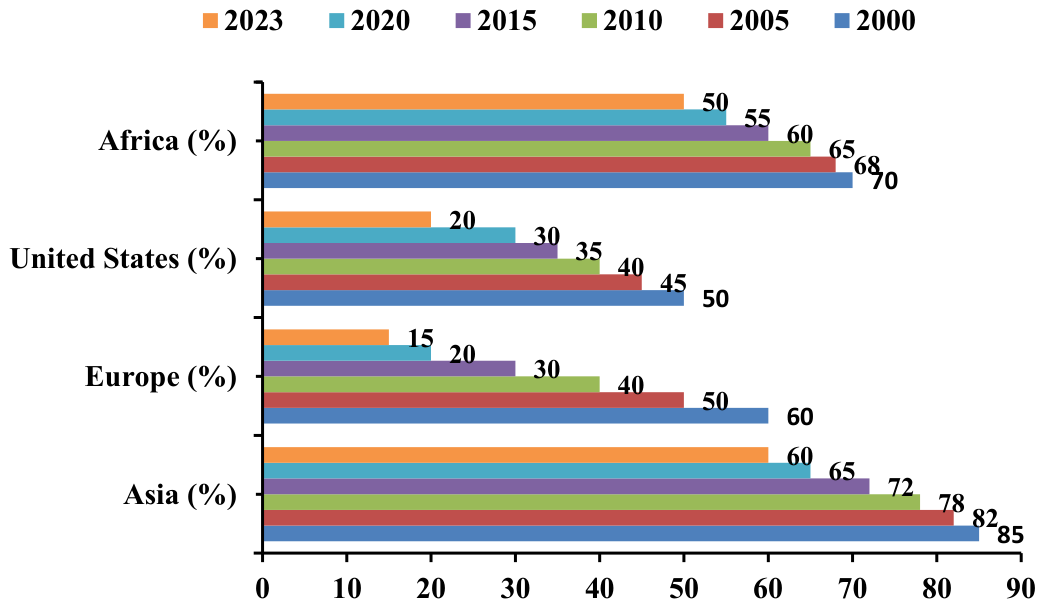
On the other hand, nations like Russia, with older infrastructure or higher clinker-to-cement ratios, exhibit higher emission intensities. According to projections, if current trends continue, cement-related CO2 emissions in emerging nations outside China could increase significantly, possibly reaching 1.4 billion metric tons annually by the year 2050. If effective mitigation strategies are not put in place, such as energy-efficient kiln technologies, increased use of alternative fuels, wider adoption of SCMs, and large-scale deployment of carbon capture technologies, the cumulative growth could surpass 33 gigatons by mid-century, posing a serious threat to global climate targets. To meet growing infrastructure demands, emissions in fast-developing regions, particularly Africa, are expected to continue rising despite aggressive reduction targets. Regional CO2 emission patterns from 2000 to 2023 are illustrated in Figure 2, emphasizing the need for region-specific mitigation strategies and the rapid advancement of low-carbon technologies worldwide. In general, the Industrial Revolution’s rapid economic growth led to a significant increase in CO2 emissions worldwide. In pre-industrial times, atmospheric CO2 concentrations were around 280 parts per million (ppm). Today, this value exceeds 420 ppm, and by 2025, it is predicted to exceed 422.8 ppm, driven by global acceleration in industrial activity, urbanization, and energy demand [49,50,51].
Previous work indicates that fuel combustion and electricity consumption together account for roughly 40% of total emissions from the cement sector, while process-related emissions constitute the dominant share. In light of the continuing upward trend in CO2 emissions, the United Nations (UN) has emphasized the importance of sustainable urban development through Sustainable Development Goal 11 (SDG 11). SDG 11 seeks to promote resilient, inclusive, safe, and environmentally sustainable cities by the year 2030 [50]. Concurrently, international frameworks such as the Paris Agreement, along with climate scientists and policymakers, emphasize the urgent need to substantially reduce CO2 emissions across all sectors to limit the global temperature rise to 1.5 °C above pre-industrial levels. And meeting this target will require transformative shifts across the construction industry, particularly in cement production practices, energy systems, and urban planning [51,52,53].
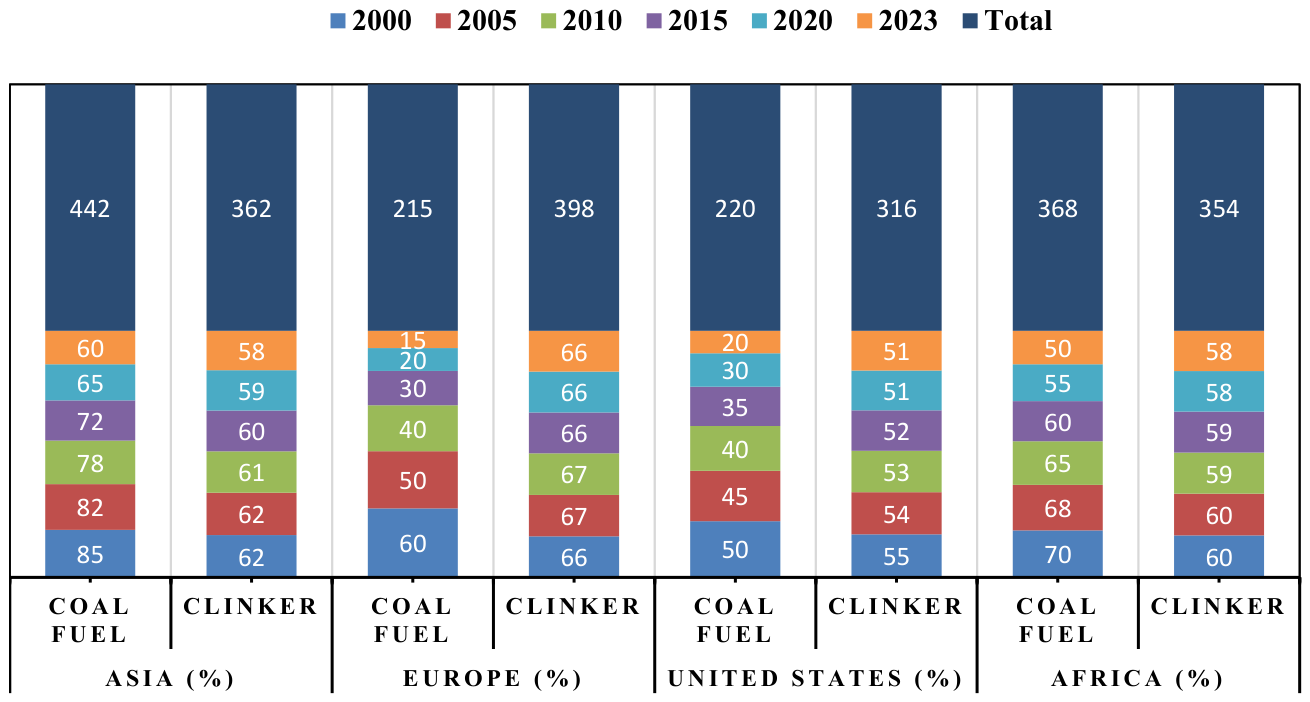
Coal remains a dominant energy source and a major contributor to global carbon emissions across several industrial sectors, including power generation, steelmaking, and cement plants. During the combustion of coal in clinker production, substantial amounts of CO2 are emitted due to the high carbon content. As already discussed, in addition to fuel-related emissions, a significant share of CO2 in cement manufacturing arises from the calcination process, during which CaCO3 is thermally decomposed into CaO and CO2. Together, coal combustion and limestone calcination account for nearly 90% of the total CO2 emissions associated with cement production. This dominant contribution to CO2 emissions underscores the urgent need to transition to alternative fuels, improve process efficiency, and deploy low-carbon and carbon-mitigation technologies to reduce the cement sector’s environmental footprint [51,54,55,56,57,58]. Table 1 and Figure 3 summarize the CO2 emissions associated with the cement manufacturing process. Figure 3 also illustrates CO2 contributions from various global sources, primarily arising from fuel combustion.
In the cement manufacturing sector, growing environmental concerns have prompted the construction industry to seek more sustainable substitutes for ordinary Portland cement (OPC). Silica fume is one of the most attractive SCMs for the concrete industry, offering successful incorporation without affecting concrete’s engineering properties [59,60]. It also possesses exceptionally large specific surface areas, often exceeding 20,000 m2/kg. As a byproduct of silicon and ferrosilicon alloy production, SF utilization offers both environmental and economic benefits. When incorporated into concrete, SF functions as both a microfiller and a reactive pozzolan, leading to a refined pore structure, densification of the interfacial transition zone (ITZ), and enhanced bonding between the cement paste and aggregates [61,62]. These mechanisms result in lower permeability, enhanced chloride penetration resistance, and improved long-term durability, particularly in marine and aggressive environments.

3.2. Natural River Sand Extraction

Through long-term geological processes involving the weathering and erosion of rocks by wind, water, and ice, sand forms over thousands to millions of years. Riverbeds and floodplains, coastal settings such as beaches, dunes, and the seabed, and lakes and reservoirs are common sources of sand. Sand is an essential biological component of riverine systems. By controlling temperature, filtering pollutants, promoting oxygen exchange, and providing refuge and breeding grounds, it helps preserve riparian habitats and aquatic life. By absorbing heat throughout the day and releasing it gradually at night, the physical structure of the sand reduces the temperature swings that could otherwise stress or threaten delicate species, such as fish and aquatic microbes [63,64,65]. Sand serves as a natural filter, holding pollutants and suspended sediments before they reach aquatic organisms at risk. By doing this, it lessens chemical stress on riverine ecosystems and helps maintain water quality, especially during periods of high rainfall or increased pollution runoff [63,66,67].
By providing breeding grounds and safe havens, river sand serves as vital habitat for a variety of aquatic creatures, including fish, insects, and bacteria. The development of oxygen-rich microhabitats, which are essential for maintaining aquatic life, is encouraged by its porous structure. Additionally, river sand helps protect aquatic ecosystems from extended droughts and abrupt flooding events, which are increasingly linked to climate variability and extreme weather, by promoting groundwater recharging and maintaining river channel stability. Apart from its ecological importance, sand has become one of the most heavily mined natural resources globally, with water being the most consumed [13,14]. Sand has been labeled “the new gold” due to its escalating demand. However, the extensive, often uncontrolled, mining of this resource is seriously harming biological ecosystems and physical landscapes worldwide [63,64,67,68].
Since sand makes up approximately 25–35% of concrete, it is widely used in construction. A typical residential building is estimated to require 200 tons of sand, demonstrating the significant amount of sand used in modern construction. On the other hand, building a kilometer of highway can use about 30,000 tons of material. Even more startlingly, massive infrastructure projects like nuclear power plants could require roughly 12 million tons of sand. Sand extraction has become a worldwide environmental concern due to its widespread use. The largest urban agglomerations in the world are in China, where they currently place the greatest strain on sand resources. China is said to have used more cement in a few decades than the US did over the course of the 20th century, due to the country’s rapid urbanization, which has created an unparalleled demand for materials. Globally, the demand for sand grew by almost 23 times between 1900 and 2010, and by 2060, it is expected to reach about 82 billion tons per year. An estimated 50 billion tons of sand are removed annually, already twice the natural rate of sediment replenishment. The current rate of extraction is generally considered unsustainable because natural sediment accumulation occurs over geological time scales spanning thousands of years. According to recent assessments, global sand deposits might be severely depleted as early as 2050 if current trends continue unchecked [66,69,70].
The foundation of contemporary infrastructure, concrete, is the most widely used building material in the world. Concrete makes up 60–70% of the enormous amount of construction and demolition (C&D) waste generated when old buildings are demolished. The volume of demolished concrete has increased dramatically due to extensive infrastructure renovation, accelerated urbanization, and ongoing redevelopment projects, raising serious environmental concerns about its disposal. Inadequate waste management techniques, such as unregulated dumping, pose risks to public health, degrade the environment, and waste natural resources. Global C&D waste generation currently exceeds 3 billion tons annually, and by 2030, it is predicted to increase by almost 30%, according to the United Nations Environment Program [71,72]. According to estimates from the Central Pollution Control Board, 150 million tons of C&D waste are generated annually in India; however, only 25–30% of this material is routinely recycled. By contrast, China generates almost 2 billion tonnes of C&D waste each year, roughly 36% of the world’s total [73,74].
C&D waste accounts for around one-third of all solid waste generated in the European Union (EU). However, member states’ recycling capacities vary; according to the European Environment Agency, nations such as Germany and the Netherlands have remarkably high recycling rates. On the other hand, many poor countries lack sufficient infrastructure for recycling, resulting in the widespread disposal of C&D waste in open spaces, along riverbanks, or in unapproved landfills. Urban redevelopment-related rapid demolition increases garbage production and strains land availability, waste management infrastructure, and environmental safety. Dust emissions from building and demolition activities have quantifiable climatic effects, in addition to concerns about solid waste. Silica, calcium carbonate, and cementitious leftovers are among the fine mineral particles that make up the majority of this dust. Long stretches of time can pass while the dust is floating in the sky. These particles scatter and absorb incoming solar radiation and outgoing terrestrial radiation while in the air. A warming effect similar to that of greenhouse gases is produced when absorbed energy is re-emitted toward Earth’s surface.
Additionally, building dust from C&D waste increases solar heat absorption and exacerbates the urban heat island effect by lowering surface albedo when deposited on urban surfaces. These processes worsen the air quality, lessen radiative cooling, and increase localized atmospheric heating. IPCC reported that mineral dust aerosols have a net radiative forcing ranging from −0.6 to +0.4 W/m2, depending on their composition and albedo. Urban construction dust, rich in carbonaceous and cementitious materials, tends to have a positive forcing (warming) effect. Studies in Indian megacities (e.g., Delhi, Mumbai) have observed that dust particles from C&D activities contribute 10–20% of total suspended particulate matter (TSPM), increasing local atmospheric heating by 0.1–0.3 °C. According to the United Nations Environment Program (UNEP), approximately 50 billion tons of sand is extracted annually for construction, enough to build a nine-story wall encircling the Earth. Furthermore, global sand extraction continues to increase at an annual rate of nearly 6% [75,76,77,78].
The most recent published studies [48,79,80,81,82,83,84,85,86,87,88] attempted to use various sand combinations to replace natural sand in the concrete industry. The study by Fatiha et al. [79] reported that, when RAs were replaced with natural aggregates (NAs), the resulting concrete showed reduced mechanical properties. However, as and when SCMs, such as silica fume and natural pozzolan, were added, the results improved significantly. A recent study by Akhtar et al. [80] examined multiple sustainable sand combinations, such as manufactured sand, recycled sand, and desert sand, in different combinations to achieve full replacement with river sand. The study’s results showed that the developed sand combination successfully achieved the design and target strengths. However, the study also mentioned that the 100% recycled sand mix was inferior to the reference mix. It has also been revealed that the full replacement of desert sand is not feasible in design mix concrete. The best mix was reported to achieve slightly better strength and durability than the reference mix, which was a 50% recycled sand + 50% desert sand combination. However, it is worth mentioning that the partial replacement of desert sand with a combination of manufactured and recycled sand is a novel invention for the construction industry. The study concludes that the vacant desert sand, when combined with recycled sand from C&D, is also a viable economic option for the construction industry. The studies [81,82] revealed that manufactured sand, recycled brick fine aggregate, stone fine aggregate, and recycled fine aggregate can be utilized in place of river sand. The studies reported that up to 30% utilization not only enhanced strength but also ensured the circular economy in construction.

4. Engineering Parameters of Sustainable Concrete

In this section, the strength and durability characteristics of concrete made from combined waste materials are discussed. A set of 20 studies has been selected to analyze the performance of concrete with varying dosages of RAs and SCMs. The relative values of the tested parameters in each study were evaluated using Equation (1). Equation (1) presents the difference between the reference value obtained in each study based on all natural ingredients and the optimal value based on the developed concrete made from the combination of RAs and SCMs, divided by the reference value. All selected studies (studies 1–20) adopted the same criterion shown in Equation (1). Table 2 shows +/− signs for the increment and reduction in each parameter compared to the reference value in each study. It clearly shows that a positive value indicates the concept developed in the study was stronger. In contrast, a negative value indicates a reduction in strength compared to the reference mix with natural materials.
Relative   value   = Reference   value Optimal   value R e f e r e n c e   v a l u e

4.1. Relative Compressive Strength

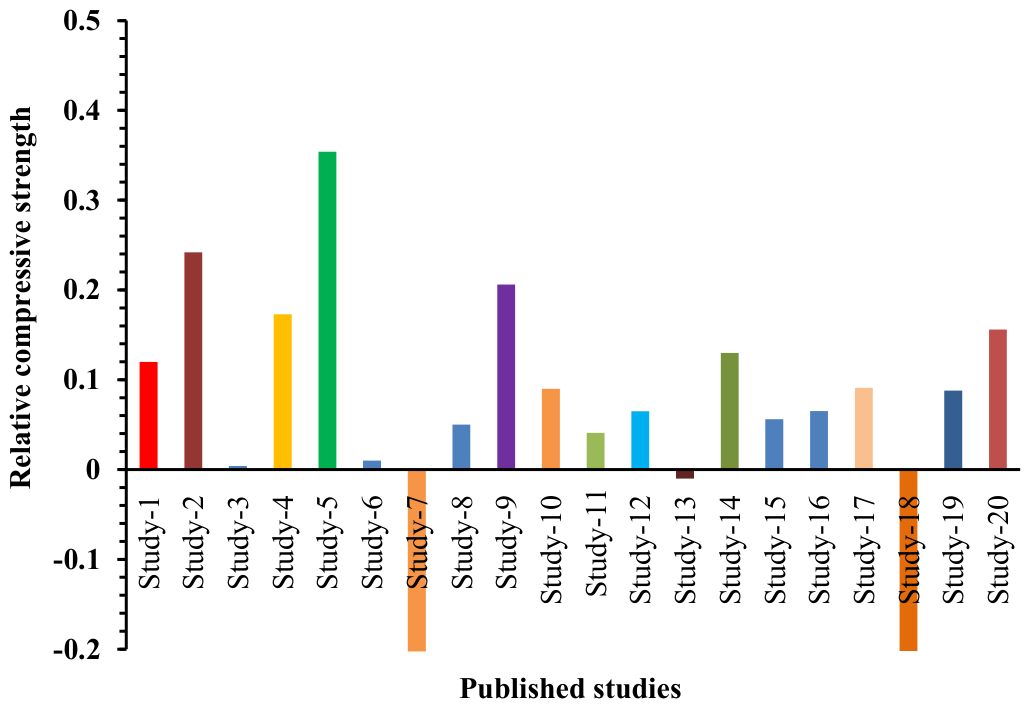
Equation (1) evaluated the relative compressive strength of each study as shown in Figure 4. The most essential parameter on which all concrete parameters are based is the compressive strength of concrete. If any concrete design mix successfully passes the design and target strengths, fc′ and fcr′, then the other parameters can be used to perform the analysis. As shown in Figure 4, all developed sustainable mix studies showed an increment, except studies 7, 13, and 18. In study 7, Gholampour et al. [93] studied different sand percentages with combinations of flyash dosages. An optimum 50% sustainable sand combination with 35% flyash content negatively affected the 28-day compressive strength. As and when the replacement ratio was reached, a full 100% replacement of sustainable sand resulted in a significant reduction. The SCMs require a more extended curing period to improve compressive strength, yet this study tested the samples only after 28 days of curing. Another method is to add a higher percentage of flyash with foundry and recycled sand as a fine aggregate in the new design mix concrete. The water absorption of sustainable sand is higher than that of natural fine aggregate. Higher amounts of fine materials in the mix require extra water, which must be added to the mix calculation. This extra water should be included in the design mix calculation to maintain the water–cement ratio; otherwise, the strength characteristics will be affected. In study 13, Tabsh et al. [99] prepared different mixes using recycled coarse aggregate from parent concrete and compared the results. It has been reported that newly developed concrete with up to 50% replacement was almost identical to the original concrete. The design and target strength, fc′ and fcr′, were reported well within the acceptable limits. Based on the discussion, it has been concluded that, for the design mix when SCMs are combined with recycled sand, the design mix methodology should be carefully selected, especially with regard to the physical properties of the concrete ingredients. Proper care is needed to maintain the water–cement ratio for each mix separately, and the water demand is adjusted in each trial until the optimum value is reached.

4.2. Relative Tensile Strength

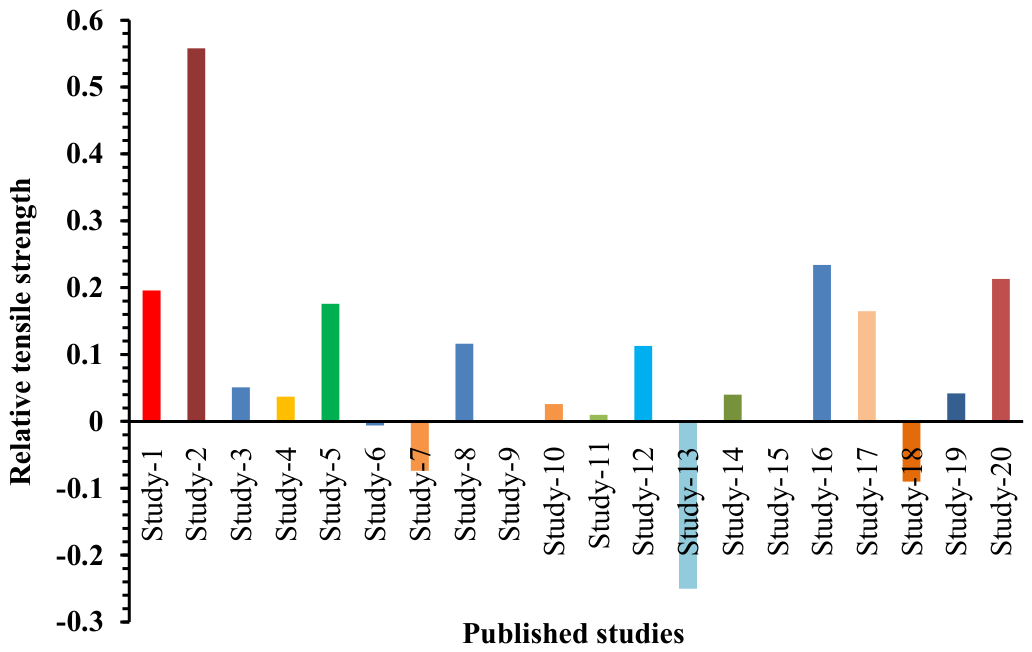
The tensile strength of sustainable concrete was measured as indirect tensile strengths: splitting tensile strength (STS) and flexural strength (FS). The STS and FS should be 10–15% of fc′ as recommended by [107,108]. Figure 5 shows the relative indirect tensile strength results for STS and FS. It has been seen from the results of the studies (1–20) that almost all studies showed a positive effect on tensile strength, except for studies 7, 13, and 18.
Studies 7, 13, and 18 [93,99,104] investigated the indirect tensile strength of developed sustainable concrete. These studies reported adverse effects. It has been observed that the STS value was reduced by approximately 7%, 25%, and 9% compared to the reference mixes. In study 7, 100% of the fine aggregate was replaced with natural river sand, resulting in a weaker paste and a decrease in the STS value. In study 13, the sustainable concrete tensile strength was reduced by about 25% when recycled coarse aggregate of unknown strength was used (fc′ = 30 MPa). The study has concluded that pre-assessing recycled concrete strength to prepare RAs for use in new design-mix concrete is an essential requirement for the construction industry to accept RA concrete in practice. In the selected study, 18 RAs were replaced with natural aggregate at an optimal value of 30% to produce self-compacting concrete, resulting in a slight reduction of approximately 20% in tensile strength. The tensile strength of the design concrete was recommended (10–15% of fc′); the reduction in compressive design strength (fc′) ultimately affected the tensile strength values. However, other studies reported that up to 30% incorporation of RAs did not affect the tensile strength, whereas the SCC showed a reduction in tensile strength. Overall, up to 30% of the replacement value of RAs is acceptable in most studies, and adding silica fume with RAs increases this to up to 50%.
Studies other than 7, 13, and 18 showed a positive effect on indirect tensile strength when SCMs and RAs were added. These studies identified optimal values for SCMs and recycled coarse and fine aggregates for new sustainable concrete. Past studies showed that up to 30% replacement with RAs is most suitable when the replacement ratio reaches 50% within an acceptable range. At 100%, all studies did not recommend it in new sustainable design mixes. However, some studies reported that combining them could replace 100% river sand, such as 50% recycled sand + 50% desert sand. But due to limited data, the evidence is insufficient for analysis. Hence, it can be concluded that more studies in this area are required to confirm the tensile strength characteristics of complete sand replacement using different sustainable sands, using a proper methodological approach that ensures the physical and chemical properties are satisfied.

4.3. Durability Parameters of Sustainable Concrete

All studies (1–5) [79,89,90,91] reported positive values, as shown in Table 2. It has been shown that each parameter has a positive effect on the sustainable design of concrete compared to conventional concrete. These studies used two types of waste materials: RAs and SCM. However, the studies showed that the separate use of RAs reduces the strength and durability of sustainable concrete. The tested parameters were enhanced once the optimal combined use of SCMs with recycled aggregate was utilized. It has been noted that silica and flyash with the recycled aggregate showed a positive increment.
Studies 6 and 13 [92,99] investigated the indirect tensile strength of developed sustainable concrete. These studies reported adverse effects on durability characteristics. It has been found that sustainable concrete can be achieved by incorporating up to 100% recycled aggregate in place of natural aggregate. In study 6, the optimal recycled aggregate replacement was 50%. However, all tested durability parameters showed lower values than those of conventional concrete. In study 13, RAs were replaced with NAs, and it was disclosed that the physical properties of RAs were much inferior to those of NAs, which accounted for the reduction in sustainable concrete durability at later ages.
Study 7 [93] studied sustainable concrete using a combination of SCMs, flyash, foundry, and recycled sand from demolished concrete. The study results showed that sustainable sand concrete at the optimum dosage reaches the acceptable range. However, compared with the reference mix, all parameters, including modulus of elasticity and water absorption, showed reductions. The study reported that the tested parameters are within an acceptable range but not identical. Hence, more adjustments to the mix ingredients are suggested to achieve better durability results than the reference mix.
Studies 8, 15, and 18 [94,95,96,97,98,101,104] prepared sustainable concrete using SCMs in sand. To replace OPC, self-compacted concrete (SCC) was studied using SCMs, silica fume, flyash, and blast furnace slag. A strength increment was observed at the optimal silica fume dosage of 10% compared to the reference mix, as shown in Table 2. The recent study 9 [95] examined the acid resistance and high-temperature performance of newly developed sustainable sand concrete with SCMs, including silica fume. The study showed that 100% recycled sand does not withstand high temperatures or acid. However, the 50% recycled sand + 50% desert sand + 5% crumb rubber combination, combined with the optimal 10% silica fume, provided the best resistance to high temperatures and acid attack. The combined sustainable sand improved the interconnectivity matrix by introducing different fine particles from recycled sand, silica fume, and crumb rubber. The interface was improved, and a dense calcite crystal was also observed by microstructural analysis, which supported the study’s results.
In study 19 [105], 100% RAs were utilized to develop sustainable concrete. RAs were developed using new techniques, and their physical properties were improved before their use in a new concrete design mix. The primary concern of RAs is the aggregate’s physical properties. They depend on the source of demolished concrete, weather conditions, and the initial design strength. The strength properties, compressive strength, splitting tensile strength, and modulus of elasticity, were found to be slightly higher than those of the conventional concrete. However, the rapid chloride penetration test (RCPT) showed that the sustainable concrete made with 100% RAs had a lower chloride penetration value than the conventional concrete.
Study 20 [61] investigated sustainable concrete containing SCMs from rice husk with a high recycled aggregate content. Up to 100% RAs were mixed with a maximum of 20% rice husk. With the combination of 80% recycled coarse aggregate + 15% rice husk, the threshold was reached. In Table 2, all strength parameters report a positive increment. However, regarding durability characteristics, water absorption also showed a positive outcome, and acid attacks resulted in greater deterioration than in natural aggregate concrete. The study’s results indicated that mixing silica fume and rice husk with recycled coarse aggregate was successful in durability tests.
The strength and durability parameters across the selected studies differ. By analyzing the selected studies, the results and discussion point by point, five control points were identified as follows:
i.
One point is clear from the analysis of all selected studies: all studies evaluated the compressive strength of sustainable concrete. Hence, it is clear that compressive strength is the most essential parameter of the concrete; the other parameters are only valid when compressive strength passes the design strength criterion (fc′).
ii.
The second point is that most studies evaluated the strength characteristics more than the durability.
iii.
It has been observed that the combined use of SCMs replaced a significant amount of OPC in the new design mix sustainable concrete. However, each study showed different performances; hence, optimization is necessary before use in the concrete industry.
iv.
The recycled aggregates, coarse and fine, can also be replaced by natural aggregates. However, recycled aggregate had higher water absorption. Hence, a proper design mix is important for the durability of newly sustainable design mix concrete.
v.
For sustainable concrete, studies are inconsistent across all parameters that can affect industrial concrete performance over time. Hence, even if the sustainable concrete meets the strength requirements, proper durability tests must be conducted on each new batch before it is recommended for industrial use.

5. Cost–Benefit Evaluation of Sustainable Concrete

5.1. 1 m3 Sustainable Concrete Cost Analysis

A published study [60] reported that 0.3 tons of cement was used to produce 1 ton of concrete. The IEA [109] reported that producing 1 ton of OPC results in approximately 0.5–0.6 tons of CO2 emissions. At the same time, industry disclosures from OPC manufacturers suggest slightly higher values, ranging from 0.6 to 0.7 tons of CO2 per ton of cement produced. For the purpose of estimating annual emissions in this study, an average emission factor of 0.6 tons of CO2 per ton of OPC was adopted. This value was multiplied by the total annual OPC production to calculate the corresponding CO2 emissions attributable to the cement industry. For this review study, five published studies have been selected for the analysis [79,89,90,91]. The studies were selected based on replacing NAs with RAs along with SCMs, such as flyash and SF, with OPC.
Based on prevailing international market prices, the production cost per 1 m3 of concrete for the specified mix compositions is estimated in Table 3. The costs of the developed mixes, incorporating both recycled and natural materials, were calculated using material price data reported for the US in US dollars per kilogram ($/kg). For each mix, the production cost was obtained by multiplying the material quantities (kg/m3) by the corresponding unit prices. The resulting total cost for each concrete mix is expressed in US dollars. Table 3 summarizes the estimated costs of the five selected mixes (study 1 to study 5). The conventional concrete cost was calculated at $77.62. However, the costs in the selected sustainable concrete studies ranged from $68.08 to $71.20. Based on the analysis, the cost of the selected sustainable concrete was estimated slightly lower than that of conventional concrete. A study concluded that OPC costs are almost 4 times lower than those of silica fume [27]. Hence, replacing OPC with SF increased the cost of mixes.
On the other hand, the cost of RAs is much lower than that of NAs. The combined use of SCMs such as silica fume and flyash, along with RAs, was effective, and the overall cost was about the same as that of conventional concrete, as tabulated in Table 3. The discussion concludes that the combined use of SCMs and RAs reduces the cost of design mix concrete.

5.2. Cost–Benefit Analysis of Sustainable Concrete

Table 4 presents comparative sustainable concrete mix strength and durability values reported in published studies, along with their cost–benefit analyses. Material prices used in the cost calculations are based on prevailing international market rates, and all costs are expressed in US dollars to allow global comparison. The 1 m3 cost of concrete production is summarized in Table 3. For each study, Table 4 compares the relevant parameters with respect to the corresponding control mix, since strength and durability remain the primary criteria for evaluating the overall value of concrete. The strength and durability parameters evaluated in the selected studies (1–5) were analyzed to determine the benefit of each parameter and, ultimately, to evaluate the overall cost–benefit of sustainable concrete compared to conventional concrete.
The increase in each parameter relative to the reference mix is listed as a benefit in Table 4. SCMs’ optimum percentages, such as SF and fly ash, and the optimum recycled aggregate content in coarse and fine aggregates improved the selected parameter, which is considered a benefit. The benefit is in the form of an increment, further multiplied by the weightage factor, as the concrete industry’s first and foremost parameter is the compressive strength acceptance criterion. If the compressive strength criterion for concrete is met, then the other strength and durability factors are measured. For this reason, compressive strength was given the highest weightage factor, 40%. It was considered that the other factors are equally important; therefore, the weightage of other parameters was set to 10.
For the cost–benefit analysis, no standard guidelines are available. Therefore, the weightage factor is assumed in this study based on the importance of each concrete factor in the industry. The benefits of each selected study are reported in Table 4. The final step is to determine the benefit percentage using the formula developed in this study (Equation (2)). The non-conventional concrete cost (N-CCC) and conventional concrete cost (CCC) are calculated in Table 4 and used to determine the benefit percentage.
Benefit   ( % )   = Ʃ   Benefit   ×   CCC N C C C × 100
The cost–benefit analysis of concrete is the CCC to N-CCC ratio multiplied by the Ʃ   Benefit . Equation (2) clearly shows that, as the N-CCC decreases, the Benefit (%) increases. In addition, Ʃ   Benefit also increases the Benefit (%) more; the greater the Ʃ Benefit, the greater the Benefit (%) increase.
In the five selected studies [79,89,90,91], the Benefit (%) was estimated (20.97%, 20.36%, 2.30%, 14.49%, and 18.88%, respectively). The highest Benefit (%) was 20.97% in study 1 by [79]. The lowest was reported as 2.3% in study 3 [90]. Two crucial observations were noted during the analysis of these selected studies. The first point is the ratio of CCC to N-CCC. If the N-CCC decreases relative to the fixed CCC, the ratio will increase, and the Benefit (%) will also improve. Secondly, the measure parameters in the study: the more positive the parameters, the higher the Ʃ Benefit and, ultimately, the Benefit (%) will increase at the same CCC to N-CCC ratio. Hence, it can be concluded from the discussion that the CCC to N-CCC ratio and Ʃ   Benefit will influence each study’s final Benefit (%).

6. Prospect

To further develop the subject of enhancing sustainability in concrete manufacturing, the following research directions are suggested based on the discussion of published studies of this SLR, the outcome of the existing literature, and the gaps found:
  • Long-Term Durability and Life Cycle Assessment (LCA): While short-term performance data is plentiful, more comprehensive studies are needed on the long-term strength and durability analysis of concrete incorporating high volumes of both RAs and SCMs, particularly under aggressive environmental conditions (e.g., marine environments, acid resistance, corrosion resistance, and freeze–thaw cycle testing). Future research should focus on conducting comprehensive life cycle assessments (LCAs) of sustainable concrete incorporating RAs and SCMs.
  • Optimization of Recycled Sand Utilization: To continuously improve recycled sand quality in sustainable concrete, water absorption is the key physical property. New studies should focus on developing scalable, affordable pre-treatment methods. The full replacement of natural sand with developed sand from waste materials and vacant desert sand in new concrete designs requires investigating cutting-edge techniques to fulfill the industry requirements. That will allow the industry to accept the new concrete practically for end users.
  • Combined Studies on Multiple SCMs with Recycled Aggregates: Most current research focuses on specific SCMs or RAs separately. Future studies should examine the combined effects of multiple SCMs, including SF, fly ash, ground granulated blast furnace slag, recycled fine dust, and natural pozzolans, as well as RAs. Such studies would enable the identification of optimal mix ratios that balance mechanical performance, durability, environmental benefits, and overall cost-effectiveness. The final combined ratio of SCMs and RAs, which will report the best combination across all aspects, should be available for practical application at the industrial level.
  • Economic Modeling and Supply Chain Analysis: To evaluate the cost–benefit trade-offs of establishing regional solid waste processing facilities and the related supply chain logistics for SCMs and RAs, thorough economic feasibility studies are required. To support well-informed investment decisions throughout the sustainable concrete value chain, evaluations should produce transparent financial information.

7. Conclusions

This SLR study critically examines the challenges posed by CO2 emissions and the extensive extraction of natural aggregates for concrete manufacturing at a global scale. A set of studies has been reviewed, and the experimental results have been discussed. The engineering parameters and economic analysis of the published results were comprehensively analyzed, and the following conclusions were reached.
  • Mitigation of carbon footprint: The study confirmed that the primary source of carbon emissions is the calcination process during cement production. It has also been observed that studies have successfully found that SCMs overcome this issue. Most experimental studies found that silica fume with recycled aggregates is the most effective SCM for concrete performance in terms of strength and durability. However, the correct percentage is a matter of debate; different studies have reported different values, and none have confirmed a single value.
  • Excessive Aggregate Extraction: The physical, chemical, and biological degradation of the river system is increasing to meet global demand for high-quality river sand utilized as a fine aggregate in the construction industry, resulting in a severe crisis. Recent studies have shown that recycled sand alone is not a good option for replacing higher percentages, as it does not improve the strength and durability of sustainable concrete. However, the combined use of recycled sand with other sands, such as desert and manufactured sands, could be the right option to replace a greater volume without affecting any strength or durability parameters.
  • Sustainable Concrete Performance: SCMs, silica fume, and flyash improved strength and durability. In the case of combined use of silica fume = 10% and flyash = 15%, a combination of up to 25% was the best recommendation. Regarding recycled aggregates, such as coarse and fine aggregates, reported challenges include maintaining strength and durability at higher percentages. Most studies showed higher water absorption in RAs, which affected durability parameters. The pre-treatment method was suggested in published studies to maintain the water–cement ratio in the design mix concrete.
  • Economic and Policy Implications: The transition to sustainable concrete is supported by the growing market for SCMs and the need to manage construction and demolition waste. Most studies did not report cost–benefit analyses of sustainable concrete. This review study reported that the cost–benefit analysis yielded the highest benefit when SCMs were combined with RAs.
To accelerate the adoption of these alternatives, policy interventions are crucial. Industry practices can be significantly affected by stricter environmental regulations on sand mining, as well as targeted incentives for the use of recycled materials. From a broader perspective, if the construction industry is to meet global climate targets and transition to a more resilient, circular, and ecologically conscious future, the widespread and efficient use of RAs with SCM blends will become a practical necessity rather than a viable option.

Funding

This research was funded by Fahad Bin Sultan University, Tabuk, Saudi Arabia, grant number [1.11.24].

Data Availability Statement

Data are available in the manuscript.

Acknowledgments

The authors extend their appreciation to the Deanship of Scientific Research at Fahad Bin Sultan University, Tabuk, Saudi Arabia, for funding this work through the General Research Project under grant number G.R.P-1 November 2024.

Conflicts of Interest

The authors declare no conflict of interest.

References

  1. Steinthorsdottir, M.; Coxall, H.; De Boer, A.; Huber, M.; Barbolini, N.; Bradshaw, C.; Burls, N.; Feakins, S.; Gasson, E.; Henderiks, J. The Miocene: The future of the past. Paleoceanogr. Paleoclimatol. 2021, 36, e2020PA004037. [Google Scholar] [CrossRef]
  2. Isson, T.T.; Planavsky, N.J.; Coogan, L.; Stewart, E.; Ague, J.; Bolton, E.; Zhang, S.; McKenzie, N.; Kump, L. Evolution of the global carbon cycle and climate regulation on earth. Glob. Biogeochem. Cycles 2020, 34, e2018GB006061. [Google Scholar] [CrossRef]
  3. Martin, K.R.; Nickoloff, A.; Moffat, L.; Weaver, A.J.; Eby, M. Assessing the effectiveness of ocean alkalinity enhancement on carbon sequestration and ocean acidification. Facets 2025, 10, 1–8. [Google Scholar]
  4. Kopperi, H.; Mukhrjee, T.; Kumari, P.; Javvadi, Y.; Mohan, S.V.; Swaminathan, S. India’s Cement Industry: Meeting the Challenge of Emissions Abatement with Sustainable Growth. ChemRxiv 2025. [Google Scholar] [CrossRef]
  5. Greco-Coppi, M.; Hofmann, C.; Ströhle, J.; Walter, D.; Epple, B. Efficient CO2 capture from lime production by an indirectly heated carbonate looping process. Int. J. Greenh. Gas Control 2021, 112, 103430. [Google Scholar] [CrossRef]
  6. Shan, Y.; Liu, Z.; Guan, D. CO2 emissions from China’s lime industry. Appl. Energy 2016, 166, 245–252. [Google Scholar] [CrossRef]
  7. Oriaku, E.; Abuh, M.; Udeh, U.O.; Ani, H. Mineral Processing: Production of Calcium Oxide from Nkalagu Limestone, Effect of Particle Size and Temperature. Caritas Int. J. Mech. Eng. Sci. 2025, 1, 1. [Google Scholar]
  8. Pitchaiah, P.S. Impacts of sand mining on environment—A Review. SSRG Int. J. Geoinform. Geol. Sci. 2017, 4, 1–5. [Google Scholar]
  9. IMR. Sand Market Size, Share & Global Industry Analysis 2032. Report ID 17320. 2024. Available online: https://introspectivemarketresearch.com/reports/sand-market/ (accessed on 15 June 2026).
  10. Garg, Y.; Faiz, M.; Gupta, M. Sand and Sustainability: A Review Paper. In Proceedings of 2024 10th International Conference on Advanced Computing and Communication Systems (ICACCS); IEEE: New York, NY, USA, 2024; pp. 1652–1656. [Google Scholar]
  11. Rentier, E.; Cammeraat, L. The environmental impacts of river sand mining. Sci. Total Environ. 2022, 838, 155877. [Google Scholar] [CrossRef] [PubMed]
  12. Cao, Z.; Chu, C.; Liu, J.; Su, X.; Zhong, X.; Behrens, P. Closing the global sand circularity gap needs a systems approach. One Earth 2025, 8, 101199. [Google Scholar] [CrossRef]
  13. Pandey, S.; Kumar, G.; Kumari, N.; Pandey, R. Assessment of causes and impacts of sand mining on river ecosystem. In Hydrogeochemistry of Aquatic Ecosystems; John Wiley & Sons Ltd.: Chichester, UK, 2023; pp. 357–379. [Google Scholar]
  14. Gopal, B.; Chauhan, M. River Sand and Gravel Mining: Striking a Balance between Ecology and Economy. Int. J. Ecol. Environ. Sci. 2025, 51, 171–179. [Google Scholar] [CrossRef]
  15. Bakta, S.; Ombella, J.; Kilonzo, C. Legal Gaps and Contradictions in Environmental Preservation in Small-Scale Sand Mining in Tanzania: Brewing Climate Change? J. Contemp. Afr. Leg. Stud. 2025, 2, 32–44. [Google Scholar] [CrossRef]
  16. NGT. Cases Related to Sand Mining. 2021. Available online: https://www.iasgyan.in/daily-current-affairs/sand-mining (accessed on 15 June 2026).
  17. Hernandez, M. The Messy Business of Sand Mining Explained. 2021. Available online: https://www.reuters.com/graphics/GLOBAL-ENVIRONMENT/SAND/ygdpzekyavw/ (accessed on 15 June 2026).
  18. Rangel-Buitrago, N.; Neal, W.; Pilkey, O.; Longo, N. The global impact of sand mining on beaches and dunes. Ocean Coast. Manag. 2023, 235, 106492. [Google Scholar] [CrossRef]
  19. Ashraf, M.A.; Maah, M.J.; Yusoff, I.; Wajid, A.; Mahmood, K. Sand mining effects, causes and concerns: A case study from Bestari Jaya, Selangor, Peninsular Malaysia. Sci. Res. Essays 2011, 6, 1216–1231. [Google Scholar]
  20. Adil, G.; Kevern, J.T.; Mann, D. Influence of silica fume on mechanical and durability of pervious concrete. Constr. Build. Mater. 2020, 247, 118453. [Google Scholar] [CrossRef]
  21. Azizi, M.; Samimi, K. Effect of silica fume on Self-compacting Earth Concrete: Compressive strength, durability and microstructural studies. Constr. Build. Mater. 2025, 472, 140815. [Google Scholar] [CrossRef]
  22. Aldred, J.M.; Holland, T.C.; Morgan, D.R.; Roy, D.M.; Bury, M.A.; Hooton, R.D.; Olek, J.; Scali, M.J.; Detwiler, R.J.; Jaber, T.M. Guide for the Use of Silica Fume in Concrete; ACI–American Concrete Institute–Committee: Farmington Hills, MI, USA, 2006; Volume 234. [Google Scholar]
  23. Bravo, M.; De Brito, J.; Pontes, J.; Evangelista, L. Mechanical performance of concrete made with aggregates from construction and demolition waste recycling plants. J. Clean. Prod. 2015, 99, 59–74. [Google Scholar] [CrossRef]
  24. Abed, M.; Nemes, R.; Tayeh, B.A. Properties of self-compacting high-strength concrete containing multiple use of recycled aggregate. J. King Saud Univ. Eng. Sci. 2020, 32, 108–114. [Google Scholar]
  25. Zheng, C.; Lou, C.; Du, G.; Li, X.; Liu, Z.; Li, L. Mechanical properties of recycled concrete with demolished waste concrete aggregate and clay brick aggregate. Results Phys. 2018, 9, 1317–1322. [Google Scholar] [CrossRef]
  26. Jagadeesh, P. Assessment of usage of manufactured sand and recycled aggregate as sustainable concrete: A review. Mater. Today Proc. 2022, 64, 1029–1034. [Google Scholar] [CrossRef]
  27. Zhang, K.; Xiao, J.; Hou, Y.; Zhang, Q. Experimental study on carbonation behavior of seawater sea sand recycled aggregate concrete. Adv. Struct. Eng. 2022, 25, 927–938. [Google Scholar] [CrossRef]
  28. Pereira, P.; Evangelista, L.; De Brito, J. The effect of superplasticisers on the workability and compressive strength of concrete made with fine recycled concrete aggregates. Constr. Build. Mater. 2012, 28, 722–729. [Google Scholar] [CrossRef]
  29. Wu, E.; Ma, X.; Fang, C.; Li, N.; Jia, L.; Jiang, P.; Wang, W. Strength performance and microscopic mechanism of cement mortar incorporating fine recycled concrete aggregate and natural sand. J. Build. Eng. 2025, 100, 111767. [Google Scholar] [CrossRef]
  30. Aslani, F.; Ma, G.; Wan, D.L.Y.; Muselin, G. Development of high-performance self-compacting concrete using waste recycled concrete aggregates and rubber granules. J. Clean. Prod. 2018, 182, 553–566. [Google Scholar]
  31. Sunhare, P.; Ananda Babu, K.; Sharma, R. Experimental Study on Use of Dismantled Aggregate as Natural Coarse Aggregate. J. Civ. Constr. Eng. 2020, 6, 27–35. [Google Scholar]
  32. Carro-López, D.; González-Fonteboa, B.; Martínez-Abella, F.; González-Taboada, I.; de Brito, J.; Varela-Puga, F. Proportioning, microstructure and fresh properties of self-compacting concrete with recycled sand. Procedia Eng. 2017, 171, 645–657. [Google Scholar] [CrossRef]
  33. Fernández-Ledesma, E.; Jiménez, J.; Ayuso, J.; Corinaldesi, V.; Iglesias-Godino, F. A proposal for the maximum use of recycled concrete sand in masonry mortar design. Mater. Constr. 2016, 66, 321. [Google Scholar] [CrossRef]
  34. Liang, G.; She, A.; Yao, W. Sustainable use of recycled sand in alkali-activated cement and Portland cement mortars: A comparative study with natural sand. Sustain. Mater. Technol. 2025, 43, e01290. [Google Scholar] [CrossRef]
  35. Yang, Y.; Chen, B.; Su, Y.; Chen, Q.; Li, Z.; Guo, W.; Wang, H. Concrete mix design for completely recycled fine aggregate by modified packing density method. Materials 2020, 13, 3535. [Google Scholar] [CrossRef] [PubMed]
  36. Hamada, H.M.; Abed, F.; Al-Sadoon, Z.A.; Elnassar, Z.; Hassan, A. The use of treated desert sand in sustainable concrete: A mechanical and microstructure study. J. Build. Eng. 2023, 79, 107843. [Google Scholar] [CrossRef]
  37. Akhtar, M.N.; Albatayneh, O.; Bani-Hani, K.A.; Malkawi, A.I.H. Performance of modified desert sand concrete: An experimental case study. Case Stud. Constr. Mater. 2024, 21, e03465. [Google Scholar] [CrossRef]
  38. Akhtar, M.N.; Bani-Hani, K.A.; Malkawi, D.A.H.; Albatayneh, O. Suitability of sustainable sand for concrete manufacturing-A complete review of recycled and desert sand substitution. Results Eng. 2024, 23, 102478. [Google Scholar]
  39. Ji, Y.; Qasem, M.G.S.; Xu, T.; Mohammed, A.O.Y. Mechanical properties investigation on recycled rubber desert sand concrete. J. CO2 Util. 2024, 88, 102939. [Google Scholar] [CrossRef]
  40. Jin, B.H.; Song, J.X.; Liu, H.F. Engineering characteristics of concrete made of desert sand from Maowusu Sandy Land. Appl. Mech. Mater. 2012, 174, 604–607. [Google Scholar]
  41. Zhang, G.; Song, J.; Yang, J.; Liu, X. Performance of mortar and concrete made with a fine aggregate of desert sand. Build. Environ. 2006, 41, 1478–1481. [Google Scholar] [CrossRef]
  42. Hou, M.; Li, Z.; Li, V.C. Green and durable engineered cementitious composites (GD-ECC) with recycled PE fiber, desert sand, and carbonation curing: Mixture design, durability performance, and life-cycle analysis. Constr. Build. Mater. 2024, 414, 134984. [Google Scholar]
  43. El-Mir, A.; El-Hassan, H.; El-Dieb, A.; Alsallamin, A. Development and optimization of geopolymers made with desert dune sand and blast furnace slag. Sustainability 2022, 14, 7845. [Google Scholar] [CrossRef]
  44. Chen, Q.; Liu, H.; Han, L.; Wang, Y. Comparative studies of dynamic mechanical properties of desert sand concrete and ordinary concrete. Shock Vib. 2022, 2022, 8680750. [Google Scholar] [CrossRef]
  45. Akhtar, M.N.; Jameel, M.; Ibrahim, Z.; Bunnori, N.M.; Bani-Hani, K.A. Development of sustainable modified sand concrete: An experimental study. Ain Shams Eng. J. 2024, 15, 102331. [Google Scholar]
  46. Damdelen, Ö.; Mosaberpanah, M.A.; Olabimtan, S.B.; Anthony, M.D.; Oluwole, B.O. Binary effect of silica fume and waste glass powder as a cement replacement for a sustainable concrete. Discov. Concr. Cem. 2025, 1, 28. [Google Scholar] [CrossRef]
  47. Mostofinejad, D.; Nasrollahi, M.; Bahmani, H.; Zajshoor, Z.; Sadeghi, M. Enhancing concrete strength and durability of normal and high-strength concrete: Exploring combined effects of optimized silica fume and slag. Iran. J. Sci. Technol. Trans. Civ. Eng. 2025, 49, 2309–2328. [Google Scholar]
  48. Ali, T.; Qureshi, M.Z.; Inam, I.; Kahla, N.B.; Ahmed, H.; Ajwad, A.; Adnan, M. Sustainable concrete production through the integration of waste foundry sand, fly ash, silica fume and metakaolin. Sci. Rep. 2025, 15, 27512. [Google Scholar] [CrossRef] [PubMed]
  49. IEA. Technology Roadmap Low-Carbon Transition in the Cement Industry; WBCSD: Geneva, Switzerland; IEA: Paris, France, 2018. [Google Scholar]
  50. Roser, M.; Ritchie, H.; Ortiz-Ospina, E.; Rodés-Guirao, L. World population growth. Our World Data 2013, 412, 543. [Google Scholar] [CrossRef]
  51. Rihner, M.; Hafez, H.; Walkley, B.; Purnell, P.; Drewniok, M. Thousand cuts: A realistic route to decarbonisation the UK cement and concrete sector by 2050. Sustain. Prod. Consum. 2025, 58, 319–333. [Google Scholar] [CrossRef]
  52. Akhtar, M.N.; Bani-Hani, K.A.; Akhtar, J.; Khan, R.A.; Nejem, J.K.; Zaidi, K. Flyash-based bricks: An environmental savior—A critical review. J. Mater. Cycles Waste Manag. 2022, 24, 1663–1678. [Google Scholar]
  53. Khalil, E.; AbouZeid, M. A global assessment tool for cement plants improvement measures for the reduction of CO2 emissions. Results Eng. 2025, 26, 104767. [Google Scholar] [CrossRef]
  54. Andrew, R. Global CO2 emissions from cement production, 1928–2018. Earth Syst. Sci. Data 2019, 11, 1675–1710. [Google Scholar] [CrossRef]
  55. Environment, U.; Scrivener, K.L.; John, V.M.; Gartner, E.M. Eco-efficient cements: Potential economically viable solutions for a low-CO2 cement-based materials industry. Cem. Concr. Res. 2018, 114, 2–26. [Google Scholar]
  56. Lehne, J.; Preston, F. Making concrete change: Innovation in low-carbon cement and concrete. Chatham House Rep. 13 June 2018. Available online: https://www.chathamhouse.org/about-us/our-departments-and-programmes/environment-and-society-centre/innovation-low-carbon-cement (accessed on 15 June 2026).
  57. García-Gusano, D.; Herrera, I.; Garraín, D.; Lechón, Y.; Cabal, H. Life cycle assessment of the Spanish cement industry: Implementation of environmental-friendly solutions. Clean Technol. Environ. Policy 2015, 17, 59–73. [Google Scholar]
  58. Taylor, M.; Tam, C.; Gielen, D. Energy efficiency and CO2 emissions from the global cement industry. Korea 2006, 50, 61–67. [Google Scholar]
  59. Williams, K.C.; Partheeban, P. An experimental and numerical approach in strength prediction of reclaimed rubber concrete. Adv. Concr. Constr. 2018, 6, 87. [Google Scholar]
  60. Akhtar, M.N.; Jameel, M.; Ibrahim, Z.; Bunnori, N.M. Incorporation of recycled aggregates and silica fume in concrete: An environmental savior-a systematic review. J. Mater. Res. Technol. 2022, 20, 4525–4544. [Google Scholar] [CrossRef]
  61. Xu, K.; Yang, J.; He, H.; Wei, J.; Zhu, Y. Influences of Additives on the Rheological Properties of Cement Composites: A Review of Material Impacts. Materials 2025, 18, 1753. [Google Scholar] [CrossRef] [PubMed]
  62. Azare, A.A.; Ibrahim, M.H.B.W.; Alshalif, A.F.; Jaya, R.P.; Nindyawati, N. Mechanical and Microstructural Characteristics of High-Strength Self-Compacting Concrete (HSSCC) with Optimal Silica Fume and Fly Ash Cement Replacement. Int. J. Sustain. Constr. Eng. Technol. 2024, 15, 81–99. [Google Scholar]
  63. Tripathi, I.M.; Mahto, S.S.; Bhagat, C.; Modi, A.; Jain, V.; Mohapatra, P.K. A Review of River Sand Mining: Methods, Impacts, and Implications. Next Res. 2025, 2, 100149. [Google Scholar] [CrossRef]
  64. Singh, P.; Chauhan, S.S.; Mishra, A. Ecological impacts of sand mining on the riverbanks of sangam. In Ecosystem Dynamics of Prayagraj; M/S Academic Publishers & Distributors: Lucknow, India, 2025. [Google Scholar]
  65. Bhatawdekar, R.M.; Singh, T.N.; Tonnizam Mohamad, E.; Armaghani, D.J.; Binti Abang Hasbollah, D.Z. River sand mining vis a vis manufactured sand for sustainability. In Proceedings of the International Conference on Innovations for Sustainable and Responsible Mining: ISRM 2020; Springer: New York, NY, USA, 2021; pp. 143–169; Volume 1. [Google Scholar]
  66. Kim, T.T.; Nga, T.N.Q.; Huy, N.D.Q.; Phung, N.K.; Hoai, H.C.; Bay, N.T. The impact of sand mining on the bed morphology of the Tien River, Mekong Delta, Vietnam. Environ. Earth Sci. 2025, 84, 84. [Google Scholar] [CrossRef]
  67. Dukeyev, B. Shifting Sands: Uncovering the Struggle for World War II Memory in Kazakhstan. Probl. Post-Communism 2025, 73, 152–165. [Google Scholar] [CrossRef]
  68. Pant, R.R.; Varol, M.; Phuyal, S.; Bhattarai, S.; Awasthi, M.P.; Thakur, T.K.; Bohara, R.; Basnet, N.; Sitaula, S.; Afandi, G.E. How sand mining is shaping the Trishuli river in the Himalayas of South Asia. Earth Syst. Environ. 2025, 10, 185–201. [Google Scholar] [CrossRef]
  69. He, X.; Xiao, J.; Yang, M.; Gao, J.; Wang, C. Component Distinction and Content Optimization of Fine Powder in Crushed Sand for High-Fluidity Concrete. J. Mater. Civ. Eng. 2025, 37, 04025447. [Google Scholar] [CrossRef]
  70. Rousseau, J.-F.; Lauzon, A.; Marschke, M. Can green concrete help address the sand and aggregate crisis? A scoping literature review. J. Environ. Plan. Manag. 2025, 68, 1788–1806. [Google Scholar]
  71. Team, I. Waste Management and Waste-to-Energy. Available online: https://static1.squarespace.com/static/66d875be45741e71e207c640/t/696fb387c39bc02fd1be7aaf/1768928135176/ecswg_g20technicalpapers_october2025.pdf (accessed on 15 June 2026).
  72. Sakthibala, R.; Vasanthi, P.; Hariharasudhan, C.; Partheeban, P. A critical review on recycling and reuse of construction and demolition waste materials. Clean. Waste Syst. 2025, 12, 100375. [Google Scholar] [CrossRef]
  73. Bhuyan, A.; Bordoloi, T.; Debnath, R.; Ikbal, A.M.A.; Debnath, B.; Singh, W.S. Assessing AQI of air pollution crisis 2024 in Delhi: Its health risks and nationwide impact. Discov. Atmos. 2025, 3, 13. [Google Scholar] [CrossRef]
  74. Wu, J.; Ye, X.; Cui, H. Recycled Materials in Construction: Trends, Status, and Future of Research. Sustainability 2025, 17, 2636. [Google Scholar] [CrossRef]
  75. White, S. Climate change in global environmental history. In A Companion to Global Environmental History; Blackwell Publishing Ltd.: Oxford, UK, 2025; pp. 361–374. [Google Scholar]
  76. Bonifazi, G.; Chiara, G.; Roberta, P.; Silvia, S. Current trends and challenges in construction and demolition waste recycling. Curr. Opin. Green Sustain. Chem. 2025, 53, 101032. [Google Scholar] [CrossRef]
  77. MacKenzie, T. The Sand Agenda: Transnational Sand Extraction, Social Injustice, and the Urgent Need for Global Governance. Mich. J. Political Sci. 2025, 1001, 94. [Google Scholar]
  78. Lian, L.; Huang, J.; Chen, S.; Du, S.; Zhang, L.; Yang, J. A Comprehensive Review of Dust Events: Characteristics, Climate Feedbacks, and Public Health Risks. Curr. Pollut. Rep. 2025, 11, 18. [Google Scholar] [CrossRef]
  79. Fatiha, A.; Karim, E.; Mhamed, A.; Abed, F. Enhancing performance of recycled aggregate concrete with supplementary cementitious materials. Clean. Mater. 2025, 15, 100298. [Google Scholar] [CrossRef]
  80. Akhtar, M.N. Feasibility of Modified Sand Made by Using Desert and Recycled Sand in Structural Concrete: An Experimental Research. Int. J. Concr. Struct. Mater. 2026, 20, 46. [Google Scholar] [CrossRef]
  81. Mohammed, T.U.; Rony, M.A.; Zunaied Bin Harun, M.; Uddin, N.; Saha, D.; Rahman, M.N.; Mahmood, A.H. Alternative Fine Aggregates to Natural River Sand for Manufactured Concrete Ensuring Circular Economy. Constr. Mater. 2024, 4, 640–654. [Google Scholar] [CrossRef]
  82. Mundra, S.; Sindhi, P.; Chandwani, V.; Nagar, R.; Agrawal, V. Crushed rock sand–An economical and ecological alternative to natural sand to optimize concrete mix. Perspect. Sci. 2016, 8, 345–347. [Google Scholar] [CrossRef]
  83. Ismail, A.Y.; Al-Luhybi, A.S.; Mohammad, K.I. Prediction of compressive strength of concrete incorporating fine recycled aggregate using regression analysis. Alger. J. Eng. Technol. 2024, 9, 114–126. [Google Scholar]
  84. Sada, B.; Amartey, Y.; Bako, S. An investigation into the use of groundnut shell as fine aggregate replacement. Niger. J. Technol. 2013, 32, 54–60. [Google Scholar]
  85. Cherif, R.; Bousleh, A.; El Euch Khay, S. Sustainable sand concrete incorporating fine recycled aggregates for structural applications. Eng. Res. Express 2026, 8, 015101. [Google Scholar] [CrossRef]
  86. Ngayakamo, B.H.; Ikotun, B.D. Utilization of quartz quarry dust as a sustainable partial sand replacement in cement mortar. Sci. Rep. 2026, 16, 7031. [Google Scholar] [CrossRef] [PubMed]
  87. Saurav, S.; Sinha, S. Performance Assessment of Stabilised Fine Sand Incorporating Crushed Bricks for Sustainable Pavement Layers. Road Mater. Pavement Des. 2026, 1–29. [Google Scholar] [CrossRef]
  88. Chen, Y.; Liu, Q.-F.; Xiong, Q.X.; Tan, K.; Zhu, W.; Shen, W. Artificial intelligence-guided design of manufactured sand concrete with targeted performance. Eng. Appl. Artif. Intell. 2026, 165, 113424. [Google Scholar] [CrossRef]
  89. Nejem, J.K.; Akhtar, M.N.; Almasri, A.H.; Rais, M.S. Assessment of Sustainable Structural Concrete Made by Composite Waste for the Concrete Industry: An Experimental Study. J. Compos. Sci. 2025, 9, 279. [Google Scholar] [CrossRef]
  90. Shmlls, M.; Abed, M.A.; Horvath, T.; Bozsaky, D. Sustainability framework of recycled aggregate concrete produced with supplementary cementitious materials. Ain Shams Eng. J. 2023, 14, 102036. [Google Scholar] [CrossRef]
  91. Nelson, K.; Horizon Research Publishing. Recycled aggregate concrete made with silica fume: Experimental investigation. Civ. Eng. Archit. 2020, 8, 1136–1143. [Google Scholar] [CrossRef]
  92. Corominas, A.; Etxeberria, M. Experimental analysis of properties of high performance recycled aggregate concrete. Constr. Build. Mater. 2014, 52, 227–235. [Google Scholar] [CrossRef]
  93. Gholampour, A.; Zheng, J.; Ozbakkaloglu, T. Development of waste-based concretes containing foundry sand, recycled fine aggregate, ground granulated blast furnace slag and fly ash. Constr. Build. Mater. 2021, 267, 121004. [Google Scholar] [CrossRef]
  94. Mohan, A.; Mini, K. Strength and durability studies of SCC incorporating silica fume and ultra fine GGBS. Constr. Build. Mater. 2018, 171, 919–928. [Google Scholar] [CrossRef]
  95. Akhtar, M.N.; Bani-Hani, K.A.; Akhtar, J.N. High-Temperature and Acid Resistance of Concrete with Recycled, Desert Sand, and Crumb Rubber Blends. Materials 2025, 18, 4410. [Google Scholar] [CrossRef] [PubMed]
  96. Bhardwaj, B.; Kumar, P. Waste foundry sand in concrete: A review. Constr. Build. Mater. 2017, 156, 661–674. [Google Scholar] [CrossRef]
  97. Alla, S.; Jayaram, M.; Asadi, S. An experimental investigation for replacements of river sand and cement with Robosand, fly-ash and silica fume in concrete to evaluate the influence in durability properties. Mater. Today Proc. 2021, 43, 954–961. [Google Scholar] [CrossRef]
  98. Memon, F.A.; Nuruddin, M.F.; Shafiq, N. Effect of silica fume on the fresh and hardened properties of fly ash-based self-compacting geopolymer concrete. Int. J. Miner. Metall. Mater. 2013, 20, 205–213. [Google Scholar]
  99. Tabsh, S.W.; Abdelfatah, A.S. Influence of recycled concrete aggregates on strength properties of concrete. Constr. Build. Mater. 2009, 23, 1163–1167. [Google Scholar] [CrossRef]
  100. Barbhuiya, S.; Qureshi, M. Effects of silica fume on the strength and durability properties of concrete. Age 2016, 3, 28. [Google Scholar]
  101. Sasanipour, H.; Aslani, F.; Taherinezhad, J. Effect of silica fume on durability of self-compacting concrete made with waste recycled concrete aggregates. Constr. Build. Mater. 2019, 227, 116598. [Google Scholar] [CrossRef]
  102. Farhan, N.; Rakibul, H.; Habibur Rahman, S.; Jawad, A.; Noor Md Sadiqul, H.; Shuvo Dip, D.; Hamidul, I.; Ashraful, I.; Robiul, A.; Arifur, R. Effect of silica fume on the microstructural and mechanical properties of concrete made with 100% recycled aggregates. Rev. Constr. 2024, 23, 413–435. [Google Scholar] [CrossRef]
  103. Yunchao, T.; Zheng, C.; Wanhui, F.; Yumei, N.; Cong, L.; Jieming, C. Combined effects of nano-silica and silica fume on the mechanical behavior of recycled aggregate concrete. Nanotechnol. Rev. 2021, 10, 819–838. [Google Scholar] [CrossRef]
  104. Ayub, T.; Mahmood, W.; Khan, A.-U.-R. Durability performance of SCC and SCGC containing recycled concrete aggregates: A comparative study. Sustainability 2021, 13, 8621. [Google Scholar] [CrossRef]
  105. Yehia, S.; Helal, K.; Abusharkh, A.; Zaher, A.; Istaitiyeh, H. Strength and durability evaluation of recycled aggregate concrete. Int. J. Concr. Struct. Mater. 2015, 9, 219–239. [Google Scholar] [CrossRef]
  106. Alharthai, M.; Onyelowe, K.C.; Ali, T.; Qureshi, M.Z.; Rezzoug, A.; Deifalla, A.; Alharthi, K. Enhancing concrete strength and durability through incorporation of rice husk ash and high recycled aggregate. Case Stud. Constr. Mater. 2025, 22, e04152. [Google Scholar] [CrossRef]
  107. ASTM C293-08; Standard Test Method for Flexuralstrength of Concrete (Using Simple Beam with Center-Point Loading). ASTM International: West Conshohocken, PA, USA, 2016.
  108. ASTM C496/C496M-17; Standard Test Method for Splitting Tensile Strength of Cylindrical Concrete Specimens. ASTM International: West Conshohocken, PA, USA, 2004; pp. 469–490.
  109. IEA. Cement. 2020. Available online: https://www.iea.org/energy-system/industry/cement (accessed on 15 June 2026).
Figure 1. Flow diagram of data extraction in SLR methodology.
Jcs 10 00335 g001
Figure 2. Region-wise data of CO2 emissions from 2000 to 2023.
Jcs 10 00335 g002
Figure 3. Illustration of the emission of CO2 from fuel combustion across different countries worldwide.
Jcs 10 00335 g003
Figure 4. Sustainable concrete studies’ relative compressive strength analysis.
Jcs 10 00335 g004
Figure 5. Relative tensile strength of sustainable concrete studies.
Jcs 10 00335 g005
Table 1. Estimated CO2 emissions from cement manufacturing and related processes.
Source of EmissionProcess DescriptionApproximate Contribution to Total CO2 Emissions (%)Chemical Equation Example
Coal CombustionBurning of coal as kiln fuel for clinker production30–40%C + O2 → CO2
Calcination (Decomposition)Thermal decomposition of CaCO3 to form CaO and CO260–70%CaCO3 → CaO + CO2
Total CO2 EmissionsCombined emissions from fuel and calcination~100%
Table 2. Relative values of the tested sustainable concrete parameters.
Published StudiesRelative Values of the Tested Parameters of Sustainable Concrete
Compressive StrengthSplitting Tensile StrengthFlexural StrengthModulus of ElasticityShrinkage of ConcreteWater AbsorptionAcid AttackSample Cracking PatternResistance Against High TemperaturesRapid Chloride Penetration Test
Study 1 [79]+0.12+0.196+0.45-+0.44+0.28----
Study 2 [89]+0.242-+0.558+0.055-+0.118+0.30---
Study 3 [90]+0.004+0.051+0.129-------
Study 4 [45]+0.173+0.037-----+0.60--
Study 5 [91]+0.354+0.176+0.130-------
Study 6 [92]+0.010−0.006+0.051−0.121-−0.05----
Study 7 [93]−0.208−0.0737−0.199−0.025-−0.023----
Study 8 [94]+0.05+0.116--+0.02-−0.11---
Study 9 [95]+0.206-----+0.164-+0.147-
Study 10 [96]+0.090+0.026-+0.068−0.50- ---
Study 11 [97]+0.041+0.010+0.023---−0.018---
Study 12 [98]+0.065+0.113+0.115-------
Study 13 [99]−0.010−0.25--------
Study 14 [100]+0.13+0.04---+0.17---+0.90
Study 15 [101]+0.056 ---+0.18---−0.026
Study 16 [102]+0.065+0.234-----+0.58--
Study 17 [103]+0.091+0.165-----+0.25--
Study 18 [104]−0.202−0.09---−0.06----
Study 19 [105]+0.088+0.042-+0.043-----−0.133
Study 20 [106]+0.156+0.213---+0.032−0.311---
Table 3. Production cost of 1 m3 of concrete mixes with the specified ingredients.
Published StudiesBinding MaterialsFine AggregateCoarse AggregateAdmixtureCost of 1 m3 of Concrete ($)
OPCFASFNatural SandRecycled SandDesert SandNatural AggregateRecycled Aggregate
Cost of materials in $/kg0.070.080.260.0250.0080.0060.0200.0090.40
Conventional concrete cost32.61--22.46--21.35-1.277.62
Study 1 [79]
(10% SF + 100 RCA)
27.09-11.1818.75---8.862.268.08
Study 2 [89] (15% FA + 10% SF + 50% RS)24.415.5812.098.622.76-20-2.475.86
Study 3 [90] (20% FA + 12% SF + 70% RCA)16.155.7610.1822.12--6.287.562.170.15
Study 4 [45] (12.5% SF + 50% RS)26.6-14.6-2.82.120.6-4.571.20
Study 5 [91] (15% SF + 100% RCA)21.12-13.7818.25--8.259.31-70.71
Table 4. Cost–benefit analysis on published studies.
ParametersWeightage FactorStudy 1 [79]
(10% SF + 100 RCA)
Study 2 [89] (15%FA + 10% SF + 50% RS)Study 3 [90] (20% FA + 12% SF + 30% RCA)Study 4 [45] (12.5% SF + 50% RS)Study 5 [91] (15% SF + 100% RCA)
IncreaseIncrease Multiplied by the Weightage FactorIncreaseIncrease Multiplied by the Weightage FactorIncreaseIncrease Multiplied by the Weightage FactorIncreaseIncrease Multiplied by the Weightage FactorIncreaseIncrease Multiplied by the Weightage Factor
Compressive strength0.400.120.0480.2420.0970.0040.0020.1730.0690.3540.142
Splitting tensile strength0.100.1960.019--0.0510.0050.0370.0040.1760.017
Flexural strength0.100.450.0450.5580.0560.1290.013- 0.1300.013
Modulus of elasticity0.10--0.0550.005------
Sample cracking pattern0.10------0.600.06--
Water absorption0.100.280.0280.1180.011------
Sulfuric acid attack0.10 0.300.03------
Shrinkage of concrete0.100.440.044--------
Benefit with a weightage factor Ʃ   1 = 0.184 Ʃ   2 = 0.199 Ʃ   3   =   0.0 2Study Ʃ   4   =   0.133 Ʃ   5 = 0.172
Conventional concrete cost (CCC) ($)77.6277.6277.6277.6277.62
Non-conventional concrete cost (N-CCC) ($)68.0875.8670.1571.2070.71
Benefit   ( % ) =   Benefit   ×   CCC N - CCC   × 100 20.9720.362.3014.4918.88
Disclaimer/Publisher’s Note: The statements, opinions and data contained in all publications are solely those of the individual author(s) and contributor(s) and not of MDPI and/or the editor(s). MDPI and/or the editor(s) disclaim responsibility for any injury to people or property resulting from any ideas, methods, instructions or products referred to in the content.