

Study on the Modification Mechanism and Rheological Properties of Bio-Oil-Based Composite-Modified Material for TOP-DOWN Crack Treatment in Long-Life Pavement

Abstract
1. Introduction
2. Materials and Experimental Methods
2.1. Raw Materials and Formulation Design
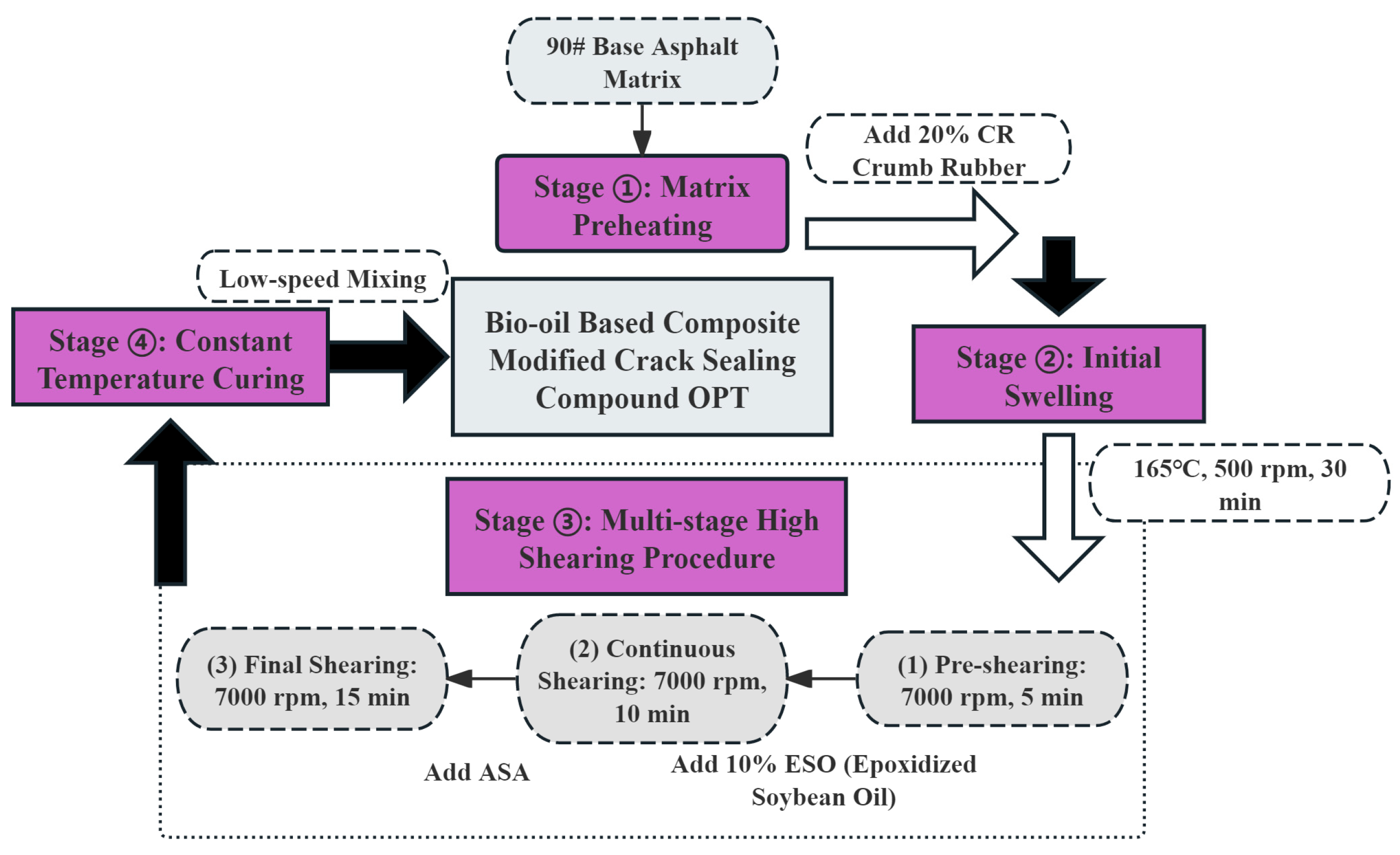
2.2. Preparation Process of Bio-Oil Composite-Modified Patching Materials
2.3. Experimental Program
- (1)
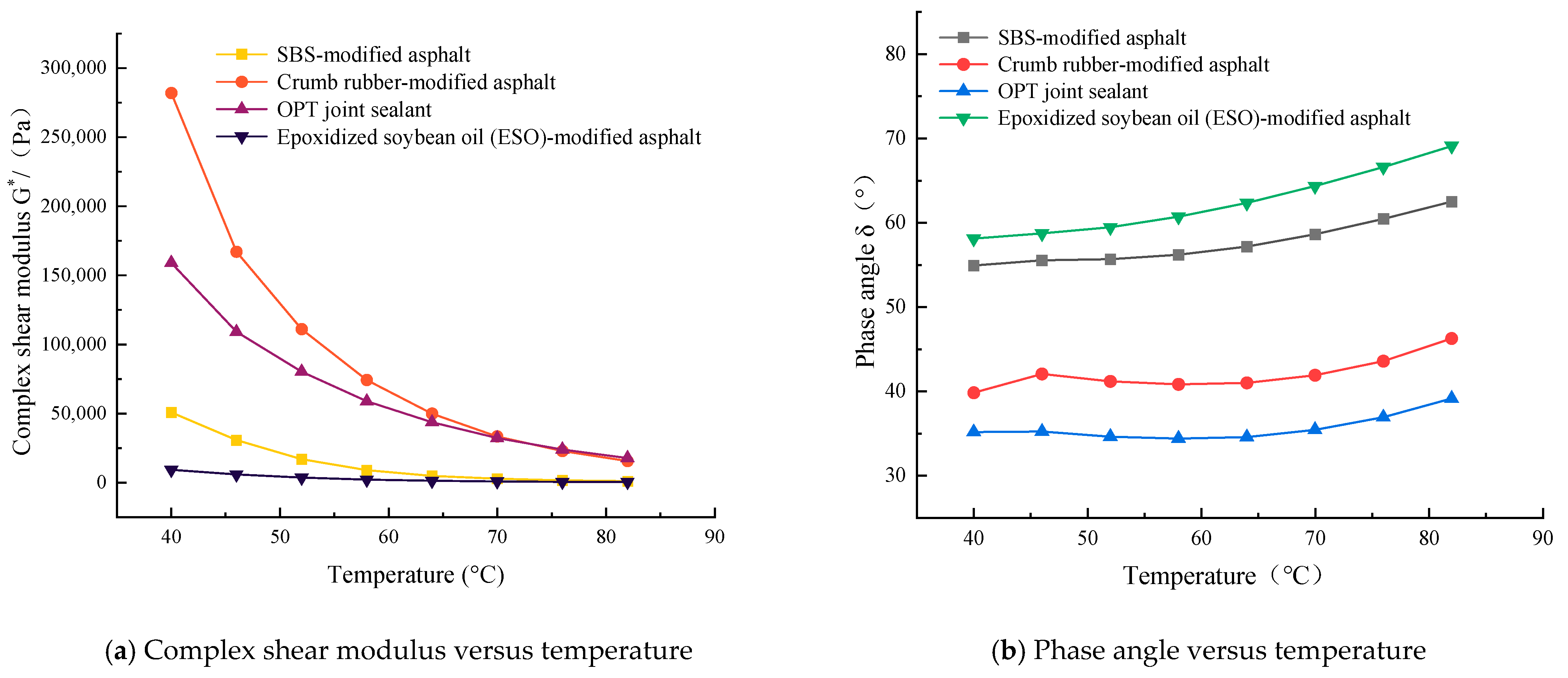
- Dynamic Shear Rheological Testing: Temperature and frequency scans were performed utilizing a Dynamic Shear Rheometer (DSR). When viscoelastic materials are subjected to external loading, a phase difference arises between peak stress and strain, facilitating the calculation of the complex shear modulus (G*). While G* quantifies deformation resistance, the phase angle (δ) characterizes viscoelastic proportions. The governing fundamental rheological equations are formulated as Equations (1)–(5) [15,16,17,18].where G* represents complex shear modulus (Pa); τ0 and γ0 denote stress and strain amplitudes, respectively; ω is angular frequency; t is time; δ signifies phase angle; G′ and G″ represent storage and loss moduli, respectively.
- (2)
- Low-temperature Rheological Testing: Bending Beam Rheometer (BBR) tests were executed on specimens (125 mm × 12.5 mm × 6.25 mm) at temperatures of −12 °C, −18 °C, and −24 °C for 60 s creep duration. Resultant creep stiffness modulus S and creep rate m were utilized to evaluate low-temperature stress relaxation capacity and cracking susceptibility [18].
- (3)
- Performance Grading (PG): DSR high-temperature and BBR low-temperature indices were adopted to define service temperature windows [19]. Continuous grading temperatures (Tc) for complex modulus and creep stiffness were calculated via logarithmic interpolation according to Equation (6):where Tc represents the continuous grading temperature; T1 and T2 denote test temperatures; Ps signifies the target threshold (1.0 kPa for high temperature and 300 MPa for low temperature); and P1 and P2 are experimental values at T1 and T2, respectively. For the creep rate m, continuous grading temperatures were derived through linear interpolation as shown in Equation (7), where Ps is set at 0.30:
- (4)
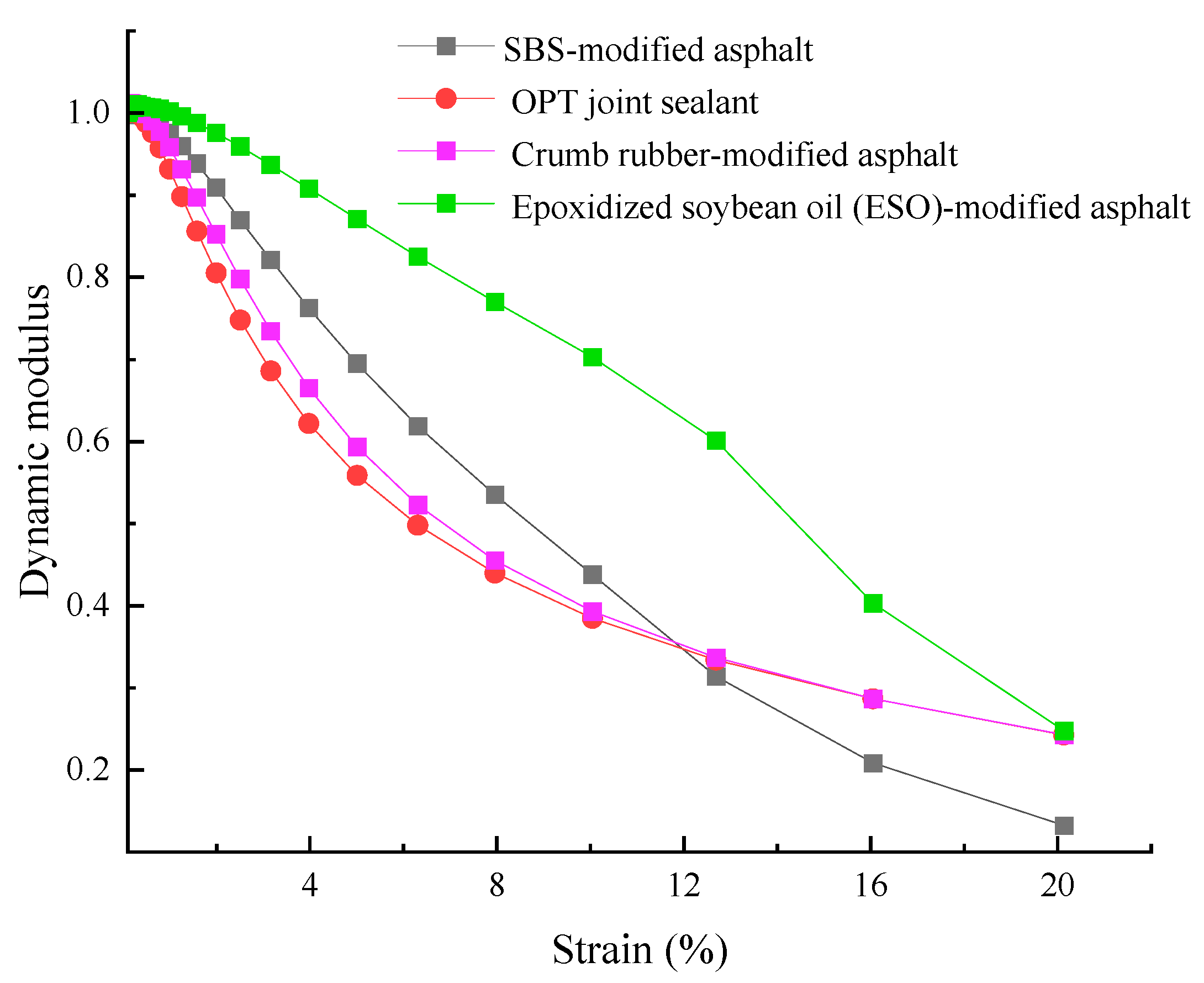
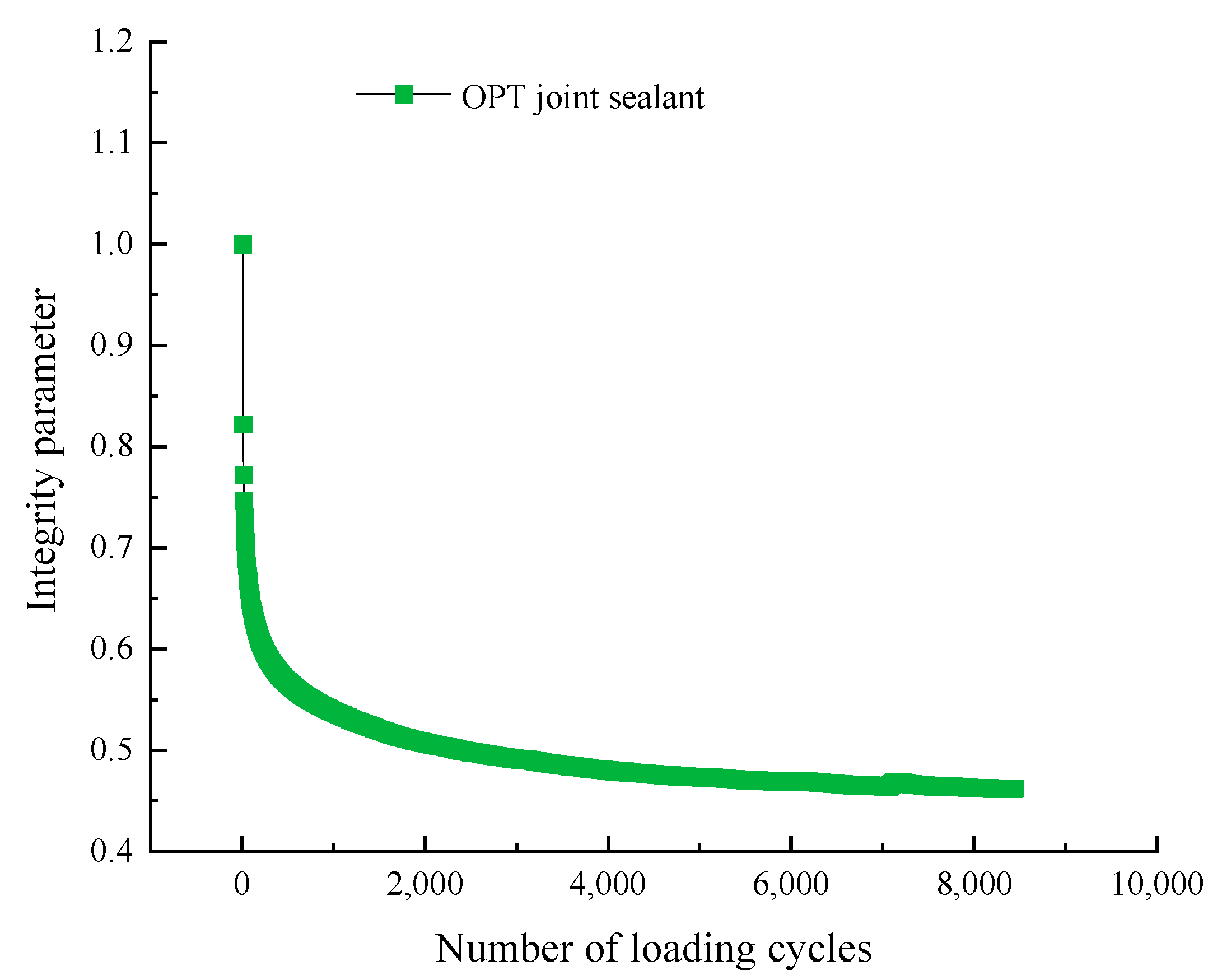
- Fatigue Performance: Cyclic shear loading was applied via DSR time scans at 25 °C and 10 Hz under constant temperature, frequency, and strain control to monitor G* attenuation. Fatigue life was quantified as critical number of cycles (Nf50) corresponding to 50% reduction in initial G*, with energy dissipation and damage evolution analyzed to elucidate fatigue mechanisms [20].
- (5)
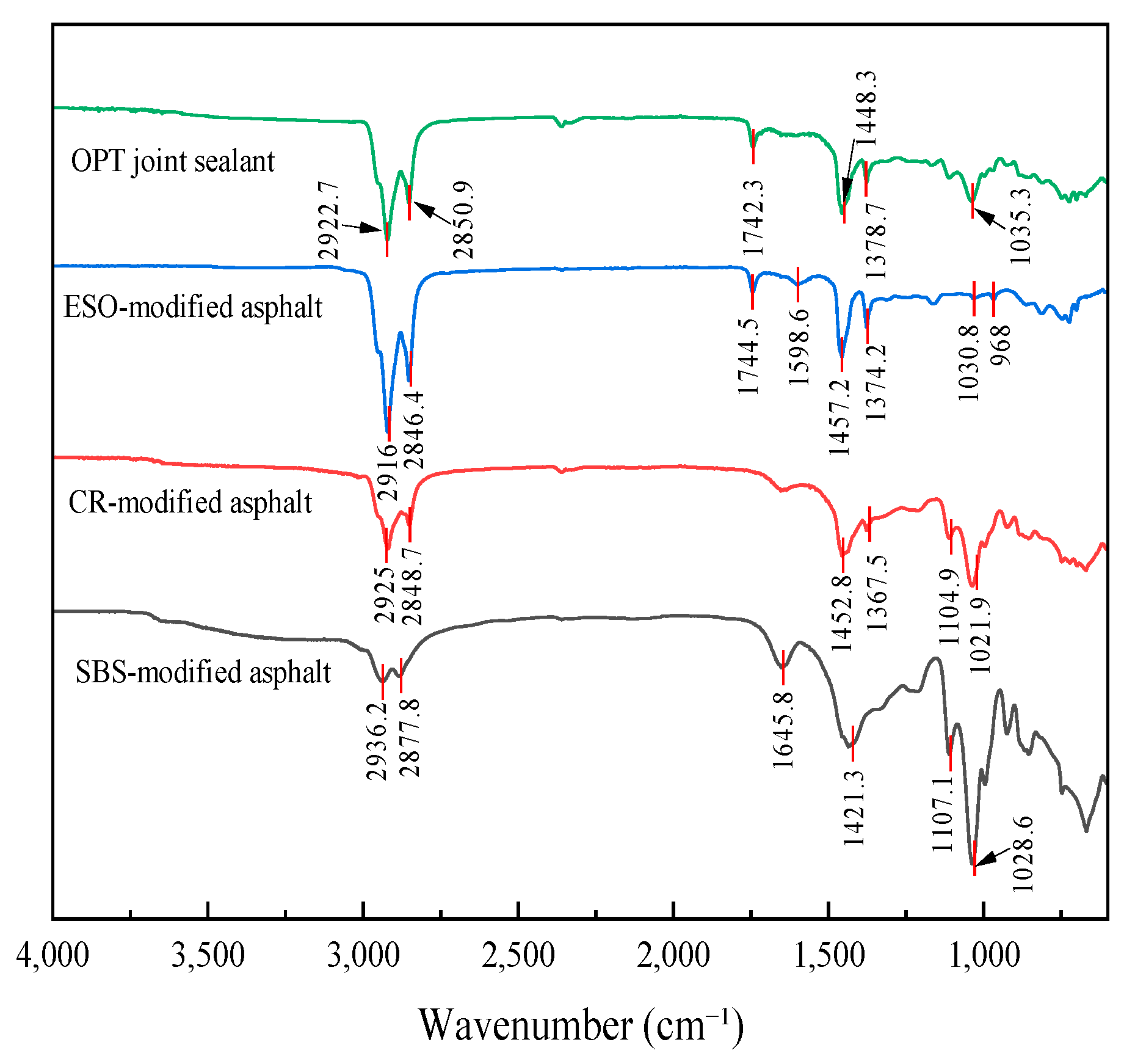
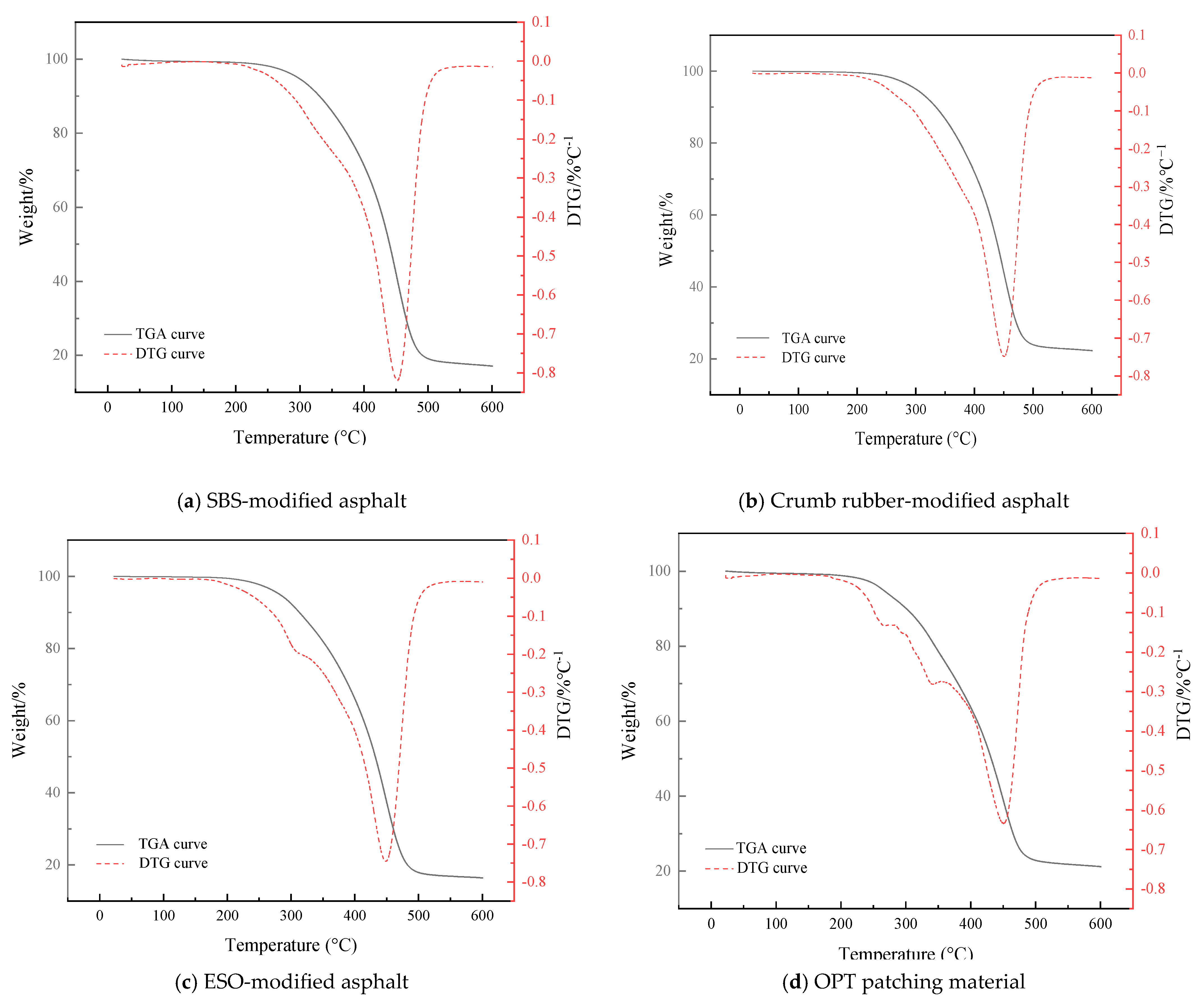
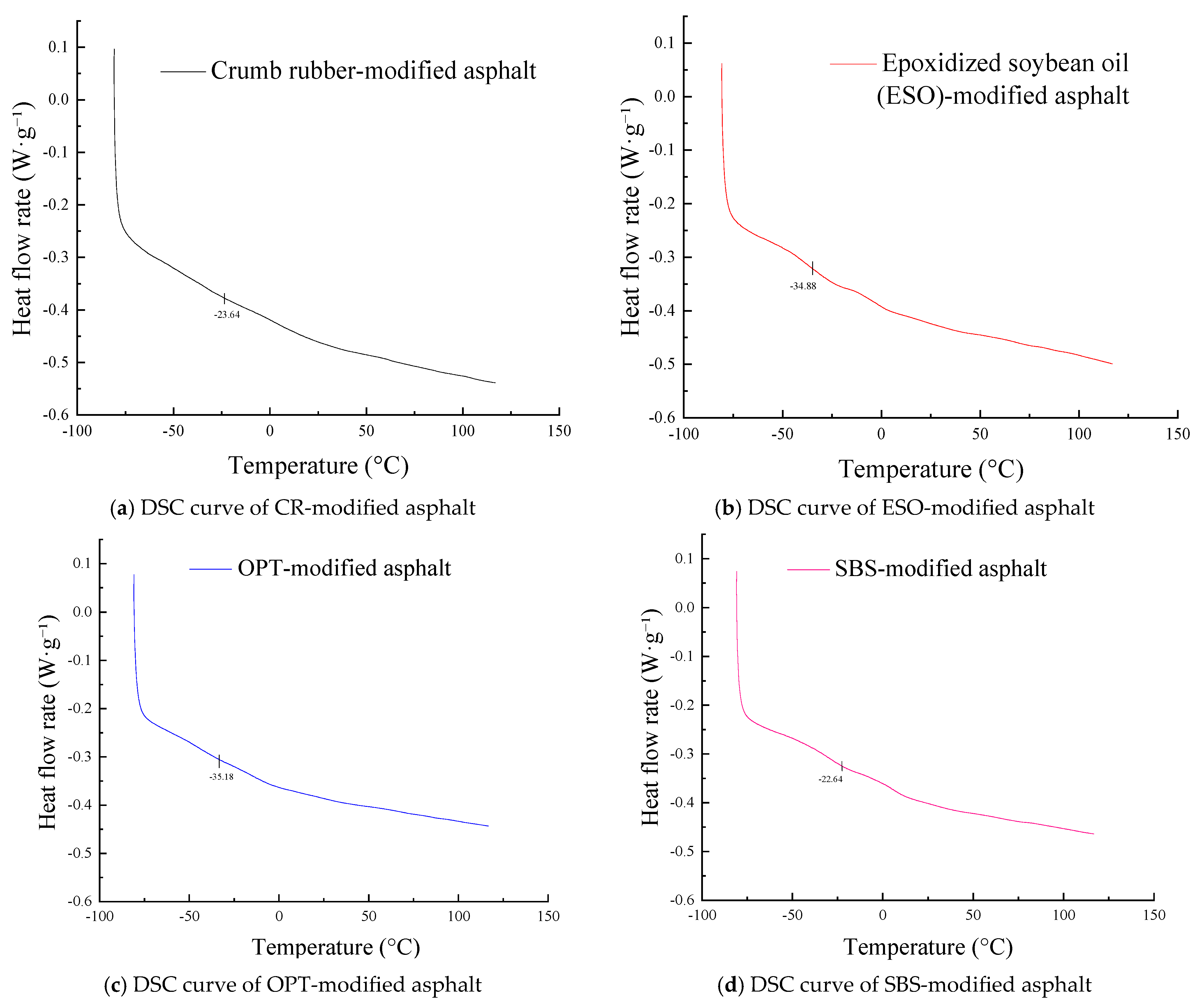
- Microscopic and Thermal Characterization: Functional group and structural features were investigated via FTIR. Thermal decomposition stages and residue content were determined through Thermogravimetric/Derivative Thermogravimetric (TG/DTG) analysis. Differential Scanning Calorimetry (DSC) was employed to obtain the glass transition temperature (Tg), providing thermal evidence for variances in low-temperature relaxation [21].
3. Rheological Properties Study
3.1. High- and Low-Temperature Rheological Properties
3.1.1. High-Temperature Rheological Properties
3.1.2. Low-Temperature Rheological Properties
3.2. Performance Grading (PG)
3.3. Fatigue Characteristics
4. Microscopic and Thermal Characterization
4.1. Thermal Stability and Phase Transition Analysis
4.1.1. Thermogravimetric (TG) Analysis
4.1.2. Differential Scanning Calorimetry (DSC) Analysis
4.2. FTIR Analysis
5. Conclusions
- (1)
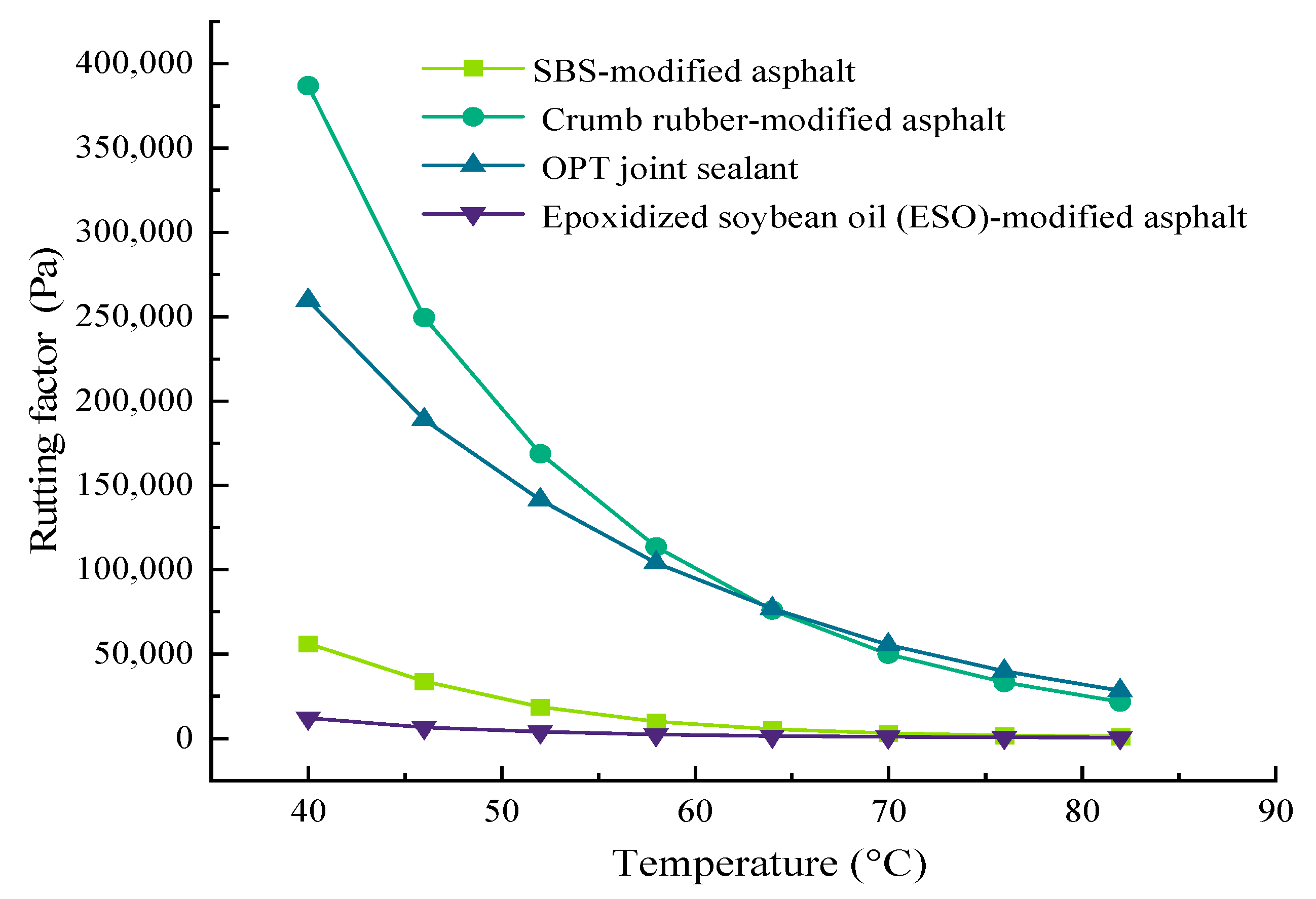
- High-Temperature Reinforcement: CR absorbs light fractions to form an elastic network, significantly increasing the complex shear modulus and rutting factor. This provides robust structural support against high-temperature shear deformation.
- (2)
- Low-Temperature Relaxation: ESO’s polar epoxy groups optimize viscoelasticity and reduce stiffness without compromising deformability. This grants the OPT system superior stress relaxation capacity at −24 °C, preventing brittle fracture.
- (3)
- Broadened Service Window: The synergistic interaction between CR and ESO successfully broadens the performance grade from PG 76–−24 °C to PG 82–−24 °C, fulfilling the stringent requirements for long-life pavement sealants in extreme climates.
- (4)
- Exceptional Fatigue Durability: Time sweep tests reveal an Nf50 of 2890 cycles for the OPT system. The composite network effectively dissipates energy, demonstrating exceptional durability against high-frequency shear strains from tire edges.
- (5)
- Physical Synergistic Mechanism: FTIR, TG/DTG, and DSC confirm that the modification is driven by physical blending and weak intermolecular interactions. High thermal stability (44.8% residue at 600 °C) ensures construction safety, while a lowered Tg improves flexibility.
- (6)
- Limitations and Future Work: Current findings are limited to laboratory rheological and thermal analyses. Future studies must incorporate RTFO/PAV aging simulations, moisture susceptibility and aggregate adhesion tests, and full-scale field validations to assess long-term in situ performance.
Author Contributions
Funding
Institutional Review Board Statement
Informed Consent Statement
Data Availability Statement
Acknowledgments
Conflicts of Interest
References
- Wang, T.; Xiao, F.; Amirkhanian, S.; Huang, W.; Zheng, M. A review on low temperature performances of rubberized asphalt materials. Constr. Build. Mater. 2017, 145, 491–504. [Google Scholar] [CrossRef]
- Jin, J.; Liu, S.; Chen, H.; Wen, Z.; Xiao, M.; Rao, R.; Zheng, J. Evaluation of compatibility in bio-oil and zinc oxide modified asphalt to facilitate waste recycling. J. Clean. Prod. 2024, 476, 143710. [Google Scholar] [CrossRef]
- Min, W.; Lu, P.; Liu, S.; Wang, H. A review of crack sealing technologies for asphalt pavement: Materials, failure mechanisms, and detection methods. Coatings 2025, 15, 836. [Google Scholar] [CrossRef]
- Cao, L.P.; Yang, C.; Dong, Z.; Wang, W.; Yin, H. Aging mechanism of hot-poured sealants for asphalt pavement under natural environmental exposure. Int. J. Pavement Eng. 2020, 23, 197–206. [Google Scholar] [CrossRef]
- Soliman, H.; Shalaby, A.; Kavanagh, L. Performance evaluation of joint and crack sealants in cold climates using DSR and BBR tests. J. Mater. Civ. Eng. 2008, 20, 470–477. [Google Scholar] [CrossRef]
- Gong, Y.F.; Pang, Y.Z.; He, F.; Bi, H. Investigation on preparation and properties of crack sealants based on CNTs/SBS composite-modified asphalt. Materials 2021, 14, 4569. [Google Scholar] [CrossRef]
- Al-Qadi, I.L.; Yang, S.-H.; Dessouky, S.; Masson, J.-F. Development of crack sealant bending beam rheometer (CSBBR) testing to characterize hot-poured bituminous crack sealant at low temperature. J. Assoc. Asph. Paving Technol. 2007, 76, 85–121. [Google Scholar]
- Kang, B.; Li, G.; Qi, C.; Zhang, H.; Han, S.; Kuang, D.; Xuan, W.A. Effects of rubber de-crosslinking on the fatigue behavior of crumb rubber modified asphalt considering thermo-oxidative aging conditions. Fuel 2026, 404, 136362. [Google Scholar] [CrossRef]
- Ye, Q.; You, C.; Wang, J.; Yang, Z. Effect of catalytic esterification of waste cooking oil on the rejuvenation performance of aged asphalt. Constr. Build. Mater. 2025, 505, 144738. [Google Scholar] [CrossRef]
- Cavalli, M.C.; Wu, W.; Poulikakos, L. Bio-based rejuvenators in asphalt pavements: A comprehensive review and analytical study. J. Road Eng. 2024, 4, 282–291. [Google Scholar] [CrossRef]
- Guo, F.; Shen, Z.; Jiang, L.; Long, Q.; Yu, Y. Study on the performance of asphalt modified with bio-oil, SBS and the crumb rubber particle size ratio. Polymers 2024, 16, 1929. [Google Scholar] [CrossRef]
- Guo, P.; Cheng, S.; Luo, Y.; Gao, J.; Shi, C.; Liu, G. Preparation and rheological properties of crack sealants for asphalt pavements. Constr. Build. Mater. 2025, 465, 140052. [Google Scholar] [CrossRef]
- Wei, H.; Lu, R.; Peng, X.; Lv, S.; Li, J. Dynamic mechanical properties of pavement crack sealant under the combined effects of ultraviolet aging and freeze–thaw cycles. Constr. Build. Mater. 2025, 498, 144008. [Google Scholar] [CrossRef]
- Shi, C.; Wu, Y.; Yan, G.; Xu, Y.; Guo, P.; Yang, J. Dynamic mesoscopic response mechanism of rubberised epoxy asphalt trackbed subjected to high-speed train loading. Int. J. Pavement Eng. 2025, 26, 2556978. [Google Scholar] [CrossRef]
- Chowdhury, S.P.; Mullapudi, R.S.; Muppireddy, A. An investigation of the effect of the chemical properties on the rheological properties of asphalt binders. Int. J. Pavement Res. Technol. 2025, 19, 1–12. [Google Scholar] [CrossRef]
- Hashemifar, A.; Marandi, S.M.; Hajikarimi, P. Optimized machine learning approaches for the prediction of viscoelastic behavior of modified asphalt binders. Constr. Build. Mater. 2021, 299, 124264. [Google Scholar] [CrossRef]
- Jiang, X.M.; Ding, Z.; Sun, C.; Yue, L.; Li, H.F.; Li, P.L. Rheological Properties Evaluation and System Fusion Behavior of Bio-based Resin Modified Asphalt Binders. Mater. Rep. 2024, 38, 273–279. [Google Scholar]
- Li, F.; Du, Y.; Li, L. Experimental study and numerical simulation of tension and stress relaxation of hot-applied sealant for asphalt pavement. Int. J. Pavement Res. Technol. 2015, 8, 131–141. [Google Scholar]
- Zhang, Y.; Li, P.; Wang, X.X.; Zhao, W.D. Study on high and low temperature rheological properties and thermal-oxidative aging resistance of basalt fiber/APAO composite modified asphalt. Synth. Mater. Aging Appl. 2024, 53, 34–39. [Google Scholar]
- Zheng, W.; Liu, Q.; Ren, S.; Wu, S.; Gong, X.; Wang, H.; Lu, Z. Reactive repair of degraded SBS structure in aged SBS-modified asphalt mixtures via polyurethane prepolymer: From molecular-level chemo-rheological mechanisms to macroscopic performance recovery. Constr. Build. Mater. 2026, 525, 146364. [Google Scholar] [CrossRef]
- Caputo, P.; Porto, M.; Calandra, P.; De Santo, M.P.; Rossi, C.O. Effect of epoxidized soybean oil on mechanical properties of bitumen and aged bitumen. Mol. Cryst. Liq. Cryst. 2019, 675, 68–74. [Google Scholar] [CrossRef]
- Xu, O.; Xiao, F.; Han, S.; Amirkhanian, S.N.; Wang, Z. High temperature rheological properties of crumb rubber modified asphalt binders with various modifiers. Constr. Build. Mater. 2016, 112, 49–58. [Google Scholar] [CrossRef]
- Liu, Y.M.; Zheng, M.; Liu, X.; Cao, M.; Han, L.; Liu, C. Effect of carbon nanomaterials on the rheological characteristics of crumb rubber–modified asphalt. J. Transp. Eng. Part B Pavements 2025, 151, 04024091. [Google Scholar] [CrossRef]
- Guo, N.S.; Jin, X.; Liu, T. Development and Performance Research of Polyurethane Modified Asphalt; Chemical Industry Press: Beijing, China, 2024; p. 195. [Google Scholar]
- Sun, Q.R.; Yuan, Z.D.; Cheng, H.; Wan, H. Influence of warm mix agent on rheological properties and microstructure of desulfurized crumb rubber modified asphalt. Chin. Synth. Rubber Ind. 2023, 46, 336–340. [Google Scholar]
- Chen, Y.; Li, X.; Tian, X. Performance evaluation of soybean oil/SBR reclaimed asphalt and mixtures. Buildings 2024, 14, 2085. [Google Scholar] [CrossRef]
- Li, H.; Zhou, L.; Cai, Y.; Zhang, Y.; Ibrahim, B.A.; Feng, Z.; Tang, L.; Li, Z.; Yang, F. Potential applications for composite utilization of rubber and plastic in asphalt pavements: A critical review. J. Traffic Transp. Eng. (Engl. Ed.) 2024, 11, 939–971. [Google Scholar] [CrossRef]
- Jin, X.; Xu, W.; Zhang, H.; Yang, Y.; Pan, Z.; He, W.; Wang, Z.; Yang, Y.; Zhang, J.; Zhou, Q. Preparation and modification mechanism of oil-rich high-viscosity, high-elasticity (OR-HV-HE) asphalt modifier. Coatings 2025, 15, 702. [Google Scholar] [CrossRef]
- Jin, X.; Guo, N.; You, Z.; Tan, Y. Research status and development trend of thermoplastic polyurethane (TPU) modified asphalt. Mater. Rep. 2024, 38, 621–632. [Google Scholar]
- Yan, S.; Cui, S.; Guo, N.; Chu, Z.; Zhang, J.; Yan, S.; Jin, X. Research on the performance and modification mechanism of gutta-percha-modified asphalt. Polymers 2024, 16, 1860. [Google Scholar] [CrossRef] [PubMed]
- Jin, X. Study on Rheological Properties and Internal Mechanism of TPU Modified Asphalt and Asphalt Mastic. Ph.D. Thesis, Dalian Maritime University, Dalian, China, 2021. [Google Scholar]
- Kuang, D.; Jiao, Y.; Ye, Z.; Lu, Z.; Chen, H.; Yu, J.; Liu, N. Diffusibility enhancement of rejuvenator by epoxidized soybean oil and its influence on the performance of recycled hot mix asphalt mixtures. Materials 2018, 11, 833. [Google Scholar] [CrossRef] [PubMed]
- Li, Q.F.; Wang, K.; Xie, D.D.; Sun, X.C.; Jiang, Z.Y.; Guo, R.L.; Liu, Y.C. Influence of modified corn straw fiber on performance of asphalt mixture and evaluation method for dispersion uniformity. J. Shandong Jiaotong Univ. 2025, 33, 59–67. [Google Scholar]






| Material Name | Model | Manufacturer | Key Indicators | Description |
|---|---|---|---|---|
| Base Asphalt | 90# | Panjin Bafang Industrial Co., Ltd. (Panjin, China) | Penetration: 72 (0.01 mm); Softening point: 59 °C; Ductility at 5 °C: 40 cm. | Serves as patching material matrix, providing requisite adhesion and elastic framework. |
| Crumb Rubber (CR) | CR | Hebei Hezhen Rubber Co., Ltd. (Shijiazhuang, China) | 60-mesh | Induces elastic networks via swelling, augmenting high-temperature stability and recovery. |
| Epoxidized Soybean Oil (ESO) | ESO | Jinan Ningsheng Trade Co., Ltd. (Jinan, China) | Epoxy value 6.31%; Flash point 290 °C; Acid value 0.45 mg KOH/g | Replenishes light fractions, optimizing phase compatibility and facilitating low-temperature stress relaxation. |
| Materials | S (−12 °C) | S (−18 °C) | S (−24 °C) | m (−12 °C) | m (−18 °C) | m (−24 °C) |
|---|---|---|---|---|---|---|
| SBS | 129 | 270 | 616 | 0.38 | 0.327 | 0.216 |
| CR | 28 | 111 | 337 | 0.516 | 0.427 | 0.334 |
| ESO | 76.4 | 170 | 302 | 0.309 | 0.25 | 0.186 |
| OPT | 15.2 | 56.5 | 164 | 0.461 | 0.418 | 0.312 |
| Materials | k (−12 °C) | k (−18 °C) | k (−24 °C) |
|---|---|---|---|
| SBS | 339.5 | 825.7 | 2851.9 |
| CR | 54.3 | 260.0 | 1009.0 |
| ESO | 247.2 | 680.0 | 1623.7 |
| OPT | 33.0 | 135.2 | 525.6 |
| Material | PG Grade | Description |
|---|---|---|
| SBS | 76~−24 | Control group |
| CR | 82~−18 | Significant high-temp improvement; limited low-temp gain |
| ESO | 64~−24 | Low-temp maintenance; insufficient high-temp support |
| OPT | 82~−24 | Synchronized high- and low-temperature enhancement |
| Sample | T5% (°C) | T70% (°C) | Mass Loss (%) | Residue at 600 °C (%) |
|---|---|---|---|---|
| SBS | 295.3 | 463.9 | 83 | 17 |
| CR | 300.3 | 471.5 | 77.7 | 22.3 |
| ESO | 281 | 459.1 | 83.6 | 16.4 |
| OPT | 302.4 | 465.9 | 55.2 | 44.8 |
Disclaimer/Publisher’s Note: The statements, opinions and data contained in all publications are solely those of the individual author(s) and contributor(s) and not of MDPI and/or the editor(s). MDPI and/or the editor(s) disclaim responsibility for any injury to people or property resulting from any ideas, methods, instructions or products referred to in the content. |
© 2026 by the authors. Licensee MDPI, Basel, Switzerland. This article is an open access article distributed under the terms and conditions of the Creative Commons Attribution (CC BY) license.
Share and Cite
Wang, H.; Yan, X.; Wang, Q.; Wu, W.; Tian, Y.; Xu, Q. Study on the Modification Mechanism and Rheological Properties of Bio-Oil-Based Composite-Modified Material for TOP-DOWN Crack Treatment in Long-Life Pavement. J. Compos. Sci. 2026, 10, 298. https://doi.org/10.3390/jcs10060298
Wang H, Yan X, Wang Q, Wu W, Tian Y, Xu Q. Study on the Modification Mechanism and Rheological Properties of Bio-Oil-Based Composite-Modified Material for TOP-DOWN Crack Treatment in Long-Life Pavement. Journal of Composites Science. 2026; 10(6):298. https://doi.org/10.3390/jcs10060298
Chicago/Turabian StyleWang, Haining, Xiangpeng Yan, Qingming Wang, Wenjuan Wu, Yao Tian, and Qinsheng Xu. 2026. "Study on the Modification Mechanism and Rheological Properties of Bio-Oil-Based Composite-Modified Material for TOP-DOWN Crack Treatment in Long-Life Pavement" Journal of Composites Science 10, no. 6: 298. https://doi.org/10.3390/jcs10060298
APA StyleWang, H., Yan, X., Wang, Q., Wu, W., Tian, Y., & Xu, Q. (2026). Study on the Modification Mechanism and Rheological Properties of Bio-Oil-Based Composite-Modified Material for TOP-DOWN Crack Treatment in Long-Life Pavement. Journal of Composites Science, 10(6), 298. https://doi.org/10.3390/jcs10060298