
Article

Effect of Calcination Temperature and Impregnation Time on Physicochemical and Textural Properties of KOH-Modified Rice Husk Ash Materials

by
Nur Qudus
1,*,
Harianingsih Harianingsih
2,*,
Deni Fajar Fitriyana
3,
Virgiawan Adi Kristianto
1,
Dimas Gustoro
1,
Nabila Khoirunisa’
2,
Kristian Saputra
2,
Jurina Jaafar
4,
Januar Parlaungan Siregar
5 and
Sivasubramanian Palanisamy
6
1
Department Civil Engineering, Faculty of Engineering, Universitas Negeri Semarang, Kampus Sekaran Gunungpati, Semarang 50229, Central Java, Indonesia
2
Department Chemical Engineering, Faculty of Engineering, Universitas Negeri Semarang, Kampus Sekaran Gunungpati, Semarang 50229, Central Java, Indonesia
3
Department of Mechanical Engineering, Faculty of Engineering, Universitas Negeri Semarang, Kampus Sekaran Gunungpati, Semarang 50229, Central Java, Indonesia
4
Faculty of Civil Engineering, Universiti Teknologi MARA, Shah Alam 40450, Selangor, Malaysia
5
Faculty of Mechanical and Automotive Engineering Technology, Universiti Malaysia Pahang Al-Sultan Abdullah, Pekan 26600, Pahang, Malaysia
6
Department of Mechanical Engineering, School of Engineering, Mohan Babu University, Tirupati 517102, Andhra Pradesh, India
*
Authors to whom correspondence should be addressed.
J. Compos. Sci. 2026, 10(6), 290; https://doi.org/10.3390/jcs10060290
Submission received: 26 March 2026 / Revised: 16 May 2026 / Accepted: 22 May 2026 / Published: 27 May 2026
(This article belongs to the Special Issue Composite Materials in Water Treatment Applications)

Abstract

Rice husk ash (RHA) is a silica-rich agricultural byproduct with significant potential in the development of sustainable porous materials. This study investigated the effect of calcination temperature and impregnation duration on the physicochemical and textural properties of KOH-modified RHA materials. The method used was calcination at different temperatures (500, 600, and 700 °C) combined with KOH impregnation for 19, 22, and 24 h. The prepared materials were characterized using Fourier transform infrared spectroscopy (FTIR), scanning electron microscopy coupled with energy-dispersive X-ray spectroscopy (SEM–EDX), Brunauer–Emmett–Teller (BET) surface analysis, and X-ray diffraction (XRD). FTIR analysis showed that increasing calcination temperature promoted the reduction in residual carbon-containing functional groups and enhanced the dominance of silica-related Si–O–Si vibrations. SEM observations revealed significant morphological evolution from heterogeneous fragmented structures at 500 °C to more interconnected porous frameworks at 600 °C, followed by partial densification and agglomeration at 700 °C. Semi-quantitative EDX analysis confirmed the silica-rich surface composition of the prepared materials, while XRD patterns indicated structural transformation from partially crystalline phases toward more stabilized silica-rich structures. BET analysis demonstrated that sample 2B, calcined at 600 °C with 22 h impregnation, exhibited the most favorable textural characteristics among the selected BET-analyzed samples, with the highest surface area and pore volume. Overall, calcination temperature and impregnation duration significantly influenced the structural evolution, pore development, and physicochemical characteristics of KOH-modified RHA materials. This study contributes to the development of sustainable biomass-derived materials and supports Sustainable Development Goal (SDG) 12, which is related to responsible consumption and production through the valorization of agricultural waste into value-added silica-rich materials.

1. Introduction

Rice husk ash (RHA) is recognized as a silica-rich agricultural byproduct with considerable potential for sustainable material development [1]. The continuous growth of agricultural activities has resulted in large amounts of rice husk waste being generated every year [2]. In many cases, this biomass residue is disposed through uncontrolled burning or direct dumping, practices that may contribute to environmental pollution. After combustion, rice husk is converted into ash, containing a high proportion of silica along with residual inorganic minerals and carbonaceous matter [3]. Due to this composition, RHA has been extensively explored as a precursor for the synthesis of silica-based materials in adsorption processes, catalyst supports, ceramic systems, composites, and other porous functional materials [4]. The utilization of agricultural waste as a source of value-added silica, therefore, offers an alternative pathway to improve biomass management while reducing the environmental impact caused by waste accumulation [5].
The characteristics of silica materials derived from RHA are strongly affected by preparation conditions, particularly thermal treatment and chemical activation [6]. Calcination temperature is one of the key parameters influencing organic decomposition, phase transformation, structural rearrangement, and pore formation within the material. When the calcination temperature is relatively low, incomplete decomposition of organic compounds may still occur, leaving residual carbonaceous components trapped in the matrix [7]. This condition can produce irregular morphology and limit pore accessibility. On the other hand, excessive heating may trigger particle agglomeration and structural densification, which can reduce surface area due to partial collapse of the porous framework. For this reason, selecting an appropriate calcination condition becomes essential in obtaining silica-rich materials with favorable structural and textural properties [8].
Besides thermal treatment, alkaline activation using potassium hydroxide (KOH) is also known to influence pore development and surface modification in silica-containing biomass materials [9]. During impregnation, the activating agent interacts with the precursor matrix, helping remove residual impurities and promoting structural evolution during calcination. However, the effectiveness of this process is influenced not only by the activating agent itself but also by the impregnation duration [10]. Short impregnation times may limit penetration of the activating solution into the material structure, whereas excessive soaking can promote particle agglomeration or surface deposition [11]. Although biomass-derived silica materials have been widely studied, the combined effect of calcination temperature and impregnation duration on the physicochemical properties of KOH-modified RHA is still not fully understood. Most previous studies have primarily focused on the application performance of the final materials, particularly for adsorption and catalytic systems [12].
Comparatively fewer studies have examined the structural transformation and morphological evolution that occur during the synthesis stage itself. In particular, the relationship between functional groups, elemental composition, surface morphology, pore characteristics, and crystallinity under different preparation conditions has not been fully clarified for KOH-treated RHA systems. Understanding these relationships is important because the resulting physicochemical properties strongly affect material quality and reproducibility during synthesis. Based on these considerations, this study investigates the effect of calcination temperature and impregnation duration on the physicochemical characteristics of KOH-modified rice husk ash materials. The prepared samples were characterized using Fourier transform infrared spectroscopy (FTIR), scanning electron microscopy combined with energy-dispersive X-ray spectroscopy (SEM–EDX), Brunauer–Emmett–Teller (BET) surface area analysis, and X-ray diffraction (XRD). The discussion mainly focuses on structural evolution, pore development, compositional characteristics, and crystallinity changes observed under different preparation conditions.

2. Materials and Methods

2.1. Materials

Rice husk ash (RHA) was employed as the primary silica precursor due to its high silica content and abundance. Rice husks were collected from a local rice milling area, Wonosalam, Demak, Central Java, Indonesia, and washed thoroughly with distilled water to remove dirt and impurities. Potassium hydroxide (KOH) 99% purity was supplied by Sigma-Aldrich, Darmstadt, Germany and used as the modifying agent during the impregnation process. Distilled water was used throughout the experimental procedures.

2.2. Preparation of KOH-Modified Rice Husk Ash Materials

Approximately 5 kg of rice husks were washed with running water to remove adhering impurities and then dried under sunlight for four days. The dried rice husks were ground using a disk mill (Chemical Engineering Laboratory, Universitas Negeri Semarang, Semarang, Indonesia) and sieved through a 30-mesh sieve (Argoci, Xi’an, China) to obtain a uniform particle size. The prepared rice husk powder was calcined at different temperatures of 500, 600, and 700 °C for 3 h using an electrically heated muffle furnace (Thermo Fisher Scientific, Waltham, MA, USA) under atmospheric conditions to produce rice husk ash (RHA) [13]. The obtained RHA samples were stored in airtight containers prior to further modification. KOH-modified rice husk ash materials were synthesized through an impregnation–calcination approach. Initially, 20 g of RHA was combined with 100 mL of 1 N KOH solution in a 200 mL Erlenmeyer flask. The suspension was stirred using an orbital shaker (Thermo Fisher Scientific, Waltham, MA, USA) at 500 rpm for 1 h to ensure proper mixing between the activating solution and precursor material [12]. The mixture was then subjected to static impregnation for 19, 22, and 24 h. After impregnation, the solid phase was separated by filtration and dried at 105 °C until a constant weight was achieved. The dried samples were subsequently calcined at 500, 600, and 700 °C for 3 h to promote structural stabilization and pore development. After cooling to room temperature, the samples were stored in sealed containers prior to physicochemical characterization. Details of the experimental design and sample coding are listed in Table 1.
A 3 × 3 factorial experimental design was employed to evaluate the influence of calcination temperature and impregnation duration on the physicochemical and textural characteristics of KOH-modified RHA materials. Calcination temperatures of 500, 600, and 700 °C were chosen to represent different thermal treatment intensities, ranging from relatively low to high temperatures associated with organic matter decomposition, silica stabilization, and potential structural densification. Meanwhile, impregnation durations of 19, 22, and 24 h were selected as short variations within the overnight treatment range to examine the effect of KOH contact time under conditions approaching equilibrium. To improve the reliability of the experimental results, all preparation procedures and characterization analyses were carried out in triplicate. This approach was intended to ensure data consistency and reproducibility throughout the study.

2.3. Physicochemical and Textural Characterization

The surface morphology of the prepared materials was examined using scanning electron microscopy (SEM) (Phenom, Thermo Fisher Scientific, Waltham, MA, USA) operated at an acceleration voltage of 15 kV. Representative micrographs were obtained to evaluate surface texture, pore-like structures, and particle distribution.
Surface compositional characteristics were evaluated using energy-dispersive X-ray spectroscopy (EDX) (Phenom, Thermo Fisher Scientific, Waltham, MA, USA). The EDX analysis was used as a semi-quantitative technique to observe the relative elemental distribution on the sample surfaces. The obtained compositional data were interpreted as indicative surface compositional trends rather than absolute bulk elemental concentrations [14].
Functional groups were analyzed using Fourier transform infrared spectroscopy (FTIR) (PerkinElmer Frontier, Shelton, CT, USA) in the wavenumber range of 4000–400 cm−1 [15]. Prior to analysis, the samples were dried at 105 °C to remove physically adsorbed moisture.
Textural properties were analyzed using nitrogen adsorption–desorption measurements at 77 K with a NOVA station 2.1.1 surface area analyzer (Quantachrome Instruments, Boynton Beach, FL, USA) [16]. Before measurement, the samples were degassed at 300 °C. The specific surface area was determined using the Brunauer–Emmett–Teller (BET) method, while pore size distribution and pore volume were evaluated using the Barrett–Joyner–Halenda (BJH) method.

2.4. X-Ray Diffraction Analysis

The crystalline and amorphous characteristics of the prepared materials were evaluated using X-ray diffraction (XRD) analysis with XRD, Philips X’pert PRO, Almelo, the Netherlands—45 kV, 40 mA, 2θ = 5–80° CuKα [17]. The diffraction patterns were used to identify structural changes associated with calcination temperature and KOH modification.

3. Results and Discussion

3.1. Functional Group Analysis

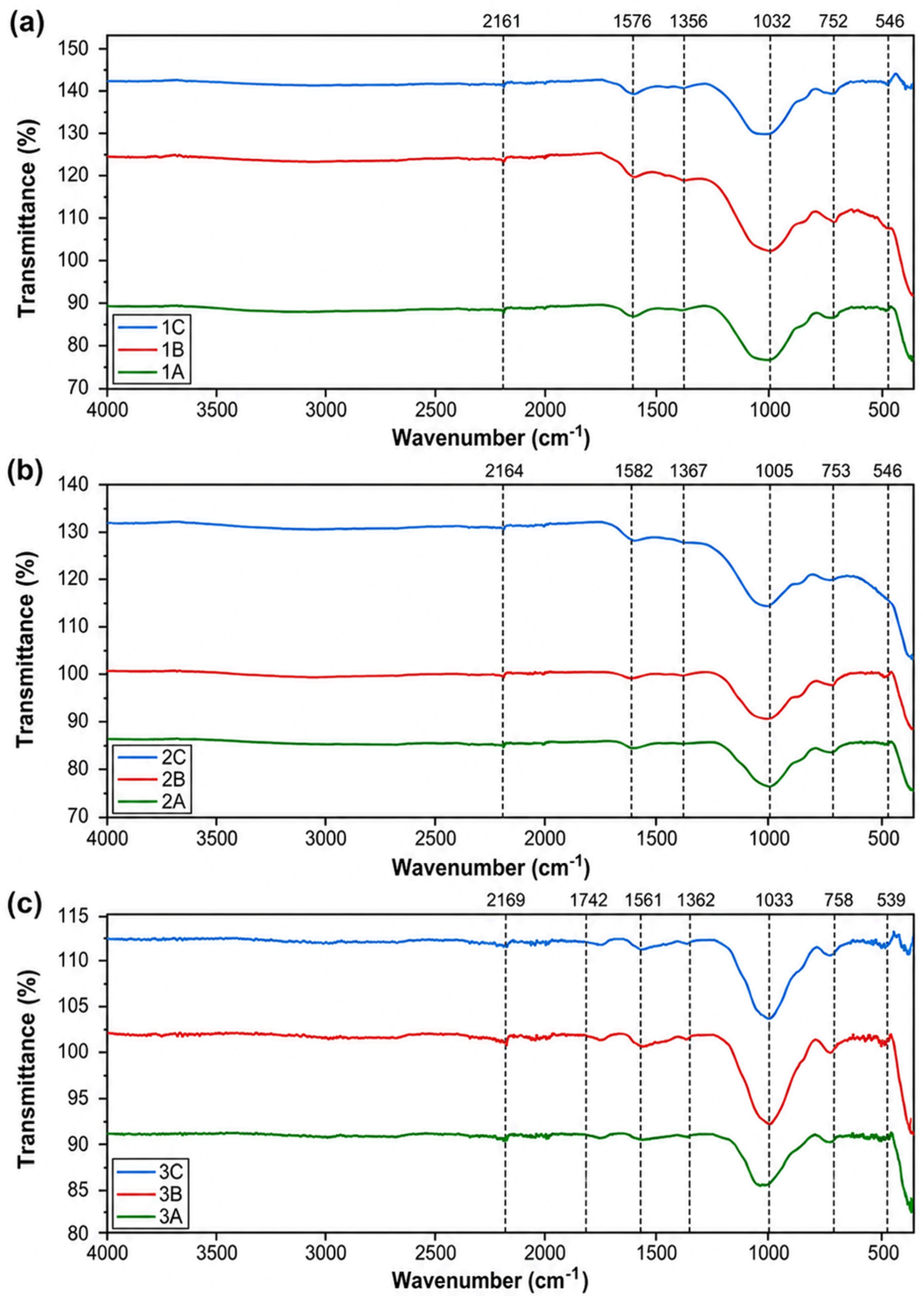
Figure 1a shows that the FTIR spectra of samples calcined at 500 °C exhibited several absorption bands associated with residual carbon-containing groups and silica-related structures. The absorption band observed near 1576 cm−1 is associated with residual carbonaceous functional groups originating from incomplete thermal decomposition of organic components. In addition, a weak absorption near 2161 cm−1 was observed in sample 1B, which indicates the presence of residual carbon-containing species after calcination. The dominant absorption band located around 1032 cm−1 corresponds to the asymmetric stretching vibration of Si–O–Si, indicating the formation of silica-rich structures within the rice husk ash materials. Additional bands near 752 and 546 cm−1 are attributed to Si–O-related bending vibrations associated with siloxane structures. The persistence of carbon-related absorption bands at 500 °C suggests that the calcination temperature was insufficient to completely remove organic residues. Although variations in impregnation duration slightly influenced the spectral profile, the overall FTIR patterns indicate that silica network formation had already occurred at this temperature range [12].
Figure 1b shows that the FTIR spectra of samples calcined at 600 °C exhibited a more dominant silica-related absorption profile compared to the samples calcined at lower temperatures. The weak absorption observed near 1582 cm−1 suggests the presence of minor residual carbon-containing groups, indicating that the most organic components had been effectively decomposed during calcination. The dominant absorption band near 1005 cm−1 corresponds to the asymmetric stretching vibration of Si–O–Si, indicating the formation of a more developed silica-rich structure. Additional bands observed near 753 and 546 cm−1 are associated with Si–O-related bending vibrations within the siloxane framework [15]. Compared to the samples calcined at 500 °C, the spectra obtained at 600 °C exhibited reduced carbon-related absorption and a more pronounced silica network structure, suggesting improved thermal decomposition and structural stabilization of the rice husk ash materials. Variations in impregnation duration produced only minor spectral differences, indicating that calcination temperature had a stronger influence on the surface chemical characteristics than impregnation duration within the investigated range [18].
Figure 1c shows that the FTIR spectra of samples calcined at 700 °C exhibited dominant silica-related absorption bands, particularly around 1033 cm−1, which can be attributed to the asymmetric stretching vibration of Si–O–Si. Additional bands observed near 758 and 539 cm−1 are associated with Si–O-related vibrations within the siloxane framework [19]. Compared with the spectra of samples calcined at lower temperatures, the samples treated at 700 °C exhibit a more condensed silica-rich structure, suggesting further thermal rearrangement of the siloxane network. Weak absorption bands observed in the range of 1561–1742 cm−1 could indicate the presence of residual carbon-containing species on the material surface, although their interpretation should be approached with caution. Overall, the FTIR results indicate that calcination at 700 °C promotes structural stabilization of silica-rich materials, although excessive thermal treatment may contribute to densification or reduced pore accessibility [20]. The results of this study are aligned with those of Purwaningsih et al., where the FTIR analysis indicates that calcination temperature strongly influences the structural evolution of KOH-modified rice husk ash materials [21]. Calcination at 500 °C was insufficient to completely remove carbonaceous residues, whereas treatment at 600 °C promoted the development of a more stable silica-rich structure characterized by dominant Si–O–Si absorption bands. A further increase to 700 °C maintained the silica framework but may have induced structural densification and siloxane network rearrangement [21].

3.2. Surface Morphology Characterization

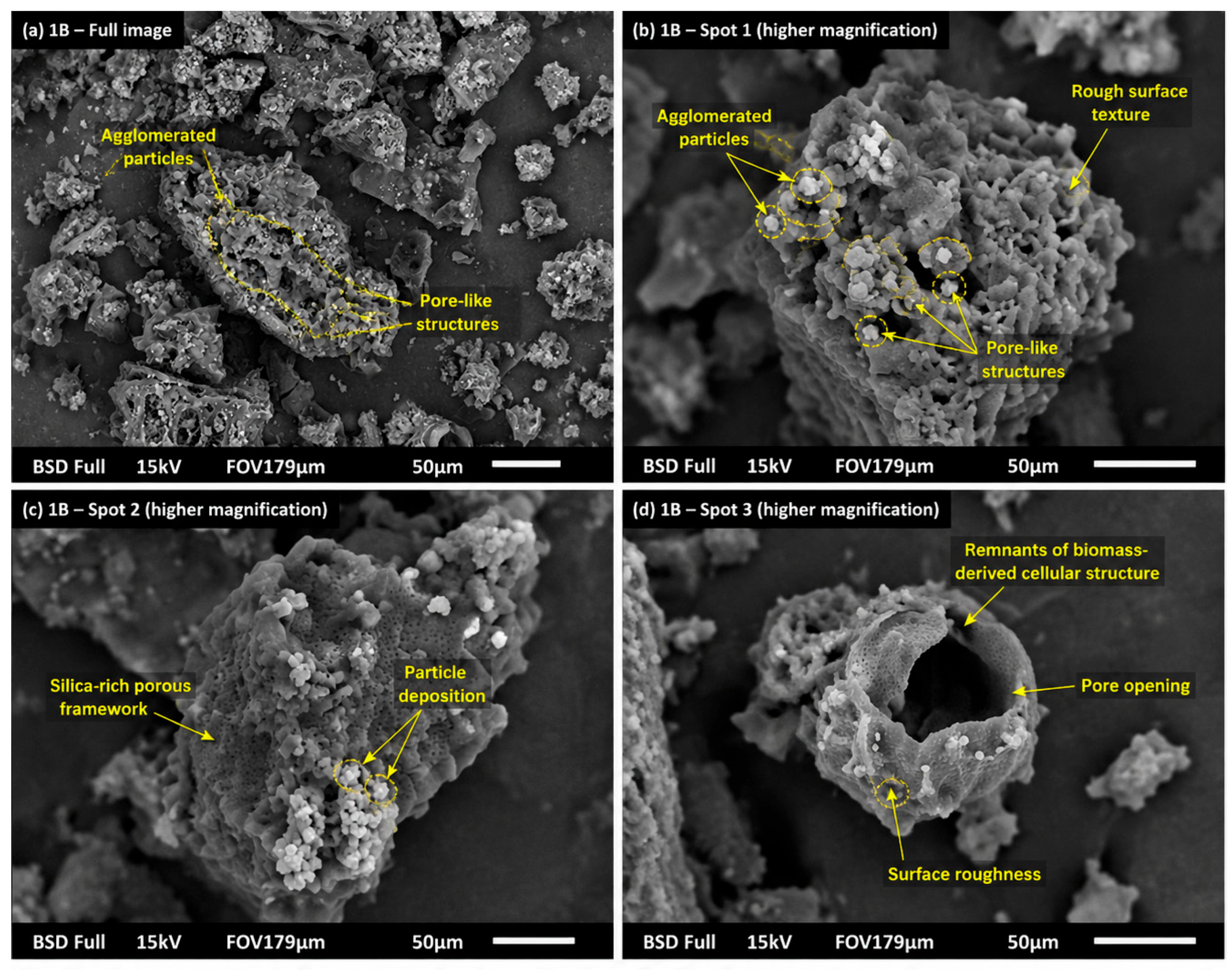
As shown in Figure 2, SEM images of sample 1B, calcined at 500 °C with 22 h impregnation, reveal an irregular and heterogeneous surface morphology. The full image shows fragmented particles with rough surfaces and visible pore-like structures, indicating the initial development of porosity after KOH impregnation and thermal treatment. At higher magnification, agglomerated particles are observed on the surface, suggesting incomplete structural homogenization and possible deposition of mineral-rich residues. Several regions still show remnants of the biomass-derived cellular framework, indicating that calcination at 500 °C was not sufficient to completely transform the rice husk structure. The presence of rough surface texture and partially opened cavities suggests early-stage pore formation, although the pore network remains uneven and not fully developed [22].
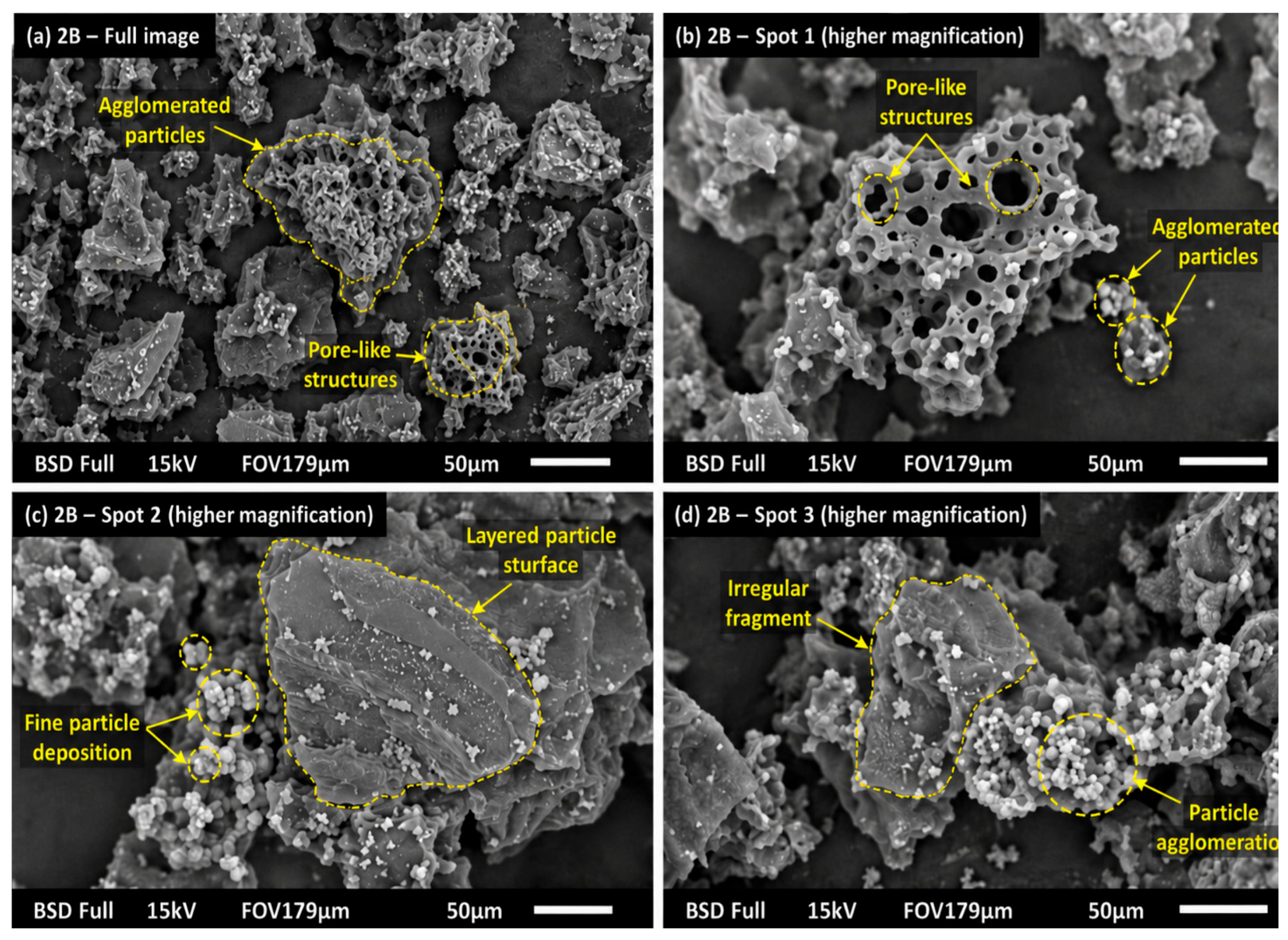
As shown in Figure 3, the SEM micrographs of sample 2B, calcined at 600 °C with 22 h impregnation, reveal a more developed and homogeneous porous morphology compared to the samples calcined at lower temperatures. The full image shows irregular fragmented particles with relatively uniform distribution and visible pore-like structures formed after thermal treatment and KOH impregnation [23]. At higher magnification, interconnected pore-like cavities and honeycomb-like structures are clearly observed, indicating enhanced pore development and exposure of the silica-rich framework. The particle surfaces exhibited layered structures accompanied by fine particulate deposits, indicating the occurrence of structural rearrangement and redistribution of mineral-rich residues during the calcination process [24]. Localized agglomeration and fragmented particles were still observed in several regions; however, the overall morphology appeared more organized compared with the samples treated at 500 °C. These results indicate that calcination at 600 °C facilitated more efficient decomposition of organic constituents while contributing to improved formation of porous silica-rich structures [25].
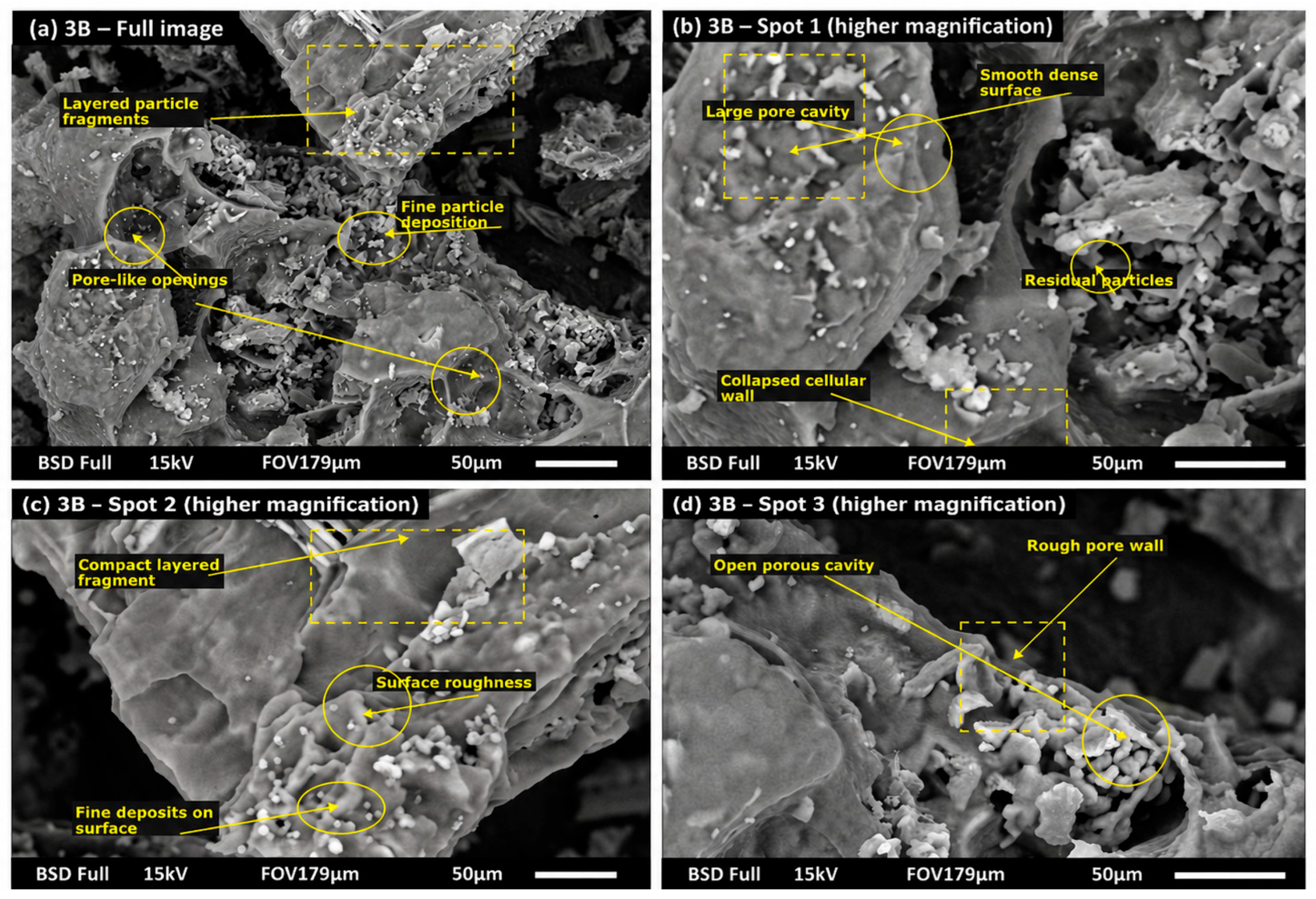
As shown in Figure 4, the SEM micrographs of sample 3B, prepared at a calcination temperature of 700 °C with 22 h impregnation, demonstrate pronounced structural changes marked by layered fragments, porous cavities, particle agglomeration, and surface densification []. In comparison with samples treated at lower temperatures, the morphology of sample 3B appears noticeably more compact and thermally reorganized, reflecting the substantial effect of high-temperature calcination on the silica-rich framework. The overall micrograph shows irregular layered fragments accompanied by pore-like openings and fine particulate deposits dispersed across the material surface [26]. Although porous cavities are still visible in several areas, the pore walls appear thicker and less accessible than those observed in sample 2B. This condition suggests that porosity was retained to some extent; however, calcination at 700 °C likely promoted structural densification and partial collapse of the porous network. At higher magnification, smoother and denser surface regions as well as collapsed cellular structures become increasingly evident [27]. These morphological changes indicate that thermal rearrangement and condensation of the silica-rich structure occurred during high-temperature calcination [28]. The presence of compact layered fragments further supports the occurrence of structural consolidation at elevated temperature. Localized agglomeration of fine particles is also observed on the pore walls and fragmented surfaces. These agglomerated deposits may be associated with mineral-rich residues or thermally redistributed inorganic components formed during calcination and alkali impregnation [29]. In addition, several pore cavities remain open, but their morphology appears less interconnected compared to the structures observed at 600 °C. The rough pore walls and fragmented porous regions indicate that thermal decomposition of organic constituents had largely occurred; however, the higher calcination temperature may have promoted partial sintering and reduced structural uniformity [30]. Overall, the SEM observations suggest that calcination at 700 °C maintained the silica-rich porous framework but also induced structural densification, agglomeration, and partial collapse of the pore network.
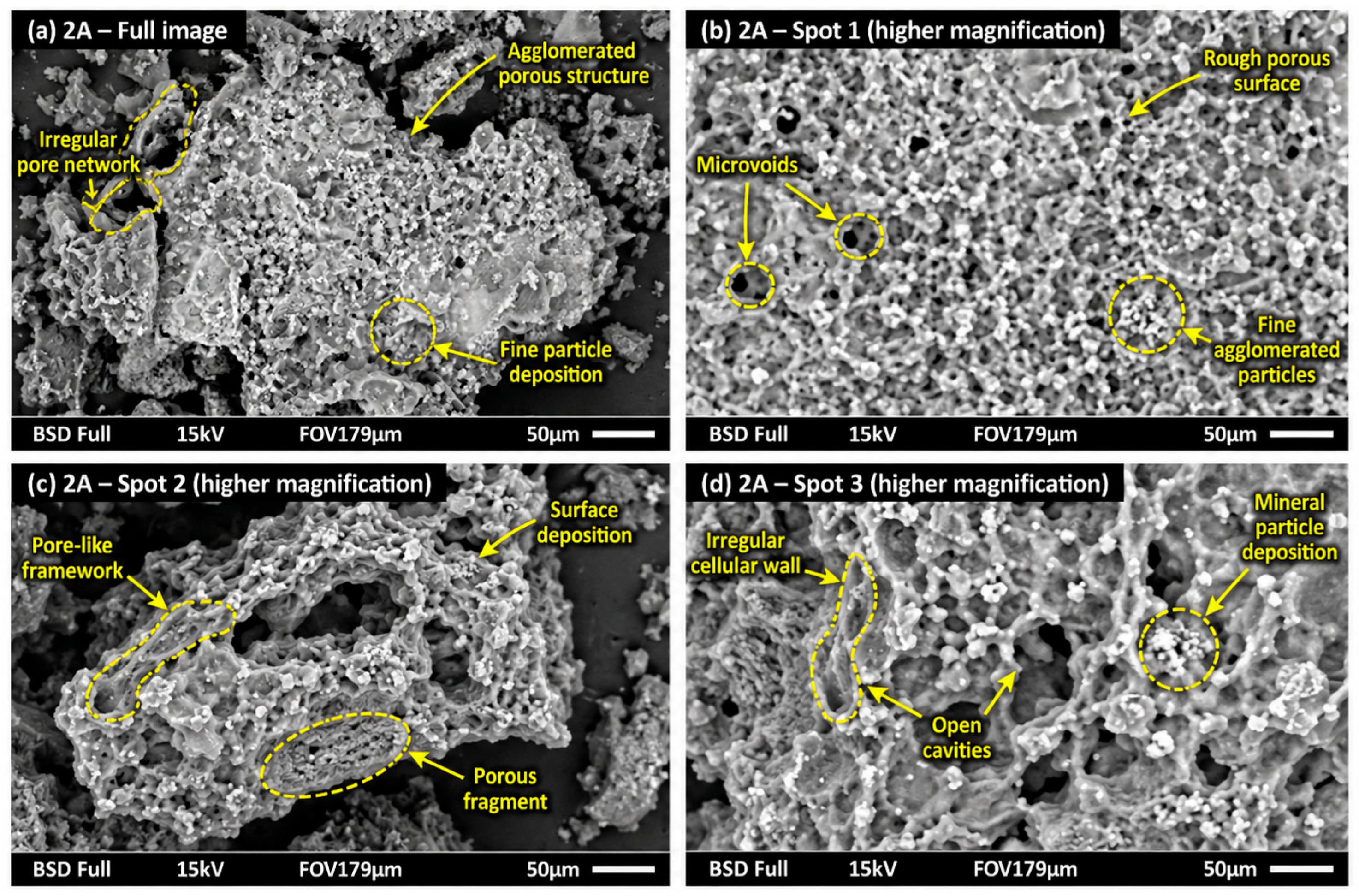
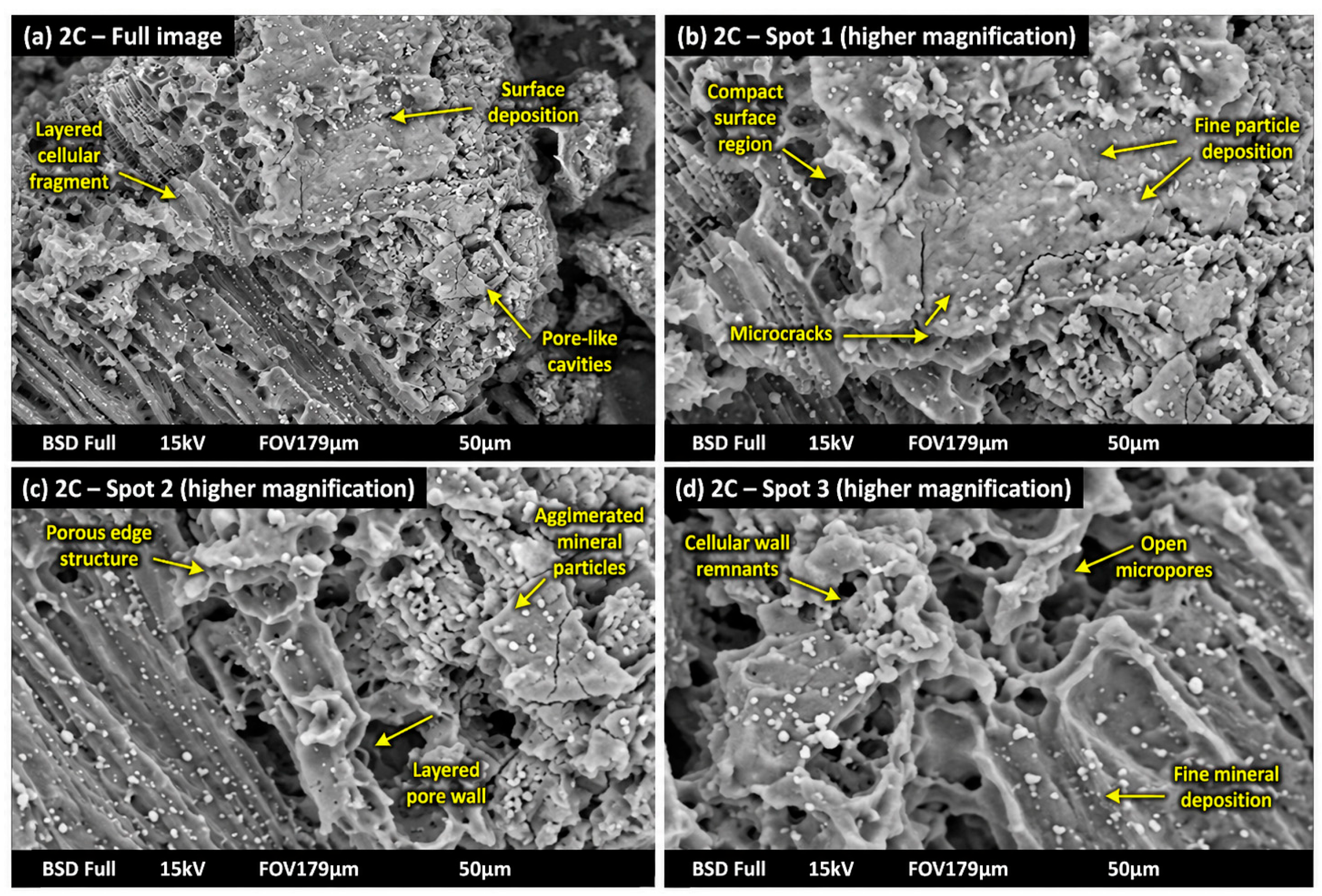
As shown in Figure 3, Figure 5 and Figure 6, the SEM micrographs of samples 2A, 2B, and 2C, calcined at 600 °C with impregnation durations of 19, 22, and 24 h, respectively, reveal significant evolution of the silica-rich porous morphology after thermal treatment and KOH impregnation. Sample 2A exhibited irregular porous networks, microvoids, porous fragments, and partially preserved cellular wall structures, indicating the initiation of pore development, although the morphology remained relatively heterogeneous. Fine particle deposition and agglomerated porous structures were also observed on the surface, suggesting mineral redistribution during calcination and alkali treatment [31]. In comparison, sample 2B showed a more homogeneous and structurally organized morphology characterized by interconnected honeycomb-like pore structures, open cavities, layered particle surfaces, and relatively controlled particle agglomeration [32]. The pore structure observed in sample 2B appeared relatively uniform and more well-developed, suggesting that the 22 h impregnation period facilitated more effective structural rearrangement and enhanced exposure of the silica-rich framework. In contrast, sample 2C displayed layered cellular fragments accompanied by compact surface regions, microcracks, and localized mineral-rich deposits [33]. Although open micropores and porous edge features were still present, the overall morphology of sample 2C appeared denser and more compact than that of sample 2B. This behavior indicates that extended impregnation duration may contribute to localized structural condensation and surface restructuring [34]. Overall, the SEM analysis indicates that calcination at 600 °C was effective in promoting the formation of porous silica-rich structures. At the same time, variations in impregnation duration influenced pore connectivity, surface uniformity, and the extent of structural densification within the resulting materials.

3.3. Compositional Analysis

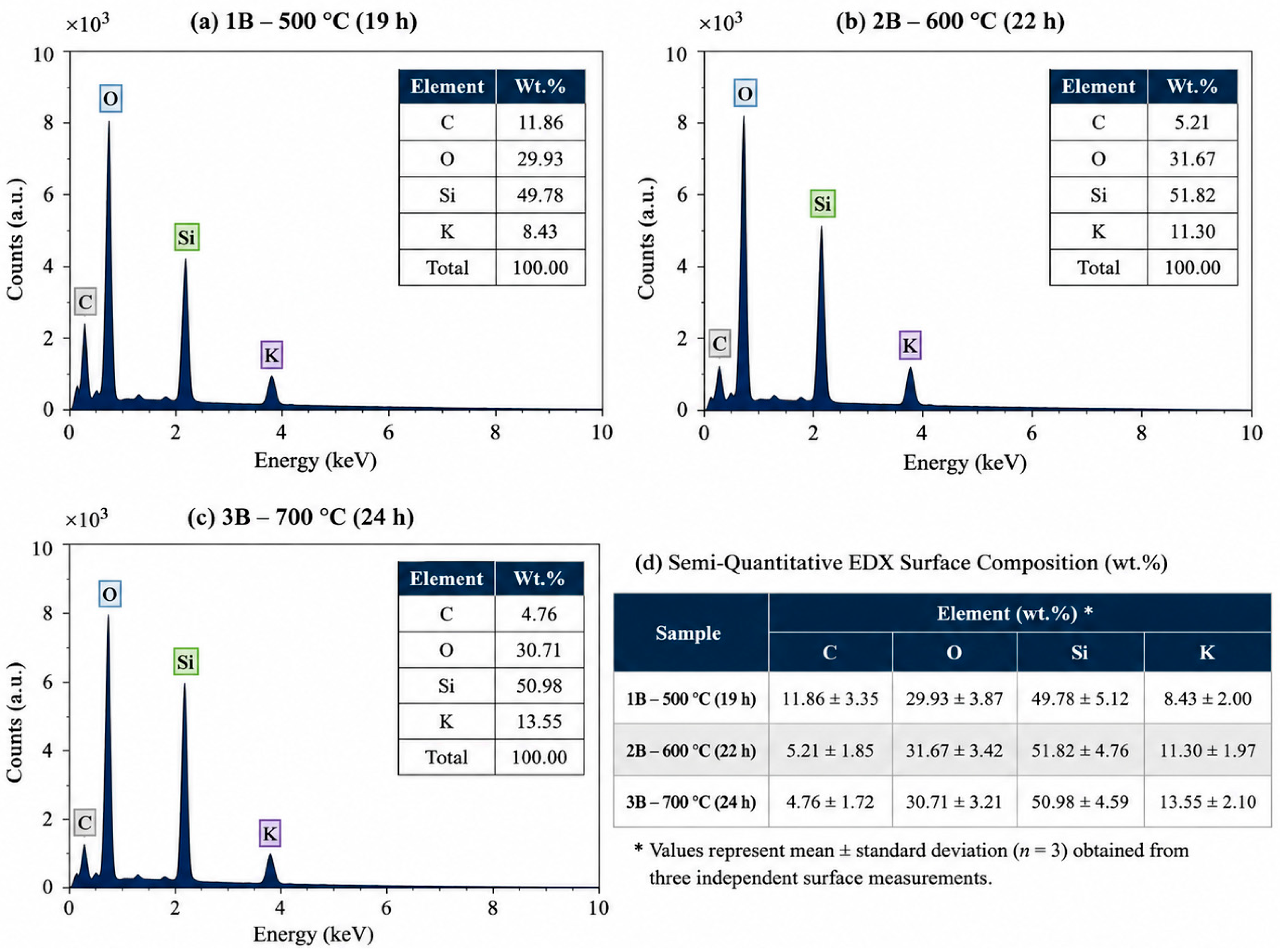
Figure 7 shows the semi-quantitative EDX spectra of samples 1B, 2B, and 3B. Silicon and oxygen were the main detected elements in all samples, confirming the silica-rich composition of the KOH-treated rice husk ash. Peaks assigned to C, O, Si, and K appeared around 0.28, 0.52, 1.74, and 3.31 keV, respectively. Potassium was still detected after treatment, indicating that the impregnation process affected the material surface. Sample 1B calcined at 500 °C showed a higher carbon signal than samples 2B and 3B. This result suggests that part of the carbonaceous residue was still retained at lower calcination temperature. As the temperature increased, the carbon contribution became lower, while Si and O signals became more dominant. A similar trend was also observed from the SEM and FTIR analyses. Among the samples, 2B exhibited a more balanced Si–O–K composition together with a more open porous structure. In contrast, sample 3B appeared thermally restructured after calcination at 700 °C, although high Si and O contents were still maintained. The stronger potassium signal in this sample was associated with redistribution of inorganic species during heating. Because EDX is semi-quantitative and surface-sensitive, the obtained composition should not be interpreted as an exact bulk elemental value [28]. Overall, the EDX results indicate that increasing calcination temperature promoted carbon removal and improved the silica-rich characteristics of the prepared materials.

3.4. Textural Characterization

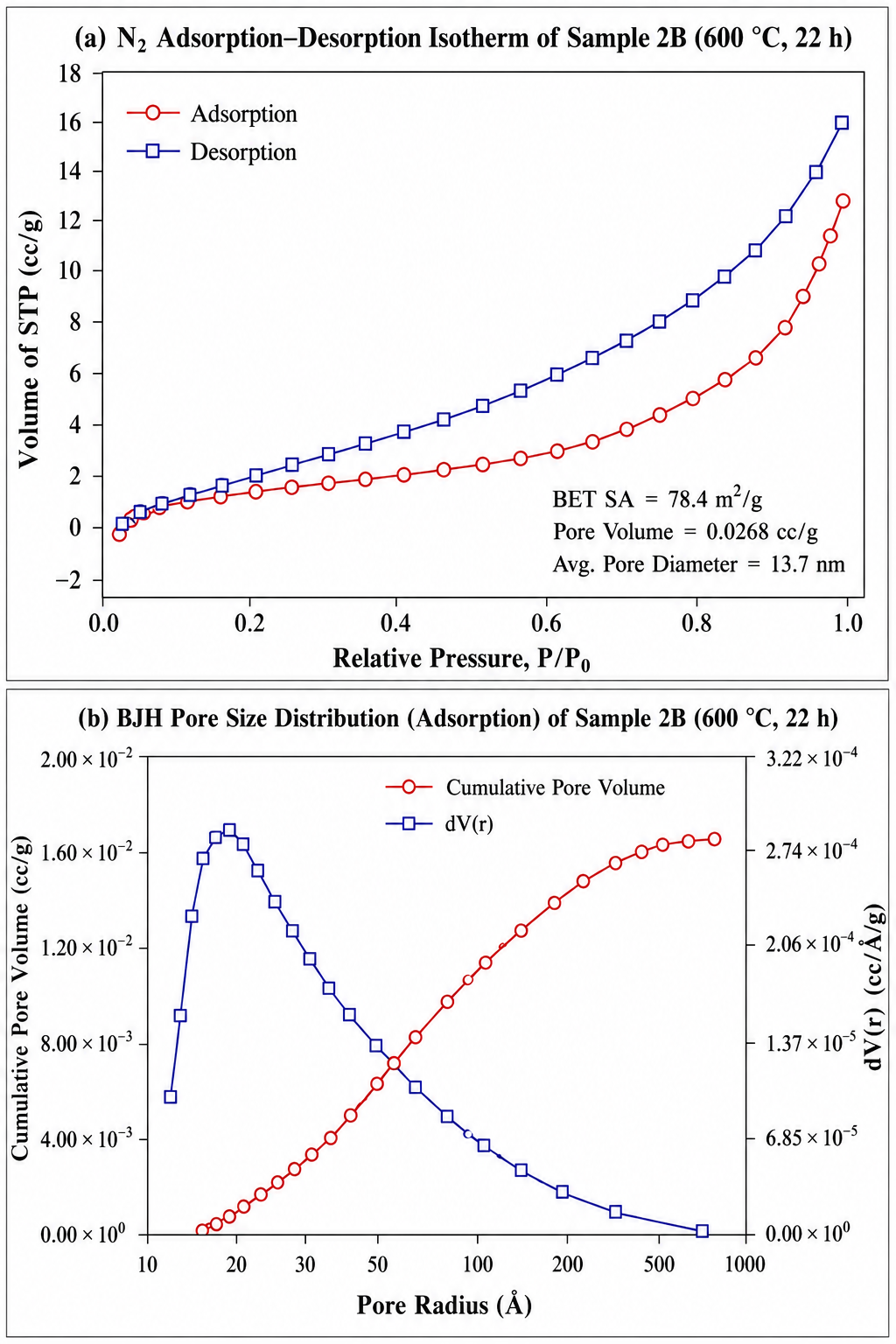
BET analysis of the representative samples 1B, 2B, and 3B revealed that calcination temperature had a substantial effect on the textural properties of the KOH-modified RHA materials.
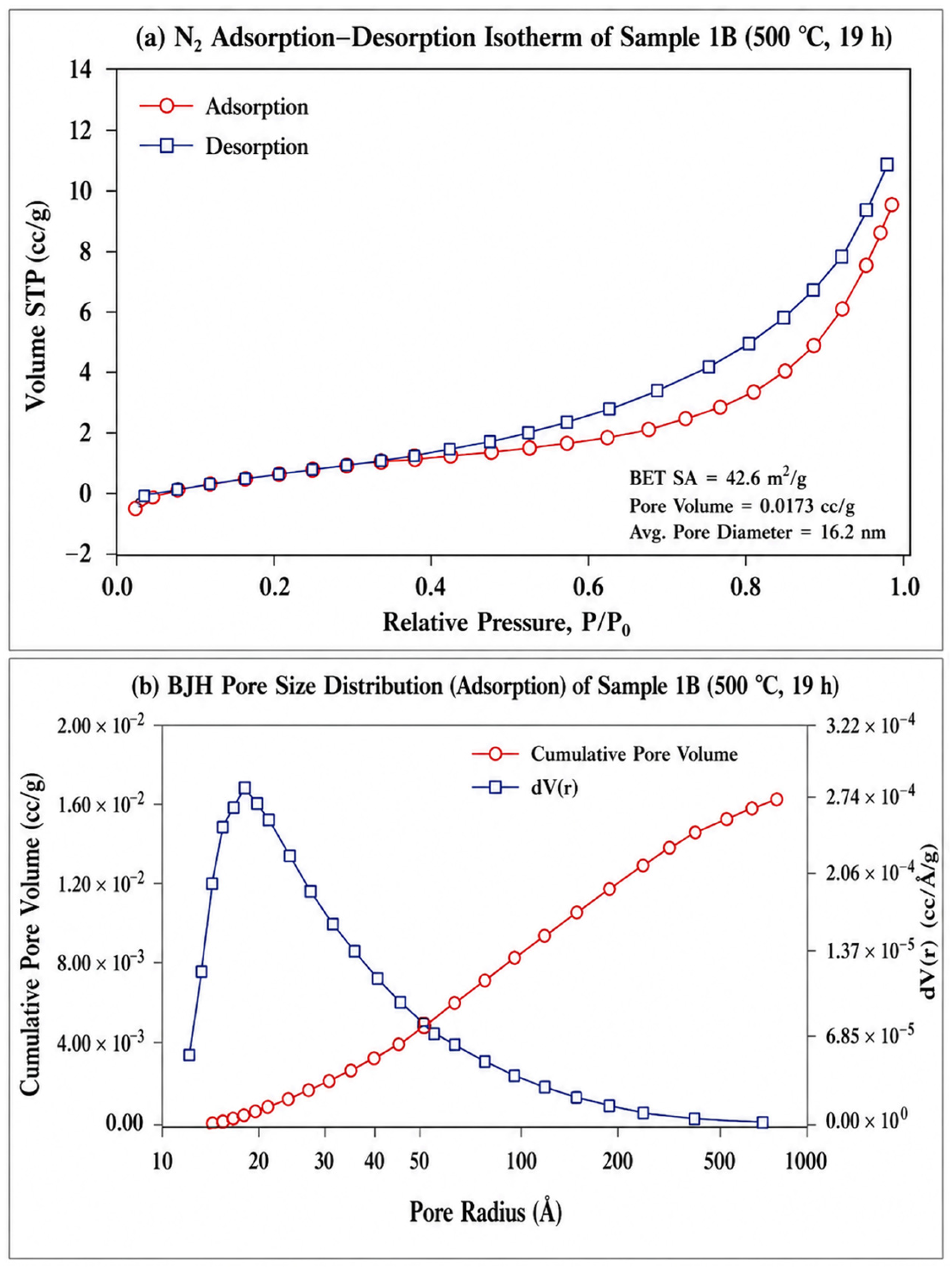
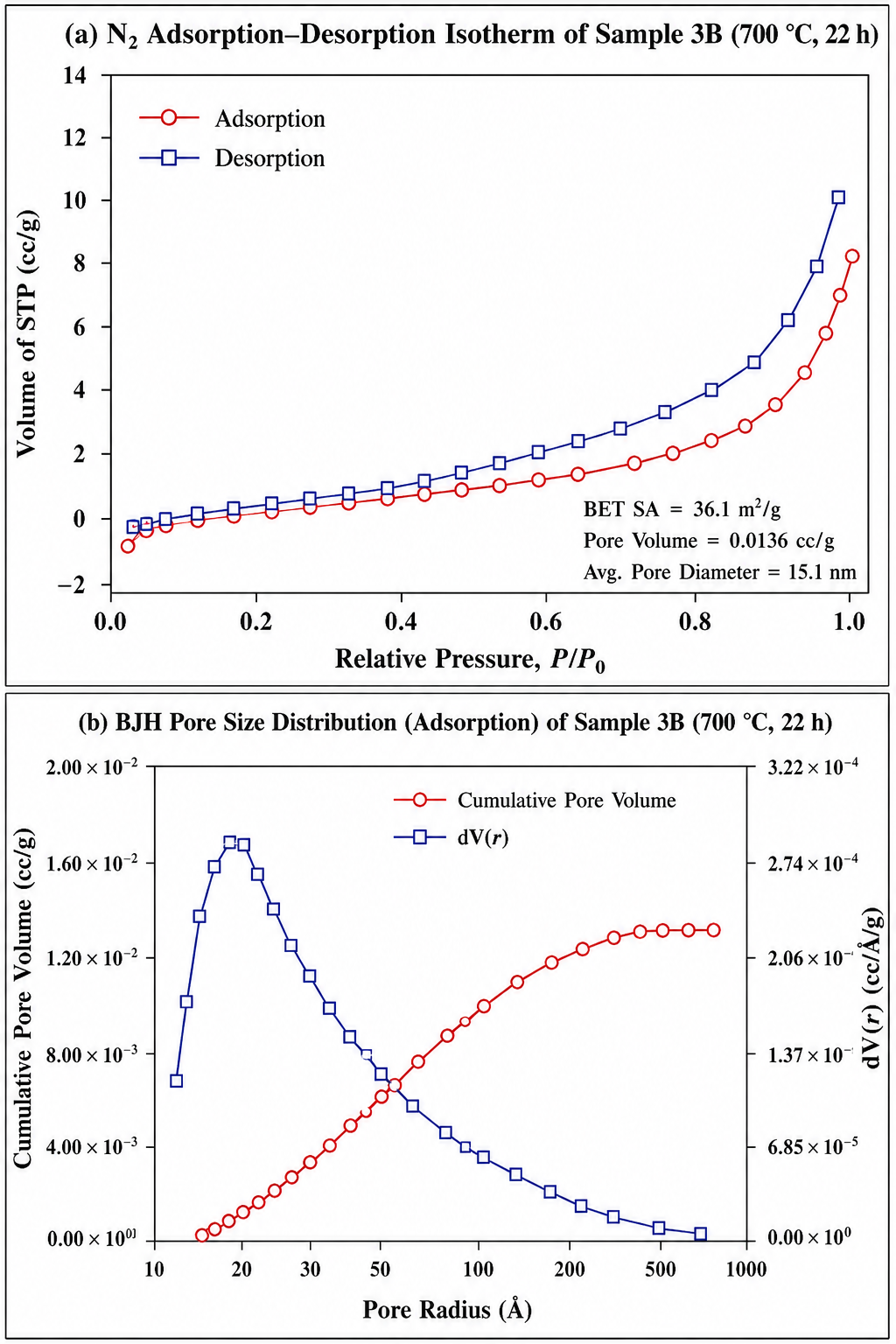
As shown in Figure 8, sample 1B calcined at 500 °C exhibited a BET surface area of 42.6 m2/g, total pore volume of 0.0173 cc/g, and average pore diameter of 16.2 nm. These values suggest that pore formation had started to develop, although the relatively low surface area indicates that pore growth remained limited. This condition may be associated with incomplete decomposition of residual organic compounds and partial blockage within the pore channels [35]. As shown in Figure 9, sample 2B calcined at 600 °C displayed the most favorable textural properties among the analyzed samples. The material exhibited the highest BET surface area of 78.4 m2/g together with a total pore volume of 0.0268 cc/g. This indicates more effective pore opening and development of accessible mesoporous structures, consistent with the SEM observation showing interconnected pore-like morphology and the FTIR result showing a dominant silica-related absorption profile. Meanwhile, as shown in Figure 10, sample 3B calcined at 700 °C exhibited a lower surface area of 36.1 m2/g and pore volume of 0.0136 cc/g, despite retaining a mesoporous average pore diameter of 15.1 nm. The decrease in surface area and pore volume at 700 °C may be associated with thermal densification, particle agglomeration, or partial pore collapse, as also suggested by SEM images showing compact layered fragments and denser surface regions [36]. The BET results support the interpretation that 600 °C provides a more favorable thermal condition for textural development, whereas lower temperature limits pore formation and excessive temperature may reduce pore accessibility through structural densification.
Values were obtained from N2 physisorption analysis using the BET and BJH methods. BET analysis was conducted on selected representative samples to provide comparative textural characterization.
Based on Table 2, among the selected samples, 2B exhibited the highest BET surface area and pore volume, indicating more favorable pore development and textural characteristics after calcination at 600 °C. In contrast, sample 1B showed lower pore development, likely due to incomplete decomposition of residual organic matter, whereas sample 3B showed reduced surface area and pore volume that may be associated with thermal densification and partial pore collapse at higher calcination temperature [37].

3.5. Structural Characterization

The XRD patterns of samples 1B, 2B, and 3B indicate that calcination temperature strongly affected the structural evolution of the KOH-modified RHA materials.
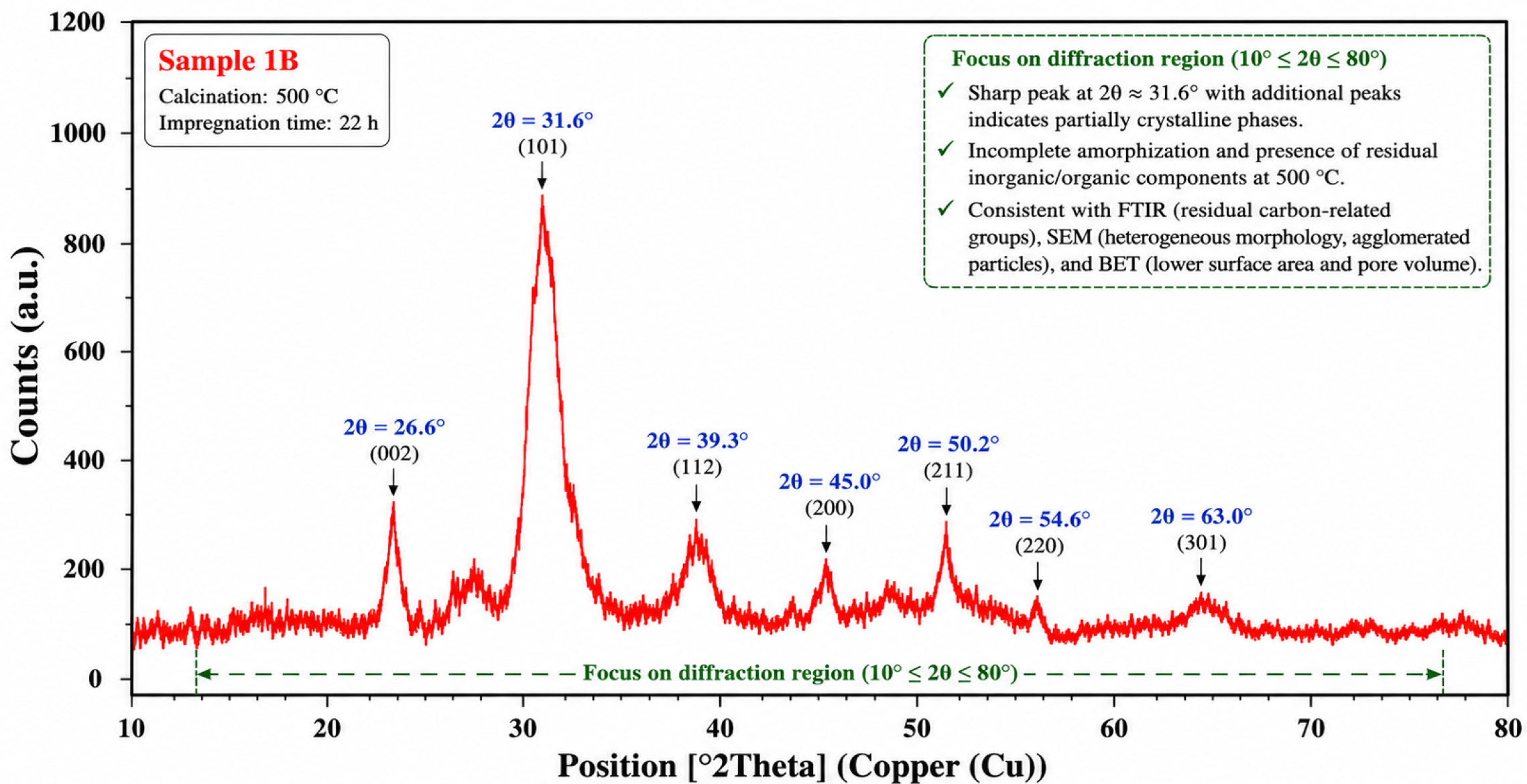
Figure 11 shows the XRD pattern of sample 1B calcined at 500 °C. Several diffraction peaks were still observed on a broad amorphous background, indicating the coexistence of amorphous silica and residual crystalline phases. This result suggests that calcination at 500 °C was not sufficient to completely transform the rice husk-derived structure into a more uniform silica-rich material [27]. This observation is consistent with the FTIR spectra, which still showed residual carbon-related absorption bands, and with SEM images showing heterogeneous morphology, agglomerated particles, and incompletely developed pore-like structures. The relatively lower BET surface area and pore volume of sample 1B further support the interpretation that pore development was still limited at this temperature [22].
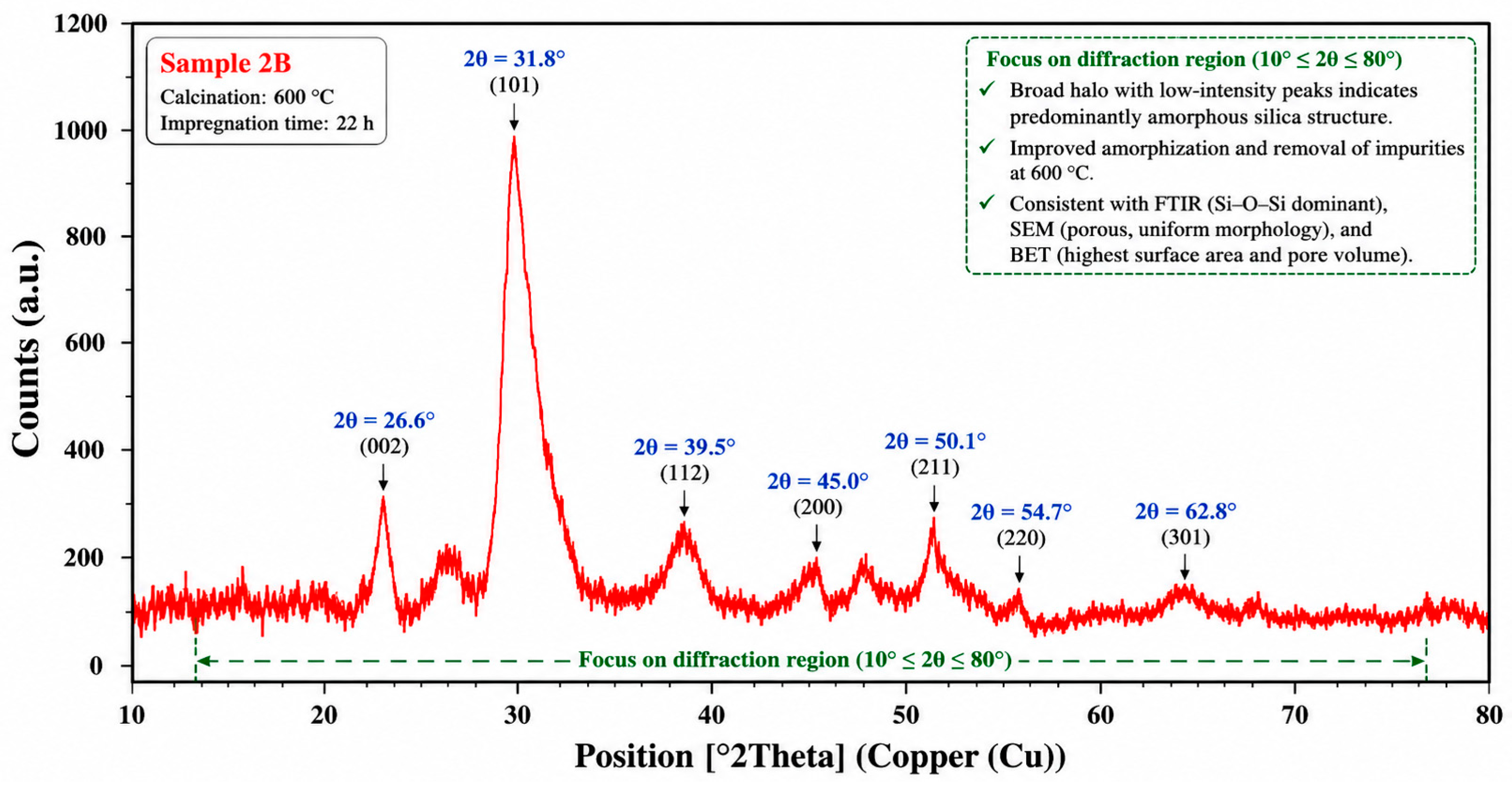
As shown in Figure 12, the XRD pattern of sample 2B calcined at 600 °C still displayed several diffraction peaks, although the overall profile indicated improved structural stabilization of the silica-rich material. The broad amorphous background accompanied by less pronounced crystalline features suggests that calcination at 600 °C promoted more effective decomposition of residual organic components and formation of a more stable silica-based structure [38]. This observation is consistent with the FTIR results, where Si–O–Si absorption became more dominant, as well as the SEM images showing more homogeneous and interconnected pore-like structures. BET analysis also revealed that sample 2B possessed the highest surface area and pore volume among the selected samples, indicating more favorable textural properties [39].
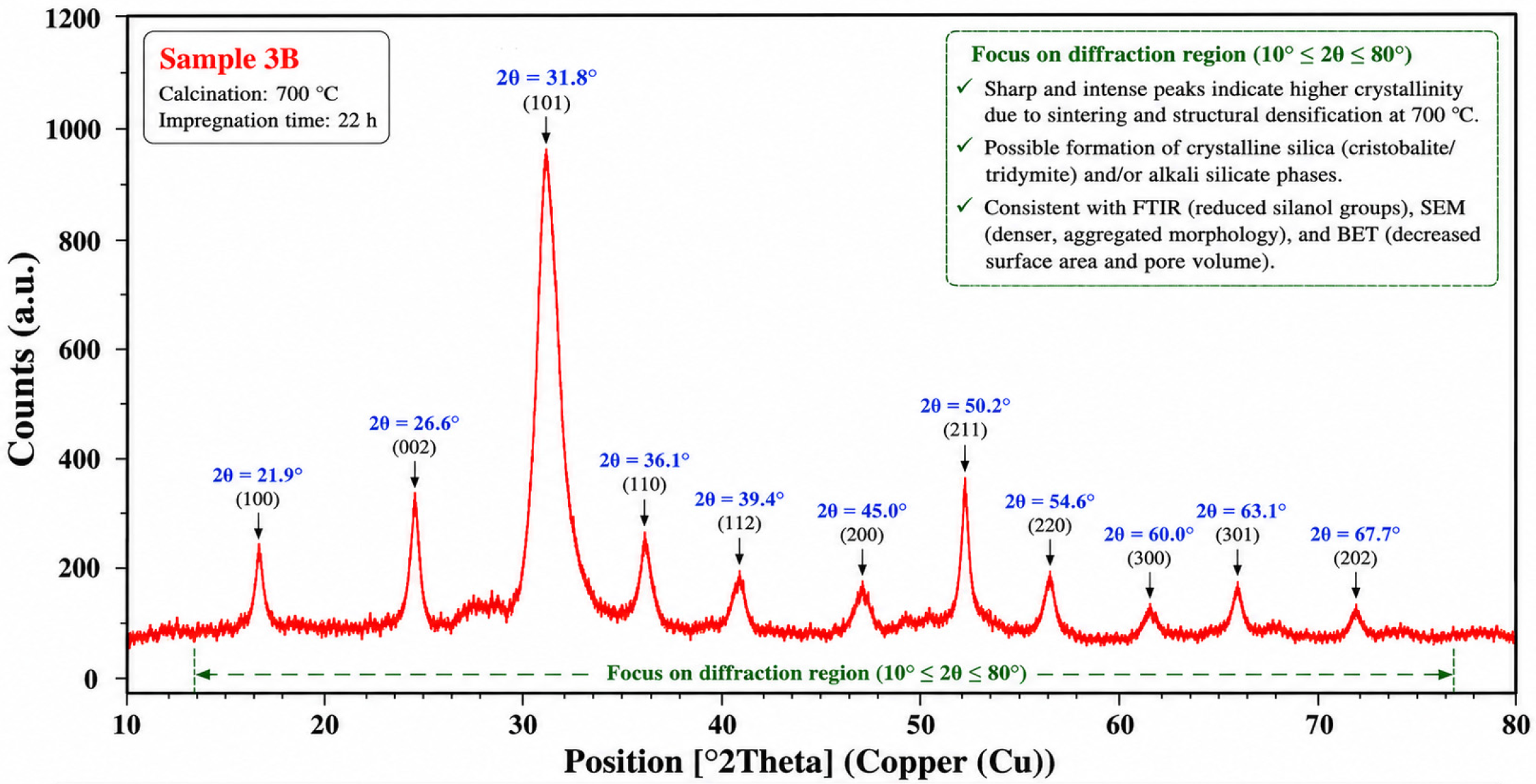
Meanwhile, Figure 13 shows that sample 3B calcined at 700 °C exhibited sharper and more intense diffraction peaks, indicating increased structural ordering or partial crystallization at higher calcination temperature. This behavior suggests that excessive thermal treatment may promote structural densification, sintering, or phase rearrangement within the silica-rich framework [40]. This interpretation is consistent with SEM images showing compact layered fragments, smoother dense regions, and partially collapsed pore structures. The BET result, which showed decreased surface area and pore volume for sample 3B compared with sample 2B, further supports the possibility that high-temperature treatment reduced pore accessibility through structural densification. Overall, the XRD results support the combined FTIR, SEM, and BET findings. Calcination at 500 °C resulted in incomplete structural transformation; calcination at 600 °C produced the most favorable balance between silica network formation and pore development, while calcination at 700 °C promoted increased structural ordering and densification that may reduce accessible porosity. Therefore, sample 2B can be considered to exhibit the most favorable physicochemical and textural characteristics among the selected characterized samples, without implying catalytic performance [28].

3.6. Comparative Effect of Calcination Temperature and Impregnation Duration

The comparative effect of calcination temperature and impregnation duration on the physicochemical characteristics of the KOH-modified rice husk ash materials was evaluated using FTIR, SEM–EDX, BET, and XRD analyses. The results demonstrate that both parameters significantly influenced the structural transformation, pore development, and compositional stability of the resulting materials. At 500 °C (samples 1A–1C), the FTIR spectra still indicated the presence of residual carbon-related functional groups. SEM images also revealed heterogeneous morphology with agglomerated particles and poorly developed pore-like structures. These observations were consistent with the XRD patterns, which showed partially crystalline phases on broad amorphous backgrounds, suggesting incomplete thermal transformation. BET analysis of sample 1B further confirmed relatively low surface area and pore volume, indicating limited pore accessibility due to residual carbonaceous and inorganic components [27].
When the calcination temperature was increased to 600 °C (samples 2A–2C), the resulting materials exhibited more favorable structural and textural properties. FTIR spectra were dominated by Si–O–Si absorption bands, indicating stronger silica network formation and more effective decomposition of residual organic matter. SEM analysis showed more homogeneous surfaces and better-developed interconnected pore-like structures compared with the samples calcined at 500 °C. In addition, the XRD pattern of sample 2B suggested improved structural stabilization with reduced contribution from residual crystalline phases. BET analysis also demonstrated that sample 2B possessed the highest surface area and pore volume among the selected samples, reflecting more effective pore development and improved mesoporous characteristics. Overall, these findings suggest that calcination at 600 °C provided a balanced condition between thermal decomposition and preservation of porous structure [39].
In contrast, calcination at 700 °C (samples 3A–3C) promoted greater structural ordering and densification. Although silica-related functional groups were still identified in the FTIR spectra, SEM images revealed denser surfaces, layered compact fragments, agglomerated particles, and partially collapsed pores. Sharper and more intense diffraction peaks observed in the XRD patterns also indicated increased crystallinity and structural rearrangement at higher temperature. As a result, BET analysis of sample 3B showed lower surface area and pore volume than sample 2B, suggesting that excessive calcination temperature reduced pore accessibility due to sintering and partial pore collapse [22].
The impregnation duration also influenced the resulting morphology and structural evolution. Shorter impregnation time (19 h) tended to produce less homogeneous pore distribution and incomplete activation, whereas prolonged impregnation (24 h) increased the possibility of particle agglomeration and surface deposition. Among the investigated conditions, the 22 h impregnation duration consistently produced more favorable pore development and structural uniformity, particularly when combined with calcination at 600 °C. Therefore, sample 2B can be considered to exhibit the most favorable physicochemical and textural characteristics among the investigated samples, without implying catalytic or adsorption performance superiority.

4. Conclusions

In this study, the effects of calcination temperature and impregnation duration on the physicochemical and textural properties of KOH-modified rice husk ash materials were systematically investigated. The characterization results demonstrated that thermal treatment significantly affected the structural evolution, pore development, and surface characteristics of the prepared materials. FTIR analysis revealed that increasing calcination temperature promoted the reduction in residual carbon-containing groups and enhanced the formation of silica-related Si–O–Si structures. SEM observations showed progressive morphological evolution from heterogeneous fragmented surfaces at 500 °C to more developed porous frameworks at 600 °C, followed by partial densification and agglomeration at 700 °C. Semi-quantitative EDX analysis confirmed that all samples possessed silica-rich surface compositions, while the XRD patterns revealed changes in structural ordering and stabilization as the calcination temperature increased. BET analysis demonstrated that sample 2B, prepared at 600 °C with 22 h impregnation, exhibited the most favorable textural properties among the selected samples, showing the highest surface area and pore volume. These results suggest that calcination at 600 °C provided a more balanced condition for pore development while maintaining the stability of the silica-rich framework. In comparison, calcination at 500 °C resulted in incomplete structural transformation, whereas treatment at 700 °C promoted structural densification and reduced pore accessibility. Overall, the findings indicate that both calcination temperature and impregnation duration significantly influenced the physicochemical and textural characteristics of the biomass-derived silica materials. This study also provides further insight into the preparation and structural evolution of KOH-modified rice husk ash for potential silica-based material applications. In addition, the utilization of agricultural waste as value-added materials in this work supports Sustainable Development Goal (SDG) 12, which is related to responsible consumption and production.

Author Contributions

Conceptualization, N.Q. and H.H.; methodology, N.K. and K.S.; validation, D.F.F. and J.P.S.; formal analysis, V.A.K. and D.G.; investigation, V.A.K. and D.G.; data curation, J.J. and S.P.; writing—original draft preparation, N.Q. and H.H.; writing—review and editing, N.K. and D.F.F.; visualization, K.S. and J.J.; supervision, S.P. and J.P.S. All authors have read and agreed to the published version of the manuscript.

Funding

This work is funded by the Indonesian Endowment Fund for Education (LPDP) on behalf of the Indonesian Ministry of Higher Education, Science and Technology and Managed under the EQUITY Program.

Data Availability Statement

The original contributions presented in this study are included in the article. Further inquiries can be directed to the corresponding author(s).

Acknowledgments

This work was funded by the Enhancing Quality Education for International University Impacts and Recognition Times Higher Education Impact Rankings 2025 (EQUITY 2025) Program, Directorate of Institutional Affairs, DGHE. Contract No. 4311/B3/DT.03.08/2025. The authors would also like to acknowledge the Institute for Research and Community Service, Universitas Negeri Semarang, for its support through the Applied Expertise Research Scheme.

Conflicts of Interest

The authors declare no conflicts of interest.

References

  1. Farid, S.A.; Zaheer, M.M. Production of New Generation and Sustainable Concrete Using Rice Husk Ash (RHA): A Review. Mater. Today Proc. 2023. [Google Scholar] [CrossRef]
  2. Selvaranjan, K.; Gamage, J.C.P.H.; De Silva, G.I.P.; Navaratnam, S. Development of Sustainable Mortar Using Waste Rice Husk Ash from Rice Mill Plant: Physical and Thermal Properties. J. Build. Eng. 2021, 43, 102614. [Google Scholar] [CrossRef]
  3. Kwofie, E.M.; Ngadi, M.O. Energy and Environmental Mitigation Potential of Rice Byproducts. In Byproducts from Agriculture and Fisheries: Adding Value for Food, Feed, Pharma and Fuels; Simpson, B.K., Aryee, A.N.A., Toldrá, F., Eds.; Wiley: Hoboken, NJ, USA, 2019; pp. 597–617. ISBN 978-1-119-38397-0. [Google Scholar]
  4. Taiye, M.A.; Hafida, W.; Kong, F.; Zhou, C. A Review of the Use of Rice Husk Silica as a Sustainable Alternative to Traditional Silica Sources in Various Applications. Environ. Prog. Sustain Energy 2024, 43, e14451. [Google Scholar] [CrossRef]
  5. Sah, P.M.; Naik, H.S.; Raut, R.W. Green Synthesis of Nanoparticles Using Different Agroindustrial Wastes. In Agroindustrial Waste Management; El-Gendy, N.S., Nassar, H.N., Eds.; Wiley: Hoboken, NJ, USA, 2026; pp. 429–461. ISBN 978-1-119-62026-6. [Google Scholar]
  6. Fernandes, I.J.; Moraes, C.A.M.; Egea, J.R.J.; Sousa, V.C. Production and Characterization of Silica Materials from Rice Husk Ash by Different Combustion Processes. Powder Technol. 2024, 436, 119473. [Google Scholar] [CrossRef]
  7. Nakaya, T.; Mochizuki, Y.; Miyazaki, R.; Tanabe, E.; Sakakibara, K.; Ohshita, J. Effect of the Calcination Temperature on the Mechanical Properties of Polypropylene Composites Prepared with Rice Husk Ash Filler. Polymer 2026, 356, 130021. [Google Scholar] [CrossRef]
  8. Tome, S.; Shikuku, V.; Tamaguelon, H.D.; Akiri, S.; Etoh, M.A.; Rüscher, C.; Etame, J. Efficient Sequestration of Malachite Green in Aqueous Solution by Laterite-Rice Husk Ash-Based Alkali-Activated Materials: Parameters and Mechanism. Environ. Sci. Pollut. Res. 2023, 30, 67263–67277. [Google Scholar] [CrossRef]
  9. Amran, M.; Fediuk, R.; Murali, G.; Vatin, N.; Karelina, M.; Ozbakkaloglu, T.; Krishna, R.S.; Sahoo, A.K.; Das, S.K.; Mishra, J. Rice Husk Ash-Based Concrete Composites: A Critical Review of Their Properties and Applications. Crystals 2021, 11, 168. [Google Scholar] [CrossRef]
  10. Alam, M.M.; Hossain, M.A.; Hossain, M.D.; Johir, M.A.H.; Hossen, J.; Rahman, M.S.; Zhou, J.L.; Hasan, A.T.M.K.; Karmakar, A.K.; Ahmed, M.B. The Potentiality of Rice Husk-Derived Activated Carbon: From Synthesis to Application. Processes 2020, 8, 203. [Google Scholar] [CrossRef]
  11. Bai, Y.; Xie, Y.; Chen, Y. Alkali-activated Rice Husk Ash-foamed Composites: Correlation between Pore Structure, Hydration, and Hardening Properties. Int. J. Appl. Ceram. Technol. 2025, 22, e14941. [Google Scholar] [CrossRef]
  12. Hossain, N.; Nizamuddin, S.; Selvakannan, P.; Griffin, G.; Madapusi, S.; Shah, K. The Effect of KOH Activation and Ag Nanoparticle Incorporation on Rice Husk-Based Porous Materials for Wastewater Treatment. Chemosphere 2022, 291, 132760. [Google Scholar] [CrossRef]
  13. Wazir, A.H.; Wazir, I.U.; Wazir, A.M. Preparation and Characterization of Rice Husk Based Physical Activated Carbon. Energy Sources Part A Recovery Util. Environ. Eff. 2020, 46, 1–11. [Google Scholar] [CrossRef]
  14. Sandhu, R.K.; Siddique, R. Influence of Rice Husk Ash (RHA) on the Properties of Self-Compacting Concrete: A Review. Constr. Build. Mater. 2017, 153, 751–764. [Google Scholar] [CrossRef]
  15. Kopac, T. Hydrogen Storage Characteristics of Bio-based Porous Carbons of Different Origin: A Comparative Review. Int. J. Energy Res. 2021, 45, 20497–20523. [Google Scholar] [CrossRef]
  16. Korobochkin, V.V.; Tu, N.V.; Hieu, N.M. Production of Activated Carbon from Rice Husk Vietnam. IOP Conf. Ser. Earth Environ. Sci. 2016, 43, 012066. [Google Scholar] [CrossRef]
  17. Elinwaa, A.U.E. X-Ray and Microstructure of Rice Husk Ash-Admixed Concrete. Explor. Mater. Sci. Res. 2023, 5, 92–106. [Google Scholar]
  18. Kaleli, M.J.; Kamweru, P.K.; Gichumbi, J.M.; Ndiritu, F.G. Characterization of Rice Husk Ash Prepared by Open Air Burning and Furnace Calcination. J. Chem. Eng. Mater. Sci. 2020, 11, 24–30. [Google Scholar] [CrossRef]
  19. Sarangi, M.; Nayak, P.; Tiwari, T.N. Effect of Temperature on Nano-Crystalline Silica and Carbon Composites Obtained from Rice-Husk Ash. Compos. Part B Eng. 2011, 42, 1994–1998. [Google Scholar] [CrossRef]
  20. Lin, J.; Zhang, Y.; Yang, Z. A Review of Recent Advances in Alkali-Activated Materials from Silica-Rich Wastes Derived Sodium Silicate Activators. J. Adv. Concr. Technol. 2023, 21, 189–203. [Google Scholar] [CrossRef]
  21. Purwaningsih, S.Y.; Riyanto, A.; Machmudah, S.; Sentosa, H.E.; Pratapa, S. Simultaneous Synthesis of Silica Polymorphs and Activated Carbon from Rice Husk. Silicon 2024, 16, 3063–3072. [Google Scholar] [CrossRef]
  22. Yuan, S.; Hou, Y.; Liu, S.; Ma, Y. A Comparative Study on Rice Husk, as Agricultural Waste, in the Production of Silica Nanoparticles via Different Methods. Materials 2024, 17, 1271. [Google Scholar] [CrossRef] [PubMed]
  23. Majumdar, A.; Chakraborty, S.; Kausor, M.A. Waste Derived Bio-Adsorbents for Sustainable Remediation of Dye Contaminated Wastewater: A Comprehensive Review. ChemistrySelect 2026, 11, e73292. [Google Scholar] [CrossRef]
  24. Liu, X.; Jiang, J.; Zhang, H.; Li, M.; Wu, Y.; Guo, L.; Wang, W.; Duan, P.; Zhang, W.; Zhang, Z. Thermal Stability and Microstructure of Metakaolin-Based Geopolymer Blended with Rice Husk Ash. Appl. Clay Sci. 2020, 196, 105769. [Google Scholar] [CrossRef]
  25. Le Van, K.; Luong Thi Thu, T. Preparation of Pore-Size Controllable Activated Carbon from Rice Husk Using Dual Activating Agent and Its Application in Supercapacitor. J. Chem. 2019, 2019, 4329609. [Google Scholar] [CrossRef]
  26. Jing, Y.; Lee, J.C.; Moon, W.C.; Jin, Y.; Ng, J.L.; Yew, M.K. Ternary and Quaternary Sustainable Cementitious Composites Containing Rice Husk Ash: A Comprehensive Review. Discov. Appl. Sci. 2025, 7, 174. [Google Scholar] [CrossRef]
  27. Ji, J.; Li, L.; Quan, L.; Tian, B.; Zhang, P.; Li, S. The Effects of Calcination Process Parameters on RHA Reactivity and Mortar Mechanical Properties. Materials 2025, 18, 3129. [Google Scholar] [CrossRef]
  28. Islam, M.T.; Hossen, M.F.; Kudrat-E-Zahan, M.; Asraf, M.A.; Zakaria, C.M.; Hayatullah; Rana, M.S. Effect of Temperature and Time on Purity, Morphology and Phase Transformations of Silica from Rice Husk. Chem. Inorg. Mater. 2025, 5, 100092. [Google Scholar] [CrossRef]
  29. Thakar, M.K.; Shah, K.; Shit, D.; R, R.; Inwati, G.K.; Yadav, V.K.; Chaudhari, R.G. Efficient Green Removal and Quantification of Heavy Metals from Losartan Using Silica Nanoparticles Developed from Rice Husk Ash. BioNanoScience 2025, 15, 367. [Google Scholar] [CrossRef]
  30. Zhang, J.X.; Guo, Y.T.; Zhuang, S.Y.; Lou, H.Q.; Li, Y. The Effect of Adding Rice Husk Ash (RHA) and Calcined Shell Powder (CSP) on the Properties of Cement Mortar. Case Stud. Constr. Mater. 2025, 22, e04426. [Google Scholar] [CrossRef]
  31. Khan, Y.; Sattar, A.; Ullah, S.A.; Rehman, W.; Khan, S.; Hussain, R.; Aslam, S.; Rehman, Z.U.; Nawaz, M.; Gulshan, U. Rice Husk Based Bio-Composites. In Rice Husk Biomass; Jawaid, M., Parmar, B., Eds.; Sustainable Materials and Technology; Springer: Singapore, 2025; pp. 235–270. ISBN 978-981-96-1081-5. [Google Scholar]
  32. Jaman, H.; Chakraborty, D.; Saha, P. A Study of the Thermodynamics and Kinetics of Copper Adsorption Using Chemically Modified Rice Husk. Clean Soil Air Water 2009, 37, 704–711. [Google Scholar] [CrossRef]
  33. Ajayi, S.M.; Olusanya, S.O.; Abimbade, S.F.; Olumayede, E.G.; Faboya, O.L. Surface Morphology and Textural Properties of Mesoporous Silica Materials Prepared from Agricultural Waste. Next Res. 2025, 2, 100758. [Google Scholar] [CrossRef]
  34. Rumiyanti, L.; Gracia, S.; Istiqomah, N.I.; Larasati, D.A.; Prabowo, Y.D.; Rini, N.P.; Andriyanti, W.; Manurung, P.; Sharma, A.; Ali, D.; et al. A Sustainable and Eco-Friendly Rice Husk-Derived Mesoporous Silica Nanoparticles Loaded with Benzotriazole for Enhanced Corrosion Inhibition. Biomass Bioenergy 2025, 203, 108335. [Google Scholar] [CrossRef]
  35. Barbhuiya, S.; Das, B.B.; Adak, D.; Rajput, A.; Katare, V. Rice Husk Ash in Structural Concrete: Influence on Strength, Durability and Sustainability. Discov. Concr. Cem. 2025, 1, 14. [Google Scholar] [CrossRef]
  36. Huynh, T.L.; Dao, B.T.T.; Le, M.T.; Doan, K.A.T.; Nguyen, T.D.; Le, H.N.; Ha-Thuc, C.-N. Polyethyleneimine-Modified Activated Biochar Derived from Rice Husk Ash: Material Development and Preliminary Formaldehyde Adsorption Study. Carbon Res. 2026, 5, 5. [Google Scholar] [CrossRef]
  37. Yefremova, S.; Yermishin, S.; Kablanbekov, A.; Satbaev, B.; Shalabaev, N.; Satbaev, S. Porous Refractories Synthesized Using Rice Husk and Rice Husk Processing Products. Materials 2025, 18, 5063. [Google Scholar] [CrossRef]
  38. Bonifacio, A.L.; Archbold, P. The Effect of Calcination Conditions on Oat Husk Ash Pozzolanic Activity. Mater. Today Proc. 2022, 65, 622–628. [Google Scholar] [CrossRef]
  39. Rehman, K.U.; Ahmad, A.; Ahmad, F.; Khan, E.A.; Siffat, M.A. Effect of Calcination on the Chemical and Microstructural Properties of Rice Husk Ash. J. Eng. Res. Rep. 2021, 21, 81–87. [Google Scholar] [CrossRef]
  40. Ngoc, N.N.; Thanh, L.X.; Vinh, L.T.; Van Anh, B.T. High-purity Amorphous Silica from Rice Husk: Preparation and Characterization. Vietnam J. Chem. 2018, 56, 730–736. [Google Scholar] [CrossRef]
Figure 1. FTIR spectra of samples calcined at (a) 500 °C; (b) 600 °C; (c) 700 °C.
Jcs 10 00290 g001
Figure 2. SEM images of sample 1B at different magnification: (a) 500×; (b) 1500×; (c) 3000×; (d) 5000×.
Jcs 10 00290 g002
Figure 3. SEM images of sample 2B at different magnification: (a) 500×; (b) 1500×; (c) 3000×; (d) 5000×.
Jcs 10 00290 g003
Figure 4. SEM images of sample 3B at different magnification: (a) 500×; (b) 1500×; (c) 3000×; (d) 5000×.
Jcs 10 00290 g004
Figure 5. SEM images of sample 2A at different magnification: (a) 500×; (b) 1500×; (c) 3000×; (d) 5000×.
Jcs 10 00290 g005
Figure 6. SEM images of sample 2C at different magnification: (a) 500×; (b) 1500×; (c) 3000×; (d) 5000×.
Jcs 10 00290 g006
Figure 7. EDX spectra of (a) 1B; (b) 2B; (c) 3B; (d) semi-quantitative EDX surface composition (wt.%).
Jcs 10 00290 g007
Figure 8. BET characterization of sample 1B.
Jcs 10 00290 g008
Figure 9. BET characterization of sample 2B.
Jcs 10 00290 g009
Figure 10. BET characterization of sample 3B.
Jcs 10 00290 g010
Figure 11. XRD pattern of sample 1B.
Jcs 10 00290 g011
Figure 12. XRD pattern of sample 2B.
Jcs 10 00290 g012
Figure 13. XRD pattern of sample 3B.
Jcs 10 00290 g013
Table 1. Experimental design.
SampleCalcination Temperature
(°C)
Impregnation Time (h)
1A50019
1B50022
1C50024
2A60019
2B60022
2C60024
3A70019
3B70022
3C70024
Table 2. BET textural properties of KOH-modified rice husk ash materials.
SampleBET Surface Area (m2/g)Total Pore Volume (cc/g)Average Pore Diameter (nm)
1B42.60.017316.2
2B78.40.026813.7
3B36.10.013615.1
Disclaimer/Publisher’s Note: The statements, opinions and data contained in all publications are solely those of the individual author(s) and contributor(s) and not of MDPI and/or the editor(s). MDPI and/or the editor(s) disclaim responsibility for any injury to people or property resulting from any ideas, methods, instructions or products referred to in the content.