Article

Effects of Welding Parameters and Film Thickness on the Joint Performance of CF/PA6 Resistance Welding with Perforated Stainless-Steel Mesh


School of Materials Science and Engineering, Tianjin University, Tianjin 300354, China
*
Author to whom correspondence should be addressed.
J. Compos. Sci. 2026, 10(4), 181; https://doi.org/10.3390/jcs10040181
Submission received: 29 January 2026 / Revised: 20 March 2026 / Accepted: 26 March 2026 / Published: 27 March 2026
(This article belongs to the Section Composites Manufacturing and Processing)

Abstract

Thermoplastic composite resistance welding boasts stable process, low cost and reliable quality, making it a dependable joining technique for such materials. This process employs a heating element (HE) as the sole heat source and therefore, it is critical in controlling the welding process. This study proposed a perforated stainless-steel mesh (SSM) as the HE and investigated the effect of welding parameters and insulation film thickness on the joint performance of resistance welded carbon-fiber-reinforced polyamide 6 (CF/PA6). The results showed that the joint lap shear strength (LSS) increased first then decreased as the welding pressure, welding time and welding current increased. The maximum LSS reached 24.4 MPa when 0.2-mm-thick films were used. The joint failure mode was identified as blocky fiber peeling with compromised fiber continuity for the joints welded with 0.1-mm-thick and 0.3 mm-thick PA6 films. For the joints made with 0.2-mm-thick PA6 films, the joint failure mode was characterized by resin peeling from the fiber surface.

1. Introduction

To achieve energy conservation, emission reduction, and lower transportation cost, lightweight design has gradually become a shared pursuit across automotive manufacturing, rail transit, aerospace, and other sectors [1,2,3]. Fiber reinforced thermoplastic composites (FRTPs), which combine lightweight properties, high strength, and recyclability, are widely used in aerospace and automotive fields. The joining of FRTPs plays a critical role in these applications [4]. In recent years, FRTP welding technology has received extensive research and attention. Compared with other welding methods, resistance welding of FRTP shows many advantages [5], such as simple equipment structure, high welding speed [6], low cost, strong controllability [7] and high reliability [8,9].
Heating elements (HEs) play a crucial role in controlling the heat generation and weld quality in FRTP resistance welding. In the 1990s, researchers identified challenges in the use of carbon fiber fabrics as the HEs. Carbon fibers are brittle, which reduces the joining efficiency between unidirectional HE/fabric HE and power sources. Excessive clamping pressure at electrode ends may cause breakage of carbon fiber filaments [10], leading to poor electrical contact [11]. Therefore, researchers shifted their focus to using stainless-steel meshes (SSM) as the HEs. Schäfer et al. [12] investigated the connection and controlled disassembly of carbon-fiber-reinforced low-melting poly-aryl-ether-ketone (CF/LM-PAEK) thermoplastic composite joints using resistance welding with a SSM HE. The maximum lap shear strength (LSS) of joints reached 63.21 MPa. Liu et al. [13] treated the 304 SSM HE using silane coupling agent KH550 and titanate coupling agent UP-201 to improve the bonding between SSM and PA6 resin. Results indicated that both coupling agents enhanced the weld strength. Xiong et al. [14] modified the surface of SSM using carbon nanotubes (CNTs) grown via an ethanol flame. This modification enhanced the interfacial bond strength between the SSM and glass fiber-reinforced polyetherimide (GF/PEI) laminates. The maximum LSS the welded joints reached 39.2 MPa.
The contact between the heating element and the carbon fibers in the substrate can cause current leakage [15]. Adding an insulating layer, such as a pure resin film, to both sides of the heating element is the main method to reduce current leakage. Dahl et al. [16] developed a monofilament HE for welding large, complex surfaces. They also proposed a novel HE for resistance welding of PA6, which adapts to intricate joint areas and integrates direct insulation to prevent current leakage. The insulation layer is made of PA6 film with a thickness of 0.07 mm. Dubé et al. [17] developed a new electrically insulated heating element consisting of a ceramic-coated (TiO2) stainless-steel mesh to prevent current leakage. The insulation layer thickness adopted is 127 μm. Brassard et al. [18] proposed a novel HE for the resistance welding of thermoplastic composites. The proposed HE is fabricated from polyetherimide (PEI), and the Joule heating effect exhibited by the nanocomposites was experimentally validated. The insulation layer thickness adopted was 0.5 mm. Koutras et al. [19] analyzed the effect of temperature exposure on the strength of resistance-welded joints. The insulation layer consisted of a 90-μm-thick PPS film. Shi et al. [20] investigated the effects of fiber-matrix adhesion and fabric orientation. The insulation layer consisted of a 60-μm-thick PEI film. Sun et al. [21] developed a sandwich-structured HE composed of hexagonal boron nitride (h-BN)-modified PEI, which mitigated current leakage effects and enhanced LSS. The insulation layer thickness adopted was 100 μm. Zhang et al. [22] studied the induction welding of carbon fiber-reinforced polyamide 66 (CF/PA66). To reduce edge effects and improve the strength of the joint, they used a PA66 composite film with short carbon fibers (SCF) at the welding interface. The insulation layer thickness adopted was 0.5 mm.
Current research indicates that the HE and insulation layer have a significant impact on the quality of resistance welded joints. Woven SSMs are commonly used as the HE, while the insulation layer is studied using a specific thickness in each work. This study employed a perforated SSM as a novel HE. A perforated SSM exhibits better integrity and mesh customizability than woven SSM. The main purpose of this paper is to investigate the feasibility and process characteristics of using perforated SSM in resistance welding. Additionally, this paper also investigates the influence of insulation layer thickness on the weld quality, which has been generally neglected in the existing research.

2. Experimental Procedure

2.1. Materials

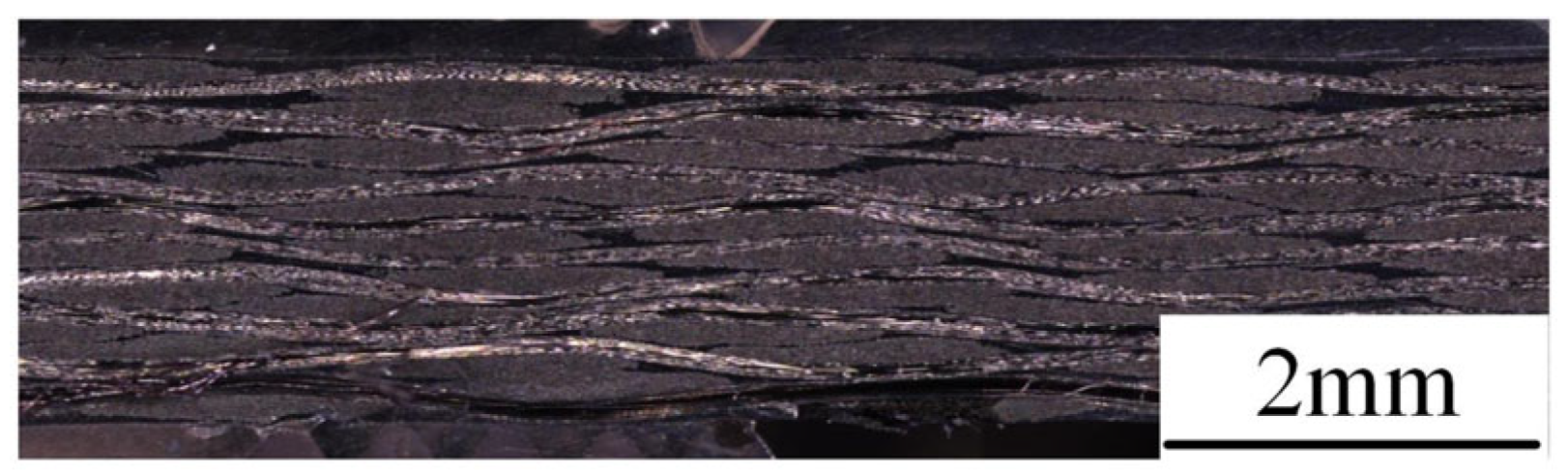
Carbon-fiber-reinforced PA6 (CF/PA6) composed of T300-3K carbon fiber woven orthogonally with JinYoung B18L injection grade PA6 resin (provided by Jinyoung (Xiamen) Advanced Materials Technology Co., Ltd., Xiamen, China) was used as the experimental material. The content of carbon fiber was 60 wt%. The size of the laminates was 100 mm × 25 mm × 2 mm. Figure 1 shows the cross-sectional morphology of the CF/PA6 laminates.
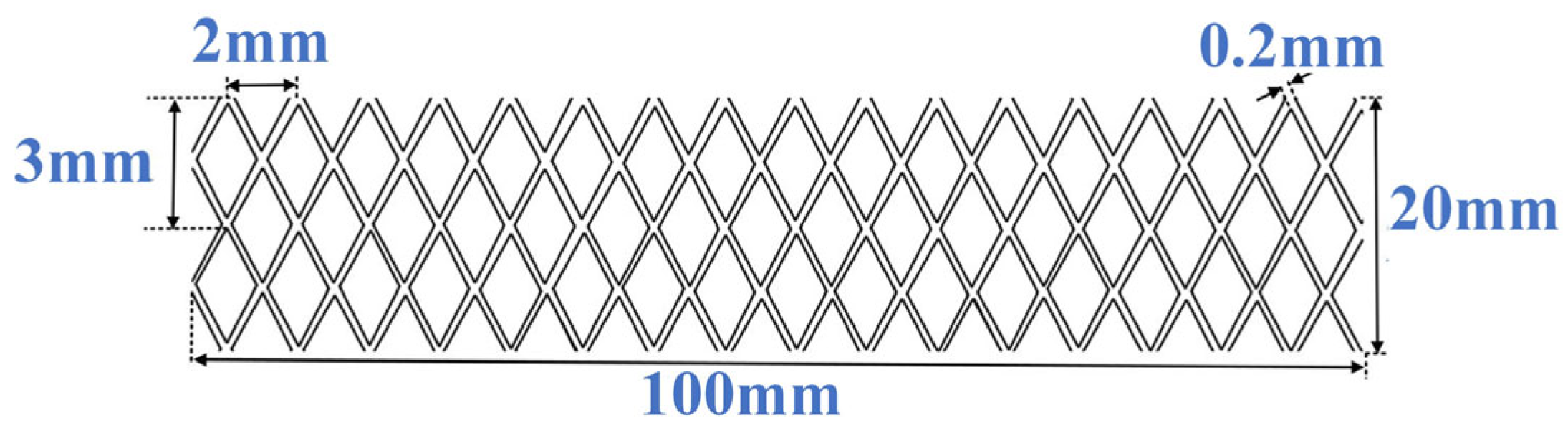
A perforated SSM with dimensions of 100 mm × 20 mm × 0.2 mm was placed between two laminates as the HE. The mesh size of the HE was 2 mm × 3 mm. Figure 2 shows the schematic diagram of the perforated SSM. PA6 films with dimensions of 25 mm × 20 mm × 0.1 mm, 25 mm × 20 mm × 0.2 mm, and 25 mm × 20 mm × 0.3 mm were used as the isolating layer between the SSM and CF/PA6 laminates. Prior to welding, the perforated SSM was cleaned with acetone and all the CF/PA6 laminates and PA6 films were dried at 80 °C for 2 h to remove moisture.

2.2. Welding Equipment and Experimental Methods

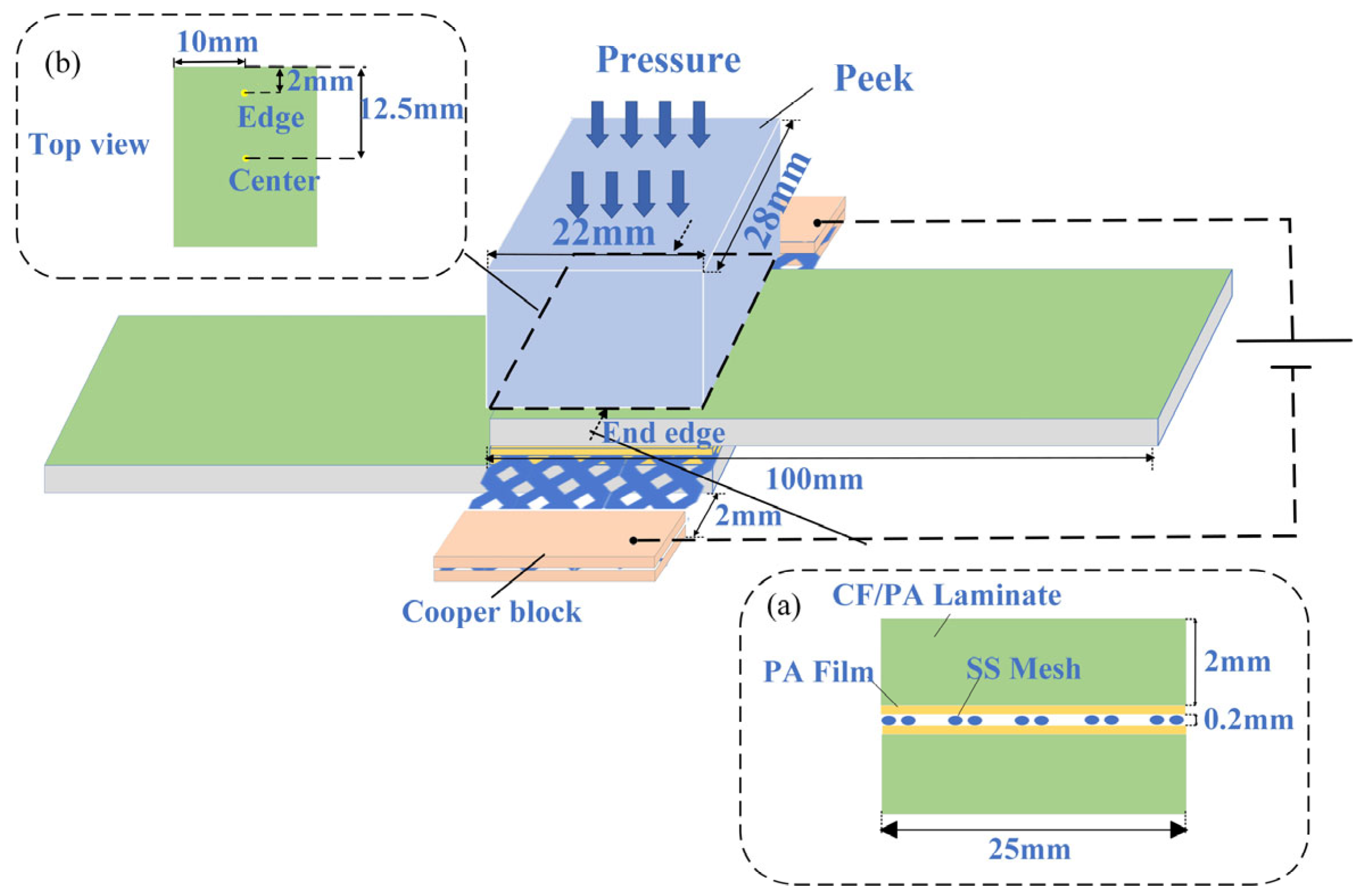
The schematic diagram of welding setup is shown in Figure 3. Two CF/PA6 laminates were welded in a lap-shear configuration, and the overlap area was 25 mm × 20 mm. PA6 films were placed between the SSM and the CF/PA6 laminates, as shown in Figure 3. The SSM was clamped between two copper blocks at both ends and connected to the positive and negative terminals of the power supply (Aikedes IT-9000, ITECH Electronic Co., Ltd., Nanjing, China). The clamping pressure on the SSM by the copper blocks at both ends was 0.5 MPa, controlled by a torque wrench [23]. A PEEK insulation block was placed on the overlapped area’s top surface to slow the heat dissipation during welding, and welding pressure was applied to it.
The welding current, welding pressure, welding time, and film thicknesses used in this study are listed in Table 1, Table 2 and Table 3. The selection ranges for welding parameters are determined through preliminary experiments. For all the cases, the welding pressure was continuously applied to the welding materials for 55 s (holding time) after the welding current was cut off to ensure a tight bond at the weld interface. Four samples were welded for each group of welding parameters, where three samples were used to measure the LSS of the joints and one sample was used for the macro- and micro-structure observation. The influence of welding current, welding time, and welding pressure on the LSS was investigated in this study through the analysis of macroscopic surface morphology and fracture morphology of welded joints. Meanwhile, the variation patterns of tensile curves were explained by combining the characteristics of cross-sectional weld morphologies. On this basis, the influence of film thickness on LSS was investigated.

2.3. Morphology Characterization and Mechanical Testing

The macroscopic morphology and microstructural features on the cross-section of welded joints were observed by a super-depth-of-field microscope (Zeiss Smartzoom5, Carl Zeiss Suzhou Co., Ltd., Suzhou, China) and an optical microscope (Zeiss Axio Vert. A1, Carl Zeiss Suzhou Co., Ltd., Suzhou, China), respectively. Lap-shear testing was conducted on a universal tensile testing machine (TSE105D, Shenzhen Wance Testing Machine Co., Ltd., Shenzhen, China) to obtain the LSS of welded joints. Scanning electron microscopy (SEM, Thermo Fisher Scientific, Waltham, MA, USA) was employed to examine the fracture surfaces after mechanical testing. Thermal histories of the center and edge of the overlapped area were measured by Type K thermocouples (OMEGA CHAL-005, OMEGA Engineering, Inc., Norwalk, CT, USA), and the locations of the thermocouples are shown in Figure 3b.

3. Results and Discussion

3.1. Effect of Welding Pressure on the Joint Performance

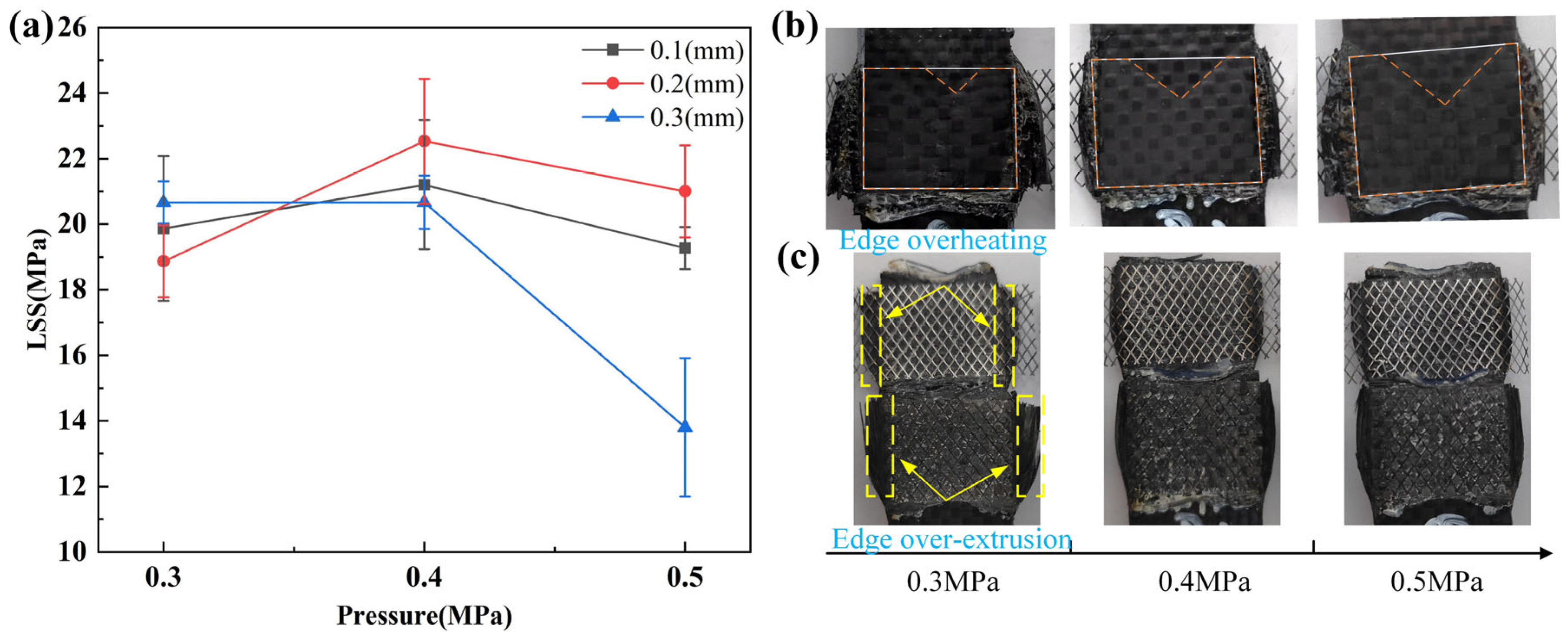
The effect of welding pressure on the joints’ LSS is shown in Figure 4a. It shows that the joint strength first increased and then decreased with increasing welding pressure. The maximum LSS reached 24.4 MPa when a 0.2-mm-thick PA6 film was used. The macroscopic surface morphologies and fracture surface morphologies of the welded joints under different welding pressures are shown in Figure 4b,c. As shown in Figure 4b, the area enclosed by the orange line is defined as the heat-affected zone (HAZ). The HAZ refers to the region where the specimen surface’s color changes due to heating. The temperature field at the resistance welding interface exhibits non-uniformity, resulting in a spindle-shaped temperature distribution during the welding process [3]. The heat generated at the welding interface is transferred along the thickness direction, resulting in a temperature field distribution on the specimen surface at the welded region that mirrors the temperature at the welding interface. Therefore, the HAZ can be observed based on the color change of the specimen surface. It can be seen that the area of the HAZ gradually decreased as the welding pressure increased. Two possible reasons contribute to this phenomenon: first, the increasing of welding pressure made the contact between the pressure block and the laminate surface tighter, which helps to improve heat dissipation; second, the increasing of pressure caused the excessive molten resin to be extruded from the welding interface, thereby taking away a lot of heat. Both factors contributed to a decrease in the total heat absorbed by the workpiece. Figure 4c shows the fracture surfaces of joints made with different welding pressure. It can be seen that the resin on both sides of the joint appeared yellow. This yellow appearance indicates that the resin in the edge areas has overheated and decomposed, or that residual water is present in the resin.
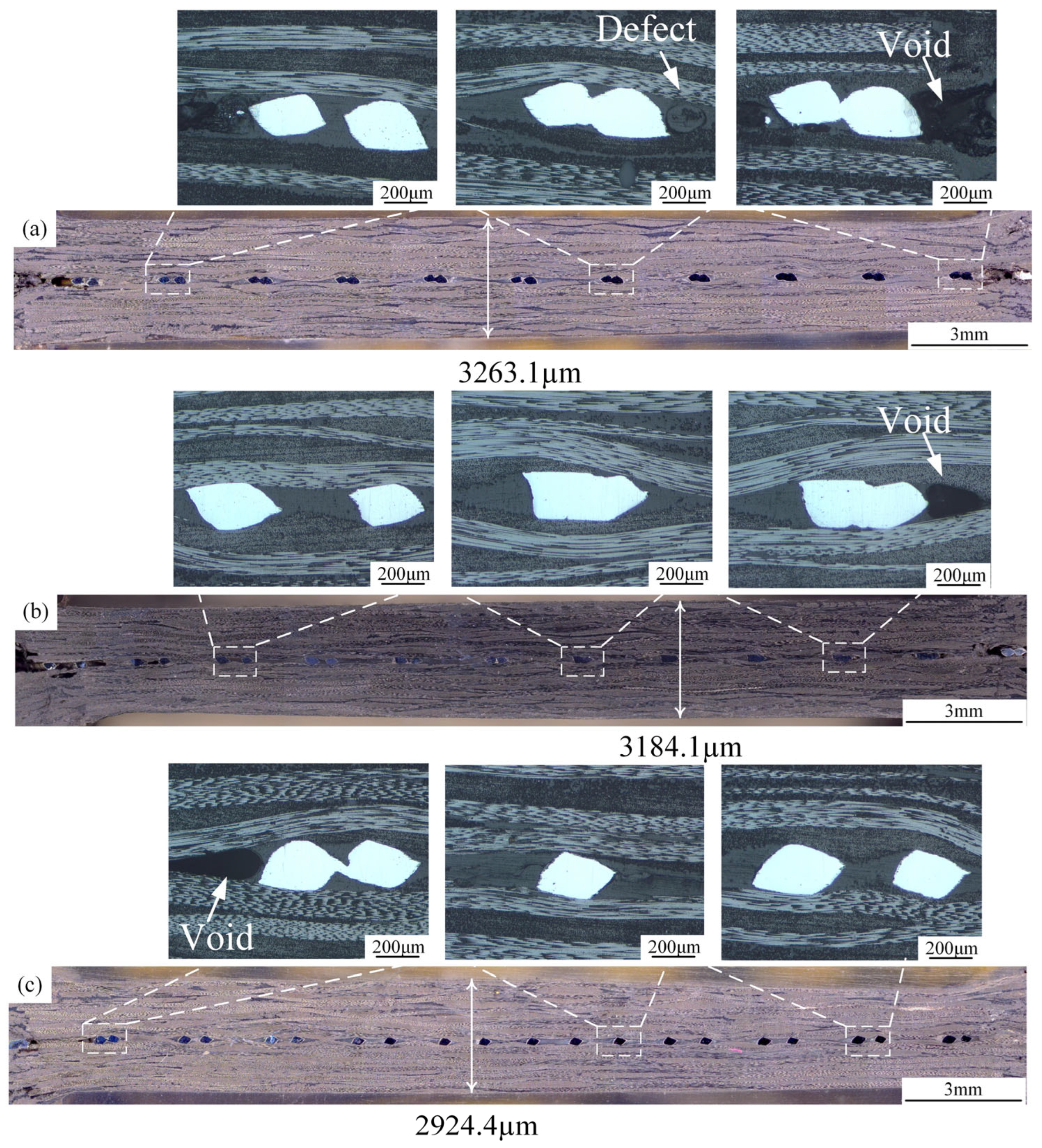
The cross-sectional morphologies of joints made with 0.2-mm-thick PA6 films are presented in Figure 5a–c. Void defects can be observed in the edge and central regions at a 0.3 MPa welding pressure. This indicates that a 0.3 MPa welding pressure was insufficient for promoting the resin flow along the welding interface and led to relatively low LSS. When the welding pressure was 0.4 MPa, the void defects were relatively reduced which enhanced the joint strength. When the welding pressure reached 0.5 MPa, although the void defects were also reduced, significant thinning can be observed in the joint (decreased from 3263.1 μm to 2924.4 μm as marked in Figure 5). This thinning led to a decrease in resin content at the welding interface, resulting in weak interfacial bonding between the two workpieces. In addition, the resin flow at the welding interface can also cause fiber misalignment and adversely affect the joint lap shear strength.

3.2. Effect of Welding Time on the Joint Performance

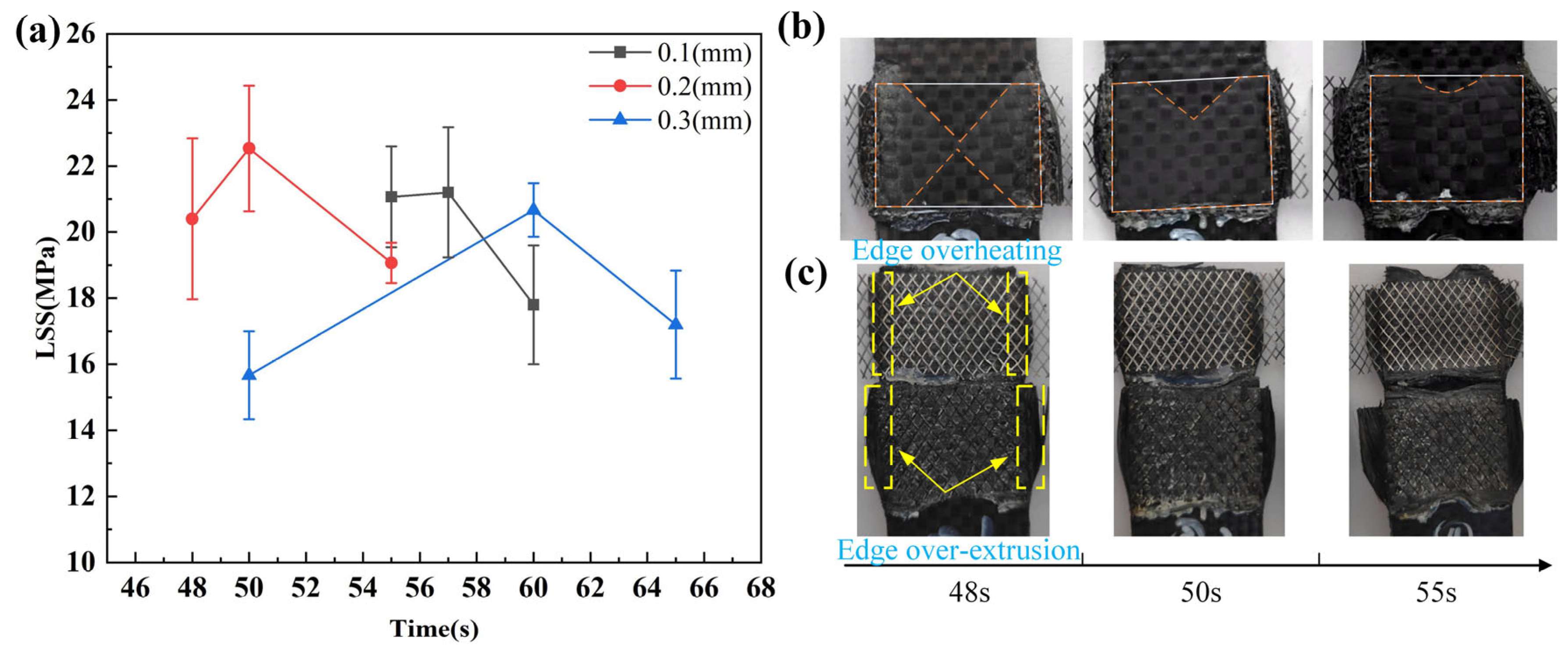
The relationship between welding time and joint strength is shown in Figure 6a. The joint strength increased than decreased with the welding time extended for all three thickness of films. As shown in Figure 6a, the joint achieved optimal condition in the shortest time when using a 0.2-mm-thick film, while the longest welding time was required for a 0.3-mm-thick film. Generally, thicker films require more heat to melt. Therefore, theoretically, under identical welding current and pressure conditions, the welding time for 0.1-mm-, 0.2-mm-, and 0.3-mm-thick films should increase progressively. However, experimental results indicate that the 0.1-mm-thick film requires a longer welding time than the 0.2-mm-thick film. This may be attributed to the rapid extrusion of the melted 0.1-mm-thick film from the joint, which carries away heat and consequently necessitates a longer welding duration. The maximum LSS reached 24.4 MPa when the 0.2-mm-thick PA6 films were used and therefore, the joints made with 0.2-mm-thick PA6 films will be further investigated. Figure 6b,c shows the surface morphologies of joints made with 0.2-mm-thick PA6 films. The HAZ area increased as the welding proceeded as shown in Figure 6b, indicating an increase in heat input. The resin on both sides of the joint appeared yellow, shown in Figure 6c.
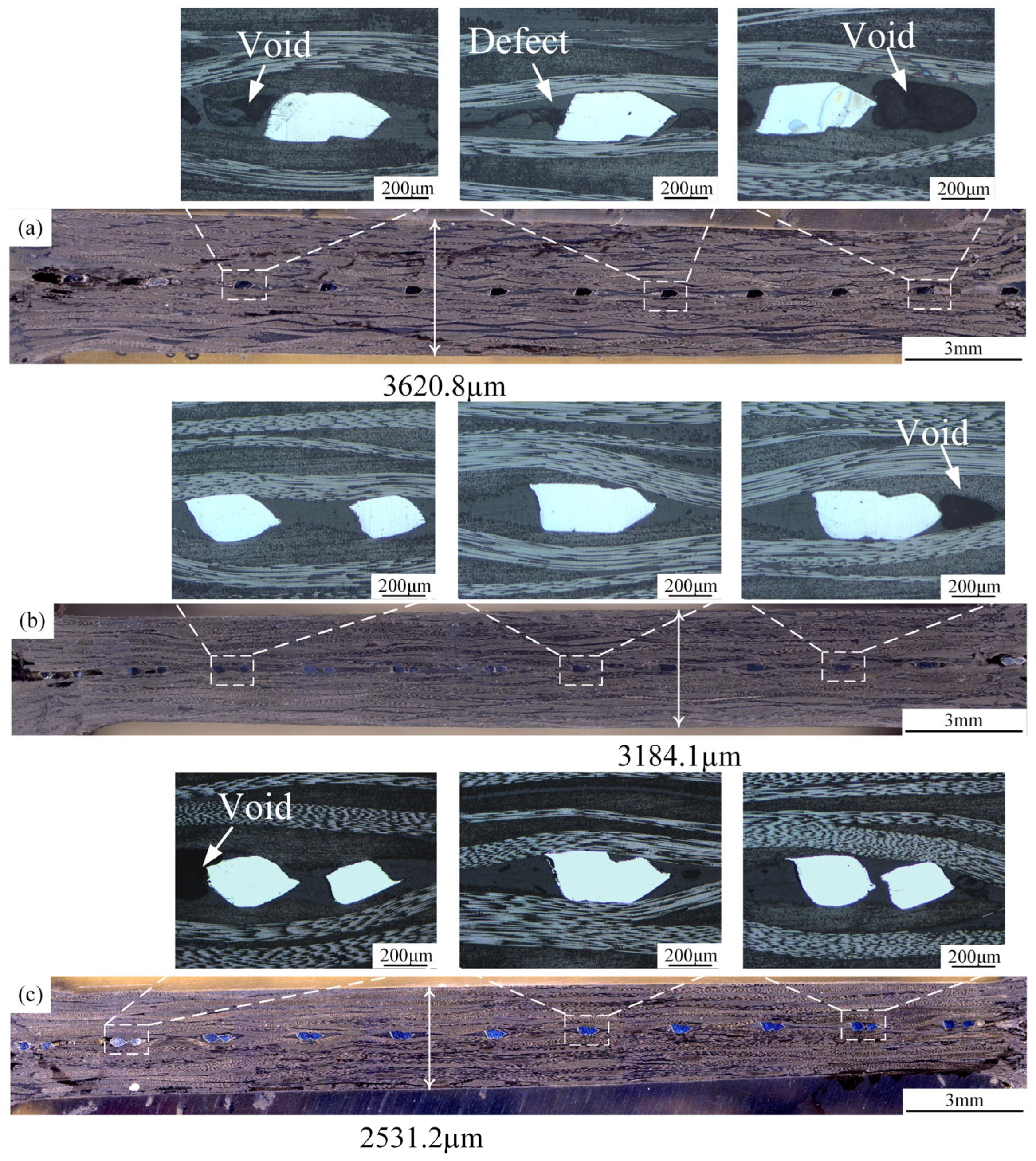
The effect of welding time on the cross-sectional morphologies of joints made with 0.2-mm-thick PA6 films are presented in Figure 7. As shown in Figure 7a, numerous voids are present in the central region. These defects were caused by insufficient resin flow. This indicates that low strength resulted from inadequate heat generation by the metal mesh. As welding time increased, a reduction in void defects within the joint could be seen (Figure 7b,c). However, the joint strength severely declined when the welding time reached 55 s. It can be observed that there is significant thinning of the joint (reduced from 3620.8 μm at 50 s to 2531.2 μm at 55 s). This excessive thinning negatively impacted the joint strength.

3.3. Effect of Welding Current on the Joint Performance

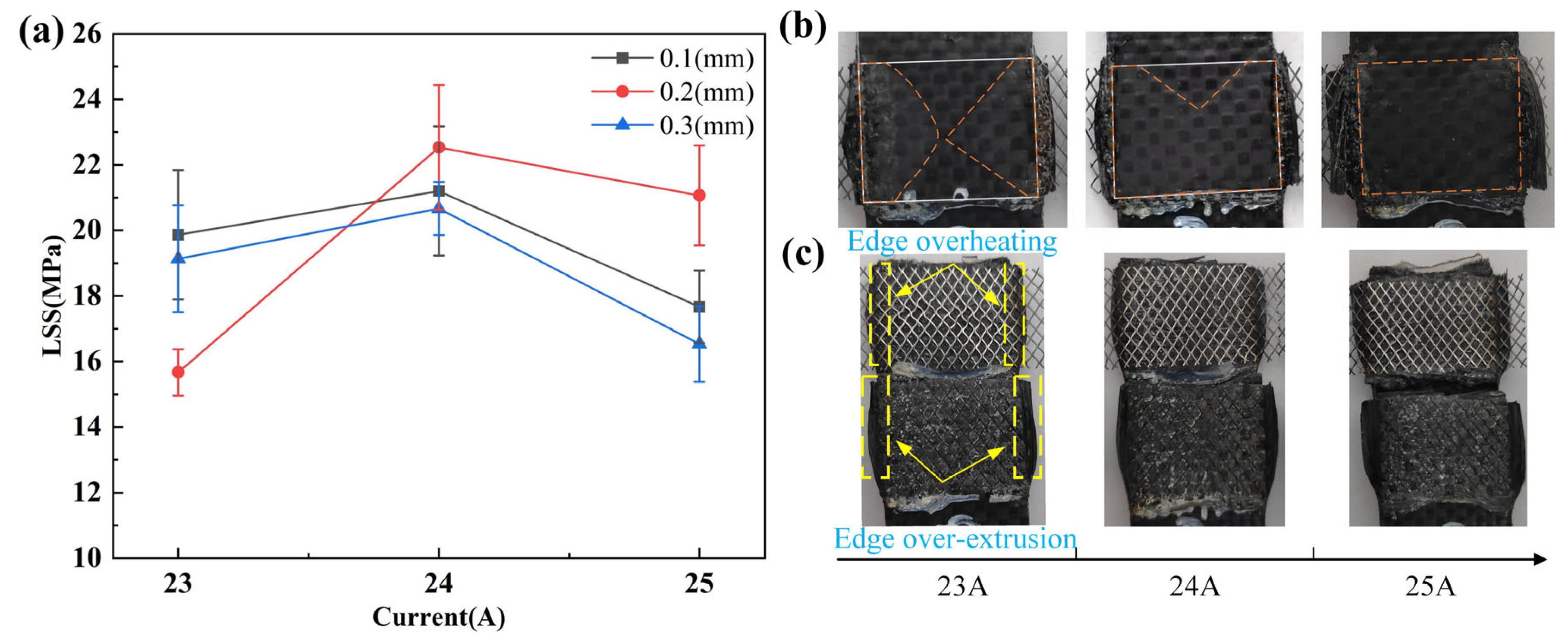
The relationship between welding current and joint strength is shown in Figure 8a. The joint strength first increased then decreased with increasing welding current. The maximum LSS reached 24.4 MPa when a 0.2-mm-thick PA6 film was used. As can be seen, even a 1 A change in welding current can cause a significant change in joint strength, indicating that the joint strength is very sensitive to the welding current. This is mainly because Joule heating is proportional to the square of the welding current (Q = I2RT). Figure 8b,c shows the surface morphologies of joints made with 0.2-mm-thick PA6 films. The HAZ area increased as the welding proceeded as shown in Figure 8b, indicating an increase in heat input. The resin on both sides of the joint appeared yellow, shown in Figure 8c. This trend is the same as the trend of welding time variation. Figure 9 shows a decreasing trend of joint thickness with an increasing welding current.
Figure 7. Macro- and micro-cross-sectional morphologies of joints made with a welding time of (a) 48 s; (b) 50 s; and (c) 55 s (film thickness 0.2 mm, welding current 24 A, welding pressure 0.4 MPa).
Jcs 10 00181 g007
Figure 8. The effect of the welding current on the (a) LSS of joints made with different film thicknesses, (b) macroscopic surface morphologies of joints made with 0.2 mm-thick PA6 films, and (c) fracture surfaces of joints made with a 0.2-mm-thick PA6 film.
Jcs 10 00181 g008
Figure 9. Macro- and micro-cross-sectional morphologies of joints made with a welding pressure of (a) 23 A; (b) 24 A; and (c) 25 A (film thickness 0.2 mm, welding time 50 s, welding pressure 0.4 MPa).
Jcs 10 00181 g009

3.4. Effect of PA6 Film Thickness on the Joint Performance

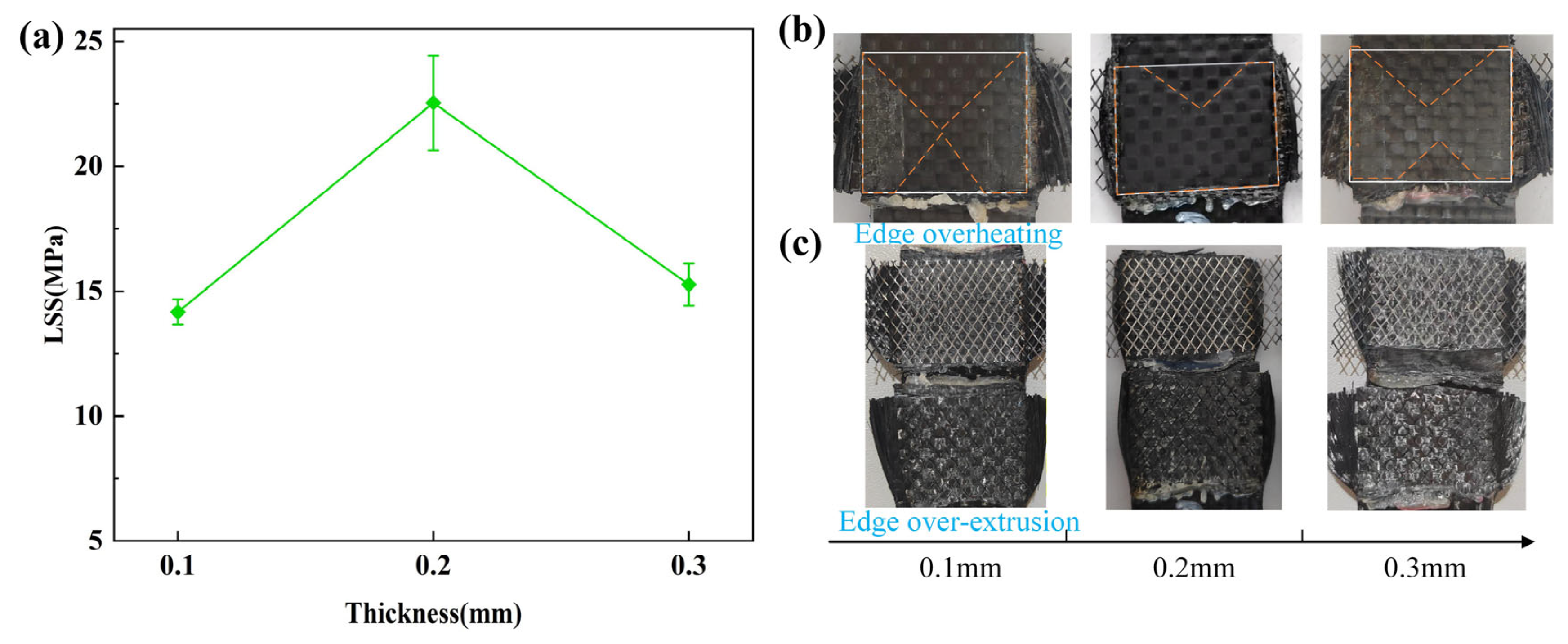
As shown in Figure 10a, the influence of PA6 film thickness on joint strength exhibited a trend where joint strength first increased and then decreased with the increasing of film thickness. The highest joint strength was obtained at a PA6 film thickness of 0.2 mm.
As shown in Figure 10b, when the welding parameters were 24 A, 0.4 MPa, and 50 s, a relatively small HAZ can be seen on the joint surface of PA6 films with thicknesses of 0.1 mm and 0.3 mm, with a gradient decrease observed from the edge to the center region. This may be because when the film was very thin, it melted quickly and was extruded, thus carrying away heat from the welding interface; while when the film was thicker, it absorbed a large amount of heat, resulting in insufficient heat absorption by the substrates. The fracture surfaces show that the interfacial bonding of the joints made with 0.1-and 0.3-mm-thick films was insufficient, as shown in Figure 10c.
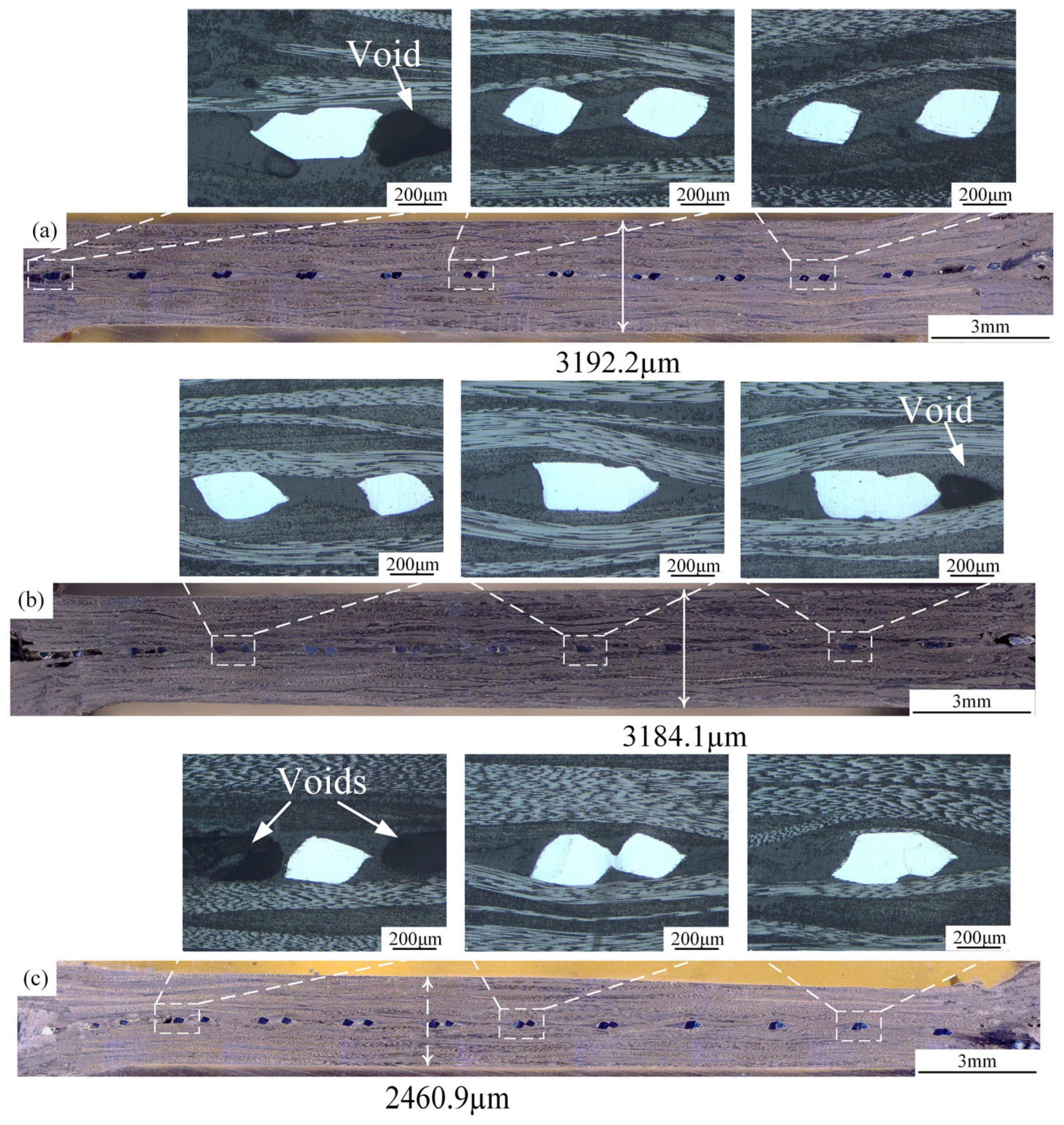
As shown in Figure 11, the joint made with 0.1-mm-thick PA6 films exhibited poor interfacial bonding. In contrast to the central region containing areas of incomplete bonding, the edge regions of the joint are characterized by numerous voids. The joint made with 0.3 mm-thick PA6 films is characterized by sound central bonding, with numerous voids located near the edges. The joint thicknesses were 3407.2 μm, 3184.1 μm, and 2745.3 μm for the 0.1-mm, 0.2-mm, and 0.3-mm-thick PA6 film specimens, respectively. This trend is attributed to exacerbated joint thinning caused by increased film thickness under identical welding parameters. This phenomenon is further explained by the significant impact of elevated resin content at the joint interface, combined with resin flow under pressure, leading to altered post-weld joint dimensions and modified interface bonding effectiveness.
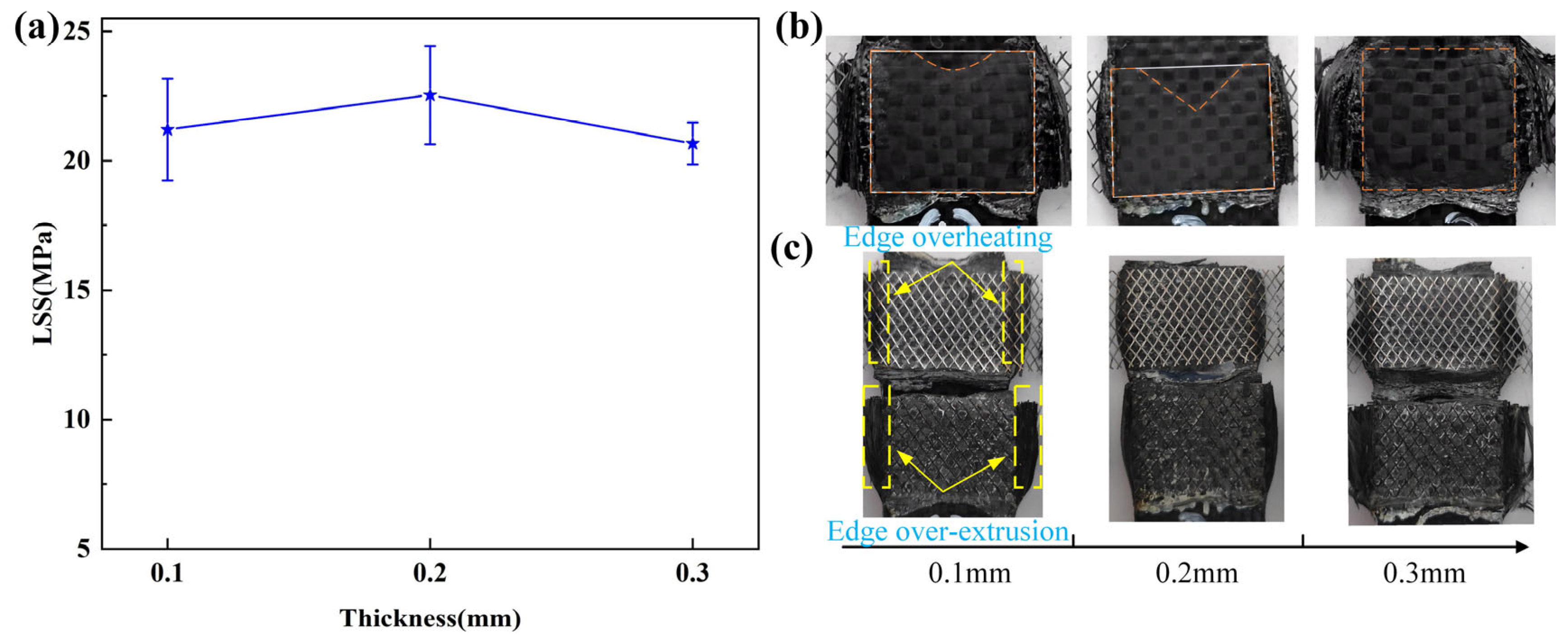
The LSS comparison of workpieces under their respective optimal welding parameters for joints made with different thicknesses PA6 films is shown in Figure 12a. Figure 12b shows the joint surface morphology. At a PA6 film thickness of 0.2 mm, the HAZ area on the workpiece surface was the smallest. At 0.3 mm thickness, the HAZ covered the entire lap joint surface, while the 0.1 mm thickness exhibited an intermediate effect.
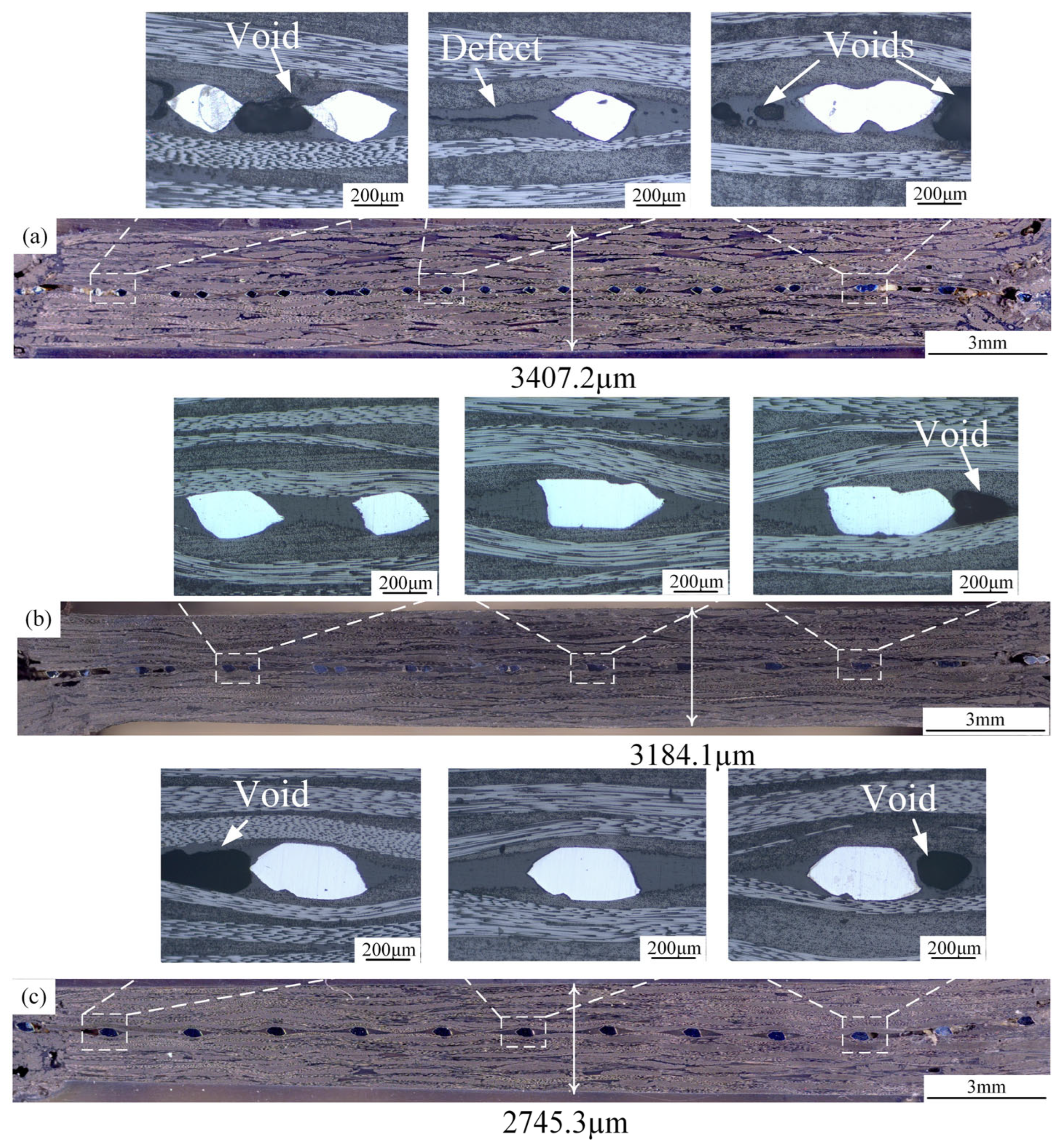
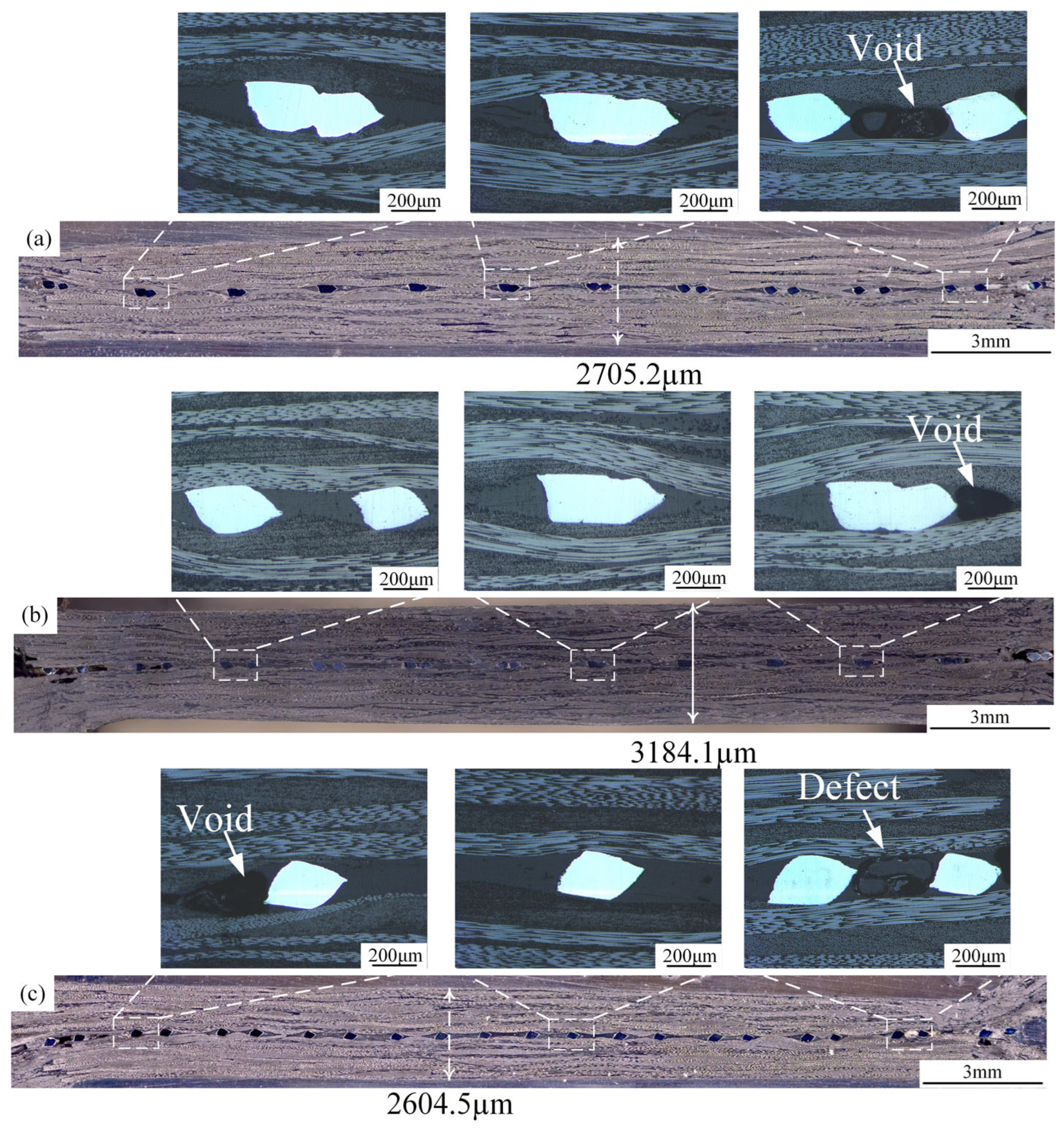
Figure 13 reveals fewer void defects in the central regions of specimens with all three film thicknesses. However, at 0.1 mm and 0.3 mm PA film thicknesses, the joint thicknesses, in Figure 13a,c, were 2705.2 μm and 2604.5 μm respectively, indicating joint thinning. For 0.1-mm-thick films, the rapid extrusion of molten material conducts heat away, requiring longer welding times and causing significant joint thinning. At the same time, thinner PA6 films caused the CF/PA6 matrix resin to contact the SS mesh earlier, leading to severe melting of the base resin. Under pressure, this causes significant joint thinning. When the film thickness was 0.3 mm, the optimal welding time was 60 s. The HE generated more heat, and the increased film thickness led to a higher melt content. Simultaneously, resin flow at the weld interface was intensified by the pressure, leading to extrusion of resin from the overlapped area. Consequently, more severe thinning exhibited in this case.
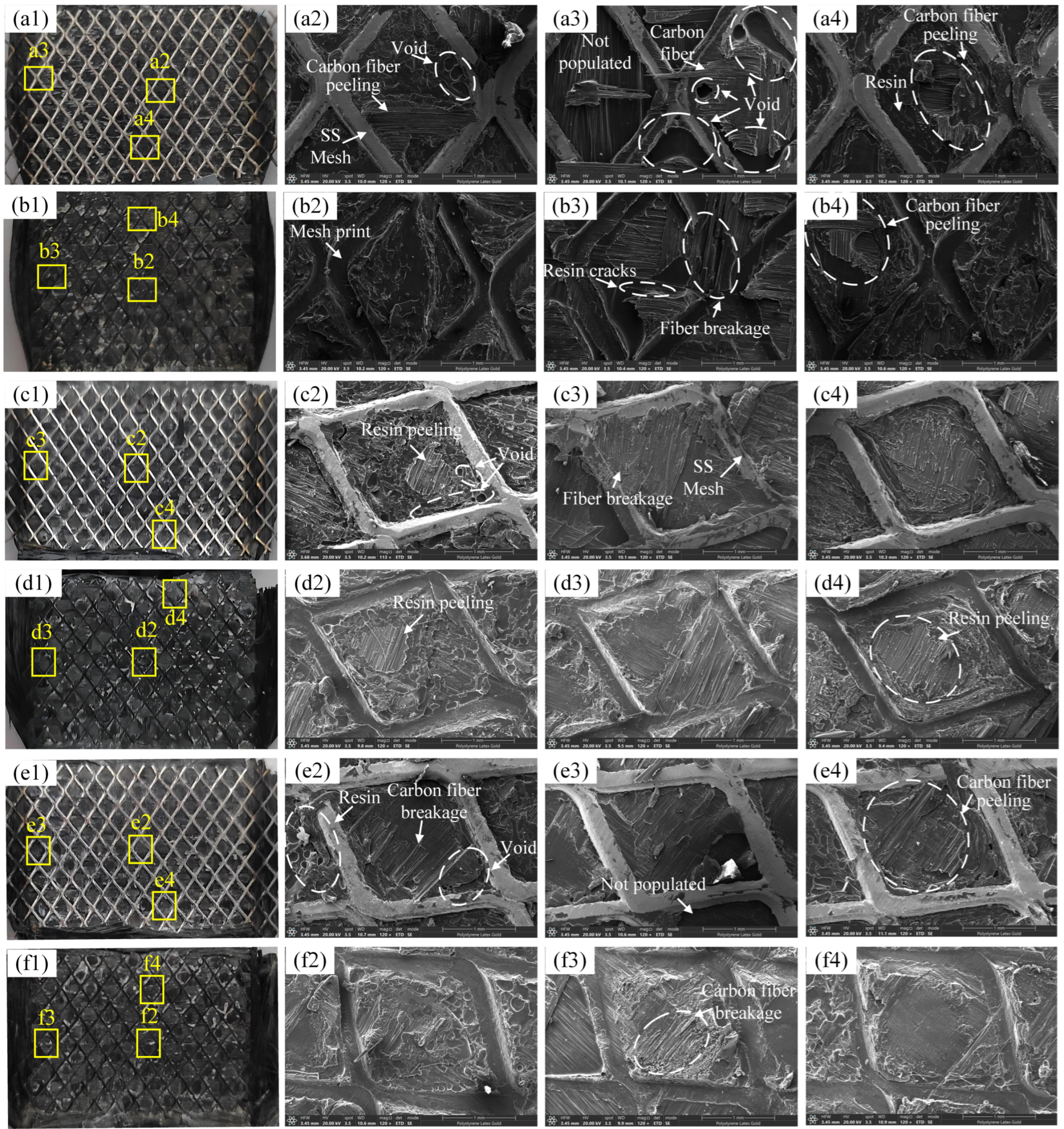
Figure 14 shows the SEM fracture morphologies of joints made with different thicknesses of films. Figure 14(a2,b2) reveals minor voids and extensive fiber peeling areas at the meshes in the central region of the joint made with 0.1 mm-thick PA6 films. The fiber fracture pattern exhibited block-like peeling, with severe damage to continuous fibers. Figure 14(c2,d2) reveals some voids and resin flow traces at the meshes in the central region of the joint made with 0.2 mm-thick PA6 films. Some exposed fibers can be observed in the center region of the mesh hole. These exposed fibers are continuous without breaks, and the delamination areas show resin peeling from the fibers, indicating effective bonding between interfaces. Figure 14(e2,f2) reveal only a few voids at the meshes in the central region of the joint made with 0.3 mm-thick PA6 films, with the mesh hole area fully filled by resin. Examination of the interior of the mesh hole regions reveals distinct fiber fractures with a block-like delamination pattern [24,25,26].
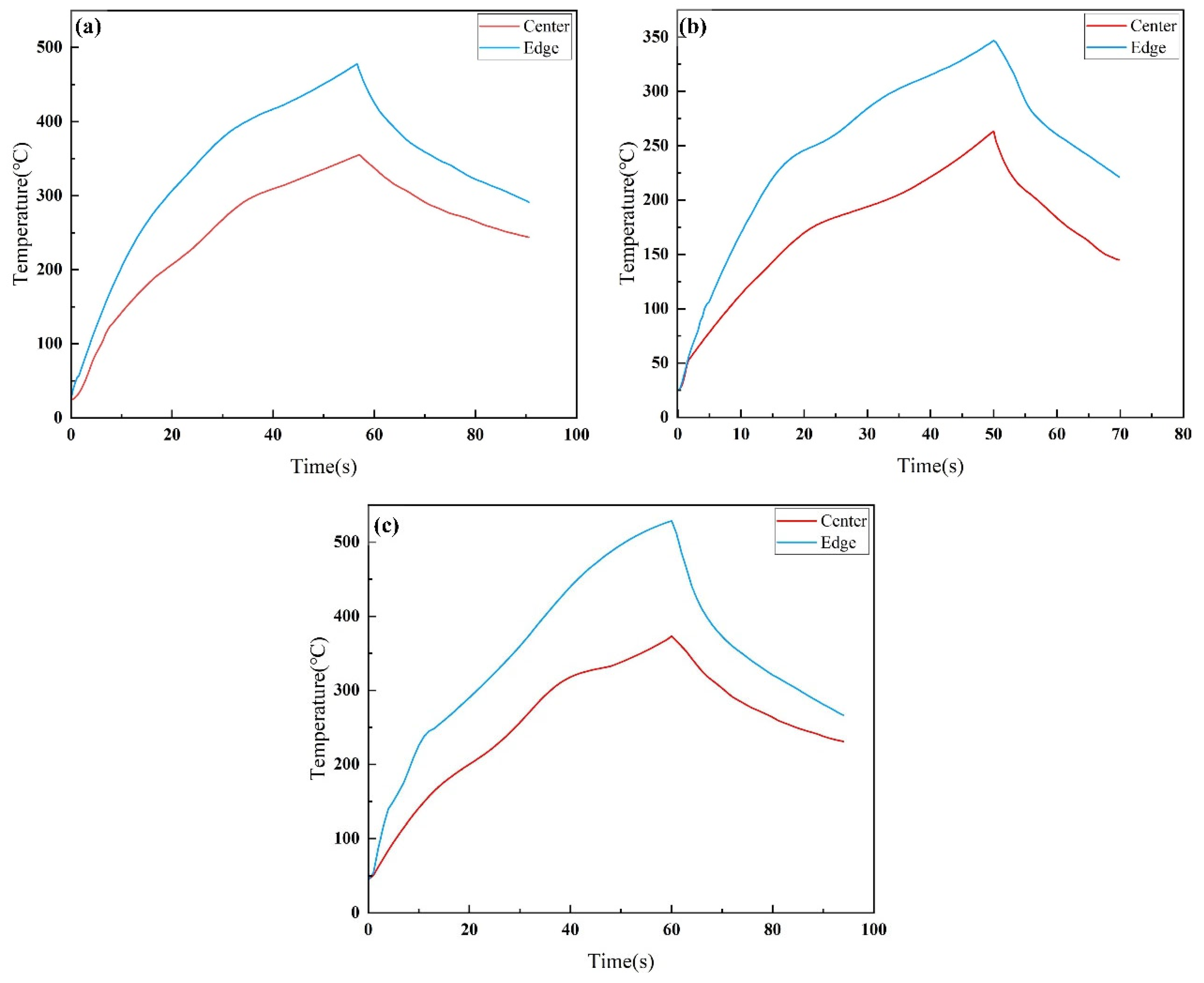
SEM analysis of the central joint region under optimal welding parameters for PA6 films of varying thicknesses revealed block-like fiber fractures and minor voids in the central region of joints using 0.1-mm-thick PA6 films. Thermocouple temperature measurements (Figure 15a) indicated a peak temperature of 355.2 °C in the central region, exceeding the thermal decomposition temperature of PA6. This thermal decomposition of resin generated voids. The matrix resin melted and flew under heat and pressure, leading to extrusion. The reduced resin content caused fiber overheating and oxidation, increasing brittleness and diminishing the reinforcing effect on the resin matrix, thereby degrading the joint’s mechanical property. As shown in Figure 15c, a peak temperature of 372.9 °C was recorded in the central region of the joint made with 0.3-mm-thick PA6 films, exceeding that made with the 0.1-mm-thick films. Block-like fiber fractures and voids are attributed to analogous causes. Additionally, the molten resin content is increased by the greater film thickness, leading to fewer voids within the mesh hole structure in the central region. As shown in Figure 15b, a peak temperature of 263.3 °C is recorded in the central region of the joint made with 0.2-mm-thick PA6 films, below the PA6 thermal decomposition temperature. This observation supports the conclusion that voids are formed by air trapped during resin flow, cooling, and closure. The exposed fibers within the mesh hole resulted from partial resin peeling off the fibers under tensile stress, with the resin remnants accumulating in the corresponding areas of the opposite joint. The resins on both sides bond fully, while the fibers remain continuous and undamaged, thus maintaining effective reinforcement of the matrix.
Through scanning electron microscopy observation of the central joint area under optimal welding parameters for PA films of varying thicknesses, when the PA6 film was 0.1-mm-thick, Figure 14(a3,b3) reveals unfilled resin regions and numerous pores near the left edge area. For the 0.2-mm-thick PA6 films, Figure 14(c3,d3) reveals fully resin-filled mesh hole regions with fractured, delaminated carbon fibers on the surface, alongside partially unfilled areas. For the joint made with 0.3-mm-thick films, Figure 14(e3,f3) reveals well-filled resin in the central mesh hole regions of the edge areas, with fewer unfilled zones. However, multiple instances of fibrous block peeling are observed within the mesh hole regions. Furthermore, on the side of Figure 14(f3) without the SSM joint, fibers are extensively resin-coated, exhibiting numerous voids between resin and fibers. Block-like fiber peeling is present on the surface, with the detached fiber blocks containing significant resin.
Based on the temperature curves in Figure 15, the peak temperatures in the edge regions were found to exceed the thermal decomposition temperature of PA6. In Figure 15a, when the PA film thickness was 0.1 mm, the peak temperature in the edge region reached 477.9 °C. This phenomenon resulted from the edge effect in resistance welding, causing overheating and decomposition of resin in the edge region, forming voids. Simultaneously, molten resin was extruded from the edge region, creating unfused defects. Additionally, Figure 14(b3) shows deep mesh prints in the contact area between the matrix and the SSM, along with severe fiber breakage in the indentation region. Thinner resin films caused the SSM to contact the matrix resin too rapidly. The matrix resin melted and overheated, leading to decomposition. Fibers came into direct contact with the SSM, underwent thermal oxidation, and resulted in reduced joint performance. As shown in Figure 15b, when the PA film was 0.2-mm-thick, the peak temperature in the edge region reached 346.7 °C, exceeding the thermal decomposition temperature of PA6. This indicates that under a high temperature, the fiber matrix resin melted excessively and was extruded. When the PA6 film thickness was 0.3 mm, the thicker film resulted in greater resin melt volume, providing better resin filling within the mesh holes in the edge region. Simultaneously, thermocouple measurements in Figure 15c revealed that when the film thickness was 0.3 mm, the edge region temperature reached 528.7 °C—significantly exceeding PA6’s thermal decomposition temperature. This caused more severe thermal oxidation of the fibers, drastically reducing their reinforcing effect on the matrix resin.
Figure 14(a4,b4) reveals block-like fiber peeling within the SSM holes at the upper and lower edge regions of the 0.1-mm-thick PA film, with virtually no voids present. Figure 14(c4,d4) shows extensive areas of exposed fibers within the mesh holes at the upper and lower edge regions of the 0.2-mm-thick PA film. These exposed fiber regions exhibit continuity, indicating effective interfacial bonding. Figure 14(e4,f4) reveals that the SSM holes in the upper and lower edge regions of the 0.3-mm-thick PA film are fully filled with resin, with some exposed broken fibers present. These phenomena are essentially consistent with those observed in the central region and are attributed to the same generation mechanism.

4. Conclusions

This study used perforated SSM as the HE to investigate the influence of welding parameters and insulation layer thickness on the LSS of resistance welded CF/PA6 joints. The main conclusions can be summarized as follows.
(1) The LSS of joints first increased and then decreased with increasing welding pressure, welding time and welding current. As welding pressure, time, and current increased, porosity and unfused areas caused by insufficient resin flow decreased and the LSS of the joint increased. When welding pressure is excessive or welding heat input is too high (due to prolonged welding time or excessive welding current), the joint thickness will gradually decrease. Excessive thinning of the joint negatively impacted the joint strength and the LSS of the joint decreased.
(2) Under identical welding parameters, the LSS of the joint initially increased and then decreased with PA6 film thickness. The highest LSS was achieved with 0.2-mm-thick PA6 films. The optimal combination of welding parameters for 0.2-mm-thick PA6 film was determined as 24 A, 0.4 MPa, and 50 s, yielding a maximum LSS of 24.4 MPa. For PA6 films thinner or thicker than 0.2 mm, higher heat input is required to achieve effective interfacial bonding.
(3) The optimal welding procedure parameters for 0.1 mm and 0.3 mm PA6 films were 24 A, 0.4 MPa and 57 s, and 24 A, 0.4 MPa and 60 s, respectively. Under optimal parameters, the joint temperature significantly exceeded the thermal decomposition temperature of PA6. Overheating and decomposition in the joint region, particularly at the joint edges, resulted in void defects.
(4) The fracture mode was identified as blocky fiber peeling with compromised fiber continuity for the joints welded with 0.1-mm- and 0.3-mm-thick PA6 films. For the joints made with 0.2-mm-thick PA6 films, the fracture failure mode was characterized by resin peeling from the fiber surface.

Author Contributions

Conceptualization, S.A. and Y.L.; methodology, S.W., Y.Y. and Z.G.; formal analysis, S.W., Y.Y. and Y.L.; investigation, S.W., Y.Y. and Z.G.; writing—original draft preparation, S.W.; writing—review and editing, S.A. and Y.L.; visualization, S.W. and Y.Y.; supervision, S.A. and Y.L.; funding acquisition, Y.L. All authors have read and agreed to the published version of the manuscript.

Funding

This research was funded by the National Natural Science Foundation of China (52573046).

Data Availability Statement

The raw data supporting the conclusions of this article will be made available by the authors on request.

Conflicts of Interest

The authors declare no conflicts of interest.

References

  1. Liu, J.; Quan, D.; Scarselli, G.; Alderliesten, R.; Wang, H.; Zhao, G. Developments and future prospects of welding technology for carbon fiber thermoplastic composites. Compos. Part B Eng. 2025, 297, 112314. [Google Scholar] [CrossRef]
  2. Ageorges, C.; Ye, L. Resistance welding of thermosetting composite/thermoplastic composite joints. Compos. Part A Appl. Sci. Manuf. 2001, 32, 1603–1612. [Google Scholar] [CrossRef]
  3. Zhang, J.; Lin, G.; Vaidya, U.; Wang, H. Past, present and future prospective of global carbon fibre composite developments and applications. Compos. Part B Eng. 2023, 250, 110463. [Google Scholar]
  4. Dubé, M.; Hubert, P.; Yousefpour, A.; Denault, J. Resistance welding of thermoplastic composites skin/stringer joints. Compos. Part A Appl. Sci. Manuf. 2007, 38, 2541–2552. [Google Scholar] [CrossRef]
  5. Reis, J.P.; De Moura, M.; Samborski, S. Thermoplastic composites and their promising applications in joining and repair composites structures: A review. Materials 2020, 13, 5832. [Google Scholar] [CrossRef]
  6. Stavrov, D.; Bersee, H.E.N. Resistance welding of thermoplastic composites-an overview. Compos. Part A Appl. Sci. Manuf. 2005, 36, 39–54. [Google Scholar] [CrossRef]
  7. Yang, Y.; Wei, L.; Ao, S.; Li, Y. Numerical investigation on the ultrasonic spot welding of CF/PA6 with and without a blank holding force. J. Manuf. Process. 2025, 154, 270–282. [Google Scholar] [CrossRef]
  8. Shi, H.; Villegas, I.F.; Bersee, H.E. Analysis of void formation in thermoplastic composites during resistance welding. J. Thermoplast. Compos. Mater. 2017, 30, 1654–1674. [Google Scholar] [CrossRef]
  9. Stankiewicz, K.; Lipkowski, A.; Kowalczyk, P.; Giżyński, M.; Waśniewski, B. Resistance welding of thermoplastic composites, including welding to thermosets and metals: A review. Materials 2024, 17, 4797. [Google Scholar] [CrossRef]
  10. Ageorges, C.; Ye, L.; Hou, M. Experimental investigation of the resistance welding for thermoplastic-matrix composites. Part I Heat. Elem. Heat Transf. Compos. Sci. Technol. 2000, 60, 1027–1039. [Google Scholar] [CrossRef]
  11. Tanaka, K.; Nishikawa, T.; Aoto, K.; Katayama, T. Effect of carbon nanotube deposition time to the surface of carbon fibres on flexural strength of resistance welded carbon fibre reinforced thermoplastics using carbon nanotube grafted carbon fibre as heating element. J. Compos. Sci. 2019, 3, 9. [Google Scholar] [CrossRef]
  12. Schäfer, H.; Heimbs, S.; Schmidt, C. Parameter optimisation of resistance welding and separation process of thermoplastic composite joints using carbon-fibre-reinforced low-melting poly (aryl ether ketone)(CF/LM-PAEK). Mater. Des. 2025, 259, 114813. [Google Scholar] [CrossRef]
  13. Liu, S.; Wang, Y.; Wu, Z.; Li, J.; Li, Y. Enhancing resistance welding strength of carbon fiber/polycaprolactam thermoplastic composites through coupling agent-modified metal heating elements. Polym. Compos. 2025, 46, 3576–3594. [Google Scholar]
  14. Xiong, X.; Wang, D.; Wei, J.; Zhao, P.; Ren, R.; Dong, J.; Tian, L.; Wang, W.; Xu, C. Resistance welding of thermoplastics by carbon nanotube-grafted heating element. J. Adhes. Sci. Technol. 2021, 35, 1806–1819. [Google Scholar] [CrossRef]
  15. Yang, Y.; Wei, L.; Ao, S.; Li, Y. Advances in welding of poly (aryl ether ketone) (PAEK) polymers and carbon fiber-reinforced PAEK (CF/PAEK) composites. J. Mater. Res. Technol. 2025, 39, 9780–9798. [Google Scholar] [CrossRef]
  16. Dahl, E.; Schuermann, H.; Mittelstedt, C. A tailored heating element for resistance welding of complex shaped joining surfaces. J. Thermoplast. Compos. Mater. 2022, 35, 2552–2575. [Google Scholar] [CrossRef]
  17. Dubé, M.; Hubert, P.; Yousefpour, A.; Denault, J. Current leakage prevention in resistance welding of carbon fibre reinforced thermoplastics. Compos. Sci. Technol. 2008, 68, 1579–1587. [Google Scholar] [CrossRef]
  18. Brassard, D.; Dubé, M.; Tavares, J.R. Resistance welding of thermoplastic composites with a nanocomposite heating element. Compos. Part B Eng. 2019, 165, 779–784. [Google Scholar] [CrossRef]
  19. Koutras, N.; Villegas, I.F.; Benedictus, R. Influence of temperature on the strength of resistance welded glass fibre reinforced PPS joints. Compos. Part A Appl. Sci. Manuf. 2018, 105, 57–67. [Google Scholar] [CrossRef]
  20. Shi, H.E.N.; Villegas, I.F.; Bersee, H. Strength and failure modes in resistance welded thermoplastic composite joints: Effect of fibre–matrix adhesion and fibre orientation. Compos. Part A Appl. Sci. Manuf. 2013, 55, 1–10. [Google Scholar] [CrossRef]
  21. Sun, L.; Yang, M.; Zhang, M.; Liu, C.; Xu, J.; Chen, Y.; Jian, X. Synergy of carbon fiber fabric-based heating element and h-BN modified insulated film on resistance welding of thermoplastic composites. Mater. Lett. 2023, 349, 134685. [Google Scholar] [CrossRef]
  22. Zhang, X.; Feng, Z.; Su, J.; Han, X.; Ma, G.; Liu, F.; Chen, B.; Song, X.; Tan, C. Enhancing the thermal distribution homogenization and interfacial adhesion at induction welded composite interface by SCF reinforced thermoplastic layer. Thin-Walled Struct. 2026, 223, 114593. [Google Scholar] [CrossRef]
  23. Dubé, M.; Hubert, P.; Gallet, J.N.; Stavrov, D.; Bersee, H.E.; Yousefpour, A. Metal mesh heating element size effect in resistance welding of thermoplastic composites. J. Compos. Mater. 2012, 46, 911–919. [Google Scholar]
  24. Wang, T.; Zhang, Z.; Ao, S.; Wang, K.; Li, Y. Ultrasonic welding of continuous carbon fiber reinforced PEEK with embossed energy directors. J. Manuf. Process. 2024, 131, 256–269. [Google Scholar] [CrossRef]
  25. Dubé, M.; Hubert, P.; Gallet, J.N.; Stavrov, D.; Bersee, H.E.; Yousefpour, A. Fatigue performance characterisation of resistance-welded thermoplastic composites. Compos. Sci. Technol. 2008, 68, 1759–1765. [Google Scholar] [CrossRef]
  26. Warren, K.C.; ALopez-Anido, R.; Freund, A.L.; Dagher, H.J. Resistance welding of glass fiber reinforced PET: Effect of weld pressure and heating element geometry. J. Reinf. Plast. Compos. 2016, 35, 974–985. [Google Scholar] [CrossRef]
Figure 1. The cross-sectional morphology of the CF/PA6 laminates.
Jcs 10 00181 g001
Figure 2. The mesh size of the HE.
Jcs 10 00181 g002
Figure 3. Schematic diagram of the welding setup: (a) cross-sectional view of the stack of welding materials; (b) thermocouple measurement point.
Jcs 10 00181 g003
Figure 4. The effect of welding pressure on the (a) LSS of joints made with different film thickness, (b) macroscopic surface morphologies of joints made with 0.2-mm-thick PA6 films, and (c) fracture surfaces of joints made with a 0.2-mm-thick PA6 film.
Jcs 10 00181 g004
Figure 5. Macro- and micro-cross-sectional morphologies of joints made with the welding pressure of (a) 0.3 MPa; (b) 0.4 MPa; and (c) 0.5 MPa (film thickness 0.2 mm, welding current 24 A, welding time 50 s).
Jcs 10 00181 g005
Figure 6. The effect of welding time on the (a) LSS of joints made with different film thickness; (b) macroscopic surface morphologies of joints made with 0.2 mm-thick PA6 films, and (c) fracture surfaces of joints made with a 0.2-mm-thick PA6 film.
Jcs 10 00181 g006
Figure 10. The effect of film thickness on the (a) LSS of joints made with identical welding parameters (24 A, 0.4 MPa, 50 s), (b) macroscopic surface morphologies of joints, and (c) fracture surfaces of joints.
Jcs 10 00181 g010
Figure 11. Macro- and micro-cross-sectional morphologies of joints made with (a) 0.1-mm-thick PA6 films, (b) 0.2-mm-thick PA6 films, and (c) 0.3-mm-thick PA6 films (welding current 24 A, welding time 50 s, welding pressure 0.4 MPa).
Jcs 10 00181 g011
Figure 12. The effect of film thickness on the (a) LSS of joints made with their respective optimal welding parameters (0.1-mm-thick PA6 films (24 A, 57 s, 0.4 MPa), 0.2-mm-thick PA6 films (24 A, 50 s, 0.4 MPa) and 0.3-mm-thick PA6 films (24 A, 60 s, 0.4 MPa)), (b) macroscopic surface morphologies of joints, and (c) fracture surfaces of joints.
Jcs 10 00181 g012
Figure 13. Macro- and micro-cross-sectional morphologies of joints made with (a) 0.1-mm-thick PA6 films (24 A, 57 s, 0.4 MPa), (b) 0.2-mm-thick PA6 films (24 A, 50 s, 0.4 MPa) and (c) 0.3-mm-thick PA6 films (24 A, 60 s, 0.4 MPa).
Jcs 10 00181 g013
Figure 14. SEM fracture morphologies of joints made with (a1,b1) 0.1-mm-thick films; (c1,d1) 0.2-mm-thick films; and (e1,f1) 0.3-mm-thick films, where (a2a4) is the enlarged view of the area marked (a2), (a3), and (a4) in (a1), respectively; similar rules apply to (b2b4), (c2c4), (d2d4), (e2e4), and (f2f4).
Jcs 10 00181 g014
Figure 15. Thermocouple temperature measurement curves: (a) 0.1-mm-thick films; (b) 0.2-mm-thick films; and (c) 0.3-mm-thick films.
Jcs 10 00181 g015
Table 1. Welding parameters used for investigating the effect of welding pressure on the joint performance.
PA6 Film Thickness/mmWelding Current/AWelding Pressure/MPaWelding Time/s
0.1240.357
0.1240.457
0.1240.557
0.2240.350
0.2240.450
0.2240.550
0.3240.360
0.3240.460
0.3240.560
Table 2. Welding parameters used for investigating the effect of welding time on the joint performance.
PA6 Film Thickness/mmWelding Current/AWelding Pressure/MPaWelding Time/s
0.1240.455
0.1240.457
0.1240.460
0.2240.448
0.2240.450
0.2240.455
0.3240.450
0.3240.460
0.3240.465
Table 3. Welding parameters used for investigating the effect of welding current on the joint performance.
PA6 Film Thickness/mmWelding Current/AWelding Pressure/MPaWelding Time/s
0.1230.457
0.1240.457
0.1250.457
0.2230.450
0.2240.450
0.2250.450
0.3230.460
0.3240.460
0.3250.460
Disclaimer/Publisher’s Note: The statements, opinions and data contained in all publications are solely those of the individual author(s) and contributor(s) and not of MDPI and/or the editor(s). MDPI and/or the editor(s) disclaim responsibility for any injury to people or property resulting from any ideas, methods, instructions or products referred to in the content.