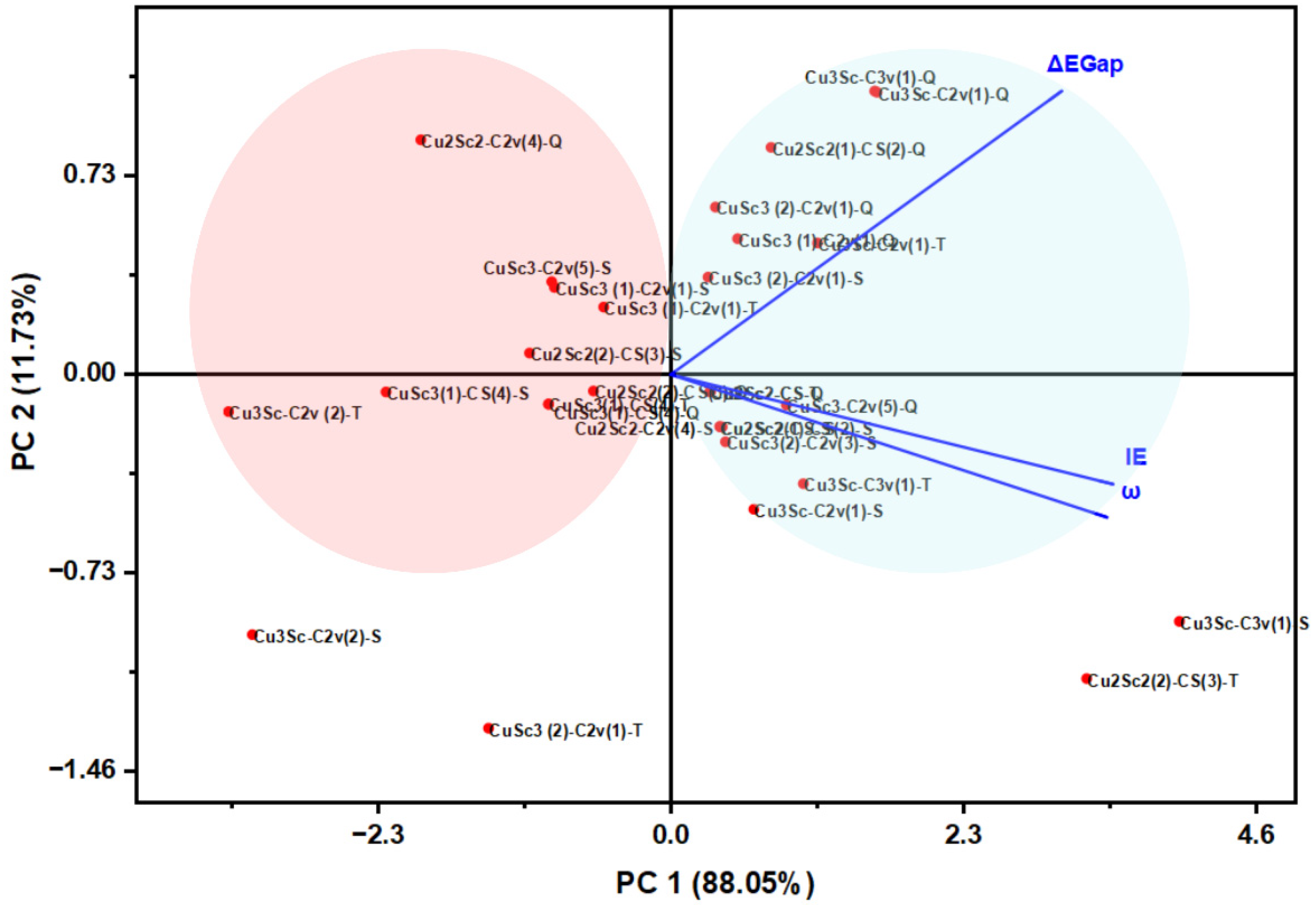
This section presents the comprehensive analysis of electronic stability and global reactivity of CuxScγ nanoclusters (x + y = 4) using descriptors derived from conceptual DFT, advanced statistical analyses (ANOVA, PCA), and structure–property relationships supported by multiscale calculations.
3.1. Global Reactivity Descriptors
Global reactivity descriptors for CuxScγ (x + y = 4) nanoclusters at different temperatures (298, 350, and 400 K) show how these change in magnitude depending on composition and temperature, giving quantitative information on the electronic stability, chemical toughness, and donor–acceptor capacity of the clusters.
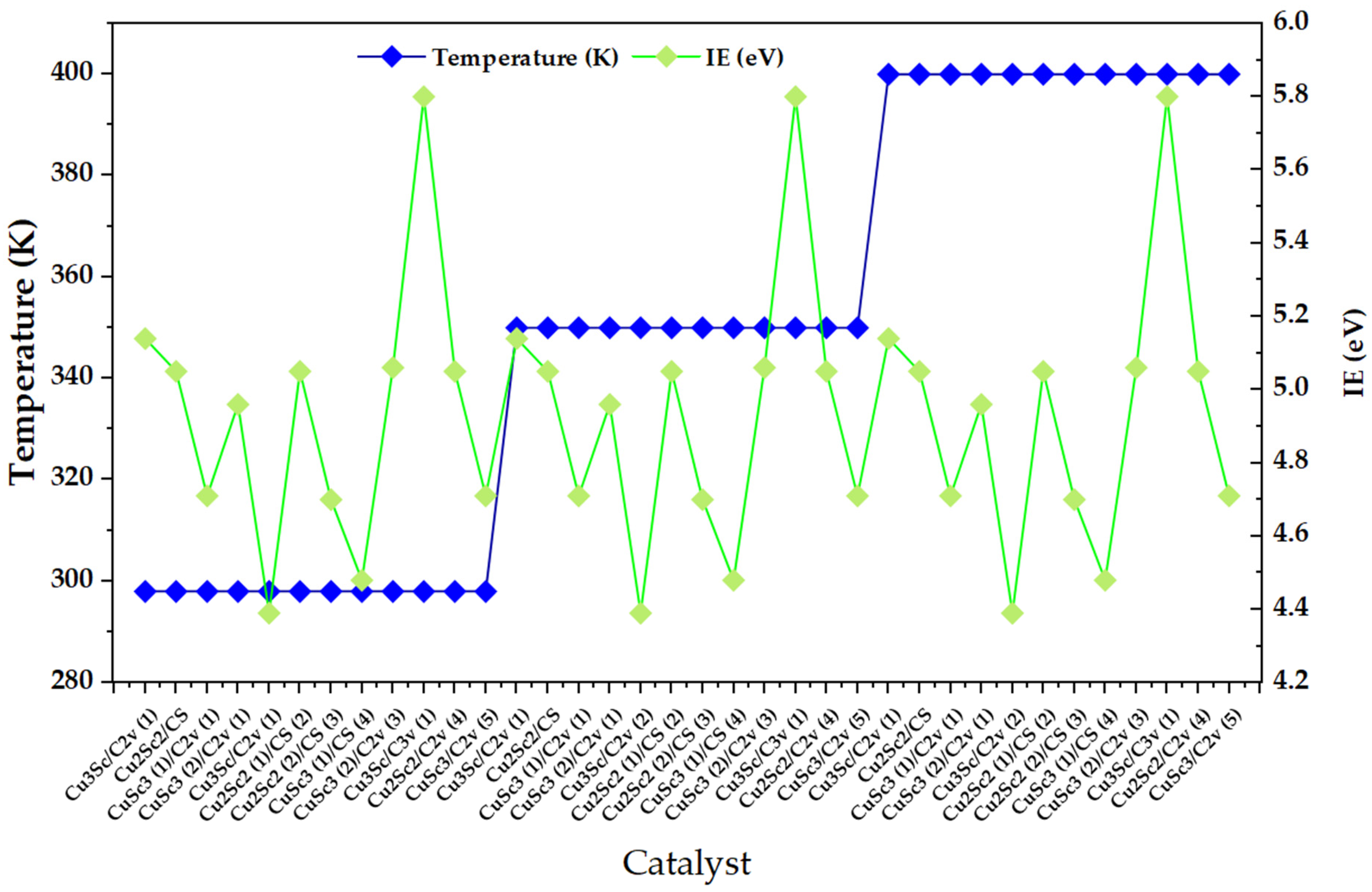
The most obvious feature is that the dispersion of
IE within each thermal block (4.4–5.9 eV, with well-defined maxima and minima) is much greater than the net change in
IE when moving from 298 to 350 and then to 400 K for the same pattern of configurations, which remains qualitatively similar at all three temperature levels (
Figure 1). This suggests that, in the 298–400 K window,
IE is mainly controlled by configuration-dependent factors (composition, symmetry, and multiplicity/spin state) and that temperature acts as a secondary modulator.
This reading is consistent with experimental studies on metal nanoclusters where
IE shows an intrinsic but subtle thermal dependence, typically an average decrease with temperature, attributed to the interaction between the ionic framework and electronic states, while variations between clusters remain dominated by their discrete electronic structure and isomeric “landscape.” In particular, Halder and Kresin report that the ionization energies of clusters show a predominant decrease with temperature and that the thermal effect, although measurable, is small compared to the variability between clusters, with a more pronounced response in small clusters [
16]. In parallel, recent work on Cu clusters under finite temperature conditions emphasizes that configurational dynamics and the sampling of metastable isomers can alter trends with respect to static approximations, and that temperature can couple with structural rearrangements (including adsorption/charging-induced solid–liquid transitions), affecting thermodynamic properties and reactivity [
17].
The
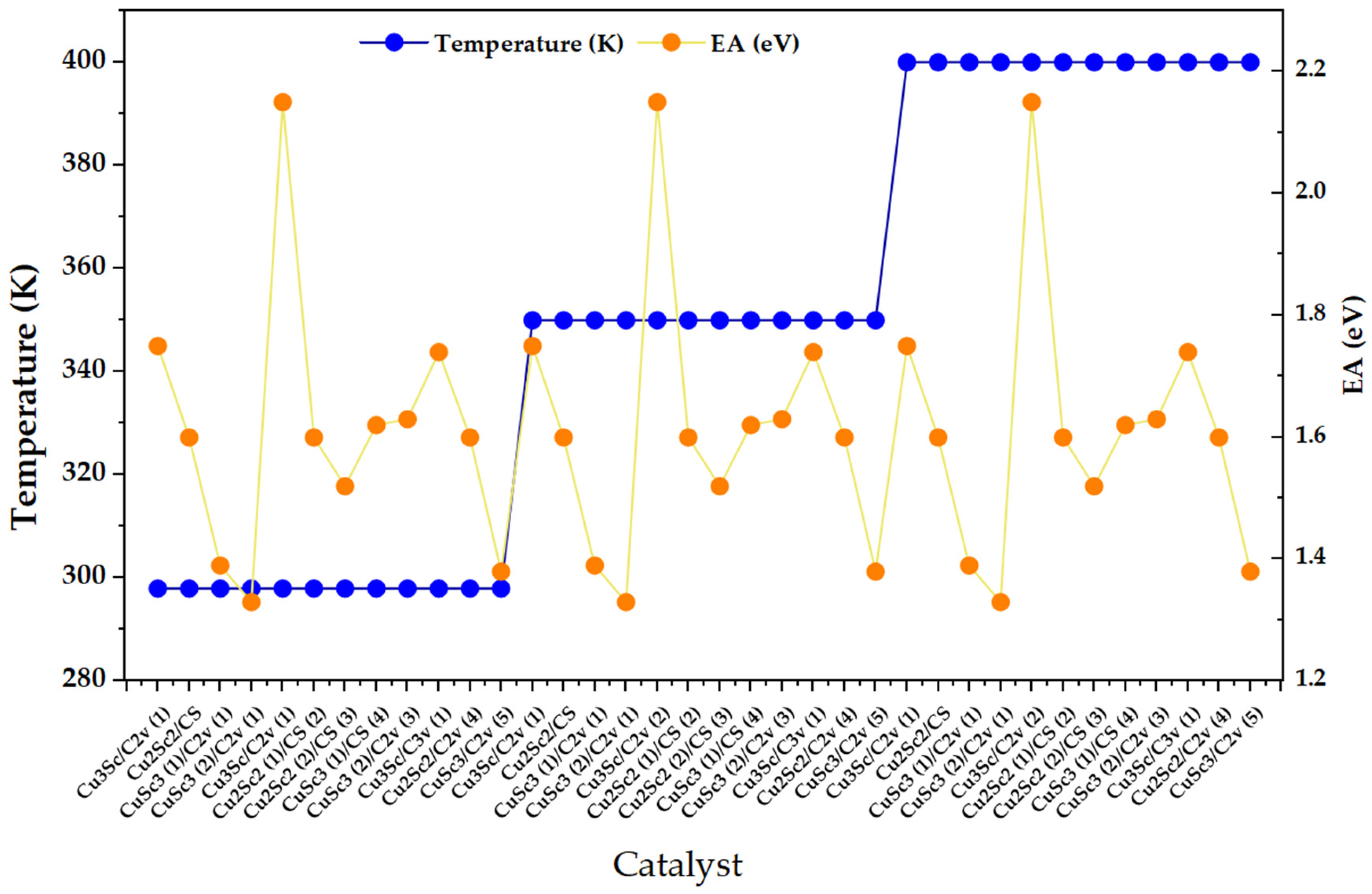
Figure 2 clearly shows three temperature plateaus (298, 350, and 400 K), indicating that the set of catalysts is presented in three consecutive blocks. Within each block, the
EA (right axis) exhibits a marked oscillatory variation between configurations, with maxima close to 2.2 eV and minima around 1.3–1.4 eV, without an obvious monotonic shift when moving from 298 to 350 and then to 400 K. This pattern suggests that, in the range evaluated, the
EA is dominated by the structural/electronic identity of the nanocluster rather than by temperature, consistent with reports where the electronic thresholds of metal clusters show intrinsically small thermal changes in the absence of major structural transformations, as they are governed by effects such as thermal expansion [
18].
In parallel,
EA peaks can be interpreted as configurations with particularly high acceptor capacity, consistent with reports where high electronic affinity units/ligands act as effective acceptors and generate charge transfer transitions (donor-acceptor) when donors and acceptors are orbitally/sectionally differentiated [
19].
In
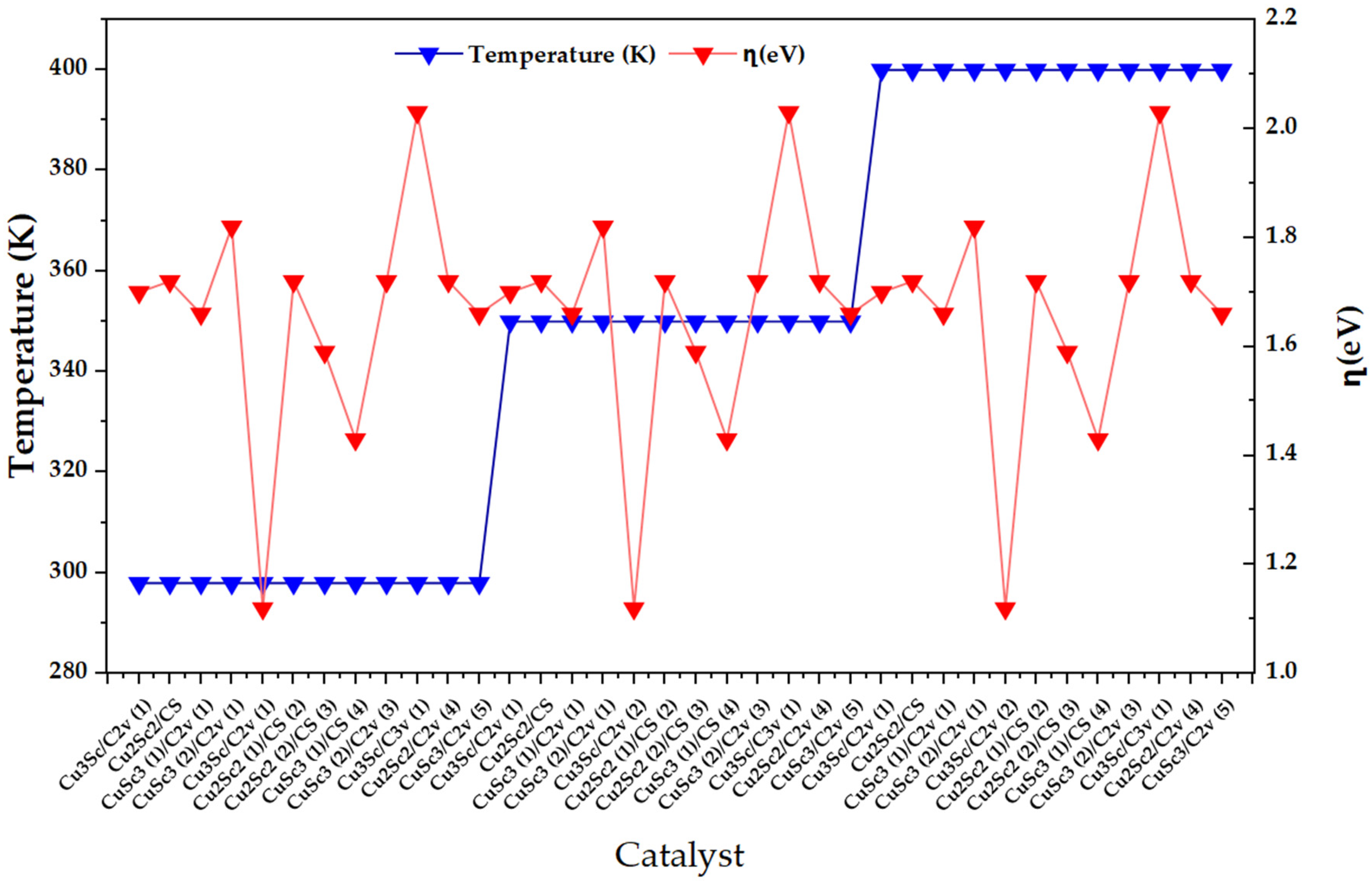
Figure 3,
η shows a wide dispersion (1.1–2.0 eV) between configurations, with point maxima and abrupt drops that reveal marked changes in electronic rigidity as composition/symmetry/multiplicity vary. In contrast, the temperature appears as three plateaus (≈298, 350, and 400 K), and within each block, no clear monotonic trend of
η emerges; This suggests that, in this set, the electronic identity of each configuration dominates over the direct thermal effect, and that the main signal is configuration-dependent (structural/spin selectivity) rather than purely thermal.
This interpretation is consistent with experimental evidence that, in metal nanoclusters, ionization (and, by extension, descriptors derived from
IE/
EA) tends to decrease with temperature, but with intrinsically small shifts and greater sensitivity in smaller clusters due to thermal expansion and structure–electronic coupling. Therefore, when the calculation design is “locked” by discrete sets of configurations, it is expected that the variability between isomers/states will partially mask the fine thermal shift [
16]. From a reactivity perspective, the minima of
η are consistent with scenarios where electron density is localized and regions with greater ease of charge redistribution appear: in nanoclusters, it has been argued that quantum confinement can concentrate charge at specific sites and that metrics such as electrostatic potential and dual descriptor allow rationalizing the preference for electrophilic events at sites of greater electronic activation. In this context, configurations with abnormally low
η in the series are natural candidates for exhibiting greater donor/acceptor response and, therefore, greater electronic lability in the face of perturbations, while high
η values point to more rigid electronic frameworks [
20].
Finally, this interpretation is consistent with the contemporary framework according to which metallic nanoclusters exhibit discrete molecular electronic structures, where properties emerge in a highly sensitive manner to size, shape, composition, charge distribution, and electronic state (including spin), making it essential to adopt a rational design approach based on the targeted selection of target configurations and synthetic routes capable of isolating them. In this vein, it has been pointed out that progress in this area depends on methodologies that allow structural and compositional engineering at the subnanometer scale to modulate the structure and, therefore, the reactivity descriptors in a controlled manner. Additionally, under operating conditions, cluster fluxionality and entropic contributions can become decisive, so that relationships such as
η vs. configuration constitute an initial quantitative criterion for prioritizing structural families that warrant more realistic treatments, such as assembly averages, isomeric sampling, or finite-temperature dynamics [
21].
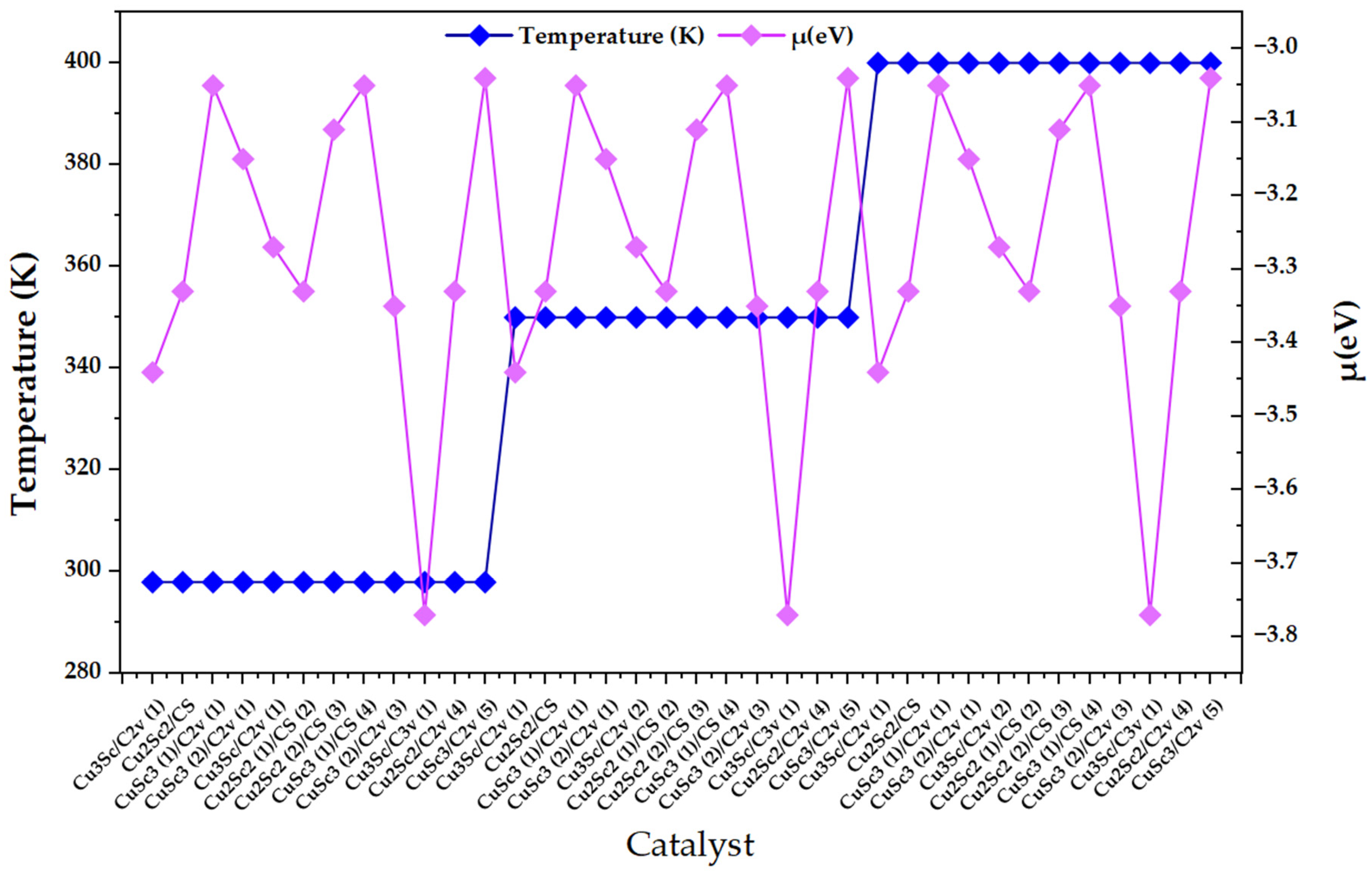
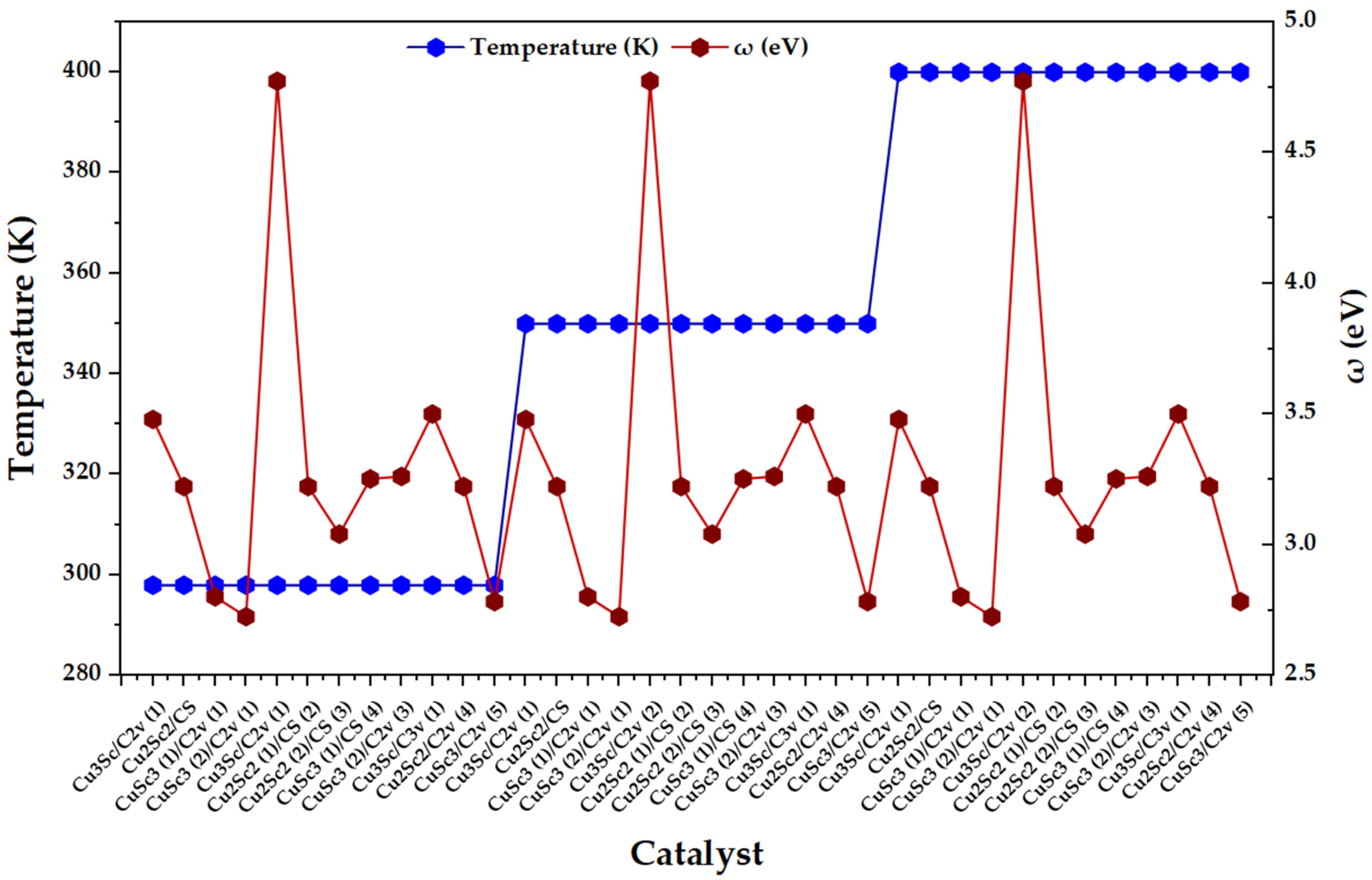
Figure 4 clearly shows three thermal plateaus (298, 350, and 400 K), confirming that the set of nanoclusters was ordered by discrete temperature blocks within the design. However, within each block, the chemical potential (
μ) does not follow a monotonic trend with temperature; rather, it exhibits pronounced oscillations when moving from one configuration to the next (changes in composition/symmetry/multiplicity). This behavior is consistent with the physicochemical view of nanoclusters as “quasi-molecular systems” where the chemical potential is not a smooth macroscopic parameter, but a descriptor highly sensitive to the electronic identity of the cluster. In particular, in metallic nanoclusters, the chemical potential is the difference in free energy when the number of electrons changes, so it depends on the electronic state and, in finite systems, can vary discretely with excess electron charge and with electrostatic terms that scale with total capacitance. Along the same lines, experimental work on Au nanoclusters shows that the chemical potential is distributed around the Fermi level of the substrate and that its dispersion depends on size, reinforcing that the variability of
μ mainly reflects finiteness/structure effects and not necessarily simple thermal control [
22].
Figure 5 shows that
ω does not exhibit a monotonic thermal dependence between 298 and 400 K, but rather a dominant intra-block dispersion throughout the catalyst index. This response is consistent with the derived nature of
ω: moderate variations in
μ or
η between configurations can be amplified in
ω, especially in regions of lower
η, generating local maxima that reflect electronic states with greater overall acceptor capacity. Complementarily, when
η increases without a proportional increase in
μ2,
ω attenuates, which is consistent with the dampening character of overall hardness on electrophilicity. In operational terms, the observed behavior suggests that the electronic heterogeneity imposed by composition, symmetry, and multiplicity dominates the hierarchy of
ω within each temperature block of the factorial design [
23].
Additionally, the presence of specific maxima of
ω is consistent with the literature on open-shell metal clusters, where electrophilicity and maximum charge acceptance capacity can exhibit local increases associated with the fine electronic structure. In particular, it has been reported that open-shell species can exhibit high values of
ω and that the inclusion of spin–orbit coupling can increase
ω, emphasizing that the electronic state is a first-order determinant of overall electrophilicity. Translated to the Cu-Sc series, the
ω maxima identify configurations with a high
μ2/
η ratio, with a greater overall propensity to stabilize accepted charge, which positions them as priority candidates for charge transfer-controlled processes [
24].
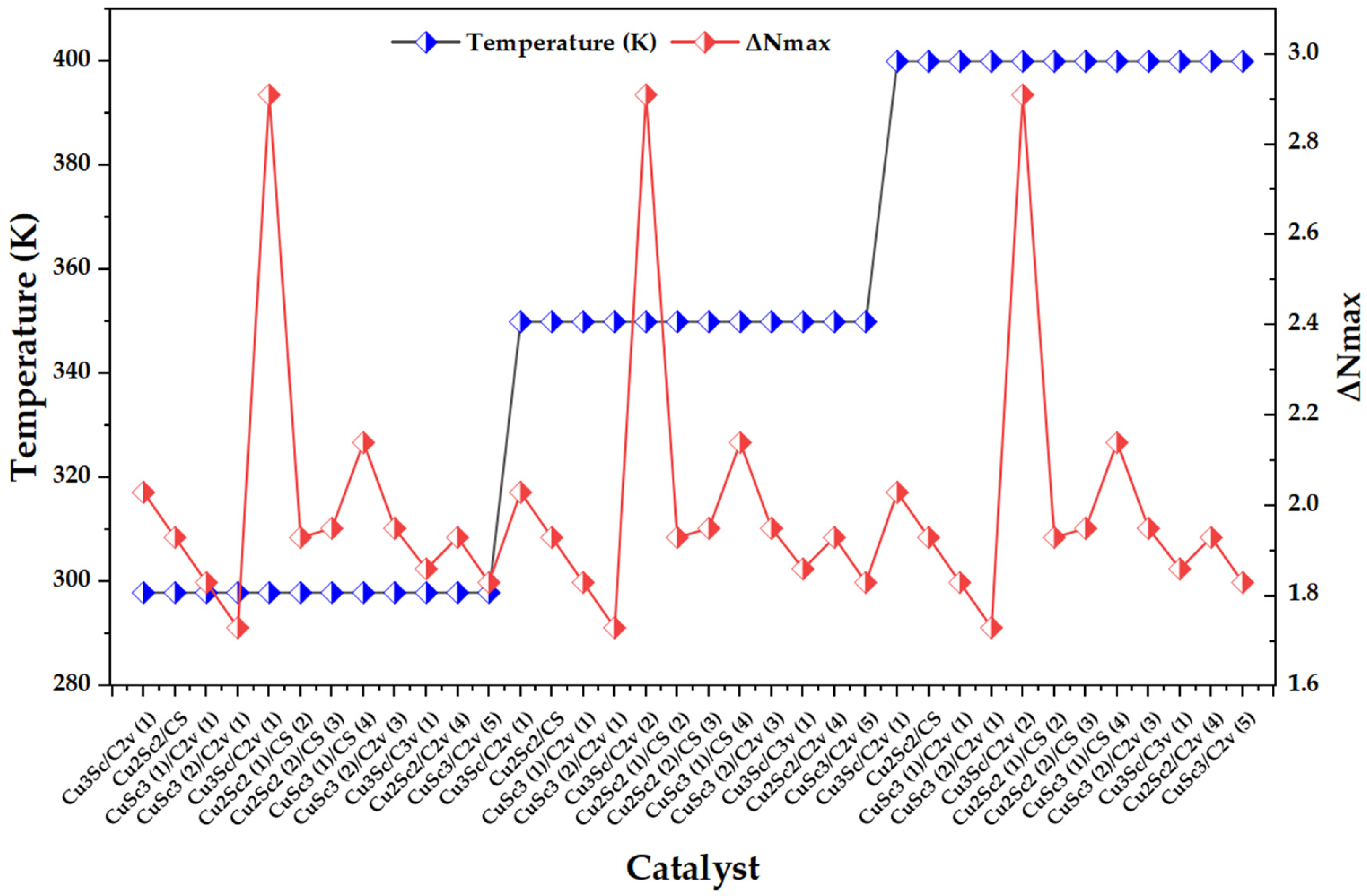
Figure 6 shows a thermal block design (298, 350, and 400 K) and, superimposed, the behavior of Δ
Nmax across the catalysts. Visually, Δ
Nmax remains within a narrow range for most configurations (1.7–2.1), while isolated peaks appear near 2.9–3.0, repeating in all three temperature blocks. This suggests that the dominant variability does not follow a continuous thermal gradient, but is governed by specific electronic cases associated with specific compositions/symmetries/multiplicities within the set [
23].
The comparison with literature on metal nanoclusters shows a direct parallel: in Au clusters, it is reported that Δ
Nmax quantifies the maximum electron flow between donor and acceptor and that high values correlate with a greater tendency to accept charge, particularly in open-shell species, while low values are associated with greater stability and less propensity to acquire additional charge. The fact that, in your Cu-Sc series, Δ
Nmax exhibits well-isolated and repetitive maxima is consistent with this same framework: the descriptor is capturing configurations with a greater acceptor character driven by their electronic structure, rather than a continuous thermal effect [
24]. In terms of temperature dependence, it is key to note that Δ
Nmax and
ω do not introduce additional thermal sensitivity with respect to
μ and
η: by definition, Δ
Nmax depends functionally on
μ and
η, and
ω depends on
μ and
η. Consequently, within the conceptual DFT scheme, temperature does not explicitly enter into these expressions; any variation when passing from temperature K can only emerge indirectly if the protocol changes the underlying electronic structure and, with it, modifies
μ and/or
η. Therefore, descriptors constructed from
μ inherit their behavior: they co-vary with
μ and
η, but do not exhibit independent thermal dependence [
23].
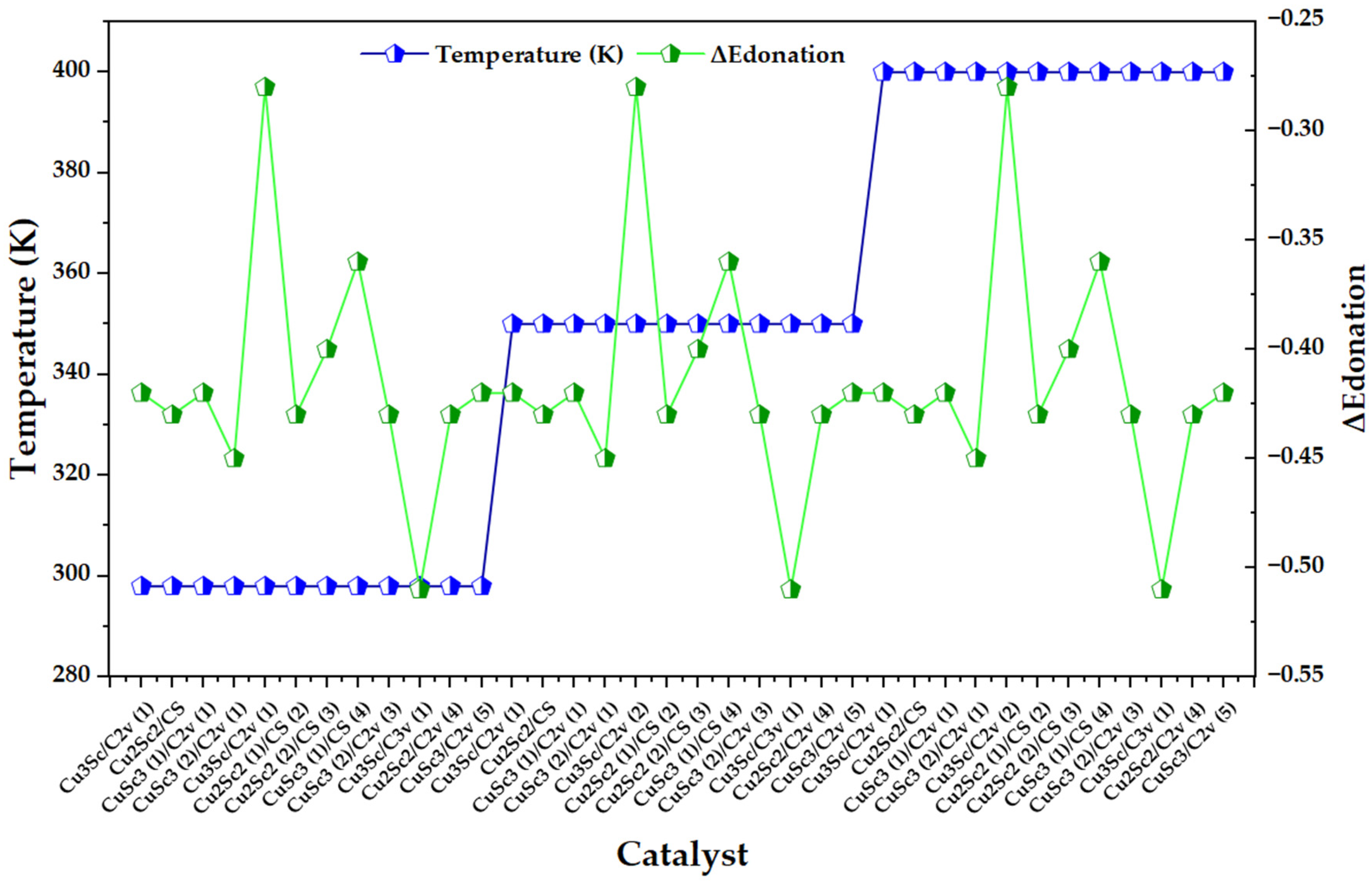
In
Figure 7, the electronic back-donation parameter (Δ
Edonation) exhibits pronounced oscillations between catalysts within each thermal block (298, 350, and 400 K), without a monotonic shift attributable to temperature; consequently, the signal is dominated by the electronic identity of each configuration (composition/symmetry/state) rather than by the imposed thermal scaling. This reading is consistent with a donor–acceptor type description: the intensity of the backdonation is mainly controlled by the energy alignment between occupied orbitals and vacant acceptors, as well as by the coupling between them, as formalized in the second-order perturbative term of NBO (dependent on the donor occupation, the Fock element, and the energy denominator) [
25].
When compared with the framework proposed by Gutsev et al., the most pronounced excursions in the series can be interpreted as cases where the energy denominator and/or Fij coupling change abruptly due to electronic structure effects, which amplify or attenuate backdonation stabilization. That work shows that back-donation emerges when the donor and acceptor are close in energy, and that the increase in density available for transfer increases Fij due to its relationship with overlap; by analogy, the configurations in
Figure 7 that have a higher effective magnitude of Δ
Edonation are the candidates for sustaining more intense donor–acceptor interactions within the Cu-Sc electronic configurational space. The same article warns that retrodonation effects can be highly sensitive to the flexibility of the basis (in this case, the inclusion of diffuse functions), to the point of qualitatively altering structural stability hierarchies (even reversing phase preference when capturing or not capturing retrodonation). Therefore, if Δ
Edonation is used as a fine comparative descriptor between Cu-Sc isomers, it is advisable to treat its differences between configurations as electronically significant information only to the extent that the theoretical level guarantees a robust description of the donor-acceptor channels; otherwise, part of the observed dispersion could reflect limitations of description (not of the phenomenon) and bias the electronic classification [
25].
Table 1 shows that the descriptors have well-defined ranges for each cluster and temperature. Some configurations have larger Δ
Egap values, while others have smaller Δ
Egap values. Furthermore, there are clear differences in
IE and
ω between the conditions. This simplified structure makes it easy to recognize electronic patterns, which will be statistically analyzed later. In this context, the Cu3Sc cluster is the most electronically hard, as it has the largest Δ
Egap among the clusters. This large energy difference between the LUMO and HOMO translates into high electronic stability. A system with a large Δ
Egap is less susceptible to electronic rearrangement and ionization, and therefore less reactive and more resistant to electronic changes. This conclusion is consistent with previous studies, which reported that Sc doping in Cu clusters widens the LUMO-HOMO gap, improving stability and decreasing reactivity [
3]. Furthermore, chemical hardness (
η) and electron affinity (A) are important descriptors for characterizing the reactivity of these systems. For Cu
3Sc, greater chemical hardness translates into greater resistance to chemical alteration, as has been observed in other Cu-Sc clusters, such as Cu
5Sc [
3,
21].
3.2. Statistical Evaluation of Global Descriptors
To estimate the robustness and variability of the global descriptors, a descriptive statistical analysis was performed, including means, standard deviations, and functional ranges (
Table 2). The descriptors
IE,
η, and Δ
Egap exhibit the smallest relative variations, suggesting that electronic stability is well-defined across the metal alloys, whereas
EA and
ω are more variable, reflecting sensitivity to local charge density and the presence of Sc. Furthermore, the inclusion of temperatures of 298, 350, and 400 K allows for the study of the thermal smoothing of the descriptors and their influence on electronic hardness.
Comparative temperature analysis reveals a systematic trend of decreasing
η and a gradual increase in
ω with increasing temperature, consistent with greater electron accessibility and decreased cluster rigidity. This thermal behavior suggests that overall reactivity increases slightly at 400 K, especially in Sc-rich nanoclusters, with implications for catalysis at this temperature. The electron affinity energy (
EA) values obtained for Cu
x-Sc
y nanoclusters (x + y = 4) are 1.51, with a maximum of 2.28 and a minimum of 0.946. These values are comparable to those reported in article [
26], where CuS nanoclusters show an
EA range of approximately 1.25–3.53 eV, with a trend similar to that of the values obtained in this study. Furthermore, the analysis of the most stable structures also reveals an inverse relationship between the number of copper atoms and the electron affinity energy, reinforcing the observation that smaller nanoclusters are more reactive. The effects of spin–orbit coupling on similar properties for gold nanoclusters are analyzed [
27]. Although the electron affinity energies for the Au clusters in this study (
EA approximately 2.2–3.3 eV) are higher than those of the Cu
x-Sc
y systems, the correlation trend with reactivity and overall hardness observed in both articles is remarkably similar. In particular, the effects of spin–orbit coupling on reactivity, evidenced by changes in cluster hardness and softness, are also relevant for interpreting the results obtained for the Cu
x-Sc
y systems.
Regarding the chemical potential (
μ), the values of −3.22 with a standard deviation of 0.22, and the minimum and maximum values of −3.80 and −2.77, respectively, for the Cu
x-Sc
y nanoclusters, also align with the trends observed in article [
24], where the chemical potential of the CuS clusters shows a value in the range of −4.0 to −5.5 eV, suggesting a greater charge transfer capacity in these systems. This indicates that the Cu
x-Sc
y systems may have high reactivity, consistent with the values obtained in both studies.
3.5. Effect of Temperature on Global ELECTRONIC Descriptors
In this section, temperature effects are primarily discussed in terms of thermodynamic stability and relative free energies of Cu-Sc isomers. The HOMO–LUMO gap (ΔEgap) is analyzed as a complementary electronic descriptor to rationalize the stability trends of the most favorable configurations, rather than as a direct thermodynamic observable.
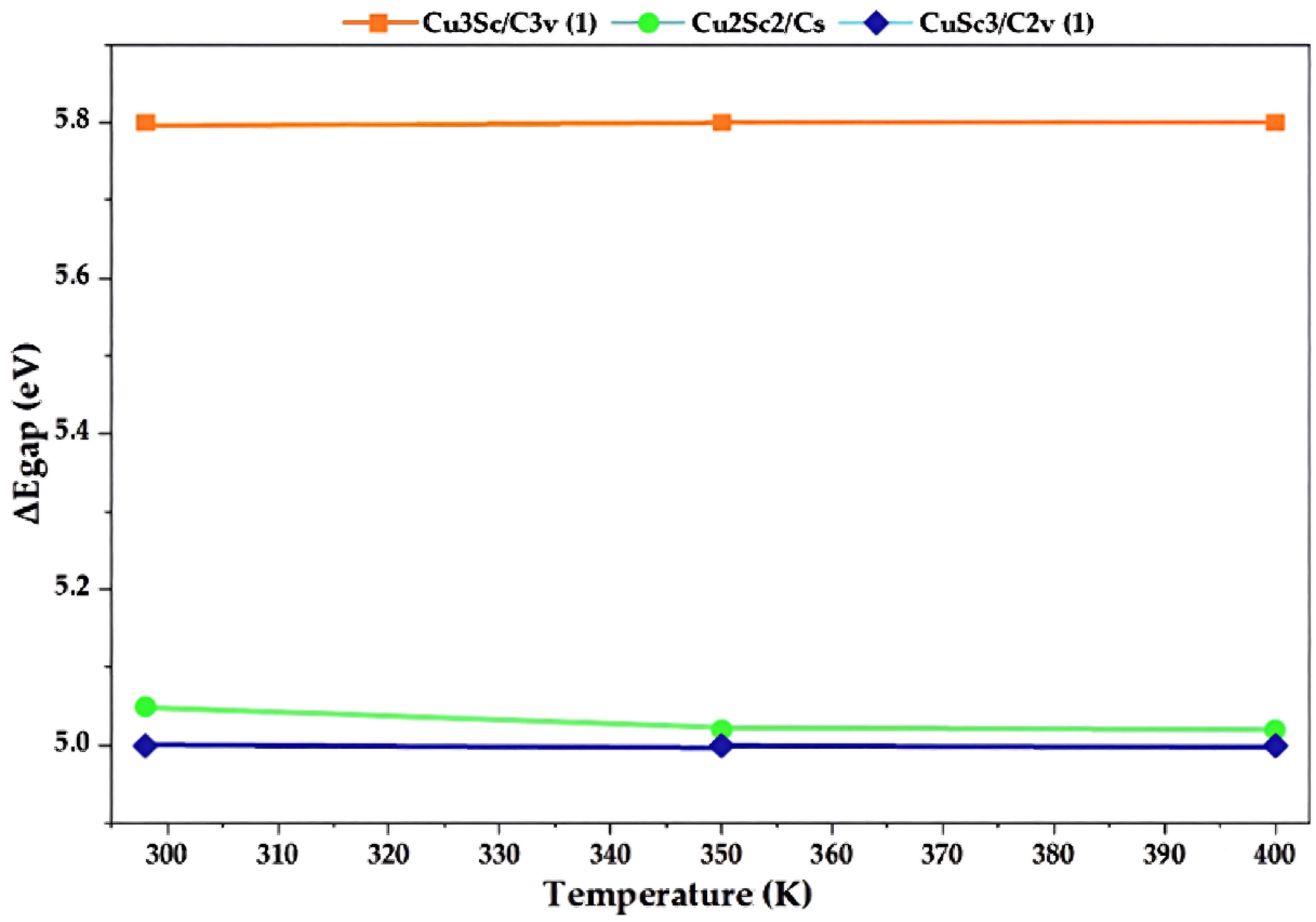
To directly illustrate the effect of temperature on the electron gap,
Figure 9 shows the variation in Δ
Egap as a function of temperature for the different Cu
xSc
γ nanoclusters considered. The graph shows, using curves or points, how the gap changes between 298, 350, and 400 K in each case. The symmetry values that presented the best Δ
Egap value for each catalyst were selected (
Table 1), allowing for a clear representation of the variability of the HOMO-LUMO gap at different temperatures.
Before discussing the physical implications of the temperature-dependent trends, it is important to clarify that no separate electronic-structure calculations were performed at finite electronic temperatures, nor were electronic smearing schemes applied. All HOMO and LUMO energies were obtained from ground-state DFT calculations (0 K). The temperature range of 298–400 K was introduced exclusively through thermochemical corrections and statistical averaging. Consequently, the variations observed in ΔEgap do not correspond to a physical thermal reordering of electronic orbitals, but rather to statistical adjustments derived from temperature-dependent free-energy corrections. In this context, references to Fermi–Dirac statistics describe the statistical framework underlying thermodynamic population effects, not explicit finite-temperature electronic structure calculations.
The values of Δ
Egap remain constant between 5.0 eV and 5.8 eV across the studied temperature range, suggesting high electronic stability. This constant stability could reflect that the electronic interactions in this configuration are relatively independent of thermal effects, making it a thermodynamically stable structure at high temperatures. The energies of temperature-dependent descriptors (such as Δ
Egap) are derived from thermodynamically corrected electronic energies, not from explicit calculations at T > 0. This implies that the observed changes in Δ
Egap at 298 K, 350 K, and 400 K are not actual physical changes in the electronic structure, but rather statistical adjustments due to temperature effects on electronic-state populations. In other words, temperature changes the energies of the states according to Fermi-Dirac statistics, but does not physically rearrange the electronic orbitals [
30]. Therefore, Δ
Egap is a statistical fluctuation, not a physical alteration of the electronic structure. Based on the relative energy calculations, the most energetically favorable clusters were identified as those with values close to zero. This indicates considerable relative stability under the evaluated conditions, which allowed for the specific selection of the Cu
3Sc-C
2v(1)-S-298K, Cu
2Sc
2-CS-S-400K, Cu
3Sc-C
2v(2)-S-400K, and Cu
2Sc
2(2)-CS(3)-400K clusters, as they exhibited the lowest relative energies and, therefore, ensured greater thermodynamic stability. This approach, based on relative energy, was fundamental for selecting configurations that not only meet stability requirements but also correspond to the most favorable equilibrium points within the system, depending on the temperature and molecular structure considered. By selecting these clusters, an accurate representation of the most stable structural models is ensured, which are essential for evaluating thermodynamic processes such as pyrolysis and polymer fragmentation.
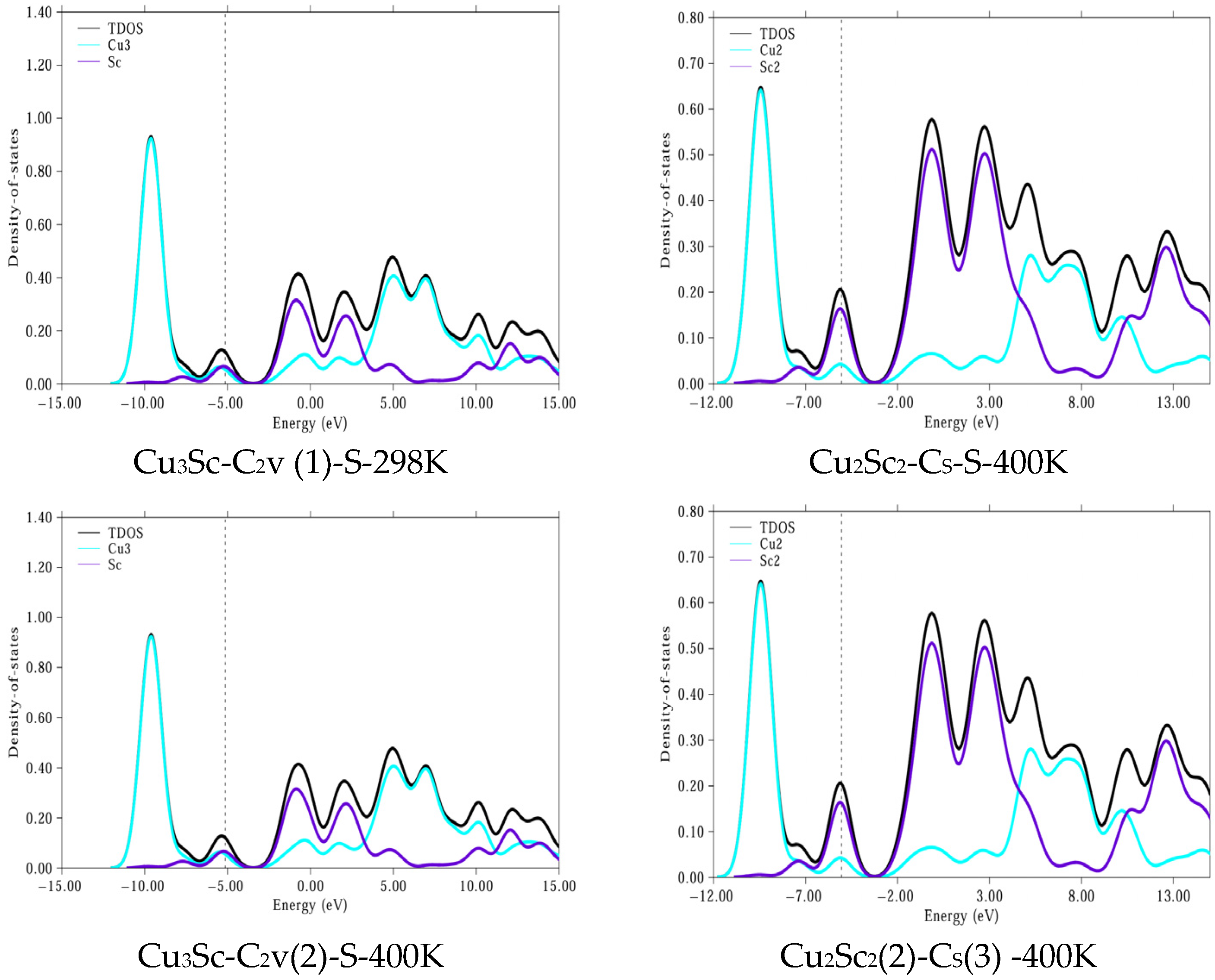
Analysis of the PDOS results for the Cu
xSc
γ configurations (Cu
3Sc-C
2v(1), Cu
2Sc
2-Cs, Cu
3Sc-C
2v(2)) shows that the electronic stability of these configurations is relatively constant at temperatures of 298 K and 400 K (
Figure 10). In particular, the Cu
3Sc-C
2v(1) and Cu
2Sc
2-Cs configurations maintain a constant or nearly constant Δ
Egap, indicating high electronic stability against thermal fluctuations. This behavior is characteristic of systems with strong electronic interactions between the Cu 3d and Sc 3d orbitals, which allow for greater resistance to thermal reactivity. In contrast, Cu
3Sc-C
2v(2) shows a slight decrease in Δ
Egap at 400 K, suggesting greater susceptibility to thermal variations.
Comparing these results with those of Liu et al. [
31], a similar temperature dependence of the energy gap (Δ
Egap) is observed. In their study, they found that electronic doping altered the energy gap without causing a significant structural reorganization, which agrees with our results. In both cases, electronic stability remains constant at high temperatures, without any physical transformations occurring in the orbitals.
Furthermore, the article by Fang et al. [
32] analyzes how the electronic metal-support interaction (EMSI) between Ru nanoclusters and Fe atoms enhances O
2 activation and facilitates HMF oxidation. This behavior highlights the importance of electronic interactions not only for electronic stability but also for catalytic reactivity, as shown in Ru/Fe1-NC catalysts. The formation of electronically enriched Ru species at the active sites enhances O
2 activation, facilitating the conversion of HMF to FDCA. This is also related to the improved catalytic activity observed in Ru catalysts and their ability to perform free-base oxidation reactions, as demonstrated in the study.
Accordingly, temperature-dependent stability in the present study is governed by relative energetics and free-energy considerations, while ΔEgap serves as an auxiliary electronic indicator that helps interpret why certain isomers remain stable across the explored temperature range.
3.6. Structure–Property Relationships
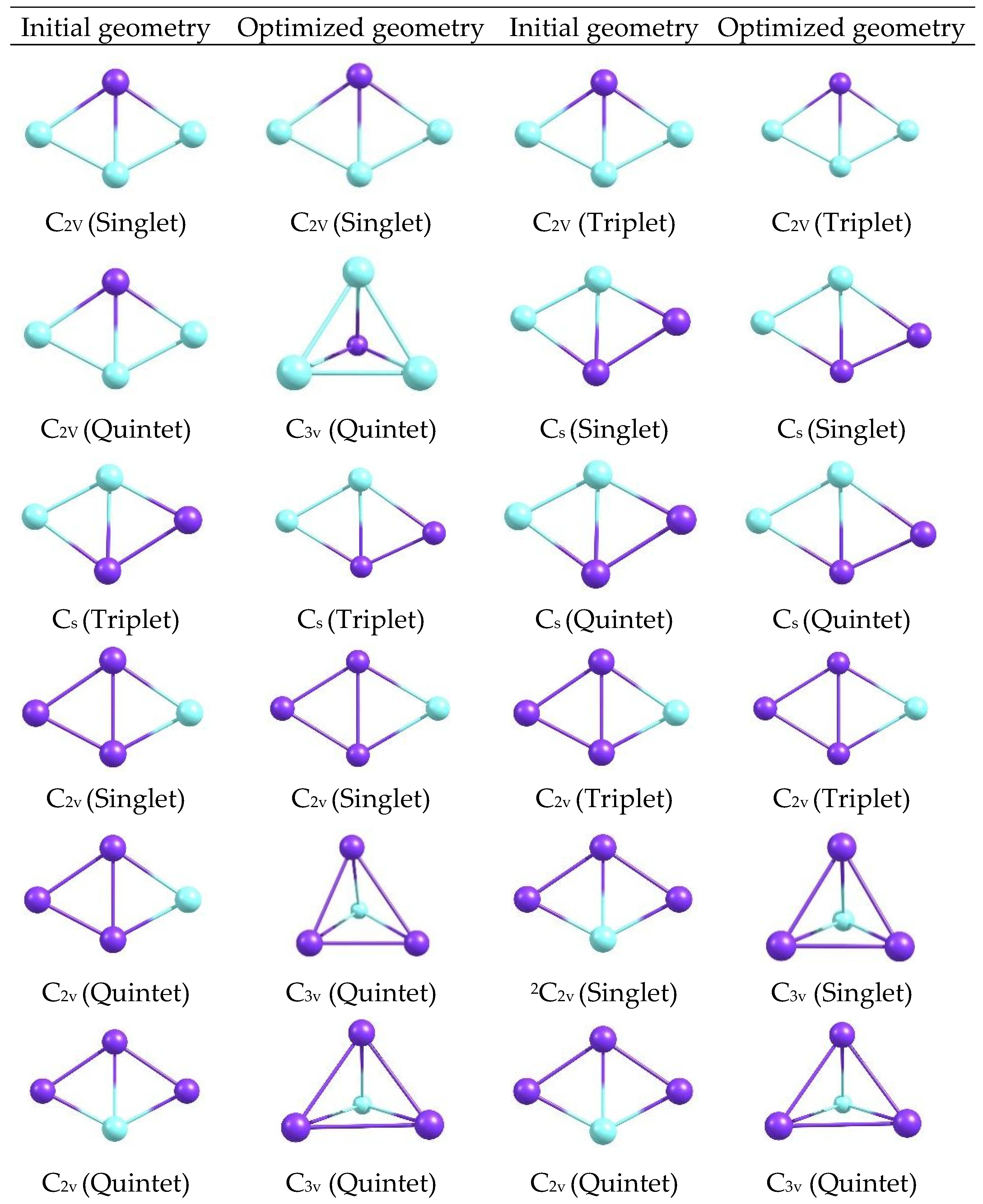
The optimized geometries of the Cu
xSc
γ (x + y = 4) catalysts with C
2v and C
s symmetries (
Figure 11), obtained with the M06-2X functional and the def2-TZVP basis in the Orca 6.1.0 software at different multiplicities at 298 K. In each panel, the relative positions of the Cu and Sc atoms are shown, clearly distinguishing the general architecture of the clusters and the arrangement of the metal centers.
The optimized structures reveal compact configurations in which the metal atoms form well-defined arrangements, with visible differences between the C
2v and C
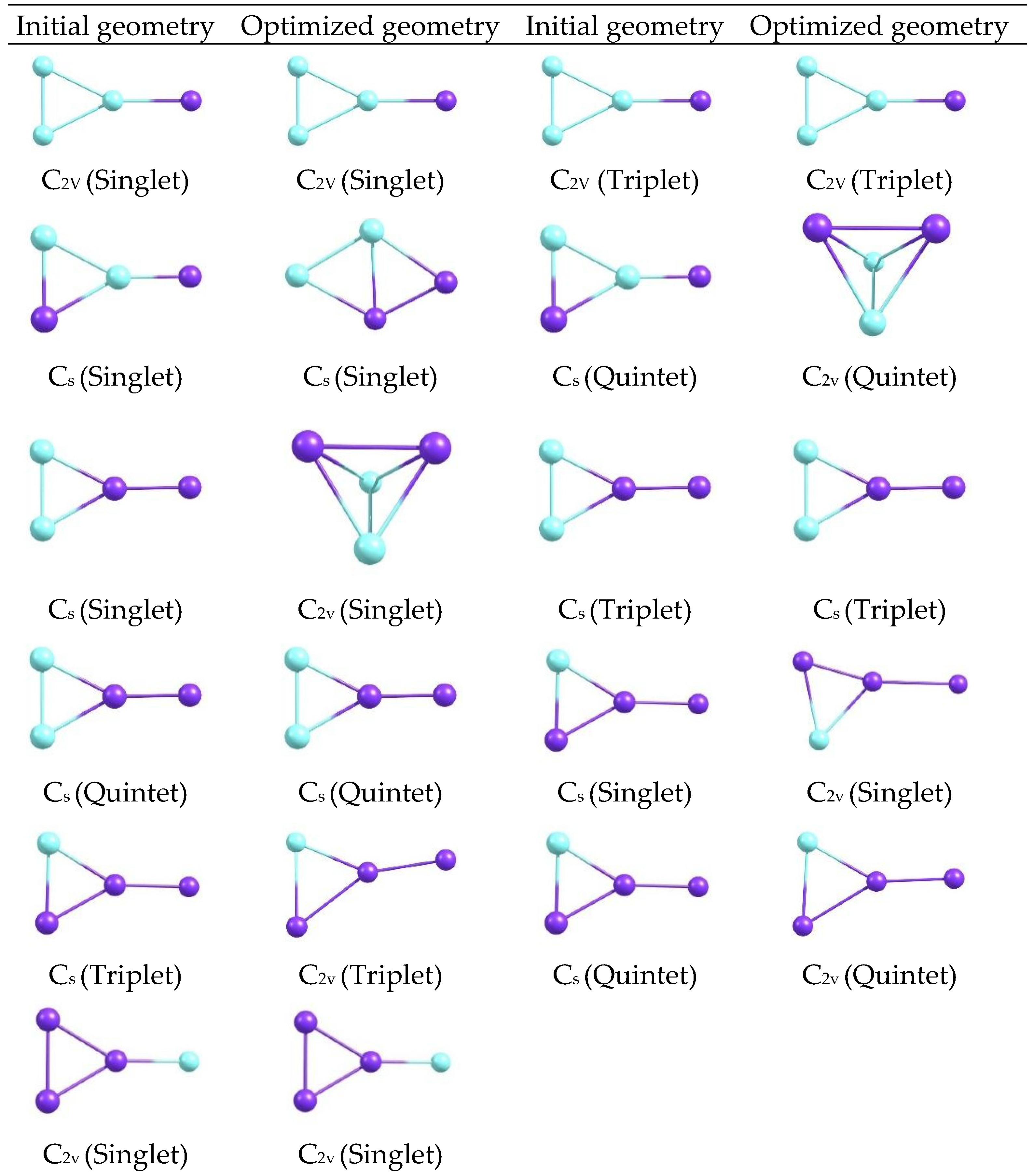
s motifs. Changes in the orientation and length of the metal-metal and metal-ligand bonds are distinguished by symmetry, as are subtle variations in the overall shape of each cluster, providing a visual basis for relating these geometries to electronic descriptors. Additional optimized geometries are shown for Cu
xSc
γ (x + y = 4) catalysts with 2C
2v, 2C
s, 3C
2v, 4C
s, and 5C
2v symmetries at 298, 350, and 400 K at the same level of theory (
Figure 11 and
Figure 12). A gallery of structures, classified by symmetry and state, is shown to visually compare how shapes change when different geometric and thermal arrangements are manipulated.
Comparing the panels in
Figure 11 and
Figure 12 reveals a diversity of shapes, ranging from the most symmetrical to the slightly deformed. Changes in symmetry and temperature modify the orientation of the metal atoms and the density of the cluster core. While only the visible shapes are described here, these morphological differences already suggest a correlation between the systems’ geometry and electronic behavior. When comparing the clusters, Cu
3Sc is more electronically stable. Furthermore, the element Sc not only stabilizes the system but also participates in redistributing electronic charge between Cu and Sc. This interaction affects the electronic reactivity of the clusters, indicating that Sc further stabilizes the system, rather than merely modulating it. Analysis of the optimized structures of Cu
xSc
γ nanoclusters reveals compact configurations in which the metal atoms form well-defined arrangements, with significant differences between the C
2v and C
s motifs. These configurations show variations in the orientation and length of the metal–metal and metal–ligand bonds, which directly affect the structural stability of the clusters. In particular, C
2v symmetry configurations exhibit greater structural rigidity, with less bond-length dispersion and a more uniform distribution of metal atoms [
33,
34,
35,
36,
37,
38,
39]. This translates into superior electronic stability compared to the C
s configurations, which show greater structural flexibility and a more variable bond distribution, potentially leading to distortions and, ultimately, lower thermodynamic stability. This behavior is consistent with the results obtained by Taylor et al. [
34], which demonstrate that compact configurations with high structural symmetry in gold nanoclusters contribute to greater electronic stability and thermal resistance. According to their research, a compact, well-packed structure reduces sensitivity to thermal fluctuations, thereby improving the overall stability of the system. Similarly, in Cu
xSc
γ nanoclusters, configurations with C
2v offer a more stable structure that better withstands thermal changes, reflecting greater structural stability.
3.7. Influence of Spin State on Stability
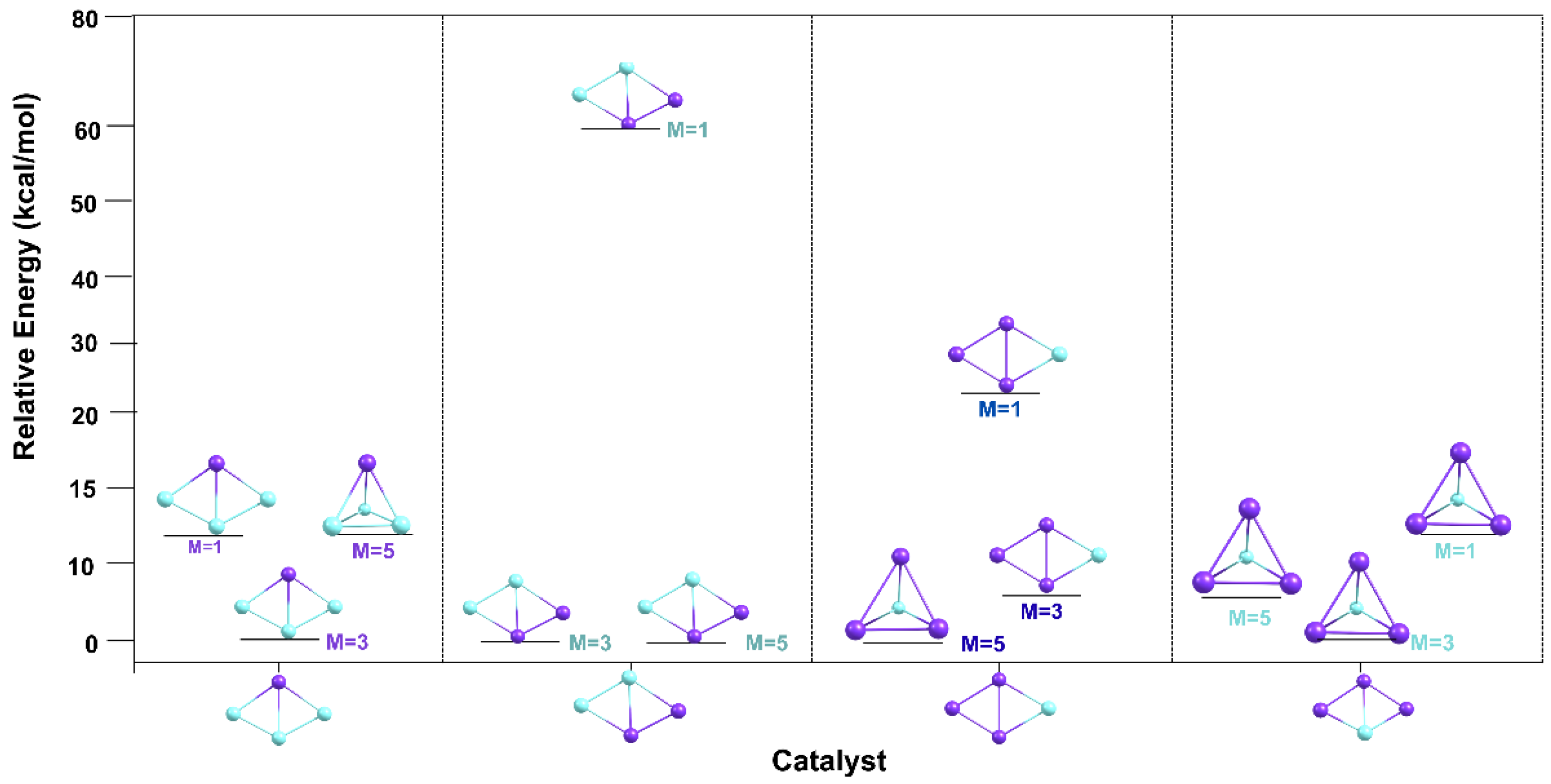
The relative stability of Cu
3Sc and Cu
2Sc
2/CuSc
3 clusters with C
2v–C
s symmetries at 298 K as a function of spin multiplicity. The graph typically displays bars or points representing the relative energy for each cluster-spin state combination (singlet, triplet, and quintet), allowing a visual comparison of which multiplicity is most stable for each system, as shown in
Figure 13.
The relative energies of the different catalysts vary with spin multiplicity (M = 1, 3, and 5), allowing a clear assessment of the impact of spin on the stability of the studied systems. In several cases, a specific spin state is found at a lower energy than others, indicating that this state is the most stable for that particular system. However, situations are also observed in which competition between two spin states is closer, suggesting that the stability of these systems could depend on additional factors beyond spin that influence the preference for a particular state.
Spin has a significant impact on the binding energy between the metal core and the ligand shell, which directly affects the overall stability of the nanocluster. In several studied systems, a specific spin state is consistently observed at a lower energy than others, suggesting that this state is the most stable for those clusters. This behavior is particularly evident in lower-spin states, such as M = 1, which are typically associated with greater energetic stability. This is because these spin states tend to have a more favorable electron distribution, minimizing electronic repulsions and optimizing atomic interactions between the metal core and ligands, thus improving system stability. Within the thermodynamic stability model, the stability of metallic nanoclusters, such as Au and Ag systems, depends on a delicate balance between the cohesive energy of the metal core (CE) and the binding energy of the shell to the core (BE). This balance can be disrupted by spin, which affects the electron distribution of atoms and thereby modifies interactions between the core and the shell. In some cases, however, a closer competition between two spin states is observed, as in clusters with M = 3 and M = 5. This competition suggests that, in these systems, spin is not the only determining factor of stability; other aspects, such as cluster structure and ligand arrangement, also play a crucial role [
25].
Thus, spin can alter how metal clusters stabilize thermodynamically, depending on the amount of metal in the core and the organization of ligands in the shell. Different spin states alter the electronic configuration of atoms, which, in turn, affects atomic interactions and the overall stability of the system. This variability underscores the importance of considering spin as a key parameter for predicting nanocluster stability and for designing new materials with specific properties, such as stability and reactivity.