
Article

Injection Performance of UHMWPE in Micro-Discs for Prosthetic Applications Using SLA Molds

1
Institute of Intelligent Industrial Technologies and Systems for Advanced Manufacturing, National Research Council (STIIMA-CNR), 70124 Bari, Italy
2
Institute of Intelligent Industrial Technologies and Systems for Advanced Manufacturing, National Research Council (STIIMA-CNR), 20133 Milano, Italy
*
Author to whom correspondence should be addressed.
J. Manuf. Mater. Process. 2025, 9(9), 318; https://doi.org/10.3390/jmmp9090318
Submission received: 7 August 2025 / Revised: 8 September 2025 / Accepted: 15 September 2025 / Published: 18 September 2025

Abstract

Ultra-high molecular weight polyethylene (UHMWPE) is widely used in orthopedic and prosthetic applications due to its excellent wear resistance and biocompatibility. However, its high molecular weight presents significant challenges in terms of processing and formability, particularly at the micro scale. This study investigates the flowability characteristics of a new melt-processable UHMWPE in micro-disc geometries to evaluate its suitability for advanced prosthetic applications. Micro-injection molding experiments assessed the material’s behavior under various thermal conditions. The influence of parameters such as temperature, pressure, and disc dimensions has direct effects on the flow behavior of UHMWPE and was analyzed by simulation and experiments. Results indicate that while UHMWPE exhibits limited flow under conventional conditions, optimized processing parameters can enhance discs’ formability without compromising the material’s structural integrity, avoiding defects. These findings provide critical insights for the microfabrication of UHMWPE thin components in next-generation prosthetic devices, enabling improved design precision and functional performance.

1. Introduction

Ultra-high molecular weight polyethylene (UHMWPE) is a semi-crystalline polymer widely used in biomedical engineering, particularly in orthopedic and prosthetic applications [1,2]. Its exceptional wear resistance makes it ideal for joint replacements, where it minimizes wear between the implant and bone or metal components during repetitive motion [2,3]. UHMWPE is also highly biocompatible, meaning it is well-tolerated by the human body [4], and its low coefficient of friction further reduces wear between the bearing surfaces of the joint, contributing to smoother movement and better prosthesis function [3,5]. The material’s excellent impact strength and damping behavior are crucial for prosthetic joints that must withstand the forces generated by physical activities. Furthermore, UHMWPE can endure sterilization techniques, such as gamma radiation, without significant degradation [2,4]. Due to these properties, UHMWPE is commonly exploited in joint arthroplasties as a bearing material [4], for components like acetabular cups in hip replacements and tibial inserts in knee prostheses [3].
Despite its advantages, UHMWPE presents significant challenges, especially in applications requiring miniaturized geometries and precise dimensional control. In particular, flowability, defined as the material’s ability to deform and fill a mold under specific processing conditions, is critical in manufacturing components with complex or micro-scale geometries. UHMWPE’s ultra-high molecular weight, typically exceeding 3 million g/mol, is responsible for the melted product not flowing (MFR = 0), thus complicating traditional thermoplastic processing techniques such as injection molding and extrusion [6,7]. These limitations become even more pronounced with increasing demand for high mechanical reliability in modern prosthetic designs utilizing micro-disc geometries [8,9,10,11].
Historically, UHMWPE was produced as a very fine powder, which is consolidated under high pressure and temperature into a solid piece of material using compression molding, ram extrusion, hot isostatic pressing, ram injection molding [12,13]. Ram extrusion is a process used to produce continuous UHMWPE profiles like rods, tubes, and sheets. It involves a “ram” or plunger that compacts UHMWPE powder or a paste (a mix of powder and oil) in a heated die. The material is heated to just below its melting point, causing the powder particles to fuse together without becoming a true melt. This method is slow but produces a uniform, high-quality product with excellent mechanical properties. In compression molding, a pre-measured amount of material, the “charge,” is placed directly into an open, heated mold cavity. The mold is then closed, and a top platen (or the mold itself) applies pressure to force the material to fill the cavity. The heat and pressure shape the material. In Ram injection molding, the material is first compacted into a pre-form or billet by a ram, then heated to a semi-solid or viscous state. A second ram or plunger then forces this material, under high pressure, into a separate, closed mold cavity through a nozzle. The process is a type of injection because the material is pushed from an external source into a closed mold. It is often used for materials like UHMWPE that do not melt easily, as it avoids the use of a melting screw.
Usually, components for orthopedic implants were integrated into metal backings via direct-compression molding (DCM) [12]. However, metal backings are costly, stiffer than cortical bone, and may be associated with medical imaging distortion and metal release. Recent advancements have explored alternative manufacturing techniques [14]. Single Point Incremental Forming (SPIF) has emerged as a promising solid-state method for shaping UHMWPE sheets into complex geometries without expensive tooling. Studies demonstrated SPIF’s effectiveness, with process parameters such as spindle speed and step-down size significantly impacting formability and failure modes [15]. Additionally, incorporating reinforcements into UHMWPE matrices (using disentangled UHMWPE or polymer blend incorporating UHMWPE), as nanocomposites, has enhanced mechanical properties like tensile strength, strain deformation, and processability [16], making them suitable for applications demanding precise dimensional control and mechanical reliability.
Advances in microfabrication and precision molding techniques have created new opportunities to engineer UHMWPE components at small scales. However, a comprehensive understanding of its rheological behavior in micro-structures remains a barrier to broader adoption in next-generation prosthetic devices [5]. While previous studies explored the tribological performance of UHMWPE in bulk and surface-modified forms [17,18], few have addressed the material’s processability in micro-scale configurations where flow behavior dictates part fidelity and functional integrity [19]. Furthermore, recently, the Celanese Company developed special melt processable grades (GUR 1001) that maintain the unique properties of UHMWPE [20] while being compatible with the injection molding process. With this melt-processable grade, the UHMWPE can be applied to broader applications that would benefit from its very unique properties.
This study aims to bridge this knowledge gap by systematically investigating UHMWPE’s flowability in micro-disc geometries under various thermal processing conditions. By characterizing the effects of temperature, pressure, and mold design on material deformation and fill quality, we aim to provide critical insights for optimizing UHMWPE microfabrication for prosthetic applications. Ultimately, this research will improve the precision, reliability, and performance of polymer-based prosthetic components.

2. Materials and Methods

2.1. The UHMWPE

In the present case, a newly developed grade, in powder form, suitable for melt processing and medical compliance has been adopted: the GUR® HMW-PE 1001 by Celanese Corp. with a molecular weight of 0.6 million g/mol. This new injection moldable UHMWPE presents unique properties as specified in the material’s data sheet (Table 1) [21].

2.2. Mold Design and Fabrication

To investigate the flowability of UHMWPE in micro-disc geometries, a specialized mold system was developed for use in a micro-injection molding (µIM) setup. The mold cavities were produced using stereolithography (SLA), a high-resolution additive manufacturing process that allows rapid production of detailed features with micro-scale precision.
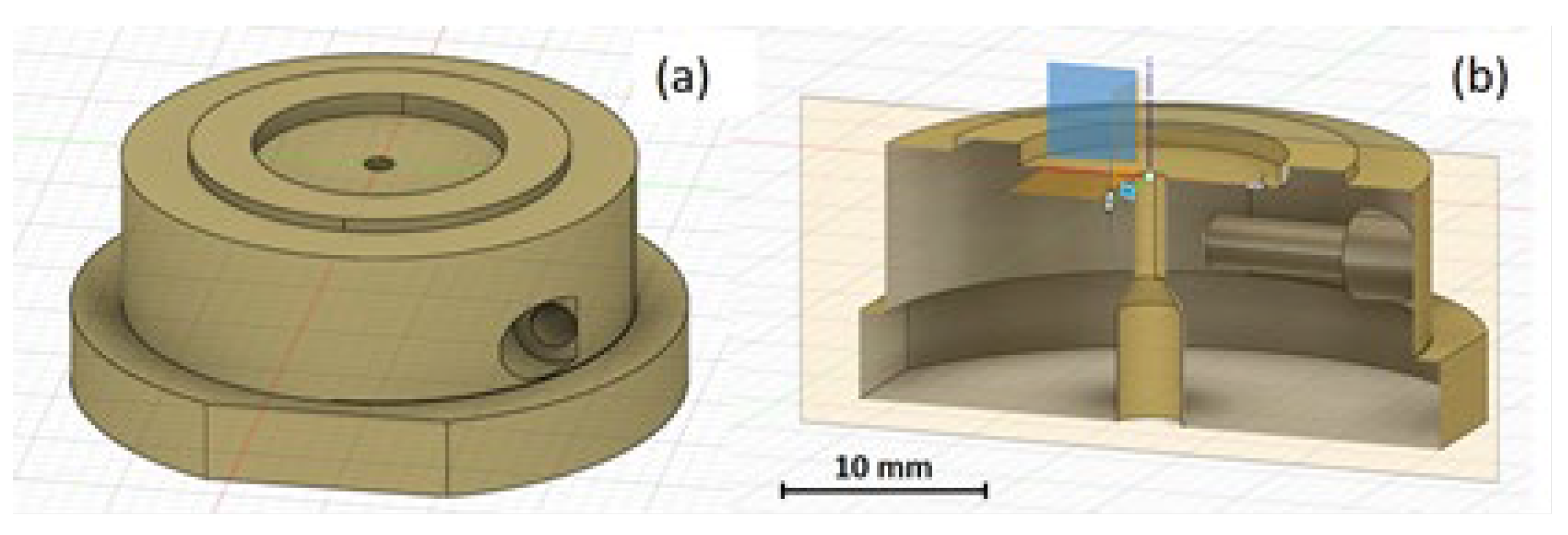
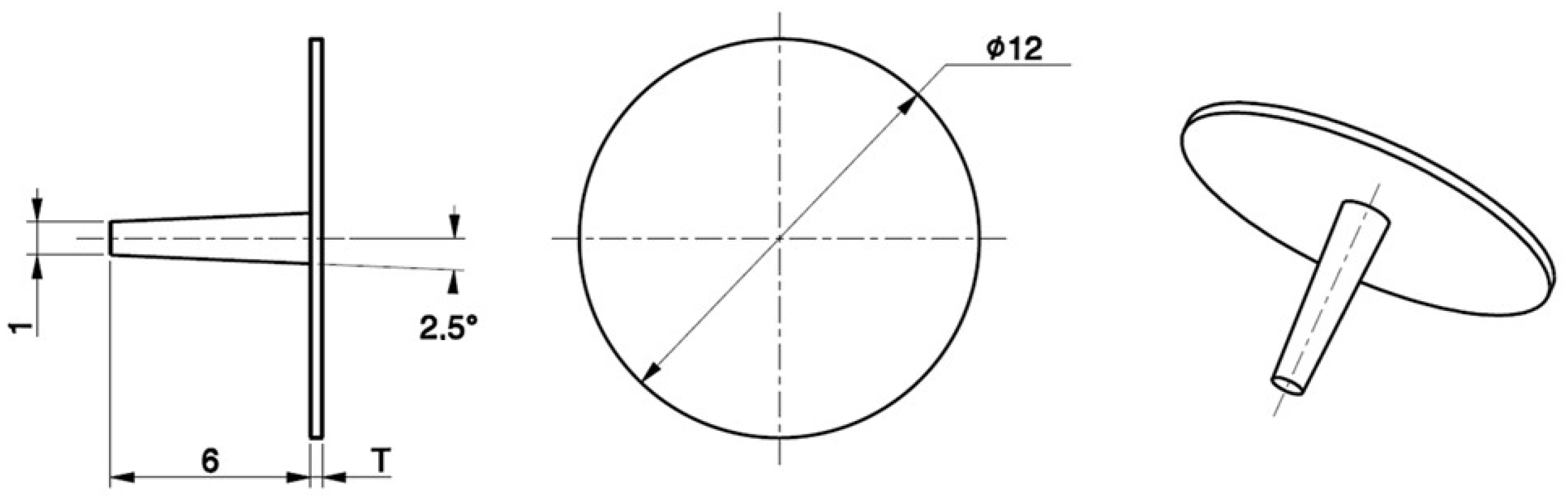
The mold was designed in 3D CAD Solidworks 2017 software (Solidworks Corp., Dassault Systèmes, USA), primarily focusing on the production of four disc-shaped components ranging from 0.35 mm to 1 mm in thickness and 2 mm in diameter (Figure 1 and Figure 2). These dimensions were selected to reflect miniaturized prosthetic components such as articulating inserts and spacers. While SLA molds generally have lower durability than metal molds, they provide a cost-effective and time-efficient solution for low-volume prototyping and experimental studies [22,23]. The gating system consisted of a single-point gate positioned centrally on the disc surface to promote symmetric flow. The SLA insert approach allows rapid iteration and flexible design modification during the experimental phase, while also supporting the satisfactory resolution and tight tolerances required to evaluate UHMWPE flow behavior in micro-featured geometries.
The CAD files were printed using a Formlabs High Temp V02 photosensitive resin, specifically engineered for high-temperature applications, since it is capable of withstanding temperatures up to 238 °C (Heat deflection temperature HDT at 0.45 MPa) [24]. This material was selected for its thermal stability, rigidity, and suitability for direct contact with high-viscosity polymers like UHMWPE during molding cycles. The CAD models’ pre-processing was performed with the software Formlabs PreForm® release 3.49.0, setting the model orientation flat on the build platform to achieve the best surface roughness on the cavity surfaces [17]. Each mold insert was printed using the Formlabs (Somerville, MA, USA) Form3 machine with a layer thickness of 25 µm to capture fine features, particularly around the disc cavity and gate interface. The post-processing steps included washing in high-purity (99%) isopropyl alcohol (IPA) for 20 min, to ensure resin removal, and UV curing (for 120 min at 80 °C to reach full mechanical strength). Finally, an annealing step (for 180 min at 160 °C) enabled reaching the higher HDT of 238 °C required by the application. To ensure structural rigidity and to clamp in the micro-injection system, the SLA-printed inserts were refined by manual polishing and then mounted in steel backing plates. These frames provided consistent support and heat dissipation during high-pressure injection cycles.
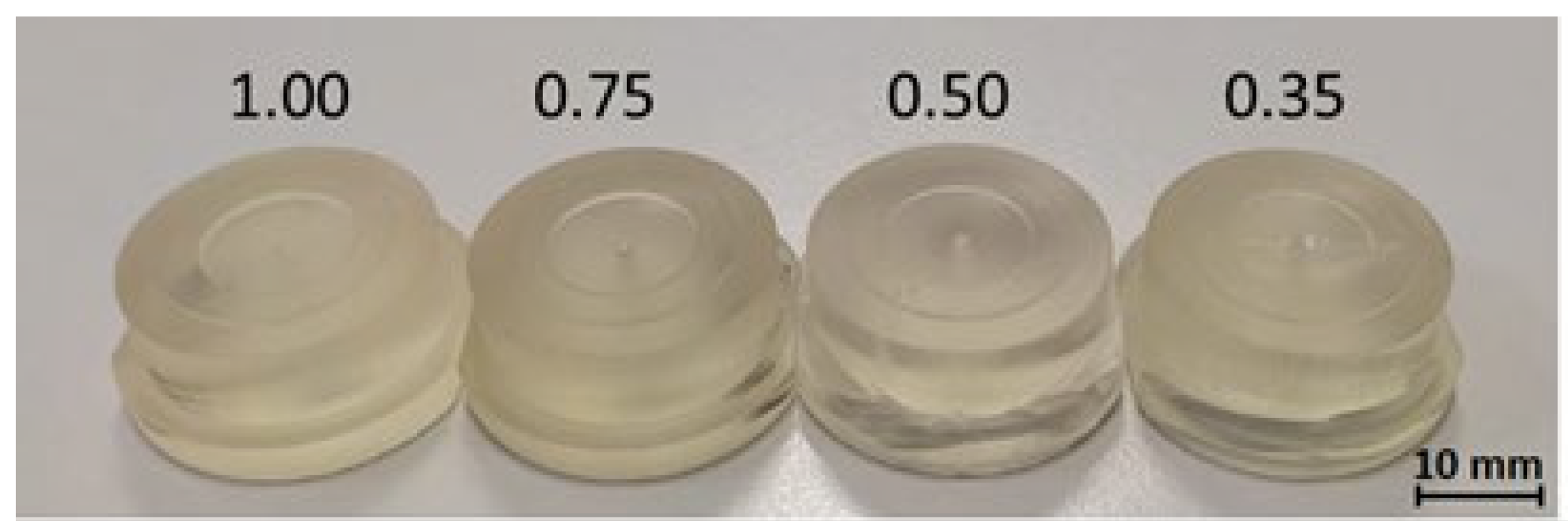
Although SLA-printed molds are less durable than conventional machined steel molds, their resolution and thermal tolerance were proved sufficient for short-term experimental purposes. Typical mold life under micro-injection conditions ranged between 10 and 50 cycles [22], depending on cavity temperature, injection pressure, and UHMWPE adhesion to the inserts. Mold degradation was monitored through visual inspection and dimensional analysis of the produced micro-discs. The SLA-based approach provided a rapid and adaptable means of evaluating multiple mold geometries and process parameters, enabling efficient iteration. Figure 3 shows the four realized micro-mold inserts with different disc thicknesses.

2.3. Mold Filling Simulation

To complement the experimental study of UHMWPE flow behavior, mold filling simulations were conducted to predict and visualize material behavior during the micro-injection molding process. The simulation was designed to evaluate the ability of UHMWPE to fill micro-disc cavities under various processing conditions, identify potential defects (such as air traps, short shots, or weld lines), and optimize process parameters before physical trials. The simulations were performed using COMSOL Multiphysics®6.3, which is widely used in polymer processing research. This software enabled for accurate modeling of micro-scale geometries and non-Newtonian flow behavior characteristic of UHMWPE. The physical and thermal parameters used in the numerical model were derived from the manufacturer’s data sheet [21]. However, since dynamic viscosity curve is not reported in the literature, it was estimated using the Arrhenius Equation (1) over the processing temperature range (100–280 °C):
η T = η 0 · e   E a R T
where η(T) is the dynamic viscosity as a function of temperature (Pa⋅s), η0 is a constant, the pre-exponential factor, i.e., the viscosity at the highest temperature (Pa⋅s), Ea is the activation energy (kJ/mol), R is the universal gas constant 8.314 J/(mol⋅K), T is the Temperature (K). η0 and Ea are 0.00077 Pa⋅s and 63.05 kJ/mol, respectively. These values were determined by fitting the Arrhenius model to the available viscosity data at 190 °C and 250 °C [20]. At temperatures above 280 °C, the viscosity was held constant.
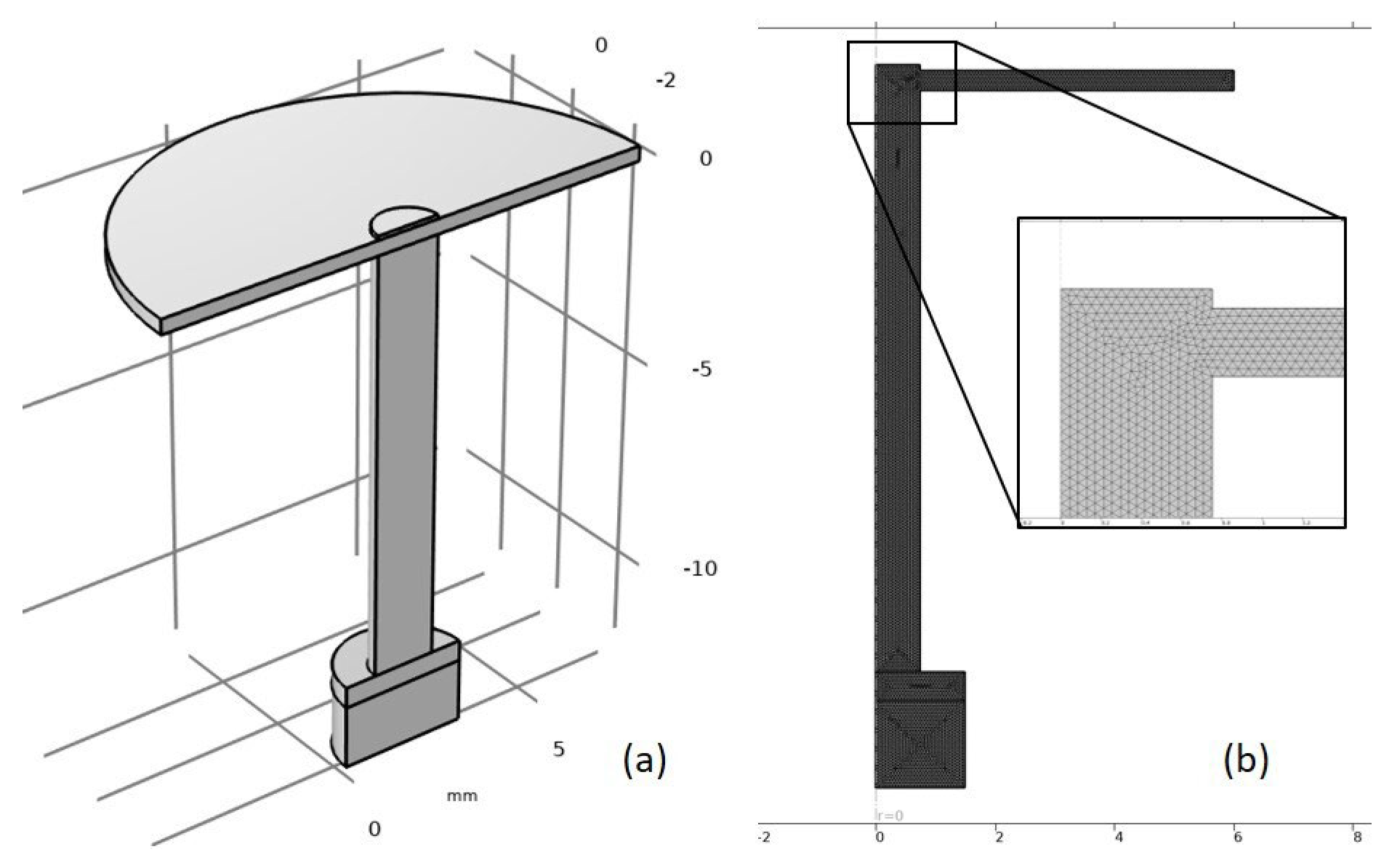
The geometry of the mold cavity was reconstructed into the simulation environment. The thinner disk, with a thickness of 0.35 mm, was selected for analysis as it is the most challenging to fill. Figure 4a shows a 3D section of the mold cavity with the sprue, but thanks to its axial symmetry, only a half 2D section was modeled to reduce simulation time. To handle fluids with an extensive viscosity range, a fine mesh with 11,914 triangular elements was generated, particularly refined near thin sections and around the gate to capture steep velocity and temperature gradients, as shown in Figure 4b.
A transient analysis with a time step of 0.005 s was conducted using Laminar Flow, Heat transfer in solids and fluids, and Phase fields in fluids modules. Hence, a two-phase non-isothermal flow was adopted to model and simulate the filling part of the injection process. A no-slip condition was imposed at the boundaries as a first-order assumption [25] justified by the relatively low injection velocity range adopted in the simulations. Moreover, no experimental data are available in the literature regarding the slip behavior of UHMWPE under injection molding conditions comparable to the dimensions of the specimen studied. Heat dissipation was assessed based on the thermal properties of both the mold and the polymer, along with the extent and characteristics of the contact interfaces, which critically affect the modeled heat transfer. Key parameters studied included:
  • Melt temperature: 260–270 °C.
  • Mold temperature: 80–120 °C.
  • Injection speed: 80–120 mm/s.
The temperature parameter ranges are those suggested by the material data sheet. Optimizing the melt temperature was crucial; this parameter was set to the higher value of the range reported in the data sheet to obtain the lower material viscosity, as suggested by Equation (1).
The injection speed window used here was selected on the basis of preliminary trials on our machine and on previously published injection experiments for UHMWPE GUR® 5113 [18]. UHMWPE shows poor melt fluidity and a strong sensitivity to shear; excessive injection rates/shear can induce melt fracture, surface delamination, and thermal degradation [26]. Where higher injection speeds have been reported, these were used together with supercritical fluid plasticization effect [27] or very high packing pressures to reduce melt viscosity and the risk of damage. Consequently, the present study confines simulated speeds to values that are experimentally realizable on our equipment and consistent with the literature, while avoiding process windows that require mitigation strategies not implemented here.
Simulation results, due to the high viscosity of UHMWPE and the thin mold cavity section, indicated that achieving complete micro-disc filling requires that both mold temperature and high injection speed values be set at the highest levels within the considered ranges.
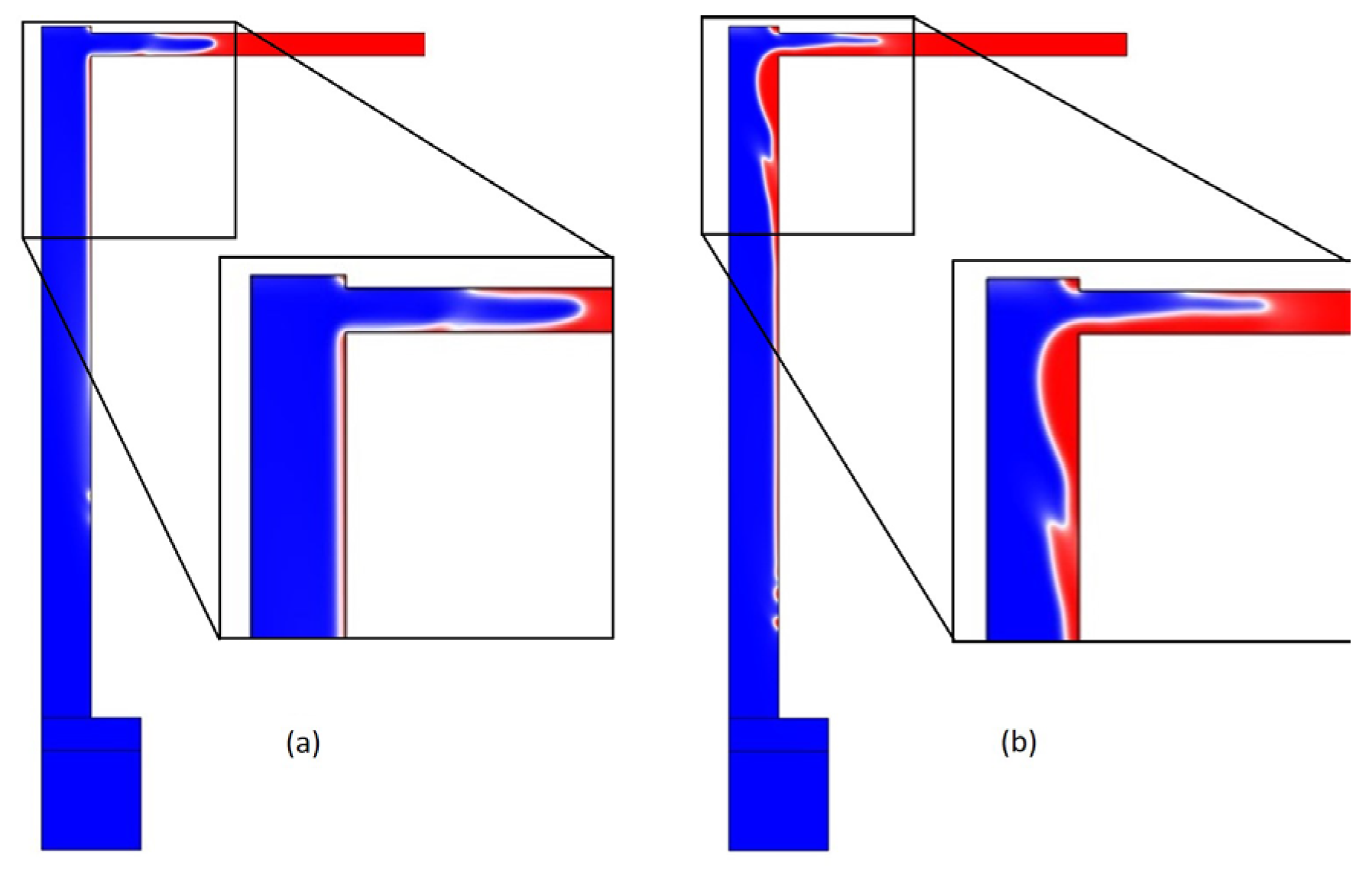
The melt flow front progress is highly sensitive to both injection speed and mold temperature, thus requiring the highest feasible melt temperature. Numerical simulation results showed a significant deviation of the melt flow from the characteristic fountain flow pattern occurring with low-viscosity materials subjected to low injection speed and mold temperature. In the mold cavity with a thinner section, the melt front deviates from the axially symmetric and rounded profile, usually characteristic of the fountain flow pattern. Instead, the progression of the melt UHMWPE was significantly hindered by rapid cooling at the cavity walls, resulting in an unbalanced melt flow front. This behavior suggests localized flow stagnation near the walls as the distance from the gate increases, indicating a substantial risk of incomplete filling in this critical region under these processing conditions. Figure 5 illustrates the polymer melt’s progression within the thinner mold cavity under two distinct processing conditions: (a) a favorable set, mold Temperature of 120 °C and injection speed of 120 mm/s, and (b) an inefficient set of process parameters, and 60 °C and 60 mm/s, correspondingly, at 0.09 s from the beginning of the injection process. In the latter case, the simulation clearly shows an irregular, unbalanced, and non-uniform progress of the flow front, ultimately failing to fill the cavity. The premature cooling of the melt near the cavity walls narrows the melt flow path and impedes its advancement, significantly increasing the potential occurrence of air entrapments and early solidification of the flow front before the cavity is fully packed.
The filling behavior observed in the simulations for the thin final section of the specimen can be directly related to the well-documented challenges of thin-wall injection molding. Numerical analyses by Rosli et al. [28] showed that injection speed and melt temperature have a pronounced effect on the achievable flow length in thin cavities, confirming the sensitivity of the process to thermal and rheological conditions. Regi et al. [29] combined experimental and simulation results to demonstrate that flow length and filling uniformity are highly dependent on thinner geometries, underlining the necessity of carefully defining process windows when molding thin-walled parts. More recently, Islam et al. [30] validated FEM-based predictions of thin-wall molding behavior against experimental results, confirming the capability of numerical modeling to capture the influence of injection parameters on flow advancement and solidification. These studies support our findings, in which low injection velocities and strong cooling at the cavity walls were shown to hinder the fountain-flow mechanism and flatten the advancing flow front, ultimately reducing the ability of the polymer to completely fill the thin section.
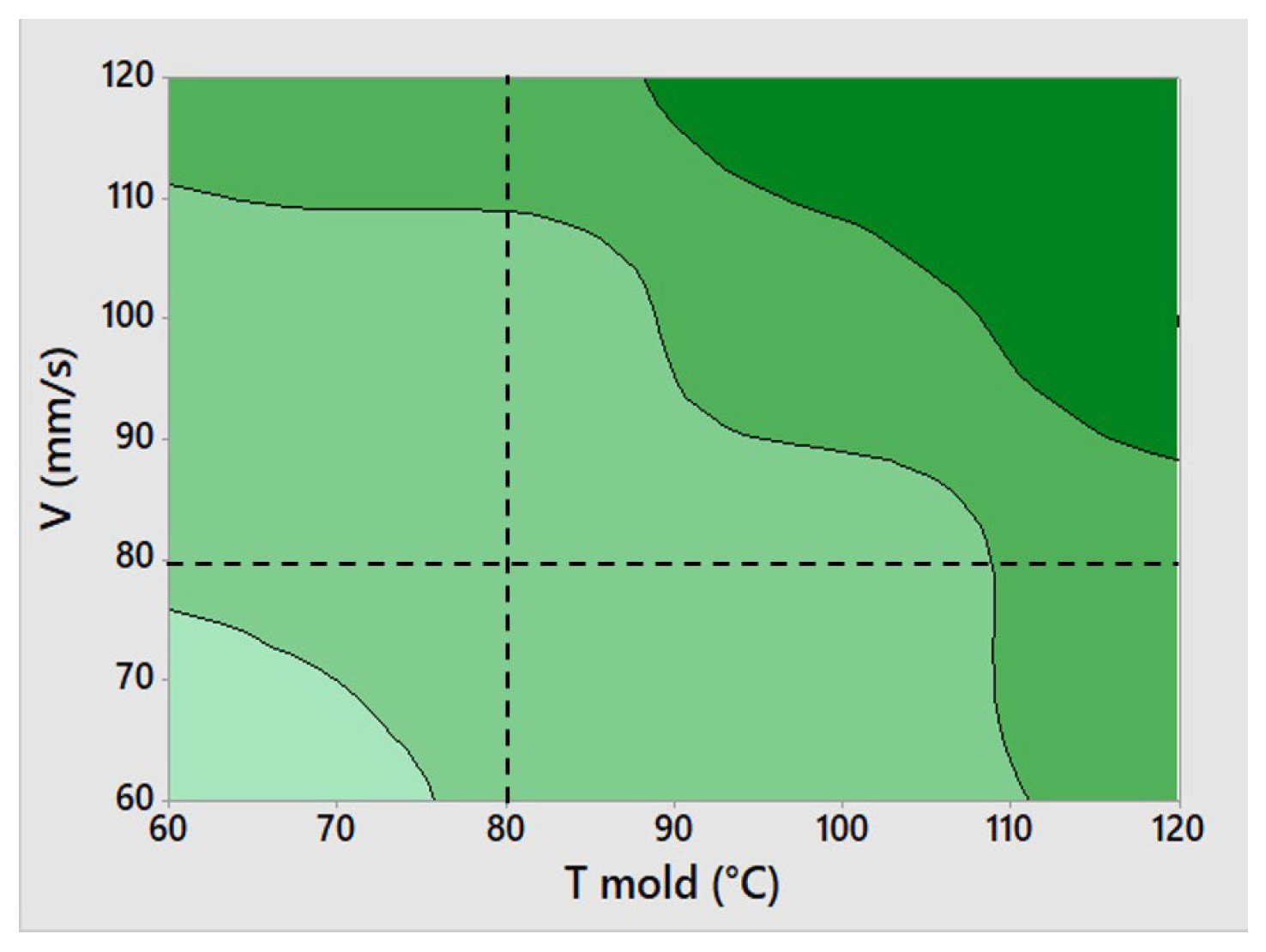
Figure 6 summarizes simulated contour plot of mold filling ability. The plot shows the effect of varying injection speed (V) and mold temperature (Tmold) on the filling process. The gradient of green shades represents the filling performance, with darker green indicating superior filling characteristics. The dashed lines correspond to the lower boundary suggested from the data sheet and the most effective filling zone observed in the simulation. These results provide valuable insights, offering clear guidance on selecting the best process parameters to ensure complete mold filling and minimize manufacturing defects. The simulation suggests using a higher injection speed and mold temperature to achieve the best filling performance.

2.4. Micro Injection Molding Process

Micro-injection molding process (µIM) was employed to fabricate UHMWPE micro-discs using the SLA-fabricated inserts. This process was selected for its capability to replicate micro-scale geometries with high dimensional accuracy and repeatability precisely. UHMWPE presents significant processing challenges due to its ultra-high molecular weight, which results in extremely high melt viscosity and poor flowability. Following simulation results, a suitable micro-injection molding setup was utilized to maintain high melt temperatures and generate sufficient injection pressures to facilitate cavity filling without material degradation. Mold temperatures were regulated using cartridge heaters to maintain thermal heat and support proper flow into the cavity, aided by embedded thermocouples for real-time temperature monitoring.
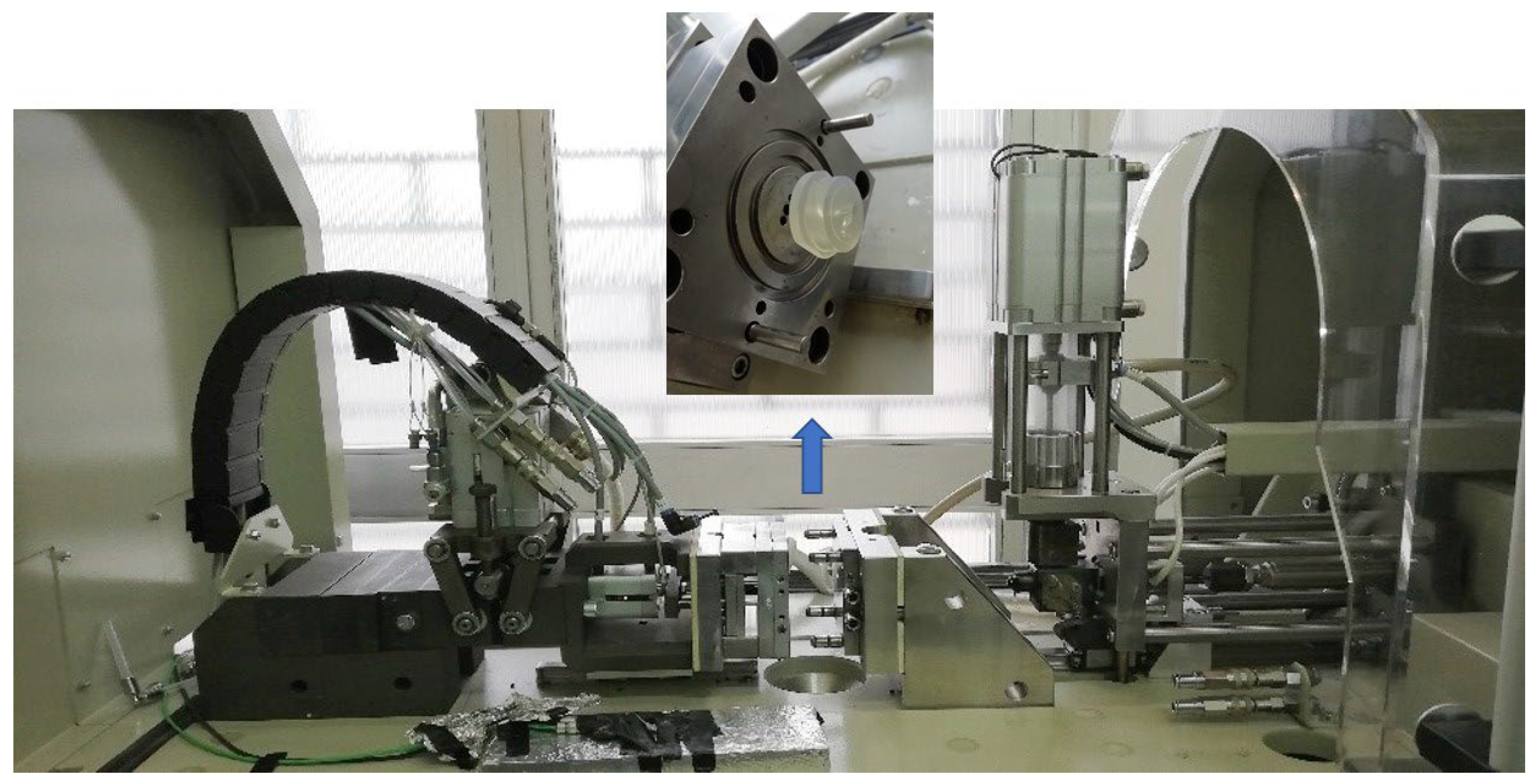
The µIM trials were conducted using the micro-injection molding machine Formica Plast 1 K by DesmaTEC (Achim, Germany) characterized with two pistons: one for pre-plastification (6 mm diameter) and one for injection (3 mm diameter). Other characteristics are: maximum injection pressure 300 MPa, maximum injection volume 150 mm3, maximum injection speed 1000 mm/s, and clamping force 10 kN (Figure 7). As UHMWPE shows high melt viscosity, it requires very high temperatures and pressures to be injected into a mold, and the prolonged exposure to high temperatures can lead to thermal and oxidative degradation. The balance between using enough heat to process the material and avoiding degradation is very delicate. From the manufacturer’s process conditions, recommendations, and simulation outcomes, mold filling behavior was evaluated to identify the optimal window for complete cavity filling. Table 2 reports the final process parameters setting used for experimentation.
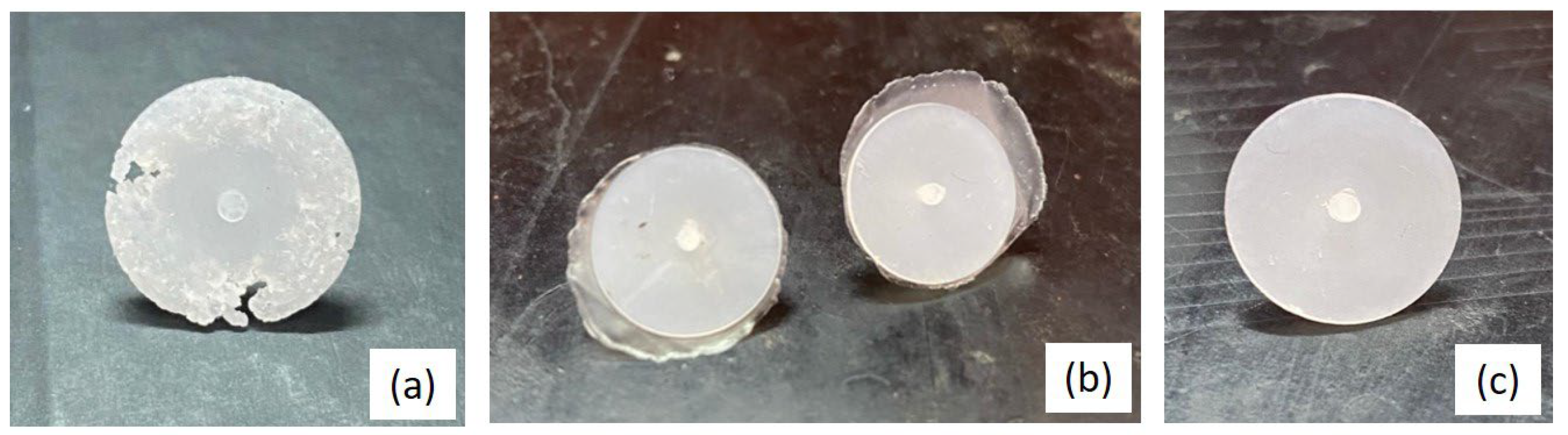
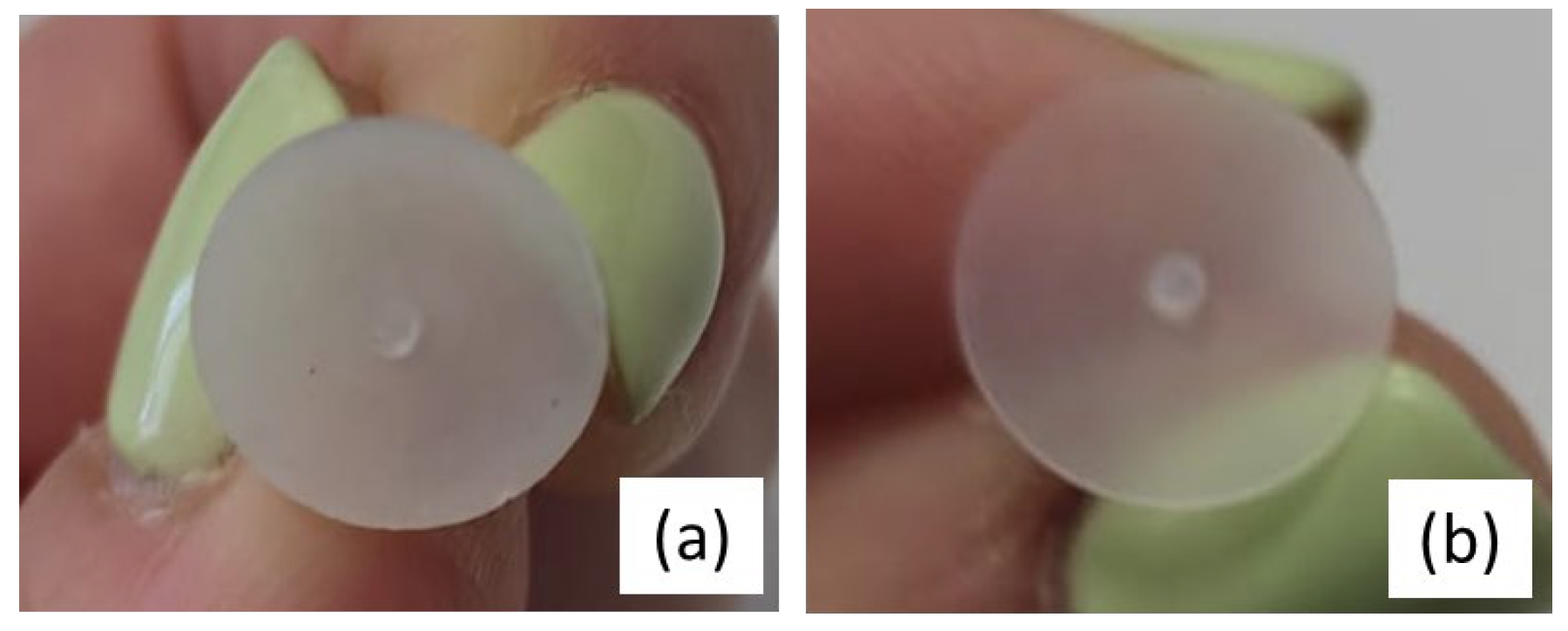
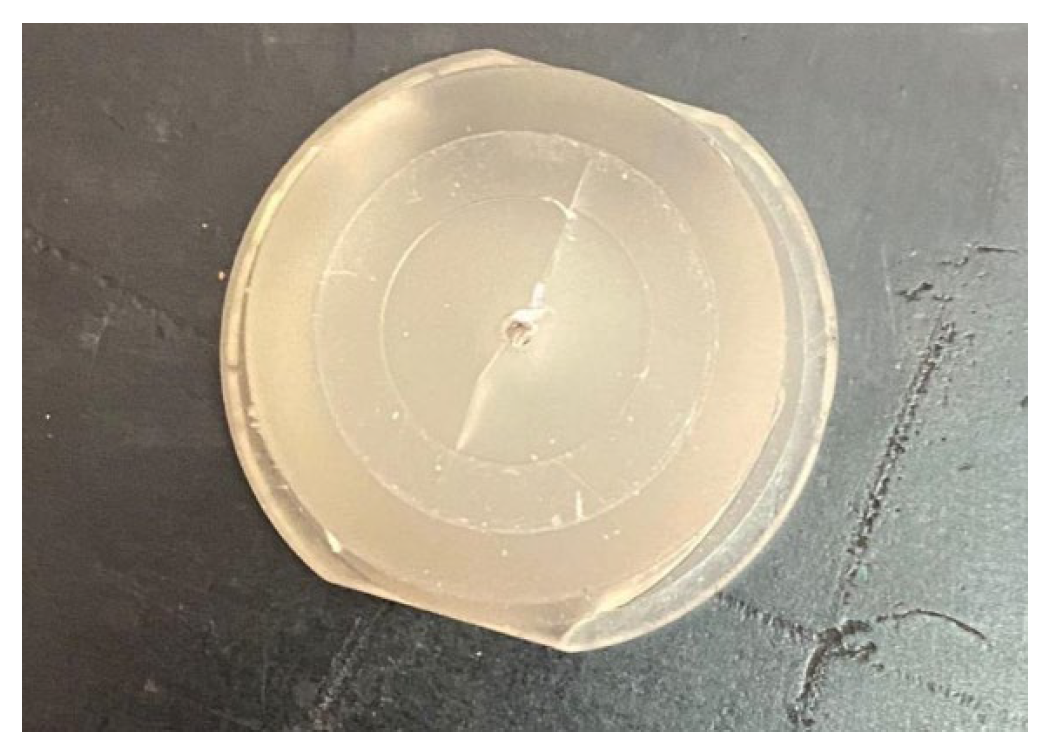
Due to UHMWPE’s low thermal conductivity and resistance to flow, partial fills, short shots, and surface defects were common at lower injection pressures or mold temperatures. As expected, thin-walled sections, as realized micro discs, were susceptible to fill conditions. A mold release agent was applied to reduce material sticking. Repeated molding trials were performed for each combination of mold geometry and processing parameters. Each resulting disc was visually inspected, weighed, and measured for dimensional accuracy. Flow fronts and potential defects were compared with mold-filling simulation predictions to validate material behavior and process consistency. Figure 8 shows some defective molded samples with voids, flash, and a well-filled part. Figure 9 shows molded UHMWPE discs at 1 mm and 0.35 mm thickness correctly molded using final process settings (Table 2). For small-batch production, all the realized SLA inserts can withstand the production. Only the 0.35 mm-thick insert was damaged after sample production (Figure 10).

3. Results and Discussion

3.1. Mold Inserts Dimensional Characterization

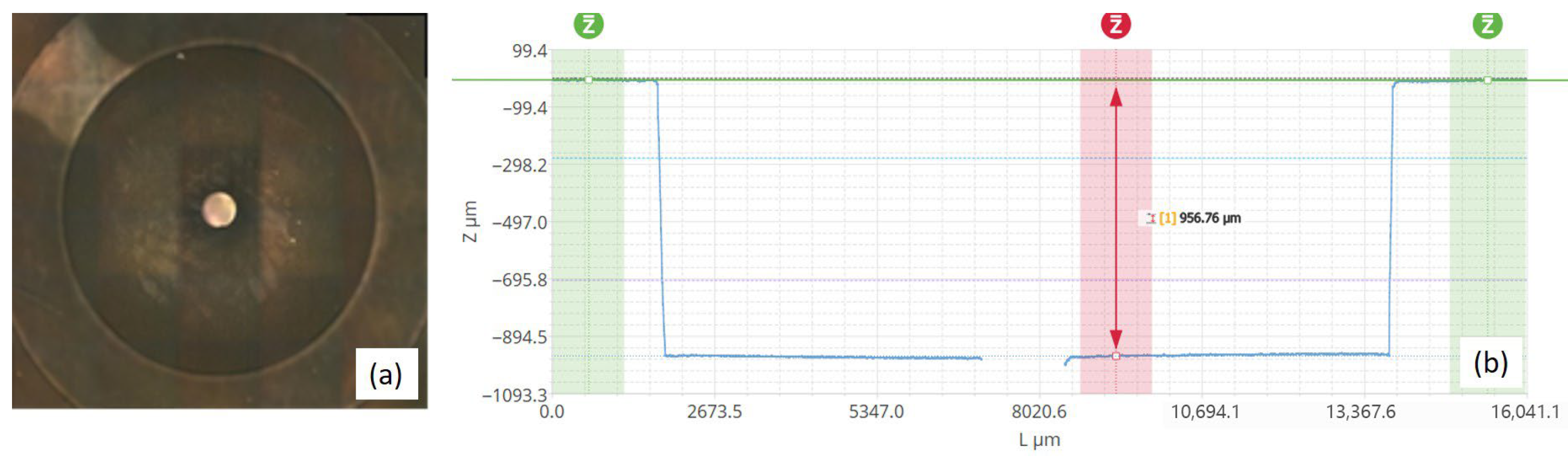
Figure 11a shows the mold insert (disc of 1 mm nominal thickness) acquired by a confocal profilometer (Sensofar S Neox, Sensofar, Barcelona, Spain) using Focus Variation mode at 10×, and Figure 11b the acquired section to evaluate the real thickness. Table 3 compares the disc’s nominal dimensions with the dimensions measured after manufacturing; the goal is to assess dimensional accuracy and manufacturing precision of SLA inserts.
A comparison between the nominal dimensions and the actual measurements of the manufactured inserts reveals a high degree of dimensional accuracy across evaluated features (thickness and diameter). The observed relative errors (deviations of actual value from the nominal one) remain below 5%, with some features showing deviations as low as 2%. These results, also present in the literature, indicate that manufacturing can reliably produce parts within tight tolerances [31]. The small magnitude of error suggests effective control over SLA factors. An exception arises in the case of thickness, where the deviation from the nominal value is significantly higher for the 0.35 mm thickness disc (deviation of −16%). This result can be due to the thinnest section having a dimension comparable to the slice of the SLA process (25 µm). Despite the thickness issue, the overall dimensional conformance supports the reliability of the SLA manufacturing method for producing micro inserts with precise dimensional requirements.

3.2. Molded Discs Results Summary

Dimensional accuracy and reproducibility are critical performance metrics in micro-injection molded components, particularly for biomedical and prosthetic applications where tight tolerances can influence mechanical performance, wear resistance, and implant fit. In this study, dimensional characterization of the molded UHMWPE micro-discs was conducted to assess the fidelity of the replication process and detect shrinkage or warping. Even if a mold release agent was applied to reduce material sticking, this last defect is sometimes present, and some of the molded discs present a deformed shape due to the forced ejection.
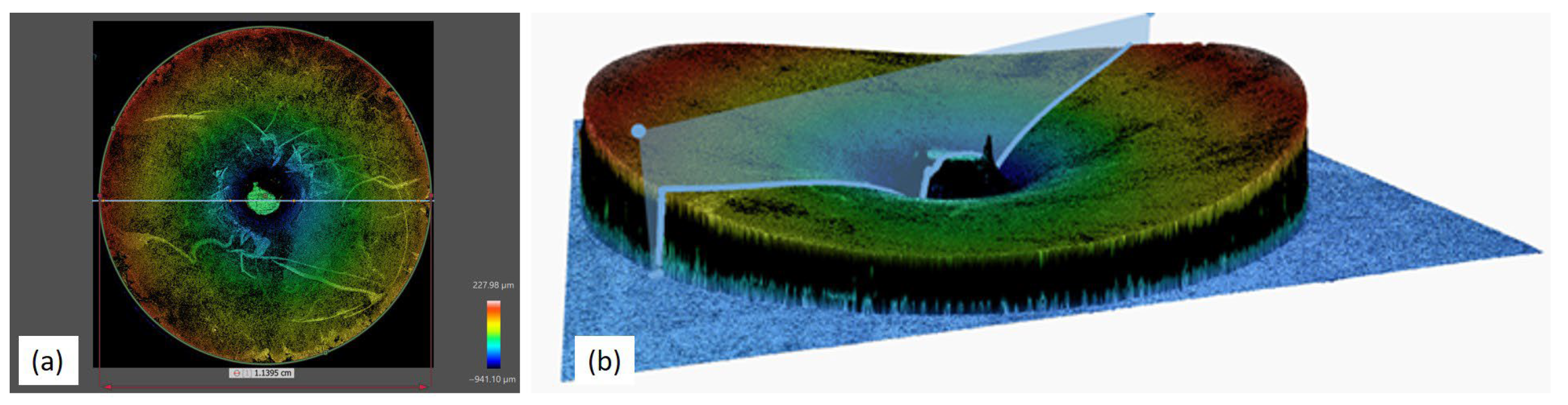
Dimensional measurements were carried out on micro-discs produced under the presented molding conditions. The sample thickness (T) of 10 parts was repeated 3 times for each disc geometry, and the process repeatability was assessed. Two samples were also evaluated regarding diameter (D) and flatness (F). The measurements were performed using the following instruments: digital micrometer (Mitutoyo, Tokio, Japan) (±1 µm precision) for thickness and confocal profilometer for diameter and flatness (using focus variation mode at 10×). Figure 12 reports the confocal acquisition of a 1 mm sample for diameter evaluation and the 3D view of a 0.35 mm sample used for flatness evaluation.
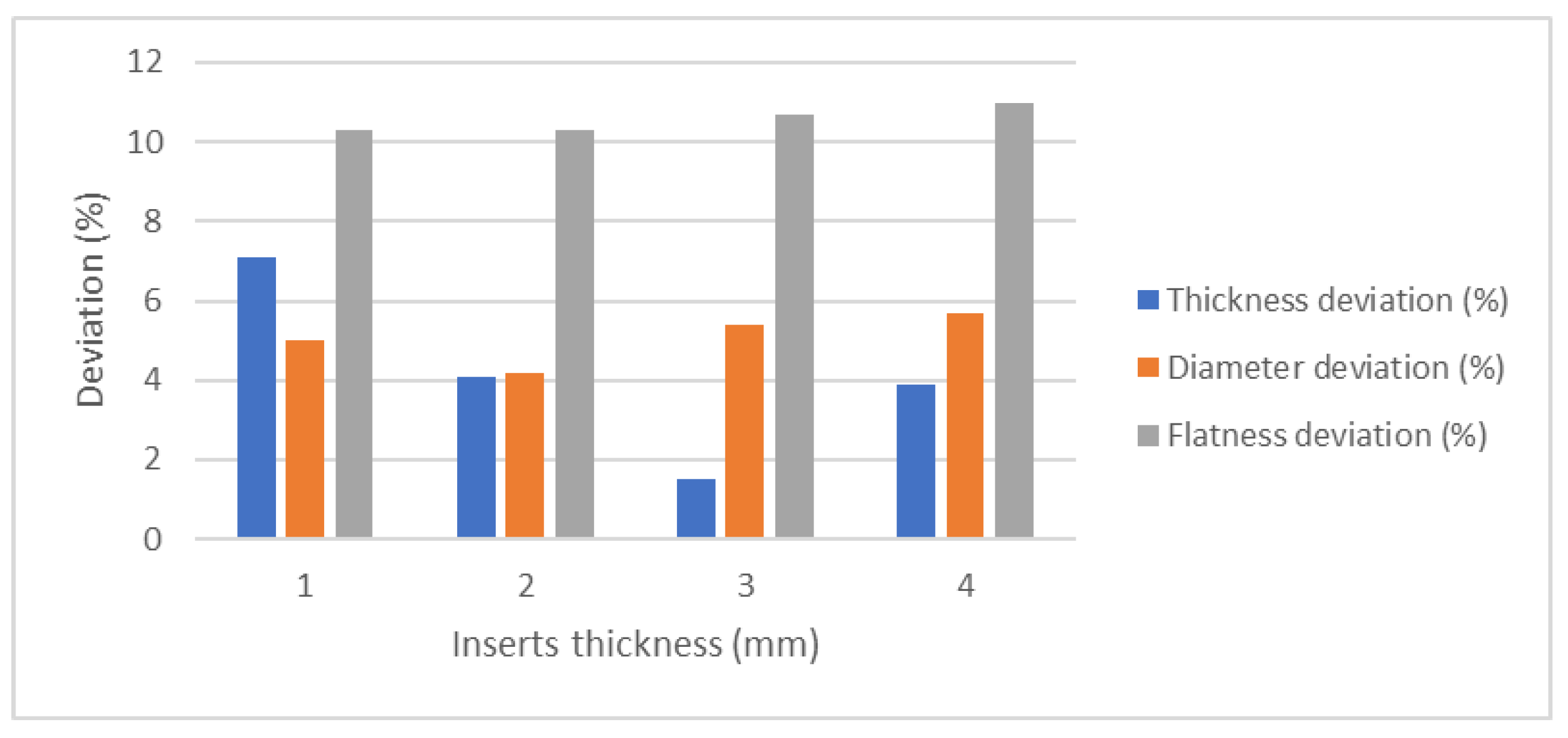
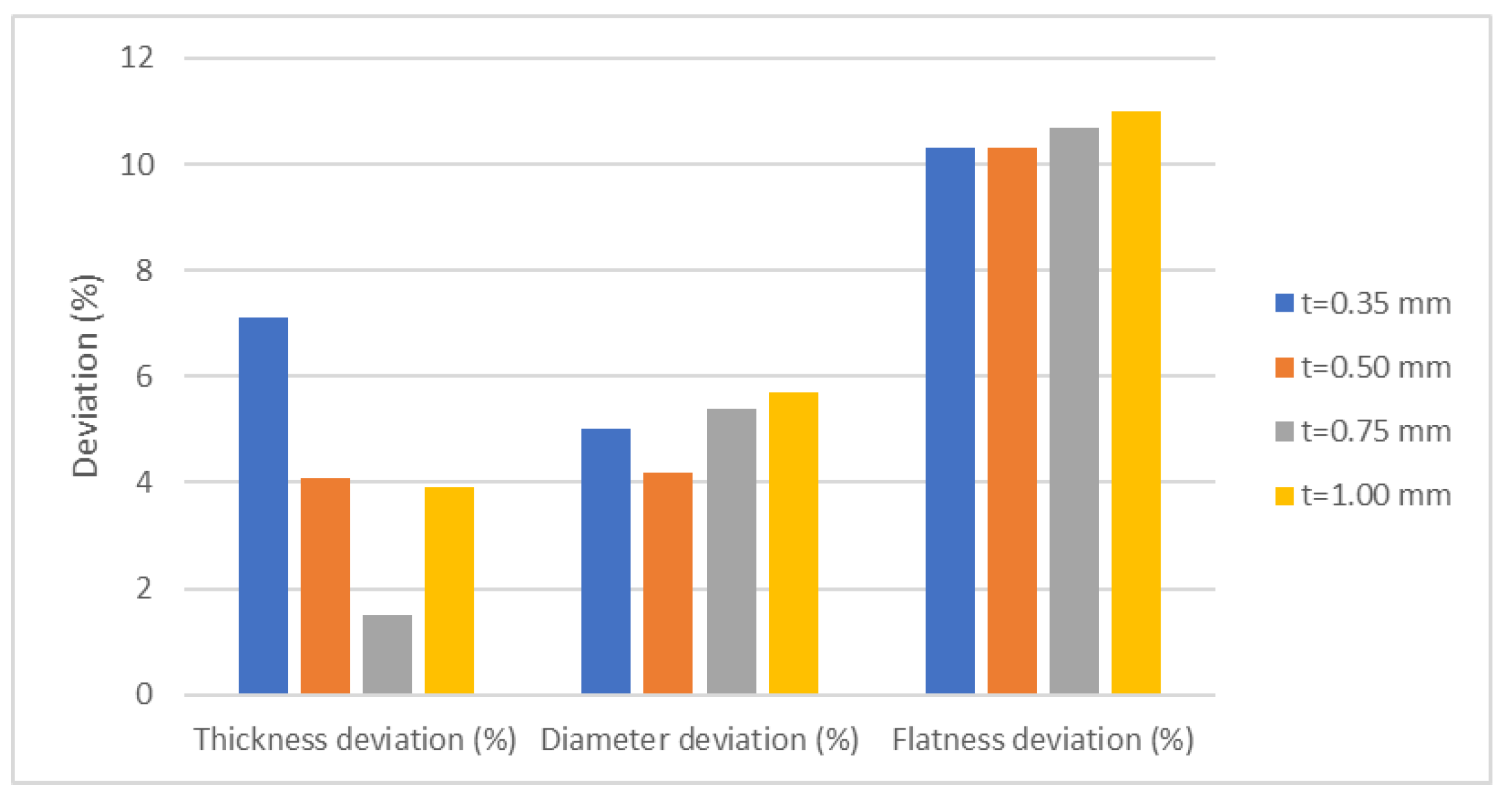
Table 4 compares a manufactured part’s nominal and real (measured) dimensions across three key parameters: thickness, diameter, and flatness. The relative error (Table 5, Figure 13 and Figure 14) for each dimension is calculated, offering insight into the precision and consistency of the manufacturing process. Shrinkage was within the expected range for UHMWPE (typically 1–2%), with slightly greater deviation observed in thicker samples, likely due to uneven cooling and higher internal stresses. Flatness deviation was more pronounced in larger disc diameters, correlating with material shrinkage gradients and mold temperature variations. Regarding the 0.35 mm samples, despite the mold dimensions being significantly out of tolerance, the samples show errors consistent with, or even better than, the 0.75 mm thick samples, which have an average error of about 6%. The measured angle due to sample extraction is also comparable across all samples of different thicknesses.
The dimensional analysis comparing nominal and real values reveals generally good manufacturing precision in most directions. The thickness and diameter dimensions show acceptable relative mean deviations of about −4% and −5.1%, respectively, indicating that the manufacturing process is almost controlled. This value is also evidenced in the literature [32] in which the found dimensional accuracy of the injected parts is below 5% using SLA-printed molds. However, a significant discrepancy is observed for flatness, with a mean relative error of 10%. This level of deviation suggests a problem during sample ejection due to the extremely thin section, making discs vulnerable during the ejection phase of the molding process, because a thin, hot part lacks rigidity. Flatness deviation is also correlated with material shrinkage gradients and mold temperature variations. On average, the 0.5 mm thickness samples are better than the others. To eliminate flatness defects the key areas to adjust (beyond part design and material that in our case are fixed) are the process parameters and in particular, (i) increase hold pressure and time that can compensate for shrinkage and improve part density, (ii) adjust mold temperature ensuring uniformity across both mold halves and within each half and raising the overall mold temperature promoting slower cooling, (iii) increase melt temperature improving flowability and reducing shear stress, (iv) slow down the cooling rate allowing the part to cool more slowly and for a longer duration in the mold. This may increase the cycle time, but it often solves flatness issues.
When managed adequately during the injection process, the dimensional fidelity of the molded parts confirmed that SLA-based mold inserts can produce UHMWPE micro-discs within acceptable tolerances for preclinical testing and low-load prosthetic prototypes. The deviation values are consistent with predictions from mold filling simulations, validating both the modeling approach and the molding process parameters. The warping suggests differential cooling rates across the thickness profile, which could be mitigated by improved mold temperature control or gradual cooling cycles.

3.3. Surface Characterization

Surface quality plays a critical role in the performance and biocompatibility of micro-fabricated prosthetic components, directly affecting wear resistance and lubrication behavior. This section evaluates the surface morphology and texture of micro-injection molded discs, focusing on the fidelity of replication from SLA-fabricated mold cavities. Surface characterization was performed on a representative set of molded UHMWPE discs using the confocal profilometry with a magnification lens of 20× for non-contact measurement of average surface roughness (Sa). The cut-off values used were 2.5 µm λs, and λc is 250 µm. Each sample was analyzed at the disc center and edge regions to evaluate uniformity. Measurements were compared to SLA mold surface data to assess replication fidelity.
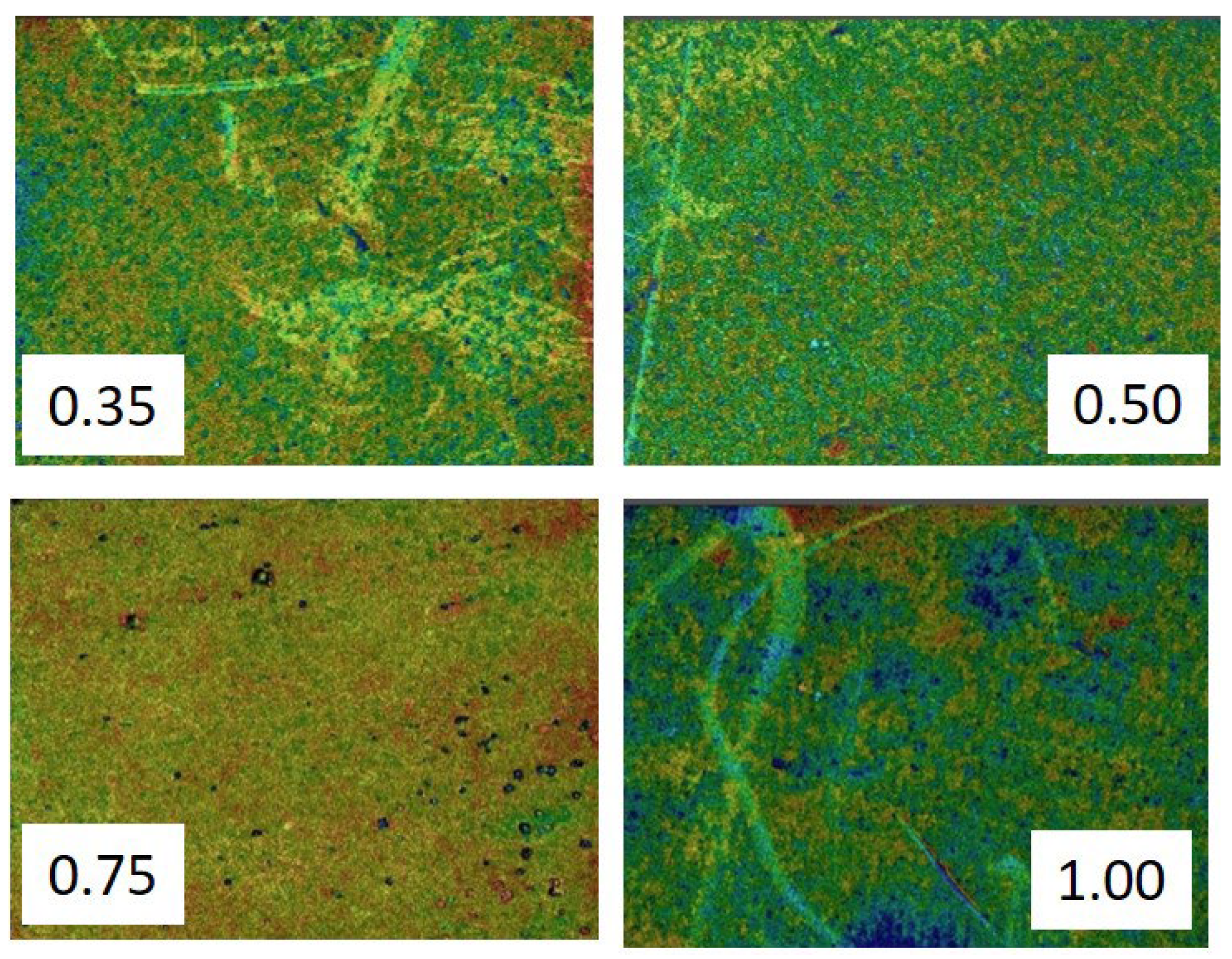
The SLA mold’s resolution and finish strongly influenced the molded discs’ surface roughness. High-resolution SLA printing allowed replication of features with minimal deviation. The average roughness Sa values of the UHMWPE discs closely matched those of the SLA molds, indicating excellent surface transfer without excessive material pull or flash (Table 6). Confocal images (Figure 15) revealed a uniform surface and texture without significant surface voids or degradation. No evidence of melt fracture or burn marks was observed. Some skin layers occasionally appeared delaminated, as also referred to by other authors [17,32]. Delamination is primarily attributed to two factors. First, excessive shear stress, generated by the material’s high viscosity and the rapid cooling of the skin during the filling and holding stages, creates a weak boundary layer. Second, the intrinsic properties of UHMWPE, specifically, the high degree of entanglement of its molecular chains, promote easy layering [18].

4. Conclusions

This study examined the flowability of a new melt-processable UHMWPE in thin disc geometries, focusing on its applicability in prosthetic components. The following conclusions can be drawn:
  • SLA-fabricated molds in this context demonstrated feasibility for prototyping and short-run evaluation of complex micro-scale prosthetic components, despite inherent material and tooling limitations.
  • Flowability limitation due to high molecular weight and viscosity: UHMWPE exhibits inherently poor flow characteristics due to its extremely high molecular weight and associated chain entanglement. This presents challenges in micro-molding processes.
  • Improved flow with elevated processing parameters: applying higher mold and melt temperatures significantly enhanced the material’s flow behavior. An optimal processing window was identified, balancing sufficient material softening with the need to avoid thermal degradation.
  • Dimensional accuracy in thin discs: properly optimized molding conditions enabled the successful formation of micro-disc shapes with acceptable dimensional tolerances. However, precise mold temperature control and fill rate were critical to minimize flatness errors.
  • Surface finish and structural integrity: The molded micro-discs demonstrated adequate surface smoothness and retained the inherent mechanical properties of UHMWPE, making them suitable for contact surfaces in prosthetic joints.
While UHMWPE remains a challenging material for micro-scale forming, this study confirms its viability for specialized prosthetic applications when processed by µIM under carefully controlled conditions. Further integration of micro-texturing or material reinforcement strategies may further enhance performance. Additional studies should explore the viscosity of the material in relation to the temperature to improve the simulation model, the long-term wear characteristics of micro-formed UHMWPE in simulated physiological environments and the use of additives or mold surface treatments to improve flowability.

Author Contributions

Conceptualization, R.S., F.M. and V.B. (Vito Basile); methodology, R.S. and F.M.; software, V.B. (Vincenzo Bellantone); validation, R.S.; investigation, R.S., F.M., V.B., (Vito Basile) and V.B. (Vincenzo Bellantone); data curation, R.S.; writing—original draft preparation, R.S.; writing—review and editing, R.S., V.B. (Vito Basile), V.B. (Vincenzo Bellantone) and I.F.; supervision, I.F.; funding acquisition, V.B. (Vito Basile). All authors have read and agreed to the published version of the manuscript.

Funding

This work was partially supported by the European Union under the Italian National Recovery and Resilience Plan (NRRP) of NextGenerationEU, partnership on “Next generation of sustainable and highly efficient molding processes” Italian Projects of Significant National Interest (PRIN) PNRR 2022 grant n. P2022ZE23N.

Data Availability Statement

The raw data supporting the conclusions of this article will be made available by the authors on request.

Acknowledgments

Special thanks to B.Sc. Cosimo Andriulo for performing parts of the experimental tests and prof. Andrea Angelastro for helpful discussions. The authors acknowledge Celanese Corp. (Belgium) for the material supply.

Conflicts of Interest

The authors declare no conflicts of interest.

References

  1. Celanese. Ultra-High-Performance Polyethylene GUR® UHMW-PE. Available online: https://www.celanese.com/products/gur-uhmw-pe-ultra-high-molecular-weight-polyethylene (accessed on 15 September 2025).
  2. Kurtz, S.M. Ultra-High MOLECULAR Weight Polyethylene in Total Joint Replacement and Medical Devices. In UHMWPE Biomaterials Handbook, 2nd ed.; Academic Press Elsevier: Amsterdam, The Netherlands, 2009. [Google Scholar]
  3. Bistolfi, A.; Giustra, F.; Bosco, F.; Sabatini, L.; Aprato, A.; Bracco, P.; Bellare, A. Ultra-high molecular weight polyethylene (UHMWPE) for hip and knee arthroplasty: The present and the future. J. Orthop. 2021, 25, 98–106. [Google Scholar] [CrossRef]
  4. Hussain, M.; Naqvi, R.A.; Abbas, N.; Khan, S.M.; Nawaz, S.; Hussain, A.; Zahra, N.; Khalid, M.W. Ultra-High-Molecular-Weight-Polyethylene (UHMWPE) as a Promising Polymer Material for Biomedical Applications: A Concise Review. Polymers 2020, 12, 323. [Google Scholar] [CrossRef]
  5. Bracco, P.; Bellare, A.; Bistolfi, A.; Affatato, S. Ultra-High Molecular Weight Polyethylene: Influence of the Chemical, Physical and Mechanical Properties on the Wear Behavior. A Review. Materials 2017, 10, 791. [Google Scholar] [CrossRef]
  6. Ayad, O.G.; Mourad, A.H.I.; Greish, Y.E.; Karam, S.M.; Alnaqbi, A.H. Injection-Molded Ultrahigh Molecular Weight Polyethylene Material with Improved Moldability for Artificial Joint Implants Design. Adv. Eng. Mater. 2022, 24, 2200059. [Google Scholar] [CrossRef]
  7. Mao, X.; Liao, S.; Wu, M.; Wang, Z. The relationship between the crystallization of UHMWPE/HDPE injection-molded products and their frictional and mechanical properties. Polymer 2025, 320, 128092. [Google Scholar] [CrossRef]
  8. Shan, Z.; Qin, X.; Li, H.; Xiang, Y.; Wu, W. Ultrasonic plasticizing micro-injection molding of UHMWPE based on new process flow and ultrasonic system structure to improve mechanical properties and process stability. Ultrason. Sonochemistry 2025, 114, 107272. [Google Scholar] [CrossRef] [PubMed]
  9. Ambekar, R.S.; Kandasubramanian, B. Progress in the Advancement of Porous Biopolymer Scaffold: Tissue Engineering Application. Ind. Eng. Chem. Res. 2019, 58, 6163–6194. [Google Scholar] [CrossRef]
  10. Sara Lee, K.Y.; Tan, W.J.; Ramesh, S.; Mahdi Al-Obaidi, A.S.H. Mechanical design and optimisation of lumbar disc prosthesis model. J. Eng. Sci. Technol. 2023, 18, 1791–1804. [Google Scholar]
  11. Amadji, M.; Ameddah, H.; Mazouz, H. Wear outcomes of three models of disc prostheses with two bearing materials metal-on-metal and metal-on-polyethylene. Matériaux Tech. 2023, 111, 406. [Google Scholar] [CrossRef]
  12. Said, A. Ultra-High-Molecular-Weight-Polyethylene (UHMWPE) as Desired Polymer Material for Biomedical. Khalij-Libya J. Dent. Med. Res. 2022, 6, 11–16. [Google Scholar] [CrossRef]
  13. Wahyudi, M.; Putra, Y.E.; Arrohman, S.; Jamari, J.; Ismail, R. A comparison between mechanical properties of UHMWPE from ram extrusion process and UHMWPE from compression molding process for a hip joint liner. IOP Conf. Ser. Mater. Sci. Eng. 2018, 432, 12007. [Google Scholar] [CrossRef]
  14. Collins Rice, C.G.; Evans, A.; Turner, Z.R.; Wattoom, J.; O’Hare, D. Strategies for enhancing the processability of UHMWPE. Ind. Chem. Mater. 2025, 3, 178–190. [Google Scholar] [CrossRef]
  15. Rosa-Sainz, A.; Silva, M.B.; Beltrán, A.M.; Centeno, G.; Vallellano, C. Assessing Formability and Failure of UHMWPE Sheets through SPIF: A Case Study in Medical Applications. Polymers 2023, 15, 3560. [Google Scholar] [CrossRef]
  16. Puértolas, J.A.; Kurtz, S.M. Evaluation of carbon nanotubes and graphene as reinforcements for UHMWPE-based composites in arthroplastic applications: A review. J. Mech. Behav. Biomed. Mater. 2014, 39, 129–145. [Google Scholar] [CrossRef] [PubMed]
  17. Basile, V.; Modica, F.; Surace, R.; Fassi, I. Micro-texturing of molds via Stereolithography for the fabrication of medical components. Procedia CIRP 2022, 110, 93–98. [Google Scholar] [CrossRef]
  18. Modica, F.; Basile, V.; Surace, R.; Fassi, I. Replication Study of Molded Micro-Textured Samples Made of Ultra-High Molecular Weight Polyethylene for Medical Applications. Micromachines 2023, 14, 523. [Google Scholar] [CrossRef] [PubMed]
  19. Schipper, O.N.; Haddad, S.L.; Fullam, S.; Pourzal, R.; Wimmer, M.A. Wear Characteristics of Conventional Ultrahigh-Molecular-Weight Polyethylene Versus Highly Cross-Linked Polyethylene in Total Ankle Arthroplasty. Foot Ankle Int. 2018, 39, 1335–1344. [Google Scholar] [CrossRef]
  20. Kapps, V.; Maru, M.M.; Kuznetsov, O.; Achete, C.A. Identifying differences in the tribological performance of GUR 1020 and GUR 1050 UHMWPE resins associated to pressure × velocity conditions in linear reciprocating sliding tests. J. Mech. Behav. Biomed. Mater. 2023, 145, 106038. [Google Scholar] [CrossRef]
  21. Celanese. GUR® UHMW-PE Injection Molding Grades—Global Brochure; Technical Datasheet GUR-017. 2014. Available online: https://www.celanese.com/products/medical-gur-uhmw-pe-mt-ultra-high-molecular-weight-polyethylene (accessed on 15 September 2025).
  22. Surace, R.; Basile, V.; Bellantone, V.; Modica, F.; Fassi, I. Micro Injection Molding of Thin Cavities Using Stereolithography for Mold Fabrication. Polymers 2021, 13, 1848. [Google Scholar] [CrossRef]
  23. Bellantone, V.; Lavecchia, F.; Surace, R.; Spadavecchia, O.; Modica, F.; Guerra, M.G.; Fassi, I.; Galantucci, L.M. Design and Experimental Validation of a Process Chain for Thin Components Manufacturing by Micro Injection Molding Process. ASME J. Micro Nano-Manuf. 2021, 9, 30903. [Google Scholar] [CrossRef]
  24. High Temp Resin Technical Datasheet. Available online: https://media.formlabs.com/m/41c07afd78a70b19/original/-ENUS-High-Temp-TDS.pdf (accessed on 13 June 2025).
  25. Dealy, J.M.; Larson, R.G. Structure and Rheology of Molten Polymers; Hanser Publishers: Munich, Germany, 2006. [Google Scholar]
  26. Yilmaz, G.; Yang, h.; Turng, L.S. Injection molding of delamination-free ultrahigh-molecular-weight polyethylene. Polym. Eng. Sci. 2019, 59, 2313–2322. [Google Scholar] [CrossRef]
  27. Yilmaz, G.; Ellingham, T.; Turng, L.S. Improved Processability and the Processing-Structure-Properties Relationship of Ultra-High Molecular Weight Polyethylene via Supercritical Nitrogen and Carbon Dioxide in Injection Molding. Polymers 2018, 10, 36. [Google Scholar] [CrossRef]
  28. Rosli, M.U.; Ahmad Termizi, S.N.A.; Khor, C.Y.; Nawi, M.A.M.; Omar, A.A.; Ishak, M.I. Simulation Based Optimization of Thin Wall Injection Molding Parameter Using Response Surface Methodology. IOP Conf. Ser. Mater. Sci. Eng. 2020, 864, 012193. [Google Scholar] [CrossRef]
  29. Regi, F.; Guerrier, P.; Zhang, Y.; Tosello, G. Experimental Characterization and Simulation of Thermoplastic Polymer Flow Hesitation in Thin-Wall Injection Molding Using Direct In-Mold Visualization Technique. Micromachines 2020, 11, 428. [Google Scholar] [CrossRef]
  30. Islam, A.; Li, X.; Wirska, M. Injection Moulding Simulation and Validation of Thin Wall Components for Precision Applications. In Advances in Manufacturing II. MANUFACTURING 2019; Gapiński, B., Szostak, M., Ivanov, V., Eds.; Lecture Notes in Mechanical Engineering; Springer: Cham, Switzerland, 2019; pp. 245–256. [Google Scholar] [CrossRef]
  31. Dizon, J.R.C.; Valino, A.D.; Souza, L.R.; Espera, A.H., Jr.; Chen, Q.; Advincula, R.C. Three-dimensional-printed molds and materials for injection molding and rapid tooling applications. Mater. Res. Soc. MRS Commun. 2019, 9, 1267–1283. [Google Scholar] [CrossRef]
  32. Dizon, J.R.C.; Valino, A.D.; Souza, L.R.; Espera, A.H., Jr.; Chen, Q.; Advincula, R.C. 3D printed injection molds using various 3Dprinting technologies. Mater. Sci. Forum 2020, 1005, 150–156. [Google Scholar] [CrossRef]
Figure 1. (a) CAD model of the insert and (b) section showing micro-disc cavity and gate.
Jmmp 09 00318 g001
Figure 2. CAD model of the micro-disc (T represents the variable thickness).
Jmmp 09 00318 g002
Figure 3. Produced SLA mold inserts with different disc thicknesses (in mm).
Jmmp 09 00318 g003
Figure 4. Three-dimensional section of the component (a), half 2D meshed section (b).
Jmmp 09 00318 g004
Figure 5. Comparison of melt flow (in blue) behavior in the thinner section of the mold (in red) under (a) favorable and (b) unfavorable process parameter settings at 0.09 s from the beginning of the injection process.
Jmmp 09 00318 g005
Figure 6. Contour plot illustrating mold filling ability as a function of injection speed (V) and mold temperature (Tmold). The darker green regions indicate improved filling and the lighter the contrary, as determined by simulation. The dashed lines correspond to the lower data sheet boundary.
Jmmp 09 00318 g006
Figure 7. Molding equipment with SLA mold assembly enlarged in picture evidenced by arrow.
Jmmp 09 00318 g007
Figure 8. Molded discs before (a,b) and after (c) setting the process parameters window.
Jmmp 09 00318 g008
Figure 9. Molded UHMWPE discs: (a) thickness 1 mm and (b) thickness 0.35 mm.
Jmmp 09 00318 g009
Figure 10. Damaged resin insert (0.35 mm cavity thickness).
Jmmp 09 00318 g010
Figure 11. (a) Mold insert image (disc of 1 mm nominal thickness) acquired by confocal profilometer and (b) measured insert section to evaluate real thickness.
Jmmp 09 00318 g011
Figure 12. Examples of molded UHMWPE disc: (a) confocal images showing precise edge replication (s = 1 mm), and (b) 3D view showing error of flatness (s = 0.35 mm).
Jmmp 09 00318 g012
Figure 13. Dimensional accuracy deviation (absolute value) of each disc (Table 5) vs. disc size.
Jmmp 09 00318 g013
Figure 14. Dimensional accuracy deviation (absolute value) vs. feature types.
Jmmp 09 00318 g014
Figure 15. Three-dimensional optical profilometry map of disc surfaces (disc thickness in mm on each figure).
Jmmp 09 00318 g015
Table 1. UHMWPE physical and mechanical properties [21].
PropertyUnitGUR® HMW-PE 1001
MFR g/10 min1.1
Molecular Weightg/mol6 × 105
Viscosity numbermL/g500
Densityg/cm30.95
Average particle sizeµm110
Tensile modulusMPa1150
Tensile stress at breakMPa45
Nominal strain at break%850
Table 2. Process parameters setting.
Process ParameterSymbolValue
Melt temperature Tmelt270 °C
Mold temperature Tmold100 °C
Injection speed V120 mm/s
Holding pressure PH100 MPa
Holding time tH3 s
Cooling time tC3 s
Table 3. Nominal and real mold insert dimensions and deviation from nominal values.
Nominal
Dimension (mm)
Measured Thickness (mm) Measured
Diameter (mm)
Thickness
Deviation (%)
Diameter
Deviation (%)
Ø 12 × 0.350.29412.19−16.0+1.58
Ø 12 × 0.500.49012.09−2.0+0.75
Ø 12 × 0.750.71112.12−5.2+1.00
Ø 12 × 1.000.95712.10−4.3+0.83
Table 4. Manufacturing results for inserts and injected samples.
Nominal Insert Dimension (mm)Real Insert Dimension (mm)Sample Measured Thickness (mm)Sample Measured Diameter (mm)Sample Flatness (°)
12 × 0.3512.19 × 0.2940.32 ± 0.01411.6 ± 0.002161.5 ± 1.60
12 × 0.5012.09 × 0.4900.47 ± 0.01111.6 ± 0.011161.4 ± 0.32
12 × 0.7512.12 × 0.7110.70 ± 0.01611.5 ± 0.007160.6 ± 3.12
12 × 1.0012.10 × 0.9570.92 ±0.01511.4 ± 0.002159.6 ± 4.53
Table 5. Dimensional mean deviation of molded UHMWPE micro-discs compared to mold insert real values.
Insert NumberReal Insert
Dimension (mm)
Thickness
Deviation (%)
Diameter
Deviation (%)
Flatness
Deviation (%)
112.19 × 0.294+8.8−4.810.3
212.09 × 0.490−4.1−4.110.3
312.12 × 0.711−1.5−5.110.7
412.10 × 0.957−3.9−5.811
Table 6. Surface roughness results.
Disc Thickness (mm)Mold Surface Sa (µm)Disc Surface Sa (µm)
0.350.920.96
0.501.051.30
0.750.831.00
1.000.800.94
Disclaimer/Publisher’s Note: The statements, opinions and data contained in all publications are solely those of the individual author(s) and contributor(s) and not of MDPI and/or the editor(s). MDPI and/or the editor(s) disclaim responsibility for any injury to people or property resulting from any ideas, methods, instructions or products referred to in the content.