Review

Evolution of Microstructures and Mechanical Properties of Laser-Welded Maraging Steel for Aerospace Applications: The Past, Present, and Future Prospect


1
School of Civil and Mechanical Engineering, Curtin University, Bentley, WA 6102, Australia
2
Metallurgical and Materials Engineering Department, Indian Institute of Technology Kharagpur, Kharagpur 721302, West Bengal, India
*
Author to whom correspondence should be addressed.
J. Manuf. Mater. Process. 2025, 9(12), 394; https://doi.org/10.3390/jmmp9120394
Submission received: 23 October 2025 / Revised: 18 November 2025 / Accepted: 26 November 2025 / Published: 30 November 2025

Abstract

Maraging steels encounter tremendous aerospace applications, such as in landing gears, rocket motor casing, pressure vessels, satellite launch vehicles, etc. Laser welding is considered one of the most effective manufacturing processes due to its minimal instances of wider heat-affected zones (HAZs), precipitate accumulation, and other benefits. However, it should also be noted that their severe effect is still evident in terms of the tensile strength and fatigue strength of laser-welded maraging steel. This paper provides a critical review of the evolution of microstructural features and mechanical properties of laser-welded maraging steel, including corresponding factors in terms of microstructures and the formation of reverted austenite, as well as precipitation hardening from various studies on maraging steels. We examined the influence of precipitation, reverted austenite, welding, and post-weld heat treatment on mechanical properties like hardness, tensile strength, yield strength, elongation, and fatigue strength of laser-welded maraging steel. It is worth mentioning that the laser welding process is generally insufficient for welding sheets with a thickness over 10 mm or those requiring multi-pass welding. The reheating process becomes unfavorable for maraging steel in the multi-pass welding process since it may induce localized heat treatment. Although hybrid welding may resolve an arising thickness issue, the reversion of austenite and complexity are still difficult to overcome due to the dual nature of welding processes, resulting from the use of both arc and laser. Furthermore, maraging steel produced via additive manufacturing tends to avoid austenite reversion with effective heat treatment prior to any welding process. Post-weld heat treatment and cryogenic treatment have been found to be favorable for desired reverted austenite formation. Finally, the proposed constructive framework specifically applies to the welding process of maraging steel, particularly for aerospace applications.

1. Introduction

Steels have been an integral part of manufacturing industries for a very long period of time. In particular, conventional low-, medium-, and high-carbon steels, as well as relatively high-alloy stainless steel, are widely used in various applications. It is worth mentioning that the carbon content is an essential constituent for obtaining higher strength in steels, though achieving both higher ductility and desired strength remains a challenge. A typical strengthening mechanism for carbon steel lies in the hard martensite phase, which compensates for the increase in ductility. Overall, the development of maraging steel is motivated by a rapidly increasing demand for high-strength materials with high ductility, a large strength-to-weight ratio, processability, and good weldability. In the late 1950s, Clarence Gieger Bieber developed the first maraging steel at Inco research laboratories [1]. Maraging steels are low-carbon-age, hardenable steels, possessing high strength and high ductility. As its name indicates, “mar” and “aging”, the strength and ductility can be achieved by aging the hard martensite phase to create tougher and softer lath martensite phase when compared with plate martensite. Additionally, the development of vital precipitates in maraging steel can contribute to the improvements of both strength and ductility. Maraging steel is well known to be widely used in high-performance material applications ranging from aerospace, tooling and machinery, structural engineering and ordnance, automobiles, etc. [2]. The nickel content in maraging steel varies from 17% to 25%, of which 18% Ni maraging steel becomes most popular in practical applications. Floreen [2] reported that the strength of maraging steel could reach up to 2.5 GPa. Excellent material properties directly benefit the increasing use of maraging steel in welding/joining industries. The formidable drawback to welding maraging steel lies in the formation of reverted austenite, leading to the strength reduction in welded maraging steel at joint interfaces. This phenomenon may arise from localized heat treatment in welding processes [3]. As such, it is an essential task to select an appropriate welding technique used for maraging steel. A variety of welding processes comprise conventional welding, plasma arc welding (PAW), tungsten inert gas welding (TIG), shielded metal arc welding (SMAW), metal inert gas welding (MIG), etc., to cause gross heat addition by prolonged contact with melted metals. Accordingly, the formation of reverted austenite due to localized heat treatment at the melt zone makes it weaker than adjacent HAZ and base materials [4]. Assorted welding types have different impacts on final weld joint geometries, as illustrated in Figure 1.
Laser welding and electron beam welding have almost identical power densities, despite typical beam deflection, due to the magnetization in less efficient electron beam welding when compared with laser welding [5,6]. Laser welding is considered a good alternative to overcome the issue of reverted austenite to a certain degree and also, in some cases, by subsequent post-weld heat treatment [7,8,9]. Laser welding induces rapid solidification and narrow HAZ, which renders HAZ and weld metal solutionized/overaged, leading to a softening effect when compared with the base metal. When 17-4-precipitation-hardened steel is laser-welded, appropriate post-weld heat treatment (PWHT) tends to refine precipitate structures and restore the hardness in both HAZ and the weld zone. The emphasis is laid on establishing the coherency of Cu-rich precipitates without promoting coarsening by using suitable PWHT [10]. Nd: YAG laser welding on 17-4PH steel yielded crack-free welds and was then followed by brief PWHT at 550 °C for 30 min to increase the hardness and further limit grain coarsening [11]. It is vital to holistically analyze the influence of welding parameters and heat treatment on the material properties of laser-welded maraging steel. The objective of this review is to establish a good correlation between microstructures and mechanical properties of laser-welded maraging steel, particularly targeting aerospace applications, along with a specific framework for welding processes of maraging steel using both hybrid welding and additive manufacturing.

2. Laser Welding of Maraging Steel

Laser welding has been a trending realm for welding maraging steel in the past decades owing to less exposure time for the melt zone, smaller HAZ, and quick solidification. The heat source imposed in laser welding has a significant impact on the different weld types produced. For instance, Ren et al. [12] concluded that the melting efficiency of the fiber laser was better than the CO2 laser when welding Inconel 617. In addition, upon decreasing the heat input, the weld bead geometry of the fiber laser tended to change from Y-type to I-type, as opposed to Y-type in the CO2 laser [12]. Laser sources used for welding can range from CO2 laser, yttrium aluminum garnet (YAG) laser, laser diode (LD), fiber laser, disk laser, LD-pumped solid-state laser, etc. [13]. Yb laser gives a smaller and sharper fusion zone and narrow HAZ for the same power and weld speed, as opposed to CO2, since the Yb laser has a shorter wavelength and better beam quality. The longer wavelength of CO2 produces narrower HAZs in many cases, but it primarily depends on beam delivery and surface conditions. The comparison between various laser sources can be normalized by linear heat input (J/mm) [14].
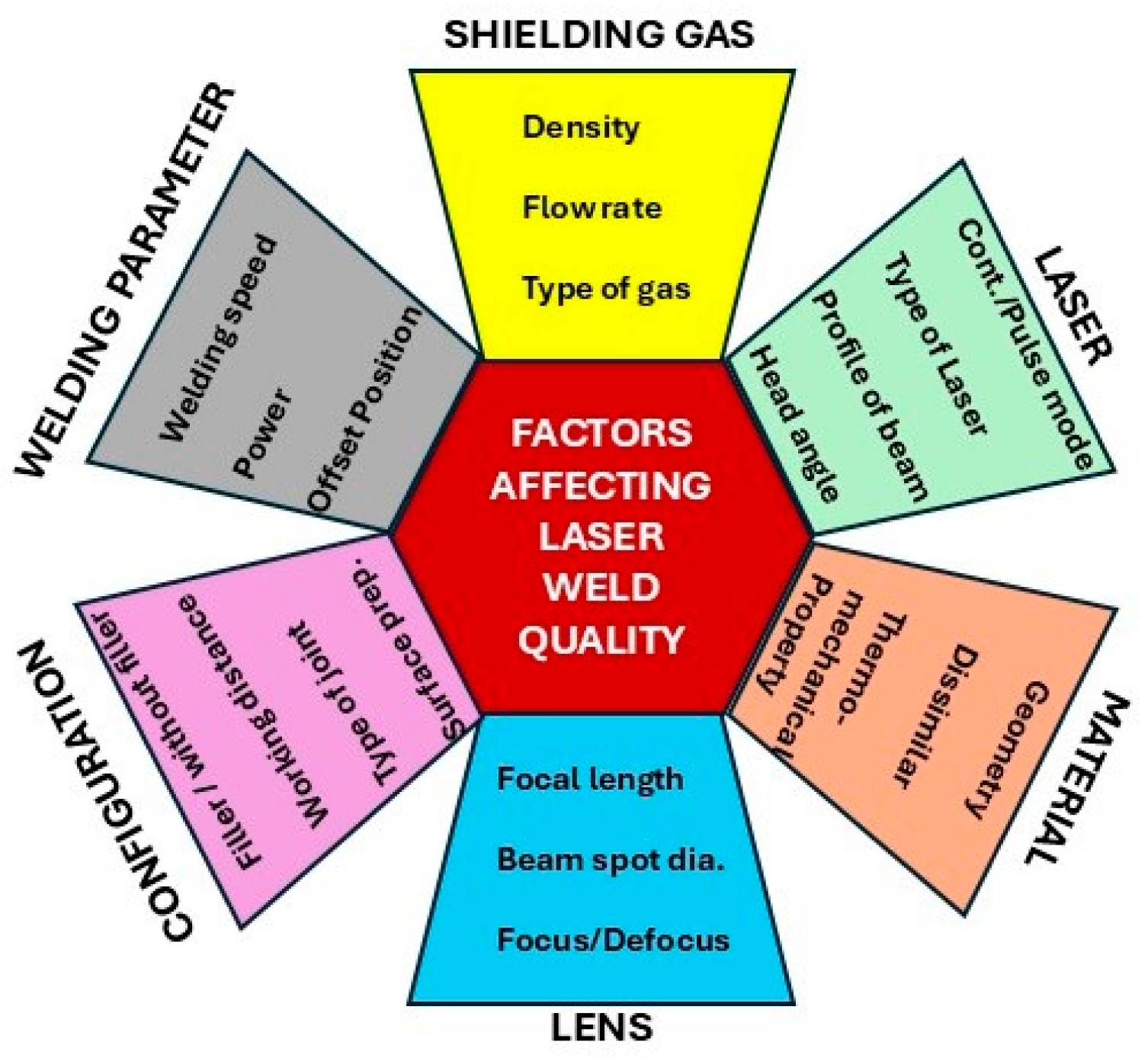
As a result, it is plausible to detect a significant difference in parameters for various welding processes when using laser welding on a particular material. On the other hand, the mode of laser welding belongs to pulsed current or continuous wave to influence the depth of penetration. A variety of parameters, like welding speed, power, laser type, laser mode, used materials, as well as corresponding configurations, may also play an important role in the quality control of laser welding, according to Figure 2.
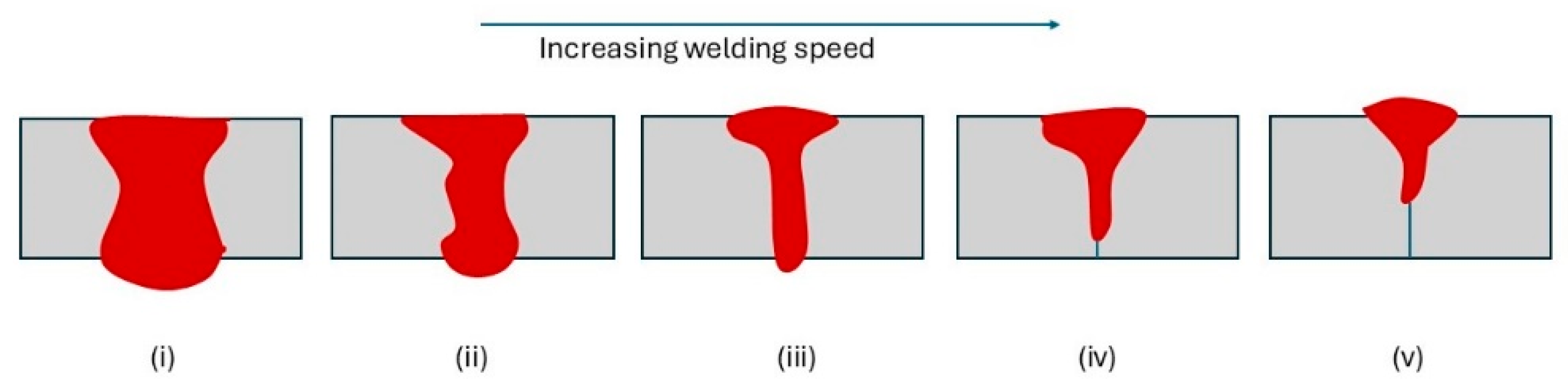
The impact of welding speed on the cross-section of weld joints is demonstrated schematically in Figure 3, which indicates that increasing welding speed decreases penetration depth. It is clearly shown that the variations in the metallurgical characteristics and mechanical properties of the final weld depend primarily on all these factors accordingly. Laser welding appears to be efficient in welding ultra-high-strength steel, which is one of the special types of maraging steel for crucial aerospace applications. A narrow HAZ in laser welding is most likely to assist in skipping the post-weld heat treatment in many cases. As such, it is manifested to perform a detailed characteristic analysis with respect to laser-welded maraging steel in terms of microstructures and mechanical properties.

2.1. Microstructures

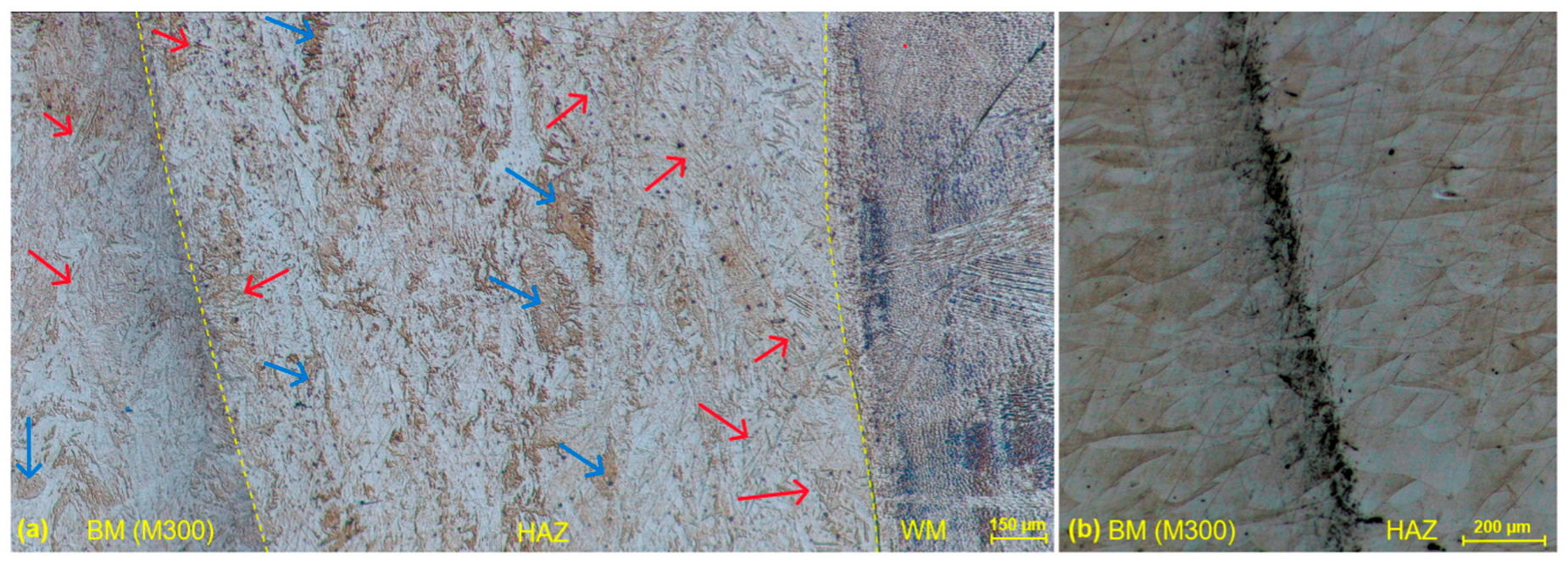
Laser welding is well understood to possess a narrow HAZ around the weld when compared with conventional welding. However, mechanical strength can be significantly influenced by microstructural variation due to heat input in laser welding. This is especially true for maraging steel, as discussed in this study. Detailed microstructural changes, including those resulting from post-weld heat treatment, play a significant role in the mechanical properties of maraging steel, which is prone to potential catastrophic failure. Laser welding is considered efficient for welding maraging steel due to the evident reduction in wider HAZ and reverted austenite, which are major issues in laser welding maraging steel [15,16,17]. Fanton et al. [9] employed a Yb-fiber laser for welding 18Ni 300 maraging steel with a clear sign of both homogenization and solutionizing effects. Heat treatment was found to efficiently improve yield strength up to approximately 1850 MPa, though it decreased conversely to 1350 MPa after homogenization [9]. Dinaharan et al. [18] investigated the effect of laser-welding speed on 250 maraging steel. It was reported that increasing the welding speed from 0.5 to 3 m/min gradually reduced weld penetration. It should be highlighted that the HAZ appeared to be narrow, and the fusion zone possessed dendritic cellular and columnar microstructures, being gradually refined with increasing speed [18]. Gel’atko et al. [19] focused on welding 300 maraging steel with 316 L stainless steel using selective laser welding to achieve optimal welding parameters. There was a clear sign of austenite formation in the martensite matrix with the microstructural observation at the HAZ of maraging steel.
As illustrated in Figure 4, martensite flakes and austenite phase appeared to be evidently revealed by red and blue arrows, respectively. It is also noted that the austenite phase became more prominent in HAZ relative to BM, which could be attributed to localized heat treatment leading to reverted austenite formation. In particular, Figure 4b exhibited a more prevalently mixed phase structure in a visible intermittent zone with darker contrast.
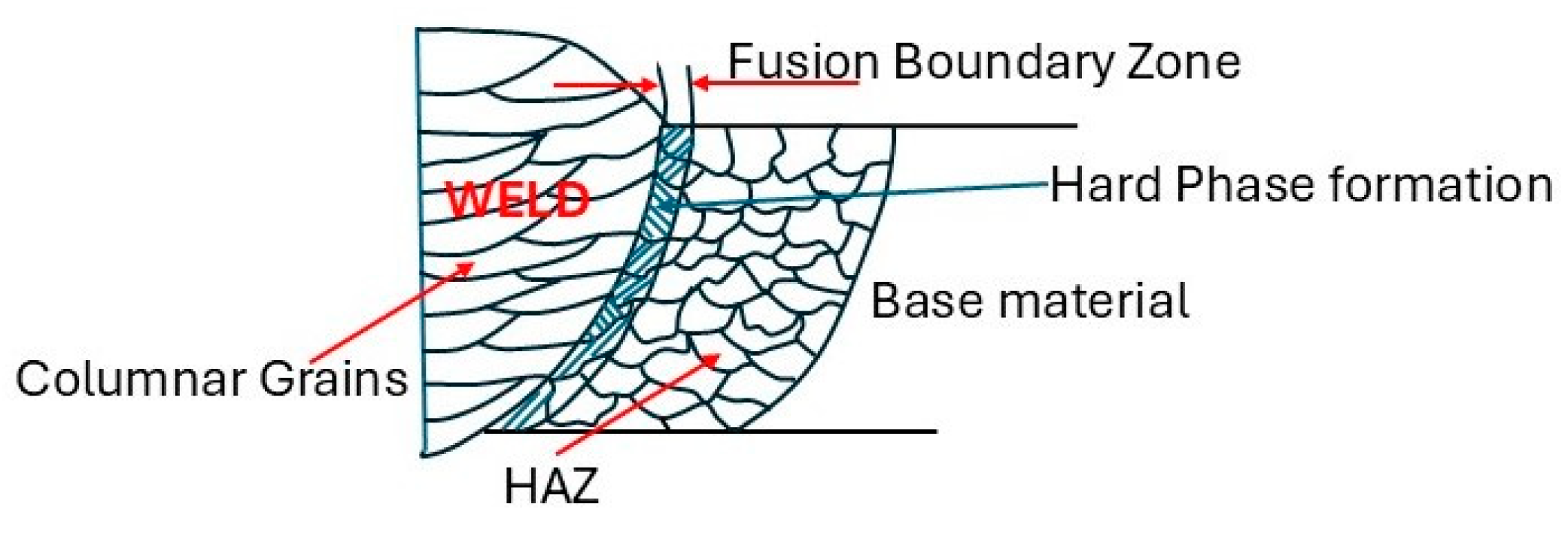
Figure 5 illustrates a schematic diagram of microstructural change in the weld in which the formation of columnar/dendritic grains occurred in the weld zone. The fusion boundary zone is a specific area between the weld and HAZ, along with corresponding dimensions varying from micrometers to the size of sharp fusion lines, which depends on the welding processes and metal and alloy types. There are good chances of phase transformation in the fusion zone in relation to the composition and heat input. Such a transformation could be efficient or detrimental to weld joints. Hard needle-like martensite formation tended to yield a fusion zone prone to fracture. HAZ microstructures may be altered due to residence time (i.e., exposure time of heat input). More residence time was beneficial for producing coarser grains in HAZ when compared with finer grains in base materials. Accordingly, residence time should be shortened to produce efficient weld joints. This could be reduced by two different means: either reducing the heat input rate or using a welding process with a two-dimensional heat flow for a half residence time when compared with three-dimensional heat flow. Laser welding and electron beam welding are particular processes in possession of these characteristics, resulting in minimal metallurgical disturbance at the fusion boundary and HAZ [20,21].
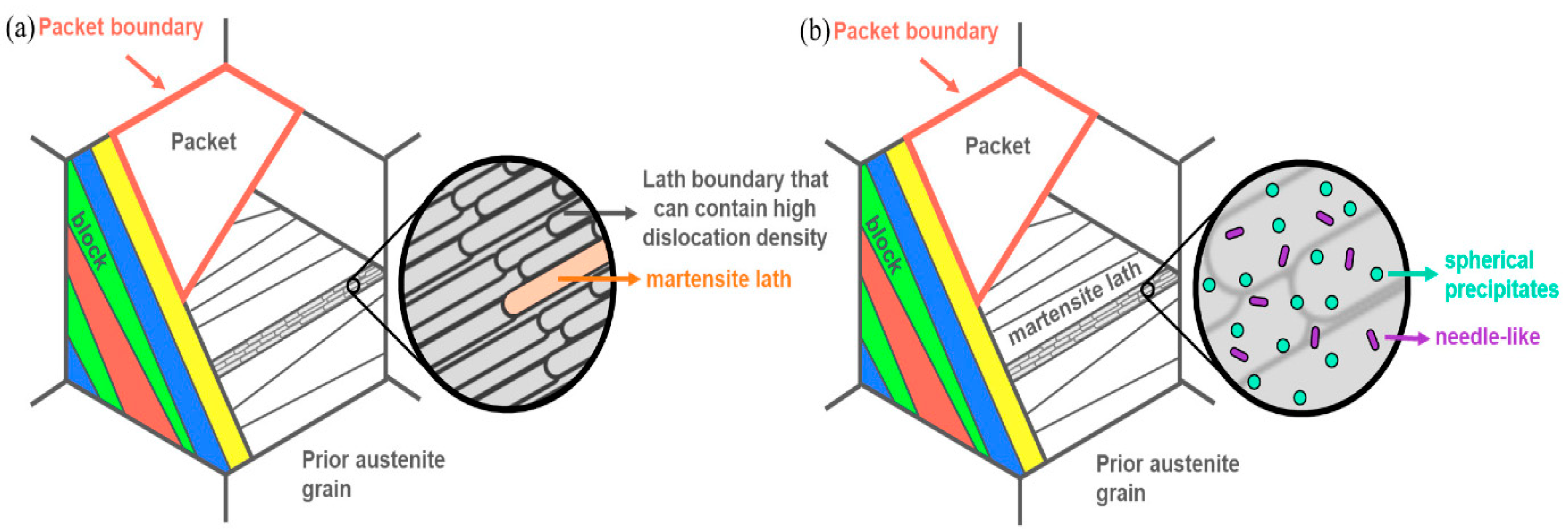
Figure 6 illustrates the effect of annealing and aging on the morphology and microconstituent formation in maraging steel, as reported by Fonseca et al. [22].
When annealing took place at 1200 °C, austenite phase transformation generated primary austenite grains that transformed into martensite-forming packets, lath, and block structures in maraging steel via shear mechanisms upon further quenching. A higher dislocation density in the matrices acted as nucleation sites for precipitates at the initial aging stage. Figure 6b depicts the formation of precipitates with a needle-like to spherical morphology. The austenite grain size remained the same after the disappearance of aging dislocations despite the expansion of martensite laths. It may occur due to the recovery of the martensite phase during an initial aging stage [22,23]. Microstructural changes were induced by metallurgical change or disturbance observed in welding maraging steel, which cannot be neglected in view of the mechanical properties of maraging steel. Since maraging steel belongs to precipitation-hardened steel, corresponding precipitate formation may either improve or deteriorate its mechanical properties. Table 1 summarizes previous studies to correlate microstructural change and mechanical properties of laser-welded maraging steel accordingly.
Overall, significant non-homogeneous structures were observed after laser welding, though not as prominent as those in other conventional welding processes, according to Table 1. This includes the development of fine-grained and coarse-grained HAZs, variously shaped fusion zones, and the impact of scanning speed in as-welded conditions.
The formation of columnar and dendritic grain structures across various laser sources is primarily generalized by thermal gradient (G) and solidification rate (R). G/R ratio is a significant factor used for solidification morphology (e.g., columnar, cellular, or dendritic). To ensure normalization among various laser sources, power, speed, etc., the parameters, like linear energy density and volumetric energy density, are considered to be governing factors for microstructural prediction [30]. Cellular automata (CA) methodology was utilized in recent work [31] for microstructural simulation of maraging steel 1.2709 via powder bed fusion based on a laser beam. The depth analysis revealed that thermal cycle input and processing parameters significantly influenced the aspect ratio and grain size, in addition to energy density [31].
It should be highlighted that high strength may rely on the homogeneity of grain structures for laser welding. Non-homogeneous grain structures are often generated by welding. Post-welding heat treatment, such as appropriate aging, homogenization, and solutionization, has been proven to be beneficial in enhancing the strength by precipitation hardening and desired austenite reversion for the improvement or deterioration of ductility.

2.2. Strengthening Mechanism in Maraging Steel

Precipitation and reverted austenite phenomena in maraging steel can occur due to aging, either during welding processes or after post-welding heat treatment in order to improve the mechanical properties of laser-welded maraging steel. In general, appropriate precipitates are created around the dislocation to restrict its movement, while the delay in plastic deformation often increases the strength of materials. [32]. Reverted austenite is equally important in laser welding of maraging steel. Any untransformed austenite/retained austenite and reverted austenite are metallurgically indicative of stress concentration, which can potentially result in a strength reduction in maraging steel. Residual stress generally occurs by virtue of many aspects, including weld thermal cycle, restraints, metallurgical transformation, etc., with respect to laser welding of maraging steel. [33,34].

2.2.1. Precipitation

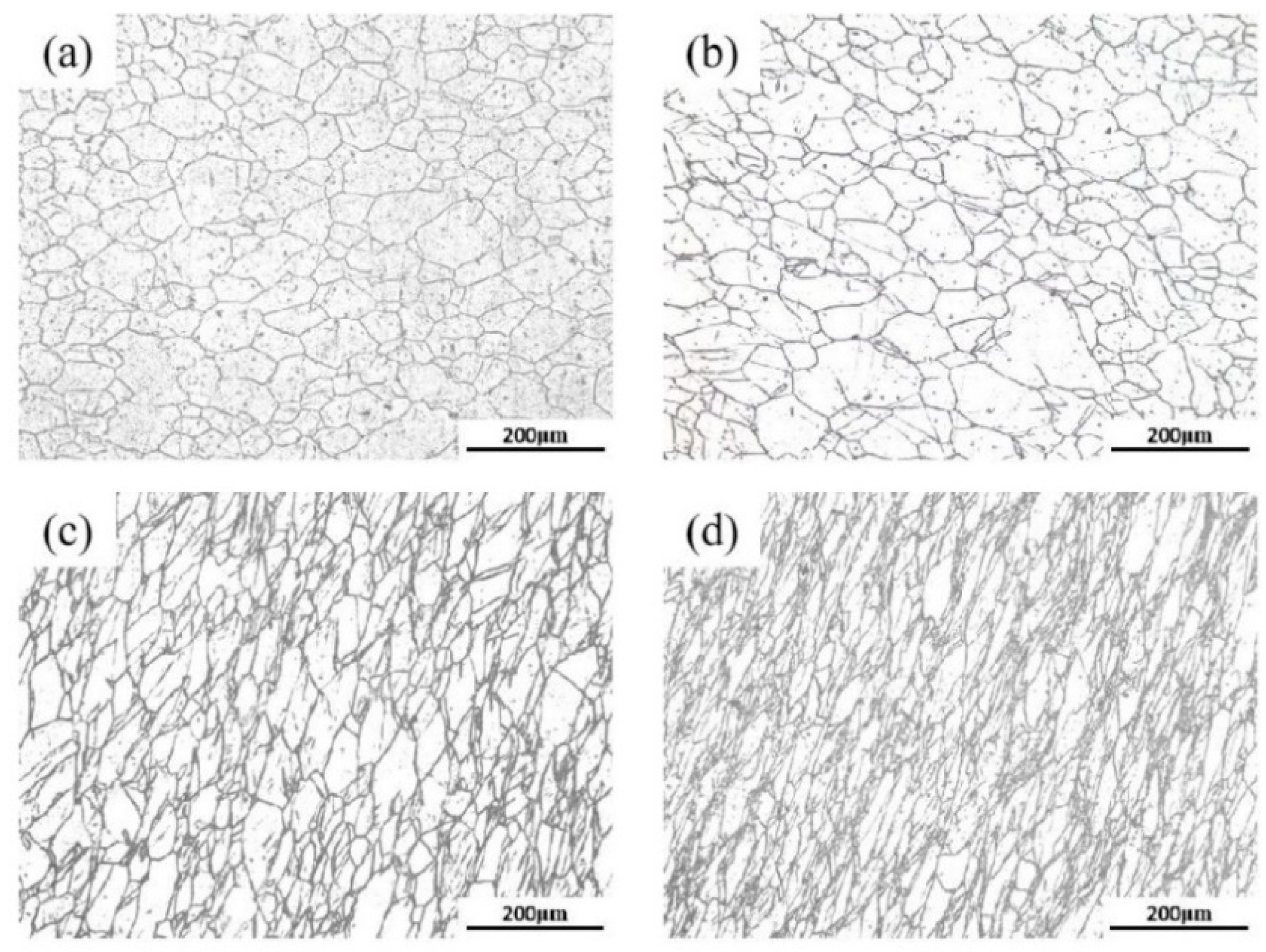
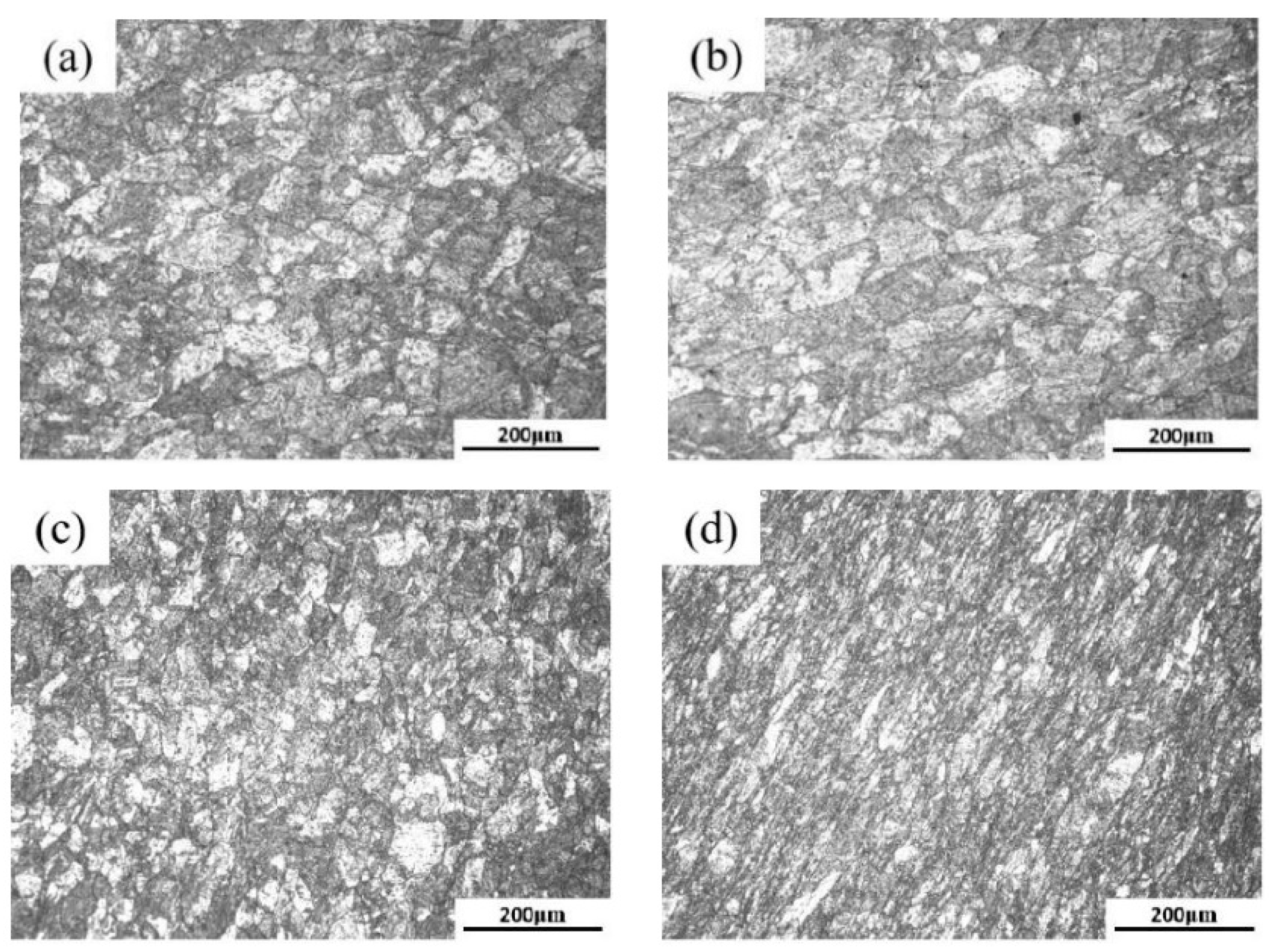
Precipitation is crucial to achieving high toughness in maraging steel [35]. As shown in Figure 6, the precipitates start to develop in the martensite lath, promoting both high strength and high ductility. As maraging steel is considered an age-hardened steel, heat treatment is a vital processing step for the development of specific types of precipitates. Xu et al. [36] reported a significant impact of both forging under deformation and heat treatment on martensite lath in 18Ni maraging steel. It was concluded that the combination of plastic deformation and heat treatment not only refined martensite and increased dislocation density but also accelerated the formation and uniform dispersion of intermetallic compounds, such as Ni3Ti, Fe2Mo, and Fe7Mo6. This was evidently presented in Figure 7 and Figure 8, which show the deformation and heat treatment, respectively.
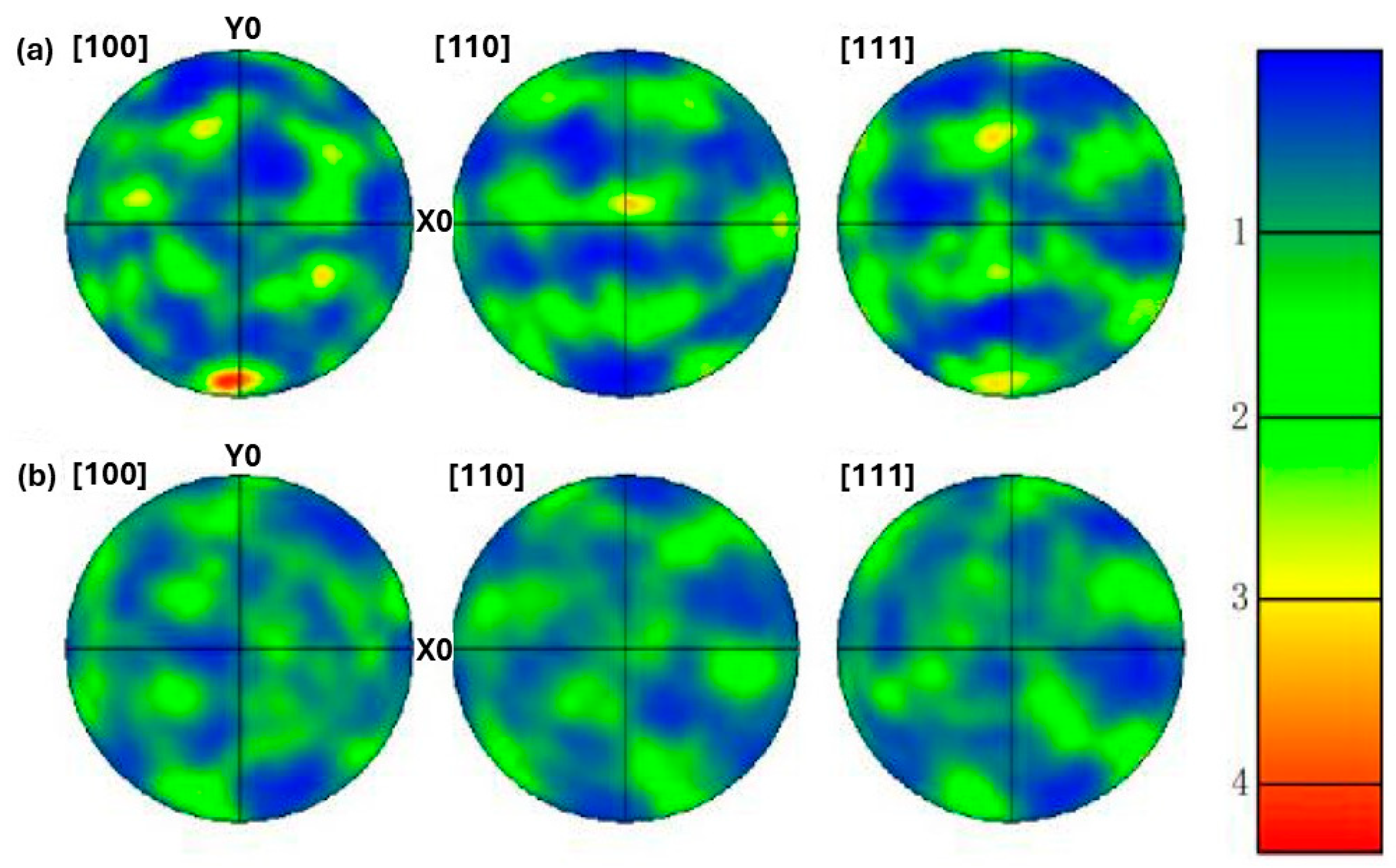
Figure 9 depicts the EBSD pole figure after deformation and heat treatment, with a clear sign of weak texture and recrystallisation [36]. It has been proven that heat treatment of maraging steel is beneficial for overcoming internal defects and eliminating the anisotropy induced by forging or previous deformation.
The aging heat treatment of maraging steel yielded high strength and higher toughness due to the existence of finely dispersed precipitates. The strength reached up to 2400 MPa for 18Ni 350 maraging steel. However, heat treatment beyond 500 °C led to a strength reduction due to austenite reversion and precipitate loss. The high nickel content in maraging steel is regarded as another reason for austenite formation, which generally acts as an austenite stabilizer [37,38].
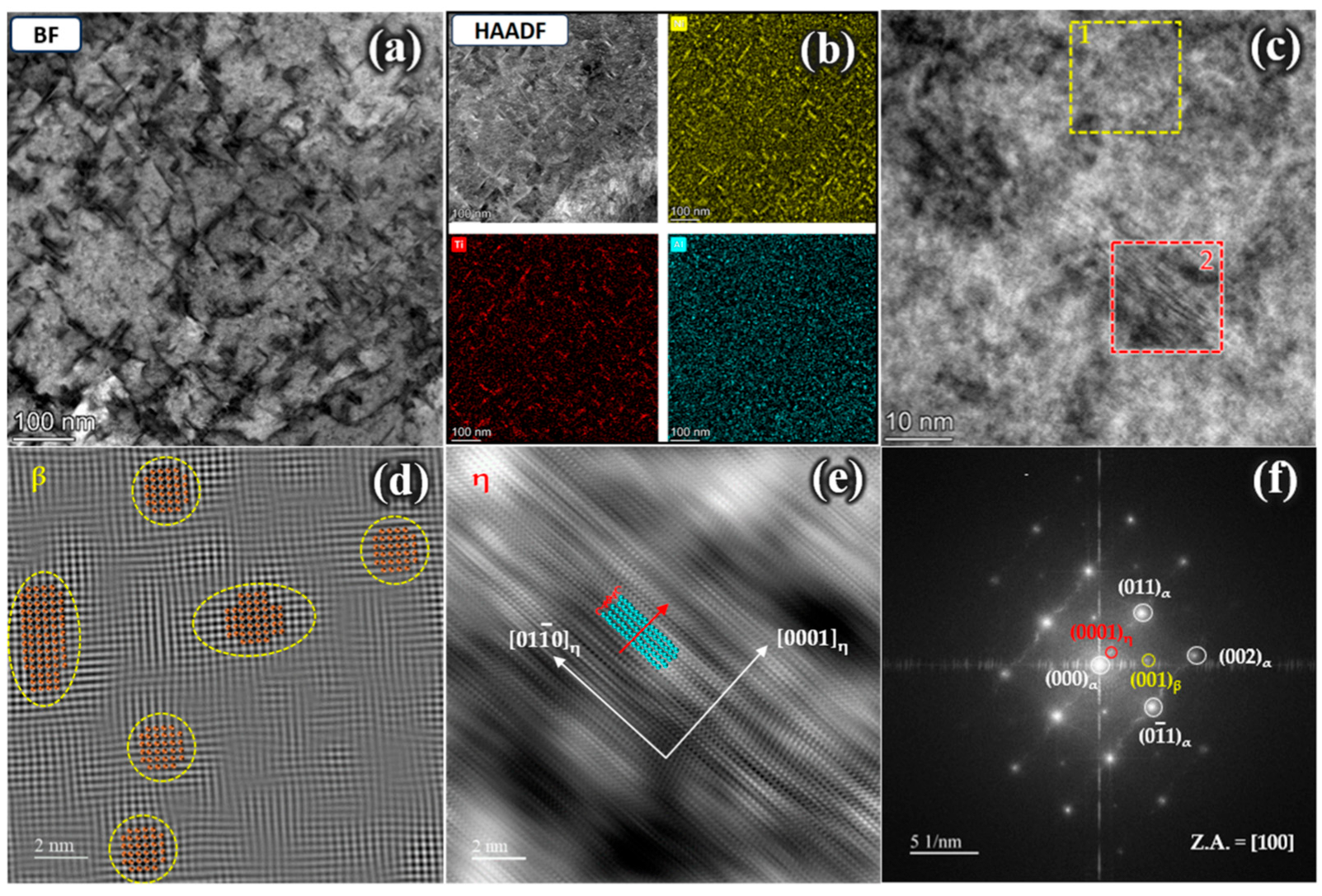
Transmission electron microscopy (TEM) is a sophisticated micro/nanostructure analysis tool to observe precipitate formation as a critical aspect in maraging steel research. Meng et al. [39] investigated the role of Al/Ti in precipitate-strengthened maraging steel through TEM observation to demonstrate the formation of β and η phases, as illustrated in Figure 10.
Figure 10 depicts the STEM micrograph in maraging steel with the aid of EDS analysis to map Ni, Al, and Ti. Figure 10a shows the finely dispersed strengthening phase. It further indicates the formation of spherical and rod-like morphological structures in shape. Figure 10c reveals β-NiAl (spherical) and η-Ni3Ti (rod-like) phases in positions 1 and 2, respectively. Hence, two nano-scale precipitates, namely β-NiAl and η-Ni3Ti, can be confirmed in Figure 10f in the presence of selected-area electron diffraction [40].
Lu et al. [40] quantitatively predicted the evolution of strength due to post-weld heat treatment using a microstructure-informed model. Total yield strength (σy) can be estimated from the contributions of dislocation, precipitation, and strengthening of grain boundary mechanisms using the following equation:
σy = σo + σppt + σdis + σgb
where σo is the intrinsic lattice friction stress, σppt is the strengthening due to incoherent or coherent precipitates, σdis is the strengthening due to dislocation, and σgb is the Hall–Petch/grain boundary strengthening. The experimentally measured hardness and tensile strength were directly compared with model prediction, resulting in a good 4–8% deviation [40]. As such, a quantitative relationship between the evolution of modeled precipitate and mechanical properties can be established accordingly [40]. Table 2 presents a brief overview of precipitate formation in maraging steel.
The formation of precipitates is a critical aspect in the strengthening of maraging steel. The formation, size, type, and their effect depend primarily on the composition, grade, solution treatment, and aging treatment that maraging steel undergoes. It requires a comprehensive approach to overview the characteristics observed in various grades and compositional variations among maraging steel types. Both precipitate size and its formation location are vital in the strengthening of maraging steel. On the other hand, it is worth noting that austenite reversion is another important mechanism to study its formation in welding maraging steel, especially when considering sensitive applications in the aerospace industry. Reverted austenite is also an important aspect to study deeply in welding maraging steel. Its mechanism of generation and location in the matrix of maraging steel has a significant impact on the strength and ductility of laser-welded maraging steel. Austenite formation in the grain and grain boundary has an entirely opposite effect on the ductility of maraging steel. As such, a principle of its formation in favor of the toughness of welded maraging steel is essential in this study.

2.2.2. Reverted Austenite

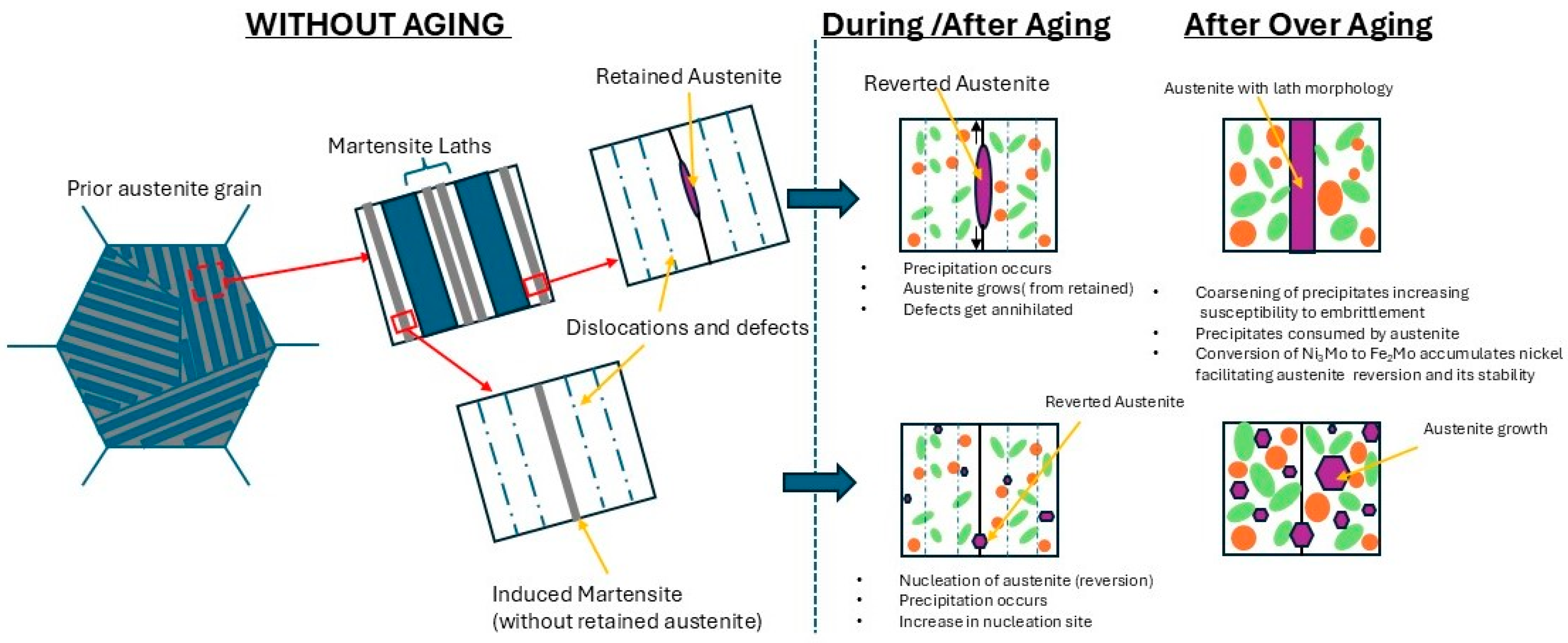
Despite numerous studies focusing on the formation of reverted austenite in maraging steel, including retained austenite, aging heat treatment, and high nickel content, it has been determined that these factors are the major reasons for the formation of reverted austenite in maraging steel [45,46]. Although laser welding is a very quick process, the possible formation of reverted austenite cannot be ignored in the fusion boundary zone and HAZ in maraging steel. In general, residence time depends primarily on the peak temperature of welding, heat input, welding speed, etc. [47,48]. Viswanathan et al. [37] examined the sequence of austenite reversion during the over-aging stage of 18Ni 350 maraging steel. It was found that aging was beneficial to the toughness of maraging steel, though a prolonged aging issue appeared to be detrimental at 640 °C for the duration between 1 and 8 h, thereby causing the embrittlement due to coarsening intermetallic precipitates [37]. The loss in strength can be attributed to the reversion of austenite at the boundary to prior-austenite grain. Overaged precipitates could also be considered as the major reason for toughness reduction, for they are the source of void formation [49]. When austenite reversion occurs in weld zones, it can reduce the performance of weld joints. Micro-segregation is also believed to enhance the reversion of austenite prematurely in maraging steel, which can happen with prolonged high-temperature aging when nickel tends to be accumulated, owing to the transformation of Ni3Mo at the initial heat treatment to Fe2Mo [50,51]. Figure 11 depicts the mechanism of austenite reversion in maraging steel due to aging, overaging, and the presence of retained austenite.
It is vital to distinguish between reverted and retained austenite in maraging steel. This is because retained austenite forms due to incomplete martensitic transformation after solidification. Whereas reverted austenite forms during post-weld heat treatment and aging, as assisted by Ni-rich regions from martensite. The formation of reverted austenite is generally observed along the martensite lath and prior austenite grain boundaries, according to Figure 10. This phenomenon is identified to increase with heat treatment temperature and duration [52]. The interdendritic segregation assists in the formation of gradient-reverted austenite in wire arc additively manufactured Co-free maraging steel. Reverted austenite formed due to segregation can be transformed into martensite. Prior annealing to aging modifies the compositional gradient and the degree of segregation in interdendritic regions, thereby resulting in transformation-induced plasticity [53].
Maraging steel is prone to hydrogen embrittlement and stress corrosion cracking. The susceptibility decreases with solution aging, primarily depending on the content of reverted austenite/retained austenite and material strength. Their presence is indicative of stress accumulation and tends to convert to the martensite phase during heat treatment. As such, local deformation defects can be correlated with increased crack initiation, which is known as stress corrosion cracking [54,55]. The same study can be quite complex as far as laser-welded maraging steel is concerned.
The formation of reverted austenite due to aging enhances the toughness of maraging steel by increasing the ductility associated with the formation of the soft austenite phase. Nonetheless, overaging or improperly planned aging can reduce the strength due to coarsening precipitates and reverted austenite. In this way, it not only increased the possibility of embrittlement but also induced stress corrosion cracking where coarse precipitates acted as the epicenter for crack initiation.
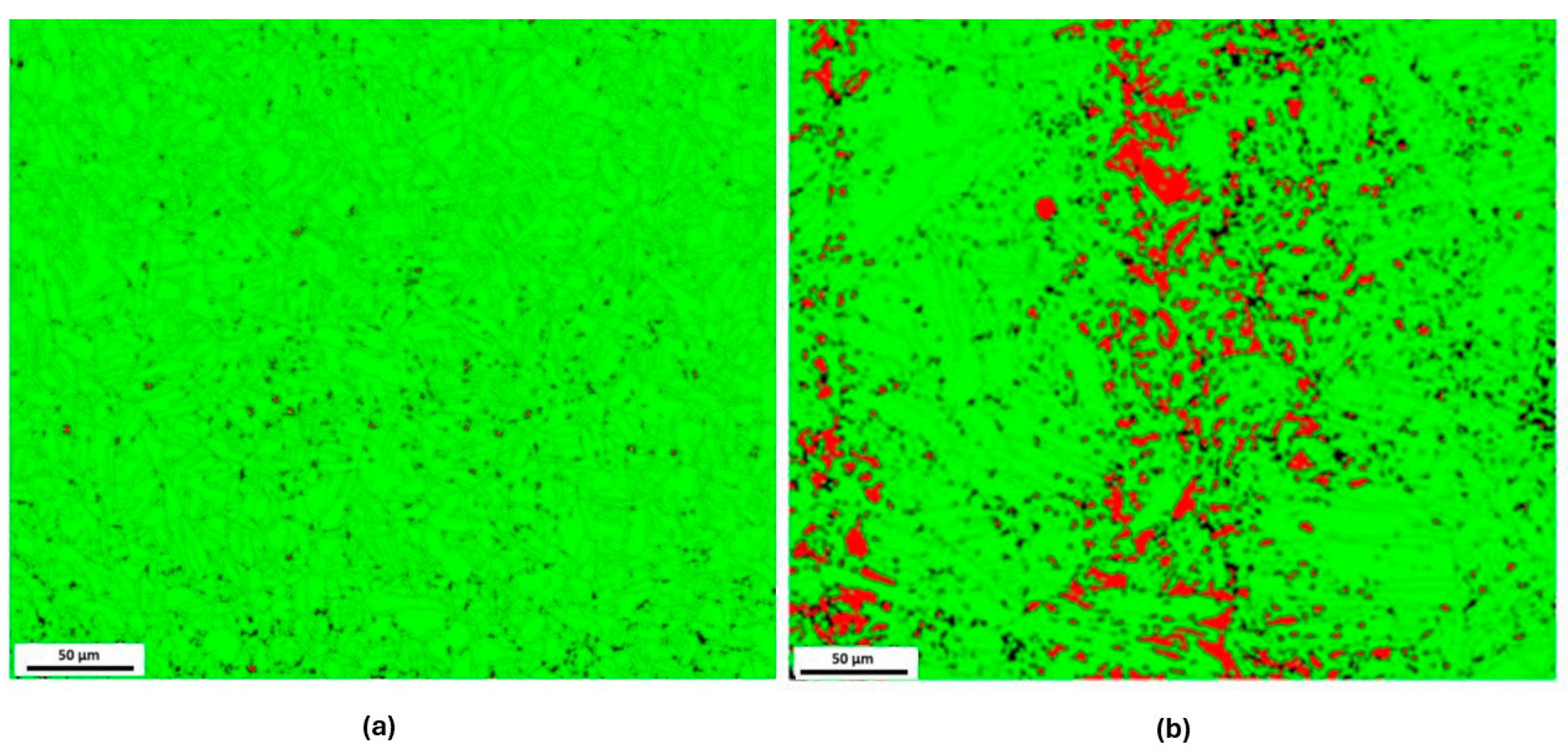
The segregation effect of reverted austenite is well presented in the electron beam scattered diffraction (EBSD) phase map of appropriately aged and over-aged martensitic stainless steel in Figure 12, as mentioned by Vodarek et al. [56].
The effect of over-aging on the amount of reverted austenite (RA) formation shown in Figure 11 is proven in Figure 12 according to the EBSD phase map. Table 3 elaborates on the context of the percentage of reverted austenite formed in maraging steel and its corresponding effect on overall mechanical properties. The presence of RA in the metastable state turns into martensite by virtue of plastic deformation. This phenomenon is called transformation-induced plasticity (TRIP), which is expected to be visible in overaged maraging steel with an excess of reverted austenite. Accordingly, the energy absorbed for transformation by plastic deformation delays necking and enhances ductility and strain-hardening capacity [37,57].
As such, it appeared to be vital to understand the effect of microstructural and metallurgical changes on the mechanical properties of as-welded maraging steel.

3. Mechanical Properties of As-Welded Maraging Steel

Mechanical properties of laser-welded maraging steel often consist of hardness, yield strength, ultimate tensile strength, fatigue strength, etc. For instance, good fatigue strength and impact toughness are particularly vital in aerospace applications for landing gears, rocket motor cases, and so forth. There are a variety of factors that greatly influence the mechanical strength of laser-welded maraging steel, which are not limited to pre-weld and post-weld heat treatments, aging, morphological and metallurgical changes, phase transformation, composition, deformation, stress, loading conditions, and temperature [63,64,65].

3.1. Hardness

Hardness is defined as a material’s ability to resist plastic deformation via indentation. In essence, surface properties can prevent the material from wear, scratches, and other damage. There are many empirical relationships of tensile strength (T) and yield strength (Y) in terms of hardness (H), as given in the following formulas:
T = H . k
where k is the coefficient [66]. The following Equations (3) and (4) can be used to determine tensile strength and yield strength, as described by Cahoon et al. [67]:
T = H 2.9   · ( n 0.217 ) 2
Y = H 3   ·   ( 0.1 ) n
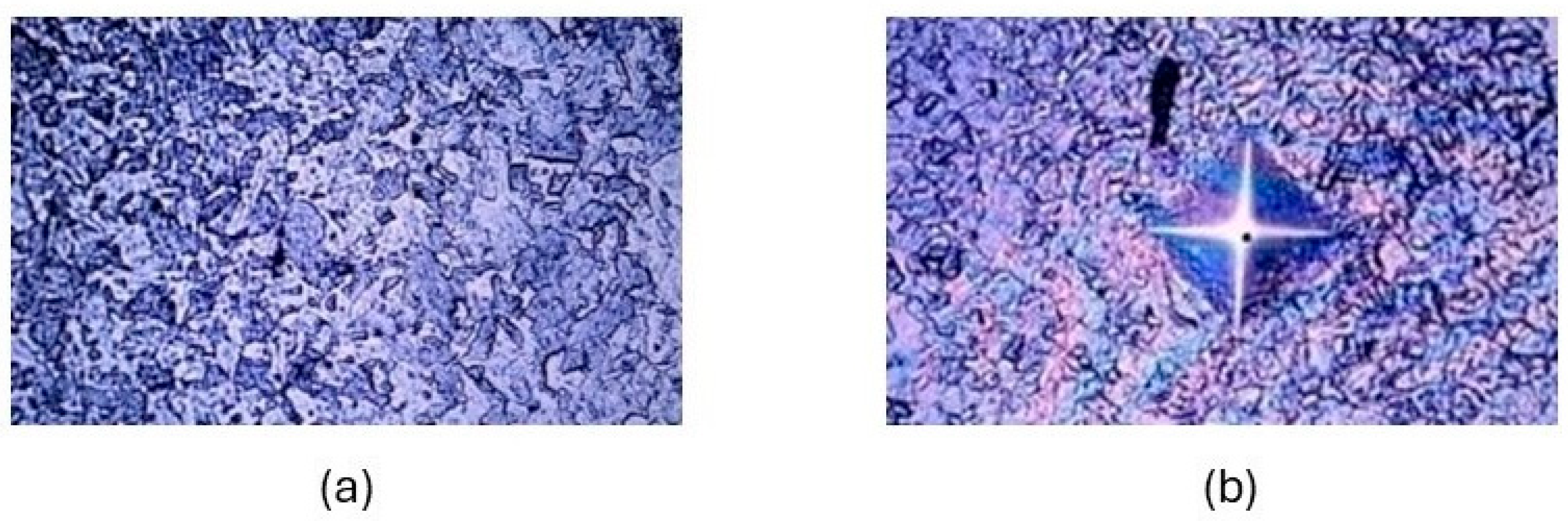
The above equations require prior knowledge to estimate the strain-hardening coefficient n for the material [67]. These empirical equations are applicable to certain materials, such as aluminum alloys, steels, and brass. The indentation can be of different types, including ball indentation and diamond indentation, based on various material types and Rockwell or Vickers hardness values. Figure 13 illustrates a typical case of diamond indentation on 18Ni 250 maraging steel for measuring Vickers hardness.
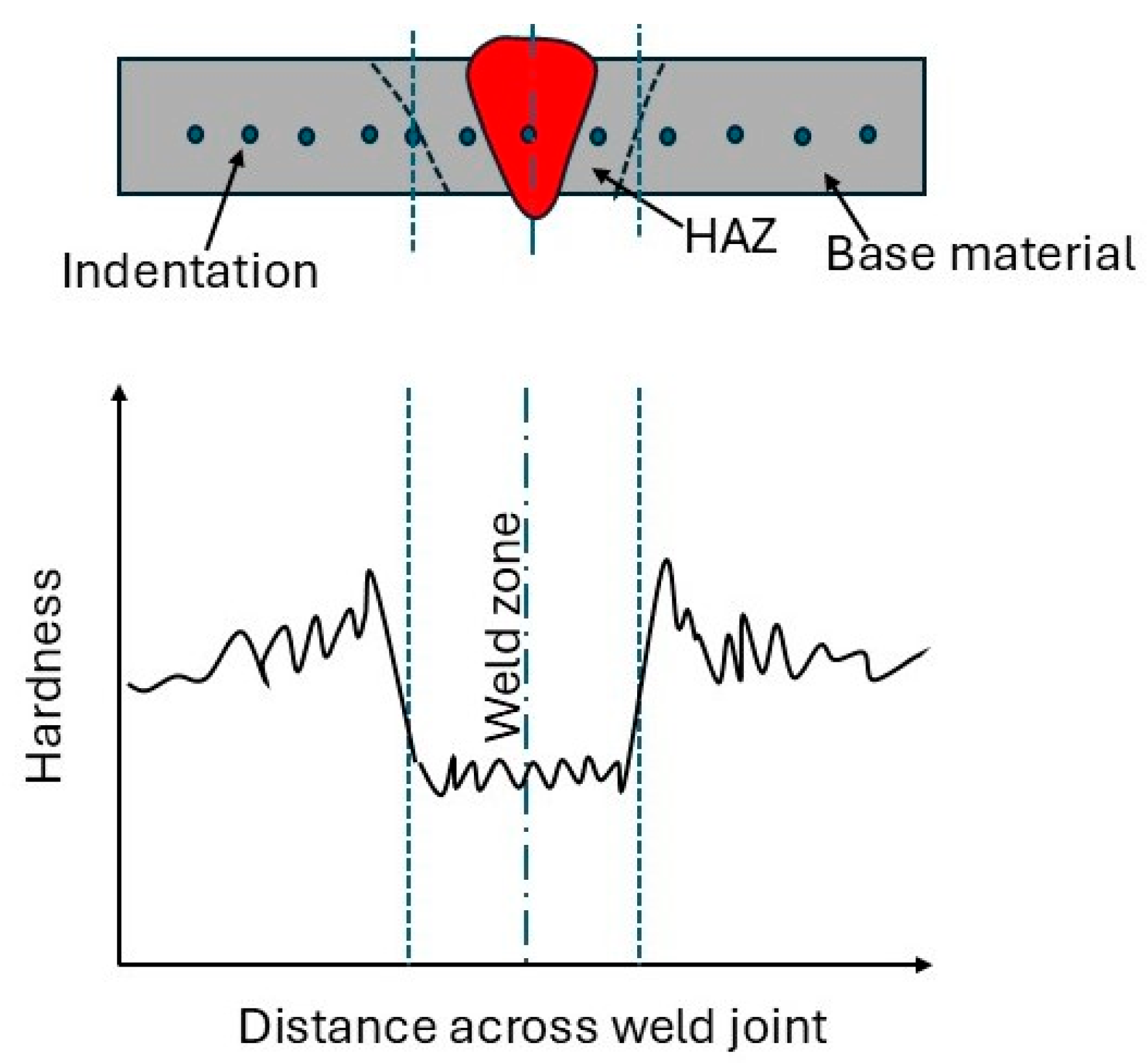
Indentation geometry can be correlated with the hardness of maraging steel. Regarding laser-welded maraging steel, three distinct zones associated with welding processes are often generated, namely the fusion zone, HAZ, and base material. Since each zone experiences different temperature levels over varying time periods, there are significant microstructural differences for each zone. As mentioned earlier in Section 2.1, even cooling time influences phase transformation at weld zones, HAZ, and base material. In particular, the hardness profile of laser-welded maraging steel is depicted in Figure 12. Note that HAZ is kept wide for proper presentation despite a narrow characteristic.
Additionally, Figure 14 displays a sudden increase in hardness, which can be attributed to the formation of a hard phase in HAZ, as illustrated in Figure 4. The formation of columnar grain structure in the weld zone is the major reason for the softness depicted in Figure 5. With further appropriate post-welding heat treatment, the mechanical properties of maraging steel, such as strength and hardness, can be enhanced. Hardness is not the sole influential property for practical applications since both tensile strength and yield strength should also be considered. In the absence of an accurate direct or indirect method to predict the strength of laser-welded maraging steel by hardness, conventional measurement techniques using a universal testing machine assist in determining load-extension curves. The hardness of weld zones in as-welded maraging steel by laser can reach a Vickers hardness number (VHN) in the range of 300–450. Additionally, further heat treatment enables it to increase further to 500–650 in VHN [68,69,70].

3.2. Tensile Strength

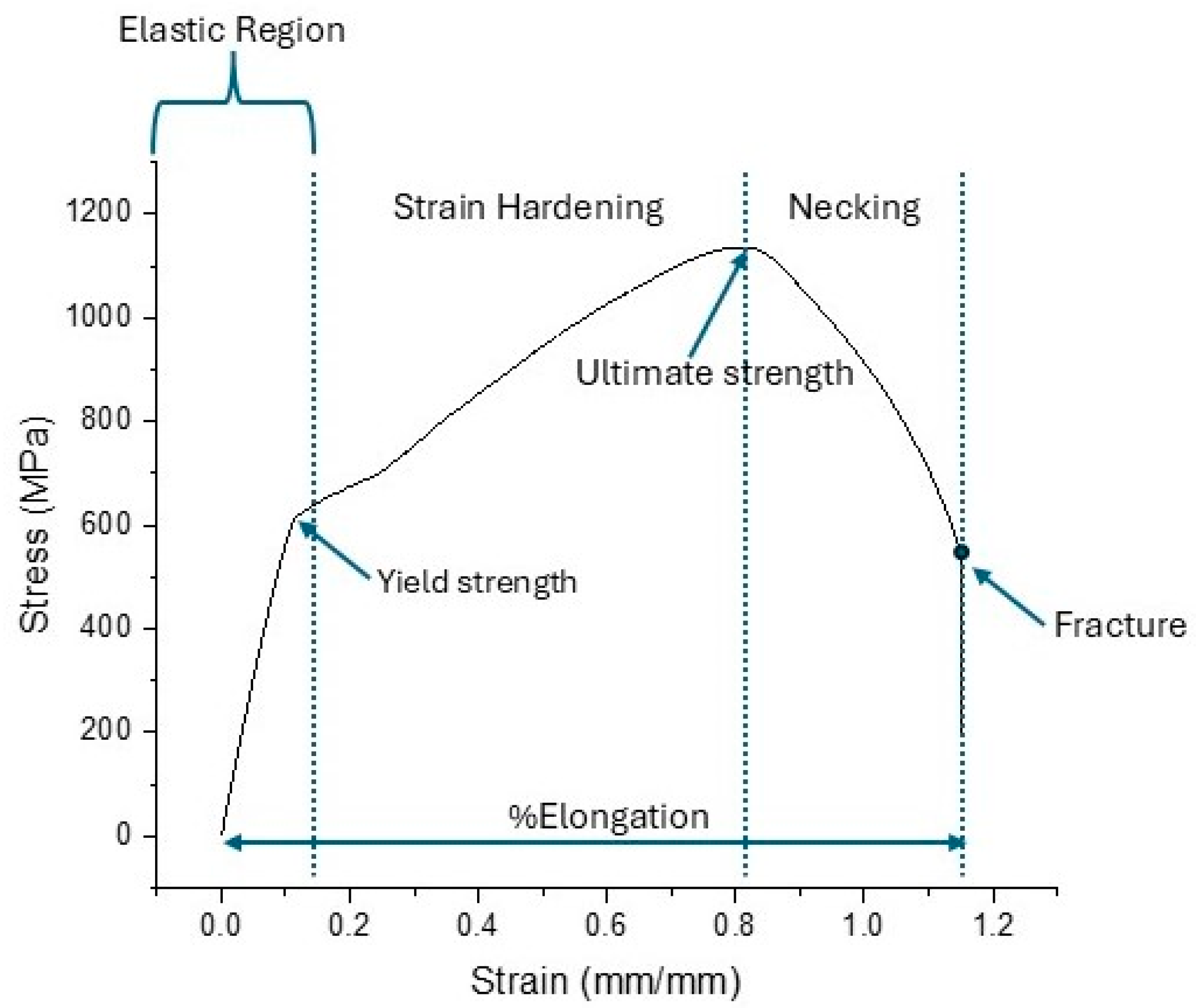
The tensile strength of maraging steel can reach 2500 MPa by appropriate post-welding heat treatment. Arunprakash and Manikandan [4] investigated three types of PWHT on 12 mm thick welded maraging steel, such as aging; solutionizing and aging; homogenization–solutionizing and aging. It was found that homogenization, solutionizing, and aging treatment increased the yield strength to 1797 MPa, whereas aging after solutionizing could increase the yield strength to 1779 MPa. The strength of 250 maraging steel was reported to be increased by 61.60% when compared with direct aging [4]. Figure 15 illustrates stress–strain curves for the as-received cast sheet and 4 mm rolled sheet made from 250 maraging steel. The ultimate strength of unaged samples reached approximately 1100 MPa, as compared to 1723 MPa (i.e., 250 ksi) for the strength based on subsequent heat treatment.
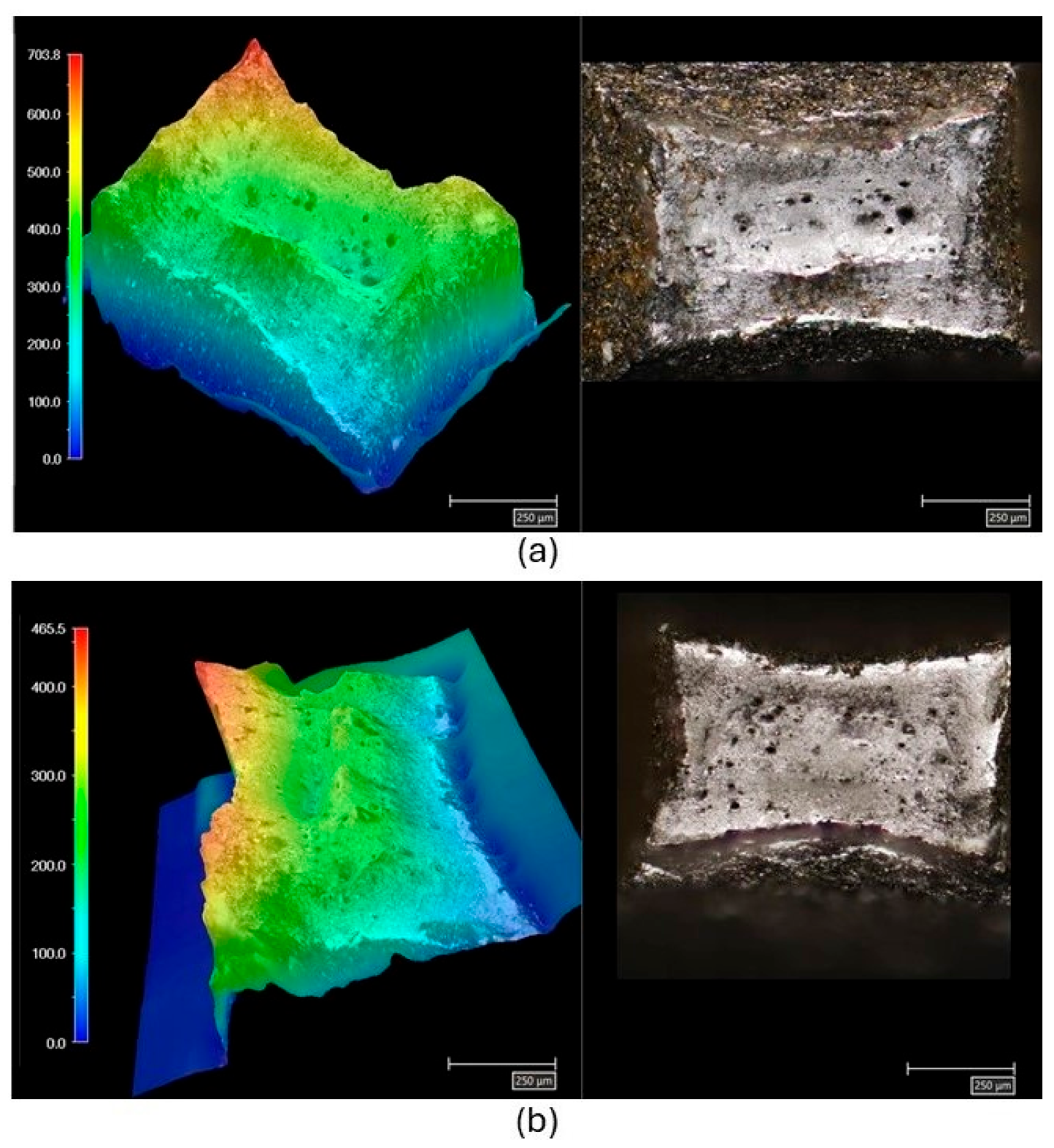
Figure 16 shows the fracture surface of the tensile sample in 2D and 3D images after tensile tests. It was observed that cup and cone features appeared in the broken tensile sample made of 250 maraging steel after the tests, indicating the ductile nature of maraging steel. Both yield strength and ultimate tensile strength at 620 and 1120 MPa, as shown in Figure 13, were found to increase due to subsequent heat treatment. Overall, heat treatment is crucial for achieving excellent mechanical properties in laser-welded maraging steel. After laser welding of maraging steel, the hardness of the fusion zone was reduced, as shown in Figure 12. As such, the failure of laser-welded joints tended to occur near the weld zone and HAZ. Proper aging, as specified in the application, is recommended for use.
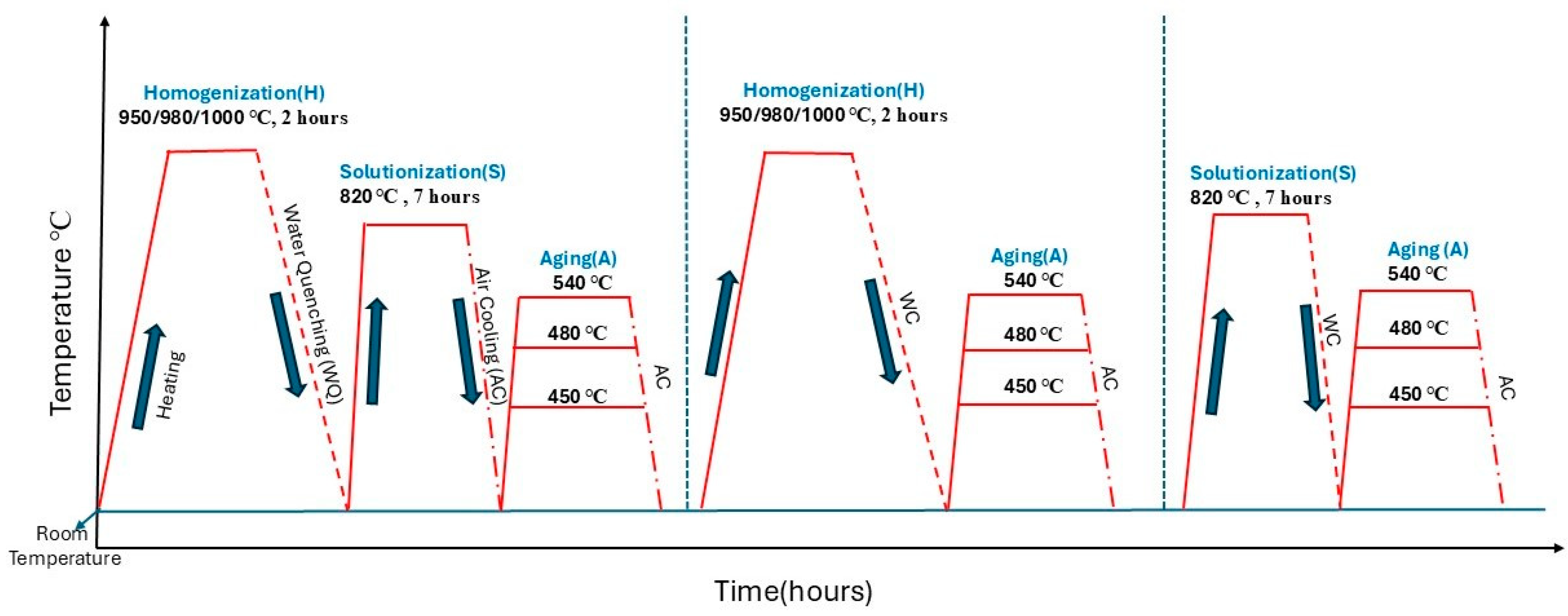
Figure 17 displays multiple paths for aging heat treatment applicable for maraging steel, which can be followed by homogenization, solutionization, or both processes. In between, solutionization enables the increase in grain size at high temperatures. The highest toughness can be achieved when 300 maraging steel is solution-treated at approximately 1000 °C and then quenched at 480 °C. Solution treatment or solutionization is a primary means to dissolve precipitates and create a single-phase microstructure for further precipitation hardening [71]. The strength of welded maraging steel is increased when aging takes place up to 480 °C, but it can be decreased beyond 500 °C due to reverted austenite formation [72]. Tan et al. [73] reported that wrought-aged and solution-aged selective laser-melted 300 maraging steel possessed an ultimate tensile strength of approximately 1935 MPa, as opposed to 1025 and 1100 MPa for solutionized and wrought counterparts. In comparison, a significant increase in yield strength, about 960 MPa, was detected relative to 600 MPa for wrought 300 maraging steel [73]. An increment/decrement in aging temperature by 20 °C can induce a significant impact on the phase and microstructural constituents of maraging steel. For instance, aging at 460 °C yields slower precipitation kinetics, smaller precipitate formation, lower reversion of austenite, and less coarsening, leading to lower hardness compared to aging at 480 °C. The aging temperature of 480 °C becomes more prominent and fit for ideal/optimal precipitation in 18Ni 300 maraging grades, while aging temperature at 500 °C and above tends to lead to overaging, thus resulting in faster precipitation, increased coarsening, and reverted austenite formation, along with compromised stability in phase [74,75]. In the case of laser welding of maraging steel, such variation becomes more complex due to the formation of different zones, such as the weld zone and HAZ in welding. Consequently, the effect is differentially variable among welding zones during aging treatment.
Overaging of 17.3% Ni maraging steel at 500 °C not only increases the size and volume fraction of Ni-rich reverted austenite but also promotes Mo-rich and Ni3Ti precipitate formation. Mechanical stability of reverted austenite is reduced, and the newly formed martensite becomes hardened. Accordingly, both strength and toughness deteriorate simultaneously. It can be concluded that the formation of precipitates inside reverted austenite deteriorates the toughness of maraging steels [76].
In precipitation steels such as maraging steels, the primary mechanism is the interaction of dislocations and precipitates for strength enhancement. The mechanism includes shearing of particles, Orowan bypass, dislocation climb, and cross-slip. The shearing of fine and coherent (peak-aged) precipitates by dislocations gives rise to high strength, homogeneous deformation, as well as the delay of crack initiation. Coarse and incoherent precipitates formed due to overaging result in Orowan looping and dislocation pile-up towards strength reduction [77,78].
As for aerospace applications, strength cannot be the sole influential factor since the failure in cyclic repetitive loading conditions should also be avoided. Moreover, fatigue strength should be considered to prevent catastrophic failure.

3.3. Fatigue Strength

Maraging steel has been widely used in various aircraft parts, including landing gears, shafts, and splines. More importantly, fatigue is identified as a primary reason for the failure of aircraft or aerospace parts, accounting for about 60% of total aerospace failures [79,80]. Hence, it becomes extremely important not only to study fatigue properties of maraging steel, but also to explore diverse means to enhance them. The relationship between tensile properties and fatigue strength has been a major focus of study for discussion for decades. The weakest zone in the material is associated with its fatigue strength. In the case of maraging steel or laser-welded maraging steel, the precipitation of hardened materials can be challenging when the precipitates are dispersed within the matrix. Additionally, the softer zone, so-called precipitate-free zone, is susceptible to fatigue failure [81]. Hence, appropriate post-welding aging is crucial to produce desired precipitates uniformly distributed in the matrix, thereby achieving the high fatigue strength of maraging steel, as previously mentioned in Section 2.2.1. The presence of reverted austenite has proven to be beneficial for fatigue performance, provided that reverted austenite formation occurs in martensite laths rather than in the grain boundary of martensite laths. This is because the latter could be the cause of crack initiation and, further, a beginning point of fatigue failure. Desired reverted austenite in martensite lath can be produced when subjected to aging at 570 °C for 4 h [59].
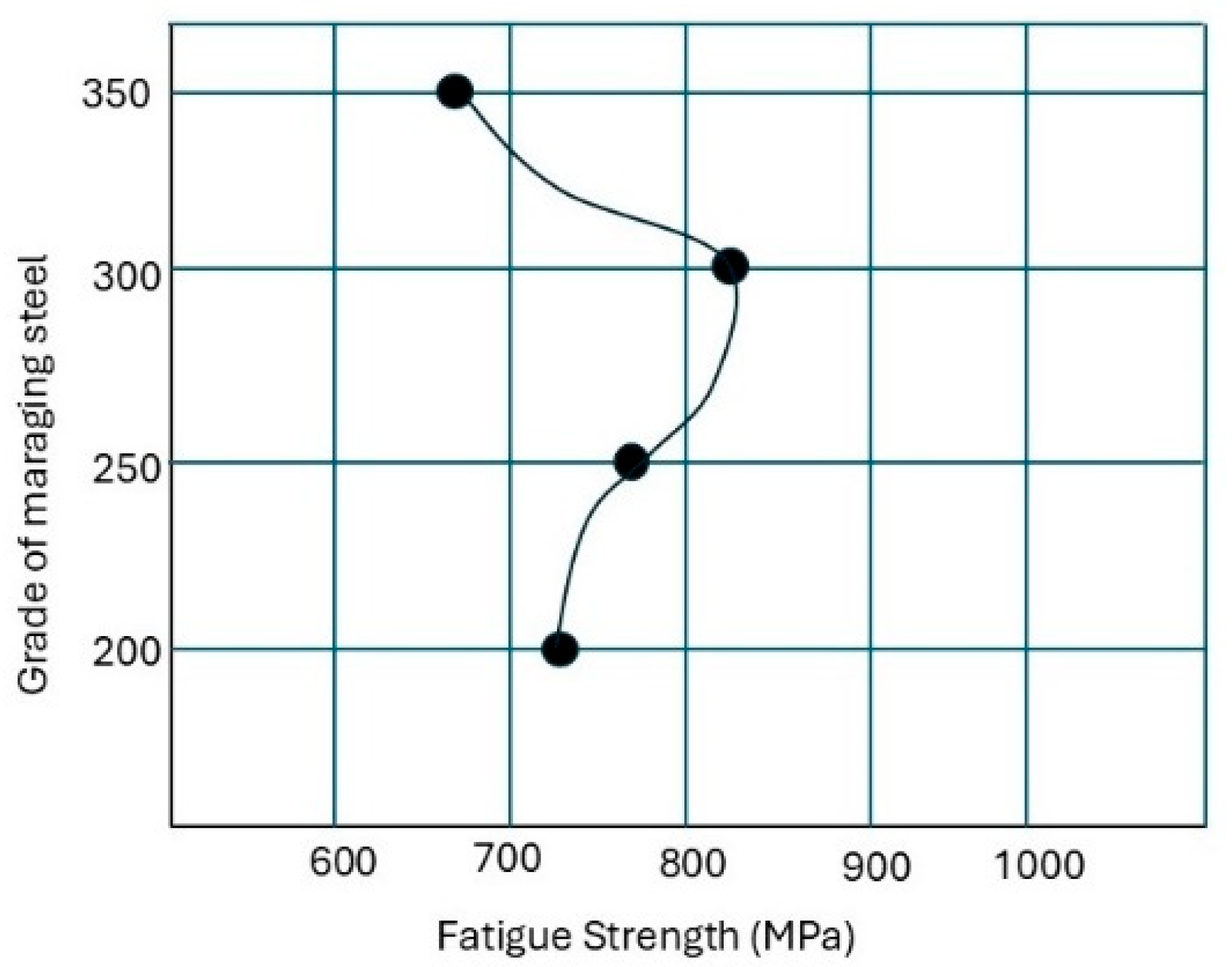
Figure 18 shows schematically the average fatigue strengths for various grades of maraging steel. The increasing tensile strengths of grades 200, 250, 300, and 350 are depicted by the grade numbers referred to as 200, 250, 300, and 350 ksi, respectively. The fatigue strength appears to increase from 200 to 300 grade of maraging steel, but the same is found to drastically decrease in the case of the 350 grade of maraging steel. As such, it can be concluded that overall high tensile strength is not always paired with high fatigue strength when considering the 350 grade of maraging steel.
The transition of fatigue crack sites to inner inclusions from surfaces can be the reason for a reduction in fatigue strength at higher tensile strength levels, which is well explained in fracture mechanics [82]. Moreover, stress corrosion cracking of 200-grade steel is susceptible to be lower compared to 350-grade maraging steel. As such, 200 grades can be used in more rigorous environments than their higher counterparts [83].
The damage at fatigue originates at the sites of localized cyclic slip bands, in which dislocation pile-up occurs at incoherent precipitates, leading to stress concentration and microcrack initiation. Additionally, the coarsening of Ni3Ti and Ni3Mo precipitates and incoherency due to cyclic deformation give rise to the localisation of strain and thus cause early initiation of fatigue cracks. An appropriate width between the precipitates promotes the reversibility of slip for the purpose of the relaxation of the stress tip. As a result, a 35.6% slower growth rate in fatigue crack has been identified in aged alloys [84,85].
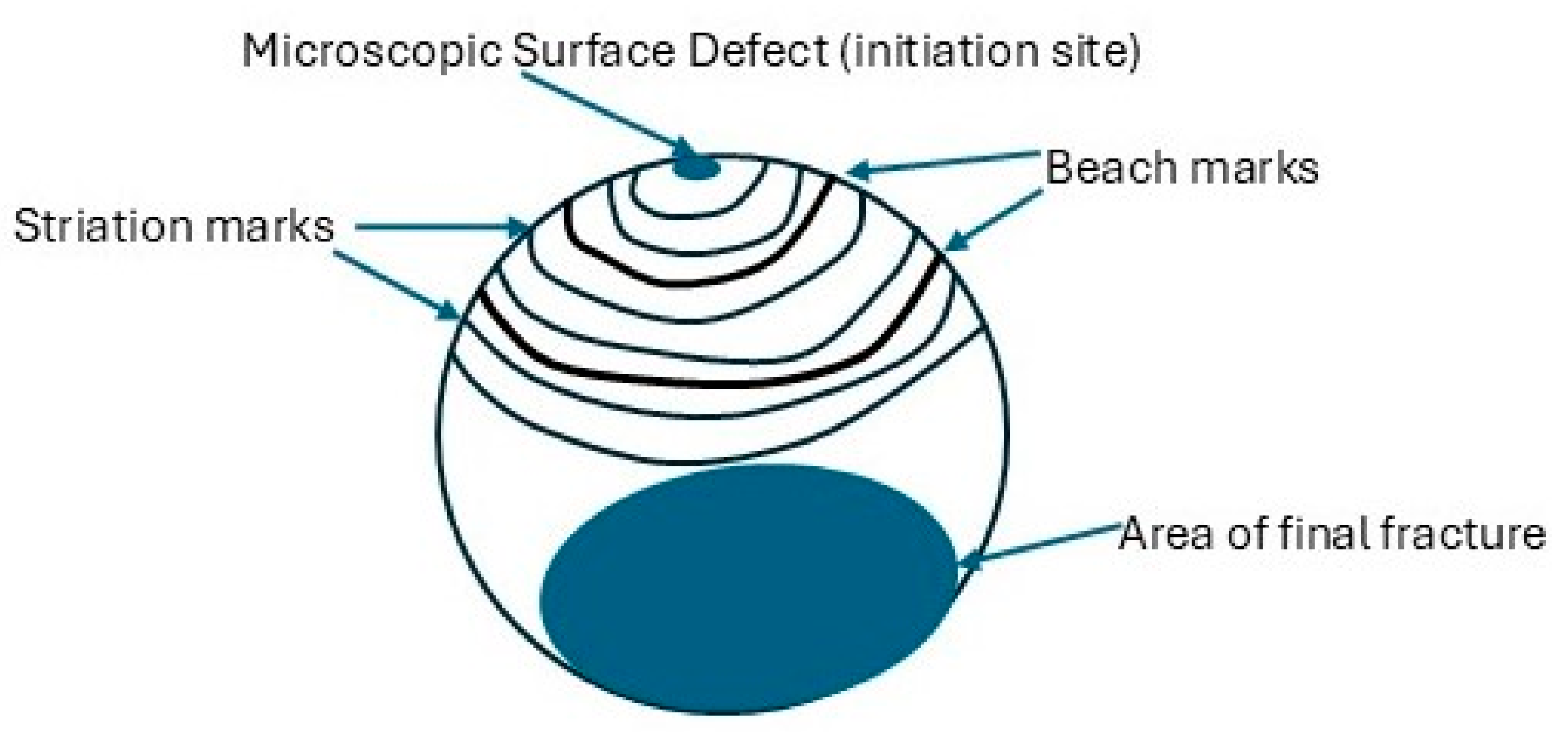
Figure 19 reveals that the initiation of fatigue fractures and crack initiation points mostly belong to surface cracks, around which striation marks indicate a gradual increase in fatigue fracture growth. Beach marks are created during loading cycles due to different stress-intensity factors induced at crack tips [86]. Shot peening, laser peening, and nitriding, as popular surface treatment methods, are also very useful for enhancing the fatigue strength of maraging steel. The integration of compressive residual stress is helpful as well, as evidenced by the improvement of fatigue strength by 114% [87,88]. Residual stress distribution plays a vital role in predicting the crack initiation trend of high-strength steels. As observed in high-frequency mechanical impact-treated high-strength steel welds, surface compressive residual stress at a depth less than 0.15 mm during cyclic loading tends to shift initiation sites from the surfaces to areas deeper into the material [89]. The increment in the local mean stress and the promotion of fatigue crack initiation take place in the presence of tensile residual stress. The good prediction of residual stress distribution can be achieved by using accurate models in the fabrication process and cyclic stress–strain behavior, as well as material knowledge [90]. Surface conditions and stress modes are particularly important to predict the resistance to fatigue failure for maraging steel [91].

4. Correlation Between Microstructures and Mechanical Properties

In general, microstructures can be influenced by deformation, welding, and heat treatment, etc., while grain size, grain boundaries, and constituents such as precipitates are vital to influence mechanical properties [92]. As depicted in Figure 7 and Figure 8, a significant effect takes place on the microstructures of maraging steel after deformation and heat treatment. A deformation like rolling has led to the alignment of grains and a decrease in grain size in the rolling direction, along with an increase in deformation percentage and more pronounced alignment. Further shown in Figure 8, heat treatment induced grain relaxation, which is further confirmed by the EBSD pole figure with a weak texture according to Figure 9.
Low-carbon, aged martensite formation and uniformly dispersed precipitates typically result in good strength in maraging steel due to appropriate aging. Aging further tends to generate reverted austenite, thereby resulting in a decrease in strength and an improvement in ductility. The distribution of microconstituents such as Ni observed by atomic probe tomography and transmission electron microscopy in maraging steel may be indicative of austenite formation [93]. We can consider a complex case of dissimilar welding where variations in grain structures are evident, as shown in Figure 5. Heterogeneity in the weldment induces variable strength areas. Accordingly, the weaker zone may tend to break first when compared with the stronger zone, thus being prone to the failure of the whole structure. Post-welding heat treatment assists in developing homogeneity in microstructures, relieving accumulated stress, developing desired precipitates, and thus strengthening the joint strength of welded maraging steel [94]. Grain boundary, grain structure, grain size, and their strength are believed to play a vital role in material strengthening. Fine-grain structures have more strength relative to coarser-grain structures, but vice versa for ductility [95]. The grain boundary, being a lower-energy area in the structure, is most likely to be the region of segregation for precipitates. Such a grain boundary is found to act as the source of crack initiation, which is prone to failure [96]. Additionally, serrated grain boundaries in maraging steel are proposed to form due to the prior presence of precipitates. This prior presence might reduce the mobility of grain boundaries, leading to their serration. Hence, such an occurrence arrests the crack from propagating with the provision of high-fracture toughness in ultra-high-strength maraging steel [97].
The microstructure and mechanical properties of additively manufactured and welded materials depend on thermal cycles during these processes. Thermal cycles significantly affect the cooling rate, thus increasing grain size and dendritic arm spacing. When considering maraging steel in welding and additive manufacturing, the thermal cycle tends to increase in reverted austenite content for grain refinement. The variation in microstructure along different directions induces anisotropic tensile properties [98]. The difference in metallurgical composition in welding promotes the development of various precipitates generated during welding/additive manufacturing and subsequent heat treatment of maraging steel. Basic microstructures are influenced by the composition of maraging steel, which is triggered by the presence of Ni, Mo, Co, Ti, and Al. Hence, mechanical properties can be mainly influenced by the morphology and the location of precipitate formation [99].
Accordingly, microstructural features such as grains, grain boundaries, precipitates, and phase formations like austenite and martensite are key factors in predicting the mechanical properties of materials. Such a study is critical in view of welding maraging steel specifically utilized for aerospace applications. This consideration can inform the selection of desired welding techniques, welding parameters, and pre-welding and post-welding heat treatments to achieve the favorable results for target applications. As such, the modification in the present scenario and its applications in welding might provide a better option for future scope in aerospace applications.

5. Present Scenario

Some issues arise in the laser welding of maraging steel, including reverted austenite, residual stress, and difficulties in achieving uniform properties, as well as high tensile and fatigue strengths. These issues can be easily mitigated by selecting proper welding parameters, such as power, speed, and laser type, as well as implementing an appropriate post-welding heat treatment. It enables the production of desired precipitates in the form of age-hardened steel to perform as desired in various applications.
The challenge encountered is to achieve both tensile strength and fatigue strength at their desired levels in laser-welded maraging steel. Since the increase in tensile strength does not necessarily mean higher fatigue strength. Aging treatment at a temperature lower than 500 °C may increase tensile strength by decreasing the austenite fraction. However, a higher strength of maraging steel may induce intergranular fracture, undermining its fatigue strength. It has been further reported that maraging steel aged at 550 °C for 5 h in trans-granular fracture possessed a fatigue strength of 685 MPa. The transition in a fracture mode can be the main reason for high fatigue strength [100]. Those processes, such as hybrid welding and additive manufacturing, are quite supportive in overcoming typical issues, including welding thicker sections and reverted austenite in laser welding of maraging steel.

5.1. Additive Manufacturing

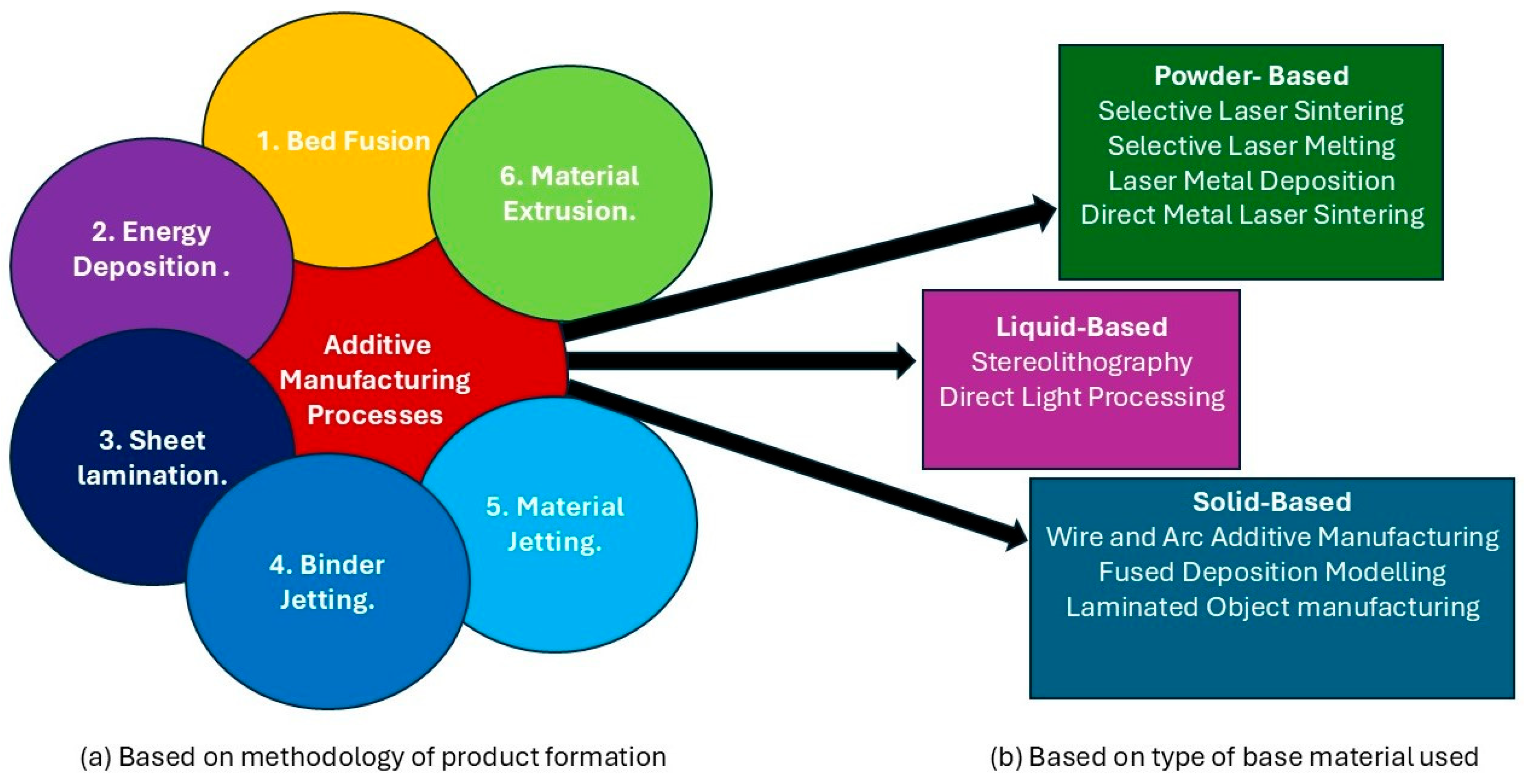
Additive manufacturing has been in high demand in the past few decades. In this process, advanced manufacturing occurs layer by layer using a heat source, such as a laser, arc, or electron beam, to fuse metals in wire or powder form. It is the most versatile and robust technique for manufacturing various metals, like steels, titanium, and aluminum alloys. Additive manufacturing has assorted important applications in aerospace, automotive, and medical industries [101]. Rapid growth in additive manufacturing has drawn great attention to the aerospace industry in the development of critical parts. Such a process includes powder bed fusion (PBF), like selective laser melting (SLM); selective laser sintering (SLS) and electron beam melting (EBM); direct energy deposition (DED), such as wire and arc additive manufacturing (WAAM); and so on. Aircraft brackets, hybrid aerospace components, repaired turbine blades, resistojets, etc., are some key components able to be manufactured or repaired using SLM, WAAM, DED, and SLM, respectively [102]. Figure 20 depicts the main classification of additive manufacturing processes used in contemporary manufacturing.
The advantage of additive manufacturing in aerospace applications lies in reduced lead times, as well as a high ability to manufacture complex geometric structures. Consequently, it yields lightweight structures that combine multiple components, improve performance, and offer cost effectiveness. The components produced by additive manufacturing techniques such as electron beam PBF act similarly to those of cast materials, thereby demonstrating suitability and stability when compared with conventional manufacturing processes [103]. Factorial optimization, including design properties, product design, manufacturing process technologies, and geometrical optimization, can significantly influence the quality of additively manufactured end-user products. For instance, it appears to be more cost-effective in manufacturing air manifolds for Airbus A320, as evidenced by a 22.7% reduction in the final production cost [104]. The mechanical properties of maraging steel produced by laser PBF (LPBF) are enhanced by further heat treatment, resulting in tensile strengths up to approximately 1.6 GPa [105]. Similarly, DED using gas metal arc welding of maraging steel with appropriate age hardening yields a tensile strength up to approximately 1.9 GPa, which is comparable to that in the wrought condition [106]. It has been reported that, so far, over 1000 parts of the new A350 XWB airbus have been manufactured by additive manufacturing or generally so-called 3D printing [107]. Huang et al. [108] studied the dense structures and microstructures of 18Ni 300 maraging steel parts produced by LPBF. The parameters were optimized, leading to a reduction in porosity level, which is similar to wrought materials [108]. Ultimate tensile strength of 18Ni 300 maraging steel samples via SLM could reach 1245 MPa, which is comparable to wrought counterparts. Further solution-aged treatment contributes to increasing ultimate tensile strength up to 1915 MPa despite a decrease in elongation at break from 10.5% to 5% [109]. The solution treatment at 820 °C for 2 h and aging at 490 °C for 7 h on SLM-based 18Ni 300 maraging steel increased microhardness from 310 to 710 HV, tensile strength up to 2068 MPa, as well as elongation at break at 4.5% [110]. Heat treatment on 18 Ni-300 maraging steel using SLS at 820 °C for 1 h, which was followed by aging at 480 °C for 3 h, produced appreciable results, including uniform martensitic microstructure, well-dispersed precipitates, desired reverted austenite, improved hardness, and minimum wear loss at 0.098 g [111].
Fatigue properties of 300 maraging steel produced by LPBF become weaker than those in a wrought condition. However, they are comparable to those of additively manufactured maraging steel. The specimens built close to the vertical orientation can have higher fatigue life relative to those built closer to the horizontal direction [112]. It has been reported that maraging steel via selected laser melting is first solutionized before welding and later aged at 460 °C for 5 h in order to overcome a specific issue of reverted austenite [113]. Cryogenic heat treatment is a particular process in which a material undergoes low temperatures ranging from −145 to 19 °C in order to promote the transformation of martensite from retained austenite, refining the martensitic microstructure and increasing dislocation density. Recent studies have shown that the application of cryogenic treatment in combination with aging can enhance the mechanical properties of additively manufactured maraging steel. Zhang et al. [114] found that prior cryogenic treatment at −196 °C for 8 h increased the microhardness from 310 to 634 HV and tensile strength from 1180 to 2179 MPa. Furthermore, the following direct aging at 480 °C for 6 h also facilitates the conversion of reverted austenite into martensite and refines the martensite laths from 0.74 to 0.25 µm [115]. On the other hand, Fan et al. [116] reported the refinement of martensitic laths, enhanced dislocation density, and stabilization of austenite due to deep cryogenic treatment after aging at 450 °C to achieve the optimization of strength and ductility. This finding can be attributed to the synergistic effect of reversed austenite transformation-induced plasticity (TRIP), grain refinement, and Orowan strengthening associated with nanoprecipitates [116].
Although additive manufacturing proves to be an efficient means of producing maraging steel with enhanced properties, its applications in welding/joining remain a question. The thickness of additively manufactured maraging steel may not cope with that of welded maraging steel in terms of efficient metallurgical penetration, uniformity, and good mechanical properties. There is a potential scope of work in enhancing the properties of additively manufactured maraging steel, particularly for aerospace applications.

5.2. Hybrid Welding

Hybrid laser-arc welding is implemented on 10 mm thick 250 maraging steel using a single-pass welding technique with full penetration. The pronounced issue of depth of penetration can be dealt with by hybrid welding. Nonetheless, controlling the reversion of austenite becomes quite difficult. This is because the high heat input, caused by the arc, leads to a significant accumulation of Ni, Mo, Ti, and other elements in the weld zones, thereby enhancing the formation of reverted austenite. Austenite formation temperature might be reduced due to their presence. Post-welding solutionizing and then aging were reported to be efficient in producing desired properties in hybrid welding [115]. The fiber laser welded 250 maraging steel with copper layers, and aging appeared to reduce the occurrence of reverted austenite in grain boundaries of martensite laths and increase the same in martensite grains. This was observed due to the formation of ε-Cu precipitates in weld zones. Excessive formation of ε-Cu precipitates could induce brittleness, which must be controlled by the optimum copper-layer thickness towards high strength and high ductility [24,117]. The effect of copper on the evolution of precipitation in maraging steel was discussed by Schnitzer et al. [118]. It was observed that the addition of copper accelerated the precipitation during aging. This is due to the accumulation of Ni, Al, and Cu immediately after heat input in relation to aging temperature. The two phases of NiAl B2 and Ni3(Ti, Al) (η-phase) became independent of each other. The effect of Cu on the nucleation appeared to be different for both precipitates. Hence, the knowledge of the distribution of alloying elements and the chemical composition of maraging steel assists in improving microstructural properties [118].
Hybrid welding, namely a combination of arc welding and laser welding, can be quite tedious in controlling metallurgical and microstructural properties of weld zones and HAZ. The solidification time for different welding techniques relies on the type of heat source, peak temperature, residence time, and so on. As depicted in Figure 1, the nature of the heat source in various welding processes induces different effects on the final weld. The prediction of the effects of hybrid welding is of great concern in holistic studies and multiple trials. It is well understood that an appropriate proportion of both laser power and arc welding power can be very difficult to achieve the desired penetration and properties. Moreover, aging treatment for post-welding must be preceded by solutionizing in order to overcome the accumulation of precipitates. As such, the formation of reverted austenite can be avoided accordingly. Moreover, post-weld heat treatment is very helpful in relieving accumulated residual stresses in hybrid laser-welded maraging steel, which can be the reason not only for fatigue failure, but also for strength reduction in the weldment. Overall, it is essential to utilize a combined process that leverages the advantages of additive manufacturing, laser welding, and hybrid welding for cost-effective production in aerospace applications. In particular, the utilization of laser welding of maraging steel is a major focus in aerospace applications.

5.3. Applications

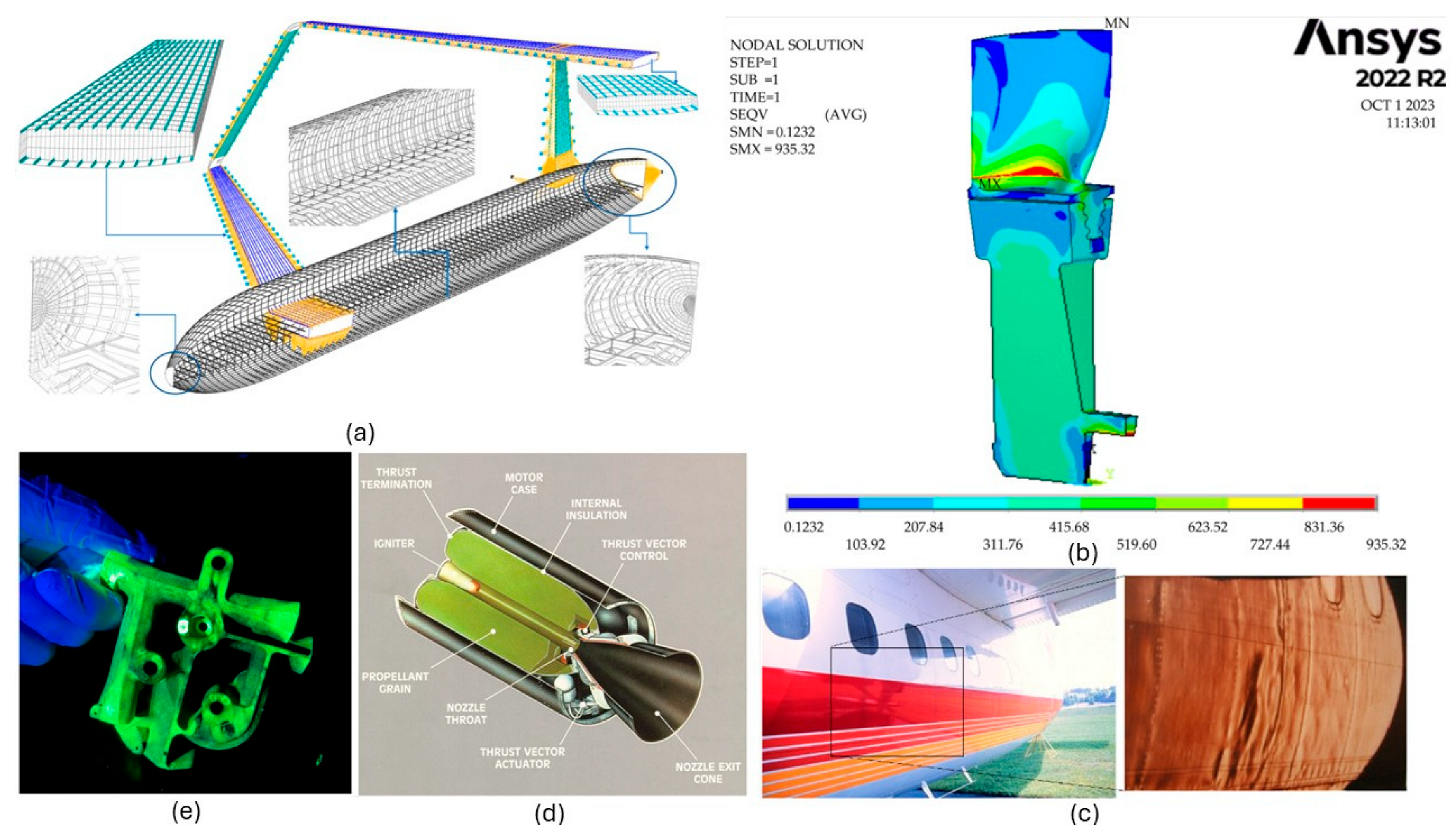
There has been active research and development for manufacturing fusion-based additive manufacturing of aerospace alloys, such as maraging steel, 300M, AerMet 300, titanium alloys, aluminum alloys, and so on [119]. Fusion-based additive manufacturing relies on a traditional multi-pass welding process. Rib-web structural components, turbine engine cases, engine vanes, and blades are focused aerospace components produced via additive manufacturing [120]. Laser welding, as a high-density welding process, creates the weld with a high aspect ratio and comparatively low heat input, as opposed to conventional welding processes. Moreover, less vacuum production and process flexibility make it vital for joining/welding aerospace components [121]. Low heat input, narrow HAZ, lesser distortion, improved mechanical properties relative to arc welding are some typical advantages when using laser welding for nickel-based aerospace alloys such as maraging steel and titanium alloys [122]. There are diverse applications of laser-welded maraging steel in aerospace industries, such as landing gears, rocket motor casing, pressure vessels, satellite launch vehicles, military and unmanned aerial vehicles, etc. Maraging steel has a good strength-to-weight ratio, superior toughness, and so forth, enabling it to fit well for aerospace applications. Continuous attempts have been made to develop low heat-input welding techniques for the fabrication of rocket motor casings, such as novel dual pulse gas metal arc welding, etc. [123]. In such a case, already established laser welding proves to be a better alternative when being considered as a low-heat-input welding process with minimum effect on HAZ regions, provided that welding parameters are judiciously selected. Maraging steels, consisting of an ultra-high-strength steel and medium-carbon low-alloy steels, such as 300M, etc., are often used in landing gears, rocket motor casing, etc. These are mostly welded by inert gas tungsten arc welding using compatible filler materials in a similar manner. Depending on component size, the electron beam is also generally employed [124]. The issues of beam deflection and vacuum operation of electron beam welding not only increase associated cost, but also reduce efficiency. Employing laser welding proves to be efficient even without the use of filler materials. Hybrid welding with the combination of laser and arc welding on thick sections appears to be a better and cost-effective alternative, both with and without using filler materials. Laser beam welding is exclusively used in aircraft manufacturing, comprising an assembly of fuselage attachments such as wing boxes, welding skin to stringer joints, and so on. Research using laser welding technology began in China in the early 1980s, with continued efforts to apply laser welding, particularly for the manufacture of certain aircraft components. They include turbine disks, rings of jet engines, space capsule components, airframes, pressure vessels, engine exhaust, and so on. The application of a dual-sided laser beam has been found to reduce the weight by 20% and increase the strength by 20% for aircraft fuselage [125]. Figure 21 shows some typical applications of laser welding and additive manufacturing used in aerospace components.
Recent work emphasizes the use of maraging steel in the aerospace industry due to its remarkable toughness and strength, which are balanced and compatible with manufacturing processes, such as hybrid welding, laser welding, and additive manufacturing. 18Ni 300 fabricated using LPBF shows exceptional stability and oxidation resistance, thus validating its suitability for aerospace and load-bearing components [131]. Gas and water atomization of maraging steel powder has been proven to significantly influence the morphology of 18 Ni 300 maraging steel powders. Accordingly, overall positive impact on LPBF-generated maraging steel is evident with the reduction in defect density and oxygen concentration by 370 times, which yields the improvement of tensile properties for real applications when compared with wrought condition [132]. Furthermore, the study of hybrid laser arc and metal inert gas welding reveals enhanced microstructural properties and uniform hardness in 250- and 300-thick joints of maraging steel grades, thus proving its applicability in critical aerospace components, such as actuator housings and support frames [133,134]. 3D-printed maraging steel components using LPBF have been found to be reliable for their applications in aerospace tooling and critical parts of flight due to their high density and defect control, as mentioned by previous assessment and tomographical studies [135,136].
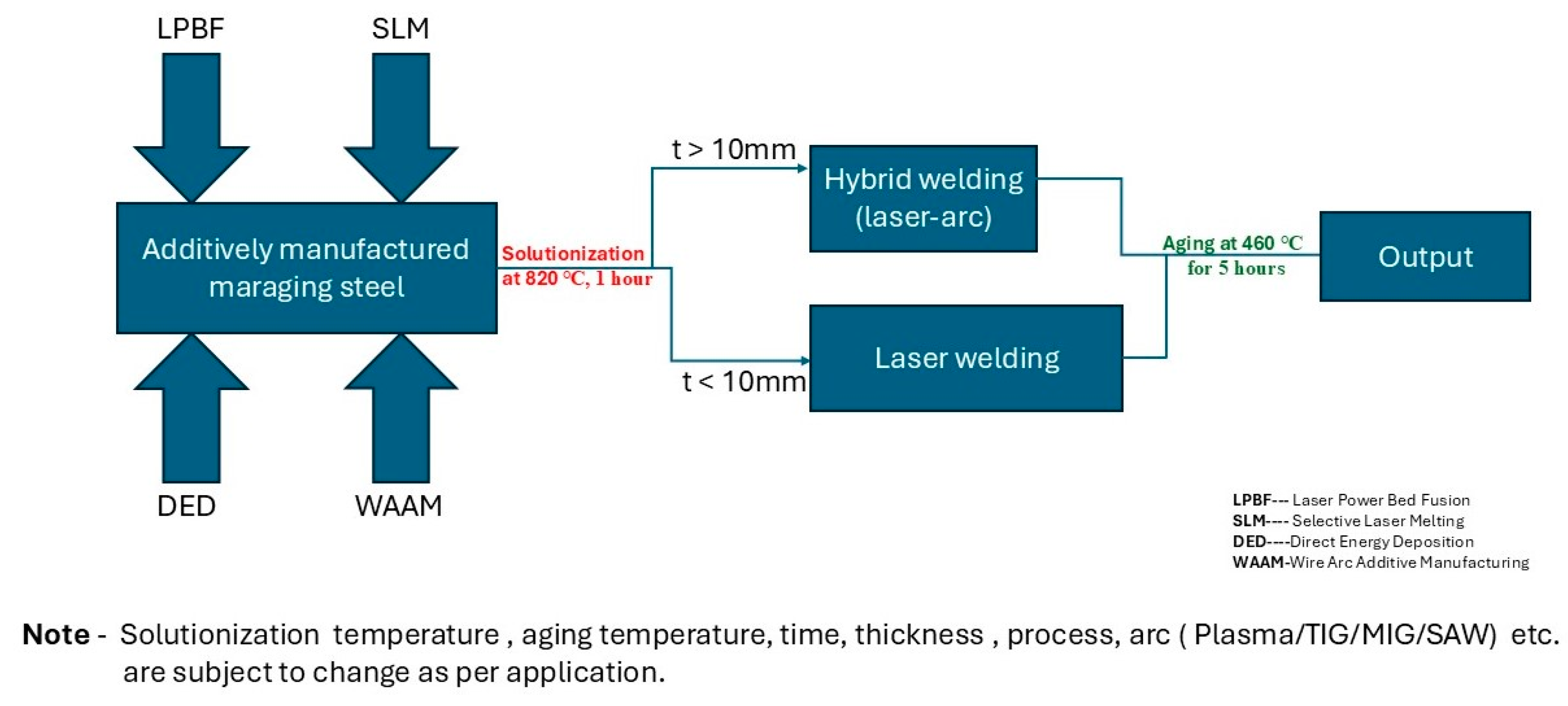
The urgent demand is to integrate additive manufacturing, hybrid welding, and laser welding to achieve both efficiency and cost-effectiveness in aerospace applications. It will leverage all individual processes. To achieve this, additive manufacturing and heat treatment by solutionization are vital for manufacturing maraging steel. If required later, hybrid welding or laser welding can be followed by post-welding heat treatment, depending on the desired penetration thickness. A suggestive framework for manufacturing welded maraging steel for aerospace applications is depicted in Figure 22.
The recommended framework in Figure 22 depicts the usage of additive manufacturing techniques, such as LPBF, DED, WAAM, SLM, and so on, for fabricating aerospace parts of maraging steel. As recommended by the literature in this review, solutionization at 820 °C for 1 h helps avoid reversion of austenite.
Furthermore, it is worth noting that hydrogen embrittlement is one of the primary issues limiting the application of LPBF 18 Ni 300 maraging steels. Zhou et al. [137] reported that solution treatment at 820 °C for 1 h, followed by further aging at 490 °C for 6 h, decomposed cellular structures and induced coarse grains, thereby resulting in a substantial number of precipitates as hydrogen traps to reduce hydrogen diffusivity.
Additionally, fabricated parts can undergo either hybrid welding or laser welding, which primarily depends on part thickness and intended applications. Oliveira et al. [138] applied fundamental welding concepts to improve additive manufacturing, with major similarities identified between fusion-based welding processes and fusion-based additive manufacturing in terms of solidification mechanisms, chemical reactions, thermal effects, residual stress, and distortion. However, other processing parameters, such as the heat source and grain size of deposited materials, also affect additive manufacturing. As such, energy density/volume heat inputs, by considering the power, the speed, the thickness of the deposited layer, powder grain size, as well as the diameter of the heat source, are vital to combine both processes for reconciling them. Furthermore, the well-established knowledge in welding metallurgy lays a solid foundation to quantify heat inputs and their effect on cooling rate in order to overcome defect-related demerits and expand engineering applications in additive manufacturing [138].
Welding and additive manufacturing parameters should be judicially selected so that localized heat treatment, accumulation of precipitates, as well as austenite reversion can be avoided to a certain extent. At last, aging at 460 °C for 5 h for 300-grade maraging steel tends to overcome non-uniformity induced by virtue of the welding process itself, resulting in potentially desired parts for widespread aerospace applications. The aging conditions may vary across different grades of maraging steel for diverse applications.
The proposed framework requires the use of various research methodologies, which include microstructural analysis, TEM, atomic probe tomography, and electron beam scattered diffraction. Further, the phase analysis of as-received materials, as-manufactured, and as-heat-treated-manufactured parts is often carried out before any practical applications used in the aerospace industry.

6. Summary and Future Scope

Laser welding offers a great choice for welding maraging steels due to narrow HAZs, minimum localized heat treatment, and low cost when compared with electron beams. The selection of laser source and welding parameters is a prime objective in the welding of maraging steel. The behavior of different laser sources varies among different grades of maraging steels. The implementation of laser welding in aerospace applications, such as rocket motor cases, landing gear, etc., is critical in maintaining the uniformity of metallurgical and mechanical characteristics. Post-weld aging treatment followed by solution treatment enables overcoming non-uniformity and achieving higher tensile and fatigue strengths. Nonetheless, welding thicker sections requires the application of hybrid welding, namely a combination of arc welding with a laser source. Metallurgical properties of hybrid-welded aerospace parts exhibit significant variations across different zones of the weldment. The prediction of the combined effect based on two welding sources in hybrid welding is tedious, which also requires a holistic analysis to achieve the desired results. In some cases, additive manufacturing can be quite effective in overcoming a typical issue with respect to undesired reverted austenite formation. Additively manufactured maraging steel using LPBF, SLM, etc., should be solutionized before welding and aged after welding. An optimum copper layer and Cu addition in the matrix increase the formation of reverted austenite in the martensite lath matrix (which is better than in grain boundaries) and promote the precipitation in maraging steels, respectively. The development of reverted austenite in grain boundaries can be a source of cracks, thus reducing the tensile strength. In comparison, reverted austenite formation in the martensite lath increases toughness instead. Heat treatment and prior plastic deformation due to mechanical processes like forging, rolling, etc., lead to the acceleration of precipitate formation, refining martensite, and an increment in dislocation density in maraging steels. The formation of reverted austenite can be facilitated by retained austenite, nickel content, precipitate accumulation, and overaging. In particular, overaging makes nickel accumulate because of the formation of Fe2(Mo, Ti) from Ni3(Mo, Ti). Appropriate width among precipitates due to aging promotes the reversibility of slip. As such, fatigue strength is improved since the growth rate of the fatigue crack is retarded. Shot peening, laser peening, nitriding, etc., are very useful to increase the resistance to fatigue failure in laser-welded maraging steel. Further, a recently established cryogenic treatment for maraging steel stabilizes the austenite, increasing dislocation density and refining martensite laths in maraging steel. This is attributed to the synergistic effect of reverted austenite TRIP, grain refinement, and Orowan strengthening due to nanoprecipitates. Well-established knowledge of welding metallurgy of maraging steel is applicable in the additive manufacturing of maraging steel and practical applications in a suggestive framework.
The following can be summarized in this review:
  • The selection of a proper laser source, such as fibers, CO2, welding power, welding speed, residence time, etc., is important for effective laser welding of maraging steel.
  • The typical issues, like undesired reverted austenite, loss of precipitates, difference in metallurgical properties with respect to hardness and strength at HAZ, weld zones, etc., are evident in laser welding of maraging steel. This should be properly dealt with by appropriate aging, along with solutionization, homogenization, or both processes.
  • Retained austenite, high nickel content, etc., are the development sources for reverted austenite in maraging steel. As such, it leads to a reduction in the strength of maraging steel despite an increase in toughness and ductility.
  • The development of reverted austenite in the matrix of martensite laths proves to be better than in the grain boundaries of martensite laths since the latter is the source of crack propagation in laser-welded maraging steel. Optimal copper-layer thickness facilitates the development of ε-Cu precipitates in weld zones, thereby promoting the formation of former reverted austenite.
  • Copper addition in the matrix of maraging steel is manifested to increase precipitation in maraging steel. Hence, it is helpful in strengthening laser-welded maraging steel.
  • Appropriate precipitate width due to aging assists in promoting reversibility of slip, thus retarding fatigue crack growth rate and improving fatigue strength.
  • Shop peening, laser peening, nitriding, etc., are suggested to increase resistance processes with respect to fatigue failure of laser-welded maraging steel.
  • Cryogenic treatment for maraging steel stabilizes the austenite, increasing dislocation density and refining martensite laths in maraging steel.
Hybrid welding has proved to be suitable for welding thicker sections of maraging steel. However, predicting the effect of both laser and arc welding can be a tedious task. Austenite reversion can be overcome when additively manufactured maraging steel is solutionized before welding and later aged at 460–500 °C. This depends upon the grade and application of maraging steel. Laser welding, when deemed a low-heat-input welding, is efficient with appropriate age treatment. It is a better alternative than EBW since the latter has typical issues of beam deflection and vacuum operation, leading to high cost and low efficiency for aerospace applications. As additive manufacturing is limited to manufacturing smaller components in aerospace industries, the integration of additive manufacturing with traditional and non-conventional welding processes for manufacturing aerospace components is anticipated to promote operational efficiency in addition to cost reduction.

Author Contributions

B.B.: writing—original draft preparation, conceptualization, data curation, methodology, and investigation. Y.D.: supervision, validation, formal analysis, reviewing, and editing. A.P.: validation and reviewing. T.K.B.: supervision and reviewing. All authors have read and agreed to the published version of the manuscript.

Funding

This research work received no external funding.

Data Availability Statement

This review article did not report new experimental data.

Acknowledgments

The authors would like to acknowledge the John de Laeter Center at Curtin University, Perth, Australia, for access to the Hirox 3D digital microscope facility.

Conflicts of Interest

All the authors declare that the research was conducted in the absence of any commercial or financial relationships that could be construed as a potential conflict of interest.

References

  1. NiDI. 18 Per Cent Nickel Maraging Steels—Engineering Properties; Inco Europa (Londres): London, UK, 1976; Volume 4419. [Google Scholar]
  2. Kizhakkinan, U.; Seetharaman, S.; Raghavan, N.; Rosen, D.W. Laser powder bed fusion additive manufacturing of maraging steel: A Review. J. Manuf. Sci. Eng. 2023, 145, 110801. [Google Scholar] [CrossRef]
  3. Schnitzer, R.; Radis, R.; Nöhrer, M.; Schober, M.; Hochfellner, R.; Zinner, S.; Povoden-Karadeniz, E.; Kozeschnik, E.; Leitner, H. Reverted austenite in PH 13-8 Mo maraging steels. Mater. Chem. Phys. 2010, 122, 138–145. [Google Scholar] [CrossRef]
  4. Arunprakash, R.; Manikandan, M. A novel approach to suppression of reverted austenite in aerospace grade thick maraging steel weldments using the turbo-TIG welding process. J. Adhes. Sci. Technol. 2024, 38, 2277–2294. [Google Scholar] [CrossRef]
  5. Wei, P.S.; Lii, T.W. Electron beam deflection when welding dissimilar metals. J. Heat Transf. 1990, 112, 714–720. [Google Scholar] [CrossRef]
  6. Kaisheva, D.; Anchev, A.; Valkov, S.; Dunchev, V.; Kotlarski, G.; Stoyanov, B.; Ormanova, M.; Atanasova, M.; Petrov, P. Influence of beam power on structures and mechanical characteristics of electron-beam-welded joints of copper and stainless steel. Metals 2022, 12, 737. [Google Scholar] [CrossRef]
  7. Katz, R.; Zak, A.; Shirizly, A.; Leitner, A.; Louzon, E. Method for producing porosity-free joints in laser beam welding of maraging steel 250. Inter. J. Adv. Manuf. Technol. 2018, 94, 2763–2771. [Google Scholar] [CrossRef]
  8. Mondal, J.; Yadav, M.K.; Kumar, D.; Bandyopadhyay, T.K. The effect of post-weld aging treatments on the microstructure, texture, and mechanical properties of grade 250 maraging steel laser weldments. J Mater. Eng. Perform. 2024, 34, 2242–2257. [Google Scholar] [CrossRef]
  9. Fanton, L.; Abdalla, A.J.; De Lima, M.S.F. Heat treatment and Yb-fiber laser welding of a maraging steel. Weld. J. 2014, 93, 362–368. [Google Scholar]
  10. Tuz, L.; Sokołowski, Ł.; Stano, S. Effect of post-weld heat treatment on microstructure and hardness of laser beam welded 17-4 PH stainless steel. Materials 2023, 16, 1334. [Google Scholar] [CrossRef]
  11. Bahrami Balajaddeh, M.; Naffakh-Moosavy, H. Pulsed Nd: YAG laser welding of 17-4 PH stainless steel: Microstructure, mechanical properties, and weldability investigation. Opt. Laser Technol. 2019, 119, 102–109. [Google Scholar] [CrossRef]
  12. Ren, W.; Lu, F.; Yang, R.; Liu, X.; Li, Z.; Elmi Hosseini, S.R. A comparative study on fiber laser and CO2 laser welding of inconel 617. Mater. Des. 2015, 76, 207–214. [Google Scholar] [CrossRef]
  13. Katayama, S. Handbook of Laser Welding Technologies; Woodhead Publishing: Cambridge, UK, 2013; pp. 3–16. [Google Scholar] [CrossRef]
  14. Mueller, S.; Bratt, C.; Mueller, P.; Cuddy, J.; Shankar, K. Laser beam welding of titanium—A comparison of CO2 and fiber laser for potential aerospace applications. In Proceedings of the ICALEO 2008—27th International Congress on Applications of Lasers and Electro-Optics, Congress Proceedings, Temecula, CA, USA, 20–23 October 2008; pp. 750–805. [Google Scholar] [CrossRef]
  15. Rohit, B.; Muktinutalapati, N.R. Austenite reversion in 18% Ni maraging steel and its weldments. Mater. Sci. Technol. 2018, 34, 253–259. [Google Scholar] [CrossRef]
  16. Joshi, J.R.; Potta, M.; Adepu, K.; Katta, R.K.; Gankidi, M.R. A comparative evaluation of microstructural and mechanical behavior of fiber laser beam and tungsten inert gas dissimilar ultra high strength steel welds. Defence Technol. 2016, 12, 630–640. [Google Scholar] [CrossRef]
  17. Jha, A.K.; Swathi Kiranmayee, M.; Manwatkar, S.K. Failure analysis of maraging steel fasteners used in nozzle assembly of solid propulsion system. Eng. Fail. Anal. 2013, 27, 308–313. [Google Scholar] [CrossRef]
  18. Dinaharan, I.; Ramesh, R.; Palanivel, R.; Jen, T.C. Effect of CO2 laser beam welding on microstructure and tensile strength of C250 maraging steel. Lasers Manuf. Mater. Process. 2025, 12, 274–297. [Google Scholar] [CrossRef]
  19. Geľatko, M.; Vandžura, R.; Botko, F.; Hatala, M. Electron beam welding of dissimilar stainless steel and maraging steel joints. Materials 2024, 17, 5769. [Google Scholar] [CrossRef]
  20. Parmar, R.S. Welding Engineering and Technology, 3rd ed.; Khanna Publishers: Delhi, India, 2022; Chapter 2; pp. 23–45. [Google Scholar]
  21. Lancaster, J.F. Metallurgy of Welding, 6th ed.; Woodhead Publishing Series in Welding and Other Joining Technologies: Cambridge, UK, 1999; Chapter 6; pp. 145–182. [Google Scholar] [CrossRef]
  22. da Fonseca, D.P.M.; Altoé, M.V.P.; Archanjo, B.S.; Annese, E.; Padilha, A.F. Influence of Mo content on the precipitation behavior of 13Ni maraging ultra-high strength steels. Metals 2023, 13, 1929. [Google Scholar] [CrossRef]
  23. Feitosa, A.L.M.; Escobar, J.; Ribamar, G.G.; Avila, J.A.; Padilha, A.F. Direct observation of austenite reversion during aging of 18Ni (350 grade) maraging steel through in-situ synchrotron X-ray diffraction. Metall. Mater. Trans. A Phys. Metall. Mater. Sci. 2022, 53, 2922–2932. [Google Scholar] [CrossRef]
  24. Jose, B.; Manoharan, M.; Natarajan, A.; Muktinutalapati, N.R.; Reddy, G.M. Laser hybrid welding-an advanced joining technique for welding of thick plates of maraging steel. J. Mater. Eng. Perform. 2024, 34, 8773–8790. [Google Scholar] [CrossRef]
  25. An, J.; Meng, F.; Lv, X.; Liu, H.; Gao, X.; Wang, Y.; Lu, Y. Improvement of mechanical properties of stainless maraging steel laser weldments by post-weld ageing treatments. Mater. Des. 2012, 40, 276–284. [Google Scholar] [CrossRef]
  26. Wu, C.P.; Tsay, L.W.; Chen, C. Notched tensile testing of T-200 maraging steel and its laser welds in hydrogen. Mater. Sci. Eng. A 2003, 346, 302–309. [Google Scholar] [CrossRef]
  27. Lombardo, S.; Nascimento Ferreira, R.; de Souza Santos, L.A.; de Jesus Silva, J.W.; Bagio Scheid, V.H.; Abdalla, A.J. Microstructural characterization of joints of maraging 300 steel welded by laser and subjected to plasma nitriding treatment. Mater. Sci. Forum 2016, 869, 479–483. [Google Scholar] [CrossRef]
  28. Li, K.; Shan, J.; Wang, C.; Tian, Z. The role of copper in microstructures and mechanical properties of laser-welded Fe-19Ni-3Mo-1.5Ti maraging steel joint. Mater. Sci. Eng. A 2017, 681, 41–49. [Google Scholar] [CrossRef]
  29. Tariq, F.; Baloch, R.A.; Ahmed, B.; Naz, N. Investigation into microstructures of maraging steel 250 weldments and effect of post-weld heat treatments. J. Mater. Eng. Perform. 2010, 19, 264–273. [Google Scholar] [CrossRef]
  30. Lippold, J.C. Welding Metallurgy and Weldability, 1st ed.; Wiley: Hoboken, NJ, USA, 2014; Chapter 2; pp. 45–78. [Google Scholar] [CrossRef]
  31. Beuerlein, K.U.; Shojaati, M.; Ansari, M.; Panzer, H.; Shahabad, S.I.; Keshavarz, M.K.; Zaeh, M.F.; Maleksaeedi, S. Microstructure simulation of maraging steel 1.2709 processed by powder bed fusion of metals using a laser beam: A cellular automata approach with varying process parameters. Results Mater. 2025, 25, 100667. [Google Scholar] [CrossRef]
  32. Takahashi, A.; Kasuya, T.; Ghoniem, N.M. Stress field and interaction forces between dislocations and precipitate distributions. Int. J. Numer. Methods Eng. 2024, 125, 7468. [Google Scholar] [CrossRef]
  33. Oliveira, A.R.; Jardini, A.L.; Del Conte, E.G. Effects of cutting parameters on roughness and residual stress of maraging steel specimens produced by additive manufacturing. Int. J. Adv. Manuf. Technol. 2020, 111, 2449–2460. [Google Scholar] [CrossRef]
  34. Venkata Ramana, P.; Madhusudhan Reddy, G.; Mohandas, T. Microstructure, hardness and residual stress distribution in maraging steel gas tungsten arc weldments. Sci. Technol. Weld. Join. 2008, 13, 388–394. [Google Scholar] [CrossRef]
  35. Viswanathan, U.K.; Dey, G.K.; Asundi, M.K. Precipitation hardening in 350 grade maraging steel. Metall. Trans. A 1993, 24, 2429–2442. [Google Scholar] [CrossRef]
  36. Xu, S.; Yuan, L.; Xu, W.; Shan, D.; Guo, B. Effects of forging and heat treatment on martensite lath, recrystallization and mechanical properties evolution of 18Ni (250) maraging steel. Materials 2022, 15, 4600. [Google Scholar] [CrossRef]
  37. Viswanathan, U.K.; Dey, G.K.; Sethumadhavan, V. Effects of austenite reversion during overageing on the mechanical properties of 18 Ni (350) maraging steel. Mater. Sci. Eng. A 2005, 399, 167–174. [Google Scholar] [CrossRef]
  38. Takata, N.; Ito, Y.; Nishida, R.; Suzuki, A.; Kobashi, M.; Kato, M. Austenite reversion behavior of maraging steel additive-manufactured by laser powder bed fusion. ISIJ Int. 2024, 63, 473–476. [Google Scholar] [CrossRef]
  39. Meng, Q.; Tian, S.; Liu, Z.; Wang, X.; Zhao, W.; Wang, C.; Sun, Y.; Liang, J.; Yang, Z.; Xie, J. The role of Al/Ti in precipitate-strengthened and austenite-toughened Co-free maraging stainless steel. Materials 2024, 17, 5337. [Google Scholar] [CrossRef]
  40. Lu, J.; Wang, S.; Yu, H.; Wu, G.; Gao, J.; Wu, H.; Zhao, H.; Zhang, C.; Mao, X. Effect of precipitation on the mechanical behavior of vanadium micro-alloyed HSLA steel investigated by microstructural evolution and strength modeling. Mater. Sci. Eng. A 2023, 1874, 145313. [Google Scholar] [CrossRef]
  41. Zeisl, S.; Van Steenberge, N.; Schnitzer, R. Strengthening effect of NiAl and Ni3Ti precipitates in Co-free maraging steels. J. Mater. Sci. 2023, 58, 7149–7160. [Google Scholar] [CrossRef]
  42. Tewari, R.; Mazumder, S.; Batra, I.S.; Dey, G.K.; Banerjee, S. Precipitation in 18 wt% Ni maraging steel of grade 350. Acta Mater. 2000, 48, 1187–1200. [Google Scholar] [CrossRef]
  43. Pereloma, E.V.; Stohr, R.A.; Miller, M.K.; Ringer, S.P. Observation of precipitation evolution in Fe-Ni-Mn-Ti-Al maraging steel by atom probe tomography. Metall. Mater. Trans. A 2009, 40, 5993–6002. [Google Scholar] [CrossRef]
  44. Shimizu, K.; Okamoto, H. Transmission electron microscopy study of strengthening precipitates in 18% Ni maraging steel. Trans. Jpn. Inst. Met. 1971, 2, 273–277. [Google Scholar] [CrossRef]
  45. El-Fawkhry, M.K.; Eissa, M.; Fathy, A.; Mattar, T. Development of maraging steel with retained austenite in martensite matrix. Mater. Today Proc. 2015, 425, 2119–2127. [Google Scholar] [CrossRef]
  46. Qian, F.; Rainforth, W.M. The formation mechanism of reverted austenite in Mn-based maraging steels. J. Mater. Sci. 2019, 54, 6624–6631. [Google Scholar] [CrossRef]
  47. Zhang, X.; Miyamoto, G.; Toji, Y.; Zhang, Y.; Furuhara, T. Role of cementite and retained austenite on austenite reversion from martensite and bainite in Fe-2Mn-1.5Si-0.3C alloy. Acta Mater. 2021, 209, 116772. [Google Scholar] [CrossRef]
  48. Ding, R.; Dai, Z.; Huang, M.; Yang, Z.; Zhang, C.; Chen, H. Effect of pre-existed austenite on austenite reversion and mechanical behavior of an Fe-0.2C-8Mn-2Al medium Mn steel. Acta Mater. 2018, 148, 473–487. [Google Scholar] [CrossRef]
  49. Pampillo, C.A.; Paxton, H.W. The effect of reverted austenite on the mechanical properties and toughness of 12 Ni and 18 Ni (200) maraging steels. Metall. Trans. 1972, 3, 2895–2903. [Google Scholar] [CrossRef]
  50. Li, K.; Shan, J.; Wang, C.; Tian, Z. Effect of post-weld heat treatments on strength and toughness behavior of T-250 maraging steel welded by laser beam. Mater. Sci. Eng. A 2016, 663, 157–165. [Google Scholar] [CrossRef]
  51. Morsdorf, L.; Jeannin, O.; Barbier, D.; Mitsuhara, M.; Raabe, D.; Tasan, C.C. Multiple mechanisms of lath martensite plasticity. Acta Mater. 2016, 121, 202–214. [Google Scholar] [CrossRef]
  52. Jägle, E.A.; Choi, P.P.; Van Humbeeck, J.; Raabe, D. Precipitation and austenite reversion behavior of a maraging steel produced by selective laser melting. J. Mater. Res. 2014, 29, 2072–2079. [Google Scholar] [CrossRef]
  53. Bai, G.; Duan, M.; Ming, Z.; Peng, Y.; Zhou, H.; Zhang, M.; Wang, W.; Wang, K. Segregation-dependent mechanical stability of reverted austenite and resultant tensile properties of Co-free maraging steel fabricated by wire-arc directed energy deposition. Mater. Sci. Eng. A 2024, 901, 146569. [Google Scholar] [CrossRef]
  54. Malitckii, E.; Yagodzinskyy, Y.; Vilaҫa, P. Role of retained austenite in hydrogen trapping and hydrogen-assisted fatigue fracture of high-strength steels. Mater. Sci. Eng. A 2019, 760, 68–75. [Google Scholar] [CrossRef]
  55. Santos, L.P.M.; Béreš, M.; Bastos, I.N.; Tavares, S.S.M.; Abreu, H.F.G.; Gomes da Silva, M.J. Hydrogen embrittlement of ultra high strength 300 grade maraging steel. Corros. Sci. 2015, 101, 12–22. [Google Scholar] [CrossRef]
  56. Vodárek, V.; Rožnovská, G.; Kuboň, Z.; Volodarskaja, A.; Palupčíková, R. The effect of long-term ageing at 475 °C on microstructure and properties of a precipitation hardening martensitic stainless steel. Metals 2022, 12, 1643. [Google Scholar] [CrossRef]
  57. Conde, F.F.; Escobar, J.D.; Oliveira, J.P.; Jardini, A.L.; Bose Filho, W.W.; Avila, J.A. Austenite reversion kinetics and stability during tempering of an additively manufactured maraging 300 steel. Addit. Manuf. 2019, 29, 100804. [Google Scholar] [CrossRef]
  58. de Carvalho, L.G.; Plaut, R.L.; de Lima, N.B.; Padilha, A.F. Kinetics of martensite reversion to austenite during overaging in a maraging 350 steel. ISIJ Int. 2019, 59, 1119–1127. [Google Scholar] [CrossRef]
  59. Li, X.; Yin, Z. Reverted austenite during aging in 18Ni (350) maraging steel. Mater. Lett. 1995, 24, 239–242. [Google Scholar] [CrossRef]
  60. dos Santos, L.P.M.; Béreš, M.; de Castro, M.O.; Sarvezuk, P.W.C.; Wu, L.; Herculano, L.F.G.; Paesano, A.; Silva, C.C.; Masoumi, M.; de Abreu, H.F.G. Kinetics of reverted austenite in 18 wt.% Ni grade 300 maraging steel: An in-situ synchrotron X-ray diffraction and texture study. JOM 2020, 72, 3502–3512. [Google Scholar] [CrossRef]
  61. Feitosa, A.L.M.; Ribamar, G.G.; Escobar, J.; Sonkusare, R.; Boll, T.; Coury, F.; Ávila, J.; Oliveira, J.; Padilha, A. Precipitation and reverted austenite formation in maraging 350 steel: Competition or cooperation? Acta Mater. 2024, 270, 119865. [Google Scholar] [CrossRef]
  62. Duran, M.A.; Peitsch, P.; Svoboda, H.G. Phase transformation kinetics during post-weld heat treatment in weldments of C-250 maraging steel. Materials 2025, 18, 2820. [Google Scholar] [CrossRef]
  63. Mooney, B.; Kourousis, K.I. A review of factors affecting the mechanical properties of maraging steel 300 fabricated via laser powder bed fusion. Metals 2020, 10, 1273. [Google Scholar] [CrossRef]
  64. Tariq, F.; Shifa, M.; Baloch, R.A. Effect of overaging conditions on microstructure and mechanical properties of maraging steel. Met. Sci. Heat Treat. 2020, 62, 188–194. [Google Scholar] [CrossRef]
  65. Behl, B.; Bandhopadhyay, T.K. Issues and concern in dissimilar joining including additive manufacturing with specific emphasis to maraging steels with other high-strength steels-a comprehensive review. Steel Res. Int. 2025, 96, 80. [Google Scholar] [CrossRef]
  66. Gaško, M.; Rosenberg, G. Correlation between hardness and tensile properties in ultra-high strength dual phase steels: Short communication. Mater. Eng. 2012, 18, 155–159. [Google Scholar]
  67. Cahoon, J.R.; Broughton, W.H.; Kutzak, A.R. The determination of yield strength from hardness measurements. Metall. Trans. 1971, 2, 1979–1983. [Google Scholar] [CrossRef]
  68. Ramesh Narayanan, P.; Sreekumar, K.; Natarajan, A.; Sinha, P.P. Metallographic investigations of the heat-affected zone II/parent metal interface cracking in 18Ni maraging steel welded structures. J. Mater. Sci. 1990, 25, 4587–4591. [Google Scholar] [CrossRef]
  69. Takahashi, A.; Toyohiro, T.; Segawa, Y.; Kobayashi, M.; Miura, H. Embrittlement fracture behavior and mechanical properties in heat-affected zone of welded maraging steel. Materials 2024, 17, 440. [Google Scholar] [CrossRef] [PubMed]
  70. Rajkumar, V.; Arivazhagan, N.; Devendranath, R.K. Studies on welding of maraging steels. Procedia Eng. 2014, 75, 83–87. [Google Scholar] [CrossRef]
  71. Lima Filho, V.X.; Barros, I.F.; De Abreu, H.F.G. Influence of solution annealing on microstructure and mechanical properties of maraging 300 steel. Mater. Res. 2017, 20, 10–14. [Google Scholar] [CrossRef]
  72. Karthikeyan, R.; Saravanan, M.; Singaravel, B.; Sathiya, P. Effect of heat input and post-weld heat treatment on the mechanical and metallurgical characteristics of laser-welded maraging steel joints. Surf. Rev. Lett. 2017, 24, 13. [Google Scholar] [CrossRef]
  73. Tan, C.; Zhou, K.; Ma, W.; Zhang, P.; Liu, M.; Kuang, T. Microstructural evolution, nanoprecipitation behavior and mechanical properties of selective laser melted high-performance grade 300 maraging steel. Mater. Des. 2017, 134, 138–146. [Google Scholar] [CrossRef]
  74. Han, S.; Li, X.; Liu, Y.; Geng, R.; Lei, S.; Li, Y.; Wang, C. Effect of aging treatment on the microstructure and properties of 2.2 GPa tungsten-containing maraging steel. Materials 2023, 16, 4918. [Google Scholar] [CrossRef]
  75. da Silva, J.J.M.; da Silva Lima, M.N.; Souza, P.H.L.; de Oliveira, C.A.S.; de Vasconcelos, I.F.; da Silva Nunes, J.M.; Rodrigues, S.F.; de Abreu, H.F.G. Atomic rearrangement and phase transformation during aging at 480 °C in a Maraging-300 steel. J. Phase Equilibria Diffus. 2025, 46, 307–315. [Google Scholar] [CrossRef]
  76. Zhou, X.; Jia, C.; Shi, X.; Wang, W.; Li, Y.; Yan, W.; Rong, L. Toughness degradation caused by reversed austenite formed during over-aging treatment in a 2.3 GPa maraging steel. J. Mater. Res. Technol. 2025, 38, 331–342. [Google Scholar] [CrossRef]
  77. Cui, A.; Wang, X.; Cui, Y. Multiscale modelling of precipitation hardening: A review. J. Mater. Sci. Mater. Theory 2024, 8, 6. [Google Scholar] [CrossRef]
  78. Wan, C.F.; Sun, L.G.; Qin, H.L.; Bi, Z.N.; Li, D.F. A molecular dynamics study on the dislocation-precipitate interaction in a nickel based superalloy during the tensile deformation. Materials 2023, 16, 6140. [Google Scholar] [CrossRef]
  79. Nageswara Rao, M.; Narayana Murty, S.V.S. Hot deformation of 18 % Ni maraging steels—A review. Mater. Perform. Charact. 2019, 8, 742–765. [Google Scholar] [CrossRef]
  80. Yin, G.Q.; Kang, X.; Zhao, G.P. Fatigue properties of the ultra-high strength steel TM210A. Materials 2017, 10, 1057. [Google Scholar] [CrossRef] [PubMed]
  81. Xu, Z.K.; Wang, B.; Zhang, P.; Zhang, Z.F. A fast evaluation method for fatigue strength of maraging steel: The minimum strength principle. Mater. Sci. Eng. A 2020, 789, 139659. [Google Scholar] [CrossRef]
  82. Pang, J.C.; Li, S.X.; Wang, Z.G.; Zhang, Z.F. General relation between tensile strength and fatigue strength of metallic materials. Mater. Sci. Eng. A 2013, 564, 411–419. [Google Scholar] [CrossRef]
  83. Humphries, T.S.; Nelson, E.E.; Marshall, G.C. Stress corrosion cracking susceptibility of 18 Ni maraging steel. NASA Tech. Mem. 1974, 1, 64837. [Google Scholar]
  84. Shan, Z.; Liu, S.; Ye, L.; Li, Y.; He, C.; Chen, J.; Tang, J.; Deng, Y.; Zhang, X. Mechanism of precipitate microstructure affecting fatigue behavior of 7020 aluminum alloy. Materials 2020, 13, 3248. [Google Scholar] [CrossRef] [PubMed]
  85. Sangid, M.D. The physics of fatigue crack initiation. Int. J. Fatigue 2013, 57, 106–121. [Google Scholar] [CrossRef]
  86. Hou, N.; Ding, N.; Qu, S.; Guo, W.; Liu, L.; Xu, N.; Tian, L.; Xu, H.; Chen, X.; Zaïri, F.; et al. Failure modes, mechanisms and causes of shafts in mechanical equipment. Eng. Fail. Anal. 2022, 136, 106216. [Google Scholar] [CrossRef]
  87. Rohit, B.; Muktinutalapati, N.R. Fatigue behavior of 18% Ni maraging steels: A review. J. Mater. Eng. Perform. 2021, 30, 2486–2704. [Google Scholar] [CrossRef]
  88. Tsuchiya, S.; Takahashi, K. Improving fatigue limit and rendering defects harmless through laser peening in additive-manufactured maraging steel. Metals 2022, 12, 10049. [Google Scholar] [CrossRef]
  89. Ono, Y.; Yıldırım, H.C.; Kinoshita, K.; Nussbaumer, A. Damage-based assessment of the fatigue crack initiation site in high-strength steel welded joints treated by HFMI. Metals 2022, 12, 145. [Google Scholar] [CrossRef]
  90. Webster, G.A.; Ezeilo, A.N. Residual stress distributions and their influence on fatigue lifetimes. Int. J. Fatigue 2001, 23, 947–961. [Google Scholar] [CrossRef]
  91. Hall, A.M.; Slunder, C.J. Physical metallurgy. In The Metallurgy, Behavior, and Application of the 18-Percent Nickel Maraging Steels; National Aeronautics and Space Administration: Washington, DC, USA, 1968; Chapter 3. [Google Scholar]
  92. DeHoff, R.T. Engineering of microstructures. Mater. Res. 1999, 2, 201–209. [Google Scholar] [CrossRef]
  93. Rosenauer, A.; Brandl, D.; Ressel, G.; Lukas, S.; Gruber, C.; Stockinger, M.; Schnitzer, R. In situ observations of the microstructural evolution during heat treatment of a PH 13-8 Mo maraging steel. Adv. Eng. Mater. 2023, 25, 2300410. [Google Scholar] [CrossRef]
  94. Yang, F.Q.; Xue, H.; Zhao, L.Y.; Fang, X.R. Effects of welded mechanical heterogeneity on interface crack propagation in dissimilar weld joints. Adv. Mater. Sci. Eng. 2019, 2019, 6593982. [Google Scholar] [CrossRef]
  95. Coppini, N.L.; Dutra, J.C.; Baptista, E.A.; Friaça, C.A.; Ferreira, F.A.A. Effect of grain size on machining strength in an austenitic stainless steel. In Proceedings of the 65th ABM International Congress, 18th IFHTSE Congress and 1st TMS/ABM International Materials Congress, Rio de Janeiro, Brazil, 26–30 July 2010; Volume 6. [Google Scholar]
  96. Rack, H.J.; Holloway, P.H. Grain boundary precipitation in 18 Ni maraging steels. Metall. Trans. A 1977, 8, 1873–1979. [Google Scholar] [CrossRef]
  97. Misra, R.D.K. Understanding serrated grain boundaries in the context of strength–toughness combination in ultrahigh-strength maraging steel. Mater. Technol. 2025, 1037, 131–139. [Google Scholar] [CrossRef]
  98. Zhang, X.; Wang, L.; Zhao, N.; Liu, R.; Zhang, L.; Wu, W.; Yang, D.; Huang, Y.; Wang, K. The effect of thermal cycle on microstructure evolution and mechanical properties of Co-free maraging steel produced by wire arc additive manufacturing. J. Mater. Process. Technol. 2024, 332, 118582. [Google Scholar] [CrossRef]
  99. Kan, C.; Zhao, L.; Cao, Y.; Ma, C.; Peng, Y.; Tian, Z. Microstructure evolution and strengthening behavior of maraging steel fabricated by wire arc additive manufacturing at different heat treatment processes. Mater. Sci. Eng. A 2024, 909, 146804. [Google Scholar] [CrossRef]
  100. Wang, B.; Zhang, P.; Duan, Q.Q.; Zhang, Z.J.; Yang, H.J.; Li, X.W.; Zhang, Z. Optimizing the fatigue strength of 18 Ni maraging steel through ageing treatment. Mater. Sci. Eng. A 2017, 707, 674–679. [Google Scholar] [CrossRef]
  101. Ford, S.; Mortara, L.; Minshall, T. The emergence of additive manufacturing: Introduction to the special issue of Technological Forecasting and Social Change. Technol. Forecast. Soc. Change 2016, 102, 156–159. [Google Scholar] [CrossRef]
  102. Radhika, C.; Shanmugam, R.; Ramoni, M.; Bk, G. A review on additive manufacturing for aerospace application. Mater. Res. Express 2024, 11, 022001. [Google Scholar] [CrossRef]
  103. Blakey-Milner, B.; Gradl, P.; Snedden, G.; Brooks, M.; Pitot, J.; Lopez, E.; Leary, M.; Berto, F.; du Plessis, A. Metal additive manufacturing in aerospace: A review. Mater. Des. 2021, 209, 110008. [Google Scholar] [CrossRef]
  104. Khorasani, M.; Ghasemi, A.H.; Rolfe, B.; Gibson, I. Additive manufacturing: A powerful tool for the aerospace industry. Rapid Prototyp. J. 2022, 28, 87–100. [Google Scholar] [CrossRef]
  105. Xu, T.Z.; Zhang, S.; Du, Y.; Wu, C.L.; Zhang, C.H.; Sun, X.Y.; Chen, H.; Chen, J. Development and characterization of a novel maraging steel fabricated by laser additive manufacturing. Mater. Sci. Eng. A 2024, 891, 145975. [Google Scholar] [CrossRef]
  106. Lindič, M.; Klobčar, D.; Nagode, A.; Mole, N.; Žužek, B.; Vuherer, T. Heat treatment optimisation of 18 % Ni maraging steel produced by DED-ARC for enhancing mechanical properties. J. Adv. Join. Process. 2025, 11, 100312. [Google Scholar] [CrossRef]
  107. Krassenstein, B. New Airbus A350 XWB Aircraft Contains over 1,000 3D Printed Parts. 3D PrintCom: The Voice of 3D Printing. 2015. Available online: https://3dprint.com/63169/airbus-a350-xwb-3d-print/ (accessed on 9 August 2025).
  108. Huang, G.; Wei, K.; Deng, J.; Zeng, X. High power laser powder bed fusion of 18Ni 300 maraging steel: Processing optimization, microstructure and mechanical properties. Mater. Sci. Eng. A 2022, 856, 143983. [Google Scholar] [CrossRef]
  109. Mao, Z.; Lu, X.; Yang, H.; Niu, X.; Zhang, L.; Xie, X. Processing optimization, microstructure, mechanical properties and nanoprecipitation behavior of 18Ni 300 maraging steel in selective laser melting. Mater. Sci. Eng. A 2022, 830, 142334. [Google Scholar] [CrossRef]
  110. Hu, J.; Zhang, L.; Wang, X.; Lin, W.; Wei, P.; Cao, Y.; Zhang, J.; Sun, K.; Yang, B.; Li, W. Effect of heat treatments on the microstructure and properties of 18Ni 300 maraging steel produced by selective laser melting. Materials 2025, 18, 2284. [Google Scholar] [CrossRef]
  111. Güney, B.; Erden, M. Effect of heat treatments on microstructural and tribological properties of 3D printed 18Ni-300 maraging tool steel made by selective laser sintering process. Sci. Sinter. 2024, 26, 26–29. [Google Scholar] [CrossRef]
  112. Solberg, K.; Hovig, E.W.; Sørby, K.; Berto, F. Directional fatigue behaviour of maraging steel grade 300 produced by laser powder bed fusion. Int. J. Fatigue 2021, 149, 106229. [Google Scholar] [CrossRef]
  113. Mutua, J.; Nakata, S.; Onda, T.; Chen, Z.C. Optimization of selective laser melting parameters and influence of post heat treatment on microstructure and mechanical properties of maraging steel. Mater. Des. 2018, 139, 486–497. [Google Scholar] [CrossRef]
  114. Zhang, Y.; Chen, X.; Qu, B.; Tao, Y.; Zeng, W.; Chen, B. The combination of direct aging and cryogenic treatment effectively enhances the mechanical properties of 18Ni 300 by selective laser melting. Metals 2025, 15, 766. [Google Scholar] [CrossRef]
  115. Subashini, L.; Prabhakar, K.V.P.; Ghosh, S. Joint design influence on hybrid laser arc welding of maraging steel. Weld. World 2024, 68, 1751–1753. [Google Scholar] [CrossRef]
  116. Fan, J.; Zhang, H.; Tan, H.; Duan, L.; Zhang, J.; Yang, D.; Peng, Y.; Wang, K. Effect of aging and deep cryogenic treatment on enhancing strength-ductility synergy in PA-DEDed Co-free maraging steel. Mater. Sci. Eng. A 2025, 945, 148994. [Google Scholar] [CrossRef]
  117. Subashini, L.; Prabhakar, K.V.P.; Gundakaram, R.C.; Ghosh, S.; Padmanabham, G. Single pass laser-arc hybrid welding of maraging steel thick sections. Mater. Manuf. Process. 2016, 31, 1699–1707. [Google Scholar] [CrossRef]
  118. Schnitzer, R.; Schober, M.; Zinner, S.; Leitner, H. Effect of Cu on the evolution of precipitation in an Fe-Cr-Ni-Al-Ti maraging steel. Acta Mater. 2010, 58, 4279–4286. [Google Scholar] [CrossRef]
  119. Kobryn, P.A.; Ontko, N.R.; Perkins, L.P.; Tiley, J.S. Additive Manufacturing of Aerospace Alloys for Aircraft Structures; Report No. ADA 521726; Air Force Research Laboratory, Materials & Manufacturing Directorate: Wright-Patterson AFB, OH, USA, 2006. [Google Scholar]
  120. Pant, M.; Pidge, P.; Nagdeve, L.; Kumar, H. A review of additive manufacturing in aerospace application. Rev. des Compos. et des Mater. Av. 2021, 31, 109–115. [Google Scholar] [CrossRef]
  121. Blackburn, J. Laser welding of metals for aerospace and other applications. In Welding and Joining of Aerospace Materials; Elsevier: Amsterdam, The Netherlands, 2012; Volume 1, pp. 75–108. [Google Scholar] [CrossRef]
  122. Choudhury, B.; Chandrasekaran, M. Investigation on welding characteristics of aerospace materials—A review. Mater. Today Proc. 2017, 4, 5379–5384. [Google Scholar] [CrossRef]
  123. Jose, B.; Manoharan, M.; Natarajan, A.; Rao Muktinutalapati, N.; Madhusudhan Reddy, G. Development of a low heat-input welding technique for joining thick plates of 250 grade maraging steel to fabricate rocket motor casings. Mater. Lett. 2022, 326, 132984. [Google Scholar] [CrossRef]
  124. Prasad Rambabu, N.; Eswara Prasad, V.V.K.; Wanhill, R.J.H. Aerospace Materials and Material Technologies, Volume 1: Aerospace Material Technologies; Springer: Berlin/Heidelberg, Germany, 2017; Volume 1, pp. 22–28. [Google Scholar] [CrossRef]
  125. Li, R.; Li, T. Advanced Welding Methods and Equipment, 1st ed.; Springer: Singapore, 2024. [Google Scholar] [CrossRef]
  126. Abu Salem, K.; Cipolla, V.; Palaia, G.; Binante, V.; Zanetti, D. A physics-based multidisciplinary approach for the preliminary design and performance analysis of a medium range aircraft with box-wing architecture. Aerospace 2021, 8, 292. [Google Scholar] [CrossRef]
  127. Spodniak, M.; Hovanec, M.; Korba, P. Jet engine turbine mechanical properties prediction by using progressive numerical methods. Aerospace 2023, 10, 937. [Google Scholar] [CrossRef]
  128. Brandoli, B.; de Geus, A.R.; Souza, J.R.; Spadon, G.; Soares, A.; Rodrigues, J.F. Aircraft fuselage corrosion detection using artificial intelligence. Sensors 2021, 21, 4026. [Google Scholar] [CrossRef] [PubMed]
  129. Korompili, G.; Mußbach, G.; Riziotis, C. Structural Health Monitoring of Solid Rocket Motors: From Destructive Testing to Perspectives of Photonic-Based Sensing. Instruments 2024, 8, 16. [Google Scholar] [CrossRef]
  130. Arena, M.; Ambrogiani, P.; Raiola, V.; Bocchetto, F.; Tirelli, T.; Castaldo, M. Design and Qualification of an Additively Manufactured Manifold for Aircraft Landing Gears Applications. Aerospace 2023, 10, 69. [Google Scholar] [CrossRef]
  131. Strakosova, A.; Průša, F.; Jiříček, P.; Houdková, J.; Michalcová, A.; Vojtěch, D. High-Temperature Exposure of the High-Strength 18Ni-300 Maraging Steel Manufactured by Laser Powder Bed Fusion: Oxidation, Structure and Mechanical Changes. J. Mater. Sci. 2024, 59, 859–882. [Google Scholar] [CrossRef]
  132. Peinado, G.; Carvalho, C.; Jardini, A.; Souza, E.; Avila, J.A.; Baptista, C. Microstructural and Mechanical Characterization of Additively Manufactured Parts of Maraging 18Ni 300M Steel with Water and Gas Atomized Powders Feedstock. Int. J. Adv. Manuf. Technol. 2024, 130, 12686–12702. [Google Scholar] [CrossRef]
  133. Feng, J.; Shen, Y.; Liu, S.; Zhang, Y.; Luo, C.; Chen, X.; Jiang, M.; Liu, H.; Tian, Y. Fatigue Properties of Thick Section High Strength Steel Welded Joint by Hybrid Fiber Laser-Arc Welding. J. Laser Appl. 2024, 36, 1295. [Google Scholar] [CrossRef]
  134. Arunprakash, R.; Jose, B.; Manikandan, M.; Arivazhagan, N.; Muktinutalapati, N.R. Innovative D-Process MIG Welding for Enhanced Performance of Thick Sections of MDN 250 in Aerospace Applications. Weld. Int. 2025, 39, 211–223. [Google Scholar] [CrossRef]
  135. Cerezo, P.M.; Aguilera, J.A.; Garcia-Gonzalez, A.; Lopez-Crespo, P. Tomography of Laser Powder Bed Fusion Maraging Steel. Materials 2024, 17, 891. [Google Scholar] [CrossRef]
  136. Vasques, C.M.A.; Cavadas, A.M.S.; Abrantes, J.C.C. Technology overview and investigation of the quality of a 3D-printed maraging steel demonstration part. Mater. Sci. Addit. Manuf. 2025, 4, 025040002. [Google Scholar] [CrossRef]
  137. Zhou, N.; Xie, Y.; Xiao, Y.; Wang, X.; Peng, Z.; Cheng, Z.; Liu, J.; Huang, F.; Zhang, S. Effect of solution-aging treatment on the microstructure and hydrogen embrittlement susceptibility in laser-powder bed fusion maraging steel. J. Mater. Res. Technol. 2025, 37, 5593–5606. [Google Scholar] [CrossRef]
  138. Oliveira, J.P.; Santos, T.G.; Miranda, R.M. Revisiting fundamental welding concepts to improve additive manufacturing: From theory to practice. Prog. Mater. Sci. 2020, 107, 100590. [Google Scholar] [CrossRef]
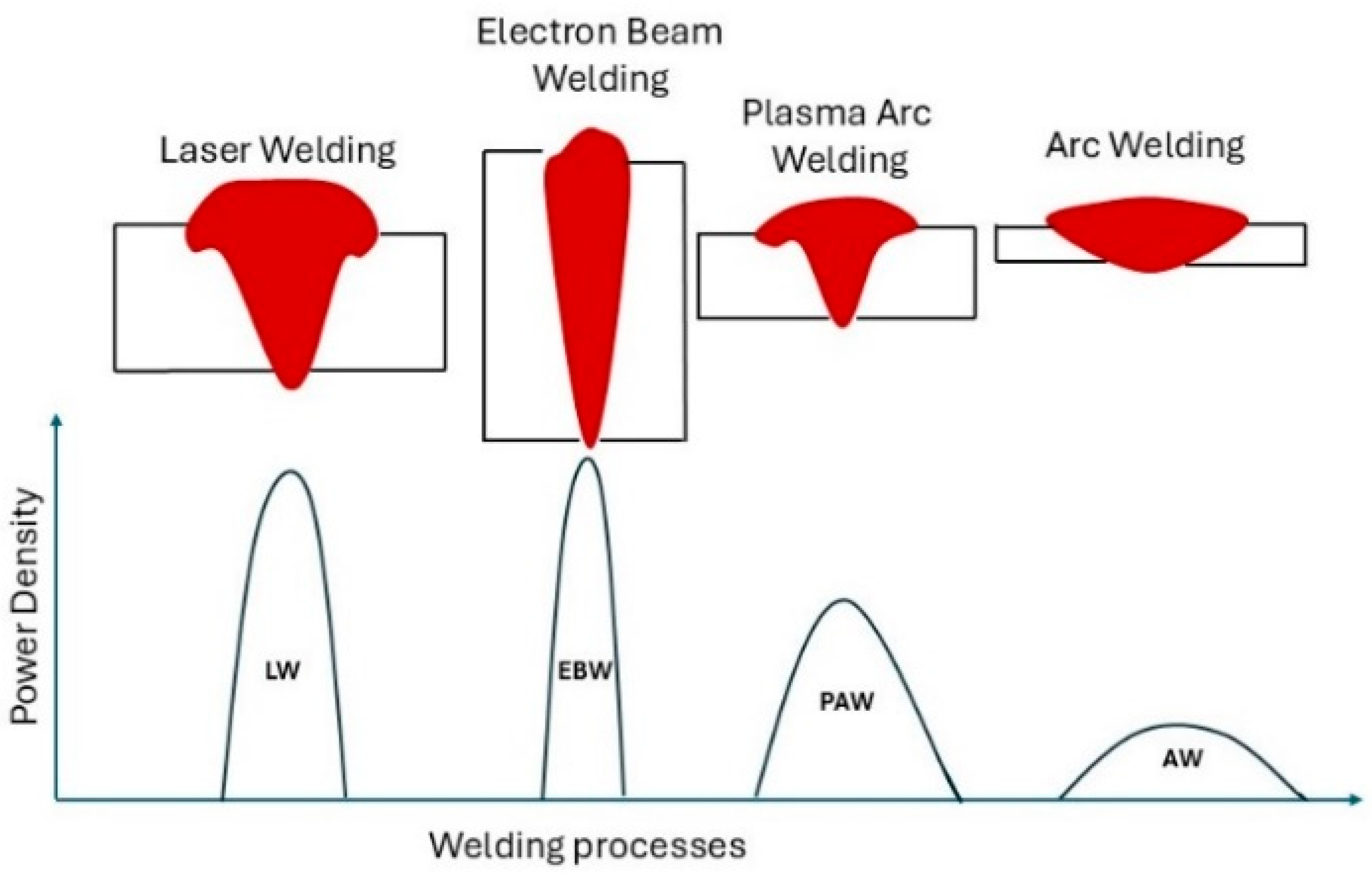
Figure 1. Schematic diagram of the final weld bead as the power density per heat source in welding processes.
Jmmp 09 00394 g001
Figure 2. Various parameters used for quality control of laser welding.
Jmmp 09 00394 g002
Figure 3. Schematic diagram for the influence of increasing welding speed from (i) to (v) in laser welding on the cross-section of weld joints.
Jmmp 09 00394 g003
Figure 4. Microstructural images of welded maraging steel: (a) HAZ of maraging steel 300 side and (b) a zone between base material (BM) and HAZ. Reprinted with permission, [19] Copyright 2024, MDPI.
Jmmp 09 00394 g004
Figure 5. Schematic diagram of microstructural changes in the weld.
Jmmp 09 00394 g005
Figure 6. Schematic diagram showing the formation of microconstituents in maraging steel due to (a) annealing with the structures of primary austenite grain, blocks, packets, lath, as well as (b) aging, recovery of martensitic matrix, and formation of nano-precipitates in spherical or needle-like structures. Reprinted with permission, [22] Copyright 2023, MDPI.
Jmmp 09 00394 g006
Figure 7. Microscopic images of 250 maraging steel after deformation: (a) 15% deformed, (b) 30% deformed, (c) 45% deformed, and (d) 60% deformed. Reprinted with permission, [36] Copyright 2022, MDPI.
Jmmp 09 00394 g007
Figure 8. Microscopic images of 250 maraging steel after heat treatment: (a) 15% deformed, (b) 30% deformed, (c) 45% deformed, and (d) 60% deformed. Reprinted with permission, [36] Copyright 2022, MDPI.
Jmmp 09 00394 g008
Figure 9. EBSD pole figure of 250 maraging steel: (a) after deformation and (b) after heat treatment. Reprinted with permission, [36] Copyright 2022, MDPI.
Jmmp 09 00394 g009
Figure 10. TEM images of steel: (a) bright field image indicating nanoprecipitates in martensite matrix, (b) energy-dispersive spectroscopy (EDS) elemental map and high annular dark field image of (a), (c) high-resolution transmission electron microscopic (HRTEM) image, (d) HAADF STEM images of β phase (square area 1 in (c)), (e) HAADF-STEM images of η phase (square area 2 in (c)), and (f) FFT (fast Fourier transformation) of (c) [39]. Copyright, 2024, MDPI.
Jmmp 09 00394 g010
Figure 11. Schematic diagram for the mechanism of austenite reversion in maraging steel.
Jmmp 09 00394 g011
Figure 12. (a) EBSD phase map of aged martensitic stainless steel, martensite (green) with reverted austenite (red), and (b) EBSD phase map of overaged martensitic stainless steel with an increase in the amount of reverted austenite (red) [56]. Copyright, 2022, MDPI.
Jmmp 09 00394 g012
Figure 13. Indentation statuses for Vickers hardness of maraging steel: (a) without indentation and (b) with indentation.
Jmmp 09 00394 g013
Figure 14. Schematic diagram for the hardness profile of laser-welded maraging steel.
Jmmp 09 00394 g014
Figure 15. A typical stress–strain curve of 250 maraging steel by cast and rolled sheets.
Jmmp 09 00394 g015
Figure 16. Fracture surface topographical images of the tensile test sample based on 250 maraging steel 3D and 2D images: (a) cup and (b) cone.
Jmmp 09 00394 g016
Figure 17. Schematic diagram of heat treatment aging of maraging steel.
Jmmp 09 00394 g017
Figure 18. Schematic diagram of fatigue strength for various grades of maraging steel.
Jmmp 09 00394 g018
Figure 19. Schematic diagram of initiation of fatigue fracture.
Jmmp 09 00394 g019
Figure 20. Classification of additive manufacturing processes.
Jmmp 09 00394 g020
Figure 21. Examples of aircraft parts manufactured using advanced laser welding and additive manufacturing processes: (a) schematic diagrams of aircraft airframe, reprinted with permission, [126] Copyright 2021, MDPI; (b) turbine blade model, reprinted with permission, [127] Copyright 2023, MDPI; (c) fuselage and perturbations due to corrosion, reprinted with permission, [128] Copyright 2021, MDPI; (d) solid rocket motor casing, reprinted with permission, [129] Copyright 2024, MDPI; and (e) additively manufactured manifold, reprinted with permission, [130] Copyright 2023, MDPI.
Jmmp 09 00394 g021
Figure 22. A suggestive framework of welding maraging steel for aerospace applications.
Jmmp 09 00394 g022
Table 1. Microstructures and mechanical properties in laser-welded maraging steel.
No.Manufacturing Process and MaterialMicrostructural ObservationMechanical PropertiesRemarksRef.
Tensile Strength
(MPa)
Yield Strength
(MPa)
Elongation
%
Hardness
(HVN)
1Fiber laser beam welding and TIG welding of maraging steel with AISI 4140Narrower fusion zone and HAZ in laser welding with fine and coarse grains relative to TIG149412152.2545Laser welding exhibits higher efficiency in weld joints compared to TIG.
Rapid cooling reduces the width of the HAZ and fusion zone, thereby improving mechanical properties.
[16]
2Heat treatment and Yb-laser-welded maraging steelTwo HAZs, namely HAZ (austenitized) and HAZ (aged during welding)144013507.1530Post-weld aging helps achieve uniformity in the first and second HAZs, thereby increasing mechanical strength.[9]
3CO2 laser welding of maraging steelThe change in scanning speed affects the fusion zone area. As the speed increases, the fusion zone grains tend to be finer.1520-10300As the speed increases from 0.5 to 1 m/min, the strength increases rapidly and remains constant until it reaches 2.5 m/min, and then it decreases at 3 m/min.[18]
4Laser hybrid welding of maraging steelWine cup-shaped fusion zone with cellular and dendritic formations172116824420Aging treatment improves both hardness and strength through the homogenization of microstructures.[24]
5Post-weld aging treatment of laser-welded maraging steelCoarse equiaxed martensite grains at the weld zone, moving away from the weld zone, become finer.151314942.4470Aging in a temperature range of 420–460 °C enhances the hardness at HAZ and fusion zone, and thus increases tensile properties.[25]
6Notched tensile testing of maraging steel weldment in air and hydrogenThe segregation of Ti and Mo at interdendritic boundaries yields the formation of austenite pools1597--416As the aging temperature increases, the amount of reverted austenite increases.[26]
7Maraging 300 steel welded by laser, subjected to plasma nitriding treatmentThe microstructure depicts fusion zone formation and HAZ with reduced hardness, and further aging improves hardness189116078.8355Nitriding tends to enhance the tensile strength of laser-welded maraging steel, and further aging improves its mechanical properties.[27]
8Role of copper in laser-welded maraging steelThe addition of a copper layer reduced the fraction of reverted austenite in the grain boundary from 6.8% to 3.7%, and the same increase occurred in the matrix of martensite16461507--Aging ε-Cu precipitates adds the benefit of strength; Cu lowers the critical driving force in phase transformation, thus promoting austenite formation in the matrix.[28]
9Effect of post-welding heat treatment on maraging steel welded by gas tungsten arc welding using filler materialsThe weld zone becomes coarser due to the excess of heat input by multi-pass welding, along with two HAZs formed, in which the second HAZ was aged during welding 179016756.8530Aging at 485 °C, followed by homogenization at 1099 °C, assisted in producing austenite-free lath martensite, as homogenization led to homogeneous structures prior to aging.[29]
Table 2. Summary of precipitate formation, characteristics, and their contribution.
MaterialAging ParameterPrecipitate PhasePrecipitate Spacing/SizeStrengthening OutcomeRef.
Co-free, 11.5–12% Ni and variable Ti and Al maraging steels510 °C for 16 hη-Ni3Ti and β-NiAl 5–20 nm mean free distanceσppt = 1000 MPa, relative to Ti and Al concentration[41]
18 Ni 350 maraging steel430 and 475 °C for 6.5 hNi3 (Ti, Mo)Size varies from 3 to 15 nm653–697 VHN[42]
13 Ni maraging steel (studying the influence of Mo content)480 to 500 °C for 3, 4, 5, and 6 hNi3Mo to Fe2 (Mo, Ti) laves formation3 to 14 nmPeak hardness reaches 798 VHN for a base composition of Mo[22]
Fe-Ni-Mn-Ti-AlSolution treating at 1100 °C and aging at 550 °C(Ni, Fe)3 Ti (plate to rod morphology) and (Ni, Fe)3(Al, Mn)Less than 10 nmEarly precipitation increases of 200–300 MPa strength[43]
18-Ni maraging steel450–500 °CPrimary Ni3 Mo and secondary Ni3Ti5–20 nmStudy of precipitates supporting strengthening[44]
Table 3. Reported volume fraction of reverted austenite in different maraging steel grades as a function of aging.
MaterialAging/Heat TreatmentReverted Austenite (%vol.)Effect on Mechanical PropertiesRef.
18Ni-350 maraging steel520 °C over aging18%Hardness and strength reduce, but ductility/toughness improves[58]
18Ni-350 maraging steel560 °C over aging25%Further reduction in hardness, but larger ductility[58]
18Ni-350 maraging steel600 °C over aging37%Substantially low strength and hardness; coarse RA reduces strength[58]
18Ni-350 maraging steel570 °C for 4 h10%A small fraction of RA for modest softening[59]
18Ni-300 maraging steel570 °C for 3 hUp to 30% (for 3 h)The fraction of RA grows with time, but the strength drops.[60]
18Ni-350 maraging steel600–700 °C, short aging of 1800 s54.5% to 60.9%High-temperature short aging can still produce noticeable RA. The prior cold rolled shows a different RA fraction[61]
18Ni-250 maraging steel weldmentsPost-weld heat treatment at 480 °C (1 to 360 min)2.5% after 15 minHardness at the weld zone varies from 390 to 520 VHN for 6 h[62]
Mn-based maraging steel (10–12% Mn)Aged 460 to 540 °C4% (10 min, 10% Mn)
and 9% (12% Mn)—increases with time/composition
Mn segregation with lath-like RA. RA growth is slow due to low Mn diffusivity and toughness improvement[46]
Disclaimer/Publisher’s Note: The statements, opinions and data contained in all publications are solely those of the individual author(s) and contributor(s) and not of MDPI and/or the editor(s). MDPI and/or the editor(s) disclaim responsibility for any injury to people or property resulting from any ideas, methods, instructions or products referred to in the content.