Article

Surface Reaction Layer Evolution and Material Removal Mechanism in Chemical-Assisted Magnetorheological Finishing of 316L Stainless Steel Capillaries


1
School of Mechatronics Engineering, Harbin Institute of Technology, Harbin 150001, China
2
State Key Laboratory of Robotics and System, Harbin Institute of Technology, Harbin 150080, China
*
Author to whom correspondence should be addressed.
J. Manuf. Mater. Process. 2026, 10(8), 284; https://doi.org/10.3390/jmmp10080284
Submission received: 8 July 2026 / Revised: 28 July 2026 / Accepted: 2 August 2026 / Published: 6 August 2026

Abstract

316L stainless-steel capillary tubes are important in medical devices, precision fluid transport and micro heat exchangers, but their slender geometry and dense passivation film make inner-surface finishing inefficient. This study proposes a stepwise chemical-assisted magnetorheological finishing (CMRF) process for 316L capillaries. The inner surface was first pretreated with hydrogen peroxide/oxalic acid to form a removable reaction layer, and then finished by magnetorheological abrasives. The effects of the two reagents on material removal and surface integrity were evaluated, and the optimal pretreatment was determined to be 2.25 wt.% oxalic acid and 1.5 wt.% H2O2. Compared with conventional magnetorheological finishing, CMRF increased the material removal rate by approximately 54% and reduced the final inner-surface roughness Sa to 0.116 μm. Characterization results show that hydrogen peroxide and oxalic acid generate a dynamic oxidation–complexation–dissolution–reoxidation cycle, converting the dense passive film into an oxygen-rich, porous, low-crystallinity reaction layer and reducing surface hardness by about 30%. This softened layer promotes preferential abrasive removal instead of direct cutting of the metallic substrate, thereby improving finishing efficiency and surface quality.

1. Introduction

With the rapid development of high-end manufacturing, precision medicine and minimally invasive diagnosis and treatment technology, micro-scale metal functional components for extreme service environments and high reliability requirements have increasingly broad application prospects in aerospace, biomedical and precision instruments. Among them, metal capillaries have become key components in biochemical detection, precision drug delivery and high-precision flow control systems because of their functions of micro-scale fluid transport and precision structural support [1]. In the above application scenarios, the inner surface quality of capillaries directly affects the service performance and reliability of the device. A high-quality inner surface can not only effectively reduce the fluid transport resistance, but also reduce the risk of liquid residue and pollution. Taking 316L stainless-steel capillaries as an example, they are mainly finished by plastic forming processes such as cold drawing and spinning, so it is easy to form scratches, microcracks and work hardening layers on the inner wall, and the inner surface quality is difficult to meet the needs of high-end medical devices for ultra-smooth surfaces. At the same time, capillaries generally have slender, narrow, high-aspect-ratio geometries, making it difficult for conventional mechanical finishing tools to effectively enter their internal spaces. To address the challenge of finishing metal capillary inner walls, abrasive flow machining (AFM) [2], magnetic abrasive finishing (MAF) [3,4,5], magnetorheological finishing (MRF) [6], chemical mechanical polishing (CMP) [7] and other non-conventional polishing technologies have been proposed by researchers.
Abrasive flow polishing realizes the material removal of complex inner surface by high pressure driving the viscoelastic medium containing abrasive particles to flow through the inner channel of the workpiece. It has the advantages of strong processing accessibility and high adaptability of structure and shape, and is suitable for the processing of complex flow channels, curved channels and closed cavities that are difficult to reach by conventional tools. Singh et al. [8] used abrasive flow polishing to process Φ850 μm 316L stainless-steel micro-holes, and reduced the inner surface roughness from 1.4 μm to 0.15 μm. To further improve the finishing efficiency, Sharma et al. [9] introduced high-frequency ultrasonic vibration to enhance the impact and cutting effect of abrasive particles on the surface, which significantly improved the material removal efficiency during abrasive flow machining. However, this method also increased the complexity of equipment and the difficulty of process control. In addition, this method is sensitive to capillary wall thickness, material toughness and structural stiffness, and it is easy to cause local deformation and dimensional accuracy degradation during the processing of thin-walled or low-stiffness capillaries. More importantly, in capillaries with large aspect ratios, the abrasive medium has clear pressure attenuation and an uneven distribution of flow field along the flow direction, which can easily lead to excessive polishing in the inlet area and insufficient processing in the distal area, seriously affecting the surface uniformity [10,11].
Magnetic abrasive finishing uses an external magnetic field to aggregate ferromagnetic particles to form a flexible ‘magnetic brush’, and uses the magnetic field gradient to drive the abrasive particles to move relative to the surface of the workpiece to achieve material removal [12], which has the advantages of controllable polishing force and good flexibility. Zhang et al. [13] developed a spherical magnet composite abrasive finishing tool to polish the local inner surface of 316L stainless-steel tube with a length of 100 mm and an inner diameter of 15 mm, and the surface roughness Ra reached 0.258 μm. Yamaguchi et al. [14] proposed a two-step grading polishing process by studying the influence of magnetic field strength and magnetic particle size on the finishing performance, and successfully reduced the roughness of the inner wall of the 304 stainless-steel elbow to 0.2 μm. However, due to the difficulty of maintaining a uniform distribution of magnetic field in complex slender space, clear differences occur in the stiffness and material removal ability of magnetic brushes in different regions, which easily cause local over-polishing or insufficient polishing.
Magnetorheological finishing technology uses the rheological properties of magnetorheological fluid under the action of an external magnetic field to form a flexible polishing area with certain stiffness to achieve stable and controllable micro-scale material removal [15,16]. In the early stage of magnetorheological finishing, it was mainly used in the processing of high-precision optical components, and ultra-smooth surfaces with surface roughness Ra less than 0.01 μm could be obtained [17]. In recent years, its application has gradually expanded to inner-surface finishing of slender metal structures. Li et al. [18] combined multipole magnetorheological finishing with shear thickening polishing, and the surface roughness of the inner wall of the aluminum alloy slender tube can be reduced to 0.155 μm (initial surface Ra = 0.48 μm), and the micro-convex peaks and deep scratches can be effectively removed. However, the process requires frequent replacement of the polishing liquid, resulting in a significant increase in the finishing cycle. Our team has successfully reduced the inner surface roughness Sa of Φ1.5 mm 316L stainless-steel capillary from an initial 1.4 μm to less than 0.13 μm by magnetorheological finishing technology in the early stage, and significantly improved the original processing defects of the inner wall [19]. However, due to the high plasticity, toughness and work hardening tendency of 316L stainless steel, the conventional magnetorheological finishing mainly relies on the mechanical micro-cutting effect of abrasive particles, and the material removal efficiency is relatively limited, resulting in a long overall finishing cycle, which makes it difficult to balance a high surface quality and high finishing efficiency. Therefore, how to achieve efficient removal of inner surface materials while ensuring machining accuracy and surface integrity is a key issue that needs to be solved urgently.
As a typical chemical–mechanical collaborative processing method [20], chemical mechanical polishing (CMP) uses the oxidant and chemical active components in the polishing solution to first react with the surface of the workpiece to form a loose, softened and easily removed reaction layer. Subsequently, the continuous removal of the reaction layer is achieved under the mechanical action of the abrasive particles. Because the reaction layer has a lower bonding strength than the substrate material, the chemical mechanical finishing method can usually achieve high efficiency and low damage material removal. Xie et al. [21] developed a green and environmentally friendly CMP slurry, which realized the Ra 1 nm ultra-smooth surface processing of sapphire wafers. Zhang et al. [22] used CMP to reduce the surface roughness of copper to 0.5 nm.
To further balance high removal efficiency and high machining accuracy, researchers have combined CMP with MRF and proposed chemical mechanical magnetorheological finishing (CMMRF) technology, which improves the material removal behavior of conventional magnetorheological finishing by introducing a chemical reaction mechanism. Tien et al. [23] reduced the surface roughness Ra of Ti-6Al-4V alloy to 1 nm by using a chemical mechanical magnetorheological finishing slurry based on malic acid and hydrogen peroxide. Ghai et al. [24] systematically studied the influence of chemical reagent content, abrasive concentration, iron powder content and finishing gap on the finishing performance of aluminum alloy, and successfully reduced the surface roughness to less than 2 nm. Meanwhile, recent studies show a clear trend toward flexible magnetic-field-driven finishing of confined and complex internal surfaces. Robot-assisted magnetic abrasive finishing has been applied to curved tube interiors, recent reviews have summarized magnetic abrasive finishing for complex internal cavities in metal additive manufactured parts, vertical magnetorheological polishing has been developed for titanium alloy pipe inner surfaces, and rotational magnetorheological finishing has been reported for small 316L stainless-steel tubes [25,26,27,28]. These studies indicate that process compounding and controllable magnetic-field tools are becoming important routes for internal surface finishing, but chemical regulation of the passive layer in slender 316L capillaries remains insufficiently studied. The introduction of a chemical auxiliary mechanism can effectively reduce the difficulty of material removal and significantly improve the finishing efficiency and surface quality of magnetorheological finishing. However, most of the existing studies on this method focus on open planar surfaces or simple curved structures, and the applicability to the inner surface of slender closed metal capillaries is still very limited. On the one hand, the internal space of the metal capillaries is narrow and the aspect ratio is large, it is difficult for the conventional chemical mechanical magnetorheological finishing to achieve a stable flow field and uniform processing in the complex confined space. On the other hand, the existing process usually adds oxidants and acidic components to the original magnetorheological finishing fluid, but the magnetic particles in the magnetorheological fluid are mostly micron-sized iron powder, which is easy to corrode with the chemical reagent and destroy the dispersion stability of the magnetorheological fluid. This may also complicate the polishing behavior and reduce process stability. In addition, hydrogen peroxide and other oxidants readily generate abundant bubbles when reacting with iron powder. Such bubbles may induce flow instability within the confined capillary space and further lead to the emergence of machining defects.
In view of the above problems, this study proposes a stepwise chemical-assisted magnetorheological composite finishing process suitable for inner-surface finishing of 316L stainless-steel capillaries. Different from the conventional method of directly introducing chemical components into magnetorheological fluid, a chemical solution containing hydrogen peroxide and oxalic acid was used to pretreat the inner surface of the capillary by high-speed scouring, and a loose reaction layer was then formed on the surface to be processed by chemical reaction to reduce the difficulty of material removal by abrasive particles in the subsequent magnetorheological finishing process. Subsequently, the magnetorheological finishing process is used to effectively remove the reaction layer and surface micro-peaks. This strategy is expected to balance finishing efficiency and surface quality while avoiding the corrosion and bubble problems caused by the direct contact between chemical reagents and magnetic particles, and provides a new technical path for the efficient and stable processing of the inner surface of closed metal capillaries.

2. Materials and Methods

2.1. Experimental Principle and Setup

The stepwise chemical-assisted magnetorheological finishing process proposed in this study includes two core processes: chemical pretreatment and magnetorheological finishing. In the chemical pretreatment process, hydrogen peroxide (H2O2) was selected as the main oxidant in the composite chemical solution. At the same time, considering that 316L stainless steel contains a high proportion of chromium, and Cr3+ is easy to react with H2O2 and OH to form toxic Cr6+ compounds under alkaline conditions, an acidic chemical system was used, and oxalic acid was selected as the pH regulator. In the acidic environment, H2O2 can induce the oxidation reaction on the surface of 316L stainless steel, and the metal elements in the surface layer are converted into high valence ions. The H+ provided by oxalic acid can enhance the oxidation ability of hydrogen peroxide to accelerate the surface oxidation process. At the same time, the oxalate ions formed by ionization can form a stable complex with the metal ions formed by oxidation, which can inhibit the deposition of metal ions and the regeneration of passivation film, thus maintaining the continuous surface reaction.
As the main matrix constituent in 316L stainless steel, the Fe content is approximately 60–70 wt.%, which is the main reaction object in the chemical pretreatment stage. Under acidic conditions, as shown in Formulas (1)–(4) [29,30,31,32], Fe easily loses electrons to form Fe2+, and then further reacts with H2O2 to form Fe3+ and OH radicals with a stronger oxidizing ability, thus further promoting the surface oxidation reaction. In addition, oxalate ions can form stable soluble complexes with Fe2+ and Fe3+, avoiding the hydrolysis of metal ions to form deposits or surface passivation layers.
F e 2 e F e 2 +
F e 2 + + H 2 O 2 F e 3 + + O H + O H
F e 2 + + 2 C 2 O 4 2 F e C 2 O 4 2 2
F e 3 + + 3 C 2 O 4 2 F e C 2 O 4 3 3
In addition to Fe, Cr is also a key component in 316L stainless steel, and its content is approximately 16–18 wt.%. It is an important source of forming Cr-rich passivation film on the surface and endowing the material with excellent corrosion resistance. Under acidic conditions, H2O2 can further oxidize the elemental Cr on the surface of stainless steel or Cr3+ in the passivation film, and oxalate ions have a strong complexation effect on Cr3+ (the reaction process is shown in Formula (5)), which can effectively promote the dissolution of Cr-rich passivation film and create conditions for subsequent surface softening and material removal.
C r 3 + + 3 C 2 O 4 2 C r C 2 O 4 3 3
In the chemical pretreatment stage, the hydrogen peroxide–oxalic acid composite chemical solution was injected into the 316L stainless-steel capillary by a high-speed injection device, and the continuous and reciprocating erosion of the inner surface to be processed was realized by the high-speed flow of the chemical liquid to induce the oxidation and complexation reaction of the surface material, and finally the surface layer was softened. Compared with the conventional static immersion method, high-speed scouring can not only significantly shorten the surface reaction time, but also effectively reduce the deposition of metal ions on the surface and avoid hindering subsequent chemical reactions, thereby improving the continuity and stability of the pretreatment process.
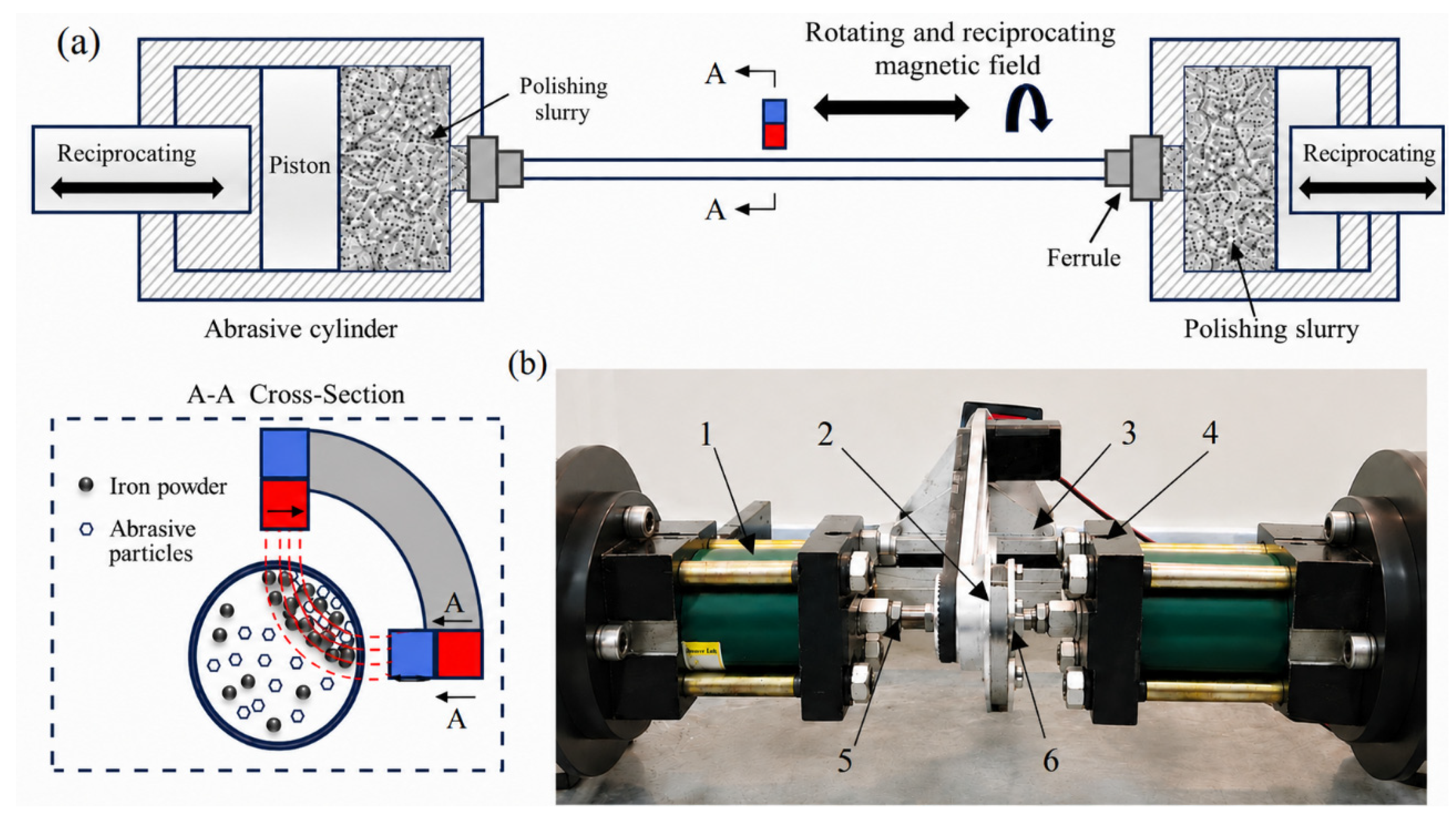
In the subsequent finishing process, the chemically softened capillary inner surface was polished using the magnetorheological finishing setup shown in Figure 1. The device was independently designed and built by our team. Two strip magnets are arranged radially along the workpiece at an angle of 90°, and the magnetic polarity near the pipe wall is the opposite. As shown in Figure 1b, the slender workpiece is located between the two magnetic poles and maintains a certain gap with the magnetic pole. The magnetic flux lines start from the N pole of one side of the magnet, act on the magnetorheological finishing fluid inside the capillary through the pipe wall, and then pass through the other side of the pipe wall back to the S pole to form a closed magnetic circuit. In the magnetic field area, the magnetic particles are arranged along the direction of the magnetic flux lines to form a chain structure, and the abrasive particles are clamped and aggregated, thus forming a flexible polishing area with a certain stiffness. During finishing, the magnetorheological finishing fluid is driven by the piston to flow at a high speed inside the capillary tube, and the abrasive particles continuously scour the inner wall of the workpiece with a certain kinetic energy to achieve surface material removal. At the same time, the external magnetic field rotates around the center line of the workpiece at a certain speed, and makes a linear reciprocating motion along the axial direction, so that the flexible polishing area forms a dynamic distribution in the tube. The rotating magnetic field can improve the polishing pressure and finishing uniformity of each area of the inner wall, and also promote the continuous renewal of the abrasive particles in the polishing area and weaken the influence of abrasive passivation on the finishing performance.

2.2. Experimental Design

To evaluate the effect of the chemical-assisted process on the magnetorheological finishing performance of 316L stainless-steel capillary inner walls, this study systematically investigated how chemical pretreatment affects material removal efficiency and surface roughness in the rough-finishing stage. The workpiece was an in vitro diagnostic (IVD) equipment sample needle prototype, with a total length of 200 mm, a wall thickness of 0.2 mm, and an inner diameter of 1.5 mm. Specifically, the chemical pretreatment solution was composed of hydrogen peroxide, oxalic acid, and deionized water, whereas the magnetorheological finishing fluid was composed of carbonyl iron powder, silicon carbide abrasive, sodium polyacrylate, cellulose, and deionized water. The main process parameters of the two stages are shown in Table 1.
To comprehensively analyze the influence of different chemical components on finishing performance, the experimental control group was designed as follows: First, the workpiece was pretreated with a single chemical solution containing only hydrogen peroxide and only oxalic acid, respectively, and then magnetorheological finishing was carried out. The independent effects of different chemical components and their concentration changes on material removal rate and surface roughness were analyzed. Secondly, the workpiece was pretreated by hydrogen peroxide–oxalic acid composite chemical solution, and then magnetorheological finishing was carried out to analyze the synergistic effect between oxidation and complexation induced by the composite solution. In addition, the samples without chemical pretreatment and directly subjected to magnetorheological finishing were set as the control group to quantitatively evaluate the contribution of chemical-assisted pretreatment to the finishing efficiency and surface quality improvement in the rough-finishing stage.

2.3. Characterization, Surface Roughness, and Material Removal Rate Evaluation

The characterization instruments used in this study were as follows. The three-dimensional inner-surface morphology and surface roughness were measured using a ZYGO white-light interferometer (ZYGO Corporation, Middlefield, CT, USA). The microscopic surface morphology and elemental composition were characterized using a TESCAN MAGNA high-resolution field-emission scanning electron microscope equipped with EDS/EBSD (TESCAN, Brno, Czech Republic). X-ray photoelectron spectroscopy (XPS) was performed using a KRATOS AXIS Ultra DLD X-ray photoelectron spectrometer (Kratos Analytical, Manchester, UK). Raman spectra were collected using a RENISHAW PLUS Raman spectrometer (Renishaw plc, Wotton-under-Edge, UK). Nanoindentation tests were carried out using an Agilent Nano Indenter G200 (Agilent Technologies, Santa Clara, CA, USA).
For surface roughness evaluation, two capillary samples were measured for each processing condition. Three axial regions, namely the front, middle, and end sections, were selected for each capillary to evaluate the axial uniformity of the finishing process. In each region, 4–6 measurement positions were selected, and the measurement area of each position was 200 μm × 200 μm. Therefore, each capillary included 12–18 repeated roughness measurements, and the final Sa for each processing condition was obtained by averaging all measured positions. The acquired height maps were leveled and tilt-corrected using the built-in analysis software of the interferometer, and no additional cutoff filtering or smoothing was applied before calculating Sa. The areal surface roughness parameter Sa was calculated according to ISO 25178-2 [33].
The material removal rate (MRR) was calculated from the mass difference before and after finishing according to Formula (6):
M R R   =   m 0     m 1   /   t
where m0 and m1 are the sample masses before and after finishing, respectively, and t is the finishing time. MRR is reported in mg/min.

3. Results and Discussion

3.1. Effect of Chemical Pretreatment on the Polishing Performance of Capillary Inner Walls

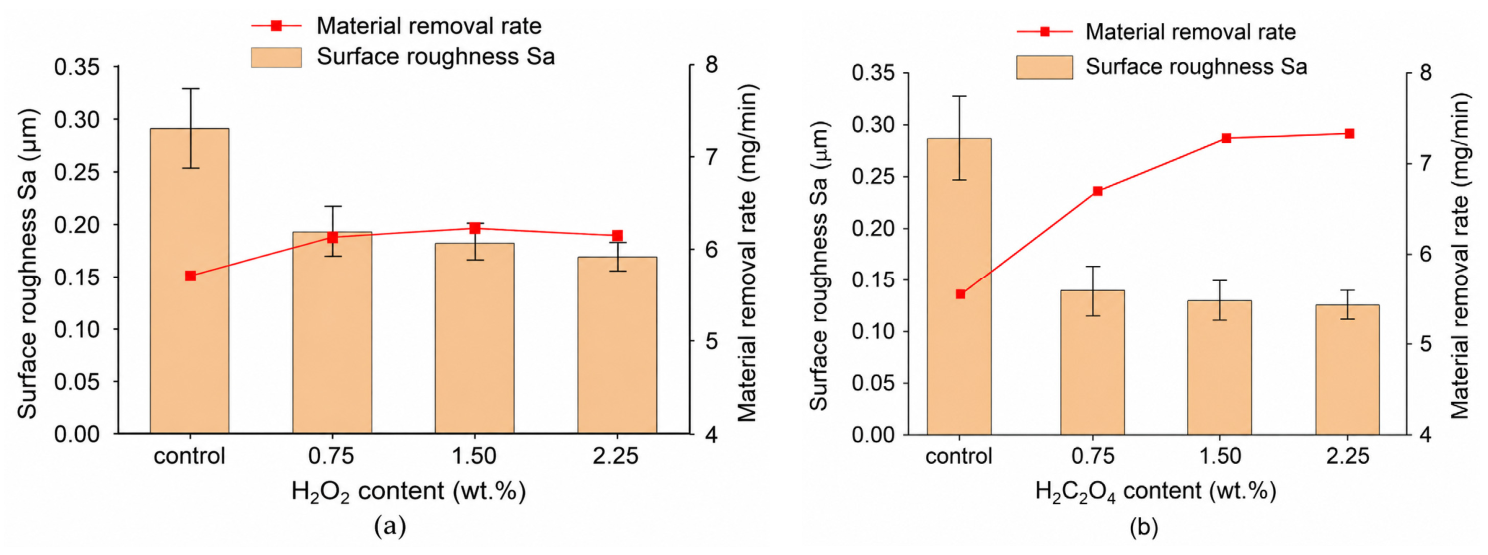
To clarify the specific role of hydrogen peroxide and oxalic acid in the chemical pretreatment process, the changes in surface roughness and material removal rate of 316L stainless-steel capillary inner wall after treatment with different contents of single chemical composition were analyzed. As shown in Figure 2a, compared with the control group that is directly subjected to magnetorheological finishing, the surface roughness Sa of the workpiece that is only pretreated with hydrogen peroxide solution and then subjected to magnetorheological finishing is significantly reduced, and the material removal rate is also improved to a certain extent. However, with the further increase in hydrogen peroxide concentration, the material removal rate shows a downward trend. Hydrogen peroxide is a strong oxidant and can promote the oxidation/passivation of stainless-steel surfaces, leading to the formation of Fe/Cr oxide or hydroxide products [34,35,36]. Therefore, the improvement in surface roughness and the limited increase in material removal rate at a relatively low H2O2 concentration may be attributed to the formation of a thin and relatively removable oxidized surface layer. When the H2O2 concentration is further increased, rapid oxidation and repassivation may promote the accumulation of a more continuous oxide/hydroxide film with a stronger barrier effect, which can improve the surface roughness but reduce the removability of the surface during subsequent magnetorheological finishing. Since the oxide-layer structure under each H2O2 concentration was not directly characterized in this section, this explanation should be regarded as a plausible interpretation based on the polishing response and previous studies, and further XPS, Raman, or cross-sectional characterization is required for direct verification. These results indicate that oxidation alone is insufficient to significantly improve the magnetorheological finishing effect of stainless-steel capillary inner walls.
In contrast, the surface roughness Sa of the workpiece pretreated with oxalic acid before magnetorheological finishing is about 50% lower than that of the control group. With the increase in oxalic acid concentration, the surface roughness tends to be stable, and the material removal rate keeps rising steadily. The reason is that oxalic acid can destroy the original Cr-rich passivation film on the inner wall through acidic corrosion and complexation, forming a loose surface corrosion structure, thereby reducing the difficulty of removing the surface material by the abrasive particles in the subsequent magnetorheological finishing process, and promoting the mechanical removal of the surface material by the abrasive particles. In addition, with the increase in oxalic acid concentration, the surface chemical reaction rate and the dissolution rate of oxidation products are further enhanced, so that the amount of material removal per unit time continues to increase. When the oxalic acid concentration is 2.25%, the surface roughness of the workpiece can be reduced to 0.126 μm, and the material removal rate is increased to 7.35 mg/min, which is significantly better than that of the experimental group treated with hydrogen peroxide alone.
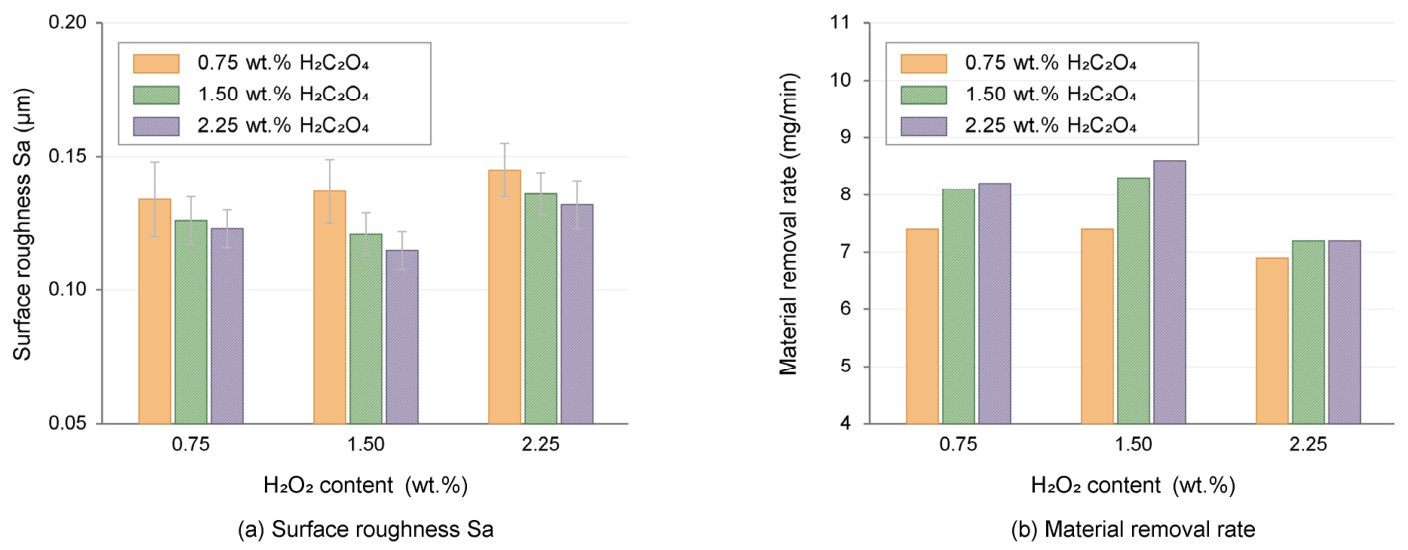
On the basis of clarifying the independent action law of hydrogen peroxide and oxalic acid, the synergistic effect of the two in the polishing of 316L stainless-steel capillary inner wall was further studied. The experimental results are shown in Figure 3. The results show that after the composite chemical pretreatment, the surface quality of the inner wall of the workpiece is significantly improved in a short processing time, and the Sa obtained under the tested reagent combinations can be reduced to less than 0.15 μm, which is significantly better than the effect of magnetorheological finishing directly under the same processing time (Sa = 0.29 μm). At the same time, the material removal rate can be increased to 8.67 mg/min, which indicates that the composite chemical system is helpful to improve the finishing efficiency in the rough-finishing stage.
From the perspective of variations in the concentrations of different chemical constituents, with the hydrogen peroxide dosage kept constant, the surface roughness Sa of the workpiece gradually declines alongside a simultaneous elevation in the material removal rate as the oxalic acid concentration rises. When the oxalic acid content remained unchanged, as the hydrogen peroxide content increased, Sa first decreased and then increased, whereas MRR first increased and then decreased. The reason is that in the hydrogen peroxide–oxalic acid composite system, oxalic acid not only provides an acidic environment but also can effectively destroy the original Cr-rich passivation film and promote the complexation and dissolution of oxidation products. Hydrogen peroxide continues to participate in the surface oxidation reaction and promotes the formation of oxidation products. The coupling of oxidation and complexation can induce the formation of a porous and low-strength reaction layer on the surface of the workpiece, thus effectively reducing the difficulty of material removal in the subsequent magnetorheological finishing process and creating favorable initial conditions for the efficient processing of stainless-steel capillary parts. Therefore, when the content of oxalic acid is high, it is beneficial to enhance the dissolution and complexation of oxidation products, promote their transformation into soluble complexes, and inhibit the regeneration of dense passivation film, so as to improve the removability of surface structure. However, if the oxalic acid content is too high, it will lead to the dominant complex dissolution process and destroy the dynamic balance between the formation and removal of the oxide layer. Especially in the inner wall of the slender tube with poor flow conditions, it is more likely to produce the concentration effect, resulting in local over-corrosion and even corrosion pits, which will ultimately affect the surface quality of the subsequent magnetorheological finishing. An appropriate amount of hydrogen peroxide can improve the surface oxidation reaction rate and form a synergistic strengthening effect with oxalic-acid complexation. However, excessive H2O2 may accelerate surface re-oxidation/repassivation and the accumulation of oxide/hydroxide products, thereby weakening the continuous oxidation–complexation–dissolution cycle and reducing material removability [34,35,36]. Therefore, the concentration matching between hydrogen peroxide and oxalic acid has an important influence on the finishing performance of the composite system.
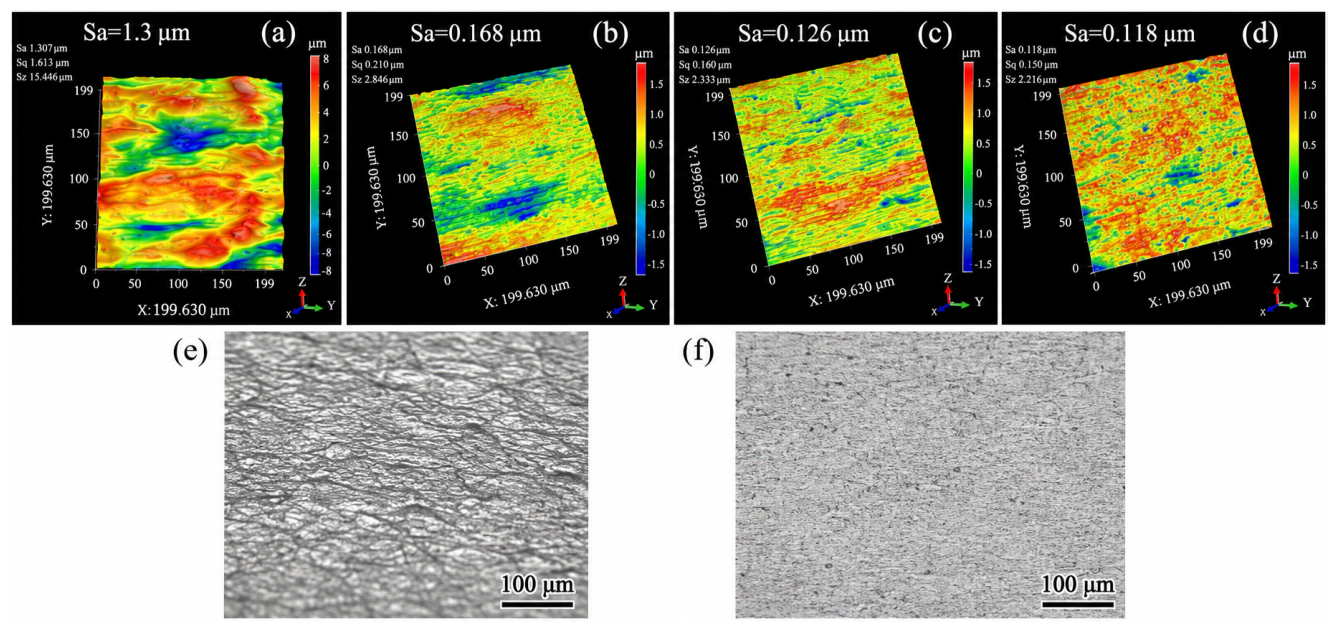
The experimental results show that when the hydrogen peroxide content is 1.5 wt.% and the oxalic acid content is 2.25 wt.%, the surface roughness Sa of the inner wall of the capillary can be reduced to 0.116 μm after 50 min polishing. Compared with the direct magnetorheological finishing without chemical pretreatment, the material removal rate (8.67 mg/min) is increased by about 54%. Figure 4 compares the inner-surface morphology of the workpiece before and after finishing. It can be seen that the initial surface roughness Sa is about 1.3 μm, and there are many large defects such as bumps and ravines on the surface. After the single treatment of hydrogen peroxide or oxalic acid and then magnetorheological finishing, the surface roughness is clearly improved, but there is still some local unevenness. After the synergistic chemical pretreatment of hydrogen peroxide and oxalic acid, the finishing performance was further improved; the surface became generally smooth, with no clear defects and good consistency.
Because the final Sa was obtained from measurements at the front, middle, and end sections, the reported roughness reflects the overall axial finishing quality of the capillary. Together with the representative processed morphology shown in Figure 4, the multi-position measurements indicate that the rotating and axially reciprocating magnetic field can dynamically redistribute the flexible polishing zone inside the slender tube. This dynamic magnetic-field action helps reduce localized over-polishing or insufficient polishing and improves the axial consistency of the finished inner surface under the present processing conditions.

3.2. Material Removal Mechanism of Chemical-Assisted Magnetorheological Finishing

3.2.1. Surface Morphology and Composition Analysis After Chemical Treatment

To further reveal the effect of different chemical pretreatments on oxide-layer evolution on the surface of 316L stainless steel, a 316L stainless-steel plane sample with a size of 10 mm × 10 mm × 0.5 mm was selected and immersed in three chemical solutions identified in the preceding experiments as beneficial for improving the surface roughness after magnetorheological finishing: only 1.5 wt.% H2O2, only 2.25 wt.% H2C2O4, and a composite solution containing 1.5 wt.% H2O2 and 2.25 wt.% H2C2O4. To compare and analyze the formation and composition evolution process of the surface oxide layer, the soaking time of each group of samples was uniformly set to 45 min.
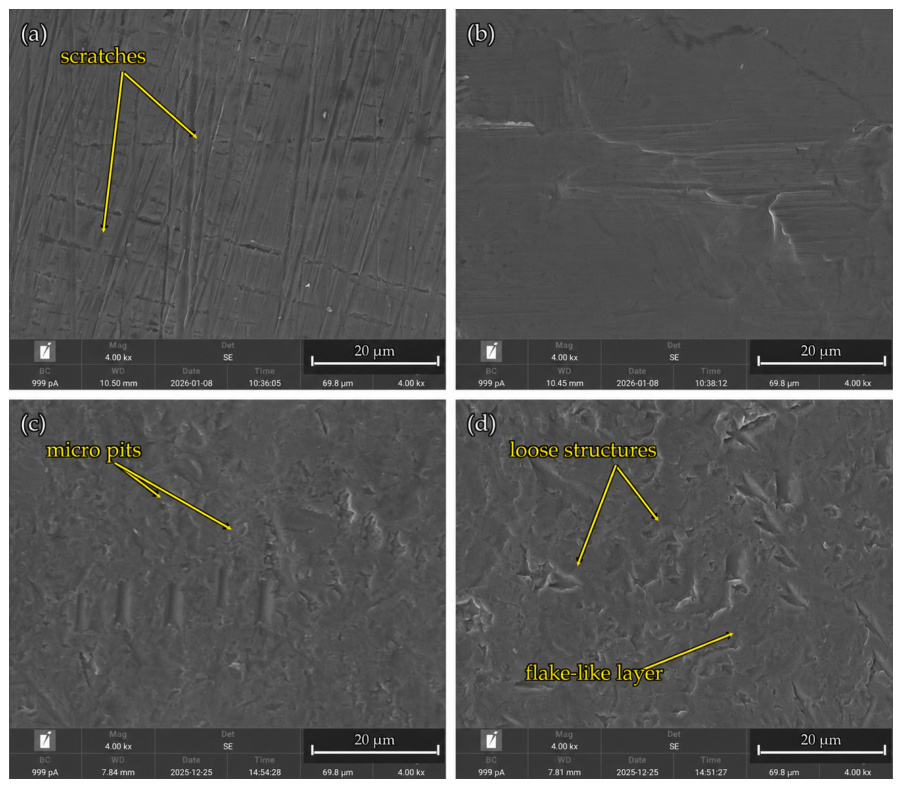
Figure 5 shows the surface morphology of the samples treated with different chemical conditions by scanning electron microscope. It can be seen that the surface of the original sample shows a clear processing texture, the continuous strip furrows are clearly visible, and the overall structure is dense (Figure 5a). After treatment with only 1.5 wt.% H2O2 solution (Figure 5b), the surface of the sample still maintains a high compactness, and the roughness of the sample is slightly improved compared with the original surface, with only slight layered undulation. This indicates that, in the absence of a complexing agent, the oxidation products of H2O2 are easy to accumulate on the surface and form a stable covering layer. In contrast, after treatment with only 2.25 wt.% oxalic acid solution (Figure 5c), the surface of the sample showed clear chemical corrosion characteristics, accompanied by local pitting and a large number of irregular micro-pits, resulting in a generally roughened surface with local pitting. This indicates that under the action of oxalic acid, the surface reaction of stainless steel is mainly dominated by complex dissolution, which can directly weaken the integrity of the original passivation layer. However, due to the lack of continuous oxidation driving force in this process, it is difficult to form an ideal loose reaction layer. After the synergistic effect of H2O2 and H2C2O4 (Figure 5d), the surface of the sample showed a uniform and finely broken loose structure, forming a rough surface with a clear microstructure, indicating that a dynamic equilibrium synergistic mechanism was established between the oxidant and the complexing agent. Among them, H2O2 continuously oxidizes the metal elements on the surface of 316L stainless steel and promotes the formation of the oxide layer. At the same time, oxalic acid continuously dissolves the metal ions in the newly formed oxide layer through complexation, which weakens the densification trend of the oxide layer. The formation of the oxide layer is synchronized with the local dissolution, so that the surface is in the dynamic cycle of ‘formation–dissolution–reformation’, which promotes the surface layer to gradually evolve into a loose structure formed by the accumulation of nano-scale oxide particles. In the subsequent magnetorheological finishing process, the mechanical shear force generated by the contact between the abrasive particle and the surface of the workpiece is more likely to expand and propagate along the internal pores and weak bonding interface of the oxide layer, so that the loose oxide layer is preferentially broken, peeled off and removed, thereby reducing the energy required for direct cutting of the substrate material.
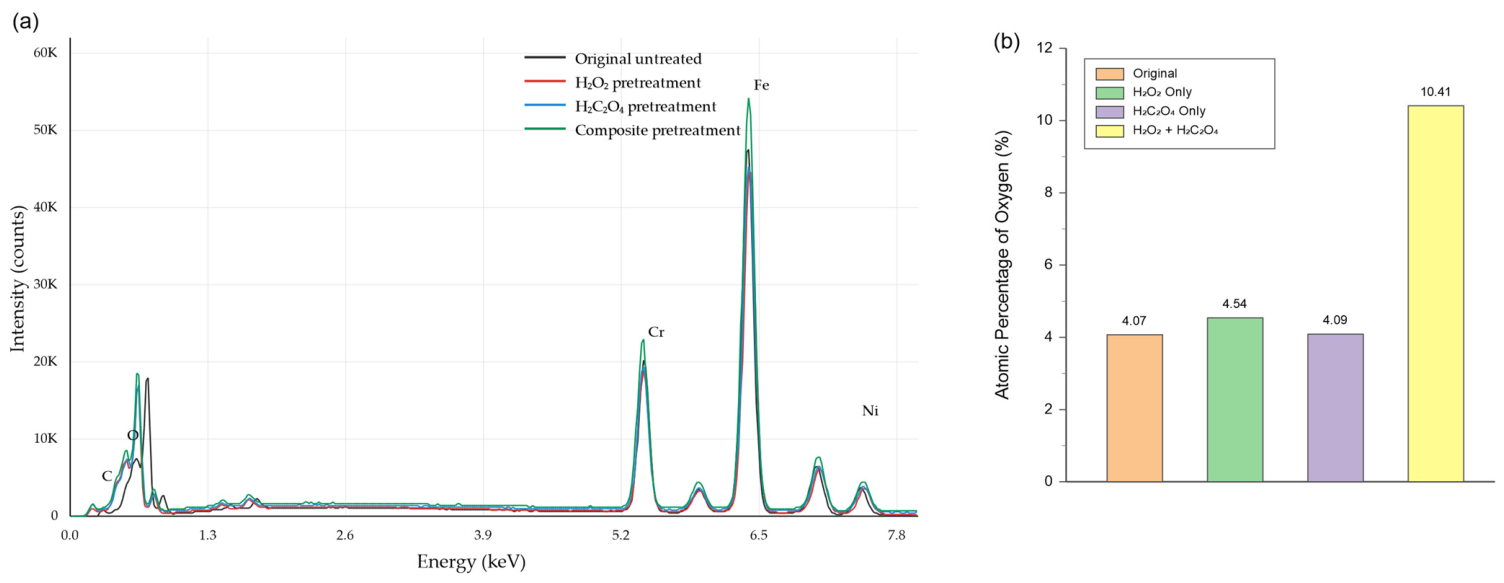
Figure 6 shows the EDS results for the sample after composite-system pretreatment and the oxygen atomic percentages of samples treated under different chemical conditions. The results show that the original untreated group and the oxalic acid pretreatment group only showed a lower proportion of oxygen content, indicating that the main role of oxalic acid was complexation and dissolution, rather than oxidation. After pretreatment with hydrogen peroxide alone, the proportion of oxygen content increased slightly; that is, hydrogen peroxide can promote a certain degree of surface oxidation in a neutral environment, but the effect is relatively limited, and the formed oxide layer tends to be stable and dense, which is consistent with the relatively flat surface observed in Figure 5b. In contrast, after pretreatment with hydrogen peroxide–oxalic acid composite solution, the proportion of oxygen atoms on the surface of the sample increased significantly, but the increase in oxygen content did not mean that a denser and more stable passive film was formed, but indicated that a non-equilibrium oxygen-rich reaction layer was established on the surface of stainless steel. In the conventional passivation process, once the oxide layer is formed, it will hinder the diffusion of the oxidant to the substrate, resulting in the gradual slowing of the oxidation reaction. However, in the hydrogen peroxide–oxalic acid synergistic system, the complexation continues to consume the oxidation products, destroys the stable growth of the passivation film, and means the surface always maintains a high reactivity, rather than a static dense passivation layer. This oxygen-rich loose layer in a dynamic renewal state is an important prerequisite for chemical-assisted magnetorheological finishing to achieve efficient material removal.
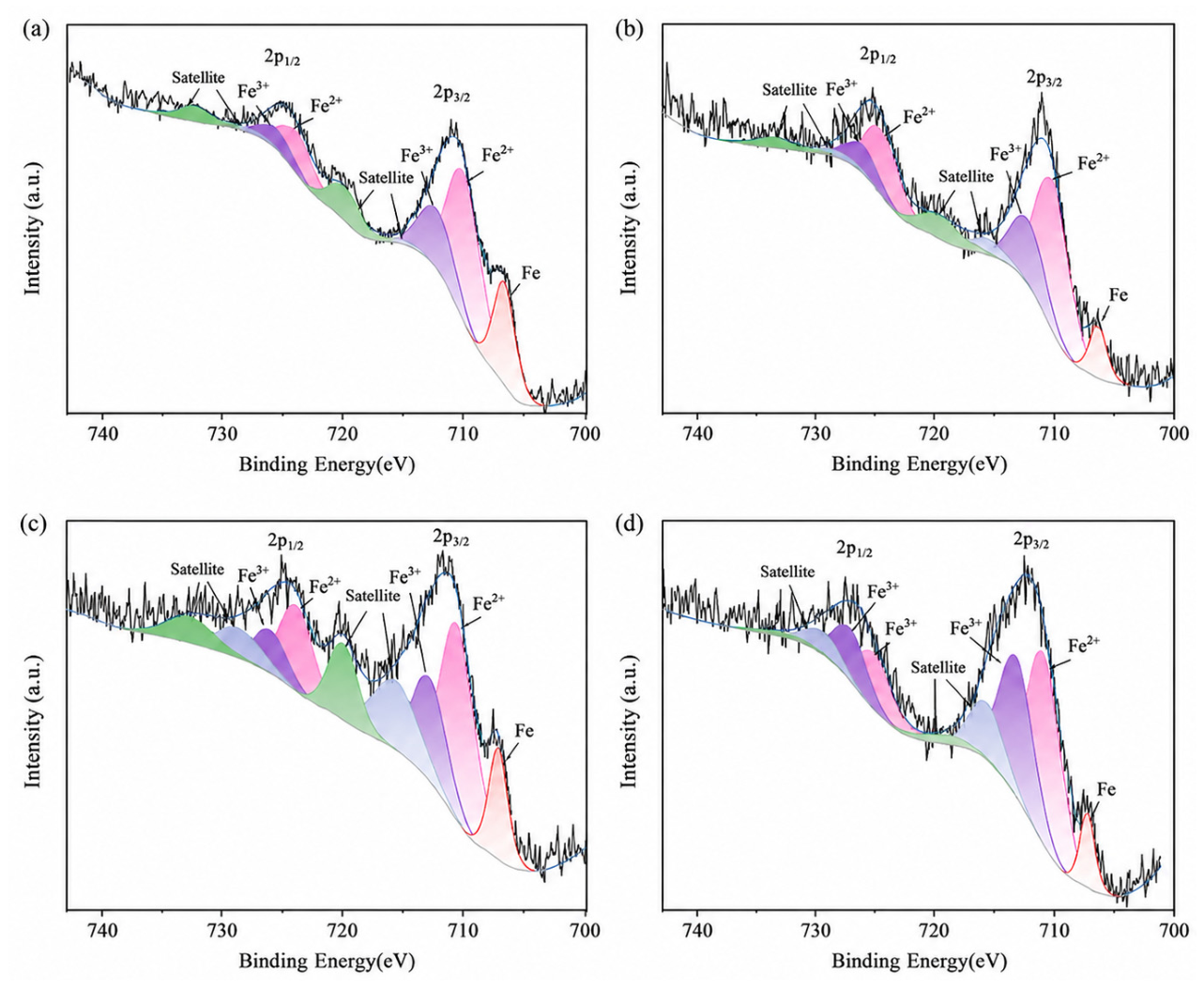
To further analyze the surface chemical state and the type of oxidation products during the chemical treatment process, Fe 2p high-resolution XPS tests were performed on different samples. The results are shown in Figure 7. The proportion of Fe on the surface of the original sample is relatively high, about 31 wt.%, and the proportions of Fe2+ and Fe3+ are 46 wt.% and 23 wt.%, respectively, indicating that the surface is covered with a naturally formed passivation oxide film. After single H2O2 treatment, the content of Fe decreased significantly, while the proportions of Fe2+ and Fe3+ increased to 62 wt.% and 27 wt.%, respectively, indicating that H2O2 promoted the surface oxidation reaction and further generated and enriched the oxide film. However, due to the lack of effective complexation and dissolution, the generated oxide layer still maintains high continuity and compactness; that is, a single oxidation process struggles to construct a loose structure suitable for mechanical removal. For the sample treated with oxalic acid alone, the proportion of Fe3+ was significantly reduced to about 4 wt.%, which was significantly lower than that of the original sample and the H2O2 treatment group, indicating that oxalic acid has a strong complexing and dissolving ability for high-valent iron oxides, which can effectively weaken the stability of the original oxide film. However, due to the lack of continuous oxidation driving force, the surface evolution is still dominated by chemical dissolution, and it is difficult to achieve deep damage of the passivation layer. In contrast, under the synergistic effect of H2O2 and oxalic acid, the proportion of Fe was further reduced to about 5 wt.%, while the proportion of Fe3+ remained at a low level. It can be inferred that since the formation rate of oxidation products was close to the complexation dissolution rate, it was difficult to form a large amount of high-valent iron oxides on the surface, which made it in a continuous dynamic cycle of ‘metal oxidation–complexation dissolution–fresh matrix exposure’, thus effectively inhibiting the re-formation of dense oxide films and transforming the surface of 316L stainless steel from a static passivation state to a continuously updated active reaction state. The results are consistent with the uniform loose reaction layer observed in Figure 5d, which confirms that the composite solution of hydrogen peroxide and oxalic acid can effectively destroy the original passivation film on the surface of 316L stainless steel and promote it to a loose state that is conducive to polishing removal.
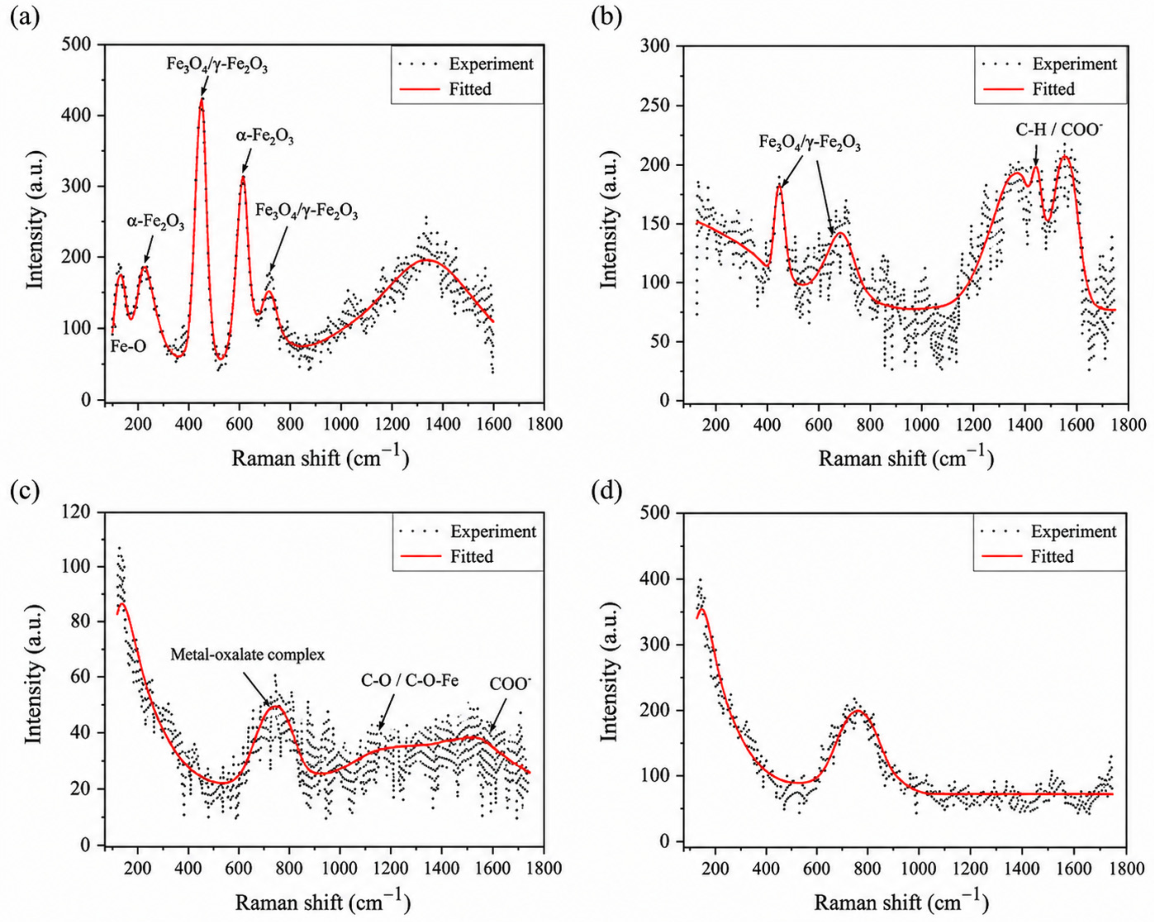
Figure 8 shows the Raman spectra of the samples after different chemical pretreatments. The original samples exhibit multiple strong and sharp characteristic peaks in the low-frequency regions such as 226, 443, 607 and 704 cm−1, corresponding to the vibration peaks of iron oxides such as α-Fe2O3/γ-Fe2O3, but the full width at half maximum (FWHM) values of each characteristic peak are small, indicating that the original surface is covered with a dense oxide film with high crystallinity and a complete structure, which further confirms that the original sample is in a typical passivation state. After single H2O2 pretreatment, the Fe3O4/γ-Fe2O3-related vibration peaks near 470 cm−1 and 710 cm−1 can still be observed in the Raman spectrum, but the peak intensity is clearly weakened, the FWHM is significantly increased, and the background signal in the low-frequency region is clearly raised, which confirms that the integrity of the surface oxide layer has been damaged to some extent, accompanied by the increase in surface defects and amorphous components. For the single oxalic acid pretreatment sample, the original Fe-O-related characteristic peaks basically disappeared, and only clear broadening peaks appeared in the 765 cm−1 and 1000–1600 cm−1 regions, indicating that the surface layer was mainly composed of amorphous organic–inorganic complex layers with low order degree, corresponding to the vibration characteristics of the complex formed by oxalate and metal ions. In contrast, after the pretreatment of the H2O2–oxalic acid composite system, the Raman spectrum only retained a broad characteristic peak near 779 cm−1, while the characteristic peaks related to the coordination structure of oxalate above 1000 cm−1 almost completely disappeared, indicating that the complex intermediate formed by oxalic acid and metal ions is difficult to accumulate stably under the continuous oxidation of H2O2, and its formation and decomposition process is in a dynamic equilibrium state. At the same time, the original characteristic peaks of iron oxides were significantly weakened or even disappeared, indicating that the surface did not form a stable oxide crystal phase with a clear long-range ordered structure, but gradually transformed into a highly disordered reaction layer. Combined with the XPS results, it can be seen that H2O2 continuously promotes the oxidation of the metal surface, while oxalic acid continuously combines and removes the newly generated metal oxidation products, making it difficult for the oxide layer to continue thickening and crystallization growth. Under the synergistic effect of ‘oxidation–complexation–dissolution’, the crystal structure in the reaction layer is inhibited, and a large number of defects, short-range ordered structures and amorphous phases are gradually formed. The decrease in the number of characteristic peaks and the significant broadening of the peak shape in the Raman spectrum directly reflect this structural disorder and low crystallinity.
Based on the above multi-dimensional characterization results, it can be seen that the surface of 316L stainless steel is covered with a continuous and dense Cr-rich passivation oxide film under natural conditions. The passivation film can effectively block the diffusion of the oxidation medium to the matrix, thus endowing the material with excellent corrosion resistance. However, its high density and bonding strength will increase the difficulty of material removal during subsequent polishing. When H2O2 pretreatment is used alone, although it can promote the oxidation of the surface metal and induce the formation of local oxidation defects, it is difficult to form a loose reaction layer with high removal efficiency due to the lack of continuous removal of oxidation products, and the newly formed oxide layer is easy to re-stabilize and densify. When oxalic acid pretreatment is used alone, it mainly promotes the dissolution and migration of metal ions through complexation, which can destroy the surface integrity and improve the structural disorder to a certain extent. However, due to the lack of continuous oxidation drive, the surface is still dominated by the metal matrix and its complexation products, and it is difficult to achieve continuous renewal and deep destruction of the passivation film.
In contrast, a dynamic reaction cycle of ‘oxidation–complexation–dissolution–reoxidation’ was established on the surface of 316L stainless steel under the synergistic effect of H2O2 and oxalic acid. H2O2 continuously oxidizes the surface metal to form an oxygen-containing precursor, and oxalic acid continuously promotes the migration of metal ions and some oxidation products to the solution through complexation, thereby weakening the densification and stabilization process of the oxide layer. Due to the continuous removal of the reaction products, the fresh metal surface is continuously exposed and oxidized again, so that the surface is always in a dynamic update state, and gradually evolves into a loose reaction layer that is oxygen-rich and has a high defect density and low crystallinity. In view of the existence of a large number of weak bonding interfaces and structural defects in the reaction layer, its overall mechanical strength is significantly lower than that of the original passivation film, so it is easy to be sheared and peeled off by abrasive particles in the subsequent magnetorheological finishing process, and the synergistic enhancement of chemical action and mechanical removal is realized.

3.2.2. Surface Mechanical Property Response of Chemical-Assisted Magnetorheological Finishing

The results of the above static chemical corrosion experiments show that the synergistic effect of hydrogen peroxide and oxalic acid can effectively destroy the original passivation film on the surface of 316L stainless steel and construct a loose and porous reaction layer structure. Since the change in surface microstructure and chemical composition is usually accompanied by the reconstruction of local mechanical properties, and the surface hardness and elastic–plastic characteristics directly affect the cutting and peeling behavior of abrasive particles during magnetorheological finishing [37], it is necessary to further evaluate the effect of chemical treatment from the perspective of mechanical response. Therefore, in this paper, a nanoindentation technique was used to characterize the surface mechanical properties of samples after different chemical treatments, and combined with the subsequent magnetorheological finishing results, the regulation effect of the chemically induced reaction layer on the material removal mechanism was clarified.
During the experiment, a diamond indenter was used for the nanoindentation test. The indenter was pressed into the surface of the sample under a set load (maximum load: 10 mN). The loading, holding and unloading time was 30 s, and the load-indentation depth curve was recorded in real time. Three different positions were selected for each group of samples to ensure the reliability of the results.
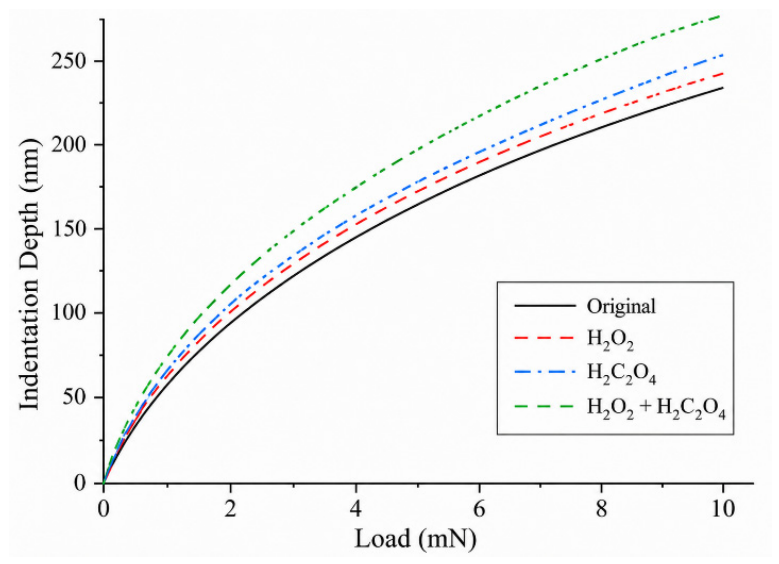
Figure 9 shows the load-indentation depth curves of samples after different chemical pretreatments. The results show that the maximum indentation depth of the sample treated with hydrogen peroxide alone is only slightly different from that of the original sample, indicating that hydrogen peroxide mainly induces a limited oxidation reaction on the very thin surface layer under the condition of lack of complexing agent participation. In theory, although local oxidation defects can be introduced, the effect on the mechanical properties of the overall surface layer reflected by the nanoindentation test is limited. The maximum indentation depth of the sample treated with oxalic acid only increased slightly, indicating that the surface hardness decreased to a certain extent. This is mainly due to the complexation and dissolution of oxalic acid on the surface metal ions, which destroyed the continuity of the original surface structure to a certain extent, and the local lattice structure was slightly loosened, thus slightly weakening the local bearing capacity. In contrast, after the synergistic treatment of hydrogen peroxide and oxalic acid, the maximum indentation depth of the sample increased significantly, and the surface hardness decreased from 7.7 GPa of the original sample to 5.4 GPa, a decrease of about 30%, indicating that the compressive deformation resistance of the surface material was significantly weakened, and the critical stress required for plastic deformation was significantly reduced.
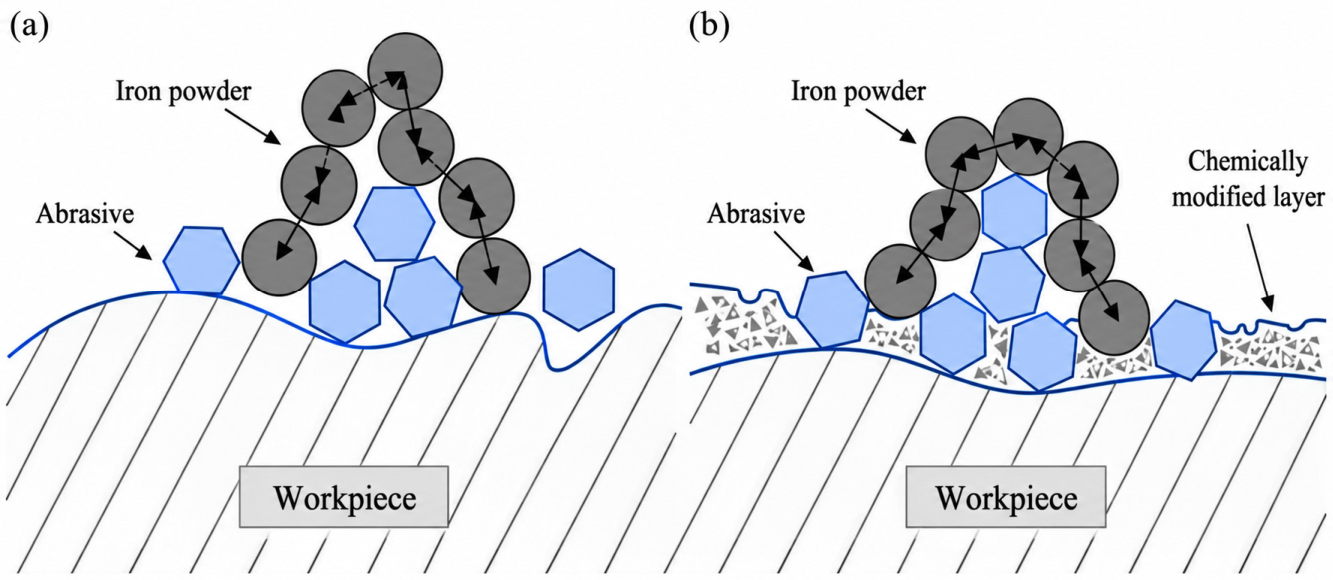
Based on the above multidimensional analysis, it can be inferred that under the synergistic effect of oxidation and complexation, the surface layer continues to undergo a dynamic renewal process of ‘oxidation formation–complexation dissolution–reoxidation formation’. The decrease in hardness reflected by nanoindentation test not only indicates that the surface oxide film is destroyed but also indicates that chemical treatment has constructed a modified reaction layer with significantly weaker mechanical properties than the matrix within the depth range of indentation. As shown in Figure 10a, for conventional magnetorheological finishing, material removal mainly depends on the flexible chain structure formed by ferromagnetic particles along the magnetic flux lines under the action of an external magnetic field. The abrasive particles move relative to the surface of the workpiece under the flux linkage constraint, and material removal is achieved by micro-cutting, ploughing and local plastic deformation. However, due to the high strength, good plasticity and toughness, and strong work-hardening characteristics of 316L stainless steel, it is difficult for abrasive particles to fully cut into the surface of the material during the action process, resulting in a limited actual cutting depth, which limits the removal efficiency of the material. At the same time, the natural dense passivation film on the surface will further improve the stability and wear resistance of the surface layer, which is not conducive to the continuous removal of the surface material by the abrasive particles. In contrast, the chemical-assisted magnetorheological finishing realizes the active control of the surface state of the workpiece by introducing chemical treatment in advance. Based on the ‘oxidation–complexation–dissolution’ cycle reaction mechanism constructed by hydrogen peroxide and oxalic acid, the surface layer of the workpiece is continuously in a dynamic oxidation and dissolution equilibrium state. After continuous action, the surface layer gradually forms a reaction layer that is oxygen-rich and has a high defect density, low crystallinity and certain pore characteristics, and its hardness, bearing capacity and plastic deformation resistance are significantly lower than the original surface. The essence of chemical-assisted magnetorheological finishing is to reduce the energy consumption and cutting difficulty in the mechanical removal process by constructing a surface reaction zone with weakened mechanical properties, and then use magnetorheological abrasives to achieve efficient removal of the reaction layer (Figure 10b). Therefore, improving the removal efficiency and surface quality of 316L stainless-steel magnetorheological finishing requires forming a low-hardness, high-defect-density reaction layer through the ‘oxidation–complexation–dissolution’ cycle.

4. Conclusions

The slender enclosed geometry and the naturally formed high-stability passivation film of 316L stainless-steel capillary tubes limit abrasive accessibility and material removal efficiency during precision finishing. This study developed a chemical-assisted magnetorheological finishing (CMRF) process for precision finishing of the inner surface of 316L stainless-steel capillary tubes. By integrating chemical pretreatment with magnetorheological finishing, both the material removal efficiency and surface quality were significantly improved. The major conclusions are summarized as follows.
Hydrogen peroxide or oxalic acid alone was insufficient to effectively modify the passive surface layer of 316L stainless steel. Hydrogen peroxide mainly promoted surface oxidation, resulting in the formation of a relatively stable oxidation coating, whereas oxalic acid primarily induced complexation and dissolution without sustaining oxidation, making it difficult to continuously disrupt the passivation film. In contrast, their combined action established a dynamic reaction cycle of ‘oxidation–complexation–dissolution–reoxidation’, in which hydrogen peroxide continuously generated surface oxides while oxalic acid removed metal ions and oxidation products through complexation. This synergistic mechanism effectively suppressed the re-formation of the dense passivation film and maintained continuous renewal of the surface reaction layer.
The coupled chemical reactions transformed the original dense passivation film into an oxygen-rich reaction layer with a high defect density, low crystallinity, and porous microstructure. The nanoindentation results show that the reaction layer reduces the surface hardness by about 30%, thereby decreasing the bearing capacity and deformation resistance of the surface material. Consequently, the material removal mechanism of the subsequent magnetorheological abrasive particles on the surface of the workpiece changed from direct cutting of the high-strength metallic substrate to preferential removal of the softened reaction layer. This transition reduced the critical energy required for abrasive penetration, increased the effective cutting depth of magnetorheological abrasives, and substantially enhanced the material removal efficiency.
Under the present conditions, the optimal chemical pretreatment consisted of 2.25 wt.% oxalic acid and 1.5 wt.% hydrogen peroxide. Compared with the conventional magnetorheological finishing, the proposed CMRF process increased the material removal rate by approximately 54%, reaching 8.67 mg/min. After 50 min of processing, the inner-surface roughness Sa of 316L stainless-steel capillary decreased from 1.3 μm to 0.116 μm, indicating that the proposed process simultaneously achieves both a high material removal efficiency and excellent surface quality. Roughness measurements taken from the front, middle, and end sections also indicated good axial uniformity of the finished inner surface under the tested conditions. Nevertheless, this study still has several limitations. First, the present experiments were conducted on 316L stainless-steel capillary tubes under specific geometric and processing conditions, and the applicability of the proposed CMRF process to other metallic materials, different tube diameters, higher aspect ratios, curved tubes, or more complex internal channels remains to be further verified. Second, although the concentrations of oxalic acid and hydrogen peroxide were optimized, the coupled effects of other key parameters, such as pretreatment time, flow velocity, magnetic field strength, abrasive characteristics, and temperature, were not fully investigated. In addition, the long-term surface stability, corrosion resistance, dimensional accuracy, chemical residue control, and scale-up feasibility of the processed capillaries require further evaluation. These issues will be addressed in future work to promote the practical application of the proposed process. The findings reveal a reaction-layer-dominated material removal mechanism in chemical-assisted magnetorheological finishing, which can provide a new theoretical basis and an effective processing approach for the efficient and precision finishing of difficult-to-machine metallic micro-capillary tubes.

Author Contributions

Conceptualization: Y.Y., Z.L., P.L. and B.G.; Methodology: Y.Y.; Investigation: Y.Y. and Z.L.; Data Curation: Y.Y. and Z.L.; Visualization: Y.Y. and Z.L.; Writing—Original Draft Preparation: Y.Y.; Writing—Review and Editing: B.G. and C.W.; Supervision: P.L., B.G. and C.W.; Project Administration: P.L., B.G. and C.W.; Funding Acquisition: B.G. and C.W. All authors have read and agreed to the published version of the manuscript.

Funding

This research received no external funding.

Institutional Review Board Statement

Not applicable.

Informed Consent Statement

Not applicable.

Data Availability Statement

The data supporting the findings of this study are available from the corresponding author upon reasonable request.

Conflicts of Interest

The authors declare no conflicts of interest.

References

  1. Zhang, W. Research status and application progress of biomedical metal materials. Metal World 2020, 21–27. Available online: https://www.scribd.com/document/1036491906 (accessed on 27 July 2026). (In Chinese)
  2. Kiani, A.; Esmailian, M.; Amirabadi, H. Abrasive flow machining: A review on new developed hybrid AFM process. Int. J. Adv. Des. Manuf. Technol. 2016, 9, 103–113. [Google Scholar]
  3. Yamaguchi, H.; Shinmura, T.; Kobayashi, A. Development of an internal magnetic abrasive finishing process for nonferromagnetic complex shaped tubes. JSME Int. J. Ser. C Mech. Syst. Mach. Elem. Manuf. 2001, 44, 275–281. [Google Scholar]
  4. Shinmura, T.; Yamaguchi, H. Study on a new internal finishing process by the application of magnetic abrasive machining: Internal finishing of stainless steel tube and clean gas bomb. JSME Int. J. Ser. C Dyn. Control Robot. Des. Manuf. 1995, 38, 798–804. [Google Scholar] [CrossRef]
  5. Wang, Y.; Hu, D. Study on the inner surface finishing of tubing by magnetic abrasive finishing. Int. J. Mach. Tools Manuf. 2005, 45, 43–49. [Google Scholar] [CrossRef]
  6. Jha, S.; Jain, V. Design and development of the magnetorheological abrasive flow finishing (MRAFF) process. Int. J. Mach. Tools Manuf. 2004, 44, 1019–1029. [Google Scholar] [CrossRef]
  7. Gomez-Gallegos, A.; Mill, F.; Mount, A. Surface finish control by electrochemical polishing in stainless steel 316 pipes. J. Manuf. Process. 2016, 23, 83–89. [Google Scholar] [CrossRef]
  8. Singh, S.; Ravi Sankar, M. Development of polymer abrasive medium for nanofinishing of microholes on surgical stainless steel using abrasive flow finishing process. Proc. Inst. Mech. Eng. Part B J. Eng. Manuf. 2020, 234, 355–370. [Google Scholar]
  9. Sharma, A.K.; Venkatesh, G.; Rajesha, S.; Kumar, P. Experimental investigations into ultrasonic-assisted abrasive flow machining (UAAFM) process. Int. J. Adv. Manuf. Technol. 2015, 80, 477–493. [Google Scholar] [CrossRef]
  10. Fu, Y.; Gao, H.; Yan, Q.; Wang, X. A new predictive method of the finished surface profile in abrasive flow finishing process. Precis. Eng. 2019, 60, 497–505. [Google Scholar] [CrossRef]
  11. Wang, L.; Wu, Y.; Zhao, J.; Lu, B. Research progresses of finishing technology for inner channel of additive manufacturing parts. China Mech. Eng. 2023, 34, 757. (In Chinese) [Google Scholar]
  12. Verma, G.C.; Kala, P.; Pandey, P.M. Experimental investigations into internal magnetic abrasive finishing of pipes. Int. J. Adv. Manuf. Technol. 2017, 88, 1657–1668. [Google Scholar]
  13. Zhang, J.; Wang, H.; Kumar, A.S.; Jin, M. Experimental and theoretical study of internal finishing by a novel magnetically driven polishing tool. Int. J. Mach. Tools Manuf. 2020, 153, 103552. [Google Scholar] [CrossRef]
  14. Yamaguchi, H.; Shinmura, T.; Sekine, M. Uniform internal finishing of SUS304 stainless steel bent tube using a magnetic abrasive finishing process. J. Manuf. Sci. Eng. 2005, 127, 605–611. [Google Scholar]
  15. Hong, S.-W.; Yoon, J.-Y.; Kim, S.-H.; Lee, S.-K.; Kim, Y.-R.; Park, Y.-J.; Kim, G.-W.; Choi, S.-B. 3D-printed soft structure of polyurethane and magnetorheological fluid: A proof-of-concept investigation of its stiffness tunability. Micromachines 2019, 10, 655. [Google Scholar] [PubMed]
  16. Grover, V.; Singh, A.K. Modelling of surface roughness in a new magnetorheological honing process for internal finishing of cylindrical workpieces. Int. J. Mech. Sci. 2018, 144, 679–695. [Google Scholar]
  17. Sidpara, A.; Jain, V. Nano–level finishing of single crystal silicon blank using magnetorheological finishing process. Tribol. Int. 2012, 47, 159–166. [Google Scholar]
  18. Li, J.; Fan, Z.; Gao, J.; Yang, Z.; Tian, Y. Multi-pole magnetorheological shear thickening polishing on inner surface of aluminum alloy slender tubes. J. Mater. Res. Technol. 2023, 27, 8258–8270. [Google Scholar]
  19. Luo, Z.; Jin, Z.; Guo, B. Research on rotary magnetorheological polishing technology for inner wall of capillary tube with large aspect ratio. Diam. Abras. Tool Eng. 2025. Available online: https://www.researchgate.net/publication/393264898_ (accessed on 27 July 2026).
  20. Chen, H.-Y.; Lin, W.; Feng, P.; Meng-meng, S.; Hang, W.; Beri, T.H.; Zhang, H.-B.; Zhao, J.; Han, Y.-X.; Lü, B.-H. Efficient chemical mechanical polishing of W promoted by Fenton-like reaction between Cu2+ and H2O2. Trans. Nonferr. Met. Soc. China 2025, 35, 257–270. [Google Scholar] [CrossRef]
  21. Xie, W.; Zhang, Z.; Liao, L.; Liu, J.; Su, H.; Wang, S.; Guo, D. Green chemical mechanical polishing of sapphire wafers using a novel slurry. Nanoscale 2020, 12, 22518–22526. [Google Scholar] [CrossRef] [PubMed]
  22. Zhang, Z.; Cui, J.; Zhang, J.; Liu, D.; Yu, Z.; Guo, D. Environment friendly chemical mechanical polishing of copper. Appl. Surf. Sci. 2019, 467–468, 5–11. [Google Scholar] [CrossRef]
  23. Tien, D.H.; Trinh, N.D. Novel hybrid chemical magnetorheological fluid for polishing Ti–6Al–4V alloy. Mater. Manuf. Process. 2024, 39, 1798–1815. [Google Scholar] [CrossRef]
  24. Ghai, V.; Ranjan, P.; Batish, A.; Singh, H. Atomic-level finishing of aluminum alloy by chemo-mechanical magneto-rheological finishing (CMMRF) for optical applications. J. Manuf. Process. 2018, 32, 635–643. [Google Scholar] [CrossRef]
  25. Zhou, Z.; Sun, X.; Yang, Y.; Fu, Y. A Study on Using Magnetic Abrasive Finishing with a 6-Axis Robot to Polish the Internal Surface Finishing of Curved Tubes. Coatings 2023, 13, 1179. [Google Scholar] [CrossRef]
  26. Wang, L.; Sun, Y.; Xiao, Z.; Yang, F.; Kang, S.; Liu, Y.; Zuo, D. A Review of Magnetic Abrasive Finishing for the Internal Surfaces of Metal Additive Manufactured Parts. J. Manuf. Mater. Process. 2024, 8, 261. [Google Scholar] [CrossRef]
  27. Song, W.; Yang, Z.; Meng, D.; Wang, N.; Choi, S.-B. Magnetorheological Polishing Based on Honing Vertical Mechanism for Inner Surface of Titanium Alloy Pipes. Lubricants 2024, 12, 86. [Google Scholar] [CrossRef]
  28. Jin, Z.; Guo, B.; Gao, S.; Wu, C.; Luo, Z.; Luo, K.; Liu, H. Rotational magnetorheological finishing of the interior surface of a small 316L stainless steel tube. J. Mater. Res. Technol. 2025, 36, 777–788. [Google Scholar] [CrossRef]
  29. Jiang, L.; He, Y.; Yang, Y.; Luo, J. Chemical mechanical polishing of stainless steel as solar cell substrate. ECS J. Solid State Sci. Technol. 2015, 4, P162–P170. [Google Scholar] [CrossRef]
  30. Beverskog, B.; Puigdomenech, I. Revised Pourbaix diagrams for nickel at 25–300 °C. Corros. Sci. 1997, 39, 969–980. [Google Scholar] [CrossRef]
  31. De Laat, J.; Le, T.G. Effects of chloride ions on the iron (III)-catalyzed decomposition of hydrogen peroxide and on the efficiency of the Fenton-like oxidation process. Appl. Catal. B Environ. 2006, 66, 137–146. [Google Scholar] [CrossRef]
  32. Du, C.; Li, X.; Liang, P.; Liu, Z.; Jia, G.; Cheng, Y. Effects of microstructure on corrosion of X70 pipe steel in an alkaline soil. J. Mater. Eng. Perform. 2009, 18, 216–220. [Google Scholar] [CrossRef]
  33. ISO 25178-2:2021; Geometrical Product Specifications (GPS)—Surface Texture: Areal—Part 2: Terms, Definitions and Surface Texture Parameters. International Organization for Standardization: Geneva, Switzerland, 2021.
  34. Yue, Y.; Liu, C.; Shi, P.; Jiang, M. Passivity of stainless steel in sulphuric acid under chemical oxidation. Corros. Eng. Sci. Technol. 2018, 53, 173–182. [Google Scholar] [CrossRef]
  35. Gao, X.; Wu, X.; Zhang, Z.; Guan, H.; Han, E.-H. Characterization of oxide films grown on 316L stainless steel exposed to H2O2-containing supercritical water. J. Supercrit. Fluids 2007, 42, 157–163. [Google Scholar] [CrossRef]
  36. Wang, Z.; Paschalidou, E.-M.; Seyeux, A.; Zanna, S.; Maurice, V.; Marcus, P. Mechanisms of Cr and Mo enrichments in the passive oxide film on 316L austenitic stainless steel. Front. Mater. 2019, 6, 232. [Google Scholar] [CrossRef]
  37. Xu, L.; Wang, J. A heterogeneous Fenton-like system with nanoparticulate zero-valent iron for removal of 4-chloro-3-methyl phenol. J. Hazard. Mater. 2011, 186, 256–264. [Google Scholar] [CrossRef] [PubMed]
Figure 1. Magnetorheological finishing of the capillary inner surface: (a) schematic diagram; (b) self-developed experimental setup. 1—abrasive cylinder; 2—multipole rotating magnetic field; 3—magnetic-field reciprocating device; 4—polishing liquid inlet; 5—metal ferrule; 6—workpiece.
Jmmp 10 00284 g001
Figure 2. Effects of single chemical components on finishing performance: (a) H2O2 alone; (b) H2C2O4 alone.
Jmmp 10 00284 g002
Figure 3. Effects of chemical composition in the hydrogen peroxide–oxalic acid composite system on finishing performance: (a) surface roughness Sa; (b) material removal rate.
Jmmp 10 00284 g003
Figure 4. Comparison of capillary inner-surface morphology before and after finishing: (a,e) before finishing; (b) finished after 1.5 wt.% H2O2 pretreatment; (c) finished after 2.25 wt.% H2C2O4 pretreatment; (d,f) finished after composite-system pretreatment.
Jmmp 10 00284 g004
Figure 5. Microscopic surface morphologies of the samples: (a) original untreated sample; (b) H2O2 pretreatment alone; (c) oxalic acid pretreatment alone; (d) composite-system pretreatment.
Jmmp 10 00284 g005
Figure 6. Comparative EDS analysis of 316L stainless-steel surfaces after different chemical pretreatments: (a) overlaid EDS spectra of all measured conditions; (b) surface oxygen atomic percentages.
Jmmp 10 00284 g006
Figure 7. XPS analysis results. (a) original untreated; (b) H2O2 pretreatment alone; (c) oxalic acid pretreatment alone; (d) composite system pretreatment.
Jmmp 10 00284 g007
Figure 8. Raman analysis results: (a) original untreated sample; (b) H2O2 pretreatment alone; (c) oxalic acid pretreatment alone; (d) composite-system pretreatment.
Jmmp 10 00284 g008
Figure 9. Load-indentation depth curves of samples under different treatment groups.
Jmmp 10 00284 g009
Figure 10. Comparison of material removal mechanisms: (a) conventional magnetorheological finishing; (b) chemical-assisted magnetorheological finishing.
Jmmp 10 00284 g010
Table 1. Process parameters.
Processing StageParameterValueParameterValue
H2O2 (wt.%)0, 0.75, 1.5, 2.25Treatment time (min)10
Chemical PretreatmentH2C2O4 (wt.%)0, 0.75, 1.5, 2.25Temperature (°C)25
Flow rate (m/s)2
Abrasive particles (wt.%)29Magnetic field strength (T)0.1
Iron powder (wt.%)9.9Magnetic field rotation speed (r/min)30
Magnetorheological FinishingCellulose (wt.%)1.1Magnetic field reciprocating speed (mm/s)4
Particle size (μm)150Piston stroke length (mm)20
Processing time (min)50Piston reciprocating speed (mm/s)15
Disclaimer/Publisher’s Note: The statements, opinions and data contained in all publications are solely those of the individual author(s) and contributor(s) and not of MDPI and/or the editor(s). MDPI and/or the editor(s) disclaim responsibility for any injury to people or property resulting from any ideas, methods, instructions or products referred to in the content.