
Surface Reaction Layer Evolution and Material Removal Mechanism in Chemical-Assisted Magnetorheological Finishing of 316L Stainless Steel Capillaries



Abstract
1. Introduction
2. Materials and Methods
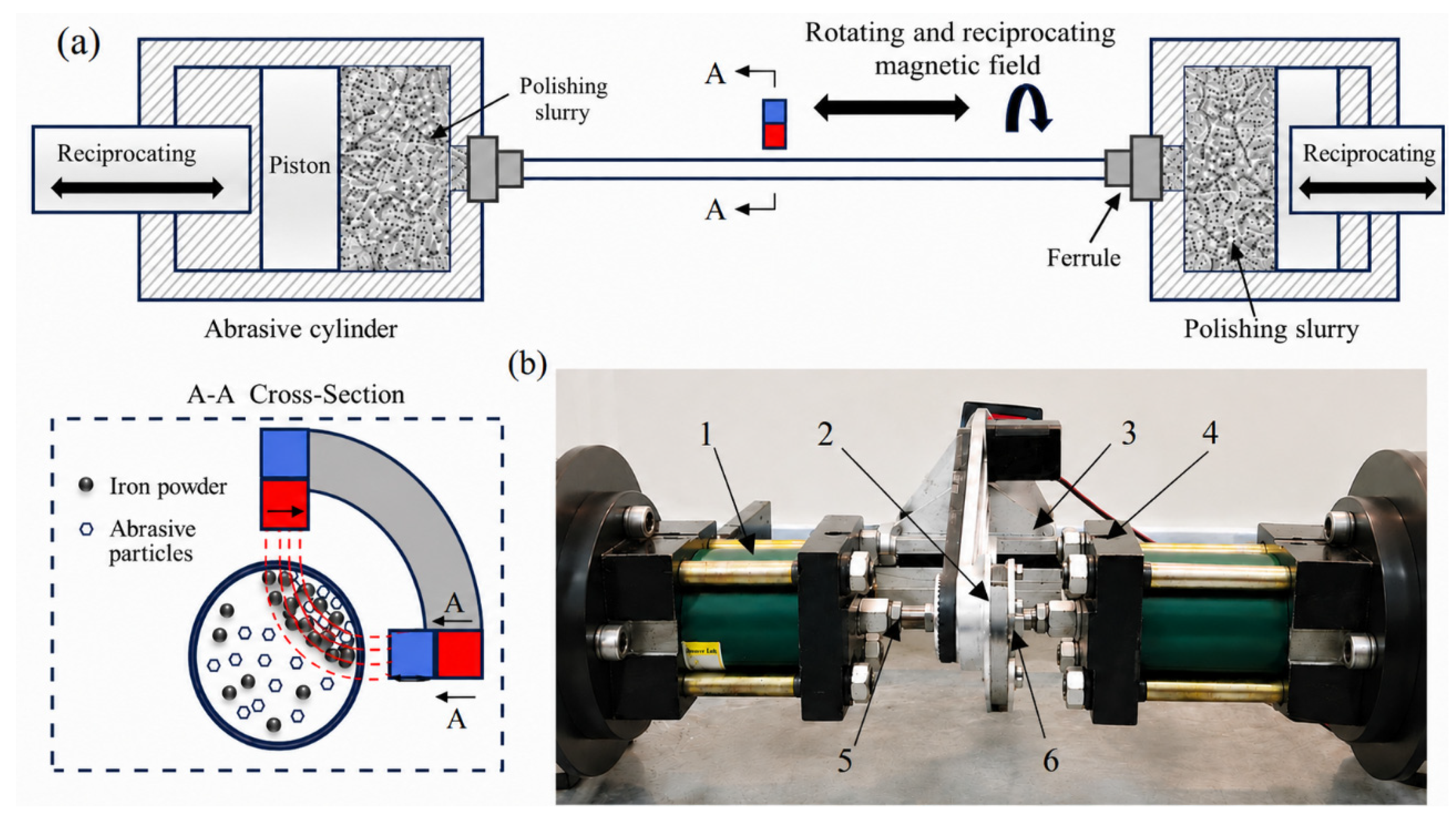
2.1. Experimental Principle and Setup
2.2. Experimental Design
2.3. Characterization, Surface Roughness, and Material Removal Rate Evaluation
3. Results and Discussion
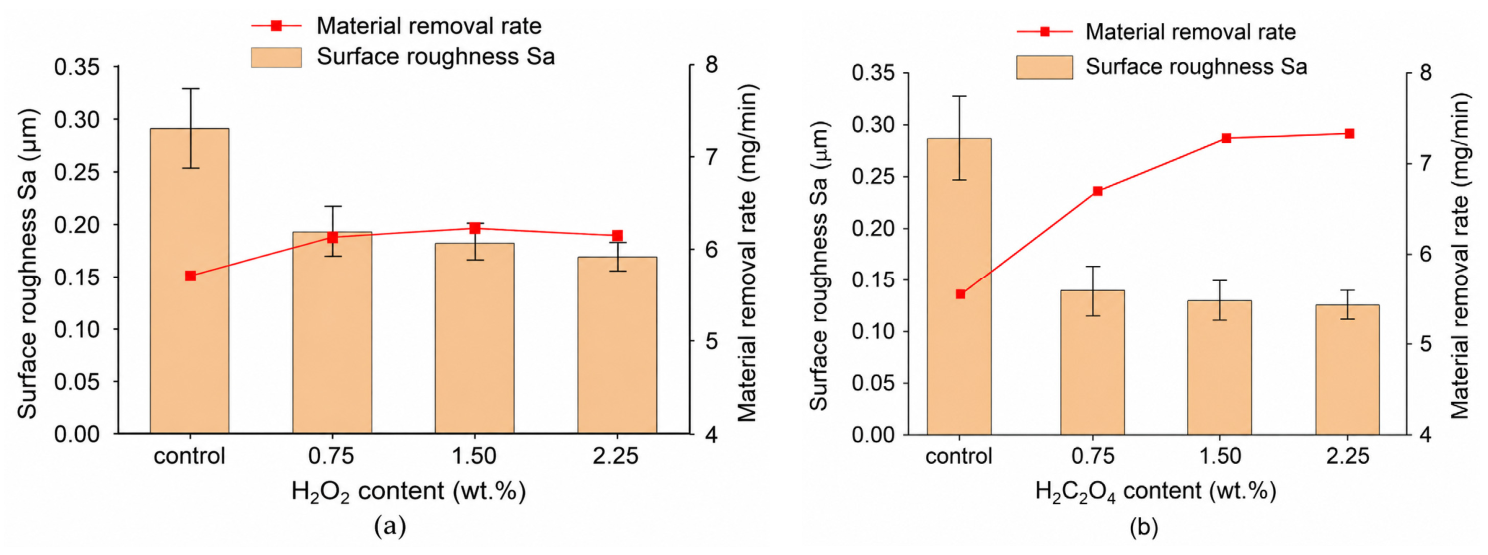
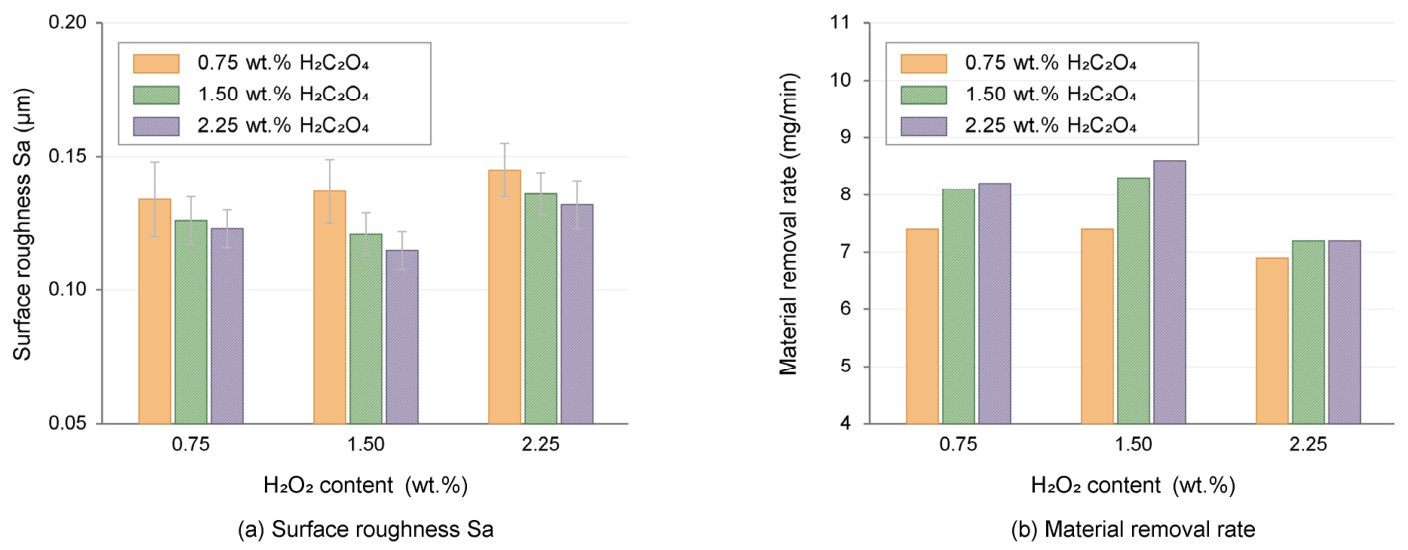
3.1. Effect of Chemical Pretreatment on the Polishing Performance of Capillary Inner Walls
3.2. Material Removal Mechanism of Chemical-Assisted Magnetorheological Finishing
3.2.1. Surface Morphology and Composition Analysis After Chemical Treatment
3.2.2. Surface Mechanical Property Response of Chemical-Assisted Magnetorheological Finishing
4. Conclusions
- •
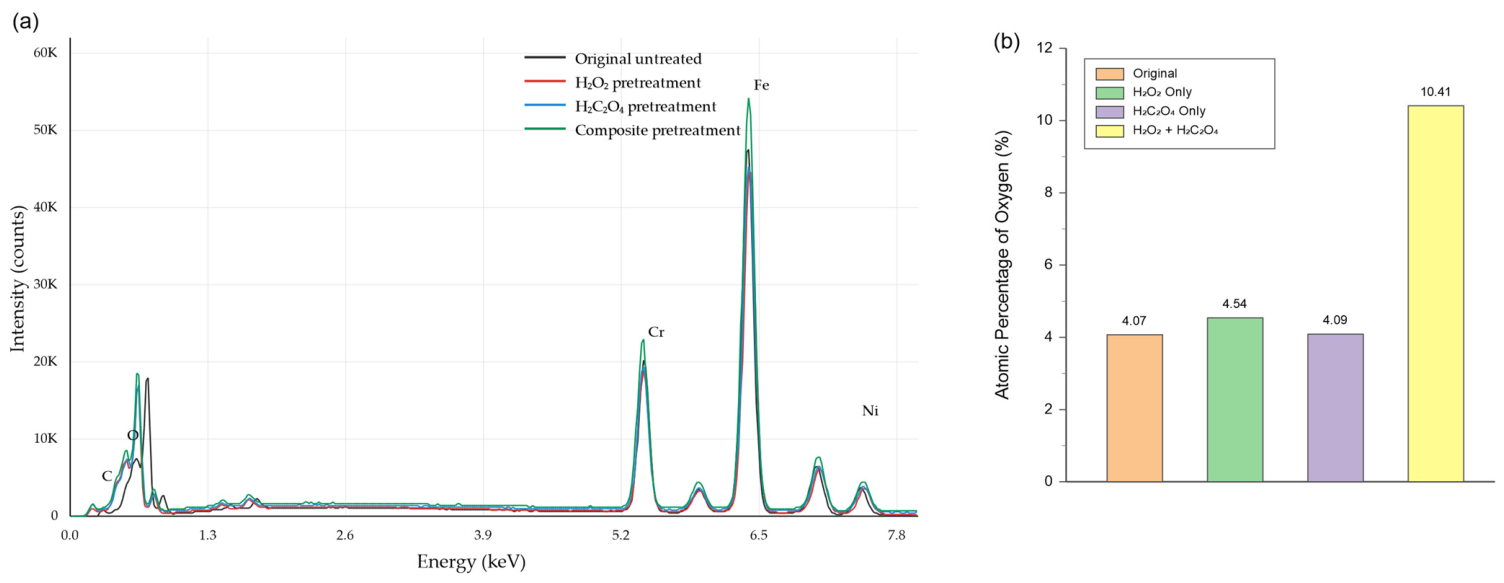
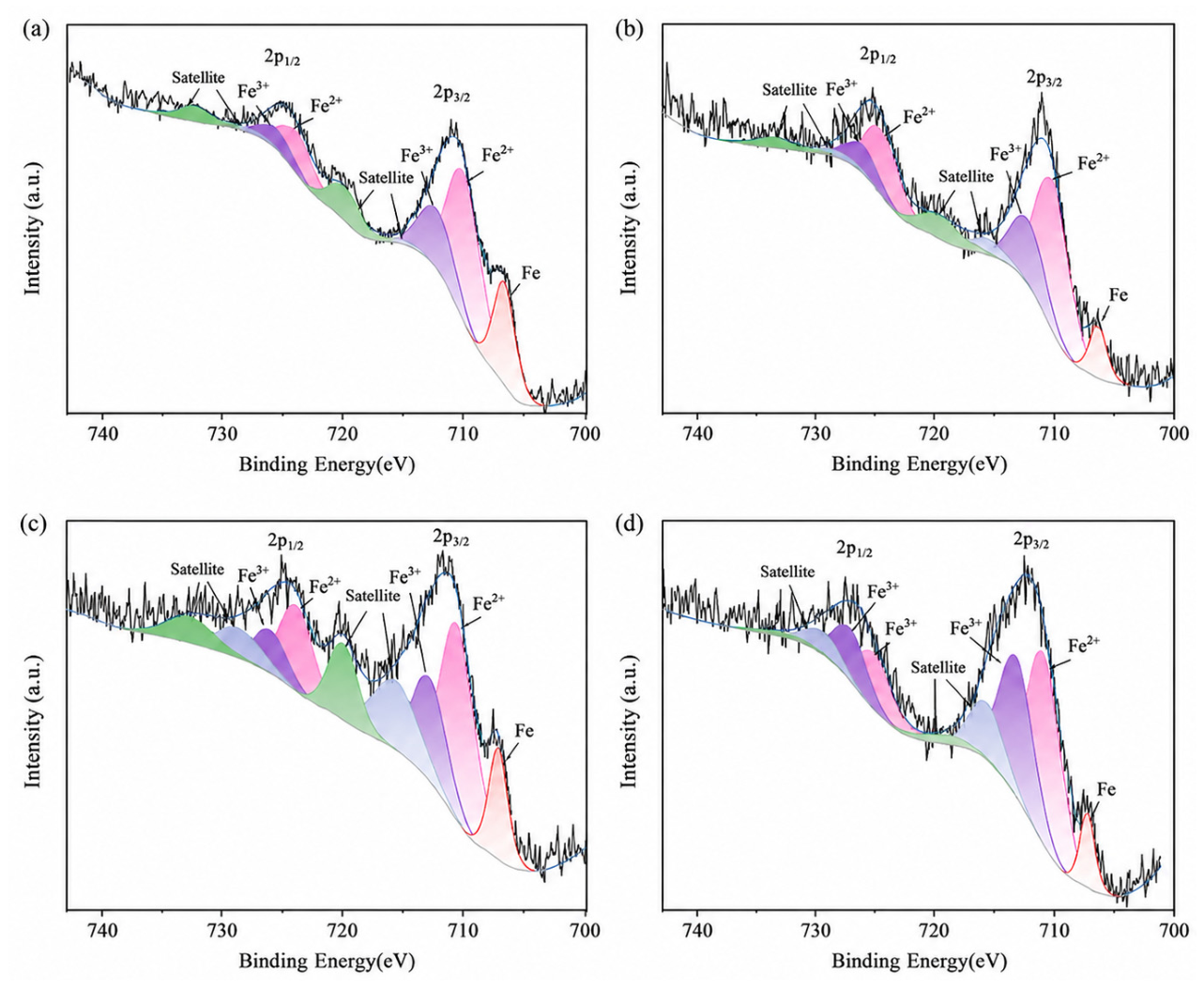
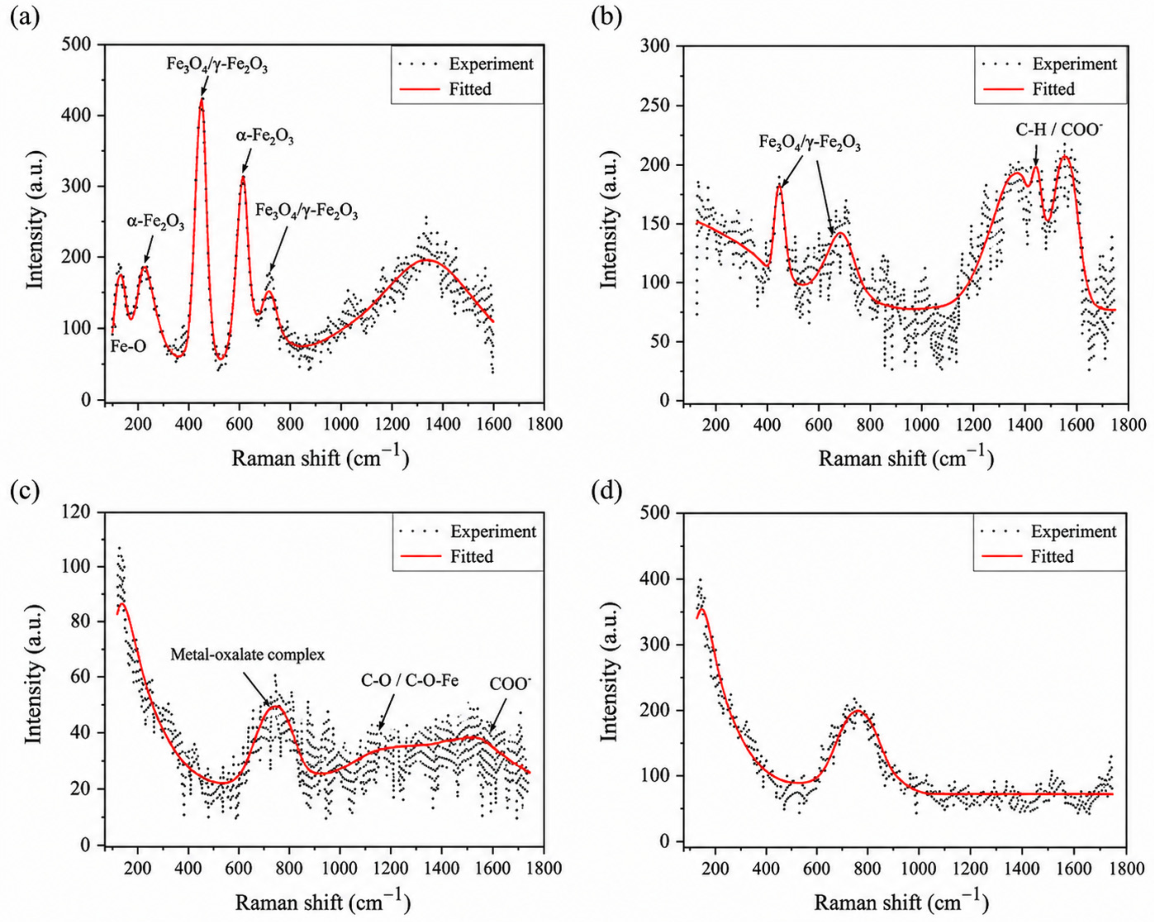
- Hydrogen peroxide or oxalic acid alone was insufficient to effectively modify the passive surface layer of 316L stainless steel. Hydrogen peroxide mainly promoted surface oxidation, resulting in the formation of a relatively stable oxidation coating, whereas oxalic acid primarily induced complexation and dissolution without sustaining oxidation, making it difficult to continuously disrupt the passivation film. In contrast, their combined action established a dynamic reaction cycle of ‘oxidation–complexation–dissolution–reoxidation’, in which hydrogen peroxide continuously generated surface oxides while oxalic acid removed metal ions and oxidation products through complexation. This synergistic mechanism effectively suppressed the re-formation of the dense passivation film and maintained continuous renewal of the surface reaction layer.
- •
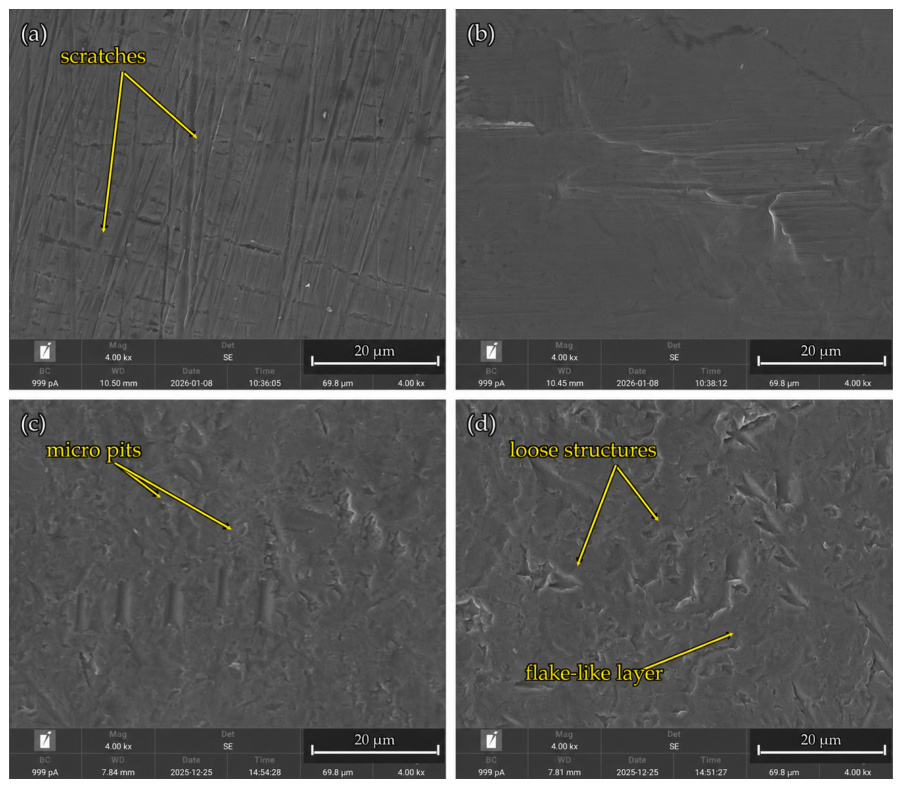
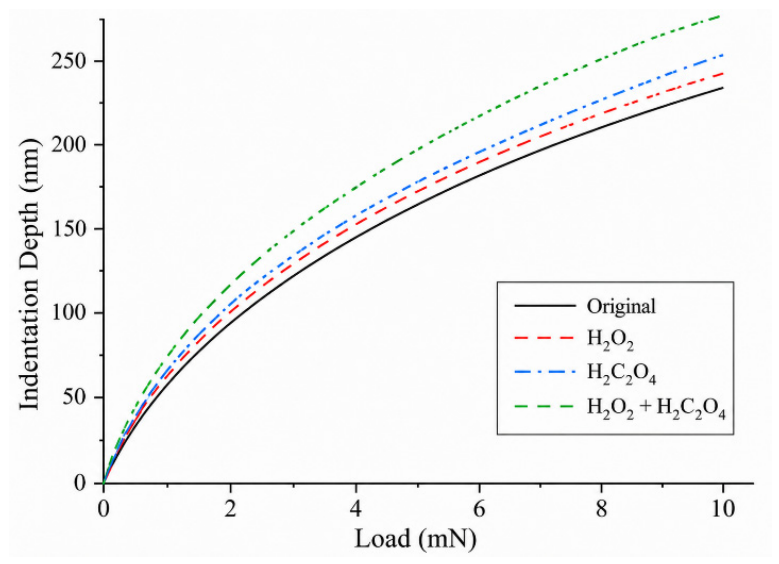
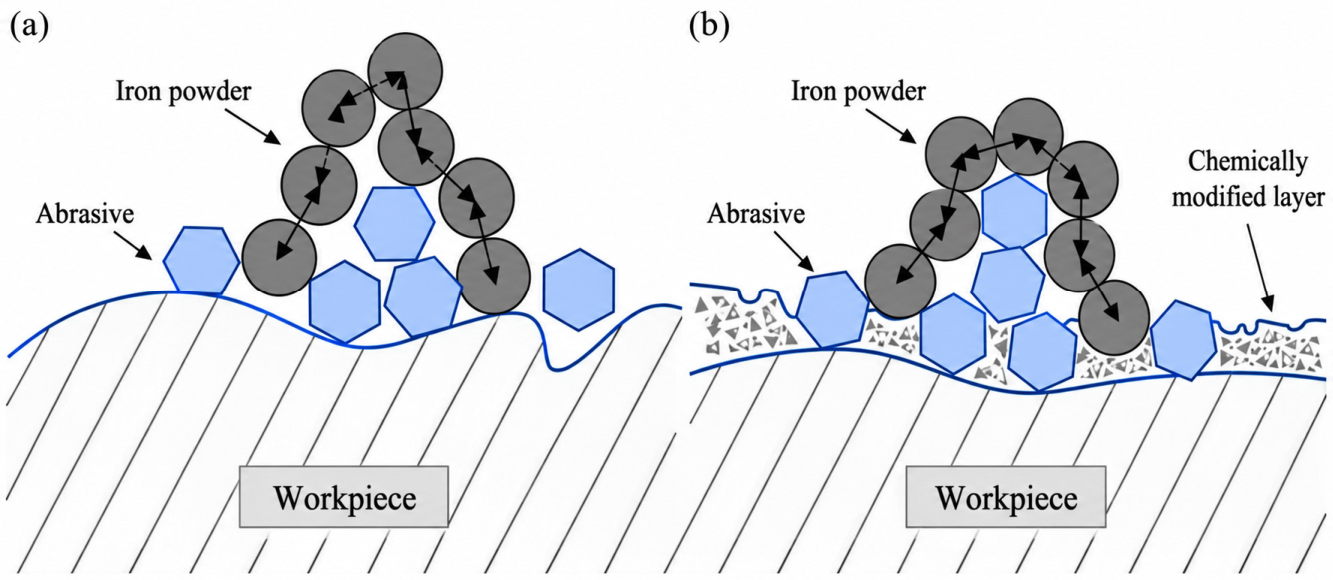
- The coupled chemical reactions transformed the original dense passivation film into an oxygen-rich reaction layer with a high defect density, low crystallinity, and porous microstructure. The nanoindentation results show that the reaction layer reduces the surface hardness by about 30%, thereby decreasing the bearing capacity and deformation resistance of the surface material. Consequently, the material removal mechanism of the subsequent magnetorheological abrasive particles on the surface of the workpiece changed from direct cutting of the high-strength metallic substrate to preferential removal of the softened reaction layer. This transition reduced the critical energy required for abrasive penetration, increased the effective cutting depth of magnetorheological abrasives, and substantially enhanced the material removal efficiency.
- •
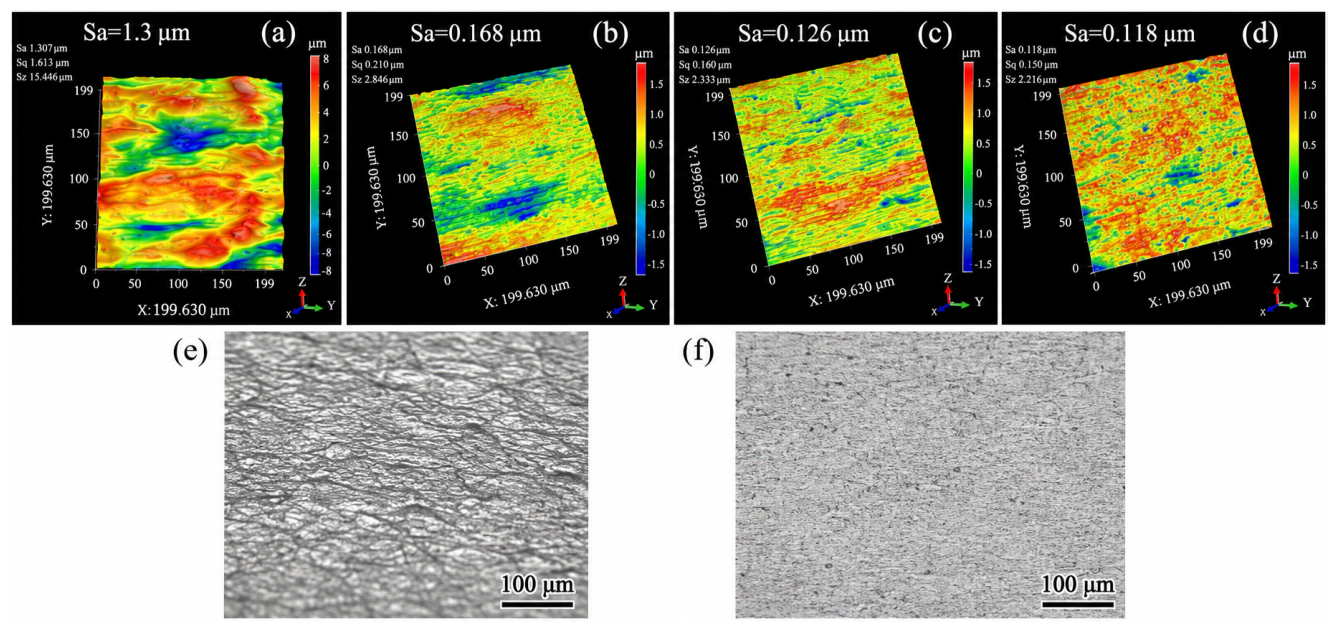
- Under the present conditions, the optimal chemical pretreatment consisted of 2.25 wt.% oxalic acid and 1.5 wt.% hydrogen peroxide. Compared with the conventional magnetorheological finishing, the proposed CMRF process increased the material removal rate by approximately 54%, reaching 8.67 mg/min. After 50 min of processing, the inner-surface roughness Sa of 316L stainless-steel capillary decreased from 1.3 μm to 0.116 μm, indicating that the proposed process simultaneously achieves both a high material removal efficiency and excellent surface quality. Roughness measurements taken from the front, middle, and end sections also indicated good axial uniformity of the finished inner surface under the tested conditions. Nevertheless, this study still has several limitations. First, the present experiments were conducted on 316L stainless-steel capillary tubes under specific geometric and processing conditions, and the applicability of the proposed CMRF process to other metallic materials, different tube diameters, higher aspect ratios, curved tubes, or more complex internal channels remains to be further verified. Second, although the concentrations of oxalic acid and hydrogen peroxide were optimized, the coupled effects of other key parameters, such as pretreatment time, flow velocity, magnetic field strength, abrasive characteristics, and temperature, were not fully investigated. In addition, the long-term surface stability, corrosion resistance, dimensional accuracy, chemical residue control, and scale-up feasibility of the processed capillaries require further evaluation. These issues will be addressed in future work to promote the practical application of the proposed process. The findings reveal a reaction-layer-dominated material removal mechanism in chemical-assisted magnetorheological finishing, which can provide a new theoretical basis and an effective processing approach for the efficient and precision finishing of difficult-to-machine metallic micro-capillary tubes.
Author Contributions
Funding
Institutional Review Board Statement
Informed Consent Statement
Data Availability Statement
Conflicts of Interest
References
- Zhang, W. Research status and application progress of biomedical metal materials. Metal World 2020, 21–27. Available online: https://www.scribd.com/document/1036491906 (accessed on 27 July 2026). (In Chinese)
- Kiani, A.; Esmailian, M.; Amirabadi, H. Abrasive flow machining: A review on new developed hybrid AFM process. Int. J. Adv. Des. Manuf. Technol. 2016, 9, 103–113. [Google Scholar]
- Yamaguchi, H.; Shinmura, T.; Kobayashi, A. Development of an internal magnetic abrasive finishing process for nonferromagnetic complex shaped tubes. JSME Int. J. Ser. C Mech. Syst. Mach. Elem. Manuf. 2001, 44, 275–281. [Google Scholar]
- Shinmura, T.; Yamaguchi, H. Study on a new internal finishing process by the application of magnetic abrasive machining: Internal finishing of stainless steel tube and clean gas bomb. JSME Int. J. Ser. C Dyn. Control Robot. Des. Manuf. 1995, 38, 798–804. [Google Scholar] [CrossRef]
- Wang, Y.; Hu, D. Study on the inner surface finishing of tubing by magnetic abrasive finishing. Int. J. Mach. Tools Manuf. 2005, 45, 43–49. [Google Scholar] [CrossRef]
- Jha, S.; Jain, V. Design and development of the magnetorheological abrasive flow finishing (MRAFF) process. Int. J. Mach. Tools Manuf. 2004, 44, 1019–1029. [Google Scholar] [CrossRef]
- Gomez-Gallegos, A.; Mill, F.; Mount, A. Surface finish control by electrochemical polishing in stainless steel 316 pipes. J. Manuf. Process. 2016, 23, 83–89. [Google Scholar] [CrossRef]
- Singh, S.; Ravi Sankar, M. Development of polymer abrasive medium for nanofinishing of microholes on surgical stainless steel using abrasive flow finishing process. Proc. Inst. Mech. Eng. Part B J. Eng. Manuf. 2020, 234, 355–370. [Google Scholar]
- Sharma, A.K.; Venkatesh, G.; Rajesha, S.; Kumar, P. Experimental investigations into ultrasonic-assisted abrasive flow machining (UAAFM) process. Int. J. Adv. Manuf. Technol. 2015, 80, 477–493. [Google Scholar] [CrossRef]
- Fu, Y.; Gao, H.; Yan, Q.; Wang, X. A new predictive method of the finished surface profile in abrasive flow finishing process. Precis. Eng. 2019, 60, 497–505. [Google Scholar] [CrossRef]
- Wang, L.; Wu, Y.; Zhao, J.; Lu, B. Research progresses of finishing technology for inner channel of additive manufacturing parts. China Mech. Eng. 2023, 34, 757. (In Chinese) [Google Scholar]
- Verma, G.C.; Kala, P.; Pandey, P.M. Experimental investigations into internal magnetic abrasive finishing of pipes. Int. J. Adv. Manuf. Technol. 2017, 88, 1657–1668. [Google Scholar]
- Zhang, J.; Wang, H.; Kumar, A.S.; Jin, M. Experimental and theoretical study of internal finishing by a novel magnetically driven polishing tool. Int. J. Mach. Tools Manuf. 2020, 153, 103552. [Google Scholar] [CrossRef]
- Yamaguchi, H.; Shinmura, T.; Sekine, M. Uniform internal finishing of SUS304 stainless steel bent tube using a magnetic abrasive finishing process. J. Manuf. Sci. Eng. 2005, 127, 605–611. [Google Scholar]
- Hong, S.-W.; Yoon, J.-Y.; Kim, S.-H.; Lee, S.-K.; Kim, Y.-R.; Park, Y.-J.; Kim, G.-W.; Choi, S.-B. 3D-printed soft structure of polyurethane and magnetorheological fluid: A proof-of-concept investigation of its stiffness tunability. Micromachines 2019, 10, 655. [Google Scholar] [PubMed]
- Grover, V.; Singh, A.K. Modelling of surface roughness in a new magnetorheological honing process for internal finishing of cylindrical workpieces. Int. J. Mech. Sci. 2018, 144, 679–695. [Google Scholar]
- Sidpara, A.; Jain, V. Nano–level finishing of single crystal silicon blank using magnetorheological finishing process. Tribol. Int. 2012, 47, 159–166. [Google Scholar]
- Li, J.; Fan, Z.; Gao, J.; Yang, Z.; Tian, Y. Multi-pole magnetorheological shear thickening polishing on inner surface of aluminum alloy slender tubes. J. Mater. Res. Technol. 2023, 27, 8258–8270. [Google Scholar]
- Luo, Z.; Jin, Z.; Guo, B. Research on rotary magnetorheological polishing technology for inner wall of capillary tube with large aspect ratio. Diam. Abras. Tool Eng. 2025. Available online: https://www.researchgate.net/publication/393264898_ (accessed on 27 July 2026).
- Chen, H.-Y.; Lin, W.; Feng, P.; Meng-meng, S.; Hang, W.; Beri, T.H.; Zhang, H.-B.; Zhao, J.; Han, Y.-X.; Lü, B.-H. Efficient chemical mechanical polishing of W promoted by Fenton-like reaction between Cu2+ and H2O2. Trans. Nonferr. Met. Soc. China 2025, 35, 257–270. [Google Scholar] [CrossRef]
- Xie, W.; Zhang, Z.; Liao, L.; Liu, J.; Su, H.; Wang, S.; Guo, D. Green chemical mechanical polishing of sapphire wafers using a novel slurry. Nanoscale 2020, 12, 22518–22526. [Google Scholar] [CrossRef] [PubMed]
- Zhang, Z.; Cui, J.; Zhang, J.; Liu, D.; Yu, Z.; Guo, D. Environment friendly chemical mechanical polishing of copper. Appl. Surf. Sci. 2019, 467–468, 5–11. [Google Scholar] [CrossRef]
- Tien, D.H.; Trinh, N.D. Novel hybrid chemical magnetorheological fluid for polishing Ti–6Al–4V alloy. Mater. Manuf. Process. 2024, 39, 1798–1815. [Google Scholar] [CrossRef]
- Ghai, V.; Ranjan, P.; Batish, A.; Singh, H. Atomic-level finishing of aluminum alloy by chemo-mechanical magneto-rheological finishing (CMMRF) for optical applications. J. Manuf. Process. 2018, 32, 635–643. [Google Scholar] [CrossRef]
- Zhou, Z.; Sun, X.; Yang, Y.; Fu, Y. A Study on Using Magnetic Abrasive Finishing with a 6-Axis Robot to Polish the Internal Surface Finishing of Curved Tubes. Coatings 2023, 13, 1179. [Google Scholar] [CrossRef]
- Wang, L.; Sun, Y.; Xiao, Z.; Yang, F.; Kang, S.; Liu, Y.; Zuo, D. A Review of Magnetic Abrasive Finishing for the Internal Surfaces of Metal Additive Manufactured Parts. J. Manuf. Mater. Process. 2024, 8, 261. [Google Scholar] [CrossRef]
- Song, W.; Yang, Z.; Meng, D.; Wang, N.; Choi, S.-B. Magnetorheological Polishing Based on Honing Vertical Mechanism for Inner Surface of Titanium Alloy Pipes. Lubricants 2024, 12, 86. [Google Scholar] [CrossRef]
- Jin, Z.; Guo, B.; Gao, S.; Wu, C.; Luo, Z.; Luo, K.; Liu, H. Rotational magnetorheological finishing of the interior surface of a small 316L stainless steel tube. J. Mater. Res. Technol. 2025, 36, 777–788. [Google Scholar] [CrossRef]
- Jiang, L.; He, Y.; Yang, Y.; Luo, J. Chemical mechanical polishing of stainless steel as solar cell substrate. ECS J. Solid State Sci. Technol. 2015, 4, P162–P170. [Google Scholar] [CrossRef]
- Beverskog, B.; Puigdomenech, I. Revised Pourbaix diagrams for nickel at 25–300 °C. Corros. Sci. 1997, 39, 969–980. [Google Scholar] [CrossRef]
- De Laat, J.; Le, T.G. Effects of chloride ions on the iron (III)-catalyzed decomposition of hydrogen peroxide and on the efficiency of the Fenton-like oxidation process. Appl. Catal. B Environ. 2006, 66, 137–146. [Google Scholar] [CrossRef]
- Du, C.; Li, X.; Liang, P.; Liu, Z.; Jia, G.; Cheng, Y. Effects of microstructure on corrosion of X70 pipe steel in an alkaline soil. J. Mater. Eng. Perform. 2009, 18, 216–220. [Google Scholar] [CrossRef]
- ISO 25178-2:2021; Geometrical Product Specifications (GPS)—Surface Texture: Areal—Part 2: Terms, Definitions and Surface Texture Parameters. International Organization for Standardization: Geneva, Switzerland, 2021.
- Yue, Y.; Liu, C.; Shi, P.; Jiang, M. Passivity of stainless steel in sulphuric acid under chemical oxidation. Corros. Eng. Sci. Technol. 2018, 53, 173–182. [Google Scholar] [CrossRef]
- Gao, X.; Wu, X.; Zhang, Z.; Guan, H.; Han, E.-H. Characterization of oxide films grown on 316L stainless steel exposed to H2O2-containing supercritical water. J. Supercrit. Fluids 2007, 42, 157–163. [Google Scholar] [CrossRef]
- Wang, Z.; Paschalidou, E.-M.; Seyeux, A.; Zanna, S.; Maurice, V.; Marcus, P. Mechanisms of Cr and Mo enrichments in the passive oxide film on 316L austenitic stainless steel. Front. Mater. 2019, 6, 232. [Google Scholar] [CrossRef]
- Xu, L.; Wang, J. A heterogeneous Fenton-like system with nanoparticulate zero-valent iron for removal of 4-chloro-3-methyl phenol. J. Hazard. Mater. 2011, 186, 256–264. [Google Scholar] [CrossRef] [PubMed]



| Processing Stage | Parameter | Value | Parameter | Value |
|---|---|---|---|---|
| H2O2 (wt.%) | 0, 0.75, 1.5, 2.25 | Treatment time (min) | 10 | |
| Chemical Pretreatment | H2C2O4 (wt.%) | 0, 0.75, 1.5, 2.25 | Temperature (°C) | 25 |
| Flow rate (m/s) | 2 | |||
| Abrasive particles (wt.%) | 29 | Magnetic field strength (T) | 0.1 | |
| Iron powder (wt.%) | 9.9 | Magnetic field rotation speed (r/min) | 30 | |
| Magnetorheological Finishing | Cellulose (wt.%) | 1.1 | Magnetic field reciprocating speed (mm/s) | 4 |
| Particle size (μm) | 150 | Piston stroke length (mm) | 20 | |
| Processing time (min) | 50 | Piston reciprocating speed (mm/s) | 15 |
Disclaimer/Publisher’s Note: The statements, opinions and data contained in all publications are solely those of the individual author(s) and contributor(s) and not of MDPI and/or the editor(s). MDPI and/or the editor(s) disclaim responsibility for any injury to people or property resulting from any ideas, methods, instructions or products referred to in the content. |
© 2026 by the authors. Licensee MDPI, Basel, Switzerland. This article is an open access article distributed under the terms and conditions of the Creative Commons Attribution (CC BY) license.
Share and Cite
Yang, Y.; Luo, Z.; Lushchyk, P.; Guo, B.; Wu, C. Surface Reaction Layer Evolution and Material Removal Mechanism in Chemical-Assisted Magnetorheological Finishing of 316L Stainless Steel Capillaries. J. Manuf. Mater. Process. 2026, 10, 284. https://doi.org/10.3390/jmmp10080284
Yang Y, Luo Z, Lushchyk P, Guo B, Wu C. Surface Reaction Layer Evolution and Material Removal Mechanism in Chemical-Assisted Magnetorheological Finishing of 316L Stainless Steel Capillaries. Journal of Manufacturing and Materials Processing. 2026; 10(8):284. https://doi.org/10.3390/jmmp10080284
Chicago/Turabian StyleYang, Yefeng, Zhaoyang Luo, Pavel Lushchyk, Bing Guo, and Chunya Wu. 2026. "Surface Reaction Layer Evolution and Material Removal Mechanism in Chemical-Assisted Magnetorheological Finishing of 316L Stainless Steel Capillaries" Journal of Manufacturing and Materials Processing 10, no. 8: 284. https://doi.org/10.3390/jmmp10080284
APA StyleYang, Y., Luo, Z., Lushchyk, P., Guo, B., & Wu, C. (2026). Surface Reaction Layer Evolution and Material Removal Mechanism in Chemical-Assisted Magnetorheological Finishing of 316L Stainless Steel Capillaries. Journal of Manufacturing and Materials Processing, 10(8), 284. https://doi.org/10.3390/jmmp10080284