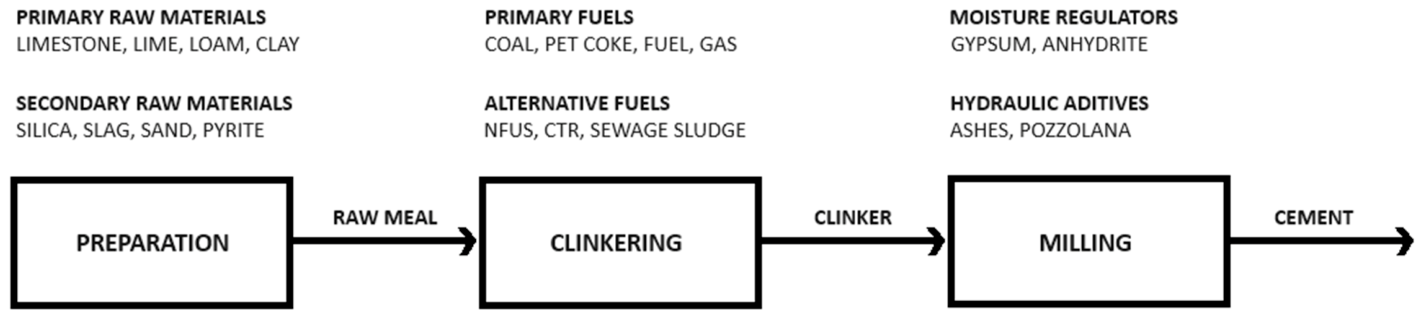
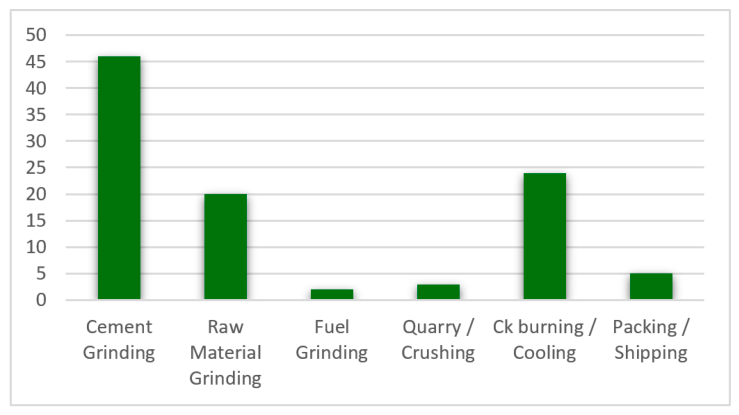
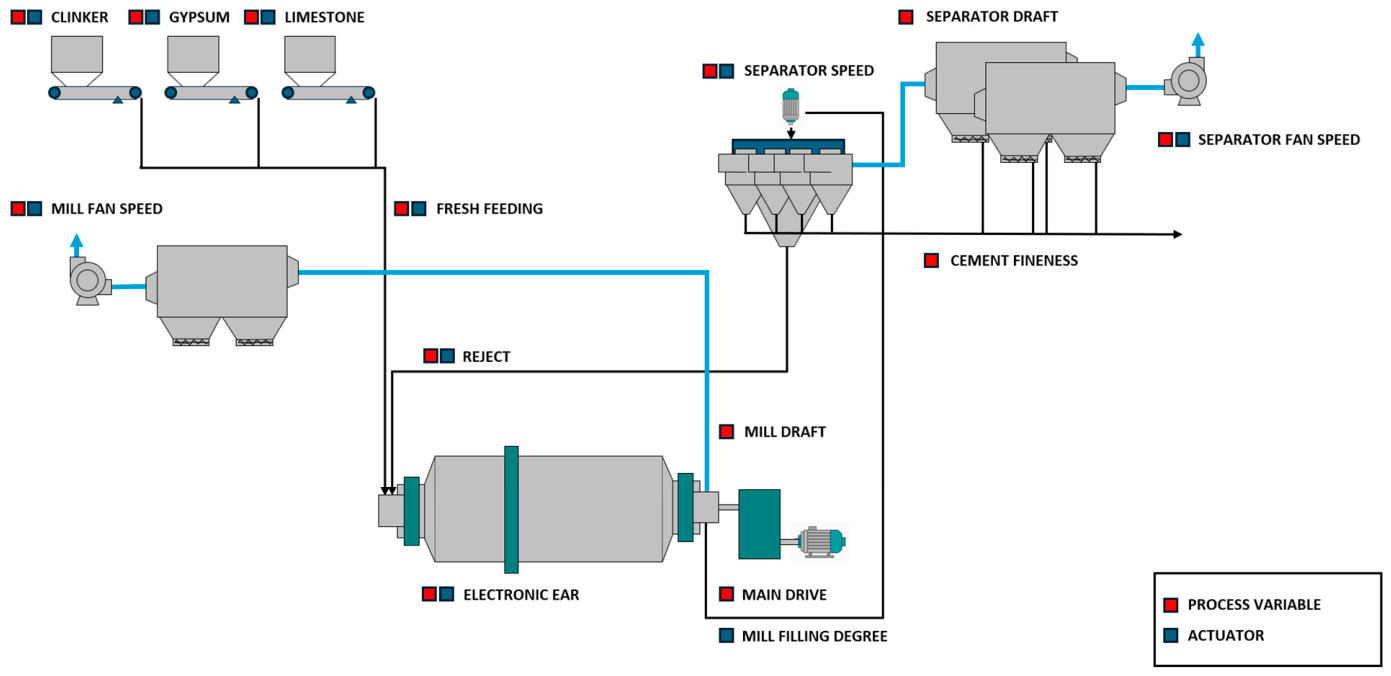
This study was designed to evaluate whether a self-adaptive expert system can improve the operational performance of industrial cement grinding under real production conditions. In particular, it addresses the following research questions: (RQ1) Can a self-adaptive expert system improve the energy efficiency of industrial cement grinding under real operating conditions? (RQ2) Can the proposed system increase production performance while maintaining process stability and product quality? (RQ3) Can autonomous recalibration mechanisms sustain effective operation under changing plant conditions such as wear, clogging, sensor drift, and raw material variability? Based on these questions, the following hypotheses were formulated:
To test these hypotheses, an industrial validation design was implemented under real production conditions in two cement mills operating with multiple commercial cement recipes and variable process conditions representative of normal plant operation. Performance was assessed by comparing manual and Expert System operation using production rate and specific energy consumption as the principal measured indicators. The study did not include CO2-circulation, capture, or removal experiments. Any associated reduction in companies’ carbon footprint was estimated indirectly from the measured electricity savings using the stated electricity-emission factor. The use of two independent mills and several product types increased the representativeness of the validation and allowed the robustness of the proposed approach to be evaluated across different operating scenarios.
Particular attention was given to potential confounding variables that could influence the comparison, including variations in raw material hardness, moisture, and granulometry; differences among cement recipes and target fineness; seasonal or ambient operating conditions; progressive wear of grinding media and internal components; sensor drift; and occasional operator interventions. Their effect was mitigated by analysing results under normal industrial operation across multiple products, using two independent mills, disaggregating performance by recipe, and evaluating improvements only after sufficiently stable operating periods. The methodological framework adopted for the expert system was structured to ensure technical rigor, practical applicability, and long-term sustainability within the industrial cement grinding context.
The process began with a thorough examination of the facility’s operational conditions, with the aim of identifying inefficiencies, sources of variability, and opportunities for optimization. This initial diagnostic stage provided a foundation for defining key performance indicators and aligning project goals with broader priorities such as energy efficiency, process stability, and product quality. Close collaboration with process engineers, plant operators, and automation specialists ensured the resulting system would be compatible with the existing control environment and responsive to site-specific operational dynamics.
A critical component of the methodology was the early identification and analysis of potential challenges that could undermine implementation success. These included technical difficulties—such as changes in grinding media load, sensor drift, diaphragm obstructions, and non-linear process behavior—as well as human and organizational factors like operator acceptance, insufficient training, and disengagement over time. Addressing these risks from the outset enabled the design of a resilient and flexible control architecture capable of real-time adaptation, self-adjustment, and reliable performance under diverse operating conditions. Emphasis was placed on integrating predictive logic, adaptive setpoint calibration, and autonomous fault detection to reduce dependency on fixed rule sets. The system’s modular and transparent design allows for seamless updates and future scalability.
Based on this foundation, the implementation proceeded through a structured engineering cycle including conceptual modeling, knowledge acquisition, control algorithm configuration, simulation testing, and real-world deployment. Each phase incorporated validation and refinement to ensure consistency with operational requirements and adaptability across different production scenarios.
3.1. Identification of Implementation Challenges
Despite the clear advantages of incorporating an expert system, significant challenges must be overcome to ensure its success. One of the main challenges is integrating the system with the existing infrastructure, which requires meticulous planning and coordination. In addition, the complexity of the grinding process requires the development of highly accurate models that require continuous refinement and validation to ensure their accuracy. No less important is the need to foster cultural change within the organization, training operators, and engineers to understand and trust the system and promote a sustained commitment to continuous process improvement.
Experience has shown that many expert systems lose effectiveness after the first months of operation because they are based on fixed assumptions that gradually diverge from real plant conditions. To overcome this limitation, the proposed self-adaptive expert system was designed using a cascade control architecture in which the only fixed supervisory reference is the reject flow rate. This variable represents the desired recirculation condition of the grinding circuit. All other setpoints are continuously recalculated by subordinate control loops according to real-time plant response. As a result, the system is inherently robust against sensor drift, wear phenomena, and changing operating conditions:
Modification of the load of grinding bodies inside the mill. The absorbed motor power depends not only on the material hold-up but also on the grinding media charge, which changes progressively because of wear and periodic replenishment. Instead of using a permanent fixed power target, the system adapts the filling-degree references according to the reject-flow response and achieved process performance. This allows stable optimization even when the grinding media condition changes over time.
Electronic ear decalibration. The electronic ear is an important indirect indicator of first-chamber filling degree; however, its signal may drift because of changes in ball load, material properties, humidity, or sensor aging. For this reason, the expert system does not operate with a fixed electronic-ear reference. Once the total filling objective is achieved, the electronic ear setpoint is synchronized dynamically with the current validated operating value, allowing automatic compensation for progressive decalibration or changing acoustic conditions.
Partial occlusion of the mill diaphragm. During prolonged operation, the outlet diaphragm may progressively become obstructed, reducing discharge capacity and affecting reject circulation. When this occurs, the reject-flow controller detects that the desired recirculation target cannot be maintained under previous conditions. The system then increases the total mill filling degree, within safe operating limits, to raise the internal transport of material and recover the outlet flow. After maintenance or cleaning, the setpoints are automatically readjusted to the new plant condition.
Total occlusion of the mill diaphragm. In severe cases, sudden blockage may interrupt material discharge completely. Conventional controllers may react incorrectly by increasing feed rate. In contrast, the proposed expert system recognizes the abnormal collapse of reject flow together with filling-related constraints and executes protective actions, including rapid feed reduction and stabilization logic, to prevent prolonged stoppages and facilitate recovery.
Unidentified potential problems. Because the architecture is modular and transparent, new rules and supervisory conditions can be incorporated whenever plant engineers identify additional sources of inefficiency or instability. This ensures long-term adaptability and continuous improvement without redesigning the complete control structure.
3.2. Definition of the Control Strategy and Modelling Approach
To evaluate the impact of the proposed implementation on operational efficiency and, consequently, on the reduction in variable cement manufacturing costs, two key performance indicators were selected: Production rate was defined as the average cement output of the mill, measured in tonnes per hour (t/h) using the plant weighing and material flow measurement systems. Specific energy consumption was defined as the electrical energy demand of the grinding circuit per unit of produced cement, expressed in kilowatt-hours per tonne (kWh/t). Both variables were continuously recorded through the plant automation and supervisory monitoring system using the standard industrial instrumentation available at the facility. In general, an increase in production rate reflects a more efficient and cost-effective operation, whereas a reduction in specific energy consumption indicates more efficient energy use and contributes to the sustainability of the cement manufacturing process.
Among the variables governing grinding performance, the most critical are the mill filling degree and the recirculation factor. Within an appropriate operating range, increasing the recirculation factor may enhance system performance; however, an excessive filling degree can reduce grinding efficiency. When the operating limit is exceeded, the potential energy of the grinding media becomes insufficient to effectively fracture the material. Grinding energy demand is also influenced by particle size, material hardness, and the distribution of the grinding bodies. Because these operating conditions vary continuously, the optimal operating point must be continuously adjusted to maintain stable and efficient performance.
The proposed Expert System was developed to ensure stable operation through dynamic adjustment of the key process variables, with the objectives of maximizing production, improving grinding efficiency, and maintaining final product quality. The system adapts to process variations through a hierarchical self-adaptive control architecture composed of three complementary algorithms operating simultaneously. First, a rule-based supervisory layer translates the empirical knowledge of experienced process engineers into transparent decision rules. This layer evaluates current operating conditions, production targets, and plant constraints—such as maximum reject flow, mill draft limits, motor load, and quality requirements—to determine feasible control actions while preventing unsafe or inefficient operating states.
Second, recursive setpoint correction routines continuously update the reference values of key variables, including reject flow, total mill filling degree, separator speed, and electronic ear targets, according to the recent dynamic response of the process. Rather than relying on fixed calibration values, the system learns from observed operating behaviour and progressively compensates for slow disturbances such as grinding media wear, partial diaphragm clogging, sensor drift, seasonal variations in material moisture, and changes in clinker hardness or granulometry. This adaptive mechanism preserves control stability and process performance over time without repeated manual recalibration.
Third, a multivariable gradient optimization routine searches for improved operating conditions by applying small, coordinated changes to selected variables and evaluating their effect on the performance indicators under sufficiently stable conditions. Only modifications that produce a statistically significant reduction in kWh/t, an increase in throughput, or a simultaneous improvement in both objectives are retained. If performance deteriorates, the change is rejected and the previous setpoints are restored.
Through the coordinated interaction of these three layers, the system continuously regulates feed rate, ventilation, recirculation factor, mill filling degree, and classification conditions in real time, allowing the mill to operate close to its instantaneous optimum despite nonlinear dynamics and changing process conditions.
The development of the proposed model required a detailed analysis of the facility and of the interactions among the key variables, which is a fundamental step in the design of any Expert System based on Symbolic AI. This modelling process was carried out in collaboration with process engineers and plant operators to define the most appropriate control strategy for maximizing operational efficiency. To address the complexity of the installation, a comprehensive framework was established to evaluate both the individual subprocesses and the interdependence among the variables, including the performance indicators defined above. This methodology enables integrated process management and ensures accurate and efficient control under all operating scenarios considered.
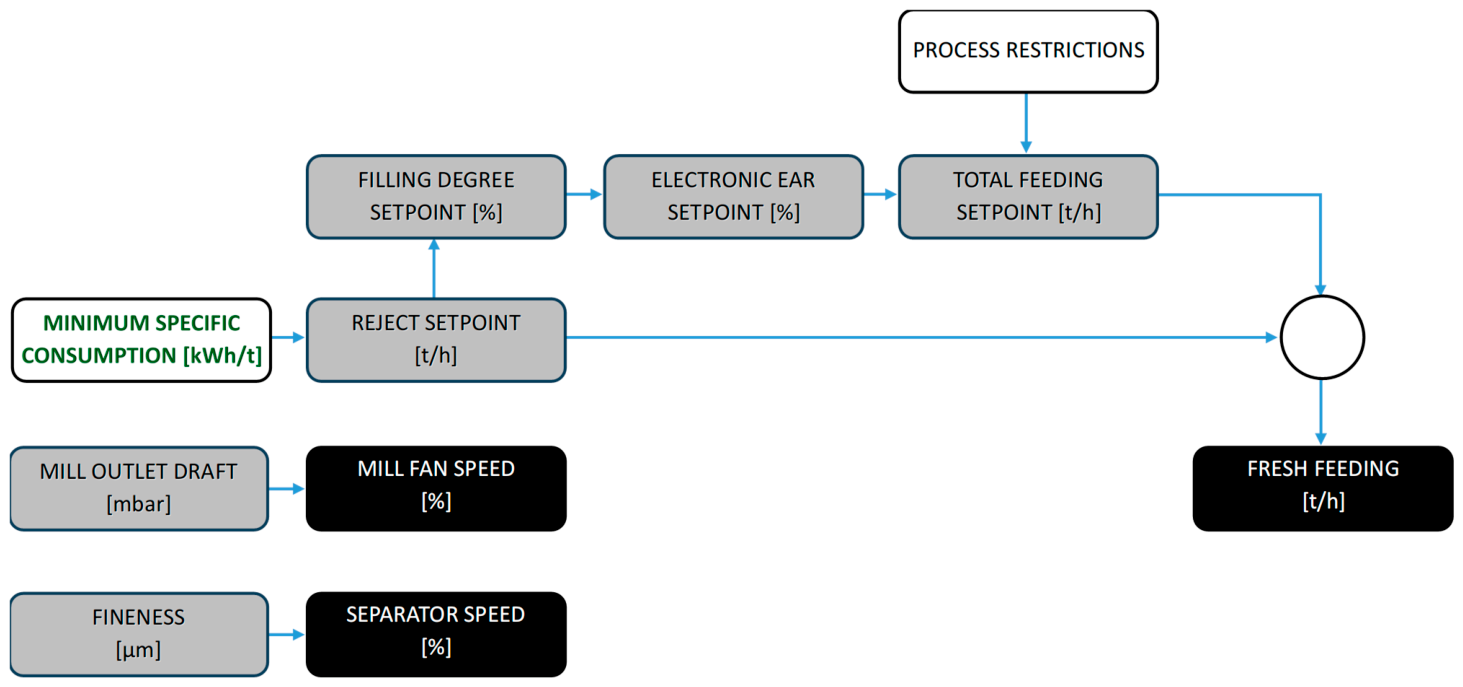
Figure 4 presents a block diagram of the dynamic improvement strategy implemented by the self-adaptive Expert System, highlighting the regulators and control loops involved in cement grinding optimization. The diagram integrates advanced process control (APC), fuzzy logic, and conventional PID regulation within a unified framework. It illustrates the real-time interaction among key operating variables such as mill filling degree (%), separator speed (%), reject flow (t/h), and specific energy consumption (kWh/t), together with critical constraints including inlet depression (mbar) and maximum allowable reject (t/h). The adaptability of the system is reflected in its ability to dynamically adjust fresh feed according to total feed and process feedback, thereby enabling continuous optimization of energy efficiency and production stability. In the diagram, the different colors distinguish the control modules and process variables, while the arrows indicate the direction of information, reference, and feedback signals between the system components.
The different control modules operate in a coordinated hierarchical structure rather than as independent loops. At the supervisory level, the optimization layer determines the most suitable operating targets according to energy efficiency, throughput, and process constraints. These targets are then implemented by the regulatory modules. The filling degree controller stabilizes the internal material load of the mill, while the electronic ear loop provides a real-time indicator of first-chamber conditions and enables rapid correction of feed disturbances. In parallel, separator control regulates classification efficiency and recirculation behavior, directly influencing reject flow and final product fineness. Because these variables are strongly coupled, changes in one module affect the others; therefore, the proposed architecture continuously updates their references in a coordinated manner to maintain stable and efficient operation under changing industrial conditions.
This coordinated strategy improves system behaviour under industrial disturbances such as variations in feed properties, moisture, or grinding media condition. Fast regulatory loops absorb short-term fluctuations, whereas the supervisory layer progressively shifts the operating point toward lower specific energy consumption and higher production. As a result, the control structure combines local stability with continuous plant-wide optimization.
3.2.1. Advanced Process Control (APC) Module: Minimization of Specific Electrical Consumption
The control strategy implemented in the plant begins with an Advanced Process Control (APC) module specifically designed to minimize specific electrical consumption (kWh/t) while preserving throughput, process stability, and final cement quality. This supervisory optimization layer continuously monitors the operating state of the grinding circuit and updates the most influential manipulated variables, including mill ventilation airflow, reject-flow target, separator operating conditions, and other related setpoints that directly affect grinding efficiency. Because electrical consumption is strongly coupled with production rate and classification performance, improvements achieved in this module also enhance the overall productivity and consistency of the installation.
The optimization logic is based on a multivariable gradient-search procedure executed online under real production conditions. At each iteration, the system applies small, coordinated perturbations to one or more selected variables and observes the resulting response of the key performance indicators, particularly kWh/t and production rate (t/h). The direction and magnitude of subsequent moves are determined from the measured trend of these indicators, allowing the controller to progress toward more efficient operating regions without requiring a complete first-principles model of the process.
To ensure reliable decisions, each proposed operating point is evaluated only after a sufficiently long period of stable operation. This filtering stage reduces the influence of transient effects and uncontrolled disturbances such as variations in clinker hardness, material moisture, internal mill temperature, feed granulometry, or separator adjustments. A new set of references is accepted only when the measured improvement exceeds the recent natural variability of the indicator, represented by its standard deviation, and all operating constraints remain satisfied.
If no statistically significant benefit is confirmed, the previous setpoints are restored and an alternative search direction is tested. Through this conservative and adaptive strategy, the APC module continuously tracks improved operating conditions over time and maintains robust performance under changing industrial conditions.
3.2.2. Reject Control Module
The reject flow setpoint set by the advanced control module defines the recirculation factor of the grinding plant. This parameter represents the proportion of material that, in relation to the total feed, does not reach the desired fineness after passing through the mill, and therefore must be recirculated. Because the recirculation factor directly influences the efficiency of the separator and the overall installation performance, effective control is essential.
The reject flow rate was regulated by a fuzzy controller that used the total filling degree of the mill as its main actuator. Generally, an increase in this grade is required to increase the reject flow. However, occasionally, the mill outlet partition can become clogged, preventing material from being ejected, even with proper filling. In such situations, the system makes an opposite adjustment, reducing the degree of filling to facilitate the exit of the material.
When the regulator reaches its setpoint, the system records the actuator value, specifically the degree of the total mill fill associated with each recipe. This procedure not only establishes a new value but also ensures that the facility operates efficiently, even during scheduled changes in material quality.
3.2.3. Filling Degree Control Module
The total filling degree of the mill is defined as the sum of the filling degrees of the first and second chambers, calculated from the power absorbed by the motor, and normalized using the maximum and minimum historical values. This provided a dynamic reference adjusted for real-time operating conditions. The optimization of this parameter is particularly complex because of the influence of the ball load, which varies over time and affects the calculation of the reference. Therefore, the system dynamically adjusts the setpoint of the total filling degree to ensure an adequate reject flow in all circumstances.
The advanced control system employs a PID regulator that precisely adjusts the total fill rate, using the fill rate in the first chamber as an actuator. This regulator considers at the same time some operational restrictions, such as inlet depression and the maximum height of material allowed in the first chamber, to avoid overloads or imbalances. Once the optimum filling degree is reached, the system synchronizes the setpoint of the electronic ear with its actual value, thus ensuring the process stability and efficient operation of the system.
3.2.4. Electronic Ear First Chamber Control Module
The degree of filling in the first chamber is determined by an instrument known as an electronic ear, which records the sound generated by the impact of the balls against the material inside the mill. The data collected by this sensor establishes a direct correlation with the amount of material present, so that variations in sound reflect changes in the level of filling. It is important to note that the sound captured is influenced by several factors, such as humidity, fineness of the material, and load of the balls.
For this reason, the proposed Expert System does not rely on a fixed calibration value. Instead, the electronic ear reference is continuously synchronized with the current stable operating condition of the mill, and its target is dynamically updated according to process response and supervisory control objectives. This adaptive recalibration mechanism allows the signal to remain meaningful over time while preserving stable filling control under changing production conditions.
To control the degree of filling in the first chamber, a cascade PID regulator was used to adjust the total feed to the mill, consisting of the reject material flow rate and fresh feed flow. This method not only ensures effective control of the fill but also mitigates fluctuations in the reject, considering constraints such as the maximum allowable reject, minimum inlet depression, and maximum power in the reject elevator. The regulator operates in three working ranges, adapting to the magnitude of the error and its trend, allowing it to adjust its behavior according to the conditions of the mill, thus favoring stability and reducing transitions caused by feed cuts or stoppages.
3.2.5. Fresh Feed Compensation Calculation
A key control objective is to determine the appropriate balance between fresh feed and recirculated reject material entering the mill. Because fluctuations in reject flow can disturb the filling degree of the first chamber, the control system continuously compensates for the effect of the return stream when calculating the fresh feed setpoint. In this way, the regulator acts on the effective total feed to the mill, improving process stability and minimizing unnecessary oscillations during normal operation. The corresponding control parameters are established during commissioning and refined according to plant behavior and production requirements.
3.3. System Development
The following is a description of the fundamental stages implemented throughout the development and implementation of the proposed self-adaptive expert system aimed at ensuring the optimization of the industrial cement grinding process and its effective integration into the production environment:
Analysis of the context and needs.
Problem choice.
Conceptualization.
Acquisition of knowledge.
Selection of tools.
Application development.
Computer simulation and validation.
Implementation in an industrial environment.
Validation of performance results.
Maintenance and continuous improvement.
3.3.1. Analysis of the Context and Needs
Context and needs analysis were the critical initial stage in the development of the expert system, providing a detailed understanding of the operating environment and the specific challenges of the facility. At this stage, a thorough evaluation of the cement grinding process was conducted, covering both the operating procedures and the characteristics of the equipment and its potential limitations. Key operating variables, nature of the processed material, performance indicators, and quality parameters were analyzed in depth, with the aim of identifying critical areas that required improvement.
This analysis made it possible to determine the key aspects that the new system had to address, such as the optimization of energy efficiency, stabilization of operating conditions, and rigorous control of product quality. In addition, bottlenecks and workflow deficiencies that affected productivity and increased operating costs were identified, providing clear guidance for the design of targeted interventions. In this way, a solid foundation was established for the subsequent phases of the project, ensuring that the system responded to the strategic needs of the plant and incentivized the process of continuous operational improvement at the facility.
3.3.2. Problem Choice
Interviews were conducted with specialized personnel from plants involved in industrial development to precisely define the objectives of the new facility. The identification of the problem, in collaboration with experts from the European Technical Centre, was based on rigorous criteria of operational efficiency, sustainability, and economic viability. The detailed analysis concluded that the priority should be to minimize specific energy consumption in cement grinding and reduce associated emissions while maintaining the quality of the final product, which is essential to compete in a highly demanding industrial context, where operating margins are critical for competitive viability and adaptation to increasingly stringent environmental regulations.
In addition, considering that many applications lose functionality over time owing to their lack of adaptation to changing conditions, it was concluded that the system should be flexible and self-adaptive and capable of automatically adjusting its parameters in response to operational variations. Finally, the importance of the system being integrated in a transparent manner into the plant’s control infrastructure is highlighted, making it easier for personnel to manage, maintain, and optimize the system without interrupting the production process. This ensures long-term sustainability and efficiency, ensuring that the system evolves along with the production needs.
3.3.3. Conceptualization
The conceptualization stage focused on developing a detailed structure of the expert system based on the results obtained in the previous phases of analysis and selection of the problem. The fundamental components of the system, its overall architecture, and the interrelationships between them are defined to ensure that everything is aligned with the strategic and operational objectives of the plant.
A conceptual model was developed that represented the information flows and control mechanisms of key variables, which facilitated the identification of critical areas and made it possible to foresee bottlenecks in the process. This anticipation of operational difficulties allowed the integration of preventive solutions from the beginning, thereby optimizing the design of the system.
On the other hand, the interdependencies between the different subsystems were evaluated, and the necessary protocols were defined to ensure efficient control and fluid communication. Priority was given to the design of a modular and flexible structure capable of adapting to future adjustments or expansions without compromising operational stability. Taken together, the conceptualization provided a coherent framework that guided the detailed design, ensuring the effective integration of the system into the plant’s existing infrastructure and its long-term viability.
3.3.4. Acquisition of Knowledge
Knowledge acquisition is a fundamental stage in system development and focuses on gathering the expertise needed to build the rule base. This includes the collection of historical data and interviews with operators and cement production experts, as well as documentation on best practices and ideal operating conditions.
An analysis of the historical records was conducted, considering critical parameters, such as specific energy consumption (kWh/t), mill operating conditions, material properties, and product quality. This analysis makes it possible to identify key correlations and establish an empirical framework for generating operating rules. Likewise, structured elicitation techniques were used to capture the tacit knowledge of operators and engineers derived from their experience in process management. Through interviews and workshops, effective heuristics and strategies were identified to oversee operational variations such as fluctuations in material properties and production demands. Finally, the collected information was structured through systems based on rules and decision trees, which are typical of Symbolic AI. These tools provide a logical and transparent framework that allows modelling of the relationships between operational variables, ensuring the system’s ability to adapt in real time and maintain interpretability and efficiency under changing production conditions.
The resulting rules were initially formulated from this combined knowledge base and subsequently reviewed by experienced process engineers and plant operators to verify their technical consistency, operational relevance, and compatibility with plant constraints. Before industrial deployment, the rules were tested under simulated operating scenarios to evaluate their expected responses to disturbances, changing production demands, and abnormal conditions. Following implementation, the rule base was further refined during commissioning through iterative adjustments based on the observed plant behaviour and measured process performance. This staged validation procedure ensured that the final rule set was both theoretically coherent and practically effective under real industrial conditions.
3.3.5. Selection of Tools
In a highly competitive industrial environment, it is critical to ensure that applications are easily maintainable and that specialized plant personnel promote continuous improvement. For this purpose and to simplify the programming process, it was decided to develop the application on top of the existing control system, the Siemens PCS7 V10 SP1 suite, a widely recognized platform in the industry that offers a comprehensive set of tools for automation and process control.
The choice of PCS7 made it easier to incorporate the application into the operating environment of the plant, highlighting its robustness and flexibility. Within this suite, tools such as Simatic Step 7 V5.4 and WinCC V8.0 were used. The Simatic Manager offered an advanced environment for the development and configuration of Programmable Logic Controllers (PLCs) responsible for processing the code of the expert system. This approach simplified programming, allowed for better understanding and acceptance of the system by specialized personnel, and ensured its long-term maintenance. In addition, by ensuring efficient interaction between components, communication problems between applications are avoided, thereby optimizing the flow of information.
In contrast, the WinCC tool was used for the development of graphical Human–Machine Interfaces (HMIs), which are essential for visualizing and understanding the process and behavior of the system in real time. Owing to its ability to manage large volumes of data and its seamless integration into the PCS7 suite, WinCC enables a clear and accessible visualization of key operating parameters, making it easier for control room operators to make informed decisions and evaluate application performance in an effortless manner.
3.3.6. Application Development
The development stage of the application focused on the construction and programming of the expert system following the specifications and conceptual bases previously defined. This process involved the implementation of inference engine logic designed to process the system rules and generate concrete actions that optimize the performance of the cement grinding process. The algorithms were structured to analyze data in real time, allowing dynamic adjustments to the operating parameters, such as the recirculation factor or the degree of mill filling.
The implementation was supported by Siemens’ APL V10.0 SP1 (Advanced Process Library), which allowed the selected algorithms to be efficiently integrated into PLCs. These were configured using Simatic Manager to ensure smooth interaction with the sensors and actuators involved in the process. As part of this stage, specialized modules capable of interpreting the rules of the expert system and responding accurately and efficiently to variations in the operating conditions were programmed.
In parallel and in close collaboration with plant personnel, graphical interfaces were developed using the WinCC application. These interfaces were designed with a focus on simplicity and adaptability, providing operators with an intuitive tool to monitor the key operational variables in real time. In addition, the necessary functionality was included for operators to interact with the expert system, allowing them to make informed decisions and adjust when circumstances are required.
3.3.7. Computer Simulation and Validation
Next, a computer simulation of the application was carried out to validate its operation and ensure the correct integration of all components of the system in a controlled environment. The main objective of this phase was to minimize operational risks and maximize the chances of success before actual implementation in the plant. To do this, the Siemens’ S7-PLCSIM V5.4 simulation tool was used, which allowed the precise recreation of the operating conditions of the industrial process. Advanced simulation models were used to replicate various situations, simulate variations in operating parameters, and evaluate how inference algorithms adjust operational setpoints in real-time. This process makes it possible to observe how the system responds to different combinations of conditions, making it easier to identify failures or areas for improvement. Consequently, adjustments were made to the algorithms to further optimize the performance and efficiency of the system, ensuring that the model operated within the desired margins.
In parallel, exhaustive validation of the designed graphic interfaces was conducted to evaluate their ability to present the data in a clear and accessible way. The ease of use for operators was also evaluated to ensure that they could efficiently interact with the system during operation. This phase was crucial to ensure that all the tools were functional and robust for the final implementation.
3.3.8. Implementation in an Industrial Environment
Once the simulation and validation in a controlled environment were completed, the self-adaptive expert system was implemented in a real plant, which involved a meticulous transition from a test environment to an industrial operating environment. The process began with the physical installation of PLCs and the connection of sensors and actuators to the plant’s existing infrastructure, using the Siemens PCS7 platform to ensure compatibility and stability of the system within the control environment.
The implementation was carried out gradually with the aim of minimizing any impact on the plant’s day-to-day operations. The expert system is integrated step-by-step into the grinding process, continuously monitoring the key process parameters. During this phase, the behavior of the system and its interaction with the industrial process were monitored in real time, allowing any variation in the operating conditions to be detected and programming adjusted according to needs.
Particular attention was paid to the correct interaction of the system with existing infrastructure and equipment. In addition, the operational staff were trained to ensure that they could operate the graphical interfaces effectively. This allowed operators to monitor the system performance and make manual adjustments when necessary, ensuring that the system is operated effectively within the industrial environment.
3.3.9. Validation of Performance Results
The performance results were validated to evaluate the direct impact of the self-adaptive expert system on the cement grinding process after implementation in an industrial environment. This phase was crucial for confirming that the objectives previously set by the plant personnel were being met effectively.
During the validation process, continuous measurements were made of key indicators such as energy consumption, production capacity, and cement quality. These data were compared with the values prior to the implementation of the system, allowing a comparative analysis of performance. Special attention was also paid to the stability of the process, ensuring that the system could adapt autonomously to operational variations without compromising the results.
In addition, specific tests were conducted to verify the system’s ability to manage contingencies and unforeseen variations in operating conditions, such as fluctuations in material quality or production demands. The results confirmed that the system optimized the use of resources and improved the consistency of the process, contributing to a significant reduction in operating costs and an increase in the overall productivity of the plant.
3.3.10. Maintenance and Continuous Improvement
Despite the capabilities of applications based on symbolic AI to manage complex industrial facilities, their main limitation is the absence of machine learning. This makes constant maintenance and updating of the system critical for ensuring its relevance and long-term effectiveness.
The maintenance of the expert system aims to incorporate new knowledge and adjust its inference rules to respond to changes in operating conditions or the demands of the production process. These adjustments allow the system to not only retain its original functionality but also improve its performance, adapt to emerging technologies, and optimize cement grinding in the face of future challenges.
Concurrently, the constant training of operational personnel is key to maximizing the benefits of the system. Through management- and diagnostics-oriented training, it is ensured that the team is prepared to take full advantage of the system’s capabilities, adjust when necessary, and participate in its evolution.
This comprehensive approach, which combines technical upgrades with the strengthening of human skills, ensures that a self-adaptive expert system maintains its strategic value over time. By operating effectively under changing conditions and promoting a process of continuous improvement, it consolidates itself as an indispensable resource for the plant, promoting sustainability, efficiency, and competitiveness in the long term.