1. Introduction
An orbital launcher is a device that can store and release multiple nanosatellites into orbit from a space platform, such as a rocket or a stand from the International Space Station.
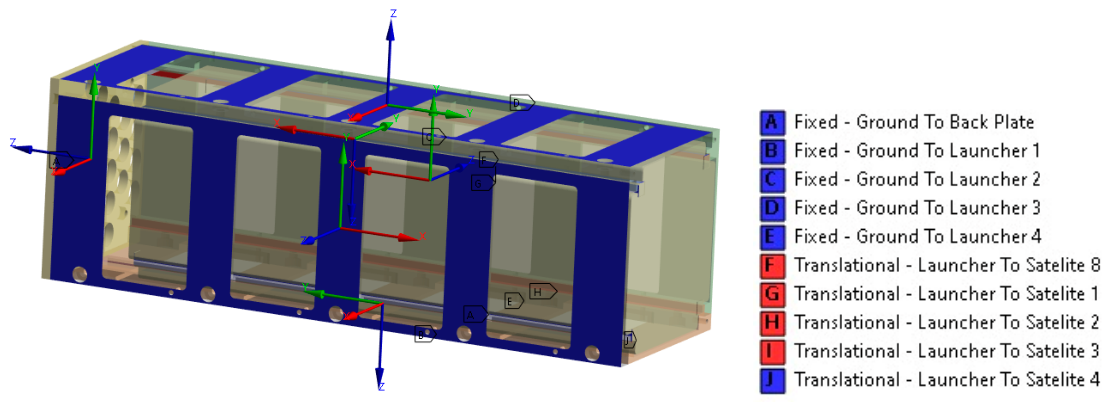
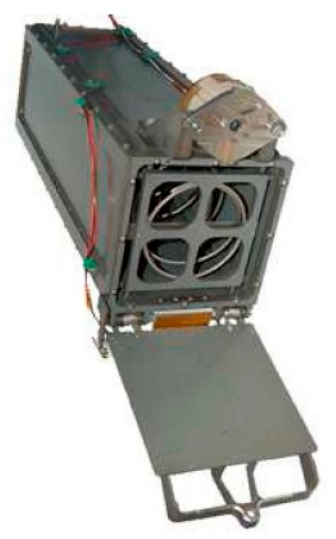
Figure 1 illustrates a standard orbital deployer for multiple nanosatellites. The objective is to ensure a safe and stable relative position of the nanosatellites, while avoiding collisions and interferences [
1]. A common method to achieve this goal is to employ springs as part of the launch mechanism. These can provide a controlled and constant force to push the microsatellites out of the launcher at a set speed, as one of the main mechanical components.
The spring mechanism design can vary depending on the particular requirements of the launch mission, but typically consists of one or more springs that are compressed inside the launcher and are released by a trigger mechanism when the launch command is given [
2]. The spring mechanism must be carefully adjusted to ensure that the nanosatellite is launched at the correct speed and direction, without causing damage to the nanosatellite or the launcher.
Figure 1.
Poly-Picosat Orbital Deployer (PPOD), reproduced from [
3] under a Creative Commons Attribution License.
Figure 1.
Poly-Picosat Orbital Deployer (PPOD), reproduced from [
3] under a Creative Commons Attribution License.
As NASA mission designs become more diverse, ranging from low Earth orbit constellations to deep-space pathfinders, the requirements for the orbital deployment systems have evolved beyond the capabilities of standard, one-size-fits-all components [
4]. An orbital launcher operates as the critical interface between the launch vehicle and the payload, retaining and releasing nanosatellites safely and predictably. The reliability of this expulsion mechanism is paramount; any mechanical failure can result in mission loss or collisions with the launch vehicle [
5].
The springs employed in launcher mechanisms offer several advantages. Springs are compact and lightweight, making them suitable for small satellites, where space and mass constraints are important. In addition, springs provide a reliable and cost-effective method of achieving the desired speed and trajectory for the satellite deployment.
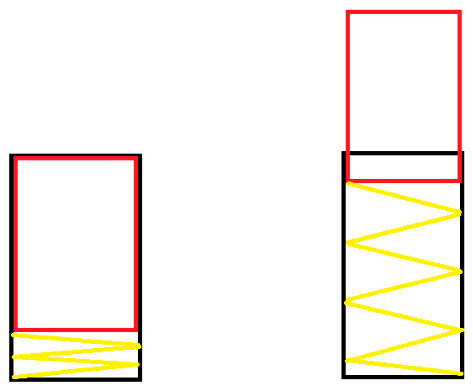
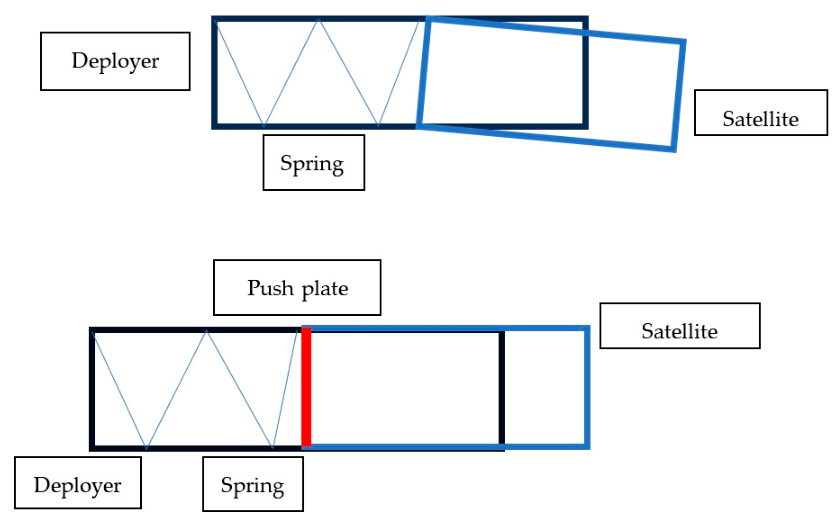
The device typically consists of a spring assembly (
Figure 2) that securely holds the satellite in the launcher until it reaches the desired orbital position. When the launch command is initiated, the spring releases its stored energy, propelling the satellite out of the device into space. This release of energy allows the satellite to overcome gravitational forces and gain the momentum needed for orbital insertion.
Primarily helical compression springs are employed to supply the necessary separation velocity. While spring-based solutions are preferred for their simplicity, reliability, and lack of external power requirements compared to electromagnetic actuators, their design is often constrained by the availability of the commercial off-the-shelf (COTS) components. In conventional manufacturing, producing a custom spring with non-standard dimensions or stiffness characteristics requires devoted tooling and winding mandrels, making the process cost-prohibitive for prototyping or low-volume production series. Consequently, designers are frequently forced to compromise, adapting the satellite launcher’s internal envelope to fit the available standard springs, rather than optimizing the mechanism for the mission’s specific mass and spatial constraints.
To overcome the inflexible constraints of the traditional supply chains, the aerospace industry is increasingly turning to Additive Manufacturing (AM), specifically Laser Powder Bed Fusion (LPBF). This manufacturing process offers a paradigm shift in the production of space mechanisms, enabling the fabrication of complex, high-performance components that are impossible or too costly to manufacture using subtractive machining methods.
The practical use of LPBF has expanded beyond laboratory prototyping into aerospace, automotive, biomedical, energy, tooling, and consumer-product sectors because the process can combine near-net-shape fabrication, functional integration, weight reduction, and rapid iteration in low-volume production [
6,
7,
8,
9,
10,
11,
12]. For stainless steels, recent reviews emphasize that LPBF is especially attractive when complex geometry must be combined with corrosion resistance and adequate strength, but they also show that part quality depends strongly on process parameters, build orientation, support strategy, porosity control, and post-processing [
8,
9,
10,
11,
12]. In parallel, simulation-driven studies demonstrate that build orientation and support selection can be treated as quantitative design variables by considering the support area and volume, voxel count, distortion risk, and material consumption before manufacturing [
6,
7,
13]. These developments justify the use of LPBF for a mission-specific deployer spring, providing that the findings clearly report both the manufacturing settings and the validation limits.
The choice to investigate LPBF for the manufacturing of the satellite launch springs is driven by three primary technological and economic benefits highlighted by the recent scientific literature. Unlike the conventional winding, which is limited by the wire gauges and mandrel sizes, LPBF allows for the precise control of the geometric parameters at the voxel level. This capability enables the production of “shape-conforming” springs designed to occupy irregular volumes within a crowded satellite deployer, maximizing space efficiency, which is a critical metric in CubeSat design. In the context of “low series” production, typical of the space sector, AM eliminates the need for expensive tooling. This significantly lowers the barrier to entry for unique, mission-specific proposals. A designer can iterate the spring geometry digitally and manufacture a functional prototype in hours rather than weeks, facilitating a rapid verification cycle.
LPBF-processed 316L stainless steel has been extensively studied [
14]. It can exhibit mechanical properties comparable to, and in terms of yield strength often higher than, wrought counterparts because of the fine microstructural grains produced by rapid solidification. Reviews of LPBF stainless steels and SS316L show that high-density parts with competitive mechanical properties are achievable, but the process parameters, porosity, residual stress, surface roughness, build orientation, and post-processing govern the final performance [
8,
9,
10,
11,
12,
13]. Similarly, design-for-AM spring studies demonstrate that additive manufacturing enables variable-dimension and functionally graded spring concepts that are difficult to produce conventionally [
15,
16].
Despite the benefits, the acceptance of AM for elastic elements remains challenging due to process-induced defects such as residual stresses and anisotropy, which can lead to geometric warping and unpredictable stiffness. While electromagnetic launchers offer programmability, they introduce significant complexity and failure modes. Therefore, optimizing a “simple” spring for advanced manufacturing brings a valuable trade-off, preserving the reliability of a passive system while gaining the flexibility of digital manufacturing.
An experimental launcher using an electromagnetic system is presented in [
17]. The work highlights the successful development of a new electromagnetic launch mechanism as an alternative to traditional spring-based systems. Both theoretical models and experimental tests have shown consistent results, confirming that the mathematical models can be employed to calculate the electromagnetic force and the kinematic characteristics for practical engineering cases. This system provides precise control over the launch speed, which is an important advantage compared to spring-based systems. The main drawback of electromagnetic launch mechanisms is the continuous external interference. Other electromagnetic designs are currently being analyzed [
4].
In conclusion, nowadays, most of the launchers currently employed rely on spring mechanisms, because they provide an inexpensive, compact, and reliable way to achieve the energy needed for the launch. One shortcoming of spring systems is the inability to program the launch speed.
Works on additively manufactured springs have been focused on polymer helical springs, variable-dimension wave springs, and general design-for-AM spring concepts [
15,
16]. They demonstrate the value of geometric freedom, but do not address the combined constraints of CubeSat deployment velocity, LPBF 316L process distortion, support removal, optical inspection, or launch-mechanism integration. The literature gap addressed by the present research is how a passive deployer spring can be developed through a documented AM workflow while preserving the envelope dimensions required by a small-satellite launcher.
The main engineering and methodological contribution of this work is the transformation of a catalog-compatible helical compression spring into an LPBF-manufacturable CubeSat deployer subassembly while retaining the deployment-force requirement as the governing design constraint. The approach links the analytical sizing, kinematic response, FEM process simulation, and optical metrology in one traceable workflow so that AM-induced distortion can be identified before a separate qualification campaign is attempted. The study also investigates the geometric deviation pattern of an as-built 316L deployer spring assembly and discusses mitigation strategies for the observed plate warping. The research does not perform full flight qualification, but it establishes the manufacturability and the geometric process-validation basis needed before force–displacement, stiffness, repeatability, fatigue, and environmental tests are commissioned.
The article is structured as follows: in the next section, the materials and methods are described in detail, encompassing the definition of the requirements, the mechanical design of the assembly, a kinematic simulation and the assessment of the force–displacement characteristic.
Section 3 discusses the LPBF process simulation using FEM and the stress–strain map of the assembly, while the fabrication of the new prototype is presented in
Section 4. The verification of the geometry using optical metrology and the comparison with the initial CAD data are included in
Section 5. The discussion of the results from different perspectives and the limits of the work are encompassed in
Section 6. Finally, the conclusions, main achievements and future research are presented in
Section 7, where the effectiveness of the proposed approach is summarized.
2. Materials and Methods
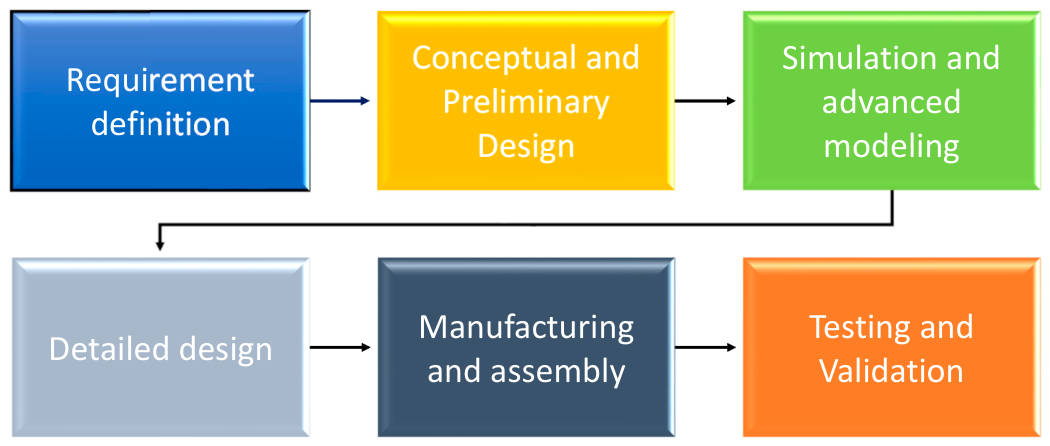
The development of new space hardware requires adherence to a structured development sequence (
Figure 3), in accordance with astronautics principles and systems engineering practices recognized across the aerospace community [
18,
19,
20]. These principles have been successfully applied in the development of recent CubeSat launch mechanisms [
17,
21]. Furthermore, the design process was conceived with respect to official space-system frameworks, specifically the NASA Systems Engineering Handbook (NASA/SP-2016-6105 Rev. 2) [
22] and the European Cooperation for Space Standardization (ECSS) guidelines [
23]. It starts with the definition of the requirements, where mission prerequisites, including functional, performance, environmental, safety, reliability, cost, and schedule features, are collected and analyzed. This stage integrates the ECSS-E-ST-10C standard [
23] for system engineering to guide the definition and management of the requirements, establishing a solid basis for the entire project.
Following this design chain, the conceptual and preliminary stage involves the development of the overall system architecture, and the selection of the appropriate materials and technologies, while accounting for the harsh space environment, including vacuum conditions, radiation exposure, extreme temperatures, micrometeorites, and space debris.
Modeling and simulation techniques are employed to evaluate the hardware performance during different scenarios, while reliability analyses like FMECA and risk assessments are carried out to minimize the risks associated with any problems before they arise. In the detailed design phase, component scenarios are created and manufacturing drawings are generated, paying special attention to aspects like tolerance dimensions, interface connection, mass budgeting, and power utilization to ensure that the hardware satisfies all required criteria.
These processes are performed on both individual components and subsystems. Individual components are checked for their functionality, while the entire system is tested for its effectiveness, gradually gaining confidence in the suitability of the hardware before performing the mission.
For flight hardware, manufacturing and assembly are generally carried out in a controlled environment under quality standards such as AS/EN 9100 [
24]. Space-qualified materials and cleanroom assembly may be required to prevent contamination of the flight hardware.
2.1. Definition of Requirements for a New Spring Mechanism
The recommended launch speed for CubeSat deployers may vary depending on specific system and mission requirements. A recent example is the Small Satellite Orbital Deployer (J-SSOD) developed by the Japan Aerospace Exploration Agency (JAXA) [
25]. This Small Satellite Orbital Deployer is a dedicated system designed to launch CubeSats from the International Space Station (ISS). It can launch satellites up to 6U (2 × 3 configuration), with a launch speed of 0.77–1.7 m/s, while other similar deployers employ a speed of 1.5~2.5 m/s.
In the present approach, the elastic element is governed by the kinetic energy required to accelerate a 3U CubeSat with a mass M = 4 kg to a target velocity ( over the deployment length S = 400 mm.
2.2. Computation of the Deployment Forces
Assuming a constant acceleration to minimize the peak shock forces on the satellite payload, the required acceleration
a is derived from the kinematic equation of motion:
Given an initial velocity u = 0 m/s, the required acceleration is:
The total required force from the spring mechanism must overcome both the inertial resistance of the satellite and the sliding friction between the satellite rails and the launcher guidance system.
Inertial force: According to Newton’s second law:
Frictional force: The normal force exerted by the satellite mass under gravity is defined by the satellite weight. The frictional resistance is calculated using the coefficient of friction reported for anodized aluminum contact surfaces [
26].
Total design load: To ensure reliability, a safety factor (SF) of 1.25 is applied in accordance with ESA standard ECSS-E-ST-32-10C Rev.2 Corr.1 [
27]. The final design load is:
Consequently, the spring mechanism must deliver a minimum force of 54.92 N to ensure a successful deployment.
2.3. Geometry Definition and Spring Response Calculation
Based on the calculated load and the geometric constraints of the launcher (3U form factor), a helical compression spring was selected. The spring geometry is defined by the wire diameter (d), mean coil diameter (D), and number of active coils (Na). To confirm the structural integrity of the spring manufactured from 316L stainless steel, the maximum shear stress under the design load is calculated.
The selection of 316L stainless steel as the build material is driven by two complementary considerations. First, helical compression springs in conventional manufacturing are commonly produced from 316L-grade wire stock, making it the natural reference material for a direct performance comparison between traditionally wound and LPBF-fabricated equivalents. Second, ample literature on LPBF-processed 316L [
14,
28,
29] provides well-established baseline mechanical properties, particularly the yield strength and elastic modulus that underpin the analytical sizing carried out in the following sections. Alternative aerospace alloys such as Ti-6Al-4V may offer a significant mass reduction, but their spring-grade equivalents are far less standardized, making a like-for-like validation against catalogue specifications impractical at this stage.
Therefore, the 316L stainless steel was chosen for its high corrosion resistance, ductility, and proven performance in space-grade applications (
Table 1).
The theoretical shear stress in a helical spring is given by:
where
is the Wahl correction factor, which accounts for the stress concentration due to the coil curvature. For a spring with index C = D/d:
Based on the catalog specifications compatible with the launcher dimensions:
Wire diameter (d): 3.96 mm;
Outer diameter (OD): 71.42 mm; therefore, mean diameter D = 67.46 mm;
Spring Index (C): 67.46/3.96 = 17.03.
Substituting these values into the Wahl Equation (8) yields:
The computation of the maximum shear stress induced by the 54.9 N launch load is given as:
To evaluate the design against plastic deformation, the Tresca yield criterion (Maximum Shear Stress Theory) is applied. According to this criterion, yielding occurs when the maximum shear stress exceeds the shear yield strength
of the material, which is defined as half of the tensile yield strength
:
The tensile yield strength of additively manufactured 316L stainless steel typically ranges between 450 and 550 MPa. Using the conservative lower bound, the allowable shear yield limit is:
Since the calculated working shear stress 164 MPa is significantly lower than the material’s shear yield strength of 225 MPa, the design is confirmed against the Tresca criterion. This ensures the mechanism remains safely within the elastic region during operation.
2.4. Spring Selection
To identify suitable spring geometry for additive manufacturing, a parametric search was conducted based on the analytical force requirement F
req = 54.92 N and the spatial constraints of the launcher assembly [
30]. The search criteria were defined by the following boundary conditions:
Wire diameter (d): 3.0–9.0 mm (to ensure printability and stiffness);
Outer diameter (OD): 20.0–95.0 mm (constrained by the launcher’s internal envelope);
Free length (L0): 40–300 mm (to accommodate the required stroke);
Solid height (Hs): 35–40 mm (to maximize active travel);
Material: 316L stainless steel powder.
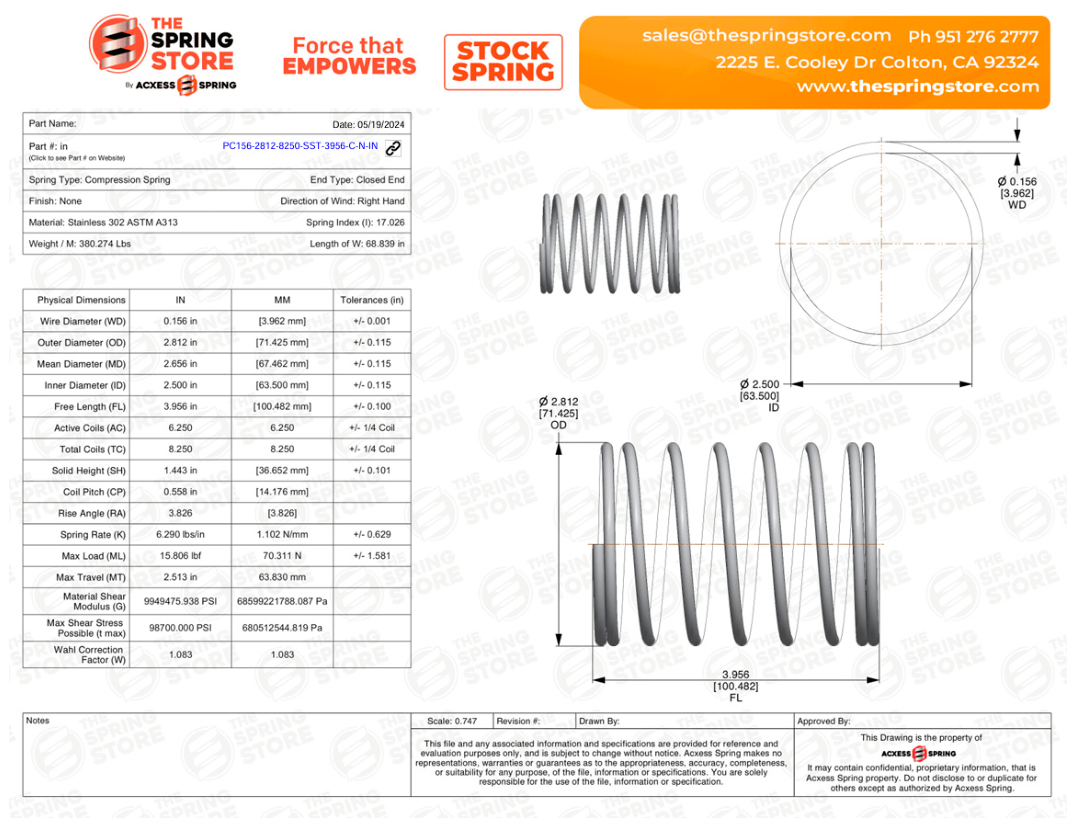
Based on these constraints, a standard helical compression spring configuration was selected from a commercial catalog to serve as the baseline geometry for the LPBF manufacturing process. The specific characteristics of the selected component (part number: PC156-2812-8250-SST-3956-C-N-IN) are detailed in
Figure 4.
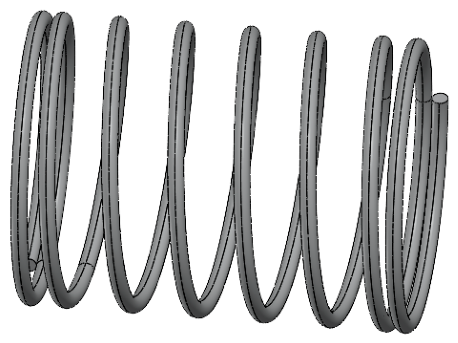
Next, the 3D model of the spring was generated for simulation purposes (
Figure 5).
2.5. Simulation of the Launcher Kinematics
The launch mechanism is composed of three elements:
- -
Fixing plate;
- -
Spring;
- -
Push plate.
Functionally, the launch mechanism also includes an energy storage/release mechanism and a guidance system. The pusher plate ensures contact between the satellite and the spring while guiding the spring along the launcher rails. An example of a push plate is illustrated in
Figure 6.
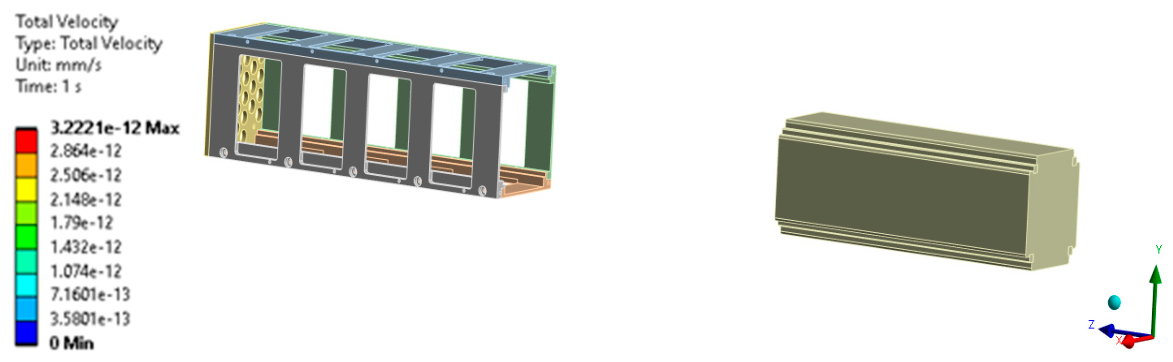
A rigid-body analysis of the launch mechanism was performed to verify the deployment velocity before the preparation stage of the LPBF process (
Figure 7). The model included the fixing plate, spring, push plate, and satellite mass, with the contacts defined between the push plate and the launcher guide surfaces. The coefficient of friction was set to 0.61, based on anodized aluminum contact data [
26]. The kinematic simulation was performed in ANSYS Workbench 2022 R2. Because the friction coefficient and the constant-acceleration assumption influence the predicted exit velocity, the results are reported as model inputs rather than validated quantities in the present single-prototype study.
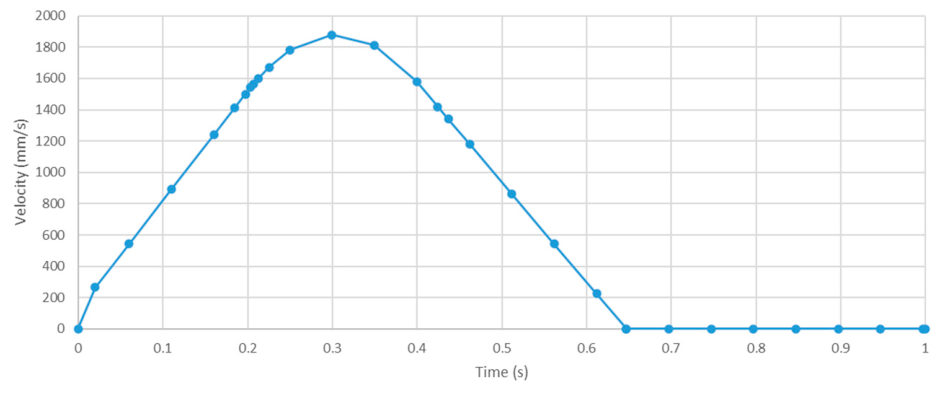
The kinematic analysis was performed using the Runge–Kutta 4 method, and the results are illustrated in
Figure 8 and
Figure 9.
The simulated deployment speed reached 1.87 m/s. This exit velocity falls within the acceptable range of the 2.0 m/s design target with a 10% margin, confirming the kinematic design.
2.6. Force–Displacement Characteristic
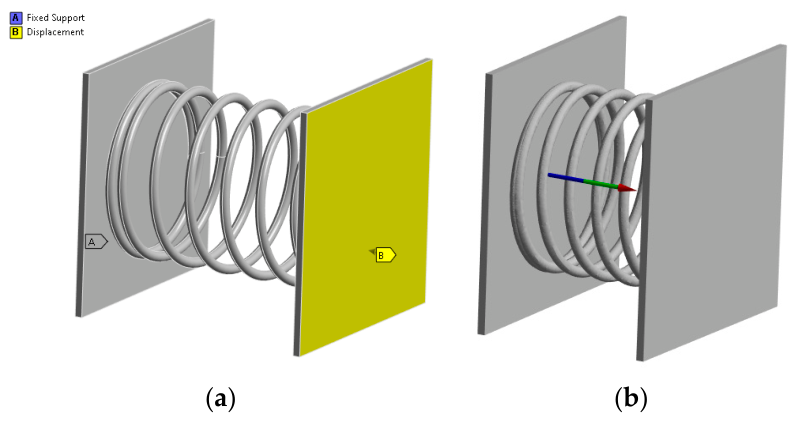
The 3D model of the spring assembly was then completed with the fixing plate, spring, and the push plate and a FEM static analysis was performed to evaluate the force–displacement characteristic of the spring. The boundary conditions (
Figure 10) were the fixed support (A) and a 15 mm displacement (B).
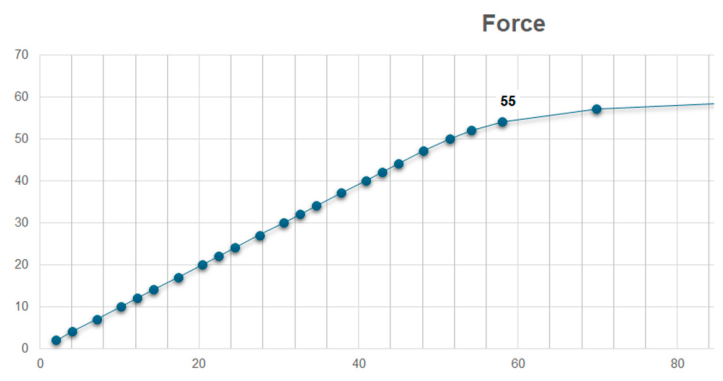
Figure 11 indicates that the maximum deployment force should remain below 55–57 N to ensure the safe elastic behavior of the spring assembly. Because the analytical calculation of the deployment force falls in the vicinity of this evaluated elastic limit of the spring, a stress–strain analysis of the assembly will be completed after the simulation of the manufacturing process.
3. LPBF Simulation Using CAE
3.1. Manufacturing Conditions
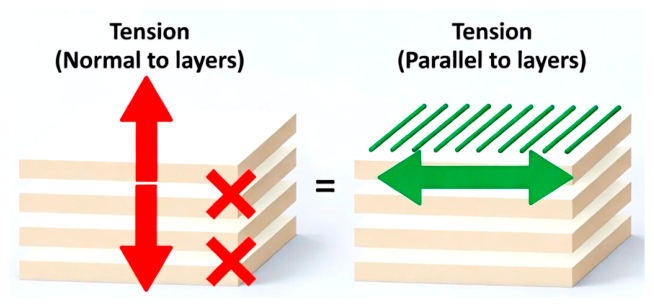
The selection of the build orientation for the LPBF process is critical due to the anisotropy induced by layer-wise manufacturing. Previous studies have demonstrated that mechanical properties, particularly ultimate tensile strength, are often compromised in components printed vertically (
Z-axis) [
28,
32]. To maximize the structural integrity and load-bearing capacity of the helical spring, which functions primarily under compression, a horizontal build orientation (parallel to the force vector) was selected (
Figure 12).
This orientation, balancing the mechanical load path against LPBF manufacturing risks, minimizes the staircase effect on the functional wire diameter, while aligning the layers for improved resistance against the axial launch force [
33]. In addition to aligning the spring axis with the expected compression force, the build preparation considered support accessibility, recoater clearance, predicted distortion, support volume, and total exposed material volume, consistent with simulation-based orientation-selection approaches [
6,
7].
Build preparation, orientation checking, and support generation were performed in Autodesk Netfabb 2024. The automatic part analysis reported a part volume of 76,740.758 mm3 and a support volume of 76,795.461 mm3, yielding a total build/exposure volume of 153,536.219 mm3. Based on a 316L density of 7.99 g/cm3, the estimated solidified material consumption was approximately 1227 g. These values ensure the build-preparation traceability, material consumption, and orientation-selection basis.
The referenced works [
28,
32,
34,
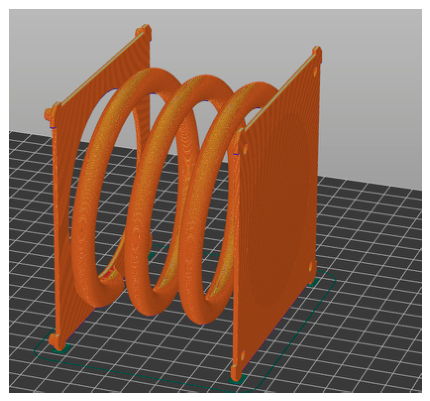
35] collectively advance the understanding of how processing conditions, print orientation, and structural parameters influence the performance of additively manufactured materials, providing essential guidelines for improving additive manufacturing processes and results. Taking these remarks into account, the printing parameters were chosen accordingly. The plate was oriented parallel to the applied forces, as this orientation provides improved properties in operation. Thus, the orientation of the two plates during manufacturing is illustrated in
Figure 13.
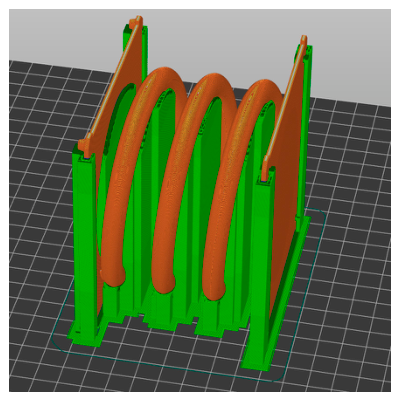
3.2. Support Structures
Support structures were generated to anchor the fixing and push plates to the build platform, maintain recoater-safe overhangs, and limit plate-edge lifting during the thermal cycles of LPBF (
Figure 14) [
36].
The support strategy was selected to provide sufficient stiffness during the manufacturing, while remaining mechanically removable after printing. Supports were generated in Autodesk Netfabb 2024 using a standard metal LPBF line/volume support strategy beneath the low-angle spring and plate regions, with local stiffening near the plate edges. The overhang criterion was set to 45 degrees, consistent with common LPBF practice for surfaces requiring support below this angle. The Netfabb analysis reported a support volume of 76,795.461 mm3, corresponding to approximately 50% of the total solidified volume. Discrete point-contact diameter and support-line spacing were not exported in the Netfabb analysis report and are therefore not reported separately. These settings are relevant because the support density and exposure parameters directly affect the heat conduction, residual stress, surface quality, and removal effort.
3.3. Model Preparation for the LPBF Manufacturing Process Simulation
Manufacturing process simulations are increasingly employed to highlight the defect formation in manufacturing and to optimize process parameters. They also provide a comprehensive framework for evaluating the stability of the LPBF process and can significantly improve the manufactured part quality.
Finite Element Analysis (FEA) employs thermo-mechanical models to evaluate melt-pool-related thermal loading, solidification behavior, and residual stress accumulation at the part scale. The impact of various process variables can be assessed before physical experiments, reducing material waste and manufacturing costs. The LPBF simulation was employed mainly as a design-support tool to locate regions susceptible to thermal displacement, residual stress, and distortion before fabrication, thereby improving the reliability and efficiency of the printing process. Because no experimental residual-stress measurements were performed, the residual-stress predictions are interpreted qualitatively.
The model includes a discrete mesh representation of the powder layer and substrate, with boundary conditions set to mimic the real-world manufacturing LPBF environment. Key input parameters are the laser power, the scan speed, the hatch spacing and the layer thickness. These parameters can also be adjusted on the printer that will be employed to manufacture the part (see
Section 3). The results of this study will contribute to refining the selection of LPBF parameters, ultimately increasing the reliability of the additive manufacturing of metal components.
The part-scale LPBF simulation was configured in ANSYS Workbench 2022 R2 with the same principal process parameters employed during fabrication: laser power 200 W, scan speed 1200 mm/s, hatch spacing 0.13 mm, and layer thickness 0.040 mm (
Table 2). The heat input was represented using a single moving Goldak-type heat-source formulation, and then a coupled transient thermal–structural analysis was available to estimate the thermal gradients, residual stress, and distortion. Inherent strain was disabled. The build settings used a dwell time of 10 s, dwell-time multiplier of 1.0, thermal strain scaling factor of 1.0, baseplate preheat of 100 °C, gas and powder temperatures set to the preheat temperature, gas and powder convection coefficients of 10 W/m
2K, and powder property factor of 0.01. Cooldown was defined as occurring at a room temperature of 22 °C, with the gas and powder temperatures set to the room temperature. The exposure energy fraction was not modified from the default value of 1.0; explicit absorptivity and emissivity values were not separately defined in the ANSYS Additive setup.
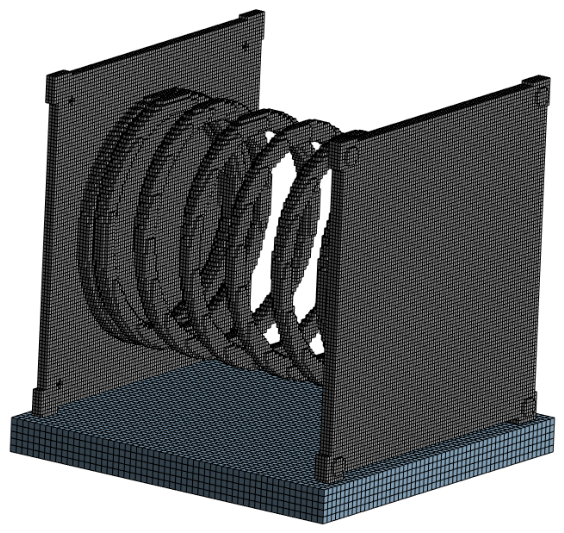
The simulation model was built to encompass the powder bed, the build plate, and the surrounding environment, as shown in
Figure 15. To tune the solver efficiency with the numerical accuracy, the discretization strategy employed variable element sizes. High-density meshing was applied to the melt pool and heat-affected zones to resolve the rapid thermal cycles and the resulting mechanical stress.
The computational domain was discretized for part-scale LPBF thermo-mechanical simulation employing a structured voxel-based hexahedral mesh. The model contained 210,547 nodes and 115,300 elements, with linear Hex 8 and quadratic Hex 20 elements used where appropriate. The nominal element edge length was 1.0 mm × 1.0 mm × 1.0 mm, and the voxel size was 1.0 mm. A 50% voxel volume-fraction acceptance threshold was set, and the voxel display/mesh-quality check was performed before solving. These values are reported because mesh size and voxelization quality affect predicted thermal gradients, residual stress, and distortion.
Goldak distribution was chosen for the simulation of the heat source since it was necessary to mimic the shape of the laser beam. The boundary conditions were determined in accordance with the real manufacturing conditions. It was necessary to consider the influence of the manufacturing parameters, such as laser power, scanning speed, convection coefficient and the solid–liquid phase change.
All the preparation stages are summarized in
Table 3.
Before the full thermo-mechanical simulation was performed, reduced-complexity trial runs were completed to identify preprocessing and solver-readiness errors. The checks included geometry watertightness, baseplate contact, support connectivity, isolated voxel detection, boundary-condition orientation, material-property assignment, and solver convergence on a shortened layer sequence. The Autodesk Netfabb 2024 automatic analysis reported that the mesh was appropriate: the surface was closed and orientable, with 0 holes, 0 flipped triangles, 0 boundary edges, and 0 bad edges. The final preprocessing checks therefore focused on confirming the baseplate contact, support connectivity, material assignment, and boundary-condition orientation before the complete model was solved. After improvements, the full model was rerun with the final geometry and process parameters.
3.4. Manufacturing Simulation Results
This approach includes three interrelated steps: thermo-mechanical process modeling, physical manufacturing on an MPRINT machine, and subsequent dimensional control. The main outputs are the temperature history, thermal displacements, and stress and strain maps, as well as the dimensional accuracy of the final part evaluation. These outcomes provide a global assessment of the differences between the analytical calculations and the measured dimensions of the spring assembly, indicating that the proposed design is manufacturable using LPBF.
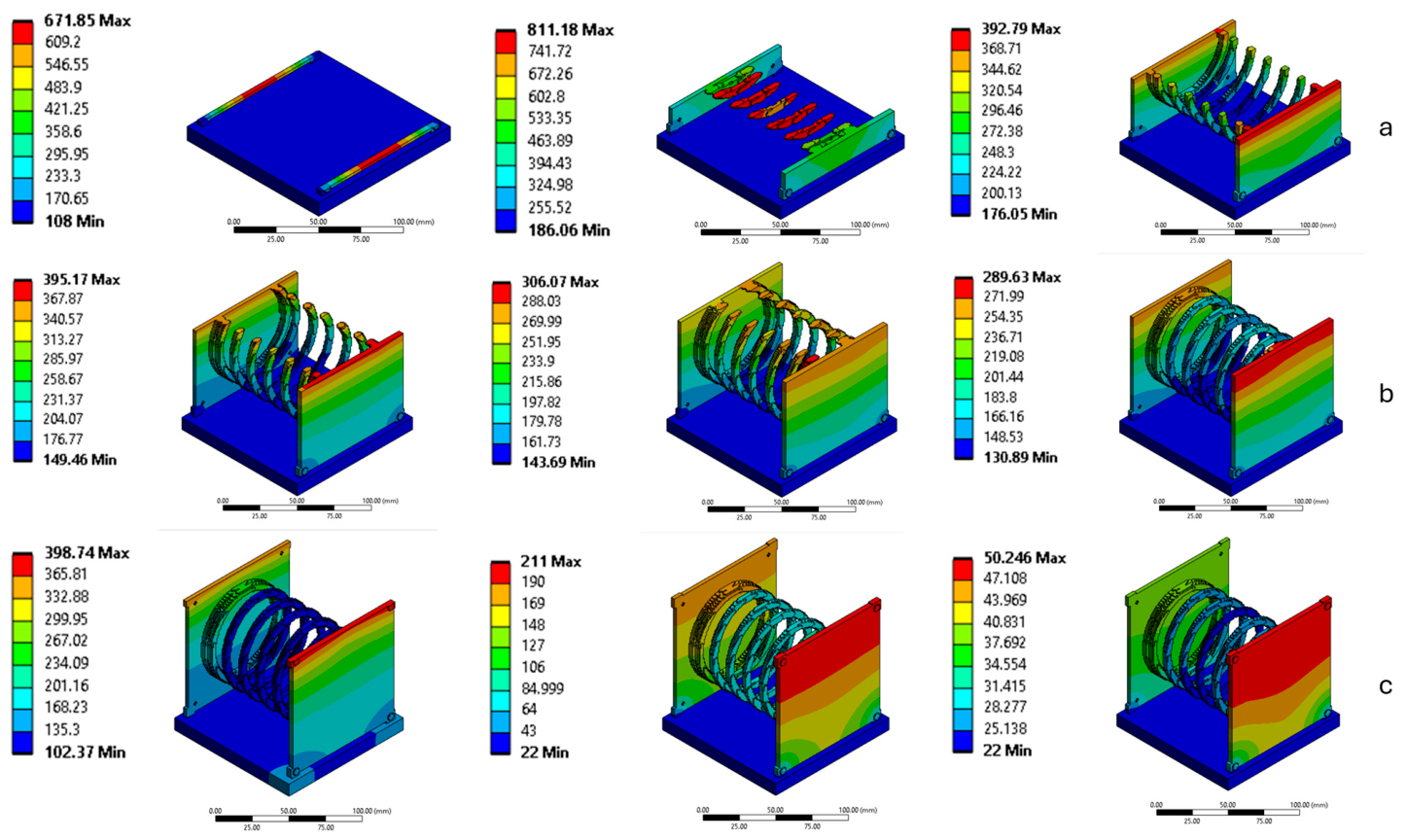
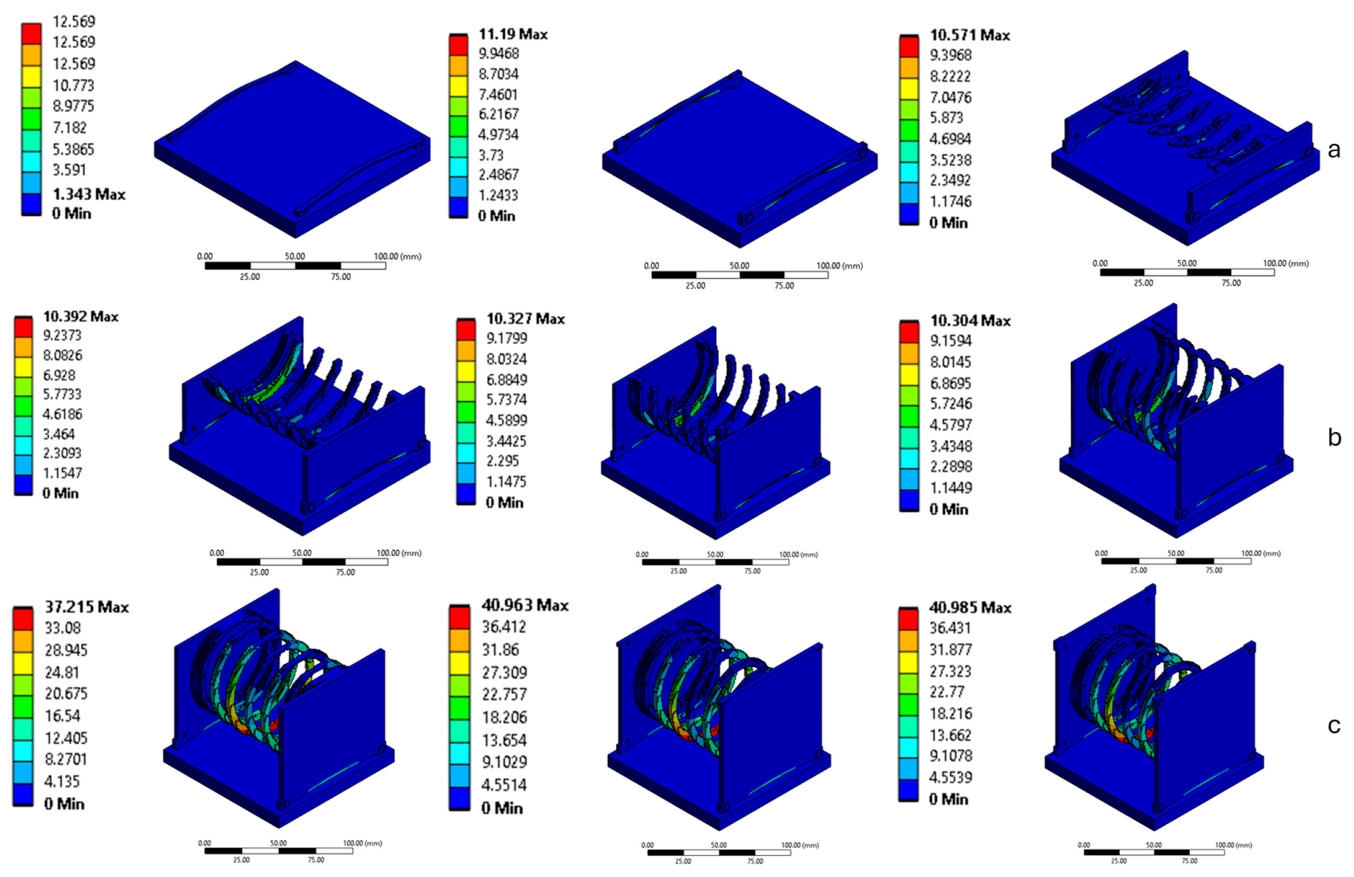
Results of the transient thermal simulation of the LPBF process are shown in
Figure 16a–c, where successive time-steps have been processed.
3.5. Stress and Strain Analysis
After the manufacturing process simulation, a coupled thermal–structural analysis was performed to capture the displacement, stress, and strain generated during the LPBF manufacturing process and to highlight the areas where residual stress and geometrical errors occur.
Figure 17 illustrates the layer-by-layer generation of the assembly. During the first-layer formation, a tiny plate distortion appears near the contact points with the base plate. When the spring coils are fully generated, displacement extends through the coil and plate regions, leading to warping and deformation of the spring assembly.
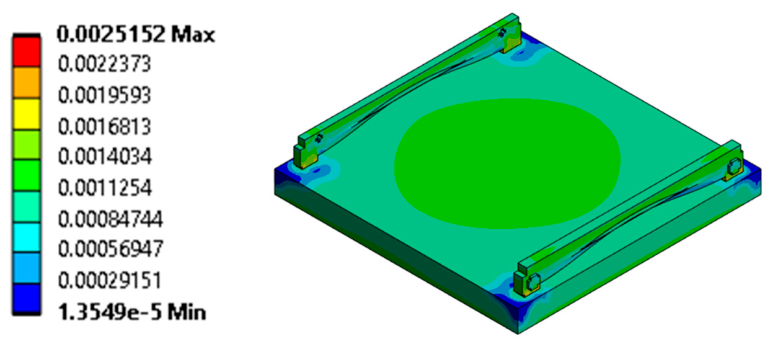
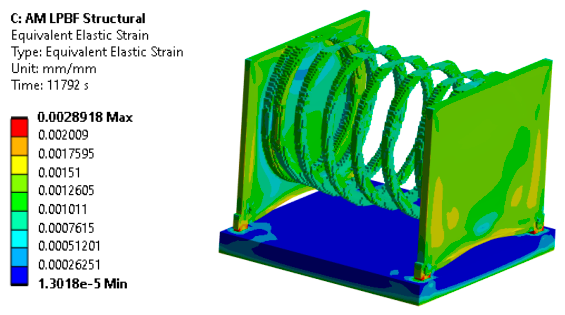
The elastic strain shown in
Figure 18 indicates early deformation associated with the geometry at the two-point baseplate fixture from the very beginning of the LBPF simulation. The maximum strain is 0.25% relative to the undeformed shape. Although the value is still far from the maximum elongation of the material (
Table 1), it indicates the areas where the distortions will appear.
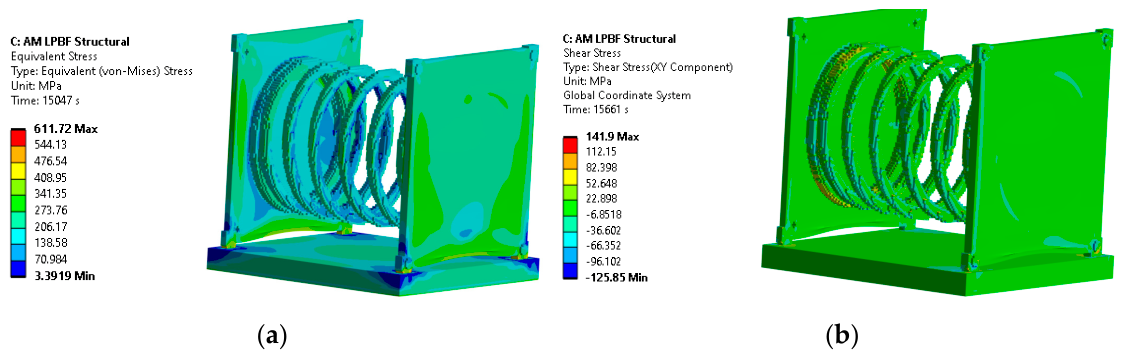
The high equivalent von Mises stress of 611 MPa (
Figure 19a) exceeds the yield strength of 316L from powder material (450–550 MPa—
Table 1). The presence of the residual stress after the LPBF process is confirmed. The shear stress remains low (141.9 MPa) and does not raise concern (
Figure 19b).
The maximum elastic strain during the printing process (
Figure 20) reaches 28%, higher than the safe elongation limit of 20% (
Table 1), also indicating the warping of the side plates in the contact area with the base plate, which requires heat treatment as a crucial post-processing step for LPBF manufacturing.
4. Manufacturing Process
The physical prototype was manufactured from 316L stainless steel powder with a particle size distribution of 15–45 micrometers using a One Click Metal MPRINT LPBF system (One Click Metal GmbH, Tamm, Germany). According to the manufacturer’s specifications, the MPRINT system provides a standard build volume of 150 mm × 150 mm × 150 mm, a 200 W fiber laser, a nominal 70 micrometer focus diameter, layer heights from 20 to 80 micrometers, and operation under Nitrogen or argon inert gas [
37]. For the present build, the chamber was filled with Nitrogen gas to limit oxidation, and the process parameters were set to 200 W laser power, 1200 mm/s scan speed, 0.13 mm hatch spacing, and 0.040 mm layer thickness. The selected parameter set is consistent with fundamentals and review literature showing that laser power, scan speed, hatch spacing, layer thickness, and scan strategy govern the density, microstructure, surface finish, and residual stress in selective laser melting (SLM)/LPBF parts [
38,
39]. Post-processing included mechanical removal of the support structure and bead blasting to improve surface finish. No stress-relief heat treatment was applied before the initial geometric inspection so that the measured warping corresponded to the as-built and support-removed condition. The 316L powder was supplied by (Sandvik Osprey Ltd, Neath, Wales) under a Certificate of Analysis. The powder size range was [
15,
16,
17,
18,
19,
20,
21,
22,
23,
24,
25,
26,
27,
28,
29,
30,
31,
32,
33,
34,
35,
36,
37,
38,
39,
40,
41,
42,
43,
44,
45] μm and the atomization gas was Nitrogen. The measured apparent density was 4.2 g/cm
3, tap density was 4.8 g/cm
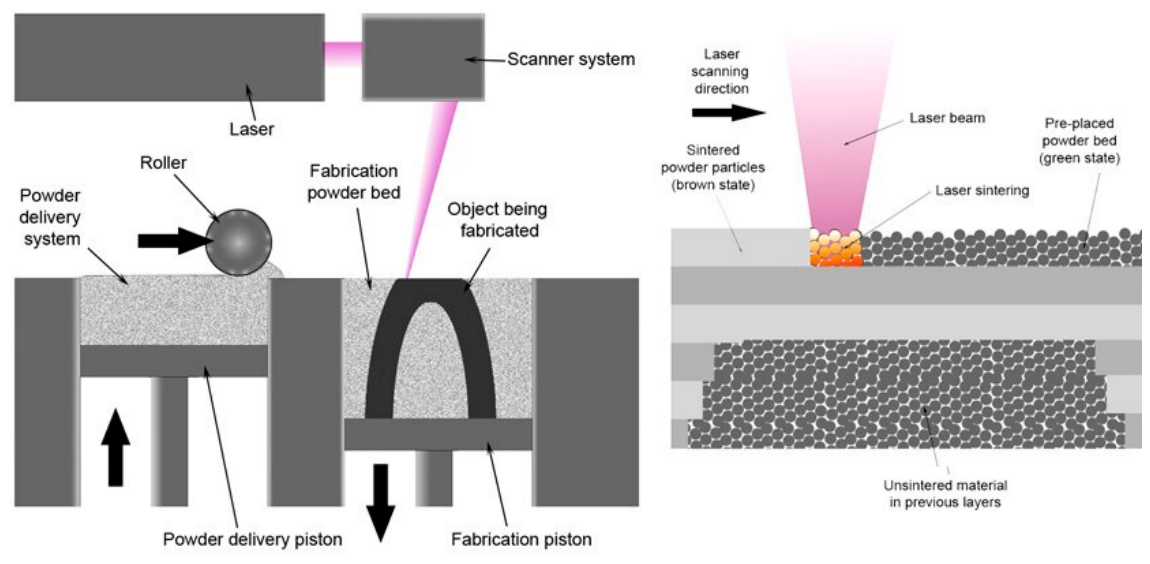
3, and Hall flow was 15.3 s/50 g. Laser diffraction yielded d10 = 23.2 micrometers, d50 = 33.8 micrometers, and d90 = 49.1 micrometers. The chemical composition was Cr 16.8%, Ni 10.5%, Mo 2.2%, Mn 1.29%, Si 0.67%, P 0.02%, C 0.019%, and S 0.005%, with Fe balance. Machine calibration was performed before production by checking the build-plate level, laser focus/power verification, oxygen/inert-gas sensor, and recoater as standard pre-build checks. The operating principle of the LPBF machine is shown in
Figure 21.
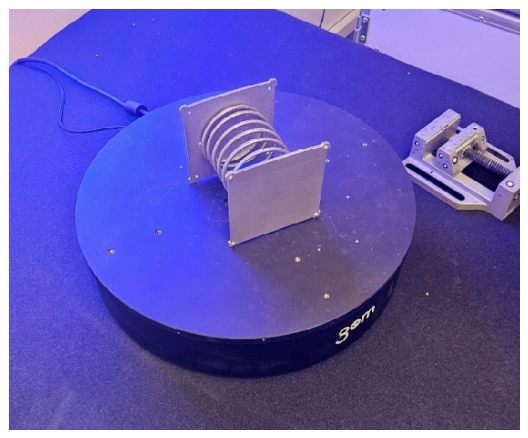
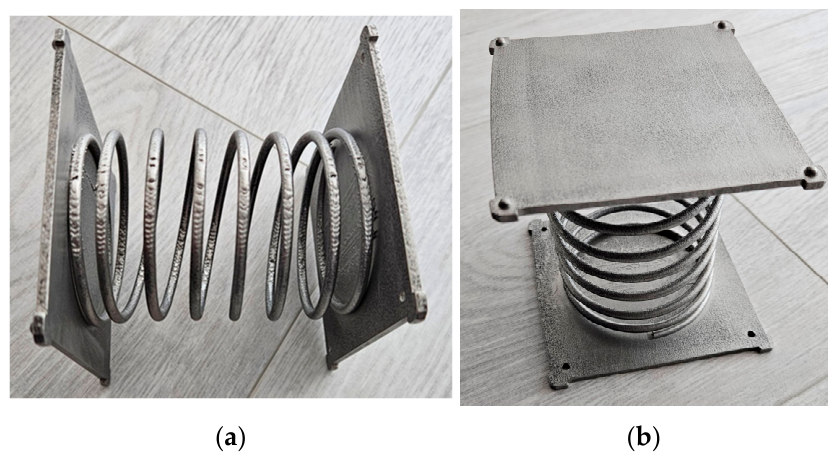
The spring prototype was manufactured and post-processed with the support removal, and the bead blasting for surface finishing is illustrated in
Figure 22.
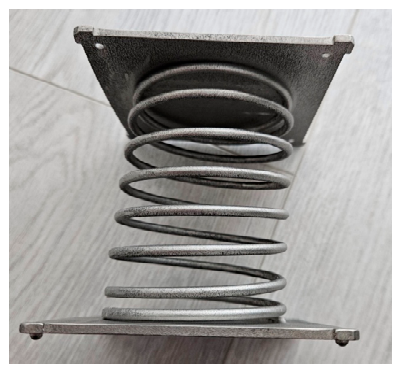
Figure 23 shows the integrated fixing plate, spring, and push plate from a longitudinal viewpoint.
5. Verification of the Fabricated Assembly
This section evaluates the global deviations in the manufactured prototype to identify major distortions from the designed shape. The precision of the inspection results depends on the device accuracy, reverse engineering algorithm, and measurement technique.
The implementation of optical metrology, specifically using ZEISS systems, establishes a robust framework for component verification. This non-contact technique allows for a granular, point-by-point superposition of the manufactured geometry over the original CAD model [
41]. Precise spatial mapping is essential for quantifying the deviations in form and dimension, revealing the subtle distortions or shrinkage that traditional measurement tools often overlook. These insights create a critical feedback loop, enabling data-driven process optimization. Furthermore, as a non-destructive inspection (NDI) method, it validates the component’s fidelity without compromising the structural integrity, thereby improving the repeatability and reducing the development timeline [
41,
42].
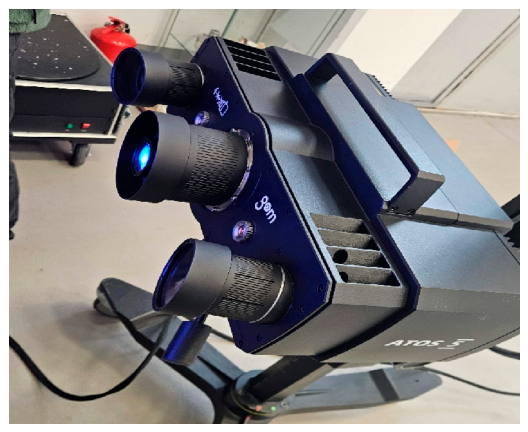
To ensure data validity, the scanning workflow included controlled mounting, multi-angle data acquisition on a rotary device, calibration with certified metrological standards, and CAD-to-scan alignment using ZEISS Inspect Optical 3D 2025 software. ATOS 5 is a structured-blue-light industrial scanner that can acquire up to 8 or 12 million measuring points/scan, with an 880 mm working distance for the ATOS 5 configuration, and an integrated monitoring of the calibration status, measurement accuracy, environmental changes, and part movement [
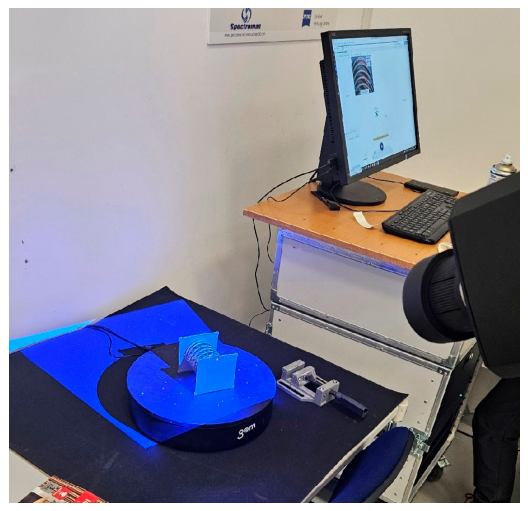
43]. The geometric verification was performed using a ZEISS ATOS 5 high-resolution scanner (
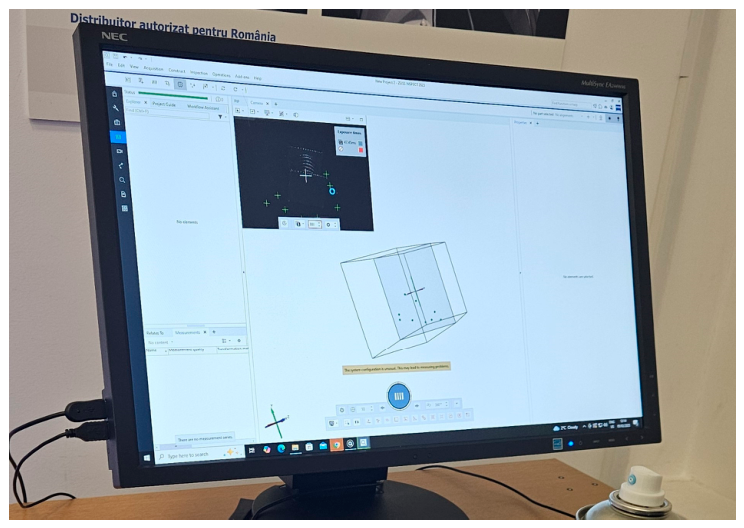
Figure 24), with the experimental setup depicted in
Figure 25.
The scanning workflow included controlled mounting, multi-angle acquisition on a rotary table, calibration with certified metrological standards, and CAD-to-scan alignment in ZEISS Inspect 2023. The measurements were performed with a ZEISS ATOS 5 system [
42] using a 12M sensor, MV320 measuring volume (320 mm × 240 mm), and F = 12 mm blue-light objective. The system was calibrated according to VDI/VDE 2634 Part 3 [
44] under controlled laboratory conditions (20.8 °C +/− 0.2 °C, 42% relative humidity). The accepted verification errors were 0.005 mm for the probing form, +0.006 mm for the probing size, 0.014 mm for sphere spacing, and 0.008 mm for flatness, all within the corresponding maximum permissible errors, according to the calibration certificates of the equipment. For the MV320 configuration with a 12M sensor, the point spacing is approximately 0.08 mm; the exact number of individual scans was not exported in the calibration certificate and is therefore reported as multi-angle rotary-table acquisition rather than a fixed scan count.
To minimize the specular reflection from the metallic surface, the part was coated with a sublimating anti-reflective spray (
Figure 26). The captured point cloud was polygonised and aligned to the original CAD geometry using the best-fit algorithm to quantify the global dimensional deviations and to minimize the positional difference between the two data sets.
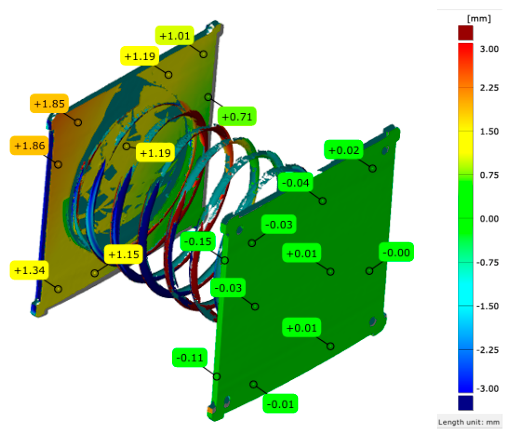
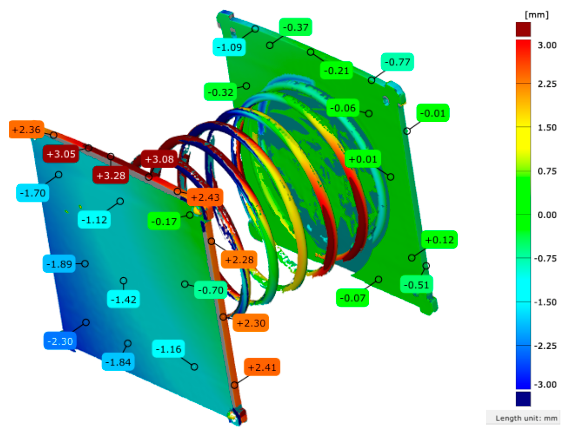
The unstructured point cloud was converted into STL. The deviation was calculated for each surface node relative to the nominal CAD surface. The final color-coded deviation map (
Figure 27) identifies regions with excess material in warm colors and material deficit in cool colors.
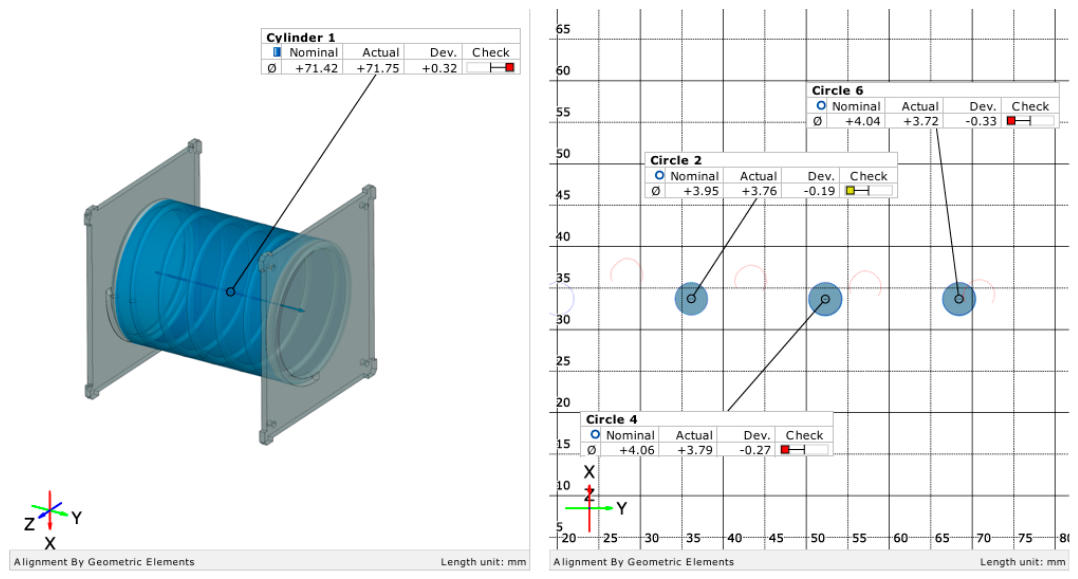
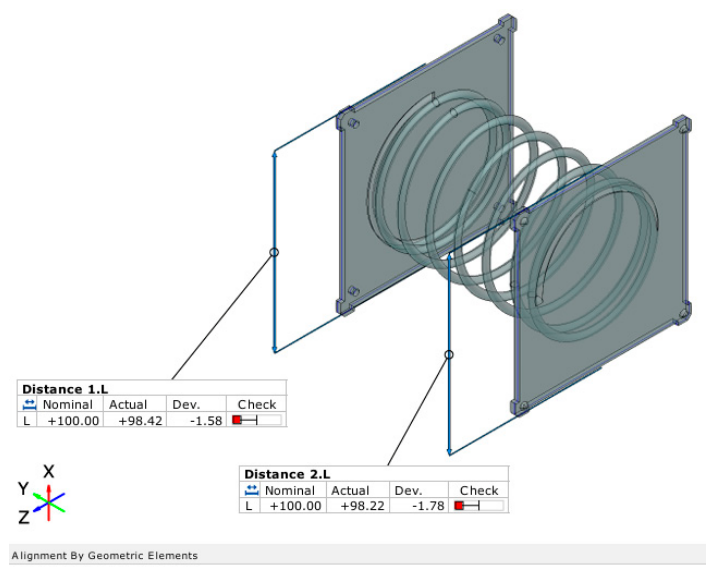
The measurement report from the scan is illustrated in
Figure 28.
Figure 29 illustrates the geometric fidelity, with global deviations within 2% for the height and the diameter.
Additional warping information, including +3.28 mm/−2.30 mm corner deviations, is presented in
Figure 30.
Figure 30 highlights the measured support-plate dimensions, while
Figure 31 summarizes the principal dimensional deviations. The deviation maps show local contraction and expansion regions, with the largest measured distortion concentrated at the support-plate corners after support removal.
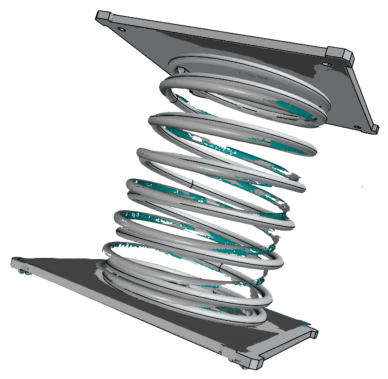
Figure 32 illustrates an overlap of the designed launch mechanism and the scanned part.
The geometric verification (summarized in
Table 4) proved that the main envelope dimensions remained close to the nominal CAD geometry. Results indicate that local features and plate-like regions are more sensitive to LPBF thermal history than the global envelope dimensions.
6. Discussion of the Results
6.1. Synthesis of the Prototype Verification
For this research, one LPBF spring assembly was available. That is why the study was focused on the analytical sizing, FEM simulation of the assembly response, simulation of the LPBF process using CAE, evaluation of the manufacturing strategy, and optical geometric examination. Early-stage CubeSat mechanism and AM inspection studies frequently separate the design from the manufacturing process validation and from later qualification stages [
17,
21,
41,
42]. The verification scope is summarized in
Table 5.
6.2. Geometric Deviation and Simulation Accuracy
Optical metrology verification indicated that the main envelope dimensions of the LPBF-fabricated spring mechanism remain close to the dimensional range required for assembly integration. The feature-level measurements are important characteristics: the height and outer diameter remained below 3%, aligning closely with the thermo-mechanical model’s calculations, caused by the thermal gradients and the residual stress accumulation. However, the wire diameter and plate warping did not satisfy the same threshold. The measured wire-diameter deviation indicates that local circular features are sensitive to as-built surface roughness, bead blasting, scanner alignment, and possible over- or under-melting. The side plate warping is consistent with the residual-stress mechanisms widely reported for metal powder bed fusion, where steep thermal gradients and constrained cooling generate distortion after support removal [
13,
45,
46]. This denotes that the simulation provides useful qualitative guidance for locating high-risk distortion zones, indicating how the analytical sizing, combined with the kinematic analysis, can guide the design iterations for sound CubeSat deployers. Since the residual stresses were not experimentally measured, this evaluation is interpreted qualitatively. The FEM simulation also estimates the size of the geometrical errors, as well as the elastic force and the safety limit of the spring.
6.3. Mitigation of the Support-Plate Warping
The analysis of the support-plate warping suggests several mitigation solutions for the next design iterations: increasing or redistributing support stiffness at the plate corners, adding temporary sacrificial ribs, applying stress-relief heat treatment before the support removal, using build-plate preheating where available, compensating the CAD geometry with inverse distortion offsets, and locally modifying the scan strategy or contour exposure near the plate edges. These mitigation strategies have to be tuned with the added material-consumption and removal-effort penalties. A more rigid support may reduce distortion but increase the post-processing effort and may damage the surface of the assembly.
6.4. Contributions
The engineering and methodological contribution of the present approach is the documented connection between passive CubeSat deployer spring sizing, build orientation, LPBF process simulation, prototype manufacturing, and geometric inspection. The workflow combines analytical calculation, FEM simulation of the spring behavior as well as of the LPBF manufacturing process, and optical verification of the geometry. The validation was focused on manufacturability, dimensional accuracy, and workflow feasibility.
The proposed spring mechanism provides a cost-effective option for customized prototypes, with a numerically controlled force assessment (54.9 N). Literature on LPBF for stainless steel components reports distortions that can be higher in unfavorable build orientations. For the present prototype, the height and outer-diameter deviations remained below 3%, although the wire-diameter deviation and local plate warping still require mitigation. No references have been found for the aerospace spring assemblies used for deployers to be manufactured in horizontally oriented layers.
Moreover, the integration of the new features of AM simulation into the methodology of the LPBF design process meets the recommendations for defect calculation, reducing material waste and remaining compatible with a staged hardware-verification approach employed in NASA/ESA-compatible development workflows. This supports LPBF as a candidate method for customized aerospace prototypes when flexibility and rapid iteration are more important than low unit costs.
6.5. Economic Considerations for LPBF Springs vs. Commercial Springs
From an economic perspective, LPBF is an expensive substitute for a standard commercial off-the-shelf (COTS) compression spring, but microsatellite deployers require custom-made geometries available on request, which significantly increase the cost of the spring.
Cost and aerospace AM studies emphasize that the reason for metal AM is often not the unit-price reduction, but rather the mass reduction, unique design solutions, part consolidation, reduced lead time, rapid design–fail–fix cycles, and supply-chain flexibility for low-volume high-value hardware [
47,
48,
49,
50].
For CubeSat deployers, this distinction is crucial. A COTS spring is only one component of the mechanism; the complete deployer still requires end plates, guide interfaces, stops, retainers, fasteners, and controlled tolerances for ensuring assembly operation. LPBF becomes economically and technically relevant when these functions can be integrated into a compact mission-specific subassembly or when the spring geometry must be adapted to a constrained satellite envelope. In such cases, the high LPBF manufacturing cost is counterbalanced by the reduced tooling, fewer assembly operations, faster iterations, and avoidance of a larger deployer redesign [
51].
In addition to geometric feasibility, LPBF is most defensible for its customized, low-volume, tightly packaged deployer architectures rather than for replacing inexpensive standard catalog springs. The economic and qualification advantages must therefore be evaluated at the complete mechanism level.
6.6. Limitations
Despite the research findings, several limitations have to be acknowledged. The study relied on a single prototype, without post-build stress-relief heat treatment, which could further reduce the residual stress and warping, as suggested in LPBF optimization literature. Simulation assumptions, such as constant acceleration and a friction coefficient of 0.61, may not fully capture the real-world parameters, such as the variable satellite masses or the environmental factors (e.g., vacuum or radiation in space). Additionally, the lack of statistical data regarding multiple designs may limit the generality of the approach.
Furthermore, this study did not include cyclic fatigue testing of the additively manufactured spring. In the context of CubeSat missions, deployment mechanisms are often categorized as single-motion devices, similar to solar array unfolding systems, that are required to activate only once to release the payload. Even so, fatigue or repeated-actuation testing remains relevant before qualification because it can reveal manufacturing defects, stress-concentration sensitivity, or degradation after handling and ground testing.
The absence of a stress-relief heat treatment, which can reduce dimensional instability after the support removal, is another limitation. For an elastic component such as a spring, heat treatment can also modify the effective stiffness and force–displacement response. However, the current approach dissociates the effect of the geometric distortion induced by the manufacturing process from the effect of the post-processing treatment on the mechanical response.
Other perspectives may include cost-effective, custom deployers for small satellite missions, potentially lowering barriers for educational and research CubeSats. In aerospace, small dimensional deviations can impact the mission success. This work highlights the potential role of LPBF in supporting customized mechanism development.
6.7. Future Work
The present study is limited to a single prototype, with the geometric envelope and product development process documented as a workflow, as described. To address the limitations mentioned, a qualification campaign will be carried out. This approach will include force–displacement measurements, stiffness characterization, repeatability testing across multiple builds, heat-treatment comparison, fatigue assessment, and environmental simulation.
AI-integrated real-time monitoring during the build process could also help to adjust parameters dynamically and to reduce defect formation.
An investigation of a wider range of design options may also be helpful. Non-cylindrical spring geometries such as variable-pitch springs, barrel-shaped springs, conical springs, hourglass (clepsydra) springs, disc springs, or flat springs [
52] could be manufactured using LPBF at no added tooling cost because the process allows for greater geometric flexibility. The use of topological optimization techniques is another perspective for finding more efficient spring designs for deployers from 1U to 6U. The drawback of this perspective is that the mechanical properties of these springs are not as easy to estimate from analytical models as those of conventional helical springs.