1. Introduction
Binder jetting (BJ) has emerged as a promising additive manufacturing technique for producing complex components with relatively low thermal distortion and high material efficiency [
1,
2,
3,
4]. Unlike powder bed fusion processes, BJ forms structures through selective binder deposition without melting the powder, thereby avoiding large thermal gradients and residual stresses [
5,
6]. This feature makes it particularly attractive for applications in aerospace, tooling, and biomedical engineering, where dimensional stability and scalability are required [
7,
8,
9,
10].
Despite these advantages, achieving consistent dimensional accuracy and structural integrity in BJ remains challenging [
11,
12,
13,
14]. A critical step is the infiltration of binder droplets into the porous powder bed, which determines particle bonding and feature formation [
15,
16,
17]. After impact, a droplet undergoes rapid spreading, followed by wetting and capillary-driven penetration into the pore network [
18]. This process involves coupled fluid transport across multiple length scales and is highly sensitive to both material properties and process parameters, making it difficult to control in practice [
19,
20,
21,
22].
Previous studies have investigated droplet behavior in porous media using both experimental and numerical approaches [
23,
24,
25,
26]. Early modeling efforts frequently adopted simplified pore-scale representations, such as regularly packed particles or equivalent capillary-channel networks, which were shown to be effective for resolving the fundamental mechanisms of droplet spreading and capillary-driven infiltration at the pore scale while maintaining computational efficiency [
27]. These idealized structures enable controlled investigation of individual physical parameters; however, they cannot fully reproduce the geometric disorder, polydispersity, and stochastic connectivity that characterize real gas-atomized powder beds.
To address these limitations, more recent studies have employed computational fluid dynamics methods, particularly the Volume of Fluid (VOF) framework, to resolve interface evolution during droplet impact and penetration within reconstructed porous domains [
25]. These investigations demonstrated that pore-scale geometry strongly influences infiltration depth and spreading morphology, highlighting the importance of realistic pore connectivity for quantitative prediction. Nevertheless, most existing studies primarily examined single-droplet infiltration behavior, whereas the interaction between adjacent droplets deposited with finite spacing—an essential factor governing line formation and structural continuity in binder jetting—remains insufficiently quantified [
28].
In practical BJ processes, droplets are deposited in arrays with finite spacing, and their interaction plays a decisive role in determining whether continuous binder tracks can be formed. Droplet spacing directly controls the degree of overlap between adjacent droplets and therefore regulates the balance between lateral spreading on the powder bed surface and vertical capillary-driven infiltration into the pore network. When the spacing is sufficiently large, droplets tend to infiltrate independently, resulting in discontinuous binder distribution and weak inter-particle bonding between neighboring deposition points. In contrast, reducing droplet spacing increases the overlap region between adjacent droplets and promotes the formation of continuous liquid bridges along the printing direction. Previous studies have demonstrated the importance of spacing-controlled droplet interaction from both experimental and numerical perspectives. For example, Colton and Crane [
23] showed that decreasing droplet spacing significantly enhances overlap between adjacent droplets during line formation and improves bonding continuity within printed tracks. More recently, Lawrence et al. [
24] reported that strong droplet interaction not only increases lateral connectivity but also intensifies capillary-driven penetration into the powder bed, which may lead to excessive infiltration and reduced dimensional accuracy when spacing becomes too small. These findings indicate that droplet spacing plays a dual role in controlling both spreading morphology and penetration behavior.
Despite these advances, existing studies have primarily focused on macroscopic line formation behavior or surface spreading characteristics, while the pore-scale mechanisms governing spacing-controlled infiltration and droplet interaction inside realistic porous powder structures remain insufficiently quantified. In particular, a systematic understanding of how droplet spacing influences the transition from independent infiltration to cooperative penetration within interconnected pore networks is still lacking.
To address this issue, droplet infiltration in a porous powder bed is investigated using a simplified face-centered cubic (FCC) model combined with a VOF-based multiphase flow framework. Both single- and dual-droplet configurations are considered to examine the transition from isolated infiltration to coupled behavior. Particular attention is given to how droplet spacing governs the evolution of spreading, merging, and capillary-driven penetration. The remainder of this paper is organized as follows.
Section 2 describes the numerical methodology,
Section 3 presents the simulation setup,
Section 4 discusses the results, and
Section 5 concludes the study.
2. Numerical Methodology
2.1. Reconstruction of Porous Powder Bed
To represent droplet infiltration under realistic process conditions, a three-dimensional porous powder bed was constructed based on the geometric characteristics of the powder used in binder jetting.
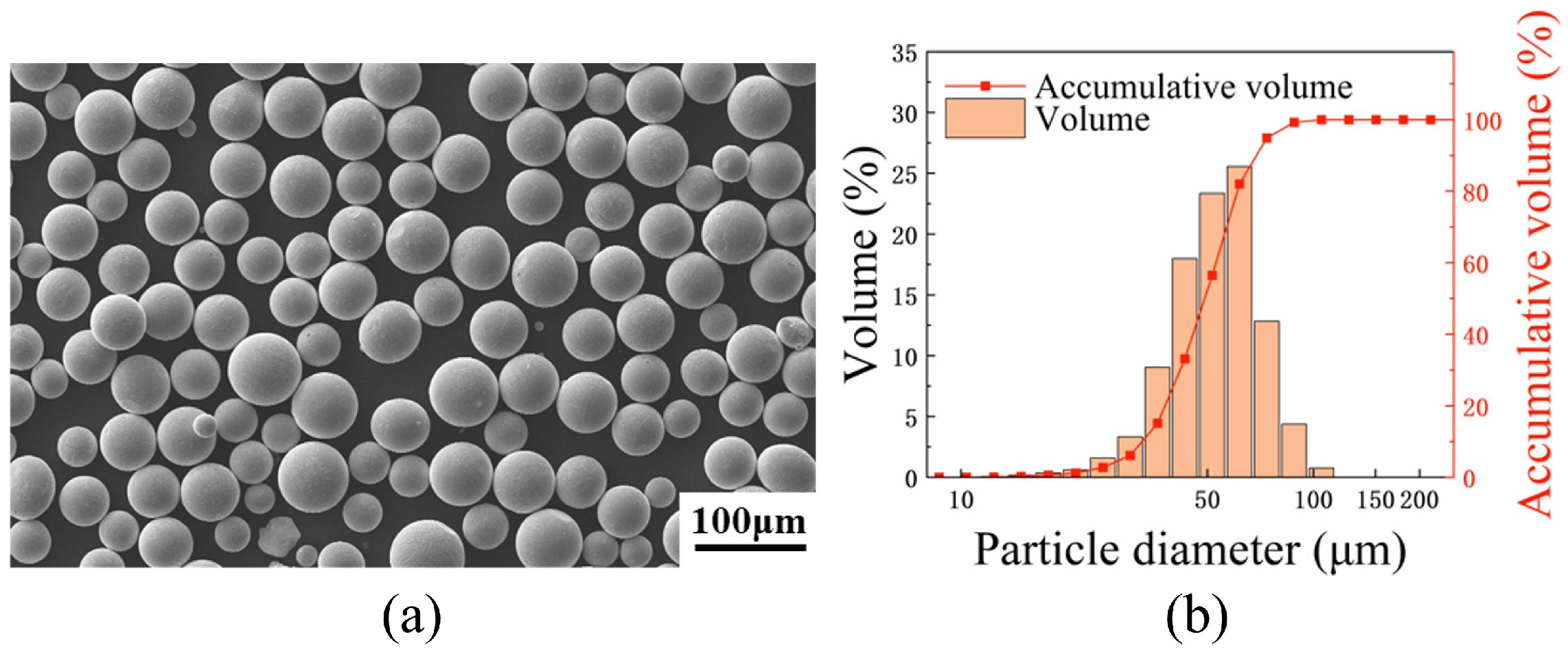
Figure 1 illustrates the morphology of the 316L stainless steel powder (Guangyi New Materials Co., Ltd., Maoming, China) used in this study. The particles are predominantly spherical with relatively smooth surfaces, and the average particle diameter is approximately 54 μm, which is consistent with typical gas-atomized powders. Such morphology facilitates uniform spreading during recoating and leads to the formation of a connected pore network.
Based on experimental measurements of the spread powder layer under the same recoating conditions used in the printing process, the average packing density of the powder bed was approximately 71.6%. This relatively high packing density is attributed to the predominantly spherical morphology and narrow particle-size distribution of the gas-atomized powder (
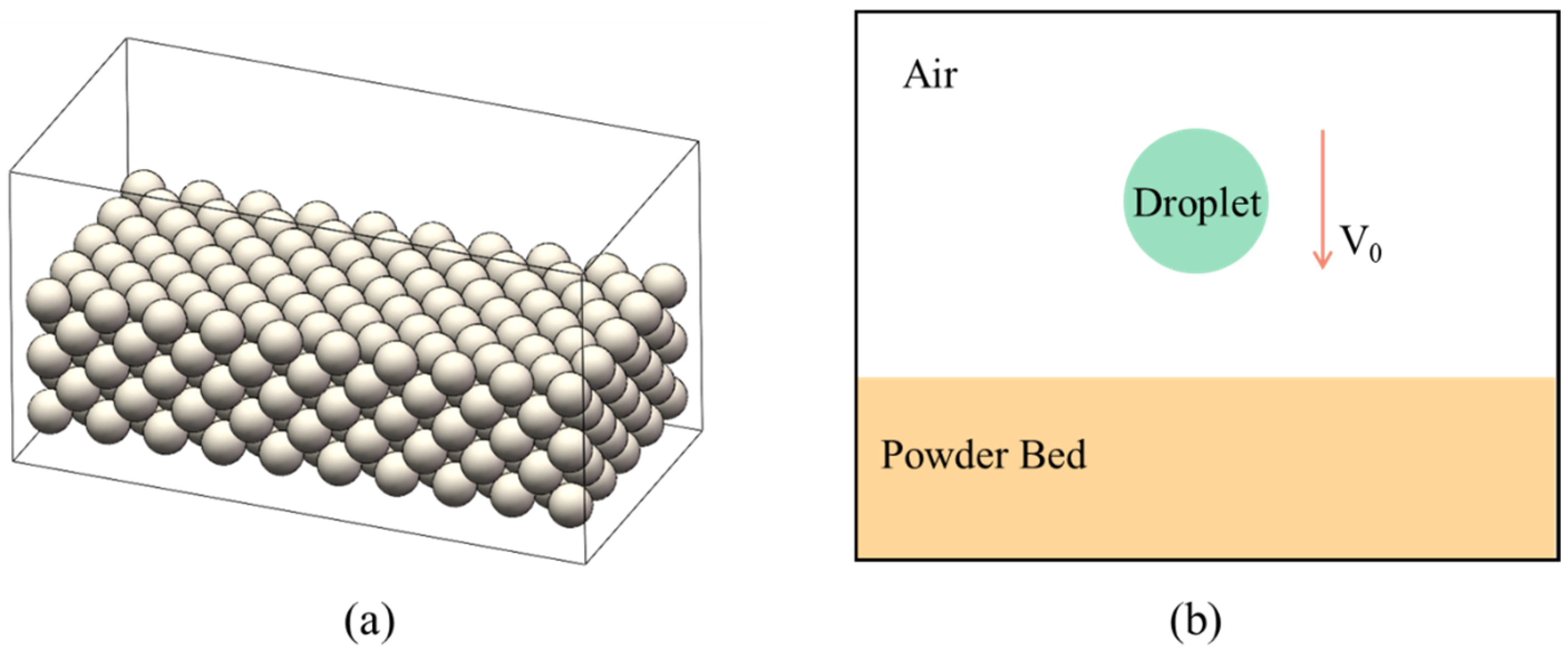
Figure 1), which facilitate particle rearrangement during spreading and lead to improved packing efficiency compared with random loose packing structures. The measured packing density is therefore close to the theoretical value of a face-centered cubic (FCC) structure (~74%), suggesting that, despite local disorder in the real powder bed, the overall packing characteristics can be reasonably approximated by an ordered configuration with comparable density and pore connectivity. Accordingly, an FCC-based arrangement was adopted to reconstruct the powder bed, as illustrated in
Figure 2a. The model consists of spherical particles with a diameter of 54 μm arranged in five layers. The lateral extent (5 × 10 particles in the top layer) was selected to accommodate droplet spreading and interaction while minimizing boundary effects.
Although the reconstructed powder bed adopts an FCC-based arrangement as an idealized representation of the pore structure, real gas-atomized powder beds typically exhibit local disorder and particle-size distribution effects that may influence pore connectivity and capillary transport pathways. In the present study, the FCC configuration is employed to provide a controlled pore-scale framework that preserves the key geometric characteristics governing capillary-driven infiltration, including the representative pore size scale and inter-particle connectivity. This simplified structure allows the influence of droplet spacing on infiltration behavior to be systematically examined without introducing additional uncertainty associated with stochastic packing variations. The extension of the present model to random or polydisperse packing structures will be considered in future work.
2.2. Multiphase Flow Formulation
The interaction between the binder droplet and the surrounding air was modeled using the Volume of Fluid (VOF) method, which is well suited for resolving immiscible multiphase flows with large interface deformation. In the present problem, VOF enables direct tracking of the liquid–gas interface during droplet impact, spreading, and subsequent infiltration into the pore network.
As illustrated in
Figure 3, the computational domain consists of three phases: liquid binder, surrounding air, and a stationary solid particle framework. The flow is assumed to be incompressible and laminar, which is appropriate given the characteristic droplet size and velocity in binder jetting. Surface tension, which plays a dominant role in capillary-driven infiltration, is incorporated using the continuum surface force (CSF) model. A geometric reconstruction scheme is employed to maintain a sharp interface and reduce numerical diffusion during transient evolution.
2.3. Governing Equations
The flow field is governed by the incompressible continuity and momentum equations:
where
is the velocity vector,
is pressure, and
and
represent the effective density and viscosity of the fluid, respectively, which were evaluated based on the local phase volume fraction, allowing a smooth transition across the liquid–gas interface. The surface tension force
F was modeled using the CSF formulation.
2.4. Numerical Solution Procedure
The governing equations were solved using a finite-volume framework implemented in ANSYS Fluent (2024 R1). A transient pressure-based solver was employed to resolve the full evolution of droplet impact, spreading, and infiltration. Pressure–velocity coupling was handled using the SIMPLE algorithm, and second-order discretization schemes were applied for both spatial and temporal terms.
To accurately capture rapid interface deformation during impact, the time step was set in the range of 10−7–10−6 s. An interface compression scheme was applied to maintain a sharp liquid–gas interface and to limit numerical diffusion. Convergence at each time step was monitored by residual reduction below 10−5. In addition, the conservation of liquid volume was checked throughout the simulation, and the deviation was maintained within ±1%, indicating good numerical stability.
To assess the sensitivity of the results to mesh resolution, a grid independence study was conducted. The variation in key quantities, including spreading width and penetration depth, was within 5% with further mesh refinement, confirming that the selected mesh provides a reasonable balance between accuracy and computational cost.
3. Simulation Setup
3.1. Computational Domain and Boundary Conditions
The computational domain consists of the reconstructed powder bed and an air region above it, as shown in
Figure 2b. The height of the air region was set to 800 µm (approximately four times the initial droplet diameter), providing sufficient space for droplet acceleration and interface deformation prior to impact while avoiding artificial boundary effects from the pressure outlet. The lateral dimensions of the domain were selected to minimize boundary-induced constraints on droplet spreading and infiltration behavior.
The top boundary was defined as a pressure outlet to allow air displacement during droplet impact. The side and bottom boundaries were treated as no-slip walls. This setup ensures that the droplet can evolve without artificial confinement, while maintaining numerical stability in the vicinity of the porous structure.
3.2. Mesh Generation
The computational domain was discretized using a non-uniform mesh with local refinement in regions where strong gradients are expected. In particular, finer cells were applied near the droplet impact region and within the inter-particle pores to resolve interface deformation and flow in narrow channels.
The total number of cells is on the order of 106, which provides sufficient resolution for capturing pore-scale flow features while maintaining computational efficiency. Away from the impact region, a coarser mesh was used to reduce the overall computational cost.
3.3. Initial and Physical Conditions
At the initial stage, a spherical droplet was positioned above the powder bed with a prescribed downward velocity of 4 m·s−1, corresponding to typical jetting conditions in binder jetting systems. The droplet diameter was set to 100 μm, which is consistent with the characteristic binder droplet size commonly reported in binder jetting processes and also matches the experimental printing conditions used in this study.
The surrounding domain was initialized as air, and the initial velocity field was set to zero except for the droplet. Gravity was included in the simulation, although its influence is secondary compared with inertial and capillary forces during the early stage of impact.
The binder was modeled as an incompressible Newtonian fluid with constant physical properties. The density, viscosity, and surface tension used in the simulations are summarized in
Table 1. The static contact angle between the binder and powder particles was set to 65°, representing moderate wettability observed from binder spreading behavior on the powder surface and obtained based on preliminary spreading observations of binder droplets deposited on the powder bed surface.
3.4. Simulation Cases
To systematically examine the role of droplet spacing, two categories of simulation cases were considered. The single-droplet case was used to establish the baseline infiltration behavior, including spreading, wetting, and capillary-driven penetration.
The dual-droplet configuration was introduced to investigate interaction effects under different spacing conditions. The spacing was defined as the center-to-center distance between adjacent droplets projected onto the powder bed surface. A series of spacing values, including 0, 50, 100, 150, 200, and 250 μm, was examined to capture the transition from isolated droplet behavior to strong interaction. This range covers the full spectrum of interaction regimes encountered in practical binder jetting, enabling systematic analysis of how droplet spacing controls the redistribution of liquid flow and the resulting infiltration morphology.
3.5. Evaluation Metrics
To quantify infiltration behavior, several characteristic parameters were extracted from the simulations. The spreading width (W) was defined as the maximum lateral extent of the droplet on the powder bed surface, while the penetration depth (h) was defined as the maximum vertical distance reached by the liquid phase within the pore network.
In addition, the spatial distribution of the liquid phase was used to evaluate infiltration morphology. For dual-droplet cases, the formation of a continuous liquid bridge between adjacent droplets was taken as an indicator of interaction strength. These metrics provide a consistent basis for comparing different spacing conditions and for relating numerical results to experimentally observed deposition behavior.
4. Results and Discussion
4.1. Infiltration Behavior of a Single Droplet
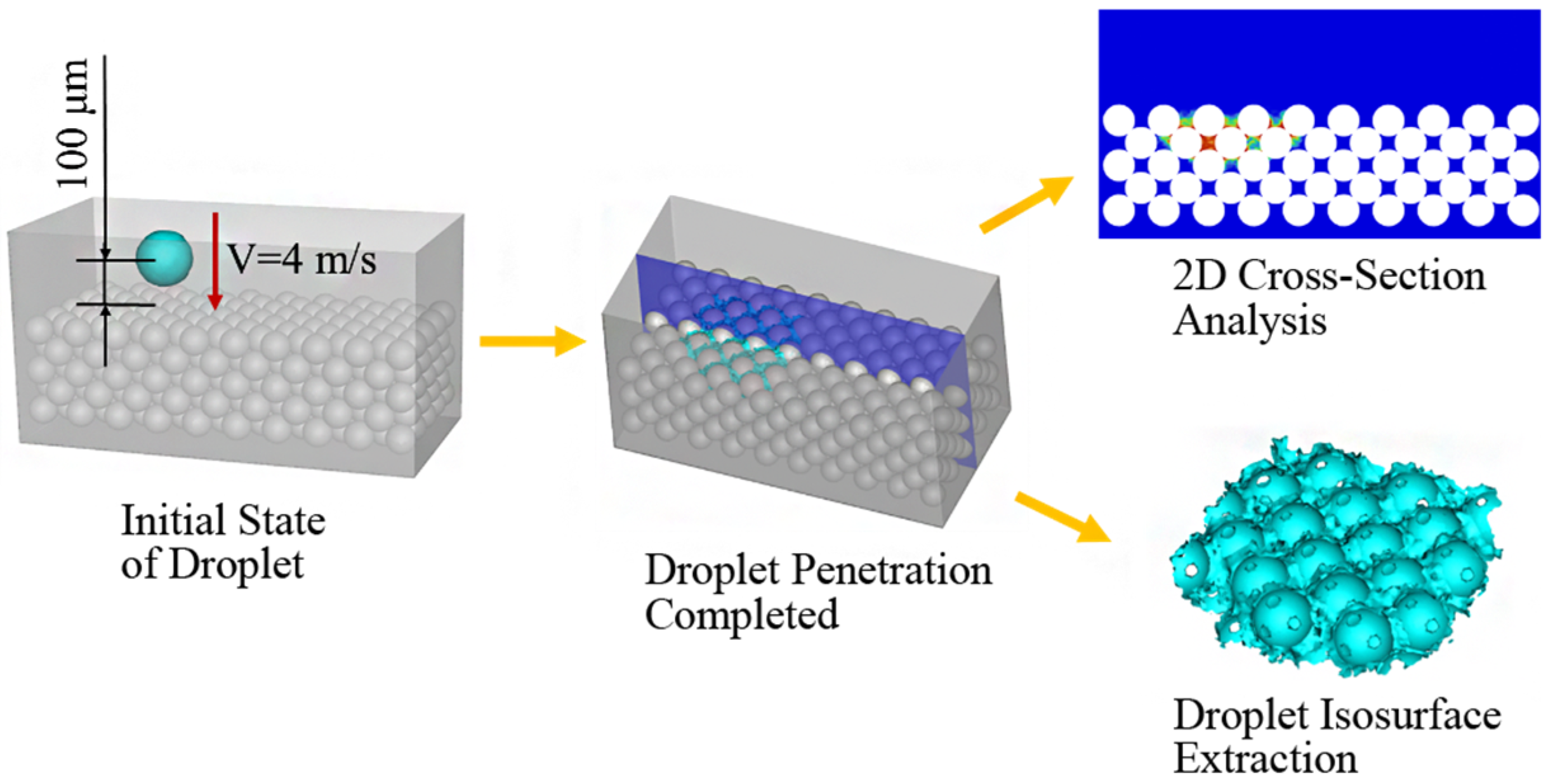
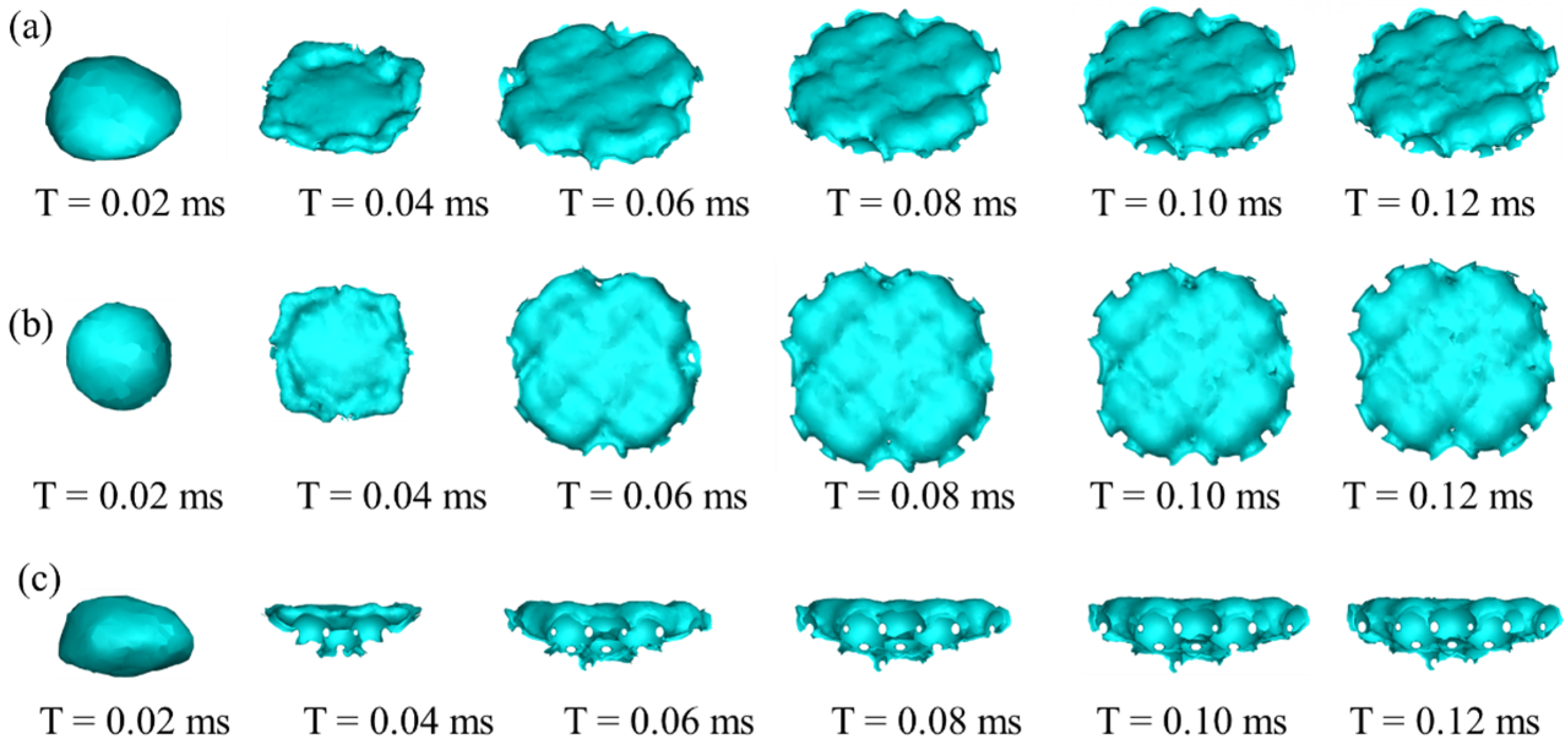
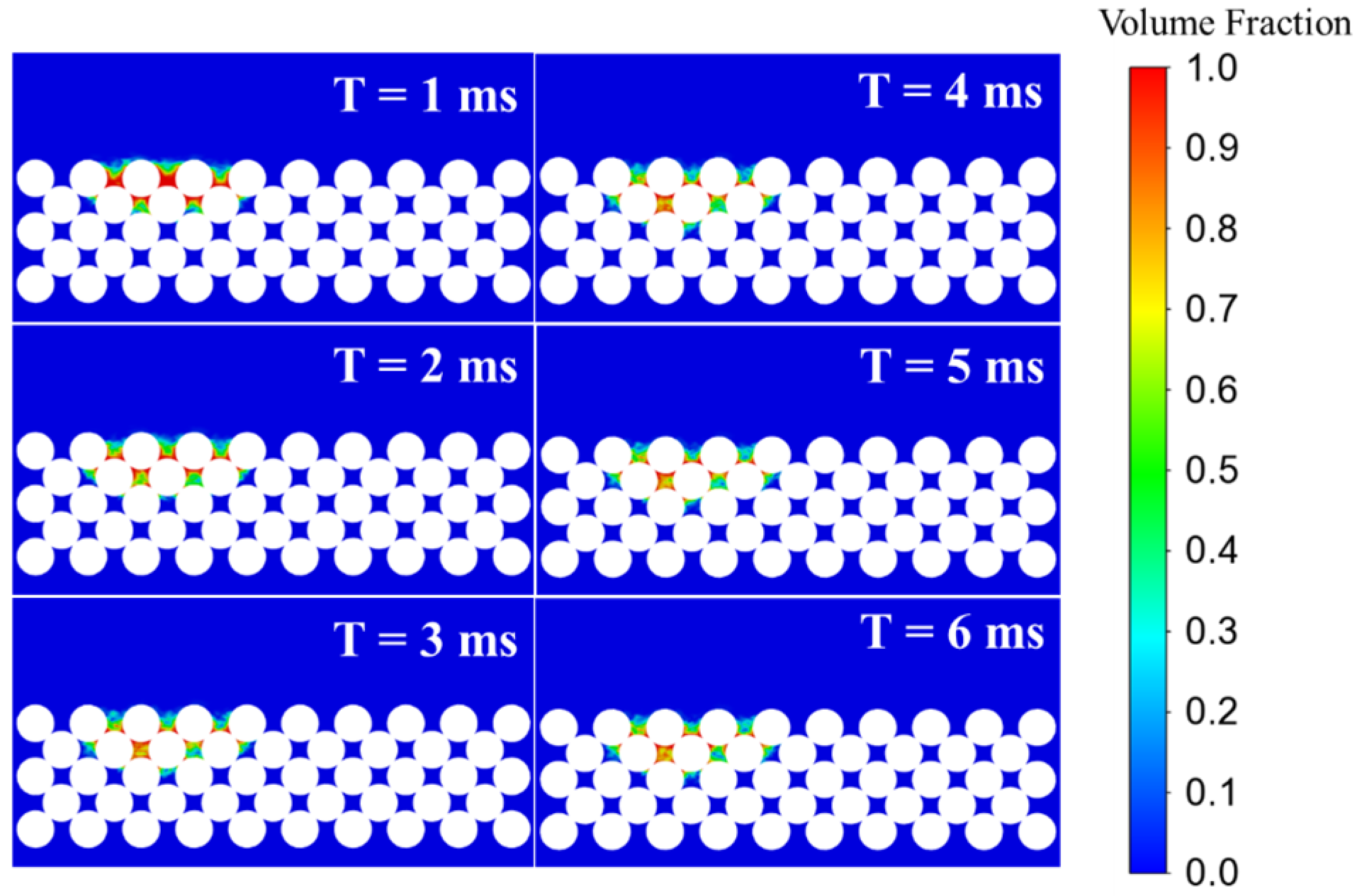
The infiltration of a single droplet in the porous powder bed exhibits a clear transition in flow behavior, evolving from impact-driven spreading to capillary-controlled penetration. This evolution can be interpreted by combining the morphological evolution in
Figure 4, the phase distribution in
Figure 5, and the quantitative trends in
Figure 6.
At the initial stage (T ≈ 0.02 ms), the droplet approaches the powder surface with a nearly spherical shape. Upon impact, rapid deformation occurs, and the liquid spreads radially along the particle layer. As shown in the top view of
Figure 4, the advancing front is irregular rather than axisymmetric, with local protrusions forming along preferential directions. This behavior is associated with the discrete contact points between particles, where variations in pore opening locally disturb the flow field.
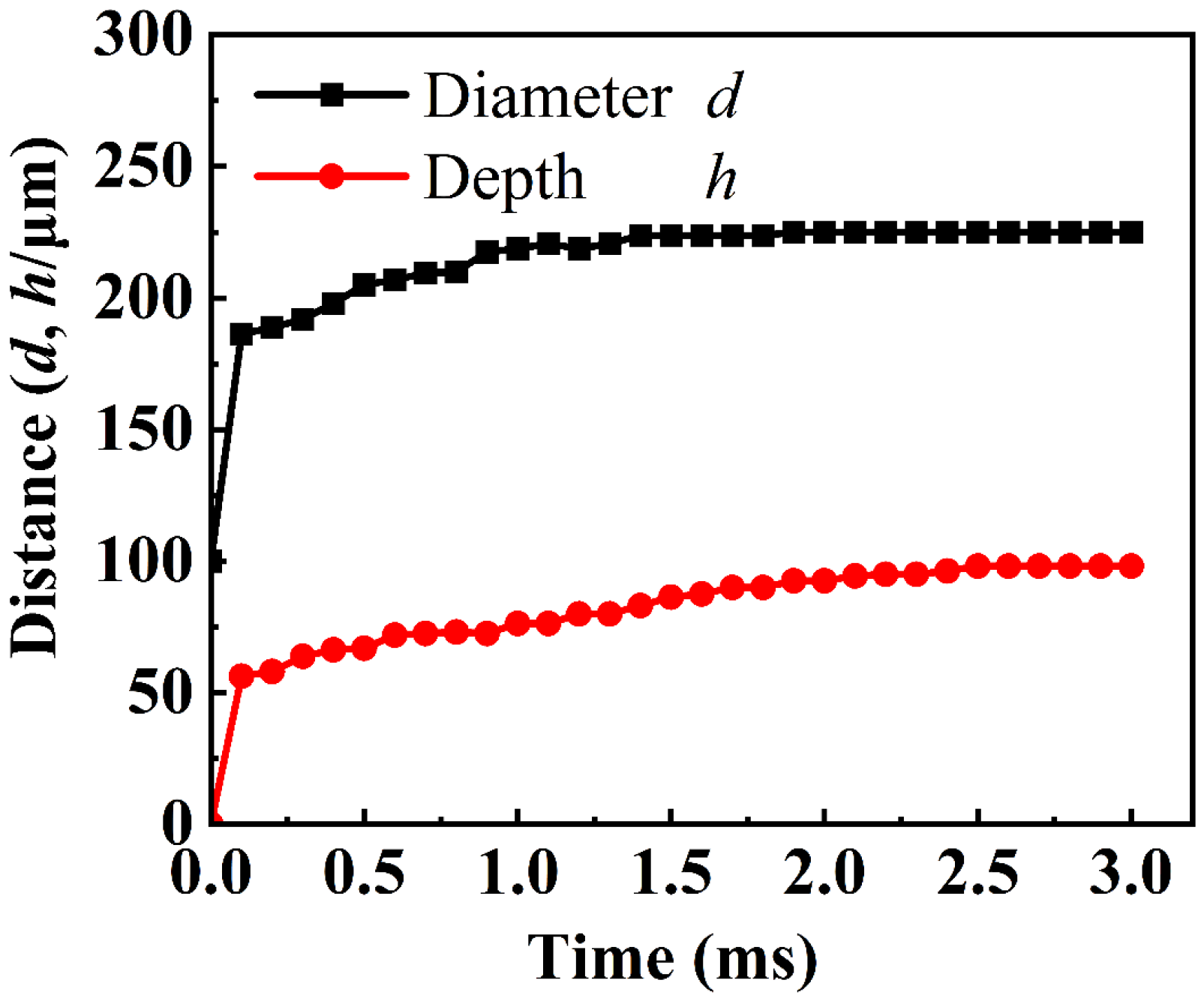
During the early spreading stage (T ≈ 0.04–0.06 ms), the droplet expands rapidly and reaches its maximum lateral extent. The spreading diameter increases sharply to approximately 220–230 μm, as indicated in
Figure 6. At this stage, the liquid remains largely confined to the upper particle layer, and only limited penetration into the pore space is observed in
Figure 5. The flow is therefore dominated by inertial effects, with capillary forces playing a secondary role.
As the droplet velocity decreases (T ≈ 0.06–0.08 ms), the spreading rate diminishes and vertical penetration becomes more pronounced. The side view in
Figure 4 shows the formation of liquid bridges between adjacent particles, while
Figure 5 reveals the development of localized infiltration pathways. These pathways are not uniformly distributed but follow preferential routes determined by pore connectivity, indicating the increasing influence of capillary forces.
At later times (T ≥ 0.10 ms), the droplet thickness continues to decrease, while the penetration depth increases steadily. The penetration depth reaches approximately 100 μm and continues to grow over a longer time scale, as shown in
Figure 6. The liquid phase becomes dispersed within the pore network, and the infiltration front appears fragmented, reflecting the heterogeneous structure of the powder bed.
A comparison of the temporal evolution of spreading diameter and penetration depth in
Figure 6 highlights the decoupled nature of the process. The spreading diameter stabilizes within approximately 1 ms, whereas the penetration depth continues to increase beyond 3 ms. This difference indicates that lateral spreading and vertical infiltration are governed by distinct mechanisms, with inertia dominating the early stage and capillary forces controlling the later stage.
4.2. Infiltration Behavior of Dual Droplets
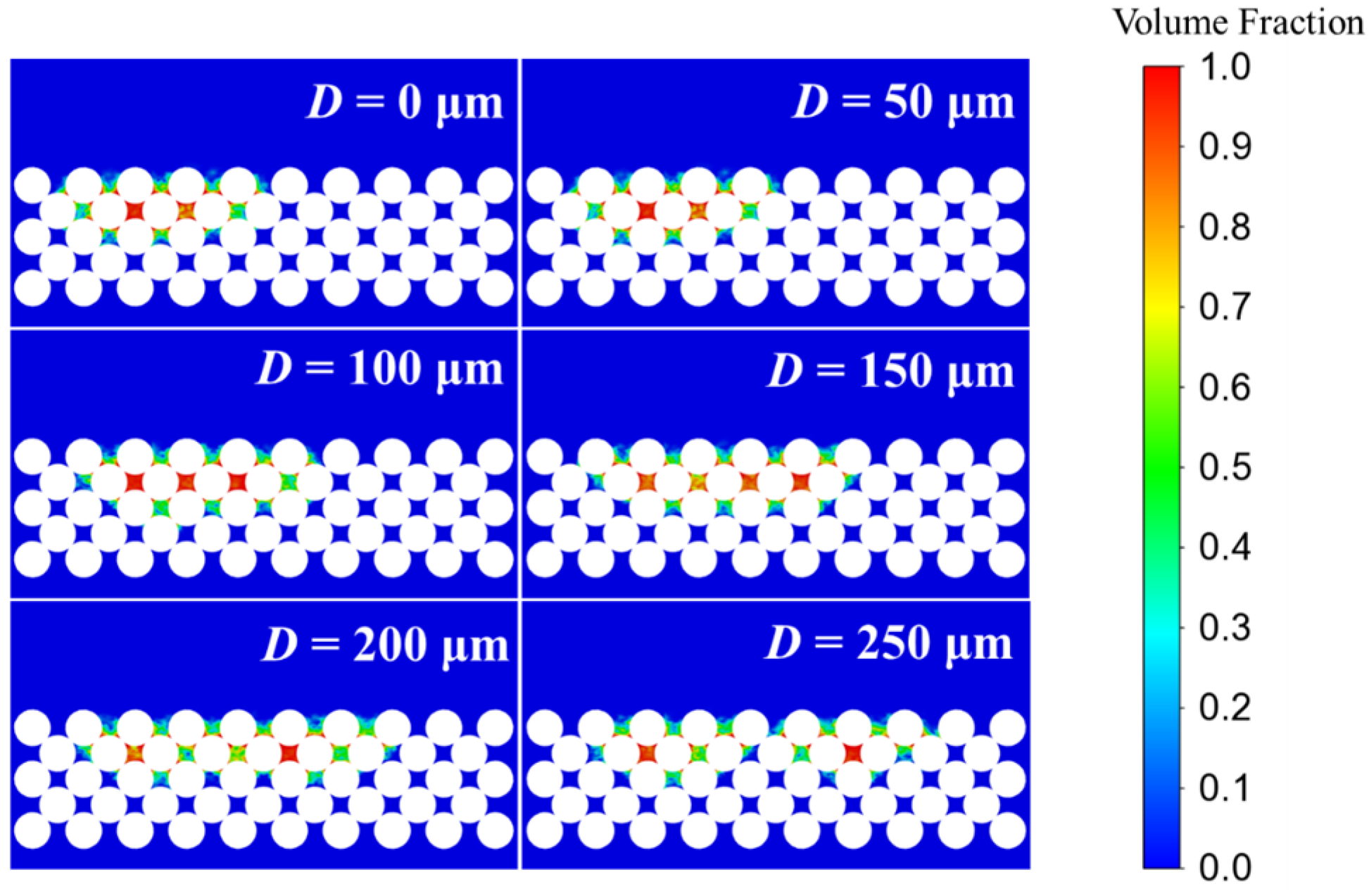
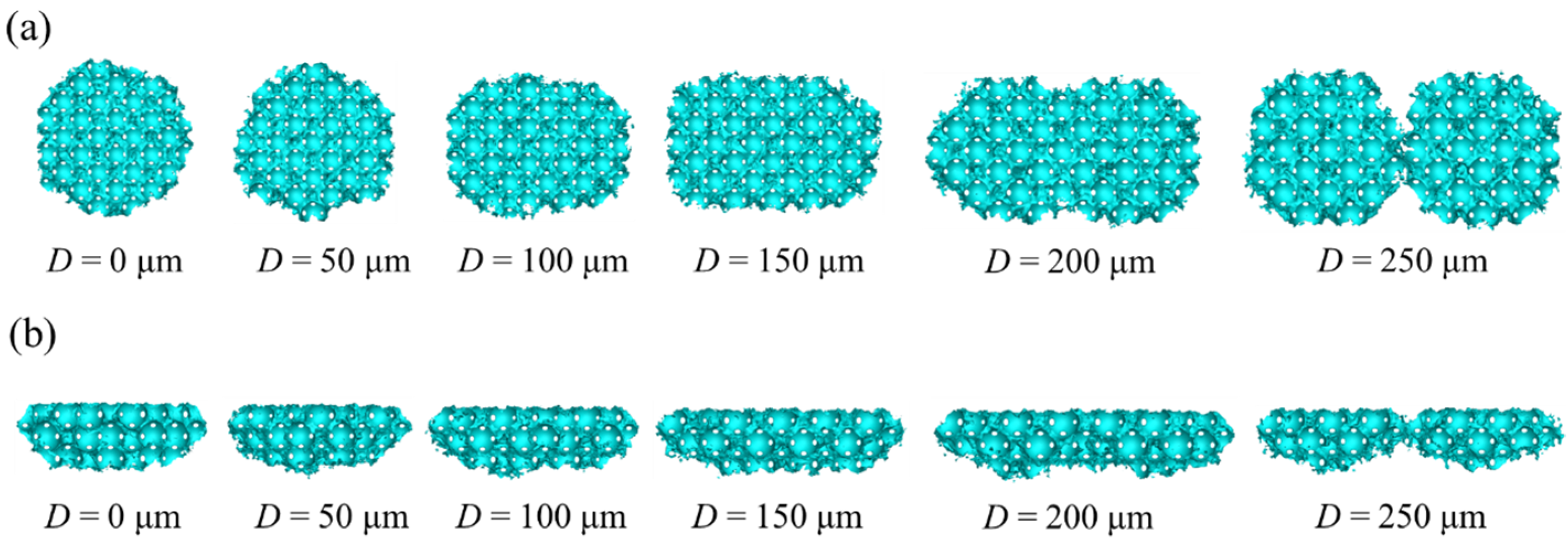
The interaction between adjacent droplets introduces additional complexity to the infiltration process and plays a critical role in determining deposition continuity. The evolution of dual-droplet infiltration under different spacing conditions is illustrated in
Figure 7 and
Figure 8.
When the droplet spacing is relatively large (D ≥ 200–250 μm), the two droplets evolve independently after impact. As shown in
Figure 7, the liquid phases remain spatially separated, and no overlap occurs between the infiltration zones. The corresponding morphology in
Figure 8a confirms that two isolated wetted regions are formed. In this regime, each droplet follows a behavior similar to that of a single droplet, resulting in discontinuous binder distribution.
At an intermediate spacing (D ≈ 150 μm), the spreading fronts of adjacent droplets begin to interact. As shown in
Figure 7, a continuous liquid region forms between the droplets, indicating the onset of merging. This is further confirmed in the top view of
Figure 8a, where a connected wetted area is observed. The side view in
Figure 8b shows that the penetration depth remains moderate compared with smaller spacing cases.
This regime is characterized by a balance between lateral spreading and capillary-driven penetration. Droplet merging enhances connectivity while maintaining controlled infiltration depth, which is beneficial for forming stable printed structures.
When the spacing is further reduced (D ≤ 100 μm), strong interaction leads to significant overlap of liquid volumes. As shown in
Figure 7, liquid accumulates in the central region, forming a highly saturated zone. The side view in
Figure 8b indicates a noticeable increase in penetration depth.
This behavior can be attributed to the increase in local capillary pressure due to liquid accumulation. The enhanced capillary driving force promotes deeper penetration into the pore network, while lateral spreading is suppressed. As a result, the infiltration process becomes dominated by vertical flow, leading to over-penetration.
Overall, three distinct interaction regimes can be identified based on droplet spacing: (i) independent infiltration at large spacing, (ii) cooperative merging at intermediate spacing, and (iii) over-penetration at small spacing. These regimes reflect a transition from isolated droplet behavior to strongly coupled flow within the porous medium.
4.3. Effect of Droplet Spacing on Infiltration Characteristics
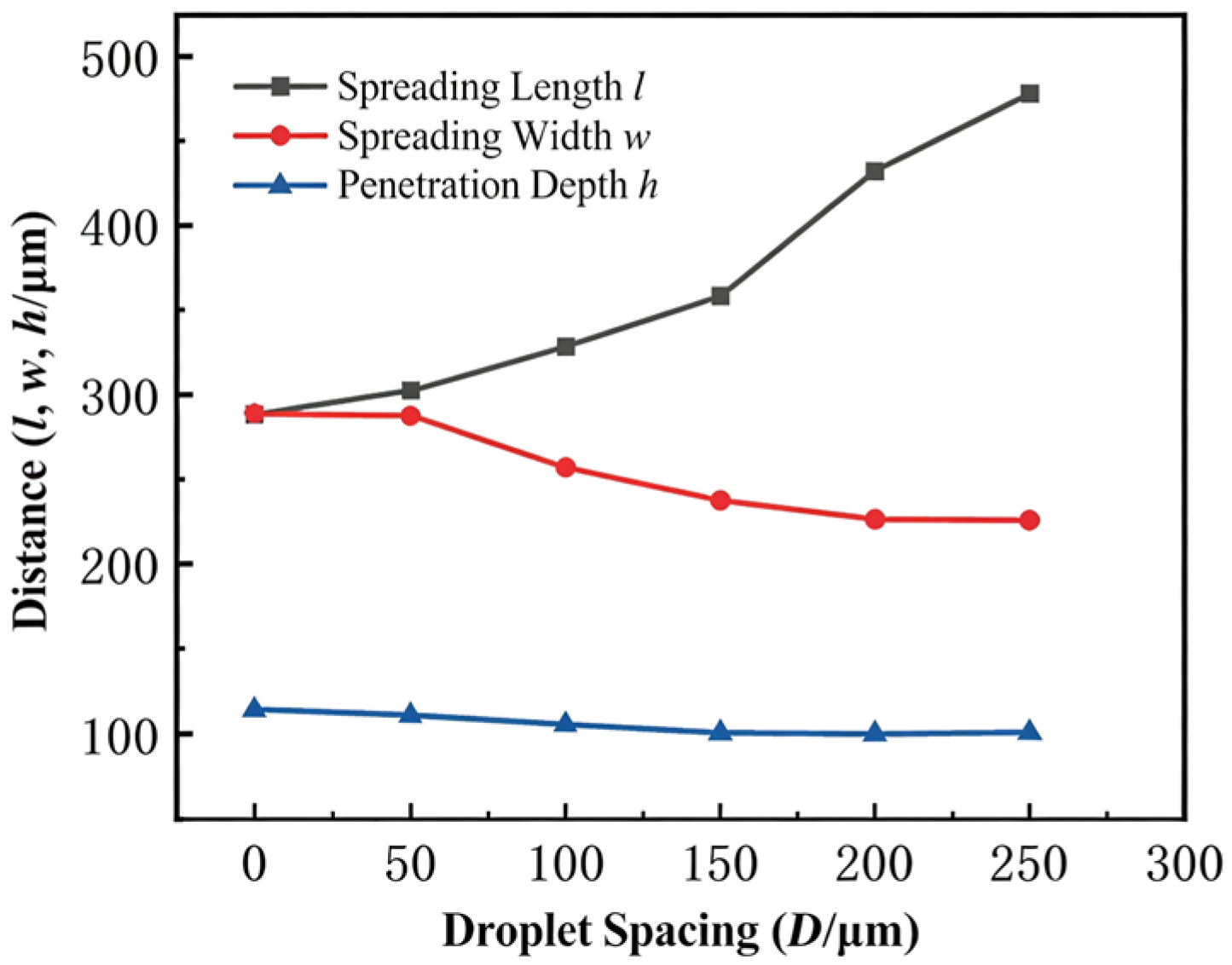
To quantify the influence of droplet spacing on infiltration behavior, the variations in spreading dimensions and penetration depth are summarized in
Figure 9, where the results correspond to the stabilized infiltration state after droplet impact. As the spacing increases from 0 to 250 μm, the spreading length increases significantly, from approximately 290 μm to about 480 μm. When the spacing is small (0–50 μm), the variation in spreading length remains relatively limited because the spacing is smaller than the initial droplet diameter. Under these conditions, adjacent droplets interact strongly during the impact stage and tend to merge before or immediately after contacting the powder bed surface, resulting in a combined spreading behavior similar to that of a single enlarged droplet. As the spacing increases beyond approximately one droplet diameter, the interaction between neighboring droplets weakens, allowing each droplet to spread more independently along the deposition direction.
In contrast, the spreading width decreases from approximately 290 μm to around 230 μm with increasing spacing. At small spacing, strong droplet interaction leads to liquid accumulation in the overlap region between adjacent droplets, which increases the apparent spreading width of the merged footprint. As spacing increases further, this interaction gradually diminishes, and the spreading width approaches the value observed for single-droplet infiltration, which is included in
Figure 9 as a reference case for comparison.
The penetration depth shows a moderate decrease from approximately 115 μm to about 100 μm as spacing increases. Although the variation is smaller than that observed for spreading dimensions, it reflects the influence of droplet interaction on capillary-driven flow within the pore network. At small spacing, merging between adjacent droplets increases the effective liquid volume available for infiltration and enhances capillary suction, promoting deeper penetration. As spacing increases, infiltration behavior becomes progressively dominated by single-droplet dynamics.
These results indicate that droplet spacing redistributes liquid flow between lateral spreading and vertical infiltration. At small spacing (≤50 μm), cooperative droplet interaction promotes vertical penetration due to early-stage merging before or immediately after impact. At large spacing (≥200 μm), droplets behave nearly independently and lateral spreading becomes dominant. An intermediate spacing of approximately 150 μm provides a balanced condition between these competing effects, resulting in continuous deposition with controlled infiltration depth. This spacing corresponds to the cooperative interaction regime identified in
Section 4.2.
4.4. Mechanism of Infiltration and Droplet Interaction
The infiltration behavior observed in this study can be interpreted as the result of competing driving forces acting at different stages of the droplet–powder interaction process. Immediately after impact, the flow is primarily governed by inertial forces, which promote rapid lateral spreading of the droplet across the powder bed surface. Similar inertia-dominated spreading behavior during the early stage of droplet impact on porous substrates has been widely reported in previous experimental and numerical studies of droplet–granular interactions [
23,
25]. As the droplet decelerates, surface tension progressively limits further lateral expansion and stabilizes the liquid interface, which is consistent with observations reported for binder droplets interacting with granular media in binder jetting processes [
24]. Meanwhile, capillary forces generated by the interconnected pore network drive liquid penetration into the inter-particle space. Because capillary pressure depends strongly on the characteristic pore size and local connectivity of the powder structure, the liquid preferentially infiltrates along energetically favorable pathways rather than producing uniform saturation of the pore space. Similar transitions from inertia-controlled spreading to capillary-dominated infiltration have also been observed in pore-scale simulations of binder penetration in powder beds [
26,
28].
In the presence of multiple droplets, spacing modifies the local pressure and flow distribution. At small spacing, liquid accumulation increases the effective capillary pressure, promoting deeper penetration. At large spacing, droplets behave independently, and lateral spreading dominates. Droplet spacing therefore acts as a control parameter that regulates the competition between inertia, surface tension, and capillary forces. The resulting redistribution of flow determines the final infiltration morphology.
Although the present simulations were performed using an FCC-based packing structure, the spacing-controlled transition between independent infiltration, cooperative merging, and over-penetration is primarily governed by the ratio between droplet spacing and characteristic spreading diameter rather than the specific packing topology. Therefore, the interaction regimes identified in this study are expected to remain applicable to stochastic powder beds with comparable pore-scale geometry.
4.5. Experimental Validation
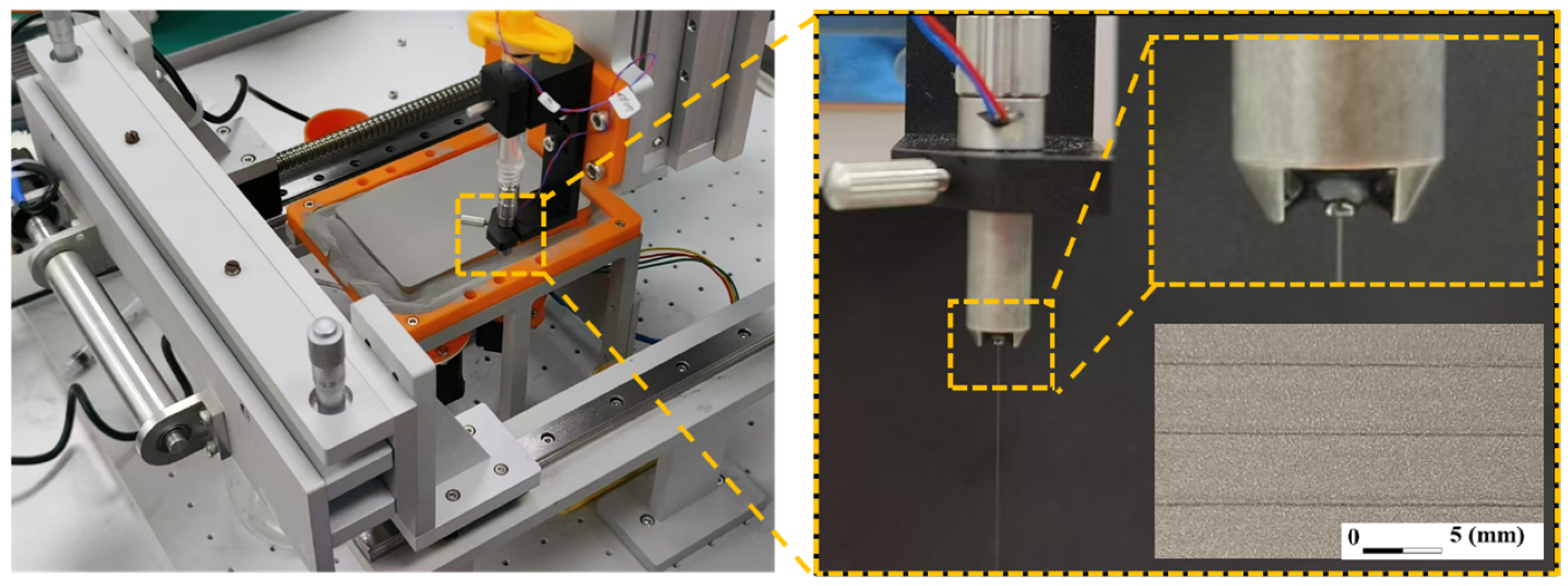
To evaluate the reliability of the proposed numerical model, line-printing experiments were conducted using a customized binder jetting platform.
Figure 10 shows the experimental setup and representative printed line morphologies obtained at a droplet spacing of 150 μm. Under this spacing condition, a stable and continuous deposition track was formed, which was selected as a representative case for quantitative comparison with the simulation results.
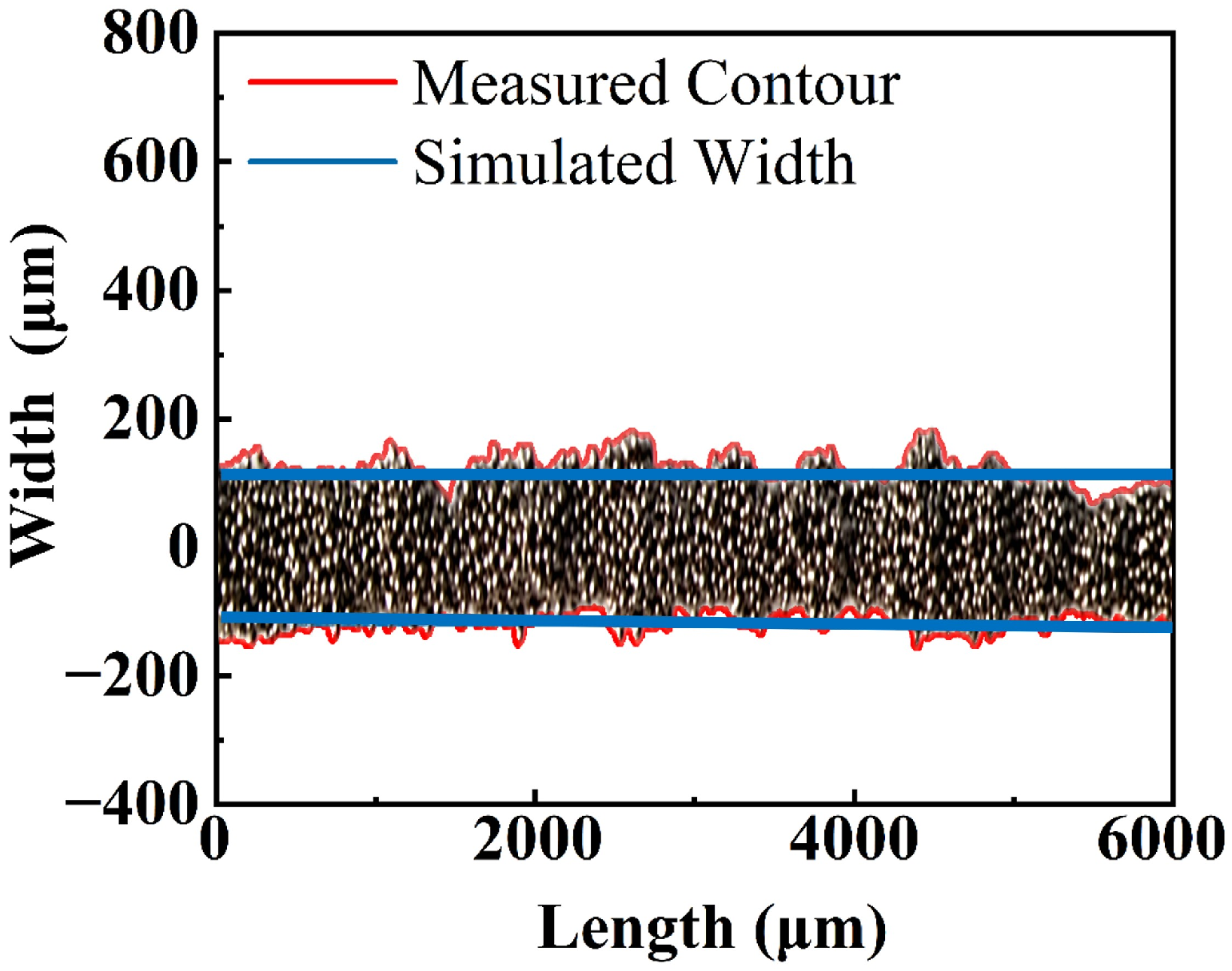
A direct comparison between simulated and experimental line morphologies is presented in
Figure 11. The experimentally measured average line width is 258.3 μm, while the simulation predicts a comparable value with a deviation of approximately 8.66%. This deviation is mainly attributed to unavoidable simplifications in the numerical model, including the use of an idealized reconstructed powder bed structure and constant material properties during the simulation. Nevertheless, the predicted spreading contour agrees well with the experimental observation, indicating that the proposed model captures the dominant mechanisms governing droplet spreading and capillary-driven infiltration inside porous powder beds.
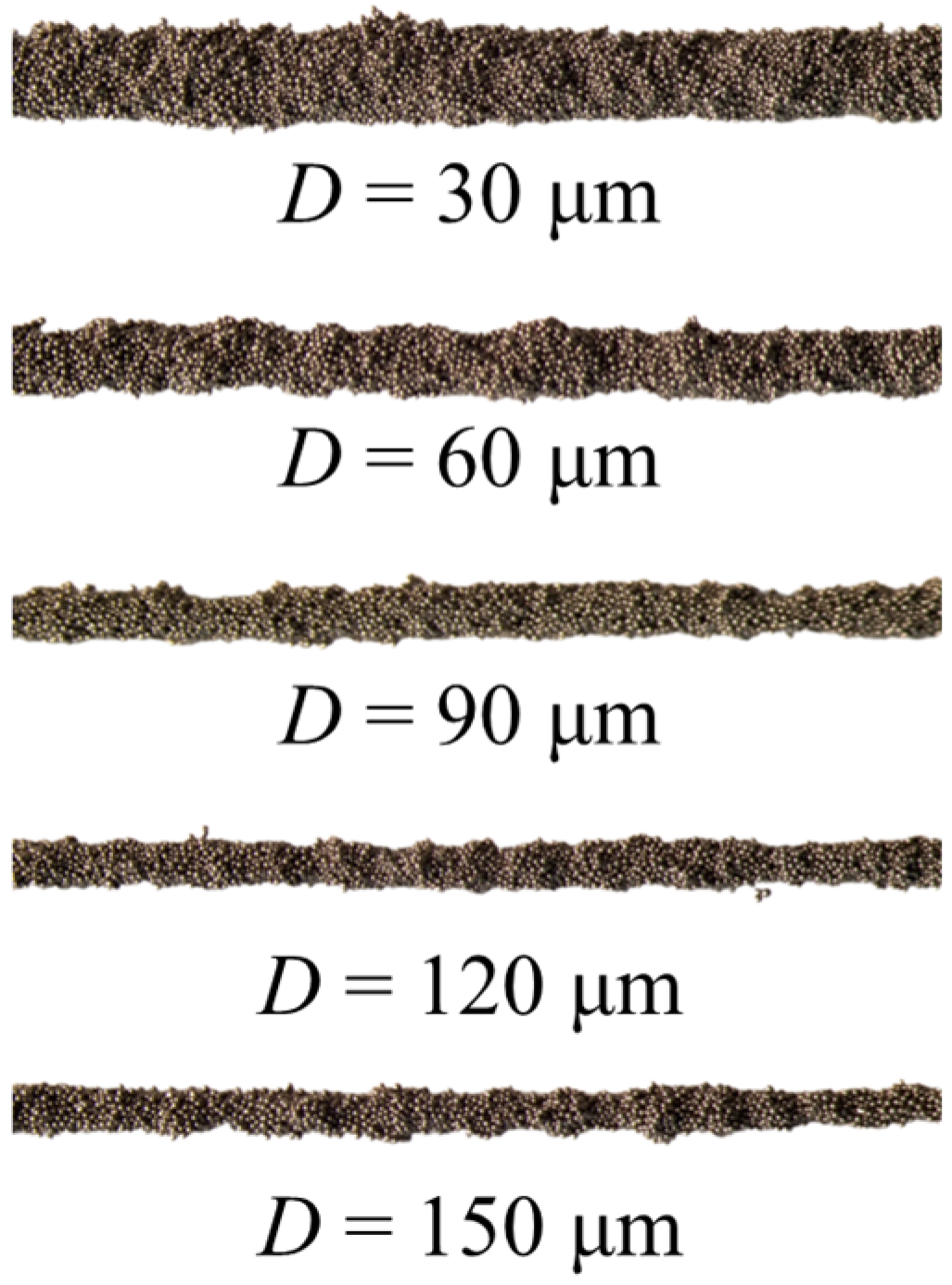
To further examine whether the spacing-dependent interaction regimes identified in the dual-droplet simulations remain valid under practical printing conditions, additional line-printing experiments were performed at five representative droplet spacings of 30, 60, 90, 120, and 150 μm. The corresponding printed line morphologies are shown in
Figure 12. As the droplet spacing decreases, the printed tracks gradually transition from insufficient merging at large spacing to continuous deposition and eventually to locally over-accumulated morphologies at small spacing. This transition behavior agrees well with the spacing-dependent interaction regimes predicted by the simulations.
In addition to the qualitative morphology evolution, quantitative measurements of printed line width further confirm the spacing-dependent trend observed in the simulations. For the powder used in this study, the measured line width increases from 258.3 μm at a spacing of 150 μm to approximately 620.5 μm at a spacing of 30 μm, indicating enhanced droplet overlap and liquid accumulation as the spacing decreases. This experimentally observed widening behavior is consistent with the simulated transition from weak droplet interaction to excessive merging between adjacent droplets, providing additional trend-level validation of the spacing-controlled infiltration behavior predicted by the numerical model.
It should be noted that the experiments presented here involve continuous multi-droplet deposition rather than isolated dual-droplet interaction. Therefore, these results are not intended as a strict one-to-one validation of the numerical simulations. Instead, they provide supporting experimental evidence that the spacing-dependent infiltration mechanisms identified in the dual-droplet simulations remain valid under practical binder jetting conditions. The observed agreement between simulated interaction regimes and experimentally measured morphology evolution confirms that the proposed numerical framework can be used to predict spacing-controlled infiltration behavior in porous powder beds with reasonable accuracy.