Article

Experimental Investigation of Surface Integrity Analysis Using Machine Learning for Nano-Powder Mixed Electrical Discharge Machining

by
Amreeta R. Kaigude
1,
Nitin K. Khedkar
1,2,* and
Vijaykumar S. Jatti
1,3
1
Department of Mechanical Engineering, Symbiosis Institute of Technology, Symbiosis International (Deemed) University, Pune 412115, India
2
MIT World Peace University, Pune 411038, India
3
School of Automobile Engineering, Symbiosis Skills and Professional University, Kiwale, Pune 412101, India
*
Author to whom correspondence should be addressed.
J. Manuf. Mater. Process. 2026, 10(4), 115; https://doi.org/10.3390/jmmp10040115
Submission received: 12 October 2025 / Revised: 3 March 2026 / Accepted: 17 March 2026 / Published: 28 March 2026

Abstract

This research investigates the optimization of surface integrity in powder-mixed electrical discharge machining (PMEDM) through the innovative use of Jatropha biodielectric fluid enhanced with titanium dioxide (TiO2) nanoparticles. A comprehensive experimental framework was developed using design expert software (DOE) with Response Surface Methodology (RSM) to systematically analyze the machining of AISI D2 tool steel using copper electrodes. The study examined five critical process parameters, gap current (Ip), pulse-on duration (Ton), pulse-off time (Toff), gap voltage (V), and powder concentration, evaluating their combined effects on surface roughness (SR), surface crack density (SCD), and residual stress characteristics. Advanced characterization techniques including scanning electron microscopy (SEM) were employed to analyze surface topography and subsurface microstructural changes. The optimization process successfully identified optimal machining conditions of current = 9 A, Ton = 100 µs, Toff = 10 µs, and gap voltage = 65 V, achieving exceptional surface quality with a minimum surface roughness of 3.22 µm. Remarkably, these optimized parameters resulted in crack-free surfaces with zero surface crack density and minimal residual stress values across the 2θ range of 90° to 180°. To enhance predictive capabilities, supervised machine learning algorithms were implemented to model surface roughness behavior. Comparative analysis of classification algorithms demonstrated that Support Vector Machine (SVM), k-Nearest Neighbors (kNNs), and Gaussian Naïve Bayes achieved superior performance with F1-scores of 0.88 and prediction accuracies of 90%. The integration of sustainable Jatropha biodielectric with TiO2 nanoparticles represents a significant advancement in environmentally conscious precision machining, while the machine learning approach establishes a robust framework for intelligent process optimization and quality prediction in advanced manufacturing applications.

1. Introduction

The capabilities of Electrical Discharge Machining (EDM) in processing superalloys and various electrically conductive materials are remarkable. However, reliance on large quantities of petroleum-based dielectrics for industrial applications presents significant challenges. This reliance has resulted in several serious issues, including (i) sustainability concerns arising from the depletion of crude oil reserves and ongoing increases in oil prices; (ii) challenges related to waste disposal, as uncontrolled and untreated disposal of waste dielectrics can inflict considerable harm on the environment; and (iii) EDM process efficiency, which necessitates enhancements to processing capabilities [1,2,3].
In response to these challenges, two variants of EDM were used in the present research. Using plant-based dielectrics offers significant advantages in terms of sustainability, characterized by their eco-friendly and operator-friendly properties, providing sustainable and environmentally friendly alternatives to hydrocarbon- and water-based dielectric fluids. To further optimize EDM performance and sustainability, various additives have been incorporated into dielectric fluids to improve their thermo-physical properties. Furthermore, adding powder to dielectric fluids, namely powder-mixed electrical discharge machining (PMEDM), is an effective means of enhancing EDM performance, owing to different spark attributes. This approach represents a modified version of the EDM process, designed to enhance the efficiency of electrical discharge processing technology while simultaneously addressing the excessive use of petroleum-based dielectric fluids that raise environmental concerns.
In industrial settings, hydrocarbon-based oils are the preferred choice for dielectric fluids. However, when these oils break down, they emit harmful substances such as polycyclic aromatic hydrocarbons, benzene, carbon monoxide, and carbon dioxide, contributing to environmental pollution and posing health hazards [4]. Attempts have been made with neat vegetable oils and biodiesels as dielectrics, and the results are promising in terms of increased material removal rate (MRR) and reduced SR. The chosen dielectric should be renewable, biodegradable, and easily available globally. The dielectric fluid waste generated during EDM operations was discovered to possess high toxicity levels, making it unsuitable for recycling, thus making the EDM process environmentally problematic [5,6]. Maria-Crina Radu [7] examined alterations in the physical and chemical characteristics of vegetable oils during the EDM process, revealing that no structural changes occurred under the specified processing conditions. These findings show considerable potential for enhancing EDM sustainability. Mohd. Yunus Khan [8] demonstrated the utility of using Jatropha curcas oil-based biodiesel as a dielectric fluid in EDM. Various oils, including olive oil, canola oil, mineral oil, sunflower oil, cottonseed oil, grape seed oil, soybean oil, rice bran oil, neem oil, palm oil, peanut oil, and waste vegetable oil, were employed as dielectrics and compared to conventional dielectric fluids in terms of TWR and MRR [9]. To improve the sustainability of the EDM process, the current study integrates the utilization of Jatropha curcas oil as a dielectric fluid, which is biodegradable and environmentally friendly. This concept enables users to produce more socially responsible products by reducing negative impacts on the environment and natural resources.
Powder-mixed electrical discharge machining (PMEDM) is an advanced form of EDM in which metallic or non-metallic powders are added to the dielectric fluid. This modification significantly enhances machining performance by improving MRR, surface finish, and reducing the tool wear rate (TWR). It is used in the die and mold industry, the aerospace industry, and the biomedical material processing and automobile industries. The discharge characteristics in the presence of suitable additive powder vary remarkably from those of a pure dielectric in terms of induced energy intensity, spark frequency, discharge gap, and spark size, as follows: Lower amounts of energy are induced to the workpiece by a single spark in powder-added dielectrics than with pure dielectrics; however, higher spark frequency overcomes this effect and leads to higher material removal. A wider discharge gap and smaller spark size decrease the crater size, which remarkably enhances surface roughness [10,11]. Houriyeh Marashi [12] observed that the incorporation of titanium nano-powder into the dielectric medium led to notable enhancement in both MRR and SR across all machining conditions. Shahriar Tanvir Alam [13] conducted an assessment of the performance of graphite and titanium oxide powders, revealing that TiO2 powder exhibited superior performance compared to graphite powder across all PMEDM responses. Gurpreet Singh [14] investigated the impact of process parameters on the PMEDM of 316 L stainless steel with TiO2 nano-powder, noting that the presence of TiO2 powder in the dielectric medium led to enhanced surface quality.
According to Wit Grzesik [15], the basic characteristics of surface integrity are surface roughness/surface topography, certain metallurgical and microstructural changes, and process-induced residual stresses. According to Lee’s research, the small erosion area (SEA) poses a significant challenge in EDM operations due to the degradation of surface integrity (SI) caused by unstable arcing during the process. Evaluation of EDM products often focuses on surface integrity, which is assessed based on surface roughness, the presence of surface cracks, and residual stresses. These SI parameters greatly influence the workpiece’s wear resistance, fatigue properties, and corrosion properties [16].
Surface roughness reduces fatigue endurance and can trigger severe breakdowns in components. Microcracks, formed due to internal stresses during EDM, negatively impact material durability and corrosion resistance. Residual stresses, linked to uneven heat distribution, metallurgical properties, or localized deformations, are crucial in determining surface quality post-machining [17]. Scholars are actively involved in estimating and evaluating residual stress in engineering components. A thorough examination of the existing literature was conducted to explore the impact of various process parameters on response characteristics, and the findings have been compiled and presented in tabular format in Table 1.
To improve the quality of components manufactured using Electrical Discharge Machining (EDM), it is essential to gain a thorough understanding of how machining parameters affect the resulting surface properties. This study seeks to: (i) perform a detailed evaluation of surface integrity, emphasizing factors such as surface roughness (SR), surface crack density (SCD), and residual stresses; and (ii) examine the impact of different EDM operating conditions on overall machining efficiency.

2. Materials and Methods

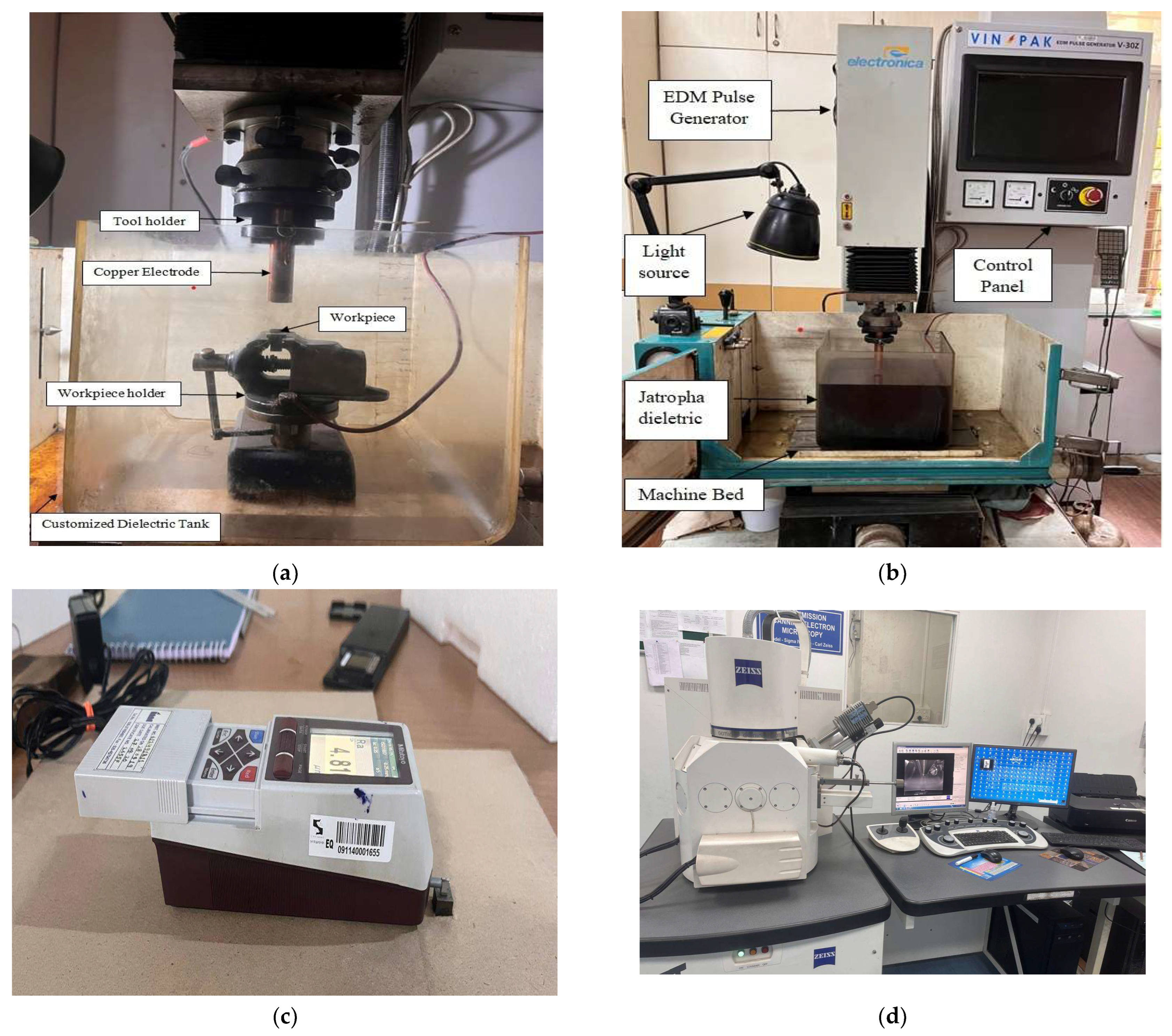
To perform this experiment, an Electronica Machine Tools Limited, Pune, India make Die sink-type EDM machine (model C 400 × 250) with negative polarity to the electrode is used. The workpiece being studied is AISI D2 steel and possesses dimensions of 10 mm × 10 mm × 10 mm. A detailed breakdown of the chemical composition of AISI D2 tool steel can be found in Table 2. Due to its significant electrical conductivity, a copper electrode with a radius of 12 mm is selected for this procedure. The workpiece and tool arrangement is as shown in Figure 1a. The EDM procedure is executed on the work piece utilizing Jatropha oil as the dielectric fluid. Table 3 shows the properties of Jatropha oil.
TiO2 nanoparticles have been integrated into the jatropha dielectric fluid. The specific characteristics of the TiO2 nanoparticles incorporated into the jatropha dielectric are outlined in Table 4. A machining tank, which consists of a small acrylic tank used to introduce TiO2 into the dielectric fluid, is illustrated in Figure 1b, showing the experimental setup of PMEDM. To address the challenges associated with the integration of nanoparticles into the dielectric fluid and to prevent clustering, a Kenwood HM330 (Havant, UK) (250 W) stirrer is utilized for continuous agitation of the powder. This method ensures even distribution of the powder and prevents accumulation at the bottom of the tank. Machining was carried out to remove approximately 1 mm from the top surface.
The study involves the execution of experiments to analyze the impact of five machining parameters—Ip, Ton, Toff, V and powder concentration—on the surface roughness, SCD and residual stress of AISI D2 tool steel. The experiment design was carried out using design expert software (DOE) using Minitab 21 (v21.1.0). Response Surface Methodology (RSM) was implemented to plan the experiment with five factors; the L32 Central Composite Design (CCD) plan has 5 factors, 1 replicate, 1 block, 6 center points and 10 axial points. While a full-factorial design involving five parameters at five levels necessitates 3125 experimental runs, the implementation of Response Surface Methodology (RSM) achieves comparable statistical validity with only 32 experiments, representing a 99% reduction in experimental effort. Table 5 enlists the process parameters influencing the test points and test envelope.

2.1. Measurement of Output Responses

Experimental responses were measured in terms SR, SCD and residual stress. Mitutoyo make portable surface roughness tester SURFTEST (SJ-210) series was utilized for the measurement of SR, as shown in Figure 1c. SR was determined by taking three readings at different points on the surface, followed by the selection of the average value. Surface crack density (SCD) is commonly utilized for measurement and analysis of crack occurrences. According to Bhattacharyya et al. [26], SCD is defined as the total crack length (μm) per unit surface area (μm2). The surfaces treated with EDM were observed under the SEM at a magnification of 1000×, as shown in Figure 1d. For the assessment of surface crack density, SEM micrographs were imported into Image J software, specifically Microsoft Java 1.1.4. To determine surface crack density, the length of cracks in six randomly chosen sample areas (denoted by L) on each specimen was measured using Image J software. The average crack length per specimen was then divided by the micrograph area (µm2) to calculate the SCD. Residual stresses were evaluated through X-ray diffraction (XRD) analysis. In this study X-ray diffraction (XRD) measurements were carried out using an EMPYREAN X-ray diffractometer (PANalytical, Almelo, The Netherlands make) situated in the National Facility of Texture and OIM at the IIT, Bombay.

2.2. Machine Learning (ML) Techniques

ML models are trained exclusively on experimental data and serve to enable process prediction and optimization without requiring exhaustive experimentation, addressing industrial cost and time constraints. The experimental data were analyzed using Python 3.10.12 with scikit-learn 1.7.2 for machine learning implementation. The dataset was randomly partitioned into training (80%) and testing (20%) subsets using the train_test_split function.The data were randomly shuffled to ensure unbiased distribution between training and testing sets.
Dataset Summary: A total of 32 experimental runs were divided as follows:
  • Training Data (80%): 25 samples used to train machine learning algorithms. The training dataset can be found in Table A1 of Appendix A.
  • Testing Data (20%): 7 samples used for model validation and performance evaluation. The testing dataset can be found in Table A2 of Appendix A.
Using Python, classification analysis was utilized to predict the alloys’ surface roughness (SR) categories. Four machine learning algorithms were utilized, i.e., k-Nearest Neighbors (kNNs), Support Vector Classification (SVM), Logistic Regression Classifier and Gaussian Naïve Bayes (GNB), to predict SR using the experimental dataset. The input dataset is split into K groups of samples with equal sizes during the K-fold cross-validation procedure. These occurrences are referred to as folds. The test set uses the remaining folds, whereas the classification function uses k-1 folds for each learning set. This approach is particularly well-liked in cross-validation since it is simple to comprehend and produces findings that are less biased than those acquired by other methodologies. F1-scores for these classification models that are greater than 0.85 are considered for analysis and prediction of surface roughness data, ensuring reliable classification performance with balanced precision and recall metrics. The kNN algorithm is used, as its overarching goal is to leverage historical data to uncover general patterns and enhance the decision-making process. The Naïve Bayesian classifier is used because it is well known for its multi-class prediction feature and it is very fast. The SVM algorithm is used as a pre-built regularization model that allows SVM models to automatically minimize classification errors. A detailed comparative discussion of each technique is presented in Table 6.
These algorithms play a crucial role in statistical estimation, pattern recognition, and supervised learning, offering robust solutions for various data analysis challenges [27,28,29,30].

3. Results and Discussion

3.1. Impact of the Machining Parameters on Surface Roughness

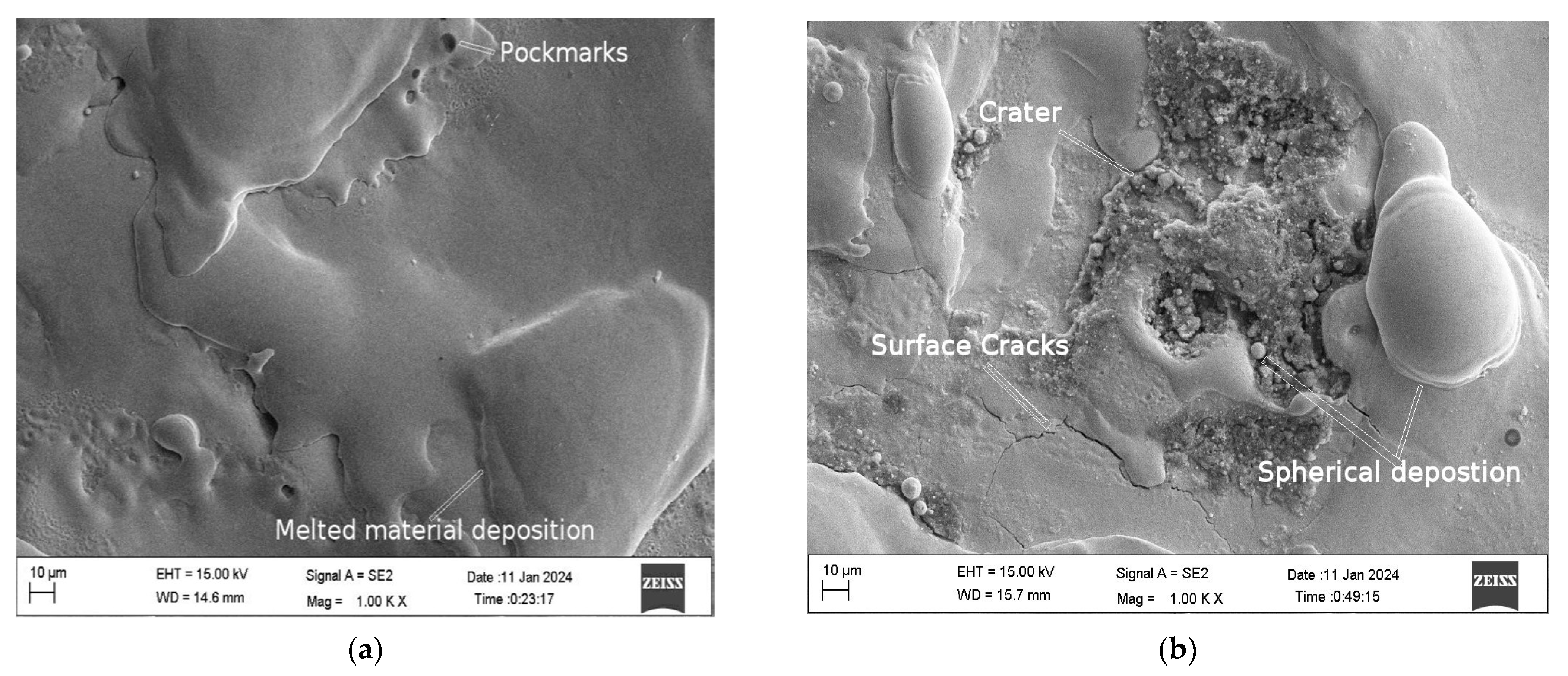
Surface roughness (SR) is one of the major influencing response parameters affecting the performance of machine parts in the manufacturing industry. The comprehensive results of the experiments can be found in Table 7, which presents the sequence of runs, classification of points (Pt type), blocks, combinations of input process parameters, and the corresponding results in terms of surface roughness (SR). The samples were electropolished and analyzed using a Field emission-Scanning Electron Microscope (FE-SEM) to study their surface and subsurface features. FE-SEM (Sigma IV, Carl Zeiss, Oberkochen, Germany) coupled with EDS was used to analyze the surface morphology and elemental composition of machined samples. The instrument operated at 30 kV with 1 nm resolution. Analyses were conducted at the Department of Metallurgy and Materials Science, COEP, Pune, India. SEM analysis showed that the surfaces exhibited a complex morphology characterized by shallow craters, spherical particles, melted droplets, debris globules, pockmarks, and voids caused by the high heat energy generated during discharges followed by rapid quenching. The spherical particles were identified as molten metal ejected randomly during the discharge, which later solidified and adhered to the surface.
The variation in the configuration of crater edges and spherical additions is evident in Figure 2 for different machining parameters. An observable augmentation in crater dimensions is noted in the samples processed at Ton = 100 µs and 250 µs, illustrated in Figure 2a and Figure 2b, respectively. This phenomenon is attributed to the influence of Ton, which escalates as heat application duration (Ton) increases. Consequently, a greater amount of molten material is generated, leading to the formation of larger globules and craters. Figure 2a portrays the surface topography under machining settings of current = 9 A, Ton = 100 µs, Toff = 10 µs, and gap voltage = 65 V, resulting in the lowest recorded SR value of 3.22 µm (micron). Conversely, Figure 2b exhibits the surface topography when operating at current = 7.5 A, Ton = 250 µs, Toff = 9 µs, and gap voltage = 62.5 V, yielding the highest SR value measured at 6.15 µm.
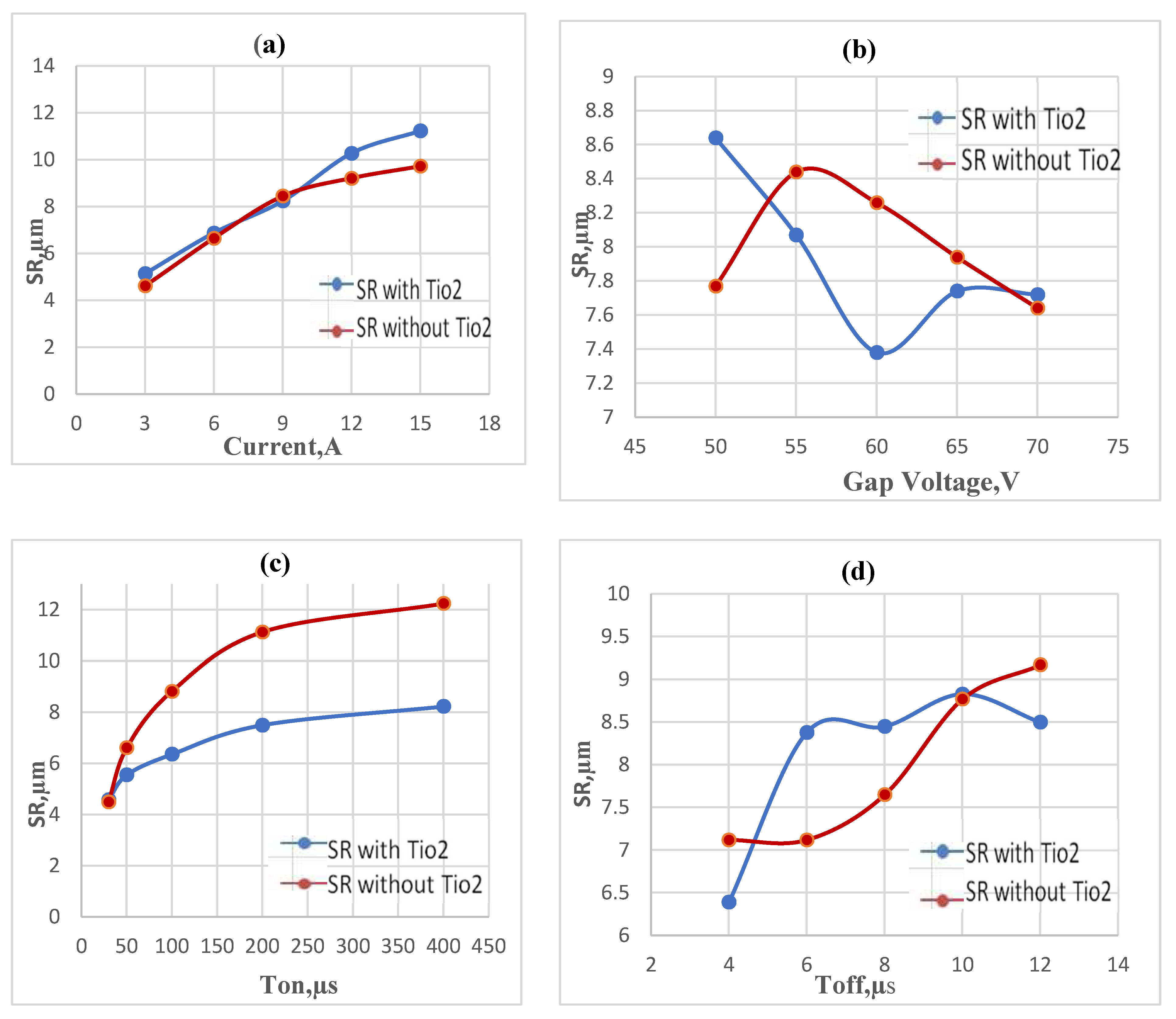
Amreeta R. Kaigude et al. [21] validated the operational and technical viability of employing Jatropha oil as a dielectric in the EDM process. A comparison was made between the results obtained by Amreeta R. Kaigude et al. [21] using Jatropha oil as a biodielectric and the findings of the current study, which utilized Jatropha oil as a biodielectric with the addition of TiO2 nanoparticles. The study revealed that the minimum value of SR (i.e., 3.22 µm) is observed with the addition of TiO2 nanoparticles, whereas without the inclusion of TiO2 nanoparticles in the Jatropha dielectric, the SR value was 4.5 µm [21]. It was observed that a lower value of SR was achieved with the addition of TiO2 nanoparticles to the Jatropha dielectric. The presence of TiO2 nanoparticles in the dielectric medium fundamentally alters the EDM discharge mechanism through a multi-stage process. In the first stage, suspended TiO2 nanoparticles (typically 100–200 nm) undergo polarization under the applied electric field, acquiring electric dipole moments that induce dielectrophoretic migration toward regions of high field intensity. These polarized particles form aligned conductive chains between the electrodes, creating a bridging effect that reduces the effective spark gap distance and lowers the dielectric breakdown threshold. In the second stage, this bridging effect causes fundamental changes in discharge characteristics: particle bridges create multiple preferential ionization pathways across the electrode surface, leading to plasma channel expansion wherein individual discharge channels become broader and more spatially distributed. Consequently, the total discharge energy disperses over a larger surface area, significantly reducing thermal energy per unit area and lowering peak temperatures compared to conventional EDM. In the third stage, the enlarged and distributed plasma channels produce a distinct surface morphology characterized by shallower crater depths due to reduced energy concentration, broader crater distribution as material removal spreads over extensive surface areas, and overlapping shallow craters that merge to form smoother surface topology. The net effect of this three-stage mechanism is a substantial reduction in surface roughness (SR) compared to conventional EDM, as evidenced by the 28.4% improvement observed in this study (from 4.5 µm without TiO2 to 3.22 µm with TiO2 nanoparticles).
Further response trends of SR were analyzed in relation to the addition of TiO2 nanoparticles and its absence, taking into account the variability in process parameters. A comparison was made between the results obtained by Amreeta R. Kaigude et al. [21] using Jatropha oil as a biodielectric and the findings of the current study. The findings, illustrated in Figure 3, indicated a similarity in the response trends of SR between the two cases. In this study, it was observed that SR increases with higher current and Ton values. Figure 3a shows the influence of current on SR. Increasing current leads to higher SR values in dielectric fluids, with the maximum SR observed at the highest current levels. The spark discharge expands with pulse current, creating stronger collision forces that affect more work materials at high current levels. The increased energy from higher current levels results in deeper and wider craters. Figure 3b shows the influence of gap voltage on SR. Gap voltage was found to have a limited influence on SR. Figure 3c shows that longer sparking times (Ton) caused deeper and wider crater formation and increased SR values. Moreover, with an increased Ton, higher energy transferred to the work surface to melt more material. Moreover, the availability of discharge energy for a longer time ensures deep energy penetration into the work material surface, forming large craters, which eventually result in higher SR. Moreover, increased dielectric temperature due to a lower specific heat of Jatropha BD reduces the viscosity to increase flushing efficiency and hence minimizes the chances of solidified debris [31]. Additionally, increasing the interval of Toff was observed to increase SR values, as shown in Figure 3d.

3.2. Impact of the Machining Parameters on SCD

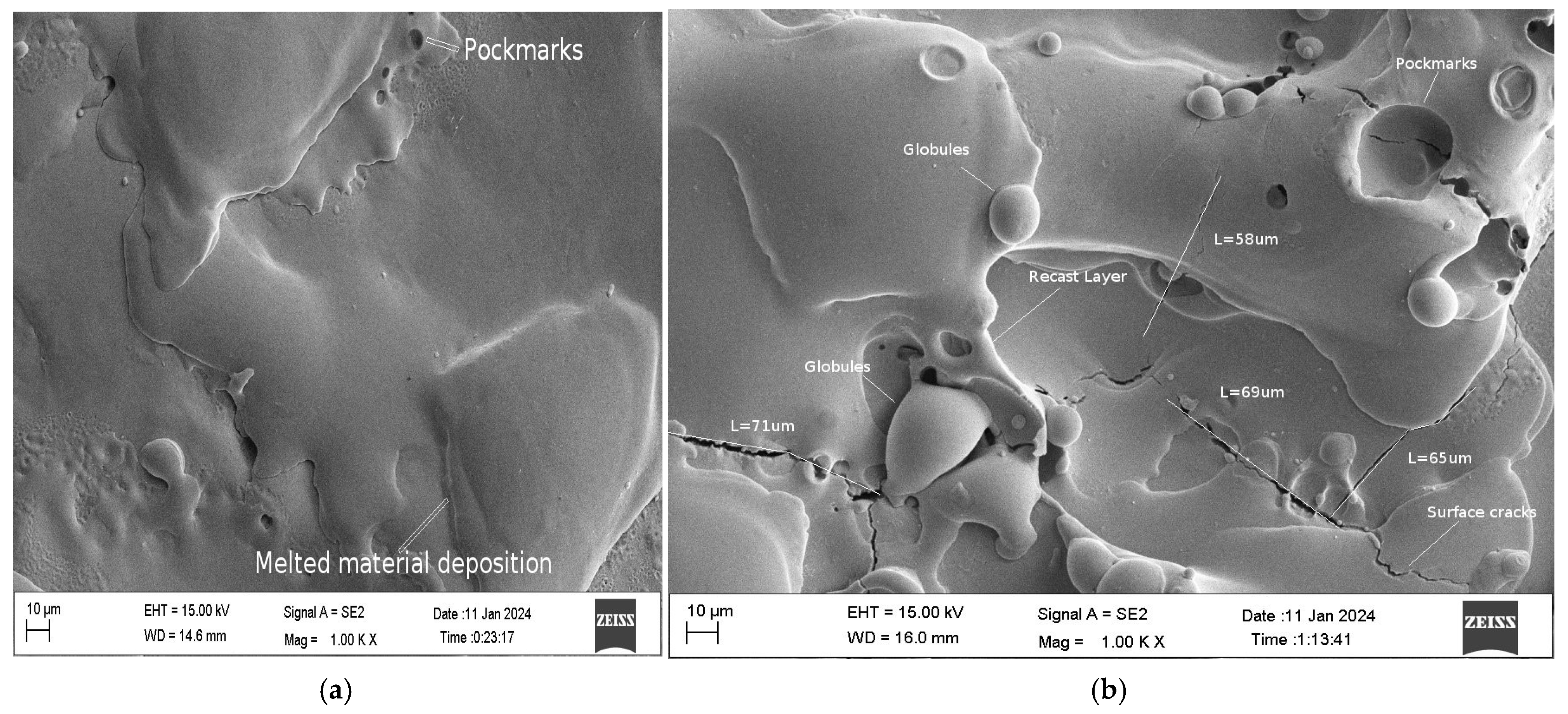
The presence of surface cracks is widely recognized for its detrimental effect on surface quality. Quantifying the crack phenomenon in terms of length, width, depth, and severity poses a significant challenge. Consequently, surface crack density (SCD) is commonly utilized for measurement and analysis of crack occurrences. The surfaces treated with EDM were observed under the SEM at a magnification of 1000×. For the assessment of surface crack density, SEM micrographs were imported into Image J software, specifically Microsoft Java 1.1.4. To determine surface crack density, the lengths of cracks in six randomly chosen sample areas on each specimen were measured using Image J software, as shown in Figure 4a (denoted by L). Surface crack length is measured at different locations, and the average crack length is calculated. The average crack length per specimen is then divided by the micrograph area (µm2) to calculate the SCD. The experimental data presented in Table 8 include calculated values of SCD. A thorough investigation of the machined surfaces employing scanning electron microscopy (SEM) has revealed that the surface morphology of Electro Discharge Machined (EDMed) AISI D2 steel is characterized by the presence of crater formations, surface cracks, spherical deposits, globules of debris, and pockmarks, as illustrated in Figure 2 and Figure 4, with the intensity of these features showing variability depending on the parameter settings utilized.
Zero crack density is achieved at the parametric settings of current = 9 A, Ton = 100 µs, Toff = 10 µs, and gap voltage = 65 V. This is also evident from Figure 4a, where no surface cracks are visible. The highest SCD value (i.e., 0.065 µm/µm2) is recorded at the parametric settings of current = 7.5 A, Ton = 250 µs, Toff = 9 µs, and gap voltage = 62.5 V, as shown in Figure 4b, illustrating the presence of surface cracks, pockmarks, globules, and a recast layer on the surface. Therefore, the minimum density of cracks is achieved when utilizing a high peak current of 9 A and a low Ton of 100 µs, and this observation validates that the SCD can be decreased by reducing the duration of the pulse-on period. However, when heat is supplied for a longer Ton, the produced heat is deeply conducted to the material and melts the workpiece; thus, after subsequent quenching, there will be the development of more induced thermal stress and thicker white layer formation. Both of these developments tend to support the formation of cracks [32,33].
Use of powder-mixed dielectric fluid in EDM processes can cause modification of the discharge bridge, resulting in the division of released pulse energy into smaller parts with uniform distribution on the machined surface. Consequently, this phenomenon could give rise to a greater quantity of smaller micro-cracks on the surface, thereby influencing the fatigue characteristics of the machined surface. Conversely, the reduced disruptive energy of dielectric fluid containing TiO2 can facilitate the generation of sparks with a decreased thermal energy output per spark. Although the presence of larger micro-cracks may have an adverse effect on fatigue properties, the occurrence of smaller cracks could enhance the capacity for storing lubricants on the machined surface, thereby contributing to an enhancement in the abrasion resistance of the surface of manufactured goods.

3.3. Impact of the Machining Parameters on Residual Stress

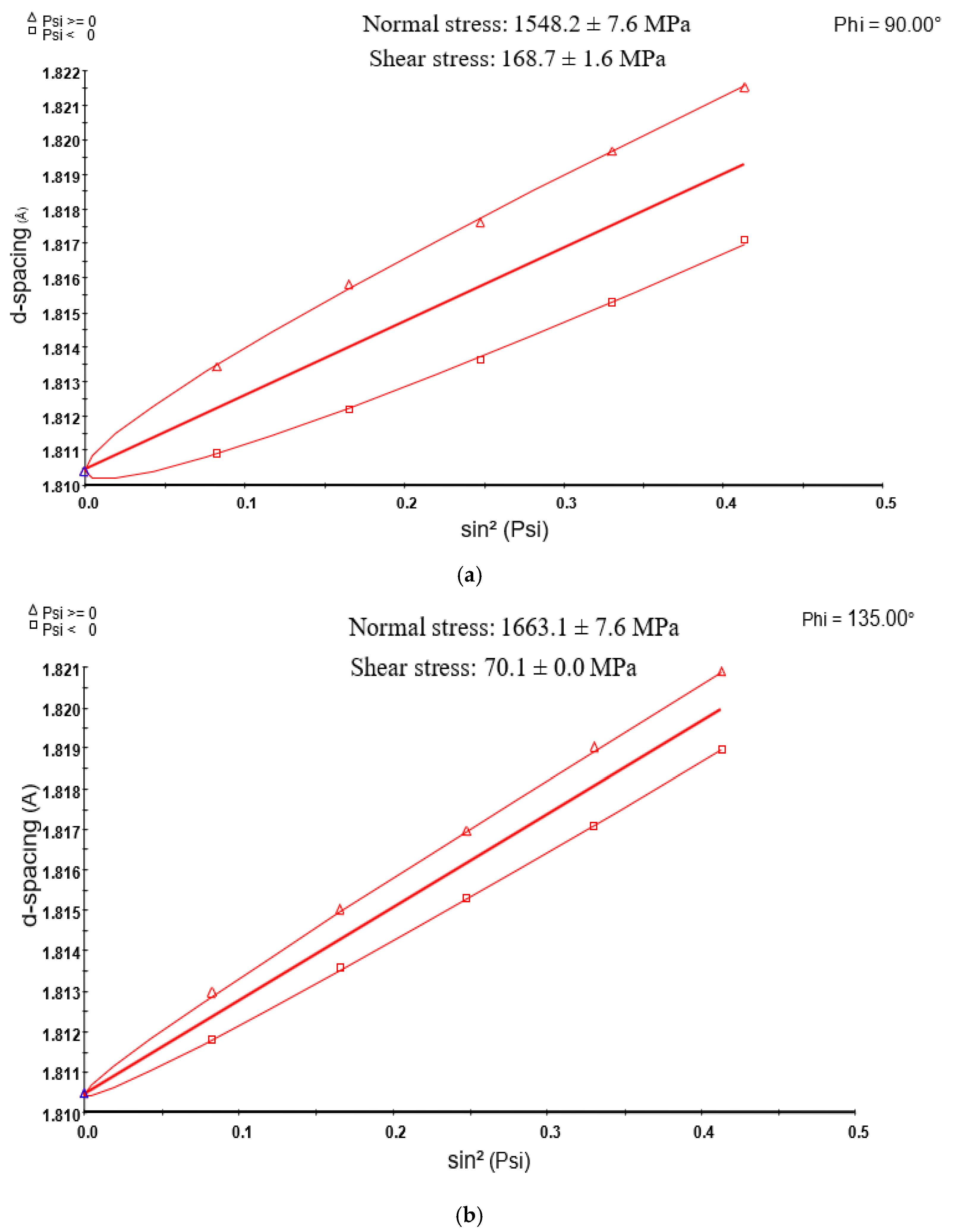
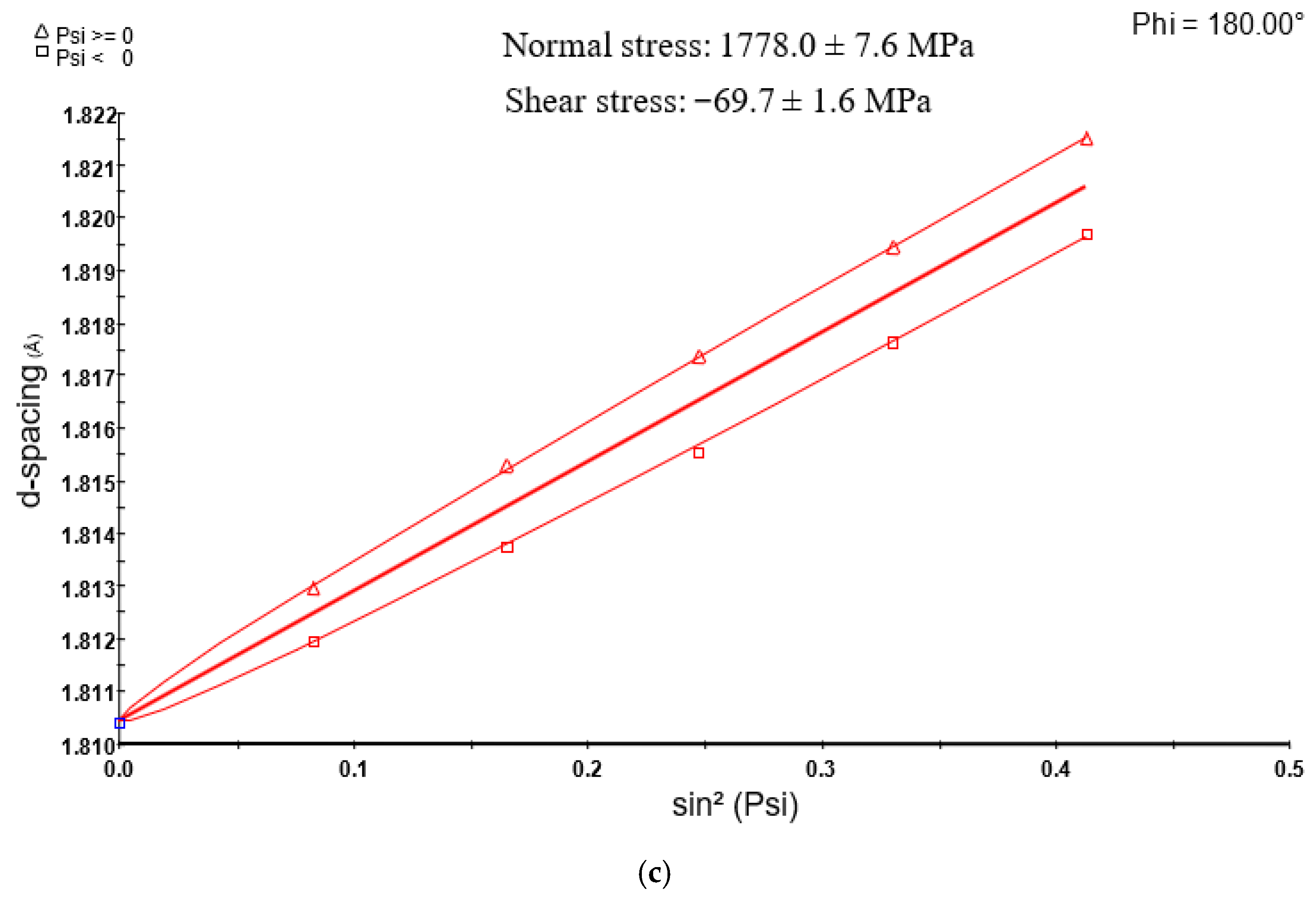
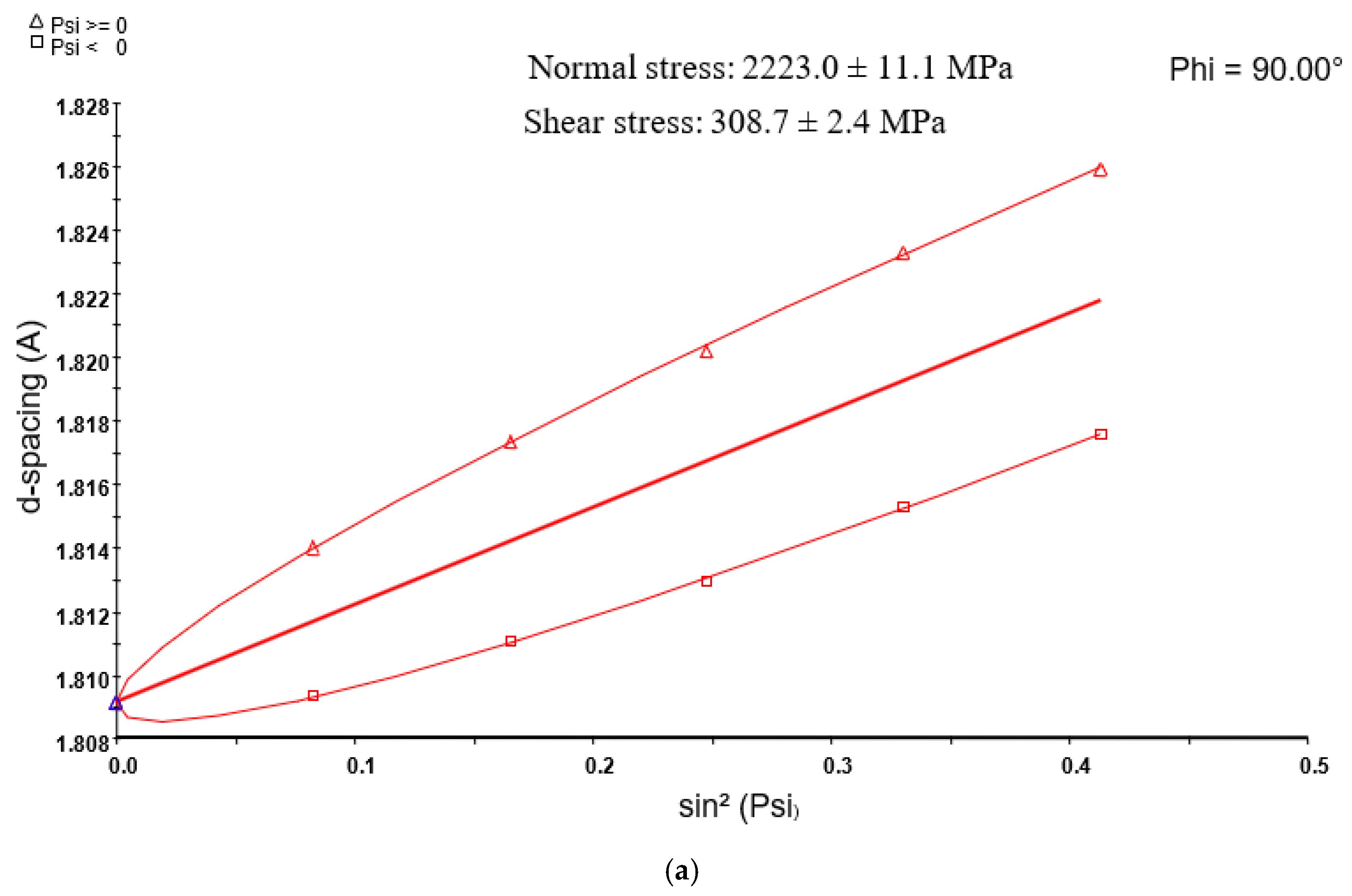
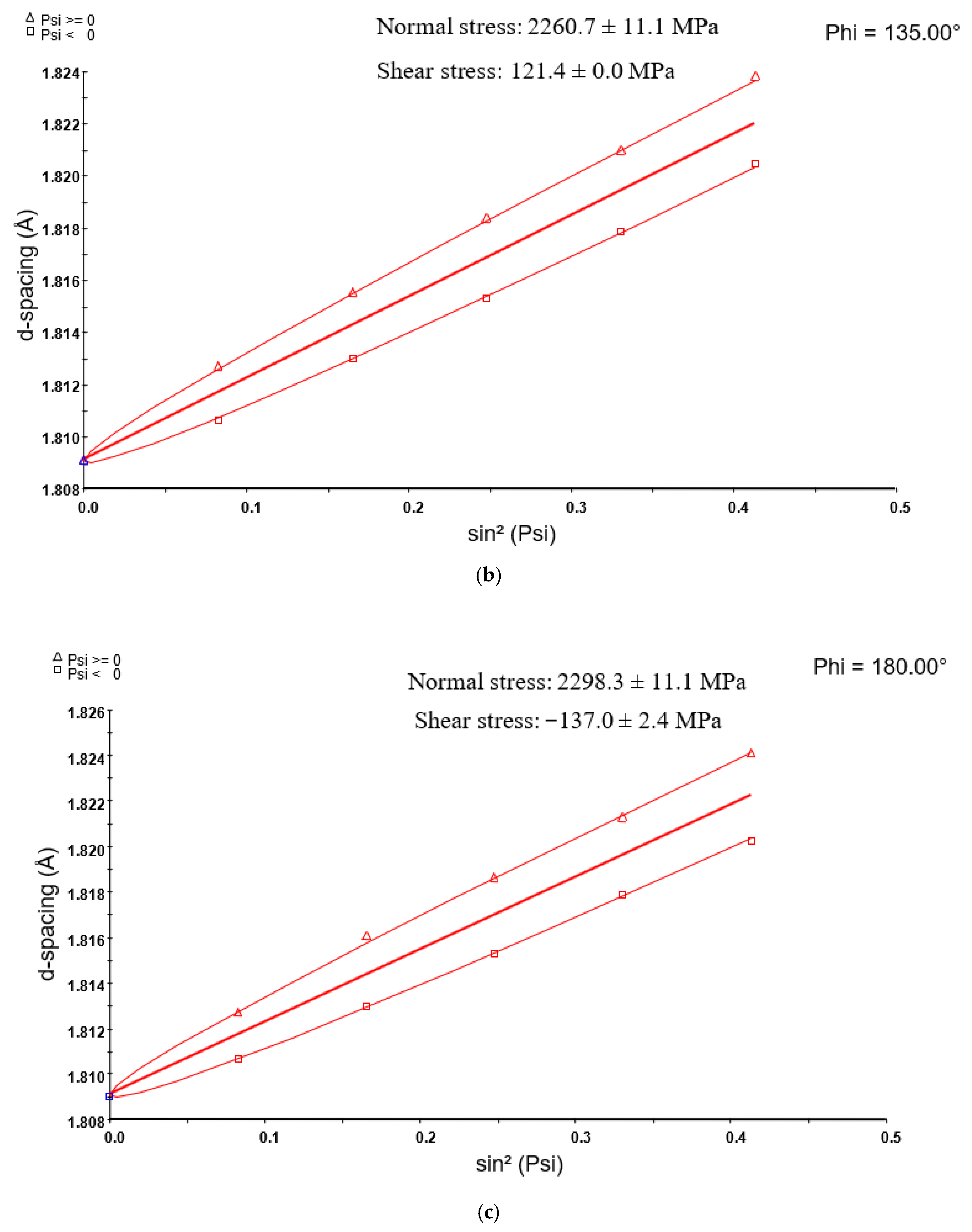
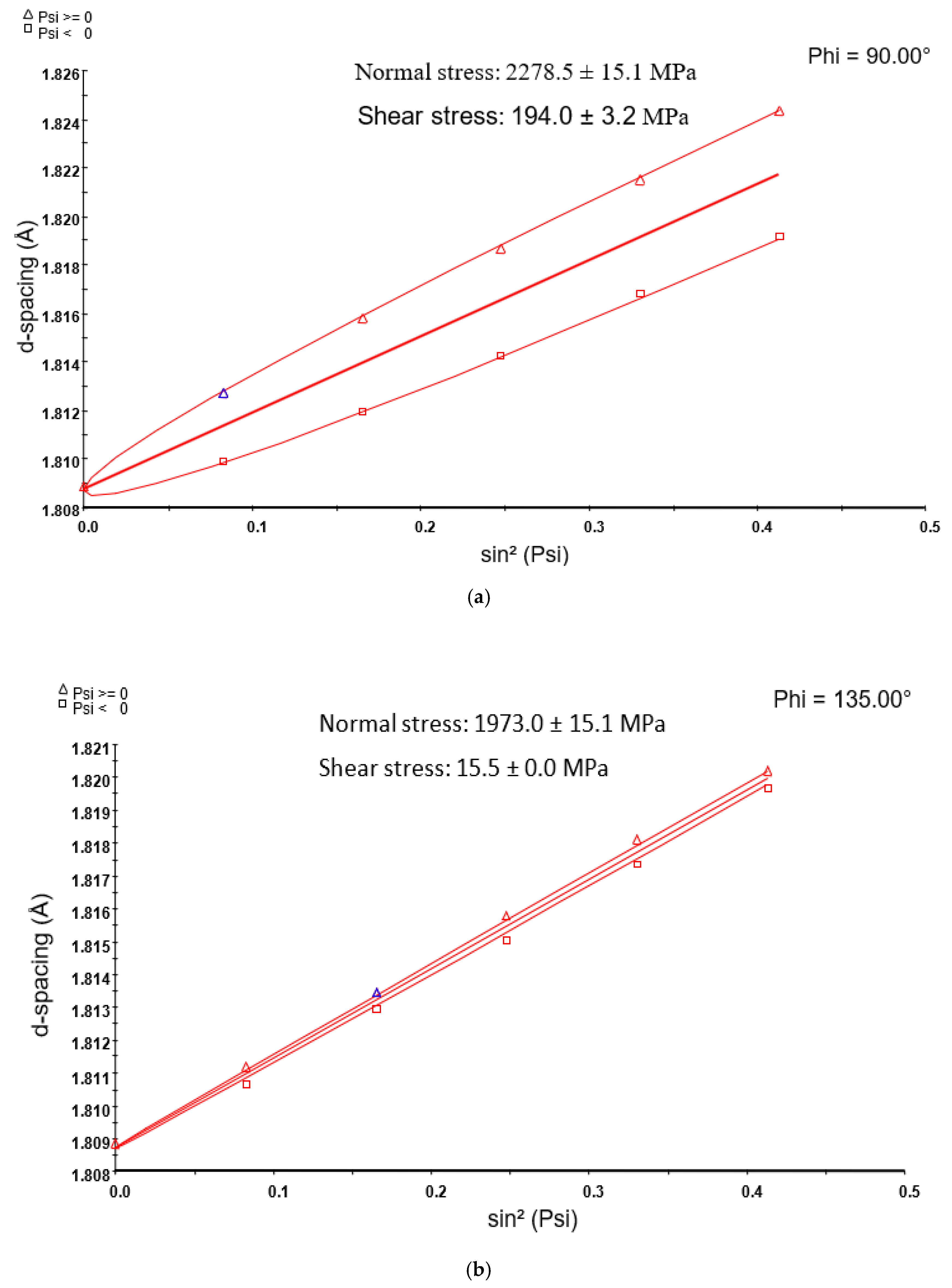
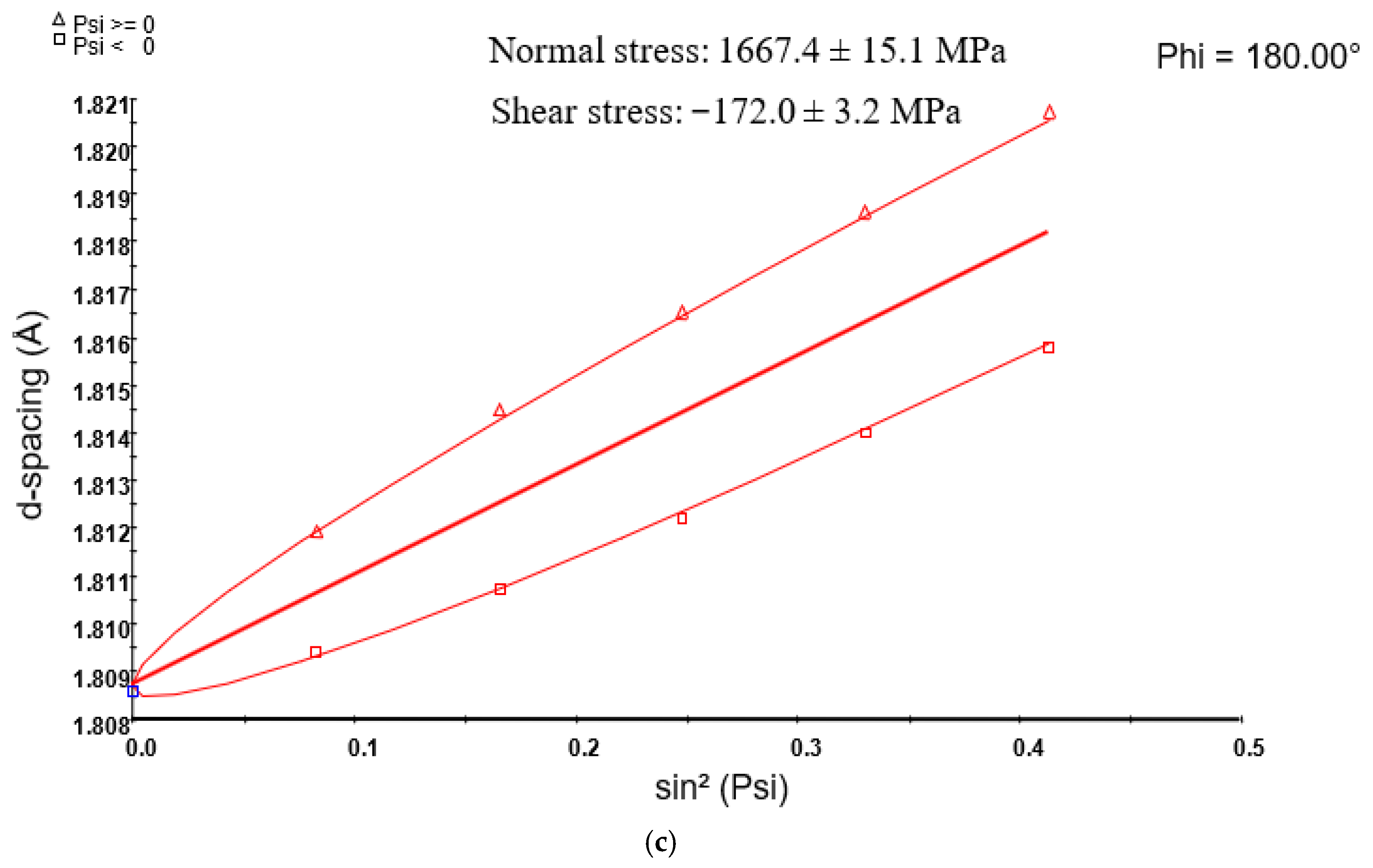
The evaluation of residual stresses is founded on the analysis of the shifts in peak positions resulting from distortions in the crystal lattice. When a sample is under stress, the spacing between lattice planes changes based on their orientation relative to the direction of stress [34,35]. A broad-range goniometer and a scintillation counter were integrated into the refractometer. Initial scans of all specimens were conducted over a 2θ range of 90° to 180°, and the outcomes for the outermost layer are detailed in Table 9. Under the assumption of a biaxial stress condition, Residual Stress Modeling exists within the layer, and the film’s elastic properties are isotropic, as evidenced by the tabulated residual stresses shown in Table 9. This analysis was carried out using the software application PC-Stress 2.61 developed by Philips. Traditionally, profiles of residual stress depth are assessed utilizing the sin2ψ technique. In this plot, for the parametric settings of current = 9 A, Ton = 100 µs, Toff = 10 µs and gap voltage = 65 V, the normal stress (σφ) is recorded as 1548.2 MPa with a standard deviation (SDσφ) of 7.6 MPa, while the shear stress (τφ) is recorded as 168.7 MPa with a standard deviation (SDτφ) of 1.6 MPa for the 2θ range of 90°, as shown in Figure 5a. The plots of d versus sin2ψ for three specimens are displayed in Figure 5, Figure 6 and Figure 7, respectively, for the 2θ range of 90° to 180°.
Compressive residual stresses could potentially be linked to the thickness of the sample, given that residual stresses existing in plastically deformed layers have a tendency to equilibrate with elastic stresses in the core of the material. The removal of the surface layer might lead to stress relief via a slit, although any alteration in the state of stress is anticipated to be insignificant [33,34,35]. The lowest values of residual stress were obtained at the parametric settings of current = 9 A, Ton = 100 µs, Toff = 10 µs and gap voltage = 65 V. The influence of machining parameters on the maximum tensile and compressive residual stresses was found to be insignificant. Due to the constrained scope of this study, a comprehensive analysis of the influence of TiO2 nanoparticles on residual stress was not incorporated into the present investigation.

3.4. Predication of Surface Roughness Using Machine Learning Techniques

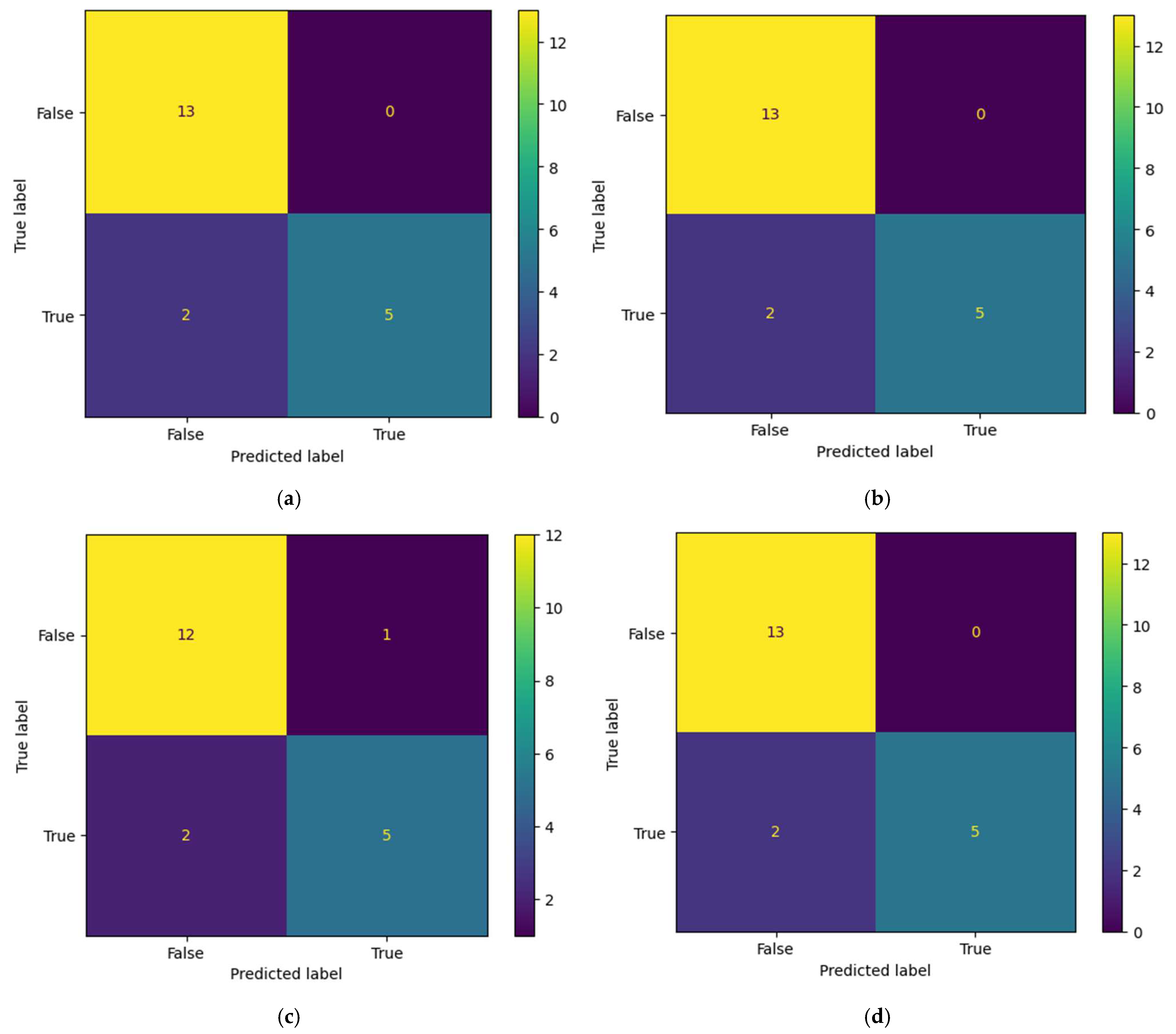
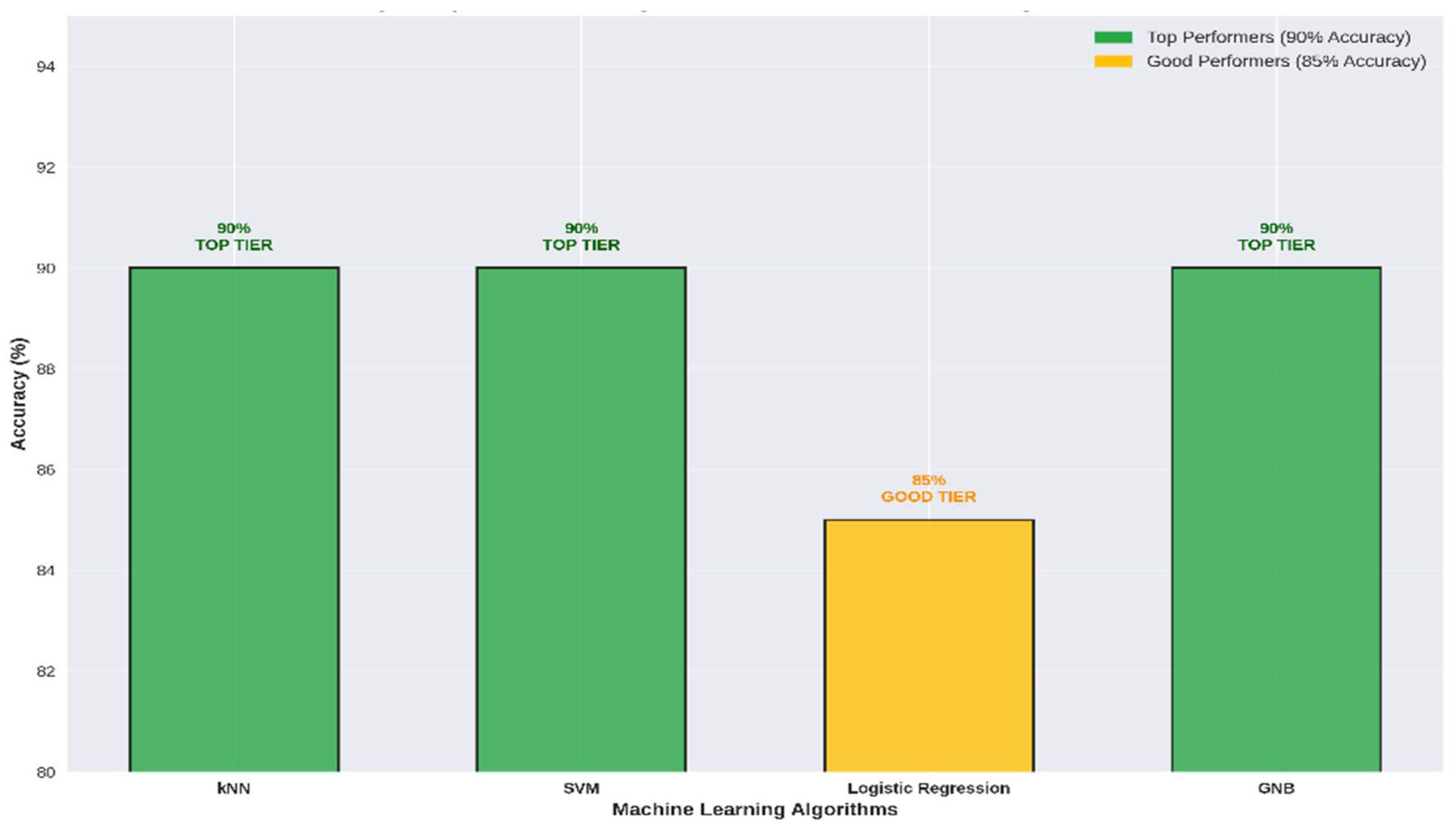
The Python programming language was employed for the development of these regression and classification-based algorithms. The confusion matrix for each classification-based algorithm is depicted in Figure 8. During the assessment of the performance, the F1-score of different machine learning classification algorithms was analyzed to predict SR, as presented in Table 10. The kNN algorithm was implemented with various distance metrics including Euclidean, Manhattan, and Minkowski distances to optimize performance. Support Vector Classification utilized different kernel functions such as linear, polynomial, and radial basis function (RBF) kernels for enhanced classification accuracy. F1-scores above 0.85 were selected as the threshold to ensure robust and reliable surface roughness predictions with minimal classification errors. The F1-score, being the harmonic mean of precision and recall, provides a balanced measure of model performance, with values closer to one indicating superior classification accuracy. The F1-score value is calculated using Equation (1). Among all the classification algorithms evaluated, k-NN, SVM, and GNB achieved the highest F1-score of 0.88 for surface roughness prediction, demonstrating superior performance. Similarly, as illustrated in Table 11, the kNN, SVM, and GNB models demonstrate higher accuracies of 90% each, in comparison to the Logistic Regression Classifier. KNN, SVM, and GNB are considered to be effective tools for tackling classification and regression challenges in data analysis. Figure 9 shows an accuracy comparison between kNN, SVM, Logistic Regression and GNB ML Algorithms for SR prediction.
The hyperparameters of the kNN and SVM models were selected based on commonly adopted practices in the literature and preliminary experiments. For kNNs, the number of neighbors was chosen to balance classification stability and sensitivity to noise. For SVM, the RBF kernel was adopted due to its effectiveness in handling non-linear data. The regularization and kernel parameters were determined using cross-validation on the training dataset to avoid overfitting.
F 1 - Score = 2 × p r e c i s i o n × r e c a l l p r e c i s i o n + r e c a l l
Three independent algorithms achieving identical performance suggests that this may represent an optimal performance ceiling for this dataset. The universal 1.00 precision for Class 1 across all algorithms indicates robust dataset characteristics rather than algorithm-specific behavior. The consistent 0.71 recall for Class 1 suggests inherent dataset or problem complexity that transcends algorithm choice. We deployed GNB for real-time applications (best speed–accuracy balance). We implemented SVM or kNN for maximum accuracy requirements. We used any top performer for quality control (perfect Class 1 precision). Figure 9 shows an accuracy comparison of ML algorithms for SR prediction. The accuracy values represent the average accuracy across all K folds to ensure robust performance estimation and minimize bias. The classification accuracy for each algorithm was calculated as the ratio of correctly classified instances to total instances: Accuracy = (TP + TN)/(TP + TN + FP + FN) × 100%, where TP, TN, FP, and FN represent true positives, true negatives, false positives, and false negatives, respectively. Stratified 10-fold cross-validation was employed to ensure robust performance estimation and minimize bias, with reported accuracy representing the mean across all folds. The confusion matrices (Figure 8a–d) provide the raw classification counts from which all metrics were derived. The kNN, SVM, and GNB algorithms achieved 90% accuracy, while Logistic Regression attained 85% accuracy, consistent with their respective F1-scores of 0.88 and 0.83 and error rates of 10% and 15% (Table 12).
The error analysis revealed that kNN, SVM, and GNB achieved identical performance with an error rate of 10%, while Logistic Regression showed a slightly higher error rate of 15%. Type I errors (false positives) were consistently low across all algorithms (6.5–7%), indicating conservative prediction behavior. Table 12 shows the error metrics of the ML techniques. However, Type II errors (false negatives) remained at 14.5% for all models, suggesting room for improvement in positive class detection. Class-specific analysis showed perfect precision for Class 1 (FPR = 0%) across all algorithms, but moderate recall (FNR = 29%). Conversely, Class 0 demonstrated perfect recall (FNR = 0%) with acceptable precision (FPR = 13–14%). This pattern suggests that all models prioritize minimizing false positives over false negatives, which may be desirable depending on the application context. The balanced error rate of 14.5% across all algorithms indicates consistent performance, with a standard deviation of only 0.25% for Type I errors, demonstrating the stability of the classification approach.
The proposed machine learning framework provides enhanced predictive capabilities for simulating complex powder-mixed EDM processes without requiring exhaustive experimental investigation. Four supervised classification algorithms—k-Nearest Neighbors (kNNs), Support Vector Machine (SVM), Logistic Regression, and Gaussian Naïve Bayes (GNB)—were trained on the 27-experiment RSM dataset to predict surface roughness categories. The framework achieved 90% prediction accuracy (kNN, SVM, and GNB) with F1-scores of 0.88, demonstrating robust performance validated through 10-fold stratified cross-validation. Perfect precision (1.00) for high surface roughness classification (Class 1) ensures zero false positives, critical for quality assurance applications. The computational efficiency of GNB (fastest training and prediction) makes it particularly suitable for real-time industrial deployment in Industry 4.0 manufacturing environments. This framework enables process optimization within the validated parameter domain (current: 6–12 A, pulse-on: 50–150 µs, pulse-off: 10–50 µs, and gap voltage: 50–80 V) without conducting additional physical experiments, reducing development costs and time while maintaining prediction reliability. The consistent performance across three independent algorithms (kNN, SVM, and GNB achieved identical 90% accuracy) suggests that this represents the optimal performance ceiling for the experimental dataset, validating both data quality and model robustness. Future work will expand the framework to include regression-based continuous SR prediction, multi-objective optimization coupling ML with genetic algorithms, and real-time adaptive process control for sustainable PMEDM implementation.

4. Conclusions

This study investigated the influence of machining parameters on surface integrity during the powder-mixed electrical discharge machining (PMEDM) of AISI D2 steel using a TiO2-enhanced Jatropha biodielectric. The key findings include the following:
  • Optimal Process Parameters: Within the investigated experimental domain, optimal surface integrity was achieved at gap current of 9 A, pulse-on time of 100 µs, pulse-off time of 10 µs, and gap voltage of 65 V with the TiO2-enhanced Jatropha dielectric. This parametric configuration simultaneously minimized surface roughness (3.22 µm), achieved zero surface crack density, and produced minimal residual stress across the measured 2θ range of 90° to 180°.
  • Surface Roughness Enhancement Mechanism: The incorporation of TiO2 nanoparticles in the dielectric medium significantly improved surface finish quality, reducing surface roughness from 4.5 µm (without nanoparticles) to 3.22 µm—a 28.4% improvement. Parametric analysis revealed that pulse-on time (Ton) emerged as the most dominant parameter influencing both surface roughness and surface crack density responses, consistent with its direct control over discharge energy and thermal loading intensity.
  • Machine Learning Predictive Framework: Supervised machine learning algorithms, specifically classification-based approaches (k-Nearest Neighbors, Support Vector Machine, and Gaussian Naïve Bayes), demonstrated robust predictive capabilities for surface roughness categorization. These algorithms achieved F1-scores of 0.88 and classification accuracies of 90%, validated through 10-fold stratified cross-validation. The ML framework provides an efficient computational tool for EDM process simulation and optimization, substantially reducing the experimental effort and cost associated with traditional trial-and-error parameter exploration while maintaining prediction reliability within the validated experimental domain.
  • Crack-Free Surface Generation: Complete elimination of surface cracks (SCD = 0) was achieved at the optimal parameter combination (9 A current, 100 µs pulse-on, 10 µs pulse-off, and 65 V gap voltage). Parametric analysis confirmed that surface crack density exhibits direct proportionality to pulse-on duration (Ton), attributable to reduced thermal shock and lower peak temperatures at shorter pulse durations. Gap current (Ip) demonstrated a non-monotonic influence on SCD, initially increasing crack formation before declining at higher current levels, suggesting complex interactions between discharge energy and material removal mechanisms.
  • Residual Stress Characterization: X-ray diffraction (XRD) analysis across the 2θ angular range of 90° to 180° revealed minimal residual stress magnitudes at the optimal parametric setting (9 A, 100 µs, 10 µs, and 65 V). Statistical analysis indicated that machining parameters exerted negligible influence on both maximum tensile and compressive residual stress components within the investigated parameter space, suggesting that the TiO2-enhanced dielectric effectively mitigates thermal gradients responsible for stress accumulation in conventional EDM processes.
This work establishes a TiO2-enhanced Jatropha biodielectric as a sustainable alternative for precision machining, integrating experimental optimization with machine learning for intelligent, environmentally conscious manufacturing.
Future Scope: Examining the influence of powder concentration on surface roughness (SR), surface crack density (SCD), and residual stress in order to ascertain the most effective concentration of powders within a broader spectrum of powder concentrations.

Author Contributions

Conceptual: A.R.K., N.K.K. and V.S.J., Writing (original draft preparation): A.R.K., Writing (review and editing): A.R.K., N.K.K. and V.S.J., Methodology: A.R.K., N.K.K. and V.S.J., Funding A.R.K., N.K.K. and V.S.J. All authors have read and agreed to the published version of the manuscript.

Funding

This research received no external funding.

Data Availability Statement

Data are available upon request.

Conflicts of Interest

The authors declare no conflicts of interest.

Appendix A

Table A1. Training dataset (80%—25 samples).
Run Orders Input Process ParametersOutput Parameters
Gap Current (A)Pulse-ON TimePulse-OFF TimeGap VoltagePowder Concentration (%)Surface Roughness (µm)
(µs)(µs)(Volt)
Notation GCPONPOFFGVPWCRa
1620010600.64.42
24.5150962.50.455.69
37.5150962.50.455.04
47.5150962.50.455.39
562008600.34.74
67.5150962.50.454.48
9920010600.35.44
1091008650.65.36
1291008600.34.8
13610010600.33.22
1461008600.63.72
167.5150957.50.453.74
17910010600.65.46
1892008600.63.84
1962008650.65.47
2210.5150962.50.455.45
237.51501162.50.454.77
247.5150962.50.753.95
257.550962.50.453.97
2661008650.34.79
277.5150962.50.454.02
287.5150962.50.453.78
30620010650.35.35
31920010650.64.25
327.5150967.50.456.15
Table A2. Testing dataset (20%—7 samples).
Run Orders Input Process ParametersOutput Parameters
Gap Current (A)Pulse-ON TimePulse-OFF TimeGap VoltagePowder Concentration (%)Surface Roughness (µm)
(µs)(µs)(Volt)
NotationGCPONPOFFGVPWCRa
77.5150962.50.453.49
87.5150962.50.153.76
11910010650.33.85
157.5250962.50.455.1
207.5150762.50.455.39
2192008650.35.58
29610010650.64.64

References

  1. Chakraborty, T.; Acherjee, B.; Mandal, A. Emerging frontiers in electro-discharge machining: A comprehensive review of research trends, challenges, and innovative solutions. Forsch. Ingenieurwesen 2025, 89, 68. [Google Scholar] [CrossRef]
  2. Pant, P.; Bharti, P.S. Surface integrity assessment techniques in EDM process for enhancement of product’s performance: A review. Adv. Mater. Process. Technol. 2024, 10, 167–185. [Google Scholar] [CrossRef]
  3. Rakshaskar, R.; Kannan, C. Enhancing surface integrity and performance of EDM with sustainable dielectrics and electrode modifications. Eng. Res. Express 2024, 6, 025526. [Google Scholar] [CrossRef]
  4. Valaki, J.B.; Rathod, P.P. Environmental impact, personnel health and operational safety aspects of electric discharge machining: A review. Proc. Inst. Mech. Eng. Part B J. Eng. Manuf. 2015, 229, 1481–1491. [Google Scholar] [CrossRef]
  5. Kunal, K.; Singh, K.P.; Khan, M.Y. Dielectric fluids for the electrical discharge machining: A review. Appl. Mech. Mater. 2024, 922, 55–65. [Google Scholar] [CrossRef]
  6. Bhowmik, A.; Mazarbhuiya, R.M.; Rahang, M.; Saha, S.; Veeman, D. Advancing sustainability in EDM: A brief review of eco-friendly dielectric fluids. AIP Adv. 2025, 15, 040702. [Google Scholar] [CrossRef]
  7. Radu, M.-C.; Tampu, R.; Nedeff, V.; Patriciu, O.-I.; Schnakovszky, C.; Herghelegiu, E. Experimental investigation of stability of vegetable oils used as dielectric fluids for electrical discharge machining. Processes 2020, 8, 1187. [Google Scholar] [CrossRef]
  8. Khan, M.Y.; Rao, P.S.; Pabla, B.S. Investigations on the feasibility of Jatropha curcas oil based biodiesel for sustainable dielectric fluid in EDM process. Mater. Today Proc. 2020, 26, 335–340. [Google Scholar] [CrossRef]
  9. Singaravel, B.; Shekar, K.C.; Reddy, G.G.; Prasad, S.D. Experimental investigation of vegetable oil as dielectric fluid in electric discharge machining of Ti-6Al-4V. Ain Shams Eng. J. 2020, 11, 143–147. [Google Scholar] [CrossRef]
  10. Agrawal, J.P.; Somani, N.; Gupta, N.K. A systematic review on powder-mixed electrical discharge machining (PMEDM) technique for machining of difficult-to-machine materials. Innov. Emerg. Technol. 2024, 11, 2440002. [Google Scholar] [CrossRef]
  11. Matanda, B.K.; Petal, V.; Joshi, U.; Joshi, O. A review on powders used for PMEDM machining process. AIP Conf. Proc. 2024, 3107, 110003. [Google Scholar] [CrossRef]
  12. Marashi, H.; Sarhan, A.A.D.; Hamdi, M. Employing Ti nanopowder dielectric to enhance surface characteristics in electrical discharge machining of AISI D2 steel. Appl. Surf. Sci. 2015, 357, 892–907. [Google Scholar] [CrossRef]
  13. Alam, S.T.; Amin, A.N.; Hossain, I.; Huq, M.; Tamim, S.H. Performance evaluation of graphite and titanium oxide powder mixed dielectric for electric discharge machining of Ti–6Al–4V. SN Appl. Sci. 2021, 3, 435. [Google Scholar] [CrossRef]
  14. Singh, G.; Sidhu, S.S.; Bains, P.S.; Bhui, A.S. Surface evaluation of ED machined 316L stainless steel in TiO2 nano-powder mixed dielectric medium. Mater. Today Proc. 2019, 18, 1297–1303. [Google Scholar] [CrossRef]
  15. Grzesik, W.; Kruszynski, B.; Ruszaj, A. Surface Integrity of Machined Surfaces. In Surface Integrity in Machining; Davim, J., Ed.; Springer: London, UK, 2010; pp. 67–96. [Google Scholar]
  16. Lee, H.T.; Hsu, F.C.; Tai, T.Y. Study of surface integrity using the small area EDM process with a copper-tungsten electrode. J. Mater. Sci. Eng. 2004, 364, 346–356. [Google Scholar] [CrossRef]
  17. Sahu, D.R.; Mandal, A. Critical analysis of surface integrity parameters and dimensional accuracy in powder-mixed EDM. Mater. Manuf. Process. 2020, 35, 623–632. [Google Scholar] [CrossRef]
  18. Singh, K.; Singh, K.P.; Khan, M.Y. Investigation and optimization of process parameters in the electrical discharge machining process for Inconel660 using response surface methodology. Future Technol. 2025, 4, 22–29. [Google Scholar] [CrossRef]
  19. Straka, Ľ.; Piteľ, J.; Čorný, I. Assessment of Surface Integrity in Precision Electrical Discharge Machining of HSS EN HS6-5-2C. Micromachines 2024, 15, 1469. [Google Scholar] [CrossRef]
  20. Lodhi, B.K.; Agarwal, S. Experimental investigation to assess the surface integrity in WEDM of Al-based hybrid composite material. Proc. Inst. Mech. Eng. Part E J. Process Mech. Eng. 2024, 238, 1234–1245. [Google Scholar] [CrossRef]
  21. Kaigude, A.R.; Khedkar, N.K.; Jatti, V.S.; Salunkhe, S.; Cep, R.; Nasr, E.A. Surface roughness prediction of AISI D2 tool steel during powder mixed EDM using supervised machine learning. Sci. Rep. 2024, 14, 9683. [Google Scholar] [CrossRef]
  22. Wang, G.; Zhu, L.; Han, F. Influence of energy input process on the white layer and residual stress in electrical discharge machining. Int. J. Adv. Manuf. Technol. 2022, 119, 4925–4937. [Google Scholar] [CrossRef]
  23. Muttamara, A.; Nakwong, P. Effect of Electrical Discharge Machining on Surface Characteristics and Microstructure of Aluminum Alloy 2024. In Proceedings of the 4th International Conference on Management Science and Industrial Engineering (MSIE ‘22), Chiang Mai, Thailand, 28–30 April 2022; ACM: New York, NY, USA, 2022; pp. 45–51. [Google Scholar]
  24. Jamunkar, T.; Sundaram, M. Prediction of Surface Roughness on Electrical Discharge Machined Surfaces. In Proceedings of the 50th SME North American Manufacturing Research Conference (NAMRC 50), Ann Arbor, MI, USA, 27 June–1 July 2022. [Google Scholar]
  25. Sokołowski, A.; Łomozik, Ł.; Bąkowski, H. Metallographic Examination of Surface Layer after Electrical Discharge Machining. Int. J. Mod. Manuf. Technol. 2022, 14, 2067–3604. [Google Scholar] [CrossRef]
  26. Bhattacharyya, B.; Gangopadhyay, S.; Sarkar, B.R. Modelling and analysis of EDM ED job surface integrity. J. Mater. Process. Technol. 2007, 189, 169–177. [Google Scholar]
  27. Jatti, V.S.; Dhabale, R.B.; Mishra, A.; Khedkar, N.K.; Jatti, V.S.; Jatti, A.V. Machine Learning Based Predictive Modeling of Electrical Discharge Machining of Cryo-Treated NiTi, NiCu and BeCu Alloys. Appl. Syst. Innov. 2022, 5, 107. [Google Scholar]
  28. Sana, M.; Asad, M.; Farooq, M.U. Machine learning for multi-dimensional performance optimization and predictive modelling of nanopowder-mixed electric discharge machining (EDM). Int. J. Adv. Manuf. Technol. 2024, 130, 5641–5664. [Google Scholar]
  29. Paturi, U.M.R. Machine learning and statistical approach in modeling and optimization of surface roughness in wire electrical discharge machining. Mach. Learn. Appl. 2021, 6, 100123. [Google Scholar] [CrossRef]
  30. Singh, R. Machine learning algorithms based advanced optimization of EDM parameters: An experimental investigation into shape memory alloys. Sens. Int. 2022, 3, 100179. [Google Scholar] [CrossRef]
  31. Valaki, J.B.; Rathod, P.P.; Sankhavara, C.D. Investigations on technical feasibility of Jatropha curcas oil based bio dielectric fluid for sustainable electrical discharge machining (EDM). J. Manuf. Process. 2016, 22, 151–160. [Google Scholar] [CrossRef]
  32. Kumara, P.; Gupta, M.; Kumar, V. Experimental investigation of surface crack density and recast layer thickness of WEDMed Inconel 825. J. Comput. Appl. Res. Mech. Eng. 2016, 11, 205–216. [Google Scholar]
  33. Ekmekci, B. White layer composition; heat treatment, and crack formation in electric discharge machining process. Metall. Mater. Trans. B 2009, 40, 70–81. [Google Scholar]
  34. Kumar, D.; Mer, K.K.S.; Payal, H.S.; Kumar, K. Residual Stress Modeling and Analysis in AISI A2 Steel Processed by an Electrical Discharge Machine. Mater. Technol. 2022, 56, 65–72. [Google Scholar] [CrossRef]
  35. Kumar, S.; Das, S.; Joshi, S.N. Finite Element Modeling of Thermal Residual Stresses generated during EDM of AISI 1018 Steel. J. Inst. Eng. India Ser. 2021, 102, 123–134. [Google Scholar] [CrossRef]
Figure 1. (a) Workpiece and tool arrangement, (b) experimental setup of PMEDM machine, (c) surface roughness, measurement using Mitutoyo surftest (SJ 201), and (d) surface characterization and composition analysis using FE-SEM attached to a EDS analyzer.
Jmmp 10 00115 g001
Figure 2. (a) Surface morphology of EDMed AISI D2 steel performed at parametric settings: current = 9 A, Ton = 100 µs, Toff = 10 µs and gap voltage = 65 V. (b) Surface morphology of AISI D2 steel performed at parametric settings: current = 7.5 A, Ton = 250 µs, Toff = 9 µs and gap voltage = 62.5 V.
Jmmp 10 00115 g002
Figure 3. The impact of (a) current, (b) gap voltage, (c) Ton and (d) Toff on SR with addition of TiO2 nanoparticles and without addition of TiO2 nanoparticles [21].
Jmmp 10 00115 g003
Figure 4. (a) Surface morphology of EDMed AISI D2 steel performed at parametric settings: current = 9, Ton = 100 µs, Toff = 10 µs and gap voltage = 65 V. (b) Surface morphology of AISI D2 steel performed at parametric settings: current = 7.5 A, Ton = 250 µs, Toff = 9 µs and gap voltage = 62.5 V.
Jmmp 10 00115 g004
Figure 5. (a) d versus sin2ψ plots for 2θ = 90° for parametric settings of current = 9 A, Ton = 100 µs, Toff = 10 µs and gap voltage = 65 V. (b) d versus sin2ψ plots for 2θ = 135° for parametric settings of current = 9 A, Ton = 100 µs, Toff = 10 µs and gap voltage = 65 V. (c) d versus sin2ψ plots for 2θ = 180° for parametric settings of current = 9 A, Ton = 100 µs, Toff = 10 µs and gap voltage = 65 V.
Jmmp 10 00115 g005aJmmp 10 00115 g005b
Figure 6. (a) d versus sin2ψ plots for 2θ = 90° for parametric settings of current = 6 A, Ton = 100 µs Toff = 8 µs and gap voltage = 60 V. (b) d versus sin2ψ plots for 2θ = 135° for parametric settings of current = 6 A, Ton = 100 µs Toff = 8 µs and gap voltage = 60 V. (c) d versus sin2ψ plots for 2θ = 180° to 180° for parametric settings of current = 6 A, Ton = 100 µs Toff = 8 µs and gap voltage = 60 V.
Jmmp 10 00115 g006aJmmp 10 00115 g006b
Figure 7. (a) d versus sin2ψ plots for 2θ = 90° to 180° for parametric settings of current = 7.5 A, Ton = 250 µs Toff = 9 µs and gap voltage = 62.5 V. (b) d versus sin2ψ plots for 2θ = 135° for parametric settings of current = 7.5 A, Ton = 250 µs Toff = 9 µs and gap voltage = 62.5 V. (c) d versus sin2ψ plots for 2θ = 180° for parametric settings of current = 7.5 A, Ton = 250 µs Toff = 9 µs and gap voltage = 62.5 V.
Jmmp 10 00115 g007aJmmp 10 00115 g007b
Figure 8. Confusion matrix plots for (a) kNNs, (b) SVM, (c) Logistic Regression Classifier, and (d) GNB.
Jmmp 10 00115 g008
Figure 9. Accuracy comparison of ML algorithms for SR prediction.
Jmmp 10 00115 g009
Table 1. Impact of process parameters on response characteristics in the EDM process.
Ref.AuthorInput
Parameter
Response CharacteristicsFindings in the Study
[18]Kunal Singh (2025)Ip, Ton and ToffSR, MRR and TWRToff primarily affects SR; I and Ton have a considerable impact on MRR and TWR.
[19]Ľuboslav Straka
(2025)
IP, Ton, Toff and V.SCDHigher value of I (19 A) for longer duration. Ton (32 μs) results in an increase in SCD
[20]Brajesh Kumar Lodhi
(2024)
TON, TOFF, IP and WFMaterial removal rate (MRR) and SRTon, TOFF, IP, and quadratic terms of TOFF2 and IP2 are the most influential factors of the MRR. The TON, IP and interaction term (TON × IP), and IP2 were the most significant factors for Ra.
[21]Amreeta R. Kaigude (2024)Ip, Ton, Toff and VSRIp and Ton were the most significant parameters affecting SR. As the values of Ip and Ton increase, the SR also increases.
[22]Guisen Wang
(2023)
Ip and Ton.SR, residual stress, WLT and SCD.Low Ip with long Ton leads to lower SR and residual stress but more surface cracks were observed for high Ip with short Ton mode.
[23]Apiwat Muttamara
(2022)
Discharge currentSCDCracks are frequently noted in machining processes characterized by high Ton duration and low average Ip.
[24]Trilochan Jamunkar
(2022)
IP, Ton, Toff and V.SRThe dimensions of the crater demonstrate a linear correlation with both the V and IP and non-linear correlation between the dimensions of the crater and the Ton.
[25]Andrzej Sokołowski
(2022)
Wire feed rate (WF), Ton, Toff and V.SRMost favorable settings for achieving high surface quality involve a minimum Ton and a maximum value of V.
Table 2. Typical chemical composition of AISI D2 steel [12].
CSICrMoVMn
1.55%0.30%11.8%0.80%0.80%0.4%
Table 3. Properties of Jatropha oil used for experimentation.
PropertiesDensity (gm/mL)Viscosity at (27 °C) (cSt) Thermal Conductivity (W/m K)Specific Heat (kJ/kgK)Breakdown Voltage (kV)Dielectric Constant at 27 °CFlash Point (°C)Oxygen Content (wt %)Carbon Content (wt %)
Jatropha Oil0.876.58360.1471.9263.2381701.1185.32
Table 4. Technical specification of TiO2 nanoparticles used for experimentation.
SpecificationAverage Particle Size (nm)Melting Point
(°C)
Bulk Density
(g/cm3)
Surface Area
(m2/g)
TiO2 nanoparticles3018430.35150 m2/g
Table 5. Process parameters influencing test points and test envelope.
Level.−2−1012
Gap Current (A)4.567.5910.5
PON (µs)50100150200250
POFF (µs)7891011
Gap Voltage (Volt)57.56062.56567.5
Powder Concentration (%)0.150.30.450.60.75
Table 6. Comparative discussion on ML Techniques.
Aspectsk-Nearest Neighbor (kNN)Support Vector Classification (SVM)Logistic RegressionGaussian Naïve Bayes (GNB)
Model TypeInstance-based, non-parametricKernel-based, discriminativeLinear/non-linear, ProbabilisticProbabilistic, generative
Working PrincipalClassifies based on majority vote of k nearest neighbors in feature spaceCreates optimal hyperplane to separate classes using support vectorsUses logistic function to model probability of class membershipApplies Bayes’ theorem with assumption of feature independence
Mathematical Foundation Distance metrics (Euclidean, Manhattan, Minkowski)Optimization of margin maximization with kernel functionsMaximum likelihood estimation using sigmoid functionBayes’ theorem with Gaussian distribution assumption
Advantages • Captures local surface patterns
• No assumptions about data distribution
• Effective for irregular surface textures
• Handles complex feature interactions
• Excellent generalization capability
• Effective with high-dimensional machining parameters
• Robust to outliers in surface measurements
• Handles non-linear relationships well
• Fast prediction for real-time applications
• Provides confidence intervals
• Good baseline performance
• Interpretable feature importance
• Fast training and prediction
• Works well with limited surface roughness data
• Probabilistic uncertainty quantification
• Robust to irrelevant features
Limitations • Computationally expensive for large datasets
• Sensitive to feature scaling
• Poor performance with high-dimensional data
• Memory intensive
• Requires careful hyperparameter tuning
• Sensitive to feature scaling
• Complex model interpretation
• Longer training time
• Assumes linear relationship (without feature engineering)
• May struggle with complex surface interactions
• Sensitive to outliers in machining data
• Limited non-linear modeling capability
• Strong independence assumption rarely holds
• Poor performance with correlated machining parameters
• Limited handling of feature interactions
Table 7. Experimental layout with observed value of SR.
Std OrderRun Orders Pt TypeBlocksInput Process ParametersOutput Parameter
Gap Current (A)Pulse-ON TimePulse-OFF TimeGap VoltagePowder Concentration (%)Surface Roughness (µm)
(µs)(µs)(Volt)
7111620010600.65.58
172−114.5150962.50.453.78
273017.5150962.50.453.74
324017.5150962.50.454.79
351162008600.33.95
286017.5150962.50.454.42
317017.5150962.50.455.36
258−117.5150962.50.155.44
8911920010600.35.35
10101191008650.63.84
141111910010650.33.22
2121191008600.34.25
51311610010600.34.48
1141161008600.64.64
2015−117.5250962.50.456.15
2316−117.5150957.50.454.8
61711910010600.65.45
4181192008600.65.04
11191162008650.63.49
2120−117.5150762.50.453.72
12211192008650.35.39
1822−1110.5150962.50.453.76
2223−117.51501162.50.455.1
2624−117.5150962.50.754.77
1925−117.550962.50.454.02
9261161008650.33.97
3027017.5150962.50.455.47
2928017.5150962.50.455.69
132911610010650.63.85
153011620010650.35.39
163111920010650.65.46
2432−117.5150967.50.454.74
Table 8. Experimental layout with calculated values of SCD.
Std OrderRun OrderPt TypeBlocksGap Current
(A)
Pulse-ON Time
(µs)
Pulse-OFF Time
(µs)
Gap Voltage
(Volt)
SCD (µm/µm2)
141111910010650.0
1141161008600.063
2015−117.5250962.50.04
11191162008650.044
2624−117.5150962.50.065
2928017.5150962.50.051
Table 9. Experimental result of residual stress.
Run OrderGap Current (A)Pulse-ON Time
(µs)
Pulse-OFF Time
(µs)
Gap Voltage
(Volt)
Φσφ (Mpa)SDσφ (Mpa)τφ (Mpa)SDτφ (Mpa)
1191001065901548.27.6168.71.6
13516637.6168.71.6
1801667.47.6−69.71.6
14610086090222311.1−13.72.4
1352260.711.1121.40
1802298.311.1121.42.4
157.5250962.5902278.515.11943.2
135197315.115.53.2
180177815.1−1720
Table 10. Metric features of classification-based algorithms.
Algorithms Precision Value of ‘0’Precision Value of ‘1’Recall Value of ‘0’Recall Value of ‘1’Overall F1-Score
kNN0.871.001.000.710.88
SVM0.871.001.000.710.88
Logistic Regression Classifier0.861.001.000.710.83
GBN0.871.001.000.710.88
Table 11. Performance evaluation of classification-based models.
AlgorithmsAccuracy
kNN90
SVM90
Logistic Regression Classifier85
GNB90
Table 12. Error metrics for the ML techniques.
AlgorithmError Rate (%)Type I Error (%)Type II Error (%)FPR Class 0 (%)FNR Class 1 (%)
kNN106.5014.501329
SVM106.5014.501329
Logistic Regression 157.0014.501429
GNB106.5014.501329
Disclaimer/Publisher’s Note: The statements, opinions and data contained in all publications are solely those of the individual author(s) and contributor(s) and not of MDPI and/or the editor(s). MDPI and/or the editor(s) disclaim responsibility for any injury to people or property resulting from any ideas, methods, instructions or products referred to in the content.