Article

Investigation of Wire EDM Dressing of Metal-Bond Diamond Grinding Wheels and Its Impact on Grinding Performance


1
Manufacturing Technology Institute—MTI, RWTH Aachen University, Campus-Boulevard 30, 52074 Aachen, Germany
2
Fraunhofer Institute for Production Technology IPT, Steinbachstrasse 17, 52074 Aachen, Germany
3
TYROLIT AG, Swarovskistrasse 33, 6130 Schwaz, Austria
4
Carl Hirschmann GmbH, Kirchentannenstrasse 9, 78737 Fluorn-Winzeln, Germany
*
Author to whom correspondence should be addressed.
J. Manuf. Mater. Process. 2026, 10(3), 86; https://doi.org/10.3390/jmmp10030086
Submission received: 20 January 2026 / Revised: 17 February 2026 / Accepted: 24 February 2026 / Published: 27 February 2026

Abstract

Grinding wheel conditioning is critical for maintaining cutting efficiency and surface quality, yet conventional mechanical dressers struggle with metal-bonded superabrasive wheels. In this study, wire electrical discharge machining (WEDM) dressing was evaluated on metal-bond diamond wheels of two grit sizes (D54 and D91) and compared to standard mechanical dressing. Dressing was performed on a WEDM machine using varied discharge currents, open-circuit voltages, and duty factors; subsequently, each wheel ground twelve grooves in tungsten carbide under identical parameters. Performance was assessed via maximum spindle power, tangential and normal forces, surface roughness (Ra), radial wheel wear, and edge radius. WEDM-dressed wheels exhibited up to 56% lower peak spindle power and 40–50% lower forces than mechanically dressed wheels. Compared to mechanically dressed wheels, WEDM-conditioned wheels exhibited markedly lower radial wear and maintained substantially sharper, more stable edge radii throughout the grinding cycles. Surface roughness converged after an initial break-in, matching mechanical methods. By selectively eroding the bond without damaging grains, WEDM dressing extends dressing intervals by approximately fivefold and reduces maintenance.

1. Introduction

Grinding is a key manufacturing process used to achieve high-dimensional accuracy and excellent surface integrity in components across critical sectors such as aerospace, automotive, and medical engineering [1,2]. It typically accounts for 20–25% of total machining costs in industrialized economies and serves as the final shaping step in sectors such as aerospace, automotive, and biomedical engineering [3]. Beyond its role in precision parts, grinding also contributes significantly to manufacturing expenditure, motivating continual advances in wheel technology and process optimization [4,5].
Economic and environmental considerations further underscore grinding’s importance. For example, in demanding applications such as the machining of heat-resistant superalloys for the aerospace industry, modern grinding can outperform conventional cutting methods in terms of speed, accuracy, and cost, partly due to the easy regrindability of the wheels and the stable tool life [6].
A grinding wheel’s cutting performance depends critically on its surface condition. As wheels wear, abrasive grains become dull or embed debris, degrading form and finish quality. Dressing—the process of restoring wheel geometry (truing) and exposing fresh grains—is therefore essential. However, metal-bonded superabrasive wheels (e.g., diamond or CBN in metallic bonds) resist conventional mechanical dressers (diamond tools or abrasive sticks), leading to inadequate grain exposure and poor dressability [1,3,4].
Wire electrical discharge machining (WEDM) dressing has emerged as a possible non-mechanical conditioning method for such wheels. In WEDM dressing, a thin wire electrode generates controlled electrical discharges that selectively erode the conductive bond, exposing sharp grains without contacting the abrasives.
Early work by Rhoney et al. [7] demonstrated that WEDM could true and profile metal-bonded diamond wheels with micron-scale accuracy, yielding grains protruding tens of micrometers from the bond. Although these wheels exhibit an initially high wear rate—due to loss of weakly held grains—the surface stabilizes after a brief break in, resulting in lower steady-state wear and reduced grinding forces compared to conventionally dressed wheels [8].
Research into non-conventional dressing has often focused on fine-grained tools; however, Sanchez et al. [9] demonstrated that electro-discharge dressing (EDD) is also highly effective for large-grit size cBN wheels used in roughing operations. Their work highlighted that by defining specific stability indicators, it is possible to maximize grit protrusion while avoiding the premature loss of large grains, thereby significantly improving grinding performance.
Subsequent studies refined the technique for fine grit and in machine applications. Klink [10] showed that controlled WEDM parameters can true bronze bond wheels with 5–15 µm grains to high profile accuracy without thermal damage. While WEDM is inherently precise, achieving the highest levels of accuracy requires complex control strategies to mitigate wire lag and vibration. Sanchez et al. [11] developed a computer-aided system specifically for optimizing WEDM accuracy, emphasizing that the selection of electrical parameters must be carefully balanced with the mechanical behavior of the wire to maintain tight tolerances during the machining of complex geometries. Weingärtner et al. [12,13] introduced a precision wire guide for in situ on-machine WEDM dressing (WEDD), minimizing wire vibration and achieving both high material removal rates and form accuracy directly on the grinder. Comparative grinding tests confirmed that EDM-conditioned wheels deliver lower forces and extend wheel life when machining hard ceramics [13].
Recent works have validated WEDM dressing’s benefits. A CIRP keynote highlighted electrical discharge conditioning among the most promising emerging wheel preparation methods, especially when paired with real time monitoring [14]. An in-process WEDD device demonstrated rapid bond removal and superior abrasive topography over conventional dressing [15]. Deng and Xu’s review [16] of superabrasive dressing methods singled out WEDM as an efficient technique for metal bonds, provided parameters are optimized to avoid thermal effects. Zahedi et al. [17] quantified 26–29% reductions in specific grinding energy and significant surface roughness improvements in alumina grinding with EDM conditioned wheels. Most recently, Zhang et al. [18] designed a dedicated CNC WEDM dressing machine featuring an air-bearing spindle and multi-axis wire guide. They achieved sub 2 µm wheel runout and workpiece surface finishes of Ra < 0.8 µm, demonstrating the technique’s readiness for high-precision industrial use.
In addition, there are recent general studies concerning WEDM dressing of grinding wheels. Understanding the influence of the wheel’s rotational speed is crucial for transitioning from static single-discharge theory to continuous dressing. Simulations and experimental studies by Khosravi et al. [19] on cylindrical workpieces show that increasing rotational speed can decrease the overall material removal rate by up to 13% due to changes in crater overlap and the efficiency of individual sparks. Furthermore, beyond standard conditioning, WEDC has recently been proposed as a highly efficient method for fabricating diamond profile rollers. This approach offers a faster and more cost-effective alternative to traditional infiltration or electroplating, with the final profile accuracy being primarily determined by the grain size of the tool [20].
In this work, the influence of dressing bronze-bonded grinding wheels with diamond grains of two different grain sizes using WEDM on subsequent grinding processes is investigated. Different WEDM technologies are developed and compared. Subsequently, characteristic values such as radial wear, spindle power and surface roughness are compared with each other and with conventionally dressed grinding wheels during the grinding process.

2. Motivation, Experimental Setup and Methodology

2.1. Motivation

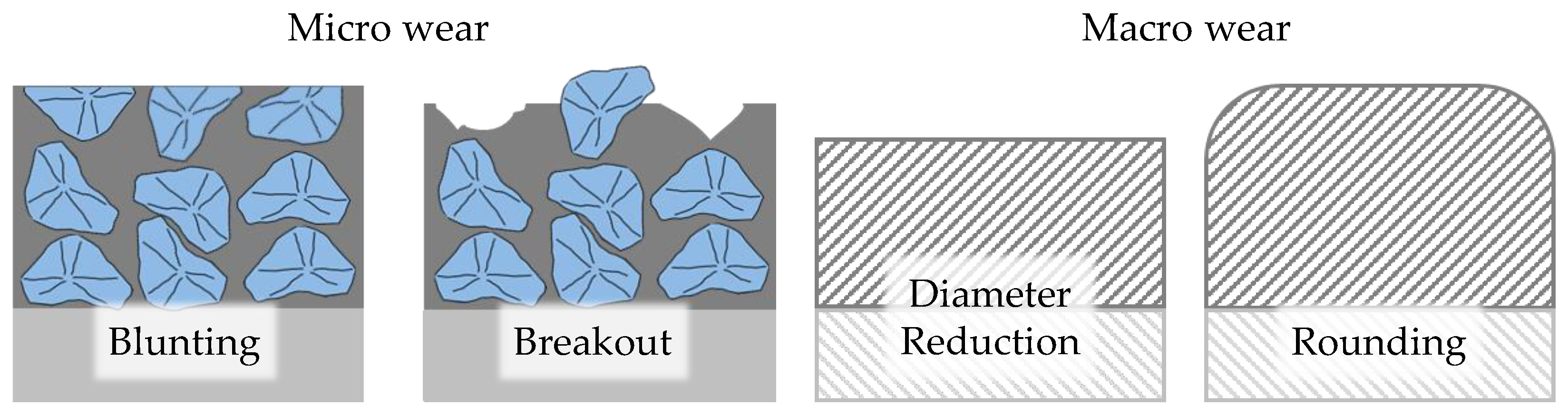
Wheel conditioning is a critical determinant of grinding performance, as it directly influences cutting sharpness, form accuracy, and surface integrity. During grinding, abrasive grains undergo micromechanical wear—manifesting as grain facet blunting and micro-chipping or breakout—and the wheel as a whole experiences macroscopic wear, evident in diameter reduction and corner rounding (Figure 1). Microwear reduces the effective cutting edges of individual grains, while macrowear alters the intended wheel profile and cutting diameter, leading to increased grinding forces, elevated temperatures, and deteriorated surface finish. Without intervention, these cumulative wear effects compromise dimensional accuracy and accelerate bond loading. Periodic dressing is therefore required to remove the worn bond layer, restore the wheel’s geometry, and expose fresh, sharp grains, thereby reestablishing optimal grinding conditions [21,22].
Conventional mechanical dressing and WEDM dressing employ fundamentally different material removal mechanisms to restore wheel topography and expose fresh abrasive grains. Mechanical dressing uses a hard tool—such as a single-point diamond or rotary dresser—in direct contact with the wheel, shearing and abrading the bond to reveal grains. In contrast, EDM dressing applies pulsed electrical discharges between a wire electrode and the rotating wheel, selectively vaporizing the conductive bond without mechanical contact.
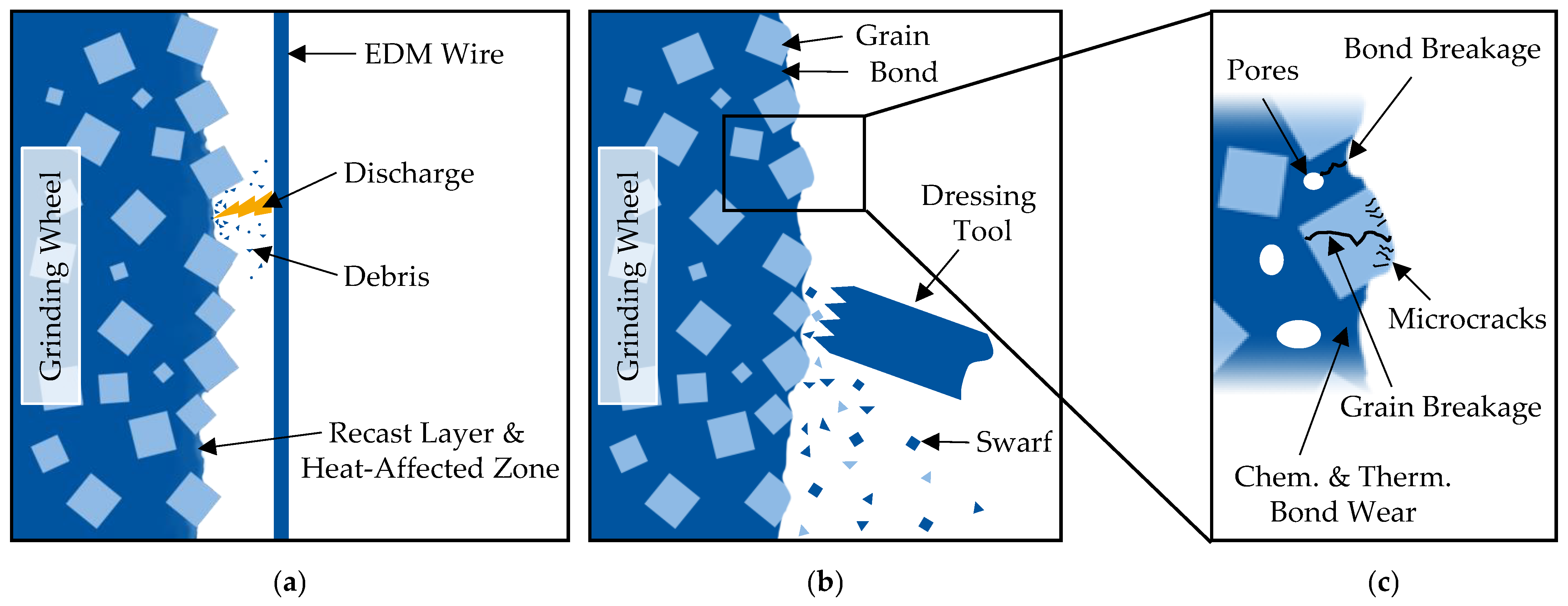
Figure 2 illustrates these contrasting processes and their microscale effect. In WEDM dressing (Figure 2a), electrical discharges occur exclusively between the wire electrode and the conductive metal bond of the grinding wheel. Each spark generates a high-temperature plasma channel that vaporizes bond material, ejecting molten debris into the dielectric and leaving behind a thin recast layer and localized heat-affected zone [23]. Because diamond grains are electrically insulating, they remain completely unaffected by the discharges. This selective bond removal effect uniformly exposes the abrasive particles and preserves the original wheel geometry, making WEDM dressing exceptionally well suited for conditioning metal-bonded grinding wheels. Furthermore, due to the thin wire tool electrode, WEDM dressing enables the precise profiling of complex wheel geometries and therefore the creation of intricate shape features—such as contoured radii and multi-step profiles—with micron-level accuracy. This capability not only reduces the number of dressing operations required but also ensures reproducible shape fidelity in successive conditioning cycles.
Conventional mechanical dressing (Figure 2b) relies on direct contact between a hard dressing tool and the wheel surface, meaning that the tool inevitably engages not only the metal bond but also the protruding diamond grains. As the dresser shears and abrades the bond, its cutting edges collide with grain facets and edges, causing microchipping, crack initiation, and even partial grain pullout. At the microscopic level (Figure 2c), this contact produces plastically deformed zones in the bond and microcracks radiating through individual abrasive particles. Debris from both bond and fractured grains can accumulate in the dressing interface, promoting smearing of soft bond constituents and further uneven wear. Over successive dressing passes, wear on the tool itself alters its geometry, amplifying local stresses on the wheel rim and leading to irregular grain exposure, compromised form accuracy, and ultimately variable grinding performance [24].
Beyond general productivity, the research is motivated by the fundamental tribological mismatch between conventional dressing tools and metal-bonded wheels. Because mechanical dressing relies on shearing the high-strength bond through direct contact, it inevitably introduces parasitic loads that can fracture the superabrasive grains before they ever enter the grinding process. There is, therefore, a scientific and industrial need to investigate non-contact alternatives like WEDM, which decouple bond erosion from mechanical force to ensure the abrasive’s geometric and grain integrity are fully preserved for the subsequent machining cycle.

2.2. Research Methodology

The research methodology follows a comparative scientific approach, evaluating the performance of metal-bond diamond wheels through a sequence of non-mechanical conditioning and subsequent performance testing. The primary techniques employed include WEDM for bond erosion and conventional mechanical dressing using a rotary dresser, which serves as the experimental baseline.
The experimental data is collected through continuous process monitoring, specifically measuring discharge stability during WEDM and the thermo-mechanical loads (spindle power and grinding forces) during grinding operation. To ensure statistical reliability, a repetition-based testing method is used, where each experimental trial consists of 12 identical grinding cycles. The resulting data are analyzed using statistical evaluation techniques. This methodological framework allows for a direct comparison between the non-mechanical WEDM dressing and the mechanical reference regime across varying grit sizes.

2.3. WEDM Dressing Setup

The aim is to be able to compare the influence of WEDM dressing on the grinding process in contrast to mechanical dressing. For this purpose, industrial CNC grinding wheels from TYROLIT AG (Schwaz, Austria) were used for grinding carbide with a bronze bond and diamond grains. Two grinding wheel types with the different grain diameters D54 (dg = 54 µm) and D91 (dg = 91 µm) were investigated. The selection of two different grit sizes (D54 and D91) aims to investigate the influence of wheel topography on both dressing and grinding. Theoretically, the larger grain size of the D91 wheel increases the gap volume between the wire and the bond, which is expected to affect the discharge distribution and process stability during WEDM. Furthermore, the increased chip space and greater individual grain cutting depths associated with coarser grits are expected to alter the thermo-mechanical load during the subsequent grinding process compared to the finer D54 grit. The diameter of the grinding wheels was 100 mm and the width 20 mm.
A rotating spindle must typically be used to dress grinding wheels using WEDM. The H80R.MNC rotating/indexing spindle from Carl Hirschmann GmbH (Fluorn-Winzeln, Germany) was used for this work. The axis is watertight, has a concentricity of c ≤ 0.003 mm and a maximum rotation speed of n = 1500 min−1. The grinding wheels were connected to the rotating spindle via an HSK-50 holder, which limited the concentric run-out to less than 3 µm. The rotating spindle was aligned on the machine table in such a way that axial concentricity and parallelism (X, Y) and coaxiality (Z) to the wire plane were less than 2 µm. A rotation speed of n = 1000 min−1 was used during dressing.
A rotation speed of n = 1000 min−1 was used during dressing. This rotational velocity was specifically chosen to address historical industrial challenges regarding process reliability. Earlier development efforts in on-machine dressing units often encountered an unstable discharge process, primarily driven by the interference of residual grinding fluids trapped within the interstitial pores of the metal-bonded wheel. In typical industrial environments, these oil-based fluids can contaminate the spark gap, leading to gas formation and the entrapment of erosion debris. This accumulation often results in conductive sludge bridges that cause frequent wire breakage—a critical failure that historically hindered the evolution of this technology for automated production [13]. In this study, to ensure a stable process, all grinding wheels were meticulously cleaned of residual oils and debris prior to the WEDM operation. Furthermore, the high rotational speed of n = 1000 min−1 facilitated the centrifugal evacuation of erosion products from the narrow discharge gap, preventing the instabilities typically associated with contaminated in-process dressing environments.
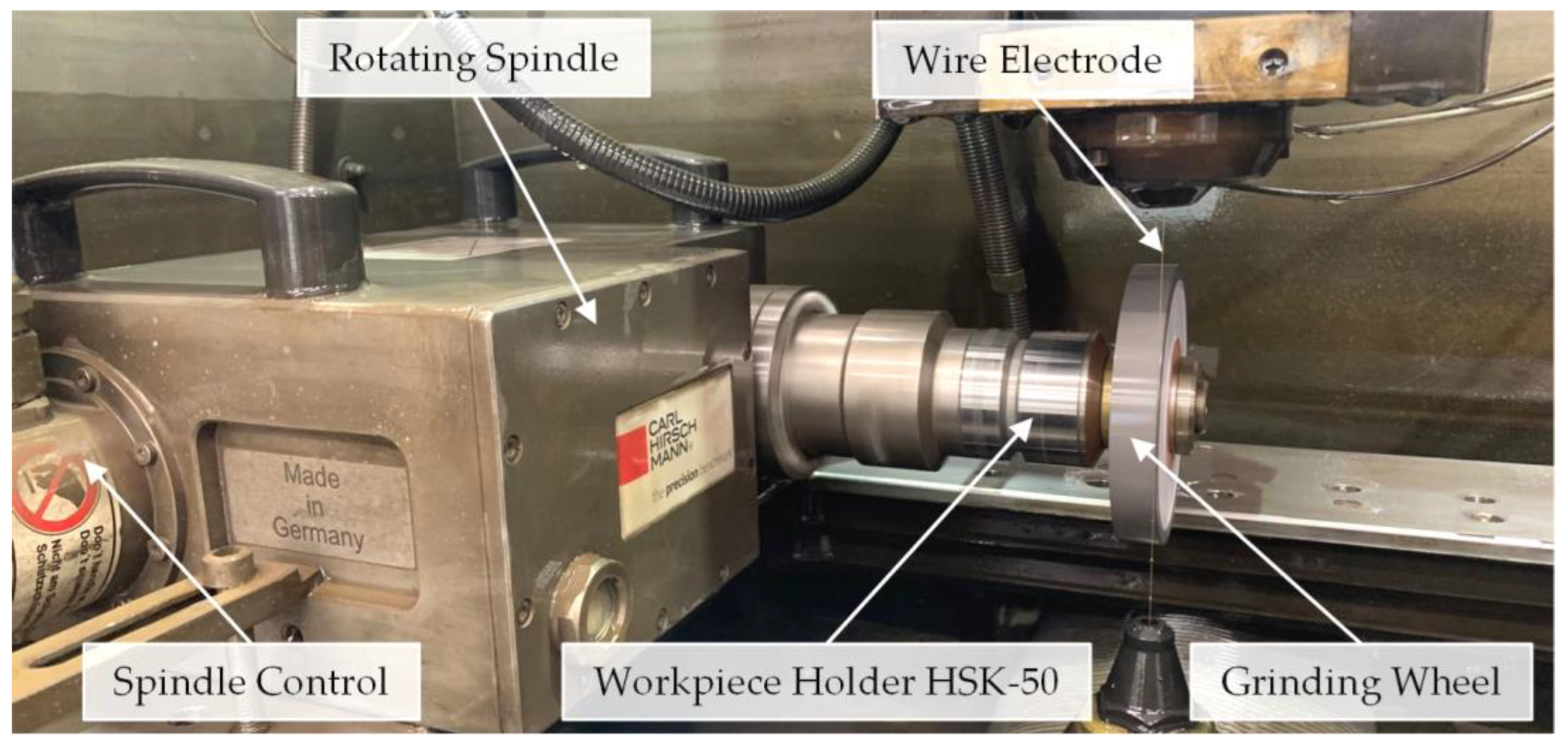
The WEDM machine used was the AgieCharmilles CUT P 350 from GF Machining Solutions AG (Losone, Switzerland), which has a positioning and contour accuracy of ±2 µm and can produce a surface roughness of up to Ra 0.08 µm. The coated high-performance wire GAPSTAR ONE.9 from bedra Berkenhoff GmbH (Herborn, Germany) with a diameter of d = 0.2 mm was used. Deionized water was used as the dielectric. The WEDM dressing was carried out at the Manufacturing Technology Institute (MTI) at RWTH Aachen University (Aachen, Germany). The experimental setup for WEDM dressing is shown in Figure 3.
Various WEDM technologies were tested for dressing the grinding wheels. A single-cut dressing strategy was selected in which dressing is performed once, then advanced a defined distance depending on the grain diameter and dressed again while maintaining the same machining parameters. For grinding wheel D54, the initial infeed was 50 µm and the second infeed was 10 µm. For grinding wheel D91, the initial infeed was 100 µm and the second infeed was 30 µm. This is necessary to prevent mechanical contact between the wire and the grains. A dressing technology from the machine manufacturer was used as the basis, which was subsequently modified. The machine parameters that were assumed to have the greatest influence on the grain protrusion were changed. These are the maximum discharge current (I) îe, the open-circuit voltage (OCV) ûi and the duty factor (DF) τ. The resulting parameter sets investigated are listed in Table 1.
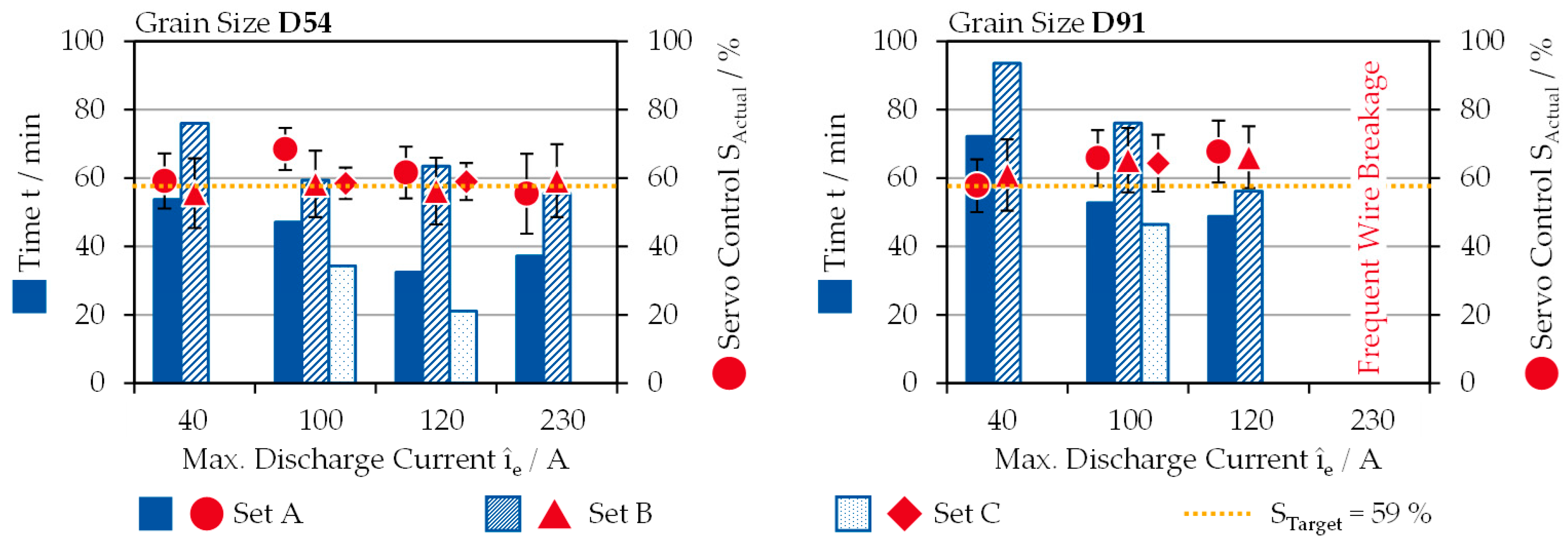
The WEDM dressing sets A, B and C were each tested for the discharge currents 40 A, 100 A, 120 A and 230 A.
Although the wire feed rate was set as a control variable, it was limited to a maximum feed rate of vf,max = 8 mm/min. This was to prevent excessive wire feed from causing uneven machining around the circumference of the grinding wheel. The control of the feed rate is specified by the reference variable STarget, which was set to 59%, whereby the percentage rate corresponds to a regulated and encrypted machine value. During machining, SActual is continuously compared with STarget, from which the machining stability can be determined. During machining, the process stability was continuously recorded via the comparison between STarget and SActual, as well as the total machining time at the end of each step.

2.4. Mechanical Dressing Setup

In addition to WEDM dressing, the same grinding wheels that were mechanically dressed were also examined. Mechanical dressing includes both profiling (P), which influences dimensional/profile accuracy and radial/axial run-out, and sharpening (S), which influences chip space and topography of the grinding wheel. The mechanical dressing was carried out on the MultiGrind CA industrial grinding machine from Adelbert Haas GmbH (Trossingen, Germany). Standard industrial tools were used as dressing and sharpening tools for these grinding wheels. The same applied to the dressing and sharpening parameters for machining. SintoGrind TTK from oelheld GmbH (Stuttgart, Germany) was used as the cooling lubricant. The mechanical dressing of the grinding wheels took place at TYROLIT AG.

2.5. Grinding Process Setup

The grinding wheels dressed using WEDM or mechanically were then tested in a real grinding process at TYROLIT AG. A tungsten carbide (WC) carbide with 10 wt. % cobalt binder and fine grit was used as the workpiece. The same defined groove was ground into the carbide using the grinding wheels. This was repeated 11 times for each grinding wheel, so that 12 grooves were produced per grinding wheel. The MultiGrind CA was also used as the grinding machine. The cooling lubricant also remained the same with SintoGrind TTK. A lubricant flow of 70 L/min was set here. The spindle power and grinding force were continuously recorded during the grinding operations. After grinding, wear was determined by making an indentation in a test plate. It was then possible to determine the grinding wheel edge radius rsk and the grinding wheel radial wear Δrs. Finally, the surface roughness parameter Ra was measured tactilely in the ground groove base.

3. Results and Discussion

3.1. Results of the WEDM Dressing Operations

The dressing time t for both grit sizes is shown in Figure 4. For both D54 and D91, the dressing time followed identical trends across the parameter sets: Set C consistently achieved the shortest durations (minimum of ~20 min for D54 at 120 A), while Set B required the longest machining times due to the increased open-circuit voltage. Although the trends were consistent, the D91 variant generally required longer absolute machining times than the D54 wheels across all parameter variations.
However, it was not possible to process the 40 A and 230 A current levels with set C as there were regular wire breaks, meaning that no data could be collected. When looking at the SActual values, it can be seen from the fact that the values are on average close to the STarget value that the dressing processes for the D54 grinding wheels were quite stable. The only outlier is described by set A at 100 A, where the SActual is around 16% above the target value and fluctuates there. The most stable machining was achieved with set C, in which the duty factor was approximately quadrupled compared to sets A and B.
For the D91 grinding wheels (right), there were regular wire breaks for all machining operations with 230 A discharge current, so no data was collected. On average, the stability of the machining for D91 is lower than for D54.
As the grain size increases, the process stability decreases because the coarse-grained wheel offers a more irregular surface and larger gap volumes. The higher unevenness leads to more fluctuating spark gaps, making it more difficult to precisely control the wire-to-workpiece distance. The larger D91 diamond grains lead to an uneven discharge distribution, whereby electrical sparks concentrate at localized points of high current density near grain boundaries rather than in the deeper bond areas of the large inter-granular gaps. In general, it can be observed that doubling the open-circuit voltage (set B) greatly increases the processing time. The higher open-circuit voltage increases the working gap between the wire and the grinding wheel surface. However, as the discharge energy remains the same, the energy density on the component surface is reduced, so that the material removal per discharge decreases. A higher OCV also tends to promote side discharges and unstable pulses away from the intended machining point. These potential stray discharges consume energy without effectively contributing to material removal and increase the required dressing time. Based on these results, the subsequent grinding tests were limited, and the focus was placed on productive and stable machining at 100 A and 120 A discharge current. Table 2 shows the selection and resulting designation EDM 1–4.

3.2. Results of the Grinding Operations

In order to evaluate the quality and effectiveness of the differently dressed grinding wheels during a grinding process, the maximum spindle power occurring during the process, the maximum tangential and normal forces were recorded and evaluated in this work. As part of a typical process monitoring in grinding, the spindle power was used as a key parameter to allow conclusions to be drawn about the condition of the grinding wheel and the stability of the grinding process. A low and stable spindle power is an indicator of a well-dressed grinding wheel, as sharp, open-pored grain structures enable efficient material removal with comparably low power input. A continuous increase in spindle power, on the other hand, indicates an increasing deterioration in the process, for example due to grain clogging or lubrication of the grinding wheel. As a result, the grinding wheel “rubs” over the carbide workpiece instead of effectively removing material with the sharp grains, which increases spindle power.
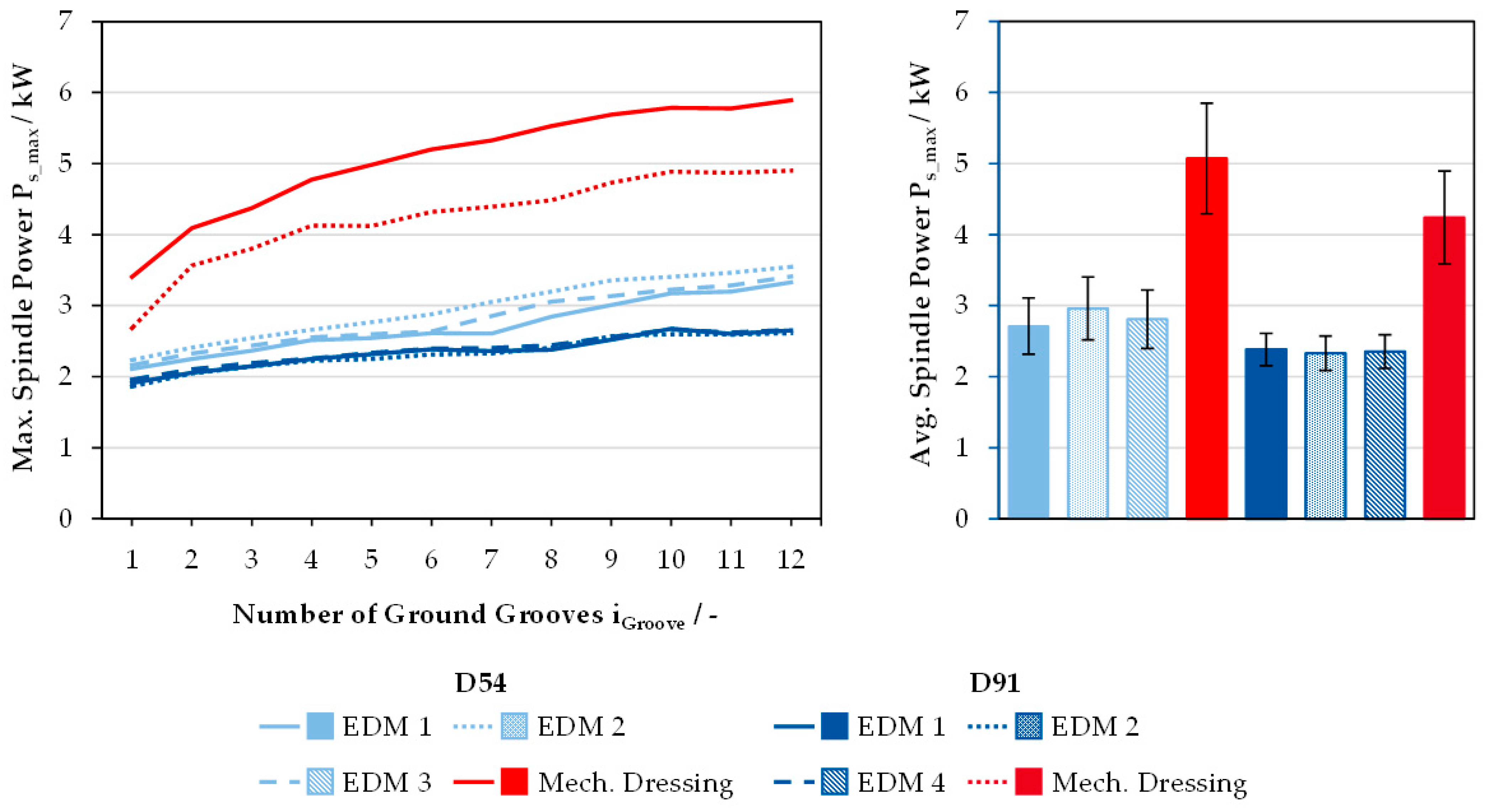
Figure 5 shows in the left diagram the course of the maximum spindle power over the 12 grooves produced for both the grinding wheels dressed using WEDM and the conventionally dressed grinding wheels for D54 and D91. The average over the 12 grooves is shown again on the right-hand side. It can be seen that the spindle power for all tests is lowest for the first groove and then increases with each additional groove machined. For both D54 and D91, the maximum spindle power of the mechanically dressed grinding wheels is around 56% higher than the respective grinding wheels dressed using WEDM. These findings align with and exceed the efficiency gains reported in the recent literature. For instance, Zahedi et al. [17] reported a reduction in specific grinding energy of roughly 28% when comparing WEDM-dressed wheels to mechanically dressed ones. Since the material removal rate remained constant in this study, the observed reduction in spindle power of approximately 56% corresponds directly to an equivalent decrease in specific grinding energy. This pronounced improvement can be attributed to the specific grain protrusion characteristics achieved by the parameter sets used, which seem to maximize the chip space volume more effectively than standard WEDM conditioning strategies. A comparison between the grinding wheels dressed using WEDM shows that the maximum spindle power for grit size D91 is lower than with the smaller grits D54. The comparison of the two grit sizes in the mechanically dressed category shows the same. The coarse-grained wheels (D91) generally have a lower spindle power than the fine-grained wheels (D54), as the larger individual grains work with greater cutting depths and the chip spaces are larger. This favors more effective chip removal and reduces friction and additional lubrication. The D54 wheels, on the other hand, tend to generate more friction and therefore require more spindle power due to the denser grain distribution and smaller chip spaces. In addition to the spindle power, the tangential and normal forces were used as central mechanical process variables to evaluate the condition of the grinding wheel. A well-dressed, sharp grinding wheel enables efficient material separation, which is reflected in moderate and stable force curves. With increasing grain wear or inadequate dressing, both tangential and normal forces increase, as the material is increasingly removed by friction and deformation. In addition, poorly dressed or clogged wheels exhibit unstable force curves with local overloads.
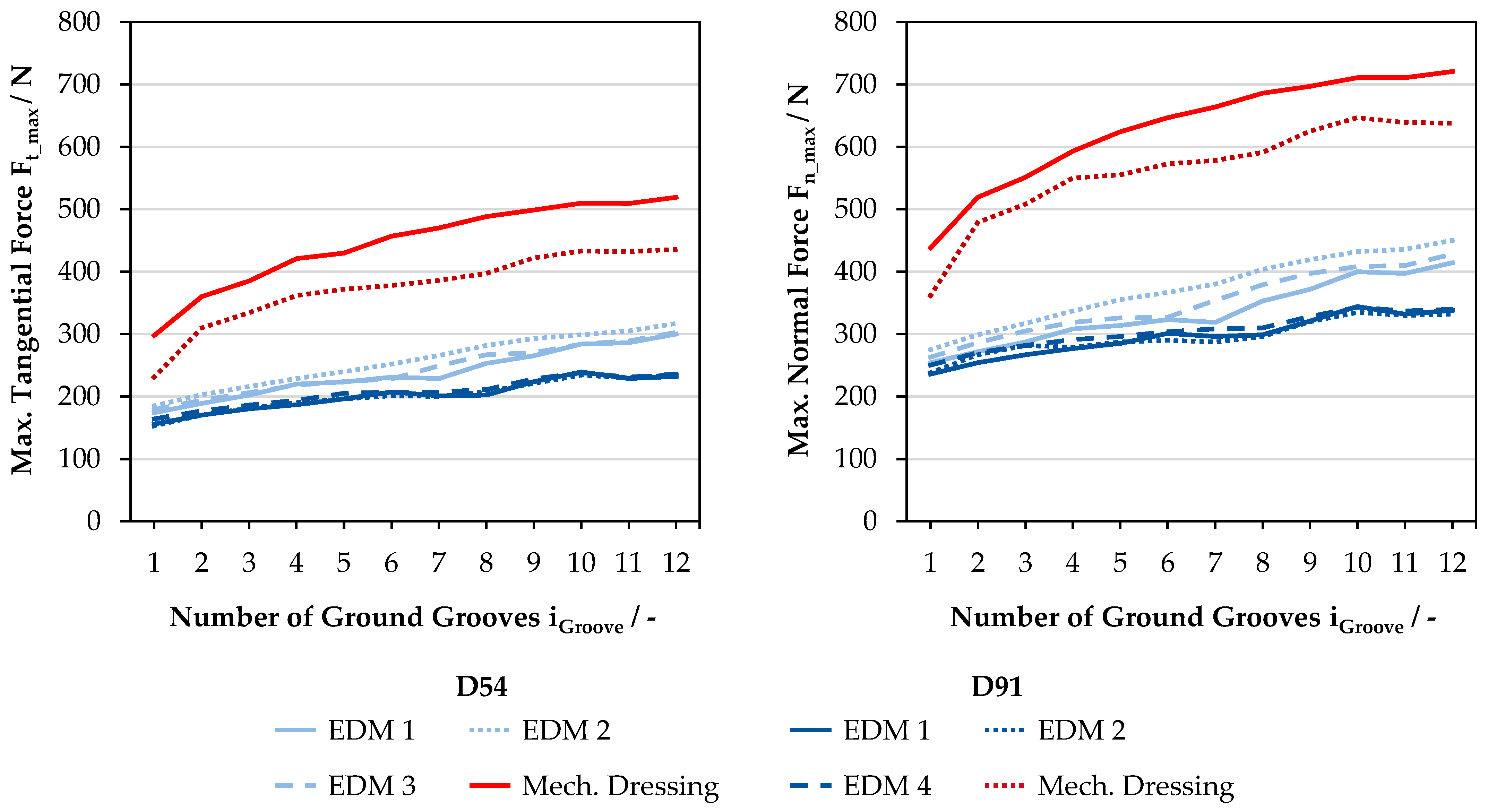
Figure 6 illustrates how the maximum tangential (left) and normal (right) forces evolve over twelve successive grinding grooves for both grit sizes D54 and D91. For D54, all WEDM-dressed wheels begin with tangential forces of about 160–180 N and climb steadily to roughly 230–300 N by groove 12, whereas the mechanically dressed wheel starts near 300 N and rises sharply to over 500 N. Among the EDM sets, EDM 1 consistently yields the lowest force levels and flattest slope—indicative of a more uniform grain exposure—while EDM 2 and EDM 3 show only marginally steeper increases, suggesting slightly faster grain dulling under identical cutting conditions. A similar pattern appears for the D91 wheels. WEDM-dressed wheels maintain normal forces between 250 N and 350–430 N, compared to a rise from approximately 450 N to nearly 700 N for the mechanically dressed wheel. The tight grouping and linear progression of the EDM curves confirm the reproducibility and stability of WEDM dressing across different parameter sets.
This progressive increase indicates an initial stabilization phase, which is consistent with observations by Zhang et al. [18] and Weingärtner et al. [12]. These authors noted that WEDM-dressed wheels initially exhibit a high wear rate due to the micro-fracture of over-protruding grains that are characteristic of the electrical discharge process. Only after this ‘break-in’ period does the wheel surface reach a stable topographical state, resulting in the consistent grinding behavior observed in the later grooves of this study.
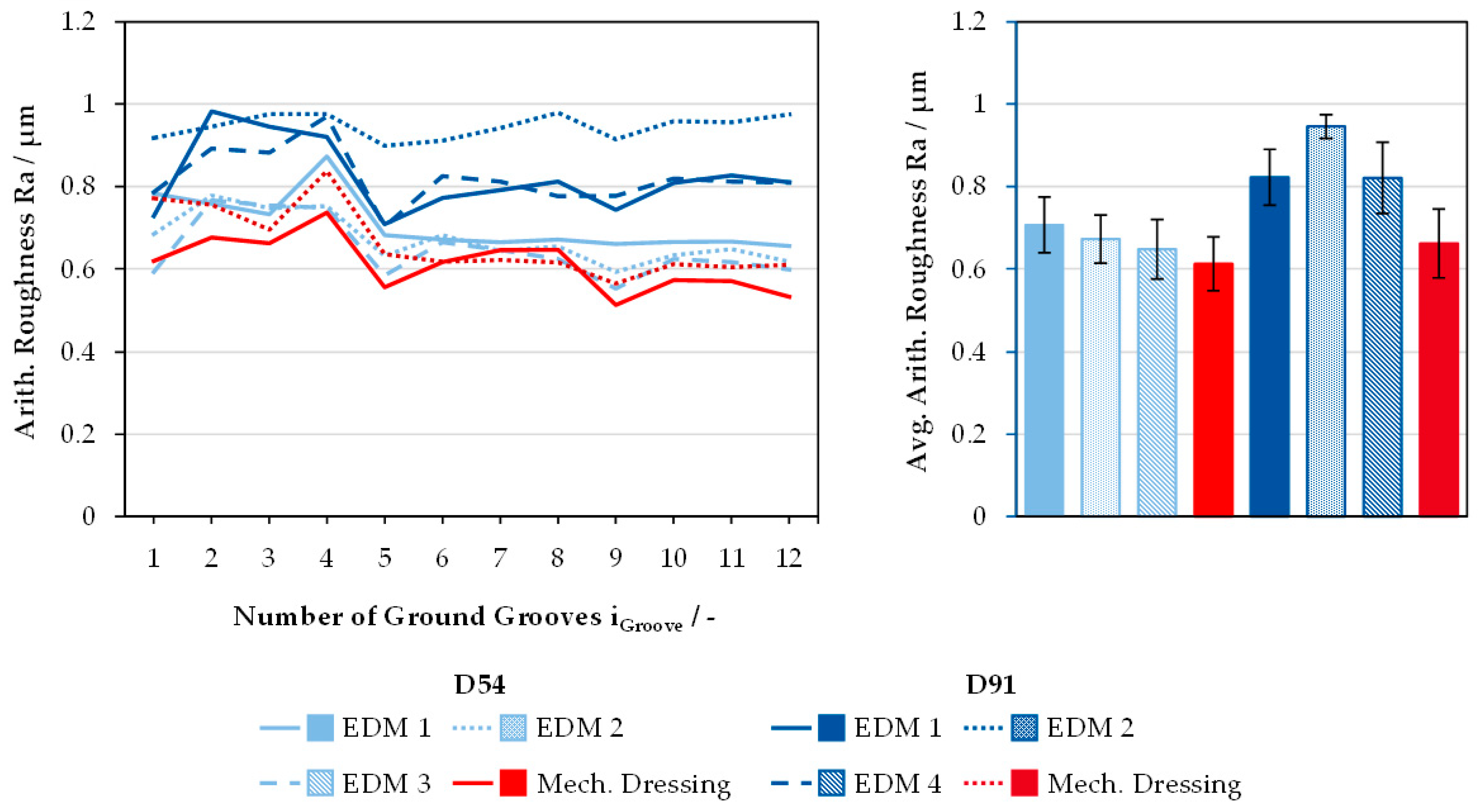
The roughnesses Ra and Rz determined after the grinding processes in the groove base are shown and discussed below. The arithmetic mean roughness Ra provides a direct insight into the microscopic contact and cutting behavior of the exposed abrasive grains. A low Ra value indicates a uniform grain projection and sharp cutting edges, while higher roughness values can signal irregular grain profiles, binder glazing or defective particles. Ra therefore allows the effectiveness and homogeneity of the dressing to be evaluated.
Figure 7 shows the progression of the Ra value over the 12 grooves produced (left) and the average values (right). All curves in the left graph exhibit a pronounced run-in phase during grooves 1–4, where loose binder residues and newly exposed grains produce peak Ra roughness. As expected, the roughness of the smaller grit sizes D54 is lower than that of the D91 grinding wheels. Mechanical dressing consistently delivers the lowest roughness, which is due to the uniform removal of the binder and the sharp grain protrusion. This convergence of Ra values after the initial run-in phase is a direct consequence of the different material removal mechanisms inherent to each dressing strategy. Mechanical dressing acts as a leveling operation, where the dresser shears both the abrasive grains and the metallic binder to a uniform plane, providing a relatively smooth and stable topography from the very first cut. In contrast, the WEDM process is highly selective, eroding only the conductive metallic binder while leaving the non-conductive diamond grains unaffected. This selectivity results in the suboptimal initial data observed in grooves 1–3, where Ra values for the WEDM-dressed wheels—particularly the coarser D91 grit—were significantly higher than the mechanical baseline. This discrepancy is attributed to two factors: the presence of residual binder fragments not fully evacuated from the interstitial spaces and the presence of overly protruding grains that lack sufficient mechanical support. During the break-in period, these unstable grains either fracture or are pulled out, and residual bond sludge is flushed away by the grinding fluid. By the fifth and sixth grooves, the wheel surface reaches a steady-state equilibrium where the topographical differences between dressing methods largely disappear, confirming that the initial roughness penalty is a transient effect of the discharge-based conditioning.
Finally, the results of the evaluation of the grooving plates, on which the radial grinding wheel wear and the grinding wheel edge radius were determined, follow. These wear and edge-radius measurements provide complementary insights into dressing performance: the radial wheel wear quantifies how effectively each method preserves abrasive grain protrusion over time, while the resulting edge radius reflects the sharpness of the cutting structure. Lower wear and a smaller edge radius indicate a more precise and durable dressing, whereas higher wear or excessive rounding reveal weaker grain anchoring or uneven binder removal.
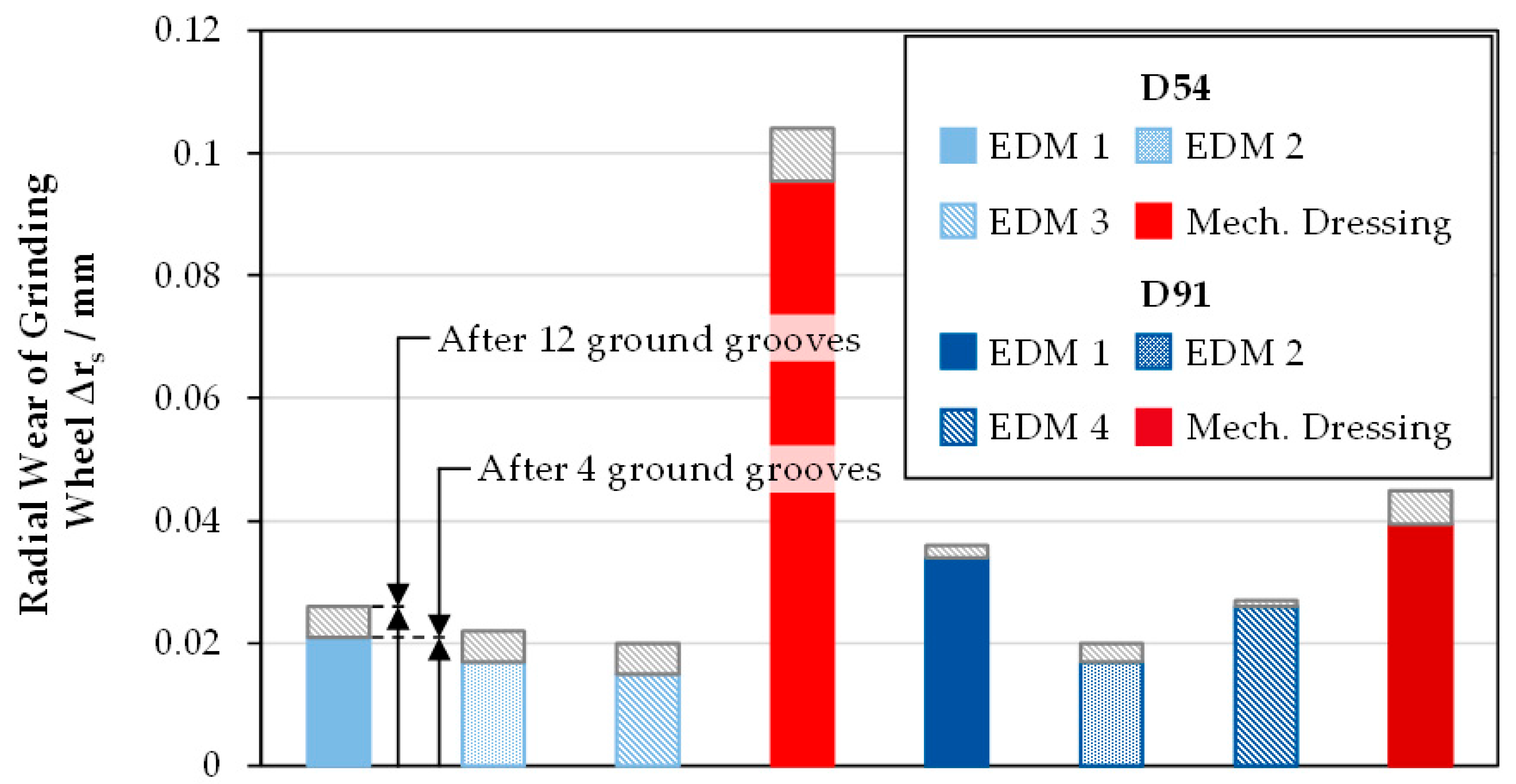
Figure 8 shows the radial wear of the grinding wheels after 4 and after 12 ground grooves. The large difference in radial wear is particularly clear with the D54 grinding wheels. While the radial wear of the WEDM-dressed grinding wheels is around 0.019 mm after every four ground flutes, the radial wear of the mechanically dressed grinding wheel is almost 0.1 mm after the same number of ground grooves. However, the subsequent increase in wear from 4 to 12 grooves is approximately the same for all grinding wheels at around 0.005 mm. Mechanical dressing damages the grains and the binder to such an extent that the initial wear after dressing is enormous. During the first grinding operations, many of these damaged grains break out of the equally damaged binder phase. With the WEDM-dressed grinding wheels, on the other hand, the damage to the binder caused by the recast layer and heat-affected zone appears to be significantly lower. The grains exposed after dressing hold well in the binder. With the larger grain diameters D91, the difference between WEDM dressing and mechanical dressing is smaller, but also recognizable.
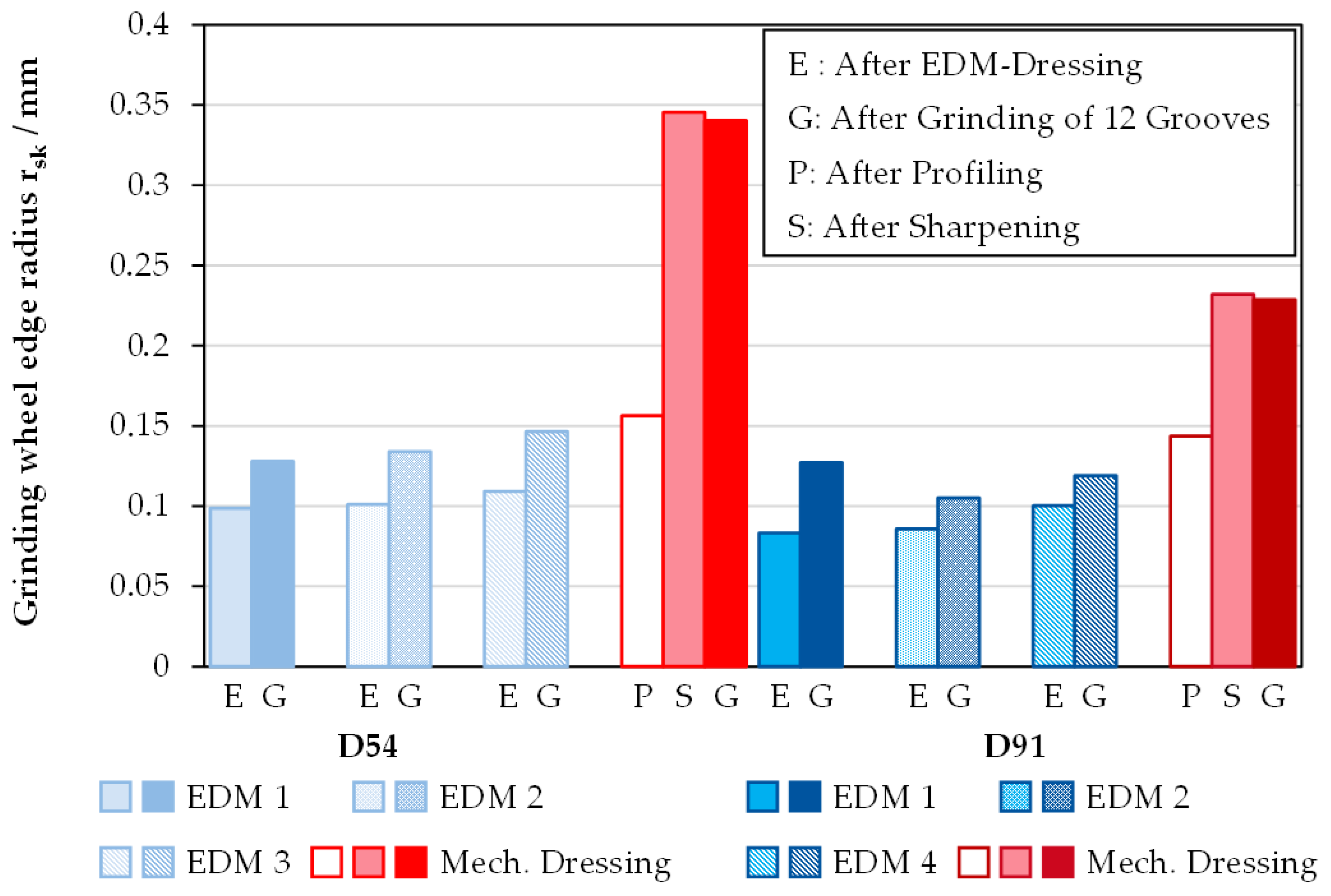
The measurements of the grinding wheel edge radii are shown in Figure 9. For wheels dressed using WEDM, the edge radius is shown after dressing (E) and after grinding 12 grooves (G). In the case of mechanically dressed grinding wheels, dressing is further subdivided into profiling and sharpening. With an average edge radius of around 0.1 mm, this is far below the mechanically dressed edge radii, which are 0.348 mm (D54) and 0.236 mm (D91) after profiling and sharpening. Although the edge radius of the WEDM-dressed grinding wheels decreases after grinding, whereas it decreases slightly with the mechanically dressed grinding wheels, the former retain their shape much better. This highlights a disadvantage of mechanical dressing: During mechanical profiling, the profile and dimension are worked into the grinding wheel. In this step, however, the grain and binder are removed in equal measure. For this reason, subsequent sharpening is always necessary, during which the binder is removed, and the grains are exposed. However, this causes the edges to become somewhat blunt, especially in the edge regions. A small edge radius after profiling, which was also defined by the binding phase, is blunted by the removal of the binder. Moreover, the slow growth of the WEDM-dressed radius during the 12-groove test suggests significantly extended dressing intervals compared to mechanical wheels. It means that WEDM-prepared wheels could survive up to five times more grinding passes before re-dressing is required, reducing machine downtime and the cost of dressing materials. This enhanced durability reinforces the practical benefits of WEDM dressing for high-volume or uninterrupted grinding applications.

3.3. Mechanisms of Performance Enhancement from WEDM Dressing

The empirical advantages of WEDM dressing are not coincidental but are physically determined by the principle of selective dielectric isolation. Unlike mechanical dressing, which applies stress indiscriminately to shear the bond and often fractures the abrasive, WEDM exploits the electrical contrast between the non-conductive diamond (>1013 Ω·cm) and the conductive bronze bond (<10−5 Ω·cm). The discharge plasma cannot physically ignite on the diamond but must instead strike the bond. Consequently, energy is consumed entirely by bond removal, revealing grains in their pristine, synthesized state with sharp cutting edges intact. By controlling discharge duration, the bond is recessed to a depth of 30–40% of the grain diameter without applying dislodging forces. This creates large chip clearance voids around each grain, preventing a clogging–rubbing transition common in tight inter-grain spaces. From a thermodynamic perspective, these mechanisms fundamentally alter the specific energy uTotal of the grinding process, which is calculated using the following Formula (1).
uTotal = uChip + uPlowing + uSliding
By eliminating bond–workpiece contact (minimizing sliding energy, uSliding) and ensuring sharp grain penetration (minimizing plowing energy, uPlowing) the system directs energy almost exclusively into efficient chip formation (uChip). This effect suggests that less heat is introduced into the component during grinding, thereby better preserving the metallurgical integrity of the component.

4. Conclusions

Effective conditioning is a prerequisite for high-performance grinding, as the wheel topography directly dictates the thermomechanical load on the workpiece. However, the mechanical dressing of metal-bonded super abrasives is often limited by the high strength of the bond, which typically necessitates high contact forces that can compromise grain integrity. This research was driven by the need to further investigate WEDM as a non-contact dressing alternative that decouples the bond removal process from mechanical force, thereby ensuring a more efficient cutting surface.
Based on the comparative investigation of WEDM and mechanical dressing for D54 and D91 grit sizes, the following conclusions are drawn:
  • Process Efficiency and Force Reduction: WEDM-conditioned wheels demonstrate a significantly more efficient cutting regime, with mechanically dressed wheels requiring up to 56% higher peak spindle power. This is scientifically justified by the selective erosion of the bond, which leaves diamond grains in their pristine, sharp state, whereas mechanical dressing often fractures grain tips during the truing process.
  • Stability of Grinding Forces: WEDM dressing provides a freely cutting surface with tangential forces starting at 160–180 N and rising modestly. In contrast, mechanical dressing results in forces exceeding 500 N over the same interval. This stability is attributed to the optimized chip clearance volume (bucket effect) created by the WEDM process, which prevents the rapid transition to a clogging-dominated regime.
  • Surface Integrity and Break-in Dynamics: Both methods maintain high surface integrity without thermal damage. While mechanical dressing initially produces lower Ra values due to a flatter, “smeared” bond surface, the WEDM-dressed wheels stabilize quickly after the initial break-in passes, confirming that the high initial protrusion does not compromise long-term workpiece quality.
  • Superior Wheel Life and Tooling Economics: The most significant advantage of WEDM is the fivefold extension of dressing intervals. Mechanically dressed wheels exhibited 0.1 mm of diameter loss after one set of grooves—five times that of WEDM wheels. This is physically rooted in enhanced grain anchorage; by eroding the bond without mechanical impact, WEDM avoids the bond fatigue and grain pull-out inherent in contact truing.
  • Profile Retention: WEDM allows for the maintenance of significantly sharper edge radii (≈0.1 mm) compared to mechanical dressing (0.24–0.35 mm). This precision enables the production of complex geometries with higher fidelity and less frequent downtime for re-profiling.
In summary, the transition from mechanical to WEDM dressing shifts the grinding process from a force-intensive regime to a thermodynamically efficient cutting regime. This shift offers a clear pathway to reducing industrial downtime and tooling costs in high-precision manufacturing.
Future work should aim to optimize both the WEDM technology and the associated dressing strategies. Although variations in grinding performance among the different WEDM setups were modest, they remained consistent. Consequently, there is substantial opportunity to improve the economic and temporal efficiency of the EDM dressing process—particularly by reducing the duration of each dressing cycle.

Author Contributions

Conceptualization, J.W., M.O., T.H., C.W., R.H. and E.G.; methodology, J.W., M.O., T.H. and C.W.; software, J.W., M.O., R.H. and E.G.; validation, T.H., T.P., T.B. and C.W.; formal analysis, J.W., M.O., T.H. and C.W.; investigation, J.W., M.O. and C.W.; resources, T.H., T.P. and T.B.; data curation, J.W., M.O. and C.W.; writing—original draft preparation, J.W.; writing—review and editing, T.H., T.P. and T.B.; visualization, J.W., M.O. and C.W.; supervision, T.H., T.P. and T.B.; project administration, T.H., T.P., T.B., R.H. and E.G.; funding acquisition, T.H., T.P., T.B., R.H. and E.G. All authors have read and agreed to the published version of the manuscript.

Funding

This research work was funded by the Industrial Working Group Electroerosive Active Machining (EAK) of refocus consulting GmbH and RWTH Aachen University as project 429-04/22.

Data Availability Statement

The data are contained in the article.

Conflicts of Interest

Christian Wrobel was employed by TYROLIT AG. Rainer Harter and Eugen Großmann wrer employed by Carl Hirschmann GmbH. Other authors declare no conflict of interest.

Abbreviations

The following abbreviations are used in this manuscript:
WEDMWire Electrical Discharge Machining
WEDDWire Electrical Discharge Dressing
EDMElectrical Discharge Machining
EDDElectro-Discharge Dressing
CNCComputerized Numerical Control
OCVOpen-Circuit Voltage
DFDuty Factor
HSKHohl-Schaft-Kegel (engl. Tool-Holder Interface)
WCTungsten Carbide
CBNCubic Boron Nitride

References

  1. Kishore, K.; Sinha, M.K.; Singh, A.; Gupta, M.K.; Korkmaz, M.E. A comprehensive review on the grinding process: Advancements, applications and challenges. Proc. Inst. Mech. Eng. Part C J. Mech. Eng. Sci. 2022, 236, 10923–10952. [Google Scholar] [CrossRef] [Scilit]
  2. Pombo, I.; Godino, L.; Sánchez, J.A.; Lizarralde, R. Expectations and limitations of Cyber-Physical Systems (CPS) for Advanced Manufacturing: A View from the Grinding Industry. Future Internet 2020, 12, 159. [Google Scholar] [CrossRef] [Scilit]
  3. Vishnupad, P.; Shin, Y.C. Intelligent optimization of grinding processes using fuzzy logic. Proc. Inst. Mech. Eng. Part B J. Eng. Manuf. 1998, 212, 647–660. [Google Scholar] [CrossRef] [Scilit]
  4. Sornsuphap, D.; Thermsuk, S.; Kalchuk, C. Influence of the surface quality of stainless steel jis 420 on lapping process. Int. J. Adv. Res. Eng. Technol. 2021, 12, 31–39. [Google Scholar]
  5. Fortunato, A.; Liverani, E.; Cestone, L.; Lerra, F.; Ascari, A.; Iqbal, H.; Lutey, A.H. Dry Grinding: A More Sustainable Manufacturing Process for the Production of Automotive Gears. J. Manuf. Sci. Eng. 2024, 146, 101003. [Google Scholar] [CrossRef] [Scilit]
  6. Bahuguna, A.; Das, N.; Jandhyala, H. Grandreview–Grinding Machinery Market Size, Share & Trends Analysis Report By Type (Non-Precision Grinder, Precision Grinder), By Application (Automotive, Aerospace, Medical, Construction, Others), By Region, And Segment 2025. Available online: https://www.grandviewresearch.com/industry-analysis/grinding-machinery-market-report (accessed on 23 February 2026).
  7. Rhoney, B.K.; Shih, A.J.; Scattergood, R.O.; Ott, R.; McSpadden, S.B. Wear mechanism of metal bond diamond wheels trued by wire electrical discharge machining. Wear 2002, 252, 644–654. [Google Scholar] [CrossRef] [Scilit]
  8. Rhoney, B.K.; Shih, A.J.; Scattergood, R.O.; Akemon, J.L.; Gust, D.J.; Grant, M.B. Wire electrical discharge machining of metal bond diamond wheels for ceramic grinding. Int. J. Mach. Tools Manuf. 2002, 42, 1355–1362. [Google Scholar] [CrossRef] [Scilit]
  9. Sanchez, J.A.; Ortega, N.; Lopez de Lacalle, L.N.; Lamikiz, A.; Marañon, J.A. Analysis of the electro discharge dressing (EDD) process of large-grit size cBN grinding wheels. Int. J. Adv. Manuf. Technol. 2006, 29, 688–694. [Google Scholar] [CrossRef] [Scilit]
  10. Klink, A. Wire electro discharge trueing and dressing of fine grinding wheels. CIRP Ann. 2010, 59, 235–238. [Google Scholar] [CrossRef] [Scilit]
  11. Sanchez, J.A.; López de Lacalle, L.N.; Lamikiz, A. A computer-aided system for the optimization of the accuracy of the wire electro-discharge machining process. Int. J. Comput. Integr. Manuf. 2004, 17, 413–420. [Google Scholar] [CrossRef] [Scilit]
  12. Weingärtner, E.; Jaumann, S.; Kuster, F.; Boccadoro, M. Special wire guide for on-machine wire electrical discharge dressing of metal bonded grinding wheels. CIRP Ann. 2010, 59, 227–230. [Google Scholar] [CrossRef] [Scilit]
  13. Weingärtner, E.; Jaumann, S.; Kuster, F.; Wegener, K. On-Machine Wire Electrical Discharge Dressing (WEDD) of Metal-Bonded Grinding Wheels; ETH Zurich: Zürich, Switzerland, 2012. [Google Scholar]
  14. Wegener, K.; Hoffmeister, H.-W.; Karpuschewski, B.; Kuster, F.; Hahmann, W.-C.; Rabiey, M. Conditioning and monitoring of grinding wheels. CIRP Ann. 2011, 60, 757–777. [Google Scholar] [CrossRef] [Scilit]
  15. Weingärtner, E.; Wegener, K.; Kuster, F. Applying Wire Electrical Discharge Dressing (Wedd) to Improve Grinding Performance of Metal Bounded Diamond Wheels. Procedia CIRP 2012, 1, 365–370. [Google Scholar] [CrossRef] [Scilit]
  16. Deng, H.; Xu, Z. Dressing methods of superabrasive grinding wheels: A review. J. Manuf. Process. 2019, 45, 46–69. [Google Scholar] [CrossRef] [Scilit]
  17. Zahedi, A.; Khosravi, J.; Azarhoushang, B. Grinding efficiency and profile accuracy of diamond grinding wheels dressed with wire electrical discharge conditioning (WEDC). Int. J. Adv. Manuf. Technol. 2021, 117, 2163–2171. [Google Scholar] [CrossRef] [Scilit]
  18. Zhang, L.; Wang, X.; Wang, Y.; Ma, H.; Li, Z.; Jia, J. Metal-bonded diamond wheel dressing by using wire electrical discharge: Principle and prototype machine design. Int. J. Adv. Manuf. Technol. 2024, 131, 2677–2690. [Google Scholar] [CrossRef] [Scilit]
  19. Khosravi, J.; Hesni, H.; Azarhoushang, B. Investigating the influence of rotational speed in wire electric discharge machining of cylindrical workpieces: An experimental and simulation study. Int. J. Adv. Manuf. Technol. 2024, 133, 1793–1805. [Google Scholar] [CrossRef] [Scilit]
  20. Khosravi, J.; Azarhoushang, B.; Behjat, S.; Zahedi, A. Investigating a novel and highly efficient approach for the fabrication of diamond profile rollers using Wire Electrical Discharge Conditioning (WEDC). Int. J. Adv. Manuf. Technol. 2024, 134, 3937–3950. [Google Scholar] [CrossRef] [Scilit]
  21. Klocke, F. Grinding, Honing, Lapping; Springer: Berlin/Heidelberg, Germany, 2009. [Google Scholar]
  22. Wrobel, C.; Mattfeld, P.; Trauth, D.; Klocke, F. Modeling of the temperature field in the workpiece external zone as a function of the grinding wheel topography. Procedia CIRP 2018, 77, 291–294. [Google Scholar] [CrossRef] [Scilit]
  23. Bergs, T.; Klocke, F. Manufacturing Processes; Springer: Berlin/Heidelberg, Germany, 2025. [Google Scholar]
  24. Linke, B. Life Cycle and Sustainability of Abrasive Tools; Springer International Publishing: Cham, Switzerland, 2016. [Google Scholar]
Figure 1. Types of Microwear (Left) and Macrowear (Right) in Grinding Wheels.
Jmmp 10 00086 g001
Figure 2. Mechanisms of WEDM dressing (a), mechanical dressing (b) and typical damages to the grinding wheel rim zone in detail (c).
Jmmp 10 00086 g002
Figure 3. Setup for WEDM dressing of grinding wheels using the H80R.MNC rotating/indexing spindle from Carl Hirschmann GmbH and the AgieCharmilles CUT P 350 WEDM machine from GF Machining Solutions.
Jmmp 10 00086 g003
Figure 4. Machining times and stability during WEDM dressing of grinding wheels D54 (left) and D91 (right).
Jmmp 10 00086 g004
Figure 5. Maximum (left) and average (right) spindle power during the grinding process of the 12 grooves.
Jmmp 10 00086 g005
Figure 6. Maximum tangential (left) and normal (right) force during the grinding process of the 12 grooves.
Jmmp 10 00086 g006
Figure 7. Arithmetic surface roughness Ra measured in the base groove grounds after grinding.
Jmmp 10 00086 g007
Figure 8. Radial wear of the grinding wheels after 4 and 12 ground grooves.
Jmmp 10 00086 g008
Figure 9. Grinding wheel edge radius. Grinding wheel edge radius. Mechanical dressing was categorized into profiling and sharpening.
Jmmp 10 00086 g009
Table 1. WEDM dressing technology parameter sets.
WEDM Dressing SetABC
Open-circuit voltage ûi/V8517085
Duty factor τ/%2.72.710.7
Table 2. Designation WEDM dressing parameter sets for grinding.
EDM1234
Discharge Current îe/A100120120120
Open-circuit voltage ûi/V851708585
Duty factor τ/%10.72.710.72.7
Disclaimer/Publisher’s Note: The statements, opinions and data contained in all publications are solely those of the individual author(s) and contributor(s) and not of MDPI and/or the editor(s). MDPI and/or the editor(s) disclaim responsibility for any injury to people or property resulting from any ideas, methods, instructions or products referred to in the content.