1. Introduction
Machining is a manufacturing process in which material is removed from a workpiece by cutting, using a tool and relative motion between the tool and the workpiece to obtain the required shape, dimensions, and surface quality. As the tool moves over the workpiece, it imprints a characteristic pattern onto the machined surface. The characteristics of the pattern are defined by the machining system capability, which represents the combined effects of the machine tool structure, the cutting process, and the control system, together with process-related factors such as tool geometry, cutting parameters, and workpiece material properties [
1,
2]. The final surface can therefore be regarded as a physical record of the machining system and its transient behavior [
3].
Since the machined surface embodies the superimposed influence of these interacting phenomena, it represents a rich source of diagnostic information. Rather than treating the surface primarily as an output to be checked against geometrical and surface texture tolerances, it can be used as an in situ indicator of process and machining system performance [
4]. When sufficiently high-resolution surface data are available, it becomes possible not only to assess overall surface quality but also to distinguish and attribute specific surface features to individual phenomena, such as tool wear [
5], vibrations [
6], or thermal effects [
7]. This perspective motivates the development of surface-analysis methods that are sensitive to these signatures, yet efficient and robust enough for deployment in industrial environments and compatible with in-line metrology concepts.
Milling is a subtractive process in which a rotating, multi-edge cutting tool removes material from a (typically) stationary workpiece to generate the desired geometry. It enables the manufacturing of complex shapes and high-precision surfaces by combining controlled tool rotation with one or more linear and/or rotary feed motions of the workpiece or tool. The surface texture generated in milling exhibits characteristic patterns corresponding to the tooth passing frequency (TPF), producing regular feed marks with a spacing depending on the feed per tooth (f
z) [
8]. In an ideal, stable process, these marks form a highly regular pattern mainly determined by the defined cutting parameters. Deviations from this ideal texture, such as irregular spacing, amplitude variations, local defects, or superimposed high-frequency content, indicate process anomalies [
9]. By analyzing these spatial and spectral signatures, it is possible not only to assess surface quality but also to diagnose underlying process and system behavior [
10]. This aligns with recent work showing that the machined surface can be used as an indicator to infer machine-tool characteristics through frequency-domain analysis [
11].
Manufacturing metrology plays a central role in advanced manufacturing by providing the traceable, quantitative information required for informed decision-making across the product life cycle. At its core, metrology establishes a link between the physical measurand, the selected measurement principle, and the measuring instrument, enabling consistent data acquisition in both time and space. Such traceability is essential not only for verifying compliance with specifications, but also for understanding process behavior, ensuring reproducibility and enabling continuous improvement. Traditionally, manufacturing metrology has been implemented as a standalone activity, separated from the production process and typically performed off-line. While this approach remains indispensable for reference measurements, it often results in long quality feedback loops, limited sampling, and delayed corrective actions. As manufacturing systems become more complex, adaptive, and data-driven, these limitations increasingly constrain productivity, flexibility, and robustness. Over the past decade, integrated metrology, particularly on-machine surface metrology, has rapidly advanced in manufacturing by embedding measurement capabilities directly into the manufacturing system [
12]. This enables in situ acquisition of process-relevant surface data under production conditions, shortens the quality process chain, and supports real-time feedback. Beyond verifying geometrical and surface texture specifications, machined surfaces can thus be interpreted as process signatures, enabling process monitoring and closed-loop manufacturing.
Traditional surface characterization predominantly relies on dedicated measurement equipment, broadly categorized into contact and non-contact methods [
13]. Contact-based techniques, such as stylus profilometry, involve moving a probe tip along the surface while maintaining physical contact. The vertical (Z-axis) displacements of the probe are recorded and interpreted as a representation of the surface topography. However, this method is inherently limited; it analyses only a very small area, defined by the contact area of the probe tip and the length of the trace. Because of this localized nature, significant variations can arise when the same surface is measured at different positions, depending on the spatial representativity of the chosen parameters. The ability to detect fine surface deviations is also constrained by the radius of the probe tip.
Optical non-contact methods utilize optical instrumentation and light-based techniques [
14]. A prominent example is White Light Interferometry (WLI), where the sample area is illuminated and the specimen is scanned along the Z-axis. During this movement, interference patterns and their changes are recorded. The acquired data are processed to generate a three-dimensional representation of the surface, from which various surface parameters can be extracted [
15]. Compared with contact profilometry, WLI can analyze a larger area in a single measurement. Nevertheless, the total measurable area remains relatively limited, constrained by focal length, field of view, and image resolution. Larger areas can be covered by stitching multiple measurements, but this is associated with increased measurement time and computational cost.
Both contact and optical interferometric methods are sensitive to external disturbances and require robust measurement conditions, typically involving dedicated equipment located in specialized metrology rooms. Surfaces must be clean, and environmental influences, such as vibrations and temperature variations, must be minimized. This demands careful sample preparation, controlled environmental conditions, and stiff or damped foundations for the equipment [
12]. As a result, such methods are most often applied off-line, providing delayed feedback and limited support for real-time or near real-time process monitoring. This stands in contrast to the emerging need for in-line metrology solutions capable of delivering timely information directly within or close to manufacturing systems.
Recent research and comprehensive reviews highlight image processing as a critical non-contact method for tool condition monitoring and surface integrity evaluation, offering a robust alternative to traditional stylus measurements or parameter-based prediction models [
16,
17]. Studies demonstrate that extracting specific digital image features, such as the arithmetic average of gray levels, standard deviation, and entropy, enables accurate surface roughness assessment, where techniques like digital image magnification using cubic convolution have been shown to significantly increase correlation coefficients following a power law [
18]. To address challenges in visualizing surface texture, new indices based on luminance and luminance difference have been established [
19]. These metrics effectively identify uneven tool marks, with findings indicating that lower luminance variations reliably correspond to higher surface quality. Furthermore, integrating these optical features with advanced artificial intelligence models yields high precision. For instance, Adaptive Neuro-Fuzzy Inference Systems (ANFIS) have achieved prediction errors as low as 6.98%, while novel illumination methods based on two-scale fractal theory combined with deep learning have improved classification accuracy from approximately 50% to over 99% by effectively mitigating self-affine texture noise [
20].
Image-based surface analysis offers complementary advantages in this context. Optical imaging can provide large-area assessment, capturing texture variations across the entire field of view in a single acquisition [
21]. It is inherently non-contact, eliminating the risk of surface damage and making it suitable for finished or functional surfaces. Image acquisition and processing can be performed with high throughput, which is attractive for batch inspection and in-line or off-line quality control. When combined with appropriate signal processing, image-based methods can link surface features to machining process dynamics through frequency-domain insight, revealing spatial wavelengths and harmonic structures associated with feed kinematics, vibrations, and other process-related phenomena [
22].
Against this background, a promising approach for process-oriented surface characterization is to use image-based analysis with general-purpose optical cameras [
23]. Such systems are comparatively inexpensive, flexible, and easier to integrate into machining environments than high-end metrology instruments. By designing robust acquisition strategies and applying advanced image processing and frequency-domain techniques, it becomes possible to extract quantitative information about machining system behavior directly from the machined surface, in a way that is potentially compatible with in-line or on-machine deployment.
Previous work by the authors [
24] demonstrated that intensity profile extraction and Fast Fourier Transform (FFT) of machined surface images can accurately recover the dominant spatial wavelength corresponding to the theoretical feed per revolution and can reveal harmonic patterns related to machining dynamics. The dominant spatial wavelength was consistently found to agree with the theoretical feed per revolution within 1.85%, validating the capability of the method to capture primary kinematic tool marks and to provide meaningful frequency-domain signatures of the machining process.
Building on this foundation this work presents a methodology for extracting process-relevant surface data from images of more complex, industrially representative surfaces. The proposed approach enables rapid acquisition of surface information that can be directly linked to the machining process. In the long term, the technology is intended to be integrated within or adjacent to the manufacturing system, providing near real-time feedback on process status and supporting in-line metrology strategies. The underlying principle is that deviations from the ideal machining state are imprinted as surface lay and texture patterns on the workpiece, and that these patterns can be captured and quantitatively analyzed using a Charge-Coupled Device (CCD) microscope.
The method offers the potential for on-machine [
25], rapid, and accurate surface characterization, overcoming many of the limitations associated with traditional contact and interferometric systems. To ensure a comprehensive evaluation, the results obtained from the proposed method are systematically compared and validated against conventional surface characterization using WLI. This comparative assessment provides critical insight into the accuracy and practical applicability of the camera-based approach and clarifies its potential as a rapid alternative for in-process surface quality monitoring in advanced manufacturing environments. Specifically, this work develops a framework for surface structure analysis that integrates multiple diagnostic capabilities:
Analysis of surface texture in the frequency domain to identify periodic components related to cutting kinematics and to detect anomalous frequencies indicative of process instabilities (spectral characterization).
Comparison of machining directions (X vs. Y) to assess machine tool behavior and identify axis-dependent process characteristics (directional analysis).
Introduction of new indices, including a Change Index (CI) for stability assessment and the Surface Anisotropy Metric (SAM) for quantifying texture directionality (texture quantification).
The methodology is demonstrated by analyzing end-milled Spheroidal Graphite Iron (SGI) surfaces produced under two distinct machining conditions, with measurements taken along orthogonal feed directions. This experimental setup enables the simultaneous evaluation of process stability, machine tool performance, and the potential of image-based analysis to support in-line surface metrology.
The novelty of this work lies in the systematic validation framework comparing image-based texture metrics with ISO 25178-compliant WLI areal parameters across multiple machining conditions and feed directions, establishing the validity of image-based analysis for process monitoring applications. The entire methodology was developed with production-oriented design principles targeting in-line metrology requirements, including non-contact measurement, large-area assessment, rapid acquisition, and minimal environmental sensitivity.
2. Materials and Methods
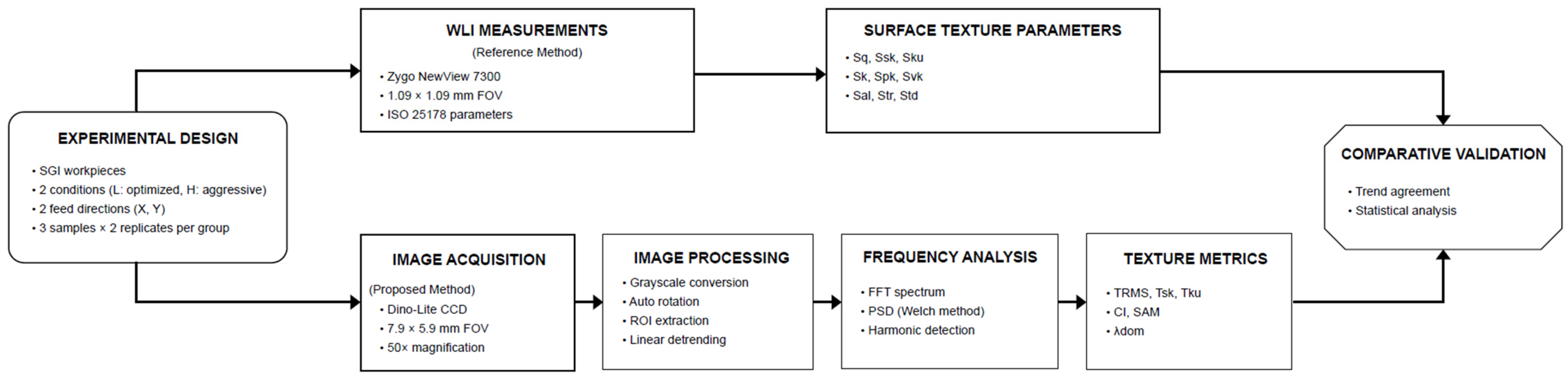
The experiment methodology consists of several steps and corresponding analysis in
Section 3.
Figure 1 shows parallel workflow which includes well established calibrated measurement methods (White Light Interferometry) as a reference method for surface evaluation. Second pipeline illustrates proposed image-based machining evaluation.
2.1. Experimental Design
The experimental conditions were chosen to closely resemble those found in industry, where high-strength materials such as SGI are commonly used as workpiece materials for heavy-duty powertrain components. SGI EN-GJS-500-14 (according to EN 1563:2018—Founding—Spheroidal graphite cast irons [
26]) was selected for this study due to its industrial relevance in heavy-duty powertrain components (e.g., engine blocks, transmission housings, differential cases, axels) and its challenging machinability characteristics. The ferritic–pearlitic matrix combined with graphite nodules creates variable microhardness across the cut, while the abrasive graphite particles influence tool wear and surface generation.
SGI combines high strength, ductility, wear resistance, and vibration-damping properties, making it both challenging and representative for advanced machining studies. These characteristics also provide a relevant context for evaluating the capability of integrated, on-machine, and image-based metrology to capture process-relevant surface information under realistic industrial conditions.
The experiment was designed collaboratively between academic researchers and industry practitioners, with all production planning and machining operations carried out on an industry shopfloor. A 5-axis CNC milling machining center with kinematic configuration wC’A’bYXZ(C)t [
27] and rotary table was used for the experiments. The machine was equipped with an HSK-A63 spindle interface.
The Seco (Fagersta, Sweden) JS554080E2C.0Z4-SUMA solid carbide end mill features 8 mm diameter (D), 4 flutes (Z), and solid carbide substrate with advanced PVD coating optimized for cast iron machining. The tool was mounted via the HSK-A63 interface to ensure rigidity and minimize runout effects on surface texture generation.
Two machining conditions were investigated: an optimized condition (designated L), representing stable cutting with conservative parameters, and an aggressive condition (designated H), approaching the limits of process stability with increased material removal rate (MRR). The same set of tools was employed for both process conditions (L and H). In total, three workpieces were machined for each process condition, resulting in six parts being processed overall. In the stable condition, the tool geometry and kinematics, particularly the nose radius, macro-geometry, feed directions, and cutting-edge quality, primarily determine the surface imprint. The nose radius and feed are the main contributors to the resulting scallop pattern, while the tool’s macro-geometry modulates cutting forces and chip flow, influencing finer surface features. Under these conditions, machine dynamics such as vibrations are minimal, so the surface essentially reflects the geometric interaction between tool and workpiece. The aggressive condition (H) represents a 126% increase in MRR compared to the optimized condition (L), achieved through a combined increase in cutting speed (+39%) and feed per tooth (+63%).
Table 1 summarizes the machining parameters for both conditions.
The derived kinematic frequencies were calculated as spindle frequency (1) and tooth passing frequency (2):
For each machining condition, surfaces were generated in both X and Y feed directions to enable assessment of direction-dependent effects (
Table 2).
The specimens were securely clamped using a Lang quick point system and a vise to ensure stability during machining.
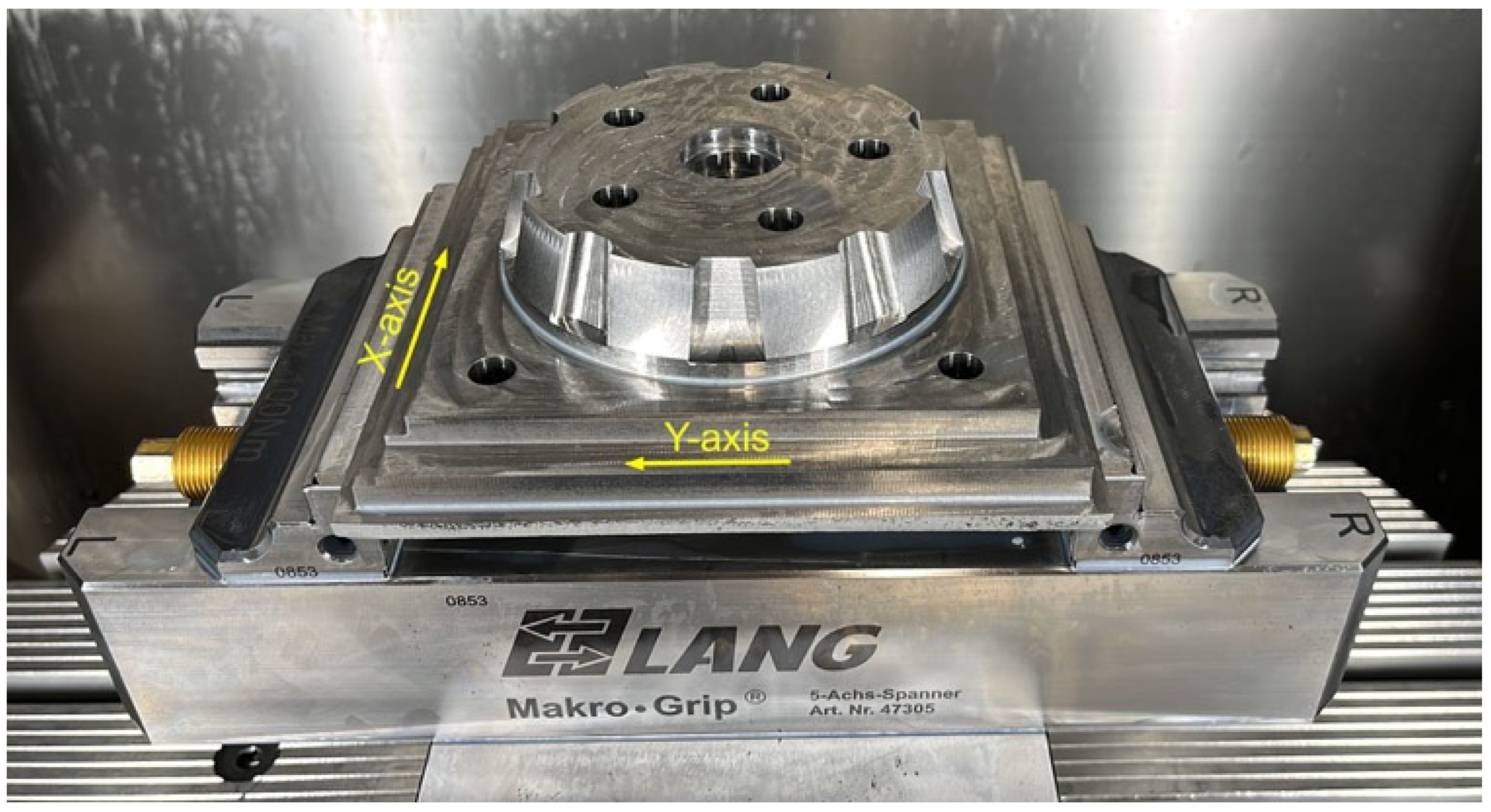
The test piece blanks of cast materials were used for machining tests. The dimensions of the blanks were 155 × 155 × 50 mm, selected to allow for proper fixturing and machining of the stepped test geometry. The stepped structure analyzed in this study (
Figure 2) was machined using single-axis movement of the spindle along both the X and Y directions, with the step geometry defined by the axial depth of cut (
ap = 7.5 mm) and radial depth of cut (
ae = 5 mm), as specified in
Table 1.
The experiment was designed to assess two primary scenarios corresponding to different strategic decisions. Condition L (Optimized/Balanced) represents a conservative approach prioritizing geometric accuracy and process stability, with cutting parameters selected to ensure high first time-through quality—applicable for initial production ramp-up or high-precision requirements. Condition H (Aggressive/Minimum Cycle Time) represents aggressive process optimization for maximum productivity, with cutting parameters pushed toward tool and machine limits—applicable for high-volume production where cycle time directly impacts unit cost. By comparing these scenarios, the assessment methodology quantifies the trade-offs between productivity and quality.
The cutting order was not randomized. Samples were machined consecutively within each condition and according to process planning procedures. This approach was adopted to maintain consistent tool state, machine thermal conditions, and environmental factors within each experimental group, ensuring that the observed differences between conditions L and H could be attributed to the cutting parameters.
2.2. Surface Selection and Measurement Approach
Figure 2 shows the two distinct surfaces on the test specimen that were selected for detailed analysis. The surfaces are the first level of the stepped structure along one side (Y-axis) of the test piece and the corresponding feature along the perpendicular side (X-axis). Both surfaces were machined using the end mill tool utilizing single axis movement of the spindle. The end mill is designed for both radial and axial cutting; however, in this study only the surfaces generated in the axial direction were investigated.
By examining these two representative surfaces under two different machining process conditions, the experimental matrix comprises a total of four unique scenarios.
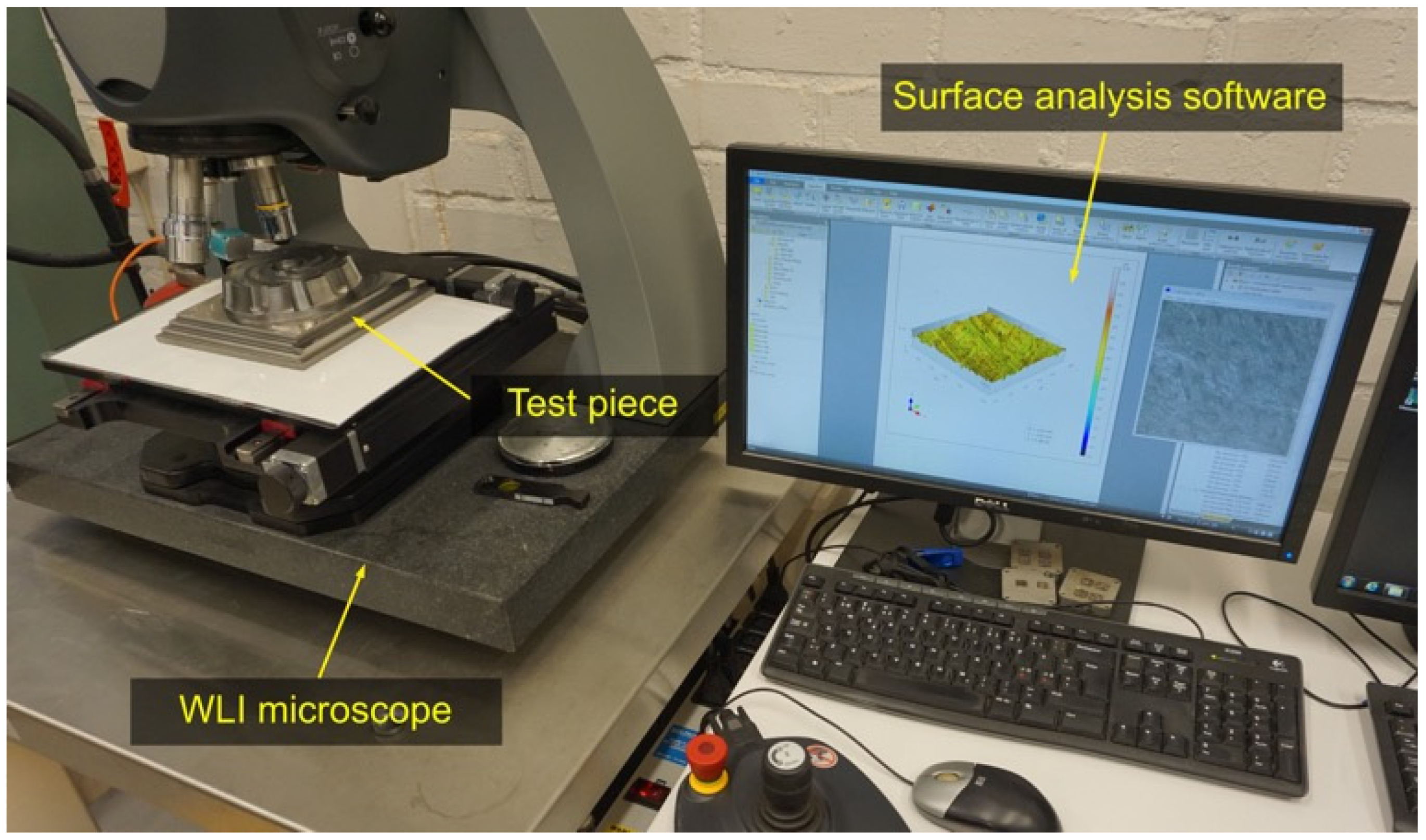
Surface topography measurements were performed using a white-light interferometer (Zygo NewView 7300, equipped with an in-built Mirau interferometer; Zygo Corporation, Middlefield, CT, USA) with a 10× magnification objective (
Figure 3). To preserve data integrity, no instrument-based filtering or image stitching procedures were applied during measurement acquisition. Each measurement field of view encompassed an area of 1.09 × 1.09 mm.
Three samples were produced for each experimental condition using optimized and more aggressive cutting process parameters, as
Table 2. Measurements were performed on the two distinct surface regions on each sample: the stepped structures oriented along both the X-axis and Y-axis. For each of these regions, twelve observations were recorded at randomly selected locations with uniform spatial distribution across the measured surface. Based on this measurement procedure, a total of 144 individual surface observations were recorded.
All acquired surface data were processed and analyzed using MountainsMap® Imaging Topography software (version 7.4.9391; Digital Surf, Besançon, France). The analytical workflow encompassed the following six sequential steps:
STEP 1 Form removal and levelling: Least-squares plane fitting (LS-plane) was applied and subtracted to eliminate macroscopic form deviations.
STEP 2 Spectral filtering: A Robust Gaussian filter conforming to ISO 16610-31 [
28] was applied with a nesting index cutoff of 0.210 mm, incorporating end-effect management to minimize boundary artefacts.
STEP 3 Textural characterization: Surface isotropy assessment and peak-height distribution analysis were performed to evaluate the directionality and amplitude characteristics of surface features.
STEP 4 Areal surface texture evaluation: Comprehensive roughness parameters were determined following ISO 25178 [
29] specifications to quantify three-dimensional surface morphology.
STEP 5 Spatial parameters analysis: Spatial texture parameters including autocorrelation length (Sal), texture aspect ratio (Str), and texture direction (Std) were computed according to ISO 25178 [
29] to characterize the directional and periodic characteristics of surface morphology.
STEP 6 Data visualization: Three-dimensional surface topographic maps and parametric distributions were generated for visual interpretation and comparative analysis.
2.3. Image-Based Spatial and Frequency Analysis
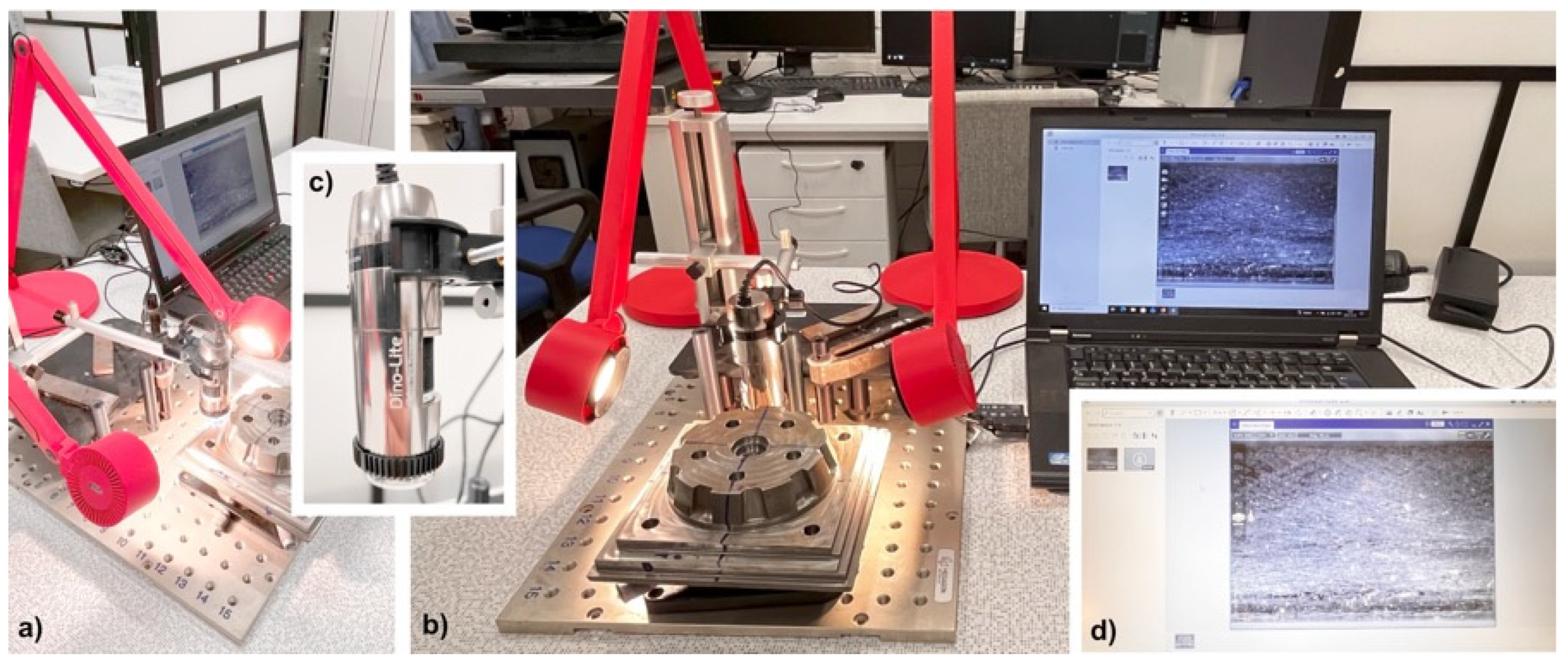
Surface images were captured using a Dino-Lite AF7915MZTL long-working distance digital microscope (Torrance, CA, USA) with internal and external illumination at 50× magnification, providing a calibrated pixel size of 3.04 μm and a field of view of 7.9 × 5.9 mm (
Figure 4). The working distance was set to 47 mm with a depth of field of 1.6 mm, and original image dimensions of 2592 × 1944 pixels were cropped to a region of interest of 2592 × 1250 pixels. Oblique illumination was employed to enhance the visibility of surface texture features through differential reflectance from local surface slopes. Images were captured with the feed direction approximately aligned with the horizontal axis, and a minimum of six images per feature were acquired for each experimental condition to ensure statistical validity.
Each image underwent automated preprocessing including the following:
Grayscale conversion with normalization.
Automatic rotation alignment based on gradient analysis to orient tool marks vertically.
Region of interest (ROI) extraction from the central horizontal band.
Linear detrending to remove illumination gradients.
Automatic rotation correction was applied to align machining marks vertically, ensuring consistent horizontal profile extraction across all samples. The algorithm employed multiple orientation detection methods:
Sobel edge detection with magnitude-weighted circular mean of gradient directions (gradient-based analysis).
Robust identification of dominant orientation from the gradient direction distribution (histogram mode detection).
Angular spectrum analysis in the frequency domain (2D FFT orientation analysis).
The method with highest confidence was selected, or a weighted combination was used when confidence was low. The rotation angle was applied using bicubic interpolation. A horizontal intensity profile was extracted from a central band of the rotated image (3):
where
is the height of the region of interest (ROI), centered vertically in the image. Averaging across multiple rows reduces random noise while preserving the periodic structure of the machining marks. The profile was detrended using linear regression to remove any systematic intensity gradients (4):
The detrended intensity profile was transformed to the frequency domain using the Fast Fourier Transform (FFT) (5):
The single-sided magnitude spectrum was computed and normalized (6):
The temporal frequency axis was defined based on the sampling frequency (7):
where
is the sampling frequency determined by the feed rate
and pixel spacing
.
The power spectral density (PSD) was estimated using Welch’s method to reduce variance (8):
where
K is the number of overlapping segments,
L is the segment length, and
U is the window normalization factor. A Hann window with 50% overlap was employed.
2.4. Texture Metrics
Statistical moments of the intensity profile were calculated to characterize amplitude distribution.
Texture RMS (intensity amplitude) quantifies the root-mean-square amplitude of intensity variations, representing the overall magnitude of surface texture features (9):
Texture Skewness (intensity profile asymmetry) measures the asymmetry of the intensity distribution, indicating whether the intensity profile contains predominantly peaks (positive skewness) or valleys (negative skewness) (10):
Texture Kurtosis (profile sharpness) characterizes the sharpness of the intensity distribution, with higher values indicating more peaked features and lower values suggesting a more uniform texture (11):
where
is the intensity at pixel
,
is the mean intensity,
is the standard deviation, and
is the number of pixels in the profile.
These parameters are calculated from intensity profiles and characterize optical texture rather than geometric surface height. They should not be interpreted as equivalent to roughness parameters (Ra, Rq, Rsk, Rku) per ISO 4287 [
30] (superseded by ISO 21920 [
31]), which require calibrated height measurements.
The dominant wavelength (
) represents the primary periodic spacing in the surface texture, extracted from the frequency-domain analysis. It is calculated by identifying the frequency with maximum amplitude in the FFT spectrum (excluding DC component, which is an intensity level of the ROI) and converting to spatial wavelength (12):
where
is the feed rate [mm/s], and
is the dominant frequency [Hz].
For ideal end-milling conditions, the dominant wavelength should correspond to the feed per tooth (), as this represents the theoretical spacing between consecutive tool engagements. Deviations from this expected value might indicate the following:
—potential tool runout, multiple cutting edges engaging simultaneously, or vibration-induced surface modulation.
—possible missed engagements, tool deflection, or low-frequency process instabilities.
—stable cutting with regular tool mark spacing.
In this study, the expected dominant wavelength corresponds to the feed per tooth, and equals 0.04 mm for optimized (L) and 0.065 mm for aggressive cutting (H) conditions. The metric provides a direct link between spectral analysis and kinematic machining parameters, serving as a validation measure for process stability.
3. Results
3.1. Surface Data Acquisition
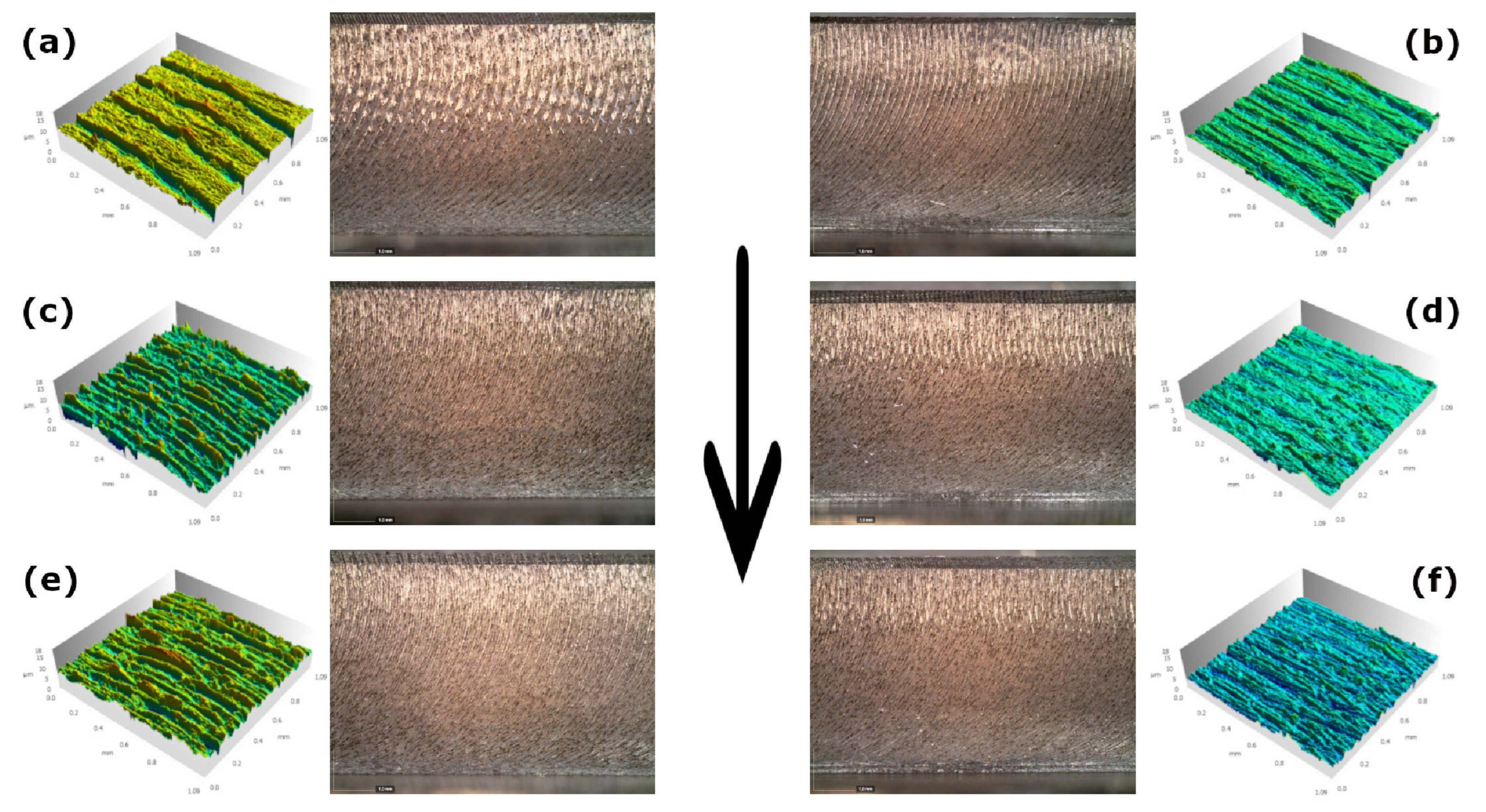
Figure 5 depicts images obtained from observations of the machined surface along the X-axis using an optical microscope and topographic maps obtained from WLI imaging. The graphic shows the sequence of surface processing for aggressive (H) and optimal (L) parameters. It can be observed that the surface characteristics of successive samples are different. For the first surfaces produced using both aggressive and optimal parameters, clear semicircular marks resulting directly from the machining and passage of the cutting tool can be observed. As machining progresses and subsequent surfaces are machined, these machining marks become progressively less visible, and the width of the grooves decreases. The marks are more densely spaced and less pronounced. The WLI observations performed on smaller areas (1.09 × 1.09 mm) confirm the above observations. Topographic maps with a unified Z-axis scale (18 µm) show higher height amplitudes and more pronounced tool passage marks on surfaces machined earlier. Observations using an optical microscope and WLI indicate consistent conclusions.
3.2. WLI-Based 3D Surface Characterization
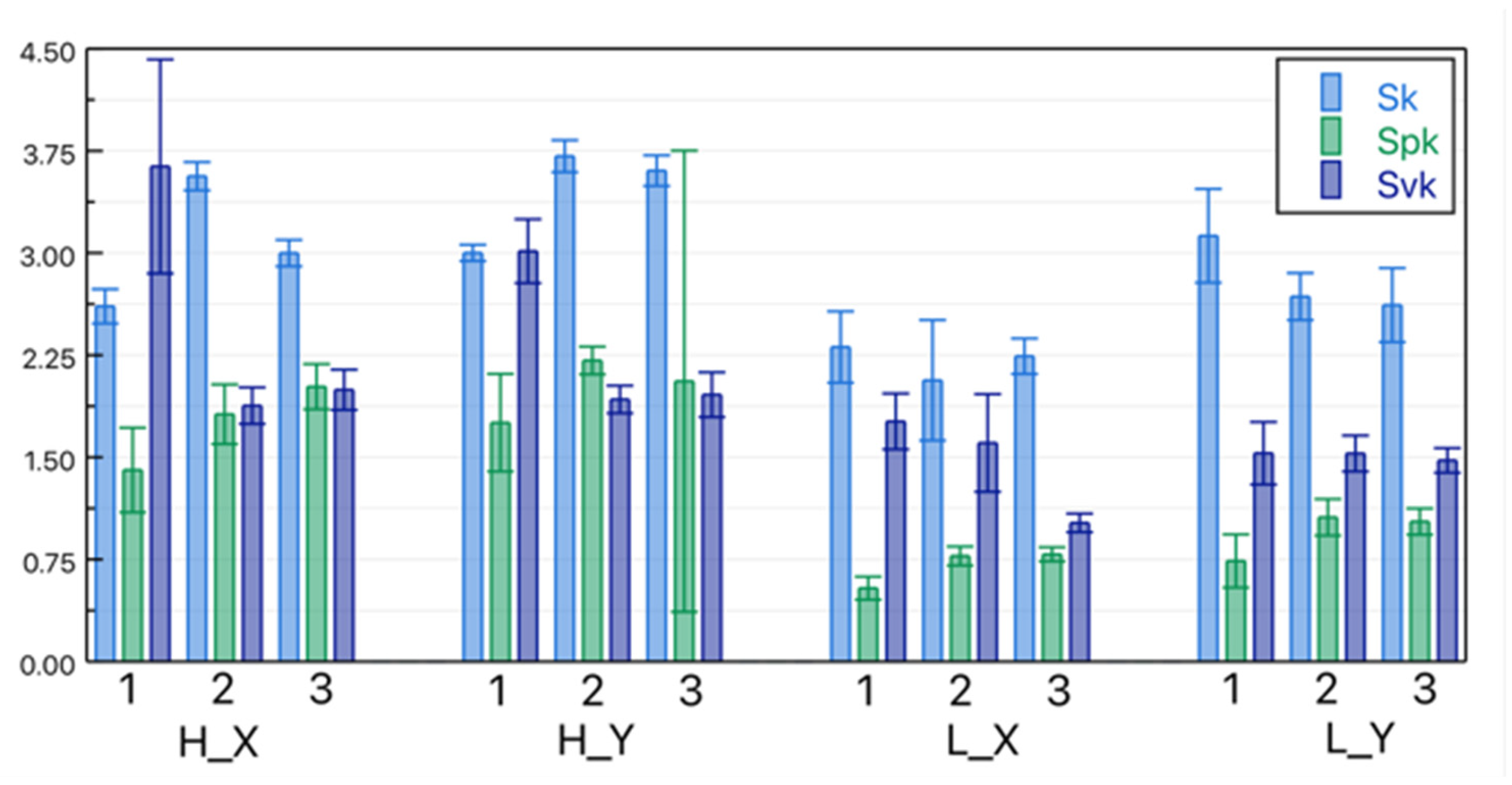
The functional parameters of the surface, the Sk group, characterize the intensity of machining, as they directly reflect the morphology of the deformed layer and the contact zone between the tool and the material, that being the most sensitive indicator of any changes in the deformation zone of the cut [
32]. Their change can be strongly correlated with tool vibrations, which are the main symptom of machining instability. Functional parameters from the Sk group enable early detection of deterioration in machining conditions, which affects surface quality, allowing for quick corrective action and prevention of tool damage.
Figure 6 presents the Sk group parameters for the analyzed surfaces. For aggressive process parameters, an increase in the Sk parameter can be observed. The lack of machining stability, tool wear, complex tool, process, and material relationship can cause irregular cutting with variable cutting depths. The resulting surface means that instead of regular peaks and valleys, the surface undergoes flattening for dynamic reasons—the peaks are destroyed by irregular cutting, and the valleys are partially filled, resulting in an increase in Sk [
20,
33]. For all the machined surfaces, a decrease in the Svk parameter can also be observed with successive machining operations, both with the aggressive and optimal parameters. With an unstable machining system in areas with a small cutting thickness, the material is elastically deformed and springs back, which means that the grooves are not completely removed but partially restored, leading to a reduction in Svk [
34]. At the same time, the formation of a complex structure can cause the peaks of the resulting structures to be clearly marked, and vibration creates new, distinct peaks between traditional tool marks, which leads to the increase of the Spk parameter.
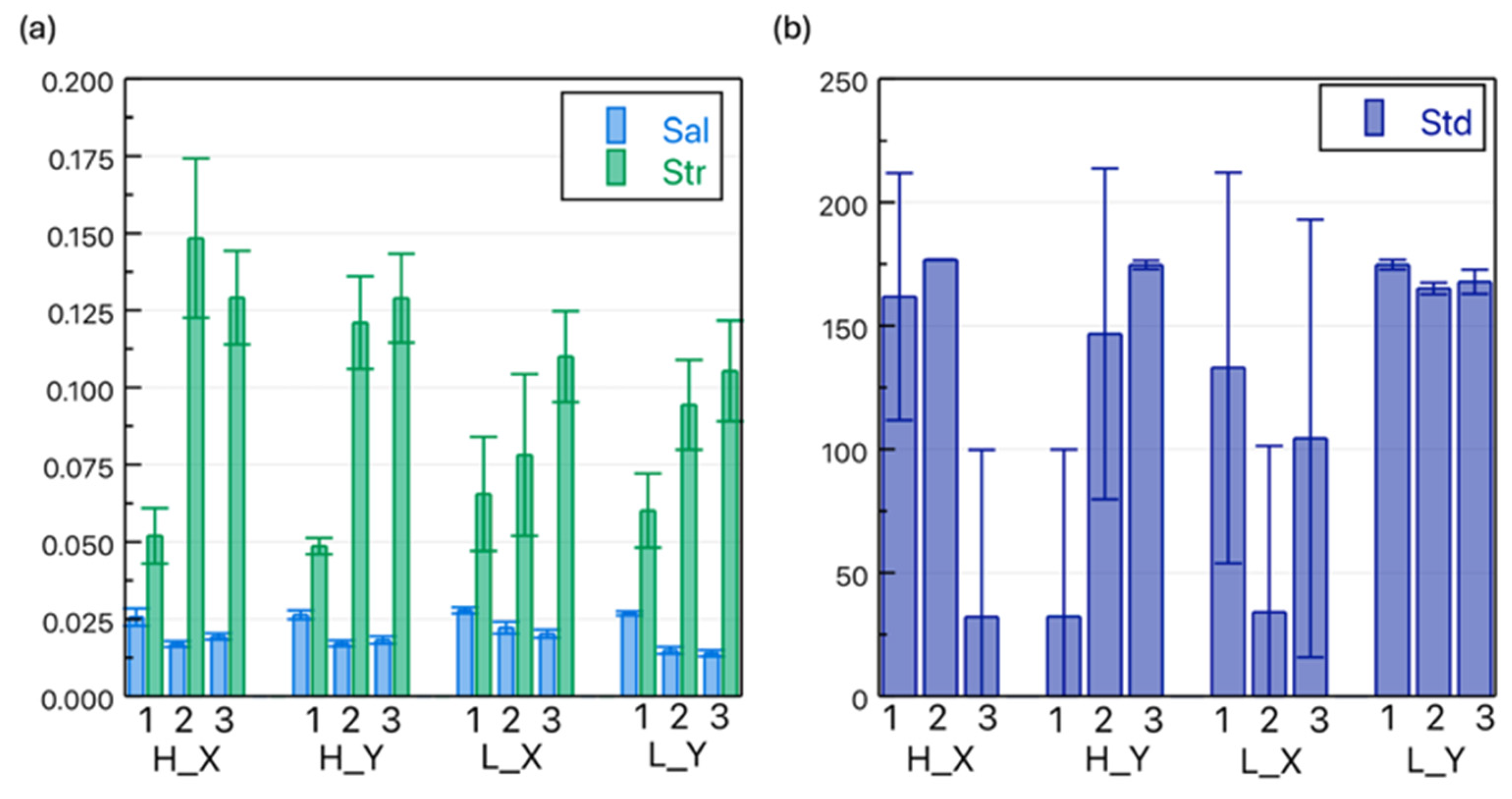
Spatial parameters from the spatial group (Sal, Str, Std) characterize the machining stability by monitoring changes in the directionality and periodicity of the surface texture, which directly reflect the regularity of the cutting process.
Figure 7 presents the spatial parameters analysis for the machined surfaces. As machining progresses for subsequent surfaces, an increase in the Str parameter can be observed. Tool vibrations and complex tool–material relationships cause random deformations in directions transverse to the feed, which results in a change in texture from clearly directional (anisotropic), for which low Str values are observed, to more random and isotropic, where the Str parameter increases.
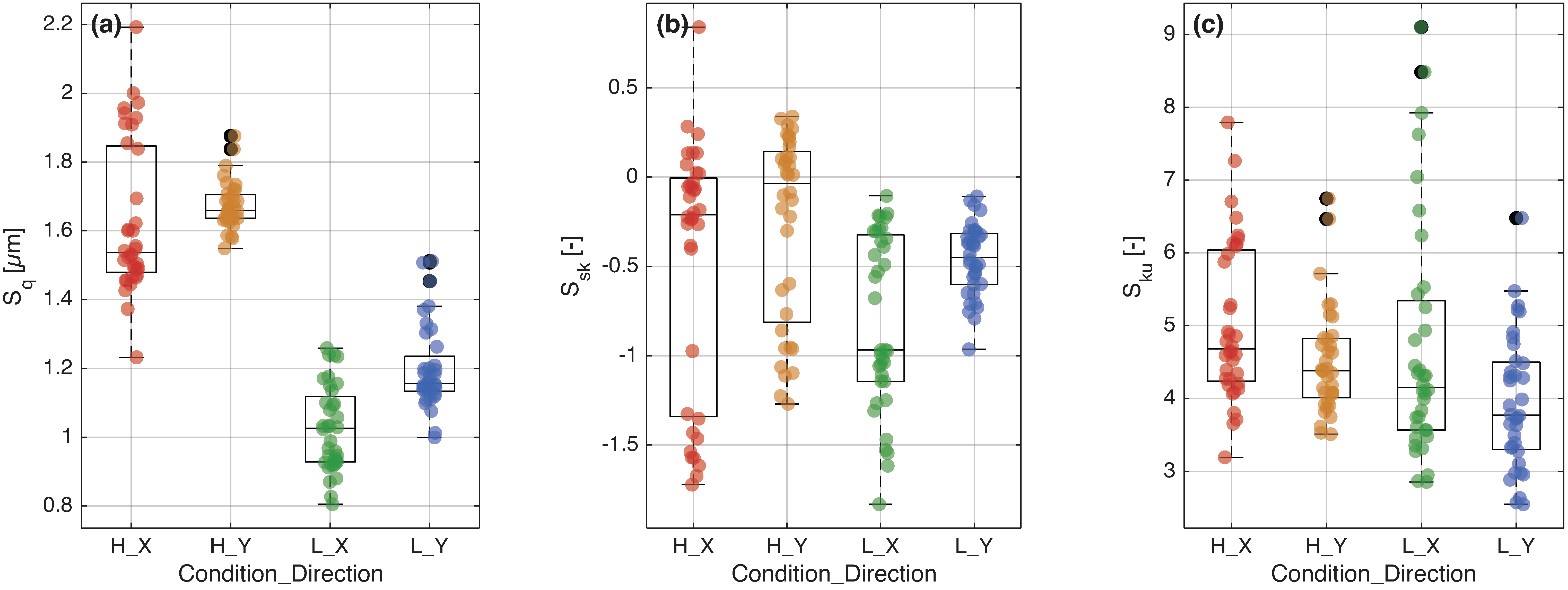
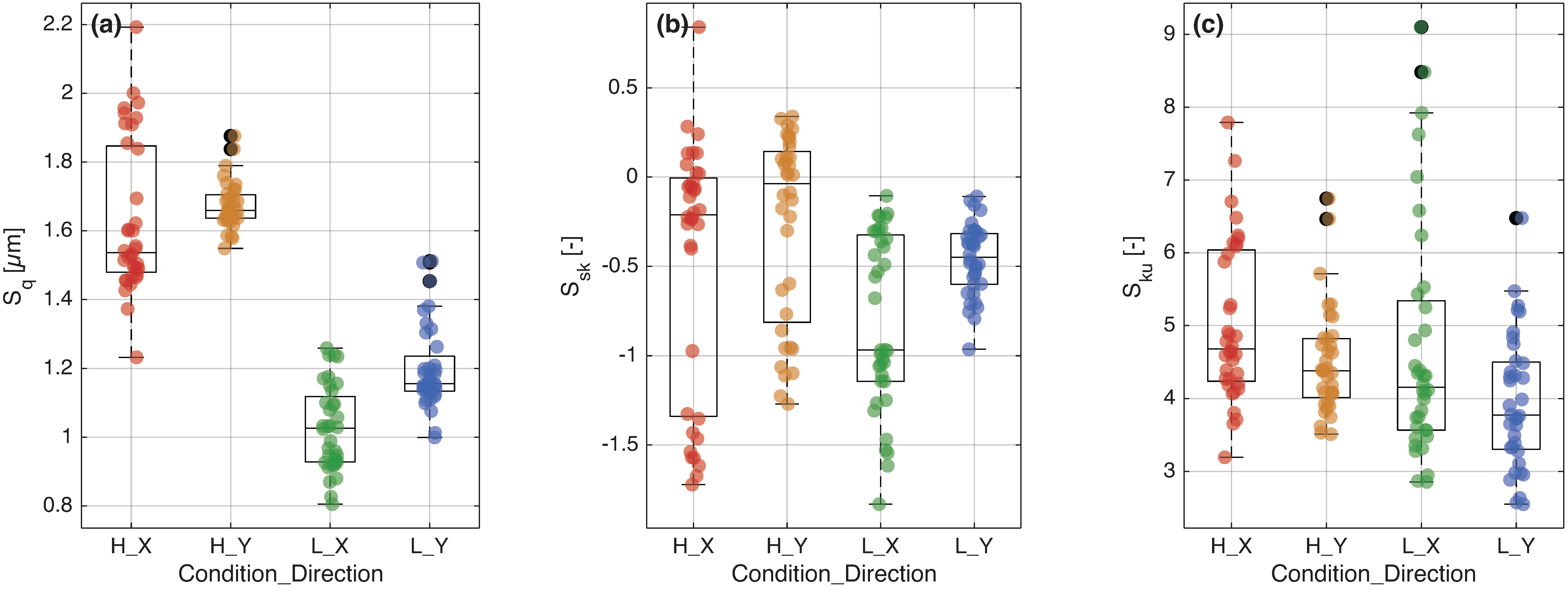
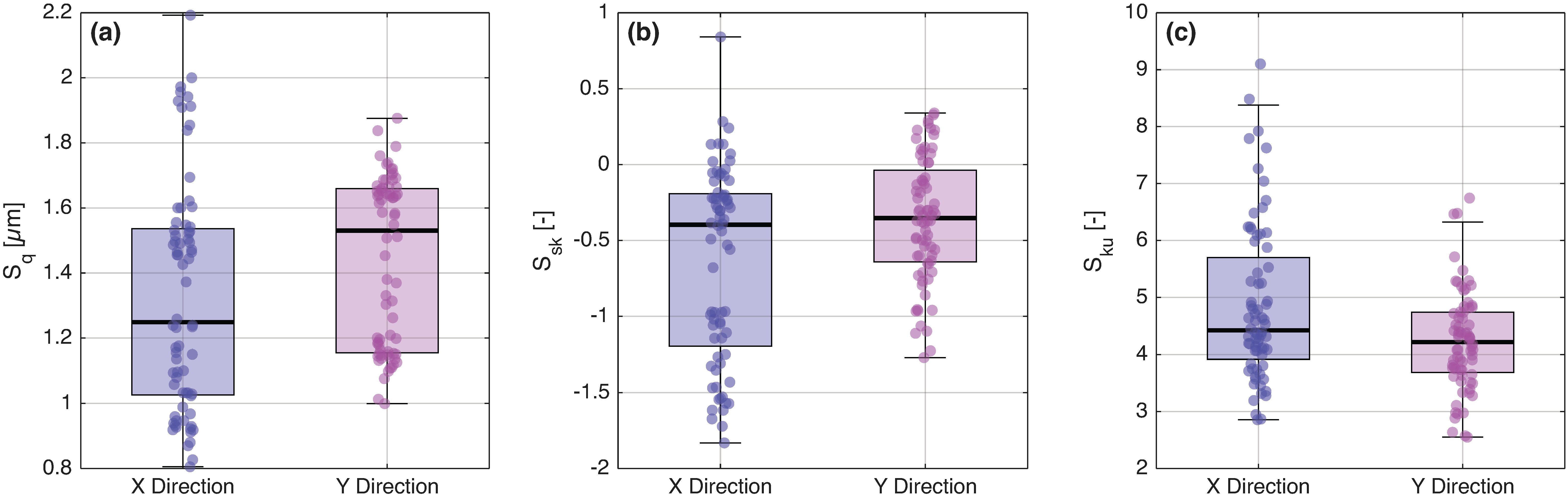
Figure 8 shows selected amplitude parameters—Sq, Ssk, and Sku. The analysis examined the impact of the proposed cutting parameters, optimal and aggressive. An increase in the Sq parameter can be observed with an increase in cutting speed, both on surfaces machined along the X and Y axes. A higher parameter results in increased cutting layer thickness, which leads to larger tool marks and more pronounced peaks and valleys, which means higher surface amplitude and a higher Sq parameter value. The Ssk and Sku parameters do not show significant changes when the milling parameters are changed, because the height distribution can remain similar without changing the asymmetry.
The WLI measurements presented above provide calibrated, three-dimensional characterization of surface topography according to ISO 25178 [
19] standards. The amplitude parameter Sq demonstrates clear sensitivity to machining conditions, increasing with cutting speed for both the X and Y directions, while Ssk and Sku show less pronounced changes. However, interferometric techniques require controlled laboratory conditions and offer limited throughput for production monitoring applications. To evaluate whether comparable process-relevant information can be extracted using more accessible optical methods, the following section presents the results from the image-based frequency analysis applied to the same machined surfaces. This parallel investigation enables direct comparison between established areal surface parameters (Sq, Ssk, Sku) and the proposed image-derived texture metrics (texture RMS, skewness, kurtosis), assessing whether optical microscopy can capture the same trends in surface quality variation across machining conditions and feed directions.
3.3. Image-Based Frequency Analysis Results
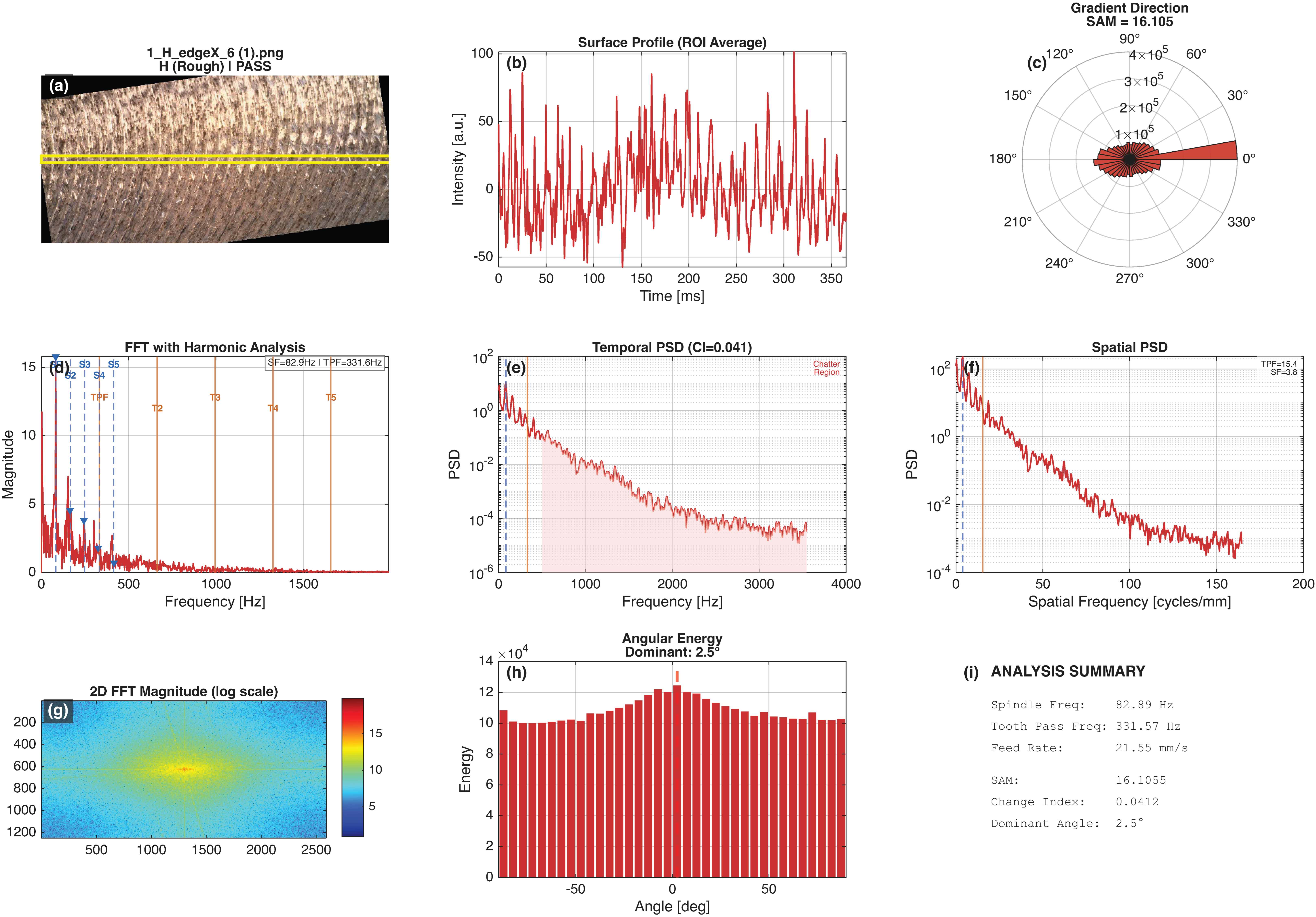
Figure 9 presents a representative analysis output, illustrating the complete characterization obtained for each surface image. The multi-panel visualization includes processed images, extracted intensity profile, gradient direction distribution, FFT magnitude spectrum with harmonic annotations, power spectral density in both temporal and spatial domains, 2D FFT showing texture orientation, angular energy distribution, and a summary of the analysis.
Figure 9 demonstrates the integrated diagnostic capability of the proposed methodology. The example shows different analysis in one panel. The extracted intensity profile (panel b) shows periodicity of the structure with amplitude variations reflecting the machining process dynamics. The gradient direction histogram (panel c) shows directional concentration indicating texture anisotropy. The FFT magnitude spectrum (panel d) reveals the expected harmonic structure. The temporal PSD (panel e) shows the Change Index calculation region above the threshold frequency. The spatial PSD (panel f) identifies the dominant wavelength which corresponds closely to the theoretical feed per tooth for condition H. The 2D FFT magnitude (panel g) and angular energy distribution (panel h) show directional preference perpendicular to the feed direction. This comprehensive characterization demonstrates the methodology’s ability to simultaneously capture kinematic, dynamic, and directional aspects of the machined surface texture.
3.4. Texture Metrics Analysis by Machining Condition
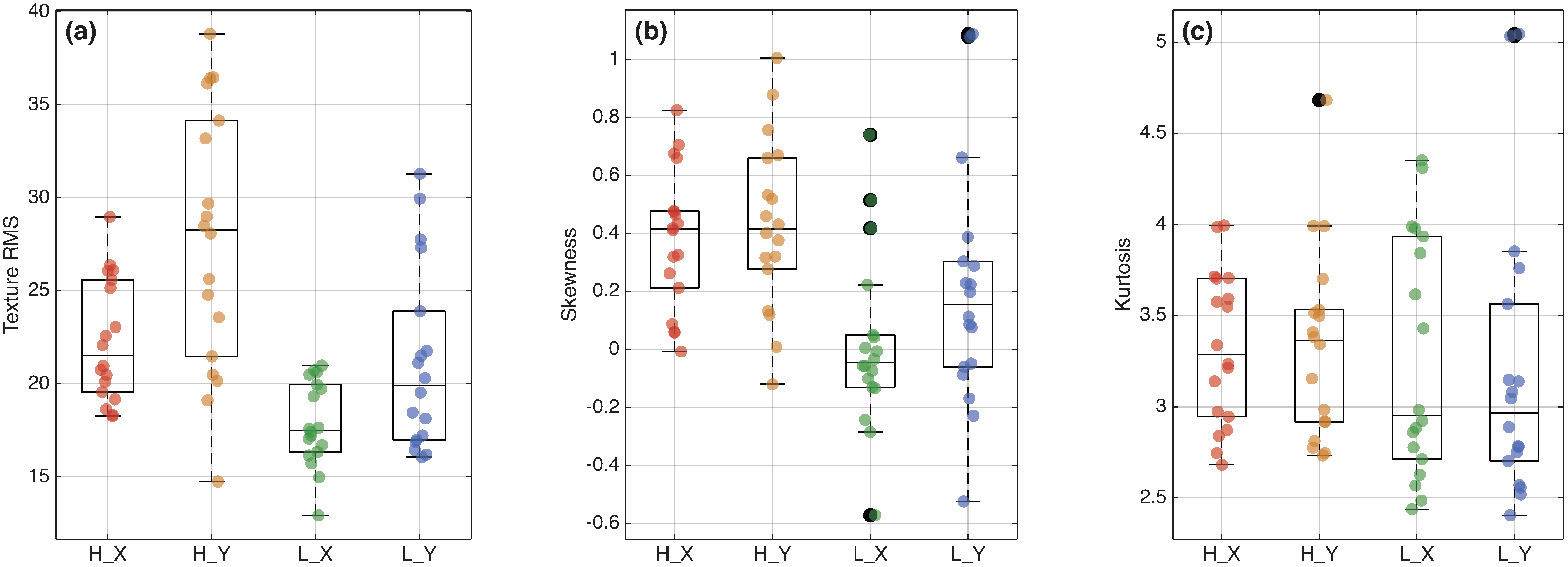
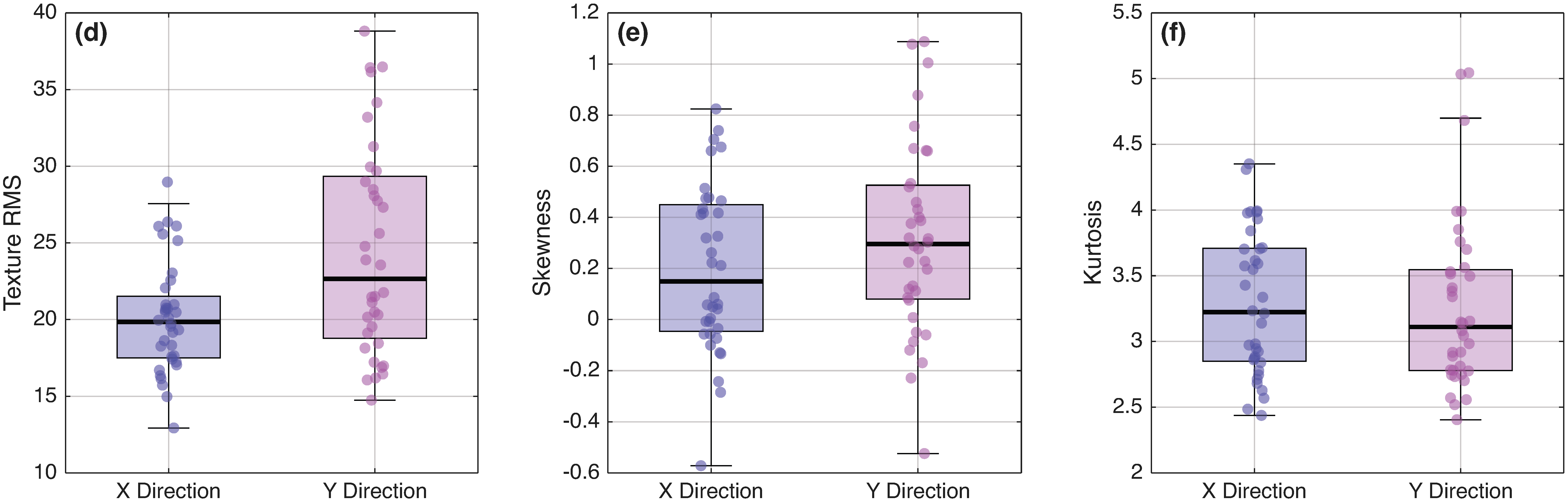
Table 3 presents the primary texture metrics for each machining condition. Texture RMS showed a significant increase from 19.51 ± 4.14 under optimized parameters to 25.07 ± 6.09 under aggressive parameters, representing a 28.5% increase in surface texture amplitude. This difference was statistically significant (
p < 0.001) with a large effect size (Cohen’s d = 1.07), confirming that aggressive cutting conditions produce substantially rougher surfaces as expected from increased chip load and cutting forces.
Profile skewness demonstrated a substantial shift from near-zero values under optimized conditions (0.11 ± 0.37) to distinctly positive values under aggressive conditions (0.41 ± 0.27). This statistically significant change (p < 0.001, d = 0.92) indicates a transition from symmetric intensity distributions to profiles dominated by peaks rather than valleys, consistent with material flow and smearing effects characteristic of higher cutting forces and chip loads.
Kurtosis values remained close to 3 (Gaussian reference) for both conditions, with no statistically significant difference detected (
p = 0.47). This suggests that the basic shape of the intensity distribution is not substantially affected by the machining parameter changes investigated, even though amplitude and asymmetry are clearly modified.
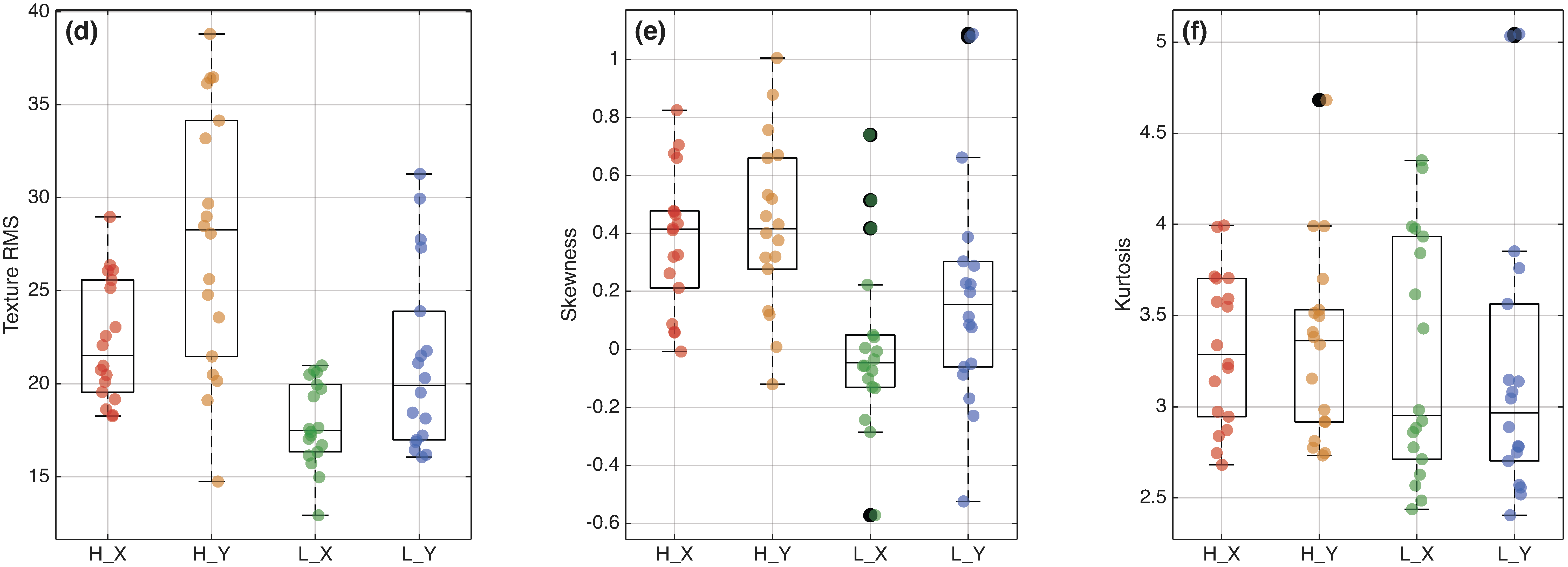
Figure 10 represents primary comparison of changes of RMS, skewness, and kurtosis.
The dominant wavelength detected in the spectral analysis (5.8–6.4 mm) substantially exceeded the theoretical feed per tooth values (0.04–0.065 mm). This indicates that longer-wavelength texture features, likely corresponding to form error or waviness rather than roughness-scale tool marks, dominated the captured images. Higher magnification imaging would be required to resolve individual tooth marks at the expected fz spacing.
3.5. Correlation Analysis
Table 4 presents the correlation analysis between texture metrics and machining parameters. Texture RMS showed a moderate positive correlation with the cutting parameters (r = 0.476,
p < 0.001), confirming that surface roughness amplitude increases with machining intensity. Approximately 23% of variance in RMS is explained by the cutting parameter variations, with the remaining variance attributable to other factors including material inhomogeneity, tool condition, and measurement variability.
The strong negative correlation between RMS and dominant wavelength (r = −0.717, p < 0.001) indicates that surfaces with higher texture amplitude tend to exhibit shorter dominant wavelengths. This relationship reflects the spectral energy redistribution, where rougher surfaces concentrate more energy at higher spatial frequencies, shifting the dominant wavelength toward shorter values. The moderate negative correlation between dominant wavelength and cutting parameters (r = −0.422, p < 0.001) further supports this interpretation, as aggressive machining produces both higher amplitude and shorter wavelength texture features.
Kurtosis showed negligible correlation with the cutting parameters (r = 0.082, p = 0.49), confirming that this metric is relatively insensitive to the machining parameter variations investigated. This independence limits the diagnostic value of kurtosis for process monitoring in this application context.
3.6. Directional Comparison
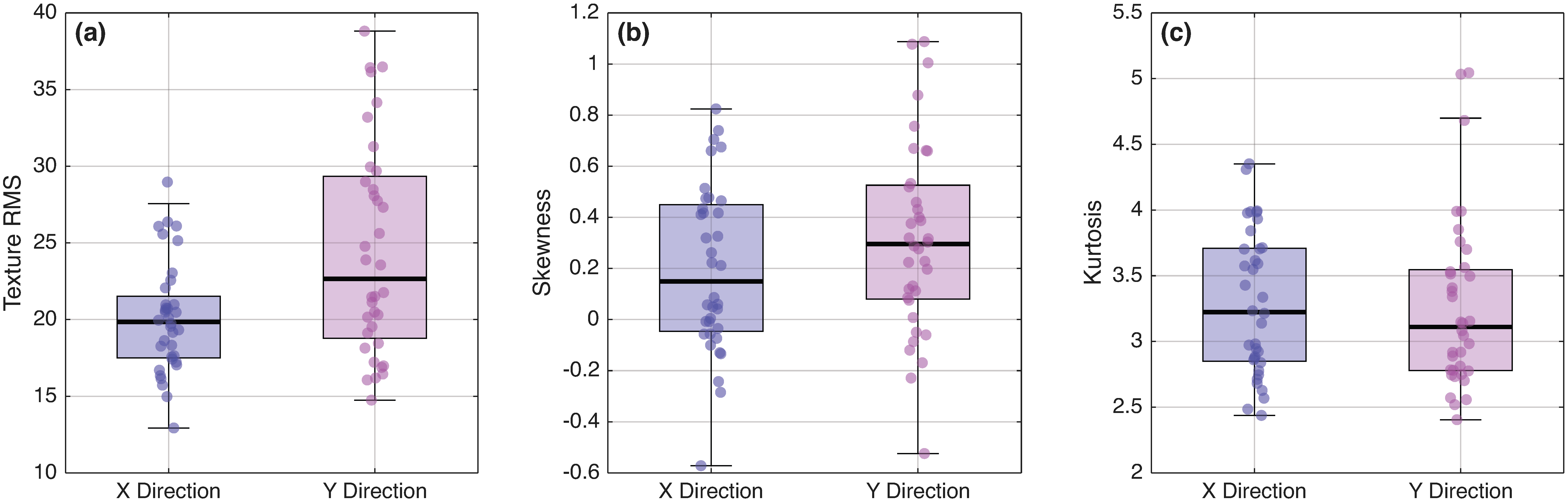
Table 5 presents the statistical comparison between the X and Y machining directions. The most significant finding was the directional asymmetry in texture amplitude, with Y-direction surfaces exhibiting 22% higher RMS values than X-direction surfaces (24.48 ± 6.88 vs. 20.10 ± 3.60). This difference was statistically significant (
p = 0.001) with a large effect size (Cohen’s d = 0.80), indicating systematic axis-dependent behavior in surface generation.
Other texture metrics showed small or negligible directional effects that did not reach statistical significance. Skewness was somewhat higher in the Y-direction (0.32 vs. 0.20, p = 0.16), suggesting slightly more asymmetric profiles, though this difference was not conclusive. Kurtosis showed essentially no directional dependence (p = 0.878), consistent with its insensitivity to process variations observed in the condition comparison.
The significant directional asymmetry in RMS has important implications for machine tool assessment. Potential causes include differences in axis stiffness, variations in servo tuning between axes, direction-dependent tool deflection effects, or asymmetric guideway characteristics. Such directional effects can impact part quality in applications requiring consistent surface finish across multiple orientations. These characteristics and their changes are presented in
Figure 11.
3.7. Group Comparison
The H_Y group (aggressive parameters, Y-direction) exhibited the highest texture intensity amplitude (27.80 ± 7.05), while L_X (optimized parameters, X-direction) showed the lowest (17.86 ± 2.27). The ratio between these extremes (1.56×) indicates the substantial combined effects of the machining condition and feed direction on the surface texture.
Table 6 presents statistics for the four condition-direction groups, enabling examination of the interaction effects between the machining parameters and feed direction.
Within-group variability, characterized by the coefficient of variation, ranged from 12.7% to 25.4% for texture RMS. The X-direction groups showed consistently lower variability (12.7–14.7%) compared to the Y-direction groups (23.3–25.4%), suggesting that measurement repeatability differs between axes. This pattern was consistent across both machining conditions, indicating a fundamental difference in surface generation stability between directions rather than a condition-specific effect (
Table 7).
3.8. Harmonics Analysis
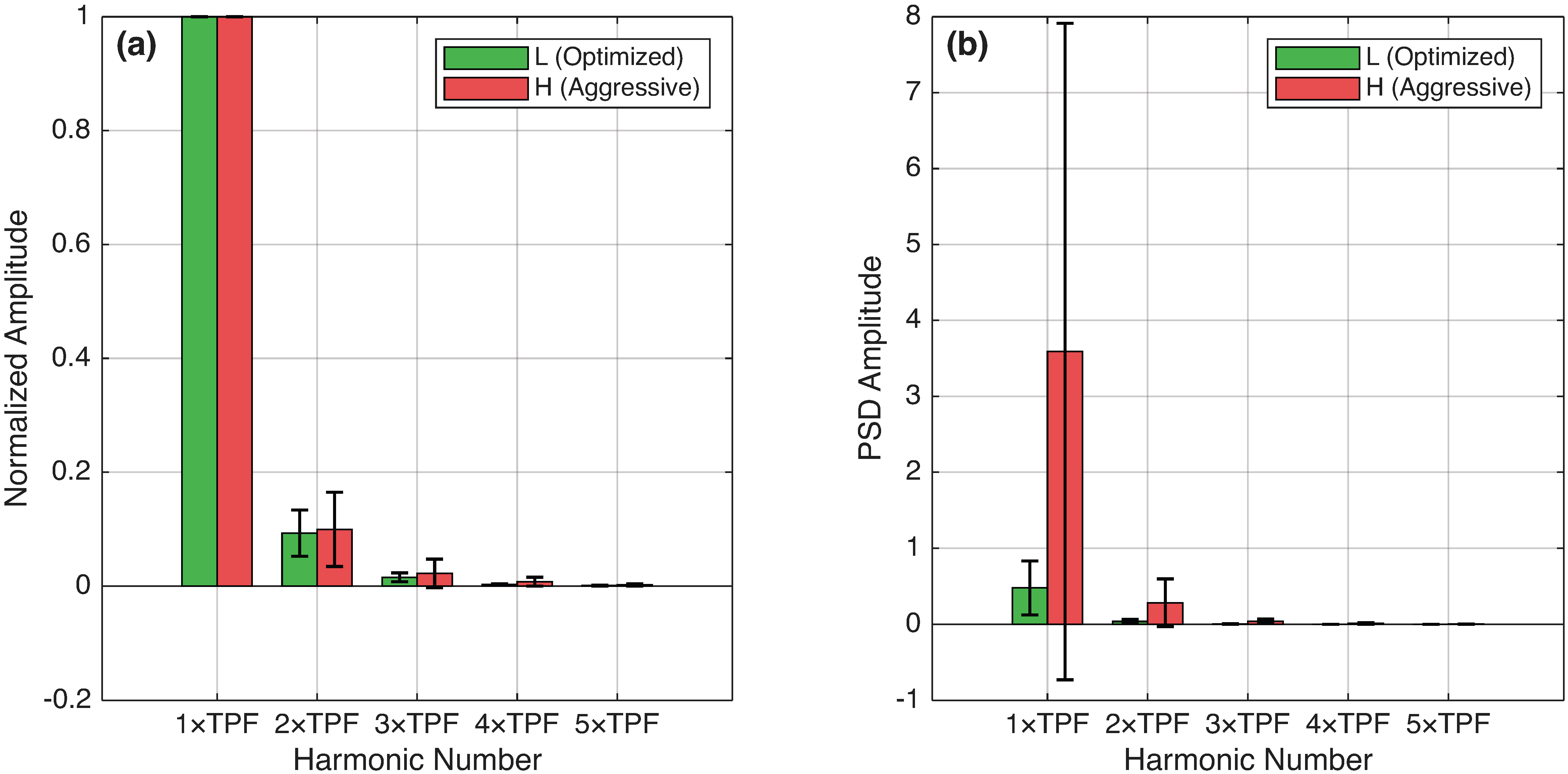
Figure 12 presents the harmonic amplitude analysis comparing conditions L and H, where the power spectral density at the tooth passing frequency and its first five harmonics were extracted and compared between conditions. Both conditions exhibited the expected harmonic decay pattern, with spectral energy decreasing progressively at higher harmonic orders. Condition H showed consistently higher absolute amplitudes across all harmonics, reflecting the increased texture amplitude observed in the RMS analysis. When normalized relative to the fundamental frequency, the harmonic patterns were similar between conditions, suggesting that the spectral shape characteristic of the cutting process is preserved while overall the amplitude scales with the machining intensity. This preservation of relative harmonic structure indicates that the fundamental tool–workpiece interaction mechanism remains consistent across the investigated parameter range, with aggressive parameters amplifying the texture without fundamentally altering its spectral signature.
3.9. Comparison of Image-Based Analysis with WLI Measurements
A systematic comparison was conducted between optical microscopy image-based texture analysis and White Light Interferometry (WLI) areal surface measurements to evaluate the potential of image-based metrology as a production-oriented alternative to conventional surface metrology. Both methods analyzed identical sample sets comprising 72 measurements across four experimental groups: optimized (L) and aggressive (H) machining parameters in two feed directions (X,Y).
The trend agreement between methods was evaluated by comparing the direction of change for the corresponding metric pairs across experimental conditions (
Table 8).
Complete directional agreement (6/6 comparisons) was observed between image-based and WLI methods. Both techniques identified increased amplitude metrics (texture RMS and Sq) under aggressive machining conditions, with WLI showing greater sensitivity (+48.3%) compared to image analysis (+28.5%). Conversely, image-based analysis demonstrated higher sensitivity to directional effects (+21.8% vs. +8.3% for X→Y comparison).
The group ranking for amplitude parameters was in very high agreement across both methods (13), confirming that image-based analysis correctly discriminates relative surface quality across all experimental conditions (
Figure 13):
Skewness metrics exhibited a systematic offset between methods: image-based was centered near zero (0.11–0.41), while WLI Ssk was consistently negative (−0.64 to −0.37). Despite this offset, both methods captured the same relative trend showing a shift towards more positive values from L to H conditions and from X to Y directions.
Kurtosis showed the weakest discrimination for both methods, with changes below 15% across all comparisons. This suggests that kurtosis may be less sensitive to the machining parameter variations investigated in this study.
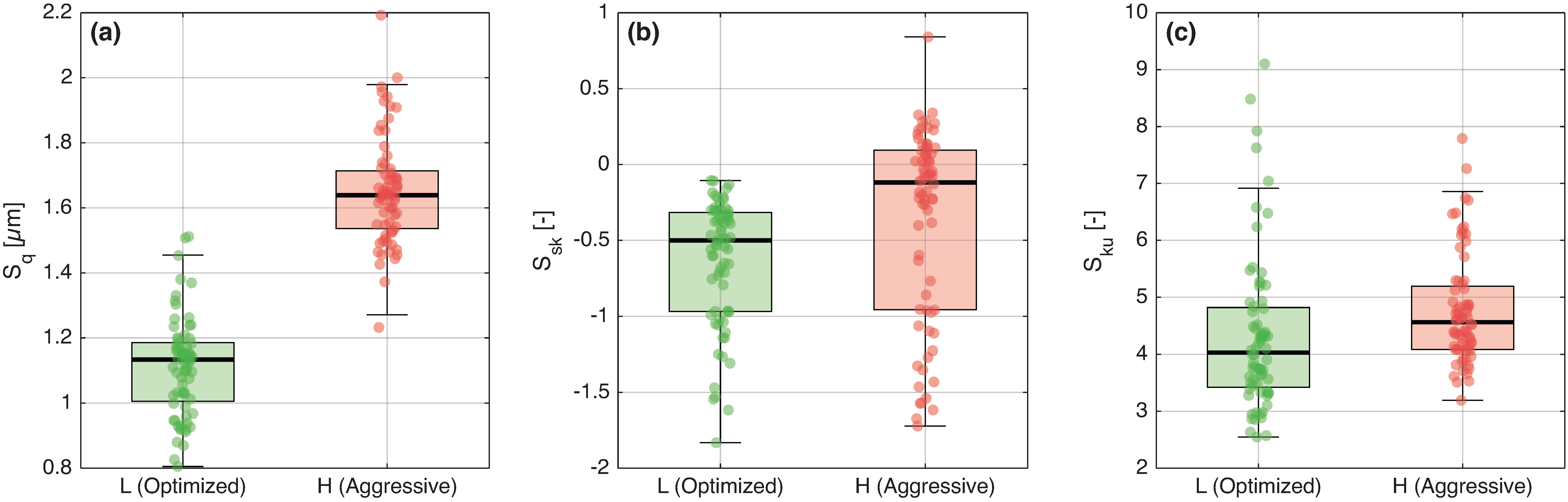
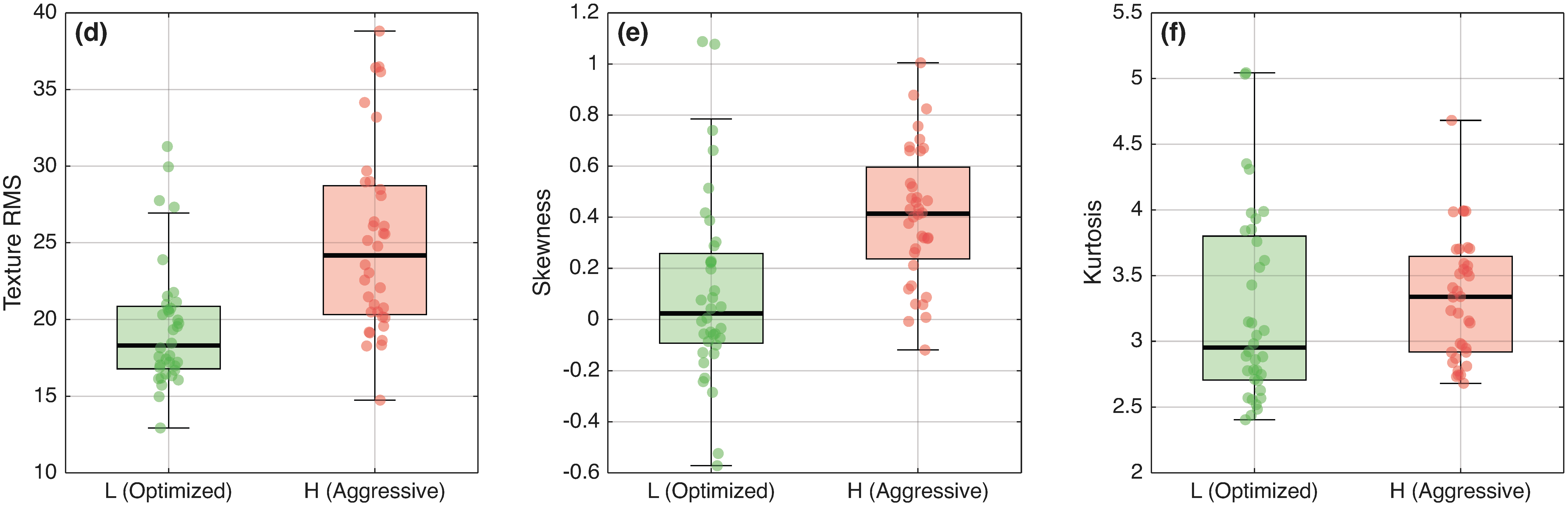
Figure 14 presents a comparison of the effect of the machining parameters on surface texture metrics measured by WLI (upper row) and image-based analysis (lower row). Both methods exhibit consistent visual patterns across the L and H conditions. For amplitude metrics (Sq and texture RMS), the boxplots clearly demonstrate higher values and greater spread under the aggressive machining conditions (H) compared to the optimized parameters (L). The median values show distinct separation between the conditions in both measurement methods, with no overlap in the interquartile ranges, indicating robust discrimination capability.
Skewness distributions reveal a notable methodological difference. The WLI-derived Ssk values are predominantly negative across both conditions, while image-based skewness centers near zero with a slight positive bias. Despite this offset, the relative shift between L and H conditions follows the same direction. Both methods show movement towards more positive skewness values under aggressive machining. This parallel behavior confirms that image-based skewness responds to the same underlying surface changes detected by calibrated height measurements.
Kurtosis metrics (Sku and kurtosis) show the least pronounced differences between machining conditions in both methods. The boxplots exhibit substantial overlap between L and H groups, consistent with the small effect sizes reported in
Table 5. This suggests that kurtosis is less sensitive to the specific machining parameter variations investigated, regardless of measurement methodology.
Figure 15 compares the effect of feed direction (X vs. Y) on surface texture for both measurement methods. The directional effect presents a more subtle but consistent pattern across both techniques.
Amplitude metrics show higher values in the Y direction compared to the X for both Sq (WLI) and texture RMS (image-based), though the magnitude of separation is smaller than observed for the machining parameter comparison. Image-based analysis demonstrates greater sensitivity to this directional effect (+21.8%) compared to WLI (+8.3%), as evidenced by the more pronounced separation between the X and Y boxplots in the lower panel.
Skewness metrics exhibit parallel trends between methods, with both showing a shift towards more positive values from the X to Y direction. The systematic offset between WLI Ssk (negative values) and image-based skewness (near-zero values) remains consistent, reinforcing the interpretation that this offset reflects fundamental differences in measurement principle rather than inconsistent surface characterization.
Kurtosis displays a slight decrease from the X to Y direction in both methods, though with considerable overlap in the distributions. This weak directional sensitivity aligns with the small percentage changes (−0.7% for image-based, −12.9% for WLI) and suggests that kurtosis is relatively insensitive to feed direction variations under the investigated conditions.
The visual agreement between WLI and image-based boxplots across both comparisons (
Figure 14 and
Figure 15) provides qualitative support for the quantitative trend agreement reported in
Table 8, reinforcing the validity of image-based texture analysis as a process monitoring tool.
4. Discussion
4.1. Validation of Image-Based Texture Analysis
The experimental results validate the sensitivity of image-based texture analysis to machining parameter variations. The 28.5% increase in texture RMS under aggressive parameters, accompanied by significant changes in profile skewness (+274%), demonstrates that the methodology captures meaningful differences in surface quality arising from process changes. The strong statistical significance (p < 0.001) and large effect sizes (d = 1.07 for RMS, d = 0.92 for skewness) confirm the robust discrimination capability between machining conditions.
The correlation analysis further supports the physical basis of the approach. The moderate positive correlation between RMS and the cutting parameters (r = 0.48) aligns with the established understanding that increased chip load and cutting forces produce rougher surfaces. The explained variance of 23% is reasonable given that surface roughness depends on multiple factors beyond cutting parameters alone, including tool wear state, workpiece material variation, machine dynamic response, and environmental factors. The coupled behavior of skewness and kurtosis (r = 0.58) reflects the underlying relationships in profile shape development, where conditions producing asymmetric profiles also tend toward more peaked intensity distributions.
The significant directional asymmetry observed (22% higher RMS in Y-direction, p = 0.001, d = 0.80) provides additional validation while simultaneously offering practical diagnostic value. This finding indicates axis-dependent machine behavior that could arise from structural stiffness differences, servo tuning variations, or guideway condition asymmetry.
This finding indicates axis-dependent behavior in surface generation. While the present study does not include direct machine dynamics characterization, several potential mechanisms can be hypothesized based on machine tool engineering principles. The 5-axis CNC milling center used in these experiments features three linear axes (X, Y, Z) on the spindle side and two rotary axes (A, C) on the working table. This configuration creates inherently different structural load paths for X and Y feed motions. The spindle-side linear axis configuration typically exhibits direction-dependent dynamic compliance. Published modal analysis data for similar machine architectures indicate that first-mode natural frequencies typically range from 45–65 Hz, with dynamic compliance varying by 20–40% between orthogonal directions depending on the structural design ([
2,
35,
36]). The CNC control system parameters (position loop gain, velocity feedforward, acceleration limits) may differ between the axes based on factory tuning for the specific mechanical configuration. These differences manifest as direction-dependent following errors during cutting, particularly at the feed rates employed (9.55–21.55 mm/s). Linear guideway preload, lubrication condition, and ballscrew characteristics may develop asymmetrically with machine usage patterns, contributing to direction-dependent surface generation.
These attributions remain as hypotheses requiring validation through dedicated machine dynamics testing (e.g., experimental modal analysis, compliance measurement, or servo system frequency response characterization). Nevertheless, the consistent 22% directional asymmetry across both machining conditions (L and H) provides strong evidence that the effect originates from machine characteristics rather than process–condition interactions. The consistency of this effect across both machining conditions suggests a fundamental machine characteristic rather than a process–condition interaction. Furthermore, X-direction measurements showed consistently better repeatability (CV = 12.7–14.7%) compared to Y-direction (CV = 23.3–25.4%), indicating that surface generation stability itself differs between axes.
The ability to detect such directional effects through surface texture analysis suggests a potential applications for machine condition monitoring. Future work should correlate image-based directional metrics with direct machine dynamics measurements to establish diagnostic relationships.
4.2. Comparison with Traditional Surface Metrology
The image-based methodology offers several practical advantages compared to traditional contact profilometry. Non-contact measurement eliminates risk of surface damage and enables assessment of delicate or soft materials. Large-area assessment provides more representative characterization compared to single-trace profilometry, which samples only a small fraction of the surface. Rapid image acquisition enables high throughput suitable for production monitoring applications.
However, important limitations must be acknowledged. The intensity-based parameters calculated from the optical images are texture descriptors rather than geometric roughness parameters per ISO 4287 [
30] (superseded by ISO 21920 [
31]). While intensity profiles correlate with local surface slopes under appropriate illumination conditions, this relationship is indirect and depends on the imaging setup. Absolute values are not directly comparable to profilometer measurements, and calibration against reference standards is challenging. Lighting sensitivity requires consistent illumination protocols, as variations in setup affect absolute intensity values and can compromise comparability between measurement sessions.
The observed dominant wavelength discrepancy (5–7 mm detected vs. 0.04–0.065 mm expected) illustrates a resolution consideration. The imaging configuration captured form and waviness features rather than individual tool marks, which would have required higher magnification to resolve. This is not inherently a limitation; form and waviness assessment is valuable for many applications, but users must match the imaging parameters to the length scales of interest.
The systematic comparison between image-based texture analysis and WLI surface metrology revealed complete agreement in the trend direction across all six comparisons investigated. This finding supports the hypothesis that optical microscopy image analysis can serve as a viable indicator of surface quality changes in production environments.
First, both methods produce identical group rankings for amplitude-related metrics, demonstrating that image-based analysis correctly identifies relative differences in surface quality. The ranking was consistent across texture RMS and WLI Sq measurements, indicating that image-derived metrics reliably reflect the underlying surface characteristics captured by calibrated height measurements.
Second, the magnitude of detected changes differs between methods, which is expected given their distinct physical measurement principles. WLI directly measures surface height in micrometers, while image analysis quantifies optical intensity variations in greyscale units. These quantities are related through the surface’s optical reflectance properties but are not directly equivalent. Importantly, this difference in absolute sensitivity does not compromise the ability to detect process changes. Both methods achieve statistically significant discrimination between machining conditions.
Third, the systematic offset observed in skewness values reflects the different physical origins of the measurements. WLI Ssk characterizes the asymmetry of the height distribution, which for machined surfaces typically exhibits negative values due to the presence of valleys (tool marks). Image-based skewness characterizes intensity distribution asymmetry, which depends on illumination geometry and surface reflectance rather than purely geometric features. Despite this fundamental difference, both metrics respond similarly to process variations, suggesting that intensity-based skewness can serve as a proxy indicator for height-based asymmetry changes.
The practical implications of these findings are significant. Image-based surface analysis offers several advantages for production integration: (1) lower equipment cost compared to interferometric systems, (2) faster acquisition times enabling higher throughput inspection, (3) simpler environmental requirements without vibration isolation, and (4) compatibility with existing machine vision infrastructure. While image-based metrics cannot replace calibrated height measurements for absolute surface specification per ISO 25178 [
29], they demonstrate sufficient sensitivity and consistency to function as effective process monitoring indicators for detecting deviations from established machining conditions.
For applications requiring geometric surface characterization conforming to international standards, the image-based approach should be considered complementary to rather than replacement for calibrated profilometry. The methodology is best suited for relative comparison, trend monitoring, process screening, and applications where non-contact assessment is essential.
4.3. Spectral Metrics for Process Monitoring
Two spectral indices are proposed for practical production process monitoring based on the frequency-domain analysis capability of the methodology. These metrics provide intuitive indicators that practitioners can use without requiring detailed spectral analysis expertise.
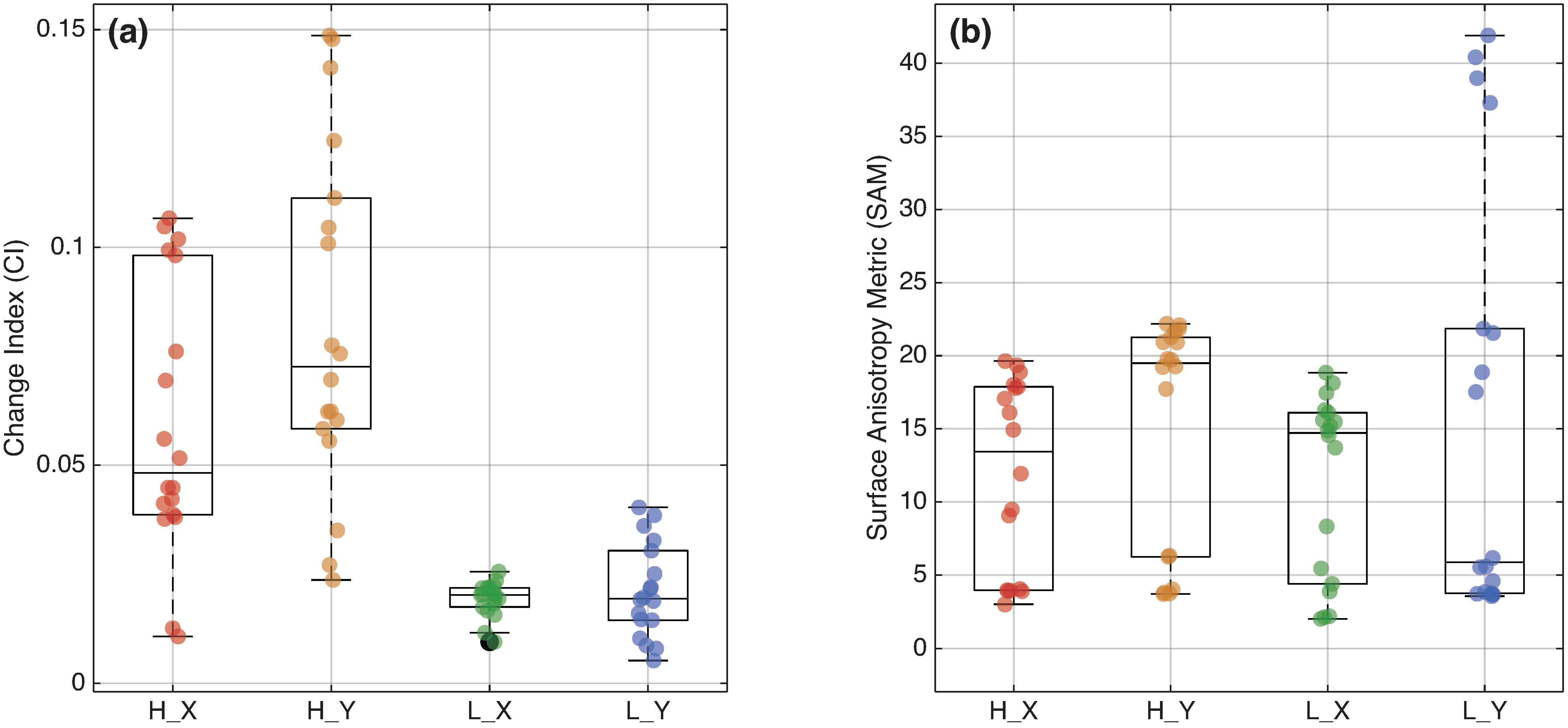
The first metric named Change Index (CI) quantifies the proportion of spectral energy at frequencies above the expected kinematic content, calculated as the ratio of integrated power spectral density above 1.5 times the tooth passing frequency to total spectral power (14). This metric captures high-frequency content that may indicate process disturbances, tool condition changes, or incipient instabilities:
where
was selected to include the fundamental tooth passing frequency and first harmonic while capturing energy at higher frequencies indicative of process disturbances [
37,
38], tool condition changes, incipient instabilities, or other process disruptions. Lower CI values indicate more stable processes, while higher values suggest possible disruption in the machining system.
The threshold of 1.5 × TPF for CI calculation was established based on machining dynamics theory, which indicates that regenerative chatter manifests at non-harmonic frequencies [
24,
27]. The interpretation thresholds serve as reference values for relative comparison and may require process-specific calibration for quantitative predictions. In the experimental data, CI increased from 0.020 ± 0.008 under optimized conditions and to 0.071 ± 0.037 under aggressive conditions, representing a 252% increase (
p < 0.001, d = 1.89). The strong correlation with machining parameters (r = 0.69) confirms CI sensitivity to process variations. Values below 0.10 indicate stable operation with minimal high-frequency content, while elevated values suggest process changes warranting investigation. However, the suggested
of
should be treated as a starting point for further optimization grounded in dynamics theory.
The second metric named Surface Anisotropy Metric (SAM) quantifies texture directionality from the gradient direction histogram, calculated as the normalized difference between the maximum and mean histogram values (15). This metric characterizes the strength of the directional texture, with higher values indicating more pronounced lay orientation:
where
is the maximum histogram bin value and
is the mean. Image gradients were computed using Sobel operators (16) and (17):
For a uniform (isotropic) distribution SAM = 0 and for a perfectly directional texture SAM → ∞. The SAM was calculated from the gradient direction histogram as the ratio of (maximum bin value−mean bin value)/mean bin value. This metric quantifies texture directionality independent of image intensity, with SAM = 0 representing perfectly isotropic texture and higher values indicating stronger directional preference. Thresholds of SAM < 1.0 (isotropic), 1.0–3.0 (moderate), and > 3.0 (strong directionality) were established based on the statistical interpretation of histogram peak prominence relative to uniform distribution. In the experimental data, SAM showed essentially zero correlation with the machining parameters (r = 0.0002,
p = 0.999), remaining at approximately 13.5 for both the optimized and aggressive conditions. This independence from cutting parameters indicates that SAM characterizes machine and setup geometry rather than process conditions, making it valuable for comparative assessment across different machines or for detecting fixture-related issues.
Figure 16 presents the proposed spectral indices for production monitoring, illustrating the Change Index as an indicator of process variability through high-frequency spectral content, and the SAM as an indicator of tool mark regularity through texture directionality quantification.
Table 9 summarizes the proposed monitoring metrics and their characteristics based on experimental validation.
These indices are proposed as practical tools for practitioners rather than rigorously validated diagnostic metrics. The Change Index threshold of 1.5 × TPF and the interpretation ranges represent starting points derived from the experimental dataset and may require process-specific calibration for quantitative predictions in different machining contexts. The complementary nature of these metrics, CI responding to process variations while SAM remains process-independent, enables separation of process-related changes from machine or setup-related effects. When CI increases while SAM remains stable, the indication points toward process dynamics; when SAM changes while CI remains stable, the indication points toward setup or fixturing issues.
The directional analysis reveals machine-specific information beyond process parameter effects. The consistent 22% profile amplitude increase in Y-direction across both machining conditions suggests systematic axis asymmetry. Possible contributing factors include lower Y-axis structural stiffness, different servo gains or bandwidth between axes, direction-dependent tool deflection due to cutting force orientation, or guideway friction characteristics.
This finding demonstrates the potential for surface texture analysis as a machine condition monitoring tool. Regular comparison between machining directions could serve as a diagnostic indicator, with changes in directional asymmetry potentially signaling developing machine problems such as bearing degradation, guideway wear, or loss of servo tuning. Such monitoring would complement the traditional approaches based on geometric accuracy measurement or vibration analysis.
4.4. Factors Affecting the Uncertainty
According to the Guide to the Expression of Uncertainty in Measurement (GUM) [
39], measurement uncertainty describes the dispersion of values that can reasonably be attributed to the measurand. In this work, the measurand is the set of image-based surface texture metrics extracted from the optical images. The proposed image-based methodology measures surface texture as it exists on the workpiece. Variations introduced by the machining process and the machine tool, such as tool geometry, cutting parameters, workpiece material properties, and machine dynamics, are intrinsic characteristics of the surface being measured and therefore represent true surface variability, not measurement uncertainty.
Measurement uncertainty arises from the image-based measurement system and data processing. Type A uncertainties are associated with random effects and are evaluated using repeatability statistics under nominally constant lighting and vibration conditions. Examples include sensor noise and residual stochastic fluctuations in image intensity between repeated image acquisitions, as well as small positioning variations during repeated measurements.
Type B uncertainties arise from systematic effects related to the measurement setup and methodology. Examples include illumination geometry and stability limits, material-dependent surface reflectivity affecting image intensity, limitations in optical resolution influencing the detectable wavelength range, and assumptions introduced during image processing, such as filtering, window size selection, and gradient computation. The indirect relationship between surface geometry and optical image intensity also contributes to systematic uncertainty.
The observed directional asymmetry in surface texture (22% higher RMS in the Y-direction) reflects axis-dependent machine behavior and is interpreted as a property of the machined surface rather than a measurement artefact. Differences in repeatability between machining directions are captured within the Type A uncertainty evaluation.
Following GUM principles, the combined standard uncertainty of the image-based metrics can be expressed as the root-sum-square of the independent Type A and Type B measurement contributions. Within this framework, the methodology provides reliable relative measurements of surface texture and is well suited for process monitoring, trend analysis, and detection of deviations in industrial machining. While it does not replace calibrated surface metrology for absolute surface specification, it complements such methods by offering rapid, non-contact assessment of surface variations.
The consecutive cutting order within each condition group introduces potential correlation among measurements from the same workpiece or machining sequence. Authors acknowledge this limitation and note that the reported p-values should be interpreted as indicators of effect direction and reliability rather than precise probability estimates. However, several factors support the validity of the comparative conclusions. The large effect sizes observed (d > 0.8 for key metrics) substantially exceed conventional thresholds and are robust to moderate correlation. The parallel experimental structure ensures that any systematic effects from consecutive machining (tool wear progression, thermal drift) affect both condition groups, similarly, preserving between-group comparisons. Furthermore, the same directional trends were observed independently for the X and Y feed directions, providing internal replication. Most importantly, the complete trend agreement with WLI measurements, an entirely independent methodology, confirms that the observed differences reflect genuine surface characteristics rather than statistical artifacts.
5. Conclusions
This study developed and validated an image-based methodology for surface texture analysis of end-milled surfaces. Analysis of 72 surface images comparing optimized and aggressive machining conditions across orthogonal feed directions yielded the following conclusions.
The methodology demonstrates clear sensitivity to machining parameter variations. Texture RMS increased 28.5% under aggressive cutting conditions (p < 0.001, d = 1.07), while profile skewness shifted from near-zero (0.11) to distinctly positive values (0.41), representing a 274% increase (p < 0.001, d = 0.92). These changes indicate material flow and smearing effects associated with increased cutting forces and chip load, aligning with expected physical behavior and confirming the diagnostic capability of image-based texture analysis.
Correlation analysis validated the physical basis of the approach. Texture amplitude showed moderate correlation with the cutting parameters (r = 0.48), with 23% of the variance explained by the investigated machining variations. The coupled behavior of skewness and kurtosis (r = 0.58) reflects the underlying relationships in profile shape development during cutting. Kurtosis remained insensitive to process variations (r = 0.08, p = 0.49), indicating that profile sharpness is not a reliable discriminator for the machining conditions investigated.
The comparative analysis between image-based texture metrics and WLI areal surface parameters demonstrated very high agreement in the trend direction across all investigated comparisons, with identical group ranking for amplitude metrics. These results support the application of optical microscopy image analysis as a production-oriented complement to laboratory-based surface metrology, enabling rapid in-process quality assessment without the cost and complexity of surface measurement systems.
Significant directional asymmetry exists between the machine axes. Y-direction surfaces exhibit 22% higher roughness than X-direction (p = 0.001, d = 0.80), indicating systematic machine behavior that persists across both machining conditions. This consistency confirms the effect as a fundamental machine characteristic rather than a process–condition interaction, with implications for quality consistency in multi-axis machining and potential for machine condition monitoring through directional surface comparison.
Measurement repeatability is adequate for process monitoring applications. Within-group coefficient of variation for texture RMS ranges from 12.7% to 25.4%, with X-direction measurements showed consistently better repeatability (CV = 12.7–14.7%) than Y-direction (CV = 23.3–25.4%). This pattern persisted across both machining conditions, suggesting inherent differences in surface generation stability between the axes.
Two spectral indices are proposed for production process monitoring. The Change Index demonstrated the strongest sensitivity to process variations, increasing 252% from optimized to aggressive conditions (p < 0.001, d = 1.89) with a strong correlation to the machining parameters (r = 0.69, R2 = 0.48). This metric offers practitioners a quantitative measure of high-frequency spectral content for process stability assessment, where values below 0.05 indicate stable cutting, and values exceeding 0.10 warrant investigation. The Surface Anisotropy Metric showed complete independence from the cutting parameters (r = 0.0002, p = 0.999), remaining constant at approximately 13.5 across conditions. This process-independent behavior enables machine and setup assessment distinct from process monitoring, with changes in SAM indicating fixture or alignment issues rather than cutting dynamics.
This study establishes image-based frequency analysis as a viable approach for process-oriented surface characterization in production environments. The demonstrated very high trend agreement with WLI measurements combined with statistically significant discrimination between machining conditions (p < 0.001) and large effect sizes (d > 0.9) confirms that optical microscopy can extract process-relevant surface information comparable to established metrological techniques. The proposed Change Index offers practitioners a quantitative tool for real-time process stability assessment, addressing a critical gap between laboratory-based surface metrology and in-line quality control. By enabling rapid, non-contact surface evaluation at a fraction of the cost and complexity of interferometric systems, this methodology supports the transition toward integrated metrology in advanced manufacturing, where timely process feedback is essential for maintaining quality, reducing scrap, and enabling adaptive process.
6. Limitations and Future Work
Several limitations should be acknowledged when interpreting these results. The study examined a single tool geometry and workpiece material combination, and results may not generalize directly to other configurations. The imaging magnification captured form and waviness features rather than individual tool marks, which would require additional validation at higher magnification. The proposed CI and SAM monitoring thresholds were based on this experimental dataset and should be validated through broader application.
Intensity profiles depend on illumination conditions including light source intensity, angle, and uniformity. Variations in lighting setup affect absolute intensity values and can compromise comparability between measurement sessions. Consistent illumination protocols and regular calibration are essential for reliable trending. In this study, those challenges were not addressed and are to be considered in the authors’ future research roadmap.
Y-direction measurements show higher variability (CV 23–25%) compared to X-direction (CV 13–15%). This may reflect actual surface generation variability, measurement sensitivity to alignment, or interaction between texture orientation and profile extraction direction.
Future work should address the correlation with contact profilometry to establish relationships between image-based texture parameters and standard roughness metrics. Extension to in-process monitoring through integration with machine tool systems would enable real-time quality feedback. Investigation of machine learning approaches for automated classification could enhance diagnostic capability. Validation across additional materials, tool geometries, and machining processes would establish broader applicability of the methodology.