1. Introduction
Grinding typically represents the final machining step for hardened mechanical components, such as shafts and gears, where any damage must be strictly avoided due to the high part value. During this operation, the workpieces are exposed to a combined thermomechanical load, with heat generation being the dominant factor [
1,
2]. Consequently, thermal alterations may develop in the subsurface, commonly manifesting as tempering zones [
3]. These phenomena, generally referred to as grinding burn, can induce tensile residual stresses, hardness reductions due to tempering, or, in some cases, hardness increases caused by phase transformations and re-hardening at the surface [
4,
5,
6,
7]. Such changes can significantly impair functional properties, including wear resistance, and may lead to premature component failure in service [
8,
9]. In current industrial practice, thermal effects are commonly identified after grinding, with methods such as Barkhausen noise measurements being widely applied [
2]. To maintain optimal functional properties and minimize thermomechanical damage during grinding, the application of metal working fluids (MWF) is essential due to their combined cooling and lubricating effects. Previous studies have shown that the efficiency of MWF delivery to the grinding contact zone depends on parameters such as flow rate, jet velocity, jet coherence determined by nozzle geometry, and nozzle positioning [
10]. These parameters govern the MWF’s ability to penetrate the air barrier surrounding the rotating grinding wheel, enabling effective jet entrainment and heat dissipation, thereby influencing thermomechanical stresses and the risk of grinding burn [
11,
12,
13,
14,
15]. Beyond these fluid-dynamic considerations, the grinding wheel’s topography and porosity significantly affect MWF transport. Coarser and more porous wheels (e.g., F60 and F80) provide larger pore volumes and more open surface structures, facilitating MWF penetration into the contact zone and increasing local flow rates [
16,
17,
18,
19]. Their pronounced macro- and microstructure may also strengthen air-barrier formation, requiring higher jet velocities for effective MWF delivery [
11,
12]. In contrast, fine-grained wheels such as F120 present smoother surfaces and lower pore volumes, resulting in fewer pathways for MWF entrainment and a weaker air barrier [
15]. From a sustainability perspective, a demand-oriented MWF supply is advantageous, as it allows reductions in system size, pump power, disposal costs, and overall energy consumption. CO
2 emissions can be estimated from the total energy demand of the grinding process
Etotal and the corresponding CO
2 equivalent, see Equation (1).
The total energy demand
Etotal is derived from the total specific grinding energy
etotal and the material volume removed V
W, see Equation (2):
This relationship highlights the importance of understanding the total process energy
Etotal, as CO
2 emissions are directly proportional to it and its individual components, such as
etotal. Accordingly, examining
Etotal provides a valuable perspective on process efficiency and environmental impact. The total specific energy
etotal is composed of the spindle-specific energy
es, pump-specific energy
ep, and base load energy
ebl, each calculated from the corresponding electrical power per machined volume element, see Equation (3):
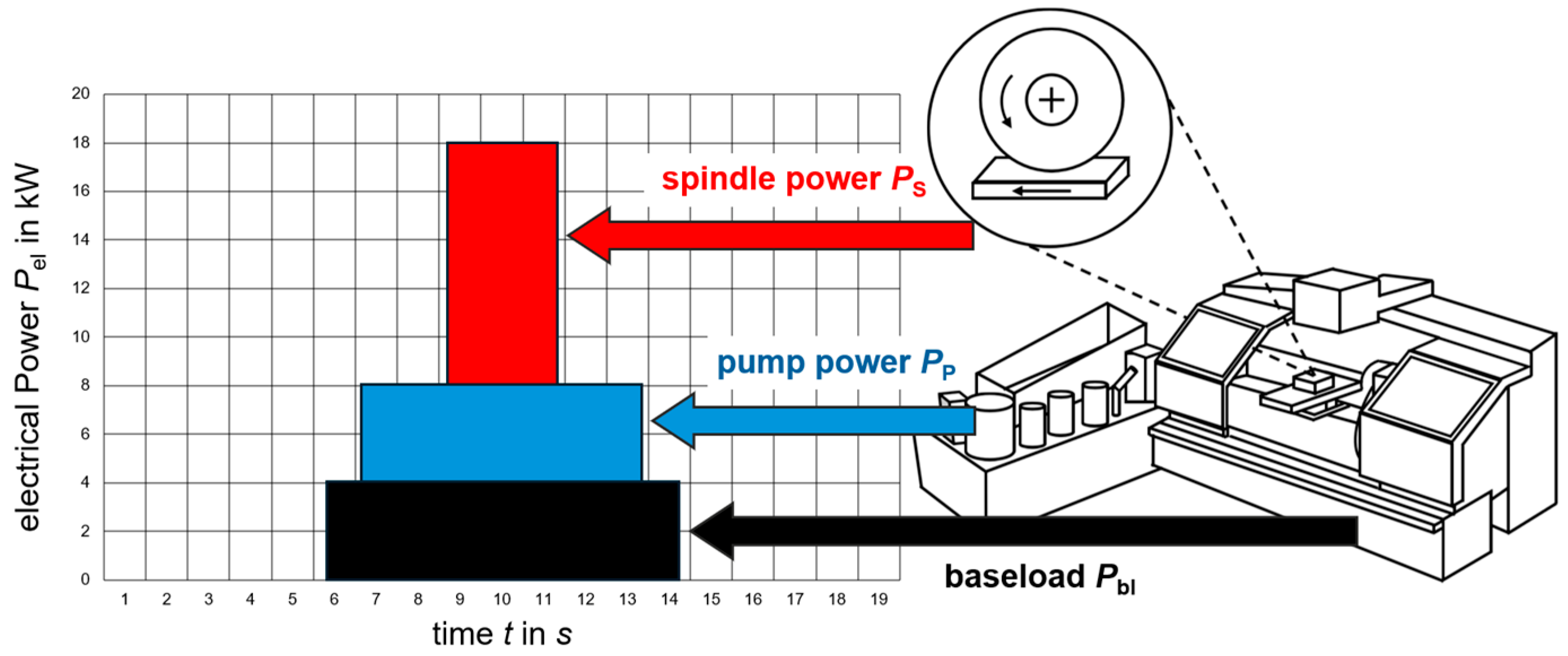
Besides the base load
Pbl (fundamental energy demand for hydraulics, etc.) of the grinding machine, the electrical energy which is converted into kinetic energy (rotational motion of the spindle with partial power
PS) and the energy required for the actual grinding process (process energy—position of spindle power
PS), the supply of the MWF to the contact zone accounts for a large proportion of the total energy needed, as a result of high required hydraulic power (pump power
PP), see
Figure 1 (blue segment) [
20].
A promising approach to reducing CO
2 emissions in the grinding process is to lower the jet velocity of the metalworking fluid (MWF). The pump power
PP, which represents the energy delivered to the fluid per unit time, can be determined for an incompressible fluid in steady flow, see Equation (4):
Using the MWF flowrate
QMWF, the density of the MWF
ρMWF, the gravitional acceleration
g, and the height of the MWF-nozzle
hNozzle. The flow rate itself can be approximated using the continuity equation, see Equation (5):
with
ANozzle being the nozzle outlet cross-section and
vjet the MWF jet velocity. From these relationships, it is evident that the pump power is directly proportional to the jet velocity, such that reducing
vjet results in a corresponding decrease in
PP. In the current state of the art, the speed ratio of
qs = 0.6–1.0 between MWF velocity
vjet and conventional cutting speed
vc of the grinding wheel, which is calculated according to Equation (6), is considered the optimal setting parameter for the MWF supply [
12,
14,
16,
21].
However, the topography and the pore structure of different grinding wheel specifications are not considered in these recommendations (e.g., open-pored ceramic corundum wheels with grit sizes F60, F80, or F120 grit sizes). Since wheel porosity, surface roughness, and air-barrier formation directly influence MWF entrainment, the interaction between the MWF jet and the wheel surface is expected to differ between wheel specifications. Furthermore, insufficient research has been conducted on determining the most efficient speed ratio at higher cutting speeds (e.g., 60 m/s), under constant conditions of the jet shape and nozzle positioning.
To address the identified gaps in understanding the influence of metalworking fluid supply on grinding efficiency and CO2 emissions, this study systematically investigates the effect of the fluid jet to wheel speed ratio qs in combination with different grinding wheel specifications (F120, F80, F60) and at two technologically relevant cutting speeds. A conventional speed of 35 m/s was selected as a representative baseline for standard grinding operations, while 60 m/s reflects a higher performance level that is increasingly used in modern grinding and is fully compatible with the thermal and mechanical limits of the open-pored ceramic corundum wheels employed in this work. This choice enables assessing whether established optimal MWF to wheel speed ratios remain valid at elevated cutting speeds, where air-barrier formation, MWF entrainment, and wheel topography may interact differently. Critical material removal rates were determined experimentally, and the corresponding specific process energies were calculated to quantify the relationship between qs, wheel topography, cutting speed, and overall process efficiency. This approach allows evaluating the potential for optimizing MWF supply not only to improve grinding performance but also to reduce pump power demand and, consequently, CO2 emissions associated with the grinding process.
2. Materials and Methods
To systematically investigate the influence of the fluid jet to wheel speed ratio
qs on specific grinding energy with respect to grinding wheel specification, two sets of experiments were conducted. The first series examined different grit sizes (F120, F80, F60) at a conventional cutting speed of
vc = 35 m/s. In a second series, the effect of an increased cutting speed of
vc = 60 m/s was analyzed.
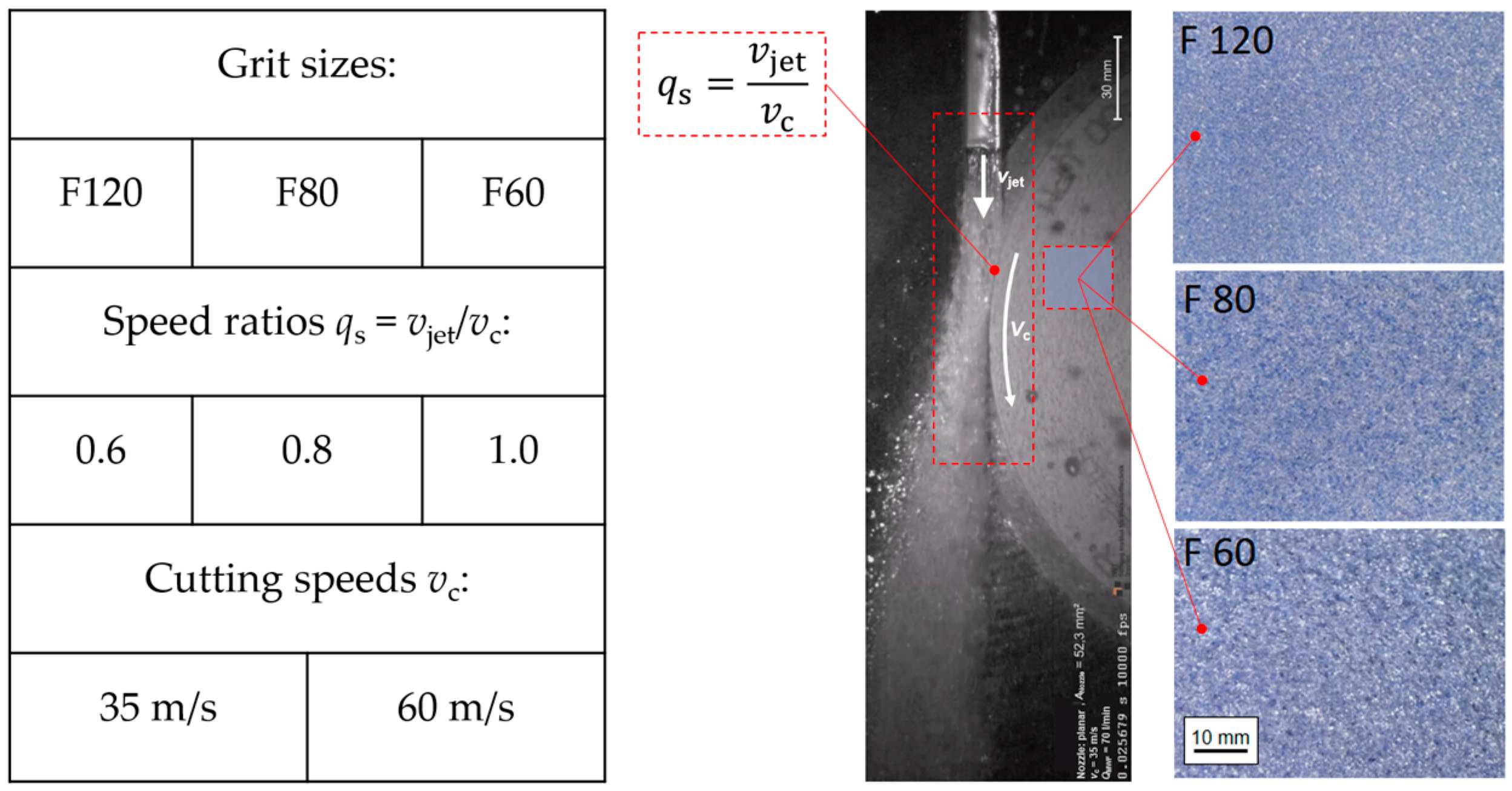
Figure 2 summarizes the varied parameters, illustrates the speed ratio, and shows the surface topographies of the grinding wheels used.
The rouse-nozzles used in the experiments were originally developed by Rouse et al. [
22] and Webster et al. [
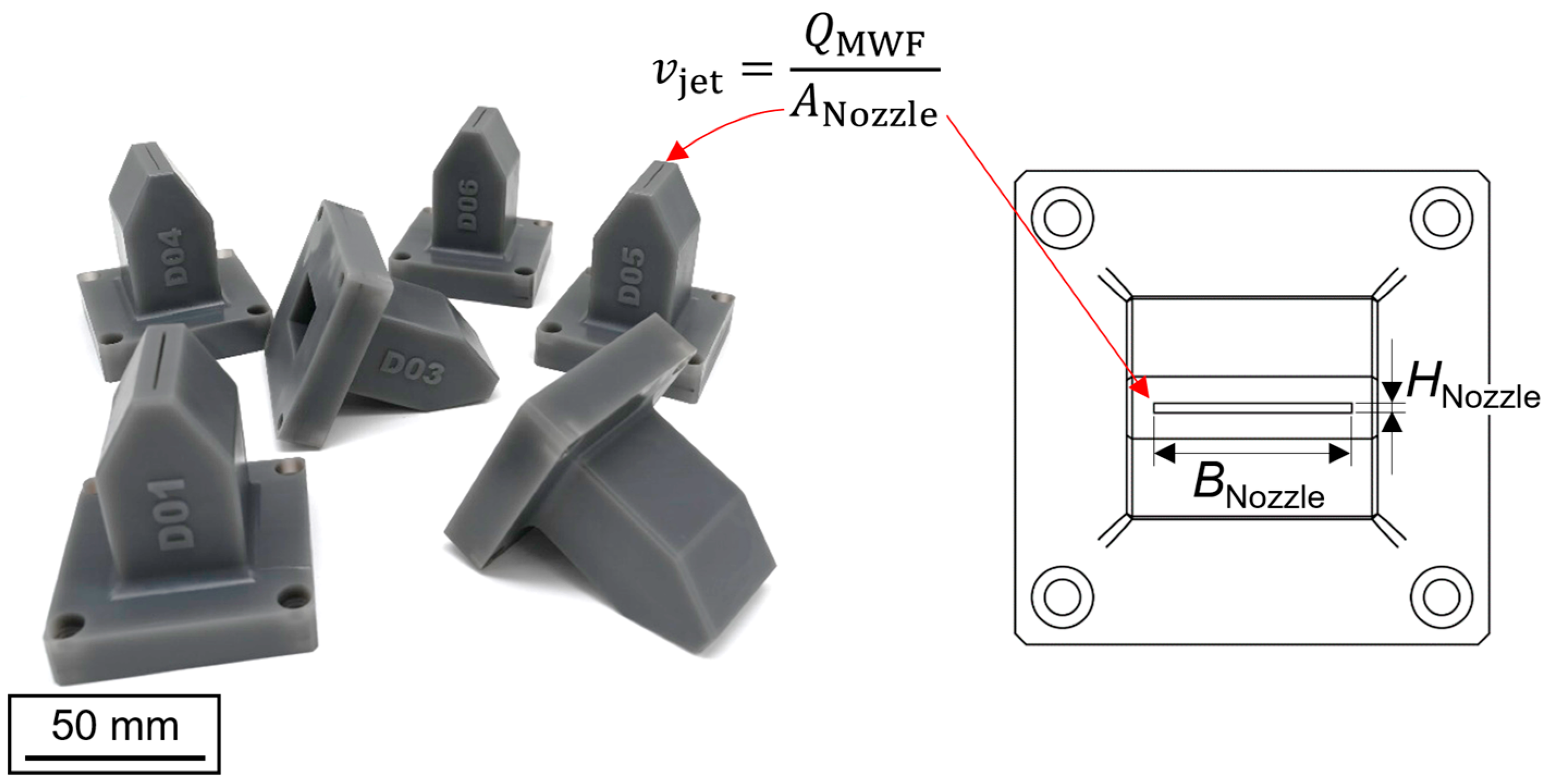
14] to produce coherent fluid jets with minimal effort. This is achieved through an optimized internal contour that promotes favorable fluid-dynamic behavior. For this study, the nozzles with a rectangular outlet cross-section were 3D-printed from resin using stereolithography, as shown in
Figure 3.
The outlet cross-section of the nozzles is rectangular, with a width
BNozzle of 35 mm adapted to the grinding wheel to ensure uniform wetting over its 30 mm width, and a height
HNozzle. The area of the nozzle outlet is thus given by
ANozzle =
BNozzle·
HNozzle. By adjusting the height for a specific flow rate Q
MWF of 70 L/min, the corresponding jet velocity
vjet can be set. This enabled the realization of speed ratios
qs =
vjet/
vc of 1.0, 0.8, and 0.6 at cutting speeds of
vc of 35 m/s and 60 m/s. By substituting Equation (6) into Equation (5) and considering the rectangular nozzle cross-section, the required nozzle heights can be calculated using Equation (7):
Table 1 summarizes the six MWF-nozzles and their corresponding
HNozzle values, calculated for a constant flow rate of 70 L/min and a fixed nozzle width of 35 mm.
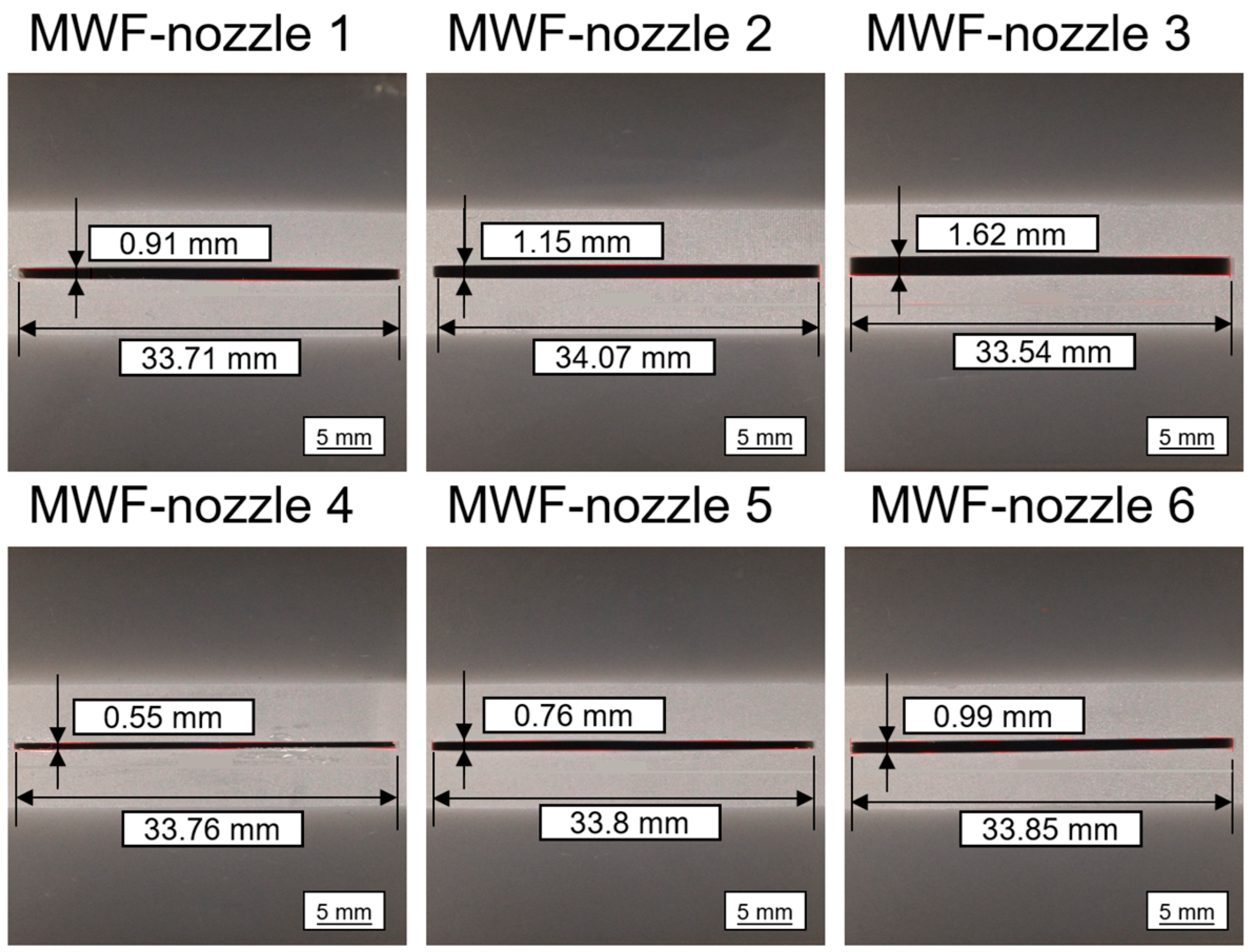
After production, the outlet cross-sections of all six 3D-printed MWF-nozzles were examined under a Zeiss light microscope (Zeiss, Oberkochen, Germany), see
Figure 4.
The nozzles were not post-processed. Deviations from the nominal
BNozzle and
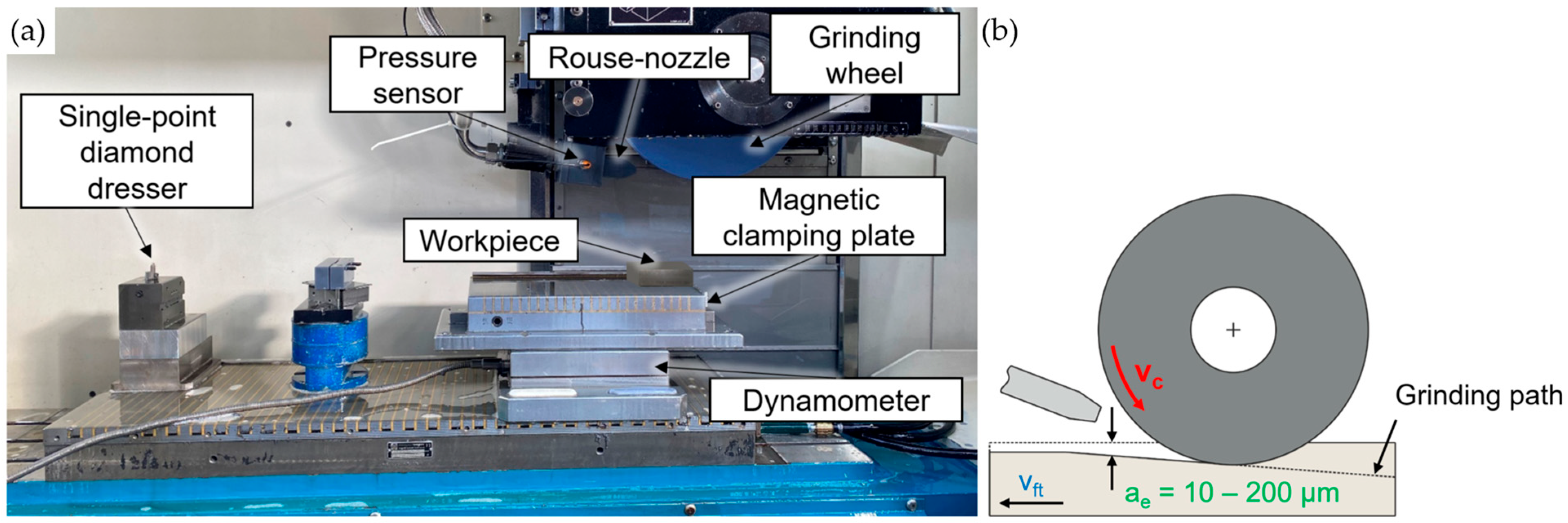
HNozzle dimensions were minimal, with maximum differences of 1.46 mm and 0.066 mm, respectively. These minor variations correspond to a maximum change in jet velocity of only 0.05 m/s, which is negligible for this study. All grinding tests were carried out on the surface grinding machine Blohm Profimat 412 HSG (Blohm Jung GmbH, Hamburg, Germany), as shown in
Figure 5a. The taper grinding experiments were performed according to [
23] and are schematically illustrated in
Figure 5b. In
Figure 5b, the depth of cut
ae is indicated in green, the cutting speed
vc in red, and the tangential feed speed in blue. During the experiments, the depth of cut a
e was continuously increased from 10 µm to 200 µm, while the tangential feed speed
vft was kept constant within a single grinding pass at 3000, 4000, or 6000 mm/min. This approach enabled achieving specific material removal rates
Q’
w of up to 10, 13.33, and 20 mm
3/mm·s, thereby generating different thermomechanical loads within a single grinding operation. An oil-based metalworking fluid (MWF) was supplied through tangential MWF-nozzles at a constant flow rate
QMWF = 70 l/min. The nozzle position and angle were kept constant for all experiments, in accordance with [
24]. For each test condition, the corresponding MWF-nozzle, adapted to the MWF supply adapter produced in-house by 3D printing from resin (stereolithography), was mounted in the machining area. The flow rate
QMWF was adjusted based on the nozzle outlet cross-section using a manual control dial on the grinding machine, allowing continuous regulation of the pump output of the hydraulic MWF system. The actual flow rate was continuously monitored using an inline flow meter with a digital display. To ensure a constant MWF supply during the grinding experiments, the MWF pressure
pMWF at the adapter located directly upstream of the nozzle was recorded continuously. Case-hardened workpieces, width × length × height = 20 mm × 80 mm × 30 mm, made of AISI 5120 (20MnCr5) supplied by ABRAMS Premium Stahl (Abrams Industries GmbH & Co. KG, Osnabrück, Germany), with a case-hardening depth of 1.2 mm and a hardness of 710 HV at a depth of 200 µm, were used for the experiments. Each grinding test was performed three times to ensure statistical validity. Prior to each test, the workpieces were pre-ground (
ae = 2 × 50 µm,
vft = 500 mm/min) to ensure uniform initial conditions and consistent material removal. Ceramic-bonded corundum grinding wheels with a diameter of 400 mm (Tyrolit, Schwaz, Austria: SU33A120II10PVB1, SU33A80II10PVB1, SU33A60II10PVB1) were employed and dressed using a single-point diamond dresser (Riegger, Stuttgart, Germany;
aed = 3 × 30 µm,
Ud = 3). During the grinding experiments, tangential
Ft and normal
Fn forces were recorded using a Kistler dynamometer (type 9255B, Kistler, Winterthur, Switzerland). Base load power
Pbl, which remained constant at 4 kW, and pump power P
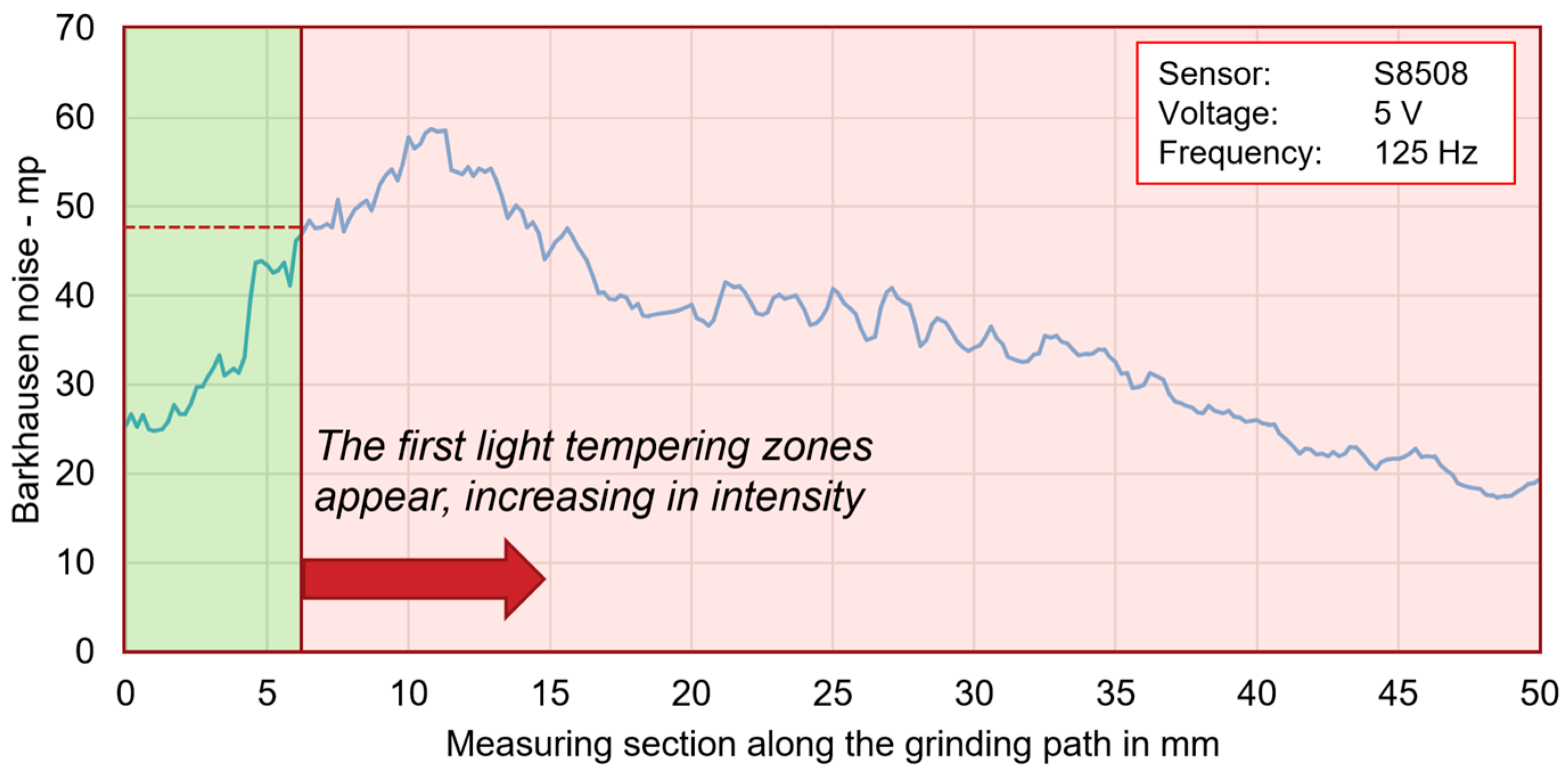
P were measured using a Yokogawa WT500 power analyzer (Yokogawa, Tokyo, Japan). After grinding, the thermal effects associated with grinding burn were evaluated. Barkhausen noise measurements were applied to enable a quantitative and non-destructive assessment of thermally induced surface and near-surface alterations.
4. Discussion
The results presented in
Section 3.1,
Section 3.2 and
Section 3.3 provide a comprehensive overview of how the fluid jet to wheel speed ratio
qs influences grinding performance, energy consumption, and the associated carbon footprint. In
Section 3.1, the critical specific material removal rates
Q’
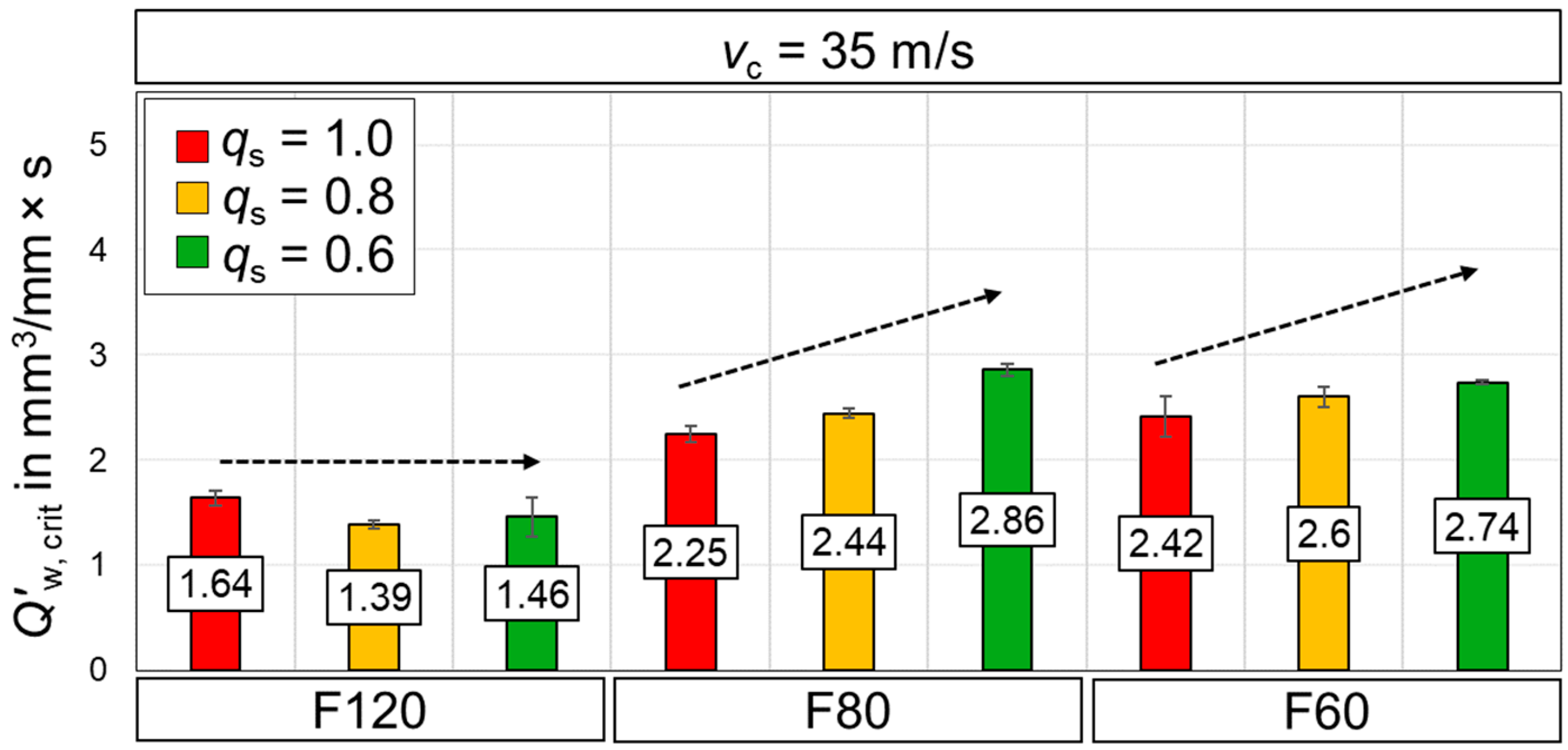
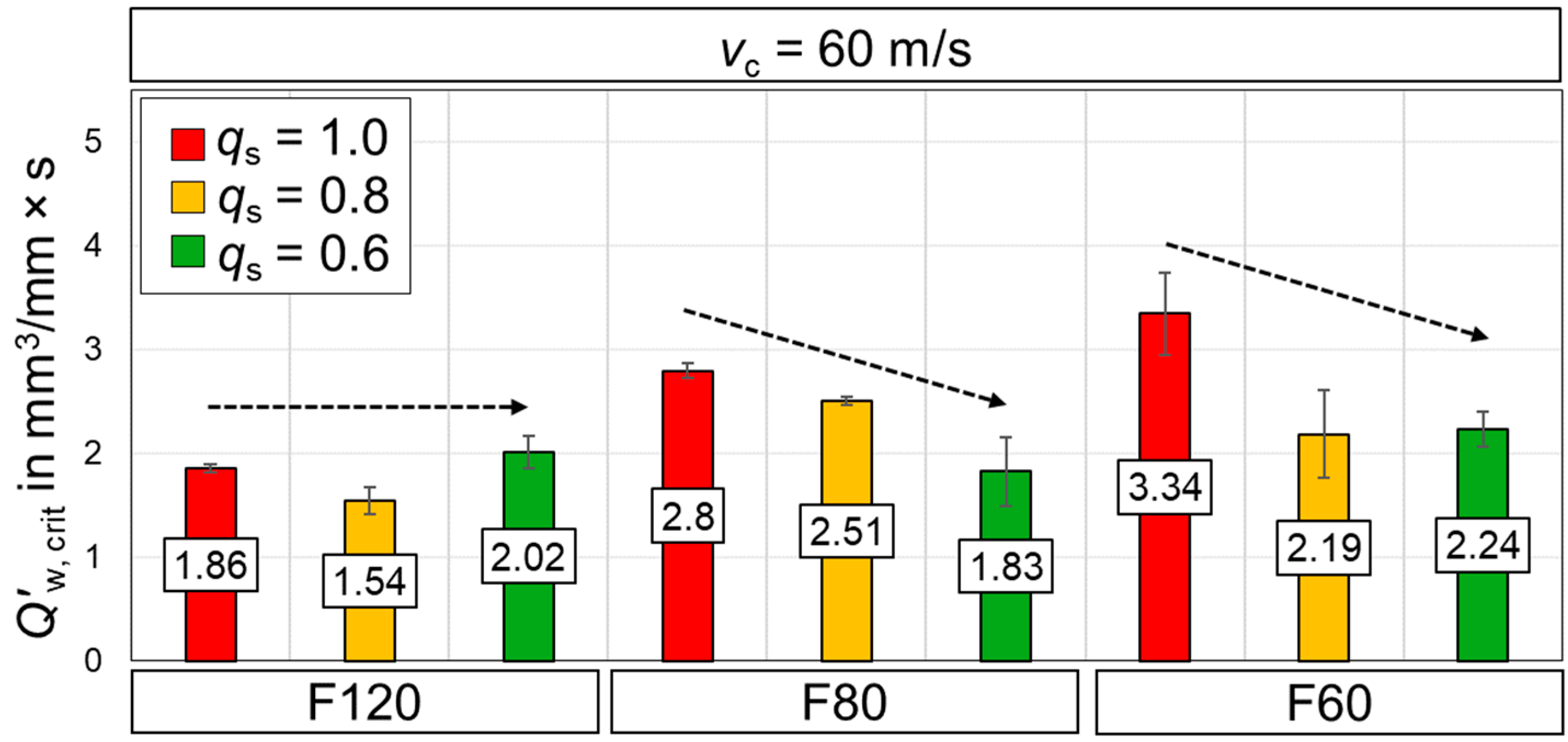
w, crit were determined for different grinding wheels and cutting speeds. At 35 m/s, decreasing speed ratios
qs increase
Q’
w, crit for coarser wheels (F80 and F60) due to improved MWF entrainment, whereas at 60 m/s the trend reverses as slower jets are deflected by an intensified air barrier. Fine grit wheels (F120) show no systematic dependency of
Q’
w, crit on
qs, with comparatively low achievable material removal rates.
Section 3.2 shows that variations in
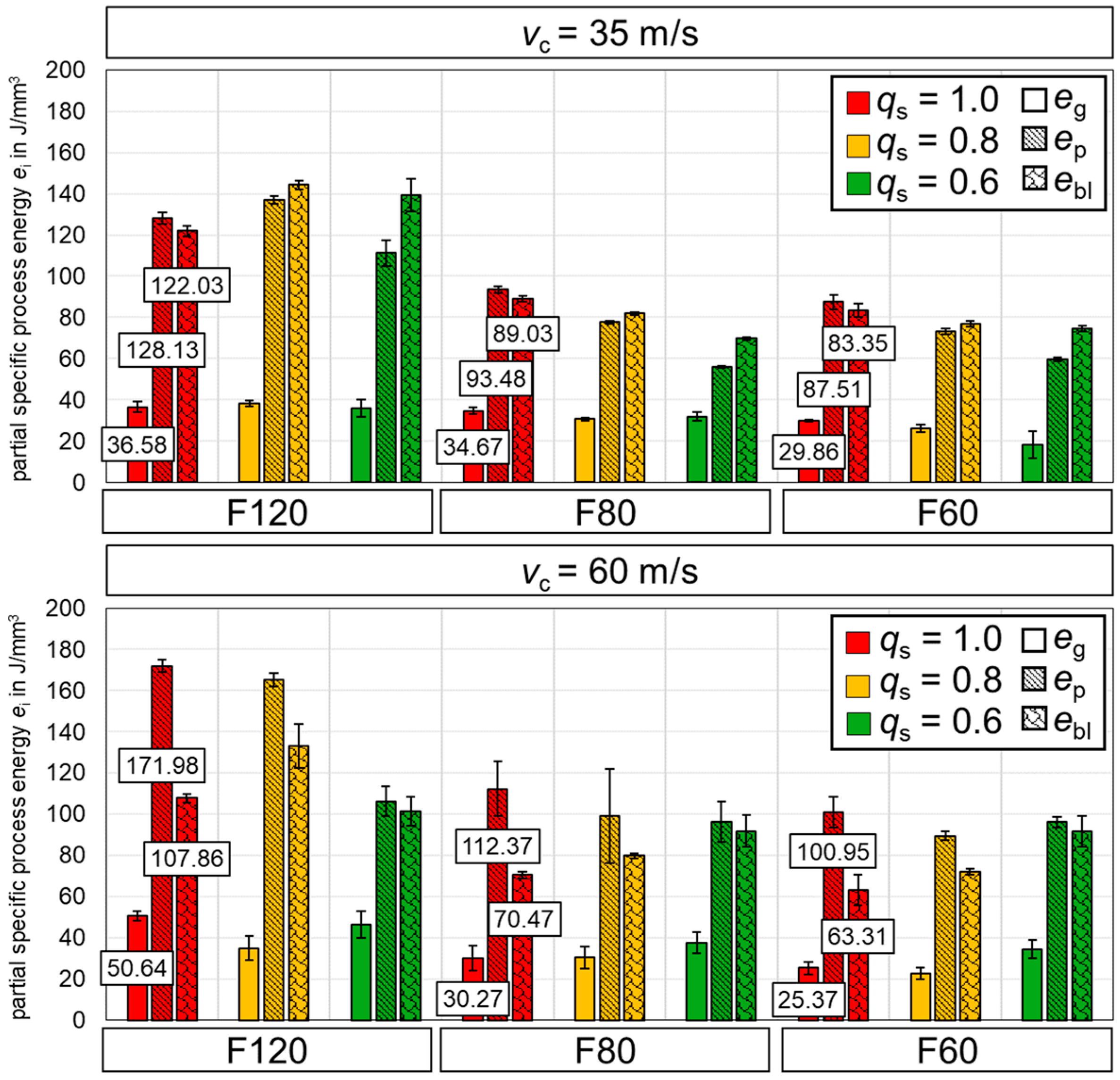
qs predominantly affect the thermal and hydraulic energy demand, while the ratio between grinding power and
Q’
w, crit remains nearly constant. Lower speed ratios (e.g.,
qs = 0.6) at 35 m/s achieve higher
Q’
w, crit and lower pump and total specific energy, whereas at 60 m/s the same
qs coincides with lower
Q’
w, crit and increased total energy due to limited MWF penetration. Base load energy follows the same dependency.
Section 3.3 implicates the carbon footprint of the grinding process. CO
2 emissions scale proportionally with total energy
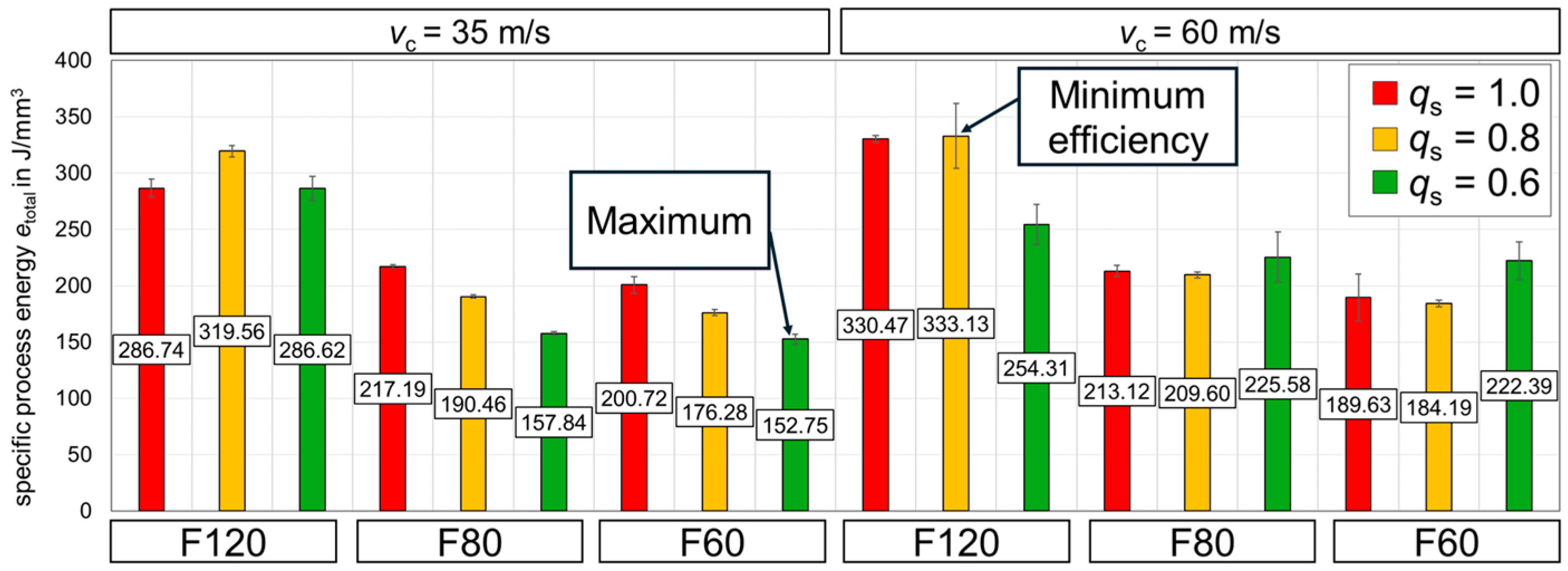
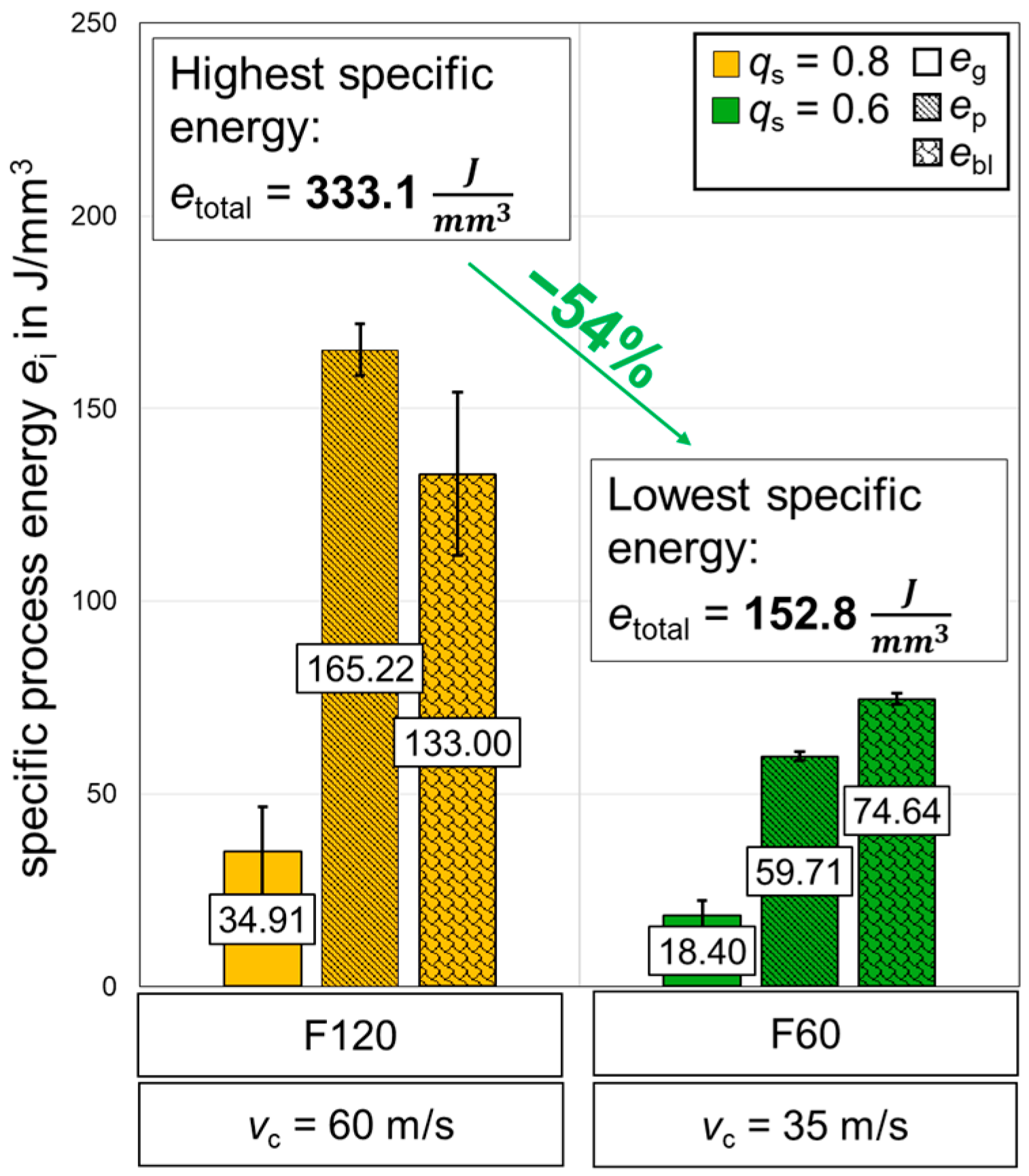
Etotal, and comparison of the most and least efficient processes shows a 54% difference in
etotal, corresponding to a 54% difference in annual CO
2 emissions. For 10,816,000 mm
3 of material, this translates to 0.435 t CO
2 for the least efficient and 0.199 t CO
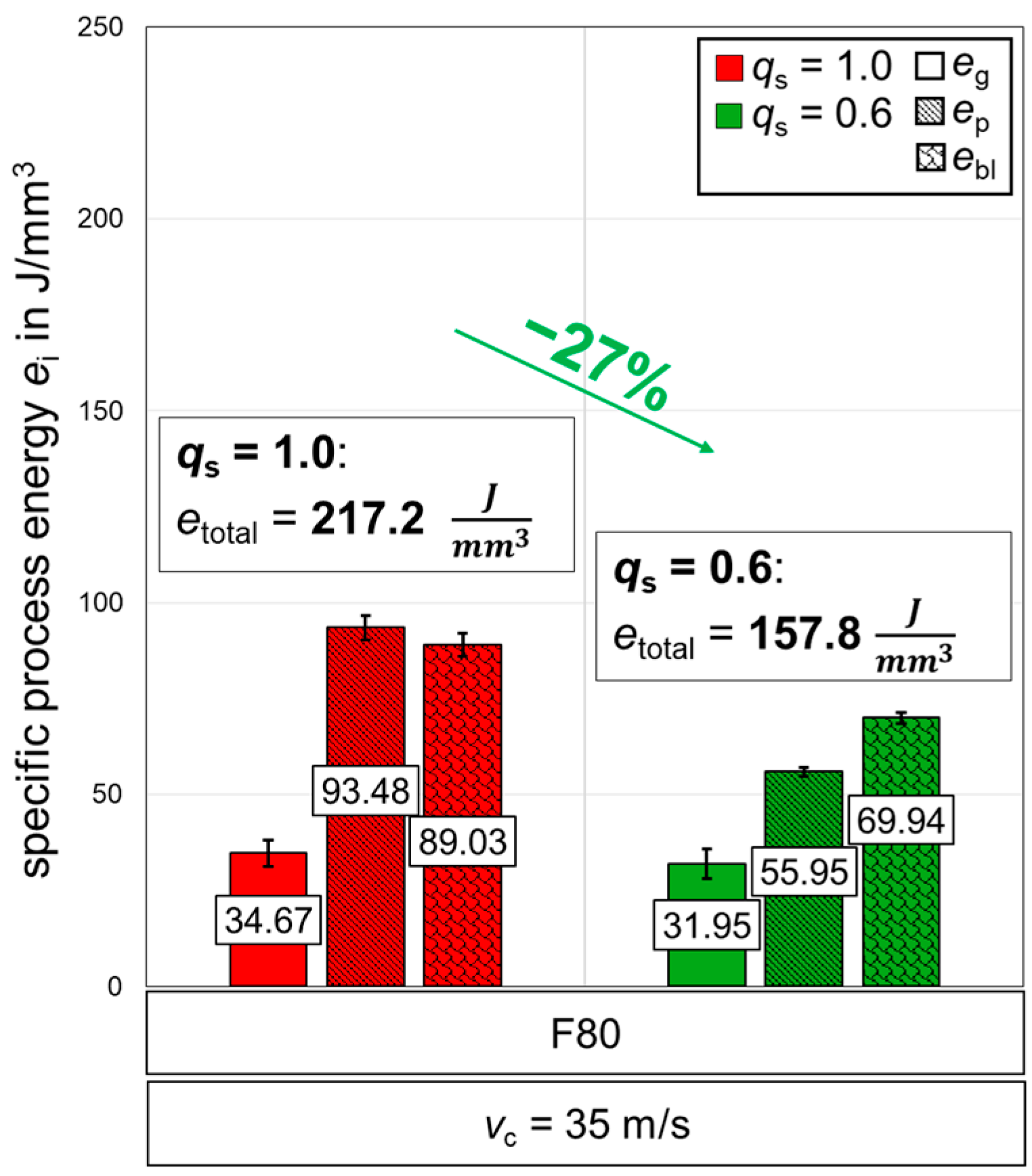
2 for the most efficient process. Adjusting
qs alone for F80 wheels at 35 m/s reduces annual CO
2 emissions from 0.284 t to 0.206 t (~27%), illustrating that changes in
etotal directly translate into equivalent changes in emissions. Building on these results, several aspects warrant further investigation. In particular, the influence of the fluid jet to wheel speed ratio
qs when using medium porous grinding wheels compared to open-pore grinding wheels needs to be clarified. Moreover, the point at which the inversion of the trend occurs, where lower jet speeds begin to negatively affect process efficiency, should be determined. Finally, the effect of the air barrier on the interaction between the MWF and the grinding wheel, depending on the fluid jet to wheel speed ratio
qs, needs to be investigated in future research. Addressing these aspects will contribute to a deeper understanding of the mechanisms of interaction and, ultimately, to the design of more energy-efficient grinding processes.
5. Conclusions
This study investigated the influence of the fluid jet to wheel speed ratio (qs) on grinding performance, energy demand, and associated CO2 emissions in surface grinding. Using taper grinding experiments, critical specific material removal rates were determined for grinding wheels with different grit sizes (F60–F120) at cutting speeds of 35 m/s and 60 m/s, with the onset of grinding burn identified by Barkhausen noise analysis. Based on these critical limits, the total specific process energy was quantified by considering grinding, pump, and machine base load contributions. The results demonstrate that the effectiveness of qs strongly depends on both cutting speed and wheel topography, leading to substantial differences in achievable material removal rates and energy efficiency. Consequently, optimizing qs offers significant potential to improve grinding efficiency and reduce the carbon footprint of grinding processes, particularly for coarser and more porous grinding wheels.
Key Findings
The fluid jet to wheel speed ratio (qs) significantly affects both productivity and overall grinding efficiency. For fine grit wheels (F120), only minor, non-systematic variations in Q’w, crit were observed at both cutting speeds, while coarser wheels (F80 and F60) showed a strong dependency. At 35 m/s, decreasing qs from 1.0 to 0.6 increased Q’w, crit by approximately 13% for F60 and 27% for F80. Conversely, at 60 m/s the same reduction decreased Q’w, crit by 33% for F60 and 35% for F80. Analysis of specific process energy etotal confirms these trends. The most efficient process (F60, 35 m/s, qs = 0.6) required 152.8 J/mm3, whereas the least efficient (F120, 60 m/s, qs = 0.8) required 333.1 J/mm3. The ratio between grinding power and Q’w, crit remains nearly constant, indicating that variations in qs predominantly affect thermal and hydraulic energy demand rather than mechanical cutting load. Lower speed ratios (qs = 0.6) at 35 m/s allow high Q’w, crit and reduced pump and total specific energy, whereas at 60 m/s the same low speed ratios coincide with lower Q’w, crit and increased total energy due to limited MWF penetration. The specific base load energy follows a similar trend. Applying these results to a case-study production volume, adjusting qs alone for F80 wheels at 35 m/s reduces annual CO2 emissions from 0.284 t to 0.206 t (~27%), demonstrating that relative changes in etotal directly translate into equivalent changes in emissions. Overall, optimizing qs enhances grinding efficiency, reduces energy consumption, and lowers the carbon footprint, particularly for coarser grit wheels, emphasizing the strong coupling between fluid jet to wheel speed, achievable material removal rates, energy components, and the resulting environmental impact.