1. Introduction
Titanium alloys are one of the materials with increasing consumption, mainly in the aerospace, medical, and automobile industries. Between 2023 and 2030, the titanium market is expected to grow by almost 70% [
1], creating a need for effective processing. Pure titanium is not very usable in industry. However, titanium alloys are known for their exceptionally high specific strength, corrosion resistance, and biocompatibility. There are three types of exploitable titanium phases—αTi, βTi, and α + βTi. The αTi phase crystallises in a hexagonal close-packed (HCP) lattice and the β phase in a body-centred cubic (BCC) lattice. The most common are α + β alloys, represented by the Ti-6Al-4V alloy, which accounts for approximately 50% of titanium applications [
2]. Aluminium is added to promote and strengthen an αTi phase and reduce density; Vanadium stabilises the βTi phase and increases ductility [
3]. Thanks to its remarkable characteristics—such as high strength (1100 MPa), creep resistance at 300 °C, fatigue resistance, weldability, forgeability, castability, and toughness—this metal is highly regarded in the aerospace industry. Wrought Ti-6Al-4V is also an excellent choice for surgical implants due to its biocompatibility, and it finds extensive application in the motorsport automotive industry, where minimising weight is essential [
4].
Machining of titanium alloys presents significant challenges, and therefore, it is crucial to understand their properties to achieve acceptable productivity. The best machinability is achieved with pure titanium and αTi alloys. However, as the βTi phase increases, the cutting force rises, and machinability deteriorates [
5].
One reason for this is the low thermal conductivity of titanium, which is approximately six times lower than that of carbon steel (6.7 [W/(m·K)] for Ti-6Al-4V alloy) [
6]. The restricted heat conduction to the chip and workpiece leads to elevated tool temperatures. König reported that during machining with P10 carbide, nearly 70% of the generated heat is conducted into the cutting tool. In contrast, for steel workpieces, the proportion is approximately 40% [
7]. Alloying elements also cause an increase in cutting temperature; temperatures exceeding 900 °C were observed on the tool rake face when cutting the Ti-6Al-4V alloy at a cutting speed of only 19 m/min [
8]. That is why a coolant supply is essential.
To manage these thermal loads, understanding the impact of cutting parameters is vital. Li and Shin employed a finite element method (FEM) to investigate the influence of cutting speed on the peak tool temperature. Their results showed that temperature increased significantly with higher cutting speeds, while the feed rate exhibited only a minimal effect. Furthermore, the study examined the impact of cutting-edge radius on tool temperature, revealing that within the range of 6.35 to 20 µm, a lower cutting-edge radius resulted in higher peak temperature [
9]. Complementing this, Kikuchi examined how cutting conditions affect temperature and observed that, for the same material removal rate, increasing the depth of cut is more effective than raising the cutting speed or feed rate, since it produces lower cutting temperatures [
10].
Moreover, during the machining of titanium alloys, the contact length between the chip and the rake face is typically reduced. Conversely, friction in the contact zone intensifies. Consequently, this results in steeper thermal gradients and higher temperatures near the cutting edge [
11]. Jawaid attributed the significant wear rate at the tool nose area to a decrease in the tool’s yield strength due to high temperature in this region [
12]. Simultaneously, as König says, in the surroundings of the cutting edge, high mechanical stress occurs, which is about three to four times higher than in the case of normalised steel Ck 53 N [
7]. This phenomenon is attributed to the fact that titanium retains its strength even at elevated temperatures, unlike many other metals [
13]. Additionally, strength retention at elevated temperatures and surface work hardening increase cutting forces [
14].
The combined thermal and mechanical stress creates demands on the cutting tool, reducing its life. Therefore, low cutting speeds are typically employed when machining titanium alloys [
15]. Confirming this constraint, Jaffery and Mativenga developed a wear map for turning Ti-6Al-4V with H13A carbide inserts. They identified an avoidance zone of accelerated wear at a cutting speed of 70–75 m/min and a feed rate of 0.17 mm/rev. They explicitly state that cutting conditions at or above these values are not recommended, as they fall inside the high-wear region [
16].
Beyond these thermo-mechanical challenges, the chemical nature of the material also plays a crucial role. Titanium is a highly reactive metal, particularly at temperatures above 500 °C. When exposed to oxygen, its surface is rapidly covered by a titanium dioxide (TiO
2) layer, which protects the underlying material from corrosion. However, freshly exposed surfaces and chips have not yet developed this oxide layer during machining and readily react with most tool materials. This interaction results in diffusion processes—specifically, the decarburisation of tungsten carbide (WC) to a tungsten semicarbide W2C, creating titanium carbide TiC in the chip [
17].
Additionally, Zhang et al. observed dissolution-diffusion of the cobalt binder into the chip. It led to the detachment of the WC particles from the tool by the chip flow [
18]. According to Lindvall et al., titanium can also diffuse into the cobalt binder, forming TiCo
2 [
19]. The elevated cutting temperatures, typical in titanium alloy machining, accelerate these diffusion mechanisms. For instance, Fan et al. investigated the wear characteristics of cemented carbide when dry machining Ti-6Al-4V. The findings showed that at 400 °C, the diffusion of W and Co into the Ti-6Al-4V alloy was minimal. However, at elevated temperatures of 600 °C and above, significant diffusion occurred, with penetration depths reaching up to 20 μm at 800 °C. Simultaneously, a cutting temperature above 600 °C was reached at a cutting speed of 60 m/min [
20].
These diffusion processes directly contribute to specific wear patterns. Crater wear primarily arises from diffusion and adhesion mechanisms when machining titanium alloys with tungsten carbide (WC) tools. Compared to steel machining, the centre of the crater wear zone (KM) is closer to—or may even intersect—the cutting edge. This phenomenon was confirmed in the study by Odelros et al., in which longitudinal turning tests were conducted on Ti-6Al-4V at a cutting speed of 70 m/min, a feed rate of 0.2 mm/rev, and a depth of cut of 2 mm. Progressive crater wear was the primary wear mechanism, causing plastic deformation and eventually leading to tool failure [
21].
Simultaneously, crater wear caused by adhesion begins when titanium sticks to the cutting tool, forming a built-up edge (BUE). When the BUE breaks away, it often takes small pieces of the tool material with it. These detached particles act as abrasive elements, contributing to further degradation of the tool and surface damage. Houchuan et al. investigated the surface integrity of near-β titanium alloys during milling. They observed microvoids on the machined surface, caused by the detachment of the BUE and tool material. Such defects negatively influence the mechanical properties of the finished component [
22]. Furthermore, crater wear alters the cutting tool geometry in an undesirable manner, compromising cutting performance.
High temperatures and titanium reactivity also influence the machined surface. This high reactivity and the resulting diffusion processes pose significant challenges in machining titanium alloys, affecting tool life and workpiece quality [
23]. Specifically, when the temperature exceeds 600 °C, atmospheric oxygen and nitrogen diffuse into the workpiece’s surface layer. As alpha stabilising agents, they create an “alpha case”—a hard and brittle layer that further degrades surface properties [
5]. Furthermore, surface hardening can also be caused by induced surface deformation. Sun et al. observed a hardened layer when milling Ti-6Al-4V, where the surface material’s microhardness was approximately 70–90% higher than that of the bulk material. Nevertheless, high temperature is beneficial in this case as it induces thermal softening to balance the strain hardening [
24]. Illustrating this balance, Ginting and Nouari divided the sub–surface layers into three zones when dry milling. The first layer had a microhardness about 8% less than the bulk material due to thermal softening. This indicates that thermal softening exceeds work hardening during plastic deformation or microstructural change. Beneath it, the second layer, extending down to 200 µm, is approximately 8% harder, gradually softening into the third layer—the bulk material. Finally, tool wear significantly influences this process; according to Houchuan, an increase in tool flank wear is correlated with a greater depth of the hardened layer [
22].
While the workpiece’s surface integrity is significant, the intrinsic mechanical properties of the workpiece drive process instability. One of the titanium alloys’ distinctive properties is a relatively low modulus of elasticity (~100–130 GPa) [
25]. From a machining point of view, when a cutting force acts, it causes deflection of the workpiece, chattering, and dimensional inaccuracies. Significant friction effect also occurs. Additionally, it influences the tertiary plastic zone where the flank face of a tool rubs against the machined surface. Chip thickness before and after cutting differs due to the cutting edge radius. The material detaches either into the chip or the workpiece. Waldorf noted that behind the cutting edge, three possible material responses in the ploughed layer can occur: plastic strain (i), plastic recovery (ii), and full elastic recovery (iii) [
26].
These material responses highlight the importance of tool geometry. Different tool clearance angles influence the tertiary deformation zone and its consequences, such as rubbing between the flank face and the machined surface, heat and mechanical stress on the cutting edge, deformation hardening and structural changes in the surface layer, resulting in surface integrity. Theoretically, during titanium machining, the low modulus of elasticity results in considerable elastic recovery of the ploughed layer, leading to flank wear, chatter, and high cutting temperatures. Therefore, selecting an appropriate clearance angle is crucial for achieving acceptable results in terms of tool wear and workpiece quality. This relationship was confirmed by Bai et al. when milling Ti-6Al-4V alloy, where an increase in the tool clearance angle resulted in a decrease in the depth of the subsurface damage layer [
27].
Other geometric parameters, such as the rake angle and edge radius, play roles in managing cutting forces. Outeiro et al. investigated the influence of cutting parameters on cutting force and residual stress during orthogonal cutting. Their results showed that a positive rake angle combined with higher cutting speeds led to a reduction in cutting force. In contrast, increased cutting-edge radius resulted in higher cutting forces. Increasing the rake angle and edge radius decreased residual stress in both longitudinal and transverse directions [
28]. Supporting these findings regarding the edge radius, Wyen et al. found that lowering the cutting-edge radius from 40 µm to 10 µm reduces cutting force by roughly one-third. The authors also noted that a larger cutting-edge radius enhances plastic deformation, demands more energy, and contributes to elevated cutting temperatures [
29].
According to the Machining Data Handbook, a back and side rake angle of −5° and a relief angle of 5° are recommended when machining titanium with indexable carbide [
30]. Arısoy investigated the influence of edge radius on workpiece microhardness and grain size, using radii of 5, 10, and 25 µm. Tools with a radius of 10 µm produced surfaces with lower microhardness, primarily at high cutting speeds. The finest grain structure was observed using a sharp tool (5 µm) at low speed and feed rate [
31]. Xie et al. used an uncoated carbide tool with micro-grooves on the rake face for dry turning. It was observed that these microgrooves effectively conduct heat from the tool tip to the bulk of the tool. The cutting temperature on the rake face of microgrooved tools was reduced by approximately 27.2% compared to that of a planar tool. Additionally, the cutting force was decreased by approximately 56.1% when a significant removal rate was employed [
32].
Komanduri studied the effects of tool geometry on cutting performance by evaluating three geometrical configurations: a conventional tool with a 5° clearance angle and a 90° included angle, a modified tool with a 17° clearance angle and 90° included angle, and a third tool featuring a 16° clearance angle combined with a −5° rake angle. The tool with the 17° clearance angle and 90° included angle provided the best tool life. In contrast, the geometry with a 16° clearance angle and a −5° rake angle showed the poorest performance, attributed to the weakened tool tip. Grain size and cobalt content were analysed together. Tools with fine grain and low cobalt content were more suitable than those with coarse grain or high cobalt content [
33]. Shokrani and Newman investigated the milling of Ti-6Al-4V alloy using rake angles of 10°, 12°, 14°, and 16°, along with clearance angles of 8° and 10°, under cryogenic cooling conditions. They found that a 14° rake angle significantly improved tool life compared to lower angles, while a 16° rake angle led to tool failure due to edge weakening. The optimal results came from using a 14° rake angle and a 10° clearance angle. Additionally, a 10° clearance angle provided better tool life than an 8° clearance angle, with the most significant improvement at the 14° rake angle [
34].
Selecting an effective cutting tool is critical, given the challenges associated with machining titanium alloys. The appropriate choice of tool geometry, material, and cutting parameters is a fundamental prerequisite for process stability and tool life [
9]. This underscores the critical role that tool selection plays in the overall machining process. The literature suggests that tool geometry has a significant impact on machining performance. However, predicting these influences remains challenging. Hall et al. used FEM to analyse the influence of rake angle on the chip formation and compared it with experimental verification. However, it was found that the material and friction model is not precise enough and needs further experiments and development of a more robust model [
35].
Too positive rake and clearance angles weaken the tool and reduce tool life, while optimised angles improve efficiency and durability. This highlights the importance of selecting the right tool geometry for effective machining and better surface integrity. While the effect of rake angle has been widely studied, the impact of the clearance angle, specifically regarding the elastic recovery of titanium discussed earlier, remains less explored in recent turning applications. Lately, there has been no comprehensive research on the influence of the clearance angle when turning titanium alloy.
Therefore, the main contributions of this study are defined as follows:
- (1)
Identification of a relevant mathematical model of the relationships between inputs and outputs.
- (2)
Observation of the type and progression of tool wear.
2. Materials and Methods
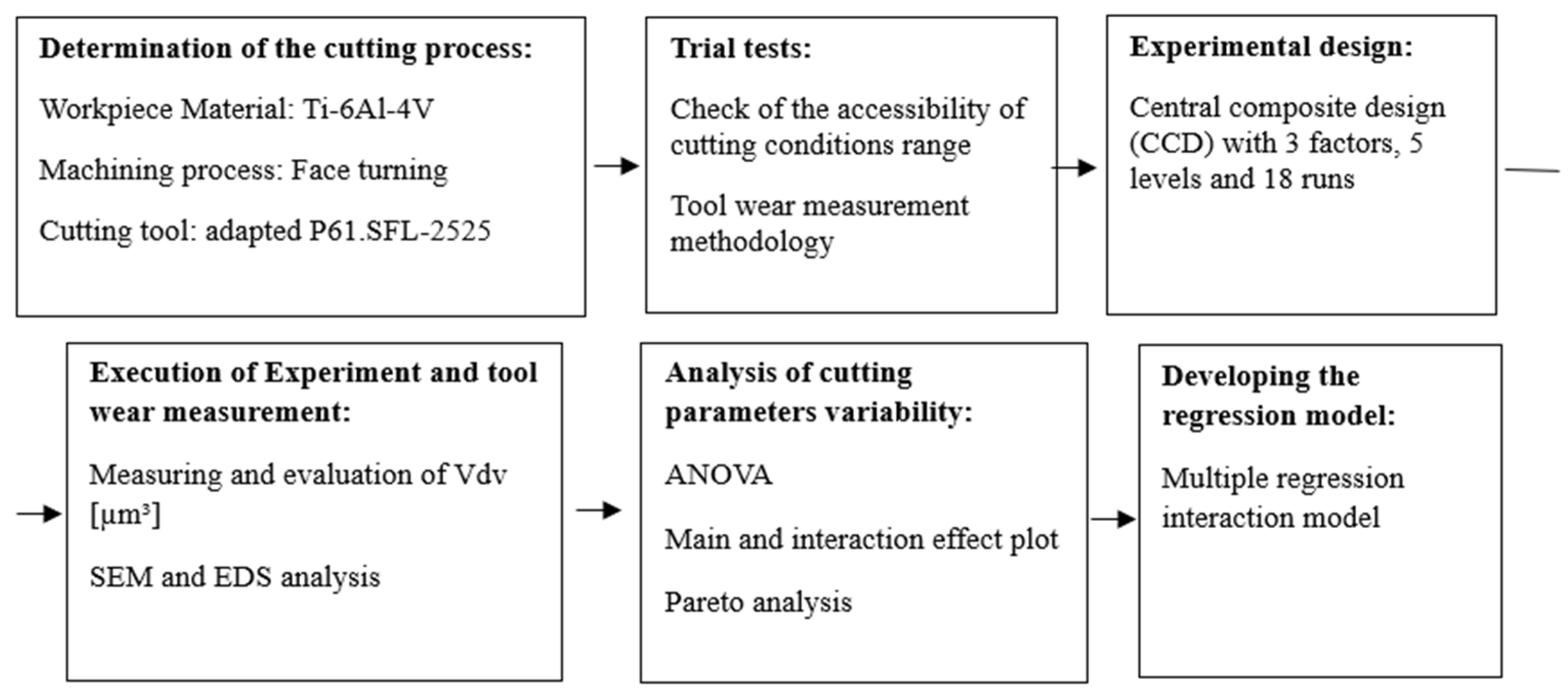
The overall methodological workflow used in this study is summarised in
Figure 1. The workflow outlines all major stages of the experimental procedure, including the definition of the machining process, preliminary trial testing, the design of experiments, tool wear evaluation, statistical analysis of cutting parameters, and development of the regression model
The machining tests were performed on the annealed Ti-6Al-4V (Grade 5) alloy in accordance with WL 3.7164 standard [
36]. The chemical composition of the alloy is presented in
Table 1. The cylindrical workpiece with an initial diameter of 255 mm and a length of 370 mm was clamped with three hard jaws in the chuck of the CNC turn-mill centre DMG MORI CTX BETA 1250 TC 4A (DMG MORI Bielefeld GmbH, Bielefeld, Germany). Motor power is 32 kW, and the spindle speed is up to 5000 min
−1. The first layer of the sample, with a depth of cut of a
p = 1.25 mm, was removed to eliminate the oxidised surface, runout of the semifinished product and work-hardened layer. Therefore, a homogeneous surface was prepared for subsequent cutting.
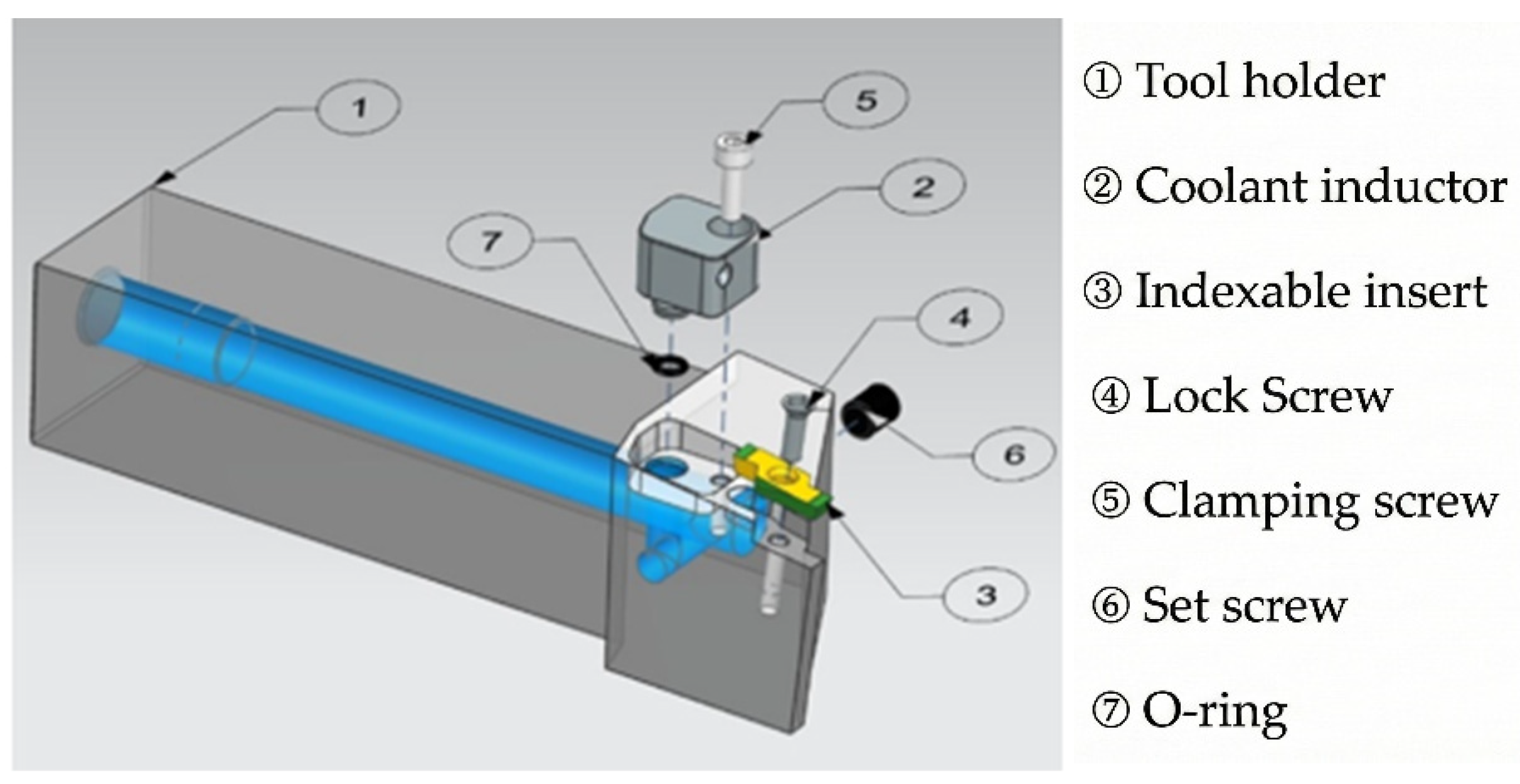
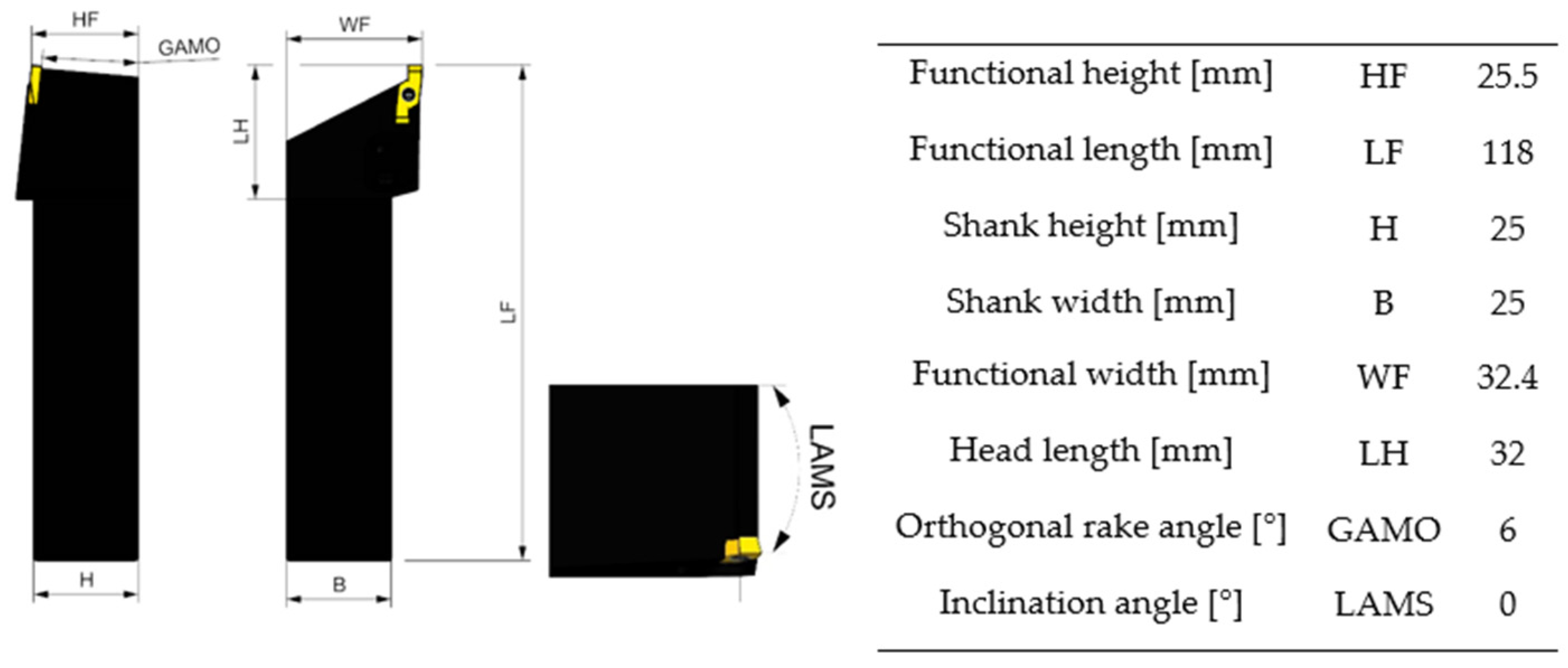
The effect of tool clearance angle and cutting conditions on tool life was investigated on a demand-manufactured tool. The cutting tool assembly (
Figure 2) comprised a modified tool holder, P61.SFL-2525 ① (see
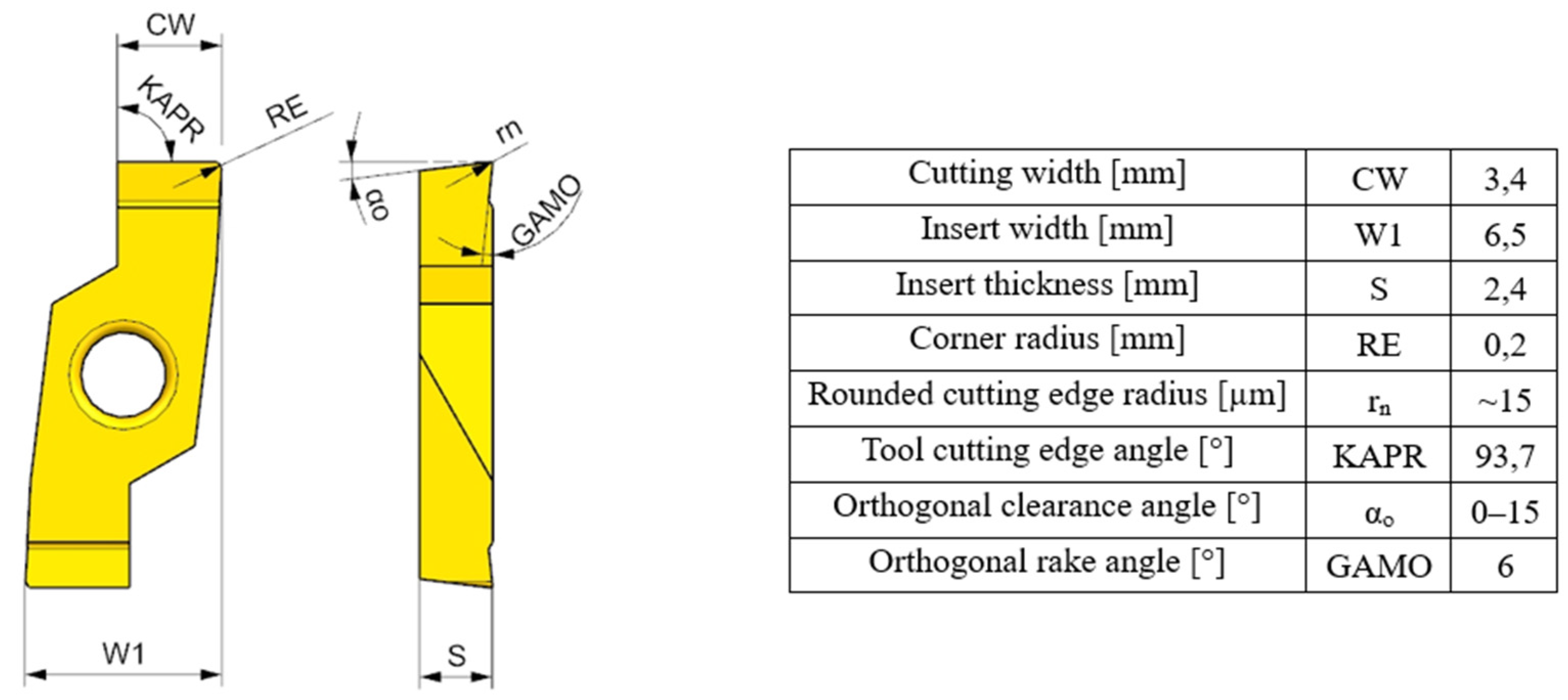
Figure 3), a 3D-printed coolant inductor ②, and custom-made indexable inserts X61 0602-315 L (
Figure 4) ③. An exploded view of the tool assembly is shown in
Figure 2. The transparently displayed tool holder is equipped with coolang piping. The lower clearance angle limit of 6° was established based on the typical clearance angles employed in cutting tools. The upper limit of 21° was set not to overrun the minimum wedge orthogonal angle of the original X61 cutting insert.
The tool holder in hand geometry featured a 6° orthogonal rake angle, while the nominal tool inclination angle (λs) was set to 0°. A working tool inclination angle of −3° was achieved by adjusting the C-axis of the machine. All tests were carried out using the cutting fluid Blaser Vasco 6000 (Blaser Swisslube AG, Hasle-Rüegsau, Switzerland). The oil-water concentration was determined using a refractometer and was found to be 6.3%.
The indexable inserts, originally designed for circlip grooving, were made of uncoated Dormer Pramet H07 (Prague, Czech Republic) solid carbide submicron grade and were sourced from a single production batch. According to the manufacturer, this grade is designed for fine to medium machining of titanium alloys and non-ferrous metals, thanks to high resistance to wear and a stable cutting edge [
37]. The blank inserts were ground to the required in-hand geometry (see
Figure 4), featuring variable clearance angles according to the central composite design described below.
The tool-in-use geometry when performing a cutting operation resulted from the combined design of the insert, the tool holder, and the turning centre set-up, as detailed in
Table 2.
Due to the importance of effective cooling during titanium machining, a custom-designed 3D-printed coolant inductor (item 5 in
Figure 2) was utilised to precisely direct cutting fluid to the rake face of the tool.
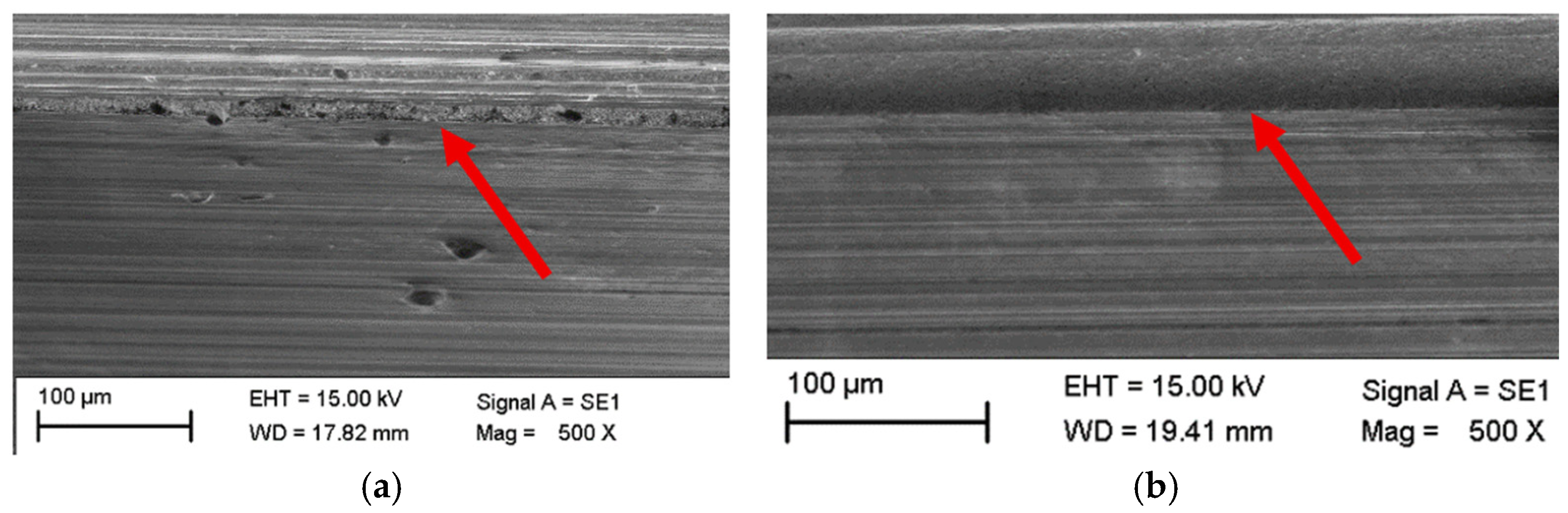
After grinding, all inserts were drag-finished in an OTEC DF3 (OTEC Präzisionsfinish GmbH, Straubenhardt-Conweiler, Germany) system with HSC 1/300 granulate to eliminate burrs, homogenise the ground surfaces, and achieve a consistent cutting-edge radius. The influence of the drag finishing process is considerable on the SEM image in
Figure 5 where the red arrows point to the state of the cutting edge before and after drag finishing. The target cutting-edge radius was 15 ± 3 µm. The cutting-edge radius (r
n) was measured on the linear section of every indexable insert before use, employing a Bruker Alicona InfiniteFocus G6 (Bruker Austria GmbH, Graz, Austria) system via Focus Variation Microscopy (FVM). The measurements indicated a mean r
n of 16.6 µm with a standard deviation of 0.43 µm. As this variation is significantly narrower than the tolerance 3 µm, r
n was treated as a random factor in the statistical analysis, with minor fluctuations incorporated into the regression model’s error term.
Subsequently, the surface topography of the unworn inserts was recorded to provide a reference for wear analysis as described below.
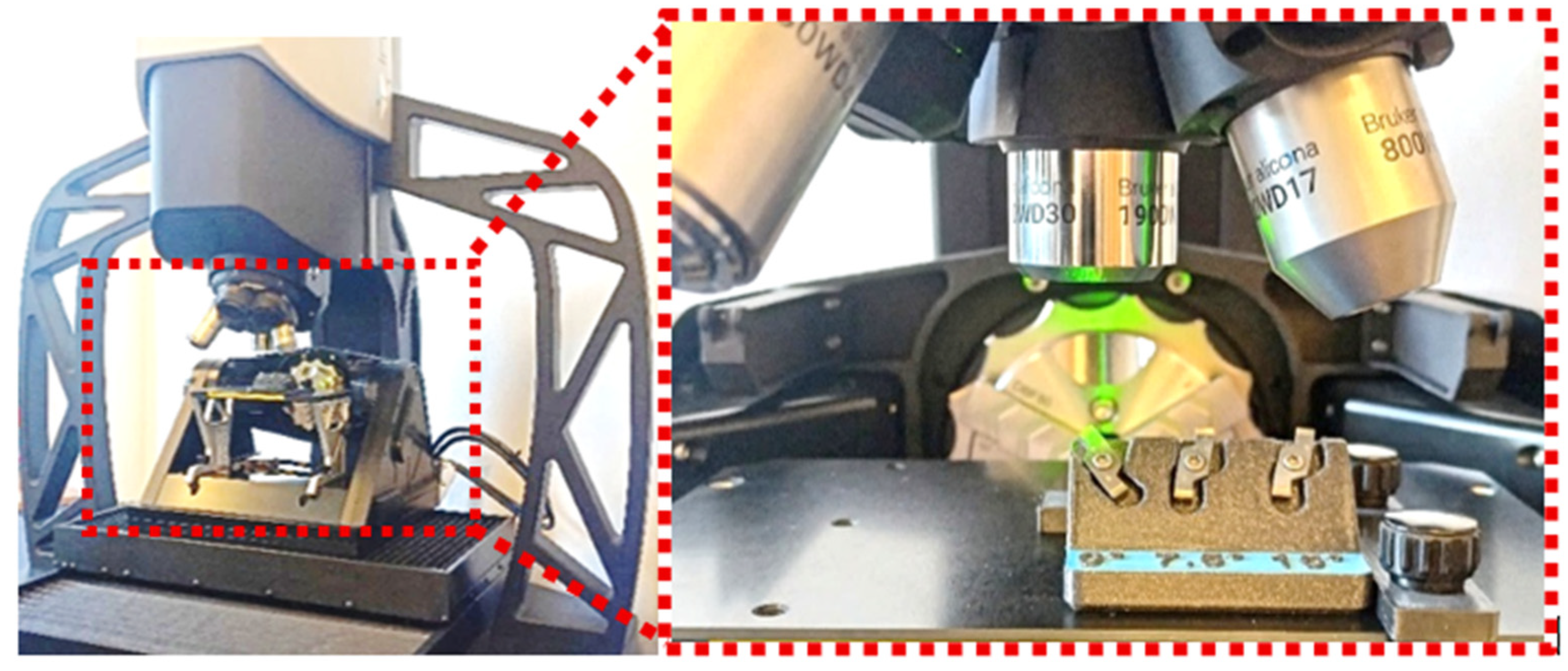
During pre-experiments, typical tool flank wear VB was not observed, and there was a presumption that the type of tool wear can be variable, as cutting conditions are also variable according to experiment design. However, for statistical evaluation, it is essential to observe one response. Therefore, volumetric loss of the insert material was evaluated. Every unworn insert was scanned on an Alicona Focus Variation Microscope (FVM) (Graz, Austria) (see
Figure 6) to obtain a reference dataset of topographies for 3D volume wear evaluation. After every test trial, the insert was cleaned to remove dirt and then measured. Then, the alignment of the unworn and worn insert was performed, and a difference analysis was executed to evaluate wear progression. Volume of valley defects extending below the tolerance (Vdv) parameter was observed, as it is suitable for crater and flank wear observation if proper fixing is ensured.
A defect tolerance of 2 µm was applied to distinguish actual wear from measurement noise. This threshold was determined empirically by inspecting difference maps of non-worn surfaces, specifically to prevent areas on the flank and rake faces from being falsely evaluated as worn due to optical reflections or minor alignment deviations. Furthermore, regarding adhesive wear, the analysis yields a conservative estimate. While material protruding above the reference surface is automatically excluded, any adhesion accumulating within the crater is treated as part of the remaining volume. This ensures that the reported volumetric loss (Vdv) reflects the net profile and is not overestimated.
The amount of material removed by each insert was fixed at 51,566 mm3. This fixed volumetric target served as the sole stopping criterion for the experiments. The tests were concluded upon reaching this value, regardless of the individual wear level of the inserts. Consequently, the experiment evaluates the wear progression over a defined workload. The experiments were conducted using a face-turning setup, with an initial diameter of 252.5 mm and an end diameter of 225 mm.
The surface morphology and wear mechanisms of selected inserts were examined using scanning electron microscopy (SEM), TESCAN VEGA 3. The observations were performed using a secondary electron (SE) detector at an accelerating voltage of 10 kV and a working distance of approximately 16 mm. The cutting inserts were cleaned with ethanol before imaging and were analysed without a conductive coating, as they had sufficient electrical conductivity. The SEM analysis was carried out to characterise the dominant wear mechanisms and to document the topography of the worn cutting edges. The elemental composition in the worn regions was evaluated using energy-dispersive X-ray spectroscopy (EDS) integrated into the SEM device. Spot analyses and area mapping were performed at an accelerating voltage of 20 kV. The purpose of the EDS examination was to identify adhered workpiece material, oxidative layers, and potential chemical interactions occurring at the cutting edge during machining.
Values of variables were based on the Design of Experiments (DoE) concept, according to the central composite design (CCD). The DoE provides a systematic framework for efficient planning, conducting, and analysis of experiments, enabling the identification of significant factors and optimisation of process parameters with minimal experimental effort [
38].
Insert clearance angle as a controlled geometry factor, and the cutting speed and feed rate as technological factors were held as variable factors. The cutting speed was selected based on the tool manufacturer’s recommendations and further adjusted through pre-experiments to ensure process stability. The feed rate was selected in accordance with the tool manufacturer’s guidelines. The lower limit of the clearance angle was set based on the minimum value commonly applied in standard cutting tools, whereas the upper limit was defined through pre-experiments to determine a feasible operational range without compromising the tools’ integrity.
Table 3 shows variable factors and their coded and actual limit values. The rest of the tool geometry and technological factors were kept constant, as shown in
Table 3, except for the wedge angle, which varies according to the clearance angle. The depth of cut was set at a constant value of a
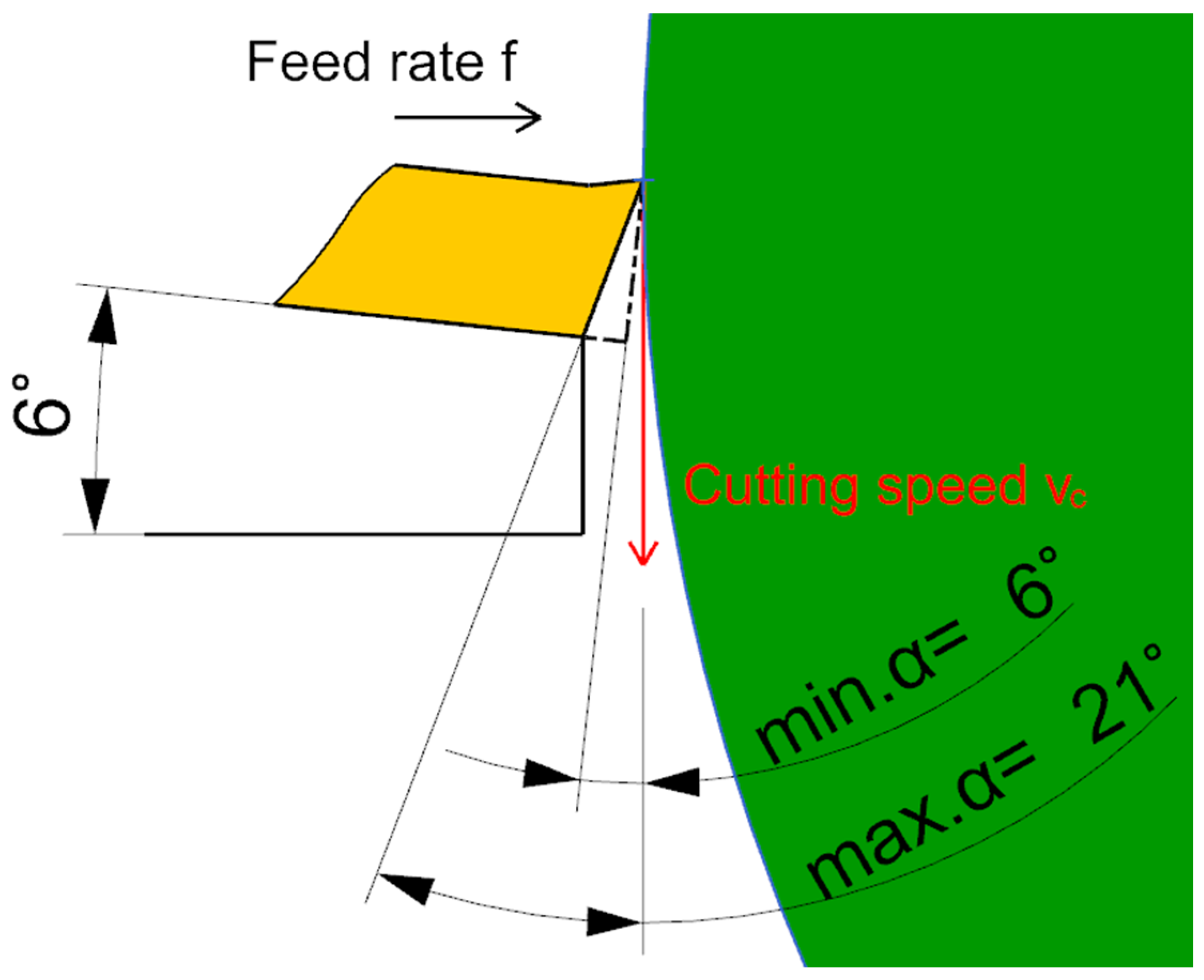
p = 0.5 mm, and revolutions were continuously adjusted in accordance with a constant cutting speed. The scheme of the cutting situation is illustrated in
Figure 7.
The central composite design is an effective method for planning experiments with a smaller number of test runs compared to a 3-factor 3-level full factorial design [
39]. The used design has 18 runs (14 + 4 central point replications). The experiment was conducted according to the Run order in
Table 4 to minimise systematic errors, except the central points, which were conducted in a non-random order (Runs 4, 8, 10, and 12) to distribute them throughout the experiment. This allowed assessment of process stability over time, provided an estimate of pure experimental error, and performed the Lack of fit test [
39].
1. ANOVA and Lack of fit analysis were performed to determine sources of variation. A mathematical model of the influence of particular factors and their interactions was developed 2. Pareto analysis was employed to measure the process variability and identify key factors.
Table 4 presents the entire experiment design in both coded and original units.
The null and alternative hypotheses were determined as Equations (1) and (2):
The level of significance, α, was set at 5%.
3. Results
For the tool wear parameter Vdv [µm
3], a statistically significant regression model was identified.
Table 5 shows a summary of the model’s statistical parameters, evaluating its suitability in describing the effect of the factors on tool wear. This table demonstrates the adequacy of the selected regression model: the proportion of the variability explained by the model (R-square) reaches 0.9986, while the adjusted coefficient of determination (R-square adj.) attains a value of 0.9961. These values indicate that more than 99% of the variation in the measured tool wear is captured by the model, confirming both the high predictive ability and the overall appropriateness of the regression equation for the evaluated experimental data.
To verify model adequacy, an analysis of variance (ANOVA) was subsequently performed. ANOVA evaluates whether the variability explained by the model is substantially greater than the variability attributed to random experimental error. The Fisher–Snedecor test examines the null hypothesis (H0) that none of the factors or their interactions has a statistically significant effect on the response variable. If the corresponding probability value (Prob > F) is lower than the selected significance level α = 0.05, the null hypothesis (Equation (1)) is rejected, the alternative hypothesis H1 (Equation (2)) is accepted, and the model is considered statistically meaningful.
The ANOVA results presented in
Table 6 confirm the statistical significance of the developed regression model. The obtained probability value (Prob > F is <0.0001), which is greatly lower than α = 0.05, indicates that the model explains a substantial portion of the variation in tool wear. This outcome confirms that at least one of the investigated factors exerts a significant influence on Vdv, and the model is considered adequate.
Subsequently, a Lack-of-Fit test was performed to evaluate whether the regression model adequately represents the observed relationship. The null hypothesis assumes that the dispersion of residuals is equal to or less than the dispersion of the measured data within the replicated groups. The results of the test are summarised in
Table 7, yielding a
p-value of 0.0513, which lies slightly above the significance threshold (α = 0.05). Therefore, the null hypothesis cannot be rejected, indicating that the regression model adequately describes the mean response. The model can thus be considered satisfactory for representing the experimental system. However, the result suggests that further model refinement or additional replications could potentially improve the reliability of the fit.
After confirming that the model assumptions were satisfied,
Table 8 provides the estimated coefficients for the tool wear response Vdv, together with the corresponding significance tests for each main effect and interaction term at the significance level α = 0.05. The table includes the regression coefficients in the coded factor scale, along with their standard errors, t-ratios, and
p-values. The statistical evaluation of these parameters shows that feed rate, cutting speed, and clearance orthogonal angle have strong and statistically significant effects on tool wear. Furthermore, several nonlinear and interaction terms were also significant, indicating a complex response behaviour and justifying the use of a higher-order regression model.
The regression model comprises 11 terms, all of which were confirmed to be statistically significant based on the t-ratio tests. As shown in the provided ANOVA table, every single term in the model exhibits a Prob > |t| (p-value) well below the significance threshold of 0.05, ranging from <0.0001 to 0.0209.
Based on the estimated values of the regression coefficients in
Table 8, a coded-variable model representing the effect estimates of the individual factors and interactions can be constructed.
The regression model was transformed from the coded factor scale to natural variables (Equation (3)), enabling direct interpretation in terms of the actual machining parameters. The resulting predictive equation for the tool wear Vdv is presented below:
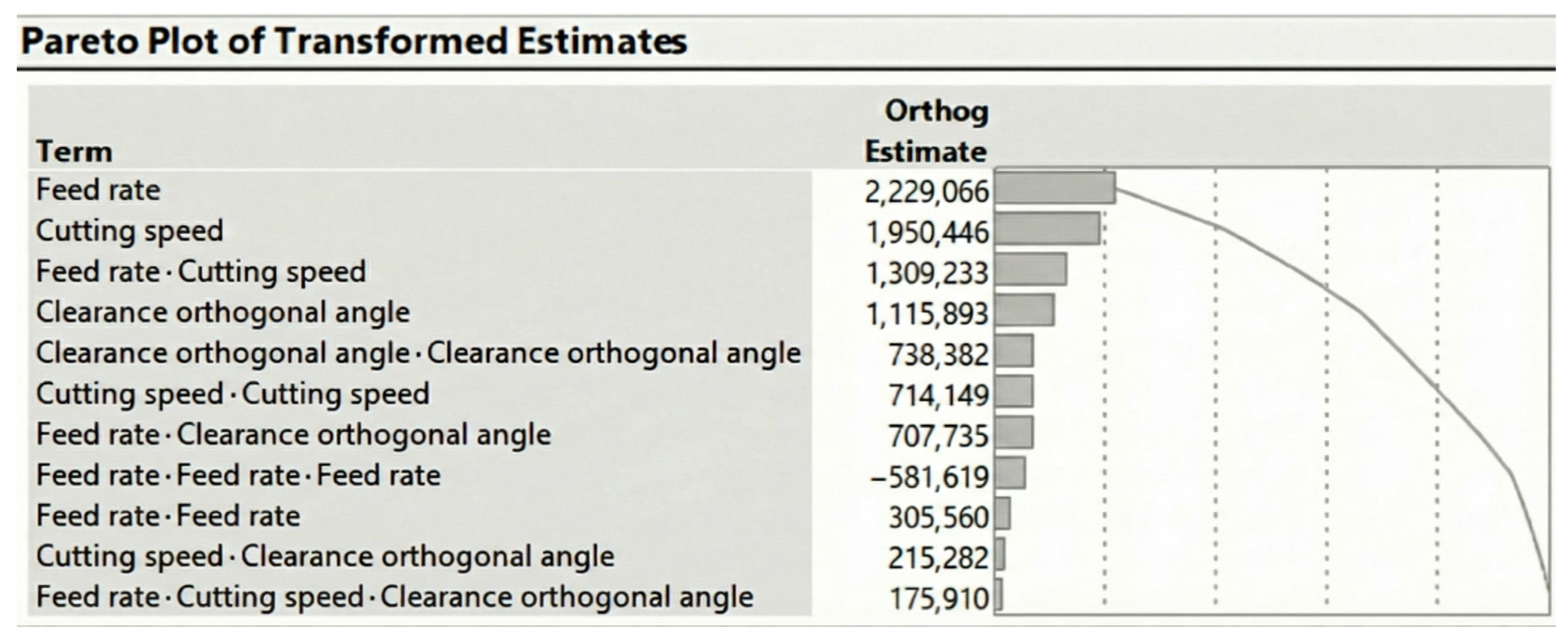
From the statistical evaluation of the experimental results, represented by the Pareto chart (
Figure 8), the most influential factors and interactions affecting the process can be identified. The Pareto plot displays the absolute magnitudes of the effects. The tool wear response Vdv is primarily driven by the feed rate and cutting speed, with a substantial contribution from their interaction. The clearance orthogonal angle also exhibits a notable effect. In addition, several higher-order terms demonstrate measurable influence, indicating non-linear and coupled wear mechanisms. Incorporating these terms enhances the accuracy and robustness of the response surface model under varying cutting and geometric conditions.
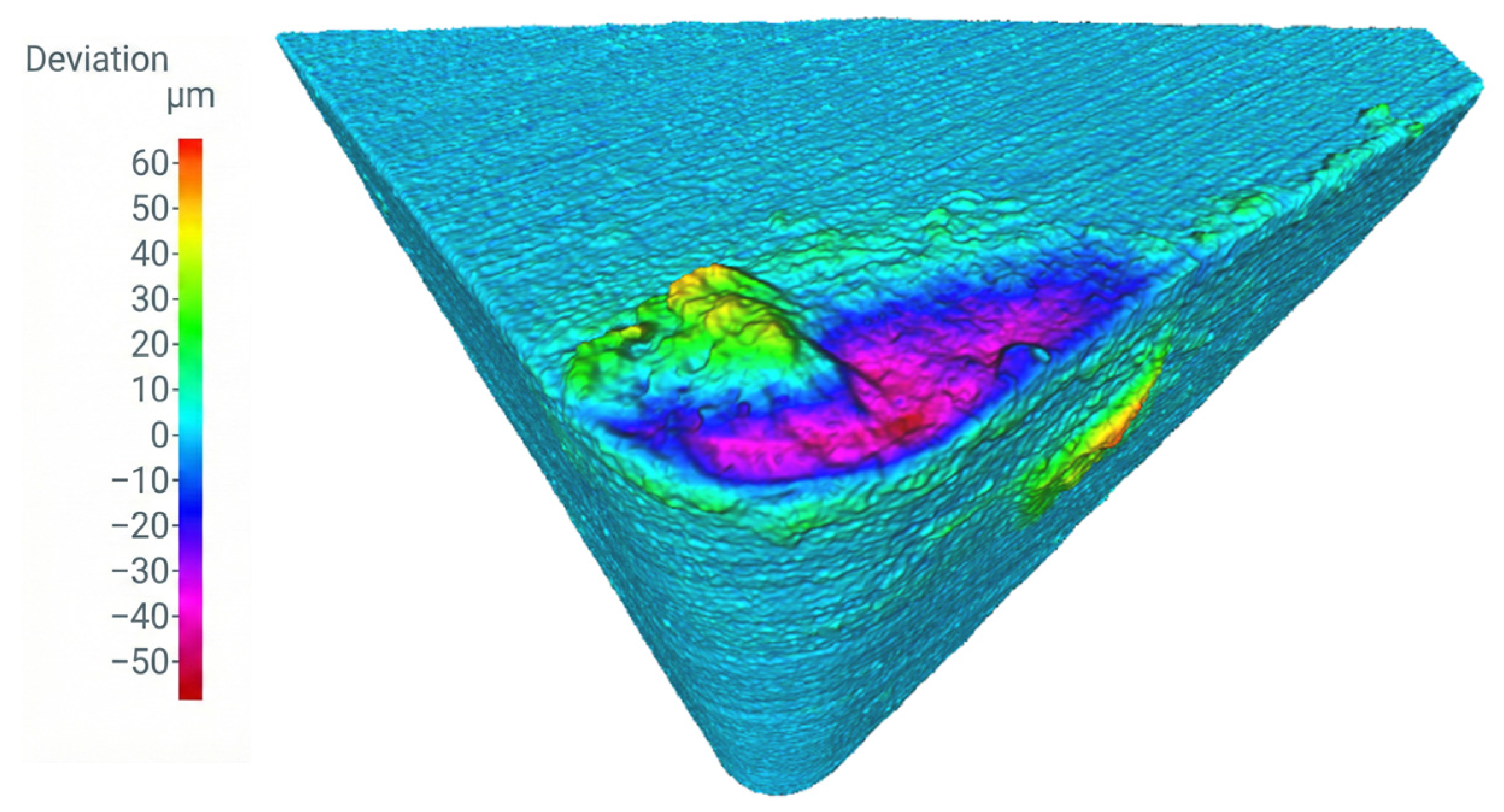
Figure 9 presents the visual-difference map derived from the 3D scan of the representative insert. This representation enables direct determination of the Vdv tool-wear parameter, localisation of the wear region, and continuous volumetric assessment of the removed material. The maximal crater depth is situated in the purple region near the cutting edge. The topography also reveals added material on both rake face and flank face of the tool, which was investigated below. The crater is around 50 µm deep, and the adhesion layer is more than 40 µm high.
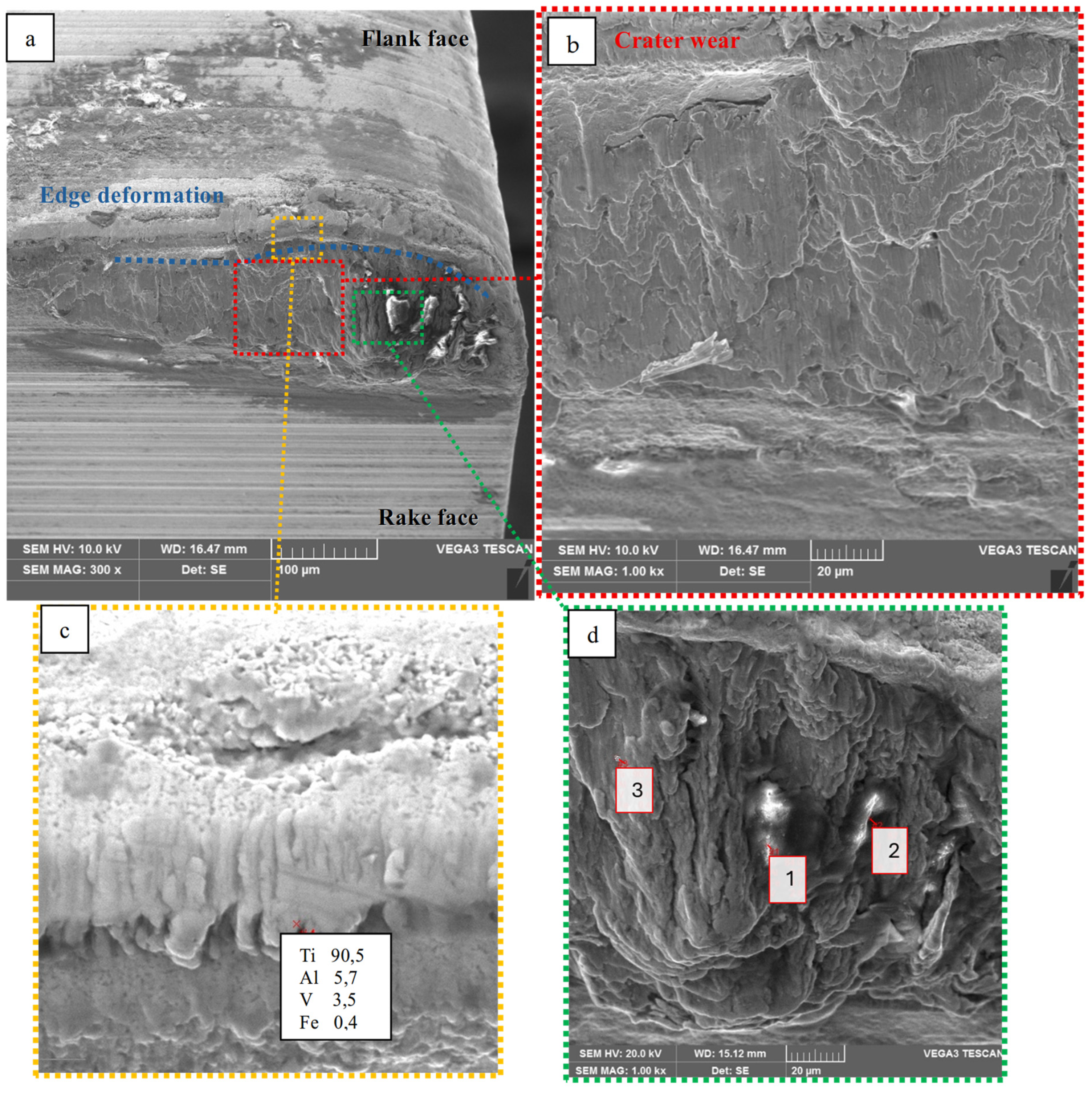
Crater wear was observed on the rake face of all cutting inserts.
Figure 10a presents an SEM micrograph of the worn insert at 300× magnification. The image shows a well-developed crater surrounded by plastically deformed and folded layers generated by repeated chip–tool interaction and visible edge deformation. This morphology indicates that crater formation is governed by chip-flow dynamics and thermomechanical loading near the cutting edge. Furthermore, the cyclic adhesion and detachment of the titanium built-up edge (BUE) significantly contribute to material removal.
Figure 10b provides a detailed view of the worn area on the rake face at 1000× magnification. The high chemical reactivity of titanium facilitates the adhesion of workpiece material inside the crater, forming continuous smeared layers with pronounced flow structures. These laminated structures indicate a continuous cycle of deposition, smearing, and subsequent removal of the workpiece material during the machining process. In later stages, this delamination process can lead to catastrophic tool failure and the end of tool life.
Figure 10c shows the boundary region between the rake and flank faces at 2000× magnification. The orientation of the smeared layers follows the direction of the cutting speed, confirming abrasive interaction with the machined surface. EDS analysis in this region revealed high concentrations of titanium along with aluminium and vanadium, indicating the presence of adhered workpiece material. Beyond the boundary of this adhered layer, no typical flank wear pattern was identified on the insert.
Figure 10d presents a detailed SEM view of the crater with three EDS point analyses (see
Table 9). The EDS results confirm that the analysed areas consist predominantly of titanium, aluminium, and vanadium, which correspond to the composition of the Ti-6Al-4V alloy. The absence of tungsten and cobalt signals indicates that the crater surface is still covered by adhered workpiece material rather than exposing the carbide substrate. These findings suggest that crater wear is governed by the adhesion and diffusion-assisted transfer of Ti-6Al-4V into the crater. The transferred material is subsequently plastically smeared over the crater. During cutting, the adhered workpiece layers are repeatedly removed together with the surface layers of the insert material. The pronounced lamellar structures visible in the SEM image are consistent with a cyclic build-up and detachment mechanism controlled by chip flow and elevated thermal–mechanical loading.
The EDS analysis (
Table 9) confirmed that the adhered layer consists predominantly of Ti, Al, and V. The Iron (Fe) content varied from 0.4% (Point 3), matching the standard impurity limit of the Ti-6Al-4V alloy, to 4.7% (Point 1). This localized increase is attributed to cross-contamination from the cutting fluid (containing residual ferrous particles from steel machining) and instrumental background scattering from the ferrous SEM stage hardware. Crucially, no Tungsten (W) or Cobalt (Co) was detected, confirming that the tool substrate remained fully covered by the adhered layer.
4. Discussion
The application of the Design of Experiments (DoE) using the Central Composite Design proved to be highly effective in modelling the tool life of uncoated carbide tools when turning Ti-6Al-4V. The developed regression model demonstrated exceptional accuracy, with an R2 value of 0.998 and an adjusted R2 of 0.996, confirming that the selected quadratic model adequately captures the variability of the process.
The Pareto analysis identified feed rate as the most significant factor influencing the volume of tool wear, Vdv. This finding is consistent with the results reported by Saedon et al., who identified feed rate as the dominant factor governing tool wear in machining Ti-6Al-4V [
40]. Additionally, Zha et al. reported that high feed rates significantly increase cutting forces, which can explain why feed rate emerges as the dominant factor influencing tool wear [
41]. However, some outcomes consider cutting speed to be in the ascendant. To contextualise the statistical findings, the observed factor dominance was compared with recent studies on titanium alloy turning. While our regression model identified feed rate as the most significant factor affecting volumetric wear (Vdv), comparable literature often identifies cutting speed as the primary driver.
For instance, Akkuş and Yaka [
42], Ahmad et al. [
43], and Elshaer et al. [
44] consistently ranked cutting speed as the dominant factor (with contributions ranging from 46% to 68%) over feed rate in linear wear analyses.
The divergence between these findings and the present study is attributed to three methodological differences. First, the cited studies utilised flank wear (VB). In contrast, our research uses volumetric loss (Vdv) occurring mainly on the rake face. Second, the selected experimental intervals play a crucial role; the statistical weight of a factor is proportional to the breadth of its tested range. Differences in the ratio of speed-to-feed ranges between studies naturally affect the computed factor dominance. Finally, unlike the cited studies where tool geometry was kept constant, our inclusion of the clearance angle as a variable revealed significant interactions.
Consequently, rather than contradicting established models, these findings illustrate that the relative dominance of machining parameters is highly sensitive to the experimental framework. It suggests that factor influence is not absolute but varies significantly depending on the specific combination of wear metrics, cutting conditions, and tool–workpiece configurations used in each individual case.
These observations align with established theory regarding the machining of titanium alloys, where low thermal conductivity leads to heat concentration at the cutting edge, making tool life highly sensitive to parameters that increase heat generation. The significance of the interaction terms, particularly f × vc, further highlights the complexity of tool wear and thermal-mechanical loads on the tool.
While cutting conditions dominate the hierarchy of effects, the study confirms that the tool clearance angle αO plays a statistically significant role in the evolution of tool wear. The results highlight a critical trade-off: a too small clearance angle increases temperature due to rubbing with the machined surface, whereas a too high clearance angle weakens the wedge and reduces the ability to dissipate heat created by the machining process. This thermal balance is particularly crucial when machining titanium, given its poor thermal conductivity. However, the geometric role of αO has been addressed in prior studies only marginally, typically without controlled variation or quantitative evaluation. This study provides a novel contribution by delivering one of the first detailed empirical assessments of the influence of the clearance angle on wear progression in face turning of Ti-6Al-4V.
Our results support the existence of a dynamic optimal geometry, as indicated by the statistically significant αO × f interaction. This positive (synergistic) interaction shows that simultaneous increases in clearance angle and feed rate accelerate wear more than the sum of their individual effects. Consequently, the optimal clearance angle is not fixed but varies with the mechanical load imposed by the selected feed rate. This can be explained by the fact that increasing the feed rate raises the mechanical load on the cutting tool, while increasing the clearance angle reduces the strength of the cutting wedge. Conversely, lowering the feed rate increases the proportion of heat generated by flank rubbing, but a higher αO reduces this friction. Therefore, the optimal clearance angle depends on the mechanical load associated with the selected feed rate.
A notable finding of this study was the dominance of crater wear on the rake face, rather than the typical flank wear land (VB) often used as a tool life criterion in standard machining. The 3D-scanned surface topography of the worn tools revealed a pronounced crater located adjacent to the cutting edge. SEM analysis showed characteristics of laminated structures, indicating cyclic adhesion and detachment of the workpiece material. The severity of the crater wear suggests a possible direction for next research: optimisation of rake angle or improvement in cooling supply. In particular, the application of more effective cooling strategies appears promising for extending tool life and will be the focus of subsequent investigations.
The study was performed under controlled laboratory conditions with a constant cutting fluid, meaning that the results represent the behaviour of a stable and idealised cutting process. Variations in rounded cutting-edge radius, workpiece material variability, differences in stress distribution between runs with different clearance angles, or slight inconsistencies in insert clamping are uncontrolled factors that may introduce additional variability not included in the experiment. It is important to emphasise that experimental conclusions are limited by the design of the experiment. As the study was executed within a DoE, the results are statistically valid only within the parameter intervals defined for the input variables in
Table 3.
Extrapolation to very low feed rates may lead to deviations. Increased ploughing can cause severe work-hardening of the machined surface, potentially leading to notch wear, which is not accounted for in the current model. Conversely, using a clearance angle significantly higher than the studied upper limit (21°) is not recommended. Excessive clearance weakens the cutting wedge, making it susceptible to catastrophic edge breakage under high mechanical loads, rather than the gradual wear progression predicted by the equation.
The prevalence of crater wear suggests possibilities for next research, where adjustment of the rake face of the tool or implementing advanced cooling could mitigate the thermal load at the tool–chip interface and prolong tool life. That will be the focus of the next research.
The prevalence of crater wear suggests possibilities for next research, where adjustment of the rake face of the tool or implementing advanced cooling could mitigate the thermal load at the tool–chip interface and prolong tool life. Future work will specifically investigate coolant supply from the clearance face of the tool, with emphasis on key parameters such as coolant pressure, channel diameter, outlet angle, and the distance of the coolant outlet from the cutting edge.



 ,
,