3.1. Test of Single-Bolt Tension
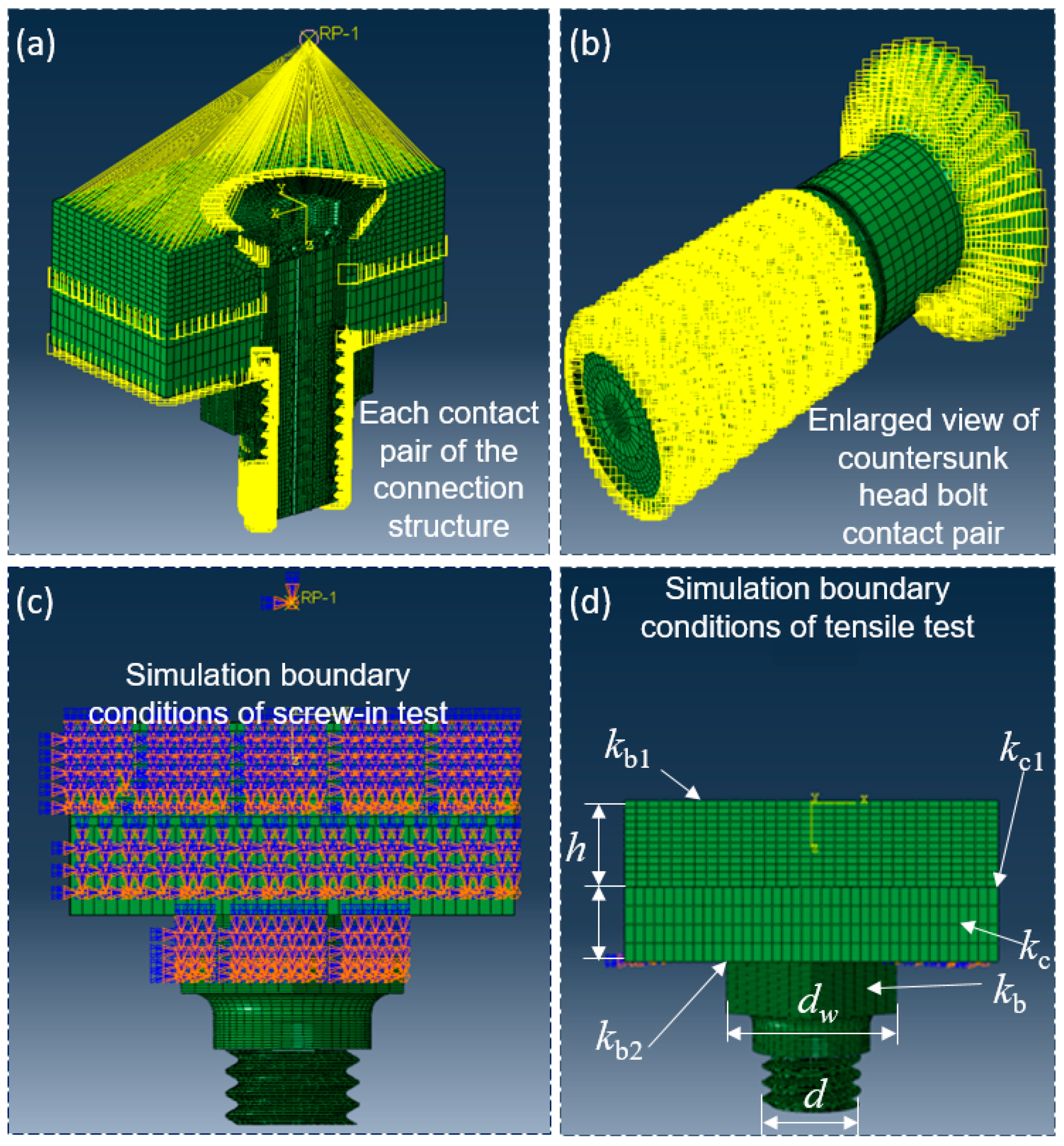
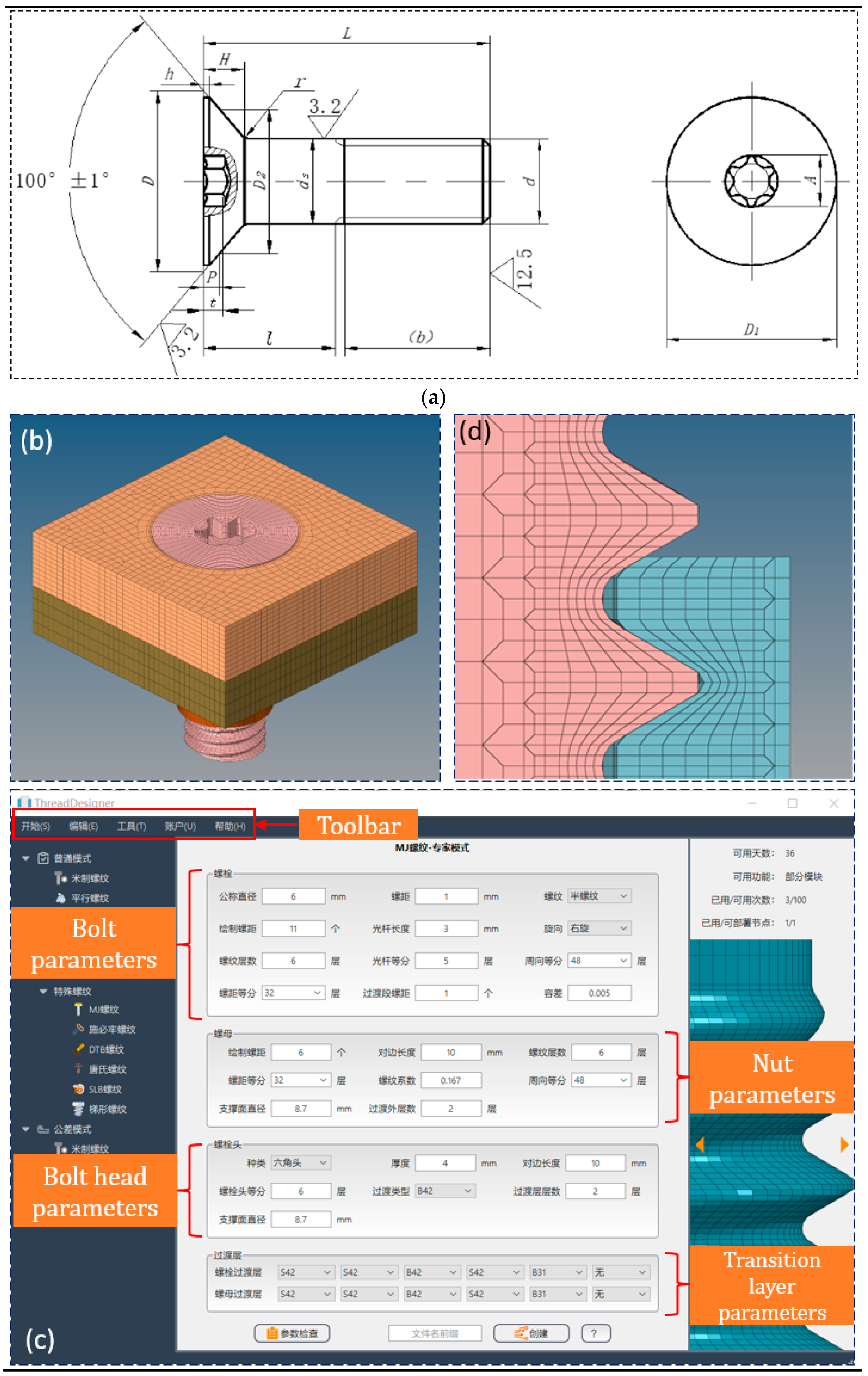
The pre-test verification was carried out according to the tensile test simulation model. The process was as follows: the grid model was established with the parameters of MJ6 × 1 CHB in
Table 1 and the values of other components (self-locking nut, laminate and tooling) matched with it. The structural parameters such as MJ6 × 1 CHB and its matching self-locking nut required by existing standards (
t1 = 1.51 mm,
θ1 = 100°,
r = 1 mm, coaxiality deviation
Φ = 0) were used for tensile test simulation. In the simulation, ABAQUS (2025 version) software was used. Meanwhile, set the simulation parameters. The density of the material TC4 is 4.5 × 10
−9 (t·mm
−3). The elastic modulus is 106,100 MPa. Poisson’s ratio is 0.3. The contact attribute coefficient of friction is 0.1. Set up a Static, General analysis step with a step size of
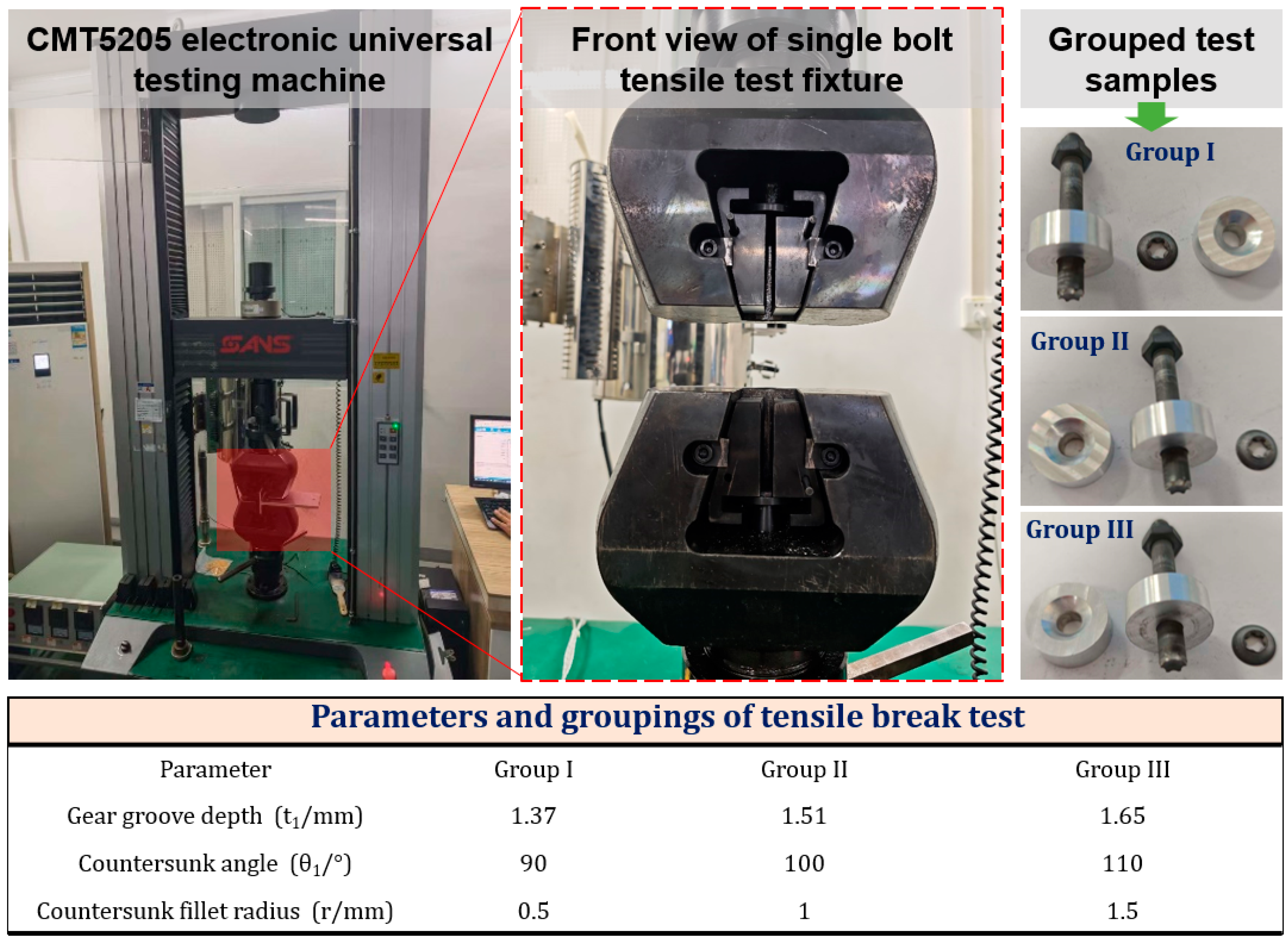
T = 1 s. The test piece was preloaded from 0 N to 100 N until the test piece was pulled off. Then, the control variable tests were carried out on the parameters of CHB (such as countersunk head angle, fillet radius, coaxiality deviation, etc.), respectively. The influence of the CHB connection structure on the ultimate tensile load was analyzed, so as to obtain regular conclusions, in order to put forward optimization suggestions for the structure of CHB. The values of grouped simulation test parameters are shown in
Figure 3. The test equipment is a bolt universal testing machine in the test plant (
Figure 3).
According to
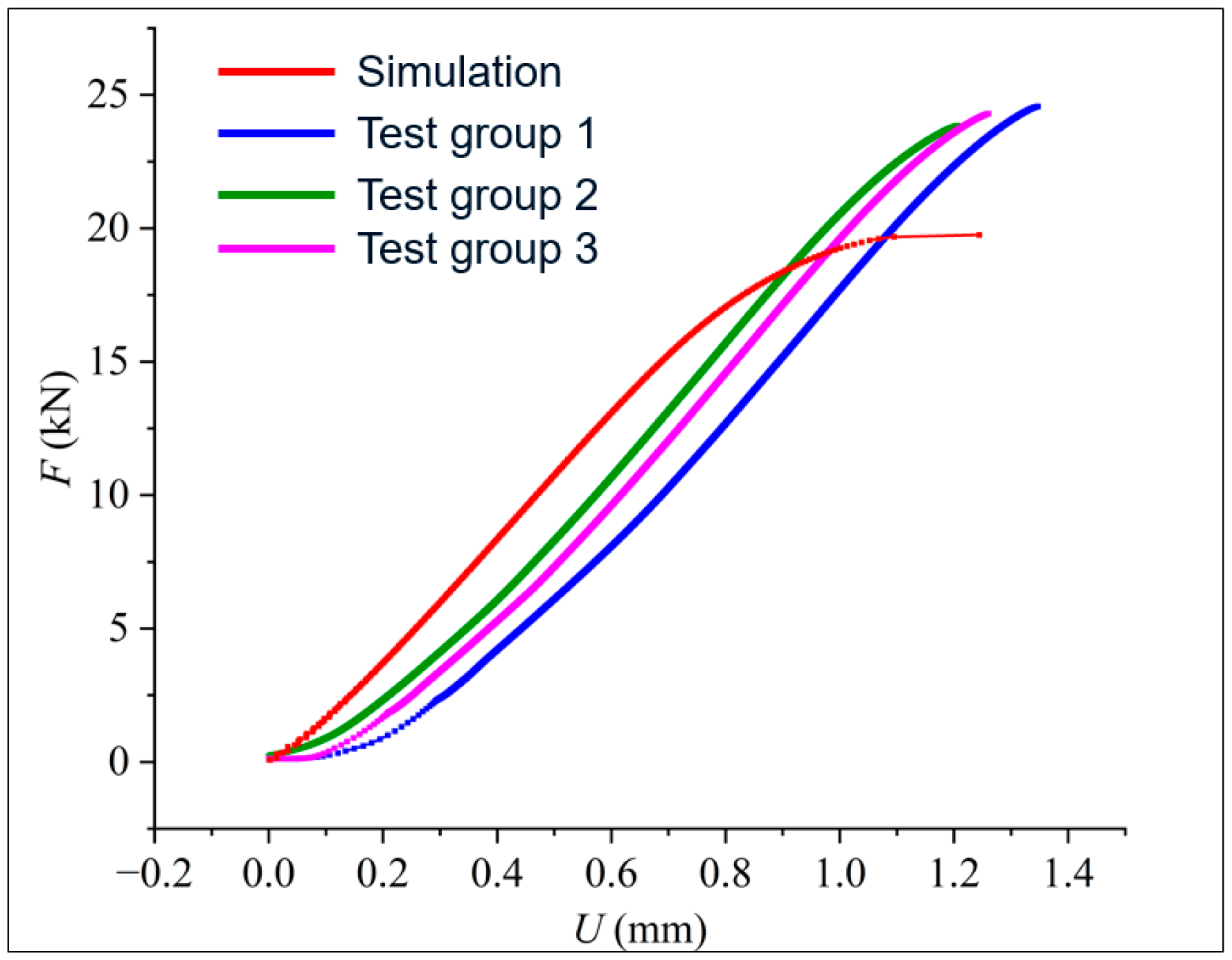
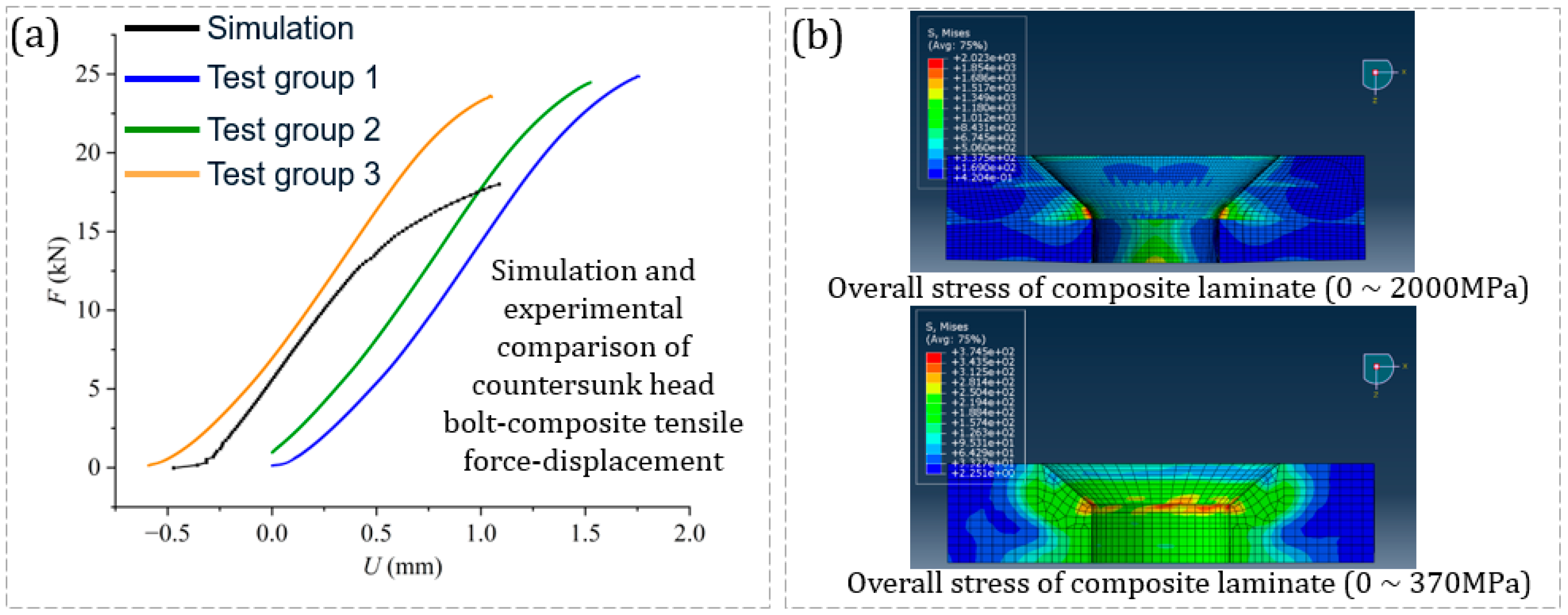
Figure 3, the force–displacement curve of the CHB in the Z direction (along the axial direction of the CHB and upward in the positive direction) obtained by actual tests (three groups in total, represented as “test group 1” to “test group 3”) was compared with the force–displacement curve obtained by simulation test (
Figure 4).
According to
Figure 4, the simulation curve fits well with the test curve in the elastic stage, but after a period of tension, the bolt in the simulation enters the plastic stage faster and breaks. The average ultimate load of the three groups of test bolts was about 24.3 KN. The deviation between the ultimate load of the bolts in the simulation and the test was about 18.5%. The reason for the deviation may be that the plasticity curve of the TC4 material used in the CHB in Abaqus failed to pass the pre-test and be compared with the bolt plasticity curve used in this test. The damage-related parameters were empirical values, which may cause certain deviations. However, the general trend of the simulation curve was close to the test curve, and the influence of different parameters on the bearing performance of the CHB can also be reflected when the control variable test was carried out. After comprehensive analysis, the simulation model and environment meet the analysis requirements.
3.2. Influence of Structural Parameters on the Performance of Dangerous Sections
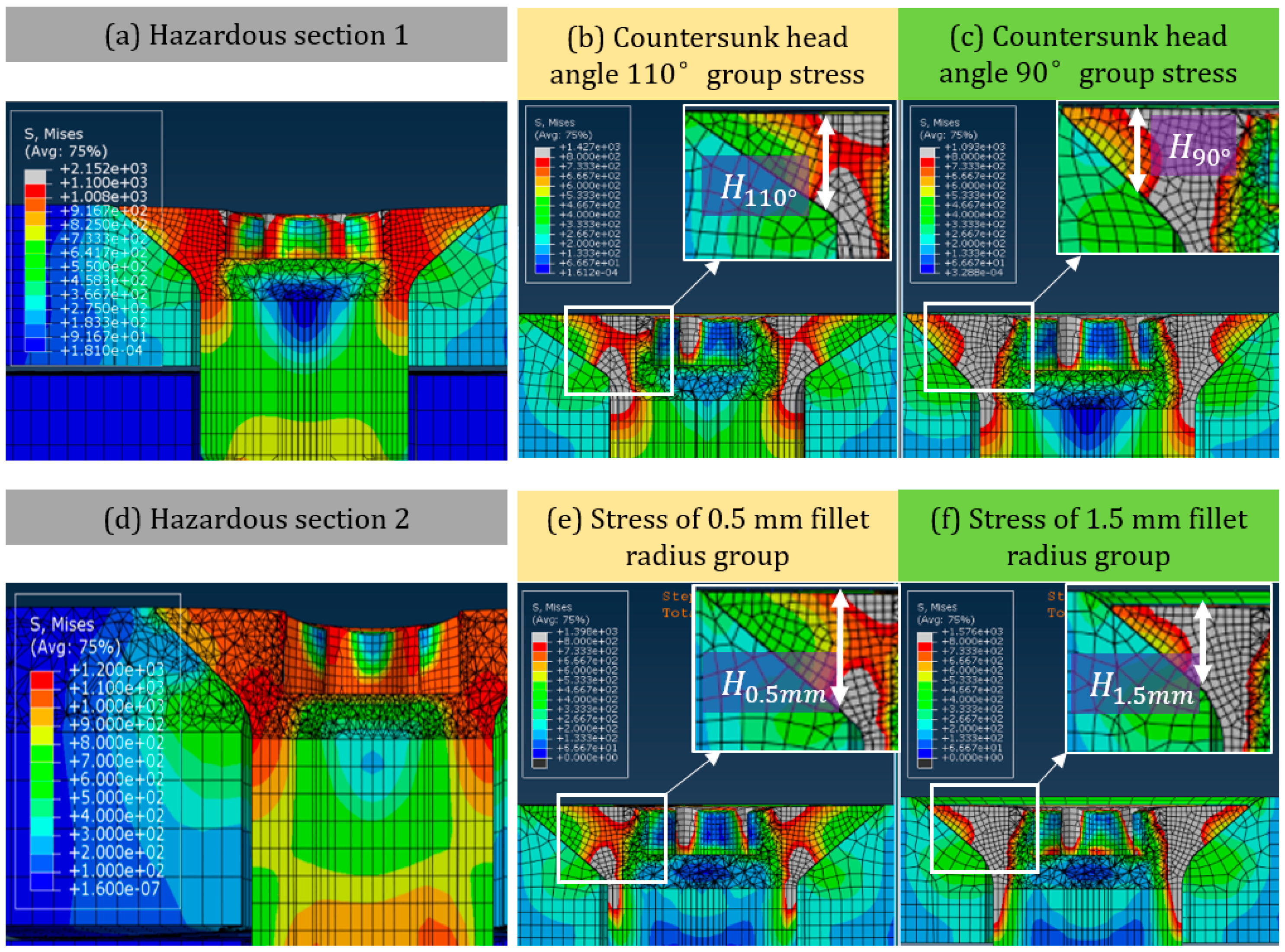
Taking countersunk head angles
θ1 = 90° and 110° as examples, the stress conditions of the two sets of simulation tests when the elastic stage changes to the plastic stage (at this time
t = 0.2 s, corresponding load F = 14 KN) were compared (
Figure 5). The dangerous section in the group
θ1 = 90° bears the greater load, and the grid that produces yield under the same tensile load penetrates the dangerous section faster, eventually causing fracture.
The dangerous section of the bolt was the section along the axial direction of the fillet position of the CHB (dangerous Section 1,
Figure 5a). For this section, the factor affecting the ultimate load of the bolt was the countersunk head height
H of the CHB (
Figure 1a). Another possible hazardous section was the cross section of the fillet portion of the CHB (hazardous Section 2,
Figure 5d). This was because the cross-sectional area of the CHB decreases continuously from top to bottom, and the cross-sectional area reached the minimum value at the connection between the countersunk head and the polished rod. The wrenching groove of the CHB will also weaken the bearing performance of the cross-section. If the wrenching groove is too deep, the CHB will be tensioned and broken at the dangerous Section 2 position. However, in the simulation, even if the groove depth
t1 reaches the nominal maximum value, the bolt still breaks at the dangerous Section 1 and the ultimate bearing performance is close, indicating that the groove depth
t1 of the wrenching groove will not affect the ultimate bearing performance of the bolt within the nominal range.
Taking countersunk head angles
θ1 = 90° and 110° as examples, the stress conditions of the two sets of simulation tests when the elastic stage changes to the plastic stage (at this time
t = 0.2 s, corresponding load
F = 14 KN) were compared (
Figure 5b,c). The dangerous section in the group
θ1 = 90° bears the greater load, and the grid that produces yield under the same tensile load penetrates the dangerous section faster, eventually causing fracture. Taking the radii of the countersunk head fillet
R = 0.5 mm and 1.5 mm as examples, the stress conditions of the two sets of simulation tests when the elastic stage was converted to the plastic stage (
t = 0.2 s, corresponding to
f = 14 kN) were also compared (
Figure 5e,f). The thickness of the dangerous section in the
R = 1.5 mm group was smaller, which leads to the yield grid penetrating the dangerous section faster under the same tensile load, resulting in large-area material failure more rapidly, and finally causing bolt fracture.
3.3. Simulation and Test of Single-Bolt Screwing
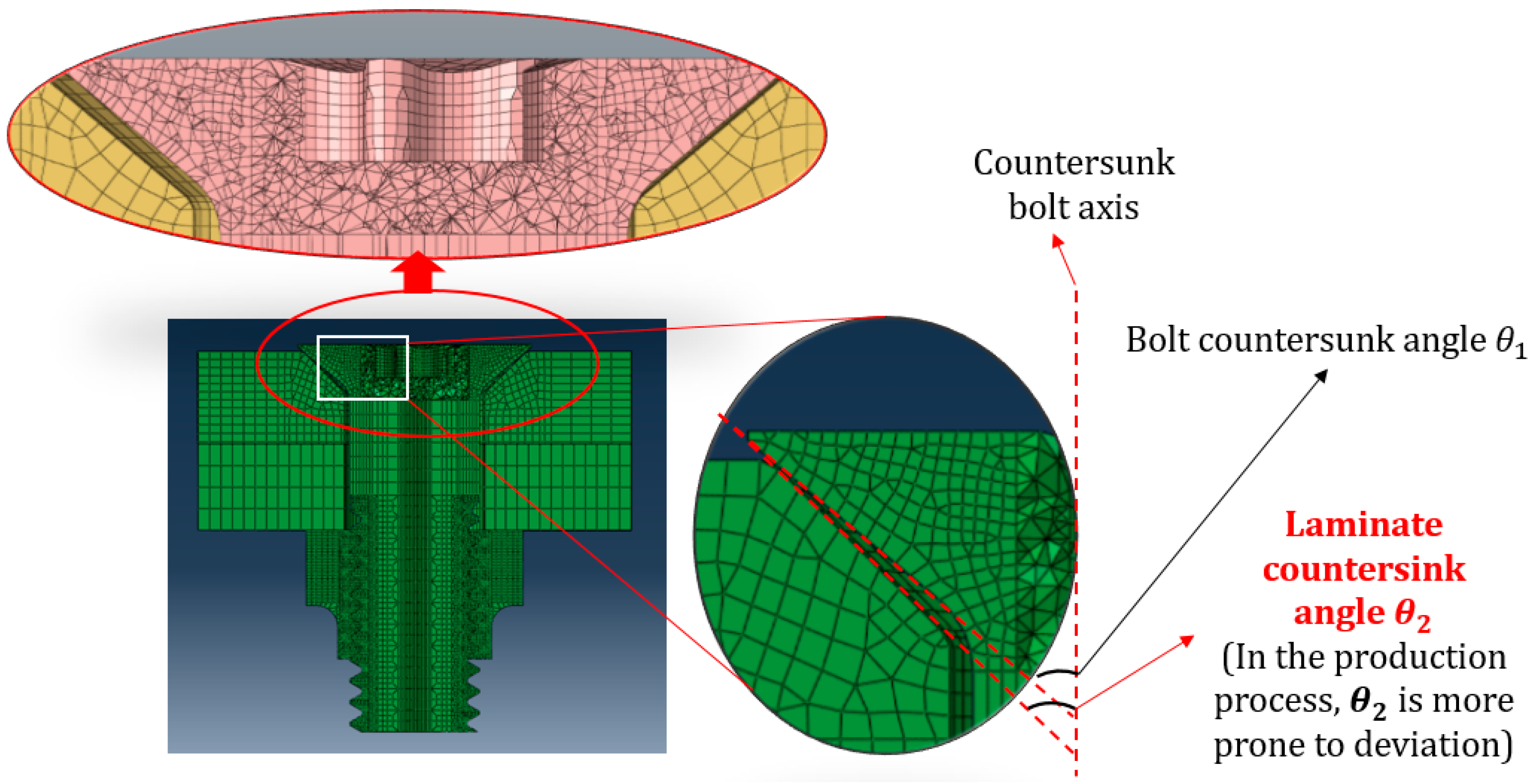
When there was a deviation between the countersunk angle
θ2 of the laminate and the countersunk angle
θ1 of the bolt, or there was a coaxiality deviation
Φ between the countersunk axis of the laminate and the bolt, the preload force in the structure may be affected. The schematic diagram of each parameter is shown in
Figure 6.
When the screwing (torque-clamping force) test simulation analysis of the countersunk head bolt was carried out, the MJ6 × 1 CHB and its supporting structure in the existing standard (
t1 = 1.51 mm,
θ2 = 100°,
r = 1 mm,
Φ = 0; that is the “standard value” in
Table 3) were simulated first, and the relationship between the clamping force and tightening torque between the laminate and tooling was obtained. The specific values of each parameter in the group simulation test are shown in
Table 3.
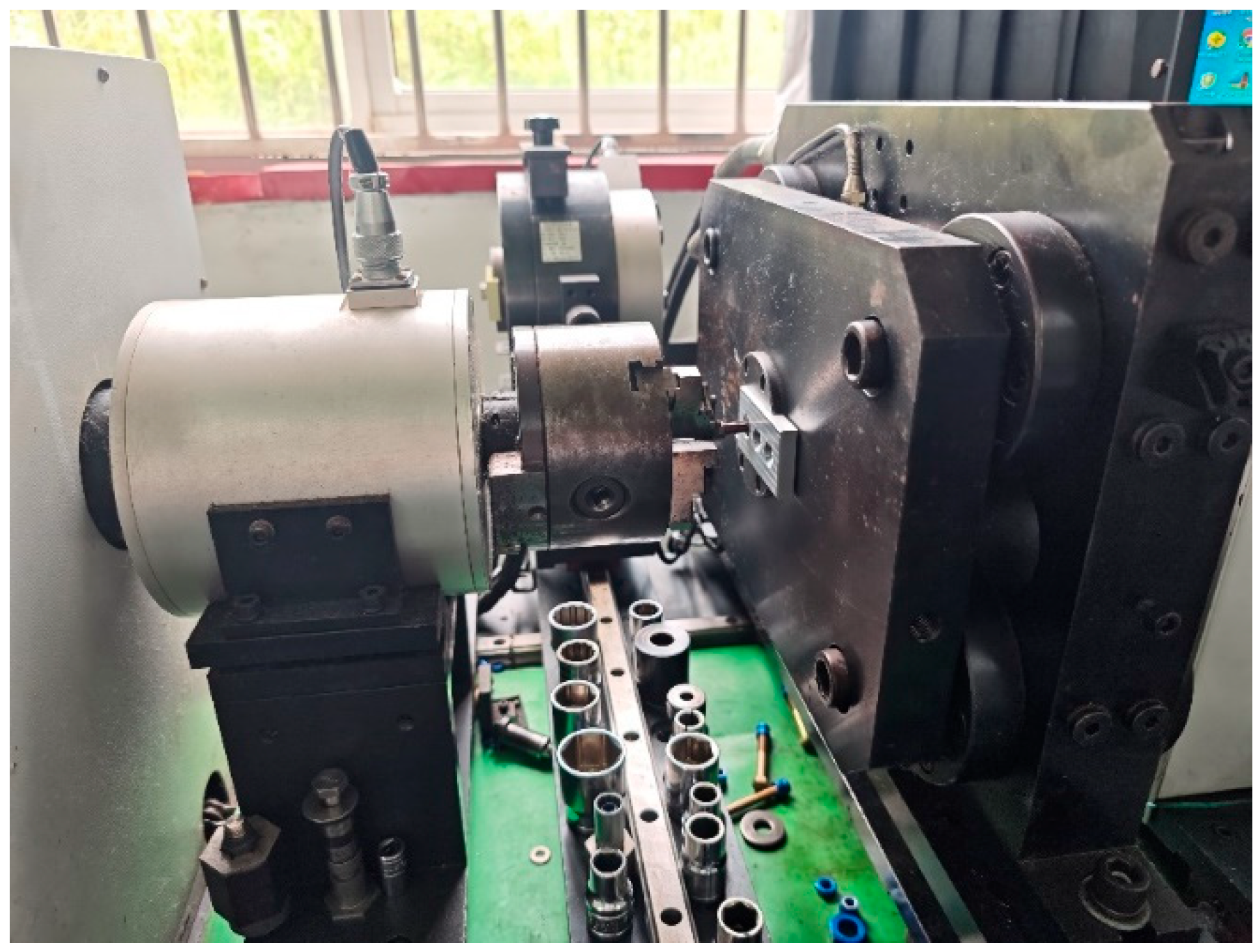
In addition, the experiment and simulation were compared. The test equipment was the bolt torsion and tension testing machine of the test plant (
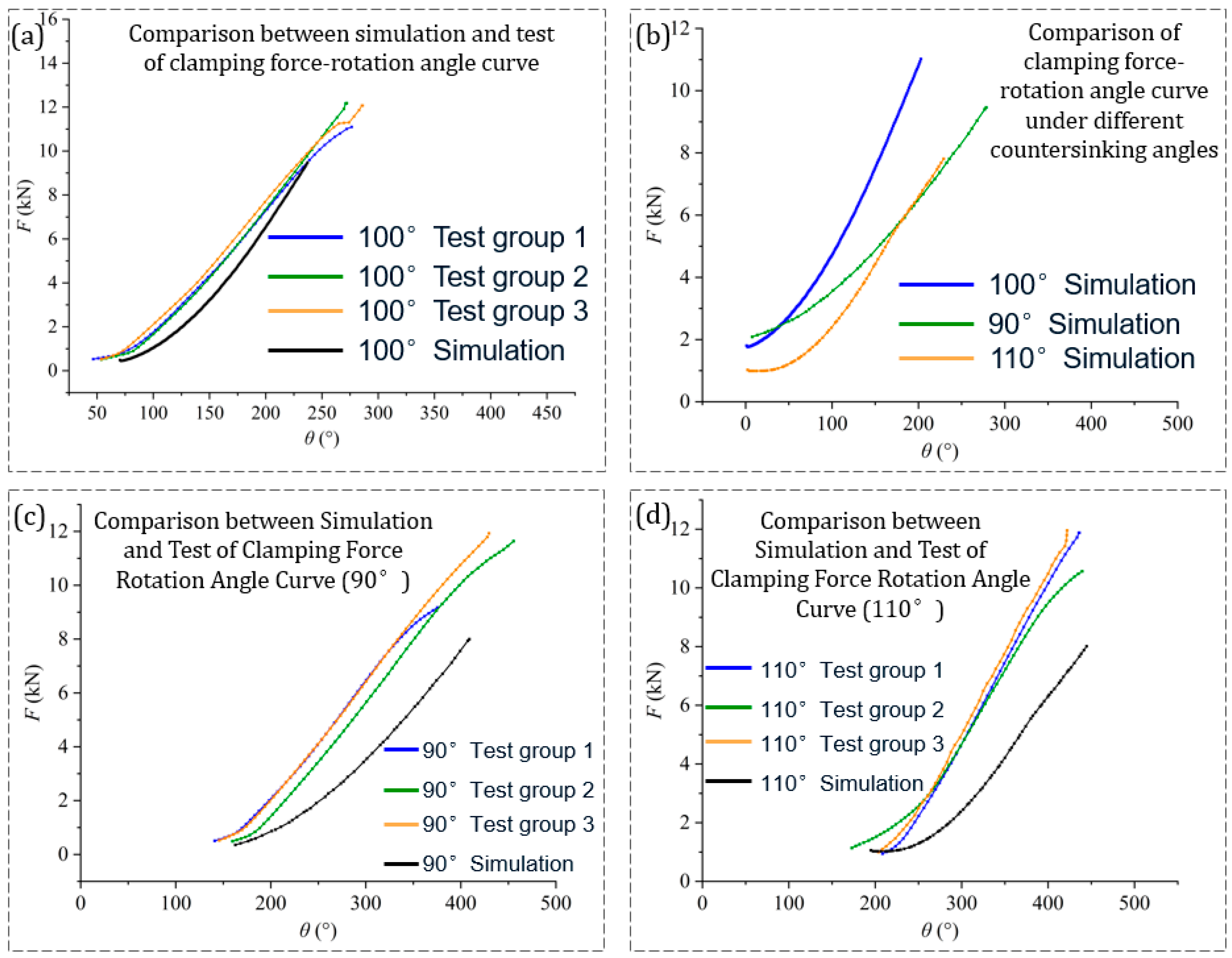
Figure 7). Compare the clamping force–angle curves of the CHB connection structure obtained by three sets of actual parallel tests (test curves 1~3) with the clamping force–angle curves obtained by simulation tests (simulation curves), as shown in
Figure 8a. When there was a deviation between the c countersunk inclined surface angle of the laminate and the CHB angle, the inclined surface cannot fit closely with the countersunk inclined surface when the bolt was tightened, and the conversion rate of tightening torque to clamping force was reduced. The countersunk head angle of the fixing bolt
θ1 = 100°, and the connection structure was simulated with the countersunk bevel angle
θ2 = 90°, 100° and 110°, respectively. The results are shown in
Figure 8b. In addition to
θ2 = 100°, the simulation test results of
θ2 = 90° and 110° were compared with the actual test results (
Figure 8c and
Figure 8d, respectively).
According to
Figure 8a, after processing, the slope of the simulation curve was close to that of the test curve. After analysis, the simulation model and environment met the analysis requirements.
According to
Figure 8b, in the three sets of simulation tests, when the bolts of the
θ2 = 90° and 110° group start to be tightened, the tightening torque increased but the clamping force hardly increased. This is because no bolt preload was added to the simulation model, and the bolt countersunk bevel did not fit perfectly with the laminate countersunk bevel. When the corner was small, there was no clamping force between the laminate and the tooling. As the rotation angle (tightening torque) continues to increase, the growth slope of the clamping force gradually becomes larger and finally tended to be stable.
When the angle of the countersunk bevel was equal to that of the countersunk head, the slope of the clamping force growth in the stable section was the largest. When there was a deviation in the countersunk angle, the effective contact area between the bolt and the laminate was affected by the deviation. The clamping force growth was slowed down, and the clamping force growth was slower when the laminate countersunk angle was smaller than the bolt countersunk angle (θ2 < θ1) than when the laminate countersunk angle was larger than the bolt countersunk angle (θ2 > θ1). This is because when θ2 > θ1, and when the bolts were continuously tightened, the bottom of the countersunk bevel of the laminate will be deformed to adapt to the countersunk bolt shape, thereby increasing the effective contact area and increasing the clamping force slope. However, when θ2 < θ1, the laminate inclined surface is always in contact with the upper half of the countersunk bolt inclined surface. The effective contact area is always small, which affects the clamping force growth slope.
According to
Figure 8c,d, the test and simulation curves were fitted respectively (the simulation curve only intercepts the second half of the steady growth section), and the slope of the simulation curve fitted well with the slope of the actual test curve (
Table 4). The test curve only intercepted the steady growth section of the clamping force, which does not show the process similar to the simulation curve from the initial non-bonding and almost unchanged clamping force to the beginning of bonding and steady growth of the clamping force, but there was a similar process in the real test. Comprehensive analysis shows that the simulation test can roughly simulate the real detection test process.
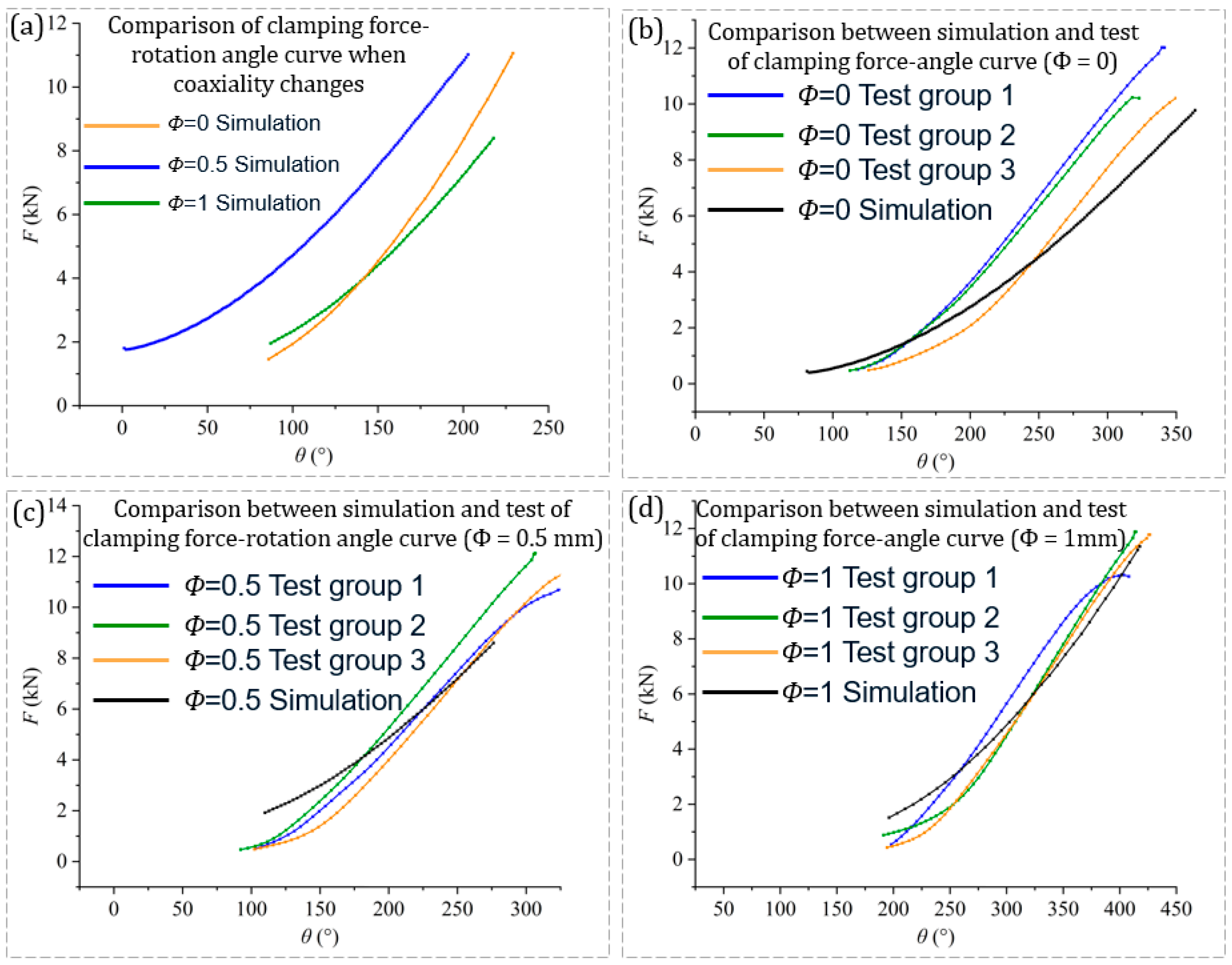
When there is a deviation between the countersunk axis of the laminate and tooling and the countersunk axis of the bolt and nut, the countersunk inclined surface of the bolt can only contact half of the countersunk inclined surface at the initial stage of tightening, which makes it difficult to convert the tightening torque into clamping force. The clamping force–tightening torque curve shown in
Figure 9a below was obtained by simulating the coaxiality deviation
Φ = 0 mm, 0.5 mm, and 1 mm (the original situation was when the coaxiality deviation was 0). According to
Figure 9a, when the CHB begins to be tightened, the clamping force increases slowly, and the slope of the clamping force–angle curve gradually increases to stability as the laminate is gradually clamped with the tooling. The curve fitting slope shows that
Φ = 0 mm group >
Φ = 0.5 mm group >
Φ = 1 mm group, but when the coaxiality
Φ = 0.5 mm, the curve slope decreases less, because the coaxiality deviation is close to the upper difference (0.3 mm) at this time, which has little influence on the growth of the clamping force (
Table 5).
Comparing the simulation test results of
Φ = 0 mm, 0.5 mm, and 1 mm with the actual test results, such as
Figure 9b–d, the simulation curve fits the test curve well. On the whole, the simulation test can roughly simulate the real detection test process.
Similar to the countersunk angle deviation, the coaxiality deviation will also affect the clamping force of the connection structure (
Table 5). During actual assembly, if there was a coaxiality deviation between the laminate countersunk and countersunk bolt that was greater than the allowable maximum deviation (0.3 mm), but the bolts were still installed according to the original standard, the connection structure may not meet the clamping force required by the standard.