1. Introduction
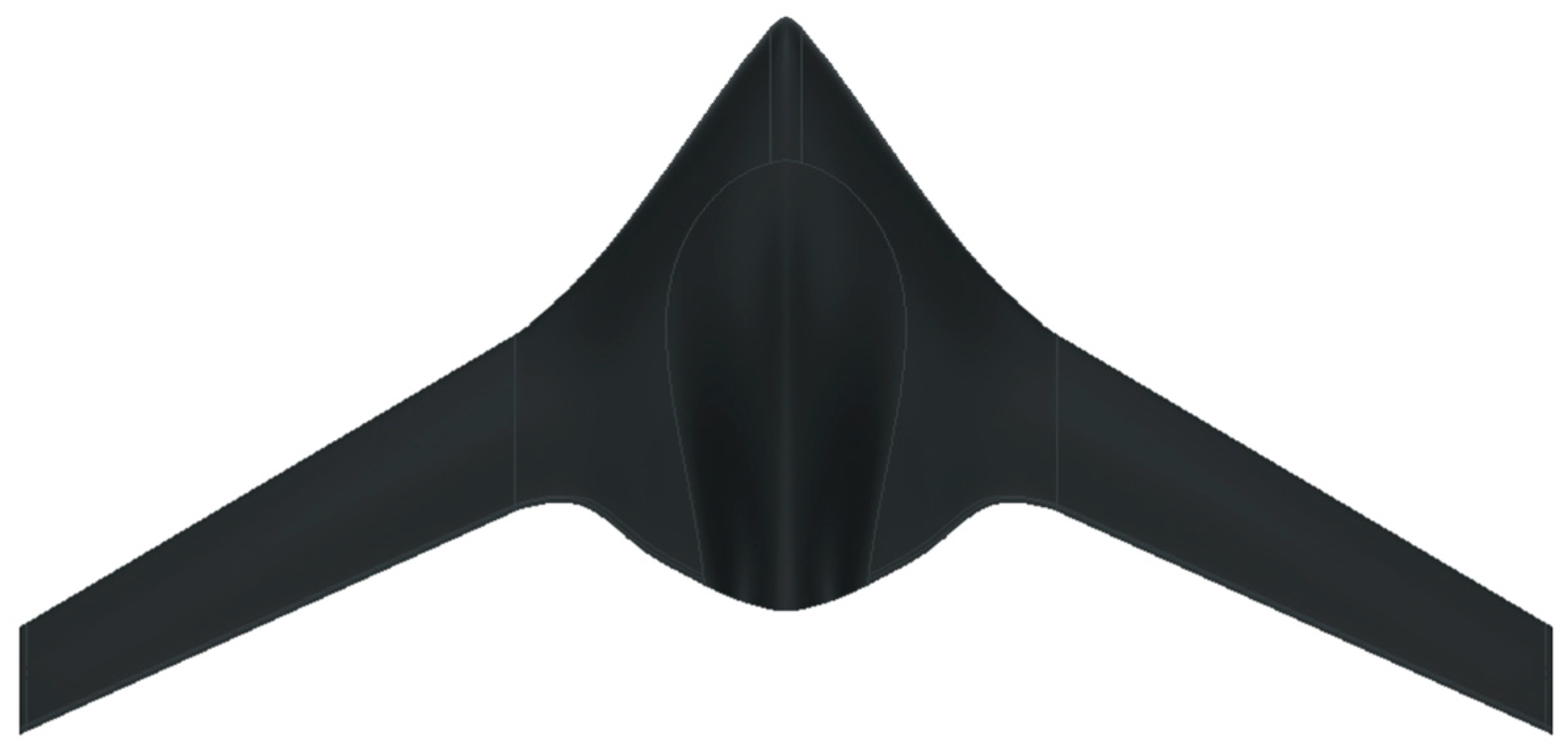
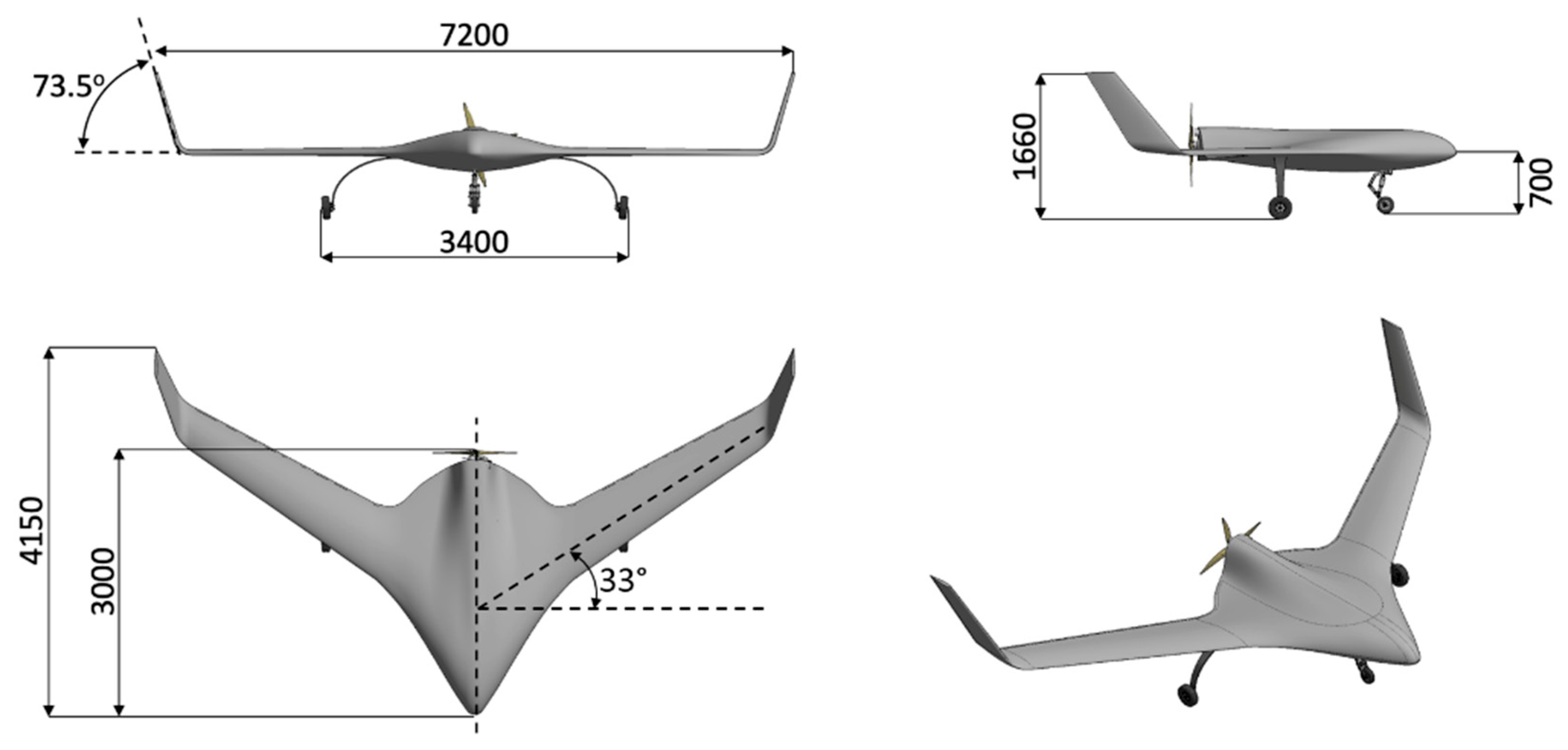
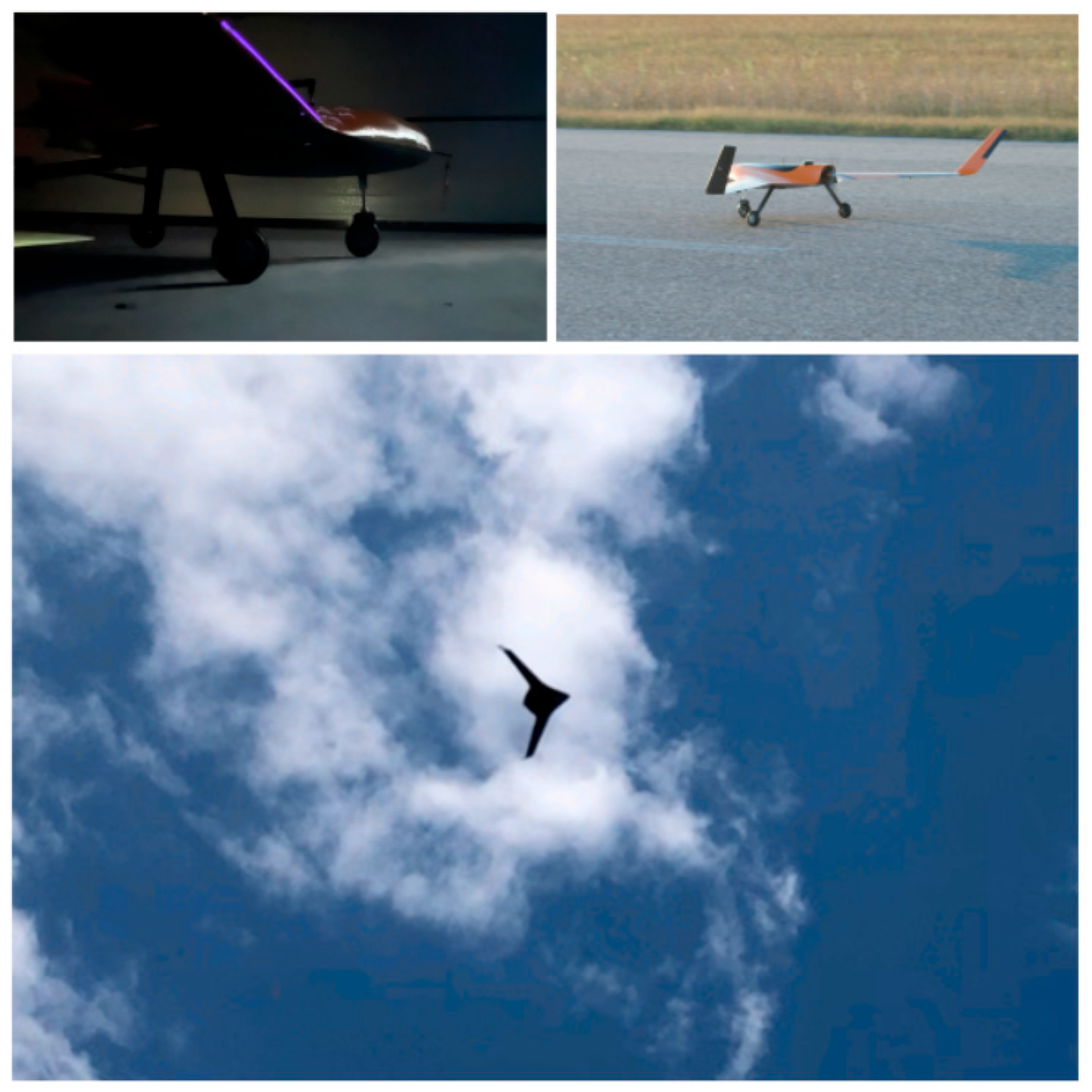
The Blended-Wing-Body (BWB) (
Figure 1) configuration, initially proposed by Liebeck [
1], is a novel and efficient configuration which integrates the fuselage and wing into a single continuous lifting surface, offering substantial aerodynamic advantages over conventional tube-and-wing designs. It was initially proposed for commercial airliner applications [
1,
2,
3], as well as a layout for cargo transport aircraft [
4]. Studies have demonstrated that the BWB configuration achieves lift-to-drag ratios approximately 30% higher than those of traditional configurations, while also offering a greater internal volume, allowing the installation of larger and heavier payloads [
2,
5]. The BWB configuration is also well-suited for use in UAVs [
6,
7].
It is important to note that those advantages are accompanied by significant challenges concerning stability and control. BWBs are, by definition, tailless configurations; therefore, their design calls for a unique set of layout choices. Sweeping the wing aftwards is the most common choice, even visible to the untrained eye [
1,
2,
6]. With swept wings, at moderate-to-high angles of attack, spanwise flow becomes dominant, promoting early flow separation and adverse phenomena such as pitch break, as highlighted by Anderson [
8]. For aerial vehicles operating at Reynolds numbers between 10
6 and 10
7, which is a common range for small-scale and tactical UAVs, the spanwise flow encountered over BWBs can considerably degrade aerodynamic performance during critical flight phases such as takeoff and landing [
9].
Most of those studies, concerning BWB UAVs, are case studies focusing on the sizing and design of a BWB UAV [
10] or optimization studies that focus on their external layout, investigating the effects of key geometric parameters on BWB performance [
11,
12]. However, it is through research on and incorporation of technologies that performance specifications can really be potentially augmented. The approach of investing in State-of-the Art (SoA), and beyond SoA, disruptive technologies is a dominant trend in the field of commercial aviation research in the 21st century [
13], whereas preliminary investigations show the importance of expanding this approach to fixed-wing UAVs [
14]. Namely, aviation research focuses on three main categories, i.e., (1) disruptive configuration layouts, aiming in aerodynamic efficiency and performance enhancement, (2) flow control techniques that manipulate the flow to fine-tune the aerodynamic performance, either during the mission or on demand (Active Flow Control or AFC) or permanently (Passive Flow Control or PFC), and (3) novel propulsion technologies and architectures, involving a hybrid-electric approach, for reduced Specific Fuel Consumption (SFC) and emissions (noise and pollutants).
Concerning configuration layout technologies, preliminary studies indicate a significant aerodynamic performance enhancement, calculating an increase in lift-to-drag ratio of 9–12%, using an optimized winglet configuration [
15]. Furthermore, morphing structures have also emerged as a potentially promising solution. Morphing refers to the ability to change the shape, mid-flight and on-demand, either on a 2D (airfoil) or on a 3D (wing) level [
16]. That way, optimal performance can be achieved in on- and off-design conditions, provided that the benefits in aerodynamic efficiency overcome the weight and complexity penalty. Morphing winglets and control surfaces, capable of dynamically adapting their shape during flight, provide opportunities for optimizing aerodynamic characteristics throughout the flight envelope. Morphing winglets can potentially provide a noticeable increase in range and endurance by enhancing the lift-to-drag ratio [
16] or the stability characteristics [
17]. Morphing control surfaces can replace an inevitably large and complex actuation mechanism, with one broken up into smaller segments on the Leading Edge and Trailing Edge [
16,
18]. They offer smoother geometric transitions and reduced weight compared to conventional hinged control surfaces, leading to a reduction in the overall wing weight, providing even greater fuel savings [
18]. Moreover, [
19] conducts a comprehensive survey of morphing aircraft, focusing on the methods to design and model the morphing configuration, while [
20] presents a thorough review of avian-inspired morphing UAVs.
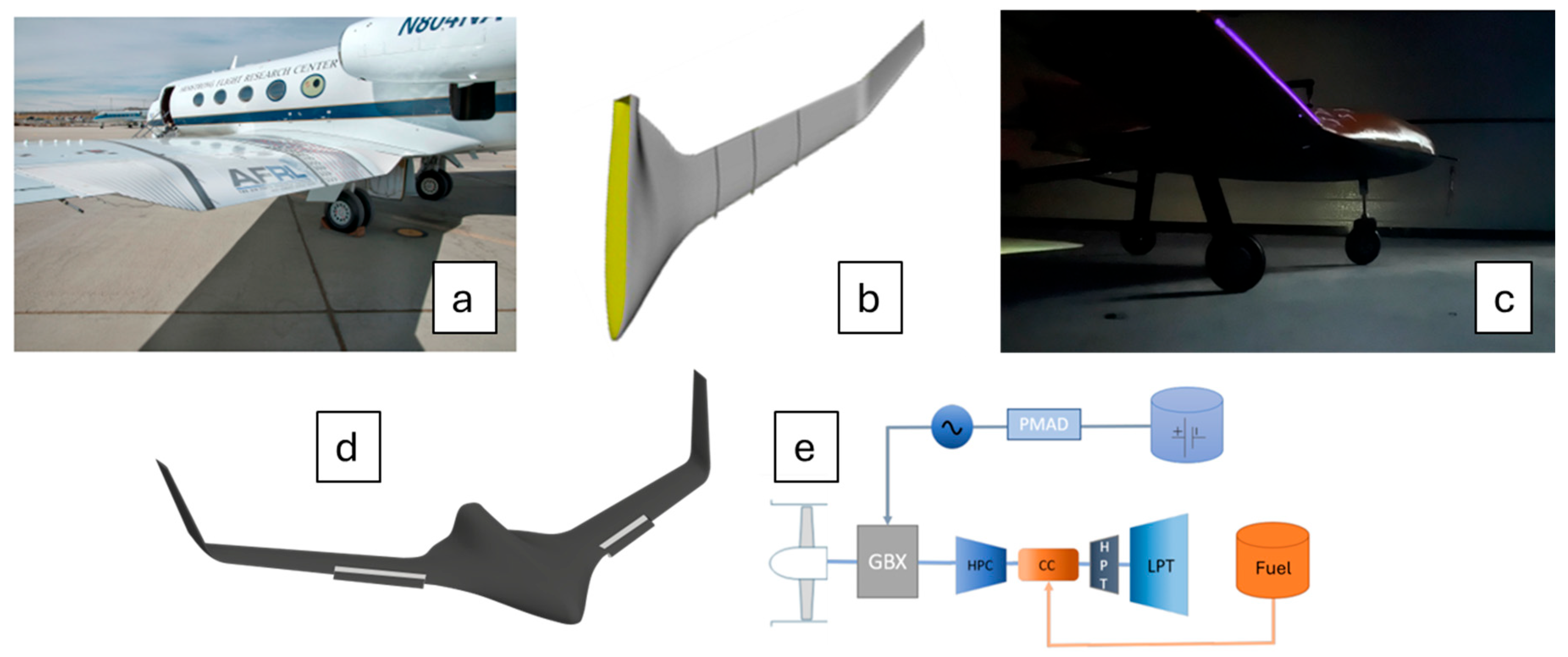
Flow control and manipulation of flow characteristics are topics of great interest in fluid mechanics applications and particularly in aeronautical applications. They are mainly used to contain separation and delay stall, delay laminar-to-turbulent transition, and reduce drag. Active Flow Control Techniques (AFCTs) require some type of actuation and power input for their operation and provide dynamic means of manipulating flow separation and enhancing aerodynamic performance. The most common example is the high-lift devices on wings, i.e., trailing- and leading-edge flaps, or slats, which can be used to enhance lift production and maximum lift coefficient during the takeoff, landing, and approach segments of an aircraft mission. The use of slats has been proven to counter the pitch-break, which is one of the major disadvantages of BWB platforms [
21,
22]. Another innovative AFCT is Dielectric Barrier Discharge Plasma Actuators (DBD-PAs). As extensively described by Post et al. [
23] and Moreau [
24], they impart momentum into the boundary layer without mechanical moving parts, enabling separation control and lift enhancement. Additionally, [
25] examines the control of cross-flow instabilities (CFIs) and laminar-turbulent transition on a swept wing through the plasma-based base flow modification (BFM) technique. Although DBD actuators have demonstrated considerable effectiveness in improving stall behavior and reducing drag, limitations related to actuator durability, energy consumption, and integration complexity persist, particularly for tactical UAV applications where energy efficiency is paramount. However, the aforementioned advantages, along with the potential in terms of drag reduction and stall delay (indicatively a stall angle and lift coefficient increase by approximately 2.5 degrees and 5%, respectively [
26]), mean that the DBD PA is a very promising technology for UAV applications. Passive Flow Control Techniques (PFCTs) refer to structures or coatings applied over the wing and main body which are used to locally alter the flowfield, thus increasing aerodynamic efficiency or manipulating flow structures (e.g., vortices). Typical examples of PFCTs are vortex generators, riblets, wing fences, tubercles, etc. Vortex generators have been used since the 1940s to delay boundary layer separation and increase wing lift [
27]. Wing fences are a more conventional and yet effective PFCT. Developed in the 50s and 60s for commercial airliner implementation at a Reynolds number range of 1 × 10
6 to 10 × 10
6, it was used on swept wings to handle adverse aerodynamic phenomena [
28,
29] while keeping the main wing’s properties intact. Alternatively, tubercles, inspired by the leading-edge structures observed in humpback whales [
30,
31], generate streamwise vortices that energize the boundary layer and postpone stall onset. Furthermore, [
32] presents a numerical study on tubercles’ effect on the spanwise flow distribution of a swept wing, while [
33] explores the ability of a shallow surface hump to delay the transition to swept wings through a series of wing tunnel experiments.
In addition to all the above, significant research efforts have been directed toward propulsion system innovations. Hybrid-electric, distributive propulsion, and solar-assisted propulsion architectures have been investigated to reduce emissions, enhance efficiency, endurance, and increase mission flexibility. The NASA X-57 Maxwell project [
34] exemplifies distributed electric propulsion concepts, demonstrating potential gains in aerodynamic efficiency and redundancy using multiple electric motors. The first aircraft to make its maiden flight on solar power solely was Sunrise I in 1974 [
35]. Sunrise I revealed the potential of alternative energy sources in aviation. Moreover, NASA, during the ERAST (Environmental Research and Sensor Technology) program, examined the solar aviation capabilities of three High-Altitude Long-Endurance UAVs (Pathfinder, Centurion, and Helios) [
36]. Another innovative propulsion system is the one employing hybrid-electric propulsion architectures. Hybrid electric propulsion systems (HEPS) combine the advantages of different systems, such as internal combustion (ICE) or reaction engines, electric motors, energy storage devices, power converters, etc., to create a more efficient powerplant configuration. HEPS can assure lower SFC and high efficiency [
37]. Research conducted for the development of the DA36 E-star manned aircraft indicates a potential 25% decrease in fuel consumption with the use of a Series HEPS with ICE core [
38]. ACARE [
39] describes the potential of reducing SFC by using a combination of a series and parallel system, while also reducing emissions. Such a system works synergistically to cover the propulsion needs of an aircraft. The ability to combine two power sources effectively improves the overall efficiency of the configuration. Moreover, when discussing propulsion systems, and especially hybrid propulsion systems, a lot of effort is placed by the scientific community on the development of their sizing and optimization methods. Reference [
40] presents a systematic review of the various technological alternatives used for distributive propulsion systems, while [
41] analyzes the solutions used for greener aviation, including energy storage, propulsion systems, aerodynamics, etc., with the goal being to achieve green aviation through potential synergies of different technologies. Moreover, the process of the development of an analysis method for a serial hybrid electric propulsion system is presented in [
42], while [
43] describes a preliminary sizing method for hybrid-electric distributed-propulsion aircraft, which takes into account the powertrain architecture and associated propulsion-airframe integration effects.
From the above, it is obvious that systematic evaluation and prioritization of emerging technologies is essential for effective platform development and can provide significant advantages to the performance of a UAV. Technologies such as morphing technologies and hybrid propulsion systems have the potential to improve the aerodynamic efficiency, the performance, and the fuel consumption of a BWB UAV, as indicated by the research studies presented in the previous paragraphs. On the other hand, the integration of flow control techniques on a BWB UAV can help improve its behavior at high angles of attack and delay the appearance of pitch break. Studies like [
41,
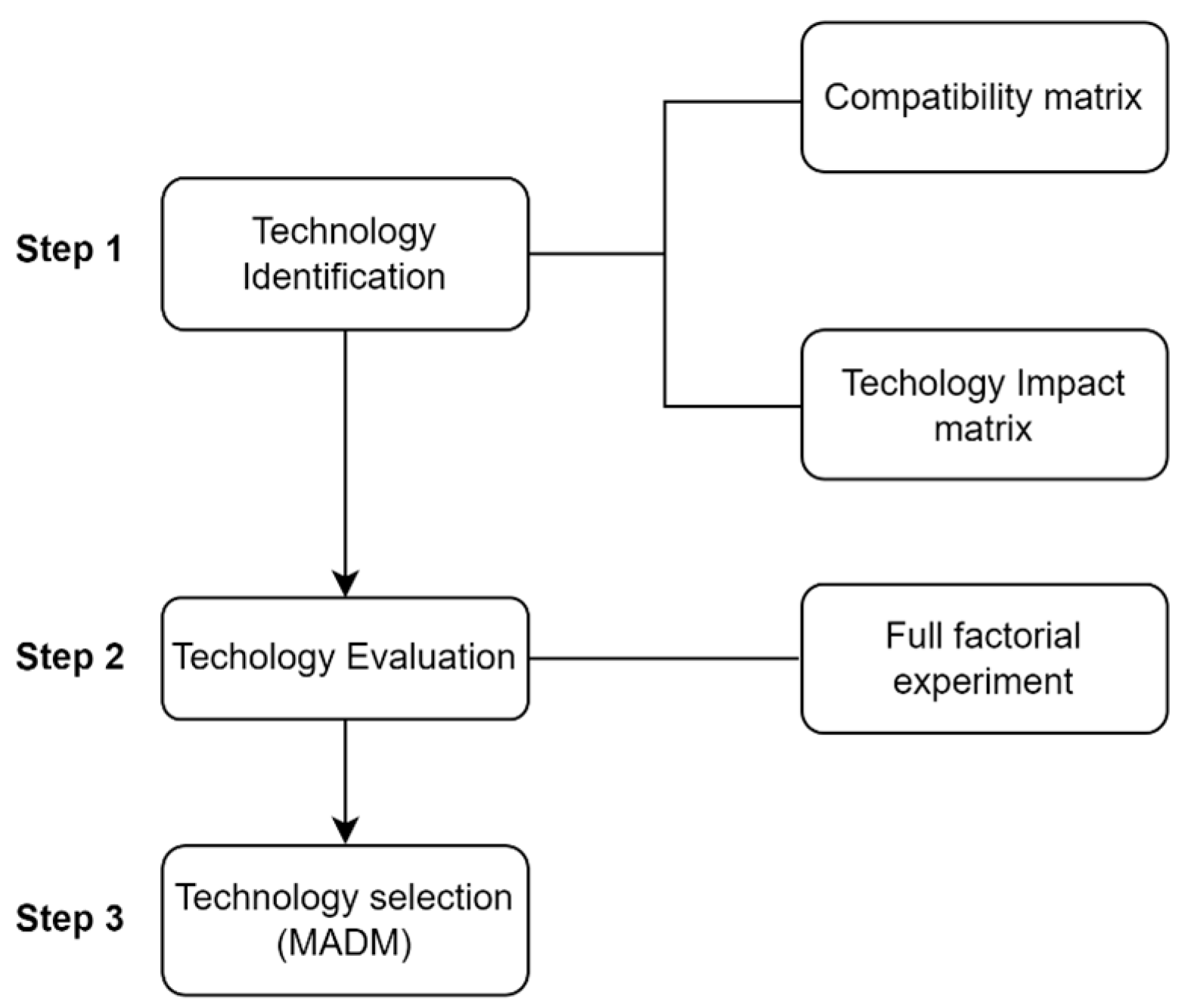
44] have shown that through the synergetic application of different technologies, the performance of an aircraft can be further increased, even leading to green aviation. However, to the best of our knowledge, the previous works, especially the ones concerning UAVs, focus on exploring only one technology at a time. That is, no holistic technology assessment is available in the literature for the authors to gain insight into the synergetic evaluation of the applicable technologies and their effect on the aerodynamic efficiency and performance enhancement of fixed-wing UAVs. The advantage of this synergetic evaluation of technologies, when compared to performing isolated aerodynamic optimizations, is that it allows layout designers to either further enhance the efficiency and performance of a UAV or meet the initial design requirements that could not be satisfied. The Technology Identification, Evaluation, and Selection (TIES) methodology, developed by Mavris et al. [
36], provides a structured and systematic process to select optimal technologies for complex systems, such as commercial aircraft, in the early design phases. With the implementation of TIES, the best family of alternatives for maximizing a customer-focused Overall Measure of Value (OMV) can be identified and assessed. The methodology has been validated through application to a notional 150-passenger, intra-continental transport aircraft, demonstrating its potential to guide early-stage design decisions in a rigorous and transparent manner [
44,
45,
46].
Over the last decade, the Laboratory of Fluid Mechanics and Turbomachinery (LFMT) has investigated the integration of several technologies on BWB UAVs. In [
17,
47], several morphing technologies, such as morphing control surfaces, morphing twist, and morphing winglets, are assessed, and their effect on the BWB UAV reference platform is defined. Moreover, [
48] performs a parametric investigation of Leading-Edge slats and computes their effect on the longitudinal stability and the performance of a BWB UAV at high angles of attack. Reference [
41] explores the influence of tubercles on the aerodynamic performance of swept wings. Especially through the research activities of the EURRICA (Enhanced Unmanned aeRial vehicle platfoRm using integrated Innovative layout Configurations And propulsion technologies) [
17,
47,
48,
49] project, the goal is to evaluate the synergetic integration of such technologies (the configuration layout, the flow control, and the hybrid-electric propulsion technologies) on a novel fixed-wing BWB UAV platform. The current study presents the implementation of the TIES methodology, adjusted and tailored for a BWB UAV, to systematically assess the synergistic contributions of aerodynamic and performance-enhancing technologies toward the development of a tactical BWB UAV platform. Five technology alternatives (slats, fences, DBD plasma, morphing control surfaces, hybrid propulsion systems) that passed through the final evaluation of the EURRICA project, combined with the hybrid solar propulsion system presented in [
50], are synergistically investigated and ranked in a deterministic way with the implementation of Technique for Order Preference by Similarity to Ideal Solution (TOPSIS) analysis. The effects of the integration of the selected technologies on the aerodynamic performance of the EURRICA reference platform have been defined with the use of high-fidelity Computational Fluid Dynamics (CFD) modeling. Five metrics are taken into consideration, Gross Takeoff Weight (GTOW), stall velocity (V
s), takeoff distance (s
g), fuel consumption reduction, and maximum allowable GTOW (MA_GTOW). Three different weighting scenarios are implemented during TOPSIS, one giving an equal weight to all the metrics, one focusing on the performance of the BWB UAV, and one on its future enhancement. The objectives can be listed as follows:
Implement, adjust, and investigate the applicability of TIES methodology for fixed-wing UAVs;
Investigate the effects of the technologies and their synergetic integration on a BWB UAV, and assess their impact and synergies on the aerodynamic performance in a deterministic way, which is currently missing from the existing literature;
Provide insights about optimal technology combinations based on the Multi-Attribute Decision-Making (MADM) method and develop a novel procedure that can be utilized both in the conceptual and in the preliminary design of a UAV.
5. Discussion and Conclusions
A TIES method is employed to evaluate the effect of the synergetic evaluation of six technologies on the aerodynamic efficiency and performance enhancement of a tactical, fixed-wing BWB UAV platform. The six technology alternatives (slats, fences, DBD plasma, morphing control surfaces, and hybrid and hybrid solar propulsion system) have already been individually assessed using high-fidelity CFD modeling and 0D-1D in-house tools. In the current study, through the appropriate adjustment and application of the TIES method, a complete and holistic analysis is conducted on six performance metrics (gross takeoff weight, stall velocity, takeoff distance, fuel consumption reduction, and maximum allowable GTOW). The integrated evaluation presented in the current study confirms the transformative potential of synergetic technology combinations for BWB UAV performance enhancement. Key conclusions include the following:
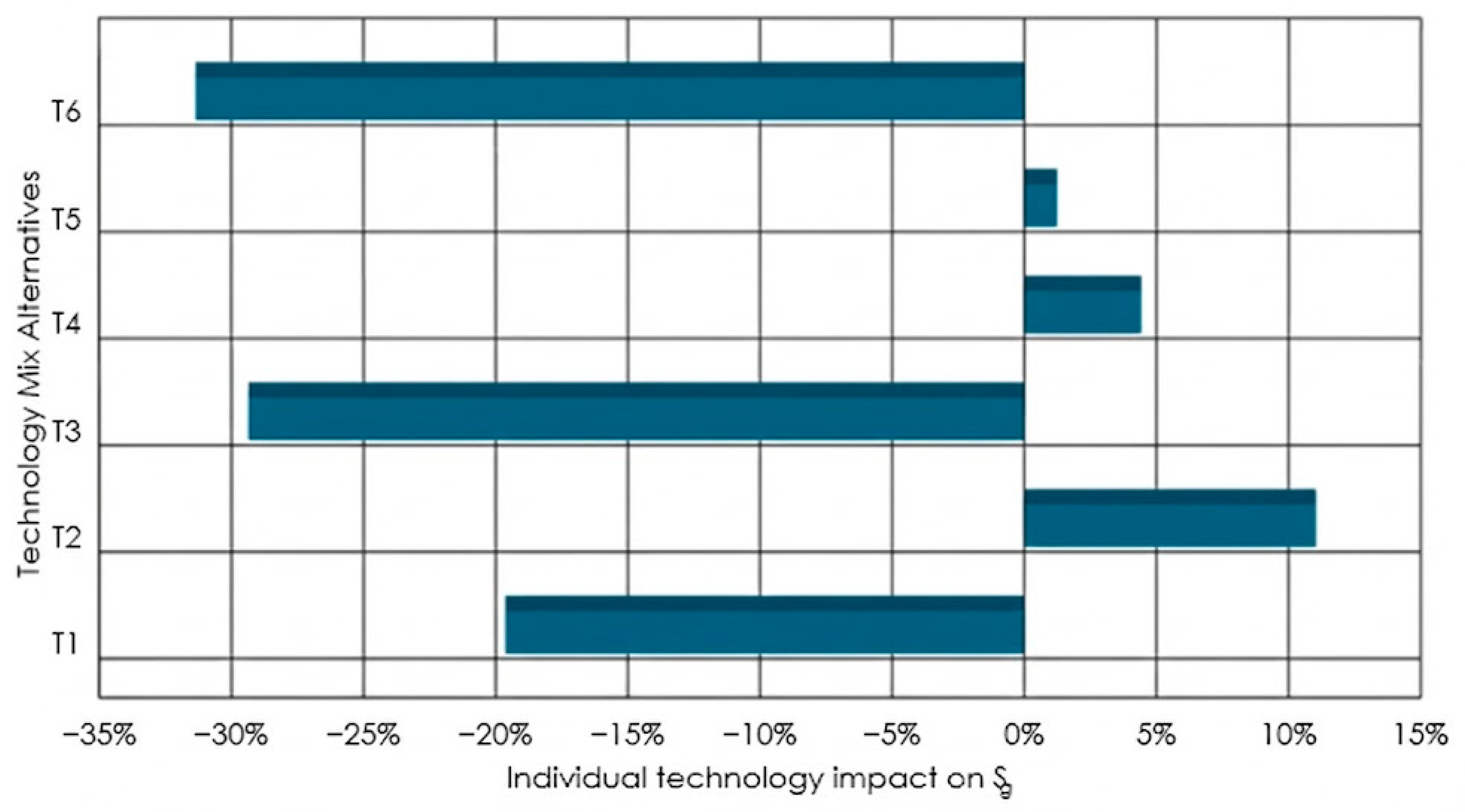
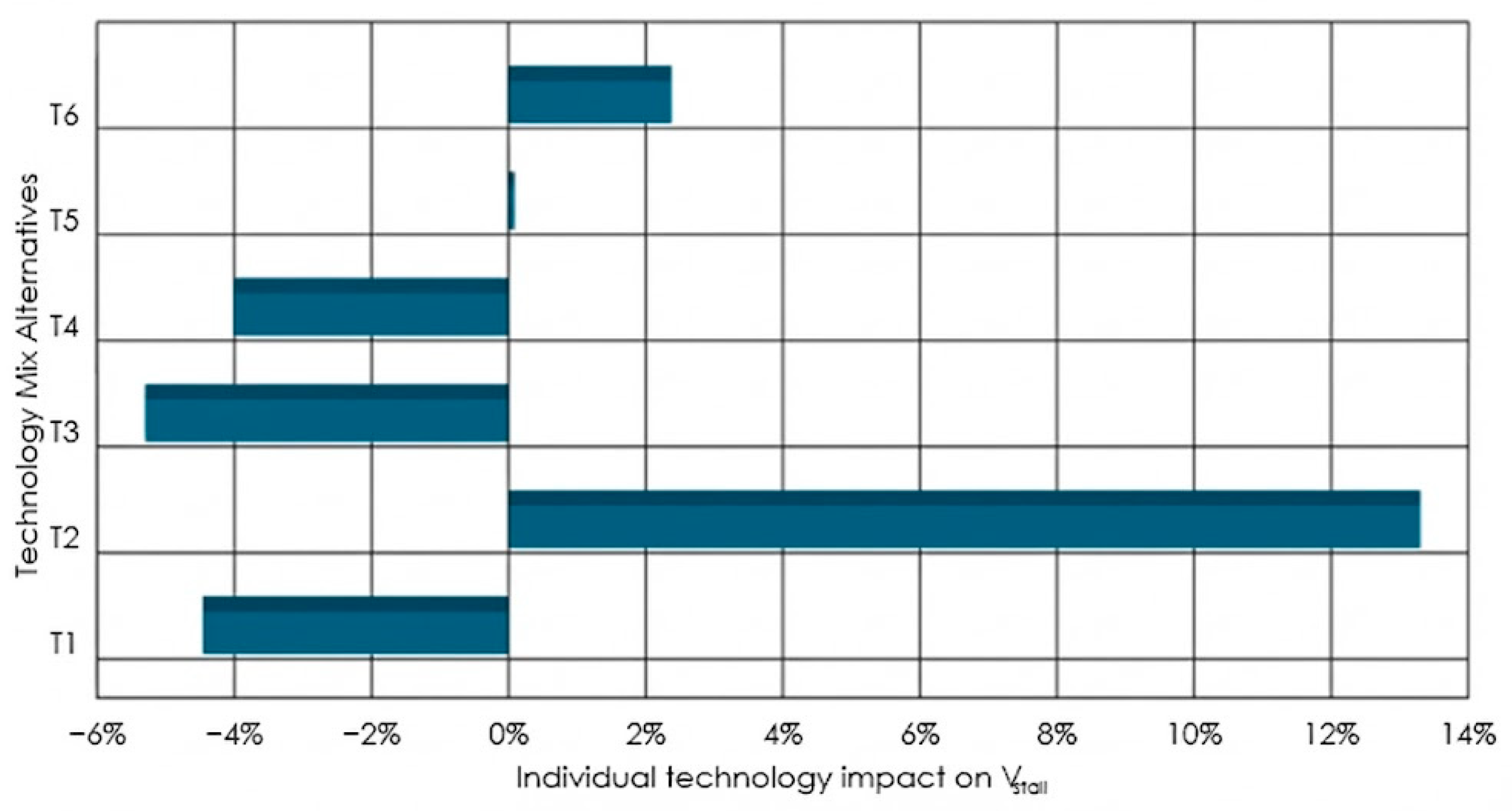
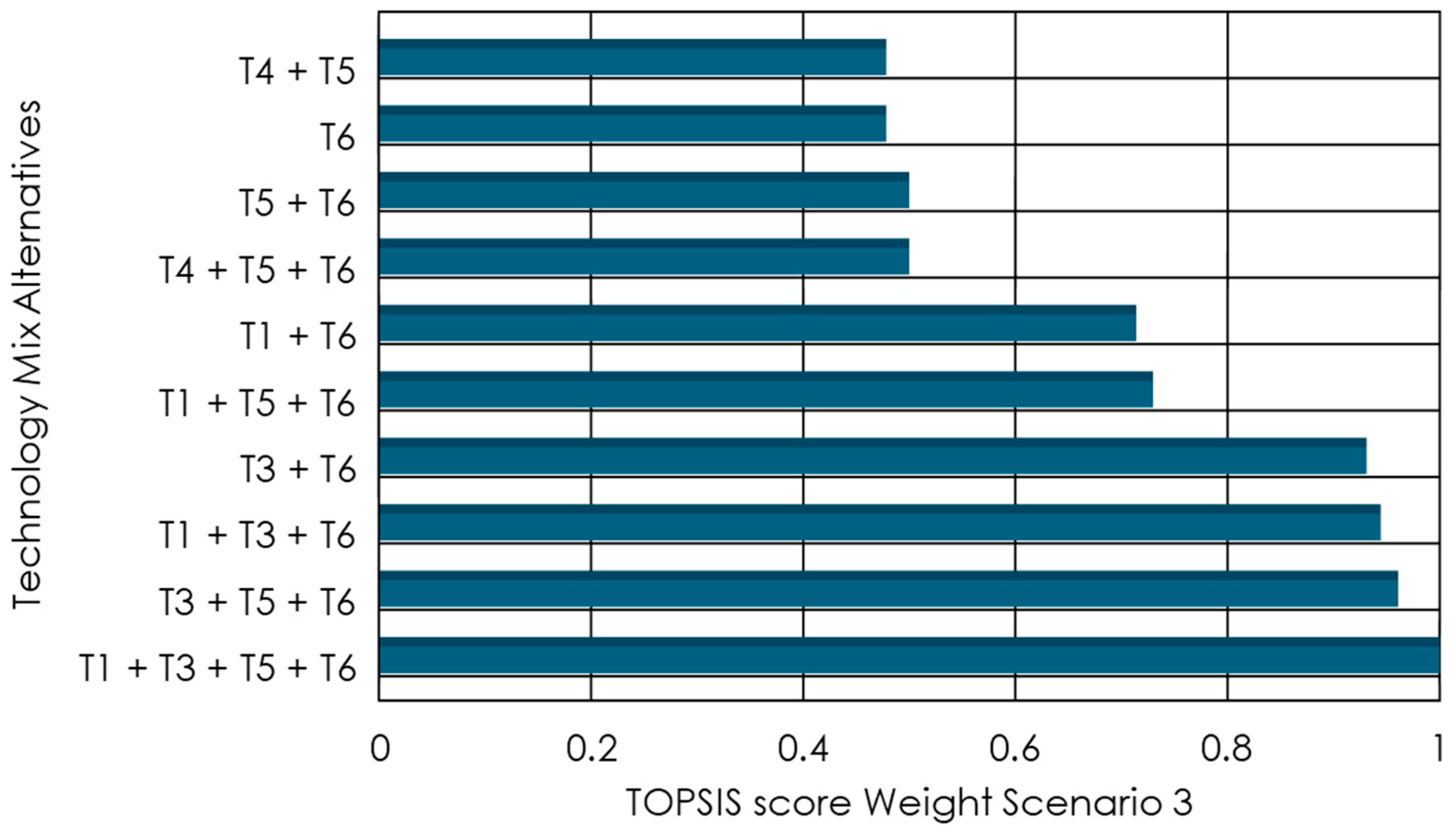
The hybrid propulsion system (T6) and wing fences (T3) consistently emerge as the most impactful technologies, contributing to up to 32% and 30% reductions in takeoff distance, respectively, and enabling substantial GTOW enhancements.
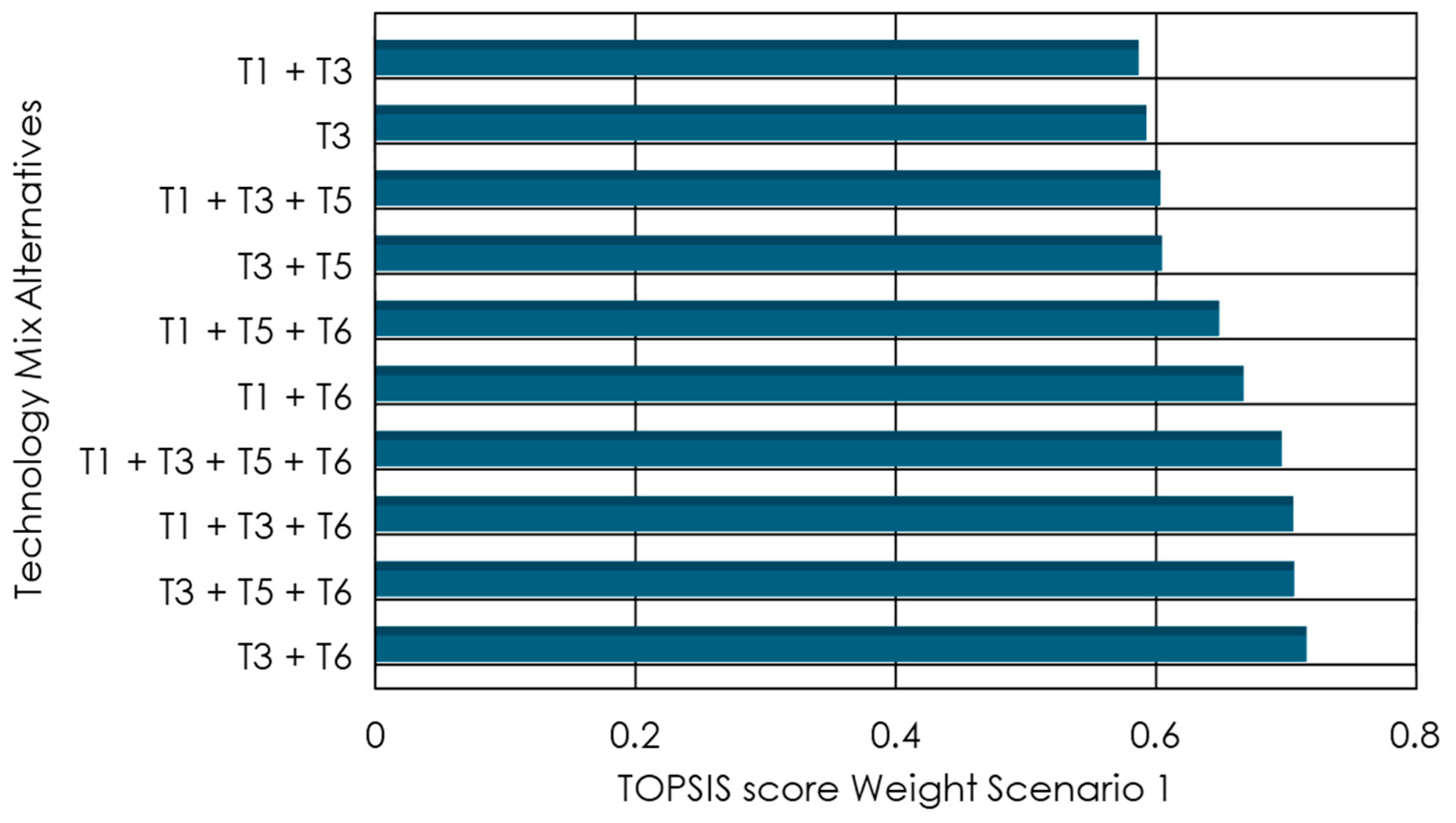
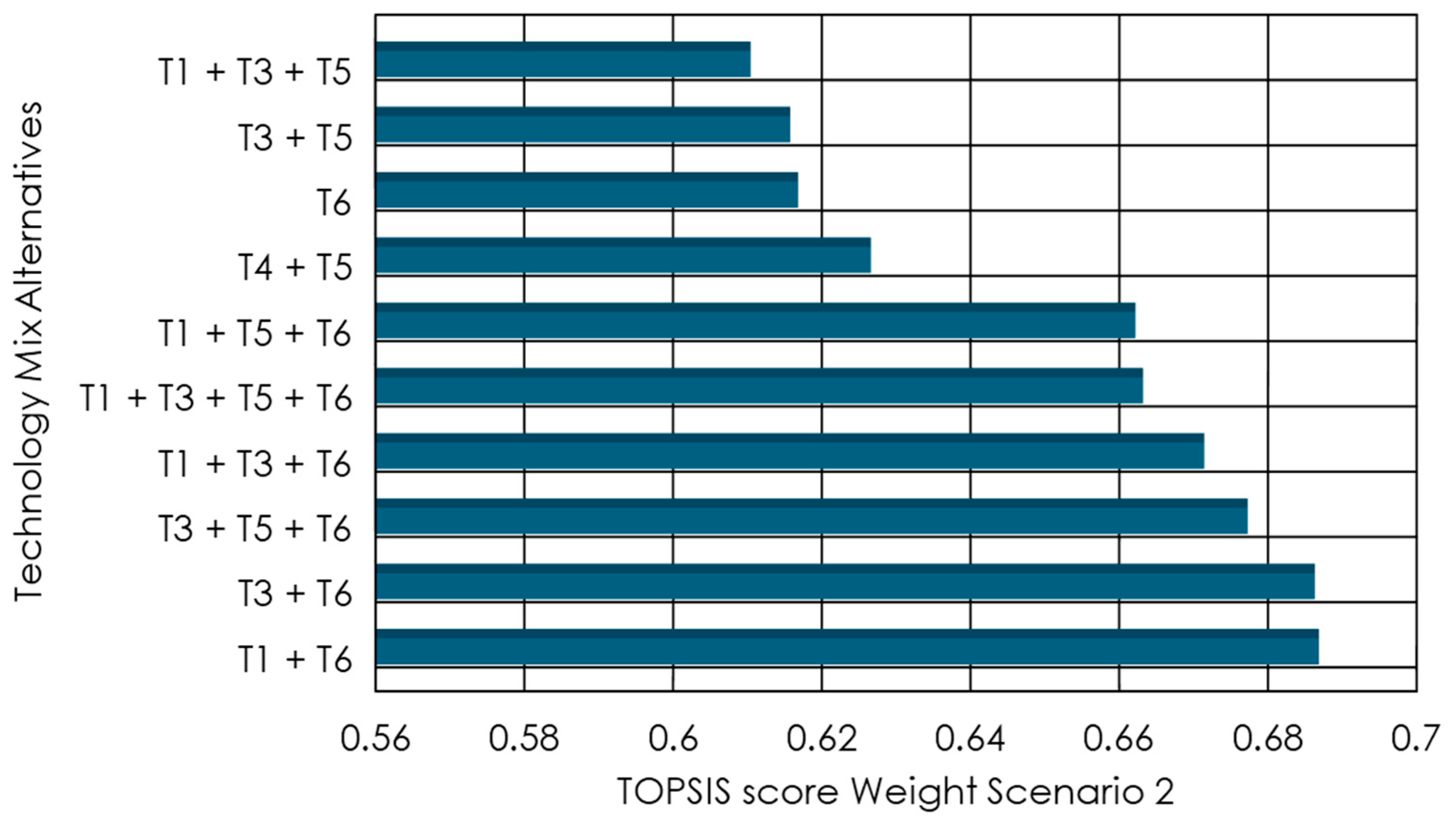
The hybrid propulsion system (T6) and wing fences (T3) appear in the top rankings for all three weight scenarios applied during the TOPSIS analysis.
For Scenario 3, which is related to future enhancements, morphing control surfaces (T5) are included on top-ranked technology alternatives.
The synergetic integration of technologies yields non-linear gains. The combined application of slats, wing fences, morphing control surfaces, and hybrid propulsion (T1 + T3 + T5 + T6) achieves the best performance under all future-oriented weighting scenarios, indicating strong synergy in aerodynamic performance and energy efficiency.
The TIES methodology, coupled with deterministic TOPSIS analysis, proved effective for ranking complex combinations of technology alternatives, without excessive computational burden.
In summary, the outcomes of this study are directly applicable to any fixed-wing UAV with a BWB configuration. Furthermore, the implementation of the presented methodology can provide useful insights for design teams to identify promising technology alternatives that can be integrated in future designs, regardless of the UAV configuration (e.g., traditional tube and wing or BWB), both during conceptual and preliminary design, thus ensuring that they can achieve mission requirements that were not satisfied during the design process, e.g., takeoff distance requirement. Further research could focus on probabilistic assessments, taking into consideration the technology readiness level (TRL) of each technology alternative. Moreover, other metrics could also be used for the TOPSIS ranking, such as cost, system complexity, and reliability. Although the authors have substantial information on these metrics, the absence of a well-established model for fixed-wing UAV applications did not allow for their inclusion in the current study. An important aspect that could be investigated in future studies is how technologies such as morphing control surfaces, slats, or hybrid propulsion mass distributions affect flap effectiveness, twist distribution, aeroelastic stability (flutter), and load paths. Furthermore, this study can be expanded to both smaller and larger fixed-wing UAVs, such as small-scale or HALE UAVs, to investigate whether the benefits of the presented technologies remain within the margins suggested in the present work.