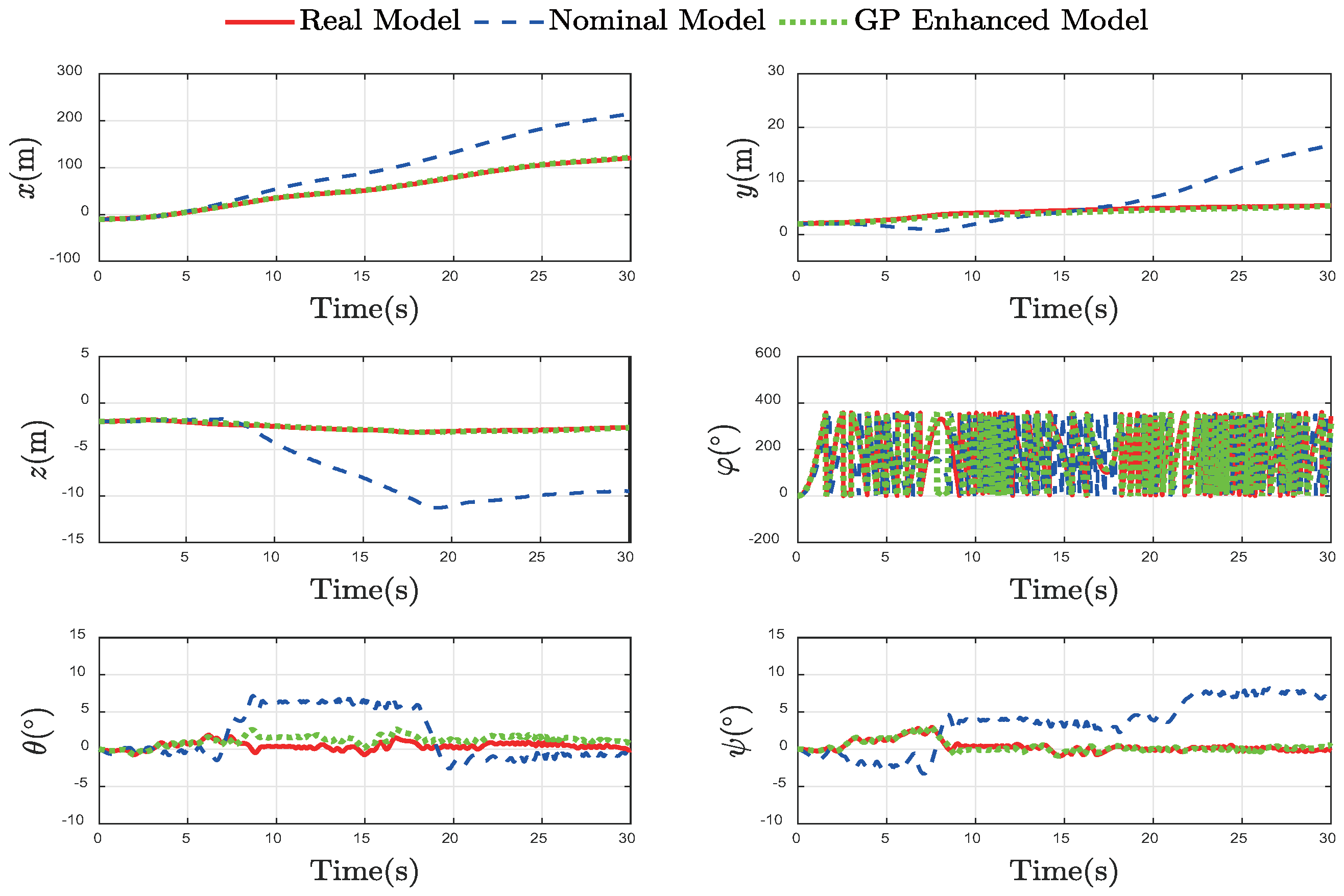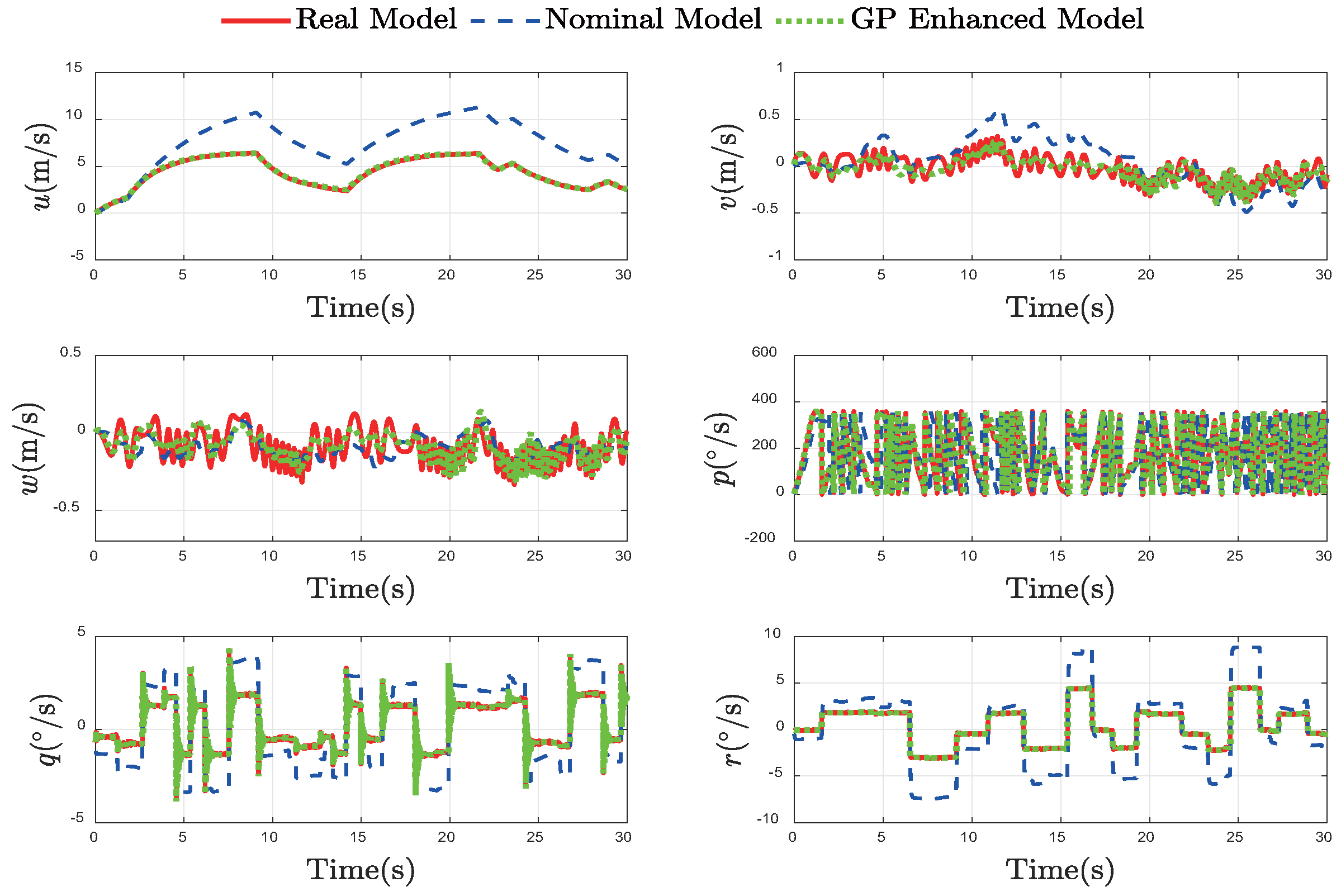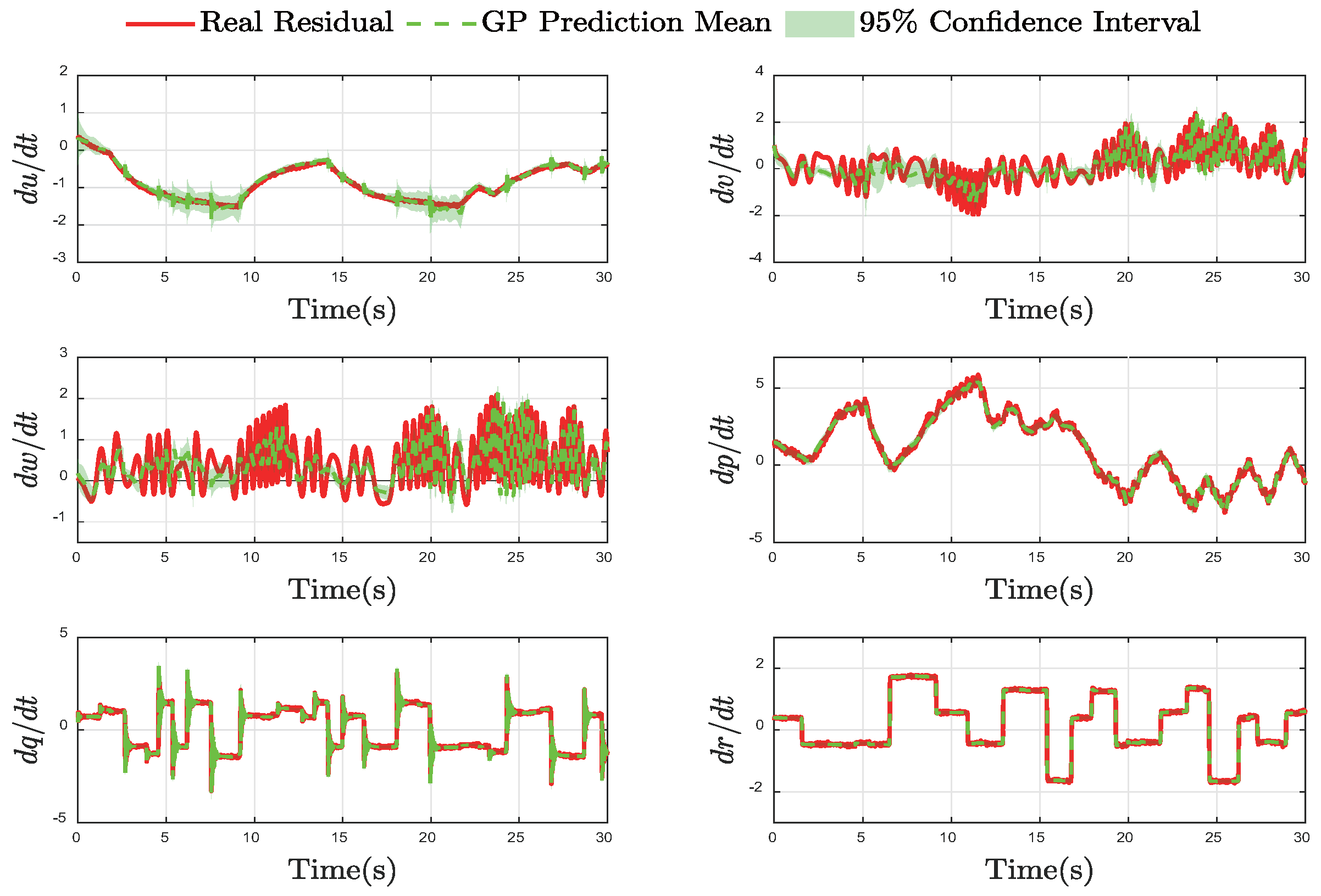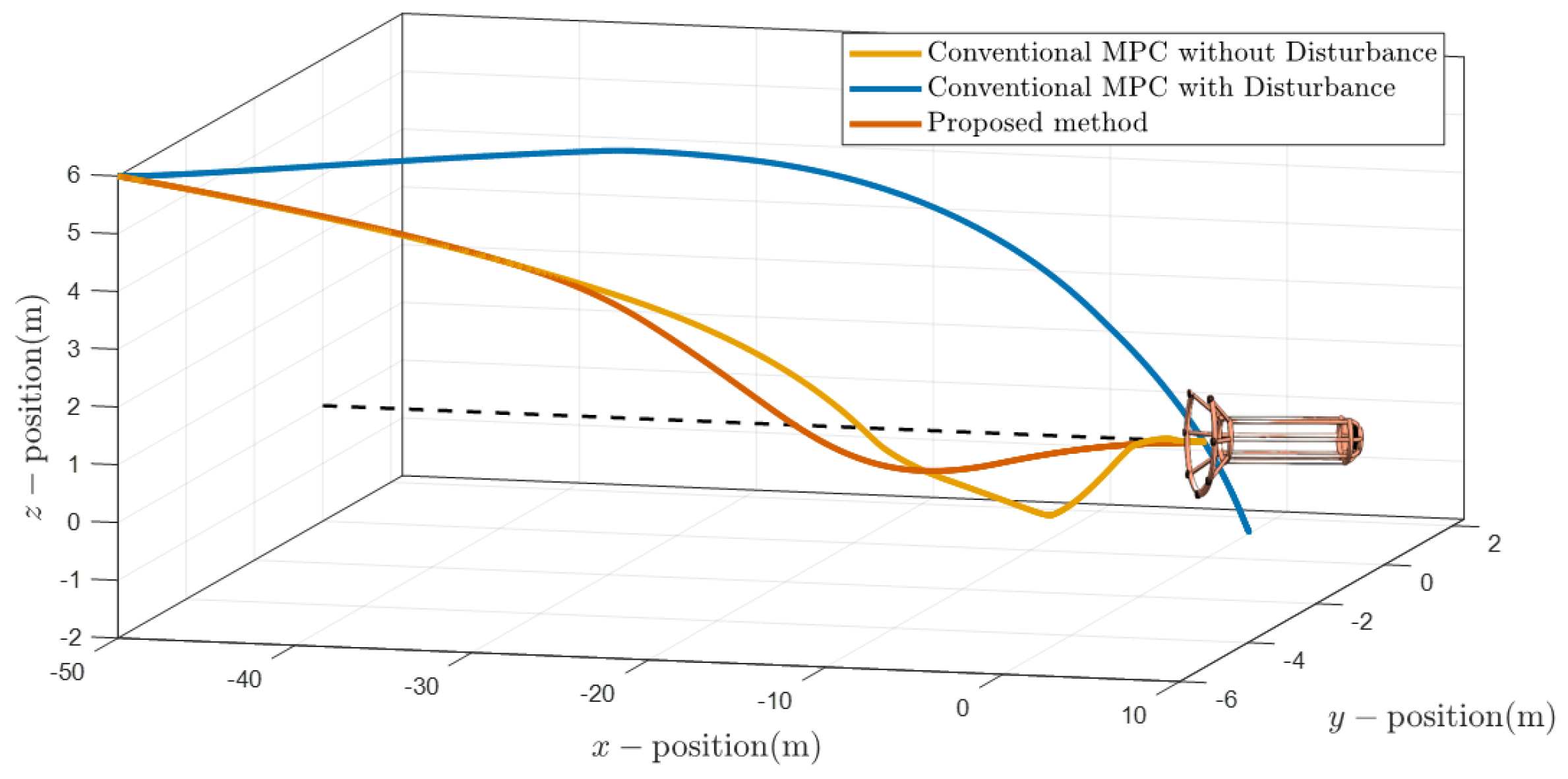

A Gaussian Process-Based Funnel MPC for Docking Control of Unmanned Underwater Vehicles by Learning Residual Dynamics



Highlights
- A Gaussian Process regression is employed to learn residual dynamics in this work.
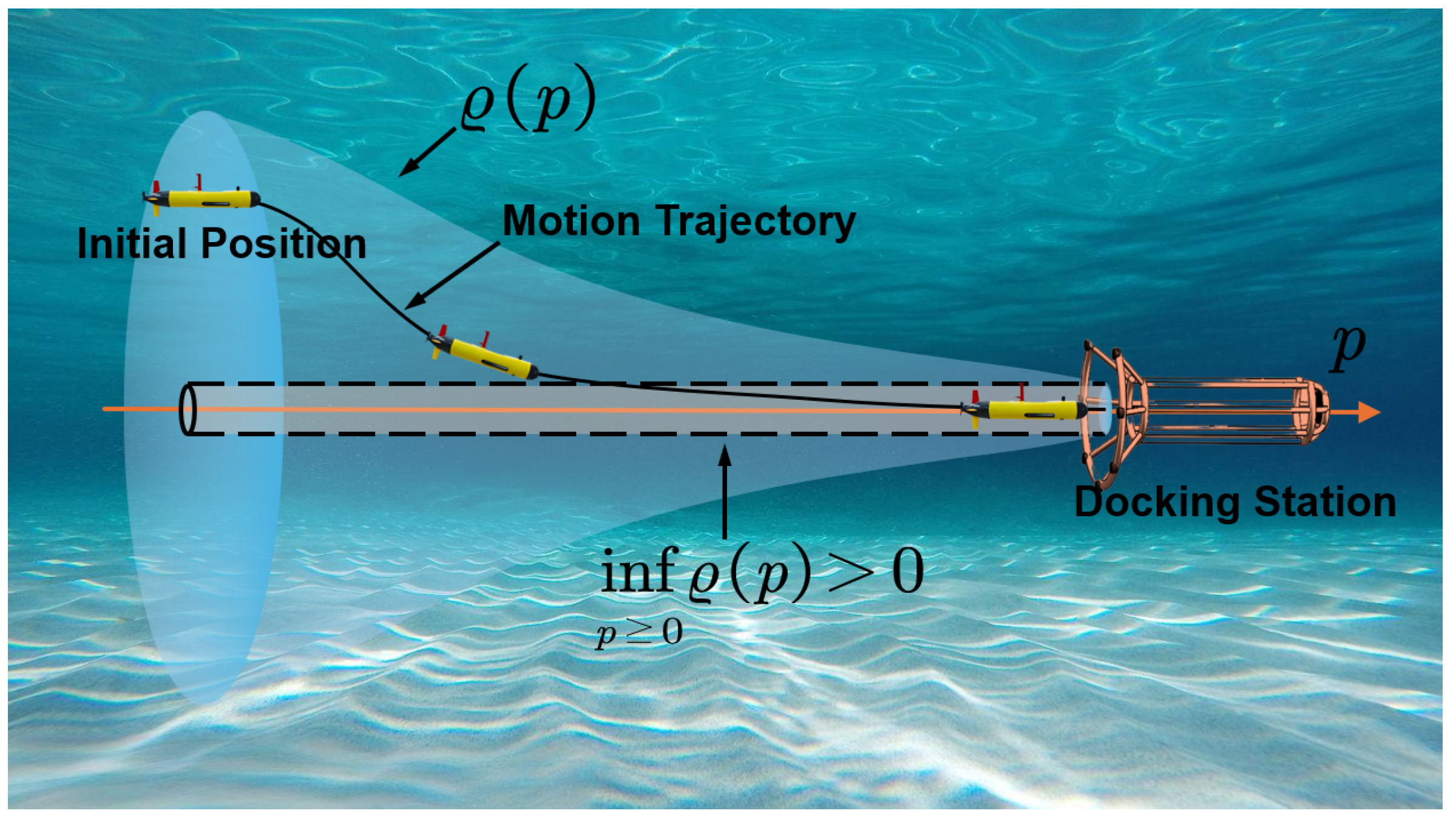
- A distance-adaptive performance funnel is designed to satisfy the field of view (FOV) constraints of sensors during the terminal guidance phase.
- The GP model learns and compensates for residual dynamics to enhance control accuracy.
- The funnel constraint is integrated into the cost function of the MPC, which systematically enforces safety without the computational complexity of traditional invariant sets.
Abstract
1. Introduction
- (1)
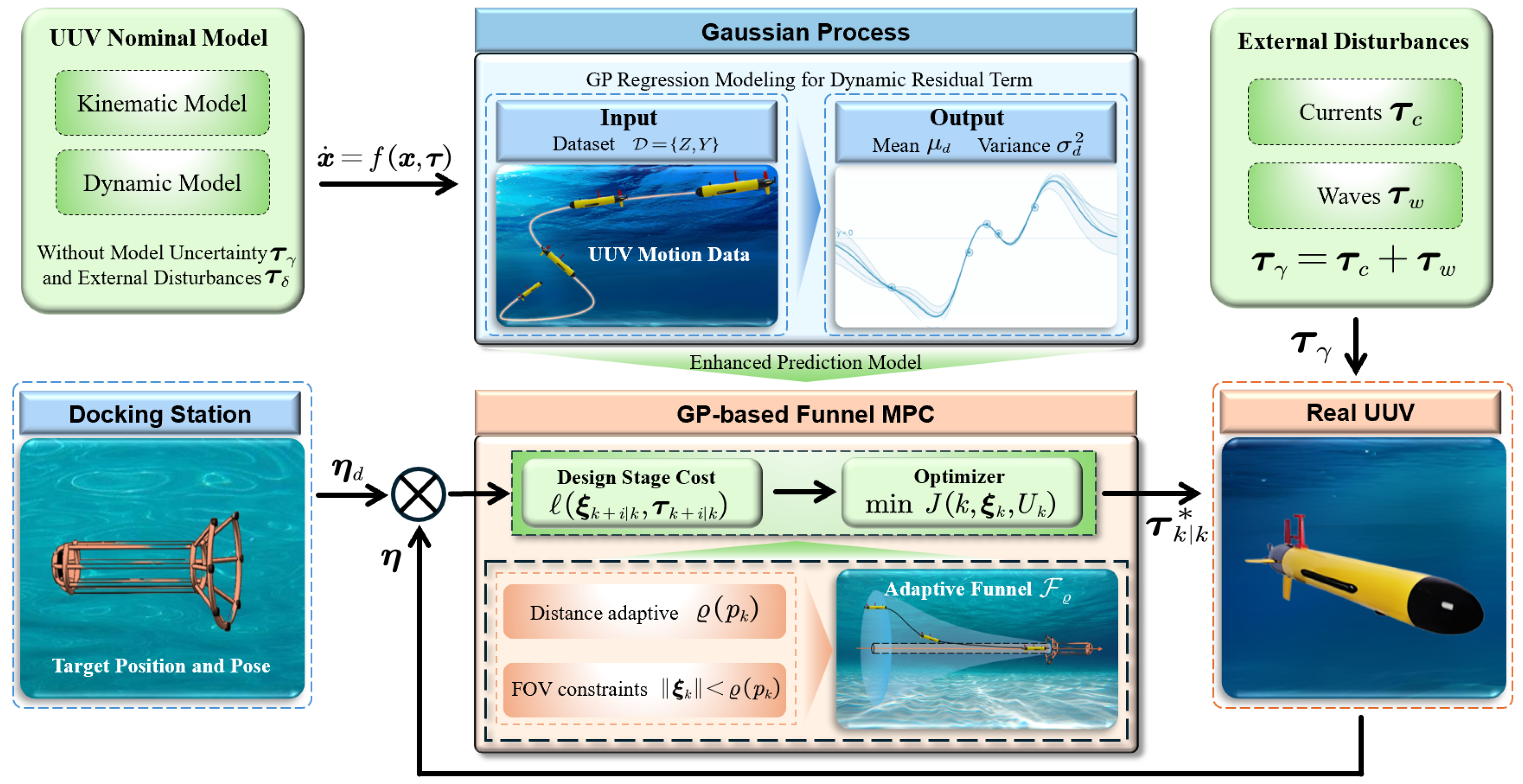
- A GP-based Funnel MPC framework for robust UUV docking, which realizes precise autonomous docking while effectively mitigating the effects of model–plant mismatches and environmental perturbations. We propose an integrated control framework that synergistically combines a GP-based model with a Funnel MPC. The enhanced predictions from the GP enable the MPC to more reliably satisfy the time-varying constraints imposed by the performance funnel despite dynamic uncertainties.
- (2)
- A Gaussian Process is employed to learn the residual dynamics from motion data, effectively compensating for the model–plant mismatch caused by unmodeled hydrodynamics and environmental disturbances. By capturing unmodeled hydrodynamics and environmental disturbances from motion datasets, this method improves the predictive accuracy of the MPC, directly enhancing the controller’s robustness and tracking performance.
- (3)
- A Funnel MPC strategy is proposed to address the sensor’s FOV constraints during terminal docking. A distance-adaptive performance funnel is designed to impose prescribed and time-varying bounds on the vehicle’s state error, ensuring the docking target remains observable. By integrating this funnel into the MPC cost function, we provide a computationally efficient alternative to traditional terminal invariant sets, enabling safe operation without their associated complexity and computational burden.
2. System Description
2.1. UUV Model
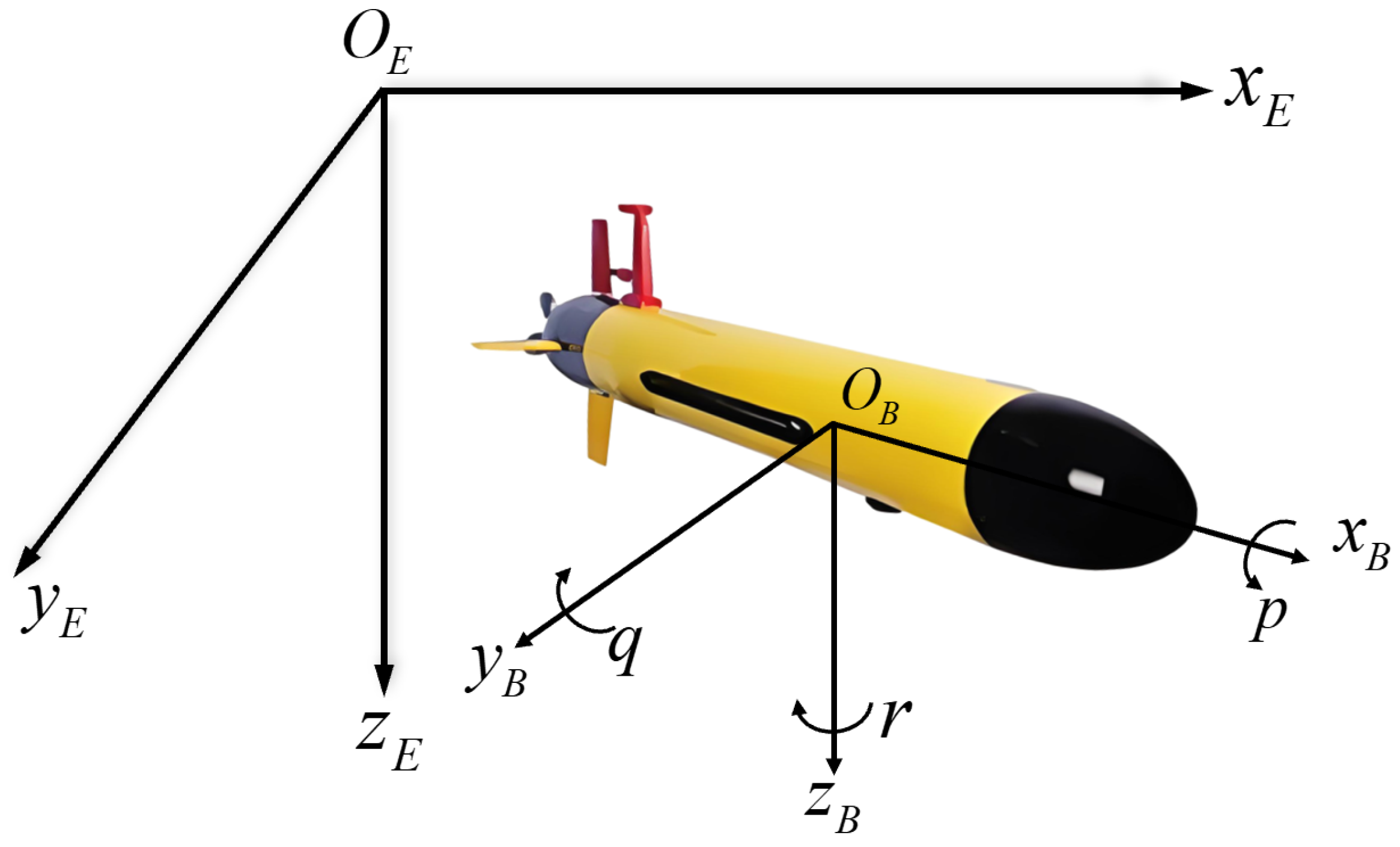
2.2. Gaussian Process-Based Model
- Nominal Operation Data (75%): Generated from closed-loop control simulations using the nominal model. This data ensures high prediction accuracy in the regions where the UUV operates most frequently.
- Random Excitation Data (25%): Generated by applying random amplitude and frequency inputs (Generalized Binary Noise or Chirp signals) to the open-loop system. This data enhances the exploration of the state space and captures the system response at the boundaries of the dynamics, satisfying the persistent excitation condition.
2.3. Problem Statement
3. Docking Control Based on GP-Based Funnel MPC
3.1. Adaptive Funnel Design Considering FOV Constraints
3.2. The Design of MPC Controller
3.3. Theoretical Analysis of Synergy and Robustness
4. Numerical Simulation
4.1. Parameter Selection
4.2. Performance of GP Model
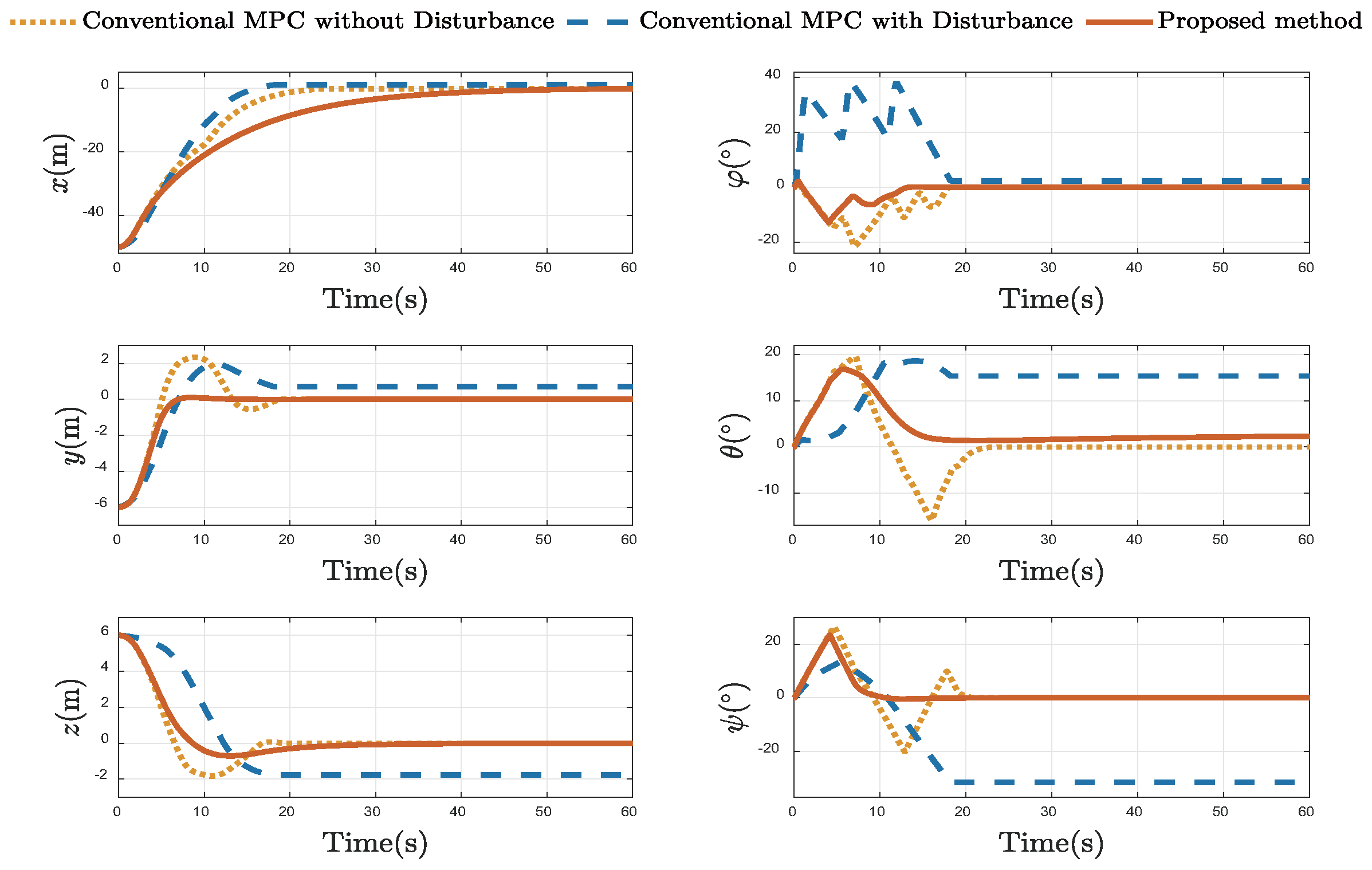
4.3. Comparative Docking Results
5. Conclusions
Author Contributions
Funding
Institutional Review Board Statement
Informed Consent Statement
Data Availability Statement
Conflicts of Interest
Abbreviations
| GP | gaussian process |
| MPC | model predictive control |
| UUV | unmanned underwater vehicle |
| FOV | field of view |
References
- Wynn, R.B.; Huvenne, V.A.; Le Bas, T.P.; Murton, B.J.; Connelly, D.P.; Bett, B.J.; Ruhl, H.A.; Morris, K.J.; Peakall, J.; Parsons, D.R.; et al. Autonomous Underwater Vehicles (AUVs): Their past, present and future contributions to the advancement of marine geoscience. Mar. Geol. 2014, 352, 451–468. [Google Scholar] [CrossRef]
- Petillot, Y.R.; Antonelli, G.; Casalino, G.; Ferreira, F. Underwater robots: From remotely operated vehicles to intervention-autonomous underwater vehicles. IEEE Robot. Autom. Mag. 2019, 26, 94–101. [Google Scholar] [CrossRef]
- Tijjani, A.S.; Chemori, A.; Creuze, V. A survey on tracking control of unmanned underwater vehicles: Experiments-based approach. Annu. Rev. Control 2022, 54, 125–147. [Google Scholar] [CrossRef]
- Sahoo, A.; Dwivedy, S.K.; Robi, P. Advancements in the field of autonomous underwater vehicle. Ocean Eng. 2019, 181, 145–160. [Google Scholar] [CrossRef]
- Dhanak, M.R.; Xiros, N.I. Springer Handbook of Ocean Engineering; Springer: Cham, Switzerland, 2016. [Google Scholar]
- Wu, L.; Li, Y.; Su, S.; Yan, P.; Qin, Y. Hydrodynamic analysis of AUV underwater docking with a cone-shaped dock under ocean currents. Ocean Eng. 2014, 85, 110–126. [Google Scholar] [CrossRef]
- Li, D.J.; Chen, Y.H.; Shi, J.G.; Yang, C.J. Autonomous underwater vehicle docking system for cabled ocean observatory network. Ocean Eng. 2015, 109, 127–134. [Google Scholar] [CrossRef]
- Zhang, T.; Li, D.; Yang, C. Study on impact process of AUV underwater docking with a cone-shaped dock. Ocean Eng. 2017, 130, 176–187. [Google Scholar] [CrossRef]
- Singh, H.; Bowen, M.; Hover, F.; LeBas, P.; Yoerger, D. Intelligent docking for an autonomous ocean sampling network. In Proceedings of the Oceans’ 97. MTS/IEEE Conference Proceedings, Halifax, NS, Canada, 6–9 October 1997; Volume 2, pp. 1126–1131. [Google Scholar]
- Singh, H.; Catipovic, J.; Eastwood, R.; Freitag, L.; Henriksen, H.; Hover, F.; Yoerger, D.; Bellingham, J.G.; Moran, B.A. An integrated approach to multiple AUV communications, navigation and docking. In Proceedings of the OCEANS 96 MTS/IEEE Conference Proceedings. The Coastal Ocean-Prospects for the 21st Century, Fort Lauderdale, FL, USA, 23–26 September 1996; Volume 1, pp. 59–64. [Google Scholar]
- Chen, X.; Zhang, X.; Huang, Y.; Cao, L.; Liu, J. A review of soft manipulator research, applications, and opportunities. J. Field Robot. 2022, 39, 281–311. [Google Scholar] [CrossRef]
- Hua, M.D.; Allibert, G.; Krupínski, S.; Hamel, T. Homography-based visual servoing for autonomous underwater vehicles. IFAC Proc. Vol. 2014, 47, 5726–5733. [Google Scholar] [CrossRef]
- Gao, J.; Liang, X.; Chen, Y.; Zhang, L.; Jia, S. Hierarchical image-based visual serving of underwater vehicle manipulator systems based on model predictive control and active disturbance rejection control. Ocean Eng. 2021, 229, 108814. [Google Scholar] [CrossRef]
- Wang, Z.; Xiang, X.; Xiong, X.; Yang, S. Position-based acoustic visual servo control for docking of autonomous underwater vehicle using deep reinforcement learning. Robot. Auton. Syst. 2025, 186, 104914. [Google Scholar] [CrossRef]
- Sans-Muntadas, A.; Kelasidi, E.; Pettersen, K.Y.; Brekke, E. Learning an AUV docking maneuver with a convolutional neural network. IFAC J. Syst. Control 2019, 8, 100049. [Google Scholar] [CrossRef]
- Liu, J.; Du, J. Composite learning tracking control for underactuated autonomous underwater vehicle with unknown dynamics and disturbances in three-dimension space. Appl. Ocean Res. 2021, 112, 102686. [Google Scholar] [CrossRef]
- Precup, R.E.; Preitl, S.; Tar, J.K.; Tomescu, M.L.; Takács, M.; Korondi, P.; Baranyi, P. Fuzzy control system performance enhancement by iterative learning control. IEEE Trans. Ind. Electron. 2008, 55, 3461–3475. [Google Scholar] [CrossRef]
- Xie, T.; Li, Y.; Jiang, Y.; Pang, S.; Xu, X. Three-dimensional mobile docking control method of an underactuated autonomous underwater vehicle. Ocean Eng. 2022, 265, 112634. [Google Scholar] [CrossRef]
- Zhang, W.; Han, P.; Liu, Y.; Zhang, Y.; Wu, W.; Wang, Q. Design of an improved adaptive slide controller in UUV dynamic base recovery. Ocean Eng. 2023, 285, 115266. [Google Scholar] [CrossRef]
- Cui, Y.; Peng, L.; Li, H. Filtered probabilistic model predictive control-based reinforcement learning for unmanned surface vehicles. IEEE Trans. Ind. Inform. 2022, 18, 6950–6961. [Google Scholar] [CrossRef]
- Shi, K.; Wang, X.; Xu, H.; Chen, Z.; Zhao, H. Integrated approach to AUV docking based on nonlinear offset-free model predictive control. Meas. Control 2023, 56, 733–750. [Google Scholar] [CrossRef]
- Wu, W.; Zhang, W.; Du, X.; Li, Z.; Wang, Q. Homing tracking control of autonomous underwater vehicle based on adaptive integral event-triggered nonlinear model predictive control. Ocean Eng. 2023, 277, 114243. [Google Scholar] [CrossRef]
- Ping, X.; Hu, J.; Lin, T.; Ding, B.; Wang, P.; Li, Z. A survey of output feedback robust MPC for linear parameter varying systems. IEEE/CAA J. Autom. Sin. 2022, 9, 1717–1751. [Google Scholar] [CrossRef]
- Michalska, H.; Mayne, D.Q. Robust receding horizon control of constrained nonlinear systems. IEEE Trans. Autom. Control 2002, 38, 1623–1633. [Google Scholar] [CrossRef]
- Mayne, D.Q.; Seron, M.M.; Raković, S.V. Robust model predictive control of constrained linear systems with bounded disturbances. Automatica 2005, 41, 219–224. [Google Scholar] [CrossRef]
- Shen, C.; Shi, Y.; Buckham, B. Trajectory tracking control of an autonomous underwater vehicle using Lyapunov-based model predictive control. IEEE Trans. Ind. Electron. 2017, 65, 5796–5805. [Google Scholar] [CrossRef]
- Liu, J.; Gao, J.; Yan, W. Lyapunov-based model predictive visual servo control of an underwater vehicle-manipulator system. IEEE Trans. Intell. Veh. 2024, 10, 2414–2426. [Google Scholar] [CrossRef]
- Jimoh, I.A.; Yue, H.; Grimble, M.J. Tube-based model predictive control of an autonomous underwater vehicle using line-of-sight re-planning. Ocean Eng. 2024, 314, 119688. [Google Scholar] [CrossRef]
- Zhao, M.; Li, H. Distributed model predictive contouring control of unmanned surface vessels. IEEE Trans. Ind. Electron. 2024, 71, 13012–13019. [Google Scholar] [CrossRef]
- Yan, Z.; Gong, P.; Zhang, W.; Wu, W. Model predictive control of autonomous underwater vehicles for trajectory tracking with external disturbances. Ocean Eng. 2020, 217, 107884. [Google Scholar] [CrossRef]
- Gibson, S.B.; Stilwell, D.J. Hydrodynamic parameter estimation for autonomous underwater vehicles. IEEE J. Ocean. Eng. 2018, 45, 385–394. [Google Scholar] [CrossRef]
- Maciejowski, J.M.; Yang, X. Fault tolerant control using Gaussian processes and model predictive control. In Proceedings of the 2013 Conference on Control and Fault-Tolerant Systems (SysTol), Nice, France, 9–11 October 2013; pp. 1–12. [Google Scholar]
- Cao, G.; Lai, E.M.K.; Alam, F. Gaussian process model predictive control of unknown non-linear systems. IET Control Theory Appl. 2017, 11, 703–713. [Google Scholar] [CrossRef]
- Berberich, J.; Köhler, J.; Müller, M.A.; Allgöwer, F. Data-driven model predictive control with stability and robustness guarantees. IEEE Trans. Autom. Control 2020, 66, 1702–1717. [Google Scholar] [CrossRef]
- Rasmussen, C.E.; Williams, C.K. Gaussian processes for machine learning, 3. print. In Adaptive Computation and Machine Learning; MIT Press: Cambridge, MA, USA, 2008. [Google Scholar]
- Gregorčič, G.; Lightbody, G. Gaussian process approach for modelling of nonlinear systems. Eng. Appl. Artif. Intell. 2009, 22, 522–533. [Google Scholar] [CrossRef]
- Fossen, T.I. Handbook of Marine Craft Hydrodynamics and Motion Control; John Wiley & Sons: Hoboken, NJ, USA, 2011. [Google Scholar]
- Limón, D.; Alamo, T.; Salas, F.; Camacho, E.F. On the stability of constrained MPC without terminal constraint. IEEE Trans. Autom. Control 2006, 51, 832–836. [Google Scholar] [CrossRef]
- Berger, T.; Dennstädt, D.; Ilchmann, A.; Worthmann, K. Funnel MPC for nonlinear systems with relative degree one. arXiv 2021, arXiv:2107.03284. [Google Scholar]
- Berger, T.; Kästner, C.; Worthmann, K. Learning-based Funnel-MPC for output-constrained nonlinear systems. IFAC-PapersOnLine 2020, 53, 5177–5182. [Google Scholar] [CrossRef]
- Prestero, T.T.J. Verification of a Six-degree of Freedom Simulation Model for the REMUS Autonomous Underwater Vehicle. Ph.D. Thesis, Massachusetts Institute of Technology, Cambridge, MA, USA, 2001. [Google Scholar]


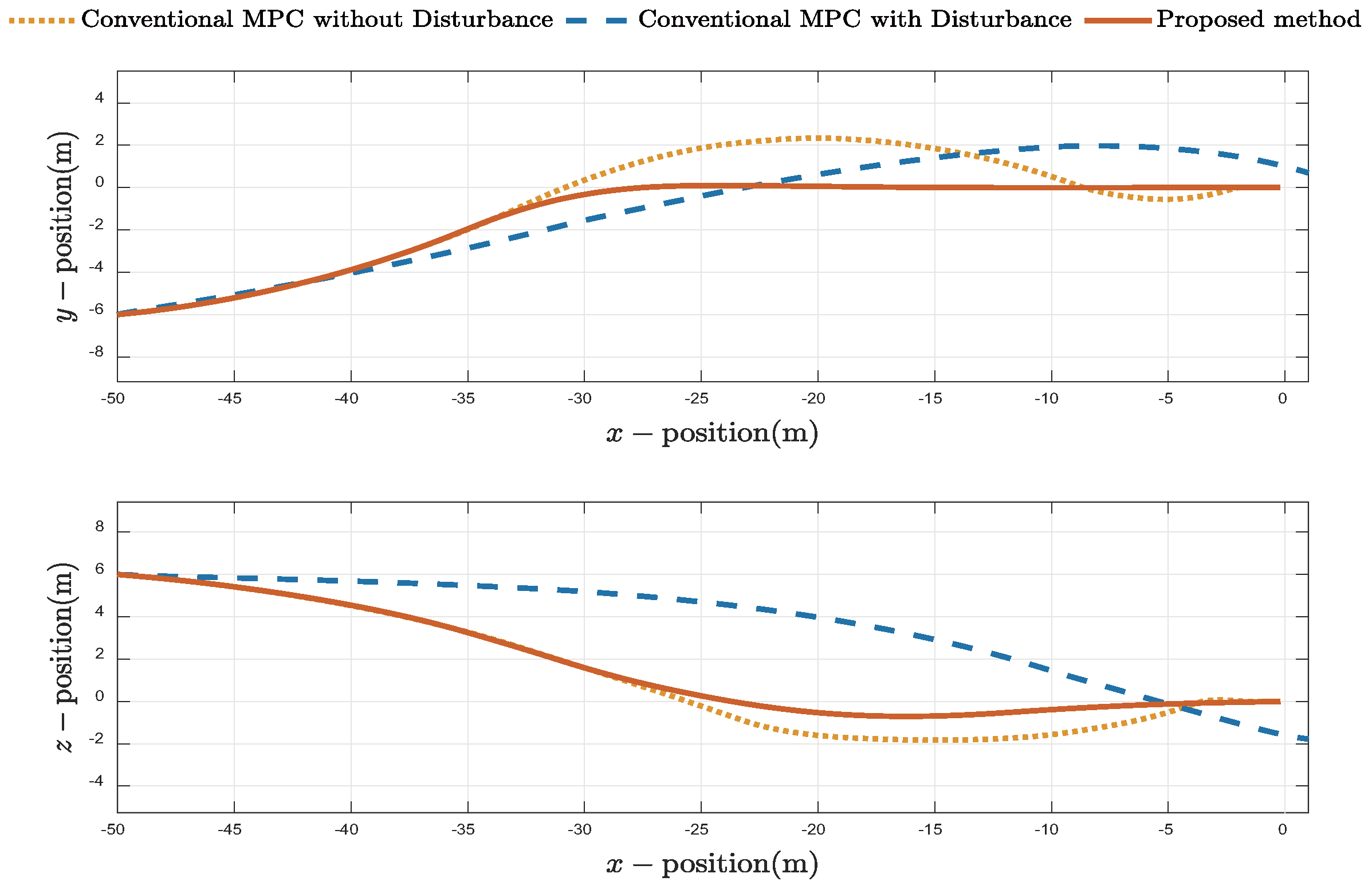

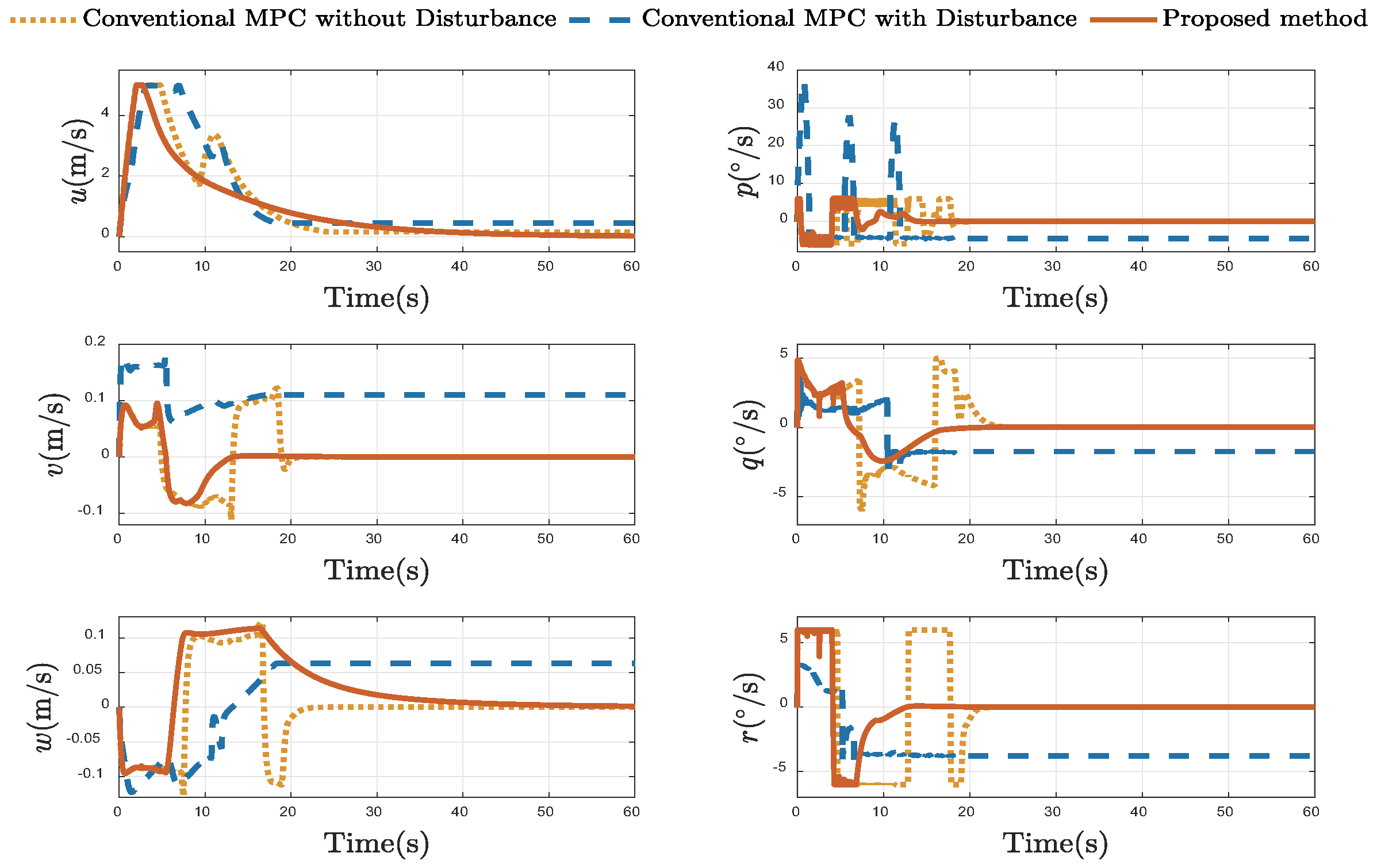
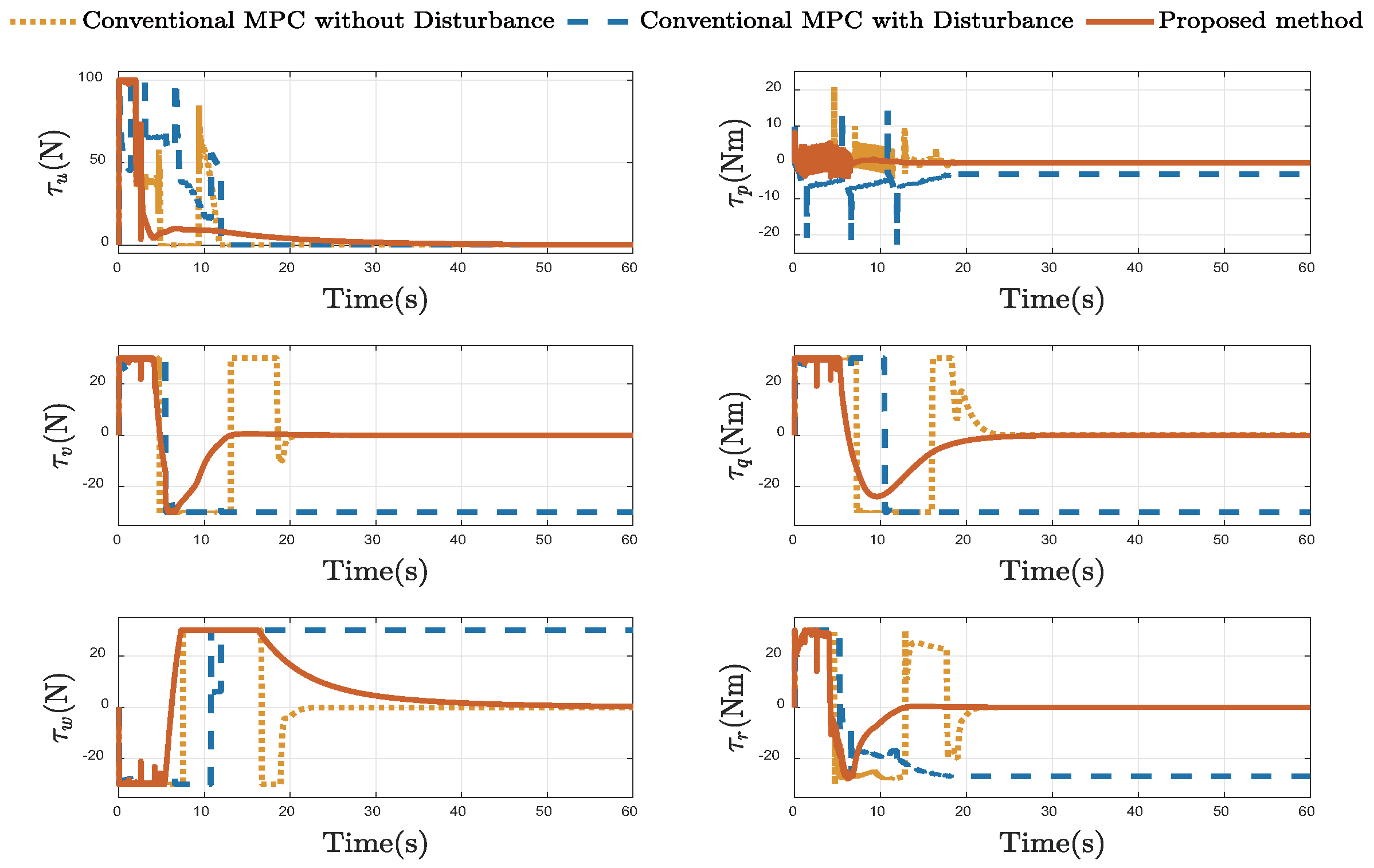
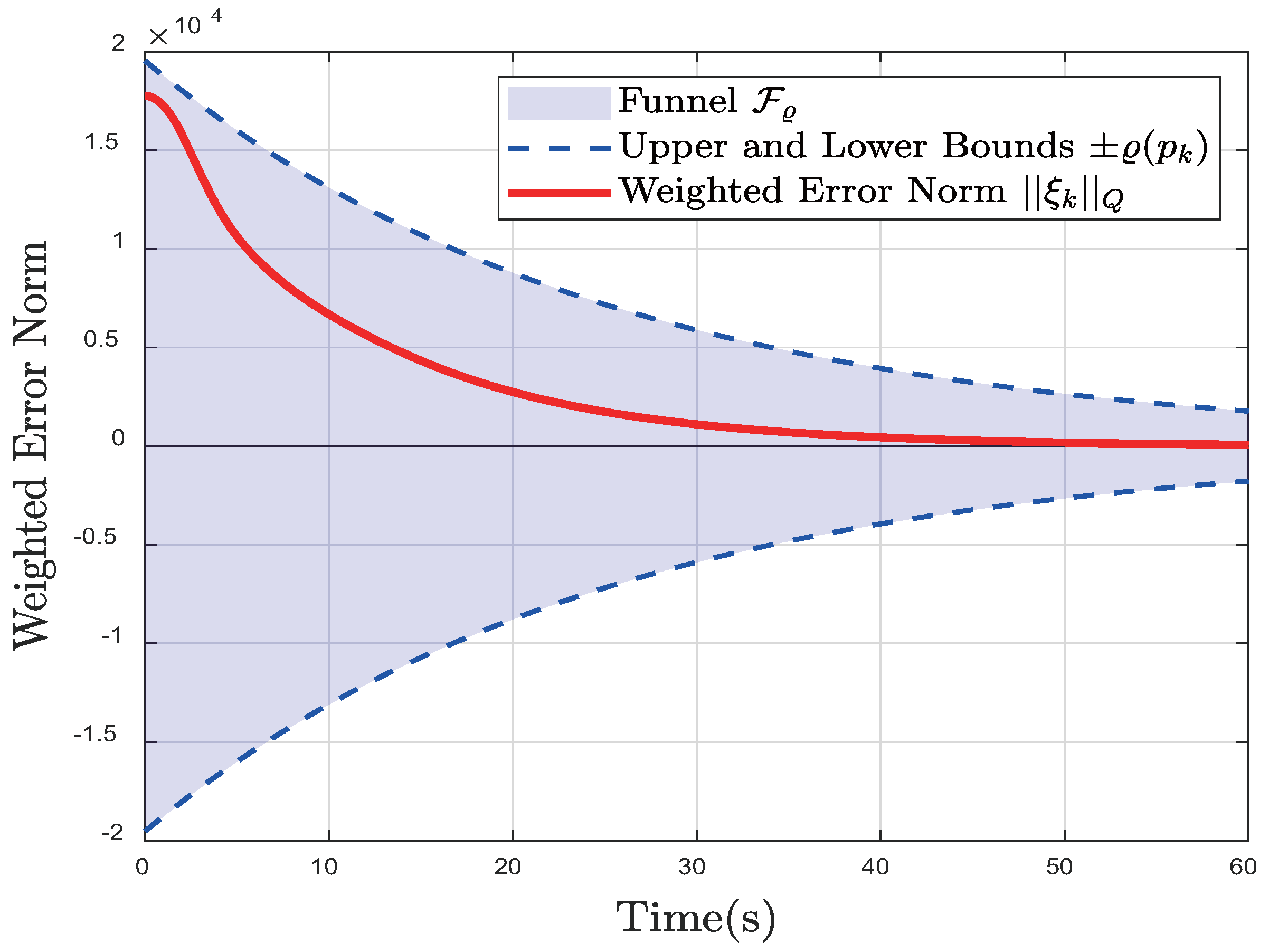

| Metric | Conv. MPC (No Dist.) | Conv. MPC (With Dist.) | Proposed Method |
|---|---|---|---|
| Docking Status | Success | Failure | Success |
| Terminal Pos. Error (m) | 0.05 | 2.85 | 0.08 |
| Terminal Heading Error (°) | 0.35 | 15.20 | 0.26 |
| Avg. Computational Time (ms) | 57.23 | 51.47 | 28.34 |
Disclaimer/Publisher’s Note: The statements, opinions and data contained in all publications are solely those of the individual author(s) and contributor(s) and not of MDPI and/or the editor(s). MDPI and/or the editor(s) disclaim responsibility for any injury to people or property resulting from any ideas, methods, instructions or products referred to in the content. |
© 2025 by the authors. Licensee MDPI, Basel, Switzerland. This article is an open access article distributed under the terms and conditions of the Creative Commons Attribution (CC BY) license (https://creativecommons.org/licenses/by/4.0/).
Share and Cite
Liu, J.; Hao, S.; Chen, Y.; Wang, J.; Gao, J. A Gaussian Process-Based Funnel MPC for Docking Control of Unmanned Underwater Vehicles by Learning Residual Dynamics. Drones 2025, 9, 836. https://doi.org/10.3390/drones9120836
Liu J, Hao S, Chen Y, Wang J, Gao J. A Gaussian Process-Based Funnel MPC for Docking Control of Unmanned Underwater Vehicles by Learning Residual Dynamics. Drones. 2025; 9(12):836. https://doi.org/10.3390/drones9120836
Chicago/Turabian StyleLiu, Jie, Shaowen Hao, Yimin Chen, Jiarun Wang, and Jian Gao. 2025. "A Gaussian Process-Based Funnel MPC for Docking Control of Unmanned Underwater Vehicles by Learning Residual Dynamics" Drones 9, no. 12: 836. https://doi.org/10.3390/drones9120836
APA StyleLiu, J., Hao, S., Chen, Y., Wang, J., & Gao, J. (2025). A Gaussian Process-Based Funnel MPC for Docking Control of Unmanned Underwater Vehicles by Learning Residual Dynamics. Drones, 9(12), 836. https://doi.org/10.3390/drones9120836