Article

Public Acceptance of Remotely Piloted Aircraft (RPA) Operations in Sydney Harbour

1
School of Aviation, Faculty of Science, University of New South Wales (UNSW Sydney), Sydney 2052, Australia
2
Department of Aviation, School of Engineering, Swinburne University of Technology, Melbourne 3122, Australia
*
Author to whom correspondence should be addressed.
Drones 2026, 10(1), 19; https://doi.org/10.3390/drones10010019 (registering DOI)
Submission received: 18 November 2025 / Revised: 21 December 2025 / Accepted: 22 December 2025 / Published: 30 December 2025

Highlights

What are the main findings?
  • Public attitudes toward RPA operations are shaped by how people weigh the perceived benefits against the potential risks, particularly the extent of societal benefits and the level of trust they place in the operators. Privacy risk is significantly more important than mid-air collision and ground impact safety risk.
  • These factors help explain why RPA activities related to the government’s environmental monitoring received the strongest public support. In contrast, recreational flying was showed the lowest acceptance, and commercial filming sits between these two.
What are the implication of the main findings?
  • Communicating the societal benefits of RPA operations and ensuring high pilot competency are essential for improving public acceptance, as both influence perceived privacy risks and trust.
  • As RPA usage grows, continued public education about regulations and responsible operation is critical to discourage unsafe recreational use. Prioritising trust, demonstrating clear benefits, and addressing privacy concerns will be key to strengthening overall acceptance of RPA activities.

Abstract

The increasing availability and affordability of RPA have led to a rapid expansion in their commercial demand. However, this growth has raised concerns due to rising RPA-involved safety incidents, which could negatively impact public acceptance. To address these concerns, this study empirically examines the factors influencing public acceptance of RPA operations. A survey was conducted to collect data on public acceptance across RPA operations within a popular hotspot—Sydney Harbour, Australia. Results reveal varied levels of public acceptance, with environmental monitoring receiving the highest support, followed by commercial filming. Several factors, including self-identified gender, previous RPA experience, and risk–benefit perceptions, significantly influence RPA acceptance. Trust in the RPA pilot is the strongest predictor of acceptance, while privacy risk is significantly more important than mid-air collision and ground impact safety risk. This study adds value by including all three risk types and factors identified in the literature within a single model, providing a statistically robust insight into the factors influencing public acceptance of RPA operations.

1. Introduction

From a sustainable development perspective, remotely piloted aircraft (RPA), commonly known as drones or unmanned aerial vehicle (UAV), can play a crucial role in reducing emissions, improving operational efficiency, and enhancing equity in aviation services. However, the long-term success of RPA integration into current operating environments and communities depends heavily on public acceptance, which is shaped not only by objective risk assessments conducted by regulators but also by social factors such as trust, perceived benefits, privacy concerns, and risk perception. In Australia, the commercial market has seen an exponential growth of small consumer RPA driven by their increasing availability and affordability. On the other hand, recent initiatives of the Civil Aviation Safety Authority (CASA), such as the beyond visual line of sight (BVLOS) relief [1], Specific Operations Risk Assessment (SORA)-based approvals for operations over populated areas [2], and automatic controlled-airspace authorisations [3], have been enabling scalable and sustainable RAP integration.
However, this surge in usage has raised concerns due to a growing number of media reports on incidents where RPA have inflicted injuries on people or caused damage to property [4,5,6]. Such incidents, often involving human-induced loss of control in flight, RPA malfunctions, or other environmental factors (e.g., turbulence, birds, obstacles), have the potential to negatively impact public acceptance of this technology [7,8,9,10]. Despite these concerns, the interest in using RPA, particularly in recreational/sport activities, continues to rise. As highlighted by CASA’s 2022–2023 Annual Report [11], approximately 1.8 million Australians are currently engaged in flying RPA for sport and recreation, with this number expected to grow as millions more are predicted to acquire their first RPA in the coming years.
CASA currently adopts a risk-based, category-driven approach to RPA operations, reflected in Part 101 of Civil Aviation Safety Regulations (CASR), entitled unmanned aircraft and rockets [12]. Generally speaking, RPA are classified by weight, with progressively more stringent requirements as the weight, along with the potential risk, increases [13]. CASA distinguishes between sport/recreational activities and commercial operations, and ties pilot qualifications to both weight and purpose (i.e., no qualification required, operator accreditation, Remote Pilot Licence (RePL), RPA Operator’s Certificate (ReOC)) [14]. With regard to the operating environment, CASA specifies a set of standard operating conditions that define the safe operating envelope for most RPA activities. These conditions prescribe the minimum distance from people, as well as the requirement to maintain a visual line of sight and operate in daylight, avoiding restricted/controlled airspace, etc. Operations beyond the standard operating conditions must be pre-approved by CASA (e.g., beyond visual line of sight (BVLOS)) [14].
Despite CASA’s stringent regulatory framework structured around the purpose of operation and weight category, this regulatory categorisation does not necessarily align with the actual level of public acceptance. Arguably, this is attributed to the fact that regulators usually employ a formalised risk-based and evidence-driven assessment framework, which objectively evaluates both the probability and consequence of the proposed operation. In contrast, the public risk perception of emerging technologies is typically more subjective, difficult to quantify, and highly context-dependent [15]. Therefore, a measure of risk perception may be difficult to interpret and compare across individuals due to varying thresholds, values, beliefs, and preferences that affect their risk perception.
While light-weight RPA and recreational/sport uses are treated as lower-risk from a regulatory standpoint, the community may still hold concerns or negative perceptions toward their presence and operation in everyday environments. Therefore, it is pivotal to identify the factors that contribute to, or hinder, the public acceptance of RPA operations. A deeper understanding of these factors holds substantial value for policy development, particularly for civil aviation authorities (e.g., CASA), as it informs how regulatory frameworks can better support the safe and responsible integration of the RPA technology into everyday life. Insights into public attitudes also enable policymakers to address underlying concerns related to privacy, safety, noise, and perceived risks.
To this end, the aim of this research is to empirically examine the factors influencing the acceptance of RPA operations across purposes in the public space. This way, the relative contribution of each factor can be compared, and a more robust exploratory model of RPA acceptance can be devised. Specifically, we focus on the factors of demographic characteristics (age, gender), previous experience, knowledge levels, trust, perceived benefits and risks, and noise concern. While existing studies have highlighted one or some of these factors, there is a gap in understanding how all these factors jointly affect public acceptance across different operation types (e.g., recreational flying, commercial filming, environmental monitoring). By modelling these factors simultaneously, the study provides a clearer picture of their relative influence and highlights which dimensions matter most for different operational types. Importantly, different operation types carry different perceived benefits, risks, and social implications. Anecdotally, RPAs used for environmental monitoring are often viewed as socially beneficial, while recreational flying may raise concerns about nuisance, privacy, or irresponsible activities. Commercial filming may trigger stronger reactions about surveillance or intrusion. As such, this comparative perspective is particularly important, and the findings therefore offer a more holistic and context-sensitive understanding of public attitudes toward RPA, which can inform regulators seeking to tailor communication strategies, risk mitigation measures, and operational guidelines to specific use scenarios.

2. Literature Review

2.1. Analytical Framework

The general public’s behaviour toward technological acceptance is not determined entirely by safety risk probabilities measured in an objective way. Theoretical frameworks such as the Technology Acceptance Model (TAM), Theory of Planned Behaviour (TPB), and Knowledge, Attitude and Practice (KAP) models explain acceptance of technology. TAM focuses on attitudes, perceived ease of use, and perceived usefulness of a technology, suggesting that these factors influence an individual’s decision to adopt the technology [16]. TPB, on the other hand, is used to determine adoption of technology in users through factors such as attitude, intention, knowledge levels, and the functional benefits over the perceived risks [17]. TAM and TPB may not be directly applicable to understand acceptance of RPA by bystanders, as they are mainly designed to be utilised toward technology users. In this regard, the KAP model is relevant for understanding acceptance in RPA among bystanders or the public [18]. The model aims to link up what people know, feel, and react toward new technology [19].
In the extant literature, multiple factors relevant to the KAP model were found to contribute to the public’s acceptance of RPA. These can be organised into eight factors, namely gender, age, previous experience, knowledge levels, perceived benefits, trust, noise, and risk perception levels [7,18,20,21,22,23,24,25,26,27]. Each factor identified in the literature review plays a unique role in shaping public acceptance of RPA operations in various ways. The contribution of each factor to this acceptance is explained in turn below.

2.2. Studied Factors

Prior research consistently shows that male respondents and younger individuals tend to be more accepting of RPA operations, whereas females and older age groups generally express lower levels of acceptance. The gender difference is commonly attributed to the finding that female respondents report greater concerns regarding privacy, safety, and noise, and are therefore less supportive of emerging technologies such as RPA [18,22,25,28,29]. In addition, RPAs are often framed as a masculine or technology-centred activity, which may further reduce acceptance among females due to lower identification and familiarity with the technology [30,31].
Age-related patterns follow a similar rationale. Technology readiness and familiarity are strongly associated with age, with younger individuals having greater exposure to a wide range of emerging technologies across their daily environments. Conversely, older people tend to perceive higher safety and privacy risks, possess lower familiarity with new technologies, and show stronger sensitivity to surveillance-related concerns [29,32]. However, it is noted that older individuals tend to show stronger support for the use of RPA in rescue and emergency operations [29], as they probably perceive these applications as more directly aligned with their personal needs.
As noted above, demographic factors (gender and age) may not necessarily be the true reasons influencing RPA acceptance. These may shape differences in privacy and safety sensitivity, and reflect variations in technological experience and perception of societal benefits. Rather than purely focusing on gender or age, some other studies consider individuals’ previous experience and knowledge levels related to RPA in their explanation of variations in UAV acceptance. It is noted that these two factors significantly affect acceptance and risk perception. Familiarity with RPA operations increases an individual’s comfort with the technology [21,33,34,35,36,37]. However, the impacts of previous experience can be mixed, with positively felt experiences lowering perceived risks and negative ones amplifying concerns. Also, a lack of understanding of RPA capabilities and applications hinders acceptance [7,26,38,39,40].
An individual’s prior experience with RPA and their knowledge levels may further influence their trust, not only in the competency of the pilots and organisations operating the RPA but also in the reliability and overall performance of the RPA technology itself [41]. As such, trust is another fundamental determinant in shaping attitudes toward this emerging technology [42]. Evidently, higher trust levels correlate with reduced perceived risks and increased likelihood of technology adoption [24,43,44]. Specifically, for RPA, greater trust in the user and regulatory frameworks leads to higher acceptance [23].
Additionally, the acceptance of RPA in society depends on the trade-off between perceived benefits and risks related to the operations. Usually, the public concern about privacy is the most significant detrimental factor, as RPA can become potentially intrusive surveillance [18,23,26,45,46]. This is also supported by several studies that demonstrate that the public acceptance of RPA is higher when they are used for societal benefits, such as emergency services, rescue operations, and public safety, while private and recreational RPA use is generally viewed unfavourably due to privacy concerns [25,33,47]. On the other hand, safety risks, such as the potential for RPA to collide with a conventional piloted aircraft, known as mid-air collision, and crash into people or properties on the ground, known as ground impact risk, also play a critical role in determining public acceptance [7]. Other than the abovementioned factors, noise concern appears to be a standalone factor that impacts the acceptance of civil RPA, as higher noise levels are associated with lower acceptance and heightened privacy and security concerns [22,26,48].

2.3. Literature Gap

Table 1 summarises the extant literature on acceptance and risk perception of RPA. As seen, past studies generally examine a limited set of factors when analysing public acceptance of RPA operations, and their findings are often mixed. From the discussions above, we notice that the apparent influence of any single factor is frequently linked to another underlying factor. In other words, demographic or attitudinal variables may appear to affect RPA acceptance, but their effects often operate through indirect channels (e.g., differences in knowledge, technological familiarity, privacy concern, perceived risk) or are context-specific (e.g., law enforcement, emergency services), rather than through the demographic characteristics themselves.
This highlights the importance of adopting a more comprehensive and systematic approach. Because individual factors can influence one another, it is essential to include a wider range of indicators within the same empirical model rather than studying them separately. Conducting the research as such allows each factor to function as a controlling variable for the others. This enables researchers to isolate the relationship between each factor and RPA acceptance. This paper aims to contribute towards more holistic, multi-dimensional analyses, underscoring the need for more integrated research frameworks.

3. Materials and Methods

3.1. Sample

The research seeks to explore the public’s acceptance level of three specific RPA operations in the Sydney Harbour Airspace, which lies in R405B restricted airspace. Based on the Aeronautical Information Package (AIP) published by Airservices Australia [52], R405B is classified as RA3 (Restricted Area Level 3, the most restricted level), extending from the surface up to 1000 feet above ground level, and it is active 24 h. CASA’s specified standard operating conditions do not allow for RPA operation in a restricted area that is classified as RA3. The primary reason for R405B is attributed to low-level helicopter operations and seaplane manoeuvring, which require separation from other flying activities due to their specialised flight profiles, frequent hovering, low-speed operation, etc.
Geographically, R405B, along with R405A, covers the core area of Sydney Harbour, extending over key suburbs such as North Sydney, Cremorne, and Mosman (as shown in Figure 1). These are densely populated local communities situated to the north of the most iconic locations in Australia. As this restricted area directly faces the Sydney downtown, RPA operations here would bring unmanned aircraft close to major national landmarks (e.g., the Sydney Opera House, the Sydney Harbour Bridge) as well as ferry routes, tourist vessels, and heavy public activities. The combination of high population density, critical infrastructure, and the national icon status of the harbour requires CASA to impose strict restrictions on airspace use. As a result, R405A and R405B serve as essential protection zones that prevent unauthorised RPA flights and reduce the safety, security, and privacy risks associated with operations over such a sensitive and high-profile environment.
Despite it being a restricted airspace, many non-compliant recreational/sport RPA operators still fly there; therefore, the risk is assumed to be relatively high. Additionally, Sydney Harbour possesses different commercial benefits and is an ideal location for addressing a wide array of RPA operations. The majority of the non-compliant RPA that operate in this area would belong to the micro or very small category based on CASR Part 101 of CASA, where the regulations supporting the operations are challenging to enforce. Across R405A/B restricted airspace, publicly documented RPA-related incidents include crashes into critical infrastructure [54], RPA falling onto moving vehicles [55], unauthorised flights over sensitive defence facilities [56], and recreational operators breaching restricted areas and safety distances (i.e., operations within 30 metres of people).
Data for this study were collected through surveys to identify the factors influencing public acceptance of RPA operations. These factors were subsequently modelled to estimate their coefficients and determine statistical significance. Building on the approach proposed in [21], this study categorised RPA operations into three groups (i.e., private, commercial, and government) to examine public perception and privacy concerns. Specifically, we analyse public attitudes toward three representative RPA operations: (1) recreational flying (private), (2) commercial filming (commercial), and (3) environmental monitoring (government).
Approval for data collection from respondents was granted by the ethics committee of the Human Research Ethics UNSW (University of New South Wales) Faculty of Science, on 9th August 2021 (HC210366). The survey was a quota-based method using a convenience-based sampling technique and was administered in August–September 2021 by a professional survey company. Responses were obtained from a pool of up to two million participants in the survey panel who chose to do the survey voluntarily. The screening questions required participants to be minimum 18 years old to participate, and involved agreed statements on the sincerity of answers and residents of the Greater Sydney Metropolitan area. Also, respondents were unaware of the survey’s specific purpose until they had provided their consent to participate. Questions related to the identified factors influencing acceptance have been included to analyse their impact on individual acceptance. The collected data were modelled to estimate coefficients and assess statistical significance, addressing the study’s first aim. A total of 395 valid responses were collected, forming a quota-based sample of adults residing in the Greater Sydney area.

3.2. Survey Design

The survey was informed by the KAP model, which enables us to have a systematic examination of the determinants of public acceptance of RPA operations in Sydney Harbour. After controlling for key sociodemographic characteristics, the survey assessed respondents’ previous experience and exposure to RPA. These measures capture the knowledge component of the KAP model, reflecting individuals’ awareness, familiarity, and informational grounding concerning RPA technologies. The survey then incorporated a series of items measuring the attitude component, including trust, and perceived benefits and risks. These variables collectively represent the evaluative and affective responses that shape respondents’ overall orientation toward RPA operations. Finally, we conceptualise the practice component as the behavioural disposition manifested in respondents’ overall acceptance of the RPA operations.
Accordingly, the survey consists of three major sections as shown in Table 2. The first section includes identifying descriptive statistics about the respondent, such as income levels, education, gender, age, location, etc. Factors such as (1) gender, (2) age, and (3) previous experience were gathered in this section. The second section assessed the respondents’ (4) knowledge levels on RPA regulations in Australia. Ten questions were asked in this section, of which eight suitable questions were attained from CASA’s drone flyer quiz [57]. These questions consist of a mix of multiple choice and ‘True/False’ questions. Then, the factors of (5) perceived benefits, (6) trust, and (7) noise were identified. The last section identified the respondents’ acceptance and risk perception toward the three different RPA operations. As such, data on Factor (8) risk perception (including mid-air collision, ground impact risk, and privacy risk) were collected. With regard to operation types, in recreational flying, respondents were informed that the RPA flying was by a recreational user; for commercial filming, respondents were supplemented with the information where the RPA is flown by a business conducting commercial filming activity in Sydney Harbour; for environmental monitoring, respondents were asked to imagine a situation where the RPA is flown by a government organisation conducting environmental monitoring of marine pollution.

3.3. Data Analysis Method

The variable acceptance is measured by asking respondents for a simple, binary response on whether they accept the RPA operation (accept coded as “1” and reject coded as “0”). Since acceptance is a binary variable, utilising a linear regression line (e.g., ordinary least squares regression) would pose several problems, such as leading to predictions outside the range of zero and one. It would also assume that the first unit of the independent variables would have the same marginal effect as the subsequent units and that, therefore, the residuals would succumb to heteroskedasticity. Hence, this study used the logistic model in which the estimated coefficients can be translated into an odds ratio (OR) for easier and more intuitive interpretation [58]. The response variable (Y) is acceptance of the RPA operation. The explanatory variables (X) in this model are the eight identified factors that influence acceptance. Therefore, the logistic regression model is specified as follows:
Pr Y = 1 X = e β 0 + β 1 X 1 + β 2 X 2 + β 3 X 3 + β 4 X 4 + β 5 X 5 + β 6 X 6 + β 7 X 7 + β 8 X 8 1 + e β 0 + β 1 X 1 + β 2 X 2 + β 3 X 3 + β 4 X 4 + β 5 X 5 + β 6 X 6 + β 7 X 7 + β 8 X 8 ,
where X1 = gender; X2 = age; X3 = previous experience; X4 = knowledge scores; X5 = perceived benefits; X6 = trust; X7 = noise; X8 = risk perception. STATA 17 was used for the empirical estimations.

4. Results

Prior to empirical analyses, descriptive statistics about the democratic characteristics of the respondents are shown in Table 3. Of the 395 fully complete samples used, 52% were male, and the mean age was 30 years old (median 26) with a standard deviation of 18, ranging between 18 and 90 years old. Among them, 20.3% were under 30 years old, 24.3% were in their 30s, 16.2% in their 40s, 11.9% in their 50s, and 27.3% were 60 years or older. The respondents of the survey took an average of 13 min to complete. A total of 35% of the sample lived within 10 km of Sydney Harbour. A total of 22% of the sample indicated RPA ownership, of which 68% were male. A total of 36% of the sample indicated they used an RPA before. A total of 72% indicated that they have encountered an RPA in flight in the past 3 years, of which 40% indicated that they have encountered an RPA in Sydney Harbour. A total of 25.3% encountered RPA once or twice, 24% encountered three to five times, 20% encountered six to ten times, and 2.8% encountered more than ten times. The most common opinions about the RPA encounter were that it was interesting, fun, and beneficial, and they did not care about it. A total of 82% encountered RPA in outdoor settings, of which 41% were from local parks or fields.
Table 4 reports the overall acceptance levels and perceived risk compared to manned aircraft for the three operations. As seen, respondents showed varying degrees of acceptance for recreational flying, commercial filming, and environmental monitoring. In the context of recreational flying activities, 169 respondents (42.8%) expressed acceptance of RPA involvement, while a larger proportion, 226 respondents (57.2%), were not in favour of it. For commercial filming, 271 respondents (68.6%) supported RPA operations, whereas 124 respondents (31.4%) opposed it. The highest level of acceptance was observed in environmental monitoring, where 324 respondents (82.0%) accepted RPA involvement, compared to 71 respondents (18.0%) who did not. This result highlights a notable variation in acceptance across operations, with environmental monitoring receiving the strongest support, followed by commercial filming, while recreational flying was met with more caution and a lower acceptance rate. This is consistent with the previous research, which stated that higher approval ratings were for RPA operations that served public interests compared to those that served commercial or private use [25,33,47].
To assess the significance of factors determining the acceptance of RPA operations, a logistic regression analysis was conducted, modelling the acceptance of RPA operations as the dependent variable (Y) and various independent variables (X). Before estimation, we conducted variance inflation factor (VIF) tests to assess potential multicollinearity among the independent variables, and all VIF values were below accepted thresholds, indicating no collinearity concerns. The estimation results, as displayed in Table 5, offer insights into the key variables influencing the likelihood of accepting RPA operations, providing a clearer understanding of the underlying factors driving acceptance. Generally speaking, while perceived benefits, trust, and privacy risk are common factors across all sectors, previous experience is unique to recreational flying, while gender and ground impact risks are specific to environmental monitoring. In recreational flying, factors influencing public acceptance include previous experience, knowledge levels, perceived benefits, trust, and privacy risk. In commercial filming, the key factors are knowledge levels, perceived benefits, trust, and privacy risk. In environmental monitoring, the factors are gender, perceived benefits, trust, ground impact risk, and privacy risk. The impacts of each factor influencing public acceptance of different operations are explained below.

4.1. Gender

Overall, male respondents demonstrated a higher level of acceptance toward RPA operations. The odds ratio of 2.03 (z = 1.96, p = 0.053) indicates that males are twice as likely as females to accept environmental monitoring operations using RPA. This can be attributed to the fact that females tend to be more risk-averse [18,22,29]. Alternatively, this may be attributable to the fact that male respondents in our survey generally report a higher awareness of the importance of environmental monitoring, particularly in the Australian landscape. However, gender is not a statistically significant variable for two other operations.

4.2. Age

On the age of the respondents, the findings revealed that age is not significant to acceptance for any RPA operation. This is consistent with the study by Del–Real in that no significant difference in RPA acceptance across age groups in rescue operations is observed [49]. However, it contradicts findings by Stolz et al. [32] and Melo et al. [59], which state that age is an essential predictor of RPA acceptance, with older individuals being more supportive of RPA use, particularly in rescue and emergency contexts. Similarly, in the study by Sakiyama et al. [29], older people are generally more favourable toward the use of RPA compared to younger people. Arguably, certain age groups may express varying levels of concern or enthusiasm about RPA technology; however, these differences may not necessarily translate into a clear pattern of acceptance [34,60].
Taken together, these studies suggest a general trend where age alone does not reliably explain variations in RPA acceptance. It also implies that even within the same age group, individuals may have varying perspectives on the acceptance of RPA technology in public areas [34]. These conflicting findings indicate that the influence of age on RPA acceptance may be heavily context-dependent. Alternatively, the non-significant effect of age in our study can also be explained by the inclusion of several more proximal determinants of public acceptance (e.g., previous experience, knowledge levels, trust, and perceived benefits and risks). These factors capture the mechanisms through which age differences would typically manifest. For instance, younger respondents may have greater exposure or familiarity with RPA, while older respondents may exhibit higher risk sensitivity. However, because our model explicitly controls for these knowledge- and attitude-related factors, any age-related variation is effectively absorbed or mediated by these more explanatory variables. This suggests that generational differences in acceptance are not inherent to age itself, but rather reflect differences in experience, knowledge, trust, and risk evaluation, which are already accounted for in the model.

4.3. Previous Experience

Previous experience of the respondents has been measured through two aspects: encounters with RPA, and whether the individual owned or operated RPA. Previous experience was found to be significant in acceptance for recreational flying, specifically on whether the individual owned an RPA. An odds ratio of 3.07 demonstrates that an individual who owns an RPA has three times the odds of accepting recreational flying compared to an individual who does not (z = 2.65, p = 0.008). This is supported by End et al. [40] and Lucini–Paioni et al. [38], who discovered that active experience with small or civilian RPA is significantly associated with a more positive attitude toward such emerging technology. Furthermore, the favourable supporting conditions and experience with RPA can moderate the relationship between performance expectancy and behavioural intention [61]. On the other hand, previous experience with RPA not only increases acceptance but also impacts risk perception, enabling users to better evaluate potential risks [21,33].
Our empirical results show an interesting asymmetry: having owned an RPA significantly increases the likelihood of accepting RPA operations, whereas having encountered an RPA does not. This suggests that direct operational experience and passive exposure shape public attitudes in fundamentally different ways. Respondents who have owned or operated an RPA tend to develop a more informed understanding of its capabilities, limitations, and operational norms. This hands-on familiarity generally leads to more positive or at least more accurate perceptions of risk, which in turn increases acceptance. By contrast, simply encountering RPA in everyday life does not necessarily produce a uniformly positive or predictable effect. These encounters can be highly variable and may evoke mixed personal experiences. For some respondents, the experience may be positive (i.e., curiosity, fascination with emerging technologies, or an appreciation of the useful missions RPA can perform). For others, the experience may be negative, particularly if the RPA is perceived as intrusive, unsafe, or associated with privacy violations. Because these experiences can range from favourable to strongly adverse, encounters do not create a clear directional influence on acceptance.

4.4. Knowledge Levels

To measure knowledge levels, respondents were asked 10 questions on RPA safety regulation in Australia and their scores were recorded by the number of correct answers to the questions. The rate of correct answers for the questions is reported in Table 6. The mean score was 4.6 out of 10, with a median of 4. Of the respondents, 29.6% scored more than 5. Based on Table 5, knowledge levels of RPA regulations showed a significant negative relationship with the acceptance of recreational flying and commercial filming, where higher scores were associated with lower acceptance. The results only apply to activities that do not offer societal or environmental benefits. The odds ratios for recreational flying and commercial filming are both 0.88. This means that an increase in one score of knowledge is associated with a decrease of 12% in the odds of accepting these operations.
Prior literature on the role of knowledge in shaping RPA acceptance has generally suggested that individuals’ knowledge levels can influence their attitudes toward RPA operations, although empirical findings across studies remain mixed [7,18,20,21,22,34,60,62,63]. The negative relationship in our study may reflect that the knowledge quiz (as reported in Table 6) captures regulatory awareness rather than technical knowledge. The knowledge items focused on respondents’ familiarity with the rules and restrictions governing RPA operations in Australia, rather than on a broader understanding of RPA technologies (e.g., flight control, navigation, communication systems). Respondents who are more aware of local regulations may therefore also be more attuned to potential safety or compliance issues, leading them to perceive certain RPA operations as riskier, particularly in scenarios where the operations offer no clear benefits, such as recreational flying and commercial filming.

4.5. Perceived Benefits

Perceived benefits were evaluated in two areas: whether individuals feel the RPA application benefits society, and whether the perceived benefits outweigh the risks of the operation. The first question reflects a total and standalone perception of positive societal impact and thereby represents a direct attitudinal belief about the societal usefulness of RPA operations (a uni-dimensional and total concept). In contrast, the second question asks whether the benefits and usefulness of RPA operations outweigh their risks, which requires respondents to make an integrated benefit–risk trade-off. This measure represents a higher-order evaluative judgement shaped not only by perceived benefits but also by the respondents’ risk sensitivity and tolerance for uncertainty (a comparative and net concept).
Table 7 reports the proportions of attitudes on perceived benefits. As shown, the majority of respondents believed that recreational flying does not provide societal benefits, nor did they think that its benefits outweigh the associated risks. In contrast, for commercial filming, more than half of the respondents indicated that the benefits outweigh the risks. For environmental monitoring, a clear majority agreed that RPA operations provide societal benefits and that these benefits outweigh the risks.
Our logistic regression results (Table 5) suggest that while the perception of societal benefit does not influence acceptance, the belief that benefits outweigh the risks plays a crucial role in acceptance. Overall, while all contexts show statistically significant results, the effect is strongest in magnitude for environmental monitoring and commercial use, with recreational use having a slightly weaker impact. For recreational use, individuals who perceived the benefits as outweighing the risks were 1.35 times more likely to accept the RPA operation (odds ratio = 1.35, z = 2.0, p = 0.042), which is statistically significant but shows the weakest effect among the three contexts. In commercial applications, the likelihood of acceptance was slightly higher at 1.44 times (odds ratio = 1.44, z = 2.16, p = 0.031), with a stronger effect and statistical significance. The highest likelihood of acceptance was observed in environmental monitoring purposes, where individuals were 1.49 times more likely to accept the RPA operation (odds ratio = 1.49, z = 1.99, p = 0.047). The z-test values indicate statistical significance, as they are all near or exceed the critical value of 1.96, suggesting that the perception of benefits outweighing risks has a meaningful impact on the acceptance of RPA operations in these contexts.
This result shows both alignment and contrast with previous research on public acceptance of RPA technology. Klauser and Pedrozo [47] and Zailani et al. [64] support this finding that perceived societal benefits did not significantly impact acceptance. They found that certain applications, like safety and scientific research, were more widely accepted, while commercial uses were less favoured, suggesting the nature of the application plays a key role in public acceptance. On the contrary, Merkert and Bushell demonstrated that public perception of RPA is heavily influenced by the purpose for which they are employed, with greater acceptance observed in socially beneficial scenarios, such as emergency services [65]. End et al. [40] and Shapira and Cauchard [63] also convey the idea that social benefit significantly affects public acceptance, with RPA used for public safety and health emergencies generally viewed more favourably than those used for commercial purposes, reflecting the importance of perceived benefits in overcoming resistance. Furthermore, public support leaned toward RPA used for activities that contribute to the public benefit, such as emergency services, security, and safety [23,25,33,47], rather than private sector uses such as commercial and hobby [18].
However, the perception of societal benefit does not directly influence acceptance because individuals most likely require assurance that the benefits clearly outweigh the risks. Hameed found that while societal benefits, such as improved healthcare delivery, are recognised, this alone does not drive acceptance [60]. Moreover, societal benefits alone are insufficient to overcome these fears, highlighting the critical role of risk perception in acceptance. Silva et al. found that, despite recognising benefits such as reduced traffic and pollution, concerns about noise and privacy continue to persist, and the authors also emphasised that perceived risks significantly influence public acceptance [66]. These findings collectively suggest that perceived benefits, especially those related to societal safety, significantly enhance acceptance, although the relationship between perceived benefits and risk perception may be moderated by the public’s knowledge of specific applications [7].

4.6. Trust

Trust levels were assessed across three dimensions: trust in the RPA pilot, trust in the RPA technology, and trust in the organisation. Table 8 reports the proportions of respondents’ attitudes towards trust. As shown, respondents expressed the highest levels of trust in the pilot, the RPA technology, and the operating organisation when the operation involved environmental monitoring, followed by commercial filming; trust levels were lowest for recreational flying.
Our logistic regression results (as shown in Table 5) revealed a significant positive relationship between trust in the RPA pilot and acceptance across all three operations. For recreational use, individuals who had higher trust in the pilot were 1.60 times more likely to accept the operations (odds ratio = 1.60, z = 3.71, p = 0.000), showing the strongest effect among the three categories. In commercial applications, trust in the pilot also had a positive impact on acceptance, with an odds ratio of 1.35 (z = 2.01, p = 0.044), indicating a smaller but still statistically significant effect. Environmental monitoring operations exhibited the highest odds ratio of 1.75 (z = 3.16, p = 0.002), demonstrating that trust in the pilot is most influential in this context. Our findings can be explained by the study of Eißfeldt, in that trust in the operator or pilot is a key predictor of RPA acceptance, particularly in scenarios where users interact directly with the technology [34]. When users trust the pilot’s ability to operate the RPA safely, they are more likely to accept the service, demonstrating that trust in human operators is crucial for enhancing perceived safety and satisfaction, which in turn affects overall acceptance [67].
Despite similar licencing standards for pilots in both commercial and environmental monitoring applications, trust levels were higher in environmental monitoring, indicating that context plays a significant role in how trust influences acceptance. This pattern can be interpreted in light of both CASA’s regulatory framework and how the public intuitively perceives different types of operations. From a regulatory perspective, all professional RPA pilots operate under similar core licencing requirements (i.e., remote pilot licence, RePL). However, more complex operations (e.g., government monitoring), especially if conducted with specific RPA types or beyond visual line of sight (BVLOS), typically require operation under a remotely piloted aircraft operator’s certificate (ReOC) and additional authorisations or qualifications (e.g., BVLOS approvals, type- or weight-specific endorsements, and more stringent procedures and risk assessments) [12,13,14,57]. While not all respondents were aware of these technical distinctions, they may nonetheless infer that government-related activities are more tightly regulated, professionally managed, and safety-critical, which makes trust in the pilot particularly salient for government monitoring scenarios. For recreational flying, trust still plays an important role because respondents may perceive hobbyist pilots as less formally trained. In commercial filming, the weaker effect of trust indicates that respondents may still object to being recorded for commercial purposes, thereby reducing the extent to which trust can enhance acceptance in this context.
However, contrasts emerge when examining the role of trust in technology and the organisation. Trust in the RPA technology showed a significant positive relationship with acceptance in recreational flying. This is largely driven by how respondents differentiate between consumer-grade and enterprise-grade RPA. Recreational RPA are typically perceived as low-cost, hobby-level devices with limited capabilities, minimal redundancy, and a greater likelihood of malfunction or misuse. As a result, trust in the technological reliability of these basic platforms plays a central role in determining whether the public considers recreational flying acceptable. In contrast, for commercial filming and environmental monitoring, respondents generally presume that organisations employ professional, enterprise-level RPA that are more sophisticated, robust, and equipped with higher levels of redundancy and safety features. Because these professional systems are assumed to be inherently safer, trust in the technology itself does not substantially influence acceptance for these two operations.
Additionally, we noticed that trust in the organisation did not display any meaningful relationship with acceptance. This can be explained by the fact that organisational oversight is perceived as distant and abstract, whereas operator-related trust and technology reliability are viewed as the primary drivers of risk, which explains their stronger predictive effects. However, this is inconsistent with the argument by Boucher that higher trust in the user and regulatory frameworks significantly boosts acceptance [23].

4.7. Noise

The results revealed that noise was not a significant factor in explaining the acceptance of RPA operations, which aligns with studies suggesting that, in certain applications, people tend to prioritise other negative factors, and many believe that the benefits of RPA technology may outweigh concerns about noise. For instance, Ivošević et al. [68] and Chow et al. [69] found that noise concerns, while present, were less decisive in shaping attitudes toward RPA compared to the potential for accidents during operation. Also, the noise issue is expected to decrease due to improved traffic alignment and because RPA traffic in the research area is not heavily congested, making noise-related disturbances less imminent and not a significant factor in determining public acceptance [34]. This highlights a public tendency to prioritise the utility of RPA over its acoustic impact, particularly in contexts where the perceived benefits, such as in recreational flying or emergency services, overshadow noise concerns [70]. Moreover, Merkert and Bushell [65] and Torija et al. [70] suggest that subjective responses to noise can vary widely, with individual sensitivity and previous experiences influencing how noise is perceived, indicating that noise may not be a uniform barrier to acceptance across different demographic groups.
However, this perspective is contradicted by other studies that emphasise the significance of noise concerns in the acceptance of RPA operations, showing that higher noise levels lead to lower acceptance of civil RPA [26], with noise shaping perceptions of privacy and security [48]. Furthermore, Schäffer et al. suggest that noise pollution from RPA can be perceived similarly to noise from road vehicles, potentially leading to significant public discontent and resistance to RPA operations [71]. These findings underscore the importance of considering noise, despite its varying impact across different applications and demographic groups.

4.8. Risk Perception

Results indicate that privacy risk significantly impacts the acceptance of RPA operations across recreational, commercial, and environmental monitoring contexts, with all operations showing a statistically significant negative relationship between privacy risk and acceptance. Specifically, for recreational operations, the odds ratio is 0.97 (z = −3.45, p = 0.001), for commercial operations, it is 0.96 (z = −4.78, p = 0.001), and for environmental monitoring operations, it is 0.97 (z = −3.25, p = 0.001). The stronger result in commercial operations suggests privacy concerns are particularly influential in this context. This pattern may be attributed to lower levels of trust in commercial companies when it comes to handling information related to privacy.
The results align with the broader literature emphasising privacy as a critical concern in public perceptions of RPA utilisation in public. For instance, Aydin [18], Boucher [23], and Kellermann and Fischer [26] consistently identify privacy as the most significant risk associated with these technologies. Furthermore, Komasová et al. observed high approval rates for RPAs serving public interests, such as rescue operations and traffic monitoring, but lower approval for private operations due to privacy concerns [33]. The advancements in RPA, particularly those equipped with high-resolution cameras and sophisticated surveillance systems, have heightened public concerns about unauthorised data collection and potential breaches of personal privacy [22,47]. These concerns are exacerbated by the lack of robust regulatory frameworks to address privacy violations in RPA operations.
On the other hand, our findings indicate no statistically significant effects of mid-air collision risk and only limited significance of ground impact risk when respondents considered the acceptance of environmental monitoring. This finding diverges from earlier studies, which identified safety risks, particularly collisions with piloted aircraft or ground crashes, as potential hazards [7]. In the given circumstances, the results indicate that the threat of privacy risk is viewed to be more imminent and individually relevant than the threat of physical safety risk when evaluating the acceptance of RPA operations.
Our results suggest two plausible explanations. First, it is likely that respondents have a limited awareness of the operational risks of R405B. Unless an individual is personally involved in aviation or RPA operations, they may not recognise that they reside within a controlled or restricted airspace. As shown in Table 3, 36% of respondents have never operated RPA. Without direct operational experience, the technical risk dimensions (e.g., airspace infringements, mid-air conflicts, or potential ground impact consequences) are less salient. In contrast, privacy concerns are more intuitive, personally relevant, and require no specialised aeronautical knowledge to understand. Second, the weaker emphasis on operational safety risks may reflect a broader public trust in Australia’s aviation regulatory framework, including CASA’s risk-based regulations for RPA operations. Respondents may implicitly assume that RPA operations permitted within or near restricted airspace must already comply with stringent regulatory and procedural requirements, thereby reducing the perceived likelihood of collision or physical harm. This regulatory trust effectively “outsources” risk management to authorities, shifting public attention towards risks they feel personally exposed to (i.e., privacy intrusions).
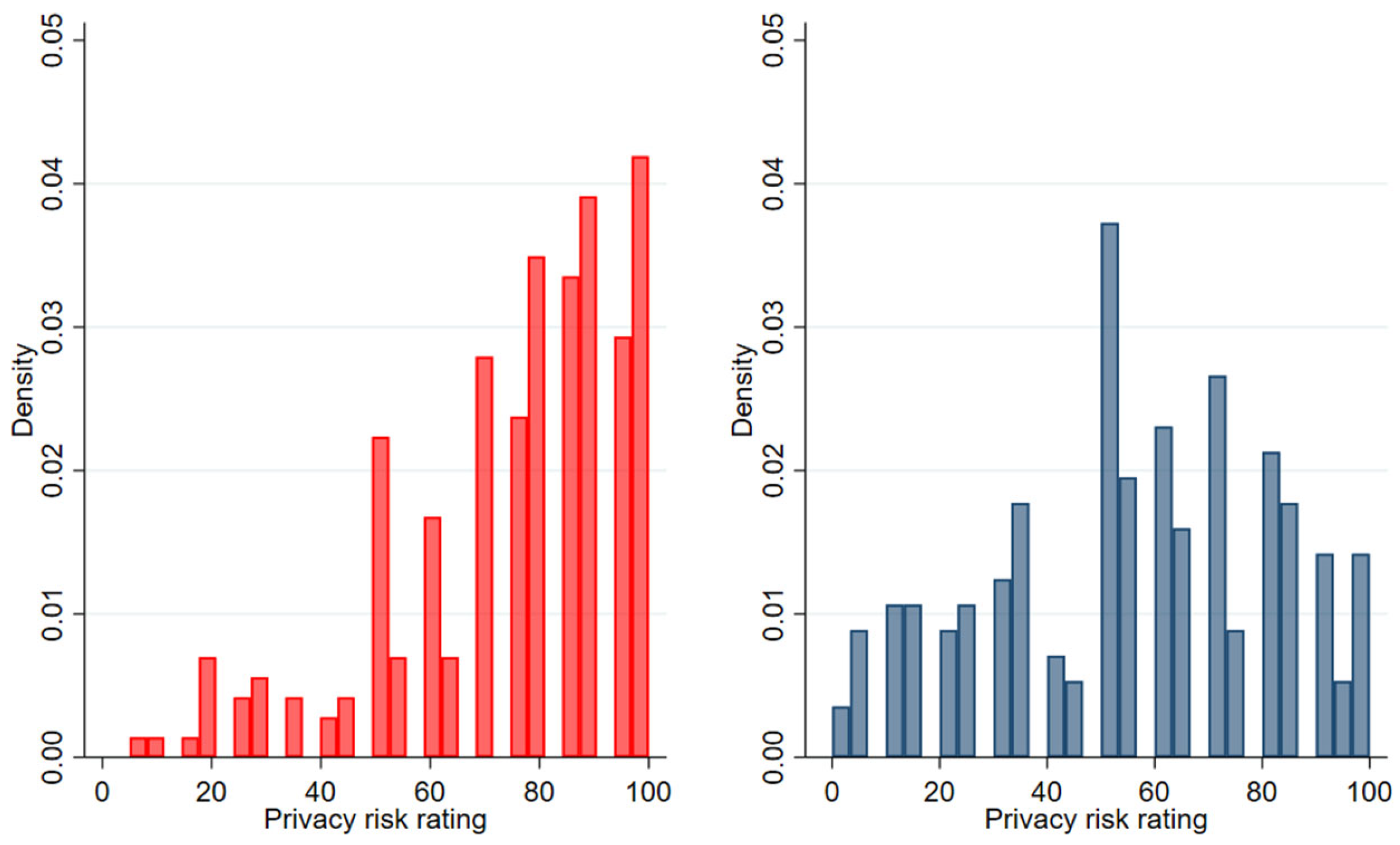
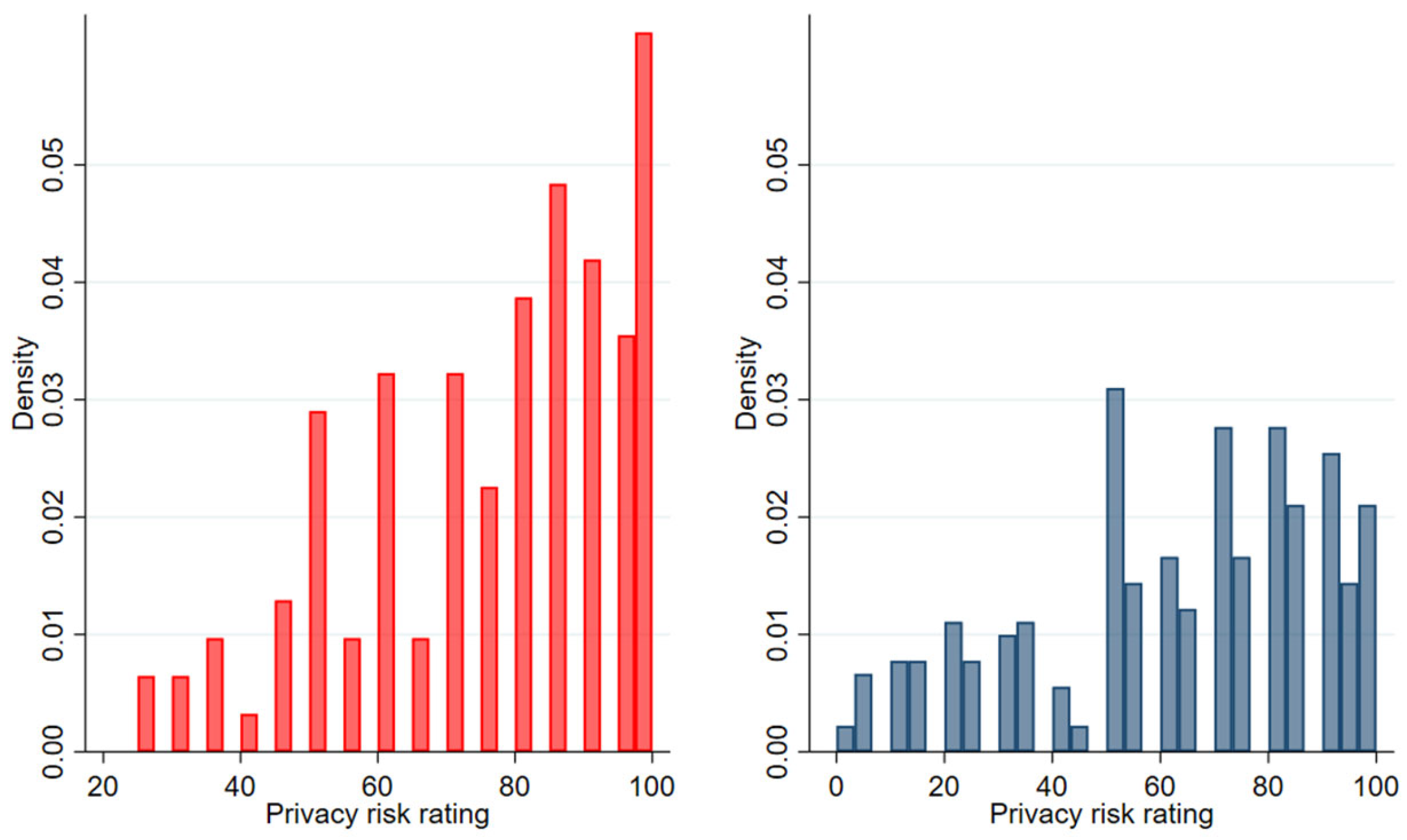
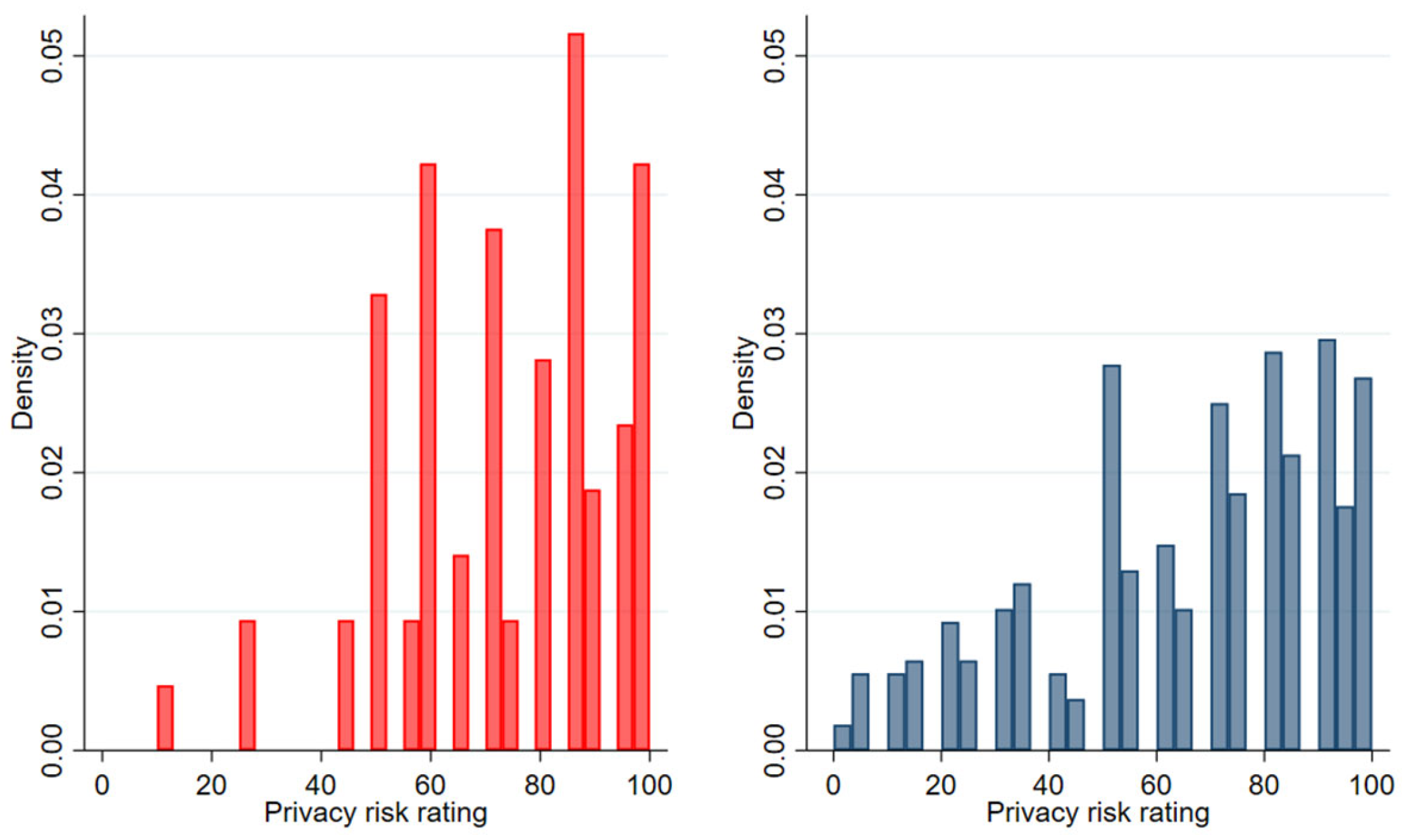
The histograms in Figure 2, Figure 3 and Figure 4 plot the kernel density on the Y axis and privacy risk on the X axis (histograms for mid-air collision and ground impact risks are available upon request). The acceptance of the RPA operation was placed beside one another for comparison. In short, the higher/taller the bar, the greater the frequency. Respondents who reject RPA operations typically report very high privacy risk ratings across all three operations. However, among those who accept RPA operations, we also find relatively high privacy risk ratings for environmental monitoring and commercial filming. This likely reflects the assumption that these operation types involve more sophisticated or higher-resolution camera systems than recreational RPA, thereby heightening perceived privacy exposure. Even so, respondents appear willing to accept these operations because their decisions reflect a broader benefit–risk trade-off: the perceived societal value of commercial imagery or environmental protection is sufficient to justify the privacy risk. This interpretation is consistent with the findings in Table 5, where the perception that “benefits outweigh risks” significantly increases acceptance across all operation types, with the strongest effect observed for environmental monitoring.

4.9. Regression Performance

The likelihood ratio of chi-square test in all three operations demonstrates high values, revealing statistical significance, along with a low p-value close to 0.0 and a high pseudo-R2. Typically, a pseudo-R2 value between 0.3 and 0.4 represents an excellent model fit, as it can be approximately translated into an equivalent R2 value of 0.6 to 0.8 in a linear model [72]. To examine the prediction performance of the model, we also report the percentage of correct predictions and incorrect predictions based on the current independent variables and regression model setup. The acceptance outcome threshold was set at 0.5, where probabilities greater than 0.5 are predicted as accepting the operation, while probabilities less than 0.5 are predicted as rejecting the operation.
To further examine the regression performance, we introduce two terms, namely sensitivity and specificity [73]. Sensitivity refers to the model’s ability to correctly identify respondents who accept the operations (true positives), whereas specificity refers to its ability to correctly identify respondents who do not accept the operations (true negatives). For recreational flying, there were 169 (42.78%) who accepted and 226 (57.22%) who did not accept recreational flying. Of these 169 individuals, the model correctly classified 138 of the respondents who accept recreational flying (sensitivity = 81.66%). Similarly, of the 226 who did not accept recreational flying, 196 were correctly predicted by the model (specificity = 85.84%). The overall accuracy rate of the model is 84.05%. For commercial filming, of the 271 (68.6%) respondents who accepted the operation, the model correctly predicted 246 respondents to accept, whereas 25 were not predicted correctly (sensitivity = 90.77%). Of the 124 (39.4%) respondents who did not accept the operation, the model correctly predicted 81 of them (specificity = 65.32%) and 43 were not predicted correctly. The overall accuracy rate is 82.78%. For environmental monitoring, of the 324 (82%) respondents who accepted the operation, the model correctly predicted 311 respondents to accept, whereas 13 were not predicted correctly (sensitivity = 95.99%). Of the 71 respondents who did not accept the operation, the model correctly predicted 34 of them (specificity = 47.89%) and 37 were not predicted correctly. The overall accuracy rate is 87.34%. Based on the findings above, we see that the model used for environmental monitoring is very strong at predicting the acceptance of the operation, but does not do a good job at predicting individuals who do not accept the operation. This is likely due to the skewed response of the respondents, in which 82% of respondents accepted the operation, and therefore demonstrated high sensitivity but low specificity.

5. Discussions and Conclusions

5.1. Summary of Findings

This study contributes to the growing literature on the perceived risks and acceptance of RPA use in society, using a survey-based assessment of attitudes among adults in Sydney. One of the new features of this study is that the analysed factors have been given a more specific context (such as three different types of risks and three different operational contexts), and analysed holistically. In conclusion (as shown in Table 9), the analysis indicates diverse levels of public acceptance toward RPA operations across recreational, commercial, and environmental monitoring activities. Environmental monitoring received the highest level of support and is more likely to be accepted by the public, as it is recognised for providing societal and environmental benefits. In contrast, recreational flying had the lowest acceptance rate, and it tends to be perceived as less essential or face greater public resistance. The result also reveals that commercial filming falls between these activities and further illustrates that practical applications of RPA are generally more favoured than recreational uses.
Additionally, the findings highlight various factors influencing the acceptance of RPA operations across different contexts. Gender differences show higher acceptance of RPA, particularly in environmental monitoring, where males show higher acceptance of RPA operations. While age is not a significant factor, this is likely due to mixed attitudes across different age groups. Previous experience with RPA increases acceptance through enhanced risk assessment, while knowledge of regulations shows a complex relationship, such as positively influencing acceptance of socially beneficial uses and negatively affecting acceptance of activities without societal advantage. Trust in the RPA pilot plays a crucial role in enhancing acceptance across all three RPA applications, particularly in monitoring and commercial use, where the impact is strongest. Privacy concerns, however, significantly reduce acceptance across all contexts, while noise is not a key factor. Overall, results suggest that the understanding of the balance between perceived benefits and risks, especially in terms of societal gain and trust in operators, is the key to shaping public attitudes toward RPA operations.

5.2. Policy Implications

In recent years, CASA has taken the initiative to better integrate RPA operations into the existing airspace systems and to establish clearer regulatory pathways that support safe, efficient, and commercially viable RPA activities [1,2,3]. Against this evolving regulatory backdrop, the present research provides valuable evidence regarding public attitudes toward various RPA operation types. Understanding how demographic groups differ in their acceptance (i.e., age, previous exposure to RPA, perceived benefits, trust, risk perception, and knowledge levels) offers practical guidance for future community-engagement strategies. Public acceptance and their risk perception are considerations for regulators, because even if the technological and regulatory frameworks permit operations, community resistance can hinder implementation. As highlighted by CASA, public attitudes become more positive when meaningful community engagement occurs prior to RPA activities. The public holds both enthusiasm and reservations toward this emerging technology; therefore, proactive engagement (e.g., advanced communication) can substantially increase acceptance [74].
On the other hand, CASA’s regulatory framework should place differentiated emphasis on specific risk categories when RPA operations occur in iconic or high-visibility locations such as R405B. Our empirical results show that respondents consistently prioritise privacy risk over operational safety risk, even within a restricted airspace environment. Although the general public perceives privacy as a safety risk, privacy is outside CASA’s remit, which is confined to aviation safety. This could be communicated to the public, along with information about agencies that can handle privacy-related risks. In practice, this may require operators to provide clearer purpose disclosure and implement more stringent data-handling standards.
In particular, our study also suggests that communicating the benefits of RPA operations and improving pilot competency are key in public acceptance of RPA operations since these factors influence privacy risk, which significantly explains acceptance. Private and public institutions should continually ensure their RPA pilots are current. Additionally, organisations conducting RPA activities should prioritise conveying awareness to the public. This could be performed through the use of a uniform or vest to convey key information to the public transparently, and at the same time increasing the degree of professional engagement and building trust. With the increase in RPA usage in public and the possible desensitisation to deciphering the difference in risk across operations, it is imperative to continue to educate and increase the knowledge levels of the public about RPA regulation so that high-risk and non-compliant recreational/sport use of RPA activities are discouraged. Also, it is crucial to prioritise building public trust and demonstrating clear societal benefits of RPA operations, particularly in monitoring and commercial activities. Initiatives should focus on addressing public privacy concerns, as they significantly impact acceptance, as well as on educating the public on responsible RPA usage and the positive impacts of regulation. By emphasising transparency, promoting the skills and reliability of RPA operators, and highlighting the societal value of RPA applications, public acceptance of RPA can be improved.

5.3. Limitations and Future Research

This study’s findings have limitations, with the first being that the experiment was performed with a survey for respondents who are physically located at home; the actual scenarios to which they were asked to respond with “accept” and rate their risks were hypothetical. With a lack of alternative ways to capture these data, the survey sampling method managed by a survey company with strict screening questions (Qualtrics via UNSW) was one of the best available methods for this study. In reality, the public who are not physically in the proximity of Sydney Harbour might find it a challenge to identify the type of RPA activity when encountering RPAs in Sydney Harbour. Secondly, the study acknowledges the inherent limitations that would result in imperfect measurement of the results. The study is unable to capture all factors that an individual would take into consideration when making a judgement on the level of risk and acceptance toward RPA operations. There is a myriad of different factors that can influence the risk perception of the public that are not included or difficult to measure. Third, our analysis is restricted to linear relationships, meaning we do not examine potential non-linear or threshold effects of how risks and benefits influence acceptance. While such patterns may exist, our sample size and study design do not support more complex models with a large number of parameters without risking overfitting or unstable estimates. Despite the limitations, the study incorporates relatively more variables in a more holistic way compared to other studies. The study also made assumptions. Some of these assumptions include the type of RPA utilised and the flight area of the RPA.
There are two important future directions for researching acceptance and differences in the risk perception of RPA. First, although the study identified specific factors that influence acceptance, the interrelation between factors can potentially be examined to identify which factors interact with one another. For example, the relationship between perceived benefits, trust, and risk perception may be that higher benefits would result in higher trust and therefore decrease risk perception, which ultimately influences acceptance. In this study, factors were examined solely with acceptance. The ability to analyse the influence between factors and ultimately with acceptance (such as interaction effects) would allow for more accurate analysis in which more specific solutions can be proposed. Second, the operations proposed in this specific context, Sydney Harbour, may yield a higher risk perception from the public. Measuring different types of operations in public places would allow the continued building of data in public spaces. To better assess the robustness of the behavioural responses, future research should extend the analysis to a broader, nationwide survey covering a wider range of environments, including suburban neighbourhoods, regional centres, industrial zones, and other iconic sites. Meanwhile, future research may consider conducting longitudinal surveys to track changes in public acceptance of RPA operations as the low-altitude economy develops and the public becomes more familiar with RPA concepts and operational norms. Furthermore, future research could differentiate various granular operational scenarios to capture the heterogeneity of government and commercial RPA use and examine the varying effects on public attitudes across various mission scenarios.

Author Contributions

Conceptualization, Y.T., T.T.R.K.; methodology, Y.T., T.T.R.K.; software, Y.T., T.T.R.K., R.U.K.K.; validation, Y.T., T.T.R.K., R.U.K.K.; formal analysis, Y.T., T.T.R.K.; investigation, Y.T., T.T.R.K., R.U.K.K.; resources, T.T.R.K.; data curation, Y.T., T.T.R.K.; writing—original draft preparation, Y.T., T.T.R.K., M.D., K.S.; writing—review and editing, T.T.R.K., M.D., K.S., R.U.K.K., V.D.; visualisation, Y.T., K.S., R.U.K.K.; supervision, T.T.R.K.; project administration, T.T.R.K., M.D. All authors have read and agreed to the published version of the manuscript.

Funding

This research received no external funding.

Data Availability Statement

The datasets presented in this article are not readily available because of technical/time limitations and the fact that the data are part of an ongoing study. Requests to access the datasets should be directed to the corresponding author.

Acknowledgments

The authors would like to thank UNSW Sydney for research administration support.

Conflicts of Interest

The authors declare no conflicts of interest.

References

  1. CASA. Beyond Visual Line-of-Sight Operations. Available online: https://www.casa.gov.au/drones/flight-authorisations/beyond-visual-line-sight-operations (accessed on 18 November 2025).
  2. CASA. Specific Operations Risk Assessment. Available online: https://www.casa.gov.au/drones/flight-authorisations/beyond-visual-line-sight-operations/specific-operations-risk-assessment (accessed on 18 November 2025).
  3. CASA. Automated Airspace Authorisations. Available online: https://www.casa.gov.au/drones/flight-authorisations/automated-airspace-authorisations (accessed on 18 November 2025).
  4. Crahay, F.-X.; Rampat, R.; Tonglet, M.; Rakic, J.-M. Drones’ Side Effect: Facial and Ocular Trauma Caused by an Aerial Drone. BMJ Case Rep. 2021, 14, e238316. [Google Scholar] [CrossRef] [PubMed]
  5. Kasprzyk, P.J.; Konert, A. Reporting and Investigation of Unmanned Aircraft Systems (UAS) Accidents and Serious Incidents. Regulatory Perspective. J. Intell. Robot. Syst. 2021, 103, 3. [Google Scholar] [CrossRef]
  6. Tarr, A.A.; Tarr, J.-A. Personal Injury, Property Damage, Trespass and Nuisance. In Drone Law and Policy; Routledge: London, UK, 2021; pp. 167–182. ISBN 978-1-003-02803-1. [Google Scholar]
  7. Clothier, R.A.; Greer, D.A.; Greer, D.G.; Mehta, A.M. Risk Perception and the Public Acceptance of Drones. Risk Anal. 2015, 35, 1167–1183. [Google Scholar] [CrossRef] [PubMed]
  8. Ghasri, M.; Maghrebi, M. Factors Affecting Unmanned Aerial Vehicles’ Safety: A Post-Occurrence Exploratory Data Analysis of Drones’ Accidents and Incidents in Australia. Saf. Sci. 2021, 139, 105273. [Google Scholar] [CrossRef]
  9. El Safany, R.; Bromfield, M.A. A Human Factors Accident Analysis Framework for UAV Loss of Control in Flight. Aeronaut. J. 2025, 129, 1723–1749. [Google Scholar] [CrossRef]
  10. Zhang, Z.; Xiao, C.-Y.; Zhang, Z.-G. Analysis and Empirical Study of Factors Influencing Urban Residents’ Acceptance of Routine Drone Deliveries. Sustainability 2023, 15, 13335. [Google Scholar] [CrossRef]
  11. CASA. Annual Report 2022–2023. Available online: https://www.casa.gov.au/sites/default/files/2023-10/casa-annual-report-2022-2023.pdf (accessed on 18 November 2025).
  12. CASA. Civil Aviation Safety Regulations 1998. Available online: https://www.legislation.gov.au/F1998B00220/latest/text/3 (accessed on 18 November 2025).
  13. CASA. Drone Weight Categories and Requirements. Available online: https://www.casa.gov.au/drones/operator-accreditation-certificate/drone-weight-categories-and-requirements (accessed on 18 November 2025).
  14. CASA. Drone Rules. Available online: https://www.casa.gov.au/knowyourdrone/drone-rules (accessed on 18 November 2025).
  15. Otway, H.J.; Von Winterfeldt, D. Beyond Acceptable Risk: On the Social Acceptability of Technologies. Policy Sci. 1982, 14, 247–256. [Google Scholar] [CrossRef]
  16. Davis, F.D. Perceived Usefulness, Perceived Ease of Use, and User Acceptance of Information Technology. MIS Q. 1989, 13, 319–340. [Google Scholar] [CrossRef]
  17. Ajzen, I. The Theory of Planned Behavior. Organ. Behav. Hum. Decis. Process. 1991, 50, 179–211. [Google Scholar] [CrossRef]
  18. Aydin, B. Public Acceptance of Drones: Knowledge, Attitudes, and Practice. Technol. Soc. 2019, 59, 101180. [Google Scholar] [CrossRef]
  19. Launiala, A. How Much Can a KAP Survey Tell Us about People’s Knowledge, Attitudes and Practices? Some Observations from Medical Anthropology Research on Malaria in Pregnancy in Malawi. Anthropol. Matters 1970, 11. [Google Scholar] [CrossRef]
  20. Miethe, T.D.; Lieberman, J.D.; Sakiyama, M.; Troshynski, E.I. Public Attitudes About Aerial Drone Activities: Results of a National Survey. Available online: https://www.unlv.edu/sites/default/files/page_files/27/Research-PublicAttitudesaboutAerialDroneActivities.pdf (accessed on 18 November 2025).
  21. Nelson, J.R.; Grubesic, T.H.; Wallace, D.; Chamberlain, A.W. The View from Above: A Survey of the Public’s Perception of Unmanned Aerial Vehicles and Privacy. J. Urban Technol. 2019, 26, 83–105. [Google Scholar] [CrossRef]
  22. Eißfeldt, H.; Vogelpohl, V. Drone Acceptance and Noise Concerns-Some Findings. In Proceedings of the 20th International Symposium on Aviation Psychology, Dayton, OH, USA, 7–10 May 2019; pp. 198–204. [Google Scholar]
  23. Boucher, P. ‘You Wouldn’t Have Your Granny Using Them’: Drawing Boundaries Between Acceptable and Unacceptable Applications of Civil Drones. Sci. Eng. Ethics 2016, 22, 1391–1418. [Google Scholar] [CrossRef] [PubMed]
  24. Choi, J.K.; Ji, Y.G. Investigating the Importance of Trust on Adopting an Autonomous Vehicle. Int. J. Hum.-Comput. Interact. 2015, 31, 692–702. [Google Scholar] [CrossRef]
  25. Thompson, S.; Bracken-Roche, C. Understanding Public Opinion of UAVs in Canada: A 2014 Analysis of Survey Data and Its Policy Implications. J. Unmanned Veh. Syst. 2015, 3, 156–175. [Google Scholar] [CrossRef]
  26. Kellermann, R.; Biehle, T.; Fischer, L. Drones for parcel and passenger transportation: A literature review. Transp. Res. Interdiscip. Perspect. 2020, 4, 100088. [Google Scholar] [CrossRef]
  27. MacSween, S. A Public Opinion Survey-Unmanned Aerial Vehicles for Cargo, Commercial, and Passenger Transportation. In Proceedings of the 2nd AIAA “Unmanned Unlimited” Conference and Workshop & Exhibit, San Diego, CA, USA, 15–18 September 2003; p. 6519. [Google Scholar]
  28. Rice, S.; Tamilselvan, G.; Winter, S.R.; Milner, M.N.; Anania, E.C.; Sperlak, L.; Marte, D.A. Public Perception of UAS Privacy Concerns: A Gender Comparison. J. Unmanned Veh. Syst. 2018, 6, 83–99. [Google Scholar] [CrossRef]
  29. Sakiyama, M.; Miethe, T.D.; Lieberman, J.D.; Heen, M.S.J.; Tuttle, O. Big Hover or Big Brother? Public Attitudes about Drone Usage in Domestic Policing Activities. Secur. J. 2017, 30, 1027–1044. [Google Scholar] [CrossRef]
  30. Crawford, Y. Study Reveals Unconscious Gender and Racial Dynamics Influence Drone Use. Available online: https://liberalarts.vt.edu/news/articles/2018/10/study-reveals-unconscious-gender-and-racial-dynamics-influence-d.html (accessed on 21 December 2025).
  31. Gut, K. Drones and Gender. Available online: https://transportgenderobservatory.eu/2021/08/11/drones-and-gender (accessed on 21 December 2025).
  32. Stolz, M.; Papenfuß, A.; Dunkel, F.; Linhuber, E. Harmonized Skies: A Survey on Drone Acceptance across Europe. Drones 2024, 8, 107. [Google Scholar] [CrossRef]
  33. Komasová, S.; Tesař, J.; Soukup, P. Perception of Drone Related Risks in Czech Society. Technol. Soc. 2020, 61, 101252. [Google Scholar] [CrossRef]
  34. Eißfeldt, H. Sustainable Urban Air Mobility Supported with Participatory Noise Sensing. Sustainability 2020, 12, 3320. [Google Scholar] [CrossRef]
  35. Waris, I.; Ali, R.; Nayyar, A.; Baz, M.; Liu, R.; Hameed, I. An Empirical Evaluation of Customers’ Adoption of Drone Food Delivery Services: An Extended Technology Acceptance Model. Sustainability 2022, 14, 2922. [Google Scholar] [CrossRef]
  36. Smith, A.; Dickinson, J.E.; Marsden, G.; Cherrett, T.; Oakey, A.; Grote, M. Public Acceptance of the Use of Drones for Logistics: The State of Play and Moving towards More Informed Debate. Technol. Soc. 2022, 68, 101883. [Google Scholar] [CrossRef]
  37. Lin Tan, L.K.; Lim, B.C.; Park, G.; Low, K.H.; Seng Yeo, V.C. Public Acceptance of Drone Applications in a Highly Urbanized Environment. Technol. Soc. 2021, 64, 101462. [Google Scholar] [CrossRef]
  38. Lucini-Paioni, A.; Busicchia, F.; Rossi-Lamastra, C. What Do People Want? An Analysis of Citizens’ Willingness to Use Advanced Air Mobility in Italy. Appl. Econ. Lett. 2024, 31, 489–496. [Google Scholar] [CrossRef]
  39. Herron, K.G.; Smith, H.C.J.; Silva, C.L. US Public Perspectives on Privacy, Security, and Unmanned Aircraft Systems; Center for Risk and Crisis Management: Wien, Austria; Center for Applied Social Research: Norman, OK, USA, 2014. [Google Scholar]
  40. End, A.; Barzantny, C.; Stolz, M.; Grupe, P.; Schmidt, R.; Papenfuß, A.; Eißfeldt, H. Public Acceptance of Civilian Drones and Air Taxis in Germany: A Comprehensive Overview. CEAS Aeronaut. J. 2025, 16, 745–761. [Google Scholar] [CrossRef]
  41. Cicek, D.; Kantarci, B.; Schillo, S. A Comparative Review of User Acceptance Factors for Drones and Sidewalk Robots in Autonomous Last Mile Delivery. Green Energy Intell. Transp. 2025, 4, 100310. [Google Scholar] [CrossRef]
  42. Ma, Z.; Zhang, Y. Fostering Drivers’ Trust in Automated Driving Styles: The Role of Driver Perception of Automated Driving Maneuvers. Hum. Factors 2024, 66, 1961–1976. [Google Scholar] [CrossRef]
  43. Chikaraishi, M.; Khan, D.; Yasuda, B.; Fujiwara, A. Risk Perception and Social Acceptability of Autonomous Vehicles: A Case Study in Hiroshima, Japan. Transp. Policy 2020, 98, 105–115. [Google Scholar] [CrossRef]
  44. Huang, T. Psychological Factors Affecting Potential Users’ Intention to Use Autonomous Vehicles. PLoS ONE 2023, 18, e0282915. [Google Scholar] [CrossRef]
  45. Schmidt, S.; Saraceni, A. Consumer Acceptance of Drone-Based Technology for Last Mile Delivery. Res. Transp. Econ. 2024, 103, 101404. [Google Scholar] [CrossRef]
  46. Alhothali, G.T.; Mavondo, F.T.; Alyoubi, B.A.; Algethami, H. Consumer Acceptance of Drones for Last-Mile Delivery in Jeddah, Saudi Arabia. Sustainability 2024, 16, 5621. [Google Scholar] [CrossRef]
  47. Klauser, F.; Pedrozo, S. Big Data from the Sky: Popular Perceptions of Private Drones in Switzerland. Geogr. Helv. 2017, 72, 231–239. [Google Scholar] [CrossRef]
  48. Wang, Y.; Xia, H.; Yao, Y.; Huang, Y. Flying Eyes and Hidden Controllers: A Qualitative Study of People’s Privacy Perceptions of Civilian Drones in The US. Proc. Priv. Enhancing Technol. 2016, 2016, 172–190. [Google Scholar] [CrossRef]
  49. Del-Real, C.; Díaz-Fernández, A.M. Lifeguards in the Sky: Examining the Public Acceptance of Beach-Rescue Drones. Technol. Soc. 2021, 64, 101502. [Google Scholar] [CrossRef]
  50. Letterman, C.; Schanzer, D.; Pitts, W.; Ladd, K.; Holloway, J.; Mitchell, S.; Kaydos-Daniels, S.C. Unmanned Aircraft and the Human Element: Public Perceptions and First Responder Concerns. In Technical Report; Institution for Homeland Security Solutions: Durham, NC, USA, 2013. [Google Scholar]
  51. Tam, A. Public Perception of Unmanned Aerial Vehicles. Available online: https://docs.lib.purdue.edu/cgi/viewcontent.cgi?article=1002&context=atgrads (accessed on 18 November 2025).
  52. Airservices Australia Aeronautical Information Package (AIP). Available online: https://www.airservicesaustralia.com/aip/aip.asp?pg=10 (accessed on 18 November 2025).
  53. CASA. Approval and Permission for Operation of RPA Within Sydney Harbour Restricted Airspace R405A/B Instrument 2023. Available online: https://www.legislation.gov.au/F2023N00533/latest/text (accessed on 18 November 2025).
  54. Guardian Drone Crash on Sydney Harbour Bridge Investigated. Available online: https://www.theguardian.com/world/2013/oct/05/drone-crash-on-sydney-harbour-bridge-investigated (accessed on 18 November 2025).
  55. Insurance Business Australia Far out Friday: Attack of the Drones. Available online: https://www.insurancebusinessmag.com/au/news/breaking-news/far-out-friday-attack-of-the-drones-68015.aspx (accessed on 18 November 2025).
  56. Guardian Footage of Public Drone Landing on Australian Navy Ship Appears on Chinese Social Media. Available online: https://www.theguardian.com/australia-news/2024/dec/17/china-drone-landing-australian-navy-ship-weibo-social-media-garden-island-sydney (accessed on 18 November 2025).
  57. CASA. Drone Flyer Quiz. Available online: https://www.casa.gov.au/webform/droneflyer-quiz (accessed on 18 November 2025).
  58. Hahn, E.D.; Soyer, R. Probit and Logit Models: Differences in the Multivariate Realm. J. R. Stat. Soc. Ser. B 2005, 67, 1–12. [Google Scholar]
  59. Melo, S.; Silva, F.; Abbasi, M.; Ahani, P.; Macedo, J. Public Acceptance of the Use of Drones in City Logistics: A Citizen-Centric Perspective. Sustainability 2023, 15, 2621. [Google Scholar] [CrossRef]
  60. Za’im Sahul Hameed, M.; Nordin, R.; Ismail, A.; Zulkifley, M.A.; Sham, A.S.H.; Sabudin, R.Z.A.R.; Zailani, M.A.H.; Saiboon, I.M.; Mahdy, Z.A. Acceptance of Medical Drone Technology and Its Determinant Factors among Public and Healthcare Personnel in a Malaysian Urban Environment: Knowledge, Attitude, and Perception. Front. Public Health 2023, 11, 1199234. [Google Scholar] [CrossRef]
  61. Holzmann, P.; Wankmüller, C.; Globocnik, D.; Schwarz, E.J. Drones to the Rescue? Exploring Rescue Workers’ Behavioral Intention to Adopt Drones in Mountain Rescue Missions. Int. J. Phys. Distrib. Logist. Manag. 2021, 51, 381–402. [Google Scholar] [CrossRef]
  62. Hiebert, B.; Nouvet, E.; Jeyabalan, V.; Donelle, L. The Application of Drones in Healthcare and Health-Related Services in North America: A Scoping Review. Drones 2020, 4, 30. [Google Scholar] [CrossRef]
  63. Shapira, S.; Cauchard, J.R. Integrating Drones in Response to Public Health Emergencies: A Combined Framework to Explore Technology Acceptance. Front. Public Health 2022, 10, 1019626. [Google Scholar] [CrossRef]
  64. Zailani, M.A.; Sabudin, R.Z.A.R.; Rahman, R.A.; Saiboon, I.M.; Ismail, A.; Mahdy, Z.A. Drones for Medical Products Transportation in Obstetric Emergencies: A Systematic Review and Framework For Future Research. Res. Sq 2019. [Google Scholar] [CrossRef]
  65. Merkert, R.; Bushell, J. Managing the Drone Revolution: A Systematic Literature Review into the Current Use of Airborne Drones and Future Strategic Directions for Their Effective Control. J. Air Transp. Manag. 2020, 89, 101929. [Google Scholar] [CrossRef] [PubMed]
  66. Silva, A.T.; Duarte, S.P.; Melo, S.; Witkowska-Konieczny, A.; Giannuzzi, M.; Lobo, A. Attitudes towards Urban Air Mobility for E-Commerce Deliveries: An Exploratory Survey Comparing European Regions. Aerospace 2023, 10, 536. [Google Scholar] [CrossRef]
  67. Kong, H.; Biocca, F.; Lee, T.; Park, K.; Rhee, J. Effects of Human Connection through Social Drones and Perceived Safety. Adv. Hum.-Comput. Interact. 2018, 2018, 9280581. [Google Scholar] [CrossRef]
  68. Ivošević, J.; Ganić, E.; Petošić, A.; Radišić, T. Comparative UAV Noise-Impact Assessments through Survey and Noise Measurements. Int. J. Environ. Res. Public Health 2021, 18, 6202. [Google Scholar] [CrossRef]
  69. Chow, Y.-T.; Chi Yat, W.; Lau, Y. Preliminary Study of Drone Delivery Systems in Hong Kong. In Artificial Intelligence and Communication Technologies; Hiranwal, S., Mathur, G., Eds.; Soft Computing Research Society: New Delhi, India, 2022; pp. 305–317. ISBN 978-81-955020-5-9. [Google Scholar]
  70. Torija, A.J.; Li, Z.; Self, R.H. Effects of a Hovering Unmanned Aerial Vehicle on Urban Soundscapes Perception. Transp. Res. Part D Transp. Environ. 2020, 78, 102195. [Google Scholar] [CrossRef]
  71. Schäffer, B.; Pieren, R.; Heutschi, K.; Wunderli, J.M.; Becker, S. Drone Noise Emission Characteristics and Noise Effects on Humans—A Systematic Review. Int. J. Environ. Res. Public Health 2021, 18, 5940. [Google Scholar] [CrossRef]
  72. Hensher, D.A.; Rose, J.M.; Greene, W.H. Applied Choice Analysis; Cambridge University Press: Cambridge, UK, 2015; ISBN 1-316-30034-X. [Google Scholar]
  73. Altman, D.G.; Bland, J.M. Statistics Notes: Diagnostic Tests 1: Sensitivity and Specificity. BMJ 1994, 308, 1552. [Google Scholar] [CrossRef]
  74. CASA. Validating the Benefits of Increased Drone Uptake for Australia: Geographic, Demographic and Social Insights. Available online: https://www.drones.gov.au/sites/default/files/documents/validating-the-benefits-of-increased-drone-uptake-for-australia-final-report.pdf (accessed on 18 November 2025).
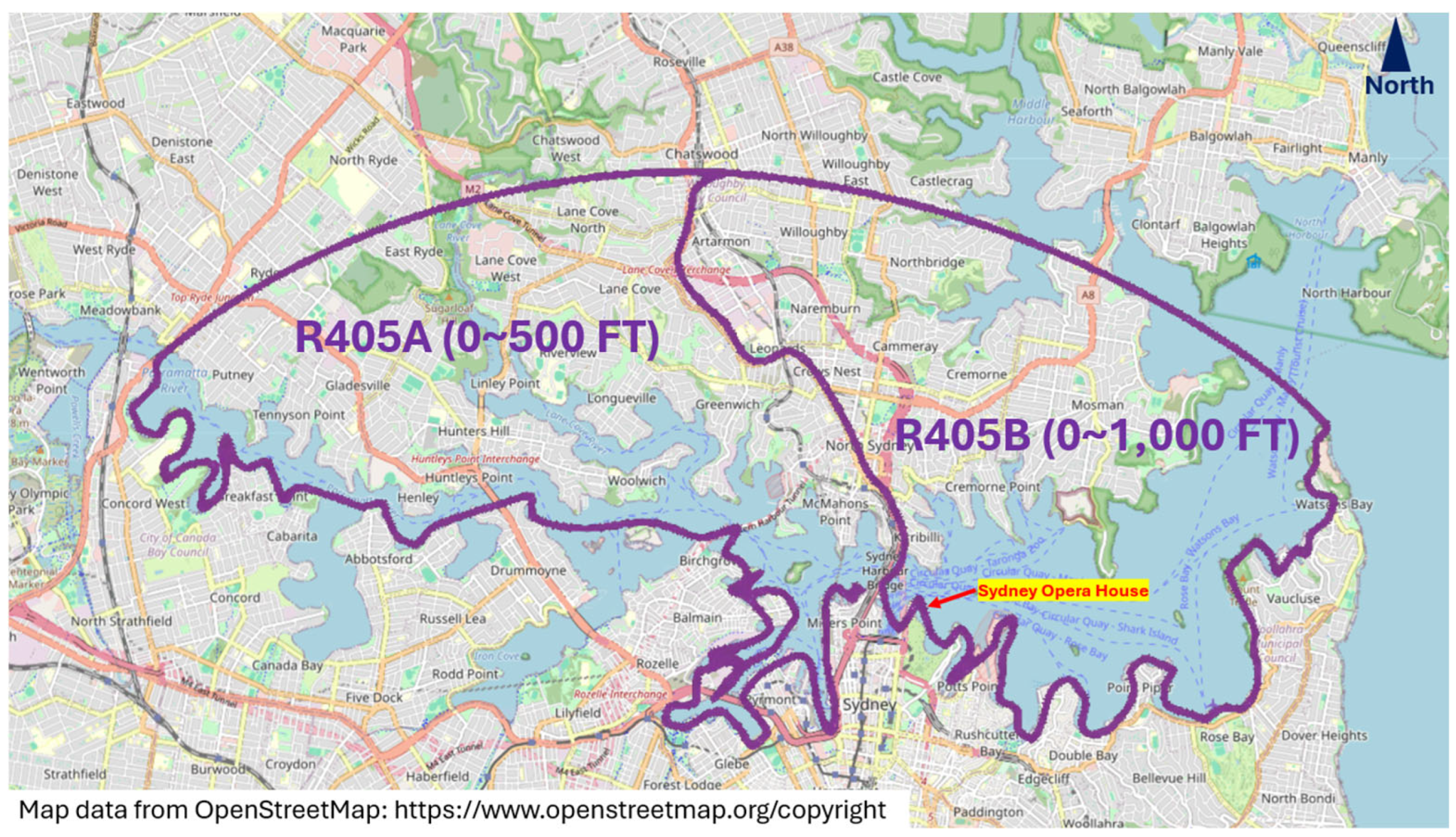
Figure 1. Sydney Harbour restricted airspace (source: restricted airspace boundaries added by authors on OpenStreetMap [53]). Map is for indicative purposes only. Boundaries are approximate and not to scale for navigation or operational use.
Drones 10 00019 g001
Figure 2. Histograms of kernel density on privacy risk ratings for the acceptance of recreational flying. Left: response = “No, it is too risky.” (n = 226). Right: response = “Yes, it is acceptable.” (n = 169).
Drones 10 00019 g002
Figure 3. Histograms of kernel density on privacy risk ratings for the acceptance of commercial filming. Left: response = “No, it is too risky.” (n = 124). Right: response = “Yes, it is acceptable.” (n = 271).
Drones 10 00019 g003
Figure 4. Histograms of kernel density on privacy risk ratings for the acceptance of environmental monitoring. Left: response = “No, it is too risky.” (n = 71). Right: response = “Yes, it is acceptable.” (n = 324).
Drones 10 00019 g004
Table 1. Summary of literature on acceptance of RPA.
RefFactor(s)Finding(s)
[7]Knowledge levelsDue to the lack of knowledge and experience with RPA, the public acceptance toward RPA operations is limited. In general, no significant relationship is observed.
[18]Perceived benefits (+)
Knowledge levels (+)
Gender (+)
RPA are not well-accepted at present except for public safety and scientific research applications. Commercial and hobby uses are not supported. Knowledge possessed by the public regarding the applications of RPA can affect their acceptance of this technology. The public sees RPA as a risky technology that directly interferes with their privacy. Women are less supportive of RPA use and more concerned about privacy than men.
[20]Perceived benefits (+)
Knowledge levels
A large majority know about RPA and associate them with military operations. The greatest support for civil RPA operations in this survey comes from knowing that RPAs are utilised for emergency and environmental activities, while surveillance and package deliveries were less supported. A lack of knowledge of RPA technology was influential in determining the acceptance of RPA in the eyes of the general public, although no relationship has been specified.
[21]Previous experience (+)
Knowledge levels (+)
Individuals with previous experience using RPA may have increased knowledge of RPA regulations and are therefore more likely to accept such operations. UAV use for recreational, commercial, or public management purposes poses significant implications for personal privacy, especially for an uninformed public.
[22]Knowledge levels (+)
Gender (+) Noise (−)
Privacy risk (−)
More than half of participants expressed that noise exposure would be a potential risk of RPA usage, and it was also found that the potential violation of privacy was the highest concern of participants. It was shown that information on RPA has positive effects on both reducing concerns and improving acceptance. Male respondents are more accepting toward civil RPA operations compared to females. Noise concerns are confirmed as an important factor for the acceptance of civil RPA, although the relationship has not been specified. Among those not concerned about noise, their concerns about the violation of privacy are the major factor.
[23]Perceived benefits (+)
Trust (+)
Privacy risk (−)
Increase in benefits of RPA operations to society increases acceptance. Increase in trust in the user and the level of control and regulations increases acceptance. Risk of privacy breached was of concern to many participants.
[25]Perceived benefits (+)
Gender (+)
Public support of RPA leaned toward its usage for emergency services for security and safety, as opposed to private sector use. Men are more likely to accept the use of RPA for law enforcement applications.
[26]Perceived benefits (+)
Usefulness (+)
Noise (−)
Safety, environmental friendliness, and the usefulness of the technology result in increased acceptance. Higher noise levels lead to lower acceptance.
[27]Social factorsJob losses for pilots resulted in concern among the public, influencing the acceptance of the technology and this is not due to the risks associated with the technology. Social factors have an influence on the acceptance of RPA in the public domain, although no direction has been found.
[28]Gender (+)Females tend to be more risk-averse and more cautious with privacy concerns.
[29]Age (+)
Gender (+)
Older people are more supportive of the use of RPA compared to younger people, especially for rescue and emergency uses. Women are less supportive of RPA use and more concerned about privacy than men.
[32]Age (−)
Perceived risks (−)
Knowledge levels (+)
Noise (−)
Privacy and safety risks emerge as the main concerns, whereas noise is viewed as a relatively minor issue. Greater RPA knowledge levels predict stronger acceptance, while age is the most influential factor shaping perceived risks.
[33]Perceived benefits (+)There is a high approval rate for RPAs that serve public interests, such as rescue operations and traffic monitoring. In contrast, private RPA operations were met with lower rates of approval, mainly due to privacy concerns.
[36]Knowledge levels (+)RPA knowledge emerges as one of the strongest predictors of acceptance, with individuals who are more familiar with RPA showing higher support and reduced concern, especially regarding privacy and safety risks.
[37]Perceived risk (−)
Perceived benefits (+)
Knowledge levels (+)
The public in Singapore generally has good knowledge of RPA, but acceptance varies strongly by context. Acceptance in residential settings is driven primarily by perceived risks, whereas acceptance in commercial, industrial, and recreational areas is shaped more by perceived benefits. The public sees clear advantages in RPA use, yet safety and privacy concerns remain key barriers in sensitive environments.
[39]Perceived benefits (+)There is greater public support for RPA operations that pose benefits to the society. Many felt that benefits of these RPA operations outweigh the risks.
[45]Perceived risks (−)Perceived risks (privacy, safety, noise, and financial concerns) do not significantly reduce acceptance overall; however, privacy risk becomes influential among users with previous RPA experience, and safety risk has a stronger negative effect among female respondents.
[46]Perceived risks (−)Perceived privacy risk is a major barrier to RPA delivery acceptance, as it significantly lowers performance expectancy, effort expectancy, facilitating conditions, and social influence. Conversely, performance expectancy and facilitating conditions exert strong positive effects on attitudes toward RPA delivery, whereas social influence and effort expectancy do not show significant contributions. Consumers are willing to adopt RPA delivery when they view it as beneficial and supported by adequate infrastructure, yet privacy concerns remain the most substantial obstacle to acceptance.
[47]Perceived benefits (+)
Privacy risk
Public perception of RPA in Switzerland was dependent on the purpose and location of usage. The public, in general, accepts RPA for military and policing use, but was generally not in favour of commercial and private uses of RPA. Privacy risk only partially explains the social acceptance of RPA usage, although no specific direction has been specified.
[49]Perceived benefits (+)
Perceived risks (−)
Perceived benefits (e.g., faster rescue response, improved safety outcomes, enhanced surveillance coverage) significantly increase public acceptance. In contrast, perceived risks (e.g., fears of RPA being dangerous objects, concerns about physical harm, being frightened by low-flying devices, general discomfort with their presence) significantly decrease public acceptance.
[50]Perceived benefits (+)More than half of the general public supported the applications of RPA, but demonstrated higher support for applications such as homeland security, law enforcement, search and rescue, and commercial applications.
[51]Perceived benefits (+)Public perception of RPA in carrying cargo and passengers found that there was immense support for RPA in delivering cargo. In contrast, the use of unmanned RPA in transporting passengers was opposed, given that there would not be a pilot onboard to monitor the operation.
Table 2. Factors and the specificity.
Factors and the Specificity
1.Gender-
2.Age-
3.Previous experienceOwning a drone; Frequency of drone usage; Frequency of drone encounter
4.Knowledge levelsKnowledge scores out of 10
5.Perceived benefitI think this drone activity benefits society; Overall, the benefits and usefulness outweigh the risks of this drone activity (1 = strongly disagree, 7 = strongly agree).
6.TrustI trust the drone pilot; I trust the drone technology; I trust the organisation overseeing/regulating/governing this activity (1 = strongly disagree, 7 = strongly agree).
7.NoiseIn this situation, drone noise is an issue for me (1 = strongly disagree, 7 = strongly agree).
8.Risk perceptionMid-air collision (0–100); Ground impact risk (0–100); Privacy risk (0–100).
Table 3. The sample characteristics and prominent descriptive statistics (n = 395).
VariablenPercentage (%)
Gender
Male20248.61
Female19251.14
Prefer not to answer10.25
Age
20s7920
30s9624.3
40s6416.2
50s4711.9
Over 60s10927.6
Yearly income
Under $30,000217.85
$30,001–$70,00011428.86
$70,001–$100,0006516.46
$100,001–$140,0007920
$140,000–$200,0006416.2
Over $200,000256.33
Prefer not to answer174.3
Residential distance from Sydney Harbour
<2.5 km5112.94
2.5–5 km184.57
5–7.5 km235.84
7.5–10 km184.57
Beyond 10 km25765.23
Previous experience
Own a drone8621.77
Operated a drone14135.57
Encountered a drone28572.15
Beach/sea6723.28
From my residence5218.25
Local parks/fields5118.11
National parks/hiking trails186.32
Office20.7
Sporting events186.32
Others103.51
Table 4. Acceptable levels and perceived risk compared to manned aircraft for the three operations (n = 395).
RPA OperationProportion of AcceptanceSafety Level Compared to Manned Aircraft
Yes, It Is AcceptableNo, It Is Too RiskyRiskierSame LevelSafer
Recreational Flying42.8%57.2%38.5%24.5%37.0%
Commercial Filming68.6%31.4%27%29.4%43.6%
Environmental Monitoring82.0%18.0%21.5%33.7%44.8%
Table 5. Summary of factors and statistical significance with acceptance (only those with statistical significance below 10% level shown; please contact the authors for all results).
X VariableRecreational FlyingCommercial FilmingEnvironmental Monitoring
Odds RatioStandard Errorz-Testp-ValueOdds
Ratio
Standard
Error
z-Testp-ValueOdds RatioStandard Errorz-Testp-Value
Age------------
Gender (male)--------2.030.751.930.053
Previous experience (own)3.071.32.650.008--------
Previous experience encounter------------
Knowledge levels0.880.06−2.00.0480.880.06−2.10.039----
Trust in pilot1.600.203.710.01.350.22.010.0441.750.313.160.002
Trust in RPA1.430.242.170.03--------
Trust in organisation------------
Benefits the society------------
Benefits outweigh the risks1.350.202.00.0421.440.242.160.0311.490.301.990.047
Mid-air collision risk------------
Ground impact risk--------0.90.11−2.30.023
Privacy risk0.970.01−3.50.0010.960.01−4.80.00.960.01−3.30.001
Noise------------
n = 395 LR
Chi2(14) = 252.45
p-value = 0.0000
Pseudo-R2 = 0.4681
Log likelihood = −143.44
Area under the ROC curve = 0.92
n = 395 LR
Chi2(14) = 191.59
p-value = 0.0000
Pseudo-R2 = 0.3898
Log likelihood = −149.98
Area under the ROC curve = 0.88
n = 395 LR
Chi2(14) = 144.56
p-value = 0.0000
Pseudo-R2 = 0.3885
Log likelihood = −113.77
Area under the ROC curve = 0.91
Table 6. General public responses to the knowledge quiz.
QuestionTRUEFALSEUncertainCorrect %
1Apart from anyone helping you control or navigate your drone; you must fly your drone at least 30 m away from other people.59.24%7.6%33.16%59.24%
2You can fly within 5.5 km of a controlled airport (e.g., Sydney Kingsford Smith airport) if your drone weighs more than 250 g.17.97%43.80%38.23%43.80%
3You can only fly one drone at a time.52.91%9.62%37.47%52.91%
4You can fly a drone in Sydney Harbour during the night if your drone has lights on it.18.99%36.96%44.05%36.96%
5It is ok to fly your drone in foggy conditions.8.61%63.29%28.10%63.29%
6You can fly your drone in a populous area (such as a crowded beach) if visibility and conditions are good.23.29%41.52%35.19%41.52%
7If you intend to fly your drone for or at work (commercially), you must register your drone and obtain an operator accreditation (or remote pilot licence) to fly it.67.85%5.06%27.09%67.85%
8CASA—the Civil Aviation Safety Authority—oversees drone safety and enforcement in Australia, including breach of privacy.60.00%5.32%34.68%60.00%
9You can fly a drone in Sydney Harbour over waters as long as it is not over people.31.39%25.06%43.54%25.06%
10You need to seek permission from CASA to fly a drone in Sydney Harbour for fun if the drone is over 250 g.24.30%36.20%39.50%24.30%
Table 7. Proportions of attitudes on perceived benefits.
RPA OperationsBenefit SocietyBenefits Outweigh the Risks
Disagree (%)Indifferent (%)Agree (%)Disagree (%)Indifferent (%)Agree (%)
Recreational flying44.8123.831.3942.2824.8132.91
Commercial filming22.2832.1545.5717.9729.3752.66
Environmental monitoring8.6116.7174.689.8719.570.63
Table 8. Proportions of attitudes on trust.
RPA OperationsTrust PilotTrust RPATrust Organisation
Do not trust (%)Indifferent (%)Trust (%)Do not trust (%)Indifferent (%)Trust (%)Do not trust (%)Indifferent (%)Trust (%)
Recreational flying47.3423.0429.6222.0323.5454.4328.125.3246.58
Commercial filming18.4820.2561.2712.4119.4968.118.2318.4863.29
Environmental monitoring13.4216.4570.1311.6517.2171.149.1115.775.19
Table 9. Summary table for the empirical findings.
FactorExpected ResultResultTypes of Operation
AgeNot applicableNot significantNil
GenderMen are more likely to accept RPA operationsMen are more likely to accept RPA operationsEnvironmental monitoring
Previous experiencePositivePositive, specifically for those who own RPARecreational
Knowledge levelsNot applicableNegative (greater knowledge, less acceptance)Recreational flying; Commercial filming
TrustPositivePositive, specifically trust in the pilotRecreational flying; Commercial filming; Environmental monitoring
Perceived benefitsPositivePositive, specifically for the benefits that outweigh the risksRecreational flying; Commercial filming; Environmental monitoring
Mid-air collision riskNot applicableNot significantNil
Ground impact riskNot applicableNegativeEnvironmental monitoring
Privacy riskNegativeNegativeRecreational flying; Commercial filming; Environmental monitoring
NoiseNegativeNot significantNil
Note: “Not applicable” indicates that, to the best of the authors’ knowledge, no directly relevant literature is identified.
Disclaimer/Publisher’s Note: The statements, opinions and data contained in all publications are solely those of the individual author(s) and contributor(s) and not of MDPI and/or the editor(s). MDPI and/or the editor(s) disclaim responsibility for any injury to people or property resulting from any ideas, methods, instructions or products referred to in the content.