

Performance Analysis of Uplink Opportunistic Scheduling for Multi-UAV-Assisted Internet of Things

Highlights
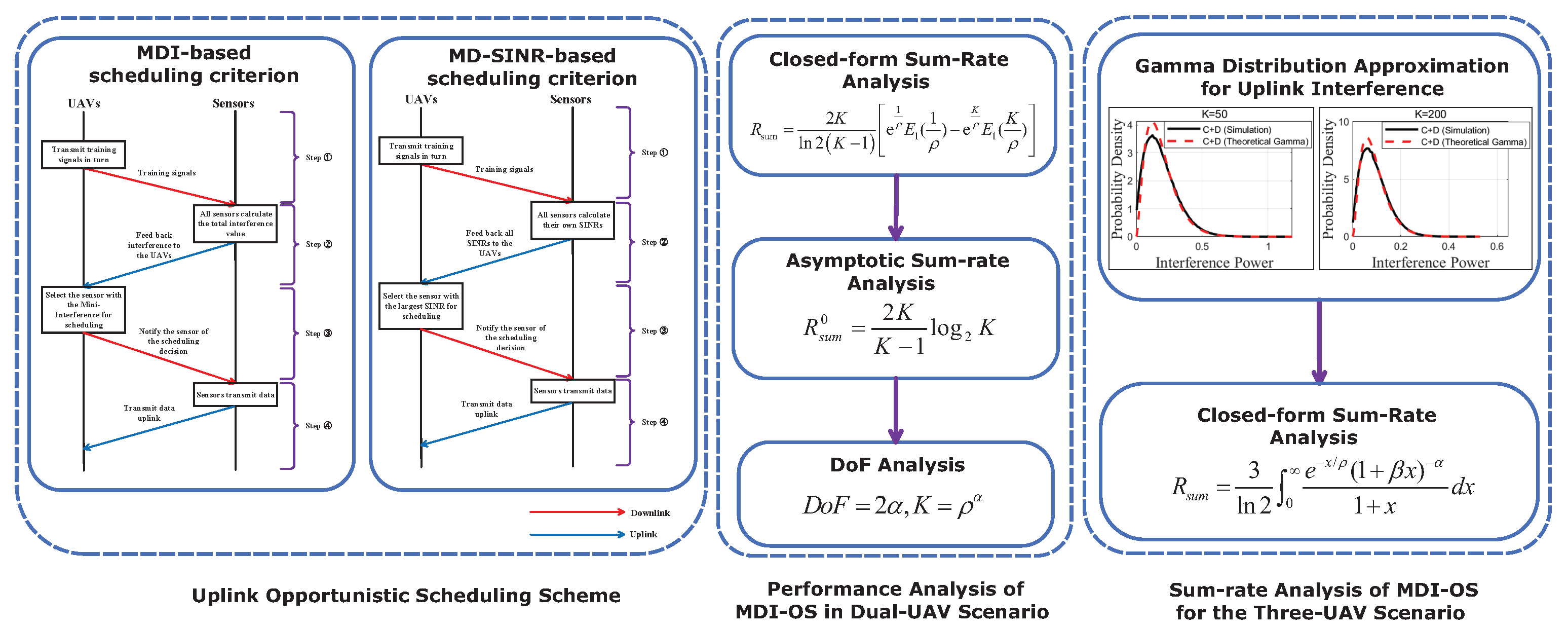
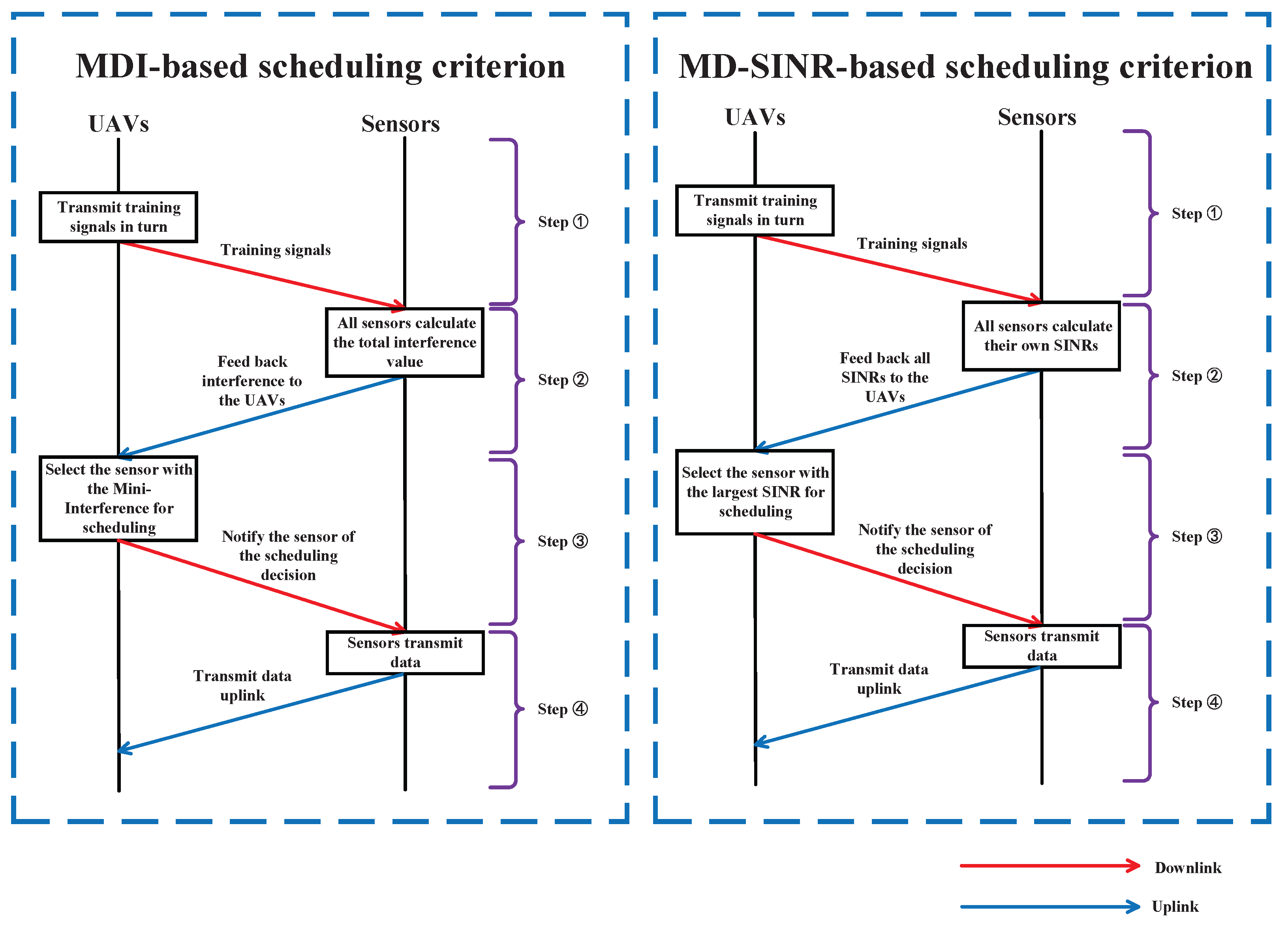
- This paper proposes a low-overhead uplink opportunistic scheduling framework leveraging channel reciprocity. To address the prohibitive uplink training overhead resulting from conventional downlink scheduling methods, we innovatively utilize minimum downlink interference (MDI) and the maximum downlink signal-to-interference-plus-noise ratio (MD-SINR) as criteria for scheduling uplink users, effectively reducing system overhead while fully exploiting multiuser diversity gains.
- Rigorous closed-form sum rate performance are provided for both dual-unmanned aerial vehicle (UAV) and three-UAV deployment scenarios under the MDI scheduling criterion. We further derive closed-form expressions for the asymptotic sum rate and prove that the dual-UAV system can achieve a total of degrees of freedom (DoF) when the number of users scales as , with denoting the transmitted signal-to-noise ratio (SNR).
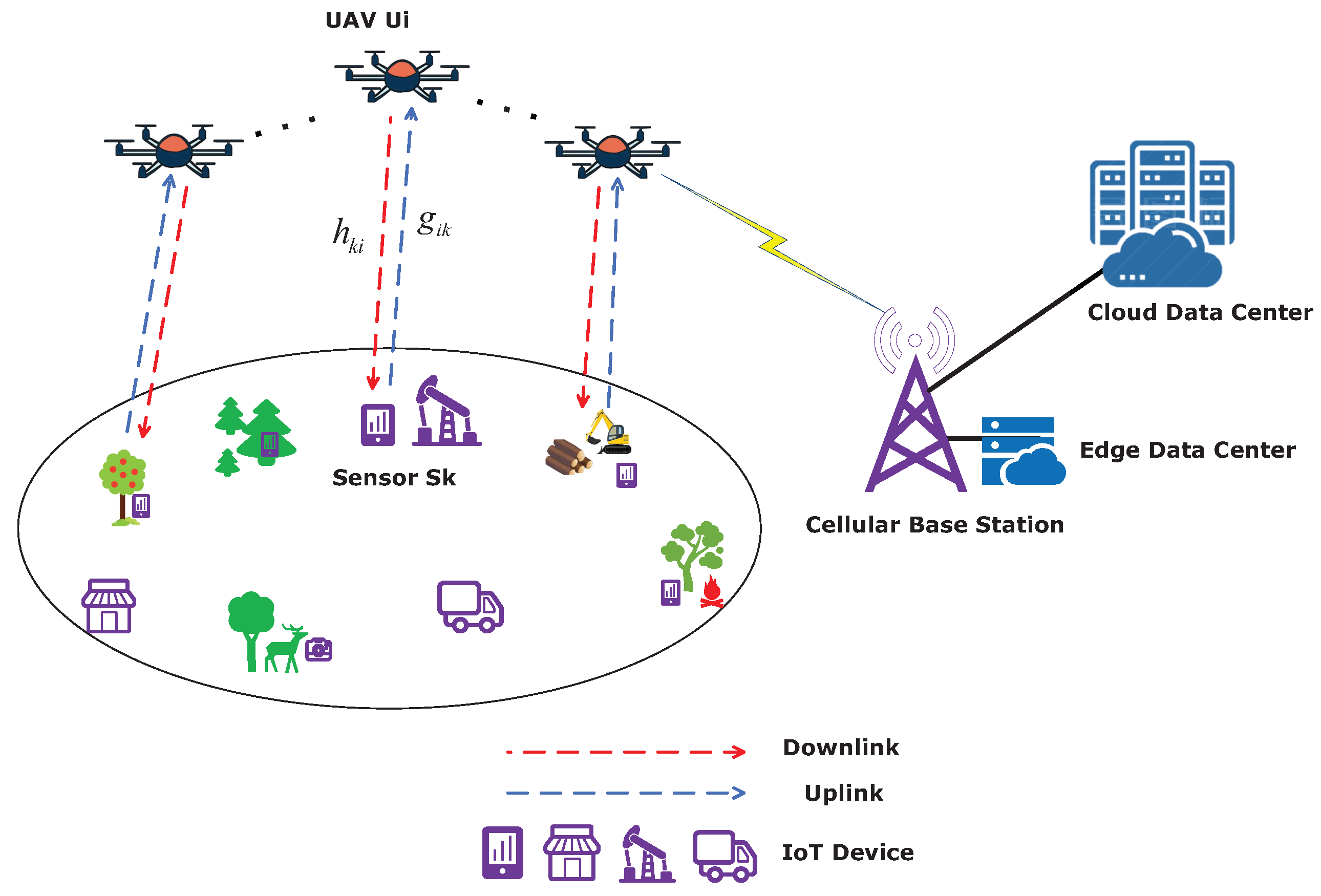
- The proposed scheme offers an efficient scheduling solution for low-power, large-scale Internet of Things (IoT) data collection. By significantly reducing uplink channel training overhead, it enables UAVs to efficiently serve massive low-power ground sensors, making it particularly suitable for infrastructure-less scenarios such as environmental monitoring and disaster relief in remote areas.
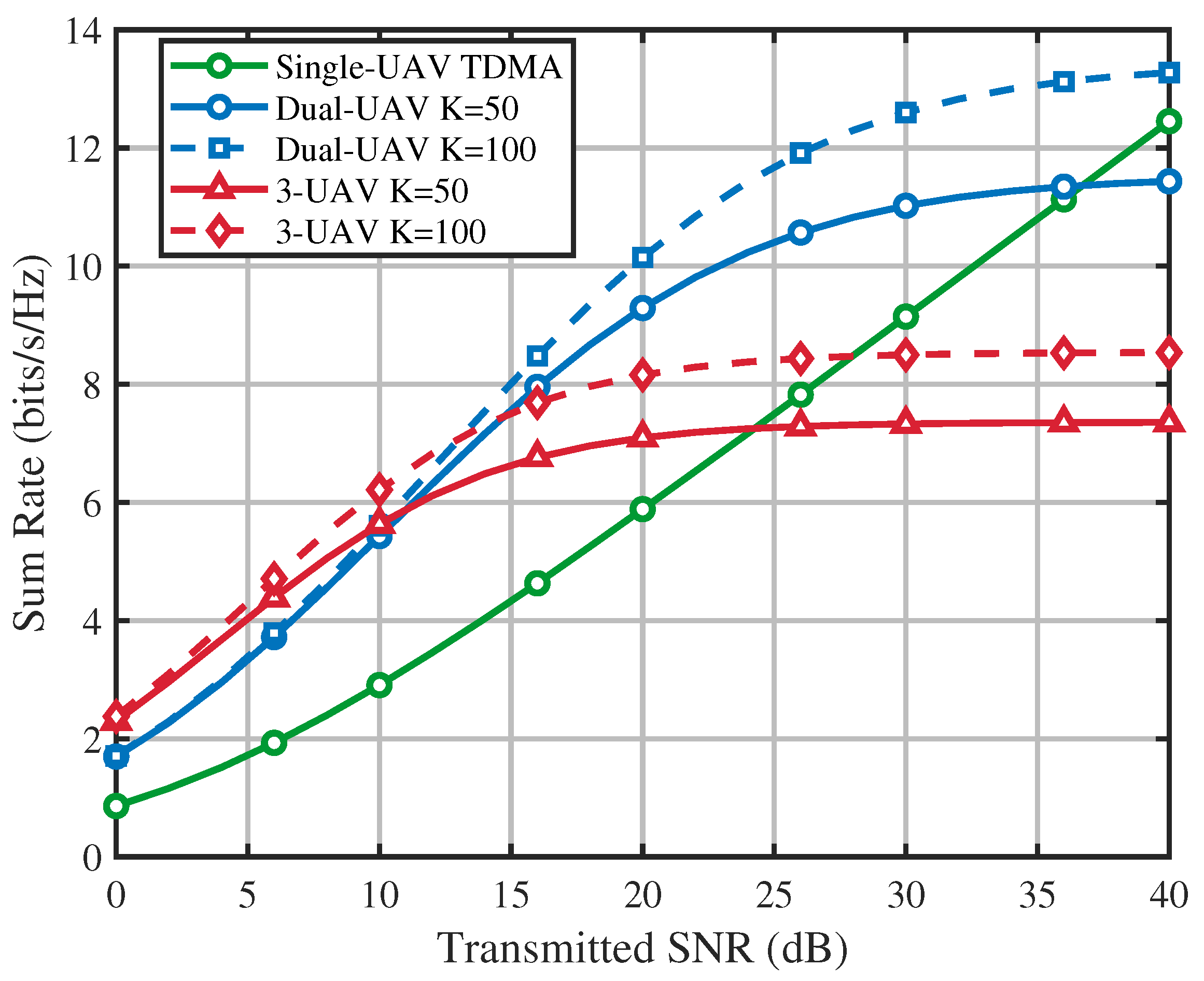
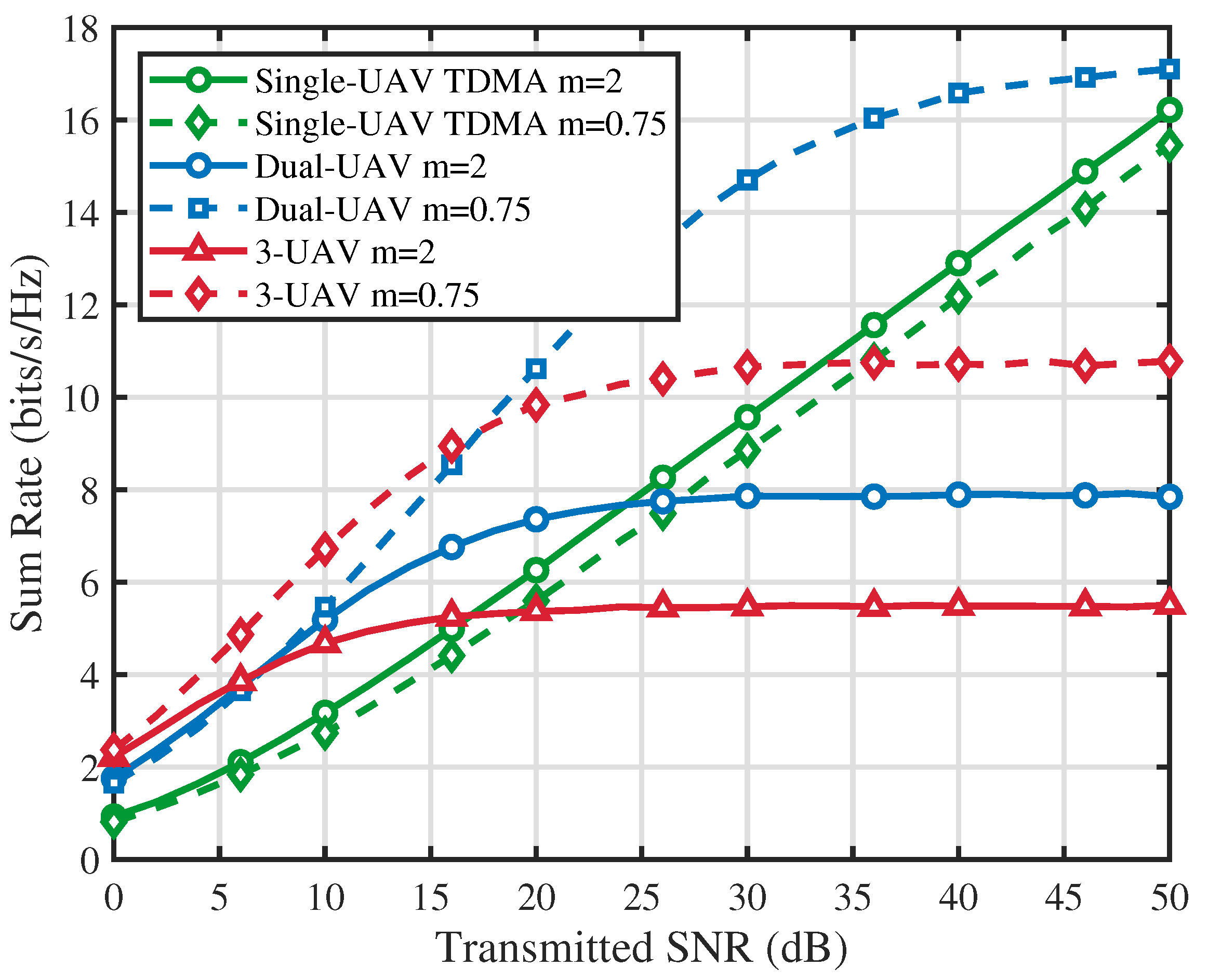
- The findings reveal an adaptive relationship between the number of deployed UAVs and the transmission strategy. Simulation results demonstrate that a dual-UAV deployment achieves superior performance over single- or three-UAV deployments at medium transmitted SNR levels, providing key theoretical guidance for dynamically selecting the optimal deployment strategy based on transmit power in practical systems.
Abstract
1. Introduction
- We first propose a low-complexity and low-overhead OS strategy for uplink UAV-IoT scenarios. By leveraging channel reciprocity, we utilize downlink interference and downlink SINR as scheduling metrics for uplink users and design user scheduling procedures based on minimum downlink interference (MDI) and maximum downlink SINR (MD-SINR).
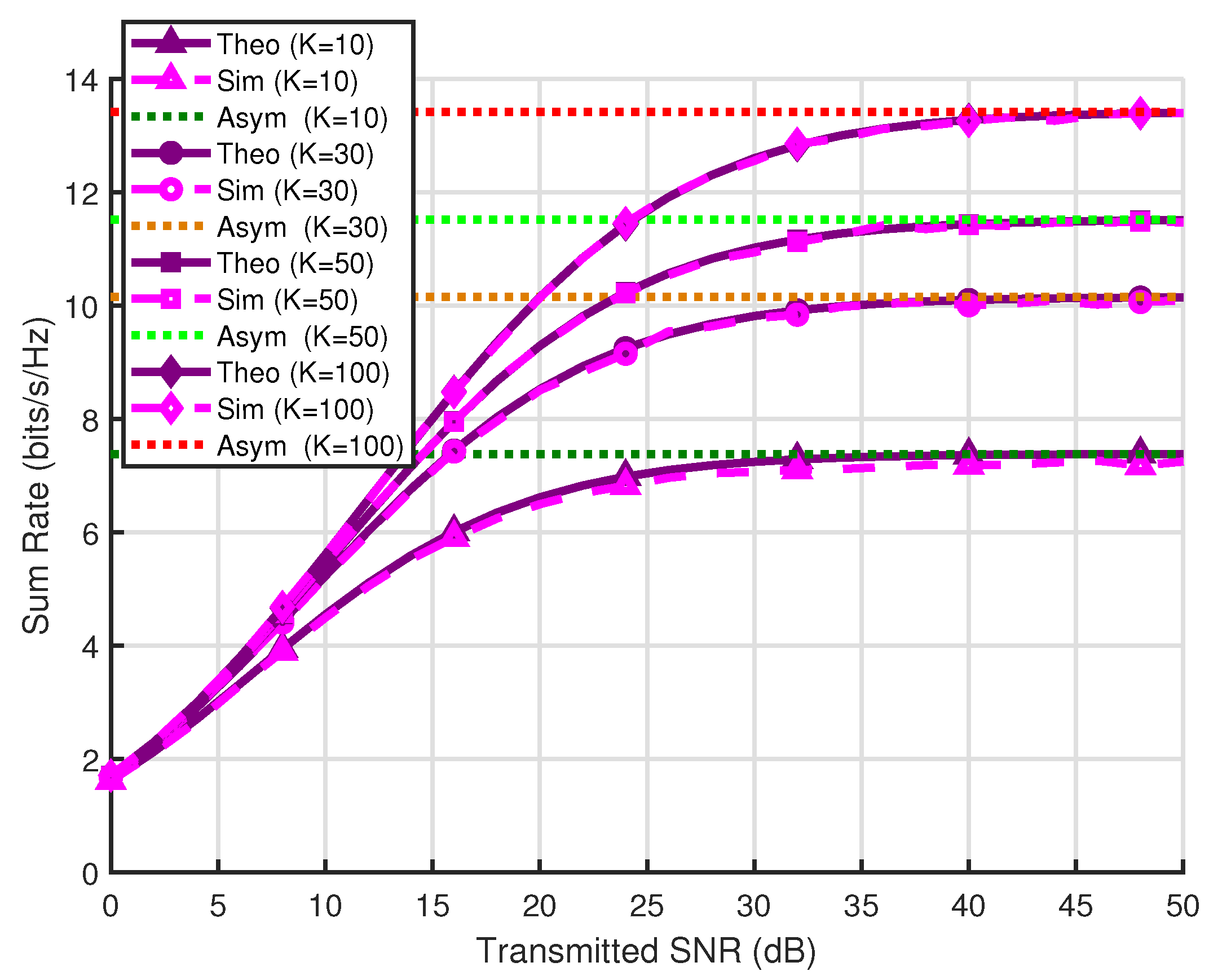
- For the dual-UAV deployment case over Rayleigh block fading channels with the MDI scheduling criterion, we derive closed-form expressions for the sum rate and the asymptotic sum rate as the transmitted SNR is finite and approaches infinity, respectively, and analyze the DoF performance. The DoF analysis results show that when the number of sensors K scales as , the system can sustain a total DoF of where is the transmitted SNR.
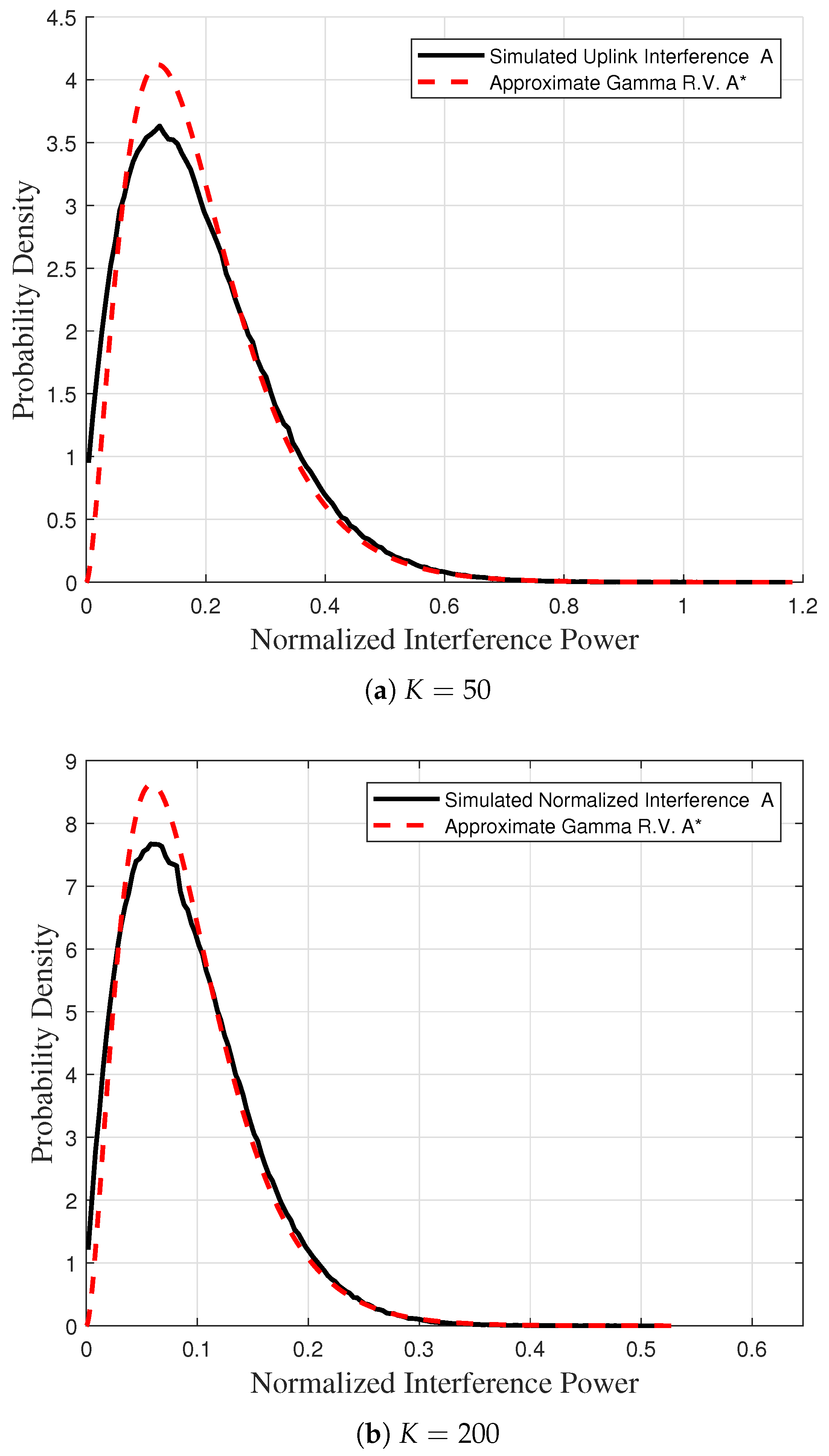
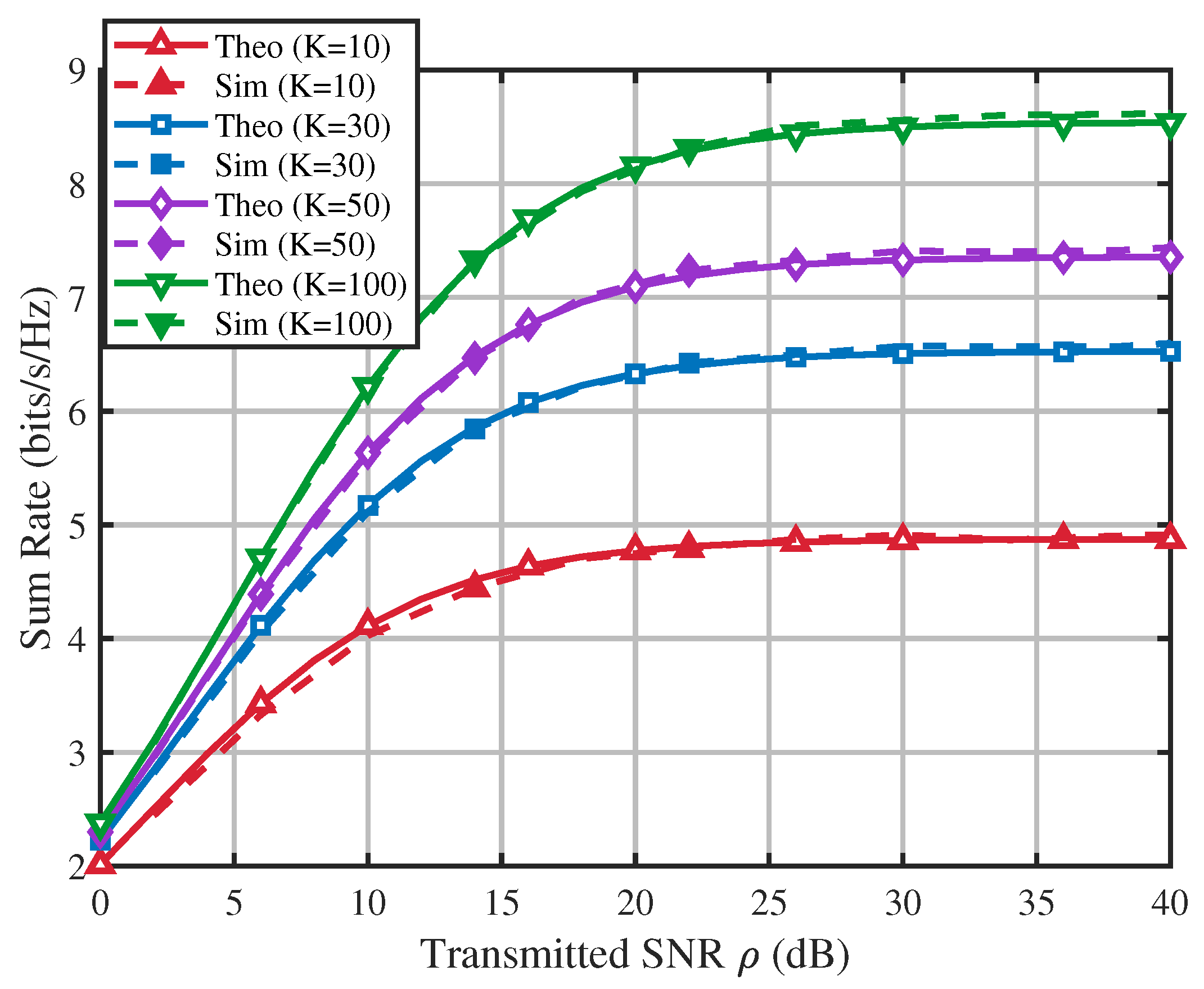
- For the three-UAV deployment case over Rayleigh block fading channels, by approximating the uplink user interference with a Gamma distribution, we obtain the average sum rate expression under the MDI scheduling criterion.
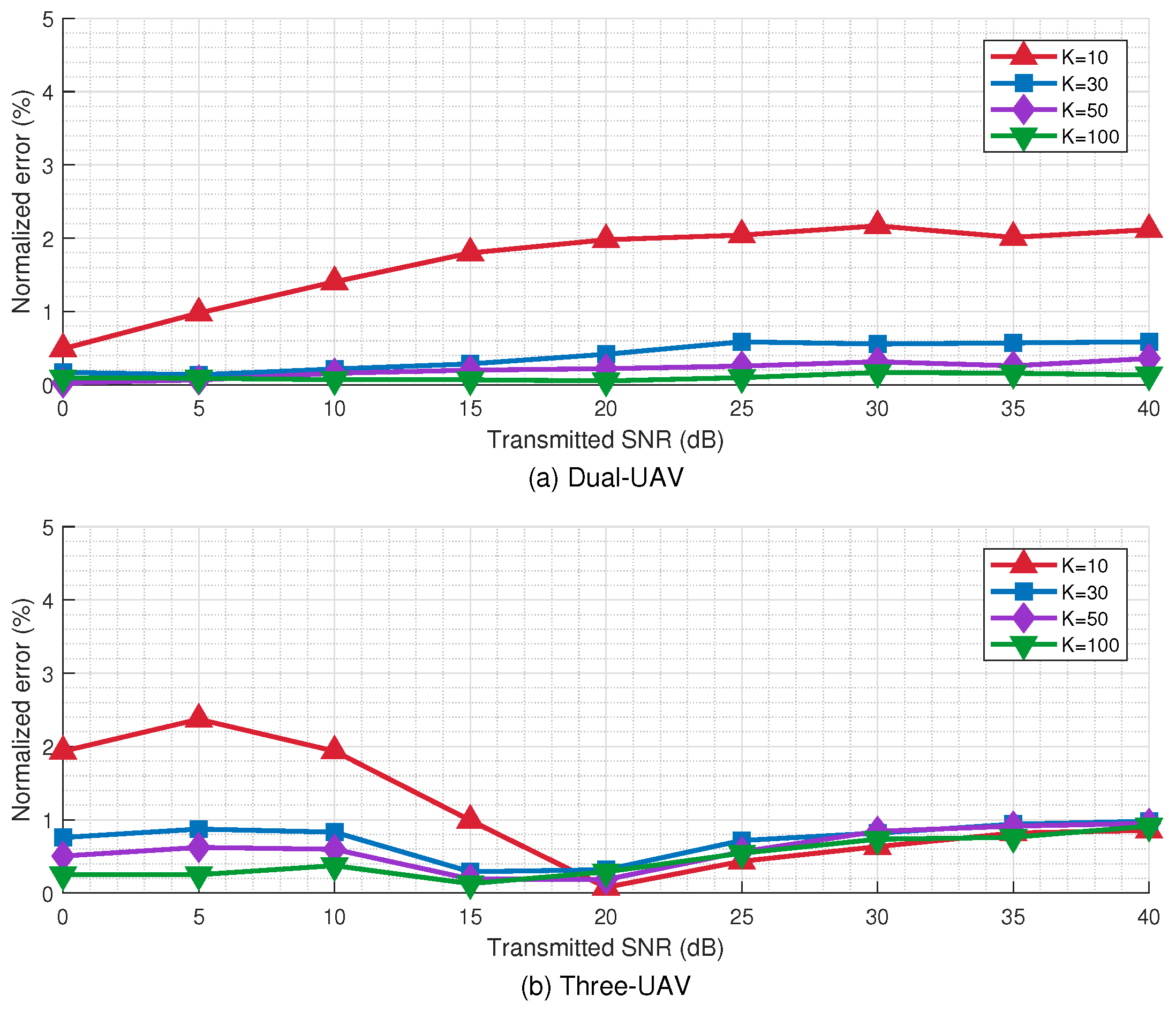
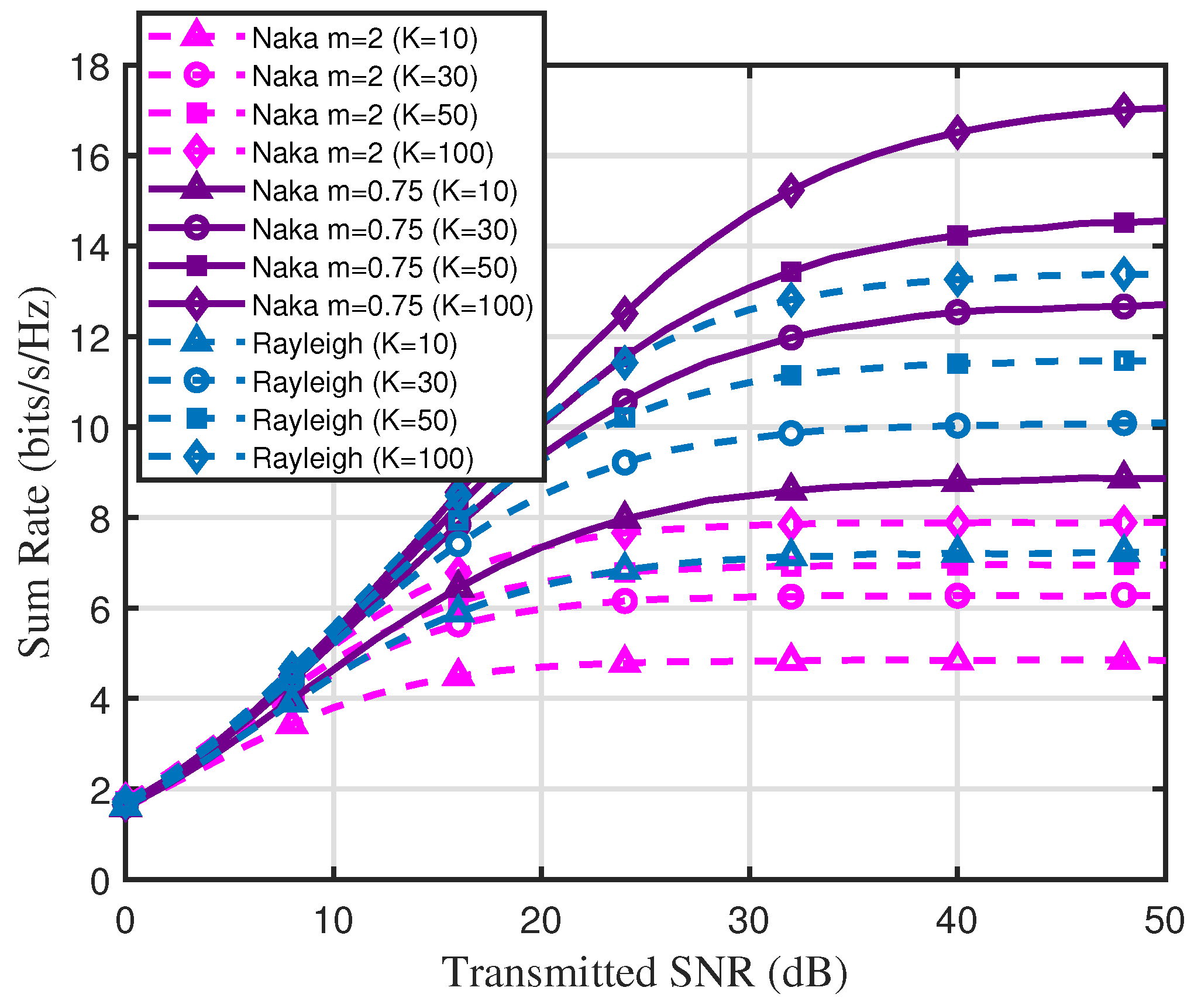
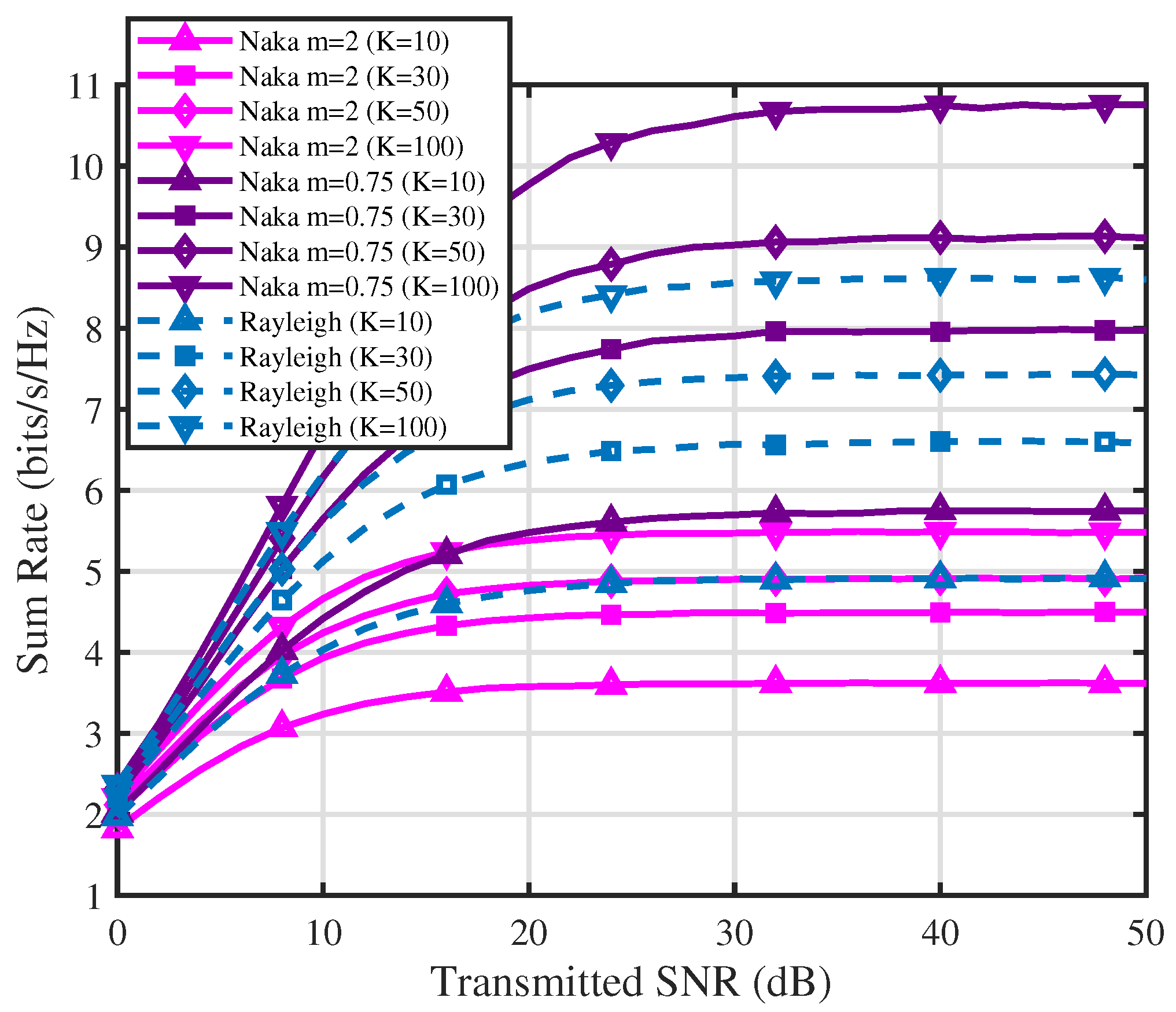
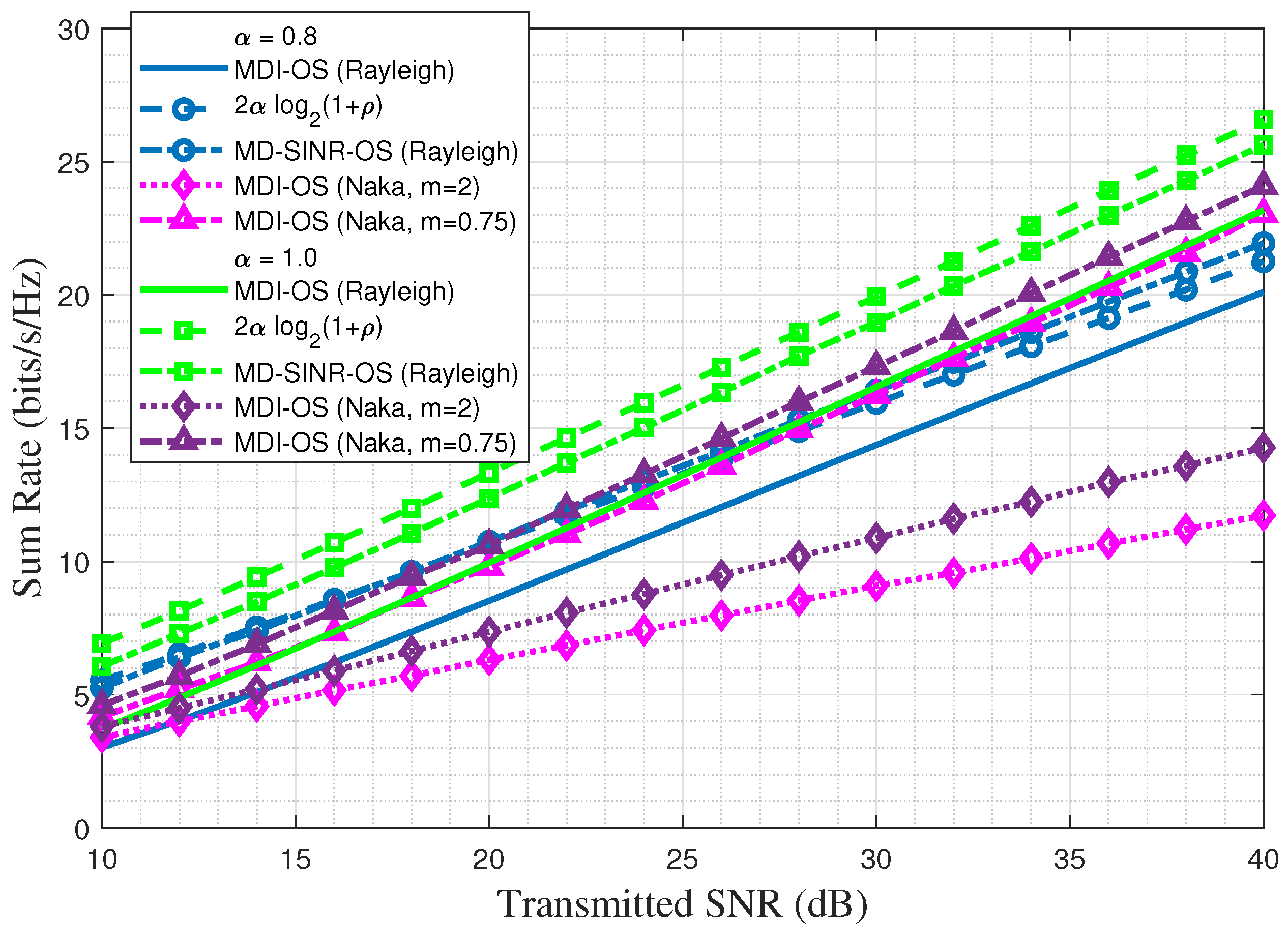
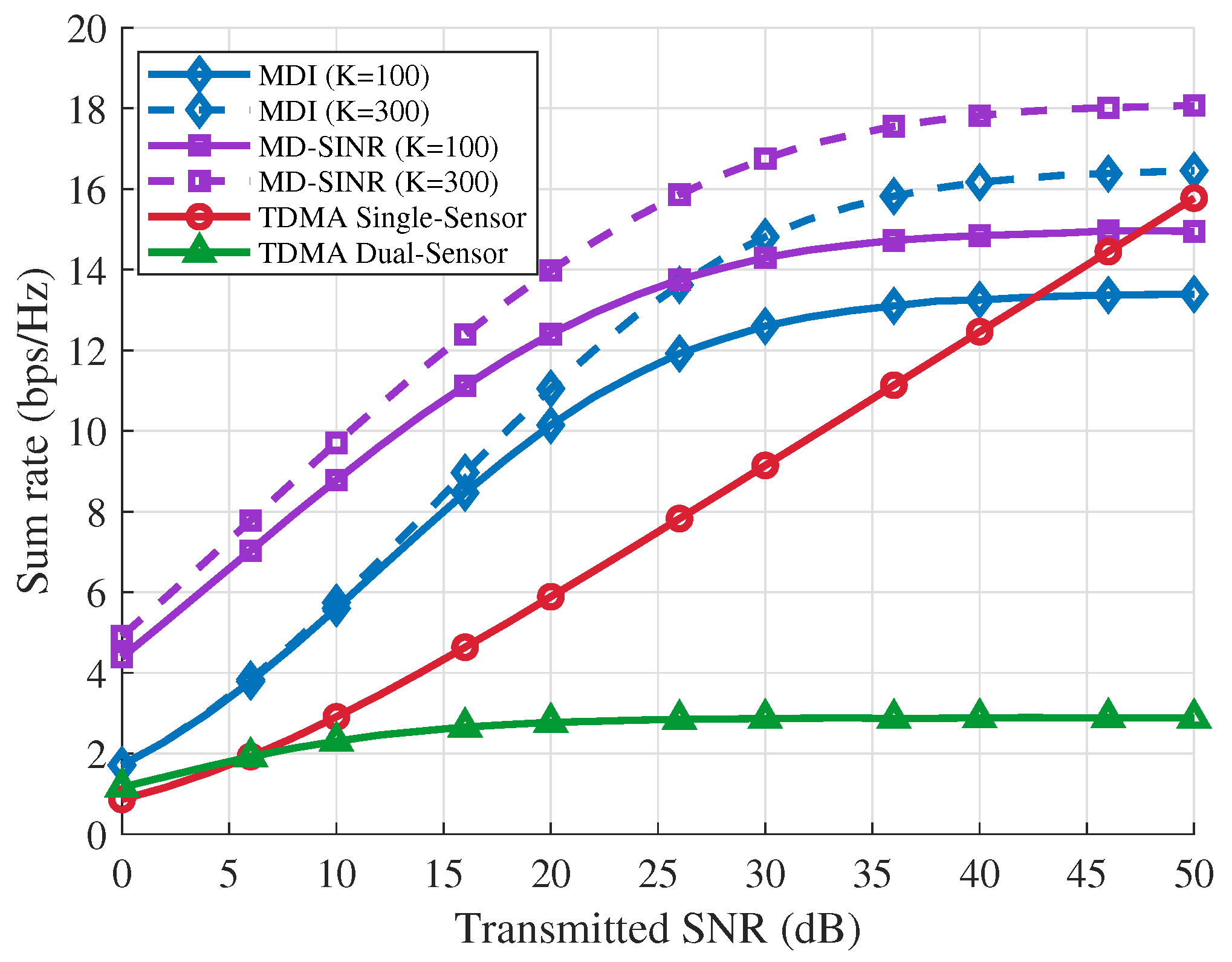
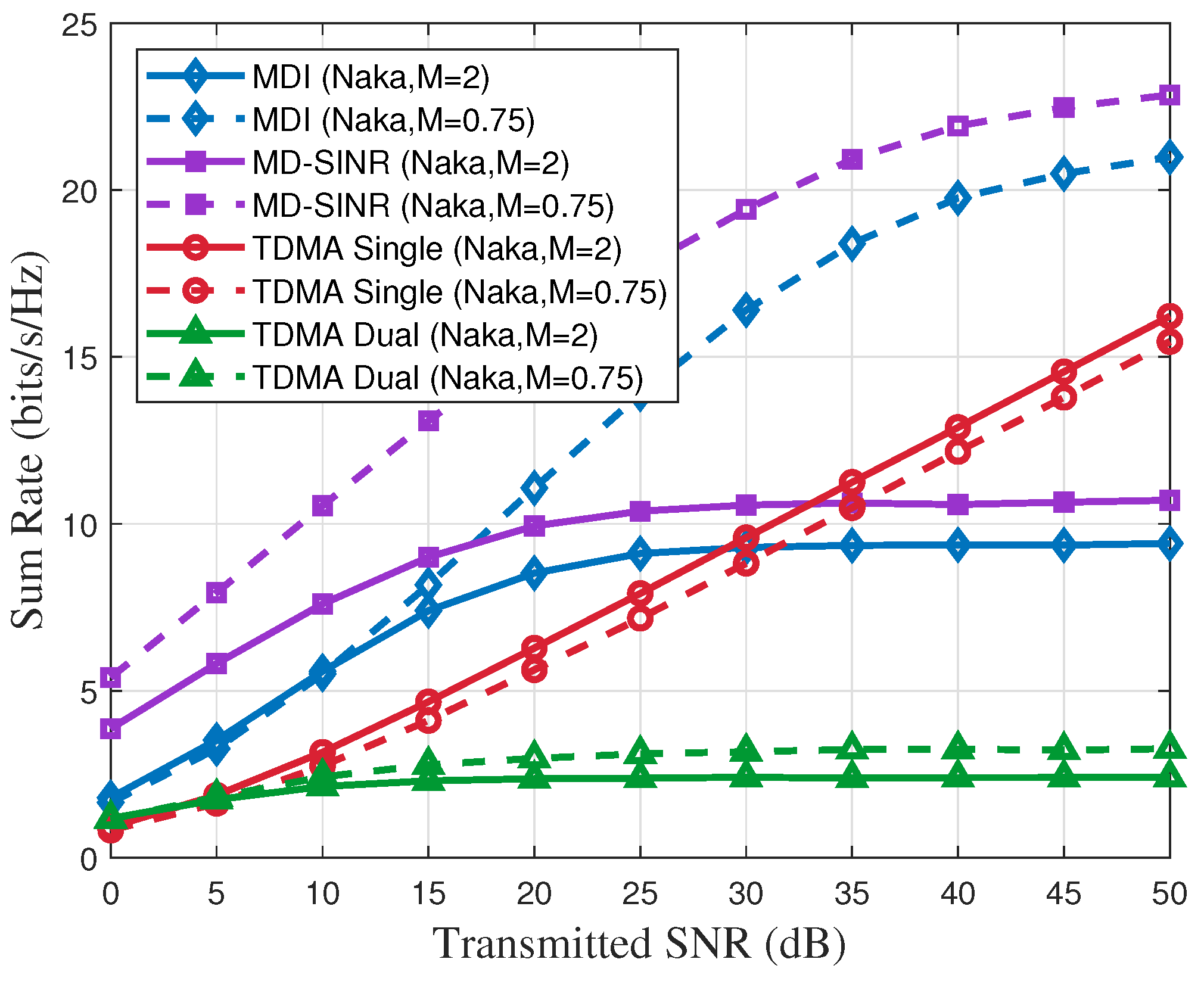
- We perform Monte Carlo simulations to validate the correctness of the theoretical analysis showing a normalized error of less than 1%. The simulation results under Nakagami-m fading channels reveal that the system sum rate and DoF decrease with the parameter m. Moreover, in the medium-to-high transmitted SNR regime, deploying two UAVs yields a higher system sum rate compared with deploying more UAVs or only one UAV.

2. System Model
3. Uplink Opportunistic Scheduling Based on Channel Reciprocity
3.1. Principle of Uplink Opportunistic Scheduling
3.2. Procedures of MDI and MD-SINR Scheduling

3.3. Complexity Analysis
4. Performance Analysis of MDI-Based OS for the Dual-UAV Scenario
4.1. Average Achievable Sum Rate Analysis
4.2. Asymptotic Sum Rate Analysis
4.3. DoF Analysis
5. Sum Rate Analysis of MDI-Based OS for the Three-UAV Scenario
5.1. Distribution of Normalized Downlink Interference
5.2. Approximation of Normalized Uplink Interference A
5.3. Kolmogorov–Smirnov Test
6. Simulation Results
6.1. Comparison of Theoretical and Simulation Results Under Rayleigh Channel
6.2. Sum Rate Performance of MDI-OS Under Rayleigh and Nakagami Channels
6.3. DoF Performance
6.4. Sum Rate Performance of Different Transmission Strategies in Dual-UAV Scenario
6.5. Sum Rate Performance of Different UAV Numbers
7. Conclusions
Author Contributions
Funding
Data Availability Statement
Acknowledgments
Conflicts of Interest
Appendix A
References
- Ni, J.; Lin, X.; Shen, X.S. Efficient and Secure Service-Oriented Authentication Supporting Network Slicing for 5G-Enabled IoT. IEEE J. Sel. Areas Commun. 2018, 36, 644–657. [Google Scholar] [CrossRef]
- Lu, H.; He, X.; Du, M.; Ruan, X.; Sun, Y.; Wang, K. Edge QoE: Computation Offloading With Deep Reinforcement Learning for Internet of Things. IEEE Internet Things J. 2020, 7, 9255–9265. [Google Scholar] [CrossRef]
- Wang, J.; Liang, Y.C.; Sun, S. Multi-User Multi-IoT-Device Symbiotic Radio: A Novel Massive Access Scheme for Cellular IoT. IEEE Trans. Wirel. Commun. 2024, 23, 11876–11889. [Google Scholar] [CrossRef]
- Ballal, K.D.; Singh, R.; Dittmann, L. Real-Time Remote Heart Monitoring Using Cellular IoT Network. In Proceedings of the 2022 IEEE International Conference on Advanced Networks and Telecommunications Systems (ANTS), Gandhinagar, India, 18–21 December 2022; pp. 1–6. [Google Scholar] [CrossRef]
- Plastras, S.; Tsoumatidis, D.; Skoutas, D.N.; Rouskas, A.; Kormentzas, G.; Skianis, C. Non-Terrestrial Networks for Energy-Efficient Connectivity of Remote IoT Devices in the 6G Era: A Survey. Sensors 2024, 24, 1227. [Google Scholar] [CrossRef]
- Nguyen, D.C.; Ding, M.; Pathirana, P.N.; Seneviratne, A.; Li, J.; Niyato, D.; Dobre, O.; Poor, H.V. 6G Internet of Things: A Comprehensive Survey. IEEE Internet Things J. 2022, 9, 359–383. [Google Scholar] [CrossRef]
- Hua, M.; Wu, Z.; Zhang, C.; Xu, Z.; Liu, X.; Zhou, W. Random Access Preamble Design for 6G Satellite–Terrestrial Integrated Communication Systems. Sensors 2025, 25, 5602. [Google Scholar] [CrossRef]
- Paniagua-Gómez, M.; Fernandez-Carmona, M. Trends and Challenges in Real-Time Stress Detection and Modulation: The Role of the IoT and Artificial Intelligence. Electronics 2025, 14, 2581. [Google Scholar] [CrossRef]
- Ma, H.; Tao, Y.; Fang, Y.; Chen, P.; Li, Y. Multi-Carrier Initial-Condition-Index-Aided DCSK Scheme: An Efficient Solution for Multipath Fading Channel. IEEE Trans. Veh. Technol. 2025, 74, 15743–15757. [Google Scholar] [CrossRef]
- Bushnaq, O.M.; Chaaban, A.; Al-Naffouri, T.Y. The Role of UAV-IoT Networks in Future Wildfire Detection. IEEE Internet Things J. 2021, 8, 16984–16999. [Google Scholar] [CrossRef]
- He, Y.; Wang, D.; Huang, F.; Zhang, R.; Min, L. Aerial-Ground Integrated Vehicular Networks: A UAV-Vehicle Collaboration Perspective. IEEE Trans. Intell. Transp. Syst. 2024, 25, 5154–5169. [Google Scholar] [CrossRef]
- Pandey, G.K.; Gurjar, D.S.; Yadav, S.; Jiang, Y.; Yuen, C. UAV-Assisted Communications with RF Energy Harvesting: A Comprehensive Survey. IEEE Commun. Surv. Tutor. 2025, 27, 782–838. [Google Scholar] [CrossRef]
- Poorvi, J.; Kalita, A.; Gurusamy, M. Reliable and Efficient Data Collection in UAV based IoT Networks. IEEE Commun. Surv. Tutor. 2025. [Google Scholar] [CrossRef]
- Nguyen, M.T.; Nguyen, C.V.; Do, H.T.; Hua, H.T.; Tran, T.A.; Nguyen, A.D.; Ala, G.; Viola, F. UAV-Assisted Data Collection in Wireless Sensor Networks: A Comprehensive Survey. Electronics 2021, 10, 2603. [Google Scholar] [CrossRef]
- Moheddine, A.; Patrone, F.; Marchese, M. Comparison between UAV IoT solutions with and without satellite backhaul link. In Proceedings of the 2022 IEEE Aerospace Conference (AERO), Big Sky, MT, USA, 5–12 March 2022; pp. 1–8. [Google Scholar] [CrossRef]
- Hua, M.; Meng, S.; Juan, Y.; Bian, B.; Liu, X. A Lightweight Stepwise SCMA Codebook Design Scheme for AWGN Channels. Forests 2025, 16, 257. [Google Scholar] [CrossRef]
- Guo, H.; Liu, J. UAV-Enhanced Intelligent Offloading for Internet of Things at the Edge. IEEE Trans. Ind. Inform. 2020, 16, 2737–2746. [Google Scholar] [CrossRef]
- Li, X.; Suo, L.; Jiao, W.; Liu, X.; Liu, Y. Cooperative Overbooking-Based Resource Allocation and Application Placement in UAV-Mounted Edge Computing for Internet of Forestry Things. Drones 2025, 9, 22. [Google Scholar] [CrossRef]
- Liu, Z.; Cao, Y.; Gao, P.; Hua, X.; Zhang, D.; Jiang, T. Multi-UAV network assisted intelligent edge computing: Challenges and opportunities. China Commun. 2022, 19, 258–278. [Google Scholar] [CrossRef]
- Wang, H.; Zhang, Z.; Chen, X. Successive Interference Cancellation Based Non-Orthogonal Opportunistic Beamforming. In Proceedings of the 2018 International Conference on Microwave and Millimeter Wave Technology (ICMMT), Chengdu, China, 7–11 May 2018; pp. 1–3. [Google Scholar] [CrossRef]
- Sun, W.B.; Meng, W.X.; Guo, J.C.; Li, C. Multiuser MIMO Opportunistic Beamforming Communications: State-of-the-Art and Perspectives. IEEE Wirel. Commun. 2022, 29, 95–101. [Google Scholar] [CrossRef]
- Viswanath, P.; Tse, D.; Laroia, R. Opportunistic beamforming using dumb antennas. IEEE Trans. Inf. Theory 2002, 48, 1277–1294. [Google Scholar] [CrossRef]
- Kim, I.M.; Hong, S.C.; Ghassemzadeh, S.; Tarokh, V. Opportunistic beamforming based on multiple weighting vectors. IEEE Trans. Wirel. Commun. 2005, 4, 2683–2687. [Google Scholar] [CrossRef]
- Moon, S.H.; Lee, S.R.; Lee, I. Sum-Rate Capacity of Random Beamforming for Multi-Antenna Broadcast Channels with Other Cell Interference. IEEE Trans. Wirel. Commun. 2011, 10, 2440–2444. [Google Scholar] [CrossRef]
- Suo, L.; Li, J.; Li, H.; Zhang, S.; Zhou, M. Sum Rate Analysis for Multi-Cell Random Beamforming With Heterogeneous Schedule Probabilities. IEEE Commun. Lett. 2017, 21, 2706–2709. [Google Scholar] [CrossRef]
- Aljumaily, M.S.; Li, H. Throughput Degradation Due to Mobility in Millimeter Wave Communication Systems Using Random Beamforming. In Proceedings of the 2018 IEEE 88th Vehicular Technology Conference (VTC-Fall), Chicago, IL, USA, 27–30 August 2018; pp. 1–5. [Google Scholar] [CrossRef]
- Bao, T.; Yang, H.C.; Hasna, M.O. Secrecy Outage Analysis over Random Beamforming Transmission with User Scheduling: Collusion vs. Exclusion. IEEE Signal Process. Lett. 2020, 27, 1295–1299. [Google Scholar] [CrossRef]
- Sun, W.B.; Yu, Q.Y.; Guo, J.C.; Meng, W.X. Multiuser Opportunistic Beamforming Systems with Multiple Receive Antennas in Nakagami-m Fading Channels. IEEE Syst. J. 2022, 16, 2602–2613. [Google Scholar] [CrossRef]
- Yu, Z.; Gong, Y.; Gong, S.; Guo, Y. Joint Task Offloading and Resource Allocation in UAV-Enabled Mobile Edge Computing. IEEE Internet Things J. 2020, 7, 3147–3159. [Google Scholar] [CrossRef]
- Chai, R.; Cui, X.; Sun, R.; Zhao, D.; Chen, Q. Precoding and Trajectory Design for UAV-Assisted Integrated Communication and Sensing Systems. IEEE Trans. Veh. Technol. 2024, 73, 13151–13163. [Google Scholar] [CrossRef]
- Sun, W.B.; Zhou, R.; Yang, X.; Zhang, J.; Wang, L. UAV-Assisted Opportunistic Beamforming in Internet of Things Networks. IEEE Internet Things J. 2023, 10, 15393–15407. [Google Scholar] [CrossRef]
- Psomas, C.; Krikidis, I. Low-Complexity Random Rotation-Based Schemes for Intelligent Reflecting Surfaces. IEEE Trans. Wirel. Commun. 2021, 20, 5212–5225. [Google Scholar] [CrossRef]
- Nadeem, Q.U.A.; Chaaban, A.; Debbah, M. Reconfigurable Surface Assisted Multi-User Opportunistic Beamforming. In Proceedings of the 2020 IEEE International Symposium on Information Theory (ISIT), Los Angeles, CA, USA, 21–26 June 2020; pp. 2971–2976. [Google Scholar] [CrossRef]
- Nadeem, Q.U.A.; Chaaban, A.; Debbah, M. Opportunistic Beamforming Using an Intelligent Reflecting Surface Without Instantaneous CSI. IEEE Wirel. Commun. Lett. 2021, 10, 146–150. [Google Scholar] [CrossRef]
- Nadeem, Q.U.A.; Zappone, A.; Chaaban, A. Intelligent Reflecting Surface Enabled Random Rotations Scheme for the MISO Broadcast Channel. IEEE Trans. Wirel. Commun. 2021, 20, 5226–5242. [Google Scholar] [CrossRef]
- Dimitropoulou, M.; Psomas, C.; Krikidis, I. Opportunistic Beamforming with Beam Selection in IRS-aided Communications. In Proceedings of the ICC 2022-IEEE International Conference on Communications, Seoul, Republic of Korea, 16–20 May 2022; pp. 823–828. [Google Scholar] [CrossRef]
- Jung, B.C.; Park, D.; Shin, W.Y. Opportunistic Interference Mitigation Achieves Optimal Degrees-of-Freedom in Wireless Multi-Cell Uplink Networks. IEEE Trans. Commun. 2012, 60, 1935–1944. [Google Scholar] [CrossRef][Green Version]
- Newhall, W.G.; Mostafa, R.; Dietrich, C.; Anderson, C.R.; Dietze, K.; Joshi, G.; Reed, J.H. Wideband air-to-ground radio channel measurements using an antenna array at 2 GHz for low-altitude operations. In Proceedings of the IEEE Military Communications Conference, MILCOM 2003, Boston, MA, USA, 13–16 October 2003; IEEE: New York, NY, USA, 2003; Volume 2, pp. 1422–1427. [Google Scholar]
- Abualhaol, I.Y.; Matalgah, M.M. Performance analysis of multi-carrier relay-based UAV network over fading channels. In Proceedings of the 2010 IEEE Globecom Workshops, Miami, FL, USA, 6–10 December 2010; IEEE: New York, NY, USA, 2010; pp. 1811–1815. [Google Scholar]
- Wang, H.; Kirubarajan, T. Random Unitary Beamforming with Partial Feedback for MISO Downlink Transmission Using Multiuser Diversity. IEEE Trans. Signal Process. 2007, 55, 3380–3389. [Google Scholar] [CrossRef]
- Huang, K.; Andrews, J.G.; Heath, R.W. Performance of Orthogonal Beamforming for SDMA with Limited Feedback. IEEE Trans. Veh. Technol. 2009, 58, 152–164. [Google Scholar] [CrossRef]
- Pun, M.O.; Koivunen, V.; Poor, H.V. Performance Analysis of Joint Opportunistic Scheduling and Receiver Design for MIMO-SDMA Downlink Systems. IEEE Trans. Commun. 2011, 59, 268–280. [Google Scholar] [CrossRef]
- Shang, X.; Chen, B. Two-user Gaussian interference channels: An information theoretic point of view. Found. Trends® Commun. Inf. Theory 2013, 10, 247–378. [Google Scholar] [CrossRef]
- Lee, J.H.; Choi, W.; Rao, B.D. Multiuser Diversity in Interfering Broadcast Channels: Achievable Degrees of Freedom and User Scaling Law. IEEE Trans. Wirel. Commun. 2013, 12, 5837–5849. [Google Scholar] [CrossRef][Green Version]
- Suo, L.; Li, J.; Li, H.; Zhang, S.; Davidson, T.N. Achievable Sum Rate and Degrees of Freedom of Opportunistic Interference Alignment in MIMO Interfering Broadcast Channels. IEEE Trans. Commun. 2019, 67, 4062–4073. [Google Scholar] [CrossRef]



| Symbol | Description |
|---|---|
| N | Number of deployed UAVs |
| K | Number of ground sensors |
| The i-th UAV, | |
| The k-th ground sensor, | |
| Downlink transmit power of each UAV | |
| Uplink transmit power of each sensor | |
| , | Noise power |
| Uplink transmitted SNR, | |
| Downlink channel coefficient from UAV to sensor | |
| Uplink channel coefficient from sensor to UAV | |
| Downlink interference power at sensor when is the desired UAV | |
| Downlink SINR at sensor corresponding to UAV | |
| Uplink SINR at UAV corresponding to sensor | |
| Index of the UAV providing the minimum interference or maximum SINR | |
| , | Indices of the scheduled sensors under MDI or MD-SINR criteria |
| The normalized MDI for sensor in the three-UAV scenario | |
| A | The normalized uplink received interference power for in the three-UAV scenario |
| Exponential integral function, | |
| Gamma function, | |
| Upper incomplete Gamma function, |
| K | KS Statistic D | p-Value | Decision () |
|---|---|---|---|
| 50 | 0.0595 | 0.0556 | Not rejected |
| 200 | 0.0500 | 0.1580 | Not rejected |
| Parameter | Value/Description |
|---|---|
| Number of UAVs (N) | or |
| Number of sensors (K) | |
| Channel fading model | Rayleigh fading channel and Nakagami-m channel |
| Nakagami-m parameter | = 1, m = 0.75 or 2 |
| Uplink transmitted SNR () | 0–50 dB |
| Scheduling schemes | MDI-OS, MD-SINR-OS, TDMA |
| Number of snapshots | independent channel realizations |
Disclaimer/Publisher’s Note: The statements, opinions and data contained in all publications are solely those of the individual author(s) and contributor(s) and not of MDPI and/or the editor(s). MDPI and/or the editor(s) disclaim responsibility for any injury to people or property resulting from any ideas, methods, instructions or products referred to in the content. |
© 2025 by the authors. Licensee MDPI, Basel, Switzerland. This article is an open access article distributed under the terms and conditions of the Creative Commons Attribution (CC BY) license.
Share and Cite
Suo, L.; Zhang, Z.; Yang, L.; Liu, Y. Performance Analysis of Uplink Opportunistic Scheduling for Multi-UAV-Assisted Internet of Things. Drones 2026, 10, 18. https://doi.org/10.3390/drones10010018
Suo L, Zhang Z, Yang L, Liu Y. Performance Analysis of Uplink Opportunistic Scheduling for Multi-UAV-Assisted Internet of Things. Drones. 2026; 10(1):18. https://doi.org/10.3390/drones10010018
Chicago/Turabian StyleSuo, Long, Zhichu Zhang, Lei Yang, and Yunfei Liu. 2026. "Performance Analysis of Uplink Opportunistic Scheduling for Multi-UAV-Assisted Internet of Things" Drones 10, no. 1: 18. https://doi.org/10.3390/drones10010018
APA StyleSuo, L., Zhang, Z., Yang, L., & Liu, Y. (2026). Performance Analysis of Uplink Opportunistic Scheduling for Multi-UAV-Assisted Internet of Things. Drones, 10(1), 18. https://doi.org/10.3390/drones10010018