7.1. Experimental Scheme and Platform
To further validate the performance improvement of the Folding-Wing Range Extender for small multirotor UAVs, this paper designed and fabricated a host quadrotor test platform and its matching Folding-Wing Range Extender prototype. Flight tests were conducted with this platform and prototype under different flight conditions to establish the correlation between forward flight speed (8 to 20 m/s) and the aircraft’s power consumption, and to evaluate the endurance, range, and flight efficiency.
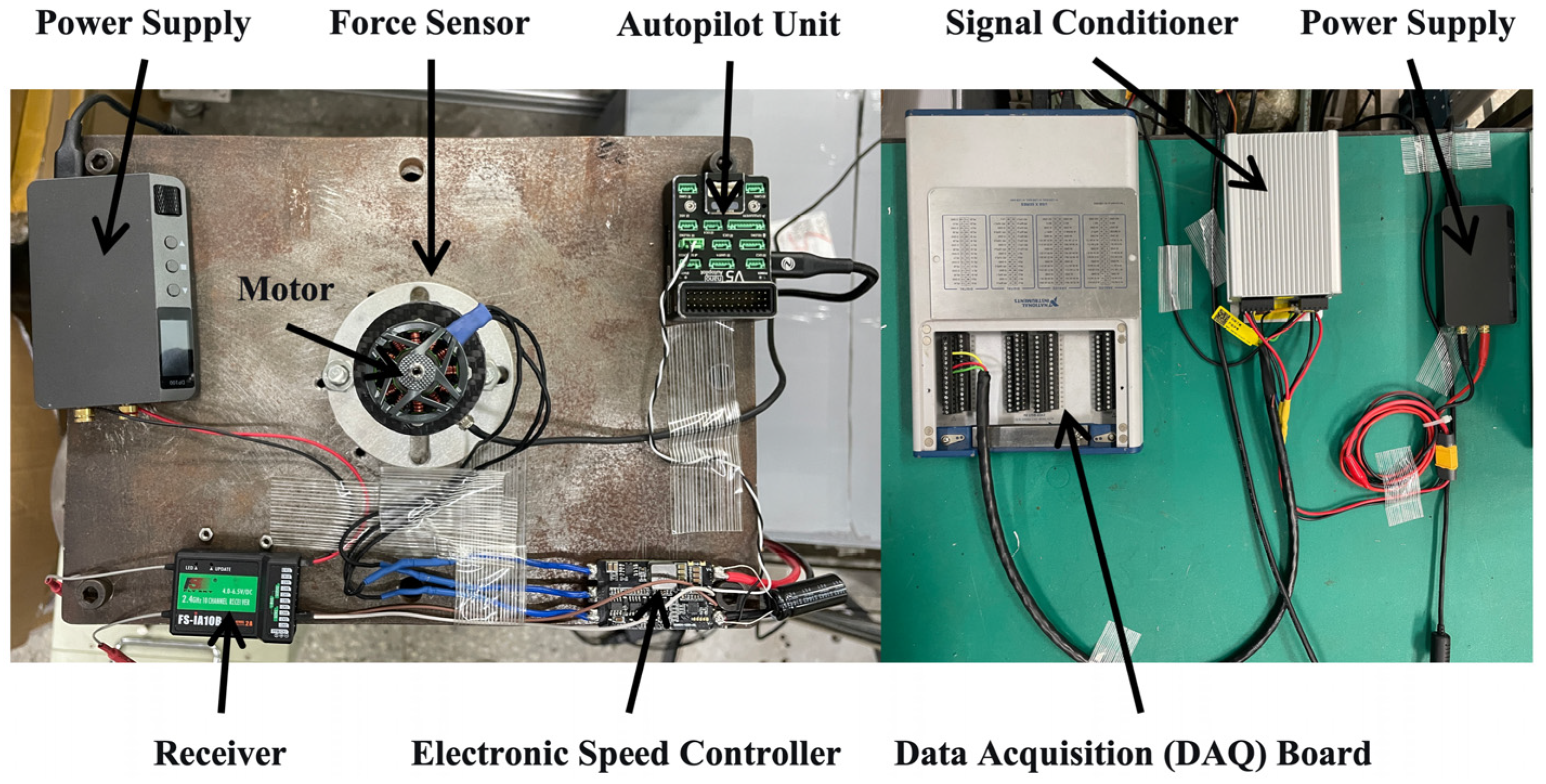
To ensure accurate data acquisition, the designed and fabricated host quadrotor test platform integrates an airspeed sensor for real-time measurement of the airspeed during level-attitude forward flight when equipped with the FWRE. It is equipped with a power module and electronic speed controllers capable of precise voltage and current monitoring, enabling accurate recording of the total aircraft power and the rotor system power (calculated as the product of voltage and current). Furthermore, the platform provides dedicated electrical interfaces for the tail-thrust motor and the folding mechanism of the FWRE, facilitating its flexible and rapid integration. Furthermore, on the control level, this study utilized the open-source Ardupilot flight control platform. Through a series of empirical parameter tunings—primarily including increasing the damping in the attitude control loop and relaxing controller output limits—the robustness of the flight control system was enhanced to accommodate the added range-extension module and to cope with the aerodynamic parameter variations and disturbances introduced by wing deployment. Flight test results demonstrated that the system maintained satisfactory flight stability under these conditions. The core components and key design parameters of the host quadrotor test platform are detailed in
Table 7.
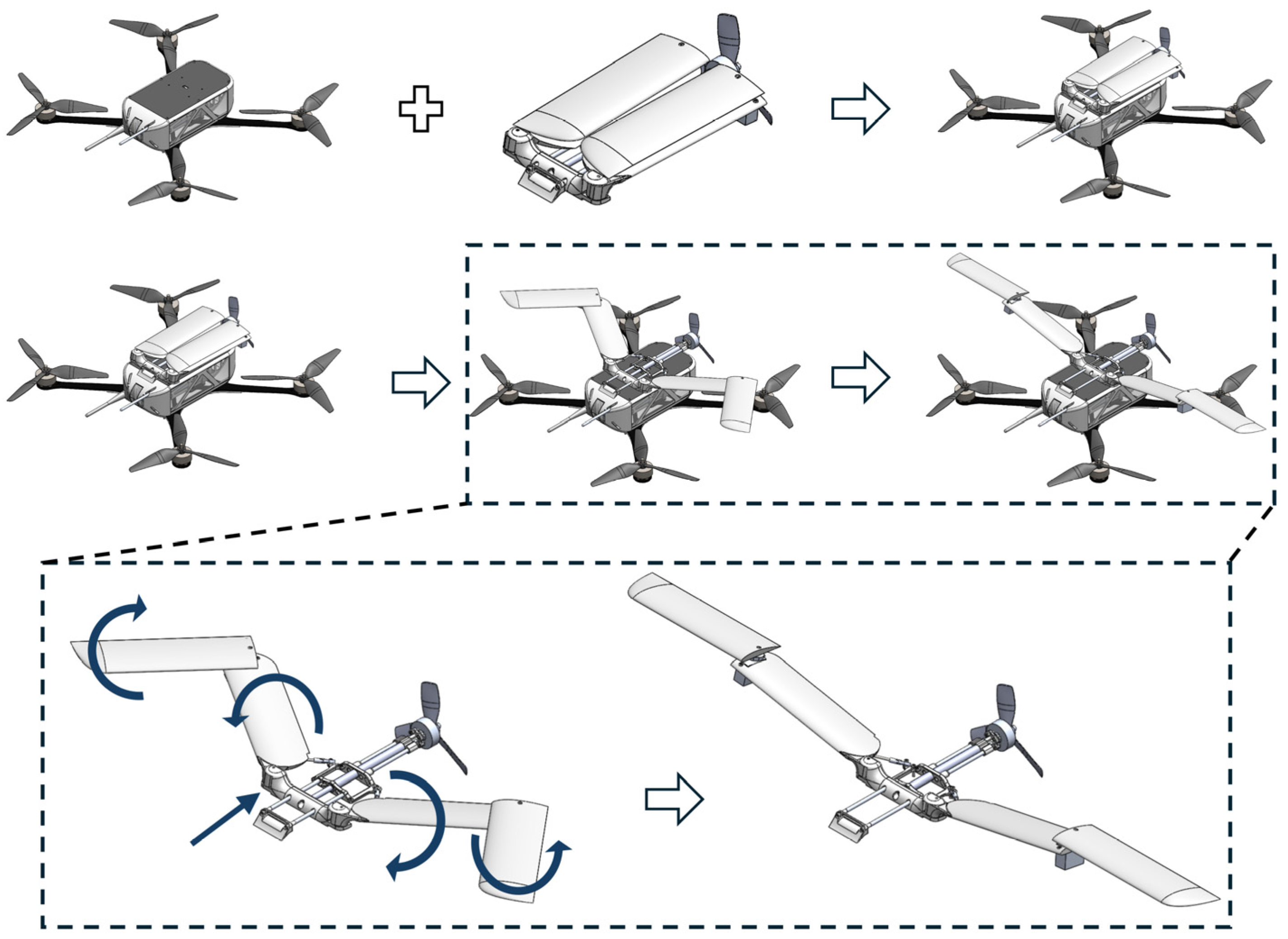
Based on the parameter constraints of the aforementioned host quadrotor test platform, a matching prototype of the FWRE was designed and fabricated. This prototype can be rapidly connected to the host quadrotor via bolts, and its structural components snugly conform to the airframe, thereby effectively reducing aerodynamic drag during flight. Notably, this height increment poses almost no operational constraints during typical long-range missions. The core components and key parameters of the FWRE prototype are detailed in
Table 8.
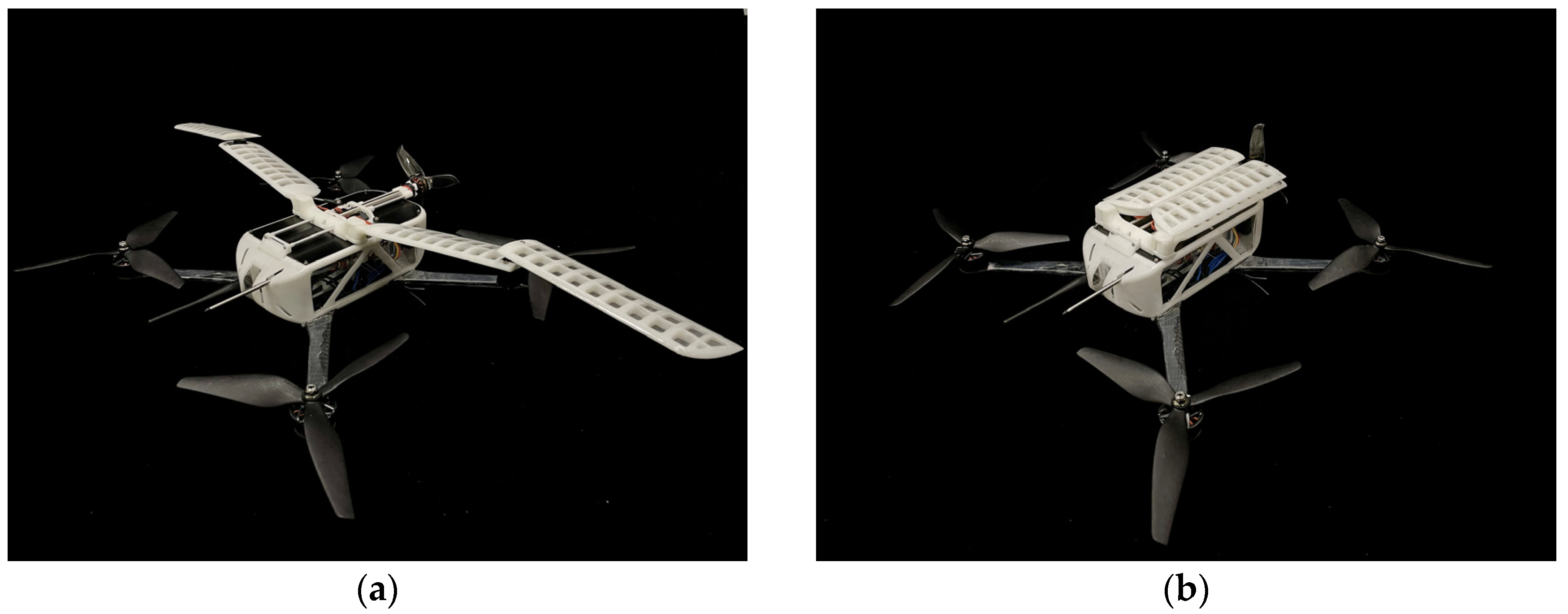
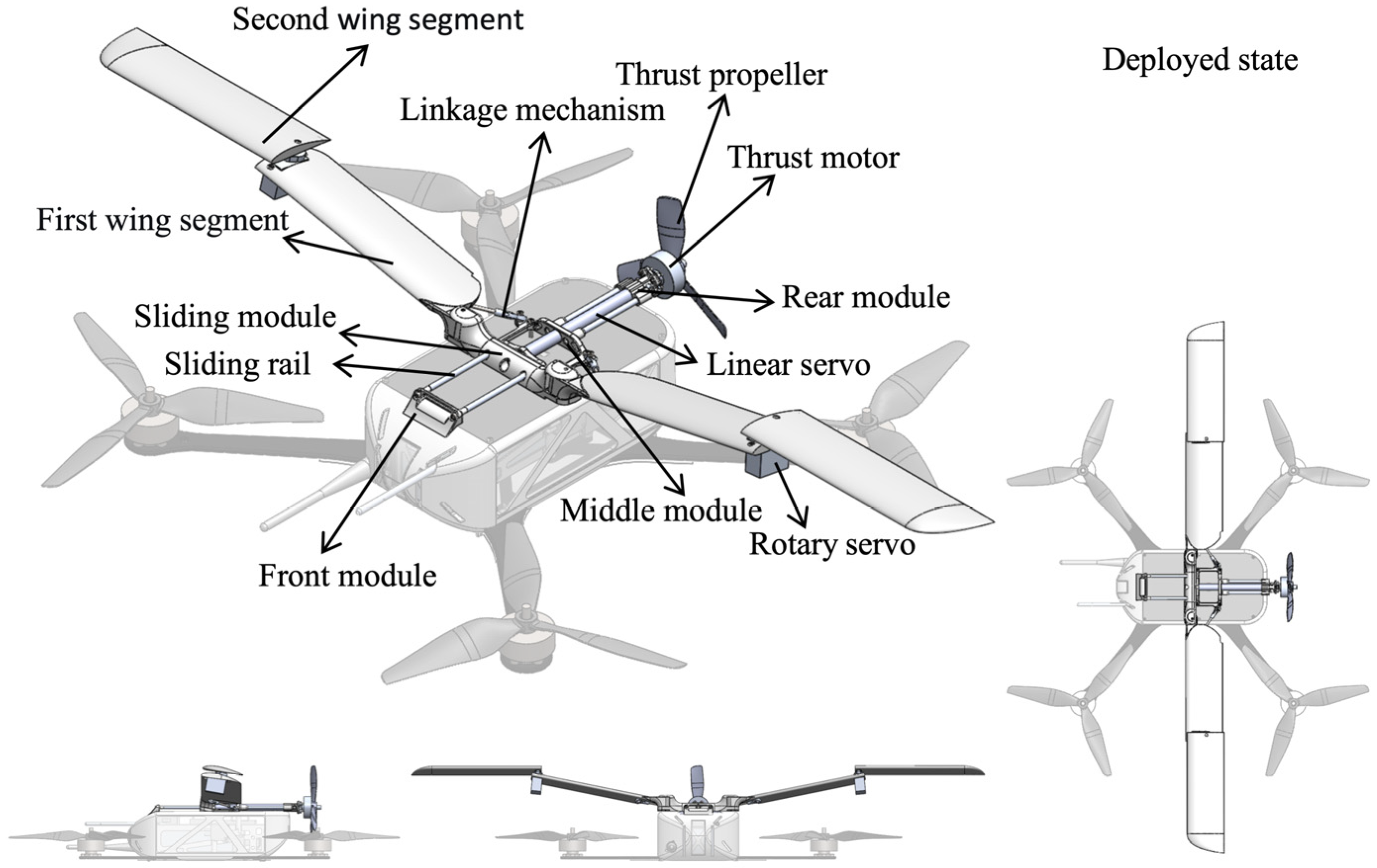
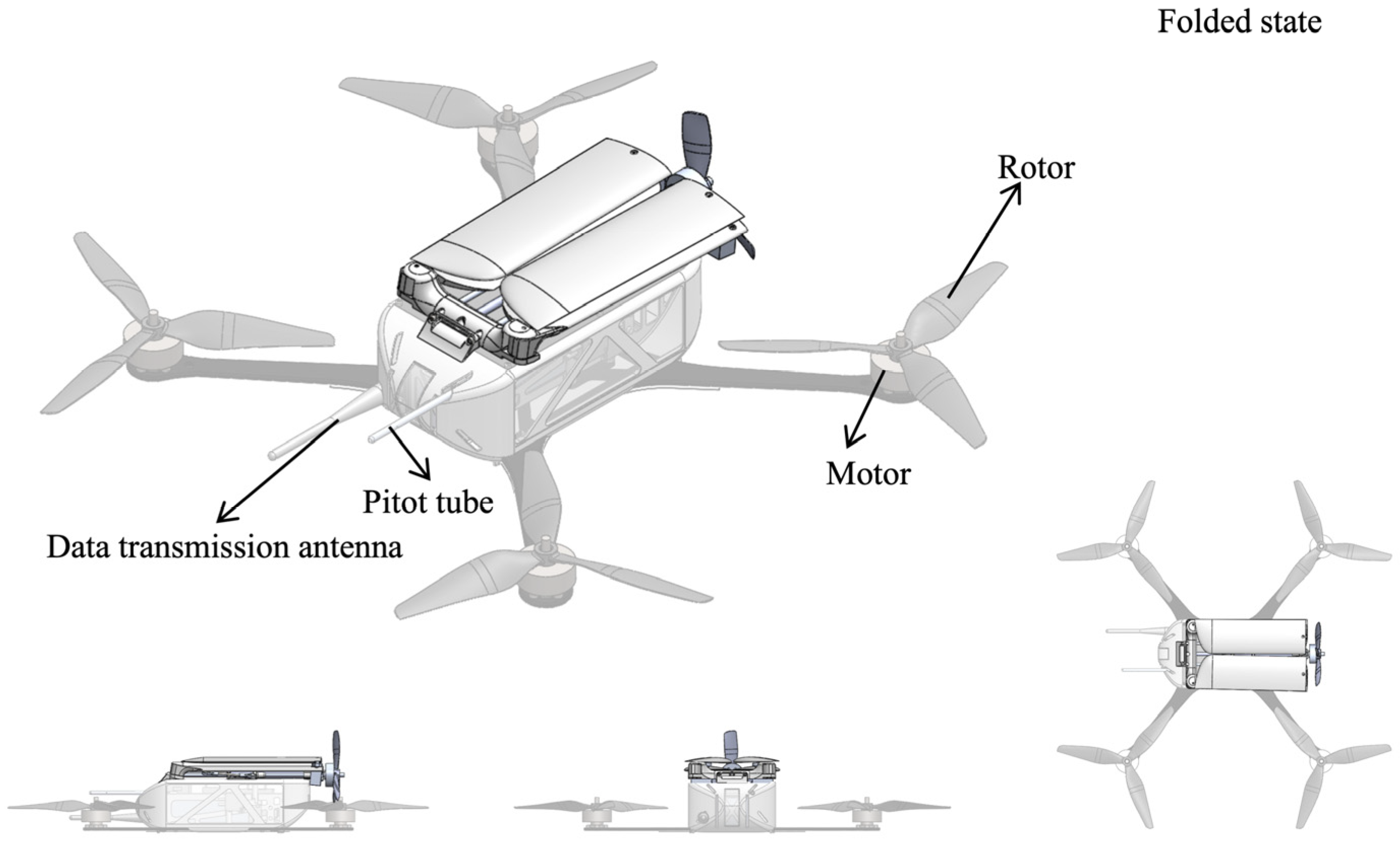
The physical integration of the host quadrotor test platform with the FWRE is shown in
Figure 26, where (a) depicts the device in the deployed state and (b) shows the folded configuration. The structural components and wings of the FWRE were manufactured using stereolithography (SLA) 3D printing technology. The wings feature a hollow internal structure to reduce weight while maintaining their aerodynamic profile through an external skin covering.
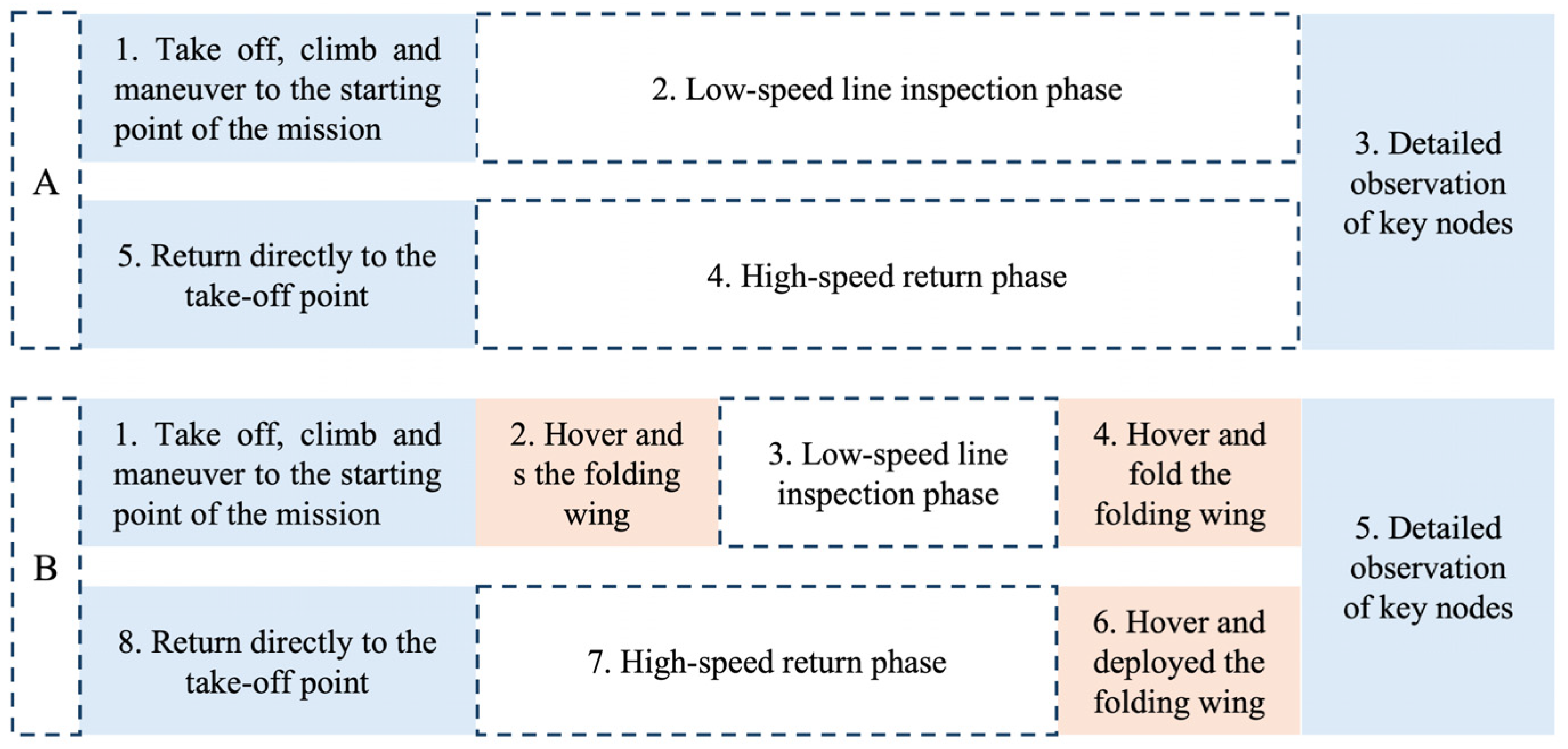
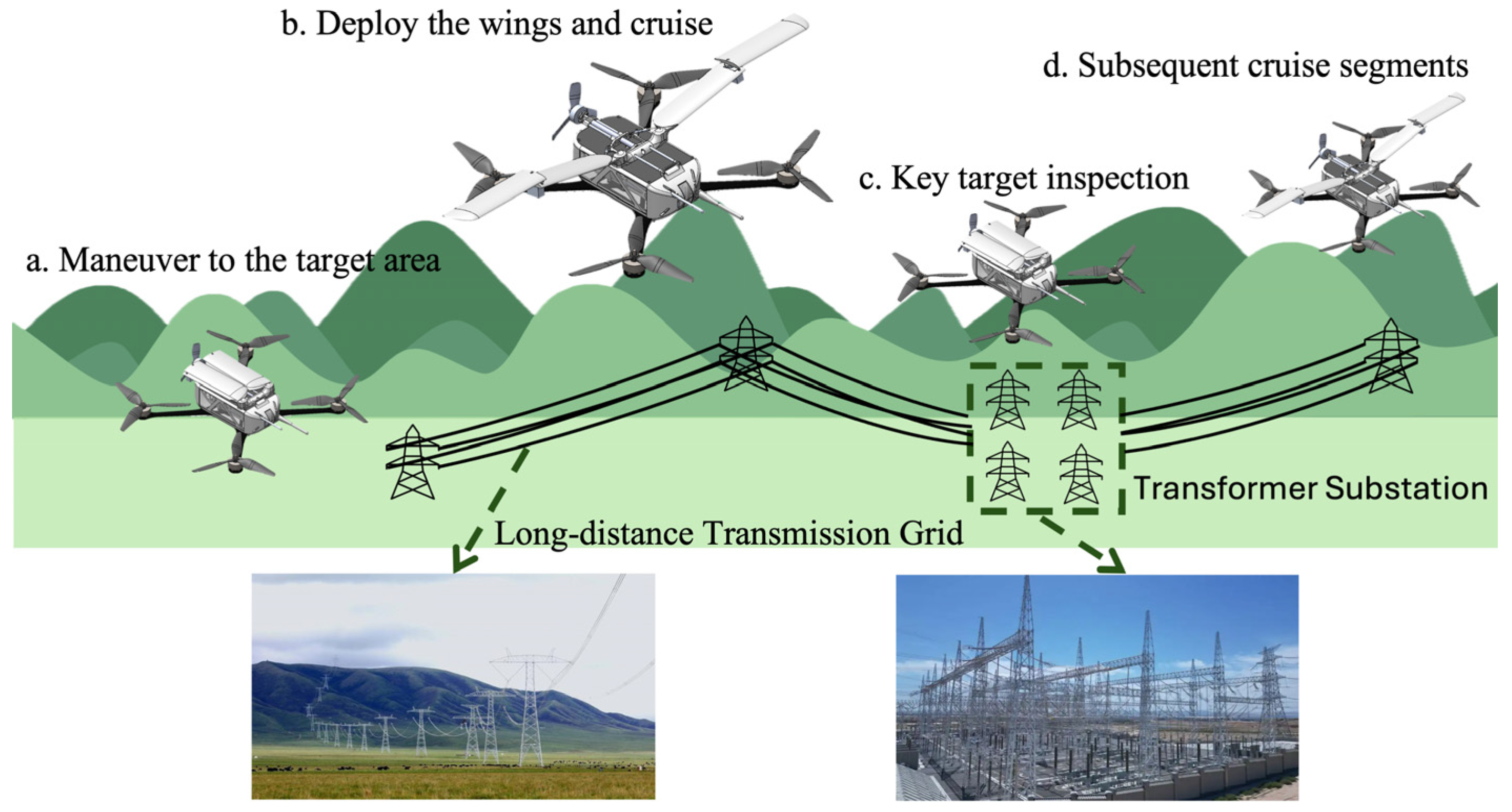
Based on the aforementioned host quadrotor test platform and its matching FWRE, flight tests were systematically conducted to quantitatively validate the performance improvement achieved by the device. The flight test design was guided by both experimental rationality and practical mission requirements. On one hand, the additional mass of the FWRE increases the power consumption of the host quadrotor’s rotors. This factor could interfere with the accurate assessment of the device’s maximum range-extension potential. Therefore, the test must be designed to isolate this effect, thereby directly reflecting the device’s inherent performance and the potential performance gains achievable through weight reduction in engineering applications. On the other hand, considering real-world operational scenarios, a small quadrotor equipped with the extender might need to fold its wings mid-flight during a long-range cruise mission to inspect key points, thus regaining and utilizing the host UAV’s inherent high maneuverability for close-range observation. Based on these two core requirements, two additional flight conditions were incorporated into the comparative tests, supplementing the three conditions used in the earlier simulations:
Ballast-Loaded Multirotor flight condition, abbreviated Ballast MR: The host quadrotor test platform carries a ballast mass equivalent to the weight of the FWRE (ensuring minimal change in the center of gravity after loading) and flies in traditional multirotor mode, thereby isolating the additional mass effect;
Folded Range-Extension (Multirotor Mode) flight condition, abbreviated F-RE (MR Mode): The host quadrotor test platform equipped the FWRE in its folded state and operates in traditional multirotor mode, serving to evaluate the performance impact of the FWRE’s additional mass and aerodynamic interference on the host UAV.
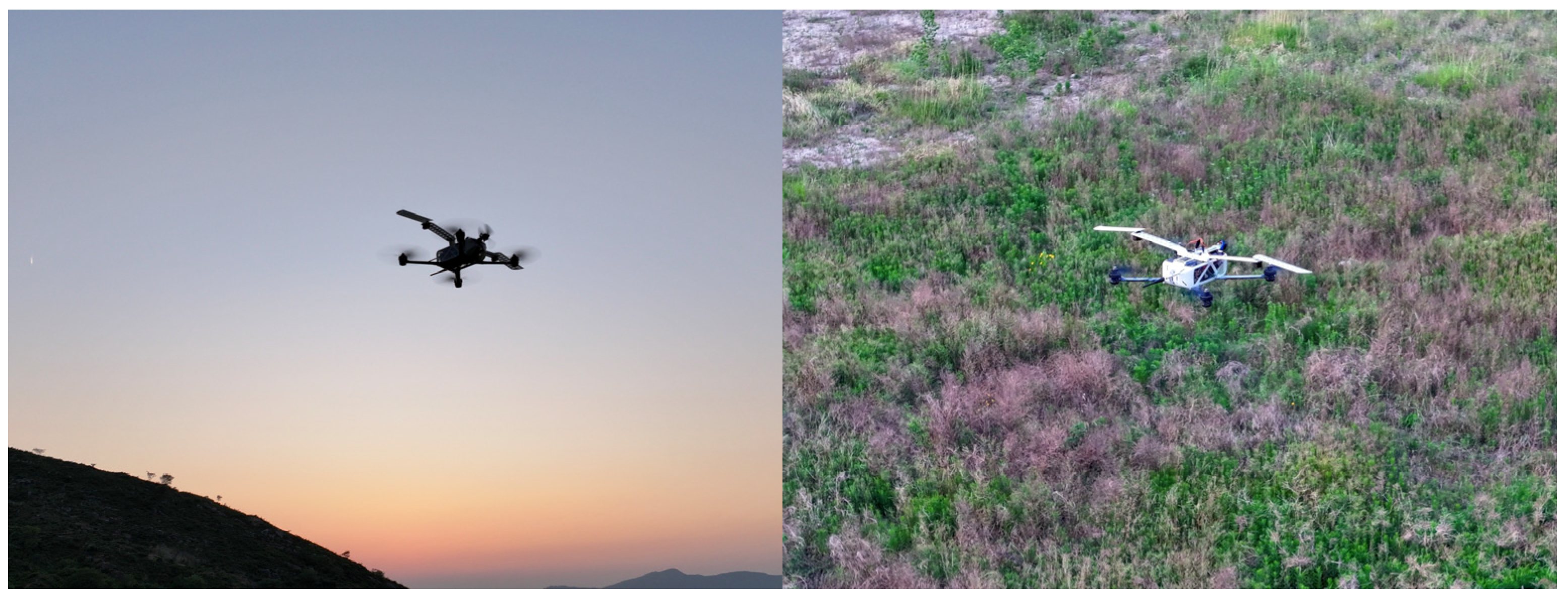
In summary, for all five flight conditions in the experiment, the flight strategy involved performing at least three back-and-forth cycles along the same linear route at a constant altitude, resulting in six stable flight legs. This approach provided a robust basis for subsequently eliminating interference factors such as wind speed and direction during data processing, thereby obtaining accurate measurements. During the tests, utilizing the hardware system of the host quadrotor test platform and the FWRE, full-parameter real-time monitoring and recording were implemented via the Mission Planner (1.3.82) ground control station software. For flight conditions where the tail-thrust propeller was active, both the rotor system power and the total aircraft power were quantitatively recorded. For other conditions where the tail-thrust propeller was inactive, only the total aircraft power was recorded. Considering that the avionics system power consumption is relatively small, essentially constant, and significantly lower than the power consumption of the rotors and propeller, it can be reasonably approximated that: when the propeller is inactive, the total aircraft power equals the rotor system power; when the propeller is active, its power can be calculated as the difference between the total aircraft power and the rotor system power. A real-flight scenario under the D-RE flight condition is shown in
Figure 27. All flight tests were conducted with the battery’s initial State of Charge (SOC) within the range of 95% to 100% to eliminate the influence of initial capacity variation on performance evaluation. Prior to flight, all sensors were calibrated following the standard procedure.
7.2. Experimental Results and Analysis
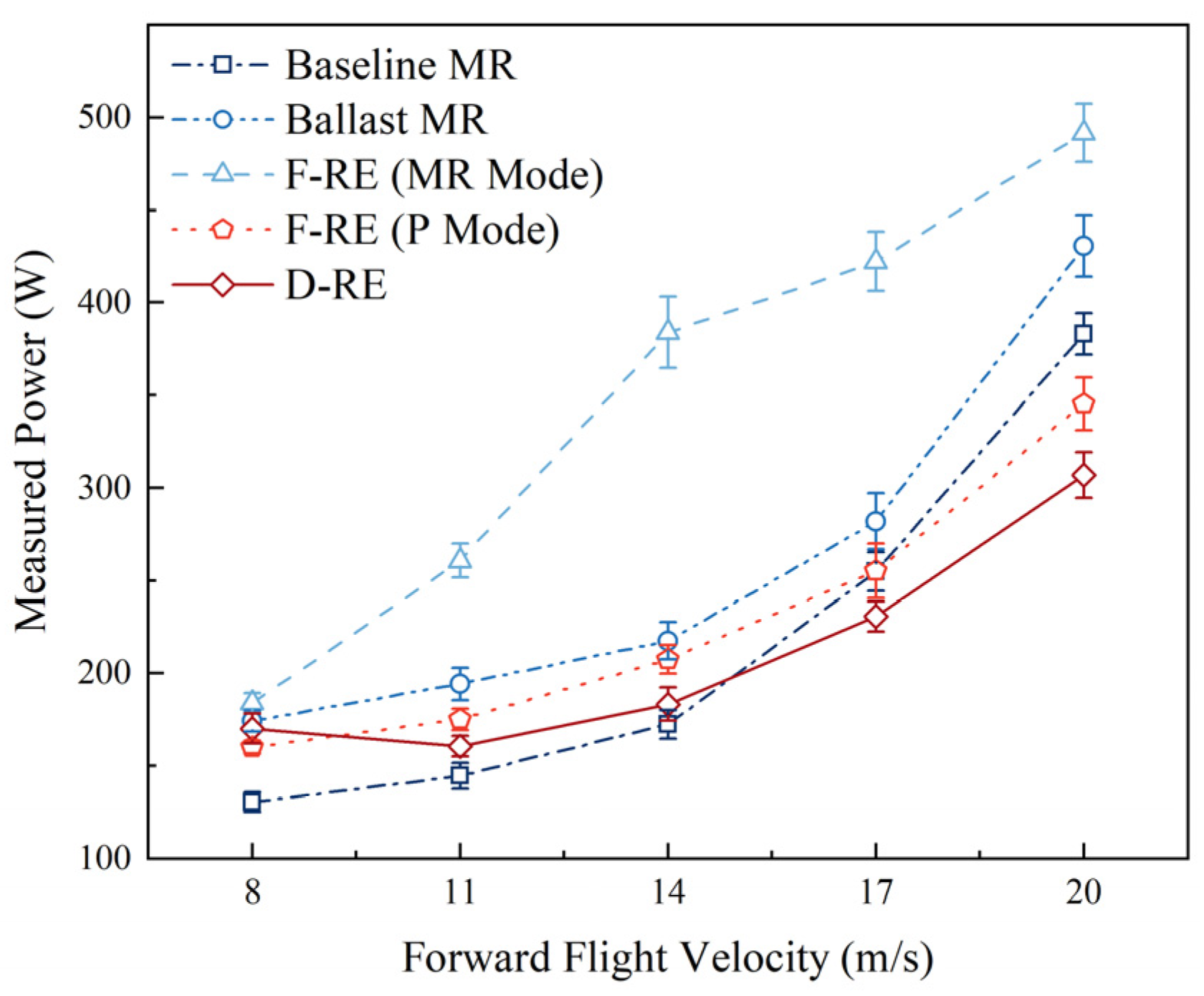
Figure 28 presents the experimental results, with error bars representing the standard deviation, for the total power consumption of the aircraft under different flight conditions across the forward speed range of 8 to 20 m/s. It can be observed from the figure that, except for the D-RE flight condition which exhibits a slight decrease in power consumption at forward speeds below 11 m/s, the total power for all other configurations increases with speed, and the rate of increase accelerates. It is noteworthy that within the forward speed range of 11 to 17 m/s, the power increase rate of the F-RE (MR Mode) flight condition exhibits a trend of initially increasing and then decreasing. This is attributed to the varying levels of aerodynamic interference caused by the installed extender on the host UAV at different forward speeds (corresponding pitch angles). Therefore, high-speed flight in this specific condition should be minimized whenever possible.
It was observed during testing that as the forward speed increased, the wing lift rose accordingly, while the rotor speed decreased further, leading to a degradation in attitude control capability and a tendency towards instability. Nevertheless, the currently validated speed range of up to 20 m/s fully covers the typical operating conditions for such missions.
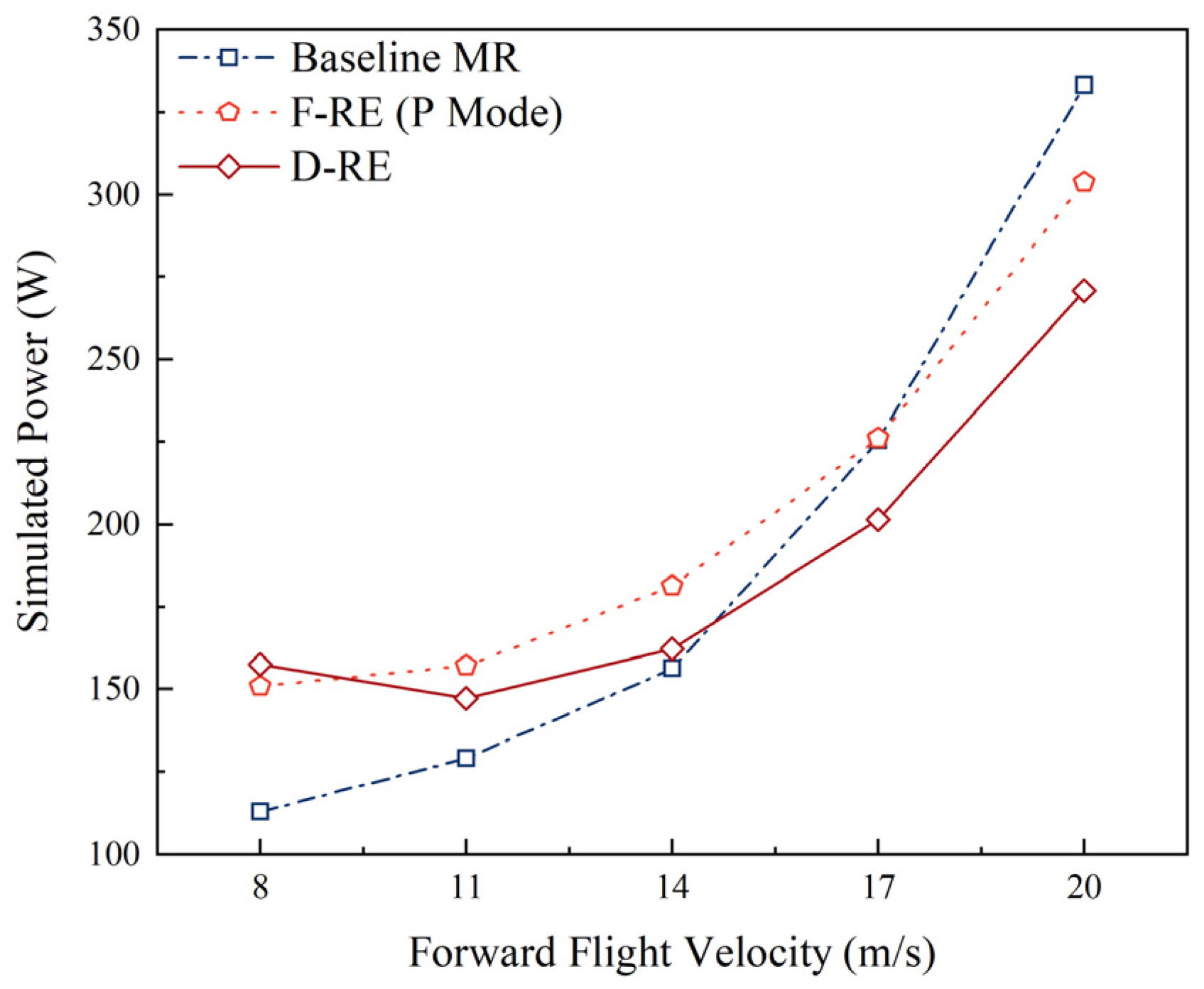
A comparison between the Baseline MR and D-RE flight conditions reveals the change in energy consumption of the small multirotor UAV after installing the FWRE. When the forward speed is below 15 m/s, the additional mass and aerodynamic drag of the extender result in approximately 10% to 30% higher power consumption for the latter configuration. When the forward speed reaches approximately 15 m/s, the power consumption of the two flight conditions becomes comparable. As the speed increases further, the power advantage of the D-RE flight condition continues to grow, achieving approximately 20% (95% CI: [16.03%, 23.79%]) lower power consumption at a forward speed of 20 m/s. Within the tested forward speed range, the power of the Baseline MR flight condition increased by 194%, primarily due to the surged aerodynamic drag. In contrast, the power of the D-RE flight condition, equipped with the FWRE, increased by only 80%, owing to the dual energy-saving mechanisms of oncoming horizontal airflow and wing lift unloading, thereby confirming the device’s effectiveness.
The comparison between the Ballast MR and D-RE flight conditions, which eliminates the variable of the FWRE’s mass, reveals that the Ballast MR condition exhibits higher power consumption across the entire speed range due to the added mass. This confirms that weight reduction can significantly enhance the device’s effectiveness. At 20 m/s forward speed, the D-RE condition achieves a 30% reduction in power consumption, highlighting the engineering potential of systematic lightweight design. Although the ballast condition alters the vehicle’s moment of inertia, the required pitch angle to maintain the same cruise speed differs only minimally (by approximately ) from that of the Baseline MR flight conditions. This demonstrates that the design effectively isolates the effect of added mass on baseline power consumption, thereby validating its use for comparison with the D-RE flight conditions.
The difference between the D-RE and F-RE (P Mode) flight conditions quantifies the benefit of wing unloading. Experimental data indicate that at forward speeds below 9 m/s, the reduction in rotor power due to wing unloading is relatively small, while the increased drag from the deployed wings results in a higher rotational speed of the tail-thrust propeller at the same airspeed, leading to a significant power increment. Consequently, the D-RE flight condition exhibits slightly higher power consumption, approximately 6% higher at 8 m/s. However, as the forward speed increases, the wing unloading effect becomes increasingly dominant, resulting in approximately 11% lower power consumption at 20 m/s.
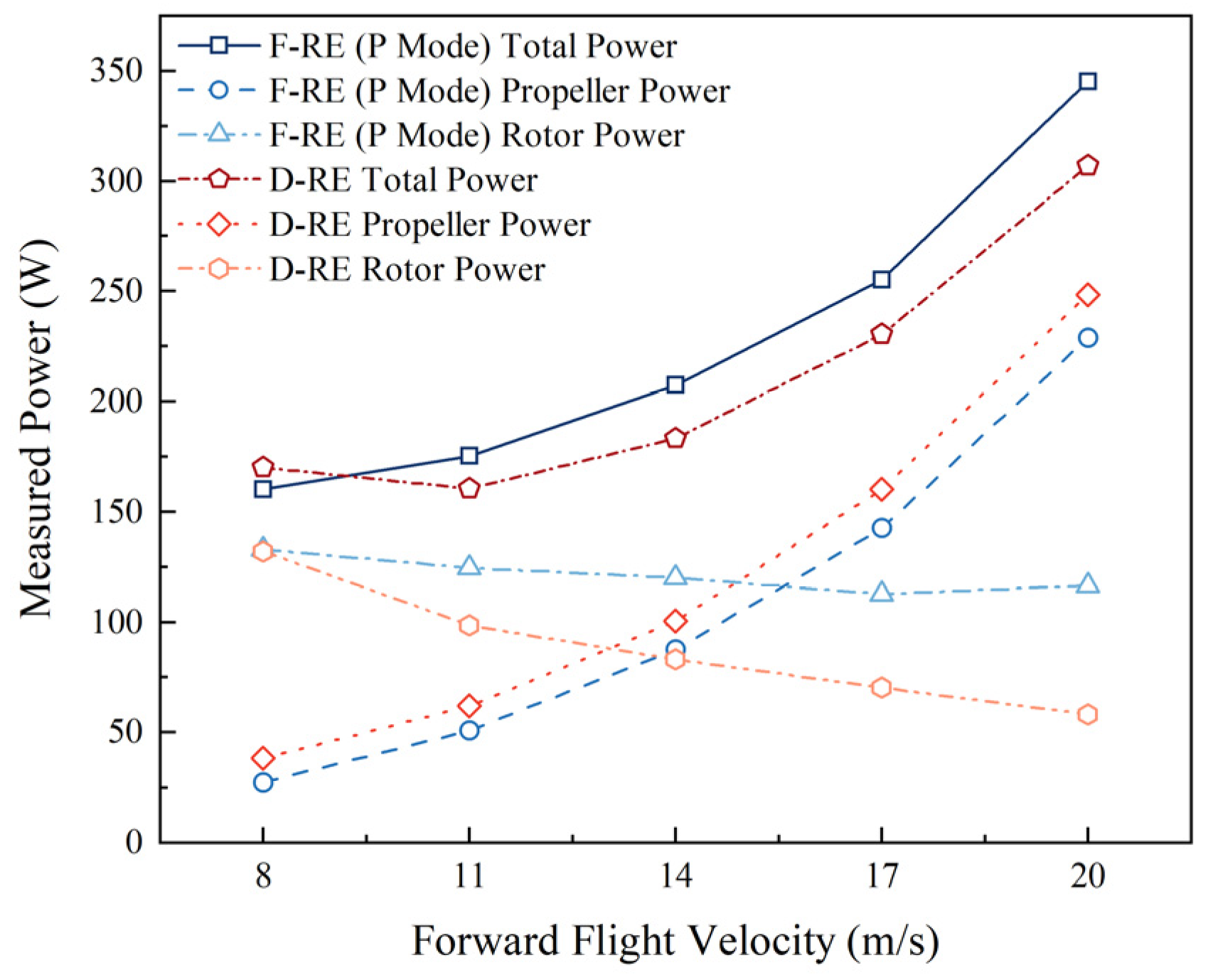
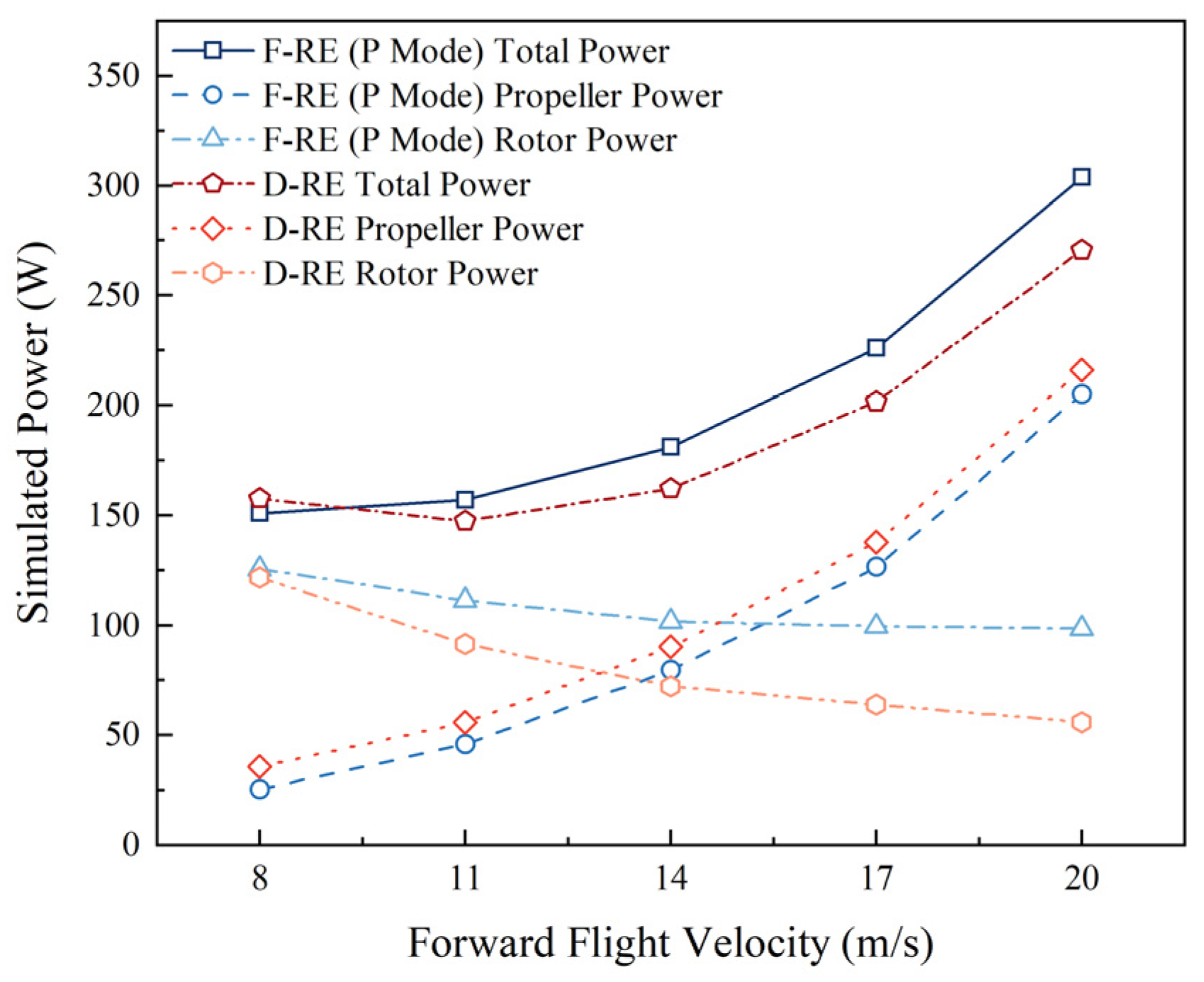
Figure 29 further presents the experimental results of the total power, rotor power, and tail-thrust propeller power for the F-RE (P Mode) and D-RE flight conditions across the forward speed range of 8 to 20 m/s after installing the FWRE, revealing the influence mechanisms of oncoming horizontal airflow and wing unloading on energy distribution. The trends align with the simulation results. Experimental data show that at 20 m/s forward speed, the F-RE (P Mode) flight condition achieves a 12% reduction in rotor power, which plateaus after the speed exceeds 17 m/s. In contrast, the D-RE flight condition, benefiting from the wing unloading effect, attains a 56% reduction in rotor power. Meanwhile, the tail-thrust propeller power increases by 552% in the F-RE (P Mode) flight condition, while that of the D-RE flight condition increases by 742% due to the higher drag from the deployed wings.
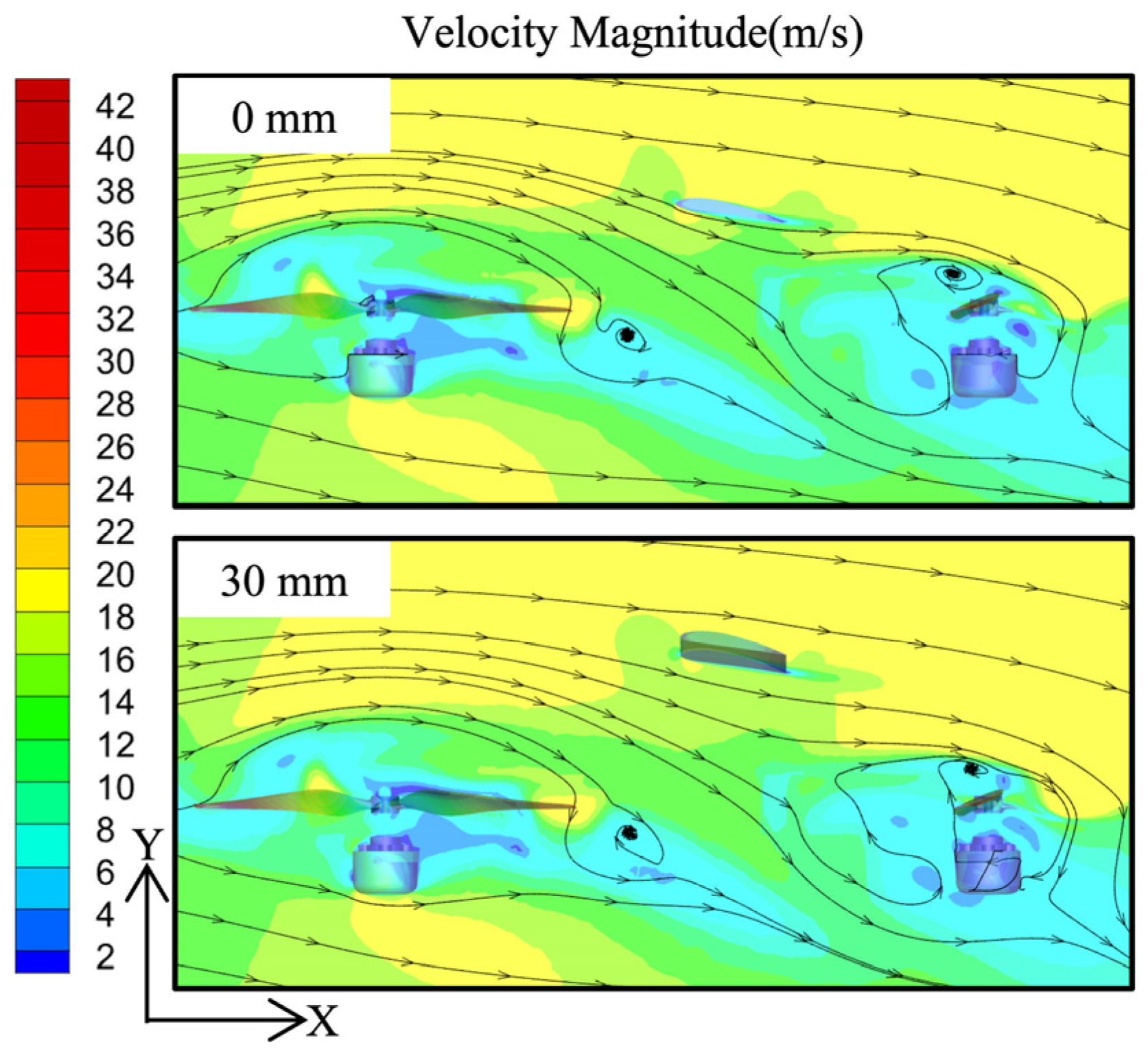
Furthermore, a comparison of the rotor power consumption between the F-RE (P Mode) flight condition at different forward speeds and the hover condition validates the optimization mechanism of the oncoming horizontal airflow on rotor power consumption. The experimental data demonstrate that as the forward speed increases, the rotor’s thrust-generating capability is enhanced, resulting in a decrease in power consumption, a trend consistent with theoretical analysis and simulation results. At a forward speed of 20 m/s, the rotor power consumption is reduced by approximately 35% compared to the hover state.
The preceding sections have, through both simulation and experiment, clearly established the power consumption patterns of the aircraft under different flight conditions across various forward speeds. To further comprehensively evaluate the practical effectiveness of the FWRE, the following analysis integrates parameters such as the vehicle’s energy reserve and flight speed to perform quantitative calculations and assessment of the endurance, range, and energy efficiency. This approach aims to systematically verify the overall performance improvement achieved by the device.
Endurance and range are critical performance metrics for the aircraft, primarily determined by its onboard battery capacity and the power consumption during cruise. The endurance is calculated by the following formula:
where
is the endurance,
is the battery capacity (here,
for the carried battery), and
is the average current during cruise. Based on this, the range of the aircraft can be expressed as the product of cruise speed and endurance:
where
is the aircraft range, and
is the forward airspeed during stable cruise.
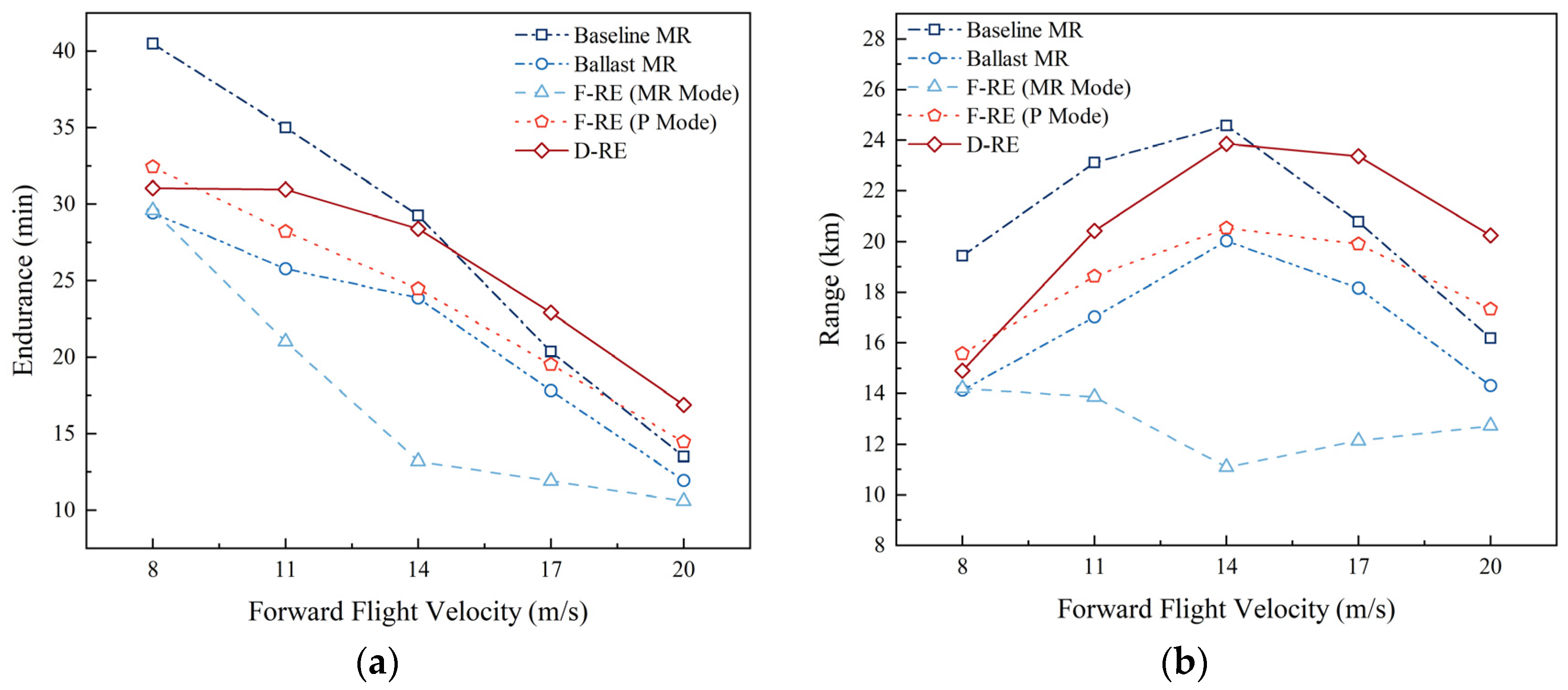
Figure 30 presents the experimental results of the endurance and range variations with increasing forward speed (8 to 20 m/s) under different flight conditions. As shown in
Figure 30a, within the tested speed range, except for the D-RE flight condition which exhibits a slight increase in endurance at forward speeds below 11 m/s, the endurance of all other conditions decreases monotonically with increasing airspeed. This is primarily attributed to the significant increase in flight power consumption. in contrast, the range data in
Figure 30b exhibits a pronounced nonlinear variation, a pattern resulting from the coupling effect between forward speed and endurance. Furthermore, the gap in range and endurance between the F-RE (P Mode) and D-RE flight conditions and the Baseline MR condition gradually narrows with increasing speed, eventually being completely surpassed, highlighting the high-speed advantage of the proposed extender.
A further analysis of the data in
Figure 30 reveals that both the F-RE (P Mode) and D-RE flight conditions exhibit longer endurance and range across the entire speed spectrum compared to the Ballast MR condition, further demonstrating the necessity of the weight reduction design in practical applications. When the forward speed reaches 14 m/s, all flight conditions except the F-RE (MR Mode) reach their maximum range. At this speed, compared to the Ballast MR condition, the F-RE (P Mode) achieves an approximately 3% increase in range, while the D-RE condition achieves an approximately 19% increase, highlighting the significant performance gain from the wing deployment.
Furthermore, after installing the range extender, the D-RE flight condition exhibits lower range and endurance compared to the Baseline MR flight condition at low speeds. This is due to the combined effects of the device’s additional mass and increased aerodynamic drag, while the benefits of rotor aerodynamic optimization and wing unloading are not yet fully realized in this speed regime; as the forward speed increases, the aerodynamic benefits become progressively more pronounced. When the speed reaches 15 m/s, the range and endurance of the D-RE flight condition become comparable to those of the Baseline MR flight condition. At 20 m/s, the D-RE flight condition achieves approximately 25% improvement in both range and endurance. In contrast, the F-RE (P Mode) flight condition, which retains only the benefit of oncoming horizontal airflow optimization, sees its performance turning point delayed until approximately 18 m/s. Furthermore, its range improvement is limited to about 7%, thereby validating the critical contribution of wing unloading to both range and endurance.
It is noteworthy that the F-RE (MR Mode) flight condition suffers from degraded range and endurance performance across the entire speed range due to the structural weight addition and aerodynamic interference. This confirms that this condition is unsuitable for sustained cruise missions. However, the innovative mechanism design of the proposed FWRE minimizes its impact on the small multirotor UAV’s maneuverability, allowing it to remain agile and capable of performing close-range inspection tasks.
Endurance and range provide an intuitive representation of the aircraft’s operational persistence and coverage area. However, analyzing the core mechanism behind the performance enhancement brought by the FWRE requires a deeper examination of its fundamental improvement in energy utilization efficiency. To delve deeper into this mechanism, this paper adopts specific power and equivalent lift-to-drag ratio as the core evaluation metrics. Specific power serves as a key indicator for assessing the propulsion system of an aircraft, commonly used to evaluate the power system of distributed electric propulsion aircraft, and directly determines the thrust-to-weight ratio and overall performance [
28,
29]. It is defined as:
where
is the total power during forward flight and
is the total mass of the aircraft. This metric characterizes the power consumed per unit mass, where lower values indicate a lower energy cost to sustain flight.
The equivalent lift-to-drag ratio is a key parameter for evaluating the aerodynamic efficiency of an aircraft, offering particular advantages under unsteady or complex flight conditions [
30]. It is defined as:
the core of this metric lies in its incorporation of the electrical power consumption of the propulsion system, thereby characterizing the overall energy conversion efficiency from electrical input to lift output. This establishes a fundamental distinction from the traditional steady-state lift-to-drag ratio, which is based solely on aerodynamic forces: the equivalent ratio is designed to evaluate the holistic energy efficiency of the electric propulsion flight system, making it particularly suitable for complex configurations such as hybrid designs; whereas the traditional ratio is primarily used to assess the aerodynamic design merit of the aircraft platform itself. These two parameters can effectively reveal the inherent performance differences across various flight conditions.
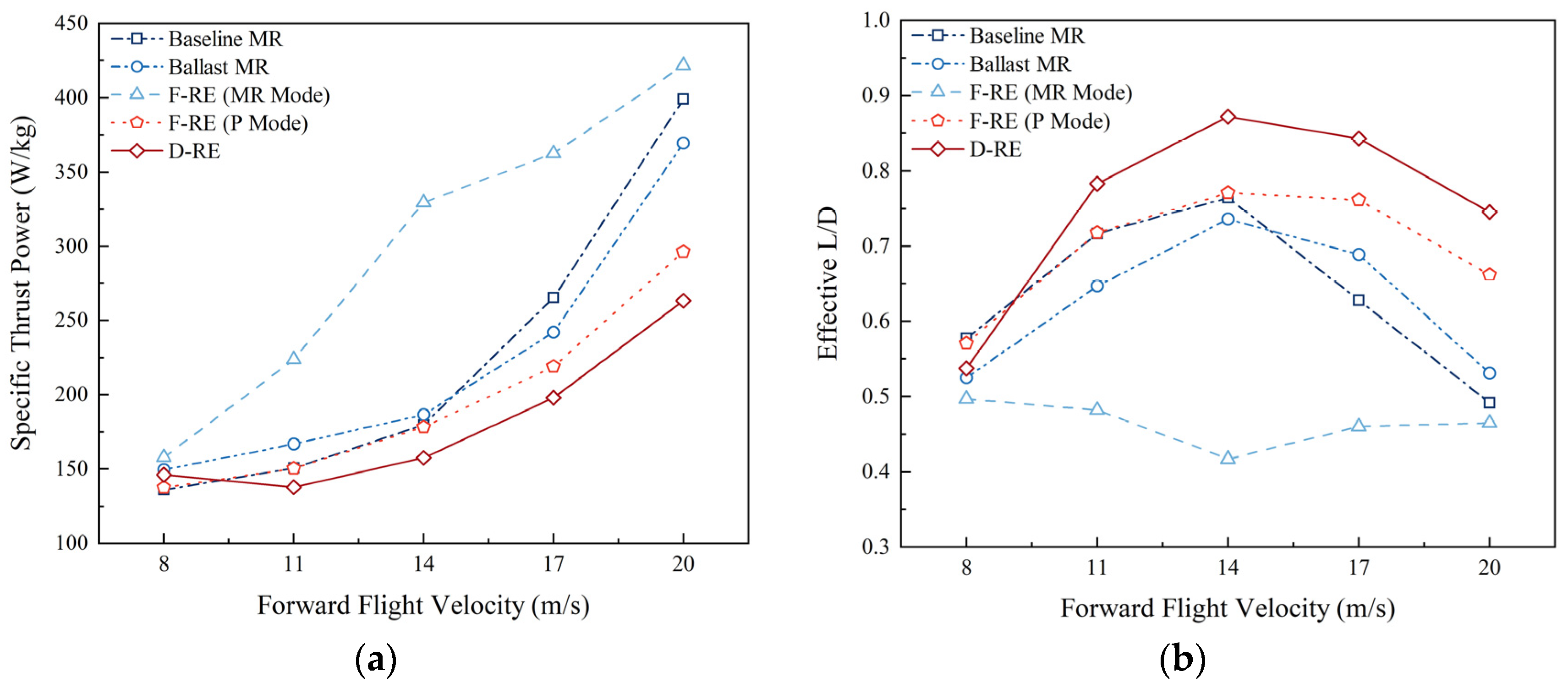
Figure 31 presents the experimental results of the specific power and equivalent lift-to-drag ratio versus increasing forward speed (8 to 20 m/s) under different flight conditions. As shown in
Figure 31a, the trend of specific power across conditions generally aligns with the total power consumption. The D-RE flight condition exhibits an initial slight decrease in specific power, followed by a slow increase. Its specific power becomes comparable to that of the Baseline MR flight condition at approximately 9 m/s, subsequently demonstrating superior performance. As the forward speed increases further, the advantage in specific power of the D-RE flight condition over the Baseline MR condition gradually expands, reaching a reduction of approximately 34% at 20 m/s. In contrast, due to the absence of wing unloading, the specific power of the F-RE (P Mode) flight condition remains similar to that of the Baseline MR condition until the forward speed reaches 14 m/s, after which its advantage gradually emerges, culminating in a reduction of approximately 26% at 20 m/s. Throughout the entire speed range, the specific power of both the D-RE and F-RE (P Mode) flight conditions remains lower than that of the Ballast MR flight condition, further confirming the performance potential enabled by the weight reduction design of the device. It is noteworthy that after the forward speed exceeds approximately 14 m/s, the Ballast MR flight condition exhibits lower specific power than the Baseline MR flight condition, indicating that the powerplant of the quadrotor test platform is operating in a more favorable working range and the aircraft is in a more optimal trim state.
Figure 31b illustrates the variation of the equivalent lift-to-drag ratio with forward speed under different flight conditions, showing a trend that is generally inverse to that of the specific power. Among all flight conditions, the D-RE flight condition consistently demonstrates the highest equivalent lift-to-drag ratio across the entire speed range, peaking at 0.87 when the forward speed reaches 14 m/s, indicating the aircraft’s optimal aerodynamic efficiency at this point. At a forward speed of 20 m/s, the equivalent lift-to-drag ratio of the D-RE flight condition shows an improvement of approximately 51% and 40% compared to the Baseline MR and Ballast MR flight conditions, respectively. This demonstrates that the FWRE effectively optimizes the operational mode of the small multirotor UAV, thereby significantly enhancing its aerodynamic efficiency. Furthermore, at 20 m/s, the equivalent lift-to-drag ratio of the F-RE (P Mode) flight condition is approximately 51% higher than that of the Baseline MR flight condition, further confirming the critical role of the wing in aerodynamic optimization. Although the equivalent lift-to-drag ratio remains lower than that of pure VTOL fixed-wing platforms, this enhancement significantly extends the endurance of the host UAV, thereby expanding its adaptability for composite missions involving long-distance cruising and precise point operations.
Furthermore, from an energy system perspective, the reduced power consumption achieved by the range-extender yields a positive cascading effect: the decrease in total system current leads to a significantly lower discharge rate for the battery during actual flight. This improves the battery’s operating conditions, helping to mitigate internal losses and the associated depletion of effective capacity that typically occur under high-rate discharge. Consequently, the endurance improvement demonstrated in this study results from the combined contributions of enhanced aerodynamic efficiency and optimized battery operation, with the latter further reinforcing the overall advantage of the range-extension strategy.