
Article

UAV LiDAR-Based Automated Detection of Maize Lodging in Complex Agroecosystems

1
School of Information and Communication Engineering, North University of China, Taiyuan 030051, China
2
School of Geographical Sciences, Shanxi Normal University, Taiyuan 030031, China
*
Author to whom correspondence should be addressed.
Drones 2025, 9(12), 876; https://doi.org/10.3390/drones9120876
Submission received: 31 October 2025 / Revised: 16 December 2025 / Accepted: 16 December 2025 / Published: 18 December 2025

Highlights

What are the main findings?
  • UAV LiDAR point cloud stratification and structural similarity analysis enable automatic height threshold selection, capturing lodging-induced canopy differences with only 2.3% deviation between monitored and manually measured lodging.
  • The automatically selected height threshold shows strong robustness: ±5 cm fluctuations result in <10% deviation in lodging area estimation, verifying the scheme’s reliability.
What are the implications of the main finding?
  • This intelligent monitoring technology provides an innovative solution for accurate maize lodging detection in complex, multi-variety and high-density planting environments.
  • The method highlights UAV LiDAR’s application potential in agricultural monitoring, enabling extrapolation of low-altitude-derived thresholds to other high-altitude scenarios with minimal deviation (5.3%).

Abstract

Maize lodging poses a significant challenge to agricultural production, severely constraining yield improvement and mechanized harvesting efficiency. Under modern agricultural practices characterized by high-density planting and multi-variety intercropping, there is an urgent need for precise and efficient monitoring technologies to address lodging issues. This study utilized unmanned aerial vehicle (UAV) light detection and ranging (LiDAR) to acquire high-precision point cloud data of field maize at full maturity. An innovative method was proposed to automatically identify structural differences induced by lodging by analyzing canopy structural similarity across multiple height thresholds through point cloud stratification. This approach enables automated monitoring of maize lodging in complex field environments. The experimental results demonstrate the following: (1) High-precision point cloud data effectively capture canopy structural differences caused by lodging. Based on the structural similarity change curve, the height threshold for lodging can be automatically identified (optimal threshold: 1.76 m), with a deviation of only 2.3% between the calculated lodging area and the manually measured reference (ground truth). (2) Sensitivity analysis of the height threshold shows that when the threshold fluctuates within a ±5 cm range (1.71–1.81 m), the calculation deviation of the lodging area remains below 10% (maximum deviation = 8.2%), indicating strong robustness of the automatically selected threshold. (3) Although UAV flight altitude influences point cloud quality (e.g., low altitude: 25 m, high altitude: 80 m), the height threshold derived from low-altitude flights can be extrapolated to high-altitude monitoring to some extent. In this study, the resulting deviation in lodging area calculation was only 5.3%.

1. Introduction

Maize, as one of the world’s most vital staple crops, incurs annual yield losses ranging from approximately 13% to 50% due to lodging—a critical biotic/abiotic stress defined as the permanent displacement of stems from their vertical growth position, often caused by mechanical damage from wind, rain, or pest infestations, which severely compromises crop productivity [1,2,3]. The adoption of modern agricultural practices, including high-density planting and mixed-crop cultivation, increases the risk of lodging by reducing stem stability and ventilation in crop canopies [4,5]. Accurate and timely extraction of lodging-related information for maize in complex agricultural environments is therefore critical for enabling proactive crop management, optimizing insurance claim assessments, and supporting precise yield forecasting [6,7].
For decades, manual field surveys have served as the primary method for monitoring crop lodging. However, such approaches face significant limitations in large-scale farmland assessment, as they demand considerable manpower—especially in disaster-prone regions—and often require weeks or even months to progress from data collection to analysis [8,9]. This extended timeline makes it nearly impossible to capture the narrow, critical time window during which lodging events occur [10,11]. The emergence of remote sensing technology has revolutionized this field. In particular, unmanned aerial vehicle (UAV) platforms, offering high-resolution imagery, flexible deployment, and multi-source data fusion capabilities [12,13], have demonstrated considerable value in extracting multi-level lodging information from crops [14,15]. A key advantage of UAV-based remote sensing is its capacity to rapidly acquire fine-grained spectral data and detailed three-dimensional structural information of lodged crops [16]. Specifically, LiDAR technology enables precise quantification of crop inclination angles and lodging severity through the generation of high-resolution digital terrain models (DTMs) and vegetation height maps. The growing body of research in recent years on UAV remote sensing-based crop lodging assessment reflects the broad and promising development prospects of this technology.
Current mainstream research mainly focuses on the feature recognition of lodging crops based on RGB images and multispectral data. Among numerous research results, the study by Zhang et al. (2020) [17] stands out. They innovatively applied the deep-learning model GoogLeNet to high-resolution UAV RGB image data and successfully captured the subtle morphological differences between lodging and upright plants. By training the model to recognize these features, the research team achieved high-precision wheat lodging detection. However, relying solely on RGB images may not fully meet the monitoring needs of complex field environments. The team of Li et al. (2021) [18] further explored the application potential of near-infrared (NIR) information and found that combining NIR spectra with RGB images could significantly improve the accuracy of sunflower lodging detection. Specifically, when the SegNet model was used to classify RGB + NIR data, the overall accuracy reached 88.23%, far exceeding traditional machine-learning methods. This indicates that multimodal data fusion can partially compensate for the limitations of a single data source. In addition to spectral information, the three-dimensional structural features of plants also play a crucial role in lodging monitoring. The study by Guan et al. (2020) [19] is a typical example: they used UAV stereo images to construct a canopy height model (CHM) and combined it with multispectral vegetation indices to build a comprehensive feature set for maize lodging. By analyzing these features using the random forest algorithm, the research team achieved an overall recognition accuracy of 95%. Similarly, Sun et al. (2019) [20] used the maximum-likelihood classification method to analyze feature combinations and successfully distinguished different degrees of maize lodging, fully demonstrating the application value of UAV multispectral images.
While numerous studies have confirmed the effectiveness of UAV remote sensing in monitoring crop lodging, existing approaches still present several limitations. On the one hand, feature extraction—such as spectral and texture characteristics of lodged crops—relies on supervised learning methods. These techniques require extensive labeling of training samples to adequately capture lodging-related feature information, which substantially increases model development costs. Additionally, contemporary agricultural practices frequently employ mixed intercropping configurations featuring multiple varieties and differing planting densities. Crops within lodging areas often exhibit significant variations in both density and variety, further escalating the challenges and expenses associated with sample labeling [21,22]. On the other hand, RGB imagery depends on visual characteristics and is highly susceptible to variations in lighting conditions and soil background interference. In many cases, it becomes difficult to precisely delineate lodging area boundaries, creating additional obstacles for accurate labeling. While multispectral data can indicate crop physiological status (through indices such as NDVI), its relatively low spatial resolution necessitates integration with sophisticated machine learning models to indirectly deduce lodging conditions. This approach makes quantitative assessment of lodging severity particularly challenging [23,24]. In contrast, LiDAR technology offers a more direct solution by leveraging three-dimensional point cloud data to quantify crop tilt angles, plant height reduction, and lodging area extent, enabling both visual and quantitative evaluation of lodging intensity. As a crucial structural parameter, plant height complements spectral methods by providing additional insights. Miao et al. [25] demonstrated that incorporating plant height data improves the accuracy of locating and determining the extent of crop lodging, particularly enhancing monitoring reliability in complex field environments. Additionally, studies by [26,27] emphasized that future advancements in UAV remote sensing should focus on integrating multi-dimensional data to achieve higher-level intelligent monitoring capabilities.
Plant lodging is a common biological phenomenon in which originally upright plants tilt or collapse due to various internal and external factors [28,29]. Among the traits used to characterize lodging, a noticeable decrease in plant height is one of the most intuitive indicators [30,31,32]. Compared to complex optical image features such as color and texture, plant height—as an easily quantifiable morphological trait—offers unique advantages for assessing crop lodging status [33]. Early studies have confirmed the critical role of plant height data in effectively detecting lodging [34,35]. For instance, Zhou et al. (2020) [36] used an UAV equipped with a Riegl VUX-1 LiDAR sensor to successfully capture canopy height data of lodged maize. By comparing height differences between healthy and lodged plants, they demonstrated that plant height accurately reflects lodging severity. Similarly, Chu et al. (2017) [37] employed a small UAV platform integrating RGB and near-infrared cameras to confirm a strong correlation between UAV-derived and ground-measured height values. Additionally, Hu et al. (2023) [38] conducted a comparative analysis of three data collection methods: UAV lidar, backpack lidar, and a three-dimensional model constructed based on UAV digital images, and concluded that UAV lidar performs better in maize lodging monitoring. Overall, these studies affirm the central role of plant height in lodging monitoring across multiple dimensions. It should be noted, however, that while these studies provide valuable insights, their application scenarios remain relatively limited, and height threshold determination still heavily relies on manual experience. Achieving adaptive lodging monitoring based on height thresholds to enable accurate assessment under complex modern agricultural planting systems remains a pressing and unresolved challenge [39,40].
Compared to the inherent limitations of traditional optical remote sensing in acquiring plant height information, UAV LiDAR technology offers a highly efficient and accurate means of collecting three-dimensional data [41]. It is capable of capturing subtle differences in crop canopy structures with exceptional precision, even in complex scenarios [42,43]. This advantage is particularly pronounced when monitoring tall-stem crops such as maize. In this context, an automated method for determining lodging status based on height thresholds is especially valuable. By establishing appropriate height thresholds, LiDAR technology can rapidly identify plant areas where height falls below the normal range, enabling accurate detection of lodging events. The key strength of this approach lies in its ability to significantly improve monitoring efficiency while greatly reducing reliance on manual intervention, offering a practical solution for large-scale farmland management.
This study seeks to conduct an in-depth analysis of canopy structure variations under inter-planting patterns involving multiple maize varieties and planting densities, utilizing maize canopy point cloud data acquired via LiDAR-equipped unmanned aerial vehicles (UAVs). Addressing the limitation that current lodging information extraction methods based on height thresholds heavily rely on manual expertise, this research proposes an adaptive height threshold selection approach. The objective of this method is to enable automated monitoring and precise assessment of maize lodging conditions in complex farmland environments, thereby enhancing the versatility and practical applicability of UAV LiDAR technology in real-world agricultural settings. The core research objectives of this paper are twofold: (1) Method Development: Design an automated algorithm for efficient maize lodging monitoring from LiDAR data through adaptive height threshold selection. (2) Verification and Optimization: Validate the accuracy of this method and systematically investigate the impacts of factors such as flight altitude and threshold adjustment on its performance, ensuring stability and reliability across diverse environmental conditions.
The remainder of this paper is organized as follows. Section 2 describes the research area and data, along with the technical details of the proposed adaptive height threshold selection algorithm. Section 3 presents the experimental results and provides a thorough analysis of the method’s robustness. Section 4 examines the influence of key parameters on the accuracy and general applicability of the method. Finally, Section 5 concludes the main findings and discusses their implications.

2. Materials and Methods

2.1. Overview of the Study Area

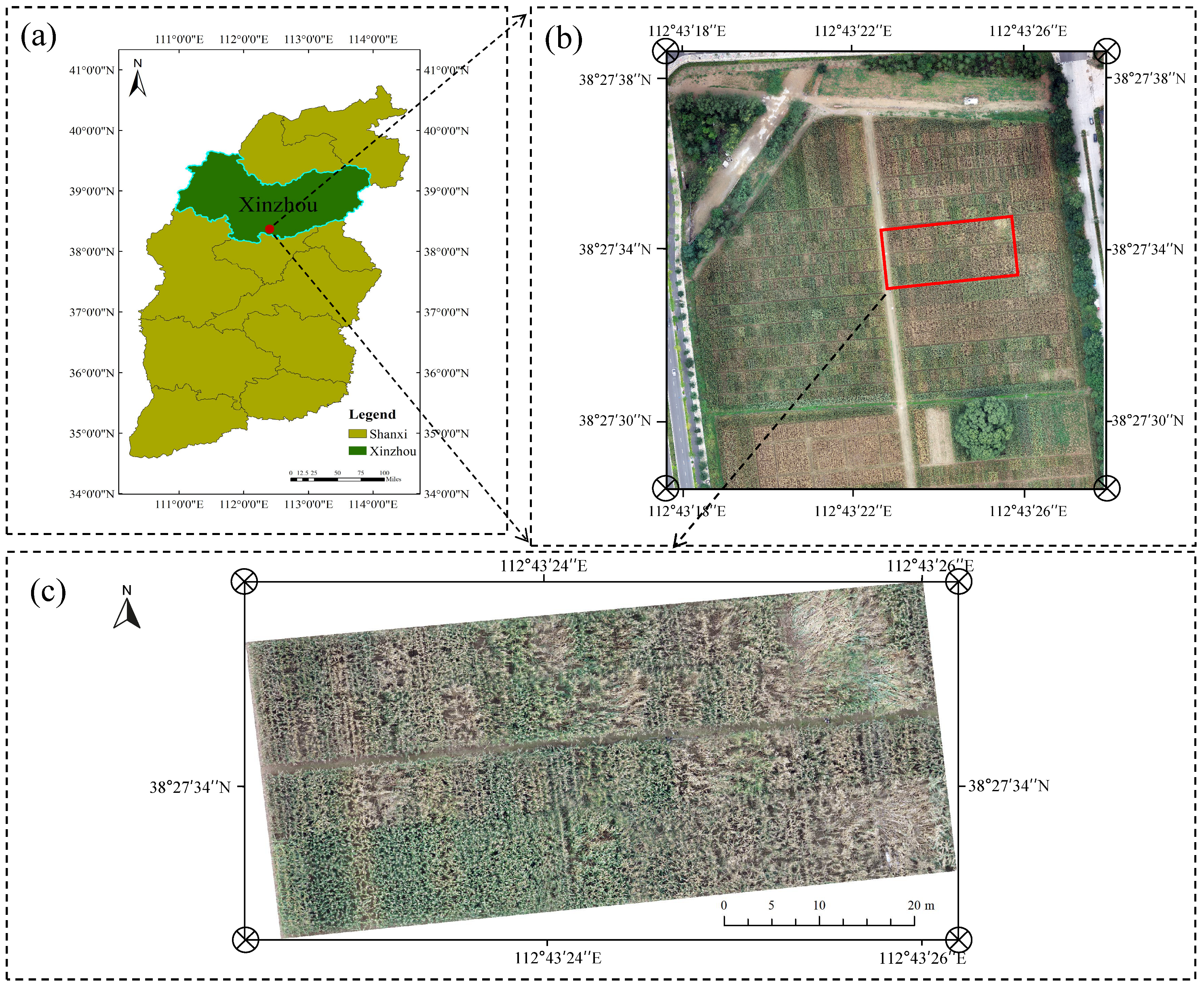
This study was conducted at the Experimental Demonstration Base of the National Maize Industrial Technology System located in Xinzhou City, Shanxi Province, China (Figure 1). As a key agricultural region in North China, Xinzhou is characterized by a temperate continental monsoon climate, whose distinct climatic conditions provide an ideal environment for maize growth. The region’s annual average temperature ranges from 4.3 °C to 9.2 °C, with average annual precipitation fluctuating between 345 mm and 588 mm and average annual sunshine hours reaching 2400.9 to 2911.3 h. The favorable combination of temperature, moisture, and sunlight has shaped Xinzhou’s one-crop-a-year cropping system, a pattern well-adapted to the local agro-climatic constraints. This monocropping system aligns with the region’s natural resource endowment, optimizing the utilization of climatic conditions for maize production.
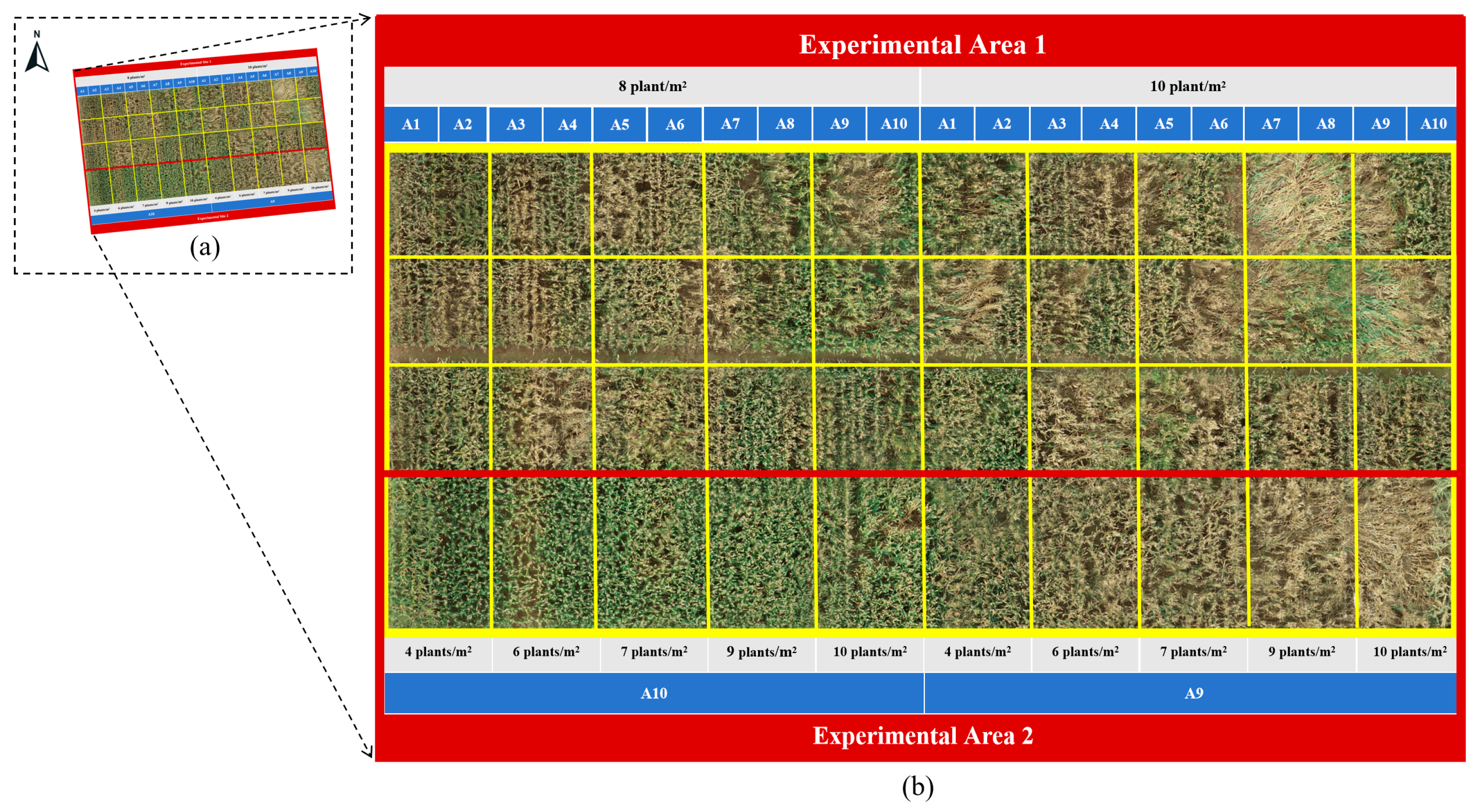
Two experimental areas (Experimental Area 1 and Experimental Area 2) were established in the research site. As shown in Figure 2, different settings were made for the two experimental areas in terms of maize varieties and planting densities. In Experimental Area 1, two planting densities were implemented: 8 plants/m2 and 10 plants/m2. For each density, 30 plots (each measuring 6 m × 6 m) were established. These plots were arranged in a north–south direction and divided into three replicate groups, with 10 plots per group. Two types of maize were planted in each plot. Under each planting density, the maize varieties were arranged in a west–east sequence, totaling 10 varieties: MC 703, Jiushenghe 2468, Ruipu 909, Xinyu 108, Lianchuang 825, Shandan 650, Kehe 699, Qiangsheng 388, Xianyu 335, and Zhengdan 958. These varieties were simplified and labeled as A1 to A10, respectively, in Experimental Area 1. In Experimental Area 2, a total of 10 plots were set up, each with an area of 6 m × 10 m. The experiment employed five distinct planting density gradients: 4 plants/m2, 6 plants/m2, 7 plants/m2, 9 plants/m2, and 10 plants/m2, alongside two maize varieties: Zhengdan 958 and Xianyu 335. Specifically, Zhengdan 958 was designated as “A10” in Experimental Area 2, while Xianyu 335 was labeled as “A9”. It should be noted that different maize varieties exhibit variations in plant height at the maturity stage. Table 1 shows the field-measured average height of the different maize varieties.

2.2. Image Collection from UAV Platforms

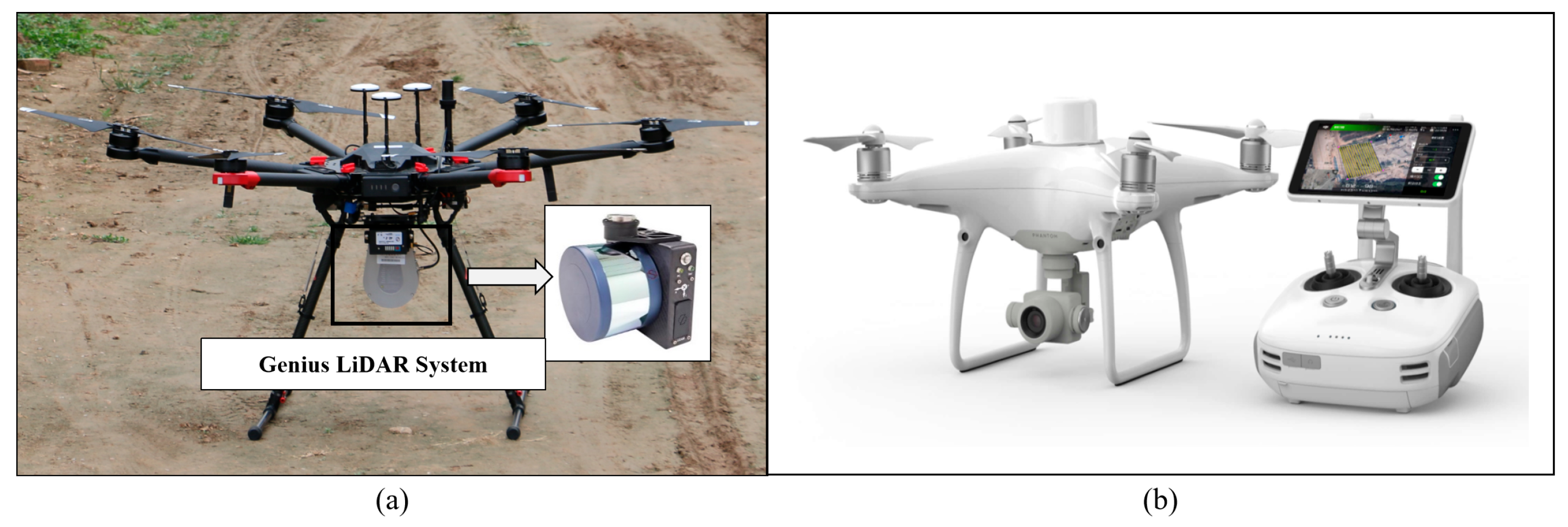
Experimental data were collected using two primary systems: a UAV LiDAR system and a UAV visible light imaging system. As illustrated in Figure 3a, the UAV LiDAR system comprises a DJI Matrice 600 Pro UAV (Da-Jiang Innovations, Shenzhen, China) and a Hummingbird Genius micro-LiDAR (SureStar, Beijing, China). Its key parameters are summarized in Table 2. For this study, the forward and side overlap rates were set to 40% to ensure the integrity and continuity of point cloud data; the UAV was flown at 25 m altitude with a navigation speed of 3 m/s, balancing data quality and collection efficiency. As shown in Figure 3b, the visible light imaging system employed a DJI Phantom 4 Pro UAV (Da-Jiang Innovations, Shenzhen, China) equipped with a 1-inch CMOS sensor featuring an 84° wide viewing angle. The camera boasts a resolution of 4864 × 3648 pixels and a ground sampling distance (GSD) of just 7.2 mm, enabling the capture of extremely detailed image features. To further enhance image quality, the heading and side overlap rates for the visible light system were increased to 80%—a setting chosen to improve the accuracy of image stitching.
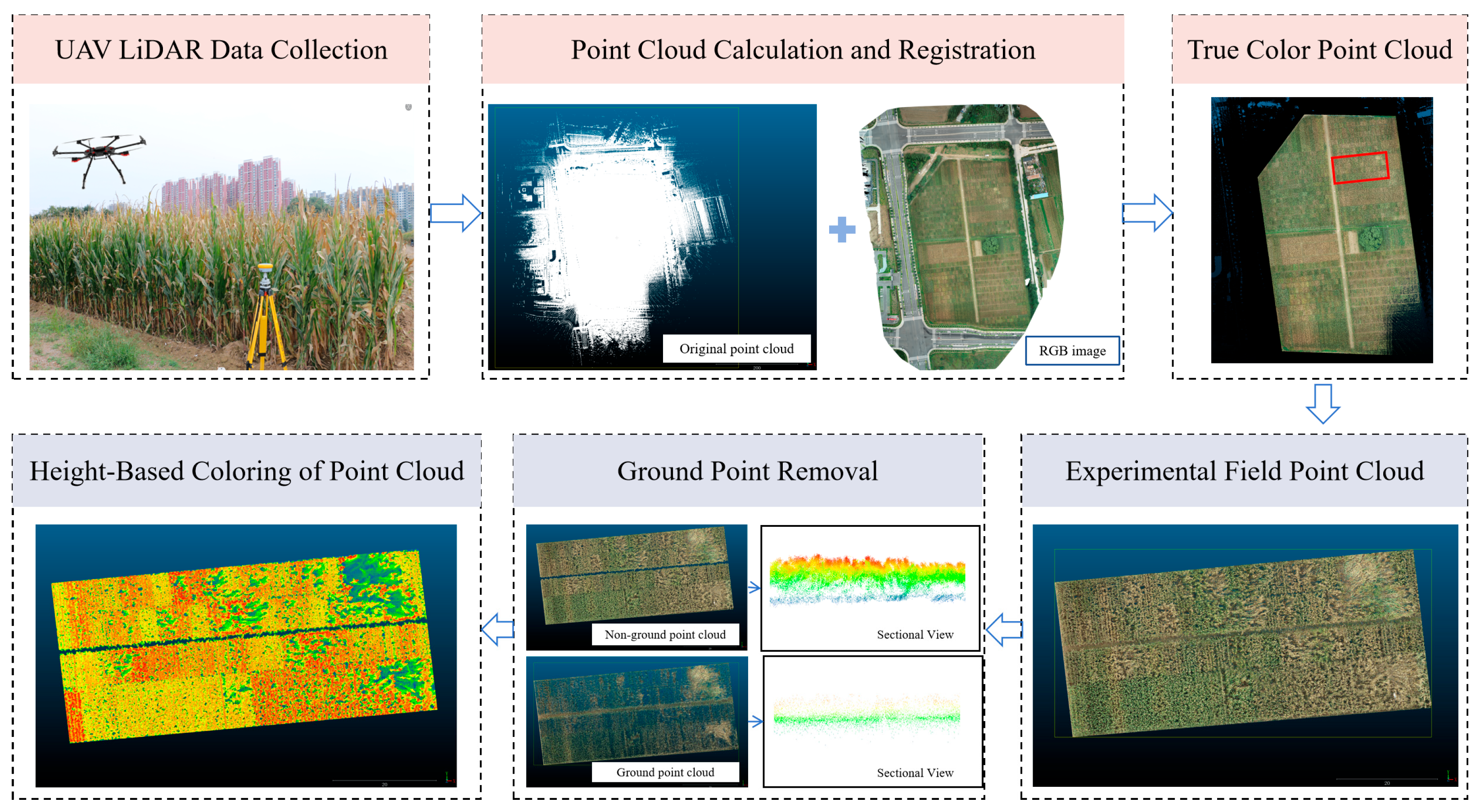
The UAV LiDAR data preprocessing primarily involves three core steps: data computation, point cloud registration, and point cloud filtering. Data computation entails two key tasks: joint processing of Global Navigation Satellite System (GNSS) and Inertial Measurement Unit (IMU) data to generate trajectory information, and computation of LiDAR point cloud data. For this study, the POSPac UAV 8.3 Lite software was used for trajectory computation, while StarSolve software (v2021) handled LiDAR point cloud processing. Point cloud registration was executed using the Align algorithm integrated within the CloudCompare software (v2.13.2). To refine the point cloud, a Statistical Outlier Removal (SOR) filter was employed to remove outliers, followed by application of the Cloth Simulation Filtering (CSF) algorithm to separate ground points from non-ground points. Particular emphasis was placed on eliminating ground points corresponding to the sidewalk within the experimental field, ensuring that the resulting point cloud data predominantly captured the maize canopy structure. Given the limited spatial extent and generally flat topography of the study area, the minimum height value of the point cloud was designated as the ground reference. A height difference technique was then utilized to generate the Canopy Height Model (CHM), thereby reducing computational demands. All data processing steps were conducted using the CGCS2000/6-degree zone Gauss-Krüger projection coordinate system (central meridian: 111° E) to ensure spatial consistency across the dataset. Figure 4 illustrates the sequential preprocessing workflow of point cloud data, culminating in the generation of experimental field datasets required for this research.

2.3. Implementation of the Adaptive Height Threshold Algorithm

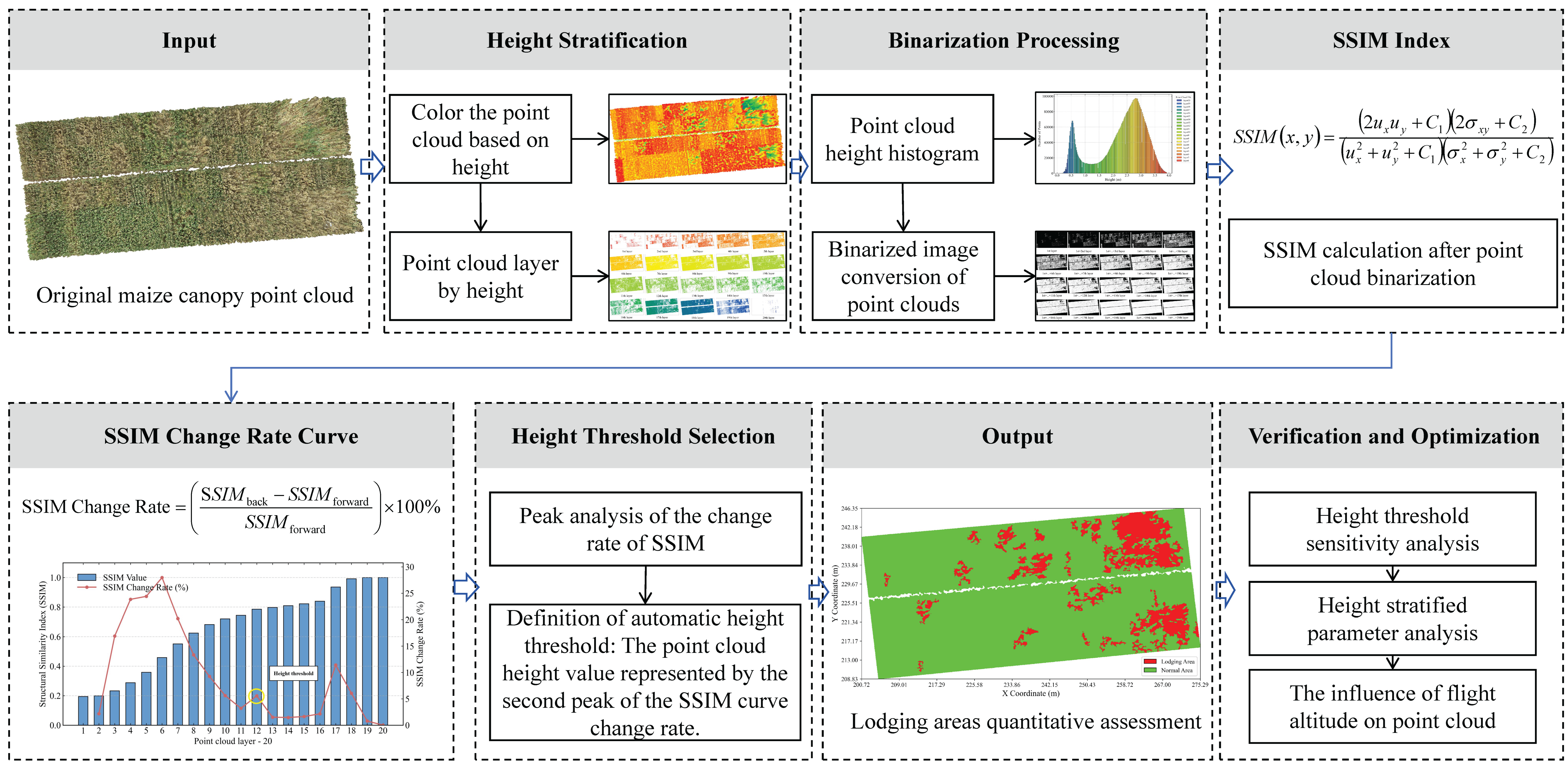
This paper presents an automated height threshold selection scheme based on canopy point cloud data, assuming flat terrain conditions. The workflow of this proposed scheme is illustrated in Figure 5, which is detailed as follows:
Height Stratification: First, this scheme stratifies the original point cloud data layer by layer according to its height attribute, decomposing the complex three-dimensional point cloud information into multiple discrete height levels.
Binarization Processing: Following height stratification, the point cloud data are accumulated layer by layer in descending order of height and converted into binary images. Binarization enhances feature extraction by effectively highlighting the boundaries of lodged areas while substantially reducing redundant information, thus improving computational efficiency.
SSIM: To more accurately assess the relationship between stratified point cloud data and the overall dataset, the Structural Similarity Index (SSIM) [44,45] is introduced as a key evaluation metric. SSIM, widely used in image quality assessment, quantifies similarity between two images by comparing their luminance, contrast, and structural features. In this method, SSIM is employed to compute the similarity between binary images derived from stratified data and the binary image generated directly from the original point cloud. This approach not only quantifies the similarity between each stratified layer and the overall data but also reveals subtle variations across different height levels.
SSIM Change Rate Curve: The rate of change in SSIM values—defined as the percentage change between consecutive SSIM values—is further analyzed. The resulting change rate curve visually represents structural transitions in the point cloud data and provides a scientific basis for selecting height thresholds. By plotting and examining this curve, dynamic patterns of structural variation across height levels become evident. Peaks in the curve often correspond to significant structural discontinuities, which may indicate lodging events.
Selection of the height threshold: Finally, through analyzing the peak distribution of the SSIM value change rate curve, the height threshold for lodging occurrence judgment is determined as the point cloud height value corresponding to the second peak in this scheme.
Verification and Optimization: To validate the accuracy and robustness of this method, the proposed scheme also performs a high-threshold sensitivity analysis. Additionally, it systematically investigates how factors such as point cloud height stratification parameters and flight altitude impact performance, thereby ensuring the method’s applicability and reliability across varying environmental conditions.

3. Results

3.1. Analysis of Lodging Situation in the Study Area

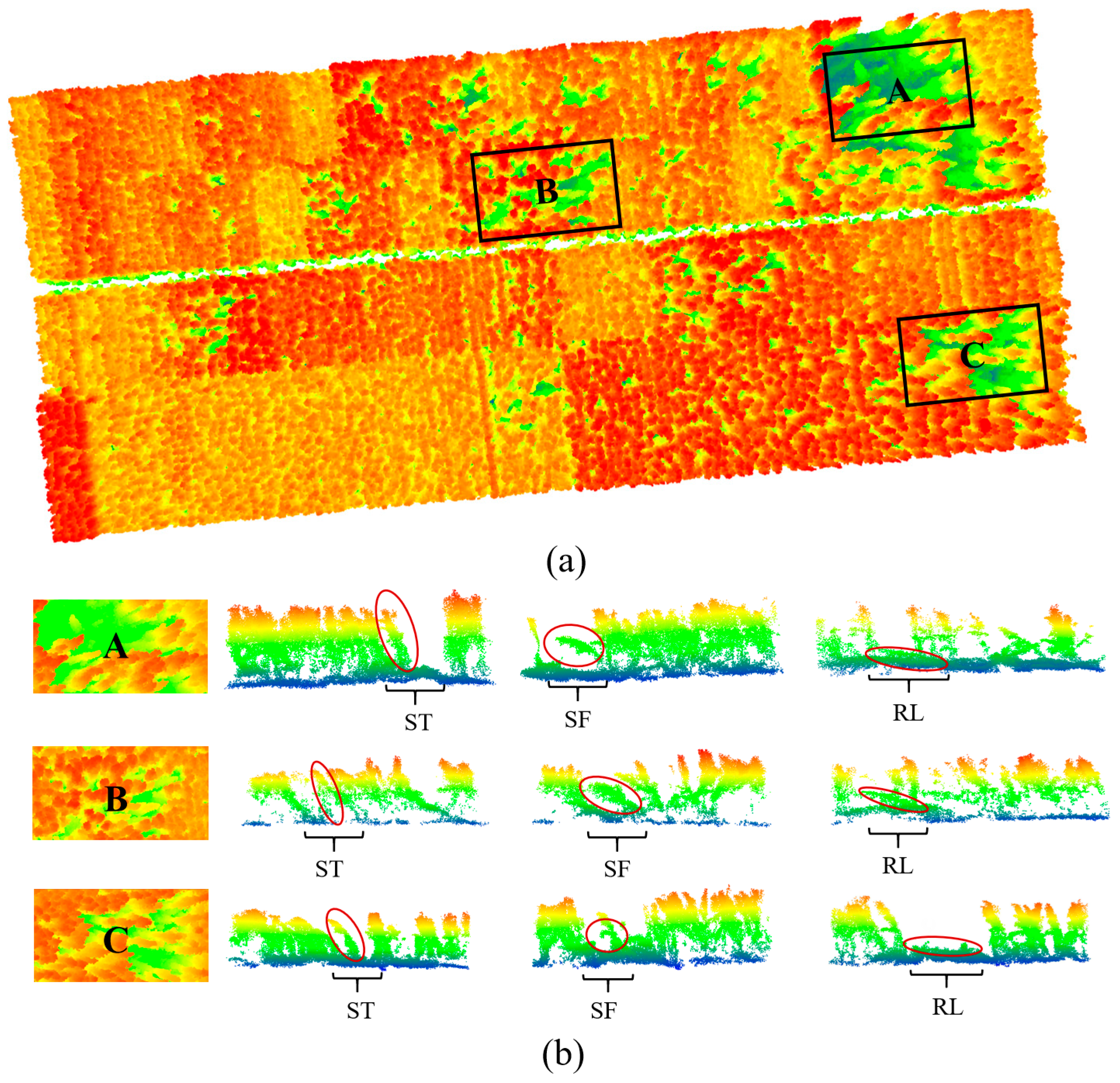
Maize canopy height is a direct and reliable indicator of crop growth status, as it directly reflects the vigor and development of maize plants. To explicitly visualize the spatial distribution of canopy height, a point cloud coloring technique was employed. Specifically, point clouds were assigned distinct colors based on their height values: blue denotes the lowest height areas, followed by green (slightly higher), yellow (medium height), and red (highest height). Post-processing results are presented in Figure 6a. Through visual interpretation of point cloud color variations, lodging areas—predominantly characterized by blue and green tones—can be rapidly identified. These lodging areas exhibit irregular morphologies, and the contrasting color gradients further highlight the variability in lodging severity and types. The distinct color transitions not only facilitate quick identification of lodging zones but also reveal the heterogeneous nature of lodging patterns within the study area.
As shown in Figure 6b, three representative lodging-prone areas were identified within the study region A, B and C, respectively. To further characterize the height distribution patterns of the point cloud, longitudinal slicing was performed on the LiDAR data—an approach aimed at visually capturing the spatial structure of maize plants to facilitate the assessment of lodging severity and type. For maize plants in a healthy, upright growth state, the point cloud exhibited a balanced color gradient (from red to blue), reflecting uniform vertical growth. In contrast, lodging events were marked by distinct anomalies in both the color composition and point density of the point cloud. Based on the extent of plant displacement, lodging was categorized into three types: mild lodging (characterized by slight stem inclination without complete collapse), moderate lodging (defined by full stem laydown parallel to the ground), and severe lodging (distinguished by root detachment from the soil matrix). Analysis of the three targeted lodging areas revealed clear, gradient-dependent differences in point cloud morphology, which directly corresponded to the varying degrees of lodging. These results provide empirical support for the feasibility of using UAV-based LiDAR technology to monitor maize lodging, as the point cloud data effectively captured the spatial signatures of lodging events across different severity levels.
From the perspective of point cloud profile characteristics, the three lodging types exhibit distinct differences. Stem tilt (ST) is marked by a reduction in overall plant point cloud height, while partially retaining the vertical color gradient (e.g., red to blue). The point cloud maintains relatively high density and structural continuity, indicating stems are inclined at an angle without complete breakage or lodging. Stem folding (SF) is characterized by a pronounced collapse in canopy height, disappearance of apical points (typically red), and aggregation of points into unevenly dense clusters at lower elevations—consistent with stem bending/fracture disrupting canopy architecture. Root lodging (RL) presents the most scattered point cloud distribution: overall height sharply declines to near-ground levels, dominated by blue and green low-elevation points. The sparse point cloud exhibits expanded spatial distribution with no discernible plant morphology, resulting from plants lying flat post-root detachment. This study focuses on two severe lodging types: stem folding (SF) and root lodging (RL). Compared to stem tilt (ST), SF and RL demonstrate more significant spatial structural distortions. Their distinct structural signatures facilitate detection and segmentation in point cloud data, providing high-contrast features for automated identification.

3.2. Automated Selection of Height Thresholds

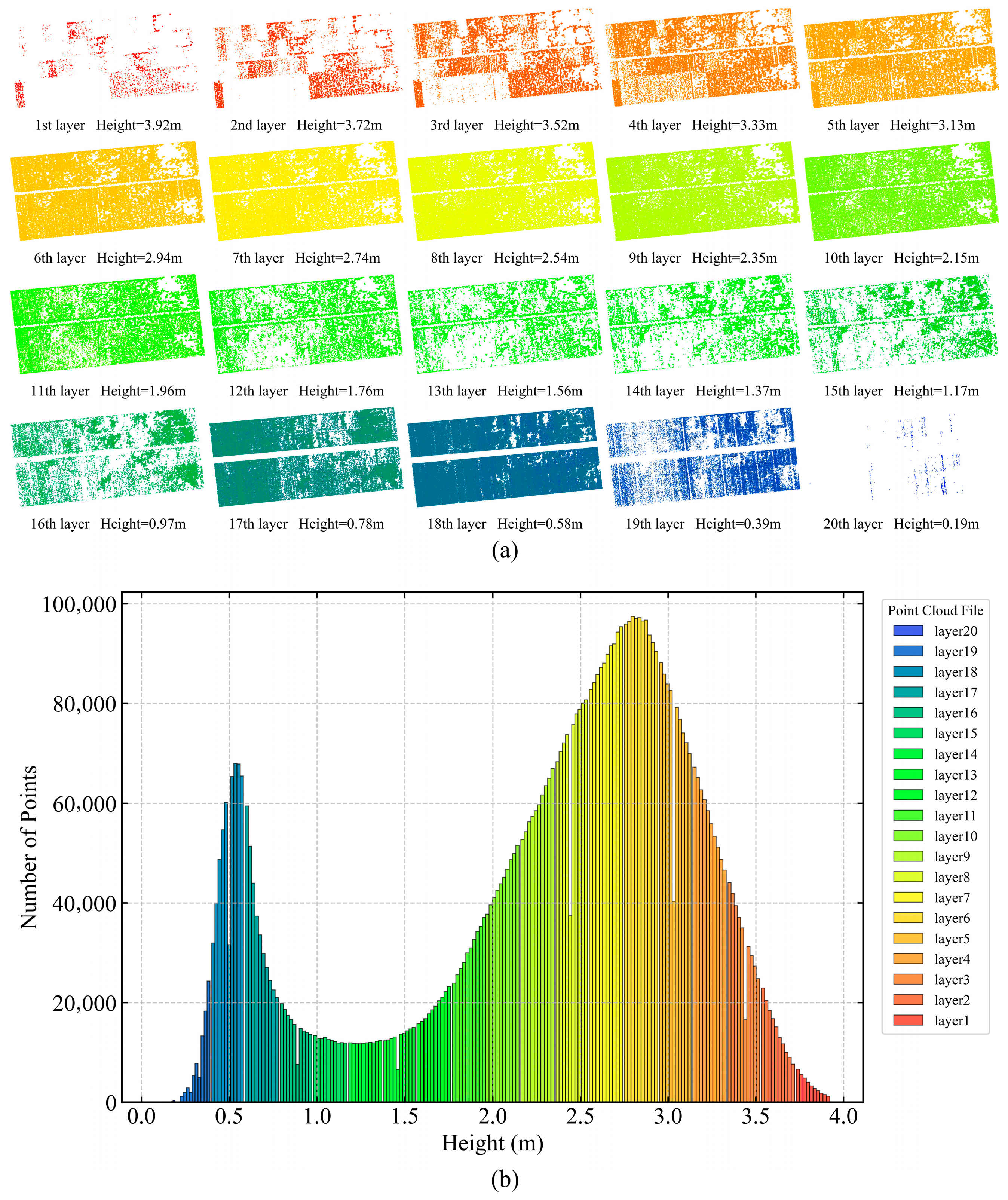
Given that the primary distinction between lodging areas and normally growing areas resides in canopy height, adopting a height threshold for differentiation constitutes an efficacious and straightforward method. Through the application of point cloud height stratification technique, which involves discretizing the three-dimensional point cloud data into contiguous horizontal layers along the vertical axis, and subsequent examination of point cloud distribution characteristics within these distinct height ranges, the nuanced variation characteristics of the vertical structure of field-grown maize can be precisely captured and quantified. This stratification not only reveals the presence or absence of vegetation at specific heights but also illuminates the density and spatial arrangement of points, which are critical indicators of structural integrity and lodging severity. Figure 7a graphically depicts the point cloud distribution within the study area following height stratification. In this visualization, each horizontal slice represents the spatial distribution of points within a specific height interval, with the uppermost layer corresponding to the highest height range and the lowermost layer to the lowest height range. This multi-layered representation allows for a clear visual discrimination between the intact, vertically extensive canopies of healthy plants and the collapsed, height-reduced canopies of lodged plants. Complementing this spatial view, Figure 7b presents the frequency distribution of point counts across the entire vertical height spectrum, essentially illustrating how many LiDAR points are present at each elevation. A critical observation from Figure 7b is the presence of two distinct peak regions in the point count frequency. The left peak is centered at an approximate height of 0.51 m, while the right peak is centered at approximately 2.80 m. These dual peaks are interpreted as representing two dominant vertical layers within the maize canopy. Theoretically, the optimal height threshold for distinguishing between lodging and non-lodging regions should lie within the trough area between these two peaks.
To achieve automatic and objective selection of the height threshold for distinguishing lodging from non-lodging maize regions, this study innovatively employed a method that leverages the cumulative superposition of point cloud data combined with the quantitative assessment of the Structural Similarity Index (SSIM) [44,45]. This approach entails a systematic, layer-by-layer accumulation of point cloud data starting from the highest elevation and progressing downwards, with each accumulated subset converted into a binary image. These binary images are then subjected to structural similarity analysis against a reference binary image derived from the original, unstratified point cloud. The core objective of this process is to identify the height threshold at which the accumulated binary image best captures the structural characteristics relevant to lodging discrimination, thereby optimizing the threshold selection.
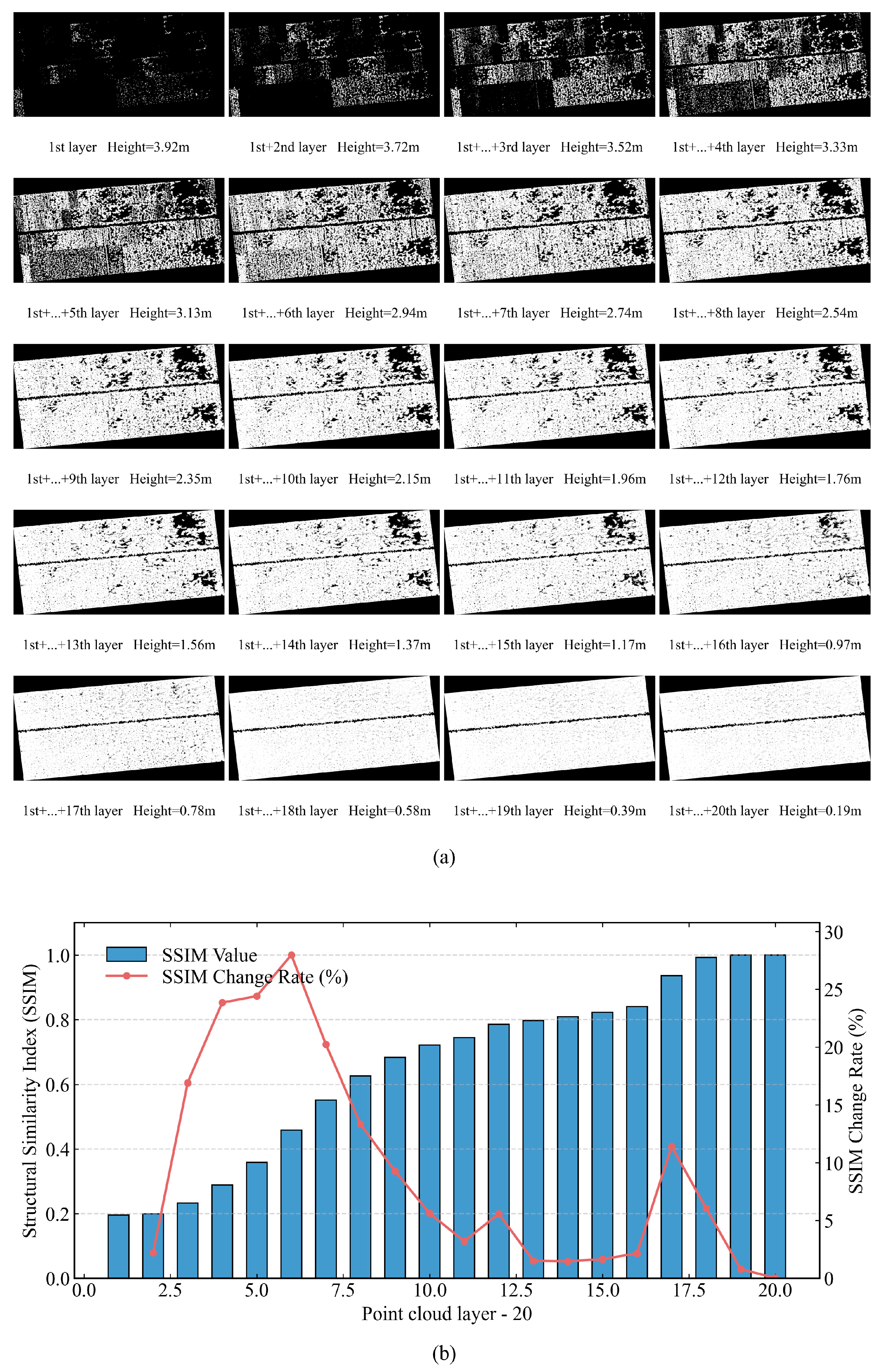
Figure 8a provides a visual representation of a binary image obtained at a specific stage of this cumulative superposition process, where white pixels indicate the presence of LiDAR points within the accumulated height layers, and black pixels indicate absence. This image serves as a snapshot of how the spatial extent of detected vegetation expands as lower height layers are included. Complementing this, Figure 8b illustrates two critical aspects of the analysis: the blue histogram depicts the SSIM value as each subsequent (lower) point cloud layer is added to the accumulation, while the red dashed line represents the rate of change in the SSIM value between consecutive accumulations. As clearly depicted in Figure 8b, the SSIM value (blue histogram) exhibits a consistent and monotonic upward trajectory as point cloud layers are progressively accumulated from higher to lower elevations. This trend is intuitive, as each additional layer incorporates more points from the original cloud, causing the structural features of the accumulated binary image to gradually converge with those of the complete original point cloud binary image. Eventually, as all layers are included, the SSIM value approaches 1, indicating nearly perfect structural similarity.
Of greater analytical significance is the behavior of the SSIM change rate (red dashed line in Figure 8b), which reveals an overall dynamic pattern of “first increasing, then decreasing,” punctuated by three distinct peaks. The interpretation of these peaks is as follows: The first peak is primarily attributed to structural variations arising from inherent differences in maize varieties and planting densities across the field. During the initial phase of layer accumulation (starting from the highest points), these factors—such as varietal differences in maximum height or localized variations in plant spacing—manifest as significant structural discrepancies between the accumulated (initially very sparse) points and the full original cloud. This leads to a rapid surge in the SSIM change rate as lower layers (still part of the upper canopy) are added, introducing more of the variability associated with these inherent field characteristics. As accumulation proceeds beyond this initial upper canopy, however, the incremental addition of layers begins to “dilute” the relative influence of these varietal and density-induced structural discrepancies, leading to a subsequent decline in the change rate. The second peak is closely linked to the presence of maize lodging. At this stage in the accumulation process, the height layers being added correspond to the mid to lower canopy regions where height variations caused by lodging become the dominant source of structural difference between the accumulated point cloud and the original. Lodged plants, having collapsed, contribute points at these lower elevations that would not be present in the same density in areas with healthy, upright plants. As accumulation continues toward lower elevations, lodging effects remain the primary influence on layer structure within a specific critical height range, leading to the second peak in the SSIM change rate. Nevertheless, as the accumulation height decreases further beyond this range, the impact of lodging weakens (as both healthy and lodged plants may have similar lower structural components), reducing structural disparities and causing the change rate to decline again. The third peak arises as the accumulated layers approach the ground surface. When layers are accumulated to near-ground heights, their structural features increasingly align with the original point cloud’s overall distribution pattern, as the near-ground points are less affected by canopy variations and more by the underlying terrain and base vegetation. At this stage, external disturbances such as lodging no longer significantly affect the layer structure, and the SSIM change rate peaks again as the last remaining structural details (from the lowest layers) are incorporated. Subsequently, continued accumulation results in full structural consistency between the accumulated and original point cloud layers, with the SSIM value approaching 1.
Based on the comprehensive experimental data analysis, this study established the optimal height threshold as 1.76 m, which corresponds to the elevation of the 12th point cloud layer, measured at the second peak (lodging-influenced peak) in the SSIM change rate curve. This critical selection was determined by two key considerations: First, by the accumulation of point clouds up to the 12th layer, the initial peak (attributed to variety and density effects) had receded to a distinct trough. This indicated that the structural variations arising from differences in maize varieties and planting densities had been largely incorporated and their influence had essentially stabilized. From the 12th layer, subsequent alterations in the point cloud structure became primarily attributable to lodging events rather than inherent field variability. Second, the analysis revealed a relatively slow rate of change in SSIM values between the 12th and 16th layers. This plateau suggested that within this specific height range, the impacts induced by lodging on the point cloud structure exhibited consistent stability and shared similar characteristics across the field. Collectively, these phenomena implied that lodging effects began manifesting prominently from the 12th layer onward and emerged as the dominant factor driving point cloud structural changes in the lower layers.

3.3. Quantitative Assessment of Lodging Area

To accurately quantify the lodging area within the experimental field, this study further converted the point cloud data into a height raster map with a spatial resolution of 0.05 m × 0.05 m, ensuring the preservation of fine-grained spatial details. For each raster cell, the average elevation of the contained point cloud data was computed, and regions were classified using the optimal height threshold (1.76 m): cells with average heights below this threshold were designated as lodging areas, while those exceeding the threshold were classified as normally growing regions. This approach enables efficient discrimination between different growth status zones. The resultant height raster map (Figure 9) visually distinguishes lodging areas (red) from normally growing regions (green). By enumerating the pixel counts of red and green regions, the proportional coverage of lodging area relative to the total experimental area was determined. Detailed calculation parameters are provided in Table 3. The final analysis reveals that the lodging area constitutes 13.4% of the experimental field, offering an intuitive quantitative metric for evaluating lodging severity.

3.4. Height Threshold Sensitivity Analysis

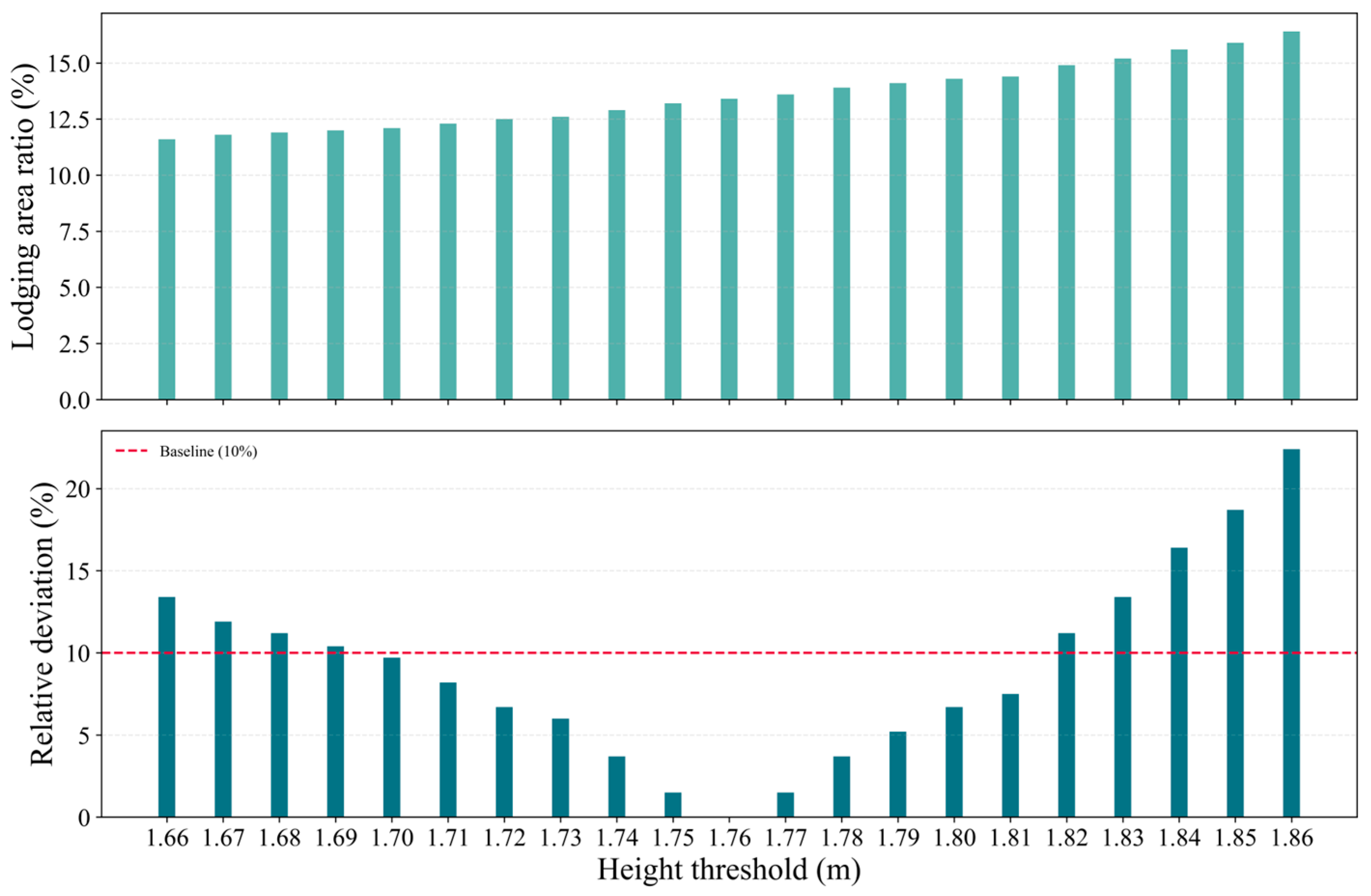
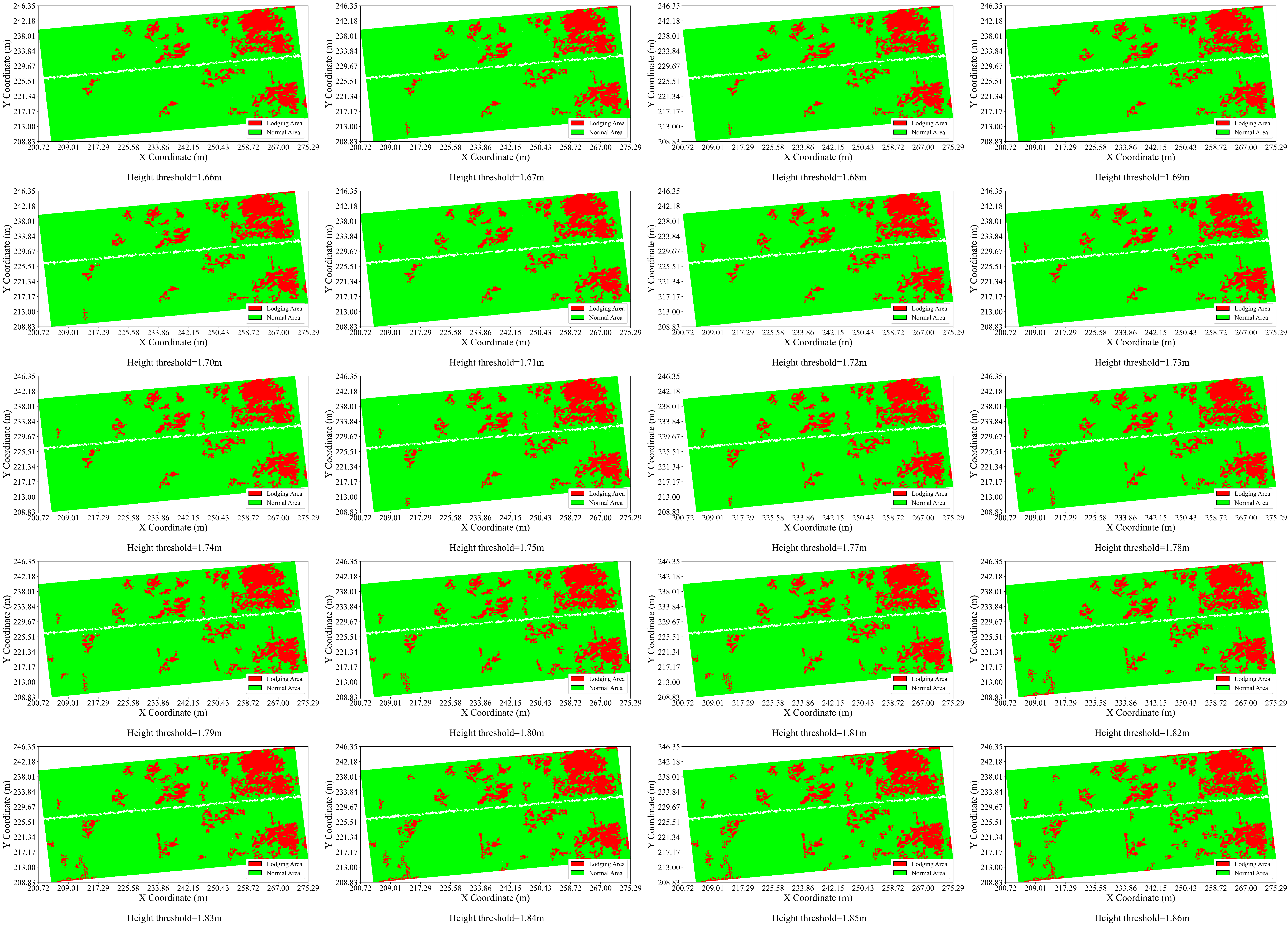
To verify the robustness of the proposed height threshold determination method, this study further conducted a threshold sensitivity analysis. Specifically, the previously obtained height threshold (1.76 m) was used as the baseline, and an experimental interval was constructed by extending ±10 cm around it (i.e., 1.76 m ± 0.1 m). Within this interval, 20 experimental height thresholds were set at equal intervals with a step size of 1 cm. Based on these 20 thresholds, the point cloud data of the study area was converted into corresponding height raster maps (as illustrated in Figure 10). To quantify the impact of height threshold variations on maize lodging recognition accuracy, relative deviation was employed as the evaluation metric. Using the 13.4% lodging area obtained from the initial experiment as the reference baseline, the lodging area corresponding to each experimental threshold and its relative deviation from the baseline value were calculated. The results are presented in Figure 11, where the red dashed line indicates the baseline with a relative deviation of 10%. The study defined that a relative deviation less than 10% implies the change in height threshold has no significant effect on lodging area evaluation.
The experimental results demonstrate that increasing the height threshold leads to a gradual expansion of the lodging area, as visually illustrated by the data distribution in the first sub-figure of Figure 11. Consequently, the selection of the height threshold significantly influences lodging area determination, with its rationality directly governing the accuracy of research outcomes. Further analysis reveals that as each height threshold deviates progressively from the reference value (1.76 m), the relative deviation of the lodging area increases accordingly, as depicted by the second sub-figure data distribution in Figure 11. In this study, within the height range of 1.70 m to 1.81 m, the relative deviation between the calculated lodging area and the reference value (13.4% lodging area) remains below 10%. The results demonstrate that the proposed height threshold scheme maintains high robustness within a ±5 cm range, thus fully confirming the reliability of the methodology described in this study.

4. Discussion

4.1. Accuracy Analysis of the Proposed Method

4.1.1. Comparison with the Accuracy Results Obtained Through Manual Interpretation

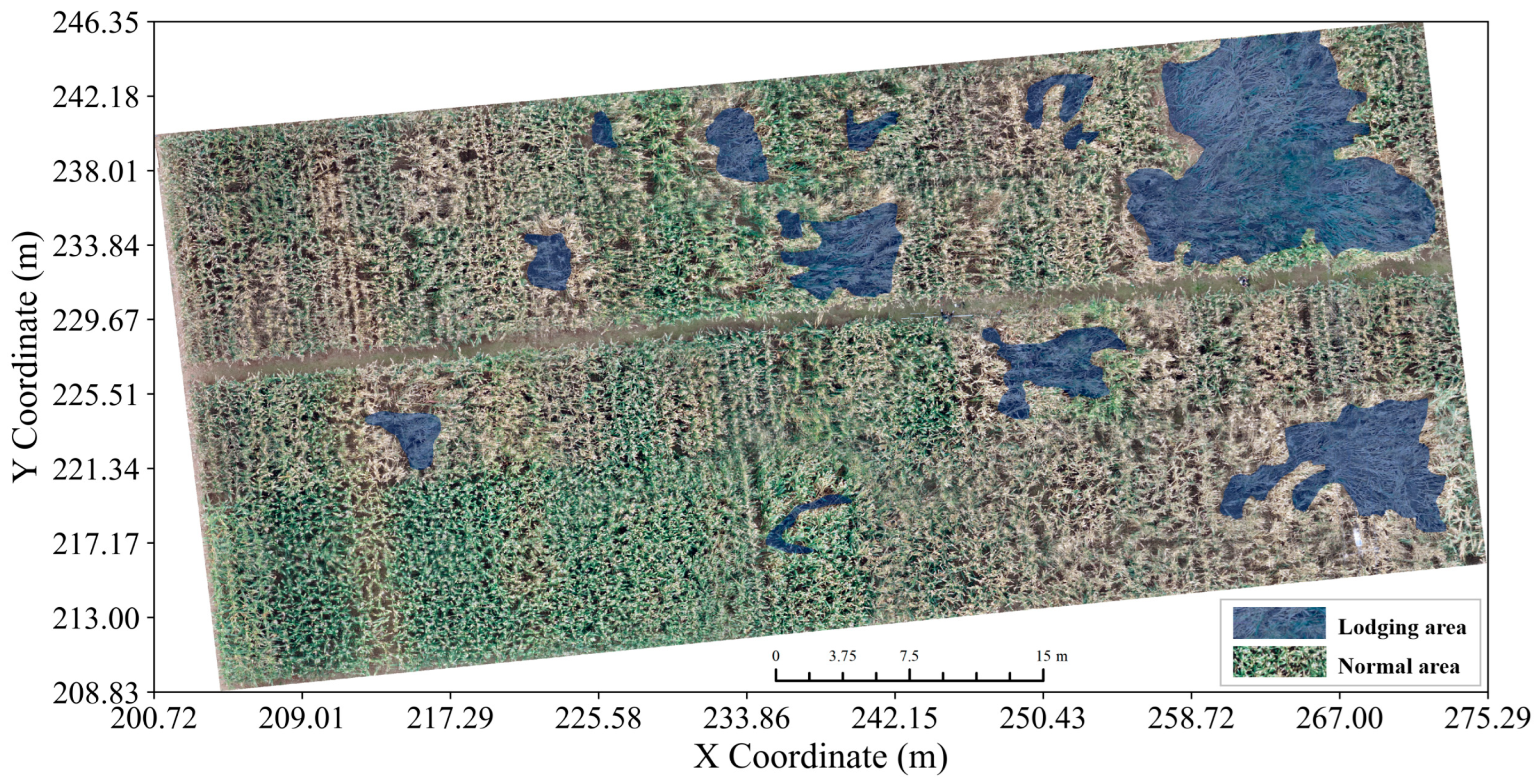
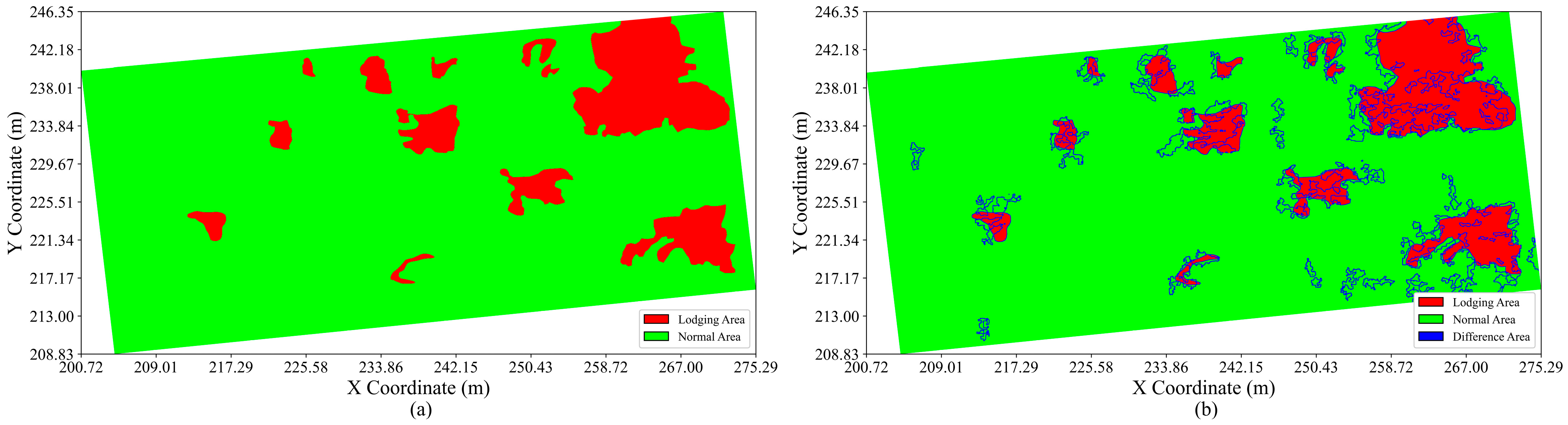
To further validate the reliability of the method proposed in this paper, high-resolution RGB images (with an average ground sampling distance (GSD) of 7.2 mm) were collected synchronously as an independent data source. The manual interpretation results of lodging areas from the image served as the ground truth for accuracy assessment. The interpretation process was conducted meticulously by a team of three experts with extensive experience in agricultural remote sensing. Initially, high-resolution image data were imported into ArcGIS Desktop 10.8 (a professional desktop geographic information system developed by Esri) [46,47] for spatial analysis and subsequent processing. The interpreters then performed on-screen digitization at a high zoom level, visually identifying and delineating the boundaries of lodged maize areas based on key indicators such as aberrant plant posture, disrupted canopy texture, and exposure of soil background. Each interpreter worked independently to generate their version of the lodging map. Subsequently, these individual interpretations were compared and integrated through a consensus-building process to produce a final, unified ground truth dataset (as shown in Figure 12, where blue areas denote the manually extracted lodging zones), thereby minimizing subjective bias and enhancing the credibility of the reference data. As a classic and authoritative analytical approach, this rigorous manual interpretation yields results with high credibility, and its outcomes are widely recognized as a reliable benchmark. By comparing the output of the proposed method with this robust ground truth, not only can the algorithm’s accuracy be intuitively assessed, but also potential error sources and their degrees of influence can be identified. According to the statistical results presented in Table 4, the lodging area proportion in the high-resolution RGB images—derived from this manual interpretation—was 13.1%. In contrast, the lodging area proportion calculated by the proposed method deviated from this benchmark by only 2.3%. This 2.3% deviation is relatively low compared to similar studies in the field, indicating that the proposed method’s adaptability and stability in complex scenarios are effectively ensured.
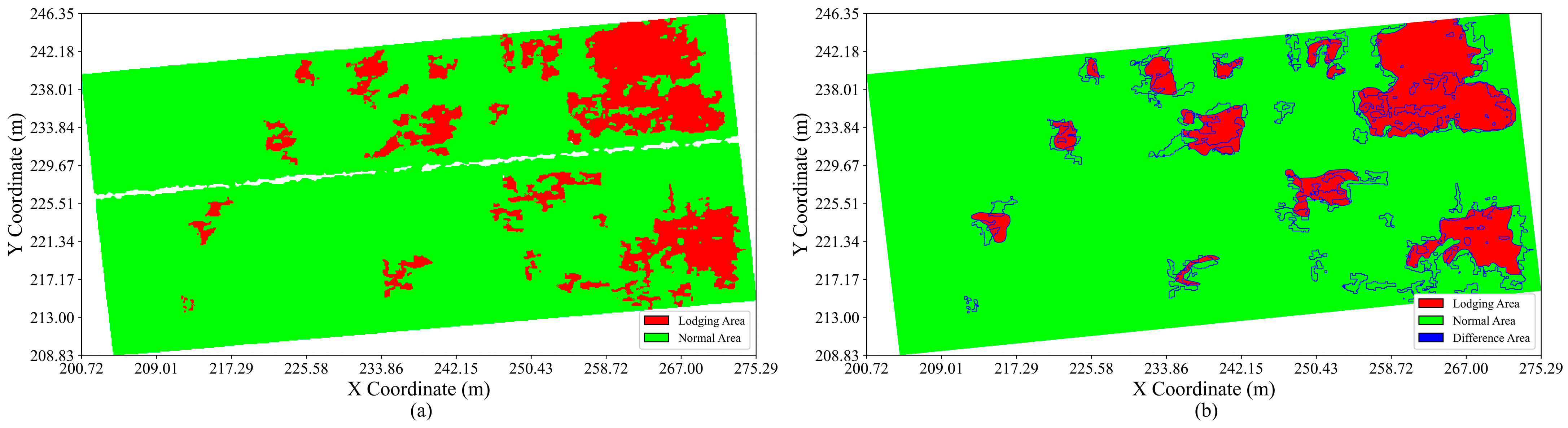
The research in this paper further converts the manual interpretation results derived from high-resolution RGB images into vector maps and compares them with the raster map of lodging regions determined by the height threshold proposed herein. As shown in Figure 13, the lodging regions extracted by the two methods exhibit a high degree of overlap, with a calculated Structural Similarity Index (SSIM) of 0.95 between the two images—an exceptionally high value. This result strongly indicates that the height threshold-based method for identifying lodging regions is highly consistent with manual interpretation results, thereby verifying the effectiveness and accuracy of the proposed research scheme. Meanwhile, by examining the discrepancy areas outlined by blue lines in Figure 13b, several key issues were identified: First, the height threshold-based extraction method has inherent limitations in low-density planting regions. Due to the larger soil exposure areas and sparser point cloud data in these regions, exposed soil is prone to being misclassified as lodging, leading to deviations in extraction results. Second, RGB-based manual interpretation is inherently susceptible to subjective factors. Especially in complex field environments, lodging regions often present irregular shapes, and the boundaries between mature-stage lodging areas and normally growing maize can be ambiguous. This ambiguity not only complicates manual interpretation but also can result in significant subjective variability among interpreters. Future research could integrate these two remote sensing techniques to compensate for their respective limitations.

4.1.2. Comparison and Analysis with the Classic Threshold Selection Schemes

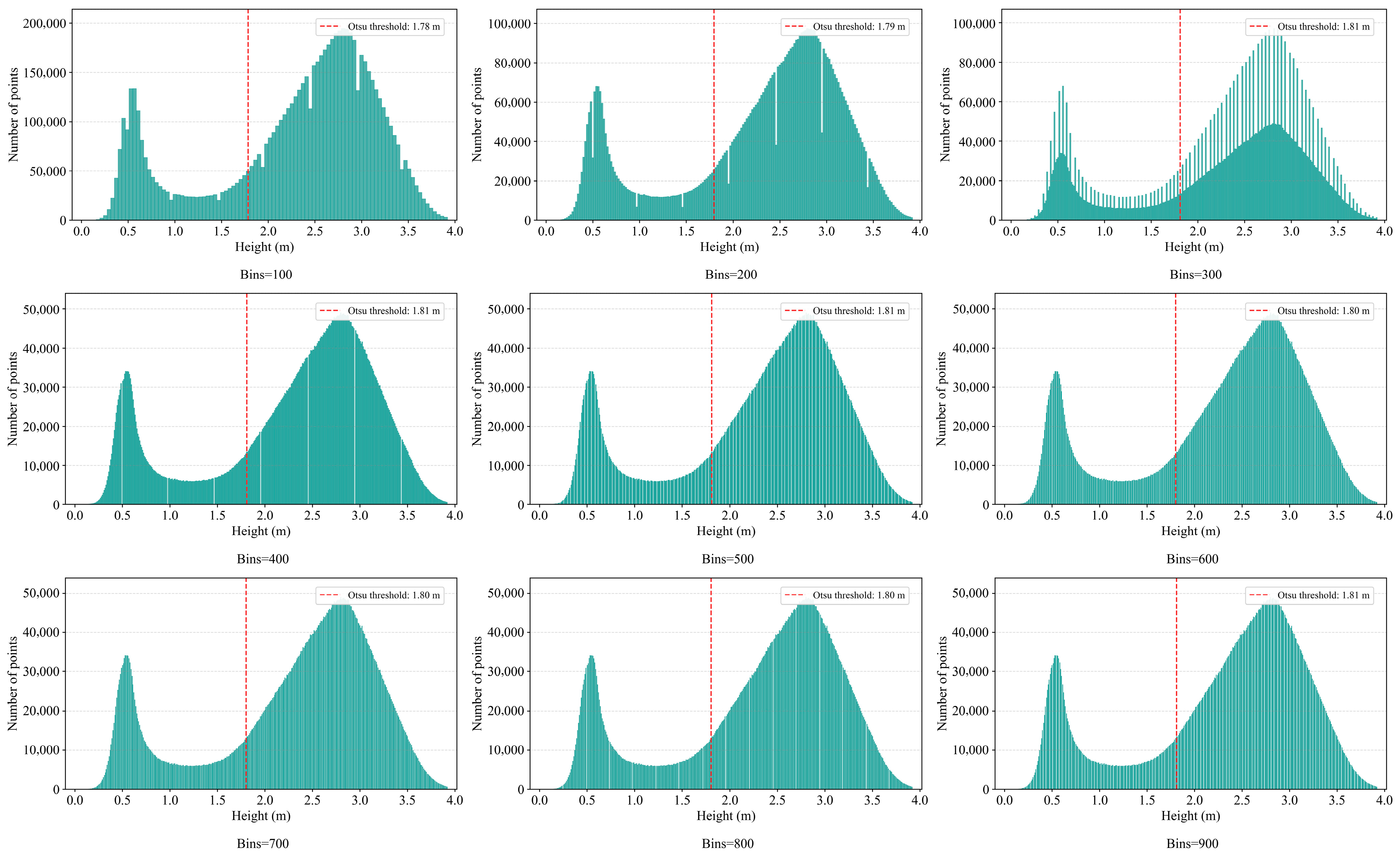
As a critical carrier of three-dimensional spatial information, the height values of point cloud data can be analogized to a form of “one-dimensional grayscale signal.” This analogy closely aligns with the concept of grayscale values in image processing, where the distribution frequency of height values can be intuitively visualized through a height histogram. Notably, significant disparities often exist in height distributions between lodging and normal regions. For instance, lodging areas typically exhibit lower height values, whereas normal regions display higher ones. This distinction manifests as a distinct “double-peak feature” in the height histogram, with the two peaks corresponding to the height distributions of lodging and normal areas, respectively. Leveraging this bimodal distribution characteristic, adaptive height threshold selection can be achieved via classical data-driven approaches. Among these methods, Otsu’s Method has emerged as a prevalent choice due to its simplicity, efficiency, and suitability for bimodal distributions [48,49,50]. To compare the proposed adaptive threshold selection method in this study with conventional threshold selection techniques, experiments were further conducted using Otsu’s Method for height threshold determination, and the results are presented in Figure 14.
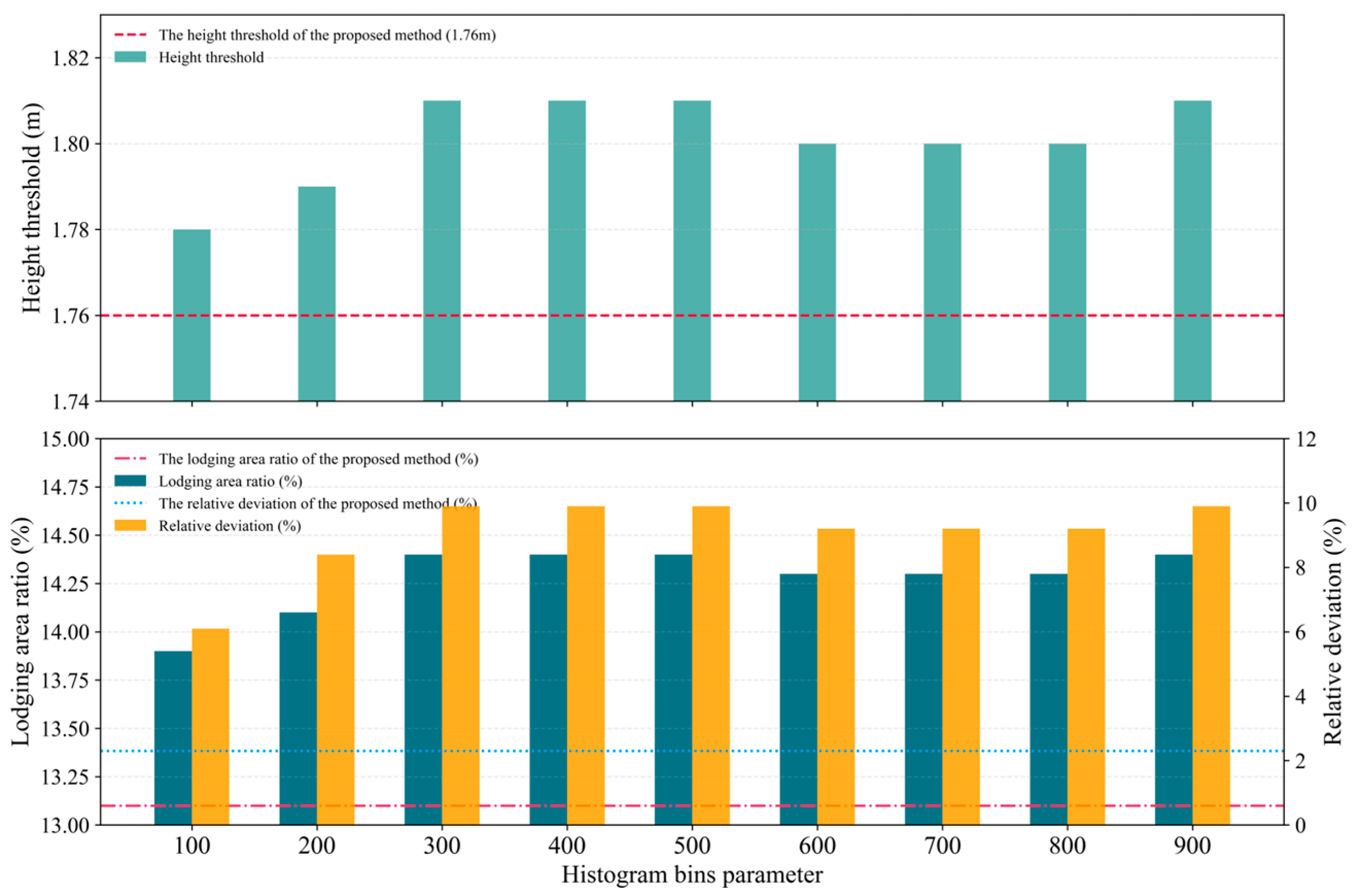
The experimental results indicate that the threshold selection using Otsu’s method is highly sensitive to parameter settings. When the point cloud histogram is partitioned into varying numbers of bins, the resulting height thresholds exhibit unstable fluctuations, complicating the identification of a unique and consistent threshold for analytical purposes. To evaluate the accuracy of lodging area predictions, a comparison was conducted between the proposed method and Otsu’s method under various threshold conditions (Figure 15). The results demonstrate that the deviations in the estimated lodging area ratio using Otsu’s method across different thresholds are greater than those of the proposed method, which shows a deviation of only 2.3% relative to the manually interpreted reference values. This finding further corroborates the robustness and accuracy of the proposed method.
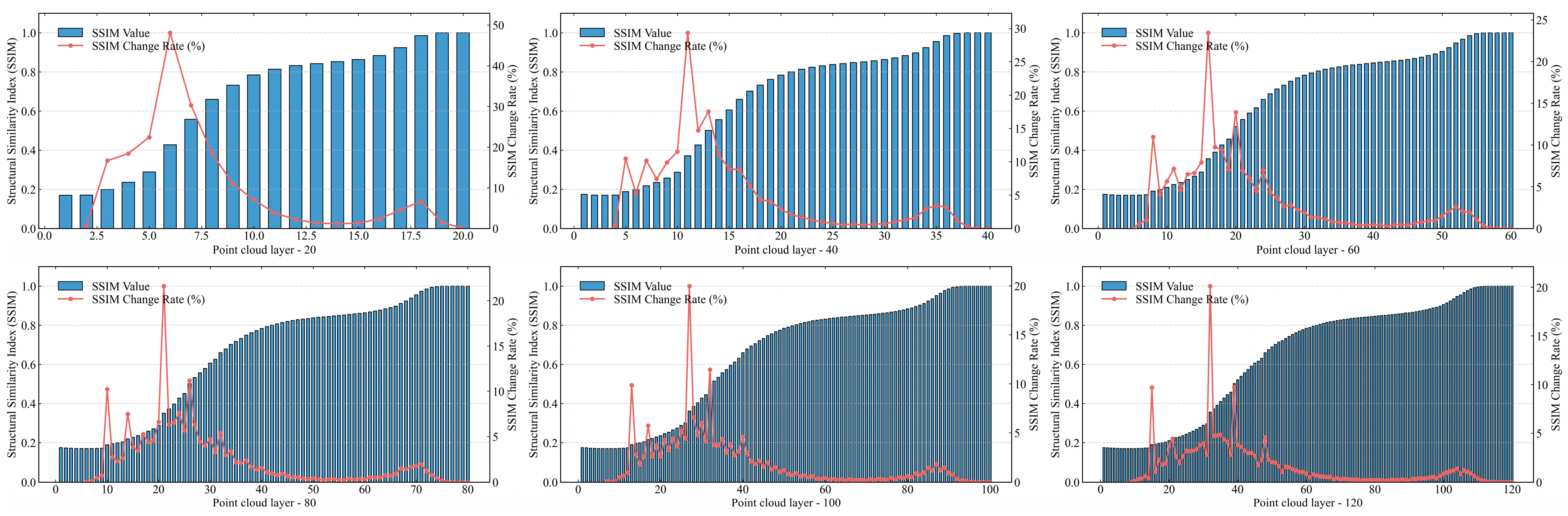
It is noteworthy that nearly all data-driven adaptive threshold selection methods are susceptible to parameter influence. Minimizing such influence remains a critical and unavoidable challenge in any research framework. Although the adaptive height threshold selection method proposed in this study is affected to some extent by point cloud stratification parameters, this issue will be thoroughly examined in subsequent chapters. Preliminary findings indicate that when the stratification parameters are set at even multiples of 10, the proposed method can uniquely determine an optimal threshold, thereby mitigating the problem of threshold instability associated with parameter variation in Otsu’s method.

4.2. The Influence of Point Cloud Layering Parameters on the Accuracy Results

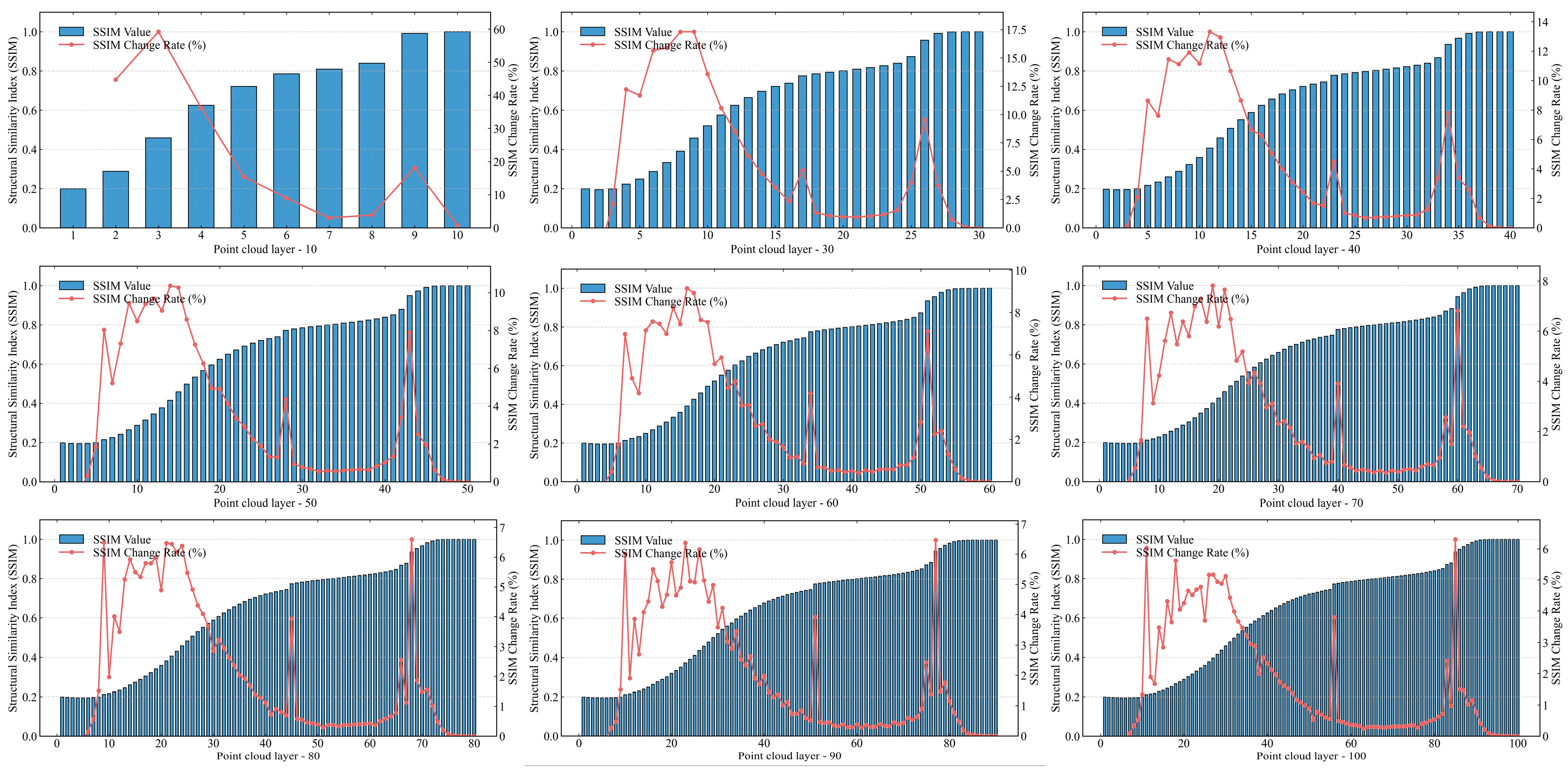
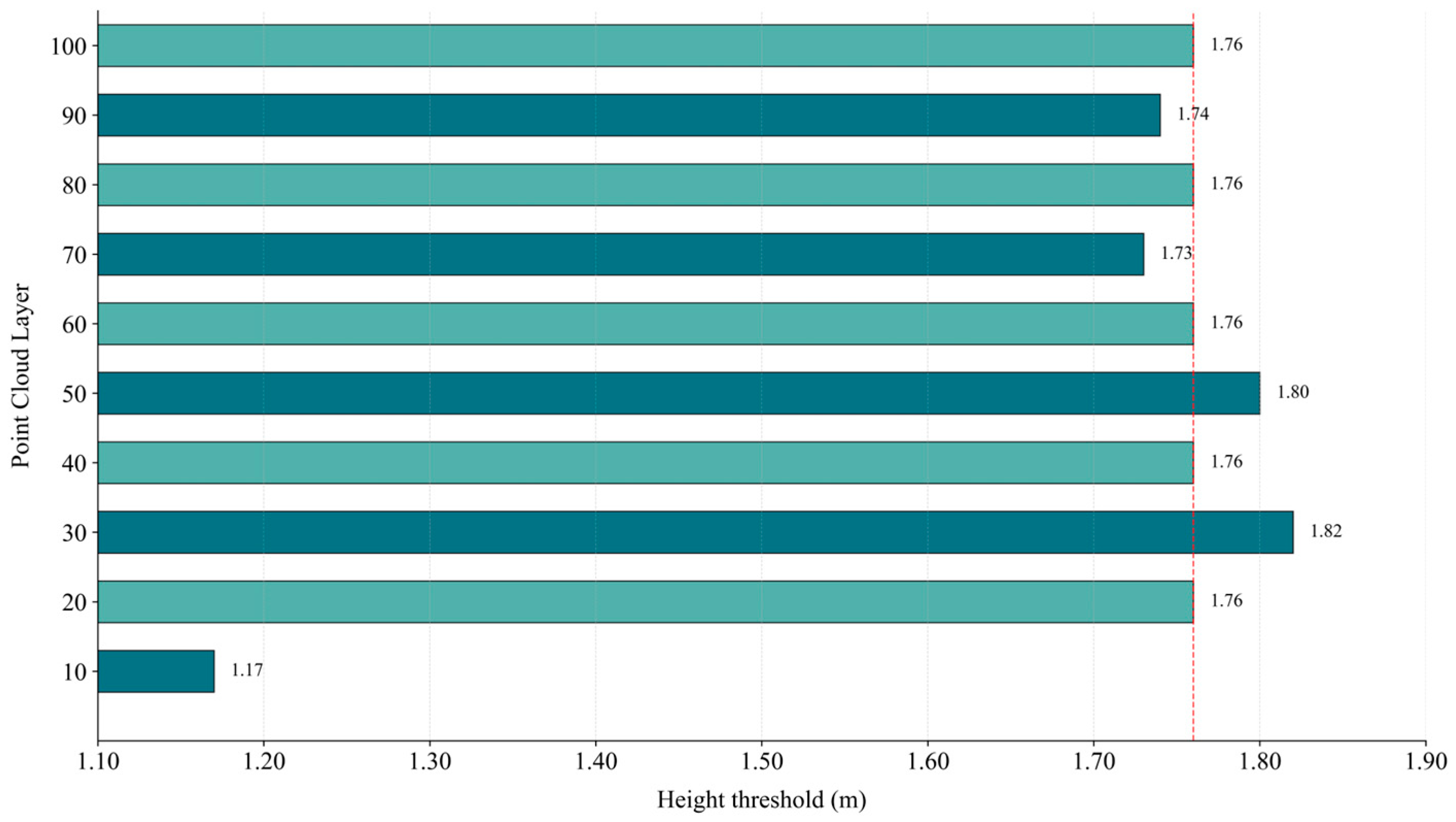
In the proposed solution of this study, determining the number of point cloud segmentation layers is critical for acquiring accurate height thresholds. Building upon previous research that set the segmentation layer count to 20, this paper conducts a series of control experiments to investigate whether significant differences exist in height thresholds derived from SSIM analysis under varying segmentation layer parameters. The experiments employ ten distinct layer numbers ranging from 10 to 100 (i.e., 10, 20, 30, 40, 50, 60, 70, 80, 90, 100) and generate corresponding SSIM variation curves following the established research protocol (Figure 16), from which optimal height thresholds for each layer configuration are extracted (Figure 17). Experimental results reveal that when the number of segmentation layers constitutes an even multiple of 10 (e.g., 20, 40, 60, 80, 100), the height threshold consistently stabilizes at 1.76 m, indicating effective convergence of point cloud segmentation to a fixed threshold under these specific layer conditions and thus ensuring result reliability. Conversely, when the layer count represents an odd multiple of 10 (e.g., 10, 30, 50, 70, 90), the height threshold exhibits noticeable fluctuations, specifically demonstrating a gradual upward trend with increasing layer numbers: the threshold reaches its minimum of 1.17 m at 10 layers and approaches the stable even-multiple value (1.76 m) with a maximum of 1.74 m at 90 layers. This discrepancy may arise from the balanced distribution of point cloud data across layers. Specifically, setting height thresholds at multiples of 10 (even numbers) helps achieve a more uniform data distribution across layers, thereby mitigating information loss or redundancy caused by an insufficient number of layers. Conversely, using odd multiples of 10 as thresholds tends to disrupt such symmetry, often resulting in uneven data volume distribution across layers during the stratification process and consequently leading to minor threshold drift. Additionally, as the number of segmentation layers increases, the segmentation process gradually approaches a “limit state,” driving the height threshold toward stability—a trend suggesting that point cloud segmentation technology can effectively capture essential data features and minimize errors from inappropriate layer selection when sufficient layers are employed. Through systematic investigation of the relationship between segmentation layer count and height thresholds, this study confirms that even multiples of layers (particularly 20 layers) achieve optimal balance between efficiency and accuracy, validating the scientific rigor and efficiency of the previously established 20-layer configuration and thus obviating the need for major adjustments to the existing protocol.

4.3. The Effect of UAV Flight Altitude on Lodging Monitoring Using Point Cloud Data

4.3.1. Research on the Accuracy of Height Threshold Monitoring Under Low Spatial Resolution

Variations in unmanned aerial vehicle (UAV) flight altitude significantly influence point cloud data quality [51,52,53]. To investigate how point cloud quality influences the accuracy of the research scheme proposed in this paper, a correlation analysis was conducted by adjusting UAV flight altitudes in experiments. The structural similarity analysis performed on the binary images derived from point cloud layering revealed a notable alteration in the shape of the structural similarity change rate curve. Unlike previous experiments, which typically exhibited three distinct peaks, only two peaks were observed in this study. These two peaks correspond, respectively, to the rapid convergence of structural differences related to crop variety and density, and the rapid convergence of differences caused by lodging. However, the absence of the characteristic change induced by initial height differences in lodging—such as the second peak in the SSIM change rate curve observed in earlier experiments—meant that there was no clear reference for selecting an appropriate height threshold. As a result, accurately defining the critical height range affected by lodging proved challenging. Although parameter adjustments related to point cloud layering were attempted to optimize the outcomes (as illustrated in Figure 18), the overall shape of the structural similarity change rate curve remained largely unchanged. This suggests that the core issue of the algorithm lies not in parameter configuration, but rather in the decisive influence of point cloud quality on the monitoring results. In other words, the reliability of the structural similarity analysis is directly dependent on the quality of the point cloud data. The study further demonstrates that UAV flight altitude significantly impacts the ability of the point cloud to capture detailed variations in canopy height. At higher flight altitudes, the point cloud tends to be sparser, thereby reducing its capacity to accurately represent crop canopy height. In contrast, lower flight altitudes yield denser point clouds that better preserve subtle features of height variation within the maize canopy. Therefore, the approach proposed in this study is better suited for monitoring conducted at lower flight altitudes (e.g., 25 m) to enable accurate assessment of lodging conditions.

4.3.2. Research on the Transferability of Height Threshold Under Low-Altitude Flight Pre-Training

Although low-altitude drone flights yield high-quality data, their limited coverage area often compromises monitoring efficiency. To address this, our study preliminarily investigated whether a height threshold derived from low-altitude flight data could be effectively applied in high-altitude scenarios. In the experimental set up, the height threshold of 1.76 m—obtained at a flight altitude of 25 m—was directly used to predict lodging maize plants at an altitude of 80 m. The relevant parameters are summarized in Table 5, and the prediction results are illustrated in Figure 19. As shown, the experimentally predicted lodging area exhibits strong overlap with manually interpreted results. According to Table 5, the lodging area proportion calculated through this method was 13.8%, deviating by only 5.3% from the reference value of 13.1% derived from manual interpretation. This suggests that, to a considerable extent, the threshold possesses cross-altitude transferability and can effectively support monitoring under high-altitude flight conditions. While the experimental scope of this study was limited, the results preliminarily validate the robustness of low-altitude LiDAR height thresholds when applied to high-altitude flight data. This demonstrates the method’s transferability, thereby broadening the operational versatility of drone-LiDAR in agricultural management.

4.4. Limitations and Future Directions of This Research

In rural agricultural production throughout China, the dominant cultivation systems include block-based planting, intercropping of mixed varieties, and multi-density configurations. These complex agricultural models differ significantly from modern large-scale monoculture and pose distinct technological challenges—particularly in monitoring crop lodging. Conventional pixel-level classification methods often perform poorly in such intricate environments, largely due to the high cost associated with annotating training datasets. To address this issue, this study proposes a crop lodging monitoring method based on an adaptive height threshold. Its core advantage lies in enabling rapid lodging detection and quantitative assessment in small plots with complex planting conditions. This approach not only reduces reliance on manual annotation but also offers an efficient and practical technical solution tailored to the context of rural agriculture in China.
While the adaptive height threshold selection method proposed herein demonstrates considerable potential in experimental settings, it currently exhibits several limitations. First, the experimental data were derived from a limited number of fields, constraining the generalizability and persuasiveness of the findings. To validate the method’s efficacy and robustness, future studies should expand the experimental scope by incorporating larger and more heterogeneous datasets. Second, the study area featured relatively flat terrain, obviating the need for complex height normalization techniques to mitigate topographic influences during point cloud preprocessing. Although this simplification reduces computational complexity, it restricts the method’s applicability primarily to flat-area scenarios. For regions with pronounced terrain variations (e.g., hills or slopes), the current approach may fail to accurately capture target features. Future research should integrate standardized terrain correction techniques to address challenges posed by complex topographies. For instance, terrain effects could be eliminated using commercial software or open-source Python (v3.6+) scripts (e.g., https://github.com/lloydwindrim/forest_3d_app/blob/master/src/forest3D/ground_removal.py (accessed on 30 October 2025)), thereby enhancing the method’s adaptability across diverse terrain conditions.

5. Conclusions

The height threshold method enables rapid identification of maize lodging in complex field environments (e.g., multi-variety intercropping systems). This study presents an in-depth investigation into an automatic height threshold selection technology, aiming to achieve accurate maize lodging monitoring across environments with diverse planting varieties and densities. Results demonstrate that by integrating height stratification and structural similarity analysis into field maize point cloud data processing, the proposed method effectively captures vertical and horizontal canopy structural changes induced by lodging and enables automated height threshold determination. Using this threshold, lodging regions are identified via differential coloring of point cloud data and converted into a height raster map, facilitating quantitative measurement of lodging area. Experimental validation shows that the difference between the monitoring accuracy of the proposed scheme (13.4%) and manual interpretation (13.1%) is only 2.3%. Furthermore, sensitivity analysis of the height threshold reveals that when the threshold varies by ±5 cm, the relative deviation of lodging area measurement remains within 10%—fully verifying the reliability and robustness of the proposed method. In conclusion, the height threshold-based intelligent monitoring technology developed in this study provides a novel technical solution for maize lodging detection in complex field environments, while highlighting the application potential and innovative value of UAV LiDAR in precision agriculture.

Author Contributions

Conceptualization, F.Y. and Y.W.; methodology, Y.W.; software, L.J.; validation, Y.W. and L.J.; formal analysis, Y.W.; investigation, Y.W.; resources, F.Y.; data curation, L.J.; writing—original draft preparation, Y.W.; writing—review and editing, F.Y.; visualization, Y.W.; supervision, F.Y.; project administration, L.J.; funding acquisition, F.Y. All authors have read and agreed to the published version of the manuscript.

Funding

This research was funded by the National Natural Science Foundation of China (NSFC), grant number 61972363, Central Government Leading Local Science and Technology Development Fund Project, grant number YDZJSX2021C008, the Fundamental Research Program of Shanxi Province, grant number 202203021221104.

Data Availability Statement

Some or all data that support the findings of this study are available from the corresponding author upon reasonable request.

Conflicts of Interest

The authors declare no conflicts of interest.

References

  1. Wei, X.; Zhang, J.; Wang, D.; Zhao, C.; Guga, S.; Guo, Y.; Liu, X.; Tong, Z. Comprehensive risk fine dynamic assessment and zoning of maize high wind lodging disasters in Jilin Province, China. Eur. J. Agron. 2025, 170, 127710. [Google Scholar] [CrossRef]
  2. Liu, Y.; Nie, C.; Zhang, Z.; Wang, Z.; Ming, B.; Xue, J.; Yang, H.; Xu, H.; Meng, L.; Cui, N.; et al. Evaluating how lodging affects maize yield estimation based on UAV observations. Front. Plant Sci. 2023, 13, 979103. [Google Scholar] [CrossRef]
  3. Zhang, P.; Gu, S.C.; Wang, Y.Y.; Xu, C.C.; Zhao, Y.T.; Liu, X.L.; Wang, P.; Huang, S.B. The relationships between maize (Zea mays L.) lodging resistance and yield formation depend on dry matter allocation to ear and stem. Crop J. 2023, 11, 258–268. [Google Scholar] [CrossRef]
  4. Mu, H.M.; Wang, Z.Z.; Sun, L.F.; Huang, Y.; Song, Y.F.; Zhang, R.; Wu, Z.J.; Fu, K.X.; Duan, J.Z.; Kang, G.Z.; et al. Optimizing nitrogen fertilization and planting density management enhances lodging resistance and wheat yield by promoting carbohydrate accumulation and single spike development. Crop Sci. 2024, 64, 3461–3479. [Google Scholar] [CrossRef]
  5. Ahmad, I.; Batyrbek, M.; Ikram, K.; Ahmad, S.; Kamran, M.; Misbah; Khan, R.S.; Hou, F.J.; Han, Q.F. Nitrogen management improves lodging resistance and production in maize (Zea mays L.) at a high plant density. J. Integr. Agric. 2023, 22, 417–433. [Google Scholar] [CrossRef]
  6. Yang, J.; Meng, X.; Yang, S.; Yang, J.; Li, Z.; Yang, Q.; Zheng, P.; Shao, X.; Wang, Y.; Wang, L. A simple method for lodging resistance evaluation of maize in the field. Front. Plant Sci. 2023, 13, 1087652. [Google Scholar] [CrossRef]
  7. Zhang, Q.; Zhang, G.L.; Zhang, Y.; Xiao, X.M.; You, N.S.; Li, Z.C.; Tang, H.; Yang, T.; Di, Y.Y.; Dong, J.W. Coupling GEDI LiDAR and Optical Satellite for Revealing Large-Scale Maize Lodging in Northeast China. Earths Future 2024, 12, e2023EF003590. [Google Scholar] [CrossRef]
  8. Kumar, M.; Bhattacharya, B.K.; Pandya, M.R.; Handique, B.K. Machine learning based plot level rice lodging assessment using multi-spectral UAV remote sensing. Comput. Electron. Agric. 2024, 219, 108754. [Google Scholar] [CrossRef]
  9. Feng, G.Q.; Wang, C.; Wang, A.C.; Gao, Y.Y.; Zhou, Y.A.; Huang, S.; Luo, B. Segmentation of Wheat Lodging Areas from UAV Imagery Using an Ultra-Lightweight Network. Agriculture 2024, 14, 244. [Google Scholar] [CrossRef]
  10. Chauhan, S.; Darvishzadeh, R.; Boschetti, M.; Pepe, M.; Nelson, A. Remote sensing-based crop lodging assessment: Current status and perspectives. ISPRS J. Photogramm. Remote Sens. 2019, 151, 124–140. [Google Scholar] [CrossRef]
  11. Yan, Y.; Song, F.; Sun, J. The application of UAV technology in maize crop protection strategies: A review. Comput. Electron. Agric. 2025, 237, 110679. [Google Scholar] [CrossRef]
  12. Shu, M.Y.; Bai, K.; Meng, L.; Yang, X.H.; Li, B.G.; Ma, Y.T. Assessing maize lodging severity using multitemporal UAV-based digital images. Eur. J. Agron. 2023, 144, 126754. [Google Scholar] [CrossRef]
  13. Sun, Q.; Chen, L.; Xu, X.; Gu, X.; Hu, X.; Yang, F.; Pan, Y. A new comprehensive index for monitoring maize lodging severity using UAV-based multi-spectral imagery. Comput. Electron. Agric. 2022, 202, 107362. [Google Scholar] [CrossRef]
  14. Liu, T.; Zhu, S.; Yang, T.; Zhang, W.; Xu, Y.; Zhou, K.; Wu, W.; Zhao, Y.; Yao, Z.; Yang, G.; et al. Maize height estimation using combined unmanned aerial vehicle oblique photography and LIDAR canopy dynamic characteristics. Comput. Electron. Agric. 2024, 218, 108685. [Google Scholar] [CrossRef]
  15. Lei, L.; Li, Z.; Yang, G.; Yang, H. High-Throughput Extraction of the Distributions of Leaf Base and Inclination Angles of Maize in the Field. IEEE Trans. Geosci. Remote Sens. 2023, 61, 4411228. [Google Scholar] [CrossRef]
  16. Gao, M.; Yang, F.; Wei, H.; Liu, X. Individual Maize Location and Height Estimation in Field from UAV-Borne LiDAR and RGB Images. Remote Sens. 2022, 14, 2292. [Google Scholar] [CrossRef]
  17. Zhang, Z.; Flores, P.; Igathinathane, C.; Naik, D.L.; Kiran, R.; Ransom, J.K. Wheat Lodging Detection from UAS Imagery Using Machine Learning Algorithms. Remote Sens. 2020, 12, 1838. [Google Scholar] [CrossRef]
  18. Li, G.; Han, W.; Huang, S.; Ma, W.; Ma, Q.; Cui, X. Extraction of Sunflower Lodging Information Based on UAV Multi-Spectral Remote Sensing and Deep Learning. Remote Sens. 2021, 13, 2721. [Google Scholar] [CrossRef]
  19. Guan, H.; Liu, H.; Meng, X.; Luo, C.; Bao, Y.; Ma, Y.; Yu, Z.; Zhang, X. A Quantitative Monitoring Method for Determining Maize Lodging in Different Growth Stages. Remote Sens. 2020, 12, 3149. [Google Scholar] [CrossRef]
  20. Sun, Q.; Sun, L.; Shu, M.; Gu, X.; Yang, G.; Zhou, L. Monitoring Maize Lodging Grades via Unmanned Aerial Vehicle Multispectral Image. Plant Phenomics 2019, 2019, 5704154. [Google Scholar] [CrossRef]
  21. Zhu, Q.; Wang, K.; Liang, D.; Tang, J. WLUSNet: A lightweight wheat lodging segmentation network based on UAV image. Comput. Electron. Agric. 2025, 237, 110587. [Google Scholar] [CrossRef]
  22. Wang, D.; Zhao, M.; Li, Z.; Xu, S.; Wu, X.; Ma, X.; Liu, X. A survey of unmanned aerial vehicles and deep learning in precision agriculture. Eur. J. Agron. 2025, 164, 127477. [Google Scholar] [CrossRef]
  23. Cao, W.; Qiao, Z.; Gao, Z.; Lu, S.; Tian, F. Use of unmanned aerial vehicle imagery and a hybrid algorithm combining a watershed algorithm and adaptive threshold segmentation to extract wheat lodging. Phys. Chem. Earth Parts A/B/C 2021, 123, 103016. [Google Scholar] [CrossRef]
  24. Jin, S.; Su, Y.; Gao, S.; Wu, F.; Hu, T.; Liu, J.; Li, W.; Wang, D.; Chen, S.; Jiang, Y.; et al. Deep Learning: Individual Maize Segmentation from Terrestrial Lidar Data Using Faster R-CNN and Regional Growth Algorithms. Front. Plant Sci. 2018, 9, 866. [Google Scholar] [CrossRef]
  25. Miao, L.; Wang, X.Y.; Yu, C.; Ye, C.Y.; Yan, Y.Y.; Wang, H.S. What factors control plant height? J. Integr. Agric. 2024, 23, 1803–1824. [Google Scholar] [CrossRef]
  26. Zhao, J.H.; Chen, S.D.; Zhou, B.; He, H.X.; Zhao, Y.J.; Wang, Y.; Zhou, X.X. Multitemporal Field-Based Maize Plant Height Information Extraction and Verification Using Solid-State LiDAR. Agriculture 2024, 14, 1069. [Google Scholar] [CrossRef]
  27. Jayasuriya, N.; Guo, Y.; Hu, W.; Ghannoum, O. Machine vision based plant height estimation for protected crop facilities. Comput. Electron. Agric. 2024, 218, 108669. [Google Scholar] [CrossRef]
  28. Long, J.; Zhang, Z.; Zhang, Q.; Zhao, X.; Igathinathane, C.; Xing, J.; Saha, C.K.; Sheng, W.; Li, H.; Zhang, M. Comprehensive wheat lodging detection under different UAV heights using machine/deep learning models. Comput. Electron. Agric. 2025, 231, 109972. [Google Scholar] [CrossRef]
  29. Cai, C.; Zhao, H.; Zhang, H.; Wang, C.; Wang, Z.; Liu, M.; Chen, J.; Zhang, H. Timely assessment of maize lodging severity with limited samples using multi-temporal Sentinel-1 and Sentinel-2 data across large spatial extents. Comput. Electron. Agric. 2025, 237, 110671. [Google Scholar] [CrossRef]
  30. Wang, C.; Xu, S.; Yang, C.; You, Y.; Zhang, J.; Kuai, J.; Xie, J.; Zuo, Q.; Yan, M.; Du, H.; et al. Determining rapeseed lodging angles and types for lodging phenotyping using morphological traits derived from UAV images. Eur. J. Agron. 2024, 155, 127104. [Google Scholar] [CrossRef]
  31. Ren, Z.; Zheng, H.; Chen, J.; Chen, T.; Xie, P.; Xu, Y.; Deng, J.; Wang, H.; Sun, M.; Jiao, W. Integrating UAV, UGV and UAV-UGV collaboration in future industrialized agriculture: Analysis, opportunities and challenges. Comput. Electron. Agric. 2024, 227, 109631. [Google Scholar] [CrossRef]
  32. Wilke, N.; Siegmann, B.; Klingbeil, L.; Burkart, A.; Kraska, T.; Muller, O.; van Doorn, A.; Heinemann, S.; Rascher, U. Quantifying Lodging Percentage and Lodging Severity Using a UAV-Based Canopy Height Model Combined with an Objective Threshold Approach. Remote Sens. 2019, 11, 515. [Google Scholar] [CrossRef]
  33. Mengistie, E.; McDonald, A.G. Effect of cell wall compositions on lodging resistance of cereal crops: Review. J. Agric. Sci. 2023, 161, 794–807. [Google Scholar] [CrossRef]
  34. Madec, S.; Baret, F.; de Solan, B.; Thomas, S.; Dutartre, D.; Jezequel, S.; Hemmerlé, M.; Colombeau, G.; Comar, A. High-Throughput Phenotyping of Plant Height: Comparing Unmanned Aerial Vehicles and Ground LiDAR Estimates. Front. Plant Sci. 2017, 8, 2002. [Google Scholar] [CrossRef]
  35. Malambo, L.; Popescu, S.C.; Murray, S.C.; Putman, E.; Pugh, N.A.; Horne, D.W.; Richardson, G.; Sheridan, R.; Rooney, W.L.; Avant, R.; et al. Multitemporal field-based plant height estimation using 3D point clouds generated from small unmanned aerial systems high-resolution imagery. Int. J. Appl. Earth Obs. Geoinf. 2018, 64, 31–42. [Google Scholar] [CrossRef]
  36. Zhou, L.; Gu, X.; Cheng, S.; Yang, G.; Shu, M.; Sun, Q. Analysis of Plant Height Changes of Lodged Maize Using UAV-LiDAR Data. Agriculture 2020, 10, 146. [Google Scholar] [CrossRef]
  37. Chu, T.X.; Starek, M.J.; Brewer, M.J.; Murray, S.C.; Pruter, L.S. Assessing Lodging Severity over an Experimental Maize (Zea mays L.) Field Using UAS Images. Remote Sens. 2017, 9, 923. [Google Scholar] [CrossRef]
  38. Hu, X.Q.; Gu, X.H.; Sun, Q.; Yang, Y.; Qu, X.Z.; Yang, X.; Guo, R. Comparison of the performance of Multi-source Three-dimensional structural data in the application of monitoring maize lodging. Comput. Electron. Agric. 2023, 208, 107782. [Google Scholar] [CrossRef]
  39. Wang, M.; Sun, Q.; Che, X.H.; Chen, L.; Cui, Y.P.; Liu, J.; Wu, J.M.; Wang, T.; Li, H. Mapping rice lodging severity using dual-pol Sentinel-1 SAR data: Polarimetric parameters, lodging sensitivity, and fuzzy classification modelling. Int. J. Remote Sens. 2025, 46, 2748–2766. [Google Scholar] [CrossRef]
  40. Huang, X.; Xuan, F.; Dong, Y.; Su, W.; Wang, X.; Huang, J.; Li, X.; Zeng, Y.; Miao, S.; Li, J. Identifying Corn Lodging in the Mature Period Using Chinese GF-1 PMS Images. Remote Sens. 2023, 15, 894. [Google Scholar] [CrossRef]
  41. Yin, D.M.; Wang, L.; Lu, Y.; Shi, C. Mangrove tree height growth monitoring from multi-temporal UAV-LiDAR. Remote Sens. Environ. 2024, 303, 114002. [Google Scholar] [CrossRef]
  42. Ma, X.; Wei, B.; Guan, H.; Yu, S. A method of calculating phenotypic traits for soybean canopies based on three-dimensional point cloud. Ecol. Inform. 2022, 68, 101524. [Google Scholar] [CrossRef]
  43. Wang, D.S.; Zhao, M.H.; Li, Z.L.; Wu, X.H.; Li, N.; Li, D.C.; Xu, S.; Liu, X.G. Classification of maize lodging types using UAV-SAR remote sensing data and machine learning methods. Comput. Electron. Agric. 2024, 227, 109637. [Google Scholar] [CrossRef]
  44. Bakurov, I.; Buzzelli, M.; Schettini, R.; Castelli, M.; Vanneschi, L. Structural similarity index (SSIM) revisited: A data-driven approach. Expert Syst. Appl. 2022, 189, 116087. [Google Scholar] [CrossRef]
  45. Setiadi, D.I.M. PSNR vs SSIM: Imperceptibility quality assessment for image steganography. Multimed. Tools Appl. 2021, 80, 8423–8444. [Google Scholar] [CrossRef]
  46. Parent, J.R.; Witharana, C.; Bradley, M. Classifying and Georeferencing Indoor Point Clouds with ArcGIS. Photogramm. Eng. Remote Sens. 2022, 88, 383–389. [Google Scholar] [CrossRef]
  47. Zuo, R.G.; Wang, J.L. ArcFractal: An ArcGIS Add-In for Processing Geoscience Data Using Fractal/Multifractal Models. Nat. Resour. Res. 2020, 29, 3–12. [Google Scholar] [CrossRef]
  48. Singh, S.; Mittal, N.; Singh, H.; Oliva, D. Improving the segmentation of digital images by using a modified Otsu’s between-class variance. Multimed. Tools Appl. 2023, 82, 40701–40743. [Google Scholar] [CrossRef]
  49. Xing, J.W.; Yang, P.; Qingge, L.G. Robust 2D Otsu’s Algorithm for Uneven Illumination Image Segmentation. Comput. Intell. Neurosci. 2020, 2020, 5047976. [Google Scholar] [CrossRef]
  50. Wu, B.; Zhou, J.X.; Ji, X.Y.; Yin, Y.J.; Shen, X. An ameliorated teaching-learning-based optimization algorithm based study of image segmentation for multilevel thresholding using Kapur’s entropy and Otsu’s between class variance. Inf. Sci. 2020, 533, 72–107. [Google Scholar] [CrossRef]
  51. Zhu, H.L.; Huang, Y.W.; An, Z.K.; Zhang, H.; Han, Y.Y.; Zhao, Z.H.; Li, F.F.; Zhang, C.; Hou, C.C. Assessing radiometric calibration methods for multispectral UAV imagery and the influence of illumination, flight altitude and flight time on reflectance, vegetation index and inversion of winter wheat AGB and LAI. Comput. Electron. Agric. 2024, 219, 108821. [Google Scholar] [CrossRef]
  52. Tan, C.Y.; Chen, Z.J.; Liao, A.L.; Zeng, X.T.; Cao, J.C. Accuracy analysis of UAV aerial photogrammetry based on RTK mode, flight altitude, and number of GCPs. Meas. Sci. Technol. 2024, 35, 106310. [Google Scholar] [CrossRef]
  53. Gu, Y.Y.; Wang, Y.Q.; Guo, T.; Guo, C.L.; Wang, X.; Jiang, C.Y.; Cheng, T.; Zhu, Y.; Cao, W.X.; Chen, Q.; et al. Assessment of the influence of UAV-borne LiDAR scan angle and flight altitude on the estimation of wheat structural metrics with different leaf angle distributions. Comput. Electron. Agric. 2024, 220, 108858. [Google Scholar] [CrossRef]
Figure 1. (a) The geographical location of Xinzhou City; (b) Geospatial distribution of research focus areas; (c) The spatial distribution of maize experimental fields in the study area.
Drones 09 00876 g001
Figure 2. (a) Distribution of planting varieties and planting densities in the maize experimental field. (b) Visualization of Figure 2a after rotation and enlargement.
Drones 09 00876 g002
Figure 3. (a) The UAV LiDAR system; (b) The UAV visible light imaging system.
Drones 09 00876 g003
Figure 4. Sequential acquisition process of the point cloud data used in the experiment.
Drones 09 00876 g004
Figure 5. Flowchart of the proposed adaptive height threshold selection method.
Drones 09 00876 g005
Figure 6. (a) Experimental field point cloud data colored by height; (b) Point cloud profile of the lodging area. Note: ST: stem tilt; SF: stem folding; RL: root lodging.
Drones 09 00876 g006
Figure 7. (a) Point cloud layer after height stratification; (b) Height distribution histogram of all point cloud layers.
Drones 09 00876 g007
Figure 8. (a) Binarized images of superimposed point cloud layers; (b) Statistics of SSIM value and SSIM change rate with point cloud accumulation.
Drones 09 00876 g008
Figure 9. Lodging area prediction based on height raster map.
Drones 09 00876 g009
Figure 10. The prediction of the lodging area under different height threshold.
Drones 09 00876 g010
Figure 11. Experimental height threshold: Lodging area ratio and Relative deviation.
Drones 09 00876 g011
Figure 12. Manual interpretation of lodging areas from RGB image.
Drones 09 00876 g012
Figure 13. (a) Raster map based on RGB image conversion; (b) Differential regions with blue highlights.
Drones 09 00876 g013
Figure 14. Otsu’s Method: height threshold selection under different parameter settings.
Drones 09 00876 g014
Figure 15. Comparison of height threshold determination and lodging prediction performance: Otsu’s method vs. proposed method.
Drones 09 00876 g015
Figure 16. Statistics of SSIM changes under different numbers of point cloud layers.
Drones 09 00876 g016
Figure 17. Optimal height threshold bar chart statistics.
Drones 09 00876 g017
Figure 18. Statistics of structural similarity after different point cloud layering parameters at a flight altitude of 80 m.
Drones 09 00876 g018
Figure 19. (a) Prediction of the lodging area based on the height threshold of 1.76 m at a flight altitude of 80 m; (b) Comparison between the experimental prediction results and the results of manual interpretation.
Drones 09 00876 g019
Table 1. Maize varieties and their respective plant heights.
Maize Variety Name Variety AbbreviationAverage Plant Height (cm)
MC 703A1310
Jiushenghe 2468A2298
Ruipu 909A3286
Xinyu 108A4318
Lianchuang 825A5301
Shandan 650A6277
Kehe 699A7350
Qiangsheng 388A8332
Xianyu 335A9319
Zhengdan 958A10277
Table 2. LiDAR system parameters.
ParametersValues
Laser wavelength905 nm
Measurement rate320 kHz
Maximum range200 m
Field of view360° × ±15°
Echo number2 (first and last)
Range Accuracy2 cm
Table 3. Height raster map conversion parameters.
ResolutionRed PixelsTotal PixelsHeight ThresholdProportion of
Lodging Area
Height raster map0.05 m × 0.05 m114,760856,7371.76 m13.4%
Table 4. Statistics of lodging results based on RGB images.
ResolutionSize (Pixels)Red PixelsTotal PixelsProportion of Lodging AreaRelative Deviation 1SSIM 2
RGB image7.2 mm GSD2942 × 1485432,6423,303,99013.1%2.3%0.95
1 The relative deviation between the lodging area of 13.4% calculated at a height threshold of 1.76 m and the lodging area of 13.1% obtained by manual interpretation. 2 The structural similarity between the lodging area map predicted based on the height threshold of 1.76 m and the lodging area map obtained by manual interpretation.
Table 5. Height raster map conversion parameters at a flight altitude of 80 m.
ResolutionSize (Pixels)Red PixelsTotal PixelsHeight ThresholdProportion of Lodging AreaRelative Deviation 1 SSIM 2
Height raster map 0.1 m × 0.1 m737 × 36729,215212,2291.76 m13.8%5.3%0.95
1 Calculate the relative deviation between the calculated lodging area percentage of 13.8% and the manually interpreted result of 13.1%. 2 The structural similarity between the lodging area map predicted based on the height threshold of 1.76 m and the lodging area map obtained by manual interpretation.
Disclaimer/Publisher’s Note: The statements, opinions and data contained in all publications are solely those of the individual author(s) and contributor(s) and not of MDPI and/or the editor(s). MDPI and/or the editor(s) disclaim responsibility for any injury to people or property resulting from any ideas, methods, instructions or products referred to in the content.