

Long-Duration Inspection of GNSS-Denied Environments with a Tethered UAV-UGV Marsupial System †
 , , and
Highlights
- This paper describes an open-sourced autonomous tether marsupial system consisting of off-the-shelf hardware components.
- The system has been extensively validated in a set of seven experiments with a total duration of more than four hours without any issues.
- The proposed system can be used for long-endurance inspection tasks of over two hours.
- Our novel planning and localization algorithms make our multi-robot tethered system able to generate and track safe trajectories from a sequence of points to interest to be visited in GNSS-denied environments.
Abstract
1. Introduction
- 1.
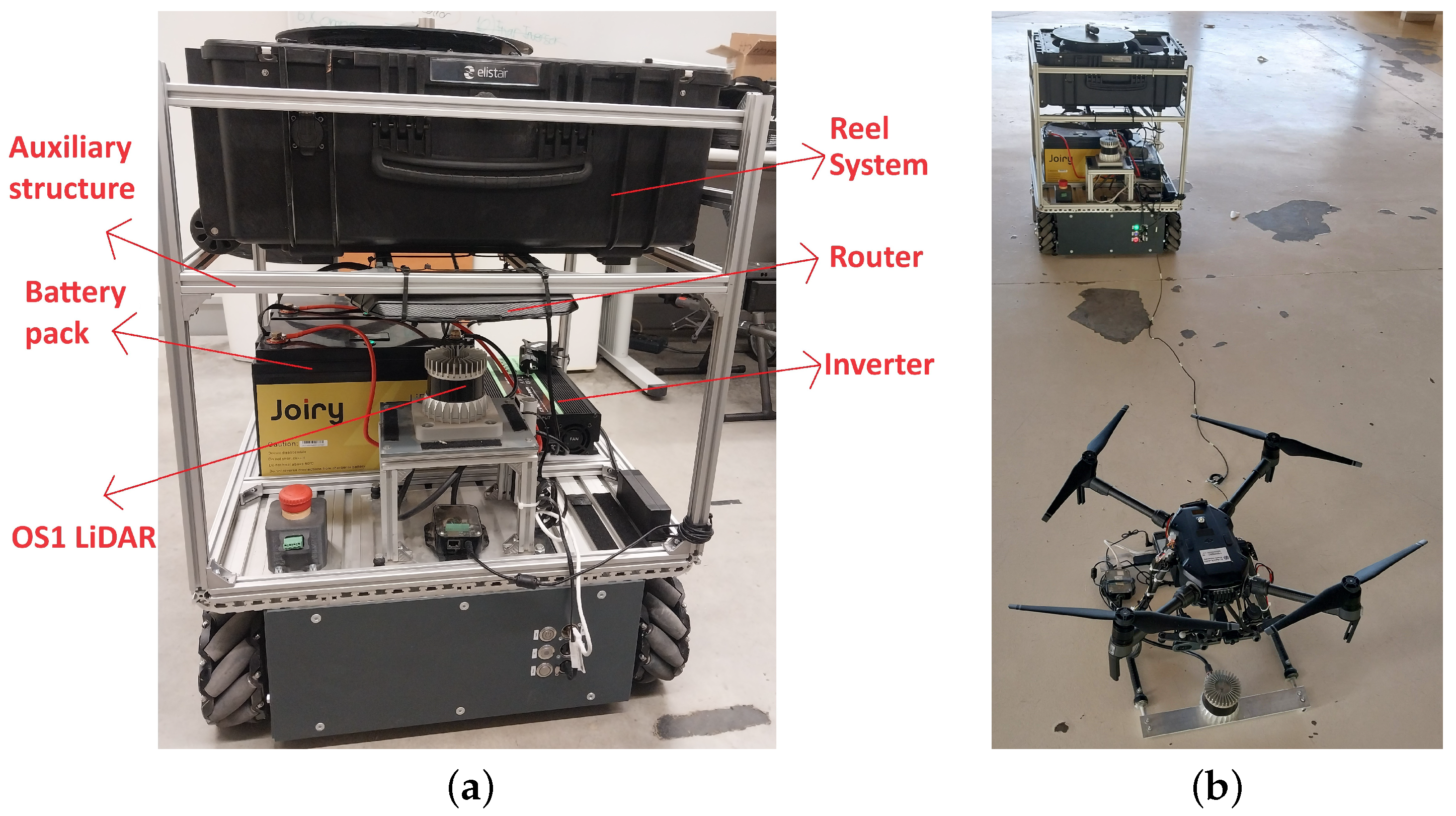
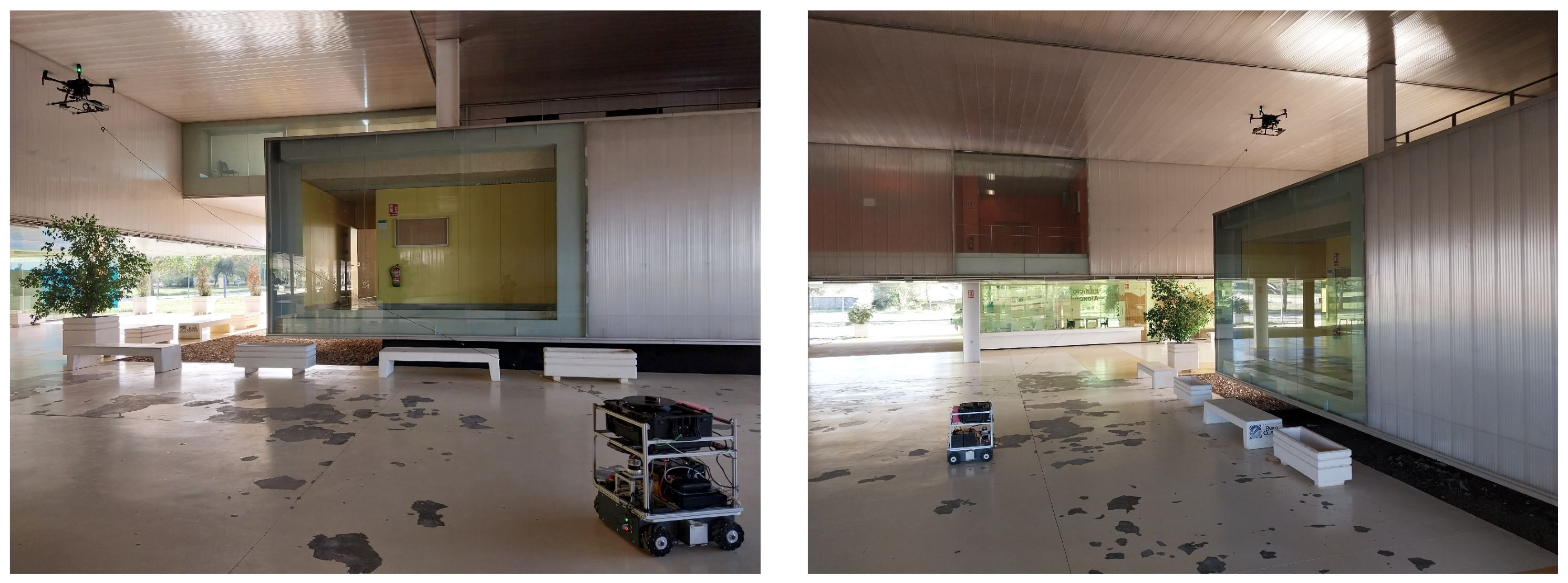
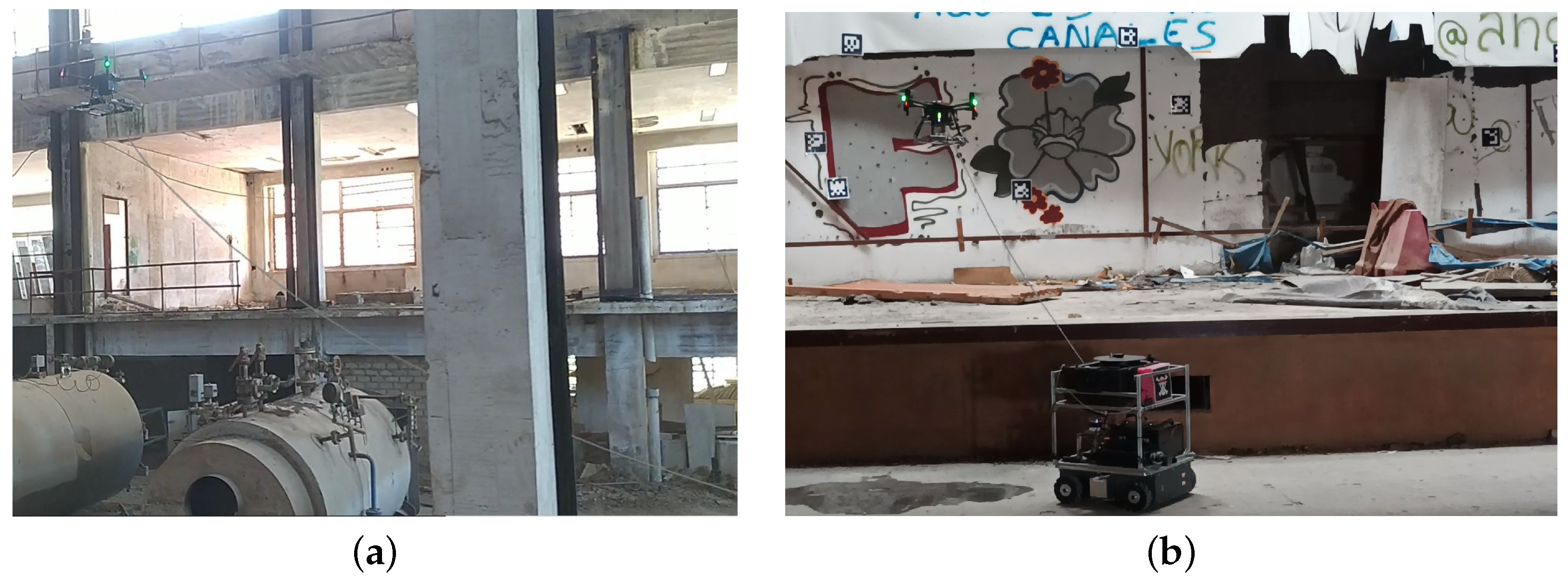
- We present the hardware and software design of the proposed marsupial robotic system as a whole (see Figure 1). It consists of a UGV linked to a UAV and is built using off-the-shelf components in contrast to existing approaches in the literature [21]. In our system, we use a cable that connects the UAV to the UGV. This tether supplies the UAV with power, enabling long-term inspection missions. To the best of our knowledge, this is the first system to demonstrate a continuous operation exceeding two hours.
- 2.
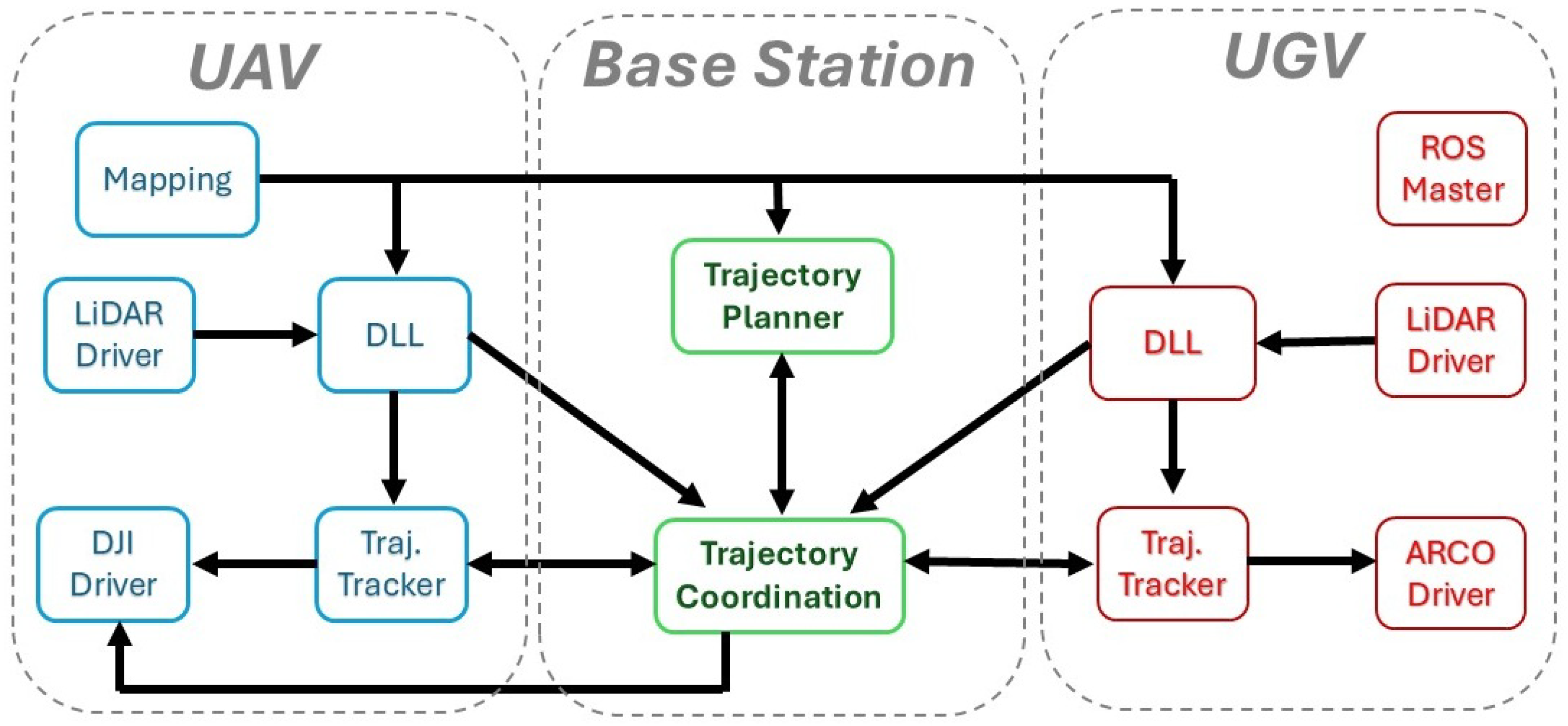
- We present the architecture of our software solution. The different software modules, developed in-house, are released as open-source. All the modules have been incrementally validated to reach the final goal of performing autonomous inspection missions with a tethered UAV-UGV marsupial system. This is a significant contribution with respect to [26,27,28].
- 3.
- We pay special emphasis on describing our developed localization and navigation systems. In particular, the localization system is based on the one presented in our previous work [27], but is adapted for the current case and for providing multi-robot localization in Section 3. Regarding navigation, we present a reformulation of our trajectory planner from [28], adapted to account for the constraints of the proposed marsupial system. In particular, in this paper we always consider a straight tether instead of the variable-length hanging tether approach presented in [28].
2. Materials and Methods
2.1. Unmanned Ground Vehicle (UGV)
2.2. Unmanned Aerial Vehicle (UAV)
2.3. Tether System
2.4. Power System Requirements
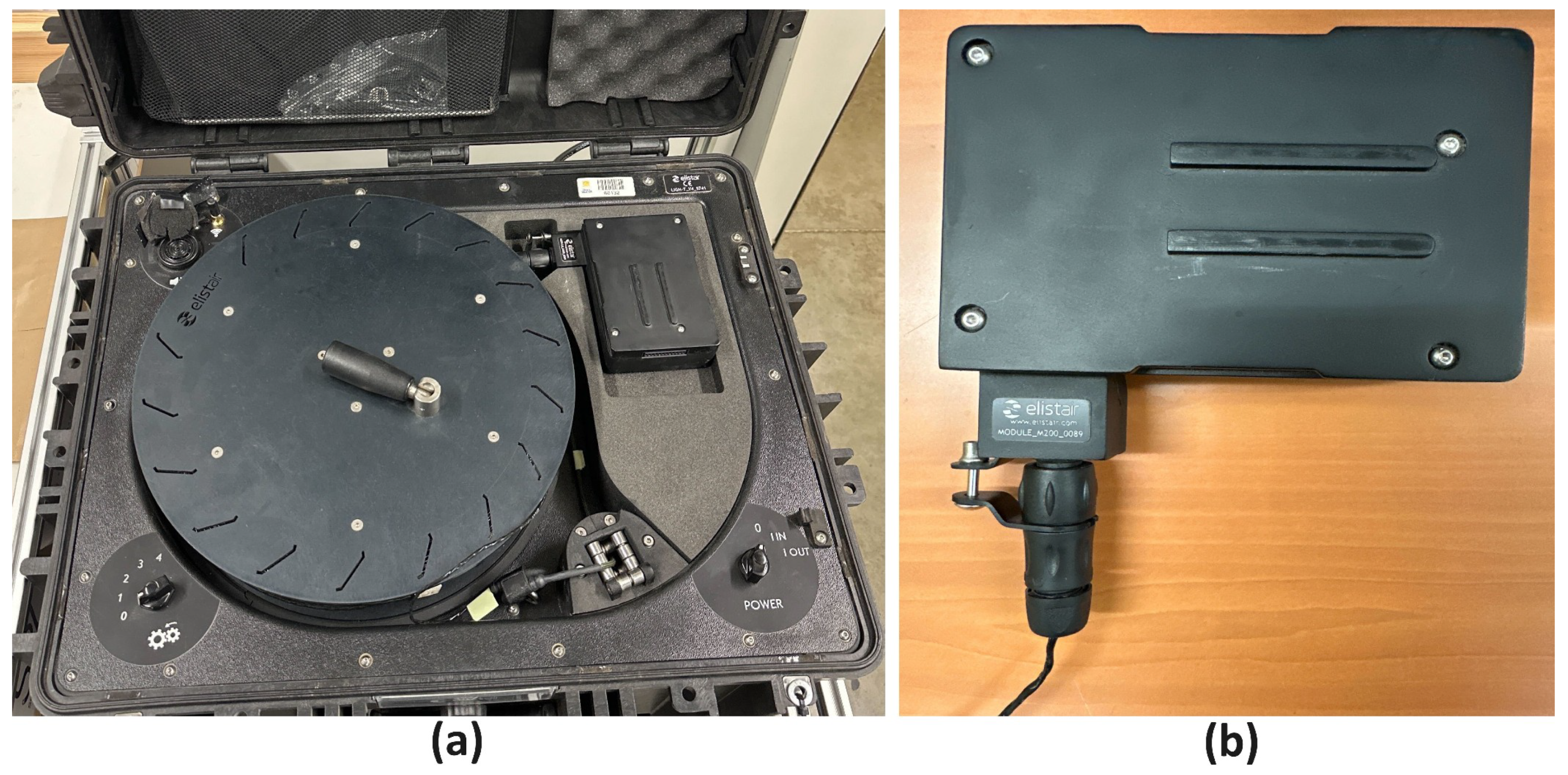
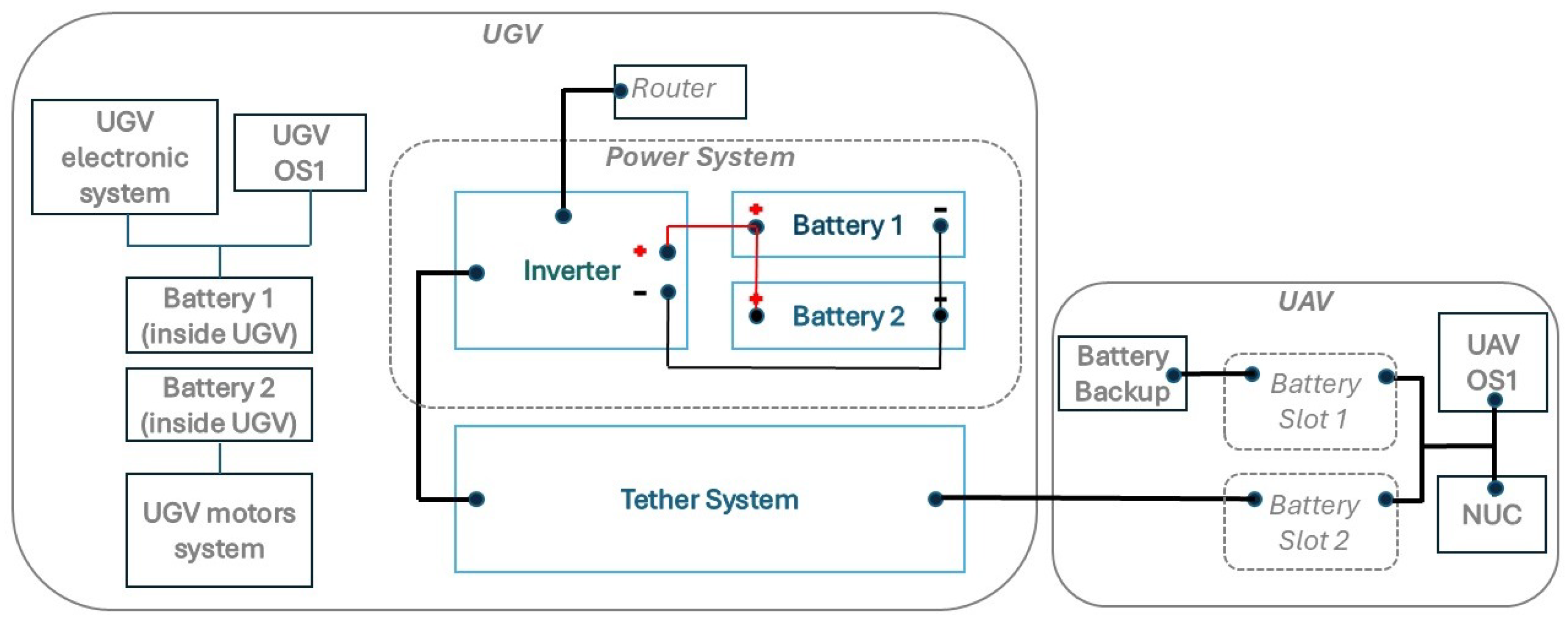
- We have installed a compact Green Cell® 2000 W/4000 W inverter from 12 V DC to 220 V/230 V AC, with an effectiveness of 85%. This inverter powers the LTS4 and the internal UGV router during the experiment.
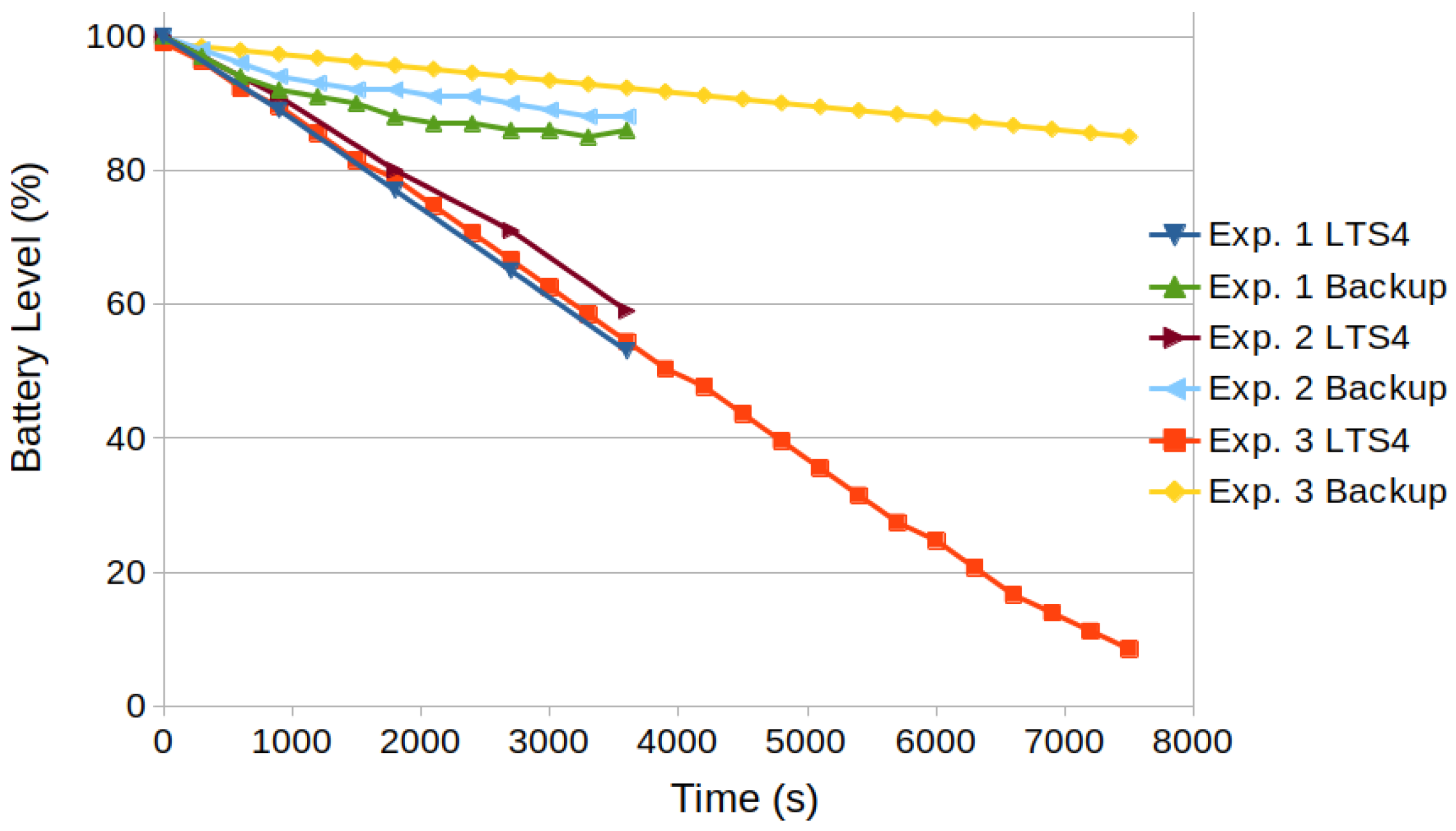
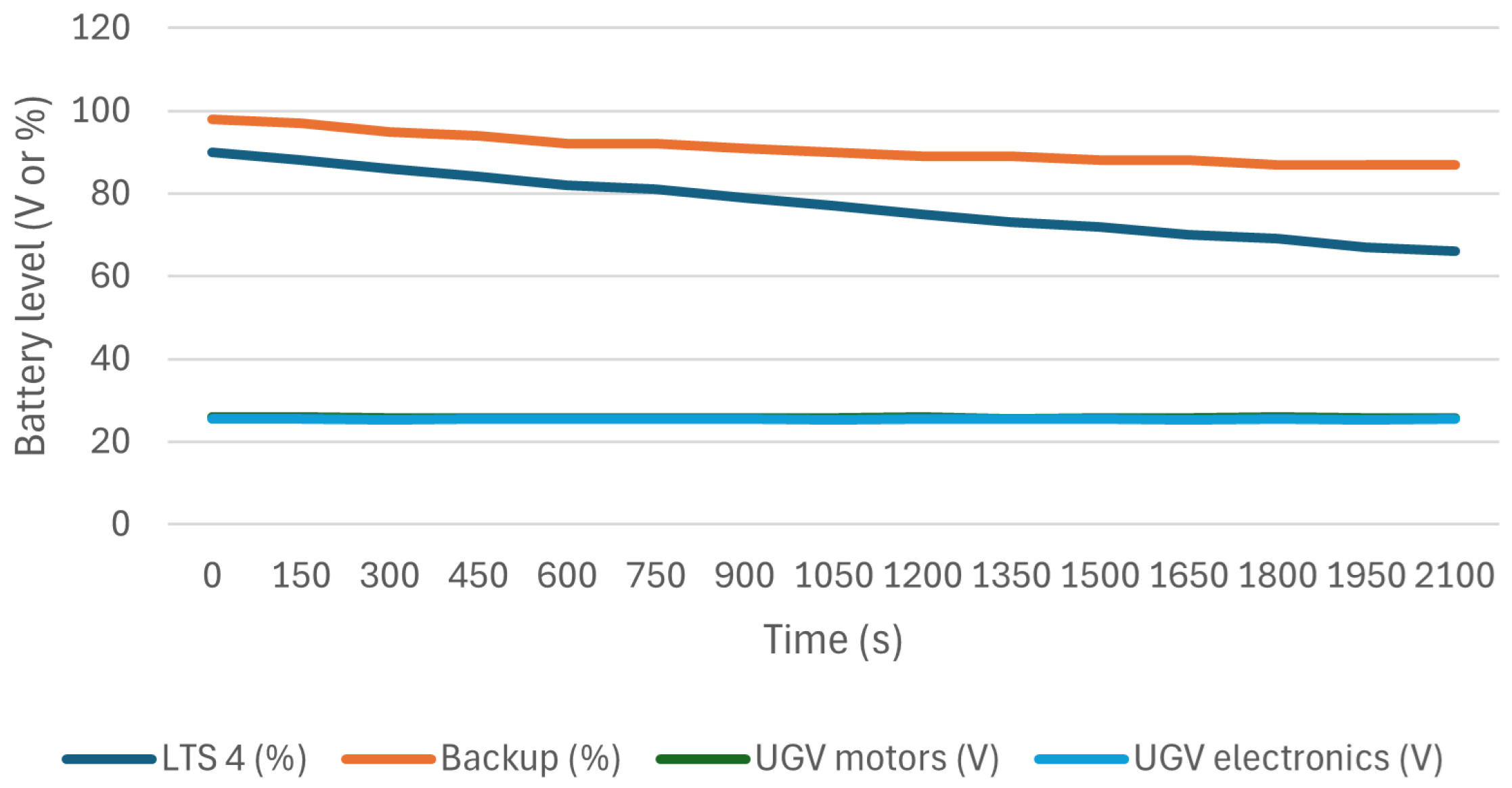
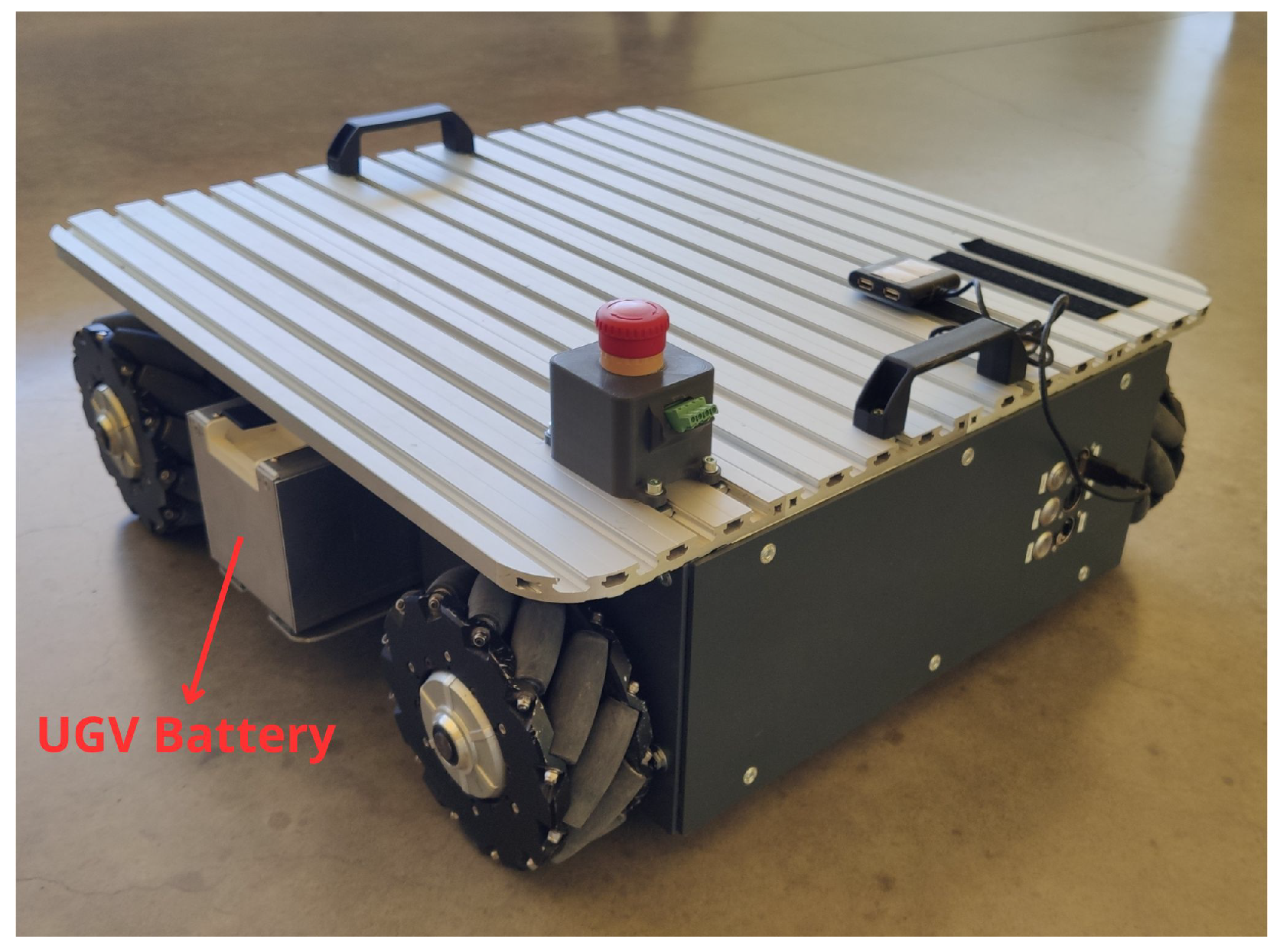
- We use the Joiry LiFePO4 batteries, which have a capacity of 150 Ah at a nominal voltage of 12.8 V. With one battery we obtain a theoretical flight duration slightly over seventy minutes, taking into account the effectiveness of the inverter. Thus, we connect two batteries in parallel to further extend the flight duration (see Figure 6). LiFePO4 batteries have great characteristics, including high energy density, high current discharge, and long durability. Most importantly, they are safer to operate when compared to LiPO batteries [30].
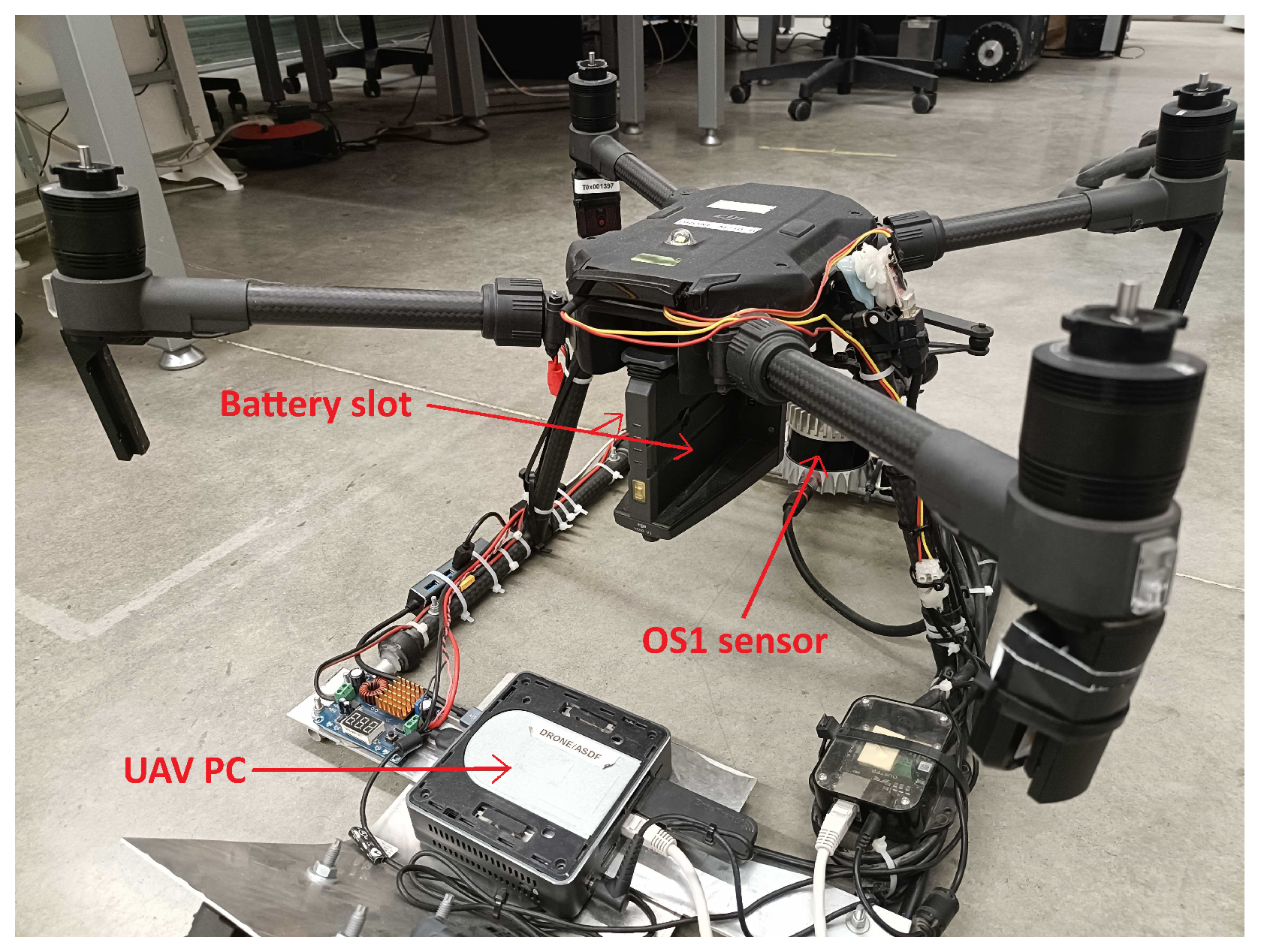
- A backup battery is connected to the UAV in the remaining battery slot of the M210. We use the battery model TB55 that provides the UAV with about ten minutes of flight duration in case of failure of the LTS4. This time is sufficient for the monitoring operator to take control of the UAV and land it safely in the event of an LTS4 system malfunction.
2.5. Software Architecture
3. Localization System
3.1. Mapping Stage
3.2. Online Localization
4. Navigation System
4.1. Trajectory Planning Problem Formulation
4.2. Path Planning
4.2.1. checkTetherFeasibility Algorithm
4.3. Trajectory Planning
4.3.1. Unfeasible Tether Length Constraint
4.3.2. Tether Obstacle Avoidance Constraint
4.4. Trajectory Tracking
5. Experimental Results
5.1. Scenario 1. Experiments 1–3: Flight Duration Tests
5.2. Scenario 2: Abandoned Thermal Station
5.2.1. Experiments 4–5: UAV Localization Tests
5.2.2. Experiment 6: UAV Autonomous Flight Test
5.3. Scenario 3. Experiment 7: Emulated Inspection Test
5.3.1. Trajectory Planning Results
5.3.2. Mission Execution Results
6. Discussion
7. Conclusions
Future Work
Supplementary Materials
Author Contributions
Funding
Data Availability Statement
Acknowledgments
Conflicts of Interest
References
- Nex, F.; Armenakis, C.; Cramer, M.; Cucci, D.; Gerke, M.; Honkavaara, E.; Kukko, A.; Persello, C.; Skaloud, J. UAV in the advent of the twenties: Where we stand and what is next. ISPRS J. Photogramm. Remote Sens. 2022, 184, 215–242. [Google Scholar] [CrossRef]
- Tsouros, D.C.; Bibi, S.; Sarigiannidis, P.G. A Review on UAV-Based Applications for Precision Agriculture. Information 2019, 10, 349. [Google Scholar] [CrossRef]
- Viegas, C.; Chehreh, B.; Andrade, J.; Lourenço, J. Tethered UAV with Combined Multi-rotor and Water Jet Propulsion for Forest Fire Fighting. J. Intell. Robot. Syst. 2022, 104, 21. [Google Scholar] [CrossRef]
- Jordan, S.; Moore, J.; Hovet, S.; Box, J.; Perry, J.; Kirsche, K.; Lewis, D.; Tse, Z.T.H. State-of-the-art technologies for UAV inspections. IET Radar Sonar Navig. 2018, 12, 151–164. [Google Scholar] [CrossRef]
- Wang, J.; Ueda, T. Evaluation of the Application of Unmanned Aerial Vehicle Technology on Damage Inspection of Reinforced Concrete Buildings. In Proceedings of the 17th East Asian-Pacific Conference on Structural Engineering and Construction, Singapore, 27–30 June 2022; Geng, G., Qian, X., Poh, L.H., Pang, S.D., Eds.; Springer: Singapore, 2023; pp. 651–666. [Google Scholar] [CrossRef]
- Sreenath, S.; Malik, H.; Narman, H.; Kalaichelavan, K. Assessment and Use of Unmanned Aerial Vehicle for Civil Structural Health Monitoring. Procedia Comput. Sci. 2020, 170, 656–663. [Google Scholar] [CrossRef]
- Shafiq, M.; Awadallah, M.; Saleem, K.; Youssef, A.E. An Energy-Efficient and Safe Landing Multirotor Design for Drones. IEEE Access 2024, 12, 110610–110625. [Google Scholar] [CrossRef]
- Mugnai, M.; Teppati Losé, M.; Herrera-Alarcón, E.P.; Baris, G.; Satler, M.; Avizzano, C.A. An Efficient Framework for Autonomous UAV Missions in Partially-Unknown GNSS-Denied Environments. Drones 2023, 7, 471. [Google Scholar] [CrossRef]
- Herath, H.M.C.W.B.; Herath, H.M.S.; Sumangala, S.W.; de Silva, O.; Chathuranga, D.; Lalitharatne, T.D. Design and development of an automated battery swapping and charging station for Multirotor Aerial Vehicles. In Proceedings of the 2017 17th International Conference on Control, Automation and Systems (ICCAS), Jeju, Republic of Korea, 18–21 October 2017; IEEE: New York, NY, USA; pp. 356–361. [Google Scholar] [CrossRef]
- Kim, S.J.; Lim, G.J.; Cho, J. Drone flight scheduling under uncertainty on battery duration and air temperature. Comput. Ind. Eng. 2018, 117, 291–302. [Google Scholar] [CrossRef]
- Marques, M.N.; Magalhães, S.A.; Dos Santos, F.N.; Mendonça, H.S. Tethered Unmanned Aerial Vehicles—A Systematic Review. Robotics 2023, 12, 117. [Google Scholar] [CrossRef]
- Fattori, F.; Cocuzza, S. Tethered Drones: A Comprehensive Review of Technologies, Challenges, and Applications. Drones 2025, 9, 425. [Google Scholar] [CrossRef]
- Petitti, A.; Sanalitro, D.; Tognon, M.; Milella, A.; Cortés, J.; Franchi, A. Inertial Estimation and Energy-Efficient Control of a Cable-suspended Load with a Team of UAVs. In Proceedings of the 2020 International Conference on Unmanned Aircraft Systems (ICUAS), Athens, Greece, 1–4 September 2020; IEEE: New York, NY, USA; pp. 158–165. [Google Scholar] [CrossRef]
- Murphy, R. Marsupial and shape-shifting robots for urban search and rescue. IEEE Intell. Syst. Their Appl. 2000, 15, 14–19. [Google Scholar] [CrossRef]
- Walendziuk, W.; Oldziej, D.; Slowik, M. Power Supply System Analysis for Tethered Drones Application. In Proceedings of the 2020 International Conference Mechatronic Systems and Materials (MSM), Bialystok, Poland, 1–3 July 2020; pp. 1–6. [Google Scholar] [CrossRef]
- Fagiano, L.; Nguyen-Van, E.; Rager, F.; Schnez, S.; Ohler, C. Autonomous Takeoff and Flight of a Tethered Aircraft for Airborne Wind Energy. IEEE Trans. Control. Syst. Technol. 2018, 26, 151–166. [Google Scholar] [CrossRef]
- Stankiewicz, P.G.; Jenkins, S.; Mullins, G.E.; Wolfe, K.C.; Johannes, M.S.; Moore, J.L. A Motion Planning Approach for Marsupial Robotic Systems. In Proceedings of the 2018 IEEE/RSJ International Conference on Intelligent Robots and Systems (IROS), Madrid, Spain, 1–5 October 2018; IEEE: New York, NY, USA, 2018; pp. 1–9. [Google Scholar] [CrossRef]
- DARPA. Darpa Subterranean Challenge 2021. Final Event. 2021. Available online: https://www.darpa.mil/research/challenges/subterranean (accessed on 30 July 2025).
- Kottege, N.; Williams, J.; Tidd, B.; Talbot, F.; Steindl, R.; Cox, M.; Frousheger, D.; Hines, T.; Pitt, A.; Tam, B.; et al. Heterogeneous Robot Teams with Unified Perception and Autonomy: How Team CSIRO Data61 Tied for the Top Score at the DARPA Subterranean Challenge. Field Robot. 2024, 4, 313–359. [Google Scholar] [CrossRef]
- Grip, H.F.; Scharf, D.P.; Malpica, C.A.; Johnson, W.; Mandic, M.; Singh, G.; Young, L.A. Guidance and Control for a Mars Helicopter. In Proceedings of the 2018 AIAA Guidance, Navigation, and Control Conference, Kissimmee, FL, USA, 8–12 January 2018. [Google Scholar] [CrossRef]
- Martinez Rocamora, B.; Lima, R.R.; Samarakoon, K.; Rathjen, J.; Gross, J.N.; Pereira, G.A.S. Oxpecker: A Tethered UAV for Inspection of Stone-Mine Pillars. Drones 2023, 7, 73. [Google Scholar] [CrossRef]
- Papachristos, C.; Tzes, A. The power-tethered UAV-UGV team: A collaborative strategy for navigation in partially-mapped environments. In Proceedings of the 22nd Mediterranean Conference on Control and Automation, Palermo, Italy, 16–19 June 2014; pp. 1153–1158. [Google Scholar] [CrossRef]
- Capitán, J.; Díaz-Báñez, J.M.; Pérez-Cutiño, M.A.; Rodríguez, F.; Ventura, I. MASPA: An efficient strategy for path planning with a tethered marsupial robotics system. arXiv 2024, arXiv:2408.02141. [Google Scholar]
- Gross, J.; Petrillo, M.D.; Beard, J.; Nichols, H.; Swiger, T.; Watson, R.; Kirk, C.; Kilic, C.; Hikes, J.; Upton, E.; et al. Field-Testing of a UAV-UGV Team for GNSS-Denied Navigation in Subterranean Environments. In Proceedings of the 32nd International Technical Meeting of the Satellite Division of The Institute of Navigation (ION GNSS+ 2019), Miami, FL, USA, 16–20 September 2019; Volume 32, pp. 2112–2124. [Google Scholar] [CrossRef]
- Maese, J.E.; Caballero, F.; Merino, L. Physical simulation of Marsupial UAV-UGV Systems Connected by a Variable-Length Hanging Tether. arXiv 2025, arXiv:2412.12776. [Google Scholar]
- Martínez-Rozas, S.; Alejo, D.; Carpio, J.J.; Merino, L.; Caballero, F. Design and Experimental Validation of a Marsupial Long-Endurance UAV-UGV System. In Proceedings of the 2024 International Conference on Unmanned Aircraft Systems (ICUAS), Chania, Greece, 4–7 June 2024; pp. 1319–1324. [Google Scholar] [CrossRef]
- Caballero, F.; Merino, L. DLL: Direct LIDAR Localization. A map-based localization approach for aerial robots. In Proceedings of the 2021 IEEE/RSJ International Conference on Intelligent Robots and Systems (IROS), Prague, Czech Republic, 28 – 30 September 2021; IEEE: New York, NY, USA; pp. 5491–5498. [Google Scholar] [CrossRef]
- Martínez-Rozas, S.; Alejo, D.; Caballero, F.; Merino, L. Path and Trajectory Planning of a Tethered UAV-UGV Marsupial Robotic System. IEEE Robot. Autom. Lett. 2023, 8, 6475–6482. [Google Scholar] [CrossRef]
- Elistair. The Tethered Drone Company. Available online: https://elistair.com/ (accessed on 30 July 2025).
- Zhu, S.; Huang, A.; Xu, Y. Improving Methods for better Performance of Commercial LiFePO4/C Batteries. Int. J. Electrochem. Sci. 2021, 16, 210564. [Google Scholar] [CrossRef]
- Moore, A.J.; Schubert, M.; Rymer, N.; Balachandran, S.; Consiglio, M.; Munoz, C.; Smith, J.; Lewis, D.; Schneide, P. Inspection of electrical transmission structures with UAV path conformance and lidar-based geofences. In Proceedings of the 2018 IEEE Power & Energy Society Innovative Smart Grid Technologies Conference (ISGT), Washington, DC, USA, 19–22 February 2018; pp. 1–5. [Google Scholar] [CrossRef]
- Zhang, J.; Singh, S. LOAM: Lidar Odometry and Mapping in Real-time. In Proceedings of the Robotics: Science and Systems (RSS ’14), Berkeley, CA, USA, 13–15 July 2014. [Google Scholar]
- Gao, Y.; Zhao, L. VE-LIOM: A Versatile and Efficient LiDAR-Inertial Odometry and Mapping System. Remote Sens. 2024, 16, 2772. [Google Scholar] [CrossRef]
- HKUST-Aerial-Robotics/A-LOAM: Advanced Implementation of LOAM. Available online: https://github.com/HKUST-Aerial-Robotics/A-LOAM (accessed on 30 July 2025).
- Han, L.; Gao, F.; Zhou, B.; Shen, S. FIESTA: Fast Incremental Euclidean Distance Fields for Online Motion Planning of Aerial Robots. In Proceedings of the 2019 IEEE/RSJ International Conference on Intelligent Robots and Systems, (IROS), Macau, China, 3–8 November 2019; IEEE: New York, NY, USA; pp. 4423–4430. [Google Scholar] [CrossRef]
- Perez-Grau, F.; Caballero, F.; Viguria, A.; Ollero, A. Multi-sensor three-dimensional Monte Carlo localization for long-term aerial robot navigation. Int. J. Adv. Robot. Syst. 2017, 14, 1–15. [Google Scholar] [CrossRef]
- Akai, N. Efficient Solution to 3D-LiDAR-based Monte Carlo Localization with Fusion of Measurement Model Optimization via Importance Sampling. In Proceedings of the 2025 IEEE/SICE International Symposium on System Integration (SII), Munich, Germany, 21–24 January 2025; pp. 1247–1254. [Google Scholar] [CrossRef]
- Rusu, R.B.; Cousins, S. 3D is here: Point Cloud Library (PCL). In Proceedings of the IEEE International Conference on Robotics and Automation (ICRA), Shanghai, China, 9–13 May 2011. [Google Scholar] [CrossRef]
- Magnusson, M.; Lilienthal, A.; Duckett, T. Scan registration for autonomous mining vehicles using 3D-NDT. J. Field Robot. 2007, 24, 803–827. [Google Scholar] [CrossRef]
- Petit, L.; Desbiens, A.L. TAPE: Tether-Aware Path Planning for Autonomous Exploration of Unknown 3D Cavities Using a Tangle-Compatible Tethered Aerial Robot. IEEE Robot. Autom. Lett. 2022, 7, 10550–10557. [Google Scholar] [CrossRef]
- Karaman, S.; Frazzoli, E. Sampling-based algorithms for optimal motion planning. Int. J. Robot. Res. 2011, 30, 846–894. [Google Scholar] [CrossRef]
- Krüsi, P.; Furgale, P.; Bosse, M.; Siegwart, R. Driving on Point Clouds: Motion Planning, Trajectory Optimization, and Terrain Assessment in Generic Nonplanar Environments. J. Field Robot. 2017, 34, 940–984. [Google Scholar] [CrossRef]
- Romero-Ramirez, F.; Muñoz-Salinas, R.; Medina-Carnicer, R. Speeded Up Detection of Squared Fiducial Markers. Image Vis. Comput. 2018, 76, 38–47. [Google Scholar] [CrossRef]
- Mier, G.; Valente, J.; de Bruin, S. Fields2Cover: An Open-Source Coverage Path Planning Library for Unmanned Agricultural Vehicles. IEEE Robot. Autom. Lett. 2023, 8, 2166–2172. [Google Scholar] [CrossRef]






| Component | Model | Quantity |
|---|---|---|
| Onboard Computer | MSI Cubin 8GL-001BEU (i5-11400) | 1 |
| IMU | Sparkfun Razor 9 DoF | 1 |
| LiDAR | Ouster OS1-16 | 1 |
| UGV Internal Battery | LiFePO 75 Ah@24 V | 2 |
| UAV Power Battery | Joiry LiFePO 150 Ah@12 V | 2 |
| Inverter | Green Cell 2000 W/4000 W | 1 |
| Tether System | Elistair LIGH-T V4 Tethered Station (LTS4) | 1 |
| WiFi Router | NIGHTHAWK NetGear AX5400 | 1 |
| Component | Model |
|---|---|
| Onboard computer | NUC8i7BEH 32GB RAM |
| LiDAR | Ouster OS1-16 |
| Internal battery | DJI TB55 (backup) |
| WiFi Access Point | D-Link AX1800 Wi-Fi USB Adapter |
| Exp. | Method | Comp. Time (s) | Avg. Dist. (m) |
|---|---|---|---|
| MCL-3D | 0.71 | 0.45 | |
| 4 | ICP | 1.8 | 0.13 |
| DLL | 0.07 | 0.14 | |
| MCL-3D | 0.64 | 1.25 | |
| 5 | ICP | 2.9 | 0.56 |
| DLL | 0.11 | 0.26 |
| Method | Execution Time (s) | Avg. Distance to Obstacles (m) | Trajectory Length (m) | |||
|---|---|---|---|---|---|---|
| Cable | UAV | UGV | UAV | UGV | ||
| Catenary | 3.37 | 1.51 | 1.54 | 1.09 | 50.40 | 11.59 |
| LoS | 0.49 | 1.11 | 1.08 | 1.65 | 48.30 | 14.14 |
| Mission Execution | UAV Waiting Time (s) | UGV Waiting Time (s) |
|---|---|---|
| 1 | 1.89 ± 2.21 (147) | 1.51 ± 1.93 (98) |
| 2 | 1.43 ± 2.73 (144) | 1.43 ± 2.14 (101) |
| 3 | 1.47 ± 2.39 (142) | 1.39 ± 1.78 (103) |
| AR ID’s | 411 | 412 | 413 | 415 | 416 | 417 | 418 | 420 | 421 | 422 | 423 | 477 |
| Error (cm) | 4.2 | 12.6 | 13.6 | 19.8 | 9.8 | 6.2 | 8.7 | 11.6 | 18.7 | 3.1 | 13.0 | 7.6 |
| Observations | 88 | 28 | 277 | 28 | 215 | 445 | 198 | 568 | 344 | 307 | 205 | 29 |
Disclaimer/Publisher’s Note: The statements, opinions and data contained in all publications are solely those of the individual author(s) and contributor(s) and not of MDPI and/or the editor(s). MDPI and/or the editor(s) disclaim responsibility for any injury to people or property resulting from any ideas, methods, instructions or products referred to in the content. |
© 2025 by the authors. Licensee MDPI, Basel, Switzerland. This article is an open access article distributed under the terms and conditions of the Creative Commons Attribution (CC BY) license (https://creativecommons.org/licenses/by/4.0/).
Share and Cite
Martínez-Rozas, S.; Alejo, D.; Carpio, J.J.; Caballero, F.; Merino, L. Long-Duration Inspection of GNSS-Denied Environments with a Tethered UAV-UGV Marsupial System. Drones 2025, 9, 765. https://doi.org/10.3390/drones9110765
Martínez-Rozas S, Alejo D, Carpio JJ, Caballero F, Merino L. Long-Duration Inspection of GNSS-Denied Environments with a Tethered UAV-UGV Marsupial System. Drones. 2025; 9(11):765. https://doi.org/10.3390/drones9110765
Chicago/Turabian StyleMartínez-Rozas, Simón, David Alejo, José Javier Carpio, Fernando Caballero, and Luis Merino. 2025. "Long-Duration Inspection of GNSS-Denied Environments with a Tethered UAV-UGV Marsupial System" Drones 9, no. 11: 765. https://doi.org/10.3390/drones9110765
APA StyleMartínez-Rozas, S., Alejo, D., Carpio, J. J., Caballero, F., & Merino, L. (2025). Long-Duration Inspection of GNSS-Denied Environments with a Tethered UAV-UGV Marsupial System. Drones, 9(11), 765. https://doi.org/10.3390/drones9110765