Article

Vegetation Type Preferences in Red Deer (Cervus elaphus) Determined by Object Detection Models

by
Annika Fugl
1,
Lasse Lange Jensen
1,
Andreas Hein Korsgaard
1,
Cino Pertoldi
1,2,* and
Sussie Pagh
1
1
Department of Chemistry and Bioscience, Aalborg University, 9220 Aalborg, Denmark
2
Aalborg Zoo, 9000 Aalborg, Denmark
*
Author to whom correspondence should be addressed.
Drones 2024, 8(10), 522; https://doi.org/10.3390/drones8100522
Submission received: 12 August 2024 / Revised: 16 September 2024 / Accepted: 20 September 2024 / Published: 26 September 2024
(This article belongs to the Special Issue Drone Advances in Wildlife Research: 2nd Edition)

Abstract

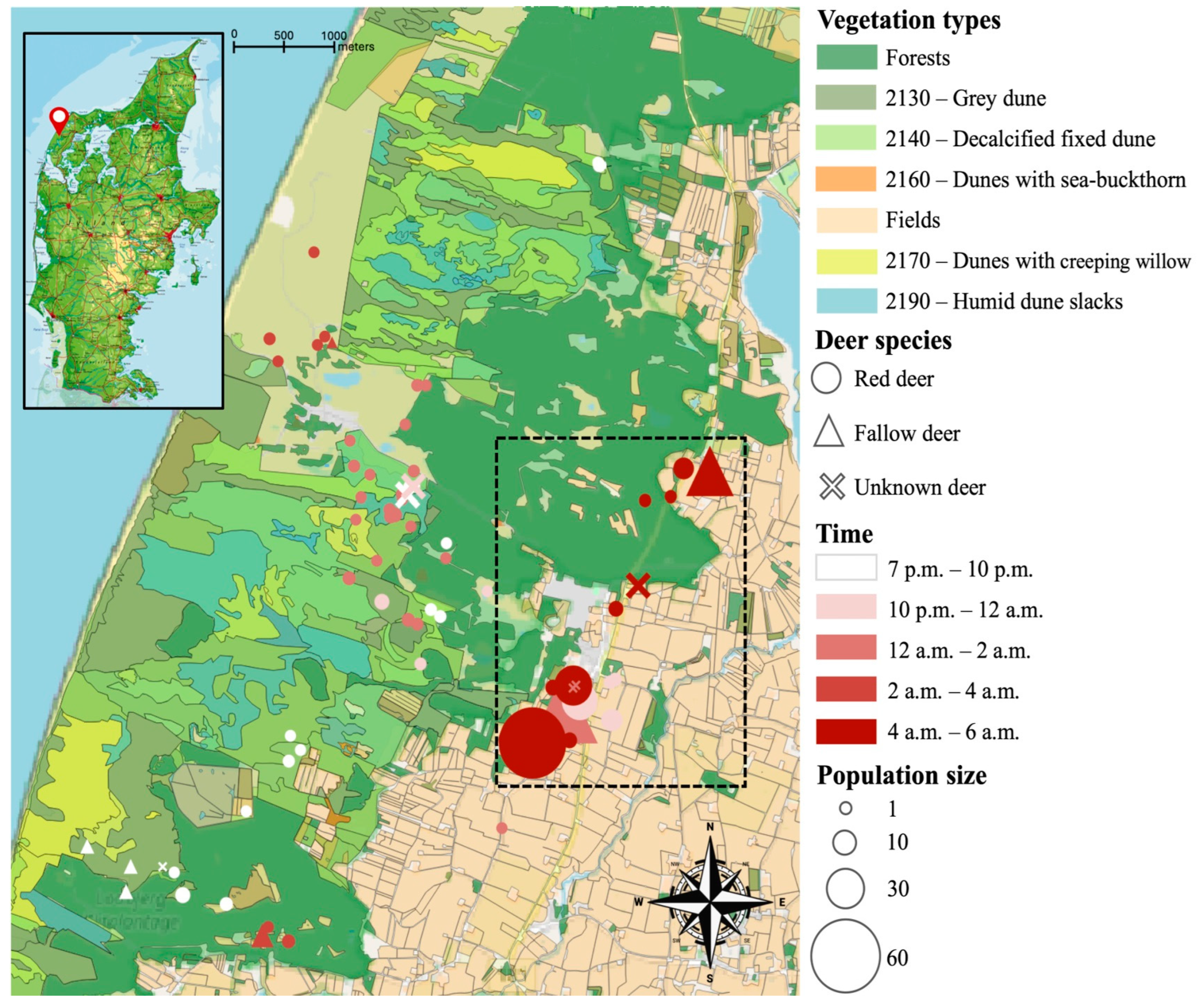
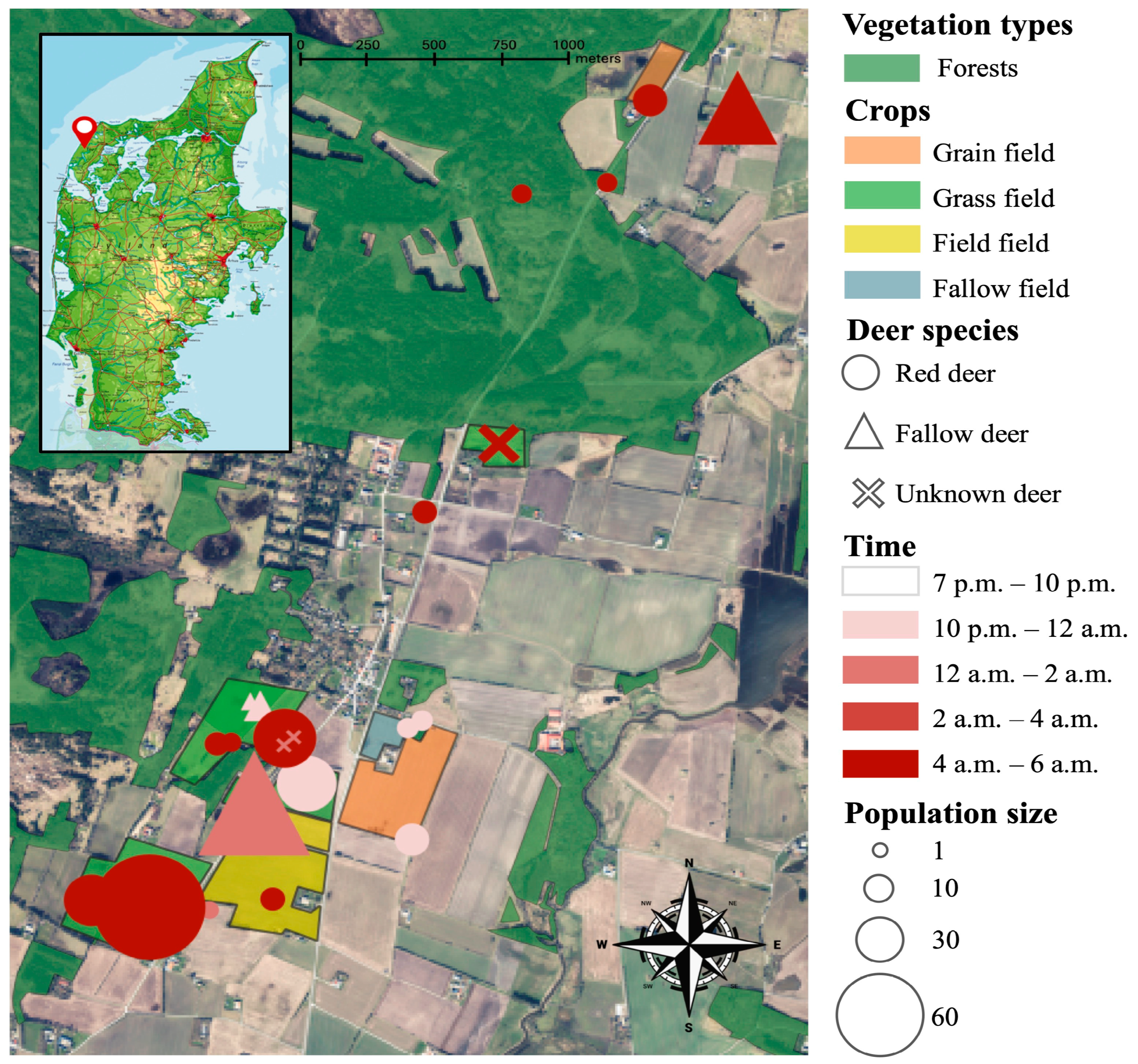
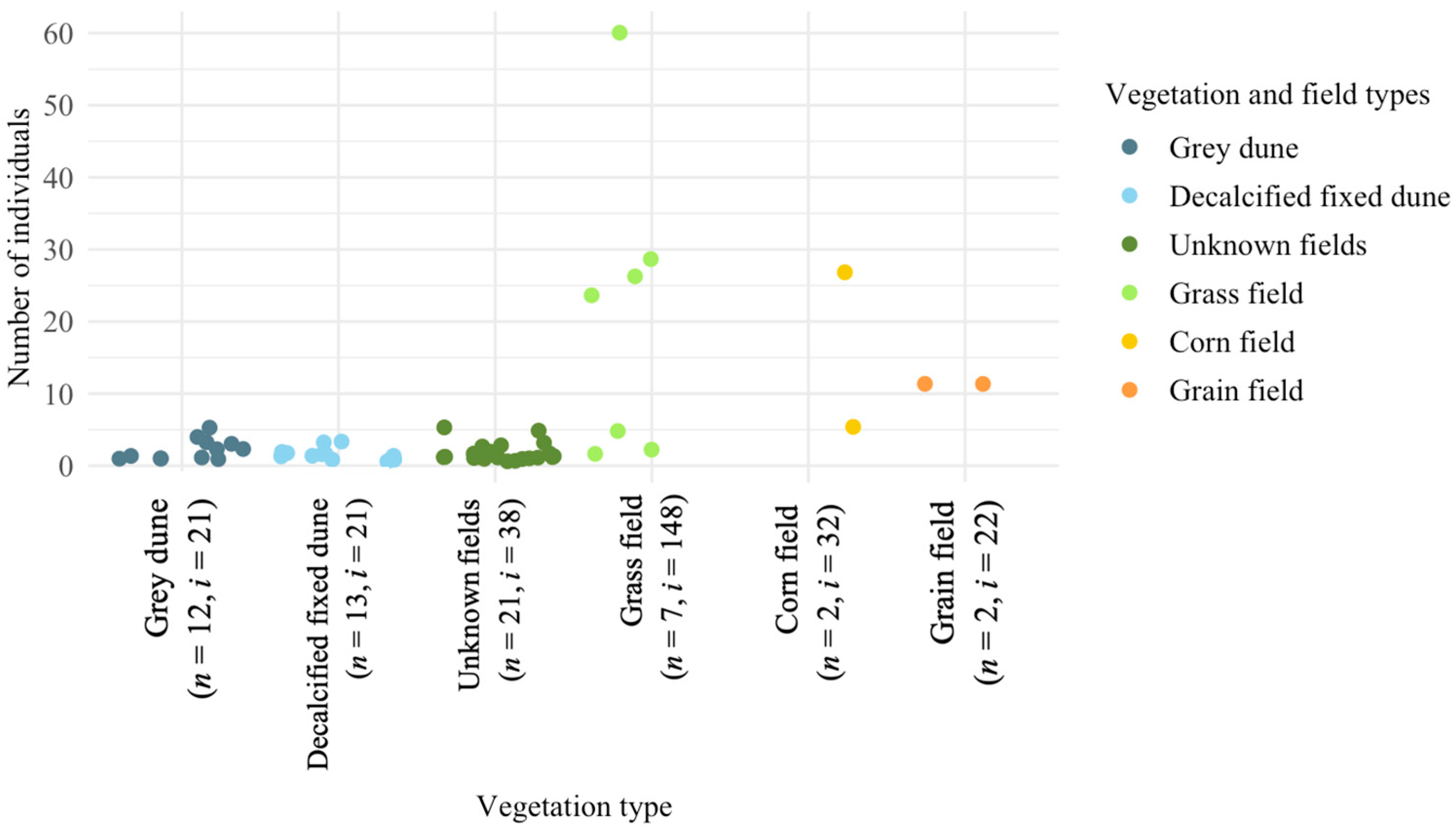
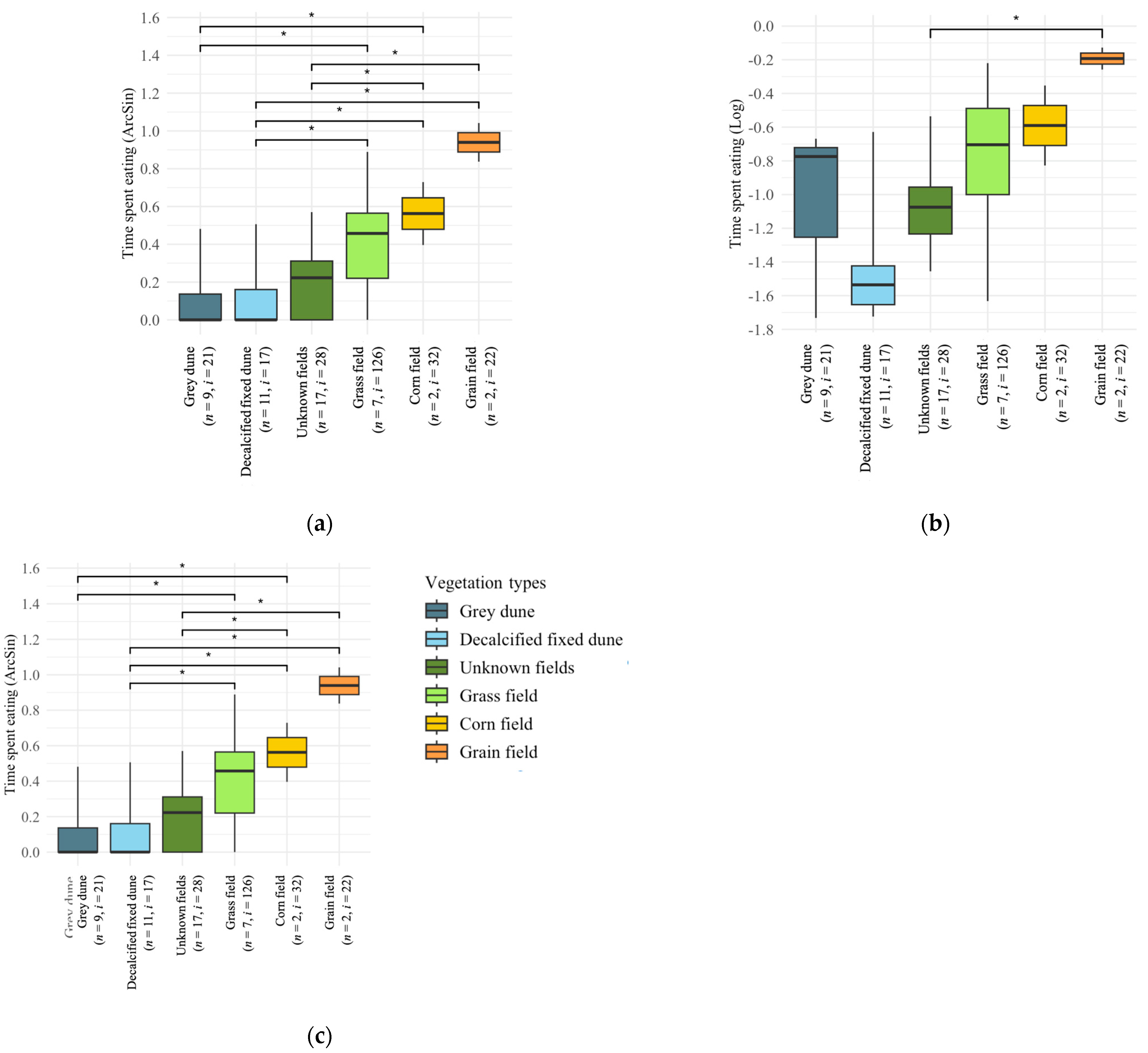
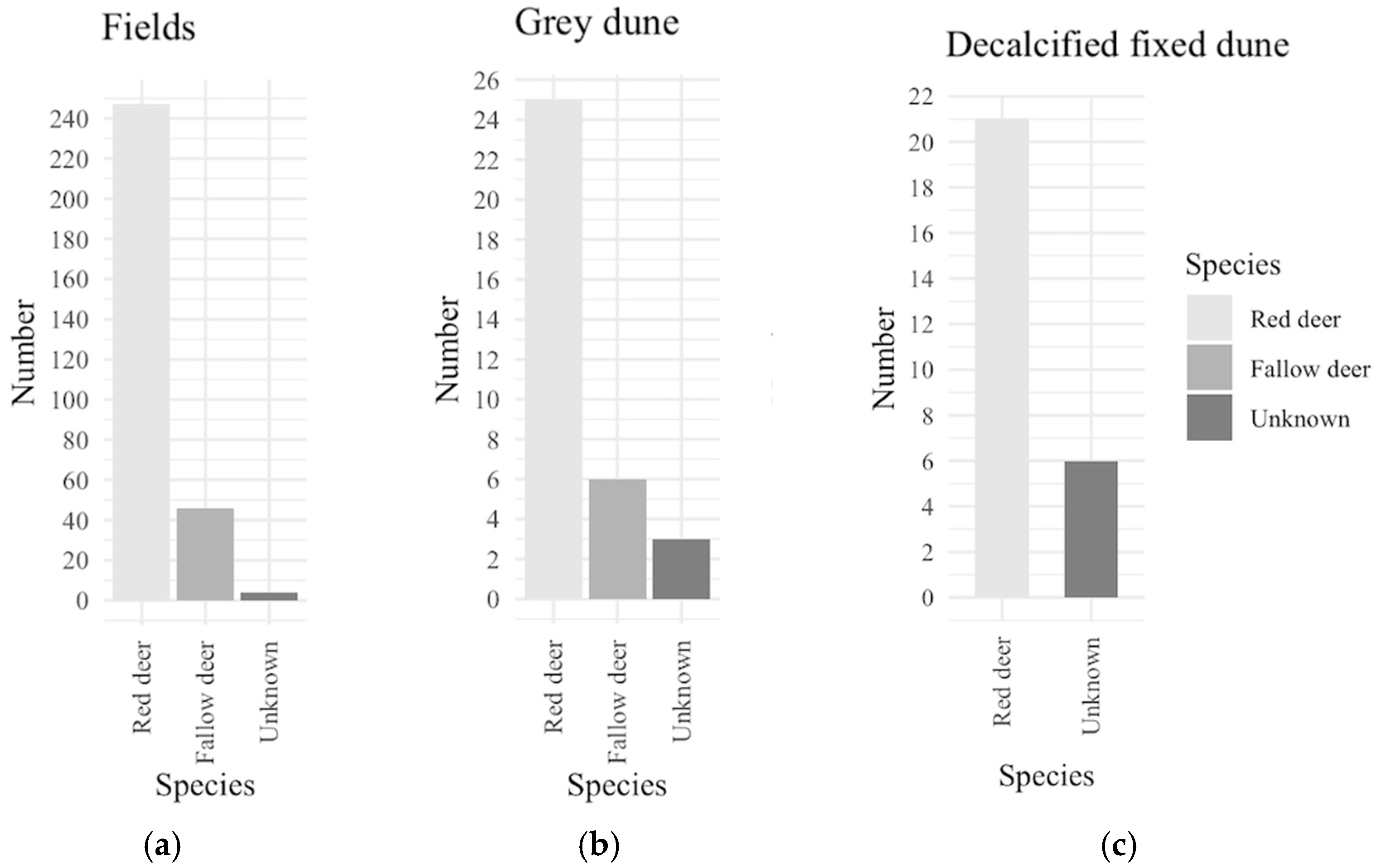
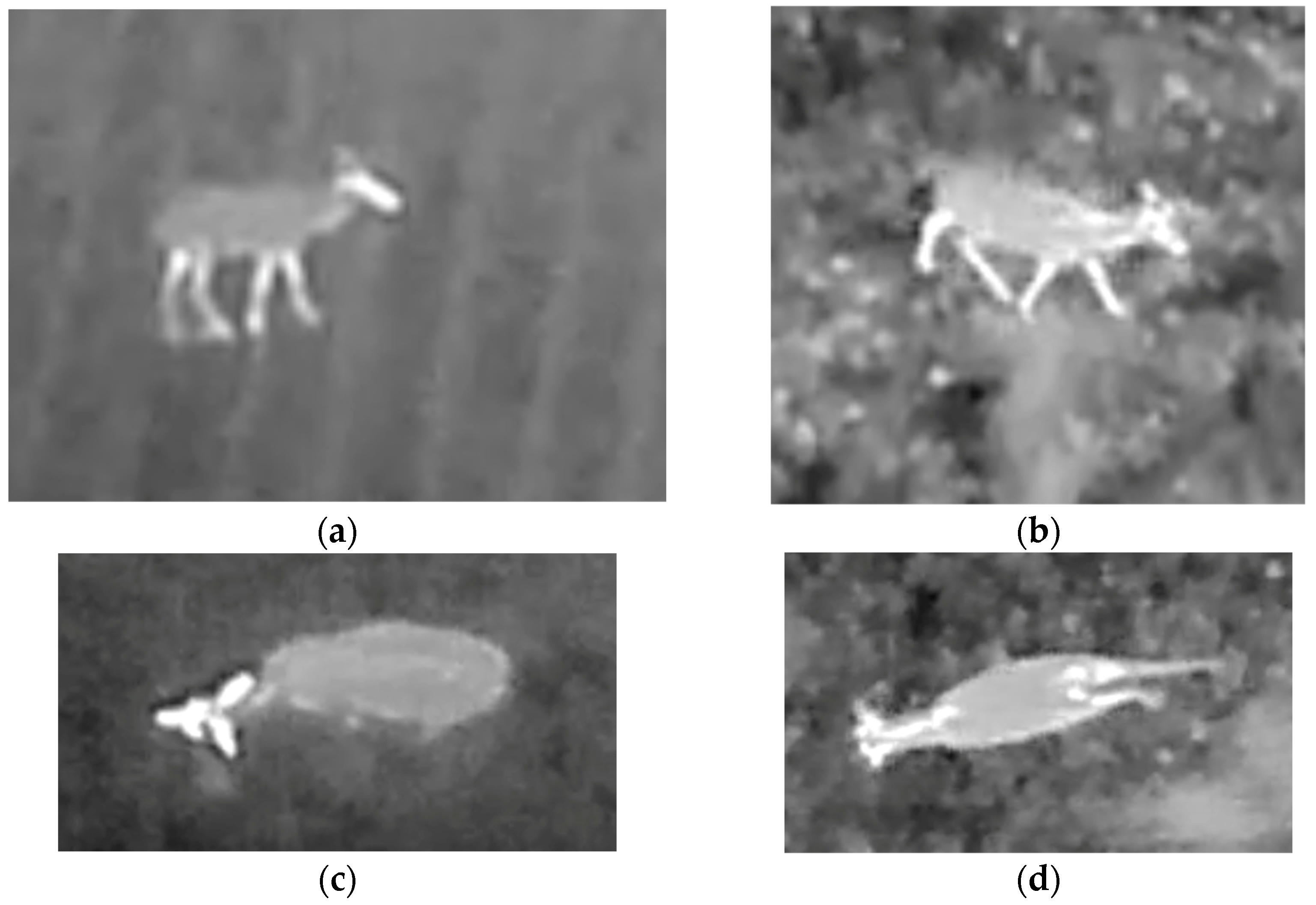
This study investigates the possibility of utilising a drone equipped with a thermal camera to monitor the spatial distribution of red deer (Cervus elaphus) and to determine their behavioural patterns, as well as preferences for vegetation types in a moor in Denmark. The spatial distribution of red deer was mapped according to time of day and vegetation types. Reed deer were separated manually from fallow deer (Dama dama) due to varying footage quality. Automated object detection from thermal camera footage was used to identification of two behaviours, “Eating” and “Lying”, enabling insights into the behavioural patterns of red deer in different vegetation types. The results showed a migration of red deer from the moors to agricultural fields during the night. The higher proportion of time spent eating in agricultural grass fields compared to two natural vegetation types, “Grey dune” and “Decalcified fixed dune”, indicates that fields are important foraging habitats for red deer. The red deer populations were observed significantly later on grass fields compared to the natural vegetation types. This may be due to human disturbance or lack of randomisation of the flight time with the drone. Further studies are suggested across different seasons as well as the time of day for a better understanding of the annual and diurnal foraging patterns of red deer.
Keywords: thermal camera footage; aerial drone; monitoring; yolov8; ungulates; behaviour; foraging; crop damage thermal camera footage; aerial drone; monitoring; yolov8; ungulates; behaviour; foraging; crop damage