
Article

A Network Slicing Framework for UAV-Aided Vehicular Networks
by
Emmanouil Skondras
1,
Emmanouel T. Michailidis
2,*,
Angelos Michalas
3,
Dimitrios J. Vergados
4,
Nikolaos I. Miridakis
5 and
Dimitrios D. Vergados
1
1
Department of Informatics, University of Piraeus, 80 Karaoli & Dimitriou St., 18534 Piraeus, Greece
2
Department of Electrical and Electronics Engineering, University of West Attica, Ancient Olive Grove Campus, 250 Thivon & P. Ralli, Egaleo, 12244 Athens, Greece
3
Department of Electrical and Computer Engineering, University of Western Macedonia, Karamanli & Ligeris, 50131 Kozani, Greece
4
Department of Informatics, University of Western Macedonia, Fourka Area, 52100 Kastoria, Greece
5
Department of Informatics and Computer Engineering, University of West Attica, Egaleo Park, Ag. Spyridonos Str., Egaleo, 12243 Athens, Greece
*
Author to whom correspondence should be addressed.
Drones 2021, 5(3), 70; https://doi.org/10.3390/drones5030070
Submission received: 20 June 2021 / Revised: 23 July 2021 / Accepted: 23 July 2021 / Published: 30 July 2021

Abstract

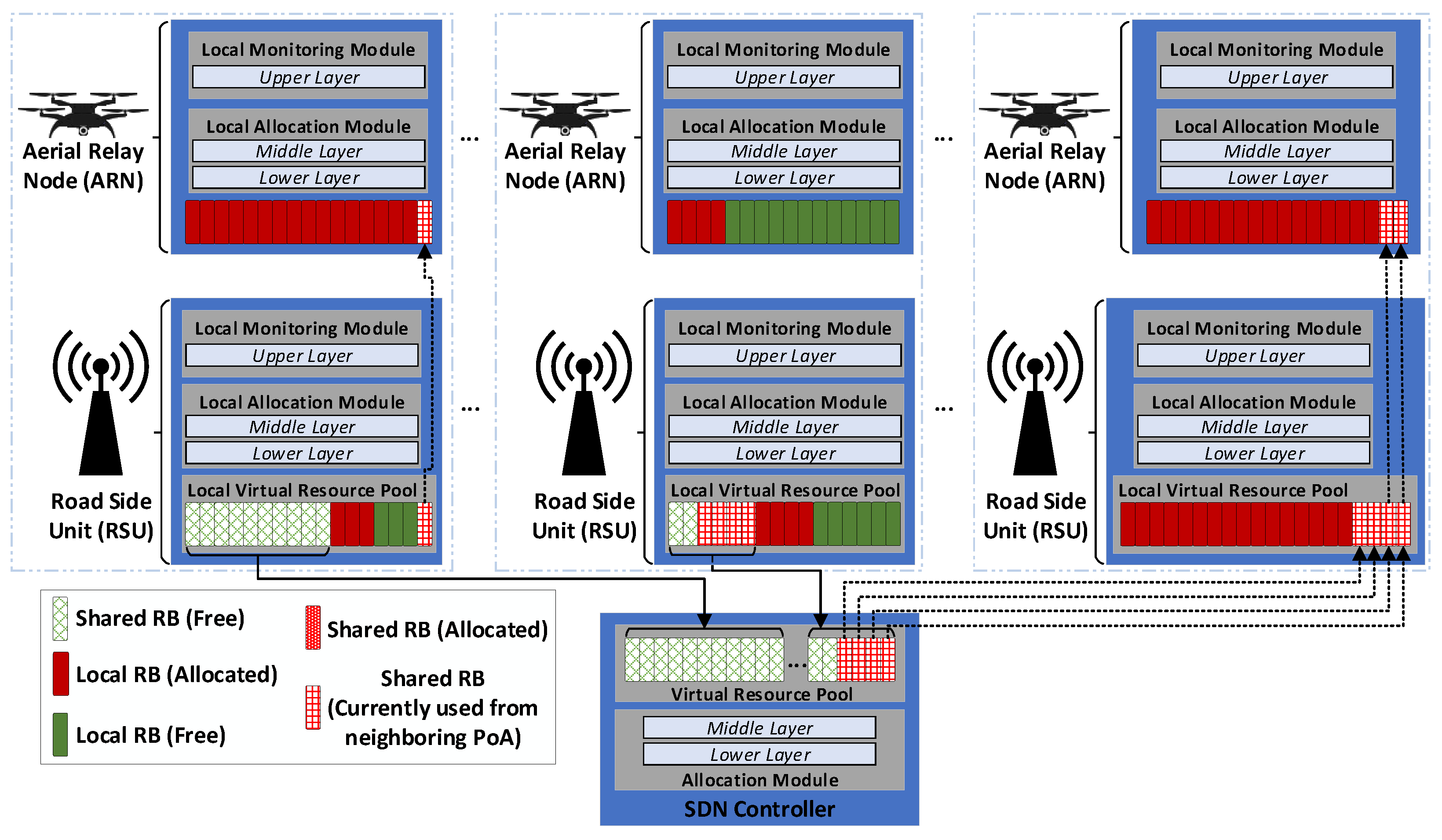
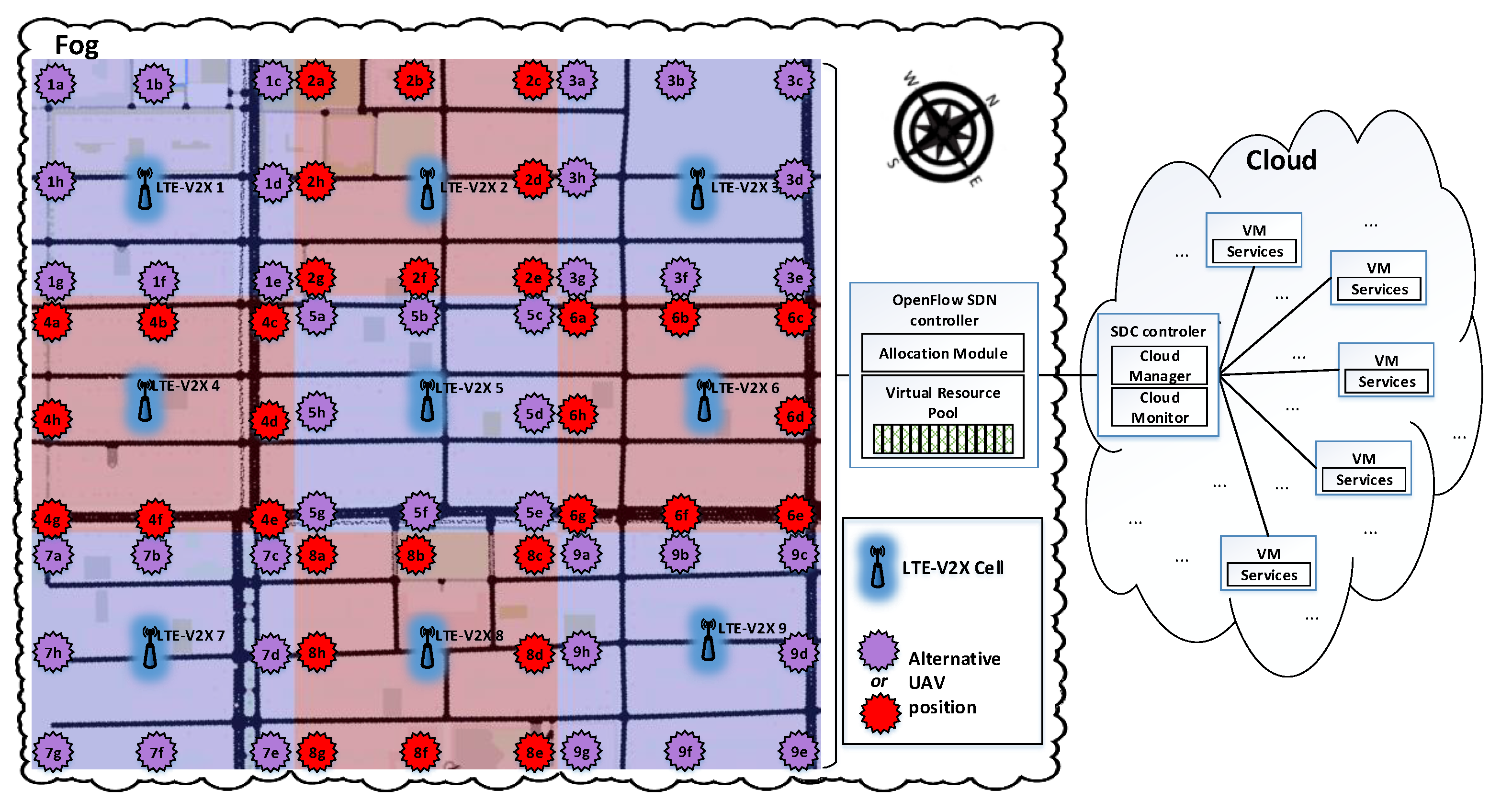
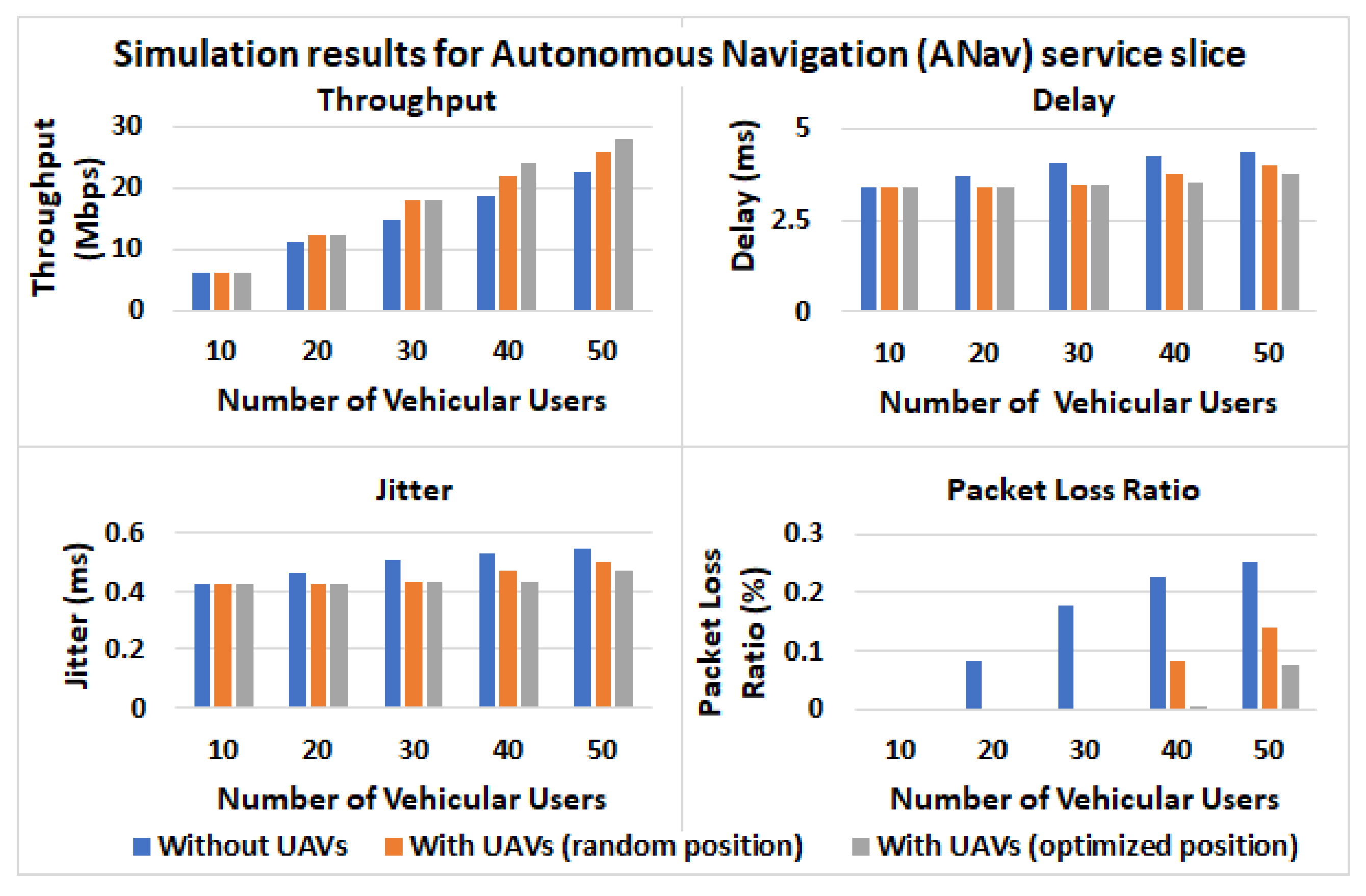
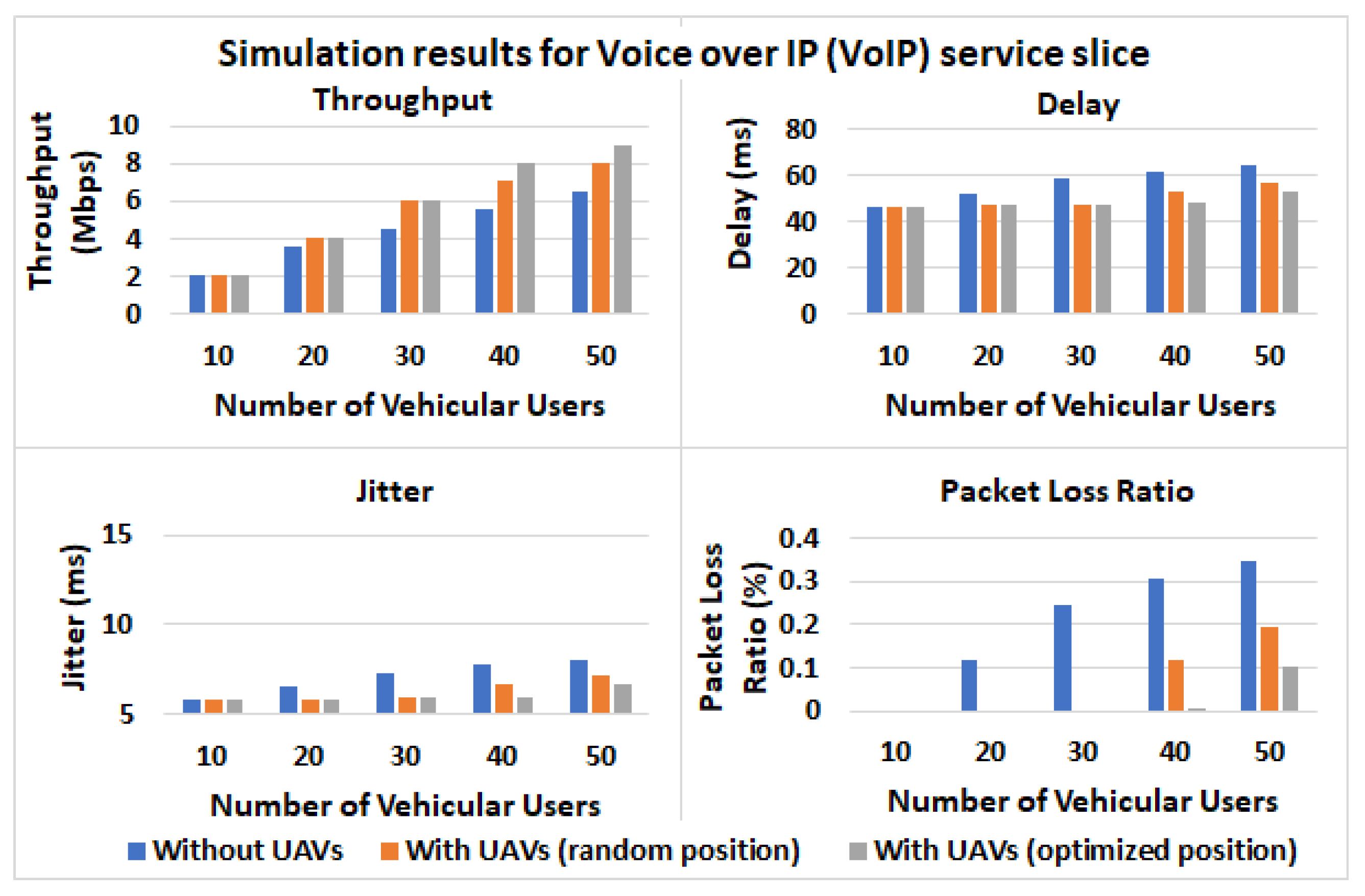
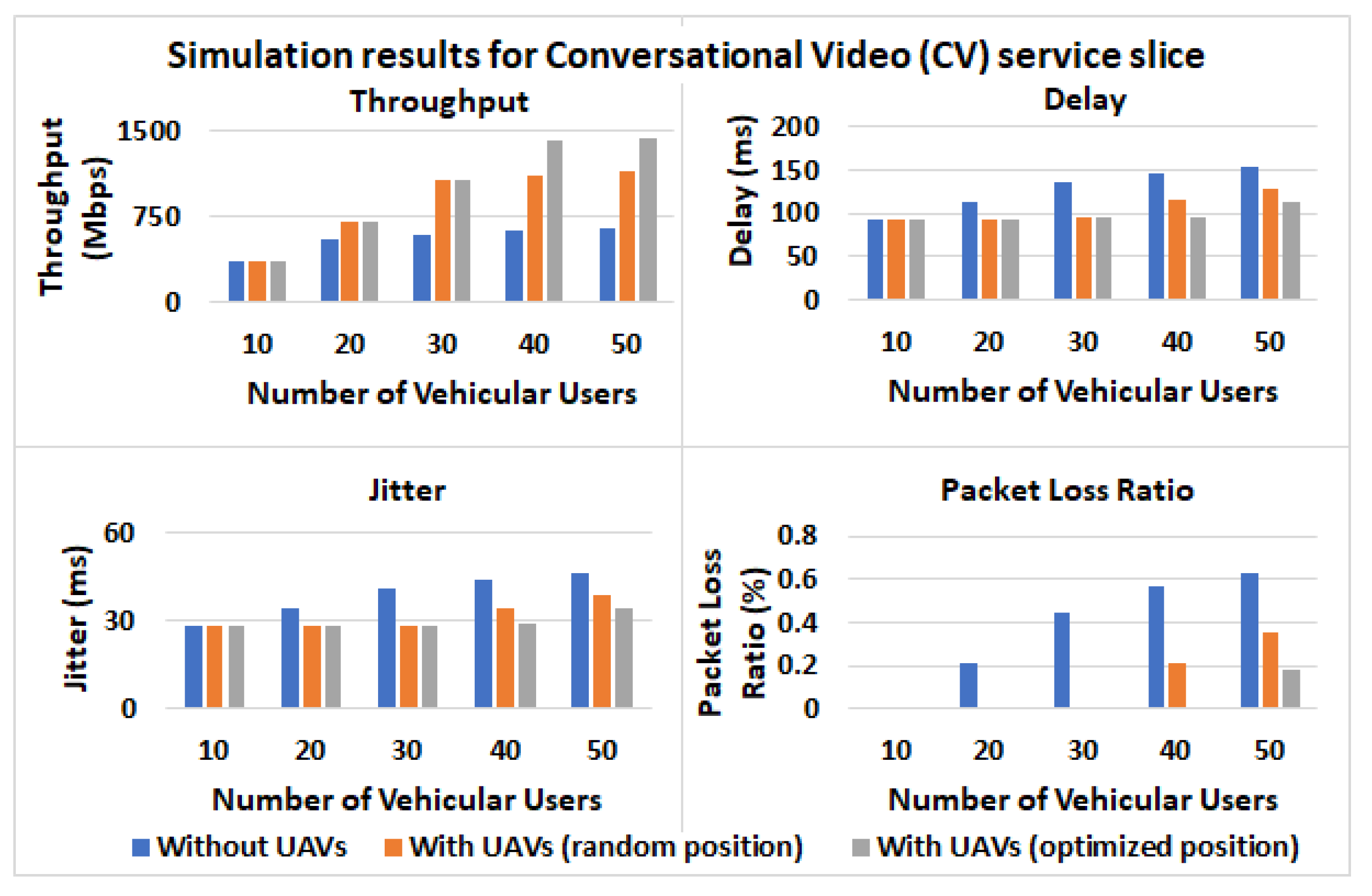
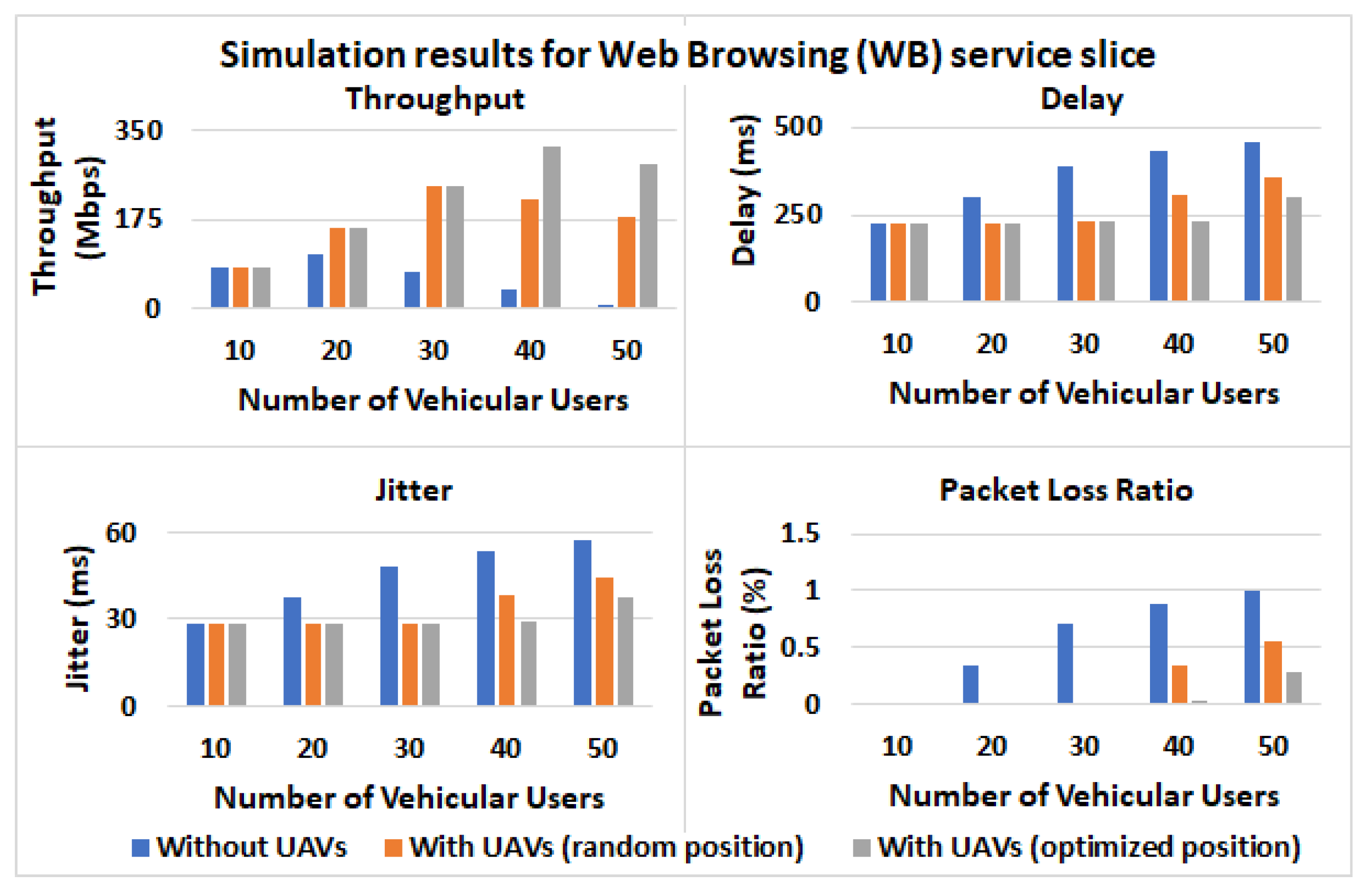
In a fifth generation (5G) vehicular network architecture, several point of access (PoA) types, including both road side units (RSUs) and aerial relay nodes (ARNs), can be leveraged to undertake the service of an increasing number of vehicular users. In such an architecture, the application of efficient resource allocation schemes is indispensable. In this direction, this paper describes a network slicing scheme for 5G vehicular networks that aims to optimize the performance of modern network services. The proposed architecture consists of ground RSUs and unmanned aerial vehicles (UAVs) acting as ARNs enabling the communication between ground vehicular nodes and providing additional communication resources. Both RSUs and ARNs implement the LTE vehicle-to-everything (LTE-V2X) technology, while the position of each ARN is optimized by applying a fuzzy multi-attribute decision-making (fuzzy MADM) technique. With regard to the proposed network architecture, each RSU maintains a local virtual resource pool (LVRP) which contains local RBs (LRBs) and shared RBs (SRBs), while an SDN controller maintains a virtual resource pool (VRP), where the SRBs of the RSUs are stored. In addition, each ARN maintains its own resource blocks (RBs). For users connected to the RSUs, if the remaining RBs of the current RSU can satisfy the predefined threshold value, the LRBs of the RSU are allocated to user services. On the contrary, if the remaining RBs of the current RSU cannot satisfy the threshold, extra RBs from the VRP are allocated to user services. Similarly, for users connected to ARNs, the satisfaction grade of each user service is monitored considering both the QoS and the signal-to-noise plus interference (SINR) factors. If the satisfaction grade is higher than the predefined threshold value, the service requirements can be satisfied by the remaining RBs of the ARN. On the contrary, if the estimated satisfaction grade is lower than the predefined threshold value, the ARN borrows extra RBs from the LVRP of the corresponding RSU to achieve the required satisfaction grade. Performance evaluation shows that the suggested method optimizes the resource allocation and improves the performance of the offered services in terms of throughput, packet transfer delay, jitter and packet loss ratio, since the use of ARNs that obtain optimal positions improves the channel conditions observed from each vehicular user.
Keywords: 5G vehicular networks; unmanned aerial vehicles (UAVs); fuzzy multi-attribute decision-making (fuzzy MADM); LTE advance pro with FD-MIMO (LTE-A Pro FD-MIMO); LTE vehicle-to-everything (LTE-V2X); network slicing; computation offloading; software-defined networking (SDN) 5G vehicular networks; unmanned aerial vehicles (UAVs); fuzzy multi-attribute decision-making (fuzzy MADM); LTE advance pro with FD-MIMO (LTE-A Pro FD-MIMO); LTE vehicle-to-everything (LTE-V2X); network slicing; computation offloading; software-defined networking (SDN)