1. Introduction
With the growing demand for long-range reconnaissance and persistent missions, autonomous aerial refueling (AAR) between large tankers and unmanned aerial vehicles (UAVs) has become a key enabler for enhancing unmanned operational effectiveness [
1]. However, during the AAR approach phase, the wake vortices generated by the tanker impose significant aerodynamic disturbances on lightweight, high-aspect-ratio, long-endurance UAVs [
2,
3], potentially inducing abrupt rolling moments and attitude instability. Although CFD and large-eddy simulations have improved the prediction accuracy of wake vortex evolution [
4], their computational cost remains prohibitive for real-time planning. Moreover, existing studies lack quantitative descriptions of the aerodynamic influence of tanker wake vortices on large-span UAVs [
5], which limits the safety and robustness of autonomous docking.
UAVs typically rely on wireless communication or onboard computers for autonomous control [
6]; however, their fuel capacity is constrained by airframe size and payload limitations, resulting in insufficient endurance for long-duration missions [
7]. Air-to-air refueling is commonly regarded as a cooperative task in which fuel is transferred from a tanker aircraft to a receiver aircraft during flight [
8]. Moreover, it shares certain characteristics with cooperative control problems, such as dynamic event-triggered time-varying formation control in heterogeneous unmanned swarm systems [
9]. As UAV applications continue to expand, autonomous UAV aerial refueling has become a research focus, with increasing attention being paid to its necessity and technical challenges [
10]. Despite progress in communication control, autonomous guidance, and rendezvous trajectory design, most existing studies assume a disturbance-free or simplified wind environment and do not systematically account for the dominant disturbance source—the tanker wake vortex. Meanwhile, extensive foundational research on aircraft wake vortices has established a comprehensive theoretical framework. Greene proposed an early approximate dissipation model [
11]; Sarpkaya revealed the effects of stratification and turbulence intensity on vortex decay and developed the Aircraft Vortex Spacing System (AVOSS) Prediction Algorithm (APA) model [
12,
13], which later supported NASA’s wake vortex spacing system [
14]. Proctor introduced the Terminal Area Simulation System (TASS) Driven Algorithms for Wake Prediction(TDAWP) three-dimensional wake model [
15]; Holzäpfel subsequently proposed the Wake Two-Stage Decay Model(D2P)and proposed the Probabilistic Two-phase Wake Vortex Decay Model(P2P)models [
16] to incorporate atmospheric and operational effects, supported by integrated wake vortex safety and capacity systems [
17], and probabilistic assessment studies [
18], forming the basis of the European Wake Vortex Prediction and Monitoring System (WSVBS) wake vortex prediction system [
19,
20,
21]. In the context of wake-encounter dynamics, NASA conducted flight experiments and established a wake-encounter database [
22], leading to the development of dynamic response models [
23], aerodynamic response models [
24], torque-coefficient-based assessment approaches [
25], roll-response models [
26], and roll-moment-coefficient evaluation methods [
27], which together provide essential tools for understanding wake vortex impacts on aircraft.
In research on UAV AAR path planning, Burns employed Dubins geometry and non-linear dynamic inversion to design a rapid rendezvous guidance law [
28]; Lu-go-Cardenas proposed a rendezvous-route construction method combining Dubins curves with vector-field theory [
29]; and Wilson used the A* algorithm to generate optimal rendezvous trajectories and enhance route-planning automation [
30].
From the perspective of existing studies, related research mainly focuses on three aspects. The first aspect is wake-vortex modeling and prediction, including empirical models, semi-empirical models, and high-fidelity numerical simulations for wake evolution analysis. The second aspect is wake-encounter dynamic response, where evaluation methods based on moment coefficients have been established. The third aspect is UAV aerial refueling path planning and autonomous guidance, which are typically designed based on geometric constraints or optimization algorithms. However, these research directions have largely developed independently. In the UAV aerial refueling scenario, most path-planning methods assume a disturbance-free or uniform wind environment and do not incorporate the influence of tanker wake vortices into the planning framework.
Existing studies present two major limitations. First, although wake vortex modeling has become relatively mature, it mainly focuses on the impact of wake vortices on civil transport aircraft, while limited attention has been given to the specific aerodynamic effects on UAVs. Second, current UAV aerial refueling path-planning methods primarily aim to minimize distance or time. They rarely consider aerodynamic safety margins and often neglect the influence of wake vortices on UAV operational safety.
To address these limitations, this study proposes a wake vortex risk field reconstruction method based on the rolling moment coefficient. It also develops an optimal ingress path planning strategy for an RQ-4 UAV refueling with an A330MRTT under wake vortex conditions. The aerodynamic configuration and relevant flight parameters of the RQ-4 UAV and the A330MRTT tanker are introduced in detail in
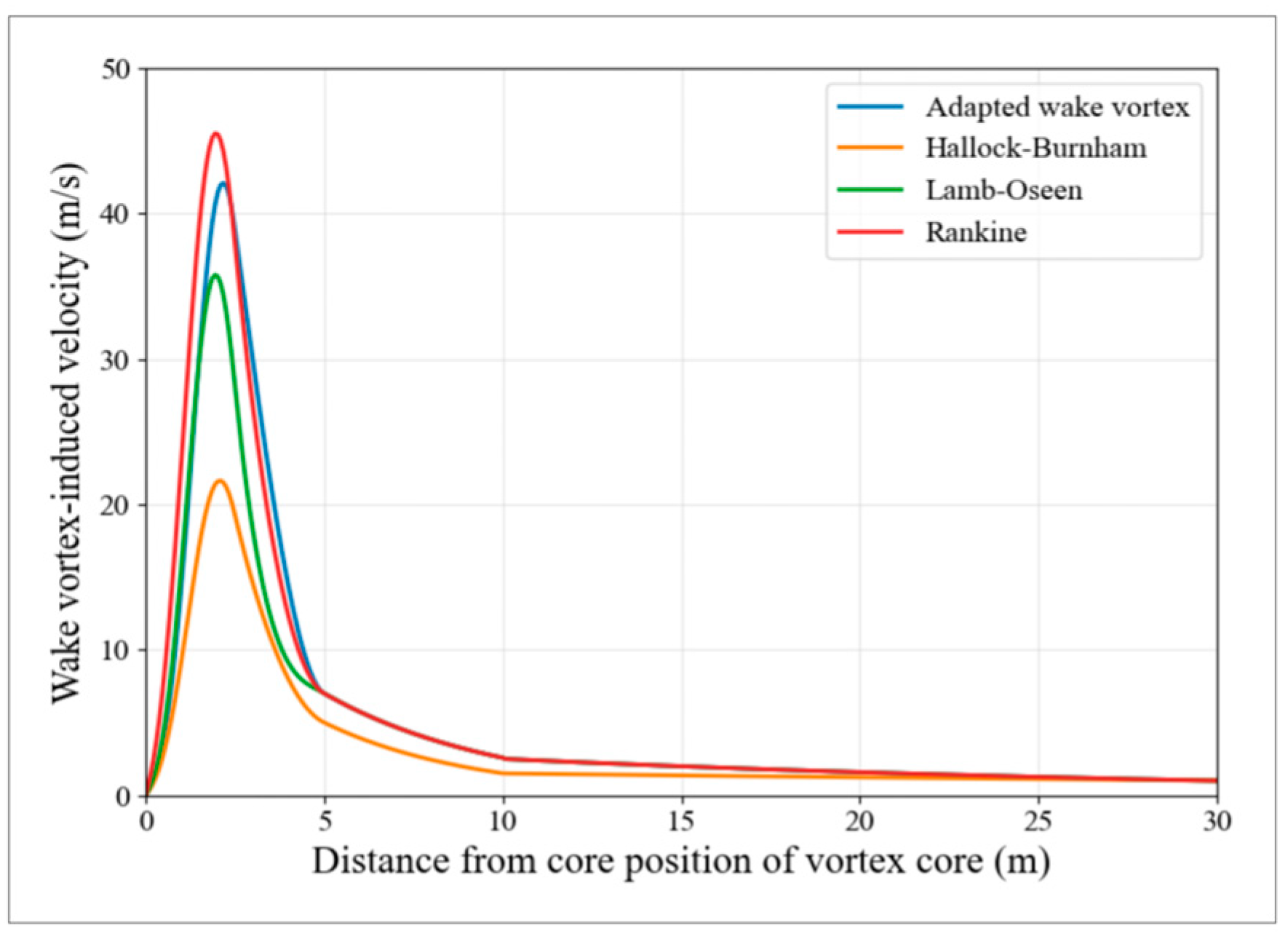
Section 3. The study first compares several representative wake vortex models and selects the HB-P2P model to generate a high-fidelity wake vortex velocity field. The detailed formulation of the HB-P2P wake evolution model is presented in
Section 2. The rolling moment coefficient at different UAV positions within the vortex field is then calculated. Based on these results, the study constructs a continuous three-dimensional and time-varying wake vortex risk field.
The study treats this risk field as a dynamic obstacle environment. It then develops a wake vortex aware particle swarm optimization path planning algorithm to generate an ingress path that balances safety, feasibility, and smoothness. Comparative simulations with A star and RRT are conducted to evaluate the method. The results show that the proposed approach produces safer and more efficient ingress trajectories. The method also keeps the peak rolling moment below the required safety threshold.
The three-dimensional wake vortex risk field and the associated path planning algorithm provide real-time safety support for UAV autonomous aerial refueling with large tanker aircraft. The proposed framework can also support wake vortex identification, risk prediction in complex airspace, and intelligent traffic management. These capabilities contribute to safer and more efficient cooperative airspace operations.
The primary contributions of this paper are as follows:
For autonomous aerial-refueling rendezvous at cruising altitudes, this study develops a spatiotemporal wake vortex evolution prediction method for large tanker aircraft, explicitly accounting for altitude-dependent temperature variations. The model accurately captures essential wake behaviors—including vortex-core descent, lateral transport, and circulation decay—thus providing a high-fidelity wake vortex velocity field that underpins subsequent risk quantification and trajectory-planning processes.
By coupling the predicted wake characteristics with the UAV’s aerodynamic response, the roll-moment coefficient (RMC) is adopted as a direct risk metric. A continuous, quantifiable, time-evolving three-dimensional risk field is reconstructed, enabling detailed representation of hazardous wake regions.
A wake-vortex-aware particle swarm optimization–based path-planning algorithm is developed to generate safe ingress trajectories within the dynamic risk environment. The method formulates a multi-objective cost function and incorporates adaptive search mechanisms, thereby enhancing global optimization performance and ensuring efficient online planning under safety constraints.
This study first compares several classical wake-vortex models, selects the one suitable for large tanker aircraft, and constructs a high-fidelity wake-vortex velocity field based on the HB–P2P model, thereby providing an accurate aerodynamic disturbance environment for subsequent risk assessment and path planning [
16]. Subsequently, the predicted wake-vortex parameters are coupled with the UAV’s aerodynamic response, and the roll-moment coefficient is introduced as a risk metric. The spatiotemporal wake-vortex risk field is then constructed by calculating the roll-moment coefficient and reconstructing the corresponding three-dimensional risk distribution, thereby explicitly mapping the wake-vortex influence into a visualizable dynamic risk region.
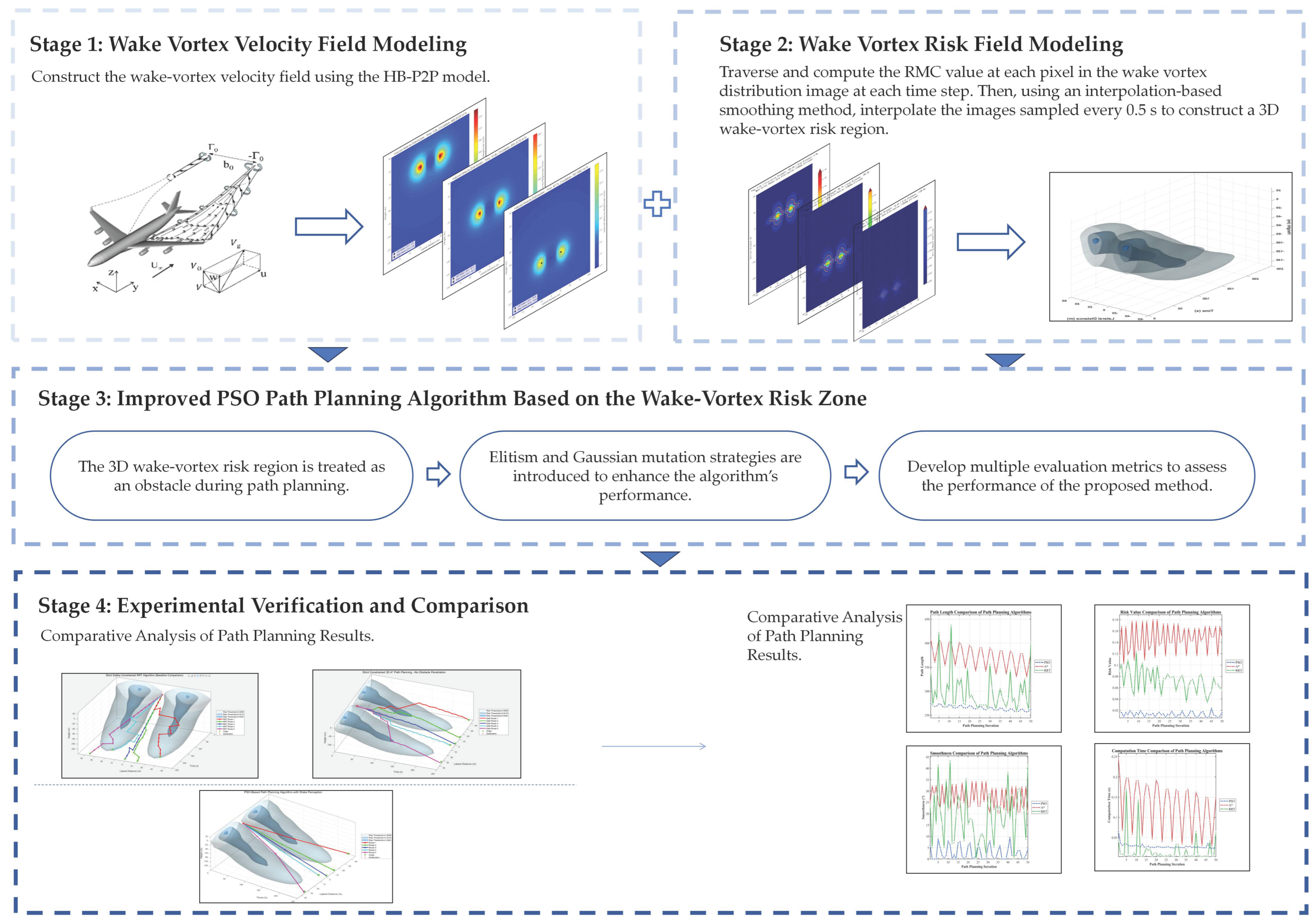
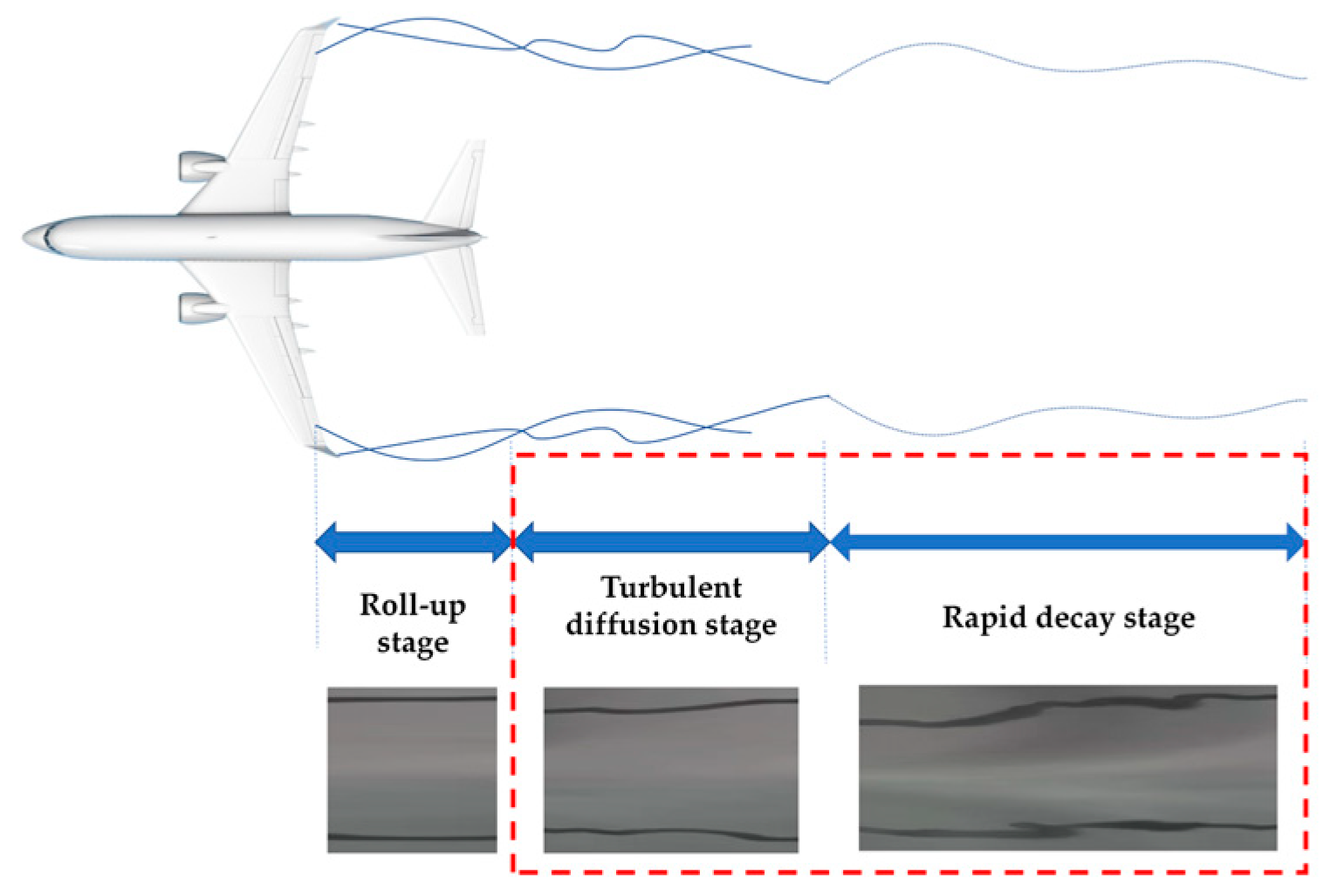
Next, the three-dimensional wake vortex risk field is treated as a dynamic obstacle environment, and a wake-vortex-aware particle swarm optimization-based path-planning algorithm is developed. A multi-objective cost function is designed, and adaptive search and mutation mechanisms are incorporated to generate safe, smooth, dynamically feasible ingress paths within the dynamic risk environment. Finally, the proposed path-planning algorithm is validated through comprehensive simulations and compared with representative methods such as A* and RRT. The effectiveness of the proposed method is quantitatively evaluated in terms of risk exposure, path length, smoothness, and computation time, providing a useful reference for future research and extensions. The overall research process of this study is summarized in
Figure 1.
3. Simulation Results and Analysis
3.1. Data Provenance
The data used in this paper are all obtained from publicly available online sources. The parameters involved include wingspan, wing area, fuselage height, takeoff weight, zero-fuel weight, indicated airspeed, true airspeed, ground speed, maximum Mach number, service ceiling, and others.
Table 1 presents the parameters of the A330 MRTT aircraft required for the simulation, and
Table 2 presents the parameters of the RQ-4 UAV used in the simulation.
3.2. Evolutionary Analysis of Induced Velocity Distribution
Based on Equations (1)–(9) and the characteristic data of the A330 MRTT, the distributions of the wake vortex-induced velocity of the A330 MRTT at different time instants are obtained.
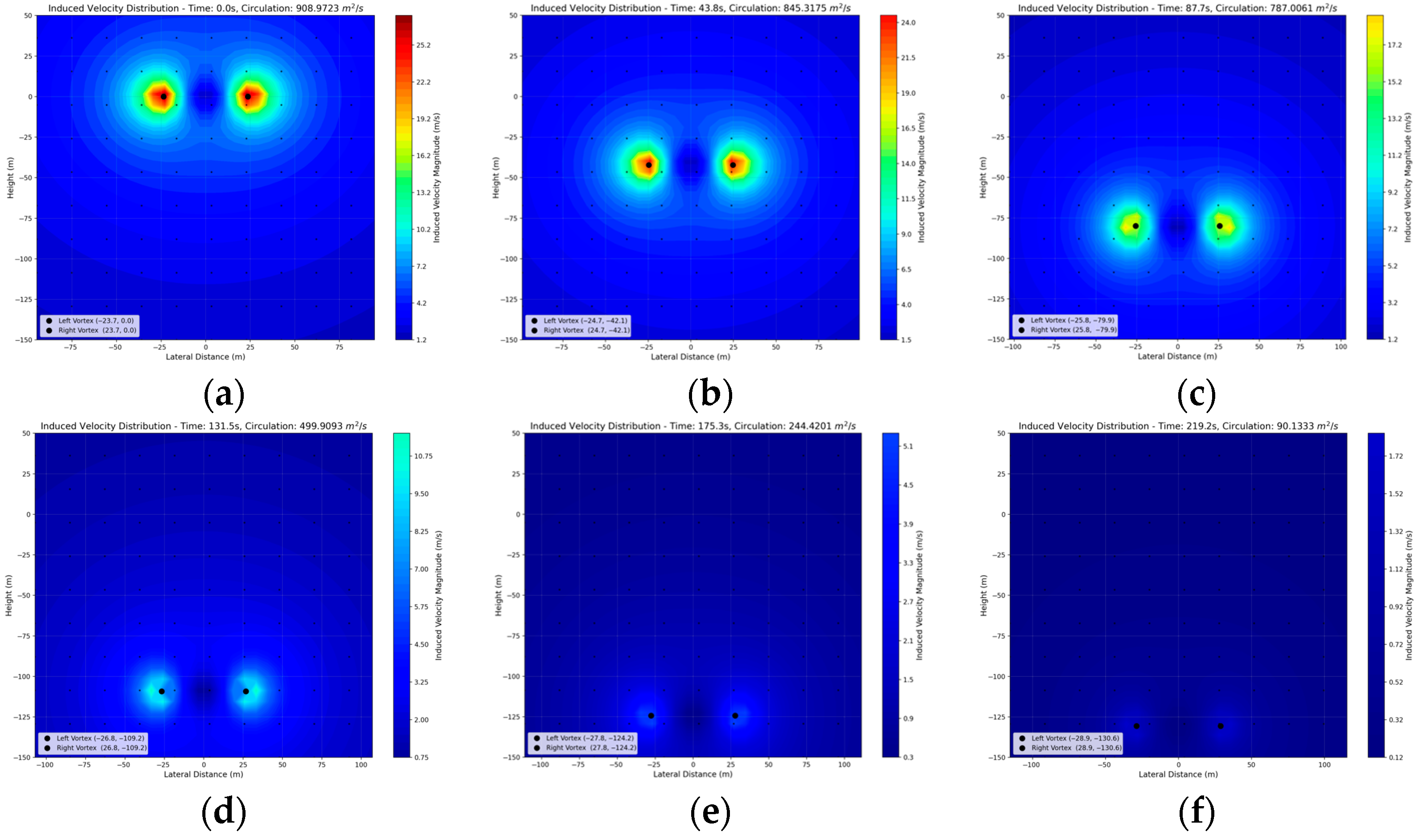
Figure 5 illustrates the spatiotemporal evolution of the A330 MRTT wake vortex induced velocity field calculated using the Hallock–Burnham model. The computational domain spans ±125 m laterally and +50 to −150 m vertically, with the initial wingtip-vortex position set as the origin. The induced velocity is visualized using a color scale, and the vortex cores are marked by black dots. The results reveal a typical dual-vortex structure: at t = 0 s, the circulation is Γ = 908.972 m
2/s and the vortex cores are located at (±23.7 m, 0.0 m), exhibiting distinct high-velocity regions that decay radially outward. As time progresses, these high-velocity regions contract and the velocity field gradually weakens; by t = 219.2 s, the circulation has decreased to 90.133 m
2/s, indicating substantial attenuation of the wake vortex.
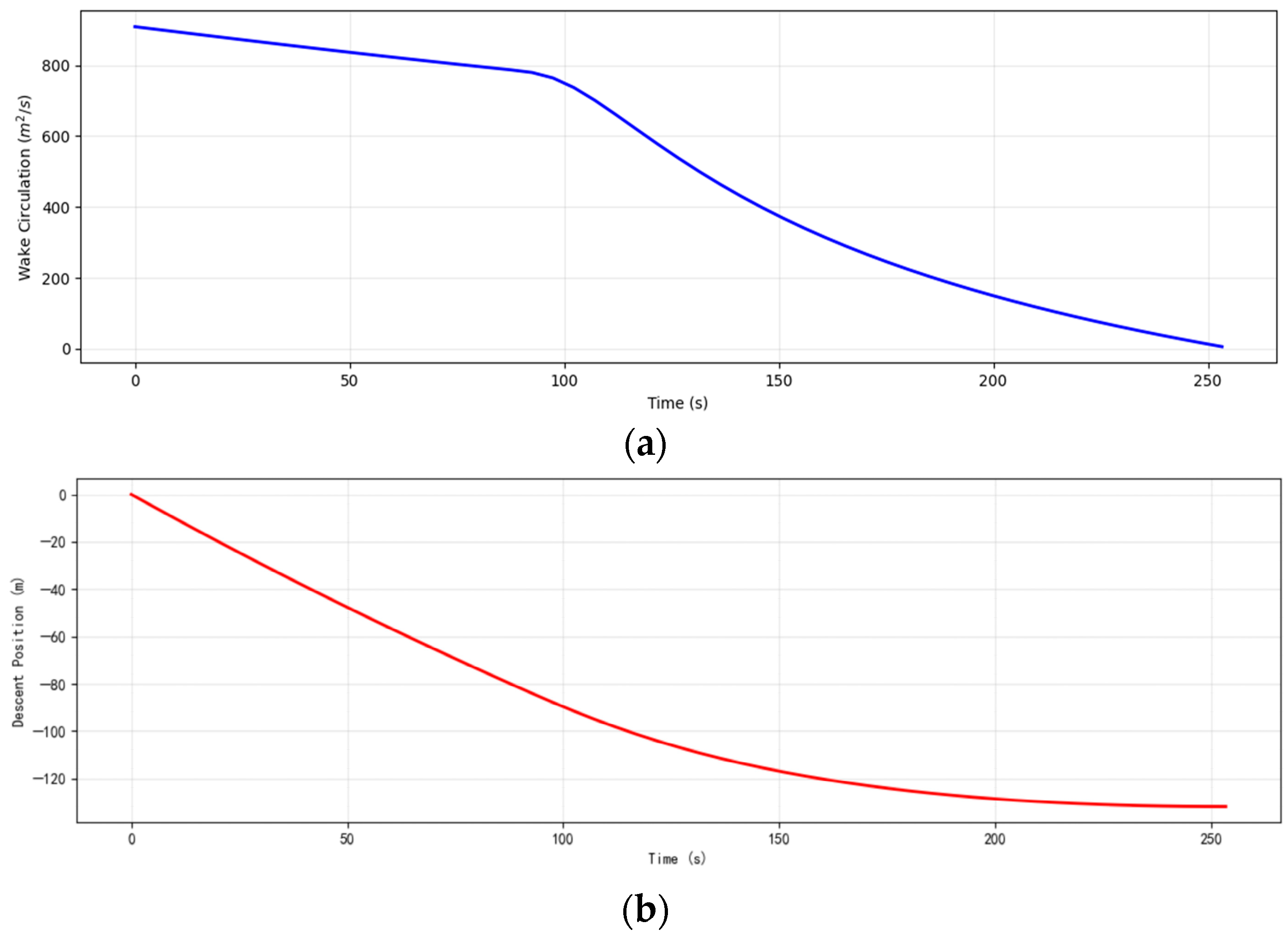
Figure 6 shows the relationship between wake vortex circulation and time, as well as the variation of vortex core descent position with time. Over the full 253.5 s duration, the circulation exhibits nonlinear decay: from 0 to 92.7 s, it decreases slowly—corresponding to the turbulent diffusion phase in the P2P model—after which a rapid-decay phase begins, with circulation dropping from 753.47 m
2/s to nearly zero, consistent with the fast-decay mechanism described by Equation (8). The vertical motion of the vortex cores shows a similar two-stage behavior: in the initial phase (0–92.7 s), the cores descend nearly linearly by about 84.3 m, whereas in the later phase the descent rate diminishes due to reduced mutual induction and increasing atmospheric stratification effects, eventually stabilizing around −120 m after t ≈ 150 s. These evolution characteristics provide important insights for assessing wake vortex behavior and ensuring flight-safety separation.
3.3. Evolutionary Analysis of RMC Distribution
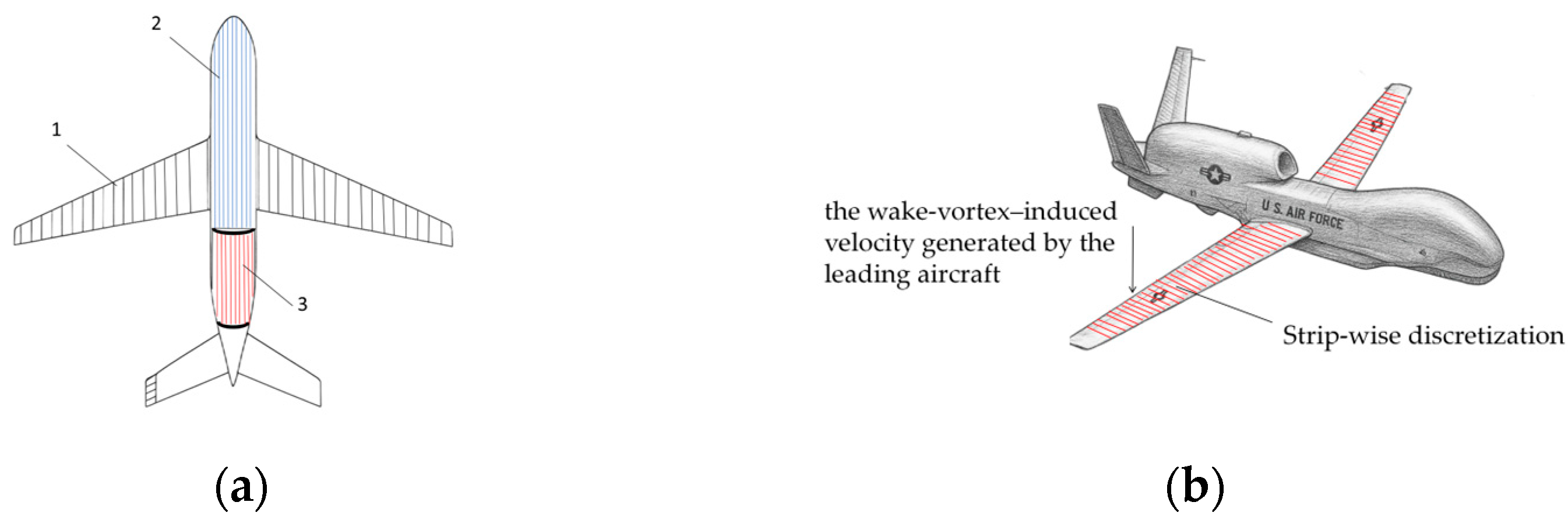
In the present study, the UAV is assumed to enter the wake vortex field vertically with its nose aligned toward the vortex center. The induced lift acting on each wing segment is evaluated using Equations (10)–(12), after which the total rolling moment is obtained from Equation (13). Subsequently, Equation (14) is applied to nondimensionalize the rolling moment, yielding the spatial distribution of the RMC.
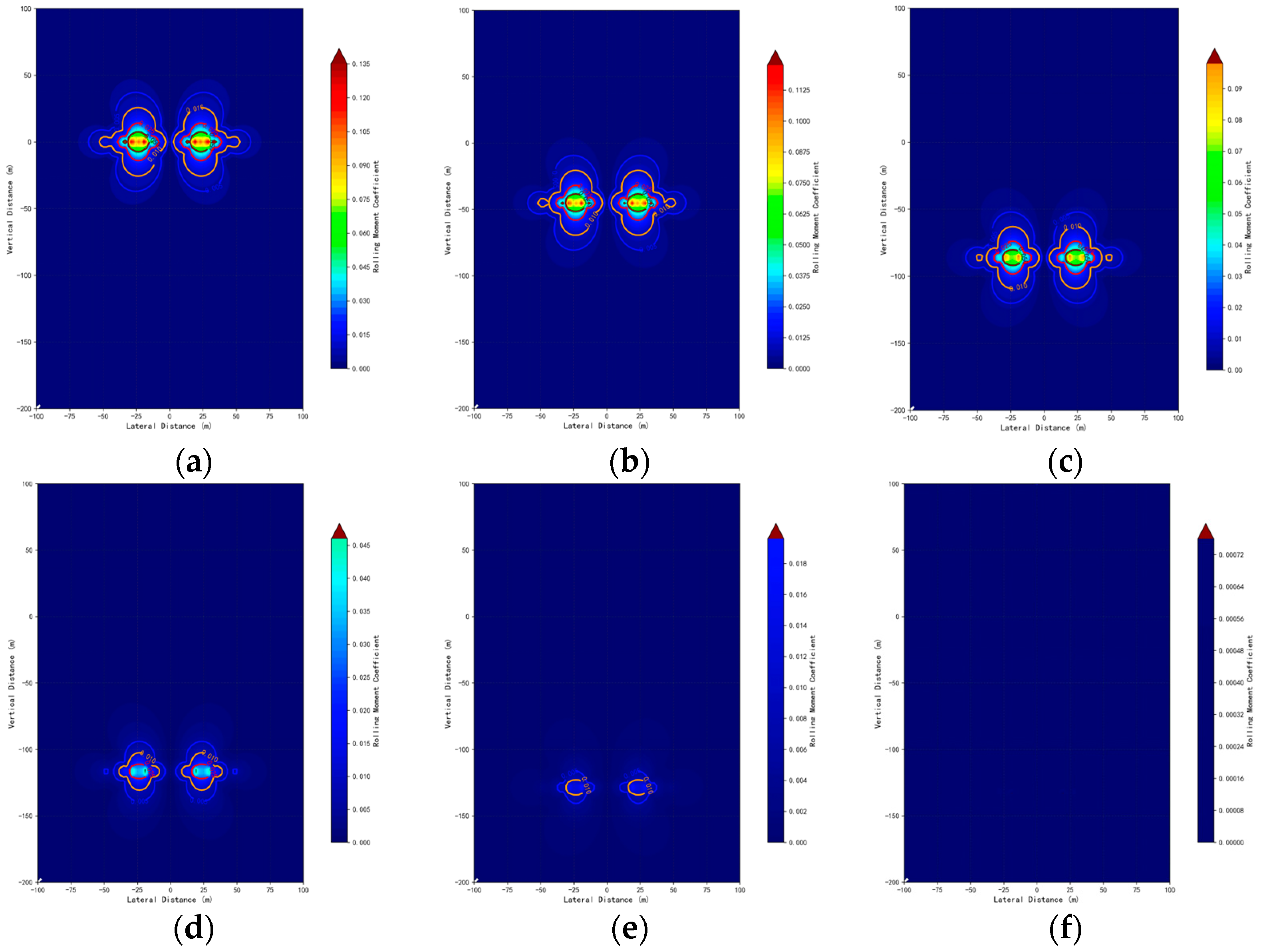
Figure 7 illustrates the spatiotemporal evolution of the hazardous region encountered by the RQ-4 UAV when flying into the A330 MRTT wake vortex at an altitude of 10,500 m. Different contour colors correspond to various RMC levels: red indicates high-risk regions with RMC > 0.07, yellow corresponds to medium-risk regions with RMC = 0.05–0.07, green denotes low-risk regions with RMC = 0.03–0.05, and blue represents safe regions with RMC < 0.03. According to the safety criterion given in Equation (15), an RMC exceeding 0.07 signifies a severe risk of roll instability. In the initial stage, the left and right vortex cores each form a distinct high-risk center, with hazardous zones concentrated within approximately ±10 m of the cores where the induced velocity reaches its maximum (Equation (10)), resulting in significant lift asymmetry and roll moments exceeding the safety threshold. As time progresses, although the circulation decays during 0–92.7 s, the increasing vortex-core radius (Equation (7)) causes the medium- and low-risk regions to expand laterally, enlarging the overall affected area. After 92.7 s, the wake enters a rapid-decay phase, during which the circulation decreases sharply and the high-risk regions vanish accordingly. Because the RMC is proportional to circulation (Equation (14)), the hazard level decreases simultaneously. Meanwhile, the center of the hazardous region shifts downward following the descent of the vortex core, consistent with the vertical evolution predicted by Equation (2). The irregular distribution of the rolling-moment coefficient (RMC) is mainly caused by the non-uniform evolution of the wake vortex velocity field and the characteristics of the RMC calculation. The wake vortex flow field itself is highly non-uniform. Near the vortex core, the velocity gradient is large. As the UAV penetrates the wake region, the vortex spacing increases and the circulation decays, which reduces the vortex strength. At the same time, the vortex core expands to a larger area, leading to significant variations in induced velocity at different spatial locations.
This non-uniformity causes the iso-risk boundaries to appear irregular in shape. In particular, near the vortex core, the rapid change in induced velocity results in strong local variations in the risk envelope, producing noticeable fluctuations and irregular contours. When the vortex spacing increases and the circulation decays, the overall wake intensity decreases. However, the local risk boundary is still influenced by the velocity gradient distribution. As a result, the RMC field continues to exhibit irregular boundaries.
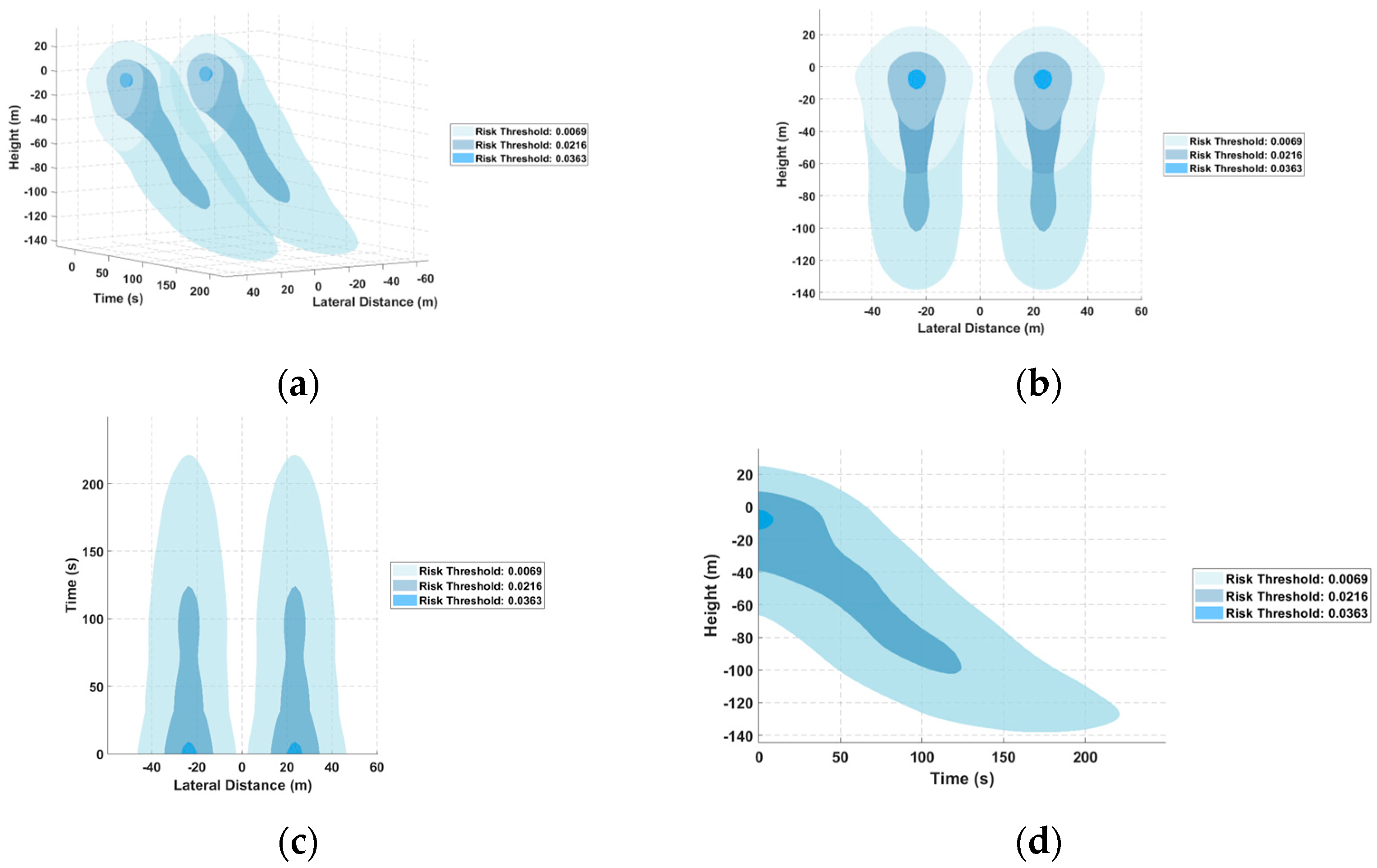
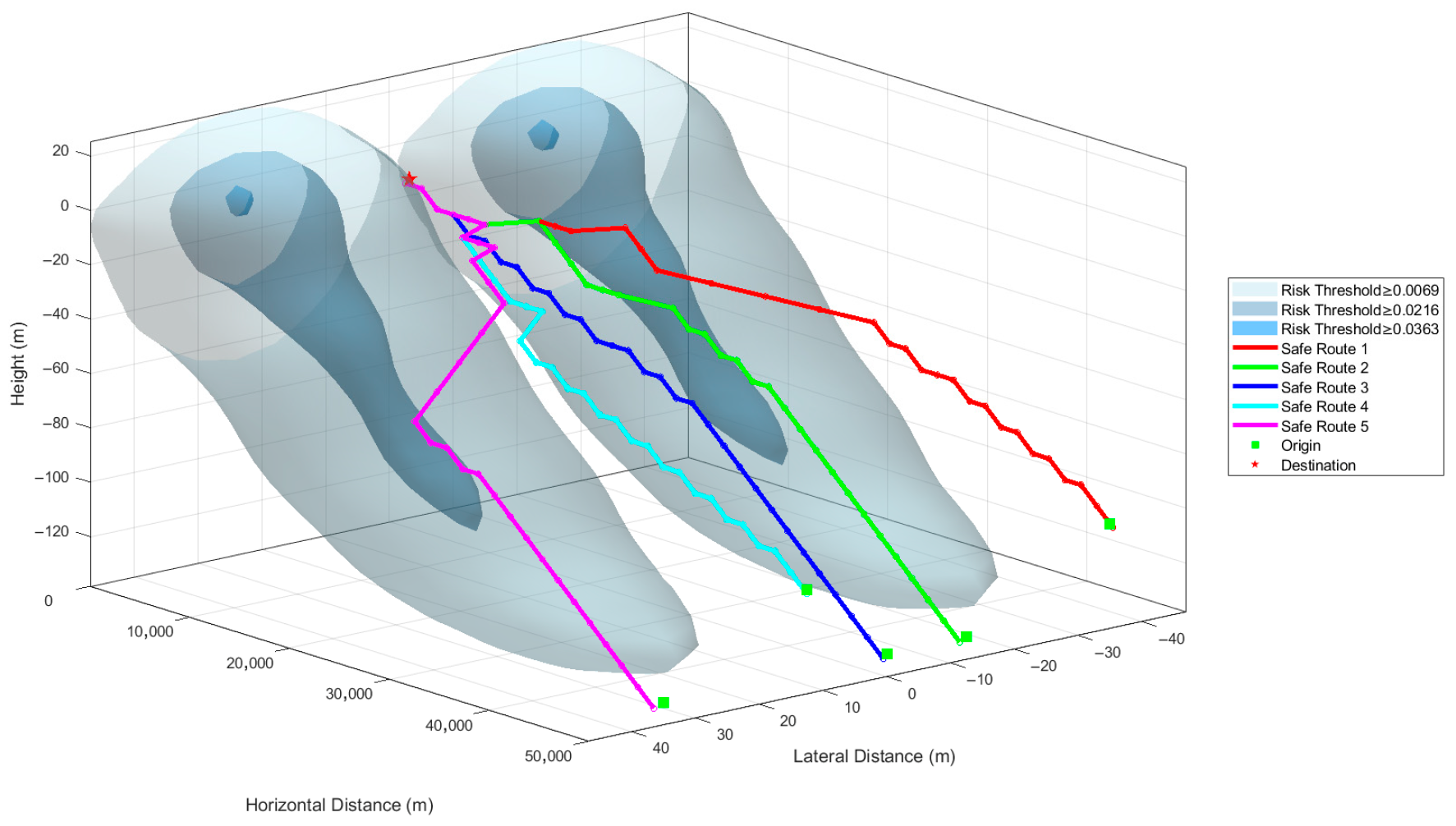
Using a time step of 1 s, the three-dimensional distribution of the hazardous region is obtained by applying an interpolation-based smoothing method, as shown in
Figure 8, which presents the detailed three-dimensional distribution of the hazardous region.
The color variations in the risk-field visualization are introduced solely to illustrate the spatial distribution of the rolling moment coefficient (RMC) and to facilitate intuitive interpretation of the wake vortex risk. In the path-planning algorithm, however, a single predefined RMC threshold is adopted as the safety constraint. The color intervals, therefore, do not represent multiple constraint boundaries.
3.4. Experimental Results of the Path Planning Algorithm
To strengthen the comparative analysis and clarify the technical contribution of the proposed method, this study evaluates its performance against representative path planning algorithms that are widely used in UAV applications. Graph-based methods, such as A star, and sampling-based methods, such as RRT, have been extensively adopted in autonomous flight and aerial refueling studies. Therefore, they provide suitable baseline approaches for performance comparison.
To partially account for the dynamic characteristics of the UAV control system, a strict constraint on the maximum turning angle is imposed during the simulation. This constraint reflects the maneuverability limits and response capability of the onboard flight control system.
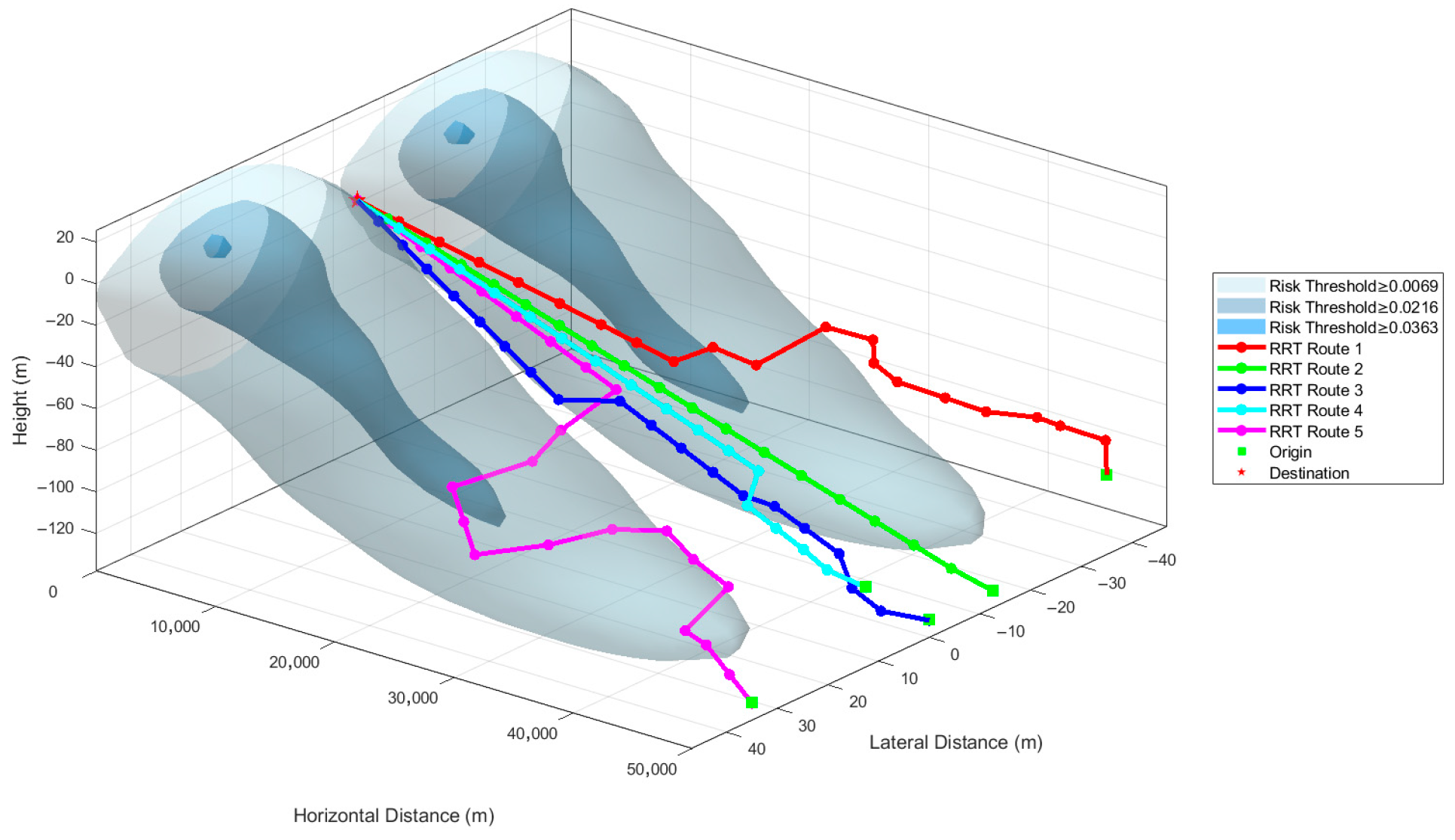
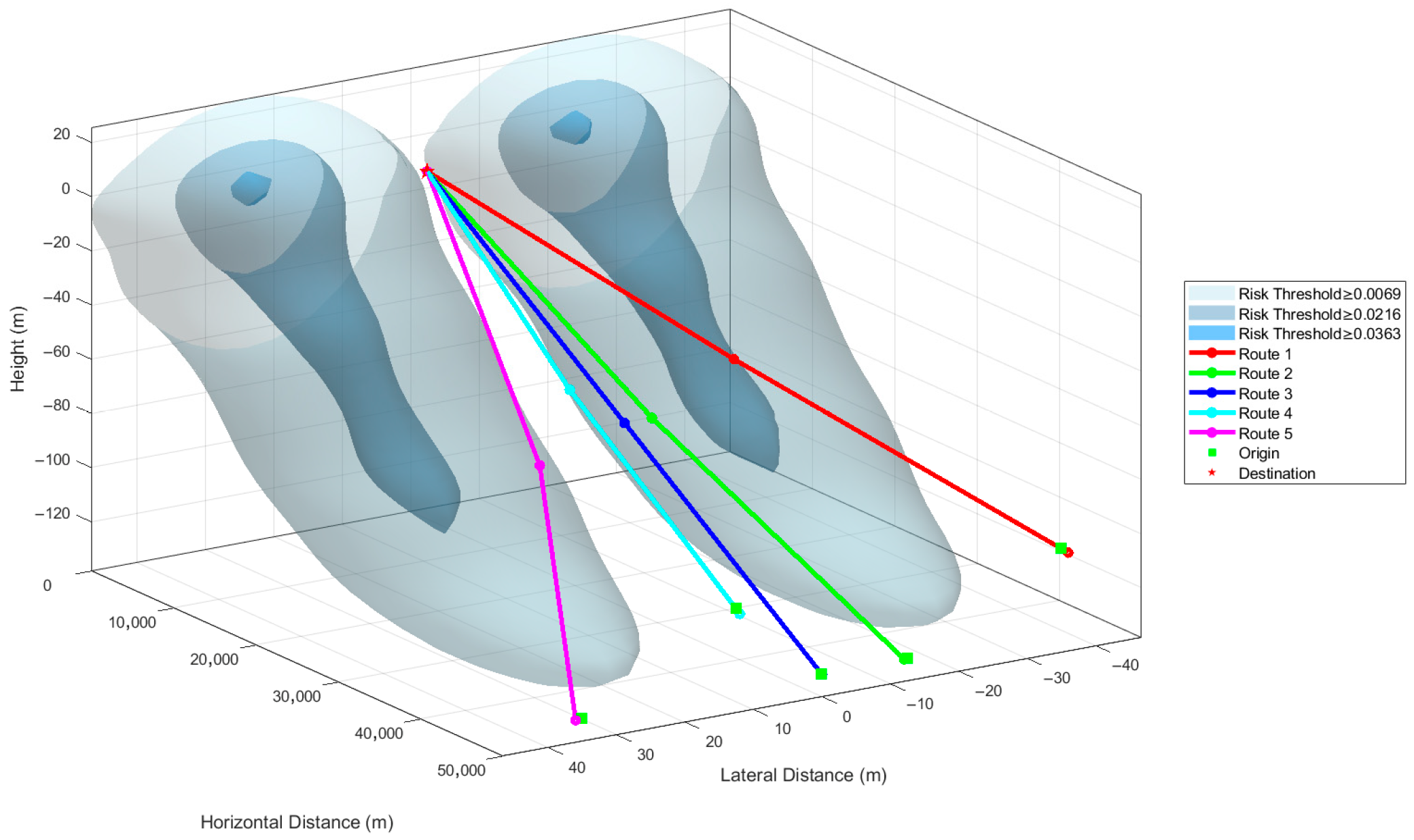
Using the same five initial points, the paths generated by different planning algorithms are compared to demonstrate their respective performance. In the experiments, five identical starting points (marked by green circles) are selected, and each algorithm plans a safe trajectory to the target location (marked by a red circle). The z-axis coordinate represents the relative height in meters (m), with the initial vortex core height specifically defined as 0 m in this study. The x-axis coordinate denotes the horizontal distance in meters (m), calculated by multiplying the leading aircraft’s velocity by the wake vortex evolution time, with the origin set at the initial vortex generation point. The y-axis coordinate indicates the lateral distance in meters (m), with the origin positioned at the midpoint between the two vortex cores.
Compared with the A* and RRT algorithms, the improved PSO algorithm demonstrates superior path quality and planning efficiency in wake vortex avoidance. As shown in
Figure 9, the A* algorithm employs a grid-based search strategy that guarantees feasible paths but incurs high computational cost and produces noticeable “zigzag” trajectories due to spatial discretization, requiring additional smoothing. As shown in
Figure 10, the RRT algorithm generates more natural, curved paths through random sampling; however, its solutions exhibit substantial randomness, local sharp turns, and limited optimality. For example, the red trajectory generated by the RRT algorithm shows many unnecessary avoidance maneuvers, which are mainly related to its algorithmic mechanism. RRT is an incremental search method based on random sampling, and its primary objective is to rapidly construct a feasible path rather than to ensure global optimality or smoothness. Therefore, in a continuously distributed wake vortex risk field, the algorithm may produce repeated local detours due to randomly expanded directions. In addition, RRT mainly relies on local feasibility checks during tree expansion and lacks global guidance from the risk-field gradient, which can lead to frequent direction adjustments near the hazard boundary. Furthermore, a maximum turning-angle constraint is imposed on the UAV in this study, which further increases the polyline characteristics of the generated path. In contrast, the improved PSO algorithm leverages continuous-space optimization and smoothness constraints to produce highly smooth paths that fully satisfy the UAV’s dynamic constraints. As shown in
Figure 11, it enables the trajectory to closely follow the boundary of the hazardous region while maintaining safety, thereby reducing unnecessary detours and shortening the overall flight distance.
It should be noted that flying along the geometric midpoint between the two wake vortices may approximate a low-risk region only under ideal symmetric and steady conditions. In realistic environments, however, wake vortices undergo descent, lateral transport, and asymmetric decay, leading to a spatiotemporally non-uniform risk distribution. Under different altitudes and time separations, the midpoint is not always the safest region.
3.5. Comparison of Loss Function Results
To objectively evaluate the performance differences among the three path planning algorithms, this section conducts a quantitative comparative analysis in terms of hazard-loss metrics, path length, and computational efficiency. In the experimental setup, 50 test points are uniformly selected on the wake vortex field plane at t = 250 s and used as the initial positions, while the target point is uniformly set to the refueling location. For each initial point, path planning is performed using the PSO, A*, and RRT algorithms, respectively.
Based on the 50 path planning comparison trials and an extended set of 200 stability tests, the improved PSO algorithm demonstrates significant advantages in hazard loss, path length, path smoothness, computational efficiency, and planning success rate. The performance metrics of different path planning algorithms are summarized in
Table 3. As shown in
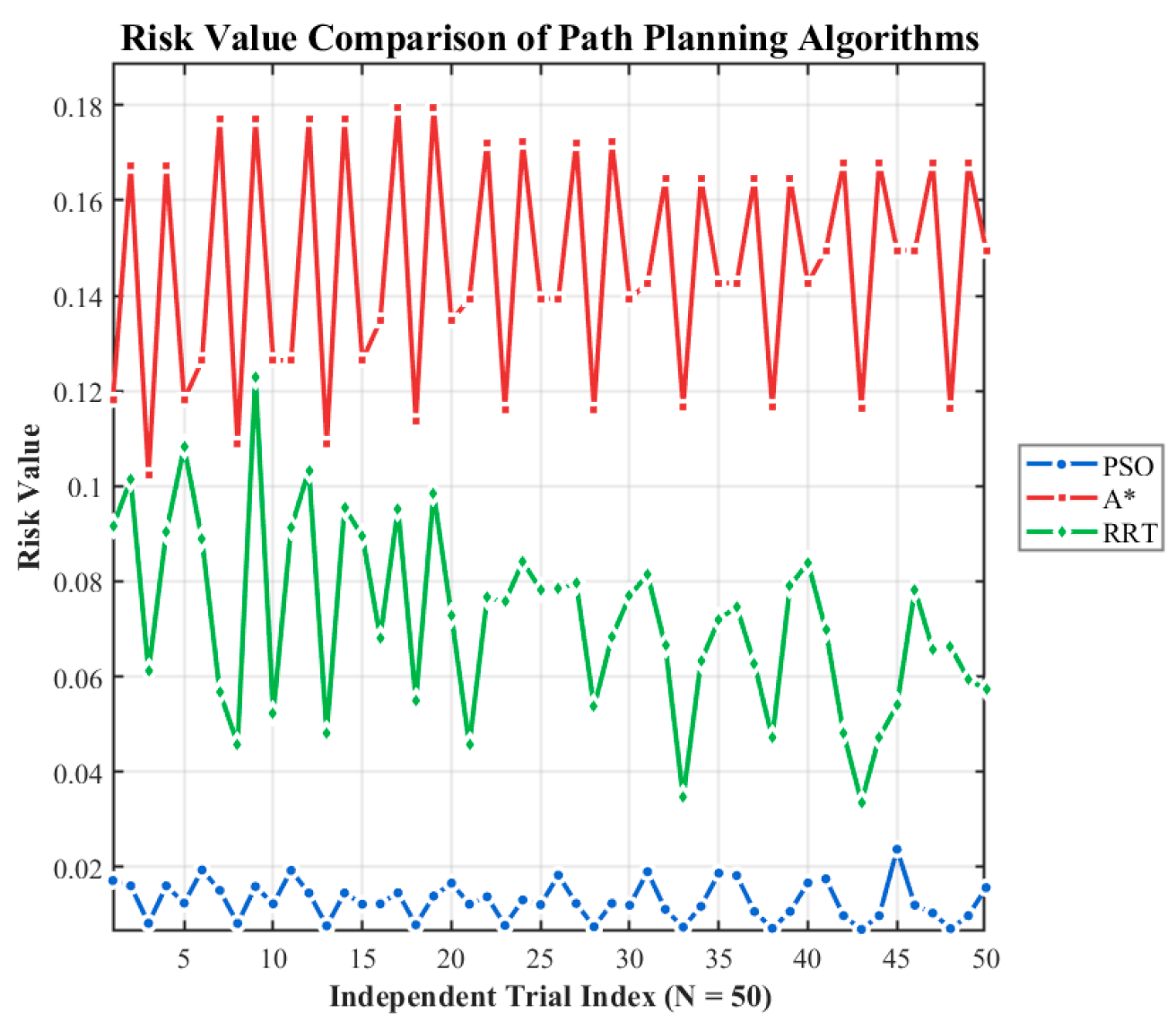
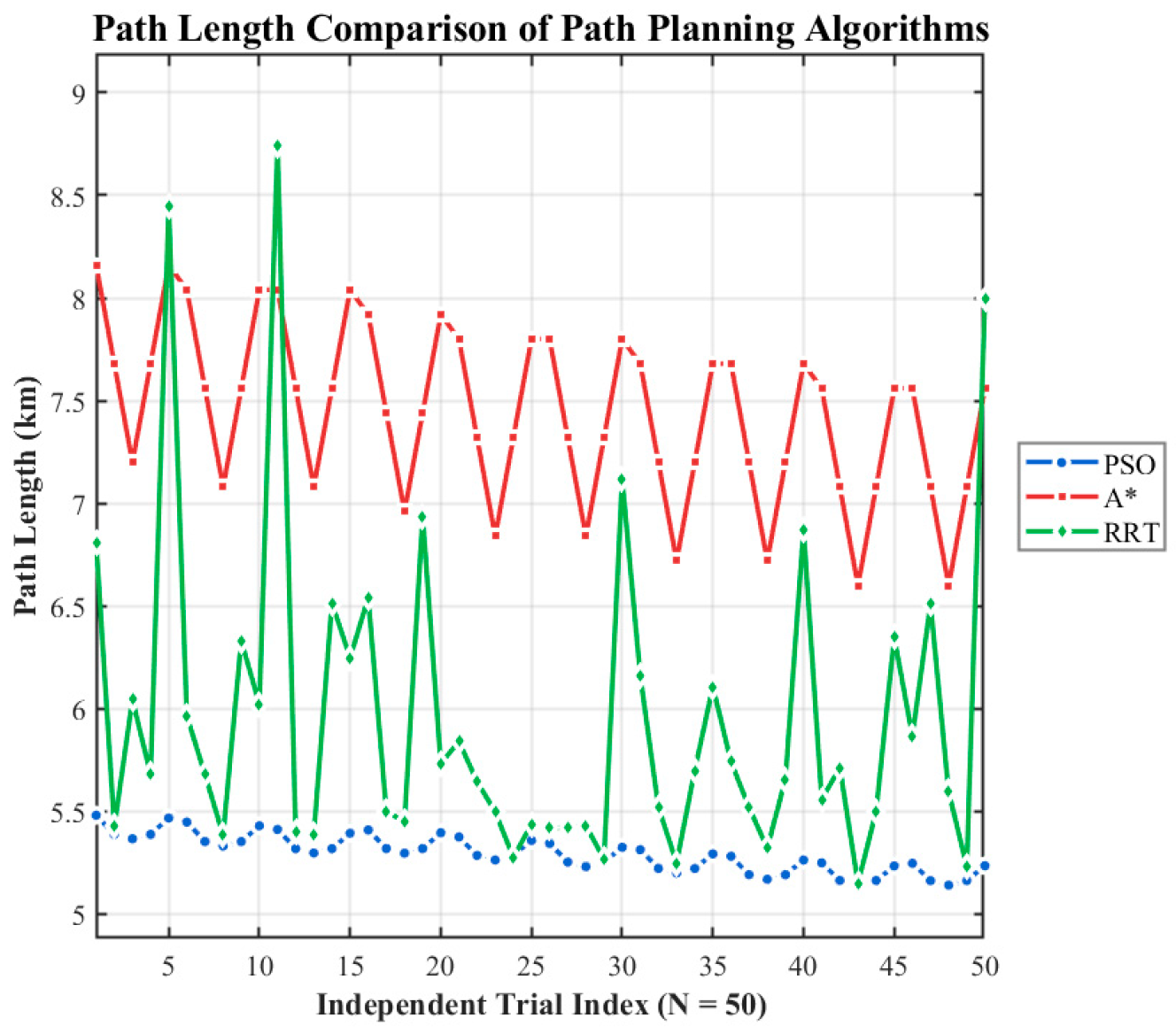
Figure 12, The hazard loss, defined as the cumulative RMC values along the path, indicates that PSO consistently maintains the risk level below 0.02, with an average of only 0.015 and a standard deviation of 0.003, indicating excellent risk control and stability. In contrast, the hazard loss of the A* algorithm fluctuates substantially between 0.12 and 0.18, while that of RRT averages around 0.06 due to randomness in sampling. In terms of path length, the PSO-generated trajectories remain stable at approximately 5.3 km, increasing by only about 8% relative to the straight-line distance; the A* paths are noticeably longer at around 7.4 km, and the RRT paths vary widely between 5 and 6.8 km, In
Figure 13, the fact that the path length becomes stable over time does not mean that the UAV stops during flight. It should be clarified that the path length in the figure refers to the total length of the optimal path obtained by the optimization algorithm in each planning cycle, rather than the real-time cumulative flight distance of the UAV. In the simulation, the planning start points differ only in lateral distance and altitude, while the horizontal distance remains the same. Since the horizontal distance is much larger than the lateral distance and altitude, after the algorithm converges, the path length tends to remain stable around an optimal value. As shown in
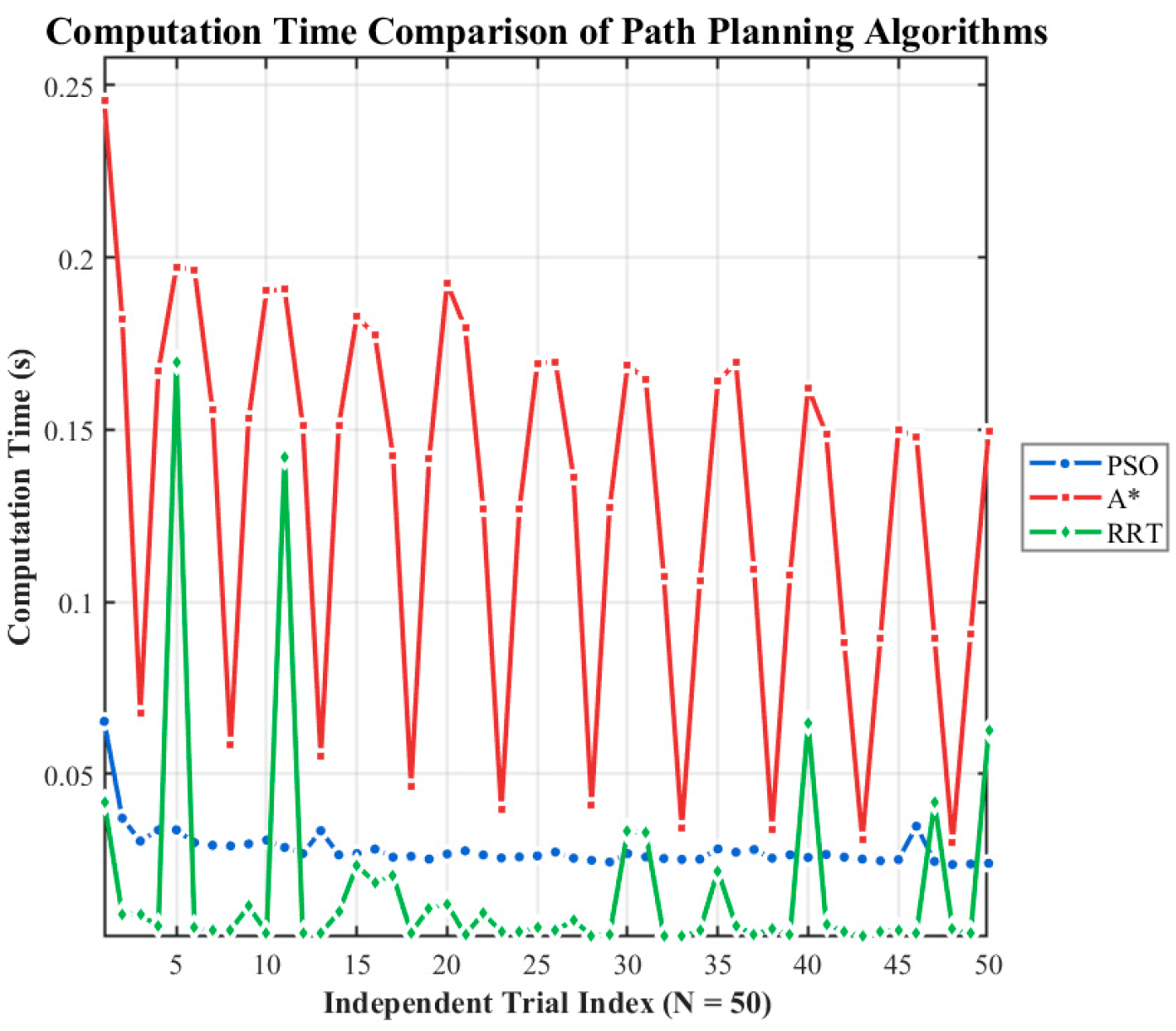
Figure 14, With respect to computational efficiency, the improved PSO achieves an average planning time of just 0.052 s with a standard deviation of 0.008 s, far faster and more predictable than A* (0.20 s) and RRT (0.13 s), and offering better scalability. As shown in
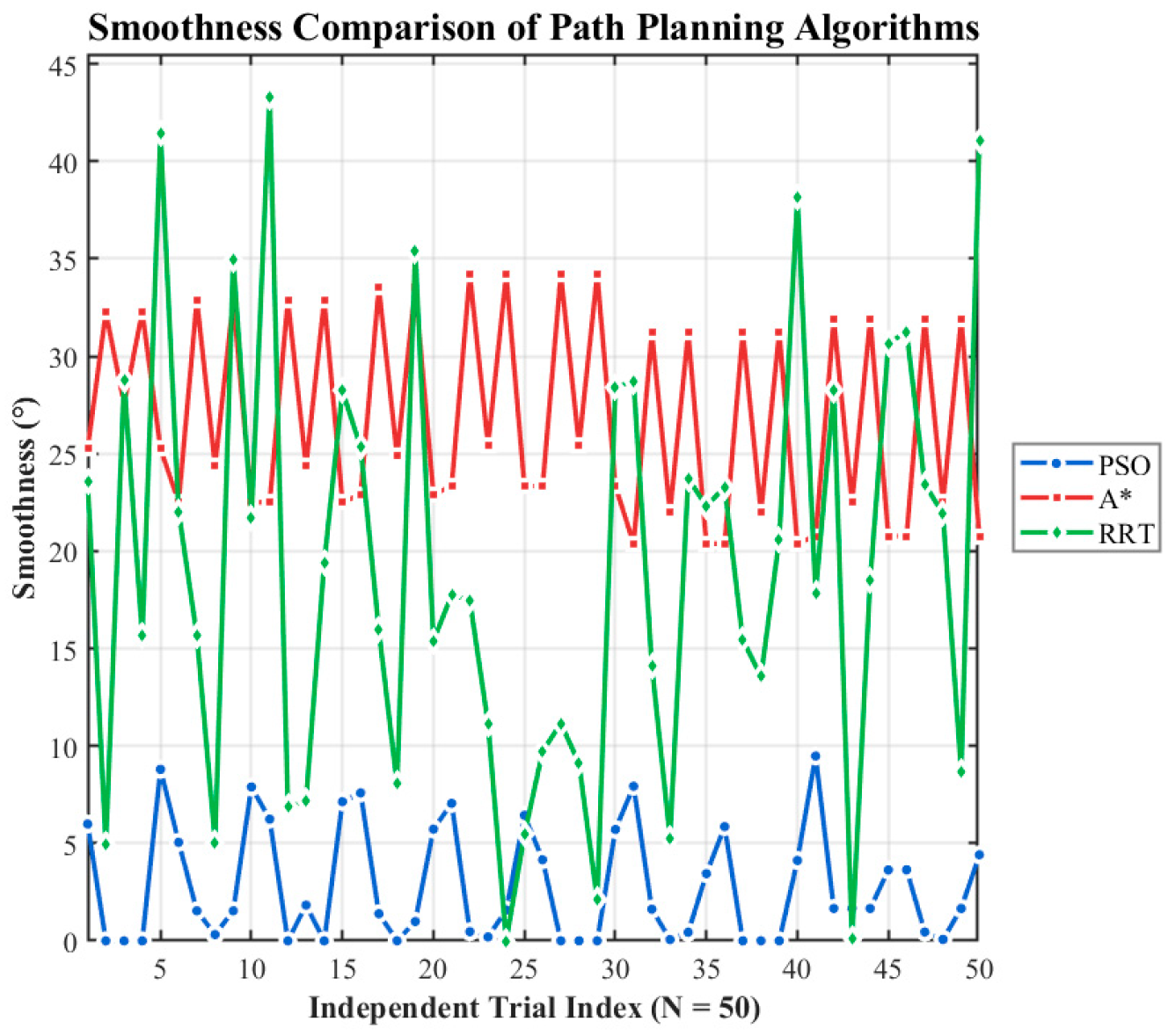
Figure 15, Regarding path smoothness, PSO achieves an average turning angle of only 6.8°, inherently satisfying UAV dynamic constraints without requiring post-processing; in contrast, A* produces jagged trajectories with an average turning angle of 30.2°, while RRT yields moderately smooth but unstable paths with an average of about 17.5°. As shown in
Table 4, in 200 path planning experiments, the improved PSO algorithm successfully found feasible paths in all cases, resulting in zero failures and a 100% success rate, whereas the reliability of A* and RRT degrades significantly as the number of experiments increases. Overall, the improved PSO algorithm exhibits superior global search capability, environmental adaptability, and task reliability in complex dynamic environments, enabling stable, rapid, and safe path planning.
4. Discussion
The proposed framework integrates high-fidelity wake vortex modeling, quantitative risk field reconstruction, and intelligent optimization-based path planning to address the autonomous aerial refueling ingress problem of an RQ-4 UAV in the wake vortex environment generated by an A330MRTT tanker. Traditional UAV path planning methods mainly consider geometric obstacles or simplified threat regions and typically optimize distance or time. In contrast, the present study explicitly incorporates the three-dimensional and time-varying wake vortex hazard into the planning process through a rolling moment coefficient-based risk metric. This approach shifts the perspective from treating wake vortices as implicit or bounded disturbances to using a physically grounded risk field as a primary basis for trajectory design.
Previous studies on aerial refueling and wake vortices have largely focused on predicting wake vortex evolution or assessing encounter risk under specific traffic configurations. Other studies have concentrated on designing refueling envelopes and control strategies under assumed safety margins. These approaches are mainly evaluation-oriented or constraint-oriented. They do not directly convert wake vortex information into constructive guidance for path generation. In contrast, this study couples the Hallock Burnham P2P wake model with a rolling moment coefficient-based hazard metric to construct a continuous spatiotemporal wake vortex risk field. The study then embeds this field into a multi-objective cost function within an improved particle swarm optimization planner. Simulation results show up to 90 percent and 75 percent reductions in cumulative risk exposure compared with A star and RRT, respectively. The path length increases by about 8 percent, and the maximum turning angle remains below 10 degrees. These results support the hypothesis that risk field-aware optimization can significantly enhance safety while maintaining path feasibility and smoothness.
The proposed wake vortex aware particle swarm optimization uses adaptive learning factors and a nonlinearly decreasing inertia weight. This design helps balance safety, feasibility, and smoothness in the complex cost landscape created by the wake vortex risk field. Graph-based planners such as A star and RRT can find shortest or collision-free paths. However, they do not have a mechanism to account for graded and spatially distributed hazards. As a result, they may guide the UAV through regions with high induced rolling moments. In contrast, the proposed method continuously steers candidate trajectories away from hazardous areas. The method keeps the peak rolling moment below the required safety threshold and ensures that the generated paths remain dynamically feasible for the aerial refueling maneuver.
Beyond the specific A330MRTT and RQ-4 scenario, the results indicate that transforming wake vortex disturbances into a quantitative and visualizable risk map provides a transferable approach for wake vortex avoidance in cooperative airspace operations. The same framework can be adapted to other tanker and receiver combinations. It can also support applications such as formation flight, rapid wake vortex identification, and risk prediction in complex airspace. At the same time, several limitations should be acknowledged. The current risk field relies on deterministic wake models and nominal atmospheric conditions. The simulations also assume accurate tracking of the planned path. Stochastic atmospheric effects, modeling uncertainties, and control errors are not fully considered. In addition, validation is limited to simulation, and broader benchmarking under different aircraft types and environmental conditions is still needed.
Future research will focus on developing real-time wake vortex risk field updating methods based on onboard sensor data. The study will also integrate the proposed planning algorithm with high-fidelity flight dynamics and closed-loop control systems. Extending the framework to multi-UAV and multi-tanker scenarios and combining it with intelligent air traffic management concepts are promising directions for enabling safer and more efficient cooperative airspace operations.
In practical implementations, the wake vortex risk field cannot be assumed to be perfectly known. Sensor noise, atmospheric disturbances, and onboard estimation errors may introduce uncertainty into the reconstructed rolling moment coefficient distribution. Therefore, incorporating sensor uncertainty modeling and closed-loop state estimation mechanisms into the framework will be essential for enhancing robustness under imperfect information conditions. The integration of onboard flow sensing, wake detection systems, and real-time filtering techniques would enable adaptive risk field updating and improve operational reliability.
In addition, for HALE (High Altitude Long Endurance) UAV platforms with large aspect ratios and flexible wings, wake-induced rolling moments may couple with aeroelastic effects and structural load constraints. Future extensions should therefore incorporate aeroelastic considerations and structural safety limits into the planning framework, so as to better reflect the operational characteristics of high altitude long endurance vehicles.
Furthermore, in multi-UAV or multi-tanker cooperative scenarios, the interaction and superposition of multiple wake systems may generate highly nonlinear and time-varying risk distributions. Extending the present single-wake framework to multi-agent environments will be an important step toward supporting large-scale cooperative aerial operations and intelligent airspace management.