
A Collaborative Navigation Algorithm for Unmanned Aerial Vehicles Based on Joint Cognition and Risk Perception
Highlights
- A novel Joint Cognition and Risk Perception (JCRP) framework for multi-UAV cooperative navigation is proposed, which integrates sequential cooperation mechanisms, dynamic trust evaluation, and risk-aware path planning to address the conflict between prior cognition and real-time perception in dynamically unknown environments.
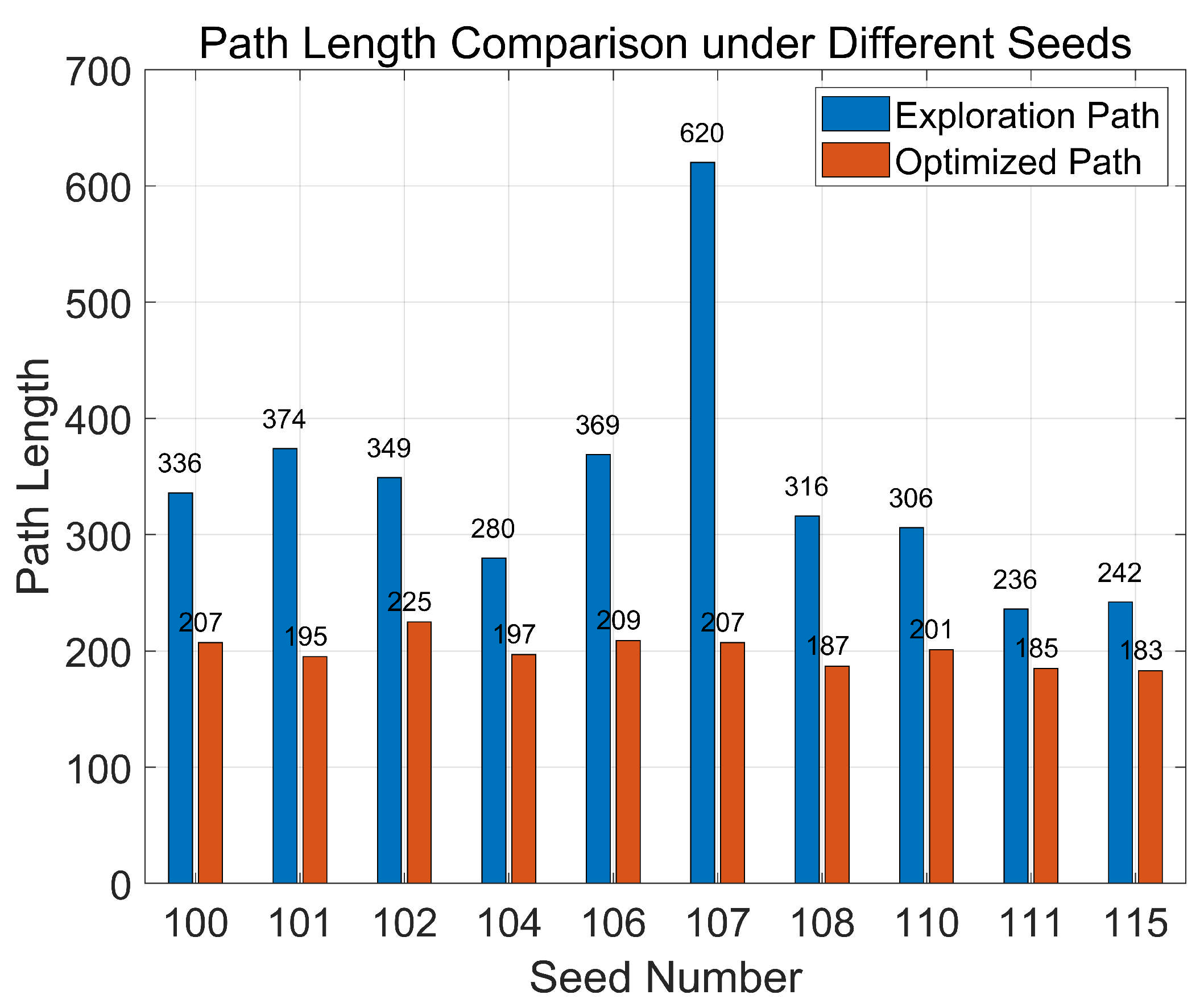
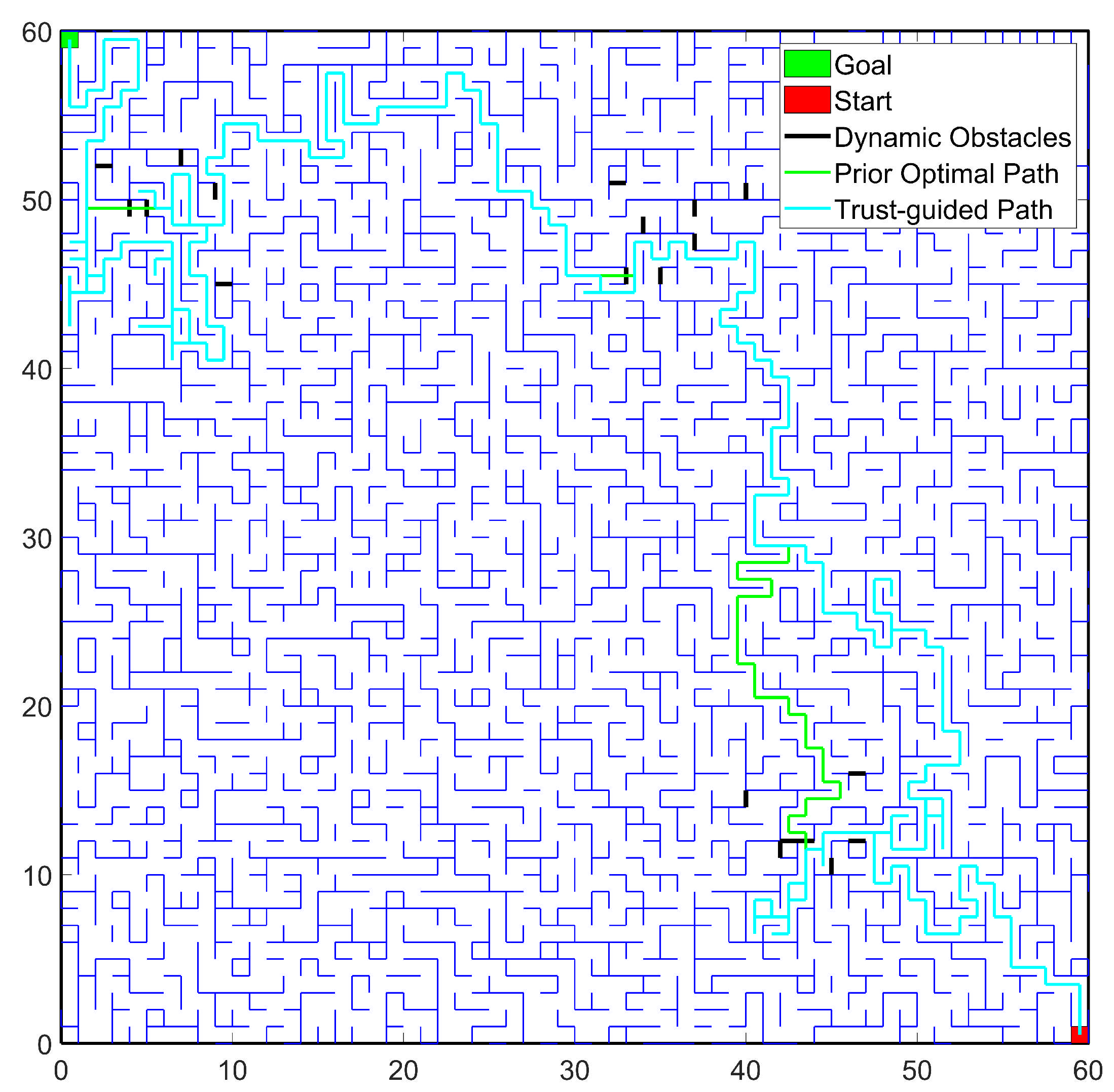
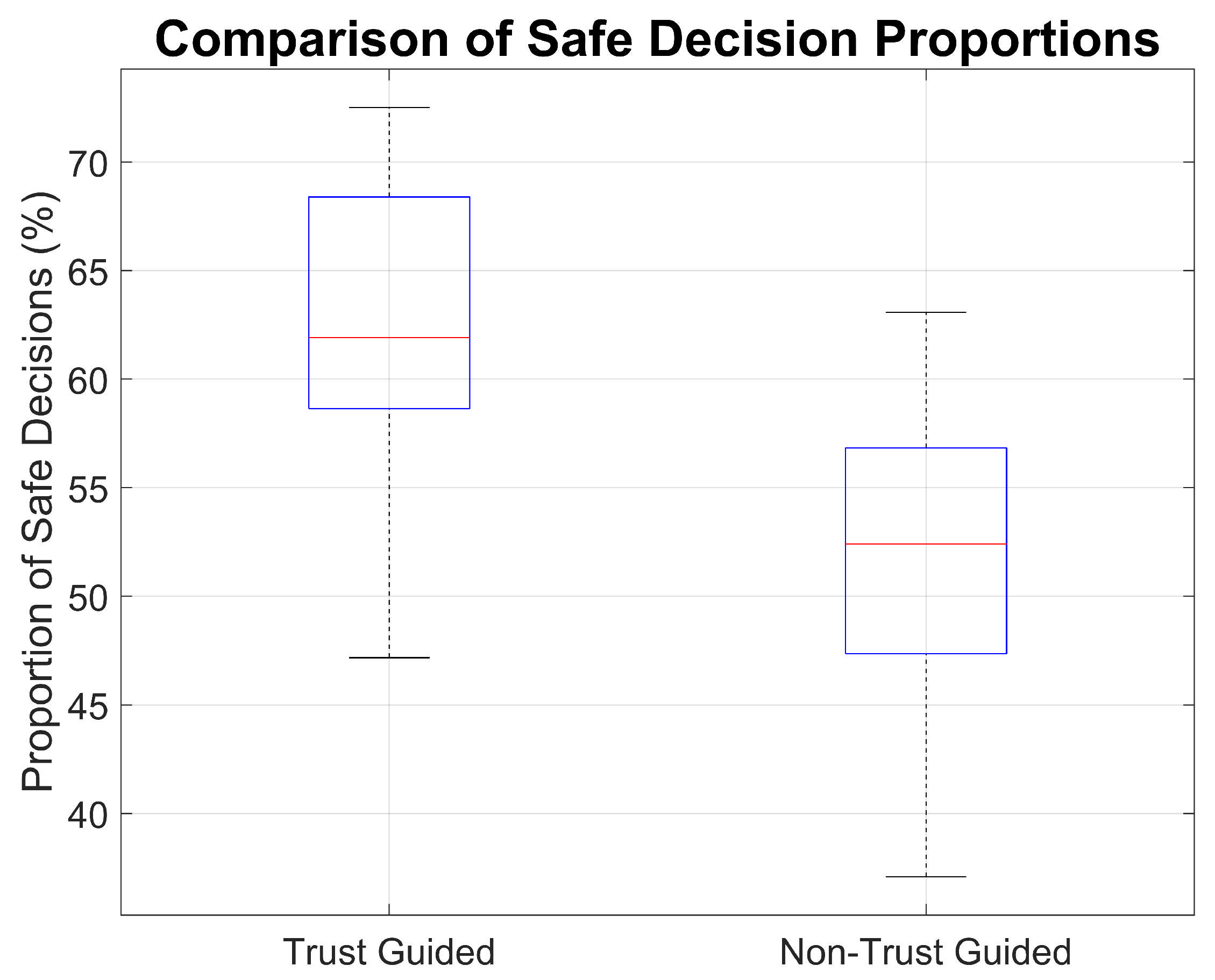
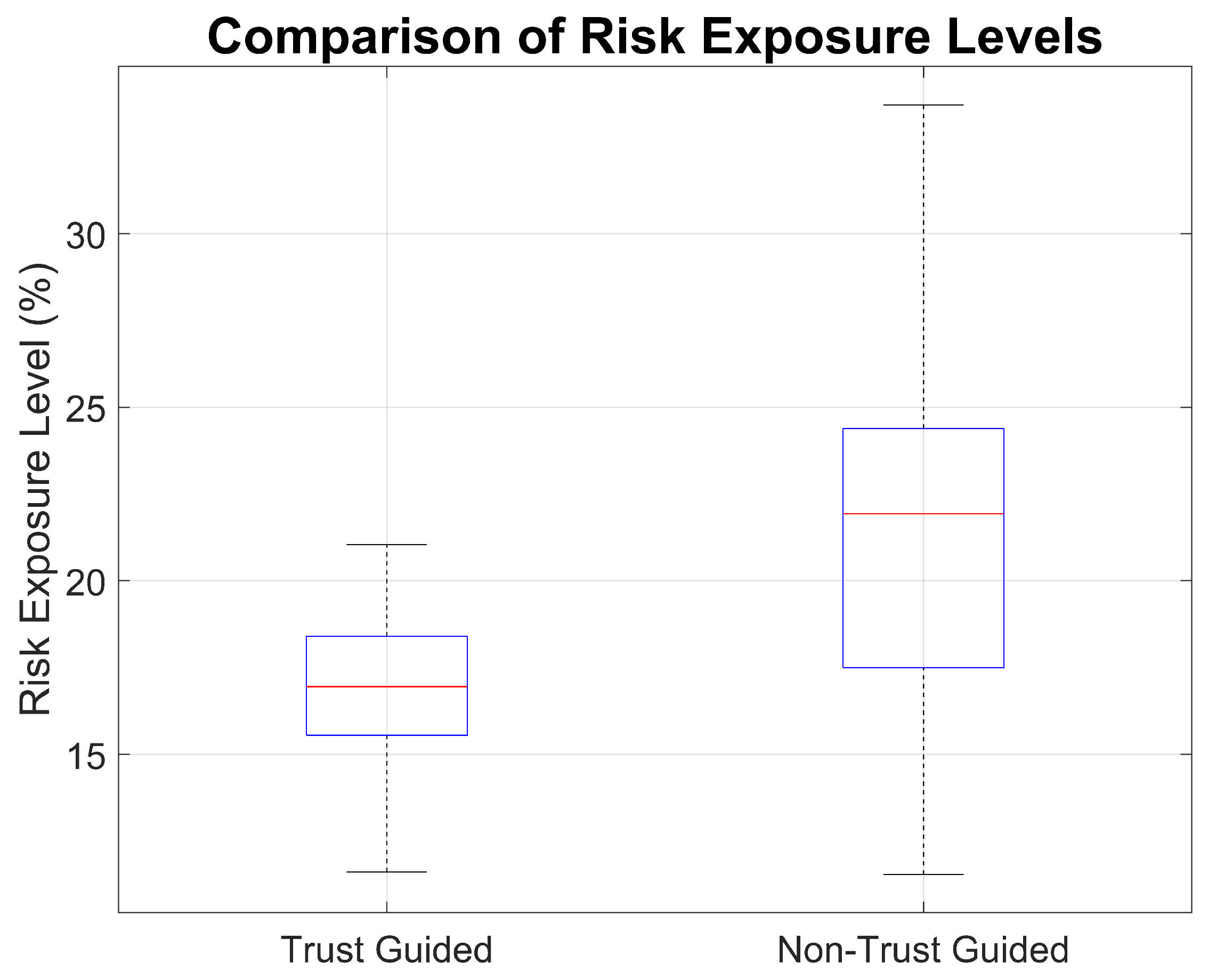
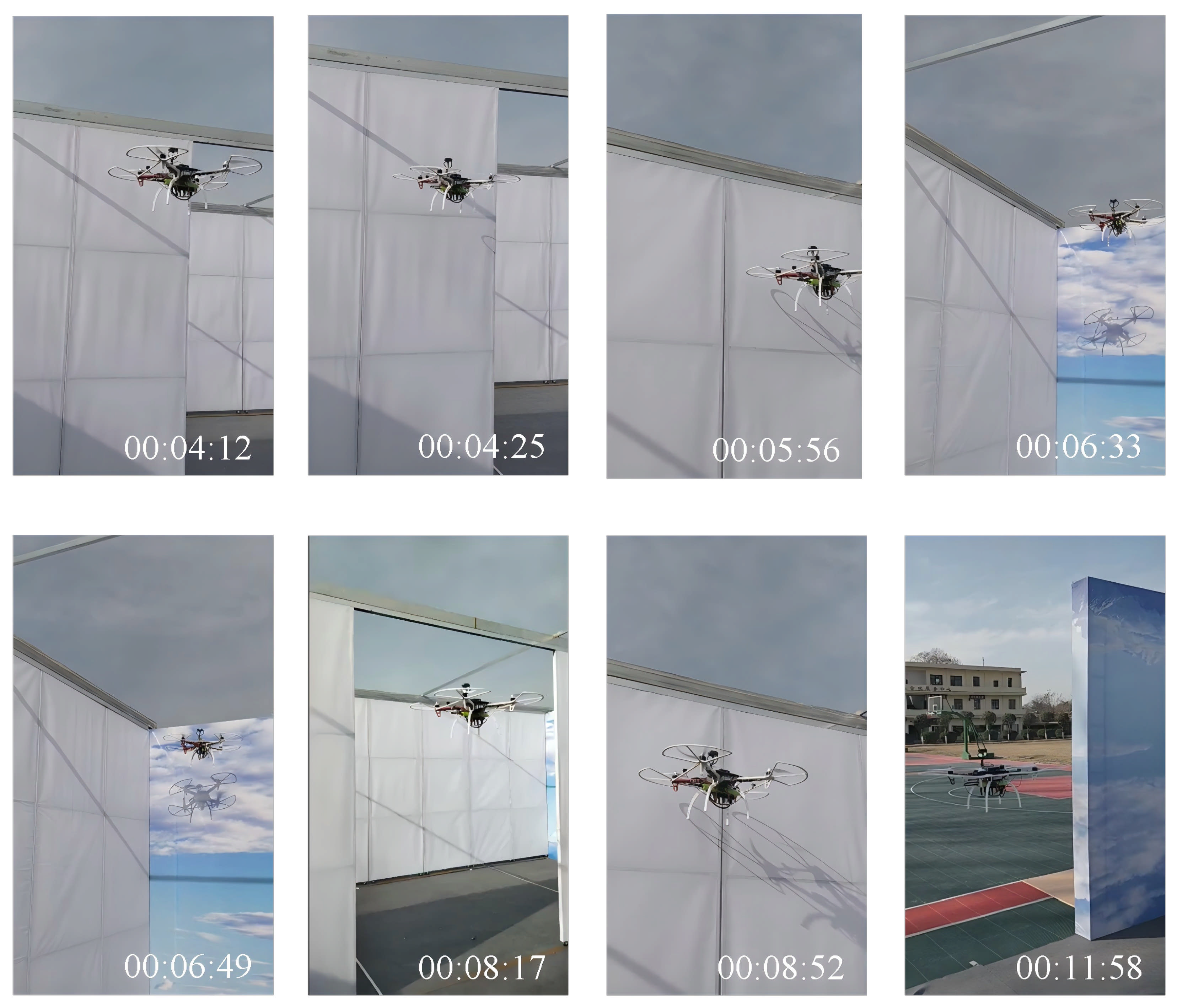
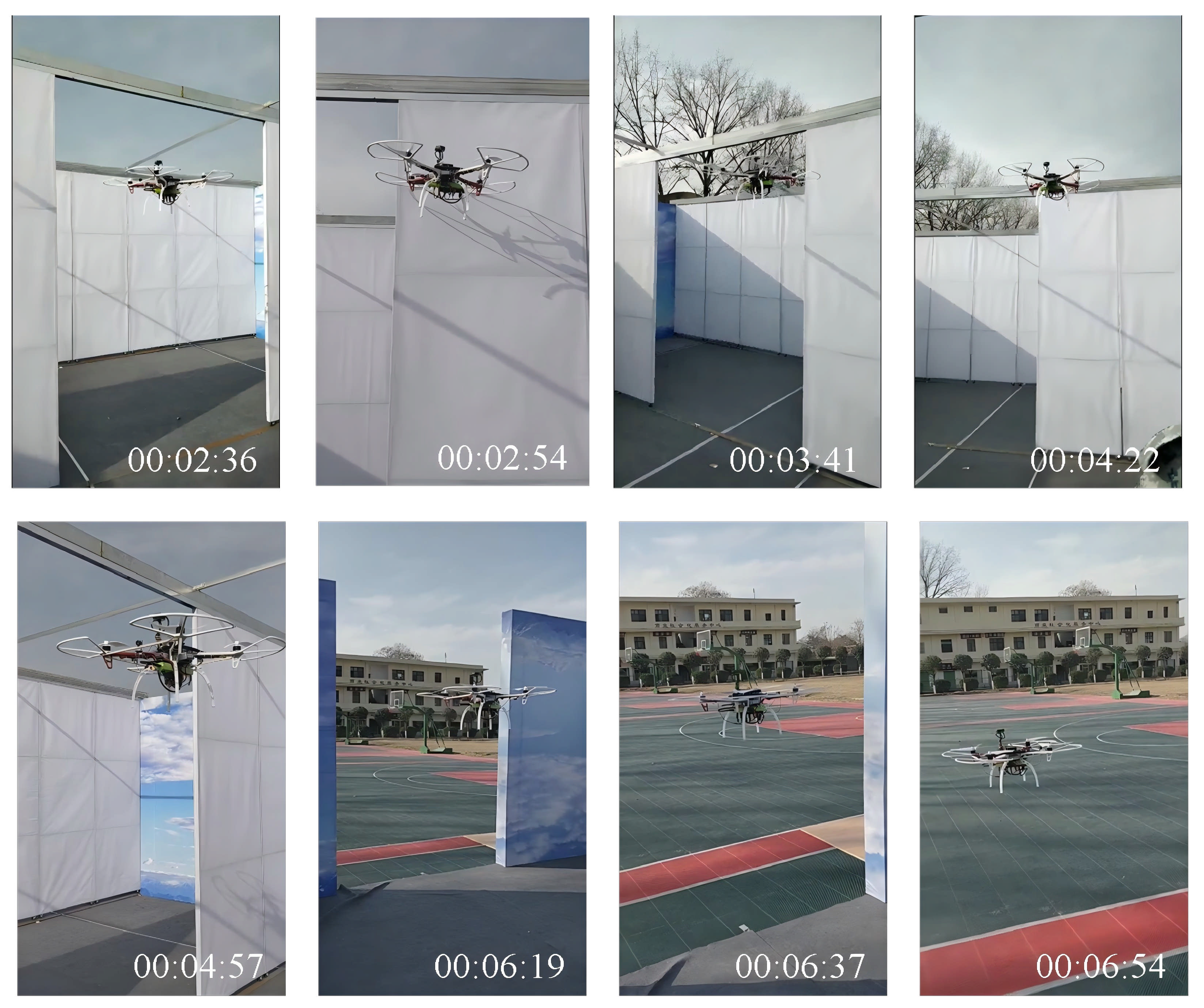
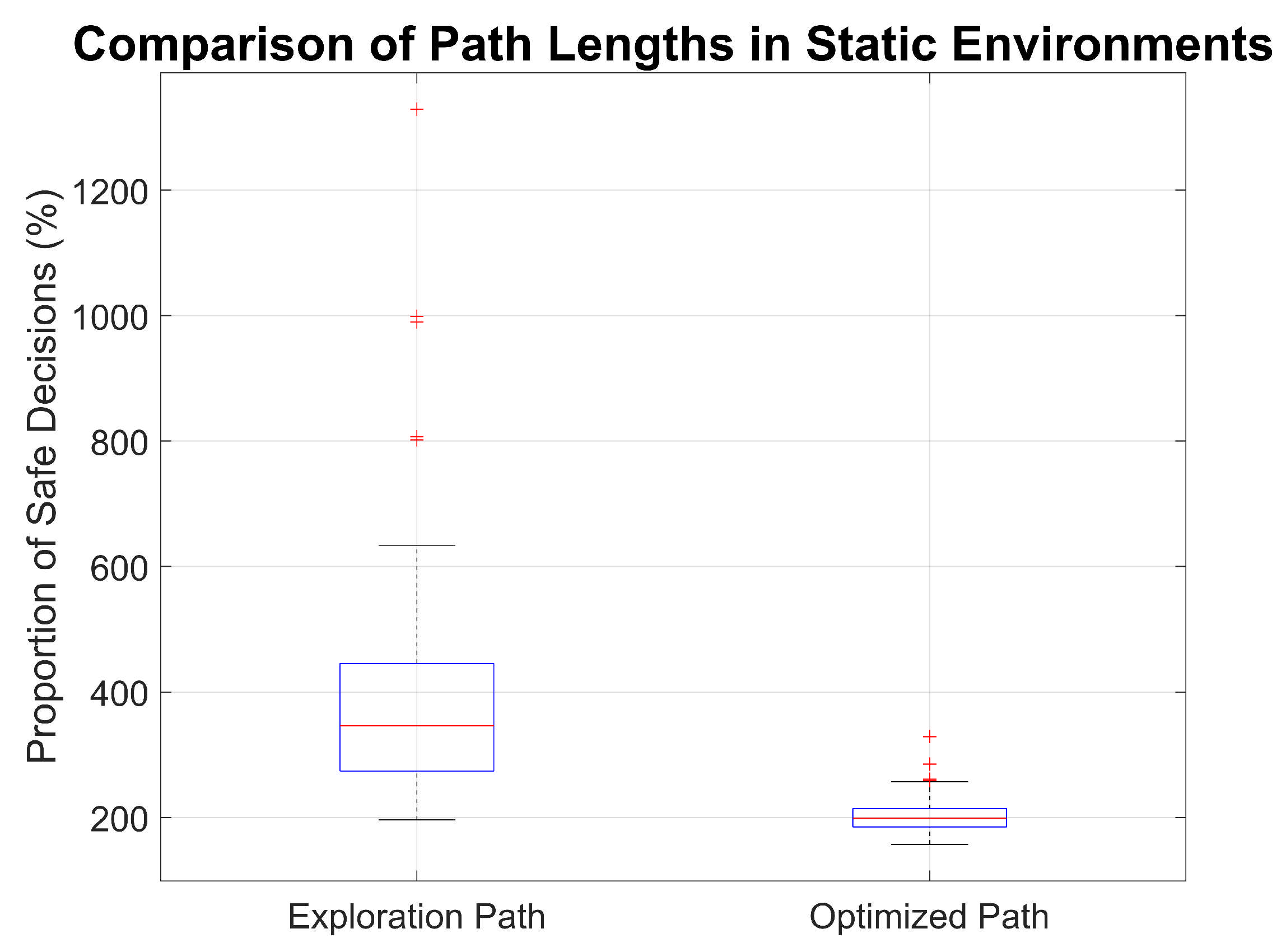
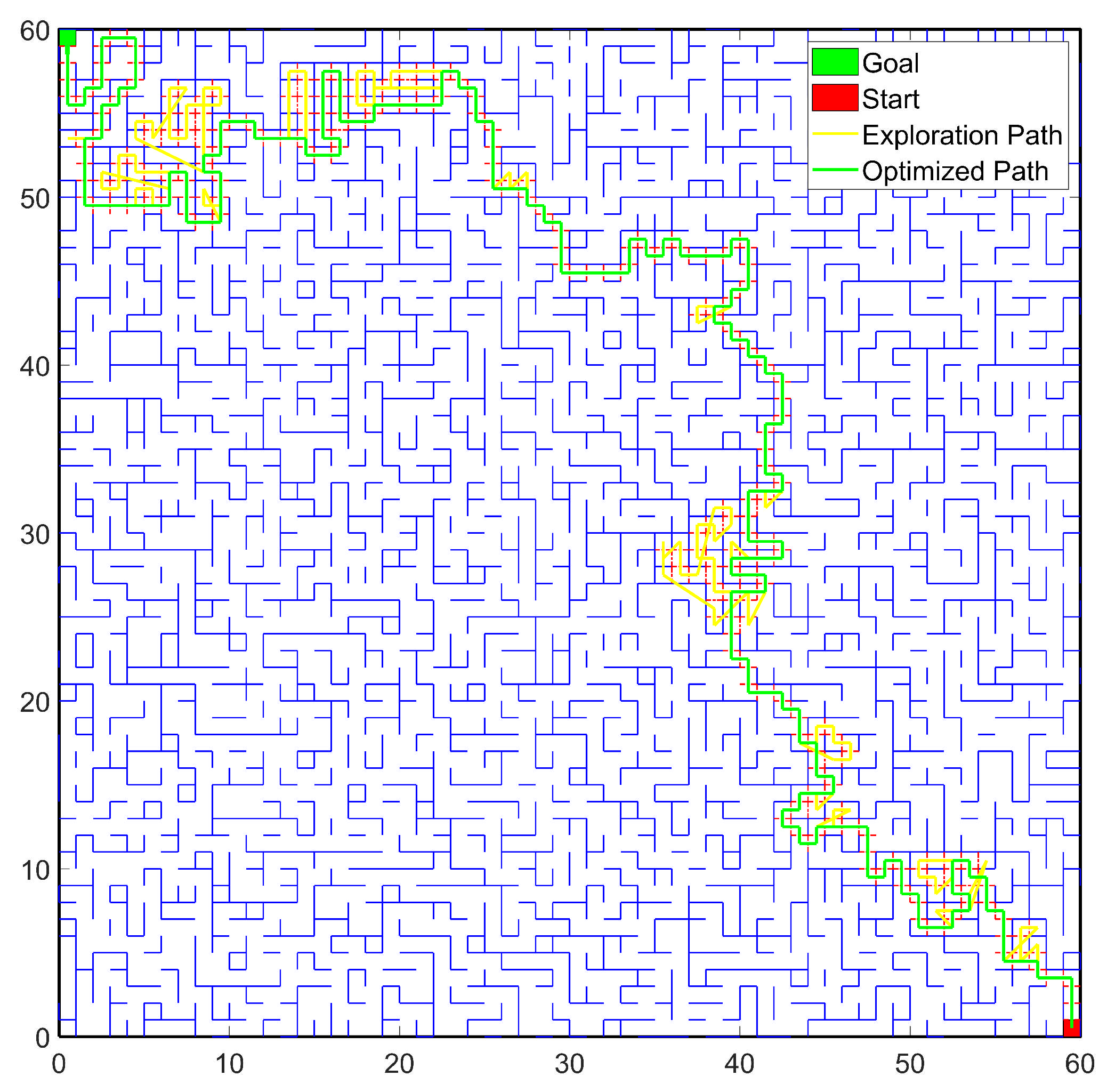
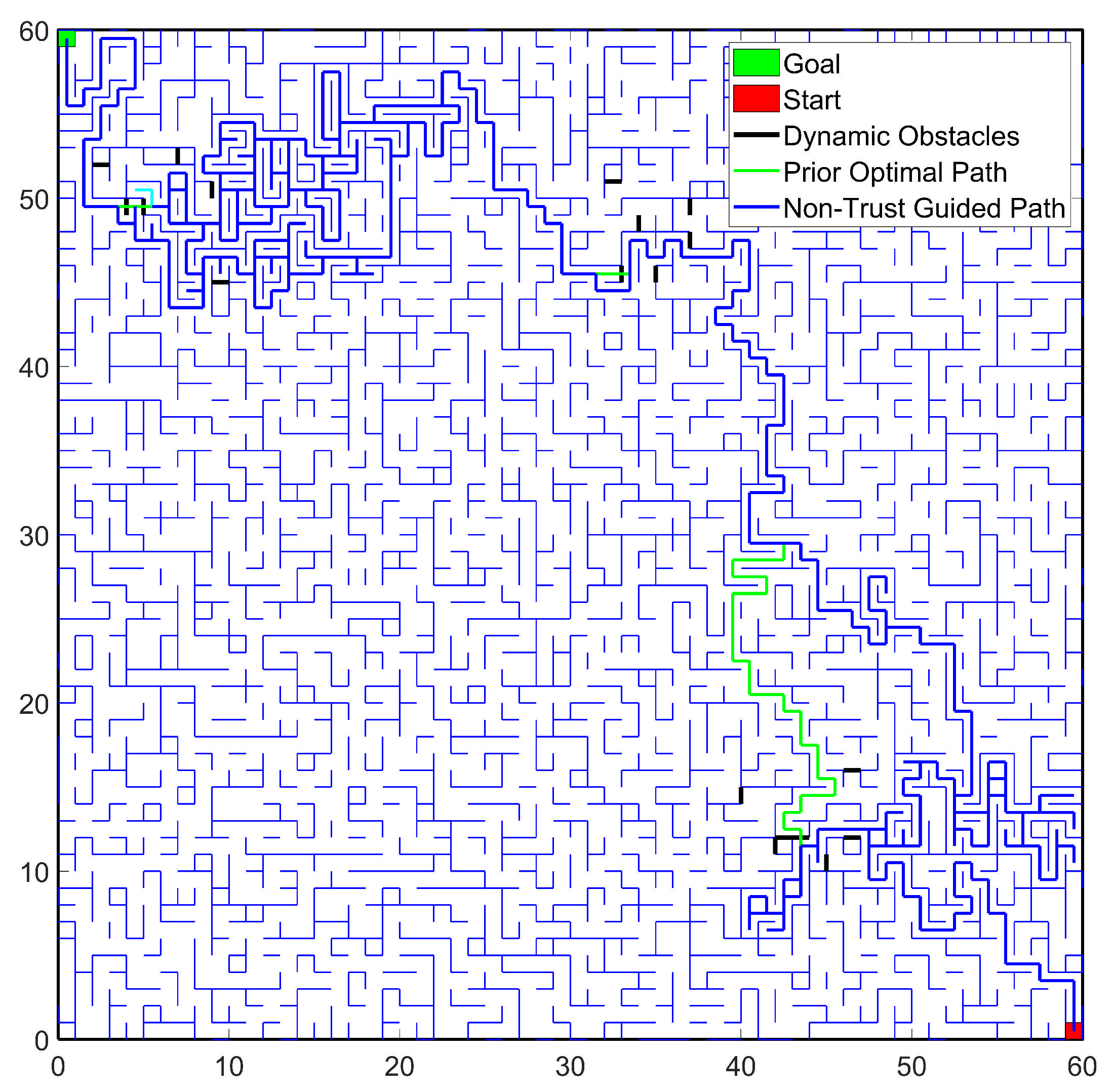
- Experiments in both static and dynamic maze environments show that, compared with baseline methods, JCRP reduces the path length of follower UAVs by approximately 41.39% and improves the safe decision ratio by 10.9 percentage points. Real-world physical platform tests further validate its robustness under practical conditions.
- The JCRP framework establishes a new paradigm for multi-UAV cooperative navigation in complex dynamic environments, and advances autonomous systems toward a better balance between safety and efficiency through cognitive transfer and risk-adaptive mechanisms.
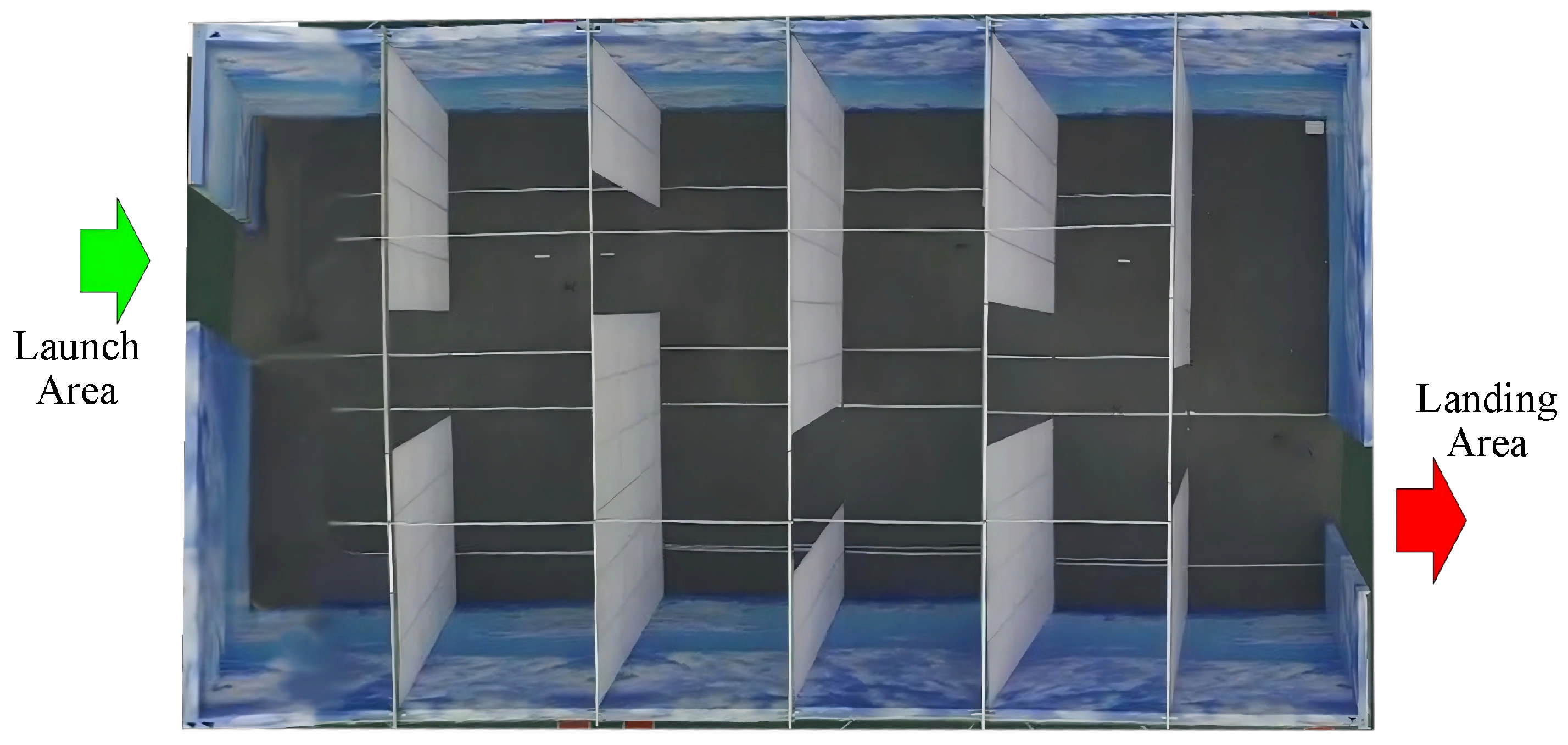
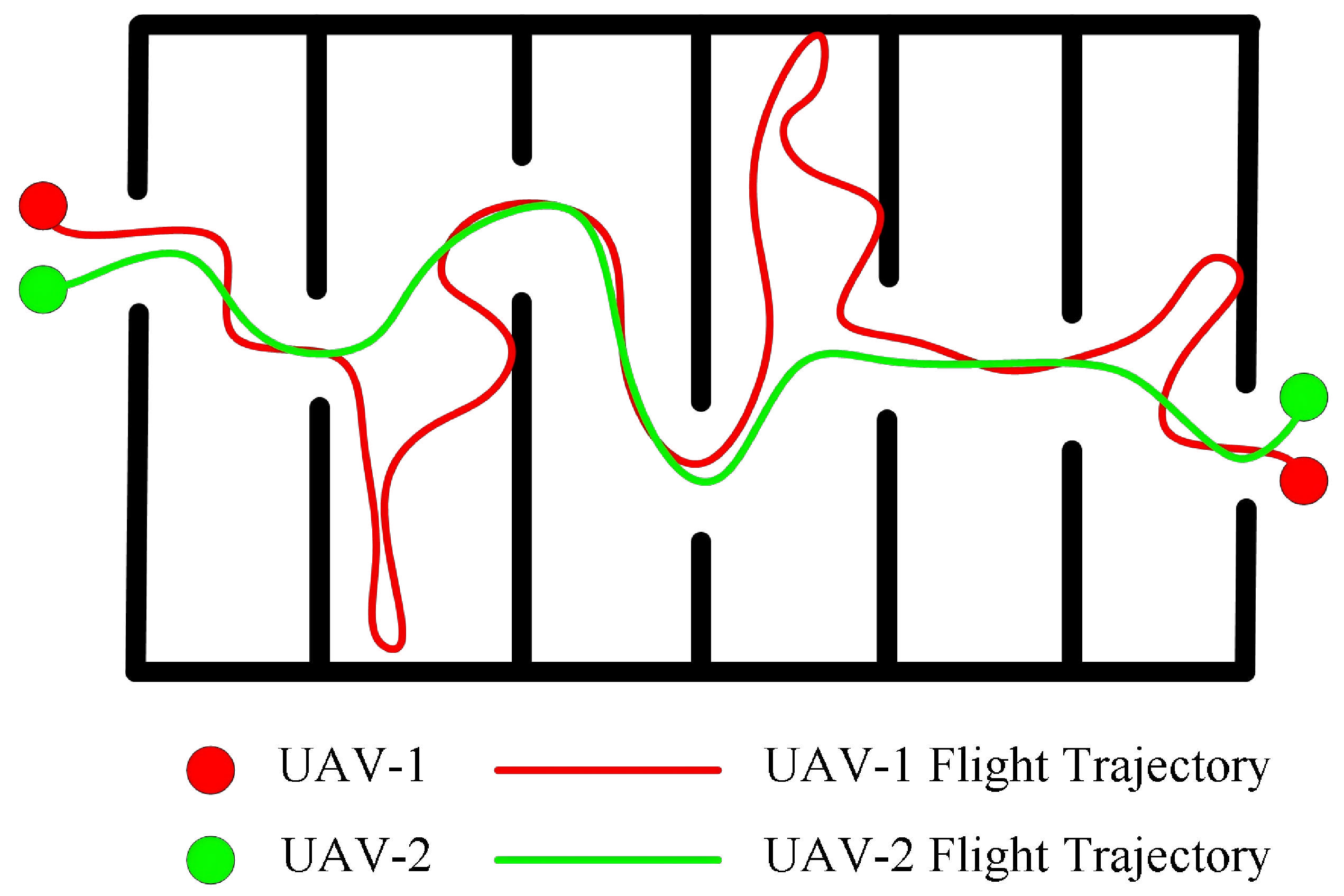
- The proposed framework and its physical verification demonstrate the feasibility of deployment in real-world scenarios including search and rescue, infrastructure inspection, and swarm logistics, providing support for the engineering application of multi-UAV cooperative technologies.
Abstract
1. Introduction
- A cooperative cognitive framework underpinned by dynamic trust assessment is developed, which effectively integrates prior cognition with real-time perception through Bayesian inference. This integration is enhanced by a dynamic trust mechanism that quantifies cognitive discrepancies, thereby significantly improving the system’s perceptual consistency and adaptability in highly dynamic environments;
- A risk-aware autonomous navigation method is proposed, incorporating cognitive credibility to achieve a balance between safety and operational efficiency via a multi-factor cost function. This approach strengthens the overall robustness and practical utility of the system when operating under dynamic uncertainties;
- To establish a thorough validation framework, comprehensive simulation testbeds and a real-world UAV platform are constructed, enabling rigorous assessment of method performance across simulated and physical environments.
2. Related Work
2.1. UAV Path Planning
2.2. Multi-Robot Cooperative Exploration
2.3. Knowledge Transfer
3. Problem Formulation
3.1. Problem Description
3.2. UAV Kinematics Model
3.3. UAV Detection Model
4. Proposed Approach
4.1. Overall Framework
4.2. Collaborative-Oriented Cognitive Experience Construction and Fusion
4.2.1. Prior Cognitive Construction
4.2.2. Joint Cognitive Development
4.3. Dynamic Trust Modeling Based on Cognitive Discrepancy
4.4. Risk-Aware Autonomous Navigation
5. Experiment and Result Analysis
5.1. Experimental Environment Setting
5.2. Algorithm Effectiveness in Static Environments
5.3. Algorithm Performance Comparison in Dynamic Environments
5.4. Physical Experiment Validation
6. Conclusions
Author Contributions
Funding
Data Availability Statement
Conflicts of Interest
References
- Pham, H.X.; La, H.M.; Feil-Seifer, D.; Nguyen, L.V. Autonomous uav navigation using reinforcement learning. arXiv 2018, arXiv:1801.05086. [Google Scholar] [CrossRef]
- Yu, X.; Jiang, N.; Wang, X.; Li, M. A hybrid algorithm based on grey wolf optimizer and differential evolution for UAV path planning. Expert Syst. Appl. 2023, 215, 119327. [Google Scholar] [CrossRef]
- Xiao, L.; Xiao, Z.; Yang, L.; Xiong, L.; Hu, H.; Dai, M.; Xu, X. Application and Performance Evaluation of a UAV Navigation System Based on D* Algorithm for Substation Inspection. J. Nanchang Univ. (Nat. Sci.) 2026, 1–7. [Google Scholar] [CrossRef]
- Cheng, X.; Wang, L.; Zhao, W.; Xu, Q.; He, Z. Autonomous Motion Planning Algorithm for Unmanned Aerial Vehicles in Maze Scenarios. In Proceedings of the International Conference on Guidance, Navigation and Control; Springer: Berlin/Heidelberg, Germany, 2024; pp. 408–416. [Google Scholar]
- Sonny, A.; Yeduri, S.R.; Cenkeramaddi, L.R. Autonomous UAV path planning using modified PSO for UAV-assisted wireless networks. IEEE Access 2023, 11, 70353–70367. [Google Scholar] [CrossRef]
- Li, J.; Xiong, Y.; She, J. UAV path planning for target coverage task in dynamic environment. IEEE Internet Things J. 2023, 10, 17734–17745. [Google Scholar] [CrossRef]
- Yu, Y.; Lee, S. Efficient multi-UAV path planning for collaborative area search operations. Appl. Sci. 2023, 13, 8728. [Google Scholar] [CrossRef]
- Wang, L.; Huang, W.; Li, H.; Li, W.; Chen, J.; Wu, W. A review of collaborative trajectory planning for multiple unmanned aerial vehicles. Processes 2024, 12, 1272. [Google Scholar] [CrossRef]
- Wan, S.; Li, H.; Hu, Y.; Wang, X.; Cui, S. A multi target intention recognition model of drones based on transfer learning. J. Syst. Eng. Electron. 2025, 36, 1247–1258. [Google Scholar] [CrossRef]
- Ruan, W.; Duan, H.; Deng, Y. Autonomous maneuver decisions via transfer learning pigeon-inspired optimization for UCAVs in dogfight engagements. IEEE/CAA J. Autom. Sin. 2022, 9, 1639–1657. [Google Scholar] [CrossRef]
- Xue, Z.F.; Wang, Z.J.; Zhan, Z.H.; Kwong, S.; Zhang, J. Neural network-based knowledge transfer for multitask optimization. IEEE Trans. Cybern. 2024, 54, 7541–7554. [Google Scholar] [CrossRef]
- Wang, W.; She, D.; Wang, J.; Han, D.; Jin, B. An Abnormal UAV Trajectory Correction Method Based on Multi-Model Fusion. J. Electron. Inf. Technol. 2025, 47, 1332–1344. [Google Scholar]
- Fan, Y.; Chen, L.; Zhang, B.; Liu, Y.; Li, Z.; Sun, Y. Autonomous Inspection and Attitude Control of UAV for Overhead Lines in Distribution Networks Based on Multi-Sensor. Electr. Meas. Instrum. 2024, 61, 186–194. [Google Scholar] [CrossRef]
- Wan, L.; Liu, R.; Sun, L.; Nie, H.; Wang, X. UAV swarm based radar signal sorting via multi-source data fusion: A deep transfer learning framework. Inf. Fusion 2022, 78, 90–101. [Google Scholar] [CrossRef]
- Meng, W.; Zhang, X.; Zhou, L.; Guo, H.; Hu, X. Advances in UAV Path Planning: A Comprehensive Review of Methods, Challenges, and Future Directions. Drones 2025, 9, 376. [Google Scholar] [CrossRef]
- Attoyibi, M.M.; Fikrisa, F.E.; Handayani, A.N. The implementation of a star algorithm (A*) in the game education about numbers introduction. In Proceedings of the 2nd International Conference on Vocational Education and Training (ICOVET 2018); Atlantis Press: Paris, France, 2019; pp. 234–238. [Google Scholar]
- Zhou, X.; Yan, J.; Yan, M.; Mao, K.; Yang, R.; Liu, W. Path planning of rail-mounted logistics robots based on the improved dijkstra algorithm. Appl. Sci. 2023, 13, 9955. [Google Scholar] [CrossRef]
- Kothari, M.; Postlethwaite, I.; Gu, D.W. Multi-UAV path planning in obstacle rich environments using rapidly-exploring random trees. In Proceedings of the 48h IEEE Conference on Decision and Control (CDC) Held Jointly with 2009 28th Chinese Control Conference; IEEE: Piscataway, NJ, USA, 2009; pp. 3069–3074. [Google Scholar]
- Jones, M.; Djahel, S.; Welsh, K. Path-planning for unmanned aerial vehicles with environment complexity considerations: A survey. ACM Comput. Surv. 2023, 55, 234. [Google Scholar] [CrossRef]
- Chen, X.; Tang, J.; Ruan, Y.; Zhan, J. Path Planning Methods for UAVs: A Survey. In Proceedings of the 3rd International Conference on Computer, Artificial Intelligence and Control Engineering, Xi’an, China, 26–28 January 2024; Association for Computing Machinery: New York, NY, USA, 2024; pp. 894–903. [Google Scholar]
- Zhou, Q.; Lian, Y.; Wu, J.; Zhu, M.; Wang, H.; Cao, J. An optimized Q-Learning algorithm for mobile robot local path planning. Knowl.-Based Syst. 2024, 286, 111400. [Google Scholar] [CrossRef]
- dos Santos, M.A.A.; Vivaldini, K.C.T. A review of the informative path planning, autonomous exploration and route planning using UAV in environment monitoring. In Proceedings of the 2022 International Conference on Computational Science and Computational Intelligence (CSCI); IEEE: Piscataway, NJ, USA, 2022; pp. 445–450. [Google Scholar]
- Gelli, M.; Bigazzi, L.; Boni, E.; Basso, M. Suboptimal Trajectory Planning Technique in Real UAV Scenarios with Partial Knowledge of the Environment. Drones 2024, 8, 211. [Google Scholar] [CrossRef]
- Vetrella, A.R.; Opromolla, R.; Fasano, G.; Accardo, D.; Grassi, M. Autonomous flight in GPS-challenging environments exploiting multi-UAV cooperation and vision-aided navigation. In Proceedings of the AIAA Information Systems-AIAA Infotech@ Aerospace, Grapevine, TX, USA, 9–13 January 2017; p. 0879. [Google Scholar]
- Zhou, B.; Xu, H.; Shen, S. Racer: Rapid collaborative exploration with a decentralized multi-uav system. IEEE Trans. Robot. 2023, 39, 1816–1835. [Google Scholar] [CrossRef]
- Rusu, A.A.; Večerík, M.; Rothörl, T.; Heess, N.; Pascanu, R.; Hadsell, R. Sim-to-real robot learning from pixels with progressive nets. In Proceedings of the Conference on Robot Learning, PMLR, Mountain View, CA, USA, 13–15 November 2017; pp. 262–270. [Google Scholar]
- Bo, L.; Zhang, T.; Zhang, H.; Hong, J.; Liu, M.; Zhang, C.; Liu, B. 3D UAV path planning in unknown environment: A transfer reinforcement learning method based on low-rank adaption. Adv. Eng. Inform. 2024, 62, 102920. [Google Scholar] [CrossRef]
- Chen, G.; Guo, Y.; Yang, X.; Ma, T.; Li, C.; Yuan, L.; Han, S. A Dynamic Constrained Multi-Objective Evolutionary Algorithm Based on Multi-Source Knowledge Transfer Strategy. Comput. Eng. Appl. 2025, 1–15. [Google Scholar]
- Li, T.; Ma, H.; Li, X.; Xu, J. A Multi-Objective Multi-Task Evolutionary Algorithm with Dynamic Knowledge Selection and Adaptive Transfer. Appl. Res. Comput. 2025, 1–10. [Google Scholar] [CrossRef]











| Methodology Category | Representative Approaches | Advantages | Limitations |
|---|---|---|---|
| Traditional Path Planning | A* [16], Dijkstra [17], RRT [18] | Theoretical optimality, completeness | Heavy dependency on accurate prior maps; vulnerable to environmental dynamics |
| Real-time Cooperative Strategies | Vetrella et al. [24], Yu et al. [7], Zhou et al. [25] | High parallelism, real-time coordination | Stringent communication requirements; single-point failures in centralized architectures |
| Policy Transfer Methods | Rusu et al. [26], Lan Bo et al. [27] | Reduced training time, transfer learning efficacy | Black-box decision-making; limited generalization to novel scenarios |
| Cognitive Transfer Approaches | Fan et al. [13], Chen et al. [28], Li et al. [29] | Enhanced interpretability, causal reasoning capabilities | Lack quantitative credibility assessment; limited dynamic fusion mechanisms |
| Parameter | Symbol | Value |
|---|---|---|
| Map Size | – | 60 × 60 |
| Start Coordinate | S | (60,0) |
| Goal Coordinate | G | (0,60) |
| Simulation Step Size | 0.1 s | |
| Sliding window length | K | 0.5 |
| Valid change count threshold | 3 | |
| Decay factor | 0.9 | |
| Trust recovery increment | 0.1 | |
| Propagation coefficient | 0.3 | |
| Initial trust | 1.0 | |
| Path length weight | 0.3 | |
| Unknown area cost weight | 0.3 | |
| Risk cost weight | 0.4 |
Disclaimer/Publisher’s Note: The statements, opinions and data contained in all publications are solely those of the individual author(s) and contributor(s) and not of MDPI and/or the editor(s). MDPI and/or the editor(s) disclaim responsibility for any injury to people or property resulting from any ideas, methods, instructions or products referred to in the content. |
© 2026 by the authors. Licensee MDPI, Basel, Switzerland. This article is an open access article distributed under the terms and conditions of the Creative Commons Attribution (CC BY) license.
Share and Cite
Huang, C.; Wei, R.; Jiang, B.; Wei, P.; Zhang, Q. A Collaborative Navigation Algorithm for Unmanned Aerial Vehicles Based on Joint Cognition and Risk Perception. Drones 2026, 10, 186. https://doi.org/10.3390/drones10030186
Huang C, Wei R, Jiang B, Wei P, Zhang Q. A Collaborative Navigation Algorithm for Unmanned Aerial Vehicles Based on Joint Cognition and Risk Perception. Drones. 2026; 10(3):186. https://doi.org/10.3390/drones10030186
Chicago/Turabian StyleHuang, Chenkang, Ruixuan Wei, Benqi Jiang, Pengfei Wei, and Qirui Zhang. 2026. "A Collaborative Navigation Algorithm for Unmanned Aerial Vehicles Based on Joint Cognition and Risk Perception" Drones 10, no. 3: 186. https://doi.org/10.3390/drones10030186
APA StyleHuang, C., Wei, R., Jiang, B., Wei, P., & Zhang, Q. (2026). A Collaborative Navigation Algorithm for Unmanned Aerial Vehicles Based on Joint Cognition and Risk Perception. Drones, 10(3), 186. https://doi.org/10.3390/drones10030186