

Article

Efficacy of Drone-Applied Fungicide Treatments in Control of Sunflower Diseases
by
Mădălina Ioana Șerban
1,
Elena Grad-Rusu
2,*,
Teodora Florian
1,
Marius Grad
2 and
Vasile Constantin Florian
1
1
Department Plant Protection, Faculty of Agriculture, University of Agricultural Sciences and Veterinary Medicine, Calea Mănăștur 3-5, 400372 Cluj-Napoca, Romania
2
Babeş-Bolyai University, Str. Mihail Kogălniceanu, nr. 1, 400084 Cluj-Napoca, Romania
*
Author to whom correspondence should be addressed.
Drones 2026, 10(1), 33; https://doi.org/10.3390/drones10010033

Submission received: 14 December 2025 / Revised: 30 December 2025 / Accepted: 3 January 2026 / Published: 6 January 2026

Highlights

What are the main findings?
  • The use of low (LV) and ultra-low volumes (ULV) in the control of sunflower pathogens shows higher efficiency compared to the application in normal volumes (NV).
  • The use of drones in plant protection is a viable alternative with excellent results.
What are the implications of the main findings?
  • The increased effectiveness of the treatments, but also the possibility of applying the second treatment to sunflowers, makes our results of genuine interest to farmers and agricultural workers.
  • The high efficiency of applying treatments using drones can lead to a reduction in the biological reserve of pathogens, and, why not, through further testing, the amount of pesticides used in agriculture.

Abstract

In light of alarming climate change and the worsening water crisis, the use of ultra-low volume applications is essential for modern agricultural practices. Given that sunflower cultivation is widespread in Romania, our study focused on analyzing the effectiveness of chemical treatments for controlling pathogens in this crop using drone-spraying technology. We applied chemical treatments with the DJI Agras T50 drone to compare the efficiency of fungicides applied at reduced volumes to those applied at normal volumes, simulating traditional ground application methods. Our findings showed that applying fungicides at ultra-low volumes increased their effectiveness by 23–35% compared to normal volumes. With a spray rate of 10 L per hectare, we achieved fungicide efficiencies exceeding 90%, depending on the specific pathogen. This experiment demonstrates that applying fungicides at low (LV) and ultra-low volumes (ULV) can significantly enhance their effectiveness. Drones are uniquely capable of uniformly distributing these small quantities of solutions over extensive areas.

1. Introduction

Modern civilization has determined the need for an increased demand for fresh food to feed the global population. It came with pressure on farmers to produce not only more, but also at a better quality, prompting them to consider new technologies [1] and solutions as a suitable alternative to collect and process information while increasing net productivity [2].
However, in the context of alarming climate change and an increasing water crisis, the use of ultra-low volumes becomes mandatory for modern agricultural and farming fields. Suppose the use of helicopters [3] or planes [4] for ultra-low volumes was considered modern in plant protection activities a few years ago. In that case, nowadays the agricultural paradigm is undergoing a significant transformation with the rise of unmanned aerial vehicle technology, also known as drones [5]. Stakeholders, including small-scale farmers and large-scale agricultural enterprises, are considering embracing innovation [6]. However, the transition is still slow, influenced by limited knowledge, reluctance to new ideas, and financial constraints.
Digital agriculture [7] increases farmers’ responses to various challenges, such as early disease detection [8], weed distinction and removal [9], weather data [10], the calculated application of fertilizers [11], and disease and pest control [12]. Along with satellite imagery data of crops of different parts of a field [13] or video data that monitors animal behavior [14]—which are the basic methods when using drones in agriculture—the newest technology increases the use of these for plant protection [15] (i.e., applying fertilizers or disease and pest control).
Drones are no longer just used as military equipment [16], recreational toys for adults [17], or by journalists. In the context of the digitalization of agriculture (Agriculture 5.0), drones are gaining an important role [18] for both monitoring and applying agricultural input [19]. Agriculture, today, is evolving rapidly and is reaching the point where we are now entering the fifth stage/evolution, which involves the use of robots and artificial intelligence in agriculture [20]. This stage is called Agriculture 5.0 [21], and drones are a part of the evolution of agricultural intelligence. Agricultural knowledge and discoveries have led to a new revolution occurring over periods of time. If this evolution occurred once every 100–150 years during the first stages [22], it was reduced to 50 years for Agriculture 3.0 [23], and for Agriculture 4.0 [24], it appears to be only 25 years.
The integration of drones holds potential for decreasing labor needs, improving pesticide targeting, and reducing overuse [25]. There are just a few studies on the effectiveness of spraying chemicals with a drone. Among those that exist, the conclusions are similar: the efficacy of pesticide application with a drone sprayer in a field is the same as that of conventional applications with current practices [26].
The advantages of the use of drones in the fight against diseases and pests include the quick application of the treatment (especially over a large surface) [27], a reduced need for chemical pesticides (which can have negative impacts on the environment and human health), there are no losses connected with soil compaction or destruction of plants [28], and the risk of poisoning of people who operate them is almost absent because the drone operator is at a considerable distance from the place of the operation [29].
There are also disadvantages, such as a relatively short flight time before it needs to be recharged, a relatively small liquid tank, or the need for a well-trained pilot [30]. Along with this, there is a reduced risk that the liquid sprayed will be carried away if it is not applied at the proper time; however, we consider these aspects less significant than the positive ones.
Although the use of UAVs is skyrocketing, farmers in Romania are still mainly using traditional methods of pesticide application, mostly because they already have and know the terrestrial equipment, and it is relatively inexpensive to operate, often ignoring that the spraying speed is slow and the efficiency is low. However, we hope that the multiple fields of application using drones (soil and field analyses, mapping and animal detection, irrigation, crop spraying, and planting) will prompt them to choose this alternative more rapidly. Future initiatives should prioritize educating farmers about the benefits of drone technology and enhancing their technical skills [31].
Since sunflower cultivation is widespread in Romania (ranked first in the European Union in recent years) [32], we focused our study on analyzing the chemical control of pathogens in this type of crop using drone-spraying mechanisms.
Although there is no unanimously accepted classification of the limits for the application of plant protection products in ultra-low volumes, based on the analysis of several bibliographic sources [33,34,35,36,37], we have classified the application volumes as follows: UULV (ultra ultra-low volume) < 0.5 L/ha; ULV (ultra-low volume) 0.5–10 L/ha; LV (low volume) 10–50 L/ha; MV (medium volume) 50–150 L/ha; NV (normal volume) 150–400 L/ha; and HV (high volume) > 400 L/ha.
Sunflower is an important crop that is highly susceptible to various diseases at all growth stages, which can significantly affect yield and quality. The efficiency of detection of these diseases is essential for effective management and control strategies. Some of the most common pathogens that can be found also in Romania are Plasmopara halstedii (Downy Mildew) [38], Sclerotinia sclerotiorum (White Mold) [39,40], Puccinia helianthi (Rust) [41], Botrytis cinerea (Gray Mold) [42], Diaporthe helianthi (Stalk rot of sunflower) [43], Septoria helianthi (Septoria Leaf Spot) [44], Plenodomus lindquistii (Black stem of sunflower) [43], and Alternaria zinniae (Alternaria head rot) [45]. It is essential not only to identify diseases at the right time to avoid inconveniences, such as reduced production, poor quality of sunflower seeds and oil, and the extension of an already long crop rotation [46], but also to implement appropriate measures.
The technology enabled by drones allows for a quick and accurate application of the required treatment by optimizing chemical inputs [47]. This reduces environmental pollution [48], has lower input costs, and does not destroy the plants, as happens with traditional machines, particularly in sunflower crops.
Since the usage of drones has become important in a variety of domains, a regulatory system to ensure safe usage and fair technological improvements is required. Regulations on drone usage vary significantly worldwide, and international organizations, such as the International Civil Aviation Organization (ICAO) and the European Union Aviation Safety Agency (EASA), establish clear guidance to support the safe and responsible use of drones. At the same time, in many states, farmers should respect the airspace regulations and have a permit for drone operation.
Regarding the European Union, two key regulations represent the rules and procedures for drone operation: there is one delegated act (Regulation 2019/945) and one implementing act (Regulation 2019/947), both of which set detailed rules for drone use and construction [49]. Romania adheres to this regulatory framework while implementing national legislation to govern drone operations within its jurisdiction. The National Authority for Civil Aviation (AACR) represents the primary regulatory body that is responsible for the enforcement of these provisions [50]. In accordance with national requirements, drones exceeding 250 g must be registered, and remote pilots are obliged to obtain competency certificates for specific categories of operation. In the case of agricultural applications, operational authorization is required from the AACR. All these regulations are added to those that are already known regarding the operation of drones in proximity to airports, military installations, or densely populated areas, which is prohibited without prior approval, while Beyond Visual Line of Sight (BVLOS) operations are subject to additional authorization. To respect the General Data Protection Regulation (GDPR), drones equipped with imaging or other data-capturing devices should be used as long as they safeguard individual privacy. Any unauthorized surveillance, including image or data collection, is expressly prohibited under Romanian law.
To conclude, intelligent and durable agriculture represents a strategic priority that is reflected in any revision of policies, programs, or initiatives at the European level [51]. As an example, the European Union is financing specific projects with the goal of promoting the use of precision agriculture tools, transferring knowledge to farmers regarding the use of drones to optimize and improve the application precision of phytosanitary products, such as in Álava, Spain [52]. In other words, the use of drones represents the future of agriculture by supporting the European objectives for reducing the use of chemicals, improving the efficient use of water resources, and contributing, in general, to the fight against climate change. At the same time, UAVs foster the collection and analysis of large-scale data, contributing to evidence-based decision-making and the development of sustainable agricultural practices. Therefore, new technologies are essential tools for a transition to a more competitive and sustainable agriculture that is aligned with the principles of a green and digital economy.
The purpose of this work was to determine whether there are differences between the efficiency of treatments applied on land in normal volumes and those applied by spraying with drones in agriculture, such as low (LV) and ultra-low volumes (ULV). We chose the sunflower crop due to its specificity (high growth), which does not allow the application of phytosanitary treatments until a certain phenophase. Drones can apply phytosanitary treatments even after flowering, achieving effective control of sunflower diseases by applying additional fungicide treatments.

2. Materials and Methods

2.1. Experimental Site and Conditions

The Drăguș locality is located in the western part of Brașov County, Romania, at the foot of the Făgăraș Massif, in the depressional area of Țara Făgărașului. Geographically, the experimental site is located at 45°45′ north latitude and 24°50′ east longitude, at an average altitude of 670 m. The climate of the Drăguș area is temperate-continental, with mountain influences due to the proximity of the Făgăraș Massif. According to the classification of the National Meteorological Administration, the multiannual thermal regime indicates an average annual temperature of 8.5 °C, and the average annual rainfall regime is between 620 and 650 mm, with a relatively uniform distribution throughout the year.

2.2. Biological Material

Species: Sunflower (Helianthus annuus L.). Hybrid: Stellaris CLP—mid-early hybrid, Clearfield Plus, Saaten Union, characterized by a tolerance to imazamox-based herbicides, a high genetic resistance to Plasmopara halstedii and Orobanche cumana, and a production potential of 4500–5000 kg/ha under optimal conditions.

2.3. Agriculture Technology Used

Sowing density: 57,000 germinable grains/ha; row spacing: 75 cm; plant spacing in a row: 23.4 cm. Sowing date: 29 April 2024. Seeds were treated before sowing according to the manufacturer’s instructions.
Fertilization: Tarnogran 25 was applied at 250 kg/ha—a complex NPK product with the following composition: N—5%; P2O5—10%; K2O—25%; MgO—2%; SO3—40%.
Herbicide (22 April 2024): Pre-emergence treatment with imazamox 0.5 L/ha; 8 June 2024: post-emergence treatment with imazamox 0.6 L/ha + deltamethrin 0.2 L/ha + Naturamin 500 g/ha (amino acids 80% a.s.)

2.4. Experimental Design

The experiment was organized in a randomized block design with three replications, with each variant occupying an area of 0.036 ha for a total area of 0.648 ha. The dimensions of an experimental plot are as follows: 9 m (12 rows) × 40 m = 360 m2 (0.036 ha). Purpose: To study the effectiveness of the treatments in a reduced solution volume that was applied with the DJI Agras T50 drone compared to treatment in a normal volume of 200 L (simulation of terrestrial application (Table 1). One plot (Control), in three replications, remained without fungicide treatment.
The tested products and treatments performed are as follows: Fungicide and growth regulator—ARCHITECT. The active substances include the following: Pyraclostrobin—100 g/L; Prohexadion-calcium—25 g/L; Mepiquat-chloride—150 g/L. Formulation: suspoemulsion (SE). Approval certificate number: 775PC/23.08.2022. Applied dose: 1 L/ha. Mode of action: Systemic fungicide and growth regulator, with the effect of reducing stem elongation, increasing cell wall thickness, and improving tolerance to abiotic stress (drought, heat). Adjuvant—TURBO. The active substances include the following: Ammonium sulfate with 21% nitrogen (N). Formulation: water-soluble granules (SG). Applied dose: 0.6 kg/ha. Role: A water corrector and adjuvant that favors foliar absorption and droplet stability in high-pH solutions.
The treatments performed are as follows: First treatment: 6 July 2024; Second treatment: 7 August 2024. Weather conditions upon application included a temperature of 18–20 °C, humidity of 60–72%, a wind speed of 5–9 km/h, and no precipitation in the subsequent 6 h (Farmi Meteo Drăguș).
Field observations: Determination of the frequency and intensity of the attack and calculation of the degree of attack and the efficiency of the treatment were carried out on 27 July and 14 August 2024. After the field tests, we calculated the degree of attack and the treatment’s efficacy. The attack degree was determined by using the formula AD = (I × F)/100, where I represents the attack’s intensity and F is the attack’s frequency. The intensity shows us the percentage affected at the plant level. The frequency is calculated using the formula F = (number of diseased plants × 100)/total number of plants. The efficacy was determined by relating to the attack degree of the control plot using the formula E = 100 − [(AD × 100)/Control AD]. The Duncan test was used for the statistical interpretation of the data.
We chose these solution volumes to cover each category (ULV, LV, MV, and NV) that was mentioned above, except UULV, due to the technical limitations of the equipment used.

2.5. Application Equipment Used

The treatments were carried out with the DJI Agras T50 agricultural drone, which was equipped with a spinning-disk centrifugal spraying system, ensuring the formation of fine droplets and uniform distribution. Operational parameters: Flight altitude, 3.5 m; working speed, 1.3–7 m/s; spray rate, 3.98–11.84 L/minute according to the tested variant; droplet size, 90–120 µm; and working width, 9 m.
Ensuring uniformity under ULV conditions was an operational priority in the study. Uniformity was achieved by strictly standardizing the drone’s operating parameters across all ULV/LV applications. The drone maintained a constant flight altitude, travel speed, and spray flow rate, and the automatic application rate control system ensured a stable distributed volume across each experimental variant.
Penetration into the plant mass was facilitated by the association between the fine size of the specific ULV/LV droplets and the downdrafts that were generated by the UAS rotors, which contribute to the transport of droplets to the lower parts of the plants. In addition, the treatments were applied in carefully selected meteorological windows (low wind, moderate humidity)—conditions that were tested as favorable for effective application.
The spraying missions were carried out exclusively on predefined, software-generated flight paths rather than by manual piloting.
Prior to treatment application, an orthophotomap of the experimental area was created using the integrated mapping function of the DJI AGRAS T50 drone (DJI, Cluj-Napoca, Romania) with active RTK positioning to ensure high spatial accuracy of the field boundaries and internal elements. Based on this orthophotomap, the experimental scheme was defined digitally, and the randomized plotting map was overlaid in the mission planning software.
Subsequently, the spraying flight paths were automatically generated, which the DJI AGRAS T50 drone followed autonomously during treatment application, ensuring repeatability of the trajectory, speed, and working width across experimental variants.

3. Results

In the 2024 experiment, several specific pathogens of Sunflower were identified, including Diaporthe helianthi, Plenodomus lindquistii, and Plasmopara halstedii, as well as polyphagous pathogens such as Sclerotinia sclerotiorum and Botrytis cinerea. Measurements were made of the pathogen attack level at each stage of chemical treatment application. Among the five pathogens, quantifiable levels of attack were recorded for Diaporthe helianthi, Sclerotinia sclerotiorum, and Plenodomus lindquistii; for the second stage, Botrytis cinerea could also be counted. Plasmopara halstedii was only sporadically detected, its attack degree not exceeding 0.02%, with this being taken into account only for calculating the total attack rate. For each stage, the total degree of attack was determined by summing the degrees of attack for the five pathogens mentioned above.

3.1. After the First Treatment

On 27 July, after the first treatment, the attack situation was as follows:
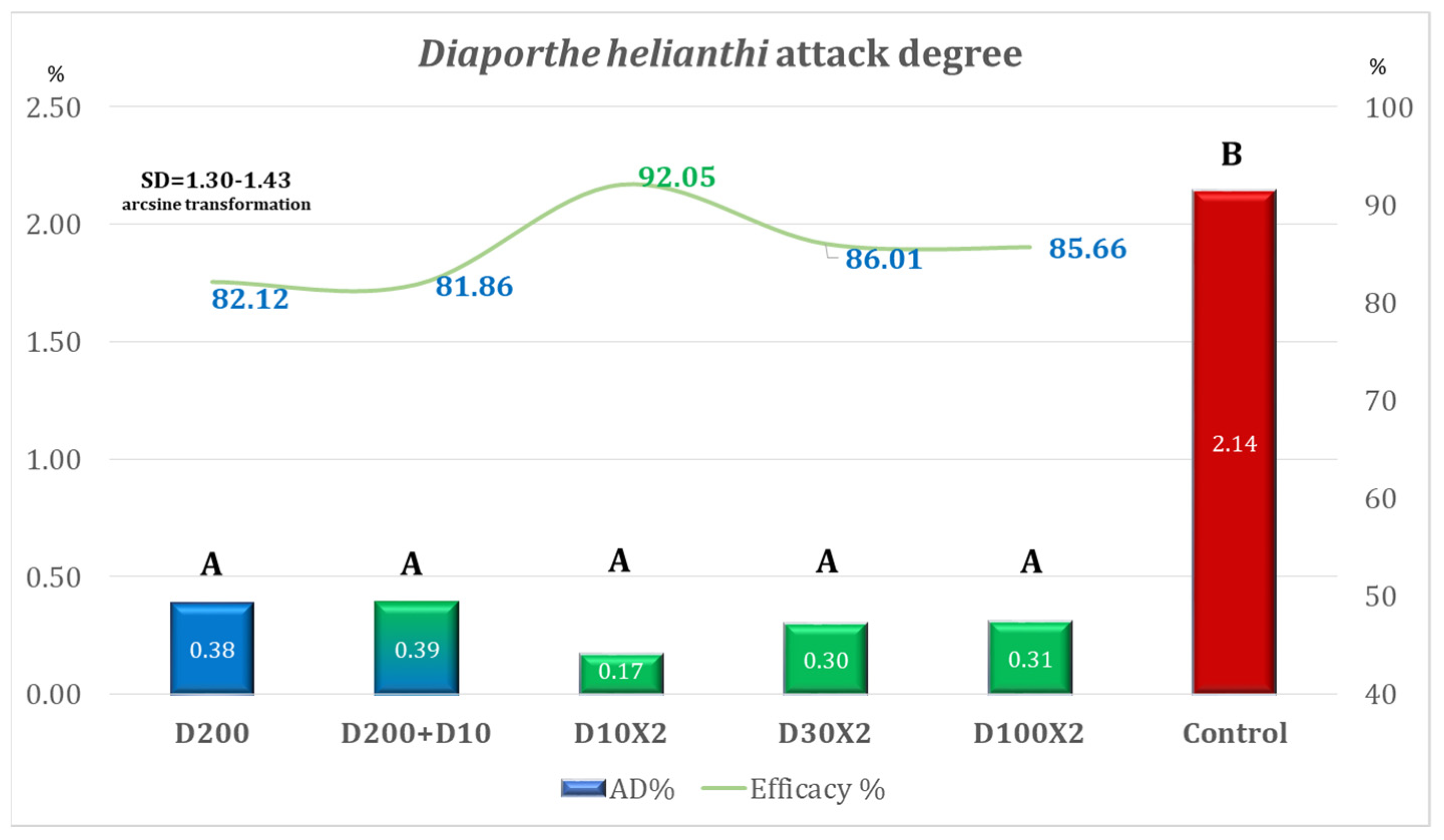
For Diaporthe helianthi, the attack degree ranged from 0.17% to 2.14%. Figure 1 shows that, regardless of the concentration used, applying the first treatment resulted in significant decreases in Diaporthe helianthi attack. No significant differences were found between the treatment variants; however, in the variant with a spraying rate of 10 L per hectare (ULV), efficiency increased to over 90% (92.05%)—the only variant to exceed this threshold. The efficacy was determined by the average of the three replications.
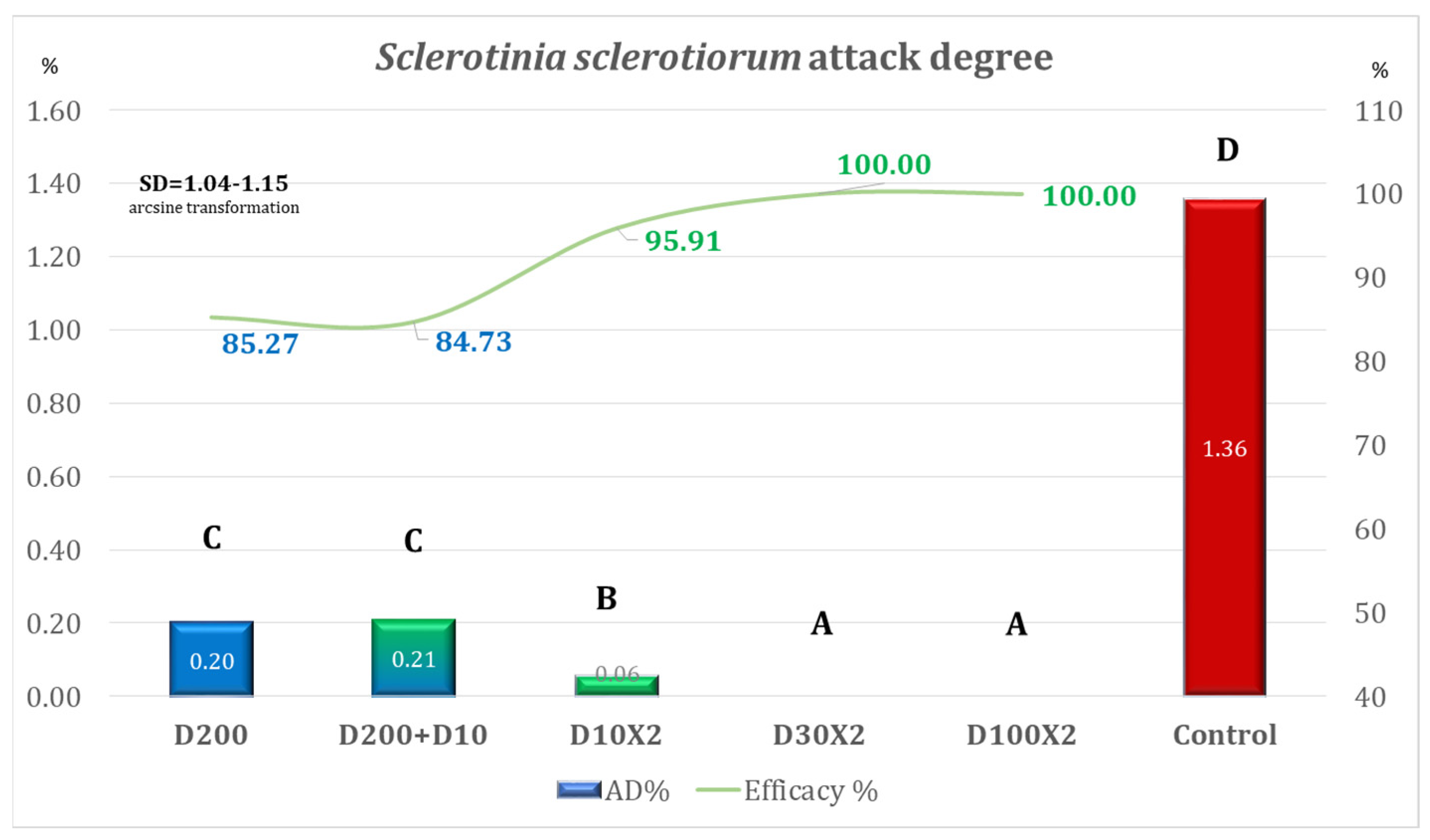
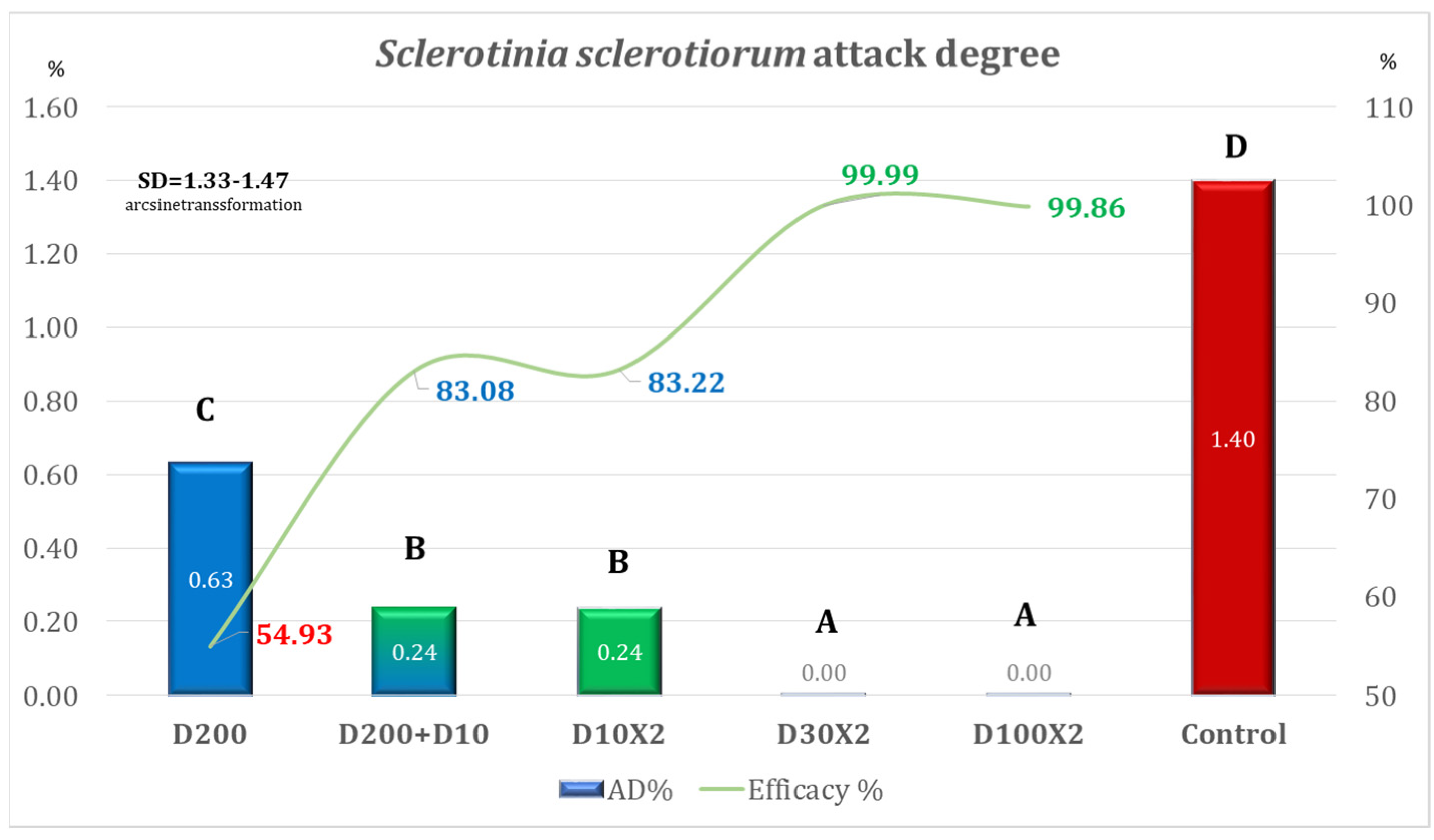
Sclerotinia sclerotiorum showed a lower attack degree, ranging from 0 to 1.36%. Figure 2 shows that for the variants with low (30 L) and medium (100 L) spraying rates applied with agricultural drones, the efficiency was highest. Interestingly, for the variants in which ground application was simulated at a spraying rate of 200 L, the attack degree was significantly higher than for the other variants mentioned above. However, all five treatment variants had an efficacy of over 80%.
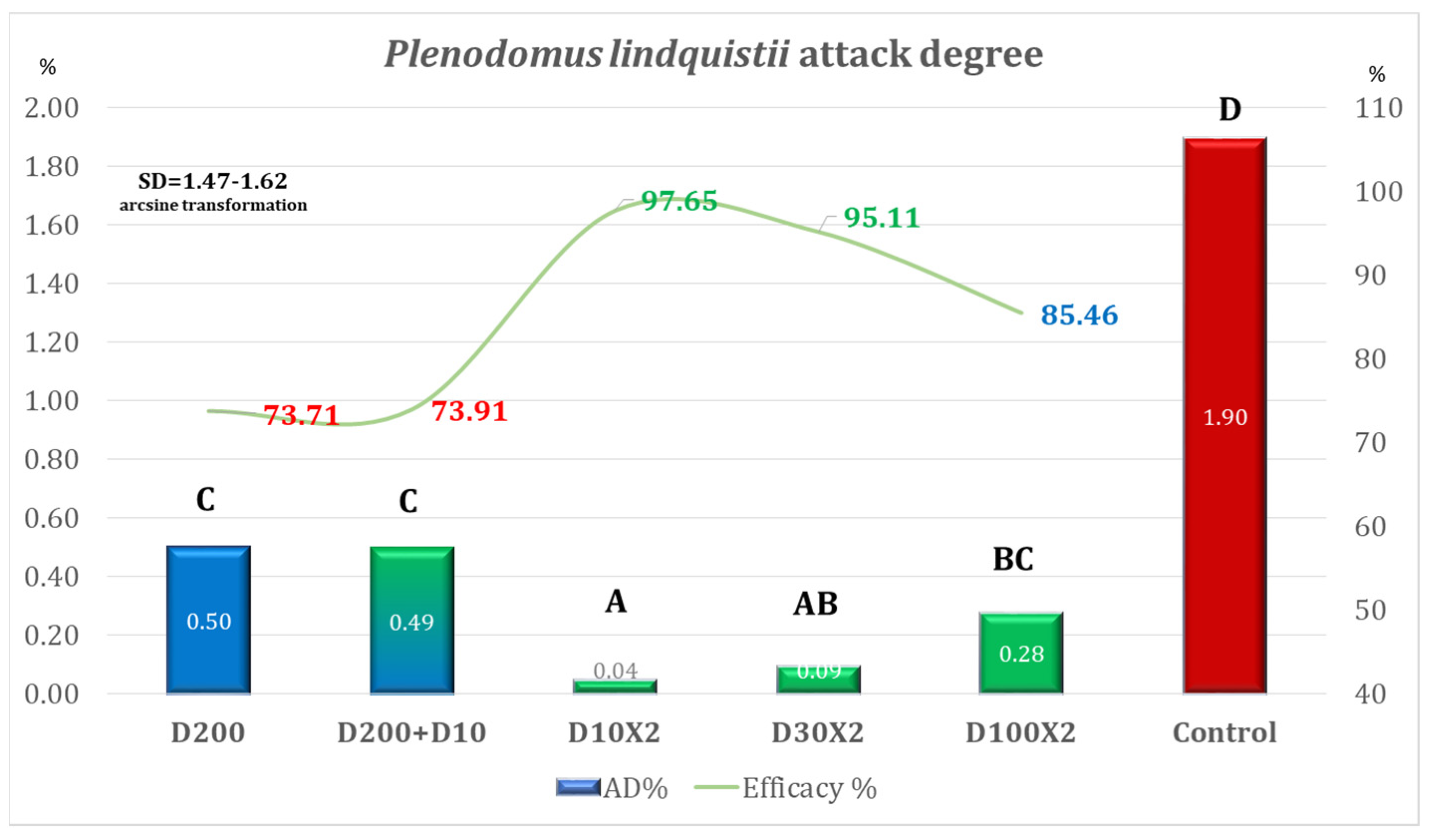
Plenodomus lindquistii had an attack level that ranged from 0.04 to 1.90%. In the case of this pathogen, significant differences appeared between the five tested variants (Figure 3). It was observed that the ultra-reduced and reduced volumes have the best efficiency, exceeding 95%. The variants in which the fungicide was applied at a low concentration had an attack level that was significantly lower than the control variant. However, at the same time, this was significantly higher than the variants in which the fungicide was applied at a high concentration.
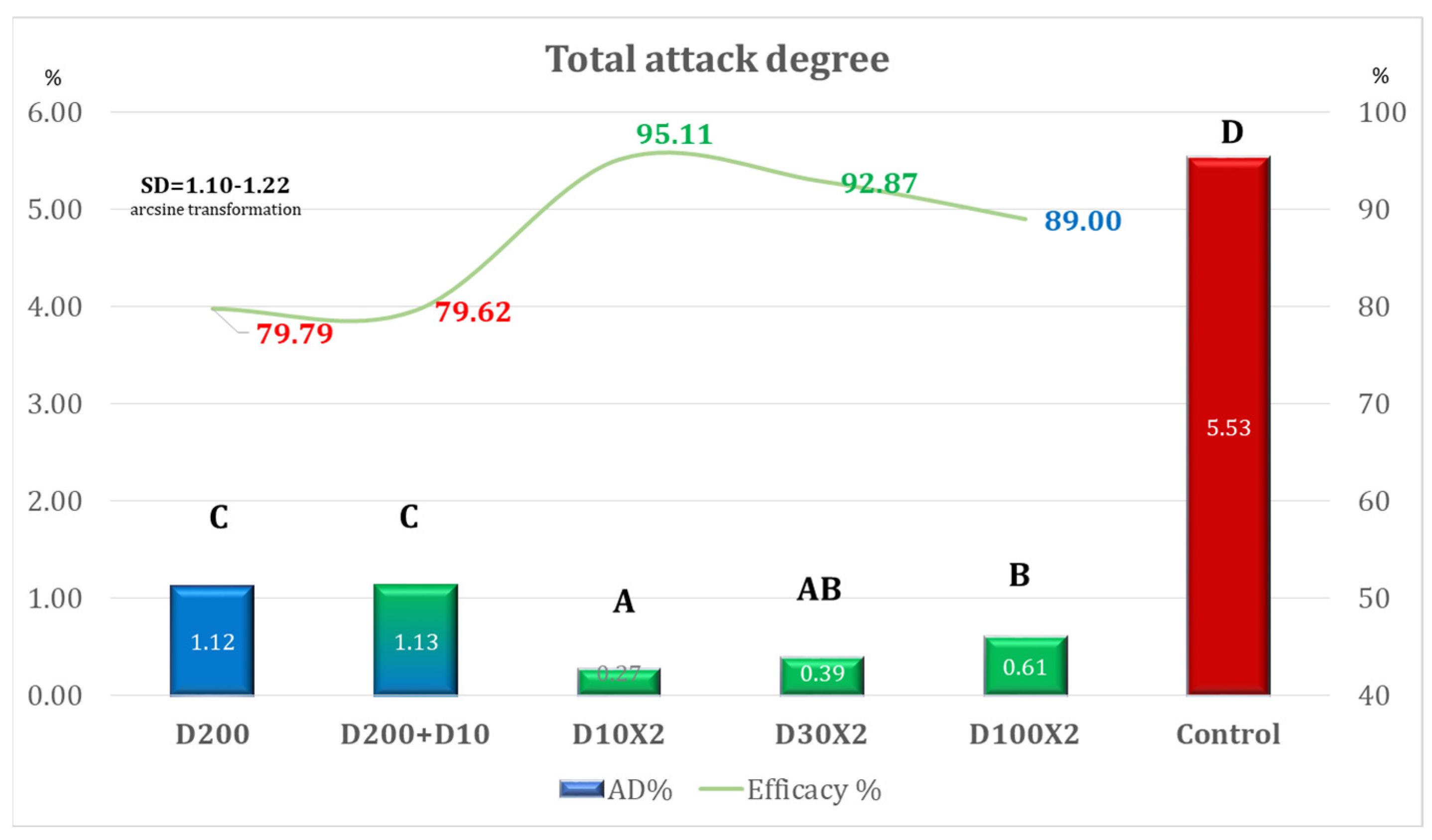
The most relevant, however, is the total degree of attack that is presented in Figure 4, which shows that all treatment variants recorded a significantly lower attack level. However, this also highlights, again, the variants with ultra-reduced (ULV) and reduced rates (LV) for which the efficiency of these treatments exceeded 90%. The application of chemical treatments before flowering resulted in a significant decrease in attack, with an efficiency of approximately 80%. However, if high efficiency (>90%) is required, we recommend applying the fungicide at a reduced volume of 10–30 L per hectare. This rate can only be applied with high-precision equipment, which the tested agricultural drones were equipped with.

3.2. After the Second Treatment

On 14 August, after the second treatment, things changed slightly, especially because one of the treatment variants did not receive the second application. As previously mentioned, testing the efficiency of the treatments at normal volumes of 200 L per hectare to simulate the terrestrial treatment was required. Thus, in the first variant (D200), the second treatment was not applied. In the second variant (D200 + D10), the second treatment was applied in an ultra-low volume (ULV). We simulated the application of a terrestrial treatment when phenological conditions allowed, and the second treatment was applied with a drone.
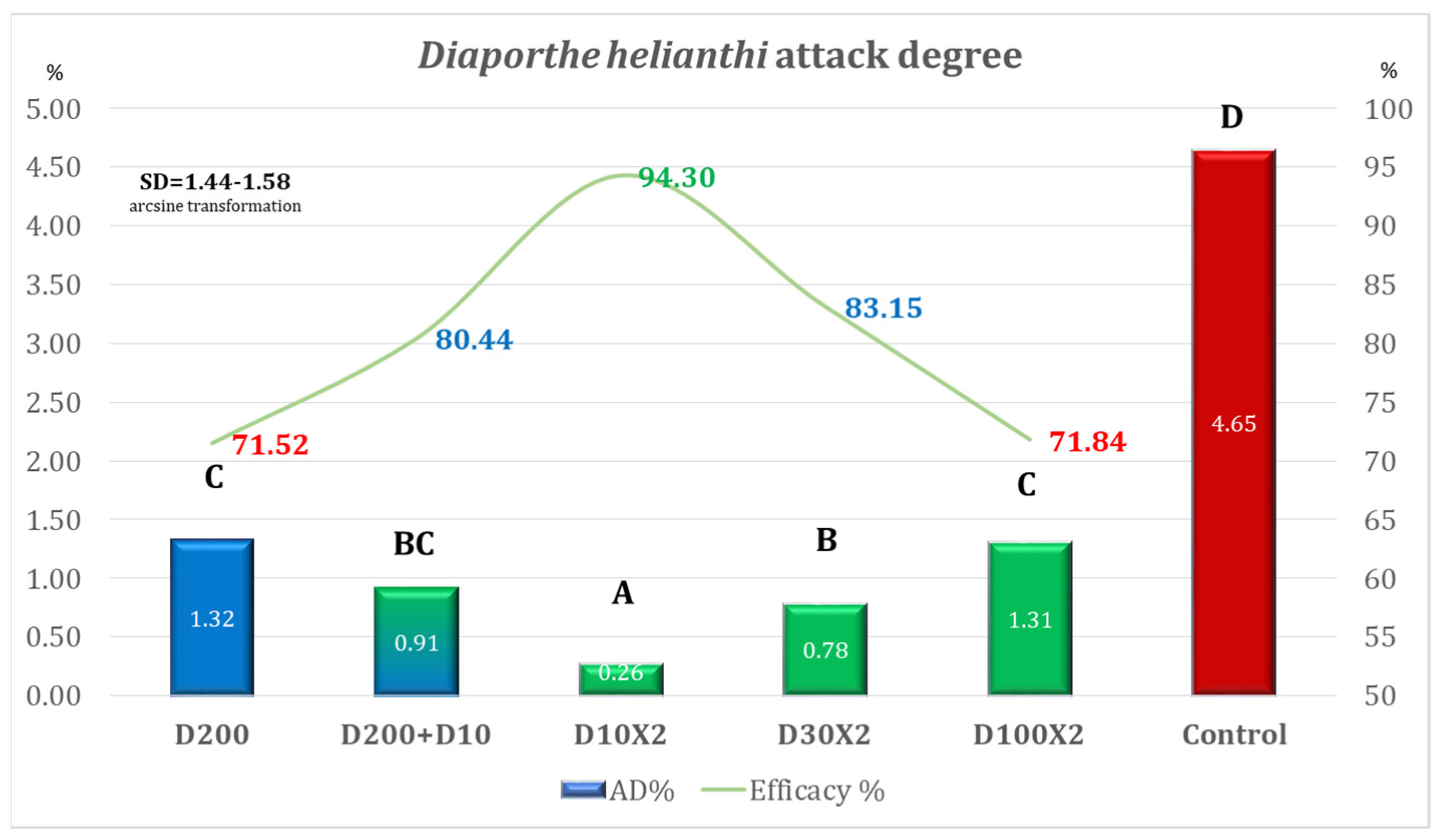
For Diaporthe helianthi, if at the first reading there were no significant differences between the five treatment variants, the second application led to a significant differentiation between them (Figure 5). It was found that in the D10 × 2 variant, where two treatments with ultra-reduced volumes (ULV) were applied, the attack degree was only 0.26%. Compared to this variant, all other variants presented significantly higher attack degrees. We can see that, in the variant where we simulated a terrestrial application, the attack degree decreased after applying the second treatment with ultra-reduced volume (ULV), approaching the value recorded in the D30 × 2 variant, where two treatments with reduced volumes were applied. Of course, as expected, all the variants with treatment had significantly lower attack levels compared to the control. It can be highlighted that in the D10 × 2 variant, the treatment efficiency exceeded 90%.
For Sclerotinia sclerotiorum, the pathogen’s behavior upon treatment application was somewhat similar to that in the first reading; however, applying the second treatment to the D200 + D10 variant significantly reduced the level of attack (Figure 6).
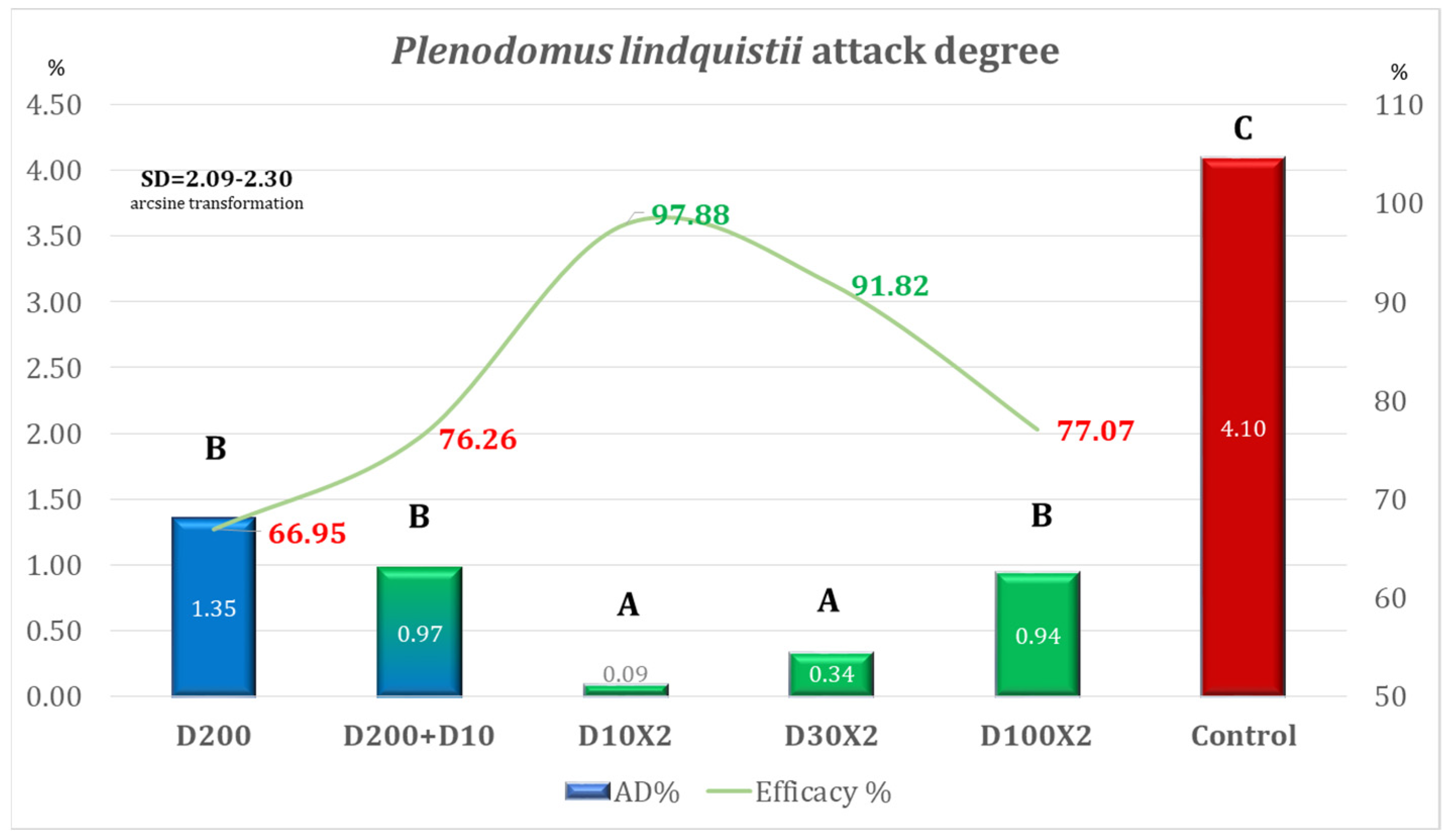
Plenodomus lindquistii recorded an attack level at the second reading between 0.09 and 4.10. Moreover, for this pathogen, we observe an efficiency of over 90% in the variants in which the fungicide was applied at low (LV) or ultra-low volumes (ULV). For all other variants, the efficiency was below 80%. The application of the second treatment with a drone reduced the attack level compared to the single-treatment variant, but the difference was not significant. Analyzing Figure 7, it was found that there are no significant differences between the application with normal volumes and those with medium volumes.
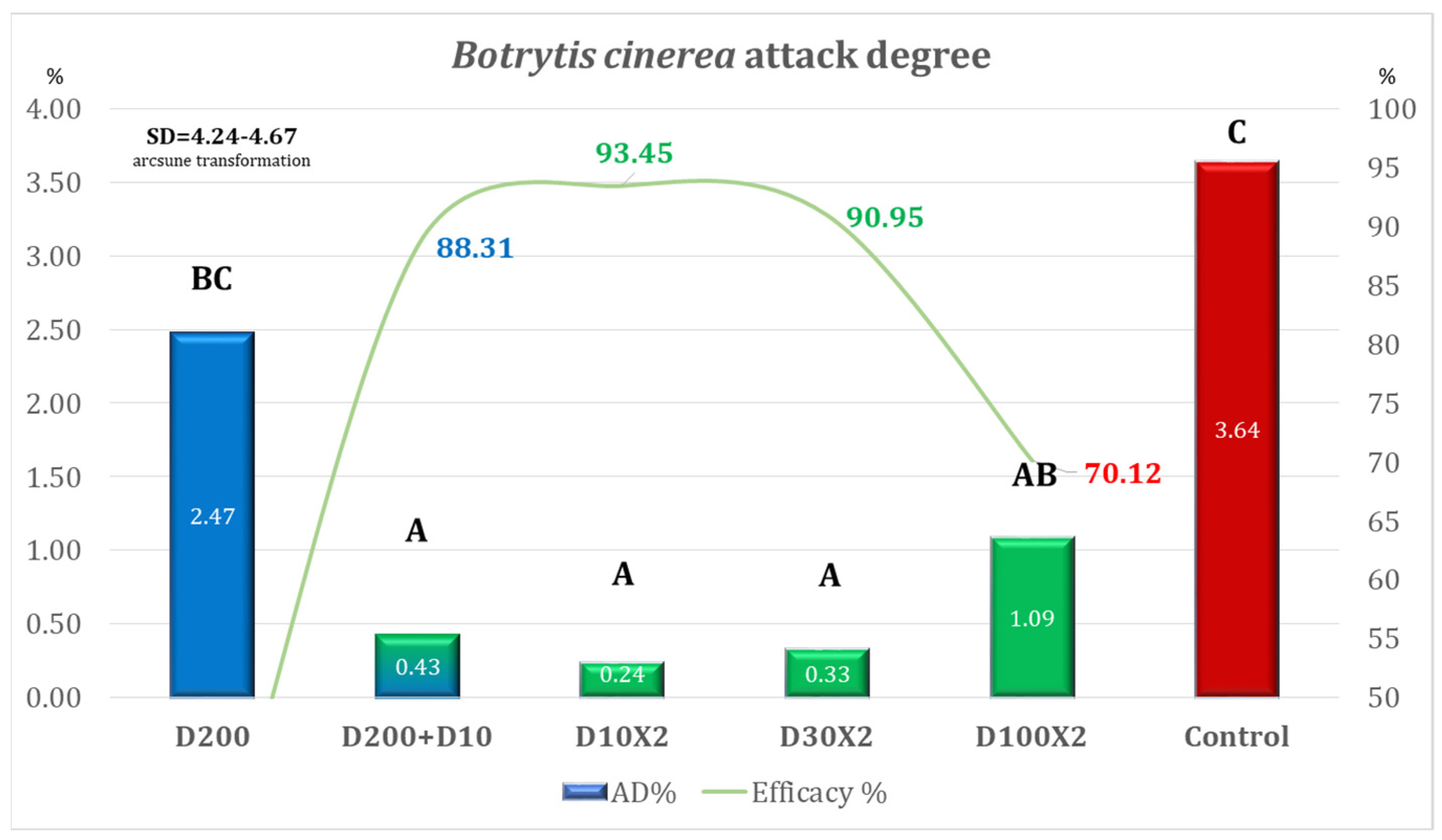
The second reading also quantified the level of attack by the pathogen Botrytis cinerea, with values ranging from 0.24% to 3.64% (Figure 8). The preference of this pathogen for manifestation in the second vegetation period led to a level of attack in the single-treatment variant that was close to that in the control variant, with an efficiency of less than 50%. There is no significant difference between the other four treatment variants. However, it was observed that the application of the second treatment with a drone in ultra-low volume (D200 + D10) showed good efficiency in controlling this pathogen, being over 18% higher than in the variant with two treatments in medium volume (MV) (D100 × 2).
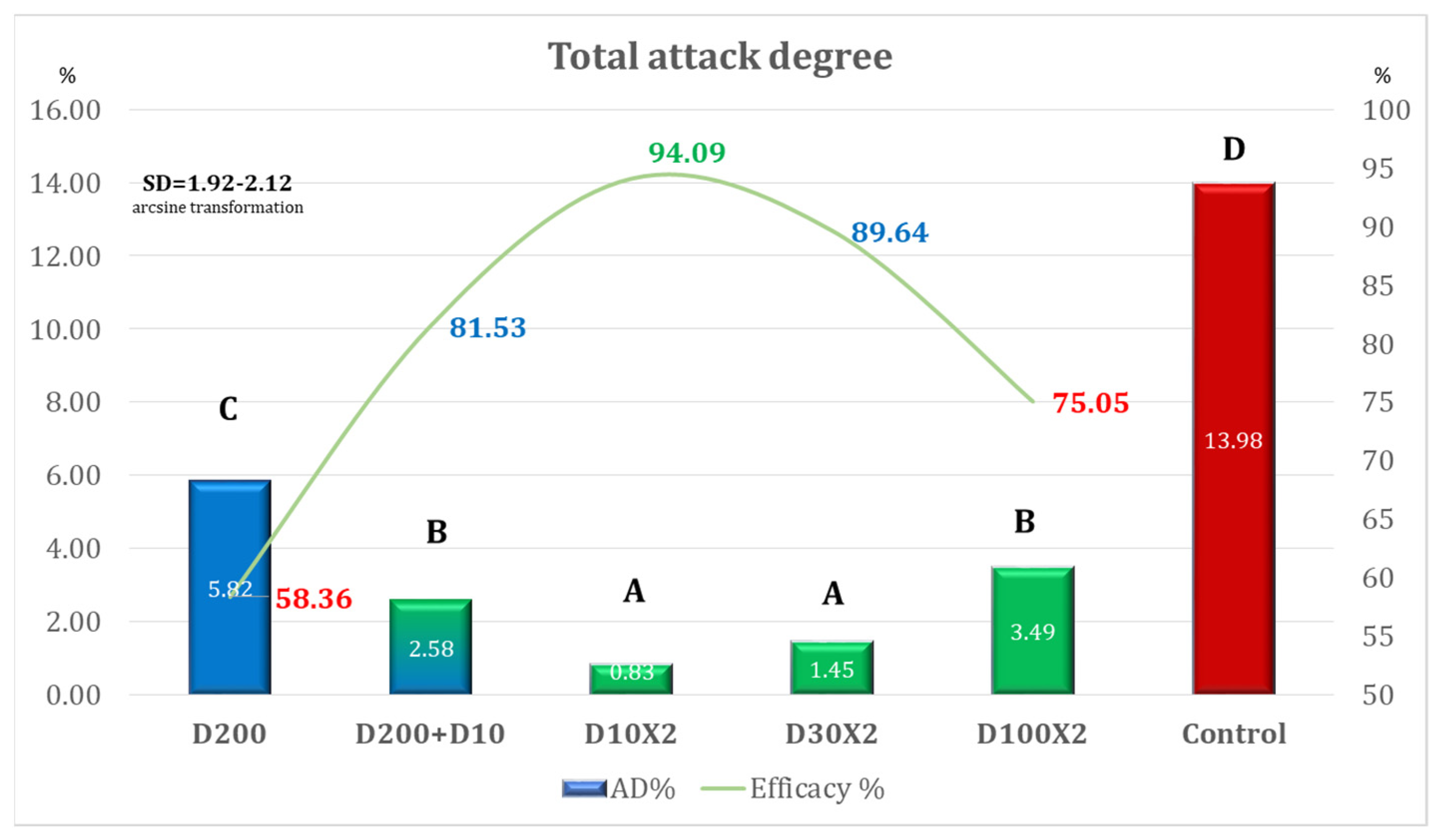
Considering the sum of the attack degrees of the five pathogens, the application of the fungicide at ultra-low volumes (ULV) shows the highest efficiency, exceeding 90% (Figure 9). Even if the attack level in the low-volume (LV) variant was slightly higher, it did not show significant differences. We have three groups of efficiencies: high efficiency at low and ultra-low volumes; medium to high efficiency at medium volumes, and when combining normal and ultra-low volumes; and medium efficiency when applying a single treatment.

3.3. Treatment Efficacy

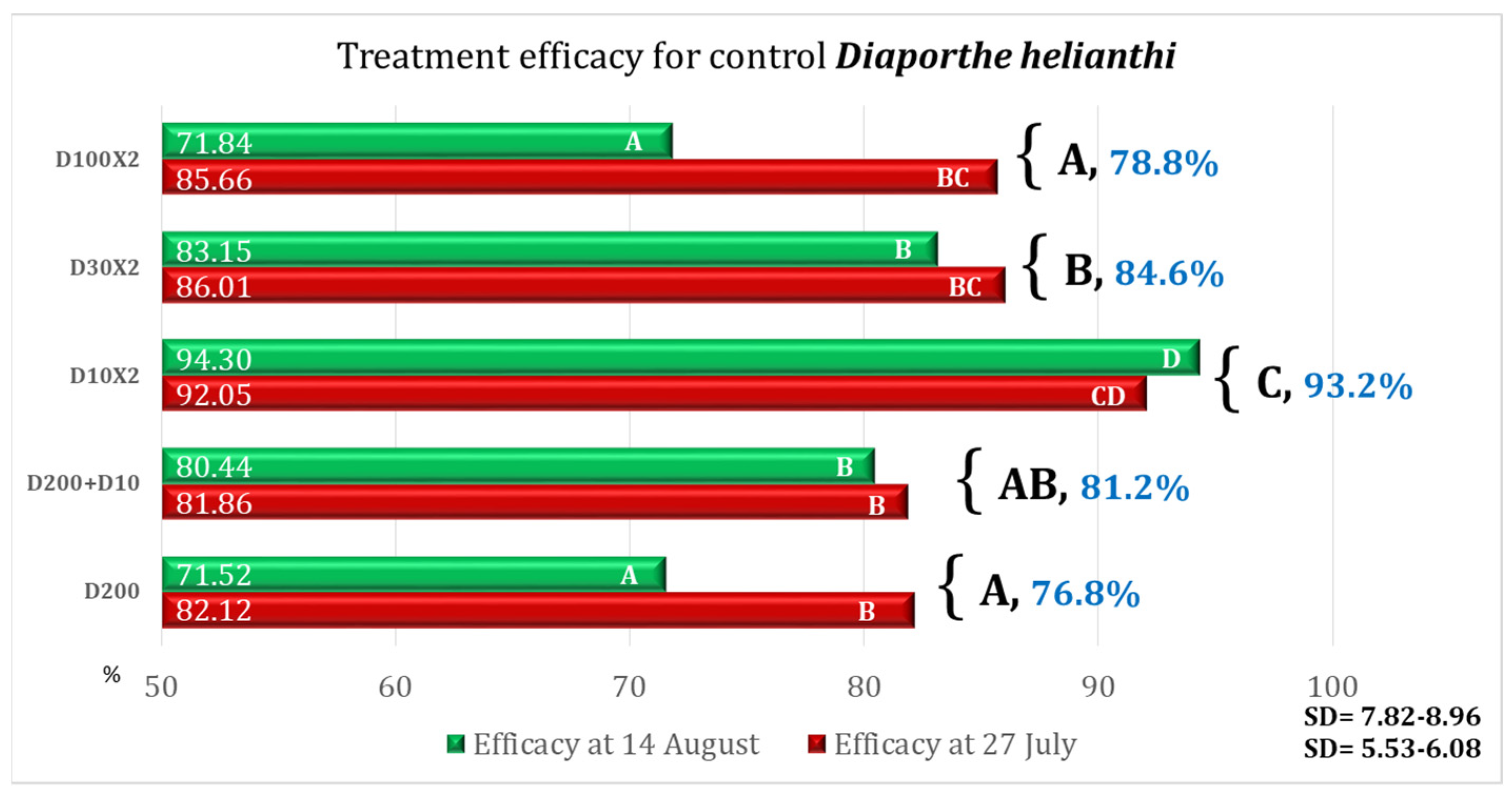
Figure 10, Figure 11, Figure 12, Figure 13 and Figure 14 show the fungicide’s efficiency as a function of spraying volume and the number of applications. For Diaporthe helianthi (Figure 10), efficiency decreases from 27 July to 14 August across all variants except for the ultra-low-volume variant, which showed an insignificant increase. Significant decreases in efficiency were observed in the variant with a single treatment and in the variant with medium volumes applied (D100 × 2). The average shows that the most efficient was the application in ultra-low volumes (93.2%), with significant differences compared to all other tested variants.
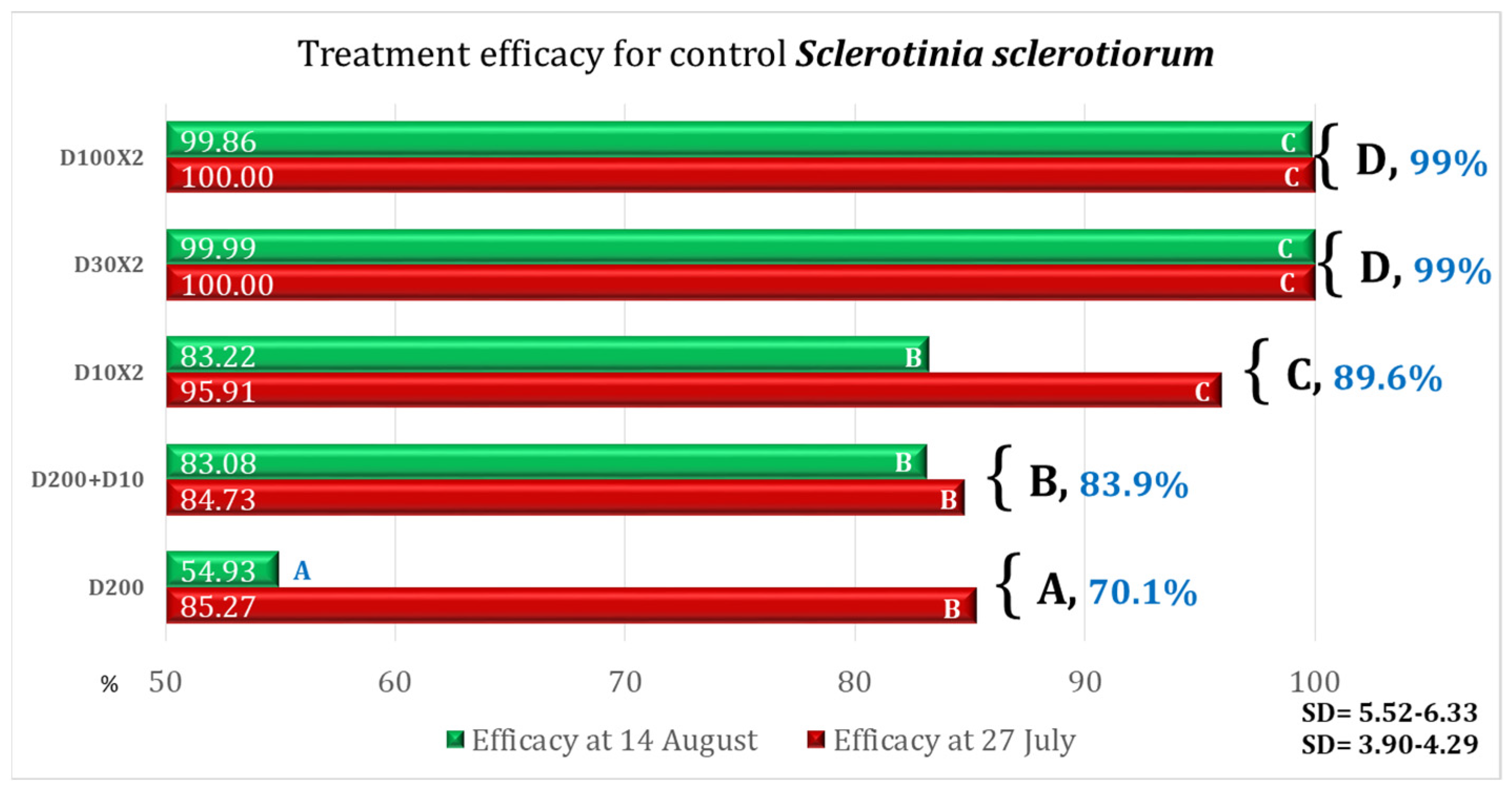
For Sclerotinia sclerotiorum, decreases in efficiency were observed only for the single-treatment variant at a normal volume (D200) and ULV variant (D10 × 2) (Figure 11). Interestingly, for this pathogen, the application at low and medium volumes achieved the highest efficiency, over 99%.
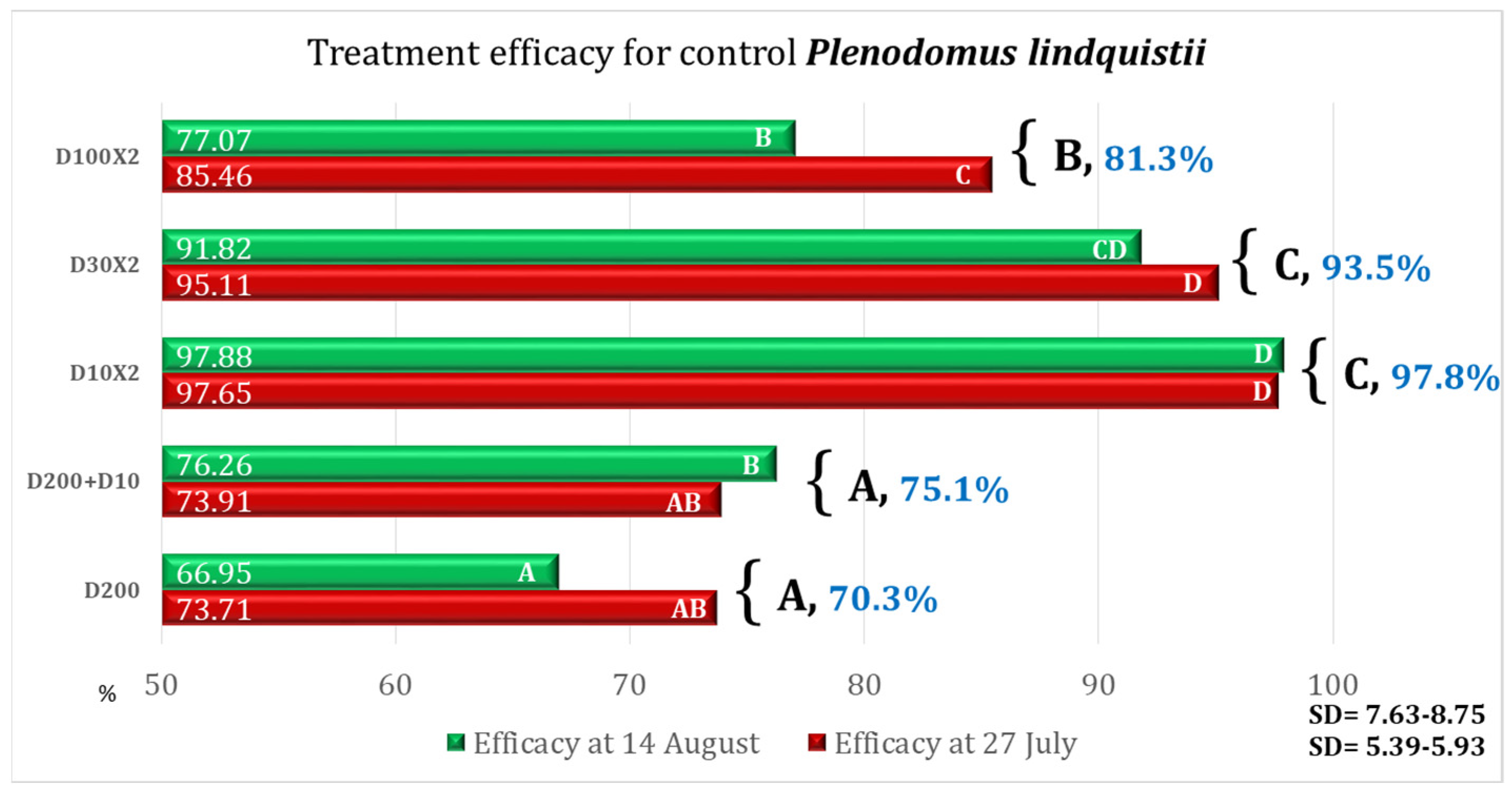
For Plenodomus lindquistii, the trend is similar to that observed for Diaporthe helianthi; however, for this pathogen, an increase in efficiency was also observed in the variant to which we applied the fungicide combined: normal and ultra-reduced volumes (Figure 12). It was, therefore, found that applying the second treatment at a high concentration can achieve good efficiency in controlling this pathogen. Moreover, this time, the best efficiency was found in the variant with ultra-low volumes, followed by the variant with low volumes, with no significant difference.
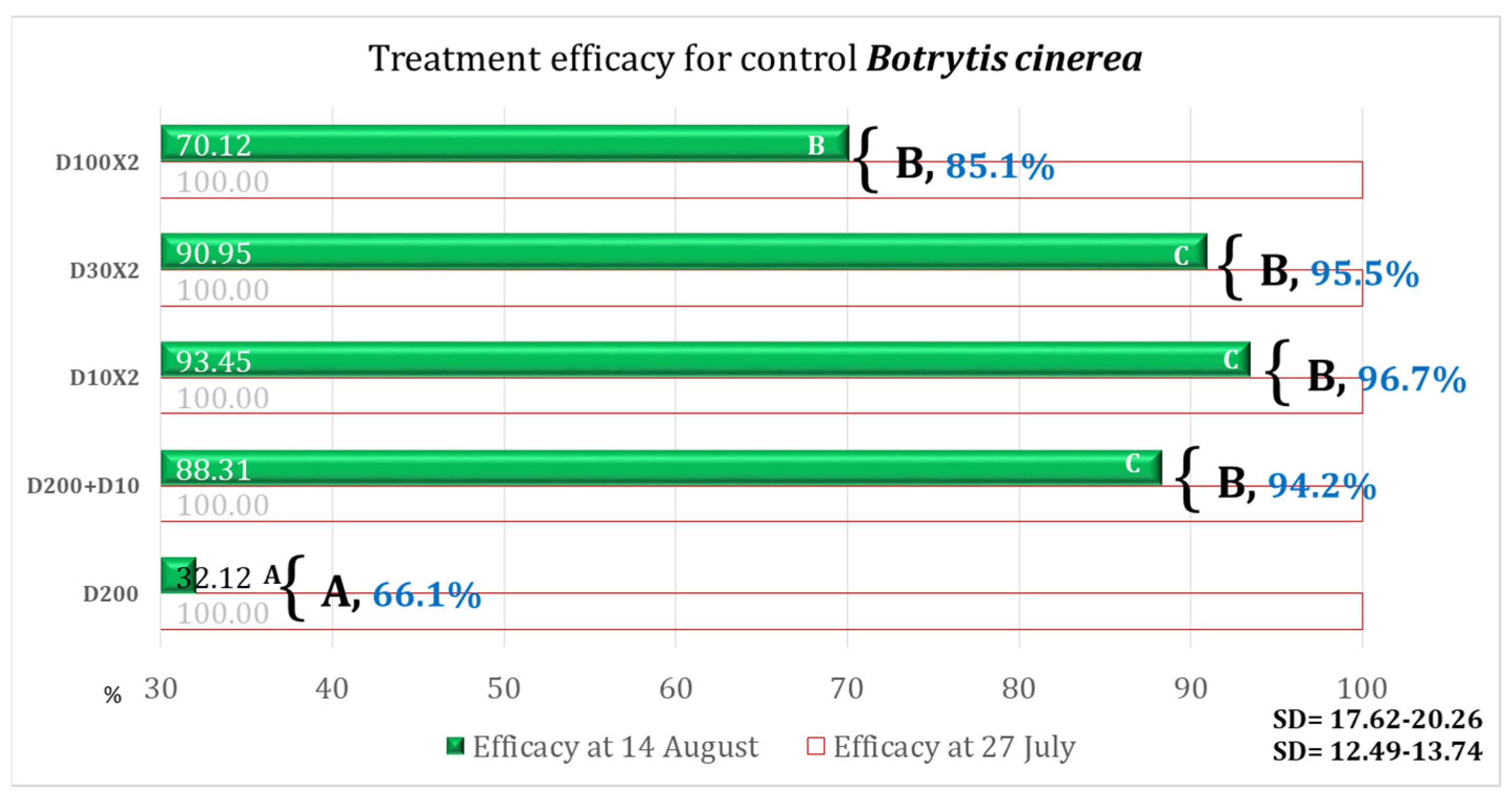
For the pathogen Botrytis cinerea, efficiency could be calculated only for the second treatment, with differences observed only between the single-treatment variant and the other treatments (Figure 13).
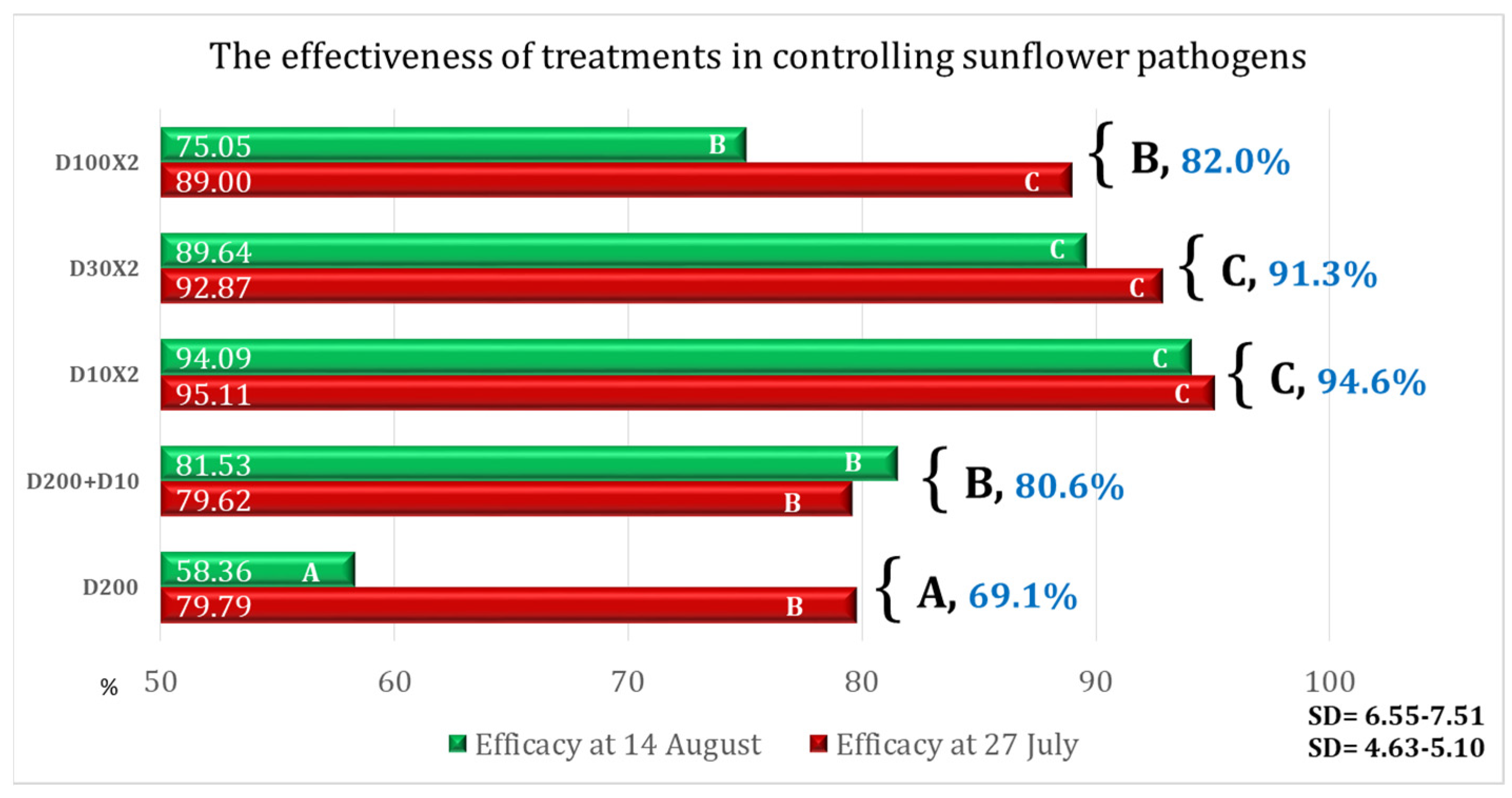
Figure 14 provides an overview of the efficacy of the fungicide applied to all identified pathogens. It is noted that differences in efficiency between treatments are recorded only for the single-treatment and medium-volume variants. However, it should be noted that the only variant in which the efficiency increased was the one in which the first treatment was carried out with a normal volume simulating terrestrial application. The second treatment was applied in an ultra-low volume (10 L) using a drone.
Table 2 summarizes the results on the application time of the treatments. The results confirm that, along with increased treatment efficiency, we also see an increase in work productivity.

4. Discussion

Sunflower pathogens remain a limiting factor in production, although advances in technology and the pesticides used have reduced their incidence. However, under conditions of temperature and humidity, the damage can be significant, often exceeding 30–40% only in the case of the pathogen Diaporthe helianthi [53]
Our results complement studies to date on the efficacy of fungicides for controlling the four monitored pathogens [54,55,56,57,58].
This experiment helps us to understand that applying fungicides at reduced (LV) and ultra-reduced volumes (ULV) can significantly increase their effectiveness, with drones being the only ones capable of uniformly spraying these small amounts of solution over large areas. The differences in effectiveness between normal (NV) and ultra-low volume (ULV) applications exceeded 15% in a single application, and the fact that the second treatment could be applied without damaging the plants increased the effectiveness level from 58% to 94%, resulting in a difference of over 35%.
Studies on the effectiveness of fungicides applied in ultra-low volumes using drones are practically non-existent, with most focusing on the detection [59,60,61] or control of other pathogens [62,63] from crops like soybean [64], wheat [62,65,66], grapevines [67], rice [68], peanut [69], coffee [70], or banana [71]. Our experiment attempts to fill this gap, being the first experiment carried out on sunflowers, and demonstrates that applying high concentrations of fungicides while maintaining appropriate doses can increase their effectiveness. It should be noted that we must ensure that the applied solution is evenly distributed across the surface unit, and this can be achieved only with drones when their operating parameters are correctly adjusted.
The adaptation of different digital agriculture technologies into practice reduces waste, optimizes farming inputs, and enhances crop production [72]. The DJI Agras T50 drone allows real-time parameter changes, facilitating uniform coverage and making the pilot’s work easier.
The latest integration of Big Data and IoT technologies in modern agriculture has demonstrated, through several experiments, how predictive data analytics and intelligent monitoring systems can significantly enhance the anticipation of pest infestations and the optimization of resource use, which are significant aspects of sustainable growth in agricultural production [73].
This new stage of development, known as Agriculture 5.0 or intelligent agriculture, expects to integrate IoT technologies as tools that enable the real-time monitoring of environmental and crop conditions, thus supporting precision interventions and adaptive decision-making. These technological advancements, such as the use of drones, contribute to sustainable farming practices by reducing resource waste (especially water) and enhancing resilience to climate change [74]. Drones revolutionize sustainable agriculture because they improve efficiency and protect soil and water, thus making farming more sustainable and profitable [75].

5. Conclusions

The above results indicate that applying fungicides at low and ultra-low volumes increases the efficiency of phytosanitary products. The use of reduced volumes in the control of sunflower pathogens shows a higher efficiency. By applying the second treatment at lower volumes, the efficiency in controlling the pathogen Diaporthe helianthi increased, with values ranging from 0.32% to 22.78%; for Sclerotinia sclerotiorum, by 28.15% to 45.06%; for Plenodomus lindquistii, by 9.31% to 30.93%; for Botrytis cinerea, by 38.00% to 61.33%. The application of the fungicide at ultra-low volumes increased the efficiency of controlling sunflower pathogens by 23% in the combined variant D200 + D10 (simulation of ground application + second treatment ULV) and by 35% in the variant D10 × 2 (ULV (two treatments)).
To assess the practical relevance on a commercial scale, we calculated the execution time on a continuous surface of one hectare, assuming uninterrupted operation. At 200 L/ha, the working speed of 5.33 km/h and the width of 9 m correspond to a working capacity of approximately 4.8 ha/h, respectively, with a time of approximately 12 min and 30 s per hectare. At 10 L/ha, operating at 7 m/s, the working capacity increases to approximately 22.7 ha/h, which corresponds to a time of approximately 2 min and 39 s per hectare. This indicates an approximately 4.7-fold increase in operational efficiency, expressed in ha per hour. The explicit quantification of execution time shows that a low-volume application (10–30 L/ha) leads to substantial reductions in operating time at both experimental and commercial scales, supporting the adoption of drones not only from an agronomic perspective but also from an operational efficiency and scalability perspective.
We recommend applying fungicides at a spraying rate of 10 L per hectare; if climatic conditions at the time of application (wind, temperature, humidity) warrant it, increase this to maximum 30 L. If there is a high Sclerotinia sclerotiorum pathogen burden, the spraying rate can be increased to 30 L per hectare to achieve higher efficiency, which is the best option for maintaining treatment efficacy and good work efficiency.

Author Contributions

Conceptualization, M.I.Ș. and V.C.F.; methodology, V.C.F.; software, V.C.F.; validation, T.F., M.I.Ș., and E.G.-R.; formal analysis, M.G. and T.F.; investigation, M.I.Ș. and V.C.F.; resources, M.I.Ș.; data curation, V.C.F.; writing—original draft preparation, M.I.Ș.; writing—review and editing, E.G.-R. and V.C.F.; visualization, M.G. and T.F.; supervision, V.C.F.; project administration, M.I.Ș. and V.C.F.; funding acquisition, M.I.Ș. All authors have read and agreed to the published version of the manuscript.

Funding

This research received no external funding.

Data Availability Statement

The original contributions presented in this study are included in the article. Further inquiries can be directed to the corresponding author.

Acknowledgments

The authors have reviewed and edited the output and take full responsibility for the content of this publication.

Conflicts of Interest

The authors declare no conflicts of interest.

References

  1. Cho, Y.; Cho, K.; Shin, C.; Park, J.; Lee, E.-S. An Agricultural Expert Cloud for a Smart Farm. In Future Information Technology, Application, and Service; Lecture Notes in Electrical Engineering; Springer: Dordrecht, The Netherlands, 2012; pp. 657–662. [Google Scholar] [CrossRef]
  2. Ray, P.P. Internet of Things for Smart Agriculture: Technologies, Practices and Future Direction. J. Ambient Intell. Smart Environ. 2017, 9, 395–420. [Google Scholar] [CrossRef]
  3. Schmidt, K. Application of Plant Protection Products by Helicopter in Germany (Legislation, Requirements, Guidelines, Use in Vineyards and Forests, Drift). EPPO Bull. 1996, 26, 117–122. [Google Scholar] [CrossRef]
  4. Shuping, F.; Yu, R.; Chenming, H.; Fengbo, Y. Planning of Takeoff/Landing Site Location, Dispatch Route, and Spraying Route for a Pesticide Application Helicopter. Eur. J. Agron. 2023, 146, 126814. [Google Scholar] [CrossRef]
  5. Klauser, F.; Dennis Pauschinger, D. Entrepreneurs of the Air: Sprayer Drones as Mediators of Volumetric Agriculture. J. Rural Stud. 2021, 84, 55–62. [Google Scholar] [CrossRef]
  6. John, D.; Hussin, N.; Shahibi, M.S.; Ahmad, M.; Hashim, H.; Ametefe, D.S. A Systematic Review on the Factors Governing Precision Agriculture Adoption among Small-Scale Farmers. Outlook Agric. 2023, 52, 469–485. [Google Scholar] [CrossRef]
  7. Chen, N.; Zhang, X.; Wang, C. Integrated Open Geospatial Web Service Enabled Cyber-Physical Information Infrastructure for Precision Agriculture Monitoring. Comput. Electron. Agric. 2015, 111, 78–91. [Google Scholar] [CrossRef]
  8. McFadden, J.; Casalini, F.; Griffin, T.; Antón, J. The digitalisation of agriculture: A literature review and emerging policy issues. In OECD Food, Agriculture and Fisheries Papers; OECD Publishing: Paris, France, 2022. [Google Scholar] [CrossRef]
  9. Tantalaki, N.; Souravlas, S.; Roumeliotis, M. Data-Driven Decision Making in Precision Agriculture: The Rise of Big Data in Agricultural Systems. J. Agric. Food Inf. 2019, 20, 344–380. [Google Scholar] [CrossRef]
  10. Pappa, F. Sounding the Alarm for Digital Agriculture: Examining Risks to the Human Rights to Science and Food. Neth. Q. Hum. Rights 2024, 42, 276–296. [Google Scholar] [CrossRef]
  11. Garske, B.; Bau, A.; Ekardt, F. Digitalization and AI in European Agriculture: A Strategy for Achieving Climate and Biodiversity Targets? Sustainability 2021, 13, 4652. [Google Scholar] [CrossRef]
  12. Anam, I.; Arafat, N.; Hafiz, M.S.; Jim, J.R.; Kabir, M.M.; Mridha, M.F. A Systematic Review of UAV and AI Integration for Targeted Disease Detection, Weed Management, and Pest Control in Precision Agriculture. Smart Agric. Technol. 2024, 9, 100647. [Google Scholar] [CrossRef]
  13. Inoue, Y. Satellite- and Drone-Based Remote Sensing of Crops and Soils for Smart Farming—A Review. Soil Sci. Plant Nutr. 2020, 66, 798–810. [Google Scholar] [CrossRef]
  14. Zeginis, D.; Kalampokis, E.; Palma, R.; Atkinson, R.; Tarabanis, K. A Semantic Meta-Model for Data Integration and Exploitation in Precision Agriculture and Livestock Farming. Semant. Web 2023, 15, 1165–1193. [Google Scholar] [CrossRef]
  15. Wachenheim, C.; Fan, L.; Zheng, S. Adoption of Unmanned Aerial Vehicles for Pesticide Application: Role of Social Network, Resource Endowment, and Perceptions. Technol. Soc. 2021, 64, 101470. [Google Scholar] [CrossRef]
  16. Adel, A.; Pullanagari, R.; Alani, N.H.S.; Al-Rawi, M.; Fouzia, S.; Berger, B. Drones-of-The-Future in Agriculture 5.0—Automation, Integration, and Optimisation. Agric. Syst. 2025, 231, 104543. [Google Scholar] [CrossRef]
  17. Serafinelli, E. Life of Drone Visuals: Norms, Ethics, and Effects. In Theorising Drones in Visual Culture: Views from the Blue; Springer Nature: Cham, Switzerland, 2024; pp. 119–156. [Google Scholar] [CrossRef]
  18. Anagnostis, I.; Kotzanikolaou, P.; Douligeris, C. Understanding and Securing the Risks of Unmanned Aerial Vehicle Services. IEEE Access 2025, 13, 47955–47995. [Google Scholar] [CrossRef]
  19. Guebsi, R.; Mami, S.; Chokmani, K. Drones in Precision Agriculture: A Comprehensive Review of Applications, Technologies, and Challenges. Drones 2024, 8, 686. [Google Scholar] [CrossRef]
  20. Talaeizadeh, A.; Sharifi, I.; Alasty, A.; Ghatrehsamani, S. Agricultural Spraying Drones: A Comprehensive Review. Smart Agric. Technol. 2025, 12, 101519. [Google Scholar] [CrossRef]
  21. Saiz-Rubio, V.; Rovira-Más, F. From Smart Farming towards Agriculture 5.0: A Review on Crop Data Management. Agronomy 2020, 10, 207. [Google Scholar] [CrossRef]
  22. Binswanger, H. Agricultural Mechanization. World Bank Res. Obs. 1986, 1, 27–56. [Google Scholar] [CrossRef]
  23. Ameen, A.; Raza, S. Green Revolution: A Review. Int. J. Adv. Sci. Res. 2018, 3, 129. [Google Scholar] [CrossRef]
  24. Lioutas, E.D.; Charatsari, C. Big Data in Agriculture: Does the New Oil Lead to Sustainability? Geoforum 2020, 109, 1–3. [Google Scholar] [CrossRef]
  25. Chamata, J.E. Convergence of the Unmanned Aerial Industry. Theor. Econ. Lett. 2017, 7, 175–186. [Google Scholar] [CrossRef]
  26. Nordin, M.N.; Jusoh, M.S.M.; Bakar, B.H.A.; Basri, M.S.H.; Kamal, F.; Ahmad, M.T.; Mail, M.F.; Masarudin, M.F.; Misman, S.N.; Teoh, C.C. Preliminary Study on Pesticide Application in Paddy Field Using Drone Sprayer. Adv. Agric. Food Res. J. 2021, 2, 2. [Google Scholar] [CrossRef]
  27. Ivezić, A.; Trudić, B.; Stamenković, Z.; Kuzmanović, B.; Perić, S.; Ivošević, B.; Buđen, M.; Petrović, K. Drone-Related Agrotechnologies for Precise Plant Protection in Western Balkans: Applications, Possibilities, and Legal Framework Limitations. Agronomy 2023, 13, 2615. [Google Scholar] [CrossRef]
  28. Iost Filho, F.H.; Heldens, W.B.; Kong, Z.; de Lange, E.S. Drones: Innovative Technology for Use in Precision Pest Management. J. Econ. Entomol. 2019, 113, 1–25. [Google Scholar] [CrossRef]
  29. Berner, B.; Chojnacki, J. Use of Drones in Crop Protection. In Proceedings of the Farm Machinery and Processes Management in Sustainable Agriculture, IX International Scientific Symposium, Lublin, Poland, 22 November 2017. [Google Scholar] [CrossRef]
  30. Sizhe, Z.; Jie, M.; Wenshen, J.; Hengzhi, Z. Development Prospect of the Plant Protection UAV in China. In Proceedings of the ASABE Annual International Meeting, Spokane, WA, USA, 16–19 July 2017; pp. 16–19. [Google Scholar]
  31. Yumnam, C.; Marak, A.B.; Kumar, M.; Khatri, S.; Kumar, S.; Soni, S.; Kabil, K.; Balaji, V.; Sahni, R.K.; Kumar, S.P.; et al. Utilising Drones in Agriculture: A Review on Remote Sensors, Image Processing and Their Application. Mod. Agric. 2025, 3, e70021. [Google Scholar] [CrossRef]
  32. România-Comisia Europeană. agriculture.ec.europa.eu. Available online: https://agriculture.ec.europa.eu/cap-my-country/cap-strategic-plans/romania_ro (accessed on 15 October 2025).
  33. Vang-Pedersen, O. Spraying of apple trees with air mist blower and ultra low volume sprayer with normal and reduced amounts of pesticides. Dan. J. Plant Soil Sci. 1982, 86, 255–295. [Google Scholar]
  34. Ferguson, J.; Gaussoin, R.; Eastin, J.; Henry, R.; Kruger, G. Effect of application carrier volume on a conventional sprayer system and an ultra-low volume sprayer. In Proceedings of the 33rd Symposium on Pesticide Formulation and Delivery Systems: “Sustainability: Contributions from Formulation Technology”, Atlanta, GA, USA, 23–25 October 2012; ASTM International: West Conshohocken, PA, USA, 2014; pp. 13–22. [Google Scholar]
  35. Awulu, J.O.; Enokela, J.A.; Shatalis, D.D.; Eng, B. Design and Evaluation of an Electrically Operated Ultra–Low Volume Sprayer. Pac. J. Sci. Technol. 2011, 12, 104–114. [Google Scholar]
  36. Pal, S.K.; Das Gupta, S.K. Pesticide application skill development series No. 17 International Crops Research Institute for the Semi-Arid Tropics. Patancheru 1996, 502, 1113–1138. [Google Scholar]
  37. Dumitraşcu, A.; Manea, D.; Căsăndroiu, T. The use of dimensional analysis in studying the spraying process through nozzles at phytosanitary treatment machines. INMATEH-Agric. Eng. 2015, 45, 25. [Google Scholar]
  38. Bán, R.; Kovács, A.; Nisha, N.; Pálinkás, Z.; Zalai, M.; Yousif, A.I.A.; Körösi, K. New and High Virulent Pathotypes of Sunflower Downy Mildew (Plasmopara halstedii) in Seven Countries in Europe. J. Fungi 2021, 7, 549. [Google Scholar] [CrossRef]
  39. Mardare, E.S.; Cristea, S. Researches on the Reaction of Sunflower Hybrids to Fungal Rots Attack. J. Biotechnol. 2015, 208, S108. [Google Scholar] [CrossRef]
  40. Florea, A.-M.; Gafencu, A.-M.; Lipșa, F.-D.; Gabur, I.; Ulea, E. A First Report of Sclerotinia sclerotiorum Causing Forsythia Twig Blight in Romania. Plants 2023, 12, 3516. [Google Scholar] [CrossRef]
  41. Radu, I.; Gurău, L.R. Influence of sowing time on the occurrence of alternaria leaf spot, rust and broomrape on sunflower. Rom. J. Plant Prot. 2023, 16, 66–71. [Google Scholar] [CrossRef]
  42. Draghici, R. Research the influence of treatment plant application on sunflower culture located in sandy soils conditions. Ann. Univ. Craiova—Agric. Mont. Cadastre Ser. 2010, 40, 361–367. [Google Scholar]
  43. Şerban, M.I.; Florian, V. Health status of some sunflower hybrids during 2019–2021 in Cluj county. Agron. Ser. Sci. Res. 2022, 65, 177–182. [Google Scholar]
  44. Okros, A.; Borcean, A.; Dragoslav, M.V.; Casiana, M.; Nicoleta, B.F. Production evolution for the main agricultural crops from the central Banat area under the influence of the main pathogens and pedoclimatic conditions. Int. Multidiscip. Sci. GeoConf. SGEM 2018, 18, 347–355. [Google Scholar]
  45. Ulea, E.; Florea, A.M.; Gafencu, A.M.; Lipșa, F.D. Alternaria head rot on sunflower in the NE region of Romania. Agron. Ser. Sci. Res. 2024, 67, 49–52. [Google Scholar]
  46. Gulzar, Y.; Ünal, Z.; Aktaş, H.; Mir, M.S. Harnessing the Power of Transfer Learning in Sunflower Disease Detection: A Comparative Study. Agriculture 2023, 13, 1479. [Google Scholar] [CrossRef]
  47. Sahni, R.K.; Kumar, S.P.; Thorat, D.; Rajwade, Y.; Jyoti, B.; Ranjan, J.; Anand, R. Drone Spraying System for Efficient Agrochemical Application in Precision Agriculture. In Applications of Computer Vision and Drone Technology in Agriculture 4.0; Springer Nature: Singapore, 2024; pp. 225–244. [Google Scholar] [CrossRef]
  48. Kumar, S.P.; Subeesh, A.; Jyoti, B.; Mehta, C.R. Applications of drones in smart agriculture. In Smart Agriculture for Developing Nations: Status, Perspectives and Challenges; Springer Nature: Singapore, 2023; pp. 33–48. [Google Scholar]
  49. Easy Access Rules for Unmanned Aircraft Systems (Regulations (EU) 2019/947 and 2019/945). EASA. Available online: https://www.easa.europa.eu/en/document-library/easy-access-rules/easy-access-rules-unmanned-aircraft-systems-regulations-eu (accessed on 27 November 2025).
  50. Romanian CAA. www.caa.ro. Available online: https://www.caa.ro/ro/pages/drone (accessed on 6 December 2025).
  51. Satellites and Drones Support in Addressing Sustainability Challenges in Agriculture. Available online: https://monitor-industrial-ecosystems.ec.europa.eu/sites/default/files/2021-05/Leaflet%20Satellites%20and%20drones%20for%20less%20intensive%20farming%20and%20arable%20crops.pdf (accessed on 6 December 2025).
  52. 2022-006-GO DRONE-Optimization of the Application of Phytosanitary Products Through the Combination of Artificial Intelligence and the Use of Drones|EU CAP Network. Europa.eu. Available online: https://eu-cap-network.ec.europa.eu/projects/2022-006-go-drone-optimization-application-phytosanitary-products-through-combination_en (accessed on 6 December 2025).
  53. Debaeke, P.; Estragnat, A.; Reau, R. Influence of Crop Management on Sunflower Stem Canker (Diaporthe helianthi). Agronomie 2003, 23, 581–592. [Google Scholar] [CrossRef]
  54. Debaeke, P.; Moinard, J. Effect of Crop Management on Epidemics of Phomopsis Stem Canker (Diaporthe helianthi) for Susceptible and Tolerant Sunflower Cultivars. Field Crops Res. 2010, 115, 50–60. [Google Scholar] [CrossRef]
  55. Herd, G.W.; Phillips, L. Control of Seed-Borne Sclerotinia sclerotiorum by Fungicidal Treatment of Sunflower Seed. Plant Pathol. 1988, 37, 202–205. [Google Scholar] [CrossRef]
  56. Debaeke, P.; Pérès, A. Influence of Sunflower (Helianthus annuus L.) Crop Management on Phoma Black Stem (Phoma macdonaldii Boerema). Crop Prot. 2003, 22, 741–752. [Google Scholar] [CrossRef]
  57. Dudchenko, V.; Markovska, O.; Sydiakina, O. Determination of the Effectiveness of Fungicide Protection Systems as a Reserve for Sustainable Sunflower Production in South of Ukraine. Technol. Audit Prod. Reserves 2025, 1, 51–57. [Google Scholar] [CrossRef]
  58. Sattarovich, S.B.; Normamadovich, R.U.; Kakhramonovich, K.U.; Mirodilovich, A.M. Fungal diseases of sunflower and measures against them. PalArch’s J. Archaeol. Egypt/Egyptol. 2020, 17, 3268–3279. [Google Scholar]
  59. Abbas, A.; Zhang, Z.; Zheng, H.; Alami, M.M.; Alrefaei, A.F.; Abbas, Q.; Naqvi, S.A.H.; Rao, M.J.; Mosa, W.F.A.; Abbas, Q.; et al. Drones in Plant Disease Assessment, Efficient Monitoring, and Detection: A Way Forward to Smart Agriculture. Agronomy 2023, 13, 1524. [Google Scholar] [CrossRef]
  60. Chin, R.; Catal, C.; Kassahun, A. Plant Disease Detection Using Drones in Precision Agriculture. Precis. Agric. 2023, 24, 1663–1682. [Google Scholar] [CrossRef]
  61. Slimani, H.; El Mhamdi, J.; Jilbab, A. Drone-assisted plant disease identification using artificial intelligence: A critical review. Int. J. Comput. Digit. Syst. 2023, 14, 10433–10446. [Google Scholar] [CrossRef]
  62. Wang, G.; Lan, Y.; Qi, H.; Chen, P.; Hewitt, A.; Han, Y. Field Evaluation of an Unmanned Aerial Vehicle (UAV) Sprayer: Effect of Spray Volume on Deposition and the Control of Pests and Disease in Wheat. Pest Manag. Sci. 2019, 75, 1546–1555. [Google Scholar] [CrossRef]
  63. Liu, H.; Jang, H.-R.; Choi, S.; Park, S.; Choi, J.; Choi, H.; Park, S.-W.; An, W.; Hong, S.-W.; Sang, H. Assessment of Fungicide-Based Control of Sheath Blight Using Mobile Spraying Equipment. Front. Agron. 2025, 7, 1687036. [Google Scholar] [CrossRef]
  64. Soares, R.M.; Adegas, F.S.; Roggia, S. Drone spraying of fungicides to control Asian soybean rust. J. Agric. Sci. Res. 2025, 5, 1–8. [Google Scholar] [CrossRef]
  65. Qin, W.; Xue, X.; Zhang, S.; Gu, W.; Wang, B. Droplet Deposition and Efficiency of Fungicides Sprayed with Small UAV against Wheat Powdery Mildew. Int. J. Agric. Biol. Eng. 2018, 11, 27–32. [Google Scholar] [CrossRef]
  66. Xiao, J.; Chen, L.; Pan, F.; Deng, Y.; Ding, C.; Liao, M.; Su, X.; Cao, H. Application Method Affects Pesticide Efficiency and Effectiveness in Wheat Fields. Pest Manag. Sci. 2019, 76, 1256–1264. [Google Scholar] [CrossRef]
  67. De Oliveira, L.d.S.; Grigolo, C.R.; Pertille, R.H.; Modolo, A.J.; Campos, J.R.d.R.; Elias, A.R.; Citadin, I. Aerial Spraying for Downy Mildew Control in Grapevines Using a Remotely Piloted Aircraft. Acta Scientiarum. Agron. 2024, 46, e66613. [Google Scholar] [CrossRef]
  68. Sahu, B.; Tiwari, P.K.; Verma, S.; Netam, K.; Sahu, B. Evaluation of Nutrient Application and Drones Sprayed Pesticides (Fungicides and Insecticides) on the Disease Severity of Major Diseases of Paddy. Microbiol. Res. J. Int. 2025, 35, 13–19. [Google Scholar] [CrossRef]
  69. Shan, C.; Wang, G.; Wang, H.; Wu, L.; Song, C.; Hussain, M.; Wang, H.; Lan, Y. Assessing the Efficiency of UAV for Pesticide Application in Disease Management of Peanut Crop. Pest Manag. Sci. 2024, 80, 4505–4515. [Google Scholar] [CrossRef]
  70. da Vitória, E.L.; Krohling, C.A.; Borges, F.R.P.; Ribeiro, L.F.O.; Ribeiro, M.E.A.; Chen, P.; Lan, Y.; Wang, S.; e Moraes, H.M.F.; Júnior, M.R.F. Efficiency of Fungicide Application an Using an Unmanned Aerial Vehicle and Pneumatic Sprayer for Control of Hemileia vastatrix and Cercospora coffeicola in Mountain Coffee Crops. Agronomy 2023, 13, 340. [Google Scholar] [CrossRef]
  71. Arriaga García, S.N.; Meza Cabrera, W.G.; Painii Cabrera, V.F. Uso de Drones Para El Control de Sigatoka Negra (Mycosphaerella fijiensis) Vinces, Ecuador. ECOAgropecu. Rev. Científica Ecológica Agropecu 2024, 1, 25–33. [Google Scholar] [CrossRef]
  72. Abiri, R.; Rizan, N.; Balasundram, S.K.; Shahbazi, A.B.; Abdul-Hamid, H. Application of Digital Technologies for Ensuring Agricultural Productivity. Heliyon 2023, 9, e22601. [Google Scholar] [CrossRef]
  73. Kumar, D.; Pramod Pawar, P.; Kumar Meesala, M.; Kumar Pareek, P.; Reddy Addula, S.; Shwetha, K.S. Smart Agriculture in the Era of Big Data: IoT-Assisted Pest Forecasting and Resource Optimization for Sustainable Farming. In Proceedings of the 2024 International Conference on Integrated Intelligence and Communication Systems (ICIICS), Kalaburagi, India, 22–23 November 2024; pp. 1–8. [Google Scholar] [CrossRef]
  74. Singh, N.; Gupta, D.; Joshi, M.; Yadav, K.; Nayak, S.; Kumar, M.; Nayak, K.; Gulaiya, S.; Rajpoot, A.S. Application of Drones Technology in Agriculture: A Modern Approach. J. Sci. Res. Rep. 2024, 30, 142–152. [Google Scholar] [CrossRef]
  75. Noor, F.; Noel, A.S. Perception of Farmers with Reference to Drones for Pesticides Spray at Kurukshetra District of Haryana, India. Asian J. Adv. Agric. Res. 2023, 22, 9–15. [Google Scholar] [CrossRef]
Figure 1. Diaporthe helianthi attack degree on 27 July, after the first treatment. D200—200 L/ha one treatment; D200 + D10—200 L/ha first treatment + 10 L/ha (ULV) second treatment; D10 × 2—10 L/ha (ULV) two treatments; D30 × 2—30 L/ha (LV) two treatments; D100 × 2—100 L/ha (MV) two treatments. Letters A to B represent statistical groups for the Duncan test; Colour code: for AD% (Red—Control; Blue—ground simulation treatment; Green—Drone treatment with reduced solution); for Efficacy% (Green—high; Blue—medium to high; Red—medium).
Drones 10 00033 g001
Figure 2. Sclerotinia sclerotiorum attack degree on 27 July, after the first treatment. D200—200 L/ha one treatment; D200 + D10—200 L/ha first treatment + 10 L/ha (ULV) second treatment; D10 × 2—10 L/ha (ULV) two treatments; D30 × 2—30 L/ha (LV) two treatments; D100 × 2—100 L/ha (MV) two treatments. Letters A to D represent statistical groups for the Duncan test; Colour code: for AD% (Red—Control; Blue—ground simulation treatment; Green—Drone treatment with reduced solution); for Efficacy% (Green—high; Blue—medium to high; Red—medium).
Drones 10 00033 g002
Figure 3. Plenodomus lindquistii attack degree on 27 July, after the first treatment. D200—200 L/ha one treatment; D200 + D10—200 L/ha first treatment + 10 L/ha (ULV) second treatment; D10 × 2—10 L/ha (ULV) two treatments; D30 × 2—30 L/ha (LV) two treatments; D100 × 2—100 L/ha (MV) two treatments. Letters A to D represent statistical groups for the Duncan test; Colour code: for AD% (Red—Control; Blue—ground simulation treatment; Green—Drone treatment with reduced solution); for Efficacy% (Green—high; Blue—medium to high; Red—medium).
Drones 10 00033 g003
Figure 4. Total attack degree on 27 July, after the first treatment. D200—200 L/ha one treatment; D200 + D10—200 L/ha first treatment + 10 L/ha (ULV) second treatment; D10 × 2—10 L/ha (ULV) two treatments; D30 × 2—30 L/ha (LV) two treatments; D100 × 2—100 L/ha (MV) two treatments. Letters A to D represent statistical groups for the Duncan test; Colour code: for AD% (Red—Control; Blue—ground simulation treatment; Green—Drone treatment with reduced solution); for Efficacy% (Green—high; Blue—medium to high; Red—medium).
Drones 10 00033 g004
Figure 5. Diaporthe helianthi attack degree on 14 August, after the second treatment. D200—200 L/ha one treatment; D200 + D10—200 L/ha first treatment + 10 L/ha (ULV) second treatment; D10 × 2—10 L/ha (ULV) two treatments; D30 × 2—30 L/ha (LV) two treatments; D100 × 2—100 L/ha (MV) two treatments. Letters A to D represent statistical groups for the Duncan test; Colour code: for AD% (Red—Control; Blue—ground simulation treatment; Green—Drone treatment with reduced solution); for Efficacy% (Green—high; Blue—medium to high; Red—medium).
Drones 10 00033 g005
Figure 6. Sclerotinia sclerotiorum attack degree on 14 August, after the second treatment. D200—200 L/ha one treatment; D200 + D10—200 L/ha first treatment + 10 L/ha (ULV) second treatment; D10 × 2—10 L/ha (ULV) two treatments; D30 × 2—30 L/ha (LV) two treatments; D100 × 2—100 L/ha (MV) two treatments. Letters A to D represent statistical groups for the Duncan test; Colour code: for AD% (Red—Control; Blue—ground simulation treatment; Green—Drone treatment with reduced solution); for Efficacy% (Green—high; Blue—medium to high; Red—medium).
Drones 10 00033 g006
Figure 7. Plenodomus lindquistii attack degree on 14 August, after the second treatment. D200—200 L/ha one treatment; D200 + D10—200 L/ha first treatment + 10 L/ha (ULV) second treatment; D10 × 2—10 L/ha (ULV) two treatments; D30 × 2—30 L/ha (LV) two treatments; D100 × 2—100 L/ha (MV) two treatments. Letters A to C represent statistical groups for the Duncan test; Colour code: for AD% (Red—Control; Blue—ground simulation treatment; Green—Drone treatment with reduced solution); for Efficacy% (Green—high; Blue—medium to high; Red—medium).
Drones 10 00033 g007
Figure 8. Botrytis cinerea attack degree on 14 August, after the second treatment. D200—200 L/ha one treatment; D200 + D10—200 L/ha first treatment + 10 L/ha (ULV) second treatment; D10 × 2—10 L/ha (ULV) two treatments; D30 × 2—30 L/ha (LV) two treatments; D100 × 2—100 L/ha (MV) two treatments. Letters A to C represent statistical groups for the Duncan test; Colour code: for AD% (Red—Control; Blue—ground simulation treatment; Green—Drone treatment with reduced solution); for Efficacy% (Green—high; Blue—medium to high; Red—medium).
Drones 10 00033 g008
Figure 9. Total attack degree on 14 August, after the second treatment. D200—200 L/ha one treatment; D200 + D10—200 L/ha first treatment + 10 L/ha (ULV) second treatment; D10 × 2—10 L/ha (ULV) two treatments; D30 × 2—30 L/ha (LV) two treatments; D100 × 2—100 L/ha (MV) two treatments. Letters A to D represent statistical groups for the Duncan test; Colour code: for AD% (Red—Control; Blue—ground simulation treatment; Green—Drone treatment with reduced solution); for Efficacy% (Green—high; Blue—medium to high; Red—medium).
Drones 10 00033 g009
Figure 10. Fungicide’s efficiency for Diaporthe helianthi. D200—200 L/ha one treatment; D200 + D10—200 L/ha first treatment + 10 L/ha (ULV) second treatment; D10 × 2—10 L/ha (ULV) two treatments; D30 × 2—30 L/ha (LV) two treatments; D100 × 2—100 L/ha (MV) two treatments. Letters A to D represent statistical groups for the Duncan test.
Drones 10 00033 g010
Figure 11. Fungicide’s efficiency for Sclerotinia sclerotiorum. D200—200 L/ha one treatment; D200 + D10—200 L/ha first treatment + 10 L/ha (ULV) second treatment; D10 × 2—10 L/ha (ULV) two treatments; D30 × 2—30 L/ha (LV) two treatments; D100 × 2—100 L/ha (MV) two treatments. Letters A to D represent statistical groups for the Duncan test.
Drones 10 00033 g011
Figure 12. Fungicide’s efficiency for Plenodomus lindquistii. D200—200 L/ha one treatment; D200 + D10—200 L/ha first treatment + 10 L/ha (ULV) second treatment; D10 × 2—10 L/ha (ULV) two treatments; D30 × 2—30 L/ha (LV) two treatments; D100 × 2—100 L/ha (MV) two treatments. Letters A to D represent statistical groups for the Duncan test.
Drones 10 00033 g012
Figure 13. Fungicide’s efficiency for Botrytis cinerea. D200—200 L/ha one treatment; D200 + D10—200 L/ha first treatment + 10 L/ha (ULV) second treatment; D10 × 2—10 L/ha (ULV) two treatments; D30 × 2—30 L/ha (LV) two treatments; D100 × 2—100 L/ha (MV) two treatments. Letters A to C represent statistical groups for the Duncan test.
Drones 10 00033 g013
Figure 14. Fungicide’s efficiency for controlling sunflower pathogens. D200—200 L/ha one treatment; D200 + D10—200 L/ha first treatment + 10 L/ha (ULV) second treatment; D10 × 2—10 L/ha (ULV) two treatments; D30 × 2—30 L/ha (LV) two treatments; D100 × 2—100 L/ha (MV) two treatments. Letters A to C represent statistical groups for the Duncan test.
Drones 10 00033 g014
Table 1. Experimental structure.
VariantEquipmentSpraying Rate Volume (L/ha)Products Used Observations
D200DJI Agras T50200Architect 1 L/ha + Turbo 0.6 kg/haSimulation of the ground application of one treatment
D200 + D10200 (T1) + 10 (T2)Simulation of the ground application + second treatment ULV
D10 × 210ULV (2 treatments)
D30 × 230LV (2 treatments)
D100 × 2100MV (2 treatments)
Control---No fungicide treatment
Table 2. The relationship between the attack degree, efficiency, and execution time of fungicide treatments.
VariantAD%Efficacy%Time for Application Per ha
D2005.8258.3600 h 12 m 30 s (one application)
D200 + D102.5881.5300 h 15 m 09 s (two applications)
D10 × 20.8394.0900 h 05 m 18 s (two applications)
D30 × 21.4589.6400 h 05 m 18 s (two applications)
D100 × 23.4975.0500 h 12 m 30 s (two applications)
D200—200 L/ha one treatment; D200 + D10—200 L/ha first treatment + 10 L/ha (ULV) second treatment; D10 × 2—10 L/ha (ULV) two treatments; D30 × 2—30 L/ha (LV) two treatments; D100 × 2—100 L/ha (MV) two treatments.
Disclaimer/Publisher’s Note: The statements, opinions and data contained in all publications are solely those of the individual author(s) and contributor(s) and not of MDPI and/or the editor(s). MDPI and/or the editor(s) disclaim responsibility for any injury to people or property resulting from any ideas, methods, instructions or products referred to in the content.