Proceeding Paper

The Graphical Representation of School Dropout: Definitional Challenges and Educational Implications †
1
Faculty of Human and Social Science, University of Bergamo, 24129 Bergamo, Italy
2
Faculty of Human Sciences, Education and Sport, Pegaso Telematic University, 80143 Naples, Italy
*
Author to whom correspondence should be addressed.
Presented at the Learning and Teaching Strategies Mediated by Visual Education: Horizons of Research and Action (ASTERA 2025), Bari, Italy, 2 October 2025.
Proceedings 2026, 139(1), 4; https://doi.org/10.3390/proceedings2026139004
Published: 7 April 2026

Abstract

Visualising data is a key analytical and communicative tool, particularly for complex phenomena such as school dropout. This article examines how national and international educational bodies (e.g., UNESCO, the EU and the Italian Ministry of Education) depict dropout, highlighting issues stemming from non-standard definitions, heterogeneous indicators and incomplete data. These limitations reduce the effectiveness of such representations, which often fail to capture the phenomenon’s dynamic nature or guide timely interventions. The article stresses the need to improve data accessibility through clearer communication and to adopt longitudinal approaches enabling more accurate tracking of educational trajectories, thereby supporting more effective educational policies.

1. Introduction

It is well known that the human brain processes and interprets visual information more quickly than descriptive text or numbers in a spreadsheet. This efficiency stems from the fact that the human visual system operates in parallel, identifying “preattentive” features (such as color, orientation, and size) within milliseconds, long before conscious cognitive analysis begins [1].
In fact, messages conveyed through visualisation tend to remain in the recipients’ memory for longer, as the brain utilizes dual-coding mechanisms that link visual imagery with semantic meaning, enhancing long-term retention [2].
The development of digital technologies and the increasing ability to automatically convert text and data into graphical representations has led to the widespread use of infographics for visually presenting information, data and knowledge [3].
Data visualisation thus emerges as a practice that is both communicative and analytical, capable of exploiting the potential of the human visual system to encode and convey information in simple, accessible forms. Friendly [4] defined it as “the representation of quantitative and qualitative information in such a way that the viewer can see patterns, trends, or anomalies, as well as constancy or variation, in ways that other forms—text and tables—do not allow”.
While this definition encompasses qualitative data, visualisation is traditionally associated with the quantitative domain. However, it is crucial to acknowledge that much of the data produced and analysed ultimately relates to human lives and experiences [5].
In education, particularly in relation to complex issues such as school dropout, visualisation plays a vital role in facilitating understanding of the problem and guiding the design of targeted, effective interventions.
Visual analytics transform raw educational statistics into “actionable insights”, enabling educators and policymakers to identify systemic vulnerabilities and early warning signs that would otherwise be hidden in static reports [6].

2. School Dropout and Data Visualization

There is no universally accepted definition of “school dropout” [7,8], nor a standardised criterion for measuring it [9]. Interpretations of the phenomenon depend on the adopted definitions [10]. Debate ranges from viewing dropout as a broad concept encompassing any form of irregularity or deviation from a linear educational trajectory [11], to restricting it solely to dropping out or exiting the education and training system [12].
Besozzi [11] identifies two critical issues: firstly, the risk of reducing dropout to a generic “complex phenomenon”, thereby hindering in-depth analysis; and secondly, the tendency to equate it exclusively with “school leaving”, thus narrowing its scope. According to the author, dropout comprises a variety of factors resulting in missed, incomplete or irregular participation in educational services, such as low attainment, grade repetition and prolonged absences, ultimately leading to dropout—understood as the most critical and terminal stage of a process that can manifest in various ways [13].
Dropout has a significant impact not only on a country’s social and economic fabric [14], but also on individuals. It undermines life prospects, hinders entry into the labour market and limits access to stable, well-paid employment. It also has negative repercussions on health and overall well-being [15,16].
Therefore, it is crucial that the phenomenon is represented accurately in order to provide reliable information to all stakeholders and guide informed educational practices and policies [17]. However, as it is widely described as a “complex and multidimensional” reality [18], its definition and the indicators employed often prove inconsistent and imprecise, as do the modes of graphical representation.
Don Lorenzo Milani already highlighted these issues in Lettera a una professoressa [19], where he stressed the need for rigorous analysis of statistical representations of the phenomenon for communicative and educational purposes [20]. Don Milani emphasised the key features of scientific work: a consistent format based on “objective rules applicable to all and forever”, and truthful content, defined as work that “comes closer to the truth the more valuable it is” [19]. The Lettera aimed to “overcome the abyss of inequality” (where) by addressing the issue of “dropout” (what) through the use of clear, shareable statistical evidence (how). To this end, Don Milani employed various forms of representation, addressing both the parents of “dispersed” students and those interested in a more in-depth analysis through what he termed ‘indigestible tables’.

3. The Research

This study aims to analyse how various national and international educational agencies (e.g., UNESCO, the EU and the Italian Ministry of Education) graphically and statistically represent the phenomenon of early school leaving, highlighting areas of convergence and divergence.
A qualitative analysis was conducted using grounded theory [21,22] by coding the different forms of representation. This approach enabled the definitions of the phenomenon to be examined based on two main categories: (a) the type of representation adopted (tabular or graphical) and (b) the indicator/definition used as a reference.
The agencies analysed were selected based on a criterion of educational governance stratification: from global organisations (such as UNESCO and UNICEF), which focus on the Sustainable Development Goals, to continental bodies (such as Eurostat), which are responsible for monitoring EU policies, and finally to national institutions (such as MIM and INVALSI), which are in charge of operational management.
The analysis assessed the coherence between the chosen statistical indicator and the representation’s capacity to inform its intended audience (policy makers, teachers or the general public), rather than merely describing the morphological features of the visualisations. Specifically, the coding process examined whether graphical simplification enhanced communicative immediacy at the expense of analytical rigour, or vice versa.

3.1. International Organization

UNICEF [23] primarily presents data on dropout through tables broken down by educational level and country, accompanied by regional aggregations (see Table 1). The indicators used are the out-of-school rate, which is defined as “the percentage of children or young people in the official age range for a given level of education who are not attending pre-primary, primary, secondary or higher education”, and the completion rate, which is defined as “the percentage of a cohort of children or young people who are three to five years older than the intended age for the final year of each level of education (primary, lower secondary or upper secondary) who have completed that level of education”.
The data are drawn from household surveys conducted over the past ten years.
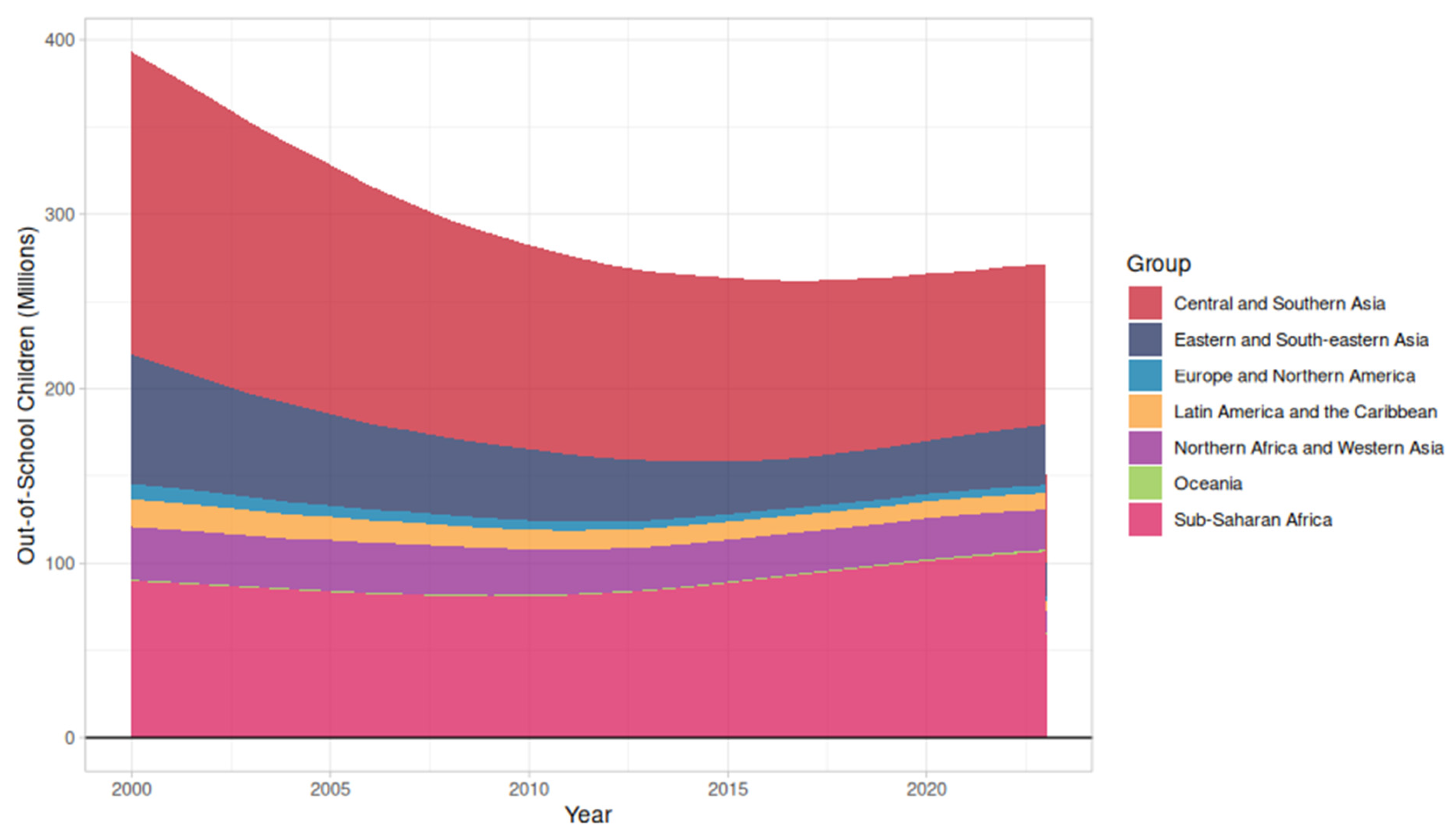
On the other hand, UNESCO [24] primarily uses graphical representation (see Figure 1) and also employs the out-of-school rate indicator. This is defined as the percentage of children and young people in the official age range who are not enrolled in pre-primary, primary, secondary or higher education.
However, according to its own website, although these data are considered a potential gold standard for estimating dropout and enrolment rates, they have certain limitations. Firstly, many countries lack the statistical infrastructure necessary to produce complete and reliable enrolment data. Secondly, population estimates and administrative enrolment counts are compiled separately, inevitably generating inconsistencies.
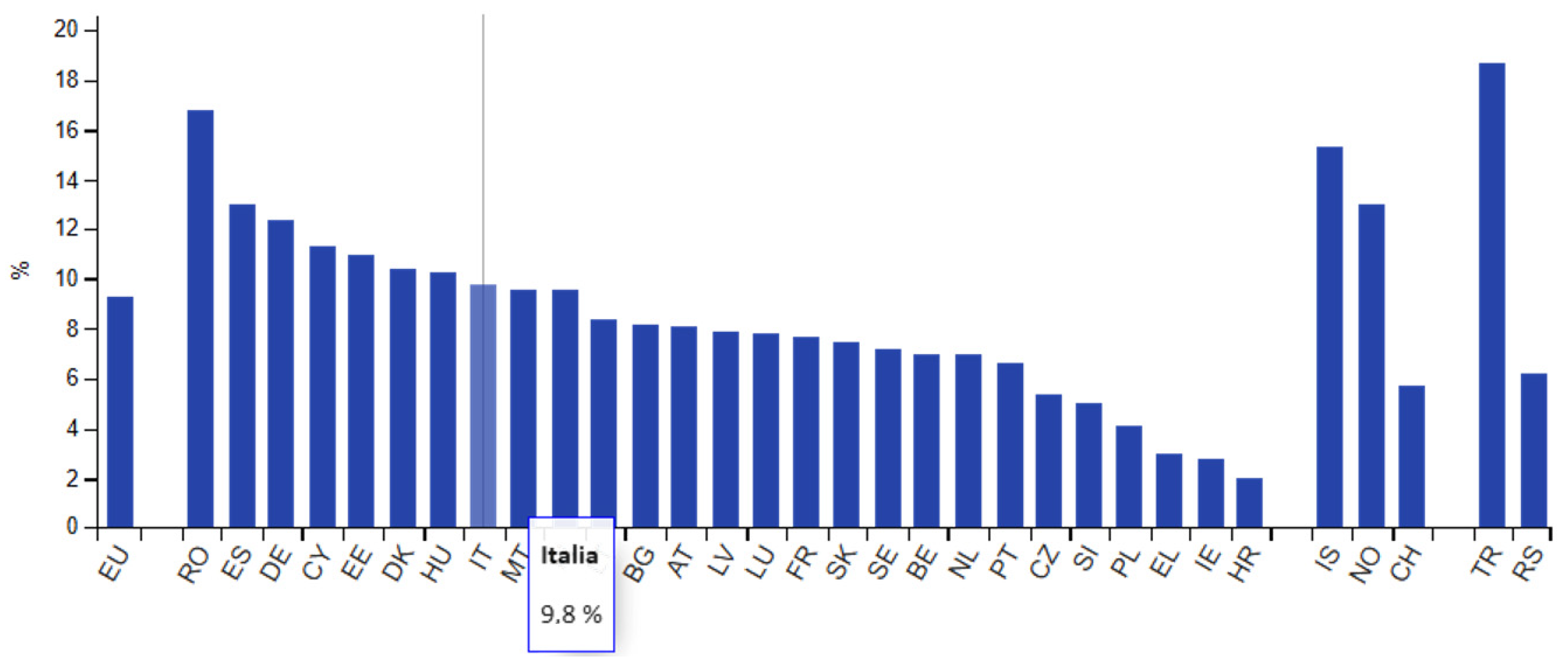
At the European level, the reference organization is Eurostat (https://ec.europa.eu/eurostat/statistics-explained/index.php?title=Early_leavers_from_education_and_training (accessed on 30 September 2025)). Eurostat uses graphical representations to compare different countries and employs the ELET (Early Leavers from Education and Training) indicator. This is expressed as a percentage of individuals aged 18 to 24 who meet certain criteria, as a proportion of the total population in the same age group (see Figure 2).

3.2. National Organization

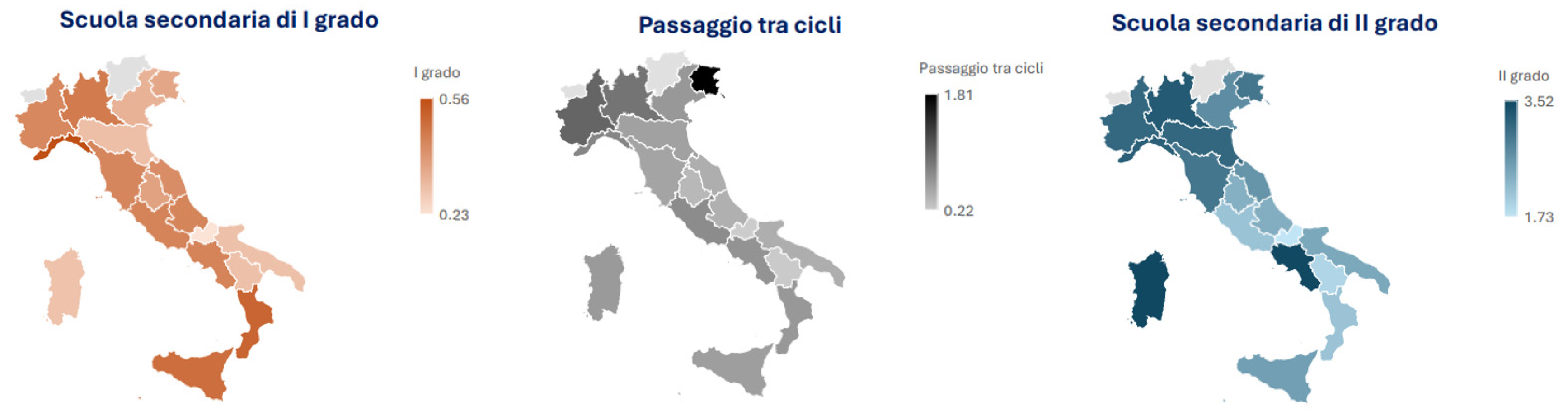
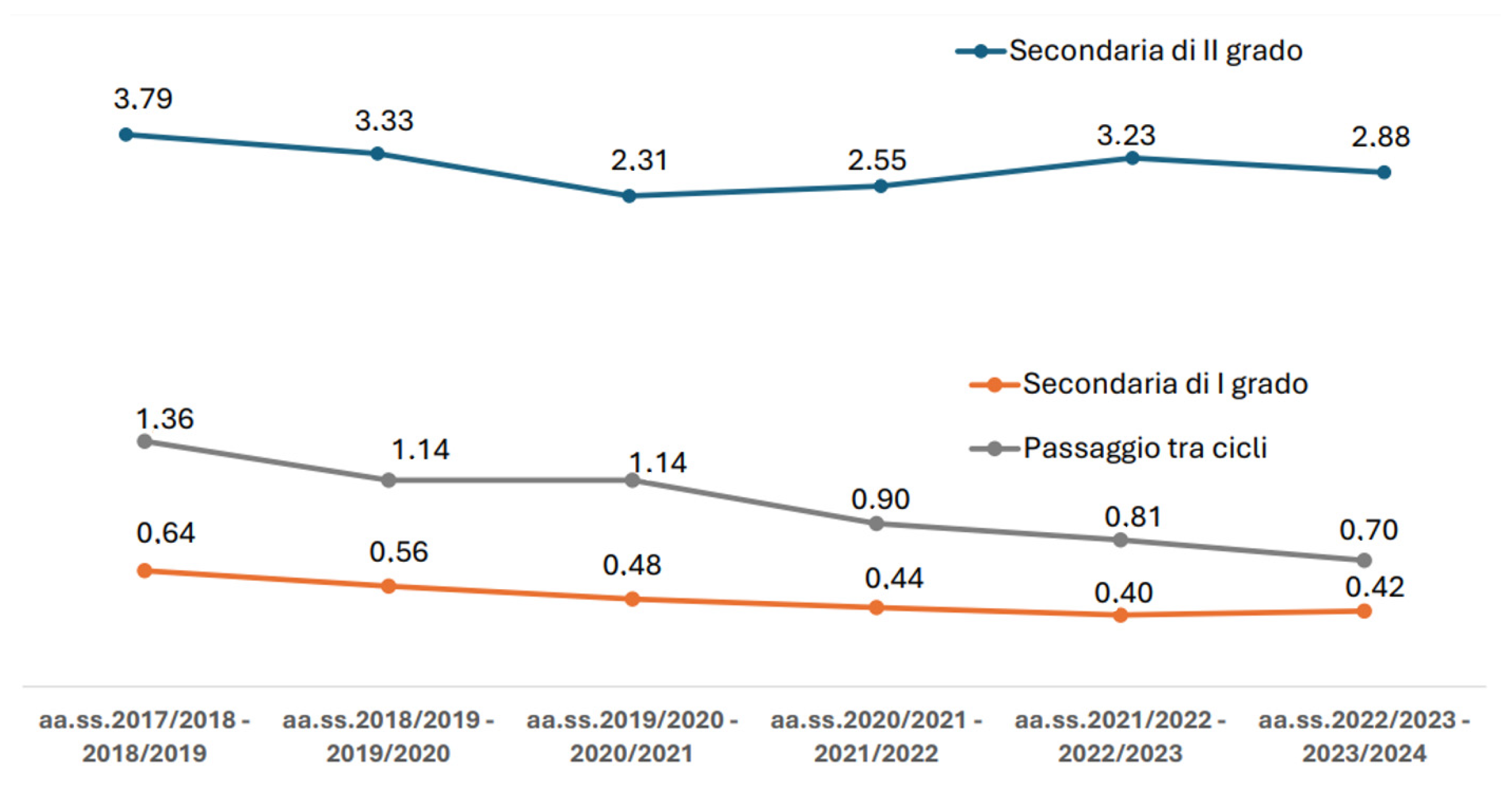
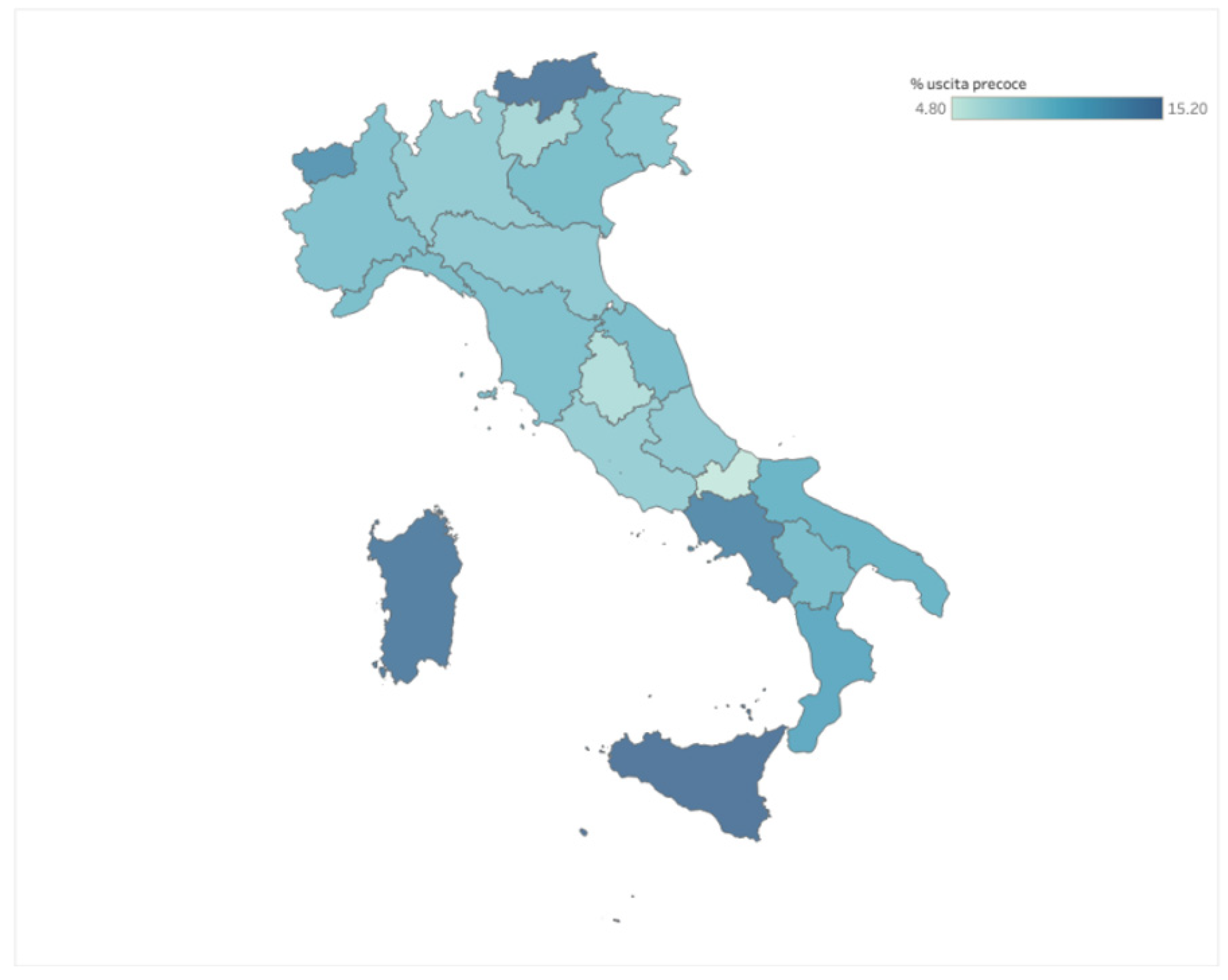
Reports recently published by the Ministry of Education and Merit (https://mim.gov.it/web/guest/-/scuola-domani-al-mim-il-seminario-su-offerta-formativa-e-poverta-educativa-l-evento-in-collaborazione-con-l-invalsi (accessed on 30 september 2025)) were analysed at the national level. The Ministry defines the “dropout rate” as the percentage of students who interrupt their schooling without a valid reason during the school year and do not re-enrol the following year, calculated as a proportion of the total number of students enrolled at the beginning of the year. To facilitate understanding of the phenomenon, the data are presented in various graphical formats, starting with a regional breakdown (Figure 3), followed by analyses by gender and country of origin, and finally by trends over time (Figure 4).
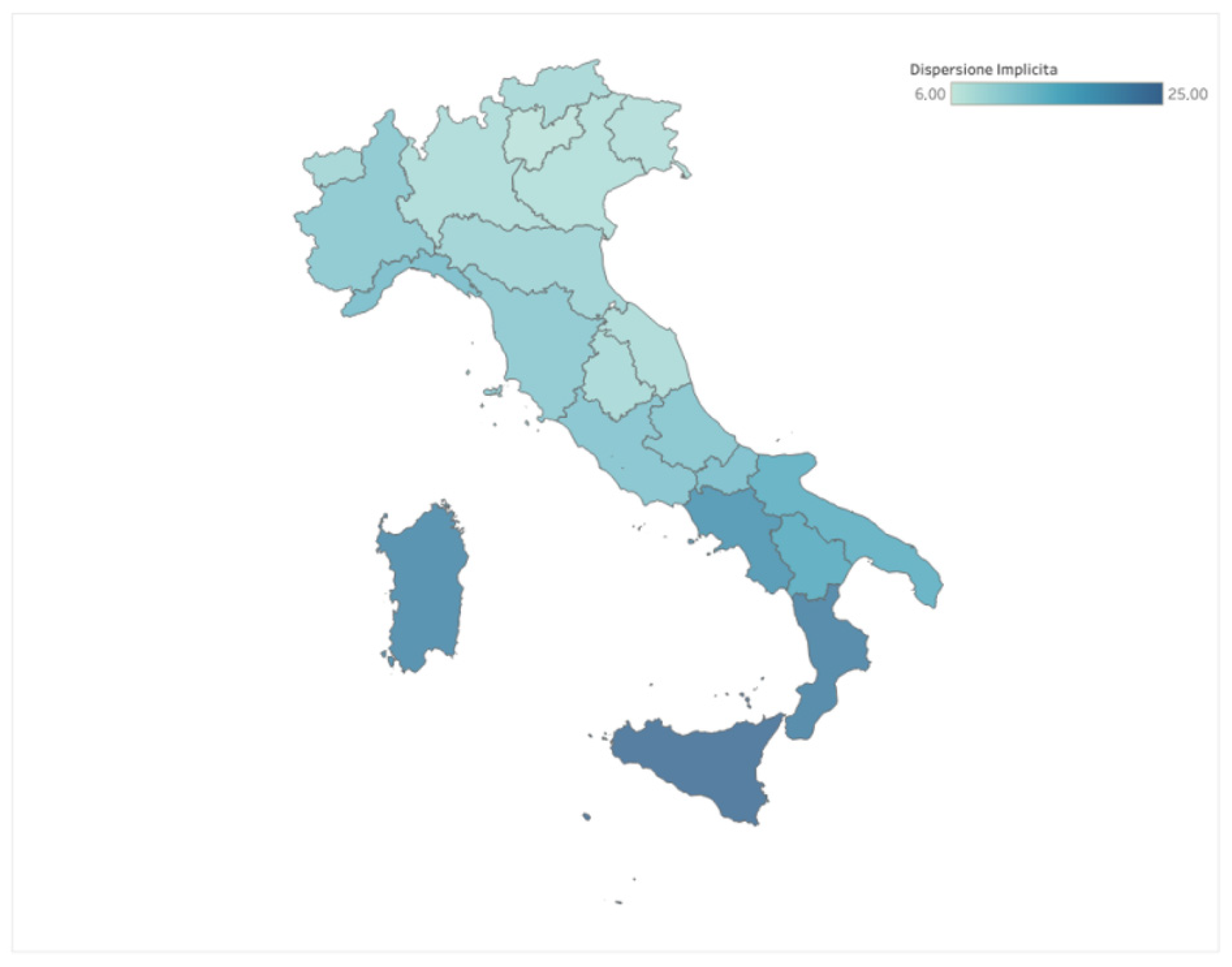
Finally, INVALSI is the only organisation to use the term “implicit dropout” (see Figure 5), referring to individuals who “do not reach the minimum level of competence required to participate successfully in society” [27,28]. The graphical approach here is also similar to that adopted by the Ministry of Education and Merit (MIM). However, to measure explicit dispersion, the indicator used is early leaving of the education system (Figure 6).

4. Discussion

A comparative analysis of graphical and statistical representations of school dropout shows that the variety of definitions and indicators significantly affects understanding of the phenomenon (see Table 2). As mentioned in the introduction, data visualisation is an essential analytical tool for identifying patterns, trends and anomalies that may be overlooked in a purely textual or tabular analysis [4]. However, the findings suggest that this potential is hindered by the lack of a shared language of definitions among national and international educational agencies.
International organisations adopt different approaches depending on their respective aims. For example, UNICEF adopts the completion rate and presents data in tabular form, which enhances accuracy and detailed analysis, albeit at the expense of communicative immediacy. This creates an “accessibility deficit”: while the tables are scientifically rigorous, they are so complex that they require a high level of statistical literacy to understand, which could limit their impact on immediate policymaking.
By contrast, UNESCO focuses on the out-of-school rate, represented through simple, easily interpretable graphs, with the aim of raising public awareness and mobilising political and social attention. However, this extreme visual synthesis risks ‘flattening’ the phenomenon, potentially obscuring the nuanced root causes and individual educational trajectories in favour of a representation that is more alarming but less diagnostic.
Eurostat uses the ELET (Early Leavers from Education and Training) indicator to enable systematic comparisons across European countries. However, its focus on the 18–24 age range excludes early or implicit forms of dropout, revealing the limitations of partial indicators when faced with the multidimensional complexity of the phenomenon. From an analytical perspective, these maps are effective for making geographical comparisons, but they fail to capture the dynamic nature of dropping out of education, treating it as a static census event rather than an ongoing process.
At the national level, the Ministry of Education and Merit (MIM) places particular emphasis on internal management and breaks down data by region, gender and students’ background, as well as identifying longitudinal trends. While this approach facilitates targeted interventions within schools, it limits international comparability. By introducing the concept of implicit dispersion, INVALSI broadens the perspective beyond dropout alone to include students who are formally enrolled but lack the minimum competencies required to participate effectively in society.
While this represents a significant analytical advancement, the lack of international harmonisation for this specific indicator creates a “visual fragmentation”, whereby innovative data remains trapped in national “silos” that cannot communicate effectively with global datasets.
The findings confirm the point made in the introduction that, although data visualisation is powerful, it risks losing effectiveness if the underlying data are inaccurate, incoherent or untimely. Tables provide analytical rigour and allow for longitudinal tracking, but they are less accessible to general audiences. Graphs, on the other hand, enhance communication and public engagement, but they may oversimplify complex phenomena. Therefore, a combination of both modes appears to be the most effective strategy for reconciling scientific rigour with public understanding, as demonstrated by Don Lorenzo Milani [19].

5. Conclusions

The analysis highlights that the current representation of school dropout is fragmented and often constrained by non-uniform definitions, heterogeneous indicators, and delayed data. A twofold commitment is therefore required: first, to make data more accessible and understandable by presenting it in a clear and coherent way that communicates effectively with both policymakers and the general public; and second, to adopt longitudinal approaches that accurately and promptly track educational trajectories, enabling targeted interventions based on up-to-date evidence.
To achieve these objectives, it is essential to integrate different visual modes by combining tables and graphs to reconcile analytical rigour with communicative immediacy. It is also necessary to develop indicators that go beyond dropout alone by incorporating implicit dropout and deficits in basic competencies. Simultaneously, sharing definitions and indicators among national and international agencies would enable more coherent comparisons and a more integrated understanding of the phenomenon. Only then can a genuine prevention strategy be adopted, identifying early warning signs and intervening before dispersion becomes irreversible.
In summary, combining up-to-date data, inclusive indicators and effective visual representations is a strategic tool for promoting equity, reducing inequalities and addressing early school leaving in all its dynamic, multidimensional complexity, not merely a statistical exercise.

Author Contributions

Conceptualization, A.B. and L.S.A.; methodology, A.B. and L.S.A.; investigation, A.B. and L.S.A.; writing—original draft preparation, A.B. and L.S.A.; writing—review and editing, A.B. and L.S.A.; supervision, L.S.A. All authors have read and agreed to the published version of the manuscript.

Funding

This research received no external funding.

Institutional Review Board Statement

This study doesn’t involve human participants. Ethical approval was not required.

Informed Consent Statement

This study does not involve human participants. Informed consent is not applicable.

Data Availability Statement

Data are available in this manuscript.

Conflicts of Interest

The authors declare that they have no conflict of interest.

References

  1. Ware, C. Information Visualization: Perception for Design, 2nd ed.; Morgan Kaufmann: San Francisco, CA, USA, 2004. [Google Scholar]
  2. Paivio, A. Mental Representations: A Dual Coding Approach; Oxford University Press: Oxford, UK, 1990. [Google Scholar] [CrossRef]
  3. Baeva, D. Analysis of information visualization approaches by combining text and images. Strateg. Policy Sci. Educ. 2024, 32, 133–139. [Google Scholar] [CrossRef]
  4. Friendly, M. The golden age of statistical graphics. Stat. Sci. 2008, 23, 503–535. [Google Scholar] [CrossRef]
  5. Lago, P.; Kings, S. “Paths in Education”: A Case Study on Integrating Statistical Data and Qualitative Narratives Using Data Visualization. IEEE Comput. Graph. Appl. 2025, 45, 60–68. [Google Scholar] [CrossRef] [PubMed]
  6. Few, S. Information Dashboard Design. In The Effective Visual Communication of Data; O’Reilly Media: Sebastopol, CA, USA, 2006. [Google Scholar]
  7. Selda, P. Reasons for school dropout in vocational high school. Acad. J. 2014, 9, 711–718. [Google Scholar] [CrossRef]
  8. Beri, A. Svelare la complessità della dispersione scolastica: Un’analisi degli indicatori utilizzati a livello globale e locale. In Proceedings of the Convegno Nazionale SIPED: Ricerca e Progettazione Pedagogica Per Contrastare Povertà Educative e Dispersione Scolastica, A 100 Anni Dalla Nascita di Alberto Manzi, Napoli, Italy, 13–15 June 2024. [Google Scholar]
  9. Lindhardt, L.; Lindholdt, L.; Lund, T.; Mortensen, O.S. Self-reported mental health in adolescents attending school and its association with later school dropout: A prospective 2.5-year follow-up study. Scand. J. Public Health 2022, 50, 1164–1171. [Google Scholar] [CrossRef] [PubMed]
  10. Dekkers, H.; Claassen, A. Dropouts disadvantages by definition? A study of the perspective of very early school leavers. Stud. Educ. Eval. 2001, 27, 341–354. [Google Scholar] [CrossRef]
  11. Besozzi, E. Società, Cultura, Educazione. Teorie, Contesti E Processi; Carocci: Roma, Italy, 2017. [Google Scholar]
  12. Morgagni, E. (Ed.) Adolescenti e Dispersione Scolastica; Carocci: Roma, Italy, 1998. [Google Scholar]
  13. Save the Children. Alla Ricercar del Tempo Perduto; Un’analisi Delle Disuguaglianze Nell’offerta di Tempi e Spazi Educativi Nella Scuola Italiana; Save the Children: Roma, Italy, 2022. [Google Scholar]
  14. Nakajima, M.; Kijima, Y.; Otsuka, K. Is the learning crisis responsible for school dropout? A longitudinal study of Andhra Pradesh, India. Int. J. Educ. Dev. 2018, 62, 245–253. [Google Scholar] [CrossRef]
  15. Mastorci, F.; Lazzeri, M.F.L.; Piaggi, P.; Doveri, C.; Casu, A.; Trivellini, G.; Marinaro, I.; Bardelli, A.; Pingitore, A. Gender differences for health indicators in a sample of school dropout adolescents: A pilot study. Int. J. Environ. Res. Public Health 2022, 19, 7852. [Google Scholar] [CrossRef]
  16. Capperucci, D. L’abbandono precoce dell’istruzione e della formazione in Europa: Cause, interventi, risultati. Lifelong Lifewide Learn. 2016, 28, 33–58. [Google Scholar] [CrossRef]
  17. Batini, F. Un panorama lunare: La dispersione scolastica. RicercAzione 2023, 15, 19–31. [Google Scholar] [CrossRef]
  18. Corica, A.; Vincente, M.E. Considerations as to secondary education, school dropout and youth in the context of the pandemic in Argentina. Pro-Posições 2024, 35, e2024c0102EN. [Google Scholar] [CrossRef]
  19. Scuola di Barbiana. Lettera a Una Professoressa; Libreria Editrice Fiorentina: Firenze, Italy, 1967.
  20. Agrati, L.S.; Beri, A. La rappresentazione dei dati sulla dispersione scolastica in Lettera a una professoressa. Lettura critica dei brani e scoping review. CQIA Riv. Numero Spec. Di ‘Lorenzo Milani’ L’uomo E Il Maest. Radici Fam. E Ricezione Internazionale’ 2024, 43, 204–232. [Google Scholar]
  21. Glaser, B.G.; Strauss, A.L.; Strutzel, E. The discovery of Grounded Theory; Strategies for Qualitative Research. Nurs. Res. 1968, 17, 361. [Google Scholar] [CrossRef]
  22. Tarozzi, M. What Is Grounded Theory; Bloomsbury Academic: London, UK, 2020. [Google Scholar]
  23. Available online: https://data.unicef.org/topic/education/overview/ (accessed on 30 September 2025).
  24. Available online: https://education-estimates.org/out-of-school/ (accessed on 30 September 2025).
  25. Available online: https://ec.europa.eu/eurostat/statistics-explained/index.php?title=Early_leavers_from_education_and_training (accessed on 30 September 2025).
  26. Available online: https://mim.gov.it/web/guest/-/scuola-domani-al-mim-il-seminario-su-offerta-formativa-e-poverta-educativa-l-evento-in-collaborazione-con-l-invalsi (accessed on 30 September 2025).
  27. Eurostat. Sustainable Development in the European Union: Monitoring Report on Progress Towards the SDGs in an EU Context; Publication Office of the European Union: Luxembourg, 2022. [Google Scholar]
  28. Ricci, R. La dispersione scolastica implicita. In Induzioni: Demografia, Probabilità, Statistica a Scuola; Fabrizio Serra Editore: Pisa, Rome, 2019; Volume 1. [Google Scholar]
Figure 1. UNESCO representation [24].
Proceedings 139 00004 g001
Figure 2. Eurostat representation [25].
Proceedings 139 00004 g002
Figure 3. Regional representation by the Ministry of Education and Merit (MIM) [26].
Proceedings 139 00004 g003
Figure 4. Representation of the rate over the years by the MIM [26].
Proceedings 139 00004 g004
Figure 5. Representation of implicit dropout [26].
Proceedings 139 00004 g005
Figure 6. Representation of early leaving rate [26].
Proceedings 139 00004 g006
Table 1. UNICEF representation [23].
TotalTotalFemaleMaleRuralUrbanPoorestSecondMiddleFourthRichest
East Asia & PacificEAP
Europe & Central AsiaECA
Eastern Europe & Central Asia EECA
Western Europe WE
Latin America & CaribbeanLAC 93939391958993959597
Middle East & North AfricaMENA 61616153674450565560
North AmericaNA
South AsiaSA 81808178876778848893
Sub-Saharan AfricaSSA 59595952773850617384
Eastern & Southern Africa ESA65656560814858667587
West & Central Africa WCA54545442732843567081
Least developed countries 555555
World 73737368825868748087
Table 2. Results summary.
Agency/InstitutionIndicator UsedPresentation ModeStrengthsLimitations
UNICEFCompletion rateTablePrecise; allows detailed and disaggregated analysis; useful for longitudinal studiesNot very intuitive for the general public; requires statistical skills
UNESCOOut-of-school rateChartImmediate; easy to communicate to media and policymakers; strong visual impactRisk of oversimplification; potentially less accurate data *
EurostatELET (Early Leavers from Education and Training)ChartEnables comparisons across EU countries; well-established and widely recognized definitionReduces dropout to a single age group; does not capture implicit dropout
MIM (Italy)Dropout rateVarious chartsSpecific to the national context; useful for internal education policiesDifficult to compare internationally; fragmented definitions
INVALSI (Italy)Implicit dropout or early exitIndicators + chartsHighlights a “hidden” form of dropout; useful for targeted interventionsNot comparable with international indicators
Disclaimer/Publisher’s Note: The statements, opinions and data contained in all publications are solely those of the individual author(s) and contributor(s) and not of MDPI and/or the editor(s). MDPI and/or the editor(s) disclaim responsibility for any injury to people or property resulting from any ideas, methods, instructions or products referred to in the content.