
Proceeding Paper

No Food Waste Policy: Use of Smart Applications to Support the Green Deal Policy †
by
Sotiria Tsoukarella
* and
Zacharoula Andreopoulou
Faculty of Forestry and Natural Environment, Aristotle University of Thessaloniki, 54124 Thessaloniki, Greece
*
Author to whom correspondence should be addressed.
Presented at the 18th International Conference of the Hellenic Association of Agricultural Economists, Florina, Greece, 10–11 October 2025.
Proceedings 2026, 134(1), 10; https://doi.org/10.3390/proceedings2026134010 (registering DOI)
Published: 30 December 2025

Abstract

The rapid development of Green Information Technology has contributed to reducing the environmental footprint and supporting more efficient resource management. Within this context, food waste reduction is a key priority of the European Green Deal and the Farm to Fork Strategy. This study records and analyzes 25 food waste-related smart applications identified during the first quarter of 2025 in Google Play and the Apple Store based on defined selection criteria. Their basic characteristics were analyzed and compared. Results indicate that redistribution applications dominate, whereas prevention-oriented applications remain limited in number. Although most of the applications enjoy positive ratings, their real effectiveness depends on user adoption and behavioral change, making prevention-oriented applications essential for achieving the EU 2030 target of reducing food waste by 50%.

1. Introduction

In recent years, the rapid development of Information and Communication Technologies has contributed significantly to energy conservation and the mitigation of environmental degradation. With the help of Green IT and the Internet of Things, information systems and applications have been developed that can be used in all areas of citizens’ daily lives while reducing greenhouse gas emissions [1]. Green IT refers to technologies and systems that consume less energy and perform tasks using less power, thus contributing to the reduction of the ecological footprint [2].
With the development of technology, there have also been developments in the field of mobile devices [3]. Through the Internet of Things, people can connect and communicate with anyone they want, whenever they want, from any place, and exchange information, services, and goods using any link and any service [4]. This can be done through various platforms that connect sensors and devices [5]. In this way, classic devices are transformed into smart devices and they can transmit a large amount of data through the Internet [6].
The use of Green IT has resulted in the development of smart applications through which natural resources can be managed more efficiently. With these applications, citizens can access information at any time, communicate with other people, work remotely, and plan their daily lives. Also, an important part of the Internet of Things is the use of green RFID tags and the green detection network. RFID tags store information about products and goods to which citizens have access and can tell them at any time the burden on the environment of the products they consume [7].
There are a large number of applications available on various platforms that citizens can access and download on their mobile devices [8]. An important category of applications is mobile applications that promote recycling, reuse of goods and products, and product exchange [5]. Food waste is one of the biggest problems worldwide. Almost one third of food produced is not consumed [9,10]. This also causes waste of natural resources, such as water, energy, and land, as well as energy for the labor required to produce it. Also, when this food is discarded, land is used and gases are produced which are harmful to the natural environment, thus intensifying the greenhouse effect [11,12].
There are two categories of applications that address food waste. One category concerns the redistribution and sharing of food before it becomes waste and cannot be consumed. The second category concerns waste prevention, management, and control of stocks [7,13]. The use of digital applications to reduce food waste and save natural resources is directly linked to the goals of the Green Deal. The Green Deal and, in particular, the Farm to Fork Strategy aim to reduce food waste by 50% by 2030 [14]. This strategy concerns an environmentally friendly food system [15].
The European Green Deal is an important link in the implementation of the 2030 Agenda and the achievement of sustainable development. The Green Deal sets targets and defines specific rules that members must follow to achieve greenhouse gas reduction, sustainable agriculture, and a circular economy [16]. All of the above contribute to the creation of a carbon neutral European Union [15].
A key factor in achieving the goals of the Green Deal is Green IT. There are applications and platforms that play an important role in the field of food waste. For example, data on inventory management can be used to predict consumer demand for certain foods, thus avoiding food waste. Sensors are often used in the warehouses of large companies to alert them to any deterioration or immediate need to dispose of products [17].
The purpose of this study is to record and analyze digital applications that contribute to the reduction of food waste. The study includes a record of available applications as well as their basic characteristics. The integration of green technologies effectively enhances the reduction of food waste and this is evident from the results obtained.

2. Methods

The research was carried out in the first quarter of 2025. We recorded 25 applications related to food waste. The search was carried out on the digital platforms Google Play and Apple Store. The keywords used while recording the applications were food waste, food reuse, Green Deal, and food redistribution. The following criteria were used when selecting the applications:
-
The applications recorded use either Android or iOS operating systems
-
The applications must be aimed at food reuse and food waste prevention
-
The main function of the application must be the reduction of food waste. The application is not included if food waste is a secondary object.
-
The application must be available in English
For each application, we recorded the number of downloads, the rating, the languages in which it is available, on which platforms it is available, whether it is available for free or not, and the object it concerns. The results are presented in detail in a summary table. The results are then analyzed and pie charts are presented based on the data in the summary table. Finally, some applications are presented which have a large number of downloads.

3. Results and Discussion

Table 1 presents the main characteristics of the recorded applications, including ratings, number of downloads, availability on platforms, language options, and cost. It is clear that applications available in more than one language attract more downloads, since they are easier to use by a wider group of citizens. However, high ratings or many downloads do not necessarily mean that the application actually reduces food waste. They mainly reflect positive user experience, such as an easy interface or practical design. This shows that additional criteria are needed to evaluate the real effectiveness of applications, such as their impact on user behavior and measurable reductions in food waste.
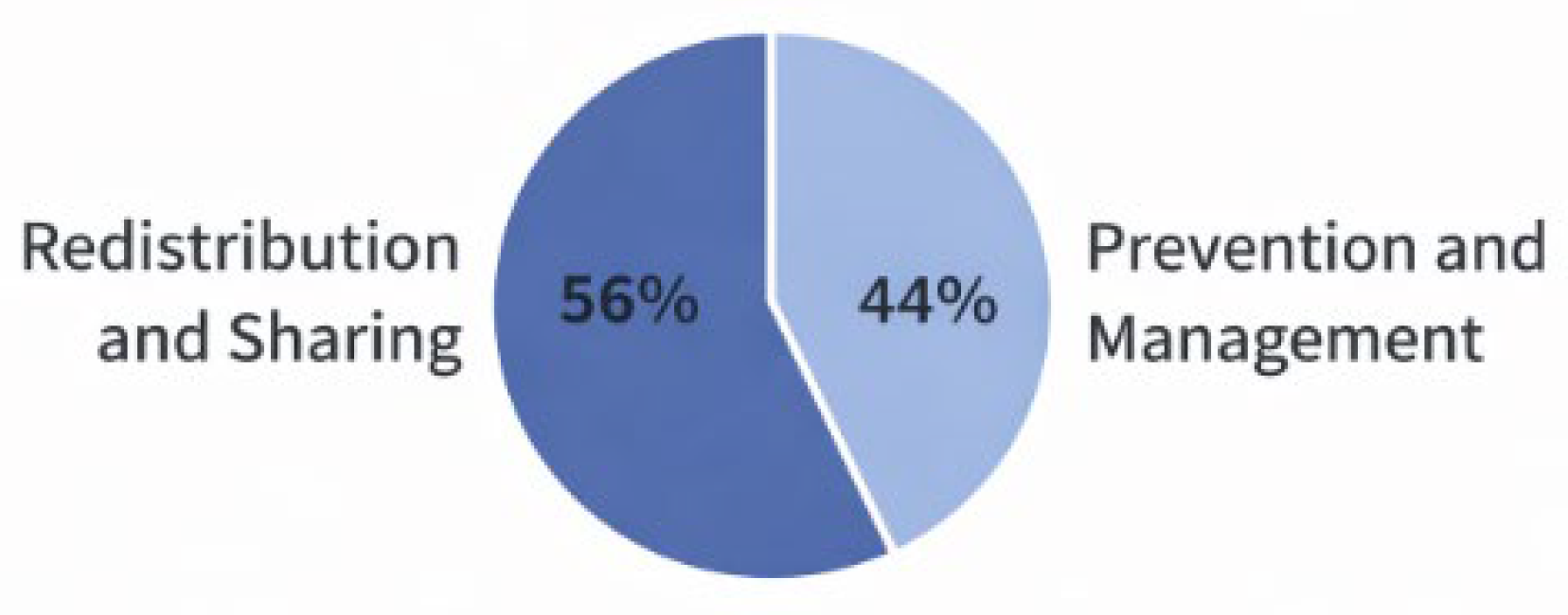
Figure 1 shows that 56% of the applications recorded concern Redistribution and Sharing, while 44% focus on Prevention and Management. The predominance of redistribution applications indicates that users tend to prefer solutions that provide direct and immediate benefits, such as low-cost or free food. By contrast, prevention-oriented applications require continuous behavioral change, which explains their more limited presence. Nevertheless, prevention is essential for achieving the EU Green Deal target of reducing food waste by 50% by 2030, underlining the importance of developing more innovative digital tools that can support long-term waste reduction practices.
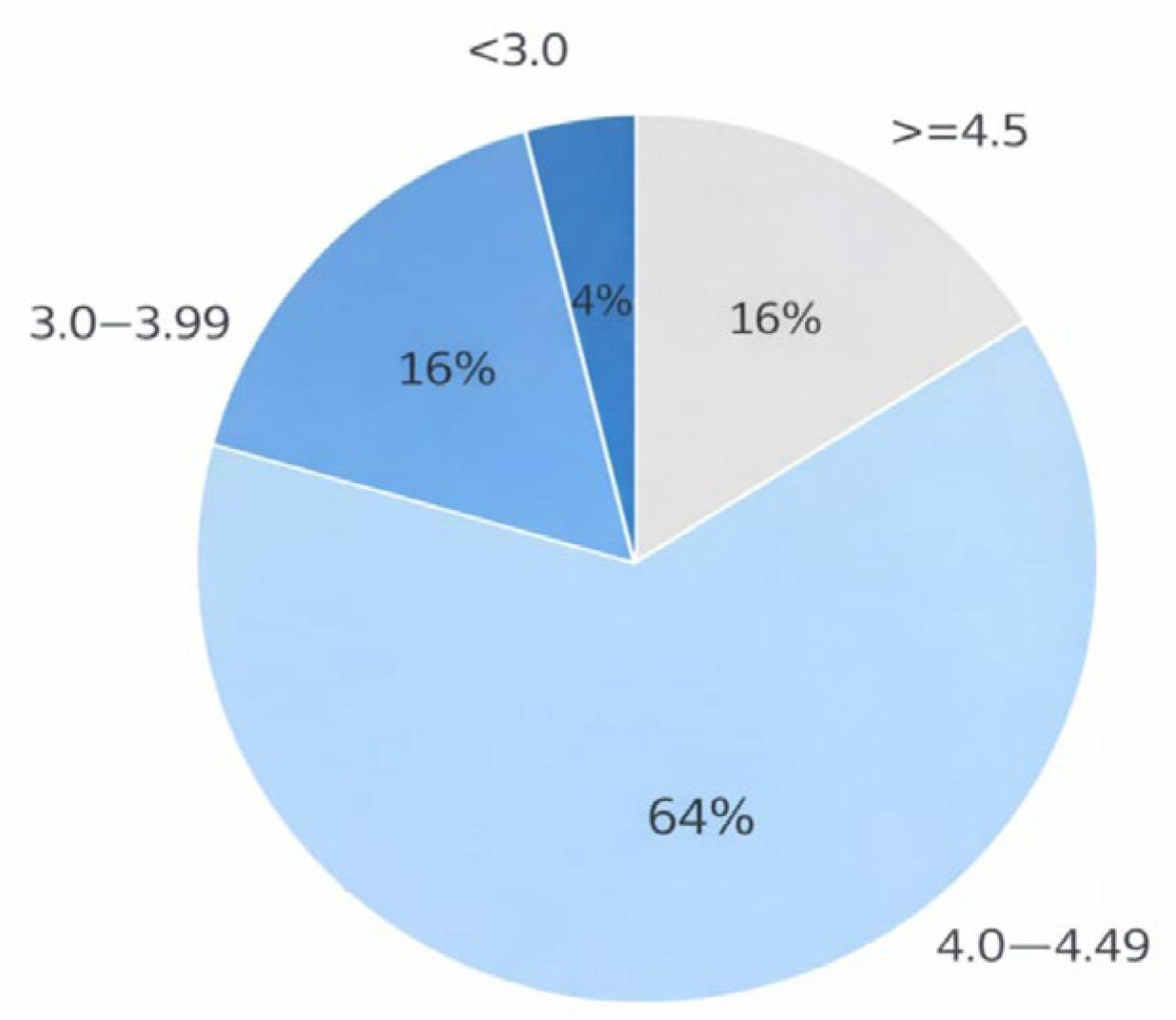
Figure 2 shows that 16% of the applications have a rating ≥4.5, indicating an excellent user experience. The majority (64%) are rated between 4.0 and 4.49, reflecting generally high user satisfaction, while 16% are rated between 3.0 and 3.99, pointing to areas for improvement. Only 4% fall below 3.0, which suggests that most applications are positively received by users. However, user ratings mainly capture satisfaction with design and usability, not necessarily the actual effectiveness of the applications in reducing food waste. Therefore, while ratings provide useful insights into user acceptance, further evidence is needed to link application use with measurable reductions in food waste.
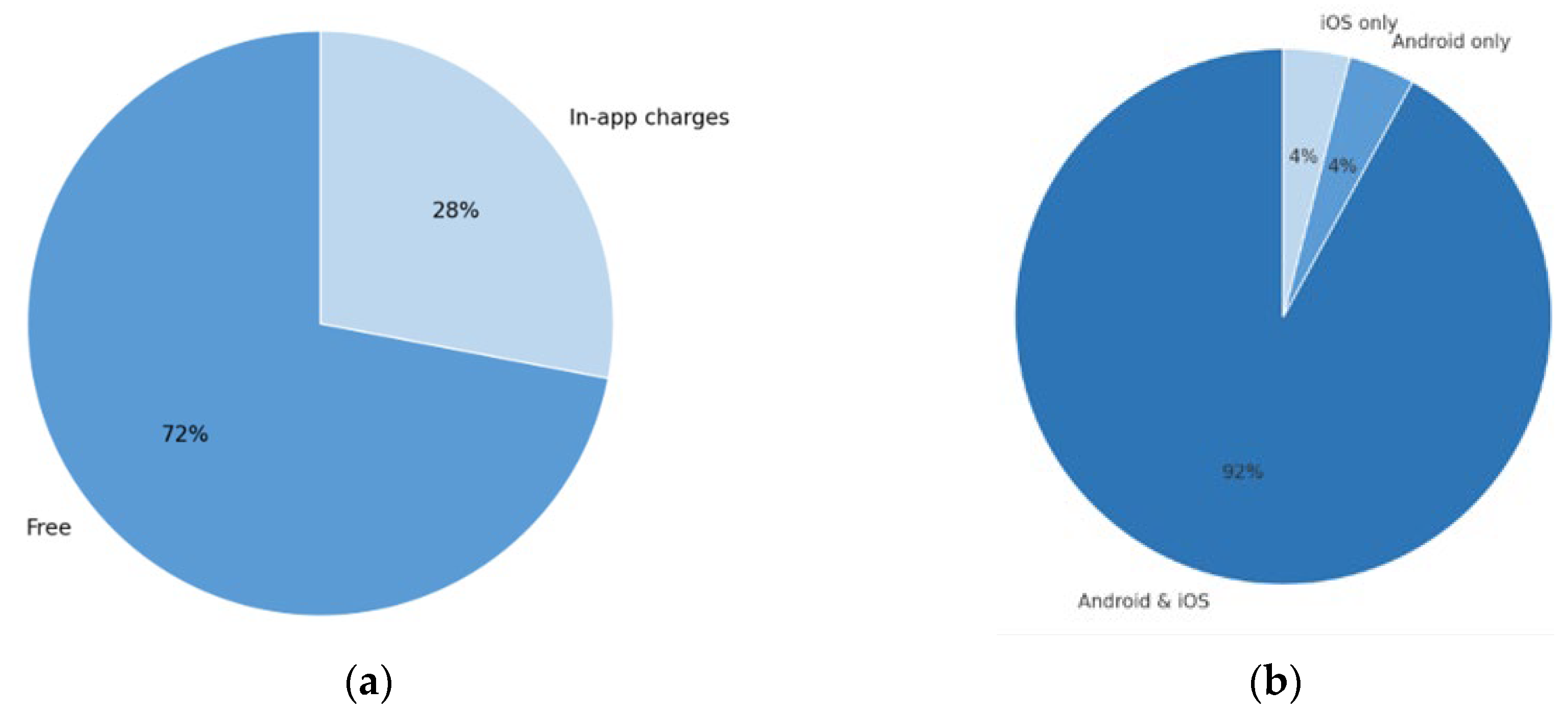
Figure 3 highlights that 72% of the applications are completely free, while 28% include in-app charges. The predominance of free access facilitates adoption and encourages widespread dissemination among users. In parallel, 92% of the applications are available on both Android and iOS platforms, ensuring accessibility across devices. However, although low cost and wide availability reduce barriers to entry, they do not guarantee sustained engagement or measurable reductions in food waste. This underlines the importance of integrating features that connect user activity with actual food waste reduction outcomes. Below are presented some applications which have a large number of downloads.
1.
OLIO Proceedings 134 00010 i001
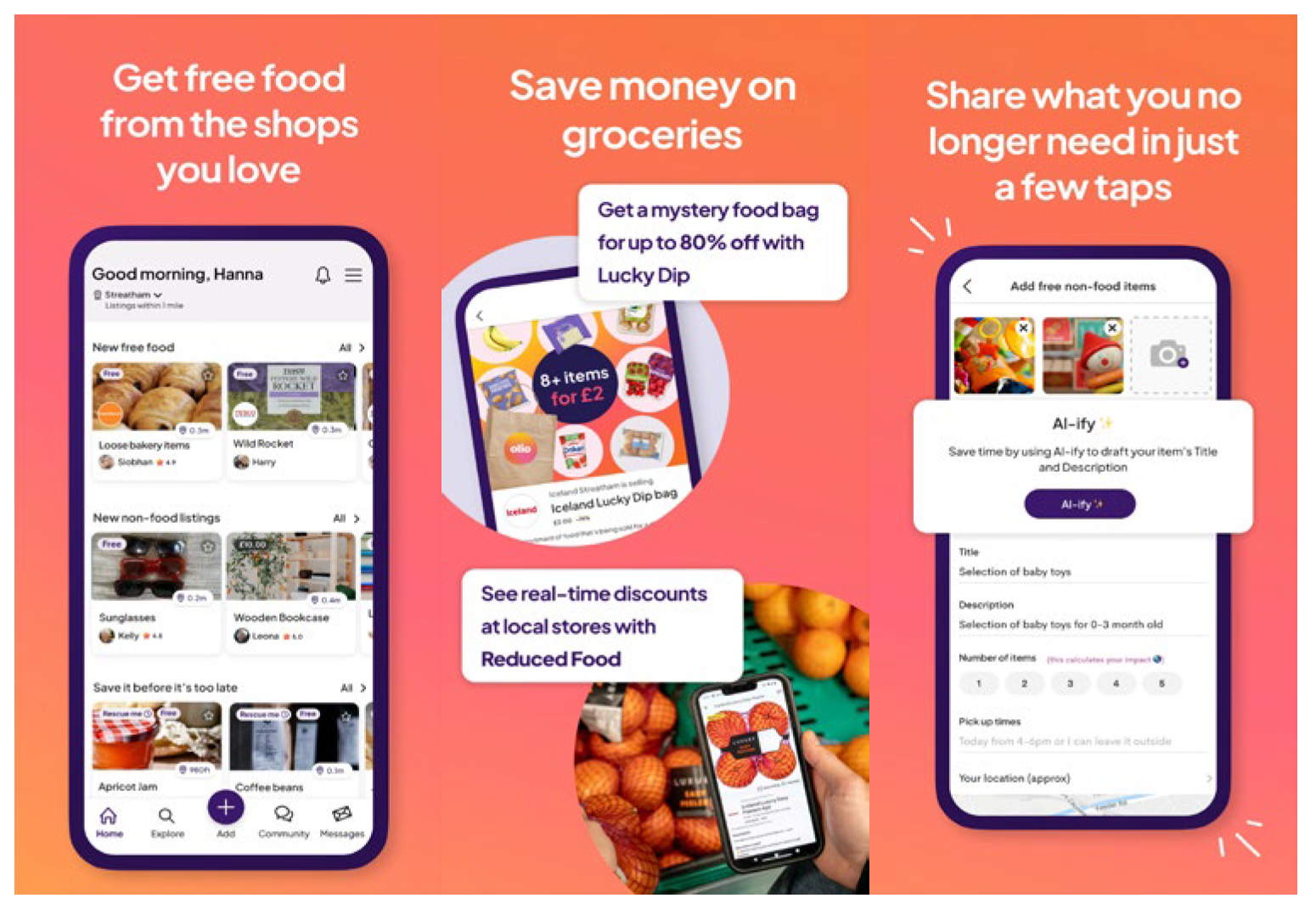
This application has over 5 million downloads. Its rating is 4.9/5. It is about reusing and sharing food. It is available on both platforms. The languages used within the application are English and Spanish. It is available for free for citizens, but there are in-app charges for businesses that want to dispose of excess food. Through the application, users upload information regarding food that is left over and is in the final stage before becoming waste. Excess food is exchanged and disposed of. There is also a category for products that are no longer needed to be distributed to other people who will find them useful. Its success is linked to its ability to create local networks for sharing, which increases user trust and participation. Nevertheless, its long-term impact depends on users’ willingness to consistently contribute surplus food, highlighting the importance of sustained engagement for real waste reduction. Below are some photos of the application environment (Figure 4).
2.
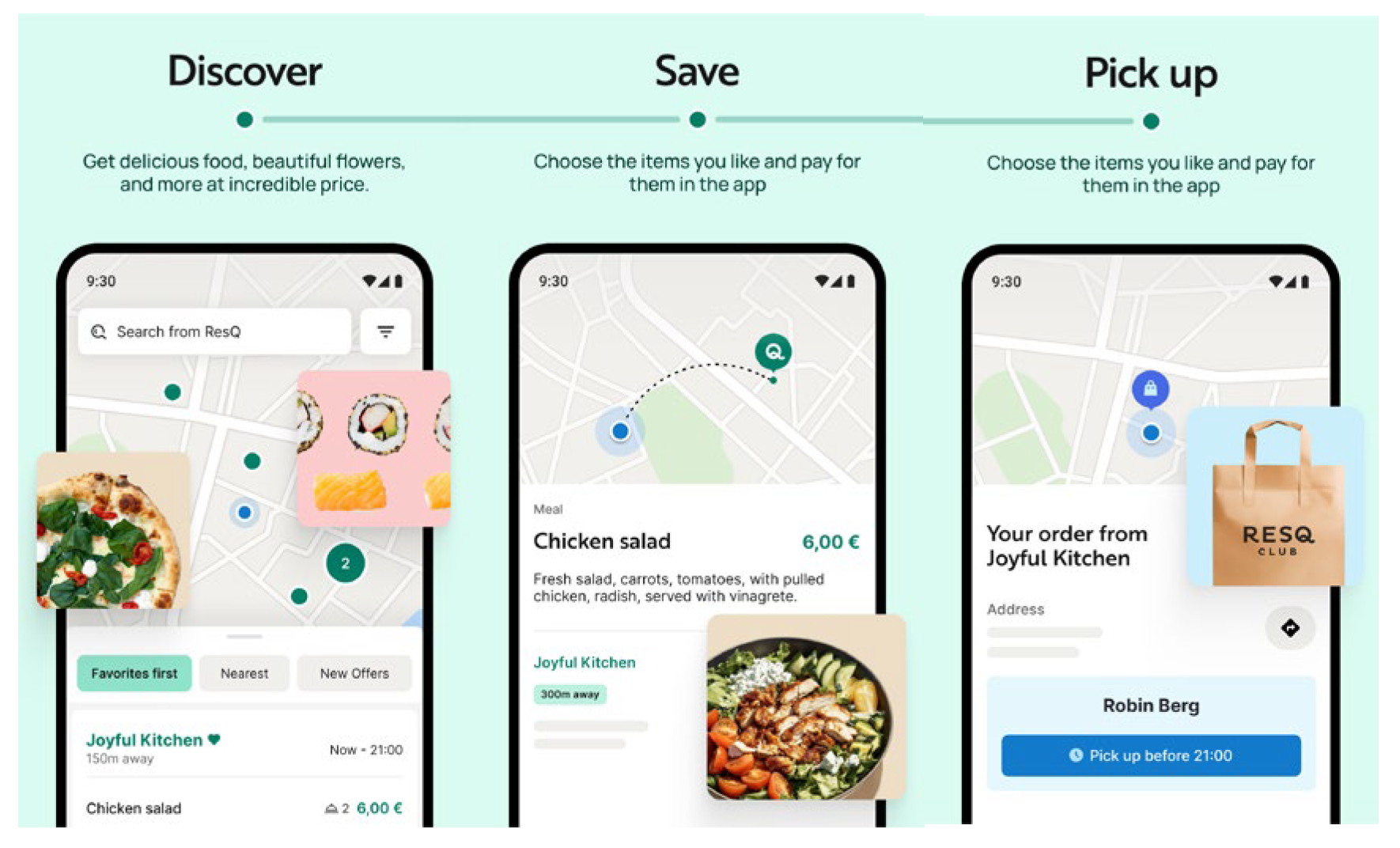
RESQ CLUB Proceedings 134 00010 i002
This application has over 1 million downloads. Its rating is 4.7/5. It is about Redistribution and Sharing. It is available on both Google Play and App Store platforms. The language used is English. It is available for free for citizens. The application records leftover meals and users have immediate access to lower-cost meals before they become waste. Its popularity is linked to the dual benefit it provides: consumers gain access to affordable meals, while food that would otherwise go to waste finds a new use. However, its broader impact depends on the continuous participation of users and food providers, as well as its ability to expand beyond major urban centers. Below are some photos of the application environment (Figure 5).
3.
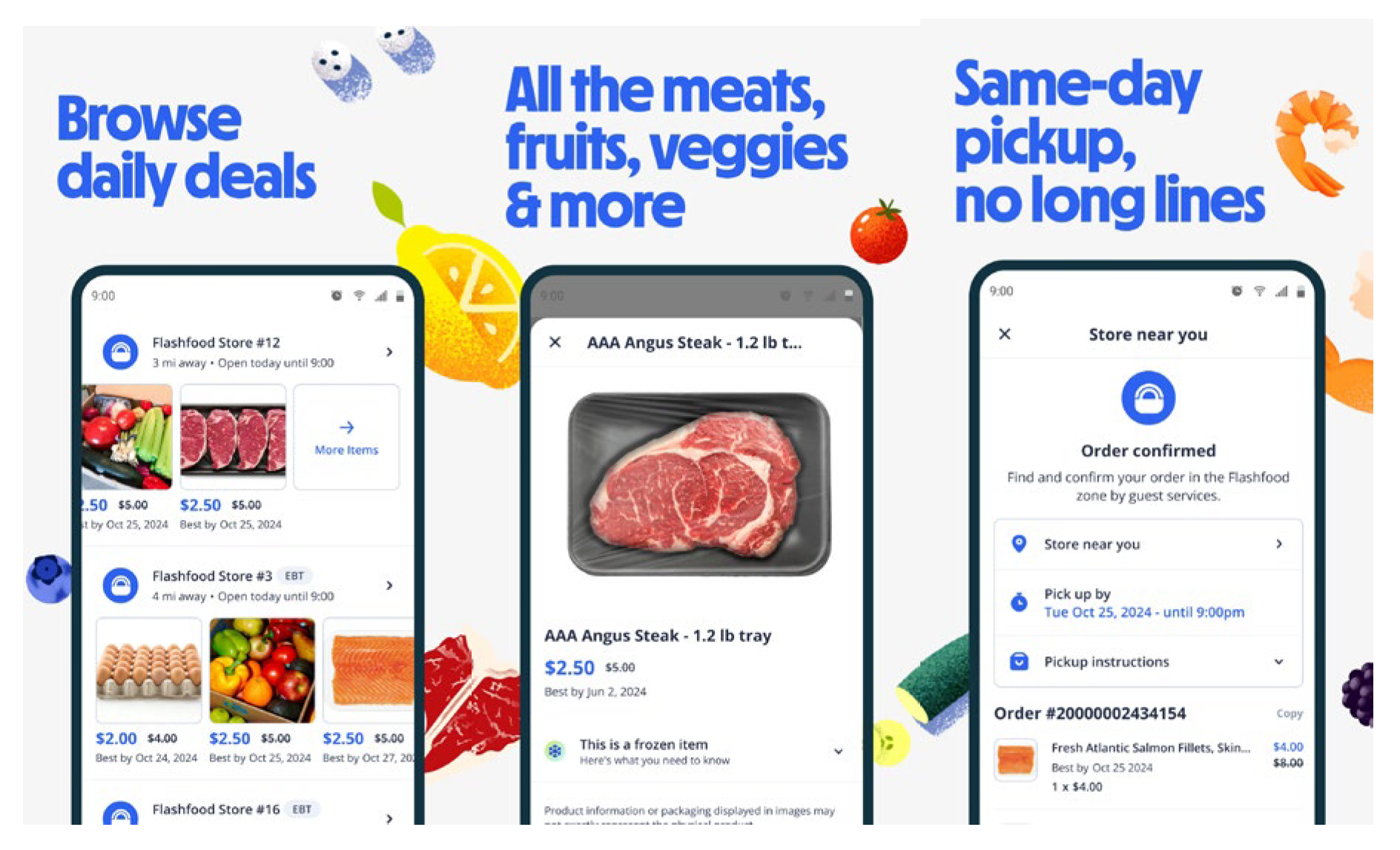
FLASHFOOD Proceedings 134 00010 i003
This application has over 1 million downloads and a rating of 4.1/5. It is categorized as Redistribution and Sharing and is available on both Google Play and App Store platforms. The language supported is English and it is free for citizens. In this application, stores post food that is close to its expiration date, offering it at significant discounts before it becomes waste. This approach combines environmental benefits with financial incentives, making it attractive to users. Nevertheless, its long-term effectiveness depends on stable cooperation with retailers and on consumers’ willingness to regularly purchase near-expiry products. Below are some photos of the application environment (Figure 6).
Comparing the three highlighted applications, it becomes clear that each follows a distinct model: Olio builds on community-based sharing, ResQ Club relies on affordable meal offers, and Flashfood partners with retailers to sell near-expiry products. These differences demonstrate that redistribution apps can succeed through multiple approaches, but also underline a common challenge: long-term effectiveness requires sustained user engagement and supportive infrastructures.

4. Conclusions

Food waste is still a major challenge and is directly linked to the goals of the European Green Deal. From the analysis of 25 applications, it appears that redistribution applications are much more common than prevention ones because they provide quick benefits to both users and businesses. However, the success of an application does not depend only on downloads or ratings. It also depends on whether users continue to use it, whether they trust it, and whether it is easy to access in different regions. Applications with more features, availability in more languages, or a strong community element usually do better, while others face limits due to technology, social acceptance, or coverage [18].
In the future, more attention needs to be paid to prevention applications, which are scarcer and harder for people to adopt in everyday life. These tools can help with reaching the EU target of reducing food waste by 50% by 2030, but they need to be improved and made more attractive for users. Overall, smart applications can make a real difference, but their impact depends on how well citizens manage to combine technology with user behavior and everyday practice.

Author Contributions

Conceptualization, S.T. and Z.A.; methodology, S.T. and Z.A.; software, S.T. and Z.A.; validation, S.T. and Z.A.; formal analysis, S.T. and Z.A.; investigation, S.T. and Z.A.; resources, S.T. and Z.A.; data curation S.T. and Z.A.; writing—original draft preparation, S.T. and Z.A.; writing—review and editing, S.T. and Z.A.; visualization, S.T. and Z.A.; supervision, Z.A. All authors have read and agreed to the published version of the manuscript.

Funding

This research received no external funding.

Institutional Review Board Statement

Not applicable.

Informed Consent Statement

Not applicable.

Data Availability Statement

Data sharing not applicable because the data are part of an ongoing study.

Conflicts of Interest

The authors declare no conflict of interest.

References

  1. Murugesan, S. Harnessing green IT: Principles and practices. IT Prof. 2008, 10, 24–33. [Google Scholar] [CrossRef]
  2. Ahmad, R.; Asim, M.A.; Khan, S.Z.; Singh, B. Green IoT—Issues and challenges. In Proceedings of the 2nd International Conference on Advanced Computing and Software Engineering (ICACSE), Xi’an, China, 24–26 May 2019. [Google Scholar]
  3. Szilágyi, R.; Botos, S.; Felföldi, J. Application of smart visualisation in the analysis of Hungarian Agriculture ICT. J. Agric. Inform. 2022, 13, 1–6. [Google Scholar] [CrossRef]
  4. Arshad, R.; Zahoor, S.; Shah, M.A.; Wahid, A.; Yu, H. Green IoT: An investigation on energy saving practices for 2020 and beyond. IEEE Access 2017, 5, 15667–15681. [Google Scholar] [CrossRef]
  5. Albreem, M.A.; El-Saleh, A.A.; Isa, M.; Salah, W.; Jusoh, M.; Azizan, M.M.; Ali, A. Green internet of things (IoT): An overview. In Proceedings of the 2017 IEEE 4th International Conference on Smart Instrumentation, Measurement and Application (ICSIMA), Putrajaya, Malaysia, 28–30 November 2017; IEEE: New York, NY, USA, 2017; pp. 1–6. [Google Scholar] [CrossRef]
  6. Albreem, M.A.; Sheikh, A.M.; Alsharif, M.H.; Jusoh, M.; Yasin, M.N.M. Green Internet of Things (GIoT): Applications, practices, awareness, and challenges. IEEE Access 2021, 9, 38833–38858. [Google Scholar] [CrossRef]
  7. Yusoff, Z.Y.M.; Ishak, M.K.; Alezabi, K.A. The role of RFID in green IoT: A survey on technologies, challenges and a way forward. Adv. Sci. Technol. Eng. Syst. J 2021, 6, 17–35. [Google Scholar] [CrossRef]
  8. Harper, R. Inside the Smart Home; Springer Science & Business Media: Berlin/Heidelberg, Germany, 2006. [Google Scholar]
  9. Flanagan, K.; Robertson, K.; Hanson, C. Reducing Food Loss and Waste. Setting the Global Action Agenda; World Resources Institute: Washington, DC, USA, 2019. [Google Scholar]
  10. Europa. European Green Deal. 2025. Available online: https://www.consilium.europa.eu/en/policies/european-green-deal (accessed on 22 March 2025).
  11. Gover, M.; Swannell, R.; Reynolds, C. Addressing the Food Loss and Waste Challenge—A WRAP perspective. In Proceedings of the Workshop Food Loss and Waste Reduction; The Pontifical Academy of Sciences: Casina Pio IV, Vatican City, 2020. [Google Scholar]
  12. Ozdemir, C.; Kaman, G.S.; Yilmaz, H. Smart food waste fighters: Insights from mobile apps and users. J. Hosp. Tour. Insights 2025, 8, 813–829. [Google Scholar] [CrossRef]
  13. Cappelletti, F.; Papetti, A.; Rossi, M.; Germani, M. Smart strategies for household food waste management. Procedia Comput. Sci. 2022, 200, 887–895. [Google Scholar] [CrossRef]
  14. Vázquez-Rowe, I.; Ziegler-Rodriguez, K.; Margallo, M.; Kahhat, R.; Aldaco, R. Climate action and food security: Strategies to reduce GHG emissions from food loss and waste in emerging economies. Resour. Conserv. Recycl. 2021, 170, 105562. [Google Scholar] [CrossRef]
  15. Bose, I.; Yan, S. The green potential of RFID projects: A case-based analysis. IT Prof. 2011, 13, 41–47. [Google Scholar] [CrossRef]
  16. Fetting, C. The European green deal. ESDN Rep. Dec. 2020, 2, 53. [Google Scholar]
  17. Bolwig, S.; Tanner, A.N.; Riemann, P.; Redlingshöfer, B.; Zhang, Y. Reducing Consumer Food Waste Using Green and Digital Technologies; UNEP DTU Partnership: Copenhagen, Denmark, 2021. [Google Scholar]
  18. Hanson, V.; Ahmadi, L. Mobile applications to reduce food waste within Canada: A review. Can. Geogr./Le Géographe Can. 2022, 66, 402–411. [Google Scholar] [CrossRef]
Figure 1. Object of the applications.
Proceedings 134 00010 g001
Figure 2. Rates of application review ratings.
Proceedings 134 00010 g002
Figure 3. (a) Cost of the applications and (b) application availability on platforms.
Proceedings 134 00010 g003
Figure 4. Application environment of the OLIO application.
Proceedings 134 00010 g004
Figure 5. RESQ Club application interface.
Proceedings 134 00010 g005
Figure 6. Flashfood application overview.
Proceedings 134 00010 g006
Table 1. Recorded applications.
Application NameRateNumber of DownloadsGoogle PlayApple StoreLanguageCostObjective
Olio4.95,000,000+++English and moreIn-app chargesRedistribution and Sharing
FoodBag3.850,000+++EnglishFreeRedistribution and Sharing
MysteryPot:EndFoodWaste4.3100,000+++EnglishFreeRedistribution and Sharing
Phenix4.21,000,000+++English and moreFreeRedistribution and Sharing
Flashfood4.11,000,000+++EnglishFreeRedistribution and Sharing
Karma Save food with a tap4.41,000,000+++EnglishFreeRedistribution and Sharing
Food Rescue Hero4.41000+++EnglishFreeRedistribution and Sharing
NoWaste4.3500,000+++English and moreIn-app chargesPrevention and Management
Fridgely4.3100,000+++English and moreIn-app chargesPrevention and Management
Best Before–Food Tracker4.250,000+++EnglishIn-app chargesPrevention and Management
FoodKeeper4.41,000,000+++EnglishFreePrevention and Management
Nosh3.010,000+++EnglishFreePrevention and Management
Too Good to Go4.85,000,000+++English and moreIn-app chargesRedistribution and Sharing
Karma shop smarter4500,000+++EnglishFreeRedistribution and Sharing
ResQ Club4.71,000,000+++EnglishFreeRedistribution and Sharing
Fooddiverse210,000+++EnglishFreeRedistribution and Sharing
BigOven3.71,000,000+++EnglishFreePrevention and Management
Εxpiration Date Scanner4.3100,000++-EnglishFreePrevention and Management
Spoiler Alert4.350,000+++EnglishIn-app chargesPrevention and Management
Pantry Check4.55000+-+EnglishIn-app chargesPrevention and Management
Foodsharing4100,000++-English and moreFreeRedistribution and Sharing
Green Choice41,000,000++ EnglishFreePrevention and Management
Goodr4.310,000+-+EnglishFreeRedistribution and Sharing
Reduce food waste3.95000+-+EnglishFreePrevention and Management
MealConnect45000+++EnglishFreeRedistribution and Sharing
Note: “+” indicates availability on the platform; “-” indicates non-availability.
Disclaimer/Publisher’s Note: The statements, opinions and data contained in all publications are solely those of the individual author(s) and contributor(s) and not of MDPI and/or the editor(s). MDPI and/or the editor(s) disclaim responsibility for any injury to people or property resulting from any ideas, methods, instructions or products referred to in the content.