Article

Assessment of Composted Pig Slurry Pellets as a Sustainable Nitrogen Supply: Soil Properties and Wheat Performance in Mediterranean Farming


by
Juan Aviñó-Calero
1,
Silvia Sánchez-Méndez
2,
Luciano Orden
2,*,
Ernesto Santateresa
1,
Francisco Javier Andreu-Rodríguez
2,
José Antonio Sáez-Tovar
2,
Encarnación Martínez-Sabater
2,
Cristina Álvarez Alonso
2,
María Ángeles Bustamante
2 and
Raúl Moral
2
1
Sociedad de Fomento Agrícola Castellonense S.A. (FACSA), C/Mayor 82-84, 12001 Castellón de La Plana, Castellón, Spain
2
Centro de Investigación e Innovación Agroalimentaria y Agroambiental (CIAGRO-UMH), Universidad Miguel Hernández, Carretera de Beniel Km 3,2, 03312 Orihuela, Alicante, Spain
*
Author to whom correspondence should be addressed.
Nitrogen 2026, 7(2), 41; https://doi.org/10.3390/nitrogen7020041
Submission received: 12 March 2026 / Revised: 31 March 2026 / Accepted: 7 April 2026 / Published: 8 April 2026

Abstract

The large-scale use of compost in arable cropping systems is often limited by the large quantities required to meet the crop’s nutritional needs. Palletization can increase the nutrient density of organic fertilizers and improve their logistical feasibility by reducing storage, transport and application costs. This study evaluated the agronomic and environmental performance of compost pellets derived from pig slurry solids and olive pomace, using them as an alternative nitrogen source for wheat (Triticum aestivum L.) cultivated under Mediterranean conditions. A field experiment was conducted during the 2022–2023 growing season, with four treatments arranged in 24 m2 replicated plots: an unfertilized control (C); pelletized compost (PSCOP); fresh pig slurry (PS); and mineral fertilization based on monoammonium phosphate and urea (IN). Excluding the control treatment, all fertilized plots received a uniform nitrogen rate of 150 kg N ha−1. Soil chemical properties and nutrient availability (Pext, NH4+-N and NO3-N) were evaluated at the beginning and end of the experiment, while wheat yield and grain quality were assessed at harvest. Greenhouse gas (GHG) emissions were monitored throughout the cropping season to evaluate environmental impacts. The results showed that the wheat yields achieved with PSCOP were comparable to those obtained with PS, although they remained lower than those achieved with mineral fertilization. Grain quality was not adversely affected by the application of PSCOP. Furthermore, PSCOP resulted in lower GHG emissions than mineral fertilization, with values closer to those observed in the unfertilized control. These findings suggest that pelletized organic fertilizers such as PSCOP may be a promising way to enhance nutrient circularity and reduce reliance on synthetic fertilizers and maintain crop productivity and limit environmental impact in Mediterranean agricultural systems.

1. Introduction

Wheat (Triticum aestivum L.) is a key component of global food security, with an annual output of over 700 million tonnes. The European Union is currently the leading continental producer, accounting for around 18% of the world’s wheat supply [1]. In this context, optimizing the management of phosphorus (P) and nitrogen (N) is crucial for maximizing grain quality and yields, improving nitrogen use efficiency and reducing environmental impact. However, countries such as Spain still rely heavily on mineral-based inputs, particularly nitrogen and phosphate products, raising significant questions about the long-term sustainability of these agricultural systems [2].
The production and use of synthetic fertilizers is linked to high energy consumption and significant greenhouse gas (GHG) emissions, particularly nitrous oxide (N2O), which is closely connected to the nitrogen cycle in agricultural soils [3,4]. Furthermore, dependence on imported phosphate rock makes farming systems vulnerable to supply chain disruptions and price volatility [5]. These challenges highlight the need to design fertilization protocols that can sustain crop output, optimize nitrogen utilization and reduce GHG emissions.
In this context, the sustainable processing of organic waste has become a priority for the European Union. The application of compost is seen as a key way of improving soil health and increasing the sequestration of soil organic carbon (SOC). By increasing soil organic matter, compost enhances water retention, strengthens soil structure and promotes a diverse and active microbial population. Its gradual nutrient release profile enables more balanced fertilization and decreases the risk of groundwater contamination and nutrient leaching [6]. Consequently, biologically stabilized organic amendments are being proposed as a substitute for traditional mineral fertilizers in various cropping systems. Previous studies have shown that these amendments can produce yields that are comparable to, or even higher than, those achieved through mineral fertilization in both horticultural crops [7,8,9,10] and cereal crops [11,12], while also improving the soil’s long-term chemical, physical and biological properties and supporting SOC storage.
However, the mineralization rate of nutrients in organic amendments is gradual, meaning only a portion is immediately accessible to the crop [13]. For nutrient-demanding species such as wheat, this can limit the efficacy of organic amendments when used as the sole source of fertilization [14,15]. Additionally, logistical issues such as low bulk density and dust generation can impede the storage, handling and large-scale distribution of compost [16]. Pelletization, the mechanical densification of biomass, has been developed to address these issues by creating uniform materials that are easier to handle, store and apply, while also improving product stability and market value [17,18].
In order to meet the projected 34% increase in the global population by 2050, it is necessary to implement optimized fertilization strategies that preserve the sustainability of ecosystems [19]. Integrating organic amendments with inorganic fertilizers has been shown to boost productivity, improve soil health and reduce nitrous oxide emissions from agricultural land [20,21]. This combined approach can also increase soil carbon sequestration and limit nutrient losses through leaching, thereby protecting water quality [22]. Such strategies are particularly relevant for refining nitrogen cycling and strengthening agriculture’s role in mitigating climate change.
In addition to standard synthetic inputs, mineral nutrients derived from livestock and agricultural residues, such as olive pomace and the solid fraction of pig slurry, represent nutrient-rich alternatives. Integrating these with compost through pelletization is an innovative fertilization strategy. This enriches the compost with essential nutrients and modulates their release, particularly that of nitrogen, through the physical form of the pellet [23,24]. This controlled release of nitrogen can minimize losses via volatilization and leaching, thereby improving nitrogen uptake efficiency and potentially affecting soil GHG emissions [25,26].
Despite these advances, information available regarding the agronomic and environmental performance of pelletized fertilizers derived from compost agricultural and livestock by-products in cereal systems is still limited, particularly under Mediterranean conditions. Against this backdrop, the present study examines the effects of different pelletized composts and pig slurry on soil properties, greenhouse gas emissions, wheat production and soil organic carbon (SOC) dynamics within a wheat cropping system in the Ebro River Basin.

2. Materials and Methods

2.1. Site Description

The experimental site was located at the Aula Dei Experimental Station (EEAD-CSIC) in Zaragoza, Spain (41°43′16.62″ N, 0°48′52.31″ W). During the sowing phase of durum wheat (Triticum durum cv. Sculptur), specific treatments were implemented in an area defined by a semi-arid climate (average annual precipitation of 298 mm, a mean temperature of 14.1 °C, and an average reference evapotranspiration (ETo) of 1243 mm). The soil, characterized as a thermic Xerollic Calciorthid (USDA taxonomy) with a clay-loam texture, presented the following topsoil (0–20 cm) include: pH (1:25 w/v) of 8.43, an electrical conductivity (EC, 1:25 w/v) of 236 µS m−1, and organic matter (OM) of 1.67%. Over the 212-day duration of the trial, meteorological conditions included an average temperature of 12.5 °C, a mean relative humidity of 72%, and cumulative precipitation of 130 mm. These environmental data were retrieved from a nearby station belonging to the Spanish Ministry of Agriculture’s SIAR network (Supplementary Materials Figure S1).

2.2. Experimental Design

A randomized complete block design with three replications was employed for the experimental setup. Durum wheat (Triticum turgidum L. subsp. durum, cv. Sculptur) was sown at a density of 250 kg ha−1 in 8 m × 3 m plots, with rows spaced 17.5 cm apart. At sowing (day 0; Zadoks stage 0.0), the specific treatments involved applying the different N sources assigned to each treatment (Table 1). In the PSCOP and PS treatments, the full N dose (150 kg N ha−1) was applied at sowing. For the inorganic (IN) treatment, monoammonium phosphate (MAP, 11-52-00) was used as the inorganic starter fertilizer at this stage and top dressing of urea (UREA, 46-0-0) was applied on day 80 (Zadoks stage 2.3). Urea was selected as the mineral N source because it is one of the most widely used fertilizer in Mediterranean agricultural systems, thanks to its high N content, cost-effectiveness and widespread adoption by farmers in the study region. Using it in this study was intended to reflect typical agronomic practices and provide a realistic benchmark for comparison.
The PSCOP consisted of a 50:30:20 blend of dehydrated pig slurry, olive pomace and pruning residues [27], processed into 5 mm pellets using a 4 HP pelletizing machine. It is important to note that equalising treatments based on total N does not take into account differences in N mineralization rates and availability. Standard management involved conventional tillage and surface flood irrigation on 24 March, 20 April, and 12 May. Uniform weed and pest control measures were implemented across all experimental units, and flood irrigation was used as the water management strategy throughout the trial.
The physicochemical characteristics of the organic amendments were evaluated based on the protocols established by [28] (Table 2). Macro, meso and micronutrients were determined by nitric perchloric acid digestion using an inductively coupled plasma optical emission spectrometry (ICP-OES) [29]. Furthermore, an automatic elemental analyzer (Euro Vector, Milan, Italy) was used to quantify the total organic carbon (TOC) and total nitrogen (TN) content.

2.3. Soil Analysis

Topsoil (0–20 cm depth) was obtained using a stainless steel auger at two points in the crop cycle: at sowing (Ti = 0 days) and harvest (Tf = 210 days). This sampling was performed to evaluate the impact of fertilization on the soil’s physical, chemical and microbiological properties. Three composite samples were prepared for each treatment by blending five subsamples collected from each plot. These samples were air-dried and sieved to <2 mm, and all subsequent analyses were carried out in triplicate.
Soil pH and electrical conductivity (EC) were measured in soil:water extracts at ratios of 1:5 and 1:2.5, respectively [30]. Total nitrogen (TN) were quantified using the Kjeldahl technique [30] and C oxidizable organic carbon (COT) was measured [31]. Ammonium (N-NH4+) and nitrate (N-NO3) were extracted from mineral nitrogen forms using 0.2 M KCl (1:5 w/v) and then measured [32]. Phosphorus content was determined using the Olsen method [33], and heavy metal concentrations were analyzed at harvest using ICP-OES.
Water-filled pore space (WFPS) was tracked throughout the experiment by calculating the gravimetric water content of the samples after oven-drying them at 105 °C for 48 h [34]. Enzymatic activities, specifically urease and acid phosphatase, were measured through spectrophotometric assays [35]. Biomass carbon was calculated using substrate-induced respiration (SIR) following the application of glucose (3 mg per g of soil) [36]. Basal respiration was determined by incubating samples at 60% of their water-holding capacity. Finally, CO2 evolution was recorded using an automated impedance meter (BacTrac 4200, Sylab, Austria), which measures changes in impedance resulting from CO2 capture in 2% KOH [37].

2.4. Plant Analysis

At physiological maturity (Zadoks 9.0), straw samples were obtained by harvesting by hand a 1 m2 area within each plot. After the spikes had been manually separated, the remaining straw was oven-dried for 48 h at 60 °C before further processing. Dry matter production was recorded in kg ha−1. To calculate the total number of grains per hectare, the number of spikes per hectare was documented, as well as the grain count from 20 selected spikes. Additionally, representative subsamples were utilized to assess thousand-kernel weight (TKW). Grain yield was determined by mechanically harvesting the central 8 m2 of each plot. The material was weighed in situ, and the yields were standardized to a moisture content of 10%.
The mineral composition of the plant tissues was evaluated following nitric-perchloric acid digestion [29]. An automated elemental analyzer (EuroVector, Milan, Italy) was used to quantify total nitrogen (N) and carbon (C) concentrations. Hectoliter weight (HW, kg hL−1) was measured as an indicator of bulk grain density, while grain protein percentage was calculated using a 5.75 N-to-protein conversion factor [38].
Macro- and micronutrients, such as potassium (K) and phosphorus (P), were analyzed via ICP-OES. Furthermore, an untargeted metabolomic study was performed on lyophilized wheat grains collected during the late milk stage (Zadoks 7.5). Metabolite extraction followed the procedure described in [39]. Proton nuclear magnetic resonance (1H NMR) spectra were generated using a Bruker Ascend 500 MHz AVANCE III HD spectrometer (Bruker BioSpin GmbH, Rheinstetten, Germany). Finally, metabolite identification and quantification were performed using Chenomx NMR Suite v8.3 [40].

2.5. Greenhouse Gas Measurements

The monitoring of greenhouse gas (GHG) emissions, specifically of carbon dioxide (CO2), methane (CH4) and nitrous oxide (N2O), was conducted using the static closed-chamber approach on days 0, 20, 30, 50, 65, 80, 90, 115 and 140 of the wheat growth cycle. The experimental setup used non-corrodible steel chambers (height: 20 cm; diameter: 15 cm; headspace volume: 3.53 dm3), which were equipped with inlet and outlet ports. These were connected to a Gasera One multigas photoacoustic infrared spectrometer (Gasera Ltd., Turku, Finland).
At the time of sowing, permanent steel bases were driven 15 cm into the soil, where they remained for the entire duration of the study. Before each sampling event, any vegetation inside or immediately surrounding the chambers was manually cleared. To maintain airtight conditions during measurement, the chambers were fitted with rubber gaskets and secured tightly using clamps.
Gas concentrations were measured at one-minute intervals over a six-minute period. To satisfy the linearity requirements for flux determination (R2 > 0.9), the initial and final readings of each sequence were excluded. The equipment was calibrated using certified multipoint gas standards (Linde Gas España S.A.U., Barcelona, Spain), yielding calibration curves with R2 = 0.99 across the following ranges: 200–1500 ppm for CO2, 1–10 ppm for CH4 and 0.3–2 ppm for N2O.
Gas fluxes (µg m−2 h−1) were derived from the rate of concentration change over time, adjusting for atmospheric pressure, temperature and chamber volume [41]. Total seasonal cumulative emissions were calculated using trapezoidal integration of the sampling intervals [42]. These values were then converted to CO2 equivalents (CO2-eq) by applying GWP coefficients of 273 for N2O and 27.3 for CH4 [43].
The N2O emission factor (EFN2O%) was defined as the percentage of total N2O emitted relative to the nitrogen applied per treatment. Finally, yield-scaled emissions (g N2O-N per Mg grain) were determined to assess the environmental impact [4,44]

2.6. Statistical Analysis

Statistical processing was conducted using the Infostat package (version 4.3.1) and its integration with the R programming environment [45]. The Shapiro–Wilk test was used to evaluate the normality of the data, and the homogeneity of variances was confirmed using Levene’s test (p > 0.05). Analysis of variance (ANOVA) was used to analyze all experimental variables at a significance threshold of p < 0.05. For this purpose, a generalized linear mixed model was employed, where the fertilizer treatments and sampling dates were defined as fixed factors and the individual plots were treated as random components. Fisher’s LSD test (α = 0.05) was performed for multiple mean comparisons.
Relationships between soil properties and crop yield parameters were examined using linear regressions. To identify the primary soil chemical variables linked to variations in wheat quality and productivity, figures were generated using the corrplot 0.92 and factorextra 1.0.7 packages [46,47]. Additionally, Pearson’s correlation coefficients were determined for variables related to soil characteristics.

3. Results

3.1. Soil Parameters

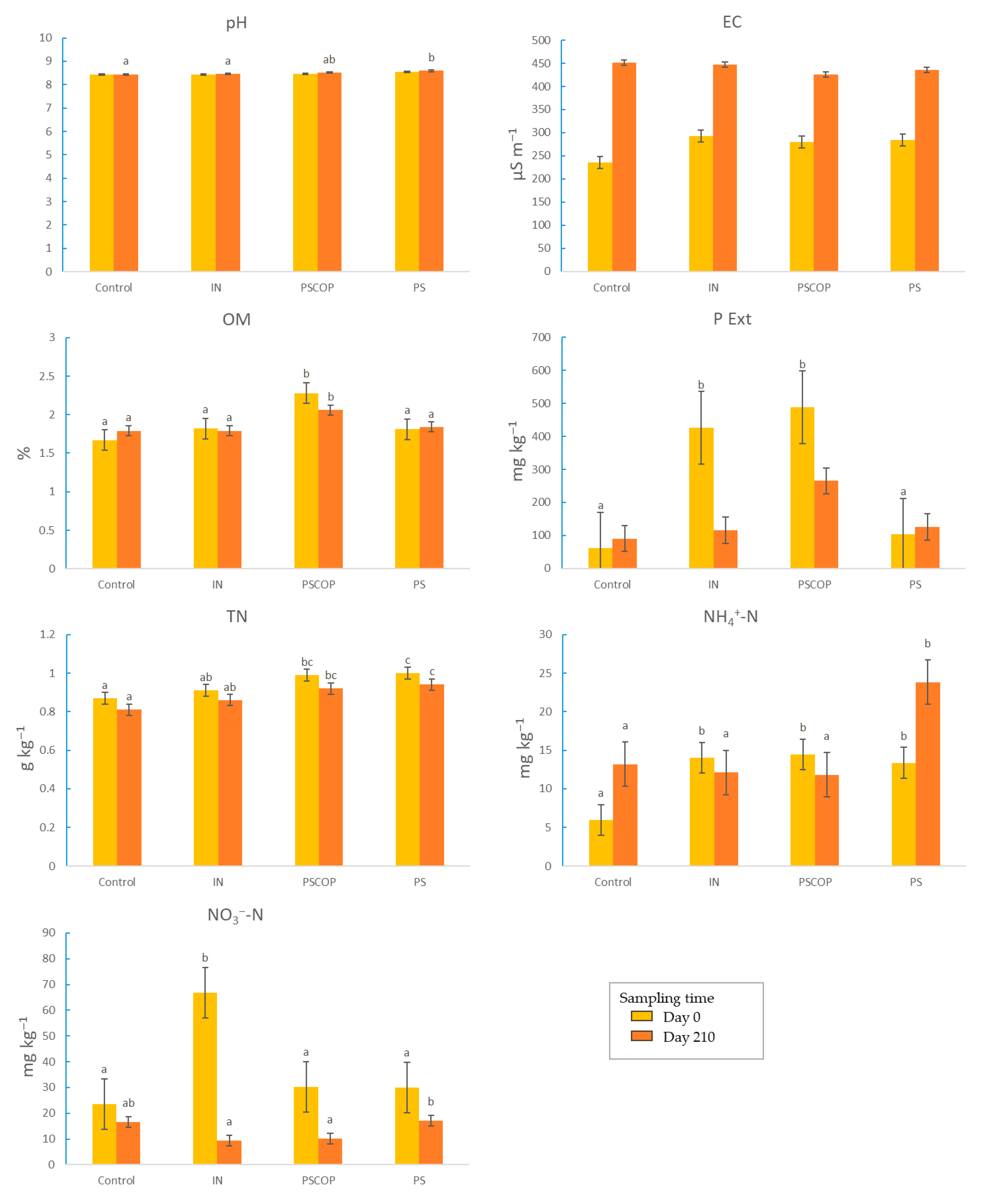
Soil physicochemical parameters (Figure 1) were differentially affected by the applied treatments. For pH, although no significant differences were observed among treatments at the beginning of the experiment (p > 0.05), statistically significant differences emerged at the end, with higher values in the PS treatment (8.59) and lower values in the control (8.44). This suggests that the application of fresh pig slurry can influence soil pH, possibly due to its specific chemical properties [48]. Regarding electrical conductivity (EC), no significant differences were observed either at the start or the end of the experiment (p > 0.05), indicating that none of the applied treatments notably altered this parameter. This outcome may reflect the similar capacity of all treatments to release salts into the soil properties [49].
Organic matter (OM) was higher in PSCOP, particularly at the initial measurement, although these differences were not statistically significant (p > 0.05). This could indicate that the composted solid fraction of pig slurry initially contributes more organic matter, but this advantage does not persist significantly over time [50].
Extractable phosphorus (Pext) showed highly significant differences at the start of the experiment (p < 0.001), with higher values in PSCOP and IN treatments. However, by the end of the trial, these differences diminished and were no longer statistically significant (p > 0.05), possibly reflecting gradual consumption of available phosphorus in the nutrient-rich treatments or stabilization into less extractable forms [51]. Total nitrogen (TN) did not differ significantly among treatments (p > 0.05) at either the initial or final sampling, suggesting that the treatments did not substantially alter total soil nitrogen. In contrast, ammonium nitrogen (NH4+-N) showed significant differences at the beginning (p < 0.001), with higher values in PS and PSCOP, which remained relatively consistent at the end, albeit without as pronounced differences. This indicates that organic treatments may enhance ammonium nitrogen reserves in the soil [52]. Nitrate nitrogen (NO3-N) exhibited an interesting pattern, with significant differences at the end of the experiment (p < 0.05). PS stood out with a notably higher final value (23.18 mg kg−1), while the control exhibited lower values, suggesting that PS effectively increases nitrate availability in the soil, possibly due to more active organic nitrogen mineralization [53].
Regarding enzyme activity (Supplementary Materials Table S1), ANOVA analysis did not reveal statistically significant differences among treatments for any parameter evaluated. Nevertheless, some numerical trends were observed. For urease activity, slightly higher values were recorded in PSCOP and PS treatments (0.83 μmol NH4+ g−1 soil), while the lowest was observed in the control (0.68 μmol NH4+ g−1 soil). This observed trend might suggest a possible input of organic matter that could promote microbial activity associated with urease, although the lack of significance precludes a definitive conclusion [54]. For phosphatase activity, the IN treatment presented the highest value (5.05 μmol p-nitrophenol g−1 soil), followed by PSCOP (4.61 μmol p-nitrophenol g−1 soil). In contrast, PS exhibited the lowest value (3.36 μmol p-nitrophenol g−1 soil), even below the control, potentially reflecting a subtle differential impact of the treatments on enzyme activity depending on the type of fertilizer applied and its effect on the soil phosphorus cycle [55].
Microbial respiration was highest in PS and IN (9.29 and 9.21 mg C-CO2 h−1 kg−1 soil, respectively), indicating greater microbial metabolic activity. The control exhibited the lowest respiration (7.16 mg C-CO2 h−1 kg−1 soil), which may be associated with lower availability of easily degradable nutrients in the absence of fertilization [56]. Finally, microbial biomass carbon showed similar values across treatments, ranging narrowly from 923 mg C kg−1 soil in PSCOP to 997 mg C kg−1 soil in IN. These results suggest that treatments did not significantly impact microbial biomass, likely due to stabilization of microbial communities over the study period [57].

3.2. Yield and Grain Quality

Regarding grain yield, all fertilized treatments significantly outperformed the unfertilized control (Table 3). The mineral fertilizer (IN) achieved the highest yield, confirming its superior efficiency in supplying readily available nutrients, particularly nitrogen (Supplementary Materials Table S2). Both the pelleted compost (PSCOP) and the fresh slurry (PS) increased yield compared to the control, although their performance remained below that of the mineral fertilizer. This pattern is consistent with recent studies showing that organic amendments can enhance wheat productivity but generally do not match the immediate nutrient availability and efficiency provided by mineral fertilizers in the short term [58].
Test weight (hectoliter weight) differed markedly among treatments, reflecting improvements in grain physical quality associated with higher nitrogen availability. The mineral fertilizer treatment exhibited the highest test weight, indicating more complete grain filling and higher density, whereas PSCOP and PS showed intermediate values, both above the control. Similarly, grain protein concentration responded clearly to fertilization: the mineral fertilizer produced the highest protein content, while the organic treatments significantly improved protein compared to the unfertilized control but remained below the mineral treatment. These findings align with previous research reporting that the partial substitution of mineral nitrogen by organic sources such as manure or slurry enhances grain yield and quality, albeit with lower nitrogen-use efficiency [59].
Straw production also increased significantly in all fertilized treatments compared with the control, without notable differences among fertilizer sources. This indicates that nitrogen availability, regardless of its origin, stimulates vegetative growth; however, the type of fertilizer did not substantially modify the balance between vegetative and reproductive biomass.
Overall, the results demonstrate that the mineral fertilizer remains the most effective treatment in terms of both yield and grain quality. Nevertheless, the organic treatments, pelleted compost and fresh slurry, showed intermediate performance, with clear improvements over the unfertilized control. Although their yield and protein content were slightly lower than those achieved with mineral fertilization, both organic amendments exhibited good agronomic potential and contribute to greater environmental sustainability. These findings support the concept that partial substitution of mineral fertilizers with organic amendments can maintain acceptable yield levels while improving the long-term sustainability of cropping systems and preserving soil fertility.

3.3. Metabolomics

The metabolomic analysis revealed clear treatment-dependent differences in the amino acid profile of wheat grains, indicating that nitrogen source influenced plant metabolic responses. In contrast, most organic acids related to central carbon metabolism showed relatively limited variation among fertilization strategies (Supplementary Materials Table S3).
Among amino acids, several compounds associated with nitrogen assimilation and carbon–nitrogen balance showed significant differences among treatments. Glutamate, glutamine, alanine, glycine and γ-aminobutyric acid (GABA) displayed strong treatment effects. Fertilized treatments generally increased the concentration of glutamate and glutamine compared with the control, indicating enhanced nitrogen assimilation. These metabolites are key intermediates in amino group transfer reactions and play a central role in the incorporation of inorganic nitrogen into organic compounds.
GABA concentrations were highest under the PS treatment and remained elevated under PSCOP relative to the control. This pattern suggests increased activity of the GABA shunt under organic fertilization. This pathway is commonly associated with the regulation of carbon–nitrogen balance and may contribute to metabolic adjustment under variable nitrogen availability [60].
Alanine also increased under fertilized treatments, particularly in IN and PS, suggesting enhanced transamination processes linked to increased nitrogen supply. Similarly, glycine concentrations were higher in fertilized plants, which may reflect increased photorespiratory activity or enhanced carbon turnover associated with improved growth conditions. Branched-chain amino acids (BCAAs), including valine, leucine and isoleucine, also responded significantly to fertilization. Higher concentrations of leucine and isoleucine were observed under PSCOP and PS, while valine increased in all fertilized treatments relative to the control. These metabolites are involved in the redistribution of carbon skeletons and energy metabolism and may indicate increased metabolic demand during nitrogen assimilation and protein synthesis [61].
Other amino acids associated with stress adaptation, such as proline and tryptophan, also showed higher concentrations under PSCOP and PS compared with the control and IN. This pattern suggests the activation of protective metabolic responses under organic fertilization, possibly related to the slower and more heterogeneous release of nitrogen from organic sources [62]. In contrast, phenylalanine and tyrosine did not differ significantly among treatments, indicating that the phenylpropanoid pathway remained relatively stable across fertilization strategies.
Organic acid profiles showed fewer treatment effects. Among tricarboxylic acid (TCA) cycle intermediates, only citrate, fumarate and formate presented significant differences. Citrate concentrations were generally higher in fertilized treatments, particularly under PSCOP and PS, suggesting increased carbon flux through the TCA cycle to support nitrogen assimilation. Fumarate showed a slight decrease under mineral fertilization, while formate concentrations tended to be lower in fertilized plants compared with the control. Malate and succinate did not show significant differences among treatments, indicating that central respiratory metabolism remained relatively stable despite differences in nutrient supply [63,64].
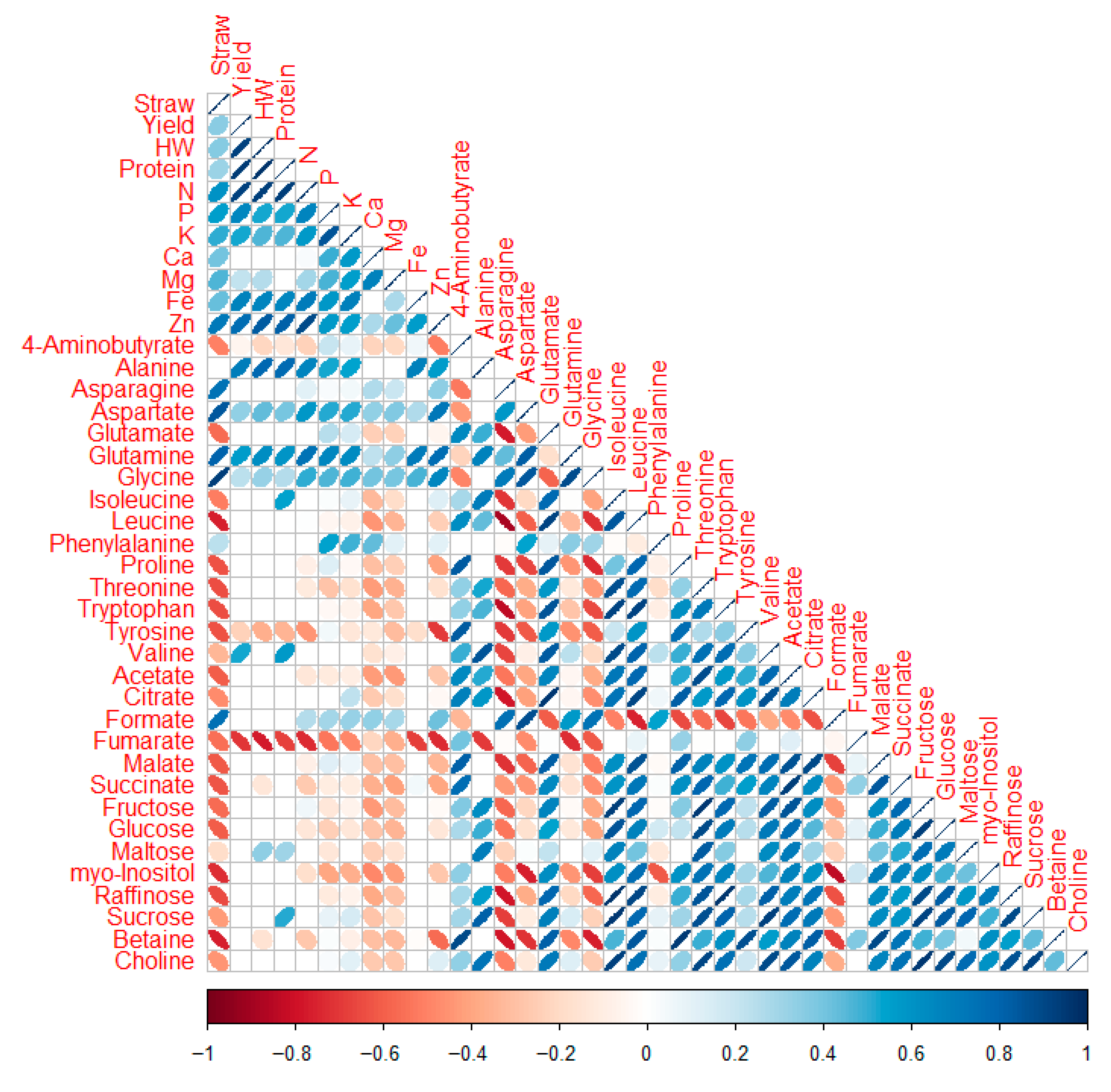
Correlation analysis (Figure 2) revealed two major groups of plant variables. Yield-related traits and grain nutrient concentrations clustered with amino acids associated with nitrogen metabolism, including glutamate, glutamine and branched-chain amino acids, as well as with organic acids such as citrate and malate. This cluster indicates a strong link between nitrogen assimilation, carbon metabolism and crop productivity.
In contrast, metabolites related to stress responses and osmotic regulation, including GABA, proline, betaine, myo-inositol and soluble sugars, formed a second cluster negatively associated with yield and nitrogen-related variables. These compounds are typically associated with metabolic adjustment under less readily available nutrient conditions.
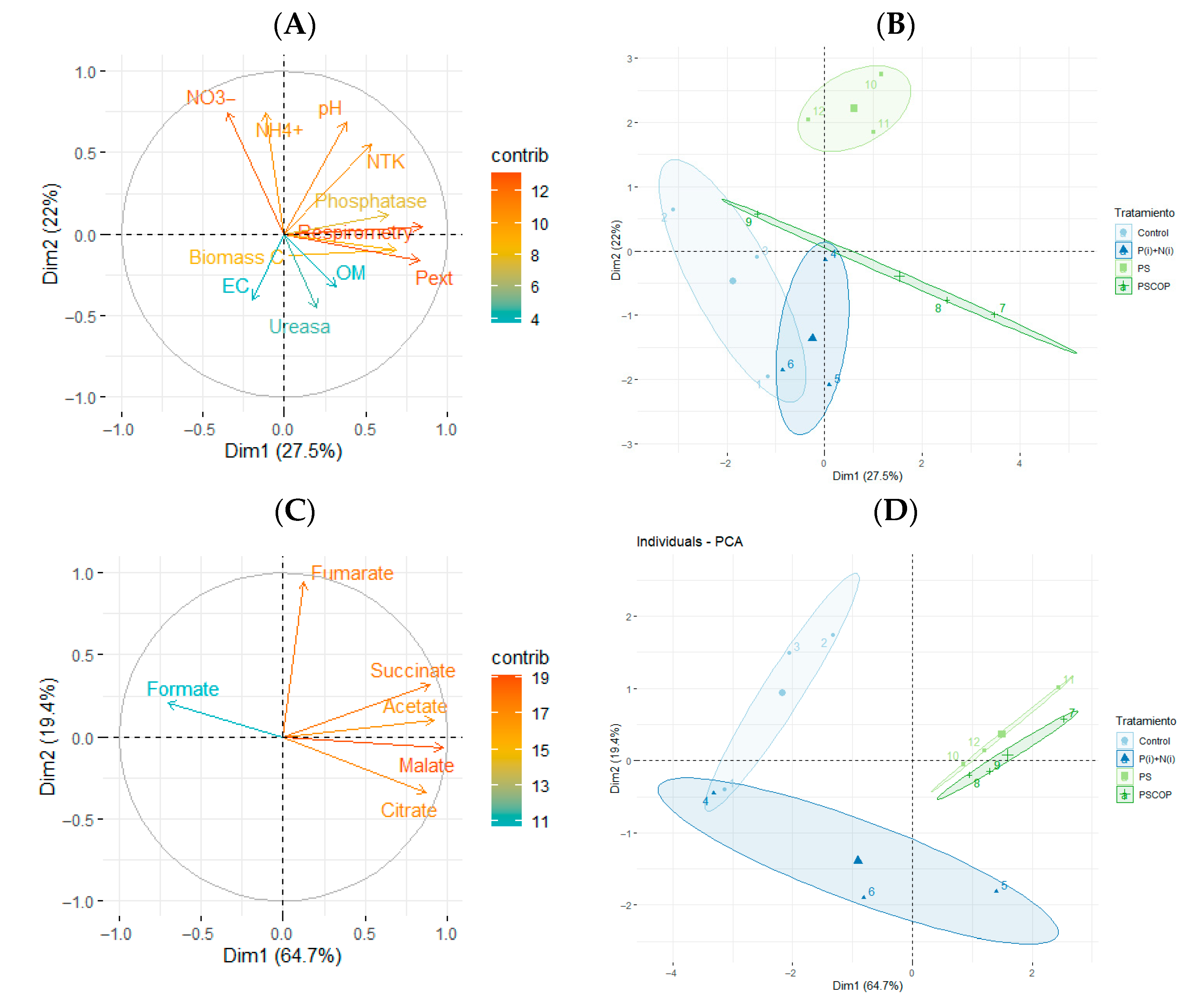
Principal component analysis (Figure 3) further illustrated the separation among fertilization treatments. Mineral fertilization was mainly associated with variables linked to nitrogen assimilation and grain productivity, whereas organic treatments showed stronger associations with metabolites involved in metabolic regulation and stress adaptation.
Overall, these results indicate that fertilization strategy not only affects wheat productivity but also modifies plant metabolic organization, with mineral fertilization promoting growth-oriented metabolic pathways and organic fertilization inducing a more adaptive metabolic profile.

3.4. Soil GHG Fluxes and Cumulative Emissions

Soil (GHG) emissions exhibited clear differences among fertilization treatments (Table 4), indicating distinct soil biochemical responses to nitrogen form and organic matter input. Nitrous oxide (N2O) fluxes were markedly higher under the inorganic fertilizer (IN) and, to a lesser extent, the slurry treatment (PS), whereas the control and compost (PSCOP) plots showed the lowest emissions (Supplementary Materials Figure S2). This pattern reflects the strong stimulation of nitrification and denitrification processes by readily available mineral nitrogen, as reported in similar cereal systems [63,64].
In contrast, the stabilized organic nitrogen in compost pellets resulted in minimal N2O release, comparable to the unfertilized control, suggesting slower mineralization rates and improved nitrogen retention in the soil. Methane (CH4) fluxes showed weaker statistical differences but tended to be higher under organic treatments, particularly PS, likely due to transient anaerobic microsites created by the addition of liquid organic matter. Such conditions may temporarily enhance methanogenic activity while inhibiting CH4 oxidation, a pattern commonly observed following slurry application [65].
Carbon dioxide (CO2) emissions, which mainly reflect soil respiration, were significantly affected by fertilization strategy. The highest cumulative CO2 fluxes were recorded under PS, followed by PSCOP, whereas the IN treatment displayed lower values than the control. This suggests that organic amendments, particularly slurry, stimulated microbial activity and soil carbon turnover due to the input of labile organic substrates. The reduced CO2 release under mineral fertilization may indicate limited stimulation of microbial respiration and a greater reliance on plant-derived root respiration rather than decomposition of exogenous carbon sources.
When expressed as CO2 equivalents (CO2eq) using global warming potential factors [43], total GHG emissions were dominated by N2O contributions, resulting in the highest CO2eq values for the IN treatment, intermediate levels for PS, and the lowest for PSCOP and the control. Notably, PSCOP maintained GHG emissions at levels statistically equivalent to the unfertilized control despite the substantial input of organic nutrients. The results highlight the environmental trade-off between rapid nitrogen availability and greenhouse gas intensity: while mineral fertilization enhances yield, it substantially increases the system’s global warming potential. Conversely, compost application achieved effective emission mitigation without compromising soil carbon storage, confirming its role as a more sustainable nutrient source within integrated wheat production systems.

4. Discussion

4.1. Soil Parameters

The fertilization strategies evaluated in this study had different effects on soil chemical dynamics, particularly with regard to the forms of nitrogen and the availability of phosphorus [11,55]. They had only a minor impact on salinity and total nutrient pools [60]. These results suggest that, under semi-arid Mediterranean conditions, the type of nitrogen source exerts a stronger influence on short-term soil biochemical responses than total nutrient inputs [55].
The increase in soil pH observed at the end of the growing season in the pig slurry (PS) treatment indicates that the slurry altered soil alkalinity due to its chemical composition and nitrogen content [7,24]. Although there were no significant initial differences, the higher final pH under PS compared to the control indicates a cumulative effect over time [11]. In calcareous soils that are already alkaline, such shifts may affect nutrient availability, particularly the solubility of phosphorus and the dynamics of micronutrients [12,24]. In contrast, neither PSCOP nor IN significantly modified soil pH, indicating more neutral behaviour in terms of the acid–base balance [11].
Electrical conductivity was unaffected by the different treatments, indicating that none of the fertilization strategies posed salinity risks at the applied rates [60]. This is particularly relevant in semi-arid irrigated systems, where salt accumulation can compromise long-term soil productivity [8]. The absence of significant increases in EC suggests that both organic and mineral inputs remained within agronomically safe thresholds [59].
Initial sampling revealed a higher quantity of organic matter content in PSCOP, reflecting the contribution of stabilized organic carbon from composted pig slurry [11]. However, this advantage was no longer evident by the end of the season, indicating active mineralization and microbial turnover during the crop cycle [59]. Total nitrogen content remained unchanged across treatments, confirming that short-term fertilization primarily affects inorganic nitrogen pools rather than total nitrogen [24,55].
The most pronounced treatment effects were observed in the dynamics of mineral nitrogen. The results show the total amount of nitrogen input, not the amount of mineralized nitrogen available to plants. At the start of the experiment, ammonium concentrations were significantly higher under PS and PSCOP, indicating the presence of organic and ammoniacal nitrogen [24]. By contrast, nitrate differences became significant by the end of the season, with the highest NO3 concentration observed under PS. This pattern could reflect a progressive mineralization and nitrification of slurry-derived nitrogen, leading to sustained nitrate availability [55]. The mineral fertilizer treatment did not produce the highest residual nitrate, which suggests a more rapid plant uptake and possible early-season losses [4]. This mechanism is often observed when nitrogen is supplied in immediately available forms. These results confirm that slurry application enhances soil nitrate accumulation over time, which could increase both plant availability and environmental risk if not synchronized with crop demand [42].
Initially, extractable phosphorus was higher under PSCOP and IN, indicating immediate P availability from both compost-derived and mineral sources [6,24]. However, these differences had disappeared by harvest time, suggesting either plant uptake or transformation into less readily available forms [12]. This convergence at the end of the season highlights the dynamic nature of phosphorus in calcareous soils, where fixation and biological demand regulate its availability [14].
Despite the absence of statistically significant differences in biological parameters, the numerical trends observed in PSCOP and PS (urease activity and microbial respiration) are consistent with the stimulation of microbial processes by organic amendments [60]. Higher respiration under these treatments likely aligns with the input of labile organic substrates, providing a potential link between carbon addition and microbial turnover. Meanwhile, the stability of the microbial biomass carbon remaining stable across treatments indicates the resilience of the soil microbial community under short-term fertilization regimes [59].
Overall, the results suggest that fresh slurry has a stronger impact on nitrogen dynamics and soil biochemical activity than composted pellets [11]. Mineral fertilization primarily influences the availability of inorganic nitrogen without substantially altering the biological properties of the soil.

4.2. Yield and Grain Quality

Compared with the unfertilized control, fertilization significantly improved wheat productivity, confirming the key role of nitrogen availability in crop performance under Mediterranean conditions [20,21,24,56]. Mineral fertilization produced the highest grain yield, reflecting the rapid availability and efficient uptake of inorganic nitrogen during critical growth stages [24,25,56].
Both organic treatments (PSCOP and PS) increased yield relative to the control, albeit by a smaller amount. This difference likely reflects the slower mineralization of organic nitrogen, which can delay nutrient availability during peak crop demand [11,12,24,55]. Nevertheless, the similar yield values observed for PSCOP and PS indicate that both organic amendments were capable of supplying sufficient nitrogen to sustain satisfactory crop productivity [7,20,22,62].
Grain physical quality also responded to fertilization. Hectoliter weight increased significantly in the fertilized treatments, with the highest values observed in the mineral fertilization treatment. Organic amendments produced intermediate values, suggesting that nitrogen availability influenced grain filling and density [24,36,62].
Grain protein content followed a similar pattern. The highest protein concentration was recorded in the mineral fertilizer treatment, while PSCOP and PS significantly improved protein levels compared to the control, though these remained lower than those achieved with mineral fertilization [24,25,62]. Protein accumulation in wheat grains is closely linked to nitrogen availability during the later stages of crop development, and the slower release of organic nitrogen may limit its contribution during this critical period [24,55].
Straw production increased significantly in all fertilized treatments, with no clear differences between the sources of fertilizer, indicating that the total nitrogen supply stimulated vegetative growth regardless of the type of fertilizer used [20,21,56].
Overall, mineral fertilization maximized yield and grain protein, but organic amendments achieved competitive productivity levels [20,24,25,62]. Pelletized compost in particular demonstrated good agronomic performance, suggesting that stabilized organic fertilizers can contribute to sustainable wheat production systems [6,23,24,25].

4.3. Metabolomics

The metabolomic results suggest that the fertilization strategy affects N-related metabolic pathways in wheat. Fertilized treatments generally promoted the accumulation of amino acids associated with N assimilation, such as glutamate, glutamine and alanine. This reflects the enhanced incorporation of inorganic N into organic compounds [24,39,40].
Differences between mineral and organic fertilization were particularly evident in metabolites associated with metabolic regulation. Organic treatments exhibited higher concentrations of GABA, proline, and several branched-chain amino acids, suggesting greater metabolic flexibility and the ability to adapt to the slower release of N from organic sources [11,24,40,64]. These metabolites are commonly associated with carbon–nitrogen balance, stress signaling and osmotic regulation [64]. Their accumulation under PSCOP and PS conditions suggests that plants fertilized with organic amendments activate adaptive metabolic pathways without compromising growth [11,24,64].
Correlation and PCA analyses further confirmed these patterns. Yield-related variables and grain nutrient concentrations clustered with amino acids linked to N assimilation, whereas metabolites related to stress responses formed a separate group that was negatively associated with productivity traits [39,40]. Together, these results indicate that mineral fertilization promotes a metabolic profile oriented towards rapid growth and N assimilation, while organic fertilization induces a more balanced metabolic state that integrates N metabolism with adaptive physiological responses [11,24,64].

4.4. Soil GHG Fluxes and Cumulative Emissions

The fertilization strategy had a strong influence on soil greenhouse gas emissions, particularly N2O [3,4,42]. The highest cumulative nitrous oxide emissions were observed under mineral fertilization, reflecting the rapid availability of inorganic N and the stimulation of nitrification and denitrification processes [4,42,43]. In contrast, the pelletized compost treatment produced N2O emissions comparable to the control [4,8,9]. This suggests that the stabilized organic N in the compost pellets limited the formation of mineral N and reduced the substrates available for the microbial processes responsible for N2O production [44,59]. The slurry treatment produced intermediate N2O emissions, likely due to the presence of readily available N and labile organic carbon, which can stimulate microbial activity shortly after application [4,42,63].
Carbon dioxide emissions were highest under the organic treatments, particularly PS, indicating enhanced microbial respiration following the addition of organic substrates [59,60]. Mineral fertilization produced lower CO2 emissions, suggesting limited stimulation of microbial decomposition processes [59].
Methane fluxes showed smaller differences, but tended to increase with slurry application, possibly due to the creation of temporary anaerobic microsites by the addition of liquid organic matter [4,42].
When expressed as CO2 equivalents, mineral fertilization had the highest global warming potential, followed by slurry; pelletized compost and the control had the lowest values [4,42]. These results highlight the environmental advantages of stabilized organic fertilizers for reducing greenhouse gas emissions in cereal production systems [4].

5. Conclusions

The results demonstrate that the strategy used for fertilization significantly affects soil nitrogen dynamics, wheat productivity and greenhouse gas emissions under Mediterranean conditions. Mineral fertilization produced the highest grain yield and protein content but also generated the greatest greenhouse gas emissions, particularly N2O. In contrast, pelletized compost showed the most promise, improving wheat yield relative to the control and achieving values comparable to those obtained with PS, although still lower than those obtained with mineral fertilization. Notably, it resulted in lower GHG emissions than mineral fertilization, representing a potential environmental advantage.
Soil analyses indicated that fertilization primarily affected mineral nitrogen dynamics, while metabolomic results suggested distinct plant metabolic responses depending on the nitrogen source used.
Overall, pelletized compost derived from pig slurry can be considered a promising additional nitrogen source for wheat production. Using it may help to recycle nutrients and support the development of more sustainable fertilization strategies in Mediterranean agroecosystems.

Supplementary Materials

The following supporting information can be downloaded at https://www.mdpi.com/article/10.3390/nitrogen7020041/s1: Figure S1. Edaphoclimatic conditions during the trial; Table S1. Main enzymatic activities per gram of dry soil (μmol g−1 h−1) in wheat growing seasons and respirometry (mg C-CO2 kg−1 h−1); Table S2. Grain nutrient content of wheat at harvest; Table S3. Metabolomic profile of wheat grains at harvest period; Figure S2. Daily emissions of (A) N2O, (B) CO2 and (C) CH4 in the crop period. The bars indicate the standard errors (n = 3).

Author Contributions

Conceptualization, J.A.-C., L.O. and R.M.; methodology M.Á.B. and R.M.; software, S.S.-M. and L.O.; validation, S.S.-M. and J.A.-C.; formal analysis, L.O., E.M.-S., C.Á.A. and J.A.S.-T.; investigation, J.A.-C., S.S.-M., L.O., C.Á.A. and F.J.A.-R.; resources, E.S., F.J.A.-R. and R.M.; writing—review and editing, S.S.-M., L.O. and J.A.-C.; visualization, J.A.S.-T., E.S., F.J.A.-R., C.Á.A. and M.Á.B.; funding acquisition, R.M.; project administration, R.M. All authors have read and agreed to the published version of the manuscript.

Funding

This study was also supported by a grant from the Generalitat Valenciana and the Agència Valenciana de la Innovació (INNTA3/2022/26).

Data Availability Statement

The data presented in this manuscript are available from the authors upon reasonable request.

Conflicts of Interest

Author Juan Aviñó-Calero and Ernesto Santateresa were employed by the company Sociedad de Fomento Agrícola Castellonense S.A. Theremaining authors declare that the research was conducted in the absence of any commercial or financialrelationships that could be construed as a potential conflict of interest.

References

  1. FAO. FAOSTAT: Wheat Production Statistics; Food and Agriculture Organization of the United Nations: Rome, Italy, 2021. [Google Scholar]
  2. Hereu-Morales, J.; Vinardell, S.; Valderrama, C. Towards climate neutrality in the Spanish N-fertilizer sector: A study based on radiative forcing. Sci. Total Environ. 2024, 946, 174131. [Google Scholar] [CrossRef]
  3. Mielcarek-Bocheńska, P.; Rzeźnik, W. Greenhouse Gas Emissions from Agriculture in EU Countries—State and Perspectives. Atmosphere 2021, 12, 1396. [Google Scholar] [CrossRef]
  4. Aguilera, E.; Lassaletta, L.; Sanz-Cobena, A.; Garnier, J.; Vallejo, A. The potential of organic fertilizers and water management to reduce N2O emissions in Mediterranean climate cropping systems. A review. Agric. Ecosyst. Environ. 2013, 164, 32–52. [Google Scholar] [CrossRef]
  5. Fertilizers Europe. Phosphate Rock Imports and Supply Security in Europe; Fertilizers Europe: Brussels, Belgium, 2022. [Google Scholar]
  6. Sayara, T.; Basheer-Salimia, R.; Hawamde, F.; Sánchez, A. Recycling of Organic Wastes through Composting: Process Performance and Compost Application in Agriculture. Agronomy 2020, 10, 1838. [Google Scholar] [CrossRef]
  7. Brown, S.; Cotton, J. Changes in Soil Properties and Carbon Content Following Compost Application: Results of On-farm Sampling. Compost. Sci. Util. 2011, 19, 87–96. [Google Scholar] [CrossRef]
  8. Martínez-Sabater, E.; Pérez-Murcia, M.D.; Andreu-Rodríguez, F.J.; Orden, L.; Agulló, E.; Sáez-Tovar, J.; Martínez-Tome, J.; Bustamante, M.Á.; Moral, R. Enhancing Sustainability in Intensive Dill Cropping: Comparative Effects of Biobased Fertilizers vs. Inorganic Commodities on Greenhouse Gas Emissions, Crop Yield, and Soil Properties. Agronomy 2022, 12, 2124. [Google Scholar] [CrossRef]
  9. Vico, A.; Sáez, J.A.; Pérez-Murcia, M.D.; Martinez-Tomé, J.; Andreu-Rodríguez, J.; Agulló, E.; Bustamante, M.A.; Sanz-Cobena, A.; Moral, R. Production of spinach in intensive Mediterranean horticultural systems can be sustained by organic-based fertilizers without yield penalties and with low environmental impacts. Agric. Syst. 2020, 178, 102765. [Google Scholar] [CrossRef]
  10. Rady, M.M.; El-Yazal, M.A.S.; Taie, H.A.A.; Ahmed, S.F.M. Response of wheat growth and productivity to exogenous polyamines under lead stress. J. Crop Sci. Biotechnol. 2016, 19, 363–371. [Google Scholar] [CrossRef]
  11. Das, B.; Pooniya, V.; Shivay, Y.S.; Zhiipao, R.R.; Biswakarma, N.; Kumar, D.; Saikia, N.; Kumar, A.; Govindasamy, P.; Barman, A.; et al. Twenty-One Years’ Impact of Using Organic Amendments on the Productivity of Rice–Wheat Rotation and Soil Properties. Field Crop. Res. 2024, 309, 109311. [Google Scholar] [CrossRef]
  12. Diacono, M.; Montemurro, F. Long-term effects of organic amendments on soil fertility. Agron. Sustain. Dev. 2010, 30, 401–422. [Google Scholar] [CrossRef]
  13. Orden, L.; Ferreiro, N.; Satti, P.; Navas-Gracia, L.M.; Chico-Santamarta, L.; Rodríguez, R.A. Effects of Onion Residue, Bovine Manure Compost and Compost Tea on Soils and on the Agroecological Production of Onions. Agriculture 2021, 11, 962. [Google Scholar] [CrossRef]
  14. Panday, D.; Bhusal, N.; Das, S.; Ghalehgolabbehbahani, A. Rooted in Nature: The Rise, Challenges, and Potential of Organic Farming and Fertilizers in Agroecosystems. Sustainability 2024, 16, 1530. [Google Scholar] [CrossRef]
  15. Papandrea, S.F.; Cataldo, M.F.; Palma, A.; Gallucci, F.; Zimbalatti, G.; Proto, A.R. Pelletization of Compost from Different Mixtures with the Addition of Exhausted Extinguishing Powders. Agronomy 2021, 11, 1357. [Google Scholar] [CrossRef]
  16. Pampuro, N.; Colombo, C.; Lucchini, A. Effects of pelletizing pressure and the addition of woody bulking agents on the physical and mechanical properties of pellets made from composted pig solid fraction. Powder Technol. 2017, 311, 112–119. [Google Scholar] [CrossRef]
  17. Zafari, A.; Kianmehr, M.H. Application of densification process in organic waste management. Waste Manag. Res. 2013, 31, 684–691. [Google Scholar] [CrossRef]
  18. Chew, K.W.; Chia, S.R.; Yap, Y.J.; Ling, T.C.; Tao, Y.; Show, P.L. Densification of food waste compost: Effects of moisture content and dairy powder waste additives on pellet quality. Process Saf. Environ. Prot. 2018, 116, 780–786. [Google Scholar] [CrossRef]
  19. FAO. The State of Food and Agriculture 2012: Increasing Food Security in a Changing World; Food and Agriculture Organization of the United Nations: Rome, Italy, 2012. [Google Scholar]
  20. Wang, Y.; Yang, X.; Huang, S.; Wu, L.; Cai, Z.; Xu, M. Long-term combined application of organic and inorganic fertilizers increases crop yield sustainability by improving soil fertility in maize-wheat cropping systems. J. Integr. Agric. 2025, 24, 290–305. [Google Scholar] [CrossRef]
  21. Zhang, K.; Wan, X.; Li, C.; Xia, X.; Lou, Y.; Bai, B.; Liang, H.; Hu, H. The effects of the combined application of organic and inorganic fertilizers on the annual balance of nitrogen and phosphorus in farmlands. Sci. Rep. 2025, 15, 35657. [Google Scholar] [CrossRef]
  22. Hernandez, T.; Chocano, C.; Moreno, J.L.; García, C. Towards a more sustainable fertilization: Combined use of compost and inorganic fertilization for tomato cultivation. Agric. Ecosyst. Environ. 2014, 196, 178–184. [Google Scholar] [CrossRef]
  23. Antille, D.L.; Sakrabani, R.; Godwin, R.J. Effects of biosolids-derived organomineral fertilizers, urea and biosolids granules on crop and soil established with ryegrass (Lolium perenne L.). Commun. Soil Sci. Plant Anal. 2014, 45, 1605–1621. [Google Scholar] [CrossRef]
  24. Carciochi, W.D.; Ferrari, J.L.; Orden, L.; Galantini, J. Pelletized Organomineral vs. Inorganic Nitrogen and Phosphorus Fertilizers: Impact on Wheat Nutritional Status, Productivity, and Grain Quality. J. Plant Nutr. Soil Sci. 2024, 24, 7361–7372. [Google Scholar] [CrossRef]
  25. Shaji, H.; Chandran, V.; Mathew, L. Organic Fertilizers as a Route to Controlled Release of Nutrients. In Controlled Release Fertilizers for Sustainable Agriculture; Lewu, F.B., Volova, T., Thomas, S., Rakhimol, K.R., Eds.; Elsevier: Amsterdam, The Netherlands, 2021; pp. 231–245. [Google Scholar]
  26. Uddin, M.K.; Saha, B.K.; Wong, V.N.L.; Patti, A.F. Organo-mineral fertilizer to sustain soil health and crop yield for reducing environmental impact: A comprehensive review. Eur. J. Agron. 2025, 162, 12. [Google Scholar] [CrossRef]
  27. Aviñó-Calero, J.; Santateresa, E.; Orden, L.; Marks, E.A.N.; Martínez-Sabater, E.; Andreu-Rodriguez, F.J.; Saéz-Tovar, J.A.; Pérez-Murcia, M.D.; Bustamante, M.A.; Moral, R. Addition discarded tennis balls as an inert bulking agent to olive mill waste and pig slurry during composting reduces the energy consumption related to ventilation and the generation of anaerobic gases. J. Environ. Manag. 2025, 395, 127905. [Google Scholar] [CrossRef] [PubMed]
  28. Paredes, C.; Pérez-Murcia, M.D.; Pérez-Espinosa, A.; Bustamante, M.A.; Moreno-Caselles, J. Recycling of Two-Phase Olive-Mill Cake “Alperujo” by Co-Composting with Animal Manures. Commun. Soil Sci. Plant Anal. 2015, 46, 238–247. [Google Scholar] [CrossRef]
  29. Kabata-Pendias, A. Trace Elements in Soils and Plants, 4th ed.; CRC Press: Boca Raton, FL, USA, 2010; p. 548. [Google Scholar]
  30. Bustamante, M.A.; Paredes, C.; Moral, R.; Moreno-Caselles, J.; Perez-Murcia, M.D.; Perez-Espinosa, A.; Bernal, M.P. Co-Composting of Distillery and Winery Wastes with Sewage Sludge. Water Sci. Technol. 2007, 56, 187–192. [Google Scholar] [CrossRef]
  31. Yeomans, J.; Bremmer, J.M. A Rapid and Precise Method for Routine Determination of Organic Carbon in Soil. Commun. Soil Sci. Plant Anal. 1989, 19, 1467–1476. [Google Scholar] [CrossRef]
  32. Bremmer, J.M.; Britembeck, G.A. A Simple Method for Determination of Ammonium in Semimicro-Kjeldahl Analysis of Soils and Plant Materials Using a Block Digester. Commun. Soil Sci. Plant Anal. 1983, 14, 905–913. [Google Scholar] [CrossRef]
  33. Bremmer, J.M.; Keeney, D.R. Steam Distillation Methods for Determination of Ammonium Nitrate and Nitrite. Anal. Chim. Acta 1965, 32, 485–495. [Google Scholar] [CrossRef]
  34. Olsen, S.; Cole, C.; Watanabe, F.; Dean, L. Estimation of Available Phosphorus in Soils by Extraction with Sodium Bicarbonate; USDA Circular 939; US Government Printing Office: Washington, DC, USA, 1954. [Google Scholar]
  35. Hao, X.; Ball, B.C.; Culley, J.L.B.; Carter, M.R.; Parkin, G.W. Soil density and porosity. In Soil Sampling and Methods of Analysis; Canadian Society of Soil Science: Vancouver, BC, Canada, 2008; pp. 743–759. [Google Scholar]
  36. Nannipieri, P.; Ceccanti, B.; Cervelli, S.; Matarese, E. Extraction of Phosphatase, Urease, Protease, Organic Carbon, and Nitrogen from Soil. Soil Sci. Soc. Am. J. 1980, 44, 1011–1016. [Google Scholar] [CrossRef]
  37. Anderson, J.P.E. Soil Respiration. In Methods of Soil Analysis: Part 2 Chemical and Microbiological Properties; John Wiley & Sons, Ltd.: Hoboken, NJ, USA, 1983; pp. 831–871. [Google Scholar]
  38. Wringley, C.; Batey, I. Assessing Grain Quality. In Food Science, Technology and Nutrition; Cauvain, S.P., Ed.; Woodhead Publishing: Cambridge, MA, USA, 2003; pp. 71–96. [Google Scholar]
  39. Van der Sar, S.; Kim, H.K.; Meissner, A.; Verpoorte, R.; Choi, Y.H. Nuclear Magnetic Resonance Spectroscopy for Plant Metabolite Profiling. In The Handbook of Plant Metabolomics; John Wiley & Sons, Ltd.: Hoboken, NJ, USA, 2013; pp. 57–76. [Google Scholar]
  40. Alfosea-Simón, M.; Simón-Grao, S.; Zavala-Gonzalez, E.A.; Navarro-Morillo, I.; Martínez-Nicolás, J.J.; Alfosea-Simón, F.J.; García-Sánchez, F. Ionomic, Metabolic and Hormonal Characterization of the Phenological Phases of Different Tomato Genotypes Using Omics Tools. Sci. Hortic. 2022, 293, 110697. [Google Scholar] [CrossRef]
  41. Franco-Luesma, S.; Lafuente, V.; Alonso-Ayuso, M.; Bielsa, A.; Kouchami-Sardoo, I.; Arrué, J.L.; Álvaro-Fuentes, J. Maize Diversification and Nitrogen Fertilization Effects on Soil Nitrous Oxide Emissions in Irrigated Mediterranean Conditions. Front. Environ. Sci. 2022, 10, 914851. [Google Scholar] [CrossRef]
  42. Menéndez, S.; Merino, P.; Pinto, M.; González-Murua, C.; Estavillo, J.M. 3,4-Dimethylpyrazol Phosphate Effect on Nitrous Oxide, Nitric Oxide, Ammonia, and Carbon Dioxide Emissions from Grasslands. J. Environ. Qual. 2006, 35, 973–981. [Google Scholar] [CrossRef] [PubMed]
  43. IPCC. Chapter 7. The Earth’s Energy Budget, Climate Feedbacks and Climate Sensitivity. In Climate Change 2021: The Physical Science Basis; Contribution of Working Group I to the Sixth Assessment Report of the Intergovernmental Panel on Climate Change; Cambridge University Press: New York, NY, USA, 2021; p. 132. [Google Scholar]
  44. Yao, Z.; Guo, H.; Wang, Y.; Zhan, Y.; Zhang, T.; Wang, R.; Zheng, X.; Butterbach-Bahl, K. A Global Meta-Analysis of Yield-Scaled N2O Emissions and Its Mitigation Efforts for Maize, Wheat, and Rice. Glob. Change Biol. 2024, 30, e17177. [Google Scholar] [CrossRef] [PubMed]
  45. Di Rienzo, J.A.; Casanoves, F.; Balzarini, M.G.; González, L.; Tablada, M.; Robledo, C.W. InfoStat, versión 2020; Centro de Transferencia InfoStat, FCA; Universidad Nacional de Córdoba: Córdoba, Argentina, 2020; Available online: http://www.infostat.com.ar (accessed on 1 March 2026).
  46. Wei, T.; Simko, V. R Package “Corrplot”: Visualization of a Correlation Matrix, 2021, versión 0.92; The R Foundation for Statistical Computing: Vienna, Austria, 2022; Available online: https://CRAN.R-project.org/package=factoextra (accessed on 1 March 2026).
  47. Kassambara, A.; Mundt, F. Factoextra: Extract and Visualize the Results of Multivariate Data Analyses, 2020, version 1.0.7; The R Foundation for Statistical Computing: Vienna, Austria, 2022; Available online: https://CRAN.R-project.org/package=factoextra (accessed on 1 March 2026).
  48. Lin, Z.; Price, G.; Burton, D.L.; Clark, O.G. Effects on soil nitrogen and plant production from land applying three types of biosolids to an agricultural field for three consecutive years. Soil Tillage Res. 2022, 223, 105458. [Google Scholar] [CrossRef]
  49. Batool, A.; Zhang, K.; Abbas, F.; Akhtar, A.; Mao, J. A Comparative Evaluation of Soil Amendments in Mitigating Soil Salinization and Modifying Geochemical Processes in Arid Land. Agronomy 2026, 16, 222. [Google Scholar] [CrossRef]
  50. Bernal, M.P.; Alburquerque, J.A.; Moral, R. Composting of animal manures and chemical criteria for compost maturity assessment. A review. Bioresour. Technol. 2009, 100, 5444–5453. [Google Scholar] [CrossRef]
  51. Komiyama, T.; Ito, T.; Saigusa, M. Effects of phosphorus-based application of animal manure compost on the yield of silage corn and on soil phosphorus accumulation in an upland Andosol in Japan. Soil Sci. Plant Nutr. 2014, 60, 863–873. [Google Scholar] [CrossRef]
  52. Breza, L.C.; Grandy, A.S. Organic amendments tighten nitrogen cycling in agricultural soils: A meta-analysis on gross nitrogen flux. Front. Agron. 2025, 7, 1472749. [Google Scholar] [CrossRef]
  53. Bhatt, R.; Kunal; Moulick, D.; Bárek, V.; Brestic, M.; Gaber, A.; Skalicky, M.; Hossain, A. Sustainable strategies to limit nitrogen loss in agriculture through improving its use efficiency—Aiming to reduce environmental pollution. J. Agric. Food Res. 2025, 22, 101957. [Google Scholar] [CrossRef]
  54. Song, D.; Dai, X.; Guo, T.; Cui, J.; Zhou, W.; Huang, S.; Shen, J.; Liang, G.; He, P.; Wang, X.; et al. Organic amendment regulates soil microbial biomass and activity in wheat-maize and wheat-soybean rotation systems. Agric. Ecosyst. Environ. 2022, 333, 107974. [Google Scholar] [CrossRef]
  55. Peng, S.; Zhang, X.; Sun, L.; Chai, R.; Zhang, C.; Chen, X.; Luo, L.; Siddique, K.H.M. Matching Phosphorus Fertilizer Types with Soil Type in Rice Cultivation Optimizes Yield, Soil Phosphorus Availability, and Phosphorus Fertilizer Use Efficiency. Agriculture 2025, 15, 172. [Google Scholar] [CrossRef]
  56. Sourav, S.K.; Subbarayappa, C.T.; Hanumanthappa, D.C.; Mudalagiriyappa; Vazhacharickal, P.J.; Mock, A.; Ingold, M.; Buerkert, A. Soil respiration under different N fertilization and irrigation regimes in Bengaluru, S-India. Nutr. Cycl. Agroecosyst. 2023, 127, 333–345. [Google Scholar] [CrossRef]
  57. Bastida, F.; Kandeler, E.; Hernández, T.; García, C. Long-term Effect of Municipal Solid Waste Amendment on Microbial Abundance and Humus-associated Enzyme Activities Under Semiarid Conditions. Microb. Ecol. 2008, 55, 651–661. [Google Scholar] [CrossRef] [PubMed]
  58. Chen, Y.; Ouyang, Y.; Pan, W.; Wang, Y.; Li, Y. Effects of Organic Manure on Wheat Yield and Accumulation of Heavy Metals in a Soil—Wheat System. Agronomy 2024, 14, 2143. [Google Scholar] [CrossRef]
  59. Martínez, E.; Maresma, A.; Biau, A.; Berenguer, P.; Cela, S.; Santiveri, F.; Michelena, A.; Lloveras, J. Long-term effects of pig slurry combined with mineral nitrogen on maize in a Mediterranean irrigated environment. Field Crop. Res. 2017, 214, 341–349. [Google Scholar] [CrossRef]
  60. Shelp, B.J.; Bown, A.W.; McLean, M.D. Metabolism and functions of gamma-aminobutyric acid. Trends Plant Sci. 1999, 4, 446–452. [Google Scholar] [CrossRef]
  61. Araújo, W.L.; Tohge, T.; Ishizaki, K.; Leaver, C.J.; Fernie, A.R. Protein degradation—An alternative respiratory substrate for stressed plants. Trends Plant Sci. 2011, 16, 489–498. [Google Scholar] [CrossRef]
  62. Szabados, L.; Savouré, A. Proline: A multifunctional amino acid. Trends Plant Sci. 2010, 15, 89. [Google Scholar] [CrossRef]
  63. Bouwman, A.F.; Boumans, L.J.M.; Batjes, N.H. Emissions of N2O and NO from fertilized fields: Summary of available measurement data. Glob. Biogeochem. Cycles 2002, 16, 1058. [Google Scholar] [CrossRef]
  64. Zhang, X.; Davidson, E.A.; Mauzerall, D.L.; Searchinger, T.D.; Dumas, P.; Shen, Y. Managing nitrogen for sustainable development. Nature 2015, 528, 51–59. [Google Scholar] [CrossRef]
  65. Chadwick, D.; Sommer, S.; Thorman, R.; Fangueiro, D.; Cardenas, L.; Amon, B.; Misselbrook, T. Manure management: Implications for greenhouse gas emissions. Anim. Feed. Sci. Technol. 2011, 166–167, 514–531. [Google Scholar] [CrossRef]
Figure 1. Main soil parameters at sowing (0 days) and at the end of the growing season (210 days). EC: electrical conductivity; OM: organic matter; Pext: extractable phosphorus; TN: total Kjeldahl N; N-NH4+: ammonium; N-NO3: nitrate. Different letters within a column indicate significant differences between treatments (p < 0.05). Values indicate mean (n = 3). For acronyms see Table 1.
Nitrogen 07 00041 g001
Figure 2. Correlation matrix of plant metabolic variables, based on Pearson’s correlation coefficients. Colours indicate positive (blue) and negative (red) correlations.
Nitrogen 07 00041 g002
Figure 3. (A,C) Observational variables PCA of soil and plants. (B,D) Biplot PCA in four fertilizer treatments. The PCA biplot shows the scores of soils and plants variables of each individual fertilizer: Control (light blue circle), IN (blue circle), PS (light green circle); PSOCP (green circle); the colored ellipses (B,D) (size determined by a probability level of 0.95) emphasize the individuals belonging to each treatment. For acronyms see Table 1.
Nitrogen 07 00041 g003
Table 1. Combinations of mineral fertilizers and nitrogen application rates in wheat, as observed in a trial conducted at the EEAD-CSIC’s Aula Dei Experimental Station.
Treatment 1 Nutrient Rate
(kg ha−1)
Fertilizer Rate (kg ha−1)
PNPN
ControlC0000
Inorganic (MAP + UREA)IN50150188326
Pig SlurryPS6015037,500 L ha−1
Pig Slurry Compost PelletizedPSCOP401506000
1 The control treatment (without fertilization) is indicated by “0” in the P and N columns. The numerical values represent nutrient application rates, where “P” and “N” denote phosphorus and nitrogen, respectively.
Table 2. Composition of the organic fertilizers used on the trial.
Nutrient aPSNutrient aPSCOP
OC (mg L−1)4.53 ± 0.12OC (g kg−1)294 ± 9
ST (%)29.14 ± 0.38nd nd
SV (%)2.88 ± 0.04nd nd
pH6.55 ± 0.09pH7.55 ± 0.09
EC (dS m−1)22.24 ± 0.27EC (dS m−1)4.04 ± 0.24
N (mg L−1)2205 ± 65N (g kg−1)19.88 ± 0.2
P (mg L−1)581 ± 19P (g kg−1)17.52 ± 0.6
K (mg L−1)1807 ± 29K (g kg−1)13.25 ± 0.5
Ca (mg L−1)1526 ± 33Ca (g kg−1)60.40 ± 2.4
Mg (mg L−1)504 ± 14Mg (g kg−1)15.39 ± 0.5
Na (mg L−1)1.97 ± 0.05Na (g kg−1)3.49 ± 0.1
Zn (mg L−1)7.86 ± 0.16Zn (mg kg−1)766 ± 25
Cu (mg L−1)439 ± 9.2Cu (mg kg−1)138 ± 5
Fe (mg L−1)17.84 ± 0.87Fe (g kg−1)3.55 ± 0.1
Mn (mg L−1)6591 ± 127Mn (mg kg−1)594 ± 11
Cd (mg L−1)2.07 ± 0.08Cd (mg kg−1)0.60 ± 0.01
Ni (mg L−1)175 ± 11Ni (mg kg−1)9.23 ± 0.62
Pb (mg L−1)0.00 ± 0.0Pb (mg kg−1)12.22 ± 0.64
Cr (mg L−1)167 ± 46Cr (mg kg−1)18.73 ± 3.81
Co (mg L−1)22.65 ± 0.37Co (mg kg−1)2.07 ± 0.08
a PSCOP units are expressed per dry weight (solid state), while PS units are expressed per volume (liquid state). nd: not determined, OC: Organic Carbon, ST: total solids, SV: volatile solids, EC: Electric Conductivity, Values indicate mean ± SE (n = 3). For acronyms see Table 1.
Table 3. Analysis of variance (ANOVA) of wheat yield components for fertilizer treatments in 2022/23 growing season.
TreatmentGrain Yield
(kg ha−1)
TGW
(g)
HW
(kg hL−1)
Straw
(kg ha−1)
Grain Protein
(%)
Control6429 ± 251 a49.3 ± 0.2175.4 ± 0.33 a4660 ± 34 a7.56 ± 0.33 a
IN8618 ± 174 b50.2 ± 0.2979.4 ± 0.05 c6290 ± 21 b10.56 ± 0.17 c
PSCOP7476 ± 100 b51.8 ± 0.1176.7 ± 0.43 b5776 ± 41 b8.73 ± 0.05 b
PS7151 ± 88 b49.7 ± 0.3377.1 ± 0.43 b6280 ± 95 b8.98 ± 0.11 b
F-ANOVA89.91 ***0.6 ns70.6 ***5.7 *121 ***
TGW: 1000-grain weight, HW: Hectoliter weight. *, ***: significant difference between treatments at p < 0.01 and p < 0.0001, respectively. ns = no significant. Different letters within a column indicate significant differences between treatments (p < 0.05). Values indicate mean ± SE (n = 3). For acronyms see Table 1.
Table 4. Cumulative values of soil N2O, CO2, CH4 and CO2 equivalent emissions released from plots soil in the treatments during the entire experimental period.
g N2O-N m−2 kg CH4-C m−2 kg CO2-C m−2 CO2eq (kg m−2)
Control1.47 ± 0.20 a0.31 ± 0.06 a5869 ± 292 b409 ± 55 a
IN3.30 ± 0.32 a0.50 ± 0.11 ab6354 ± 260 a914 ± 87 c
PSCOP3.61 ± 0.19 a0.89 ± 0.32 ab6713 ± 1276 b1009 ± 43 a
PS6.79 ± 0.31 b3.92 ± 0.21 b10,474 ± 678 c1961 ± 90 b
F-ANOVA5.98 *7.24 *24.57 ***6.14 *
CO2 equivalent from added N2O and CH4 emissions with the corresponding GWP (IPCC, 2021). *, ***: significant difference between treatments at p < 0.01 and p < 0.0001, respectively. Different letters within a column indicate significant differences between treatments (p < 0.05). Values indicate mean ± SE (n = 3). For acronyms see Table 1.
Disclaimer/Publisher’s Note: The statements, opinions and data contained in all publications are solely those of the individual author(s) and contributor(s) and not of MDPI and/or the editor(s). MDPI and/or the editor(s) disclaim responsibility for any injury to people or property resulting from any ideas, methods, instructions or products referred to in the content.