1. Introduction
It is of the utmost importance for the well-being of people, the economy, and the environment that high-rise civil engineering structures and the people who live in them are protected against the damage that can be caused by severe winds and earthquakes. In the realm of studies conducted by mechanical, control and civil engineers, the effort to dampen vibrations in structures comprises a dynamic and expansive research domain. Given the complications that arise from model uncertainties and external disturbances, it is an extremely difficult task to design a high-performance vibration controller that is applicable to active, semiactive, hybrid, or passive control of a building structure. Structural control systems reduce vibration in high-rise buildings under severe wind, earthquakes, or enormous dynamic loads.
This study focuses on applying fractional-order calculus to develop a fractional-order PIλDμ controller designed to suppress vibrations in building structures caused by seismic events. The PSO technique is utilized to adjust the parameters of the PIλDμ controller to provide robustness against external factors such as significant dynamic loads, intense winds, or seismic activities that can affect the structure. The dynamics of a multidegree-of-freedom building structure due to earthquakes are minimized by utilizing an FOPID controller on every floor of the building structure. Although they are commonly used in industry and appear intuitively reasonable, traditional PID controllers have a few shortfalls when utilized with sophisticated and dynamic systems such as multi-story buildings subjected to seismic excitations. To begin with, fixed-parameter tuning in PID controllers dramatically restricts their flexibility. After being able to tune for a single operating point, the PID controller will not operate optimally if there is a change in the system dynamics caused by structural non-linearity, aging, or sudden unforeseen external disturbances like earthquakes. Secondly, the limitation of using only integer-order derivatives and integrals without flexibility in control structure implies that PID controllers are unable to accurately capture and respond to the subtle behaviors of actual structural systems. Such systems usually have nonlinear and time-varying properties that need more responsive and high-resolution control than can be provided by PID.
In addition, it is a well-known weakness of the derivative term in PID controllers that they are sensitive to noise. Earthquake excitation signals, which tend to be noisy and broadband in character, may corrupt the operation of PID systems, causing control saturation or unwanted system oscillations. In addition, in MDOF structures, such as high-rise buildings, traditional PID controllers do not handle the control of multi-input multi-output (MIMO) effectively. This is even more limited when trying to actively control vibration on various floors at once.
Lastly, PID controller tuning, particularly for complicated systems, tends to be manual or heuristic with no mathematical basis. The consequence is poor performance that can be exhibited, especially when deployed for safety-critical applications such as buildings under seismic load. From loss of property and displacement to loss of critical services, economic costs can devastate national economies, especially in developing countries. Even buildings that remain standing tend to experience what remains of the damage. These realities make robust real-time vibration control systems a necessity. The problem studied in this paper is important because strong earthquakes create large vibrations that can damage buildings. Traditional PID controllers cannot handle these fast, nonlinear, and changing seismic forces. Fractional-order controllers offer better flexibility but are difficult to tune. To solve this, we use PSO to automatically select the best controller parameters. Our study combines PSO and fractional calculus for a two-story building under real earthquake input. The results show that the PSO-tuned FOPID controller greatly reduces vibrations compared to no control and classical PID. Overall, this study provides a simple and effective method to improve building safety during earthquakes.
Among these challenges, fractional-order PIλDμ controllers have emerged as a promising solution. Unlike the conventional PID controller, the FOPID introduces two more tunable parameters: the fractional orders of integration and differentiation , which are not constrained to being integers. This additional flexibility provides an easier tuning of the frequency response of a control system for the fulfillment of design requirements regarding phase and gain margins and, moreover, for increasing robustness against model uncertainties. This is the most important thing in structural engineering, where structures can behave quite differently under differences in material properties, loading conditions, or aging effects. Another strong reason for the use of FOPID controllers is the fact that they can ensure smooth and accurate control on very wide frequency ranges, which is of great importance for reducing both high-frequency and low-frequency components of seismic excitations. Earthquake loads are generally of a broadband nature and can cause resonance in multiple structural modes. The tunable character of fractional-order derivatives makes it possible to specifically damp just particular vibration modes, thus improving the overall structural safety and user comfort.
Recent advances in computational intelligence have made optimization of FOPID parameters possible with the help of metaheuristic optimization algorithms such as PSO, differential evolution, and genetic algorithms. In particular, metaheuristic algorithms are capable of handling the complicated and non-convex nature of optimization problems in FOPID design. Indeed, PSO has demonstrated superior convergence characteristics and computational efficiency, which is well-suited to applications in real-time or near-real-time control. In addition, FOPID controllers show increased flexibility in structural use when applied together with active and semi-active devices such as tuned mass dampers, building structures, or magnetorheological dampers. The synergy of fractional calculus with smart materials and adaptive algorithms presents new opportunities to develop smart structural control systems. In conclusion, the interest in applying FOPID in structural engineering is driven by its higher tuning flexibility, improved robustness against uncertainties, improved vibration suppression performance, and compatibility with intelligent optimization techniques. Such attributes make FOPID controllers well suited for deployment in earthquake-resilient structural systems.
2. Literature Review
In recent decades, many earthquake-safety methods have been developed. These include PD control, PID control, robust control, adaptive
control, fuzzy and neural network control, and sliding control [
1,
2,
3,
4,
5,
6,
7]. Standard PID controllers continue to be widely used in industry, despite the variety of control schemes available. They account for more than 90 percent of control applications due to their straightforward construction, high level of durability, user-friendliness, and adaptability across a wide variety of contexts. The calculation of fractional orders is a generalization of conventional calculus that can be used to improve the capabilities of the PID controller. Using fractional calculus, we can see that the structure of the fractional-order PI
λD
μ controller is similar to that of the normal integral-order PID controller. Both controllers share common parameters,
(proportional gain),
(integral gain), and
(derivative gain). Compared to regular PID controllers, fractional-order PI
λD
μ controllers give you more design options because they have additional parameters, namely the integrator order
and the differentiator order
. More recent studies have shown that fractional order controllers can effectively control the actions of many different types of control systems, such as those that are chemical, mechanical, or electrical [
8,
9,
10,
11,
12,
13].
However, the study on PI
λD
μ controllers in structural vibration control is still in its early stages. Although PID controllers have been suggested to mitigate building responses to wind excitations [
14] and to reduce deflection during seismic events such as the Northridge earthquake [
15]. Standard PD/PID control schemes for building vibration control are proposed [
16,
17]. Only limited exploration of PI
λD
μ controllers for vibration suppression in building structure [
18,
19]. It is required to have prior knowledge about the gains in the controller parameter in order to participate in a scheme called fractional-order mode control, which was developed to reduce deflection in uncertain structures [
20]. However, because real applications often involve large buildings and variable parameters, selecting optimal gains can be a difficult task. Controllers for PID/PI
λD
μ systems that are not adequately designed could result in unintended system reactions, which could potentially result in structural damage. As a consequence of this, the fine-tuning of PID/PI
λD
μ controller parameters continues to be a significant area of research interest. Fractional-order derivatives are a flexible tool used in image processing [
21,
22]. Unlike traditional methods that rely on only first- or second-order derivatives, fractional-order techniques allow non-integer values, helping capture finer details and complex patterns in images [
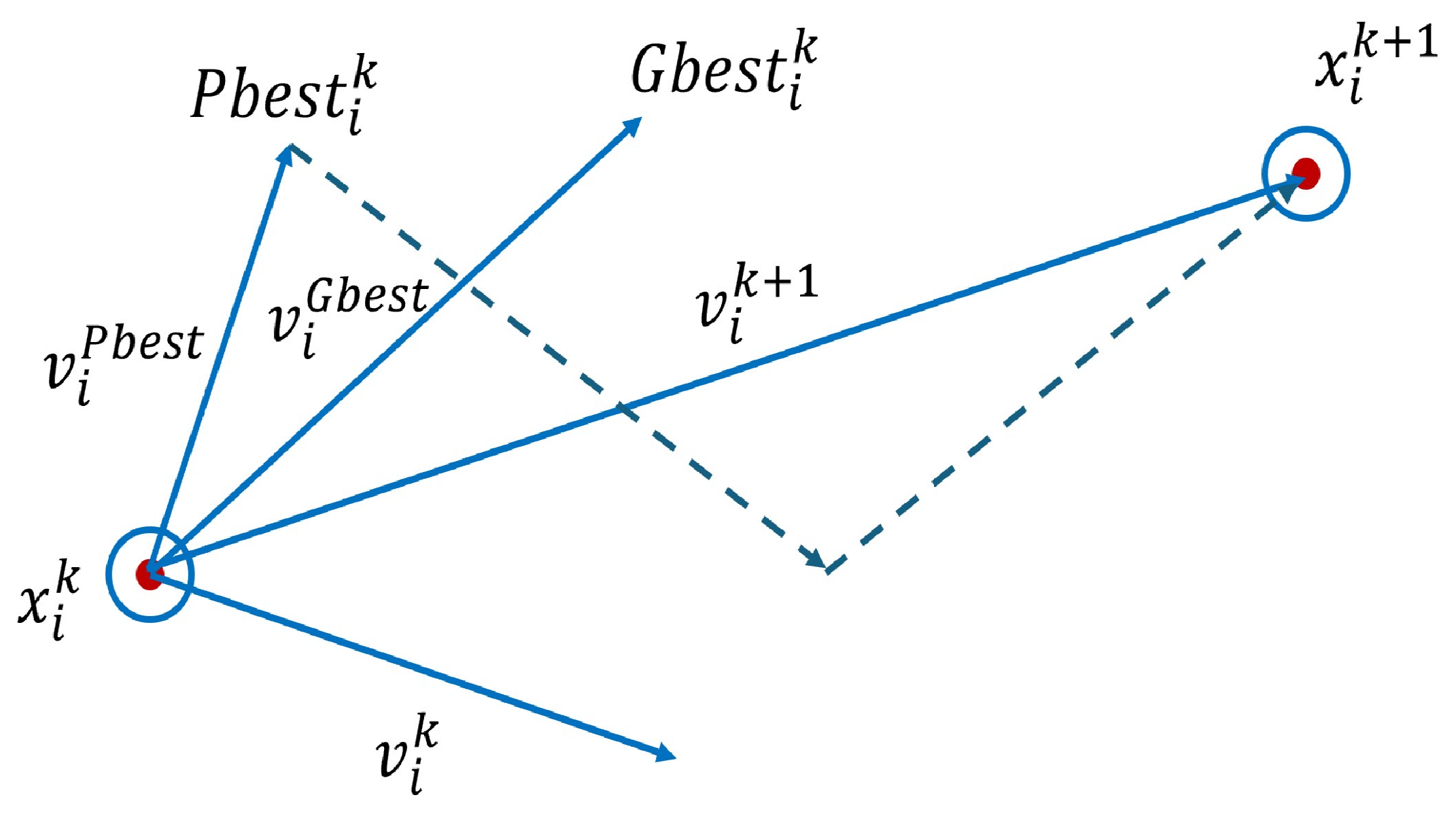
23]. PSO is a population-based evolutionary technique that evolved from swarm intelligence. It takes its cues from the social and cooperative behaviors seen in animals, such as the flocking of birds and schooling of fish, which serve as its source of inspiration. The PSO approach has been shown to be successful in determining optimal control parameters in a variety of control problems [
24,
25,
26,
27,
28,
29,
30].
Structural engineers are now working on a solution to the problem of dynamic loads, which includes things like wind and seismic excitations [
31,
32]. There is no longer a requirement for a mathematical model when using controllers such as PID and fractional-order PI/PD [
33]. The Harmony Search (HS) method, which takes its cues from music, is used to optimize active-TMDs. The results of this algorithm show that increasing the stroke capacity of active TMD does not improve its performance in reducing TMD [
34]. A smart load frequency controller integrates a fractional-order adaptive fuzzy PID controller with a filtering mechanism (FOAFPIDF), optimized using the modified salp swarm algorithm (MSSA). According to Mohanty et al. [
35], this approach outperforms conventional PID controllers in hybrid power systems involving electric vehicles (EV), especially in minimizing frequency deviations. In other words, the intelligent load frequency controller outperforms PID. Only a few studies have been done on its use in seismically stimulated structures with MIMO control systems [
36]. Researchers are studying hybrid vibration control for building structure using base isolators and active tuned mass dampers (ATMDs) [
37]. Recent research has focused on FOPID controllers for use in AVR systems. These controllers have shown better output response while maintaining simplicity and robustness [
38].
The issue of tracking throttle pressure and megawatt output is a one-of-a-kind hybrid control design technique. This approach offers a hybrid FOPID-based iterative learning control to control rapid changes in
and
N [
39,
40]. Although the work presented in [
39,
40] have applied the FOPID controllers to various structural and mechanical systems, they have primarily dealt with single-input control scenarios, simplified excitation models, or have assumed idealized system dynamics. The proposed work specifically addresses a multi-degree-of-freedom building that is subjected to real earthquake excitations and a dual-controller configuration—where each floor is independently controlled via a PSO-optimized PI
λD
μ strategy. Moreover, unlike most of the previously conducted studies that have mainly focused on assessing the performance of controllers under nominal conditions, the focus of our approach is robustness against modeling uncertainties and broadband seismic disturbances. These differences underline the novelty brought by the proposed study in the development of a more adaptive, realistic, and system-level vibration mitigation framework for civil structures. The study employs a hybrid control system that combines a fractional-order PID controller based on fuzzy logic (FOPID), the opposition-based teaching-learning optimization algorithm, and a combination of magnetorheological dampers and tuned mass dampers (MR-TMD) to mitigate seismic responses in a 15-story shear building [
41,
42]. By placing magnetorheologically tuned mass dampers on the roof of the building, the system effectively reduces structural vibrations in various earthquake scenarios. Researchers have proposed tuned integral derivative-based control techniques, such as PTID and FOPTID, and have contrasted these methods with PID-based control methods, such as FOPID, for a variety of robustness problems. Some examples of such techniques are PTID and FOPTID. It is possible to obtain strong and optimized controller parameters using the joint space construction of tuned integral derivative and PID-based tracking controllers along with the GWO-PSO method [
43,
44]. The fractional order PID with a multi-objective cuckoo search approach is proposed [
19]. To evaluate FOPID performance, a five-story base-isolated building is taken into account. A fractional-order PID with a crystal structure algorithm (CryStAl) is proposed for structural vibration suppression [
45]. In the first case study, an active tendon system was placed on the first floor of a 3-story shear model building, and in the second structure, three active tendon systems were placed on the first, third, and fifth floors of a 6-story shear model building.
Researchers are continuously improving the way buildings respond to earthquakes through smart control systems. Umutlu [
46] proposed a new controller for Active Tuned Mass Dampers (ATMD) that works using measurements from only one floor, making the system easier to implement and less expensive. The controller uses a linear regression model and can adapt to the changing behavior of the building during an earthquake. As a result, it shows strong effectiveness in reducing vibrations. Further studies by Khodadoost et al. [
45] and Akbari et al. [
47] explored the application of fractional order PID (FOPID) controllers, which provide greater flexibility and precision compared to conventional controllers. They analyzed 12 different state-of-the-art optimization algorithms to select the best tuning method for these controllers. The results showed that the CryStAl algorithm gave the best performance among the 12 optimization algorithms for minimizing structural vibration in both low-rise and high-rise buildings. Meanwhile, Hosseini et al. [
48] and Mamat et al. [
49] conducted reviews of the capabilities of AI-based approaches such as fuzzy logic and neural networks to enhance controller real-time adaptability. These AI-based systems work better because they can quickly adjust to changing vibration patterns.
Medjili et al. [
50] show that the use of intelligent and AI-supported controllers along with modern optimization methods can greatly improve the safety of buildings during earthquakes. Recent research is moving toward using smart algorithms like GWO, differential evolution, ant-bee colony optimization [
51,
52], and other natural-inspired methods [
53] to make structural control systems even more effective. Such algorithms have a high level of efficacy in adjusting control parameters in intricate, nonlinear, and MDOF structures where conventional methods are unable to perform. GWO, motivated by the hierarchical leadership and hunting pattern of the gray wolf, has also emerged as a good option for optimizing control inputs of active mass dampers and hybrid control schemes in view of its speed of convergence and ease of implementation. DE, owing to its simplicity and robustness, has been widely employed to optimize fractional-order controllers and seismic isolators, especially for structures that need to rapidly adapt to evolving ground motions. Furthermore, ABC algorithms, motivated by honeybee foraging patterns, have been used to optimize damping ratios and stiffness in TMDs, resulting in a significant improvement in structural response under earthquake excitations. In most comparative studies, these intelligent optimization techniques have outperformed classical algorithms in terms of accuracy, convergence rate, and resilience to local minima. Their advantageous ability to handle high dimensionality and multi-objectivity optimality makes them highly applicable for real-time structural control applications. Thus, hybrid approaches, which couple intelligent algorithms with advanced controllers such as FOPID, LQR, and sliding mode controllers, are finding their place among robust and effective methods for suppressing seismic vibrations in modern civil infrastructure.
The article is organized as follows:
Section 3 represents the formulation of the problem, after which the fractional-order PI
λD
μ controller is introduced in
Section 4 to enhance the robustness of the controller and speed up the minimization of errors.
Section 5 explains the PSO methodology in detail, followed by the design of the control system and the simulation studies in
Section 6. Finally,
Section 7 presents the conclusions.
3. Problem Formulation
The equation of motion governing a building structure with n-degrees of freedom (DOF) by using Newton’s law can be expressed as:
where
;
is the mass matrix;
is the state vector of the system;
is the damping matrix;
is the stiffness matrix of the building structure;
is the control input [
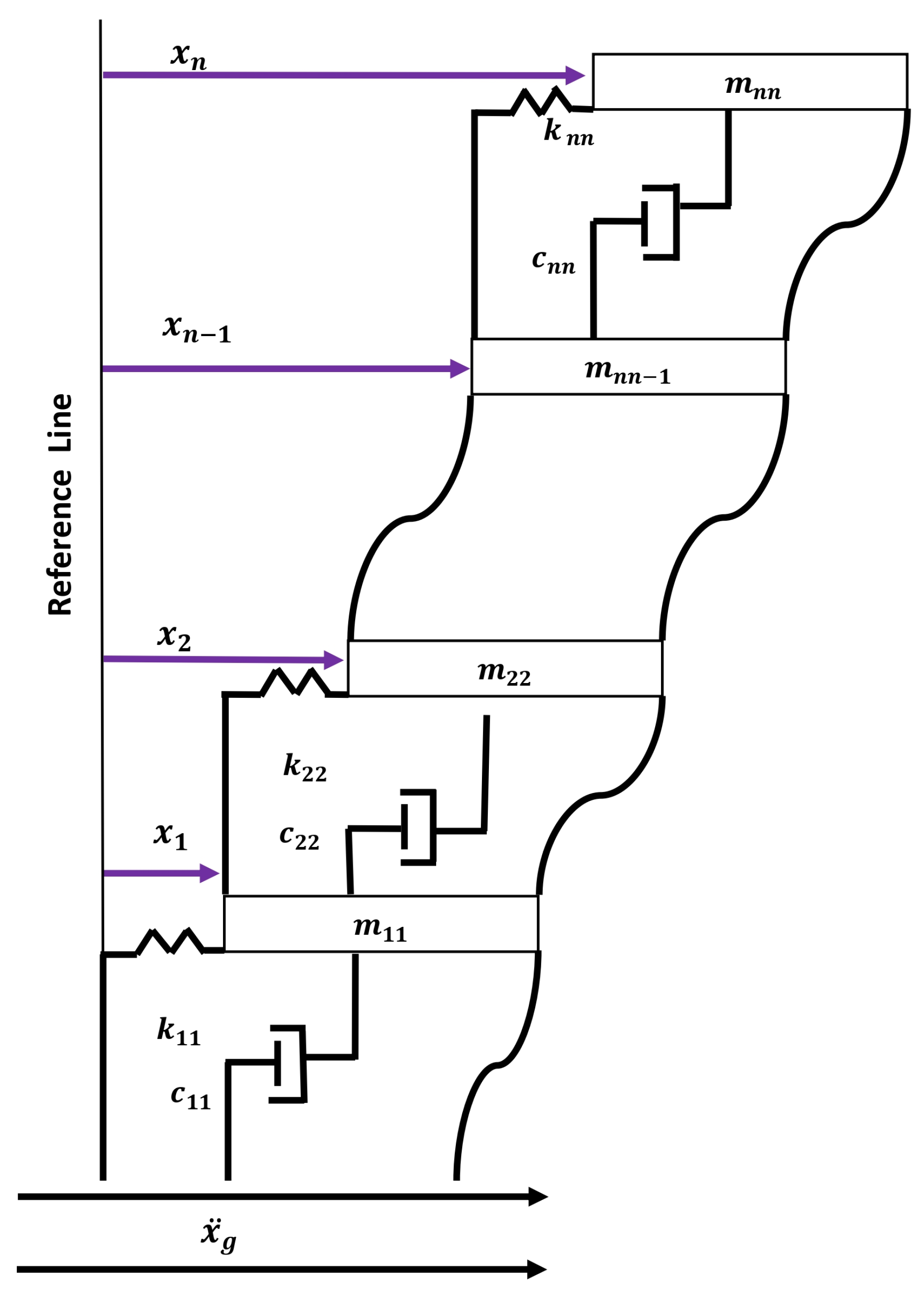
14]. The mechanical configuration of a building model with n-DOF is illustrated in
Figure 1. The parameter values in Equation (
1) can be characterized as follows:
The external disturbance
interferes with the structure of the building and takes the following form:
Here,
denotes a vector
made by the mass of the stories multiplied by -1 corresponding to the acceleration of the earthquake ground
. Using Equation (
1), a n-story building structure’s state-space depiction is provided as
where
Let
represent the velocity and acceleration vectors, respectively. Displacement and velocity errors are defined as
and
, where
denotes the desired trajectory of the system. The objective of this study is to demonstrate that, for a given structural system (1) subjected to external disturbances, an appropriately designed PI
λD
μ controller
can drive the state of the system towards zero, that is,
as
.
For this research, a two-story building model is chosen as the test case for its proportion between simplicity and real-world applicability. Although multi-story models might be closer to real-world high-rise buildings, a two-story building still permits a tractable mathematical description and intuitive insight into system dynamics while retaining fundamental dynamic features like mode coupling, inter-floor interaction, and resonance effects. The model adopts a lumped mass approach in which a discrete mass is used for each floor and connected by springs and dampers, which is highly accepted in structural dynamics for controller testing purposes. Compared with the finite element method (FEM), which ensures high spatial resolution and in-depth modeling of stress-strain distributions, the lumped mass model provides computational efficiency and control-oriented design suitability, particularly while considering the effect of control algorithms such as PSO-based FOPID. The principal assumptions made in this model are the linear elastic behavior of the structural elements, fixed base conditions, and uniform ground excitation over the base. Furthermore, damping is assumed to be viscous and proportional, and sensor-actuator delays are neglected. These simplifications, while useful for focused controller evaluation, limit the model’s ability to capture localized structural effects, material non-linearities, or complex soil-structure interactions.
4. Fractional Order Calculus and PIλDμ Controller
In this section, a fractional-order control input
is designed such that the vibration control system (1) is stable. Fractional order calculus, an extension of ordinary differential and integral calculus, is a mathematical subject that deals with derivatives and integrals that have noninteger orders. The
th-order Riemann-Liouville fractional derivative is defined as follows.
and the
th-order Riemann-Liouville fractional integration has the following form
where
is the Gamma function,
, and
[
54]. In recent years, engineers and researchers have increasingly used fractional-order controllers to control the response of real physical systems.
Based on the closed-loop dynamics model, we design the following fractional-order controller in the time domain.
Fractional calculus is a mathematical extension of traditional calculus that allows derivatives and integrals to be of noninteger (fractional) order, offering a powerful framework for modeling systems with memory, damping, or hereditary properties. Unlike classical derivatives, which measure instantaneous rate of change, fractional derivatives capture more nuanced system dynamics, lying between differentiation and integration. This is especially beneficial in structural control applications, where buildings exhibit complex, time-dependent responses to seismic events.
Fractional order controllers, such as
, utilize this concept by adding two new tunable parameters (
and
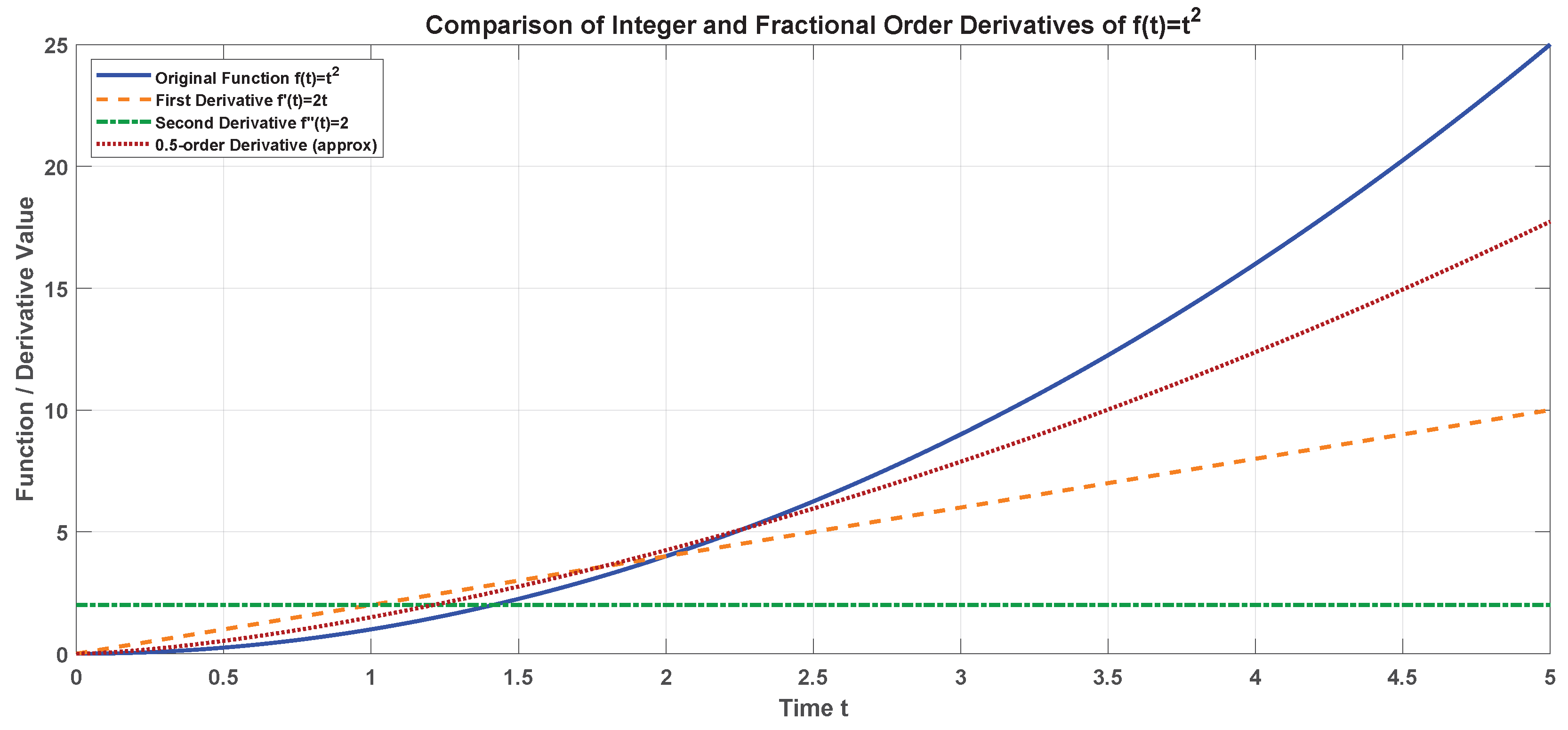
), allowing for more precise tuning than traditional PID controllers. A graphical comparison of derivatives for the function
illustrates that the derivative of 0.5-order falls between the original function and its derivatives of integer-order, showcasing the intermediate and flexible nature of fractional calculus. This makes fractional controllers particularly effective for vibration suppression in civil engineering applications.
Figure 2 illustrates the behavior of fractional and integer derivatives of order
, showing how the 0.5-order derivative lies between the first and second derivatives. This highlights the intermediate and memory-preserving nature of fractional calculus, which offers smoother and more adaptable control dynamics. We get the following expression for the fractional-order controller in the frequency domain by applying the Laplace transformation to Equation (
4):
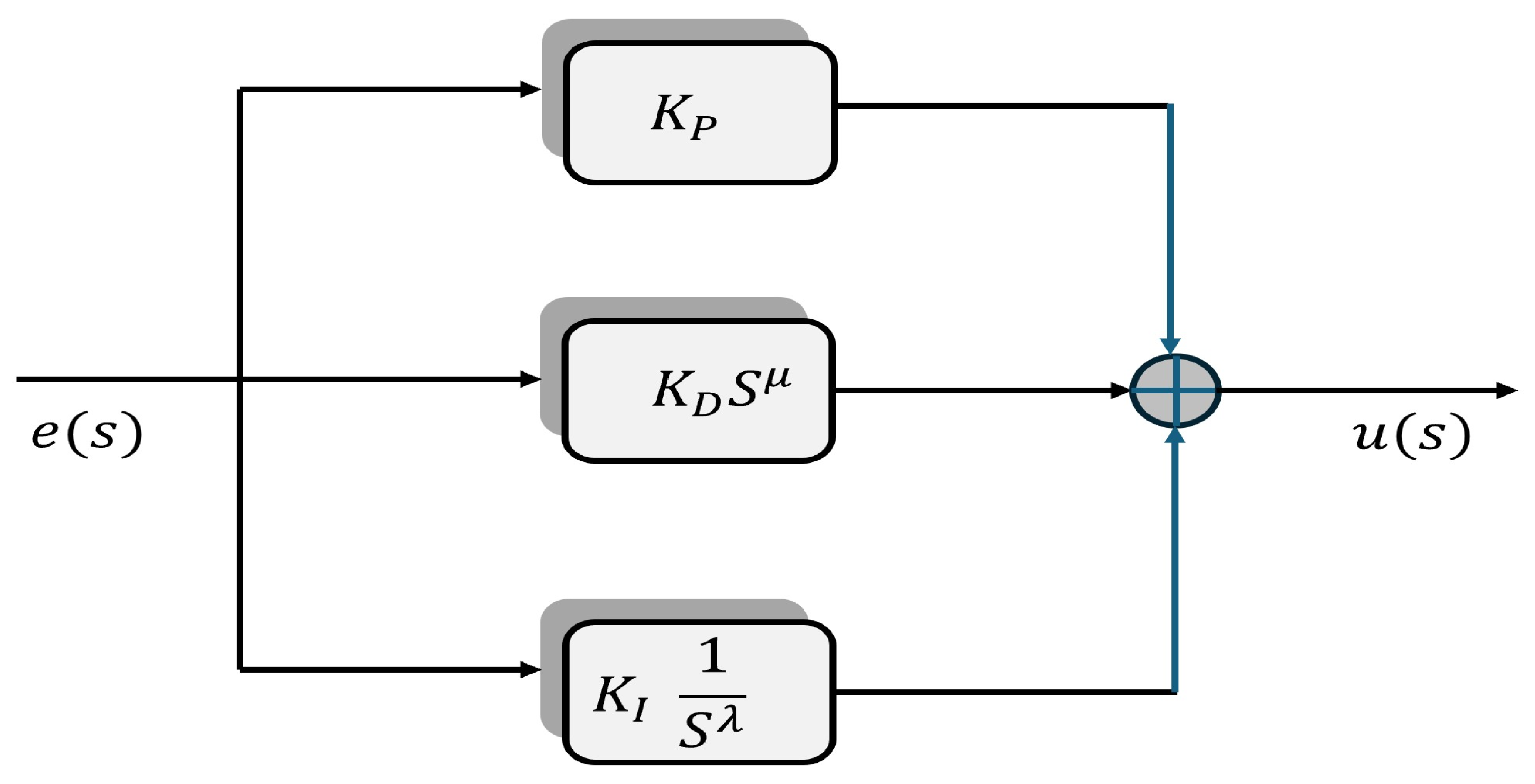
The block diagram representation of Equation (
5) depicted in
Figure 3.
A fractional order controller (PI
λD
μ) has three parameters
,
,
, and two orders
,
which are not necessarily integers. PI
λD
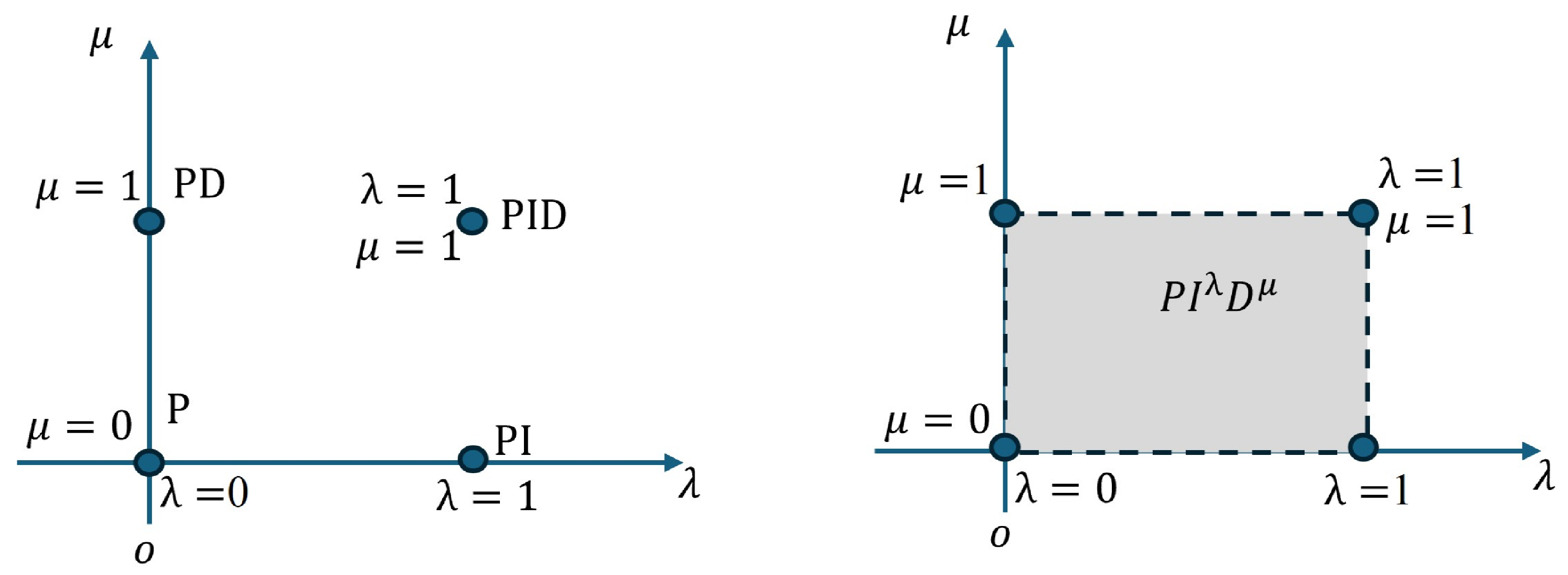
μ generalizes the standard PID controller. The graphical representation of the controllers PD
, P
, PID
, PI
, and PI
λD
μ controllers in
-
plane is given in
Figure 4.
Our aim is obtaining the best system response; we optimize the fitness function using the PSO method, obtain optimal parameters, and order the fractional-order controller.
6. Control System Design and Simulation Studies
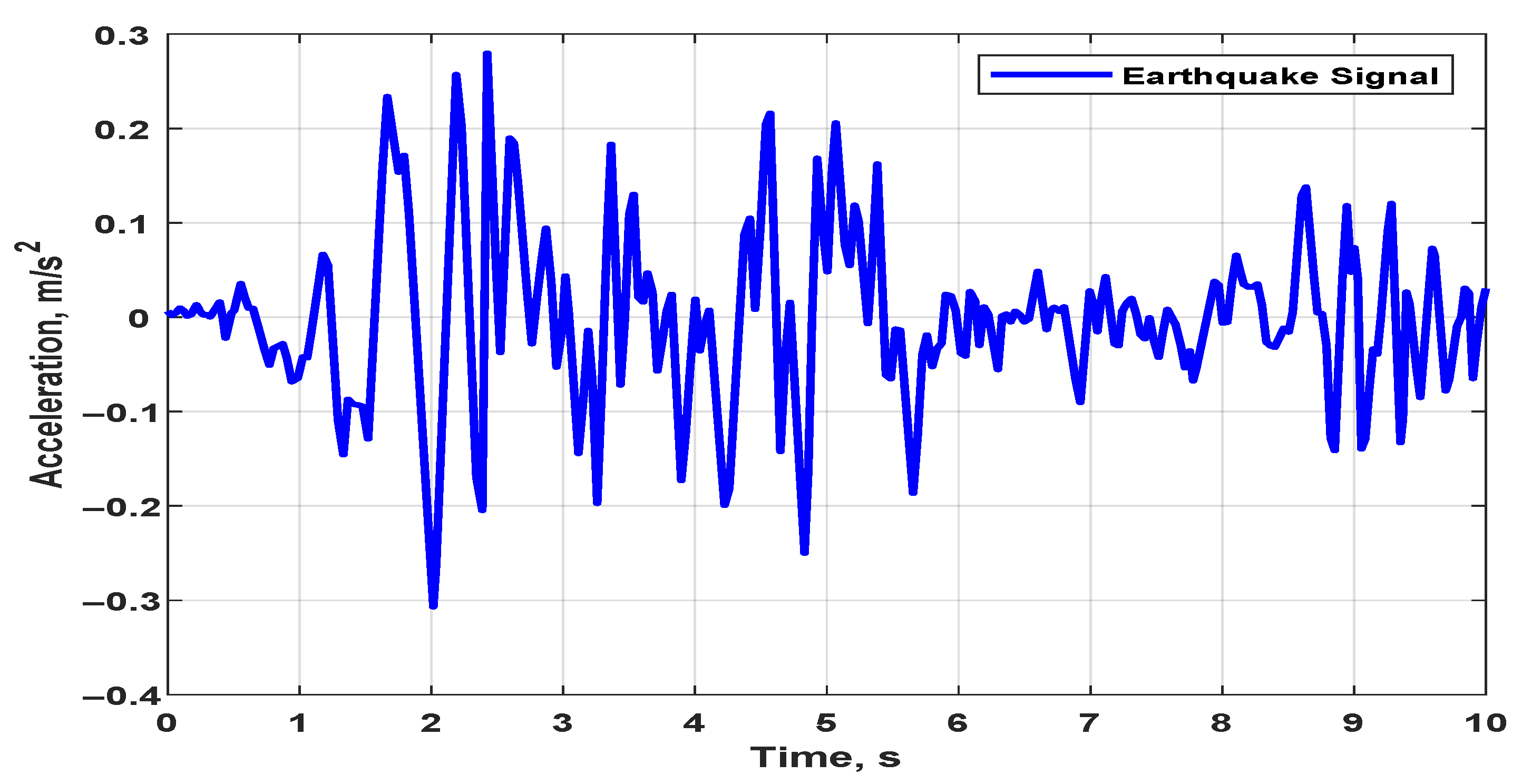
The simulation results were conducted to investigate the effectiveness of vibration suppression of a two-story building excited by the unwanted 1940 El Centro earthquake [
56] shown in
Figure 6. This figure presents the ground acceleration record of the 1940 El Centro earthquake applied at the base of the building model as an external disturbance input. This signal contains a wide range of frequencies and rapidly varying amplitudes, demonstrating the highly dynamic nature of real seismic events. In this paper, the acceleration time history is used as a base excitation to assess the controller performance in terms of vibration suppression. The figure portrays the intensity of the excitation, hence bringing into view the need for an efficient control approach for the structural system.
The parameter values for a two-story building structure are given in
Table 1. To obtain the desired objective, fractional-order PI
λD
μ controllers are used. In this study, no separate physical active damper is modeled. Instead, the control input
produced by the PI
λD
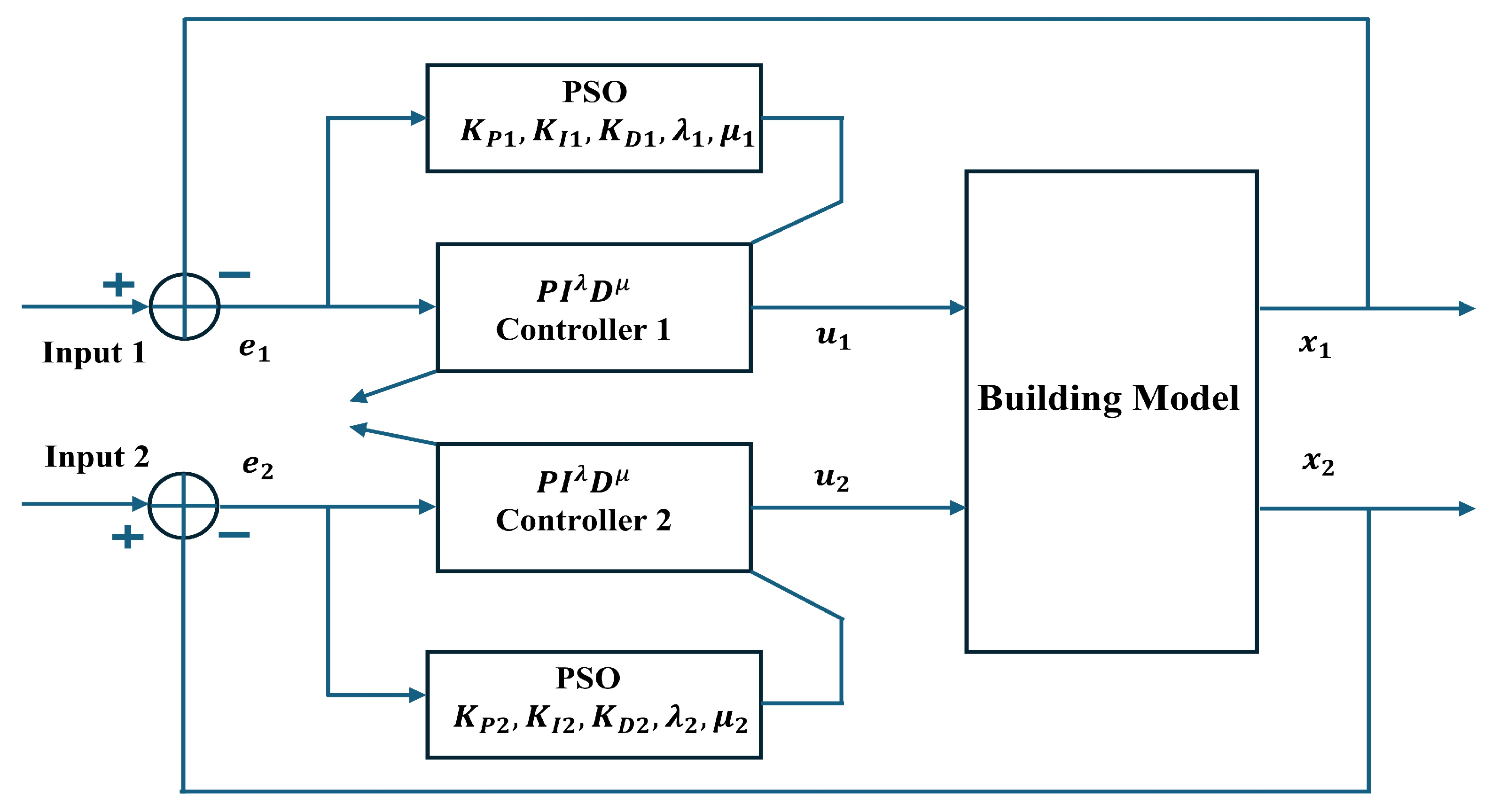
μ controller functions as the active damping force applied to the structure. This force is assumed to be delivered by an ideal actuator, which is common in active structural control literature. A brief explanation of this actuator representation has been added for clarity. The complete PSO-based control scheme is illustrated in
Figure 7, which presents the overall block-diagram representation used in this study. This control diagram has two feedback paths from the building model to PI
λD
μ controllers. The output of each PI
λD
μ controller is given as control input to the building model. In our model, the control inputs
and
generated by the PI
λD
μ controllers are applied directly to the building as active control forces, which function equivalently to active dampers for vibration mitigation. The optimum values for the control parameters of fractional-order PI
λD
μ are obtained using the fitness function
. Specifically, the fitness function is based on the integral of the absolute error, which reflects the total vibration energy throughout the simulation duration rather than any arbitrarily chosen segment. This formulation ensures that the optimization process evaluates controller performance throughout the full earthquake excitation, capturing both low- and high-frequency components. To address concerns regarding general applicability, we emphasize that the chosen error-based metric is independent of the specific ground motion record, making the optimized controller robust in different earthquake scenarios. Controllers tuned using this fitness function demonstrate consistent performance because the objective penalizes excessive displacement regardless of the temporal characteristics of the excitation. The parameter values used in the PSO method are given in
Table 2.
The parameters
(cognitive coefficient) and
(social coefficient) control how strongly a particle is influenced by its own best position and the swarm’s global best position, respectively. The parameter
represents the inertia weight, which balances exploration and exploitation by regulating how much of a particle’s previous velocity is carried into the next iteration. The range of controller gains and orders is chosen between [0,40] and [0,2], respectively. The optimum values for both controllers are given in the following
Table 3.
The simulation of the whole system is shown for 10 s. The values of the PID parameters are mentioned in
Table 3.
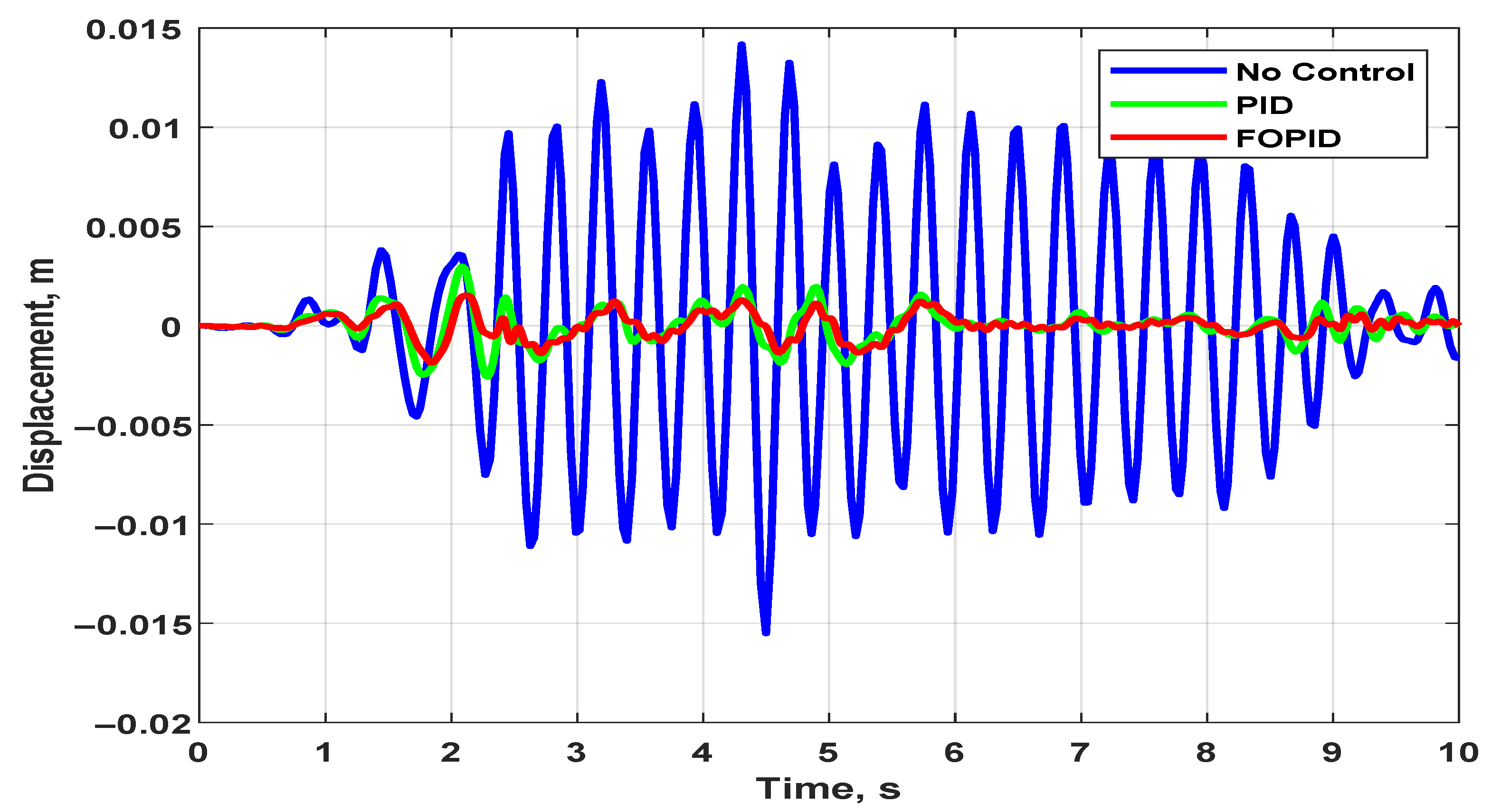
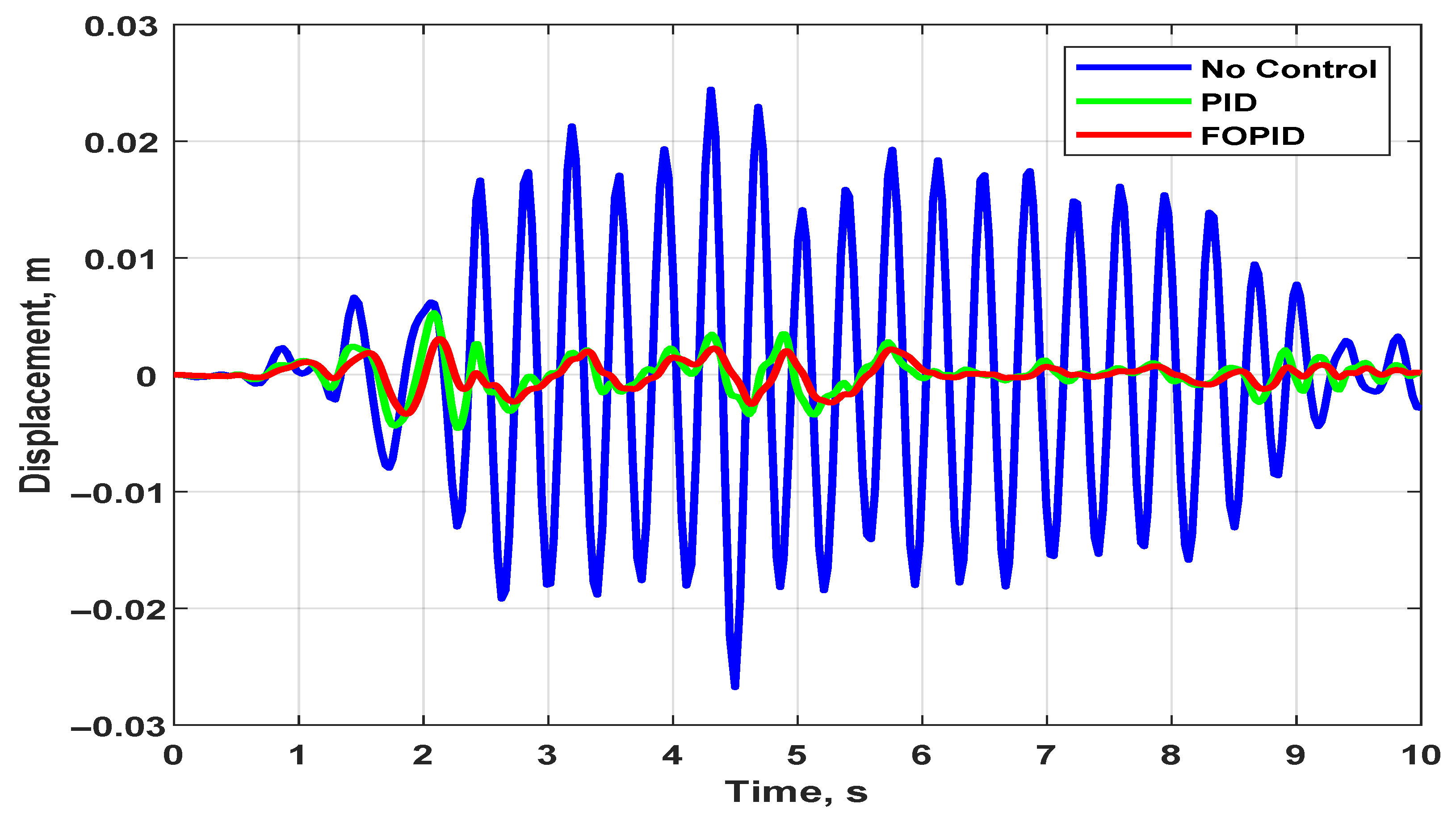
The displacement response of the first floor of a two-story building subjected to El Centro earthquake excitation is presented in
Figure 8. Three curves are compared: the uncontrolled response, the response with a conventional PID controller, and the response obtained using the proposed FOPID controller. The uncontrolled system exhibits the largest displacement amplitudes that reflect strong structural vibrations. However, the FOPID controller substantially reduces displacement over the entire time period, showing better performance in mitigating vibrations compared to both the cases with PID and without control.
The displacement response of the second floor of the building subjected to the El Centro earthquake excitation is presented in
Figure 9. Comparisons of three cases, namely, no control, PID control, and FOPID control, are presented. The uncontrolled structure tends to be characterized by the highest displacement amplitudes, while the PID controller reduces these vibrations to a significant extent. The maximum reduction is obtained from the FOPID controller, and it shows a better damping capability with enhanced vibration mitigation performance.
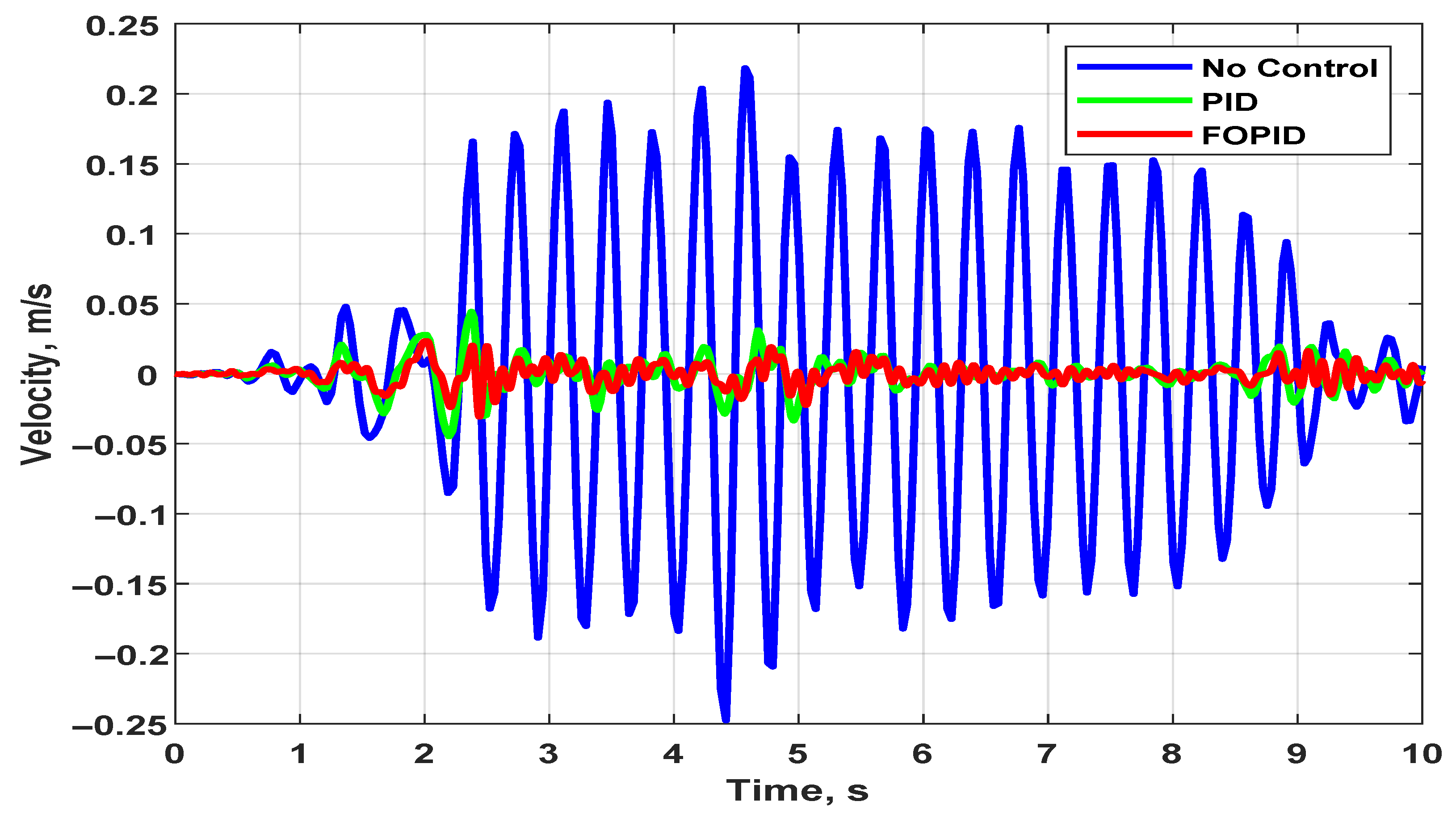
Table 4 compares the RMS values of displacement and velocity. The FOPID controller results in the least RMS values on both floors. This reveals the highly improved vibration reduction achieved with the FOPID controller.
Figure 10 shows the velocity against time for three cases: no control, PID, and FOPID control. The fluctuations were very wild in the uncontrolled case, indicating instability. With the PID controller, these deviations were reduced, improving the system performance closer to the desired value. FOPID performed even better, with the smallest deviations and the fastest settling toward stable behavior.
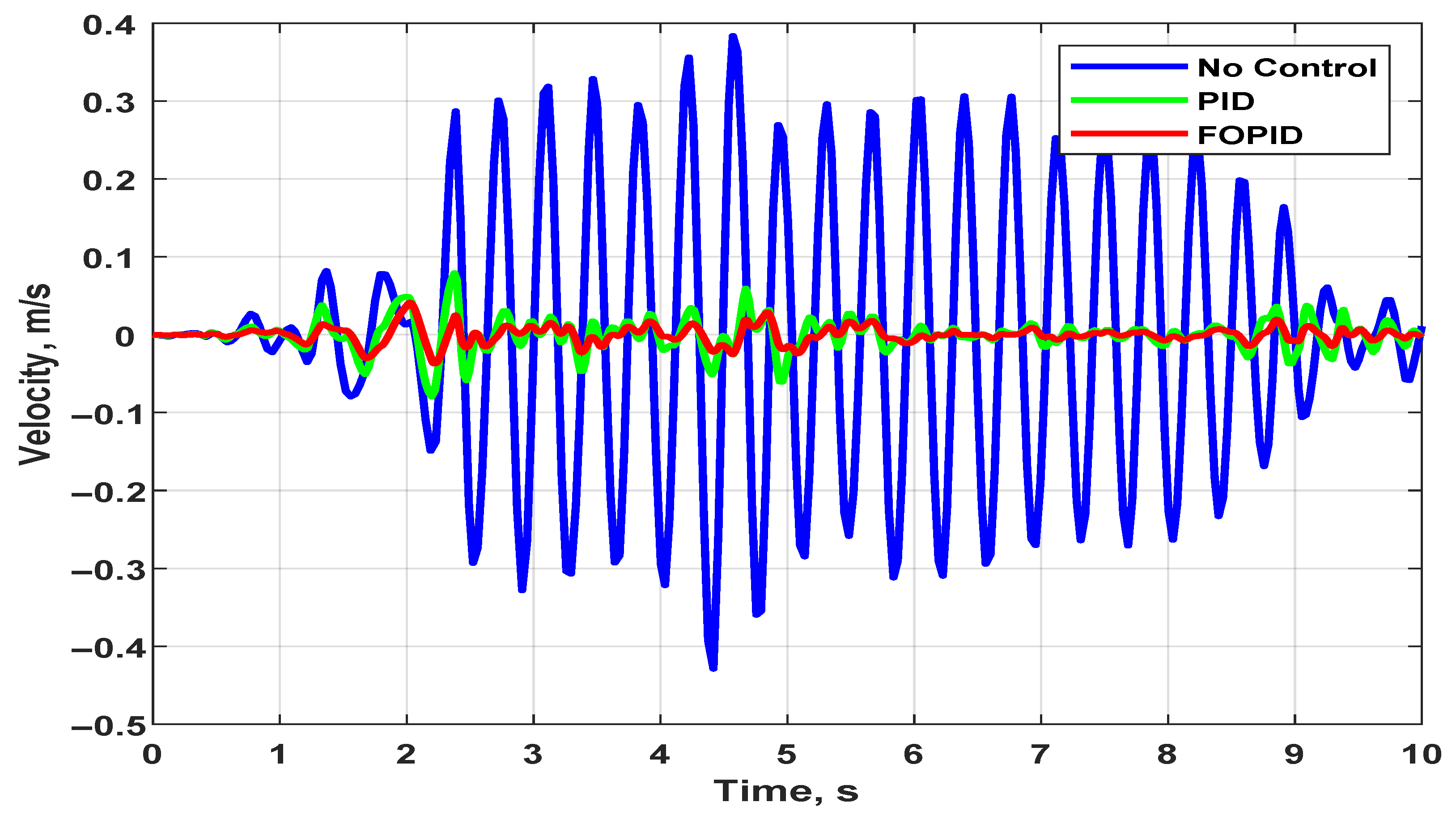
The velocity-time response compares the no control, PID, and FOPID controllers in
Figure 11. In the no control case, the velocity has large oscillations and deviates significantly from the desired value due to unstable system behavior. However, the PID controller reduces these oscillations and gets the velocity closer to a steady-state condition, showing a much-improved stability. The best performer is the FOPID controller, since the oscillations are minimal and the convergence to the target velocity takes place the fastest of all. In general, this figure shows that FOPID provides better control performance than conventional PID.
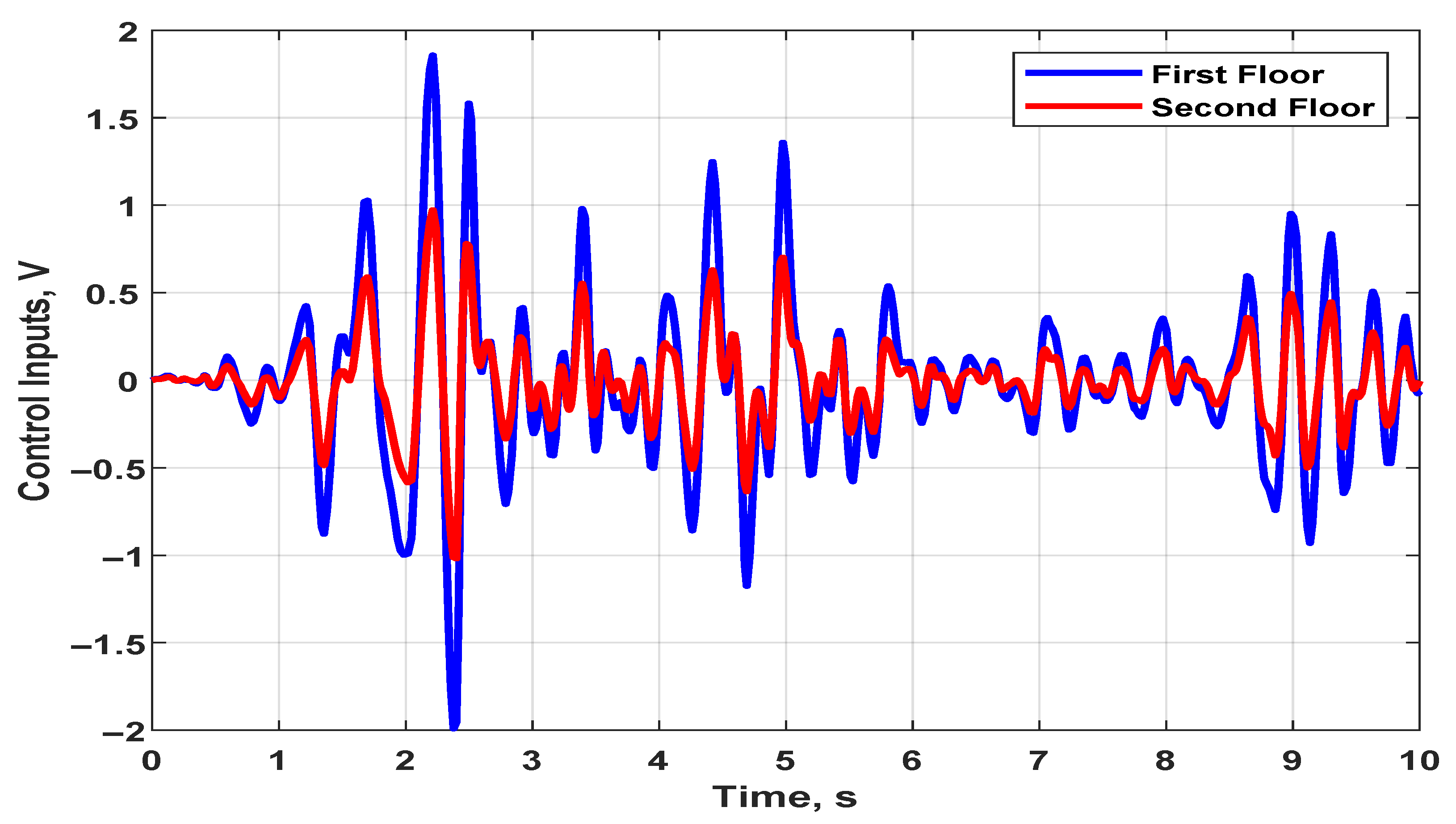
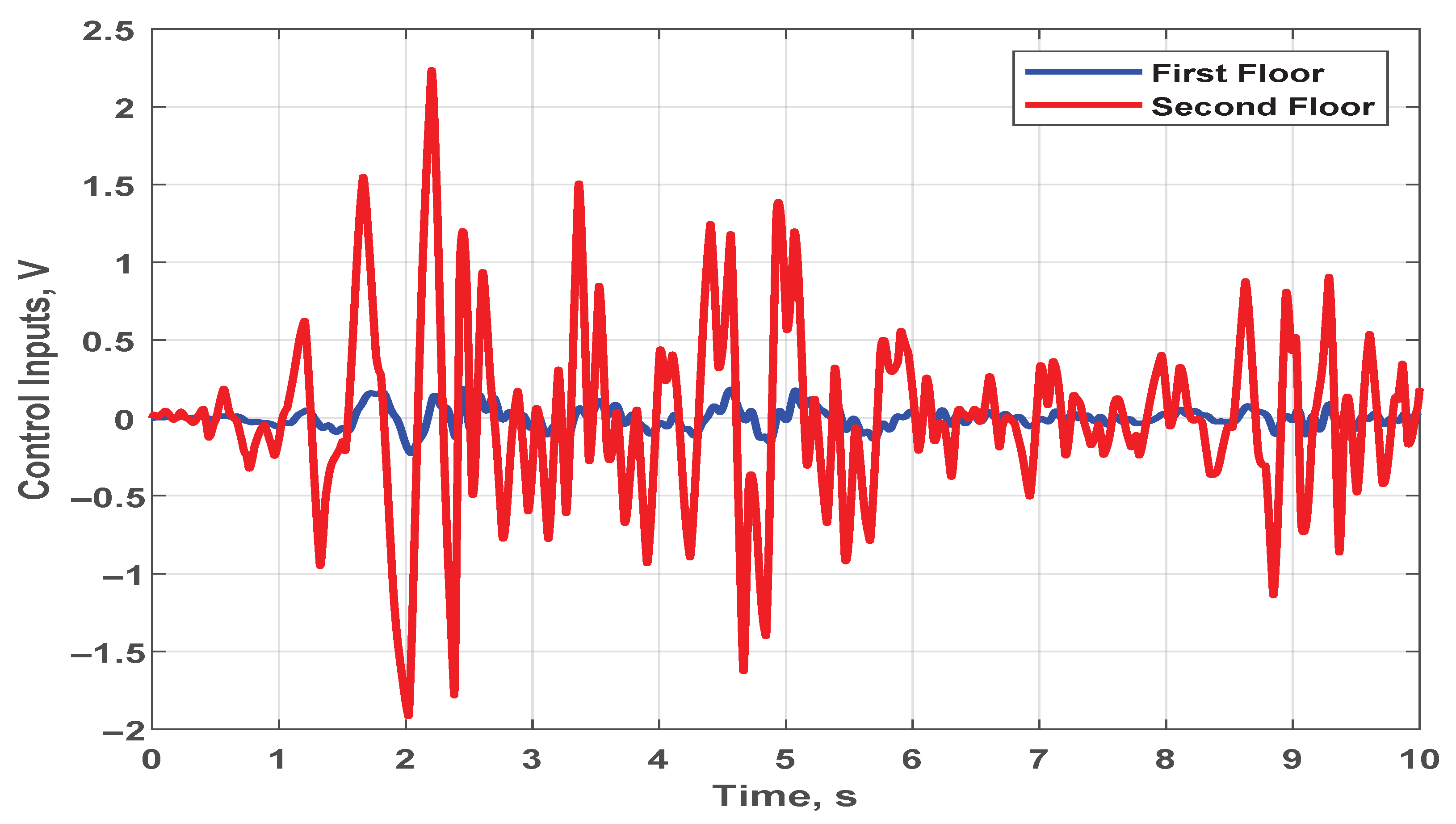
Figure 12 shows the control input signals applied to the first and second floors over a period of 10 s. Both inputs fluctuate approximately between c2 V and +2 V, indicating active control efforts to regulate the motion of the system. The input of the first-floor control shows slightly larger variations and thus seems to have required more corrective action at that level. In contrast, the second-floor input seems smoother and hence behaves more stably. In summary, this figure indicates how differences in control forces are used between floors to balance the system performance.
Figure 13 shows the control inputs for the first and second floors in a 10-s window. The control voltages on both floors change dynamically, approximately within the range of −2 V to +2.5 V. This points to the fact that the controller performs continuous improvements. The first-floor input has slightly higher peaks to indicate that stronger corrective actions are required to maintain stability. The second-floor input is comparatively smoother, reflecting a more stable response at that level. In general, the figure highlights how different levels of effort assigned by the control system between the two floors are applied to effectively regulate the motion.
Throughout all the figures, the cases without control show large oscillations and unstable behavior. It has been demonstrated that this is the natural tendency of the system without regulation. The results with the PID controller show improved stability: the oscillations are reduced and the response is closer to the desired value, yet some fluctuations can still be observed. With FOPID, the best performance was observed: faster settling, smoother responses, and minimal deviations. The control input plots show that dynamic voltage adjustments are necessary in both floors, although in general, the first floor needed stronger corrective actions. Overall, all the figures together signal that FOPID achieved superior stability and control efficiency relative to PID and the uncontrolled system.