Article

Strength Analysis of Cement Mortar with Carbon Nanotube Dispersion Based on Fractal Dimension of Pore Structure


1
Yellow River Laboratory, Zhengzhou University, Zhengzhou 450001, China
2
School of Water Conservancy Engineering, Zhengzhou University, Zhengzhou 450001, China
3
State Key Laboratory of Hydroscience and Engineering, Tsinghua University, Beijing 100084, China
*
Authors to whom correspondence should be addressed.
Fractal Fract. 2022, 6(10), 609; https://doi.org/10.3390/fractalfract6100609

Submission received: 12 August 2022 / Revised: 14 October 2022 / Accepted: 15 October 2022 / Published: 19 October 2022

Abstract

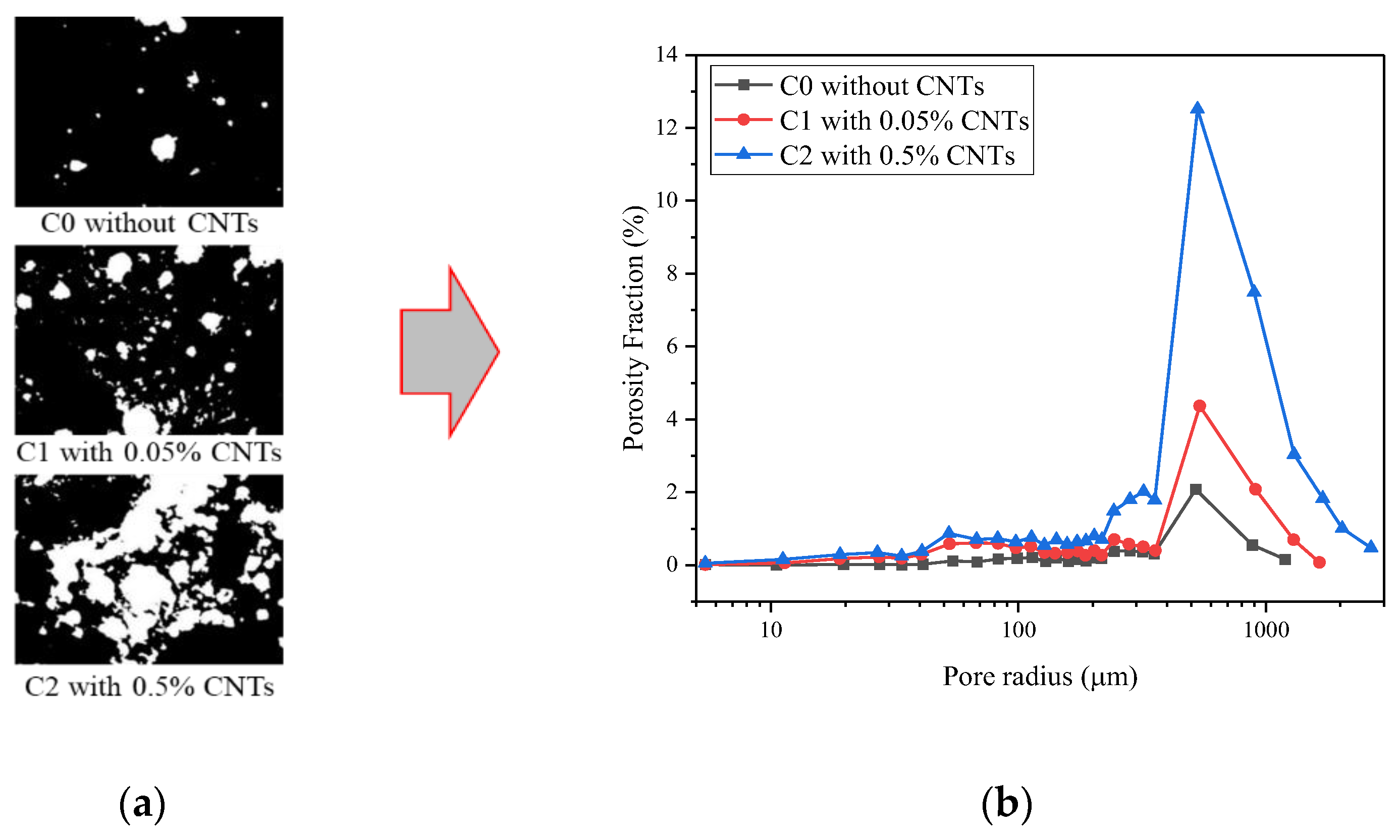
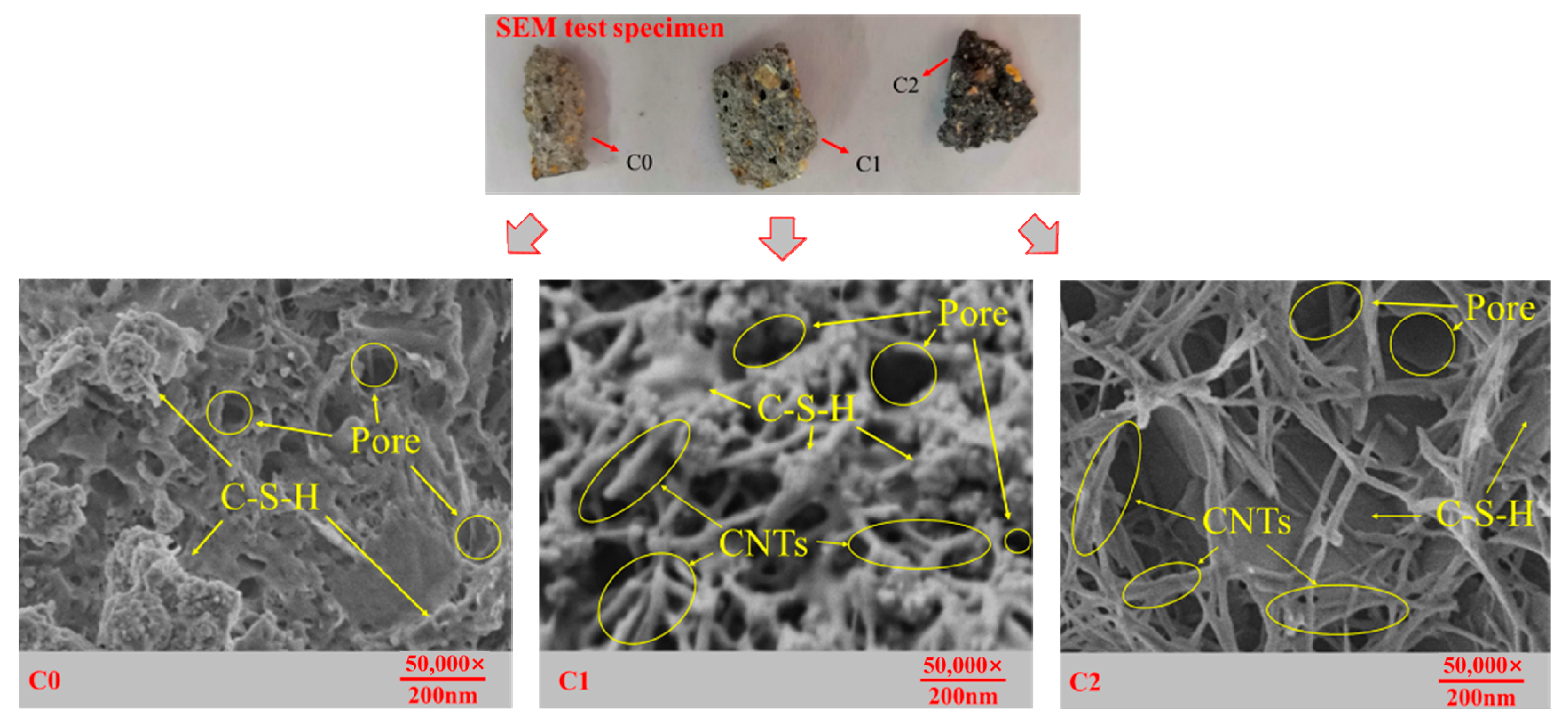
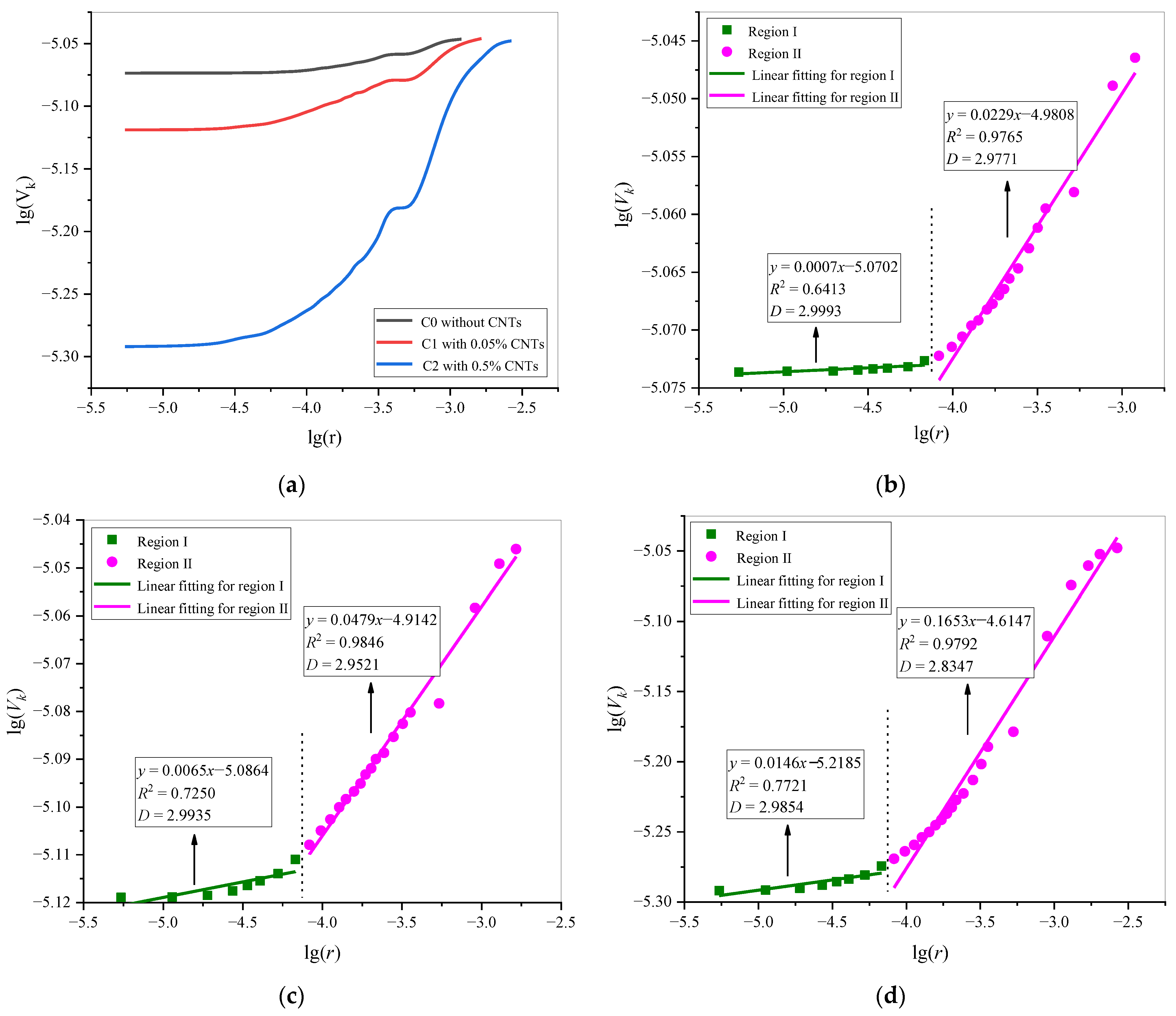
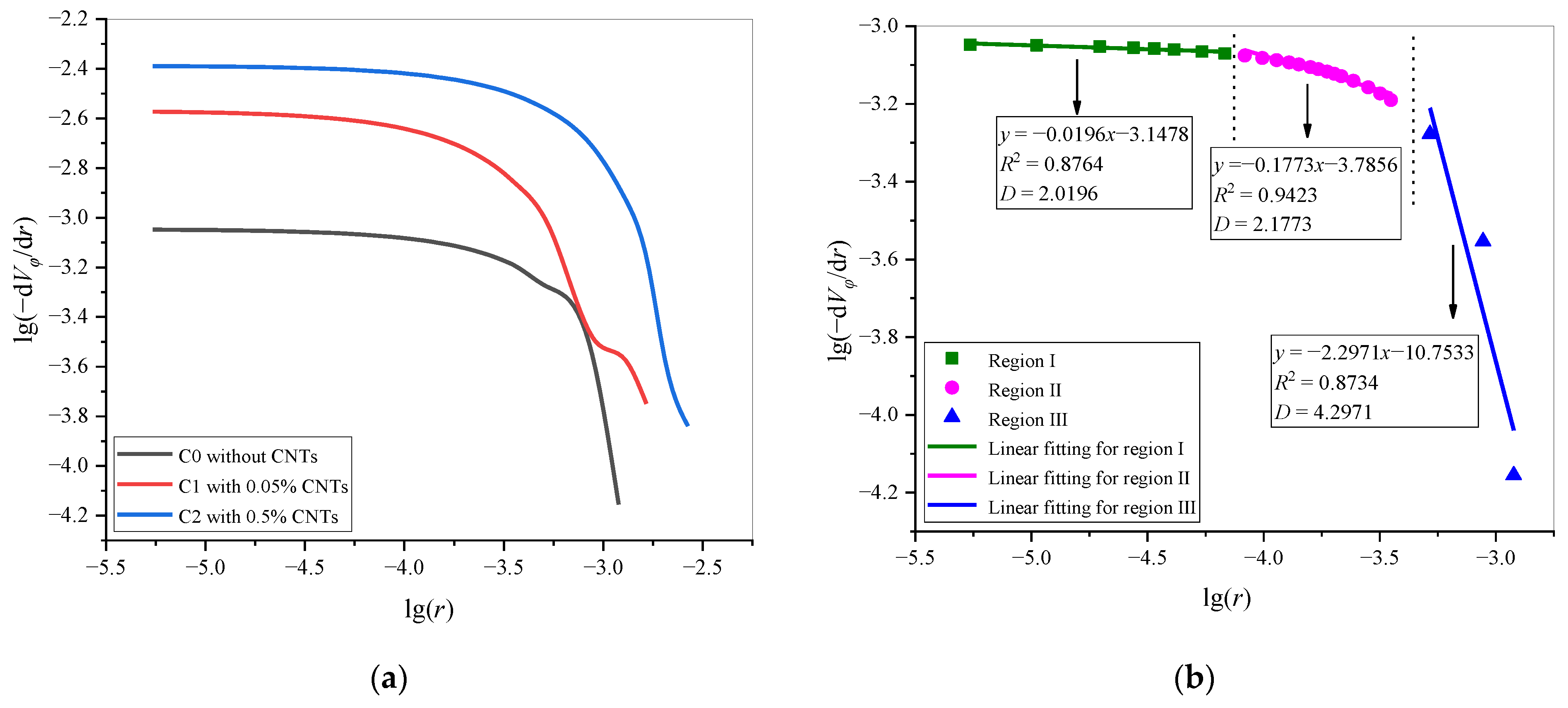
Carbon nanotubes (CNTs) are considered among the ideal modifiers for cement-based materials. This is because CNTs can be used as a microfiber to compensate for the insufficient toughness of the cement matrix. However, the full dispersion of CNTs in cement paste is difficult to achieve, and the strength of cement material can be severely degraded by the high air-entraining property of CNT dispersion. To analyze the relationship between the gas entrainment by CNT dispersion and mortar strength, this study employed data obtained from strength and micropore structure tests of CNT dispersion-modified mortar. The fractal dimensions of the pore volume and pore surface, as well as the box-counting dimension of the pore structure, were determined according to the box-counting dimension method and Menger sponge model. The relationship between the fractal dimensions of the pore structure and mortar strength was investigated by gray correlation. The results showed that the complexity of the pore structure could be accurately reflected by fractal dimensions. The porosity values of mortar with 0.05% and 0.5% CNT content were 15.5% and 43.26%, respectively. Moreover, the gray correlation between the fractal dimension of the pore structure and strength of the CNT dispersion-modified mortar exceeded 0.95. This indicated that the pore volume distribution, roughness, and irregularity of the pore inner surface were the primary factors influencing the strength of CNT dispersion-modified mortar.
Keywords: carbon nanotubes; cement mortar; fractal dimension; pore structure; gray correlation analysis carbon nanotubes; cement mortar; fractal dimension; pore structure; gray correlation analysis