Article

Wind Speed Prediction Based on Wavelet Decomposition and the Fractal-Based LSTM Method

1
Fujian Provincial Key Laboratory of Wind Disaster and Wind Engineering, Xiamen University of Technology, Xiamen 361024, China
2
Fujian Construction Engineering Group Co., Ltd., Fuzhou 350001, China
3
School of Mechanical and Automotive Engineering, Xiamen University of Technology, Xiamen 361024, China
*
Authors to whom correspondence should be addressed.
Fractal Fract. 2026, 10(5), 322; https://doi.org/10.3390/fractalfract10050322
Submission received: 10 April 2026 / Revised: 3 May 2026 / Accepted: 4 May 2026 / Published: 9 May 2026
(This article belongs to the Section Engineering)

Abstract

Accurate wind speed prediction is essential for wind power generation and wind-resistant structural design. In this research, a short-term wind speed prediction model that combines the wavelet decomposition (WD) method and a fractal-based long short-term memory (LSTM) network is proposed. The fractal dimensions of the dataset at each level, which are decomposed using the WD method, are calculated using the box-counting method. With the dynamic learning rate in the loss function updated by fractal dimensions, the gradient-enhanced LSTM network is applied for wind speed prediction. Experimental wind speed data collected during wind field measurement experiments in Pingtan, Fujian Province, China, were used to validate the proposed wind speed prediction model. The predicted wind speed results at different considered time intervals are compared with those of the traditional LSTM method. The results suggest that the proposed method significantly improves the accuracy of wind speed forecasting.

1. Introduction

Wind speed is influenced by numerous environmental factors, including ambient temperature, air humidity, and atmospheric motion, making it a typical nonlinear and nonstationary signal [1]. Consequently, wind speed exhibits randomness, volatility, and uncontrollability, leading to intermittent, unstable characteristics in terms of wind power generation. This not only affects the reliability and stability of wind farms and grid-connected wind power systems but also results in low wind energy conversion efficiency and increased operational costs [2]. Therefore, improving the accuracy of wind speed prediction is an effective way to efficiently utilize wind energy and enhance structural wind resistance.
Fractal theory provides a new perspective for understanding wind speed characteristics by quantifying the complexity and self-similarity of time series [3]. Fractals exhibit self-similarity across different scales and sizes, with the fractal dimension serving as a crucial parameter for quantifying fractal features of nonlinear systems [4,5,6]. Currently, several algorithms can be used to determine the fractal dimensions of wind speed, including the box-counting method [7,8], the variational method [9,10], R/S analysis [11], and the structure function method [12]. For example, in Chang et al. [8]’s research, the fractal dimension of the annual average wind speed was calculated as ranging from 1.61 to 1.66, whereas it ranged from 1.30 to 1.00 for horizontal and vertical velocity fluctuations at different heights in reference [13]. Fractal dimensions also vary significantly across different time scales, geographical environments, and wind speed types. Xiu et al. [14] applied R/S analysis to wind speed time series and demonstrated their long-range correlation and fractal characteristics. Similarly, using R/S analysis, the authors of another study [15] confirmed that wind speed time series in wind tunnels exhibit fractal characteristics and calculated their fractal dimensions, revealing a connection between the fractal dimension and wind field category. Additionally, multifractal analysis methods, including multifractal detrended fluctuation analysis (MFDFA) [16] and the multifractal detrended moving average (MFDMA) [17], are effective for analyzing wind speed data.
Shu et al. [18] systematically summarized the current state of key concepts of fractal analysis in wind speed characterization and identified the combination of fractal theory and machine learning as a key direction for future development in wind speed prediction. Wind speed prediction models can be categorized mainly into physical, statistical, artificial intelligence, and hybrid models. Among these, artificial intelligence models possess strong nonlinear mapping and adaptive learning capabilities, enabling the construction of complex neural networks to fit nonlinear transformation processes. Thus, they offer significant advantages in terms of wind speed prediction. Research and applications of these models are primarily focused on support vector regression (SVR) and artificial neural networks (ANNs) [19]. With an ANN as the core component, many excellent models have been proposed, such as convolutional neural networks (CNNs) [20], long short-term memory (LSTM) networks [21], gated recurrent units (GRUs) [22], attention mechanism-based transformers [23], and Elman neural networks (ENNs) [24], which are also commonly applied in the field of wind speed prediction. Furthermore, to improve the performance of prediction models, scholars have proposed hybrid models for wind speed time series. For instance, Wang et al. [25] constructed a hybrid model based on empirical mode decomposition (EMD) and an ENN, which significantly improved wind speed prediction accuracy. The authors of subsequent studies have proposed other hybrid models, such as the EMD-ANN [26] and VMD-CNN-GRU [27] models, all of which achieved good prediction results.
Long short-term memory (LSTM) networks are a specialized form of recurrent neural networks (RNNs) developed to overcome the vanishing and exploding gradient problems typically encountered in standard RNNs [28]. LSTM-based wind speed prediction models exhibit excellent performance in terms of both accuracy and stability, providing more precise predictions and significantly reduced volatility. They exhibit a good capability in capturing long and short-term memory features of wind speed fluctuations [29]. Similarly, in recent years, the authors of many studies have proposed various deep learning hybrid models based on LSTM networks. For example, Liu proposed a WD-LSTM model, which outperformed other models in predicting wind power generation in China [30]. Wang et al. [31] proposed a short-term wind speed prediction method that combines a two-step decomposition technique with the ARIMA-LSTM model, which achieved high accuracy and stability in short-term wind speed prediction. Chen et al. [32] designed a novel hybrid prediction model based on an LSTM network and an improved back propagation (BP) neural network, which achieved optimal performance and high prediction accuracy. Additionally, models such as the VMD-SA-LSTM-ELM [33] and EMD-VMD-CNN-LSTM [34] models have been developed. Furthermore, studies have demonstrated the effectiveness of combining wavelet decomposition with neural networks for wind speed prediction. Dong et al. [35] applied time series decomposition with different artificial neural networks for motion prediction and showed that time series decomposition with LSTM has the best performance. Ding et al. [36] proposed the WD-LSTM for wind speed prediction based on structure health monitoring (SHM) data on the bridge and compared the influence of thresholds on prediction results. Liang et al. [37] evaluated the predictive performance of seven decomposition techniques combined with Long Short-Term Memory (LSTM), and the results showed that VMD and SSA generally outperformed the EMD family. Li et al. [38] proposed the VMD-DEESN method by combing VMD and deep projection encoding echo state network (DEESN) for multi-step wind speed prediction, which showed superiority compared to other baseline models. A list of the literature can be seen in Table 1.
As described, the decomposition-based prediction methods have been widely investigated; however, the inner dynamics of time series were not considered. In this context, a hybrid prediction model combining wavelet decomposition (WD) with a fractal-based LSTM network is proposed in this study to improve the accuracy and stability of short-term wind speed prediction. The model first decomposes the wind speed series into sub-sequences of different frequencies using WD. Afterward, the box-counting method is employed to quantify the fractal dimensions of each sub-sequence, based on which a fractal gradient-enhanced LSTM network is constructed for wind speed prediction. Validation is performed using measured wind field data from Pingtan, Fujian Province, and the prediction results are compared with those of a classical LSTM model. In the following section, the wind data applied in this research are firstly described. Then, the background theory applied in the proposed model is introduced, including wavelet decomposition and fractal dimension analysis. Consequently, the fractal-based LSTM method is introduced. Through the utilization of wind data, the prediction results are obtained and compared.

2. Wind Data Description

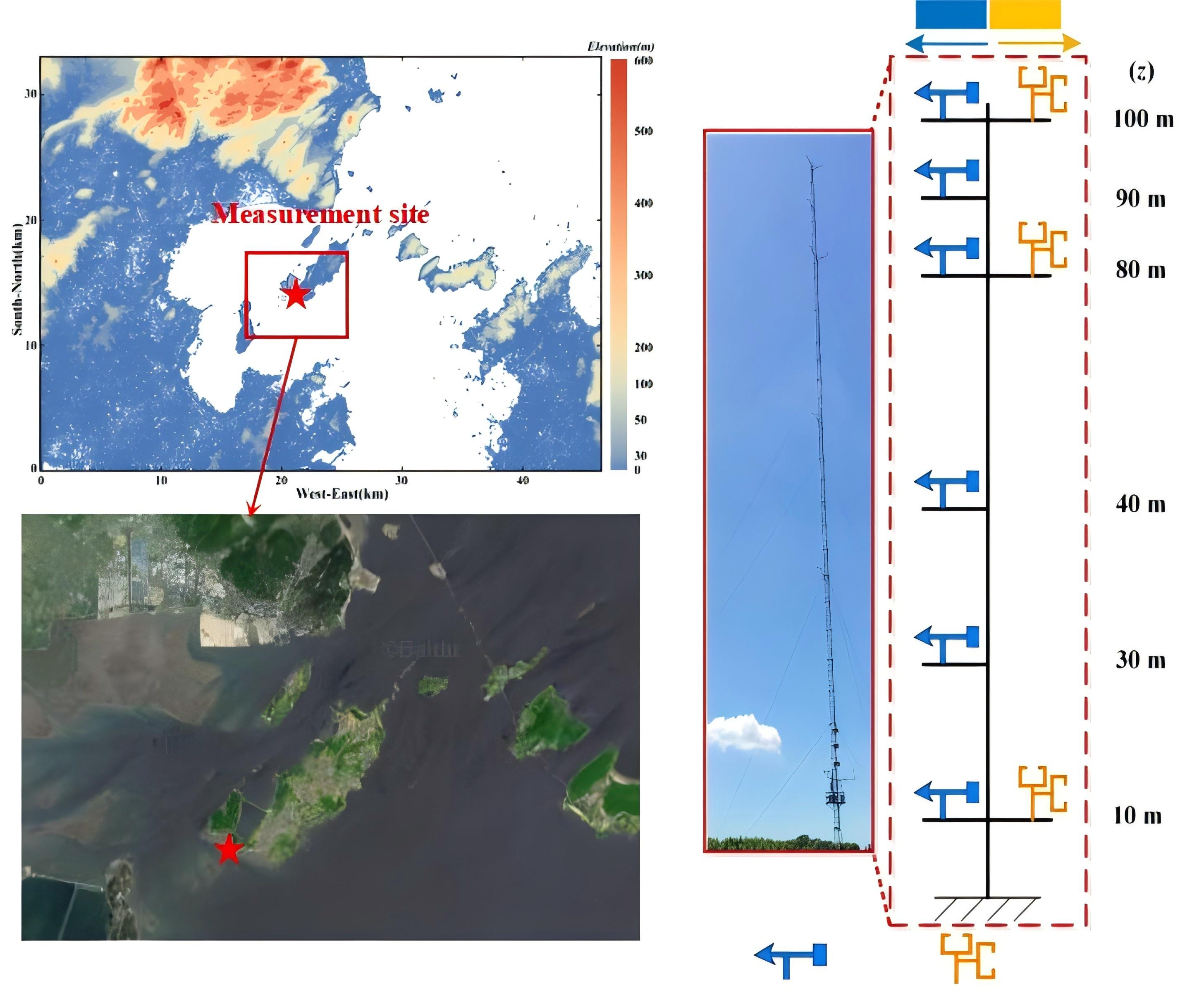
The wind data applied for prediction were obtained from wind field measurements taken on Yutou Island, which is located in Pingtan County in the southeast coastal area of Fujian Province, China, as shown in Figure 1. Numerous wind farms have been built on this island because of its abundant wind resources. To obtain long-term wind speed data, a wind measurement tower with a height of 100 m was installed. Sonic anemometers produced by Gill Company in Lymington, UK were installed at heights of 10 m, 80 m, and 100 m, and three-dimensional wind speeds were recorded at a specified sampling frequency. Moreover, six vane anemometers produced by Young Company in West Bloomfield Township, MI, USA were positioned at heights of 10 m, 30 m, 50 m, 80 m, 90 m, and 100 m, respectively, as shown in Figure 1. With these vane anemometers, long-term low-frequency data with a sampling frequency of 1 Hz can be recorded.

3. Framework of the Wind Speed Prediction Model

3.1. Wavelet Analysis

Wavelet transformation has been proven to be an effective method for analyzing nonstationary wind speed signals, enabling simultaneous time–frequency localization. Through the decomposition of the measured wind speed series into multiple scales, transient features such as gusts can be effectively captured. With the application of wavelet analysis, the original data can be decomposed into components with different frequencies, allowing for targeted modeling of distinct wind behaviors, such as low-frequency trends, mid-frequency fluctuations, and high-frequency turbulence, thereby enhancing prediction accuracy across varying temporal scales. Wavelets are particularly well suited for analyzing inherently multiscale data such as wind speed, which is influenced by a range of atmospheric and topographic factors. The wavelet transform can be expressed as follows [39]:
C W T x ( a , b ) = a 0.5 ψ ( t ) * x ( t ) d x , a > 0
where x(t) is the signal, ψ a , b ( t ) is the mother wavelet, a is the scaled factor, b is the translation parameter, and * is the complex conjugate. The discrete wavelet transform can be written as follows:
ψ a , b ( t ) = a 0.5 ψ ( t b a ) ,
D W T a , b = a b f ( b ) ψ n , m
In this context, f represents the original wind speed time series. Through wavelet decomposition, the series is separated into high-frequency and low-frequency components. The original wind speed data can then be written as the sum of a smooth component and a set of detailed components that capture high-resolution features, as follows:
X = j = 1 J D H j + A j
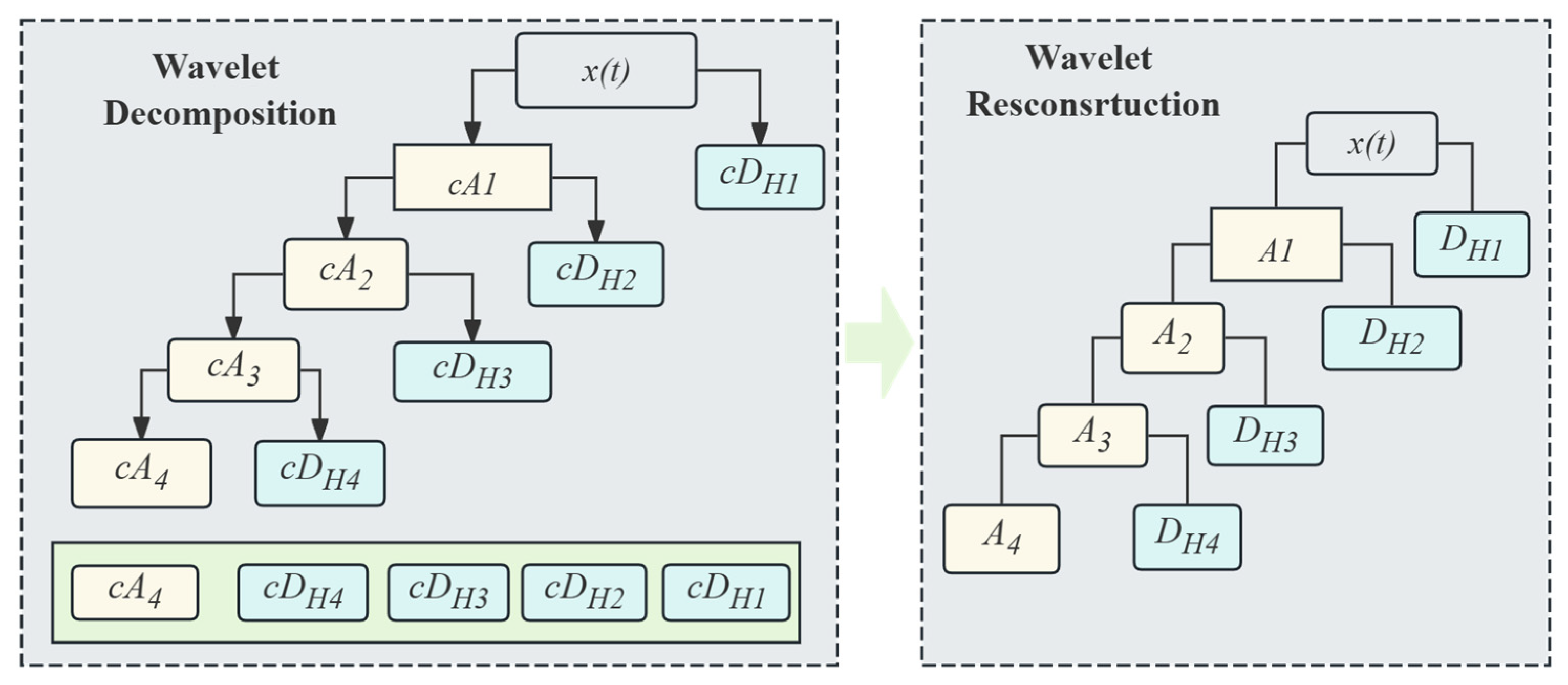
where j is the decomposed level, and A and DH are decomposed components. The decomposed components can be reconstructed to recover the original signal or isolate specific frequency bands for further analysis, as shown in Figure 2.
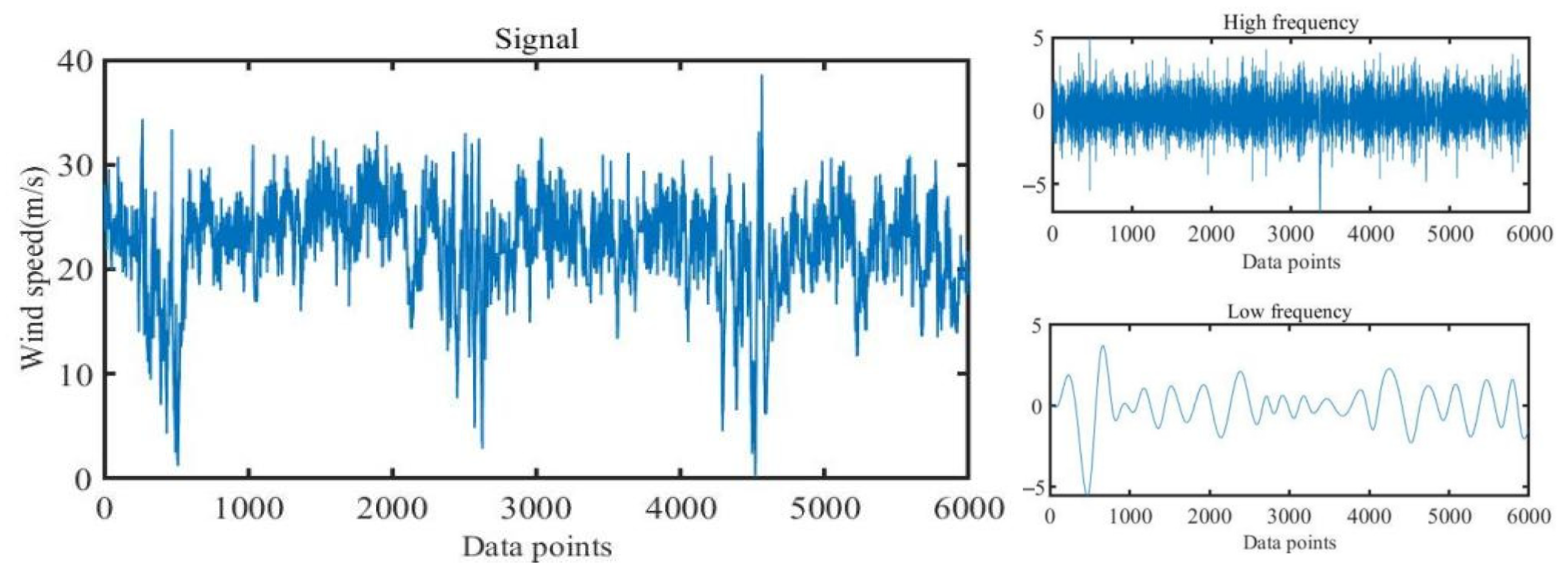
Using the wind speed data obtained via the wind field measurement described in Section 2, a 10 min sample can be used as an example for wavelet decomposition. As shown in Figure 3, the original signals can be decomposed into high- and low-frequency components.

3.2. Fractal Analysis

Fractal theory furnishes a mathematical framework for describing the self-similarity and scale-invariant features that are intrinsic to turbulent wind speed fluctuations. The fractal dimension and Hurst exponent are key parameters for quantifying this complexity. The fractal dimension serves as an indicator of how the topological measurements of a physical set change across different scales [40]. The box-counting method is widely adopted for analyzing fractal time series, owing to its straightforward implementation. This technique works by overlaying a grid on the time series and tallying the minimum number of non-overlapping boxes required to fully encompass the data points. The mathematical formulation of this method is given as follows [40]:
D = lim r 0 log N ( r ) log ( 1 / r )
In this equation, D is the fractal dimension, and N(r) stands for the count of square grids of side length r needed to cover the entire time series. The relationship between the Hurst exponent and the fractal dimension is given as follows [41]:
H = 2 D
As a quintessential complex turbulent phenomenon in nature, wind exhibits intrinsic scaling properties and long-range correlations, which are often characterized by its fractal dimension or Hurst exponent. For the wind speed time series, a Hurst exponent of H = 0.5 suggests purely random behavior; such a series can primarily be considered white noise, whereas, when 0 < H < 0.5, the fractal dimension exceeds 1.5, and the wind speed series exhibits antipersistence. This indicates a long-term negative autocorrelation, meaning that high and low wind speeds tend to alternate in the future. In contrast, for 0.5 < H < 1, the fractal dimension lies between 1 and 1.5, reflecting a long-term positive autocorrelation. When H = 1, the fractal dimension equals 1, which implies that the wind speed is strongly predictable. By calculating the box-counting dimension or Hurst exponent from wavelet-decomposed components, fractal analysis quantifies the degree of irregularity and long-range dependence across scales.
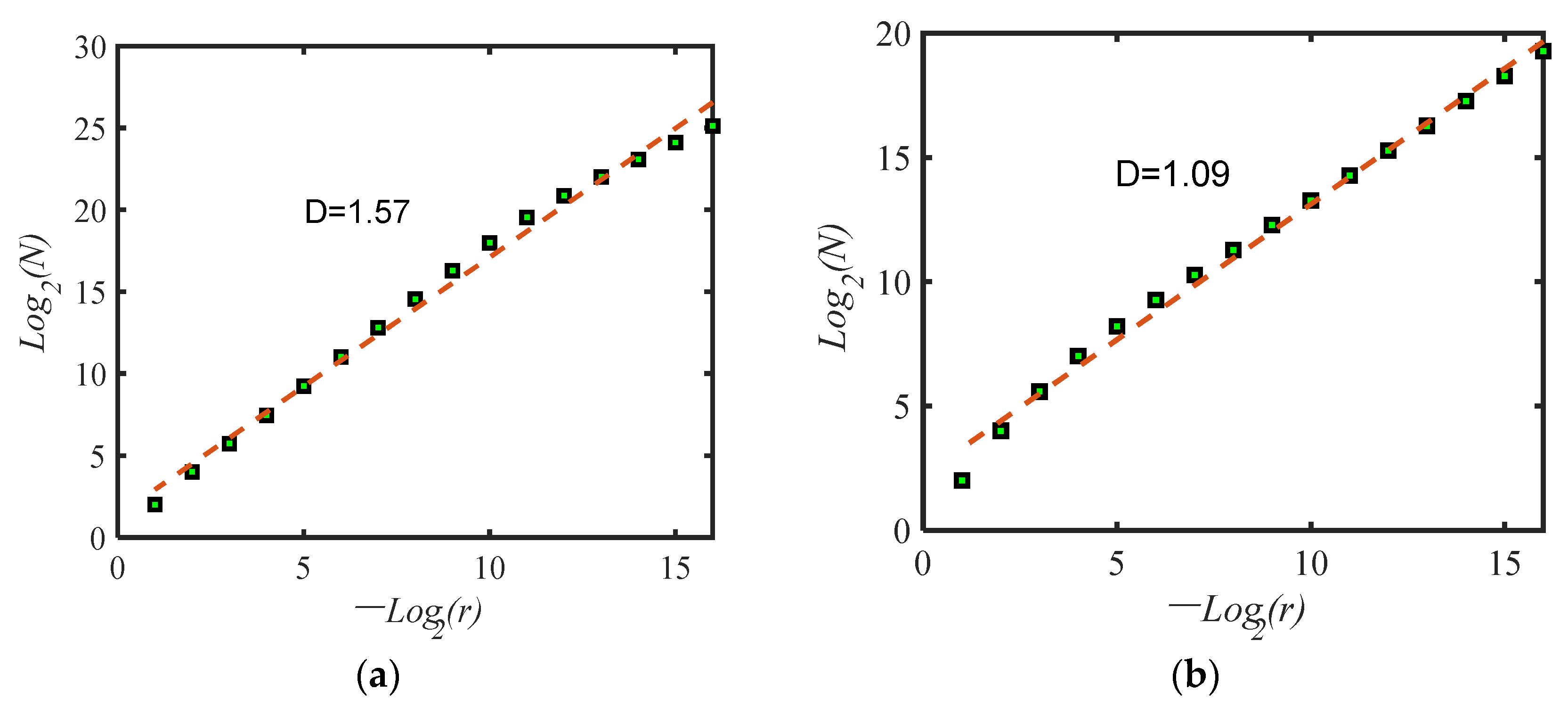
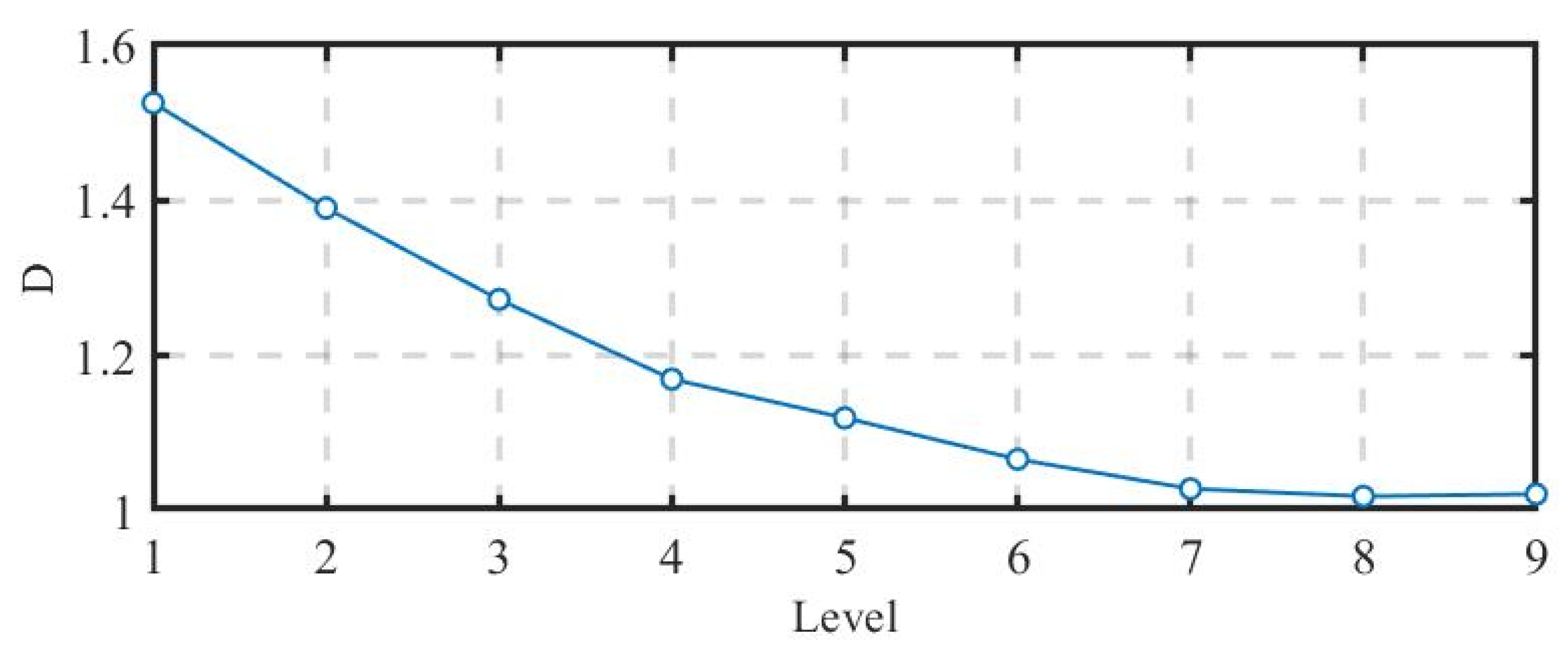
The wind speed time series presented in Figure 4 is taken as an example for wavelet decomposition and subsequent fractal analysis. Using the box-counting method, the fractal dimension of each decomposition level is calculated, as shown in Figure 4 and Figure 5 in which the cubes indicate the logarithm of number of grids, the lines are the fitted lines of the cube points. As indicated, for high frequencies, such as level 1, the fractal dimension is close to 1.5, indicating that the series is a random process, making predicting the wind speed difficult. However, at low frequencies, such as levels 7 and 8, the fractal dimension is approximately 1, indicating that the series is highly predictable. Therefore, in the following section, wind speed is predicted at each level and reconstructed to obtain more accurate predicted values.

3.3. Basic Background of LSTM

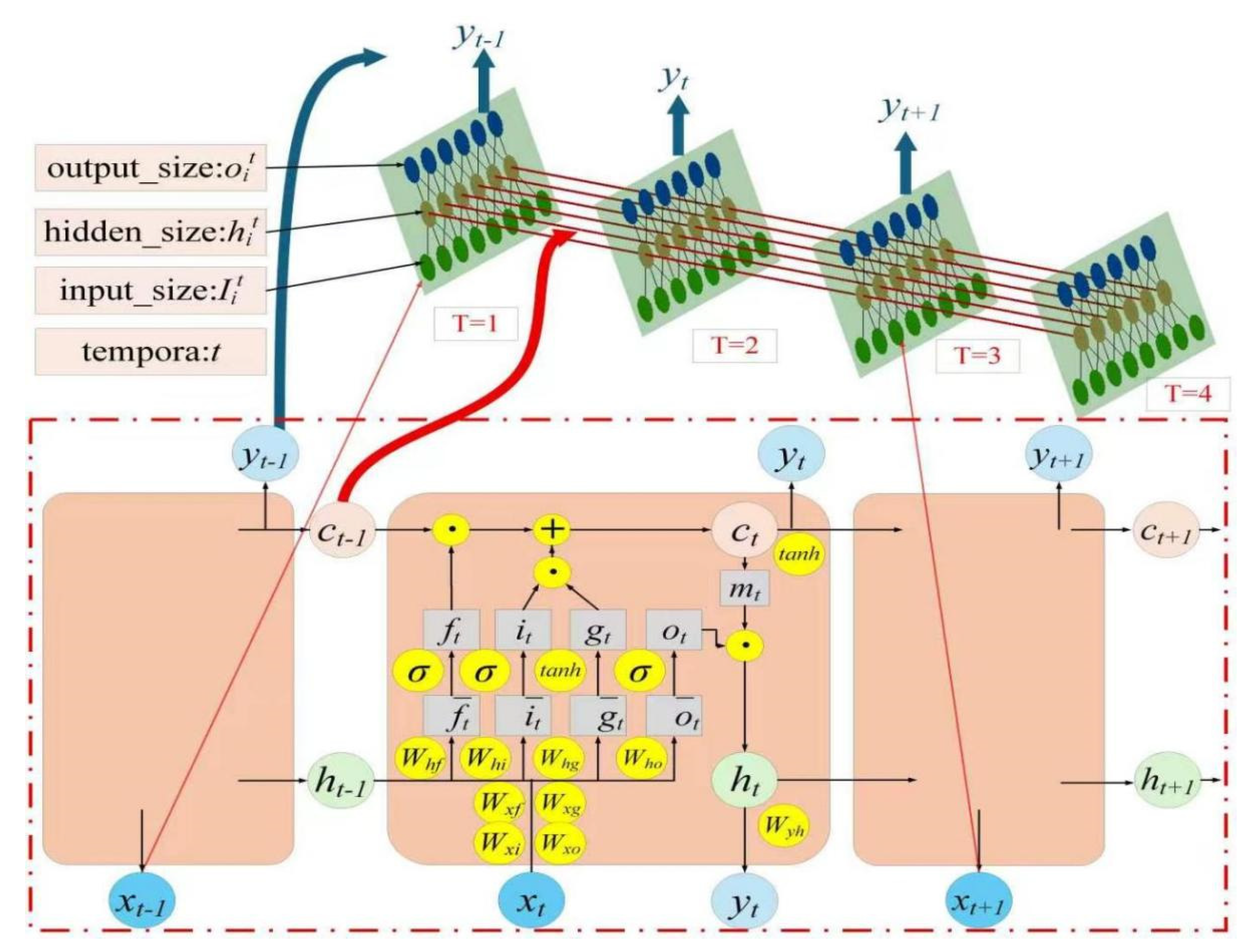
LSTM has been widely demonstrated to be effective in time series prediction tasks and have been successfully applied in areas such as wind speed forecasting, structural response prediction, and battery aging estimation [42]. To further enhance their capability, numerous modifications and optimizations have been proposed to address the challenge of capturing long-term dependencies in a more stable and robust manner [43,44]. As a specialized variant of recurrent neural networks (RNNs), the LSTM architecture incorporates a gated mechanism, including the input gate, forget gate, and output gate, along with a cell state that serves as a memory unit. These components synergistically govern the information flow within the network. The nested functional relationships within the LSTM model are illustrated in Figure 6, and the corresponding mathematical formulations are given as follows [43]:
i t = σ ( i ¯ t ) = σ ( W x i x t + W h i h t 1 + b i )
f t = σ ( f ¯ t ) = σ ( W x f x t + W h f h t 1 + b f )
g t = tanh ( g ¯ t ) = tanh ( W x g x i + W h g h t 1 + b g )
o t = σ ( o ¯ t ) = σ ( W x o x t + W h o h t 1 + b o )
c t = c t 1 f t + g t i t
m t = tanh ( c t ) ;
h t = o t m t
γ t = W γ h h t + b γ
The three gates in the LSTM network selectively control the flow of information through the use of a sigmoid ( σ ) activation function and a hyperbolic tangent (tanh) function. Specifically, the sigmoid function determines the extent to which information is retained or discarded, while the tanh function is used to generate candidate values for updating the cell state. Through this mechanism, the network can effectively preserve relevant information over long sequences.
One of the key advantages of LSTM over conventional RNNs is its ability to mitigate the vanishing and exploding gradient problems during training. This capability primarily arises from the additive structure of the cell state and its controlled update process. The recursive gradient propagation through the cell state can be expressed as follows [43]:
C t C t 1 = c t 1 σ ( W x f x t + W h f h t 1 + b f ) W h f o t 1 tanh ( c t 1 ) + g σ ( W x i x i + W h i h t 1 + b i ) W h i o i 1 tanh ( c t 1 ) + i t tanh ( W x g x t + W h g h t 1 + b g ) W h g o t 1 tanh ( c t 1 ) + f t
where it, ft, and ot denote the input gate, forget gate, and output gate at the t time step, respectively; Wxi, Wxf, Wxo, and Wxg are the weights of input-to-state transition under each gate and the temporary state; Whi, Whf, Who and Whg are the weights of state-to-state transition under each gate and the temporary state; bi, bf, bo and bg are the corresponding biases; gt is the temporary state; ct is the cell state; mt is the output of cell state under the activation function; ht is the hidden state; yt is the output; Wyh is the weight of the output; by is the bias of the output; and ⊙ represents element-wise multiplication.

3.4. Loss Evaluation

Three criteria are used to evaluate the accuracy of the prediction results—the mean absolute percentage error (MAPE), the mean absolute error (MAE), and the root mean square error (RMSE)—within the range of [0, +∞). The mathematical formulae of these three criteria can be expressed as follows:
R M S E = 1 N i = 1 N ( p ( i ) r ( i ) ) 2 ;   M A P E = 1 N i = 1 N p ( i ) r ( i ) r ( i ) × 100 % ;   M A E = 1 N p ( i ) r ( i )
where N is the number of data; p(i) and r(i) denote the predicted value and the reference measured value at the i data point, respectively.
A lower RMSE value indicates better model predictive performance, and lower MAE and MAPE values reflect greater model stability. The MAE is often applied as the loss function for updating process parameters during back-propagation through time. The updates of weights and biases at each layer can be expressed as follows [44]:
W u p d a t e l = W l η J i [ l + 1 ] W l ; b u p d a t e l = b l η J i [ l + 1 ] b l
where η is the learning rate term, which should be manually tuned and involves the convergence rate and direction during the training process.

3.5. Fractal Gradient-Enhanced LSTM Network

The previous analysis shows that the fractal characteristics of each decomposition level differ significantly, resulting in differences in predictability. To utilize the fractal characteristics of the time series, the fractal gradient-enhanced LSTM method is applied. The equation corresponding to the training of the LSTM can be summarized as follows [42]:
y = F ( x )
where F(.) is an abstract function trained by the neural network from the training set, x is the input dataset, and y is the predicted data. One key aspect of a prediction model is adjusting the model parameters to approximate the abstract function. The updating rule for the stochastic gradient descent (SGD) algorithm is given as follows [42]:
θ ( t + 1 ) = θ ( t ) η ( t ) g ( t ) ;   g ( t ) = f ( θ ( t ) )
where θ ( t ) is the parameter vector at the tth moment, and η ( t ) and g ( t ) are the learning rate and the gradient of the loss function, respectively. f ( ) is the function with respect to the parameter of vector θ ( t ) . However, the learning rate of the SGD is fixed and cannot effectively reflect the changing trend of the error, limiting the predictive effectiveness. Therefore, in this research, the fractal dimension of the training datasets is utilized to adjust the learning rate of the SGD algorithm.
According to the generalized form of the fractal derivative [42],
d α f ( x ) d x γ = lim x ˜ x ( f ( x ˜ ) ) α ( f ( x ) ) α ( x ˜ ) γ ( x ) γ
where α represents the order of f(x) and γ is the order of x; if α = 1 , the equation can be expressed as follows:
d f ( x ) d x γ = lim x ˜ x ( f ( x ˜ ) ) ( f ( x ) ) ( x ˜ ) γ ( x ) γ
The Hausdorff derivative can be presented as follows [42]:
D x γ H f ( x ) = d f ( x ) d x γ = d f ( x ) d x d x d x γ = d f ( x ) d x 1 d x d x γ = ( x ) 1 λ γ d f ( x ) d x
where D x γ H ( ) is the Hausdorff derivative with order γ . According to the derivation definition in Equation (16), the chain rule for the Hausdorff derivative has the same properties as the integer-order derivative. Consequently, the introduction of the Hausdorff derivative can increase the network’s degrees of freedom, facilitating more effective parameter optimization and improving performance [42].
Analogous to Equation (14), for the one-dimensional time series in the LSTM network, the definition of the fractal derivative can be expressed as follows:
d α f ( θ i ( t ) ) d ( θ i ( t ) ) = lim θ ˜ i ( t ) θ i ( t ) ( f ( θ ˜ i ( t ) ) ) α ( θ i ( t ) ) ) α θ ˜ i ( t ) θ i ( t )
where θ i ( t ) is the parameter vector θ i at the tth moment. The definition of the fractal derivative can be expressed as follows [42]:
D θ i ( t ) α f ( θ i ( t ) ) = d α f ( θ i ( t ) ) d θ i ( t ) = d α f ( θ i ( t ) ) d f ( θ i ( t ) ) d f ( θ i ( t ) ) d θ i ( t )
According to Equation (16), the fractal derivative can be expressed as follows:
D θ i ( t ) α f ( θ i ( t ) ) = α f ( θ i ( t ) ) 1 α d f ( θ i ( t ) ) d θ i ( t )
Therefore, considering the parameter update function in the LSTM network, the updating rules for the SGD algorithm in fractal gradient-enhanced LSTM networks can be expressed as follows [42]:
θ i ( t + 1 ) = θ i ( t ) η ( t ) F g i ( t )
F g i ( t ) = D θ i ( t ) α ( t ) f ( θ i ( t ) )
θ i ( t + 1 ) = θ i ( t ) η ( t ) α f ( θ i ( t ) ) 1 α d f ( θ i ( t ) ) d θ i ( t )
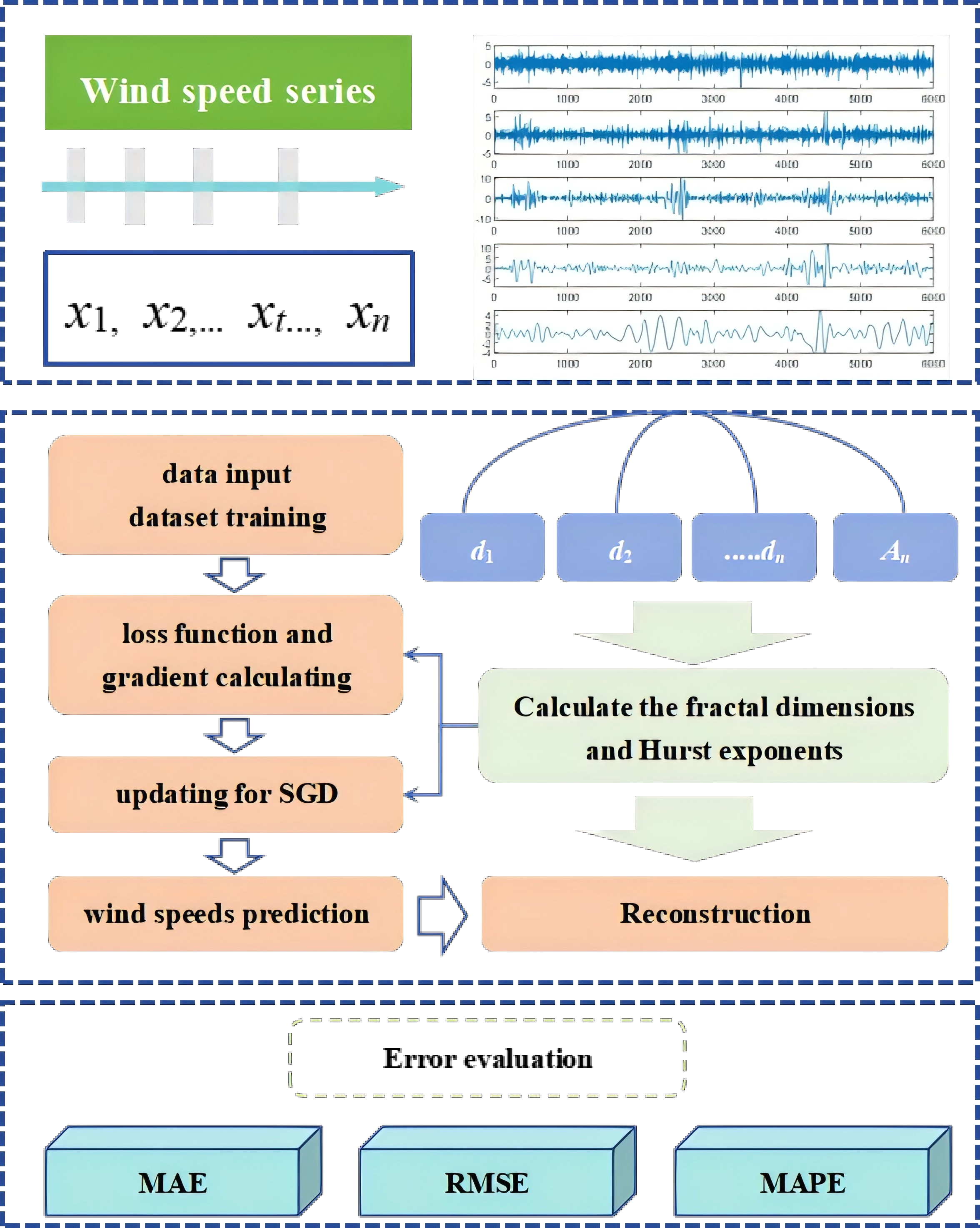
Compared with Equation (11), the fractal gradient vector F g i ( t ) can be adjusted by the order of α , and the parameter updates in the LSTM network used for prediction can be dynamically adjusted on the basis of error information. In Jia’s [40] research, the order α is defined as a step function associated with the probability distribution of the dataset under consideration. In this research, to dynamically represent the fractal characteristics of the wind speed series, Hurst exponents are calculated for the training sets of the wind speed data and applied in Equation (22) to calculate the loss function. Therefore, the wind speed prediction procedure can be summarized as follows: (1) the wind speed datasets are first decomposed and the components at each level are obtained; (2) the Hurst exponents for each component are calculated using the box-counting method; (3) the fractal gradient-enhanced LSTM model is applied in combination with the Hurst exponents, and the predicted values for each component are obtained; and (4) the predicted values for each component are reconstructed to obtain the predicted wind speeds. The flowchart for the proposed prediction model is shown in Figure 7.

4. Results and Discussion

The applied wind speed data were obtained from the wind field measurements as described in Section 2. Based on wind field measurements, the wind speeds can be obtained at a sampling frequency of 10 Hz using sonic anemometers and 1 Hz using vane-type anemometers. The one-year wind speed data from 2018 were obtained. As previously described for the prediction model, the wind speed predictions for different data types are discussed. The original wind speed data are first filtered to remove invalid points; subsequently, a multiple-truncation variance method is applied to reconstruct the missing data [45]. The mean wind speeds can be obtained using the following equation [45]:
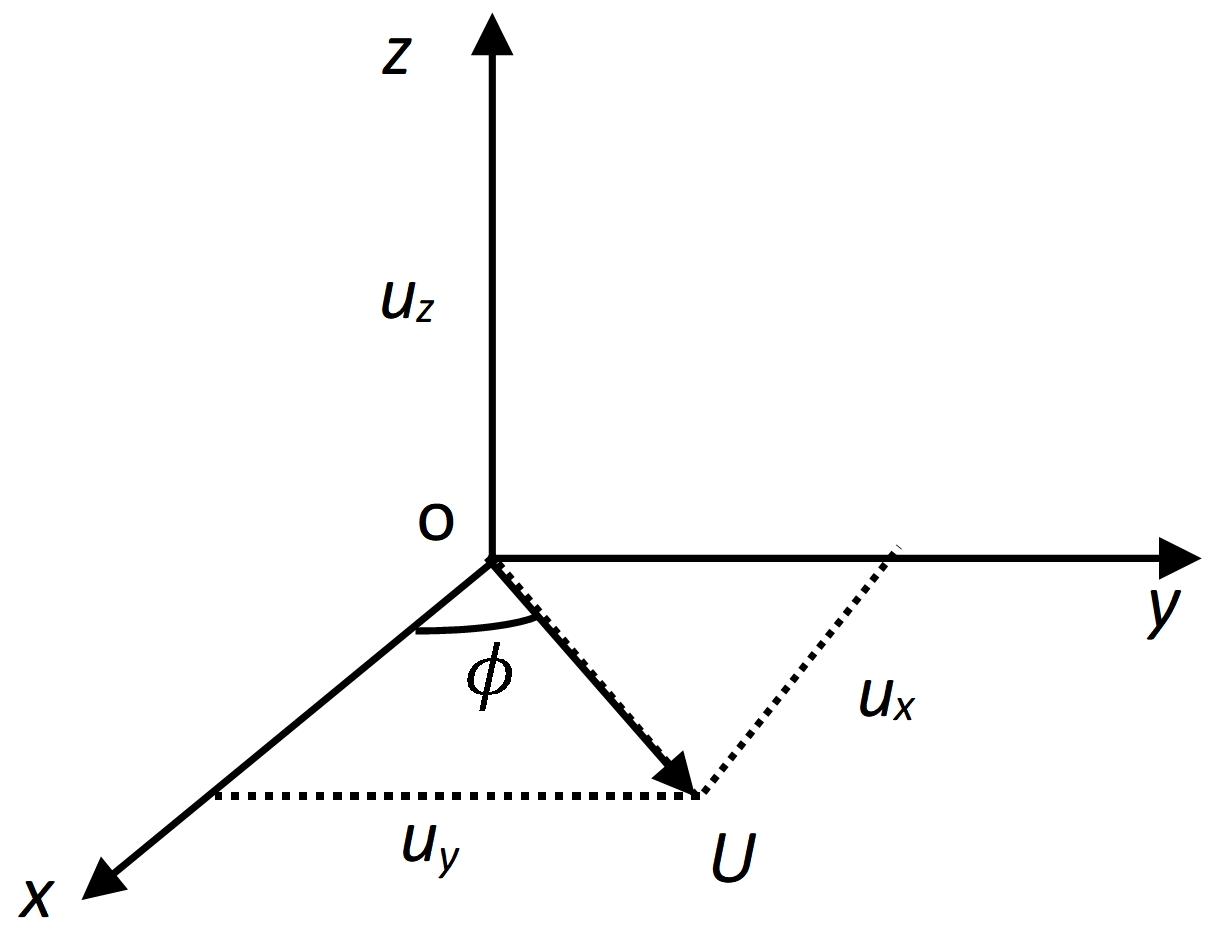
U = u x ¯ 2 + u y ¯ 2
ϕ = s g n ( u y ¯ ) arccos u x ¯ U 180 ° / π + 180 °
where u ¯ x and u ¯ y are the mean wind speeds in the directions of x and y, respectively, as the Cartesian coordinate system shown in Figure 8. The calculation of mean wind speeds may depend on the considered duration. In the design of structural wind resistance, a duration of 10 min is usually used.
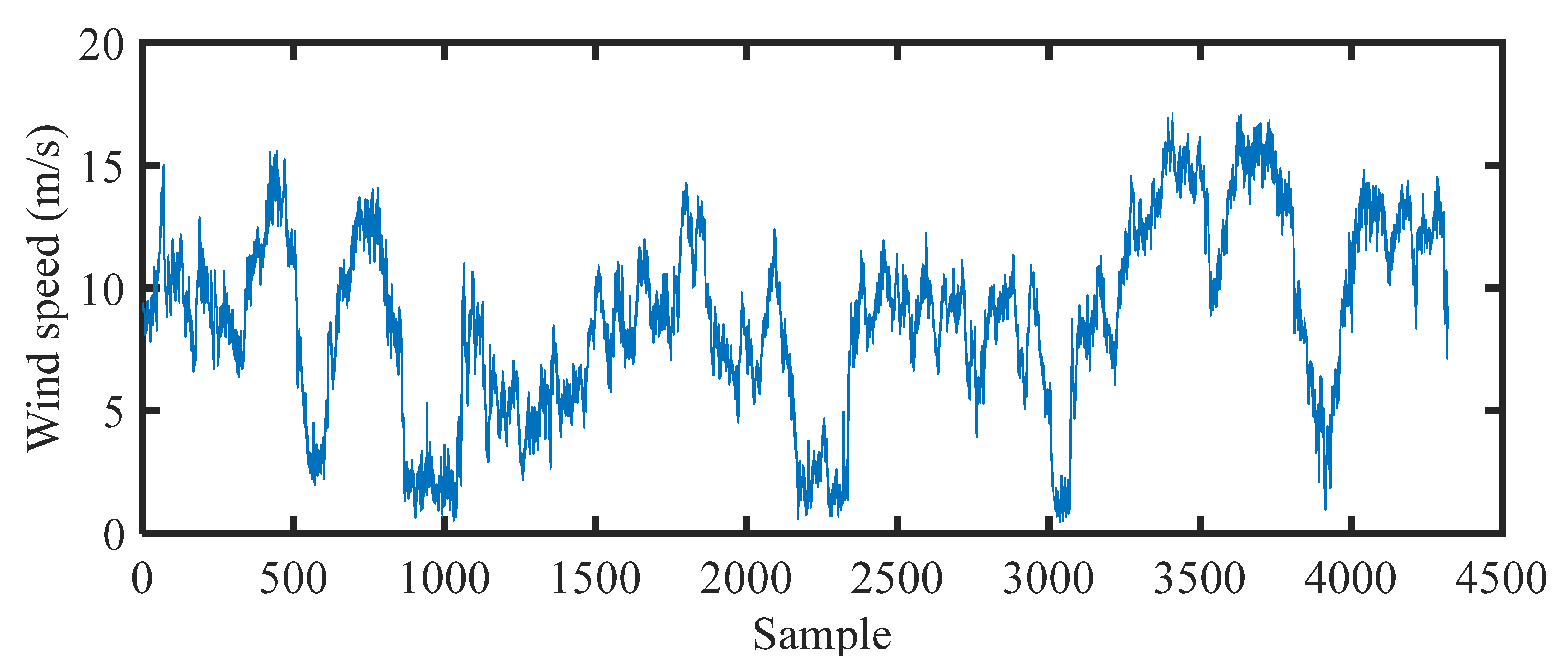
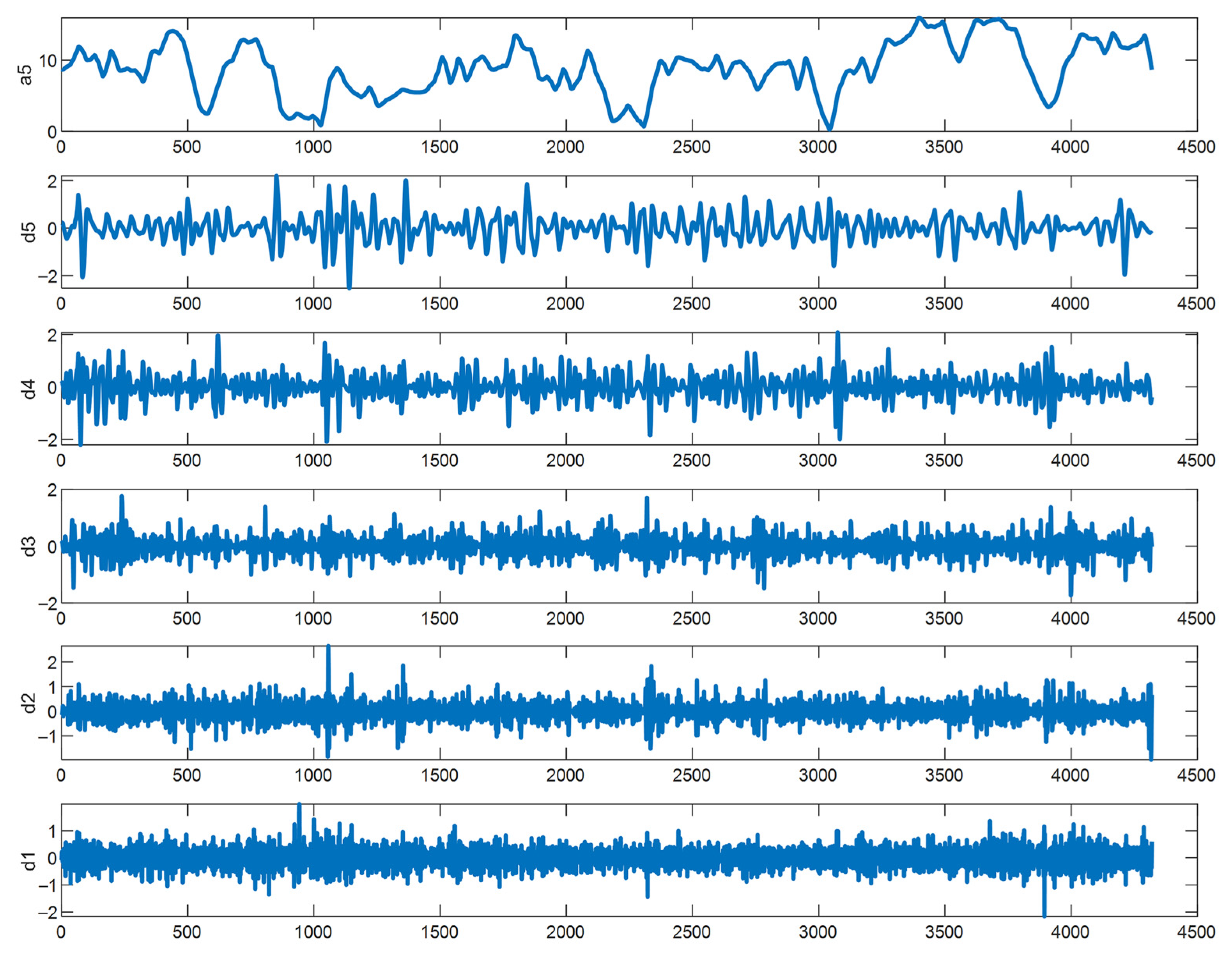
Wind speeds at different scales can be recorded based on the previously described wind field measurements. The 10 min mean wind speeds for one month are shown in Figure 9, and the sample of wind speeds with a duration of 10 min is shown in Figure 10. In Figure 9, 4320 data points are presented. Using the WD method, the wind speed series can be decomposed at different levels, each representing a distinct intrinsic oscillatory mode embedded within the original signal, as shown in Figure 10.
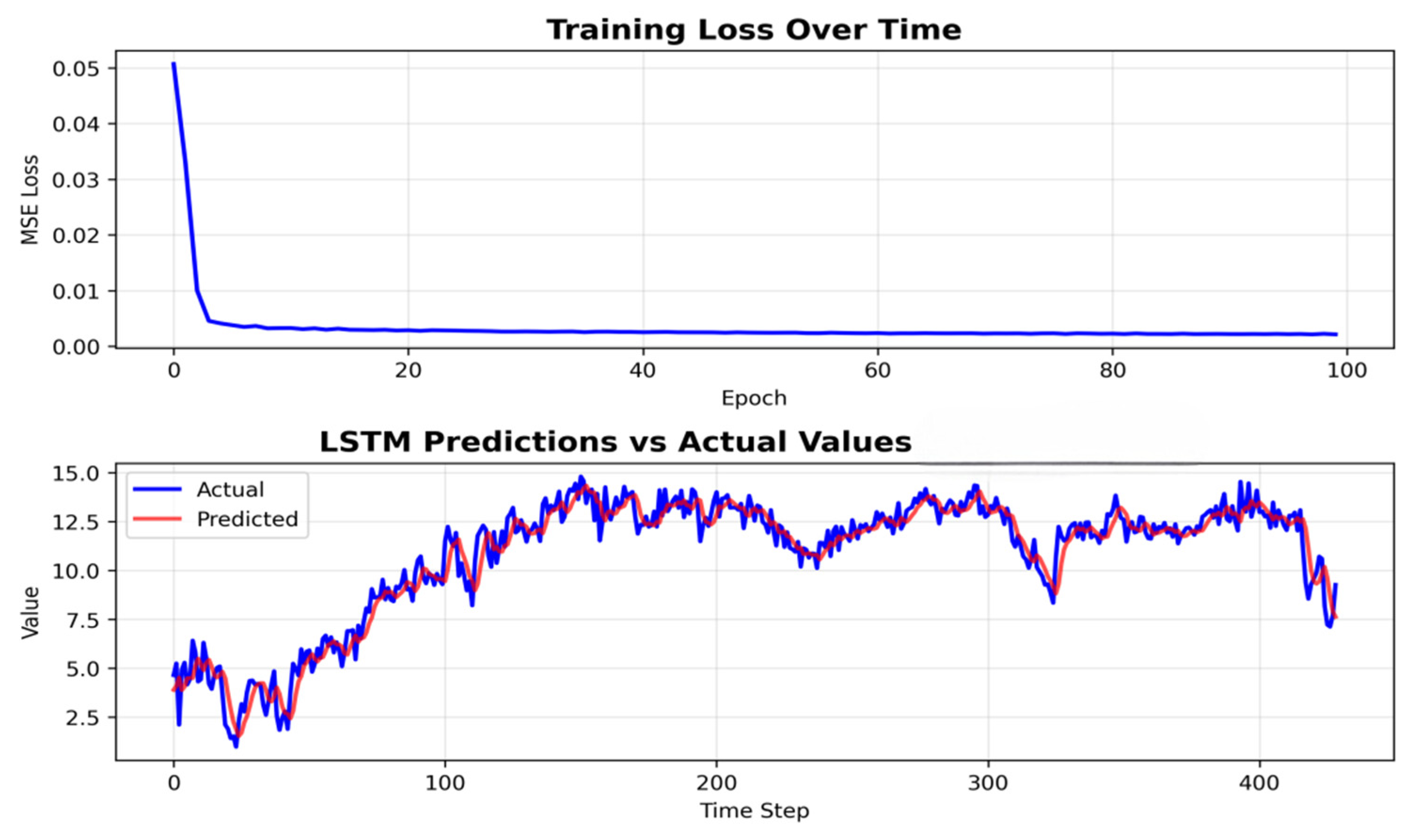
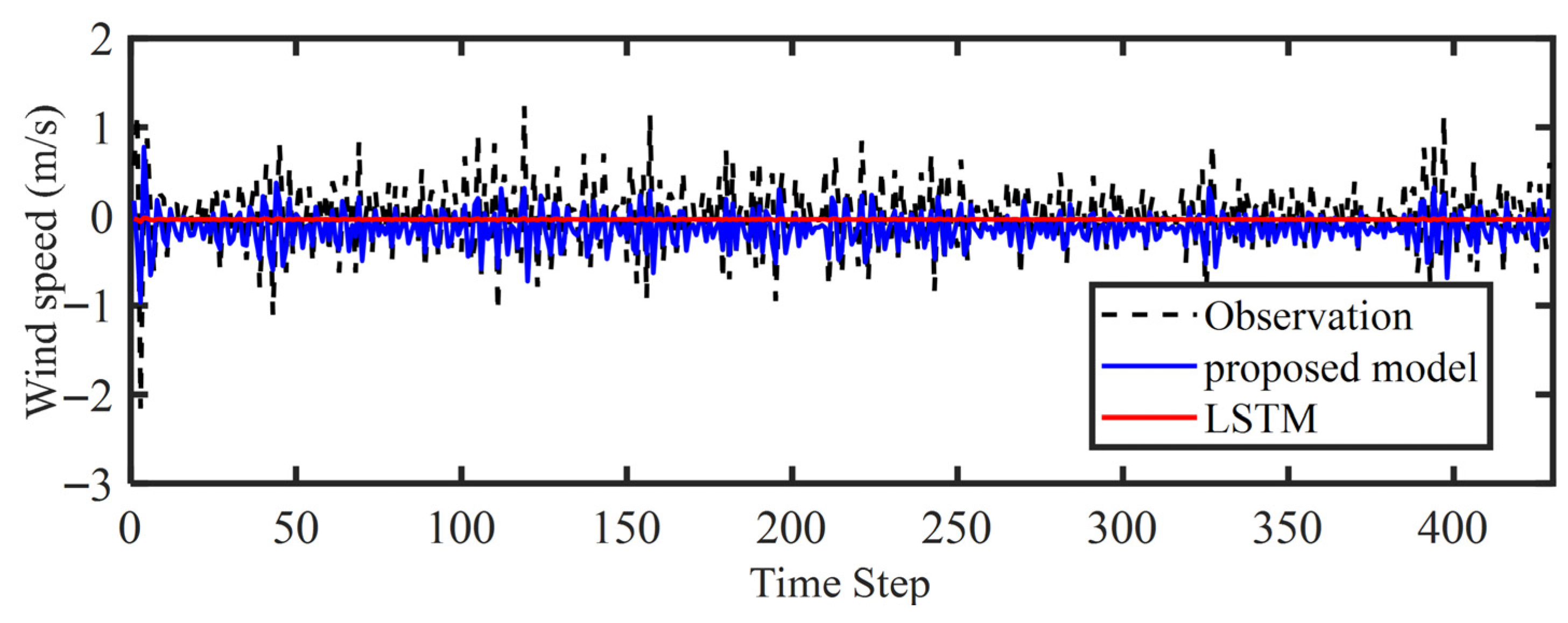
Based on the previously described model, the LSTM method is used to predict wind speeds. In this research, 90% of the data points are used to train the LSTM model, and 10% are used for prediction. The epoch is set as 100, the batch size and hidden size are set as 32 and 64, respectively. The learning rate ranges from 0.05 to 0.2 in this model. Based on the described settings, the computational time for each prediction is around 160 s. The wind speeds directly predicted by the LSTM network are shown in Figure 11. As shown, the trend of the wind speed can be accurately captured, although minor fluctuations around the true values occur. The RMSE, MAPE, and MAE prediction error values are 0.8238 m/s, 8.4658%, and 0.4849 m/s, respectively.
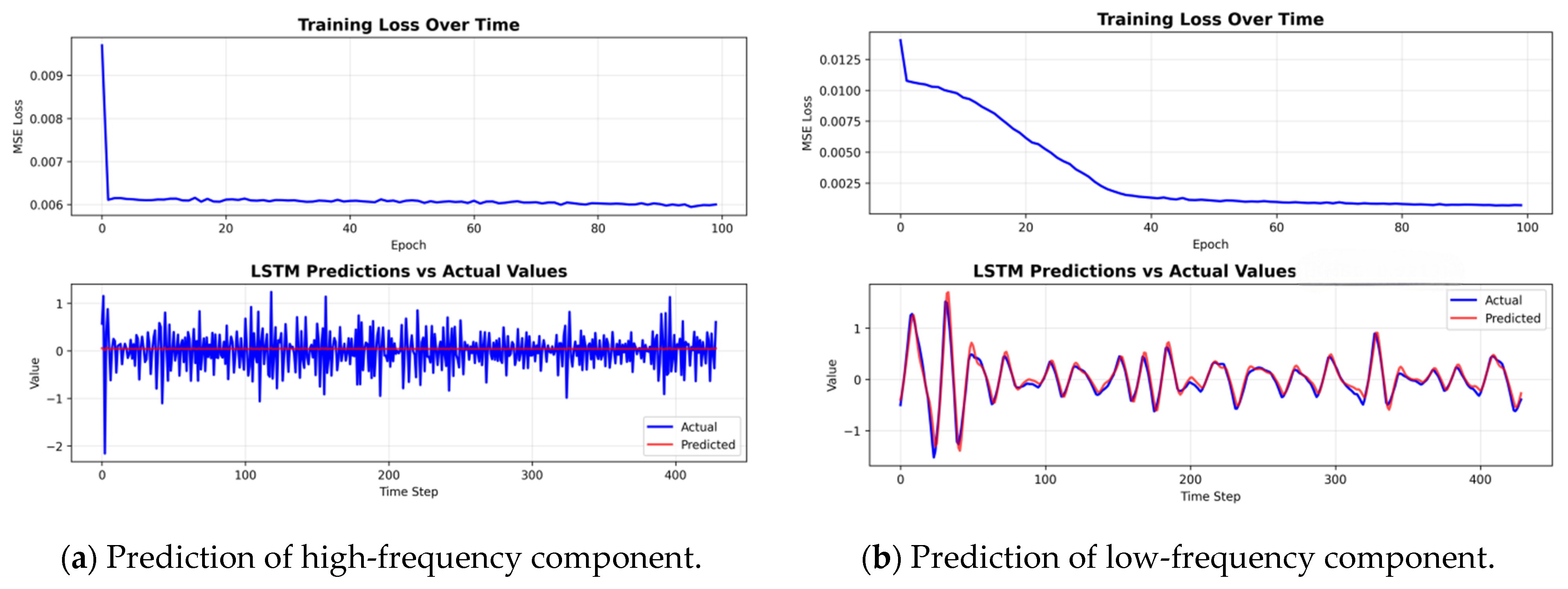
As indicated in Figure 10, the original data series can be decomposed using the WD method. Using the LSTM method, predictions can be made for wind speed series in Figure 11 and also for each decomposed component in Figure 12. As shown, using the LSTM method, the low-frequency component can be accurately predicted, with an MAPE of 1.9%. However, the prediction errors of the high-frequency component, as shown in Figure 12a, are large, with an MAPE of 70.4% due to its inherent randomness and sensitivity to abrupt changes.
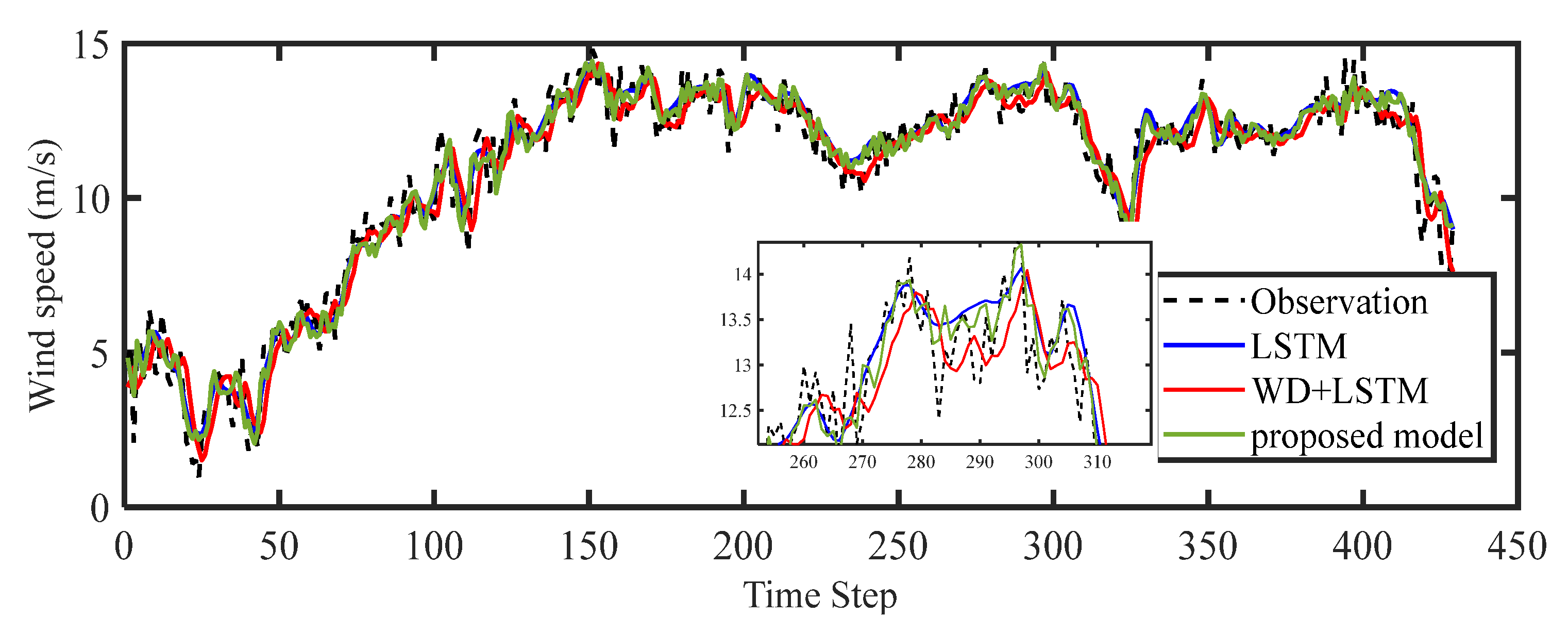
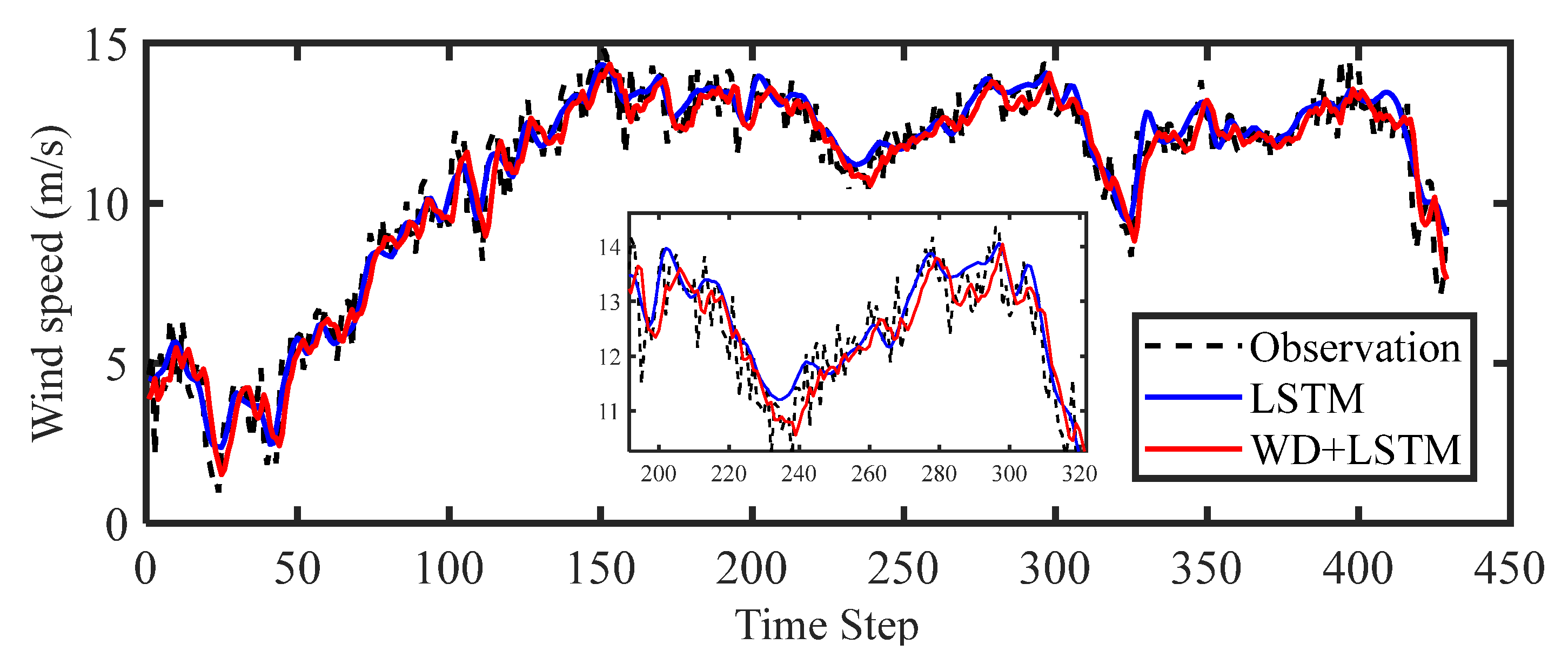
With the application of the WD method, the wind speed time series are first decomposed into each component and then predicted using the LSTM method. The predicted components are reconstructed to obtain the final predicted values, as indicated in Figure 13. The RMSEs of the prediction values based on the LSTM and WD-LSTM models are 0.8238 m/s and 0.6358 m/s, respectively. Based on the comparison of the LSTM and WD-LSTM methods in Figure 13, the WD-LSTM method, combined with the wavelet decomposition method, outperforms the LSTM method.
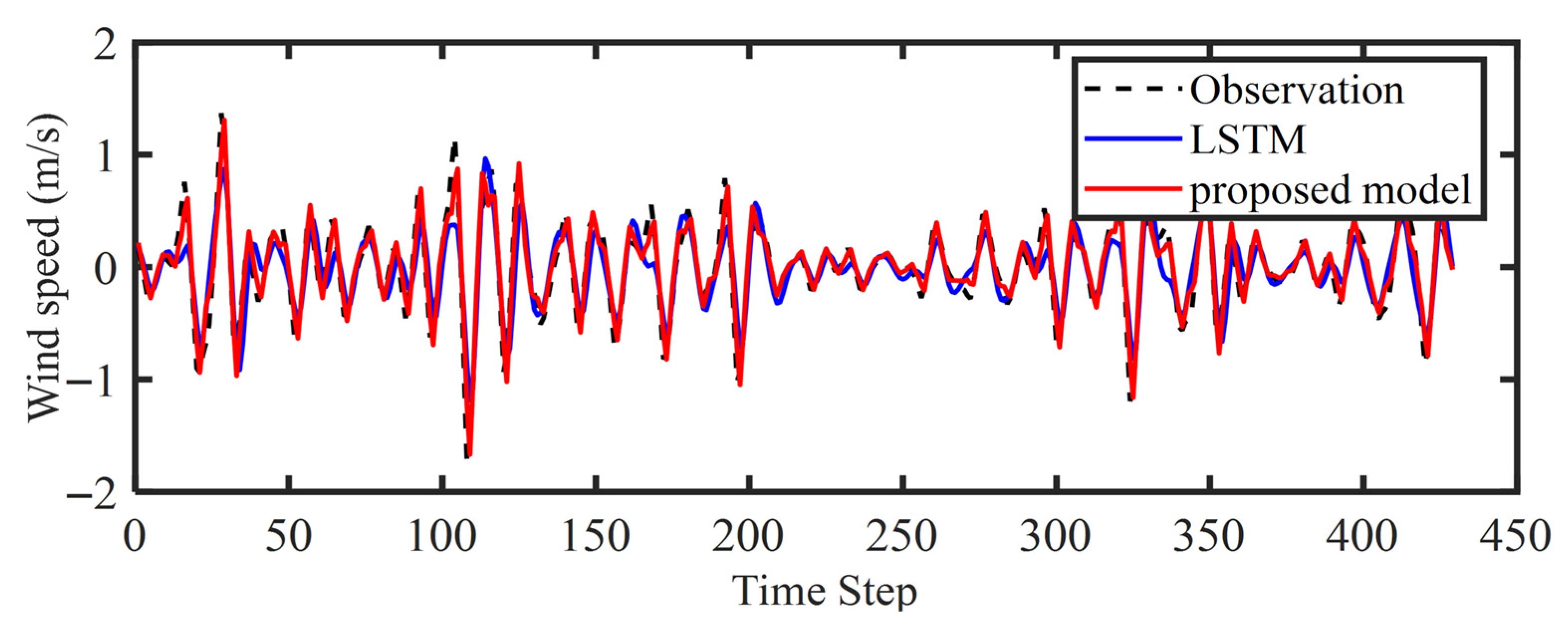
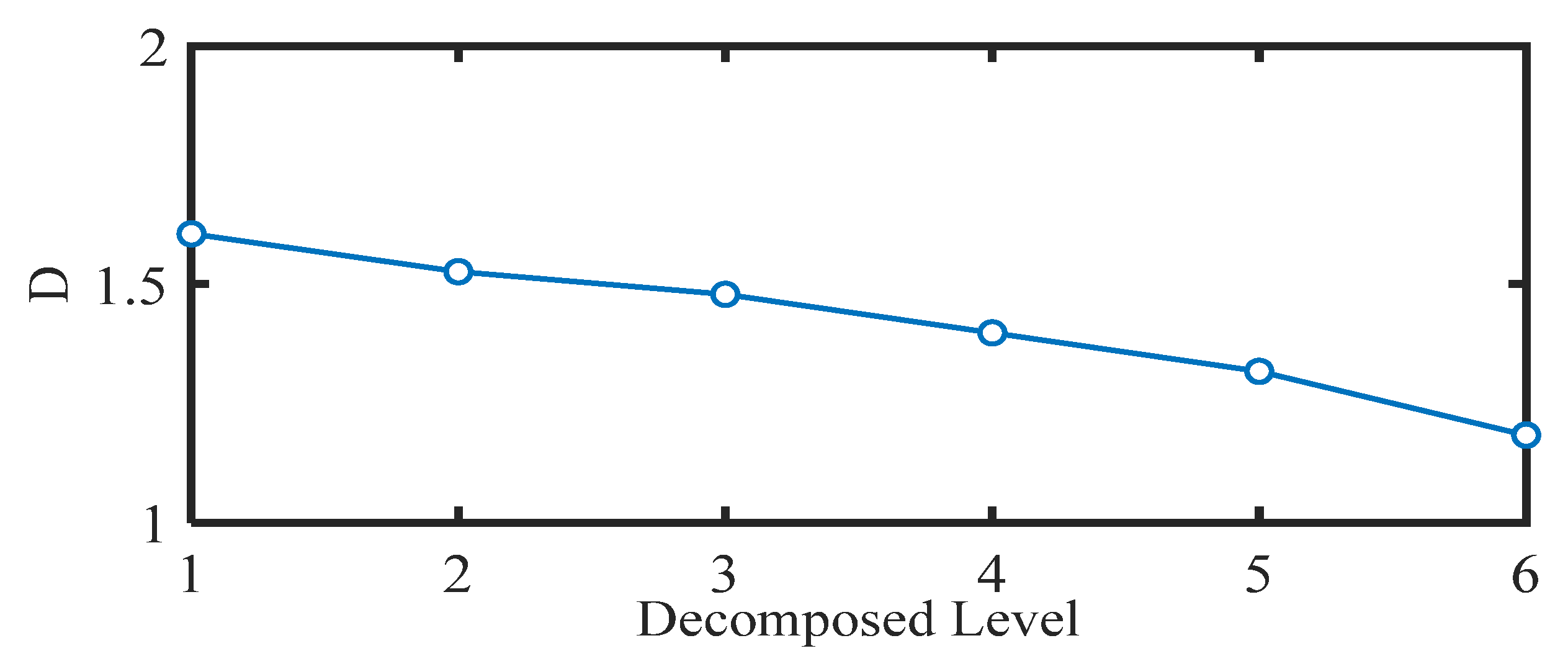
The fractal dimensions of the decomposed components are calculated as shown in Figure 14. The high-frequency components exhibit fractal dimensions close to 1.5, indicating the unpredictability of the time series. The same phenomenon is also observed in Figure 15, which indicates a large prediction error. Considering the fractal dimension, a fractal gradient-enhanced LSTM network is applied for time series prediction. The prediction of the high-frequency component using the fractal gradient-enhanced LSTM model is shown in Figure 15. Compared with the standard LSTM method, the fractal gradient-enhanced LSTM method reduces the RMSE by 18.4% for high-frequency components, effectively capturing the chaotic fluctuations inherent in wind dynamics. As shown in Figure 16, the low frequency for level 3 is also accurately predicted by both the LSTM model and the proposed model. Based on the flowchart of the proposed model, the predicted components can be reconstructed as shown in Figure 17. As previously mentioned, each data point represents the average wind speed over 10 min. With the use of the LSTM network, 429 data points can be predicted, indicating 3-day-ahead wind speed predictions.
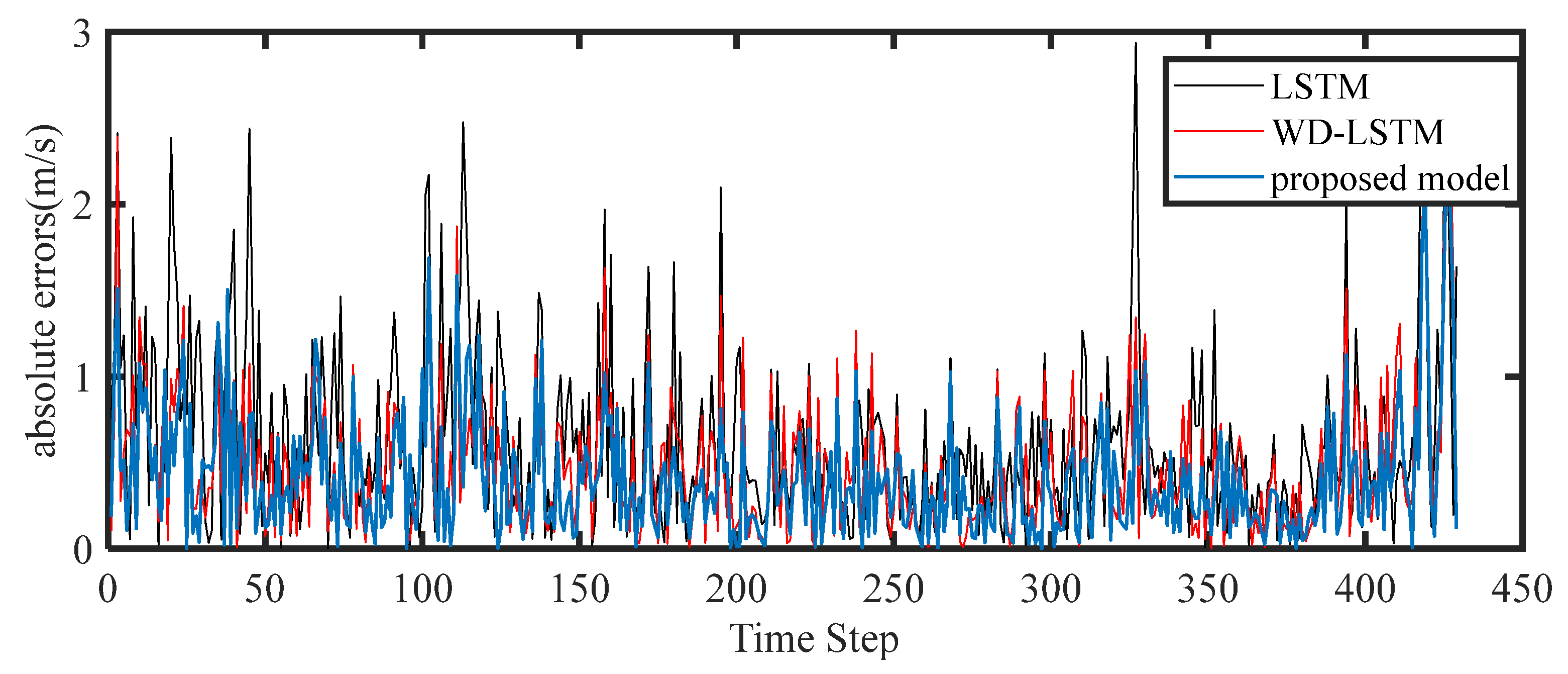
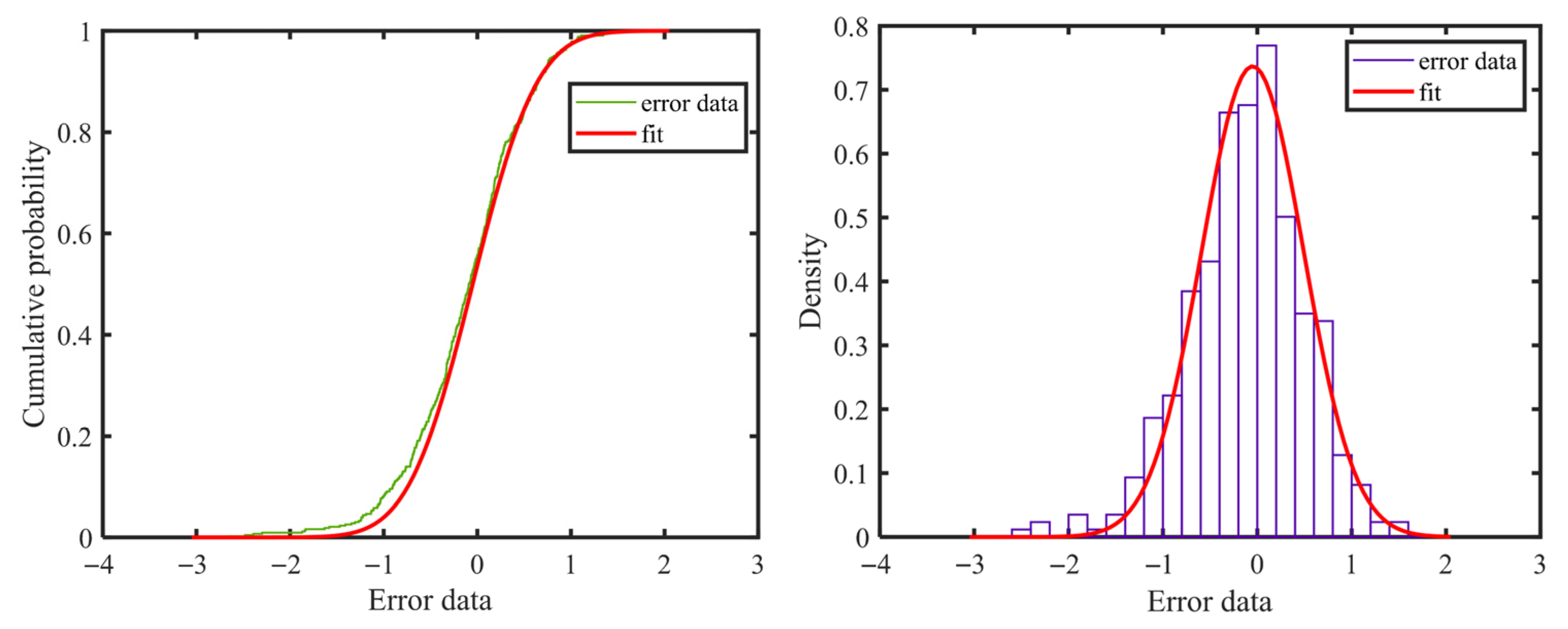
The prediction errors based on the LSTM, the WD-LSTM, and the proposed fractal gradient-enhanced LSTM methods are presented in Table 2 and Figure 18. The probability density and cumulative probability of the prediction error using the proposed method are shown in Figure 19. The fitted result based on a normal distribution indicates that the prediction results are reliable and that the error is mostly random. With regard to the three loss evolution criteria (RMSE, MAE, and MAPE), compared with that of the LSTM model, the three criteria of the WD-LSTM model are reduced by 22.82%, 24.56%, and 24.04%, respectively. Moreover, the RMSE, the MAE, and the MAPE of the fractal gradient-enhanced LSTM model were further reduced by 34.07%, 36.18%, and 36.35%, respectively, relative to the standard LSTM method, indicating the superior capability of the method in modeling multiscale wind intermittency. By applying the WD method, the dynamics of wind speed fluctuations across different time scales are effectively decoupled, and the intrinsic patterns within each subseries are captured by the LSTM network. Compared with the WD-LSTM method, the proposed method improves the prediction accuracy of RMSE, MAE, and MAPE by 14.5%, 15.3%, and 16.2%, respectively, demonstrating the ability of fractal gradient enhancement to capture dynamics at different scales.
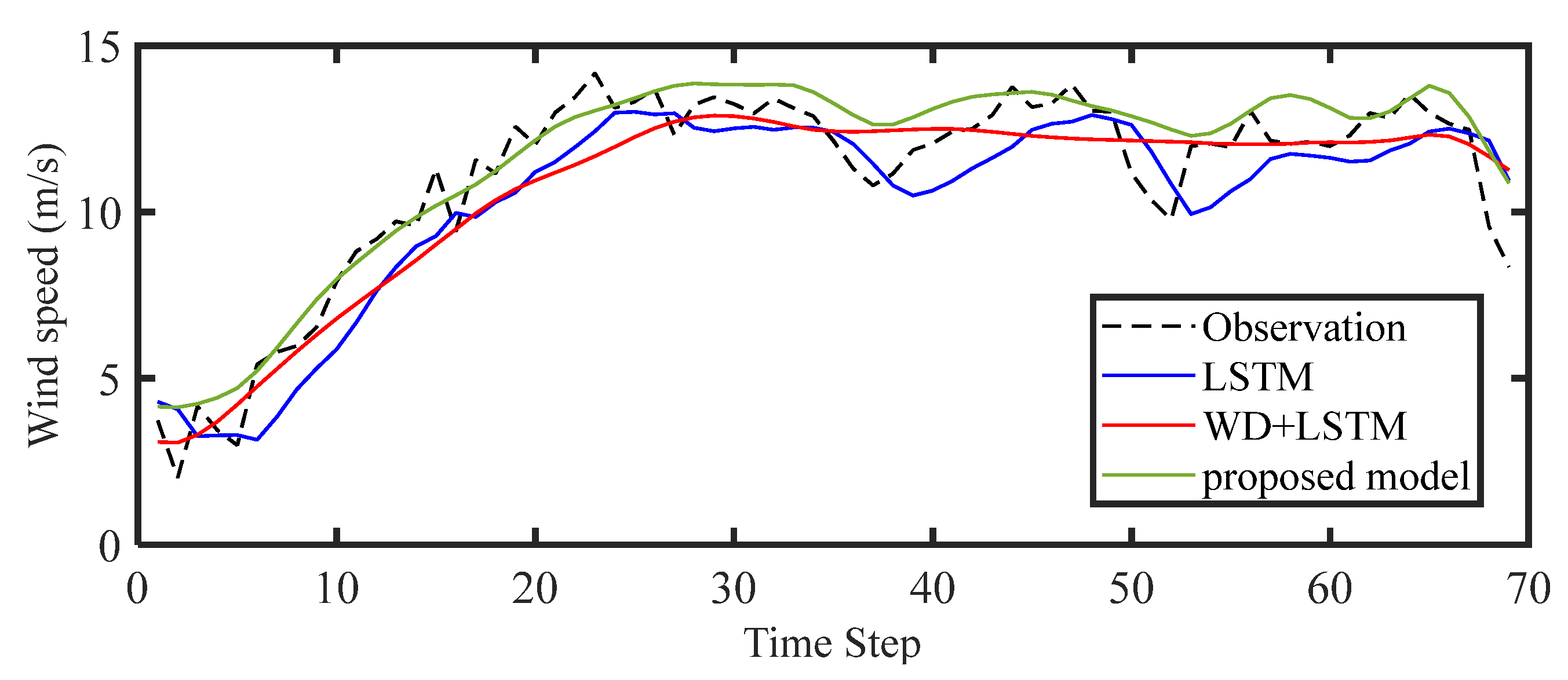
Previous results reveal that the proposed fractal gradient-enhanced LSTM method performs better in terms of wind speed prediction for average 10 min wind speed data. Predictions based on hourly wind speed data are also obtained. With a total of 621 hourly data samples, a wind speed approximately 3 days ahead is predicted using 69 data points. The prediction results are shown in Table 3 and Figure 20, revealing that the proposed model achieves the best performance across all the error metrics. The prediction errors are reduced by 19.85% for the RMSE, 22.16% for the MAE, and 27.96% for the MAPE compared with the LSTM method, indicating the effectiveness of the proposed method.
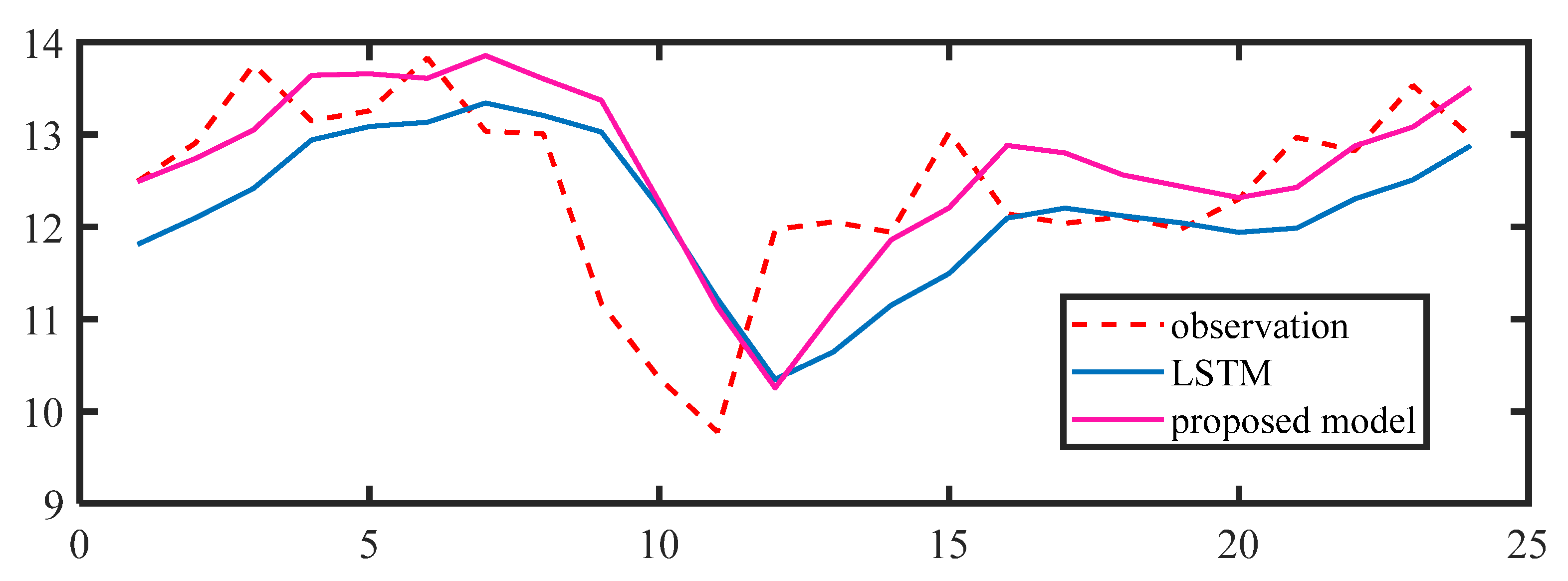
By training using the recorded data, wind speeds for three days can be predicted using 69 data points. For short-term prediction, the one-day-ahead wind speed results are presented in Figure 21 and Table 4. As indicated, compared with the 3-day-ahead prediction results, 24 h prediction yields lower error values, with RMSE, MAPE, and MAE values of 0.94 m/s, 6.19%, and 0.73 m/s, respectively. This implies that the prediction length has a significant effect on the prediction accuracy. However, the three methods exhibit similar trends across the three criteria. Such a phenomenon suggests that the proposed model reflects the inherent temporal dynamics of wind speed; however, for short-term durations, external uncertainties become more dominant than the inner dynamic characteristics.

5. Conclusions

The analysis and prediction of wind speed are essential for wind engineering and wind power generation. In this research, a fractal-based prediction model using the LSTM and wavelet decomposition methods for wind speed prediction is proposed. The wind speed data of in situ measurements at Yutou island of Fujian, China, are subjected to wavelet decomposition, fractal analysis and LSTM prediction.
The proposed fractal-based prediction model is compared with the traditional LSTM method and the WD-LSTM method, and the results reveal that the fractal-based model achieves higher accuracy and stability, particularly in capturing long-term wind speeds. Compared with those of the LSTM method, the RMSE, the MAE, and the MAPE of the proposed fractal gradient-enhanced WD-LSTM method are further reduced by 34.07%, 36.18%, and 36.35%, respectively.
The recorded hourly wind speed data are also applied to verify the reliability of the proposed method. The proposed method also achieves the best performance among the three prediction methods for hourly wind speed data; compared with those of the LSTM method, the RMSE, the MAE, and the MAPE are reduced by 19.85%, 22.16%, and 27.96%, respectively.
The prediction results for the durations of 3 days ahead and 24 h ahead are compared. The results reveal that the prediction model is more accurate for short-term wind speed predictions. However, for the short duration of 24 h, the superiority of the fractal gradient-enhanced WD-LSTM method is not obvious. This may be due to the limited length of the data because external uncertainties become more dominant than inner dynamic characteristics, as reflected in fractal dynamics, thereby weakening the model’s advantage in capturing multiscale self-similar patterns.

Author Contributions

Conceptualization, D.X.; Methodology, Z.Y.; Validation, S.S. and Z.Y.; Formal analysis, S.S. and L.L.; Investigation, Y.P.; Resources, Y.P.; Data curation, D.X. and Y.P.; Writing—original draft, D.X.; Writing—review & editing, Y.P., Z.Y. and L.L.; Visualization, S.S.; Supervision, L.L.; Funding acquisition, D.X. and L.L. All authors have read and agreed to the published version of the manuscript.

Funding

This research was funded by National Natural Science Foundation of China (52278537, 52408558), Project of Xiamen Overseas Students Service Center (2024) 241-07 and High-level talent program of Xiamen University of Technology (YKJ23006R). And The APC was funded by Project of Xiamen Overseas Students Service Center (2024) 241-07.

Data Availability Statement

The original contributions presented in this study are included in the article. Further inquiries can be directed to the corresponding authors.

Conflicts of Interest

The authors declare that they have no known competing financial interests or personal relationships that could have appeared to influence the work reported in this paper. Author Y.P. was employed by the company Fujian Construction Engineering Group Co., Ltd. The remaining authors declare that the research was conducted in the absence of any commercial or financial relationships that could be construed as potential conflicts of interest.

References

  1. Bigdeli, N.; Afshar, K.; Gazafroudi, A.S.; Ramandi, M.Y. A comparative study of optimal hybrid methods for wind power prediction in wind farm of Alberta, Canada. Renew. Sustain. Energy Rev. 2013, 27, 20–29. [Google Scholar] [CrossRef]
  2. Li, G.; Shi, J.; Zhou, J. Bayesian adaptive combination of short-term wind speed forecasts from neural network models. Renew. Energy 2011, 36, 352–359. [Google Scholar] [CrossRef]
  3. Feng, T.; Fu, Z.; Deng, X.; Mao, J. A brief description to different multi-fractal behaviors of daily wind speed records over China. Phys. Lett. A 2009, 373, 4134–4141. [Google Scholar] [CrossRef]
  4. Rubalcaba, O. Fractal analysis of climatic data: Annual precipitation records in Spain. Theor. Appl. Climatol. 1997, 56, 83–87. [Google Scholar] [CrossRef]
  5. Ribeiro, M.B.; Miguelote, A.Y. Fractals and the Distribution of Galaxies. Braz. J. Phys. 1998, 28, 132–160. [Google Scholar] [CrossRef]
  6. Falconer, K. Fractal Geometry: Mathematical Foundations and Applications; John Wiley & Sons: Hoboken, NJ, USA, 2004. [Google Scholar]
  7. Sarkar, N.; Chaudhuri, B.B. An efficient differential box-counting approach to compute fractal dimension of image. IEEE Trans. Syst. Man Cybern. 1994, 24, 115–120. [Google Scholar] [CrossRef]
  8. Chang, T.-P.; Ko, H.-H.; Liu, F.-J.; Chen, P.-H.; Chang, Y.-P.; Liang, Y.-H.; Jang, H.-Y.; Lin, T.-C.; Chen, Y.-H. Fractal dimension of wind speed time series. Appl. Energy 2012, 93, 742–749. [Google Scholar] [CrossRef]
  9. Syu, C.Y.; Kirchhoff, R.H. The Fractal Dimension of the Wind. J. Sol. Energy Eng. 1993, 115, 151–154. [Google Scholar] [CrossRef]
  10. Xin, L.; Fei, H.; Gang, L.; Zhongxiang, H. Multi-scale Fractal Characteristics of Atmospheric Boundary-Layer Turbulence. Adv. Atmos. Sci. 2001, 18, 787–792. [Google Scholar] [CrossRef]
  11. Breslin, M.; Belward, J.A. Fractal dimensions for rainfall time series. Math. Comput. Simul. 1999, 48, 437–446. [Google Scholar] [CrossRef]
  12. Ganti, S.; Bhushan, B. Generalized fractal analysis and its applications to engineering surfaces. Wear 1995, 180, 17–34. [Google Scholar] [CrossRef]
  13. Tijera, M.; Maqueda, G.; Yague, C.; Cano, J.L. Analysis of Fractal Dimension of the Wind Speed and Its Relationships with Turbulent and Stability Parameters. In Fractal Analysis and Chaos in Geosciences; InTech EBooks: Saitama-shi, Japan, 2012. [Google Scholar]
  14. Xiu, C.; Wang, T.; Tian, M.; Li, Y.; Cheng, Y. Short-term prediction method of wind speed series based on fractal interpolation. Chaos Solitons Fractals 2014, 68, 89–97. [Google Scholar] [CrossRef]
  15. Wu, H.; Qiu, M.; Qin, F.; Li, Z. Fractal characteristic analysis of wind field in wind tunnel. J. Nat. Disasters 2014, 23, 32–38. [Google Scholar]
  16. Ihlen, E.A.F. Multifractal analyses of response time series: A comparative study. Behav. Res. Methods 2013, 45, 928–945. [Google Scholar] [CrossRef]
  17. Gu, G.-F.; Zhou, W.-X. Detrending moving average algorithm for multifractals. Phys. Rev. E 2010, 82, 011136. [Google Scholar] [CrossRef]
  18. Shu, Z.; Chan, P.W. Application of fractal analysis on wind speed time series: A review. Adv. Wind Eng. 2025, 2, 100028. [Google Scholar] [CrossRef]
  19. Liu, H.; Chen, C.; Lv, X.; Wu, X.; Liu, M. Deterministic wind energy forecasting: A review of intelligent predictors and auxiliary methods. Energy Convers. Manag. 2019, 195, 328–345. [Google Scholar] [CrossRef]
  20. Raju, H.; Das, S. CNN-Based Deep Learning Model for Solar Wind Forecasting. Sol. Phys. 2021, 296, 134. [Google Scholar] [CrossRef]
  21. Elsaraiti, M.; Merabet, A. A Comparative Analysis of the ARIMA and LSTM Predictive Models and Their Effectiveness for Predicting Wind Speed. Energies 2021, 14, 6782. [Google Scholar] [CrossRef]
  22. Li, C.; Tang, G.; Xue, X.; Saeed, A.; Hu, X. Short-Term Wind Speed Interval Prediction Based on Ensemble GRU Model. IEEE Trans. Sustain. Energy 2020, 11, 1370–1380. [Google Scholar] [CrossRef]
  23. Wu, H.; Meng, K.; Fan, D.; Zhang, Z.; Liu, Q. Multistep short-term wind speed forecasting using transformer. Energy 2022, 261, 125231. [Google Scholar] [CrossRef]
  24. Xie, K.; Yi, H.; Hu, G.; Li, L.; Fan, Z. Short-term power load forecasting based on Elman neural network with particle swarm optimization. Neurocomputing 2020, 416, 136–142. [Google Scholar] [CrossRef]
  25. Wang, J.; Zhang, W.; Li, Y.; Wang, J.; Dang, Z. Forecasting wind speed using empirical mode decomposition and Elman neural network. Appl. Soft Comput. 2014, 23, 452–459. [Google Scholar] [CrossRef]
  26. Liu, H.; Chen, C.; Tian, H.; Li, Y. A hybrid model for wind speed prediction using empirical mode decomposition and artificial neural networks. Renew. Energy 2012, 48, 545–556. [Google Scholar] [CrossRef]
  27. Zhao, Z.; Yun, S.; Jia, L.; Guo, J.; Meng, Y.; He, N.; Li, X.; Shi, J.; Yang, L. Hybrid VMD-CNN-GRU-based model for short-term forecasting of wind power considering spatio-temporal features. Eng. Appl. Artif. Intell. 2023, 121, 105982. [Google Scholar] [CrossRef]
  28. Shao, B.; Song, D.; Bian, G.; Zhao, Y. Wind Speed Forecast Based on the LSTM Neural Network Optimized by the Firework Algorithm. Adv. Mater. Sci. Eng. 2021, 2021, 4874757. [Google Scholar] [CrossRef]
  29. Wang, J.; Li, Y. Multi-step ahead wind speed prediction based on optimal feature extraction, long short term memory neural network and error correction strategy. Appl. Energy 2018, 230, 429–443. [Google Scholar] [CrossRef]
  30. Liu, B.; Zhao, S.; Yu, X.; Zhang, L.; Wang, Q. A Novel Deep Learning Approach for Wind Power Forecasting Based on WD-LSTM Model. Energies 2020, 13, 4964. [Google Scholar] [CrossRef]
  31. Wang, J.; Wang, J. Short-term Wind Speed Forecast Using ARIMA Based on EEMD Decomposition. J. Phys. Conf. Ser. 2023, 2450, 012020. [Google Scholar] [CrossRef]
  32. Chen, G.; Tang, B.; Zeng, X.; Zhou, P.; Kang, P.; Long, H. Short-term wind speed forecasting based on long short-term memory and improved BP neural network. Int. J. Electr. Power Energy Syst. 2022, 134, 107365. [Google Scholar] [CrossRef]
  33. Liu, H.; Mi, X.; Li, Y. Smart multi-step deep learning model for wind speed forecasting based on variational mode decomposition, singular spectrum analysis, LSTM network and ELM. Energy Convers. Manag. 2018, 159, 54–64. [Google Scholar] [CrossRef]
  34. Wu, Z.; Xia, X.; Xiao, L.; Liu, Y. Combined model with secondary decomposition-model selection and sample selection for multi-step wind power forecasting. Appl. Energy 2020, 261, 114345. [Google Scholar] [CrossRef]
  35. Qing, D.; Zhang, K.; Chen, M.; Liu, H.; Luo, W.; Liu, Y.; Zhou, H.; Ren, Z. Real-time motion prediction of a 5 MW floating offshore wind turbine using artificial neural networks integrated with time series decomposition. Ocean Eng. 2026, 343, 123301. [Google Scholar]
  36. Ding, Y.; Liang, N.-Y.; Zhang, X.-S.; Wang, J.; Zeng, C.-Q. Long short-term memory with wavelet decomposition for wind speed predicting based on SHM data. Smart Struct. Syst. 2025, 35, 65–75. [Google Scholar]
  37. Liang, Y.; Zhang, D.; Zhang, J.; Hu, G. A state-of-the-art analysis on decomposition method for short-term wind speed forecasting using LSTM and a novel hybrid deep learning model. Energy 2024, 313, 133826. [Google Scholar] [CrossRef]
  38. Li, T.; Gu, Z.; Li, Q. Decomposition based deep projection-encoding echo state network for multi-scale and multi-step wind speed prediction. Expert Syst. Appl. 2025, 266, 126074. [Google Scholar] [CrossRef]
  39. Daubechies, I. Ten Lectures on Wavelets; SIAM: Philadelphia, PA, USA, 1992; Volume 61. [Google Scholar]
  40. Cadenas, E.; Campos-Amezcua, R.; Rivera, W.; Espinosa-Medina, M.A.; Méndez-Gordillo, A.R.; Range, E.; Tena, J. Wind speed variability study based on the Hurst coefficient and fractal dimensional analysis. Energy Sci. Eng. 2019, 7, 361–378. [Google Scholar] [CrossRef]
  41. Harrouni, S.; Guessoum, A. Using a fractal dimension to quantify long- range persistence in global solar radiation. Chaos Solut. Fractals 2009, 41, 1520–1530. [Google Scholar] [CrossRef]
  42. Jia, K.; Zhao, L.; Qin, P. An Energy-Based Method for Predicting Battery Aging using Newly Constructed Features in Fractal Gradient-Enhanced LSTM Networks. IEEE Trans. Transp. Electrif. 2025, 11, 11497–11509. [Google Scholar] [CrossRef]
  43. Wang, L.; Dai, L. Chaotic Time Series Prediction of Multi-Dimensional Nonlinear System Based on Bidirectional LSTM Model. Adv. Theory Simul. 2023, 6, 2300148. [Google Scholar] [CrossRef]
  44. Wang, L.; Dai, L.; Zhao, H.; Fang, P. Convolutional LSTM-Attention Based Encoder–Decoder Neural Network for Prediction of Chaotic Vibrations of Multi-Dimensional Dynamic Systems. Int. J. Struct. Stab. Dyn. 2024, 24, 2450227. [Google Scholar] [CrossRef]
  45. Xia, D.; Yu, W.; Lin, L.; Lin, X.; Hu, Y. Fractal Characteristics of Wind Speed Time Series Under Typhoon Climate in Southeastern China. Fractal Fract. 2025, 9, 175. [Google Scholar] [CrossRef]
Figure 1. Geography of the wind field measurement site.
Fractalfract 10 00322 g001
Figure 2. Wavelet decomposition and reconstruction of time series.
Fractalfract 10 00322 g002
Figure 3. Wavelet decomposition of wind speed time series.
Fractalfract 10 00322 g003
Figure 4. Fractal dimensions of different components: (a) high-frequency component; (b) low frequency component.
Fractalfract 10 00322 g004
Figure 5. Fractal dimension of each wind speed level.
Fractalfract 10 00322 g005
Figure 6. Internal flow of information through the gates.
Fractalfract 10 00322 g006
Figure 7. Flowchart of the prediction model.
Fractalfract 10 00322 g007
Figure 8. Schematic diagram of the Cartesian coordinate system for wind speed decomposition.
Fractalfract 10 00322 g008
Figure 9. Time series of monthly wind speeds.
Fractalfract 10 00322 g009
Figure 10. WD components of wind speeds.
Fractalfract 10 00322 g010
Figure 11. Prediction of wind speeds by the LSTM model (RMSE = 0.8328).
Fractalfract 10 00322 g011
Figure 12. Prediction of decomposed components by the LSTM model.
Fractalfract 10 00322 g012
Figure 13. Wind speed prediction using different methods.
Fractalfract 10 00322 g013
Figure 14. Fractal dimension of each decomposed component.
Fractalfract 10 00322 g014
Figure 15. Time series prediction of the high-frequency component.
Fractalfract 10 00322 g015
Figure 16. Time series prediction of the low-frequency component (d1, 0.035; RMSE = 0.3293).
Fractalfract 10 00322 g016
Figure 17. Wind speed prediction based on different methods.
Fractalfract 10 00322 g017
Figure 18. Absolute errors based on different prediction methods.
Fractalfract 10 00322 g018
Figure 19. CDF and PDF of the prediction error of the proposed method.
Fractalfract 10 00322 g019
Figure 20. Wind speed prediction for hourly data points.
Fractalfract 10 00322 g020
Figure 21. Twenty-four-hour-ahead wind speed prediction based on hourly data.
Fractalfract 10 00322 g021
Table 1. List of the literature.
Related AreasLiterature
Fractal dimension analysis[4,5,6,7,8,9,10,11,12,13,14,15,16,17]
Wind speed predicted by machine learning method[18,19,20,22,23,24,25,26,27,28,29,30,31,32,33,34,35,36,37,38]
Decomposition-based hybrid method[25,26,27,30,31,32,33,34,35,36,37,38]
LSTM-based method[21,28,29,30,31,32,33,34,35,36,37]
Table 2. Prediction errors of different methods.
ErrorLSTMWD + LSTMProposed Model
RMSE (m/s)0.82380.63580.5431
MAPE (%)8.46586.38585.4024
MAE (m/s)0.63840.48490.4063
Table 3. Prediction errors in the hourly data of different methods.
ErrorLSTMWD + LSTMProposed Model
RMSE (m/s)1.26841.13021.0166
MAPE (%)12.00229.58399.3430
MAE (m/s)1.08190.90110.7794
Table 4. Twenty-four-hour wind speed prediction errors of different methods.
ErrorLSTMWD + LSTMProposed Model
RMSE (m/s)0.940.940.93
MAPE (%)6.196.036.02
MAE (m/s)0.730.710.72
Disclaimer/Publisher’s Note: The statements, opinions and data contained in all publications are solely those of the individual author(s) and contributor(s) and not of MDPI and/or the editor(s). MDPI and/or the editor(s) disclaim responsibility for any injury to people or property resulting from any ideas, methods, instructions or products referred to in the content.